WO2021186673A1 - 処理装置、処理方法及びプログラム - Google Patents
処理装置、処理方法及びプログラム Download PDFInfo
- Publication number
- WO2021186673A1 WO2021186673A1 PCT/JP2020/012306 JP2020012306W WO2021186673A1 WO 2021186673 A1 WO2021186673 A1 WO 2021186673A1 JP 2020012306 W JP2020012306 W JP 2020012306W WO 2021186673 A1 WO2021186673 A1 WO 2021186673A1
- Authority
- WO
- WIPO (PCT)
- Prior art keywords
- vehicle
- surrounding environment
- scenario
- predetermined
- user
- Prior art date
- Legal status (The legal status is an assumption and is not a legal conclusion. Google has not performed a legal analysis and makes no representation as to the accuracy of the status listed.)
- Ceased
Links
Images



Classifications
-
- G—PHYSICS
- G07—CHECKING-DEVICES
- G07C—TIME OR ATTENDANCE REGISTERS; REGISTERING OR INDICATING THE WORKING OF MACHINES; GENERATING RANDOM NUMBERS; VOTING OR LOTTERY APPARATUS; ARRANGEMENTS, SYSTEMS OR APPARATUS FOR CHECKING NOT PROVIDED FOR ELSEWHERE
- G07C5/00—Registering or indicating the working of vehicles
- G07C5/02—Registering or indicating driving, working, idle, or waiting time only
-
- G—PHYSICS
- G07—CHECKING-DEVICES
- G07C—TIME OR ATTENDANCE REGISTERS; REGISTERING OR INDICATING THE WORKING OF MACHINES; GENERATING RANDOM NUMBERS; VOTING OR LOTTERY APPARATUS; ARRANGEMENTS, SYSTEMS OR APPARATUS FOR CHECKING NOT PROVIDED FOR ELSEWHERE
- G07C5/00—Registering or indicating the working of vehicles
- G07C5/08—Registering or indicating performance data other than driving, working, idle, or waiting time, with or without registering driving, working, idle or waiting time
- G07C5/0816—Indicating performance data, e.g. occurrence of a malfunction
-
- G—PHYSICS
- G01—MEASURING; TESTING
- G01M—TESTING STATIC OR DYNAMIC BALANCE OF MACHINES OR STRUCTURES; TESTING OF STRUCTURES OR APPARATUS, NOT OTHERWISE PROVIDED FOR
- G01M17/00—Testing of vehicles
- G01M17/007—Wheeled or endless-tracked vehicles
-
- G—PHYSICS
- G07—CHECKING-DEVICES
- G07C—TIME OR ATTENDANCE REGISTERS; REGISTERING OR INDICATING THE WORKING OF MACHINES; GENERATING RANDOM NUMBERS; VOTING OR LOTTERY APPARATUS; ARRANGEMENTS, SYSTEMS OR APPARATUS FOR CHECKING NOT PROVIDED FOR ELSEWHERE
- G07C5/00—Registering or indicating the working of vehicles
- G07C5/08—Registering or indicating performance data other than driving, working, idle, or waiting time, with or without registering driving, working, idle or waiting time
- G07C5/0808—Diagnosing performance data
Definitions
- the present invention relates to a processing device, a processing method and a program.
- Patent Documents 1 to 4 disclose a technique for collecting vehicle driving data, environmental data, and the like.
- the vehicle manufacturer conducts vehicle driving tests in multiple scenarios.
- the scenario is defined by the vehicle condition, the surrounding environment, and the like. It is desirable to perform a vehicle driving test in a scenario that simulates all situations, but it is difficult to cover all situations due to restrictions such as time and manpower. Therefore, it is desirable to perform a vehicle driving test in a scenario that simulates a situation with high priority. However, it is not easy to manually find situations that have high priority and do not exist in existing scenarios. Neither Patent Documents 1 to 4 describes or suggests the subject.
- An object of the present invention is to provide a technique for supporting the creation of a scenario for a vehicle running test.
- An output means for outputting the calculation result by the calculation means and A processing device having the above is provided.
- the computer Determine the predetermined vehicle condition and surrounding environment based on the user vehicle data indicating the vehicle condition and surrounding environment when the user is using the vehicle.
- the degree of similarity between the predetermined vehicle condition and surrounding environment and the vehicle condition and surrounding environment shown in the vehicle driving test scenario is calculated.
- a processing method for outputting the calculation result is provided.
- a determination means for determining a predetermined vehicle condition and surrounding environment based on user vehicle data indicating the vehicle condition and surrounding environment when the user is using the vehicle.
- a calculation means for calculating the degree of similarity between the predetermined vehicle condition and the surrounding environment and the vehicle condition and the surrounding environment shown in the scenario of the vehicle driving test.
- An output means that outputs the calculation result by the calculation means,
- a program is provided that functions as.
- FIG. 1 It is a figure which shows an example of the hardware composition of the processing apparatus of this embodiment. It is an example of the functional block diagram of the processing apparatus of this embodiment. It is a figure which shows typically an example of the information processed by the processing apparatus of this embodiment. It is a figure which shows typically an example of the information output by the processing apparatus of this embodiment. It is a figure which shows typically an example of the information output by the processing apparatus of this embodiment. It is a figure which shows typically an example of the information output by the processing apparatus of this embodiment. It is a flowchart which shows an example of the processing flow of the processing apparatus of this embodiment. It is a flowchart which shows an example of the processing flow of the processing apparatus of this embodiment.
- the processing device collects and centrally manages vehicle-related data generated in various situations, processes them by a characteristic method, and supports developers. Specifically, the processing device supports the creation of a vehicle driving test scenario by processing the vehicle-related data related to the vehicle driving test and the vehicle-related data generated at the time of user use by a characteristic method.
- Vehicle-related data related to the vehicle driving test includes information indicating a scenario of the vehicle driving test (hereinafter, may be simply referred to as a "scenario"). Vehicle-related data may further include the results of vehicle driving tests in each scenario. Vehicle driving test scenarios are defined by vehicle conditions and surrounding environment.
- the vehicle-related data generated when the user is used is data indicating the vehicle state and the surrounding environment when the user is using the vehicle, and is generated by, for example, a sensor mounted on the vehicle.
- the processing device determines a predetermined vehicle condition and surrounding environment (hereinafter, may be simply referred to as "predetermined vehicle condition and surrounding environment") for which it is desirable to perform a vehicle running test based on vehicle-related data generated at the time of user use. decide.
- the predetermined vehicle state and surrounding environment may be, for example, the vehicle state and surrounding environment indicated by the vehicle-related data when a trouble occurs in the vehicle (before and after), or when the user is using the vehicle. It may be a frequent vehicle condition and surrounding environment, or it may be other.
- the processing device calculates the degree of similarity between the "determined predetermined vehicle condition and surrounding environment” and the "vehicle condition and surrounding environment shown in the vehicle driving test scenario", and outputs the result.
- the processing device can determine a predetermined vehicle condition and surrounding environment (high priority situation) for which it is desirable to perform a vehicle running test based on the vehicle-related data generated at the time of user use. Then, the processing device can confirm whether there is a scenario indicating the determined predetermined vehicle state and the surrounding environment or a similar scenario, and output the result.
- the processing device supports the scenario creation of the vehicle driving test by such processing.
- Each functional unit of the processing device is stored in a storage unit such as a CPU (Central Processing Unit) of an arbitrary computer, a memory, a program loaded in the memory, and a hard disk for storing the program (from the stage of shipping the device in advance).
- a storage unit such as a CPU (Central Processing Unit) of an arbitrary computer, a memory, a program loaded in the memory, and a hard disk for storing the program (from the stage of shipping the device in advance).
- a storage unit such as a CPU (Central Processing Unit) of an arbitrary computer, a memory, a program loaded in the memory, and a hard disk for storing the program (from the stage of shipping the device in advance).
- a storage unit such as a CPU (Central Processing Unit) of an arbitrary computer, a memory, a program loaded in the memory, and a hard disk for storing the program (from the stage of shipping the device in advance).
- CDs Compact Discs
- servers on the Internet
- FIG. 1 is a block diagram illustrating a hardware configuration of the processing device.
- the processing device includes a processor 1A, a memory 2A, an input / output interface 3A, a peripheral circuit 4A, and a bus 5A.
- the peripheral circuit 4A includes various modules.
- the processing device does not have to have the peripheral circuit 4A.
- the processing device may be composed of a plurality of physically and / or logically separated devices, or may be composed of one physically and / or logically integrated device. When the processing device is composed of a plurality of physically and / or logically separated devices, each of the plurality of devices can be provided with the above hardware configuration.
- the bus 5A is a data transmission path for the processor 1A, the memory 2A, the peripheral circuit 4A, and the input / output interface 3A to send and receive data to and from each other.
- the processor 1A is, for example, an arithmetic processing unit such as a CPU or a GPU (Graphics Processing Unit).
- the memory 2A is, for example, a memory such as a RAM (RandomAccessMemory) or a ROM (ReadOnlyMemory).
- the input / output interface 3A includes an interface for acquiring information from an input device, an external device, an external server, an external sensor, a camera, etc., an interface for outputting information to an output device, an external device, an external server, etc. ..
- the input device is, for example, a keyboard, a mouse, a microphone, a physical button, a touch panel, or the like.
- the output device is, for example, a display, a speaker, a printer, a mailer, or the like.
- the processor 1A can issue commands to each module and perform calculations based on the calculation results thereof.
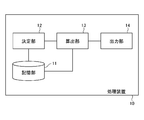
- the processing device 10 includes a storage unit 11, a determination unit 12, a calculation unit 13, and an output unit 14.
- the storage unit 11 stores vehicle-related data.
- Vehicle-related data includes driving test data and user vehicle data.
- the driving test data is data related to the driving test of the vehicle and can include various data.
- the driving test data includes information indicating the contents of each of the plurality of scenarios of the vehicle driving test.
- the running test data may further include data showing the results of the vehicle running test in each scenario.
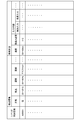
- FIG. 3 schematically shows an example of information showing the contents of each of the plurality of scenarios of the vehicle running test.
- scenario identification information for identifying a plurality of scenarios from each other, information on the surrounding environment, and information on the vehicle state are linked to each other.
- the content of the scenario is defined by the surrounding environment and the vehicle condition.
- the content of the scenario may be defined using other information.
- the surrounding environment indicates the environment around the vehicle at the time of the test run, and more specifically, the factors that may affect the test result, such as weather, temperature, humidity, type of road on which the vehicle travels, and vehicle.
- the existence and state of a predetermined object (other vehicle, pedestrian, traffic light, telephone pole, etc.) around the vehicle are exemplified.
- the vehicle condition indicates the condition of the vehicle at the time of test execution, more specifically, the factors that may affect the test result, for example, the speed, the temperature of the part A, and the input contents (control input, as shown in the figure). Load input, etc.), etc. are exemplified.
- the weather is “sunny”
- the temperature is “20 to 25 ° C”
- the humidity is “50 to 60%”
- the road is “asphalt”
- the speed of the vehicle is high. It is shown that the vehicle running test is performed under conditions such as "50 to 60 km / h” and the temperature "X ° C.” of the component A.
- the user vehicle data is data indicating the vehicle state and the surrounding environment when the user is using the vehicle.
- User vehicle data can be generated using any conventional technology.
- the data indicating the vehicle state may be generated by a sensor or the like mounted on the vehicle.
- data indicating the surrounding environment may be generated by sensors mounted on the vehicle (cameras that shoot roads, temperature sensors, humidity sensors, riders that acquire surrounding information, etc.), or other methods (weather information). It may be generated by (acquiring from a server that stores).
- the user vehicle data includes all the data among a plurality of parameters (weather, temperature, speed, component A temperature, etc.) shown in the vehicle driving test scenario.
- a plurality of parameters weather, temperature, speed, component A temperature, etc.
- the type of sensor mounted on the vehicle during the driving test and the type of sensor mounted on the vehicle for sale may differ.
- the type of sensor mounted may differ from vehicle to vehicle. Therefore, the user vehicle data may have only a part of the data among the plurality of parameters shown in the vehicle driving test scenario.
- the user vehicle data may be data transmitted from a connected car that is always connected to the Internet to an external device via the Internet.
- the connected car may transmit the user vehicle data to the external device when a trouble occurs in the vehicle (before and after), or transmits the user vehicle data to the external device at predetermined time intervals when no trouble occurs. You may.
- the user vehicle data collected in each vehicle may be stored in the storage device in each vehicle.
- User vehicle data when a trouble occurs in the vehicle may be stored in the storage device of the vehicle, and user vehicle data may be stored in the storage device of the vehicle at predetermined time intervals when no trouble occurs. It may be accumulated. Then, the user vehicle data may be input to the processing device 10 and stored in the storage unit 11 at any timing and by any means.
- the determination unit 12 determines a predetermined vehicle state and surrounding environment in which it is desirable to perform a vehicle running test based on the user vehicle data stored in the storage unit 11.
- determination processing by the determination unit 12 will be described.
- the predetermined vehicle state and surrounding environment may be, for example, the vehicle state and surrounding environment indicated by the vehicle-related data when a trouble occurs in the vehicle (before and after).
- the determination unit 12 extracts data when a trouble occurs in the vehicle (before and after) from the user vehicle data stored in the storage unit 11 will be described.
- the connected car may transmit the information indicating the trouble occurrence and the user vehicle data at that time (before and after) to the external device. Then, the user vehicle data transmitted by the connected car in the process may be stored in the storage unit 11 in association with information indicating that the data is the data at the time of trouble occurrence. In this case, the determination unit 12 extracts the data associated with the information indicating that the data is the data at the time of the trouble from the user vehicle data stored in the storage unit 11.
- the user vehicle data stored in the storage unit 11 is associated with various index information such as date and time information at the time of data creation, vehicle position information at the time of data creation, vehicle identification information, and vehicle type information of the vehicle. May be good.
- the determination unit 12 searches the user vehicle data stored in the storage unit 11 based on the search condition for specifying the data at the time of the trouble specified by the operator, and when the trouble occurs in the vehicle (before and after that). ) Vehicle-related data may be extracted.
- the search condition can be, for example, an expression in which the index information is connected by a logical operator.
- the predetermined vehicle state and surrounding environment may be, for example, a vehicle state and surrounding environment in which the appearance frequency in the user vehicle data is equal to or higher than the threshold value.
- the determination unit 12 can identify the vehicle state and the surrounding environment in which the appearance frequency is equal to or higher than the threshold value by analyzing the user vehicle data stored in the storage unit 11.
- the appearance frequency is indicated by the appearance rate, appearance time, and the like.
- the appearance rate may be indicated by, for example, the ratio of each vehicle state and the appearance length t [min] to the length T [min] of the user vehicle data, or may be indicated by another method.
- the appearance time is indicated by the length of time that the situation (the vehicle condition and its surrounding environment) appears.
- the calculation unit 13 calculates the degree of similarity between the predetermined vehicle condition and the surrounding environment determined by the determination unit 12 and the vehicle condition and the surrounding environment shown in the scenario of the vehicle running test.
- the degree of similarity is calculated based on the values of various parameters related to the vehicle condition (speed, temperature of part A, etc.) and the values of various parameters related to the surrounding environment (weather, temperature, etc.).
- the details of the algorithm for calculating the similarity are design matters.
- the calculation unit 13 is a vehicle running test in which the similarity with the predetermined vehicle state and the surrounding environment determined by the determination unit 12 is equal to or higher than the reference value by comparing the calculated similarity with the preset reference value. You may judge whether or not there is a scenario of.
- the "scenario of vehicle driving test in which the degree of similarity with the predetermined vehicle condition and the surrounding environment is equal to or higher than the reference value" is the similarity between the vehicle condition and the surrounding environment shown in each scenario and the predetermined vehicle condition and the surrounding environment. This is a scenario in which the degree is equal to or higher than the reference value (the same applies hereinafter).
- the output unit 14 outputs the calculation result by the calculation unit 13.
- the output unit 14 can output the calculation result via any output device such as a display, a projection device, a mailer, a printer, and a speaker.
- the output unit 14 displays the degree of similarity between the predetermined vehicle state and surrounding environment determined by the determination unit 12 and each of the plurality of scenarios of the vehicle running test (list display, sequential display, etc.). You may.
- the output unit 14 indicates whether or not there is a vehicle running test scenario in which the predetermined vehicle state determined by the determination unit 12 and the similarity with the surrounding environment are equal to or higher than the reference value. May be good.
- a vehicle running test scenario in which the degree of similarity with a predetermined vehicle state and the surrounding environment is equal to or higher than a reference value
- information for identifying the scenario may be displayed.
- the figure shows an example in which there is only one scenario of the vehicle driving test in which the degree of similarity with the predetermined vehicle condition and the surrounding environment is equal to or higher than the reference value.
- Information that identifies each scenario may be displayed (list display, sequential display, etc.). Then, when one of the displayed scenarios is selected, detailed information (vehicle state, details of the surrounding environment, etc.) of the scenario may be displayed.
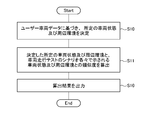
- the determination unit 12 determines a predetermined vehicle state and surrounding environment based on the user vehicle data stored in the storage unit 11 (S10). For example, the determination unit 12 may determine the vehicle state and the surrounding environment when a trouble occurs in the vehicle used by the user as a predetermined vehicle state and the surrounding environment. In addition, the determination unit 12 may determine the vehicle state and the surrounding environment in which the appearance frequency in the user vehicle data is equal to or higher than the threshold value as the predetermined vehicle state and the surrounding environment.
- the calculation unit 13 calculates the degree of similarity between the predetermined vehicle condition and the surrounding environment determined in S10 and the vehicle condition and the surrounding environment shown in the scenario of the vehicle running test (S11).
- the output unit 14 outputs the calculation result of S11 (S12). As shown in FIG. 4, for example, the output unit 14 displays the degree of similarity between the predetermined vehicle state and the surrounding environment determined by the determination unit 12 and each of the plurality of scenarios of the vehicle running test.
- the determination unit 12 determines a predetermined vehicle state and surrounding environment based on the user vehicle data stored in the storage unit 11 (S20). For example, the determination unit 12 may determine the vehicle state and the surrounding environment when a trouble occurs in the vehicle used by the user as a predetermined vehicle state and the surrounding environment. In addition, the determination unit 12 may determine the vehicle state and the surrounding environment in which the appearance frequency in the user vehicle data is equal to or higher than the threshold value as the predetermined vehicle state and the surrounding environment.
- the calculation unit 13 calculates the degree of similarity between the predetermined vehicle condition and the surrounding environment determined in S20 and the vehicle condition and the surrounding environment shown in the scenario of the vehicle running test (S21). Next, the calculation unit 13 performs a vehicle running test in which the similarity with the predetermined vehicle state and the surrounding environment determined in S20 is equal to or higher than the reference value by comparing the calculated similarity with the preset reference value. Extract the scenario (S22).
- the output unit 14 outputs the extraction result of S22 (S23).
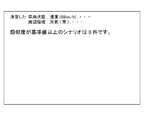
- the output unit 14 may output the information as shown in FIG. In the information, the number of extracted scenarios and the information for identifying the extracted scenarios are displayed. Then, when one of the displayed scenarios is selected, detailed information (vehicle status, details of the surrounding environment, etc.) of the scenario is displayed. On the other hand, if there is no vehicle driving test scenario in which the predetermined vehicle condition determined in S20 and the similarity with the surrounding environment are equal to or higher than the reference value, the output unit 14 may output the information as shown in FIG. good. The information indicates that there are no extracted scenarios.
- the processing device 10 can determine a predetermined vehicle state and surrounding environment in which it is desirable to perform a vehicle running test based on the user vehicle data generated when the user is actually using the vehicle. In this way, the processing device 10 can determine a predetermined vehicle state and surrounding environment in which it is desirable to perform a vehicle running test based on the user vehicle data. Therefore, the vehicle state and surrounding environment in which the vehicle running test should be truly performed can be determined. (Situations with high priority) can be determined accurately and with high efficiency.
- the processing device 10 determines, for example, the vehicle state and the surrounding environment when a trouble occurs in the vehicle used by the user, and the vehicle state and the surrounding environment appearing with a certain probability or more when the user is using the vehicle. , Can be determined as a predetermined vehicle condition and surrounding environment. According to such a processing device 10, it is possible to accurately and highly efficiently determine the vehicle state and the surrounding environment in which it is desirable to truly perform a vehicle running test.
- the processing device 10 determines the predetermined vehicle condition and surrounding environment for which it is desirable to perform a vehicle running test, and then calculates and outputs the similarity between the determined predetermined vehicle condition and surrounding environment and the existing scenario. can do. Further, the processing device 10 can determine whether there is a scenario in which the similarity is equal to or higher than the reference value, and output the result. According to such a processing device 10, the operator can easily recognize whether or not a scenario indicating a predetermined vehicle state and surrounding environment determined by the processing device 10 already exists, and whether or not to add a new scenario. Etc. can be determined.
- the processing device 10 can support the scenario creation of the vehicle running test.
- the processing device 10 of the present embodiment After determining a predetermined vehicle state and surrounding environment for which it is desirable to perform a vehicle running test based on the user vehicle data, the processing device 10 of the present embodiment states "the predetermined vehicle state and surrounding environment” and "an existing scenario”. It has a function to analyze the commonalities and differences with "" and output the result.
- the details of the above analysis process will be described separately for the case where there is a scenario in which the degree of similarity with the predetermined vehicle state and the surrounding environment is equal to or higher than the reference value and the case where there is no scenario.
- the calculation unit 13 extracts the difference between the vehicle condition and the surrounding environment shown in the scenario of the vehicle driving test in which the similarity with the predetermined vehicle condition and the surrounding environment is equal to or higher than the reference value, and the predetermined vehicle condition and the surrounding environment. do.
- the difference is that the values in the parameters of the vehicle condition and the surrounding environment are different from each other or the difference between the values is equal to or more than the threshold value.
- the output unit 14 outputs the above difference extracted by the calculation unit 13 as the calculation result of the calculation unit 13. As shown in FIG. 9, for example, the output unit 14 displays information for identifying a scenario in which the degree of similarity with the predetermined vehicle state and the surrounding environment determined by the determination unit 12 is equal to or higher than the reference value, and is associated with each scenario. The above differences may be displayed. In the case of the illustrated example, the temperature and humidity of the surrounding environment and the speed of the vehicle state are displayed as differences. When an input for selecting one of the displayed differences (parameters) is accepted, the output unit 14 may display the value of the selected parameter of the scenario.
- the calculation unit 13 extracts common points between the vehicle state and the surrounding environment shown in a predetermined number of scenarios from the one with the highest degree of similarity. What they have in common is that the values in the parameters of the vehicle condition and the surrounding environment match each other, or the difference is within the threshold value.
- the calculation unit 13 may extract parameters common to a predetermined ratio or more of the extracted scenarios as common points, or may use parameters common to all of the extracted predetermined number of scenarios as common points. It may be extracted.
- calculation unit 13 may extract points different from the predetermined vehicle state and the surrounding environment from the extracted common points.
- the output unit 14 outputs the above common points as the calculation result of the calculation unit 13. Further, the output unit 14 can output the points different from the predetermined vehicle state and the surrounding environment in the above common points as the calculation result of the calculation unit 13. As shown in FIG. 10, for example, the output unit 14 displays and displays information for identifying a predetermined number of scenarios from the one having the highest degree of similarity to the predetermined vehicle state and the surrounding environment determined by the determination unit 12. You may display the points that are different from the predetermined vehicle condition and the surrounding environment in the common points of the scenario. When the input for selecting one of the displayed parameters is received, the output unit 14 may display the value of the selected parameter of the displayed scenario.
- the determination unit 12 determines a predetermined vehicle state and surrounding environment based on the user vehicle data stored in the storage unit 11 (S30). For example, the determination unit 12 may determine the vehicle state and the surrounding environment when a trouble occurs in the vehicle used by the user as a predetermined vehicle state and the surrounding environment. In addition, the determination unit 12 may determine the vehicle state and the surrounding environment in which the appearance frequency in the user vehicle data is equal to or higher than the threshold value as the predetermined vehicle state and the surrounding environment.
- the calculation unit 13 calculates the degree of similarity between the predetermined vehicle state and the surrounding environment determined in S30 and the vehicle state and the surrounding environment shown in the vehicle running test scenario (S31).
- the calculation unit 13 performs a vehicle running test in which the similarity with the predetermined vehicle state and the surrounding environment determined in S30 is equal to or higher than the reference value by comparing the calculated similarity with the preset reference value. Extract the scenario (S32).
- the calculation unit 13 analyzes the data based on the extraction result (S33). Specifically, the calculation unit 13 analyzes the commonalities and differences between the predetermined vehicle state and surrounding environment and the existing scenario. As described above, the calculation unit 13 performs the analysis by a method according to each of the cases where there is a vehicle running test scenario in which the degree of similarity with the predetermined vehicle state and the surrounding environment is equal to or higher than the reference value.
- the output unit 14 outputs the calculation result of S331 (S34).
- the output unit 14 may display information for identifying a scenario in which the degree of similarity with a predetermined vehicle state and the surrounding environment is equal to or higher than a reference value, and may display the differences between them.
- the output unit 14 displays information for identifying a predetermined number of scenarios from the one having the highest degree of similarity to the predetermined vehicle state and the surrounding environment, and the common points of the displayed scenarios. The points different from the predetermined vehicle condition and the surrounding environment may be displayed.
- the processing device 10 of the present embodiment According to the processing device 10 of the present embodiment described above, the same effects as those of the first embodiment are realized. Further, according to the processing device 10 of the present embodiment, after determining a predetermined vehicle state and surrounding environment in which it is desirable to perform a vehicle running test based on the user vehicle data, "the predetermined vehicle state and surrounding environment" is added. It is possible to analyze commonalities and differences with "existing scenarios” and output the results. Based on the information, the operator can easily grasp the differences and commonalities between the scenario to be examined (scenario defined in the predetermined vehicle condition and surrounding environment) and the existing scenario, and new the scenario to be examined. It is possible to consider whether or not to add it as a scenario, and whether or not to modify the scenario to be examined.
- the processing device according to 1 or 2, wherein the predetermined vehicle state and the surrounding environment are the vehicle state and the surrounding environment in which the appearance frequency in the user vehicle data is equal to or higher than the threshold value. 4. The process according to any one of 1 to 3, wherein the output means outputs the presence or absence of the scenario of the vehicle running test in which the similarity with the predetermined vehicle state and the surrounding environment is equal to or higher than the reference value as the calculation result. Device. 5. When there is no scenario of the vehicle running test in which the similarity with the predetermined vehicle condition and the surrounding environment is equal to or higher than the reference value.
- the calculation means extracts common points of the vehicle state and the surrounding environment shown in a predetermined number of the vehicle driving test scenarios from the one having the higher degree of similarity.
- the processing device wherein the output means outputs the common points as the calculation result.
- the calculation means extracts points different from the predetermined vehicle state and surrounding environment from the common points, and extracts the points different from the predetermined vehicle state and the surrounding environment.
- the processing device 5, wherein the output means outputs, as the calculation result, points different from the predetermined vehicle state and the surrounding environment in the common points.
- the calculation means includes the vehicle state and the surrounding environment shown in the scenario of the vehicle running test in which the similarity with the predetermined vehicle state and the surrounding environment is equal to or higher than the reference value, and the predetermined vehicle state and the surrounding environment.
- the computer Determine the predetermined vehicle condition and surrounding environment based on the user vehicle data indicating the vehicle condition and surrounding environment when the user is using the vehicle. The degree of similarity between the predetermined vehicle condition and surrounding environment and the vehicle condition and surrounding environment shown in the vehicle driving test scenario is calculated. A processing method that outputs the calculation result.
- Computer A determination means for determining a predetermined vehicle condition and surrounding environment based on user vehicle data indicating the vehicle condition and surrounding environment when the user is using the vehicle.
- a calculation means for calculating the degree of similarity between the predetermined vehicle condition and the surrounding environment and the vehicle condition and the surrounding environment shown in the scenario of the vehicle driving test.
- An output means that outputs the calculation result by the calculation means, A program that functions as.
Landscapes
- Physics & Mathematics (AREA)
- General Physics & Mathematics (AREA)
- Traffic Control Systems (AREA)
Abstract
本発明は、ユーザが車両を利用している時の車両状態及び周辺環境を示すユーザ車両データに基づき所定の車両状態及び周辺環境を決定する決定部(12)と、所定の車両状態及び周辺環境と、車両走行テストのシナリオで示される車両状態及び周辺環境との類似度を算出する算出部(13)と、算出部(13)による算出結果を出力する出力部(14)と、を有する処理装置(10)を提供する。
Description
本発明は、処理装置、処理方法及びプログラムに関する。
特許文献1乃至4は、車両の走行データ、環境データ等を収集する技術を開示している。
車両メーカは、複数のシナリオで車両走行テストを実施する。シナリオは、車両状態や周辺環境等で定義される。あらゆる状況を模擬したシナリオで車両走行テストを行うのが望ましいが、時間や人手等の制約からすべての状況を網羅するのは難しい。このため、優先度が高い状況を模擬したシナリオで車両走行テストを行うのが望ましい。しかしながら、優先度が高く、かつ、既存のシナリオに存在しない状況を人手で見つけるのは容易でない。特許文献1乃至4はいずれも、当該課題を記載も示唆もしていない。
本発明は、車両走行テストのシナリオ作成を支援する技術を提供することを課題とする。
本発明によれば、
ユーザが車両を利用している時の車両状態及び周辺環境を示すユーザ車両データに基づき所定の車両状態及び周辺環境を決定する決定手段と、
前記所定の車両状態及び周辺環境と、車両走行テストのシナリオで示される車両状態及び周辺環境との類似度を算出する算出手段と、
前記算出手段による算出結果を出力する出力手段と、
を有する処理装置が提供される。
ユーザが車両を利用している時の車両状態及び周辺環境を示すユーザ車両データに基づき所定の車両状態及び周辺環境を決定する決定手段と、
前記所定の車両状態及び周辺環境と、車両走行テストのシナリオで示される車両状態及び周辺環境との類似度を算出する算出手段と、
前記算出手段による算出結果を出力する出力手段と、
を有する処理装置が提供される。
また、本発明によれば、
コンピュータが、
ユーザが車両を利用している時の車両状態及び周辺環境を示すユーザ車両データに基づき所定の車両状態及び周辺環境を決定し、
前記所定の車両状態及び周辺環境と、車両走行テストのシナリオで示される車両状態及び周辺環境との類似度を算出し、
算出結果を出力する処理方法が提供される。
コンピュータが、
ユーザが車両を利用している時の車両状態及び周辺環境を示すユーザ車両データに基づき所定の車両状態及び周辺環境を決定し、
前記所定の車両状態及び周辺環境と、車両走行テストのシナリオで示される車両状態及び周辺環境との類似度を算出し、
算出結果を出力する処理方法が提供される。
また、本発明によれば、
コンピュータを、
ユーザが車両を利用している時の車両状態及び周辺環境を示すユーザ車両データに基づき所定の車両状態及び周辺環境を決定する決定手段、
前記所定の車両状態及び周辺環境と、車両走行テストのシナリオで示される車両状態及び周辺環境との類似度を算出する算出手段、
前記算出手段による算出結果を出力する出力手段、
として機能させるプログラムが提供される。
コンピュータを、
ユーザが車両を利用している時の車両状態及び周辺環境を示すユーザ車両データに基づき所定の車両状態及び周辺環境を決定する決定手段、
前記所定の車両状態及び周辺環境と、車両走行テストのシナリオで示される車両状態及び周辺環境との類似度を算出する算出手段、
前記算出手段による算出結果を出力する出力手段、
として機能させるプログラムが提供される。
本発明によれば、車両走行テストのシナリオ作成を支援する技術が実現される。
<第1の実施形態>
「概要」
まず、本実施形態の処理装置の概要を説明する。処理装置は、様々な場面で生成された車両関連データを収集して一元管理し、それらを特徴的な手法で処理して、開発者のサポート等を行う。具体的には、処理装置は、車両走行テストに関する車両関連データ、及び、ユーザ利用時に生成された車両関連データを特徴的な手法で処理することで、車両走行テストのシナリオ作成を支援する。
「概要」
まず、本実施形態の処理装置の概要を説明する。処理装置は、様々な場面で生成された車両関連データを収集して一元管理し、それらを特徴的な手法で処理して、開発者のサポート等を行う。具体的には、処理装置は、車両走行テストに関する車両関連データ、及び、ユーザ利用時に生成された車両関連データを特徴的な手法で処理することで、車両走行テストのシナリオ作成を支援する。
車両走行テストに関する車両関連データは、車両走行テストのシナリオ(以下、単に「シナリオ」という場合がある)を示す情報を含む。車両関連データは、各シナリオでの車両走行テストの結果をさらに含んでもよい。車両走行テストのシナリオは、車両状態や周辺環境で定義される。
ユーザ利用時に生成された車両関連データは、ユーザが車両を利用している時の車両状態や周辺環境を示すデータであり、例えば車両に搭載されたセンサー等で生成される。
処理装置は、ユーザ利用時に生成された車両関連データに基づき、車両走行テストを行うのが望ましい所定の車両状態及び周辺環境(以下、単に「所定の車両状態及び周辺環境」という場合がある)を決定する。所定の車両状態及び周辺環境は、例えば、車両にトラブルが発生した時(その前後)の車両関連データで示される車両状態及び周辺環境であってもよいし、ユーザが車両を利用している時に頻出する車両状態及び周辺環境であってもよいし、その他であってもよい。
そして、処理装置は、「決定した所定の車両状態及び周辺環境」と「車両走行テストのシナリオで示される車両状態及び周辺環境」との類似度を算出し、その結果を出力する。
このように、処理装置は、ユーザ利用時に生成された車両関連データに基づき、車両走行テストを行うのが望ましい所定の車両状態及び周辺環境(優先度が高い状況)を決定することができる。そして、処理装置は、決定した所定の車両状態及び周辺環境を示すシナリオ又は類似するシナリオが存在するか確認し、その結果を出力することができる。処理装置は、このような処理で、車両走行テストのシナリオ作成を支援する。
「ハードウエア構成」
次に、処理装置のハードウエア構成の一例を説明する。処理装置の各機能部は、任意のコンピュータのCPU(Central Processing Unit)、メモリ、メモリにロードされるプログラム、そのプログラムを格納するハードディスク等の記憶ユニット(あらかじめ装置を出荷する段階から格納されているプログラムのほか、CD(Compact Disc)等の記憶媒体やインターネット上のサーバ等からダウンロードされたプログラムをも格納できる)、ネットワーク接続用インターフェイスを中心にハードウエアとソフトウエアの任意の組合せによって実現される。そして、その実現方法、装置にはいろいろな変形例があることは、当業者には理解されるところである。
次に、処理装置のハードウエア構成の一例を説明する。処理装置の各機能部は、任意のコンピュータのCPU(Central Processing Unit)、メモリ、メモリにロードされるプログラム、そのプログラムを格納するハードディスク等の記憶ユニット(あらかじめ装置を出荷する段階から格納されているプログラムのほか、CD(Compact Disc)等の記憶媒体やインターネット上のサーバ等からダウンロードされたプログラムをも格納できる)、ネットワーク接続用インターフェイスを中心にハードウエアとソフトウエアの任意の組合せによって実現される。そして、その実現方法、装置にはいろいろな変形例があることは、当業者には理解されるところである。
図1は、処理装置のハードウエア構成を例示するブロック図である。図1に示すように、処理装置は、プロセッサ1A、メモリ2A、入出力インターフェイス3A、周辺回路4A、バス5Aを有する。周辺回路4Aには、様々なモジュールが含まれる。処理装置は周辺回路4Aを有さなくてもよい。なお、処理装置は物理的及び/又は論理的に分かれた複数の装置で構成されてもよいし、物理的及び/又は論理的に一体となった1つの装置で構成されてもよい。処理装置が物理的及び/又は論理的に分かれた複数の装置で構成される場合、複数の装置各々が上記ハードウエア構成を備えることができる。
バス5Aは、プロセッサ1A、メモリ2A、周辺回路4A及び入出力インターフェイス3Aが相互にデータを送受信するためのデータ伝送路である。プロセッサ1Aは、例えばCPU、GPU(Graphics Processing Unit)などの演算処理装置である。メモリ2Aは、例えばRAM(Random Access Memory)やROM(Read Only Memory)などのメモリである。入出力インターフェイス3Aは、入力装置、外部装置、外部サーバ、外部センサー、カメラ等から情報を取得するためのインターフェイスや、出力装置、外部装置、外部サーバ等に情報を出力するためのインターフェイスなどを含む。入力装置は、例えばキーボード、マウス、マイク、物理ボタン、タッチパネル等である。出力装置は、例えばディスプレイ、スピーカ、プリンター、メーラ等である。プロセッサ1Aは、各モジュールに指令を出し、それらの演算結果をもとに演算を行うことができる。
「機能構成」
次に、処理装置の機能構成を説明する。図2に示すように、処理装置10は、記憶部11と、決定部12と、算出部13と、出力部14とを有する。
次に、処理装置の機能構成を説明する。図2に示すように、処理装置10は、記憶部11と、決定部12と、算出部13と、出力部14とを有する。
記憶部11は、車両関連データを記憶する。車両関連データは、走行テストデータ及びユーザ車両データを含む。
走行テストデータは、車両の走行テストに関するデータであり、各種データを含むことができる。走行テストデータは、車両走行テストの複数のシナリオ各々の内容を示す情報を含む。なお、走行テストデータは、各シナリオでの車両走行テストの結果を示すデータなどをさらに含んでもよい。
図3に、車両走行テストの複数のシナリオ各々の内容を示す情報の一例を模式的に示す。図示する情報では、複数のシナリオを互いに識別するシナリオ識別情報と、周辺環境に関する情報と、車両状態に関する情報とが互いに紐づけられている。周辺環境と車両状態とにより、シナリオの内容が定義される。なお、さらにその他の情報を用いてシナリオの内容が定義されてもよい。
周辺環境は、テスト実行時の車両の周辺の環境、より具体的にはテスト結果に影響を与える可能性がある因子を示し、例えば、天気、気温、湿度、車両が走行する道路の種類、車両の周囲における所定の対象物(他の車両、歩行者、信号機、電信柱など)の存在や状態等が例示される。
車両状態は、テスト実行時の車両の状態、より具体的にはテスト結果に影響を与える可能性がある因子を示し、例えば、図示するように速度、部品Aの温度、入力内容(制御入力、負荷入力等)等が例示される。
例えば、図3に示すシナリオ識別情報「A00001」で識別されるシナリオでは、天気「晴」、気温「20~25℃」、湿度「50~60%」、走行する道路「アスファルト」、車両の速度「50~60km/h」、部品Aの温度「X℃」等の条件下で車両走行テストを行うことが示されている。
ユーザ車両データは、ユーザが車両を利用している時の車両状態及び周辺環境を示すデータである。ユーザ車両データは、従来のあらゆる技術を利用して生成することができる。例えば、車両状態を示すデータは、車両に搭載されたセンサー等で生成されてもよい。また、周辺環境を示すデータは、車両に搭載されたセンサー(道路を撮影するカメラ、温度センサー、湿度センサー、周辺情報を取得するライダー等)で生成されてもよいし、他の手法(天気情報を記憶するサーバから取得等)で生成されてもよい。
ユーザ車両データは、車両走行テストのシナリオで示される複数のパラメータ(天気、気温、速度、部品A温度等)の中の全部のデータを有することが好ましい。しかし、走行テスト時に車両に搭載されるセンサーの種類と、販売される車両に搭載されるセンサーの種類は異なり得る。また、搭載されるセンサーの種類は車両ごとに異なり得る。このため、ユーザ車両データは、車両走行テストのシナリオで示される複数のパラメータの中の一部のデータのみを有してもよい。
ユーザ車両データは、常時インターネットに接続されたコネクテッドカーからインターネット経由で外部装置に送信されたデータであってもよい。コネクテッドカーは、車両にトラブルが発生した時(その前後)のユーザ車両データを外部装置に送信してもよいし、特にトラブルが発生しない時に所定の時間間隔でユーザ車両データを外部装置に送信してもよい。
その他、各車両で収集されたユーザ車両データは、各車両内の記憶装置内に蓄積されてもよい。車両にトラブルが発生した時(その前後)のユーザ車両データが車両の記憶装置内に蓄積されてもよいし、特にトラブルが発生しない時に所定の時間間隔でユーザ車両データが車両の記憶装置内に蓄積されてもよい。そして、任意のタイミングかつ任意の手段で、当該ユーザ車両データが処理装置10に入力され、記憶部11に記憶されてもよい。
図2に戻り、決定部12は、記憶部11に記憶されているユーザ車両データに基づき、車両走行テストを行うのが望ましい所定の車両状態及び周辺環境を決定する。以下、決定部12による決定処理例を説明する。
「決定処理例1」
所定の車両状態及び周辺環境は、例えば、車両にトラブルが発生した時(その前後)の車両関連データで示される車両状態及び周辺環境であってもよい。ここで、決定部12が、記憶部11に記憶されているユーザ車両データの中から車両にトラブルが発生した時(その前後)のデータを抽出する処理の一例を説明する。
所定の車両状態及び周辺環境は、例えば、車両にトラブルが発生した時(その前後)の車両関連データで示される車両状態及び周辺環境であってもよい。ここで、決定部12が、記憶部11に記憶されているユーザ車両データの中から車両にトラブルが発生した時(その前後)のデータを抽出する処理の一例を説明する。
例えば、コネクテッドカーは、車両にトラブルが発生した時、トラブル発生を示す情報と、その時(その前後)のユーザ車両データとを外部装置に送信してもよい。そして、当該処理でコネクテッドカーが送信したユーザ車両データは、トラブル発生時のデータである旨を示す情報を紐づけて、記憶部11に記憶されてもよい。この場合、決定部12は、記憶部11に記憶されているユーザ車両データの中から、トラブル発生時のデータである旨を示す情報を紐づけられているデータを抽出する。
その他、記憶部11に記憶されているユーザ車両データは、データ作成時の日時情報、データ作成時の車両の位置情報、車両識別情報、車両の車種情報等の各種索引情報が紐づけられていてもよい。そして、決定部12は、オペレータが指定したトラブル発生時のデータを特定する検索条件に基づき記憶部11に記憶されているユーザ車両データを検索することで、車両にトラブルが発生した時(その前後)の車両関連データを抽出してもよい。上記検索条件は、例えば上記索引情報を論理演算子で繋いだ式とすることができる。
「決定処理例2」
所定の車両状態及び周辺環境は、例えば、ユーザ車両データにおける出現頻度が閾値以上である車両状態及び周辺環境であってもよい。決定部12は、記憶部11に記憶されているユーザ車両データを解析することで、出現頻度が閾値以上である車両状態及び周辺環境を特定することができる。出現頻度は、出現率、出現時間等で示される。出現率は、例えばユーザ車両データの長さT[min]に対する各車両状態及び周辺環境が現れる長さt[min]の割合で示されてもよいし、その他の手法で示されてもよい。出現時間は、その状況(その車両状態及びその周辺環境)が出現している時間の長さで示される。
所定の車両状態及び周辺環境は、例えば、ユーザ車両データにおける出現頻度が閾値以上である車両状態及び周辺環境であってもよい。決定部12は、記憶部11に記憶されているユーザ車両データを解析することで、出現頻度が閾値以上である車両状態及び周辺環境を特定することができる。出現頻度は、出現率、出現時間等で示される。出現率は、例えばユーザ車両データの長さT[min]に対する各車両状態及び周辺環境が現れる長さt[min]の割合で示されてもよいし、その他の手法で示されてもよい。出現時間は、その状況(その車両状態及びその周辺環境)が出現している時間の長さで示される。
算出部13は、決定部12が決定した所定の車両状態及び周辺環境と、車両走行テストのシナリオで示される車両状態及び周辺環境との類似度を算出する。類似度は、車両状態に関する各種パラメータ(速度、部品A温度等)の値や、周辺環境に関する各種パラメータ(天気、気温等)の値に基づき算出される。類似度を算出するアルゴリズムの詳細は設計的事項である。
また、算出部13は、算出した類似度と予め設定された基準値との大小比較により、決定部12が決定した所定の車両状態及び周辺環境との類似度が基準値以上である車両走行テストのシナリオの有無を判断してもよい。なお、「所定の車両状態及び周辺環境との類似度が基準値以上である車両走行テストのシナリオ」は、各シナリオで示される車両状態及び周辺環境と、所定の車両状態及び周辺環境との類似度が基準値以上であるシナリオである(以下同様)。
出力部14は、算出部13による算出結果を出力する。出力部14は、ディスプレイ、投影装置、メーラ、プリンター、スピーカ等のあらゆる出力装置を介して、算出結果を出力することができる。
出力部14は、例えば図4に示すように、決定部12が決定した所定の車両状態及び周辺環境と、車両走行テストの複数のシナリオ各々との類似度を表示(一覧表示、順次表示等)してもよい。
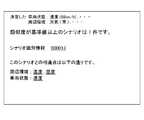
その他、出力部14は、図5及び図6に示すように、決定部12が決定した所定の車両状態及び周辺環境との類似度が基準値以上である車両走行テストのシナリオの有無を示してもよい。なお、図5に示すように、所定の車両状態及び周辺環境との類似度が基準値以上である車両走行テストのシナリオがある場合、そのシナリオを識別する情報を表示してもよい。図では所定の車両状態及び周辺環境との類似度が基準値以上である車両走行テストのシナリオが1つだけである場合の例を示しているが、条件を満たすシナリオが複数存在し、複数のシナリオ各々を識別する情報が表示されてもよい(一覧表示、順次表示等)。そして、表示されたシナリオの中の1つが選択されると、そのシナリオの詳細情報(車両状態、周辺環境の詳細等)が表示されてもよい。
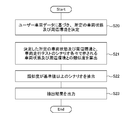
次に、図7のフローチャートを用いて、処理装置10の処理の流れの一例を説明する。
まず、決定部12は、記憶部11に記憶されているユーザ車両データに基づき所定の車両状態及び周辺環境を決定する(S10)。例えば、決定部12は、ユーザが利用している車両にトラブルが発生した時の車両状態及び周辺環境を、所定の車両状態及び周辺環境として決定してもよい。その他、決定部12は、ユーザ車両データにおける出現頻度が閾値以上である車両状態及び周辺環境を、所定の車両状態及び周辺環境として決定してもよい。
次いで、算出部13は、S10で決定された所定の車両状態及び周辺環境と、車両走行テストのシナリオで示される車両状態及び周辺環境との類似度を算出する(S11)。
そして、出力部14は、S11の算出結果を出力する(S12)。出力部14は、例えば図4に示すように、決定部12が決定した所定の車両状態及び周辺環境と、車両走行テストの複数のシナリオ各々との類似度を表示する。
次に、図8のフローチャートを用いて、処理装置10の処理の流れの他の一例を説明する。
まず、決定部12は、記憶部11に記憶されているユーザ車両データに基づき所定の車両状態及び周辺環境を決定する(S20)。例えば、決定部12は、ユーザが利用している車両にトラブルが発生した時の車両状態及び周辺環境を、所定の車両状態及び周辺環境として決定してもよい。その他、決定部12は、ユーザ車両データにおける出現頻度が閾値以上である車両状態及び周辺環境を、所定の車両状態及び周辺環境として決定してもよい。
次いで、算出部13は、S20で決定された所定の車両状態及び周辺環境と、車両走行テストのシナリオで示される車両状態及び周辺環境との類似度を算出する(S21)。次いで、算出部13は、算出した類似度と予め設定された基準値との大小比較により、S20で決定された所定の車両状態及び周辺環境との類似度が基準値以上である車両走行テストのシナリオを抽出する(S22)。
そして、出力部14は、S22の抽出結果を出力する(S23)。S20で決定された所定の車両状態及び周辺環境との類似度が基準値以上である車両走行テストのシナリオがある場合、出力部14は、図5に示すような情報を出力してもよい。当該情報では、抽出されたシナリオの件数と、抽出されたシナリオを識別する情報とが表示されている。そして、表示されたシナリオの中の1つが選択されると、そのシナリオの詳細情報(車両状態、周辺環境の詳細等)が表示される。一方、S20で決定された所定の車両状態及び周辺環境との類似度が基準値以上である車両走行テストのシナリオがない場合、出力部14は、図6に示すような情報を出力してもよい。当該情報では、抽出されたシナリオがない旨が示されている。
「作用効果」
処理装置10は、実際にユーザが車両を利用している時に生成されたユーザ車両データに基づき、車両走行テストを行うのが望ましい所定の車両状態及び周辺環境を決定することができる。このように、処理装置10は、ユーザ車両データに基づき車両走行テストを行うのが望ましい所定の車両状態及び周辺環境を決定することができるので、真に車両走行テストを行うべき車両状態及び周辺環境(優先度が高い状況)を精度よく高効率に決定することができる。
処理装置10は、実際にユーザが車両を利用している時に生成されたユーザ車両データに基づき、車両走行テストを行うのが望ましい所定の車両状態及び周辺環境を決定することができる。このように、処理装置10は、ユーザ車両データに基づき車両走行テストを行うのが望ましい所定の車両状態及び周辺環境を決定することができるので、真に車両走行テストを行うべき車両状態及び周辺環境(優先度が高い状況)を精度よく高効率に決定することができる。
また、処理装置10は、例えばユーザが利用している車両にトラブルが発生した時の車両状態及び周辺環境や、ユーザが車両を利用している時に一定確率以上で出現する車両状態及び周辺環境を、所定の車両状態及び周辺環境として決定することができる。このような処理装置10によれば、真に車両走行テストを行うのが望ましい車両状態及び周辺環境を精度よく高効率に決定することができる。
また、処理装置10は、車両走行テストを行うのが望ましい所定の車両状態及び周辺環境を決定した後、決定した所定の車両状態及び周辺環境とすでに存在するシナリオとの類似度を算出し、出力することができる。また、処理装置10は、その類似度が基準値以上のシナリオが存在するか判断し、その結果を出力することができる。このような処理装置10によれば、オペレータは、処理装置10が決定した所定の車両状態及び周辺環境を示すシナリオがすでに存在するか否かを容易に認識し、新たなシナリオを追加するか否か等を決定することができる。
このように、処理装置10は、車両走行テストのシナリオ作成を支援することができる。
<第2の実施形態>
本実施形態の処理装置10は、ユーザ車両データに基づき車両走行テストを行うのが望ましい所定の車両状態及び周辺環境を決定した後、「その所定の車両状態及び周辺環境」と、「既存のシナリオ」との共通点や相違点を解析し、その結果を出力する機能を有する。以下、所定の車両状態及び周辺環境との類似度が基準値以上であるシナリオがある場合とない場合とに分けて、上記解析処理の詳細を説明する。
本実施形態の処理装置10は、ユーザ車両データに基づき車両走行テストを行うのが望ましい所定の車両状態及び周辺環境を決定した後、「その所定の車両状態及び周辺環境」と、「既存のシナリオ」との共通点や相違点を解析し、その結果を出力する機能を有する。以下、所定の車両状態及び周辺環境との類似度が基準値以上であるシナリオがある場合とない場合とに分けて、上記解析処理の詳細を説明する。
「所定の車両状態及び周辺環境との類似度が基準値以上である車両走行テストのシナリオがある場合」
算出部13は、所定の車両状態及び周辺環境との類似度が基準値以上である車両走行テストのシナリオで示される車両状態及び周辺環境と、所定の車両状態及び周辺環境との相違点を抽出する。相違点は、車両状態や周辺環境のパラメータの中の値が互いに異なる又は値の差が閾値以上のものである。
算出部13は、所定の車両状態及び周辺環境との類似度が基準値以上である車両走行テストのシナリオで示される車両状態及び周辺環境と、所定の車両状態及び周辺環境との相違点を抽出する。相違点は、車両状態や周辺環境のパラメータの中の値が互いに異なる又は値の差が閾値以上のものである。
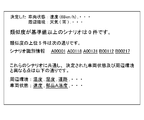
出力部14は、算出部13の算出結果として、算出部13が抽出した上記相違点を出力する。出力部14は、例えば図9に示すように、決定部12が決定した所定の車両状態及び周辺環境との類似度が基準値以上のシナリオを識別する情報を表示するとともに、各シナリオに対応付けて上記相違点を表示してもよい。図示する例の場合、周辺環境の温度及び湿度と、車両状態の速度とが相違点として表示されている。なお、表示された相違点(パラメータ)の中から1つを選択する入力を受付けると、出力部14は、そのシナリオの選択されたパラメータの値を表示してもよい。
「所定の車両状態及び周辺環境との類似度が基準値以上である車両走行テストのシナリオがない場合」
算出部13は、類似度が高い方から所定数のシナリオで示される車両状態及び周辺環境の共通点を抽出する。共通点は、車両状態や周辺環境のパラメータの中の値が互いに一致する、又は、その差が閾値以内のものである。算出部13は、抽出した所定数のシナリオの中の所定割合以上のシナリオに共通するパラメータを共通点として抽出してもよいし、抽出した所定数のシナリオの全部に共通するパラメータを共通点として抽出してもよい。
算出部13は、類似度が高い方から所定数のシナリオで示される車両状態及び周辺環境の共通点を抽出する。共通点は、車両状態や周辺環境のパラメータの中の値が互いに一致する、又は、その差が閾値以内のものである。算出部13は、抽出した所定数のシナリオの中の所定割合以上のシナリオに共通するパラメータを共通点として抽出してもよいし、抽出した所定数のシナリオの全部に共通するパラメータを共通点として抽出してもよい。
また、算出部13は、抽出した共通点の中から所定の車両状態及び周辺環境と相違する点を抽出してもよい。
出力部14は、算出部13の算出結果として、上記共通点を出力する。また、出力部14は、算出部13の算出結果として、上記共通点の中の所定の車両状態及び周辺環境と相違する点を出力することができる。出力部14は、例えば図10に示すように、決定部12が決定した所定の車両状態及び周辺環境との類似度が高い方から所定数のシナリオを識別する情報を表示するとともに、表示されたシナリオの共通点の中の所定の車両状態及び周辺環境と相違する点を表示してもよい。なお、表示されたパラメータの中から1つを選択する入力を受付けると、出力部14は、表示されたシナリオの選択されたパラメータの値を表示してもよい。
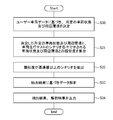
次に、図11のフローチャートを用いて、処理装置10の処理の流れの一例を説明する。
まず、決定部12は、記憶部11に記憶されているユーザ車両データに基づき所定の車両状態及び周辺環境を決定する(S30)。例えば、決定部12は、ユーザが利用している車両にトラブルが発生した時の車両状態及び周辺環境を、所定の車両状態及び周辺環境として決定してもよい。その他、決定部12は、ユーザ車両データにおける出現頻度が閾値以上である車両状態及び周辺環境を、所定の車両状態及び周辺環境として決定してもよい。
次いで、算出部13は、S30で決定された所定の車両状態及び周辺環境と、車両走行テストのシナリオで示される車両状態及び周辺環境との類似度を算出する(S31)。次いで、算出部13は、算出した類似度と予め設定された基準値との大小比較により、S30で決定された所定の車両状態及び周辺環境との類似度が基準値以上である車両走行テストのシナリオを抽出する(S32)。
その後、算出部13は、抽出結果に基づきデータを解析する(S33)。具体的には、算出部13は、所定の車両状態及び周辺環境と、既存のシナリオとの共通点や相違点を解析する。算出部13は、上述の通り、所定の車両状態及び周辺環境との類似度が基準値以上である車両走行テストのシナリオがある場合及びない場合各々に応じた方法で当該解析を行う。
そして、出力部14は、S331の算出結果を出力する(S34)。出力部14は、例えば図9に示すように、所定の車両状態及び周辺環境との類似度が基準値以上のシナリオを識別する情報を表示するとともに、それらの相違点を表示してもよい。また、出力部14は、例えば図10に示すように、所定の車両状態及び周辺環境との類似度が高い方から所定数のシナリオを識別する情報を表示するとともに、表示されたシナリオの共通点の中の所定の車両状態及び周辺環境と相違する点を表示してもよい。
処理装置10のその他の構成は、第1の実施形態と同様である。
以上説明した本実施形態の処理装置10によれば、第1の実施形態と同様の作用効果が実現される。また、本実施形態の処理装置10によれば、ユーザ車両データに基づき車両走行テストを行うのが望ましい所定の車両状態及び周辺環境を決定した後、「その所定の車両状態及び周辺環境」と、「既存のシナリオ」との共通点や相違点を解析し、その結果を出力することができる。オペレータは当該情報に基づき、検討対象のシナリオ(所定の車両状態及び周辺環境で定義されるシナリオ)と、既存のシナリオとの相違点や共通点を容易に把握し、検討対象のシナリオを新たなシナリオとして追加するか否か、また、検討対象のシナリオを修正するか否か等を検討することができる。
以上、実施形態(及び実施例)を参照して本願発明を説明したが、本願発明は上記実施形態(及び実施例)に限定されるものではない。本願発明の構成や詳細には、本願発明のスコープ内で当業者が理解し得る様々な変更をすることができる。
上記の実施形態の一部又は全部は、以下の付記のようにも記載されうるが、以下には限定されない。
1. ユーザが車両を利用している時の車両状態及び周辺環境を示すユーザ車両データに基づき所定の車両状態及び周辺環境を決定する決定手段と、
前記所定の車両状態及び周辺環境と、車両走行テストのシナリオで示される車両状態及び周辺環境との類似度を算出する算出手段と、
前記算出手段による算出結果を出力する出力手段と、
を有する処理装置。
2. 前記所定の車両状態及び周辺環境は、前記ユーザが利用している車両にトラブルが発生した時の車両状態及び周辺環境である1に記載の処理装置。
3. 前記所定の車両状態及び周辺環境は、前記ユーザ車両データにおける出現頻度が閾値以上である車両状態及び周辺環境である1又は2に記載の処理装置。
4. 前記出力手段は、前記算出結果として、前記所定の車両状態及び周辺環境との前記類似度が基準値以上である前記車両走行テストのシナリオの有無を出力する1から3のいずれかに記載の処理装置。
5. 前記所定の車両状態及び周辺環境との前記類似度が前記基準値以上である前記車両走行テストのシナリオがない場合、
前記算出手段は、前記類似度が高い方から所定数の前記車両走行テストのシナリオで示される車両状態及び周辺環境の共通点を抽出し、
前記出力手段は、前記算出結果として、前記共通点を出力する4に記載の処理装置。
6. 前記算出手段は、前記共通点の中から前記所定の車両状態及び周辺環境と相違する点を抽出し、
前記出力手段は、前記算出結果として、前記共通点の中の前記所定の車両状態及び周辺環境と相違する点を出力する5に記載の処理装置。
7. 前記所定の車両状態及び周辺環境との前記類似度が前記基準値以上である前記車両走行テストのシナリオがある場合、
前記算出手段は、前記所定の車両状態及び周辺環境との前記類似度が前記基準値以上である前記車両走行テストのシナリオで示される車両状態及び周辺環境と、前記所定の車両状態及び周辺環境との相違点を抽出し、
前記出力手段は、前記算出結果として、前記相違点を出力する4から6のいずれかに記載の処理装置。
8. コンピュータが、
ユーザが車両を利用している時の車両状態及び周辺環境を示すユーザ車両データに基づき所定の車両状態及び周辺環境を決定し、
前記所定の車両状態及び周辺環境と、車両走行テストのシナリオで示される車両状態及び周辺環境との類似度を算出し、
算出結果を出力する処理方法。
9. コンピュータを、
ユーザが車両を利用している時の車両状態及び周辺環境を示すユーザ車両データに基づき所定の車両状態及び周辺環境を決定する決定手段、
前記所定の車両状態及び周辺環境と、車両走行テストのシナリオで示される車両状態及び周辺環境との類似度を算出する算出手段、
前記算出手段による算出結果を出力する出力手段、
として機能させるプログラム。
1. ユーザが車両を利用している時の車両状態及び周辺環境を示すユーザ車両データに基づき所定の車両状態及び周辺環境を決定する決定手段と、
前記所定の車両状態及び周辺環境と、車両走行テストのシナリオで示される車両状態及び周辺環境との類似度を算出する算出手段と、
前記算出手段による算出結果を出力する出力手段と、
を有する処理装置。
2. 前記所定の車両状態及び周辺環境は、前記ユーザが利用している車両にトラブルが発生した時の車両状態及び周辺環境である1に記載の処理装置。
3. 前記所定の車両状態及び周辺環境は、前記ユーザ車両データにおける出現頻度が閾値以上である車両状態及び周辺環境である1又は2に記載の処理装置。
4. 前記出力手段は、前記算出結果として、前記所定の車両状態及び周辺環境との前記類似度が基準値以上である前記車両走行テストのシナリオの有無を出力する1から3のいずれかに記載の処理装置。
5. 前記所定の車両状態及び周辺環境との前記類似度が前記基準値以上である前記車両走行テストのシナリオがない場合、
前記算出手段は、前記類似度が高い方から所定数の前記車両走行テストのシナリオで示される車両状態及び周辺環境の共通点を抽出し、
前記出力手段は、前記算出結果として、前記共通点を出力する4に記載の処理装置。
6. 前記算出手段は、前記共通点の中から前記所定の車両状態及び周辺環境と相違する点を抽出し、
前記出力手段は、前記算出結果として、前記共通点の中の前記所定の車両状態及び周辺環境と相違する点を出力する5に記載の処理装置。
7. 前記所定の車両状態及び周辺環境との前記類似度が前記基準値以上である前記車両走行テストのシナリオがある場合、
前記算出手段は、前記所定の車両状態及び周辺環境との前記類似度が前記基準値以上である前記車両走行テストのシナリオで示される車両状態及び周辺環境と、前記所定の車両状態及び周辺環境との相違点を抽出し、
前記出力手段は、前記算出結果として、前記相違点を出力する4から6のいずれかに記載の処理装置。
8. コンピュータが、
ユーザが車両を利用している時の車両状態及び周辺環境を示すユーザ車両データに基づき所定の車両状態及び周辺環境を決定し、
前記所定の車両状態及び周辺環境と、車両走行テストのシナリオで示される車両状態及び周辺環境との類似度を算出し、
算出結果を出力する処理方法。
9. コンピュータを、
ユーザが車両を利用している時の車両状態及び周辺環境を示すユーザ車両データに基づき所定の車両状態及び周辺環境を決定する決定手段、
前記所定の車両状態及び周辺環境と、車両走行テストのシナリオで示される車両状態及び周辺環境との類似度を算出する算出手段、
前記算出手段による算出結果を出力する出力手段、
として機能させるプログラム。
Claims (9)
- ユーザが車両を利用している時の車両状態及び周辺環境を示すユーザ車両データに基づき所定の車両状態及び周辺環境を決定する決定手段と、
前記所定の車両状態及び周辺環境と、車両走行テストのシナリオで示される車両状態及び周辺環境との類似度を算出する算出手段と、
前記算出手段による算出結果を出力する出力手段と、
を有する処理装置。 - 前記所定の車両状態及び周辺環境は、前記ユーザが利用している車両にトラブルが発生した時の車両状態及び周辺環境である請求項1に記載の処理装置。
- 前記所定の車両状態及び周辺環境は、前記ユーザ車両データにおける出現頻度が閾値以上である車両状態及び周辺環境である請求項1又は2に記載の処理装置。
- 前記出力手段は、前記算出結果として、前記所定の車両状態及び周辺環境との前記類似度が基準値以上である前記車両走行テストのシナリオの有無を出力する請求項1から3のいずれか1項に記載の処理装置。
- 前記所定の車両状態及び周辺環境との前記類似度が前記基準値以上である前記車両走行テストのシナリオがない場合、
前記算出手段は、前記類似度が高い方から所定数の前記車両走行テストのシナリオで示される車両状態及び周辺環境の共通点を抽出し、
前記出力手段は、前記算出結果として、前記共通点を出力する請求項4に記載の処理装置。 - 前記算出手段は、前記共通点の中から前記所定の車両状態及び周辺環境と相違する点を抽出し、
前記出力手段は、前記算出結果として、前記共通点の中の前記所定の車両状態及び周辺環境と相違する点を出力する請求項5に記載の処理装置。 - 前記所定の車両状態及び周辺環境との前記類似度が前記基準値以上である前記車両走行テストのシナリオがある場合、
前記算出手段は、前記所定の車両状態及び周辺環境との前記類似度が前記基準値以上である前記車両走行テストのシナリオで示される車両状態及び周辺環境と、前記所定の車両状態及び周辺環境との相違点を抽出し、
前記出力手段は、前記算出結果として、前記相違点を出力する請求項4から6のいずれか1項に記載の処理装置。 - コンピュータが、
ユーザが車両を利用している時の車両状態及び周辺環境を示すユーザ車両データに基づき所定の車両状態及び周辺環境を決定し、
前記所定の車両状態及び周辺環境と、車両走行テストのシナリオで示される車両状態及び周辺環境との類似度を算出し、
算出結果を出力する処理方法。 - コンピュータを、
ユーザが車両を利用している時の車両状態及び周辺環境を示すユーザ車両データに基づき所定の車両状態及び周辺環境を決定する決定手段、
前記所定の車両状態及び周辺環境と、車両走行テストのシナリオで示される車両状態及び周辺環境との類似度を算出する算出手段、
前記算出手段による算出結果を出力する出力手段、
として機能させるプログラム。
Priority Applications (3)
| Application Number | Priority Date | Filing Date | Title |
|---|---|---|---|
| PCT/JP2020/012306 WO2021186673A1 (ja) | 2020-03-19 | 2020-03-19 | 処理装置、処理方法及びプログラム |
| JP2022507962A JP7334848B2 (ja) | 2020-03-19 | 2020-03-19 | 処理装置、処理方法及びプログラム |
| US17/801,463 US20230092026A1 (en) | 2020-03-19 | 2020-03-19 | Processing device, processing method, and non-transitory storage medium |
Applications Claiming Priority (1)
| Application Number | Priority Date | Filing Date | Title |
|---|---|---|---|
| PCT/JP2020/012306 WO2021186673A1 (ja) | 2020-03-19 | 2020-03-19 | 処理装置、処理方法及びプログラム |
Publications (1)
| Publication Number | Publication Date |
|---|---|
| WO2021186673A1 true WO2021186673A1 (ja) | 2021-09-23 |
Family
ID=77771965
Family Applications (1)
| Application Number | Title | Priority Date | Filing Date |
|---|---|---|---|
| PCT/JP2020/012306 Ceased WO2021186673A1 (ja) | 2020-03-19 | 2020-03-19 | 処理装置、処理方法及びプログラム |
Country Status (3)
| Country | Link |
|---|---|
| US (1) | US20230092026A1 (ja) |
| JP (1) | JP7334848B2 (ja) |
| WO (1) | WO2021186673A1 (ja) |
Cited By (1)
| Publication number | Priority date | Publication date | Assignee | Title |
|---|---|---|---|---|
| WO2024029257A1 (ja) * | 2022-08-01 | 2024-02-08 | 株式会社堀場製作所 | 検証サイクル生成方法、検証サイクル生成システム、及び、検証サイクル生成プログラム |
Citations (4)
| Publication number | Priority date | Publication date | Assignee | Title |
|---|---|---|---|---|
| JP2008216113A (ja) * | 2007-03-06 | 2008-09-18 | Toyota Infotechnology Center Co Ltd | 不具合情報集約システムおよび車両 |
| EP2246686A1 (en) * | 2009-05-01 | 2010-11-03 | Froude Hofmann Limited | Vehicle test apparatus and method |
| JP2015219161A (ja) * | 2014-05-19 | 2015-12-07 | 株式会社堀場製作所 | 車両試験システム、試験条件データ生成装置及び試験条件データ生成プログラム |
| JP2017522212A (ja) * | 2014-04-30 | 2017-08-10 | アーファオエル・リスト・ゲーエムベーハー | 車両のエネルギー効率を分析するためのシステムおよび方法 |
Family Cites Families (5)
| Publication number | Priority date | Publication date | Assignee | Title |
|---|---|---|---|---|
| JP7149098B2 (ja) * | 2018-04-24 | 2022-10-06 | 株式会社日立製作所 | 予兆診断装置及び方法 |
| US10648889B2 (en) * | 2018-04-30 | 2020-05-12 | Nxp B.V. | Monitor system for detecting defeat devices in engine control units |
| US11579614B2 (en) * | 2018-07-16 | 2023-02-14 | Optumsoft, Inc. | Incorporating rules into complex automated decision making |
| WO2020052344A1 (zh) * | 2018-09-12 | 2020-03-19 | 华为技术有限公司 | 一种智能驾驶方法及智能驾驶系统 |
| WO2020172295A1 (en) * | 2019-02-19 | 2020-08-27 | Optumsoft, Inc. | Using a lane-structured dynamic environment for rule-based automated control |
-
2020
- 2020-03-19 WO PCT/JP2020/012306 patent/WO2021186673A1/ja not_active Ceased
- 2020-03-19 US US17/801,463 patent/US20230092026A1/en not_active Abandoned
- 2020-03-19 JP JP2022507962A patent/JP7334848B2/ja active Active
Patent Citations (4)
| Publication number | Priority date | Publication date | Assignee | Title |
|---|---|---|---|---|
| JP2008216113A (ja) * | 2007-03-06 | 2008-09-18 | Toyota Infotechnology Center Co Ltd | 不具合情報集約システムおよび車両 |
| EP2246686A1 (en) * | 2009-05-01 | 2010-11-03 | Froude Hofmann Limited | Vehicle test apparatus and method |
| JP2017522212A (ja) * | 2014-04-30 | 2017-08-10 | アーファオエル・リスト・ゲーエムベーハー | 車両のエネルギー効率を分析するためのシステムおよび方法 |
| JP2015219161A (ja) * | 2014-05-19 | 2015-12-07 | 株式会社堀場製作所 | 車両試験システム、試験条件データ生成装置及び試験条件データ生成プログラム |
Cited By (1)
| Publication number | Priority date | Publication date | Assignee | Title |
|---|---|---|---|---|
| WO2024029257A1 (ja) * | 2022-08-01 | 2024-02-08 | 株式会社堀場製作所 | 検証サイクル生成方法、検証サイクル生成システム、及び、検証サイクル生成プログラム |
Also Published As
| Publication number | Publication date |
|---|---|
| US20230092026A1 (en) | 2023-03-23 |
| JPWO2021186673A1 (ja) | 2021-09-23 |
| JP7334848B2 (ja) | 2023-08-29 |
Similar Documents
| Publication | Publication Date | Title |
|---|---|---|
| CN107908619B (zh) | 基于舆情监控的处理方法、装置、终端及计算机存储介质 | |
| CN103930885B (zh) | 测量网页渲染时间 | |
| CN109344906B (zh) | 基于机器学习的用户风险分类方法、装置、介质及设备 | |
| CN108667855B (zh) | 网络流量异常监测方法、装置、电子设备及存储介质 | |
| CN110059468A (zh) | 一种小程序风险识别方法和装置 | |
| CN111355628B (zh) | 一种模型训练方法、业务识别方法、装置和电子装置 | |
| US10990669B2 (en) | Vehicle intrusion detection system training data generation | |
| CN110959153A (zh) | 使用灵活后处理的应用分析 | |
| CN113051543B (zh) | 在大数据环境下的云服务安全校验方法及云服务系统 | |
| US8705800B2 (en) | Profiling activity through video surveillance | |
| CN113139025A (zh) | 一种威胁情报的评价方法、装置、设备及存储介质 | |
| CN115576600B (zh) | 基于代码变更的差异处理方法、装置、终端及存储介质 | |
| CN113936232A (zh) | 一种碎屏识别方法、装置、设备和存储介质 | |
| CN115314413B (zh) | 一种can信号测试方法及装置 | |
| CN107193747B (zh) | 代码测试方法、装置和计算机设备 | |
| CN114969759A (zh) | 工业机器人系统的资产安全评估方法、装置、终端及介质 | |
| JP7334848B2 (ja) | 処理装置、処理方法及びプログラム | |
| CN104281258A (zh) | 使用图像捕获设备调整透明显示器 | |
| US11762939B2 (en) | Measure GUI response time | |
| CN106651183B (zh) | 工控系统的通信数据安全审计方法及装置 | |
| CN117241276B (zh) | 一种面向移动应用的检测工具及检测方法、系统及设备 | |
| CN112881052A (zh) | 构建移动机器人的工作场景的方法及装置 | |
| CN118427075A (zh) | 一种软件测试方法、装置、存储介质及电子设备 | |
| US11797707B2 (en) | Non-transitory computer-readable recording medium having stored therein information processing program, information processing method, and information processing apparatus | |
| CN111179010A (zh) | 不合理价格产品的在线公证方法、系统、设备和介质 |
Legal Events
| Date | Code | Title | Description |
|---|---|---|---|
| 121 | Ep: the epo has been informed by wipo that ep was designated in this application |
Ref document number: 20925696 Country of ref document: EP Kind code of ref document: A1 |
|
| ENP | Entry into the national phase |
Ref document number: 2022507962 Country of ref document: JP Kind code of ref document: A |
|
| NENP | Non-entry into the national phase |
Ref country code: DE |
|
| 122 | Ep: pct application non-entry in european phase |
Ref document number: 20925696 Country of ref document: EP Kind code of ref document: A1 |