WO2021186672A1 - 画像処理方法 - Google Patents
画像処理方法 Download PDFInfo
- Publication number
- WO2021186672A1 WO2021186672A1 PCT/JP2020/012305 JP2020012305W WO2021186672A1 WO 2021186672 A1 WO2021186672 A1 WO 2021186672A1 JP 2020012305 W JP2020012305 W JP 2020012305W WO 2021186672 A1 WO2021186672 A1 WO 2021186672A1
- Authority
- WO
- WIPO (PCT)
- Prior art keywords
- image
- candidate
- image processing
- target
- images
- Prior art date
- Legal status (The legal status is an assumption and is not a legal conclusion. Google has not performed a legal analysis and makes no representation as to the accuracy of the status listed.)
- Ceased
Links
Images








Classifications
-
- G—PHYSICS
- G01—MEASURING; TESTING
- G01S—RADIO DIRECTION-FINDING; RADIO NAVIGATION; DETERMINING DISTANCE OR VELOCITY BY USE OF RADIO WAVES; LOCATING OR PRESENCE-DETECTING BY USE OF THE REFLECTION OR RERADIATION OF RADIO WAVES; ANALOGOUS ARRANGEMENTS USING OTHER WAVES
- G01S13/00—Systems using the reflection or reradiation of radio waves, e.g. radar systems; Analogous systems using reflection or reradiation of waves whose nature or wavelength is irrelevant or unspecified
- G01S13/88—Radar or analogous systems specially adapted for specific applications
- G01S13/89—Radar or analogous systems specially adapted for specific applications for mapping or imaging
- G01S13/90—Radar or analogous systems specially adapted for specific applications for mapping or imaging using synthetic aperture techniques, e.g. synthetic aperture radar [SAR] techniques
- G01S13/9021—SAR image post-processing techniques
- G01S13/9027—Pattern recognition for feature extraction
-
- G—PHYSICS
- G06—COMPUTING OR CALCULATING; COUNTING
- G06F—ELECTRIC DIGITAL DATA PROCESSING
- G06F18/00—Pattern recognition
- G06F18/40—Software arrangements specially adapted for pattern recognition, e.g. user interfaces or toolboxes therefor
-
- G—PHYSICS
- G01—MEASURING; TESTING
- G01S—RADIO DIRECTION-FINDING; RADIO NAVIGATION; DETERMINING DISTANCE OR VELOCITY BY USE OF RADIO WAVES; LOCATING OR PRESENCE-DETECTING BY USE OF THE REFLECTION OR RERADIATION OF RADIO WAVES; ANALOGOUS ARRANGEMENTS USING OTHER WAVES
- G01S13/00—Systems using the reflection or reradiation of radio waves, e.g. radar systems; Analogous systems using reflection or reradiation of waves whose nature or wavelength is irrelevant or unspecified
- G01S13/88—Radar or analogous systems specially adapted for specific applications
- G01S13/89—Radar or analogous systems specially adapted for specific applications for mapping or imaging
- G01S13/90—Radar or analogous systems specially adapted for specific applications for mapping or imaging using synthetic aperture techniques, e.g. synthetic aperture radar [SAR] techniques
- G01S13/9021—SAR image post-processing techniques
-
- G—PHYSICS
- G06—COMPUTING OR CALCULATING; COUNTING
- G06F—ELECTRIC DIGITAL DATA PROCESSING
- G06F18/00—Pattern recognition
- G06F18/20—Analysing
- G06F18/21—Design or setup of recognition systems or techniques; Extraction of features in feature space; Blind source separation
- G06F18/214—Generating training patterns; Bootstrap methods, e.g. bagging or boosting
-
- G—PHYSICS
- G06—COMPUTING OR CALCULATING; COUNTING
- G06F—ELECTRIC DIGITAL DATA PROCESSING
- G06F18/00—Pattern recognition
- G06F18/20—Analysing
- G06F18/21—Design or setup of recognition systems or techniques; Extraction of features in feature space; Blind source separation
- G06F18/2163—Partitioning the feature space
-
- G—PHYSICS
- G06—COMPUTING OR CALCULATING; COUNTING
- G06T—IMAGE DATA PROCESSING OR GENERATION, IN GENERAL
- G06T3/00—Geometric image transformations in the plane of the image
- G06T3/40—Scaling of whole images or parts thereof, e.g. expanding or contracting
-
- G—PHYSICS
- G06—COMPUTING OR CALCULATING; COUNTING
- G06T—IMAGE DATA PROCESSING OR GENERATION, IN GENERAL
- G06T7/00—Image analysis
- G06T7/70—Determining position or orientation of objects or cameras
- G06T7/73—Determining position or orientation of objects or cameras using feature-based methods
- G06T7/74—Determining position or orientation of objects or cameras using feature-based methods involving reference images or patches
-
- G—PHYSICS
- G06—COMPUTING OR CALCULATING; COUNTING
- G06V—IMAGE OR VIDEO RECOGNITION OR UNDERSTANDING
- G06V10/00—Arrangements for image or video recognition or understanding
- G06V10/20—Image preprocessing
- G06V10/25—Determination of region of interest [ROI] or a volume of interest [VOI]
-
- G—PHYSICS
- G06—COMPUTING OR CALCULATING; COUNTING
- G06V—IMAGE OR VIDEO RECOGNITION OR UNDERSTANDING
- G06V10/00—Arrangements for image or video recognition or understanding
- G06V10/70—Arrangements for image or video recognition or understanding using pattern recognition or machine learning
- G06V10/74—Image or video pattern matching; Proximity measures in feature spaces
- G06V10/75—Organisation of the matching processes, e.g. simultaneous or sequential comparisons of image or video features; Coarse-fine approaches, e.g. multi-scale approaches; using context analysis; Selection of dictionaries
- G06V10/759—Region-based matching
-
- G—PHYSICS
- G06—COMPUTING OR CALCULATING; COUNTING
- G06V—IMAGE OR VIDEO RECOGNITION OR UNDERSTANDING
- G06V20/00—Scenes; Scene-specific elements
- G06V20/70—Labelling scene content, e.g. deriving syntactic or semantic representations
-
- G—PHYSICS
- G06—COMPUTING OR CALCULATING; COUNTING
- G06T—IMAGE DATA PROCESSING OR GENERATION, IN GENERAL
- G06T2207/00—Indexing scheme for image analysis or image enhancement
- G06T2207/10—Image acquisition modality
- G06T2207/10032—Satellite or aerial image; Remote sensing
- G06T2207/10044—Radar image
-
- G—PHYSICS
- G06—COMPUTING OR CALCULATING; COUNTING
- G06T—IMAGE DATA PROCESSING OR GENERATION, IN GENERAL
- G06T2207/00—Indexing scheme for image analysis or image enhancement
- G06T2207/10—Image acquisition modality
- G06T2207/10068—Endoscopic image
-
- G—PHYSICS
- G06—COMPUTING OR CALCULATING; COUNTING
- G06T—IMAGE DATA PROCESSING OR GENERATION, IN GENERAL
- G06T2207/00—Indexing scheme for image analysis or image enhancement
- G06T2207/20—Special algorithmic details
- G06T2207/20081—Training; Learning
Definitions
- the present invention relates to an image processing method, an image processing system, and a program.
- an object of the present invention is an image processing method and an image processing system that can solve the above-mentioned problems that the accuracy of annotation is lowered when an annotation is manually performed on an image. , To provide the program.
- the image processing method which is one embodiment of the present invention, is A candidate image that is an image of a candidate region specified by a preset standard is extracted from the target image that is the target of annotation processing, and a correspondence corresponding to the candidate region is obtained from a reference image that is an image corresponding to the target image. Extract the corresponding image, which is the image of the area, The candidate image and the corresponding image are displayed so that they can be compared with each other. Accepts input of input information for annotation processing for the candidate image. It takes the configuration.
- the image processing apparatus which is one embodiment of the present invention is A candidate image that is an image of a candidate region specified by a preset standard is extracted from the target image that is the target of annotation processing, and a correspondence corresponding to the candidate region is obtained from a reference image that is an image corresponding to the target image.
- An extraction means that extracts the corresponding image that is an image of the area,
- a display means for displaying the candidate image and the corresponding image so that they can be compared with each other.
- An input receiving means for accepting input of input information for annotation processing for the candidate image, and With, It takes the configuration.
- the program which is one form of the present invention is For information processing equipment A candidate image that is an image of a candidate region specified by a preset standard is extracted from the target image that is the target of annotation processing, and a correspondence corresponding to the candidate region is obtained from a reference image that is an image corresponding to the target image.
- An extraction means that extracts the corresponding image that is an image of the area,
- a display means for displaying the candidate image and the corresponding image so that they can be compared with each other.
- An input receiving means for accepting input of input information for annotation processing for the candidate image, and To realize, It takes the configuration.
- the present invention can suppress a decrease in the accuracy of annotation when manually annotating an image.
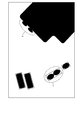
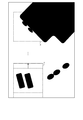
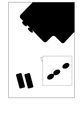
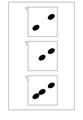
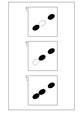
- FIG. 1 It is a figure which shows an example at the time of annotating an object in an image. It is a figure which shows an example at the time of annotating an object in an image. It is a block diagram which shows the structure of the image processing apparatus in Embodiment 1 of this invention. It is a figure which shows an example of the image processed by the image processing apparatus disclosed in FIG. It is a figure which shows an example of the image processed by the image processing apparatus disclosed in FIG. It is a figure which shows the state of the image processing by the image processing apparatus disclosed in FIG. It is a figure which shows the state of the image processing by the image processing apparatus disclosed in FIG. It is a figure which shows the state of the image processing by the image processing apparatus disclosed in FIG. It is a figure which shows the state of the image processing by the image processing apparatus disclosed in FIG.
- FIG. It is a figure which shows the state of the image processing by the image processing apparatus disclosed in FIG. It is a figure which shows the state of the image processing by the image processing apparatus disclosed in FIG. It is a figure which shows the state of the image processing by the image processing apparatus disclosed in FIG. It is a figure which shows the state of the image processing by the image processing apparatus disclosed in FIG. It is a figure which shows the state of the image processing by the image processing apparatus disclosed in FIG. It is a figure which shows the state of the image processing by the image processing apparatus disclosed in FIG. It is a figure which shows the state of the image processing by the image processing apparatus disclosed in FIG. It is a flowchart which shows the operation of the image processing apparatus disclosed in FIG. It is a block diagram which shows the hardware structure of the image processing apparatus in Embodiment 2 of this invention. It is a block diagram which shows the structure of the image processing apparatus in Embodiment 2 of this invention. It is a flowchart which shows the operation of the image processing apparatus in Embodiment 2 of this invention.
- FIG. 2 is a diagram for explaining the configuration of the image processing device
- FIGS. 3 to 8 are diagrams for explaining the processing operation of the image processing device.
- the image processing device 10 in the present embodiment is for assisting an operator to annotate an object with respect to an image such as a satellite image by a synthetic aperture radar (SAR: Synthetic Aperture Radar).
- SAR Synthetic Aperture Radar
- the image processing device 10 displays an image, which is a satellite image as shown in FIG. 1A, to the worker, and an annotation such that the worker surrounds an object such as a ship found from the image with a solid rectangular line. It has a function of accepting input of information and accumulating annotated images. Then, the annotated image is used as learning data for machine learning, for example.
- the image processed by the image processing device 10 is not limited to the satellite image obtained by the synthetic aperture radar, and may be any image.
- the image processing device 10 may be used for processing an image obtained by an endoscopic camera and annotating a specific medical condition portion in the image, or may be used for any purpose.
- the image processing device 10 is composed of one or a plurality of information processing devices including an arithmetic unit and a storage device. Then, as shown in FIG. 2, the image processing device 10 includes an area setting unit 11, an area extraction unit 12, an image display unit 13, and an annotation processing unit 14. The functions of the area setting unit 11, the area extraction unit 12, the image display unit 13, and the annotation processing unit 14 are realized by the arithmetic unit executing a program for realizing each function stored in the storage device. can do. Further, the image processing device 10 includes a target image storage unit 15, a reference image storage unit 16, an area information storage unit 17, and an annotation image storage unit 18. The target image storage unit 15, the reference image storage unit 16, the area information storage unit 17, and the annotation image storage unit 18 are configured by a storage device. Further, the image processing device 10 is connected to an input device 1 such as a keyboard and a mouse and a display device 2 such as a display. Hereinafter, each configuration will be described in detail.
- the target image storage unit 15 stores a target image (target image) to be annotated.
- the target image is, for example, a satellite image obtained by a synthetic aperture radar as shown in FIG. 3A, and is an image obtained by photographing the earth surface including the sea.
- the ship shown in the image can be an object to be annotated.
- the reference image storage unit 16 stores one or a plurality of reference images which are satellite images obtained by the synthetic aperture radar like the target image and which are images taken in the same area as the target image as shown in FIG. 3B. ing.
- the reference image is, for example, an image taken at a time different from the time when the target image was taken, and as an example, a plurality of images taken sequentially every other day from before the target image was taken. ..
- the reference image is an image obtained by capturing a region substantially the same as the target image, but the region is not limited to the exact same region and may be substantially the same, or the target is not substantially the same. It may be an image of an area corresponding to the area of the image.
- the area setting unit 11 sets a candidate area group which is an area in which an annotation object (for example, a ship) can be included in the target image and the reference image.
- an annotation object for example, a ship
- all the regions that may be the target object from the target image, the brightness value of the image, and the like are set as the candidate region group.
- the coordinates on the target image of the candidate region group are stored in the region information storage unit 17.
- the area setting unit 11 may set the candidate area group by another method. For example, using the map information, the area on the sea is set as the candidate area group from the position information of the area where the target image is taken. You may.
- the area setting unit 11 sets a candidate area to be enlarged and displayed when performing annotation on the target image based on the set candidate area group, and sets the coordinates on the target image as the area information storage unit.
- the area setting unit 11 sets a rectangular area smaller than the entire target image including at least a part of the area set as the candidate area group in the target image as a candidate area.
- the area setting unit 11 sets a plurality of candidate areas w so as to cover the entire area of the candidate area group of the target image, and sets the coordinates of each candidate area w on the target image in the area information storage unit 17.
- the area setting unit 11 sets a candidate area to be enlarged and displayed when performing annotation on the target image based on the set candidate area group, and sets the coordinates on the target image as the area information storage unit.
- the area setting unit 11 sets a plurality of different candidate areas w by sequentially sliding the candidate areas w set in the upper right corner area of the target image in the horizontal direction. As shown in FIG. 5C, a plurality of different candidate areas w are set by sliding the candidate area w in the vertical direction and further sliding the candidate area w in the horizontal direction. At this time, the candidate regions w may or may not overlap each other.
- the area extraction unit 12 extracts an image corresponding to the candidate area w set as described above from the target image and the reference image, respectively. At this time, the area extraction unit 12 identifies one candidate area w from the plurality of set candidate areas w, and reads out the coordinates of the candidate area on the target image from the area information storage unit 17. Then, the area extraction unit 12 extracts the image on the target image located in the specified candidate area w as the candidate image G1 from the read coordinates, and extracts the image on the reference image located in the specified candidate area w. It is extracted as the corresponding images G2 and G3. As an example, when the candidate region w shown in FIG.
- the region extraction unit 12 extracts an image on the target image in the same region as the candidate region w as the candidate image G1 and is the same as the candidate region w. Each image on the two reference images in the region is extracted as the corresponding images G2 and G3. In this way, the region extraction unit 12 extracts the candidate image G1 and the corresponding images G2 and G3, which are images of substantially the same region, from the target image and the reference image, respectively.
- the candidate image is described later.
- the candidate area w is changed to specify yet another candidate area w, and the candidate image G1 corresponding to the candidate area w and the corresponding images G2 and G3 are extracted.
- the area extraction unit 12 sequentially slides and specifies the candidate area w on the target image and the reference image, and sequentially extracts the candidate image G1 and the corresponding images G2 and G3 corresponding to the specified candidate area w, respectively. ..
- the image display unit 13 displays on the display device 2 so that the candidate image G1 corresponding to one candidate area w and the corresponding images G2 and G3 extracted as described above can be compared. Output.
- the image display unit 13 enlarges the candidate image G1 and the two corresponding images G2 and G3 and displays them side by side on one screen at the same time.
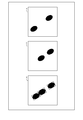
- the candidate image G1 and the corresponding images G2 and G3 so that they can be compared in this way, as shown by the dotted line in FIG. 6B, there are cases where each target object exists at the same position and cases where it does not actually exist. Therefore, the operator can recognize the existence of the three objects by comparing the three images.
- the image display unit 13 since the image display unit 13 has two reference images corresponding to one target image, three images are displayed at the same time. First, the candidate image G1 and one image are displayed. The corresponding image G2 may be displayed at the same time, and then the candidate image G1 and another corresponding image G3 may be displayed at the same time.
- the image display unit 13 is not necessarily limited to displaying the candidate image and the corresponding image at the same time, and by alternately displaying the candidate image and the corresponding image, the candidate image and the corresponding image can be compared. It may be displayed.
- the candidate images may be displayed and then the plurality of corresponding images may be sequentially displayed in the slide show format, and the candidate images and the corresponding images are repeatedly and alternately displayed.
- the corresponding image may be sequentially changed to another image and displayed.
- the image display unit 13 does not necessarily have to be enlarged when displaying the candidate image and the corresponding image.
- the annotation processing unit 14 receives annotation information which is input information for annotation processing input by an operator using the input device 1 for the candidate image G1 displayed on the display device 2. ..
- the annotation information input by the operator is information for identifying an object existing on the candidate image G1, and as an example, it is a rectangular diagram surrounding the object.
- the annotation processing unit 14 may accept the annotation information input to the candidate image G1 in the state of being displayed in comparison with the corresponding images G2 and G3, and only the candidate image G1 may be received. May be displayed separately to accept the annotation information entered on such a display.
- the annotation processing unit 14 displays the annotation information input from the worker on the candidate image G1.
- the annotation information by the operator is information for identifying an object existing on the candidate image G1, and as an example, it is a rectangular diagram surrounding the object. Therefore, as shown in FIG. 7A, the annotation processing unit 14 displays a rectangular line diagram input so as to surround the three objects on the candidate image G1. At this time, the annotation processing unit 14 also displays the information (corresponding input information) corresponding to the rectangular diagram displayed on the candidate image G1 on the corresponding images G2 and G3. For example, as shown in FIG. 7B, the annotation processing unit 14 has three rectangular diagrams having the same shape at the same positions as the three rectangular diagrams displayed on the candidate images G1 on the corresponding images G2 and G3. Is displayed.
- the annotation processing unit 14 associates the annotation information for identifying the object input on the candidate image G1 with the candidate image G1, generates it as an annotation image, and stores it in the annotation image storage unit 18.
- the annotation image generated and stored in this way is used, for example, as learning data for machine learning.
- the image processing device 10 changes the candidate area after generating the annotation image for the candidate image G1 of one candidate area on the target image as described above, and corresponds to the changed candidate area.
- An annotation image is generated for the candidate image G1 to be performed in the same manner as described above.
- the area setting unit 11 sets the next candidate area w by sliding the candidate area w as shown in FIGS. 5B and 5C.
- the area extraction unit 12 extracts the candidate image G1 and the corresponding images G2 and G3 corresponding to the next candidate area w from the target image and the reference image, respectively.
- the image display unit 13 displays the candidate image G1 and the corresponding images G2 and G3 on the display device 2 so that they can be compared, and the annotation processing unit 14 displays the candidate image G1 performed by the operator.
- the annotation information for is received, the annotation information is displayed on the candidate image G1, and the annotation image is generated and stored.
- the image processing device 10 generates and stores the annotation image.
- the annotation image may be an annotation information received on each candidate image G1 associated with the target image.
- the image processing device 10 sets a candidate area group, which is an area in which the object to be annotated can be included, among the target image and the reference image.
- the image processing device 10 since the object to be annotated is a ship, the image processing device 10 sets a region above the sea from the target image as a candidate region group as shown by the diagonal lines in FIG. Then, the image processing device 10 sets a candidate area to be enlarged and displayed when performing annotation on the target image based on the set candidate area group. For example, as shown by the dotted line in FIG.
- the image processing apparatus 10 uses a rectangular region smaller than the entire target image including at least a part of the region set as the candidate region group in the target image as the candidate region w. Set. At this time, as shown in FIGS. 5B and 5C, the image processing device 10 sequentially slides the candidate area w in the horizontal direction and the vertical direction to set a plurality of candidate areas w (step S1).
- the image processing device 10 selects one candidate area w from the plurality of set candidate areas w (step S2). Then, the image processing device 10 extracts the candidate image G1 and the corresponding images G2 and G3 corresponding to one selected candidate region w from the target image and the reference image, respectively (step S3).
- the image processing device 10 outputs to display on the display device 2 so that the candidate image G1 corresponding to one candidate area w and the corresponding images G2 and G3 extracted as described above can be compared. do.
- the image processing apparatus 10 enlarges the candidate image G1 and the two corresponding images G2 and G3 and displays them side by side on one screen at the same time (step S4).
- the worker performing the annotation can compare the candidate image G1 with the corresponding images G2 and G3. Therefore, for example, as shown by the dotted line in FIG. 6B, the operator can consider that each target object may or may not exist at the same position, and the object in the candidate image G1. Can be easily and accurately recognized.
- the image processing device 10 receives the annotation information for annotation processing input from the operator using the input device 1 for the candidate image G1 displayed on the display device 2 (step S5). Then, the image processing device 10 displays the received annotation information on the candidate image G1 as shown in FIG. 7A, and in some cases, also displays it on the corresponding images G2 and G3 as shown in FIG. 7B. After that, the image processing device 10 associates the input annotation information with the candidate image G1 and stores it as an annotation image.
- the image processing device 10 changes the candidate area w and performs the same annotation processing as described above until the annotation processing described above for all the candidate areas w set for the target image is completed (step S6). Then, the stored annotation image is used as learning data for machine learning, for example.
- the candidate image G1 which is a part on the target image to be annotated and a part on the reference image acquired at different times in the same area as the target image, and the candidate image is described above.
- Corresponding images G2 and G3 corresponding to are displayed so as to be comparable.
- the operator can easily and accurately recognize the object on the candidate image G1.
- the operator can easily and accurately annotate the object on the candidate image G1.
- the operator can annotate more easily and accurately by enlarging the candidate image G1 and the corresponding images G2 and G3 or displaying them side by side on the same screen at the same time. ..
- FIGS. 9 to 11 are block diagrams showing the configuration of the image processing device according to the second embodiment
- FIG. 11 is a flowchart showing the operation of the image processing device.
- the outline of the configuration of the image processing apparatus and the image processing method described in the above-described embodiment is shown.
- the image processing device 100 is composed of a general information processing device, and is equipped with the following hardware configuration as an example.
- -CPU Central Processing Unit
- -ROM Read Only Memory
- RAM Random Access Memory
- 103 storage device
- -Program group 104 loaded into RAM 103
- a storage device 105 that stores the program group 104.
- a drive device 106 that reads and writes the storage medium 110 external to the information processing device.
- -Communication interface 107 that connects to the communication network 111 outside the information processing device -I / O interface 108 for inputting / outputting data -Bus 109 connecting each component
- the image processing device 100 can construct and equip the extraction means 121, the display means 122, and the input receiving means 123 shown in FIG. 10 by acquiring the program group 104 by the CPU 101 and executing the program group 104.
- the program group 104 is stored in, for example, a storage device 105 or a ROM 102 in advance, and the CPU 101 loads the program group 104 into the RAM 103 and executes the program group 104 as needed. Further, the program group 104 may be supplied to the CPU 101 via the communication network 111, or may be stored in the storage medium 110 in advance, and the drive device 106 may read the program and supply the program to the CPU 101.
- the extraction means 121, the display means 122, and the input receiving means 123 described above may be constructed by a dedicated electronic circuit for realizing such means.
- FIG. 9 shows an example of the hardware configuration of the information processing device which is the image processing device 100, and the hardware configuration of the information processing device is not limited to the above case.
- the information processing device may be configured from a part of the above-described configuration, such as not having the drive device 106.
- the image processing device 100 executes the image processing method shown in the flowchart of FIG. 11 by the functions of the extraction means 121, the display means 122, and the input receiving means 123 constructed by the program as described above.
- the image processing device 100 is A candidate image that is an image of a candidate region specified by a preset standard is extracted from the target image that is the target of annotation processing, and a correspondence corresponding to the candidate region is obtained from a reference image that is an image corresponding to the target image.
- the corresponding image which is an image of the region, is extracted (step S101), and the image is extracted.
- the candidate image and the corresponding image are displayed so as to be comparable (step S102).
- Accepting input of input information for annotation processing for the candidate image (step S103), Is executed.
- the present invention is configured as described above, and is a part of a candidate image on the target image to be annotated and a part on the reference image corresponding to the target image, and corresponds to the candidate image.
- the corresponding image is displayed so that it can be compared.
- Non-temporary computer-readable media include various types of tangible storage mediums.
- Examples of non-temporary computer-readable media include magnetic recording media (eg, flexible disks, magnetic tapes, hard disk drives), magneto-optical recording media (eg, magneto-optical disks), CD-ROMs (Read Only Memory), CD-Rs, It includes a CD-R / W and a semiconductor memory (for example, a mask ROM, a PROM (Programmable ROM), an EPROM (Erasable PROM), a flash ROM, and a RAM (Random Access Memory)).
- a semiconductor memory for example, a mask ROM, a PROM (Programmable ROM), an EPROM (Erasable PROM), a flash ROM, and a RAM (Random Access Memory)
- the program may also be supplied to the computer by various types of temporary computer readable medium.
- temporary computer-readable media include electrical, optical, and electromagnetic waves.
- the temporary computer-readable medium can supply the program to the computer via a wired communication path such as an electric wire and an optical fiber, or a wireless communication path.
- the present invention is not limited to the above-described embodiment.
- Various changes that can be understood by those skilled in the art can be made within the scope of the invention of the present application in terms of the configuration and details of the invention of the present application.
- at least one or more of the functions of the extraction means, the display means, and the input receiving means described above may be executed by an information processing device installed and connected to any place on the network, that is, so-called. It may be run in cloud computing.
- a candidate image that is an image of a candidate region specified by a preset standard is extracted from the target image that is the target of annotation processing, and a correspondence corresponding to the candidate region is obtained from a reference image that is an image corresponding to the target image. Extract the corresponding image, which is the image of the area, The candidate image and the corresponding image are displayed so that they can be compared with each other. Accepts input of input information for annotation processing for the candidate image.
- Image processing method (Appendix 2) The image processing method described in Appendix 1 The candidate image and the corresponding image are enlarged and displayed so that they can be compared.
- Image processing method. (Appendix 3) The image processing method according to Appendix 1 or 2.
- the corresponding image is extracted from the reference image which is an image in substantially the same region as the target image.
- Image processing method. (Appendix 4) The image processing method according to any one of Supplementary Notes 1 to 3.
- the corresponding image is extracted from the reference image taken at a time different from the time when the target image was taken.
- Image processing method. (Appendix 5) The image processing method according to any one of Appendix 1 to 4.
- the candidate image and the corresponding image are displayed at the same time.
- Image processing method. (Appendix 6) The image processing method according to any one of Appendix 1 to 5.
- the corresponding image is extracted from each of the plurality of reference images corresponding to one candidate image, and the corresponding image is extracted.
- Image processing method (Appendix 7) The image processing method according to any one of Supplementary Notes 1 to 6. A plurality of the candidate images are extracted from the target image, and a plurality of the corresponding images corresponding to the plurality of candidate images are extracted from the reference image. The candidate images and the corresponding images corresponding to each other are sequentially displayed so as to be comparable. Image processing method. (Appendix 8) The image processing method described in Appendix 7 A region that can include an object to be annotated based on a preset reference is set from the target image, and a plurality of the candidate images are extracted based on the set region. Image processing method.
- An extraction means that extracts the corresponding image that is an image of the area, A display means for displaying the candidate image and the corresponding image so that they can be compared with each other.
- An input receiving means for accepting input of input information for annotation processing for the candidate image, and Image processing device equipped with.
- Appendix 12 The image processing apparatus according to Appendix 11, The display means enlarges and displays the candidate image and the corresponding image so that they can be compared with each other. Image processing device.
- Appendix 13 The image processing apparatus according to Appendix 11 or 12.
- the extraction means extracts the corresponding image from the reference image which is an image in substantially the same region as the target image.
- Image processing device Appendix 14
- the image processing apparatus according to any one of Appendix 11 to 13.
- the extraction means extracts the corresponding image from the reference image taken at a time different from the time when the target image was taken.
- Image processing device. (Appendix 15) The image processing apparatus according to any one of Supplementary note 11 to 14.
- the display means simultaneously displays the candidate image and the corresponding image.
- Image processing device. (Appendix 16) The image processing apparatus according to any one of Supplementary note 11 to 15.
- the extraction means extracts the corresponding image from each of the plurality of reference images corresponding to the candidate image.
- the display means displays a plurality of the corresponding images so as to be able to be compared with the one candidate image.
- Image processing device. (Appendix 17) The image processing apparatus according to any one of Supplementary note 11 to 16.
- the extraction means extracts a plurality of the candidate images from the target image, and extracts a plurality of the corresponding images corresponding to the plurality of the candidate images from the reference image.
- the display means sequentially displays the corresponding candidate images and the corresponding images so that they can be compared with each other.
- Image processing device (Appendix 18) The image processing apparatus according to Appendix 17, wherein The extraction means sets an area that can include an object to be annotated based on a preset reference from the target image, and extracts a plurality of the candidate images based on the set area.
- Image processing device Appendix 19
- the image processing apparatus according to any one of Supplementary note 11 to 18.
- the input receiving means displays the input information input to the candidate image on the candidate image, and displays the corresponding input information corresponding to the input information displayed on the candidate image on the corresponding image.
- Image processing device The image processing apparatus according to any one of Supplementary note 11 to 19.
- the input receiving means receives, as the input information, the input of information that identifies an object existing on the candidate image.
- Image processing device For information processing equipment A candidate image that is an image of a candidate region specified by a preset standard is extracted from the target image that is the target of annotation processing, and a correspondence corresponding to the candidate region is obtained from a reference image that is an image corresponding to the target image.
- An extraction means that extracts the corresponding image that is an image of the area, A display means for displaying the candidate image and the corresponding image so that they can be compared with each other.
- An input receiving means for accepting input of input information for annotation processing for the candidate image, and A storage medium that can be read by a computer that stores a program to realize the above.
- Input device 2 Display device 10 Image processing device 11 Area setting unit 12 Area extraction unit 13 Image display unit 14 Annotation processing unit 15 Target image storage unit 16 Reference image storage unit 17 Area information storage unit 18 Annotation image storage unit 100 Image processing device 101 CPU 102 ROM 103 RAM 104 Program group 105 Storage device 106 Drive device 107 Communication interface 108 Input / output interface 109 Bus 110 Storage medium 111 Communication network 121 Extraction means 122 Display means 123 Input reception means
Landscapes
- Engineering & Computer Science (AREA)
- Physics & Mathematics (AREA)
- Theoretical Computer Science (AREA)
- Remote Sensing (AREA)
- General Physics & Mathematics (AREA)
- Radar, Positioning & Navigation (AREA)
- Computer Vision & Pattern Recognition (AREA)
- Data Mining & Analysis (AREA)
- Artificial Intelligence (AREA)
- Evolutionary Computation (AREA)
- Bioinformatics & Cheminformatics (AREA)
- General Engineering & Computer Science (AREA)
- Bioinformatics & Computational Biology (AREA)
- Life Sciences & Earth Sciences (AREA)
- Evolutionary Biology (AREA)
- Multimedia (AREA)
- Electromagnetism (AREA)
- Computer Networks & Wireless Communication (AREA)
- Human Computer Interaction (AREA)
- Health & Medical Sciences (AREA)
- Computing Systems (AREA)
- Databases & Information Systems (AREA)
- General Health & Medical Sciences (AREA)
- Medical Informatics (AREA)
- Software Systems (AREA)
- Computational Linguistics (AREA)
- Processing Or Creating Images (AREA)
- Information Retrieval, Db Structures And Fs Structures Therefor (AREA)
- Image Analysis (AREA)
Priority Applications (3)
| Application Number | Priority Date | Filing Date | Title |
|---|---|---|---|
| JP2022507961A JP7459927B2 (ja) | 2020-03-19 | 2020-03-19 | 画像処理方法 |
| PCT/JP2020/012305 WO2021186672A1 (ja) | 2020-03-19 | 2020-03-19 | 画像処理方法 |
| US17/801,849 US12056216B2 (en) | 2020-03-19 | 2020-03-19 | Image processing method |
Applications Claiming Priority (1)
| Application Number | Priority Date | Filing Date | Title |
|---|---|---|---|
| PCT/JP2020/012305 WO2021186672A1 (ja) | 2020-03-19 | 2020-03-19 | 画像処理方法 |
Publications (1)
| Publication Number | Publication Date |
|---|---|
| WO2021186672A1 true WO2021186672A1 (ja) | 2021-09-23 |
Family
ID=77771963
Family Applications (1)
| Application Number | Title | Priority Date | Filing Date |
|---|---|---|---|
| PCT/JP2020/012305 Ceased WO2021186672A1 (ja) | 2020-03-19 | 2020-03-19 | 画像処理方法 |
Country Status (3)
| Country | Link |
|---|---|
| US (1) | US12056216B2 (https=) |
| JP (1) | JP7459927B2 (https=) |
| WO (1) | WO2021186672A1 (https=) |
Cited By (1)
| Publication number | Priority date | Publication date | Assignee | Title |
|---|---|---|---|---|
| WO2023053830A1 (ja) * | 2021-09-29 | 2023-04-06 | 日本電気株式会社 | 画像処理装置、画像処理方法および記録媒体 |
Families Citing this family (1)
| Publication number | Priority date | Publication date | Assignee | Title |
|---|---|---|---|---|
| US20220012518A1 (en) * | 2020-07-08 | 2022-01-13 | Here Global B.V. | Method and apparatus for presenting object annotation tasks |
Citations (5)
| Publication number | Priority date | Publication date | Assignee | Title |
|---|---|---|---|---|
| JP2012038244A (ja) * | 2010-08-11 | 2012-02-23 | Fuji Xerox Co Ltd | 学習モデル作成プログラム、画像識別情報付与プログラム、学習モデル作成装置及び画像識別情報付与装置 |
| JP2013117860A (ja) * | 2011-12-02 | 2013-06-13 | Canon Inc | 画像処理方法、画像処理装置、撮像装置およびプログラム |
| JP2018026104A (ja) * | 2016-08-04 | 2018-02-15 | パナソニック インテレクチュアル プロパティ コーポレーション オブ アメリカPanasonic Intellectual Property Corporation of America | アノテーション付与方法、アノテーション付与システム及びプログラム |
| JP2018101910A (ja) * | 2016-12-20 | 2018-06-28 | 日本電信電話株式会社 | 画像処理方法、画像処理装置及びプログラム |
| JP2019220073A (ja) * | 2018-06-22 | 2019-12-26 | 株式会社 日立産業制御ソリューションズ | 物体追跡装置、物体追跡システム、および物体追跡方法 |
Family Cites Families (5)
| Publication number | Priority date | Publication date | Assignee | Title |
|---|---|---|---|---|
| US8160400B2 (en) * | 2005-11-17 | 2012-04-17 | Microsoft Corporation | Navigating images using image based geometric alignment and object based controls |
| JP5246391B2 (ja) | 2007-08-17 | 2013-07-24 | 株式会社パスコ | 地物情報判読用画像生成方法およびプログラム |
| US9087401B1 (en) * | 2012-07-16 | 2015-07-21 | Google Inc. | Method of annotation across different locations |
| CN107689027A (zh) * | 2016-08-04 | 2018-02-13 | 松下电器(美国)知识产权公司 | 注释赋予方法、注释赋予系统以及存储有程序的记录介质 |
| US10997466B2 (en) * | 2019-06-21 | 2021-05-04 | Straxciro Pty. Ltd. | Method and system for image segmentation and identification |
-
2020
- 2020-03-19 JP JP2022507961A patent/JP7459927B2/ja active Active
- 2020-03-19 US US17/801,849 patent/US12056216B2/en active Active
- 2020-03-19 WO PCT/JP2020/012305 patent/WO2021186672A1/ja not_active Ceased
Patent Citations (5)
| Publication number | Priority date | Publication date | Assignee | Title |
|---|---|---|---|---|
| JP2012038244A (ja) * | 2010-08-11 | 2012-02-23 | Fuji Xerox Co Ltd | 学習モデル作成プログラム、画像識別情報付与プログラム、学習モデル作成装置及び画像識別情報付与装置 |
| JP2013117860A (ja) * | 2011-12-02 | 2013-06-13 | Canon Inc | 画像処理方法、画像処理装置、撮像装置およびプログラム |
| JP2018026104A (ja) * | 2016-08-04 | 2018-02-15 | パナソニック インテレクチュアル プロパティ コーポレーション オブ アメリカPanasonic Intellectual Property Corporation of America | アノテーション付与方法、アノテーション付与システム及びプログラム |
| JP2018101910A (ja) * | 2016-12-20 | 2018-06-28 | 日本電信電話株式会社 | 画像処理方法、画像処理装置及びプログラム |
| JP2019220073A (ja) * | 2018-06-22 | 2019-12-26 | 株式会社 日立産業制御ソリューションズ | 物体追跡装置、物体追跡システム、および物体追跡方法 |
Cited By (3)
| Publication number | Priority date | Publication date | Assignee | Title |
|---|---|---|---|---|
| WO2023053830A1 (ja) * | 2021-09-29 | 2023-04-06 | 日本電気株式会社 | 画像処理装置、画像処理方法および記録媒体 |
| JPWO2023053830A1 (https=) * | 2021-09-29 | 2023-04-06 | ||
| JP7694679B2 (ja) | 2021-09-29 | 2025-06-18 | 日本電気株式会社 | 画像処理装置、画像処理方法および画像処理プログラム |
Also Published As
| Publication number | Publication date |
|---|---|
| US12056216B2 (en) | 2024-08-06 |
| JPWO2021186672A1 (https=) | 2021-09-23 |
| JP7459927B2 (ja) | 2024-04-02 |
| US20230081660A1 (en) | 2023-03-16 |
Similar Documents
| Publication | Publication Date | Title |
|---|---|---|
| CN111902712B (zh) | 异常检查装置及异常检查方法 | |
| US6714689B1 (en) | Image synthesizing method | |
| JP6455010B2 (ja) | 情報処理装置、情報処理方法、およびプログラム | |
| JP2022541977A (ja) | 画像のラベリング方法、装置、電子機器及び記憶媒体 | |
| JPWO2018037689A1 (ja) | 画像処理装置 | |
| US11922659B2 (en) | Coordinate calculation apparatus, coordinate calculation method, and computer-readable recording medium | |
| US20210304471A1 (en) | Image processing apparatus, image processing method, and non-transitory computer-readable storage medium | |
| JP7694679B2 (ja) | 画像処理装置、画像処理方法および画像処理プログラム | |
| US11416978B2 (en) | Image processing apparatus, control method and non-transitory computer-readable recording medium therefor | |
| JP7459927B2 (ja) | 画像処理方法 | |
| CN115048283A (zh) | 页面测试方法、装置、设备、存储介质及程序 | |
| JP2022110885A (ja) | 画像処理装置、画像処理方法、およびプログラム | |
| JP6579727B1 (ja) | 動体検出装置、動体検出方法、動体検出プログラム | |
| JP4321251B2 (ja) | 合成画像を生成・表示する装置及び方法 | |
| CN104660866B (zh) | 运动检测系统和方法 | |
| US11830177B2 (en) | Image processing apparatus, control method and non-transitory computer-readable recording medium therefor | |
| JP2020057298A (ja) | 判定装置、判定方法及び判定プログラム | |
| CN111435969B (zh) | 图像处理装置及其控制方法、记录介质和信息处理系统 | |
| US10380463B2 (en) | Image processing device, setting support method, and non-transitory computer-readable media | |
| US20230103768A1 (en) | Placement method | |
| JP7537518B2 (ja) | 画像処理装置、画像処理方法および画像処理プログラム | |
| US10567632B2 (en) | Non-transitory computer-readable storage medium, image processing method, and image processing apparatus | |
| JP4707735B2 (ja) | 情報処理装置、撮像装置、画像表示方法、記憶媒体、並びにプログラム | |
| CN115003583B (zh) | 试验辅助方法,试验辅助装置以及存储介质 | |
| JP2011124955A (ja) | 画像処理方法及び画像処理装置 |
Legal Events
| Date | Code | Title | Description |
|---|---|---|---|
| 121 | Ep: the epo has been informed by wipo that ep was designated in this application |
Ref document number: 20926131 Country of ref document: EP Kind code of ref document: A1 |
|
| ENP | Entry into the national phase |
Ref document number: 2022507961 Country of ref document: JP Kind code of ref document: A |
|
| NENP | Non-entry into the national phase |
Ref country code: DE |
|
| 122 | Ep: pct application non-entry in european phase |
Ref document number: 20926131 Country of ref document: EP Kind code of ref document: A1 |