WO2021181699A1 - 位置評価装置及び位置評価システム - Google Patents
位置評価装置及び位置評価システム Download PDFInfo
- Publication number
- WO2021181699A1 WO2021181699A1 PCT/JP2020/011253 JP2020011253W WO2021181699A1 WO 2021181699 A1 WO2021181699 A1 WO 2021181699A1 JP 2020011253 W JP2020011253 W JP 2020011253W WO 2021181699 A1 WO2021181699 A1 WO 2021181699A1
- Authority
- WO
- WIPO (PCT)
- Prior art keywords
- information
- emotion
- position evaluation
- unit
- subject
- Prior art date
- Legal status (The legal status is an assumption and is not a legal conclusion. Google has not performed a legal analysis and makes no representation as to the accuracy of the status listed.)
- Ceased
Links
Images







Classifications
-
- A—HUMAN NECESSITIES
- A61—MEDICAL OR VETERINARY SCIENCE; HYGIENE
- A61B—DIAGNOSIS; SURGERY; IDENTIFICATION
- A61B5/00—Measuring for diagnostic purposes; Identification of persons
- A61B5/16—Devices for psychotechnics; Testing reaction times ; Devices for evaluating the psychological state
- A61B5/18—Devices for psychotechnics; Testing reaction times ; Devices for evaluating the psychological state for vehicle drivers or machine operators
-
- A—HUMAN NECESSITIES
- A61—MEDICAL OR VETERINARY SCIENCE; HYGIENE
- A61B—DIAGNOSIS; SURGERY; IDENTIFICATION
- A61B5/00—Measuring for diagnostic purposes; Identification of persons
- A61B5/02—Detecting, measuring or recording for evaluating the cardiovascular system, e.g. pulse, heart rate, blood pressure or blood flow
- A61B5/024—Measuring pulse rate or heart rate
- A61B5/02438—Measuring pulse rate or heart rate with portable devices, e.g. worn by the patient
-
- A—HUMAN NECESSITIES
- A61—MEDICAL OR VETERINARY SCIENCE; HYGIENE
- A61B—DIAGNOSIS; SURGERY; IDENTIFICATION
- A61B5/00—Measuring for diagnostic purposes; Identification of persons
- A61B5/16—Devices for psychotechnics; Testing reaction times ; Devices for evaluating the psychological state
- A61B5/165—Evaluating the state of mind, e.g. depression, anxiety
-
- B—PERFORMING OPERATIONS; TRANSPORTING
- B60—VEHICLES IN GENERAL
- B60W—CONJOINT CONTROL OF VEHICLE SUB-UNITS OF DIFFERENT TYPE OR DIFFERENT FUNCTION; CONTROL SYSTEMS SPECIALLY ADAPTED FOR HYBRID VEHICLES; ROAD VEHICLE DRIVE CONTROL SYSTEMS FOR PURPOSES NOT RELATED TO THE CONTROL OF A PARTICULAR SUB-UNIT
- B60W40/00—Estimation or calculation of non-directly measurable driving parameters for road vehicle drive control systems not related to the control of a particular sub unit, e.g. by using mathematical models
- B60W40/08—Estimation or calculation of non-directly measurable driving parameters for road vehicle drive control systems not related to the control of a particular sub unit, e.g. by using mathematical models related to drivers or passengers
- B60W40/09—Driving style or behaviour
-
- A—HUMAN NECESSITIES
- A61—MEDICAL OR VETERINARY SCIENCE; HYGIENE
- A61B—DIAGNOSIS; SURGERY; IDENTIFICATION
- A61B2503/00—Evaluating a particular growth phase or type of persons or animals
- A61B2503/20—Workers
- A61B2503/22—Motor vehicles operators, e.g. drivers, pilots, captains
-
- A—HUMAN NECESSITIES
- A61—MEDICAL OR VETERINARY SCIENCE; HYGIENE
- A61B—DIAGNOSIS; SURGERY; IDENTIFICATION
- A61B2562/00—Details of sensors; Constructional details of sensor housings or probes; Accessories for sensors
- A61B2562/02—Details of sensors specially adapted for in-vivo measurements
- A61B2562/0219—Inertial sensors, e.g. accelerometers, gyroscopes, tilt switches
-
- A—HUMAN NECESSITIES
- A61—MEDICAL OR VETERINARY SCIENCE; HYGIENE
- A61B—DIAGNOSIS; SURGERY; IDENTIFICATION
- A61B2562/00—Details of sensors; Constructional details of sensor housings or probes; Accessories for sensors
- A61B2562/02—Details of sensors specially adapted for in-vivo measurements
- A61B2562/0271—Thermal or temperature sensors
-
- B—PERFORMING OPERATIONS; TRANSPORTING
- B60—VEHICLES IN GENERAL
- B60W—CONJOINT CONTROL OF VEHICLE SUB-UNITS OF DIFFERENT TYPE OR DIFFERENT FUNCTION; CONTROL SYSTEMS SPECIALLY ADAPTED FOR HYBRID VEHICLES; ROAD VEHICLE DRIVE CONTROL SYSTEMS FOR PURPOSES NOT RELATED TO THE CONTROL OF A PARTICULAR SUB-UNIT
- B60W2540/00—Input parameters relating to occupants
- B60W2540/221—Physiology, e.g. weight, heartbeat, health or special needs
-
- B—PERFORMING OPERATIONS; TRANSPORTING
- B60—VEHICLES IN GENERAL
- B60W—CONJOINT CONTROL OF VEHICLE SUB-UNITS OF DIFFERENT TYPE OR DIFFERENT FUNCTION; CONTROL SYSTEMS SPECIALLY ADAPTED FOR HYBRID VEHICLES; ROAD VEHICLE DRIVE CONTROL SYSTEMS FOR PURPOSES NOT RELATED TO THE CONTROL OF A PARTICULAR SUB-UNIT
- B60W2556/00—Input parameters relating to data
- B60W2556/45—External transmission of data to or from the vehicle
- B60W2556/50—External transmission of data to or from the vehicle of positioning data, e.g. GPS [Global Positioning System] data
Definitions
- the present invention relates to a position evaluation device and a position evaluation system.
- the movement information acquisition unit acquires movement information related to the movement of the vehicle such as position and speed
- the biological information acquisition unit acquires biological information such as the heartbeat of the occupant of the vehicle. To get. From the acquired movement information and the biometric information, the risk degree determination device determines a section in which the biological information is significantly changed as a section having a high risk level.
- the subject himself / herself inputs information expressing the current emotion from the emotion input device, and the measurement device built in the wearable terminal or the like expresses the activity state correlating with the emotion. Measure biological information, etc.
- the emotion estimation device generates a regression equation for estimating emotions by multiple regression analysis using information representing the input emotions as teacher data and feature quantities such as measured biological information as variables.
- the emotion estimation device estimates a change in the emotion of the subject from the measured biological information using the generated regression equation.
- the risk degree determination device disclosed in Patent Document 1 can suppress the occurrence of accidents and troubles by transmitting information on a high-risk place to the target person.
- the emotion estimation device disclosed in Patent Document 2 estimates the emotional change of the subject at that time in real time based on the biological information of the subject and the regression equation. As a result, the emotion estimation device can estimate the emotional change of the subject without monitoring external events such as the environmental conditions in which the subject is placed. Further, since the emotion estimation device disclosed in Patent Document 2 does not require a configuration for monitoring an external event, it can be applied to a wide range of applications without increasing the load on the hardware.
- the emotion estimation device disclosed in Patent Document 2 does not monitor an external event when it is estimated that an emotion has occurred in the subject. Therefore, the emotion estimator cannot grasp what kind of external event the subject's emotions are affected by. However, the emotions that occur in the subject are closely related to external events. Therefore, the user cannot determine whether or not the information about the emotion output by the emotion estimation device is information suitable for the purpose of use. That is, the user may not be able to effectively utilize the emotion-related information output by the emotion estimation device.
- estimating the emotion of the subject while monitoring the external events that affect the emotion of the subject leads to an increase in the processing load of the hardware. Therefore, it has been desired to have a configuration in which information on emotions can be effectively utilized while suppressing an increase in the processing load of the hardware.
- An object of the present invention is to provide a position evaluation device and a position evaluation system capable of effectively utilizing information on emotions while suppressing an increase in hardware processing load.
- the present inventor examined the configuration of a device capable of effectively utilizing information on emotions while suppressing an increase in hardware processing load. As a result of diligent studies, the present inventor has come up with the configuration of a position evaluation device using the following emotional information.
- the position evaluation device includes a biometric information acquisition unit that acquires biometric information related to the heartbeat of the subject, and a position relating to a location where the subject who has acquired the biometric information is located.
- a position information acquisition unit that acquires information
- an emotion information generation unit that generates emotion information related to the emotion of the target person from the biometric information, and generation of the emotion information acquired by acquiring the emotion information and the position information.
- a position evaluation unit that generates position evaluation information by combining the position information and the emotion information related to the biometric information used in the above, and at least one of the biometric information, the position information, the emotion information, and the position evaluation information. It is a position evaluation device including an output unit that outputs one piece of information.
- the position evaluation device generates emotion information related to the emotion of the target person from biological information related to the heartbeat of the target person by the emotion information generation unit.
- the position evaluation device acquires the position information about the place where the biometric information about the heartbeat of the subject is acquired by the position information acquisition unit. Further, the position evaluation device generates the position evaluation information by combining the position information and the emotion information by the position evaluation unit.
- the position evaluation device can reduce the processing load of the hardware by generating the emotional information from the biological information regarding the heartbeat of the subject, which does not include an external event.
- the position evaluation device can evaluate the position information by an index related to emotions by combining the emotion information with the position information that can be easily acquired by using existing technology and equipment. That is, the position evaluation device can simply convert the position information indicating the place where the target person is located into the information having added value indicating what kind of place the target person is. As a result, the position evaluation device can effectively utilize information about emotions while suppressing an increase in the processing load of the hardware.
- the position evaluation device of the present invention preferably includes the following configuration.
- the emotion includes a plurality of types of emotions, and the emotion information is emotion information relating to an emotion selected from the plurality of types of emotions.
- the emotion information generation unit of the position evaluation device generates emotion information related to emotions selected from a plurality of types of emotions based on biological information related to the heartbeat of the subject.
- the position evaluation device can flexibly respond to changes in the emotions of the subject by selecting one emotion from the plurality of emotions. As a result, the position evaluation device can effectively utilize information about emotions while suppressing an increase in the processing load of the hardware.
- the position evaluation device of the present invention preferably includes the following configuration.
- the emotional information includes information on the degree of emotion.
- the position evaluation device generates emotion information including the degree of emotion from the biological information regarding the heartbeat of the subject by the emotion information generation unit.
- the position evaluation device can flexibly respond to changes in the emotions of the subject by selecting the degree of emotions. As a result, the position evaluation device can effectively utilize information about emotions while suppressing an increase in the processing load of the hardware.
- the position evaluation device preferably includes the following configurations.
- the position evaluation unit calculates the movement speed of the target person based on the position information and the time when the position information is acquired, generates the position evaluation information based on the calculated movement speed, and generates the position evaluation information, and the output unit. Outputs at least one of the biological information, the position information, the emotion information, and the position evaluation information based on the movement speed.
- the position evaluation device generates emotion information classified for each movement speed using the position and time included in the acquired position information as indexes. That is, the position evaluation device generates the emotion information by an index corresponding to the moving means, which is an external event that affects the emotion of the subject.
- the position evaluation device can evaluate the position information by emotional information considering the difference in transportation means. As a result, the position evaluation device can effectively utilize information about emotions in consideration of the influence of the moving speed (moving means) on emotions without imposing a processing load on the hardware.
- the position evaluation device preferably includes the following configurations.
- the position evaluation unit generates the position evaluation information based on the time when the position information is acquired, and the output unit generates the biometric information, the position information, the emotion information, and the position evaluation information based on the time. At least one of the information is output.
- the position evaluation device generates the emotion information classified by an arbitrary time interval such as each season, each time zone, etc., using the time included in the acquired position information as an index. That is, the position evaluation device generates the emotion information by an index corresponding to a change in the surrounding environment for each time, which is an external event that affects the emotion of the subject.
- the position evaluation device can evaluate the position information based on emotional information considering differences in seasons, time zones, and the like. As a result, the position evaluation device can effectively utilize information on emotions in consideration of the influence of seasons and time zones on emotions without imposing a processing load on the hardware.
- the position evaluation device preferably includes the following configurations.
- a meteorological information acquisition unit for acquiring meteorological information is provided, the elephant information acquisition unit acquires meteorological information based on the position information, and the position evaluation unit generates the position evaluation information based on the meteorological information.
- the output unit outputs at least one of the biological information, the position information, the emotion information, and the position evaluation information based on the weather information.
- the position evaluation device acquires weather information at the corresponding position based on the acquired position information. Further, the position evaluation device generates the emotion information using the weather information as an index. That is, the position evaluation device generates the emotion information using the weather information, which is an external event that affects the emotion of the subject, as an index.
- the position evaluation device can evaluate the position information using emotions in consideration of differences in weather conditions as an index. As a result, the position evaluation device can effectively utilize information on emotions in consideration of the influence of weather conditions on emotions without imposing a processing load on the hardware.
- the position evaluation device preferably includes the following configurations.
- the output unit outputs the emotion information as an emotion label converted into at least one of a numerical value, a symbol, a figure, and a color.
- the emotional information is mapped in an easy and easy-to-see manner. It can be displayed above, or displayed as a graph or chart.
- the position evaluation device can effectively utilize information about emotions while suppressing an increase in the processing load of the hardware.
- the position evaluation system includes a biometric information acquisition unit that acquires biometric information related to the heartbeat of the subject, and a position relating to a location where the subject who has acquired the biometric information is located.
- a position information acquisition unit that acquires information
- an emotion information generation unit that generates emotion information related to the subject's emotions from the biometric information, and generation of the emotion information acquired by acquiring the emotion information and the position information.
- a position evaluation unit that generates position evaluation information that combines the position information and the emotion information related to the biometric information used in the above, a storage unit that stores the acquired position evaluation information, and output information from the stored position evaluation information. It is provided with an output information generation unit for generating the output information and an output unit for outputting the output information.
- the storage unit stores the position evaluation information of the plurality of target persons generated by the position information acquired from the plurality of target persons and the emotional information, and the output information generation unit evaluates the positions of the plurality of target persons. Generate output information from the information.
- the position evaluation system generates a plurality of position evaluation information from the emotion information regarding the emotions of the plurality of subjects and the position information regarding the positions where the biometric information of the plurality of subjects is measured. ..
- the position evaluation system stores a plurality of position evaluation information by a storage unit. That is, the position evaluation system has a collection (big data) of the position evaluation information.
- the position evaluation system generates the output information from a collection of the position evaluation information. Therefore, the position evaluation system can evaluate the position information by an index excluding the influence of the individual's individuality such as the personality and taste of the individual from the emotion information. As a result, the position evaluation system can effectively utilize information on emotions while suppressing an increase in the processing load of the hardware.
- This specification describes an embodiment of the position evaluation device according to the present invention.
- the target person is a person who is a target for which the biometric information regarding the heartbeat and the position information regarding the location are acquired by the position evaluation device.
- the position evaluation device acquires biological information regarding the heartbeat of the subject.
- the position evaluation device acquires the position information regarding the place where the subject has acquired the biological information regarding the heartbeat.
- the information about the subject includes information about the subject such as physical characteristics such as gender, age, height, and weight of the subject, personality, hobbies, and tastes.
- Information about the target person is input to the position evaluation device by the target person in advance.
- the information about the target person does not include personal information such as the name and address that identifies the target person.
- the external event includes an event that gives information, a stimulus, etc. to the subject from the outside, such as the surrounding environment in which the subject is placed, the work performed by the subject, and the like.
- External events include, for example, a state in which the subject is moving by a lean vehicle, a state in which the subject is moving by walking, a state in which the subject is looking at a photograph of an animal, and the like.
- a subject is a subject whose biological information on heartbeat for a specific external event and emotional information on self-reported emotions are acquired in a teacher database in order to construct teacher data of a classifier that generates emotional information. Is a person who becomes.
- the classifier generates teacher data for classifying a subject's emotions from biological information on heartbeats acquired from a plurality of subjects and emotional information on self-reported emotions.
- the biological information refers to the subject's heart rate, heart rate waveform, heart rate cycle, change in heart rate, blood pressure, high frequency fluctuation component (HF), low frequency fluctuation component (LF), triaxial acceleration, and body surface. Includes information including temperature and the like.
- the biological information is measured by a heart rate sensor, an acceleration sensor, a temperature sensor, or the like, which is a biological information acquisition unit provided in underwear or the like worn by the subject.
- the biological information regarding the heart rate of the subject is the heart rate, heart rate waveform, heart rate cycle, change in heart rate, blood pressure, high frequency fluctuation component (HF) and low frequency fluctuation component (HF) of the subject among the biological information.
- the biometric information related to the heartbeat is measured by a heartbeat sensor which is a biometric information acquisition unit provided in underwear or the like worn by the subject.
- the position information regarding the location where the subject is located includes information including the latitude, longitude, altitude, and measurement time of the location where the subject is located.
- the position information related to the position includes a receiver for a global positioning satellite system (Global Navigation Satellite System), a beacon (Beacon), a gyro sensor, and an orientation, which is a position information acquisition unit provided in a mobile terminal or the like held by the target person. Calculated by a sensor or the like.
- the emotional information regarding the emotions of the subject includes information regarding emotions such as emotions of the subject.
- Emotional information about the subject's emotions includes a state in which the subject feels happy, a state in which the subject is relaxed, a state in which the subject is angry, and a state in which the subject is sad.
- the emotion information regarding the emotion of the target person is generated by, for example, an emotion information generation unit provided in a mobile terminal held by the target person, a server that has acquired biological information regarding the heartbeat, or the like.
- the mental and physical state information regarding the physical and mental state of the subject includes information regarding the effect of the emotion of the subject on the body.
- Psychosomatic state information regarding the physical and mental state of the subject includes a state in which the subject is uplifted, a state in which the subject is relaxed, a state in which the subject is tense, and a state in which the subject feels drowsy. ..
- the mental and physical state information regarding the physical and mental state of the subject is generated by, for example, an emotion information generation unit provided in a mobile terminal held by the subject, a server that has acquired biological information regarding the heartbeat, and the like.
- degree is a gradual expression of emotional strength.
- the degree of comfort refers to the standard emotions in which the emotions related to comfort are dominant and the emotions related to comfort are the strongest, and the emotions related to comfort are dominant and the emotions related to comfort are dominant.
- the standard feelings of comfort are gradually assigned to the weakest (not unpleasant but not comfortable) comfort standard feelings.
- information on emotions can be effectively utilized while suppressing an increase in the processing load of hardware.
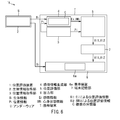
- the schematic diagram which shows the whole structure of the position evaluation apparatus which concerns on Embodiment 1 of this invention is shown.
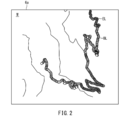
- the schematic diagram which shows the display mode of the position evaluation information by the position evaluation apparatus which concerns on Embodiment 1 of this invention is shown.
- the graph which shows the classification index of the emotion information in the position evaluation apparatus which concerns on Embodiment 1 of this invention is shown.
- the graph which shows the classification index of the mental and physical state information in the position evaluation apparatus which concerns on Embodiment 1 of this invention is shown.
- the control flow diagram which shows the control of the position evaluation apparatus which concerns on Embodiment 1 of this invention is shown.
- the schematic diagram which shows the whole structure of the position evaluation apparatus which concerns on Embodiment 2 of this invention is shown.
- a schematic diagram showing a configuration in which a subject wears the position evaluation device according to the second embodiment of the present invention is shown.
- a schematic diagram showing a display state of the position evaluation information based on the emotional information and the physical state information of the position evaluation device according to the second embodiment of the present invention is shown.
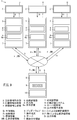
- a schematic diagram showing the overall configuration of the position evaluation system according to the third embodiment of the present invention is shown.
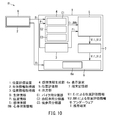
- a schematic diagram showing the overall configuration of the position evaluation device according to the fourth embodiment of the present invention is shown.
- the control flow diagram which shows the control of the position evaluation apparatus which concerns on Embodiment 4 of this invention is shown.
- a schematic diagram showing the overall configuration of the position evaluation device according to another embodiment of the present invention is shown.
- FIG. 1 is a schematic view showing the overall configuration of the position evaluation device 1 according to the embodiment of the present invention.
- FIG. 2 is a schematic view showing a display mode of the position evaluation information Vi1 and the position evaluation information Vi2 by the position evaluation device 1 according to the first embodiment of the present invention.
- FIG. 3 is a graph showing a classification index of emotion information Ei in the position evaluation device 1 according to the first embodiment of the present invention.
- FIG. 4 is a graph showing a classification index of mental and physical condition information BMi in the position evaluation device 1 according to the first embodiment of the present invention.
- the position evaluation device 1 is a device that evaluates the position information Pi regarding the location where the target person is located based on the emotion information Ei regarding the emotion of the target person.
- the position evaluation device 1 generates emotional information Ei related to emotions and emotional state information MBi related to the mental and physical state from the biological information Bi related to the heartbeat of the subject.
- the position evaluation device 1 generates position evaluation information Vi1 from the position information Pi and the generated emotion information Ei. Further, the position evaluation device 1 generates the position evaluation information Vi2 from the position information Pi and the generated mental and physical condition information MBi.
- the position evaluation device 1 includes a biological information acquisition unit 2, a position information acquisition unit 3, an emotion information generation unit 4, a position evaluation unit 5, and an output unit 6.
- the biometric information acquisition unit 2 acquires the biometric information Bi of the target person.
- the biological information acquisition unit 2 includes the subject's body surface temperature, triaxial acceleration, heart rate, which is biological information related to the heart rate, heart rate waveform, heart rate cycle, change in heart rate, blood pressure, high frequency fluctuation component (HF), and low frequency fluctuation.
- Information including the component (LF) and the acquired time is acquired every unit time.
- the biological information acquisition unit 2 includes, for example, a temperature sensor, an acceleration sensor, and a heart rate sensor.
- the location information acquisition unit 3 acquires the location information Pi (hereinafter, simply referred to as "location information Pi") relating to the location where the target person is located.
- the position information acquisition unit 3 acquires the position information Pi including the latitude, longitude, altitude, direction, acquired time, and the like of the place where the target person is located for each unit time.
- the position information acquisition unit 3 includes, for example, a GNSS receiver.
- the GNSS receiver is a receiver that constitutes a global positioning satellite system (Global Navigation Satellite System).
- the GNSS receiver receives the ranging radio wave from the satellite and calculates the latitude, longitude, and altitude which are the absolute coordinates of the GNSS receiver.
- the emotion information generation unit 4 uses the subject's biological information Bi to provide emotion information Ei (hereinafter, simply referred to as “emotion information Ei”) regarding the subject's emotions and emotional state information MBi (hereinafter, simply “simply”. "Mental and physical condition information MBi”) is generated.
- the emotion information generation unit 4 has information about the target person such as the gender, age, and physical characteristics of the target person in advance. Further, the emotion information generation unit 4 has at least one classifier C that generates emotion information Ei related to emotions and emotional state information MBi related to mental and physical states from biological information Bi related to the heartbeat of the subject. In this embodiment, the emotion information generation unit 4 has a plurality of different types of classifiers C.
- the emotion information generation unit 4 acquires the biometric information Bi related to the heartbeat of the subject from the biometric information acquisition unit 2.
- the emotion information generation unit 4 determines the classifier C to be used based on the information about the subject or by the selection of the subject.
- the emotion information generation unit 4 can determine the means of movement (for example, motorcycle, bicycle, walking, etc.) of the target person from the time included in the position information Pi acquired by the position information acquisition unit 3.
- the emotion information generation unit 4 determines the classifier C according to the means of transportation.
- the emotion information generation unit 4 can determine whether or not the target person is in the lean vehicle from the three-axis acceleration of the target person acquired by the biological information acquisition unit 2.
- the emotion information generation unit 4 determines the classifier C according to the type of vehicle.
- the emotion information generation unit 4 is evaluated data D composed of at least one parameter value from the biological information Bi regarding the subject's heartbeat, the RR interval, the LF / HF ratio, the frequency component, etc., by the determined classifier C. Is calculated.
- the classifier C classifies the calculated evaluation data D.
- the classifier C classifies each evaluation data D calculated for each unit time by a pattern recognition model such as a support vector machine (SVM).
- SVM support vector machine
- the classifier C allocates the emotional information Ei and the mental and physical condition information MBi to the evaluation data D classified by the pattern recognition model.
- the position evaluation unit 5 generates position evaluation information Vi1 that combines position information Pi and emotion information Ei, and position evaluation information Vi2 that combines position information Pi and emotional state information MBi.
- the position evaluation unit 5 has map information M.
- the position evaluation unit 5 acquires the position information Pi from the position information acquisition unit 3. Further, the position evaluation unit 5 acquires emotion information Ei and emotional state information MBi from the emotion information generation unit 4.
- the position evaluation unit 5 generates position evaluation information Vi1 by emotion information Ei for each unit time, which is a combination of position information Pi and emotion information Ei, for example, by setting a time or the like as a flag. Similarly, the position evaluation unit 5 generates position evaluation information Vi2 by the mind / body state information MBi for each unit time, which is a combination of the position information Pi and the mind / body state information MBi, for example, by setting the time or the like as a flag. That is, the position evaluation unit 5 acquires the emotion information Ei and the mental and physical condition information MBi generated from the biometric information Bi regarding the heartbeat of the target person, and the position information Pi when the biometric information Bi is acquired from the target person, and the target person. Identify the emotions and mental and physical condition of the subject at the location where. As a result, the position evaluation unit 5 evaluates the place where the subject is located based on the emotion and the mental and physical condition of the subject.
- the output unit 6 is at least one of the biological information Bi, the position information Pi, the emotion information Ei, the mental and physical condition information MBi, the position evaluation information Vi1 by the emotion information Ei, and the position evaluation information Vi2 by the mental and physical condition information MBi regarding the heartbeat of the subject.
- the output unit 6 acquires the biometric information Bi related to the heartbeat of the subject from the biometric information acquisition unit 2. Further, the output unit 6 acquires the position evaluation information Vi1 by the emotion information Ei including the position information Pi, the emotion information Ei, and the mental and physical state information MBi, and the position evaluation information Vi2 by the mental and physical state information MBi.
- the output unit 6 outputs each information to an external device such as a display device, a mobile terminal, or a server. Further, the output unit 6 may include a display device 6a for displaying each information.
- the output unit 6 displays the map information M on the display device 6a based on the position information Pi, for example. Further, the output unit 6 displays the emotion information Ei (see FIG. 1) at a location on the map information M where the target person is located based on the position evaluation information Vi1 (see FIG. 1) based on the emotion information Ei. And the emotion label EL converted to at least one of the colors is displayed. Further, the output unit 6 converts the mental / physical state information MBi (see FIG. 1) into at least one of numerical values, symbols, figures, and colors based on the position evaluation information Vi2 (see FIG. 1) by the mental / physical state information MBi. Display the status label BL. In the present embodiment, the output unit 6 superimposes and displays the emotion label EL and the mental and physical state label BL on the map information M by a circular figure for each unit time.
- the emotion information generation unit 4, the position evaluation unit 5, and the output unit 6 may be substantially configured such that the CPU, ROM, RAM, HDD, and the like are connected by a bus. Further, the emotion information generation unit 4 and the position evaluation unit 5 may be configured to include a one-chip LSI or the like.
- the emotion information generation unit 4 stores various programs and data for controlling the evaluator. Further, the position evaluation unit 5 stores various programs and data for acquiring and combining the position information Pi, the emotion information Ei, and the mental and physical condition information MBi.
- the classifier C of the emotion information generation unit 4 classifies the evaluation data D using the emotion value E (Aarence) and the arousal value A (Arousal) as indexes by, for example, a pattern recognition model.
- the classifier C acquires the emotion value E and the arousal value A of the classified evaluation data D.
- the classifier C generates emotion information Ei in which the emotion of the subject is selected from a plurality of types of emotions based on the emotion value E and the arousal value A.
- the emotion value E represents the degree from positive emotions to negative emotions.
- Positive emotions include the subject's positive emotions such as excitement, reassurance, uplifting, comfort, calmness, and pleasure.
- Negative emotions include the subject's negative emotions such as tension, agitation, depression, anxiety, discomfort, and despair.
- the evaluation data D having a high emotion value E (the emotion value E is on the + side) is assigned to positive emotions according to the emotion value E.
- the evaluation data D having a low emotion value E (the emotion value E is on the ⁇ side) is assigned to negative emotions according to the emotion value E.
- the arousal value A represents the degree from the state in which the emotion is active to the state in which the emotion is inactive.
- Active emotions include uplifting emotions of the subject such as excitement, uplifting, pleasant, upset, tense, and unpleasant.
- Inactive emotions include the subject's depressed emotions such as peace of mind, comfort, calmness, depression, anxiety, and despair.
- the evaluation data D having a high arousal value A (the awakening value A is on the + side) is assigned to the emotions that are active according to the awakening value A.
- the evaluation data D having a low arousal value A (the awakening value A is on the ⁇ side) is assigned to the inactive emotion according to the awakening value A.
- the classifier C assigns the emotion indicated by the evaluation data D from the emotion value E and the arousal value A of the evaluation data D classified by the pattern recognition model.
- the emotion value E of the evaluation data D is the positive emotion range (the emotion value E is the + side)
- the awakening value A of the evaluation data D is the active emotion range (the awakening value A is +).
- the evaluation data D is assigned to the area of happiness (Happy) including emotions such as excitement, uplifting, and pleasure.
- the classifier C assigns specific emotions (excitement, uplifting, pleasure, etc.) to the evaluation data D from the emotion value E and the arousal value A in the area of happiness.
- the classifier C is evaluated when, for example, the emotion value E of the evaluation data D1 is high (the degree of positive emotion is large) and the arousal value A is low (the degree of active emotion is small) in the area of happiness.
- the emotion of pleasure (Pleasant) is selected from a plurality of types of emotions in the area of happiness in the data D1.
- the emotion value E of the evaluation data D is the positive emotion range (the emotion value E is the + side), and the awakening value A of the evaluation data D is the inactive emotion range (the awakening value A is the-side).
- the evaluation data D is assigned to the relaxed area including peace of mind, comfort, and calmness. Further, the classifier C assigns specific emotions (safety, comfort, calmness, etc.) to the evaluation data D from the emotion value E and the arousal value A in the area of relaxation.
- the evaluation data For D2 select the feeling of comfort from multiple kinds of feelings in the area of relaxation.
- the emotion value E of the evaluation data D is the negative emotion range (the emotion value E is the-side), and the awakening value A of the evaluation data D is the active emotion range (the awakening value A is +).
- the evaluation data D is assigned to the area of anger including tension, agitation, discomfort, and the like.
- the classifier C assigns specific emotions (tension, agitation, unpleasantness, etc.) to the evaluation data D from the emotion value E and the arousal value A in the area of anger.
- the classifier C evaluates, for example, when the emotion value E of the evaluation data D3 is low (the degree of negative emotion is large) and the arousal value A is low (the degree of active emotion is small) in the area of anger.
- an emotion called Unpleasant is selected from a plurality of types of emotions in the area of anger.
- the emotion value E of the evaluation data D is the negative emotion range (the emotion value E is the-side), and the awakening value A of the evaluation data D is the inactive emotion range (the awakening value A is the-side).
- the evaluation data D is assigned to the area of sadness (Sad) including depression, anxiety, despair, and the like. Further, the classifier C assigns specific emotions (depression, anxiety, despair, etc.) to the evaluation data D from the emotion value E and the arousal value A in the area of sadness.
- the evaluation data D4 for example, when the emotion value E of the evaluation data D4 is low (the degree of negative emotion is large) and the arousal value A is low (the degree of inactive emotion is large) in the region of sadness, the evaluation data Select the emotion of despair (Despair) from multiple types of emotions in the area of sadness in D4.
- the classifier C classifies the evaluation data D using the power value W (Willpower) and the arousal value A as indexes by, for example, a pattern recognition model.
- the classifier C acquires the power value W and the awakening value A of the classified evaluation data D.
- the classifier C generates mental / physical state information MBi regarding the physical / mental state of the subject from a plurality of types of mental / physical states based on the energy value W and the arousal value A.
- the energy value W represents the degree from a state in which the mind and body are healthy to a state in which the mind and body are tired.
- the evaluation data D having a high power value W (power value W is on the + side) is assigned to a mental and physical state including excitement, relaxation, etc. according to the power value W.
- the evaluation data D having a low power value W (the power value W is on the ⁇ side) is assigned to a mental and physical state including tension, drowsiness, etc. according to the power value W.
- the arousal value A represents the degree from the state in which the emotion is active to the state in which the emotion is inactive.
- the evaluation data D having a high arousal value A (the awakening value A is on the + side) is assigned to the mental and physical states including uplifting, tension, and the like according to the awakening value A.
- the evaluation data D having a low arousal value A (the awakening value A is on the ⁇ side) is assigned to a mental and physical state including relaxation, drowsiness, etc. according to the awakening value A.
- the classifier C is a range in which the power value W of the evaluation data D5 is in a healthy state (power value W is on the + side), and a range of emotions in which the awakening value A of the evaluation data D5 is active (awakening value A is +). On the side), the evaluation data D5 is assigned to the region of the mental and physical state that is being evaluated.
- the power value W of the evaluation data D6 is in a healthy state (power value W is on the + side), and the awakening value A of the evaluation data D6 is inactive emotional range (awakening value A is on the ⁇ side). ),
- the evaluation data D6 is assigned to the region of the relaxed mental and physical state.
- the classifier C is a range in which the power value W of the evaluation data D7 is in a fatigued state (power value W is on the ⁇ side), and the awakening value A of the evaluation data D7 is an inactive emotional range (awakening value A is). In the case of-side), the evaluation data D7 is assigned to the region of the mental and physical state in which sleepiness occurs.
- the classifier C is a range in which the power value W of the evaluation data D8 is tired (the power value W is on the ⁇ side), and the range of emotions in which the awakening value A of the evaluation data D8 is active (awakening value A). Is the + side), the evaluation data D8 is assigned to the region of the mental and physical state that is tense.
- the classifier C configured in this way classifies the evaluation data D by a pattern recognition model such as a support vector machine (SVM).
- the pattern recognition model generates emotional information Ei regarding the subject's emotions and biological information Bi regarding the heartbeat under the influence of various external events as teacher data.
- the teacher data includes, for example, input information composed of parameter values such as RR interval, LF / HF ratio, and frequency component calculated from biological information about the subject's heartbeat when viewing a specific image, and a specific image. A large number of pairs are included in which the self-reported emotional information of the subject who saw the image is the correct answer with a label.
- the classification accuracy of the classifier C is improved by machine learning using the teacher data.
- the classification accuracy of the classifier C differs depending on the composition of the teacher data used by machine learning. For example, when the classifier C uses teacher data that includes only pairs by male subjects, the accuracy of emotion classification in male subjects is improved. Further, when the classifier C uses teacher data including only pairs by subjects in their 30s and 40s, the accuracy of emotion classification in subjects in their 30s and 40s is improved. As described above, the classifier C becomes a different type of classifier C by using the learning data classified based on the information about the subject.
- the emotion information generation unit 4 is connected to the biometric information acquisition unit 2.
- the emotion information generation unit 4 can acquire the biometric information Bi related to the heartbeat of the subject from the biometric information acquisition unit 2. Further, the emotion information generation unit 4 is connected to the position information acquisition unit 3.
- the emotion information generation unit 4 can acquire the position information Pi regarding the location where the target person is located from the position information acquisition unit 3.
- the emotion information generation unit 4 is connected to the position evaluation unit 5.
- the emotion information generation unit 4 can transmit the emotion information Ei regarding the emotion of the target person and the information about the location where the target person is located to the position evaluation unit 5.
- the emotion information generation unit 4 and the position evaluation unit 5 are connected to the output unit 6.
- the emotion information generation unit 4 is configured to be able to output at least one of biometric information Bi, position information Pi, emotion information Ei, and mental and physical condition information MBi regarding the heartbeat of the subject to the output unit 6.
- the position evaluation unit 5 is configured to be able to output the position evaluation information Vi1 by the map information M, the emotion information Ei, and the position evaluation information Vi2 by the mental and physical condition information MBi.
- FIG. 5 is a control flow diagram showing the control of the position evaluation device 1 according to the first embodiment of the present invention.
- the position evaluation device 1 has acquired the position evaluation start signal.
- step S110 the position evaluation device 1 acquires the biometric information Bi and the position information Pi regarding the heartbeat of the subject including the time and the like by the biometric information acquisition unit 2 every unit time.
- step S120 the emotion information generation unit 4 of the position evaluation device 1 determines the classifier C to be used based on the information about the target person or the position information Pi, or by selection by the target person.
- step S130 the emotion information generation unit 4 calculates the evaluation data D from the biometric information Bi related to the heartbeat for each unit time.
- step S140 the emotion information generation unit 4 classifies the evaluation data D calculated for each unit time by the classifier C using the emotion value E and the arousal value A as indexes.
- the emotion information generation unit 4 generates emotion information Ei from the emotion value E and the awakening value A.
- step S150 the emotion information generation unit 4 classifies the evaluation data D calculated for each unit time by the classifier C using the power value W and the awakening value A as indexes.
- the emotion information generation unit 4 generates mental and physical state information MBi from the energy value W and the awakening value A.
- step S160 the position evaluation unit 5 of the position evaluation device 1 sets the position evaluation information Vi1 and the position information by the emotion information Ei for each unit time, which is a combination of the position information Pi and the emotion information Ei, for example, by setting a time or the like as a flag.
- Position evaluation information Vi2 is generated by the mental / physical condition information MBi for each unit time, which is a combination of Pi and the mental / physical condition information MBi.
- step S170 the position evaluation unit 5 displays the position evaluation information Vi1 by the emotion information Ei and the position evaluation information Vi2 by the mental and physical condition information MBi generated by the output unit 6 on the display device 6a.
- the position evaluation device 1 is hardware by generating emotion information Ei and mental and physical condition information MBi of the subject using the classifier C from the biological information Bi regarding the subject's heartbeat that does not include external events. The processing load of the hardware can be reduced. Further, the position evaluation device 1 is hardware by combining the emotion information Ei and the mental and physical condition information MBi generated by the emotion information generation unit 4 with the position information Pi that can be easily acquired by using the existing technology and equipment. External events can be added to the emotional information Ei and the mental and physical state information MBi without increasing the processing load of the above. As a result, the position evaluation device 1 can simply convert the position information Pi indicating the place where the target person is located into the position information Pi having added value indicating what kind of place the target person is.
- the position evaluation device 1 generates a plurality of types of emotion information Ei and a plurality of types of emotional state information MBi from the biological information Bi related to the heartbeat of the subject by the emotion information generation unit 4.
- the position evaluation device 1 can flexibly respond to changes in the emotions of the target person by generating emotion information Ei in which one emotion is selected from a plurality of emotions in the position information Pi.
- the position evaluation device 1 can flexibly respond to changes in the emotions of the subject by selecting the degree of emotions.
- the position evaluation device 1 can call attention or give advice to the target person when the negative emotion information Ei is continuously generated or when the degree of the negative emotion information Ei is large. Further, the position evaluation device 1 is a target when the mental / physical state information BMi in the state of mental and physical fatigue is continuously generated, or when the degree of the mental / physical state information BMi in the state of mental and physical fatigue is large. Can alert or give advice to a person. As a result, the position evaluation device 1 can effectively utilize information about emotions while suppressing an increase in the processing load of the hardware.
- FIG. 6 is a schematic view showing the overall configuration of the position evaluation device 1A according to the second embodiment of the present invention.
- FIG. 7 is a schematic view showing a configuration in which the subject wears the position evaluation device 1A according to the second embodiment of the present invention.
- the position evaluation device 1A is used by one subject alone.
- the position evaluation device 1A includes a biological information acquisition unit 2, a position information acquisition unit 3, an emotion information generation unit 4, a position evaluation unit 5, an output unit 6, and a terminal storage unit 7.
- the biological information acquisition unit 2 is a wearable sensor in which various sensors are built in a device, clothes, etc. that can be worn on the body of the subject.
- the biological information acquisition unit 2 is a wearable sensor in which a heart rate sensor 2a, a temperature sensor 2b, a 3-axis acceleration sensor 2c, a communication device 2d, and a battery are built in the underwear U.
- the wearable sensor is configured so that the electrodes of the heart rate sensor 2a and the measurement terminals of the temperature sensor 2b come into contact with the chest of the subject while being worn on the subject.
- the wearable sensor can transmit the detection values of the heart rate sensor 2a, the temperature sensor 2b, and the 3-axis acceleration sensor 2c to the outside by the communication device 2d, and the heart rate sensor 2a, the temperature sensor 2b, and the 3-axis acceleration sensor 2c from the outside can be transmitted to the outside. It is configured to be able to receive the control signal to.
- the position information acquisition unit 3, the emotion information generation unit 4, the position evaluation unit 5, and the output unit 6 are configured in the mobile terminal T such as a smartphone owned by the target person.
- the position information acquisition unit 3 is composed of a GNSS receiver built in the mobile terminal T.
- the emotion information generation unit 4, the position evaluation unit 5, and the output unit 6 store a ROM or the like of the mobile terminal T.
- the emotion information generation unit 4, the position evaluation unit 5, and the output unit 6 are configured to be controllable by the CPU of the mobile terminal T.
- the mobile terminal T is configured to be able to communicate with the wearable sensor via a communication device.
- the emotion information generation unit 4 and the output unit 6 are configured to be able to communicate with the biometric information acquisition unit 2 via the communication device of the mobile terminal T.
- the terminal storage unit 7 stores at least the position evaluation information Vi1 by the emotional information Ei and the position evaluation information Vi2 by the mental and physical condition information MBi.
- the terminal storage unit 7 is composed of a storage device of the mobile terminal T (see FIG. 7).
- the terminal storage unit 7 stores the position evaluation information Vi1 by the emotional information Ei and the position evaluation information Vi2 by the mental and physical condition information MBi generated by the position evaluation unit 5 in time series. Further, the terminal storage unit 7 can transmit the position evaluation information Vi1 by the stored emotion information Ei and the position evaluation information Vi2 by the mental and physical condition information MBi to the output unit 6.
- the position evaluation device 1A extracts the position evaluation information Vi1 by the past emotion information Ei and the position evaluation information Vi2 by the mental and physical condition information MBi from the terminal storage unit 7, and thereby, the position evaluation information Vi1 by the emotion information Ei having different dates and times at the same position. And the position evaluation information Vi2 by the mental and physical condition information MBi can be compared.
- the terminal storage unit 7 may store the biological information Bi and the position information Pi related to the heartbeat of the subject.
- the output unit 6 includes a display device of the mobile terminal T (see FIG. 7).
- the output unit 6 is connected to the terminal storage unit 7.
- the output unit 6 is at least one of the biometric information Bi, the position information Pi, the emotion information Ei, the mental and physical condition information MBi, the position evaluation information Vi1 by the emotional information Ei, and the position evaluation information Vi2 by the mental and physical condition information MBi from the terminal storage unit 7. It is configured so that information can be obtained. Further, the output unit 6 displays the biometric information Bi, the position information Pi, the emotion information Ei, the mental and physical condition information MBi, the position evaluation information Vi1 by the emotional information Ei, and the position evaluation information Vi2 by the mental and physical condition information MBi on the display device of the mobile terminal T.
- the output unit 6 connects the external device to the external device via the communication device of the mobile terminal T, the biometric information Bi, the position information Pi, the emotion information Ei, the mental and physical condition information MBi, the position evaluation information Vi1 and the emotion information Ei. It is configured to be able to output at least one information of the position evaluation information Vi2 by the mental and physical condition information MBi.
- FIG. 8 is a schematic view showing a display state of the position evaluation information Vi1 by the emotional information Ei and the position evaluation information Vi2 by the mental and physical condition information MBi of the position evaluation device 1A according to the second embodiment of the present invention.
- the output unit 6 displays, for example, the map information M in a predetermined range centered on the place where the target person is located on the display device 6a of the mobile terminal T. Further, the output unit 6 displays the location where the target person is located on the map information M. At this time, the output unit 6 displays the emotion information Ei on the map as an emotion label EL1 converted into at least one of a numerical value, a symbol, a figure, and a color.
- the output unit 6 displays, for example, the emotion information Ei on the emotion graph Ge.
- the output unit 6 displays an emotion graph Ge representing an emotion value E on the horizontal axis and an arousal value A on the vertical axis orthogonal to the horizontal axis.
- the first quadrant of the emotion graph Ge in which the emotion value E is the + side (positive emotion) and the arousal value A is the + side (active emotion), is set as an area of happiness.
- the second quadrant of the emotion graph Ge in which the emotion value E is the + side (positive emotion) and the arousal value A is the-side (inactive emotion), is set as an area of relaxation.
- the third quadrant of the emotion graph Ge in which the emotion value E is the ⁇ side (negative emotion) and the arousal value A is the ⁇ side (inactive emotion), is set as a region of sadness.
- the fourth quadrant of the emotion graph Ge in which the emotion value E is the-side (negative emotion) and the arousal value A is the + side (active emotion), is set as an area of anger.
- the output unit 6 converts the emotion information Ei into the emotion label EL2 displayed on the emotion graph Ge from at least one of numerical values, symbols, figures, and colors, and displays the emotion information Ei at a position corresponding to the current emotion of the subject.
- the output unit 6 displays, for example, a mental / physical state graph Gb representing the mental / physical state information MBi regarding the mental / physical state of the subject.
- a mental / physical state graph Gb representing the mental / physical state information MBi regarding the mental / physical state of the subject.
- the mind-body state label BL1 in which the degree of uplifting in which the energy value W is on the + side and the awakening value A is on the + side is converted into at least one of numerical values, symbols, figures, and colors is displayed. Will be done.
- the mental and physical condition label BL2 indicating the degree of relaxation in which the energy value W is on the + side and the awakening value A is on the-side, the energy value W is on the-side, and the awakening value A is +.
- the mental and physical condition label BL3 indicating the degree of tension, which is the mental and physical state of the side
- the mental and physical condition label BL4 which indicates the degree of drowsiness in which the energy value W is the minus side and the arousal value A is the minus side
- the output unit 6 displays the mental / physical state information MBi regarding the mental / physical state of the subject on the mental / physical state graph Gb based on the values of the energy value W and the awakening value A.
- the position evaluation device 1A uses the subject's biometric information Bi, the subject's emotional information Ei, and the subject's emotional information Ei by using a classifier C or the like operated by the hardware of the mobile terminal T possessed by the subject.
- the mental and physical condition information MBi of is generated.
- the position evaluation device 1A can add an external event to the emotion information Ei without increasing the processing load of the hardware by using the position information Pi acquired by the GNSS receiver of the mobile terminal T. can.
- the position evaluation device 1A can effectively utilize information about emotions while suppressing an increase in the processing load of the hardware.
- FIG. 9 is a schematic view showing the overall configuration of the position evaluation system 8 according to the embodiment of the present invention.
- the position evaluation system 8 is a system that evaluates the position by using emotion information Ei and mental and physical condition information MBi from a plurality of subjects.
- the position evaluation system 8 includes a biological information acquisition unit 2, a position information acquisition unit 3, an emotion information generation unit 4, a position evaluation unit 5, a terminal storage unit 7, an output information generation unit 10, a server storage unit 9, and an output unit 6. ..
- the position evaluation system 8 is composed of, for example, a wearable sensor provided in the underwear U, a mobile terminal T, and a server S.
- the biometric information acquisition unit 2 acquires the biometric information Bi.
- the biological information acquisition unit 2 is a wearable sensor in which various sensors are built in underwear U, which is a device that can be worn on the body of a subject. That is, the biological information acquisition unit 2 is possessed by the subject (see FIG. 7).
- the biometric information acquisition unit 2 acquires the biometric information Bi of the subject wearing the underwear U.
- the position information acquisition unit 3 acquires the position information Pi.
- the position information acquisition unit 3 is configured in the mobile terminal T such as a smartphone owned by the target person (see FIG. 7).
- the position information acquisition unit 3 acquires the position information Pi of the target person who possesses the mobile terminal T.
- the emotion information generation unit 4 generates emotion information Ei and mental and physical condition information MBi from biological information Bi.
- the emotion information generation unit 4 is configured in a mobile terminal T such as a smartphone owned by the target person.
- the mobile terminal T is configured to be able to communicate via the communication device 2d of the wearable sensor. That is, the emotion information generation unit 4 is configured to be able to communicate with the biometric information acquisition unit 2 via the communication device of the mobile terminal T.
- the emotion information generation unit 4 acquires the biological information Bi from the underwear U worn by the subject who possesses the mobile terminal T.
- the mobile terminal T is provided with a terminal storage unit 7 that stores at least the position evaluation information Vi1 by the emotional information Ei and the position evaluation information Vi2 by the mental and physical condition information MBi.
- the terminal storage unit 7 is composed of a storage device of the mobile terminal T.
- the terminal storage unit 7 stores the position evaluation information Vi generated by the position evaluation unit 5 in chronological order.
- the terminal storage unit 7 may store the biological information Bi, the position information Pi, the emotion information Ei, and the mental and physical condition information MBi related to the heartbeat.
- the position evaluation unit 5 generates position evaluation information Vi1 based on emotional information Ei and position evaluation information Vi2 based on mental and physical condition information MBi.
- the position evaluation unit 5 is configured in the server S.
- the server S is connected to the Internet. Further, the server S is configured to be able to communicate with the mobile terminal T owned by the target person via the Internet and the communication device of the mobile terminal T. That is, the position evaluation unit 5 is configured to be able to communicate with the position information acquisition unit 3 and the emotion information generation unit 4 via the Internet and the communication device of the mobile terminal T.
- the server storage unit 9 which is a storage unit, is composed of the storage device of the server S.
- the server storage unit 9 stores at least the position evaluation information Vi1 by the emotional information Ei and the position evaluation information Vi2 by the mental and physical condition information MBi.
- the server storage unit 9 stores the position evaluation information Vi1 by the emotional information Ei and the position evaluation information Vi2 by the mental and physical condition information MBi generated by the position evaluation unit 5 in chronological order. Further, the server storage unit 9 can transmit the position evaluation information Vi1 by the stored emotion information Ei and the position evaluation information Vi2 by the mental and physical condition information MBi to the output information generation unit 10.
- the server storage unit 9 may store the biological information Bi, the position information Pi, the emotion information Ei, and the mental and physical condition information MBi related to the heartbeat.
- the output information generation unit 10 generates output information Oi from the position evaluation information Vi1 based on the stored emotion information Ei and the position evaluation information Vi2 based on the mental and physical condition information MBi.
- the output information generation unit 10 is configured in the server S.
- the output information generation unit 10 is at least one of the biometric information Bi, the position information Pi, the emotion information Ei, the mental and physical condition information MBi, the position evaluation information Vi1 by the emotion information Ei, and the position evaluation information Vi2 by the mental and physical condition information MBi.
- Output information Oi is generated from. Further, the output information generation unit 10 is configured to be able to output output information Oi to the output unit 6 or an external device via the Internet and the communication device of the mobile terminal T.
- the output information generation unit 10 numerically converts at least one of the emotional information Ei regarding the emotion of the target person and the emotional state information MBi regarding the mental and physical state of the target person at the place where the target person is located on the map information M, for example. , A symbol, a figure, and an output information Oi for displaying an emotion label EL or an emotional state label BL (see FIG. 8) converted into at least one of colors.
- the output unit 6 outputs the output information Oi.
- the output unit 6 includes a display device 6a of the mobile terminal T (see FIG. 8).
- the output unit 6 is configured to be able to display the output information Oi on the display device 6a of the mobile terminal T.
- the output unit 6 acquires the output information Oi from the output information generation unit 10 via the Internet and the communication device of the mobile terminal T.
- the server S receives each position information Pi, each emotion information Ei, and each from the mobile terminal T held by a plurality of target persons via the Internet and the communication device of the mobile terminal T. It is configured so that mental and physical condition information MBi can be acquired.
- the position evaluation system 8 stores each position information Pi, each emotion information Ei, and each mental and physical condition information MBi acquired from mobile terminals T possessed by a plurality of target persons in the server storage unit 9. Further, the position evaluation system 8 is based on the position evaluation information Vi1 and the mental and physical condition information MBi by each emotion information Ei generated based on the position information Pi from each mobile terminal T, each emotion information Ei, and each mental and physical condition information MBi.
- the position evaluation information Vi2 is stored in the server storage unit 9.
- the output information generation unit 10 of the position evaluation system 8 is a plurality of output information generation units 10 based on an arbitrary index from the position evaluation information Vi1 by the plurality of emotional information Ei and the position evaluation information Vi2 by the mental and physical condition information MBi stored in the server storage unit 9.
- the position evaluation information Vi1 by the emotional information Ei and the position evaluation information Vi2 by the mental and physical condition information MBi are extracted.
- the output information generation unit 10 extracts, for example, the position evaluation information Vi1 by a plurality of emotional information Ei and the position evaluation information Vi2 by the mental and physical condition information MBi in a specific place by using the position information Pi as an index.
- the output information generation unit 10 extracts, for example, the position evaluation information Vi1 by a plurality of emotional information Ei and the position evaluation information Vi2 by the mental and physical condition information MBi at the corresponding time using the time as an index (for example, season, time zone, etc.). do.
- the output information generation unit 10 generates output information Oi from the position evaluation information Vi1 based on the extracted plurality of emotion information Ei and the position evaluation information Vi2 based on the mental and physical condition information MBi.
- the output information generation unit 10 generates, for example, output information Oi for superimposing and displaying the position evaluation information Vi1 based on the extracted plurality of emotion information Ei and the position evaluation information Vi2 based on the mental and physical condition information MBi on the map information M. Further, the output information generation unit 10 generates output information Oi obtained by processing, for example, the position evaluation information Vi1 based on the plurality of extracted emotional information Ei and the position evaluation information Vi2 based on the mental and physical state information MBi by an appropriate statistical method.
- the position evaluation system 8 configured in this way is generated from a plurality of position evaluation information Vi1 generated from a plurality of emotional information Ei and a plurality of position information Pi, a plurality of mental and physical condition information MBi, and a plurality of position information Pi. From the plurality of position evaluation information Vi2, an aggregate (big data) of the position evaluation information Vi1 by the emotion information Ei and an aggregate of the position evaluation information Vi2 by the mental and physical condition information MBi are generated. The position evaluation system 8 generates output information Oi from an aggregate of position evaluation information Vi1 based on emotional information Ei and position evaluation information Vi2 based on mental and physical condition information MBi based on an arbitrary index.
- the position evaluation system 8 can eliminate the influence of variations due to individual personality such as personality and taste from the position evaluation information Vi1 by the emotional information Ei and the position evaluation information Vi2 by the mental and physical condition information MBi. Further, the position evaluation system 8 can evaluate the position evaluation information Vi1 by the emotional information Ei and the position evaluation information Vi2 by the mental and physical condition information MBi based on an arbitrary index. As a result, the position evaluation system 8 can effectively utilize information on emotions while suppressing an increase in the processing load of the hardware.
- FIG. 10 is a schematic view showing the overall configuration of the position evaluation device 1B according to the fourth embodiment of the present invention.
- the position evaluation device 1B in the present embodiment selects a classifier C suitable for the moving means of the subject.
- the position evaluation device 1B includes a biological information acquisition unit 2, a position information acquisition unit 3, an emotion information generation unit 4, a position evaluation unit 5, a terminal storage unit 7, and an output unit 6.
- the position evaluation device 1B is composed of, for example, a wearable sensor provided in the underwear U and a mobile terminal T.
- the subject wears underwear U, which is a wearable sensor, and possesses a smartphone, which is a mobile terminal T.
- the emotion information generation unit 4 of the position evaluation device 1B has a motorcycle classifier C1, a bicycle classifier C2, and a walking classifier C3.
- the emotion information generation unit 4 acquires the biometric information Bi and the triaxial acceleration related to the heartbeat of the subject including the time information from the biometric information acquisition unit 2 every unit time. Further, the emotion information generation unit 4 acquires the position information Pi regarding the location of the target person including the time information from the position information acquisition unit 3 every unit time.
- the emotion information generation unit 4 calculates the moving speed V of the target person from the position information Pi of the target person.
- the emotion information generation unit 4 determines the moving means of the target person from the calculated moving speed V of the target person.
- the emotion information generation unit 4 determines that the movement is on a motorcycle.
- the emotion information generation unit 4 determines that the movement is by bicycle or on foot.
- the emotion information generation unit 4 determines that the subject is riding a bicycle, which is a lean vehicle, when the subject is accelerating in the left-right direction at a constant ratio with respect to the traveling direction from the three-axis acceleration.
- the emotion information generation unit 4 selects a classifier according to the means of movement of the determined target person.
- the motorcycle classifier C1 is selected.
- the emotion information generation unit 4 determines that the subject is traveling by bicycle, the emotion information generation unit 4 selects the bicycle classifier C2.
- the emotion information generation unit 4 selects the walking classifier C3.
- emotional information Ei and emotional state information MBi are generated from the acquired biological information Bi regarding the heartbeat of the subject.
- the emotion information generation unit 4 generates different emotion information Ei even with the same bioinformation Bi by switching the classifier.
- the emotion information generation unit 4 selects "upset” from a plurality of emotions based on the heart rate H1 which is the biological information Bi regarding the subject's heartbeat. .. Similarly, the emotion information generation unit 4 selects "tension” from a plurality of mental and physical states based on the heart rate H1 which is the biological information Bi regarding the subject's heartbeat.
- the emotion information generation unit 4 selects "excitement” from a plurality of emotions based on the heart rate H1 which is the biological information Bi regarding the subject's heartbeat. .. Similarly, the emotion information generation unit 4 selects "elevation” from a plurality of mental and physical states based on the heart rate H1 which is the biological information Bi regarding the subject's heartbeat.
- the emotion information generation unit 4 selects "unpleasant” from a plurality of emotions based on the heart rate H1 which is the biological information Bi regarding the subject's heartbeat. .. Similarly, the emotion information generation unit 4 selects "tension” from a plurality of mental and physical states based on the heart rate H1 which is the biological information Bi regarding the subject's heartbeat.
- the emotion information generation unit 4 generates different emotion information Ei and mental and physical condition information BMi when the subject has different means of transportation even with the same heart rate H1. Further, the emotion information generation unit 4 may select a classifier based on the information about the subject. The emotion information generation unit 4 generates different emotion information Ei and mental and physical condition information BMi when the heart rate and the means of transportation are the same but the gender, age, etc. of the target person, which is information about the target person, are different.
- the position evaluation unit 5 of the position evaluation device 1B is a position evaluation information Vi1 and a position evaluation information Vi1 by the emotion information Ei from the position information Pi acquired by the position information acquisition unit 3, the emotion information Ei generated by the emotion information generation unit 4, and the emotional state information MBi.
- the position evaluation information Vi2 is generated by the mental and physical condition information MBi.
- the output unit 6 of the position evaluation device 1B displays the emotion label EL at the place where the target person is located on the map information M of the scale based on the movement speed V of the target person based on the position evaluation information Vi1 by the emotion information Ei. (See FIG. 8).
- FIG. 11 is a control flow diagram showing the control of the position evaluation device 1B according to the fourth embodiment of the present invention.
- the position evaluation device 1B has acquired the position evaluation start signal.
- step S210 the biometric information acquisition unit 2 of the position evaluation device 1B acquires the biometric information Bi and the position information Pi including the triaxial acceleration and the time by the biometric information acquisition unit 2 every unit time. do.
- step S220 the emotion information generation unit 4 of the position evaluation device 1B calculates the moving speed V of the target person based on the position information Pi.
- step S230 the emotion information generation unit 4 determines whether or not the calculated movement speed V of the target person is less than the reference value Vs. When the moving speed V of the subject is less than the reference value Vs, the emotion information generation unit 4 shifts the step to step S240. On the other hand, when the moving speed V of the subject is equal to or higher than the reference value Vs, the emotion information generation unit 4 shifts the step to step S270.
- step S240 the emotion information generation unit 4 determines from the acquired three-axis acceleration whether or not the subject is tilted to the left or right (lean) at a constant ratio with the traveling direction as the forward direction.
- the emotion information generation unit 4 shifts the step to step S250 when the subject is tilted to the left or right by a certain ratio.
- the emotion information generation unit 4 shifts the step to step S260 when the subject is not tilted to the left or right by a certain ratio.
- step S250 the emotion information generation unit 4 selects the bicycle classifier C2 on the assumption that the target person is moving by bicycle, and ends the separator selection control.
- step S260 the emotion information generation unit 4 selects the walking classifier C3 on the assumption that the target person is moving on foot, and ends the separator selection control.
- step S270 the emotion information generation unit 4 selects the motorcycle classifier C1 on the assumption that the target person is moving by the motorcycle, and ends the separator selection control.
- the position evaluation device 1B configured in this way obtains emotion information Ei by a classifier different for each movement speed V of the target person based on the acquired three-axis acceleration of the target person and the position information Pi regarding the location of the target person. Generate. That is, the position evaluation device 1B generates emotion information Ei by using different classifiers depending on the difference in the means of movement of the subject. The position evaluation device 1B combines the three-axis acceleration of the target person and the position information Pi, and considers the difference in the means of transportation, which is an external event that affects the emotion of the target person, and the position evaluation information by the emotion information Ei. Position evaluation information Vi2 can be generated by Vi1 and mental and physical condition information MBi. As a result, the position evaluation device 1B can effectively utilize the information related to the emotion in consideration of the influence of the moving speed V (moving means) of the target person on the emotion without imposing a processing load on the hardware.
- the emotion information generation unit 4 of the position evaluation device 1B selects a classifier according to the moving means of the target person.
- the emotion information generation unit 4 may be configured to select a classifier using the time as an index from the time information included in the information about the location where the target person is located.
- the emotion information generation unit 4 may have a seasonal classifier based on time information.
- the emotion information generation unit 4 may have a classifier for each time zone during the day, such as a morning classifier, an afternoon classifier, and a nighttime classifier.
- the classifier of the emotion information generation unit 4 in the position evaluation device 1B is a motorcycle classifier C1, a bicycle classifier C2, and a walking classifier C3 according to the means of movement of the subject.
- the classifier may include a four-wheeled vehicle classifier, a ship classifier, a railroad classifier, and the like in order to correspond to the means of transportation of the subject.
- the emotion information generation unit 4 may determine the moving means of the target person from not only the moving speed V of the target person but also the map information M.
- the position evaluation device 1B generates the emotion information Ei using the time included in the acquired position information Pi regarding the location of the target person as an index, such as for each season or time zone. That is, the position evaluation device 1B generates emotion information Ei in consideration of changes in the surrounding environment for each time, which is an external event that affects the emotions of the subject.
- the position evaluation device 1B can evaluate the position information Pi using the emotion information Ei in consideration of the difference in season, time zone, and the like as an index. As a result, the position evaluation device 1B can effectively utilize the emotion information Ei in consideration of the influence of the season and the time zone on the emotion without imposing a processing load on the hardware.
- the position evaluation devices 1, 1A, and 1B may further include a weather information acquisition unit 12.
- FIG. 12 is a schematic view showing the overall configuration of the position evaluation device 1C according to another embodiment of the present invention.
- the emotion information generation unit 4 of the position evaluation device 1C has a classifier for each weather condition such as temperature and weather.
- the emotion information generation unit 4 has, for example, a classifier C4 for fine weather, a classifier C5 for rainy weather, and a classifier C6 for stormy weather.
- the emotion information generation unit 4 acquires the weather information WEi such as the temperature and the weather of the place where the target person is located.
- the emotion information generation unit 4 selects a classifier based on the weather information WEi. For example, the emotion information generation unit 4 selects the rainy weather classifier C5 when the location of the subject is in a rainy area.
- the position evaluation device 1C generates emotion information Ei in consideration of weather conditions that affect the emotions of the subject. By combining the position information Pi and the emotion information Ei, the position evaluation device 1C can evaluate the position information Pi by the emotion information Ei in consideration of the weather information which is an external event that affects the emotion of the target person. .. As a result, the position evaluation device 1C can effectively utilize information on emotions in consideration of the influence of weather conditions on emotions without imposing a processing load on hardware.
- the biometric information acquisition unit 2 acquires the biometric information Bi related to the heartbeat of the subject.
- the biological information acquisition unit 2 is not limited to the configuration of the above-described embodiment.
- the biological information acquisition unit 2 may be configured to acquire information about the target person other than the biological information Bi regarding the target person's heartbeat, such as the body surface temperature of the target person and the triaxial acceleration of the target person.
- the emotion information generation unit 4 is a classifier for each means of transportation of the target person, a classifier for each weather condition, a classifier for each time zone, and a classifier corresponding to the information of the target person. Have at least one of them.
- the position evaluation device 1B is not limited to the configuration of the above-described embodiment.
- the emotion information generation unit 4 may have a classifier using geographical characteristics as an index.
- the classifier of the emotion information generation unit 4 classifies the evaluation data D using the emotion value E and the arousal value A as indexes by the pattern recognition model.
- the classifier is not limited to the configuration in which the emotion value E and the arousal value A are used as indexes.
- the classifier may generate emotional information Ei regarding the emotions of the subject by an index related to emotions set arbitrarily.
- the classifier C of the emotion information generation unit 4 in the position evaluation device 1A classifies the evaluation data D by the pattern recognition model generated by machine learning using the teacher data.
- the classifier C may be configured to further perform machine learning by acquiring feedback from the subject regarding the generated emotional information Ei.
- the classifier C is improved into a pattern recognition model suitable for the subject who is using it as the number of times of use is increased.
- the embodiment of the present invention has been described above, the above-described embodiment is merely an example for carrying out the present invention. Therefore, the embodiment is not limited to the above-described embodiment, and the above-described embodiment can be appropriately modified and implemented within a range that does not deviate from the gist thereof.
- Position evaluation device 1, 1A, 1B, 1C Position evaluation device 2 Biometric information acquisition unit 3 Position information acquisition unit 4 Emotion information generation unit 5 Position evaluation unit 6 Output unit 6a Display device C classifier Bi Biological information on the target person's heartbeat Pi Position information regarding the location Ei Emotion information regarding the subject's emotions Vi1 Position evaluation information based on emotion information Vi2 Position evaluation information based on mental and physical condition information 8 Position evaluation system
Landscapes
- Health & Medical Sciences (AREA)
- Life Sciences & Earth Sciences (AREA)
- Engineering & Computer Science (AREA)
- Physics & Mathematics (AREA)
- Veterinary Medicine (AREA)
- Surgery (AREA)
- Psychiatry (AREA)
- Public Health (AREA)
- General Health & Medical Sciences (AREA)
- Animal Behavior & Ethology (AREA)
- Molecular Biology (AREA)
- Biophysics (AREA)
- Pathology (AREA)
- Biomedical Technology (AREA)
- Heart & Thoracic Surgery (AREA)
- Medical Informatics (AREA)
- Cardiology (AREA)
- Hospice & Palliative Care (AREA)
- Educational Technology (AREA)
- Social Psychology (AREA)
- Psychology (AREA)
- Child & Adolescent Psychology (AREA)
- Developmental Disabilities (AREA)
- Transportation (AREA)
- Mathematical Physics (AREA)
- Automation & Control Theory (AREA)
- Mechanical Engineering (AREA)
- Physiology (AREA)
- Measurement Of The Respiration, Hearing Ability, Form, And Blood Characteristics Of Living Organisms (AREA)
- Traffic Control Systems (AREA)
Priority Applications (4)
| Application Number | Priority Date | Filing Date | Title |
|---|---|---|---|
| PCT/JP2020/011253 WO2021181699A1 (ja) | 2020-03-13 | 2020-03-13 | 位置評価装置及び位置評価システム |
| PCT/JP2021/010192 WO2021182628A1 (ja) | 2020-03-13 | 2021-03-12 | 位置対応感情評価装置及び位置対応感情評価システム |
| EP21767509.9A EP4120219A4 (en) | 2020-03-13 | 2021-03-12 | POSITION CORRESPONDING EMOTION ASSESSING DEVICE AND POSITION CORRESPONDING EMOTION ASSESSING SYSTEM |
| JP2022506857A JP7473630B2 (ja) | 2020-03-13 | 2021-03-12 | 位置対応感情評価装置及び位置対応感情評価システム |
Applications Claiming Priority (1)
| Application Number | Priority Date | Filing Date | Title |
|---|---|---|---|
| PCT/JP2020/011253 WO2021181699A1 (ja) | 2020-03-13 | 2020-03-13 | 位置評価装置及び位置評価システム |
Publications (1)
| Publication Number | Publication Date |
|---|---|
| WO2021181699A1 true WO2021181699A1 (ja) | 2021-09-16 |
Family
ID=77671453
Family Applications (2)
| Application Number | Title | Priority Date | Filing Date |
|---|---|---|---|
| PCT/JP2020/011253 Ceased WO2021181699A1 (ja) | 2020-03-13 | 2020-03-13 | 位置評価装置及び位置評価システム |
| PCT/JP2021/010192 Ceased WO2021182628A1 (ja) | 2020-03-13 | 2021-03-12 | 位置対応感情評価装置及び位置対応感情評価システム |
Family Applications After (1)
| Application Number | Title | Priority Date | Filing Date |
|---|---|---|---|
| PCT/JP2021/010192 Ceased WO2021182628A1 (ja) | 2020-03-13 | 2021-03-12 | 位置対応感情評価装置及び位置対応感情評価システム |
Country Status (3)
| Country | Link |
|---|---|
| EP (1) | EP4120219A4 (https=) |
| JP (1) | JP7473630B2 (https=) |
| WO (2) | WO2021181699A1 (https=) |
Cited By (2)
| Publication number | Priority date | Publication date | Assignee | Title |
|---|---|---|---|---|
| WO2024172066A1 (ja) * | 2023-02-15 | 2024-08-22 | ヤマハ発動機株式会社 | 推定感情処理装置、その生産方法、推定感情処理用プログラム及び記録媒体 |
| TWI865186B (zh) * | 2023-11-17 | 2024-12-01 | 樹德科技大學 | 多功能量測裝置 |
Families Citing this family (2)
| Publication number | Priority date | Publication date | Assignee | Title |
|---|---|---|---|---|
| CN116584943A (zh) * | 2023-05-18 | 2023-08-15 | 深圳市彼岸心智科技有限公司 | 一种基于可穿戴设备的抑郁状态监测方法及装置 |
| WO2026023403A1 (ja) * | 2024-07-25 | 2026-01-29 | 株式会社デンソー | 車両用制御装置及び車両用制御プログラム |
Citations (4)
| Publication number | Priority date | Publication date | Assignee | Title |
|---|---|---|---|---|
| JP2008217274A (ja) * | 2007-03-01 | 2008-09-18 | Equos Research Co Ltd | 運転者状態判定装置、及び運転支援装置 |
| JP2016162109A (ja) * | 2015-02-27 | 2016-09-05 | パイオニア株式会社 | 精神状態誘導装置、精神状態誘導方法、精神状態誘導プログラムおよび記録媒体 |
| JP2018169706A (ja) * | 2017-03-29 | 2018-11-01 | マツダ株式会社 | 車両運転支援システム |
| JP2020500341A (ja) * | 2017-06-19 | 2020-01-09 | ベイジン ディディ インフィニティ テクノロジー アンド ディベロップメント カンパニー リミティッド | 輸送サービス安全評価のためのシステムおよび方法 |
Family Cites Families (5)
| Publication number | Priority date | Publication date | Assignee | Title |
|---|---|---|---|---|
| KR101830767B1 (ko) * | 2011-07-14 | 2018-02-22 | 삼성전자주식회사 | 사용자의 감정 인식 장치 및 방법 |
| US9801580B2 (en) * | 2013-03-22 | 2017-10-31 | Toyota Jidosha Kabushiki Kaisha | Driving assistance device, driving assistance method, information-providing device, information-providing method, navigation device and navigation method |
| CN106562793B (zh) * | 2015-10-08 | 2021-12-21 | 松下电器(美国)知识产权公司 | 信息提示装置的控制方法、以及信息提示装置 |
| JP2018102617A (ja) | 2016-12-27 | 2018-07-05 | オムロン株式会社 | 感情推定装置、方法およびプログラム |
| JP2018181386A (ja) | 2018-08-27 | 2018-11-15 | パイオニア株式会社 | 危険度合い判定装置、危険度合い判定方法および危険度合い判定プログラム |
-
2020
- 2020-03-13 WO PCT/JP2020/011253 patent/WO2021181699A1/ja not_active Ceased
-
2021
- 2021-03-12 JP JP2022506857A patent/JP7473630B2/ja active Active
- 2021-03-12 WO PCT/JP2021/010192 patent/WO2021182628A1/ja not_active Ceased
- 2021-03-12 EP EP21767509.9A patent/EP4120219A4/en not_active Withdrawn
Patent Citations (4)
| Publication number | Priority date | Publication date | Assignee | Title |
|---|---|---|---|---|
| JP2008217274A (ja) * | 2007-03-01 | 2008-09-18 | Equos Research Co Ltd | 運転者状態判定装置、及び運転支援装置 |
| JP2016162109A (ja) * | 2015-02-27 | 2016-09-05 | パイオニア株式会社 | 精神状態誘導装置、精神状態誘導方法、精神状態誘導プログラムおよび記録媒体 |
| JP2018169706A (ja) * | 2017-03-29 | 2018-11-01 | マツダ株式会社 | 車両運転支援システム |
| JP2020500341A (ja) * | 2017-06-19 | 2020-01-09 | ベイジン ディディ インフィニティ テクノロジー アンド ディベロップメント カンパニー リミティッド | 輸送サービス安全評価のためのシステムおよび方法 |
Cited By (2)
| Publication number | Priority date | Publication date | Assignee | Title |
|---|---|---|---|---|
| WO2024172066A1 (ja) * | 2023-02-15 | 2024-08-22 | ヤマハ発動機株式会社 | 推定感情処理装置、その生産方法、推定感情処理用プログラム及び記録媒体 |
| TWI865186B (zh) * | 2023-11-17 | 2024-12-01 | 樹德科技大學 | 多功能量測裝置 |
Also Published As
| Publication number | Publication date |
|---|---|
| JP7473630B2 (ja) | 2024-04-23 |
| WO2021182628A1 (ja) | 2021-09-16 |
| EP4120219A1 (en) | 2023-01-18 |
| EP4120219A4 (en) | 2023-08-16 |
| JPWO2021182628A1 (https=) | 2021-09-16 |
Similar Documents
| Publication | Publication Date | Title |
|---|---|---|
| JP7473630B2 (ja) | 位置対応感情評価装置及び位置対応感情評価システム | |
| Lee et al. | Wearable glove-type driver stress detection using a motion sensor | |
| Ji et al. | A probabilistic framework for modeling and real-time monitoring human fatigue | |
| Debie et al. | Multimodal fusion for objective assessment of cognitive workload: A review | |
| US11292477B2 (en) | Vehicle manipulation using cognitive state engineering | |
| Trejo et al. | EEG-based estimation and classification of mental fatigue | |
| Haouij et al. | AffectiveROAD system and database to assess driver's attention | |
| ES3053349T3 (en) | Mental state determination method and system | |
| Begum | Intelligent driver monitoring systems based on physiological sensor signals: A review | |
| Su et al. | Study of human comfort in autonomous vehicles using wearable sensors | |
| US20140085101A1 (en) | Devices and methods to facilitate affective feedback using wearable computing devices | |
| EP3610785A1 (en) | Information processing device, information processing method, and program | |
| JP2020169956A (ja) | 車両の行先提案システム | |
| DE102015113936A1 (de) | Rating von Fahrzeugen auf der Grundlage von affektiver Reaktion | |
| JP2017511164A (ja) | 注意レベル及び作業負荷の検知を伴うスマートウェアラブル装置及び方法 | |
| Kyriakou et al. | Spatial analysis of moments of stress derived from wearable sensor data | |
| Zou et al. | Towards emotionally intelligent buildings: A Convolutional neural network based approach to classify human emotional experience in virtual built environments | |
| WO2016151842A1 (ja) | 眠気算出装置 | |
| US20250095856A1 (en) | Emotion estimation device | |
| CN117596293A (zh) | 一种基于车辆的健康服务推送方法、装置、设备及介质 | |
| KR20120105297A (ko) | 정서 반응 측정 장치 및 측정 방법 | |
| Zhou et al. | Augmented affective-cognition for usability study of in-vehicle system user interface | |
| US20240134868A1 (en) | Software agents correcting bias in measurements of affective response | |
| US20250171034A1 (en) | Custom environment in a vehicle | |
| Pan et al. | A 2-D Vigilance Estimation Method for High-Speed Rail Drivers With Multimodal Sensors |
Legal Events
| Date | Code | Title | Description |
|---|---|---|---|
| 121 | Ep: the epo has been informed by wipo that ep was designated in this application |
Ref document number: 20924592 Country of ref document: EP Kind code of ref document: A1 |
|
| NENP | Non-entry into the national phase |
Ref country code: DE |
|
| 122 | Ep: pct application non-entry in european phase |
Ref document number: 20924592 Country of ref document: EP Kind code of ref document: A1 |
|
| NENP | Non-entry into the national phase |
Ref country code: JP |