WO2021166243A1 - 識別装置、識別装置の学習方法、及びコンピュータプログラム - Google Patents
識別装置、識別装置の学習方法、及びコンピュータプログラム Download PDFInfo
- Publication number
- WO2021166243A1 WO2021166243A1 PCT/JP2020/007198 JP2020007198W WO2021166243A1 WO 2021166243 A1 WO2021166243 A1 WO 2021166243A1 JP 2020007198 W JP2020007198 W JP 2020007198W WO 2021166243 A1 WO2021166243 A1 WO 2021166243A1
- Authority
- WO
- WIPO (PCT)
- Prior art keywords
- identification device
- identification
- learning
- training data
- loss function
- Prior art date
- Legal status (The legal status is an assumption and is not a legal conclusion. Google has not performed a legal analysis and makes no representation as to the accuracy of the status listed.)
- Ceased
Links
Images





Classifications
-
- G—PHYSICS
- G06—COMPUTING OR CALCULATING; COUNTING
- G06N—COMPUTING ARRANGEMENTS BASED ON SPECIFIC COMPUTATIONAL MODELS
- G06N20/00—Machine learning
Definitions
- the present invention relates to an identification device for identifying signals, a learning method for the identification device, and a technical field of a computer program.
- Patent Document 1 discloses a technique of analyzing radio waves transmitted from a plurality of transmitting devices to individually identify and classify the transmitting devices.
- Patent Document 2 discloses a technique for separating pulses into groups based on the pulse width, pulse repetition period, pulse amplitude, and the like of radar pulses.
- Patent Document 3 discloses a technique for separating radar pulses for each signal based on the pulse arrival period.
- Patent Document 4 discloses a technique for classifying local periodic components of radar waves into a predetermined number of categories based on their characteristics.
- Patent Document 5 discloses a technique in which a training sample is subjected to a perturbation process to be used as an additional training sample.
- a method of identifying using the signal strength for each frequency of the radar pulse can be considered.
- the identification device that adopts such a method has a relatively large cost.
- the identification device for example, a neural network or the like
- labeling of training data becomes expensive.
- the present invention has been made in view of the above problems, and provides an identification device capable of appropriately performing machine learning for identifying a signal, a learning method of the identification device, and a computer program. Make it an issue.
- One aspect of the identification device of the present invention is an identification means for identifying a signal, and a learning means for executing machine learning so that the identification result of the identification means shows periodicity by using training data having periodicity. To be equipped.
- One aspect of the learning method of the discriminating device of the present invention is the learning method of the discriminating device for discriminating signals, so that the discriminating result of the discriminating device shows periodicity by using training data having periodicity. Perform machine learning.
- One aspect of the computer program of the present invention is a learning method of an identification device for identifying signals, and machine learning is performed so that the identification result of the identification device shows periodicity by using training data having periodicity. Make your computer run to run.
- each one of the above-mentioned identification device, the learning method of the identification device, and the computer program it is possible to appropriately execute machine learning for identifying the signal. This makes it possible to appropriately identify signals transmitted from, for example, a plurality of sources.
- the identification device according to the first embodiment will be described with reference to FIGS. 1 to 5.
- a case where the identification device is applied as a device for identifying radar waves will be described as an example.
- FIG. 1 is a block diagram showing a hardware configuration of the identification device according to the first embodiment.
- the identification device 1 includes a CPU (Central Processing Unit) 11, a RAM (Random Access Memory) 12, a ROM (Read Only Memory) 13, and a storage device 14. I have.
- the identification device 1 may further include an input device 15 and an output device 16.
- the CPU 11, the RAM 12, the ROM 13, the storage device 14, the input device 15, and the output device 16 are connected via the data bus 17.
- the CPU 11 reads a computer program.
- the CPU 11 is configured to read a computer program stored in at least one of the RAM 12, the ROM 13, and the storage device 14.
- the CPU 11 may read a computer program stored in a computer-readable recording medium using a recording medium reading device (not shown).
- the CPU 11 may acquire (that is, may read) a computer program from a device (not shown) arranged outside the identification device 1 via a network interface.
- the CPU 11 controls the RAM 12, the storage device 14, the input device 15, and the output device 16 by executing the read computer program.
- a functional block for learning the identification device 1 is realized in the CPU 11.
- the RAM 12 temporarily stores the computer program executed by the CPU 11.
- the RAM 12 temporarily stores data temporarily used by the CPU 11 when the CPU 11 is executing a computer program.
- the RAM 12 may be, for example, a D-RAM (Dynamic RAM).
- the ROM 13 stores a computer program executed by the CPU 11.
- the ROM 13 may also store fixed data.
- the ROM 13 may be, for example, a P-ROM (Programmable ROM).
- the storage device 14 stores data stored in the identification device 1 for a long period of time.
- the storage device 14 may operate as a temporary storage device of the CPU 11.
- the storage device 14 may include, for example, at least one of a hard disk device, a magneto-optical disk device, an SSD (Solid State Drive), and a disk array device.
- the input device 15 is a device that receives an input instruction from the user of the identification device 1.
- the input device 15 may include, for example, at least one of a keyboard, a mouse and a touch panel.
- the output device 16 is a device that outputs information about the identification device 1 to the outside.
- the output device 16 may be a display device (for example, a display) capable of displaying information about the identification device 1.
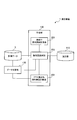
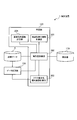
- FIG. 2 is a block diagram showing a functional configuration for learning of the identification device according to the first embodiment.
- the identification device 1 includes a classifier 110 and a learning unit 120 as a functional block or a processing circuit for realizing the function.
- the classifier 110 is configured to be able to discriminate a plurality of signals.
- the classifier 110 is configured to include a neural network or the like, and is configured to be able to discriminate a plurality of signals transmitted from different sources for each source.
- a signal having periodicity such as a radar wave or a sound wave can be mentioned.
- the classifier 110 may be able to discriminate even a signal having no periodicity.
- the learning unit 120 is configured to read the training data X and execute the learning operation (specifically, machine learning) of the classifier 110.
- the learning unit 120 includes a periodic loss function calculation unit 201 and a discriminator training unit 202.
- the periodic loss function calculation unit 201 calculates the periodic loss function (hereinafter, appropriately referred to as “first loss function”) from the training data X read into the learning unit 120.
- the first loss function is a function that becomes smaller when the discrimination result of the classifier 110 shows periodicity. The first loss function will be described in detail later.
- the value of the first loss function calculated by the periodic loss function calculation unit 201 is output to the discriminator training unit 202.
- the classifier training unit 202 trains the classifier 110 based on the first loss function calculated by the periodic loss function calculation unit 201. Specifically, the discriminator training unit 202 executes the learning operation so that the first loss function becomes small. For example, the discriminator training unit 202 adjusts the parameters of the neural network by a known method such as an error back propagation method so that the first loss function becomes small.
- the learning unit 120 has a configuration in which the learning operation is executed by using the first loss function (that is, the periodic loss function), but the learning unit 120 does not use the loss function.
- the learning operation may be executed. That is, the learning operation by the learning unit 120 is not particularly limited as long as it utilizes the periodicity of the signal.
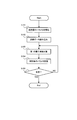
- FIG. 3 is a flowchart showing the flow of the learning operation of the identification device according to the first embodiment.
- step S101 when the identification device 1 according to the first embodiment is operated, the learning unit 120 first initializes the parameters of the classifier 110 (that is, the values changed by the learning operation) (step S101). .. When the learning operation is repeatedly executed, the process of step S101 may be omitted as appropriate.
- the learning unit 120 reads the training data X (step S102).
- the training data X is data having periodicity, its specific period may be unknown. That is, the training data X may be data to which the correct answer label is not attached.
- the periodic loss function calculation unit 201 calculates the first loss function using the read training data X (step S103). Then, the discriminator training unit 202 updates (that is, changes) the parameters of the discriminator 110 so that the first loss function becomes smaller (step S104).
- the learning unit 120 determines whether or not the identification result of the classifier 110 has converged (step S105).
- the learning unit 120 determines convergence based on, for example, whether the absolute value of the loss function or the amount of decrease is within a preset threshold value or less.
- the series of processes ends.
- the process is started again from step S103. Therefore, the processes of steps S103 and S104 are repeatedly executed until the identification results converge.
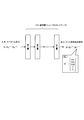
- FIG. 4 is a conceptual diagram showing an example of an input and an output in the classifier according to the first embodiment.
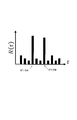
- FIG. 5 is a graph showing an example of a case where the autocorrelation function shows periodicity.
- the classifier 110 is configured as a neural network having layers from the first layer to the Nth layer.
- the training data X (x 1 , x 2 , ..., X t ) Showing the spectral sequence (spectrogram) of the signal is input to the classifier 110, the discrimination result y (y 1 , y 2 , ..., y t %) is obtained.
- the identification result y indicates a class posterior probability series, and is output as a value indicating the certainty for each classified class as illustrated in the figure. In the example in the figure, the probability of being the first class is "0.8", the probability of being the second class is "0.01", and the probability of being the third class is "0.05".
- the identification result y here is adjusted so that the sum is 1 by the softmax function.
- Autocorrelation function R (tau), and entropy L 1 may each expressed as the following formula (1) and (2).
- T is the time length of the observation signal (spectrogram).
- the expected value E [ ⁇ ] in the above equations (1) and (2) may be an average or simply a sum.
- the autocorrelation function R (tau), and entropy L 1 may each expressed as the following equation (3) and (4).
- the above equations (3) and (4) are as shown in the following equations (5) and (6), respectively.
- Ti is the time length of the i-th observation signal (however, it is unnecessary if there is no variation in the time length).
- the entropy L 1 of the autocorrelation function R (tau) is reduced, so that (peak A in the figure, and the peak B) a distinct peak in the autocorrelation function R (tau) is observed ..
- These peaks A and B are due to signals having different periodicities. Therefore, if we complete the learning operation so as to reduce the entropy L 1 of the autocorrelation function R (tau), it is possible to identify the signal in accordance with the periodicity.
- the above equations (3) and (5) are not limited to autocorrelation functions as long as they have the same properties as the autocorrelation function. That is, it is possible to use a function other than the autocorrelation function instead of the autocorrelation function. For example, it is possible to use a function obtained as a result of applying the discrete Fourier transform to the discrimination result y.
- machine learning is executed so that the identification result of the classifier 110 shows periodicity.
- the identification device 1 learned in this way a signal having periodicity can be appropriately identified.
- the cycle of the training data X used for the learning operation may be unknown. That is, appropriate machine learning can be performed without assigning a correct answer label to the training data X. Therefore, the cost of preparing the training data X can be kept low.
- the identification device 1 according to the second embodiment will be described with reference to FIGS. 6 and 7. It should be noted that the second embodiment differs from the first embodiment already described only in a part of the configuration and operation, and the other parts are substantially the same. Therefore, in the following, the parts different from the first embodiment will be described in detail, and the overlapping parts will be omitted as appropriate.
- FIG. 6 is a block diagram showing a functional configuration for learning of the identification device according to the second embodiment.
- the same components as those shown in FIG. 2 are designated by the same reference numerals.
- the identification device 1 includes a data expansion unit 130 in addition to the components of the first embodiment (see FIG. 2). Further, the learning unit 120 includes a class consistency loss function calculation unit 203.
- the data expansion unit 130 is configured to be able to expand the training data by adding a perturbation (noise) to the training data X.
- a perturbation noise
- existing techniques can be appropriately adopted, and therefore detailed description thereof will be omitted here.
- the class consistency loss function calculation unit 203 calculates the class consistency loss function (hereinafter, appropriately referred to as “second loss function”) from the training data X extended by the data expansion unit 130.
- the second loss function is a function that becomes smaller when the class that is the identification result of the training data X after expansion becomes the same as the class of the training data X before expansion. It may be unknown which class it belongs to. The second loss function will be described in detail later.
- the value of the second loss function calculated by the class consistency loss function calculation unit 203 is output to the discriminator training unit 202.
- FIG. 7 is a flowchart showing the flow of the learning operation of the identification device according to the second embodiment.
- the same processes as those shown in FIG. 3 are designated by the same reference numerals.
- the learning unit 120 first initializes the parameters of the classifier 110 (step S101) and reads the training data X (step S102).
- the data expansion unit 130 adds noise to the training data X (step S201). This expands the training data X.
- the periodic loss function calculation unit 201 calculates the first loss function using the expanded training data X (step S103). Further, the class consistency loss function calculation unit 203 calculates the second loss function using the expanded training data X (step S202).
- the second loss function can be expressed, for example, by the following equation (7) or (8).
- the discriminator training unit 202 updates (that is, changes) the parameters of the discriminator 110 based on the first loss function and the second loss function (step S104). At this time, the discriminator training unit 202 updates the parameters of the discriminator 110 so that, for example, L 1 + ⁇ L 2 ( ⁇ is a predetermined coefficient) becomes smaller.
- step S105 determines whether or not the identification result of the classifier 110 has converged.
- step S105: YES the series of processes ends.
- step S105: NO the process is started again from step S103.
- machine learning of the classifier 110 so that the training data X before expansion and the training data X after expansion belong to the same class. Is executed.
- learning using periodicity can be appropriately performed. Therefore, it is possible to appropriately identify signals having periodicity while suppressing an increase in cost.
- the identification device 1 according to the third embodiment will be described with reference to FIGS. 8 and 9. It should be noted that the third embodiment differs from the first and second embodiments already described only in a part of the configuration and operation, and the other parts are substantially the same. Therefore, in the following, the parts different from the first and second embodiments will be described in detail, and the overlapping parts will be omitted as appropriate.
- FIG. 8 is a block diagram showing a functional configuration for learning of the identification device according to the third embodiment.
- the same components as those shown in FIG. 2 are designated by the same reference numerals.
- the learning unit 120 includes the error loss function calculation unit 204 in addition to the components of the first embodiment (see FIG. 2).
- the discriminator 110 discriminates a signal using a neural network
- the discriminator 110 according to the third embodiment is a non-negative matrix factorization (Non-negative).
- Signals are identified using Matrix Factorization (NMF). Since NMF is an existing technology, detailed description of the identification method using NMF will be omitted.
- NMF Matrix Factorization
- the error loss function calculation unit 204 calculates the reproduction error loss function (hereinafter, appropriately referred to as “basic loss function”) used for NMF from the training data X.
- the basic loss function in NMF can be expressed as the following equation (9), for example, when the training data X is decomposed into the basis spectrum H and the activation U.
- the value of the basic loss function calculated by the error loss function calculation unit 204 is output to the discriminator training unit 202.
- FIG. 9 is a flowchart showing the flow of the learning operation of the identification device according to the third embodiment.
- the same processes as those shown in FIG. 3 are designated by the same reference numerals.
- the learning unit 120 first initializes the parameters of the classifier 110 (step S101) and reads the training data X (step S102).
- the error loss function calculation unit 204 calculates the basic loss function from the training data X (step S301). Then, the periodic loss function calculation unit 201 calculates the first loss function using the training data X (step S103).
- the first loss function (autocorrelation function R ( ⁇ ) and entropy L 1 ) here can be expressed as the following equations (10) and (11).
- the expected value E [ ⁇ ] in the above equations (10) and (11) may be an average or simply a sum as described in the first embodiment (formulas (3) and (4). ).
- the discriminator training unit 202 updates (that is, changes) the parameters of the discriminator 110 based on the basic loss function and the first loss function (step S104). At this time, the discriminator training unit 202 updates the parameters of the discriminator 110 so that the following equation (12) becomes smaller, for example.
- ⁇ is a predetermined coefficient.
- step S105 determines whether or not the identification result of the classifier 110 has converged.
- step S105: YES the series of processes ends.
- step S105: NO the process is started again from step S103.
- the learning operation is executed by adding the first loss function to the basic loss function of the NMF.
- learning can be performed on the classifier 110 using the NMF with restrictions on the periodicity of the signal. Therefore, even in the classifier 110 using NMF, it is possible to appropriately discriminate signals having periodicity.
- the identification device 1 according to the fourth embodiment will be described with reference to FIGS. 10 and 11. It should be noted that the fourth embodiment differs from the first to third embodiments already described only in a part of the configuration and operation, and the other parts are substantially the same. Therefore, in the following, the parts different from the first to third embodiments will be described in detail, and the overlapping parts will be omitted as appropriate.
- FIG. 10 is a block diagram showing a functional configuration for learning of the identification device according to the fourth embodiment.
- the same components as those shown in FIGS. 6 and 8 are designated by the same reference numerals.
- the identification device 1 according to the fourth embodiment includes a data expansion unit 130 in addition to the components of the third embodiment (see FIG. 2). Further, the learning unit 120 includes a class consistency loss function calculation unit 203. That is, the identification device 1 according to the fourth embodiment has a configuration in which the second embodiment and the third embodiment are substantially combined.
- the classifier 110 according to the fourth embodiment discriminates signals using NMF as in the third embodiment.
- FIG. 11 is a flowchart showing the flow of the learning operation of the identification device according to the fourth embodiment.
- the same processes as those shown in FIGS. 7 and 9 are designated by the same reference numerals.
- the learning unit 120 first initializes the parameters of the classifier 110 (step S101) and reads the training data X (step S102).
- the data expansion unit 130 adds noise to the training data X (step S201). This expands the training data X.
- the error loss function calculation unit 204 calculates the basic loss function from the training data X (step S301). Then, the periodic loss function calculation unit 201 calculates the first loss function using the training data X (step S103). Further, the class consistency loss function calculation unit 203 calculates the second loss function using the expanded training data X (step S202).
- the discriminator training unit 202 updates (that is, changes) the parameters of the discriminator 110 based on the basic loss function, the first loss function, and the second loss function (step S104). That is, the discriminator training unit 202 executes a learning operation that combines the learning operation of the second embodiment and the learning operation of the third embodiment already described.
- step S105 determines whether or not the identification result of the classifier 110 has converged.
- step S105: YES the series of processes ends.
- step S105: NO the process is started again from step S103.
- the learning operation is executed by adding the first loss function and the second loss function to the basic loss function of the NMF. Will be done. In this way, learning can be performed on the classifier 110 using the NMF with restrictions on the periodicity of the signal. Further, even when the training data X is expanded, learning using periodicity can be appropriately performed. Therefore, it is possible to appropriately identify signals having periodicity while suppressing an increase in cost.
- the identification device includes an identification means for identifying a signal and a learning means for executing machine learning so that the identification result of the identification means shows periodicity by using training data having periodicity. It is an identification device characterized by this.
- Appendix 2 The identification device according to Appendix 2 is characterized in that the learning means executes the machine learning using a first loss function that becomes smaller when the identification result of the identification means shows periodicity.
- the identification device according to Appendix 3 is the identification device according to claim 1 or 2, wherein the period of the training data is an unknown value.
- the identification device according to Appendix 4 further includes an expansion means for imparting a perturbation to the training data to expand the training data, and in the learning means, the identification result of the training data after the expansion is the identification of the training data before the expansion.
- the identification device according to any one of claims 1 to 3, wherein the machine learning is executed so as to be in the same class as the result.
- the learning means uses a second loss function that becomes smaller when the identification result of the training data after expansion is in the same class as the identification result of the training data before expansion.
- the identification device according to Supplementary Note 6 is the identification device according to any one of Supplementary note 1 to 5, wherein the identification means identifies the signal by using a neural network.
- the identification device according to Appendix 8 is the identification device according to any one of Appendix 1 to 7, wherein the signal is a radar wave or a sound wave.
- the learning method of the identification device according to Appendix 9 is a learning method of the identification device for identifying signals, and machine learning is performed so that the identification result of the identification device shows periodicity using training data having periodicity. It is a learning method of an identification device characterized by executing. Is.
- Appendix 10 The computer program according to Appendix 10 is a computer program used for learning a discriminating device for discriminating signals, and machine learning is performed so that the discriminating result of the discriminating device shows periodicity using training data having periodicity. It is a computer program characterized by operating a computer so as to execute.
- the identification device according to Appendix 11 is the identification device according to Appendix 2, wherein the learning means uses an autocorrelation function as the first loss function.
- the identification device according to Appendix 12 is the identification device according to Appendix 2, wherein the learning means executes the machine learning using the entropy of the first loss function.
- the identification device according to Appendix 13 is the identification device according to Appendix 5, wherein the learning means uses an autocorrelation function as the second loss function.
- the identification device according to Appendix 14 is the identification device according to Appendix 5, wherein the learning means executes the machine learning using the entropy of the second loss function.
- the present invention can be appropriately modified within the scope of the claims and within a range not contrary to the gist or idea of the invention that can be read from the entire specification, and the identification device, the learning method of the identification device, and the computer program accompanied by such changes. Is also included in the technical idea of the present invention.
- Discriminator 110 Discriminator 120 Learning unit 130 Data expansion unit 201 Periodic loss function calculation unit 202 Discriminator training unit 203 Class consistency loss function calculation unit 204 Error loss function calculation unit X Training data
Landscapes
- Engineering & Computer Science (AREA)
- Theoretical Computer Science (AREA)
- Software Systems (AREA)
- Data Mining & Analysis (AREA)
- Evolutionary Computation (AREA)
- Medical Informatics (AREA)
- Computer Vision & Pattern Recognition (AREA)
- Physics & Mathematics (AREA)
- Computing Systems (AREA)
- General Engineering & Computer Science (AREA)
- General Physics & Mathematics (AREA)
- Mathematical Physics (AREA)
- Artificial Intelligence (AREA)
- Image Analysis (AREA)
- Information Retrieval, Db Structures And Fs Structures Therefor (AREA)
Priority Applications (2)
| Application Number | Priority Date | Filing Date | Title |
|---|---|---|---|
| JP2022501572A JP7616202B2 (ja) | 2020-02-21 | 2020-02-21 | 識別装置、識別装置の学習方法、及びコンピュータプログラム |
| PCT/JP2020/007198 WO2021166243A1 (ja) | 2020-02-21 | 2020-02-21 | 識別装置、識別装置の学習方法、及びコンピュータプログラム |
Applications Claiming Priority (1)
| Application Number | Priority Date | Filing Date | Title |
|---|---|---|---|
| PCT/JP2020/007198 WO2021166243A1 (ja) | 2020-02-21 | 2020-02-21 | 識別装置、識別装置の学習方法、及びコンピュータプログラム |
Publications (1)
| Publication Number | Publication Date |
|---|---|
| WO2021166243A1 true WO2021166243A1 (ja) | 2021-08-26 |
Family
ID=77390756
Family Applications (1)
| Application Number | Title | Priority Date | Filing Date |
|---|---|---|---|
| PCT/JP2020/007198 Ceased WO2021166243A1 (ja) | 2020-02-21 | 2020-02-21 | 識別装置、識別装置の学習方法、及びコンピュータプログラム |
Country Status (2)
| Country | Link |
|---|---|
| JP (1) | JP7616202B2 (https=) |
| WO (1) | WO2021166243A1 (https=) |
Cited By (1)
| Publication number | Priority date | Publication date | Assignee | Title |
|---|---|---|---|---|
| WO2024225032A1 (ja) * | 2023-04-26 | 2024-10-31 | 京セラ株式会社 | 電子機器、電子機器の制御方法、及びプログラム |
Families Citing this family (1)
| Publication number | Priority date | Publication date | Assignee | Title |
|---|---|---|---|---|
| WO2023031447A1 (en) * | 2021-09-06 | 2023-03-09 | F. Hoffmann-La Roche Ag | Method for automated quality check of chromatographic and/or mass spectral data |
Citations (3)
| Publication number | Priority date | Publication date | Assignee | Title |
|---|---|---|---|---|
| JP2003308092A (ja) * | 2002-04-15 | 2003-10-31 | Mitsubishi Electric Corp | 雑音除去装置及び雑音除去方法 |
| JP2019124596A (ja) * | 2018-01-17 | 2019-07-25 | 横河電機株式会社 | 測定値予測モジュール、測定値予測プログラム及び測定値予測方法 |
| JP2019185580A (ja) * | 2018-04-16 | 2019-10-24 | アズビル株式会社 | 異常検出装置および方法 |
Family Cites Families (4)
| Publication number | Priority date | Publication date | Assignee | Title |
|---|---|---|---|---|
| JP4227529B2 (ja) * | 2004-01-06 | 2009-02-18 | パナソニック株式会社 | 周期性雑音抑圧装置 |
| JP6727825B2 (ja) * | 2016-02-02 | 2020-07-22 | キヤノン株式会社 | 音声処理装置および音声処理方法 |
| JP2019175093A (ja) * | 2018-03-28 | 2019-10-10 | パナソニックIpマネジメント株式会社 | 推定装置、推定方法、推定プログラム、学習装置、学習方法、及び学習プログラム |
| JP7000991B2 (ja) * | 2018-05-23 | 2022-01-19 | 株式会社リコー | 状態識別装置、状態識別方法および状態識別プログラム |
-
2020
- 2020-02-21 JP JP2022501572A patent/JP7616202B2/ja active Active
- 2020-02-21 WO PCT/JP2020/007198 patent/WO2021166243A1/ja not_active Ceased
Patent Citations (3)
| Publication number | Priority date | Publication date | Assignee | Title |
|---|---|---|---|---|
| JP2003308092A (ja) * | 2002-04-15 | 2003-10-31 | Mitsubishi Electric Corp | 雑音除去装置及び雑音除去方法 |
| JP2019124596A (ja) * | 2018-01-17 | 2019-07-25 | 横河電機株式会社 | 測定値予測モジュール、測定値予測プログラム及び測定値予測方法 |
| JP2019185580A (ja) * | 2018-04-16 | 2019-10-24 | アズビル株式会社 | 異常検出装置および方法 |
Cited By (2)
| Publication number | Priority date | Publication date | Assignee | Title |
|---|---|---|---|---|
| WO2024225032A1 (ja) * | 2023-04-26 | 2024-10-31 | 京セラ株式会社 | 電子機器、電子機器の制御方法、及びプログラム |
| JP2024157978A (ja) * | 2023-04-26 | 2024-11-08 | 京セラ株式会社 | 電子機器、電子機器の制御方法、及びプログラム |
Also Published As
| Publication number | Publication date |
|---|---|
| JPWO2021166243A1 (https=) | 2021-08-26 |
| JP7616202B2 (ja) | 2025-01-17 |
Similar Documents
| Publication | Publication Date | Title |
|---|---|---|
| US9721202B2 (en) | Non-negative matrix factorization regularized by recurrent neural networks for audio processing | |
| US20210350796A1 (en) | Apparatus and method for speech processing using a densely connected hybrid neural network | |
| JP2022501651A (ja) | サウンド分類システム | |
| Bakır et al. | A comprehensive experimental study for analyzing the effects of data augmentation techniques on voice classification | |
| Abeysinghe et al. | Data augmentation on convolutional neural networks to classify mechanical noise | |
| JP7488422B2 (ja) | フィルタバンク領域でオーディオサンプルを処理するための生成ニューラルネットワークモデル | |
| US6502067B1 (en) | Method and apparatus for processing noisy sound signals | |
| CN113454717A (zh) | 语音识别装置和方法 | |
| WO2021166243A1 (ja) | 識別装置、識別装置の学習方法、及びコンピュータプログラム | |
| US20230154485A1 (en) | Methods of training acoustic scene classification model and classifying acoustic scene and electronic device for performing the methods | |
| KR20220098964A (ko) | 음향 신호를 인식하는 학습 모델의 트레이닝 방법과 그 학습 모델을 이용한 음향 신호의 인식 방법 및 그 방법들을 수행하는 장치 | |
| JP2019078864A (ja) | 楽音強調装置、畳み込みオートエンコーダ学習装置、楽音強調方法、プログラム | |
| WO2019203232A1 (ja) | データ分析システム、方法、及びプログラム | |
| Karam et al. | Episodic memory based continual learning without catastrophic forgetting for environmental sound classification | |
| Nasef et al. | Multiclass environmental sound classification model based on adding residual connections to self-attention layers | |
| Mulimani et al. | Online incremental learning for audio classification using a pretrained audio model | |
| JP4952979B2 (ja) | 信号分離装置、信号分離方法、ならびに、プログラム | |
| JP5974901B2 (ja) | 有音区間分類装置、有音区間分類方法、及び有音区間分類プログラム | |
| WO2012105386A1 (ja) | 有音区間検出装置、有音区間検出方法、及び有音区間検出プログラム | |
| Dasari et al. | Enhancing environmental sounds classification through deep learning techniques | |
| KR102883210B1 (ko) | 신경망 모델의 분석을 위한 히트맵 청각화 방법 및 장치 | |
| Hirata et al. | Approximating high-dimensional dynamics by barycentric coordinates with linear programming | |
| EP4478358A1 (en) | Waveform signal generation system, waveform signal generation method, and program | |
| Mukherjee et al. | SMIL-a musical instrument identification system | |
| KR101621718B1 (ko) | 배음 구조 및 성김 구조 제약조건을 이용한 화성악기와 타악기 소리의 분리 방법 |
Legal Events
| Date | Code | Title | Description |
|---|---|---|---|
| 121 | Ep: the epo has been informed by wipo that ep was designated in this application |
Ref document number: 20920207 Country of ref document: EP Kind code of ref document: A1 |
|
| ENP | Entry into the national phase |
Ref document number: 2022501572 Country of ref document: JP Kind code of ref document: A |
|
| NENP | Non-entry into the national phase |
Ref country code: DE |
|
| 122 | Ep: pct application non-entry in european phase |
Ref document number: 20920207 Country of ref document: EP Kind code of ref document: A1 |