WO2021157684A1 - Brd4蛋白質分解誘導作用を有するスルホンアミドあるいはスルフィンアミド化合物及びその医薬としての用途 - Google Patents
Brd4蛋白質分解誘導作用を有するスルホンアミドあるいはスルフィンアミド化合物及びその医薬としての用途 Download PDFInfo
- Publication number
- WO2021157684A1 WO2021157684A1 PCT/JP2021/004231 JP2021004231W WO2021157684A1 WO 2021157684 A1 WO2021157684 A1 WO 2021157684A1 JP 2021004231 W JP2021004231 W JP 2021004231W WO 2021157684 A1 WO2021157684 A1 WO 2021157684A1
- Authority
- WO
- WIPO (PCT)
- Prior art keywords
- group
- cyano
- methyl
- halogen atom
- phenyl
- Prior art date
- Legal status (The legal status is an assumption and is not a legal conclusion. Google has not performed a legal analysis and makes no representation as to the accuracy of the status listed.)
- Ceased
Links
Images

Classifications
-
- C—CHEMISTRY; METALLURGY
- C07—ORGANIC CHEMISTRY
- C07D—HETEROCYCLIC COMPOUNDS
- C07D495/00—Heterocyclic compounds containing in the condensed system at least one hetero ring having sulfur atoms as the only ring hetero atoms
- C07D495/12—Heterocyclic compounds containing in the condensed system at least one hetero ring having sulfur atoms as the only ring hetero atoms in which the condensed system contains three hetero rings
- C07D495/14—Ortho-condensed systems
-
- A—HUMAN NECESSITIES
- A61—MEDICAL OR VETERINARY SCIENCE; HYGIENE
- A61P—SPECIFIC THERAPEUTIC ACTIVITY OF CHEMICAL COMPOUNDS OR MEDICINAL PREPARATIONS
- A61P35/00—Antineoplastic agents
-
- A—HUMAN NECESSITIES
- A61—MEDICAL OR VETERINARY SCIENCE; HYGIENE
- A61K—PREPARATIONS FOR MEDICAL, DENTAL OR TOILETRY PURPOSES
- A61K31/00—Medicinal preparations containing organic active ingredients
- A61K31/33—Heterocyclic compounds
- A61K31/395—Heterocyclic compounds having nitrogen as a ring hetero atom, e.g. guanethidine or rifamycins
- A61K31/55—Heterocyclic compounds having nitrogen as a ring hetero atom, e.g. guanethidine or rifamycins having seven-membered rings, e.g. azelastine, pentylenetetrazole
- A61K31/551—Heterocyclic compounds having nitrogen as a ring hetero atom, e.g. guanethidine or rifamycins having seven-membered rings, e.g. azelastine, pentylenetetrazole having two nitrogen atoms, e.g. dilazep
- A61K31/5513—1,4-Benzodiazepines, e.g. diazepam or clozapine
- A61K31/5517—1,4-Benzodiazepines, e.g. diazepam or clozapine condensed with five-membered rings having nitrogen as a ring hetero atom, e.g. imidazobenzodiazepines, triazolam
-
- A—HUMAN NECESSITIES
- A61—MEDICAL OR VETERINARY SCIENCE; HYGIENE
- A61P—SPECIFIC THERAPEUTIC ACTIVITY OF CHEMICAL COMPOUNDS OR MEDICINAL PREPARATIONS
- A61P35/00—Antineoplastic agents
- A61P35/02—Antineoplastic agents specific for leukemia
-
- A—HUMAN NECESSITIES
- A61—MEDICAL OR VETERINARY SCIENCE; HYGIENE
- A61P—SPECIFIC THERAPEUTIC ACTIVITY OF CHEMICAL COMPOUNDS OR MEDICINAL PREPARATIONS
- A61P43/00—Drugs for specific purposes, not provided for in groups A61P1/00-A61P41/00
Definitions
- the present invention is excellent in cytotoxic action on cancer cells, action of inducing degradation of BRD4 protein in cancer cells, and inhibitory action of binding between BRD4 protein and acetylated histone, and induces degradation of anticancer agent and BRD4 protein.
- sulfonamides or sulfinamide compounds useful as agents and BRD4 protein inhibitors or pharmaceutically acceptable salts thereof.
- Eukaryotic DNA forms a chromatin structure and is stored in the nucleus. Its constituent unit, the nucleosome, has a structure in which DNA is wrapped around a histone octamer formed by two molecules each of four types of histones, H2A, H2B, H3, and H4. Dozens of residues on the N-terminal side of histones are called histone tails, and various post-translational modifications such as acetylation, methylation, phosphorylation, and ubiquitination exist. Post-translational modifications, also called histone codes, are one of the mechanisms responsible for controlling epigenetic gene expression, which determines when and where genetic information on DNA is expressed.
- Histone modifications are reversible and are functionally performed by a modifying enzyme (writer) that writes the modifying group to the histone, an eraser that removes the modifying group, and a histone reader that specifically reads the modified histone. It is controlled. It is known that such a control mechanism greatly contributes to ontogeny and cell differentiation, and at the same time, epigenetic abnormalities are involved in various diseases.
- a modifying enzyme writer
- eraser that removes the modifying group
- histone reader that specifically reads the modified histone. It is controlled. It is known that such a control mechanism greatly contributes to ontogeny and cell differentiation, and at the same time, epigenetic abnormalities are involved in various diseases.
- Bromodomain is a reader protein consisting of about 110 amino acids that recognizes histone acetylated lysine. About 50 types of proteins carrying bromodomains are known so far, and by binding to histone acetylated lysine, they function as scaffold proteins for various transcription factors and their own histone acetylation. It exerts various functions in cells, such as being responsible for chromatin remodeling and transcriptional regulation through transferase activity and kinase activity. BRD2, BRD3, BRD4 and BRDT contained in BET (bromodomain and extraterminal) family proteins of bromodomain-bearing proteins (sometimes referred to as BET proteins in the present specification and claims) are stored within the family. It has two bromodomains on the N-terminal side and an Extra C-Terminal domain on the C-terminal side, and it is known that each BET protein functions independently and cooperatively. (Non-Patent Document 1).
- Non-Patent Document 2 BRD4 regulates the expression of the protooncogene c-MYC (Non-Patent Document 2), and various cancers such as gastric cancer (Non-Patent Document 3).
- Ovarian cancer Non-Patent Document 4
- Lung cancer Non-Patent Document 5
- Liver cancer Non-Patent Document 6
- Urinary tract epithelial cancer Non-Patent Document 7
- Testis tumor Non-Patent Document 8
- Skin Correlation with prognosis in cancer Non-Patent Document 9
- prostate cancer Non-Patent Document 10
- breast cancer Non-Patent Document 11
- colon cancer Non-Patent Document 12
- leukemia Non-Patent Document 13
- Non-Patent Document 14 a BRD4 inhibitor that inhibits the binding of BRD4 to histones has been clinically developed.
- BRD4 inhibitors do not show sufficient effects to cause the accumulation of BRD4 (Non-Patent Document 15), and the protein that stabilizes the expression of BRD4 and the transcriptional activity mediated by BRD4 are bromodomain-independent. Since resistance is acquired by the expression of a protein that improves the protein (Non-Patent Documents 16 and 17), the development of an anticancer drug targeting BRD4 by a new means is required.
- Non-Patent Document 18 So far, ARV-771 using a ligand for VHL and ARV-825 using a ligand for CRBN have been reported as BRD4 proteolytic inducers using this technology (Non-Patent Documents 15 and 19). ..
- Non-patent documents In cancer chemotherapy, the emergence of natural resistance, which is ineffective against anti-cancer drugs from the beginning of treatment, and acquired resistance, whose effect decreases when anti-cancer drugs are used continuously for a long period of time, has become a major problem (non-patent documents). 20). Overcoming resistance to this anticancer drug is expected to lead to improved treatment results of cancer chemotherapy, and the existence of various resistance mechanisms has been clarified so far (Non-Patent Document 20). Regarding the BRD4 proteolytic inducer, it has been reported that acquired resistance is induced in cancer cells by dysfunction of the complex of E3 ligase VHL or CRBN that causes proteolytic action (Non-Patent Document 21).
- Non-Patent Document 22 tumors such as renal cell carcinoma caused by mutation of the VHL gene (Non-Patent Document 22) are considered to exhibit natural resistance to BRD4 proteolysis inducers using ligands for VHL, and are considered to exhibit natural resistance to conventional BRD4 proteolysis. It is desired to develop a novel BRD4 proteolysis inducer using a ligand for a new E3 ligase that overcomes the resistance of the inducer. In recent years, many target protein degradation-inducing compounds in which a new ligand for E3 ligase and a binder for the target protein are bound have been reported (Non-Patent Document 23).
- Non-Patent Document 24 For example, a new BRD4 proteolysis inducer using E3 ligase DCAF15 has been reported (Non-Patent Document 24). However, its BRD4 proteolysis-inducing action and cytotoxic action are not sufficient.
- the combination of the ligand for E3 ligase and the binder for the target protein is currently limited (Non-Patent Document 23), and the binder for BRD4 protein has a sufficient BRD4 proteolysis-inducing action and cytotoxic action as an anticancer agent. It is required to find a suitable combination of ligand and linker structure for E3 ligase to show.
- An object of the present invention is to provide a compound which is excellent in inducing BRD4 proteolysis and is useful as a therapeutic agent for cancer or a pharmaceutically acceptable salt thereof, which utilizes a ligand for E3 ligase DCAF15.
- the present inventors have found a compound having a BRD4 proteolysis-inducing action using a ligand for E3 ligase DCAF15, and have found that it can provide a therapeutic agent for cancer.
- the present invention has been completed by finding an optimal linker structure as a ligand for DCAF15. That is, the gist of the present invention is as follows.
- a and Q are independently selected from aromatic hydrocarbon rings; aromatic heterocycles containing 1-3 atoms selected from oxygen, sulfur and nitrogen; cycloalkane rings; and oxygen, sulfur and nitrogen. Indicates a ring selected from an aliphatic heterocycle containing 1 to 3 atoms;
- the ring is Halogen atom; Hydroxy group; Cyano group; Hydroxycarbonyl group; Oxo group; Thioxo group;
- An alkyl group optionally substituted with a group selected from a halogen atom, a hydroxy group, an alkoxy group and a cyano group;
- An alkoxy group that may be substituted with a group selected from a halogen atom, a hydroxy group, an alkoxy group and a cyano group;
- An alkoxycarbonyl group that may be substituted with a group selected from a halogen atom, a hydroxy group, an alkoxy group and a cyano group;
- Z 2 is a group selected from C and N.
- the group is a halogen atom; a hydroxy group; a cyano group; an oxo group; a hydroxycarbonyl group; an alkyl group optionally substituted with a group selected from a halogen atom, a hydroxy group, an alkoxy group and a cyano group; and a halogen atom, It may be substituted with a group selected from a hydroxy group, an alkoxy group and a cyano group; it may be substituted with a substituent selected from; -LTM-, as all or part of the structure, -O-O-, -S-S-, -NR 7a- NR 7a- , -O-S-, -SO-,- O-NR 7a -, - NR 7a -O -, - S-NR 7a - and -NR 7a -S- not indicate a group selected from, G indicates N or C, J indicates N or O
- R 5 is a group selected from a hydrogen atom; and an alkyl group optionally substituted with a group selected from a halogen atom, a hydroxy group, an alkoxy group and a cyano group;
- R 6a and R 6b are independent of each other and may be substituted with a group selected from a hydrogen atom; a halogen atom; a hydroxy group; a cyano group; a halogen atom, a hydroxy group, an alkoxy group and a cyano group;
- R 7a and R 7b are independent of each other and are alkyl groups that may be substituted with a hydrogen atom; or a group selected from a halogen atom, a hydroxy group, an alkoxy group and
- R 7a and R 7b bonded to the same nitrogen atom may be bonded and substituted with the nitrogen atom by a group selected from a halogen atom, a hydroxy group, an alkoxy group and a cyano group. It may form an aliphatic heterocycle containing an individual, R 7c and R 7d are mutually independent alkyl groups that may be substituted with a hydrogen atom; or a group selected from a halogen atom, a hydroxy group, an alkoxy group and a cyano group.
- R 7r is an alkylene group optionally substituted with a group selected from a halogen atom, a hydroxy group, an alkoxy group and a cyano group; substituted with a group selected from a halogen atom, a hydroxy group, an alkoxy group and a cyano group.
- R 8a and R 8b are independent of each other and may be substituted with a group selected from a hydrogen atom; a halogen atom; a hydroxy group; a cyano group; a halogen atom, a hydroxy group, an alkoxy group and a cyano group; And an alkoxy group which may be substituted with a group selected from a halogen atom, a hydroxy group, an alkoxy group and a cyano group; Even if R 9a and R 9b are independently substituted with a group selected from hydrogen atom; halogen atom; hydroxy group; cyano group; hydroxycarbonyl group; halogen atom, hydroxy group, alkoxy group and cyano group.
- Good alkyl group optionally substituted with a group selected from halogen atom, hydroxy group, alkoxy group and cyano group; alkoxy group; substituted with substituent selected from halogen atom, hydroxy group, alkoxy group and cyano group Is it a group selected from an alkoxycarbonyl group that may be; and -CO-N (R 7a ) (R 7b); R 9a and R 9b together may be substituted with a group selected from a halogen atom, a hydroxy group, an alkoxy group and a cyano group; or a halogen atom, a hydroxy group, an alkoxy group and a cyano group.
- R 10a and R 10b are independently selected from hydrogen atom; hydroxy group; cyano group; -N (R 7a ) (R 7b ); -N (R 7c ) -CO-OR 7d ; and alkyl group; Indicates a substituent that is The alkyl group is Halogen atom; Hydroxy group; Cyano group; May be substituted with a substituent selected from halogen atom, hydroxy group, alkoxy group and cyano group. Alkoxy group; selected from halogen atom, hydroxy group, alkoxy group and cyano group.
- Alkoxycarbonyl groups may be substituted with substituents; hydroxycarbonyl groups; and —CO-N (R 7a ) (R 7b ); may be substituted with substituents selected from R 10a and R 10b together form a ring showing an alkylene group that may be substituted with a group selected from halogen atoms, hydroxy groups, alkoxy groups and cyano groups.
- R 11 is a group selected from a hydrogen atom; and an alkyl group which may be substituted with a group selected from a halogen atom, a hydroxy group, an alkoxy group and a cyano group; ]
- Ra represents a hydrogen atom; or an alkyl group optionally substituted with a substituent selected from a halogen atom, a hydroxy group, an alkoxy group and a cyano group
- R a ' is a hydrogen atom, a halogen atom, a hydroxyl group, a cyano group, a halogen atom, hydroxy group, an alkyl group which may be substituted with a substituent selected from an alkoxy group and a cyano group
- a halogen atom, hydroxy group An alkoxycarbonyl group optionally substituted with a substituent selected from an alkoxy group and a cyano group; or —CO—N (R 7a ) (R 7b ).
- Ra'' may be substituted with a substituent selected from a hydrogen atom; a halogen atom; a cyano group; a halogen atom, a hydroxy group, an alkoxy group and a cyano group; an alkyl group; a halogen atom, a hydroxy group, an alkoxy group. And an alkoxycarbonyl group optionally substituted with a substituent selected from cyano groups; or —CO—N (R 7a ) (R 7b ). ] Indicated by The compound according to [1] or a pharmaceutically acceptable salt thereof.
- A is a ring selected from a 5- to 6-membered aromatic heterocycle and a cycloalkane ring containing 1 to 3 atoms selected from an aromatic hydrocarbon ring, oxygen, sulfur and nitrogen.
- R Z3 Hydrogen atom; halogen atom; hydroxy group; cyano group; hydroxycarbonyl group; alkyl group optionally substituted with a group selected from halogen atom, hydroxy group, alkoxy group and cyano group; halogen atom, hydroxy group, alkoxy group And a cycloalkyl group optionally substituted with a group selected from the cyano group; an alkoxy group optionally substituted with a group selected from a halogen atom, a hydroxy group, an alkoxy group and a cyano group; a halogen atom, a hydroxy group.
- R Z4 and R Z5 are independent of each other and may be substituted with a substituent selected from a hydrogen atom; a halogen atom; a cyano group; a halogen atom, a hydroxy group, an alkoxy group and a cyano group; an alkyl group; a halogen atom, Indicates a group selected from an alkoxy group optionally substituted with a group selected from a hydroxy group, an alkoxy group and a cyano group; Partial structure:
- L is a divalent aromatic hydrocarbon group; a divalent aliphatic heterocyclic group; a partially hydrogenated divalent aromatic heterocyclic group; an alkylene group; a cycloalkylene group; an alkenylene group; , Alquinylene group; is a group selected from The group is a halogen atom; a hydroxy group; a cyano group; a hydroxycarbonyl group; an alkyl group optionally substituted with a group selected from a halogen atom, a hydroxy group, an alkoxy group and a cyano group; and a halogen atom, a hydroxy group, It may be substituted with a group selected from an alkoxy group and a cyano group; it may be substituted with a substituent selected from; Whether T indicates a single bond, -CO-, -CO-NR 7c- , -NR 7c- CO-, or -O- Halogen atom; hydroxy group; cyano group
- R 5 is a hydrogen atom Select from R 6a and R 6b independently of each other; an alkyl group optionally substituted with a hydrogen atom; a halogen atom; a hydroxy group; a cyano group; and a substituent selected from a halogen atom, a hydroxy group and a cyano group;
- Is the basis for R 7c is a hydrogen atom
- R 8a and R 8b are independent groups selected from a hydrogen atom; a halogen atom; a hydroxy group; and a cyano group;
- a group in which R 9a and R 9b are independently selected from a hydrogen atom; a halogen atom; a cyano group; an alkyl group which may be substituted with
- A is a ring selected from a benzene ring; a pyridine ring; and a cycloalkane ring.
- R a is a hydrogen atom; indicates a halogen atom, a hydroxy group and an optionally substituted alkyl group with a substituent selected from cyano group
- R a ' is a hydrogen atom; indicates a halogen atom, a hydroxy group and an optionally substituted alkyl group with a substituent selected from cyano group
- Ra'' indicates an alkyl group which may be substituted with a substituent selected from a hydrogen atom; a halogen atom; a halogen atom, a hydroxy group, and a cyano group; or a cyano group.
- R Z3 may be substituted with a hydrogen atom; a halogen atom; a cyano group; a substituent selected from a halogen atom, a hydroxy group and a cyano group; an alkyl group; a substitution selected from a halogen atom, a hydroxy group and a cyano group.
- R Z4 and R Z5 independently indicate a hydrogen atom; or an alkyl group which may be substituted with a substituent selected from a halogen atom, a hydroxy group and a cyano group;
- a divalent aromatic hydrocarbon group which may be substituted with a group; a divalent fat containing one nitrogen atom which may be substituted with a substituent selected from a halogen atom, a hydroxy group and a cyano group.
- the aromatic heterocyclic group may be substituted with a substituent selected from a halogen atom, a hydroxy group, a cyano group and an oxo group.
- T indicates a single bond; -CO-; -CO-NR 7c- ; -NR 7c -CO-; or -O- ;.
- Is M a single bond? -R 7r -O -; - R 7r -NR 7a -; halogen atom, hydroxy group and an alkylene group which may be substituted with a substituent selected from cyano group, a halogen atom, hydroxy group, and cyano group
- a group selected from R 6a and R 6b independently of each other; an alkyl group selected from a hydrogen atom; a halogen atom; a cyano group; and an alkyl group which may be substituted with a substituent selected from a halogen atom, a hydroxy group and a cyano group.
- R 7a and R 7b indicate an alkyl group which may be independently substituted with a hydrogen atom; or a substituent selected from a halogen atom, a hydroxy group and a cyano group.
- R 7c indicates a hydrogen atom
- R 7d indicates an alkyl group which may be substituted with a substituent selected from a halogen atom, a hydroxy group and a cyano group.
- R 7r represents an alkylene group that may be substituted with a substituent selected from halogen atoms, hydroxy groups, and cyano groups.
- R 8a and R 8b are hydrogen atoms
- R 9a and R 9b are alkyl groups that may be independently substituted with a substituent selected from a halogen atom, a hydroxy group and a cyano group.
- R 10a is a hydrogen atom; and a substituent selected from a halogen atom, a hydroxy group, a cyano group, -NH-CO-OR 7d , -CO-N (R 7a ) (R 7b ), an alkoxycarbonyl group and a hydroxycarbonyl group.
- R 11 is an alkyl group which may be substituted with a substituent selected from a halogen atom, a hydroxy group and a cyano group.
- Ra represents a hydrogen atom; or an alkyl group, Ra'indicates a hydrogen atom; or an alkyl group, Ra'' indicates a hydrogen atom; a halogen atom; an alkyl group; or a cyano group
- R Z3 shows an alkyl group; a cycloalkyl group; or an alkoxy group; which may be substituted with 1 to 3 substituents selected from a hydrogen atom; a halogen atom; a cyano group; a halogen atom and a hydroxy group.
- R Z4 and R Z5 independently represent a hydrogen atom; or an alkyl group; Partial structure:
- L is substituted with one or two substituents selected from an alkynylene group; a halogen atom, a hydroxy group, an alkyl group optionally substituted with 1 to 3 halogen atoms, and an alkoxy group.
- the aromatic heterocyclic group is a divalent aromatic heterocyclic group containing 1 to 2 atoms selected from a nitrogen atom, an oxygen atom and a sulfur atom, which are partially hydrogenated
- the aromatic heterocyclic group is an oxo group. May be replaced, Is T a single bond? -CO-; -CO-NR 7c- ; -NR 7c -CO-; or -O-; Is M a single bond?
- R 6a and R 6b are independent groups selected from a hydrogen atom; a halogen atom; a cyano group; and an alkyl group; R 7a and R 7b represent hydrogen atoms; or alkyl groups independently of each other.
- R 7c indicates a hydrogen atom
- R 7d indicates an alkyl group
- R 7r represents an alkylene group
- Both R 8a and R 8b are hydrogen atoms
- R 9a and R 9b are alkyl groups that may be substituted with one hydroxy group independently of each other.
- R 10a is substituted with a hydrogen atom; and one substituent selected from -NH-CO-OR 7d , -CO-N (R 7a ) (R 7b ), cyano group, alkoxycarbonyl group and hydroxycarbonyl group.
- Alkyl group may be; a group selected from; R 10b is a hydrogen atom
- R 11 is an alkyl group
- A represents a benzene ring.
- R a is a hydrogen atom
- R 10a is an alkyl group that may be substituted with one alkoxycarbonyl group.
- a divalent aromatic in which L may be substituted with 1 to 2 substituents selected from a halogen atom, an alkyl group optionally substituted with 1 to 3 halogen atoms, and an alkoxy group.
- a group selected from a hydrocarbon group; and a divalent aromatic heterocyclic group containing 1 to 2 atoms selected from a nitrogen atom, an oxygen atom and a sulfur atom, which may be partially hydrogenated; can be,
- M is an alkylene group which may be substituted with one substituent selected from a hydroxy group and a cyano group.
- Ra' indicates a hydrogen atom
- Ra'' indicates a cyano group
- R Z3 shows an alkyl group; or an alkoxy group; which may be substituted with 1 to 3 halogen atoms or hydroxy groups.
- R Z4 indicates a hydrogen atom
- R Z5 represents a hydrogen atom
- R 8a and R 8b are hydrogen atoms.
- R 9a and R 9b are alkyl groups that may be substituted with one hydroxy group independently of each other.
- R 10a is an alkyl group that may be substituted with one alkoxycarbonyl group.
- R 10b is a hydrogen atom
- R 11 is an alkyl group, The compound according to any one of [2] to [7] or a pharmaceutically acceptable salt thereof.
- L is a phenylene group; or a pyrazinediyl group; which may be substituted with 1 or 2 substituents selected from halogen atoms and alkyl groups.
- T is -CO-NR 7c- , R 7c is a hydrogen atom, M is -CH 2- or -CH (CH 3 )-, The compound according to any one of [2] to [8] or a pharmaceutically acceptable salt thereof.
- a pharmaceutical composition comprising the compound according to any one of [1] to [11] or a pharmaceutically acceptable salt thereof.
- Cancers include acute myeloid leukemia, chronic myeloid leukemia, multiple myeloma, diffuse large B-cell lymphoma, adult T-cell leukemia / lymphoma, Berkit lymphoma, prostate cancer, and ovary.
- Cancers include acute myeloid leukemia, chronic myeloid leukemia, acute lymphocytic leukemia, diffuse large B-cell lymphoma, multiple myeloma, Burkitt lymphoma, glioma, gastric cancer, colon cancer, pancreas.
- the pharmaceutical composition according to [15] which is a cancer selected from cancer, liver cancer, prostate cancer, non-small cell lung cancer, breast cancer, ovarian cancer and burkitttomy.
- the cancer selected from acute myeloid leukemia, diffuse large B-cell lymphoma, multiple myeloma, prostate cancer, ovarian cancer and breast cancer, according to [16].
- Pharmaceutical composition. [18] Use of the pharmaceutical composition according to any one of [12] to [17] for treating cancer.
- [19] Use of the compound according to any one of [1] to [11] or a pharmaceutically acceptable salt thereof for producing a pharmaceutical composition for treating cancer.
- the compound according to any one of [1] to [11] or a pharmaceutically acceptable salt thereof, or the pharmaceutical composition according to any one of [12] to [17] is administered. How to treat cancer, including that.
- the compound of the present invention has an excellent effect of inducing BRD4 proteolysis and is useful as a therapeutic agent for cancer.
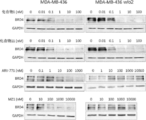
- Test Example 4 The results of the BRD4 proteolysis-inducing action of Test Example 4 are shown. The result of the antitumor effect of Test Example 6 is shown.
- the compound of the present invention is a compound represented by the general formula (I) or a pharmaceutically acceptable salt thereof.
- the compound represented by the general formula (I) or a pharmaceutically acceptable salt thereof may be collectively referred to as the compound of the present invention.
- the meanings of the terms used in the present specification will be described, and the present invention will be described in more detail. The explanation of the following terms does not limit the present invention in any way.
- halogen atom examples include a fluorine atom, a chlorine atom, a bromine atom, and an iodine atom.
- alkyl group includes, for example, methyl, ethyl, propyl, isopropyl, butyl, isobutyl, sec-butyl, tert-butyl, pentyl, isopentyl, neopentyl, 1-ethylpropyl, hexyl, isohexyl, 1 , 1-Dimethylbutyl, 2,2-dimethylbutyl, 3,3-dimethylbutyl, 2-ethylbutyl and the like "C 1-6 alkyl groups”.
- cycloalkyl group includes, for example, cyclopropyl, cyclobutyl, cyclopentyl, cyclohexyl, cycloheptyl, cyclooctyl, bicyclo [2.2.1] heptyl, bicyclo [2.2.2] octyl, and the like. Examples thereof include “C 3-10 cycloalkyl groups” such as bicyclo [3.2.1] octyl and adamantyl.
- alkoxy group includes, for example, "C 1-6 alkoxy group” such as methoxy, ethoxy, propoxy, isopropoxy, butoxy, isobutoxy, sec-butoxy, tert-butoxy, pentyloxy, hexyloxy and the like. Can be mentioned.
- alkylene group for example, -CH 2 -, - (CH 2) 2 -, - (CH 2) 3 -, - (CH 2) 4 -, - (CH 2) 5 - ,-(CH 2 ) 6- , -CH (CH 3 )-, -C (CH 3 ) 2- , -CH (C 2 H 5 )-, -CH (C 3 H 7 )-, -CH (CH) (CH 3) 2) -, - (CH (CH 3)) 2 -, - CH 2 -CH (CH 3) -, - CH (CH 3) -CH 2 -, - CH 2 -CH 2 -C ( CH 3) 2 -, - C (CH 3) 2 -CH 2 -, - CH 2 -CH 2 -CH 2 -C (CH 3) 2 -, - C (CH 3) 2 -CH 2 -, - CH 2 -CH 2 -CH 2 -C (CH 3) 2 -
- alkynylene groups for example, -C ⁇ C -, - CH 2 -C ⁇ C -, - C ⁇ C-CH 2 -, - C (CH 3) 2 -C ⁇ C- , -C ⁇ C-C (CH 3) 2 -, - CH 2 -C ⁇ C-CH 2 -, - CH 2 -CH 2 -C ⁇ C -, - C ⁇ C-CH 2 -CH 2 -, -C ⁇ C-C ⁇ C -, - C ⁇ C- CH 2 -CH 2 -CH 2 -, - CH 2 -CH 2 -CH 2 -C ⁇ C- , etc. of "C 2-6 alkynylene group" Can be mentioned.
- examples of the "cycloalkylene group” include “C 3-10 cycloalkylene groups” such as cyclopropylene, cyclobutylene, cyclopentylene, cyclohexylene, cycloheptyrene, and cyclooctylene.
- alkoxycarbonyl group includes, for example, methoxycarbonyl, ethoxycarbonyl, propoxycarbonyl, isopropoxycarbonyl, butoxycarbonyl, isobutoxycarbonyl, sec-butoxycarbonyl, tert-butoxycarbonyl, pentyloxycarbonyl, hexyl.
- Examples thereof include "C 1-6 alkoxy-carbonyl group” such as oxycarbonyl.
- examples of the "cycloalkane ring” include “C 3-10 cycloalkane rings” such as cyclopropane, cyclobutane, cyclopentane, cyclohexane, cycloheptane, and cyclooctane.
- aromatic hydrocarbon ring examples include “C 6-14 aromatic hydrocarbon rings” such as benzene, naphthalene and anthracene.
- aromatic hydrocarbon group examples include C 6-14 aryl groups such as phenyl, 1-naphthyl, 2-naphthyl, 1-anthryl, 2-anthryl, and 9-antryl.
- examples of the "divalent aromatic hydrocarbon group” include C 6-14 arylene groups such as phenylene, naphthylene and anthrylene.
- the "aliphatic heterocycle containing 1 to 3 atoms selected from oxygen, sulfur and nitrogen” includes, for example, an atom selected from oxygen, sulfur and nitrogen in addition to a carbon atom as a ring-constituting atom. Examples thereof include a 3- to 14-membered (preferably 4- to 10-membered) aliphatic heterocycle containing 1 to 3 of the above.
- aliphatic heterocycle examples include aziridine, oxylan, thielan, azetidine, oxetane, thietan, tetrahydropyran, tetrahydrofuran, pyrrolin, pyrrolidine, imidazoline, imidazolidine, oxazoline, oxazolidine, pyrazoline, pyrazolidine, thiazolin, Thiazolidine, tetrahydroisothiazole, tetrahydrooxazole, tetrahydroisoxazole, piperidine, piperazin, tetrahydropyridine, dihydropyridine, dihydrothiopyran, tetrahydropyranidin, tetrahydropyrandazine, dihydropyran, tetrahydropyran, tetrahydrothiopyran, morpholine, thiomorpholin, azepanine, diazepanine, dia
- the "aliphatic heterocycle containing one nitrogen atom” refers to, for example, the nitrogen atom in the above-mentioned "aliphatic heterocycle containing 1 to 3 atoms selected from oxygen, sulfur and nitrogen".
- An aliphatic heterocycle containing one of the above can be mentioned.
- examples of the "divalent aliphatic heterocyclic group” include a divalent aliphatic heterocyclic group derived from the above-mentioned "aliphatic heterocycle”.
- divalent aliphatic heterocyclic group containing one nitrogen atom is derived from, for example, an aliphatic heterocycle containing one nitrogen atom in the above "aliphatic heterocycle”. Divalent aliphatic heterocyclic groups can be mentioned.
- the "aromatic heterocycle containing 1 to 3 atoms selected from oxygen, sulfur and nitrogen” includes, for example, an atom selected from oxygen, sulfur and nitrogen in addition to a carbon atom as a ring-constituting atom.
- aromatic heterocycle containing 1 to 3 of the above examples thereof include a 5- to 14-membered (preferably 5- to 10-membered) aromatic heterocycle containing 1 to 3 of the above.
- aromatic heterocycle examples include thiophene, furan, pyrrole, imidazole, pyrazole, thiazole, isothiazole, oxadiazole, isooxazole, pyridine, pyrazine, pyrimidine, pyridazine, 1,2,4-oxadi.
- 5- to 6-membered monocyclic aromatic heterocycles such as azole, 1,3,4-oxadiazole, 1,2,4-thiadiazole, 1,3,4-thiadiazole, triazole, tetrazole, triazine; Benzothiophene, benzofuran, benzoimidazole, benzoxazole, benzoisoxazole, benzothiazole, benzoisothiazole, benzotriazole, imidazolepyridine, thienopyridine, flopyridine, pyrolopyridine, pyrazolopyridine, oxazolopyridine, thiazolopyridine, imidazolepyrimidine, Imidazopyrimidines, thienopyrimidines, flopyrimidines, pyrolopyrimidines, pyrazolopyrimidines, oxazolopyrimidines, thiazolopyrimidines, pyrazolopyrimidines, pyrazolotriadins,
- the "5- to 6-membered aromatic heterocyclic group containing 1 to 3 atoms selected from oxygen, sulfur and nitrogen” includes, for example, oxygen, sulfur and oxygen, sulfur and other ring-constituting atoms in addition to carbon atoms. Examples thereof include 5- to 6-membered aromatic heterocyclic groups containing 1 to 3 atoms selected from nitrogen.
- aromatic heterocyclic group are thienyl, frill, pyrrolyl, imidazolyl, pyrazolyl, thiazolyl, isothiazolyl, oxazolyl, isooxazolyl, pyridyl, pyrazinyl, pyrimidinyl, pyridadinyl, 1,2,4-oxadiazolyl, 1. , 3,4-Oxaziazolyl, 1,2,4-thiadiazolyl, 1,3,4-thiadiazolyl, triazolyl, tetrazolyl, triazinyl and other 5- to 6-membered monocyclic aromatic heterocyclic groups.
- the "divalent aromatic heterocyclic group which may be partially hydrogenated” includes, for example, the divalent derived from the above-mentioned “aliphatic heterocycle” and the above-mentioned “aromatic heterocycle”. Ring group of.
- a divalent aromatic heterocyclic group containing 1 to 2 atoms selected from a nitrogen atom, an oxygen atom and a sulfur atom which may be partially hydrogenated for example, examples of the divalent ring group derived from a ring containing 1 to 2 atoms selected from a nitrogen atom, an oxygen atom and a sulfur atom among the above-mentioned “aliphatic heterocycle” and the above-mentioned “aromatic heterocycle” can be mentioned. ..
- divalent aromatic heterocyclic groups containing 1 to 2 atoms selected from nitrogen atom, oxygen atom and sulfur atom which may be partially hydrogenated is a preferred example of tetrahydroisoquinolindiyl (particularly 1,2,3,4). -Tetrahydroisoquinolin-2,6-diyl).
- substitution is 1 or 2 or more, and the types of substituents may be the same or different, unless otherwise specified.
- A is preferably a 5- to 6-membered aromatic heterocycle and cycloalkane ring containing 1 to 3 atoms selected from an aromatic hydrocarbon ring (eg, a benzene ring), oxygen, sulfur and nitrogen (eg, a cycloalkane ring). It is a ring selected from a cyclobutane ring), more preferably a benzene ring; a pyridine ring; and a cycloalkane ring (eg, a cyclobutane ring), and even more preferably a benzene ring.
- Q is preferably a 5- to 6-membered aromatic heterocycle (eg, pyrrole ring) containing 1 to 3 atoms selected from oxygen, sulfur and nitrogen.
- Z 1 is preferably C
- Z 2 is preferably C
- Q is preferably a pyrrole ring.
- R Z3 is preferably from a hydrogen atom; a halogen atom (eg, a chlorine atom, a bromine atom); a hydroxy group; a cyano group; a hydroxycarbonyl group; a halogen atom (eg, a fluorine atom), a hydroxy group, an alkoxy group and a cyano group.
- Alkyl groups optionally substituted with selected groups (eg, methyl, ethyl); cycloalkyl groups optionally substituted with groups selected from halogen atoms, hydroxy groups, alkoxy groups and cyano groups (eg, cyano groups).
- Cyclopropyl an alkoxy group optionally substituted with a group selected from a halogen atom, a hydroxy group, an alkoxy group and a cyano group (eg, methoxy); selected from a halogen atom, a hydroxy group, an alkoxy group and a cyano group.
- a group selected from an alkoxycarbonyl group which may be substituted with a group; more preferably 1 to 3 groups selected from a hydrogen atom; a halogen atom; a cyano group; a halogen atom, a hydroxy group and a cyano group.
- R Z4 and R Z5 are preferably independent of each other and may be substituted with a substituent selected from a hydrogen atom; a halogen atom; a cyano group; a halogen atom, a hydroxy group, an alkoxy group and a cyano group.
- Ra is preferably an alkyl group optionally substituted with a hydrogen atom; or a substituent selected from a halogen atom, a hydroxy group, and a cyano group, and more preferably a hydrogen atom; or an alkyl group. , More preferably a hydrogen atom.
- R a ' is preferably a hydrogen atom; a halogen atom, hydroxy group, and an optionally substituted alkyl group with a substituent selected from cyano group (e.g., methyl), more preferably a hydrogen atom; Alternatively, it is an alkyl group, more preferably a hydrogen atom.
- Ra'' is preferably an alkyl group (eg, methyl) that may be substituted with a substituent selected from a hydrogen atom; a halogen atom (eg, a chlorine atom); a halogen atom, a hydroxy group, and a cyano group. ; Or a cyano group, more preferably a hydrogen atom; a halogen atom; an alkyl group; or a cyano group, and even more preferably a cyano group.
- a substituent selected from a hydrogen atom; a halogen atom (eg, a chlorine atom); a halogen atom, a hydroxy group, and a cyano group.
- Or a cyano group more preferably a hydrogen atom; a halogen atom; an alkyl group; or a cyano group, and even more preferably a cyano group.
- R 9a and R 9b may be substituted with a substituent selected from, for example, a hydrogen atom; a halogen atom; a cyano group; a halogen atom, a hydroxy group and a cyano group independently of each other (eg, methyl).
- An alkoxy group eg, methoxy
- a substituent selected from a halogen atom, a hydroxy group and a cyano group preferably a hydrogen atom; a halogen atom; a cyano group; a halogen.
- a group selected from an alkyl group (eg, methyl) which may be substituted with a substituent selected from an atom, a hydroxy group and a cyano group; more preferably, the halogen atom, the hydroxy group and the group are independent of each other. It is an alkyl group that may be substituted with a substituent selected from a cyano group, more preferably an alkyl group that may be substituted with a hydroxy group independently of each other, and particularly preferably an unsubstituted alkyl group. And more preferably a methyl group.
- L is preferably a divalent aromatic hydrocarbon group (eg, phenylene); a divalent aliphatic heterocyclic group (eg, pyrrolidinediyl); a partially hydrogenated divalent aromatic complex.
- Ring groups eg, thiophendiyl, pyridinediyl, tetrahydropyridinediyl, pyrazinediyl, benzoflangyl, benzoxazinediyl, benzothiophenidyl, tetrahydroquinolindiyl
- alkylene group cycloalkylene group
- alkynylene group eg, alkynylene group
- the group is a halogen atom (eg, fluorine atom, chlorine atom); hydroxy group; cyano group; hydroxycarbonyl group; From an alkyl group (eg, methyl) that may be substituted with a group selected from a halogen atom (eg, fluorine atom), a hydroxy group, an alkoxy group and a cyano group; and from a halogen atom, a hydroxy group, an alkoxy group and a cyano group.
- a halogen atom eg, fluorine atom, chlorine atom
- hydroxy group e.g, chlorine atom
- cyano group e.g, hydroxycarbonyl group
- alkoxy group eg, methoxy
- a substituent selected from an alkoxy group eg, methoxy
- Alkinyl group optionally substituted with a group; a) Halogen atom, b) Hydroxyl group, c) Cyan group, d) Alkyl optionally substituted with a substituent selected from a halogen atom, a hydroxy group and a cyano group.
- a divalent aromatic hydrocarbon group that may be substituted with a substituent selected from a group and e) an alkoxy group that may be substituted with a substituent selected from a halogen atom, a hydroxy group and a cyano group.
- a divalent aliphatic heterocyclic group containing one nitrogen atom which may be substituted with a substituent selected from a halogen atom, a hydroxy group and a cyano group; and may be partially hydrogenated.
- Substituents may be substituted with a substituent selected from a cyano group and an oxo group, more preferably an alkynylene group; a halogen atom, an alkyl group optionally substituted with a halogen atom, and an alkoxy group.
- a divalent aromatic hydrocarbon group optionally substituted with a group; a divalent aliphatic heterocyclic group containing one nitrogen atom; and a partially hydrogenated nitrogen atom, oxygen atom and 1-2 atoms selected from sulfur atoms It is a group selected from the contained divalent aromatic heterocyclic group; the aromatic heterocyclic group may be substituted with an oxo group, and particularly preferably substituted with a halogen atom or a halogen atom.
- An aromatic hydrocarbon group which may be substituted with a substituent selected from a good alkyl group and an alkoxy group; and a partially hydride selected from a nitrogen atom, an oxygen atom and a sulfur atom.
- L is preferably a divalent aromatic hydrocarbon group (eg, phenylene), the group being a halogen atom (eg, fluorine atom, chlorine atom); hydroxy group; cyano group; hydroxy.
- an alkoxy group which is a divalent aromatic hydrocarbon group which may be substituted with a substituent selected from, and more preferably, a divalent which may be substituted with 1 or 2 halogen atoms.
- L is preferably a divalent aromatic heterocyclic group which may be partially hydrogenated (eg, thiophendiyl, pyridinediyl, tetrahydropyridinediyl, pyrazinediyl, benzofrangiyl, benzoxazinediyl).
- benzothiophene diyl tetrahydroquinoline-diyl
- alkylene cycloalkylene group
- alkenylene group e.g., -C ⁇ C -, - C ⁇ C-CH 2 -
- alkynylene group e.g., -C ⁇ C -, - C ⁇ C-CH 2 -
- halogen It may be substituted with a group selected from an atom (eg, fluorine atom, chlorine atom); hydroxy group; cyano group; hydroxycarbonyl group; halogen atom (eg, fluorine atom), hydroxy group, alkoxy group and cyano group.
- the group may be substituted with a substituent selected from a halogen atom, a hydroxy group, a cyano group and an oxo group, and more preferably, from a nitrogen atom, an oxygen atom and a sulfur atom which may be partially hydrogenated.
- T preferably exhibits a single bond, -CO-, -CO-NR 7c- , -NR 7c- CO-, or -O-, or a halogen atom; hydroxy group; cyano group; oxo group; hydroxycarbonyl group.
- An alkyl group optionally substituted with a substituent selected from a halogen atom, a hydroxy group, an alkoxy group and a cyano group; and an alkyl group substituted with a substituent selected from a halogen atom, a hydroxy group, an alkoxy group and a cyano group.
- alkylene group (e.g., -CH 2 -) may be substituted with substituents selected from, more preferably a single bond; also alkoxy group -CO -; - CO-NR 7c -; -NR 7c- CO-; or -O-, and particularly preferably -CO-NR 7c- .
- Or M is preferably a single bond, -O -; - S -; - NR 7a -; - CO -; - SO -; - SO 2 -; - CO-NR 7c -; - NR 7c -CO -; - SO 2 -NR 7c - ; - NR 7c -SO 2 -; - NR 7a -CO-NR 7b - ;-( OCH 2 CH 2) m -; - O-R 7r -; - R 7r -O -; - S-R 7r - ; - R 7r -S -; - NR 7a -R 7r -; - R 7r -NR 7a -; - CO-NR 7c -R 7r -; - R 7r -CO-NR 7c -; And an alkylene group optionally substituted with a substituent selected from a halogen atom, a
- cyano group e.g., -CH 2 -C ⁇ C-
- An alkoxy group optionally substituted with a substituent selected from a group, an alkoxy group and a cyano group; a divalent aliphatic heterocyclic group optionally substituted with a substituent selected from (eg, piperidinediyl). ); A group selected from, more preferably a single bond or a substituent selected from -R 7r- O-; -R 7r- NR 7a- ; halogen atom, hydroxy group, and cyano group.
- an alkylene group optionally substituted with an alkynylene group optionally substituted with a substituent selected from a halogen atom, a hydroxy group, and a cyano group; and a divalent aliphatic heterocyclic group; a group, more preferably, either a single bond, -R 7r -O -; - R 7r -NR 7a -; hydroxy group and an optionally substituted alkylene group with a substituent selected from cyano group, A group selected from an alkynylene group; and a divalent aliphatic heterocyclic group; particularly preferably an alkylene group which may be substituted with one substituent selected from a hydroxy group and a cyano group.
- -CH 2- or -CH (CH 3 )- which is particularly preferred.
- -LT-M- as all or part of the structure, -O-O-, -S-S-, -NR 7a- NR 7a- , -O-S-, -SO- , -O-NR 7a -, - NR 7a -O -, - S-NR 7a - and not to indicate a group selected from -NR 7a -S-.
- -LTM- is Preferably, From an aromatic hydrocarbon group in which L may be substituted with 1 to 2 substituents selected from halogen atoms and alkyl groups; and a divalent aromatic heterocyclic group containing 1 to 2 nitrogen atoms.
- T is -CO-NR 7c-
- R 7c is a hydrogen atom
- M is -CH 2 -,-(CH 2 ) 2 -or-CH (CH 3 )-
- L is a phenylene group optionally substituted with one or two substituents selected from halogen atoms and alkyl groups; pyridinediyl; and a group selected from pyrazinediyl groups.
- T is -CO-NR 7c- , R 7c is a hydrogen atom, and M is -CH 2 -,-(CH 2 ) 2 -or-CH (CH 3 )-, and More preferably A phenylene group in which L may be substituted with 1 to 2 halogen atoms; and a pyrazinediyl group.
- T is -CO-NR 7c- , R 7c is a hydrogen atom, and M is -CH 2- or -CH (CH 3 )-and Especially preferably A phenylene group in which L may be substituted with 1 to 2 halogen atoms; and a pyrazinediyl group.
- T is -CO-NR 7c- , R 7c is a hydrogen atom, and M is -CH 2- or
- G is preferably N
- J is preferably N
- R 5 is preferably a hydrogen atom.
- R 6a and R 6b are preferably substituted independently of each other with a hydrogen atom; a halogen atom (eg, a fluorine atom); a hydroxy group; a cyano group; and a substituent selected from a halogen atom, a hydroxy group and a cyano group.
- It is a group selected from an alkyl group (eg, methyl) which may be used, and more preferably, independently of each other, selected from a hydrogen atom; a halogen atom; a cyano group; and a halogen atom, a hydroxy group and a cyano group.
- It is a group selected from an alkyl group which may be substituted with a substituent (s), and more preferably a group selected from a hydrogen atom; a halogen atom; a cyano group; and an alkyl group;
- R 7a and R 7b are preferably alkyl groups (eg, methyl, ethyl) which may be substituted independently of each other with a hydrogen atom; or a substituent selected from a halogen atom, a hydroxy group and a cyano group. , More preferably, an alkyl group which may be substituted with a hydrogen atom; or a hydroxy group independently of each other.
- R 7c is preferably a hydrogen atom.
- R 7d is preferably an alkyl group (eg, methyl) which may be substituted with a substituent selected from a halogen atom, a hydroxy group and a cyano group, and more preferably an alkyl group.
- R 7r is preferably an alkylene group (eg, -CH 2 -,-(CH 2 ) 2 -,-(CH) which may be substituted with a substituent selected from a halogen atom, a hydroxy group, and a cyano group. 2 ) 3- ), more preferably an alkylene group.
- R 8a and R 8b are preferably groups selected from hydrogen atom; halogen atom; hydroxy group; and cyano group; independently of each other, and more preferably both are hydrogen atoms.
- R 10a and R 10b preferably represent substituents selected from the hydrogen atom; -N (R 7c ) -CO-OR 7d ; and the alkyl group (eg, methyl); independently of each other, said alkyl.
- the group may be a halogen atom; a hydroxy group; a cyano group; an alkoxy group optionally substituted with a substituent selected from a halogen atom, a hydroxy group, an alkoxy group and a cyano group; a halogen atom, a hydroxy group, an alkoxy group and a cyano group.
- Alkoxycarbonyl groups that may be substituted with substituents selected from (eg, methoxycarbonyl, t-butoxycarbonyl); -CO-N (R 7a ) (R 7b ); and hydroxycarbonyl groups; It may be substituted with a substituent, more preferably R 10a is a hydrogen atom; as well as a halogen atom, a hydroxy group, a cyano group, -NH-CO-OR 7d , -CO-N (R 7a ) (R 7b ).
- R 10b is a hydrogen atom, more preferably R 10a is hydrogen.
- R 10b is a hydrogen atom, particularly preferably R 10a is an alkyl group that may be substituted with one alkoxycarbonyl group, and R 10b is a hydrogen atom.
- R 10a is a methyl group optionally substituted with one substituent selected from a tert-butoxycarbonyl group and a methoxycarbonyl group, most preferably substituted with a methoxycarbonyl group. It is a methyl group.
- R 11 is preferably an alkyl group (eg, methyl) which may be substituted with a substituent selected from a halogen atom, a hydroxy group and a cyano group, more preferably an alkyl group, and particularly preferably. It is a methyl group.
- Preferable examples of the compound represented by the general formula (I) include the following compounds.
- Compound IA A is a ring selected from a 5- to 6-membered aromatic heterocycle and a cycloalkane ring containing 1 to 3 atoms selected from an aromatic hydrocarbon ring, oxygen, sulfur and nitrogen. Partial structure:
- Ra indicates a hydrogen atom; or an alkyl group optionally substituted with a substituent selected from a halogen atom, a hydroxy group, an alkoxy group and a cyano group
- R a ' is a hydrogen atom, a halogen atom, a hydroxyl group, a cyano group, a halogen atom, hydroxy group, may be substituted with a substituent selected from an alkoxy group and a cyano group an alkyl group; a halogen atom, hydroxy group, An alkoxycarbonyl group optionally substituted with a substituent selected from an alkoxy group and a cyano group; or —CO—N (R 7a ) (R 7b ).
- Ra'' may be substituted with a substituent selected from a hydrogen atom; a halogen atom; a cyano group; a halogen atom, a hydroxy group, an alkoxy group and a cyano group; an alkyl group; a halogen atom, a hydroxy group, an alkoxy group. And an alkoxycarbonyl group optionally substituted with a substituent selected from cyano groups; or —CO—N (R 7a ) (R 7b ).
- R Z3 Hydrogen atom; halogen atom; hydroxy group; cyano group; hydroxycarbonyl group; alkyl group optionally substituted with a group selected from halogen atom, hydroxy group, alkoxy group and cyano group; halogen atom, hydroxy group, alkoxy group And a cycloalkyl group optionally substituted with a group selected from the cyano group; an alkoxy group optionally substituted with a group selected from a halogen atom, a hydroxy group, an alkoxy group and a cyano group; a halogen atom, a hydroxy group.
- R Z4 and R Z5 are independent of each other and may be substituted with a substituent selected from a hydrogen atom; a halogen atom; a cyano group; a halogen atom, a hydroxy group, an alkoxy group and a cyano group; an alkyl group; a halogen atom, Indicates a group selected from an alkoxy group optionally substituted with a group selected from a hydroxy group, an alkoxy group and a cyano group; Partial structure:
- L is a divalent aromatic hydrocarbon group; a divalent aliphatic heterocyclic group; a partially hydrogenated divalent aromatic heterocyclic group; an alkylene group; a cycloalkylene group; an alkenylene group; , Alquinylene group; is a group selected from The group is a halogen atom; a hydroxy group; a cyano group; a hydroxycarbonyl group; an alkyl group optionally substituted with a group selected from a halogen atom, a hydroxy group, an alkoxy group and a cyano group; and a halogen atom, a hydroxy group, It may be substituted with a group selected from an alkoxy group and a cyano group; it may be substituted with a substituent selected from; Whether T indicates a single bond, -CO-, -CO-NR 7c- , -NR 7c- CO-, or -O- Halogen atom; hydroxy group; cyano group
- R 5 is a hydrogen atom Select from R 6a and R 6b independently of each other; an alkyl group optionally substituted with a hydrogen atom; a halogen atom; a hydroxy group; a cyano group; and a substituent selected from a halogen atom, a hydroxy group and a cyano group;
- Is the basis for R 7c is a hydrogen atom
- R 8a and R 8b are independent groups selected from a hydrogen atom; a halogen atom; a hydroxy group; and a cyano group;
- a group in which R 9a and R 9b are independently selected from a hydrogen atom; a halogen atom; a cyano group; an alkyl group which may be substituted with
- Compound IB A is a ring selected from a benzene ring; a pyridine ring; and a cycloalkane ring. Partial structure:
- R a is a hydrogen atom; indicates a halogen atom, a hydroxy group and an optionally substituted alkyl group with a substituent selected from cyano group
- R a ' is a hydrogen atom; indicates a halogen atom, a hydroxy group and an optionally substituted alkyl group with a substituent selected from cyano group
- Ra'' indicates an alkyl group which may be substituted with a substituent selected from a hydrogen atom; a halogen atom; a halogen atom, a hydroxy group, and a cyano group; or a cyano group.
- R Z3 may be substituted with a hydrogen atom; a halogen atom; a cyano group; a substituent selected from a halogen atom, a hydroxy group and a cyano group; an alkyl group; a substitution selected from a halogen atom, a hydroxy group and a cyano group.
- R Z4 and R Z5 independently indicate a hydrogen atom; or an alkyl group which may be substituted with a substituent selected from a halogen atom, a hydroxy group and a cyano group;
- a divalent aromatic hydrocarbon group which may be substituted with a group; a divalent fat containing one nitrogen atom which may be substituted with a substituent selected from a halogen atom, a hydroxy group and a cyano group.
- the aromatic heterocyclic group may be substituted with a substituent selected from a halogen atom, a hydroxy group, a cyano group and an oxo group.
- T indicates a single bond; -CO-; -CO-NR 7c- ; -NR 7c -CO-; or -O- ;.
- Is M a single bond? -R 7r -O -; - R 7r -NR 7a -; halogen atom, hydroxy group and an alkylene group which may be substituted with a substituent selected from cyano group, a halogen atom, hydroxy group, and cyano group
- a group selected from R 6a and R 6b independently of each other; an alkyl group selected from a hydrogen atom; a halogen atom; a cyano group; and an alkyl group which may be substituted with a substituent selected from a halogen atom, a hydroxy group and a cyano group.
- R 7a and R 7b indicate an alkyl group which may be independently substituted with a hydrogen atom; or a substituent selected from a halogen atom, a hydroxy group and a cyano group.
- R 7c indicates a hydrogen atom
- R 7d indicates an alkyl group which may be substituted with a substituent selected from a halogen atom, a hydroxy group and a cyano group.
- R 7r represents an alkylene group that may be substituted with a substituent selected from halogen atoms, hydroxy groups, and cyano groups.
- R 8a and R 8b are hydrogen atoms
- R 9a and R 9b are alkyl groups that may be independently substituted with a substituent selected from a halogen atom, a hydroxy group and a cyano group.
- R 10a is a hydrogen atom; and a substituent selected from a halogen atom, a hydroxy group, a cyano group, -NH-CO-OR 7d , -CO-N (R 7a ) (R 7b ), an alkoxycarbonyl group and a hydroxycarbonyl group.
- R 11 is an alkyl group which may be substituted with a substituent selected from a halogen atom, a hydroxy group and a cyano group.
- Compound IC is a ring selected from a benzene ring; a pyridine ring; and a cycloalkane ring. Partial structure:
- Ra represents a hydrogen atom; or an alkyl group, Ra'indicates a hydrogen atom; or an alkyl group, Ra'' indicates a hydrogen atom; a halogen atom; an alkyl group; or a cyano group
- R Z3 represents a hydrogen atom; a halogen atom; a cyano group; an alkyl group optionally substituted with a halogen atom or a hydroxy group; a cycloalkyl group; or an alkoxy group
- R Z4 and R Z5 independently represent a hydrogen atom; or an alkyl group; Partial structure:
- a divalent aromatic hydrocarbon group which may be substituted with a group; a divalent fat containing one nitrogen atom which may be substituted with a substituent selected from a halogen atom, a hydroxy group and a cyano group.
- the aromatic heterocyclic group may be substituted with a substituent selected from a halogen atom, a hydroxy group, a cyano group and an oxo group.
- T indicates a single bond; -CO-; -CO-NR 7c- ; -NR 7c -CO-; or -O- ;.
- Is M a single bond? -R 7r -O -; - R 7r -NR 7a -; halogen atom, hydroxy group and an alkylene group which may be substituted with a substituent selected from cyano group, a halogen atom, hydroxy group, and cyano group
- a group selected from R 6a and R 6b independently of each other; an alkyl group selected from a hydrogen atom; a halogen atom; a cyano group; and an alkyl group which may be substituted with a substituent selected from a halogen atom, a hydroxy group and a cyano group.
- R 7a and R 7b indicate an alkyl group which may be independently substituted with a hydrogen atom; or a substituent selected from a halogen atom, a hydroxy group and a cyano group.
- R 7c indicates a hydrogen atom
- R 7d indicates an alkyl group which may be substituted with a substituent selected from a halogen atom, a hydroxy group and a cyano group.
- R 7r represents an alkylene group that may be substituted with a substituent selected from halogen atoms, hydroxy groups, and cyano groups.
- R 8a and R 8b are hydrogen atoms
- R 9a and R 9b are alkyl groups that may be independently substituted with a substituent selected from a halogen atom, a hydroxy group and a cyano group.
- R 10a is a hydrogen atom; and a substituent selected from a halogen atom, a hydroxy group, a cyano group, -NH-CO-OR 7d , -CO-N (R 7a ) (R 7b ), an alkoxycarbonyl group and a hydroxycarbonyl group.
- R 11 is an alkyl group which may be substituted with a substituent selected from a halogen atom, a hydroxy group and a cyano group.
- R a is a hydrogen atom, Ra'indicates a hydrogen atom; or an alkyl group, Ra'' indicates a hydrogen atom; a halogen atom; an alkyl group; or a cyano group
- R Z3 represents a hydrogen atom; a halogen atom; a cyano group; an alkyl group optionally substituted with a halogen atom or a hydroxy group; a cycloalkyl group; or an alkoxy group
- R Z4 and R Z5 independently represent a hydrogen atom; or an alkyl group; Partial structure:
- a divalent aromatic hydrocarbon group in which L may be substituted with a substituent selected from a halogen atom, an alkyl group optionally substituted with a halogen atom, and an alkoxy group; and partially hydrogenated. It is a group selected from a divalent aromatic heterocyclic group containing 1 to 2 atoms selected from a nitrogen atom, an oxygen atom and a sulfur atom, which may be present. T indicates a single bond; -CO-; -CO-NR 7c- ; -NR 7c -CO-; or -O- ;.
- M is an alkylene group that may be substituted with a hydroxy group and a cyano group.
- R 6a and R 6b independently of each other; an alkyl group selected from a hydrogen atom; a halogen atom; a cyano group; and an alkyl group which may be substituted with a substituent selected from a halogen atom, a hydroxy group and a cyano group.
- R 7a and R 7b indicate an alkyl group which may be independently substituted with a hydrogen atom; or a substituent selected from a halogen atom, a hydroxy group and a cyano group.
- R 7c indicates a hydrogen atom
- R 7d indicates an alkyl group which may be substituted with a substituent selected from a halogen atom, a hydroxy group and a cyano group.
- R 7r represents an alkylene group that may be substituted with a substituent selected from halogen atoms, hydroxy groups, and cyano groups.
- Both R 8a and R 8b are hydrogen atoms
- R 9a and R 9b are alkyl groups that may be independently substituted with a substituent selected from a halogen atom, a hydroxy group and a cyano group.
- R 10a is an alkyl group that may be substituted with an alkoxycarbonyl group.
- R 10b is a hydrogen atom
- R 11 is an alkyl group which may be substituted with a substituent selected from a halogen atom, a hydroxy group and a cyano group.
- R a is a hydrogen atom
- Ra'' indicates a cyano group
- R Z3 shows an alkyl group; or an alkoxy group; which may be substituted with 1 to 3 halogen atoms or hydroxy groups.
- R Z4 indicates a hydrogen atom
- R Z5 indicates a hydrogen atom
- a divalent aromatic in which L may be substituted with 1 to 2 substituents selected from a halogen atom, an alkyl group optionally substituted with 1 to 3 halogen atoms, and an alkoxy group.
- a group selected from a hydrocarbon group; and a divalent aromatic heterocyclic group containing 1 to 2 atoms selected from a nitrogen atom, an oxygen atom and a sulfur atom, which may be partially hydrogenated; can be, T indicates a single bond; -CO-; -CO-NR 7c- ; -NR 7c -CO-; or -O- ;.
- M is an alkylene group which may be substituted with one substituent selected from a hydroxy group and a cyano group.
- R 6a and R 6b are independent of each other and may be substituted with a hydrogen atom; a halogen atom; a cyano group; and an alkyl group which may be substituted with 1 to 3 substituents selected from a halogen atom, a hydroxy group and a cyano group; Is the group selected from R 7a and R 7b indicate an alkyl group which may be independently substituted with a hydrogen atom; or an alkyl group which may be substituted with 1 to 3 substituents selected from a halogen atom, a hydroxy group and a cyano group.
- R 7c indicates a hydrogen atom
- R 7d may be substituted with 1 to 3 substituents selected from halogen atoms, hydroxy groups and cyano groups.
- Both R 8a and R 8b are hydrogen atoms
- R 9a and R 9b are alkyl groups that may be independently substituted with one substituent selected from a halogen atom, a hydroxy group and a cyano group.
- R 10a is an alkyl group that may be substituted with one alkoxycarbonyl group.
- R 10b is a hydrogen atom
- R 11 is an alkyl group that may be substituted with 1 to 3 substituents selected from halogen atoms, hydroxy groups and cyano groups.
- Ra'indicates a hydrogen atom Ra'' indicates a cyano group
- R Z3 represents an alkyl group; or an alkoxy group
- R Z4 indicates a hydrogen atom
- R Z5 indicates a hydrogen atom
- Ring group; a group selected from T is -CO-NR 7c- , R 7c is a hydrogen atom, and M is -CH 2 -,-(CH 2 ) 2- , or -CH (CH 3 )-, and Both R 8a and R 8b are hydrogen atoms, R 9a and R 9b are alkyl groups independent of each other.
- R 10a is an alkyl group that may be substituted with one alkoxycarbonyl group.
- R 10b is a hydrogen atom
- R 11 is an alkyl group, Compound (I).
- Ra'indicates a hydrogen atom Ra'' indicates a cyano group
- R Z3 represents an alkyl group; or an alkoxy group
- R Z4 indicates a hydrogen atom
- R Z5 indicates a hydrogen atom
- L is a group selected from a phenylene group; a pyridinediyl group; and a pyrazinediyl group; which may be substituted with one or two substituents selected from a halogen atom and an alkyl group.
- T is -CO-NR 7c-
- R 7c is a hydrogen atom
- M is -CH 2 -,-(CH 2 ) 2- , or -CH (CH 3 )-
- Both R 8a and R 8b are hydrogen atoms
- R 9a and R 9b are alkyl groups independent of each other.
- R 10a is an alkyl group that may be substituted with one alkoxycarbonyl group.
- R 10b is a hydrogen atom
- R 11 is an alkyl group, Compound (I).
- Ra'indicates a hydrogen atom Ra'' indicates a cyano group
- R Z3 represents an alkyl group; or an alkoxy group
- R Z4 indicates a hydrogen atom
- R Z5 indicates a hydrogen atom
- L is a group selected from a phenylene group; and a pyrazinediyl group; which may be substituted with one or two substituents selected from a halogen atom and an alkyl group.
- T is -CO-NR 7c-
- R 7c is a hydrogen atom
- M is -CH 2- or -CH (CH 3 )-and
- Both R 8a and R 8b are hydrogen atoms
- R 9a and R 9b are alkyl groups independent of each other.
- R 10a is an alkyl group substituted with one alkoxycarbonyl group.
- R 10b is a hydrogen atom
- R 11 is an alkyl group, Compound (I).
- R a is a hydrogen atom
- Ra'' indicates a cyano group
- R Z3 shows an alkyl group; or an alkoxy group; which may be substituted with 1 to 3 halogen atoms or hydroxy groups.
- R Z4 indicates a hydrogen atom
- R Z5 indicates a hydrogen atom
- a divalent aromatic in which L may be substituted with 1 to 2 substituents selected from an alkyl group which may be substituted with a halogen atom and 1 to 3 halogen atoms, and an alkoxy group. It is a hydrocarbon group and T indicates a single bond; -CO-; -CO-NR 7c- ; -NR 7c -CO-; or -O- ;.
- M is an alkylene group which may be substituted with one substituent selected from a hydroxy group and a cyano group.
- R 6a and R 6b are independent of each other and may be substituted with a hydrogen atom; a halogen atom; a cyano group; and an alkyl group which may be substituted with 1 to 3 substituents selected from a halogen atom, a hydroxy group and a cyano group; Is the group selected from R 7a and R 7b indicate an alkyl group which may be independently substituted with a hydrogen atom; or an alkyl group which may be substituted with 1 to 3 substituents selected from a halogen atom, a hydroxy group and a cyano group.
- R 7c indicates a hydrogen atom
- R 7d may be substituted with 1 to 3 substituents selected from halogen atoms, hydroxy groups and cyano groups.
- Both R 8a and R 8b are hydrogen atoms
- R 9a and R 9b are alkyl groups that may be independently substituted with one substituent selected from a halogen atom, a hydroxy group and a cyano group.
- R 10a is an alkyl group that may be substituted with one alkoxycarbonyl group.
- R 10b is a hydrogen atom
- R 11 is an alkyl group that may be substituted with 1 to 3 substituents selected from halogen atoms, hydroxy groups and cyano groups.
- R a is a hydrogen atom
- Ra'' indicates a cyano group
- R Z3 shows an alkyl group; or an alkoxy group; which may be substituted with 1 to 3 halogen atoms or hydroxy groups.
- R Z4 indicates a hydrogen atom
- R Z5 indicates a hydrogen atom
- L is a divalent aromatic heterocyclic group containing 1 to 2 nitrogen atoms.
- T indicates a single bond; -CO-; -CO-NR 7c- ; -NR 7c -CO-; or -O- ;.
- M is an alkylene group which may be substituted with one substituent selected from a hydroxy group and a cyano group.
- R 6a and R 6b are independent of each other and may be substituted with a hydrogen atom; a halogen atom; a cyano group; and an alkyl group which may be substituted with 1 to 3 substituents selected from a halogen atom, a hydroxy group and a cyano group; Is the group selected from R 7a and R 7b indicate an alkyl group which may be independently substituted with a hydrogen atom; or an alkyl group which may be substituted with 1 to 3 substituents selected from a halogen atom, a hydroxy group and a cyano group.
- R 7c indicates a hydrogen atom
- R 7d may be substituted with 1 to 3 substituents selected from halogen atoms, hydroxy groups and cyano groups.
- Both R 8a and R 8b are hydrogen atoms
- R 9a and R 9b are alkyl groups that may be independently substituted with one substituent selected from a halogen atom, a hydroxy group and a cyano group.
- R 10a is an alkyl group that may be substituted with one alkoxycarbonyl group.
- R 10b is a hydrogen atom
- R 11 is an alkyl group that may be substituted with 1 to 3 substituents selected from halogen atoms, hydroxy groups and cyano groups.
- Examples 1 to 126 described later preferably Examples 1, 11, 15, 26, 43, 45, 46, 47, 50, 53, 63, 64, 65, 69, 70, 71, 74, 85, 92, 97, 98, 99, 100, 102, 103, 105, 106, 107, 108, 109, 110, 118, 127 and 148 compounds, more preferably Examples 1, 11, 26, 43, 47, 53, 63, 64, 65, 69, 71, 74, 92, 102, 103, 105, 106, 107, 108, It is a compound of 109 and 110, more preferably a compound of Examples 1, 47, 74 and 106.
- the "pharmaceutically acceptable salt” is not particularly limited as long as it is a pharmaceutically acceptable salt, and is not particularly limited, and is a salt with an inorganic acid, a salt with an organic acid, a salt with an alkali metal, or an alkali. Examples include salts with earth metals, salts with inorganic bases, and salts with organic bases. Further, hydrates which are hydrous salts and solvates which are solvent-containing salts are also included in the pharmaceutically acceptable salts in the present invention.
- the term "pharmaceutically acceptable” means that it is generally safe and harmless, and even if it is biologically undesirable, it may be preferable in other respects as a human medicine. It means that it is useful in preparing pharmaceutical compositions containing those that are useful not only for use in veterinary medicine but also for use in veterinary medicine.
- the compound of the present invention can be produced by the following methods A to F. These methods and steps may be combined with each other, but the manufacturing method is not limited thereto.
- R 10 indicates R 10a or R 10b, and the case where one of R 10a or R 10b is a hydrogen atom is described as an example, but it is the case of alkyl in which both R 10a and R 10b may be substituted. However, it follows the following method. (R 10a and R 10b are synonymous with the above.)
- Method A (1) The production method described here is intermediate between the compounds represented by the general formula (I) in which the ring E is represented by the above general formula (Ea), G is a nitrogen atom, and J is a nitrogen atom. Suitable for producing the body, i.e. the following compound (A-1).
- Process A-1 Compound (1-2) can be derived from compound (1-1) according to a known method (eg, J. Med. Chem. 1973, 16, 214-219).
- Process A-2 Compound (1-3) is obtained by acylating compound (1-2). The reaction is carried out using a base in a suitable solvent, usually from ⁇ 20 ° C. to solvent reflux temperature. The reaction time varies depending on the raw material and solvent used and the reaction temperature, but is usually 0.5 to 24 hours. Examples of the acylating agent include trifluoroacetic anhydride, acetic anhydride, propionic anhydride, acetyl chloride and the like.
- Process A-3 Compound (1-4) is obtained by thioamidating compound (1-3).
- the thioamide reaction proceeds with a sulfide agent in a suitable solvent, usually from room temperature to the reflux temperature of the solvent.
- the reaction time varies depending on the raw material and solvent used and the reaction temperature, but is usually 0.5 to 24 hours.
- the sulfurizing agent include Lawesson's reagent and diphosphorus pentasulfide.
- Process A-4 Compound (1-5) is obtained by reacting compound (1-4) with hydrazine.
- the reaction with hydrazine proceeds with hydrazine monohydrate in a suitable solvent, usually from room temperature to solvent reflux temperature.
- the reaction time varies depending on the raw material used, the solvent, and the reaction temperature, but is usually 1 hour to 24 hours.
- the solvent include tetrahydrofuran, 1,4-dioxane, N, N-dimethylformamide and the like.
- Process A-5 Compound (1-6) is obtained by converting a carboxylic acid compound (1-10) having a substituent of R 10 into an acid halide using a halogenating agent and then reacting with compound (1-5). Be done.
- the reaction is carried out using a base in a suitable solvent, usually from 0 ° C. to the solvent reflux temperature.
- the reaction time varies depending on the raw material used, the solvent, and the reaction temperature, but is usually 1 hour to 24 hours.
- the halogenating agent include thionyl chloride, oxalyl chloride, phenylphosphonyl dichloride and the like.
- Examples of the base include triethylamine and pyridine.
- Process A-6 Compound (1-7) is obtained by a cyclization reaction of compound (1-6). In a suitable solvent, the process usually proceeds from room temperature to solvent reflux temperature. The reaction time varies depending on the raw material used, the solvent, and the reaction temperature, but is usually 1 hour to 24 hours. Examples of the solvent include 2-propanol, 1-butanol, tetrahydrofuran and the like.
- Process A-7 Compound (1-8) is obtained by the deprotection reaction of compound (1-7). The reaction proceeds with an acid in a suitable solvent, usually from room temperature to solvent reflux temperature.
- the reaction time varies depending on the raw material used, the solvent, and the reaction temperature, but is usually 1 hour to 24 hours.
- the acid include hydrochloric acid, trifluoroacetic acid and the like.
- the solvent include ethyl acetate, 1,4-dioxane, tetrahydrofuran, dichloromethane, chloroform and the like.
- Process A-8 Compound (1-9) is obtained by a cyclization reaction of compound (1-8). The reaction proceeds using a condensing agent in the presence of a suitable base in a suitable solvent at 0 ° C. to the reflux temperature of the solvent.
- the reaction time varies depending on the raw material used, the solvent, and the reaction temperature, but is usually 1 hour to 24 hours.
- condensing agent examples include 1-ethyl-3- (3-dimethylaminopropyl) carbodiimide hydrochloride (WSC / HCl) and 1- [bis (dimethylamino) methylene] -1H-1,2,3-triazolo [ 4,5-b] Pyridinium 3-oxide hexafluorophosphate (HATU), 4- (4,6-dimethoxy [1.3.5] triazine-2-yl) -4-methylmorpholinium chloride hydride ( DMT-MM), 2-chloro-1-methylpyridinium iodide and the like.
- WSC / HCl 1- [bis (dimethylamino) methylene] -1H-1,2,3-triazolo [ 4,5-b] Pyridinium 3-oxide hexafluorophosphate
- HATU 4- (4,6-dimethoxy [1.3.5] triazine-2-yl) -4-methylmorpholinium chloride hydr
- Examples of the solvent include methanol, N, N-dimethylformamide, chloroform, dichloromethane, tetrahydrofuran and the like.
- the reaction may be promoted by adding 1-hydroxybenzotriazole (HOBt).
- Examples of the base include triethylamine, N, N-diisopropylethylamine, pyridine and the like.
- Process A-9 Compound (A-1) is obtained by halogenation of compound (1-9).
- the reaction usually proceeds from room temperature to the reflux temperature of the solvent using a halogenating agent.
- the reaction time varies depending on the raw material used, the solvent, and the reaction temperature, but is usually 1 hour to 24 hours.
- Examples of the halogenating agent include phosphoryl chloride and the like.
- Compound (A-2) can be derived from compound (2-1) according to a known method (eg, J. Med. Chem. 2016, 59, 1426).
- B 1 is a boronic acid or a substituent good boronic acid ester may have a
- Z A represents a halogen atom
- P A is a protecting group
- the good boronic acid ester may have a substituent of B 1 in the formula pinacolato boron, shows and neopentyl caprylyl alcoholates boron and halogen atoms Z A, a chlorine atom, a bromine atom, an iodine atom Is shown.
- the protecting groups P A in the formula is intended to protect the carboxyl group is not particularly limited as long as the compound (3-7) is obtained. For example, alkyl (specifically, methyl, ethyl) and the like can be mentioned.
- Compound (A-3) can be derived from compound (3-1) according to a known method (eg, WO2012 / 075383).
- Process B-1 Compound (B-1) is obtained by a coupling reaction between compound (A-4) and a boronic acid derivative (4-1).
- the reaction preferably proceeds in the presence of a palladium catalyst, a phosphine ligand and a base in a suitable solvent from 0 ° C. to heating, especially from room temperature to the boiling point of the solvent.
- the reaction time varies depending on the raw material used, the solvent, and the reaction temperature, but is usually 1 hour to 24 hours.
- Examples of the palladium catalyst include palladium (II) acetate, palladium (II) chloride, tris (dibenzylideneacetone) dipalladium (0), and a chloroform adduct thereof.
- Examples of phosphine ligands include triphenylphosphine, 2- (dicyclohexylphosphino) -2', 4', 6'-triisopropyl-1,1'-biphenyl, 2- (dicyclohexylphosphino) -3,6-dimethoxy-.
- a reagent in which a palladium catalyst and a phosphine ligand form a complex may be used, for example, tetrakis (triphenylphosphine) palladium (0), 1,1-bis (diphenylphosphino) ferrocene-palladium (II) dichloride, dichlorobis (tri).
- Examples of the base include t-butoxysodium, potassium acetate, tripotassium phosphate, cesium carbonate, potassium carbonate, sodium hydrogencarbonate, lithium bis (trimethylsilyl) amide, triethylamine, diisopropylethylamine, dicyclohexylethylamine, potassium fluoride, cesium fluoride, etc.
- Examples of the solvent include ether solvents such as tetrahydrofuran, 1,2-dimethoxyethane and 1,4-dioxane, alcohol solvents such as methanol, ethanol, propanol and butanol, N, N-dimethylformamide, and organic solvents thereof. Examples include a mixed solvent of water and water.
- Process B-2 Compound (5-2) is obtained by converting a carboxylic acid compound (1-10) having a substituent of R 10 into an acid halide with a halogenating agent and then reacting with compound (5-1).
- the reaction is carried out using a base in a suitable solvent, usually from ⁇ 20 ° C. to solvent reflux temperature.
- the reaction time varies depending on the raw material and solvent used and the reaction temperature, but is usually 0.5 to 24 hours.
- the halogenating agent include thionyl chloride, oxalyl chloride, phenylphosphonyl dichloride and the like.
- the base include triethylamine, pyridine and the like.
- the solvent include dichloromethane, 1,2-dichloroethane, chloroform, pyridine, toluene and the like.
- Process B-3 Compound (5-3) is obtained by the deprotection reaction and cyclization reaction of compound (5-2).
- the deprotection reaction is carried out using an acid in a suitable solvent, usually from 0 ° C. to the solvent reflux temperature.
- the reaction time varies depending on the raw material and solvent used and the reaction temperature, but is usually 0.5 to 24 hours.
- the acid include trifluoroacetic acid and hydrochloric acid.
- the solvent include dichloromethane, chloroform, tetrahydrofuran and the like. This reaction can also be carried out using only an acid.
- the cyclization reaction is carried out using an acid in a suitable solvent, usually from room temperature to the solvent reflux temperature.
- the reaction time varies depending on the raw material and solvent used and the reaction temperature, but is usually 0.5 to 24 hours.
- the acid include trifluoroacetic acid and acetic acid.
- the solvent include tetrahydrofuran, N, N-dimethylformamide, 1-butanol, 2-propanol and the like.
- Process B-4 Compound (B-2) can be obtained from compound (5-3) by the following two methods.
- the first can be obtained by hydrazine addition, acylation and cyclization reaction.
- the reaction with hydrazine proceeds with a base and hydrazine in a suitable solvent, usually from 0 ° C. to room temperature.
- the base include sodium hydride, t-butoxysodium, t-butoxypotassium and the like.
- the acylation reaction proceeds in a suitable solvent, usually from room temperature to the reflux temperature of the solvent, using an acylating agent.
- the reaction time varies depending on the raw material and solvent used and the reaction temperature, but is usually 0.5 to 24 hours.
- acylating agent examples include trifluoroacetic anhydride, acetic anhydride, propionic anhydride and the like.
- solvent examples include tetrahydrofuran, 1,4-dioxane, N, N-dimethylformamide, dichloromethane and the like.
- the above reaction can also be carried out using acylhydrazide instead of using hydrazine and acid chloride or acid anhydride.
- acyl hydrazide examples include acetyl hydrazine and the like.
- the cyclization reaction proceeds with an acid in a suitable solvent, usually from room temperature to solvent reflux temperature. The reaction time varies depending on the raw material and solvent used and the reaction temperature, but is usually 0.5 to 24 hours.
- Examples of the acid include acetic acid and trifluoroacetic acid.
- Examples of the solvent include tetrahydrofuran, N, N-dimethylformamide, 1-butanol, 2-propanol and the like. This reaction proceeds from normal room temperature to the reflux temperature of the solvent in an appropriate solvent using the corresponding orthoester compound after the addition of hydrazine. The reaction time varies depending on the raw material and solvent used and the reaction temperature, but is usually 0.5 to 24 hours. Examples of the orthoester compound include 1,1,1-triethoxyethane and 1,1,1-trimethoxypentane. Examples of the solvent include toluene, tetrahydrofuran and the like.
- the second can be obtained by hydrazine addition, acylation and cyclization reaction after converting the amide group to a thioamide group.
- the thioamide reaction proceeds with a sulfide agent in a suitable solvent, usually from room temperature to the reflux temperature of the solvent.
- the reaction time varies depending on the raw material and solvent used and the reaction temperature, but is usually 0.5 to 24 hours.
- the sulfurizing agent include Lawesson's reagent and diphosphorus pentasulfide.
- the solvent include 1,2-dichloroethane, tetrahydrofuran, 1,4-dioxane and the like.
- the hydrazine addition reaction proceeds with hydrazine in a suitable solvent, usually from room temperature to solvent reflux temperature.
- a suitable solvent usually from room temperature to solvent reflux temperature.
- the reaction time varies depending on the raw material used, the solvent, and the reaction temperature, but is usually 1 hour to 24 hours.
- the solvent include tetrahydrofuran, 1,4-dioxane, N, N-dimethylformamide and the like.
- the acylation reaction proceeds in a suitable solvent, usually from room temperature to the reflux temperature of the solvent, using an acylating agent.
- the reaction time varies depending on the raw material used, the solvent, and the reaction temperature, but is usually 1 hour to 24 hours.
- acylating agent examples include trifluoroacetic anhydride, acetic anhydride, propionic anhydride and the like.
- the above reaction can also be carried out using acyl hydrazide.
- the acyl hydrazide examples include acetyl hydrazine and the like.
- the solvent examples include tetrahydrofuran, N, N-dimethylformamide and the like.
- the cyclization reaction proceeds with an acid in a suitable solvent, usually from room temperature to solvent reflux temperature. The reaction time varies depending on the raw material and solvent used and the reaction temperature, but is usually 0.5 to 24 hours.
- Examples of the acid include acetic acid and trifluoroacetic acid.
- Examples of the solvent include tetrahydrofuran, N, N-dimethylformamide, 1-butanol, 2-propanol and the like. This reaction proceeds from normal room temperature to the reflux temperature of the solvent in an appropriate solvent using the corresponding orthoester compound after the addition of hydrazine. The reaction time varies depending on the raw material and solvent used and the reaction temperature, but is usually 0.5 to 24 hours. Examples of the orthoester compound include 1,1,1-triethoxyethane and 1,1,1-trimethoxypentane. Examples of the solvent include toluene, tetrahydrofuran and the like.
- P B in the formula is not particularly limited as long as it protects the carboxyl group.
- alkyl specifically, methyl, ethyl, t-butyl, etc.
- aralkyl benzyl, etc.
- Compound (B-2) can also be synthesized from compound (6-1) according to a known method (for example, the method described in WO1993 / 007129 and WO1998 / 011111).
- Process B-8 The compound (B-3) is a corresponding acid halide (Cl-CO-OR 7d ) or the corresponding acid halide (Cl-CO-OR 7d) from the compound (7-1) synthesized according to a known method (for example, Japanese Publication: Japanese Patent Application Laid-Open No. 7-17941). It is obtained by reacting with an acid anhydride (R 7d O-CO-O-CO-OR 7d). The reaction is carried out using a base in a suitable solvent, usually from ⁇ 20 ° C. at the reflux temperature of the solvent. The reaction time varies depending on the raw material used, the solvent, the reaction temperature, and the like, but is usually 30 minutes to 24 hours.
- Examples of the base include triethylamine, N, N-diisopropylethylamine, pyridine and the like.
- Examples of the solvent include dichloromethane, 1,2-dichloroethane, chloroform, N-methylpyrrolidone, pyridine, toluene and the like. The base used in this reaction can also be used as a solvent.
- Process B-9 Compound (B-4) is obtained by alkylating compound (B-3).
- the alkylation reaction proceeds in a suitable solvent, usually from 0 ° C. to a solvent reflux temperature, using an alkylating agent such as a base and an alkyl halide.
- the reaction time varies depending on the raw material used, the solvent, and the reaction temperature, but is usually 10 minutes to 24 hours.
- the base include inorganic bases such as sodium hydride, potassium hydroxide and potassium carbonate, and alkoxides such as potassium t-butoxide.
- the solvent include N, N-dimethylformamide, tetrahydrofuran, dimethyl sulfoxide and the like.
- the intermediate compounds R 10 is a hydroxyl group among the compounds represented by formula (I), i.e. suitable for preparing the following compound (B-5).
- Compound (B-5) can be derived from compound (8-1) according to a known method (eg, US4959361).
- CC indicates a hydrogen atom or a protecting group
- k indicates any of an integer from 1 to 6.
- the protective groups P C in the formula is not particularly limited as long as it protects the carboxyl group.
- alkyl specifically, methyl, ethyl, t-butyl, etc.
- aralkyl benzyl, etc.
- Process B-13 Compound (9-2) can be obtained by removing the protective group P C of the compound (9-1). If P C is a hydrogen atom, it can be omitted this step.
- the conditions for the deprotection is not particularly limited as long as it is used in the deprotection of P C, for example, P C is methyl, sodium hydroxide in a mixed solvent of long if alcohol solvent and water in ethyl etc. In the case of t-butyl, a method using an acid such as hydrochloric acid or trifluoroacetic acid can be mentioned.
- P C is benzyl or substituted benzyl, if benzyloxymethyl and the like, and a method of using a catalytic hydrogenation reaction.
- Process B-14 Compound (B-6) is obtained by condensing compound (9-2) with the corresponding amines having R 7a and R 7b.
- the reaction proceeds using a condensing agent in the presence of a suitable base in a suitable solvent at 0 ° C. to the reflux temperature of the solvent.
- the reaction time and the condensing agent, solvent, reaction accelerator and base used are the same as in Step A-8.
- the production method described here is an intermediate of a compound represented by the general formula (I) in which the ring E is represented by the above general formula (Eb) and G is a nitrogen atom and J is a nitrogen atom. That is, it is suitable for producing the following compound (B-7).
- P D represents a protecting group, each symbol is as defined above.
- P D in the formula protected amide group not particularly limited as long as the compound (10-9) is obtained.
- 4-methoxybenzyl group, 2,4-dimethoxybenzyl group and the like can be mentioned.
- Compound (B-7) is described in SYNLETT, 2008, 15, 2360-2364 and J. Mol. Org. Chem. , 2009, 74, 4975-4981, can be synthesized from compound (10-1).
- Process B-24 Compound (11-2) is obtained by reacting compound (11-1) with magnesium acetate dihydrate, acetic acid, and a mixture of acetic anhydride and concentrated sulfuric acid at room temperature for an appropriate period of time.
- Process B-25 Compound (11-3) is obtained by reacting compound (11-2) with a base. The reaction usually proceeds from 0 ° C. to room temperature in a suitable solvent. The reaction time varies depending on the raw material used, the solvent, the reaction temperature, etc., but is usually 0.5 to 24 hours. Examples of the base include an aqueous solution of sodium hydroxide and an aqueous solution of potassium hydroxide.
- Process B-26 Compound (B-8) is obtained by converting the hydroxyl group of compound (11-3) into a leaving group and then substituting (cyanolating) it with a cyano group. Conversion to leaving groups proceeds in a suitable solvent, usually from 0 ° C. to room temperature, using a protective agent and a base.
- a protective agent include p-toluenesulfonyl chloride, mesylloride and the like.
- the reaction time varies depending on the raw material used, the solvent, the reaction temperature, etc., but is usually 1 hour to 24 hours.
- Examples of the base include triethylamine, N, N-diisopropylethylamine and the like.
- Examples of the solvent include dichloromethane, tetrahydrofuran and the like.
- the cyanation reaction usually proceeds from 0 ° C. to the reflux temperature of the solvent in a suitable solvent by using a cyanating agent.
- the reaction time varies depending on the raw material used, the solvent, the reaction temperature, etc., but is usually 1 hour to 24 hours.
- Examples of the cyanating agent include sodium cyanide, trimethylsilyl cyanide and the like.
- Examples of the solvent include dimethyl sulfoxide, acetonitrile, tetrahydrofuran and the like. In the case of trimethylsilyl cyanide, tetrabutylammonium fluoride is used.
- the ring E is represented by the above general formula (Ea)
- G is a nitrogen atom
- J is a nitrogen atom
- R 9a is the number of carbon atoms substituted with a cyano group.
- An intermediate of compounds showing alkyls 1 to 6, that is, the following compound (B-9) can also be produced, for example, by the following production method.
- Process B-27 Compound (B-9) is obtained by cyanating compound (12-1). Examples of the reaction conditions include the same conditions as in step B-26 described above.
- Process B-28 Compound (13-1) is obtained by oxidizing compound (11-3).
- Examples of the reaction conditions include conditions in which a mixture of compound (11-3), manganese dioxide and dichloromethane is reacted for an appropriate time at room temperature.
- Process B-29 Compound (B-10) is obtained by cyanating compound (13-1).
- Examples of the reaction conditions include conditions in which a mixture of hydroxylamine hydrochloride and dimethyl sulfoxide is reacted under heating for an appropriate period of time.
- Process B-30 Compound (14-1) is obtained by oxidizing compound (13-1).
- the reaction is carried out using an oxidizing agent in a suitable solvent, usually from 0 ° C. to a solvent reflux temperature.
- the reaction time varies depending on the raw material and solvent used and the reaction temperature, but is usually 0.5 to 24 hours.
- the oxidizing agent include hydrogen peroxide, t-butyl hydroperoxide, sodium chlorite, potassium permanganate and the like.
- the solvent include methanol, acetonitrile, water and the like.
- the reaction proceeds by adding, for example, 35% hydrogen peroxide solution and sodium chlorite aqueous solution at 0 ° C.
- Process B-31 Compound (B-11) is obtained by decarboxylating compound (14-1).
- Examples of the reaction conditions include conditions for reacting in copper-containing quinoline at 150 ° C.
- Z A represents a halogen atom
- Z D represents a hydroxyl group activating group
- B 2 has a hydrogen atom, an amine, an olefin, an acetylene, a thiol, an alcohol, a boronic acid or a substituent. Indicates a good boronic acid ester. Other symbols are synonymous with the above.
- the halogen atom wherein Z A, a chlorine atom, a bromine atom, a iodine atom, the activation group for the hydroxyl group represented by Z D, a sulfonyl group such as trifluoromethanesulfonyl and toluenesulfonyl.
- the boronic acid ester which may have a substituent of B 2 in the formula includes pinacholate boron, neopentylglycolate boron and the like.
- Process C-1 This is a step of converting the hydroxyl group of compound (16-2) into the activating group OZ D.
- the reaction preferably proceeds in the presence of a base in a suitable solvent at about ⁇ 50 to 50 ° C., especially from 0 ° C. to room temperature.
- the activation reagent activated sulfonic acid derivatives such as trifluoromethanesulfonic anhydride, 1- (trifluoromethanesulfonyl) imidazole, and toluenesulfonyl chloride are used.
- This reaction can also be carried out by using a sulfonic acid and a condensing agent in combination.
- the base include triethylamine, pyridine, lutidine and the like.
- the solvent include dichloromethane, 1,2-dichloroethane, chloroform, pyridine, toluene and the like.
- L is an aryl having 6 to 12 carbon atoms, a heteroaryl having 5 to 12 constituent atoms of the ring, an olefin or an acetylene, an organic metal salt of L (for example, tin, zinc, copper, etc.) or an alkyl of L.
- the compound (C-1) can also be obtained by a coupling reaction between a metal derivative (for example, an alkylaluminum derivative, an alkyltin derivative, an alkylboran derivative, etc.) and the compound (16-1) or the compound (16-3). can.
- Compound (C-1) is obtained by a coupling reaction between compound (17-1) and a boronic acid derivative (17-2).
- reaction conditions include the same conditions as in step B-1 described above.
- Process C-4 Boronic acid (18-1) is obtained by the reaction of compound (16-1) with a boronic acid derivative (for example, bispinacolato diboron, bisneopentylglycolate diboron, etc.). The reaction preferably proceeds in the presence of a palladium catalyst, a phosphine ligand and a base in a suitable solvent from 0 ° C. to heating, especially from room temperature to the boiling point of the solvent. As the palladium catalyst, phosphine ligand, base and solvent, those listed in step B-1 can be used.
- Process C-5 Compound (C-1) is obtained by reacting boronic acid (18-1) with compound (18-2).
- the reaction preferably proceeds in the presence of a palladium catalyst, a phosphine ligand and a base in a suitable solvent from 0 ° C. to heating, especially from room temperature to the boiling point of the solvent.
- a palladium catalyst, phosphine ligand, base and solvent those listed in step B-1 can be used.
- Process C-6 Compound (19-1) is obtained by reacting compound (B-11) with compound (16-4). Examples of the reaction conditions include the same conditions as in step C-2.
- Process C-7 Compound (C-2) is obtained by reacting compound (19-1) with sulfyl chloride, imide N-bromosuccinate, or the like in a mixed solution of acetic acid or acetic acid and chloroform at room temperature to 50 ° C.
- Method D (1) Among the compounds represented by the general formula (I), the compound in which T is -CO-NH- and n is 2, that is, the following compound (D-1) is produced, for example, by the following production method. Can be done.
- Process D-1 Compound (20-1) can be obtained by removing the protective group P C of the compound (C-1). If P C is a hydrogen atom, this step can be omitted.
- the conditions for the deprotection of protecting group P C is not particularly limited as long as it is used in the deprotection of P C, for example, P C is such boron tribromide in methylene chloride solvent if methyl Lewis A method using an acid, a method using an inorganic base such as sodium hydroxide in a mixed solvent of an alcohol solvent and water, and in the case of ethyl, an inorganic substance such as sodium hydroxide in a mixed solvent of an alcohol solvent and water.
- Process D-2 Compound (D-1) is obtained by a condensation reaction of a carboxylic acid derivative (20-1) and an amine derivative (20-2). Examples of the reaction conditions include the same conditions as in step B-14 described above.
- the compound in which T is -CO-NH- and n is 2, that is, the following compound (D-1) is also produced, for example, by the following production method. Can be done.
- Process D-3 This is a step of converting the compound (20-1) into an acid halide (21-1).
- the reaction proceeds in a suitable solvent, usually from 0 ° C. to solvent reflux temperature, usually from 1 hour to 24 hours.
- the halogenating agent include thionyl chloride, oxalyl chloride, phenylphosphonyl dichloride and the like.
- the base include triethylamine and pyridine.
- the solvent include dichloromethane, 1,2-dichloroethane, chloroform, pyridine, toluene and the like.
- Process D-4 Compound (D-1) is obtained by reacting an acid halide (21-1) with an amine derivative (20-2).
- the reaction is carried out using a base in a suitable solvent, usually from 0 ° C. to a solvent reflux temperature.
- the reaction time varies depending on the raw material used, the solvent, the reaction temperature, and the like, but is usually 30 minutes to 12 hours.
- Examples of the base include triethylamine and pyridine.
- the solvent include dichloromethane, dichloroethane, chloroform, N-methylpyrrolidone, pyridine, toluene and the like.
- Method E (1) Among the compounds represented by the general formula (I), the compound in which T is -CO-NH- and n is 2, that is, the following compound (D-1) is also produced, for example, by the following production method. Can be done.
- Process E-1 Compound (22-2), the amine (20-2) and HOC (O) -L-Z A (wherein, Z A has the same meaning as defined above) with carboxylic acid (22-1) represented by Obtained by reaction.
- Examples of the reaction conditions include the same conditions as in step B-14 described above.
- Process E-2 This step is a step of obtaining compound (D-1) by reacting compound (22-2) with boronic acid or an ester derivative thereof (18-1). Examples of the reaction conditions include the same conditions as in step B-1.
- the compound in which T is -CO-NH- and n is 2, that is, the following compound (D-1) is also produced, for example, by the following production method. Can be done.
- Process E-3 Compound (23-2) is obtained by reacting an amine derivative (20-2) with a carboxylic acid derivative (23-1). Examples of the reaction conditions include the same conditions as in step B-14 described above. If there is a possibility of self-condensation, such as when B 2 is an amine, protection and deprotection steps can be added as appropriate.
- Process E-4 This is a step of converting the hydroxyl group of compound (16-2) into the activating group OZ D. Examples of the reaction conditions include the same conditions as in step C-1 described above.
- Process E-5 This is a step of obtaining compound (D-1) by reacting compound (16-1) or compound (16-3) obtained in step E-4 with compound (23-2). Examples of the reaction conditions include the same conditions as in step C-2 described above.
- the compound in which T is -CO-NH- and n is 2, that is, the following compound (D-1) is also produced, for example, by the following production method. Can be done.
- a boronic acid derivative (24-2) is obtained by using the compound (24-1) instead of the compound (23-1), and then the reaction with the iminochloride (A-4) is performed.
- This is a method for obtaining the compound (D-1).
- Examples of the reaction conditions in step E-6 include the same conditions as in step B-14.
- Examples of the reaction conditions in step E-7 include the same conditions as in step B-1.
- Method F (1) Among the compounds represented by the general formula (I), the compound in which T is -CO-NH- and n is 2, that is, the following compound (D-1) is also produced, for example, by the following production method. Can be done.
- P E represents a protecting group and the other symbols are as defined above.
- P E in the formula protected thiol group is not particularly limited as long as the compound (25-5) is obtained.
- a benzyl group and the like can be mentioned.
- Process F-1 Compound (25-2) is obtained by reacting a carboxylic acid derivative (20-1) with an amine derivative (25-1). Examples of the reaction conditions include the same conditions as in step B-14 described above.
- Process F-2 Compound (25-2) by reaction with P E SH (25-3) to give compound compound (25-4). Examples of the reaction conditions include the same conditions as in step C-2 described above.
- Process F-3 Compound (25-5) is obtained by reacting compound (25-4) with a mixed solution of acetonitrile-hydrochloric acid, acetic acid, N-chlorosuccinimide, or the like at 0 ° C to 50 ° C.
- Process F-4 Compound (D-1) is obtained by reacting a sulfonyl chloride derivative (25-5) with an amine derivative (25-6). The reaction is carried out using a base in a suitable solvent, usually from 0 ° C. to a solvent reflux temperature. The reaction time varies depending on the raw material and solvent used and the reaction temperature, but is usually 0.5 to 24 hours. Examples of the base include triethylamine, pyridine and the like. Examples of the solvent include tetrahydrofuran, dichloromethane, acetonitrile and the like.
- P F is an amino-protecting group, and other symbols are as defined above.
- P F in the formula protected amino group is not particularly limited as long as the compound (26-6) is obtained.
- t-butyloxycarbonyl group, benzyloxycarbonyl group and the like can be mentioned.
- Process F-5 Compound (26-3) is obtained by reacting a nitro compound (26-1) with vinylmagnesium bromide (26-2). The reaction usually proceeds from ⁇ 78 ° C. to room temperature in a suitable solvent. The reaction time varies depending on the raw material and solvent used and the reaction temperature, but is usually 0.5 to 24 hours. Examples of the solvent include tetrahydrofuran.
- Process F-6 Compound (26-4) is obtained, for example, by formylation of the indole derivative (26-3), followed by oxime formation, and dehydration reaction.
- the formylation reaction usually proceeds from room temperature to solvent reflux temperature using a halogenating agent and DMF.
- the reaction time varies depending on the raw material used, the solvent, and the reaction temperature, but is usually 1 hour to 24 hours.
- the halogenating agent include phosphoryl chloride, phenylphosphonyl dichloride and the like.
- the solvent include DMF, dichlorobenzene-DMF mixed solution and the like.
- Compound (26-4) is obtained by adding hydroxylamine hydrochloride to the above reaction solution and heating. The reaction usually proceeds from 40 ° C. to the solvent reflux temperature.
- Process F-7 Compound (26-5) is obtained by a coupling reaction between compound (26-4) and benzophenone imine, followed by a deprotection reaction.
- Examples of the reaction conditions for the coupling reaction include the same conditions as in step C-2.
- As the reaction conditions for deprotection an acid such as hydrochloric acid is allowed to act, or hydroxylamine or the like is allowed to act.
- the reaction usually proceeds from room temperature to solvent reflux temperature.
- the reaction time varies depending on the raw material used, the solvent, and the reaction temperature, but is usually 1 hour to 24 hours.
- Process F-8 Compound (26-7) is obtained by reacting a sulfonyl chloride derivative (26-6) with an amine derivative (26-5). Examples of the reaction conditions in step F-8 include the same conditions as in step F-4.
- Process F-9 Compound (F-1) is obtained by removing the protecting group P F of the compound (26-7).
- the conditions for the deprotection is not particularly limited as long as it is used in the deprotection of P F, for example, when P F is t- butyloxycarbonyl group, can be deprotected by acid.
- Examples of the acid at this time include inorganic acids such as hydrochloric acid and trifluoroacetic acid.
- the reaction conditions include an alcoholic solvent such as ethanol, an ether solvent such as tetrahydrofuran, water, or a mixed solvent thereof, under ice-cooling at ⁇ 80 ° C. for about 10 minutes to 12 hours. If P F is benzyloxycarbonyl group, it is deprotected by performing reduction by catalytic hydrogenation.
- Examples of the catalyst include palladium carbon, and the reaction temperature is usually from room temperature to the reflux temperature of the solvent, the hydrogen pressure is 1 to 20 atm, and the reaction time varies depending on the raw material used, the solvent, the reaction temperature, and the like. Is usually 1 to 48 hours.
- the compound represented by the general formula (I) produced by the above-mentioned method is purified to an arbitrary purity by subject to conventional purification means such as concentration, extraction, chromatography, reprecipitation, recrystallization and the like. can do. Further, if necessary, it can be treated with an acid, a base or the like in an appropriate solvent (water, alcohol, ether, etc.) to obtain a pharmaceutically acceptable salt. Further, the obtained compound of the present invention or a pharmaceutically acceptable salt thereof can be treated with water, a hydrous solvent or another solvent to obtain a hydrate or a solvate.
- the compound of the present invention or a pharmaceutically acceptable salt thereof contains a racemic compound, a stereoisomer, and a mixture of these compounds, and includes an isotope-labeled compound and a radioactivity-labeled compound.
- Such isomers can be isolated by standard separation techniques including fractional crystallization and chiral column chromatography.
- the compound of the present invention has an asymmetric carbon atom. Therefore, it includes enantiomers or diastereomers. Diastereomeric mixtures can be separated into their individual diastereomers based on their physical / chemical differences by methods well known in the art, such as by chromatography and / or fractional crystallization.
- Enantiomers can be chiral column chromatography or by reacting an enantiomer compound with an appropriate optically active compound to convert to a diastereomeric mixture, separating each diastereomer and then converting the individual diastereomers to the corresponding enantiomers. Can be separated by.
- the compound of the present invention may be any isomer including diastereomers, enantiomers and mixtures thereof.
- the compound of the present invention or a pharmaceutically acceptable salt thereof has a cytotoxic effect on cancer cells. Furthermore, it also has an action of inducing the degradation of BET protein in cancer cells and an action of inhibiting the binding between BET protein and acetylated histone. Therefore, the compound of the present invention or a pharmaceutically acceptable salt thereof can be used as an anticancer agent, and can also be used as a BET protein degradation inducer or a BET protein inhibitor. Further, according to the present invention, it is also possible to provide a method for treating cancer using the compound of the present invention or a pharmaceutically acceptable salt thereof, a method for inducing decomposition of BET protein, and a method for inhibiting BET protein.
- the compound of the present invention or a pharmaceutically acceptable salt thereof also has an action of inducing the decomposition of the BRD4 protein in cancer cells and an action of inhibiting the binding between the BRD4 protein and acetylated histones. Therefore, the compound of the present invention or a pharmaceutically acceptable salt thereof can also be used as a degradation inducer for BRD4 protein or a BRD4 protein inhibitor. Further, according to the present invention, it is also possible to provide a method for treating cancer using the compound of the present invention or a pharmaceutically acceptable salt thereof, a method for inducing decomposition of BRD4 protein, and a method for inhibiting BRD4 protein.
- the type of cancer in the present invention is not limited, and specific examples thereof include oral cancer, pharyngeal cancer, laryngeal cancer, thyroid cancer, esophageal cancer, gastric cancer, duodenal cancer, and small intestinal cancer.
- Colon cancer anal cancer, liver cancer, biliary tract cancer, pancreatic cancer, gastrointestinal stromal tumor, lung cancer, skin cancer, breast cancer, uterine cancer, ovarian cancer, prostate cancer, testicular tumor, Bladder cancer, kidney cancer, urinary tract epithelial cancer, brain tumor, bone and soft tumor, leukemia, malignant lymphoma, multiple myeloma, sarcoma (eg, Ewing sarcoma, rhizome myoma, osteosoft sarcoma), etc. Can be mentioned.
- colon cancer is colon cancer or rectal cancer
- liver cancer is hepatocellular carcinoma
- biliary tract cancer is bile duct cancer or bile duct cancer
- pancreatic cancer is pancreatic duct cancer or pancreas.
- Endocrine tumors lung cancers are non-small cell lung cancers, small cell lung cancers, large cell lung cancers, malignant pleural mesenteric or thoracic adenocarcinomas, skin cancers are cutaneous malignant tumors or cutaneous lymphomas, uterine cancers are cervical cancers, The uterine body cancer or uterine sarcoma, kidney cancer is sometimes called renal cell cancer, urinary tract epithelial cancer is called renal pelvis cancer or urinary tract cancer, and brain tumor is sometimes called glioma.
- subtypes called triple negative breast cancer HER2-positive breast cancer, luminal A type breast cancer and luminal B type breast cancer are used for breast cancer, and hormone-dependent prostate cancer, hormone-independent prostate cancer and castration are used for prostate cancer.
- Subtypes called resistant prostate cancer include acute myeloid leukemia (AML), acute premyelocytic leukemia (APL), acute lymphoblastic leukemia (ALL), and lymphoblastic lymphoma (LBL).
- Chronic myeloid leukemia CML
- myeloid proliferative tumor MPN
- CLL chronic lymphocytic leukemia
- SLL small lymphocytic lymphoma
- MDS myelodystrophy syndrome
- Lymphomas include follicular lymphoma (FL), MALT lymphoma, marginal zone lymphoma, lymphoplasmacytic lymphoma (LPL), Waldenstrem macroglobulinemia (WM), mantle cell lymphoma (MCL), diffuse large cells Type B cell lymphoma (DLBCL, NOS), Berkit lymphoma (BL), peripheral T cell lymphoma (PTCL), adult T cell leukemia / lymphoma (ATL), extranodal NK / T cell lymphoma, nasal type (ENKL) And there are subtypes called Hodgkin's lymphoma (HL) and the like.
- the compounds of the invention or pharmaceutically acceptable salts thereof are acute myeloid leukemia, chronic myeloid leukemia, multiple myeloma, diffuse large B-cell lymphoma, adult T-cell lymphoma.
- Leukemia / lymphoma, Berkit lymphoma, prostate cancer, ovarian cancer, bladder cancer, breast cancer, cervical cancer, uterine sarcoma, stomach cancer, lung cancer, colon cancer, glioma, pancreatic cancer, liver cancer, bile duct May be useful in the treatment of renal cell carcinoma and fibrosarcoma.
- the compounds of the invention or pharmaceutically acceptable salts thereof are acute myelogenous leukemia, chronic myelogenous leukemia, acute lymphocytic leukemia, diffuse large B-cell lymphoma, polymyeloma. , Burkitt lymphoma, glioma, gastric cancer, colon cancer, pancreatic cancer, liver cancer, prostate cancer, non-small cell lung cancer, breast cancer, ovarian cancer and uterine sarcoma.
- the compounds of the invention or pharmaceutically acceptable salts thereof are acute myeloid leukemia, diffuse large B-cell lymphoma, multiple myeloma, prostate cancer, non-small cell lung cancer.
- the compounds of the invention or pharmaceutically acceptable salts thereof are acute myeloid leukemia, diffuse large B-cell lymphoma, multiple myeloma, prostate cancer, ovarian cancer. And may be useful in the treatment of breast cancer.
- an anticancer agent is a concept including an anticancer agent, an antitumor agent, etc., and for the purpose of treating cancer, damages, kills, or weakens cancer cells or tumor cells. Therefore, it has the effect of shrinking or extinguishing or not increasing the number of cells abnormally increased and agglomerated.
- treatment means the act of administering the compound of the present invention, a pharmaceutically acceptable salt thereof, or a pharmaceutical composition containing these to an individual who has already developed a disease, disease, or symptom. Therefore, the act of administering to an individual who has already developed a disease, a disease, or a symptom to prevent the aggravation of the symptom or the recurrence is one aspect of treatment.
- the compound of the present invention when used as a medicine, the compound of the present invention may be used as a pharmaceutically acceptable additive (excipient, binder, disintegrant, flavoring agent, odorant, emulsifier, diluent, solubilizing agent, etc.). It can be administered orally or parenterally as a pharmaceutical composition obtained by mixing.
- the pharmaceutical composition can be formulated according to a usual method.
- the subject to which the compound or pharmaceutical composition of the present invention is administered is not particularly limited, but mammals are preferable. Mammals include, for example, primates (eg, humans, monkeys, chimpanzees), rodents (eg, mice, rats, guinea pigs), pets (eg, dogs, cats, rabbits), working animals or livestock (eg, eg). Cows, horses, pigs, sheep, goats), but humans are preferred.
- parenteral means subcutaneous injection, intravenous injection, intramuscular injection, intraperitoneal injection, infusion method or local administration (intraarticular administration, percutaneous administration, intraocular administration, transpulmonary / bronchial administration). , Nasal administration or transrectal administration, etc.).
- the dose of the compound of the present invention depends on the age, body weight, general health condition, gender, diet, administration time, administration method, excretion rate, degree of medical condition being treated at that time of the patient, or the like. It is decided in consideration of the factors of.
- the daily dose of the compound of the present invention varies depending on the patient's condition and body weight, the type of compound, the route of administration, etc., but for example, parenterally, subcutaneously, intravenously, intramuscularly, intra-articularly, percutaneously, or transdermally. It is administered ocularly, transpulmonary / bronchially, nasally or intrarectally at about 0.001 to 100 mg / person / day, and orally at about 0.01 to 1000 mg / person / day.
- Trifluoroacetic acid 53 mL was added to a solution of the obtained residue in dichloromethane (70 mL), and the mixture was stirred at room temperature for 2 hours, then trifluoroacetic acid (53 mL) was added, and the mixture was stirred at room temperature for 2 hours.
- the reaction solution was concentrated and azeotroped with toluene. Saturated aqueous sodium hydrogen carbonate was added to the obtained mixture, the mixture was extracted with ethyl acetate, the organic layer was dried over anhydrous sodium sulfate, filtered, and the filtrate was concentrated under reduced pressure.
- Reference example 6 (6-1) 4-[(3-Cyano-4-methyl-1H-indole-7-yl) sulfamoyl] Benzoic acid (Reference Example Compound 6)
- Reference example 7 (7-1) 7-Bromo-4-methyl-1H-indole (Reference Example Compound 7)
- a 1M vinylmagnesium bromide / tetrahydrofuran solution (15.0 mL) was added to a tetrahydrofuran solution (35.0 mL) of 1-bromo-4-methyl-2-nitrobenzene (1.08 g) at ⁇ 40 ° C.
- saturated aqueous ammonium chloride solution and water were added to the reaction solution to separate the solutions.
- the aqueous layer was extracted twice with ethyl acetate, the combined organic layers were washed with saturated brine, dried and filtered over anhydrous sodium sulfate, and the solvent was evaporated under reduced pressure.
- Reference example 8 (8-1) 7-Bromo-4-methyl-1H-indole-3-carbonitrile (Reference Example Compound 8)
- Phenylphosphonyl dichloride (0.23 mL) was added to a solution of compound 7 (284 mg) in N, N-dimethylformamide (1.35 mL) at room temperature. After stirring at room temperature for 0.5 hours, phenylphosphonyl dichloride (0.04 mL) was added, and the mixture was further stirred at the same temperature for 0.5 hours. Hydroxylammonium hydrochloride (188 mg) was added to the reaction mixture at room temperature, and the mixture was heated and stirred at 60 ° C. for 1 hour and at 100 ° C. for 2 hours.
- Reference example 9 (9-1) 7-Amino-4-methyl-1H-Indole-3-carbonitrile (Reference Example Compound 9)
- Reference example 10 (10-1) Methyl [(6S) -4- (4'- ⁇ [(4-bromophenyl) methyl] carbamoyl ⁇ [1,1'-biphenyl] -4-yl) -2,3,9-trimethyl -6H-thieno [3,2-f] [1,2,4] triazolo [4,3-a] [1,4] diazepine-6-yl] acetate (Reference Example Compound 10-1)
- Reference Example Compound 10-1 (635 mg), benzyl mercaptan (0.14 mL), N, N-diisopropylethylamine (0.50 mL), 4,5-bis (diphenylphosphino) -9,9-dimethylxanthene (Xantphos, A mixture of 110 mg), tris (dibenzylideneacetone) dipalladium (87 mg), toluene (9.0 mL) and tetrahydrofuran (3.0 mL) was stirred at 150 ° C. for 0.5 hours under a nitrogen atmosphere and microwave irradiation.
- Example Compound 11-1 301 mg was added to Example Compound 11-1 (301 mg) at room temperature. After stirring at the same temperature for 1 hour, the reaction solution was concentrated under reduced pressure. The residue was suspended and washed with diethyl ether and then collected by filtration to give the title compound (260 mg) as a milky white solid. MS (ESI) m / z: 355.1 [M + H] +
- Reference Example Compound 3 (300 mg) is dissolved in tetrahydrofuran (3.0 mL), and t-butyl 4-bromo-2-fluorobenzoate (196 mg), tetrakis (triphenylphosphine) palladium (0) (69 mg), and phosphoric acid. Potassium (377 mg) and water (0.038 mL) were added, and the mixture was stirred at 90 ° C. for 0.5 hours under a nitrogen atmosphere and microwave irradiation. The reaction mixture was diluted with ethyl acetate, and the insoluble material was filtered off with diatomaceous earth.
- Reference example 13 (13-1) 3-Chloro-4'-[(6S) -6- (2-methoxy-2-oxoethyl) -2,3,9-trimethyl-6H-thieno [3,2-f] [1, 2,4] Triazolo [4,3-a] [1,4] diazepine-4-yl] [1,1'-biphenyl] -4-carboxylic acid (Reference Example Compound 13)
- Reference Example Compound 3 (117 mg) is dissolved in tetrahydrofuran (1.0 mL) and 4-bromo-2-chlorobenzoic acid (48 mg), 2-dicyclohexylphosphino-2', 4', 6'-triisopropylbiphenyl ( Add X-Phos (10 mg), X-Phos aminobiphenyl palladium chloride precatalyst (16 mg), cesium fluoride (93 mg) and water (0.25 mL), and stir at 120 ° C. for 1 hour under a nitrogen atmosphere and microwave irradiation. did. The reaction mixture was diluted with ethyl acetate and extracted twice with saturated aqueous sodium hydrogen carbonate.
- Phenylphosphonyl dichloride (1.27 mL) was added to N, N-dimethylformamide (11.0 mL), and after stirring at 70 ° C. for 10 minutes, N- (4-bromo-1H-indole-7-yl) -2 was added.
- 2,2-Trifluoroacetamide (929 mg) and N, N-dimethylformamide (11.0 mL) were added, and the mixture was stirred at 70 ° C. for 1 hour. Hydroxylamine hydrochloride (2.42 g) was then added and stirred at 100 ° C. for 2 hours. Further, ethylenediamine (2.02 mL) and methanol (22.0 mL) were added, and the mixture was stirred at 70 ° C.
- Reference Example Compound 9 (1.18 g) and pyridine (2.77 mL) are added to a solution of Reference Example Compound 17-3 (2.20 g) in tetrahydrofuran (66.0 mL) at room temperature, and the mixture is stirred at the same temperature for 2 hours. did.
- the reaction mixture was diluted with ethyl acetate, washed twice with 1N hydrochloric acid and once with saturated brine, dried and filtered over anhydrous sodium sulfate, and the solvent was evaporated under reduced pressure. The residue was suspended and washed with chloroform and filtered to give the title compound (1.67 g) as a light brown solid.
- Example Compound 17-4 (2.47 g) at room temperature. After stirring at the same temperature for 3 hours, the reaction solution was diluted with diethyl ether, the solid was suspended and washed, and then collected by filtration to give the title compound (2.27 g) as a milky white solid.
- Reference Example Compound 3 (300 mg) is dissolved in tetrahydrofuran (3.0 mL), and t-butyl 4-bromo-3-fluorobenzoate (180 mg), tetrakis (triphenylphosphine) palladium (0) (69 mg), and phosphoric acid. Potassium (378 mg) and water (0.039 mL) were added, and the mixture was stirred at 90 ° C. for 0.5 hours under a nitrogen atmosphere and microwave irradiation. The reaction mixture was diluted with ethyl acetate, and the insoluble material was filtered off with diatomaceous earth.
- Reference Example Compound 3 (364 mg) is dissolved in tetrahydrofuran (3.2 mL) and 4-bromo-3-chlorobenzoic acid (150 mg), 2-dicyclohexylphosphino-2', 4', 6'-triisopropylbiphenyl ( X-Phos (30 mg), X-Phos aminobiphenylpalladium chloride precatalyst (50 mg), cesium fluoride (290 mg) and water (0.80 mL) were added, and 0.5 at 120 ° C. under a nitrogen atmosphere and microwave irradiation. Stirred for hours. The reaction mixture was diluted with ethyl acetate and extracted twice with saturated aqueous sodium hydrogen carbonate.
- Reference example 20 (20-1) 4'-[(6S) -6- (2-methoxy-2-oxoethyl) -2,3,9-trimethyl-6H-thieno [3,2-f] [1,2,4] Triazolo [4,3-a] [1,4] diazepine-4-yl] -3-methyl [1,1'-biphenyl] -4-carboxylic acid (Reference Example Compound 20)
- Reference Example Compound 17-3 (570 mg) and pyridine (0.65 mL) were added to a solution of Reference Example Compound 16 (300 mg) in tetrahydrofuran (8.0 mL) at room temperature, and the mixture was stirred at the same temperature for 1 hour.
- the reaction mixture was diluted with ethyl acetate, washed twice with 1N hydrochloric acid and once with saturated brine, dried and filtered over anhydrous sodium sulfate, and the solvent was evaporated under reduced pressure. The obtained residue was suspended and washed with hexane-chloroform (15: 1) and then collected by filtration to give the title compound (710 mg) as a light brown solid.
- MS (ESI) m / z: 467.3 [MH] -
- Example 1 (1-1) Methyl [(6S) -4- ⁇ 4'-[( ⁇ 4- [(3-cyano-4-methyl-1H-indole-7-yl) sulfamoyl] phenyl ⁇ methyl) carbamoyl] [1 , 1'-biphenyl] -4-yl ⁇ -2,3,9-trimethyl-6H-thieno [3,2-f] [1,2,4] triazolo [4,3-a] [1,4] Diazepine-6-yl] acetate (Example Compound 1)
- Example 2 (2-1) Methyl [(6S) -4- ⁇ 4'-[( ⁇ 4- [(3-cyano-4-methyl-1H-indole-7-yl) sulfamoyl] phenyl ⁇ methyl) carbamoyl] -3 '-Fluoro [1,1'-biphenyl] -4-yl ⁇ -2,3,9-trimethyl-6H-thieno [3,2-f] [1,2,4] Triazolo [4,3-a] [1,4] Diazepine-6-yl] acetate (Example compound 2)
- Example 3 (3-1) Methyl [(6S) -4- ⁇ 3'-chloro-4'-[( ⁇ 4-[(3-cyano-4-methyl-1H-indole-7-yl) sulfamoyl] phenyl ⁇ methyl ) Carbamoyl] [1,1'-biphenyl] -4-yl ⁇ -2,3,9-trimethyl-6H-thieno [3,2-f] [1,2,4] triazolo [4,3-a] [1,4] Diazepine-6-yl] acetate (Example compound 3)
- Trifluoroacetic acid (1.0 mL) was added to a solution of Example Compound 4-1 (266 mg) in dichloromethane (1.0 mL), and the mixture was stirred at room temperature for 3 hours.
- the reaction mixture was concentrated under reduced pressure, and the residue was azeotropically distilled with chloroform-toluene three times.
- the residue was dissolved in ethyl acetate, and N, N-diisopropylethylamine (0.30 mL) was added little by little with stirring.
- Hexane (2.5 mL) was added dropwise, and the mixture was stirred at room temperature for 1 hour.
- Example 2 the title compound (111 mg) was obtained as a yellow powder by performing the same reaction and treatment as in (2-1) using Example compound 4-2 (74 mg) instead of Reference Example compound 12. .. MS (ESI) m / z: 816.3 [M + H] +
- Example 5 Methyl ⁇ (6S) -4- [4- (3-hydroxyprop-1-in-1-yl) phenyl] -2,3,9-trimethyl-6H-thieno [3,2-f ] [1,2,4] Triazolo [4,3-a] [1,4] diazepine-6-yl ⁇ acetate (Example compound 5-1)
- Reference Example Compound 1 (100 mg), propargyl alcohol (27 mg), 2-dicyclohexylphosphino-2', 4', 6'-triisopropylbiphenyl (X-Phos, 12 mg), X-Phos aminobiphenyl palladium chloride precatalyst ( A mixture of 21 mg), potassium phosphate (102 mg) and tetrahydrofuran (1.2 mL) was stirred at 90 ° C. for 1 hour under a nitrogen atmosphere and microwave irradiation.
- Example Compound 5-1 (60 mg) in dichloromethane (1.2 mL) (Dess-Martin reagent, 71 mg) was added, and the mixture was stirred at room temperature for 30 minutes. A saturated aqueous sodium hydrogen carbonate solution and a saturated aqueous sodium thiosulfate solution were added to the reaction mixture, and the mixture was extracted twice with ethyl acetate. The combined organic layers were washed twice with saturated aqueous sodium hydrogen carbonate, dried and filtered over anhydrous sodium sulfate, and the solvent was evaporated under reduced pressure.
- Example Compound 5-2 (57 mg), 2-methyl-buta-2-ene (0.021 mL) in an acetonitrile (3.0 mL) solution, 80% sodium chlorite (18 mg) and sodium dihydrogen phosphate (18 mg). A solution of 19 mg) of water (1.0 mL) was added, and the mixture was stirred at room temperature for 30 minutes. To the reaction solution, 2-methyl-but-2-ene (0.021 mL), 80% sodium chlorite (18 mg) and sodium dihydrogen phosphate (19 mg) were added at room temperature, and the same temperature was used for another 30 minutes. Stirred. The reaction mixture was concentrated under reduced pressure, ethanol was added, and the reaction mixture was concentrated under reduced pressure again.
- Example 6 Methyl ⁇ (6S) -4- [4- (3-aminoprop-1-in-1-yl) phenyl] -2,3,9-trimethyl-6H-thieno [3,2-f] [1,2,4] Triazolo [4,3-a] [1,4] diazepine-6-yl ⁇ acetate (Example compound 6-1)
- Example 7 7-Bromo-3-chloro-1H-indole (Example compound 7-1)
- N-Chlorosuccinimide (358 mg) was added to a solution of 7-bromo-1H-indole (500 mg) in N, N-dimethylformamide (5.0 mL) at room temperature, and the mixture was stirred at the same temperature for 2 hours.
- a saturated aqueous sodium hydrogen carbonate solution and a saturated aqueous sodium thiosulfate solution were added to the reaction mixture, and the mixture was extracted with ethyl acetate. The organic layer was washed with saturated brine, dried over anhydrous sodium sulfate, and the solvent was evaporated under reduced pressure.
- Example 8 7-Bromo-3-chloro-4-methyl-1H-indole (Example compound 8-1)
- Example 7 7-bromo-4-methyl-1H-indole (200 mg) was used instead of 7-bromo-1H-indole, and the same reaction and treatment as in (7-1) were carried out.
- Compound (212 mg) was obtained as a yellow oil.
- Example 7 the same reaction and treatment as in (7-3) are carried out by using Example Compound 8-2 (20 mg) and Reference Example Compound 10 (50 mg) instead of Example Compound 7-2.
- the title compound (44 mg) was obtained as a gray powder.
- Example 9 the title compound (322 mg) was obtained as a light brown solid by carrying out the same reaction and treatment using Example Compound 9-1 (542 mg) instead of Reference Example Compound 8.
- Example 7 instead of Example Compound 7-2, Example Compound 9-2 (15 mg) and Reference Example Compound 10 (44 mg) are used to carry out the same reaction and treatment as in (7-3). The title compound (40 mg) was obtained as a beige powder. MS (ESI) m / z: 809.4 [M + H] +
- Example 10 4-Methyl-1H-Indole-7-Amine (Example Compound 10-1)
- Example 7 the same reaction and treatment as in (7-3) are carried out by using Example Compound 10-1 (28 mg) and Reference Example Compound 10 (120 mg) instead of Example Compound 7-2. Obtained the title compound (107 mg) as a beige powder. MS (ESI) m / z: 798.5 [M + H] +
- Example 11 (11-1) Methyl [(6S) -4- ⁇ 4'-[(2- ⁇ 4-[(3-cyano-4-methyl-1H-indole-7-yl) sulfamoyl] phenyl ⁇ ethyl) carbamoyl] [1,1'-biphenyl] -4-yl ⁇ -2,3,9-trimethyl-6H-thieno [3,2-f] [1,2,4] triazolo [4,3-a] [1, 4] Diazepine-6-yl] acetate (Example compound 11)
- Example 12 (12-1) Methyl 3-[(3-cyano-4-methyl-1H-indole-7-yl) sulfamoyl] benzoate (Example compound 12-1)
- Example A solution of compound 12-1 (190 mg) in tetrahydrofuran (5.0 mL) is cooled to 0 ° C., 2M lithium borohydride / tetrahydrofuran solution (0.77 mL) and methanol (0.063 mL) are added, and the mixture is naturally brought to room temperature. The mixture was stirred for 4 hours while raising the temperature. A 2M lithium borohydride / tetrahydrofuran solution (0.77 mL) was added, and the mixture was stirred at room temperature for 3 hours. 1N Hydrochloric acid was added little by little to the reaction mixture and stirred, and then chloroform was added and stirred.
- Example Compound 12-2 (124 mg) in tetrahydrofuran (5.0 mL) solution with 2-azido-1,3-dimethylimidazolinium hexafluorophosphate (207 mg), 1,8-diazabicyclo [5.4.0] -7-Undecene (111 mg) was added, and the mixture was stirred at room temperature for 4 hours. 1N Hydrochloric acid and ethyl acetate were added to the reaction mixture, and the mixture was stirred. The organic layer was separated, washed twice with brine, and concentrated under reduced pressure.
- Example Compound 12-3 (69 mg), triphenylphosphine (64 mg) and water (0.5 mL) were stirred in tetrahydrofuran (5.0 mL) at 50 ° C. for 6 hours. The reaction mixture was concentrated under reduced pressure, the resulting solid was suspended and washed with chloroform, collected by filtration, and dried to give the title compound (60 mg) as a white solid. MS (ESI) m / z: 341.1 [M + H] +
- Example 11 the title compound was obtained as a white solid by carrying out the same reaction and treatment as in (11-1) using Example Compound 12-4 instead of Reference Example Compound 11.
- Example 13 7-Bromo-6-methyl-1H-indole (Example compound 13-1)
- Example 7 instead of Example Compound 7-2, Example Compound 13-3 (17 mg) and Reference Example Compound 10 (60 mg) are used to carry out the same reaction and treatment as in (7-3). The title compound (34 mg) was obtained as a white powder. MS (ESI) m / z: 823.5 [M + H] +
- Example 14 (14-1) Methyl [(6S) -4- ⁇ 4'-[( ⁇ 4- [(4-chloro-3-cyano-1H-indole-7-yl) sulfamoyl] phenyl ⁇ methyl) carbamoyl] [1 , 1'-biphenyl] -4-yl ⁇ -2,3,9-trimethyl-6H-thieno [3,2-f] [1,2,4] triazolo [4,3-a] [1,4] Diazepine-6-yl] acetate (Example Compound 14)
- Example 13 1-bromo-4-chloro-2-nitrobenzene is used instead of 2-bromo-3-nitrotoluene to carry out the same reaction and treatment as in (13-1)-(13-4). Obtained the title compound as a white solid.
- Example 15 (15-1) Methyl [(6S) -4- ⁇ 4'-[( ⁇ 4- [(3-cyano-4-methoxy-1H-indole-7-yl) sulfamoyl] phenyl ⁇ methyl) carbamoyl] [1 , 1'-biphenyl] -4-yl ⁇ -2,3,9-trimethyl-6H-thieno [3,2-f] [1,2,4] triazolo [4,3-a] [1,4] Diazepine-6-yl] acetate (Example Compound 15)
- Example 13 4-bromo-3-nitroanisole was used instead of 2-bromo-3-nitrotoluene to carry out the same reaction and treatment as in (13-1)-(13-4). The compound was obtained as a purple solid. MS (ESI) m / z: 839.5 [M + H] +
- Example 16 (16-1) Methyl [(6S) -4- ⁇ 4'-[( ⁇ 4- [(2,3-dimethyl-1H-indole-7-yl) sulfamoyl] phenyl ⁇ methyl) carbamoyl] [1,1 '-Biphenyl] -4-yl ⁇ -2,3,9-trimethyl-6H-thieno [3,2-f] [1,2,4] triazolo [4,3-a] [1,4] diazepine- 6-Indole] Acetate (Example Compound 16)
- Example 7 2,3-dimethyl-1H-indole-7-amine (17 mg) and Reference Example compound 10 (50 mg) were used in place of Example compound 7-2, as in (7-3). The title compound (22 mg) was obtained as a brown solid by the reaction and treatment of. MS (ESI) m / z: 812.5 [M + H] +
- Example 17 (17-1) Methyl [(6S) -4- ⁇ 4'-[( ⁇ 4- [(3-cyano-4-fluoro-1H-indole-7-yl) sulfamoyl] phenyl ⁇ methyl) carbamoyl] [1 , 1'-biphenyl] -4-yl ⁇ -2,3,9-trimethyl-6H-thieno [3,2-f] [1,2,4] triazolo [4,3-a] [1,4] Diazepine-6-yl] acetate (Example Compound 17)
- Example 13 1-bromo-4-fluoro-2-nitrobenzene is used instead of 2-bromo-3-nitrotoluene to carry out the same reaction and treatment as in (13-1)-(13-4). Obtained the title compound as a beige powder.
- Example 18 (18-1) Methyl [(6S) -4- (4'- ⁇ [(4- ⁇ [3-cyano-4- (trifluoromethyl) -1H-indole-7-yl] sulfamoyl ⁇ phenyl) methyl] Carbamoyl ⁇ [1,1'-biphenyl] -4-yl) -2,3,9-trimethyl-6H-thieno [3,2-f] [1,2,4] triazolo [4,3-a] [ 1,4] Diazepine-6-yl] acetate (Example compound 18)
- Example 13 1-bromo-2-nitro-4-trifluoromethylbenzene was used instead of 2-bromo-3-nitrotoluene in the same reaction and treatment as in (13-1)-(13-4). The title compound was obtained as a white powder.
- Example 19 (19-1) Methyl [(6S) -4- ⁇ 4'-[( ⁇ 4- [(3-cyano-5-methyl-1H-indole-7-yl) sulfamoyl] phenyl ⁇ methyl) carbamoyl] [1 , 1'-biphenyl] -4-yl ⁇ -2,3,9-trimethyl-6H-thieno [3,2-f] [1,2,4] triazolo [4,3-a] [1,4] Diazepine-6-yl] acetate (Example Compound 19)
- Example 13 the title compound was subjected to the same reaction and treatment as in (13-1)-(13-4) using 3-bromo-4-nitrotoluene instead of 2-bromo-3-nitrotoluene.
- Example 20 Methyl 5-[(3-cyano-4-methyl-1H-indole-7-yl) sulfamoyl] Pyridine-2-carboxylate (Example compound 20-1)
- Example Compound 20-1 210 mg
- tetrahydrofuran 5.0 mL
- a saturated aqueous ammonium chloride solution was added to the reaction mixture and stirred, then chloroform was added and stirred, the aqueous layer was removed with Phase Separator, and the organic layer was concentrated under reduced pressure.
- Example 12 the title compound (24 mg) was made into a white solid by performing the same reaction and treatment as in (12-4) using Example compound 20-2 (63 mg) instead of Example compound 12-3. Obtained. MS (ESI) m / z: 342.1 [M + H] +
- Example 11 the title compound was obtained as a pale yellow solid by carrying out the same reaction and treatment as in (11-1) using Example Compound 20-3 instead of Reference Example Compound 11.
- Example Compound 21-1 (217 mg) was added to a solution of 4M hydrogen chloride / 1,4-dioxane (2.0 mL) in a solution of methanol (0.5 mL), and the mixture was stirred at room temperature for 1 hour. The reaction mixture was concentrated under reduced pressure, the residue was suspended and washed with diisopropyl ether, collected by filtration, and dried to give the title compound (198 mg) as a yellow solid. MS (ESI) m / z: 462.2 [M + H] +
- Example 7 instead of Example Compound 7-2, Example Compound 22-2 (29 mg) and Reference Example Compound 10 (80 mg) are used to carry out the same reaction and treatment as in (7-3). The title compound (26 mg) was obtained as a white powder. MS (ESI) m / z: 809.4 [M + H] +
- Example 7 the same reaction and treatment as in (7-3) were carried out by using Example Compound 23-2 (9.4 mg) and Reference Example Compound 10 (72 mg) instead of Example Compound 7-2.
- the title compound (15 mg) was obtained as a pale yellow powder.
- Example 20 4- [3- (trifluoroacetamide) propyl] benzenesulfonyl chloride is used instead of methyl 5- (chlorosulfonyl) pyridine-2-carboxylate, and the same reaction and treatment as in (20-1) is carried out. As a result, the title compound was obtained as a brown powder.
- Example Compound 24-1 (610 mg), potassium carbonate (545 mg) and water (0.8 mL) were stirred in methanol (8.0 mL) at room temperature for 2 hours. Methanol was distilled off under reduced pressure, water was added, and the mixture was stirred. 1N Hydrochloric acid (5 mL) was added and stirred, and the resulting solid was filtered off. A gray solid was obtained by suspending and washing with water and drying. Potassium carbonate (273 mg), water (0.5 mL) and methanol (5.0 mL) were added to this solid, and the mixture was heated under reflux for 6 hours. Methanol was distilled off under reduced pressure, water was added, and the mixture was stirred.
- Example 11 the title compound was obtained as a beige solid by carrying out the same reaction and treatment as in (11-1) using Example Compound 24-2 instead of Reference Example Compound 11. MS (ESI) m / z: 851.7 [M + H] +
- Example 25 Methyl ⁇ (6S) -4- [4'-( ⁇ [4- (chlorosulfonyl) -3-fluorophenyl] methyl ⁇ carbamoyl) [1,1'-biphenyl] -4-yl]- 2,3,9-trimethyl-6H-thieno [3,2-f] [1,2,4] triazolo [4,3-a] [1,4] diazepine-6-yl ⁇ acetate (Example compound 25) -1)
- Example 7 reference compound 9 (26 mg) was used in place of Example compound 7-2, and Example compound 25-1 (97 mg) was used in place of Example compound 10, as in (7-3). The title compound (69 mg) was obtained as a beige powder by the above reaction and treatment. MS (ESI) m / z: 841.5 [M + H] +
- Example 26 (26-1) Methyl [(6S) -4- (4'- ⁇ [(1R) -1- (4-bromophenyl) ethyl] carbamoyl ⁇ [1,1'-biphenyl] -4-yl) -2 , 3,9-trimethyl-6H-thieno [3,2-f] [1,2,4] triazolo [4,3-a] [1,4] diazepine-6-yl] acetate (Example Compound 26- 1)
- Example Compound 26-1 (133 mg), benzyl mercaptan (0.028 mL), N, N-diisopropylethylamine (0.10 mL), 4,5-bis (diphenylphosphino) -9,9-dimethylxanthene (Xantphos, A mixture of 23 mg), tris (dibenzylideneacetone) dipalladium (18 mg), toluene (2.0 mL) and tetrahydrofuran (0.70 mL) was stirred at 150 ° C. for 0.5 hours under a nitrogen atmosphere and microwave irradiation.
- Example Compound 26-2 (124 mg) was added to a solution of acetonitrile (2.5 mL) -2N hydrochloric acid (0.50 mL) under ice-cooling, N-chlorosuccinimide (80 mg) was added, and the mixture was stirred at the same temperature for 2 hours. Saturated brine-water (1: 1) was added to the reaction mixture, and the mixture was extracted twice with ethyl acetate. The combined organic layers were washed with saturated brine, dried over anhydrous sodium sulfate, and the solvent was evaporated under reduced pressure.
- Example 27 (27-1) Methyl [(6S) -4- ⁇ 4'-[( ⁇ 4-[(3-cyano-4-methyl-1H-indole-7-yl) sulfamoyl] -2-fluorophenyl ⁇ methyl) Carbamoyl] [1,1'-biphenyl] -4-yl ⁇ -2,3,9-trimethyl-6H-thieno [3,2-f] [1,2,4] triazolo [4,3-a] [ 1,4] Diazepine-6-yl] acetate (Example compound 27)
- Example 25 4-bromo-2-fluorophenylmethaneamine hydrochloride was used instead of 4-bromo-3-fluorophenylmethaneamine hydrochloride in the same manner as in (25-1)-(25-2). By the reaction and treatment, the title compound was obtained as a beige powder. MS (ESI) m / z: 841.5 [M + H] +
- Example 28 (28-1) Methyl [(6S) -4- ⁇ 4'-[(1- ⁇ 4-[(3-cyano-4-methyl-1H-indole-7-yl) sulfamoyl] phenyl ⁇ -2-hydroxy Ethyl) carbamoyl] [1,1'-biphenyl] -4-yl ⁇ -2,3,9-trimethyl-6H-thieno [3,2-f] [1,2,4] triazolo [4,3-a ] [1,4] Diazepine-6-yl] acetate (Example compound 28)
- Example 25 2-amino-2- (4-bromophenyl) ethanol was used instead of 4-bromo-3-fluorophenylmethaneamine hydrochloride, as in (25-1)-(25-2). The title compound was obtained as a white powder by the reaction and treatment of. MS (ESI) m / z: 853.5 [M + H] +
- Example Compound 29-1 (19 mg), Reference Example Compound 10 (70 mg) and pyridine (0.041 mL) were stirred in tetrahydrofuran (3.0 mL) at room temperature for 5 hours.
- the reaction mixture was concentrated under reduced pressure and azeotropically distilled with toluene.
- MS (ESI) m / z: 812.7 [M + H] +
- Example 30 (30-1) Methyl ⁇ (6S) -4- [4'-(4- ⁇ 4-[(3-cyano-4-methyl-1H-indole-7-yl) sulfamoyl] phenyl ⁇ piperidin-1-carbonyl ) [1,1'-biphenyl] -4-yl] -2,3,9-trimethyl-6H-thieno [3,2-f] [1,2,4] triazolo [4,3-a] [1 , 4] Diazepine-6-yl ⁇ acetate (Example Compound 30)
- Example 25 4- (4-bromophenyl) piperidine hydrochloride was used instead of 4-bromo-3-fluorophenylmethaneamine hydrochloride, and the reaction was similar to (25-1)-(25-2). , The title compound was obtained as a white powder.
- Example Compound 31-1 205 mg was added to Example Compound 31-1 (205 mg) at room temperature. After stirring at the same temperature for 1.5 hours, the reaction solution was concentrated under reduced pressure. The residue was suspended and washed with diethyl ether and collected by filtration to give the title compound (150 mg) as a brown solid. MS (ESI) m / z: 365.2 [M + H] +
- Example Compound 31-2 (65 mg) and Reference Example Compound 4 (80 mg) in N, N-dimethylformamide (1.6 mL) at room temperature. ) was added, and the mixture was stirred at the same temperature for 1 hour.
- the reaction was diluted with methanol and added to ethyl acetate and saturated brine-water (1: 1). After removing a small amount of insoluble matter by filtration, the filtrate was separated. The organic layer was washed twice with saturated brine-water (1: 1) and once with saturated brine, dried over anhydrous sodium sulfate, and the solvent was evaporated under reduced pressure.
- Example 31 Methyl 4'-[(6S) -2,3,6,9-tetramethyl-6H-thieno [3,2-f] [1,2,4] triazolo [4,3-a] [1,4] Diazepine-4-yl] [1,1'-biphenyl] -4-carboxylate (Example compound 32-1)
- Example Compound 32-1 (73 mg) was added to a solution of methanol (3.0 mL) in 1N aqueous sodium hydroxide solution (0.32 mL), and the mixture was stirred at room temperature for 9 hours. 1N Hydrochloric acid was added to the reaction mixture, the mixture was stirred, and the mixture was concentrated under reduced pressure.
- the obtained solid and Reference Example Compound 5 (60 mg), N, N-diisopropylethylamine (0.082 mL) and HATU (72 mg) were stirred in N, N-dimethylformamide (3.0 mL) at room temperature for 1 hour. .. Water was added to the reaction mixture, the mixture was stirred, and the resulting solid was filtered off.
- Example 33 Methyl 7-bromo-1H-indole-4-carboxylate (Example compound 33-1)
- Phenylphosphonyl dichloride (1.0 mL) was added to a solution of Example Compound 33-1 (1000 mg) in N, N-dimethylformamide (4.0 mL) at room temperature. After stirring at 100 ° C. for 20 minutes, N, N-dimethylformamide (4.0 mL) was added, and the mixture was further stirred at 100 ° C. for 40 minutes. Hydroxylamine hydrochloride (547 mg) was added, and the mixture was heated and stirred at 100 ° C. for 2 hours and at 140 ° C. for 0.5 hours.
- Example compound 33-2 A 2.5 M lithium aluminum hydride / tetrahydrofuran solution (1.70 mL) was added dropwise to a suspension of Example compound 33-2 (391 mg) in tetrahydrofuran (16.0 mL) under ice-cooling. After stirring at the same temperature for 10 minutes, 1N hydrochloric acid was added, and the mixture was extracted twice with ethyl acetate. The combined organic layers were washed with saturated brine, dried over anhydrous sodium sulfate, and the solvent was evaporated under reduced pressure. The obtained residue was suspended and washed with chloroform and collected by filtration to give the title compound (221 mg) as a gray solid.
- Example Compound 33-3 (267 mg), benzophenone imine (270 mg), [1,3-bis (2,6-di-3-pentylphenyl) imidazol-2-iriden] (3-chloropyridyl) dichloropalladium (II) ) (Pd-PEPPSI-IPent catalyst, 26 mg), tetrahydrofuran (7.0 mL), 1.3 M lithium bis (trimethylsilyl) amide / tetrahydrofuran solution (2.9 mL) was added at room temperature, nitrogen atmosphere, microwave. Under irradiation, the mixture was stirred at 140 ° C. for 0.5 hour.
- Pd-PEPPSI-IPent catalyst 85 mg
- 1.3 M lithium bis (trimethylsilyl) amide / tetrahydrofuran solution 2.9 mL
- water was added to the reaction solution, and the mixture was extracted twice with ethyl acetate.
- the organic layers were combined, washed with saturated brine, dried over anhydrous sodium sulfate, filtered, and the solvent was evaporated under reduced pressure.
- Example Compound 33-4 (57 mg) is dissolved in tetrahydrofuran (1.0 mL) -methanol (1.0 mL), hydroxylamine hydrochloride (28 mg) and sodium acetate (40 mg) are added at room temperature, and at the same temperature. Stirred for 2 hours. Saturated aqueous sodium hydrogen carbonate was added to the reaction mixture, and the mixture was extracted twice with ethyl acetate. The organic layers were combined, washed with saturated brine, dried over anhydrous sodium sulfate, filtered, and the solvent was evaporated under reduced pressure.
- Example 34 [(6S) -4- ⁇ 4'-[( ⁇ 4- [(3-cyano-4-methyl-1H-indole-7-yl) sulfamoyl] phenyl ⁇ methyl) carbamoyl] [1, 1'-biphenyl] -4-yl ⁇ -2,3,9-trimethyl-6H-thieno [3,2-f] [1,2,4] triazolo [4,3-a] [1,4] diazepine -6-yl] Acetic acid (Example Compound 34)
- Example Compound 1 A 2N aqueous lithium hydroxide solution (0.72 mL) was added to a mixed solution of Example Compound 1 (295 mg) in tetrahydrofuran (2.0 mL) -methanol (2.0 mL), and the mixture was stirred at room temperature for 2 hours. 1N Hydrochloric acid was added, the mixture was stirred, and the mixture was concentrated under reduced pressure. The residue was suspended and washed with water, collected by filtration, and dried to give the title compound (258 mg) as a yellow powder.
- Example 35 (35-1) t-Butyl 5- (4,4,5,5-tetramethyl-1,3,2-dioxaboronan-2-yl) -1-benzofuran-2-carboxylate (Example compound 35-1) )
- Example Compound 1 (80 mg), Example Compound 35-1 (73 mg), 2-Dicyclohexylphosphino-2', 4', 6'-triisopropylbiphenyl (X-Phos, 9 mg), X-Phos aminobiphenyl palladium
- X-Phos 2-Dicyclohexylphosphino-2', 4', 6'-triisopropylbiphenyl
- X-Phos aminobiphenyl palladium A mixture of chloride precatalyst (15 mg), potassium phosphate (123 mg), water (0.013 mL) and tetrahydrofuran (1.0 mL) was stirred at 90 ° C. for 0.5 hours under a nitrogen atmosphere, microwave irradiation.
- Trifluoroacetic acid (1.0 mL) was added to a solution of Example Compound 35-2 (111 mg) in dichloromethane (1.0 mL), and the mixture was stirred at room temperature for 1 hour. After concentrating the reaction solution, toluene was added and the solvent was distilled off. The obtained residue was dissolved in N, N-dimethylformamide (2.0 mL), and reference compound 5 (64 mg), N, N-diisopropylethylamine (0.32 mL) and HATU (85 mg) were added at room temperature. The mixture was stirred at the same temperature for 1 hour.
- Example 36 (36-1) Methyl [4- (4-chlorophenyl) -2,3,9-trimethyl-6H-thieno [3,2-f] [1,2,4] triazolo [4,3-a] [1 , 4] Diazepine-6-yl] carbamate (Example compound 36-1)
- Example Compound 36-1 (30 mg), t-butyl 4- (4,4,5,5-tetramethyl-1,3,2-dioxaborolan-2-yl) benzoate (25 mg), 2-dicyclohexylphosphino -2', 4', 6'-triisopropylbiphenyl (X-Phos, 4 mg), X-Phos aminobiphenyl palladium chloride precatalyst (6 mg), potassium phosphate (46 mg), water (0.005 mL) and tetrahydrofuran ( The mixture (0.36 mL) was stirred at 90 ° C. for 0.5 hours under a nitrogen atmosphere and microwave irradiation.
- Trifluoroacetic acid (1.0 mL) was added to a solution of Example Compound 36-2 (37 mg) in dichloromethane (1.0 mL), and the mixture was stirred at room temperature for 1 hour. After concentrating the reaction solution, toluene was added and the solvent was distilled off. The obtained residue was dissolved in N, N-dimethylformamide (0.67 mL), and reference compound 5 (25 mg), N, N-diisopropylethylamine (0.12 mL) and HATU (31 mg) were added at room temperature. The mixture was stirred at the same temperature for 15 hours.
- Example 37 N-( ⁇ 4-[(3-cyano-4-methyl-1H-indole-7-yl) sulfamoyl] phenyl ⁇ methyl) -4'-[(6S) -6- ⁇ 2- [ (2-Hydroxyethyl) Amino] -2-oxoethyl ⁇ -2,3,9-trimethyl-6H-thieno [3,2-f] [1,2,4] Triazolo [4,3-a] [1, 4] Diazepine-4-yl] [1,1'-biphenyl] -4-carboxamide (Example compound 37)
- Example 38 (38-1) N-( ⁇ 4-[(3-cyano-4-methyl-1H-indole-7-yl) sulfamoyl] phenyl ⁇ methyl) -4'- ⁇ (6S) -6- [2-( Dimethylamino) -2-oxoethyl] -2,3,9-trimethyl-6H-thieno [3,2-f] [1,2,4] triazolo [4,3-a] [1,4] diazepine-4 -Indole ⁇ [1,1'-biphenyl] -4-carboxamide (Example compound 38)
- Example 37 the title compound was obtained as a milky white solid by carrying out the same reaction and treatment as in (37-1) using dimethylamine hydrochloride instead of 2-aminoethanol.
- Example 39 (39-1) Methyl [(6S) -4- ⁇ 4'-[(2- ⁇ 4-[(3-cyano-4-methyl-1H-indole-7-yl) sulfamoyl] phenoxy ⁇ ethyl) carbamoyl] [1,1'-biphenyl] -4-yl ⁇ -2,3,9-trimethyl-6H-thieno [3,2-f] [1,2,4] triazolo [4,3-a] [1, 4] Diazepine-6-yl] acetate (Example compound 39)
- Example 25 2- (4-bromophenoxy) ethaneamine was used instead of 4-bromo-3-fluorophenylmethaneamine hydrochloride in the same reaction and treatment as in (25-1)-(25-2). The title compound was obtained as a beige powder. MS (ESI) m / z: 853.5 [M + H] +
- Example 40 (40-1) Methyl [(6S) -4- ⁇ 4'-[(2- ⁇ 4-[(3-cyano-4-methyl-1H-indole-7-yl) sulfamoyl] phenyl ⁇ ethyl) carbamoyl] -3'-fluoro [1,1'-biphenyl] -4-yl ⁇ -2,3,9-trimethyl-6H-thieno [3,2-f] [1,2,4] triazolo [4,3- a] [1,4] diazepine-6-yl] acetate (Example compound 40)
- N, N-diisopropylethylamine (0.063 mL) and HATU (56 mg) were added to a solution of Reference Example Compound 12 (63 mg) and Reference Example Compound 11 (53 mg) in N, N-dimethylformamide (1.3 mL) at room temperature.
- the mixture was stirred at the same temperature for 1.5 hours.
- Water was added to the reaction solution, and the precipitate was collected by filtration and washed with water.
- the filter was dissolved in chloroform, dried over anhydrous sodium sulfate, and the solvent was evaporated under reduced pressure.
- Example 41 (41-1) Methyl [(6S) -4- ⁇ 3'-chloro-4'-[(2- ⁇ 4-[(3-cyano-4-methyl-1H-indole-7-yl) sulfamoyl] phenyl] ⁇ Ethyl) carbamoyl] [1,1'-biphenyl] -4-yl ⁇ -2,3,9-trimethyl-6H-thieno [3,2-f] [1,2,4] triazolo [4,3- a] [1,4] diazepine-6-yl] acetate (Example compound 41)
- Example 40 Reference Example Compound 13 (80 mg) was used instead of Reference Example Compound 12, and the same reaction and treatment were carried out to obtain the title compound (115 mg) as a white powder.
- Example 42 (42-1) Methyl [(6S) -4- ⁇ 4'-[( ⁇ 4- [(4-Bromo-3-cyano-1H-indole-7-yl) sulfamoyl] phenyl ⁇ methyl) carbamoyl] [1 , 1'-biphenyl] -4-yl ⁇ -2,3,9-trimethyl-6H-thieno [3,2-f] [1,2,4] triazolo [4,3-a] [1,4] Diazepine-6-yl] acetate (Example Compound 42)
- Example 7 the title compound (56 mg) was made into a pale yellow solid by performing the same reaction and treatment as in (7-3) using Reference Example Compound 15 (24 mg) instead of Example Compound 7-2. Obtained as. MS (ESI) m / z: 887.3, 889.3 [M + H] +
- Example 43 (43-1) Methyl [(6S) -4- ⁇ 4'-[( ⁇ 4- [(3-cyano-4-ethyl-1H-indole-7-yl) sulfamoyl] phenyl ⁇ methyl) carbamoyl] [1 , 1'-biphenyl] -4-yl ⁇ -2,3,9-trimethyl-6H-thieno [3,2-f] [1,2,4] triazolo [4,3-a] [1,4] Diazepine-6-yl] acetate (Example Compound 43)
- Example 7 the title compound (47 mg) was diluted by using Example compound 44-1 (18 mg) instead of Example compound 7-2 and carrying out the same reaction and treatment as in (7-3). Obtained as a yellow solid. MS (ESI) m / z: 849.5 [M + H] +
- Example 45 (45-1) Methyl [(6S) -4- ⁇ 4'-[( ⁇ 4- [(3-cyano-4-methyl-1H-indole-7-yl) sulfamoyl] phenyl ⁇ methyl) carbamoyl] -2 '-Fluoro [1,1'-biphenyl] -4-yl ⁇ -2,3,9-trimethyl-6H-thieno [3,2-f] [1,2,4] Triazolo [4,3-a] [1,4] Diazepine-6-yl] acetate (Example compound 45)
- Example 46 (46-1) Methyl [(6S) -4- ⁇ 4'-[(2- ⁇ 4-[(3-cyano-4-methyl-1H-indole-7-yl) sulfamoyl] phenyl ⁇ ethyl) carbamoyl] -2'-fluoro [1,1'-biphenyl] -4-yl ⁇ -2,3,9-trimethyl-6H-thieno [3,2-f] [1,2,4] triazolo [4,3- a] [1,4] diazepine-6-yl] acetate (Example compound 46)
- Example 45 the title compound (221 mg) was obtained as a beige powder by performing the same reaction and treatment using Example compound 47-1 (180 mg) instead of Reference compound 18-1. .. MS (ESI) m / z: 857.5, 859.5 [M + H] +
- Example 48 (48-1) Methyl [(6S) -4- ⁇ 2'-chloro-4'-[(2- ⁇ 4-[(3-cyano-4-methyl-1H-indole-7-yl) sulfamoyl] phenyl] ⁇ Ethyl) carbamoyl] [1,1'-biphenyl] -4-yl ⁇ -2,3,9-trimethyl-6H-thieno [3,2-f] [1,2,4] triazolo [4,3- a] [1,4] diazepine-6-yl] acetate (Example compound 48)
- Example 46 the title compound (189 mg) was obtained as a beige powder by performing the same reaction and treatment using Example compound 47-1 (180 mg) instead of Reference compound 18-1. .. MS (ESI) m / z: 871.5,873.5 [M + H] +
- Example 49 (49-1) Methyl [(6S) -4-(4- ⁇ 2-[( ⁇ 4-[(3-cyano-4-methyl-1H-indole-7-yl) sulfamoyl] phenyl ⁇ methyl) carbamoyl] -1,3-Benzoxazole-5-yl ⁇ phenyl) -2,3,9-trimethyl-6H-thieno [3,2-f] [1,2,4] triazolo [4,3-a] [1 , 4] Diazepine-6-yl] acetate (Example Compound 49)
- Example 50 (50-1) t-Butyl 4'-[(6S) -6- (2-methoxy-2-oxoethyl) -2,3,9-trimethyl-6H-thieno [3,2-f] [1,2 , 4] Triazolo [4,3-a] [1,4] diazepine-4-yl] -3-methyl [1,1'-biphenyl] -4-carboxylate (Example compound 50-1)
- Reference Example Compound 3 (100 mg) is dissolved in tetrahydrofuran (2.0 mL), and t-butyl 4-bromo-2-methylbenzoate (65 mg), tetrakis (triphenylphosphine) palladium (0) (23 mg), and phosphoric acid. Potassium (126 mg) and water (0.013 mL) were added, and the mixture was stirred at 90 ° C. for 0.5 hours under a nitrogen atmosphere and microwave irradiation. The reaction mixture was diluted with ethyl acetate, and the insoluble material was filtered off with diatomaceous earth.
- Trifluoroacetic acid (2.0 mL) was added to a solution of Example Compound 50-1 (113 mg) in dichloromethane (2.0 mL), and the mixture was stirred at room temperature for 1 hour. After concentrating the reaction solution, toluene was added and the solvent was distilled off. The obtained residue was dissolved in N, N-dimethylformamide (2.0 mL), and reference compound 5 (74 mg), N, N-diisopropylethylamine (0.34 mL) and HATU (90 mg) were added at room temperature. The mixture was stirred at the same temperature for 1 hour. Water was added to the reaction solution, and the precipitate was collected by filtration and washed with water.
- Example 51 (51-1) Methyl [(6S) -4- ⁇ 4'-[( ⁇ 4- [(3-cyano-4-methyl-1H-indole-7-yl) sulfamoyl] phenyl ⁇ methyl) carbamoyl] -3 '-(Trifluoromethyl) [1,1'-biphenyl] -4-yl ⁇ -2,3,9-trimethyl-6H-thieno [3,2-f] [1,2,4] triazolo [4, 3-a] [1,4] diazepine-6-yl] acetate (Example compound 51)
Landscapes
- Health & Medical Sciences (AREA)
- Chemical & Material Sciences (AREA)
- Organic Chemistry (AREA)
- Veterinary Medicine (AREA)
- Medicinal Chemistry (AREA)
- Pharmacology & Pharmacy (AREA)
- Life Sciences & Earth Sciences (AREA)
- Animal Behavior & Ethology (AREA)
- General Health & Medical Sciences (AREA)
- Public Health (AREA)
- Nuclear Medicine, Radiotherapy & Molecular Imaging (AREA)
- General Chemical & Material Sciences (AREA)
- Chemical Kinetics & Catalysis (AREA)
- Epidemiology (AREA)
- Oncology (AREA)
- Hematology (AREA)
- Engineering & Computer Science (AREA)
- Bioinformatics & Cheminformatics (AREA)
- Pharmaceuticals Containing Other Organic And Inorganic Compounds (AREA)
- Heterocyclic Carbon Compounds Containing A Hetero Ring Having Oxygen Or Sulfur (AREA)
- Medicines That Contain Protein Lipid Enzymes And Other Medicines (AREA)
- Peptides Or Proteins (AREA)
- Organic Low-Molecular-Weight Compounds And Preparation Thereof (AREA)
- Nitrogen Condensed Heterocyclic Rings (AREA)
Priority Applications (15)
| Application Number | Priority Date | Filing Date | Title |
|---|---|---|---|
| EP21750647.6A EP4105220A4 (en) | 2020-02-06 | 2021-02-05 | Sulfonamide or sulfinamide compound having effect of inducing brd4 protein degradation and pharmaceutical use thereof |
| JP2021575876A JP7419406B2 (ja) | 2020-02-06 | 2021-02-05 | Brd4蛋白質分解誘導作用を有するスルホンアミドあるいはスルフィンアミド化合物及びその医薬としての用途 |
| US17/796,258 US12102641B2 (en) | 2020-02-06 | 2021-02-05 | Sulfonamide or sulfinamide compound having effect of inducing BRD4 protein degradation and pharmaceutical use thereof |
| CA3168824A CA3168824C (en) | 2020-02-06 | 2021-02-05 | SULFONAMIDE OR SULFINAMIDE COMPOUND HAVING AN EFFECT OF INDUCING THE DEGRADATION OF THE BRD4 PROTEIN AND ITS PHARMACEUTICAL USE |
| CN202180012524.0A CN115087658B (zh) | 2020-02-06 | 2021-02-05 | 具有诱导brd4蛋白质分解作用的磺酰胺或亚磺酰胺化合物及其药物用途 |
| IL295041A IL295041A (en) | 2020-02-06 | 2021-02-05 | A sulfonamide or sulfinamide compound with the effect of inducing brd4 protein degradation and its pharmaceutical use |
| MX2022009700A MX2022009700A (es) | 2020-02-06 | 2021-02-05 | Compuesto de sulfonamida o sulfinamida que tiene el efecto de inducir la degradacion de la proteina de bromodominio 4 (brd4) y el uso farmaceutico del mismo. |
| KR1020227030071A KR20220139912A (ko) | 2020-02-06 | 2021-02-05 | Brd4 단백질 분해 유도 작용을 갖는 술폰아미드 또는 술핀아미드 화합물 및 그 의약으로서의 용도 |
| AU2021215623A AU2021215623A1 (en) | 2020-02-06 | 2021-02-05 | Sulfonamide or sulfinamide compound having effect of inducing BRD4 protein degradation and pharmaceutical use thereof |
| BR112022014889A BR112022014889A2 (pt) | 2020-02-06 | 2021-02-05 | Composto de sulfonamida ou sulfinamida possuindo efeito de indução de degradação da proteína brd4 e uso farmacêutico do mesmo |
| ZA2022/09896A ZA202209896B (en) | 2020-02-06 | 2022-09-05 | Sulfonamide or sulfinamide compound having effect of inducing brd4 protein degradation and pharmaceutical use thereof |
| US18/355,554 US11890288B2 (en) | 2020-02-06 | 2023-07-20 | Sulfonamide or sulfinamide compound having effect of inducing BRD4 protein degradation and pharmaceutical use thereof |
| JP2024001990A JP7681737B2 (ja) | 2020-02-06 | 2024-01-10 | Brd4蛋白質分解誘導作用を有するスルホンアミドあるいはスルフィンアミド化合物及びその医薬としての用途 |
| US18/795,713 US20240390387A1 (en) | 2020-02-06 | 2024-08-06 | Sulfonamide or sulfinamide compound having effect of inducing brd4 protein degradation and pharmaceutical use thereof |
| JP2025079628A JP2025122015A (ja) | 2020-02-06 | 2025-05-12 | Brd4蛋白質分解誘導作用を有するスルホンアミドあるいはスルフィンアミド化合物を製造するための化合物 |
Applications Claiming Priority (2)
| Application Number | Priority Date | Filing Date | Title |
|---|---|---|---|
| JP2020019227 | 2020-02-06 | ||
| JP2020-019227 | 2020-02-06 |
Related Child Applications (3)
| Application Number | Title | Priority Date | Filing Date |
|---|---|---|---|
| US17/796,258 A-371-Of-International US12102641B2 (en) | 2020-02-06 | 2021-02-05 | Sulfonamide or sulfinamide compound having effect of inducing BRD4 protein degradation and pharmaceutical use thereof |
| US18/355,554 Continuation US11890288B2 (en) | 2020-02-06 | 2023-07-20 | Sulfonamide or sulfinamide compound having effect of inducing BRD4 protein degradation and pharmaceutical use thereof |
| US18/795,713 Continuation US20240390387A1 (en) | 2020-02-06 | 2024-08-06 | Sulfonamide or sulfinamide compound having effect of inducing brd4 protein degradation and pharmaceutical use thereof |
Publications (1)
| Publication Number | Publication Date |
|---|---|
| WO2021157684A1 true WO2021157684A1 (ja) | 2021-08-12 |
Family
ID=77199607
Family Applications (1)
| Application Number | Title | Priority Date | Filing Date |
|---|---|---|---|
| PCT/JP2021/004231 Ceased WO2021157684A1 (ja) | 2020-02-06 | 2021-02-05 | Brd4蛋白質分解誘導作用を有するスルホンアミドあるいはスルフィンアミド化合物及びその医薬としての用途 |
Country Status (14)
| Country | Link |
|---|---|
| US (3) | US12102641B2 (https=) |
| EP (1) | EP4105220A4 (https=) |
| JP (3) | JP7419406B2 (https=) |
| KR (1) | KR20220139912A (https=) |
| CN (1) | CN115087658B (https=) |
| AR (1) | AR121275A1 (https=) |
| AU (1) | AU2021215623A1 (https=) |
| BR (1) | BR112022014889A2 (https=) |
| CA (1) | CA3168824C (https=) |
| IL (1) | IL295041A (https=) |
| MX (1) | MX2022009700A (https=) |
| TW (1) | TWI887352B (https=) |
| WO (1) | WO2021157684A1 (https=) |
| ZA (1) | ZA202209896B (https=) |
Families Citing this family (9)
| Publication number | Priority date | Publication date | Assignee | Title |
|---|---|---|---|---|
| JP7419406B2 (ja) | 2020-02-06 | 2024-01-22 | 田辺三菱製薬株式会社 | Brd4蛋白質分解誘導作用を有するスルホンアミドあるいはスルフィンアミド化合物及びその医薬としての用途 |
| JP2022123408A (ja) * | 2021-02-12 | 2022-08-24 | 株式会社三洋物産 | 遊技機 |
| JP2022123894A (ja) * | 2021-02-12 | 2022-08-25 | 株式会社三洋物産 | 遊技機 |
| JP2022123407A (ja) * | 2021-02-12 | 2022-08-24 | 株式会社三洋物産 | 遊技機 |
| JP2022123893A (ja) * | 2021-02-12 | 2022-08-25 | 株式会社三洋物産 | 遊技機 |
| JP7852736B2 (ja) * | 2022-10-28 | 2026-04-28 | 株式会社村田製作所 | 電子部品および電子部品の実装構造 |
| WO2024251876A1 (en) * | 2023-06-07 | 2024-12-12 | KRæFTENS BEKæMPELSE | PROTACs AND HyT-PD MOLECULES FOR TARGETED PROTEIN DEGRADATION OF DCAF15 AND THEIR USE IN THE TREATMENT OF AMYLOIDOSIS |
| CN118359621B (zh) * | 2024-04-16 | 2025-05-16 | 上海陶术生物科技股份有限公司 | 加利司伟及加利司伟中间体的制备方法和相应的加利司伟中间体 |
| CN120865239B (zh) * | 2025-09-25 | 2025-12-12 | 深圳大学 | 基于苯并咪唑融合共价弹头的降解剂及其制备方法与应用 |
Citations (8)
| Publication number | Priority date | Publication date | Assignee | Title |
|---|---|---|---|---|
| US4959361A (en) | 1987-12-18 | 1990-09-25 | Hoffmann-La Roche Inc. | Triazolo(4,3-A)(1,4)benzodiazepines and thieno (3,2-F)(1,2,4)triazolo(4,3-A)(1,4)diazepine compounds which have useful activity as platelet activating factor (PAF) antagonists |
| WO1993007129A1 (fr) | 1991-10-11 | 1993-04-15 | Yoshitomi Pharmaceutical Industries, Ltd. | Medicament utilise pour traiter l'osteoporose et compose de diazepine |
| JPH0717941A (ja) | 1993-07-02 | 1995-01-20 | Tokuyama Corp | N−アルコキシカルボニルアミノ酸の製造方法 |
| WO1998011111A1 (en) | 1996-09-13 | 1998-03-19 | Yoshitomi Pharmaceutical Industries, Ltd. | Thienotriazolodiazepine compounds and medicinal uses thereof |
| WO2006129623A1 (ja) | 2005-05-30 | 2006-12-07 | Mitsubishi Tanabe Pharma Corporation | チエノトリアゾロジアゼピン化合物及びその医薬としての用途 |
| WO2012075383A2 (en) | 2010-12-02 | 2012-06-07 | Constellation Pharmaceuticals, Inc. | Bromodomain inhibitors and uses thereof |
| WO2019189778A1 (ja) * | 2018-03-30 | 2019-10-03 | 協和発酵キリン株式会社 | 抗がん活性を有する化合物 |
| WO2020009176A1 (ja) * | 2018-07-04 | 2020-01-09 | 田辺三菱製薬株式会社 | Bet蛋白質分解誘導作用を有するアミド化合物及びその医薬としての用途 |
Family Cites Families (7)
| Publication number | Priority date | Publication date | Assignee | Title |
|---|---|---|---|---|
| WO1994006802A1 (fr) * | 1992-09-18 | 1994-03-31 | Yoshitomi Pharmaceutical Industries, Ltd. | Compose de thienodiazepine et son utilisation medicinale |
| WO2017197056A1 (en) * | 2016-05-10 | 2017-11-16 | C4 Therapeutics, Inc. | Bromodomain targeting degronimers for target protein degradation |
| CN108727380A (zh) * | 2017-04-13 | 2018-11-02 | 中国科学院上海药物研究所 | 一种brd4抑制剂及其制备和应用 |
| CN109503618A (zh) * | 2017-09-14 | 2019-03-22 | 成都海创药业有限公司 | 一种brd4抑制剂 |
| EP3723757A4 (en) | 2017-12-14 | 2021-08-18 | Dana-Farber Cancer Institute, Inc. | SMALL MOLECULE TYPE DEGRADATION AGENTS RECRUITING DCAF15 |
| JP7140273B2 (ja) | 2019-04-09 | 2022-09-21 | 株式会社村田製作所 | 電池 |
| JP7419406B2 (ja) * | 2020-02-06 | 2024-01-22 | 田辺三菱製薬株式会社 | Brd4蛋白質分解誘導作用を有するスルホンアミドあるいはスルフィンアミド化合物及びその医薬としての用途 |
-
2021
- 2021-02-05 JP JP2021575876A patent/JP7419406B2/ja active Active
- 2021-02-05 MX MX2022009700A patent/MX2022009700A/es unknown
- 2021-02-05 CN CN202180012524.0A patent/CN115087658B/zh active Active
- 2021-02-05 TW TW110104483A patent/TWI887352B/zh active
- 2021-02-05 IL IL295041A patent/IL295041A/en unknown
- 2021-02-05 WO PCT/JP2021/004231 patent/WO2021157684A1/ja not_active Ceased
- 2021-02-05 AR ARP210100302A patent/AR121275A1/es unknown
- 2021-02-05 US US17/796,258 patent/US12102641B2/en active Active
- 2021-02-05 EP EP21750647.6A patent/EP4105220A4/en active Pending
- 2021-02-05 KR KR1020227030071A patent/KR20220139912A/ko active Pending
- 2021-02-05 BR BR112022014889A patent/BR112022014889A2/pt unknown
- 2021-02-05 AU AU2021215623A patent/AU2021215623A1/en active Pending
- 2021-02-05 CA CA3168824A patent/CA3168824C/en active Active
-
2022
- 2022-09-05 ZA ZA2022/09896A patent/ZA202209896B/en unknown
-
2023
- 2023-07-20 US US18/355,554 patent/US11890288B2/en active Active
-
2024
- 2024-01-10 JP JP2024001990A patent/JP7681737B2/ja active Active
- 2024-08-06 US US18/795,713 patent/US20240390387A1/en active Pending
-
2025
- 2025-05-12 JP JP2025079628A patent/JP2025122015A/ja active Pending
Patent Citations (8)
| Publication number | Priority date | Publication date | Assignee | Title |
|---|---|---|---|---|
| US4959361A (en) | 1987-12-18 | 1990-09-25 | Hoffmann-La Roche Inc. | Triazolo(4,3-A)(1,4)benzodiazepines and thieno (3,2-F)(1,2,4)triazolo(4,3-A)(1,4)diazepine compounds which have useful activity as platelet activating factor (PAF) antagonists |
| WO1993007129A1 (fr) | 1991-10-11 | 1993-04-15 | Yoshitomi Pharmaceutical Industries, Ltd. | Medicament utilise pour traiter l'osteoporose et compose de diazepine |
| JPH0717941A (ja) | 1993-07-02 | 1995-01-20 | Tokuyama Corp | N−アルコキシカルボニルアミノ酸の製造方法 |
| WO1998011111A1 (en) | 1996-09-13 | 1998-03-19 | Yoshitomi Pharmaceutical Industries, Ltd. | Thienotriazolodiazepine compounds and medicinal uses thereof |
| WO2006129623A1 (ja) | 2005-05-30 | 2006-12-07 | Mitsubishi Tanabe Pharma Corporation | チエノトリアゾロジアゼピン化合物及びその医薬としての用途 |
| WO2012075383A2 (en) | 2010-12-02 | 2012-06-07 | Constellation Pharmaceuticals, Inc. | Bromodomain inhibitors and uses thereof |
| WO2019189778A1 (ja) * | 2018-03-30 | 2019-10-03 | 協和発酵キリン株式会社 | 抗がん活性を有する化合物 |
| WO2020009176A1 (ja) * | 2018-07-04 | 2020-01-09 | 田辺三菱製薬株式会社 | Bet蛋白質分解誘導作用を有するアミド化合物及びその医薬としての用途 |
Non-Patent Citations (28)
| Title |
|---|
| CRAWFORD NP., PROC NATL ACAD SCI U S A., vol. 105, 2008, pages 6380 - 6385 |
| DAI X., NAT MED., vol. 23, 2017, pages 1063 - 1071 |
| HERRMANN H., ONCOTARGET, vol. 3, 2012, pages 1588 - 1599 |
| HU Y., INT J MOL SCI., vol. 16, 2015, pages 1928 - 1948 |
| ILIOPOULOS 0., NAT MED., vol. 1, 1995, pages 822 - 826 |
| J. MED. CHEM, vol. 59, 2016, pages 1426 |
| J. MED. CHEM., vol. 16, 1973, pages 214 - 219 |
| J. ORG. CHEM., vol. 74, 2009, pages 4975 - 4981 |
| KANNO T., NAT STRUCT MOL BIOL., vol. 21, 2014, pages 1047 - 1057 |
| LI L., SIGNAL TRANSDUCT TARGET THER, vol. 5, 2020, pages 129 |
| LIAO YF., ONCOTARGET, vol. 7, 2016, pages 9491 - 9500 |
| LIU Z., J MED CHEM., vol. 60, 2017, pages 4533 - 4558 |
| LU J., CHEM BIOL., vol. 22, 2015, pages 755 - 763 |
| NEIL V., NATURE, vol. 575, 2019, pages 299 - 309 |
| RAINA K., PROC NATL ACAD SCI U S A., vol. 113, 2016, pages 7124 - 7129 |
| SCHAPIRA M, NAT REV DRUG DISCOV., vol. 18, 2019, pages 949 - 963 |
| See also references of EP4105220A4 |
| SEGURA MF, CANCER RES., vol. 73, 2013, pages 6264 - 6276 |
| SHU S., NATURE, vol. 529, 2016, pages 413 - 417 |
| STATHIS A., CANCER DISCOV., vol. 6, 2016, pages 492 - 500 |
| SYNLETT, vol. 15, 2008, pages 2360 - 2364 |
| TANIGUCHI Y., INT J MOL SCI., vol. 17, 2016, pages E1849 |
| TOURE M., ANGEW CHEM INT ED ENGL., vol. 55, 2016, pages 1966 - 1973 |
| UCAR D., MOL CLIN ONCOL., vol. 3, 2015, pages 1291 - 1294 |
| YAN Y., INT J CLIN EXP PATHOL., vol. 7, 2014, pages 4231 - 4238 |
| ZHANG L., MOL CANCER THER., vol. 18, 2019, pages 1302 - 1311 |
| ZHANG P., INT J IMMUNOPATHOL PHARMACOL., vol. 28, 2015, pages 36 - 44 |
| ZHU Y, ONCOTARGET, vol. 8, 2017, pages 31092 - 31100 |
Also Published As
| Publication number | Publication date |
|---|---|
| KR20220139912A (ko) | 2022-10-17 |
| US20230146717A1 (en) | 2023-05-11 |
| TWI887352B (zh) | 2025-06-21 |
| ZA202209896B (en) | 2025-12-17 |
| MX2022009700A (es) | 2022-09-07 |
| US12102641B2 (en) | 2024-10-01 |
| EP4105220A4 (en) | 2024-02-21 |
| IL295041A (en) | 2022-09-01 |
| AU2021215623A1 (en) | 2022-08-25 |
| CA3168824C (en) | 2024-10-22 |
| TW202140498A (zh) | 2021-11-01 |
| US20230364105A1 (en) | 2023-11-16 |
| AR121275A1 (es) | 2022-05-04 |
| CN115087658B (zh) | 2025-02-28 |
| JPWO2021157684A1 (https=) | 2021-08-12 |
| JP2024041888A (ja) | 2024-03-27 |
| JP7419406B2 (ja) | 2024-01-22 |
| CA3168824A1 (en) | 2021-08-12 |
| EP4105220A1 (en) | 2022-12-21 |
| JP2025122015A (ja) | 2025-08-20 |
| CN115087658A (zh) | 2022-09-20 |
| US11890288B2 (en) | 2024-02-06 |
| JP7681737B2 (ja) | 2025-05-22 |
| BR112022014889A2 (pt) | 2022-09-20 |
| US20240390387A1 (en) | 2024-11-28 |
Similar Documents
| Publication | Publication Date | Title |
|---|---|---|
| JP7681737B2 (ja) | Brd4蛋白質分解誘導作用を有するスルホンアミドあるいはスルフィンアミド化合物及びその医薬としての用途 | |
| JP6517928B2 (ja) | キナーゼ阻害剤として有用なインドールカルボキシアミド | |
| JP6744516B2 (ja) | Bet蛋白質分解誘導作用を有するアミド化合物及びその医薬としての用途 | |
| CN112778302A (zh) | 一种kras g12c抑制剂化合物及其用途 | |
| AU2021440841A1 (en) | Alkynylphenylbenzamide compound and use thereof | |
| JP7614145B2 (ja) | Brd4蛋白質分解誘導剤を含む医薬 | |
| JP2015533778A (ja) | がんの治療のための新規フェニル−ピリジン/ピラジンアミド | |
| JP2022527925A (ja) | 芳香族アミン系化合物と、該化合物のarおよびbrd4二重阻害剤ならびに調節剤の製造における使用 | |
| EA027968B1 (ru) | Гетероциклические карбоксамиды в качестве модуляторов активности киназ | |
| TWI909603B (zh) | 用於預防或治療癌症或腫瘤之新穎化合物及包含該化合物的醫藥組成物 | |
| RU2830112C1 (ru) | Соединение сульфонамида или сульфинамида, обладающее эффектом индуцирования деградации белка brd4, и его применение в медицине | |
| KR20220051816A (ko) | 티오벤즈이미다졸 유도체 또는 이의 약학적으로 허용가능한 염 및 이의 용도 | |
| WO2017034377A1 (en) | Pyridopyrimidinone compounds for modulating the catalytic activity of histone lysine demethylases (kdms) | |
| CN116348114B (zh) | 硫代苯并咪唑衍生物或其药学上可接受的盐及其用途 | |
| CN106866635B (zh) | Plk1抑制剂及其制备方法与应用 | |
| HK40080729A (en) | Sulfonamide or sulfinamide compound having effect of inducing brd4 protein degradation and pharmaceutical use thereof | |
| CN118974021A (zh) | 硫代苯并咪唑衍生物制备方法及用于其的新型中间体 | |
| EA052884B1 (ru) | ЗАМЕЩЕННЫЕ СОЕДИНЕНИЯ ПИРИДИНОНА В КАЧЕСТВЕ ИНГИБИТОРОВ CBL-b | |
| CN102321034B (zh) | 硫代苯二氮卓类化合物及其作为药物的用途 | |
| WO2020180876A1 (en) | Orai channel inhibitors | |
| WO2019092044A1 (en) | Dihydrobenzo[b][1]benzothiepin compounds useful in therapy |
Legal Events
| Date | Code | Title | Description |
|---|---|---|---|
| 121 | Ep: the epo has been informed by wipo that ep was designated in this application |
Ref document number: 21750647 Country of ref document: EP Kind code of ref document: A1 |
|
| ENP | Entry into the national phase |
Ref document number: 3168824 Country of ref document: CA |
|
| ENP | Entry into the national phase |
Ref document number: 2021575876 Country of ref document: JP Kind code of ref document: A |
|
| REG | Reference to national code |
Ref country code: BR Ref legal event code: B01A Ref document number: 112022014889 Country of ref document: BR |
|
| ENP | Entry into the national phase |
Ref document number: 2021215623 Country of ref document: AU Date of ref document: 20210205 Kind code of ref document: A |
|
| ENP | Entry into the national phase |
Ref document number: 20227030071 Country of ref document: KR Kind code of ref document: A |
|
| NENP | Non-entry into the national phase |
Ref country code: DE |
|
| ENP | Entry into the national phase |
Ref document number: 2021750647 Country of ref document: EP Effective date: 20220906 |
|
| ENP | Entry into the national phase |
Ref document number: 112022014889 Country of ref document: BR Kind code of ref document: A2 Effective date: 20220727 |
|
| WWG | Wipo information: grant in national office |
Ref document number: 202180012524.0 Country of ref document: CN |