WO2021157092A1 - 検索方法及び検索装置 - Google Patents
検索方法及び検索装置 Download PDFInfo
- Publication number
- WO2021157092A1 WO2021157092A1 PCT/JP2020/004997 JP2020004997W WO2021157092A1 WO 2021157092 A1 WO2021157092 A1 WO 2021157092A1 JP 2020004997 W JP2020004997 W JP 2020004997W WO 2021157092 A1 WO2021157092 A1 WO 2021157092A1
- Authority
- WO
- WIPO (PCT)
- Prior art keywords
- search
- multidimensional
- index
- record
- multidimensional data
- Prior art date
- Legal status (The legal status is an assumption and is not a legal conclusion. Google has not performed a legal analysis and makes no representation as to the accuracy of the status listed.)
- Ceased
Links
Images





Classifications
-
- G—PHYSICS
- G06—COMPUTING OR CALCULATING; COUNTING
- G06F—ELECTRIC DIGITAL DATA PROCESSING
- G06F16/00—Information retrieval; Database structures therefor; File system structures therefor
- G06F16/20—Information retrieval; Database structures therefor; File system structures therefor of structured data, e.g. relational data
- G06F16/22—Indexing; Data structures therefor; Storage structures
- G06F16/2228—Indexing structures
- G06F16/2264—Multidimensional index structures
-
- G—PHYSICS
- G06—COMPUTING OR CALCULATING; COUNTING
- G06F—ELECTRIC DIGITAL DATA PROCESSING
- G06F16/00—Information retrieval; Database structures therefor; File system structures therefor
- G06F16/20—Information retrieval; Database structures therefor; File system structures therefor of structured data, e.g. relational data
- G06F16/28—Databases characterised by their database models, e.g. relational or object models
- G06F16/283—Multi-dimensional databases or data warehouses, e.g. MOLAP or ROLAP
-
- G—PHYSICS
- G06—COMPUTING OR CALCULATING; COUNTING
- G06F—ELECTRIC DIGITAL DATA PROCESSING
- G06F16/00—Information retrieval; Database structures therefor; File system structures therefor
- G06F16/90—Details of database functions independent of the retrieved data types
- G06F16/95—Retrieval from the web
- G06F16/953—Querying, e.g. by the use of web search engines
- G06F16/9535—Search customisation based on user profiles and personalisation
Definitions
- the present invention relates to a search method and a search device.
- the data group to be searched by such a service is a set of multidimensional data, and a multidimensional range is often specified as a search condition.
- the existing index technology creates an index based on the magnitude relation of values (that is, the one-dimensional magnitude relation), and it is not possible to efficiently search a multidimensional data set.
- a technique of mapping a multidimensional space to a space having a smaller number of dimensions and searching a multidimensional data set in the space having a smaller number of dimensions is also known, but non-numerical values such as character strings are used.
- non-numerical values such as character strings are used.
- a technique of searching a multidimensional data set by using a hash function is also known, but the hash function cannot be used when the search condition is specified in a multidimensional range.
- One embodiment of the present invention has been made in view of the above points, and an object of the present invention is to efficiently search a multidimensional data set.
- the search method is a search method for searching multidimensional data satisfying the search condition from a table representing a set of multidimensional data including a plurality of search target parameters.
- a table representing a set of multidimensional data including a plurality of search target parameters.
- an index creation procedure for creating a multidimensional index composed of transposition blocks for specifying the record number from the value of the search target parameter, and the multidimensional index are used.
- a computer executes a search procedure for specifying a record number of the multidimensional data satisfying the search condition.
- Multidimensional data can be searched efficiently.
- the multidimensional data is data in which at least the parameters specified in the search conditions (hereinafter, referred to as “search target parameters”) are multidimensional. That is, the multidimensional data is data in which the search target parameters are represented by N (where N is an integer of 2 or more) parameters (x 0 , x 1 , ..., X N-1 ). be.
- search target parameters are represented by N (where N is an integer of 2 or more) parameters (x 0 , x 1 , ..., X N-1 ).
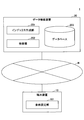
- FIG. 1 is a diagram showing an example of the overall configuration of the data search system 1 according to the present embodiment.
- the data search system 1 includes a terminal device 10 and a data search device 20. Further, the terminal device 10 and the data search device 20 are communicably connected via the communication network N.
- the terminal device 10 is an information processing device (computer) such as a PC operated by a user on the user side who uses desired multidimensional data searched from a huge amount of multidimensional data.
- the user can operate the terminal device 10 to search and display the data managed by the data search device 20.
- the terminal device 10 has a condition setting unit 101 for setting search conditions when searching multidimensional data managed by the data search device 20.
- the condition setting unit 101 is realized, for example, by a process of causing a CPU (Central Processing Unit) to execute one or more programs installed in the terminal device 10.
- the terminal device 10 is not limited to a PC, and may be, for example, various information processing devices such as a smartphone or a tablet terminal.
- the data search device 20 is an information processing device (computer) such as a database server managed by a multidimensional data provider.
- the data search device 20 includes an index creation unit 201 that creates a multidimensional index that is an index for searching multidimensional data, a search unit 202 that searches multidimensional data that satisfies the search condition by using the multidimensional index, and a search unit 202. It has a database 203 in which a table 1000 composed of a large number of multidimensional data is stored.
- the index creation unit 201 and the search unit 202 are realized, for example, by a process of causing the CPU to execute one or more programs installed in the data search device 20.
- the database 203 can be realized by, for example, an auxiliary storage device such as an HDD (Hard Disk Drive) or an SSD (Solid State Drive).
- the configuration of the data search system 1 shown in FIG. 1 is an example, and may be another configuration.
- the data search system 1 may include a plurality of terminal devices 10 or may include a plurality of data search devices 20.
- the database 203 included in the data search device 20 may be realized by, for example, NAS (Network Attached Storage) or the like.
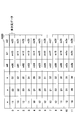
- FIG. 2 is a diagram showing an example of the table 1000 stored in the database 203.
- the table 1000 is composed of a plurality of multidimensional data (that is, a plurality of records). Further, each multidimensional data is composed of a plurality of parameters including the search target parameter.
- each multidimensional data is composed of six parameters (x, y, z, m0, m1, m2). Of these six parameters, x, y, and z are search target parameters.
- the parameters m0, m1 and m3 are parameters that are not searched, and are, for example, parameters that take observation values used in scientific and technological calculations. However, which of the parameters constituting the multidimensional data is used as the search target parameter may differ depending on the type of the multidimensional data, the purpose for which the user uses the multidimensional data, and the like.
- each multidimensional data is given a record number indicating a position in the table 1000.
- the table 1000 will also be referred to as a "primitive table 1000".
- FIG. 3 is a diagram showing an example of the hardware configuration of the computer 500.
- the computer 500 shown in FIG. 3 has an input device 501, a display device 502, an external I / F 503, a communication I / F 504, a processor 505, and a memory device 506. Each of these hardware is communicably connected via bus 507.
- the input device 501 is, for example, a keyboard, a mouse, a touch panel, or the like.
- the display device 502 is, for example, a display or the like.
- the data retrieval device 20 does not have to have at least one of the input device 501 and the display device 502.
- the external I / F 503 is an interface with an external device.
- the external device includes, for example, a recording medium 503a and the like.
- the terminal device 10 and the data search device 20 can read or write the recording medium 503a via the external I / F 503.
- the recording medium 503a includes, for example, a flexible disk, a CD (Compact Disc), a DVD (Digital Versatile Disk), an SD memory card (Secure Digital memory card), a USB (Universal Serial Bus) memory card, and the like.
- the communication I / F 504 is an interface for connecting the terminal device 10 and the data search device 20 to the communication network N.
- the terminal device 10 and the data search device 20 can perform data communication with another device or device via the communication I / F 504.
- the processor 505 is, for example, various arithmetic units such as a CPU and a GPU (Graphics Processing Unit).
- the memory device 506 is, for example, various storage devices such as a RAM (RandomAccessMemory), a ROM (ReadOnlyMemory), an HDD, an SSD, and a flash memory.
- the terminal device 10 and the data search device 20 can realize various processes described later by the hardware configuration of the computer 500 shown in FIG.
- the hardware configuration of the computer 500 shown in FIG. 3 is an example, and may be another hardware configuration.
- the computer 500 shown in FIG. 3 may have a plurality of processors 505 or may have a plurality of memory devices 506.
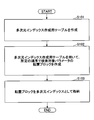
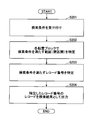
- FIG. 4 is a flowchart showing an example of the multidimensional index creation process according to the present embodiment.
- the primitive table 1000 shown in FIG. 2 will be described as being stored in the database 203.
- the index creation unit 201 of the data search device 20 creates the multidimensional index creation table 1100 shown in FIG. 5 by extracting the search target parameters of each multidimensional data constituting the primitive table 1000 shown in FIG. (Step S101).
- the multidimensional index creation table 1100 is composed of data (records) obtained by extracting search target parameters from each multidimensional data constituting the primitive table 1000 shown in FIG.
- the index creation unit 201 of the data search device 20 creates transposed blocks of search target parameters in a predetermined order using the multidimensional index creation table 1100 (step S102).
- the predetermined order is a predetermined order of search target parameters. Any order can be used as such an order. In the following, as an example, a case where a transposed block of search target parameters is created in the order of x, y, z will be described.
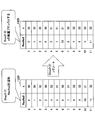
- Step1-11 First, as shown in FIG. 6A, the index creation unit 201 creates the table 1200 by adding RecNo0 to each record constituting the multidimensional index creation table 1100. At this time, each RecNo0 stores the record number of each record constituting the multidimensional index creation table 1100.
- Step 1-2 Next, as shown in FIG. 6A, the index creation unit 201 creates the table 1300 by sorting each record constituting the table 1200 by the search target parameter x.
- the search target parameters x are sorted in ascending order, but may be sorted in descending order. Further, in the example shown in FIG. 6A, the positions (record numbers) of each record are exchanged by sorting by the search target parameter x, but it is not always necessary to exchange the record positions, and each record has the search target parameter x. It is only necessary to be able to access in sort order. For example, the existing indexing technique may be used to access the search parameter x in the sort order without changing the positions of the records.
- Step 1-3 Then, as shown in FIG. 6A, the index creation unit 201 creates the transposed block 1400 of x by extracting RecNo0 and the search target parameter x from each record constituting the table 1300. Further, the index creation unit 201 creates the table 1500 by extracting the remaining search target parameters (that is, the search target parameters y and z) from each record constituting the table 1300.
- Step2-11 Next, as shown in FIG. 6B, the index creation unit 201 adds RecNo1 to each record constituting the table 1500 to create the table 1210. At this time, the record number of each record constituting the table 1500 is stored in each RecNo1.
- Step2-2 Next, as shown in FIG. 6B, the index creation unit 201 creates the table 1310 by sorting each record constituting the table 1210 according to the search target parameter y.
- the search target parameter y is sorted in ascending order, but it may be sorted in descending order.
- the positions (record numbers) of each record are exchanged by sorting by the search target parameter y, but it is not always necessary to exchange the record positions, and each record has the search target parameter y. It is only necessary to be able to access in sort order.
- the existing indexing technique may be used to access the search parameter y in the sort order without changing the positions of the records.
- Step2-3 Then, as shown in FIG. 6B, the index creation unit 201 creates the transposed block 1410 of y by extracting RecNo1 and the search target parameter y from each record constituting the table 1310. Further, the index creation unit 201 creates the table 1510 by extracting the remaining search target parameters (that is, the search target parameter z) from each record constituting the table 1310.
- Step3-1 Next, as shown in FIG. 6C, the index creation unit 201 adds RecNo2 to each record constituting the table 1510 to create the table 1220. At this time, the record number of each record constituting the table 1510 is stored in each RecNo2.
- Step 3-2 Next, as shown in FIG. 6C, the index creation unit 201 creates the table 1420 by sorting each record constituting the table 1220 according to the search target parameter z.
- the search target parameter z is sorted in ascending order, but may be sorted in descending order. Further, in the example shown in FIG. 6C, the positions (record numbers) of each record are exchanged by sorting by the search target parameter z, but it is not always necessary to exchange the record positions, and each record has the search target parameter z. It is only necessary to be able to access in sort order. For example, the existing indexing technique may be used to access the search parameter z in the sort order without changing the positions of the records.
- Step3-3 Then, as shown in FIG. 6C, the index creation unit 201 sets the table 1420 as the transposed block 1420 of z.
- the index creation unit 201 of the data search device 20 stores the transposed blocks 1400 to 1420 created in step S102 in the database 203 as the multidimensional index 1600 (step S103).
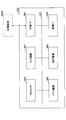
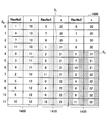
- the multidimensional index 1600 is shown in FIG.
- the multidimensional index 1600 is composed of a transpose block 1400 of the search target parameter x, a transpose block 1410 of the search target parameter y, and a transpose block 1420 of the search target parameter z.
- the multidimensional index 1600 created as described above has the following properties 1 and 2.
- Property 1 The record number of the primitive table 1000 can be specified from the record number of the transposed block by reversing the predetermined order.
- RecNo0, RecNo1, and RecNo2 are regarded as one-dimensional arrays, respectively, and i is used as an index of the one-dimensional array RecNo2.
- RecNo2 [i] gives the record number of the transposed block 1410 of the search target parameter y according to the method of creating the transposed block 1420 of the search target parameter z.
- RecNo1 [RecNo2 [i]] gives the record number of the transposed block 1400 of the search target parameter x.
- RecNo0 [RecNo1 [RecNo2 [i]]] gives the record number of the primitive table 1000 according to the method of creating the transposed block 1400 of the search target parameter x.
- the record number of the primitive table 1000 can be specified by RecNo0 [RecNo1 [RecNo2 [i]]].
- Property 2 Since the values of the search target parameters are sorted, if the range of the values of the search target parameters is given, the range of the record numbers of each transposed block can be specified.
- the range of the record numbers of the transposed block 1400 shown in FIG. 7 is a closed interval [0,6].
- the range of the record numbers of the transposed block 1410 shown in FIG. 7 is the closed interval [3,11].
- the record number of the transposed block 1420 shown in FIG. 7 becomes a closed interval [4,11].
- FIG. 8 is a flowchart showing an example of the search process according to the present embodiment.
- the search condition “10 ⁇ x ⁇ 11, and, 21 ⁇ y ⁇ 22, and, 31 ⁇ z ⁇ 32” is set by the condition setting unit 101 of the terminal device 10.
- the search condition “10 ⁇ x ⁇ 11, and, 21 ⁇ y ⁇ 22, and, 31 ⁇ z ⁇ 32” is set by the condition setting unit 101 of the terminal device 10.
- the search condition “10 ⁇ x ⁇ 11, and, 21 ⁇ y ⁇ 22, and, 31 ⁇ z ⁇ 32” is set by the condition setting unit 101 of the terminal device 10.
- the search condition setting unit 101 of the terminal device 10. represents an and condition.
- the search unit 202 of the data search device 20 accepts the search condition "10 ⁇ x ⁇ 11,21 ⁇ y ⁇ 22,31 ⁇ z ⁇ 32" set by the condition setting unit 101 of the terminal device 10 (step S201). ).
- the search unit 202 of the data search device 20 uses the above-mentioned property 1 to specify the record number of the multidimensional data satisfying the search condition among the record numbers of the primitive table 1000 (step S203).
- the search unit 202 specifies the record number of the multidimensional data satisfying the search condition by the following Step 4-1 to Step 6-2.
- Step5-1 Next, the search unit 202 requests RecNo1 of the record corresponding to RecNo2 ⁇ 5,7,10,4,8,9,11 ⁇ among the records constituting the transposed block 1410 of the search target parameter y. Extract ⁇ 5,11,9,2,0,4,10 ⁇ . That is, the search unit 202 extracts the value of RecNo1 from the records of the record numbers "5", "7", “10", “4", “8", "9", and "11", respectively, and RecNo1 ⁇ Get 5,11,9,2,0,4,10 ⁇ .
- Step6-1 Subsequently, the search unit 202 requests RecNo0 ⁇ 3,7,1 of the record corresponding to RecNo1 ⁇ 5,2,0,4 ⁇ among the records constituting the transposed block 1400 of the search target parameter x. , 0 ⁇ is extracted. That is, the search unit 202 extracts the value of RecNo0 from the records of the record numbers “5”, “2”, “0”, and “4”, respectively, and obtains RecNo0 ⁇ 3,7,1,0 ⁇ .
- Step 6-2 Since RecNo0 extracted in Step 6-1 above is the record number of the primitive table 1000, the search unit 202 sets ⁇ 0,1,3,7 ⁇ as the record number of the multidimensional data satisfying the search condition. Identify.
- the search unit 202 of the data search device 20 outputs the record of the record number specified in step S203 above as a search result (step S204). That is, the search unit 202 includes the multidimensional data of the record number "0", the multidimensional data of the record number "1", and the multidimensional data of the record number "3" among the multidimensional data constituting the primitive table 1000. The data and the multidimensional data of the record number "7" are output as the search result. As a result, multidimensional data satisfying the search conditions is output.
- the output destination of these multidimensional data may be the terminal device 10, but it may be output to another device or device different from the terminal device 10.
- the data search system 1 can search for multidimensional data satisfying the search conditions by using the multidimensional index 1600 created in advance. Further, at this time, since the record numbers of the multidimensional data satisfying the search condition are sequentially narrowed down by using the transposition block, it is possible to efficiently perform the search without performing an unnecessary search.
- the database 203 is read-only or its update frequency is high. It is preferably relatively small (eg, updated every few weeks to months).
- the search condition of each search target parameter is in the range of values, but the present invention is not limited to this. In the present embodiment, it is necessary to set an and condition between the search target parameters, but it is possible to specify an arbitrary search condition as the search condition of each search target parameter. For example, it is possible to specify and, or, not, all, etc. as the search condition.
- Step 4-1 to Step 6-2 relating to each closed section S 21 , ..., S 2M are divided. It is possible to process in parallel on each core. Specifically, for example, when there are three CPU cores, Step 4-1 to Step 6-2 for the closed section S 21, Step 4-1 to Step 6-2 for the closed section S 22, and Step 6-2 for the closed section S 23. It is possible to process Step 4-1 to Step 6-2 in parallel on the core 1, the core 2, and the core 3, respectively.
- the above-mentioned Step4-1 to Step4-2, the above-mentioned Step5-1 to Step5-2, and the above-mentioned Step6-1 to Step6-2 are processed in parallel by three cores, respectively. It is also possible to do. Specifically, for example, the core value of RecNo2 running and exclusion values that are not included in the extraction and closing section S 1 value RecNo2 record in closing section S 2 in the core 1 in the order, not excluded Pass to 2 in sequence. In the core 2 executes the exclusion values that are not included in the extraction and closing section S 0 value of RecNo1 of the record corresponding to the value of RecNo2 passed from the core 1 in order, the core values of RecNo1 not excluded Pass to 3 in sequence.
- the extraction of the value of RecNo0 corresponding to the value of RecNo1 passed from the core 2 is executed in order.
- pipeline processing it becomes possible to process the extraction of the record number in each transposed block and its exclusion in parallel with multiple cores.
- the primordial table 2100 shown in FIG. 10A and the multidimensional index 2600 of the primordial table 2100 and the primordial table 2110 shown in FIG. 10B and the multidimensional index 2610 of the primordial table 2110 are stored in two different databases, respectively. It shall be. Further, it is assumed that the search target parameters (Planet, x, y, z) are included in the multidimensional data constituting the primitive tables 2100 and 2110, respectively. It should be noted that these two databases may be possessed by the two data search devices 20, respectively, or may be possessed by the terminal device 10 and the data search device 20, respectively.
- the primitive table 3100 shown in FIG. 10C is a table that is joined or virtually joined with the primitive table 2100 as the front and the primitive table 2110 as the rear.
- the multidimensional data of record numbers "0" to “11” is the multidimensional data constituting the primitive table 2100
- the multidimensional data of the record numbers "12" to “23” is the multidimensional data constituting the primitive table 2110. be.
- the number of multidimensional data (number of records) constituting the primitive table 2100 is added to the record number of each multidimensional record constituting the primitive table 2110. The value.
- These record numbers "12" to "23” are actually assigned to the multidimensional data when the primitive table 2100 and the primitive table 2110 are combined.
- the primordial table 2100 and the primordial table 2110 are virtually joined, the record numbers of the multidimensional data constituting the primordial table 2110 are read as the record numbers "12" to "23". It is a thing.
- the multidimensional index 3600 shown in FIG. 10C is a multidimensional index when the primitive table 2100 is forward and the primitive table 2110 is rearward or virtually joined.
- the record numbers "12" to “23” are values obtained by adding the number of data (number of records) of the data constituting the multidimensional index 2600 to the record number of each data constituting the multidimensional index 2610. be. These record numbers "12" to “23” are actually assigned to each data constituting the multidimensional index 2610 when the primitive table 2100 and the primitive table 2110 are combined. On the other hand, when the primitive table 2100 and the primitive table 2110 are virtually combined, the record numbers of the data constituting the multidimensional index 2610 are replaced with the record numbers "12" to "23". It is a thing.
- the data retrieval system 1 when a plurality of primitive tables are joined or virtually joined, their multidimensional indexes can also be easily joined or virtually joined. Therefore, for example, it is possible to easily divide a primitive table having a large data size into a plurality of primitive tables, and to join or virtually join a plurality of primitive tables, so that the data retrieval system 1 can be easily operated. It becomes possible to.
- the transposed block created in this embodiment has the same structure as the SVL, IND, and INV described in International Publication No. 2019/1663610. Therefore, this transposition block can be used in place of the SVL, IND and INV (or conversely, the SVL, IND and INV can be used in place of the transposition block of the present embodiment. .). Therefore, like the SVL, IND, and INV described in International Publication No. 2019/163610, the transposed block is compact and enables high-speed search.
- RecNo2 ⁇ 5,7,10,4,8,9,11 ⁇ obtained in Step 4-2 above is sorted and RecNo2 ⁇ 4,5,7,8,9,10 , 11 ⁇ is obtained.
- Step 5-1 after extracting RecNo1 ⁇ 2,5,11,0,4,9,10 ⁇ of the record corresponding to this RecNo2 ⁇ 4,5,7,8,9,10,11 ⁇ .
- This RecNo1 ⁇ 2,5,11,0,4,9,10 ⁇ is sorted to obtain RecNo1 ⁇ 0,2,4,5,9,10,11 ⁇ .
- the RecNo extracted from the transposed block may be sorted in the same manner.
- the sort time can be shortened and faster search becomes possible.
- rough sorting for example, when one storage unit of SSD is 4096 bytes, 512 record numbers are stored in one storage unit with the record number as a 64-bit integer. Examples include counting sort, bucket sort, etc., in which the record number is sorted by the number divided by 512.
Landscapes
- Engineering & Computer Science (AREA)
- Databases & Information Systems (AREA)
- Theoretical Computer Science (AREA)
- Data Mining & Analysis (AREA)
- Physics & Mathematics (AREA)
- General Engineering & Computer Science (AREA)
- General Physics & Mathematics (AREA)
- Software Systems (AREA)
- Information Retrieval, Db Structures And Fs Structures Therefor (AREA)
Priority Applications (3)
| Application Number | Priority Date | Filing Date | Title |
|---|---|---|---|
| PCT/JP2020/004997 WO2021157092A1 (ja) | 2020-02-07 | 2020-02-07 | 検索方法及び検索装置 |
| JP2021575586A JP7462191B2 (ja) | 2020-02-07 | 2020-02-07 | 検索方法及び検索装置 |
| US17/815,333 US11734244B2 (en) | 2020-02-07 | 2022-07-27 | Search method and search device |
Applications Claiming Priority (1)
| Application Number | Priority Date | Filing Date | Title |
|---|---|---|---|
| PCT/JP2020/004997 WO2021157092A1 (ja) | 2020-02-07 | 2020-02-07 | 検索方法及び検索装置 |
Related Child Applications (1)
| Application Number | Title | Priority Date | Filing Date |
|---|---|---|---|
| US17/815,333 Continuation US11734244B2 (en) | 2020-02-07 | 2022-07-27 | Search method and search device |
Publications (1)
| Publication Number | Publication Date |
|---|---|
| WO2021157092A1 true WO2021157092A1 (ja) | 2021-08-12 |
Family
ID=77199842
Family Applications (1)
| Application Number | Title | Priority Date | Filing Date |
|---|---|---|---|
| PCT/JP2020/004997 Ceased WO2021157092A1 (ja) | 2020-02-07 | 2020-02-07 | 検索方法及び検索装置 |
Country Status (3)
| Country | Link |
|---|---|
| US (1) | US11734244B2 (https=) |
| JP (1) | JP7462191B2 (https=) |
| WO (1) | WO2021157092A1 (https=) |
Families Citing this family (3)
| Publication number | Priority date | Publication date | Assignee | Title |
|---|---|---|---|---|
| US12174813B1 (en) * | 2023-05-31 | 2024-12-24 | Jpmorgan Chase Bank, N.A. | Systems and methods for forward and backward lookup of related variables |
| US12461943B1 (en) * | 2024-06-27 | 2025-11-04 | International Business Machines Corporation | Refinement of large multi-dimensional search spaces |
| WO2026018723A1 (ja) * | 2024-07-16 | 2026-01-22 | 晋二 古庄 | 検索方法 |
Citations (2)
| Publication number | Priority date | Publication date | Assignee | Title |
|---|---|---|---|---|
| JPH11296524A (ja) * | 1998-04-10 | 1999-10-29 | Nippon Telegr & Teleph Corp <Ntt> | 例示検索の高速化方法および記録媒体 |
| JP2015106347A (ja) * | 2013-12-02 | 2015-06-08 | 株式会社Nttドコモ | レコメンド装置およびレコメンド方法 |
Family Cites Families (6)
| Publication number | Priority date | Publication date | Assignee | Title |
|---|---|---|---|---|
| US5765181A (en) * | 1993-12-10 | 1998-06-09 | Cray Research, Inc. | System and method of addressing distributed memory within a massively parallel processing system |
| US7734661B2 (en) * | 2003-08-11 | 2010-06-08 | Descisys Limited | Method and apparatus for accessing multidimensional data |
| US10426348B2 (en) * | 2008-03-05 | 2019-10-01 | Purdue Research Foundation | Using differential time-frequency tissue-response spectroscopy to evaluate living body response to a drug |
| US10936569B1 (en) * | 2012-05-18 | 2021-03-02 | Reservoir Labs, Inc. | Efficient and scalable computations with sparse tensors |
| AU2013321782A1 (en) * | 2012-09-27 | 2015-04-16 | Omron Corporation | Device management apparatus and device search method |
| JP6428615B2 (ja) * | 2013-07-12 | 2018-11-28 | 日本電気株式会社 | 多次元範囲検索装置及び多次元範囲検索方法 |
-
2020
- 2020-02-07 JP JP2021575586A patent/JP7462191B2/ja active Active
- 2020-02-07 WO PCT/JP2020/004997 patent/WO2021157092A1/ja not_active Ceased
-
2022
- 2022-07-27 US US17/815,333 patent/US11734244B2/en active Active
Patent Citations (2)
| Publication number | Priority date | Publication date | Assignee | Title |
|---|---|---|---|---|
| JPH11296524A (ja) * | 1998-04-10 | 1999-10-29 | Nippon Telegr & Teleph Corp <Ntt> | 例示検索の高速化方法および記録媒体 |
| JP2015106347A (ja) * | 2013-12-02 | 2015-06-08 | 株式会社Nttドコモ | レコメンド装置およびレコメンド方法 |
Also Published As
| Publication number | Publication date |
|---|---|
| JP7462191B2 (ja) | 2024-04-05 |
| US11734244B2 (en) | 2023-08-22 |
| US20220365920A1 (en) | 2022-11-17 |
| JPWO2021157092A1 (https=) | 2021-08-12 |
Similar Documents
| Publication | Publication Date | Title |
|---|---|---|
| EP3602351B1 (en) | Apparatus and method for distributed query processing utilizing dynamically generated in-memory term maps | |
| CN101430695B (zh) | 用于计算单词之间的差相关度的系统和方法 | |
| KR101938953B1 (ko) | 빅 데이터 질의 엔진을 위한 플래시 최적화된 열 데이터 배치 및 데이터 액세스 처리 알고리즘 | |
| US11734244B2 (en) | Search method and search device | |
| Li et al. | A spatiotemporal indexing approach for efficient processing of big array-based climate data with MapReduce | |
| JP4848317B2 (ja) | データベースのインデックス作成システム、方法及びプログラム | |
| US9727308B2 (en) | Sorting multiple records of data using ranges of key values | |
| CN108897761A (zh) | 一种聚簇存储方法及装置 | |
| CN111699480A (zh) | 数据库系统中的加速过滤、分组和聚合 | |
| JP7153420B2 (ja) | データベース中にグラフ情報を記憶するためのb木使用 | |
| CN107209768A (zh) | 用于数据集的可扩展排序的方法和设备 | |
| CN105224624A (zh) | 一种实现倒排链快速归并的方法和装置 | |
| Thacker et al. | Performance of elasticsearch in cloud environment with nGram and non-nGram indexing | |
| WO2023276162A1 (ja) | データ作成装置、データ作成方法、及びプログラム | |
| JP6006740B2 (ja) | インデックス管理装置 | |
| JP2010191962A (ja) | オントロジーの類似性行列の効率的な計算 | |
| CN119202066A (zh) | 一种数据透视表数据展开方法及装置 | |
| CN114579573B (zh) | 信息检索方法、装置、电子设备以及存储介质 | |
| JP2001022766A (ja) | 多次元データベースの高速処理方法および装置 | |
| WO2022153401A1 (ja) | 情報処理方法、情報処理装置及びプログラム | |
| Lian et al. | Sql or nosql? which is the best choice for storing big spatio-temporal climate data? | |
| WO2022153400A1 (ja) | 情報処理方法、情報処理装置及びプログラム | |
| JPWO2009044486A1 (ja) | 表形式データをソートする方法、マルチコア型装置、及び、プログラム | |
| Qiu et al. | An architecture for cell-centric indexing of datasets | |
| Kaur et al. | Sentimental analysis using various analytical tools from hadoop eco system |
Legal Events
| Date | Code | Title | Description |
|---|---|---|---|
| 121 | Ep: the epo has been informed by wipo that ep was designated in this application |
Ref document number: 20918100 Country of ref document: EP Kind code of ref document: A1 |
|
| ENP | Entry into the national phase |
Ref document number: 2021575586 Country of ref document: JP Kind code of ref document: A |
|
| NENP | Non-entry into the national phase |
Ref country code: DE |
|
| 122 | Ep: pct application non-entry in european phase |
Ref document number: 20918100 Country of ref document: EP Kind code of ref document: A1 |