WO2021100880A1 - 提案システム、提案方法及びプログラム - Google Patents
提案システム、提案方法及びプログラム Download PDFInfo
- Publication number
- WO2021100880A1 WO2021100880A1 PCT/JP2021/001405 JP2021001405W WO2021100880A1 WO 2021100880 A1 WO2021100880 A1 WO 2021100880A1 JP 2021001405 W JP2021001405 W JP 2021001405W WO 2021100880 A1 WO2021100880 A1 WO 2021100880A1
- Authority
- WO
- WIPO (PCT)
- Prior art keywords
- proposal
- user
- unit
- supplier
- image
- Prior art date
- Legal status (The legal status is an assumption and is not a legal conclusion. Google has not performed a legal analysis and makes no representation as to the accuracy of the status listed.)
- Ceased
Links
Images






Classifications
-
- G—PHYSICS
- G16—INFORMATION AND COMMUNICATION TECHNOLOGY [ICT] SPECIALLY ADAPTED FOR SPECIFIC APPLICATION FIELDS
- G16H—HEALTHCARE INFORMATICS, i.e. INFORMATION AND COMMUNICATION TECHNOLOGY [ICT] SPECIALLY ADAPTED FOR THE HANDLING OR PROCESSING OF MEDICAL OR HEALTHCARE DATA
- G16H30/00—ICT specially adapted for the handling or processing of medical images
- G16H30/40—ICT specially adapted for the handling or processing of medical images for processing medical images, e.g. editing
-
- G—PHYSICS
- G16—INFORMATION AND COMMUNICATION TECHNOLOGY [ICT] SPECIALLY ADAPTED FOR SPECIFIC APPLICATION FIELDS
- G16H—HEALTHCARE INFORMATICS, i.e. INFORMATION AND COMMUNICATION TECHNOLOGY [ICT] SPECIALLY ADAPTED FOR THE HANDLING OR PROCESSING OF MEDICAL OR HEALTHCARE DATA
- G16H10/00—ICT specially adapted for the handling or processing of patient-related medical or healthcare data
- G16H10/60—ICT specially adapted for the handling or processing of patient-related medical or healthcare data for patient-specific data, e.g. for electronic patient records
-
- G—PHYSICS
- G06—COMPUTING OR CALCULATING; COUNTING
- G06T—IMAGE DATA PROCESSING OR GENERATION, IN GENERAL
- G06T7/00—Image analysis
- G06T7/0002—Inspection of images, e.g. flaw detection
- G06T7/0012—Biomedical image inspection
- G06T7/0014—Biomedical image inspection using an image reference approach
- G06T7/0016—Biomedical image inspection using an image reference approach involving temporal comparison
-
- G—PHYSICS
- G16—INFORMATION AND COMMUNICATION TECHNOLOGY [ICT] SPECIALLY ADAPTED FOR SPECIFIC APPLICATION FIELDS
- G16H—HEALTHCARE INFORMATICS, i.e. INFORMATION AND COMMUNICATION TECHNOLOGY [ICT] SPECIALLY ADAPTED FOR THE HANDLING OR PROCESSING OF MEDICAL OR HEALTHCARE DATA
- G16H20/00—ICT specially adapted for therapies or health-improving plans, e.g. for handling prescriptions, for steering therapy or for monitoring patient compliance
- G16H20/10—ICT specially adapted for therapies or health-improving plans, e.g. for handling prescriptions, for steering therapy or for monitoring patient compliance relating to drugs or medications, e.g. for ensuring correct administration to patients
-
- G—PHYSICS
- G16—INFORMATION AND COMMUNICATION TECHNOLOGY [ICT] SPECIALLY ADAPTED FOR SPECIFIC APPLICATION FIELDS
- G16H—HEALTHCARE INFORMATICS, i.e. INFORMATION AND COMMUNICATION TECHNOLOGY [ICT] SPECIALLY ADAPTED FOR THE HANDLING OR PROCESSING OF MEDICAL OR HEALTHCARE DATA
- G16H20/00—ICT specially adapted for therapies or health-improving plans, e.g. for handling prescriptions, for steering therapy or for monitoring patient compliance
- G16H20/30—ICT specially adapted for therapies or health-improving plans, e.g. for handling prescriptions, for steering therapy or for monitoring patient compliance relating to physical therapies or activities, e.g. physiotherapy, acupressure or exercising
-
- G—PHYSICS
- G16—INFORMATION AND COMMUNICATION TECHNOLOGY [ICT] SPECIALLY ADAPTED FOR SPECIFIC APPLICATION FIELDS
- G16H—HEALTHCARE INFORMATICS, i.e. INFORMATION AND COMMUNICATION TECHNOLOGY [ICT] SPECIALLY ADAPTED FOR THE HANDLING OR PROCESSING OF MEDICAL OR HEALTHCARE DATA
- G16H20/00—ICT specially adapted for therapies or health-improving plans, e.g. for handling prescriptions, for steering therapy or for monitoring patient compliance
- G16H20/60—ICT specially adapted for therapies or health-improving plans, e.g. for handling prescriptions, for steering therapy or for monitoring patient compliance relating to nutrition control, e.g. diets
-
- G—PHYSICS
- G16—INFORMATION AND COMMUNICATION TECHNOLOGY [ICT] SPECIALLY ADAPTED FOR SPECIFIC APPLICATION FIELDS
- G16H—HEALTHCARE INFORMATICS, i.e. INFORMATION AND COMMUNICATION TECHNOLOGY [ICT] SPECIALLY ADAPTED FOR THE HANDLING OR PROCESSING OF MEDICAL OR HEALTHCARE DATA
- G16H20/00—ICT specially adapted for therapies or health-improving plans, e.g. for handling prescriptions, for steering therapy or for monitoring patient compliance
- G16H20/90—ICT specially adapted for therapies or health-improving plans, e.g. for handling prescriptions, for steering therapy or for monitoring patient compliance relating to alternative medicines, e.g. homeopathy or oriental medicines
-
- G—PHYSICS
- G16—INFORMATION AND COMMUNICATION TECHNOLOGY [ICT] SPECIALLY ADAPTED FOR SPECIFIC APPLICATION FIELDS
- G16H—HEALTHCARE INFORMATICS, i.e. INFORMATION AND COMMUNICATION TECHNOLOGY [ICT] SPECIALLY ADAPTED FOR THE HANDLING OR PROCESSING OF MEDICAL OR HEALTHCARE DATA
- G16H50/00—ICT specially adapted for medical diagnosis, medical simulation or medical data mining; ICT specially adapted for detecting, monitoring or modelling epidemics or pandemics
- G16H50/30—ICT specially adapted for medical diagnosis, medical simulation or medical data mining; ICT specially adapted for detecting, monitoring or modelling epidemics or pandemics for calculating health indices; for individual health risk assessment
Definitions
- the present invention relates to a proposal system, a proposal method and a program, for example, a technique for evaluating information on a user over time and making a proposal regarding hair care.
- Patent Document 1 describes a system that obtains user's answers to some questions and proposes a supplement suitable for the user based on those answers.
- Patent Document 1 analyzes user's answers based on specialized knowledge and proposes countermeasures. Specifically, this system identifies the user's current state and ideal state based on the answer to the question, and proposes a solution (supplement) to reach the ideal state according to a predetermined algorithm. To do. This proposed method assumes that the user's current state, ideal state, and solution are defined in pairs.
- the present invention has been made to solve such a problem, and provides a proposal system, a proposal method, and a program capable of evaluating information on a user over time and making a proposal regarding hair care.
- the purpose is.
- the proposal system is a system that makes a proposal regarding hair care to a user, acquires time-dependent information about the user over a predetermined period of time, and makes the proposal based on the time-dependent information. It has a proposal generation unit to generate.
- the proposed system further includes a user log acquisition unit that acquires answers to the user's hair, health, or living condition questions multiple times over a predetermined period. The proposal generation unit generates the proposal based on the answer.
- the proposal system further includes an image analysis unit that acquires the evaluation value of the image of the user's head a plurality of times over a predetermined period, and the proposal generation unit evaluates the image. Generate the proposal based on the value.
- the proposal system further comprises a supplier log acquisition unit that acquires a record of hair care, medical care, or medication performed to the user multiple times over a predetermined period of time.
- the generator generates the proposal based on the record.
- the proposal generation unit generates a plurality of the proposals and extracts a part of the proposals based on the priority given to the proposals.
- the proposal generation unit generates a plurality of the proposals and outputs the proposals according to the execution order given to the proposals.
- the proposal method is a method in which a computer makes a proposal regarding hair care to a user, and includes a step of acquiring information on the user over a predetermined period of time and the information on the time period. It has a step of generating the proposal based on it.
- the program is a program for causing a computer to execute the proposed method.
- the proposal system 1 is a system that makes a proposal for approaching the ideal hair condition after considering the characteristics of various factors that affect the hair.
- the proposed system 1 has characteristics similar to those of the user and the user, as to how the condition of the user's hair and the condition related to health, life, behavior, etc. have changed from the past to the present (information on the user over time). Evaluate and analyze in light of the user's information over time.
- the proposal system 1 makes proposals regarding hair care to approach the ideal hair condition based on the evaluation and analysis results.
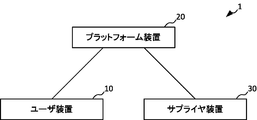
- FIG. 1 is a diagram showing an outline of the service realized by the proposal system 1.
- the proposal system 1 provides a platform that mediates between a user who works on hair care and a supplier who provides the user with products and services that are expected to be useful for hair care.
- the number of users and suppliers can be one or more.
- Supplier includes cosmetics manufacturers that handle hair care products such as shampoos, pharmaceutical companies that handle hair-related products, health food manufacturers that handle products that are supposed to be useful for hair care, and hair care products that are supposed to be useful. It includes salons that provide various services and medical institutions that provide various medical treatments related to hair.
- FIG. 2 is a block diagram showing the hardware configuration of the proposed system 1.
- the proposed system 1 includes a user device 10, a platform device 20, and a supplier device 30.
- the user device 10 and the supplier device 30 are information processing devices such as a personal computer (PC), a smartphone, and a tablet.
- the platform device 20 is an information processing device such as a server computer. Alternatively, it may be an information processing device virtually configured by a technology such as cloud computing. These information processing devices typically include a central processing unit (CPU), a storage device, a display device, an input device, and the like, and execute predetermined information processing according to a system program and an application program stored in the storage device. To do.
- the platform device 20, the user device 10 and the supplier device 30 are communicably connected to each other. Communication networks such as the Internet, public networks, leased lines, and mobile communication networks can be used for this communication.
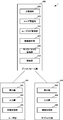
- FIG. 3 is a block diagram showing the functional configuration of the proposed system 1.
- the proposed system 1 includes a user unit 100, a platform unit 200, and a supplier unit 300.
- the user unit 100 may be mounted on the user device 10
- the platform unit 200 may be mounted on the platform device 20
- the supplier unit 300 may be mounted on the supplier device 30, but the present invention is not limited to this embodiment.
- the platform device 20 may execute the main processing
- the user device 10 or the supplier device 30 may execute some functions such as input / output. ..
- the user unit 100 includes a display unit 101, an input unit 103, and an image acquisition unit 105.
- the display unit 101 controls the screen display on the user device 10.
- the input unit 103 receives input by a user using an input device such as a touch panel or a keyboard.
- the image acquisition unit 105 captures an image of the user's head with a camera. Alternatively, let the user select a captured image file.
- the platform unit 200 includes a main control unit 201, a user management unit 203, a user log acquisition unit 205, an image analysis unit 207, a supplier log acquisition unit 209, and a proposal unit 211.
- the main control unit 201 controls the basic operation of the platform application.
- the user management unit 203 manages the user's profile and time-dependent information.
- the time-dependent information includes a user log (information input on the user side), a supplier log (information input on the supplier side), and an image (photographed image of the head that can be acquired by either the user side or the supplier side), which will be described later. ) Can be included.
- the user log acquisition unit 205 presents a question to the user and acquires an answer (user log).
- the image analysis unit 207 saves and analyzes the images acquired by the image acquisition unit 105 and the image analysis unit 305.
- the supplier log acquisition unit 209 collects and analyzes records (supplier logs) of hair care, medical treatment, medication, etc. performed on the user.
- the proposal unit 211 generates a proposal to the user based on the user's temporal information collected by the user log acquisition unit 205, the image analysis unit 207, and the supplier log acquisition unit 209.
- the supplier unit 300 includes a display unit 301, an input unit 303, and an image acquisition unit 305.
- the display unit 301 controls the screen display on the supplier device 30.
- the input unit 303 accepts input by a supplier using an input device such as a touch panel or a keyboard.
- the image acquisition unit 305 takes an image of the user's head with a camera, for example, at the time of medical treatment. Alternatively, the supplier may select the captured image file.
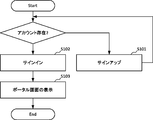
- FIG. 4 is a flowchart showing the operation of the proposal system 1 related to the user's sign-up and sign-in.
- the main control unit 201 requests a user who has not created an account to sign up (create an account).
- the user management unit 203 causes the display unit 101 to display a screen for inputting a user profile.
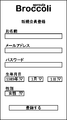
- FIG. 10 shows an example of the profile input screen.
- the profile may include, for example, name, date of birth, gender, email address, password, etc.
- the input unit 103 accepts the input of the profile by the user and transmits the input contents to the user management unit 203.
- the user management unit 203 creates a new user account and stores the received profile in association with the account. Further, the user management unit 203 prepares a storage area for storing the time-dependent information collected by the user log acquisition unit 205, the image analysis unit 207, and the supplier log acquisition unit 209 regarding this user in association with this account.
- the main control unit 201 requests the user who holds the account to sign in (login).
- the user management unit 203 causes the display unit 101 to display a screen for inputting sign-in information (typically, an e-mail address and a password).
- the input unit 103 receives the input of the sign-in information by the user and transmits it to the user management unit 203.
- the user management unit 203 When the received sign-in information matches the profile of an existing user, the user management unit 203 permits the sign-in of the user.
- FIG. 11 shows an example of the portal screen.
- a launcher L1 for displaying an image acquisition screen On the portal screen, a launcher L2 for displaying a question and answer screen, and a launcher L3 for displaying a calendar screen are arranged.
- the page for providing products and services provided by suppliers for example, sales of products such as hair care products and supplements, consulting and reservation services by clinics and doctors, salons / treatments / yoga studios, direct communication described later, etc.
- Launcher L4 to is placed.
- daily columns and videos for providing useful information to users, links to specialized articles provided by information providers including suppliers, etc. can be arranged.
- the platform can provide both users and suppliers with direct communication functions for direct communication between users and suppliers.
- An implementation example of this function is shown.
- the main control unit 201 provides the user with a supplier search screen and a supplier registration screen. It also provides the supplier with a user list screen. In addition, the talk screen is provided to both the user and the supplier.
- the supplier search screen is a screen for the user to search for a supplier of interest.
- the main control unit 201 can provide a function of searching a supplier's profile by, for example, a category or a keyword.
- a supplier's profile can include a description of the products and services it handles and a description of their area of expertise.
- the main control unit 201 may guide the user to the profile of the supplier by a link from the content (specialized article or the like) in the site.
- the supplier registration screen is a screen for registering a supplier that the user wants to communicate with individually.
- the user can register his / her favorite supplier in his / her list by, for example, pressing the registration button provided on the profile page of the supplier.
- the user list screen is a screen on which the supplier can display a list of users who have registered themselves as favorites. From the viewpoint of privacy, it is preferable that the supplier controls access so that only the profile of the user appearing on this user list screen can be accessed.
- the talk screen is a screen for the user and the supplier to talk (send / receive a message) on a one-to-one basis.
- the user can talk with the supplier registered in the favorite.
- the supplier can talk with the users who appear in the user list.
- the talk screen can provide the same functions as known SNS (social networking service) and SMS (short message service), but since it is isolated from SNS etc., it also has a delicate theme for users such as hair care. It has the advantage of being easy to consult.
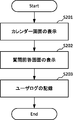
- FIG. 5 is a flowchart showing the operation of the proposed system 1 related to the acquisition of the user log.
- S201 Calendar screen display
- the user log acquisition unit 205 causes the display unit 101 to display a calendar screen that displays a list of the transitions of the user logs acquired so far.
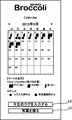
- FIG. 12 shows an example of the calendar screen.
- This calendar screen displays the "amount of hair loss" that the user has answered in the past on the calendar.
- the "amount of hair loss” is divided into three stages, and the leaf icons with different numbers for each stage are displayed on the day when the answer is obtained.
- the launcher L2 for the question and answer screen (S202) for acquiring the user log is arranged.
- the launcher L1 may be placed on the image acquisition screen.
- the user log acquisition unit 205 causes the display unit 101 to display the question / answer screen for acquiring the user log.
- FIG. 13 shows an example of the question and answer screen.
- the user log acquisition unit 205 acquires logs related to hair care, daily activities, hair, health condition, etc. performed by the user on the question and answer screen.
- the user can answer, for example, the following questions by a selection method or a free entry method.
- the input unit 103 accepts the input of the answer by the user. Answers are allowed to be given at least once a day.
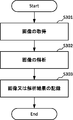
- FIG. 6 is a flowchart showing the operation of the proposed system 1 related to the acquisition of an image.
- the image analysis unit 207 causes the display unit 101 to display an image acquisition screen for acquiring an image of the user's head or the like.
- FIG. 14 shows an example of the image acquisition screen.
- an interface for a user to select and register an image taken by using the image acquisition unit 105 is arranged.
- an interface for activating the image acquisition unit 105 may be arranged, and an image may be taken and registered on the spot.
- the image analysis unit 207 may specify the type of the captured image. The following is an example of image types. ⁇ Head (top of head, temporal region, etc.) ⁇ Items used
- the image analysis unit 207 may analyze and evaluate the image acquired in S301.
- a method for evaluating the head image for example, there is Japanese Patent No. 6582276 developed by the applicant. According to this method, it is possible to obtain an evaluation value indicating a change in the volume of the hair based on an image of the top of the head of the user.
- the image analysis unit 207 associates with the user and stores the image together with the date.
- the image analysis unit 207 associates the image with the user and stores the evaluation value together with the date. Alternatively, both the image and the evaluation value may be stored.
- FIG. 7 is a flowchart showing the operation of the proposed system 1 related to the acquisition of the supplier log.
- the supplier log acquisition unit 209 acquires a record (supplier log) of hair care, etc. performed by the supplier.
- the supplier log acquisition unit 209 displays the log input screen on the display unit 301 of the supplier unit 300.
- the input unit 303 receives the input of the user's findings, test results, medication contents, etc. by the doctor who treated the user, and transmits the input to the supplier log acquisition unit 209.
- the supplier log acquisition unit 209 may acquire the purchase history of hair care products and supplements, the service provision history by salons / treatments / yoga studios, etc. from the suppliers.
- the image analysis unit 207 can display the supplier image acquisition screen on the display unit 301 for the supplier to acquire an image of the user's head or the like at the time of medical treatment or the like.
- the supplier image acquisition screen may be similar to the image acquisition screen shown in FIG.
- the supplier log acquisition unit 209 stores the supplier log in association with the user and the date. Like the user log described above, it is preferable that the supplier log is organized and stored in a predetermined format.
- the image analysis unit 207 may analyze and evaluate the image acquired in S401 and store the image and the evaluation value.
- FIG. 8 is a flowchart showing the operation of the proposal system 1 when making a proposal to the user. For example, when a doctor provides advice on hair care to a user, the advice is generated according to the following flow.
- the proposal unit 211 acquires the time-time information of the user stored in the user management unit 203.
- the time-dependent information includes a user log collected by the user log acquisition unit 205, an image collected by the image analysis unit 207 or an evaluation value thereof, and a supplier log collected by the supplier log acquisition unit 209.
- the proposal unit 211 may specify the period during which the information was acquired when collecting the information over time.
- S502 Proposal generation (method using condition table)
- the proposal unit 211 generates a proposal corresponding to the acquired information over time.
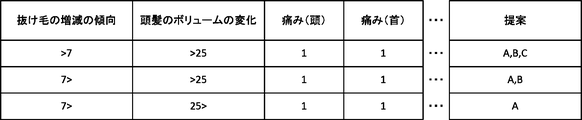
- the proposal unit 211 can specify an appropriate proposal by using the condition table as shown in FIG.
- This condition table associates an index showing the transition of information with time with a proposal.
- An index showing the transition of information over time can be, for example, as follows.
- ⁇ Tendency of increase / decrease in hair loss For example, in the user log, "the amount of hair loss today" is scored ("very large” ⁇ 2 points, "somewhat large” ⁇ 1 point, not large ⁇ 0 points, etc.) and within a predetermined period. The increment of the cumulative value of points is used as an index.
- -Changes in hair volume For example, the head is divided into 6 sections, and the hair volume (represented in 5 stages of grades 1 to 5) in each section is scored (grade 5 ⁇ 5 points, grade 4 ⁇ 4). Points, ..., Grade 1 ⁇ 1 point, etc.), calculate the total value of 6 sections.
- the increment of the cumulative value of the total value in a predetermined period is used as an index. ⁇ Presence or absence of unfavorable parts in terms of health
- the index is the presence or absence of pain (1 point) or no pain (0 point) for each part of the body.
- the proposal can be, for example, the following information. ⁇ Items used outside the body (shampoo, external preparation, etc.) ⁇ What is ingested in the body (dietary supplements, foods, drugs, etc.) ⁇ Behavior (lifestyle, etc.)
- the correspondence between the index and the proposal may be one-to-one, one-to-many, many-to-one, or many-to-many. That is, a proposal may be made when a plurality of indicators are observed at the same time. Alternatively, a plurality of proposals may be made when a certain index is observed.
- the proposal unit 211 may extract only the proposals having the higher priority. Specifically, if A, B, and C exist as proposals when a certain index is observed, and if A has a priority of "high” and B and C have a priority of "low", the proposal unit As for 211, only A may be proposed. Further, for example, if a plurality of proposals are given an execution order, the proposal unit 211 may extract the proposals according to the execution order.
- A, B, and C exist as proposals when a certain index is observed, and the execution order "1" is set in A, the execution order "2" is set in B, and the execution order "3" is set in C. If so, the proposal unit 211 may make a proposal to execute in the order of A ⁇ B ⁇ C.
- condition table for example, a combination of an index whose effect has been confirmed and a proposal can be registered in advance based on past medical history, treatises, clinical data, and the like. Thereby, it is possible to identify a proposal suitable for the current user based on the case of another person or the past user himself / herself in which a characteristic similar to that of the user, that is, the transition of information over time is observed.
- the proposal unit 211 can generate a proposal using machine learning technology. That is, in the learning phase, the proposal unit 211 learns the correlation between the transition of information over time and the proposal according to an arbitrary learning algorithm collectively called machine learning, and generates a trained model. Then, in the estimation phase, the trained model takes in the transition of information over time as input and outputs the corresponding proposal.
- the learning algorithm used by the proposal unit 211 is not particularly limited. For example, supervised learning can be adopted.
- the proposal unit 211 executes the time-dependent information about a certain user (a data set itself consisting of a plurality of time-dependent information or an index calculated from the data set) and the user after that.
- Input the teacher data consisting of the combination of the proposal that was effective and the effective proposal into the learner.
- the learner of the proposal unit 211 repeatedly learns a large amount of given teacher data, and gradually recognizes the correlation between the transition of information over time and the proposal.
- the proposal unit 211 inputs the temporal information of the target user into the trained model.
- the trained model outputs the proposal most suitable for the user as a solution.
- unsupervised learning may be adopted.
- the proposal unit 211 learns temporal information about a large number of users (a data set itself consisting of a plurality of temporal information or an index calculated from the data set) as learning data. Enter in the vessel.
- the learner of the proposal unit 211 gradually recognizes a cluster inherent in a large amount of given learning data, that is, a set of similar users.
- the proposal unit 211 inputs the temporal information of the target user into the trained model.
- the trained model outputs the cluster to which the user belongs.
- the proposal unit 211 identifies a representative user belonging to the cluster, executes the proposal by the representative user, and outputs a proposal for which an effect is observed as a solution.
- the proposal unit 211 causes the display unit 101 of the user unit 100 to display the generated proposal.
- the proposal may be displayed on, for example, a portal screen (FIG. 11), a product or service provision page provided by the supplier (link destination of launcher L4 in FIG. 11, not shown), a talk screen, or the like.
- the doctor makes suggestions on the following items based on the information obtained from the hearing.
- This initial proposal is determined by the physician based on data from other patients and others who have similar characteristics to the patient. ⁇ Items used outside the body (shampoo, external preparation, etc.) ⁇ What is ingested in the body (dietary supplements, foods, drugs, etc.) ⁇ Action (what you can do by yourself, what you should ask others)
- the patient executes the proposal from the doctor and inputs the progress during that period daily from the question answer screen or the image acquisition screen.
- the information entered by the patient includes, for example, the following. ⁇ A lot of hair loss ⁇ Health is not good ⁇ Head image
- the proposal unit 211 generates a proposal based on the supplier log, user log, image analysis result, etc. input in (1) to (3). Proposals are generated according to others with similar characteristics to the patient, condition tables created based on past patient data, trained models, and the like. In other words, proposals that have been practiced in the past by others or past patients whose changes in information over time are similar to those of the current patient, and as a result of which good effects have been observed, are currently output as proposals to patients. ..
- the proposal may be the same as last time, or it may be different. When there are multiple proposals, it is possible to output more appropriate (higher priority) proposals and proposals that should be implemented earlier (early execution order).
- the condition of the hair is calm when the condition of the hair is not good (the tendency of increasing the number of days when you feel that there is a lot of hair loss, the tendency of decreasing the volume of hair detected by image analysis, or the tendency of expanding the exposed scalp). Items in the supplier log or user log that show differences compared to the state in which the above tendency is not seen.
- the proposal system 1 can acquire and evaluate the user's time-dependent information and output the proposal. As a result, it is possible to make an appropriate proposal regarding hair care for the purpose of approaching the ideal hair condition based on how the user's health and life condition has changed from the past to the present.
- the present invention is not limited to the above embodiment, and can be appropriately modified without departing from the spirit.
- all of the user log acquisition unit 205, the image analysis unit 207, and the supplier log acquisition unit 209 have acquired the user's temporal information, but the present invention is not limited to this, and at least. Any one of these processing units may acquire information over time.
- each of the treatments shown in the above-described embodiment may be appropriately rearranged in the order as long as the treatment results are equivalent, or may be replaced by another known method.
- the main control unit 201, the user management unit 203, the user log acquisition unit 205, the image analysis unit 207, the supplier log acquisition unit 209, and the proposal unit 211 inform the display unit 101 or the display unit 301.
- information was acquired from the input unit 103 or the input unit 303, and an image was acquired from the image acquisition unit 105 or the image acquisition unit 305, thereby realizing a predetermined function.
- the proposal system 1 does not necessarily have to display or acquire information or images.
- the main control unit 201, the user management unit 203, the user log acquisition unit 205, the image analysis unit 207, the supplier log acquisition unit 209, and the proposal unit 211 have information received from an external stem or information received from an external stem in some or all of the functions thereof.
- the image may be used as an input, or the processing result may be output to an external system in any format.
- this is implemented as an API (Application Programming Interface).
- the image analysis unit 207 provides an API that inputs an image from the outside and returns an evaluation result of the image.
- the present invention has been mainly described as a hardware configuration, but the present invention is not limited to this, and an arbitrary process is caused by a CPU (Central Processing Unit) to execute a computer program. It is also possible to realize by.
- the computer program can be stored and supplied to the computer using various types of non-transitory computer-readable media.
- Non-transitory computer-readable media include various types of tangible storage media (tangible storage media).
- non-temporary computer-readable media examples include magnetic recording media (eg, flexible disks, magnetic tapes, hard disk drives), magneto-optical recording media (eg, magneto-optical disks), CD-ROMs (Read Only Memory), CD-Rs, It includes a CD-R / W, a semiconductor memory (for example, a mask ROM, a PROM (Programmable ROM), an EPROM (Erasable PROM), a flash ROM, and a RAM (random access memory)).
- the program may also be supplied to the computer by various types of temporary computer-readable media. Examples of temporary computer-readable media include electrical, optical, and electromagnetic waves.
- the temporary computer-readable medium can supply the program to the computer via a wired communication path such as an electric wire and an optical fiber, or a wireless communication path.
Landscapes
- Health & Medical Sciences (AREA)
- Engineering & Computer Science (AREA)
- Medical Informatics (AREA)
- General Health & Medical Sciences (AREA)
- Public Health (AREA)
- Primary Health Care (AREA)
- Epidemiology (AREA)
- Nutrition Science (AREA)
- Nuclear Medicine, Radiotherapy & Molecular Imaging (AREA)
- Radiology & Medical Imaging (AREA)
- General Physics & Mathematics (AREA)
- Quality & Reliability (AREA)
- Pharmacology & Pharmacy (AREA)
- Alternative & Traditional Medicine (AREA)
- Life Sciences & Earth Sciences (AREA)
- Theoretical Computer Science (AREA)
- Physics & Mathematics (AREA)
- Computer Vision & Pattern Recognition (AREA)
- Biophysics (AREA)
- Data Mining & Analysis (AREA)
- Biomedical Technology (AREA)
- Medicinal Chemistry (AREA)
- Bioinformatics & Cheminformatics (AREA)
- Physical Education & Sports Medicine (AREA)
- Chemical & Material Sciences (AREA)
- Pathology (AREA)
- Databases & Information Systems (AREA)
- Management, Administration, Business Operations System, And Electronic Commerce (AREA)
- Animal Behavior & Ethology (AREA)
- Veterinary Medicine (AREA)
Priority Applications (3)
| Application Number | Priority Date | Filing Date | Title |
|---|---|---|---|
| CN202180004251.5A CN115136248A (zh) | 2019-11-19 | 2021-01-18 | 提案系统、提案方法及程序 |
| JP2021558484A JPWO2021100880A1 (https=) | 2019-11-19 | 2021-01-18 | |
| US17/621,690 US20220293238A1 (en) | 2019-11-19 | 2021-01-18 | Proposal system, proposal method, and program |
Applications Claiming Priority (2)
| Application Number | Priority Date | Filing Date | Title |
|---|---|---|---|
| JP2019209201 | 2019-11-19 | ||
| JP2019-209201 | 2019-11-19 |
Publications (1)
| Publication Number | Publication Date |
|---|---|
| WO2021100880A1 true WO2021100880A1 (ja) | 2021-05-27 |
Family
ID=75980157
Family Applications (1)
| Application Number | Title | Priority Date | Filing Date |
|---|---|---|---|
| PCT/JP2021/001405 Ceased WO2021100880A1 (ja) | 2019-11-19 | 2021-01-18 | 提案システム、提案方法及びプログラム |
Country Status (4)
| Country | Link |
|---|---|
| US (1) | US20220293238A1 (https=) |
| JP (1) | JPWO2021100880A1 (https=) |
| CN (1) | CN115136248A (https=) |
| WO (1) | WO2021100880A1 (https=) |
Cited By (3)
| Publication number | Priority date | Publication date | Assignee | Title |
|---|---|---|---|---|
| WO2023053176A1 (ja) * | 2021-09-28 | 2023-04-06 | 日本電気株式会社 | 学習装置、行動推薦装置、学習方法、行動推薦方法及び記憶媒体 |
| JP7348418B1 (ja) | 2023-02-22 | 2023-09-20 | 株式会社アデランス | ユーザの健康改善を支援するためのシステム |
| JP7705679B1 (ja) | 2024-04-09 | 2025-07-10 | 株式会社ViewBE | 美容健康情報提供システム、美容健康情報提供方法及び、美容健康情報提供プログラム |
Citations (3)
| Publication number | Priority date | Publication date | Assignee | Title |
|---|---|---|---|---|
| JP2003070753A (ja) * | 2001-09-06 | 2003-03-11 | Scalar Corp | 診断システム、診断データ生成方法、それに用いられる情報処理装置、及び端末装置、並びに記録媒体 |
| JP2009230718A (ja) * | 2008-03-25 | 2009-10-08 | Sysmex Corp | 生活習慣改善提案装置、コンピュータプログラムおよび生活習慣改善提案システム |
| KR101583191B1 (ko) * | 2015-07-27 | 2016-01-19 | 장정훈 | 헤어 케어 시스템 |
Family Cites Families (8)
| Publication number | Priority date | Publication date | Assignee | Title |
|---|---|---|---|---|
| US20030065523A1 (en) * | 2001-10-01 | 2003-04-03 | Francis Pruche | Early detection of beauty treatment progress |
| KR101126704B1 (ko) * | 2009-03-13 | 2012-03-29 | (주)달구지 | 온라인 고객 진단 시스템 및 그 진단 방법 |
| US20120041282A1 (en) * | 2010-08-13 | 2012-02-16 | Conopco, Inc., D/B/A Unilever | Device and system for evaluating condition of skin, scalp and hair |
| KR101518397B1 (ko) * | 2013-01-22 | 2015-05-08 | 김기윤 | 탈모 관리 시스템 |
| US10206587B2 (en) * | 2014-05-16 | 2019-02-19 | Toshiba Medical Systems Corporation | Image processing apparatus, image processing method, and storage medium |
| KR20150137744A (ko) * | 2014-05-30 | 2015-12-09 | 주식회사 제이에스테크놀러지 | 헬스케어 웨어러블 디바이스와 스마트폰을 연동한 피부진단 시스템 및 방법 |
| JPWO2016147290A1 (ja) * | 2015-03-16 | 2017-12-21 | 富士通株式会社 | 情報分析プログラム、情報分析方法および情報分析装置 |
| JP7208829B2 (ja) * | 2019-03-04 | 2023-01-19 | 日立造船株式会社 | 情報処理装置、焼却制御装置、情報処理方法、および情報処理プログラム |
-
2021
- 2021-01-18 US US17/621,690 patent/US20220293238A1/en not_active Abandoned
- 2021-01-18 JP JP2021558484A patent/JPWO2021100880A1/ja active Pending
- 2021-01-18 CN CN202180004251.5A patent/CN115136248A/zh active Pending
- 2021-01-18 WO PCT/JP2021/001405 patent/WO2021100880A1/ja not_active Ceased
Patent Citations (3)
| Publication number | Priority date | Publication date | Assignee | Title |
|---|---|---|---|---|
| JP2003070753A (ja) * | 2001-09-06 | 2003-03-11 | Scalar Corp | 診断システム、診断データ生成方法、それに用いられる情報処理装置、及び端末装置、並びに記録媒体 |
| JP2009230718A (ja) * | 2008-03-25 | 2009-10-08 | Sysmex Corp | 生活習慣改善提案装置、コンピュータプログラムおよび生活習慣改善提案システム |
| KR101583191B1 (ko) * | 2015-07-27 | 2016-01-19 | 장정훈 | 헤어 케어 시스템 |
Cited By (9)
| Publication number | Priority date | Publication date | Assignee | Title |
|---|---|---|---|---|
| WO2023053176A1 (ja) * | 2021-09-28 | 2023-04-06 | 日本電気株式会社 | 学習装置、行動推薦装置、学習方法、行動推薦方法及び記憶媒体 |
| JPWO2023053176A1 (https=) * | 2021-09-28 | 2023-04-06 | ||
| JP7754179B2 (ja) | 2021-09-28 | 2025-10-15 | 日本電気株式会社 | 学習装置、行動推薦装置、学習方法、行動推薦方法及びプログラム |
| JP7348418B1 (ja) | 2023-02-22 | 2023-09-20 | 株式会社アデランス | ユーザの健康改善を支援するためのシステム |
| JP7429325B1 (ja) | 2023-02-22 | 2024-02-07 | 株式会社アデランス | 商品提案システム |
| JP2024119725A (ja) * | 2023-02-22 | 2024-09-03 | 株式会社アデランス | 商品提案システム |
| JP2024119422A (ja) * | 2023-02-22 | 2024-09-03 | 株式会社アデランス | ユーザの健康改善を支援するためのシステム |
| JP7705679B1 (ja) | 2024-04-09 | 2025-07-10 | 株式会社ViewBE | 美容健康情報提供システム、美容健康情報提供方法及び、美容健康情報提供プログラム |
| JP2025159839A (ja) * | 2024-04-09 | 2025-10-22 | 株式会社ViewBE | 美容健康情報提供システム、美容健康情報提供方法及び、美容健康情報提供プログラム |
Also Published As
| Publication number | Publication date |
|---|---|
| CN115136248A (zh) | 2022-09-30 |
| JPWO2021100880A1 (https=) | 2021-05-27 |
| US20220293238A1 (en) | 2022-09-15 |
Similar Documents
| Publication | Publication Date | Title |
|---|---|---|
| Soderlund | Effectiveness of motivational interviewing for improving physical activity self-management for adults with type 2 diabetes: A review | |
| Crawford et al. | Our metrics, ourselves: A hundred years of self-tracking from the weight scale to the wrist wearable device | |
| Shaffer et al. | All stories are not alike: a purpose-, content-, and valence-based taxonomy of patient narratives in decision aids | |
| Ketikidis et al. | Acceptance of health information technology in health professionals: an application of the revised technology acceptance model | |
| Liao et al. | Applying artificial intelligence technology to support decision-making in nursing: A case study in Taiwan | |
| Ackerman et al. | Infectious disease and imperfections of self-image | |
| Frøisland et al. | Integrating visual dietary documentation in mobile-phone-based self-management application for adolescents with type 1 diabetes | |
| WO2013065246A2 (en) | Diathesis determination apparatus, diathesis determination method, health assistance apparatus, health assistance method, program, terminal apparatus, and health assistance system | |
| Ruben et al. | “I know your pain” proximal and distal predictors of pain detection accuracy | |
| WO2021046292A1 (en) | Capturing person-specific self-reported subjective experiences as behavioral predictors | |
| Schroeder et al. | The “empty vessel” physician: Physicians’ instrumentality makes them seem personally empty | |
| Lenz et al. | Relational-cultural therapy intervention with incarcerated adolescents: A single-case effectiveness design | |
| Vredenburg et al. | Variability in health care services: the role of service employee flexibility | |
| Kulka et al. | Mindfulness-based stress reduction for newly graduated registered nurses | |
| WO2021100880A1 (ja) | 提案システム、提案方法及びプログラム | |
| Wilrycx et al. | Evaluation of a recovery-oriented care training program for mental healthcare professionals: Effects on mental health consumer outcomes | |
| JP2022042787A (ja) | 情報提供方法、情報提供装置、コンピュータプログラム及び情報提供システム | |
| Winkler et al. | Avatar and virtual agent-assisted telecare for patients in their homes: A scoping review | |
| Weiß et al. | Effects of image realism on the stress response in virtual reality | |
| Lafortune et al. | Virtual reality could help assess sexual aversion disorder | |
| Laidsaar-Powell et al. | Partnering with and involving patients | |
| Vaughn et al. | Customization of the TRU-PBMT app (technology recordings to better understand pediatric blood and marrow transplant) | |
| Abi-Rafeh et al. | Comparative performance of current patient-accessible artificial intelligence large language models in the preoperative education of patients in facial aesthetic surgery | |
| Curtis | Understanding tailored Internet smoking cessation messages: A reasoned action approach | |
| Sansoni et al. | 360-VIRTOncology: virtual reality to improve cancer patients' well-being |
Legal Events
| Date | Code | Title | Description |
|---|---|---|---|
| 121 | Ep: the epo has been informed by wipo that ep was designated in this application |
Ref document number: 21726838 Country of ref document: EP Kind code of ref document: A1 |
|
| ENP | Entry into the national phase |
Ref document number: 2021558484 Country of ref document: JP Kind code of ref document: A |
|
| NENP | Non-entry into the national phase |
Ref country code: DE |
|
| 122 | Ep: pct application non-entry in european phase |
Ref document number: 21726838 Country of ref document: EP Kind code of ref document: A1 |