WO2021065796A1 - 硬化性組成物、硬化物、及び硬化物の形成方法 - Google Patents
硬化性組成物、硬化物、及び硬化物の形成方法 Download PDFInfo
- Publication number
- WO2021065796A1 WO2021065796A1 PCT/JP2020/036621 JP2020036621W WO2021065796A1 WO 2021065796 A1 WO2021065796 A1 WO 2021065796A1 JP 2020036621 W JP2020036621 W JP 2020036621W WO 2021065796 A1 WO2021065796 A1 WO 2021065796A1
- Authority
- WO
- WIPO (PCT)
- Prior art keywords
- group
- formula
- represented
- alkyl
- groups
- Prior art date
- Legal status (The legal status is an assumption and is not a legal conclusion. Google has not performed a legal analysis and makes no representation as to the accuracy of the status listed.)
- Ceased
Links
- 0 CCCC1C*C(CC)CC1 Chemical compound CCCC1C*C(CC)CC1 0.000 description 8
- VXWWOFOHDQIOQF-UHFFFAOYSA-N C(C1OC11)C2C1C1C(CC3OC3C3)C3C2C1 Chemical compound C(C1OC11)C2C1C1C(CC3OC3C3)C3C2C1 VXWWOFOHDQIOQF-UHFFFAOYSA-N 0.000 description 1
- WPZSDIKNXORZEG-UHFFFAOYSA-N C(C1OC1C1)C2C1C=C1OC21 Chemical compound C(C1OC1C1)C2C1C=C1OC21 WPZSDIKNXORZEG-UHFFFAOYSA-N 0.000 description 1
Classifications
-
- C—CHEMISTRY; METALLURGY
- C08—ORGANIC MACROMOLECULAR COMPOUNDS; THEIR PREPARATION OR CHEMICAL WORKING-UP; COMPOSITIONS BASED THEREON
- C08G—MACROMOLECULAR COMPOUNDS OBTAINED OTHERWISE THAN BY REACTIONS ONLY INVOLVING UNSATURATED CARBON-TO-CARBON BONDS
- C08G59/00—Polycondensates containing more than one epoxy group per molecule; Macromolecules obtained by polymerising compounds containing more than one epoxy group per molecule using curing agents or catalysts which react with the epoxy groups
- C08G59/18—Macromolecules obtained by polymerising compounds containing more than one epoxy group per molecule using curing agents or catalysts which react with the epoxy groups ; e.g. general methods of curing
- C08G59/68—Macromolecules obtained by polymerising compounds containing more than one epoxy group per molecule using curing agents or catalysts which react with the epoxy groups ; e.g. general methods of curing characterised by the catalysts used
- C08G59/687—Macromolecules obtained by polymerising compounds containing more than one epoxy group per molecule using curing agents or catalysts which react with the epoxy groups ; e.g. general methods of curing characterised by the catalysts used containing sulfur
-
- C—CHEMISTRY; METALLURGY
- C08—ORGANIC MACROMOLECULAR COMPOUNDS; THEIR PREPARATION OR CHEMICAL WORKING-UP; COMPOSITIONS BASED THEREON
- C08G—MACROMOLECULAR COMPOUNDS OBTAINED OTHERWISE THAN BY REACTIONS ONLY INVOLVING UNSATURATED CARBON-TO-CARBON BONDS
- C08G59/00—Polycondensates containing more than one epoxy group per molecule; Macromolecules obtained by polymerising compounds containing more than one epoxy group per molecule using curing agents or catalysts which react with the epoxy groups
- C08G59/18—Macromolecules obtained by polymerising compounds containing more than one epoxy group per molecule using curing agents or catalysts which react with the epoxy groups ; e.g. general methods of curing
- C08G59/68—Macromolecules obtained by polymerising compounds containing more than one epoxy group per molecule using curing agents or catalysts which react with the epoxy groups ; e.g. general methods of curing characterised by the catalysts used
-
- C—CHEMISTRY; METALLURGY
- C08—ORGANIC MACROMOLECULAR COMPOUNDS; THEIR PREPARATION OR CHEMICAL WORKING-UP; COMPOSITIONS BASED THEREON
- C08L—COMPOSITIONS OF MACROMOLECULAR COMPOUNDS
- C08L63/00—Compositions of epoxy resins; Compositions of derivatives of epoxy resins
Definitions
- the present invention relates to a curable composition containing a cationic curing agent (A) and a cationically curable compound (B), a cured product of the curable composition, and a method for forming a cured product using the curable composition. ..
- cationically polymerizable curable compositions containing a cationically polymerizable compound such as an epoxy compound as a curable component have been used for various purposes.
- Such a curable composition includes, for example, a cationically polymerizable compound containing an aromatic ring-containing alicyclic epoxy compound, a cationically polymerizable compound other than the aromatic ring-containing alicyclic epoxy compound, and a thermocationic polymerization initiator.
- Thermosetting compositions are known (see Patent Document 1). By using such a curable composition, it is possible to form a cured product having a high glass transition temperature, which is less likely to yellow even when heated to a high temperature, and has excellent substrate adhesion.
- a high temperature may be required for curing or a long time may be required for curing.
- Such a defect can be solved by using an onium salt-based photoacid generator.
- an onium salt-based photoacid generator when a curable composition containing an onium salt-based photoacid generator and a cationically curable compound is cured by exposure, there is a problem that the cured product is often colored during curing.
- the present invention has been made in view of the above problems, and is a cationically curable curable composition capable of suppressing coloring of a cured product at the time of curing and having good curability, and the curable composition. It is an object of the present invention to provide a cured product of the above and a method for forming a cured product using the curable composition.
- the present inventors have a photoacid generator (A1) composed of an onium salt having a cation portion having a specific structure in a curable composition containing a cationic curing agent (A) and a cationic curing compound (B).
- A1 a photoacid generator
- A2 thermoacid generator
- A2 a gallium-containing anion having a specific structure as an anion portion in combination. ..
- the present invention provides the following.
- a first aspect of the present invention comprises a cationic curing agent (A) and a cationic curing compound (B).
- the cationic curing agent (A) contains a photoacid generator (A1) and a thermoacid generator (A2).
- the photoacid generator (A1) is an onium salt having a cation moiety represented by the following formula (ai).
- the thermoacid generator (A2) is a curable composition which is an onium salt having an anion portion represented by the following formula (Ai). (R a1 ) t + 1 -R a2 + ...
- Ra1 is an independently monovalent organic group
- Ra2 is an element having a valence t of groups 15 to 17 in the Periodic Table of the Elements according to the IUPAC notation.
- At least one of R a1 is an aryl group which may have a substituent.
- R A1 4 -Ga - ⁇
- RA1 is a phenyl group or a perfluoroalkyl group which may independently have one or more substituents.
- the second aspect of the present invention is a cured product of the curable composition according to the first aspect.
- a third aspect of the present invention is a method for forming a cured product, which comprises exposing and heating the curable composition according to the first aspect.
- a cationically curable curable composition capable of suppressing coloration of a cured product at the time of curing and having good curability, a cured product of the curable composition, and the curable composition.
- a method for forming a cured product using the above can be provided.
- the curable composition contains a cationic curing agent (A) and a cationic curing compound (B).
- the cationic curing agent (A) contains a photoacid generator (A1) and a thermoacid generator (A2).
- the photoacid generator (A1) is an onium salt having a cation moiety represented by the following formula (ai). (R a1 ) t + 1 -R a2 + ... (ai) (In the formula (ai), Ra1 is an independently monovalent organic group, and Ra2 is an element having a valence t of groups 15 to 17 in the Periodic Table of the Elements according to the IUPAC notation.
- thermoacid generator (A2) is an onium salt having an anion portion represented by the following formula (Ai).
- (R A1) 4 -Ga - ⁇ (Ai) In the formula (Ai), RA1 is a phenyl group or a perfluoroalkyl group which may independently have one or more substituents.
- thermoacid generator (A2) when the thermoacid generator (A2) is decomposed by heating, a substance that causes coloration due to the color-causing substance generated by the decomposition of the photoacid generator (A1) is not generated, or the thermoacid is generated. It is considered that the decomposition product of the generator (A2) exerts some action on the color-causing substance, thereby suppressing the coloring of the cured product at the time of curing.
- the cation-curable compound (B) described later is a compound that gives a colorless and transparent cured product, it is suitable for optical applications by combining the above-mentioned cation-curing agent (A) and the cation-curable compound (B). It is possible to form a highly colorless and transparent cured product.
- the photoacid generator (A1) is an onium salt having a cation moiety represented by the following formula (ai).
- the anion portion constituting the onium salt as the photoacid generator (A1) is not particularly limited as long as it does not impair the object of the present invention.
- (R a1 ) t + 1 -R a2 + ... (ai) (In the formula (ai), Ra1 is an independently monovalent organic group, and Ra2 is an element having a valence t of groups 15 to 17 in the Periodic Table of the Elements according to the IUPAC notation. At least one of R a1 is an aryl group which may have a substituent.)
- Ra 1 in the formula (ai) which is a cation part represents an organic group bonded to Ra 2.
- the organic group is preferably a carbon atom-containing group, from one or more carbon atoms and one or more atoms selected from the group consisting of H, O, S, Se, N, B, P, Si, and halogen atoms. Is more preferred.
- the number of carbon atoms of the carbon atom-containing group is not particularly limited, and is preferably 1 or more and 50 or less, and more preferably 1 or more and 20 or less.
- a plurality of R a1 when R a1 is existing in plural numbers may be the same or different.
- Ra 1 includes an aryl group (aromatic hydrocarbon group) having 6 to 14 carbon atoms which may have a substituent and an alkyl group having 1 to 18 carbon atoms which may have a substituent. , It may have an aralkyl group having 7 or more and 12 or less carbon atoms which may have a substituent, an alkenyl group which may have a substituent and may have 2 or more and 18 or less carbon atoms, and a substituent ring group. Examples thereof include an alkynyl group having 2 or more and 18 or less carbon atoms.
- Ra 1 includes an aryl group having 6 to 14 carbon atoms and an alkyl group having 1 to 18 carbon atoms.
- An alkenyl group having 2 to 18 carbon atoms and an alkynyl group having 2 to 18 carbon atoms are preferable.
- Examples of the substituent that the aryl group, aralkyl group, alkyl group, alkenyl group, and alkynyl group as R a1 may have include an alkyl group having 1 to 18 carbon atoms and 1 to 18 carbon atoms.
- Alkyl halide group aliphatic cyclic group having 3 to 18 carbon atoms, aliphatic aliphatic ring group having 3 to 18 carbon atoms, alkenyl group having 2 to 18 carbon atoms, 2 carbon atoms Alkinyl group with 18 or more carbon atoms, aryl group with 6 to 14 carbon atoms, nitro group, hydroxyl group, cyano group, alkoxy group with 1 to 18 carbon atoms, aryloxy group with 6 to 14 carbon atoms, carbon An aliphatic acyl group having 2 to 19 atoms, an aromatic acyl group having 7 to 15 carbon atoms, an aliphatic acyloxy group having 2 to 19 carbon atoms, and an aromatic acyloxy group having 7 to 15 carbon atoms.
- An alkylthio group having 1 to 18 carbon atoms, an arylthio group having 6 to 14 carbon atoms, and 1 or 2 hydrogen atoms bonded to a nitrogen atom are substituted with hydrocarbon groups having 1 to 18 carbon atoms. Examples thereof include an amino group and a halogen atom.
- an alkyl group, an alkyl halide group, an aliphatic cyclic group, a halogenated aliphatic cyclic group, an alkoxy group, an aryloxy group, an aliphatic acyl group, an aromatic acyl group, and an aliphatic acyloxy are preferable.
- a group, an aromatic acyloxy group, an alkylthio group, an arylthio group, and an amino group which may be substituted with a hydrocarbon group are preferable.
- alkyl group when an aryl group, an aralkyl group, an alkyl group, an alkenyl group, and the substituent which may be possessed by the alkynyl group is an alkyl group, preferred examples of the alkyl group include a methyl group, an ethyl radical, n -Propyl group, n-butyl group, n-pentyl group, n-hexyl group, n-octyl group, n-nonyl group, n-decyl group, n-undecyl group, n-dodecyl group, n-tridecyl group, n Linear alkoxy groups such as -tetradecyl group, n-pentadecyl group, n-hexadecyl group, n-heptadecyl group, and n-octadecyl group; isopropyl group, isobut
- R a1 when an aryl group, an aralkyl group, an alkyl group, an alkenyl group, and the substituent which may be possessed by the alkynyl group is a halogenated alkyl group, preferred examples of the halogenated alkyl group, trifluoromethyl Group, trichloromethyl group, pentafluoroethyl group, 2,2,2-trichloroethyl group, 2,2,2-trifluoroethyl group, 1,1-difluoroethyl group, heptafluoro-n-propyl group, 1, 1-difluoro-n-propyl group, 3,3,3-trifluoro-n-propyl group, nonafluoro-n-butyl group, 3,3,4,5,4-pentafluoro-n-butyl group, perfluoro Linear alkyl halides such as -n-pentyl group and perfluoro-n-oct
- an aryl group, an aralkyl group, an alkyl group, an alkenyl group, and the substituent which may be possessed by the alkynyl group is an aliphatic cyclic group
- preferred examples of the aliphatic cyclic group, a cycloalkyl examples thereof include a propyl group, a cyclobutyl group, a cyclopentyl group, a cyclohexyl group, and an adamantyl group.
- an aryl group, an aralkyl group, an alkyl group, when an alkenyl group, and the substituent which may be possessed alkynyl group is a halogenated aliphatic cyclic group, a halogenated aliphatic cyclic group
- Preferred examples thereof include a pentafluorocyclopropyl group, a nonafluorocyclobutyl group, a perfluorocyclopentyl group, a perfluorocyclohexyl group, a perfluoroadamantyl group and the like.
- an aryl group if an aralkyl group, an alkyl group, an alkenyl group, and the substituent which may be possessed by the alkynyl group is an alkoxy group
- preferred examples of the alkoxy group include a methoxy group, an ethoxy radical, n -Propyloxy group, n-butyloxy group, n-pentyloxy group, n-hexyloxy group, n-octyloxy group, n-nonyloxy group, n-decyloxy group, n-undecyloxy group, n-dodecyloxy group , N-Tridecyloxy group, n-tetradecyloxy group, n-pentadecyloxy group, n-hexadecyloxy group, n-heptadecyloxy group, n-octadecyloxy group and other linear alk
- R a1 when an aryl group, an aralkyl group, an alkyl group, an alkenyl group, and the substituent which may be possessed by an alkynyl group an aryl group, preferred examples of the aryloxy group, a phenoxy group, alpha- Examples thereof include a naphthyloxy group, a ⁇ -naphthyloxy group, a biphenyl-4-yloxy group, a biphenyl-3-yloxy group, a biphenyl-2-yloxy group, an anthryloxy group, a phenanthryloxy group and the like.
- R a1 when an aryl group, an aralkyl group, an alkyl group, an alkenyl group, and the substituent which may be possessed by the alkynyl group is an aliphatic acyl group, preferred examples of the aliphatic acyl group, an acetyl group, Examples thereof include a propanoyl group, a butanoyl group, a pentanoyl group, a hexanoyl group, a heptanoil group, an octanoyl group and the like.
- R a1 when an aryl group, an aralkyl group, an alkyl group, an alkenyl group, and the substituent which may be possessed by the alkynyl group is an aromatic acyl group, preferred examples of the aromatic acyl group, a benzoyl group, Examples thereof include ⁇ -naphthoyl group, ⁇ -naphthoyl group, biphenyl-4-ylcarbonyl group, biphenyl-3-ylcarbonyl group, biphenyl-2-ylcarbonyl group, anthrylcarbonyl group, phenanthrylcarbonyl group and the like.
- R a1 when an aryl group, an aralkyl group, an alkyl group, an alkenyl group, and the substituent which may be possessed by the alkynyl group is an aliphatic acyloxy group, preferred examples of the aliphatic acyloxy group, acetyloxy group , Propanoyloxy group, butanoyloxy group, pentanoyloxy group, hexanoyloxy group, heptanoiloxy group, octanoyloxy group and the like.
- an aryl group, an aralkyl group, the alkyl group, alkenyl group, and the substituent which may be possessed by the alkynyl group is an aromatic acyloxy group, preferred examples of the aromatic acyloxy groups, benzoyloxy groups , ⁇ -naphthoyloxy group, ⁇ -naphthoyloxy group, biphenyl-4-ylcarbonyloxy group, biphenyl-3-ylcarbonyloxy group, biphenyl-2-ylcarbonyloxy group, anthrylcarbonyloxy group, and Fe Examples thereof include a nantrilcarbonyloxy group.
- the above-mentioned alkoxy group, or a group in which an oxygen atom in a group suitable as an aryloxy group is replaced with a sulfur atom can be mentioned.
- the amino group which may be used are an amino group, a methylamino group, an ethylamino group, an n-propylamino group, a dimethylamino group, a diethylamino group, a methylethylamino group and a di-n-propylamino group.
- the piperidino group and the like are an amino group, a methylamino group, an ethylamino group, an n-propylamino group, a dimethylamino group, a diethylamino group, a methylethylamino group and a di-n-propylamino group.
- R a1 when an aryl group, an aralkyl group, an alkyl group, an alkenyl group, and the substituent which may be possessed by the alkynyl group is a halogen atom, the preferred examples of the halogen atom, fluorine atom, chlorine atom, Examples include a bromine atom and an iodine atom.
- an alkyl halide group having 1 or more and 8 or less carbon atoms, a halogen atom, a nitro group, and a cyano group are preferable in that the activity of the photoacid generator (A1) is high, and carbon is preferable.
- a fluorinated alkyl group having 1 or more and 8 or less atoms is more preferable.
- R a1 there are a plurality, the plurality of R a1 may form a ring together with R a2.
- the rings formed by the plurality of R a1 and R a2 have -O-, -S-, -SO-, -SO 2- , -NH-, -CO-, -COO-, in the ring structure. It may contain more bonds selected from the group consisting of and -CONH-.
- R a2 in formula (ai) is an element of valence t 15 to Group 17 of the Periodic Table (IUPAC notation).
- R a2 15 to Group 17 element of Group of the Periodic Table of the Elements (IUPAC notation)
- R a2 combines with the organic group R a1 to form an onium ion.
- Periodic Table of 15 to Group 17 Group elements (IUPAC notation) preferred elements as R a2 is S (sulfur), N (nitrogen), I (iodine), and P (phosphorus).
- Corresponding onium ions include sulfonium ions, ammonium ions, iodonium ions, and phosphonium ions. These are preferred because they are stable and easy to handle. Sulfonium ions and iodonium ions are more preferable, and sulfonium ions are particularly preferable, because they are excellent in cationic polymerization performance and cross-linking reaction performance. That is, in the above formula (ai), it is preferable that Ra2 is sulfur and t is 2.
- sulfonium ion examples include triphenylsulfonium, tri-p-tolylsulfonium, tri-o-tolylsulfonium, tris (4-methoxyphenyl) sulfonium, 1-naphthyldiphenylsulfonium, 2-naphthyldiphenylsulfonium, and tris (4).
- ammonium ions include tetraalkylammoniums such as tetramethylammonium, ethyltrimethylammonium, diethyldimethylammonium, triethylmethylammonium, and tetraethylammonium; N, N-dimethylpyrrolidinium, N-ethyl-N-methylpyrroli.
- pyrrolidiniums such as N, N-diethylpyrrolidinium; N, N'-dimethylimidazolinium, N, N'-diethylimidazolinium, N-ethyl-N'-methylimidazolinium, 1, Imidazolinium such as 3,4-trimethylimidazolinium and 1,2,3,4-tetramethylimidazolinium; tetrahydropyrimidinium such as N, N'-dimethyltetrahydropyrimidinium; N, N' -Morholinium such as dimethylmorpholinium; piperidinium such as N, N'-diethylpiperidinium; pyridinium such as N-methylpyridinium, N-benzylpyridinium, and N-phenacylpyridium; N, N'-dimethylimidazole Imidazolium such as ammonium; quinolium such as N-methylquinolium, N-benzylquinolium
- phosphonium ions include tetraaryls such as tetraphenylphosphonium, tetra-p-tolylphosphonium, tetrakis (2-methoxyphenyl) phosphonium, tetrakis (3-methoxyphenyl) phosphonium, and tetrakis (4-methoxyphenyl) phosphonium.
- Triarylphosphoniums such as Triphenylbenzylphosphoniums, Triphenylphenacylphosphoniums, Triphenylmethylphosphoniums, and Triphenylbutylphosphoniums; Examples thereof include silphosphonium and tetraalkylphosphoniums such as tributylphenacilphosphonium.
- iodonium ions include diphenyl iodonium, di-p-tolyl iodonium, bis (4-dodecylphenyl) iodonium, bis (4-methoxyphenyl) iodonium, (4-octyloxyphenyl) phenyl iodonium, and bis (4-dodecylphenyl) iodonium.
- Examples thereof include iodonium ions such as decyloxy) phenyliodonium, 4- (2-hydroxytetradecyloxy) phenylphenyliodonium, 4-isopropylphenyl (p-tolyl) iodonium, and 4-isobutylphenyl (p-tolyl) iodonium.
- iodonium ions such as decyloxy) phenyliodonium, 4- (2-hydroxytetradecyloxy) phenylphenyliodonium, 4-isopropylphenyl (p-tolyl) iodonium, and 4-isobutylphenyl (p-tolyl) iodonium.
- Examples of the photoacid generator (A1) include a gallium-containing onium salt having an anion moiety represented by the following formula (aiii) and a boron-containing onium salt having an anion moiety represented by the following formula (aiii). Be done.
- R a3 , R a4 , R a5 , and R a6 are each independently a hydrocarbon group which may have a substituent or a heterocycle which may have a substituent.
- R a7 , R a8 , R a9 , and R a10 are each independently a hydrocarbon group which may have a substituent or a heterocycle which may have a substituent.
- the number of carbon atoms in the hydrocarbon group or heterocyclic group as R a3 ⁇ R a6 in the formula (aii) is not particularly limited, but is preferably 1 or more and 50 or less, more preferably 1 to 30, 1 to 20 Especially preferable.
- Specific examples of the hydrocarbon groups as R a3 to Ra 6 include a linear or branched alkyl group, a linear or branched alkenyl group, a linear or branched alkynyl group, and an aromatic group. Examples thereof include group hydrocarbon groups, alicyclic hydrocarbon groups, and aralkyl groups.
- R a3 at least one of ⁇ R a6 is an aromatic group which may have a substituent
- R a3 ⁇ aromatic also have three or more substituents of R a6 It is more preferably a group, and it is particularly preferable that all of Ra3 to Ra6 are aromatic groups which may have a substituent.
- the hydrocarbon group as R a3 to R a6 or the heterocyclic group may have, an alkyl halide group having 1 to 18 carbon atoms and a halogenated group having 3 to 18 carbon atoms
- the hydrocarbon group as R a3 to R a6 is an aromatic hydrocarbon group
- the aromatic hydrocarbon group is an alkyl group having 1 to 18 carbon atoms, an alkenyl group having 2 to 18 carbon atoms, and an alkenyl group having 2 to 18 carbon atoms. And it may be substituted with one or more substituents selected from the group consisting of alkynyl groups having 2 or more and 18 or less carbon atoms.
- the number of substituents is not particularly limited, and may be 1 or 2 or more. When the number of substituents is plural, the plurality of substituents may be the same or different.
- R a3 to R a6 are alkyl groups include methyl group, ethyl group, n-propyl group, n-butyl group, n-pentyl group, n-hexyl group, n-octyl group, and the like.
- n-nonyl group n-decyl group, n-undecyl group, n-dodecyl group, n-tridecyl group, n-tetradecyl group, n-pentadecyl group, n-hexadecyl group, n-heptadecyl group, n-octadecyl group, Linear alkyl groups such as n-nonadecil group and n-icosyl group; isopropyl group, isobutyl group, sec-butyl group, tert-butyl group, isopentyl group, neopentyl group, tert-pentyl group, isohexyl group, 2-ethylhexyl Examples thereof include a group and a branched alkyl group such as a 1,1,3,3-tetramethylbutyl group.
- R a3 to R a6 are an alkenyl group or an alkynyl group include an alkenyl group corresponding to the above-mentioned group suitable as an alkyl group and an alkynyl group.
- R a3 to R a6 are aromatic hydrocarbon groups are a phenyl group, an ⁇ -naphthyl group, a ⁇ -naphthyl group, a biphenyl-4-yl group, a biphenyl-3-yl group, and a biphenyl-2.
- -Il group, anthryl group, phenyl group and the like can be mentioned.
- R a3 to R a6 are alicyclic hydrocarbon groups include cyclopropyl group, cyclobutyl group, cyclopentyl group, cyclohexyl group, cyclopentyl group, cyclooctyl group, cyclononyl group, cyclodecyl group and the like.
- Cycloalkyl groups examples include crosslinked aliphatic cyclic hydrocarbon groups such as norbornyl group, adamantyl group, tricyclodecyl group, and pinanyl group.
- R a3 to R a6 are aralkyl groups include a benzyl group, a phenethyl group, an ⁇ -naphthylmethyl group, a ⁇ -naphthylmethyl group, an ⁇ -naphthylethyl group, a ⁇ -naphthylethyl group and the like. Can be mentioned.
- R a3 to R a6 are heterocyclic groups include a thienyl group, a furanyl group, a selenophenyl group, a pyranyl group, a pyrrolyl group, an oxazolyl group, a thiazolyl group, a pyridyl group, a pyrimidyl group and a pyrazinyl group.
- Indrill group benzofuranyl group, benzothienyl group, quinolyl group, isoquinolyl group, quinoxalinyl group, quinazolinyl group, carbazolyl group, acridinyl group, phenothiazine group, phenazinyl group, xanthenyl group, thianthrenyl group, phenoxadinyl group, phenoxatinyl group, Examples thereof include a chromanyl group, an isochromanyl group, a dibenzothienyl group, a xanthonyl group, a thioxanthonyl group, and a dibenzofuranyl group.
- R a7 to R a10 in the formula (aiii) include groups similar to those described above for R a3 to R a6 in the formula (aiii).
- Tetrakis (4-nonafluorobiphenyl) gallium anion Tetrakis (1-heptafluoronaphthyl) gallium anion, Tetrakis (pentafluorophenyl) gallium anion, Tetrakis (3,4,5-trifluorophenyl) gallate anion, Tetrakis (2-nonaphenylbiphenyl) gallium anion, Tetrakis (2-heptafluoronaphthyl) gallium anion, Tetrakis (7-nonafluoroanthril) gallium anion, Tetrakis (4'-(methoxy) octafluorobiphenyl) gallium anion, Tetrakis (2,4,6-tris (trifluoromethyl) phenyl) gallium anion, Tetrakis (3,5-bis (trifluoromethyl) pheny
- Tetrakis (4-nonafluorobiphenyl) boron anion Tetrakis (1-heptafluoronaphthyl) boron anion, Tetrakis (pentafluorophenyl) boron anion, Tetrakis (3,4,5-trifluorophenyl) boron anion, Tetrakis (2-nonaphenylbiphenyl) boron anion, Tetrakis (2-heptafluoronaphthyl) boron anion, Tetrakis (7-nonafluoroanthril) boron anion, Tetrakis (4'-(methoxy) octafluorobiphenyl) boron anion, Tetrakis (2,4,6-tris (trifluoromethyl) phenyl) boron anion, Tetrakis (3,5-bis (
- the photoacid generator (A1) has a cation portion represented by the following formula (a1).
- the onium salt as the photoacid generator (A1) has a cation portion represented by the formula (a1)
- the sensitivity of the photoacid generator (A1) is excellent.
- the onium salt as the photoacid generator (A1) contains a cation portion represented by the following formula (a1), the curing of the cation-curable compound (B) described later can be easily promoted satisfactorily.
- R 1 and R 2 are independently a group represented by the alkyl group or the following formula may be substituted with a halogen atom (a2), R 1 and R 2 are bonded to each other Then, a ring may be formed together with the sulfur atom in the formula, R 3 represents a group represented by the following formula (a3) or a group represented by the following formula (a4), and A 1 represents S, O, Or Se, but R 1 and R 2 are not alkyl groups that may be substituted with halogen atoms at the same time.
- ring Z 1 represents an aromatic hydrocarbon ring
- R 4 is an alkyl group, a hydroxy group, an alkoxy group, an alkylcarbonyl group, an alkoxycarbonyl group or an acyloxy group which may be substituted with a halogen atom.
- R 5 is hydroxy group, an alkoxy group, an alkylcarbonyl group, an arylcarbonyl group, an alkoxycarbonyl group, an aryloxycarbonyl group, arylthio group, an acyloxy group, an arylthio group, an alkylthio group, an aryl group, Heterocyclic hydrocarbon group, aryloxy group, alkylsulfinyl group, arylsulfinyl group, alkylsulfonyl group, arylsulfonyl group, hydroxy (poly) alkyleneoxy group, optionally substituted amino group, cyano group, nitro group, or An alkylene group which may be substituted with a halogen atom or a group represented by the following formula (a5) is shown, and R 6 is a hydroxy group, an alkoxy group, an alkylcarbonyl group, an arylcarbonyl group, an alkoxycarbony
- Arylthiocarbonyl group asyloxy group, arylthio group, alkylthio group, aryl group, heterocyclic hydrocarbon group, aryloxy group, alkylsulfinyl group, arylsulfinyl group, alkylsulfonyl group, arylsulfonyl group, hydroxy (poly) alkylene
- R 7 and R 8 are independently hydroxy group, alkoxy group, alkylcarbonyl group, arylcarbonyl group, alkoxycarbonyl group, aryloxycarbonyl group, arylthiocarbonyl group, asyloxy group, arylthio group, Alkylthio group, aryl group, heterocyclic hydrocarbon group, aryloxy group, alkylsulfinyl group, arylsulfinyl group, alkylsulfonyl group, arylsulfonyl group, hydroxy (poly) alkyleneoxy group, optionally substituted amino group, cyano Indicates an alkylene group that may be substituted with a group, a nitro group, or a halogen atom, or a group represented by the following formula (a5), and R 9 and R 10 are independently substituted alkyl groups that may be substituted with a halogen atom.
- a group or a group represented by the above formula (a2) may be shown, and R 9 and R 10 may be bonded to each other to form a ring together with the sulfur atom in the formula, and A 3 is a single bond, S, O, indicates sulfinyl group, or a carbonyl group, X - represents a monovalent anion, n2 represents 0 or 1, provided that, R 9 and R 10, simultaneously, in the alkyl group which may be substituted with a halogen atom Absent.)
- ring Z 2 represents an aromatic hydrocarbon ring
- R 11 is an alkyl group, a hydroxy group, an alkoxy group, an alkylcarbonyl group, an arylcarbonyl group, or an alkoxycarbonyl which may be substituted with a halogen atom.
- ring Z 3 represents an aromatic hydrocarbon ring
- R 12 is an alkyl group, a hydroxy group, an alkoxy group, an alkylcarbonyl group, an arylcarbonyl group or an alkoxycarbonyl which may be substituted with a halogen atom.
- R 1 and R 2 are a group represented by the formula (a2).
- R 1 and R 2 may be the same or different from each other.
- the ring formed may be a 3 to 10-membered ring including the sulfur atom. It is preferably a 5- to 7-membered ring, more preferably.
- the ring formed may be a polycycle, preferably a polycycle in which a 5- to 7-membered ring is condensed.
- R 3 is preferably a group represented by the above formula (a3).
- a 1 is preferably S or O, and more preferably S.
- R 4 is an alkyl group which may be substituted with a halogen atom, a hydroxy group, an alkylcarbonyl group, a thienylcarbonyl group, a furanylcarbonyl group, a selenophylcarbonyl group, or an amino which may be substituted. It is preferably a group or a nitro group, and more preferably an alkyl group, an alkylcarbonyl group, or a thienylcarbonyl group which may be substituted with a halogen atom.
- m1 may be selected depending on the species of the ring Z 1, for example, 0 to 4 integer, there preferably 0 to 3 of an integer, more preferably 0 to 2 integer You may.
- R 5 may be an alkylene group; a hydroxy group, an optionally substituted amino group, or an alkylene group substituted with a nitro group; or a group represented by the above formula (a5). It is preferable that the group is represented by the above formula (a5).
- R 6 may be an alkyl group; a hydroxy group, an optionally substituted amino group, or an alkyl group substituted with a nitro group; or a group represented by the above formula (a6). It is preferable that the group is represented by the above formula (a6).
- a 2 is preferably S or O, and more preferably S.
- n1 is preferably 0.
- R 7 and R 8 are independently represented by an alkylene group; an alkylene group substituted with a hydroxy group, an optionally substituted amino group, or a nitro group; or the above formula (a5). It is preferably a group, and more preferably a group represented by the above formula (a5). R 7 and R 8 may be the same or different from each other. In the above formula (a4), it is preferable that both R 9 and R 10 are groups represented by the above formula (a2). R 9 and R 10 may be the same or different from each other.
- the ring formed when R 9 and R 10 are bonded to each other to form a ring together with the sulfur atom in the formula, the ring formed may be a 3 to 10-membered ring including the sulfur atom. It is preferably a 5- to 7-membered ring, more preferably.
- the ring formed may be a polycycle, preferably a polycycle in which a 5- to 7-membered ring is condensed.
- a 3 is preferably S or O, more preferably S.
- n2 is preferably 0.
- R 11 is preferably an alkyl group which may be substituted with a halogen atom, a hydroxy group, an amino group which may be substituted, or a nitro group, and is substituted with a halogen atom. It is more preferable that it is a good alkyl group.
- m2 can be selected according to the type of ring Z 2 , and is, for example, an integer of 0 or more and 4 or less, preferably an integer of 0 or more and 3 or less, and more preferably an integer of 0 or more and 2 or less. You may.
- R 12 is an alkyl group which may be substituted with a halogen atom, a hydroxy group, an alkylcarbonyl group, a thienylcarbonyl group, a furanylcarbonyl group, a selenophylcarbonyl group, or an amino which may be substituted. It is preferably a group or a nitro group, and more preferably an alkyl group, an alkylcarbonyl group, or a thienylcarbonyl group which may be substituted with a halogen atom.
- m3 may be selected depending on the type of ring Z 3, for example, 0 to 4 integer, there preferably 0 to 3 of an integer, more preferably 0 to 2 integer You may.
- the counter anion of the cation portion represented by the above formula (a1) irradiates the sulfonium salt having the cation portion represented by the formula (a1) with active energy rays (visible light, ultraviolet rays, electron beams, X-rays, etc.). It is a monovalent anion corresponding to the acid generated by the above.
- Preferred examples of the counter anion of the cation portion represented by the formula (a1) include an anion portion represented by the above formula (aiii) and an anion portion represented by the formula (aiii).
- the counter anion of the cation portion represented by the formula (a1) other monovalent polyatomic anions are also preferably mentioned, and MY a ⁇ , (Rf) b PF 6-b ⁇ , R x1 c BY. 4-c -, R x1 c GaY 4-c -, R x2 SO 3 -, (R x2 SO 2) 3 C -, or (R x2 SO 2) 2 N - anion represented by is more preferable.
- the counter anion of the cation portion represented by the formula (a1) may be a halogen anion, and examples thereof include fluoride ion, chloride ion, bromide ion, and iodide ion.
- M represents a phosphorus atom, a boron atom, or an antimony atom.
- Y represents a halogen atom (preferably a fluorine atom).
- Rf represents an alkyl group in which 80 mol% or more of hydrogen atoms are substituted with fluorine atoms (an alkyl group having 1 to 8 carbon atoms is preferable).
- Alkyl groups to be converted to Rf by fluorine substitution include linear alkyl groups (methyl, ethyl, propyl, butyl, pentyl, octyl, etc.), branched alkyl groups (isopropyl, isobutyl, sec-butyl, tert-butyl, etc.) and cyclo.
- Alkyl groups cyclopropyl, cyclobutyl, cyclopentyl, cyclohexyl, etc. and the like can be mentioned.
- the ratio of hydrogen atoms of these alkyl groups substituted with fluorine atoms in Rf is preferably 80 mol% or more, more preferably 90, based on the number of moles of hydrogen atoms possessed by the original alkyl group. % Or more, particularly preferably 100%.
- the substitution ratio by the fluorine atom is in these preferable ranges, the photosensitivity of the sulfonium salt (Q) is further improved.
- Rf particularly preferred Rf, CF 3 -, CF 3 CF 2 -, (CF 3) 2 CF -, CF 3 CF 2 CF 2 -, CF 3 CF 2 CF 2 -, (CF 3) 2 CFCF 2 - , CF 3 CF 2 (CF 3 ) CF - and (CF 3) 3 C - and the like.
- the b Rfs are independent of each other and may therefore be the same or different from each other.
- P represents a phosphorus atom and F represents a fluorine atom.
- R x1 represents a phenyl group in which a part of a hydrogen atom is substituted with at least one element or an electron-withdrawing group.
- Examples of such one element include a halogen atom and include a fluorine atom, a chlorine atom, a bromine atom and the like.
- Examples of the electron attracting group include a trifluoromethyl group, a nitro group and a cyano group. Of these, a phenyl group in which at least one hydrogen atom is substituted with a fluorine atom or a trifluoromethyl group is preferable.
- the c R x1s are independent of each other and may therefore be the same or different from each other.
- B represents a boron atom and Ga represents a gallium atom.
- R x2 represents an alkyl group having 1 to 20 carbon atoms, a fluoroalkyl group having 1 to 20 carbon atoms, or an aryl group having 6 to 20 carbon atoms, and the alkyl group and fluoroalkyl group are linear. , Branched chain or cyclic, and the alkyl group, fluoroalkyl group, or aryl group may be unsubstituted or have a substituent. Examples of the substituent include a hydroxy group, an amino group which may be substituted (for example, a group exemplified in the following description relating to the above formulas (a2) to (a6)), a nitro group and the like. Be done.
- the carbon chain in the alkyl group, fluoroalkyl group or aryl group represented by R x2 may have a hetero atom such as an oxygen atom, a nitrogen atom or a sulfur atom.
- the carbon chain in the alkyl group or fluoroalkyl group represented by R x2 is a divalent functional group (for example, ether bond, carbonyl bond, ester bond, amino bond, amide bond, imide bond, sulfonyl bond, sulfonylamide). It may have a bond, a sulfonylimide bond, a urethane bond, etc.).
- the alkyl group, fluoroalkyl group or aryl group represented by R x2 has the above-mentioned substituent, hetero atom or functional group
- the number of the above-mentioned substituent, hetero atom or functional group may be one. There may be two or more.
- S represents a sulfur atom
- O represents an oxygen atom
- C represents a carbon atom
- N represents a nitrogen atom
- a represents an integer of 4 or more and 6 or less.
- b is preferably an integer of 1 or more and 5 or less, more preferably an integer of 2 or more and 4 or less, and particularly preferably 2 or 3.
- c is preferably an integer of 1 or more and 4 or less, and more preferably 4.
- (Rf) b PF 6-b - as the anion represented by the, (CF 3 CF 2) 2 PF 4 -, (CF 3 CF 2) 3 PF 3 -, ((CF 3) 2 CF) 2 PF 4 -, ((CF 3) 2 CF) 3 PF 3 -, (CF 3 CF 2 CF 2) 2 PF 4 -, (CF 3 CF 2 CF 2) 3 PF 3 -, ((CF 3) 2 CFCF 2) 2 PF 4 -, ((CF 3) 2 CFCF 2) 3 PF 3 -, (CF 3 CF 2 CF 2 CF 2) 2 PF 4 - or (CF 3 CF 2 CF 2 CF 2) 3 PF 3 - Table with Examples thereof include anions to be produced.
- (CF 3 CF 2) 3 PF 3 -, (CF 3 CF 2 CF 2) 3 PF 3 -, ((CF 3) 2 CF) 3 PF 3 -, ((CF 3) 2 CF) 2 PF 4 -, ((CF 3 ) 2 CFCF 2) 3 PF 3 - , or ((CF 3) 2 CFCF 2 ) 2 PF 4 - anion represented by are preferred.
- R x1 c BY 4-c - As the anion represented by, preferably R x1 c BY 4-c - (In the formula, R x 1 represents a phenyl group in which at least a part of the hydrogen atom is substituted with a halogen atom or an electron attractant group, Y represents a halogen atom, and c represents an integer of 1 or more and 4 or less.)
- R x 1 represents a phenyl group in which at least a part of the hydrogen atom is substituted with a halogen atom or an electron attractant group
- Y represents a halogen atom
- c represents an integer of 1 or more and 4 or less.
- R x2 SO 3 - as the anion represented by, trifluoromethanesulfonic acid anion, pentafluoroethanesulfonate anion, heptafluoropropanesulfonate acid anion, nonafluorobutanesulfonic acid anion, pentafluorophenyl sulfonate anion, p- toluene
- examples thereof include sulfonic acid anion, benzenesulfonic acid anion, camphor sulfonic acid anion, methanesulfonic acid anion, ethanesulfonic acid anion, propanesulfonic acid anion and butanesulfonic acid anion.
- trifluoromethanesulfonic acid anion nonafluorobutanesulfonic acid anion, methanesulfonic acid anion, butanesulfonic acid anion, camphorsulfonic acid anion, benzenesulfonic acid anion or p-toluenesulfonic acid anion are preferable.
- MY a -, (Rf) b PF 6-b -, R x1 c BY 4-c -, R x1 c GaY 4-c - and (R x2 SO 2 ) 3 C - anion is preferably represented by, SbF 6 -, PF 6 - , (CF 3 CF 2) 3 PF 3 -, (C 6 F 5) 4 B -, ((CF 3) 2 C 6 H 3) 4 B -, (C 6 F 5) 4 Ga -, ((CF 3) 2 C 6 H 3) 4 Ga - and (CF 3 SO 2) 3 C - , more preferably, R x1 c BY 4- c - is more preferred.
- the aromatic hydrocarbon ring includes a benzene ring, a condensed polycyclic aromatic hydrocarbon ring [for example, a condensed bicyclic hydrocarbon ring (for example, naphthalene).
- a condensed polycyclic aromatic hydrocarbon ring for example, a condensed bicyclic hydrocarbon ring (for example, naphthalene).
- C 8-20 fused bicyclic hydrocarbon ring such as ring, preferably C 10-16 condensed dicyclic hydrocarbon ring, condensed tricyclic aromatic hydrocarbon ring (for example, anthracene ring, phenanthrene ring, etc.) and the like.
- Condensation 2 to 4 ring-type aromatic hydrocarbon ring and the like.
- the aromatic hydrocarbon ring is preferably a benzene ring or a naphthalene ring, and more preferably a benzene ring.
- examples of the halogen atom include a fluorine atom, a chlorine atom, a bromine atom, and an iodine atom.
- the alkyl group is a linear alkyl group (methyl, ethyl, n-propyl, n-butyl, n-pentyl, n-octyl, n) having 1 to 18 carbon atoms.
- n-dodecyl, n-tetradecyl, n-hexadecyl, n-octadecyl, etc. branched-chain alkyl groups with 3 to 18 carbon atoms (isopropyl, isobutyl, sec-butyl, tert-butyl, isopentyl, neopentyl, etc.) , Tert-pentyl, isohexyl, isooctadecyl, etc.), and cycloalkyl groups having 3 to 18 carbon atoms (cyclopropyl, cyclobutyl, cyclopentyl, cyclohexyl, 4-decylcyclohexyl, etc.) and the like.
- the alkyl group optionally substituted with a halogen atom means an alkyl group and an alkyl group substituted with a halogen atom. ..
- the alkyl group substituted with a halogen atom include the above-mentioned linear alkyl group, branched chain alkyl group, or group in which at least one hydrogen atom in the cycloalkyl group is substituted with a halogen atom (monofluoromethyl, difluoromethyl, tri). Fluoromethyl, etc.) and the like.
- a trifluoromethyl group is particularly preferred, for R 4 , R 6 , R 11 or R 12 .
- the alkoxy group is a linear or branched-chain alkoxy group (methoxy, ethoxy, propoxy, isopropoxy, butoxy, isobutoxy, sec-butoxy, tert) having 1 to 18 carbon atoms. -Butoxy, hexyloxy, decyloxy, dodecyloxy, octadecyloxy, etc.) and the like.
- the alkyl group in the alkylcarbonyl group includes the above-mentioned linear alkyl group having 1 or more and 18 or less carbon atoms, a branched alkyl group having 3 or more and 18 or less carbon atoms, or a carbon atom.
- Cycloalkyl groups having a number of 3 to 18 are mentioned, and examples of the alkylcarbonyl group include linear, branched or cyclic alkylcarbonyl groups having 2 to 18 carbon atoms (acetyl, propionyl, butanoyl, 2-methyl).
- examples of the arylcarbonyl group include arylcarbonyl groups (benzoyl, naphthoyl, etc.) having 7 or more and 11 or less carbon atoms.
- alkoxycarbonyl group a linear or branched alkoxycarbonyl group having 2 to 19 carbon atoms (methoxycarbonyl, ethoxycarbonyl, propoxycarbonyl, isopropoxycarbonyl, butoxycarbonyl, Isobutoxycarbonyl, sec-butoxycarbonyl, tert-butoxycarbonyl, octyloxycarbonyl, tetradecyloxycarbonyl, octadecyloxycarbonyl, etc.) and the like.
- examples of the aryloxycarbonyl group include an aryloxycarbonyl group having 7 to 11 carbon atoms (phenoxycarbonyl, naphthoxycarbonyl, etc.) and the like.
- examples of the arylthiocarbonyl group include arylthiocarbonyl groups having 7 or more and 11 or less carbon atoms (phenylthiocarbonyl, naphthoxythiocarbonyl, etc.) and the like.
- asyloxy group a linear or branched asyloxy group having 2 to 19 carbon atoms (acetoxy, ethylcarbonyloxy, propylcarbonyloxy, isopropylcarbonyloxy, butylcarbonyloxy, Isobutylcarbonyloxy, sec-butylcarbonyloxy, tert-butylcarbonyloxy, octylcarbonyloxy, tetradecylcarbonyloxy, octadecylcarbonyloxy, etc.) and the like.
- the arylthio group includes an arylthio group having 6 to 20 carbon atoms (phenylthio, 2-methylphenylthio, 3-methylphenylthio, 4-methylphenylthio, 2-chlorophenyl).
- the alkylthio group is a linear or branched alkylthio group having 1 to 18 carbon atoms (methylthio, ethylthio, propylthio, isopropylthio, butylthio, isobutylthio, sec-butylthio, etc. tert-butylthio, pentilthio, isopentilthio, neopentylthio, tert-pentylthio, octylthio, decylthio, dodecylthio, isooctadecylthio, etc.) and the like.
- examples of the aryl group include an aryl group having 6 to 10 carbon atoms (phenyl, trill, dimethylphenyl, naphthyl, etc.) and the like.
- the heterocyclic aliphatic hydrocarbon group includes heterocyclic hydrocarbon groups (pyrrolidinyl, tetrahydrofuranyl, tetrahydrothienyl, piperidinyl) having 2 or more and 20 or less carbon atoms (preferably 4 or more and 20 or less). , Tetrahydropyranyl, tetrahydrothiopyranyl, morpholinyl, etc.) and the like.
- the heterocyclic hydrocarbon group includes heterocyclic hydrocarbon groups having 4 to 20 carbon atoms (thienyl, furanyl, selenophenyl, pyranyl, pyrrolyl, oxazolyl, thiazolyl, etc.).
- examples of the aryloxy group include aryloxy groups having 6 or more and 10 or less carbon atoms (phenoxy, naphthyloxy, etc.).
- the alkylsulfinyl group is a linear or branched sulfinyl group having 1 to 18 carbon atoms (methylsulfinyl, ethylsulfinyl, propylsulfinyl, isopropylsulfinyl, butylsulfinyl, isobutylsulfinyl).
- examples of the arylsulfinyl group include arylsulfinyl groups having 6 to 10 carbon atoms (phenylsulfinyl, tolylsulfinyl, naphthylsulfinyl, etc.) and the like.
- the alkylsulfonyl group includes a linear or branched alkylsulfonyl group having 1 to 18 carbon atoms (methylsulfonyl, ethylsulfonyl, propylsulfonyl, isopropylsulfonyl, butylsulfonyl, isobutyl).
- examples of the arylsulfonyl group include arylsulfonyl groups having 6 to 10 carbon atoms (phenylsulfonyl, tosylsulfonyl (tosyl group), naphthylsulfonyl, etc.).
- the hydroxy (poly) alkyleneoxy group is HO (AO) q- (in the formula, AO independently represents an ethyleneoxy group and / or a propyleneoxy group, and q is 1).
- AO independently represents an ethyleneoxy group and / or a propyleneoxy group, and q is 1).
- a hydroxy (poly) alkyleneoxy group represented by (representing an integer of 5 or less) can be mentioned.
- the amino groups that may be substituted include an amino group (-NH 2 ) and a substituted amino group having 1 or more and 15 or less carbon atoms (methylamino, dimethylamino, ethylamino, etc.).
- the alkylene group is a linear or branched alkylene group (methylene group, 1,2-ethylene group, 1,1-ethylene group, propane) having 1 to 18 carbon atoms.
- -1,3-diyl group propane-1,2-diyl group, propane-1,1-diyl group, propane-2,2-diyl group, butane-1,4-diyl group, butane-1,3- Diyl group, butane-1,2-diyl group, butane-1,1-diyl group, butane-2,2-diyl group, butane-2,3-diyl group, pentane-1,5-diyl group, pentane- 1,4-diyl group, hexane-1,6-diyl group, heptane-1,7-diyl group, octane-1,8-diyl group, 2-ethylhex
- the sulfonium salt having a cation moiety represented by the formula (a1) can be synthesized, for example, according to the following scheme. Specifically, a compound represented by the following formula (b2) is reacted with 1-fluoro-2-methyl-4-nitrobenzene represented by the following formula (b1) in the presence of a base such as potassium hydroxide. Then, a nitro compound represented by the following formula (b3) is obtained, and then reduction is carried out in the presence of reducing iron to obtain an amine compound represented by the following formula (b4).
- nitrite e.g., sodium nitrite
- this diazo compound cuprous halide represented by CuX'(wherein X'indicates a halogen atom such as a bromine atom; the same applies hereinafter), and hydrogen halide represented by HX'.
- the mixture is mixed and the reaction is allowed to proceed to obtain a halide represented by the following formula (b5).
- a Grignard reagent is prepared from this halide and magnesium, and then the Grignard reagent is reacted with a sulfoxide compound represented by the following formula (b6) in the presence of chlorotrimethylsilane, and represented by the following formula (b7).
- the sulfonium salt to be obtained can be obtained.
- Mb + X The sulfonium salt "- (wherein, Mb + is a metal cation, for example, represents an alkali metal cation such as potassium ion, X" - the X - 1 monovalent anion represented by (wherein, A sulfonium salt represented by the following formula (b8) can be obtained by reacting with a salt represented by) represented by)) to exchange salts.
- R 1 ⁇ R 3 and A 1 are the same as those in the formula (a1).
- Specific examples of the cation portion represented by the above formula (a1) include the following cation portions.
- Specific examples of the anion portion with respect to the cation portion represented by the above formula (a1) include conventionally known anion portions such as the anion portion mentioned above.
- the sulfonium salt having a cation moiety represented by the above formula (a1) can be synthesized according to the above scheme (in the scheme, X ⁇ represents a counter anion), and if necessary, further salt exchange can be performed to further salt exchange the cation moiety.
- the cation portion represented by the following formula is more preferable.
- thermoacid generator (A2) is an onium salt having an anion portion represented by the following formula (Ai). (R A1) 4 -Ga - ⁇ (Ai) (In the formula (Ai), RA1 is a phenyl group or a perfluoroalkyl group which may independently have one or more substituents.)
- R A1 in the formula (Ai) is 1 or more may have a substituent group phenyl group or a perfluoroalkyl group.
- RA1 is a phenyl group
- the substituent that the phenyl group may have is not particularly limited as long as it does not impair the object of the present invention.
- the substituent that the phenyl group may have include a perfluoroalkyl group, a perfluoroalkoxy group, a nitro group, a cyano group, an acyl group, and a halogen atom.
- the phenyl group represented by R A1 has plural substituents, the plurality of substituents may be the same or different.
- the number of carbon atoms of the perfluoroalkyl group as a substituent on the phenyl group is preferably 1 or more and 8 or less, and more preferably 1 or more and 4 or less.
- Specific examples of the perfluoroalkyl group as a substituent on the phenyl group include a trifluoromethyl group, a pentafluoroethyl group, a heptafluoropropyl group, a nonafluorobutyl group, a perfluoropentyl group, a perfluorooctyl group and the like.
- a branched perfluoroalkyl group such as a linear perfluoroalkyl group, a heptafluoroisopropyl group, a nonafluoroisobutyl group, a nonafluoro-sec-butyl group, and a nonafluoro-tert-butyl group, a perfluorocyclopropyl group, and a perfluorocyclo.
- Examples thereof include a perfluorocycloalkyl group such as a butyl group, a perfluorocyclopentyl group, and a perfluorocyclohexyl group.
- the number of carbon atoms of the perfluoroalkoxy group as a substituent on the phenyl group is preferably 1 or more and 8 or less, and more preferably 1 or more and 4 or less.
- Specific examples of the perfluoroalkoxy group as a substituent on the phenyl group include a trifluoromethoxy group, a pentafluoroethoxy group, a heptafluoropropyloxy group, a nonafluorobutyloxy group, a perfluoropentyloxy group, and a perfluorooctyl group.
- Examples thereof include a linear perfluoroalkoxy group such as an oxy group, and a branched perfluoroalkoxy group such as a heptafluoroisopropyloxy group, a nonafluoroisobutyloxy group, a nonafluoro-sec-butyloxy group, and a nonafluoro-tert-butyloxy group.
- a linear perfluoroalkoxy group such as an oxy group
- a branched perfluoroalkoxy group such as a heptafluoroisopropyloxy group, a nonafluoroisobutyloxy group, a nonafluoro-sec-butyloxy group, and a nonafluoro-tert-butyloxy group.
- RA1 is a perfluoroalkyl group
- preferred examples of the perfluoroalkyl group are the same as those of the perfluoroalkyl group as a substituent on the phenyl group.
- thermal acid generator (A2) From the viewpoint of cationic polymerization performance of thermal acid generator (A2), at least one of R A1, perfluoroalkyl group, and at least one substituted phenyl group with a group selected from the group consisting of fluorine atoms preferably there, all R A1 is a perfluoroalkyl group, and more preferably 1 or more substituted phenyl group with a group selected from the group consisting of fluorine atom.
- R A1 is pentafluorophenyl group, trifluorophenyl group, tetrafluorophenyl group, (trifluoromethyl) phenyl group, bis (trifluoromethyl) phenyl group, (pentafluoroethyl) phenyl group, a bis (Pentafluoroethyl) phenyl group, fluoro (trifluoromethyl) phenyl group, fluorobis (trifluoromethyl) phenyl group, fluoro (pentafluoroethyl) phenyl group, fluorobis (pentafluoroethyl) phenyl group, pentachlorophenyl group, Trichlorophenyl group, tetrachlorophenyl group, (trichloromethyl) phenyl group, bis (trichloromethyl) phenyl group, (pentachloroethyl) phenyl group, (
- anion portion represented by the formula (Ai) include the following anions.
- R A01 is a monovalent organic group
- D is, 15 to Group 17 Group valence of the Periodic Table of the Elements (IUPAC notation) is an element of u
- R A02 is , An alkyl group which may have a substituent or an aralkyl group which may have a substituent.
- RA02 is an alkyl group which may have a substituent
- at least RA01. one is an alkyl group which may have a substituent .
- u is 1 to 3 integer multiple of R A01 may be the same or different, and combining a plurality of R A01 D May form a ring with.
- D in the formula (Aii) is an element having a valence u in groups 15 to 17 of the Periodic Table of the Elements (IUPAC notation). D is the same as Ra 2 in the above formula (ai). D binds to an organic group RA01 and a benzyl group optionally substituted with RA02 to form an onium ion. Of the elements of Groups 15 to 17 of the Periodic Table of the Elements (IUPAC notation), S (sulfur), N (nitrogen), I (iodine), and P (phosphorus) are preferable.
- Corresponding onium ions are sulfonium ion, ammonium ion, iodonium ion, and phosphonium ion, which are preferable because they are stable and easy to handle. Sulfonium ions and iodonium ions are more preferable, and sulfonium ions are even more preferable, in terms of excellent cationic polymerization performance and cross-linking reaction performance.
- R A01 represents an organic group bonded to D, a plurality of R A01 in the case of R A01 is existing in plural numbers may be the same or different.
- the organic group is preferably a carbon atom-containing group, from one or more carbon atoms and one or more atoms selected from the group consisting of H, O, S, Se, N, B, P, Si, and halogen atoms. Is more preferred.
- the number of carbon atoms of the carbon atom-containing group is not particularly limited, and is preferably 1 or more and 50 or less, and more preferably 1 or more and 20 or less.
- RA01 includes aromatic hydrocarbon groups having 6 to 14 carbon atoms, alkyl groups having 1 to 18 carbon atoms, alkenyl groups having 2 to 18 carbon atoms, and 2 to 18 carbon atoms. Alkinyl groups can be mentioned.
- Aromatic hydrocarbon group as R A01, an alkyl group, the alkenyl and alkynyl groups include the same groups as previously described for R a1 in formula (ai).
- RA01 is an aromatic hydrocarbon group, it may have a substituent, and the substituents include a hydroxyl group, an alkoxy group, an alkylcarbonyl group, an arylcarbonyl group, an alkoxycarbonyl group, an aryloxycarbonyl group and an allyl.
- Luciocarbonyl group asyloxy group, arylthio group, alkylthio group, aryl group, heterocyclic hydrocarbon group, aryloxy group, alkylsulfinyl group, arylsulfinyl group, alkylsulfonyl group, arylsulfonyl group, hydroxy (poly) alkyleneoxy group , A silyl group which may be substituted, an amino group which may be substituted, a halogen atom and the like. Further, in the equation (Aii), if R A01 there are a plurality, the plurality of R A01 may form a ring together with D.
- the rings formed by the plurality of RA01s and D have -O-, -S-, -SO-, -SO 2- , -NH-, -CO-, -COO-, and-in the intervening structure. It may contain more bonds than selected from the group consisting of CONH-.
- alkyl group as R A02 is a methyl group, an ethyl group, n- propyl group, n- butyl group, n- pentyl group, n- octyl group, n- decyl radical, n -Linear alkyl groups with 1 to 18 carbon atoms such as dodecyl group, n-tetradecyl group, n-hexadecyl group and n-octadecyl group, isopropyl group, isobutyl group, sec-butyl group, tert-butyl group, isopentyl A branched alkyl group having 3 to 18 carbon atoms such as a group, a neopentyl group, a tert-pentyl group, an isohexyl group and an isooctadecyl group, and a cyclopropyl group,
- Examples thereof include cycloalkyl groups having 3 or more and 18 or less carbon atoms such as groups.
- R A02 is an alkyl group which may have a substituent
- at least one of R A01 is a alkyl group which may have a substituent.
- specific examples of the aralkyl group as R A02 are benzyl group, 1-naphthylmethyl group, and 2-naphthylmethyl groups, substituted with an aryl group having 10 or less carbon atoms having 6 or more Examples thereof include lower alkyl groups.
- R A02 is 2, such as methyl benzyl group, an aryl group having not more than 10 good 6 or more carbon atoms which may have a substituent Examples thereof include a substituted lower alkyl group.
- R A02 is preferably an aralkyl group which may have a substituent, more preferably a cation moiety represented by the following formula (Aiii).
- R A01 is a monovalent organic group
- D is an element of Group 15 to 17 Group valency u periodic table of elements according to IUPAC notation
- R A03 is 1 It is an organic group of valence
- u is an integer of 1 or more and 3 or less
- v is an integer of 0 or more and 5 or less.
- the monovalent organic group R A03 preferably a carbon atom-containing group, one or more carbon atoms, and H, O, S, Se, N, B, P, Si, and halogen atoms A group consisting of one or more atoms selected from the group consisting of is more preferred.
- the number of carbon atoms of the carbon atom-containing group is not particularly limited, and is preferably 1 or more and 50 or less, and more preferably 1 or more and 20 or less.
- the monovalent organic group of RA03 is particularly preferably an alkyl group.
- the alkyl group as R A03 include the same groups as the alkyl group described in R A02 of formula (Aii).
- v is preferably 0 or 1.
- D is sulfur and the cation represented by the formula (Aii) is a sulfonium ion. That is, it is preferable that D is sulfur and u is 2.
- Specific examples of the cation part represented by the formula (Aii) or the formula (Aii) will be given. In the specific example below, D'is an S atom or a Se atom, preferably an S atom.
- the content of the cationic curing agent (A) in the curable composition is 0.01 part by mass with respect to 100 parts by mass of the cationic curing compound (B) in terms of the balance between the curability and the physical properties of the cured product. 5 parts by mass or more is preferable, 0.05 parts by mass or more and 3 parts by mass or less is more preferable, and 0.1 parts by mass or more and 2 parts by mass or less is particularly preferable.
- the cationic curing agent (A) may contain a cationic curing agent other than the photoacid generator (A1) and the thermoacid generator (A2) as long as the object of the present invention is not impaired.
- the total ratio of the mass of the photoacid generator (A1) and the mass of the thermoacid generator (A2) to the mass of the cationic curing agent (A) is preferably 70% by mass or more, more preferably 80% by mass or more. , 90% by mass or more is more preferable, and 100% by mass is particularly preferable.
- the ratio of is preferably 50% by mass or less, and more preferably 30% by mass or less.
- the lower limit is not particularly limited, but in terms of chemical resistance and process margin, 10% by mass or more is preferable, 15% by mass or more is more preferable, and 20% by mass or more is further preferable.
- ⁇ Conic curable compound (B)> As the cationically curable compound (B), various compounds conventionally known as cationically curable compounds can be used. By curing the cationically curable compound (B) with the above-mentioned (B) cationic curing agent (A), a well-cured cured product having excellent solvent resistance can be formed, and coloring of the cured product can be suppressed.
- a compound represented by the following formula (b1) can be mentioned.
- W 1 and W 2 are independently represented by the following formula (b2): It is a group represented by In formula (b2), ring Z represents an aromatic hydrocarbon ring, X B represents a single bond or a group represented by —S—, RB1 is a single bond, and an alkylene having 1 or more and 4 or less carbon atoms.
- R B1 is an alkylene group, an oxygen atom in the alkylene group is bonded with the ring Z
- R B2 is a monovalent hydrocarbon Group, hydroxyl group, group represented by -OR 4a , group represented by -SR 4b , acyl group, alkoxycarbonyl group, halogen atom, nitro group, cyano group, mercapto group, carboxy group, amino group, carbamoyl group, -NHR
- the hydrogen atom bonded to the carbon atom contained in the group is represented by a monovalent hydrocarbon group, a hydroxyl group, or -OR 4a.
- m indicates an integer of 0 or more
- R 3 indicates an integer of 0 or more.
- Ring Y 1 and ring Y 2 denote the same or different aromatic hydrocarbon ring
- R represents a single bond
- methylene group which may have a substituent may have a substituent
- 2 carbon atoms Indicates an ethylene group which may contain a hetero atom in between, a group represented by -O-, a group represented by -NH-, or a group represented by -S-
- R 3a and R 3b are independently cyano groups and halogens. It represents an atom or a monovalent hydrocarbon group, and n1 and n2 independently represent an integer of 0 or more and 4 or less.
- the ring Z is, for example, a benzene ring, a fused polycyclic aromatic hydrocarbon ring [for example, a fused bicyclic hydrocarbon ring (for example, a C8-20 fused dicyclic ring such as a naphthalene ring). Condensed 2-4 ring aromatic hydrocarbons such as formal hydrocarbon rings, preferably C 10-16 fused bicyclic hydrocarbon rings), fused tricyclic aromatic hydrocarbon rings (eg, anthracene rings, phenanthrene rings, etc.) Hydrogen ring] and the like.
- a fused polycyclic aromatic hydrocarbon ring for example, a fused bicyclic hydrocarbon ring (for example, a C8-20 fused dicyclic ring such as a naphthalene ring). Condensed 2-4 ring aromatic hydrocarbons such as formal hydrocarbon rings, preferably C 10-16 fused bicyclic hydrocarbon rings), fused tricyclic aromatic hydrocarbon rings (eg, anthracene rings,
- Ring Z is preferably a benzene ring or a naphthalene ring, and more preferably a naphthalene ring. Since W 1 and W 2 in the formula (b1) are independently represented by the following formula (b2), W 1 and W 2 each include a ring Z.
- the ring Z contained in W 1 and the ring Z contained in W 2 may be the same or different. For example, one ring may be a benzene ring, the other ring may be a naphthalene ring, or the like. It is particularly preferable that the ring of is also a naphthalene ring.
- substitution position of the ring Z bonded via a X B to the carbon atom to which both W 1 and W 2 are directly connected is not particularly limited.
- the group corresponding to the ring Z bonded to the carbon atom may be a 1-naphthyl group, a 2-naphthyl group, or the like.
- X B independently represents a single bond or a group represented by —S—, and is typically a single bond.
- examples of R B1 for example, a single bond; methylene group, ethylene group, trimethylene group (-CH 2 CH 2 CH 2 - ), propylene (-CH 2 CH (CH 3) -), An alkylene group having 1 or more and 4 or less carbon atoms such as a butane-1,2-diyl group; carbon such as a methyleneoxy group, an ethyleneoxy group, and a propyleneoxy group (-CH 2 CH (CH 3 ) -O-).
- Examples thereof include an alkyleneoxy group having 1 or more and 4 or less atoms, and a single bond; a C 2-4 alkylene group (particularly, a C 2-3 alkylene group such as an ethylene group or a propylene group); a C 2-4 alkyleneoxy group. (In particular, a C 2-3 alkylene group such as an ethyleneoxy group or a propyleneoxy group) is preferable, and a single bond is more preferable.
- RB1 is an alkyleneoxy group, the oxygen atom in the alkyleneoxy group is bonded to the ring Z.
- W 1 and W 2 in the formula (b1) are independently represented by the formula (b2), W 1 and W 2 each include R B1 which is a divalent group. ..
- the R B1 contained in R B1 and W 2 included in W 1 may be the same or may be different.
- the RB2 is, for example, a C 1-12 alkyl group such as an alkyl group (for example, a methyl group, an ethyl group, a propyl group, an isopropyl group, a butyl group, etc., preferably a C 1-8 alkyl group. , More preferably C 1-6 alkyl group, etc.), cycloalkyl group (C 5-10 cycloalkyl group such as cyclohexyl group, preferably C 5-8 cycloalkyl group, more preferably C 5-6 cycloalkyl group, etc.
- an alkyl group for example, a methyl group, an ethyl group, a propyl group, an isopropyl group, a butyl group, etc., preferably a C 1-8 alkyl group.
- cycloalkyl group C 5-10 cycloalkyl group such as cyclohexyl group, preferably C 5-8 cycloal
- Aryl group for example, C 6-14 aryl group such as phenyl group, trill group, xsilyl group, naphthyl group, preferably C 6-10 aryl group, more preferably C 6-8 aryl group, etc.
- Alkoxy group for example, C 6-14 aryl group such as phenyl group, trill group, xsilyl group, naphthyl group, preferably C 6-10 aryl group, more preferably C 6-8 aryl group, etc.
- Monovalent hydrocarbon groups such as (C 6-10aryl- C 1-4 alkyl groups such as benzyl group and phenethyl group); hydroxyl groups; C 1 such as alkoxy groups (methoxy group, ethoxy group, propoxy group, butoxy group, etc.) -12 Alkoxy groups, preferably C 1-8 alkoxy groups, more preferably C 1-6 alkoxy groups, etc.), cycloalkoxy groups (C 5-10 cycloalkoxy groups such as cyclohexyloxy groups), aryloxy groups (phenoxy).
- C 6-10aryl- C 1-4 alkyl groups such as benzyl group and phenethyl group
- hydroxyl groups C 1 such as alkoxy groups (methoxy group, ethoxy group, propoxy group, butoxy group, etc.) -12 Alkoxy groups, preferably C 1-8 alkoxy groups, more preferably C 1-6 alkoxy groups, etc.), cycloalkoxy groups (C 5-10 cycl
- C 6-10 aryloxy groups such as groups
- an aralkyl group e.g., group [wherein represented by -OR 4a of C 6-10 aryl -C 1-4 alkyl group) such as a benzyloxy group, R 4a represents a monovalent hydrocarbon group (such as the above-exemplified monovalent hydrocarbon group).
- Alkylthio group (C 1-12 alkyl thio group such as methyl thio group, ethyl thio group, propyl thio group, butyl thio group, preferably C 1-8 alkyl thio group, more preferably C 1-6 alkyl thio group, etc.), cycloalkyl thio group ( C 5-10 cycloalkylthio group such as cyclohexylthio group), arylthio group (C 6-10 arylthio group such as phenylthio group), aralkylthio group (for example, C 6-10aryl- C 1-4 such as benzylthio group) Alkylthio group) and other groups represented by -SR 4b [In the formula, R 4b represents a monovalent hydrocarbon group (such as the above-exemplified monovalent hydrocarbon group).
- Acyl group (C 1-6 acyl group such as acetyl group); alkoxycarbonyl group (C 1-4 alkoxy-carbonyl group such as methoxycarbonyl group); halogen atom (fluorine atom, chlorine atom, bromine atom, etc.) Iodine atom, etc.); Nitro group; Cyan group; Mercapto group; Carboxy group; Amino group; Carbamoyl group; Alkylamino group (methylamino group, ethylamino group, propylamino group, butylamino group, etc.
- C 1-12 alkylamino Group preferably C 1-8 alkylamino group, more preferably C 1-6 alkylamino group, etc.
- cycloalkylamino group C 5-10 cycloalkylamino group such as cyclohexylamino group
- arylamino group preferably C 5-10 cycloalkylamino group, etc.
- arylamino group A group represented by -NHR 4c such as a C 6-10 arylamino group such as a phenylamino group
- an aralkylamino group for example, a C 6-10aryl- C 1-4 alkylamino group such as a benzylamino group
- R 4c represents a monovalent hydrocarbon group (such as the above-exemplified monovalent hydrocarbon group). ]; Dialkylamino group (dimethylamino group, diethylamino group, dipropylamino group, dibutylamino group and other di (C 1-12 alkyl) amino group, preferably di (C 1-8 alkyl) amino group, more preferably.
- R 4d independently represents a monovalent group (such as the above-exemplified monovalent group).
- at least a part of the hydrogen atom bonded to the carbon atom contained in the group represented by -N (R 4d ) 2 is the above monovalent hydrocarbon group, hydroxyl group, group represented by -OR 4a , -SR 4b .
- alkoxyaryl group eg, C 1-4 alkoxy C 6-10 aryl group such as methoxyphenyl group
- alkoxycarbonylaryl Groups for example, C 1-4 alkoxy-carbonyl C 6-10 aryl groups such as methoxycarbonylphenyl group and ethoxycarbonylphenyl group
- RB2 is typically a monovalent hydrocarbon group, a group represented by -OR 4a , a group represented by -SR 4b , an acyl group, an alkoxycarbonyl group, a halogen atom, a nitro group, and a cyano group.
- -NHR 4c the group represented by -N (R 4d ) 2 , and the like may be used.
- Preferred RB2s include monovalent hydrocarbon groups [eg, alkyl groups (eg, C 1-6 alkyl groups), cycloalkyl groups (eg, C 5-8 cycloalkyl groups), aryl groups (eg, C 6-). 10 aryl group), aralkyl group (for example, C 6-8 aryl-C 1-2 alkyl group), etc.], alkoxy group (C 1-4 alkoxy group, etc.) and the like.
- R 2a and R 2b are monovalent hydrocarbons such as alkyl groups [C 1-4 alkyl groups (particularly methyl groups)] and aryl groups [for example, C 6-10 aryl groups (particularly phenyl groups)]. It is preferably a group (particularly an alkyl group).
- the plurality of RB2s may be different from each other or may be the same. Further, the R B2 included in R B2 and W 2 included in W 1, it may be the same or may be different.
- the number m of RB2 can be selected according to the type of ring Z, and may be, for example, 0 or more and 4 or less, preferably 0 or more and 3 or less, and more preferably 0 or more and 2 or less. .. Note that m in W 1 and m in W 2 may be the same or different.
- R 3 is a hydrogen atom, a vinyl group, a thiran-2-ylmethyl group, or a glycidyl group. Both W 1 and W 2 do not have a hydrogen atom as R 3.
- the vinyloxy group, the thiran-2-ylmethyl group, and the glycidyl group are all cationically polymerizable functional groups. Therefore, the compound represented by the formula (b1) is a cationically polymerizable compound having 1 or 2 cationically polymerizable functional groups.
- the R 3 contained in R 3 and W 2 included in W 1, as long as both are not hydrogen atoms, may be the same or may be different.
- the ring Y 1 and the ring Y 2 include, for example, a benzene ring, a condensed polycyclic aromatic hydrocarbon ring [for example, a fused bicyclic hydrocarbon ring (for example, C 8 such as a naphthalene ring). Condensation 2-4 of -20 fused bicyclic hydrocarbon rings, preferably C 10-16 fused bicyclic hydrocarbon rings), fused tricyclic aromatic hydrocarbon rings (eg, anthracene rings, phenanthrene rings, etc.) Cyclic aromatic hydrocarbon ring] and the like.
- a condensed polycyclic aromatic hydrocarbon ring for example, a fused bicyclic hydrocarbon ring (for example, C 8 such as a naphthalene ring). Condensation 2-4 of -20 fused bicyclic hydrocarbon rings, preferably C 10-16 fused bicyclic hydrocarbon rings), fused tricyclic aromatic hydrocarbon rings (eg, anthracene rings, phenanthrene
- Ring Y 1 and ring Y 2 is preferably a benzene ring or a naphthalene ring, more preferably a benzene ring.
- the ring Y 1 and the ring Y 2 may be the same or different.
- one ring may be a benzene ring, the other ring may be a naphthalene ring, or the like.
- R is a single bond, a methylene group which may have a substituent, an ethylene group which may have a substituent and may contain a hetero atom between two carbon atoms, —O. It represents a group represented by-, a group represented by -NH-, or a group represented by -S-, and is typically a single bond.
- a cyano group for example, a cyano group, a halogen atom (fluorine atom, chlorine atom, bromine atom, etc.), a monovalent hydrocarbon group [for example, an alkyl group (methyl group, ethyl group, propyl group, isopropyl group, etc., C 1-6 alkyl group such as butyl group and t-butyl group), aryl group (C 6-10 aryl group such as phenyl group), etc.] and the like, and examples of the hetero atom include an oxygen atom and a nitrogen atom. , Sulfur atom, silicon atom and the like.
- R 3a and R 3b are usually non-reactive substituents such as a cyano group, a halogen atom (fluorine atom, chlorine atom, bromine atom, etc.) and a monovalent hydrocarbon group [for example.
- a cyano group, a halogen atom (fluorine atom, chlorine atom, bromine atom, etc.) and a monovalent hydrocarbon group for example.
- An alkyl group, an aryl group (C 6-10 aryl group such as a phenyl group), etc.] and the like can be mentioned, and a cyano group or an alkyl group is preferable, and an alkyl group is particularly preferable.
- alkyl group examples include C 1-6 alkyl groups such as methyl group, ethyl group, propyl group, isopropyl group, butyl group and t-butyl group (for example, C 1-4 alkyl group, particularly methyl group) and the like. ..
- R 3a When n1 is an integer of 2 or more, R 3a may be different from each other or may be the same. Further, when n2 is an integer of 2 or more, R 3b may be different from each other or may be the same. Further, R 3a and R 3b may be the same or different. Further, the bonding position (replacement position) of R 3a and R 3b with respect to the ring Y 1 and the ring Y 2 is not particularly limited.
- the preferred substitution numbers n1 and n2 are 0 or 1, especially 0. Note that n1 and n2 may be the same or different from each other.
- the compound represented by the above formula (b1) has high reactivity because it has a cationically polymerizable functional group while maintaining excellent optical and thermal properties.
- the compound represented by the above formula (b1) has a fluorene skeleton, and further has optical and thermal properties. Excellent.
- the compound represented by the above formula (b1) gives a cured product having high hardness and is preferable as a base material component in the composition.
- Preferred examples of the cationically polymerizable compound other than the compound represented by the formula (b1) include a vinyl ether compound containing a vinyloxy group, an epoxy compound containing an epoxy group, and an episulfide compound containing an episulfide group.
- vinyl ether compounds, epoxy compounds, and episulfide compounds will be described.
- the vinyl ether compound as the cationically curable compound (B) other than the compound represented by the formula (b1) is not particularly limited as long as it has a vinyloxy group and is cationically polymerizable.
- the vinyl ether compound used in combination with the compound represented by the formula (b1) may or may not contain an aromatic group. From the viewpoint of good thermal decomposition resistance of the cured product, the vinyl ether compound used in combination with the compound represented by the formula (b1) is preferably a compound having a vinyloxy group bonded to an aromatic group.
- Suitable specific examples of the vinyl ether compound that can be used together with the compound represented by the formula (b1) include vinylphenyl ether, 4-vinyloxytoluene, 3-vinyloxytoluene, 2-vinyloxytoluene, and 1-vinyloxy-.
- epoxy compound examples include bisphenol A type epoxy resin, bisphenol F type epoxy resin, bisphenol S type epoxy resin, and bisphenol AD type epoxy resin. , Naphthalene type epoxy resin, biphenyl type epoxy resin and other bifunctional epoxy resins; phenol novolac type epoxy resin, brominated phenol novolac type epoxy resin, orthocresol novolac type epoxy resin, bisphenol A novolac type epoxy resin, and bisphenol AD novolac.
- Novolac epoxy resin such as type epoxy resin; ring-type aliphatic epoxy resin such as epoxidized product of dicyclopentadiene type phenol resin; aromatic epoxy resin such as epoxidized product of naphthalene type phenol resin; glycidyl ester of dimer acid, and triglycidyl ester Glycidyl ester type epoxy resins such as tetraglycidyl aminodiphenylmethane, triglycidyl-p-aminophenol, tetraglycidyl metaxylylene diamine, and glycidyl amine type epoxy resins such as tetraglycidyl bisaminomethylcyclohexane; Cyclic epoxy resin; fluoroglycinol triglycidyl ether, trihydroxybiphenyl triglycidyl ether, trihydroxyphenylmethane triglycidyl ether, glycerin triglycidyl
- an oligomer-type or polymer-type polyfunctional epoxy compound can also be preferably used as the cationically curable compound (B).
- Typical examples are phenol novolac type epoxy compound, brominated phenol novolac type epoxy compound, orthocresol novolac type epoxy compound, xylenol novolac type epoxy compound, naphthol novolac type epoxy compound, bisphenol A novolac type epoxy compound, bisphenol AD novolac type.
- examples thereof include type epoxy compounds, epoxies of dicyclopentadiene type phenol resin, and epoxies of naphthalene type phenol resin.
- a suitable epoxy compound is a polyfunctional alicyclic epoxy compound having an alicyclic epoxy group.
- the cationically curable compound (B) contains an alicyclic epoxy compound, it is easy to form a cured product having excellent transparency by using the curable composition.
- alicyclic epoxy compound examples include 2- (3,4-epoxycyclohexyl-5,5-spiro-3,4-epoxy) cyclohexane-meth-dioxane and bis (3,4-epoxycyclohexylmethyl) adipate.
- the alicyclic epoxy compounds represented by the following formulas (b01-1) to (b01-5) are preferable because they give a cured product having high hardness.
- Z 01 represents a single bond or a linking group (a divalent group having one or more atoms).
- R b01 to R b018 are independent hydrogen atoms, halogen atoms, and halogen atoms, respectively. It is a group selected from the group consisting of organic groups.
- linking group Z 01 examples include divalent hydrocarbon groups, -O-, -O-CO-, -S-, -SO-, -SO 2- , -CBr 2- , and -C (CBr 3 ). Examples thereof include a divalent group selected from the group consisting of 2- , -C (CF 3 ) 2- , and -R b019 -O-CO-, and a group to which a plurality of these are bonded.
- Examples of the divalent hydrocarbon group as the linking group Z 01 include a linear or branched alkylene group having 1 to 18 carbon atoms and a divalent alicyclic hydrocarbon group. Can be done.
- Examples of the linear or branched alkylene group having 1 or more and 18 or less carbon atoms include a methylene group, a methylmethylene group, a dimethylmethylene group, a dimethylene group, a trimethylene group and the like.
- Examples of the divalent alicyclic hydrocarbon group include 1,2-cyclopentylene group, 1,3-cyclopentylene group, cyclopentylidene group, 1,2-cyclohexylene group and 1,3-.
- Examples thereof include a cycloalkylene group (including a cycloalkylidene group) such as a cyclohexylene group, a 1,4-cyclohexylene group and a cyclohexylidene group.
- a cycloalkylene group including a cycloalkylidene group
- examples thereof include a cycloalkylene group (including a cycloalkylidene group) such as a cyclohexylene group, a 1,4-cyclohexylene group and a cyclohexylidene group.
- R b019 is an alkylene group having 1 or more carbon atoms and 8 or less carbon atoms, and is preferably a methylene group or an ethylene group.
- R b01 to R b018 are groups selected from the group consisting of a hydrogen atom, a halogen atom, and an organic group.
- R b02 and R b010 may be bonded to each other.
- R B013 and R B016 good .m b1 be bonded to each other to form a ring is 0 or 1.
- Compounds are preferred.
- R b01 to R b012 are groups selected from the group consisting of a hydrogen atom, a halogen atom, and an organic group.
- R b02 and R b010 are bonded to each other to form a ring. May be formed.
- R b01 to R b010 are groups selected from the group consisting of a hydrogen atom, a halogen atom, and an organic group. R b02 and R b08 may be bonded to each other. )
- R b01 to R b012 are groups selected from the group consisting of a hydrogen atom, a halogen atom, and an organic group. R b02 and R b010 may be bonded to each other. )
- R b01 to R b012 are groups selected from the group consisting of a hydrogen atom, a halogen atom, and an organic group.
- R b01 to R b018 are organic groups
- the organic group is not particularly limited as long as it does not impair the object of the present invention, and even if it is a hydrocarbon group.
- halogen atoms include chlorine atom, bromine atom, iodine atom, fluorine atom and the like.
- Examples of the organic group include a hydrocarbon group, a group consisting of a carbon atom, a hydrogen atom, and an oxygen atom, a halogenated hydrocarbon group, a group consisting of a carbon atom, an oxygen atom, and a halogen atom, a carbon atom, and a hydrogen atom. , Oxygen atom, and a group consisting of a halogen atom are preferable.
- the organic group is a hydrocarbon group
- the hydrocarbon group may be an aromatic hydrocarbon group, an aliphatic hydrocarbon group, or a group containing an aromatic skeleton and an aliphatic skeleton.
- the number of carbon atoms of the organic group is preferably 1 or more and 20 or less, more preferably 1 or more and 10 or less, and particularly preferably 1 or more and 5 or less.
- hydrocarbon group examples include methyl group, ethyl group, n-propyl group, isopropyl group, n-butyl group, isobutyl group, sec-butyl group, tert-butyl group, n-pentyl group and n-hexyl group.
- halogenated hydrocarbon group examples include chloromethyl group, dichloromethyl group, trichloromethyl group, bromomethyl group, dibromomethyl group, tribromomethyl group, fluoromethyl group, difluoromethyl group, trifluoromethyl group, 2,2.
- 2-Trifluoroethyl group pentafluoroethyl group, heptafluoropropyl group, perfluorobutyl group, and perfluoropentyl group, perfluorohexyl group, perfluoroheptyl group, perfluorooctyl group, perfluorononyl group, and Chain alkyl group halides such as perfluorodecyl group; 2-chlorocyclohexyl group, 3-chlorocyclohexyl group, 4-chlorocyclohexyl group, 2,4-dichlorocyclohexyl group, 2-bromocyclohexyl group, 3-bromocyclohexyl group , And cycloalkyl halide groups such as 4-bromocyclohexyl group; 2-chlorophenyl group, 3-chlorophenyl group, 4-chlorophenyl group, 2,3-dichlorophenyl group,
- Specific examples of the group consisting of a carbon atom, a hydrogen atom, and an oxygen atom are hydroxy chains such as a hydroxymethyl group, a 2-hydroxyethyl group, a 3-hydroxy-n-propyl group, and a 4-hydroxy-n-butyl group.
- Alkyl group such as 2-hydroxycyclohexyl group, 3-hydroxycyclohexyl group, and 4-hydroxycyclohexyl group; 2-hydroxyphenyl group, 3-hydroxyphenyl group, 4-hydroxyphenyl group, 2,3 -Hydroxyaryl groups such as -dihydroxyphenyl group, 2,4-dihydroxyphenyl group, 2,5-dihydroxyphenyl group, 2,6-dihydroxyphenyl group, 3,4-dihydroxyphenyl group, and 3,5-dihydroxyphenyl group.
- Hydroxyaralkyl groups such as 2-hydroxyphenylmethyl group, 3-hydroxyphenylmethyl group, and 4-hydroxyphenylmethyl group; methoxy group, ethoxy group, n-propoxy group, isopropoxy group, n-butyloxy group, isobutyloxy Group, sec-butyloxy group, tert-butyloxy group, n-pentyloxy group, n-hexyloxy group, n-heptyloxy group, n-octyloxy group, 2-ethylhexyloxy group, n-nonyloxy group, n-decyloxy Group, n-undecyloxy group, n-tridecyloxy group, n-tetradecyloxy group, n-pentadecyloxy group, n-hexadecyloxy group, n-heptadecyloxy group, n-octadecyloxy group, Chain
- An aliphatic acyl group such as a group, a heptanoid group, an octanoyl group, a nonanoyl group, and a decanoyyl group; an aromatic acyl group such as a benzoyl group, an ⁇ -naphthoyl group, and a ⁇ -naphthoyl group; a methoxycarbonyl group, an ethoxycarbonyl group, n -Propoxycarbonyl group, n-butyloxycarbonyl group, n-pentyloxycarbonyl group, n-hexylcarbonyl group, n-heptyloxycarbonyl group, n-octyloxycarbonyl group, n-nonyloxycarbonyl group, and n-decyl Chain alkyloxycarbonyl groups such as oxycarbonyl groups; aryloxycarbonyl groups such as phenoxycarbonyl groups
- R b01 to R b018 are preferably groups independently selected from the group consisting of a hydrogen atom, a halogen atom, an alkyl group having 1 or more and 5 or less carbon atoms, and an alkoxy group having 1 or more and 5 or less carbon atoms.
- R b01 to R b018 are hydrogen atoms because it is easy to form a cured film having excellent mechanical properties.
- R b01 ⁇ R b018 are the same as R b01 ⁇ R b018 in formula (b01-1).
- R b02 and R b010 when R b02 and R b010 are combined with each other, in the formula (b01-2), when R b013 and R b016 are combined with each other, and in the formula (b01-2).
- examples of the divalent group formed when R b02 and R b08 are bonded to each other include -CH 2- and -C (CH 3 ) 2- .
- alicyclic epoxy compounds represented by the formula (b01-1) specific examples of suitable compounds are the following formulas (b01-1a), formula (b01-1b), and formula (b01-1c).
- alicyclic epoxy compounds represented by the formula (b01-2) specific examples of suitable compounds are the alicyclic epoxy represented by the following formula (b01-2a) and the following formula (b01-2b). Examples include compounds.
- alicyclic epoxy compounds represented by the formula (b01-3) specific examples include S spiro [3-oxatricyclo [3.2.1.0 2,4 ] octane-6. , 2'-Oxylan] and the like.
- alicyclic epoxy compounds represented by the formula (b01-4) specific examples include 4-vinylcyclohexenedioxide, dipentenedioxide, limonendioxide, and 1-methyl-4- (3).
- -Methyloxylan-2-yl) -7-oxabicyclo [4.1.0] heptane and the like can be mentioned.
- alicyclic epoxy compounds represented by the formula (b01-5) specific examples include 1,2,5,6-diepoxycyclooctane and the like.
- X b1 , X b2 , and X b3 are organic groups that may independently contain a hydrogen atom or an epoxy group, respectively, and are X b1 , X b2 , and X b3.
- the total number of epoxy groups contained in is 2 or more.
- E 1 to E 3 are an epoxy group, an oxetanyl group, an ethylenically unsaturated group, an alkoxysilyl group, an isocyanate group, and a blocked isocyanate.
- E 1 ⁇ E 3 is an epoxy group And at least one selected from the group consisting of oxetanyl groups.
- each group is a group represented by the following formula (b1-IIa).
- the groups represented by the plurality of formulas (b1-IIa) bound to one compound are preferably the same group.
- C b is an epoxy group.
- L and C b may be bonded to form a cyclic structure.
- the linear, branched or cyclic alkylene group as L is preferably an alkylene group having 1 or more and 10 or less carbon atoms
- the arylene group as L is preferably an arylene group.
- An arylene group having 5 or more and 10 or less carbon atoms is preferable.
- a group consisting of a combination of at least one of O)-and NH- is preferable.
- examples of the compound represented by the formula (b1-II) include, but are not limited to, an epoxy compound having an oxylanyl group or an alicyclic epoxy group.
- siloxane compound having two or more glycidyl groups in the molecule
- siloxane compound can be suitably used as the cationically curable compound (B).
- the siloxane compound is a compound having a siloxane skeleton composed of a siloxane bond (Si—O—Si) and two or more glycidyl groups in the molecule.
- Examples of the siloxane skeleton in the siloxane compound include a cyclic siloxane skeleton and a cage-type or ladder-type polysilsesquioxane skeleton.
- cyclic siloxane a compound having a cyclic siloxane skeleton represented by the following formula (b1-III) (hereinafter, may be referred to as “cyclic siloxane”) is preferable.
- R b24 , and R b25 is a monovalent group or an alkyl group containing an epoxy group.
- x1 in the formula (b1-III) indicates an integer of 3 or more.
- R b24, R b25 in the compound represented by the formula (b1-III) may be the same or different.
- the plurality of R b24s may be the same or different.
- the plurality of R b25s may be the same or different.
- the alkyl group has, for example, a methyl group, an ethyl group, a propyl group, an isopropyl group, or the like having 1 or more and 18 or less carbon atoms (preferably 1 or more and 6 or less carbon atoms, and particularly preferably 1 or more carbon atoms. 3 or less) Linear or branched alkyl groups can be mentioned.
- X1 in the formula (b1-III) represents an integer of 3 or more, and among them, an integer of 3 or more and 6 or less is preferable in terms of excellent cross-linking reactivity when forming a cured film.
- the number of epoxy groups contained in the molecule of the siloxane compound is 2 or more, and from the viewpoint of excellent cross-linking reactivity when forming a cured film, 2 or more and 6 or less are preferable, and 2 or more and 4 or less are particularly preferable. Is.
- Examples of the monovalent group containing an epoxy group, alicyclic epoxy group, and -D B -O-R glycidyl ether group represented by b26 [D B represents an alkylene group, R b26 is a glycidyl group ] Is preferable, the alicyclic epoxy group is more preferable, and the alicyclic epoxy group represented by the following formula (b1-IIIa) or the following formula (b1-IIIb) is further preferable.
- the D B (alkylene group) for example, methylene group, methylmethylene group, dimethylmethylene group, a dimethylene group, a linear or branched alkylene group having carbon atoms is 1 to 18, such as trimethylene group And so on.
- D 1 and D 2 each independently represent an alkylene group, and ms represents an integer of 0 or more and 2 or less.
- the curable composition is described in JP-A-2008-248169 as a cationic curable compound (B), in addition to the siloxane compound represented by the formula (b1-III), an alicyclic epoxy group-containing cyclic siloxane.
- a cationic curable compound represented by the formula (b1-III)
- an alicyclic epoxy group-containing cyclic siloxane Contains an alicyclic epoxy group-containing silicone resin and a compound having a siloxane skeleton such as an organopolysilsesquioxane resin having at least two epoxy functional groups in one molecule described in JP-A-2008-19422. You may be doing it.
- examples of the siloxane compound include cyclic siloxanes having two or more glycidyl groups in the molecule, which are represented by the following formulas.
- examples of the siloxane compound include trade names "X-40-2670", “X-40-2701”, “X-40-2728", “X-40-2738", and "X-40-2740".
- Commercially available products such as (above, manufactured by Shin-Etsu Chemical Co., Ltd.) can be used.
- the curable composition includes, if necessary, a cross-linking agent (including, for example, P1 and P2 described later), a sensitizer, a surfactant, a thermal polymerization inhibitor, a defoaming agent, a silane coupling agent, and a coloring agent.
- Additives such as agents (pigments, dyes), inorganic fillers, and organic fillers can be contained.
- conventionally known additives can be used.
- the curable composition is substantially composed of a non-polymer component, a polymer (known thermosetting resin such as epoxy resin, thermoplastic resin, alkali-soluble resin, etc.) is used as long as the effect of the present invention is not impaired. ) May be included.
- the content of the polymer is, for example, 0% by mass or more and 5% by mass or less with respect to the total solid content of the curable composition.
- the sensitizer a known sensitizer that has been conventionally used in combination with various cationic polymerization initiators can be used without particular limitation.
- Specific examples of the sensitizer include anthracene, 9,10-dibutoxyanthracene, 9,10-dimethoxyanthracene, 9,10-diethoxyanthracene, 2-ethyl-9,10-dimethoxyanthracene, and 9,10-.
- Anthracene compounds such as dipropoxyanthracene; pyrene; 1,2-benzanthracene; perylene; tetracene; coronen; thioxanthone, 2-methylthioxanthone, 2-ethylthioxanthone, 2-chlorothioxanthone, 2-isopropylthioxanthone and 2,4-diethyl Thioxanthone compounds such as thioxanthone; phenothracene compounds such as phenothracene, N-methylphenanthrene, N-ethylphenanthrene, and N-phenylphenanthrene; xanthone; 1-naphthol, 2-naphthol, 1-methoxynaphthrene, 2-methoxynaphthalene, 1, Naphthalene compounds such as 4-dihydroxynaphthalene and 4-methoxy-1-naphthol; dimethoxyacetophenone
- sensitizers may be used in combination of two or more.
- the amount of the sensitizer used is not particularly limited, but is preferably 1 part by mass or more and 300 parts by mass or less, and more preferably 5 parts by mass or more and 200 parts by mass or less with respect to 100 parts by mass of the energy-sensitive curing agent (A).
- A energy-sensitive curing agent
- the surfactant examples include anionic, cationic and nonionic compounds
- examples of the thermal polymerization inhibitor include hydroquinone and hydroquinone monoethyl ether
- examples of the defoaming agent examples include silicone and fluorine. Examples include compounds.
- the curable composition is a polymerizable compound other than the aromatic vinyl ether compound (B), such as a vinyl ether compound or an epoxy compound having no vinyloxy group on the aromatic group, as long as the object of the present invention is not impaired. May include.
- an epoxy group-containing fluorene compound in the curable composition.
- a compound represented by the following formula (P1) containing 9,9-bis (glycidyloxynaphthyl) fluorenes is more preferable.
- ring Z P1 is a condensed polycyclic aromatic hydrocarbon ring
- RP1 and RP2 are substituents
- RP3 is a hydrogen atom or a methyl group
- k1 is an integer of 0 or more and 4 or less.
- k2 is an integer of 0 or more, and k3 is an integer of 1 or more.
- the fused polycyclic aromatic hydrocarbon ring represented by ring Z P1 is a fused bicyclic hydrocarbon ring (for example, a C8 to C20 fused bicyclic ring such as an inden ring or a naphthalene ring).
- a fused bicyclic hydrocarbon ring for example, a C8 to C20 fused bicyclic ring such as an inden ring or a naphthalene ring.
- examples thereof include a hydrocarbon ring, preferably a C10 to C16 fused bicyclic hydrocarbon ring), a condensed tricyclic hydrocarbon ring (for example, an anthracene ring, a phenanthrene ring, etc.) and the like. ..
- Preferred condensed polycyclic aromatic hydrocarbon rings include naphthalene rings, anthracene rings and the like, and naphthalene rings are particularly preferable.
- the two rings Z P1 substituted at the 9-position of fluorene may be the same or different rings, and usually may be the same ring.
- the substitution position of the ring Z P1 to be substituted at the 9-position of fluorene is not particularly limited.
- the naphthyl group substituted at the 9-position of fluorene may be a 1-naphthyl group, a 2-naphthyl group or the like. In particular, it is preferably a 2-naphthyl group.
- R P1 as the substituent represented by R P1, for example, a cyano group, a halogen atom (fluorine atom, a chlorine atom, a bromine atom), a hydrocarbon group [e.g., an alkyl group, an aryl group Non-reactive substituents such as (C6 to C10 aryl groups such as phenyl group), etc.] are mentioned, and in particular, they are often halogen atoms, cyano groups or alkyl groups (particularly alkyl groups).
- alkyl group examples include C1-C6 alkyl groups (for example, C1-C4 alkyl groups, particularly methyl groups) such as methyl group, ethyl group, propyl group, isopropyl group, butyl group and t-butyl group.
- RP1s may be different from each other or may be the same.
- R P1 is replaced with two benzene rings constituting the fluorene (or fluorene skeleton) may be the same or may be different.
- the bonding position of R P1 for benzene ring constituting the fluorene (substitution position) is not particularly limited.
- the preferred k1 is 0 or 1, especially 0. In the two benzene rings constituting fluorene, k1 may be the same or different from each other.
- the R P2 to be substituted with the ring Z P1 is, for example, a C1 to C12 alkyl group such as an alkyl group (for example, a methyl group, an ethyl group, a propyl group, an isopropyl group, a butyl group, etc., preferably a C1 to C8 alkyl group, more preferably Is a C1-C6 alkyl group, etc.), a cycloalkyl group (for example, a C5-C8 cycloalkyl group such as a cyclohexyl group, preferably a C5-C6 cycloalkyl group, etc.), an aryl group (for example, a phenyl group, a trill group, a xsilyl group).
- an alkyl group for example, a methyl group, an ethyl group, a propyl group, an isopropyl group, a butyl group, etc
- C6-C14 aryl group such as, preferably C6-C10 aryl group, more preferably C6-C8 aryl group, etc., aralkyl group (for example, C6-C10 aryl group such as benzyl group, phenethyl group and C1-C4 alkyl group.
- a hydrocarbon group such as an aralkyl group formed by bonding with and an alkoxy group (for example, a C1 to C8 alkoxy group such as a methoxy group, preferably a C1 to C6 alkoxy group), a cycloalkyl group (C5 to C10 cycloalkyl).
- RP4 indicates a hydrocarbon group (the above-exemplified hydrocarbon group, etc.).
- Groups such as alkylthio groups (eg, C1-C8 alkylthio groups such as methylthio groups, preferably C1-C6 alkylthio groups, etc.)-SR P4 (in the formula, RP4 is the same as above); acyl groups (eg, the same as above); C1-C6 acyl group such as acetyl group); Alkoxycarbonyl group (for example, alkoxycarbonyl group formed by bonding C1-C4 alkoxy group such as methoxycarbonyl group and carbonyl group); Halogen atom (fluorine atom, chlorine) Atomic, bromine atom, iodine atom, etc.); hydroxy group; nitro group; cyano group
- RP2 is preferably a hydrocarbon group, an alkoxy group, a cycloalkoxy group, an aryloxy group, an aralkyloxy group, an acyl group, a halogen atom, a nitro group, a cyano group, a substituted amino group and the like, and in particular.
- Preferred RP2s are hydrocarbon groups [eg, alkyl groups (eg, C1-C6 alkyl groups)], alkoxy groups (C1-C4 alkoxy groups, etc.), halogen atoms (fluorine atoms, chlorine atoms, bromine atoms, iodine atoms). Etc.) etc.
- RP2 may be different from each other or may be the same.
- R P2 may be the same or different.
- the preferred k2 may be 0 or more and 8 or less, preferably 0 or more and 6 or less (for example, 1 or more and 5 or less), more preferably 0 or more and 4 or less, and particularly 0 or more and 2 or less (for example, 0 or 1). Good.
- k2 may be the same as or different from each other.
- RP3 is a hydrogen atom or a methyl group, and preferably RP3 is a hydrogen atom.
- k3 may be 1 or more, for example, 1 or more and 4 or less, preferably 1 or more and 3 or less, more preferably 1 or 2, and particularly 1 or more. It should be noted that k3 may be the same or different in each ring Z P1 , and is usually the same in many cases.
- the substitution position of the epoxy group-containing group is not particularly limited, and it may be substituted at an appropriate substitution position of the ring Z P1.
- the epoxy group-containing group is at least substituted with a hydrocarbon ring (for example, the 5-position, 6-position of the naphthalene ring, etc.) different from the hydrocarbon ring bonded to the 9-position of fluorene in the condensed polycyclic hydrocarbon ring. In many cases.
- Specific compounds represented by the above formula (P1) include, for example, 9,9-bis (glycidyloxynaphthyl) fluorene [for example, 9,9-bis (6-glycidyloxy-2-naphthyl) fluorene, 9 , 9-Bis (5-glycidyloxy-1-naphthyl) fluorene, etc.] and the like, wherein k3 is 1 in the above formula (P1).
- the hydroxyl group-containing fluorene compound in the curable composition.
- R P1 , R P2 , Z P1 , k1, k2, and k3 are the same as those in the formula (P1).
- the curable composition preferably contains a solvent (S) for the purpose of adjusting the coatability and viscosity.
- a solvent for the purpose of adjusting the coatability and viscosity.
- an organic solvent is typically used.
- the type of the organic solvent is not particularly limited as long as the components contained in the energy-sensitive composition can be uniformly dissolved or dispersed.
- the curable composition contains the solvent (S)
- the solid content concentration of the curable composition is, for example, 0.1% by mass or more and 50% by mass or less, preferably 0.5% by mass or more and 30% by mass or less. Is. Within the above range, the coatability and operability are improved.
- the organic solvent that can be used as the solvent (S) are ethylene glycol monomethyl ether, ethylene glycol monoethyl ether, ethylene glycol-n-propyl ether, ethylene glycol mono-n-butyl ether, diethylene glycol monomethyl ether, and diethylene glycol mono.
- Ethyl ether diethylene glycol mono-n-propyl ether, diethylene glycol mono-n-butyl ether, triethylene glycol monomethyl ether, triethylene glycol monoethyl ether, propylene glycol monomethyl ether, propylene glycol monoethyl ether, propylene glycol mono-n-propyl ether , Dipropylene glycol mono-n-butyl ether, dipropylene glycol monomethyl ether, dipropylene glycol monoethyl ether, dipropylene glycol mono-n-propyl ether, dipropylene glycol mono-n-butyl ether, tripropylene glycol monomethyl ether, tripropylene glycol (Poly) alkylene glycol monoalkyl ethers such as monoethyl ether; ethylene glycol monomethyl ether acetate, ethylene glycol monoethyl ether acetate, diethylene glycol monomethyl ether acetate, diethylene glycol mono
- the curable composition may contain a high boiling point solvent as long as the effects of the present invention are not impaired.
- the high boiling point solvent is a solvent having a boiling point of 180 ° C. or higher under atmospheric pressure.
- the high boiling point solvent may be appropriately selected from hydrocarbons, alcohols, ketones, esters, ethers, chlorine-based solvents and the like.
- 1-octanol, 2-ethylhexanol, 1-nonanol, 1-decanol, 1-undecanol ethylene glycol, 1,2-propylene glycol, 1,3-butylene glycol, 2,4-pentanediol, 2-methyl-2,4-pentanediol, 2,5-hexanediol, 2,4-Heptanediol, 2-ethyl-1,3-hexanediol, diethylene glycol, dipropylene glycol, triethylene glycol, tripropylene glycol, glycerin, n-nonyl acetate, monohexyl ether, ethylene glycol mono-2-ethylhexyl Ether, ethylene glycol monophenyl ether, ethylene glycol monobenzyl
- the content of the high boiling point solvent may be adjusted in the range of, for example, 0% by mass or more and 25% by mass or less, preferably 0% by mass or more and 10% by mass or less, based on the entire solvent component.
- a curable composition can be produced by uniformly mixing each of the components described above in a predetermined ratio. If desired, the curable composition may be filtered using a filter with openings of the desired size to remove insoluble foreign matter.
- the method for forming the cured product is not particularly limited as long as it can cure the above-mentioned curable composition formed into a desired shape.
- the curable composition comprises a photoacid generator (A1) and a thermoacid generator (A2). Therefore, usually, when forming a cured product, the curable composition is exposed and heated.
- the shape of the molded product of the cured composition is not particularly limited, but a film is preferable because it is easy to apply heat uniformly to the molded product and it is easy to uniformly irradiate the molded product with exposure light.
- a curable composition is applied onto a substrate such as a glass substrate to form a coating film.
- the coating method include a method using a contact transfer type coating device such as a roll coater, a reverse coater, and a bar coater, and a non-contact type coating device such as a spinner (rotary coating device), a slit coater, and a curtain flow coater.
- the curable composition is applied by a printing method such as an inkjet method or a screen printing method to form a coating film patterned in a desired shape. You may.
- the volatile component such as the solvent (S) is removed to dry the coating film.
- the drying method is not particularly limited, but for example, it is dried under reduced pressure at room temperature using a vacuum drying device (VCD), and then to a temperature of 80 ° C. or higher and 120 ° C. or lower, preferably 90 ° C. or higher and 100 ° C. or lower on a hot plate. A method of drying for a time within the range of 60 seconds or more and 120 seconds or less can be mentioned. After forming the coating film in this way, the coating film is exposed and heated. The exposure is performed by irradiating an active energy ray such as an excimer laser beam.
- Energy dose to be irradiated may differ depending on the composition of the curable composition, for example, preferably from 10 mJ / cm 2 or more 2000 mJ / cm 2 or less, 30 mJ / cm 2 or more 1500 mJ / cm 2 and more preferably less, 50 mJ / cm 2 or more 1200 mJ / cm 2 or less is more preferable.
- the temperature at the time of heating is not particularly limited, and is preferably 120 ° C. or higher and 280 ° C. or lower, more preferably 150 ° C. or higher and 260 ° C. or lower, and particularly preferably 200 ° C. or higher and 250 ° C. or lower.
- the heating time is typically preferably 1 minute or more and 60 minutes or less, more preferably 10 minutes or more and 50 minutes or less, and particularly preferably 20 minutes or more and 40 minutes or less.
- the epoxy group content measured by the following method is preferably 1.8 or less, more preferably 0.8 or more and 1.3 or less. is there.
- the above-mentioned epoxy group content is determined by measuring the area of the peak representing the epoxy group obtained by measuring the cured product with a Fourier transform infrared spectroscopy (FT-IR) apparatus and also measuring it with an FT-IR apparatus. It is a value divided by the area of the peak representing the epoxide.
- FT-IR Fourier transform infrared spectroscopy
- the cured product formed as described above, particularly the cured film, is suitably used for a display panel for an image display device and OLED lighting.
- A1-1, A1-2, A1-3, and A1-4 were used as the above-mentioned photoacid generator (A1).
- A1-1 and A1-2 were used as the above-mentioned photoacid generator (A1).
- the structures of A1-1 and A1-2 are described below.
- A1-3 is composed of a cation portion composed of a triarylsulfonium cation different from the cation portion contained in A1-1 and A1-2, and an anion portion composed of an anion portion of the same type as the anion portion contained in A1-1 and A1-2. Is a sulfonium salt.
- A1-4 has a cation portion of the cation of the same kind provided in A1-3, (C 6 F 5) 4 Ga - is composed of an anion portion represented by sulfonium salt. (C 6 F 5) 4 Ga - In, C 6 F 5 is a pentafluorophenyl group.
- A2-1, A2-2, and A2-3 were used as the above-mentioned thermal acid generator (A2). The structures of A2-2 and A2-3 are described below.
- A2-1 is a sulfonium salt composed of a cation portion contained in A2-2 and A2-3 and an anion portion contained in A1-4.
- the type and amount of the cationic curing agent (A) shown in Table 1 and 99 parts by mass of the cationic curing compound (B) were uniformly added to propylene glycol monomethyl ether acetate so that the solid content concentration was 20% by mass.
- To obtain a curable composition of each Example and Comparative Example Using the obtained curable composition, the appearance, coloring, solvent resistance, and epoxy group content of the cured product of the curable composition were evaluated according to the following method. The results of these evaluations are shown in Table 1. However, there are some examples in which the coloring and the epoxy group content have not been partially measured.
- ⁇ Appearance of cured product> The curable compositions of each Example and Comparative Example were applied onto a glass substrate with a spin coater, and then heated at 100 ° C. for 120 seconds to form a coating film. The entire surface of the formed coating film was exposed at an exposure amount of 1000 mJ / cm 2. Next, the exposed coating film was heated at 230 ° C. for 20 minutes to form a cured film (thickness: about 1 ⁇ m) as a cured product. The formed cured film was visually observed to confirm whether it was transparent or yellowish due to coloring.
- ⁇ Epoxy group content> The cured film formed by the same method as the appearance evaluation of the cured product was measured by a Fourier transform infrared spectroscopy (FT-IR) apparatus. Based on the measurement result, the value represented by the value obtained by dividing the area of the peak representing the epoxy group by the area of the peak representing benzene also measured by the FT-IR apparatus was calculated as the epoxy group content. The smaller the epoxy group content value, the more the curing of the cationically curable compound (B) is progressing.
- FT-IR Fourier transform infrared spectroscopy
- the curable composition of the example containing the epoxy compound of the above gives a cured film that is less colored, transparent, and has excellent solvent resistance, and that curing proceeds satisfactorily by exposure and heating.
Landscapes
- Chemical & Material Sciences (AREA)
- Health & Medical Sciences (AREA)
- Chemical Kinetics & Catalysis (AREA)
- Medicinal Chemistry (AREA)
- Polymers & Plastics (AREA)
- Organic Chemistry (AREA)
- Epoxy Resins (AREA)
- Compositions Of Macromolecular Compounds (AREA)
- Organic Low-Molecular-Weight Compounds And Preparation Thereof (AREA)
- Polymerisation Methods In General (AREA)
Abstract
硬化時の硬化物の着色の抑制と、良好な硬化性とを両立できるカチオン硬化性の硬化性組成物と、当該硬化性組成物の硬化物と、当該硬化性組成物を用いる硬化物の形成方法とを提供すること。 カチオン硬化剤(A)と、カチオン硬化性化合物(B)とを含む硬化性組成物において、特定の構造のカチオン部を有するオニウム塩からなる光酸発生剤(A1)と、特定の構造の含ガリウムアニオンをアニオン部として有する熱酸発生剤(A2)とを組み合わせて含むカチオン硬化剤を用いる。
Description
本発明は、カチオン硬化剤(A)と、カチオン硬化性化合物(B)とを含む硬化性組成物、当該硬化性組成物の硬化物、及び当該硬化性組成物を用いる硬化物の形成方法に関する。
従来より、エポキシ化合物等のカチオン重合性化合物を硬化性成分として含むカチオン重合型の硬化性組成物が種々の用途で使用されている。
このような硬化性組成物としては、例えば、芳香環含有脂環式エポキシ化合物と、芳香環含有脂環式エポキシ化合物以外のカチオン重合性化合物と、熱カチオン重合開始剤とを含むカチオン重合性の熱硬化性組成物が知られている(特許文献1を参照。)。かかる硬化性組成物を用いることにより、ガラス転移温度が高く、高温に加熱されても黄変しにくく、基材密着性に優れた硬化物を形成することができる。
しかしながら、特許文献1に記載されるような熱カチオン重合開始剤を含む硬化性組成物では、硬化に高温が必要であったり、長時間が必要であったりする場合がある。かかる不具合は、オニウム塩系の光酸発生剤を使用することに解消され得る。しかし、オニウム塩系の光酸発生剤とカチオン硬化性化合物とを含む硬化性組成物を露光により硬化させる場合、硬化時の硬化物の着色がしばしば生じてしまう問題がある。
本発明は、上記の課題に鑑みなされたものであって、硬化時の硬化物の着色の抑制と、良好な硬化性とを両立できるカチオン硬化性の硬化性組成物と、当該硬化性組成物の硬化物と、当該硬化性組成物を用いる硬化物の形成方法とを提供することを目的とする。
本発明者らは、カチオン硬化剤(A)と、カチオン硬化性化合物(B)とを含む硬化性組成物において、特定の構造のカチオン部を有するオニウム塩からなる光酸発生剤(A1)と、特定の構造の含ガリウムアニオンをアニオン部として有する熱酸発生剤(A2)とを組み合わせて含むカチオン硬化剤を用いることによって、上記の課題を解決できることを見出し、本発明を完成するに至った。具体的には、本発明は以下のものを提供する。
本発明の第1の態様は、カチオン硬化剤(A)と、カチオン硬化性化合物(B)とを含み、
カチオン硬化剤(A)として、光酸発生剤(A1)と、熱酸発生剤(A2)とを含み、
光酸発生剤(A1)が、下記式(ai)で表されるカチオン部を有するオニウム塩であり、
熱酸発生剤(A2)が、下記式(Ai)で表されるアニオン部を有するオニウム塩である、硬化性組成物である。
(Ra1)t+1-Ra2+・・・(ai)
(式(ai)中、Ra1は、それぞれ独立に、1価の有機基であり、Ra2は、IUPAC表記法による元素周期律表の15族~17族の原子価tの元素であり、Ra1の少なくとも1つは置換基を有してもよいアリール基である。)
(RA1)4-Ga-・・・(Ai)
(式(Ai)中、RA1は、それぞれ独立に、1以上の置換基を有してもよいフェニル基、又はパーフルオロアルキル基である。)
カチオン硬化剤(A)として、光酸発生剤(A1)と、熱酸発生剤(A2)とを含み、
光酸発生剤(A1)が、下記式(ai)で表されるカチオン部を有するオニウム塩であり、
熱酸発生剤(A2)が、下記式(Ai)で表されるアニオン部を有するオニウム塩である、硬化性組成物である。
(Ra1)t+1-Ra2+・・・(ai)
(式(ai)中、Ra1は、それぞれ独立に、1価の有機基であり、Ra2は、IUPAC表記法による元素周期律表の15族~17族の原子価tの元素であり、Ra1の少なくとも1つは置換基を有してもよいアリール基である。)
(RA1)4-Ga-・・・(Ai)
(式(Ai)中、RA1は、それぞれ独立に、1以上の置換基を有してもよいフェニル基、又はパーフルオロアルキル基である。)
本発明の第2の態様は、第1の態様にかかる硬化性組成物の硬化物である。
本発明の第3の態様は、第1の態様かかる硬化性組成物に露光及び加熱を施す、硬化物の形成方法である。
本発明によれば、硬化時の硬化物の着色の抑制と、良好な硬化性とを両立できるカチオン硬化性の硬化性組成物と、当該硬化性組成物の硬化物と、当該硬化性組成物を用いる硬化物の形成方法とを提供することができる。
≪硬化性組成物≫
硬化性組成物は、カチオン硬化剤(A)と、カチオン硬化性化合物(B)とを含む。
カチオン硬化剤(A)は、光酸発生剤(A1)と、熱酸発生剤(A2)とを含む。
光酸発生剤(A1)は、下記式(ai)で表されるカチオン部を有するオニウム塩である。
(Ra1)t+1-Ra2+・・・(ai)
(式(ai)中、Ra1は、それぞれ独立に、1価の有機基であり、Ra2は、IUPAC表記法による元素周期律表の15族~17族の原子価tの元素であり、Ra1の少なくとも1つは置換基を有してもよいアリール基である。)
熱酸発生剤(A2)は、下記式(Ai)で表されるアニオン部を有するオニウム塩である。
(RA1)4-Ga-・・・(Ai)
(式(Ai)中、RA1は、それぞれ独立に、1以上の置換基を有してもよいフェニル基、又はパーフルオロアルキル基である。)
硬化性組成物は、カチオン硬化剤(A)と、カチオン硬化性化合物(B)とを含む。
カチオン硬化剤(A)は、光酸発生剤(A1)と、熱酸発生剤(A2)とを含む。
光酸発生剤(A1)は、下記式(ai)で表されるカチオン部を有するオニウム塩である。
(Ra1)t+1-Ra2+・・・(ai)
(式(ai)中、Ra1は、それぞれ独立に、1価の有機基であり、Ra2は、IUPAC表記法による元素周期律表の15族~17族の原子価tの元素であり、Ra1の少なくとも1つは置換基を有してもよいアリール基である。)
熱酸発生剤(A2)は、下記式(Ai)で表されるアニオン部を有するオニウム塩である。
(RA1)4-Ga-・・・(Ai)
(式(Ai)中、RA1は、それぞれ独立に、1以上の置換基を有してもよいフェニル基、又はパーフルオロアルキル基である。)
特定の構造のカチオン部を有する上記の光酸発生剤(A1)と、特定の構造のアニオン部を有する上記の熱酸発生剤(A2)とを組み合わせて用いることにより、硬化性組成物の硬化性を高めつつ、硬化時の硬化物の着色を抑制することができる。
オニウム塩系の光酸発生剤(A1)を用いてカチオン硬化性化合物(B)を硬化させる際の硬化物の着色について、光酸発生剤(A1)が露光により分解した際に、着色原因物質を生じさせることが原因と思われる。これに対して、熱酸発生剤(A2)が加熱により分解した際に、光酸発生剤(A1)の分解により生じる着色原因物質に起因する着色を生じさせる物質を発生させなかったり、熱酸発生剤(A2)の分解物が着色原因物質に対してなんらかの作用を及ぼしたりすることで、硬化時の硬化物の着色が抑制されると考えられる。
特に、後述するカチオン硬化性化合物(B)が無色透明の硬化物を与える化合物である場合、上記のカチオン硬化剤(A)と、カチオン硬化性化合物(B)とを組み合わせることによって光学用途に好適な高度に無色透明な硬化物を形成することができる。
オニウム塩系の光酸発生剤(A1)を用いてカチオン硬化性化合物(B)を硬化させる際の硬化物の着色について、光酸発生剤(A1)が露光により分解した際に、着色原因物質を生じさせることが原因と思われる。これに対して、熱酸発生剤(A2)が加熱により分解した際に、光酸発生剤(A1)の分解により生じる着色原因物質に起因する着色を生じさせる物質を発生させなかったり、熱酸発生剤(A2)の分解物が着色原因物質に対してなんらかの作用を及ぼしたりすることで、硬化時の硬化物の着色が抑制されると考えられる。
特に、後述するカチオン硬化性化合物(B)が無色透明の硬化物を与える化合物である場合、上記のカチオン硬化剤(A)と、カチオン硬化性化合物(B)とを組み合わせることによって光学用途に好適な高度に無色透明な硬化物を形成することができる。
以下、硬化性組成物に含まれる、必須又は任意の成分について説明する。
〔光酸発生剤(A1)〕
光酸発生剤(A1)は、下記式(ai)で表されるカチオン部を有するオニウム塩である。光酸発生剤(A1)としてのオニウム塩を構成するアニオン部は、本発明の目的を阻害しない範囲で特に限定されない。
(Ra1)t+1-Ra2+・・・(ai)
(式(ai)中、Ra1は、それぞれ独立に、1価の有機基であり、Ra2は、IUPAC表記法による元素周期律表の15族~17族の原子価tの元素であり、Ra1の少なくとも1つは置換基を有してもよいアリール基である。)
光酸発生剤(A1)は、下記式(ai)で表されるカチオン部を有するオニウム塩である。光酸発生剤(A1)としてのオニウム塩を構成するアニオン部は、本発明の目的を阻害しない範囲で特に限定されない。
(Ra1)t+1-Ra2+・・・(ai)
(式(ai)中、Ra1は、それぞれ独立に、1価の有機基であり、Ra2は、IUPAC表記法による元素周期律表の15族~17族の原子価tの元素であり、Ra1の少なくとも1つは置換基を有してもよいアリール基である。)
カチオン部である式(ai)中のRa1はRa2に結合している有機基を表す。有機基としては、炭素原子含有基が好ましく、1以上の炭素原子、並びにH、O、S、Se、N、B、P、Si、及びハロゲン原子からなる群より選択される1以上の原子からなる基がより好ましい。炭素原子含有基の炭素原子数は特に限定されず、1以上50以下が好ましく、1以上20以下がより好ましい。Ra1が複数存在する場合の複数のRa1は同一であっても異なってもよい。Ra1としては、置換基を有してもよい炭素原子数6以上14以下のアリール基(芳香族炭化水素基)、置換基を有していてもよい炭素原子数1以上18以下のアルキル基、置換基を有してもよい炭素原子数7以上12以下のアラルキル基、置換基を有してもよい炭素原子数2以上18以下のアルケニル基、及び置換基環基を有してもよい炭素原子数2以上18以下のアルキニル基が挙げられる。式(ai)で表されるカチオンをカチオン部として有する光酸発生剤(A1)において、Ra1としては、炭素原子数6以上14以下のアリール基、炭素原子数1以上18以下のアルキル基、炭素原子数2以上18以下のアルケニル基、及び炭素原子数2以上18以下のアルキニル基が好ましい。
Ra1としての、アリール基、アラルキル基、アルキル基、アルケニル基、及びアルキニル基が有してもよい置換基としては、炭素原子数1以上18以下のアルキル基、炭素原子数1以上18以下のハロゲン化アルキル基、炭素原子数3以上18以下の脂肪族環式基、炭素原子数3以上18以下のハロゲン化脂肪族環式基、炭素原子数2以上18以下のアルケニル基、炭素原子数2以上18以下のアルキニル基、炭素原子数6以上14以下のアリール基、ニトロ基、水酸基、シアノ基、炭素原子数1以上18以下のアルコキシ基、炭素原子数6以上14以下のアリールオキシ基、炭素原子数2以上19以下の脂肪族アシル基、炭素原子数7以上15以下の芳香族アシル基、炭素原子数2以上19以下の脂肪族アシルオキシ基、炭素原子数7以上15以下の芳香族アシルオキシ基、炭素原子数1以上18以下のアルキルチオ基、炭素原子数6以上14以下のアリールチオ基、窒素原子に結合する1又は2の水素原子が炭素原子数1以上18以下の炭化水素基で置換されていてもよいアミノ基、及びハロゲン原子が挙げられる。
これらの置換基の中では、アルキル基、ハロゲン化アルキル基、脂肪族環式基、ハロゲン化脂肪族環式基、アルコキシ基、アリールオキシ基、脂肪族アシル基、芳香族アシル基、脂肪族アシルオキシ基、芳香族アシルオキシ基、アルキルチオ基、アリールチオ基、及び炭化水素基で置換されていてもよいアミノ基が好ましい。
Ra1としての、アリール基、アラルキル基、アルキル基、アルケニル基、及びアルキニル基が有してもよい置換基がアルキル基である場合、アルキル基の好ましい例としては、メチル基、エチル基、n-プロピル基、n-ブチル基、n-ペンチル基、n-ヘキシル基、n-オクチル基、n-ノニル基、n-デシル基、n-ウンデシル基、n-ドデシル基、n-トリデシル基、n-テトラデシル基、n-ペンタデシル基、n-ヘキサデシル基、n-ヘプタデシル基、及びn-オクタデシル基等の直鎖アルコキシ基;イソプロピル基、イソブチル基、sec-ブチル基、tert-ブチル基、イソペンチル基、ネオペンチル基、tert-ペンチル基、イソヘキシル基、2-エチルヘキシル基、及び1,1,3,3-テトラメチルブチル基等の分岐鎖アルコキシ基が挙げられる。
Ra1としての、アリール基、アラルキル基、アルキル基、アルケニル基、及びアルキニル基が有してもよい置換基がハロゲン化アルキル基である場合、ハロゲン化アルキル基の好ましい例としては、トリフルオロメチル基、トリクロロメチル基、ペンタフルオロエチル基、2,2,2-トリクロロエチル基、2,2,2-トリフルオロエチル基、1,1-ジフルオロエチル基、ヘプタフルオロ-n-プロピル基、1,1-ジフルオロ-n-プロピル基、3,3,3-トリフルオロ-n-プロピル基、ノナフルオロ-n-ブチル基、3,3,4,4,4-ペンタフルオロ-n-ブチル基、パーフルオロ-n-ペンチル基、及びパーフルオロ-n-オクチル基等の直鎖ハロゲン化アルキル基;ヘキサフルオロイソプロピル基、ヘキサクロロイソプロピル基、ヘキサフルオロイソブチル基、及びノナフルオロ-tert-ブチル基等の分岐鎖ハロゲン化アルキル基が挙げられる。
Ra1としての、アリール基、アラルキル基、アルキル基、アルケニル基、及びアルキニル基が有してもよい置換基が脂肪族環式基である場合、脂肪族環式基の好ましい例としては、シクロプロピル基、シクロブチル基、シクロペンチル基、シクロヘキシル基、及びアダマンチル基等が挙げられる。
Ra1としての、アリール基、アラルキル基、アルキル基、アルケニル基、及びアルキニル基が有してもよい置換基がハロゲン化脂肪族環式基である場合、ハロゲン化脂肪族環式基の好ましい例としては、ペンタフルオロシクロプロピル基、ノナフルオロシクロブチル基、パーフルオロシクロペンチル基、パーフルオロシクロヘキシル基、及びパーフルオロアダマンチル基等が挙げられる。
Ra1としての、アリール基、アラルキル基、アルキル基、アルケニル基、及びアルキニル基が有してもよい置換基がアルコキシ基である場合、アルコキシ基の好ましい例としては、メトキシ基、エトキシ基、n-プロピルオキシ基、n-ブチルオキシ基、n-ペンチルオキシ基、n-ヘキシルオキシ基、n-オクチルオキシ基、n-ノニルオキシ基、n-デシルオキシ基、n-ウンデシルオキシ基、n-ドデシルオキシ基、n-トリデシルオキシ基、n-テトラデシルオキシ基、n-ペンタデシルオキシ基、n-ヘキサデシルオキシ基、n-ヘプタデシルオキシ基、及びn-オクタデシルオキシ基等の直鎖アルコキシ基;イソプロピルオキシ基、イソブチルオキシ基、sec-ブチルオキシ基、tert-ブチルオキシ基、イソペンチルオキシ基、ネオペンチルオキシ基、tert-ペンチルオキシ基、イソヘキシルオキシ基、2-エチルヘキシルオキシ基、及び1,1,3,3-テトラメチルブチルオキシ基等の分岐鎖アルコキシ基が挙げられる。
Ra1としての、アリール基、アラルキル基、アルキル基、アルケニル基、及びアルキニル基が有してもよい置換基がアリールオキシ基である場合、アリールオキシ基の好ましい例としては、フェノキシ基、α-ナフチルオキシ基、β-ナフチルオキシ基、ビフェニル-4-イルオキシ基、ビフェニル-3-イルオキシ基、ビフェニル-2-イルオキシ基、アントリルオキシ基、及びフェナントリルオキシ基等が挙げられる。
Ra1としての、アリール基、アラルキル基、アルキル基、アルケニル基、及びアルキニル基が有してもよい置換基が脂肪族アシル基である場合、脂肪族アシル基の好ましい例としては、アセチル基、プロパノイル基、ブタノイル基、ペンタノイル基、ヘキサノイル基、ヘプタノイル基、及びオクタノイル基等が挙げられる。
Ra1としての、アリール基、アラルキル基、アルキル基、アルケニル基、及びアルキニル基が有してもよい置換基が芳香族アシル基である場合、芳香族アシル基の好ましい例としては、ベンゾイル基、α-ナフトイル基、β-ナフトイル基、ビフェニル-4-イルカルボニル基、ビフェニル-3-イルカルボニル基、ビフェニル-2-イルカルボニル基、アントリルカルボニル基、及びフェナントリルカルボニル基等が挙げられる。
Ra1としての、アリール基、アラルキル基、アルキル基、アルケニル基、及びアルキニル基が有してもよい置換基が脂肪族アシルオキシ基である場合、脂肪族アシルオキシ基の好ましい例としては、アセチルオキシ基、プロパノイルオキシ基、ブタノイルオキシ基、ペンタノイルオキシ基、ヘキサノイルオキシ基、ヘプタノイルオキシ基、及びオクタノイルオキシ基等が挙げられる。
Ra1としての、アリール基、アラルキル基、アルキル基、アルケニル基、及びアルキニル基が有してもよい置換基が芳香族アシルオキシ基である場合、芳香族アシルオキシ基の好ましい例としては、ベンゾイルオキシ基、α-ナフトイルオキシ基、β-ナフトイルオキシ基、ビフェニル-4-イルカルボニルオキシ基、ビフェニル-3-イルカルボニルオキシ基、ビフェニル-2-イルカルボニルオキシ基、アントリルカルボニルオキシ基、及びフェナントリルカルボニルオキシ基等が挙げられる。
Ra1としての、アリール基、アラルキル基、アルキル基、アルケニル基、及びアルキニル基が有してもよい置換基がアルキルチオ基、又はアリールチオ基である場合、アルキルチオ基、又はアリールチオ基の好ましい例としては、前述のアルコキシ基、又はアリールオキシ基として好適な基における酸素原子を硫黄原子に置換した基が挙げられる。
Ra1としての、アリール基、アラルキル基、アルキル基、アルケニル基、及びアルキニル基が有してもよい置換基が炭化水素基で置換されていてもよいアミノ基である場合、炭化水素基で置換されていてもよいアミノ基の好適な例としては、アミノ基、メチルアミノ基、エチルアミノ基、n-プロピルアミノ基、ジメチルアミノ基、ジエチルアミノ基、メチルエチルアミノ基、ジ-n-プロピルアミノ基、及びピペリジノ基等が挙げられる。
Ra1としての、アリール基、アラルキル基、アルキル基、アルケニル基、及びアルキニル基が有してもよい置換基がハロゲン原子である場合、ハロゲン原子の好適な例としては、フッ素原子、塩素原子、臭素原子、及びヨウ素原子等が挙げられる。
以上説明した、置換基の中では、光酸発生剤(A1)の活性が高い点で、炭素原子数1以上8以下のハロゲン化アルキル基、ハロゲン原子、ニトロ基、及びシアノ基が好ましく、炭素原子数1以上8以下のフッ素化アルキル基がより好ましい。
式(ai)において、Ra1が複数存在する場合、複数のRa1はRa2とともに環を形成してもよい。複数のRa1と、Ra2とが形成する環は、その環構造中に、-O-、-S-、-SO-、-SO2-、-NH-、-CO-、-COO-、及び-CONH-からなる群より選択される以上の結合を含んでいてもよい。
式(ai)中のRa2は、元素周期律表(IUPAC表記法)の15族~17族で原子価tの元素である。なお、Ra2としての、元素周期律表(IUPAC表記法)の15族~17族の元素は、硬化性組成物の製造条件下、及び保管条件下、硬化物の形成条件下において、安定に存在し得る元素である。
Ra2は、有機基Ra1と結合してオニウムイオンを形成する。元素周期律表(IUPAC表記法)の15族~17族の元素のうち、Ra2として好ましい元素は、S(硫黄)、N(窒素)、I(ヨウ素)、及びP(リン)である。対応するオニウムイオンとしては、スルホニウムイオン、アンモニウムイオン、ヨードニウムイオン、及びホスホニウムイオンである。これらは、安定で取り扱いが容易なため好ましい。カチオン重合性能や架橋反応性能に優れる点で、スルホニウムイオン、及びヨードニウムイオンがより好ましく、スルホニウムイオンが特に好ましい。
つまり、前述の式(ai)において、Ra2が硫黄であり、tが2であるのが好ましい。
Ra2は、有機基Ra1と結合してオニウムイオンを形成する。元素周期律表(IUPAC表記法)の15族~17族の元素のうち、Ra2として好ましい元素は、S(硫黄)、N(窒素)、I(ヨウ素)、及びP(リン)である。対応するオニウムイオンとしては、スルホニウムイオン、アンモニウムイオン、ヨードニウムイオン、及びホスホニウムイオンである。これらは、安定で取り扱いが容易なため好ましい。カチオン重合性能や架橋反応性能に優れる点で、スルホニウムイオン、及びヨードニウムイオンがより好ましく、スルホニウムイオンが特に好ましい。
つまり、前述の式(ai)において、Ra2が硫黄であり、tが2であるのが好ましい。
スルホニウムイオンの具体例としては、トリフェニルスルホニウム、トリ-p-トリルスルホニウム、トリ-o-トリルスルホニウム、トリス(4-メトキシフェニル)スルホニウム、1-ナフチルジフェニルスルホニウム、2-ナフチルジフェニルスルホニウム、トリス(4-フルオロフェニル)スルホニウム、トリ-1-ナフチルスルホニウム、トリ-2-ナフチルスルホニウム、トリス(4-ヒドロキシフェニル)スルホニウム、4-(フェニルチオ)フェニルジフェニルスルホニウム、4-(p-トリルチオ)フェニルジ-p-トリルスルホニウム、4-(4-メトキシフェニルチオ)フェニルビス(4-メトキシフェニル)スルホニウム、4-(フェニルチオ)フェニルビス(4-フルオロフェニル)スルホニウム、4-(フェニルチオ)フェニルビス(4-メトキシフェニル)スルホニウム、4-(フェニルチオ)フェニルジ-p-トリルスルホニウム、[4-(4-ビフェニリルチオ)フェニル]-4-ビフェニリルフェニルスルホニウム、[4-(2-チオキサントニルチオ)フェニル]ジフェニルスルホニウム、ビス[4-(ジフェニルスルホニオ)フェニル]スルフィド、ビス〔4-{ビス[4-(2-ヒドロキシエトキシ)フェニル]スルホニオ}フェニル〕スルフィド、ビス{4-[ビス(4-フルオロフェニル)スルホニオ]フェニル}スルフィド、ビス{4-[ビス(4-メチルフェニル)スルホニオ]フェニル}スルフィド、ビス{4-[ビス(4-メトキシフェニル)スルホニオ]フェニル}スルフィド、4-(4-ベンゾイル-2-クロロフェニルチオ)フェニルビス(4-フルオロフェニル)スルホニウム、4-(4-ベンゾイル-2-クロロフェニルチオ)フェニルジフェニルスルホニウム、4-(4-ベンゾイルフェニルチオ)フェニルビス(4-フルオロフェニル)スルホニウム、4-(4-ベンゾイルフェニルチオ)フェニルジフェニルスルホニウム、7-イソプロピル-9-オキソ-10-チア-9,10-ジヒドロアントラセン-2-イルジ-p-トリルスルホニウム、7-イソプロピル-9-オキソ-10-チア-9,10-ジヒドロアントラセン-2-イルジフェニルスルホニウム、2-[(ジ-p-トリル)スルホニオ]チオキサントン、2-[(ジフェニル)スルホニオ]チオキサントン、4-(9-オキソ-9H-チオキサンテン-2-イル)チオフェニル-9-オキソ-9H-チオキサンテン-2-イルフェニルスルホニウム、4-[4-(4-tert-ブチルベンゾイル)フェニルチオ]フェニルジ-p-トリルスルホニウム、4-[4-(4-tert-ブチルベンゾイル)フェニルチオ]フェニルジフェニルスルホニウム、4-[4-(ベンゾイルフェニルチオ)]フェニルジ-p-トリルスルホニウム、4-[4-(ベンゾイルフェニルチオ)]フェニルジフェニルスルホニウム、5-(4-メトキシフェニル)チアアンスレニウム、5-フェニルチアアンスレニウム、5-トリルチアアンスレニウム、5-(4-エトキシフェニル)チアアンスレニウム、及び5-(2,4,6-トリメチルフェニル)チアアンスレニウム等のトリアリールスルホニウム;ジフェニルフェナシルスルホニウム、ジフェニル4-ニトロフェナシルスルホニウム、ジフェニルベンジルスルホニウム、及びジフェニルメチルスルホニウム等のジアリールスルホニウム;フェニルメチルベンジルスルホニウム、4-ヒドロキシフェニルメチルベンジルスルホニウム、4-メトキシフェニルメチルベンジルスルホニウム、4-アセトカルボニルオキシフェニルメチルベンジルスルホニウム、4-ヒドロキシフェニル(2-ナフチルメチル)メチルスルホニウム、2-ナフチルメチルベンジルスルホニウム、2-ナフチルメチル(1-エトキシカルボニル)エチルスルホニウム、フェニルメチルフェナシルスルホニウム、4-ヒドロキシフェニルメチルフェナシルスルホニウム、4-メトキシフェニルメチルフェナシルスルホニウム、4-アセトカルボニルオキシフェニルメチルフェナシルスルホニウム、2-ナフチルメチルフェナシルスルホニウム、2-ナフチルオクタデシルフェナシルスルホニウム、及び9-アントラセニルメチルフェナシルスルホニウム等のモノアリールスルホニウム;ジメチルフェナシルスルホニウム、フェナシルテトラヒドロチオフェニウム、ジメチルベンジルスルホニウム、ベンジルテトラヒドロチオフェニウム、及びオクタデシルメチルフェナシルスルホニウム等のトリアルキルスルホニウム等が挙げられる。
アンモニウムイオンの具体例としては、テトラメチルアンモニウム、エチルトリメチルアンモニウム、ジエチルジメチルアンモニウム、トリエチルメチルアンモニウム、及びテトラエチルアンモニウム等のテトラアルキルアンモニウム;N,N-ジメチルピロリジニウム、N-エチル-N-メチルピロリジニウム、及びN,N-ジエチルピロリジニウム等のピロリジニウム;N,N’-ジメチルイミダゾリニウム、N,N’-ジエチルイミダゾリニウム、N-エチル-N’-メチルイミダゾリニウム、1,3,4-トリメチルイミダゾリニウム、及び1,2,3,4-テトラメチルイミダゾリニウム等のイミダゾリニウム;N,N’-ジメチルテトラヒドロピリミジニウム等のテトラヒドロピリミジニウム;N,N’-ジメチルモルホリニウム等のモルホリニウム;N,N’-ジエチルピペリジニウム等のピペリジニウム;N-メチルピリジニウム、N-ベンジルピリジニウム、及びN-フェナシルピリジウム等のピリジニウム;N,N’-ジメチルイミダゾリウム等のイミダゾリウム;N-メチルキノリウム、N-ベンジルキノリウム、及びN-フェナシルキノリウム等のキノリウム;N-メチルイソキノリウム等のイソキノリウム;ベンジルベンゾチアゾニウム、及びフェナシルベンゾチアゾニウム等のチアゾニウム;ベンジルアクリジウム、及びフェナシルアクリジウム等のアクリジウムが挙げられる。
ホスホニウムイオンの具体例としては、テトラフェニルホスホニウム、テトラ-p-トリルホスホニウム、テトラキス(2-メトキシフェニル)ホスホニウム、テトラキス(3-メトキシフェニル)ホスホニウム、及びテトラキス(4-メトキシフェニル)ホスホニウム等のテトラアリールホスホニウム;トリフェニルベンジルホスホニウム、トリフェニルフェナシルホスホニウム、トリフェニルメチルホスホニウム、及びトリフェニルブチルホスホニウム等のトリアリールホスホニウム;トリエチルベンジルホスホニウム、トリブチルベンジルホスホニウム、テトラエチルホスホニウム、テトラブチルホスホニウム、テトラヘキシルホスホニウム、トリエチルフェナシルホスホニウム、及びトリブチルフェナシルホスホニウム等のテトラアルキルホスホニウム等が挙げられる。
ヨードニウムイオンの具体例としては、ジフェニルヨードニウム、ジ-p-トリルヨードニウム、ビス(4-ドデシルフェニル)ヨードニウム、ビス(4-メトキシフェニル)ヨードニウム、(4-オクチルオキシフェニル)フェニルヨードニウム、ビス(4-デシルオキシ)フェニルヨードニウム、4-(2-ヒドロキシテトラデシルオキシ)フェニルフェニルヨードニウム、4-イソプロピルフェニル(p-トリル)ヨードニウム、及び4-イソブチルフェニル(p-トリル)ヨードニウム等のヨードニウムイオンが挙げられる。
光酸発生剤(A1)としては、例えば、下記式(aii)で表されるアニオン部を有する含ガリウムオニウム塩や、下記式(aiii)で表されるアニオン部を有する含ホウ素オニウム塩が挙げられる。

(式(aii)中、Ra3、Ra4、Ra5、及びRa6は、それぞれ独立に、置換基を有していてもよい炭化水素基、又は置換基を有していてもよい複素環基であり、Ra3、Ra4、Ra5、及びRa6のうちの少なくとも1つが置換基を有していてもよい芳香族炭化水素基である。)

(式(aiii)中、Ra7、Ra8、Ra9、及びRa10は、それぞれ独立に、置換基を有していてもよい炭化水素基、又は置換基を有していてもよい複素環基であり、Ra7、Ra8、Ra9、及びRa10のうちの少なくとも1つが置換基を有していてもよい芳香族炭化水素基である。)
式(aii)中のRa3~Ra6としての炭化水素基又は複素環基の炭素原子数は特に限定されないが、1以上50以下が好ましく、1以上30以下がより好ましく、1以上20以下が特に好ましい。
Ra3~Ra6としての炭化水素基の具体例としては、直鎖状又は分岐鎖状のアルキル基、直鎖状又は分岐鎖状のアルケニル基、直鎖状又は分岐鎖状のアルキニル基、芳香族炭化水素基、脂環式炭化水素基、及びアラルキル基等が挙げられる。
前述の通り、Ra3~Ra6のうちの少なくとも1つは置換基を有してもよい芳香族基であり、Ra3~Ra6の3つ以上が置換基を有してもよい芳香族基であるのがより好ましく、Ra3~Ra6の全てが置換基を有してもよい芳香族基であるのが特に好ましい。
Ra3~Ra6としての炭化水素基の具体例としては、直鎖状又は分岐鎖状のアルキル基、直鎖状又は分岐鎖状のアルケニル基、直鎖状又は分岐鎖状のアルキニル基、芳香族炭化水素基、脂環式炭化水素基、及びアラルキル基等が挙げられる。
前述の通り、Ra3~Ra6のうちの少なくとも1つは置換基を有してもよい芳香族基であり、Ra3~Ra6の3つ以上が置換基を有してもよい芳香族基であるのがより好ましく、Ra3~Ra6の全てが置換基を有してもよい芳香族基であるのが特に好ましい。
Ra3~Ra6としての炭化水素基、又は複素環基が有していてもよい置換基としては、炭素原子数1以上18以下のハロゲン化アルキル基、炭素原子数3以上18以下のハロゲン化脂肪族環式基、ニトロ基、水酸基、シアノ基、炭素原子数1以上18以下のアルコキシ基、炭素原子数6以上14以下のアリールオキシ基、炭素原子数2以上19以下の脂肪族アシル基、炭素原子数7以上15以下の芳香族アシル基、炭素原子数2以上19以下の脂肪族アシルオキシ基、炭素原子数7以上15以下の芳香族アシルオキシ基、炭素原子数1以上18以下のアルキルチオ基、炭素原子数6以上14以下のアリールチオ基、窒素原子に結合する1又は2の水素原子が炭素原子数1以上18以下の炭化水素基で置換されていてもよいアミノ基、及びハロゲン原子が挙げられる。
Ra3~Ra6としての炭化水素基が芳香族炭化水素基である場合、当該芳香族炭化水素基は、炭素原子数1以上18以下のアルキル基、炭素原子数2以上18以下のアルケニル基、及び炭素原子数2以上18以下のアルキニル基からなる群から選択される1以上の置換基で置換されていてもよい。
Ra3~Ra6としての炭化水素基が芳香族炭化水素基である場合、当該芳香族炭化水素基は、炭素原子数1以上18以下のアルキル基、炭素原子数2以上18以下のアルケニル基、及び炭素原子数2以上18以下のアルキニル基からなる群から選択される1以上の置換基で置換されていてもよい。
Ra3~Ra6としての炭化水素基が置換基を有する場合、置換基の数は特に限定されず,1であっても2以上の複数であってもよい。置換基の数が複数である場合、当該複数の置換基は、それぞれ同一であっても異なっていてもよい。
Ra3~Ra6がアルキル基である場合の好適な具体例としては、メチル基、エチル基、n-プロピル基、n-ブチル基、n-ペンチル基、n-ヘキシル基、n-オクチル基、n-ノニル基、n-デシル基、n-ウンデシル基、n-ドデシル基、n-トリデシル基、n-テトラデシル基、n-ペンタデシル基、n-ヘキサデシル基、n-ヘプタデシル基、n-オクタデシル基、n-ノナデシル基、及びn-イコシル基等の直鎖アルキル基;イソプロピル基、イソブチル基、sec-ブチル基、tert-ブチル基、イソペンチル基、ネオペンチル基、tert-ペンチル基、イソヘキシル基、2-エチルヘキシル基、及び1,1,3,3-テトラメチルブチル基等の分岐鎖アルキル基が挙げられる。
Ra3~Ra6がアルケニル基、又はアルキニル基である場合の好適な例としては、アルキル基として好適な上記の基に対応するアルケニル基、及びアルキニル基が挙げられる。
Ra3~Ra6が芳香炭化水素基である場合の好適な例としては、フェニル基、α-ナフチル基、β-ナフチル基、ビフェニル-4-イル基、ビフェニル-3-イル基、ビフェニル-2-イル基、アントリル基、及びフェナントリル基等が挙げられる。
Ra3~Ra6が脂環式炭化水素基である場合の好適な例としては、シクロプロピル基、シクロブチル基、シクロペンチル基、シクロヘキシル基、シクロペンチル基、シクロオクチル基、シクロノニル基、及びシクロデシル基等のシクロアルキル基;ノルボルニル基、アダマンチル基、トリシクロデシル基、及びピナニル基等の架橋式脂肪族環式炭化水素基が挙げられる。
Ra3~Ra6がアラルキル基である場合の好適な例としては、ベンジル基、フェネチル基、α-ナフチルメチル基、β-ナフチルメチル基、α-ナフチルエチル基、及びβ-ナフチルエチル基等が挙げられる。
Ra3~Ra6が複素環基である場合の好適な例としては、チエニル基、フラニル基、セレノフェニル基、ピラニル基、ピロリル基、オキサゾリル基、チアゾリル基、ピリジル基、ピリミジル基、ピラジニル基、インドリル基、ベンゾフラニル基、ベンゾチエニル基、キノリル基、イソキノリル基、キノキサリニル基、キナゾリニル基、カルバゾリル基、アクリジニル基、フェノチアジニル基、フェナジニル基、キサンテニル基、チアントレニル基、フェノキサジニル基、フェノキサチイニル基、クロマニル基、イソクロマニル基、ジベンゾチエニル基、キサントニル基、チオキサントニル基、及びジベンゾフラニル基等が挙げられる。
式(aiii)中のRa7~Ra10としては、式(aii)中のRa3~Ra6について前述した基と同様の基が挙げられる。
以上説明した式(aii)で表されるアニオン部の好適な具体例としては、
テトラキス(4-ノナフルオロビフェニル)ガリウムアニオン、
テトラキス(1-ヘプタフルオロナフチル)ガリウムアニオン、
テトラキス(ペンタフルオロフェニル)ガリウムアニオン、
テトラキス(3,4,5-トリフルオロフェニル)ガレートアニオン、
テトラキス(2-ノナフェニルビフェニル)ガリウムアニオン、
テトラキス(2-ヘプタフルオロナフチル)ガリウムアニオン、
テトラキス(7-ノナフルオロアントリル)ガリウムアニオン、
テトラキス(4’-(メトキシ)オクタフルオロビフェニル)ガリウムアニオン、
テトラキス(2,4,6-トリス(トリフルオロメチル)フェニル)ガリウムアニオン、
テトラキス(3,5-ビス(トリフルオロメチル)フェニル)ガリウムアニオン、
テトラキス(2,3-ビス(ペンタフルオロエチル)ナフチル)ガリウムアニオン、
テトラキス(2-イソプロポキシ-ヘキサフルオロナフチル)ガリウムアニオン、
テトラキス(9,10-ビス(ヘプタフルオロプロピル)ヘプタフルオロアントリル)ガリウムアニオン、
テトラキス(9-ノナフルオロフェナントリル)ガレートアニオン、
テトラキス(4-[トリ(イソプロピル)シリル]-テトラフルオロフェニル)ガリウムアニオン、
テトラキス(9,10-ビス(p-トリル)-ヘプタフルオロフェナントリル)ガリウムアニオン、
テトラキス(4-[ジメチル(t-ブチル)シリル]-テトラフルオロフェニル)ガリウムアニオン、
モノフェニルトリス(ペンタフルオロフェニル)ガリウムアニオン、及び
モノパーフルオロブチルトリス(ペンタフルオロフェニル)ガリウムアニオン等が挙げられ、より好ましくは、以下のアニオンが挙げられる。

テトラキス(4-ノナフルオロビフェニル)ガリウムアニオン、
テトラキス(1-ヘプタフルオロナフチル)ガリウムアニオン、
テトラキス(ペンタフルオロフェニル)ガリウムアニオン、
テトラキス(3,4,5-トリフルオロフェニル)ガレートアニオン、
テトラキス(2-ノナフェニルビフェニル)ガリウムアニオン、
テトラキス(2-ヘプタフルオロナフチル)ガリウムアニオン、
テトラキス(7-ノナフルオロアントリル)ガリウムアニオン、
テトラキス(4’-(メトキシ)オクタフルオロビフェニル)ガリウムアニオン、
テトラキス(2,4,6-トリス(トリフルオロメチル)フェニル)ガリウムアニオン、
テトラキス(3,5-ビス(トリフルオロメチル)フェニル)ガリウムアニオン、
テトラキス(2,3-ビス(ペンタフルオロエチル)ナフチル)ガリウムアニオン、
テトラキス(2-イソプロポキシ-ヘキサフルオロナフチル)ガリウムアニオン、
テトラキス(9,10-ビス(ヘプタフルオロプロピル)ヘプタフルオロアントリル)ガリウムアニオン、
テトラキス(9-ノナフルオロフェナントリル)ガレートアニオン、
テトラキス(4-[トリ(イソプロピル)シリル]-テトラフルオロフェニル)ガリウムアニオン、
テトラキス(9,10-ビス(p-トリル)-ヘプタフルオロフェナントリル)ガリウムアニオン、
テトラキス(4-[ジメチル(t-ブチル)シリル]-テトラフルオロフェニル)ガリウムアニオン、
モノフェニルトリス(ペンタフルオロフェニル)ガリウムアニオン、及び
モノパーフルオロブチルトリス(ペンタフルオロフェニル)ガリウムアニオン等が挙げられ、より好ましくは、以下のアニオンが挙げられる。
また、式(aiii)で表されるアニオン部の好適な具体例としては、
テトラキス(4-ノナフルオロビフェニル)ホウ素アニオン、
テトラキス(1-ヘプタフルオロナフチル)ホウ素アニオン、
テトラキス(ペンタフルオロフェニル)ホウ素アニオン、
テトラキス(3,4,5-トリフルオロフェニル)ホウ素アニオン、
テトラキス(2-ノナフェニルビフェニル)ホウ素アニオン、
テトラキス(2-ヘプタフルオロナフチル)ホウ素アニオン、
テトラキス(7-ノナフルオロアントリル)ホウ素アニオン、
テトラキス(4’-(メトキシ)オクタフルオロビフェニル)ホウ素アニオン、
テトラキス(2,4,6-トリス(トリフルオロメチル)フェニル)ホウ素アニオン、
テトラキス(3,5-ビス(トリフルオロメチル)フェニル)ホウ素アニオン、
テトラキス(2,3-ビス(ペンタフルオロエチル)ナフチル)ホウ素アニオン、
テトラキス(2-イソプロポキシ-ヘキサフルオロナフチル)ホウ素アニオン、
テトラキス(9,10-ビス(ヘプタフルオロプロピル)ヘプタフルオロアントリル)ホウ素アニオン、
テトラキス(9-ノナフルオロフェナントリル)ホウ素アニオン、
テトラキス(4-[トリ(イソプロピル)シリル]-テトラフルオロフェニル)ホウ素アニオン、
テトラキス(9,10-ビス(p-トリル)-ヘプタフルオロフェナントリル)ホウ素アニオン、
テトラキス(4-[ジメチル(t-ブチル)シリル]-テトラフルオロフェニル)ホウ素アニオン、
モノフェニルトリス(ペンタフルオロフェニル)ホウ素アニオン、及び
モノパーフルオロブチルトリス(ペンタフルオロフェニル)ホウ素アニオン等が挙げられ、より好ましくは、以下のアニオンが挙げられる。
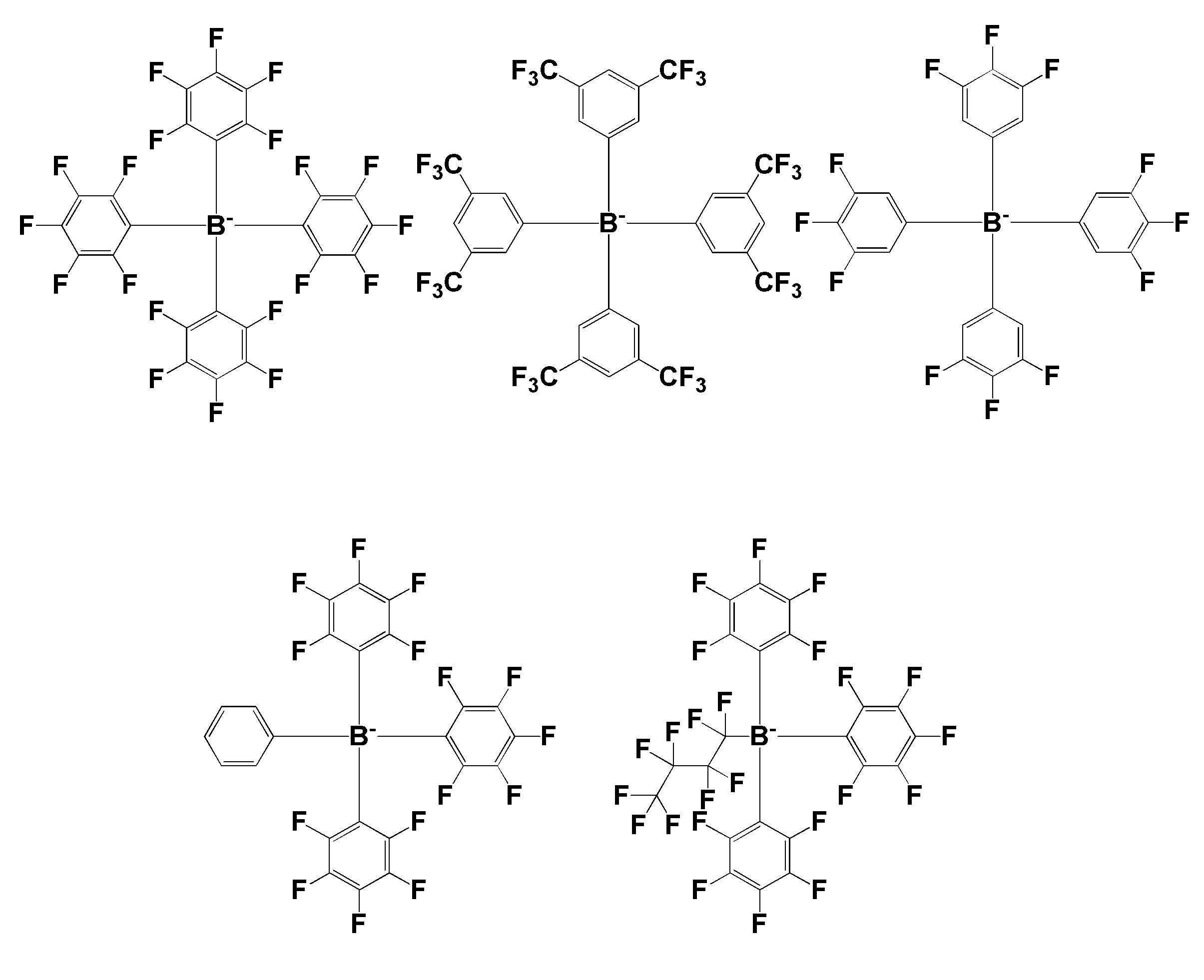
テトラキス(4-ノナフルオロビフェニル)ホウ素アニオン、
テトラキス(1-ヘプタフルオロナフチル)ホウ素アニオン、
テトラキス(ペンタフルオロフェニル)ホウ素アニオン、
テトラキス(3,4,5-トリフルオロフェニル)ホウ素アニオン、
テトラキス(2-ノナフェニルビフェニル)ホウ素アニオン、
テトラキス(2-ヘプタフルオロナフチル)ホウ素アニオン、
テトラキス(7-ノナフルオロアントリル)ホウ素アニオン、
テトラキス(4’-(メトキシ)オクタフルオロビフェニル)ホウ素アニオン、
テトラキス(2,4,6-トリス(トリフルオロメチル)フェニル)ホウ素アニオン、
テトラキス(3,5-ビス(トリフルオロメチル)フェニル)ホウ素アニオン、
テトラキス(2,3-ビス(ペンタフルオロエチル)ナフチル)ホウ素アニオン、
テトラキス(2-イソプロポキシ-ヘキサフルオロナフチル)ホウ素アニオン、
テトラキス(9,10-ビス(ヘプタフルオロプロピル)ヘプタフルオロアントリル)ホウ素アニオン、
テトラキス(9-ノナフルオロフェナントリル)ホウ素アニオン、
テトラキス(4-[トリ(イソプロピル)シリル]-テトラフルオロフェニル)ホウ素アニオン、
テトラキス(9,10-ビス(p-トリル)-ヘプタフルオロフェナントリル)ホウ素アニオン、
テトラキス(4-[ジメチル(t-ブチル)シリル]-テトラフルオロフェニル)ホウ素アニオン、
モノフェニルトリス(ペンタフルオロフェニル)ホウ素アニオン、及び
モノパーフルオロブチルトリス(ペンタフルオロフェニル)ホウ素アニオン等が挙げられ、より好ましくは、以下のアニオンが挙げられる。
また、以上説明した式(ai)で表されるカチオン部の好適な具体例としては、
4-イソプロピルフェニル(p-トリル)ヨードニウム、
4-イソブチルフェニル(p-トリル)ヨードニウム等のヨードニウムイオン;
[4-(2-チオキサントニルチオ)フェニル]ジフェニルスルホニウム、
2-[(ジ-p-トリル)スルホニオ]チオキサントン、
2-[(ジフェニル)スルホニオ]チオキサントン、
4-(9-オキソ-9H-チオキサンテン-2-イル)チオフェニル-9-オキソ-9H-チオキサンテン-2-イルフェニルスルホニウム等のチオキサントン骨格含有スルホニウムイオン;
詳しくは後述の式(a1)で表されるカチオン部;
その他、以下に示すスルホニウムイオン;が挙げられる。
4-イソプロピルフェニル(p-トリル)ヨードニウム、
4-イソブチルフェニル(p-トリル)ヨードニウム等のヨードニウムイオン;
[4-(2-チオキサントニルチオ)フェニル]ジフェニルスルホニウム、
2-[(ジ-p-トリル)スルホニオ]チオキサントン、
2-[(ジフェニル)スルホニオ]チオキサントン、
4-(9-オキソ-9H-チオキサンテン-2-イル)チオフェニル-9-オキソ-9H-チオキサンテン-2-イルフェニルスルホニウム等のチオキサントン骨格含有スルホニウムイオン;
詳しくは後述の式(a1)で表されるカチオン部;
その他、以下に示すスルホニウムイオン;が挙げられる。

上述したように、光酸発生剤(A1)が、下記式(a1)で表されるカチオン部を有する態様も好ましい。光酸発生剤(A1)としてのオニウム塩が式(a1)で表されるカチオン部を有すると、光酸発生剤(A1)の感度が優れる。光酸発生剤(A1)としてのオニウム塩が下記式(a1)で表されるカチオン部を含むことによって、後述するカチオン硬化性化合物(B)の硬化を良好に進行させやすい。
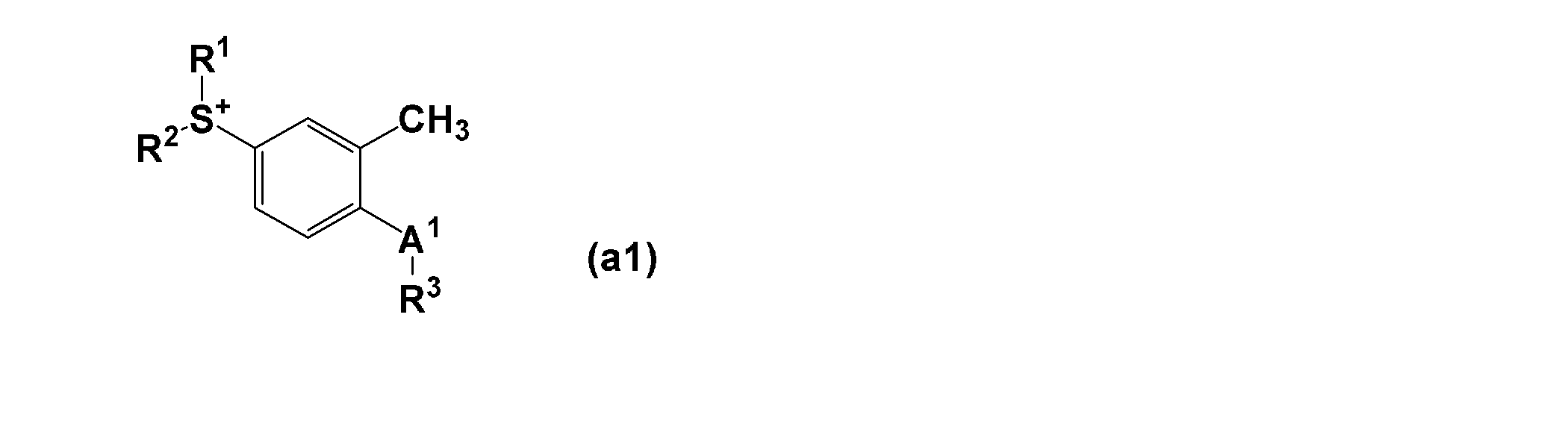



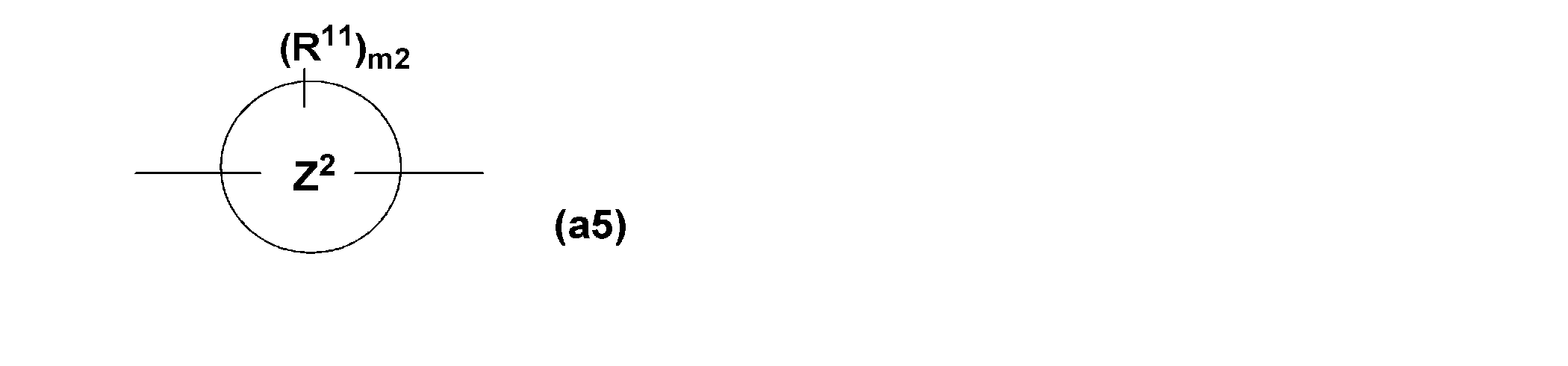
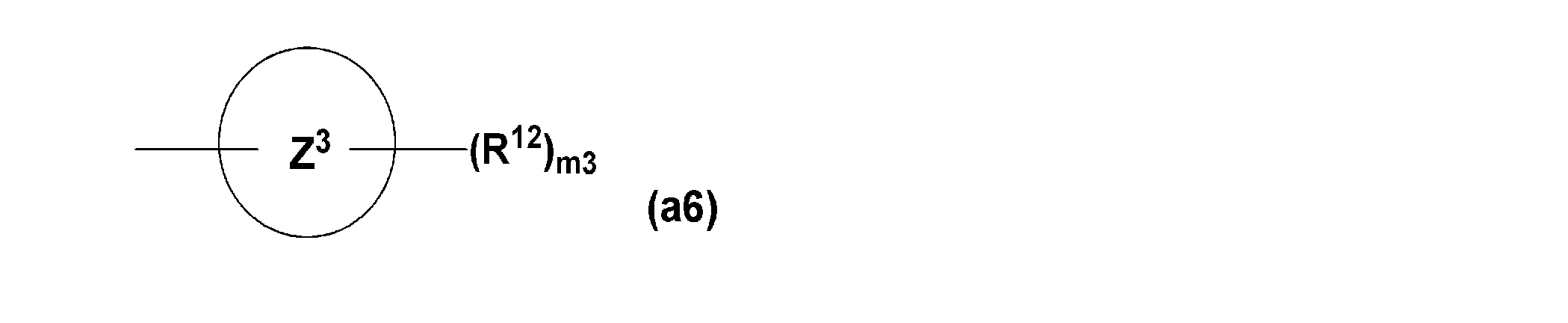
上記式(a1)で表されるカチオン部を有するスルホニウム塩は、上記式(a1)中のベンゼン環において、A1が結合する炭素原子に対してオルト位の炭素原子にメチル基が結合していることを特徴とする。上記の位置にメチル基を有するため、従来のスルホニウム塩と比較して、プロトンを発生しやすく、紫外線等の活性エネルギー線に対する感度が高い。
上記式(a1)において、R1及びR2のいずれもが上記式(a2)で表される基であることが好ましい。R1及びR2は互いに同一でも異なっていてもよい。
上記式(a1)において、R1及びR2が相互に結合して式中の硫黄原子とともに環を形成する場合、形成される環は、硫黄原子を含めて3~10員環であることが好ましく、5~7員環であることがより好ましい。形成される環は多環でもよく、5~7員環が縮合した多環であることが好ましい。
上記式(a1)において、R1及びR2が、ともにフェニル基であるのが好ましい。
上記式(a1)において、R3は上記式(a3)で表される基であることが好ましい。
上記式(a1)において、A1は、S又はOであることが好ましく、Sであることがより好ましい。
上記式(a1)において、R1及びR2が相互に結合して式中の硫黄原子とともに環を形成する場合、形成される環は、硫黄原子を含めて3~10員環であることが好ましく、5~7員環であることがより好ましい。形成される環は多環でもよく、5~7員環が縮合した多環であることが好ましい。
上記式(a1)において、R1及びR2が、ともにフェニル基であるのが好ましい。
上記式(a1)において、R3は上記式(a3)で表される基であることが好ましい。
上記式(a1)において、A1は、S又はOであることが好ましく、Sであることがより好ましい。
上記式(a2)において、R4は、ハロゲン原子で置換されていてもよいアルキル基、ヒドロキシ基、アルキルカルボニル基、チエニルカルボニル基、フラニルカルボニル基、セレノフェニルカルボニル基、置換されていてよいアミノ基、又はニトロ基であることが好ましく、ハロゲン原子で置換されていてもよいアルキル基、アルキルカルボニル基、又はチエニルカルボニル基であることがより好ましい。
上記式(a2)において、m1は、環Z1の種類に応じて選択でき、例えば、0以上4以下の整数、好ましくは0以上3以下の整数、より好ましくは0以上2以下の整数であってもよい。
上記式(a2)において、m1は、環Z1の種類に応じて選択でき、例えば、0以上4以下の整数、好ましくは0以上3以下の整数、より好ましくは0以上2以下の整数であってもよい。
上記式(a3)において、R5は、アルキレン基;ヒドロキシ基、置換されていてよいアミノ基、若しくはニトロ基で置換されたアルキレン基;又は上記式(a5)で表される基であることが好ましく、上記式(a5)で表される基であることがより好ましい。
上記式(a3)において、R6は、アルキル基;ヒドロキシ基、置換されていてよいアミノ基、若しくはニトロ基で置換されたアルキル基;又は上記式(a6)で表される基であることが好ましく、上記式(a6)で表される基であることがより好ましい。
上記式(a3)において、A2はS又はOであることが好ましく、Sであることがより好ましい。
上記式(a3)において、n1は0であることが好ましい。
上記式(a3)において、R6は、アルキル基;ヒドロキシ基、置換されていてよいアミノ基、若しくはニトロ基で置換されたアルキル基;又は上記式(a6)で表される基であることが好ましく、上記式(a6)で表される基であることがより好ましい。
上記式(a3)において、A2はS又はOであることが好ましく、Sであることがより好ましい。
上記式(a3)において、n1は0であることが好ましい。
上記式(a4)において、R7及びR8は独立に、アルキレン基;ヒドロキシ基、置換されていてよいアミノ基、若しくはニトロ基で置換されたアルキレン基;又は上記式(a5)で表される基であることが好ましく、上記式(a5)で表される基であることより好ましい。R7及びR8は互いに同一でも異なっていてもよい。
上記式(a4)において、R9及びR10のいずれもが上記式(a2)で表される基であることが好ましい。R9及びR10は互いに同一でも異なっていてもよい。
上記式(a4)において、R9及びR10が相互に結合して式中の硫黄原子とともに環を形成する場合、形成される環は、硫黄原子を含めて3~10員環であることが好ましく、5~7員環であることがより好ましい。形成される環は多環でもよく、5~7員環が縮合した多環であることが好ましい。
上記式(a4)において、A3は、S又はOであることが好ましく、Sであることがより好ましい。
上記式(a4)において、n2は0であることが好ましい。
上記式(a4)において、R9及びR10のいずれもが上記式(a2)で表される基であることが好ましい。R9及びR10は互いに同一でも異なっていてもよい。
上記式(a4)において、R9及びR10が相互に結合して式中の硫黄原子とともに環を形成する場合、形成される環は、硫黄原子を含めて3~10員環であることが好ましく、5~7員環であることがより好ましい。形成される環は多環でもよく、5~7員環が縮合した多環であることが好ましい。
上記式(a4)において、A3は、S又はOであることが好ましく、Sであることがより好ましい。
上記式(a4)において、n2は0であることが好ましい。
上記式(a5)において、R11は、ハロゲン原子で置換されていてもよいアルキル基、ヒドロキシ基、置換されていてよいアミノ基、又はニトロ基であることが好ましく、ハロゲン原子で置換されていてもよいアルキル基であることがより好ましい。
上記式(a5)において、m2は、環Z2の種類に応じて選択でき、例えば、0以上4以下の整数、好ましくは0以上3以下の整数、より好ましくは0以上2以下の整数であってもよい。
上記式(a5)において、m2は、環Z2の種類に応じて選択でき、例えば、0以上4以下の整数、好ましくは0以上3以下の整数、より好ましくは0以上2以下の整数であってもよい。
上記式(a6)において、R12は、ハロゲン原子で置換されていてもよいアルキル基、ヒドロキシ基、アルキルカルボニル基、チエニルカルボニル基、フラニルカルボニル基、セレノフェニルカルボニル基、置換されていてよいアミノ基、又はニトロ基であることが好ましく、ハロゲン原子で置換されていてもよいアルキル基、アルキルカルボニル基、又はチエニルカルボニル基であることがより好ましい。
上記式(a6)において、m3は、環Z3の種類に応じて選択でき、例えば、0以上4以下の整数、好ましくは0以上3以下の整数、より好ましくは0以上2以下の整数であってもよい。
上記式(a6)において、m3は、環Z3の種類に応じて選択でき、例えば、0以上4以下の整数、好ましくは0以上3以下の整数、より好ましくは0以上2以下の整数であってもよい。
上記式(a1)で表されるカチオン部の対アニオンは、式(a1)で表されるカチオン部を有するスルホニウム塩に活性エネルギー線(可視光、紫外線、電子線、及びX線等)を照射することにより発生する酸に対応する1価のアニオンである。式(a1)で表されるカチオン部の対アニオンとしては、上記式(aii)で表されるアニオン部、式(aiii)で表されるアニオン部が好適に挙げられる。また、式(a1)で表されるカチオン部の対アニオンとしては、その他の1価の多原子アニオンも好適に挙げられ、MYa
-、(Rf)bPF6-b
-、Rx1
cBY4-c
-、Rx1
cGaY4-c
-、Rx2SO3
-、(Rx2SO2)3C-、又は(Rx2SO2)2N-で表されるアニオンがより好ましい。また、式(a1)で表されるカチオン部の対アニオンは、ハロゲンアニオンでもよく、例えば、フッ化物イオン、塩化物イオン、臭化物イオン、ヨウ化物イオン等が挙げられる。
Mは、リン原子、ホウ素原子、又はアンチモン原子を表す。
Yはハロゲン原子(フッ素原子が好ましい。)を表す。
Yはハロゲン原子(フッ素原子が好ましい。)を表す。
Rfは、水素原子の80モル%以上がフッ素原子で置換されたアルキル基(炭素原子数1以上8以下のアルキル基が好ましい。)を表す。フッ素置換によりRfとするアルキル基としては、直鎖アルキル基(メチル、エチル、プロピル、ブチル、ペンチル及びオクチル等)、分岐鎖アルキル基(イソプロピル、イソブチル、sec-ブチル及びtert-ブチル等)及びシクロアルキル基(シクロプロピル、シクロブチル、シクロペンチル及びシクロヘキシル等)等が挙げられる。Rfにおいてこれらのアルキル基の水素原子がフッ素原子に置換されている割合は、もとのアルキル基が有していた水素原子のモル数に基づいて、80モル%以上が好ましく、さらに好ましくは90%以上、特に好ましくは100%である。フッ素原子による置換割合がこれら好ましい範囲にあると、スルホニウム塩(Q)の光感応性がさらに良好となる。特に好ましいRfとしては、CF3-、CF3CF2
-、(CF3)2CF-、CF3CF2CF2
-、CF3CF2CF2CF2
-、(CF3)2CFCF2
-、CF3CF2(CF3)CF-及び(CF3)3C-が挙げられる。b個のRfは、相互に独立であり、従って、互いに同一でも異なっていてもよい。
Pはリン原子、Fはフッ素原子を表す。
Rx1は、水素原子の一部が少なくとも1個の元素又は電子求引基で置換されたフェニル基を表す。そのような1個の元素の例としては、ハロゲン原子が含まれ、フッ素原子、塩素原子及び臭素原子等が挙げられる。電子求引基としては、トリフルオロメチル基、ニトロ基及びシアノ基等が挙げられる。これらのうち、少なくとも1個の水素原子がフッ素原子又はトリフルオロメチル基で置換されたフェニル基が好ましい。c個のRx1は相互に独立であり、従って、互いに同一でも異なっていてもよい。
Bはホウ素原子、Gaはガリウム原子を表す。
Rx2は、炭素原子数1以上20以下のアルキル基、炭素原子数1以上20以下のフルオロアルキル基又は炭素原子数6以上20以下のアリール基を表し、アルキル基及びフルオロアルキル基は直鎖状、分岐鎖状又は環状のいずれでもよく、アルキル基、フルオロアルキル基、又はアリール基は無置換であっても、置換基を有していてもよい。上記置換基としては、例えば、ヒドロキシ基、置換されていてよいアミノ基(例えば、上記式(a2)~(a6)に関する後述の説明中で例示する基が挙げられる。)、ニトロ基等が挙げられる。
また、Rx2で表されるアルキル基、フルオロアルキル基又はアリール基における炭素鎖は、酸素原子、窒素原子、硫黄原子等のヘテロ原子を有していてもよい。特に、Rx2で表されるアルキル基又はフルオロアルキル基における炭素鎖は、2価の官能基(例えば、エーテル結合、カルボニル結合、エステル結合、アミノ結合、アミド結合、イミド結合、スルホニル結合、スルホニルアミド結合、スルホニルイミド結合、ウレタン結合等)を有していてもよい。
Rx2で表されるアルキル基、フルオロアルキル基又はアリール基が上記置換基、ヘテロ原子、又は官能基を有する場合、上記置換基、ヘテロ原子、又は官能基の個数は、1個であっても2個以上であってもよい。
また、Rx2で表されるアルキル基、フルオロアルキル基又はアリール基における炭素鎖は、酸素原子、窒素原子、硫黄原子等のヘテロ原子を有していてもよい。特に、Rx2で表されるアルキル基又はフルオロアルキル基における炭素鎖は、2価の官能基(例えば、エーテル結合、カルボニル結合、エステル結合、アミノ結合、アミド結合、イミド結合、スルホニル結合、スルホニルアミド結合、スルホニルイミド結合、ウレタン結合等)を有していてもよい。
Rx2で表されるアルキル基、フルオロアルキル基又はアリール基が上記置換基、ヘテロ原子、又は官能基を有する場合、上記置換基、ヘテロ原子、又は官能基の個数は、1個であっても2個以上であってもよい。
Sは硫黄原子、Oは酸素原子、Cは炭素原子、Nは窒素原子を表す。
aは4以上6以下の整数を表す。
bは、1以上5以下の整数が好ましく、さらに好ましくは2以上4以下の整数、特に好ましくは2又は3である。
cは、1以上4以下の整数が好ましく、さらに好ましくは4である。
aは4以上6以下の整数を表す。
bは、1以上5以下の整数が好ましく、さらに好ましくは2以上4以下の整数、特に好ましくは2又は3である。
cは、1以上4以下の整数が好ましく、さらに好ましくは4である。
MYa
-で表されるアニオンとしては、SbF6
-、PF6
-又はBF4
-で表されるアニオン等が挙げられる。
(Rf)bPF6-b
-で表されるアニオンとしては、(CF3CF2)2PF4
-、(CF3CF2)3PF3
-、((CF3)2CF)2PF4
-、((CF3)2CF)3PF3
-、(CF3CF2CF2)2PF4
-、(CF3CF2CF2)3PF3
-、((CF3)2CFCF2)2PF4
-、((CF3)2CFCF2)3PF3
-、(CF3CF2CF2CF2)2PF4
-又は(CF3CF2CF2CF2)3PF3
-で表されるアニオン等が挙げられる。これらのうち、(CF3CF2)3PF3
-、(CF3CF2CF2)3PF3
-、((CF3)2CF)3PF3
-、((CF3)2CF)2PF4
-、((CF3)2CFCF2)3PF3
-又は((CF3)2CFCF2)2PF4
-で表されるアニオンが好ましい。
Rx1
cBY4-c
-で表されるアニオンとしては、好ましくは
Rx1 cBY4-c -
(式中、Rx1は水素原子の少なくとも一部がハロゲン原子又は電子求引基で置換されたフェニル基を示し、Yはハロゲン原子を示し、cは1以上4以下の整数を示す。)
であり、例えば、(C6F5)4B-、((CF3)2C6H3)4B-、(CF3C6H4)4B-、(C6F5)2BF2 -、C6F5BF3 -又は(C6H3F2)4B-で表されるアニオン等が挙げられる。これらのうち、(C6F5)4B-又は((CF3)2C6H3)4B-で表されるアニオンが好ましい。
Rx1 cBY4-c -
(式中、Rx1は水素原子の少なくとも一部がハロゲン原子又は電子求引基で置換されたフェニル基を示し、Yはハロゲン原子を示し、cは1以上4以下の整数を示す。)
であり、例えば、(C6F5)4B-、((CF3)2C6H3)4B-、(CF3C6H4)4B-、(C6F5)2BF2 -、C6F5BF3 -又は(C6H3F2)4B-で表されるアニオン等が挙げられる。これらのうち、(C6F5)4B-又は((CF3)2C6H3)4B-で表されるアニオンが好ましい。
Rx1
cGaY4-c
-で表されるアニオンとしては、(C6F5)4Ga-、((CF3)2C6H3)4Ga-、(CF3C6H4)4Ga-、(C6F5)2GaF2
-、C6F5GaF3
-又は(C6H3F2)4Ga-で表されるアニオン等が挙げられる。これらのうち、(C6F5)4Ga-又は((CF3)2C6H3)4Ga-で表されるアニオンが好ましい。
Rx2SO3
-で表されるアニオンとしては、トリフルオロメタンスルホン酸アニオン、ペンタフルオロエタンスルホン酸アニオン、ヘプタフルオロプロパンスルホン酸アニオン、ノナフルオロブタンスルホン酸アニオン、ペンタフルオロフェニルスルホン酸アニオン、p-トルエンスルホン酸アニオン、ベンゼンスルホン酸アニオン、カンファースルホン酸アニオン、メタンスルホン酸アニオン、エタンスルホン酸アニオン、プロパンスルホン酸アニオン及びブタンスルホン酸アニオン等が挙げられる。これらのうち、トリフルオロメタンスルホン酸アニオン、ノナフルオロブタンスルホン酸アニオン、メタンスルホン酸アニオン、ブタンスルホン酸アニオン、カンファースルホン酸アニオン、ベンゼンスルホン酸アニオン又はp-トルエンスルホン酸アニオンが好ましい。
(Rx2SO2)3C-で表されるアニオンとしては、(CF3SO2)3C-、(C2F5SO2)3C-、(C3F7SO2)3C-又は(C4F9SO2)3C-で表されるアニオン等が挙げられる。
(Rx2SO2)2N-で表されるアニオンとしては、(CF3SO2)2N-、(C2F5SO2)2N-、(C3F7SO2)2N-又は(C4F9SO2)2N-で表されるアニオン等が挙げられる。
一価の多原子アニオンとしては、MYa
-、(Rf)bPF6-b
-、Rx1
cBY4-c
-、Rx1
cGaY4-c
-、Rx2SO3
-、(Rx2SO2)3C-又は(Rx2SO2)2N-で表されるアニオン以外に、過ハロゲン酸イオン(ClO4
-、BrO4
-等)、ハロゲン化スルホン酸イオン(FSO3
-、ClSO3
-等)、硫酸イオン(CH3SO4
-、CF3SO4
-、HSO4
-等)、炭酸イオン(HCO3
-、CH3CO3
-等)、アルミン酸イオン(AlCl4
-、AlF4
-等)、ヘキサフルオロビスマス酸イオン(BiF6
-)、カルボン酸イオン(CH3COO-、CF3COO-、C6H5COO-、CH3C6H4COO-、C6F5COO-、CF3C6H4COO-等)、アリールホウ酸イオン(B(C6H5)4
-、CH3CH2CH2CH2B(C6H5)3
-等)、チオシアン酸イオン(SCN-)及び硝酸イオン(NO3
-)等が使用できる。
これらのアニオンのうち、カチオン重合性能の点では、MYa
-、(Rf)bPF6-b
-、Rx1
cBY4-c
-、Rx1
cGaY4-c
-及び(Rx2SO2)3C-で表されるアニオンが好ましく、SbF6
-、PF6
-、(CF3CF2)3PF3
-、(C6F5)4B-、((CF3)2C6H3)4B-、(C6F5)4Ga-、((CF3)2C6H3)4Ga-及び(CF3SO2)3C-がより好ましく、Rx1
cBY4-c
-がさらに好ましい。
上記式(a2)、(a5)、及び(a6)において、芳香族炭化水素環としては、ベンゼン環、縮合多環式芳香族炭化水素環[例えば、縮合二環式炭化水素環(例えば、ナフタレン環等のC8-20縮合二環式炭化水素環、好ましくはC10-16縮合二環式炭化水素環)、縮合三環式芳香族炭化水素環(例えば、アントラセン環、フェナントレン環等)等の縮合2乃至4環式芳香族炭化水素環]等が挙げられる。芳香族炭化水素環は、ベンゼン環又はナフタレン環であることが好ましく、ベンゼン環であることがより好ましい。
上記式(a1)~(a6)において、ハロゲン原子としては、フッ素原子、塩素原子、臭素原子、及びヨウ素原子等が挙げられる。
上記式(a1)~(a6)において、アルキル基としては、炭素原子数1以上18以下の直鎖アルキル基(メチル、エチル、n-プロピル、n-ブチル、n-ペンチル、n-オクチル、n-デシル、n-ドデシル、n-テトラデシル、n-ヘキサデシル、及びn-オクタデシル等)、炭素原子数3以上18以下の分岐鎖アルキル基(イソプロピル、イソブチル、sec-ブチル、tert-ブチル、イソペンチル、ネオペンチル、tert-ペンチル、イソヘキシル、及びイソオクタデシル等)、並びに炭素原子数3以上18以下のシクロアルキル基(シクロプロピル、シクロブチル、シクロペンチル、シクロヘキシル、及び4-デシルシクロヘキシル等)等が挙げられる。特に、上記式(a1)、(a2)、及び(a4)~(a6)において、ハロゲン原子で置換されていてもよいアルキル基とは、アルキル基及びハロゲン原子で置換されたアルキル基を意味する。ハロゲン原子で置換されたアルキル基としては、上記の直鎖アルキル基、分岐鎖アルキル基、又はシクロアルキル基における少なくとも1個の水素原子をハロゲン原子で置換した基(モノフルオロメチル、ジフルオロメチル、トリフルオロメチル等)等が挙げられる。ハロゲン原子で置換されていてもよいアルキル基のうち、R1、R2、R9、又はR10については、トリフルオロメチル基が特に好ましく、R4、R6、R11、又はR12については、メチル基が特に好ましい。
上記式(a2)~(a6)において、アルコキシ基としては、炭素原子数1以上18以下の直鎖又は分岐鎖アルコキシ基(メトキシ、エトキシ、プロポキシ、イソプロポキシ、ブトキシ、イソブトキシ、sec-ブトキシ、tert-ブトキシ、ヘキシルオキシ、デシルオキシ、ドデシルオキシ、及びオクタデシルオキシ等)等が挙げられる。
上記式(a2)~(a6)において、アルキルカルボニル基におけるアルキル基としては、上述の炭素原子数1以上18以下の直鎖アルキル基、炭素原子数3以上18以下の分岐鎖アルキル基又は炭素原子数3以上18以下のシクロアルキル基が挙げられ、アルキルカルボニル基としては、炭素原子数2以上18以下の直鎖状、分岐鎖状又は環状のアルキルカルボニル基(アセチル、プロピオニル、ブタノイル、2-メチルプロピオニル、ヘプタノイル、2-メチルブタノイル、3-メチルブタノイル、オクタノイル、デカノイル、ドデカノイル、オクタデカノイル、シクロペンタノイル基、及びシクロヘキサノイル基等)等が挙げられる。
上記式(a3)~(a6)において、アリールカルボニル基としては、炭素原子数7以上11以下のアリールカルボニル基(ベンゾイル及びナフトイル等)等が挙げられる。
上記式(a2)~(a6)において、アルコキシカルボニル基としては、炭素原子数2以上19以下の直鎖又は分岐鎖アルコキシカルボニル基(メトキシカルボニル、エトキシカルボニル、プロポキシカルボニル、イソプロポキシカルボニル、ブトキシカルボニル、イソブトキシカルボニル、sec-ブトキシカルボニル、tert-ブトキシカルボニル、オクチロキシカルボニル、テトラデシルオキシカルボニル、及びオクタデシロキシカルボニル等)等が挙げられる。
上記式(a3)~(a6)において、アリールオキシカルボニル基としては、炭素原子数7以上11以下のアリールオキシカルボニル基(フェノキシカルボニル及びナフトキシカルボニル等)等が挙げられる。
上記式(a3)~(a6)において、アリールチオカルボニル基としては、炭素原子数7以上11以下のアリールチオカルボニル基(フェニルチオカルボニル及びナフトキシチオカルボニル等)等が挙げられる。
上記式(a2)~(a6)において、アシロキシ基としては、炭素原子数2以上19以下の直鎖又は分岐鎖アシロキシ基(アセトキシ、エチルカルボニルオキシ、プロピルカルボニルオキシ、イソプロピルカルボニルオキシ、ブチルカルボニルオキシ、イソブチルカルボニルオキシ、sec-ブチルカルボニルオキシ、tert-ブチルカルボニルオキシ、オクチルカルボニルオキシ、テトラデシルカルボニルオキシ、及びオクタデシルカルボニルオキシ等)等が挙げられる。
上記式(a3)~(a6)において、アリールチオ基としては、炭素原子数6以上20以下のアリールチオ基(フェニルチオ、2-メチルフェニルチオ、3-メチルフェニルチオ、4-メチルフェニルチオ、2-クロロフェニルチオ、3-クロロフェニルチオ、4-クロロフェニルチオ、2-ブロモフェニルチオ、3-ブロモフェニルチオ、4-ブロモフェニルチオ、2-フルオロフェニルチオ、3-フルオロフェニルチオ、4-フルオロフェニルチオ、2-ヒドロキシフェニルチオ、4-ヒドロキシフェニルチオ、2-メトキシフェニルチオ、4-メトキシフェニルチオ、1-ナフチルチオ、2-ナフチルチオ、4-[4-(フェニルチオ)ベンゾイル]フェニルチオ、4-[4-(フェニルチオ)フェノキシ]フェニルチオ、4-[4-(フェニルチオ)フェニル]フェニルチオ、4-(フェニルチオ)フェニルチオ、4-ベンゾイルフェニルチオ、4-ベンゾイル-2-クロロフェニルチオ、4-ベンゾイル-3-クロロフェニルチオ、4-ベンゾイル-3-メチルチオフェニルチオ、4-ベンゾイル-2-メチルチオフェニルチオ、4-(4-メチルチオベンゾイル)フェニルチオ、4-(2-メチルチオベンゾイル)フェニルチオ、4-(p-メチルベンゾイル)フェニルチオ、4-(p-エチルベンゾイル)フェニルチオ4-(p-イソプロピルベンゾイル)フェニルチオ、及び4-(p-tert-ブチルベンゾイル)フェニルチオ等)等が挙げられる。
上記式(a2)~(a6)において、アルキルチオ基としては、炭素原子数1以上18以下の直鎖又は分岐鎖アルキルチオ基(メチルチオ、エチルチオ、プロピルチオ、イソプロピルチオ、ブチルチオ、イソブチルチオ、sec-ブチルチオ、tert-ブチルチオ、ペンチルチオ、イソペンチルチオ、ネオペンチルチオ、tert-ペンチルチオ、オクチルチオ、デシルチオ、ドデシルチオ、及びイソオクタデシルチオ等)等が挙げられる。
上記式(a3)~(a6)において、アリール基としては、炭素原子数6以上10以下のアリール基(フェニル、トリル、ジメチルフェニル、及びナフチル等)等が挙げられる。
上記式(a2)において、複素環式脂肪族炭化水素基としては、炭素原子数2以上20以下(好ましくは4以上20以下)の複素環式炭化水素基(ピロリジニル、テトラヒドロフラニル、テトラヒドロチエニル、ピペリジニル、テトラヒドロピラニル、テトラヒドロチオピラニル、モルホリニル、等)等が挙げられる。
上記式(a3)~(a6)において、複素環式炭化水素基としては、炭素原子数4以上20以下の複素環式炭化水素基(チエニル、フラニル、セレノフェニル、ピラニル、ピロリル、オキサゾリル、チアゾリル、ピリジル、ピリミジル、ピラジニル、インドリル、ベンゾフラニル、ベンゾチエニル、キノリル、イソキノリル、キノキサリニル、キナゾリニル、カルバゾリル、アクリジニル、フェノチアジニル、フェナジニル、キサンテニル、チアントレニル、フェノキサジニル、フェノキサチイニル、クロマニル、イソクロマニル、ジベンゾチエニル、キサントニル、チオキサントニル、及びジベンゾフラニル等)等が挙げられる。
上記式(a3)~(a6)において、アリールオキシ基としては、炭素原子数6以上10以下のアリールオキシ基(フェノキシ及びナフチルオキシ等)等が挙げられる。
上記式(a2)~(a6)において、アルキルスルフィニル基としては、炭素原子数1以上18以下の直鎖又は分岐鎖スルフィニル基(メチルスルフィニル、エチルスルフィニル、プロピルスルフィニル、イソプロピルスルフィニル、ブチルスルフィニル、イソブチルスルフィニル、sec-ブチルスルフィニル、tert-ブチルスルフィニル、ペンチルスルフィニル、イソペンチルスルフィニル、ネオペンチルスルフィニル、tert-ペンチルスルフィニル、オクチルスルフィニル、及びイソオクタデシルスルフィニル等)等が挙げられる。
上記式(a3)~(a6)において、アリールスルフィニル基としては、炭素原子数6以上10以下のアリールスルフィニル基(フェニルスルフィニル、トリルスルフィニル、及びナフチルスルフィニル等)等が挙げられる。
上記式(a2)~(a6)において、アルキルスルホニル基としては、炭素原子数1以上18以下の直鎖又は分岐鎖アルキルスルホニル基(メチルスルホニル、エチルスルホニル、プロピルスルホニル、イソプロピルスルホニル、ブチルスルホニル、イソブチルスルホニル、sec-ブチルスルホニル、tert-ブチルスルホニル、ペンチルスルホニル、イソペンチルスルホニル、ネオペンチルスルホニル、tert-ペンチルスルホニル、オクチルスルホニル、及びオクタデシルスルホニル等)等が挙げられる。
上記式(a3)~(a6)において、アリールスルホニル基としては、炭素原子数6以上10以下のアリールスルホニル基(フェニルスルホニル、トリルスルホニル(トシル基)、及びナフチルスルホニル等)等が挙げられる。
上記式(a2)~(a6)において、ヒドロキシ(ポリ)アルキレンオキシ基としては、HO(AO)q-(式中、AOは独立にエチレンオキシ基及び/又はプロピレンオキシ基を表し、qは1以上5以下の整数を表す。)で表されるヒドロキシ(ポリ)アルキレンオキシ基等が挙げられる。
上記式(a2)~(a6)において、置換されていてよいアミノ基としては、アミノ基(-NH2)及び炭素原子数1以上15以下の置換アミノ基(メチルアミノ、ジメチルアミノ、エチルアミノ、メチルエチルアミノ、ジエチルアミノ、n-プロピルアミノ、メチル-n-プロピルアミノ、エチル-n-プロピルアミノ、n-プロピルアミノ、イソプロピルアミノ、イソプロピルメチルアミノ、イソプロピルエチルアミノ、ジイソプロピルアミノ、フェニルアミノ、ジフェニルアミノ、メチルフェニルアミノ、エチルフェニルアミノ、n-プロピルフェニルアミノ、及びイソプロピルフェニルアミノ等)等が挙げられる。
上記式(a3)及び(a4)において、アルキレン基としては、炭素原子数1以上18以下の直鎖又は分岐鎖アルキレン基(メチレン基、1,2-エチレン基、1,1-エチレン基、プロパン-1,3-ジイル基、プロパン-1,2-ジイル基、プロパン-1,1-ジイル基、プロパン-2,2-ジイル基、ブタン-1,4-ジイル基、ブタン-1,3-ジイル基、ブタン-1,2-ジイル基、ブタン-1,1-ジイル基、ブタン-2,2-ジイル基、ブタン-2,3-ジイル基、ペンタン-1,5-ジイル基、ペンタン-1,4-ジイル基、ヘキサン-1,6-ジイル基、ヘプタン-1,7-ジイル基、オクタン-1,8-ジイル基、2-エチルヘキサン-1,6-ジイル基、ノナン-1,9-ジイル基、デカン-1,10-ジイル基、ウンデカン-1,11-ジイル基、ドデカン-1,12-ジイル基、トリデカン-1,13-ジイル基、テトラデカン-1,14-ジイル基、ペンタデカン-1,15-ジイル基、及びヘキサデカン-1,16-ジイル基等)等が挙げられる。
式(a1)で表されるカチオン部を有するスルホニウム塩は、例えば、下記スキームに従って合成することができる。具体的には、下記式(b1)で表される1-フルオロ-2-メチル-4-ニトロベンゼンに、水酸化カリウム等の塩基の存在下で、下記式(b2)で表される化合物を反応させて、下記式(b3)で表されるニトロ化合物を得、次いで、還元鉄の存在下で還元を行って、下記式(b4)で表されるアミン化合物を得る。このアミン化合物とMaNO2(式中、Maは金属原子、例えば、ナトリウム原子等のアルカリ金属原子を示す。)で表される亜硝酸塩(例えば、亜硝酸ナトリウム)とを反応させてジアゾ化合物を得、次いで、このジアゾ化合物とCuX’(式中、X’は臭素原子等のハロゲン原子を示す。以下、同じ)で表されるハロゲン化第一銅とHX’で表されるハロゲン化水素とを混合し、反応を進行させて、下記式(b5)で表されるハロゲン化物を得る。このハロゲン化物及びマグネシウムからグリニャール試薬を調製し、次いで、クロロトリメチルシランの存在下で、このグリニャール試薬と下記式(b6)で表されるスルホキシド化合物とを反応させて、下記式(b7)で表されるスルホニウム塩を得ることができる。さらに、このスルホニウム塩をMb+X”-(式中、Mb+は金属カチオン、例えば、カリウムイオン等のアルカリ金属カチオンを示し、X”-はX-で表される1価のアニオン(但し、ハロゲンアニオンを除く。)を示す。)で表される塩と反応させて塩交換を行うことにより、下記式(b8)で表されるスルホニウム塩を得ることができる。なお、下記式(b2)~(b8)において、R1~R3及びA1は、上記式(a1)と同様である。
<スキーム>

上記式(a1)で表されるカチオン部の具体例としては、以下のカチオン部が挙げられる。上記式(a1)で表されるカチオン部に対するアニオン部の具体例としては、上記で挙げたアニオン部等、従来公知のアニオン部を挙げることができる。上記式(a1)で表されるカチオン部を有するスルホニウム塩は上記スキーム(スキーム中、X-は対アニオンを表す。)に従って合成することができ、必要に応じさらに塩交換することにより、カチオン部を所望のアニオン部と組み合わせることができ、特に、前記式(aii)で表されるアニオン部又は前記式(aiii)で表されるアニオン部で表されるアニオンとの組み合わせが好ましい。
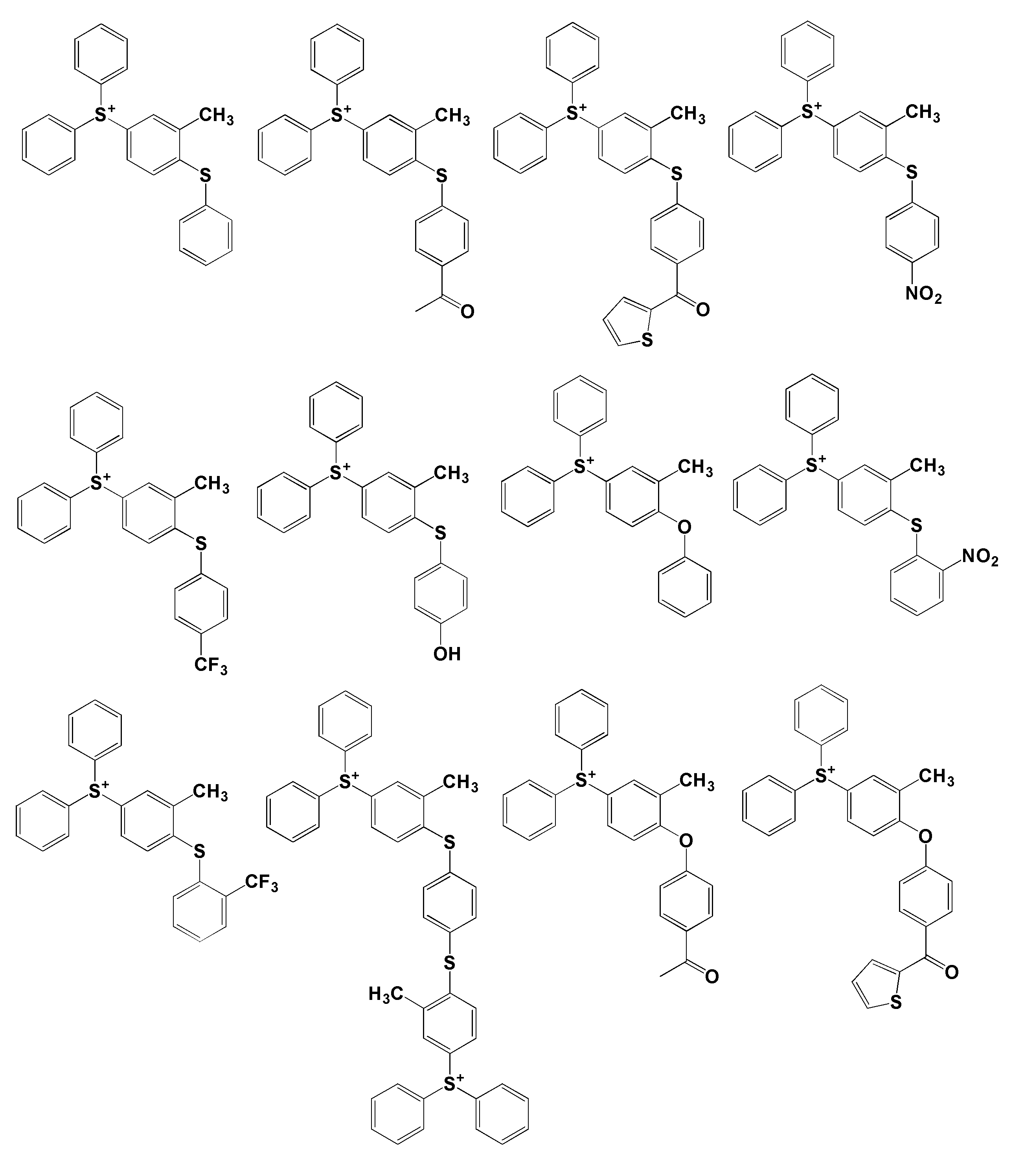
上記の好ましいカチオン部の群の中では、下記式で表されるカチオン部がより好ましい。

〔熱酸発生剤(A2)〕
熱酸発生剤(A2)は、下記式(Ai)で表されるアニオン部を有するオニウム塩である。
(RA1)4-Ga-・・・(Ai)
(式(Ai)中、RA1は、それぞれ独立に、1以上の置換基を有してもよいフェニル基、又はパーフルオロアルキル基である。)
熱酸発生剤(A2)は、下記式(Ai)で表されるアニオン部を有するオニウム塩である。
(RA1)4-Ga-・・・(Ai)
(式(Ai)中、RA1は、それぞれ独立に、1以上の置換基を有してもよいフェニル基、又はパーフルオロアルキル基である。)
式(Ai)中の4つのRA1は、1以上の置換基を有していてもよいフェニル基、又はパーフルオロアルキル基である。RA1がフェニル基である場合、当該フェニル基が有してもよい置換基は、本発明の目的を阻害しない範囲で特に限定されない。フェニル基が有してもよい置換基の好適な例としては、パーフルオロアルキル基、パーフルオロアルコキシ基、ニトロ基、シアノ基、アシル基、及びハロゲン原子が挙げられる。
RA1としてのフェニル基が複数の置換基を有する場合、複数の置換基は同一であっても異なっていてもよい。
RA1としてのフェニル基が複数の置換基を有する場合、複数の置換基は同一であっても異なっていてもよい。
フェニル基上の置換基としてのパーフルオロアルキル基の炭素原子数は、1以上8以下が好ましく、1以上4以下がより好ましい。
フェニル基上の置換基としてのパーフルオロアルキル基の具体例としては、トリフルオロメチル基、ペンタフルオロエチル基、ヘプタフルオロプロピル基、ノナフルオロブチル基、パーフルオロペンチル基、及びパーフルオロオクチル基等の直鎖パーフルオロアルキル基や、ヘプタフルオロイソプロピル基、ノナフルオロイソブチル基、ノナフルオロ-sec-ブチル基、及びノナフルオロ-tert-ブチル基等の分岐鎖パーフルオロアルキルや、パーフルオロシクロプロピル基、パーフルオロシクロブチル基、パーフルオロシクロペンチル基、及びパーフルオロシクロヘキシル基等のパーフルオロシクロアルキル基が挙げられる。
フェニル基上の置換基としてのパーフルオロアルキル基の具体例としては、トリフルオロメチル基、ペンタフルオロエチル基、ヘプタフルオロプロピル基、ノナフルオロブチル基、パーフルオロペンチル基、及びパーフルオロオクチル基等の直鎖パーフルオロアルキル基や、ヘプタフルオロイソプロピル基、ノナフルオロイソブチル基、ノナフルオロ-sec-ブチル基、及びノナフルオロ-tert-ブチル基等の分岐鎖パーフルオロアルキルや、パーフルオロシクロプロピル基、パーフルオロシクロブチル基、パーフルオロシクロペンチル基、及びパーフルオロシクロヘキシル基等のパーフルオロシクロアルキル基が挙げられる。
フェニル基上の置換基としてのパーフルオロアルコキシ基の炭素原子数は、1以上8以下が好ましく、1以上4以下がより好ましい。
フェニル基上の置換基としてのパーフルオロアルコキシ基の具体例としては、トリフルオロメトキシ基、ペンタフルオロエトキシ基、ヘプタフルオロプロピルオキシ基、ノナフルオロブチルオキシ基、パーフルオロペンチルオキシ基、及びパーフルオロオクチルオキシ基等の直鎖パーフルオロアルコキシ基や、ヘプタフルオロイソプロピルオキシ基、ノナフルオロイソブチルオキシ基、ノナフルオロ-sec-ブチルオキシ基、及びノナフルオロ-tert-ブチルオキシ基等の分岐鎖パーフルオロアルコキシが挙げられる。
フェニル基上の置換基としてのパーフルオロアルコキシ基の具体例としては、トリフルオロメトキシ基、ペンタフルオロエトキシ基、ヘプタフルオロプロピルオキシ基、ノナフルオロブチルオキシ基、パーフルオロペンチルオキシ基、及びパーフルオロオクチルオキシ基等の直鎖パーフルオロアルコキシ基や、ヘプタフルオロイソプロピルオキシ基、ノナフルオロイソブチルオキシ基、ノナフルオロ-sec-ブチルオキシ基、及びノナフルオロ-tert-ブチルオキシ基等の分岐鎖パーフルオロアルコキシが挙げられる。
フェニル基上の置換基としてのハロゲン原子としては、フッ素原子、塩素原子、臭素原子、及びヨウ素原子が挙げられる。
RA1がパーフルオロアルキル基である場合、パーフルオロアルキル基の好適な例は、フェニル基上の置換基としてのパーフルオロアルキル基の具体例と同様である。
熱酸発生剤(A2)のカチオン重合性能の点から、RA1のうちの少なくとも1つが、パーフルオロアルキル基、及びフッ素原子からなる群より選択される1以上の基で置換されたフェニル基であるのが好ましく、RA1の全てがパーフルオロアルキル基、及びフッ素原子からなる群より選択される1以上の基で置換されたフェニル基であるのがより好ましい。
RA1の好適な例としては、ペンタフルオロフェニル基、トリフルオロフェニル基、テトラフルオロフェニル基、(トリフルオロメチル)フェニル基、ビス(トリフルオロメチル)フェニル基、(ペンタフルオロエチル)フェニル基、ビス(ペンタフルオロエチル)フェニル基、フルオロ(トリフルオロメチル)フェニル基、フルオロビス(トリフルオロメチル)フェニル基、フルオロ(ペンタフルオロエチル)フェニル基、フルオロビス(ペンタフルオロエチル)フェニル基、ペンタクロロフェニル基、トリクロロフェニル基、テトラクロロフェニル基、(トリクロロメチル)フェニル基、ビス(トリクロロメチル)フェニル基、(ペンタクロロエチル)フェニル基、ビス(ペンタクロロエチル)フェニル基、クロロ(トリクロロメチル)フェニル基、クロロビス(トリクロロメチル)フェニル基、クロロ(ペンタクロロエチル)フェニル基、クロロビス(ペンタクロロエチル)フェニル基、ニトロフェニル基、シアノフェニル基、及びアセチルフェニル基が挙げられる。
これらの中では、ペンタフルオロフェニル基、及びビス(トリフルオロメチル)フェニル基が好ましく、ペンタフルオロフェニル基がより好ましい。
これらの中では、ペンタフルオロフェニル基、及びビス(トリフルオロメチル)フェニル基が好ましく、ペンタフルオロフェニル基がより好ましい。
式(Ai)で表されるアニオン部の好適な具体例としては、以下のアニオンが挙げられる。

前述の式(Ai)で表されるアニオン部とともに熱酸発生剤(A2)としてのオニウム塩を構成するカチオン部としては、下記式(Aii)で表されるカチオン部が好ましい。

式(Aii)中のDは、元素周期律表(IUPAC表記法)の15族~17族で原子価uの元素である。なお、Dは、前述の式(ai)中のRa2と同様である。
Dは、有機基RA01、及びRA02で置換されてもよいベンジル基と結合してオニウムイオンを形成する。元素周期律表(IUPAC表記法)の15族~17族の元素のうち好ましいのは、S(硫黄)、N(窒素)、I(ヨウ素)、P(リン)である。対応するオニウムイオンとしては、スルホニウムイオン、アンモニウムイオン、ヨードニウムイオン、及びホスホニウムイオンであり、これらは、安定で取り扱いが容易なため好ましい。カチオン重合性能や架橋反応性能に優れる点で、スルホニウムイオン、及びヨードニウムイオンがより好ましく、スルホニウムイオンがさらに好ましい。
Dは、有機基RA01、及びRA02で置換されてもよいベンジル基と結合してオニウムイオンを形成する。元素周期律表(IUPAC表記法)の15族~17族の元素のうち好ましいのは、S(硫黄)、N(窒素)、I(ヨウ素)、P(リン)である。対応するオニウムイオンとしては、スルホニウムイオン、アンモニウムイオン、ヨードニウムイオン、及びホスホニウムイオンであり、これらは、安定で取り扱いが容易なため好ましい。カチオン重合性能や架橋反応性能に優れる点で、スルホニウムイオン、及びヨードニウムイオンがより好ましく、スルホニウムイオンがさらに好ましい。
式(Aii)中、RA01はDに結合している有機基を表し、RA01が複数存在する場合の複数のRA01は同一であっても異なってもよい。有機基としては、炭素原子含有基が好ましく、1以上の炭素原子、並びにH、O、S、Se、N、B、P、Si、及びハロゲン原子からなる群より選択される1以上の原子からなる基がより好ましい。炭素原子含有基の炭素原子数は特に限定されず、1以上50以下が好ましく、1以上20以下がより好ましい。RA01としては、炭素原子数6以上14以下の芳香族炭化水素基、炭素原子数1以上18以下のアルキル基、炭素原子数2以上18以下のアルケニル基、及び炭素原子数2以上18以下のアルキニル基が挙げられる。
RA01としての芳香族炭化水素基、アルキル基、アルケニル基、及びアルキニル基としては、式(ai)中のRa1について前述した基と同様の基が挙げられる。RA01が芳香族炭化水素基の場合、置換基を有していてもよく、当該置換基としては、水酸基、アルコキシ基、アルキルカルボニル基、アリールカルボニル基、アルコキシカルボニル基、アリールオキシカルボニル基、アリールチオカルボニル基、アシロキシ基、アリールチオ基、アルキルチオ基、アリール基、複素環式炭化水素基、アリールオキシ基、アルキルスルフィニル基、アリールスルフィニル基、アルキルスルホニル基、アリールスルホニル基、ヒドロキシ(ポリ)アルキレンオキシ基、置換されていてもよいシリル基、置換されていてもよいアミノ基、ハロゲン原子等が挙げられる。
また、式(Aii)において、RA01が複数存在する場合、複数のRA01はDとともに環を形成してもよい。複数のRA01と、Dとが形成する環は、その間構造中に、-O-、-S-、-SO-、-SO2-、-NH-、-CO-、-COO-、及び-CONH-からなる群より選択される以上の結合を含んでいてもよい。
式(Aii)中、RA02としてのアルキル基の具体例としては、メチル基、エチル基、n-プロピル基、n-ブチル基、n-ペンチル基、n-オクチル基、n-デシル基、n-ドデシル基、n-テトラデシル基、n-ヘキサデシル基及びn-オクタデシル基等の炭素原子数1以上18以下の直鎖アルキル基、イソプロピル基、イソブチル基、sec-ブチル基、tert-ブチル基、イソペンチル基、ネオペンチル基、tert-ペンチル基、イソヘキシル基及びイソオクタデシル基等の炭素原子数3以上18以下の分岐鎖アルキル基、及び、シクロプロピル基、シクロブチル基、シクロペンチル基、シクロヘキシル基及び4-デシルシクロヘキシル基等の炭素原子数3以上18以下のシクロアルキル基等が挙げられる。式(Aii)中、RA02が置換基を有していてもよいアルキル基となる場合は、RA01の少なくとも1つは置換基を有していてもよいアルキル基である。
式(Aii)中、RA02としてのアラルキル基の具体例としては、ベンジル基、1-ナフチルメチル基、2-ナフチルメチル基等の、炭素原子数6以上10以下のアリール基で置換されている低級アルキル基等が挙げられる。
式(Aii)中、RA02としての置換基を有するアラルキル基の具体例としては、2-メチルベンジル基等の、置換基を有していてもよい炭素原子数6以上10以下のアリール基で置換されている低級アルキル基等が挙げられる。
式(Aii)中、RA02は置換基を有していてもよいアラルキル基であることが好ましく、下記式(Aiii)で表されるカチオン部であることがより好ましい。
RA01としての芳香族炭化水素基、アルキル基、アルケニル基、及びアルキニル基としては、式(ai)中のRa1について前述した基と同様の基が挙げられる。RA01が芳香族炭化水素基の場合、置換基を有していてもよく、当該置換基としては、水酸基、アルコキシ基、アルキルカルボニル基、アリールカルボニル基、アルコキシカルボニル基、アリールオキシカルボニル基、アリールチオカルボニル基、アシロキシ基、アリールチオ基、アルキルチオ基、アリール基、複素環式炭化水素基、アリールオキシ基、アルキルスルフィニル基、アリールスルフィニル基、アルキルスルホニル基、アリールスルホニル基、ヒドロキシ(ポリ)アルキレンオキシ基、置換されていてもよいシリル基、置換されていてもよいアミノ基、ハロゲン原子等が挙げられる。
また、式(Aii)において、RA01が複数存在する場合、複数のRA01はDとともに環を形成してもよい。複数のRA01と、Dとが形成する環は、その間構造中に、-O-、-S-、-SO-、-SO2-、-NH-、-CO-、-COO-、及び-CONH-からなる群より選択される以上の結合を含んでいてもよい。
式(Aii)中、RA02としてのアルキル基の具体例としては、メチル基、エチル基、n-プロピル基、n-ブチル基、n-ペンチル基、n-オクチル基、n-デシル基、n-ドデシル基、n-テトラデシル基、n-ヘキサデシル基及びn-オクタデシル基等の炭素原子数1以上18以下の直鎖アルキル基、イソプロピル基、イソブチル基、sec-ブチル基、tert-ブチル基、イソペンチル基、ネオペンチル基、tert-ペンチル基、イソヘキシル基及びイソオクタデシル基等の炭素原子数3以上18以下の分岐鎖アルキル基、及び、シクロプロピル基、シクロブチル基、シクロペンチル基、シクロヘキシル基及び4-デシルシクロヘキシル基等の炭素原子数3以上18以下のシクロアルキル基等が挙げられる。式(Aii)中、RA02が置換基を有していてもよいアルキル基となる場合は、RA01の少なくとも1つは置換基を有していてもよいアルキル基である。
式(Aii)中、RA02としてのアラルキル基の具体例としては、ベンジル基、1-ナフチルメチル基、2-ナフチルメチル基等の、炭素原子数6以上10以下のアリール基で置換されている低級アルキル基等が挙げられる。
式(Aii)中、RA02としての置換基を有するアラルキル基の具体例としては、2-メチルベンジル基等の、置換基を有していてもよい炭素原子数6以上10以下のアリール基で置換されている低級アルキル基等が挙げられる。
式(Aii)中、RA02は置換基を有していてもよいアラルキル基であることが好ましく、下記式(Aiii)で表されるカチオン部であることがより好ましい。

式(Aiii)中、RA03の1価の有機基としては、炭素原子含有基が好ましく、1以上の炭素原子、並びにH、O、S、Se、N、B、P、Si、及びハロゲン原子からなる群より選択される1以上の原子からなる基がより好ましい。炭素原子含有基の炭素原子数は特に限定されず、1以上50以下が好ましく、1以上20以下がより好ましい。RA03の1価の有機基としてはアルキル基であることが特に好ましい。RA03としてのアルキル基としては、式(Aii)のRA02で挙げたアルキル基と同様の基が挙げられる。vは0又は1であることが好ましい。式(Aii)について説明した通り、Dが硫黄であり、式(Aiii)で表されるカチオンがスルホニウムイオンであるのが好ましい。つまり、Dが硫黄であり、uが2であるのが好ましい。
式(Aii)又は式(Aiii)で表されるカチオン部の具体例を挙げる。下記具体例におけるD’は、S原子又はSe原子であり、好ましくはS原子である。

式(Aii)又は式(Aiii)で表されるカチオン部の具体例を挙げる。下記具体例におけるD’は、S原子又はSe原子であり、好ましくはS原子である。
硬化性組成物におけるカチオン硬化剤(A)の含有量は、硬化性と、硬化物の物性とのバランスの点で、カチオン硬化性化合物(B)100質量部に対して、0.01質量部以上5質量部以下が好ましく、0.05質量部以上3質量部以下がより好ましく、0.1質量部以上2質量部以下が特に好ましい。
なお、カチオン硬化剤(A)は、本発明の目的を阻害しない範囲で、光酸発生剤(A1)及び熱酸発生剤(A2)以外のカチオン硬化剤を含んでいてもよい。カチオン硬化剤(A)の質量に対する、光酸発生剤(A1)の質量と熱酸発生剤(A2)の質量との合計の割合は、70質量%以上が好ましく、80質量%以上がより好ましく、90質量%以上がさらに好ましく、100質量%が特に好ましい。
また、硬化時の硬化物の着色をより抑制しやすい点から、光酸発生剤(A1)の質量と、熱酸発生剤(A2)の質量との合計に対する光酸発生剤(A1)の質量の比率は、50質量%以下が好ましく、30質量%以下がより好ましい。下限値は特に限定されないが、耐薬品性やプロセスマージンの点で、10質量%以上が好ましく、15質量%以上がより好ましく、20質量%以上がさらに好ましい。
<カチオン硬化性化合物(B)>
カチオン硬化性化合物(B)としては、従来からカチオン硬化性化合物として知られる種々の化合物を用いることができる。カチオン硬化性化合物(B)を、前述の(B)カチオン硬化剤(A)により硬化させることにより、良好に硬化した耐溶剤性に優れる硬化物を形成でき、硬化物における着色を抑制できる。
カチオン硬化性化合物(B)としては、従来からカチオン硬化性化合物として知られる種々の化合物を用いることができる。カチオン硬化性化合物(B)を、前述の(B)カチオン硬化剤(A)により硬化させることにより、良好に硬化した耐溶剤性に優れる硬化物を形成でき、硬化物における着色を抑制できる。
好ましいカチオン硬化性化合物の一例として、下記式(b1)で表される化合物が挙げられる。

(式(b1)中、W1及びW2は、それぞれ独立に、下記式(b2):
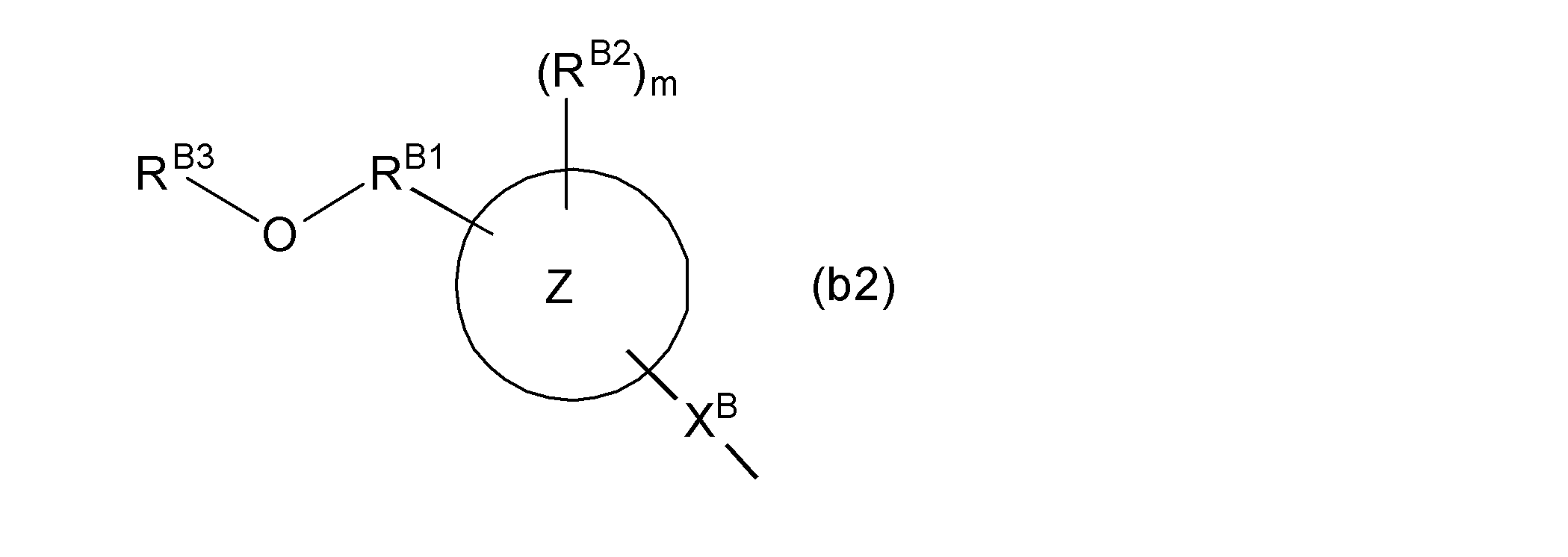
で表される基であり、
式(b2)中、環Zは芳香族炭化水素環を示し、XBは単結合又は-S-で示される基を示し、RB1は単結合、炭素原子数が1以上4以下であるアルキレン基、又は炭素原子数が1以上4以下であるアルキレンオキシ基を示し、RB1がアルキレンオキシ基である場合、アルキレンオキシ基中の酸素原子が環Zと結合し、RB2は1価炭化水素基、水酸基、-OR4aで示される基、-SR4bで示される基、アシル基、アルコキシカルボニル基、ハロゲン原子、ニトロ基、シアノ基、メルカプト基、カルボキシ基、アミノ基、カルバモイル基、-NHR4cで示される基、-N(R4d)2で示される基、スルホ基、又は1価炭化水素基、-OR4aで示される基、-SR4bで示される基、アシル基、アルコキシカルボニル基、-NHR4cで示される基、若しくは-N(R4d)2で示される基に含まれる炭素原子に結合した水素原子の少なくとも一部が1価炭化水素基、水酸基、-OR4aで示される基、-SR4bで示される基、アシル基、アルコキシカルボニル基、ハロゲン原子、ニトロ基、シアノ基、メルカプト基、カルボキシ基、アミノ基、カルバモイル基、-NHR4cで示される基、-N(R4d)2で示される基、メシルオキシ基、若しくはスルホ基で置換された基を示し、R4a~R4dは独立に1価炭化水素基を示し、mは0以上の整数を示し、R3は、水素原子、ビニル基、チイラン-2-イルメチル基、又はグリシジル基であり、
W1とW2との双方がR3として水素原子を有することはなく、
環Y1及び環Y2は同一の又は異なる芳香族炭化水素環を示し、Rは単結合、置換基を有してもよいメチレン基、置換基を有してもよく、2個の炭素原子間にヘテロ原子を含んでもよいエチレン基、-O-で示される基、-NH-で示される基、又は-S-で示される基を示し、R3a及びR3bは独立にシアノ基、ハロゲン原子、又は1価炭化水素基を示し、n1及びn2は独立に0以上4以下の整数を示す。)
式(b2)中、環Zは芳香族炭化水素環を示し、XBは単結合又は-S-で示される基を示し、RB1は単結合、炭素原子数が1以上4以下であるアルキレン基、又は炭素原子数が1以上4以下であるアルキレンオキシ基を示し、RB1がアルキレンオキシ基である場合、アルキレンオキシ基中の酸素原子が環Zと結合し、RB2は1価炭化水素基、水酸基、-OR4aで示される基、-SR4bで示される基、アシル基、アルコキシカルボニル基、ハロゲン原子、ニトロ基、シアノ基、メルカプト基、カルボキシ基、アミノ基、カルバモイル基、-NHR4cで示される基、-N(R4d)2で示される基、スルホ基、又は1価炭化水素基、-OR4aで示される基、-SR4bで示される基、アシル基、アルコキシカルボニル基、-NHR4cで示される基、若しくは-N(R4d)2で示される基に含まれる炭素原子に結合した水素原子の少なくとも一部が1価炭化水素基、水酸基、-OR4aで示される基、-SR4bで示される基、アシル基、アルコキシカルボニル基、ハロゲン原子、ニトロ基、シアノ基、メルカプト基、カルボキシ基、アミノ基、カルバモイル基、-NHR4cで示される基、-N(R4d)2で示される基、メシルオキシ基、若しくはスルホ基で置換された基を示し、R4a~R4dは独立に1価炭化水素基を示し、mは0以上の整数を示し、R3は、水素原子、ビニル基、チイラン-2-イルメチル基、又はグリシジル基であり、
W1とW2との双方がR3として水素原子を有することはなく、
環Y1及び環Y2は同一の又は異なる芳香族炭化水素環を示し、Rは単結合、置換基を有してもよいメチレン基、置換基を有してもよく、2個の炭素原子間にヘテロ原子を含んでもよいエチレン基、-O-で示される基、-NH-で示される基、又は-S-で示される基を示し、R3a及びR3bは独立にシアノ基、ハロゲン原子、又は1価炭化水素基を示し、n1及びn2は独立に0以上4以下の整数を示す。)
上記式(b2)において、環Zとしては、例えば、ベンゼン環、縮合多環式芳香族炭化水素環[例えば、縮合二環式炭化水素環(例えば、ナフタレン環等のC8-20縮合二環式炭化水素環、好ましくはC10-16縮合二環式炭化水素環)、縮合三環式芳香族炭化水素環(例えば、アントラセン環、フェナントレン環等)等の縮合2乃至4環式芳香族炭化水素環]等が挙げられる。環Zは、ベンゼン環又はナフタレン環であるのが好ましく、ナフタレン環であるのがより好ましい。なお、式(b1)中のW1及びW2は、それぞれ独立に、下記式(b2)で表される基であるため、W1及びW2は、それぞれ環Zを含む。W1に含まれる環ZとW2に含まれる環Zとは、同一でも異なっていてもよく、例えば、一方の環がベンゼン環、他方の環がナフタレン環等であってもよいが、いずれの環もナフタレン環であることが特に好ましい。
また、W1及びW2の両方が直結する炭素原子にXBを介して結合する環Zの置換位置は、特に限定されない。例えば、環Zがナフタレン環の場合、上記炭素原子に結合する環Zに対応する基は、1-ナフチル基、2-ナフチル基等であってもよい。
上記式(b2)において、XBは、独立に単結合又は-S-で示される基を示し、典型的には単結合である。
上記式(b2)において、RB1としては、例えば、単結合;メチレン基、エチレン基、トリメチレン基(-CH2CH2CH2-)、プロピレン基(-CH2CH(CH3)-)、ブタン-1,2-ジイル基等の炭素原子数が1以上4以下であるアルキレン基;メチレンオキシ基、エチレンオキシ基、プロピレンオキシ基(-CH2CH(CH3)-O-)等の炭素原子数が1以上4以下であるアルキレンオキシ基が挙げられ、単結合;C2-4アルキレン基(特に、エチレン基、プロピレン基等のC2-3アルキレン基);C2-4アルキレンオキシ基(特に、エチレンオキシ基、プロピレンオキシ基等のC2-3アルキレン基)が好ましく、単結合がより好ましい。なお、RB1がアルキレンオキシ基である場合、アルキレンオキシ基中の酸素原子が環Zと結合する。また、式(b1)中のW1及びW2は、それぞれ独立に、式(b2)で表される基であるため、W1及びW2は、それぞれ2価の基であるRB1を含む。W1に含まれるRB1とW2に含まれるRB1とは、同一であってもよく、異なっていてもよい。
上記式(b2)において、RB2としては、例えば、アルキル基(例えば、メチル基、エチル基、プロピル基、イソプロピル基、ブチル基等のC1-12アルキル基、好ましくはC1-8アルキル基、より好ましくはC1-6アルキル基等)、シクロアルキル基(シクロヘキシル基等のC5-10シクロアルキル基、好ましくはC5-8シクロアルキル基、より好ましくはC5-6シクロアルキル基等)、アリール基(例えば、フェニル基、トリル基、キシリル基、ナフチル基等のC6-14アリール基、好ましくはC6-10アリール基、より好ましくはC6-8アリール基等)、アラルキル基(ベンジル基、フェネチル基等のC6-10アリール-C1-4アルキル基等)等の1価炭化水素基;水酸基;アルコキシ基(メトキシ基、エトキシ基、プロポキシ基、ブトキシ基等のC1-12アルコキシ基、好ましくはC1-8アルコキシ基、より好ましくはC1-6アルコキシ基等)、シクロアルコキシ基(シクロヘキシルオキシ基等のC5-10シクロアルコキシ基等)、アリールオキシ基(フェノキシ基等のC6-10アリールオキシ基)、アラルキルオキシ基(例えば、ベンジルオキシ基等のC6-10アリール-C1-4アルキルオキシ基)等の-OR4aで示される基[式中、R4aは1価炭化水素基(上記例示の1価炭化水素基等)を示す。];アルキルチオ基(メチルチオ基、エチルチオ基、プロピルチオ基、ブチルチオ基等のC1-12アルキルチオ基、好ましくはC1-8アルキルチオ基、より好ましくはC1-6アルキルチオ基等)、シクロアルキルチオ基(シクロヘキシルチオ基等のC5-10シクロアルキルチオ基等)、アリールチオ基(フェニルチオ基等のC6-10アリールチオ基)、アラルキルチオ基(例えば、ベンジルチオ基等のC6-10アリール-C1-4アルキルチオ基)等の-SR4bで示される基[式中、R4bは1価炭化水素基(上記例示の1価炭化水素基等)を示す。];アシル基(アセチル基等のC1-6アシル基等);アルコキシカルボニル基(メトキシカルボニル基等のC1-4アルコキシ-カルボニル基等);ハロゲン原子(フッ素原子、塩素原子、臭素原子、ヨウ素原子等);ニトロ基;シアノ基;メルカプト基;カルボキシ基;アミノ基;カルバモイル基;アルキルアミノ基(メチルアミノ基、エチルアミノ基、プロピルアミノ基、ブチルアミノ基等のC1-12アルキルアミノ基、好ましくはC1-8アルキルアミノ基、より好ましくはC1-6アルキルアミノ基等)、シクロアルキルアミノ基(シクロヘキシルアミノ基等のC5-10シクロアルキルアミノ基等)、アリールアミノ基(フェニルアミノ基等のC6-10アリールアミノ基)、アラルキルアミノ基(例えば、ベンジルアミノ基等のC6-10アリール-C1-4アルキルアミノ基)等の-NHR4cで示される基[式中、R4cは1価炭化水素基(上記例示の1価炭化水素基等)を示す。];ジアルキルアミノ基(ジメチルアミノ基、ジエチルアミノ基、ジプロピルアミノ基、ジブチルアミノ基等のジ(C1-12アルキル)アミノ基、好ましくはジ(C1-8アルキル)アミノ基、より好ましくはジ(C1-6アルキル)アミノ基等)、ジシクロアルキルアミノ基(ジシクロヘキシルアミノ基等のジ(C5-10シクロアルキル)アミノ基等)、ジアリールアミノ基(ジフェニルアミノ基等のジ(C6-10アリール)アミノ基)、ジアラルキルアミノ基(例えば、ジベンジルアミノ基等のジ(C6-10アリール-C1-4アルキル)アミノ基)等の-N(R4d)2で示される基[式中、R4dは独立に1価炭化水素基(上記例示の1価炭化水素基等)を示す。];(メタ)アクリロイルオキシ基;スルホ基;上記の1価炭化水素基、-OR4aで示される基、-SR4bで示される基、アシル基、アルコキシカルボニル基、-NHR4cで示される基、若しくは-N(R4d)2で示される基に含まれる炭素原子に結合した水素原子の少なくとも一部が上記の1価炭化水素基、水酸基、-OR4aで示される基、-SR4bで示される基、アシル基、アルコキシカルボニル基、ハロゲン原子、ニトロ基、シアノ基、メルカプト基、カルボキシ基、アミノ基、カルバモイル基、-NHR4cで示される基、-N(R4d)2で示される基、(メタ)アクリロイルオキシ基、メシルオキシ基、若しくはスルホ基で置換された基[例えば、アルコキシアリール基(例えば、メトキシフェニル基等のC1-4アルコキシC6-10アリール基)、アルコキシカルボニルアリール基(例えば、メトキシカルボニルフェニル基、エトキシカルボニルフェニル基等のC1-4アルコキシ-カルボニルC6-10アリール基等)]等が挙げられる。
これらのうち、代表的には、RB2は、1価炭化水素基、-OR4aで示される基、-SR4bで示される基、アシル基、アルコキシカルボニル基、ハロゲン原子、ニトロ基、シアノ基、-NHR4cで示される基、-N(R4d)2で示される基等であってもよい。
好ましいRB2としては、1価炭化水素基[例えば、アルキル基(例えば、C1-6アルキル基)、シクロアルキル基(例えば、C5-8シクロアルキル基)、アリール基(例えば、C6-10アリール基)、アラルキル基(例えば、C6-8アリール-C1-2アルキル基)等]、アルコキシ基(C1-4アルコキシ基等)等が挙げられる。特に、R2a及びR2bは、アルキル基[C1-4アルキル基(特にメチル基)等]、アリール基[例えば、C6-10アリール基(特にフェニル基)等]等の1価炭化水素基(特に、アルキル基)であるのが好ましい。
なお、mが2以上の整数である場合、複数のRB2は互いに異なっていてもよく、同一であってもよい。また、W1に含まれるRB2とW2に含まれるRB2とは、同一であってもよく、異なっていてもよい。
上記式(b2)において、RB2の数mは、環Zの種類に応じて選択でき、例えば、0以上4以下、好ましくは0以上3以下、より好ましくは0以上2以下であってもよい。なお、W1におけるmとW2におけるmとは、同一でも異なっていてもよい。
上記式(a3)において、R3は、水素原子、ビニル基、チイラン-2-イルメチル基、又はグリシジル基である。なお、W1とW2との双方がR3として水素原子を有することはない。
ビニルオキシ基、チイラン-2-イルメチル基、及びグリシジル基は、いずれもカチオン重合性の官能基である。従って、式(b1)で表される化合物は、1又は2のカチオン重合性の官能基を有するカチオン重合性の化合物である。
W1に含まれるR3とW2に含まれるR3とは、双方が水素原子でない限りにおいて、同一であってもよく、異なっていてもよい。W1に含まれるR3とW2に含まれるR3とは、双方が、ビニル基、チイラン-2-イルメチル基、又はグリシジル基であるのが好ましいく、双方が、ビニル基、チイラン-2-イルメチル基、及びグリシジル基からなる群より選択される同一の基であるのがより好ましい。
R3としては、式(b1)で表される化合物の合成や入手が容易であることから、ビニル基、又はグリシジル基が好ましい。
ビニルオキシ基、チイラン-2-イルメチル基、及びグリシジル基は、いずれもカチオン重合性の官能基である。従って、式(b1)で表される化合物は、1又は2のカチオン重合性の官能基を有するカチオン重合性の化合物である。
W1に含まれるR3とW2に含まれるR3とは、双方が水素原子でない限りにおいて、同一であってもよく、異なっていてもよい。W1に含まれるR3とW2に含まれるR3とは、双方が、ビニル基、チイラン-2-イルメチル基、又はグリシジル基であるのが好ましいく、双方が、ビニル基、チイラン-2-イルメチル基、及びグリシジル基からなる群より選択される同一の基であるのがより好ましい。
R3としては、式(b1)で表される化合物の合成や入手が容易であることから、ビニル基、又はグリシジル基が好ましい。
上記式(b1)において、環Y1及び環Y2としては、例えば、ベンゼン環、縮合多環式芳香族炭化水素環[例えば、縮合二環式炭化水素環(例えば、ナフタレン環等のC8-20縮合二環式炭化水素環、好ましくはC10-16縮合二環式炭化水素環)、縮合三環式芳香族炭化水素環(例えば、アントラセン環、フェナントレン環等)等の縮合2乃至4環式芳香族炭化水素環]等が挙げられる。環Y1及び環Y2は、ベンゼン環又はナフタレン環であるのが好ましく、ベンゼン環であるのがより好ましい。なお、環Y1及び環Y2は、同一でも異なっていてもよく、例えば、一方の環がベンゼン環、他方の環がナフタレン環等であってもよい。
上記式(b1)において、Rは単結合、置換基を有してもよいメチレン基、置換基を有してもよく、2個の炭素原子間にヘテロ原子を含んでもよいエチレン基、-O-で示される基、-NH-で示される基、又は-S-で示される基を示し、典型的には単結合である。ここで、置換基としては、例えば、シアノ基、ハロゲン原子(フッ素原子、塩素原子、臭素原子等)、1価炭化水素基[例えば、アルキル基(メチル基、エチル基、プロピル基、イソプロピル基、ブチル基、t-ブチル基等のC1-6アルキル基)、アリール基(フェニル基等のC6-10アリール基)等]等が挙げられ、ヘテロ原子としては、例えば、酸素原子、窒素原子、イオウ原子、珪素原子等が挙げられる。
上記式(b1)において、R3a及びR3bとしては、通常、非反応性置換基、例えば、シアノ基、ハロゲン原子(フッ素原子、塩素原子、臭素原子等)、1価炭化水素基[例えば、アルキル基、アリール基(フェニル基等のC6-10アリール基)等]等が挙げられ、シアノ基又はアルキル基であることが好ましく、アルキル基であることが特に好ましい。アルキル基としては、メチル基、エチル基、プロピル基、イソプロピル基、ブチル基、t-ブチル基等のC1-6アルキル基(例えば、C1-4アルキル基、特にメチル基)等が例示できる。なお、n1が2以上の整数である場合、R3aは互いに異なっていてもよく、同一であってもよい。また、n2が2以上の整数である場合、R3bは互いに異なっていてもよく、同一であってもよい。さらに、R3aとR3bとが同一であってもよく、異なっていてもよい。また、環Y1及び環Y2に対するR3a及びR3bの結合位置(置換位置)は、特に限定されない。好ましい置換数n1及びn2は、0又は1、特に0である。なお、n1及びn2は、互いに同一でも異なっていてもよい。
上記式(b1)で表される化合物は、優れた光学的特性及び熱的特性を保持しつつ、カチオン重合性の官能基を有するため、高い反応性を有する。特に、環Y1及び環Y2がベンゼン環であり、Rが単結合である場合、上記式(b1)で表される化合物は、フルオレン骨格を有し、光学的特性及び熱的特性にさらに優れる。
さらに、上記式(b1)で表される化合物は、高い硬度を有する硬化物を与え、組成物中の基材成分として好ましい。
さらに、上記式(b1)で表される化合物は、高い硬度を有する硬化物を与え、組成物中の基材成分として好ましい。
上記式(b1)で表される化合物のうち、特に好ましい具体例としては、9,9-ビス[4-[2-(グリシジルオキシ)エトキシ]フェニル]-9H-フルオレン、9,9-ビス[4-[2-(グリシジルオキシ)エチル]フェニル]-9H-フルオレン、9,9-ビス[4-(グリシジルオキシ)-3-メチルフェニル]-9H-フルオレン、9,9-ビス[4-(グリシジルオキシ)-3,5-ジメチルフェニル]-9H-フルオレン、9,9-ビス(6‐グリシジルオキシナフタレン-1-イル)-9H-フルオレン及び9,9-ビス(5‐グリシジルオキシナフタレン-2-イル)-9H-フルオレン等のエポキシ基含有フルオレン化合物;並びに下記式で表される化合物が挙げられる。
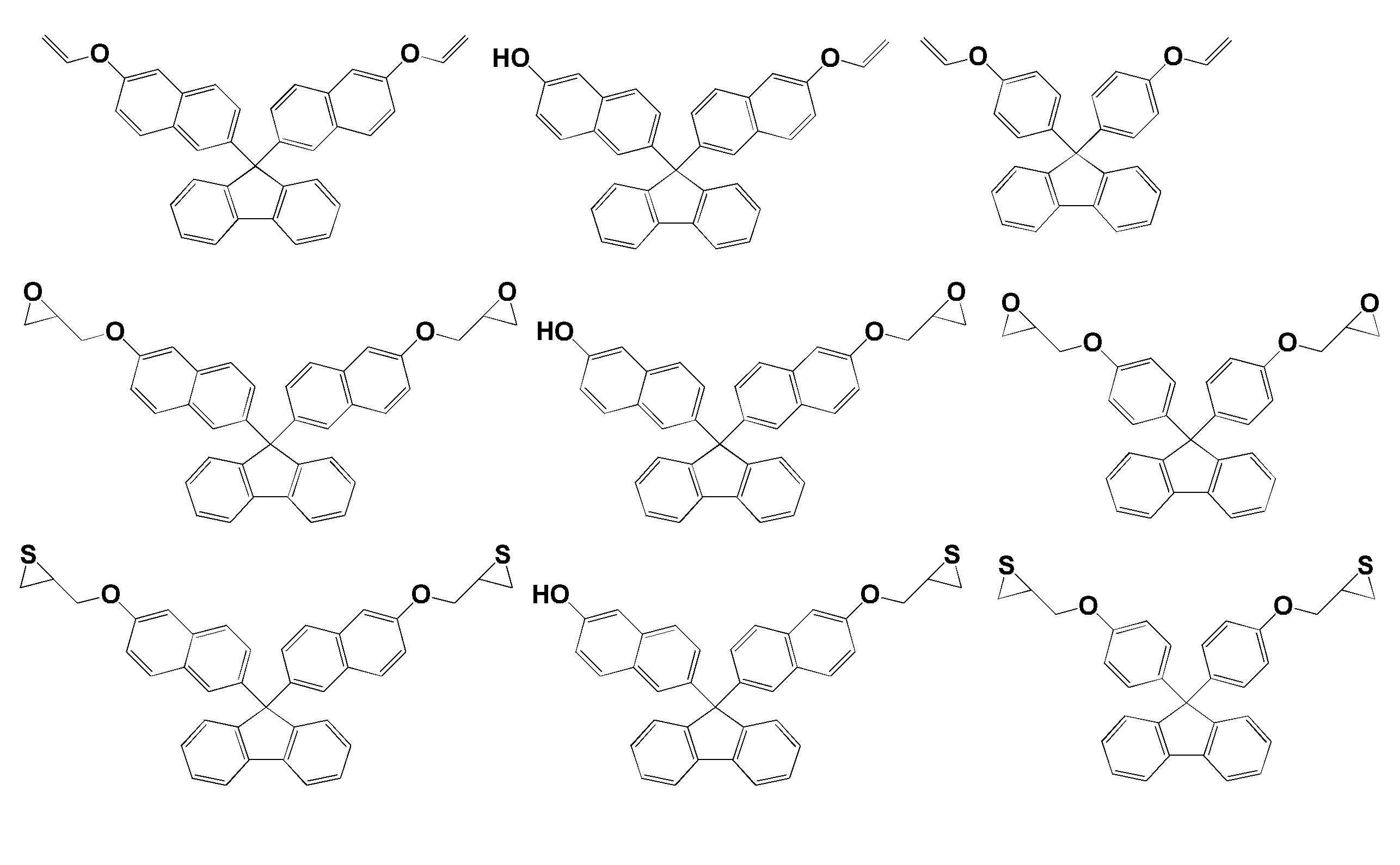
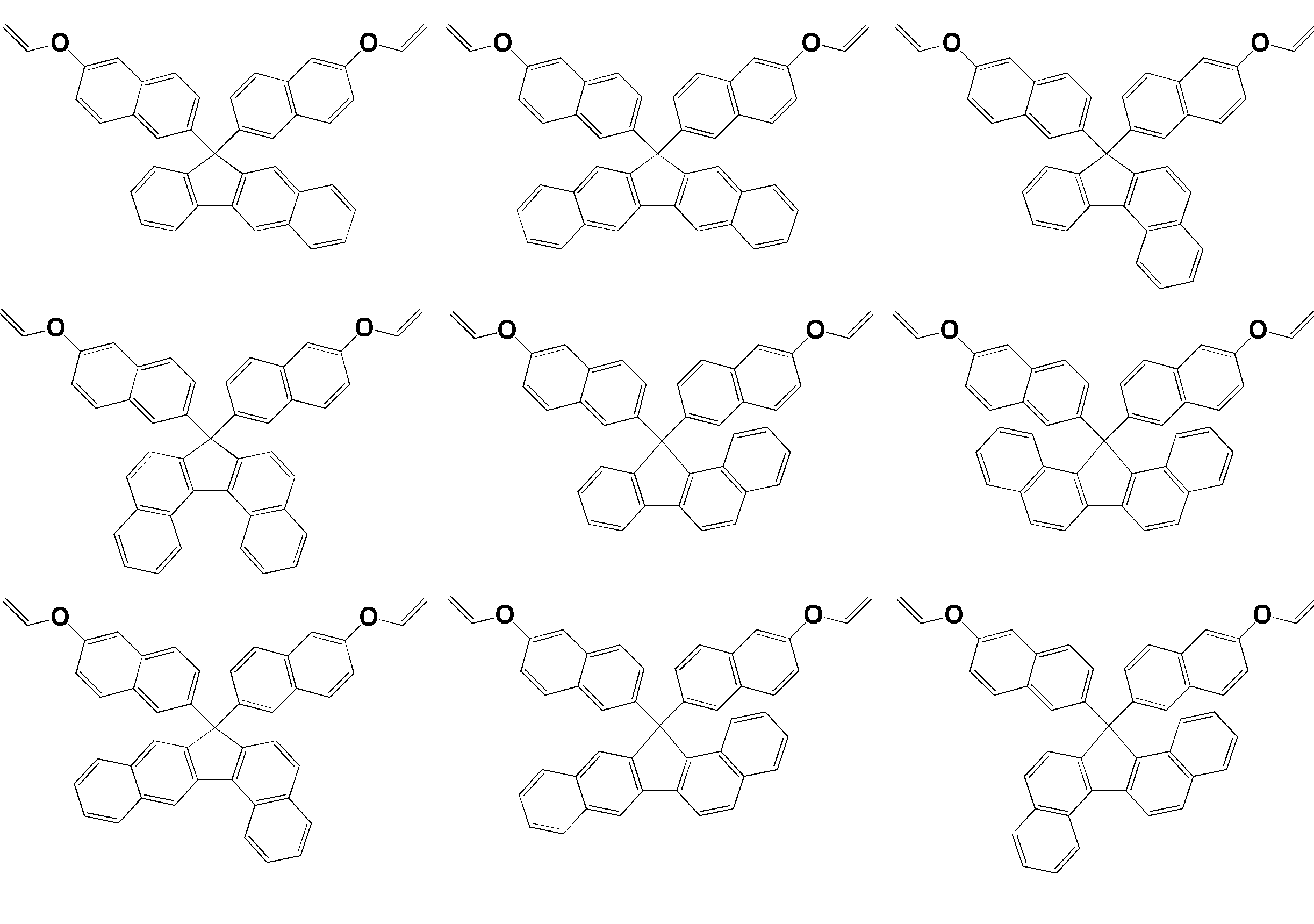
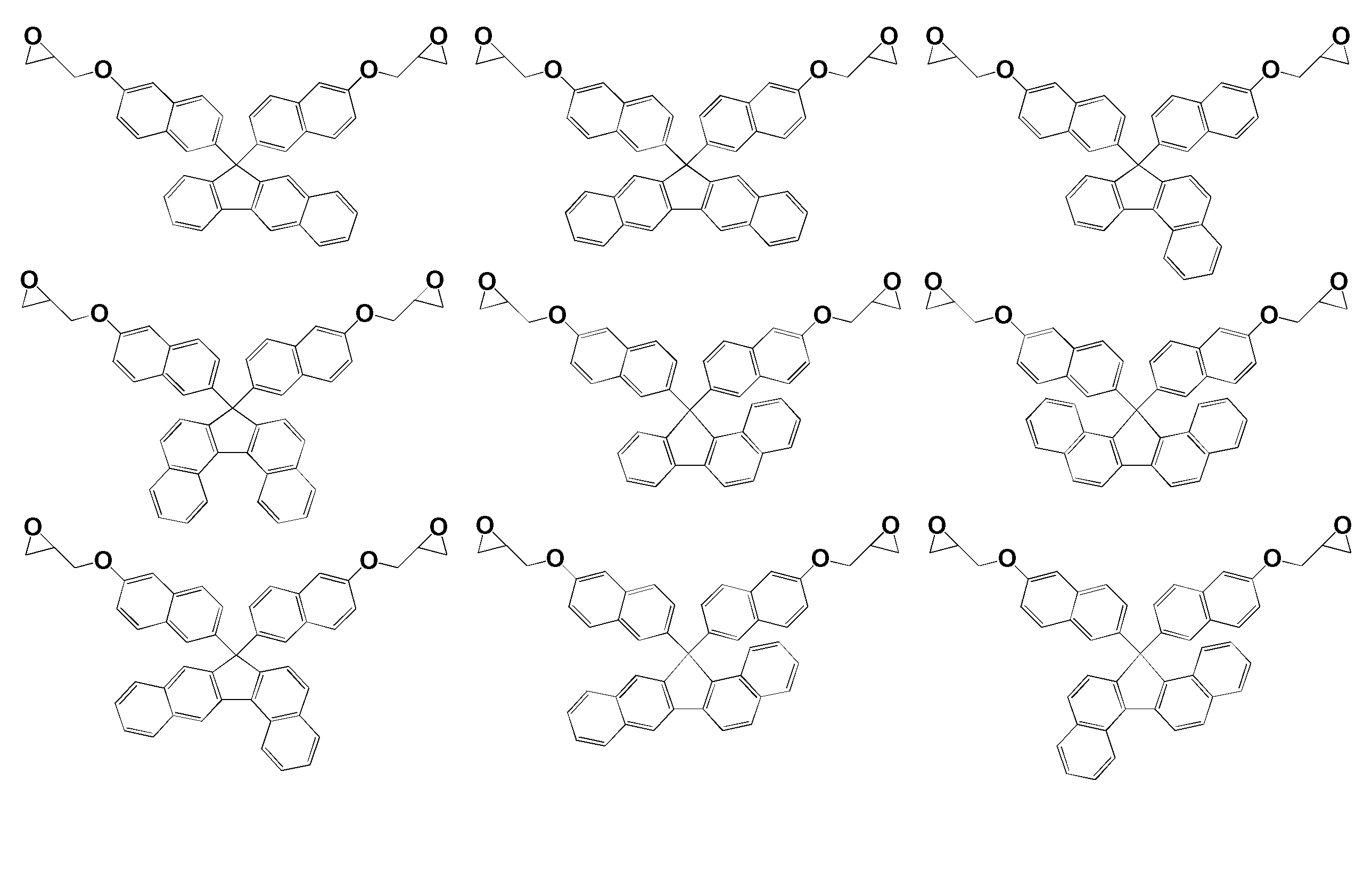
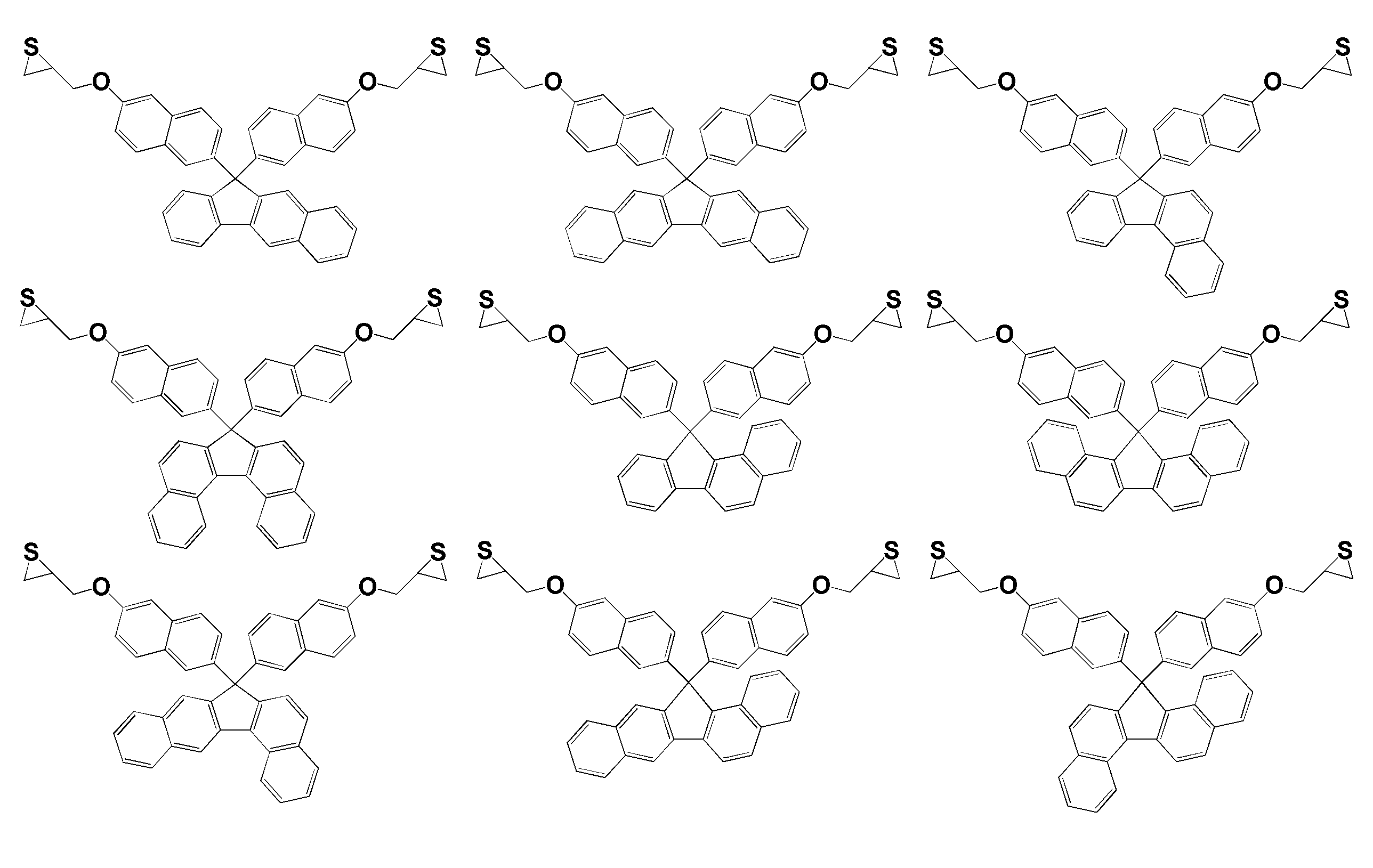

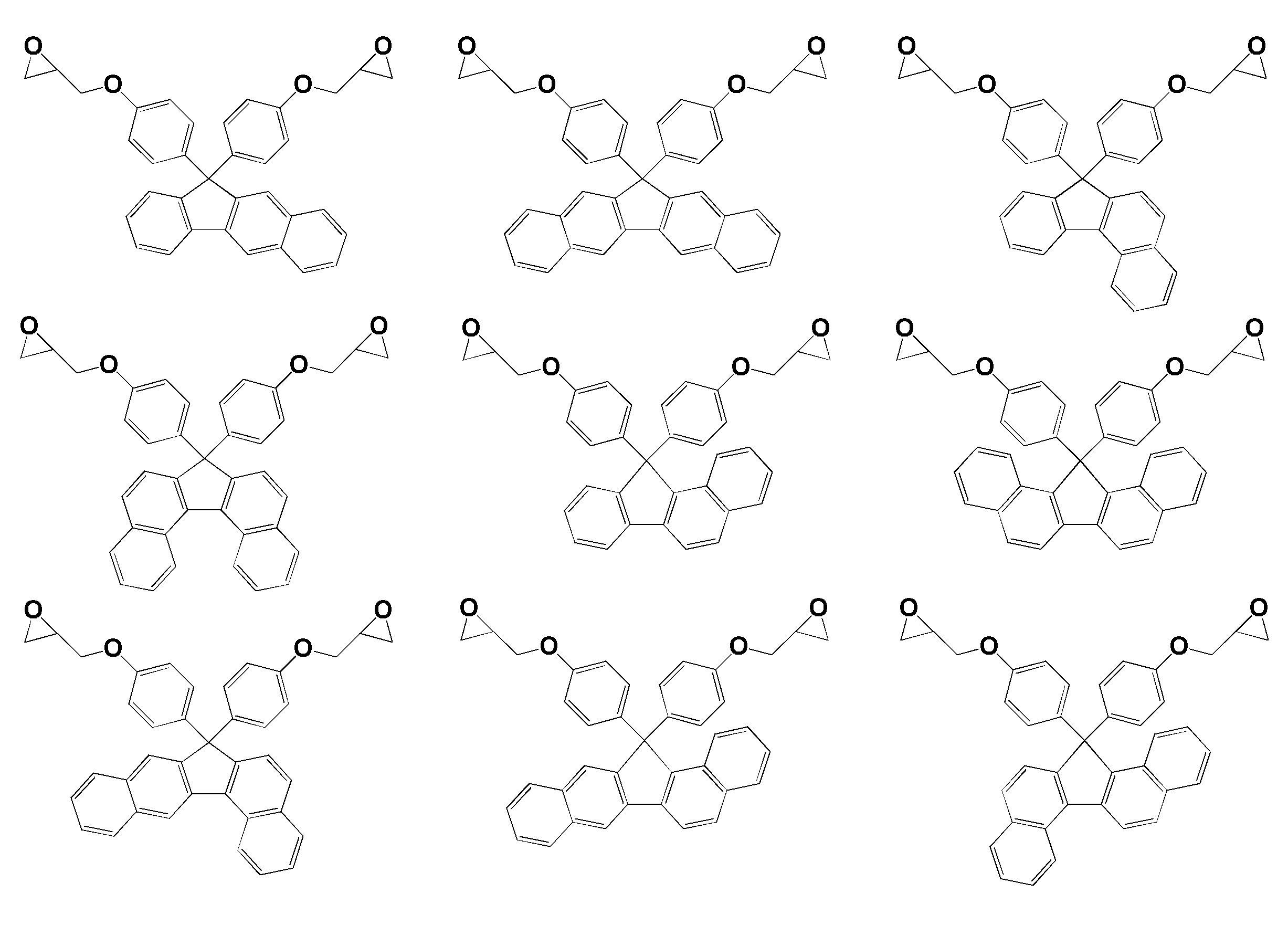
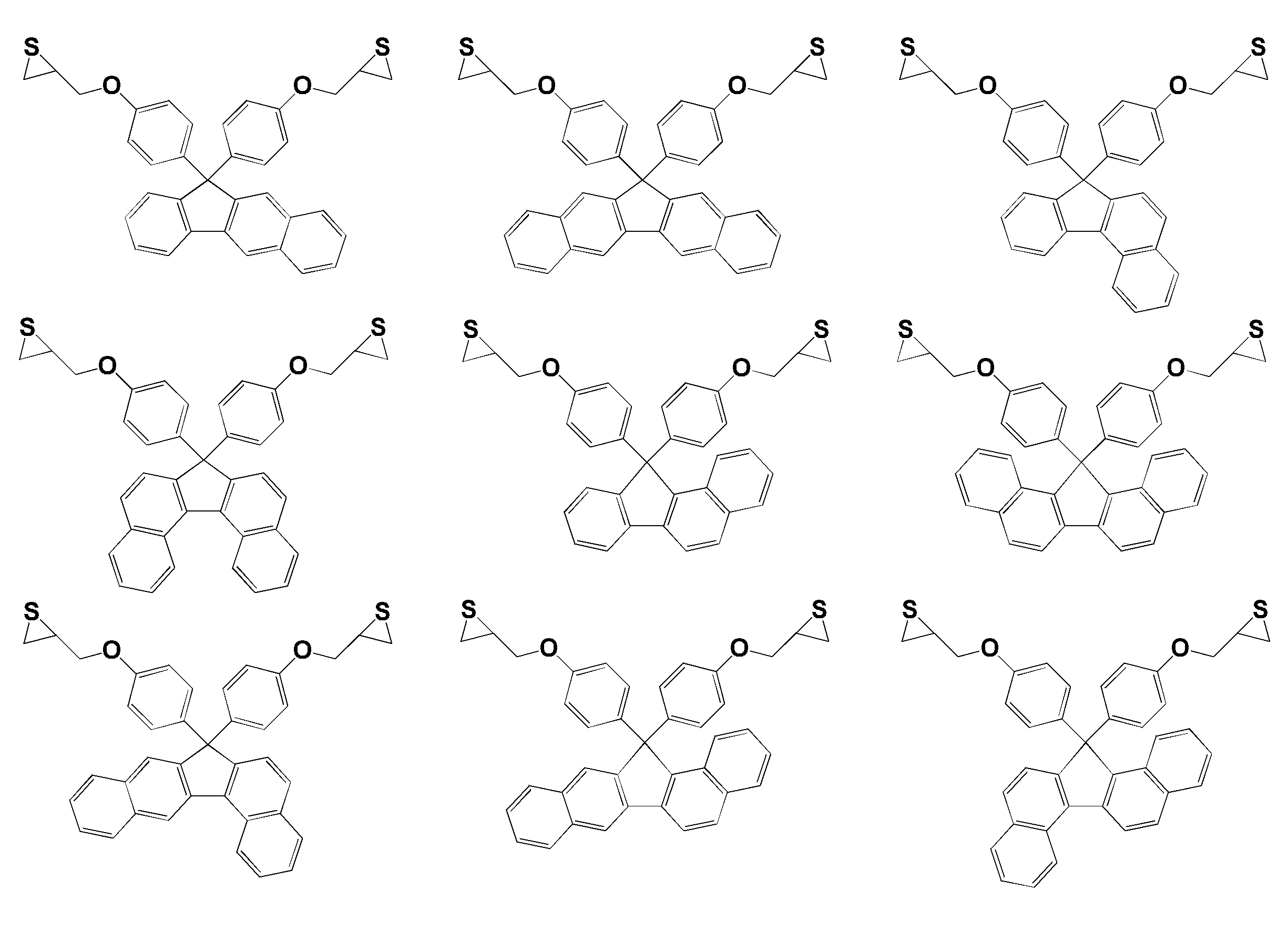

以上説明した式(b1)で表される化合物の中では、以下の化合物が特に好ましい。

式(b1)で表される化合物以外のカチオン重合性の化合物の好ましい例としては、ビニルオキシ基を含むビニルエーテル化合物、エポキシ基を含むエポキシ化合物、及びエピスルフィド基を含むエピスルフィド化合物が挙げられる。以下、ビニルエーテル化合物、エポキシ化合物、及びエピスルフィド化合物について説明する。
(ビニルエーテル化合物)
式(b1)で表される化合物以外のカチオン硬化性化合物(B)としてのビニルエーテル化合物は、ビニルオキシ基を有し、カチオン重合可能な化合物であれば特に限定されない。
式(b1)で表される化合物と併用されるビニルエーテル化合物は、芳香族基を含んでいてもよく、芳香族基を含んでいなくてもよい。
硬化物の耐熱分解性が良好である点からは、式(b1)で表される化合物と併用されるビニルエーテル化合物は、芳香族基に結合するビニルオキシ基を有する化合物であるのが好ましい。
式(b1)で表される化合物以外のカチオン硬化性化合物(B)としてのビニルエーテル化合物は、ビニルオキシ基を有し、カチオン重合可能な化合物であれば特に限定されない。
式(b1)で表される化合物と併用されるビニルエーテル化合物は、芳香族基を含んでいてもよく、芳香族基を含んでいなくてもよい。
硬化物の耐熱分解性が良好である点からは、式(b1)で表される化合物と併用されるビニルエーテル化合物は、芳香族基に結合するビニルオキシ基を有する化合物であるのが好ましい。
式(b1)で表される化合物とともに用いることができるビニルエーテル化合物の好適な具体例としては、ビニルフェニルエーテル、4-ビニロキシトルエン、3-ビニロキシトルエン、2-ビニロキシトルエン、1-ビニロキシ-4-クロロベンゼン、1-ビニロキシ-3-クロロベンゼン、1-ビニロキシ-2-クロロベンゼン、1-ビニロキシ-2,3-ジメチルベンゼン、1-ビニロキシ-2,4-ジメチルベンゼン、1-ビニロキシ-2,5-ジメチルベンゼン、1-ビニロキシ-2,6-ジメチルベンゼン、1-ビニロキシ-3,4-ジメチルベンゼン、1-ビニロキシ-3,5-ジメチルベンゼン、1-ビニロキシナフタレン、2-ビニロキシナフタレン、2-ビニロキシフルオレン、3-ビニロキシフルオレン、4-ビニロキシ-1,1’-ビフェニル、3-ビニロキシ-1,1’-ビフェニル、2-ビニロキシ-1,1’-ビフェニル、6-ビニロキシテトラリン、及び5-ビニロキシテトラリン等の芳香族モノビニルエーテル化合物;1,4-ジビニロキシベンゼン、1,3-ジビニロキシベンゼン、1,2-ジビニロキシベンゼン、1,4-ジビニロキシナフタレン、1,3-ジビニロキシナフタレン、1,2-ジビニロキシナフタレン、1,5-ジビニロキシナフタレン、1,6-ジビニロキシナフタレン、1,7-ジビニロキシナフタレン、1,8-ジビニロキシナフタレン、2,3-ジビニロキシナフタレン、2,6-ジビニロキシナフタレン、2,7-ジビニロキシナフタレン、1,2-ジビニロキシフルオレン、3,4-ジビニロキシフルオレン、2,7-ジビニロキシフルオレン、4,4’-ジビニロキシビフェニル、3,3’-ジビニロキシビフェニル、2,2’-ジビニロキシビフェニル、3,4’-ジビニロキシビフェニル、2,3’-ジビニロキシビフェニル、2,4’-ジビニロキシビフェニル、及びビスフェノールAジビニルエーテル等の芳香族ジビニルエーテル化合物が挙げられる。
これらの、ビニルエーテル化合物は、2種以上組み合わせて用いられてもよい。
これらの、ビニルエーテル化合物は、2種以上組み合わせて用いられてもよい。
(エポキシ化合物)
式(b1)で表される化合物以外のカチオン硬化性化合物(B)としてのエポキシ化合物の例としては、ビスフェノールA型エポキシ樹脂、ビスフェノールF型エポキシ樹脂、ビスフェノールS型エポキシ樹脂、ビスフェノールAD型エポキシ樹脂、ナフタレン型エポキシ樹脂、及びビフェニル型エポキシ樹脂等の2官能エポキシ樹脂;フェノールノボラック型エポキシ樹脂、臭素化フェノールノボラック型エポキシ樹脂、オルソクレゾールノボラック型エポキシ樹脂、ビスフェノールAノボラック型エポキシ樹脂、及びビスフェノールADノボラック型エポキシ樹脂等のノボラックエポキシ樹脂;ジシクロペンタジエン型フェノール樹脂のエポキシ化物等の環式脂肪族エポキシ樹脂;ナフタレン型フェノール樹脂のエポキシ化物等の芳香族エポキシ樹脂;ダイマー酸グリシジルエステル、及びトリグリシジルエステル等のグリシジルエステル型エポキシ樹脂;テトラグリシジルアミノジフェニルメタン、トリグリシジル-p-アミノフェノール、テトラグリシジルメタキシリレンジアミン、及びテトラグリシジルビスアミノメチルシクロヘキサン等のグリシジルアミン型エポキシ樹脂;トリグリシジルイソシアヌレート等の複素環式エポキシ樹脂;フロログリシノールトリグリシジルエーテル、トリヒドロキシビフェニルトリグリシジルエーテル、トリヒドロキシフェニルメタントリグリシジルエーテル、グリセリントリグリシジルエーテル、2-[4-(2,3-エポキシプロポキシ)フェニル]-2-[4-[1,1-ビス[4-(2,3-エポキシプロポキシ)フェニル]エチル]フェニル]プロパン、及び1,3-ビス[4-[1-[4-(2,3-エポキシプロポキシ)フェニル]-1-[4-[1-[4-(2,3-エポキシプロポキシ)フェニル]-1-メチルエチル]フェニル]エチル]フェノキシ]-2-プロパノール等の3官能型エポキシ樹脂;テトラヒドロキシフェニルエタンテトラグリシジルエーテル、テトラグリシジルベンゾフェノン、ビスレゾルシノールテトラグリシジルエーテル、及びテトラグリシドキシビフェニル等の4官能型エポキシ樹脂;2,2-ビス(ヒドロキシメチル)-1-ブタノールの1,2-エポキシ-4-(2-オキシラニル)シクロヘキサン付加物が挙げられる。2,2-ビス(ヒドロキシメチル)-1-ブタノールの1,2-エポキシ-4-(2-オキシラニル)シクロヘキサン付加物は、EHPE-3150(ダイセル社製)として市販される。
式(b1)で表される化合物以外のカチオン硬化性化合物(B)としてのエポキシ化合物の例としては、ビスフェノールA型エポキシ樹脂、ビスフェノールF型エポキシ樹脂、ビスフェノールS型エポキシ樹脂、ビスフェノールAD型エポキシ樹脂、ナフタレン型エポキシ樹脂、及びビフェニル型エポキシ樹脂等の2官能エポキシ樹脂;フェノールノボラック型エポキシ樹脂、臭素化フェノールノボラック型エポキシ樹脂、オルソクレゾールノボラック型エポキシ樹脂、ビスフェノールAノボラック型エポキシ樹脂、及びビスフェノールADノボラック型エポキシ樹脂等のノボラックエポキシ樹脂;ジシクロペンタジエン型フェノール樹脂のエポキシ化物等の環式脂肪族エポキシ樹脂;ナフタレン型フェノール樹脂のエポキシ化物等の芳香族エポキシ樹脂;ダイマー酸グリシジルエステル、及びトリグリシジルエステル等のグリシジルエステル型エポキシ樹脂;テトラグリシジルアミノジフェニルメタン、トリグリシジル-p-アミノフェノール、テトラグリシジルメタキシリレンジアミン、及びテトラグリシジルビスアミノメチルシクロヘキサン等のグリシジルアミン型エポキシ樹脂;トリグリシジルイソシアヌレート等の複素環式エポキシ樹脂;フロログリシノールトリグリシジルエーテル、トリヒドロキシビフェニルトリグリシジルエーテル、トリヒドロキシフェニルメタントリグリシジルエーテル、グリセリントリグリシジルエーテル、2-[4-(2,3-エポキシプロポキシ)フェニル]-2-[4-[1,1-ビス[4-(2,3-エポキシプロポキシ)フェニル]エチル]フェニル]プロパン、及び1,3-ビス[4-[1-[4-(2,3-エポキシプロポキシ)フェニル]-1-[4-[1-[4-(2,3-エポキシプロポキシ)フェニル]-1-メチルエチル]フェニル]エチル]フェノキシ]-2-プロパノール等の3官能型エポキシ樹脂;テトラヒドロキシフェニルエタンテトラグリシジルエーテル、テトラグリシジルベンゾフェノン、ビスレゾルシノールテトラグリシジルエーテル、及びテトラグリシドキシビフェニル等の4官能型エポキシ樹脂;2,2-ビス(ヒドロキシメチル)-1-ブタノールの1,2-エポキシ-4-(2-オキシラニル)シクロヘキサン付加物が挙げられる。2,2-ビス(ヒドロキシメチル)-1-ブタノールの1,2-エポキシ-4-(2-オキシラニル)シクロヘキサン付加物は、EHPE-3150(ダイセル社製)として市販される。
また、オリゴマー又はポリマー型の多官能エポキシ化合物もカチオン硬化性化合物(B)として、好ましく用いることができる。
典型的な例としては、フェノールノボラック型エポキシ化合物、臭素化フェノールノボラック型エポキシ化合物、オルソクレゾールノボラック型エポキシ化合物、キシレノールノボラック型エポキシ化合物、ナフトールノボラック型エポキシ化合物、ビスフェノールAノボラック型エポキシ化合物、ビスフェノールADノボラック型エポキシ化合物、ジシクロペンタジエン型フェノール樹脂のエポキシ化物、ナフタレン型フェノール樹脂のエポキシ化物等が挙げられる。
典型的な例としては、フェノールノボラック型エポキシ化合物、臭素化フェノールノボラック型エポキシ化合物、オルソクレゾールノボラック型エポキシ化合物、キシレノールノボラック型エポキシ化合物、ナフトールノボラック型エポキシ化合物、ビスフェノールAノボラック型エポキシ化合物、ビスフェノールADノボラック型エポキシ化合物、ジシクロペンタジエン型フェノール樹脂のエポキシ化物、ナフタレン型フェノール樹脂のエポキシ化物等が挙げられる。
好適なエポキシ化合物の他の例として、脂環式エポキシ基を有する多官能の脂環式エポキシ化合物が挙げられる。カチオン硬化性化合物(B)が、脂環式エポキシ化合物を含む場合、硬化性組成物を用いて透明性に優れる硬化物を形成しやすい。
脂環式エポキシ化合物の具体例としては、2-(3,4-エポキシシクロヘキシル-5,5-スピロ-3,4-エポキシ)シクロヘキサン-メタ-ジオキサン、ビス(3,4-エポキシシクロヘキシルメチル)アジペート、ビス(3,4-エポキシ-6-メチルシクロヘキシルメチル)アジペート、3,4-エポキシ-6-メチルシクロヘキシル-3’,4’-エポキシ-6’-メチルシクロヘキサンカルボキシレート、ε-カプロラクトン変性3,4-エポキシシクロヘキシルメチル-3’,4’-エポキシシクロヘキサンカルボキシレート、トリメチルカプロラクトン変性3,4-エポキシシクロヘキシルメチル-3’,4’-エポキシシクロヘキサンカルボキシレート、β-メチル-δ-バレロラクトン変性3,4-エポキシシクロヘキシルメチル-3’,4’-エポキシシクロヘキサンカルボキシレート、メチレンビス(3,4-エポキシシクロヘキサン)、エチレングリコールのジ(3,4-エポキシシクロヘキシルメチル)エーテル、エチレンビス(3,4-エポキシシクロヘキサンカルボキシレート)、エポキシシクロヘキサヒドロフタル酸ジオクチル、及びエポキシシクロヘキサヒドロフタル酸ジ-2-エチルヘキシル、トリシクロデセンオキサイド基を有するエポキシ樹脂や、下記式(b01-1)~(b01-5)で表される化合物が挙げられる。
これらの脂環式エポキシ化合物の具体例の中では、高硬度の硬化物を与えることから、下記式(b01-1)~(b01-5)で表される脂環式エポキシ化合物が好ましい。

連結基Z01としては、例えば、2価の炭化水素基、-O-、-O-CO-、-S-、-SO-、-SO2-、-CBr2-、-C(CBr3)2-、-C(CF3)2-、及び-Rb019-O-CO-からなる群より選択される2価の基及びこれらが複数個結合した基等を挙げることができる。
連結基Z01である2価の炭化水素基としては、例えば、炭素原子数が1以上18以下の直鎖状又は分岐鎖状のアルキレン基、2価の脂環式炭化水素基等を挙げることができる。炭素原子数が1以上18以下の直鎖状又は分岐鎖状のアルキレン基としては、例えば、メチレン基、メチルメチレン基、ジメチルメチレン基、ジメチレン基、トリメチレン基等を挙げることができる。上記2価の脂環式炭化水素基としては、例えば、1,2-シクロペンチレン基、1,3-シクロペンチレン基、シクロペンチリデン基、1,2-シクロヘキシレン基、1,3-シクロヘキシレン基、1,4-シクロヘキシレン基、シクロヘキシリデン基等のシクロアルキレン基(シクロアルキリデン基を含む)等を挙げることができる。
Rb019は、炭素原子数1以上8以下のアルキレン基であり、メチレン基又はエチレン基であるのが好ましい。

上記式(b01-2)で表される脂環式エポキシ化合物としては、上記式(b01-2)におけるmb1が0である化合物に該当する、下記式(b01-2-1)で表される化合物が好ましい。

(式(b01-2-1)中、Rb01~Rb012は、水素原子、ハロゲン原子、及び有機基からなる群より選択される基である。Rb02及びRb010は互いに結合して環を形成してもよい。)


式(b01-1)~(b01-5)中、Rb01~Rb018が有機基である場合、有機基は本発明の目的を阻害しない範囲で特に限定されず、炭化水素基であっても、炭素原子とハロゲン原子とからなる基であっても、炭素原子及び水素原子とともにハロゲン原子、酸素原子、硫黄原子、窒素原子、ケイ素原子のようなヘテロ原子を含むような基であってもよい。ハロゲン原子の例としては、塩素原子、臭素原子、ヨウ素原子、及びフッ素原子等が挙げられる。
有機基としては、炭化水素基と、炭素原子、水素原子、及び酸素原子からなる基と、ハロゲン化炭化水素基と、炭素原子、酸素原子、及びハロゲン原子からなる基と、炭素原子、水素原子、酸素原子、及びハロゲン原子からなる基とが好ましい。有機基が炭化水素基である場合、炭化水素基は、芳香族炭化水素基でも、脂肪族炭化水素基でも、芳香族骨格と脂肪族骨格とを含む基でもよい。有機基の炭素原子数は1以上20以下が好ましく、1以上10以下がより好ましく、1以上5以下が特に好ましい。
炭化水素基の具体例としては、メチル基、エチル基、n-プロピル基、イソプロピル基、n-ブチル基、イソブチル基、sec-ブチル基、tert-ブチル基、n-ペンチル基、n-ヘキシル基、n-ヘプチル基、n-オクチル基、2-エチルヘキシル基、n-ノニル基、n-デシル基、n-ウンデシル基、n-トリデシル基、n-テトラデシル基、n-ペンタデシル基、n-ヘキサデシル基、n-ヘプタデシル基、n-オクタデシル基、n-ノナデシル基、及びn-イコシル基等の鎖状アルキル基;ビニル基、1-プロペニル基、2-n-プロペニル基(アリル基)、1-n-ブテニル基、2-n-ブテニル基、及び3-n-ブテニル基等の鎖状アルケニル基;シクロプロピル基、シクロブチル基、シクロペンチル基、シクロヘキシル基、及びシクロヘプチル基等のシクロアルキル基;フェニル基、o-トリル基、m-トリル基、p-トリル基、α-ナフチル基、β-ナフチル基、ビフェニル-4-イル基、ビフェニル-3-イル基、ビフェニル-2-イル基、アントリル基、及びフェナントリル基等のアリール基;ベンジル基、フェネチル基、α-ナフチルメチル基、β-ナフチルメチル基、α-ナフチルエチル基、及びβ-ナフチルエチル基等のアラルキル基が挙げられる。
ハロゲン化炭化水素基の具体例は、クロロメチル基、ジクロロメチル基、トリクロロメチル基、ブロモメチル基、ジブロモメチル基、トリブロモメチル基、フルオロメチル基、ジフルオロメチル基、トリフルオロメチル基、2,2,2-トリフルオロエチル基、ペンタフルオロエチル基、ヘプタフルオロプロピル基、パーフルオロブチル基、及びパーフルオロペンチル基、パーフルオロヘキシル基、パーフルオロヘプチル基、パーフルオロオクチル基、パーフルオロノニル基、及びパーフルオロデシル基等のハロゲン化鎖状アルキル基;2-クロロシクロヘキシル基、3-クロロシクロヘキシル基、4-クロロシクロヘキシル基、2,4-ジクロロシクロヘキシル基、2-ブロモシクロヘキシル基、3-ブロモシクロヘキシル基、及び4-ブロモシクロヘキシル基等のハロゲン化シクロアルキル基;2-クロロフェニル基、3-クロロフェニル基、4-クロロフェニル基、2,3-ジクロロフェニル基、2,4-ジクロロフェニル基、2,5-ジクロロフェニル基、2,6-ジクロロフェニル基、3,4-ジクロロフェニル基、3,5-ジクロロフェニル基、2-ブロモフェニル基、3-ブロモフェニル基、4-ブロモフェニル基、2-フルオロフェニル基、3-フルオロフェニル基、4-フルオロフェニル基等のハロゲン化アリール基;2-クロロフェニルメチル基、3-クロロフェニルメチル基、4-クロロフェニルメチル基、2-ブロモフェニルメチル基、3-ブロモフェニルメチル基、4-ブロモフェニルメチル基、2-フルオロフェニルメチル基、3-フルオロフェニルメチル基、4-フルオロフェニルメチル基等のハロゲン化アラルキル基である。
炭素原子、水素原子、及び酸素原子からなる基の具体例は、ヒドロキシメチル基、2-ヒドロキシエチル基、3-ヒドロキシ-n-プロピル基、及び4-ヒドロキシ-n-ブチル基等のヒドロキシ鎖状アルキル基;2-ヒドロキシシクロヘキシル基、3-ヒドロキシシクロヘキシル基、及び4-ヒドロキシシクロヘキシル基等のハロゲン化シクロアルキル基;2-ヒドロキシフェニル基、3-ヒドロキシフェニル基、4-ヒドロキシフェニル基、2,3-ジヒドロキシフェニル基、2,4-ジヒドロキシフェニル基、2,5-ジヒドロキシフェニル基、2,6-ジヒドロキシフェニル基、3,4-ジヒドロキシフェニル基、及び3,5-ジヒドロキシフェニル基等のヒドロキシアリール基;2-ヒドロキシフェニルメチル基、3-ヒドロキシフェニルメチル基、及び4-ヒドロキシフェニルメチル基等のヒドロキシアラルキル基;メトキシ基、エトキシ基、n-プロポキシ基、イソプロポキシ基、n-ブチルオキシ基、イソブチルオキシ基、sec-ブチルオキシ基、tert-ブチルオキシ基、n-ペンチルオキシ基、n-ヘキシルオキシ基、n-ヘプチルオキシ基、n-オクチルオキシ基、2-エチルヘキシルオキシ基、n-ノニルオキシ基、n-デシルオキシ基、n-ウンデシルオキシ基、n-トリデシルオキシ基、n-テトラデシルオキシ基、n-ペンタデシルオキシ基、n-ヘキサデシルオキシ基、n-ヘプタデシルオキシ基、n-オクタデシルオキシ基、n-ノナデシルオキシ基、及びn-イコシルオキシ基等の鎖状アルコキシ基;ビニルオキシ基、1-プロペニルオキシ基、2-n-プロペニルオキシ基(アリルオキシ基)、1-n-ブテニルオキシ基、2-n-ブテニルオキシ基、及び3-n-ブテニルオキシ基等の鎖状アルケニルオキシ基;フェノキシ基、o-トリルオキシ基、m-トリルオキシ基、p-トリルオキシ基、α-ナフチルオキシ基、β-ナフチルオキシ基、ビフェニル-4-イルオキシ基、ビフェニル-3-イルオキシ基、ビフェニル-2-イルオキシ基、アントリルオキシ基、及びフェナントリルオキシ基等のアリールオキシ基;ベンジルオキシ基、フェネチルオキシ基、α-ナフチルメチルオキシ基、β-ナフチルメチルオキシ基、α-ナフチルエチルオキシ基、及びβ-ナフチルエチルオキシ基等のアラルキルオキシ基;メトキシメチル基、エトキシメチル基、n-プロポキシメチル基、2-メトキシエチル基、2-エトキシエチル基、2-n-プロポキシエチル基、3-メトキシ-n-プロピル基、3-エトキシ-n-プロピル基、3-n-プロポキシ-n-プロピル基、4-メトキシ-n-ブチル基、4-エトキシ-n-ブチル基、及び4-n-プロポキシ-n-ブチル基等のアルコキシアルキル基;メトキシメトキシ基、エトキシメトキシ基、n-プロポキシメトキシ基、2-メトキシエトキシ基、2-エトキシエトキシ基、2-n-プロポキシエトキシ基、3-メトキシ-n-プロポキシ基、3-エトキシ-n-プロポキシ基、3-n-プロポキシ-n-プロポキシ基、4-メトキシ-n-ブチルオキシ基、4-エトキシ-n-ブチルオキシ基、及び4-n-プロポキシ-n-ブチルオキシ基等のアルコキシアルコキシ基;2-メトキシフェニル基、3-メトキシフェニル基、及び4-メトキシフェニル基等のアルコキシアリール基;2-メトキシフェノキシ基、3-メトキシフェノキシ基、及び4-メトキシフェノキシ基等のアルコキシアリールオキシ基;ホルミル基、アセチル基、プロピオニル基、ブタノイル基、ペンタノイル基、ヘキサノイル基、ヘプタノイル基、オクタノイル基、ノナノイル基、及びデカノイル基等の脂肪族アシル基;ベンゾイル基、α-ナフトイル基、及びβ-ナフトイル基等の芳香族アシル基;メトキシカルボニル基、エトキシカルボニル基、n-プロポキシカルボニル基、n-ブチルオキシカルボニル基、n-ペンチルオキシカルボニル基、n-ヘキシルカルボニル基、n-ヘプチルオキシカルボニル基、n-オクチルオキシカルボニル基、n-ノニルオキシカルボニル基、及びn-デシルオキシカルボニル基等の鎖状アルキルオキシカルボニル基;フェノキシカルボニル基、α-ナフトキシカルボニル基、及びβ-ナフトキシカルボニル基等のアリールオキシカルボニル基;ホルミルオキシ基、アセチルオキシ基、プロピオニルオキシ基、ブタノイルオキシ基、ペンタノイルオキシ基、ヘキサノイルオキシ基、ヘプタノイルオキシ基、オクタノイルオキシ基、ノナノイルオキシ基、及びデカノイルオキシ基等の脂肪族アシルオキシ基;ベンゾイルオキシ基、α-ナフトイルオキシ基、及びβ-ナフトイルオキシ基等の芳香族アシルオキシ基である。
Rb01~Rb018は、それぞれ独立に、水素原子、ハロゲン原子、炭素原子数1以上5以下のアルキル基、及び炭素原子数1以上5以下のアルコキシ基からなる群より選択される基が好ましく、特に機械的特性に優れる硬化膜を形成しやすいことから、Rb01~Rb018が全て水素原子であるのがより好ましい。
式(b01-2)~(b01-5)中、Rb01~Rb018は、式(b01-1)におけるRb01~Rb018と同様である。式(b01-2)及び式(b01-4)において、Rb02及びRb010が、互いに結合する場合、式(b01-2)において、Rb013及びRb016が、互いに結合する場合、及び式(b01-3)において、Rb02及びRb08が、互いに結合する場合に形成される2価の基としては、例えば、-CH2-、-C(CH3)2-が挙げられる。
式(b01-1)で表される脂環式エポキシ化合物のうち、好適な化合物の具体例としては、下記式(b01-1a)、式(b01-1b)、及び式(b01-1c)で表される脂環式エポキシ化合物や、2,2-ビス(3,4-エポキシシクロヘキサン-1-イル)プロパン[=2,2-ビス(3,4-エポキシシクロヘキシル)プロパン]等を挙げることができる。

式(b01-2)で表される脂環式エポキシ化合物のうち、好適な化合物の具体例としては、下記式(b01-2a)及び下記式(b01-2b)で表される脂環式エポキシ化合物が挙げられる。

式(b01-3)で表される脂環式エポキシ化合物のうち、好適な化合物の具体例としては、Sスピロ[3-オキサトリシクロ[3.2.1.02,4]オクタン-6,2’-オキシラン]等が挙げられる。
式(b01-4)で表される脂環式エポキシ化合物のうち、好適な化合物の具体例としては、4-ビニルシクロヘキセンジオキシド、ジペンテンジオキシド、リモネンジオキシド、1-メチル-4-(3-メチルオキシラン-2-イル)-7-オキサビシクロ[4.1.0]ヘプタン等が挙げられる。
式(b01-5)で表される脂環式エポキシ化合物のうち、好適な化合物の具体例としては、1,2,5,6-ジエポキシシクロオクタン等が挙げられる。
さらに、下記式(b1-I)で表される化合物をカチオン硬化性化合物(B)として好適に使用し得る。
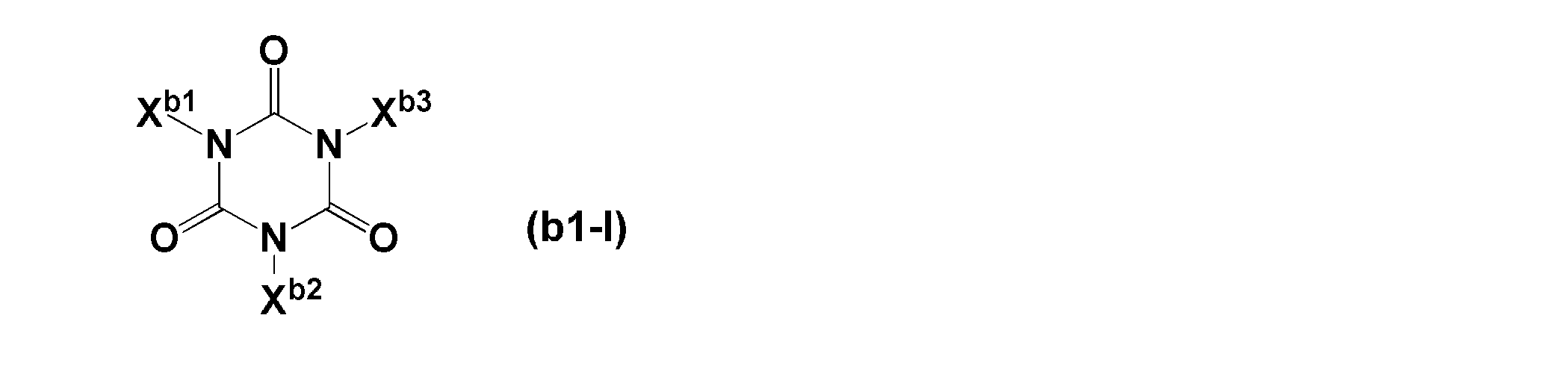
(式(b1-I)中、Xb1、Xb2、及びXb3は、それぞれ独立に、水素原子、又はエポキシ基を含んでいてもよい有機基であり、Xb1、Xb2、及びXb3が有するエポキシ基の総数が2以上である。)
上記式(b1-I)で表される化合物としては、下記式(b1-II)で表される化合物が好ましい。
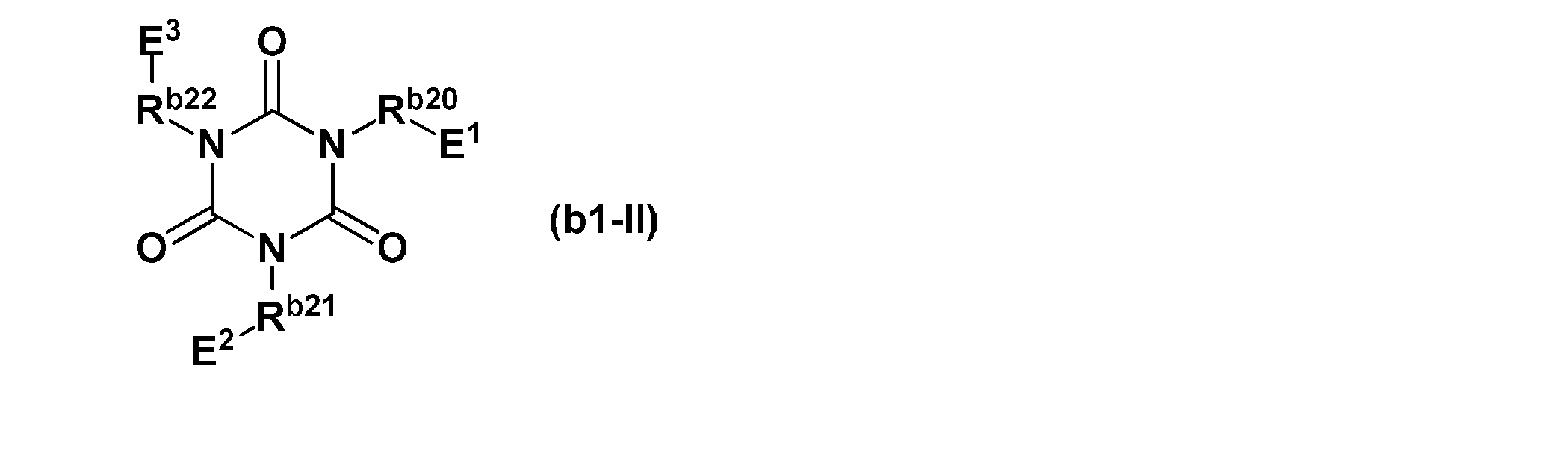
(式(b1-II)中、Rb20~Rb22は、直鎖状、分岐鎖状又は環状のアルキレン基、アリーレン基、-O-、-C(=O)-、-NH-及びこれらの組み合わせからなる基であり、それぞれ同一であってもよいし、異なっていてもよい。E1~E3は、エポキシ基、オキセタニル基、エチレン性不飽和基、アルコキシシリル基、イソシアネート基、ブロックイソシアネート基、チオール基、カルボキシ基、水酸基及びコハク酸無水物基からなる群より選択される少なくとも1種の置換基又は水素原子である。ただし、E1~E3のうち少なくとも2つは、エポキシ基及びオキセタニル基からなる群より選択される少なくとも1種である。)
式(b1-II)中、Rb20とE1、Rb21とE2、及びRb22とE3で示される基は、例えば、少なくとも2つが、それぞれ、下記式(b1-IIa)で表される基であることが好ましく、いずれもが、それぞれ、下記式(b1-IIa)で表される基であることがより好ましい。1つの化合物に結合する複数の式(b1-IIa)で表される基は、同じ基であることが好ましい。
-L-Cb (b1-IIa)
(式(b1-IIa)中、Lは直鎖状、分岐鎖状又は環状のアルキレン基、アリーレン基、-O-、-C(=O)-、-NH-及びこれらの組み合わせからなる基であり、Cbはエポキシ基である。式(b1-IIa)中、LとCbとが結合して環状構造を形成していてもよい。)
-L-Cb (b1-IIa)
(式(b1-IIa)中、Lは直鎖状、分岐鎖状又は環状のアルキレン基、アリーレン基、-O-、-C(=O)-、-NH-及びこれらの組み合わせからなる基であり、Cbはエポキシ基である。式(b1-IIa)中、LとCbとが結合して環状構造を形成していてもよい。)
式(b1-IIa)中、Lとしての直鎖状、分岐鎖状又は環状のアルキレン基としては、炭素原子数1以上10以下であるアルキレン基が好ましく、また、Lとしてのアリーレン基としては、炭素原子数5以上10以下であるアリーレン基が好ましい。式(b1-IIa)中、Lは、直鎖状の炭素原子数が1以上3以下であるアルキレン基、フェニレン基、-O-、-C(=O)-、-NH-及びこれらの組み合わせからなる基であることが好ましく、メチレン基等の直鎖状の炭素原子数が1以上3以下であるアルキレン基及びフェニレン基の少なくとも1種、又は、これらと、-O-、-C(=O)-及びNH-の少なくとも1種との組み合わせからなる基が好ましい。
式(b1-IIa)中、LとCbとが結合して環状構造を形成している場合としては、例えば、分岐鎖状のアルキレン基とエポキシ基とが結合して環状構造(脂環構造のエポキシ基を有する構造)を形成している場合、下記式(b1-IIb)~(b1-IId)で表される有機基が挙げられる。
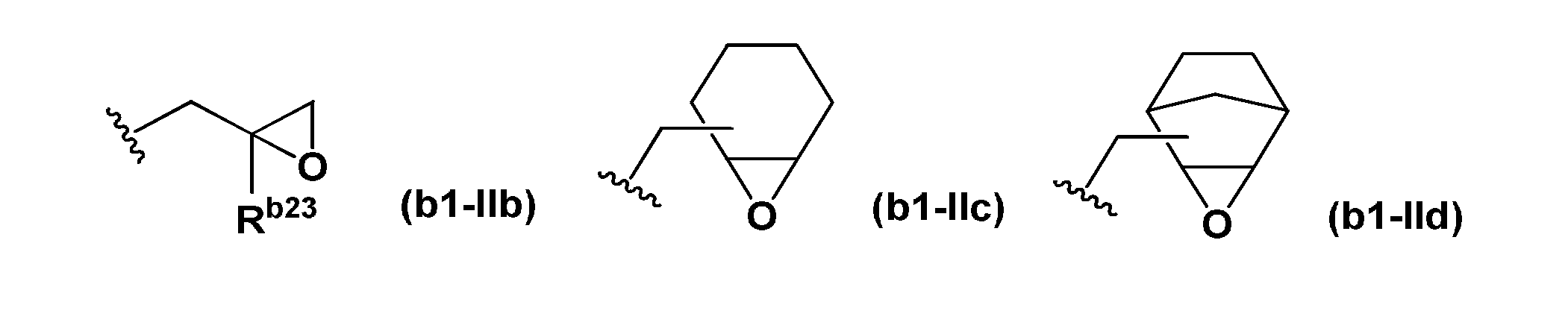
(式(b1-IIb)中、Rb23は、水素原子又はメチル基である。)
以下、式(b1-II)で表される化合物の例としてオキシラニル基、又は脂環式エポキシ基を有するエポキシ化合物の例を示すが、これらに限定されない。
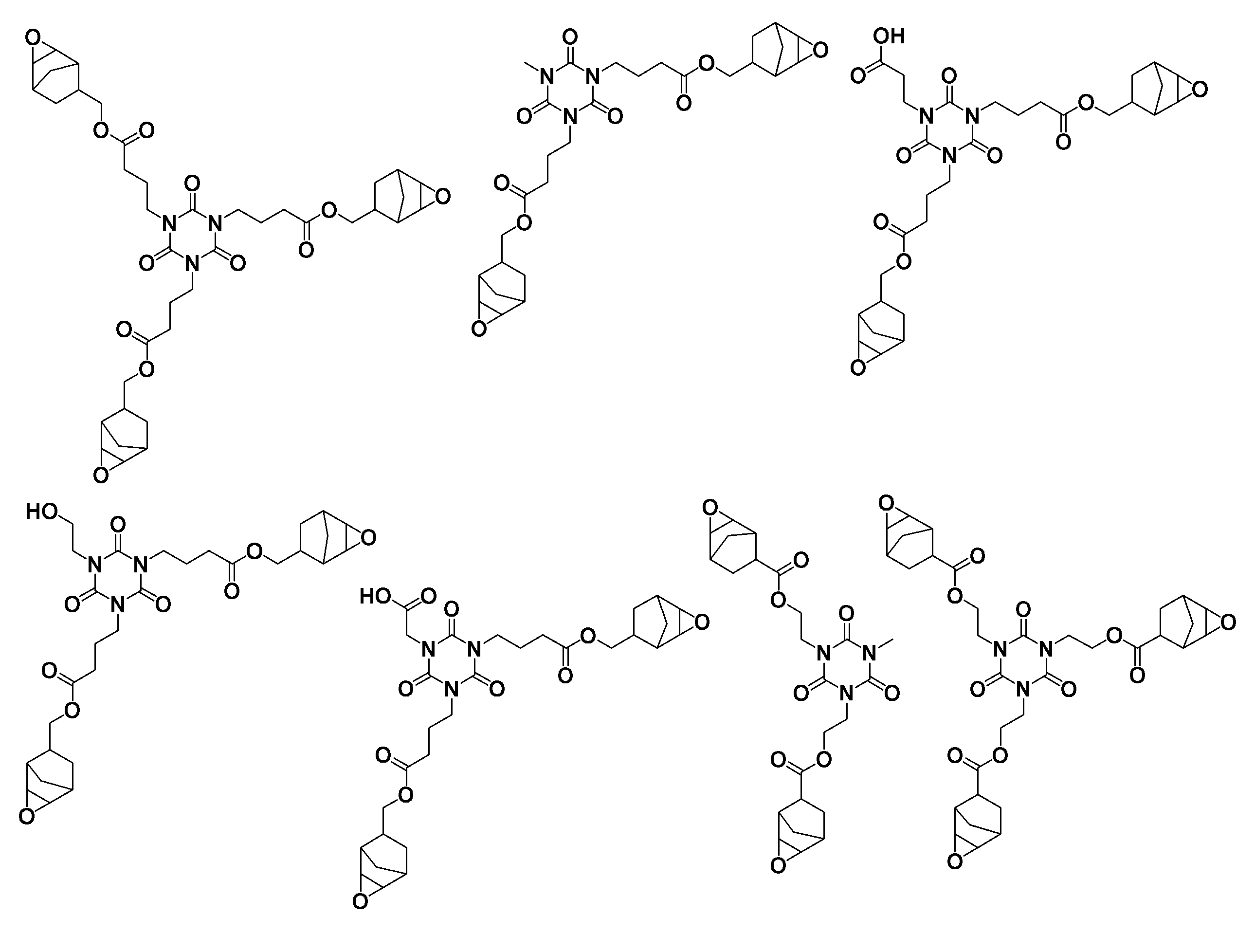

また、分子内に2以上のグリシジル基を有するシロキサン化合物(以下、単に「シロキサン化合物」とも記す。)をカチオン硬化性化合物(B)として好適に使用し得る。
シロキサン化合物は、シロキサン結合(Si-O-Si)により構成されたシロキサン骨格と、2以上のグリシジル基とを分子内に有する化合物である。
シロキサン化合物におけるシロキサン骨格としては、例えば、環状シロキサン骨格やかご型やラダー型のポリシルセスキオキサン骨格を挙げることができる。
シロキサン化合物におけるシロキサン骨格としては、例えば、環状シロキサン骨格やかご型やラダー型のポリシルセスキオキサン骨格を挙げることができる。
シロキサン化合物としては、なかでも、下記式(b1-III)で表される環状シロキサン骨格を有する化合物(以下、「環状シロキサン」という場合がある)が好ましい。
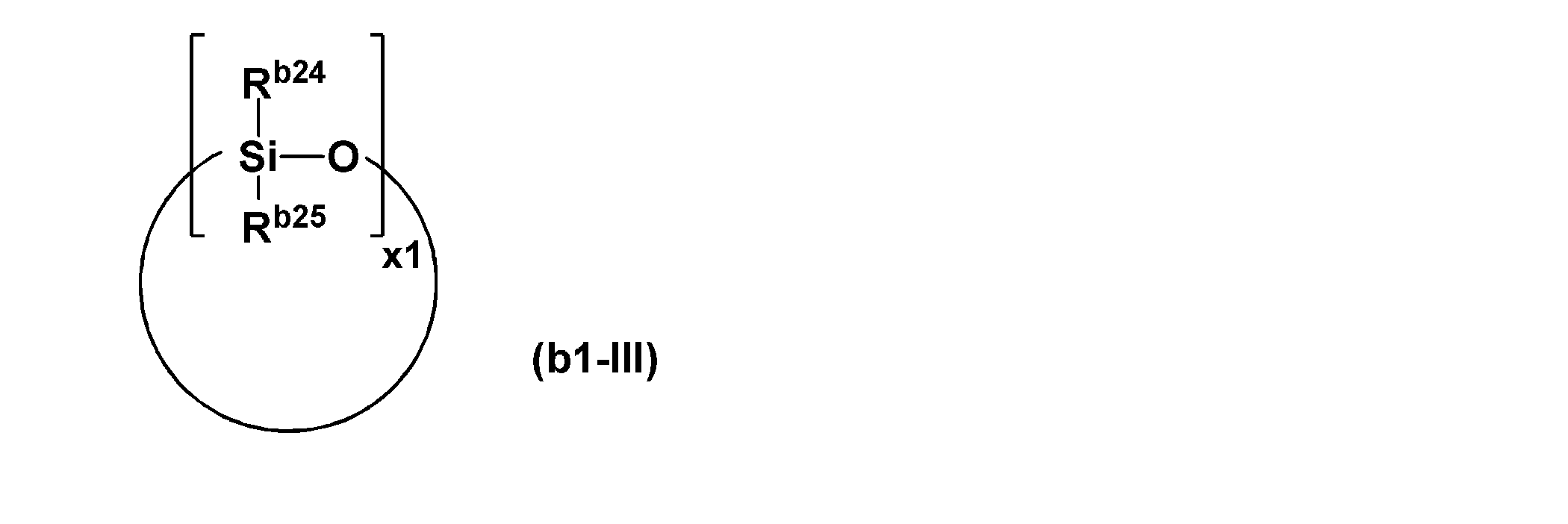
式(b1-III)中、Rb24、及びRb25は、エポキシ基を含有する1価の基又はアルキル基を示す。ただし、式(b1-III)で表される化合物におけるx1個のRb24及びx1個のRb25のうち、少なくとも2個はエポキシ基を含有する1価の基である。また、式(b1-III)中のx1は3以上の整数を示す。尚、式(b1-III)で表される化合物におけるRb24、Rb25は同一であってもよいし、異なっていてもよい。また、複数のRb24は同一であってもよいし、異なっていてもよい。複数のRb25も同一であってもよいし、異なっていてもよい。
上記アルキル基としては、例えば、メチル基、エチル基、プロピル基、イソプロピル基等の炭素原子数が1以上18以下である(好ましくは炭素原子数1以上6以下、特に好ましくは炭素原子数1以上3以下)直鎖状又は分岐鎖状のアルキル基を挙げることができる。
上記アルキル基としては、例えば、メチル基、エチル基、プロピル基、イソプロピル基等の炭素原子数が1以上18以下である(好ましくは炭素原子数1以上6以下、特に好ましくは炭素原子数1以上3以下)直鎖状又は分岐鎖状のアルキル基を挙げることができる。
式(b1-III)中のx1は3以上の整数を示し、なかでも、硬化膜を形成する際の架橋反応性に優れる点で3以上6以下の整数が好ましい。
シロキサン化合物が分子内に有するエポキシ基の数は2個以上であり、硬化膜を形成する際の架橋反応性に優れる点から2個以上6個以下が好ましく、特に好ましくは2個以上4個以下である。
上記エポキシ基を含有する1価の基としては、脂環式エポキシ基、及び-DB-O-Rb26で表されるグリシジルエーテル基[DBはアルキレン基を示し、Rb26はグリシジル基を示す]が好ましく、脂環式エポキシ基がより好ましく、下記式(b1-IIIa)又は下記式(b1-IIIb)で表される脂環式エポキシ基がさらに好ましい。上記DB(アルキレン基)としては、例えば、メチレン基、メチルメチレン基、ジメチルメチレン基、ジメチレン基、トリメチレン基等の炭素原子数が1以上18以下である直鎖状又は分岐鎖状のアルキレン基等を挙げることができる。
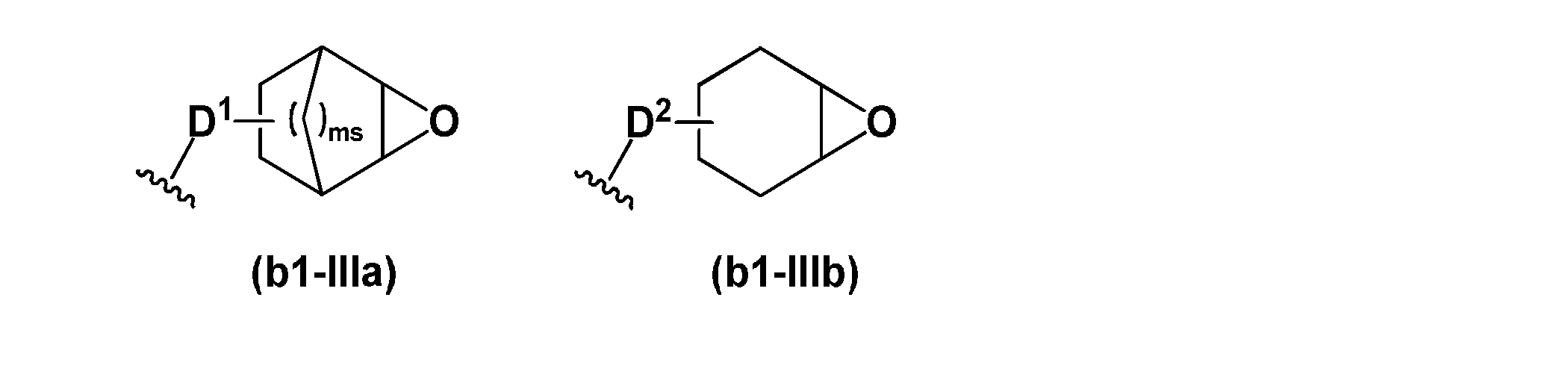
(上記式(b1-IIIa)及び式(b1-IIIb)中、D1及びD2は、それぞれ独立にアルキレン基を表し、msは0以上2以下の整数を表す。)
硬化性組成物は、カチオン硬化性化合物(B)として、式(b1-III)で表されるシロキサン化合物以外にも、脂環式エポキシ基含有環状シロキサン、特開2008-248169号公報に記載の脂環式エポキシ基含有シリコーン樹脂、及び特開2008-19422号公報に記載の1分子中に少なくとも2個のエポキシ官能性基を有するオルガノポリシルセスキオキサン樹脂等のシロキサン骨格を有する化合物を含有していてもよい。
シロキサン化合物としては、より具体的には、下記式で表される、分子内に2以上のグリシジル基を有する環状シロキサン等を挙げることができる。また、シロキサン化合物としては、例えば、商品名「X-40-2670」、「X-40-2701」、「X-40-2728」、「X-40-2738」、「X-40-2740」(以上、信越化学工業社製)等の市販品を用いることができる。
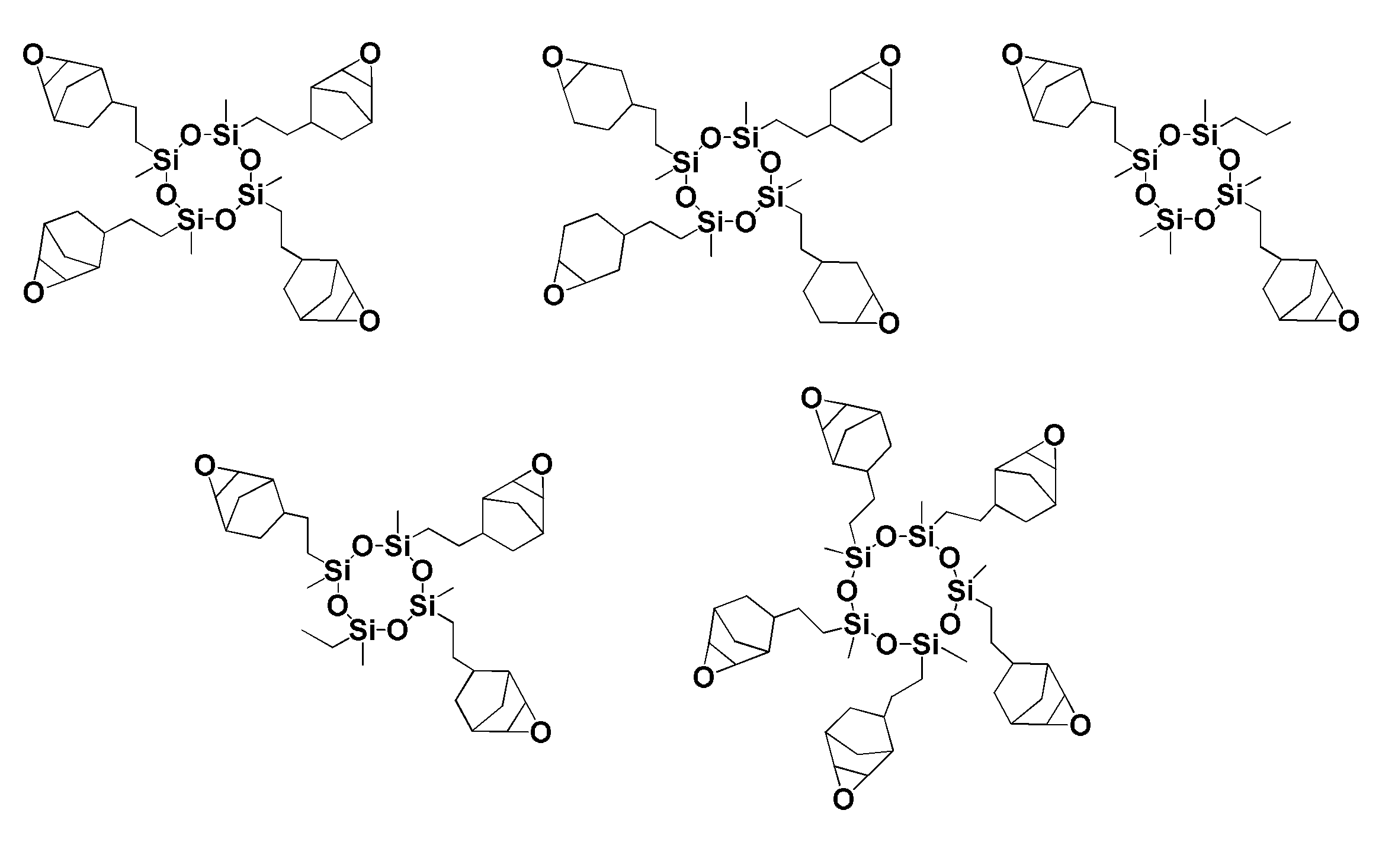
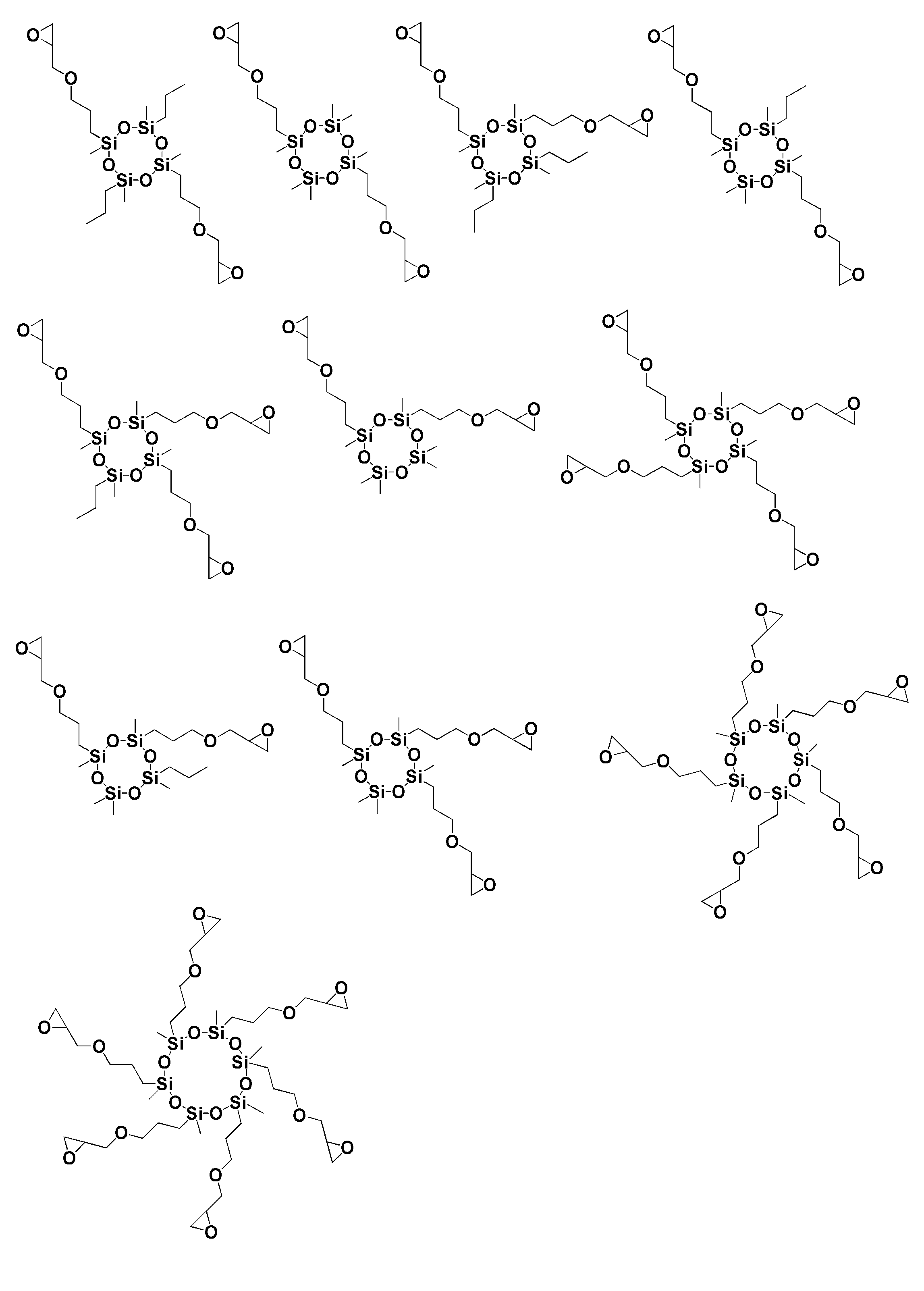
<その他の成分>
硬化性組成物には、必要に応じて、架橋剤(例えば、後述のP1やP2等も含む)、増感剤、界面活性剤、熱重合禁止剤、消泡剤、シランカップリング剤、着色剤(顔料、染料)、無機フィラー、有機フィラー等の添加剤を含有させることができる。いずれの添加剤も、従来公知の添加剤を用いることができる。
また、硬化性組成物は、実質的に非重合体成分からなるが、本発明の効果を損なわない範囲で重合体(エポキシ樹脂等の公知の熱硬化性樹脂、熱可塑性樹脂、アルカリ可溶性樹脂等)を含んでいてもよい。重合体の含有量は硬化性組成物の固形分全体に対して、例えば、0質量%以上5質量%以下である。
硬化性組成物には、必要に応じて、架橋剤(例えば、後述のP1やP2等も含む)、増感剤、界面活性剤、熱重合禁止剤、消泡剤、シランカップリング剤、着色剤(顔料、染料)、無機フィラー、有機フィラー等の添加剤を含有させることができる。いずれの添加剤も、従来公知の添加剤を用いることができる。
また、硬化性組成物は、実質的に非重合体成分からなるが、本発明の効果を損なわない範囲で重合体(エポキシ樹脂等の公知の熱硬化性樹脂、熱可塑性樹脂、アルカリ可溶性樹脂等)を含んでいてもよい。重合体の含有量は硬化性組成物の固形分全体に対して、例えば、0質量%以上5質量%以下である。
増感剤としては、従来より種々のカチオン重合開始剤と併用されている公知の増感剤を特に制限なく用いることができる。
増感剤の具体例としては、アントラセン、9,10-ジブトキシアントラセン、9,10-ジメトキシアントラセン、9,10-ジエトキシアントラセン、2-エチル-9,10-ジメトキシアントラセン、及び9,10-ジプロポキシアントラセン等のアントラセン化合物;ピレン;1,2-ベンズアントラセン;ペリレン;テトラセン;コロネン;チオキサントン、2-メチルチオキサントン、2-エチルチオキサントン、2-クロロチオキサントン、2-イソプロピルチオキサントン及び2,4-ジエチルチオキサントン等のチオキサントン化合物;フェノチアジン、N-メチルフェノチアジン、N-エチルフェノチアジン、及びN-フェニルフェノチアジン等のフェノチアジン化合物;キサントン;1-ナフトール、2-ナフトール、1-メトキシナフタレン、2-メトキシナフタレン、1,4-ジヒドロキシナフタレン、及び4-メトキシ-1-ナフトール等のナフタレン化合物;ジメトキシアセトフェノン、ジエトキシアセトフェノン、2-ヒドロキシ-2-メチル-1-フェニルプロパン-1-オン、4’-イソプロピル-2-ヒドロキシ-2-メチルプロピオフェノン、及び4-ベンゾイル-4’-メチルジフェニルスルフィド等のケトン;N-フェニルカルバゾール、N-エチルカルバゾール、ポリ-N-ビニルカルバゾール、及びN-グリシジルカルバゾール等のカルバゾール化合物;1,4-ジメトキシクリセン及び1,4-ジ-α-メチルベンジルオキシクリセン等のクリセン化合物;9-ヒドロキシフェナントレン、9-メトキシフェナントレン、9-ヒドロキシ-10-メトキシフェナントレン、及び9-ヒドロキシ-10-エトキシフェナントレン等のフェナントレン化合物が挙げられる。
これらの増感剤は、2種以上を組み合わせて用いてもよい。
増感剤の使用量は特に限定されないが、感エネルギー性硬化剤(A)100質量部に対して、1質量部以上300質量部以下が好ましく、5質量部以上200質量部以下がより好ましい。かかる範囲の増感剤を用いることにより、所望する増感作用を得やすい。
増感剤の具体例としては、アントラセン、9,10-ジブトキシアントラセン、9,10-ジメトキシアントラセン、9,10-ジエトキシアントラセン、2-エチル-9,10-ジメトキシアントラセン、及び9,10-ジプロポキシアントラセン等のアントラセン化合物;ピレン;1,2-ベンズアントラセン;ペリレン;テトラセン;コロネン;チオキサントン、2-メチルチオキサントン、2-エチルチオキサントン、2-クロロチオキサントン、2-イソプロピルチオキサントン及び2,4-ジエチルチオキサントン等のチオキサントン化合物;フェノチアジン、N-メチルフェノチアジン、N-エチルフェノチアジン、及びN-フェニルフェノチアジン等のフェノチアジン化合物;キサントン;1-ナフトール、2-ナフトール、1-メトキシナフタレン、2-メトキシナフタレン、1,4-ジヒドロキシナフタレン、及び4-メトキシ-1-ナフトール等のナフタレン化合物;ジメトキシアセトフェノン、ジエトキシアセトフェノン、2-ヒドロキシ-2-メチル-1-フェニルプロパン-1-オン、4’-イソプロピル-2-ヒドロキシ-2-メチルプロピオフェノン、及び4-ベンゾイル-4’-メチルジフェニルスルフィド等のケトン;N-フェニルカルバゾール、N-エチルカルバゾール、ポリ-N-ビニルカルバゾール、及びN-グリシジルカルバゾール等のカルバゾール化合物;1,4-ジメトキシクリセン及び1,4-ジ-α-メチルベンジルオキシクリセン等のクリセン化合物;9-ヒドロキシフェナントレン、9-メトキシフェナントレン、9-ヒドロキシ-10-メトキシフェナントレン、及び9-ヒドロキシ-10-エトキシフェナントレン等のフェナントレン化合物が挙げられる。
これらの増感剤は、2種以上を組み合わせて用いてもよい。
増感剤の使用量は特に限定されないが、感エネルギー性硬化剤(A)100質量部に対して、1質量部以上300質量部以下が好ましく、5質量部以上200質量部以下がより好ましい。かかる範囲の増感剤を用いることにより、所望する増感作用を得やすい。
界面活性剤としては、アニオン系、カチオン系、ノニオン系等の化合物が挙げられ、熱重合禁止剤としては、ヒドロキノン、ヒドロキノンモノエチルエーテル等が挙げられ、消泡剤としては、シリコーン系、フッ素系化合物等が挙げられる。
また、硬化性組成物は、本発明の目的を阻害しない範囲で、芳香族基上にビニロキシ基を有さないビニルエーテル化合物やエポキシ化合物等の、芳香族ビニルエーテル化合物(B)以外の重合性の化合物を含んでいてもよい。
また、硬化性組成物は、本発明の目的を阻害しない範囲で、芳香族基上にビニロキシ基を有さないビニルエーテル化合物やエポキシ化合物等の、芳香族ビニルエーテル化合物(B)以外の重合性の化合物を含んでいてもよい。
本実施形態においては、硬化物について高屈折率化させる観点で、エポキシ基含有フルオレン化合物を硬化性組成物に含ませることも好ましい態様の1つとして挙げられる。典型的には、9,9-ビス(グリシジルオキシナフチル)フルオレン類を含む下記式(P1)で表される化合物がより好ましい。
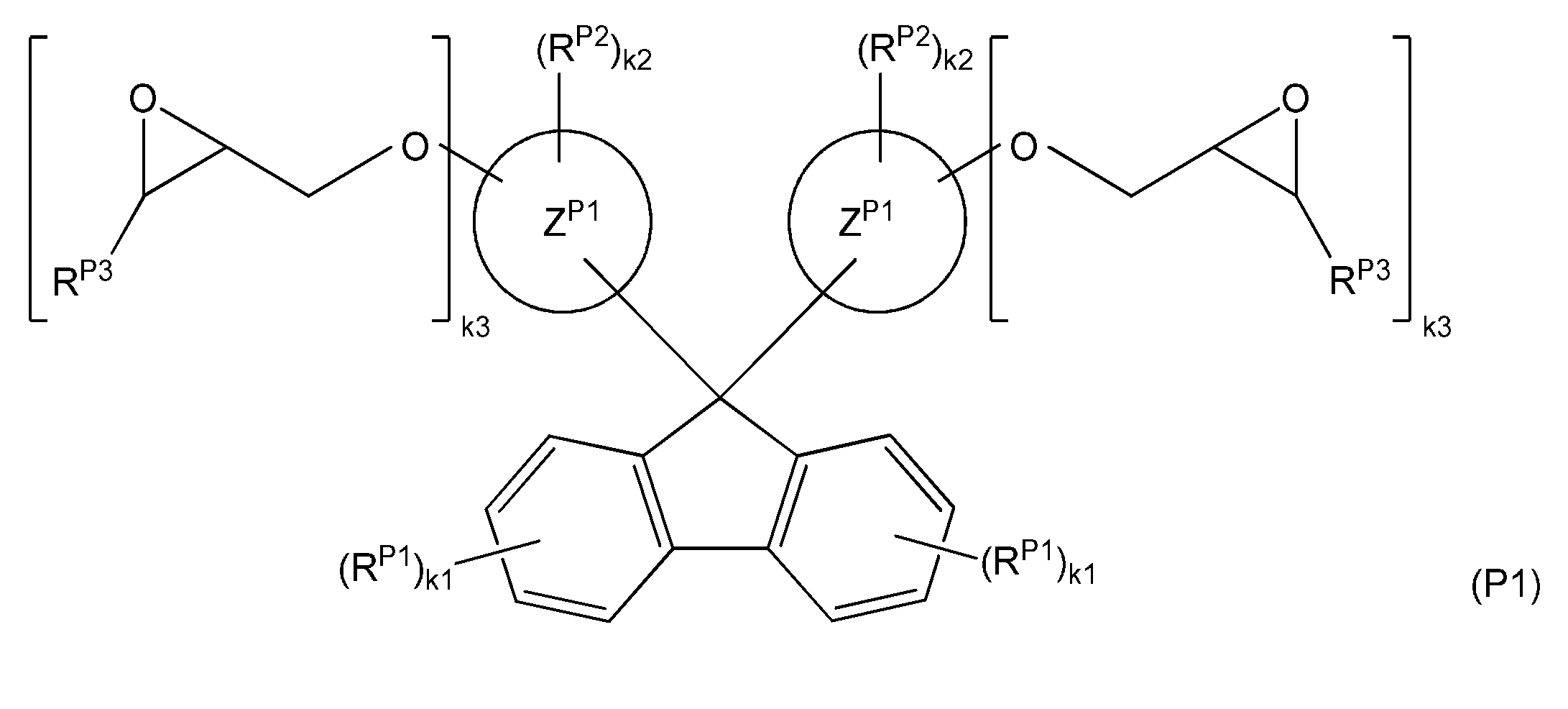
上記式(P1)において、環ZP1で表される縮合多環式芳香族炭化水素環としては、縮合二環式炭化水素環(例えば、インデン環、ナフタレン環等のC8~C20縮合二環式炭化水素環、好ましくはC10~C16縮合二環式炭化水素環)、縮合三環式炭化水素環(例えば、アントラセン環、フェナントレン環等)等の縮合二~四環式炭化水素環等が挙げられる。好ましい縮合多環式芳香族炭化水素環としては、ナフタレン環、アントラセン環等が挙げられ、特にナフタレン環が好ましい。なお、フルオレンの9位に置換する2つの環ZP1は同一の又は異なる環であってもよく、通常、同一の環であってもよい。
なお、フルオレンの9位に置換する環ZP1の置換位置は、特に限定されず、例えば、フルオレンの9位に置換するナフチル基は、1-ナフチル基、2-ナフチル基等であってもよく、特に2-ナフチル基であるのが好ましい。
また、上記式(P1)において、RP1で表される置換基としては、例えば、シアノ基、ハロゲン原子(フッ素原子、塩素原子、臭素原子等)、炭化水素基[例えば、アルキル基、アリール基(フェニル基等のC6~C10アリール基)等]等の非反応性置換基が挙げられ、特に、ハロゲン原子、シアノ基又はアルキル基(特にアルキル基)である場合が多い。アルキル基としては、メチル基、エチル基、プロピル基、イソプロピル基、ブチル基、t-ブチル基等のC1~C6アルキル基(例えば、C1~C4アルキル基、特にメチル基)等が例示できる。なお、k1が複数(2以上)である場合、RP1は互いに異なっていてもよく、同一であってもよい。また、フルオレン(又はフルオレン骨格)を構成する2つのベンゼン環に置換するRP1は同一であってもよく、異なっていてもよい。また、フルオレンを構成するベンゼン環に対するRP1の結合位置(置換位置)は、特に限定されない。好ましいk1は、0又は1、特に0である。なお、フルオレンを構成する2つのベンゼン環において、k1は、互いに同一又は異なっていてもよい。
環ZP1に置換するRP2としては、例えば、アルキル基(例えば、メチル基、エチル基、プロピル基、イソプロピル基、ブチル基等のC1~C12アルキル基、好ましくはC1~C8アルキル基、さらに好ましくはC1~C6アルキル基等)、シクロアルキル基(例えば、シクロヘキシル基等のC5~C8シクロアルキル基、好ましくはC5~C6シクロアルキル基等)、アリール基(例えば、フェニル基、トリル基、キシリル基等のC6~C14アリール基、好ましくはC6~C10アリール基、さらに好ましくはC6~C8アリール基等)、アラルキル基(例えば、ベンジル基、フェネチル基等のC6~C10アリール基とC1~C4アルキル基とが結合してなるアラルキル基等)等の炭化水素基;アルコキシ基(例えば、メトキシ基等のC1~C8アルコキシ基、好ましくはC1~C6アルコキシ基等)、シクロアルコキシ基(C5~C10シクロアルキルオキシ基等)、アリールオキシ基(C6~C10アリールオキシ基等)等の基-ORP4[式中、RP4は炭化水素基(上記例示の炭化水素基等)を示す。];アルキルチオ基(例えば、メチルチオ基等のC1~C8アルキルチオ基、好ましくはC1~C6アルキルチオ基等)等の基-SRP4(式中、RP4は上記と同じ。);アシル基(例えば、アセチル基等のC1~C6アシル基等);アルコキシカルボニル基(例えば、メトキシカルボニル基等のC1~C4アルコキシ基とカルボニル基とが結合してなるアルコキシカルボニル基等);ハロゲン原子(フッ素原子、塩素原子、臭素原子、ヨウ素原子等);ヒドロキシ基;ニトロ基;シアノ基;置換アミノ基(例えば、ジメチルアミノ基等のジアルキルアミノ基等)等が挙げられる。
これらのうち、RP2は、炭化水素基、アルコキシ基、シクロアルコキシ基、アリールオキシ基、アラルキルオキシ基、アシル基、ハロゲン原子、ニトロ基、シアノ基、置換アミノ基等であるのが好ましく、特に、好ましいRP2は、炭化水素基[例えば、アルキル基(例えば、C1~C6アルキル基)]、アルコキシ基(C1~C4アルコキシ基等)、ハロゲン原子(フッ素原子、塩素原子、臭素原子、ヨウ素原子等)等である。
なお、同一の環ZP1において、k2が複数(2以上)である場合、RP2は互いに異なっていてもよく、同一であってもよい。また、2つの環ZP1において、RP2は同一であってもよく、異なっていてもよい。また、好ましいk2は、0以上8以下、好ましくは0以上6以下(例えば、1以上5以下)、さらに好ましくは0以上4以下、特に0以上2以下(例えば、0又は1)であってもよい。なお、2つの環ZP1において、k2は、互いに同一又は異なっていてもよい。
なお、上記式(P1)において、RP3は、水素原子又はメチル基であり、好ましいRP3は水素原子である。
上記式(P1)において、k3は、1以上であればよく、例えば、1以上4以下、好ましくは1以上3以下、さらに好ましくは1又は2、特に1であってもよい。なお、k3は、それぞれの環ZP1において、同一又は異なっていてもよく、通常、同一である場合が多い。なお、エポキシ基含有基の置換位置は、特に限定されず、環ZP1の適当な置換位置に置換していればよい。特に、エポキシ基含有基は、縮合多環式炭化水素環において、フルオレンの9位に結合した炭化水素環とは別の炭化水素環(例えば、ナフタレン環の5位、6位等)に少なくとも置換している場合が多い。
上記式(P1)で表される具体的な化合物としては、例えば、9,9-ビス(グリシジルオキシナフチル)フルオレン[例えば、9,9-ビス(6-グリシジルオキシ-2-ナフチル)フルオレン、9,9-ビス(5-グリシジルオキシ-1-ナフチル)フルオレン等]等の上記式(P1)においてk3が1である化合物等が挙げられる。
また、本実施形態においては、硬化物について高屈折率化させる観点で、水酸基含有フルオレン化合物を硬化性組成物に含ませることも好ましい態様の1つとして挙げられる。典型的には、下記式(P2)で表される化合物を含むことが好ましい。
式(P2)において、RP1、RP2、ZP1、k1、k2、及びk3は、式(P1)と同様である。
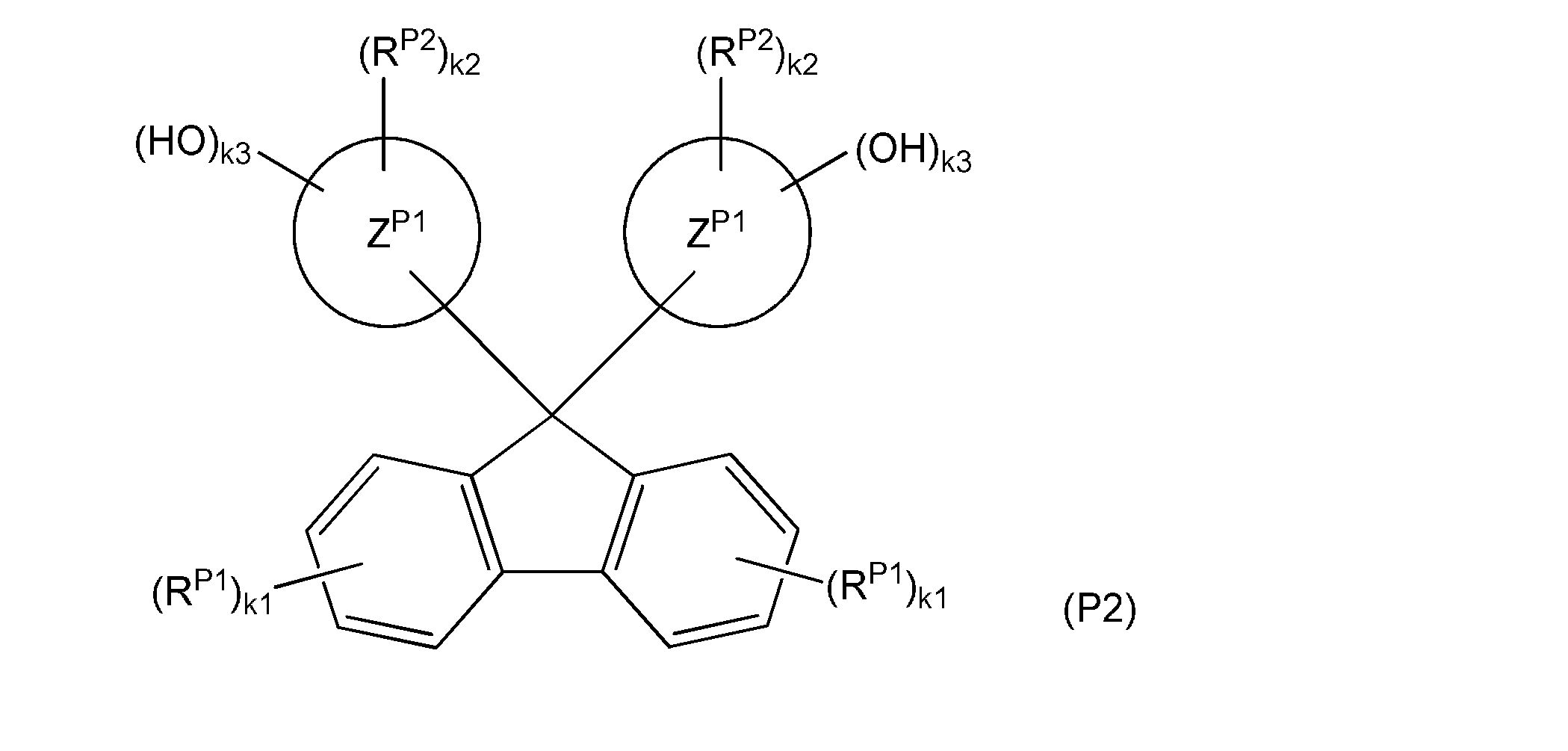
式(P2)において、RP1、RP2、ZP1、k1、k2、及びk3は、式(P1)と同様である。
<溶剤(S)>
硬化性組成物は、塗布性や粘度の調整の目的で、溶剤(S)を含むのが好ましい。溶剤(S)としては、典型的には有機溶剤が用いられる。有機溶剤の種類は、感エネルギー性組成物に含まれる成分を、均一に溶解又は分散させることができれば特に限定されない。硬化性組成物が溶剤(S)を含む場合、硬化性組成物の固形分濃度は、例えば、0.1質量%以上50質量%以下であり、好ましくは0.5質量%以上30質量%以下である。上記範囲とすることで、塗布性や操作性が良好となる。
硬化性組成物は、塗布性や粘度の調整の目的で、溶剤(S)を含むのが好ましい。溶剤(S)としては、典型的には有機溶剤が用いられる。有機溶剤の種類は、感エネルギー性組成物に含まれる成分を、均一に溶解又は分散させることができれば特に限定されない。硬化性組成物が溶剤(S)を含む場合、硬化性組成物の固形分濃度は、例えば、0.1質量%以上50質量%以下であり、好ましくは0.5質量%以上30質量%以下である。上記範囲とすることで、塗布性や操作性が良好となる。
溶剤(S)として使用し得る有機溶剤の好適な例としては、エチレングリコールモノメチルエーテル、エチレングリコールモノエチルエーテル、エチレングリコール-n-プロピルエーテル、エチレングリコールモノ-n-ブチルエーテル、ジエチレングリコールモノメチルエーテル、ジエチレングリコールモノエチルエーテル、ジエチレングリコールモノ-n-プロピルエーテル、ジエチレングリコールモノ-n-ブチルエーテル、トリエチレングリコールモノメチルエーテル、トリエチレングリコールモノエチルエーテル、プロピレングリコールモノメチルエーテル、プロピレングリコールモノエチルエーテル、プロピレングリコールモノ-n-プロピルエーテル、プロピレングリコールモノ-n-ブチルエーテル、ジプロピレングリコールモノメチルエーテル、ジプロピレングリコールモノエチルエーテル、ジプロピレングリコールモノ-n-プロピルエーテル、ジプロピレングリコールモノ-n-ブチルエーテル、トリプロピレングリコールモノメチルエーテル、トリプロピレングリコールモノエチルエーテル等の(ポリ)アルキレングリコールモノアルキルエーテル類;エチレングリコールモノメチルエーテルアセテート、エチレングリコールモノエチルエーテルアセテート、ジエチレングリコールモノメチルエーテルアセテート、ジエチレングリコールモノエチルエーテルアセテート、プロピレングリコールモノメチルエーテルアセテート、プロピレングリコールモノエチルエーテルアセテート等の(ポリ)アルキレングリコールモノアルキルエーテルアセテート類;ジエチレングリコールジメチルエーテル、ジエチレングリコールメチルエチルエーテル、ジエチレングリコールジエチルエーテル、テトラヒドロフラン等の他のエーテル類;メチルエチルケトン、シクロヘキサノン、2-ヘプタノン、3-ヘプタノン等のケトン類;2-ヒドロキシプロピオン酸メチル、2-ヒドロキシプロピオン酸エチル等の乳酸アルキルエステル類;2-ヒドロキシ-2-メチルプロピオン酸エチル、3-メトキシプロピオン酸メチル、3-メトキシプロピオン酸エチル、3-エトキシプロピオン酸メチル、3-エトキシプロピオン酸エチル、エトキシ酢酸エチル、ヒドロキシ酢酸エチル、2-ヒドロキシ-3-メチルブタン酸メチル、3-メチル-3-メトキシブチルアセテート、3-メチル-3-メトキシブチルプロピオネート、酢酸エチル、酢酸n-プロピル、酢酸イソプロピル、酢酸n-ブチル、酢酸イソブチル、蟻酸n-ペンチル、酢酸イソペンチル、プロピオン酸n-ブチル、酪酸エチル、酪酸n-プロピル、酪酸イソプロピル、酪酸n-ブチル、ピルビン酸メチル、ピルビン酸エチル、ピルビン酸n-プロピル、アセト酢酸メチル、アセト酢酸エチル、2-オキソブタン酸エチル等の他のエステル類;トルエン、キシレン等の芳香族炭化水素類;N-メチルピロリドン、N,N-ジメチルホルムアミド、N,N-ジメチルアセトアミド等のアミド類等が挙げられる。これらの有機溶剤は、単独又は2種以上組み合わせて用いることができる。
硬化性組成物は、本発明の効果を損なわない範囲で、高沸点溶媒を含んでいてもよい。高沸点溶媒とは、大気圧下での沸点が180℃以上の溶媒である。
高沸点溶剤としては、炭化水素類、アルコール類、ケトン類、エステル類、エーテル類、塩素系溶剤等の中から適宜選択すればよいが例えば、1-オクタノール、2-エチルヘキサノール、1-ノナノール、1-デカノール、1-ウンデカノール、エチレングリコール、1,2-プロピレングリコール、1,3-ブチレングリコール、2,4-ペンタンジオール、2-メチル-2,4-ペンタンジオール、2,5-ヘキサンジオール、2,4-ヘプタンジオール、2-エチル-1,3-ヘキサンジオール、ジエチレングリコール、ジプロピレングリコール、トリエチレングリコール、トリプロピレングリコール、グリセリン、酢酸n-ノニル、モノヘキシルエーテル、エチレングリコールモノ-2-エチルヘキシルエーテル、エチレングリコールモノフェニルエーテル、エチレングリコールモノベンジルエーテル、ジエチレングリコールモノエチルエーテル、ジエチレングリコールモノイソプロピルエーテル、ジエチレングリコールモノ-n-ブチルエーテル、ジエチレングリコールモノイソブチルエーテル、ジエチレングリコールモノヘキシルエーテル、ジエチレングリコールモノフェニルエーテル、ジエチレングリコールモノベンジルエーテル、ジエチレングリコールジエチルエーテル、ジエチレングリコールジブチルエーテル、ジエチレングリコールブチルメチルエーテル、トリエチレングリコールジメチルエーテル、トリエチレングリコールモノメチルエーテル、トリエチレングリコール-n-ブチルエーテル、トリエチレングリコールブチルメチルエーテル、テトラエチレングリコールジメチルエーテル、ジプロピレングリコールモノメチルエーテル、ジプロピレングリコールモノ-n-プロピルエーテル、ジプロピレングリコールモノ-n-ブチルエーテル、トリプロピレングリコールジメチルエーテル、トリプロピレングリコールモノメチルエーテル、トリプロピレングリコールモノ-n-プロピルエーテル、トリプロピレングリコールモノ-n-ブチルエーテル、エチレングリコールモノエチルエーテルアセテート、エチレングリコールモノブチルエーテルアセテート、ジエチレングリコールモノメチルエーテルアセテート、ジエチレングリコールモノエチルエーテルアセテート、ジエチレングリコールモノブチルエーテルアセテート、トリアセチン、プロピレングリコールジアセテート、ジプロピレングリコールメチル-n-プロピルエーテル、ジプロピレングリコールメチルエーテルアセテート、1,4―ブタンジオールジアセテート、1,3―ブチレングリコールジアセテート、1,6-ヘキサンジオールジアセテート、γ-ブチロラクトン等を例示することができ、これらを単独又は混合して用いてもよい。高沸点溶剤の含有量は、溶剤成分全体に対し、例えば0質量%以上25質量%以下の範囲で調製すればよく、好ましくは0質量%以上10質量%以下である。
≪硬化性組成物の製造方法≫
以上説明した各成分を所定の比率で均一に混合することにより、硬化性組成物を製造することができる。必要に応じて、不溶性の異物を除去するために、所望のサイズの開口を有するフィルターを用いて硬化性組成物をろ過してもよい。
以上説明した各成分を所定の比率で均一に混合することにより、硬化性組成物を製造することができる。必要に応じて、不溶性の異物を除去するために、所望のサイズの開口を有するフィルターを用いて硬化性組成物をろ過してもよい。
≪硬化物の形成方法≫
硬化物の形成方法は、所望する形状に成形された前述の硬化性組成物を硬化させることができる方法であれば特に限定されない。硬化性組成物は、光酸発生剤(A1)及び熱酸発生剤(A2)を含む。このため、通常、硬化物を形成する際には、硬化性組成物に対して露光及び加熱が施される。
硬化物の形成方法は、所望する形状に成形された前述の硬化性組成物を硬化させることができる方法であれば特に限定されない。硬化性組成物は、光酸発生剤(A1)及び熱酸発生剤(A2)を含む。このため、通常、硬化物を形成する際には、硬化性組成物に対して露光及び加熱が施される。
硬化組成物の成形体の形状は特に限定されないが、熱を成形体に均一に加えやすかったり、露光光を成形体に均一に照射しやすかったりすることから膜(フィルム)であるのが好ましい。
硬化物を硬化膜として製造する方法の典型例を以下説明する。
まず、ガラス基板等の基板上に、硬化性組成物を塗布して塗布膜を形成する。塗布方法としては、ロールコータ、リバースコーター、バーコーター等の接触転写型塗布装置や、スピンナー(回転式塗布装置)、スリットコーター、カーテンフローコーター等の非接触型塗布装置を用いる方法が挙げられる。
また、硬化性組成物の粘度を適切な範囲に調整したうえで、インクジェット法、スクリーン印刷法等の印刷法によって硬化性組成物の塗布を行って、所望の形状にパターニングされた塗布膜を形成してもよい。
まず、ガラス基板等の基板上に、硬化性組成物を塗布して塗布膜を形成する。塗布方法としては、ロールコータ、リバースコーター、バーコーター等の接触転写型塗布装置や、スピンナー(回転式塗布装置)、スリットコーター、カーテンフローコーター等の非接触型塗布装置を用いる方法が挙げられる。
また、硬化性組成物の粘度を適切な範囲に調整したうえで、インクジェット法、スクリーン印刷法等の印刷法によって硬化性組成物の塗布を行って、所望の形状にパターニングされた塗布膜を形成してもよい。
次いで、必要に応じて、溶剤(S)等の揮発成分を除去して塗布膜を乾燥させる。乾燥方法は特に限定されないが、例えば、真空乾燥装置(VCD)を用いて室温にて減圧乾燥し、その後、ホットプレートにて80℃以上120℃以下、好ましくは90℃以上100℃以下の温度にて60秒以上120秒以下の範囲内の時間乾燥する方法が挙げられる。
このようにして塗布膜を形成した後、塗布膜に対して露光及び加熱を施す。
露光は、エキシマレーザー光等の活性エネルギー線を照射して行う。照射するエネルギー線量は、硬化性組成物の組成によっても異なるが、例えば10mJ/cm2以上2000mJ/cm2以下が好ましく、30mJ/cm2以上1500mJ/cm2以下がより好ましく、50mJ/cm2以上1200mJ/cm2以下がさらに好ましい。
加熱を行う際の温度は特に限定されず、120℃以上280℃以下が好ましく、150℃以上260℃以下がより好ましく、200℃以上250℃以下が特に好ましい。加熱時間は、典型的には、1分以上60分以下が好ましく、10分以上50分以下がより好ましく、20分以上40分以下が特に好ましい。
このようにして塗布膜を形成した後、塗布膜に対して露光及び加熱を施す。
露光は、エキシマレーザー光等の活性エネルギー線を照射して行う。照射するエネルギー線量は、硬化性組成物の組成によっても異なるが、例えば10mJ/cm2以上2000mJ/cm2以下が好ましく、30mJ/cm2以上1500mJ/cm2以下がより好ましく、50mJ/cm2以上1200mJ/cm2以下がさらに好ましい。
加熱を行う際の温度は特に限定されず、120℃以上280℃以下が好ましく、150℃以上260℃以下がより好ましく、200℃以上250℃以下が特に好ましい。加熱時間は、典型的には、1分以上60分以下が好ましく、10分以上50分以下がより好ましく、20分以上40分以下が特に好ましい。
前述の硬化性組成物は、例えば、上記の条件により良好に硬化する。
具体的には、前述の硬化性組成物の硬化物において、以下の方法により測定されるエポキシ基含有量が、好ましくは1.8以下であり、より好ましくは0.8以上1.3以下である。エポキシ基含有量は、小さいほど硬化が良好に進行していることを意味する。
上記のエポキシ基含有量は、硬化物をフーリエ変換型赤外分光(FT-IR)装置により測定して求められたエポキシ基を表すピークの面積を、同じくFT-IR装置により測定して求められたベンゼンを表すピークの面積で除した値である。
具体的には、前述の硬化性組成物の硬化物において、以下の方法により測定されるエポキシ基含有量が、好ましくは1.8以下であり、より好ましくは0.8以上1.3以下である。エポキシ基含有量は、小さいほど硬化が良好に進行していることを意味する。
上記のエポキシ基含有量は、硬化物をフーリエ変換型赤外分光(FT-IR)装置により測定して求められたエポキシ基を表すピークの面積を、同じくFT-IR装置により測定して求められたベンゼンを表すピークの面積で除した値である。
以上のように形成される硬化物、特に硬化膜は、画像表示装置用の表示パネルやOLED照明に好適に利用される。
以下、実施例を示して本発明をさらに具体的に説明するが、本発明の範囲は、これらの実施例に限定されない。
〔実施例1~6、及び比較例1~11〕
実施例、及び比較例において、前述の光酸発生剤(A1)として、A1-1、A1-2、A1-3、及びA1-4を用いた。A1-1、及びA1-2の構造を以下に記す。
A1-3は、A1-1及びA1-2が備えるカチオン部とは異なるトリアリールスルホニウムカチオンからなるカチオン部と、A1-1及びA1-2が備えるアニオン部と同種のアニオンからなるアニオン部とからなるスルホニウム塩である。
A1-4は、A1-3が備えるカチオン部と同種のカチオン部と、(C6F5)4Ga-で表されるアニオン部とからなるスルホニウム塩である。(C6F5)4Ga-において、C6F5は、ペンタフルオロフェニル基である。
実施例、及び比較例において、前述の熱酸発生剤(A2)として、A2-1、A2-2、及びA2-3を用いた。A2-2、及びA2-3の構造を以下に記す。
A2-1は、A2-2及びA2-3が備えるカチオン部と、A1-4が備えるアニオン部とからなるスルホニウム塩である。

実施例、及び比較例において、前述の光酸発生剤(A1)として、A1-1、A1-2、A1-3、及びA1-4を用いた。A1-1、及びA1-2の構造を以下に記す。
A1-3は、A1-1及びA1-2が備えるカチオン部とは異なるトリアリールスルホニウムカチオンからなるカチオン部と、A1-1及びA1-2が備えるアニオン部と同種のアニオンからなるアニオン部とからなるスルホニウム塩である。
A1-4は、A1-3が備えるカチオン部と同種のカチオン部と、(C6F5)4Ga-で表されるアニオン部とからなるスルホニウム塩である。(C6F5)4Ga-において、C6F5は、ペンタフルオロフェニル基である。
実施例、及び比較例において、前述の熱酸発生剤(A2)として、A2-1、A2-2、及びA2-3を用いた。A2-2、及びA2-3の構造を以下に記す。
A2-1は、A2-2及びA2-3が備えるカチオン部と、A1-4が備えるアニオン部とからなるスルホニウム塩である。
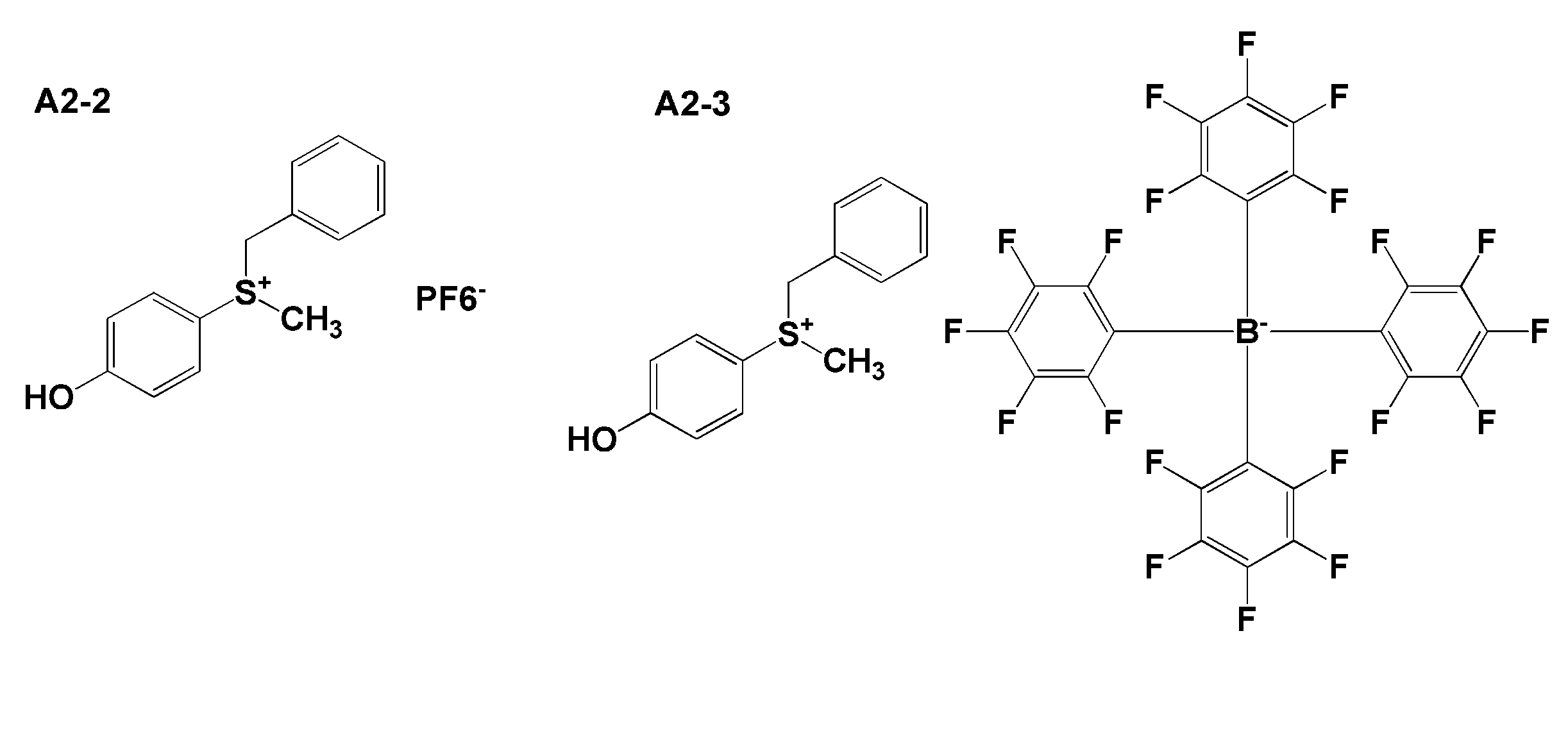
実施例、及び比較例において、カチオン硬化性化合物(B)として、下記の化合物を用いた。

それぞれ、表1に記載の種類及び量のカチオン硬化剤(A)と、カチオン硬化性化合物(B)99質量部とを、プロピレングリコールモノメチルエーテルアセテートに固形分濃度が20質量%となるように均一に溶解させて、各実施例及び比較例の硬化性組成物を得た。得られた硬化性組成物を用いて、下記の方法に従い、硬化性組成物の硬化物について、外観、着色、耐溶剤性、及びエポキシ基含有量を評価した。これらの評価結果を表1に記す。ただし、着色、及びエポキシ基含有量については一部測定を行っていない実施例がある。
<硬化物の外観>
各実施例及び比較例の硬化性組成物を、ガラス基板上にスピンコーターにより塗布した後、100℃120秒間加熱して塗布膜を形成した。形成された塗布膜全面に、1000mJ/cm2の露光量で露光を行った。次いで、露光された塗布膜を230℃で20分加熱して硬化物として硬化膜(膜厚約1μm)を形成した。
形成された硬化膜を目視で観察して、透明であるか、着色により黄色味を帯びているかを確認した。
各実施例及び比較例の硬化性組成物を、ガラス基板上にスピンコーターにより塗布した後、100℃120秒間加熱して塗布膜を形成した。形成された塗布膜全面に、1000mJ/cm2の露光量で露光を行った。次いで、露光された塗布膜を230℃で20分加熱して硬化物として硬化膜(膜厚約1μm)を形成した。
形成された硬化膜を目視で観察して、透明であるか、着色により黄色味を帯びているかを確認した。
<硬化物の着色>
硬化物の外観評価に用いた硬化膜について、日本電色工業株式会社製の商品名「ヘーズメーターNDH-5000」を用いて、L*a*b*表色系におけるb*値の測定を行った。
硬化物の外観評価に用いた硬化膜について、日本電色工業株式会社製の商品名「ヘーズメーターNDH-5000」を用いて、L*a*b*表色系におけるb*値の測定を行った。
<耐溶剤性>
硬化物の外観評価と同様の方法により形成した硬化膜を、アセトンに2分間浸漬してアセトンに対する耐性を評価した。浸漬前後の膜厚の変化量が3%以内である場合を○と判定し、10%以上である場合を×と判定した。なお、耐溶剤性の発現は、カチオン硬化性化合物(B)の硬化が良好に進行していることを意味する。
硬化物の外観評価と同様の方法により形成した硬化膜を、アセトンに2分間浸漬してアセトンに対する耐性を評価した。浸漬前後の膜厚の変化量が3%以内である場合を○と判定し、10%以上である場合を×と判定した。なお、耐溶剤性の発現は、カチオン硬化性化合物(B)の硬化が良好に進行していることを意味する。
<エポキシ基含有量>
硬化物の外観評価と同様の方法により形成した硬化膜をフーリエ変換型赤外分光(FT-IR)装置により測定した。測定結果に基づいて、エポキシ基を表すピークの面積を、同じくFT-IR装置により測定したベンゼンを表すピークの面積で除した値で表される値をエポキシ基含有量として算出した。エポキシ基含有量の値が小さいほどカチオン硬化性化合物(B)の硬化が進行していることを意味する。
硬化物の外観評価と同様の方法により形成した硬化膜をフーリエ変換型赤外分光(FT-IR)装置により測定した。測定結果に基づいて、エポキシ基を表すピークの面積を、同じくFT-IR装置により測定したベンゼンを表すピークの面積で除した値で表される値をエポキシ基含有量として算出した。エポキシ基含有量の値が小さいほどカチオン硬化性化合物(B)の硬化が進行していることを意味する。

表1によれば、それぞれ前述の所定の要件を満たす光酸発生剤(A1)と、熱酸発生剤(A2)とを組み合わせて含むカチオン硬化剤(A)、カチオン硬化性化合物(B)としてのエポキシ化合物とを含む実施例の硬化性組成物は、着色の少なく透明であって耐溶剤性に優れる硬化膜を与え、露光及び加熱によって良好に硬化を進行させることが分かる。
他方、表1によれば、光酸発生剤、及び熱酸発生剤の少なくとも一方が所定の要件を満たさないか、カチオン硬化剤(A)として光酸発生剤しか含まない比較例の硬化性組成物では、硬化時の着色の抑制と、良好な硬化の進行とを両立できないことが分かる。
他方、表1によれば、光酸発生剤、及び熱酸発生剤の少なくとも一方が所定の要件を満たさないか、カチオン硬化剤(A)として光酸発生剤しか含まない比較例の硬化性組成物では、硬化時の着色の抑制と、良好な硬化の進行とを両立できないことが分かる。
Claims (8)
- カチオン硬化剤(A)と、カチオン硬化性化合物(B)とを含み、
前記カチオン硬化剤(A)として、光酸発生剤(A1)と、熱酸発生剤(A2)とを含み、
前記光酸発生剤(A1)が、下記式(ai)で表されるカチオン部を有するオニウム塩であり、
前記熱酸発生剤(A2)が、下記式(Ai)で表されるアニオン部を有するオニウム塩である、硬化性組成物。
(Ra1)t+1-Ra2+・・・(ai)
(式(ai)中、Ra1は、それぞれ独立に、1価の有機基であり、Ra2は、IUPAC表記法による元素周期律表の15族~17族の原子価tの元素であり、Ra1の少なくとも1つは置換基を有してもよいアリール基である。)
(RA1)4-Ga-・・・(Ai)
(式(Ai)中、RA1は、それぞれ独立に、1以上の置換基を有してもよいフェニル基、又はパーフルオロアルキル基である。) - 前記熱酸発生剤(A2)が、下記式(Aiii)で表されるカチオン部を有するオニウム塩である、請求項1に記載の硬化性組成物。

- 前記Dが硫黄であり、uが2である請求項2に記載の硬化性組成物。
- 前記Ra2が硫黄であり、tが2である請求項1~3のいずれか1項に記載の硬化性組成物。
- 前記式(ai)で表されるオニウム塩が、下記式(a1)で表されるカチオン部を有する、請求項4に記載の硬化性組成物。
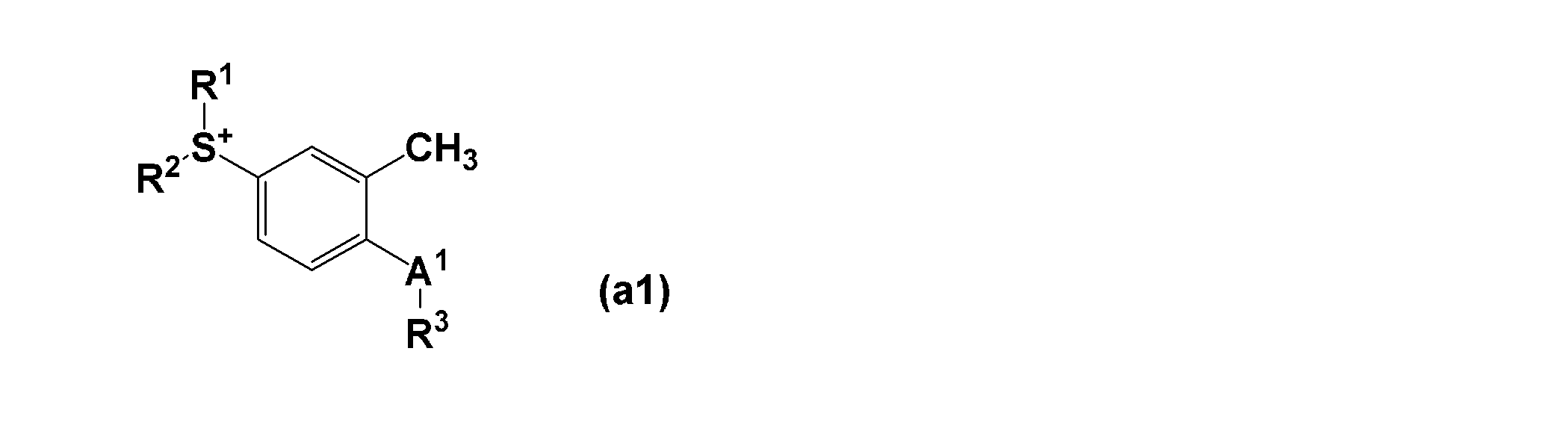
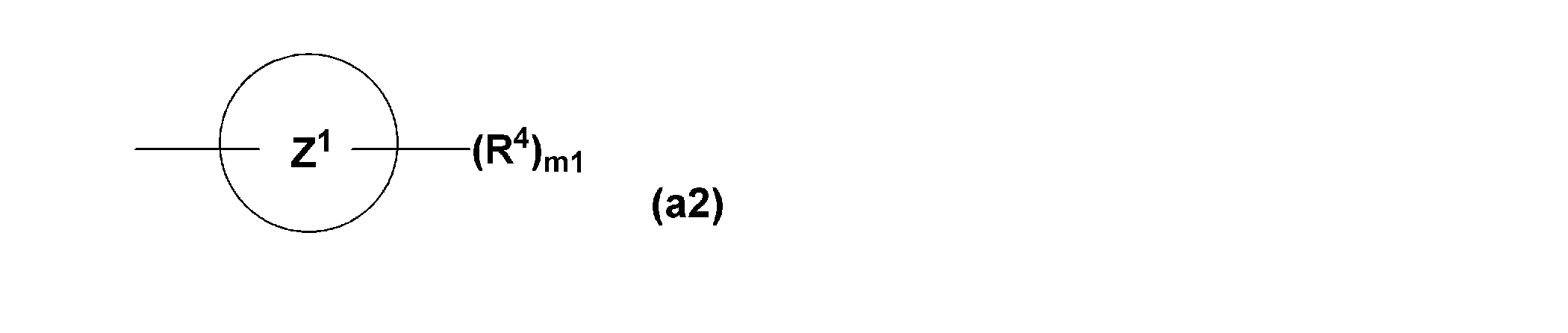


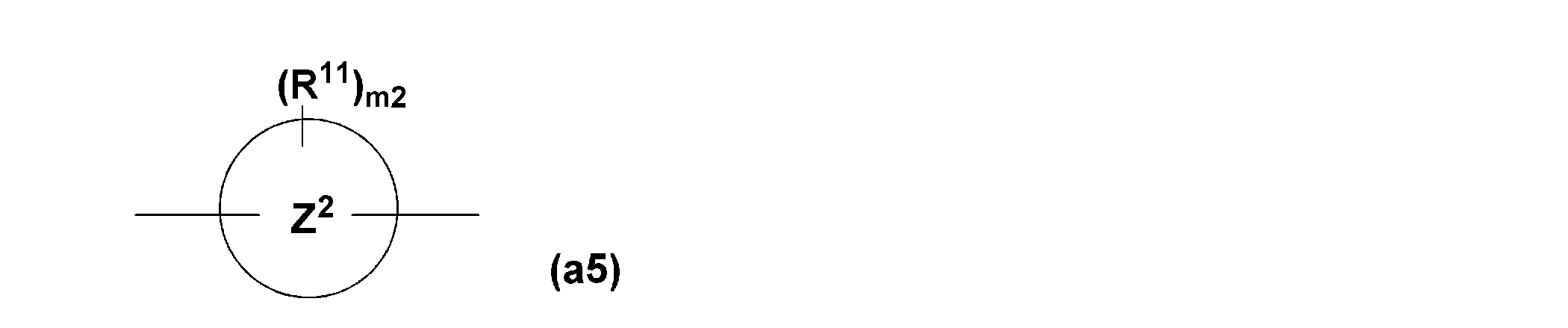

- 前記光酸発生剤(A1)の質量と、前記熱酸発生剤(A2)の質量との合計に対して、前記光酸発生剤(A1)の質量の比率が50質量%以下である、請求項1~5のいずれか1項に記載の、請求項1~5のいずれか1項に記載の硬化性組成物。
- 請求項1~6のいずれか1項に記載の硬化性組成物の硬化物。
- 請求項1~6のいずれか1項に記載の硬化性組成物に露光及び加熱を施す、硬化物の形成方法。
Priority Applications (2)
| Application Number | Priority Date | Filing Date | Title |
|---|---|---|---|
| CN202080068095.4A CN114502613A (zh) | 2019-10-02 | 2020-09-28 | 固化性组合物、固化物及固化物的形成方法 |
| KR1020227014570A KR102765016B1 (ko) | 2019-10-02 | 2020-09-28 | 경화성 조성물, 경화물, 및 경화물의 형성 방법 |
Applications Claiming Priority (2)
| Application Number | Priority Date | Filing Date | Title |
|---|---|---|---|
| JP2019-182545 | 2019-10-02 | ||
| JP2019182545A JP7295768B2 (ja) | 2019-10-02 | 2019-10-02 | 硬化性組成物、硬化物、及び硬化物の形成方法 |
Publications (1)
| Publication Number | Publication Date |
|---|---|
| WO2021065796A1 true WO2021065796A1 (ja) | 2021-04-08 |
Family
ID=75338331
Family Applications (1)
| Application Number | Title | Priority Date | Filing Date |
|---|---|---|---|
| PCT/JP2020/036621 Ceased WO2021065796A1 (ja) | 2019-10-02 | 2020-09-28 | 硬化性組成物、硬化物、及び硬化物の形成方法 |
Country Status (5)
| Country | Link |
|---|---|
| JP (1) | JP7295768B2 (ja) |
| KR (1) | KR102765016B1 (ja) |
| CN (1) | CN114502613A (ja) |
| TW (1) | TWI858148B (ja) |
| WO (1) | WO2021065796A1 (ja) |
Cited By (2)
| Publication number | Priority date | Publication date | Assignee | Title |
|---|---|---|---|---|
| JP2023024144A (ja) * | 2021-08-06 | 2023-02-16 | 東京応化工業株式会社 | 硬化性組成物、硬化物、硬化膜、表示パネル、及び硬化物の製造方法 |
| WO2025142521A1 (ja) * | 2023-12-27 | 2025-07-03 | 日産化学株式会社 | カチオン硬化性組成物 |
Families Citing this family (1)
| Publication number | Priority date | Publication date | Assignee | Title |
|---|---|---|---|---|
| WO2025105092A1 (ja) * | 2023-11-17 | 2025-05-22 | パナソニックIpマネジメント株式会社 | 光導波路用樹脂組成物、並びに、それを用いたドライフィルム、光導波路及び半導体パッケージ基板 |
Citations (4)
| Publication number | Priority date | Publication date | Assignee | Title |
|---|---|---|---|---|
| JP2017173765A (ja) * | 2016-03-25 | 2017-09-28 | 東京応化工業株式会社 | 着色感光性組成物、それによって得られる着色硬化物、表示素子及び着色硬化物の製造方法 |
| JP2017179330A (ja) * | 2016-03-25 | 2017-10-05 | 東京応化工業株式会社 | エネルギー感受性組成物、硬化物及び硬化物の製造方法 |
| WO2018020974A1 (ja) * | 2016-07-28 | 2018-02-01 | サンアプロ株式会社 | スルホニウム塩、熱又は光酸発生剤、熱又は光硬化性組成物及びその硬化体 |
| WO2018110297A1 (ja) * | 2016-12-12 | 2018-06-21 | 株式会社Adeka | 組成物 |
Family Cites Families (8)
| Publication number | Priority date | Publication date | Assignee | Title |
|---|---|---|---|---|
| WO2011016425A1 (ja) * | 2009-08-03 | 2011-02-10 | サンアプロ株式会社 | 光酸発生剤,光硬化性組成物,及びその硬化体 |
| JP2014156522A (ja) | 2013-02-15 | 2014-08-28 | Toyo Ink Sc Holdings Co Ltd | 熱硬化性組成物 |
| JP6331526B2 (ja) * | 2014-03-14 | 2018-05-30 | オムロン株式会社 | 樹脂組成物およびその硬化物 |
| US10059662B2 (en) * | 2014-09-26 | 2018-08-28 | Tokyo Ohka Kogyo Co., Ltd. | Sulfonium salt, photoacid generator, and photosensitive composition |
| JP6708382B2 (ja) * | 2015-09-03 | 2020-06-10 | サンアプロ株式会社 | 硬化性組成物及びそれを用いた硬化体 |
| EP3480205B1 (en) * | 2016-06-29 | 2022-04-13 | San-Apro Ltd. | Sulfonium salt, photoacid generator, photocurable composition, and cured product thereof |
| WO2018216571A1 (ja) * | 2017-05-24 | 2018-11-29 | 東レ株式会社 | 透明樹脂組成物、透明被膜および透明樹脂被覆ガラス基板 |
| JP6935260B2 (ja) * | 2017-07-31 | 2021-09-15 | 東京応化工業株式会社 | 硬化性組成物、硬化膜、表示パネル又はoled照明、並びに硬化物の製造方法 |
-
2019
- 2019-10-02 JP JP2019182545A patent/JP7295768B2/ja active Active
-
2020
- 2020-09-28 WO PCT/JP2020/036621 patent/WO2021065796A1/ja not_active Ceased
- 2020-09-28 KR KR1020227014570A patent/KR102765016B1/ko active Active
- 2020-09-28 CN CN202080068095.4A patent/CN114502613A/zh active Pending
- 2020-09-30 TW TW109134140A patent/TWI858148B/zh active
Patent Citations (4)
| Publication number | Priority date | Publication date | Assignee | Title |
|---|---|---|---|---|
| JP2017173765A (ja) * | 2016-03-25 | 2017-09-28 | 東京応化工業株式会社 | 着色感光性組成物、それによって得られる着色硬化物、表示素子及び着色硬化物の製造方法 |
| JP2017179330A (ja) * | 2016-03-25 | 2017-10-05 | 東京応化工業株式会社 | エネルギー感受性組成物、硬化物及び硬化物の製造方法 |
| WO2018020974A1 (ja) * | 2016-07-28 | 2018-02-01 | サンアプロ株式会社 | スルホニウム塩、熱又は光酸発生剤、熱又は光硬化性組成物及びその硬化体 |
| WO2018110297A1 (ja) * | 2016-12-12 | 2018-06-21 | 株式会社Adeka | 組成物 |
Cited By (5)
| Publication number | Priority date | Publication date | Assignee | Title |
|---|---|---|---|---|
| JP2023024144A (ja) * | 2021-08-06 | 2023-02-16 | 東京応化工業株式会社 | 硬化性組成物、硬化物、硬化膜、表示パネル、及び硬化物の製造方法 |
| CN115703939A (zh) * | 2021-08-06 | 2023-02-17 | 东京应化工业株式会社 | 固化性组合物、固化物、固化膜、显示面板、及固化膜的制造方法 |
| JP7767053B2 (ja) | 2021-08-06 | 2025-11-11 | 東京応化工業株式会社 | 硬化性組成物、硬化物及び硬化物の製造方法 |
| US12570858B2 (en) | 2021-08-06 | 2026-03-10 | Tokyo Ohka Kogyo Co., Ltd. | Curable composition, cured product, cured film, display panel, and method for producing cured film |
| WO2025142521A1 (ja) * | 2023-12-27 | 2025-07-03 | 日産化学株式会社 | カチオン硬化性組成物 |
Also Published As
| Publication number | Publication date |
|---|---|
| KR102765016B1 (ko) | 2025-02-11 |
| TWI858148B (zh) | 2024-10-11 |
| JP7295768B2 (ja) | 2023-06-21 |
| JP2021059615A (ja) | 2021-04-15 |
| TW202124500A (zh) | 2021-07-01 |
| CN114502613A (zh) | 2022-05-13 |
| KR20220074926A (ko) | 2022-06-03 |
Similar Documents
| Publication | Publication Date | Title |
|---|---|---|
| JP6894290B2 (ja) | 硬化性組成物、硬化膜、表示パネル、及び硬化物の製造方法 | |
| KR102780282B1 (ko) | 경화성 조성물, 경화막, 표시 패널 또는 oled 조명, 및 경화물의 제조 방법 | |
| JP7100962B2 (ja) | 硬化性組成物、硬化物、硬化膜、表示パネル、及び硬化物の製造方法 | |
| TWI791629B (zh) | 硬化性組成物、硬化膜,及硬化物之製造方法 | |
| WO2021065796A1 (ja) | 硬化性組成物、硬化物、及び硬化物の形成方法 | |
| JP2017173765A (ja) | 着色感光性組成物、それによって得られる着色硬化物、表示素子及び着色硬化物の製造方法 | |
| US10479879B2 (en) | Curable composition, cured product of the curable composition, and method of producing a cured product using the curable composition | |
| JP7767053B2 (ja) | 硬化性組成物、硬化物及び硬化物の製造方法 | |
| JP7125308B2 (ja) | 平坦化膜を具備する基板の製造方法 | |
| JP7028743B2 (ja) | 平坦化膜を具備する基板の製造方法 | |
| JP2021167396A (ja) | 積層体の製造方法、マイクロレンズの製造方法、cmosイメージセンサーの製造方法、及び硬化性組成物 |
Legal Events
| Date | Code | Title | Description |
|---|---|---|---|
| 121 | Ep: the epo has been informed by wipo that ep was designated in this application |
Ref document number: 20872566 Country of ref document: EP Kind code of ref document: A1 |
|
| NENP | Non-entry into the national phase |
Ref country code: DE |
|
| ENP | Entry into the national phase |
Ref document number: 20227014570 Country of ref document: KR Kind code of ref document: A |
|
| 122 | Ep: pct application non-entry in european phase |
Ref document number: 20872566 Country of ref document: EP Kind code of ref document: A1 |