WO2021024334A1 - 端末及び通信方法 - Google Patents
端末及び通信方法 Download PDFInfo
- Publication number
- WO2021024334A1 WO2021024334A1 PCT/JP2019/030615 JP2019030615W WO2021024334A1 WO 2021024334 A1 WO2021024334 A1 WO 2021024334A1 JP 2019030615 W JP2019030615 W JP 2019030615W WO 2021024334 A1 WO2021024334 A1 WO 2021024334A1
- Authority
- WO
- WIPO (PCT)
- Prior art keywords
- terminal
- scheduling
- base station
- communication
- setting
- Prior art date
- Legal status (The legal status is an assumption and is not a legal conclusion. Google has not performed a legal analysis and makes no representation as to the accuracy of the status listed.)
- Ceased
Links
Images




Classifications
-
- H—ELECTRICITY
- H04—ELECTRIC COMMUNICATION TECHNIQUE
- H04W—WIRELESS COMMUNICATION NETWORKS
- H04W4/00—Services specially adapted for wireless communication networks; Facilities therefor
- H04W4/30—Services specially adapted for particular environments, situations or purposes
- H04W4/40—Services specially adapted for particular environments, situations or purposes for vehicles, e.g. vehicle-to-pedestrians [V2P]
- H04W4/46—Services specially adapted for particular environments, situations or purposes for vehicles, e.g. vehicle-to-pedestrians [V2P] for vehicle-to-vehicle communication [V2V]
Definitions
- the present invention relates to a terminal (user device) and a communication method in a wireless communication system.
- Non-Patent Document 1 In LTE (Long Term Evolution) and LTE successor systems (for example, LTE-A (LTE Advanced), NR (New Radio) (also called 5G)), communication devices such as UEs directly communicate with each other without going through the base station gNB.
- LTE-A Long Term Evolution Advanced
- NR New Radio
- a side link also called D2D (Device to Device)
- D2D Device to Device
- V2X Vehicle to Everything
- V2X is a part of ITS (Intelligent Transport Systems), V2V (Vehicle to Vehicle) which means a communication form performed between automobiles, and a roadside machine (RSU: Road) installed between an automobile and a roadside.
- ITS Intelligent Transport Systems
- V2V Vehicle to Vehicle
- RSU Road
- -V2I Vehicle to Infrastructure
- V2N Vehicle to Nomadic device
- V2P Vehicle to Pedestrian
- V2P Vehicle to Pedestrian
- the following channels are included in the channels for direct communication between terminals used in direct communication between terminals (side link technology).
- the channel for transmitting control information such as SCI (Siderink Control Information) is referred to as PSCCH (Physical Sidelink Control Channel), and the channel for transmitting data is referred to as PSCH (Physical Sidelink Sharp Channel).
- PSCCH Physical Sidelink Control Channel
- PSCH Physical Sidelink Sharp Channel
- HARQ Hybrid Automatic Repeat Request
- SFCI Sidelink Feedback Control Information
- the SFCI is transmitted on the terminal-to-terminal direct communication feedback channel (Physical Sidelink Feedback Channel (PSFCH)).
- the scheduling terminal schedules the member terminal in the terminal group (UE group) composed of the scheduling terminal (scheduling UE) and the member terminal (member UE).
- the transmission mode may be referred to as a side link transmission mode 2-d, or may have a different name.
- the scheduling terminal may be called a header terminal (header UE) or the like, and the member terminal may be called a non-scheduling terminal, a non-header terminal or the like.
- the scheduling terminal is not limited to a terminal related to a vehicle such as V2X, and is expected to be widely used as a terminal for a wide range of purposes.
- the functions and costs will be higher than those of terminals that are not scheduling terminals.
- the merit suitable for the terminal that performs scheduling for other terminals is not clearly defined.
- the present invention has been made in view of the above points, and provides preferential treatment for a terminal having a function of controlling communication of another terminal such as scheduling of another terminal.
- the purpose is to provide technology.
- the present invention is not limited to terminal-to-terminal communication in V2X, and may be applied to any terminal. Further, the present invention is not limited to terminals, and may be applied to, for example, base stations, access points, nodes, and IAB nodes. Further, the scheduling in the present invention is not limited to direct communication between terminals, and may be communication between a base station and terminals.
- a terminal having a transmitting / receiving unit for transmitting or receiving is provided.
- a technology for providing preferential treatment to a terminal having a function of controlling communication of another terminal is provided.
- FIG. 1 is a diagram for explaining four types of side link transmission modes in NR-V2X.
- the terminal 20A transmits PSCCH / PSCH to the terminal 20B based on the SL scheduling by the base station apparatus 10.
- PSCCH / PSCH transmission is performed based on the resource selection of the terminal itself.
- the side link transmission mode 2 of the NR-V2X is further subdivided.
- the terminal 20A has a PSCCH with respect to the terminal 20B based on the resource selection of the terminal 20A itself.
- / PSSCH is transmitted, and the terminal 20B transmits PSCCH / PSCH to the terminal A based on the resource selection of the terminal 20B itself.
- the terminal 20A attaches to the terminal 20B according to the RRC-config of the resource pattern (reserve pattern) notified from the base station apparatus 10 or determined by the specification. Send PSCH.
- the terminal 20A performs scheduling for transmission of the terminal 20B by transmitting SL scheduling to the terminal 20B, and the terminal 20B is based on the scheduling.
- PSCCH / PSSCH is transmitted to the terminal 20A.
- a scheduling terminal (scheduling UE) in NR-V2X will be described.
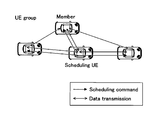
- FIG. 2 is a diagram for explaining a scheduling terminal.
- a concept is considered in which a scheduling terminal schedules (controls) transmissions for nearby terminals.
- a mechanism is not supported in Release 16 of NR-V2X, but it is considered that it will be supported in Release 17 in which the side link of NR is extended. In the future, it is conceivable that the terminal will control other terminals in this way. Further, such a mechanism is not limited to terminals related to vehicles such as V2X, and is expected to be widely used in terminals for all purposes.
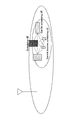
- FIG. 3 is a diagram for explaining the problem.
- FIG. 3 shows a terminal that executes the function of the scheduling terminal, a terminal that can be the scheduling terminal, but does not perform the function of the scheduling terminal, and a terminal that cannot be the scheduling terminal.
- a terminal that can be a scheduling terminal is considered to have high functionality and high cost. However, if there is no merit in becoming a terminal that schedules transmission of other terminals, it is possible that there will be no terminals that try to become scheduling terminals, and the concept (mechanism) of scheduling terminals will become widespread. It will hinder.
- all terminals support the function of the scheduling terminal (for example, if it is specified as an essential function as a D2D terminal), the cost of all terminals will be high. For example, in a type of D2D terminal that is required to have a low price, it is conceivable that the price will increase in order to support the function of the scheduling terminal.
- terminal operating as a scheduling terminal may be replaced with a “terminal that can be a scheduling terminal”.
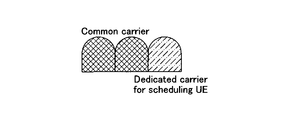
- FIG. 4 is a diagram showing an example of preferential treatment.
- a dedicated carrier may be provided in addition to the common carrier to the terminal operating as the scheduling terminal.
- Carriers may be replaced by carrier components, BWPs (Bandwidth Part), frequency ranges.
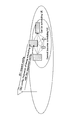
- FIG. 5 is a diagram showing another example of preferential treatment.
- more resources may be provided to the terminal operating as the scheduling terminal.
- a more SR (Scheduling Request) transmission opportunity may be provided.
- the SR transmission opportunity to a normal terminal has a frequency of once in 5 slots
- the SR transmission opportunity to a terminal operating as a scheduling terminal has a frequency of 3 times in 5 slots.
- SR transmission opportunities are provided in all slots where SR can be transmitted). By doing so, the terminal operating as the scheduling terminal can transmit the SR immediately when it wants to transmit the SR.
- the cycle of CG may be shortened (eg: 1 slot) or increased in frequency with respect to a terminal operating as a scheduling terminal.
- the period of the downlink SPS (Semi Persistence Scheduling) may be shortened or increased in frequency with respect to the terminal operating as the scheduling terminal.
- the aggregation level (aggregation level) may be increased by PDCCH (Physical Downlink Control Channel) with respect to the terminal operating as the scheduling terminal (example: 4 or more).
- the terminal operating as a scheduling terminal may not receive a rejection (RRCReject) for an RRC connection request from the network.
- RRCReject rejection
- FIG. 6 is a diagram for explaining inter-UE multiplexing (inter-UE mux for URLLC) for URLLC (Ultra-Reliable Low-Latency Communication).
- inter-UE mux for URLLC for URLLC
- URLLC Ultra-Reliable Low-Latency Communication
- a normal terminal is a PUSCH (Physical Uplink). (Shared Channel) cannot be transmitted, and a terminal operating as a scheduling terminal can transmit PUSCH. Further, regarding the cancellation notification transmitted for each terminal, the terminal operating as the scheduling terminal may not receive the cancellation notification.
- PUSCH Physical Uplink
- Shared Channel Shared Channel
- the transmission resource of the terminal operating as the scheduling terminal has increased the transmission power (power-boosted). It may not be duplicated with the transmission of the terminal (for example, the URLLC terminal).
- Preemption notification As preferential treatment for a terminal operating as a scheduling terminal, regarding preemption notification by transmission to another terminal in downlink transmission, regarding reception resources of the terminal operating as a scheduling terminal, other terminals. Preemption by (for example, a URLLC terminal) may not be performed.
- the priority acquisition notification (preemption indication) is that after the transmission of the downlink is set, the transmission to the other terminal set later is preferentially acquired, and the transmission of the downlink set earlier is canceled. It is a notification indicating that it has been done.
- A7 As a priority treatment for a terminal operating as a scheduling terminal, a higher priority is set or notified to transmission / reception of a terminal operating as a scheduling terminal than transmission / reception of other terminals. You may.
- providing a high priority to a terminal operating as a scheduling terminal can be considered to be a motivation for becoming a terminal having a function of a scheduling terminal.
- the base station apparatus 10 may request the terminal 20 to report its ability to operate as a scheduling terminal.
- the terminal 20 may report to the base station apparatus 10 whether or not it has the ability to operate as a scheduling terminal.
- FIG. 7 is a diagram for explaining an example of sending and receiving a message between the terminal and the base station device.
- a terminal capable of operating as a scheduling terminal requests / suggests a desirable configuration (preferred configuration) of uplink / downlink (UL / DL) from the base station apparatus 10. May provide information about the desired setting. For example, desired cells and resources may be requested / suggested / provided.
- the terminal 20 may receive, for example, the setting notified / provided from the base station apparatus 10.
- the setting to be notified may be the same as the setting requested by the terminal 20.
- the setting to be notified may be a setting different from the setting requested by the terminal 20.
- the notification may or may not be performed.
- the terminal 20 may respond whether or not to accept the setting / notification.
- the terminal 20 may operate as a scheduling terminal after feeding back the acceptance of the setting / notification to the base station apparatus 10. If the setting / notification is not accepted, the terminal 20 may give feedback that the setting / notification is not accepted (reception).
- FIG. 8 is a diagram for explaining another example of sending and receiving a message between the terminal and the base station device.
- the terminal 20 may receive a new setting candidate for uplink / downlink (UL / DL) from the base station apparatus 10 before being set / notified as a scheduling terminal.
- the terminal 20 may give feedback to the base station apparatus 10 to accept the new setting candidate.
- the terminal 20 may be set / notified as a scheduling terminal.
- the above new settings may be received again.
- the terminal 20 may assume that the new settings presented above will be available when the terminal 20 is set / notified as a scheduling terminal.
- the terminal 20 may notify that it does not accept becoming a scheduling terminal (reception).
- the candidate for the new setting received by the terminal 20 may be only a part that is changed with respect to the current setting.
- FIG. 9 is a diagram for explaining still another example of sending and receiving a message between the terminal and the base station device.
- the terminal 20 that can be a scheduling terminal may request the base station apparatus 10 that the terminal 20 becomes a scheduling terminal.
- the physical resource used when requesting the base station apparatus 10 may be set as a periodic resource (such as a periodic resource for SR).
- the physical resource used when requesting the base station apparatus 10 may be set as a semi-persistent resource (such as SP-CSI) and activated / released (deactivated or released).
- the terminal 20 may receive whether or not the request has been accepted. Upon receiving the acceptance, the terminal 20 starts operating as a scheduling terminal.
- the settings for operating as a scheduling terminal may be provided in advance, may be provided together with the above acceptance, or may be provided after the above acceptance.
- the terminal 20 may not be able to request for a predetermined period (eg, X) from the refusal of acceptance.
- the predetermined period (X) may be specified by a slot, a request opportunity, a time, a counter, or the like. It may be specified by the method of.
- the value of X may be specified, set, or notified.
- the terminal 20 may receive a setting / notification to be a scheduling terminal.
- Settings for operating as a scheduling terminal and / or new settings for uplink / downlink (UL / DL) are periodic or semi-persistent (periodical / semi).
- -Persistent may be associated with request settings / resources / IDs.
- the terminal 20 can determine whether or not to operate as the scheduling terminal in consideration of the advantages and disadvantages when operating as the scheduling terminal.
- the network (base station apparatus 10) provides preferential treatment to the terminal 20 that operates as a scheduling terminal.
- the network (base station device 10) may set a higher priority than other terminals 20 for the terminal 20 that operates as a scheduling terminal.
- the network may provide resources with higher priority to the terminal 20 that operates as a scheduling terminal.
- the network may provide a terminal 20 operating as a scheduling terminal with more carriers (for example, CC) than other terminals 20.
- the network may consider the communication volume of the terminal 20 operating as the scheduling terminal to be smaller than the actual communication volume. For example, it may be regarded as X% of the actual traffic (X ⁇ 100).
- the network (base station device 10) sets the maximum communication amount of the terminal 20 operating as a scheduling terminal higher than the maximum communication amount of the other terminals 20 with respect to the maximum communication amount that can be communicated without any scheduling limitation. May be good.
- the network (base station apparatus 10) schedules settings as scheduling terminals and / or new settings for uplink / downlink (UL / DL) (eg, settings for preferential treatment). You may negotiate with a terminal 20 that can operate as a terminal.
- UL / DL uplink / downlink
- the base station apparatus 10 and the terminal 20 include a function of carrying out the above-described embodiment.
- the base station apparatus 10 and the terminal 20 may each have only a part of the functions in the embodiment.
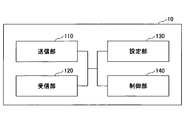
- FIG. 10 is a diagram showing an example of the functional configuration of the base station apparatus 10.
- the base station apparatus 10 includes a transmission unit 110, a reception unit 120, a setting unit 130, and a control unit 140.
- the functional configuration shown in FIG. 7 is only an example. Any function classification and name of the functional unit may be used as long as the operation according to the embodiment of the present invention can be executed.
- the transmission unit 110 includes a function of generating a signal to be transmitted to the terminal 20 side and transmitting the signal wirelessly. Further, the transmission unit 110 transmits information such as SL scheduling to the terminal 20.
- the receiving unit 120 includes a function of receiving various signals transmitted from the terminal 20 and acquiring information of, for example, a higher layer from the received signals.
- the setting unit 130 stores preset setting information and various setting information to be transmitted to the terminal 20 in the storage device, and reads the setting information from the storage device as needed.
- the content of the setting information is, for example, information related to the setting of V2X.
- control unit 140 performs processing related to the setting for the terminal 20 to perform V2X. Further, the function unit related to signal transmission in the control unit 140 may be included in the transmission unit 110, and the function unit related to signal reception in the control unit 140 may be included in the reception unit 120.
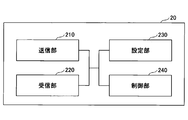
- FIG. 11 is a diagram showing an example of the functional configuration of the terminal 20.
- the terminal 20 has a transmitting unit 210, a receiving unit 220, a setting unit 230, and a control unit 240.
- the functional configuration shown in FIG. 11 is only an example. Any function classification and name of the functional unit may be used as long as the operation according to the embodiment of the present invention can be executed.
- the transmission unit 210 creates a transmission signal from the transmission data and wirelessly transmits the transmission signal.
- the receiving unit 220 wirelessly receives various signals and acquires a signal of a higher layer from the received signal of the physical layer.
- the setting unit 230 stores various setting information received from the base station device 10 or the terminal 20 by the receiving unit 220 in the storage device, and reads it out from the storage device as needed.
- the setting unit 230 also stores preset setting information.
- the content of the setting information is, for example, information related to V2X and HARQ processing.
- the control unit 240 controls the D2D communication executed with the other terminal 20 as described in the embodiment. In addition, the control unit 240 executes V2X and HARQ processing.
- the function unit related to signal transmission in the control unit 240 may be included in the transmission unit 210, and the function unit related to signal reception in the control unit 240 may be included in the reception unit 220.
- each functional block may be realized by one device in which a plurality of elements are physically and / or logically combined, or two or more devices physically and / or logically separated from each other directly and. / Or indirectly (eg, wired and / or wireless) may be connected and realized by these plurality of devices.
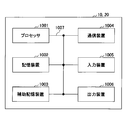
- FIG. 12 is a diagram showing an example of the hardware configuration of the wireless communication device which is the base station device 10 or the terminal 20 according to the embodiment of the present invention.
- the above-mentioned base station device 10 and terminal 20 are physically configured as computer devices including a processor 1001, a storage device 1002, an auxiliary storage device 1003, a communication device 1004, an input device 1005, an output device 1006, a bus 1007, and the like. May be done.
- the word “device” can be read as a circuit, device, unit, etc.
- the hardware configuration of the base station device 10 and the terminal 20 may be configured to include one or more of the devices shown by 1001 to 1006 shown in the figure, or may be configured not to include some of the devices. You may.
- the processor 1001 For each function of the base station device 10 and the terminal 20, the processor 1001 performs an operation by loading predetermined software (program) on the hardware such as the processor 1001 and the storage device 1002, and the communication device 1004 communicates and stores the data. It is realized by controlling the reading and / or writing of data in the device 1002 and the auxiliary storage device 1003.
- the processor 1001 operates, for example, an operating system to control the entire computer.
- the processor 1001 may be composed of a central processing unit (CPU: Central Processing Unit) including an interface with a peripheral device, a control device, an arithmetic unit, a register, and the like.
- CPU Central Processing Unit
- the processor 1001 reads a program (program code), a software module or data from the auxiliary storage device 1003 and / or the communication device 1004 into the storage device 1002, and executes various processes according to these.
- a program program code
- the program a program that causes a computer to execute at least a part of the operations described in the above-described embodiment is used.
- the transmission unit 110, the reception unit 120, the setting unit 130, and the control unit 140 of the base station device 10 shown in FIG. 10 may be stored in the storage device 1002 and realized by a control program that operates in the processor 1001. Further, for example, even if the transmission unit 210, the reception unit 220, the setting unit 230, and the control unit 240 of the terminal 20 shown in FIG.
- processor 1001. Good are stored in the storage device 1002 and realized by a control program operated by the processor 1001. Good. Although it has been described that the various processes described above are executed by one processor 1001, they may be executed simultaneously or sequentially by two or more processors 1001. Processor 1001 may be mounted on one or more chips. The program may be transmitted from the network via a telecommunication line.
- the storage device 1002 is a computer-readable recording medium, and is, for example, at least one such as a ROM (Read Only Memory), an EPROM (Erasable Programmable ROM), an EEPROM (Electrically Erasable Programmable ROM), and a RAM (Random Access Memory). It may be configured.
- the storage device 1002 may be referred to as a register, a cache, a main memory (main storage device), or the like.
- the storage device 1002 can store a program (program code), a software module, or the like that can be executed to carry out the process according to the embodiment of the present invention.
- the auxiliary storage device 1003 is a computer-readable recording medium, and is, for example, an optical disk such as a CD-ROM (Compact Disc ROM), a hard disk drive, a flexible disk, an optical magnetic disk (for example, a compact disk, a digital versatile disk, Blu).
- -It may be composed of at least one of a ray (registered trademark) disk), a smart card, a flash memory (for example, a card, a stick, a key drive), a floppy (registered trademark) disk, a magnetic strip, and the like.
- the auxiliary storage device 1003 may be referred to as an auxiliary storage device.
- the storage medium described above may be, for example, a database, server or other suitable medium containing the storage device 1002 and / or the auxiliary storage device 1003.
- the communication device 1004 is hardware (transmission / reception device) for communicating between computers via a wired and / or wireless network, and is also referred to as, for example, a network device, a network controller, a network card, a communication module, or the like.
- the transmission unit 110 and the reception unit 120 of the base station device 10 may be realized by the communication device 1004.
- the transmission unit 210 and the reception unit 220 of the terminal 20 may be realized by the communication device 1004.
- the input device 1005 is an input device (for example, a keyboard, a mouse, a microphone, a switch, a button, a sensor, etc.) that receives an input from the outside.
- the output device 1006 is an output device (for example, a display, a speaker, an LED lamp, etc.) that outputs to the outside.
- the input device 1005 and the output device 1006 may have an integrated configuration (for example, a touch panel).
- each device such as the processor 1001 and the storage device 1002 is connected by a bus 1007 for communicating information.
- the bus 1007 may be composed of a single bus or may be composed of different buses between the devices.
- the base station device 10 and the terminal 20 are a microprocessor, a digital signal processor (DSP: Digital Signal Processor), an ASIC (Application Specific Integrated Circuit), a PLD (Programmable Logic Device), an FPGA (Field Programmable Gate Array), etc., respectively. It may be configured to include hardware, and the hardware may realize a part or all of each functional block. For example, processor 1001 may be implemented on at least one of these hardware.
- the boundary of the functional unit or the processing unit in the functional block diagram does not always correspond to the boundary of the physical component.
- the operation of the plurality of functional units may be physically performed by one component, or the operation of one functional unit may be physically performed by a plurality of components. With respect to the processing procedure described in the embodiment, the order of processing may be changed as long as there is no contradiction.
- the base station device 10 and the terminal 20 have been described with reference to functional block diagrams, but such devices may be implemented in hardware, software, or a combination thereof.
- the software operated by the processor of the base station apparatus 10 according to the embodiment of the present invention and the software operated by the processor of the terminal 20 according to the embodiment of the present invention are random access memory (RAM), flash memory, and read-only, respectively. It may be stored in a memory (ROM), EPROM, EEPROM, registers, hard disk (HDD), removable disk, CD-ROM, database, server or any other suitable storage medium.
- information notification includes physical layer signaling (for example, DCI (Downlink Control Information), UCI (Uplink Control Information)), higher layer signaling (for example, RRC (Radio Resource Control) signaling, MAC (Medium Access Control) signaling, etc. Broadcast information (MIB (Master Information Block), SIB (System Information Block)), other signals or a combination thereof may be used.
- RRC signaling may be referred to as an RRC message, for example, RRC. It may be a connection setup (RRCConnectionSetup) message, an RRC connection reconfiguration (RRCConnectionReconfiguration) message, or the like.
- Each aspect / embodiment described in the present specification includes LTE (Long Term Evolution), LTE-A (LTE-Advanced), SUPER 3G, IMT-Advanced, 4G, 5G, FRA (Future Radio Access), W-CDMA. (Registered Trademarks), GSM (Registered Trademarks), CDMA2000, UMB (Ultra Mobile Broadband), IEEE 802.11 (Wi-Fi), IEEE 802.16 (WiMAX), IEEE 802.20, UWB (Ultra-WideBand), It may be applied to systems utilizing Bluetooth®, other suitable systems and / or next-generation systems extended based on them.
- the specific operation performed by the base station apparatus 10 in the present specification may be performed by its upper node (upper node).
- various operations performed for communication with the terminal 20 are performed other than the base station device 10 and / or the base station device 10. It is clear that it can be done by other network nodes (eg, MME or S-GW, etc., but not limited to these).
- MME or S-GW network nodes
- the case where there is one network node other than the base station apparatus 10 is illustrated above, it may be a combination of a plurality of other network nodes (for example, MME and S-GW).
- the terminal 20 may be a subscriber station, a mobile unit, a subscriber unit, a wireless unit, a remote unit, a mobile device, a wireless device, a wireless communication device, a remote device, a mobile subscriber station, an access terminal, a mobile terminal, or a wireless device. It may also be referred to as a terminal, remote terminal, handset, user agent, mobile client, client, or some other suitable term.
- the base station apparatus 10 may be referred to by those skilled in the art by NB (NodeB), eNB (evolvedNodeB), gNB, BaseStation, or some other suitable term.
- NB NodeB
- eNB evolvedNodeB
- gNB BaseStation
- determining and “determining” used in this specification may include a wide variety of actions.
- “Judgment” and “decision” are, for example, judgment (judging), calculation (calculating), calculation (computing), processing (processing), derivation (deriving), investigating (investigating), searching (looking up) (for example, table , Searching in a database or another data structure), confirming (ascertaining) may be regarded as “judgment” or “decision”.
- judgment and “decision” are receiving (for example, receiving information), transmitting (for example, transmitting information), input (input), output (output), and access.
- (Accessing) for example, accessing data in memory) may be regarded as "judgment” or “decision”.
- judgment and “decision” mean that “resolving”, “selecting”, “choosing”, “establishing”, “comparing”, etc. are regarded as “judgment” and “decision”. Can include. That is, “judgment” and “decision” may include that some action is regarded as “judgment” and “decision”.
- Scheduling of other terminals is an example of controlling communication of other terminals, and information on the ability to operate as a scheduling terminal and information requesting to operate as a scheduling terminal are information on communication of other terminals. This is an example of information related to control.
- the desirable configuration (preferred configuration) of the uplink / downlink (UL / DL) and the new setting candidate of the uplink / downlink (UL / DL) are examples of information related to the preferential treatment setting. Is.
- Base station device 110 Transmission unit 120 Reception unit 130 Setting unit 140 Control unit 20 Terminal 210 Transmission unit 220 Reception unit 230 Setting unit 240 Control unit 1001 Processor 1002 Storage device 1003 Auxiliary storage device 1004 Communication device 1005 Input device 1006 Output device
Landscapes
- Engineering & Computer Science (AREA)
- Computer Networks & Wireless Communication (AREA)
- Signal Processing (AREA)
- Mobile Radio Communication Systems (AREA)
Abstract
他の端末の通信の制御を行う制御部と、前記他の端末の通信の制御に関連する情報、及び、優先的な扱いの設定に関連する情報の少なくとも一つを送信または受信する送受信部と、を有する端末が提供される。
Description
本発明は、無線通信システムにおける端末(ユーザ装置)および通信方法に関連するものである。
LTE(Long Term Evolution)及びLTEの後継システム(例えば、LTE-A(LTE Advanced)、NR(New Radio)(5Gとも呼ぶ))では、UE等の通信装置同士が基地局gNBを介さないで直接通信を行うサイドリンク(D2D(Device to Device)とも呼ぶ)技術が検討されている(非特許文献1)。
また、V2X(Vehicle to Everything)を実現することが検討され、仕様化が進められている。ここで、V2Xとは、ITS(Intelligent Transport Systems)の一部であり、自動車間で行われる通信形態を意味するV2V(Vehicle to Vehicle)、自動車と道路脇に設置される路側機(RSU:Road-Side Unit)との間で行われる通信形態を意味するV2I(Vehicle to Infrastructure)、自動車とドライバーのモバイル端末との間で行われる通信形態を意味するV2N(Vehicle to Nomadic device)、及び、自動車と歩行者のモバイル端末との間で行われる通信形態を意味するV2P(Vehicle to Pedestrian)の総称である。
3GPP TS 36.213 V14.3.0(2017-06)
端末間直接通信(サイドリンク技術)において使用される端末間直接通信用チャネルには以下のチャネルが含まれる。
SCI(Sidelink Contol Information)等の制御情報を送信するチャネルはPSCCH(Physical Sidelink Control Channel)と称され、データを送信するチャネルはPSSCH(Physical Sidelink Shared Channel)と称される。また、NRのV2Xでは、PSCCH及びPSCCHに対するHARQ(Hybrid Automatic Repeat Request)動作をサポートすることが規定されており、HARQ-ACKを含む端末間直接通信フィードバック制御情報(Sidelink Feedback Control Information(SFCI))が定義されている。SFCIは、端末間直接通信フィードバックチャネル(Physical Sidelink Feedback Channel(PSFCH))上で送信される。
NR-V2Xのサイドリンク送信モードの一つとして、スケジューリング端末(scheduling UE)とメンバ端末(member UE)で構成される端末グループ(UE group)において、スケジューリング端末が、メンバ端末に対してスケジューリングすることが提案されている。上記送信モードはサイドリンク送信モード2-dと呼ばれてもよいし、異なる名称であっても良い。また、スケジューリング端末はヘッダ端末(header UE)などと呼ばれても良いし、メンバ端末は非スケジューリング端末、非ヘッダ端末などと呼ばれても良い。
今後は、スケジューリング機能を有するスケジューリング端末の普及が想定される。また、スケジューリング端末は、V2Xのような車両に関する端末に限定されず、広い用途の端末として普及することが想定される。また、スケジューリング端末ではない端末に比べて高機能高コストとなることが想定される。しかしながら、スケジューリング端末について、他の端末のためにスケジューリングを行う端末にふさわしいメリットは明確には規定されていない。
本発明は上記の点に鑑みてなされたものであり、他の端末のスケジューリング等の、他の端末の通信の制御を行う機能を有する端末に対して優先的な扱い(preferential treatment)を提供する技術を提供することを目的とする。なお、本発明はV2Xにおける端末間通信に限られず、いかなる端末に適用されてもよい。また、本発明は端末に限られず、例えば基地局、アクセスポイント、ノード、IABノードに適用されてもよい。また、本発明におけるスケジューリングは端末間直接通信に限られず、基地局と端末との間の通信であってもよい。
開示の技術によれば、他の端末の通信の制御を行う制御部と、前記他の端末の通信の制御に関連する情報、及び、優先的な扱いの設定に関連する情報の少なくとも一つを送信または受信する送受信部と、を有する端末が提供される。
開示の技術によれば、他の端末の通信の制御を行う機能を有する端末に対して優先的な扱いを提供する技術が提供される。
以下、図面を参照して本発明の実施形態を説明する。なお、以下で説明する実施の形態は一例に過ぎず、本発明が適用される実施形態は、以下の実施形態に限られるわけではない。
(サイドリンク送信モード)
NR-V2Xにおけるサイドリンク送信モードについて説明する。
NR-V2Xにおけるサイドリンク送信モードについて説明する。
図1は、NR-V2Xにおける4種類のサイドリンク送信モードを説明するための図である。
NR-V2Xのサイドリンク送信モード1では、端末20Aは、基地局装置10によるSLスケジューリングに基づいて、端末20Bに対してPSCCH/PSSCHを送信する。
NR-V2Xのサイドリンク送信モード2では、端末自身のリソース選択に基づいてPSCCH/PSSCHの送信が行われる。NR-V2Xのサイドリンク送信モード2はさらに細分化されており、NR-V2Xのサイドリンク送信モード2-aでは、端末20Aは、端末20A自身のリソース選択に基づいて、端末20Bに対してPSCCH/PSSCHを送信し、また、端末20Bは、端末20B自身のリソース選択に基づいて、端末Aに対してPSCCH/PSSCHを送信する。NR-V2Xのサイドリンク送信モード2-cでは、基地局装置10から通知される、または仕様で決められた、リソースパターン(resource pattern)のRRC-configに従って、端末20Aは、端末20Bに対してPSSCHを送信する。
NR-V2Xのサイドリンク送信モード2-dでは、端末20Aは、端末20Bに対してSL schedulingを送信することにより、端末20Bの送信のためのスケジューリングを行い、端末20Bは、そのスケジューリングに基づいて、端末20Aに対してPSCCH/PSSCHを送信する。
(スケジューリング端末)
NR-V2Xにおけるスケジューリング端末(scheduling UE)について説明する。
NR-V2Xにおけるスケジューリング端末(scheduling UE)について説明する。
図2は、スケジューリング端末を説明するための図である。
図2に示すように、スケジューリング端末が、近接する端末のために送信をスケジューリングする(制御する)というコンセプト(仕組み)が考えられている。このような仕組みは、NR-V2Xのリリース16ではサポートされないが、NRのサイドリンクが拡張されるリリース17ではサポートされることが考えられる。将来的には、このように端末が他の端末を制御するということが主流となることが考えられる。また、このような仕組みは、V2Xのような車両に関する端末に限定されず、あらゆる用途の端末において普及することが想定される。
図3は、課題を説明するための図である。図3には、スケジューリング端末の機能を実行している端末、スケジューリング端末となり得るが、スケジューリング端末の機能を行っていない端末、スケジューリング端末にはなり得ない端末が示されている。
スケジューリング端末になり得る端末は、高機能高コストになることが考えられる。しかしながら、他の端末の送信をスケジューリングする端末になっても何のメリットもなかったならば、スケジューリング端末になろうとする端末がなくなってしまうことが考えられ、スケジューリング端末のコンセプト(仕組み)の普及を妨げることになる。
仮に、すべての端末がスケジューリング端末の機能をサポートするように規定した場合には(例えば、D2D端末として必須の機能として規定した場合には)、すべての端末のコストが高くなってしまう。例えば、低価格であることが求められる種類のD2D端末において、スケジューリング端末の機能をサポートするために価格が上がってしまうことが考えられる。
したがって、スケジューリング端末のコンセプトを生かすためには、他の端末のためにスケジューリングを行う端末にふさわしいメリットが必要と考えられる。
(実施形態1)
以下の説明において、「スケジューリング端末として動作する端末」は、「スケジューリング端末となり得る端末」に置き換えられてもよい。
以下の説明において、「スケジューリング端末として動作する端末」は、「スケジューリング端末となり得る端末」に置き換えられてもよい。
本発明の実施形態として、スケジューリング端末として動作する端末に対して優先的な扱いが提供されるようにすることが考えられる。
(A1)図4は、優先的な扱いの一例を示す図である。例えば、図4に示すように、スケジューリング端末として動作する端末に対して、共通のキャリアに加えて専用のキャリアが提供されてもよい。キャリアは、キャリアコンポーネント、BWP(Bandwidth Part)、周波数レンジに置き換えられてもよい。
(A2)図5は、優先的な扱いの他の一例を示す図である。図5に示すように、スケジューリング端末として動作する端末に対して、より多くのリソースが提供されるようにしてもよい。スケジューリング端末として動作する端末に対して提供されるより多いリソースとして、例えば、よりSR(スケジューリング要求(Scheduling Request))の送信機会が提供されてもよい。図5に示すように、通常の端末に対するSRの送信機会は5スロットに1回の頻度であるのに対して、スケジューリング端末として動作する端末に対するSRの送信機会は、5スロットに3回の頻度となっている(SRが送信可能なすべてのスロットにおいてSRの送信機会が提供されている)。このようにすることにより、スケジューリング端末として動作する端末は、SRを送信したいときにすぐにSRを送信し得る。例えば、スケジューリング端末として動作する端末に対して、CG(Configured Grant)の周期を短く(例:1スロット)したり頻度を増やしたりしてもよい。また、スケジューリング端末として動作する端末に対して、下りリンクのSPS(Semi Persistent Scheduling)の周期を短くしたり頻度を増やしたりしてもよい。あるいは、スケジューリング端末として動作する端末に対して、PDCCH(Physical Downlink Control CHannel)でアグリゲーションレベル(aggregation level)を高くしてもよい(例:4以上)。
(A3)スケジューリング端末として動作する端末に対する優先的な扱いとして、スケジューリング端末として動作する端末は、ネットワークから、RRC接続要求に対する拒否(RRCReject)を受信することがないようにしてもよい。
(A4)図6は、URLLC(Ultra-Reliable Low-Latency Communication)のためのUE間多重(inter-UE mux for URLLC)を説明するための図である。図6に示されるように、スケジューリング端末として動作する端末に対する優先的な扱いとして、URLLCのための端末間多重において、スケジューリング端末として動作する端末は、自身の送信リソースがキャンセルされることがないようにしてもよい。図6の例において、1番目のスロットにおいて、通常の端末に対するUL grant(上側)とスケジューリング端末として動作する端末に対するUL grant(下側)が示されている。3番目のスロットにおいて、URLLCのためのUL grantが発生し、共通のPDCCHで送信されるキャンセル通知(cancellation indication)が発生し、その結果、4番目のスロットにおいて、通常の端末はPUSCH(Physical Uplink Shared CHannel)を送信できず、スケジューリング端末として動作する端末はPUSCHを送信することができる。また、端末単位で送信されるキャンセル通知について、スケジューリング端末として動作する端末はキャンセル通知を受信しないようにしてもよい。
(A5)スケジューリング端末として動作する端末に対する優先的な扱いとして、URLLCのための端末間多重において、スケジューリング端末として動作する端末の送信リソースは、送信電力を上げた(power-boostingされた)他の端末(例えば、URLLC端末)の送信と重複させられないようにしてもよい。
(A6)スケジューリング端末として動作する端末に対する優先的な扱いとして、下りリンクの送信における他端末に対する送信による優先取得通知(preemption indication)について、スケジューリング端末として動作する端末の受信リソースについては、他の端末(例えば、URLLC端末)による優先取得(preemption)が行われないようにしてもよい。なお、優先取得通知(preemption indication)とは、下りリンクの送信が設定された後、後から設定された他の端末に対する送信が優先的に取得され、先に設定された下りリンクの送信はキャンセルされたことを示す通知である。
(A7)スケジューリング端末として動作する端末に対する優先的な扱いとして、スケジューリング端末として動作する端末の送信/受信に対して、他の端末の送信/受信よりも高い優先度が設定または通知されるようにしてもよい。
上記A1-A7に示すように、スケジューリング端末として動作する端末に対して高い優先度を提供することは、スケジューリング端末の機能を有する端末となることに対する動機付けとなり得ると考えられる。
(実施形態2)
本発明の実施形態として、基地局装置10と、スケジューリング端末となり得る端末との間で、交渉(negotiation)/設定(configuration)/連携(coordination)のためのメッセージを送受信することが考えられる。
本発明の実施形態として、基地局装置10と、スケジューリング端末となり得る端末との間で、交渉(negotiation)/設定(configuration)/連携(coordination)のためのメッセージを送受信することが考えられる。
(B0)基地局装置10は端末20に対して、スケジューリング端末として動作する能力を報告するように要求してもよい。端末20は、スケジューリング端末として動作する能力を有するか否かについて基地局装置10に報告してもよい。
(B1)図7は、端末と基地局装置との間のメッセージの送受信の一例を説明するための図である。図7に示されるように、スケジューリング端末として動作する能力を有する端末は、基地局装置10に対して、上りリンク/下りリンク(UL/DL)の望ましい設定(preferred configuration)を要求/示唆してもよく、当該望ましい設定に関する情報を提供してもよい。例えば、望ましいセル、リソースを要求/示唆/提供してもよい。
(B2)図7に示されるように、端末20がスケジューリング端末として設定/通知される際に、端末20は、例えば基地局装置10から通知/提供された設定を受信してもよい。例えば、通知される設定は、端末20が要求した設定と同一であってもよい。あるいは、通知される設定は、端末20が要求した設定とは異なる設定であってもよい。端末20がスケジューリング端末として設定/通知される際に、当該通知は必ず行われてもよいし、行われない場合があってもよい。
(B3)端末20に対して、スケジューリング端末として設定することが通知された場合に、端末20は、当該設定/通知を受け入れるか否かを応答してもよい。当該設定/通知を受け入れる場合には、端末20は、当該設定/通知を受け入れることを基地局装置10に対してフィードバックしてから、スケジューリング端末として動作してもよい。当該設定/通知を受け入れない場合には、端末20は、当該設定/通知を受け入れないこと(rejection)をフィードバックしてもよい。
(B4)図8は、端末と基地局装置との間のメッセージの送受信の他の一例を説明するための図である。図8に示されるように、端末20は、スケジューリング端末として設定/通知される前に、上りリンク/下りリンク(UL/DL)の新しい設定の候補を基地局装置10から受信してもよい。新しい設定の候補を受け入れる場合には、端末20は、新しい設定の候補を受け入れることを基地局装置10に対してフィードバックしてもよい。フィードバック後、端末20は、スケジューリング端末として設定/通知されてもよい。ここで、上記の新しい設定が再度受信されてもよい。あるいは、端末20は、端末20がスケジューリング端末として設定/通知された時には、上記の提示された新しい設定が利用可能になると想定してもよい。新しい設定の候補を受け入れない場合には、端末20は、スケジューリング端末になることを受け入れないこと(rejection)を通知してもよい。端末20が受信する上記新しい設定の候補は、現在の設定に対して変更される部分だけであってもよい。
(B5)図9は、端末と基地局装置との間のメッセージの送受信の更に他の一例を説明するための図である。図9に示すように、スケジューリング端末になり得る端末20は、端末20がスケジューリング端末になることを基地局装置10に要求してもよい。ここで、基地局装置10に要求する際に用いられる物理リソースは、(SRのための周期的リソースのような)周期的リソースとして設定されてもよい。基地局装置10に要求する際に用いられる物理リソースは、(SP-CSIのような)semi-persistentなリソースとして設定され、活性化(activated)/解放(deactivated又はreleased)されてもよい。上記要求の後、端末20は、上記要求が受け入れられたか否かを受信してもよい。受け入れられたことを受信した場合には、端末20は、スケジューリング端末としての動作を開始する。スケジューリング端末として動作するための設定については、予め提供されていてもよいし、上記受け入れと一緒に提供されてもよいし、上記受け入れの後に提供されてもよい。受け入れられなかったこと(rejection)を受信した場合には、端末20は、上記受け入れの拒否から所定の期間(例:X)要求できないことにしてもよい。所定の期間(X)は、スロットで規定されてもよいし、要求機会(request occasion)で規定されてもよいし、時間で規定されてもよいし、カウンタで規定されてもよいし、その他の方法で規定されてもよい。Xの値は、規定されてもよいし、設定されてもよいし、通知されてもよい。上記要求の後、端末20は、スケジューリング端末となる設定/通知を受信してもよい。スケジューリング端末として動作するための設定および/または上りリンク/下りリンク(UL/DL)のための新しい設定(例えば、優先的な扱いのための設定)は、周期的又はセミパーシステント(periodical/semi-persistent)な要求の設定/リソース/IDと関連付けられてもよい。
上記の通り、実施形態2においては、端末20は、スケジューリング端末として動作する場合のメリットやデメリットを考慮した上で、スケジューリング端末として動作するか否かを決定し得る。
(実施形態3)
本発明の実施形態として、ネットワーク(基地局装置10)は、スケジューリング端末として動作する端末20に対して優先的な扱いを提供することが考えられる。
本発明の実施形態として、ネットワーク(基地局装置10)は、スケジューリング端末として動作する端末20に対して優先的な扱いを提供することが考えられる。
(C1)ネットワーク(基地局装置10)は、スケジューリング端末として動作する端末20に対して、他の端末20よりも高い優先度を設定してもよい。
(C2)ネットワーク(基地局装置10)は、スケジューリング端末として動作する端末20に対して、より優先的にリソースを提供してもよい。
(C3)ネットワーク(基地局装置10)は、スケジューリング端末として動作する端末20に対して、他の端末20よりも多くのキャリア(例えば、CC)を提供してもよい。
(C4)ネットワーク(基地局装置10)は、スケジューリング端末として動作する端末20の通信量について、実際の通信量よりも少ない通信量とみなしてもよい。例えば、実際の通信量のX%とみなしてもよい(X<100)。
(C5)ネットワーク(基地局装置10)は、スケジューリングの制限無しで通信できる最大通信量について、スケジューリング端末として動作する端末20の最大通信量を他の端末20の最大通信量よりも高く設定してもよい。
(C6)ネットワーク(基地局装置10)は、スケジューリング端末としての設定及び/又は上りリンク/下りリンク(UL/DL)のための新しい設定(例えば、優先的な扱いのための設定)について、スケジューリング端末として動作し得る端末20と交渉してもよい。
(装置構成)
次に、これまでに説明した処理及び動作を実行する基地局装置10及び端末20の機能構成例を説明する。基地局装置10及び端末20は上述した実施例を実施する機能を含む。ただし、基地局装置10及び端末20はそれぞれ、実施例の中の一部の機能のみを備えることとしてもよい。
次に、これまでに説明した処理及び動作を実行する基地局装置10及び端末20の機能構成例を説明する。基地局装置10及び端末20は上述した実施例を実施する機能を含む。ただし、基地局装置10及び端末20はそれぞれ、実施例の中の一部の機能のみを備えることとしてもよい。
<基地局装置10>
図10は、基地局装置10の機能構成の一例を示す図である。図10に示されるように、基地局装置10は、送信部110と、受信部120と、設定部130と、制御部140とを有する。図7に示される機能構成は一例に過ぎない。本発明の実施の形態に係る動作を実行できるのであれば、機能区分及び機能部の名称はどのようなものでもよい。
図10は、基地局装置10の機能構成の一例を示す図である。図10に示されるように、基地局装置10は、送信部110と、受信部120と、設定部130と、制御部140とを有する。図7に示される機能構成は一例に過ぎない。本発明の実施の形態に係る動作を実行できるのであれば、機能区分及び機能部の名称はどのようなものでもよい。
送信部110は、端末20側に送信する信号を生成し、当該信号を無線で送信する機能を含む。また、送信部110は、端末20に対してSLスケジューリング等の情報を送信する。受信部120は、端末20から送信された各種の信号を受信し、受信した信号から、例えばより上位のレイヤの情報を取得する機能を含む。
設定部130は、予め設定される設定情報、及び、端末20に送信する各種の設定情報を記憶装置に格納し、必要に応じて記憶装置から読み出す。設定情報の内容は、例えば、V2Xの設定に係る情報等である。
制御部140は、実施例において説明したように、端末20がV2Xを行うための設定に係る処理を行う。また、制御部140における信号送信に関する機能部を送信部110に含め、制御部140における信号受信に関する機能部を受信部120に含めてもよい。
<端末20>
図11は、端末20の機能構成の一例を示す図である。図11に示されるように、端末20は、送信部210と、受信部220と、設定部230と、制御部240とを有する。図11に示される機能構成は一例に過ぎない。本発明の実施の形態に係る動作を実行できるのであれば、機能区分及び機能部の名称はどのようなものでもよい。
図11は、端末20の機能構成の一例を示す図である。図11に示されるように、端末20は、送信部210と、受信部220と、設定部230と、制御部240とを有する。図11に示される機能構成は一例に過ぎない。本発明の実施の形態に係る動作を実行できるのであれば、機能区分及び機能部の名称はどのようなものでもよい。
送信部210は、送信データから送信信号を作成し、当該送信信号を無線で送信する。受信部220は、各種の信号を無線受信し、受信した物理レイヤの信号からより上位のレイヤの信号を取得する。
設定部230は、受信部220により基地局装置10又は端末20から受信した各種の設定情報を記憶装置に格納し、必要に応じて記憶装置から読み出す。また、設定部230は、予め設定される設定情報も格納する。設定情報の内容は、例えば、V2X及びHARQ処理に係る情報等である。
制御部240は、実施例において説明したように、他の端末20と実行されるD2D通信を制御する。また、制御部240は、V2X及びHARQ処理を実行する。制御部240における信号送信に関する機能部を送信部210に含め、制御部240における信号受信に関する機能部を受信部220に含めてもよい。
(ハードウェア構成)
上述の本発明の実施の形態の説明に用いた機能構成図(図10及び図11)は、機能単位のブロックを示している。これらの機能ブロック(構成部)は、ハードウェア及び/又はソフトウェアの任意の組み合わせによって実現される。また、各機能ブロックの実現手段は特に限定されない。すなわち、各機能ブロックは、物理的及び/又は論理的に複数要素が結合した1つの装置により実現されてもよいし、物理的及び/又は論理的に分離した2つ以上の装置を直接的及び/又は間接的に(例えば、有線及び/又は無線)で接続し、これら複数の装置により実現されてもよい。
上述の本発明の実施の形態の説明に用いた機能構成図(図10及び図11)は、機能単位のブロックを示している。これらの機能ブロック(構成部)は、ハードウェア及び/又はソフトウェアの任意の組み合わせによって実現される。また、各機能ブロックの実現手段は特に限定されない。すなわち、各機能ブロックは、物理的及び/又は論理的に複数要素が結合した1つの装置により実現されてもよいし、物理的及び/又は論理的に分離した2つ以上の装置を直接的及び/又は間接的に(例えば、有線及び/又は無線)で接続し、これら複数の装置により実現されてもよい。
また、例えば、本発明の一実施の形態における基地局装置10及び端末20はいずれも、本発明の実施の形態に係る処理を行うコンピュータとして機能してもよい。図12は、本発明の実施の形態に係る基地局装置10又は端末20である無線通信装置のハードウェア構成の一例を示す図である。上述の基地局装置10及び端末20はそれぞれ、物理的には、プロセッサ1001、記憶装置1002、補助記憶装置1003、通信装置1004、入力装置1005、出力装置1006、バス1007等を含むコンピュータ装置として構成されてもよい。
なお、以下の説明では、「装置」という文言は、回路、デバイス、ユニット等に読み替えることができる。基地局装置10及び端末20のハードウェア構成は、図に示した1001~1006で示される各装置を1つ又は複数含むように構成されてもよいし、一部の装置を含まずに構成されてもよい。
基地局装置10及び端末20における各機能は、プロセッサ1001、記憶装置1002等のハードウェア上に所定のソフトウェア(プログラム)を読み込ませることで、プロセッサ1001が演算を行い、通信装置1004による通信、記憶装置1002及び補助記憶装置1003におけるデータの読み出し及び/又は書き込みを制御することで実現される。
プロセッサ1001は、例えば、オペレーティングシステムを動作させてコンピュータ全体を制御する。プロセッサ1001は、周辺装置とのインタフェース、制御装置、演算装置、レジスタ等を含む中央処理装置(CPU:Central Processing Unit)で構成されてもよい。
また、プロセッサ1001は、プログラム(プログラムコード)、ソフトウェアモジュール又はデータを、補助記憶装置1003及び/又は通信装置1004から記憶装置1002に読み出し、これらに従って各種の処理を実行する。プログラムとしては、上述の実施の形態で説明した動作の少なくとも一部をコンピュータに実行させるプログラムが用いられる。例えば、図10に示した基地局装置10の送信部110、受信部120、設定部130、制御部140は、記憶装置1002に格納され、プロセッサ1001で動作する制御プログラムによって実現されてもよい。また、例えば、図11に示した端末20の送信部210と、受信部220と、設定部230、制御部240は、記憶装置1002に格納され、プロセッサ1001で動作する制御プログラムによって実現されてもよい。上述の各種処理は、1つのプロセッサ1001で実行される旨を説明してきたが、2以上のプロセッサ1001により同時又は逐次に実行されてもよい。プロセッサ1001は、1以上のチップで実装されてもよい。なお、プログラムは、電気通信回線を介してネットワークから送信されてもよい。
記憶装置1002は、コンピュータ読み取り可能な記録媒体であり、例えば、ROM(Read Only Memory)、EPROM(Erasable Programmable ROM)、EEPROM(Electrically Erasable Programmable ROM)、RAM(Random Access Memory)等の少なくとも1つで構成されてもよい。記憶装置1002は、レジスタ、キャッシュ、メインメモリ(主記憶装置)等と呼ばれてもよい。記憶装置1002は、本発明の一実施の形態に係る処理を実施するために実行可能なプログラム(プログラムコード)、ソフトウェアモジュール等を保存することができる。
補助記憶装置1003は、コンピュータ読み取り可能な記録媒体であり、例えば、CD-ROM(Compact Disc ROM)等の光ディスク、ハードディスクドライブ、フレキシブルディスク、光磁気ディスク(例えば、コンパクトディスク、デジタル多用途ディスク、Blu-ray(登録商標)ディスク)、スマートカード、フラッシュメモリ(例えば、カード、スティック、キードライブ)、フロッピー(登録商標)ディスク、磁気ストリップ等の少なくとも1つで構成されてもよい。補助記憶装置1003は、補助記憶装置と呼ばれてもよい。上述の記憶媒体は、例えば、記憶装置1002及び/又は補助記憶装置1003を含むデータベース、サーバその他の適切な媒体であってもよい。
通信装置1004は、有線及び/又は無線ネットワークを介してコンピュータ間の通信を行うためのハードウェア(送受信デバイス)であり、例えばネットワークデバイス、ネットワークコントローラ、ネットワークカード、通信モジュール等ともいう。例えば、基地局装置10の送信部110及び受信部120は、通信装置1004で実現されてもよい。また、端末20の送信部210及び受信部220は、通信装置1004で実現されてもよい。
入力装置1005は、外部からの入力を受け付ける入力デバイス(例えば、キーボード、マウス、マイクロフォン、スイッチ、ボタン、センサ等)である。出力装置1006は、外部への出力を実施する出力デバイス(例えば、ディスプレイ、スピーカー、LEDランプ等)である。なお、入力装置1005及び出力装置1006は、一体となった構成(例えば、タッチパネル)であってもよい。
また、プロセッサ1001及び記憶装置1002等の各装置は、情報を通信するためのバス1007で接続される。バス1007は、単一のバスで構成されてもよいし、装置間で異なるバスで構成されてもよい。
また、基地局装置10及び端末20はそれぞれ、マイクロプロセッサ、デジタル信号プロセッサ(DSP:Digital Signal Processor)、ASIC(Application Specific Integrated Circuit)、PLD(Programmable Logic Device)、FPGA(Field Programmable Gate Array)等のハードウェアを含んで構成されてもよく、当該ハードウェアにより、各機能ブロックの一部又は全てが実現されてもよい。例えば、プロセッサ1001は、これらのハードウェアの少なくとも1つで実装されてもよい。
(実施形態の補足)
以上、本発明の実施の形態を説明してきたが、開示される発明はそのような実施形態に限定されず、当業者は様々な変形例、修正例、代替例、置換例等を理解するであろう。発明の理解を促すため具体的な数値例を用いて説明がなされたが、特に断りのない限り、それらの数値は単なる一例に過ぎず適切な如何なる値が使用されてもよい。上記の説明における項目の区分けは本発明に本質的ではなく、2以上の項目に記載された事項が必要に応じて組み合わせて使用されてよいし、ある項目に記載された事項が、別の項目に記載された事項に(矛盾しない限り)適用されてよい。機能ブロック図における機能部又は処理部の境界は必ずしも物理的な部品の境界に対応するとは限らない。複数の機能部の動作が物理的には1つの部品で行われてもよいし、あるいは1つの機能部の動作が物理的には複数の部品により行われてもよい。実施の形態で述べた処理手順については、矛盾の無い限り処理の順序を入れ替えてもよい。処理説明の便宜上、基地局装置10及び端末20は機能的なブロック図を用いて説明されたが、そのような装置はハードウェアで、ソフトウェアで又はそれらの組み合わせで実現されてもよい。本発明の実施の形態に従って基地局装置10が有するプロセッサにより動作するソフトウェア及び本発明の実施の形態に従って端末20が有するプロセッサにより動作するソフトウェアはそれぞれ、ランダムアクセスメモリ(RAM)、フラッシュメモリ、読み取り専用メモリ(ROM)、EPROM、EEPROM、レジスタ、ハードディスク(HDD)、リムーバブルディスク、CD-ROM、データベース、サーバその他の適切な如何なる記憶媒体に保存されてもよい。
以上、本発明の実施の形態を説明してきたが、開示される発明はそのような実施形態に限定されず、当業者は様々な変形例、修正例、代替例、置換例等を理解するであろう。発明の理解を促すため具体的な数値例を用いて説明がなされたが、特に断りのない限り、それらの数値は単なる一例に過ぎず適切な如何なる値が使用されてもよい。上記の説明における項目の区分けは本発明に本質的ではなく、2以上の項目に記載された事項が必要に応じて組み合わせて使用されてよいし、ある項目に記載された事項が、別の項目に記載された事項に(矛盾しない限り)適用されてよい。機能ブロック図における機能部又は処理部の境界は必ずしも物理的な部品の境界に対応するとは限らない。複数の機能部の動作が物理的には1つの部品で行われてもよいし、あるいは1つの機能部の動作が物理的には複数の部品により行われてもよい。実施の形態で述べた処理手順については、矛盾の無い限り処理の順序を入れ替えてもよい。処理説明の便宜上、基地局装置10及び端末20は機能的なブロック図を用いて説明されたが、そのような装置はハードウェアで、ソフトウェアで又はそれらの組み合わせで実現されてもよい。本発明の実施の形態に従って基地局装置10が有するプロセッサにより動作するソフトウェア及び本発明の実施の形態に従って端末20が有するプロセッサにより動作するソフトウェアはそれぞれ、ランダムアクセスメモリ(RAM)、フラッシュメモリ、読み取り専用メモリ(ROM)、EPROM、EEPROM、レジスタ、ハードディスク(HDD)、リムーバブルディスク、CD-ROM、データベース、サーバその他の適切な如何なる記憶媒体に保存されてもよい。
また、情報の通知は、本明細書で説明した態様/実施形態に限られず、他の方法で行われてもよい。例えば、情報の通知は、物理レイヤシグナリング(例えば、DCI(Downlink Control Information)、UCI(Uplink Control Information))、上位レイヤシグナリング(例えば、RRC(Radio Resource Control)シグナリング、MAC(Medium Access Control)シグナリング、ブロードキャスト情報(MIB(Master Information Block)、SIB(System Information Block))、その他の信号又はこれらの組み合わせによって実施されてもよい。また、RRCシグナリングは、RRCメッセージと呼ばれてもよく、例えば、RRC接続セットアップ(RRC Connection Setup)メッセージ、RRC接続再構成(RRC Connection Reconfiguration)メッセージ等であってもよい。
本明細書で説明した各態様/実施形態は、LTE(Long Term Evolution)、LTE-A(LTE-Advanced)、SUPER 3G、IMT-Advanced、4G、5G、FRA(Future Radio Access)、W-CDMA(登録商標)、GSM(登録商標)、CDMA2000、UMB(Ultra Mobile Broadband)、IEEE 802.11(Wi-Fi)、IEEE 802.16(WiMAX)、IEEE 802.20、UWB(Ultra-WideBand)、Bluetooth(登録商標)、その他の適切なシステムを利用するシステム及び/又はこれらに基づいて拡張された次世代システムに適用されてもよい。
本明細書で説明した各態様/実施形態の処理手順、シーケンス、フローチャート等は、矛盾の無い限り、順序を入れ替えてもよい。例えば、本明細書で説明した方法については、例示的な順序で様々なステップの要素を提示しており、提示した特定の順序に限定されない。
本明細書において基地局装置10によって行われるとした特定動作は、場合によってはその上位ノード(upper node)によって行われることもある。基地局装置10を有する1つ又は複数のネットワークノード(network nodes)からなるネットワークにおいて、端末20との通信のために行われる様々な動作は、基地局装置10及び/又は基地局装置10以外の他のネットワークノード(例えば、MME又はS-GW等が考えられるが、これらに限られない)によって行われ得ることは明らかである。上記において基地局装置10以外の他のネットワークノードが1つである場合を例示したが、複数の他のネットワークノードの組み合わせ(例えば、MME及びS-GW)であってもよい。
本明細書で説明した各態様/実施形態は単独で用いてもよいし、組み合わせて用いてもよいし、実行に伴って切り替えて用いてもよい。
端末20は、当業者によって、加入者局、モバイルユニット、加入者ユニット、ワイヤレスユニット、リモートユニット、モバイルデバイス、ワイヤレスデバイス、ワイヤレス通信デバイス、リモートデバイス、モバイル加入者局、アクセス端末、モバイル端末、ワイヤレス端末、リモート端末、ハンドセット、ユーザエージェント、モバイルクライアント、クライアント、又はいくつかの他の適切な用語で呼ばれる場合もある。
基地局装置10は、当業者によって、NB(NodeB)、eNB(evolved NodeB)、gNB、ベースステーション(Base Station)、又はいくつかの他の適切な用語で呼ばれる場合もある。
本明細書で使用する「判断(determining)」、「決定(determining)」という用語は、多種多様な動作を包含する場合がある。「判断」、「決定」は、例えば、判定(judging)、計算(calculating)、算出(computing)、処理(processing)、導出(deriving)、調査(investigating)、探索(looking up)(例えば、テーブル、データベース又は別のデータ構造での探索)、確認(ascertaining)した事を「判断」「決定」したとみなす事等を含み得る。また、「判断」、「決定」は、受信(receiving)(例えば、情報を受信すること)、送信(transmitting)(例えば、情報を送信すること)、入力(input)、出力(output)、アクセス(accessing)(例えば、メモリ中のデータにアクセスすること)した事を「判断」「決定」したとみなす事等を含み得る。また、「判断」、「決定」は、解決(resolving)、選択(selecting)、選定(choosing)、確立(establishing)、比較(comparing)等した事を「判断」「決定」したとみなす事を含み得る。つまり、「判断」「決定」は、何らかの動作を「判断」「決定」したとみなす事を含み得る。
本明細書で使用する「に基づいて」という記載は、別段に明記されていない限り、「のみに基づいて」を意味しない。言い換えれば、「に基づいて」という記載は、「のみに基づいて」と「に少なくとも基づいて」の両方を意味する。
「含む(include)」、「含んでいる(including)」、及びそれらの変形が、本明細書あるいは特許請求の範囲で使用されている限り、これら用語は、用語「備える(comprising)」と同様に、包括的であることが意図される。さらに、本明細書あるいは特許請求の範囲において使用されている用語「又は(or)」は、排他的論理和ではないことが意図される。
本開示の全体において、例えば、英語でのa、an及びtheのように、翻訳により冠詞が追加された場合、これらの冠詞は、文脈から明らかにそうではないことが示されていなければ、複数のものを含み得る。
以上、本発明について詳細に説明したが、当業者にとっては、本発明が本明細書中に説明した実施形態に限定されるものではないということは明らかである。本発明は、特許請求の範囲の記載により定まる本発明の趣旨及び範囲を逸脱することなく修正及び変更態様として実施することができる。したがって、本明細書の記載は、例示説明を目的とするものであり、本発明に対して何ら制限的な意味を有するものではない。
なお、他の端末のスケジューリングは、他の端末の通信の制御の一例であり、スケジューリング端末として動作する能力に関する情報、および、スケジューリング端末として動作することを要求する情報は、他の端末の通信の制御に関連する情報の一例である。 また、上りリンク/下りリンク(UL/DL)の望ましい設定(preferred configuration)や、上りリンク/下りリンク(UL/DL)の新しい設定の候補は、優先的な扱いの設定に関連する情報の一例である。
10 基地局装置
110 送信部
120 受信部
130 設定部
140 制御部
20 端末
210 送信部
220 受信部
230 設定部
240 制御部
1001 プロセッサ
1002 記憶装置
1003 補助記憶装置
1004 通信装置
1005 入力装置
1006 出力装置
110 送信部
120 受信部
130 設定部
140 制御部
20 端末
210 送信部
220 受信部
230 設定部
240 制御部
1001 プロセッサ
1002 記憶装置
1003 補助記憶装置
1004 通信装置
1005 入力装置
1006 出力装置
Claims (5)
- 他の端末の通信の制御を行う制御部と、
前記他の端末の通信の制御に関連する情報、及び、優先的な扱いの設定に関連する情報の少なくとも一つを送信または受信する送受信部と、を有する
端末。 - 前記送受信部は、前記他の端末の通信の制御を行うスケジューリング端末として設定する通知を基地局装置から受信する、
請求項1に記載の端末。 - 前記送受信部は、前記通知を受信した場合に、前記通知を受け入れるか否かを応答する、
請求項2に記載の端末。 - 前記送受信部は、前記他の端末の通信の制御を行うスケジューリング端末としての設定の要求を基地局装置に送信する、
請求項1に記載の端末。 - 他の端末の通信の制御を行うステップと、
前記他の端末の通信の制御に関連する情報、及び、優先的な扱いの設定に関連する情報の少なくとも一つを送信または受信するステップと、を有する
端末の通信方法。
Priority Applications (3)
| Application Number | Priority Date | Filing Date | Title |
|---|---|---|---|
| PCT/JP2019/030615 WO2021024334A1 (ja) | 2019-08-02 | 2019-08-02 | 端末及び通信方法 |
| JP2021538551A JPWO2021024334A1 (ja) | 2019-08-02 | 2019-08-02 | |
| JP2024114359A JP2024150573A (ja) | 2019-08-02 | 2024-07-17 | 端末及び通信方法 |
Applications Claiming Priority (1)
| Application Number | Priority Date | Filing Date | Title |
|---|---|---|---|
| PCT/JP2019/030615 WO2021024334A1 (ja) | 2019-08-02 | 2019-08-02 | 端末及び通信方法 |
Publications (2)
| Publication Number | Publication Date |
|---|---|
| WO2021024334A1 true WO2021024334A1 (ja) | 2021-02-11 |
| WO2021024334A9 WO2021024334A9 (ja) | 2021-03-25 |
Family
ID=74502883
Family Applications (1)
| Application Number | Title | Priority Date | Filing Date |
|---|---|---|---|
| PCT/JP2019/030615 Ceased WO2021024334A1 (ja) | 2019-08-02 | 2019-08-02 | 端末及び通信方法 |
Country Status (2)
| Country | Link |
|---|---|
| JP (2) | JPWO2021024334A1 (ja) |
| WO (1) | WO2021024334A1 (ja) |
Family Cites Families (3)
| Publication number | Priority date | Publication date | Assignee | Title |
|---|---|---|---|---|
| US9924496B2 (en) * | 2013-08-26 | 2018-03-20 | Kyocera Corporation | Network apparatus and user terminal |
| JP7019949B2 (ja) * | 2017-02-03 | 2022-02-16 | ソニーグループ株式会社 | リレー通信装置、基地局、方法及び記録媒体 |
| CN109963265A (zh) * | 2017-12-26 | 2019-07-02 | 索尼公司 | 无线通信系统中的装置和方法、计算机可读存储介质 |
-
2019
- 2019-08-02 JP JP2021538551A patent/JPWO2021024334A1/ja active Pending
- 2019-08-02 WO PCT/JP2019/030615 patent/WO2021024334A1/ja not_active Ceased
-
2024
- 2024-07-17 JP JP2024114359A patent/JP2024150573A/ja active Pending
Non-Patent Citations (4)
| Title |
|---|
| INTERDIGITAL INC.: "Mode 2a and Mode 2d for NR V2X Resource Allocation.", 3GPP DRAFT; R1-1900769 (R16 V2X WI AI72414 RESOURCE ALLOCATION), 3RD GENERATION PARTNERSHIP PROJECT (3GPP), MOBILE COMPETENCE CENTRE ; 650, ROUTE DES LUCIOLES ; F-06921 SOPHIA-ANTIPOLIS CEDEX ; FRANCE, vol. RAN WG1, no. Taipei, Taiwan; 20190121 - 20190125, 12 January 2019 (2019-01-12), Mobile Competence Centre ; 650, route des Lucioles ; F-06921 Sophia-Antipolis Cedex ; France, XP051576307 * |
| INTERDIGITAL INC.: "Sidelink Resource Allocation Mechanism for NR V2X", 3GPP DRAFT; R1-1902598 SIDELINK RESOURCE ALLOCATION MECHANISM FOR NR V2X_FINAL, 3RD GENERATION PARTNERSHIP PROJECT (3GPP), MOBILE COMPETENCE CENTRE ; 650, ROUTE DES LUCIOLES ; F-06921 SOPHIA-ANTIPOLIS CEDEX ; FRANCE, vol. RAN WG1, no. Athens, Greece; 20190225 - 20190301, 16 February 2019 (2019-02-16), Mobile Competence Centre ; 650, route des Lucioles ; F-06921 Sophia-Antipolis Cedex ; France, XP051600291 * |
| ITRI: "Discussion on NR Sidelink Resource Allocation for Mode 2", 3GPP DRAFT; R1-1905077, 3RD GENERATION PARTNERSHIP PROJECT (3GPP), MOBILE COMPETENCE CENTRE ; 650, ROUTE DES LUCIOLES ; F-06921 SOPHIA-ANTIPOLIS CEDEX ; FRANCE, vol. RAN WG1, no. Xi'an, China; 20190408 - 20190412, 1 April 2019 (2019-04-01), Mobile Competence Centre ; 650, route des Lucioles ; F-06921 Sophia-Antipolis Cedex ; France, XP051707378 * |
| NTT DOCOMO, INC.: "Sidelink resource allocation mechanism for NR V2X", 3GPP DRAFT; R1-1902801 SL RESOURCE ALLOCATION_FINAL, 3RD GENERATION PARTNERSHIP PROJECT (3GPP), MOBILE COMPETENCE CENTRE ; 650, ROUTE DES LUCIOLES ; F-06921 SOPHIA-ANTIPOLIS CEDEX ; FRANCE, vol. RAN WG1, no. Athens, Greece; 20190225 - 20190301, 16 February 2019 (2019-02-16), Mobile Competence Centre ; 650, route des Lucioles ; F-06921 Sophia-Antipolis Cedex ; France, XP051600496 * |
Also Published As
| Publication number | Publication date |
|---|---|
| WO2021024334A9 (ja) | 2021-03-25 |
| JPWO2021024334A1 (ja) | 2021-02-11 |
| JP2024150573A (ja) | 2024-10-23 |
Similar Documents
| Publication | Publication Date | Title |
|---|---|---|
| US11997716B2 (en) | Electronic device for wireless communication system, method and storage medium | |
| CN116368853B (zh) | 用于资源分配和ue间协调消息的编码的系统和方法 | |
| CN113196856B (zh) | 通信装置及通信方法 | |
| JP2022071153A (ja) | 端末、通信システム、及び送信方法 | |
| JPWO2020017012A1 (ja) | ユーザ装置及び基地局装置 | |
| US20210321421A1 (en) | User equipment and base station device | |
| JP7082133B2 (ja) | 端末及び通信方法 | |
| US10728881B2 (en) | User equipment and signal transmission method | |
| CN116325885B (zh) | 用于无线通信中的ue间协调资源分配的方法和装置 | |
| WO2017026511A1 (ja) | ユーザ装置及び信号送信方法 | |
| JP7313432B2 (ja) | 端末、通信システム及び通信方法 | |
| JP7312257B2 (ja) | 端末、通信システム及び通信方法 | |
| CN116171644A (zh) | 上行链路控制信息的复用 | |
| US20220030553A1 (en) | User equipment and communication method | |
| WO2020230213A1 (ja) | ユーザ装置 | |
| WO2018203412A1 (ja) | ユーザ装置、及び通信方法 | |
| WO2021024334A1 (ja) | 端末及び通信方法 | |
| WO2020166035A1 (ja) | ユーザ装置 | |
| EP3923659A1 (en) | User device and communication method | |
| WO2020202486A1 (ja) | ユーザ装置及び通信方法 | |
| WO2020188757A1 (ja) | ユーザ装置 |
Legal Events
| Date | Code | Title | Description |
|---|---|---|---|
| 121 | Ep: the epo has been informed by wipo that ep was designated in this application |
Ref document number: 19940709 Country of ref document: EP Kind code of ref document: A1 |
|
| ENP | Entry into the national phase |
Ref document number: 2021538551 Country of ref document: JP Kind code of ref document: A |
|
| NENP | Non-entry into the national phase |
Ref country code: DE |
|
| 122 | Ep: pct application non-entry in european phase |
Ref document number: 19940709 Country of ref document: EP Kind code of ref document: A1 |