WO2021010053A1 - アスファルト用硬化促進剤水溶液、アスファルト混合物、舗装用セット、及び舗装方法 - Google Patents
アスファルト用硬化促進剤水溶液、アスファルト混合物、舗装用セット、及び舗装方法 Download PDFInfo
- Publication number
- WO2021010053A1 WO2021010053A1 PCT/JP2020/022425 JP2020022425W WO2021010053A1 WO 2021010053 A1 WO2021010053 A1 WO 2021010053A1 JP 2020022425 W JP2020022425 W JP 2020022425W WO 2021010053 A1 WO2021010053 A1 WO 2021010053A1
- Authority
- WO
- WIPO (PCT)
- Prior art keywords
- asphalt
- aqueous solution
- curing accelerator
- group
- asphalt mixture
- Prior art date
- Legal status (The legal status is an assumption and is not a legal conclusion. Google has not performed a legal analysis and makes no representation as to the accuracy of the status listed.)
- Ceased
Links
Classifications
-
- C—CHEMISTRY; METALLURGY
- C08—ORGANIC MACROMOLECULAR COMPOUNDS; THEIR PREPARATION OR CHEMICAL WORKING-UP; COMPOSITIONS BASED THEREON
- C08J—WORKING-UP; GENERAL PROCESSES OF COMPOUNDING; AFTER-TREATMENT NOT COVERED BY SUBCLASSES C08B, C08C, C08F, C08G or C08H
- C08J3/00—Processes of treating or compounding macromolecular substances
- C08J3/20—Compounding polymers with additives, e.g. colouring
-
- C—CHEMISTRY; METALLURGY
- C08—ORGANIC MACROMOLECULAR COMPOUNDS; THEIR PREPARATION OR CHEMICAL WORKING-UP; COMPOSITIONS BASED THEREON
- C08K—Use of inorganic or non-macromolecular organic substances as compounding ingredients
- C08K3/00—Use of inorganic substances as compounding ingredients
- C08K3/01—Use of inorganic substances as compounding ingredients characterized by their specific function
- C08K3/013—Fillers, pigments or reinforcing additives
-
- C—CHEMISTRY; METALLURGY
- C08—ORGANIC MACROMOLECULAR COMPOUNDS; THEIR PREPARATION OR CHEMICAL WORKING-UP; COMPOSITIONS BASED THEREON
- C08K—Use of inorganic or non-macromolecular organic substances as compounding ingredients
- C08K5/00—Use of organic ingredients
- C08K5/04—Oxygen-containing compounds
- C08K5/09—Carboxylic acids; Metal salts thereof; Anhydrides thereof
-
- C—CHEMISTRY; METALLURGY
- C08—ORGANIC MACROMOLECULAR COMPOUNDS; THEIR PREPARATION OR CHEMICAL WORKING-UP; COMPOSITIONS BASED THEREON
- C08K—Use of inorganic or non-macromolecular organic substances as compounding ingredients
- C08K5/00—Use of organic ingredients
- C08K5/36—Sulfur-, selenium-, or tellurium-containing compounds
- C08K5/41—Compounds containing sulfur bound to oxygen
- C08K5/42—Sulfonic acids; Derivatives thereof
-
- C—CHEMISTRY; METALLURGY
- C08—ORGANIC MACROMOLECULAR COMPOUNDS; THEIR PREPARATION OR CHEMICAL WORKING-UP; COMPOSITIONS BASED THEREON
- C08L—COMPOSITIONS OF MACROMOLECULAR COMPOUNDS
- C08L71/00—Compositions of polyethers obtained by reactions forming an ether link in the main chain; Compositions of derivatives of such polymers
-
- C—CHEMISTRY; METALLURGY
- C08—ORGANIC MACROMOLECULAR COMPOUNDS; THEIR PREPARATION OR CHEMICAL WORKING-UP; COMPOSITIONS BASED THEREON
- C08L—COMPOSITIONS OF MACROMOLECULAR COMPOUNDS
- C08L83/00—Compositions of macromolecular compounds obtained by reactions forming in the main chain of the macromolecule a linkage containing silicon with or without sulfur, nitrogen, oxygen or carbon only; Compositions of derivatives of such polymers
- C08L83/04—Polysiloxanes
-
- C—CHEMISTRY; METALLURGY
- C08—ORGANIC MACROMOLECULAR COMPOUNDS; THEIR PREPARATION OR CHEMICAL WORKING-UP; COMPOSITIONS BASED THEREON
- C08L—COMPOSITIONS OF MACROMOLECULAR COMPOUNDS
- C08L91/00—Compositions of oils, fats or waxes; Compositions of derivatives thereof
-
- C—CHEMISTRY; METALLURGY
- C08—ORGANIC MACROMOLECULAR COMPOUNDS; THEIR PREPARATION OR CHEMICAL WORKING-UP; COMPOSITIONS BASED THEREON
- C08L—COMPOSITIONS OF MACROMOLECULAR COMPOUNDS
- C08L95/00—Compositions of bituminous materials, e.g. asphalt, tar, pitch
-
- E—FIXED CONSTRUCTIONS
- E01—CONSTRUCTION OF ROADS, RAILWAYS, OR BRIDGES
- E01C—CONSTRUCTION OF, OR SURFACES FOR, ROADS, SPORTS GROUNDS, OR THE LIKE; MACHINES OR AUXILIARY TOOLS FOR CONSTRUCTION OR REPAIR
- E01C7/00—Coherent pavings made in situ
- E01C7/08—Coherent pavings made in situ made of road-metal and binders
- E01C7/18—Coherent pavings made in situ made of road-metal and binders of road-metal and bituminous binders
- E01C7/24—Binder incorporated as an emulsion or solution
-
- E—FIXED CONSTRUCTIONS
- E01—CONSTRUCTION OF ROADS, RAILWAYS, OR BRIDGES
- E01C—CONSTRUCTION OF, OR SURFACES FOR, ROADS, SPORTS GROUNDS, OR THE LIKE; MACHINES OR AUXILIARY TOOLS FOR CONSTRUCTION OR REPAIR
- E01C7/00—Coherent pavings made in situ
- E01C7/08—Coherent pavings made in situ made of road-metal and binders
- E01C7/18—Coherent pavings made in situ made of road-metal and binders of road-metal and bituminous binders
- E01C7/26—Coherent pavings made in situ made of road-metal and binders of road-metal and bituminous binders mixed with other materials, e.g. cement, rubber, leather, fibre
Definitions
- the present disclosure relates to an aqueous solution of a curing accelerator for asphalt, an asphalt mixture, a set for pavement, and a pavement method thereof.
- the heated asphalt mixture is usually used for pavement with the initial compaction temperature in the range of 110 ° C to 140 ° C, as shown in the pavement construction handbook and the like. Further, as the asphalt mixture, a heated asphalt mixture using a medium temperature technology (so-called medium temperature asphalt mixture) is also provided. In the medium-temperature asphalt mixture, it is generally said that the usable temperature range of the heated asphalt mixture can be expanded to the low temperature side by about 30 ° C.
- the heated asphalt mixture can obtain high strength immediately after pavement, its pot life is the time until the temperature of the heated asphalt mixture drops.
- the heated asphalt mixture is applied to, for example, a thin layer overlay method, the pavement thickness becomes thin, so that the temperature tends to drop significantly immediately after laying. Therefore, when a small amount of the heated asphalt mixture is used in several times, or when the heated asphalt mixture is transported over a long period of time, the desired pavement may not be performed well.
- the potable temperature range can be expanded to the low temperature side by about 30 ° C. as compared with the heated asphalt mixture, but it is difficult to obtain a sufficient effect under the above temperature conditions.
- various asphalt mixtures that can be paved in a temperature range of 100 ° C. or lower have been proposed.
- the room temperature construction type asphalt mixture for example, there is a so-called cutback asphalt mixture in which the viscosity of the asphalt mixture is forcibly lowered by mineral oil or the like.
- the cutback asphalt mixture softens the asphalt with a cutback agent such as mineral oil, and develops the strength of the asphalt mixture as the cutback agent volatilizes. It is a thing.
- the room temperature construction type asphalt mixture using the asphalt emulsion does not need to heat and dry the aggregate, but its strength is relatively low and the decomposition rate of the asphalt emulsion must be taken into consideration, so that it can be used. May be limited.
- fats and oils or fatty acids and alkaline additives are added to asphalt and mixed to reduce the viscosity of the asphalt so that the mixture temperature becomes room temperature. It enables construction even if it decreases, and by supplying water as a curing accelerator to the mixture during or immediately after construction, the added fat or fatty acid and alkali content rapidly saponify and thicken.
- a normal temperature asphalt mixture that can develop strength that enables early traffic opening has been proposed.
- the problem to be solved by the embodiment of the present disclosure is to increase the curing rate of an asphalt mixture that can be paved in a temperature range of 100 ° C. or lower, and to obtain good hardness, an aqueous solution of a curing accelerator for asphalt, an asphalt mixture, and pavement. To provide a set and a pavement method.
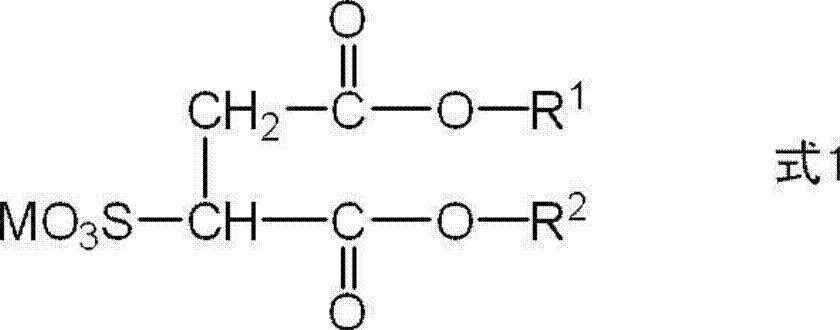
- ⁇ 1> Containing at least one surfactant selected from the group consisting of a fluorine-based surfactant, a silicone-based surfactant, and a dialkylsulfosuccinic acid-based surfactant represented by the following formula 1, and water.
- An aqueous solution of a curing accelerator for asphalt having a surface tension of 50 mN / m or less at 25 ° C.
- R 1 and R 2 each independently represent an alkyl group having 4 or more carbon atoms, and M represents sodium or potassium.
- ⁇ 2> The aqueous solution of a curing accelerator for asphalt according to ⁇ 1>, wherein the fluorine-based surfactant has an anionic group.
- ⁇ 3> The aqueous solution of a curing accelerator for asphalt according to ⁇ 2>, wherein the fluorine-based surfactant having an anionic group has a structure containing a sulfonic acid group or a sulfonate.
- ⁇ 4> In the above formula 1, at least one of the above R 1 and the above R 2 is the aqueous solution of the curing accelerator for asphalt according to any one of ⁇ 1> to ⁇ 3> having a branched structure.
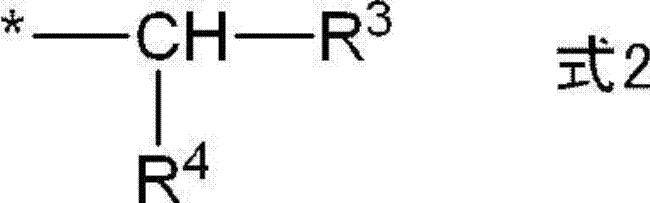
- ⁇ 5> In the above formula 1, at least one of the above R 1 and the above R 2 has a structure represented by the following formula 2, and the asphalt curing accelerator according to any one of ⁇ 1> to ⁇ 4>.
- Aqueous solution In the above formula 1, at least one of the above R 1 and the above R 2 has a structure represented
- R 3 and R 4 each independently represent an alkyl group having 2 or more carbon atoms. * Represents a bond.
- ⁇ 6> The aqueous solution of a curing accelerator for asphalt according to any one of ⁇ 1> to ⁇ 5>, wherein the alkyl group in R 1 and R 2 has 6 or more carbon atoms.
- ⁇ 7> The aqueous solution of a curing accelerator for asphalt according to any one of ⁇ 1> to ⁇ 6>, wherein the fluorine-based surfactant has a perfluoroalkyl group.
- An aqueous solution of a curing accelerator for asphalt which contains one or more kinds of organic solvents and water.
- R 1 and R 2 each independently represent an alkyl group having 4 or more carbon atoms, and M represents sodium or potassium.
- a pavement method comprising a step of applying an aqueous solution of a hardening accelerator for asphalt according to any one of them.
- an aqueous solution of an asphalt curing accelerator, an asphalt mixture, a pavement set, and an asphalt mixture that can increase the curing rate of an asphalt mixture that can be paved in a temperature range of 100 ° C. or lower and obtain good hardness.
- a paving method is provided.
- "-" indicating a numerical range is used to mean that numerical values described before and after the numerical range are included as a lower limit value and an upper limit value.
- the upper limit value or the lower limit value described in one numerical range may be replaced with the upper limit value or the lower limit value of another numerical range described stepwise.
- the upper limit value or the lower limit value of the numerical range may be replaced with the value shown in the examples.
- process is included in this term as long as the intended purpose of the process is achieved even if it cannot be clearly distinguished from other processes as well as an independent process.
- the amount of each component of the composition means the total amount of the plurality of substances present in the composition when a plurality of substances corresponding to each component are present in the layer, unless otherwise specified. Further, in the present disclosure, the combination of preferred embodiments is a more preferred embodiment.
- aqueous solution of curing accelerator for asphalt is an aqueous solution containing a component that lowers surface tension and water.
- a component that reduces surface tension is dissolved in water.
- the fact that the component is dissolved in water means that 1 mg or more of the component is dissolved in 1 ml of water at 25 ° C.
- the aqueous curing accelerator of the present disclosure preferably contains an organic solvent or a surfactant as a component for reducing surface tension.
- the curing accelerator aqueous solution of the present disclosure may contain both an organic solvent and a surfactant.
- Specific examples of the curing accelerator aqueous solution of the present disclosure include the following aspects.
- the first aspect of the curing accelerator aqueous solution of the present disclosure is at least one selected from the group consisting of a fluorine-based surfactant, a silicone-based surfactant, and a dialkylsulfosuccinic acid-based surfactant represented by the formula 1 described later. It is an embodiment containing a seed surfactant and water, and the surface tension at 25 ° C. is in the range of 50 mN / m or less.
- the second aspect of the curing accelerator aqueous solution of the present disclosure is an aspect containing one or more kinds of organic solvents and water.
- the curing accelerator aqueous solution of the present disclosure can increase the curing rate of the asphalt mixture that can be paved in a temperature range of 100 ° C. or lower, and can obtain good hardness.
- the reason why the aqueous solution of the curing accelerator of the present disclosure exerts such an effect is presumed as follows.
- an asphalt mixture that can be paved in a temperature range of 100 ° C. or lower is, for example, asphalt, aggregate, oil and fat, as described in Japanese Patent Application Laid-Open No. 2010-248472. And refers to a mixture of a compound selected from the group consisting of fatty acids and an alkaline compound.
- water which is a curing accelerator that promotes the curing of the asphalt mixture, is supplied to the paved asphalt mixture to cause a curing reaction in the asphalt mixture. Is promoted and a cured product of the asphalt mixture is obtained.
- the action of promoting curing in an asphalt mixture is a solidifying action that proceeds by a saponification reaction between a compound selected from the group consisting of fats and oils and fatty acids and an alkaline compound.
- the method of pavement construction generally includes a procedure of laying an asphalt mixture (that is, uncured asphalt) before supplying water with a finisher or the like, rolling the asphalt, spraying water, and rolling the asphalt with a roller. ..
- the alkaline component that is, the alkaline compound
- the surface tension is lowered instead of conventional water as a hardening accelerator that promotes hardening of the asphalt mixture.
- An aqueous solution containing a component to be allowed to be used that is, an aqueous solution containing at least a specific surfactant and having a surface tension at 25 ° C. of a specific value or less, or an aqueous solution containing at least an organic solvent is used.
- the curing rate of the asphalt mixture can be increased and good hardness can be obtained.
- the construction of pavement work can be speeded up.
- the curing accelerator aqueous solution of the first aspect of the present disclosure is composed of a fluorine-based surfactant, a silicone-based surfactant, and a dialkylsulfosuccinic acid-based surfactant represented by the following formula 1 as components for reducing surface tension. It contains at least one type of surfactant selected from the above group (hereinafter, also referred to as "specific surfactant") and water.
- the curing accelerator aqueous solution of the first aspect of the present disclosure has a surface tension of 50 mN / m or less at 25 ° C.
- the surface tension of the curing accelerator aqueous solution at 25 ° C. is preferably 30 mN / m or less, and more preferably 20 mN / m or less for the same reason as described above.
- the surface tension of the curing accelerator aqueous solution at 25 ° C. can be, for example, 10 mN / m or more.
- the surface tension of the curing accelerator aqueous solution at 25 ° C. is adjusted to 25 ° C. by adjusting the liquid temperature of the curing accelerator aqueous solution to 25 ° C., and the ambient temperature is 25 using a fully automatic surface tension meter CBVP-Z (manufactured by Kyowa Interface Science Co., Ltd.). It is a value measured in an environment of ° C.
- the curing accelerator aqueous solution of the first aspect of the present disclosure contains a specific surfactant as a component that lowers the surface tension of the curing accelerator aqueous solution.
- the content of the specific surfactant in the aqueous solution of the curing accelerator according to the first aspect of the present disclosure is preferably 0.01% by mass to 10% by mass, preferably 0.02, based on the total mass of the aqueous solution of the curing accelerator. It is more preferably from% by mass to 5% by mass, and even more preferably from 0.05% by mass to 3% by mass.
- the content of the specific surfactant in the aqueous solution of the curing accelerator according to the first aspect of the present disclosure is 0.01% by mass or more with respect to the total mass of the aqueous solution of the curing accelerator, the surface tension is adjusted within the above range. It's easy to do.
- the content of the specific surfactant in the aqueous solution of the curing accelerator according to the first aspect of the present disclosure is 10% by mass or less with respect to the total mass of the aqueous solution of the curing accelerator, a small amount of the surfactant remaining after curing is used. After pavement, for example, it is possible to suppress the occurrence of foaming caused by the permeation of water in rainy weather or the like.
- the fluorine-based surfactant is a surfactant having a fluorine atom in the molecule, and is suitable from the viewpoint of lowering the surface tension of the curing accelerator aqueous solution.
- the fluorine-based surfactant may be a surfactant having any of anionic, cationic, nonionic, or amphoteric properties.
- an anionic fluorine-based surfactant is preferable in that the permeability of the curing accelerator aqueous solution to the asphalt mixture is further improved.
- the fluorine-based surfactant is preferably a compound having an anionic group in the molecule.
- anionic group sulfonic acid group (-SO 3 H; also referred to as "sulfo group”.), Salts of sulfonic acid group (sulfonic acid group which is in the form of a salt; also referred to as “sulfonate”.)
- Carboxylic acid group (-COOH; also referred to as "carboxy group”
- salt of carboxylic acid group carboxylic acid group (carboxylic acid group in the form of salt; also referred to as “carboxylic acid salt”
- sulfonic acid group phosphoric acid
- Examples include salts of groups (phosphate groups in the form of salts; also referred to as "phosphates" and the like.
- an alkali metal salt is preferable. Alkali metals include potassium and sodium.
- the fluorine-based surfactant is preferably one having a structure containing a sulfonic acid group or a sulfonate in the molecule, in that the permeability of the curing accelerator aqueous solution to the asphalt mixture is further improved.
- the structure containing a sulfonate include a group containing a sulfonate.
- the fluorine-based surfactant is preferably a compound having a perfluoroalkyl group in the molecule in that the permeability of the aqueous cure accelerator solution to the asphalt mixture is further improved.
- the alkyl moiety of the perfluoroalkyl group preferably has 1 to 12 carbon atoms, and more preferably 1 to 10 carbon atoms.
- Examples of the perfluoroalkyl group include a perfluoromethyl group, a perfluoroethyl group, a perfluoropropyl group, a perfluorobutyl group, a perfluorooctyl group, and a perfluorononyl group.
- fluorine-based surfactant examples include anionic fluorine-based surfactants such as perfluoroalkyl carboxylic acid salt, perfluoroalkyl sulfonate, and perfluoroalkyl phosphate ester; perfluoroalkyl betaine, perfluoroalkylamine oxide, and per.
- Amphoteric fluorine-based surfactants such as fluoroalkylethylene oxide adducts; cationic fluorine-based surfactants such as perfluoroalkyltrimethylammonium salt; and the like can be mentioned.
- fluorine-based surfactant examples include potassium trifluoromethanesulfonate, potassium perfluorobutanesulfonate, potassium perfluorohexanesulfonate, potassium perfluorooctanesulfonate, sodium pentafluoroethanesulfonate, and perfluorobutanesulfonic acid.
- fluorine-based surfactant a commercially available product on the market may be used.
- commercially available products include Megafuck series manufactured by DIC Co., Ltd. (Example: Megafuck (registered trademark) F114, F142D, F172, F173, F176, F177, F183, F410, F444, etc. F477, F479, F482, F553, F554, F556, F780, F781, F781-F, R30, R08, F-472SF, BL20, R-61, and the same. R-90), Florard series manufactured by Sumitomo 3M Co., Ltd.
- Futagent series (Example: Futagent 100, 150, 212M, 215M, 222F, 250, 320, 400SW, 602A, 681 and 683), KP series manufactured by Shinetsu Chemical Industry Co., Ltd., Polyflow series manufactured by Kyoeisha Chemical Co., Ltd., Ftop series manufactured by Mitsubishi Material Denshi Kasei Co., Ltd., PolyFox series manufactured by OMNOVA, and Big Chemie. -The DISPERBYK series manufactured by Japan Co., Ltd. can be mentioned.
- fluorine-based surfactant the fluorine-based surfactant described in "Surfactant Handbook” (edited by Nishiichiro, Yochiichiro Imai, Masazo Kasai, Sangyo Tosho Co., Ltd., published in 1960) is also mentioned. Be done.
- the silicone-based surfactant is a surfactant having a silicon atom in the molecule, and is suitable from the viewpoint of lowering the surface tension of the curing accelerator aqueous solution.
- silicone-based surfactant examples include unmodified silicone-based surfactants, polyether-modified silicone-based surfactants, polyester-modified silicone-based surfactants, alkyl-modified silicone-based surfactants, and aralkyl-modified silicone-based surfactants. , And reactive silicone-based surfactants.
- silicone-based surfactant a commercially available product on the market may be used.
- examples of commercially available products include the BYK series manufactured by Big Chemie Japan Co., Ltd. (eg, BYK-345, BYK-346, BYK-347, BYK-348, and BYK-349).
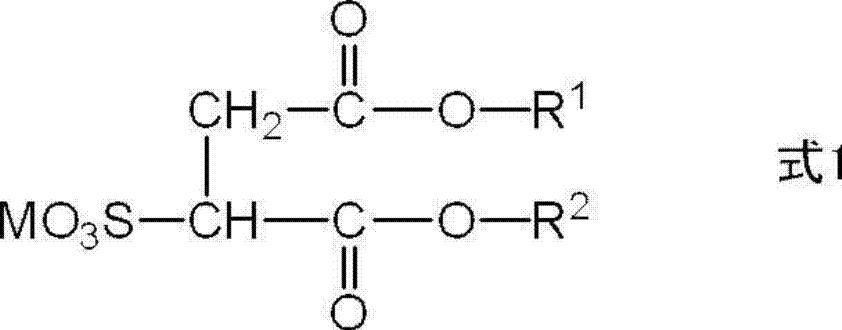
- the dialkyl sulfosuccinic acid-based surfactant in the present disclosure is a dialkyl sulfosuccinate represented by the following formula 1, and is suitable from the viewpoint of lowering the surface tension of the curing accelerator aqueous solution.
- R 1 and R 2 each independently represent an alkyl group having 4 or more carbon atoms, and M represents sodium (Na) or potassium (K).
- the number of carbon atoms of the alkyl group in R 1 and R 2 is 4 or more, preferably 6 or more. Further, the number of carbon atoms of the alkyl group in R 1 and R 2 is preferably 12 or less, more preferably 10 or less, and further preferably 8 or less.
- Examples of the alkyl group having 4 or more carbon atoms in R 1 and R 2 include an n-butyl group, a t-butyl group, a pentyl group, a 1-ethylpentyl group, a hexyl group, a heptyl group, an octyl group, a nonyl group and the like. ..
- At least one of R 1 and R 2 is preferably an alkyl group having a branched structure. Among them, at least one of R 1 and R 2 is more preferably an alkyl group having a structure represented by the following formula 2, and both R 1 and R 2 are alkyl having a structure represented by the formula 2. It is more preferably a group.
- R 3 and R 4 each independently represent an alkyl group having 2 or more carbon atoms. * Represents a bond.
- the alkyl groups in R 3 and R 4 preferably have 2 or more carbon atoms on one side and 4 or more carbon atoms on the other side. Further, the number of carbon atoms of the alkyl group in R 3 and R 4 is preferably 8 or less, and more preferably 6 or less.
- alkyl group having a branched structure examples include a 1-methylpentyl group, a 1-ethylpentyl group, a 1-butylpentyl group, a 1-propylbutyl group and the like.
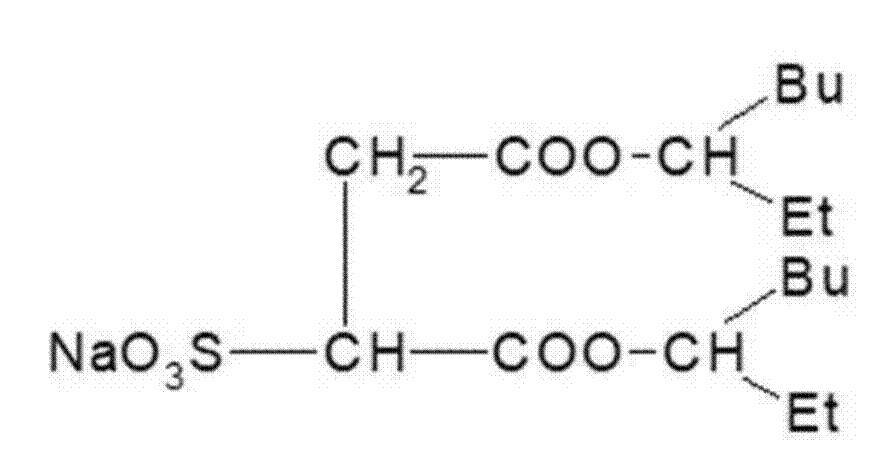
- dialkyl sulfosuccinate represented by the formula 1 examples include sulfosuccinates such as sodium di-2-ethylhexyl sulfosuccinate, monolauroyl monoethanolamide polyoxyethylene sulfosuccinate, sodium lauryl polypropylene glycol sulfosuccinate, and The following compounds are mentioned.
- "Et” and “Bu” in the following compounds represent “ethyl” and "butyl", respectively.
- the curing accelerator aqueous solution of the first aspect of the present disclosure contains water. There are no particular restrictions on water.
- the content of water in the curing accelerator aqueous solution according to the first aspect of the present disclosure is preferably 90% by mass to 99.99% by mass, preferably 95% by mass to 99.99% by mass, based on the total mass of the curing accelerator aqueous solution. 98% by mass is more preferable, and 97% by mass to 99.95% by mass is further preferable.
- the curing accelerator aqueous solution of the first aspect of the present disclosure may contain other components in addition to the above-mentioned specific surfactant and water as long as the effects of the present disclosure are not significantly impaired.
- other components include surfactants other than the above-mentioned specific surfactants (hereinafter, also referred to as “other surfactants”), organic solvents, and the like.
- surfactants include, for example, higher fatty acid salts such as potassium stearate and potassium behenate; alkyl ether carboxylic acid salts such as sodium polyoxyethylene (POE) lauryl ether carboxylic acid; N-stearoyl-L-.
- higher fatty acid salts such as potassium stearate and potassium behenate
- alkyl ether carboxylic acid salts such as sodium polyoxyethylene (POE) lauryl ether carboxylic acid
- N-stearoyl-L- N-stearoyl-L-.
- N-acyl-L-glutamate such as monosodium glutamate; higher alkyl sulfate such as sodium lauryl sulfate and potassium lauryl sulfate; triethanolamine POE lauryl sulfate; alkyl ether sulfate such as sodium POE lauryl sulfate; lauroyl N-acyl sarcosate such as sodium sarcosin; alkyl phosphate such as sodium stearyl phosphate; alkyl ether phosphate such as POE oleyl ether phosphate, sodium POE stearyl ether phosphate; cured coconut oil fatty acid sodium glycerin sulfate Higher fatty acid esters such as sulfate ester salts; and anionic surfactants such as.
- surfactants include, for example, higher fatty acid amide sulfonates such as N-myristoyl-N-methyltaurine sodium; sodium linadodecylbenzene sulfonate, linadodecylbenzene, triethanolamine sulfonate, linadodecylbenzene.
- anionic surfactants having a sulfonic acid structure such as alkylbenzene sulfonates such as sulfonic acid and dodecyldiphenyl ether disulfonic acid.
- surfactants include Lapizol (registered trademark) A-90, A-80, BW-30, B-90, C-70, etc.
- NIKKOL registered trademark OTP-100 (manufactured by Nikko Chemicals Co., Ltd.); Kohakul (registered trademark) ON, Koracool (registered trademark) L-40, etc. (all manufactured by Toho Chemical Industry Co., Ltd.); Phosphanol (registered trademark) ) 702 (manufactured by Toho Chemical Industry Co., Ltd.); Beaulite (registered trademark) A-5000, Beaulite (registered trademark) SSS, Sanded (registered trademark) BL, etc.
- Examples of other surfactants include alkyltrimethylammonium salts such as stearyltrimethylammonium chloride and lauryltrimethylammonium chloride; dialkyldimethylammonium salts such as distearyldimethylammonium chloride; poly (N, N dimethyl-3, Alkylpyridinium salts such as 5-methylenepiperidinium), cetylpyridinium chloride; alkylquaternary ammonium salts; alkyldimethylbenzylammonium salts; alkylisoquinolinium salts; dialkylmoriphonium salts; POE alkylamines; alkylamine salts; Cationic surfactants such as polyamine fatty acid derivatives; ammonium alcohol fatty acid derivatives; benzalkonium chloride; benzethonium chloride; can be mentioned.
- alkyltrimethylammonium salts such as stearyltrimethylammonium chloride and lauryltrimethylammonium chloride
- surfactants examples include EFKA-745 (phthalocyanine derivative, manufactured by Morishita Sangyo Co., Ltd.); 75, No. 90, No.
- Commercially available cationic surfactants such as 95 etc. ((meth) acrylic acid-based (co) polymer, manufactured by Kyoeisha Chemical Co., Ltd.); W001 (Yusho Co., Ltd.); can be mentioned.
- Examples of other surfactants include Naroacty (registered trademark) CL-95, HN-100 (manufactured by Sanyo Kasei Kogyo Co., Ltd.); Lisolex (registered trademark) BW400 (manufactured by Higher Alcohol Industry Co., Ltd.).
- Commercially available nonionic products such as EMALEX (registered trademark) ET-2020 (manufactured by Nippon Emulsion Co., Ltd.), Unilube (registered trademark) 50MB-26, Nonion (registered trademark) IS-4, etc. (manufactured by Nikko Co., Ltd.) Surfactants can be mentioned.
- the aqueous curing accelerator solution of the first aspect of the present disclosure can contain an organic solvent.
- the details of the organic solvent are the same as those of the organic solvent that can be used in the second aspect described later, and the preferred aspects are also the same, and thus the description thereof will be omitted here.
- the curing accelerator aqueous solution of the second aspect of the present disclosure contains one or more kinds of organic solvents and water as components for lowering the surface tension.
- the curing accelerator aqueous solution of the second aspect of the present disclosure contains one or more kinds of organic solvents.
- the organic solvent is not particularly limited, and is an alcohol solvent such as methanol, ethanol, isopropanol, diacetone alcohol; ethylene glycol monomethyl ether, ethylene glycol monoethyl ether, propylene glycol monomethyl ether, propylene glycol monoethyl ether, 3-methoxy.
- Alcohol ether solvents such as -1-butanol, 3-methoxy-3-methyl-1-butanol; ketone solvents such as acetone, methyl ethyl ketone, methyl isobutyl ketone and cyclohexanone; ether solvents such as tetrahydrofuran and dioxane; methyl acetate, Ester solvents such as ethyl acetate, n-butyl acetate, isobutyl acetate, t-butyl acetate, methyl lactate, ethyl lactate; aromatic solvents such as benzene, toluene and xylene, amide solvents such as formamide and dimethylformamide; n -Hexan, cyclohexane, n-heptane, n-octane, n-decane and other hydrocarbon solvents; and the like.
- the organic solvent an alcohol solvent is preferable,
- the curing accelerator aqueous solution of the second aspect of the present disclosure may contain one organic solvent alone or two or more.
- the content of the organic solvent in the curing accelerator aqueous solution of the second aspect of the present disclosure is preferably 1% by mass to 90% by mass, more preferably 3% by mass to 80% by mass, based on the content of water. 5, 70% by mass is more preferable, and 5% by mass to 30% by mass is particularly preferable.
- the content of the organic solvent in the aqueous solution of the curing accelerator according to the second aspect of the present disclosure is 1% by mass or more with respect to the content of water, the surface tension can be easily adjusted to a lower range.
- the content of the organic solvent in the aqueous solution of the curing accelerator according to the second aspect of the present disclosure is 90% by mass or less with respect to the content of water, the amount of water does not become too small, so that saponification is performed. Solidification by the reaction proceeds better.
- the aqueous curing accelerator solution of the second aspect of the present disclosure contains water. There are no particular restrictions on water.
- the content of water in the curing accelerator aqueous solution of the second aspect of the present disclosure is preferably 53% by mass to 99% by mass, preferably 56% by mass to 97% by mass, based on the total mass of the curing accelerator aqueous solution. More preferably, 59% by mass to 95% by mass is further preferable, and 77% by mass to 95% by mass is particularly preferable.
- the aqueous curing accelerator solution of the second aspect of the present disclosure may contain other components as long as the effects of the present disclosure are not significantly impaired.
- other components include the specific surfactant in the first aspect, a surfactant other than the specific surfactant (that is, another surfactant), and the like.
- the curing accelerator aqueous solution of the second aspect of the present disclosure preferably has a surface tension of 50 mN / m or less, more preferably 30 mN / m or less, and 20 mN / m or less at 25 ° C. More preferred.
- the surface tension at 25 ° C. can be, for example, 10 mN / m or more.
- the method for measuring the surface tension is as described above in the first aspect.
- the asphalt mixture of the present disclosure includes asphalt, an aggregate, a compound selected from the group consisting of fats and oils and fatty acids, an alkaline compound, a fluorine-based surfactant, a silicone-based surfactant, and a dialkyl represented by the formula 1. It contains at least one surfactant (that is, a specific surfactant) selected from the group consisting of sulfosuccinic acid-based surfactants.
- the asphalt mixture of the present disclosure may further contain other components, if necessary.
- R 1 and R 2 each independently represent an alkyl group having 4 or more carbon atoms, and M represents sodium or potassium. Since the details of the dialkylsulfosuccinic acid-based surfactant represented by the formula 1 have already been described, the description thereof will be omitted here.
- the supplied water can be obtained by supplying water to the paved asphalt mixture after paving the asphalt mixture. Good penetration into asphalt mixture.
- the curing rate in the asphalt mixture is improved and good hardness can be obtained.
- the asphalt mixture is, for example, as described in JP-A-2010-248472, a compound selected from the group consisting of asphalt, aggregates, fats and oils, and fatty acids, and a mixture containing an alkaline compound.
- water which is a curing accelerator that accelerates the curing process of the asphalt mixture, promotes the curing of the asphalt mixture, and the asphalt mixture is cured. The cured product of is obtained.
- asphalt examples include straight asphalt, blown asphalt, semi-blown asphalt, natural asphalt, and lumber-free asphalt.
- asphalt not only the above asphalt, but also the above asphalt, styrene-butadiene-styrene copolymer (SBS), styrene-butadiene rubber (SBR), styrene-isoprene-styrene copolymer (SIS), ethylene / vinyl acetate Modified asphalt mixed with a copolymer (EVA), an ethylene / ethyl acrylate copolymer (EEA), or the like can also be used.
- SBS styrene-butadiene-styrene copolymer
- SBR styrene-butadiene rubber
- SIS styrene-isoprene-styrene copolymer
- EVA ethylene / vinyl acetate Modified asphalt mixed with a copolymer
- EOA ethylene
- aggregates include fillers, crushed stones, crushed stones, gravel, sand, recycled aggregates, calsigned bauxite, steel slag, molten alumina, artificial aggregates and the like.
- Fillers are limestone, igneous rock powder, cement, slaked lime, fly ash and the like.
- Crushed stone is obtained by mechanically crushing rough stones (igneous rocks, sedimentary rocks, metamorphic rocks, etc.) and classifying them according to particle size as necessary. Breaking the jade is a crushed boulder.
- the gravel is river gravel, mountain gravel, sea gravel, etc.
- the recycled aggregate includes recycled asphalt concrete aggregate produced by mechanically crushing or heat-crushing asphalt concrete pavement generating material, and cement concrete recycled aggregate produced by mechanically crushing cement concrete pavement generating material. Is done.
- the quantitative relationship between asphalt and aggregate is not particularly limited and can be set as appropriate.
- the content of aggregate in the asphalt mixture of the present disclosure is preferably 85% by mass to 98% by mass, more preferably 90% by mass, based on the total content of aggregate and asphalt. % To 96% by mass.
- the content of asphalt in the asphalt mixture of the present disclosure is preferably 2% by mass to 15% by mass, more preferably 4% by mass, based on the total content of aggregate and asphalt. It is ⁇ 10% by mass.
- Examples of fats and oils include ester compounds of fatty acids and polyhydric alcohols.
- the ester compound of the fatty acid and the polyhydric alcohol is not particularly limited, and various fatty acid esters are preferably mentioned.
- Preferable examples of the fatty acid include a carboxylic acid having a hydrocarbon chain having 4 to 30 carbon atoms.
- alkaline compound examples include compounds that are responsible for saponification or neutralization of fats and oils, fatty acids, etc., and that dissolve in water and dissociate to generate alkali metal ions, alkaline earth metal ions, and the like.
- alkaline compound examples include salts or hydroxides of alkali metals (potassium, sodium, etc.) (sodium chloride, sodium hydroxide, etc.), salts of alkaline earth metals (calcium, magnesium, etc.) or hydroxides (calcium chloride). , Calcium hydroxide, etc.), sodium hydrogen carbonate or potassium hydrogen carbonate, or ordinary cement.
- the asphalt mixture may be cutback asphalt including a component that softens or liquefies (so-called cutback agent).
- cutback agent examples include hydrocarbon oils (tar, pitch, gasoline, kerosene, A heavy oil, B heavy oil, C heavy oil, etc.).
- the pavement set of the present disclosure comprises an asphalt mixture containing an asphalt, an aggregate, an alkaline compound, and a compound selected from the group consisting of fats and oils and fatty acids, and the above-mentioned aqueous solution of the hardening accelerator for asphalt of the present disclosure.
- the pavement method of the present disclosure is a step of paving an asphalt mixture containing asphalt, an aggregate, an alkaline compound, and a compound selected from the group consisting of fats and oils and fatty acids (hereinafter, also referred to as "paving step”). And a step of applying the above-mentioned aqueous solution of the asphalt curing accelerator of the present disclosure to the paved asphalt mixture (hereinafter, also referred to as "accelerator application step").
- an asphalt mixture containing asphalt, aggregate, an alkaline compound, and a compound selected from the group consisting of fats and oils and fatty acids is pavement.
- the asphalt mixture is laid by applying it using equipment such as a finisher.
- the asphalt mixture is preferably spread at a high density.
- the temperature of the asphalt mixture at the time of pavement is preferably 100 ° C. or lower in that the effect of the present invention is more exerted.
- the lower limit of the temperature of the asphalt mixture at the time of pavement may be 0 ° C.
- first rolling step After the pavement step and before moving to the next accelerator applying step, a step of rolling the paved asphalt mixture (hereinafter, also referred to as “first rolling step") may be provided.
- first compaction step the internal density of the asphalt mixture can be improved and the smoothness of the pavement surface can be improved.
- aqueous solution of the asphalt curing accelerator of the present disclosure is applied to the asphalt mixture paved in the pavement process.
- the details of the aqueous solution of the curing accelerator for asphalt disclosed in the present disclosure are as described above.
- the asphalt curing accelerator aqueous solution can be applied to the asphalt mixture paved in the pavement process by spraying.
- the spraying method is not particularly limited, and any method may be used as long as the aqueous solution of the asphalt curing accelerator can be spread over the entire paved asphalt mixture.
- the spraying method may be, for example, a method using a shower or the like.
- the temperature of the aqueous solution of the curing accelerator for asphalt is not particularly limited.
- a step of rolling the asphalt mixture (hereinafter, also referred to as "second rolling step") can be provided.
- the penetration of the asphalt curing accelerator aqueous solution or water into the asphalt mixture can be further promoted.
- An uncured asphalt mixture was prepared according to the following procedure. Prepare 1.14 kg of mild patch (mixture containing aggregate, oil and fat, and alkaline additive, manufactured by Maeda Road Co., Ltd.), and make this mild patch 10.2 cm in diameter x 6.3 cm in height. Asphalt uncured mixture having a density of 2.22 was prepared by press rolling at 0.3 MPa.
- Aqueous uncured asphalt mixture is applied in a layer with a thickness of 50 mm, and Examples 1 to 10 and Comparative Example 2 are applied to the surface of the coated layer in an environment of a temperature of 25 ° C. and a humidity of 50% RH.
- 0.5 g of the asphalt curing accelerator aqueous solution prepared in 1 and 0.5 g of water of Comparative Example 1 were added dropwise using a dropper, and the time until permeation was measured. The determination of permeation was made by visually confirming that the liquid film on the surface of the coating layer had disappeared. It can be said that the shorter the time until penetration, the better the permeability.
- Table 1 those in which the permeation did not end even after 300 seconds and the liquid film remained on the surface were described as ">300".
- Examples 1 to 10 using the aqueous solution of the curing accelerator for asphalt of the present disclosure have a faster water permeation rate than Comparative Example 1 using conventional water, and the obtained asphalt mixture is obtained. It was confirmed that the cured product was also excellent in strength. In Comparative Example 1, the permeability of water was low, and the strength of the cured product of the asphalt mixture was also low.
Landscapes
- Chemical & Material Sciences (AREA)
- Health & Medical Sciences (AREA)
- Chemical Kinetics & Catalysis (AREA)
- Medicinal Chemistry (AREA)
- Polymers & Plastics (AREA)
- Organic Chemistry (AREA)
- Civil Engineering (AREA)
- Engineering & Computer Science (AREA)
- Structural Engineering (AREA)
- Architecture (AREA)
- Dispersion Chemistry (AREA)
- Oil, Petroleum & Natural Gas (AREA)
- Materials Engineering (AREA)
- Compositions Of Macromolecular Compounds (AREA)
Abstract
フッ素系界面活性剤、シリコーン系界面活性剤、及び下記式1で表されるジアルキルスルホコハク酸系界面活性剤からなる群より選ばれる少なくとも1種の界面活性剤と、水と、を含有し、25℃での表面張力が50mN/m以下である、アスファルト用硬化促進剤水溶液、アスファルト混合物、舗装用セット、及び舗装方法。R1及びR2は、各々独立に、炭素数4以上のアルキル基を表し、Mは、Na又はKを表す。
Description
本開示は、アスファルト用硬化促進剤水溶液、アスファルト混合物、舗装用セット、及びその舗装方法に関する。
加熱アスファルト混合物は、通常、舗装施工便覧等に示されるように、初期転圧温度を110℃~140℃の範囲内として舗設に用いられている。また、アスファルト混合物としては、中温化技術を利用した加熱アスファルト混合物(いわゆる中温化アスファルト混合物)も提供されている。中温化アスファルト混合物では、一般に、加熱アスファルト混合物の可使温度範囲を低温側に30℃程度拡げることができるとされている。
加熱アスファルト混合物は、舗設直後から大きな強度が得られるものの、その可使時間は、加熱アスファルト混合物の温度が低下するまでの時間となる。加熱アスファルト混合物を、例えば、薄層オーバーレイ工法に適用する際には、舗設厚さが薄くなるため、敷きならし直後に大幅な温度低下を伴いやすい。そのため、少量の加熱アスファルト混合物を数回に分けて使用する場合、又は、加熱アスファルト混合物を長時間かけて運搬する場合には、所期の舗設が良好に行えないことがある。一方、中温化アスファルト混合物では、加熱アスファルト混合物に比べて可使温度範囲を低温側に30℃程度拡げることができるものの、上記の温度条件では十分な効果が得られ難い。
そこで、100℃以下の温度域で舗設することができるアスファルト混合物(いわゆる常温施工型アスファルト混合物)が種々提案されている。
常温施工型アスファルト混合物としては、例えば、アスファルト混合物の粘度を鉱物油等により強制的に低下させる、いわゆるカットバックアスファルト混合物がある。カットバックアスファルト混合物は、特開平11-12475号公報に記載されているように、鉱物油等のカットバック剤でアスファルトを軟質化させ、カットバック剤の揮発に伴ってアスファルト混合物の強度を発現させるものである。また、アスファルト乳剤を用いた常温施工型アスファルト混合物は、骨材を加熱し、乾燥させる必要がないものの、強度が比較的小さい上にアスファルト乳剤の分解速度を考慮しなければならず、使用できる範囲が限定されてしまう場合がある。
常温施工型アスファルト混合物としては、例えば、アスファルト混合物の粘度を鉱物油等により強制的に低下させる、いわゆるカットバックアスファルト混合物がある。カットバックアスファルト混合物は、特開平11-12475号公報に記載されているように、鉱物油等のカットバック剤でアスファルトを軟質化させ、カットバック剤の揮発に伴ってアスファルト混合物の強度を発現させるものである。また、アスファルト乳剤を用いた常温施工型アスファルト混合物は、骨材を加熱し、乾燥させる必要がないものの、強度が比較的小さい上にアスファルト乳剤の分解速度を考慮しなければならず、使用できる範囲が限定されてしまう場合がある。
こうした課題に対して、例えば、特開2010-248472号公報では、アスファルトに、油脂又は脂肪酸とアルカリ性添加材とを添加して、混合し、アスファルトの粘度を低下させることにより、混合物温度が常温に低下しても施工を可能とするとともに、施工中又は施工直後に混合物へ、硬化促進剤である水を供給することにより、添加した油脂又は脂肪酸とアルカリ分とが急速に鹸化反応し、増粘することで早期に交通開放を可能とする強度を発現できる常温アスファルト混合物が提案されている。
実際の舗装道路等の施工では、フィニッシャー等の設備により高密度に敷き均された未硬化のアスファルト混合物中に、硬化促進剤である水を供給した際に、アスファルト混合物が良好に硬化する必要があり、施工性の改善が望まれていた。
本開示の実施形態が解決しようとする課題は、100℃以下の温度域において舗設可能なアスファルト混合物の硬化速度を高め、かつ、良好な硬度が得られるアスファルト用硬化促進剤水溶液、アスファルト混合物、舗装用セット、及び舗装方法を提供することにある。
課題を解決するための具体的手段には、以下の態様が含まれる。
<1> フッ素系界面活性剤、シリコーン系界面活性剤、及び下記式1で表されるジアルキルスルホコハク酸系界面活性剤からなる群より選ばれる少なくとも1種の界面活性剤と、水と、を含有し、25℃での表面張力が50mN/m以下である、アスファルト用硬化促進剤水溶液。
<1> フッ素系界面活性剤、シリコーン系界面活性剤、及び下記式1で表されるジアルキルスルホコハク酸系界面活性剤からなる群より選ばれる少なくとも1種の界面活性剤と、水と、を含有し、25℃での表面張力が50mN/m以下である、アスファルト用硬化促進剤水溶液。
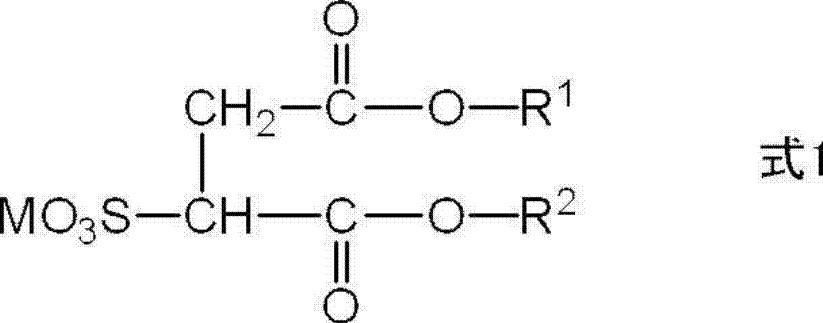
式1中、R1及びR2は、各々独立に、炭素数4以上のアルキル基を表し、Mは、ナトリウム又はカリウムを表す。
<2> 上記フッ素系界面活性剤が、アニオン性基を有する<1>に記載のアスファルト用硬化促進剤水溶液。
<3> 上記アニオン性基を有する上記フッ素系界面活性剤が、スルホン酸基又はスルホン酸塩を含む構造を有する<2>に記載のアスファルト用硬化促進剤水溶液。
<4> 上記式1において、上記R1及び上記R2の少なくとも一方は、分岐構造を有する<1>~<3>のいずれか1つに記載のアスファルト用硬化促進剤水溶液。
<5> 上記式1において、上記R1及び上記R2の少なくとも一方は、下記式2で表される構造を有する<1>~<4>のいずれか1つに記載のアスファルト用硬化促進剤水溶液。
<3> 上記アニオン性基を有する上記フッ素系界面活性剤が、スルホン酸基又はスルホン酸塩を含む構造を有する<2>に記載のアスファルト用硬化促進剤水溶液。
<4> 上記式1において、上記R1及び上記R2の少なくとも一方は、分岐構造を有する<1>~<3>のいずれか1つに記載のアスファルト用硬化促進剤水溶液。
<5> 上記式1において、上記R1及び上記R2の少なくとも一方は、下記式2で表される構造を有する<1>~<4>のいずれか1つに記載のアスファルト用硬化促進剤水溶液。
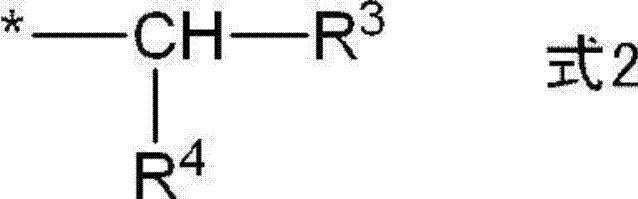
式2中、R3及びR4は、各々独立に、炭素数2以上のアルキル基を表す。*は、結合手を表す。
<6> 上記R1及び上記R2におけるアルキル基は、炭素数が6以上である<1>~<5>のいずれか1つに記載のアスファルト用硬化促進剤水溶液。
<7> 上記フッ素系界面活性剤が、パーフルオロアルキル基を有する<1>~<6>のいずれか1つに記載のアスファルト用硬化促進剤水溶液。
<8> 1種以上の有機溶媒と、水と、を含有する、アスファルト用硬化促進剤水溶液。
<9> アスファルトと、骨材と、油脂及び脂肪酸からなる群より選ばれる化合物と、アルカリ性化合物と、フッ素系界面活性剤、シリコーン系界面活性剤、及び下記式1で表されるジアルキルスルホコハク酸系界面活性剤からなる群より選ばれる少なくとも1種の界面活性剤と、を含有するアスファルト混合物。
<7> 上記フッ素系界面活性剤が、パーフルオロアルキル基を有する<1>~<6>のいずれか1つに記載のアスファルト用硬化促進剤水溶液。
<8> 1種以上の有機溶媒と、水と、を含有する、アスファルト用硬化促進剤水溶液。
<9> アスファルトと、骨材と、油脂及び脂肪酸からなる群より選ばれる化合物と、アルカリ性化合物と、フッ素系界面活性剤、シリコーン系界面活性剤、及び下記式1で表されるジアルキルスルホコハク酸系界面活性剤からなる群より選ばれる少なくとも1種の界面活性剤と、を含有するアスファルト混合物。

式1中、R1及びR2は、各々独立に、炭素数4以上のアルキル基を表し、Mは、ナトリウム又はカリウムを表す。
<10> アスファルト、骨材、アルカリ性化合物、並びに、油脂及び脂肪酸からなる群より選ばれる化合物を含有するアスファルト混合物と、<1>~<8>のいずれか1つに記載のアスファルト用硬化促進剤水溶液と、を有する舗装用セット。
<11> アスファルト、骨材、アルカリ性化合物、並びに、油脂及び脂肪酸からなる群より選ばれる化合物を含有するアスファルト混合物を舗設する工程と、舗設されたアスファルト混合物に対して<1>~<8>のいずれか1つに記載のアスファルト用硬化促進剤水溶液を付与する工程と、を有する舗装方法。
<11> アスファルト、骨材、アルカリ性化合物、並びに、油脂及び脂肪酸からなる群より選ばれる化合物を含有するアスファルト混合物を舗設する工程と、舗設されたアスファルト混合物に対して<1>~<8>のいずれか1つに記載のアスファルト用硬化促進剤水溶液を付与する工程と、を有する舗装方法。
本開示の実施形態によれば、100℃以下の温度域において舗設可能なアスファルト混合物の硬化速度を高め、かつ、良好な硬度が得られるアスファルト用硬化促進剤水溶液、アスファルト混合物、舗装用セット、及び舗装方法が提供される。
以下、本開示のアスファルト用硬化促進剤水溶液、アスファルト混合物、舗装用セット、及び舗装方法について詳細に説明する。以下に記載する構成要件の説明は、本開示の代表的な実施態様に基づいてなされることがあるが、本開示はそのような実施態様に限定されるものではない。
本開示において、数値範囲を示す「~」とはその前後に記載される数値を下限値及び上限値として含む意味で使用される。
本開示において段階的に記載されている数値範囲において、一つの数値範囲で記載された上限値又は下限値は、他の段階的な記載の数値範囲の上限値又は下限値に置き換えてもよい。また、本開示に記載されている数値範囲において、その数値範囲の上限値又は下限値は、実施例に示されている値に置き換えてもよい。
本開示において段階的に記載されている数値範囲において、一つの数値範囲で記載された上限値又は下限値は、他の段階的な記載の数値範囲の上限値又は下限値に置き換えてもよい。また、本開示に記載されている数値範囲において、その数値範囲の上限値又は下限値は、実施例に示されている値に置き換えてもよい。
本開示において「工程」との語は、独立した工程だけでなく、他の工程と明確に区別できない場合であっても工程の所期の目的が達成されれば、本用語に含まれる。
本開示において、組成物の各成分の量は、各成分に該当する物質が層中に複数存在する場合、特に断らない限り、組成物中に存在する上記複数の物質の合計量を意味する。
また、本開示において、好ましい態様の組み合わせは、より好ましい態様である。
また、本開示において、好ましい態様の組み合わせは、より好ましい態様である。
[アスファルト用硬化促進剤水溶液]
本開示のアスファルト用硬化促進剤水溶液(以下、単に「硬化促進剤水溶液」ともいう。)は、表面張力を低下させる成分と水とを含有する水溶液である。本開示の硬化促進剤水溶液では、表面張力を低下させる成分が水に溶解されていることが好ましい。
成分が水に溶解されているとは、25℃の水1mlに対して成分が1mg以上溶けている状態をいう。
本開示のアスファルト用硬化促進剤水溶液(以下、単に「硬化促進剤水溶液」ともいう。)は、表面張力を低下させる成分と水とを含有する水溶液である。本開示の硬化促進剤水溶液では、表面張力を低下させる成分が水に溶解されていることが好ましい。
成分が水に溶解されているとは、25℃の水1mlに対して成分が1mg以上溶けている状態をいう。
本開示の硬化促進剤水溶液は、表面張力を低下させる成分として、有機溶媒又は界面活性剤を含有することが好ましい。また、本開示の硬化促進剤水溶液は、有機溶媒及び界面活性剤の両者を含有してもよい。
本開示の硬化促進剤水溶液の態様としては、具体的には、以下の態様が挙げられる。
本開示の硬化促進剤水溶液の第1の態様は、フッ素系界面活性剤、シリコーン系界面活性剤、及び後述の式1で表されるジアルキルスルホコハク酸系界面活性剤からなる群より選ばれる少なくとも1種の界面活性剤と、水と、を含有し、25℃での表面張力が50mN/m以下の範囲である態様である。
本開示の硬化促進剤水溶液の第2の態様は、1種以上の有機溶媒と、水と、を含有する態様である。
本開示の硬化促進剤水溶液の態様としては、具体的には、以下の態様が挙げられる。
本開示の硬化促進剤水溶液の第1の態様は、フッ素系界面活性剤、シリコーン系界面活性剤、及び後述の式1で表されるジアルキルスルホコハク酸系界面活性剤からなる群より選ばれる少なくとも1種の界面活性剤と、水と、を含有し、25℃での表面張力が50mN/m以下の範囲である態様である。
本開示の硬化促進剤水溶液の第2の態様は、1種以上の有機溶媒と、水と、を含有する態様である。
本開示の硬化促進剤水溶液は、上記態様であることにより、100℃以下の温度域において舗設可能なアスファルト混合物の硬化速度を高め、かつ、良好な硬度を得ることができる。このような効果を、本開示の硬化促進剤水溶液が奏する理由は以下のように推測される。
一般に、100℃以下の温度域で舗設可能なアスファルト混合物(いわゆる常温施工型アスファルト混合物)は、例えば、特開2010-248472号公報等に記載されているように、アスファルトと、骨材と、油脂及び脂肪酸からなる群より選ばれる化合物と、アルカリ性化合物と、の混合物のことを指す。アスファルト混合物を塗設(即ち舗設)して行う舗装施工では、舗設したアスファルト混合物に対して、アスファルト混合物の硬化を促進する硬化促進剤である水を供給することで、アスファルト混合物中での硬化反応が促され、アスファルト混合物の硬化物が得られる。アスファルト混合物における硬化促進の作用は、油脂及び脂肪酸からなる群より選ばれる化合物とアルカリ性化合物との間の鹸化反応によって進行する固化作用である。
舗装施工の方法は、一般に、水を供給する前のアスファルト混合物(即ち、未硬化のアスファルト)をフィニッシャー等により敷ならし、転圧した後、水を散布し、ローラで転圧するという手順を含む。この際、水がアスファルト混合物に浸透することによって、アルカリ成分(即ち、アルカリ性化合物)が油脂、脂肪酸等に作用して生じる鹸化反応又は中和反応により固化することで、早期に高い強度を発現することが可能となる。
舗装施工の方法は、一般に、水を供給する前のアスファルト混合物(即ち、未硬化のアスファルト)をフィニッシャー等により敷ならし、転圧した後、水を散布し、ローラで転圧するという手順を含む。この際、水がアスファルト混合物に浸透することによって、アルカリ成分(即ち、アルカリ性化合物)が油脂、脂肪酸等に作用して生じる鹸化反応又は中和反応により固化することで、早期に高い強度を発現することが可能となる。
本開示では、100℃以下の温度域において舗設可能な常温施工型アスファルト混合物を用いて舗装施工するに際し、アスファルト混合物の硬化を促進させる硬化促進剤として、従来の水に代えて、表面張力を低下させる成分を含有する水溶液、すなわち、特定の界面活性剤を少なくとも含有し、かつ、25℃での表面張力が特定値以下である水溶液、又は、有機溶媒を少なくとも含有する水溶液を用いる。これにより、アスファルト混合物の硬化速度が高められ、かつ、良好な硬度を得ることができる。結果、舗装工事の施工の迅速化が図れる。
以下、本開示の硬化促進剤水溶液について詳述する。
-第1の態様-
本開示の第1の態様の硬化促進剤水溶液は、表面張力を低下させる成分として、フッ素系界面活性剤、シリコーン系界面活性剤、及び下記式1で表されるジアルキルスルホコハク酸系界面活性剤からなる群より選ばれる少なくとも1種の界面活性剤(以下、「特定界面活性剤」ともいう。)と、水と、を含有する。
本開示の第1の態様の硬化促進剤水溶液は、表面張力を低下させる成分として、フッ素系界面活性剤、シリコーン系界面活性剤、及び下記式1で表されるジアルキルスルホコハク酸系界面活性剤からなる群より選ばれる少なくとも1種の界面活性剤(以下、「特定界面活性剤」ともいう。)と、水と、を含有する。
<<表面張力>>
本開示の第1の態様の硬化促進剤水溶液は、25℃での表面張力が、50mN/m以下である。硬化促進剤水溶液の25℃での表面張力が50mN/m以下であると、アスファルト混合物に対する硬化促進剤水溶液の浸透性がより良好になり、アスファルト混合物における硬化速度が改善される。
硬化促進剤水溶液の25℃での表面張力としては、上記と同様の理由から、30mN/m以下が好ましく、20mN/m以下がより好ましい。
硬化促進剤水溶液の25℃での表面張力は、例えば、10mN/m以上とすることができる。
本開示の第1の態様の硬化促進剤水溶液は、25℃での表面張力が、50mN/m以下である。硬化促進剤水溶液の25℃での表面張力が50mN/m以下であると、アスファルト混合物に対する硬化促進剤水溶液の浸透性がより良好になり、アスファルト混合物における硬化速度が改善される。
硬化促進剤水溶液の25℃での表面張力としては、上記と同様の理由から、30mN/m以下が好ましく、20mN/m以下がより好ましい。
硬化促進剤水溶液の25℃での表面張力は、例えば、10mN/m以上とすることができる。
硬化促進剤水溶液の25℃での表面張力は、硬化促進剤水溶液の液温を25℃に調整し、全自動表面張力計 CBVP-Z(協和界面科学株式会社製)を用いて、雰囲気温度25℃の環境下で測定される値である。
<特定界面活性剤>
本開示の第1の態様の硬化促進剤水溶液は、硬化促進剤水溶液の表面張力を低下させる成分として、特定界面活性剤を含有する。
本開示の第1の態様の硬化促進剤水溶液中における特定界面活性剤の含有量としては、硬化促進剤水溶液の全質量に対して、0.01質量%~10質量%が好ましく、0.02質量%~5質量%がより好ましく、0.05質量%~3質量%が更に好ましい。
本開示の第1の態様の硬化促進剤水溶液中における特定界面活性剤の含有量が、硬化促進剤水溶液の全質量に対して0.01質量%以上であると、表面張力を上記範囲に調整しやすい。
本開示の第1の態様の硬化促進剤水溶液中における特定界面活性剤の含有量が、硬化促進剤水溶液の全質量に対して10質量%以下であると、硬化後に残存する界面活性剤を少量に抑えられるため、舗設後において、例えば、雨天等で水が浸透することによって生じる泡立ちの発生を抑制することができる。
本開示の第1の態様の硬化促進剤水溶液は、硬化促進剤水溶液の表面張力を低下させる成分として、特定界面活性剤を含有する。
本開示の第1の態様の硬化促進剤水溶液中における特定界面活性剤の含有量としては、硬化促進剤水溶液の全質量に対して、0.01質量%~10質量%が好ましく、0.02質量%~5質量%がより好ましく、0.05質量%~3質量%が更に好ましい。
本開示の第1の態様の硬化促進剤水溶液中における特定界面活性剤の含有量が、硬化促進剤水溶液の全質量に対して0.01質量%以上であると、表面張力を上記範囲に調整しやすい。
本開示の第1の態様の硬化促進剤水溶液中における特定界面活性剤の含有量が、硬化促進剤水溶液の全質量に対して10質量%以下であると、硬化後に残存する界面活性剤を少量に抑えられるため、舗設後において、例えば、雨天等で水が浸透することによって生じる泡立ちの発生を抑制することができる。
(フッ素系界面活性剤)
フッ素系界面活性剤は、分子内にフッ素原子を有する界面活性剤であり、硬化促進剤水溶液の表面張力を下げる観点で好適である。
フッ素系界面活性剤は、分子内にフッ素原子を有する界面活性剤であり、硬化促進剤水溶液の表面張力を下げる観点で好適である。
フッ素系界面活性剤は、アニオン性、カチオン性、ノニオン性、又は両性のいずれの性状を有する界面活性剤でもよい。これらの中でも、フッ素系界面活性剤としては、アスファルト混合物に対する硬化促進剤水溶液の浸透性がより向上する点で、アニオン性のフッ素系界面活性剤が好ましい。
フッ素系界面活性剤は、分子内にアニオン性基を有する化合物であることが好ましい。アニオン性基としては、スルホン酸基(-SO3H;「スルホ基」ともいう。)、スルホン酸基の塩(塩の形態となっているスルホン酸基;「スルホン酸塩」ともいう。)、カルボン酸基(-COOH;「カルボキシ基」ともいう。)、カルボン酸基の塩(塩の形態となっているカルボン酸基;「カルボン酸塩」ともいう。)、リン酸基、リン酸基の塩(塩の形態となっているリン酸基;「リン酸塩」ともいう。)等が挙げられる。
塩としては、アルカリ金属の塩が好ましい。アルカリ金属としては、カリウム、ナトリウムが含まれる。
塩としては、アルカリ金属の塩が好ましい。アルカリ金属としては、カリウム、ナトリウムが含まれる。
フッ素系界面活性剤は、アスファルト混合物に対する硬化促進剤水溶液の浸透性がより向上する点で、分子内にスルホン酸基又はスルホン酸塩を含む構造を有するものが好ましい。スルホン酸塩を含む構造とは、スルホン酸塩を含む基が挙げられる。
フッ素系界面活性剤は、アスファルト混合物に対する硬化促進剤水溶液の浸透性がより向上する点で、分子内にパーフルオロアルキル基を有する化合物であることが好ましい。
パーフルオロアルキル基のアルキル部位の炭素数は、1~12であることが好ましく、1~10であることがより好ましい。パーフルオロアルキル基としては、例えば、パーフルオロメチル基、パーフルオロエチル基、パーフルオロプロピル基、パーフルオロブチル基、パーフルオロオクチル基、及びパーフルオロノニル基が挙げられる。
パーフルオロアルキル基のアルキル部位の炭素数は、1~12であることが好ましく、1~10であることがより好ましい。パーフルオロアルキル基としては、例えば、パーフルオロメチル基、パーフルオロエチル基、パーフルオロプロピル基、パーフルオロブチル基、パーフルオロオクチル基、及びパーフルオロノニル基が挙げられる。
フッ素系界面活性剤としては、パーフルオロアルキルカルボン酸塩、パーフルオロアルキルスルホン酸塩、パーフルオロアルキルリン酸エステル等のアニオン性フッ素系界面活性剤;パーフルオロアルキルベタイン、パーフルオロアルキルアミンオキサイド、パーフルオロアルキルエチレンオキシド付加物等の両性フッ素系界面活性剤;パーフルオロアルキルトリメチルアンモニウム塩等のカチオン性フッ素系界面活性剤;などが挙げられる。
フッ素系界面活性剤の具体例としては、トリフルオロメタンスルホン酸カリウム、パーフルオロブタンスルホン酸カリウム、パーフルオロヘキサンスルホン酸カリウム、パーフルオロオクタンスルホン酸カリウム、ペンタフルオロエタンスルホン酸ナトリウム、パーフルオロブタンスルホン酸ナトリウム、パーフルオロオクタンスルホン酸ナトリウム、ナトリウム=ビス(3、3、4、4、5、5、6、6-ノナフルオロ)=2-スルホナイトオキシスクシナート、及び、下記の化合物が挙げられる。

フッ素系界面活性剤としては、上市されている市販品を用いてもよい。市販品の例としては、DIC株式会社製のメガファックシリーズ(例:メガファック(登録商標)F114、同F142D、同F172、同F173、同F176、同F177、同F183、同F410、同F444、同F477、同F479、同F482、同F553、同F554、同F556、同F780、同F781、同F781-F、同R30、同R08、同F-472SF、同BL20、同R-61、及び同R-90)、住友スリーエム株式会社製のフロラードシリーズ(例:フロラードFC-135、同FC-170C、同FC-430、同FC-431、及びFC171)、住友スリーエム株式会社製のNovec FC-4430、AGC株式会社製のアサヒガードシリーズ(例:アサヒガードAG7105、7000、950、及び7600)、AGC株式会社製のサーフロンシリーズ(例:サーフロン(登録商標)S-112、同S-113、同S-131、同S-141、同S-145、同S-211、同S-221、同S-231、同S-232、同S-233、同S-241、同S-382、同SC-101、同SC-102、同SC-103、同SC-104、同SC-105、及び同SC-106)、三菱マテリアル電子化成株式会社製のエフトップシリーズ(例:エフトップEF351、同352、同801、及び同802)、ネオス株式会社製のフタージェントシリーズ(例:フタージェント100、同150、同212M、同215M、同222F、同250、同320、同400SW、同602A、同681、及び同683)、信越化学工業株式会社製のKPシリーズ、共栄社化学株式会社製のポリフローシリーズ、三菱マテリアル電子化成株式会社製のエフトップシリーズ、OMNOVA社製のPolyFoxシリーズ、並びに、ビックケミー・ジャパン株式会社製のDISPERBYKシリーズが挙げられる。
また、フッ素系界面活性剤としては、「界面活性剤便覧」(西一郎、今井怡知一郎、笠井正蔵編、産業図書(株)、1960年発行)に記載されているフッ素系界面活性剤も挙げられる。
(シリコーン系界面活性剤)
シリコーン系界面活性剤は、分子内にケイ素原子を有する界面活性剤であり、硬化促進剤水溶液の表面張力を下げる観点で好適である。
シリコーン系界面活性剤は、分子内にケイ素原子を有する界面活性剤であり、硬化促進剤水溶液の表面張力を下げる観点で好適である。
シリコーン系界面活性剤としては、例えば、未変性シリコーン系界面活性剤、ポリエーテル変性シリコーン系界面活性剤、ポリエステル変性シリコーン系界面活性剤、アルキル変性シリコーン系界面活性剤、アラルキル変性シリコーン系界面活性剤、及び反応性シリコーン系界面活性剤が挙げられる。
シリコーン系界面活性剤としては、上市されている市販品を用いてもよい。市販品の例としては、ビックケミー・ジャパン株式会社製のBYKシリーズ(例:BYK-345、BYK-346、BYK-347、BYK-348、及びBYK-349)が挙げられる。
(ジアルキルスルホコハク酸系界面活性剤)
本開示におけるジアルキルスルホコハク酸系界面活性剤は、下記式1で表されるジアルキルスルホコハク酸塩であり、硬化促進剤水溶液の表面張力を下げる観点で好適である。
本開示におけるジアルキルスルホコハク酸系界面活性剤は、下記式1で表されるジアルキルスルホコハク酸塩であり、硬化促進剤水溶液の表面張力を下げる観点で好適である。

式1において、R1及びR2は、各々独立に、炭素数4以上のアルキル基を表し、Mは、ナトリウム(Na)又はカリウム(K)を表す。
R1及びR2におけるアルキル基の炭素数は、4以上であり、6以上であることが好ましい。また、R1及びR2におけるアルキル基の炭素数は、12以下であることが好ましく、10以下であることがより好ましく、8以下であることが更に好ましい。
R1及びR2における炭素数4以上のアルキル基としては、n-ブチル基、t-ブチル基、ペンチル基、1-エチルペンチル基、ヘキシル基、ヘプチル基、オクチル基、ノニル基等が挙げられる。
R1及びR2における炭素数4以上のアルキル基としては、n-ブチル基、t-ブチル基、ペンチル基、1-エチルペンチル基、ヘキシル基、ヘプチル基、オクチル基、ノニル基等が挙げられる。
R1及びR2の少なくとも一方は、分岐構造を有するアルキル基であることが好ましい。中でも、R1及びR2の少なくとも一方は、下記式2で表される構造を有するアルキル基であることがより好ましく、R1及びR2の両方が、式2で表される構造を有するアルキル基であることが更に好ましい。
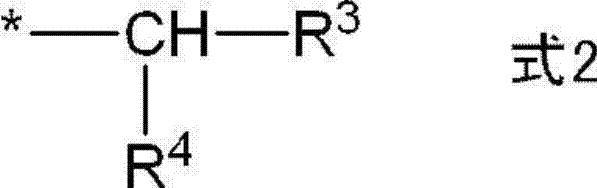
式2において、R3及びR4は、各々独立に、炭素数2以上のアルキル基を表す。*は、結合手を表す。
R3及びR4におけるアルキル基は、一方の炭素数が2以上であり、他方の炭素数が4以上であることが好ましい。また、R3及びR4におけるアルキル基の炭素数は、8以下であることが好ましく、6以下であることがより好ましい。
分岐構造を有するアルキル基としては、1-メチルペンチル基、1-エチルペンチル基、1-ブチルペンチル基、1-プロピルブチル基等が挙げられる。
式1で表されるジアルキルスルホコハク酸塩の例としては、ジ-2-エチルヘキシルスルホコハク酸ナトリウム、モノラウロイルモノエタノールアミドポリオキシエチレンスルホコハク酸ナトリウム、ラウリルポリプロピレングリコールスルホコハク酸ナトリウム等のスルホコハク酸塩、及び、下記の化合物が挙げられる。
なお、下記の化合物中の「Et」及び「Bu」は、それぞれ「エチル」及び「ブチル」を表す。
なお、下記の化合物中の「Et」及び「Bu」は、それぞれ「エチル」及び「ブチル」を表す。
<水>
本開示の第1の態様の硬化促進剤水溶液は、水を含有する。
水としては、特に制限はない。
本開示の第1の態様の硬化促進剤水溶液中における水の含有量としては、硬化促進剤水溶液の全質量に対して、90質量%~99.99質量%が好ましく、95質量%~99.98質量%がより好ましく、97質量%~99.95質量%が更に好ましい。
本開示の第1の態様の硬化促進剤水溶液は、水を含有する。
水としては、特に制限はない。
本開示の第1の態様の硬化促進剤水溶液中における水の含有量としては、硬化促進剤水溶液の全質量に対して、90質量%~99.99質量%が好ましく、95質量%~99.98質量%がより好ましく、97質量%~99.95質量%が更に好ましい。
<他の成分>
本開示の第1の態様の硬化促進剤水溶液は、上記の特定界面活性剤及び水に加え、本開示の効果を著しく損なわない範囲において、他の成分を含有していてもよい。
他の成分としては、上記の特定界面活性剤以外の界面活性剤(以下、「他の界面活性剤」ともいう。)、有機溶媒等が挙げられる。
本開示の第1の態様の硬化促進剤水溶液は、上記の特定界面活性剤及び水に加え、本開示の効果を著しく損なわない範囲において、他の成分を含有していてもよい。
他の成分としては、上記の特定界面活性剤以外の界面活性剤(以下、「他の界面活性剤」ともいう。)、有機溶媒等が挙げられる。
(他の界面活性剤)
他の界面活性剤としては、例えば、ステアリン酸カリウム、ベヘニン酸カリウム等の高級脂肪酸塩;ポリオキシエチレン(以下、POE)ラウリルエーテルカルボン酸ナトリウム等のアルキルエーテルカルボン酸塩;N-ステアロイル-L-グルタミン酸モノナトリウム塩等のN-アシル-L-グルタミン酸塩;ラウリル硫酸ナトリウム、ラウリル硫酸カリウム等の高級アルキル硫酸エステル塩;POEラウリル硫酸トリエタノールアミン;POEラウリル硫酸ナトリウム等のアルキルエーテル硫酸エステル塩;ラウロイルサルコシンナトリウム等のN-アシルサルコシン酸塩;ステアリルリン酸ナトリウム等のアルキルリン酸塩;POEオレイルエーテルリン酸ナトリウム、POEステアリルエーテルリン酸ナトリウム等のアルキルエーテルリン酸塩;硬化ヤシ油脂肪酸グリセリン硫酸ナトリウム等の高級脂肪酸エステル硫酸エステル塩;などのアニオン性の界面活性剤が挙げられる。
また、他の界面活性剤としては、例えば、N-ミリストイル-N-メチルタウリンナトリウム等の高級脂肪酸アミドスルホン酸塩;リニアドデシルベンゼンスルホン酸ナトリウム、リニアドデシルベンゼン、スルホン酸トリエタノールアミン、リニアドデシルベンゼンスルホン酸、ドデシルジフェニルエーテルジスルホン酸等のアルキルベンゼンスルホン酸塩;などのスルホン酸構造を有するアニオン性の界面活性剤が挙げられる。
また、他の界面活性剤としては、例えば、ラピゾール(登録商標)A-90、同A-80、同BW-30、同B-90、同C-70等(以上、日油株式会社製);NIKKOL(登録商標) OTP-100(日光ケミカルズ株式会社製);コハクール(登録商標)ON、コラクール(登録商標)L-40等(以上、東邦化学工業株式会社製);フォスファノール(登録商標)702(東邦化学工業株式会社製);ビューライト(登録商標)A-5000、ビューライト(登録商標)SSS、サンデッド(登録商標)BL等(以上、三洋化成工業株式会社製);ナトリウム=ビス(3、3、4、4、5、5、6、6-ノナフルオロ)=2-スルホナイトオキシスクシナート(富士フイルムファインケミカルズ株式会社製);などの市販のアニオン性の界面活性剤が挙げられる。
他の界面活性剤としては、例えば、ステアリン酸カリウム、ベヘニン酸カリウム等の高級脂肪酸塩;ポリオキシエチレン(以下、POE)ラウリルエーテルカルボン酸ナトリウム等のアルキルエーテルカルボン酸塩;N-ステアロイル-L-グルタミン酸モノナトリウム塩等のN-アシル-L-グルタミン酸塩;ラウリル硫酸ナトリウム、ラウリル硫酸カリウム等の高級アルキル硫酸エステル塩;POEラウリル硫酸トリエタノールアミン;POEラウリル硫酸ナトリウム等のアルキルエーテル硫酸エステル塩;ラウロイルサルコシンナトリウム等のN-アシルサルコシン酸塩;ステアリルリン酸ナトリウム等のアルキルリン酸塩;POEオレイルエーテルリン酸ナトリウム、POEステアリルエーテルリン酸ナトリウム等のアルキルエーテルリン酸塩;硬化ヤシ油脂肪酸グリセリン硫酸ナトリウム等の高級脂肪酸エステル硫酸エステル塩;などのアニオン性の界面活性剤が挙げられる。
また、他の界面活性剤としては、例えば、N-ミリストイル-N-メチルタウリンナトリウム等の高級脂肪酸アミドスルホン酸塩;リニアドデシルベンゼンスルホン酸ナトリウム、リニアドデシルベンゼン、スルホン酸トリエタノールアミン、リニアドデシルベンゼンスルホン酸、ドデシルジフェニルエーテルジスルホン酸等のアルキルベンゼンスルホン酸塩;などのスルホン酸構造を有するアニオン性の界面活性剤が挙げられる。
また、他の界面活性剤としては、例えば、ラピゾール(登録商標)A-90、同A-80、同BW-30、同B-90、同C-70等(以上、日油株式会社製);NIKKOL(登録商標) OTP-100(日光ケミカルズ株式会社製);コハクール(登録商標)ON、コラクール(登録商標)L-40等(以上、東邦化学工業株式会社製);フォスファノール(登録商標)702(東邦化学工業株式会社製);ビューライト(登録商標)A-5000、ビューライト(登録商標)SSS、サンデッド(登録商標)BL等(以上、三洋化成工業株式会社製);ナトリウム=ビス(3、3、4、4、5、5、6、6-ノナフルオロ)=2-スルホナイトオキシスクシナート(富士フイルムファインケミカルズ株式会社製);などの市販のアニオン性の界面活性剤が挙げられる。
また、他の界面活性剤としては、例えば、塩化ステアリルトリメチルアンモニウム、塩化ラウリルトリメチルアンモニウム等のアルキルトリメチルアンモニウム塩;塩化ジステアリルジメチルアンモニウム等のジアルキルジメチルアンモニウム塩;塩化ポリ(N、Nジメチル-3、5-メチレンピペリジニウム)、塩化セチルピリジニウム等のアルキルピリジニウム塩;アルキル四級アンモニウム塩;アルキルジメチルベンジルアンモニウム塩;アルキルイソキノリニウム塩;ジアルキルモリホニウム塩;POEアルキルアミン;アルキルアミン塩;ポリアミン脂肪酸誘導体;アミルアルコール脂肪酸誘導体;塩化ベンザルコニウム;塩化ベンゼトニウム;などのカチオン性の界面活性剤が挙げられる。
また、他の界面活性剤としては、例えば、EFKA-745(フタロシアニン誘導体、森下産業株式会社製);ポリフローNo.75、同No.90、同No.95等((メタ)アクリル酸系(共)重合体、共栄社化学株式会社製);W001(裕商株式会社);などの市販のカチオン性の界面活性剤が挙げられる。
また、他の界面活性剤としては、例えば、EFKA-745(フタロシアニン誘導体、森下産業株式会社製);ポリフローNo.75、同No.90、同No.95等((メタ)アクリル酸系(共)重合体、共栄社化学株式会社製);W001(裕商株式会社);などの市販のカチオン性の界面活性剤が挙げられる。
また、他の界面活性剤としては、例えば、ナロアクティー(登録商標)CL-95、同HN-100等(三洋化成工業株式会社製);リソレックス(登録商標)BW400(高級アルコール工業株式会社製);EMALEX(登録商標)ET-2020(日本エマルジョン株式会社製)、ユニルーブ(登録商標)50MB-26、ノニオン(登録商標)IS-4等(日油株式会社製);などの市販のノニオン性の界面活性剤が挙げられる。
本開示の第1の態様の硬化促進剤水溶液は、有機溶媒を含有することができる。
有機溶媒の詳細については、後述の第2の態様に使用可能な有機溶媒と同様であり、好ましい態様も同様であるので、ここでの説明を省略する。
有機溶媒の詳細については、後述の第2の態様に使用可能な有機溶媒と同様であり、好ましい態様も同様であるので、ここでの説明を省略する。
-第2の態様-
本開示の第2の態様の硬化促進剤水溶液は、表面張力を低下させる成分として、1種以上の有機溶媒と、水と、を含有する。
本開示の第2の態様の硬化促進剤水溶液は、表面張力を低下させる成分として、1種以上の有機溶媒と、水と、を含有する。
<有機溶媒>
本開示の第2の態様の硬化促進剤水溶液は、1種以上の有機溶媒を含有する。
有機溶媒としては、特に制限はなく、メタノール、エタノール、イソプロパノール、ジアセトンアルコール等のアルコール系溶媒;エチレングリコールモノメチルエーテル、エチレングリコールモノエチルエーテル、プロピレングリコールモノメチルエーテル、プロピレングリコールモノエチルエーテル、3-メトキシ-1-ブタノール、3-メトキシ-3-メチル-1-ブタノール等のアルコールエーテル系溶媒;アセトン、メチルエチルケトン、メチルイソブチルケトン、シクロヘキサノン等のケトン系溶媒;テトラヒドロフラン、ジオキサン等のエーテル系溶媒;酢酸メチル、酢酸エチル、酢酸n-ブチル、酢酸イソブチル、酢酸t-ブチル、乳酸メチル、乳酸エチル等のエステル系溶媒;ベンゼン、トルエン、キシレン等の芳香族系溶媒、ホルムアミド、ジメチルホルムアミド等のアミド系溶媒;n-ヘキサン、シクロヘキサン、n-ヘプタン、n-オクタン、n-デカン等の炭化水素系溶媒;などが挙げられる。
これらの中でも、有機溶媒としては、アルコール系溶剤が好ましく、エタノールがより好ましい。
本開示の第2の態様の硬化促進剤水溶液は、1種以上の有機溶媒を含有する。
有機溶媒としては、特に制限はなく、メタノール、エタノール、イソプロパノール、ジアセトンアルコール等のアルコール系溶媒;エチレングリコールモノメチルエーテル、エチレングリコールモノエチルエーテル、プロピレングリコールモノメチルエーテル、プロピレングリコールモノエチルエーテル、3-メトキシ-1-ブタノール、3-メトキシ-3-メチル-1-ブタノール等のアルコールエーテル系溶媒;アセトン、メチルエチルケトン、メチルイソブチルケトン、シクロヘキサノン等のケトン系溶媒;テトラヒドロフラン、ジオキサン等のエーテル系溶媒;酢酸メチル、酢酸エチル、酢酸n-ブチル、酢酸イソブチル、酢酸t-ブチル、乳酸メチル、乳酸エチル等のエステル系溶媒;ベンゼン、トルエン、キシレン等の芳香族系溶媒、ホルムアミド、ジメチルホルムアミド等のアミド系溶媒;n-ヘキサン、シクロヘキサン、n-ヘプタン、n-オクタン、n-デカン等の炭化水素系溶媒;などが挙げられる。
これらの中でも、有機溶媒としては、アルコール系溶剤が好ましく、エタノールがより好ましい。
本開示の第2の態様の硬化促進剤水溶液は、有機溶媒を1種単独で含有してもよく、2種以上含有してもよい。
本開示の第2の態様の硬化促進剤水溶液中における有機溶媒の含有量としては、水の含有量に対して、1質量%~90質量%が好ましく、3質量%~80質量%がより好ましく、5質量%~70質量%が更に好ましく、5質量%~30質量%が特に好ましい。
本開示の第2の態様の硬化促進剤水溶液中における有機溶媒の含有量が、水の含有量に対して1質量%以上であると、表面張力をより低い範囲に調整しやすい。
本開示の第2の態様の硬化促進剤水溶液中における有機溶媒の含有量が、水の含有量に対して90質量%以下であると、水の量が相対的に少なくなり過ぎないため、鹸化反応による固化がより良好に進行する。
本開示の第2の態様の硬化促進剤水溶液中における有機溶媒の含有量としては、水の含有量に対して、1質量%~90質量%が好ましく、3質量%~80質量%がより好ましく、5質量%~70質量%が更に好ましく、5質量%~30質量%が特に好ましい。
本開示の第2の態様の硬化促進剤水溶液中における有機溶媒の含有量が、水の含有量に対して1質量%以上であると、表面張力をより低い範囲に調整しやすい。
本開示の第2の態様の硬化促進剤水溶液中における有機溶媒の含有量が、水の含有量に対して90質量%以下であると、水の量が相対的に少なくなり過ぎないため、鹸化反応による固化がより良好に進行する。
<水>
本開示の第2の態様の硬化促進剤水溶液は、水を含有する。
水としては、特に制限はない。
本開示の第2の態様の硬化促進剤水溶液中における水の含有量としては、硬化促進剤水溶液の全質量に対して、53質量%~99質量%が好ましく、56質量%~97質量%がより好ましく、59質量%~95質量%が更に好ましく、77質量%~95質量%が特に好ましい。
本開示の第2の態様の硬化促進剤水溶液は、水を含有する。
水としては、特に制限はない。
本開示の第2の態様の硬化促進剤水溶液中における水の含有量としては、硬化促進剤水溶液の全質量に対して、53質量%~99質量%が好ましく、56質量%~97質量%がより好ましく、59質量%~95質量%が更に好ましく、77質量%~95質量%が特に好ましい。
<他の成分>
本開示の第2の態様の硬化促進剤水溶液は、上記の有機溶媒及び水に加え、本開示の効果を著しく損なわない範囲において、他の成分を含有していてもよい。
他の成分としては、第1の態様における特定界面活性剤、特定界面活性剤以外の界面活性剤(即ち、他の界面活性剤)等が挙げられる。
本開示の第2の態様の硬化促進剤水溶液は、上記の有機溶媒及び水に加え、本開示の効果を著しく損なわない範囲において、他の成分を含有していてもよい。
他の成分としては、第1の態様における特定界面活性剤、特定界面活性剤以外の界面活性剤(即ち、他の界面活性剤)等が挙げられる。
<<表面張力>>
本開示の第2の態様の硬化促進剤水溶液は、25℃での表面張力が50mN/m以下であることが好ましく、30mN/m以下であることがより好ましく、20mN/m以下であることが更に好ましい。
25℃での表面張力は、例えば、10mN/m以上することができる。
なお、表面張力の測定方法については、第1の態様において既述した通りである。
本開示の第2の態様の硬化促進剤水溶液は、25℃での表面張力が50mN/m以下であることが好ましく、30mN/m以下であることがより好ましく、20mN/m以下であることが更に好ましい。
25℃での表面張力は、例えば、10mN/m以上することができる。
なお、表面張力の測定方法については、第1の態様において既述した通りである。
<アスファルト混合物>
本開示のアスファルト混合物は、アスファルトと、骨材と、油脂及び脂肪酸からなる群より選ばれる化合物と、アルカリ性化合物と、フッ素系界面活性剤、シリコーン系界面活性剤、及び式1で表されるジアルキルスルホコハク酸系界面活性剤からなる群より選ばれる少なくとも1種の界面活性剤(即ち、特定界面活性剤)と、を含有する。本開示のアスファルト混合物は、必要に応じて、更に他の成分を含有していてもよい。
本開示のアスファルト混合物は、アスファルトと、骨材と、油脂及び脂肪酸からなる群より選ばれる化合物と、アルカリ性化合物と、フッ素系界面活性剤、シリコーン系界面活性剤、及び式1で表されるジアルキルスルホコハク酸系界面活性剤からなる群より選ばれる少なくとも1種の界面活性剤(即ち、特定界面活性剤)と、を含有する。本開示のアスファルト混合物は、必要に応じて、更に他の成分を含有していてもよい。
式1において、R1及びR2は、各々独立に、炭素数4以上のアルキル基を表し、Mは、ナトリウム又はカリウムを表す。
なお、式1で表されるジアルキルスルホコハク酸系界面活性剤の詳細については既述の通りであるので、ここでの説明を省略する。
なお、式1で表されるジアルキルスルホコハク酸系界面活性剤の詳細については既述の通りであるので、ここでの説明を省略する。
本開示のアスファルト混合物は、一般に含まれる成分に加えて、予め特定界面活性剤を含有しているため、アスファルト混合物の舗設後に、舗設したアスファルト混合物に水を供給することで、供給された水がアスファルト混合物中に良好に浸透する。既述のように特定界面活性剤を含有する本開示の硬化促進剤水溶液を用いた場合と同様、アスファルト混合物における硬化速度が改善され、良好な硬度が得られる。
アスファルト混合物は、例えば、特開2010-248472号公報に記載されているように、アスファルト、骨材、油脂及び脂肪酸からなる群より選ばれる化合物、並びに、アルカリ性化合物を含む混合物のことである。
一般に、アスファルト混合物を塗設(即ち、舗設)して行う舗装施工の際、アスファルト混合物の硬化処理を促進する硬化促進剤である水を供給することで、アスファルト混合物の硬化が促進され、アスファルト混合物の硬化物が得られる。
一般に、アスファルト混合物を塗設(即ち、舗設)して行う舗装施工の際、アスファルト混合物の硬化処理を促進する硬化促進剤である水を供給することで、アスファルト混合物の硬化が促進され、アスファルト混合物の硬化物が得られる。
アスファルトとしては、ストレートアスファルト、ブローンアスファルト、セミブローンアスファルト、天然アスファルト、用材脱瀝アスファルト等が挙げられる。
アスファルトとしては、上記アスファルトのみならず、上記アスファルトに、スチレン-ブタジエン-スチレン共重合体(SBS)、スチレン-ブタジエンゴム(SBR)、スチレン-イソプレン-スチレン共重合体(SIS)、エチレン・酢酸ビニル共重合体(EVA)、エチレン・エチルアクリレート共重合体(EEA)等を混合した改質アスファルトも使用できる。
アスファルトとしては、上記アスファルトのみならず、上記アスファルトに、スチレン-ブタジエン-スチレン共重合体(SBS)、スチレン-ブタジエンゴム(SBR)、スチレン-イソプレン-スチレン共重合体(SIS)、エチレン・酢酸ビニル共重合体(EVA)、エチレン・エチルアクリレート共重合体(EEA)等を混合した改質アスファルトも使用できる。
骨材としては、フィラー、砕石、玉砕、砂利、砂、再生骨材、カルサインドボーキサイト、鉄鋼スラグ、溶融アルミナ、人工骨材等が挙げられる。
フィラーは、石灰岩、火成岩類の石粉、セメント、消石灰、フライアッシュ等である。砕石は、原石(火成岩、堆積岩、変成岩等)を機械的に破砕し、それを必要に応じて粒度毎に分級したものである。玉砕は、玉石を砕いたものである。砂利は、川砂利、山砂利、海砂利等である。再生骨材には、アスファルトコンクリート舗装発生材を機械破砕又は熱破砕して作製されたアスファルトコンクリート再生骨材と、セメントコンクリート舗装発生材を機械破砕して作製されたセメントコンクリート再生骨材とが含まれる。
フィラーは、石灰岩、火成岩類の石粉、セメント、消石灰、フライアッシュ等である。砕石は、原石(火成岩、堆積岩、変成岩等)を機械的に破砕し、それを必要に応じて粒度毎に分級したものである。玉砕は、玉石を砕いたものである。砂利は、川砂利、山砂利、海砂利等である。再生骨材には、アスファルトコンクリート舗装発生材を機械破砕又は熱破砕して作製されたアスファルトコンクリート再生骨材と、セメントコンクリート舗装発生材を機械破砕して作製されたセメントコンクリート再生骨材とが含まれる。
アスファルトと骨材との量的関係としては、特に制限はなく、適宜設定することができる。例えば、本開示のアスファルト混合物中における骨材の含有量は、骨材及びアスファルトの合計含有量に対して、質量基準で、85質量%~98質量%であることが好ましく、より好ましくは90質量%~96質量%である。また、本開示のアスファルト混合物中におけるアスファルトの含有量は、骨材及びアスファルトの合計含有量に対して、質量基準で、2質量%~15質量%であることが好ましく、より好ましくは4質量%~10質量%である。
油脂としては、脂肪酸と多価アルコールとのエステル化合物が挙げられる。脂肪酸と多価アルコールとのエステル化合物としては、特に制限はなく、各種の脂肪酸エステルを好適に挙げられる。
脂肪酸としては、炭素数4~30の炭化水素鎖を有するカルボン酸が好適に挙げられる。
脂肪酸としては、炭素数4~30の炭化水素鎖を有するカルボン酸が好適に挙げられる。
アルカリ性化合物としては、油脂、脂肪酸等の鹸化又は中和を担う化合物であり、水に溶けて解離し、アルカリ金属イオン、アルカリ土類金属イオン等を生じる化合物が挙げられる。アルカリ性化合物としては、例えば、アルカリ金属(カリウム、ナトリウム等)の塩もしくは水酸化物(塩化ナトリウム、水酸化ナトリウム等)、アルカリ土類金属(カルシウム、マグネシウム等)の塩もしくは水酸化物(塩化カルシウム、水酸化カルシウム等)、炭酸水素ナトリウムもしくは炭酸水素カリウム、又は、普通セメントが挙げられる。
アスファルト混合物は、軟化又は液化する成分(いわゆるカットバック剤)を含めてカットバックアスファルトとしてもよい。カットバック剤としては、炭化水素油(タール、ピッチ、ガソリン、灯油、A重油、B重油、C重油等)などが挙げられる。
<舗装用セット>
本開示の舗装用セットは、アスファルト、骨材、アルカリ性化合物、並びに、油脂及び脂肪酸からなる群より選ばれる化合物を含有するアスファルト混合物と、既述の本開示のアスファルト用硬化促進剤水溶液と、を有している。
本開示の舗装用セットは、アスファルト、骨材、アルカリ性化合物、並びに、油脂及び脂肪酸からなる群より選ばれる化合物を含有するアスファルト混合物と、既述の本開示のアスファルト用硬化促進剤水溶液と、を有している。
本開示の舗装用セットにおけるアスファルト混合物が含有するアスファルト、骨材、アルカリ性化合物、並びに、油脂及び脂肪酸からなる群より選ばれる化合物の詳細については、既述の通りであるので、ここでの説明は省略する。
本開示のアスファルト用硬化促進剤水溶液の詳細については、既述の通りであるので、ここでの説明は省略する。
<舗装方法>
本開示の舗装方法は、アスファルトと、骨材と、アルカリ性化合物と、油脂及び脂肪酸からなる群より選ばれる化合物と、を含有するアスファルト混合物を舗設する工程(以下、「舗設工程」ともいう。)と、舗設されたアスファルト混合物に対して既述の本開示のアスファルト用硬化促進剤水溶液を付与する工程(以下、「促進剤付与工程」ともいう。)と、を有している。
本開示の舗装方法は、アスファルトと、骨材と、アルカリ性化合物と、油脂及び脂肪酸からなる群より選ばれる化合物と、を含有するアスファルト混合物を舗設する工程(以下、「舗設工程」ともいう。)と、舗設されたアスファルト混合物に対して既述の本開示のアスファルト用硬化促進剤水溶液を付与する工程(以下、「促進剤付与工程」ともいう。)と、を有している。
-舗設工程-
本開示における舗設工程では、アスファルトと、骨材と、アルカリ性化合物と、油脂及び脂肪酸からなる群より選ばれる化合物と、を含有するアスファルト混合物を舗設する。
本開示における舗設工程では、アスファルトと、骨材と、アルカリ性化合物と、油脂及び脂肪酸からなる群より選ばれる化合物と、を含有するアスファルト混合物を舗設する。
本開示の舗装方法におけるアスファルト混合物が含有するアスファルト、骨材、アルカリ性化合物、並びに、油脂及び脂肪酸からなる群より選ばれる化合物の詳細については、既述の通りであるので、ここでの説明を省略する。
アスファルト混合物の舗設は、フィニッシャー等の設備を用いて塗設することにより行われる。アスファルト混合物は、高密度に敷き均されることが好ましい。
舗設時におけるアスファルト混合物の温度としては、本発明の効果がより奏される点で、100℃以下であることが好ましい。舗設時におけるアスファルト混合物の温度の下限については、0℃としてもよい。
舗設工程後、次の促進剤付与工程に移行する前に、舗設したアスファルト混合物を転圧する工程(以下、「第1の転圧工程」ともいう。)を設けてもよい。第1の転圧工程によれば、アスファルト混合物の内部密度が向上し、舗設面の平滑性を高めることができる。
-促進剤付与工程-
本開示における促進剤付与工程では、舗設工程で舗設されたアスファルト混合物に対して既述の本開示のアスファルト用硬化促進剤水溶液を付与する。
本開示のアスファルト用硬化促進剤水溶液の詳細については、既述の通りである。
本開示における促進剤付与工程では、舗設工程で舗設されたアスファルト混合物に対して既述の本開示のアスファルト用硬化促進剤水溶液を付与する。
本開示のアスファルト用硬化促進剤水溶液の詳細については、既述の通りである。
舗設工程で舗設されたアスファルト混合物に対するアスファルト用硬化促進剤水溶液の付与は、散布により行える。散布方法としては、特に制限はなく、舗設されたアスファルト混合物の全体にアスファルト用硬化促進剤水溶液が行き渡るように行えれば、いずれの方法でもよい。散布方法は、例えば、シャワー等を用いる方法でもよい。
アスファルト用硬化促進剤水溶液の温度は、特に制限されない。
促進剤付与工程後には、更に、アスファルト混合物を転圧する工程(以下、「第2の転圧工程」ともいう。)を設けることができる。第2の転圧工程によれば、アスファルト用硬化促進剤水溶液又は水のアスファルト混合物中への浸透を更に促進することができる。
以下、本開示のアスファルト用硬化促進剤水溶液、アスファルト混合物、舗装用セット、及び舗装方法の実施形態を実施例により更に具体的に説明する。但し、本開示はその主旨を越えない限り、以下の実施例に限定されるものではない。
〔アスファルト未硬化混合物の作製〕
アスファルト未硬化混合物を、以下の手順に従い作製した。マイルドパッチ(骨材と、油脂と、アルカリ性添加材とを含む混合物、前田道路株式会社製)を1.14kg準備し、このマイルドパッチを直径10.2cm×高さ6.3cmの大きさになるよう、0.3MPaでプレス転圧し、密度2.22のアスファルト未硬化混合物を作製した。
アスファルト未硬化混合物を、以下の手順に従い作製した。マイルドパッチ(骨材と、油脂と、アルカリ性添加材とを含む混合物、前田道路株式会社製)を1.14kg準備し、このマイルドパッチを直径10.2cm×高さ6.3cmの大きさになるよう、0.3MPaでプレス転圧し、密度2.22のアスファルト未硬化混合物を作製した。
〔アスファルト用硬化促進剤水溶液の調製〕
<実施例1~10、及び比較例2>
水と表1に記載の硬化促進剤とを、それぞれ表1に記載の含有量で混合し、アスファルト用硬化促進剤水溶液を調製した。
<実施例1~10、及び比較例2>
水と表1に記載の硬化促進剤とを、それぞれ表1に記載の含有量で混合し、アスファルト用硬化促進剤水溶液を調製した。
表1に示す硬化促進剤の詳細は、以下の通りである。
・エタノール:トレーサブル95(日本アルコール産業株式会社)
・メガファックF-444:ノニオン性のフッ素系界面活性剤(DIC株式会社)
・BYK-349:シリコーン系界面活性剤(ビックケミー・ジャパン株式会社)
・サーフロンS-231:両性のフッ素系界面活性剤(AGC株式会社)
・下記構造のナトリウム=ビス(3、3、4、4、5、5、6、6-ノナフルオロ)=2-スルホナイトオキシスクシナート:スルホン酸塩を含む構造を有するアニオン性のフッ素系界面活性剤(富士フイルム和光純薬株式会社)
・エマレックス705:ポリオキシエチレンラウリルエーテル(日本エマルジョン株式会社)
・エタノール:トレーサブル95(日本アルコール産業株式会社)
・メガファックF-444:ノニオン性のフッ素系界面活性剤(DIC株式会社)
・BYK-349:シリコーン系界面活性剤(ビックケミー・ジャパン株式会社)
・サーフロンS-231:両性のフッ素系界面活性剤(AGC株式会社)
・下記構造のナトリウム=ビス(3、3、4、4、5、5、6、6-ノナフルオロ)=2-スルホナイトオキシスクシナート:スルホン酸塩を含む構造を有するアニオン性のフッ素系界面活性剤(富士フイルム和光純薬株式会社)
・エマレックス705:ポリオキシエチレンラウリルエーテル(日本エマルジョン株式会社)

<比較例1>
アスファルト用硬化促進剤水溶液の代わりに、水(即ち、硬化促進剤を混合しない無添加の水)を準備した。
アスファルト用硬化促進剤水溶液の代わりに、水(即ち、硬化促進剤を混合しない無添加の水)を準備した。
〔測定及び評価〕
実施例1~10及び比較例2で調製したアスファルト用硬化促進剤水溶液、並びに、比較例1の水を用い、以下の測定及び評価を行った。測定及び評価の結果を表1に示す。
実施例1~10及び比較例2で調製したアスファルト用硬化促進剤水溶液、並びに、比較例1の水を用い、以下の測定及び評価を行った。測定及び評価の結果を表1に示す。
1.表面張力
実施例1~10及び比較例2で調製したアスファルト用硬化促進剤水溶液、並びに、比較例1の水の液温を25℃に調整し、それぞれの表面張力を協和界面科学株式会社製の全自動表面張力計CBVP-Zを用いて、雰囲気温度25℃の環境下で測定した。
実施例1~10及び比較例2で調製したアスファルト用硬化促進剤水溶液、並びに、比較例1の水の液温を25℃に調整し、それぞれの表面張力を協和界面科学株式会社製の全自動表面張力計CBVP-Zを用いて、雰囲気温度25℃の環境下で測定した。
2.硬化促進剤水溶液の浸透性
未硬化のアスファルト混合物を厚み50mmの層状に塗設し、塗設層の表面に、温度25℃、湿度50%RHの環境下、実施例1~10及び比較例2で調製したアスファルト用硬化促進剤水溶液0.5g、並びに、比較例1の水0.5gを、それぞれスポイトを用いて滴下し、浸透するまでの時間を測定した。なお、浸透したことの判断は、塗設層の表面の液膜が消失したことの目視確認により行った。
浸透性は、浸透するまでの時間が短いほど良好であるといえる。なお、表1中、300秒経過しても浸透が終了せず液膜が表面に残っていたものは、「>300」と表記した。
未硬化のアスファルト混合物を厚み50mmの層状に塗設し、塗設層の表面に、温度25℃、湿度50%RHの環境下、実施例1~10及び比較例2で調製したアスファルト用硬化促進剤水溶液0.5g、並びに、比較例1の水0.5gを、それぞれスポイトを用いて滴下し、浸透するまでの時間を測定した。なお、浸透したことの判断は、塗設層の表面の液膜が消失したことの目視確認により行った。
浸透性は、浸透するまでの時間が短いほど良好であるといえる。なお、表1中、300秒経過しても浸透が終了せず液膜が表面に残っていたものは、「>300」と表記した。
3.アスファルト混合物の硬度
未硬化のアスファルト混合物を厚み50mmの層状に塗設し、塗設層の表面に、温度25℃、湿度50%RH環境下、実施例1~10及び比較例2で調製したアスファルト用硬化促進剤水溶液60g、並びに、比較例1の水60gを、それぞれ順次、散布した後、30分放置した。
未硬化のアスファルト混合物を厚み50mmの層状に塗設し、塗設層の表面に、温度25℃、湿度50%RH環境下、実施例1~10及び比較例2で調製したアスファルト用硬化促進剤水溶液60g、並びに、比較例1の水60gを、それぞれ順次、散布した後、30分放置した。
放置終了後、アスファルト混合物の硬化物に対して、舗装調査・試験法便覧B001マーシャル安定度試験方法に基づくマーシャル安定度試験を実施した。
具体的には、アスファルト混合物の硬化物を拘束した状態で円周側から載荷し、アスファルト混合物の硬化物が破壊するまでに示した最大荷重(いわゆるマーシャル安定度)を測定した。
硬化物の硬度は、測定値が大きいほど高硬度であり、良好といえる。
具体的には、アスファルト混合物の硬化物を拘束した状態で円周側から載荷し、アスファルト混合物の硬化物が破壊するまでに示した最大荷重(いわゆるマーシャル安定度)を測定した。
硬化物の硬度は、測定値が大きいほど高硬度であり、良好といえる。

表1に示すように、本開示のアスファルト用硬化促進剤水溶液を用いた実施例1~10は、従来の水を用いた比較例1に比べ、水の浸透速度が速く、得られるアスファルト混合物の硬化物の強度にも優れていることが確認された。比較例1では、水の浸透性が低く、アスファルト混合物の硬化物の強度も低かった。
特定界面活性剤の代わりに、特定界面活性剤以外の界面活性剤を用いた比較例2では、水の浸透性の改善効果が小さく、得られるアスファルト混合物の硬化物の強度が不十分であった。
2019年7月12日に出願された日本国特許出願2019-130557号の開示、及び、2019年10月25日に出願された日本国特許出願2019-194583号の開示は、それらの全体が参照により本明細書に取り込まれる。
本明細書に記載された全ての文献、特許出願、及び技術規格は、個々の文献、特許出願、及び技術規格が参照により取り込まれることが具体的に、かつ、個々に記された場合と同程度に、本明細書中に参照により取り込まれる。
本明細書に記載された全ての文献、特許出願、及び技術規格は、個々の文献、特許出願、及び技術規格が参照により取り込まれることが具体的に、かつ、個々に記された場合と同程度に、本明細書中に参照により取り込まれる。
Claims (11)
- フッ素系界面活性剤、シリコーン系界面活性剤、及び下記式1で表されるジアルキルスルホコハク酸系界面活性剤からなる群より選ばれる少なくとも1種の界面活性剤と、水と、を含有し、25℃での表面張力が50mN/m以下である、アスファルト用硬化促進剤水溶液。

式1中、R1及びR2は、各々独立に、炭素数4以上のアルキル基を表し、Mは、ナトリウム又はカリウムを表す。 - 前記フッ素系界面活性剤が、アニオン性基を有する請求項1に記載のアスファルト用硬化促進剤水溶液。
- 前記アニオン性基を有する前記フッ素系界面活性剤が、スルホン酸基又はスルホン酸塩を含む構造を有する請求項2に記載のアスファルト用硬化促進剤水溶液。
- 前記式1において、前記R1及び前記R2の少なくとも一方は、分岐構造を有する請求項1~請求項3のいずれか1項に記載のアスファルト用硬化促進剤水溶液。
- 前記式1において、前記R1及び前記R2の少なくとも一方は、下記式2で表される構造を有する請求項1~請求項4のいずれか1項に記載のアスファルト用硬化促進剤水溶液。
式2中、R3及びR4は、各々独立に、炭素数2以上のアルキル基を表す。*は、結合手を表す。 - 前記R1及び前記R2におけるアルキル基は、炭素数が6以上である請求項1~請求項5のいずれか1項に記載のアスファルト用硬化促進剤水溶液。
- 前記フッ素系界面活性剤が、パーフルオロアルキル基を有する請求項1~請求項6のいずれか1項に記載のアスファルト用硬化促進剤水溶液。
- 1種以上の有機溶媒と、水と、を含有する、アスファルト用硬化促進剤水溶液。
- アスファルトと、
骨材と、
油脂及び脂肪酸からなる群より選ばれる化合物と、
アルカリ性化合物と、
フッ素系界面活性剤、シリコーン系界面活性剤、及び下記式1で表されるジアルキルスルホコハク酸系界面活性剤からなる群より選ばれる少なくとも1種の界面活性剤と、
を含有するアスファルト混合物。
式1中、R1及びR2は、各々独立に、炭素数4以上のアルキル基を表し、Mは、ナトリウム又はカリウムを表す。 - アスファルト、骨材、アルカリ性化合物、並びに、油脂及び脂肪酸からなる群より選ばれる化合物を含有するアスファルト混合物と、
請求項1~請求項8のいずれか1項に記載のアスファルト用硬化促進剤水溶液と、
を有する舗装用セット。 - アスファルト、骨材、アルカリ性化合物、並びに、油脂及び脂肪酸からなる群より選ばれる化合物を含有するアスファルト混合物を舗設する工程と、
舗設されたアスファルト混合物に対して請求項1~請求項8のいずれか1項に記載のアスファルト用硬化促進剤水溶液を付与する工程と、
を有する舗装方法。
Priority Applications (1)
| Application Number | Priority Date | Filing Date | Title |
|---|---|---|---|
| JP2021532723A JPWO2021010053A1 (ja) | 2019-07-12 | 2020-06-05 |
Applications Claiming Priority (4)
| Application Number | Priority Date | Filing Date | Title |
|---|---|---|---|
| JP2019130557 | 2019-07-12 | ||
| JP2019-130557 | 2019-07-12 | ||
| JP2019194583 | 2019-10-25 | ||
| JP2019-194583 | 2019-10-25 |
Publications (1)
| Publication Number | Publication Date |
|---|---|
| WO2021010053A1 true WO2021010053A1 (ja) | 2021-01-21 |
Family
ID=74210532
Family Applications (1)
| Application Number | Title | Priority Date | Filing Date |
|---|---|---|---|
| PCT/JP2020/022425 Ceased WO2021010053A1 (ja) | 2019-07-12 | 2020-06-05 | アスファルト用硬化促進剤水溶液、アスファルト混合物、舗装用セット、及び舗装方法 |
Country Status (2)
| Country | Link |
|---|---|
| JP (1) | JPWO2021010053A1 (ja) |
| WO (1) | WO2021010053A1 (ja) |
Citations (9)
| Publication number | Priority date | Publication date | Assignee | Title |
|---|---|---|---|---|
| JPS52154831A (en) * | 1976-06-18 | 1977-12-22 | Masami Matsuki | Method of producing normal temperture composition with straight asphalt |
| JPS5548246A (en) * | 1978-10-03 | 1980-04-05 | Mitsui Petrochem Ind Ltd | Asphalt-epoxy resin dispersion composition and its preparation |
| JPH03505591A (ja) * | 1988-06-27 | 1991-12-05 | アスファルト、マテリアルズ、インコーポレーテッド | マルチグレードアスファルトセメント製品および方法 |
| JPH0868024A (ja) * | 1994-08-26 | 1996-03-12 | Kao Corp | 排水性又は透水性機能を有する舗装体の機能を保持する方法 |
| US5713996A (en) * | 1997-01-20 | 1998-02-03 | Kimberton Enterprises, Inc. | Asphalt coating composition and method for coating a surface using the same |
| JPH11228839A (ja) * | 1998-02-13 | 1999-08-24 | Showa Shell Sekiyu Kk | アスファルト乳剤 |
| JP2010248472A (ja) * | 2009-03-25 | 2010-11-04 | Maeda Road Constr Co Ltd | 常温施工型加熱アスファルト混合物 |
| JP2015143423A (ja) * | 2014-01-31 | 2015-08-06 | 国立研究開発法人土木研究所 | 常温施工型軽量舗装材組成物 |
| JP2016210875A (ja) * | 2015-05-07 | 2016-12-15 | 旭化成株式会社 | 改質アスファルト乳剤 |
-
2020
- 2020-06-05 WO PCT/JP2020/022425 patent/WO2021010053A1/ja not_active Ceased
- 2020-06-05 JP JP2021532723A patent/JPWO2021010053A1/ja active Pending
Patent Citations (9)
| Publication number | Priority date | Publication date | Assignee | Title |
|---|---|---|---|---|
| JPS52154831A (en) * | 1976-06-18 | 1977-12-22 | Masami Matsuki | Method of producing normal temperture composition with straight asphalt |
| JPS5548246A (en) * | 1978-10-03 | 1980-04-05 | Mitsui Petrochem Ind Ltd | Asphalt-epoxy resin dispersion composition and its preparation |
| JPH03505591A (ja) * | 1988-06-27 | 1991-12-05 | アスファルト、マテリアルズ、インコーポレーテッド | マルチグレードアスファルトセメント製品および方法 |
| JPH0868024A (ja) * | 1994-08-26 | 1996-03-12 | Kao Corp | 排水性又は透水性機能を有する舗装体の機能を保持する方法 |
| US5713996A (en) * | 1997-01-20 | 1998-02-03 | Kimberton Enterprises, Inc. | Asphalt coating composition and method for coating a surface using the same |
| JPH11228839A (ja) * | 1998-02-13 | 1999-08-24 | Showa Shell Sekiyu Kk | アスファルト乳剤 |
| JP2010248472A (ja) * | 2009-03-25 | 2010-11-04 | Maeda Road Constr Co Ltd | 常温施工型加熱アスファルト混合物 |
| JP2015143423A (ja) * | 2014-01-31 | 2015-08-06 | 国立研究開発法人土木研究所 | 常温施工型軽量舗装材組成物 |
| JP2016210875A (ja) * | 2015-05-07 | 2016-12-15 | 旭化成株式会社 | 改質アスファルト乳剤 |
Also Published As
| Publication number | Publication date |
|---|---|
| JPWO2021010053A1 (ja) | 2021-01-21 |
Similar Documents
| Publication | Publication Date | Title |
|---|---|---|
| US20160340552A1 (en) | Mastic asphalt compositions with coalescents | |
| US10626050B2 (en) | Cold applied asphalt coating composition and associated methods of use | |
| EP3401367B1 (en) | Bituminous compositions comprising an amine additive and a hydroxide, their preparation process and applications | |
| KR101061672B1 (ko) | 광경화성 유화아스팔트 조성물 및 그 제조방법 | |
| KR102075632B1 (ko) | 교면 또는 도로 포장용 콘크리트 조성물 및 이를 이용한 포장방법 | |
| CA3032258C (en) | Asphalt mixture, process for production of same, and paving method using same | |
| KR20150084208A (ko) | 순환 개질 아스팔트 콘크리트 조성물 및 그 제조방법 | |
| CA2623452C (fr) | Nouvelle composition a base d'emulsion de bitume | |
| WO2019190624A1 (en) | Asphalt composition and method of using same in tack coats | |
| DE2809537B2 (de) | Verfahren zur Herstellung von erhärtenden Bindemitteln auf der Basis von Zement | |
| JP6824462B1 (ja) | アスファルト混合物、舗装方法、硬化物、及び硬化物の製造方法 | |
| FR2942474A1 (fr) | Composition seche comprenant un liant et une huile de silicone | |
| WO2021010053A1 (ja) | アスファルト用硬化促進剤水溶液、アスファルト混合物、舗装用セット、及び舗装方法 | |
| KR102831213B1 (ko) | 유동성과 강도가 우수한 고등급 구스 아스팔트 조성물 및 이를 이용한 시공방법 | |
| TW200815312A (en) | Cement composite and method of forming the same | |
| KR101354070B1 (ko) | 고강도 상온 아스콘 조성물 | |
| JP2011026165A (ja) | 防草モルタル吹付け工法 | |
| JP2020076210A (ja) | 路面用の凍結抑制表面処理混合物 | |
| US20160355701A1 (en) | Modified asphaltic product and process | |
| KR101812575B1 (ko) | 분진 비산겸 사태방지 조성물 | |
| KR100984072B1 (ko) | 저융점 개질아스팔트 도막방수재 | |
| KR20220098448A (ko) | 고성능 아스팔트 조성물, 이를 포함하는 아스팔트 혼합물 및 아스팔트 혼합물의 제조방법 | |
| CN110997817A (zh) | 烃类粘结剂的稀释剂 | |
| WO2024024927A1 (ja) | アスファルトエマルション組成物およびその製造方法 | |
| JP2025182361A (ja) | アスファルト混合物及びその製造方法 |
Legal Events
| Date | Code | Title | Description |
|---|---|---|---|
| 121 | Ep: the epo has been informed by wipo that ep was designated in this application |
Ref document number: 20841256 Country of ref document: EP Kind code of ref document: A1 |
|
| ENP | Entry into the national phase |
Ref document number: 2021532723 Country of ref document: JP Kind code of ref document: A |
|
| NENP | Non-entry into the national phase |
Ref country code: DE |
|
| 122 | Ep: pct application non-entry in european phase |
Ref document number: 20841256 Country of ref document: EP Kind code of ref document: A1 |