WO2020262000A1 - ウェットシートおよびウェットシート用の薬液 - Google Patents
ウェットシートおよびウェットシート用の薬液 Download PDFInfo
- Publication number
- WO2020262000A1 WO2020262000A1 PCT/JP2020/022924 JP2020022924W WO2020262000A1 WO 2020262000 A1 WO2020262000 A1 WO 2020262000A1 JP 2020022924 W JP2020022924 W JP 2020022924W WO 2020262000 A1 WO2020262000 A1 WO 2020262000A1
- Authority
- WO
- WIPO (PCT)
- Prior art keywords
- wet sheet
- chemical solution
- wet
- reducing sugar
- protein
- Prior art date
- Legal status (The legal status is an assumption and is not a legal conclusion. Google has not performed a legal analysis and makes no representation as to the accuracy of the status listed.)
- Ceased
Links
Classifications
-
- A—HUMAN NECESSITIES
- A61—MEDICAL OR VETERINARY SCIENCE; HYGIENE
- A61K—PREPARATIONS FOR MEDICAL, DENTAL OR TOILETRY PURPOSES
- A61K8/00—Cosmetics or similar toiletry preparations
- A61K8/18—Cosmetics or similar toiletry preparations characterised by the composition
- A61K8/30—Cosmetics or similar toiletry preparations characterised by the composition containing organic compounds
- A61K8/64—Proteins; Peptides; Derivatives or degradation products thereof
- A61K8/66—Enzymes
-
- A—HUMAN NECESSITIES
- A47—FURNITURE; DOMESTIC ARTICLES OR APPLIANCES; COFFEE MILLS; SPICE MILLS; SUCTION CLEANERS IN GENERAL
- A47K—SANITARY EQUIPMENT; ACCESSORIES THEREFOR, e.g. TOILET ACCESSORIES
- A47K7/00—Body washing or cleaning implements
-
- A—HUMAN NECESSITIES
- A47—FURNITURE; DOMESTIC ARTICLES OR APPLIANCES; COFFEE MILLS; SPICE MILLS; SUCTION CLEANERS IN GENERAL
- A47L—DOMESTIC WASHING OR CLEANING; SUCTION CLEANERS IN GENERAL
- A47L13/00—Implements for cleaning floors, carpets, furniture, walls, or wall coverings
- A47L13/10—Scrubbing; Scouring; Cleaning; Polishing
- A47L13/16—Cloths; Pads; Sponges
- A47L13/17—Cloths; Pads; Sponges containing cleaning agents
-
- A—HUMAN NECESSITIES
- A61—MEDICAL OR VETERINARY SCIENCE; HYGIENE
- A61K—PREPARATIONS FOR MEDICAL, DENTAL OR TOILETRY PURPOSES
- A61K8/00—Cosmetics or similar toiletry preparations
- A61K8/02—Cosmetics or similar toiletry preparations characterised by special physical form
-
- A—HUMAN NECESSITIES
- A61—MEDICAL OR VETERINARY SCIENCE; HYGIENE
- A61K—PREPARATIONS FOR MEDICAL, DENTAL OR TOILETRY PURPOSES
- A61K8/00—Cosmetics or similar toiletry preparations
- A61K8/02—Cosmetics or similar toiletry preparations characterised by special physical form
- A61K8/0208—Tissues; Wipes; Patches
-
- A—HUMAN NECESSITIES
- A61—MEDICAL OR VETERINARY SCIENCE; HYGIENE
- A61K—PREPARATIONS FOR MEDICAL, DENTAL OR TOILETRY PURPOSES
- A61K8/00—Cosmetics or similar toiletry preparations
- A61K8/18—Cosmetics or similar toiletry preparations characterised by the composition
- A61K8/30—Cosmetics or similar toiletry preparations characterised by the composition containing organic compounds
- A61K8/33—Cosmetics or similar toiletry preparations characterised by the composition containing organic compounds containing oxygen
- A61K8/34—Alcohols
- A61K8/345—Alcohols containing more than one hydroxy group
-
- A—HUMAN NECESSITIES
- A61—MEDICAL OR VETERINARY SCIENCE; HYGIENE
- A61K—PREPARATIONS FOR MEDICAL, DENTAL OR TOILETRY PURPOSES
- A61K8/00—Cosmetics or similar toiletry preparations
- A61K8/18—Cosmetics or similar toiletry preparations characterised by the composition
- A61K8/30—Cosmetics or similar toiletry preparations characterised by the composition containing organic compounds
- A61K8/60—Sugars; Derivatives thereof
-
- A—HUMAN NECESSITIES
- A61—MEDICAL OR VETERINARY SCIENCE; HYGIENE
- A61K—PREPARATIONS FOR MEDICAL, DENTAL OR TOILETRY PURPOSES
- A61K8/00—Cosmetics or similar toiletry preparations
- A61K8/18—Cosmetics or similar toiletry preparations characterised by the composition
- A61K8/30—Cosmetics or similar toiletry preparations characterised by the composition containing organic compounds
- A61K8/64—Proteins; Peptides; Derivatives or degradation products thereof
- A61K8/65—Collagen; Gelatin; Keratin; Derivatives or degradation products thereof
-
- A—HUMAN NECESSITIES
- A61—MEDICAL OR VETERINARY SCIENCE; HYGIENE
- A61Q—SPECIFIC USE OF COSMETICS OR SIMILAR TOILETRY PREPARATIONS
- A61Q19/00—Preparations for care of the skin
- A61Q19/10—Washing or bathing preparations
Definitions
- the present invention relates to wet sheets such as wet tissues and cleaning sheets, and chemicals for wet sheets.
- wet sheets for example, wet wipes and cleaning sheets
- a fibrous base material such as paper or non-woven fabric
- a chemical solution mainly composed of water or hydrous alcohol can clean hands and body, furniture and various equipment, floors, and toilets. It is widely used for the purpose of cleaning etc.
- various wet sheets have been proposed in which functional components such as sterilizing components, antiviral components, and beauty components such as collagen are added to the drug solution. ..
- Patent Document 1 proposes a powder preparation containing a modified lysozyme and a non-reducing sugar, and further describes a wet tissue using an alcohol solution (chemical solution) in which the modified lysozyme and a non-reducing sugar are dissolved.
- Patent Document 2 proposes a wet tissue using an impregnating agent (chemical solution) containing collagen, silk oil or the like.
- the present invention provides a wet sheet in which a fiber base material is impregnated with a chemical solution containing a protein, a wet sheet in which yellowing does not easily occur over time, and a chemical solution used for such a wet sheet. With the goal.
- the present inventors diligently investigated the cause of the above-mentioned yellowing in a wet sheet using a drug solution containing a protein, and found that the water content of the drug solution containing a protein evaporates over time, and in the process of the evaporation.
- the cause of yellowing of the wet sheet as described above is that the proteins in the drug solution aggregate due to the local collection of the drug solution (the formation of a liquid pool), and the aggregated proteins turn yellow due to the Maillard reaction. I found out that.
- the present inventors diligently studied means for suppressing yellowing of wet sheets using a drug solution containing this protein, and found that a non-reducing sugar and a moisturizing component were added to the drug solution containing the protein in a specific content.
- the present invention includes the following aspects.
- One aspect (aspect 1) of the present invention is a wet sheet obtained by impregnating a fiber base material with a chemical solution containing a protein.
- the chemical solution is the wet sheet, which further contains a non-reducing sugar and a moisturizing component in a content satisfying the following formulas (1) and (2).
- Q T and Q G in the formula represent the content (mass%) of non-reducing sugar and moisturizing component with respect to the total mass of the drug solution, respectively.
- the chemical solution contains a non-reducing sugar and a moisturizing component together with a protein at the above-mentioned specific contents, and while the non-reducing sugar reduces the water activity of the drug solution, the moisturizing component reduces the water content in the drug solution. Since evaporation can be suppressed, it is possible to prevent protein aggregation in the drug solution over time. As a result, the wet sheet of this embodiment is less likely to cause a Maillard reaction due to protein aggregation, and yellowing can be suppressed.
- the moisturizing component is glycerin in the wet sheet of the above aspect 1.
- the moisturizing component of the wet sheet of this embodiment is glycerin, the above-mentioned yellowing suppressing effect can be more effectively exhibited.
- the non-reducing sugar is trehalose, the above-mentioned yellowing suppressing effect can be exhibited even more effectively.
- the non-reducing sugar is trehalose in the wet sheet of the above aspect 1 or 2.
- the non-reducing sugar is trehalose
- the above-mentioned yellowing suppressing effect can be more effectively exhibited.
- the moisturizing component is glycerin
- the above-mentioned yellowing suppressing effect can be exhibited even more effectively.
- the constituent fibers of the fiber base material are water-absorbent fibers.
- the constituent fibers of the fiber base material are water-absorbent fibers
- the constituent fibers of the fiber base material absorb the water content in the chemical solution, so that the proteins in the chemical solution are likely to aggregate and yellowing is likely to occur. Even if the wet sheet is a fiber base material that is prone to yellowing, yellowing can be suppressed by the chemical solution containing a non-reducing sugar and a moisturizing component in the above-mentioned specific contents. ..
- the protein is a denatured lysozyme in any of the wet sheets of the above aspects 1 to 4.
- the wet sheet of this embodiment uses denatured lysoteam having excellent antiviral activity (particularly, antinorovirus activity) as the protein contained in the drug solution, it can exhibit excellent antiviral activity as a wet sheet and is described above. Since protein aggregation is less likely to occur due to the non-reducing sugar and moisturizing component of Norovirus, such antiviral activity can be stably exhibited for a long period of time.
- the drug solution contains at least one of polyaminopropyl biguanide or benzalkonium chloride.
- the wet sheet of this embodiment is wet because the drug contains at least one of polyaminopropyl biguanide or benzalkonium chloride, and these components are excellent in antibacterial activity and safety to the human body, and are less likely to cause yellowing. It can exhibit excellent antibacterial activity as a sheet, and can also exert the above-mentioned yellowing suppressing effect more stably.
- Yet another aspect of the present invention is a chemical solution for a wet sheet.
- the drug solution is characterized in that it contains a protein and further contains a non-reducing sugar and a moisturizing component in a content satisfying the following formulas (1) and (2).
- Q T and Q G in the formula represent the content (mass%) of non-reducing sugar and moisturizing component with respect to the total mass of the drug solution, respectively.
- the chemical solution for a wet sheet of this embodiment contains a non-reducing sugar and a moisturizing component in the above-mentioned specific content together with a protein, and while the non-reducing sugar reduces the water activity of the chemical solution, the moisturizing component reduces the water content in the chemical solution.
- a chemical solution for a wet sheet it is possible to prevent protein aggregation in the chemical solution over time.
- the chemical solution for the wet sheet of this embodiment is less likely to cause the Maillard reaction due to protein aggregation in the wet sheet, and yellowing can be suppressed.
- the wet sheet according to the embodiment of the present invention is a wet tissue in which a sheet-shaped fiber base material (for example, a non-woven fabric) is impregnated with a chemical solution mainly containing water or hydroalcohol, and is one or two sheets.
- a sheet-shaped fiber base material for example, a non-woven fabric
- a chemical solution mainly containing water or hydroalcohol mainly containing water or hydroalcohol
- the closed container for storing the wet tissue is not particularly limited, and for example, a container body having liquid impermeableness and gas barrier properties, an outlet, and a soft or hard lid material that covers the outlet so as to be openable and closable. It may be a closed container for storing a plurality of wet wipes one by one so that they can be taken out one by one, or a soft sealed packaging container made of a tearable sheet-like member and storing one wet wipe one by one. There may be.
- the chemical solution contains an enzyme such as a proteolytic enzyme, a denaturing enzyme such as denatured lysoteam, collagen, silk protein (that is, fibroin and) as functional components.
- an enzyme such as a proteolytic enzyme, a denaturing enzyme such as denatured lysoteam, collagen, silk protein (that is, fibroin and) as functional components.
- a non-reducing sugar such as trehalose
- a moisturizing component such as glycerin are further contained in a content satisfying the following formulas (1) and (2).
- Q T and Q G in the formula represent the content (mass%) of non-reducing sugar and moisturizing component with respect to the total mass of the drug solution, respectively.
- the drug solution contains a non-reducing sugar and a moisturizing component together with a protein in the above-mentioned specific content, and the non-reducing sugar reduces the water activity of the drug solution (that is, the water content in the drug solution).
- the moisturizing component can suppress the evaporation of water in the drug solution, so that it is possible to prevent the aggregation of proteins in the drug solution over time. ..
- the wet tissue of the present embodiment is less likely to cause a Maillard reaction due to protein aggregation, and yellowing can be suppressed.
- the chemical solution contains the above-mentioned non-reducing sugar and moisturizing component together with the protein in a content satisfying the following formulas (1') to (2').
- a drug solution containing a protein contains a non-reducing sugar and a moisturizing component in a specific content satisfying the formulas (1') to (2')
- the protein aggregates in the drug solution over time. It can be more reliably prevented from occurring, that is, yellowing of the wet tissue can be more reliably suppressed.
- the wet tissue of the above-described embodiment can be used not only at room temperature (20 ° C. ⁇ 15 ° C.) but also by warming it with a heating device or a heat retaining device.
- the wet sheet of the present invention is not limited to the wet tissue as in the above-described embodiment, and may be, for example, a cleaning sheet used for wiping the floor or the toilet.
- the fiber base material used for the wet sheet of the present invention is not particularly limited as long as it has various properties that can be used as the fiber base material of the wet sheet (for example, liquid retention, wiping property, touch, wet strength, etc.).
- Any sheet-like fiber base material made of natural fibers or chemical fibers that is, synthetic fibers, semi-synthetic fibers, recycled fibers, etc.
- non-woven fabrics, papers, woven fabrics, knitted fabrics, and the like can be adopted.
- non-woven fabric When a non-woven fabric is used as the fiber base material, the type thereof is not particularly limited, and any method manufactured by a known method such as a dry method, a wet method, a water jet method, a spunbond method, an airlaid method, a needle punch method, or a felt method is used.
- Non-woven fabric for example, spunlace non-woven fabric, air-through non-woven fabric, spunbond non-woven fabric, point-bond non-woven fabric, etc.
- a spunlace non-woven fabric having high wet strength can be preferably used.
- the type is not particularly limited, and any paper made by using various strains can be used.
- the fibers (constituent fibers) constituting the fiber base material are not particularly limited as long as they can form the fiber base material of the wet sheet, and examples thereof include cellulosic fibers and synthetic fibers.
- examples of the cellulosic fiber include natural cellulosic fibers such as pulp, cotton and hemp; regenerated cellulosic fibers such as rayon, lyocell and cupra, and these cellulosic fibers include one type of fiber. It may be used alone or in combination of two or more kinds of fibers.
- the synthetic fibers include polyester fibers such as polyethylene terephthalate (PET) and polytrimethylene terephthalate (PTT); polyolefin fibers such as polyethylene (PE) and polypropylene (PP); polyvinyl alcohol fibers such as vinylon; poly.
- PET polyethylene terephthalate
- PTT polytrimethylene terephthalate
- PE polyethylene
- PP polypropylene
- polyvinyl alcohol fibers such as vinylon
- Polyacrylic fibers such as acrylonitrile; polyurethane (PU) fibers; polyamide fibers such as nylon and the like can be mentioned, and these synthetic fibers may be used alone or in combination of two or more. You may.
- the form of the synthetic fiber is not particularly limited, and for example, PP (core) / PE (sheath), high melting point PP (core) / low melting point PP (sheath), PET (core) / PE ( A core-sheath type composite fiber such as a sheath portion); a side-by-side type composite fiber; a synthetic fiber of any form such as a flat, Y-shaped, C-shaped or other irregular cross-sectional fiber can be used.
- cellulosic fibers such as natural cellulose fibers and regenerated cellulose fibers from the viewpoint of high hydrophilicity and water retention, and further, it is excellent in touch and hygroscopicity and is resistant to heat. It is particularly preferable to use rayon because it is strong. It is preferable that the cellulosic fiber is contained in the fiber base material at a ratio of 40% by mass or more with respect to the total mass of the constituent fibers. When the cellulosic fiber is contained in a proportion of 40% by mass or more, there is an advantage that the fiber base material easily absorbs and retains the chemical solution.
- constituent fibers of the fiber base material may contain any functional component such as an antibacterial agent and a beauty component.
- the constituent fibers of the fiber base material are water-absorbent fibers such as cellulosic fibers and acrylic fibers modified with polyacrylate.
- the constituent fibers of the fiber base material usually absorb the water content in the chemical solution, so that the proteins in the chemical solution aggregate and yellowing is likely to occur.
- the wet sheet of the present invention suppresses yellowing even if the fiber base material is prone to yellowing, because the chemical solution contains non-reducing sugar and a moisturizing component in the above-mentioned specific contents. Can be done.
- the fiber base material is contained in the fiber base material at a ratio of 40% by mass or more with respect to the total mass of the constituent fibers because the fiber base material easily absorbs and retains the chemical solution. Is preferable.
- the structure of the fiber base material is not particularly limited, and even if the fiber base material has a single layer structure consisting only of the fiber layers such as the above-mentioned non-woven fabric, a multilayer structure in which a plurality of types of fiber layers are laminated It may have a structure.
- the outer shape of the fiber base material is not particularly limited as long as it has a sheet-like structure that can be used as the fiber base material of the wet sheet, and for example, a rectangular shape, a square shape, a circular shape, an elliptical shape, or the like. Any outer shape can be adopted.
- the surface structure of the fiber base material is not particularly limited, and may have a sheet-like structure in which both sides are flat, a mesh-like structure, an uneven structure, and a porous structure having a plurality of openings.
- the size and basis weight of the fiber base material are not particularly limited, and any size (for example, 200 mm ⁇ 150 mm, etc.) and basis weight (for example, one sheet) according to various uses and the size of the closed container to be stored are not particularly limited. it can be employed basis weight, etc.) in the range of per 20g / m 2 ⁇ 100g / m 2.
- the chemical solution used for the wet sheet of the present invention is mainly composed of water or hydroalcohol, and contains proteins such as denatured lysozyme, collagen, and silk protein (that is, fibroin and sericin) which are functional components, and further, non-reducing sugar and
- the moisturizing component is further contained in a specific content satisfying the above formulas (1) and (2).
- the water or hydroalcohol used as the main component of the chemical solution is not particularly limited, and known water or hydrous alcohol used in the chemical solution of the wet sheet can be adopted.
- water include purified water permeated with an ion exchange membrane and the like
- hydrous alcohol include the above water and lower alcohols such as ethanol and isopropanol and higher alcohols such as isostearyl alcohol. Examples include those containing.
- hydrous ethanol containing water and ethanol can be preferably used from the viewpoint of sterilizing property, wiping property and the like.
- the content of water in the chemical solution is preferably in the range of 90.00% by mass to 98.20% by mass with respect to the total mass of the chemical solution.
- the content of water in the chemical solution is preferably in the range of 10.00% by mass to 88.20% by mass with respect to the total mass of the chemical solution.
- the content of alcohol in the solution is preferably in the range of 10.00% by mass to 88.20% by mass with respect to the total mass of the chemical solution.
- the drug solution used in the present invention contains a protein as a functional component.
- the protein used in the present invention is not particularly limited as long as it can be used as a functional component of a wet sheet (for example, an antibacterial component, an antiviral component, a beauty component, etc.), and for example, an enzyme such as proteolytic enzyme or denaturation. Examples thereof include denaturing enzymes such as lysoteam, and proteins such as collagen, silk protein (that is, fibroin and sericin), and elastin. These proteins may be used alone or in combination of two or more proteins. You may.
- the wet sheet of the present invention it is preferable to use an enzyme or a denaturing enzyme as the protein contained in the drug solution, and it is particularly preferable to use a modified lysozyme.
- modified lysoteam having excellent antiviral activity particularly antinorovirus activity
- excellent antiviral activity can be exhibited as a wet sheet, and the above-mentioned non-reducing sugar and moisturizing component can be used. Since protein aggregation is less likely to occur, such antiviral activity can be stably exhibited for a long period of time.
- modified lysozyme means that the three-dimensional structure of lysozyme is changed, specifically, the three-dimensional structure originally possessed by lysozyme is changed, and as a result, fluorescence which is an index of surface hydrophobicity. It means that the strength is changed to 4,000 or more.
- fluorescence intensity can be measured by the following method according to the method described in Canadian Institute of Food Science and Technology 1985 Vol. 18 No. 4, p. 290-295.
- the diluted solution is diluted with a phosphate buffer solution (pH 7.0) so that the concentration of the modified lysozyme becomes 0.05% by mass in terms of solid content and the concentration of the phosphate becomes 0.2M. obtain. Further, a solution obtained by adding 25 ⁇ L of a methanol solution of 8 mM 1,8-anilinonaphthalene sulfonic acid to 5 mL of the obtained diluted solution was reacted under the conditions of 20 ° C. or higher and 25 ° C. or lower (room temperature) for 30 minutes.
- a phosphate buffer solution pH 7.0
- the fluorescence intensity of the solution is measured at a wavelength of 470 nm (fluorescence bandwidth 10 nm) under the condition of an excitation wavelength of 390 nm (excitation bandwidth 10 nm).
- the fluorescence intensity was measured separately by separately measuring the fluorescence intensity of 0.2 M phosphate buffer (pH 7.0, containing sodium dihydrogen phosphate and disodium hydrogen phosphate as phosphate) as a blank value, and the blank. The value obtained by subtracting the value is adopted.
- the modified lysozyme when modified lysozyme is used as the protein contained in the drug solution, the modified lysozyme preferably has the above-mentioned fluorescence intensity of 4,500 or more from the viewpoint of obtaining more excellent anti-norovirus activity. Those of 000 or more are more preferable. Further, the upper limit of the fluorescence intensity of the modified lysozyme is not particularly limited, and for example, a fluorescence intensity of 10,000 or less can be adopted.
- modified lysozyme As an example of the modified lysozyme that can be used in the present invention, arbitrary modification of lysozyme such as egg white lysozyme by heat treatment, acid treatment, alkali treatment, enzyme treatment, organic solvent treatment, oxidation treatment, reduction treatment, high pressure treatment, etc. Examples thereof include those modified by treatment, and specifically, those disclosed in JP-A-2018-177712, JP-A-2016-349939, Patent No. 586434 and the like can be preferably used. ..
- the protein content in the drug solution is not particularly limited, and for example, a content in the range of 0.05% by mass to 5.00% by mass with respect to the total mass of the drug solution can be adopted, preferably.
- the content is in the range of 0.10% by mass to 3.00% by mass.
- the drug solution used in the present invention contains a non-reducing sugar in order to reduce the water activity in the drug solution, that is, to increase the viscosity of the water in the drug solution and reduce the fluidity of the drug solution itself.
- the "non-reducing sugar” is a sugar that does not show reducing property, and is a sugar that loses reducing property by binding a reducing monosaccharide to another sugar by a glycosidic bond or the like.
- the non-reducing sugar is a sugar that does not participate in the above-mentioned Maillard reaction.
- non-reducing sugar examples include disaccharides such as trehalose ( ⁇ , ⁇ -trehalose), neotrehalose ( ⁇ , ⁇ -trehalose), isotrehalose ( ⁇ , ⁇ -trehalose), sucrose, and raffinose.
- disaccharides such as trehalose ( ⁇ , ⁇ -trehalose), neotrehalose ( ⁇ , ⁇ -trehalose), isotrehalose ( ⁇ , ⁇ -trehalose), sucrose, and raffinose.
- polysaccharides such as trehalose, ⁇ -cyclodextrin, ⁇ -cyclodextrin, and ⁇ -cyclodextrin, and these non-reducing sugars include two or more kinds of sugars even if one kind of sugar is used alone. It may be used together.
- the non-reducing sugar contained in the chemical solution it is preferable to use one having good solubility in water or hydroalcohol, which is the main component of the chemical solution, and trehalose is particularly used. Is preferable.
- trehalose as a non-reducing sugar, the above-mentioned yellowing-suppressing effect can be more effectively exerted.
- the moisturizing component to be blended with the non-reducing sugar in the drug solution is glycerin, the above-mentioned The yellowing suppressing effect can be exhibited even more effectively.
- the content of the non-reducing sugar in the chemical solution is determined in relation to the content of the moisturizing component, and specifically, is a content satisfying the above formulas (1) to (2), preferably the above formula ( It is a content satisfying 1') to the formula (2'). That is, the non-reducing sugar can be contained in the drug solution at a ratio of 0.30% by mass or more with respect to the total mass of the drug solution, and the upper limit thereof is not particularly limited, but from the viewpoint of solubility and the like, for example, 20. It is 0% by mass or less.
- the chemical solution used in the present invention contains a moisturizing component in order to suppress the evaporation of water in the chemical solution.
- a moisturizing component examples include polyhydric alcohols such as glycerin, polyethylene glycol, propylene glycol, 1,3-butylene glycol, dipropylene glycol, and sorbitol, and one type of moisturizing component is used.
- the components of the above may be used alone, or two or more kinds of components may be used in combination.
- glycerin as a moisturizing component contained in the chemical solution.
- glycerin as a moisturizing ingredient, the above-mentioned yellowing suppressing effect can be more effectively exerted.
- the non-reducing sugar to be blended in the chemical solution together with the moisturizing ingredient is trehalose, the above-mentioned yellowing The change suppression effect can be exhibited even more effectively.
- the content of the moisturizing component in the chemical solution is a content satisfying the above formulas (1) to (2), and preferably a content satisfying the above formulas (1') to (2'). That is, the moisturizing component can be contained in the chemical solution at a ratio of 0.50% by mass or more with respect to the total mass of the chemical solution, and the upper limit thereof is not particularly limited, but for example, 40.0 from the viewpoint of solubility and the like. It is mass% or less.
- the chemical solution used in the present invention may contain other components other than the above-mentioned proteins, non-reducing sugars and moisturizing components as long as the effects of the present invention are not impaired.
- Such other components include, for example, methylparaben, ethylparaben, benzoic acid, sodium benzoate, propynyl iodide butylcarbamate (IPBC), polyaminopropylbiguanide, benzalkonium chloride, cetylpyridinium chloride, diethylenediaminetetraacetic acid.
- Preservatives such as hydrogen ninatrim (EDTA-2Na); pH adjusters such as citric acid, sodium citrate, sodium hydroxide, triethanolamine; antioxidants such as tocopherol acetate; carboxyvinyl polymers, hydroxyethyl cellulose, etc. Thickener; Surface active agent such as glycerin fatty acid ester and sucrose fatty acid ester; Antibacterial amino acid such as glycine and alanin; Antibacterial agent derived from natural products such as tea extract and bamboo extract; Dye; Cleaning agent; Examples thereof include anti-inflammatory agents; refreshing agents; fragrances, etc., and these components may be used alone or in combination of two or more kinds of components.
- pH adjusters such as citric acid, sodium citrate, sodium hydroxide, triethanolamine
- antioxidants such as tocopherol acetate
- carboxyvinyl polymers hydroxyethyl cellulose, etc.
- Thickener Surface active agent such as glycerin fatty acid ester and sucrose fatty
- the wet sheet of the present invention preferably contains at least one preservative of polyaminopropyl biguanide or benzalkonium chloride as another component contained in the chemical solution.
- these components are excellent in antibacterial activity and safety to the human body, and are less likely to cause yellowing. Therefore, they can exhibit excellent antibacterial activity as a wet sheet, and the above-mentioned yellowing suppressing effect is more stable. Can be demonstrated. It is particularly preferable that both of these components are contained.
- the content of other components is not particularly limited as long as the effect of the present invention is not impaired, and is, for example, 1.00% by mass or less, preferably 0.50% by mass or less, based on the total mass of the drug solution. Yes, more preferably 0.10% by mass or less.
- the above-mentioned content means the total content of the plurality of components.
- the amount of the chemical solution impregnated into the fiber base material is not particularly limited, and for example, 150 parts by mass to 400 parts by mass (that is, the impregnation rate is 150% to 400%) with respect to 100 parts by mass of the fiber base material, preferably.
- a chemical solution of 200 parts by mass to 300 parts by mass (that is, an impregnation rate of 200% to 300%) can be impregnated.
- the wet sheet of the present invention is a wet tissue or cleaning sheet used for cleaning hands and body, cleaning furniture, various devices, floors, toilets, etc. at home, workplace, medical institution, etc. It can be used particularly preferably.
- the wet sheet of the present invention is not limited to the above-described embodiments and the examples described later, and can be appropriately combined, substituted, changed, etc. within a range that does not deviate from the object and purpose of the present invention.
- Examples 1-10 Heat-denatured lysoteam (manufactured by QP Corporation, trade name "Noroclear Protein”) as a protein component and non-reducing sugar in hydrous ethanol having a blending ratio of ethanol and water (ethanol / water) of 50% by mass / 50% by mass.
- Trehalose as a sugar component manufactured by Hayashibara Co., Ltd., trade name "Treha”
- glycerin as a moisturizing component
- Example 1 obtained a drug solution.
- the specific content of each component in the chemical solution is shown in Table 1 below.
- chemical solutions for wet sheets of Examples 2 to 10 were obtained in the same manner as in Example 1 except that the content of each component in the chemical solution was changed to that shown in Table 1 below.
- Examples 11-14 Furthermore, except that the protein components were changed to silk protein (Seiwa Kasei Co., Ltd., Promois SILK-1000), collagen (Nitta Gelatin Co., Ltd., TYPE-S) and elastin (Koken Co., Ltd., Eras Ocean). Obtained chemical solutions for wet sheets of Examples 11 to 14 in the same manner as in Example 7.
- Comparative Examples 1 to 7 Further, as a comparative example of the present invention, the comparison was carried out in the same manner as in Example 1 except that the contents of the non-reducing sugar component and the moisturizing component did not satisfy the above formulas (1) and (2). Chemical solutions for wet sheets of Examples 1 to 7 were obtained. The specific content of each component in the chemical solution is shown in Table 2 below.
- ⁇ Yellowing evaluation method (1) 1 g (0.97 g to 1.03 g) of rayon raw cotton in a colorless and transparent wide-mouthed bottle (AS ONE standard bottle No. 4 (5-130-03), material: soda-lime glass, cutting capacity: 37. 5 mL). (2) 2.7 g of the chemical solution to be evaluated is dropped into the bottle. The chemical solution is dripped into the contact portion between the raw cotton of rayon and the inner surface of the bottle. (3) Cover the mouth of the bottle with plastic wrap so that it does not wrinkle, and secure it with a rubber band so that the plastic wrap does not come off. (4) Six holes for ventilation are formed in the wrap film covering the mouth of the bottle to obtain a sample bottle for yellowing evaluation.
- Yellowing occurrence rate is 10% or less: ⁇ (yellowing hardly occurs) Yellowing occurrence rate is more than 10%, 30% or less: ⁇ (yellowing is unlikely to occur) Yellowing occurrence rate exceeds 30%: ⁇ (yellowing is likely to occur)
- Example 15 Furthermore, in hydrous ethanol, heat-modified lysoteam as a protein component (manufactured by QP Corporation, trade name "Noloclear Protein”) and trehalose as a non-reducing sugar component (manufactured by Hayashibara Co., Ltd., trade name “Treha”) are added. Glycerin as a moisturizing ingredient, polyaminopropyl biguanide (manufactured by Ronza Japan Co., Ltd., COSMOCIL CQ) and benzalkonium chloride (manufactured by Nikko Co., Ltd., Nissan cation F2-50R) as preservatives were added and stirred. A chemical solution for the wet sheet of Example 15 was obtained.
- Glycerin as a moisturizing ingredient
- polyaminopropyl biguanide manufactured by Ronza Japan Co., Ltd., COSMOCIL CQ
- benzalkonium chloride manufactured by Nikko Co., Ltd., Nissan c
- a fiber web is produced by carding raw cotton of rayon (manufactured by Daiwa Bow Rayon Co., Ltd., fineness: 1.44 dtex, fiber length: 44 mm), and a jet water stream is sprayed onto the fiber web to generate a jet water stream.
- the fibers in the fiber web were entangled with each other by a high-pressure water stream to prepare a spunlace non-woven fabric. Further, the spunlace non-woven fabric was cut into a predetermined size (135 mm ⁇ 190 mm) to obtain a fiber base material for a wet sheet.
- Example 15 With respect to the obtained chemical solution of Example 15, the presence or absence of yellowing was evaluated according to the above ⁇ yellowing evaluation method>. The evaluation results are shown in Table 3 below. Further, by impregnating the above fiber base material with the chemical solution of Example 15 at five types of impregnation rates (that is, 250%, 260%, 270%, 280% and 290%), five types having different impregnation rates A wet sheet was prepared. Three types of wet sheets having different impregnation rates were prepared for each impregnation rate.
- ⁇ Antiviral test method> (1) 1.0 mL of murine norovirus (MNV) suspension was dropped onto a dry heat sterilized stainless steel plate (10 cm x 20 cm), spread over the entire stainless steel plate using a loop loop, and air-dried until completely dried. To do. (2) After drying, wipe the dropped portion of the MNV suspension with a sheet (wet sheet) to be evaluated for 10 reciprocations, and leave it to stand for 5 seconds. (3) Then, 10 mL of phosphate buffered saline (PBS) was dropped onto a stainless steel plate, and a plaque assay was performed using the whole amount recovered while pipetting as a 10-fold diluted solution to determine the infectious titer remaining on the plate side. Measure.
- PBS phosphate buffered saline
- the wiped sheet is placed in a stomacher bag, and after 60 seconds, 10 mL of PBS is added to perform a stomacher treatment.
- a plaque assay is performed using it as a 10-fold diluted solution, and the infectious titer remaining on the sheet is measured.
- the wet sheet impregnated with the drug solution of Example 15 uses denatured lysozyme having excellent anti-norovirus activity as the protein contained in the drug solution, and thus is excellent as a wet sheet. It was found that it can exert its activity. Further, this wet sheet is wet because the chemical solution contains non-reducing sugar and a moisturizing component in a specific content satisfying the above formulas (1) and (2), so that agglomeration of modified lysozyme is less likely to occur. It was found that even after the sheet was stored at 50 ° C. to 60 ° C. for 1 month, it did not turn yellow and the anti-norovirus activity could be maintained at the same level as before storage.
Landscapes
- Health & Medical Sciences (AREA)
- Life Sciences & Earth Sciences (AREA)
- Public Health (AREA)
- General Health & Medical Sciences (AREA)
- Epidemiology (AREA)
- Animal Behavior & Ethology (AREA)
- Veterinary Medicine (AREA)
- Birds (AREA)
- Dermatology (AREA)
- Emergency Medicine (AREA)
- Engineering & Computer Science (AREA)
- Biomedical Technology (AREA)
- Cosmetics (AREA)
- Cleaning Implements For Floors, Carpets, Furniture, Walls, And The Like (AREA)
Abstract
本発明は、繊維基材に蛋白質を含む薬液が含浸されたウェットシートにおいて、時間が経過しても黄変が生じにくいウェットシート、およびそのようなウェットシートに用いられる薬液を提供するものである。 本発明は、繊維基材に蛋白質を含む薬液を含浸してなるウェットシートであって、前記薬液が、非還元糖および保湿成分を、下記の式(1)ないし式(2)を満たす含有量で更に含むことを特徴とするものである。 0.50≦QG<1.50 のとき、QT≧4.00 ・・・(1) 1.50≦QG のとき、 QT≧0.30 ・・・(2) なお、式中のQTおよびQGは、それぞれ薬液全体の質量に対する非還元糖および保湿成分の含有量(質量%)を表す。
Description
本発明は、ウェットティッシュや清掃シート等のウェットシート、およびウェットシート用の薬液に関する。
紙や不織布等の繊維基材に水や含水アルコール主体の薬液を含浸させたウェットシート(例えば、ウェットティッシュや清掃シート等)は、手や体を清潔にしたり、家具や各種機器、床、トイレ等を清掃したりするなどの目的で、幅広く普及している。特に、近年では、衛生や美容に対する意識の高まりを受けて、除菌成分や抗ウイルス成分、コラーゲン等の美容成分などの機能性成分が薬液に添加された、様々なウェットシートが提案されている。
そのようなウェットシートとして、例えば特許文献1には、変性リゾチームと非還元糖を含有する粉末製剤が提案され、さらにこれを溶解したアルコール溶液(薬液)を用いたウェットティッシュが記載されている。また、特許文献2には、コラーゲンやシルクオイル等を含有する含浸剤(薬液)を用いたウェットティッシュが提案されている。
しかしながら、このような変性リゾチームやコラーゲン等の蛋白質が薬液に添加されたウェットシートは、時間が経過すると、局所的に黄色や褐色に変色(以下、このような変色を「黄変」と称する。)することがあった。
そこで、本発明は、繊維基材に蛋白質を含む薬液が含浸されたウェットシートにおいて、時間が経過しても黄変が生じにくいウェットシート、およびそのようなウェットシートに用いられる薬液を提供することを目的とする。
本発明者らは、蛋白質を含む薬液を用いたウェットシートに上述のような黄変が生じる原因について鋭意調査したところ、蛋白質を含む薬液の水分が時間の経過とともに蒸発し、その蒸発の過程で薬液が局所的に集まる(液溜まりが生じる)ことで、薬液中の蛋白質が凝集し、さらに、その凝集した蛋白質がメイラード反応によって黄変することが、上述のようなウェットシートの黄変の要因であることを突き止めた。
さらに、本発明者らは、この蛋白質を含む薬液を用いたウェットシートの黄変を抑制する手段について鋭意検討したところ、蛋白質を含む薬液に非還元糖と保湿成分を特定の含有量で配合することにより、非還元糖によって薬液の水分活性を低下させつつ、保湿成分によって薬液中の水分の蒸発を抑制し、時間経過に伴う薬液中の蛋白質の凝集を生じにくくすることができること(すなわち、蛋白質の凝集によるメイラード反応を生じにくくすることができること)を見出し、本発明を完成するに至った。
本発明は、以下の各態様を含む。
さらに、本発明者らは、この蛋白質を含む薬液を用いたウェットシートの黄変を抑制する手段について鋭意検討したところ、蛋白質を含む薬液に非還元糖と保湿成分を特定の含有量で配合することにより、非還元糖によって薬液の水分活性を低下させつつ、保湿成分によって薬液中の水分の蒸発を抑制し、時間経過に伴う薬液中の蛋白質の凝集を生じにくくすることができること(すなわち、蛋白質の凝集によるメイラード反応を生じにくくすることができること)を見出し、本発明を完成するに至った。
本発明は、以下の各態様を含む。
本発明の一態様(態様1)は、繊維基材に蛋白質を含む薬液を含浸してなるウェットシートであって、
前記薬液は、非還元糖および保湿成分を、下記の式(1)ないし式(2)を満たす含有量で更に含むことを特徴とする、前記ウェットシートである。
0.50≦QG<1.50 のとき、QT≧4.00 ・・・(1)
1.50≦QG のとき、 QT≧0.30 ・・・(2)
なお、式中のQTおよびQGは、それぞれ薬液全体の質量に対する非還元糖および保湿成分の含有量(質量%)を表す。
前記薬液は、非還元糖および保湿成分を、下記の式(1)ないし式(2)を満たす含有量で更に含むことを特徴とする、前記ウェットシートである。
0.50≦QG<1.50 のとき、QT≧4.00 ・・・(1)
1.50≦QG のとき、 QT≧0.30 ・・・(2)
なお、式中のQTおよびQGは、それぞれ薬液全体の質量に対する非還元糖および保湿成分の含有量(質量%)を表す。
本態様のウェットシートは、薬液が蛋白質とともに非還元糖と保湿成分を上記特定の含有量で含むものであり、非還元糖によって薬液の水分活性を低下させつつ、保湿成分によって薬液中の水分の蒸発を抑制することができるため、時間経過に伴う薬液中の蛋白質の凝集を生じにくくすることができる。
これにより、本態様のウェットシートは、蛋白質の凝集によるメイラード反応が生じにくく、黄変を抑制することができる。
これにより、本態様のウェットシートは、蛋白質の凝集によるメイラード反応が生じにくく、黄変を抑制することができる。
また、本発明の別の態様(態様2)では、上記態様1のウェットシートにおいて、前記保湿成分がグリセリンであることを特徴とする。
本態様のウェットシートは、保湿成分がグリセリンであるため、上述の黄変抑制効果をより効果的に発揮することができる。特に、非還元糖がトレハロースである場合は、上述の黄変抑制効果をより一層効果的に発揮することができる。
本発明の更に別の態様(態様3)では、上記態様1または2のウェットシートにおいて、前記非還元糖がトレハロースであることを特徴とする。
本態様のウェットシートは、非還元糖がトレハロースであるため、上述の黄変抑制効果をより効果的に発揮することができる。特に、保湿成分がグリセリンである場合は、上述の黄変抑制効果をより一層効果的に発揮することができる。
本発明の更に別の態様(態様4)では、上記態様1~3のいずれかのウェットシートにおいて、前記繊維基材の構成繊維が吸水性繊維であることを特徴とする。
繊維基材の構成繊維が吸水性繊維であると、繊維基材の構成繊維が薬液中の水分を吸収してしまうため、薬液中の蛋白質が凝集して黄変が生じやすくなるが、本態様のウェットシートは、このような黄変が生じやすい繊維基材であっても、薬液が非還元糖と保湿成分を上記特定の含有量で含んでいることで、黄変を抑制することができる。
本発明の更に別の態様(態様5)では、上記態様1~4のいずれかのウェットシートにおいて、前記蛋白質が変性リゾチームであることを特徴とする。
本態様のウェットシートは、薬液に含まれる蛋白質として抗ウイルス活性(特に、抗ノロウイルス活性)に優れる変性リゾチームを用いているため、ウェットシートとして優れた抗ウイルス活性を発揮することができる上、上述の非還元糖および保湿成分によって蛋白質の凝集が生じにくくなっていることで、かかる抗ウイルス活性をムラなく長期間安定して発揮することができる。
本発明の更に別の態様(態様6)では、上記態様1~5のいずれかのウェットシートにおいて、前記薬液がポリアミノプロピルビグアニドまたは塩化ベンザルコニウムの少なくとも一方を含むことを特徴とする。
本態様のウェットシートは、薬剤がポリアミノプロピルビグアニドまたは塩化ベンザルコニウムの少なくとも一方を含み、これらの成分は、抗菌活性および人体への安全性に優れ、黄変も生じにくいものであるため、ウェットシートとして優れた抗菌活性を発揮することができ、上述の黄変抑制効果もより安定して発揮することができる。
本発明の更に別の態様(態様7)は、ウェットシート用の薬液であって、
前記薬液は、蛋白質を含むとともに、非還元糖および保湿成分を、下記の式(1)ないし式(2)を満たす含有量で更に含むことを特徴とする、前記薬液である。
0.50≦QG<1.50 のとき、QT≧4.00 ・・・(1)
1.50≦QG のとき、 QT≧0.30 ・・・(2)
なお、式中のQTおよびQGは、それぞれ薬液全体の質量に対する非還元糖および保湿成分の含有量(質量%)を表す。
前記薬液は、蛋白質を含むとともに、非還元糖および保湿成分を、下記の式(1)ないし式(2)を満たす含有量で更に含むことを特徴とする、前記薬液である。
0.50≦QG<1.50 のとき、QT≧4.00 ・・・(1)
1.50≦QG のとき、 QT≧0.30 ・・・(2)
なお、式中のQTおよびQGは、それぞれ薬液全体の質量に対する非還元糖および保湿成分の含有量(質量%)を表す。
本態様のウェットシート用の薬液は、蛋白質とともに非還元糖と保湿成分を上記特定の含有量で含むものであり、非還元糖によって薬液の水分活性を低下させつつ、保湿成分によって薬液中の水分の蒸発を抑制することができるため、ウェットシートの薬液として適用された際に、時間経過に伴う薬液中の蛋白質の凝集を生じにくくすることができる。
これにより、本態様のウェットシート用の薬液は、ウェットシートにおける、蛋白質の凝集によるメイラード反応を生じにくくし、黄変を抑制することができる。
これにより、本態様のウェットシート用の薬液は、ウェットシートにおける、蛋白質の凝集によるメイラード反応を生じにくくし、黄変を抑制することができる。
本発明によれば、繊維基材に蛋白質を含む薬液が含浸されたウェットシートにおいて、時間が経過しても黄変を生じにくくすることができる。
以下、本発明のウェットシートの好適な実施形態について詳細に説明する。
本発明の一実施形態に係るウェットシートは、シート状の繊維基材(例えば、不織布等)に水または含水アルコールを主体とする薬液が含浸されてなるウェットティッシュであり、1枚単位または2枚以上の複数枚単位のウェットティッシュが、軟質または硬質の密閉容器内に折り畳まれた状態で収納されるものである。
なお、ウェットティッシュを収納する密閉容器は特に限定されず、例えば、液不透過性およびガスバリア性を有する容器本体と、取り出し口と、該取り出し口を開閉可能に覆う軟質または硬質の蓋材と、を備えた、複数枚のウェットティッシュを1枚ずつ取り出し可能に収納する密閉容器であってもよいし、引き裂き可能なシート状部材からなり、ウェットティッシュを1枚ずつ収納する軟質の密閉包装容器であってもよい。
そして、本実施形態のウェットティッシュにおいては、薬液が、水または含水アルコールのほかに、機能性成分として、蛋白質分解酵素等の酵素や変性リゾチーム等の変性酵素、コラーゲン、シルクプロテイン(すなわち、フィブロインおよびセリシン)などの蛋白質を含むとともに、トレハロース等の非還元糖およびグリセリン等の保湿成分を、下記の式(1)ないし式(2)を満たす含有量で更に含んでいる。
0.50≦QG<1.50 のとき、QT≧4.00 ・・・(1)
1.50≦QG のとき、 QT≧0.30 ・・・(2)
なお、式中のQTおよびQGは、それぞれ薬液全体の質量に対する非還元糖および保湿成分の含有量(質量%)を表す。
0.50≦QG<1.50 のとき、QT≧4.00 ・・・(1)
1.50≦QG のとき、 QT≧0.30 ・・・(2)
なお、式中のQTおよびQGは、それぞれ薬液全体の質量に対する非還元糖および保湿成分の含有量(質量%)を表す。
本実施形態のウェットティッシュは、薬液が蛋白質とともに非還元糖と保湿成分を上記特定の含有量で含むものであり、非還元糖によって薬液の水分活性を低下させつつ(すなわち、薬液中の水分の粘性を増大させて薬液自体の流動性を低下させつつ)、保湿成分によって薬液中の水分の蒸発を抑制することができるため、時間経過に伴う薬液中の蛋白質の凝集を生じにくくすることができる。
これにより、本実施形態のウェットティッシュは、蛋白質の凝集によるメイラード反応が生じにくく、黄変を抑制することができる。
これにより、本実施形態のウェットティッシュは、蛋白質の凝集によるメイラード反応が生じにくく、黄変を抑制することができる。
なお、本発明においては、薬液は、蛋白質とともに、上述の非還元糖および保湿成分を、下記の式(1’)ないし式(2’)を満たす含有量で含んでいることが更に好ましい。
1.00≦QG<1.50 のとき、QT≧5.00 ・・・(1’)
1.50≦QG のとき、 QT≧0.35 ・・・(2’)
1.00≦QG<1.50 のとき、QT≧5.00 ・・・(1’)
1.50≦QG のとき、 QT≧0.35 ・・・(2’)
蛋白質を含む薬液が、非還元糖と保湿成分をこのような式(1’)ないし式(2’)を満たす特定の含有量で含んでいると、時間経過に伴う薬液中の蛋白質の凝集を更に確実に生じにくくすることができる、すなわちウェットティッシュの黄変を更に確実に抑制することができる。
なお、上述の実施形態のウェットティッシュは、常温(20℃±15℃)で使用することはもちろんのこと、加温機器や保温機器により温めて使用することもできる。
また、本発明のウェットシートは、上述の実施形態のようなウェットティッシュに限定されず、例えば、床やトイレの拭き掃除等に使用される清掃シートなどであってもよい。
また、本発明のウェットシートは、上述の実施形態のようなウェットティッシュに限定されず、例えば、床やトイレの拭き掃除等に使用される清掃シートなどであってもよい。
以下、本発明のウェットシートを構成する各種部材や成分について、更に詳細に説明する。
[繊維基材]
本発明のウェットシートに用いられる繊維基材は、ウェットシートの繊維基材として用い得る諸特性(例えば、液保持性や拭き取り性、肌触り、湿潤強度等)を有するものであれば特に限定されず、天然繊維や化学繊維(すなわち、合成繊維や半合成繊維、再生繊維等)からなる任意のシート状の繊維基材、例えば、不織布や紙、織布、編布などを採用することができる。中でも、薬液を吸収して保持しやすい点や拭き取りやすさなどの点から、繊維基材は、不織布または紙を用いることが好ましい。
本発明のウェットシートに用いられる繊維基材は、ウェットシートの繊維基材として用い得る諸特性(例えば、液保持性や拭き取り性、肌触り、湿潤強度等)を有するものであれば特に限定されず、天然繊維や化学繊維(すなわち、合成繊維や半合成繊維、再生繊維等)からなる任意のシート状の繊維基材、例えば、不織布や紙、織布、編布などを採用することができる。中でも、薬液を吸収して保持しやすい点や拭き取りやすさなどの点から、繊維基材は、不織布または紙を用いることが好ましい。
繊維基材として不織布を用いる場合、その種類は特に限定されず、乾式法、湿式法、ウォータージェット法、スパンボンド法、エアレイド法、ニードルパンチ法、フェルト法などの公知の方法で製造された任意の不織布(例えば、スパンレース不織布、エアスルー不織布、スパンボンド不織布、ポイントボンド不織布等)を採用することができる。中でも、湿潤強度が高いスパンレース不織布を好適に用いることができる。
また、繊維基材として紙を用いる場合も、その種類は特に限定されず、各種漉網を用いて抄紙された任意の紙を採用することができる。
繊維基材を構成する繊維(構成繊維)は、ウェットシートの繊維基材を構成し得るものであれば特に限定されず、例えばセルロース系繊維や合成繊維などが挙げられる。
さらに、セルロース系繊維としては、例えば、パルプ、コットン、麻等の天然セルロース系繊維;レーヨン、リヨセル、キュプラ等の再生セルロース系繊維などが挙げられ、これらのセルロース系繊維は、1種類の繊維を単独で用いても、2種類以上の繊維を併用してもよい。
また、合成繊維としては、ポリエチレンテレフタレート(PET)、ポリトリメチレンテレフタレート(PTT)等のポリエステル系繊維;ポリエチレン(PE)、ポリプロピレン(PP)等のポリオレフィン系繊維;ビニロン等のポリビニルアルコール系繊維;ポリアクリロニトリル等のポリアクリル系繊維;ポリウレタン(PU)系繊維;ナイロン等のポリアミド系繊維などが挙げられ、これらの合成繊維は、1種類の繊維を単独で用いても、2種類以上の繊維を併用してもよい。
なお、合成繊維の形態も特に限定されず、例えば、PP(芯部)/PE(鞘部)や高融点PP(芯部)/低融点PP(鞘部)、PET(芯部)/PE(鞘部)等の芯鞘型複合繊維;サイド・バイ・サイド型複合繊維;扁平、Y字形、C字形等の異形断面型繊維などの任意の形態の合成繊維を用いることができる。
なお、合成繊維の形態も特に限定されず、例えば、PP(芯部)/PE(鞘部)や高融点PP(芯部)/低融点PP(鞘部)、PET(芯部)/PE(鞘部)等の芯鞘型複合繊維;サイド・バイ・サイド型複合繊維;扁平、Y字形、C字形等の異形断面型繊維などの任意の形態の合成繊維を用いることができる。
上記したこれらの繊維の中でも、親水性や保水性が高いという点から、天然セルロース系繊維や再生セルロース系繊維等のセルロース系繊維を用いることが好ましく、さらに、肌触りや吸湿性に優れ、熱に強いという点などから、レーヨンを用いることが特に好ましい。
なお、セルロース系繊維は、構成繊維全体の質量に対して40質量%以上の割合で繊維基材に含まれていることが好ましい。セルロース系繊維が40質量%以上の割合で含まれていると、繊維基材が薬液を吸収して保持しやすくなるという利点がある。
なお、セルロース系繊維は、構成繊維全体の質量に対して40質量%以上の割合で繊維基材に含まれていることが好ましい。セルロース系繊維が40質量%以上の割合で含まれていると、繊維基材が薬液を吸収して保持しやすくなるという利点がある。
さらに、繊維基材の構成繊維は、抗菌剤や美容成分等の任意の機能性成分を含んでいてもよい。
また、本発明のウェットシートにおいては、繊維基材の構成繊維が、セルロース系繊維やポリアクリル酸塩に変性されたアクリル繊維等の吸水性繊維であることが好ましい。繊維基材の構成繊維が吸水性繊維であると、通常は繊維基材の構成繊維が薬液中の水分を吸収してしまうため、薬液中の蛋白質が凝集して黄変が生じやすくなるが、本発明のウェットシートは、このような黄変が生じやすい繊維基材であっても、薬液が非還元糖と保湿成分を上記特定の含有量で含んでいることで、黄変を抑制することができる。
なお、このような吸水性繊維においても、繊維基材が薬液を吸収して保持しやすい点などから、構成繊維全体の質量に対して40質量%以上の割合で繊維基材に含まれていることが好ましい。
なお、このような吸水性繊維においても、繊維基材が薬液を吸収して保持しやすい点などから、構成繊維全体の質量に対して40質量%以上の割合で繊維基材に含まれていることが好ましい。
本発明において、繊維基材の構造は特に限定されず、繊維基材は、上述の不織布等の繊維層のみからなる単層構造を有していても、複数種類の繊維層が積層された多層構造を有していてもよい。
本発明において、繊維基材の外形形状は、ウェットシートの繊維基材として用い得るシート状の構造を有するものであれば特に限定されず、例えば、長方形状、正方形状、円形状、楕円形状等の任意の外形形状を採用することができる。
また、繊維基材の表面構造も特に限定されず、両面が平坦なシート状構造のほか、メッシュ状の構造や凹凸構造、複数の開口を有する多孔構造を有するものであってもよい。
また、繊維基材の表面構造も特に限定されず、両面が平坦なシート状構造のほか、メッシュ状の構造や凹凸構造、複数の開口を有する多孔構造を有するものであってもよい。
さらに、繊維基材の大きさや坪量も特に限定されず、各種用途や収納する密閉容器の大きさ等に応じた任意の大きさ(例えば、200mm×150mm等)や坪量(例えば、1枚当たり20g/m2~100g/m2の範囲内の坪量等)を採用することができる。
次に、本発明のウェットシートに用いられる薬液について説明する。
[薬液]
本発明のウェットシートに用いられる薬液は、水または含水アルコールを主体として、機能性成分である変性リゾチームやコラーゲン、シルクプロテイン(すなわち、フィブロインおよびセリシン)等の蛋白質を含み、さらに、非還元糖および保湿成分を上記式(1)ないし式(2)を満たす特定の含有量で更に含むものである。
本発明のウェットシートに用いられる薬液は、水または含水アルコールを主体として、機能性成分である変性リゾチームやコラーゲン、シルクプロテイン(すなわち、フィブロインおよびセリシン)等の蛋白質を含み、さらに、非還元糖および保湿成分を上記式(1)ないし式(2)を満たす特定の含有量で更に含むものである。
薬液の主成分として用いられる水または含水アルコールは特に限定されず、ウェットシートの薬液に用いられている公知の水や含水アルコールを採用することができる。そのような水としては、例えばイオン交換膜等を透過させた精製水などが挙げられ、また、含水アルコールとしては、上記水と、エタノール、イソプロパノール等の低級アルコールやイソステアリルアルコール等の高級アルコールとを含むものが挙げられる。
これらの中でも、除菌性や拭き取り性等の点から、水とエタノールを含む含水エタノールを好適に用いることができる。
これらの中でも、除菌性や拭き取り性等の点から、水とエタノールを含む含水エタノールを好適に用いることができる。
なお、薬液の主成分として水のみを含む場合、薬液中の水の含有量は、薬液全体の質量に対して90.00質量%~98.20質量%の範囲内であることが好ましい。また、薬液の主成分として含水アルコールを含む場合、薬液中の水の含有量は、薬液全体の質量に対して10.00質量%~88.20質量%の範囲内であることが好ましく、薬液中のアルコールの含有量は、薬液全体の質量に対して10.00質量%~88.20質量%の範囲内であることが好ましい。
(蛋白質)
そして、本発明に用いられる薬液は、機能性成分として蛋白質を含んでいる。本発明に用いられる蛋白質としては、ウェットシートの機能性成分(例えば、抗菌成分や抗ウイルス成分、美容成分等)として用い得るものであれば特に限定されず、例えば蛋白質分解酵素等の酵素や変性リゾチーム等の変性酵素、コラーゲン、シルクプロテイン(すなわち、フィブロインおよびセリシン)、エラスチンなどの蛋白質が挙げられ、これらの蛋白質は、1種類の蛋白質を単独で用いても、2種類以上の蛋白質を併用してもよい。
そして、本発明に用いられる薬液は、機能性成分として蛋白質を含んでいる。本発明に用いられる蛋白質としては、ウェットシートの機能性成分(例えば、抗菌成分や抗ウイルス成分、美容成分等)として用い得るものであれば特に限定されず、例えば蛋白質分解酵素等の酵素や変性リゾチーム等の変性酵素、コラーゲン、シルクプロテイン(すなわち、フィブロインおよびセリシン)、エラスチンなどの蛋白質が挙げられ、これらの蛋白質は、1種類の蛋白質を単独で用いても、2種類以上の蛋白質を併用してもよい。
中でも、本発明のウェットシートにおいては、薬液に含まれる蛋白質として酵素や変性酵素を用いることが好ましく、特に変性リゾチームを用いることが好ましい。薬液に含まれる蛋白質として抗ウイルス活性(特に、抗ノロウイルス活性)に優れた変性リゾチームを用いると、ウェットシートとして優れた抗ウイルス活性を発揮することができる上、上述の非還元糖および保湿成分によって蛋白質の凝集が生じにくくなっていることで、かかる抗ウイルス活性をムラなく長期間安定して発揮することができる。
なお、本明細書において、変性リゾチームは、リゾチームの立体構造が変化したものを意味し、具体的には、リゾチームが本来有する立体構造が変化して、結果的に表面疎水性の指標である蛍光強度が4,000以上となるように変化したものをいう。
ここで、上記蛍光強度は、Canadian Institute of Food Science and Technology 1985 Vol. 18 No.4, p.290-295 に記載された方法に準ずる以下の方法によって測定することができる。
ここで、上記蛍光強度は、Canadian Institute of Food Science and Technology 1985 Vol. 18 No.4, p.290-295 に記載された方法に準ずる以下の方法によって測定することができる。
(蛍光強度の測定方法)
まず、変性リゾチームの濃度が固形分換算で0.05質量%になり、かつリン酸塩の濃度が0.2Mになるようにリン酸緩衝液(pH7.0)で希釈して、希釈液を得る。さらに、得られた希釈液5mLに、8mMの1,8-アニリノナフタレンスルホン酸のメタノール溶液25μLを添加して得られる液を、20℃以上25℃以下(室温)の条件下で30分間反応させた後、その液について、励起波長390nm(励起バンド幅10nm)の条件で波長470nm(蛍光バンド幅10nm)の蛍光強度を測定する。
なお、蛍光強度は、0.2Mリン酸緩衝液(pH7.0、リン酸塩としてリン酸二水素ナトリウムおよびリン酸水素二ナトリウムを含有する)の蛍光強度をブランク値として別途測定し、該ブランク値を差し引いた値を採用する。
本発明において、薬液に含まれる蛋白質として変性リゾチームを用いる場合、当該変性リゾチームは、より優れた抗ノロウイルス活性が得られるという点から、上述の蛍光強度が4,500以上のものが好ましく、5,000以上のものが更に好ましい。また、変性リゾチームの蛍光強度の上限は特に限定されず、例えば10,000以下の蛍光強度を採用することができる。
なお、本発明に用い得る変性リゾチームの例としては、卵白リゾチーム等のリゾチームを加熱処理や酸処理、アルカリ処理、酵素処理、有機溶剤処理、酸化処理、還元処理、高圧力処理等の任意の変性処理により変性したものなどが挙げられ、具体的には、特開2018-177712号公報や特開2016-34939号公報、特許第5806434号公報などに開示されているものを好適に用いることができる。
また、薬液中の蛋白質の含有量は特に限定されず、例えば、薬液全体の質量に対して0.05質量%~5.00質量%の範囲内の含有量を採用することができ、好ましくは0.10質量%~3.00質量%の範囲内の含有量である。
(非還元糖)
さらに、本発明に用いられる薬液は、当該薬液中の水分活性を低下させる、すなわち薬液中の水分の粘性を増大させて薬液自体の流動性を低下させるために、非還元糖を含んでいる。
ここで、「非還元糖」とは、還元性を示さない糖であり、還元性のある単糖が他の糖とグリコシド結合などで結合することによって還元性を失った糖である。なお、非還元糖は、上述のメイラード反応には関与しない糖である。
さらに、本発明に用いられる薬液は、当該薬液中の水分活性を低下させる、すなわち薬液中の水分の粘性を増大させて薬液自体の流動性を低下させるために、非還元糖を含んでいる。
ここで、「非還元糖」とは、還元性を示さない糖であり、還元性のある単糖が他の糖とグリコシド結合などで結合することによって還元性を失った糖である。なお、非還元糖は、上述のメイラード反応には関与しない糖である。
本発明に用い得る非還元糖としては、例えば、トレハロース(α,α-トレハロース)、ネオトレハロース(α,β-トレハロース)、イソトレハロース(β,β-トレハロース)、スクロース等の二糖類、ラフィノース等の三糖類、α-シクロデキストリン、β-シクロデキストリン、γ-シクロデキストリン等の多糖類が挙げられ、これらの非還元糖は、1種類の糖を単独で用いても、2種類以上の糖を併用してもよい。
中でも、本発明のウェットシートにおいては、薬液に含まれる非還元糖として、当該薬液の主成分となる水や含水アルコールに対して良好な溶解性を示すものを用いることが好ましく、特にトレハロースを用いることが好ましい。非還元糖としてトレハロースを用いることで、上述の黄変抑制効果をより効果的に発揮することができ、特に、非還元糖とともに薬液に配合される保湿成分がグリセリンである場合には、上述の黄変抑制効果をより一層効果的に発揮することができる。
なお、薬液中の非還元糖の含有量は、保湿成分の含有量との関係で定まり、具体的には上記式(1)ないし式(2)を満たす含有量であり、好ましくは上記式(1’)ないし式(2’)を満たす含有量である。すなわち、非還元糖は、薬液全体の質量に対して0.30質量%以上の割合で薬液中に含まれ得るものであり、その上限は特に限定されないが、溶解性などの点から例えば20.0質量%以下である。
(保湿成分)
また、本発明に用いられる薬液は、当該薬液中の水分の蒸発を抑制するために、保湿成分を含んでいる。
本発明に用い得る保湿成分としては、例えば、グリセリン、ポリエチレングリコール、プロピレングリコール、1,3-ブチレングリコール、ジプロピレングリコール、ソルビトール等の多価アルコールなどが挙げられ、これらの保湿成分は、1種類の成分を単独で用いても、2種類以上の成分を併用してもよい。
また、本発明に用いられる薬液は、当該薬液中の水分の蒸発を抑制するために、保湿成分を含んでいる。
本発明に用い得る保湿成分としては、例えば、グリセリン、ポリエチレングリコール、プロピレングリコール、1,3-ブチレングリコール、ジプロピレングリコール、ソルビトール等の多価アルコールなどが挙げられ、これらの保湿成分は、1種類の成分を単独で用いても、2種類以上の成分を併用してもよい。
中でも、本発明のウェットシートにおいては、薬液に含まれる保湿成分としてグリセリンを用いることが好ましい。保湿成分としてグリセリンを用いることで、上述の黄変抑制効果をより効果的に発揮することができ、特に、保湿成分とともに薬液に配合される非還元糖がトレハロースである場合には、上述の黄変抑制効果をより一層効果的に発揮することができる。
なお、薬液中の保湿成分の含有量は、上記式(1)ないし式(2)を満たす含有量であり、好ましくは上記式(1’)ないし式(2’)を満たす含有量である。すなわち、保湿成分は、薬液全体の質量に対して0.50質量%以上の割合で薬液中に含まれ得るものであり、その上限は特に限定されないが、溶解性などの点から例えば40.0質量%以下である。
(その他の成分)
また、本発明に用いられる薬液は、本発明の効果を阻害しない範囲内であれば、上記した蛋白質、非還元糖および保湿成分以外のその他の成分を含んでいてもよい。そのようなその他の成分としては、例えば、メチルパラベン、エチルパラベン、安息香酸、安息香酸ナトリウム、ブチルカルバミン酸ヨウ化プロピニル(IPBC)、ポリアミノプロピルビグアニド、塩化ベンザルコニウム、塩化セチルピリジニウム、エチレンジアミン四酢酸二水素二ナトリム(EDTA-2Na)等の防腐剤;クエン酸、クエン酸ナトリウム、水酸化ナトリウム、トリエタノールアミン等のpH調整剤;トコフェロール酢酸エステル等の酸化防止剤;カルボキシビニルポリマー、ヒドロキシエチルセルロース等の増粘剤;グリセリン脂肪酸エステル、ショ糖脂肪酸エステル等の界面活性剤;グリシン、アラニン等の抗菌性を有するアミノ酸;茶抽出物、竹抽出物等の天然物由来の抗菌剤;色素;洗浄剤;抗炎症剤;清涼剤;香料などが挙げられ、これらの成分は、1種類の成分を単独で用いても、2種類以上の成分を併用してもよい。
また、本発明に用いられる薬液は、本発明の効果を阻害しない範囲内であれば、上記した蛋白質、非還元糖および保湿成分以外のその他の成分を含んでいてもよい。そのようなその他の成分としては、例えば、メチルパラベン、エチルパラベン、安息香酸、安息香酸ナトリウム、ブチルカルバミン酸ヨウ化プロピニル(IPBC)、ポリアミノプロピルビグアニド、塩化ベンザルコニウム、塩化セチルピリジニウム、エチレンジアミン四酢酸二水素二ナトリム(EDTA-2Na)等の防腐剤;クエン酸、クエン酸ナトリウム、水酸化ナトリウム、トリエタノールアミン等のpH調整剤;トコフェロール酢酸エステル等の酸化防止剤;カルボキシビニルポリマー、ヒドロキシエチルセルロース等の増粘剤;グリセリン脂肪酸エステル、ショ糖脂肪酸エステル等の界面活性剤;グリシン、アラニン等の抗菌性を有するアミノ酸;茶抽出物、竹抽出物等の天然物由来の抗菌剤;色素;洗浄剤;抗炎症剤;清涼剤;香料などが挙げられ、これらの成分は、1種類の成分を単独で用いても、2種類以上の成分を併用してもよい。
中でも、本発明のウェットシートは、薬液に含まれるその他の成分として、ポリアミノプロピルビグアニドまたは塩化ベンザルコニウムの少なくとも一方の防腐剤を含むことが好ましい。これらの成分は、抗菌活性および人体への安全性に優れる上、黄変も生じにくいものであるため、ウェットシートとして優れた抗菌活性を発揮することができ、上述の黄変抑制効果もより安定して発揮することができる。
なお、これらの成分は、両方含むことが特に好ましい。
なお、これらの成分は、両方含むことが特に好ましい。
また、その他の成分の含有量は、本発明の効果を阻害しない限り特に限定されず、例えば、薬液全体の質量に対して1.00質量%以下であり、好ましくは0.50質量%以下であり、更に好ましくは0.10質量%以下である。なお、その他の成分が複数の成分である場合、上記含有量は複数の成分の合計含有量を意味する。
本発明において、繊維基材に対する薬液の含浸量は特に限定されず、例えば、繊維基材100質量部に対して150質量部~400質量部(すなわち、含浸率150%~400%)、好ましくは200質量部~300質量部(すなわち、含浸率200%~300%)の薬液を含浸させることができる。
本発明のウェットシートは、家庭や職場、医療機関などにおいて、手や体を清潔にしたり、家具や各種機器、床、トイレ等を清掃したりするなどの目的で使用されるウェットティッシュや清掃シートとして、特に好適に用いることができる。
本発明のウェットシートは、上述した実施形態や後述する実施例等に制限されることなく、本発明の目的、趣旨を逸脱しない範囲内において、適宜組み合わせや代替、変更等が可能である。
以下、実施例及び比較例を例示して本発明を更に具体的に説明するが、本発明はこれら実施例のみに限定されるものではない。
実施例1~10
エタノールおよび水の配合割合(エタノール/水)が50質量%/50質量%である含水エタノールに、蛋白質成分としての加熱変性リゾチーム(キユーピー株式会社製、商品名「ノロクリアプロテイン」)と、非還元糖成分としてのトレハロース(株式会社林原製、商品名「トレハ」)と、保湿成分としてのグリセリン(阪本薬品工業株式会社製、濃グリセリン)とを加えて攪拌し、実施例1のウェットシート用の薬液を得た。薬液中の各成分の具体的な含有量は、下記の表1に示す。
また、薬液中の各成分の含有量を下記の表1に示すものに変更したこと以外は、それぞれ実施例1と同様にして、実施例2~10のウェットシート用の薬液を得た。
エタノールおよび水の配合割合(エタノール/水)が50質量%/50質量%である含水エタノールに、蛋白質成分としての加熱変性リゾチーム(キユーピー株式会社製、商品名「ノロクリアプロテイン」)と、非還元糖成分としてのトレハロース(株式会社林原製、商品名「トレハ」)と、保湿成分としてのグリセリン(阪本薬品工業株式会社製、濃グリセリン)とを加えて攪拌し、実施例1のウェットシート用の薬液を得た。薬液中の各成分の具体的な含有量は、下記の表1に示す。
また、薬液中の各成分の含有量を下記の表1に示すものに変更したこと以外は、それぞれ実施例1と同様にして、実施例2~10のウェットシート用の薬液を得た。
実施例11~14
さらに、蛋白質成分をシルクプロテイン(株式会社成和化成製、Promois SILK-1000)、コラーゲン(新田ゼラチン株式会社製、TYPE-S)およびエラスチン(株式会社高研製、エラスオーシャン)に変更したこと以外は、それぞれ実施例7と同様にして、実施例11~14のウェットシート用の薬液を得た。
さらに、蛋白質成分をシルクプロテイン(株式会社成和化成製、Promois SILK-1000)、コラーゲン(新田ゼラチン株式会社製、TYPE-S)およびエラスチン(株式会社高研製、エラスオーシャン)に変更したこと以外は、それぞれ実施例7と同様にして、実施例11~14のウェットシート用の薬液を得た。
比較例1~7
また、本発明の比較例として、非還元糖成分および保湿成分の含有量が上記式(1)ないし式(2)を満たさないようにしたこと以外は、実施例1と同様にして、それぞれ比較例1~7のウェットシート用の薬液を得た。薬液中の各成分の具体的な含有量は、下記の表2に示す。
また、本発明の比較例として、非還元糖成分および保湿成分の含有量が上記式(1)ないし式(2)を満たさないようにしたこと以外は、実施例1と同様にして、それぞれ比較例1~7のウェットシート用の薬液を得た。薬液中の各成分の具体的な含有量は、下記の表2に示す。
得られた実施例1~14および比較例1~7の各薬液について、下記の<黄変評価方法>に従って、黄変の発生の有無を評価した。この評価結果は、下記の表1および表2に示す。なお、各表中の黄変評価結果欄における括弧内の数値は、黄変発生率を表す。
<黄変評価方法>
(1)レーヨンの原綿1g(0.97g~1.03g)を無色透明の広口の瓶(アズワン規格瓶No.4(5-130-03)、材質:ソーダ石灰ガラス、摺切容量:37.5mL)に入れる。
(2)評価対象となる薬液2.7gを瓶内に滴下する。なお、薬液は、レーヨンの原綿と瓶の内面との接触部分に滴下しながら、回し入れる。
(3)瓶の口をラップフィルムで皺が入らないように覆い、ラップフィルムが外れないように輪ゴムで止める。
(4)瓶の口を覆うラップフィルムに、通気用の穴を6個形成し、黄変評価用のサンプル瓶を得る。
(5)同じ薬液を用いて上記(1)~(4)の工程を実施することにより、黄変評価用のサンプル瓶を30個作製する。
(6)複数個のサンプル瓶を50℃~60℃の温度に設定された加温機に入れる。
(7)加温機に入れた複数個のサンプル瓶を1日おきに7日間、外観検査を実施し、黄変の発生の有無を確認する。
(8)黄変が発生したサンプル瓶の個数をカウントし、全サンプル瓶の個数で除することにより、薬液の黄変発生率(%)を算出する。
(9)薬液の黄変発生率を以下の基準にて評価する。
黄変発生率が10%以下 :◎(黄変がほとんど発生しない)
黄変発生率が10%超、30%以下:○(黄変が発生しにくい)
黄変発生率が30%超 :×(黄変が発生しやすい)

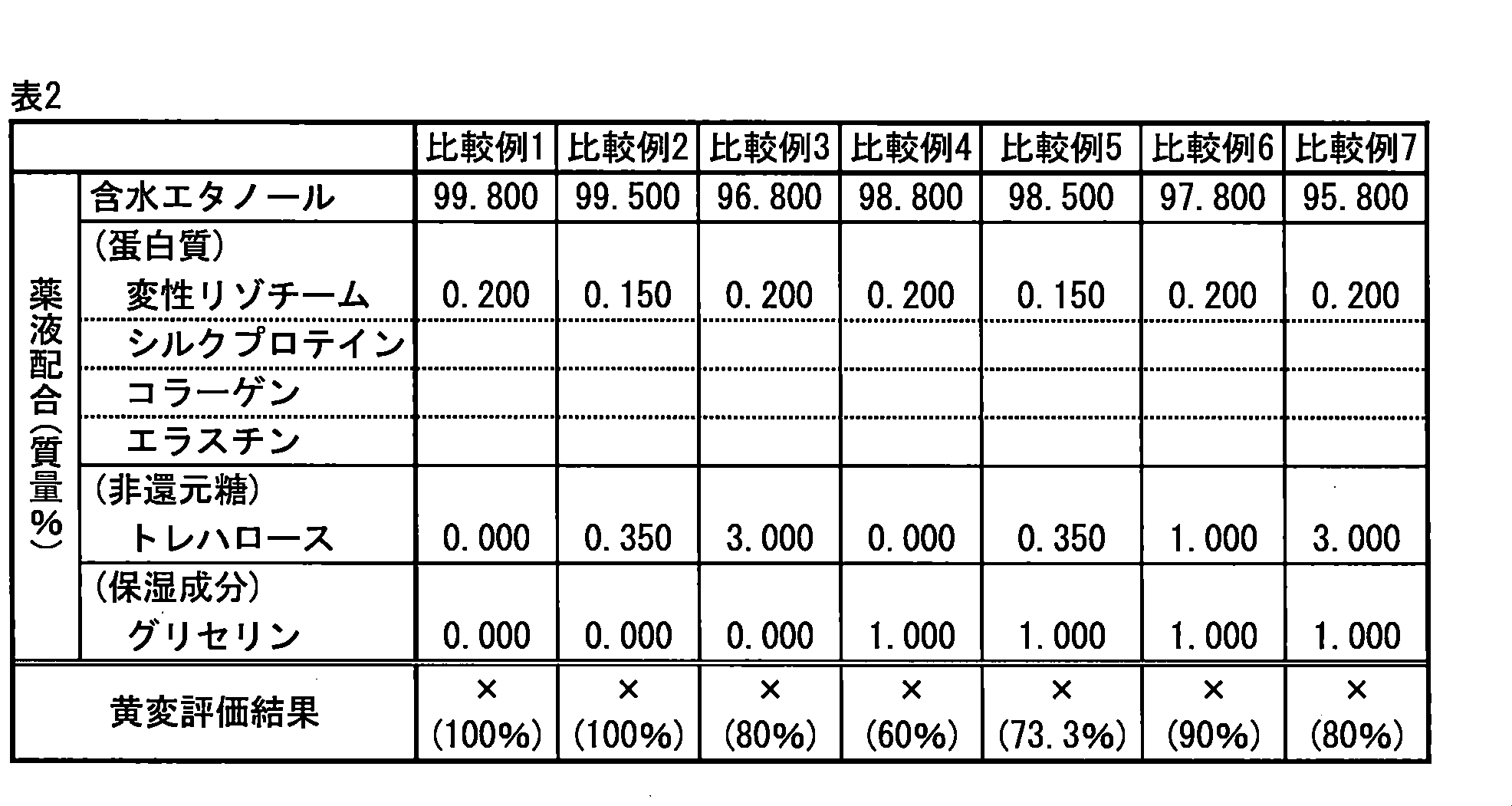
表1および表2に示すように、蛋白質とともに非還元糖と保湿成分とを上記式(1)ないし式(2)を満たす特定の含有量で含む実施例1~14の薬液は、いずれも黄変がほとんど発生していないか、発生しにくいのに対し、非還元糖と保湿成分を特定の含有量で含まない比較例1~7の薬液は、いずれも黄変が発生しやすいことがわかった。
実施例15
さらに、含水エタノールに、蛋白質成分としての加熱変性リゾチーム(キユーピー株式会社製、商品名「ノロクリアプロテイン」)と、非還元糖成分としてのトレハロース(株式会社林原製、商品名「トレハ」)と、保湿成分としてのグリセリンと、防腐剤としてのポリアミノプロピルビグアニド(ロンザジャパン株式会社製、COSMOCIL CQ)および塩化ベンザルコニウム(日油株式会社製、ニッサンカチオンF2-50R)とを加えて攪拌し、実施例15のウェットシート用の薬液を得た。薬液中の各成分の具体的な含有量は、下記の表3に示す。
また、レーヨン(ダイワボウレーヨン株式会社製、繊度:1.44dtex、繊維長:44mm)の原綿にカーディングを行って繊維ウェブを作製し、その繊維ウェブにジェット水流を噴射することで、ジェット水流の高圧水流によって繊維ウェブ内の繊維同士を交絡させて、スパンレース不織布を作製した。さらに、このスパンレース不織布を所定のサイズ(135mm×190mm)に裁断することにより、ウェットシート用の繊維基材を得た。
そして、まず、得られた実施例15の薬液について、上記の<黄変評価方法>に従って、黄変の発生の有無を評価した。この評価結果は、下記の表3に示す。
さらに、実施例15の薬液を5種類の含浸率(すなわち、250%、260%、270%、280%および290%)で上記の繊維基材に含浸させることにより、含浸率の異なる5種類のウェットシートを作製した。なお、これら含浸率の異なる5種類のウェットシートは、それぞれの含浸率ごとに3枚ずつ作製した。
このようにして得られた含浸率の異なる5種類のウェットシートについて、下記の<抗ウイルス性試験方法>に従って拭き取り後のウイルスの減少数を測定し、それぞれの含浸率ごとの抗ウイルス性を評価した。さらに、同様の試験を50℃~60℃で1か月間保管した後のウェットシートについても実施した。
これらの抗ウイルス性試験の結果は、以下の表4および表5に示す。なお、表4は、50℃~60℃で1か月間保管する前のウェットシートの抗ウイルス性試験結果であり、表5は、50℃~60℃で1か月間保管した後のウェットシートの抗ウイルス性試験結果である。
<抗ウイルス性試験方法>
(1)乾熱滅菌したステンレス板(10cm×20cm)上にマウスノロウイルス(MNV)懸濁液を1.0mL滴下し、白金耳を用いてステンレス板の全体に塗り広げ、完全に乾燥するまで風乾する。
(2)乾燥後、MNV懸濁液の滴下した箇所を評価対象のシート(ウェットシート)で10往復拭き取り、5秒間静置する。
(3)そして、リン酸緩衝生理食塩水(PBS)10mLをステンレス板に滴下し、ピペッティングしながら全量を回収したものを10倍希釈液としてプラークアッセイを行い、板側に残存する感染価を測定する。
(4)さらに、拭き取った後のシートをストマッカー袋に入れ、60秒後にPBS10mLを加えてストマッカー処理を行う。それを10倍希釈液としてプラークアッセイを行い、シートに残存する感染価を測定する。
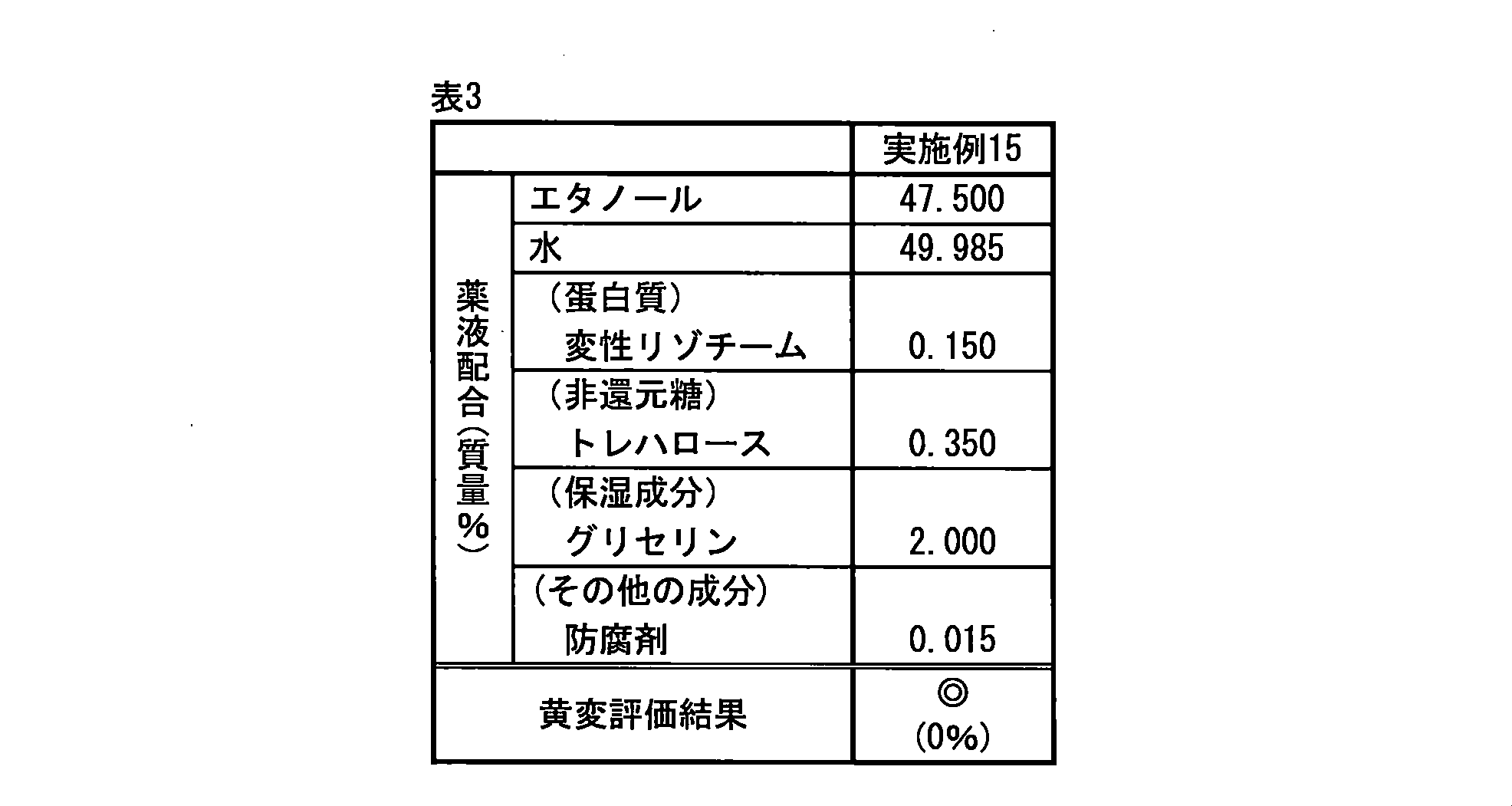
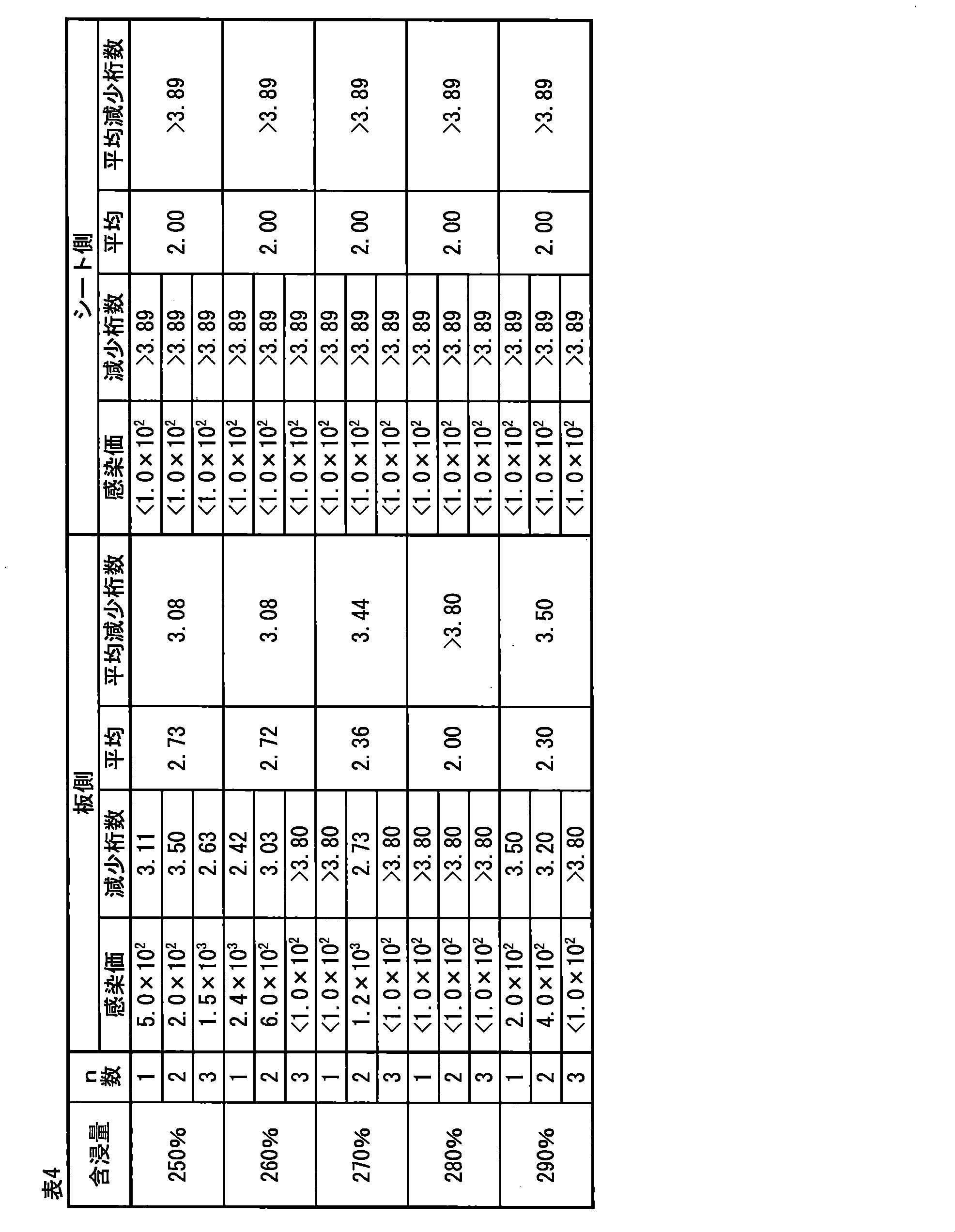
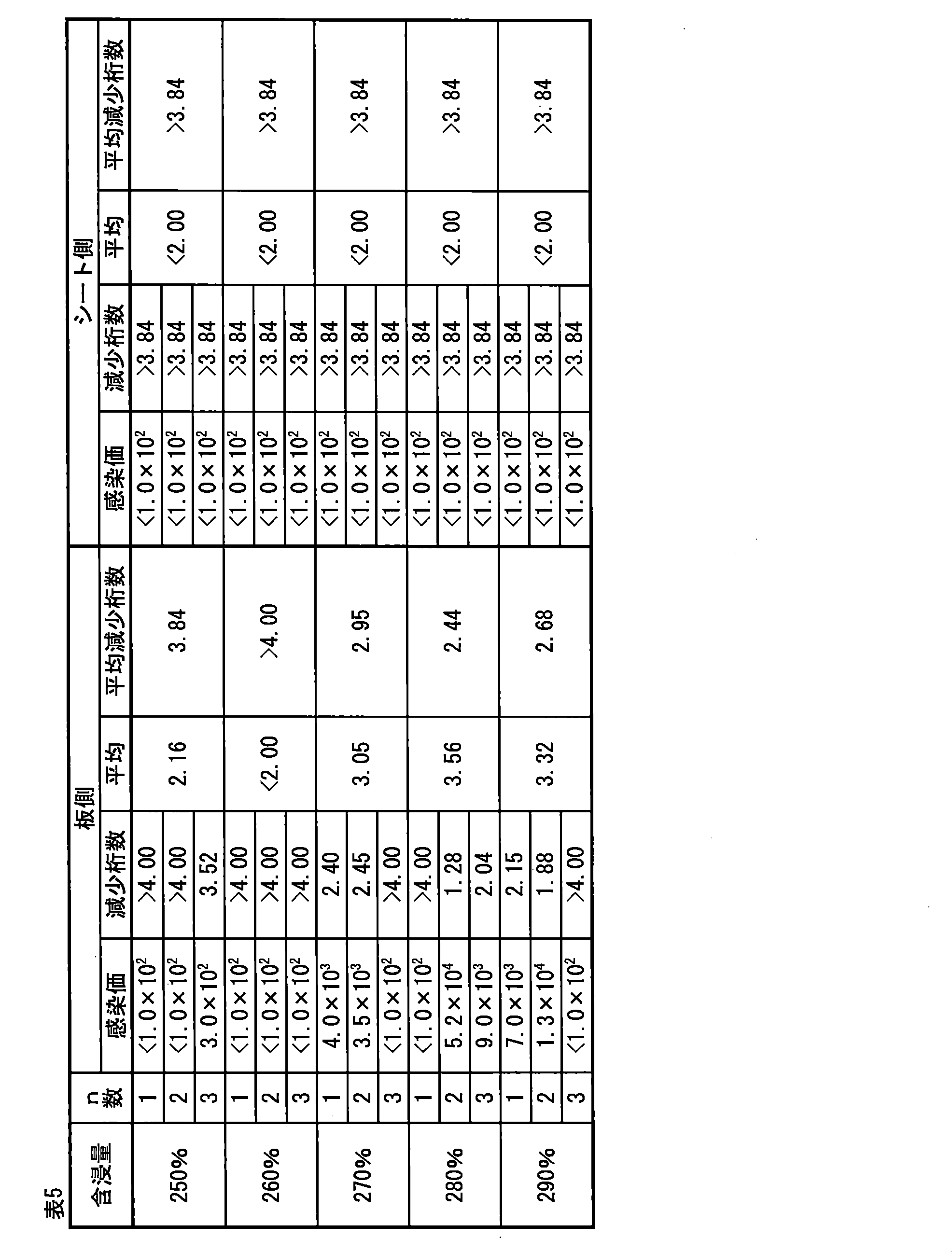
表3~表5に示すように、実施例15の薬液を含浸させてなるウェットシートは、薬液に含まれる蛋白質として抗ノロウイルス活性に優れる変性リゾチームを用いているため、ウェットシートとして優れた抗ノロウイルス活性を発揮し得ることがわかった。さらに、このウェットシートは、薬液が非還元糖および保湿成分を上記式(1)ないし式(2)を満たす特定の含有量で含んでいるによって変性リゾチームの凝集が生じにくくなっているため、ウェットシートを50℃~60℃で1か月間保管した後においても、黄変せず、抗ノロウイルス活性を保管前と同程度に維持し得ることがわかった。
Claims (7)
- 繊維基材に蛋白質を含む薬液を含浸してなるウェットシートであって、
前記薬液は、非還元糖および保湿成分を、下記の式(1)ないし式(2)を満たす含有量で更に含むことを特徴とする、前記ウェットシート。
0.50≦QG<1.50 のとき、QT≧4.00 ・・・(1)
1.50≦QG のとき、 QT≧0.30 ・・・(2)
なお、式中のQTおよびQGは、それぞれ薬液全体の質量に対する非還元糖および保湿成分の含有量(質量%)を表す。 - 前記保湿成分がグリセリンであることを特徴とする、請求項1に記載のウェットシート。
- 前記非還元糖がトレハロースであることを特徴とする、請求項1または2に記載のウェットシート。
- 前記繊維基材の構成繊維が吸水性繊維であることを特徴とする、請求項1~3のいずれか一項に記載のウェットシート。
- 前記蛋白質が変性リゾチームであることを特徴とする、請求項1~4のいずれか一項に記載のウェットシート。
- 前記薬液がポリアミノプロピルビグアニドまたは塩化ベンザルコニウムの少なくとも一方を含むことを特徴とする、請求項1~5のいずれか一項に記載のウェットシート。
- ウェットシート用の薬液であって、
前記薬液は、蛋白質を含むとともに、非還元糖および保湿成分を、下記の式(1)ないし式(2)を満たす含有量で更に含むことを特徴とする、前記薬液。
0.50≦QG<1.50 のとき、QT≧4.00 ・・・(1)
1.50≦QG のとき、 QT≧0.30 ・・・(2)
なお、式中のQTおよびQGは、それぞれ薬液全体の質量に対する非還元糖および保湿成分の含有量(質量%)を表す。
Priority Applications (1)
| Application Number | Priority Date | Filing Date | Title |
|---|---|---|---|
| CN202080046939.5A CN114096232A (zh) | 2019-06-28 | 2020-06-10 | 湿片材和湿片材用的化学溶液 |
Applications Claiming Priority (2)
| Application Number | Priority Date | Filing Date | Title |
|---|---|---|---|
| JP2019122384A JP7357475B2 (ja) | 2019-06-28 | 2019-06-28 | ウェットシートおよびウェットシート用の薬液 |
| JP2019-122384 | 2019-06-28 |
Publications (1)
| Publication Number | Publication Date |
|---|---|
| WO2020262000A1 true WO2020262000A1 (ja) | 2020-12-30 |
Family
ID=74061887
Family Applications (1)
| Application Number | Title | Priority Date | Filing Date |
|---|---|---|---|
| PCT/JP2020/022924 Ceased WO2020262000A1 (ja) | 2019-06-28 | 2020-06-10 | ウェットシートおよびウェットシート用の薬液 |
Country Status (4)
| Country | Link |
|---|---|
| JP (1) | JP7357475B2 (ja) |
| CN (1) | CN114096232A (ja) |
| TW (1) | TWI849149B (ja) |
| WO (1) | WO2020262000A1 (ja) |
Citations (6)
| Publication number | Priority date | Publication date | Assignee | Title |
|---|---|---|---|---|
| JPH11235288A (ja) * | 1998-02-23 | 1999-08-31 | Meisei Sansho Kk | 柔軟しっとり保湿ティッシュペーパー |
| JP2000287865A (ja) * | 1999-04-02 | 2000-10-17 | Kao Corp | ウェットティッシュ |
| JP2001000358A (ja) * | 1999-06-21 | 2001-01-09 | Yoshihiro Kawakita | ウエットティシュ包装体 |
| JP2003119125A (ja) * | 2001-08-06 | 2003-04-23 | Lion Corp | 角質荒れ改善シート |
| JP2010043022A (ja) * | 2008-08-12 | 2010-02-25 | Kao Corp | シート状化粧料 |
| JP2011136137A (ja) * | 2009-12-02 | 2011-07-14 | Fukuyoo:Kk | ウェットティッシュ |
Family Cites Families (1)
| Publication number | Priority date | Publication date | Assignee | Title |
|---|---|---|---|---|
| JP3730269B2 (ja) * | 1994-07-11 | 2005-12-21 | 太陽化学株式会社 | 変性リゾチーム含有抗菌剤 |
-
2019
- 2019-06-28 JP JP2019122384A patent/JP7357475B2/ja active Active
-
2020
- 2020-06-10 WO PCT/JP2020/022924 patent/WO2020262000A1/ja not_active Ceased
- 2020-06-10 CN CN202080046939.5A patent/CN114096232A/zh active Pending
- 2020-06-18 TW TW109120544A patent/TWI849149B/zh active
Patent Citations (6)
| Publication number | Priority date | Publication date | Assignee | Title |
|---|---|---|---|---|
| JPH11235288A (ja) * | 1998-02-23 | 1999-08-31 | Meisei Sansho Kk | 柔軟しっとり保湿ティッシュペーパー |
| JP2000287865A (ja) * | 1999-04-02 | 2000-10-17 | Kao Corp | ウェットティッシュ |
| JP2001000358A (ja) * | 1999-06-21 | 2001-01-09 | Yoshihiro Kawakita | ウエットティシュ包装体 |
| JP2003119125A (ja) * | 2001-08-06 | 2003-04-23 | Lion Corp | 角質荒れ改善シート |
| JP2010043022A (ja) * | 2008-08-12 | 2010-02-25 | Kao Corp | シート状化粧料 |
| JP2011136137A (ja) * | 2009-12-02 | 2011-07-14 | Fukuyoo:Kk | ウェットティッシュ |
Also Published As
| Publication number | Publication date |
|---|---|
| CN114096232A (zh) | 2022-02-25 |
| JP2021007550A (ja) | 2021-01-28 |
| TWI849149B (zh) | 2024-07-21 |
| TW202114620A (zh) | 2021-04-16 |
| JP7357475B2 (ja) | 2023-10-06 |
Similar Documents
| Publication | Publication Date | Title |
|---|---|---|
| ES2733053T3 (es) | Producto de higiene | |
| JP6539734B2 (ja) | 酸化亜鉛含有のセルロース繊維を含む液体含浸された不織布、不織布を製造する方法、及びウェットワイプを製造するための不織布の使用 | |
| MXPA06012479A (es) | Productos para el cuidado personal y metodos para inhibir la adherencia de la flora a la piel. | |
| JP2008295837A (ja) | 湿潤拭取りシート | |
| JP5436001B2 (ja) | 含浸製品、及び該製品に使用される基布含浸液 | |
| JP2013245216A (ja) | 拭取り用シート | |
| JP5765872B2 (ja) | 拭取り用シート製品 | |
| KR102092831B1 (ko) | 클렌징 로션, 시트 화장료 및 미용 방법 | |
| WO2019240031A1 (ja) | ウェットシート | |
| EP3524226A1 (en) | Wet wipe comprising a lotion | |
| JP7357475B2 (ja) | ウェットシートおよびウェットシート用の薬液 | |
| JP2003079530A (ja) | ウエットティッシュ | |
| JP4885283B2 (ja) | ウェットティッシュ | |
| US20150216767A1 (en) | Hygienic body wipe | |
| CN114366448A (zh) | 一种抗菌吸收性物品及其制备方法 | |
| JP7086123B2 (ja) | ウェットシート | |
| JP7446275B2 (ja) | ウェットシートの黄変の発生有無を評価する評価方法および当該評価方法によって評価されたウェットシート | |
| JP5939730B2 (ja) | 含アルコールウエットティシュ | |
| JP7837657B2 (ja) | 水系組成物 | |
| CN102613936A (zh) | 一种消毒湿巾及其制备方法 | |
| CN114502052B (zh) | 擦拭材料 | |
| JP4632810B2 (ja) | 清拭シート | |
| JP2011194097A (ja) | 清拭物品 | |
| CN112147133A (zh) | 评价湿片材是否会发生黄变的评价方法 | |
| JP2011194096A (ja) | 清拭物品 |
Legal Events
| Date | Code | Title | Description |
|---|---|---|---|
| 121 | Ep: the epo has been informed by wipo that ep was designated in this application |
Ref document number: 20831878 Country of ref document: EP Kind code of ref document: A1 |
|
| NENP | Non-entry into the national phase |
Ref country code: DE |
|
| 122 | Ep: pct application non-entry in european phase |
Ref document number: 20831878 Country of ref document: EP Kind code of ref document: A1 |