WO2020241547A1 - 鉛蓄電池 - Google Patents
鉛蓄電池 Download PDFInfo
- Publication number
- WO2020241547A1 WO2020241547A1 PCT/JP2020/020487 JP2020020487W WO2020241547A1 WO 2020241547 A1 WO2020241547 A1 WO 2020241547A1 JP 2020020487 W JP2020020487 W JP 2020020487W WO 2020241547 A1 WO2020241547 A1 WO 2020241547A1
- Authority
- WO
- WIPO (PCT)
- Prior art keywords
- negative electrode
- lead
- positive electrode
- electrode material
- polymer compound
- Prior art date
- Legal status (The legal status is an assumption and is not a legal conclusion. Google has not performed a legal analysis and makes no representation as to the accuracy of the status listed.)
- Ceased
Links
Images
Classifications
-
- H—ELECTRICITY
- H01—ELECTRIC ELEMENTS
- H01M—PROCESSES OR MEANS, e.g. BATTERIES, FOR THE DIRECT CONVERSION OF CHEMICAL ENERGY INTO ELECTRICAL ENERGY
- H01M4/00—Electrodes
- H01M4/02—Electrodes composed of, or comprising, active material
- H01M4/14—Electrodes for lead-acid accumulators
-
- H—ELECTRICITY
- H01—ELECTRIC ELEMENTS
- H01M—PROCESSES OR MEANS, e.g. BATTERIES, FOR THE DIRECT CONVERSION OF CHEMICAL ENERGY INTO ELECTRICAL ENERGY
- H01M10/00—Secondary cells; Manufacture thereof
- H01M10/06—Lead-acid accumulators
-
- H—ELECTRICITY
- H01—ELECTRIC ELEMENTS
- H01M—PROCESSES OR MEANS, e.g. BATTERIES, FOR THE DIRECT CONVERSION OF CHEMICAL ENERGY INTO ELECTRICAL ENERGY
- H01M10/00—Secondary cells; Manufacture thereof
- H01M10/06—Lead-acid accumulators
- H01M10/08—Selection of materials as electrolytes
-
- H—ELECTRICITY
- H01—ELECTRIC ELEMENTS
- H01M—PROCESSES OR MEANS, e.g. BATTERIES, FOR THE DIRECT CONVERSION OF CHEMICAL ENERGY INTO ELECTRICAL ENERGY
- H01M10/00—Secondary cells; Manufacture thereof
- H01M10/06—Lead-acid accumulators
- H01M10/12—Construction or manufacture
-
- H—ELECTRICITY
- H01—ELECTRIC ELEMENTS
- H01M—PROCESSES OR MEANS, e.g. BATTERIES, FOR THE DIRECT CONVERSION OF CHEMICAL ENERGY INTO ELECTRICAL ENERGY
- H01M10/00—Secondary cells; Manufacture thereof
- H01M10/42—Methods or arrangements for servicing or maintenance of secondary cells or secondary half-cells
- H01M10/4235—Safety or regulating additives or arrangements in electrodes, separators or electrolyte
-
- H—ELECTRICITY
- H01—ELECTRIC ELEMENTS
- H01M—PROCESSES OR MEANS, e.g. BATTERIES, FOR THE DIRECT CONVERSION OF CHEMICAL ENERGY INTO ELECTRICAL ENERGY
- H01M4/00—Electrodes
- H01M4/02—Electrodes composed of, or comprising, active material
- H01M4/36—Selection of substances as active materials, active masses, active liquids
- H01M4/48—Selection of substances as active materials, active masses, active liquids of inorganic oxides or hydroxides
- H01M4/56—Selection of substances as active materials, active masses, active liquids of inorganic oxides or hydroxides of lead
-
- H—ELECTRICITY
- H01—ELECTRIC ELEMENTS
- H01M—PROCESSES OR MEANS, e.g. BATTERIES, FOR THE DIRECT CONVERSION OF CHEMICAL ENERGY INTO ELECTRICAL ENERGY
- H01M4/00—Electrodes
- H01M4/02—Electrodes composed of, or comprising, active material
- H01M4/36—Selection of substances as active materials, active masses, active liquids
- H01M4/48—Selection of substances as active materials, active masses, active liquids of inorganic oxides or hydroxides
- H01M4/56—Selection of substances as active materials, active masses, active liquids of inorganic oxides or hydroxides of lead
- H01M4/57—Selection of substances as active materials, active masses, active liquids of inorganic oxides or hydroxides of lead of "grey lead", i.e. powders containing lead and lead oxide
-
- H—ELECTRICITY
- H01—ELECTRIC ELEMENTS
- H01M—PROCESSES OR MEANS, e.g. BATTERIES, FOR THE DIRECT CONVERSION OF CHEMICAL ENERGY INTO ELECTRICAL ENERGY
- H01M4/00—Electrodes
- H01M4/02—Electrodes composed of, or comprising, active material
- H01M4/62—Selection of inactive substances as ingredients for active masses, e.g. binders, fillers
-
- H—ELECTRICITY
- H01—ELECTRIC ELEMENTS
- H01M—PROCESSES OR MEANS, e.g. BATTERIES, FOR THE DIRECT CONVERSION OF CHEMICAL ENERGY INTO ELECTRICAL ENERGY
- H01M4/00—Electrodes
- H01M4/02—Electrodes composed of, or comprising, active material
- H01M4/62—Selection of inactive substances as ingredients for active masses, e.g. binders, fillers
- H01M4/621—Binders
- H01M4/622—Binders being polymers
-
- H—ELECTRICITY
- H01—ELECTRIC ELEMENTS
- H01M—PROCESSES OR MEANS, e.g. BATTERIES, FOR THE DIRECT CONVERSION OF CHEMICAL ENERGY INTO ELECTRICAL ENERGY
- H01M4/00—Electrodes
- H01M4/02—Electrodes composed of, or comprising, active material
- H01M4/62—Selection of inactive substances as ingredients for active masses, e.g. binders, fillers
- H01M4/627—Expanders for lead-acid accumulators
-
- H—ELECTRICITY
- H01—ELECTRIC ELEMENTS
- H01M—PROCESSES OR MEANS, e.g. BATTERIES, FOR THE DIRECT CONVERSION OF CHEMICAL ENERGY INTO ELECTRICAL ENERGY
- H01M4/00—Electrodes
- H01M4/02—Electrodes composed of, or comprising, active material
- H01M4/62—Selection of inactive substances as ingredients for active masses, e.g. binders, fillers
- H01M4/628—Inhibitors, e.g. gassing inhibitors, corrosion inhibitors
-
- H—ELECTRICITY
- H01—ELECTRIC ELEMENTS
- H01M—PROCESSES OR MEANS, e.g. BATTERIES, FOR THE DIRECT CONVERSION OF CHEMICAL ENERGY INTO ELECTRICAL ENERGY
- H01M4/00—Electrodes
- H01M4/02—Electrodes composed of, or comprising, active material
- H01M4/64—Carriers or collectors
- H01M4/66—Selection of materials
- H01M4/68—Selection of materials for use in lead-acid accumulators
-
- H—ELECTRICITY
- H01—ELECTRIC ELEMENTS
- H01M—PROCESSES OR MEANS, e.g. BATTERIES, FOR THE DIRECT CONVERSION OF CHEMICAL ENERGY INTO ELECTRICAL ENERGY
- H01M4/00—Electrodes
- H01M4/02—Electrodes composed of, or comprising, active material
- H01M4/64—Carriers or collectors
- H01M4/66—Selection of materials
- H01M4/68—Selection of materials for use in lead-acid accumulators
- H01M4/685—Lead alloys
-
- H—ELECTRICITY
- H01—ELECTRIC ELEMENTS
- H01M—PROCESSES OR MEANS, e.g. BATTERIES, FOR THE DIRECT CONVERSION OF CHEMICAL ENERGY INTO ELECTRICAL ENERGY
- H01M4/00—Electrodes
- H01M4/02—Electrodes composed of, or comprising, active material
- H01M2004/026—Electrodes composed of, or comprising, active material characterised by the polarity
- H01M2004/027—Negative electrodes
-
- H—ELECTRICITY
- H01—ELECTRIC ELEMENTS
- H01M—PROCESSES OR MEANS, e.g. BATTERIES, FOR THE DIRECT CONVERSION OF CHEMICAL ENERGY INTO ELECTRICAL ENERGY
- H01M4/00—Electrodes
- H01M4/02—Electrodes composed of, or comprising, active material
- H01M2004/026—Electrodes composed of, or comprising, active material characterised by the polarity
- H01M2004/028—Positive electrodes
-
- H—ELECTRICITY
- H01—ELECTRIC ELEMENTS
- H01M—PROCESSES OR MEANS, e.g. BATTERIES, FOR THE DIRECT CONVERSION OF CHEMICAL ENERGY INTO ELECTRICAL ENERGY
- H01M2220/00—Batteries for particular applications
- H01M2220/20—Batteries in motive systems, e.g. vehicle, ship, plane
-
- Y—GENERAL TAGGING OF NEW TECHNOLOGICAL DEVELOPMENTS; GENERAL TAGGING OF CROSS-SECTIONAL TECHNOLOGIES SPANNING OVER SEVERAL SECTIONS OF THE IPC; TECHNICAL SUBJECTS COVERED BY FORMER USPC CROSS-REFERENCE ART COLLECTIONS [XRACs] AND DIGESTS
- Y02—TECHNOLOGIES OR APPLICATIONS FOR MITIGATION OR ADAPTATION AGAINST CLIMATE CHANGE
- Y02E—REDUCTION OF GREENHOUSE GAS [GHG] EMISSIONS, RELATED TO ENERGY GENERATION, TRANSMISSION OR DISTRIBUTION
- Y02E60/00—Enabling technologies; Technologies with a potential or indirect contribution to GHG emissions mitigation
- Y02E60/10—Energy storage using batteries
-
- Y—GENERAL TAGGING OF NEW TECHNOLOGICAL DEVELOPMENTS; GENERAL TAGGING OF CROSS-SECTIONAL TECHNOLOGIES SPANNING OVER SEVERAL SECTIONS OF THE IPC; TECHNICAL SUBJECTS COVERED BY FORMER USPC CROSS-REFERENCE ART COLLECTIONS [XRACs] AND DIGESTS
- Y02—TECHNOLOGIES OR APPLICATIONS FOR MITIGATION OR ADAPTATION AGAINST CLIMATE CHANGE
- Y02P—CLIMATE CHANGE MITIGATION TECHNOLOGIES IN THE PRODUCTION OR PROCESSING OF GOODS
- Y02P70/00—Climate change mitigation technologies in the production process for final industrial or consumer products
- Y02P70/50—Manufacturing or production processes characterised by the final manufactured product
Definitions
- the present invention relates to a lead storage battery.
- Lead-acid batteries are used for various purposes such as in-vehicle use and industrial use.
- Lead-acid batteries include a negative electrode plate, a positive electrode plate, a separator (or mat), an electrolytic solution, and the like.
- Additives may be added to the constituent members of the lead-acid battery from the viewpoint of imparting various functions.
- Patent Document 1 proposes a lead-acid battery characterized in that a copolymer of propylene oxide and ethylene oxide is added to a negative electrode plate active material in combination with lignin sulfonate.
- Patent Document 2 is characterized in that an activator containing an organic polymer is sealed in a small airtight container having a dehiscence mechanism into an electric tank, and the small airtight container is attached to the electric tank or a lid. Storage batteries have been proposed.
- Patent Document 3 includes a plurality of fibers coated with a size composition, a binder composition, and one or more kinds of additives, and the additives include rubber additives, rubber derivatives, aldehydes, and metal salts.
- the additive comprises one or more of ethylene-propylene oxide block copolymer, sulfuric acid ester, sulfonic acid ester, phosphoric acid ester, polyacrylic acid, polyvinyl alcohol, lignin, phenol aldehyde resin, cellulose, wood flour and the like. Fiber-attached mats that can function to reduce water loss in lead storage batteries have been proposed.
- the lead active material layer may contain a reinforcing material such as polyester fiber, a surfactant such as lignin, barium sulfate and the like, and antimony and zinc.
- a reinforcing material such as polyester fiber
- a surfactant such as lignin, barium sulfate and the like
- antimony and zinc such as lignin, barium sulfate and the like
- Cadmium, silver and bismuth oxides, additives selected from hydroxides or sulfates, etc. are also used.
- Japanese Unexamined Patent Publication No. 60-182662 Japanese Unexamined Patent Publication No. 2000-149980 Special Table 2017-525092 Japanese Unexamined Patent Publication No. 2016-54091
- Lead-acid batteries are required to have a long life. Factors that shorten the life of the lead-acid battery include, for example, softening of the positive electrode material and reduction of water content in the electrolytic solution (hereinafter, may be simply referred to as liquid reduction).
- One aspect of the present invention includes a positive electrode plate, a negative electrode plate, and an electrolytic solution
- the positive electrode plate includes a positive electrode current collector and a positive electrode material
- the positive electrode material contains 0.5 antimony.
- the content is less than mass%
- the negative electrode plate comprises a negative electrode material
- the negative electrode material contains a polymer compound
- the polymer compound is 3.2 ppm or more in a chemical shift of 1 H-NMR spectrum.
- the present invention relates to a lead storage battery having a peak P1 in the range of 3.8 ppm or less and having a content of the polymer compound in the negative electrode material of less than 500 ppm on a mass basis.
- Another aspect of the present invention includes a positive electrode plate, a negative electrode plate, and an electrolytic solution
- the positive electrode plate includes a positive electrode current collector and a positive electrode material
- the positive electrode material contains antimony.
- the negative electrode plate contains a negative electrode material having a content of less than 5% by mass, and the negative electrode material contains a polymer compound containing a repeating structure of an oxyC 2-4 alkylene unit in the negative electrode material.
- the content of the polymer compound relates to a lead storage battery, which is less than 500 ppm on a mass basis.
- the cycle life is improved when the lead-acid battery is repeatedly charged and discharged (for example, Shadow cycle).
- the lead-acid battery includes a positive electrode plate, a negative electrode plate, and an electrolytic solution.
- the positive electrode plate includes a positive electrode current collector and a positive electrode material.
- the negative electrode plate comprises a negative electrode material.
- the positive electrode material contains antimony in a content of less than 0.5% by mass.
- the negative electrode material contains a polymer compound.
- the content of the polymer compound in the negative electrode material is less than 500 ppm on a mass basis.
- the polymer compound has a peak P1 in the range of 3.2 ppm or more and 3.8 ppm or less in the chemical shift of the 1 H-NMR spectrum.
- the peak P1 appearing in the range of 3.2 ppm or more and 3.8 ppm or less in the 1 H-NMR spectrum is derived from the oxyC 2-4 alkylene unit.
- the 1 H-NMR spectrum is measured using deuterated chloroform as a solvent.
- the lead-acid battery according to another aspect of the present invention includes a positive electrode plate, a negative electrode plate, and an electrolytic solution.
- the positive electrode plate includes a positive electrode current collector and a positive electrode material.
- the negative electrode plate comprises a negative electrode material.
- the positive electrode material contains antimony in a content of less than 0.5% by mass.
- the negative electrode material contains a polymer compound containing a repeating structure of oxyC 2-4 alkylene units of less than 500 ppm by mass.
- the negative electrode material contains a polymer compound, the hydrogen overvoltage in the negative electrode plate can be increased, and the amount of overcharged electricity can be reduced.
- the polymer compound it is necessary to have the polymer compound present in the vicinity of lead or lead sulfate. Therefore, it is important that the negative electrode material contains the polymer compound regardless of whether or not the components of the lead-acid battery other than the negative electrode material contain the polymer compound.
- the reaction during overcharging is greatly affected by the reduction reaction of hydrogen ions at the interface between lead and the electrolytic solution. Therefore, in the lead-acid battery according to one aspect and the other aspect of the present invention, the amount of overcharged electricity is reduced because the surface of lead, which is the negative electrode active material, is covered with the polymer compound, so that hydrogen This is thought to be because the overvoltage rises and the side reaction of hydrogen generation from protons during overcharging is inhibited.
- the positive electrode material contains antimony (Sb) in a content of less than 0.5% by mass.
- Antimony is thought to suppress the softening of the positive electrode material, but usually even a small amount of antimony causes a great disadvantage.
- the antimony contained in the positive electrode material is gradually eluted in the electrolytic solution and precipitated on the negative electrode plate.
- the hydrogen overvoltage of the negative electrode plate becomes small, the amount of overcharged electricity becomes large, and liquid reduction is promoted.
- the negative electrode material contains a polymer compound of less than 500 ppm on a mass basis
- the elution of antimony from the positive electrode material is suppressed, the effect of suppressing the softening of the positive electrode material is enhanced, and the negative electrode plate
- antimony that is, precipitation of antimony
- the reduction and fixation of antimony was suppressed.
- the amount of overcharged electricity is dramatically reduced, and the amount of overcharged electricity can be reduced as compared with the case where antimony is not used. Therefore, it becomes possible to add a considerable amount of antimony to the positive electrode material, and the softening of the positive electrode material can be highly suppressed.
- the positive electrode current collector may contain antimony. That is, the positive electrode current collector may be formed of a lead alloy (Pb-Sb-based alloy) containing antimony. In this case, antimony elutes from the positive electrode current collector. At least a part of the antimony contained in the positive electrode material may be antimony derived from the positive electrode current collector eluted from the positive electrode current collector and transferred to the positive electrode material.
- the antimony content in the positive electrode current collector may be, for example, 1% by mass or more and 3% by mass or less.
- All of the antimony contained in the positive electrode material may be antimony that elutes from the positive electrode current collector and moves to the positive electrode material (that is, derived from the positive electrode current collector). In this case, it is not necessary to include antimony in the positive electrode material in the process of manufacturing the positive electrode plate.
- the lead-acid battery may be either a control valve type (sealed type) lead-acid battery or a liquid type (vent type) lead-acid battery.
- the negative electrode plate usually includes a negative electrode current collector in addition to the negative electrode material.
- the negative electrode electrode material is a negative electrode plate obtained by removing the negative electrode current collector.
- Members such as mats and pacing papers may be attached to the negative electrode plate. Since such a member (pasting member) is used integrally with the negative electrode plate, it is included in the negative electrode plate.
- the negative electrode material is the one excluding the negative electrode current collector and the sticking member.
- the thickness of the sticking member is included in the thickness of the separator.
- the negative electrode current collector may be formed by casting lead (Pb) or a lead alloy, or may be formed by processing a lead sheet or a lead alloy sheet. Examples of the processing method include expanding processing and punching processing. It is preferable to use a negative electrode grid as the negative electrode current collector because it is easy to support the negative electrode material.
- the lead alloy used for the negative electrode current collector may be any of Pb-Sb-based alloy, Pb-Ca-based alloy, and Pb-Ca-Sn-based alloy. These leads or lead alloys may further contain at least one selected from the group consisting of Ba, Ag, Al, Bi, As, Se, Cu and the like as an additive element.
- the negative electrode current collector may include a surface layer. The composition of the surface layer and the inner layer of the negative electrode current collector may be different. The surface layer may be formed on the selvage portion of the negative electrode current collector. The surface layer of the selvage portion may contain Sn or a Sn alloy.
- the negative electrode material contains the above polymer compound.
- the negative electrode material further contains a negative electrode active material (lead or lead sulfate) that develops a capacity by a redox reaction.
- the negative electrode material may contain shrink-proofing agents, carbonaceous materials, and / or other additives. Examples of the additive include, but are not limited to, barium sulfate, fibers (resin fibers, etc.) and the like.
- the negative electrode active material in the charged state is spongy lead, but the unchemicald negative electrode plate is usually produced by using lead powder.
- the polymer compound has a peak P1 in the range of 3.2 ppm or more and 3.8 ppm or less in the chemical shift of the 1 H-NMR spectrum.
- Such polymer compounds have an oxyC 2-4 alkylene unit.
- the oxyC 2-4 alkylene unit includes an oxyethylene unit, an oxypropylene unit, an oxytrimethylene unit, an oxy2-methyl-1,3-propylene unit, an oxy1,4-butylene unit, and an oxy1,3-butylene unit. And so on.
- the polymer compound may have one kind of such oxyC 2-4 alkylene unit, or may have two or more kinds.
- the polymer compound preferably contains a repeating structure of oxyC 2-4 alkylene units.
- the repeating structure may contain one type of oxyC 2-4 alkylene unit, or may contain two or more types of oxy C 2-4 alkylene unit.
- the polymer compound may contain one kind of the above-mentioned repeating structure, or may contain two or more kinds of repeating structures.
- the polymer compound Since the polymer compound has an oxyC 2-4 alkylene unit, it is easy to form a linear structure, so that it is difficult to stay in the negative electrode material and it is expected that the polymer compound is easily diffused into the electrolytic solution.
- the present inventors have found that the effect of reducing the amount of overcharged electricity can actually be obtained even when the negative electrode material contains a very small amount of polymer compound. From this, it is considered that by incorporating the polymer compound in the negative electrode material, it can be present in the vicinity of lead, whereby the high adsorption action of the oxyC 2-4 alkylene unit on lead is exhibited. Be done.
- the polymer compound since the effect of reducing the amount of overcharged electricity can be obtained even with a very small amount of polymer compound, the polymer compound is in a state of being thinly spread on the surface of lead, and the reduction reaction of hydrogen ions is suppressed in a wide range of the lead surface. It is thought that. This is consistent with the fact that polymer compounds tend to have a linear structure. In addition, since hydrogen generation during overcharging is suppressed, liquid reduction can be reduced, which is advantageous for extending the life of the lead storage battery.
- an aqueous sulfuric acid solution is used as the electrolytic solution. Therefore, when an organic additive (oil, polymer, organic shrink-proofing agent, etc.) is contained in the negative electrode material, it elutes into the electrolytic solution and adsorbs to lead. It becomes difficult to balance with. For example, when an organic additive having low adsorptivity to lead is used, it becomes easy to elute into the electrolytic solution, and it becomes difficult to reduce the amount of overcharged electricity. On the other hand, when an organic additive having high adsorptivity to lead is used, it becomes difficult to attach the organic additive thinly to the surface of lead, and the organic additive tends to be unevenly distributed in the pores of lead.
- an organic additive oil, polymer, organic shrink-proofing agent, etc.
- the organic additive When the organic additive is unevenly distributed in the pores of lead, the movement of ions (lead ion, sulfate ion, etc.) is hindered by the steric hindrance of the unevenly distributed organic additive. Therefore, the low temperature high rate (HR) performance is also lowered. If the content of the organic additive is increased in order to secure a sufficient effect of reducing the amount of overcharged electricity, the movement of ions in the pores is further inhibited, and the low temperature HR discharge performance is also lowered.
- HR low temperature high rate
- the lead surface is covered with the polymer compound in a thinly spread state as described above. Therefore, as compared with the case of using other organic additives, even if the content in the negative electrode electrode material is small, an excellent effect of reducing the amount of overcharged electricity can be ensured. Further, since the polymer compound thinly covers the lead surface, the elution of lead sulfate generated during discharge during charging is less likely to be inhibited, and thus a decrease in charge acceptability can be suppressed. Therefore, it is possible to suppress a decrease in charge acceptability while reducing the amount of overcharged electricity. Since the uneven distribution of the polymer compound in the pores of lead is suppressed, the ions can easily move, and the deterioration of the low temperature HR discharge performance can be suppressed.
- the polymer compound may contain an oxygen atom bonded to a terminal group and an -CH 2 -group and / or -CH ⁇ group bonded to the oxygen atom.
- the integrated value of the peaks of 3.2 ppm ⁇ 3.8 ppm, and the integral value of the peak, -CH 2 bonded to an oxygen atom - and the integral value of the peak of the hydrogen atoms of the group, an oxygen atom The ratio of the peak of the hydrogen atom of the -CH ⁇ group bonded to the group to the integrated value is preferably 85% or more.
- Such polymer compounds contain a large amount of oxyC 2-4 alkylene unit in the molecule.
- the lead surface is easily covered thinly by easily adsorbing to lead and easily forming a linear structure. Therefore, the amount of overcharged electricity can be reduced more effectively. In addition, the charge acceptability and / or the effect of suppressing a decrease in low temperature HR discharge performance can be further enhanced.
- the polymer compound having a peak in the chemical shift range of 3.2 ppm to 3.8 ppm preferably contains a repeating structure of an oxyC 2-4 alkylene unit.
- a polymer compound containing a repeating structure of an oxyC 2-4 alkylene unit it is considered that it becomes easier to adsorb to lead and it becomes easier to form a linear structure so that the lead surface is thinly covered. Therefore, the amount of overcharged electricity can be reduced more effectively.
- the charge acceptability and / or the effect of suppressing a decrease in low-temperature HR discharge performance can be further enhanced.
- a polymer compound is defined to have a repeating unit of oxyC 2-4 alkylene unit and / or have a number average molecular weight (Mn) of 500 or more.
- the number average molecular weight Mn is determined by gel permeation chromatography (GPC).
- GPC gel permeation chromatography
- the standard substance used to determine Mn is polyethylene glycol.
- the oxyC 2-4 alkylene unit is a unit represented by —OR 1 ⁇ (R 1 represents a C 2-4 alkylene group).
- the polymer compound examples include a hydroxy compound having a repeating structure of an oxy C 2-4 alkylene unit (poly C 2-4 alkylene glycol, a copolymer containing a repeating structure of oxy C 2-4 alkylene, and C 2- of a polyol. (4 alkylene oxide adduct, etc.), etherified products or esterified products of these hydroxy compounds, and the like.
- a polymer compound is used, a decrease in charge acceptability can be further suppressed. Further, since the effect of reducing the amount of overcharged electricity is high, the generation of hydrogen gas can be suppressed more effectively, and a high liquid reduction suppressing effect can be obtained.
- copolymer examples include a copolymer containing different oxyC 2-4 alkylene units, a poly C 2-4 alkylene glycol alkyl ether, a poly C 2-4 alkylene glycol ester of a carboxylic acid, and the like.
- the copolymer may be a block copolymer.
- the polyol may be any of an aliphatic polyol, an alicyclic polyol, an aromatic polyol, a heterocyclic polyol and the like. From the viewpoint that the polymer compound is thin and easily spreads on the lead surface, an aliphatic polyol, an alicyclic polyol (for example, polyhydroxycyclohexane, polyhydroxynorbornane, etc.) and the like are preferable, and an aliphatic polyol is particularly preferable.
- the aliphatic polyol include an aliphatic diol and a polyol having a triol or higher (for example, glycerin, trimethylolpropane, pentaerythritol, sugar alcohol, etc.).
- Examples of the aliphatic diol include alkylene glycol having 5 or more carbon atoms.
- Alkylene glycol for example, be a C 5 ⁇ 14 alkylene glycol or C 5-10 alkylene glycol.
- sugar alcohols include erythritol, xylitol, mannitol, sorbitol and the like.
- the alkylene oxide adduct of the polyol the alkylene oxide corresponds to the oxyC 2-4 alkylene unit of the polymer compound and comprises at least C 2-4 alkylene oxide. From the viewpoint that the polymer compound easily has a linear structure, the polyol is preferably a diol.
- the etherified product is composed of at least a part of the terminal -OH group (hydrogen atom of the terminal group and the oxygen atom bonded to the hydrogen atom) of the hydroxy compound having the repeating structure of the above oxyC 2-4 alkylene unit. -OH group) having etherified -OR 2 group (wherein, R 2 is an organic group.).
- R 2 is an organic group.
- ends of the polymer compound some ends may be etherified, or all ends may be etherified. For example, in one end of the main chain is -OH groups of a linear polymer compound, the other end may be an -OR 2 group.
- the esterified product is composed of at least a part of a terminal-OH group (a hydrogen atom of the terminal group and an oxygen atom bonded to the hydrogen atom) of the hydroxy compound having a repeating structure of the oxyC 2-4 alkylene unit.
- R 3 is an organic group.
- some ends may be esterified, or all ends may be esterified.
- Examples of the organic groups R 2 and R 3 include hydrocarbon groups.
- the hydrocarbon group may have a substituent (eg, a hydroxy group, an alkoxy group, and / or a carboxy group).
- the hydrocarbon group may be any of an aliphatic, alicyclic, and aromatic group. From the viewpoint that the polymer compound is thin and easily adheres to the lead surface, an aliphatic hydrocarbon group is preferable, and an alkyl group is particularly preferable.
- Examples of the alkyl group include a C 1-14 alkyl group, which may be a C 1-10 alkyl group or a C 1-8 alkyl group, and a C 1-6 alkyl group or a C 2-6 alkyl group. There may be.
- alkyl group examples include methyl, ethyl, n-propyl, i-propyl, n-butyl, i-butyl, s-butyl, t-butyl, n-pentyl, neopentyl, i-pentyl, s-pentyl, and the like. Examples thereof include 3-pentyl, t-pentyl, n-hexyl, 2-ethylhexyl, n-octyl, n-decyl, i-decyl, lauryl and myristyl.
- the alkyl group may be either linear or branched.
- esters of hydroxy compounds having a repeating structure of ethers of hydroxy compounds, and / or oxy-C 2-4 alkylene unit having a repeating structure oxy C 2-4 alkylene unit, of charge acceptance This is preferable because the effect of suppressing the decrease can be further enhanced. Further, even when these polymer compounds are used, a high liquid reduction suppressing effect can be ensured.
- the negative electrode material may contain one kind of polymer compound or two or more kinds.
- the repeating structure of oxyC 2-4 alkylene is at least an oxypropylene unit ( It is preferable to include a repeating structure of -O-CH (-CH 3 ) -CH 2- ). It is considered that such a polymer compound has a high adsorptivity to lead, yet easily spreads thinly on the lead surface, and has an excellent balance between them. Therefore, the amount of overcharged electricity can be reduced more effectively. In addition, the charge acceptability and / or the effect of suppressing a decrease in low temperature HR discharge performance can be further enhanced.
- Such a polymer compound has peaks in the chemical shift of 1 H-NMR spectrum, for example, in the range of 3.2 ppm or more and 3.42 ppm or less and in the range of 3.42 ppm or more and 3.8 ppm or less.
- Peaks in the range of 3.2 ppm or more and 3.42 ppm or less are derived from -CH 2- , and peaks in the range of more than 3.42 ppm and 3.8 ppm or less are derived from -CH ⁇ and -CH 2- .
- Examples of such a polymer compound include polypropylene glycol, a copolymer containing a repeating structure of oxypropylene, a propylene oxide adduct of the above-mentioned polyol, and an etherified product or an esterified product thereof.
- Examples of the copolymer include an oxypropylene-oxyalkylene copolymer (where oxyalkylene is C 2-4 alkylene other than oxypropylene), polypropylene glycol alkyl ether, polypropylene glycol ester of carboxylic acid and the like.
- Examples of the oxypropylene-oxyalkylene copolymer include an oxypropylene-oxyethylene copolymer and an oxypropylene-oxytrimethylene copolymer.
- the oxypropylene-oxyalkylene copolymer may be a block copolymer.
- the proportion of the oxypropylene unit is, for example, 5 mol% or more, and may be 10 mol% or more or 20 mol% or more.
- the polymer compound preferably contains a large amount of oxyC 2-4 alkylene unit from the viewpoint of increasing the adsorptivity to lead and facilitating the formation of a linear structure.
- Such polymer compounds include, for example, an oxygen atom attached to a terminal group and an -CH 2 -group and / or -CH ⁇ group attached to an oxygen atom.
- the ratio of the peak of hydrogen atom to the integral value of the peak becomes large.
- This ratio is, for example, 50% or more, and may be 80% or more, and the effect of reducing the amount of overcharged electricity is further enhanced, and the effect of suppressing the decrease in charge acceptability and / or low temperature HR discharge performance is further enhanced. From the viewpoint, the above ratio is more preferably 85% or more.
- the polymer compound having an -OH group at the terminal, -CH 2 bonded to an oxygen atom of the -OH group - if having a group or -CH ⁇ group the 1 H-NMR spectrum, -CH 2 - group The peak of the hydrogen atom of the -CH ⁇ group has a chemical shift in the range of more than 3.8 ppm and 4.0 ppm or less.
- the polymer compound may contain a compound having a Mn of 500 or more, a compound having a Mn of 600 or more, or a compound having a Mn of 1000 or more.
- the Mn of such a compound is, for example, 20000 or less, and may be 15000 or less or 10000 or less. From the viewpoint that the compound is easily retained in the negative electrode material and spreads thinner on the lead surface, the Mn of the compound is preferably 5000 or less, and may be 4000 or less or 3000 or less.
- the polymer compound preferably contains a compound having an Mn of 1000 or more, and more preferably contains a compound having a Mn of 2000 or more.
- the Mn of such a compound may be 1000 or more (or 2000 or more) 20000 or less, 1000 or more (or 2000 or more) 15000 or less, 1000 or more (or 2000 or more) 10000 or less. May be good.
- the Mn of the compound is 1000 or more (or It is preferably 2000 or more and 5000 or less, 1000 or more (or 2000 or more) 4000 or less, and 1000 or more (or 2000 or more) 3000 or less.
- the antimony from the positive electrode material is used.
- Elution can be highly suppressed and the amount of antimony deposited on the negative electrode plate can be significantly reduced.
- the polymer compound in the negative electrode material elutes into the electrolytic solution and binds to antimony on the positive electrode plate, which makes it easier for antimony to stay in the positive electrode material, and the lead or lead compound in the negative electrode material is a polymer compound. It is thought that this is due to the efficient covering with. As described above, it becomes possible to more easily reduce the amount of overcharged electricity while highly suppressing the softening of the positive electrode material.
- the larger the molecular weight of the polymer compound the easier it is for the polymer compound to remain in the negative electrode material, the greater the effect of suppressing antimony precipitation and reducing the amount of overcharged electricity. Further, by reducing the amount of overcharged electricity, it is possible to suppress the structural change of the negative electrode active material caused by the collision of hydrogen gas with the negative electrode active material. Therefore, it is possible to enhance the effect of suppressing the deterioration of the low temperature HR discharge performance after the high temperature light load test.
- the polymer compound two or more compounds having different Mns may be used. That is, the polymer compound may have a plurality of Mn peaks in the distribution of molecular weight.
- the content of the polymer compound in the negative electrode electrode material is, for example, more than 8 ppm, preferably 13 ppm or more, and more preferably 15 ppm or more or 16 ppm or more on a mass basis.
- the content of the polymer compound is in such a range, the hydrogen generation voltage can be easily increased, and the effect of reducing the amount of overcharged electricity can be further enhanced.
- the content (mass basis) of the polymer compound in the negative electrode electrode material may be 50 ppm or more or 80 ppm or more.
- the content (mass basis) of the polymer compound in the negative electrode electrode material is, for example, less than 500 ppm, 400 ppm or less, or 200 ppm or less.
- the content of the polymer compound is 400 ppm or less (further, 200 ppm or less), the surface of lead is suppressed from being excessively covered with the polymer compound, so that the decrease in low temperature HR discharge performance can be effectively suppressed.
- the content of the polymer compound in the negative electrode electrode material may be, for example, 15 ppm or more and 400 ppm or less, 50 ppm or more and 400 ppm or less, 15 ppm or more and 400 ppm or less, and 50 ppm or more and 200 ppm or less.
- the antimony content in the positive electrode material is 0.01% by mass or more (further 0.03% by mass or more), the content of the polymer compound in the negative electrode material is 15 ppm or more (further 50 ppm). Above) is desirable.
- the antimony content in the positive electrode material is 0.1% by mass or less, it is desirable that the content of the polymer compound in the negative electrode material is 200 ppm or less.
- the content of the polymer compound in the negative electrode material is, for example, 200 ppm or less.
- the content (mass basis) of the polymer compound is more than 8 ppm (for example, 15 ppm or more) and less than 500 ppm, more than 8 ppm (for example, 15 ppm or more), 400 ppm or less, more than 8 ppm (for example, 15 ppm or more), 200 ppm or less, 50 ppm or more (or 80 ppm or more). ) 400 ppm or less, 50 ppm or more and 200 ppm or less.
- the polymer compound can be contained in the negative electrode material, and the origin of the polymer compound contained in the negative electrode material is not particularly limited.
- the polymer compound may be contained in any of the components of the lead-acid battery (for example, a negative electrode plate, a positive electrode plate, an electrolytic solution, and / or a separator) when the lead-acid battery is manufactured.
- the polymer compound may be contained in one component or in two or more components (for example, a negative electrode plate and an electrolytic solution).
- the content of the polymer compound in the negative electrode material shall be determined for a fully charged lead-acid battery.
- the fully charged state of the control valve type lead-acid battery means that the lead-acid battery after chemical conversion has a current of 0.2 times the value described as the rated capacity in an air tank at 25 ° C. ⁇ 2 ° C.
- A constant current constant voltage charging of 2.23 V / cell is performed, and charging is completed when the charging current (A) at the time of constant voltage charging becomes 0.005 times the value described as the rated capacity.
- the fully charged state of the liquid lead-acid battery is defined by the definition of JIS D 5301: 2006. More specifically, the terminal voltage during charging measured every 15 minutes with a current (A) 0.2 times the value described as the rated capacity of the lead-acid battery in a water tank at 25 ° C.
- a fully charged state is defined as a state in which the electrolyte density converted to a temperature of 20 ° C. is charged three times in a row until it shows a constant value with three significant figures.
- the numerical value described as the rated capacity is a numerical value in which the unit is Ah.
- the unit of current set based on the numerical value described as the rated capacity is A.
- a fully charged lead-acid battery is a fully charged lead-acid battery.
- the lead-acid battery may be fully charged after the chemical conversion, immediately after the chemical conversion, or after a lapse of time from the chemical conversion (for example, after the chemical conversion, the lead-acid battery in use (preferably at the initial stage of use) is fully charged. May be).
- An initial use battery is a battery that has not been used for a long time and has hardly deteriorated.
- the negative electrode material can include a shrink-proofing agent.
- an organic shrink proofing agent is preferable.
- the organic shrinkage proofing agent lignins and / or synthetic organic shrinkage proofing agents may be used.
- lignins include lignin and lignin derivatives.
- the lignin derivative include lignin sulfonic acid or a salt thereof (alkali metal salt (sodium salt, etc.), etc.).
- Organic shrink proofing agents are usually roughly classified into lignins and synthetic organic shrink proofing agents. It can be said that the synthetic organic shrinkage proofing agent is an organic shrinkage proofing agent other than lignins.
- the synthetic organic shrinkage proofing agent is an organic polymer containing a sulfur element, and generally contains a plurality of aromatic rings in the molecule and also contains a sulfur element as a sulfur-containing group.
- a sulfur element as a sulfur-containing group.
- the sulfur-containing groups a sulfonic acid group or a sulfonyl group in a stable form is preferable.
- the sulfonic acid group may be present in acid form or in salt form such as Na salt.
- the negative electrode material may contain one type of shrink-proofing agent, or may contain two or more types.
- the organic shrinkage proofing agent it is preferable to use a condensate containing at least a unit of an aromatic compound.
- a condensate include a condensate of an aromatic compound made of an aldehyde compound (such as an aldehyde (for example, formaldehyde) and / or a condensate thereof).
- the organic shrink proofing agent may contain a unit of one kind of aromatic compound, or may contain a unit of two or more kinds of aromatic compounds.
- the unit of the aromatic compound means a unit derived from the aromatic compound incorporated in the condensate.
- the organic shrinkage proofing agent one synthesized by a known method may be used, or a commercially available product may be used.
- a condensate containing a unit of an aromatic compound can be obtained, for example, by reacting an aromatic compound with an aldehyde compound.
- an aromatic compound containing a sulfur element for example, bisphenol S
- an organic shrinkage proofing agent containing a sulfur element can be obtained.
- the sulfur element content in the organic shrink-proofing agent can be adjusted by adjusting the amount of sulfites and / or the amount of aromatic compounds containing sulfur elements. When other raw materials are used, it can be obtained according to this method.
- Examples of the aromatic ring contained in the aromatic compound include a benzene ring and a naphthalene ring.
- the plurality of aromatic rings may be directly bonded or linked by a linking group (for example, an alkylene group (including an alkylidene group), a sulfone group, etc.).
- Examples of such a structure include a bisarene structure (biphenyl, bisphenylalkane, bisphenylsulfone, etc.).
- Examples of the aromatic compound include the above-mentioned compounds having an aromatic ring and a hydroxy group and / or an amino group.
- the hydroxy group or amino group may be directly bonded to the aromatic ring, or may be bonded as an alkyl chain having a hydroxy group or amino group.
- the hydroxy group also includes a salt of the hydroxy group (-OMe).
- Amino groups also include salts of amino groups (salts with anions). Examples of Me include alkali metals (Li, K, Na, etc.) and Group 2 metals of the periodic table (Ca, Mg, etc.).
- aromatic compound examples include bisarene compounds (bisphenol compounds, hydroxybiphenyl compounds, bisarene compounds having an amino group (bisarylalkane compounds having an amino group, bisarylsulfone compounds having an amino group, biphenyl compounds having an amino group, etc.), Hydroxyarene compounds (hydroxynaphthalene compounds, phenol compounds, etc.), aminoarene compounds (aminonaphthalene compounds, aniline compounds (aminobenzenesulfonic acid, alkylaminobenzenesulfonic acid, etc.), etc.) are preferable.
- Aromatic compounds are further substituents.
- the organic shrinkage proofing agent may contain one or more residues of these compounds.
- bisphenol compound bisphenol A, bisphenol S, bisphenol F and the like are preferable.
- the condensate preferably contains at least a unit of an aromatic compound having a sulfur-containing group.
- a condensate containing at least a unit of a bisphenol compound having a sulfur-containing group when used, the effect of suppressing a decrease in low-temperature HR discharge performance after a high-temperature light load test can be enhanced.
- the sulfur-containing group may be directly bonded to the aromatic ring contained in the compound, or may be bonded to the aromatic ring as an alkyl chain having a sulfur-containing group, for example.
- the sulfur-containing group is not particularly limited, and examples thereof include a sulfonyl group, a sulfonic acid group, or a salt thereof.
- the organic shrinkage proofing agent for example, a condensation containing at least one selected from the group consisting of the above-mentioned unit of a bisalene compound and a unit of a monocyclic aromatic compound (hydroxyalene compound and / or aminoarene compound, etc.) At least one may be used.
- the organic shrink-proofing agent may contain at least a condensate containing a unit of a bisalene compound and a unit of a monocyclic aromatic compound (particularly, a hydroxyarene compound). Examples of such a condensate include a condensate of a bisarene compound and a monocyclic aromatic compound with an aldehyde compound.
- hydroxyarene compound a phenol sulfonic acid compound (phenol sulfonic acid or a substitute thereof, etc.) is preferable.
- aminoarene compound aminobenzenesulfonic acid, alkylaminobenzenesulfonic acid and the like are preferable.
- monocyclic aromatic compound a hydroxyarene compound is preferable. Such a condensate is more advantageous in suppressing the deterioration of the low temperature HR discharge performance after the high temperature light load test because the low temperature HR discharge performance is not impaired even if the environment is higher than the normal temperature.
- the content of the organic shrink-proofing agent contained in the negative electrode electrode material is, for example, 0.01% by mass or more, and may be 0.05% by mass or more.
- the content of the organic shrink proofing agent is, for example, 1.0% by mass or less, and may be 0.5% by mass or less.
- the content of the organic shrink-proofing agent contained in the negative electrode electrode material is 0.01 to 1.0% by mass, 0.05 to 1.0% by mass, 0.01 to 0.5% by mass, or 0.05 to 0.05. It may be 0.5% by mass.
- Carbonaceous material As the carbonaceous material contained in the negative electrode material, carbon black, graphite, hard carbon, soft carbon and the like can be used. Examples of carbon black include acetylene black, ketjen black, furnace black, and lamp black.
- the graphite may be any carbonaceous material containing a graphite-type crystal structure, and may be either artificial graphite or natural graphite. As the carbonaceous material, one kind may be used alone, or two or more kinds may be combined.
- the content of the carbonaceous material in the negative electrode material is, for example, 0.05% by mass or more, and may be 0.10% by mass or more.
- the content of the carbonaceous material is, for example, 5% by mass or less, and may be 3% by mass or less.
- the content of the carbonaceous material in the negative electrode material may be 0.05 to 5% by mass, 0.05 to 3% by mass, 0.10 to 5% by mass, or 0.10 to 3% by mass. ..
- barium sulfate The content of barium sulfate in the negative electrode electrode material is, for example, 0.05% by mass or more, and may be 0.10% by mass or more. The content of barium sulfate in the negative electrode electrode material is 3% by mass or less, and may be 2% by mass or less. These lower limit values and upper limit values can be arbitrarily combined.
- the content of barium sulfate in the negative electrode electrode material may be 0.05 to 3% by mass, 0.05 to 2% by mass, 0.10 to 3% by mass, or 0.10 to 2% by mass.
- Chloroform-soluble components are recovered by distilling off chloroform under reduced pressure from the chloroform solution in which the polymer compound obtained by extraction is dissolved.
- the chloroform-soluble component is dissolved in deuterated chloroform, and the 1 H-NMR spectrum is measured under the following conditions. From this 1 1 H-NMR spectrum, a peak with a chemical shift in the range of 3.2 ppm or more and 3.8 ppm or less is confirmed.
- the type of oxyC 2-4 alkylene unit is specified from the peak in this range.
- V 1 From the 1 H-NMR spectrum, the integral value (V 1 ) of the peaks in which the chemical shift exists in the range of 3.2 ppm or more and 3.8 ppm or less is obtained.
- V 2 the sum of the integrated values of the peaks in the 1 H-NMR spectrum (V 2 ).
- the straight line connecting the intervals is used as the baseline.
- the straight line connecting the two points of 3.2 ppm and 3.8 ppm in the spectrum is used as the baseline.
- the straight line connecting the two points of 3.8 ppm and 4.0 ppm in the spectrum is used as the baseline.
- N a is a value obtained by averaging using a molar ratio of each monomer unit contained in the structure repeated N a value of each monomer unit (mol%), M a is the monomer It is determined according to the type of unit.
- the integrated value of the peak in the 1 H-NMR spectrum is obtained by using the data processing software "ALICE” manufactured by JEOL Ltd.
- the negative electrode plate can be formed by applying or filling a negative electrode paste to a negative electrode current collector, aging and drying to produce an unchemicald negative electrode plate, and then forming an unchemicald negative electrode plate.
- the negative electrode paste is prepared by adding water and sulfuric acid to lead powder, an organic shrink-proofing agent, and various additives as necessary, and kneading them. At the time of aging, it is preferable to ripen the unchemicald negative electrode plate at a temperature higher than room temperature and high humidity.
- Chemical formation can be performed by charging the electrode plate group in a state where the electrode plate group including the unchemical negative electrode plate is immersed in the electrolytic solution containing sulfuric acid in the electric tank of the lead storage battery. However, the chemical conversion may be carried out before assembling the lead-acid battery or the electrode plate group. The chemical formation produces spongy lead.
- the positive electrode plate of a lead storage battery can be classified into a paste type, a clad type and the like.
- the positive electrode plate of the lead storage battery includes a positive electrode current collector and a positive electrode material, and the positive electrode material contains a positive electrode active material (lead dioxide or lead sulfate) whose capacity is developed by a redox reaction.
- the positive electrode material contains at least antimony (Sb) as an additive in a content of less than 0.5% by mass, and may contain other additives if necessary.
- Antimon can significantly improve the cycle life because it suppresses the softening of the positive electrode material, but when it precipitates on the negative electrode plate from the positive electrode material via the electrolytic solution, it lowers the hydrogen overvoltage of the negative electrode plate. The amount of charging electricity increases.
- the polymer compound in the negative electrode material binds to antimony on the positive electrode plate via the electrolytic solution, the elution of antimony from the positive electrode material is remarkably suppressed. As a result, not only the effect of suppressing the softening of the positive electrode material is enhanced, but also the precipitation of antimony on the negative electrode plate is suppressed, and the demerits of antimony are greatly alleviated.
- the polymer compound in the negative electrode material also has an effect of suppressing the reduction and adhesion of antimony. Therefore, while obtaining the effect of suppressing the softening of the positive electrode material by antimony, the effect of reducing the amount of overcharged electricity can also be obtained, so that the cycle life is remarkably improved.
- the antimony content in the positive electrode material is 0.5% by mass or more, the effect of Sb is saturated, it is difficult to suppress the elution of antimony from the positive electrode material, and sufficient chemical formation is performed in the formation of the positive electrode plate. Tends not to progress. Therefore, sulfation easily progresses, and it becomes difficult to improve the cycle life.
- the antimony content in the positive electrode material is large, softening of the positive electrode material is suppressed even if some antimony is eluted. However, the amount of antimony that elutes into the electrolytic solution and moves to the negative electrode plate increases. On the other hand, if the amount of the polymer compound contained in the negative electrode material is increased, it is possible to suppress the reduction and adhesion of antimony on the negative electrode plate.
- the antimony content in the positive electrode material may be less than 0.5% by mass, but from the viewpoint of highly suppressing the elution of antimony into the electrolytic solution, it is preferably 0.4% by mass or less, and 0.1% by mass. % Or less is more preferable. Further, in order to enhance the effect of suppressing softening of the positive electrode material, the antimony content in the positive electrode material is preferably 0.01% by mass or more, and 0.03% by mass from the viewpoint of significantly increasing the cycle life. The above is more desirable. These lower limit value and upper limit value can be arbitrarily combined.
- the content of antimon is 0.01% by mass or more and less than 0.5% by mass, 0.01% by mass or more and 0.4% by mass or less, 0.01% by mass or more and 0.1% by mass or less, 0.03% by mass. It may be more than 0.5% by mass, 0.03% by mass or more and 0.4% by mass or less, and 0.03% by mass or more and 0.1% by mass or less.
- the quantitative analysis method of antimony is shown below.
- the positive electrode plate is taken out from the fully charged lead-acid battery, and sulfuric acid is removed by washing with water. Washing with water is performed by pressing the pH test paper against the surface of the positive electrode plate washed with water until it is confirmed that the color of the test paper does not change. However, the time for washing with water shall be within 2 hours.
- the positive electrode plate washed with water is dried by blowing air at 60 ⁇ 5 ° C. If the positive electrode plate contains a sticking member after drying, the sticking member is removed from the positive electrode plate by peeling.
- an appropriate amount of a sample of the positive electrode material (or positive electrode current collector) in a dry state is taken from the positive electrode plate, and the mass of the sample is measured.
- the entire sample is dissolved in a mixed aqueous solution containing tartaric acid, nitric acid and hydrogen peroxide.
- the obtained solution is diluted with ion-exchanged water as necessary to control the volume, and then the emission intensity of Sb in the solution is measured by inductively coupled plasma (ICP) emission spectroscopy.
- ICP inductively coupled plasma
- the mass of Sb contained in the solution is determined using a calibration curve prepared in advance.
- the ratio (percentage) of the Sb mass to the mass of the sample of the positive electrode material (or positive electrode current collector) used for analysis is determined as the Sb content.
- the paste type positive electrode plate includes a grid-shaped positive electrode current collector and a positive electrode material.
- the positive electrode material is held in the positive electrode current collector.
- the positive electrode electrode material is the positive electrode plate from which the positive electrode current collector is removed.
- the positive electrode current collector may be formed by casting lead (Pb) or a lead alloy, or may be formed by processing a lead sheet or a lead alloy sheet. Examples of the processing method include expanding processing and punching processing. It is preferable to use a grid-shaped current collector as the positive electrode current collector because it is easy to support the positive electrode material.
- As the lead alloy used for the positive electrode current collector Pb-Sb-based alloys, Pb-Ca-based alloys, and Pb-Ca-Sn-based alloys are preferable in terms of corrosion resistance and mechanical strength.
- the Pb-Sb alloy is suitable for forming a positive electrode current collector by casting a lead alloy.
- the positive electrode current collector may include a surface layer.
- the composition of the surface layer and the inner layer of the positive electrode current collector may be different.
- the surface layer may be formed on a part of the positive electrode current collector.
- the surface layer may be formed only on the lattice portion of the positive electrode current collector, only the ear portion, or only the frame bone portion.
- the positive electrode plate may be attached to the positive electrode plate. Since such a member (pasting member) is used integrally with the positive electrode plate, it is included in the positive electrode plate.
- the positive electrode electrode material is the positive electrode plate excluding the positive electrode current collector and the sticking member.
- the clad type positive electrode plate is a positive electrode filled in a plurality of porous tubes, a core metal inserted in each tube, a current collecting part for connecting the plurality of core metals, and a tube in which the core metal is inserted. It comprises an electrode material and a coupling that connects a plurality of tubes.
- the positive electrode material is the one excluding the tube, the core metal, the current collector, and the collective punishment.
- the core metal and the current collector may be collectively referred to as a positive electrode current collector.
- the lead alloy used for the positive electrode current collector core metal and current collector
- a Pb—Sb alloy is preferable.
- antimony When a Pb-Sb alloy is used, that is, when the positive electrode current collector contains antimony, antimony elutes from the positive electrode current collector. Since the positive electrode current collector is generally covered with the positive electrode material, antimony is captured by the positive electrode material. Antimony captured by the positive electrode material also has the effect of suppressing softening of the positive electrode material. In this case, at least a part of the antimony contained in the positive electrode electrode material is antimony derived from the positive electrode current collector eluted from the positive electrode current collector.
- the antimony content in the positive electrode current collector (that is, the antimony content in the Pb—Sb alloy) may be, for example, 1% by mass or more and 3% by mass or less, and 1.5% by mass or more, 2. It may be 5% by mass or less.
- the Pb-Sb alloy may contain arsenic (As) from the viewpoint of further increasing the mechanical strength.
- the antimony content in the Pb—Sb alloy may be 0.1% by mass or more and 0.5% by mass or less, or 0.2% by mass or more and 0.3% by mass or less.
- the unchemical paste type positive electrode plate is obtained by filling the positive electrode current collector with the positive electrode paste, aging and drying.
- the positive electrode paste is prepared by kneading lead powder, additives, water, and sulfuric acid.
- the unchemical clad type positive electrode plate is formed by filling a porous tube into which a core metal connected at a current collecting part is inserted with lead powder or slurry-like lead powder, and connecting a plurality of tubes in a collective punishment. Will be done. Then, a positive electrode plate is obtained by forming these unchemicald positive electrode plates.
- Chemical formation can be performed by charging the electrode plate group in a state where the electrode plate group including the unchemical positive electrode plate is immersed in the electrolytic solution containing sulfuric acid in the electric tank of the lead storage battery.
- the chemical conversion may be performed before assembling the lead-acid battery or the electrode plate group.
- the separator may be in the shape of a sheet or in the shape of a bag.
- a sheet-shaped separator may be sandwiched between the positive electrode plate and the negative electrode plate.
- the electrode plate may be arranged so as to sandwich the electrode plate with one sheet-shaped separator in a bent state.
- the positive electrode plate sandwiched between the bent sheet-shaped separators and the negative electrode plate sandwiched between the bent sheet-shaped separators may be overlapped, and one of the positive electrode plate and the negative electrode plate may be sandwiched between the bent sheet-shaped separators. , May be overlapped with the other electrode plate.
- the sheet-shaped separator may be bent in a bellows shape, and the positive electrode plate and the negative electrode plate may be sandwiched between the bellows-shaped separators so that the separator is interposed between them.
- the separator may be arranged so that the bent portion is along the horizontal direction of the lead storage battery (for example, the bent portion is parallel to the horizontal direction), and is along the vertical direction. (For example, the separator may be arranged so that the bent portion is parallel to the vertical direction).
- recesses are alternately formed on both main surface sides of the separator.
- the positive electrode plate is formed only in the concave portion on one main surface side of the separator.
- a negative electrode plate is arranged (that is, a double separator is interposed between the adjacent positive electrode plate and the negative electrode plate).
- a separator may be provided in a single layer between the adjacent positive electrode plate and the negative electrode plate.
- the bag-shaped separator may accommodate a positive electrode plate or a negative electrode plate.
- the vertical direction of the electrode plate means the vertical direction of the lead storage battery in the vertical direction.
- the electrolytic solution is an aqueous solution containing sulfuric acid, and may be gelled if necessary.
- the electrolytic solution may contain the above-mentioned polymer compound.
- the concentration of the polymer compound in the electrolytic solution may be, for example, 500 ppm or less, 300 ppm or less, or 200 ppm or less on a mass basis. Even when the amount of the polymer compound contained in the electrolytic solution is small as described above, the amount of overcharged electricity can be reduced, and the deterioration of charge acceptability and low-temperature HR discharge performance can be suppressed.
- the concentration of the polymer compound in the electrolytic solution may be 1 ppm or more or 5 ppm or more on a mass basis. These upper limit values and lower limit values can be arbitrarily combined.
- the concentration of the polymer compound in the electrolytic solution may be 1 ppm or more and 500 ppm or less, 1 ppm or more and 300 ppm or less, 1 ppm or more and 200 ppm or less, 5 ppm or more and 500 ppm or less, 5 ppm or more and 300 ppm or less, or 5 ppm or more and 200 ppm or less on a mass basis.
- the concentration of the polymer compound in the electrolytic solution may be, for example, 100 ppm or more, 200 ppm or more, 500 ppm or more, higher than 500 ppm, or 600 ppm or more on a mass basis.
- the polymer compound preferably contains at least a compound having a Mn of 1000 or more and 5000 or less (for example, 4000 or less or 3000 or less). Since the polymer compound having Mn of 5000 or less easily dissolves in the electrolytic solution and easily moves in the electrolytic solution, it can move into the negative electrode material and further enhance the effect of reducing the amount of overcharged electricity.
- the polymer compound having Mn of 1000 or more has higher adsorptivity to lead, and the effect of reducing the amount of overcharged electricity can be further enhanced.
- the polymer compound having Mn of 1000 or more has higher adsorptivity to lead, and the effect of reducing the amount of overcharged electricity can be further enhanced.
- the concentration of the polymer compound in the electrolytic solution is, for example, 5000 ppm or less, 4000 ppm or less, 3000 ppm or less, 2500 ppm or less, or 2400 ppm or less on a mass basis.
- the concentration of the polymer compound in the electrolytic solution is 100 ppm or more (or 200 ppm or more) 5000 ppm or less, 100 ppm or more (or 200 ppm or more) 4000 ppm or less, 100 ppm or more (or 200 ppm or more) 3000 ppm or less, 100 ppm or more (or 200 ppm or more) based on mass.
- 2500ppm or less 2500ppm or less, 100ppm or more (or 200ppm or more) 2400ppm or less, 500ppm or more (or higher than 500ppm) 5000ppm or less, 500ppm or more (or higher than 500ppm) 4000ppm or less, 500ppm or more (or higher than 500ppm) 3000ppm or less, 500ppm or more ( Alternatively, it may be 2500 ppm or less (higher than 500 ppm), 500 ppm or more (or higher than 500 ppm), 2400 ppm or less, 600 ppm or more and 5000 ppm or less (or 4000 ppm or less), 600 ppm or more and 3000 ppm or less (or 2500 ppm or less), or 600 ppm or more and 2400 ppm or less.
- the concentration of the polymer compound in the electrolytic solution is determined by adding chloroform to a predetermined amount (m 1 (g)) of electrolytic solution taken out from a ready-made fully charged lead-acid battery, mixing the mixture, and allowing it to stand to separate into two layers. After that, only the chloroform layer is taken out. After repeating this operation several times, chloroform is distilled off under reduced pressure to obtain a chloroform-soluble component. An appropriate amount of chloroform-soluble matter is dissolved in deuterated chloroform together with TCE 0.0212 ⁇ 0.0001 g, and 1 1 H-NMR spectrum is measured.
- the electrolyte may optionally include cations (eg, metal cations such as sodium ions, lithium ions, magnesium ions, and / or aluminum ions) and / or anions (eg, anions other than sulfate anions such as phosphate ions). ) May be included.
- cations eg, metal cations such as sodium ions, lithium ions, magnesium ions, and / or aluminum ions
- anions eg, anions other than sulfate anions such as phosphate ions.
- the specific gravity of the electrolytic solution in a fully charged lead-acid battery at 20 ° C. is, for example, 1.20 or more, and may be 1.25 or more.
- the specific gravity of the electrolytic solution at 20 ° C. is 1.35 or less, preferably 1.32 or less. These lower limit values and upper limit values can be arbitrarily combined.
- the specific gravity of the electrolytic solution at 20 ° C. may be 1.20 or more and 1.35 or less, 1.20 or more and 1.32 or less, 1.25 or more and 1.35 or less, or 1.25 or more and 1.32 or less. ..
- the lead-acid battery can be obtained by a manufacturing method including a step of assembling the lead-acid battery by accommodating the positive electrode plate, the negative electrode plate, and the electrolytic solution in the battery case.
- the separator is usually arranged so as to be interposed between the positive electrode plate and the negative electrode plate.
- the step of assembling the lead-acid battery may include a step of accommodating the positive electrode plate, the negative electrode plate, and the electrolytic solution in the battery case, and then, if necessary, a step of forming the positive electrode plate and / or the negative electrode plate.
- the positive electrode plate, the negative electrode plate, the electrolytic solution, and the separator are each prepared before being housed in the battery case.
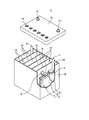
- FIG. 1 shows the appearance of an example of a lead storage battery according to an embodiment of the present invention.
- the lead-acid battery 1 includes an electric tank 12 that houses a electrode plate group 11 and an electrolytic solution (not shown).
- the inside of the electric tank 12 is partitioned into a plurality of cell chambers 14 by a partition wall 13.
- One electrode plate group 11 is housed in each cell chamber 14.
- the opening of the battery case 12 is closed by a lid 15 including a negative electrode terminal 16 and a positive electrode terminal 17.
- the lid 15 is provided with a liquid spout 18 for each cell chamber. At the time of rehydration, the liquid spout 18 is removed and the rehydration liquid is replenished.
- the liquid spout 18 may have a function of discharging the gas generated in the cell chamber 14 to the outside of the battery.
- the electrode plate group 11 is formed by laminating a plurality of negative electrode plates 2 and positive electrode plates 3 with a separator 4 interposed therebetween.
- the bag-shaped separator 4 that accommodates the negative electrode plate 2 is shown, but the form of the separator is not particularly limited.
- the negative electrode shelf portion 6 for connecting the plurality of negative electrode plates 2 in parallel is connected to the through connecting body 8, and the positive electrode shelf portion for connecting the plurality of positive electrode plates 3 in parallel. 5 is connected to the positive electrode column 7.
- the positive electrode column 7 is connected to the positive electrode terminal 17 outside the lid 15.
- the negative electrode column 9 is connected to the negative electrode shelf 6, and the through connector 8 is connected to the positive electrode shelf 5.
- the negative electrode column 9 is connected to the negative electrode terminal 16 outside the lid 15.
- Each through connecting body 8 passes through a through hole provided in the partition wall 13 and connects the electrode plates 11 of the adjacent cell chambers 14 in series.
- the positive electrode shelf 5 is formed by welding the ears provided on the upper part of each positive electrode plate 3 by a cast-on strap method or a burning method.
- the negative electrode shelf portion 6 is also formed by welding the ear portions provided on the upper portions of the negative electrode plates 2 as in the case of the positive electrode shelf portion 5.
- the lid 15 of the lead storage battery has a single structure (single lid), but is not limited to the case shown in the illustrated example.
- the lid 15 may have, for example, a double structure including an inner lid and an outer lid (or upper lid).
- the lid having a double structure is provided with a reflux structure between the inner lid and the outer lid for returning the electrolytic solution to the inside of the battery (inside the inner lid) from the reflux port provided on the inner lid. May be good.
- the lead-acid batteries according to one aspect of the present invention are summarized below.
- the positive electrode plate includes a positive electrode current collector and a positive electrode material.
- the positive electrode material contains antimony in a content of less than 0.5% by mass.
- the negative electrode plate includes a negative electrode material and has a negative electrode material.
- the negative electrode material contains a polymer compound and contains.
- the polymer compound has a peak P1 in the range of 3.2 ppm or more and 3.8 ppm or less in the chemical shift of 1 H-NMR spectrum.
- a lead-acid battery in which the content of the polymer compound in the negative electrode material is less than 500 ppm on a mass basis.
- the content of the antimony in the positive electrode material may be 0.01% by mass or more.
- the content of the antimony in the positive electrode material may be 0.03% by mass or more and 0.1% by mass or less.
- the positive electrode current collector may contain antimony.
- the antimony content in the positive electrode current collector may be 1% by mass or more and 3% by mass or less.
- the content of the polymer compound in the negative electrode electrode material may exceed 8 ppm on a mass basis, and is 13 ppm or more, 15 ppm or more, 16 ppm or more. It may be 50 ppm or more, or 80 ppm or more.
- the content of the polymer compound in the negative electrode material may be 15 ppm or more and 400 ppm or less.
- the content of the polymer compound in the negative electrode material may be 200 ppm or more and 400 ppm or less.
- the polymer compound has an oxygen atom bonded to a terminal group and a -CH 2 -group and / or -CH ⁇ group bonded to the oxygen atom.
- the ratio of the peak P3 of the atom to the integrated value may be 50% or more, 80% or more, or 85% or more.
- the polymer compound may contain a repeating structure of an oxyC 2-4 alkylene unit.
- the polymeric compounds are esters of hydroxy compounds having a repeating structure of ethers of hydroxy compounds, and the oxy C 2-4 alkylene unit having a repeating structure of the oxy C 2-4 alkylene unit Containing at least one selected from the group consisting of compounds
- the hydroxy compound is at least one selected from the group consisting of a poly C 2-4 alkylene glycol, a copolymer containing a repeating structure of oxy C 2-4 alkylene, and a C 2-4 alkylene oxide adduct of a polyol. You may.
- the repeating structure of the oxyC 2-4 alkylene unit may include at least the repeating structure of the oxypropylene unit.
- the polymer compound may contain at least a compound having a number average molecular weight of 1000 or more.
- the polymer compound may contain at least a compound having a number average molecular weight of 2000 or more.
- a positive electrode plate, a negative electrode plate, and an electrolytic solution are provided.
- the positive electrode plate includes a positive electrode current collector and a positive electrode material.
- the positive electrode material contains antimony in a content of less than 0.5% by mass.
- the negative electrode plate includes a negative electrode material and
- the negative electrode material contains a polymer compound containing a repeating structure of oxyC 2-4 alkylene units.
- a lead-acid battery in which the content of the polymer compound in the negative electrode material is less than 500 ppm on a mass basis.
- the content of the antimony in the positive electrode material may be 0.01% by mass or more.
- the content of the antimony in the positive electrode material may be 0.03% by mass or more and 0.1% by mass or less.
- the positive electrode current collector may contain antimony.
- the antimony content in the positive electrode current collector may be 1% by mass or more and 3% by mass or less.
- the content of the polymer compound in the negative electrode electrode material may exceed 8 ppm on a mass basis, and is 13 ppm or more, 15 ppm or more, 16 ppm or more. It may be 50 ppm or more, or 80 ppm or more.
- the content of the polymer compound in the negative electrode material may be 15 ppm or more and 400 ppm or less.
- the content of the polymer compound in the negative electrode material may be 200 ppm or more and 400 ppm or less.
- the polymer compound has an oxygen atom bonded to a terminal group and a -CH 2 -group and / or -CH ⁇ group bonded to the oxygen atom.
- the integrated value of the peak P1 and the integrated value of the peak P2 of the -CH 2 -group hydrogen atom and the -CH ⁇ group hydrogen are included.
- the ratio of the peak P3 of the atom to the integrated value may be 50% or more, 80% or more, or 85% or more.
- the hydroxy compound is at least one selected from the group consisting of a poly C 2-4 alkylene glycol, a copolymer containing a repeating structure of oxy C 2-4 alkylene, and a C 2-4 alkylene oxide adduct of a polyol. You may.
- the repeating structure of the oxyC 2-4 alkylene unit may include at least the repeating structure of the oxypropylene unit.
- the polymer compound may contain at least a compound having a number average molecular weight of 1000 or more.
- the polymer compound may contain at least a compound having a number average molecular weight of 2000 or more.
- the polymer compound may contain at least a compound having a number average molecular weight (Mn) of 500 or more (or 1000 or more, preferably 2000 or more). Good.
- Mn number average molecular weight
- the Mn of the compound may be 5000 or less, 4000 or less, or 3000 or less.
- PPG polypropylene glycol
- Mn 2000
- organic shrink proofing agent lignin sulfonic acid
- the negative electrode paste is filled in the mesh portion of the expanded lattice made of Pb—Ca—Sn alloy and aged and dried to obtain an unmodified negative electrode plate.
- (B) Preparation of Positive Electrode Plate The lead powder as a raw material and an antimony compound (antimony trioxide) are mixed with an appropriate amount of an aqueous sulfuric acid solution to obtain a positive electrode paste. At this time, each component is mixed so that the content of antimony in the positive electrode material, which is obtained by the above-mentioned procedure, becomes the value shown in Table 1 to obtain a positive electrode paste.
- the positive electrode paste is filled in the mesh portion of the expanded lattice made of Pb—Ca—Sn alloy and aged and dried to obtain an unchemicald positive electrode plate.
- the test battery has a rated voltage of 2V and a rated 5-hour rate capacity of 32Ah.
- the electrode plate group of the test battery is composed of seven positive electrode plates and seven negative electrode plates.
- the negative electrode plate is housed in a bag-shaped separator and laminated with the positive electrode plate to form a group of electrode plates.
- a group of electrode plates is housed in a polypropylene electric tank together with an electrolytic solution (sulfuric acid aqueous solution) and chemically formed in the electric tank to prepare a liquid lead-acid battery.
- the specific gravity of the electrolytic solution after chemical conversion is 1.28 (20 ° C. conversion).
- the integrated value of the peaks of 3.2 ppm ⁇ 3.8 ppm, and the integral value of the peak, -CH 2 bonded to an oxygen atom - and the integral value of the peak of the hydrogen atoms of the group is 98.1%.
- the overcharged electricity amount is evaluated by the ratio (%) when the overcharged electricity amount (Ah) per cycle of the lead storage battery R1 is 100. It can be said that the smaller the value, the smaller the amount of overcharged electricity and the smaller the liquid reduction.
- the results of lead-acid batteries R1 to R17 and A1 to A16 are shown in Table 1. Discharge: 25A, 1 minute Charge: 2.47V / cell, 25A, 10 minutes Water tank temperature: 75 ° C ⁇ 3 ° C
- Cycle life (Sallow cycle) It is carried out under the following conditions using the lead-acid battery. In a water tank at 30 ° C ⁇ 2 ° C, discharging for 12 minutes with a constant current of 32A and charging for 12.6 minutes with a constant current of 32A are alternately repeated, and the terminal voltage at the end of discharge is 1.60V / cell or less. It is judged that the life has been reached, and the number of cycles at that time is calculated.
- Table 1 shows the relative values with the result of battery R1 as 100. It can be said that the larger the value, the better the cycle life.
- the results of lead-acid batteries R1 to R17 and A1 to A16 are shown in Table 1.
- (C) Antimony precipitation amount Using the storage battery after the cycle life test, analysis is performed under the following conditions. The lead-acid battery is disassembled, the negative electrode plate is taken out, sulfuric acid is removed by washing with water within 30 minutes, and the negative electrode plate is dried at 60 ⁇ 5 ° C. under a reduced pressure environment. Next, an appropriate amount of a sample of the negative electrode material in a dry state is taken from the negative electrode plate, and the mass of the sample is measured. Next, the entire sample is dissolved in an aqueous nitric acid solution. The solution obtained by total dissolution is diluted with ion-exchanged water as necessary to control the volume, and then the emission intensity of Sb in the solution is measured by ICP emission spectroscopy. Then, the mass of Sb contained in the solution is determined using a calibration curve prepared in advance. The ratio of the Sb mass to the mass of the sample of the negative electrode material used for analysis is determined as the precipitation amount of Sb.
- Table 2 shows the results of batteries R4, A9 to 12 and R16 having an antimony content of 0.1% by mass and the results of batteries R7, A13 to 16 and R17 having an antimony content of 0.4% by mass in the positive electrode material. The graph is shown in FIG.
- the cycle life is good when the Sb content is 0.01 to 0.4% by mass.
- the PPG content is zero, the amount of overcharged electricity (that is, liquid reduction) is large.
- the negative electrode material contains PPG, the amount of overcharged electricity is remarkably suppressed. Further, the higher the PPG content, the more remarkable the suppression of the overcharged electricity amount.
- the Sb content in the positive electrode material reaches 0.5% by mass, it becomes difficult to improve the cycle life. Further, even when the PPG content reaches 500 ppm, it is difficult to improve the cycle life. It is considered that this is because the charge acceptability of the negative electrode plate is lowered, sulfation is likely to proceed, and the life is reached due to the negative electrode regulation.
- Table 2 and FIG. 2 show that the PPG adsorbed on the negative electrode material suppresses the elution of Sb from the positive electrode plate into the electrolytic solution and prevents the precipitation of antimony reaching the negative electrode plate at the negative electrode. ing. Further, even in an environment where the Sb content in the positive electrode material is high (for example, the Sb content is 0.4% by mass) and Sb is easily eluted, the Sb content is controlled by controlling the PPG content in the negative electrode material. It can be seen that Sb precipitation can be suppressed to the same extent as in the case of 0.1% by mass.
- Lead-acid batteries A17-A24 In the production of the negative electrode plate, the polymer compound having Mn shown in Table 3 is used. A negative electrode paste is obtained so that the content of the polymer compound in the negative electrode electrode material is 200 ppm. Further, in the production of the positive electrode plate, the positive electrode paste is obtained so that the content of antimony in the positive electrode electrode material is the value shown in Table 3 (0.1% by mass or 0.4% by mass). Except for these, test batteries are produced in the same manner as lead-acid batteries R4, R7, etc., and the amount of antimony precipitation, the amount of overcharged electricity, and the cycle life are evaluated.
- the results of the lead-acid batteries A17 to A24 are shown in Table 3, and the results of the antimony precipitation amount are shown in a graph in FIG. Note that the polymer compound, 1 in H-NMR spectrum, the integrated value of the peaks of 3.2 ppm ⁇ 3.8 ppm, and the integral value of the peak, -CH 2 bonded to an oxygen atom - the peak of hydrogen atom of the group The ratio of the integrated value to the integrated value of the peak of the hydrogen atom of the -CH ⁇ group bonded to the oxygen atom is 90.8% to 98.7%.
- the Mn of the polymer compound is 1000 or more, the effect of suppressing Sb precipitation becomes remarkable, and when the Mn is 2000 or more, it becomes more remarkable.
- the polymer compound contained in the negative electrode material is considered to have an effect of suppressing reduction and adhesion of antimony on the negative electrode plate when antimony is eluted in the electrolytic solution.
- the molecular weight of the polymer compound is large, the attractive force acting between the molecules and between the molecules and the surface of the negative electrode electrode material becomes large, the polymer compound tends to remain in the negative electrode material, and the effect of suppressing Sb precipitation becomes large. It is considered that the electrode was used.
- the positive electrode paste was filled in the mesh portion of a cast lattice made of Pb-Sb-As alloy (Sb content: 1.7% by mass, As content: 0.25% by mass), aged and dried, and unmodified. Obtain the positive electrode plate of. Except for these, a test battery is manufactured in the same manner as the lead storage battery A1 and the like, and the amount of overcharged electricity and the cycle life are evaluated. The results are shown in Table 4 together with the comparison data. The numerical values in Table 4 are relative values when the result of Comparative Example 1 is 100 as in Table 1.
- Table 4 shows Examples 13 to 16 and the like in which the Sb content of the positive electrode material is 0.4% by mass when the positive electrode current collector contains Sb and the Sb content of the positive electrode material is 0.2% by mass. It shows that good results equal to or better than that are obtained.
- the PPG content reaches 500 ppm, it is difficult to improve the cycle life. It is considered that this is because the charge acceptability of the negative electrode plate is lowered, sulfation is likely to proceed, and the life is reached due to the negative electrode regulation. Further, when the Sb content in the positive electrode material reaches 0.5% by mass, it becomes difficult to improve the cycle life.
- the lead-acid battery according to the present invention can be suitably used as a power source for starting a vehicle (automobile, motorcycle, etc.) or an industrial power storage device for an electric vehicle (forklift, etc.). It should be noted that these uses are merely examples and are not limited to these uses.
Landscapes
- Chemical & Material Sciences (AREA)
- Chemical Kinetics & Catalysis (AREA)
- Electrochemistry (AREA)
- General Chemical & Material Sciences (AREA)
- Engineering & Computer Science (AREA)
- Manufacturing & Machinery (AREA)
- Materials Engineering (AREA)
- Inorganic Chemistry (AREA)
- Secondary Cells (AREA)
- Battery Electrode And Active Subsutance (AREA)
- Cell Electrode Carriers And Collectors (AREA)
Priority Applications (3)
| Application Number | Priority Date | Filing Date | Title |
|---|---|---|---|
| JP2021522745A JP7347504B2 (ja) | 2019-05-31 | 2020-05-25 | 鉛蓄電池 |
| CN202080040093.4A CN113906595A (zh) | 2019-05-31 | 2020-05-25 | 铅蓄电池 |
| EP20814690.2A EP3975288B1 (en) | 2019-05-31 | 2020-05-25 | Lead storage battery |
Applications Claiming Priority (2)
| Application Number | Priority Date | Filing Date | Title |
|---|---|---|---|
| JP2019103302 | 2019-05-31 | ||
| JP2019-103302 | 2019-05-31 |
Publications (1)
| Publication Number | Publication Date |
|---|---|
| WO2020241547A1 true WO2020241547A1 (ja) | 2020-12-03 |
Family
ID=73552812
Family Applications (1)
| Application Number | Title | Priority Date | Filing Date |
|---|---|---|---|
| PCT/JP2020/020487 Ceased WO2020241547A1 (ja) | 2019-05-31 | 2020-05-25 | 鉛蓄電池 |
Country Status (4)
| Country | Link |
|---|---|
| EP (1) | EP3975288B1 (https=) |
| JP (1) | JP7347504B2 (https=) |
| CN (1) | CN113906595A (https=) |
| WO (1) | WO2020241547A1 (https=) |
Families Citing this family (2)
| Publication number | Priority date | Publication date | Assignee | Title |
|---|---|---|---|---|
| CN114725313B (zh) * | 2022-04-21 | 2024-01-23 | 广东工业大学 | 一种硅基负极片及其制备方法与应用 |
| WO2023210513A1 (ja) * | 2022-04-26 | 2023-11-02 | 株式会社Gsユアサ | 鉛蓄電池およびその製造方法、および使用方法 |
Citations (4)
| Publication number | Priority date | Publication date | Assignee | Title |
|---|---|---|---|---|
| JPS60182662A (ja) | 1984-02-28 | 1985-09-18 | Japan Storage Battery Co Ltd | 鉛蓄電池 |
| JP2000149980A (ja) | 1998-11-15 | 2000-05-30 | Jec Service Kk | 鉛蓄電池およびその活性化法 |
| JP2016054091A (ja) | 2014-09-04 | 2016-04-14 | 日本ゼオン株式会社 | 鉛蓄電池用キャパシタ電極および鉛蓄電池用キャパシタ電極の製造方法 |
| WO2016147240A1 (ja) * | 2015-03-18 | 2016-09-22 | パナソニックIpマネジメント株式会社 | 鉛蓄電池 |
Family Cites Families (7)
| Publication number | Priority date | Publication date | Assignee | Title |
|---|---|---|---|---|
| JPS5147237A (https=) * | 1974-10-18 | 1976-04-22 | Yuasa Battery Co Ltd | |
| JPH0878045A (ja) * | 1994-09-07 | 1996-03-22 | Shin Kobe Electric Mach Co Ltd | 鉛蓄電池 |
| WO2002039519A1 (en) * | 2000-11-09 | 2002-05-16 | Yuasa Corporation | Negative electrode active material, process for its production and lead storage battery |
| CN101937996B (zh) * | 2010-08-26 | 2012-11-28 | 风帆股份有限公司 | 电动助力车用胶体铅酸蓄电池负极铅膏及制备方法 |
| JP6176180B2 (ja) * | 2013-07-19 | 2017-08-09 | 株式会社Gsユアサ | 液式鉛蓄電池及び液式鉛蓄電池を用いたアイドリングストップ車 |
| JP6202477B1 (ja) * | 2016-04-21 | 2017-09-27 | 株式会社Gsユアサ | 鉛蓄電池 |
| CN108630937B (zh) * | 2018-05-10 | 2020-10-09 | 浙江工业大学 | 一种铅炭电池负极铅膏及负极板 |
-
2020
- 2020-05-25 CN CN202080040093.4A patent/CN113906595A/zh active Pending
- 2020-05-25 EP EP20814690.2A patent/EP3975288B1/en active Active
- 2020-05-25 WO PCT/JP2020/020487 patent/WO2020241547A1/ja not_active Ceased
- 2020-05-25 JP JP2021522745A patent/JP7347504B2/ja active Active
Patent Citations (4)
| Publication number | Priority date | Publication date | Assignee | Title |
|---|---|---|---|---|
| JPS60182662A (ja) | 1984-02-28 | 1985-09-18 | Japan Storage Battery Co Ltd | 鉛蓄電池 |
| JP2000149980A (ja) | 1998-11-15 | 2000-05-30 | Jec Service Kk | 鉛蓄電池およびその活性化法 |
| JP2016054091A (ja) | 2014-09-04 | 2016-04-14 | 日本ゼオン株式会社 | 鉛蓄電池用キャパシタ電極および鉛蓄電池用キャパシタ電極の製造方法 |
| WO2016147240A1 (ja) * | 2015-03-18 | 2016-09-22 | パナソニックIpマネジメント株式会社 | 鉛蓄電池 |
Also Published As
| Publication number | Publication date |
|---|---|
| EP3975288A4 (en) | 2022-11-16 |
| CN113906595A (zh) | 2022-01-07 |
| EP3975288A1 (en) | 2022-03-30 |
| EP3975288B1 (en) | 2024-04-03 |
| JPWO2020241547A1 (https=) | 2020-12-03 |
| JP7347504B2 (ja) | 2023-09-20 |
Similar Documents
| Publication | Publication Date | Title |
|---|---|---|
| TWI857051B (zh) | 鉛蓄電池 | |
| JP7173322B2 (ja) | 鉛蓄電池 | |
| JP7347504B2 (ja) | 鉛蓄電池 | |
| JP7677348B2 (ja) | 鉛蓄電池 | |
| JP7501528B2 (ja) | 鉛蓄電池 | |
| JP7677347B2 (ja) | 鉛蓄電池 | |
| JP7661978B2 (ja) | 鉛蓄電池 | |
| JP7528932B2 (ja) | 鉛蓄電池 | |
| JP7524898B2 (ja) | 鉛蓄電池 | |
| JP7447896B2 (ja) | 鉛蓄電池 | |
| WO2020241886A1 (ja) | 鉛蓄電池 | |
| JP7819461B2 (ja) | 鉛蓄電池 | |
| JP7452538B2 (ja) | 鉛蓄電池 | |
| JP7647070B2 (ja) | 鉛蓄電池 | |
| JP7694582B2 (ja) | 鉛蓄電池 | |
| JP7718427B2 (ja) | 鉛蓄電池 | |
| JP7533166B2 (ja) | 鉛蓄電池 | |
| JP7661690B2 (ja) | 鉛蓄電池 | |
| WO2020241879A1 (ja) | 鉛蓄電池 | |
| EP4246620A1 (en) | Lead acid storage battery | |
| WO2022113634A1 (ja) | 鉛蓄電池 | |
| WO2022113627A1 (ja) | 鉛蓄電池 |
Legal Events
| Date | Code | Title | Description |
|---|---|---|---|
| 121 | Ep: the epo has been informed by wipo that ep was designated in this application |
Ref document number: 20814690 Country of ref document: EP Kind code of ref document: A1 |
|
| ENP | Entry into the national phase |
Ref document number: 2021522745 Country of ref document: JP Kind code of ref document: A |
|
| NENP | Non-entry into the national phase |
Ref country code: DE |
|
| ENP | Entry into the national phase |
Ref document number: 2020814690 Country of ref document: EP Effective date: 20211223 |