WO2020196453A1 - Il-33関連疾患の予防又は治療剤 - Google Patents
Il-33関連疾患の予防又は治療剤 Download PDFInfo
- Publication number
- WO2020196453A1 WO2020196453A1 PCT/JP2020/012841 JP2020012841W WO2020196453A1 WO 2020196453 A1 WO2020196453 A1 WO 2020196453A1 JP 2020012841 W JP2020012841 W JP 2020012841W WO 2020196453 A1 WO2020196453 A1 WO 2020196453A1
- Authority
- WO
- WIPO (PCT)
- Prior art keywords
- usp7
- test substance
- prophylactic
- therapeutic agent
- inhibitor
- Prior art date
- Legal status (The legal status is an assumption and is not a legal conclusion. Google has not performed a legal analysis and makes no representation as to the accuracy of the status listed.)
- Ceased
Links
- XOTYOXIRFGNVPF-UHFFFAOYSA-N CC(CC(N(CC1)CCC1(C(C)N(C=N[n]1c2ccc1)C2=O)O)=O)c1ccccc1 Chemical compound CC(CC(N(CC1)CCC1(C(C)N(C=N[n]1c2ccc1)C2=O)O)=O)c1ccccc1 XOTYOXIRFGNVPF-UHFFFAOYSA-N 0.000 description 1
- FGARYGIHRMNYCL-UHFFFAOYSA-N CC(CC(N(CC1)CCC1(C(C)N(C=Nc1c2[nH]cc1)C2=O)O)=O)c1ccccc1 Chemical compound CC(CC(N(CC1)CCC1(C(C)N(C=Nc1c2[nH]cc1)C2=O)O)=O)c1ccccc1 FGARYGIHRMNYCL-UHFFFAOYSA-N 0.000 description 1
- VFZGEGYKHZBWLQ-UHFFFAOYSA-N CC(CC(N(CC1)CCC1(C(C)N(C=Nc1c2cn[n]1C)C2=O)O)=O)c1ccccc1 Chemical compound CC(CC(N(CC1)CCC1(C(C)N(C=Nc1c2cn[n]1C)C2=O)O)=O)c1ccccc1 VFZGEGYKHZBWLQ-UHFFFAOYSA-N 0.000 description 1
- WVVSFCHHEAFRFE-UHFFFAOYSA-N CC(CC(N(CC1)CCC1(C(C)N(C=Nc1cc(NC(C)=O)ccc11)C1=O)O)=O)c1ccccc1 Chemical compound CC(CC(N(CC1)CCC1(C(C)N(C=Nc1cc(NC(C)=O)ccc11)C1=O)O)=O)c1ccccc1 WVVSFCHHEAFRFE-UHFFFAOYSA-N 0.000 description 1
- POSYRKYRMDJSPV-UHFFFAOYSA-N CCCc1cc(C(N(C(C)C(CC2)(CCN2C(CC(C)c2ccccc2)=O)O)C=N2)=O)c2[s]1 Chemical compound CCCc1cc(C(N(C(C)C(CC2)(CCN2C(CC(C)c2ccccc2)=O)O)C=N2)=O)c2[s]1 POSYRKYRMDJSPV-UHFFFAOYSA-N 0.000 description 1
Images





Classifications
-
- A—HUMAN NECESSITIES
- A61—MEDICAL OR VETERINARY SCIENCE; HYGIENE
- A61K—PREPARATIONS FOR MEDICAL, DENTAL OR TOILETRY PURPOSES
- A61K31/00—Medicinal preparations containing organic active ingredients
- A61K31/70—Carbohydrates; Sugars; Derivatives thereof
- A61K31/7088—Compounds having three or more nucleosides or nucleotides
-
- A—HUMAN NECESSITIES
- A61—MEDICAL OR VETERINARY SCIENCE; HYGIENE
- A61K—PREPARATIONS FOR MEDICAL, DENTAL OR TOILETRY PURPOSES
- A61K45/00—Medicinal preparations containing active ingredients not provided for in groups A61K31/00 - A61K41/00
-
- A—HUMAN NECESSITIES
- A61—MEDICAL OR VETERINARY SCIENCE; HYGIENE
- A61K—PREPARATIONS FOR MEDICAL, DENTAL OR TOILETRY PURPOSES
- A61K48/00—Medicinal preparations containing genetic material which is inserted into cells of the living body to treat genetic diseases; Gene therapy
-
- A—HUMAN NECESSITIES
- A61—MEDICAL OR VETERINARY SCIENCE; HYGIENE
- A61P—SPECIFIC THERAPEUTIC ACTIVITY OF CHEMICAL COMPOUNDS OR MEDICINAL PREPARATIONS
- A61P11/00—Drugs for disorders of the respiratory system
-
- A—HUMAN NECESSITIES
- A61—MEDICAL OR VETERINARY SCIENCE; HYGIENE
- A61P—SPECIFIC THERAPEUTIC ACTIVITY OF CHEMICAL COMPOUNDS OR MEDICINAL PREPARATIONS
- A61P11/00—Drugs for disorders of the respiratory system
- A61P11/02—Nasal agents, e.g. decongestants
-
- A—HUMAN NECESSITIES
- A61—MEDICAL OR VETERINARY SCIENCE; HYGIENE
- A61P—SPECIFIC THERAPEUTIC ACTIVITY OF CHEMICAL COMPOUNDS OR MEDICINAL PREPARATIONS
- A61P11/00—Drugs for disorders of the respiratory system
- A61P11/06—Antiasthmatics
-
- A—HUMAN NECESSITIES
- A61—MEDICAL OR VETERINARY SCIENCE; HYGIENE
- A61P—SPECIFIC THERAPEUTIC ACTIVITY OF CHEMICAL COMPOUNDS OR MEDICINAL PREPARATIONS
- A61P37/00—Drugs for immunological or allergic disorders
- A61P37/08—Antiallergic agents
-
- A—HUMAN NECESSITIES
- A61—MEDICAL OR VETERINARY SCIENCE; HYGIENE
- A61P—SPECIFIC THERAPEUTIC ACTIVITY OF CHEMICAL COMPOUNDS OR MEDICINAL PREPARATIONS
- A61P43/00—Drugs for specific purposes, not provided for in groups A61P1/00-A61P41/00
-
- C—CHEMISTRY; METALLURGY
- C12—BIOCHEMISTRY; BEER; SPIRITS; WINE; VINEGAR; MICROBIOLOGY; ENZYMOLOGY; MUTATION OR GENETIC ENGINEERING
- C12Q—MEASURING OR TESTING PROCESSES INVOLVING ENZYMES, NUCLEIC ACIDS OR MICROORGANISMS; COMPOSITIONS OR TEST PAPERS THEREFOR; PROCESSES OF PREPARING SUCH COMPOSITIONS; CONDITION-RESPONSIVE CONTROL IN MICROBIOLOGICAL OR ENZYMOLOGICAL PROCESSES
- C12Q1/00—Measuring or testing processes involving enzymes, nucleic acids or microorganisms; Compositions therefor; Processes of preparing such compositions
- C12Q1/02—Measuring or testing processes involving enzymes, nucleic acids or microorganisms; Compositions therefor; Processes of preparing such compositions involving viable microorganisms
-
- C—CHEMISTRY; METALLURGY
- C12—BIOCHEMISTRY; BEER; SPIRITS; WINE; VINEGAR; MICROBIOLOGY; ENZYMOLOGY; MUTATION OR GENETIC ENGINEERING
- C12Q—MEASURING OR TESTING PROCESSES INVOLVING ENZYMES, NUCLEIC ACIDS OR MICROORGANISMS; COMPOSITIONS OR TEST PAPERS THEREFOR; PROCESSES OF PREPARING SUCH COMPOSITIONS; CONDITION-RESPONSIVE CONTROL IN MICROBIOLOGICAL OR ENZYMOLOGICAL PROCESSES
- C12Q1/00—Measuring or testing processes involving enzymes, nucleic acids or microorganisms; Compositions therefor; Processes of preparing such compositions
- C12Q1/68—Measuring or testing processes involving enzymes, nucleic acids or microorganisms; Compositions therefor; Processes of preparing such compositions involving nucleic acids
-
- C—CHEMISTRY; METALLURGY
- C12—BIOCHEMISTRY; BEER; SPIRITS; WINE; VINEGAR; MICROBIOLOGY; ENZYMOLOGY; MUTATION OR GENETIC ENGINEERING
- C12Q—MEASURING OR TESTING PROCESSES INVOLVING ENZYMES, NUCLEIC ACIDS OR MICROORGANISMS; COMPOSITIONS OR TEST PAPERS THEREFOR; PROCESSES OF PREPARING SUCH COMPOSITIONS; CONDITION-RESPONSIVE CONTROL IN MICROBIOLOGICAL OR ENZYMOLOGICAL PROCESSES
- C12Q1/00—Measuring or testing processes involving enzymes, nucleic acids or microorganisms; Compositions therefor; Processes of preparing such compositions
- C12Q1/68—Measuring or testing processes involving enzymes, nucleic acids or microorganisms; Compositions therefor; Processes of preparing such compositions involving nucleic acids
- C12Q1/6844—Nucleic acid amplification reactions
- C12Q1/6851—Quantitative amplification
-
- C—CHEMISTRY; METALLURGY
- C12—BIOCHEMISTRY; BEER; SPIRITS; WINE; VINEGAR; MICROBIOLOGY; ENZYMOLOGY; MUTATION OR GENETIC ENGINEERING
- C12Q—MEASURING OR TESTING PROCESSES INVOLVING ENZYMES, NUCLEIC ACIDS OR MICROORGANISMS; COMPOSITIONS OR TEST PAPERS THEREFOR; PROCESSES OF PREPARING SUCH COMPOSITIONS; CONDITION-RESPONSIVE CONTROL IN MICROBIOLOGICAL OR ENZYMOLOGICAL PROCESSES
- C12Q1/00—Measuring or testing processes involving enzymes, nucleic acids or microorganisms; Compositions therefor; Processes of preparing such compositions
- C12Q1/68—Measuring or testing processes involving enzymes, nucleic acids or microorganisms; Compositions therefor; Processes of preparing such compositions involving nucleic acids
- C12Q1/6844—Nucleic acid amplification reactions
- C12Q1/686—Polymerase chain reaction [PCR]
-
- C—CHEMISTRY; METALLURGY
- C12—BIOCHEMISTRY; BEER; SPIRITS; WINE; VINEGAR; MICROBIOLOGY; ENZYMOLOGY; MUTATION OR GENETIC ENGINEERING
- C12Q—MEASURING OR TESTING PROCESSES INVOLVING ENZYMES, NUCLEIC ACIDS OR MICROORGANISMS; COMPOSITIONS OR TEST PAPERS THEREFOR; PROCESSES OF PREPARING SUCH COMPOSITIONS; CONDITION-RESPONSIVE CONTROL IN MICROBIOLOGICAL OR ENZYMOLOGICAL PROCESSES
- C12Q1/00—Measuring or testing processes involving enzymes, nucleic acids or microorganisms; Compositions therefor; Processes of preparing such compositions
- C12Q1/68—Measuring or testing processes involving enzymes, nucleic acids or microorganisms; Compositions therefor; Processes of preparing such compositions involving nucleic acids
- C12Q1/6869—Methods for sequencing
-
- G—PHYSICS
- G01—MEASURING; TESTING
- G01N—INVESTIGATING OR ANALYSING MATERIALS BY DETERMINING THEIR CHEMICAL OR PHYSICAL PROPERTIES
- G01N33/00—Investigating or analysing materials by specific methods not covered by groups G01N1/00 - G01N31/00
- G01N33/15—Medicinal preparations ; Physical properties thereof, e.g. dissolubility
Definitions
- the present invention relates to a prophylactic or therapeutic agent for interleukin (IL) -33 related diseases. More specifically, the present invention relates to a method for screening a prophylactic or therapeutic agent for IL-33-related diseases, an IL-33 activation inhibitor, and a prophylactic or therapeutic agent for IL-33-related diseases.
- IL interleukin
- the present application claims priority based on Japanese Patent Application No. 2019-057333 filed in Japan on March 25, 2019, the contents of which are incorporated herein by reference.
- Allergic airway inflammation is a type of IL-33-related disease, and is a pathological condition represented by bronchial asthma in human diseases.
- As therapeutic agents for bronchial asthma inhaled steroids, ⁇ 2 receptor stimulants, leukotriene receptor antagonists, theophylline preparations, oral steroids and the like have been used for a long time.
- biologics such as omalizumab targeting immunoglobulin E (IgE) and mepolizumab targeting IL-5, which is one of the inflammatory cytokines, have also been used in patients with intractable asthma. On the other hand, it is clinically applied.
- IgE immunoglobulin E
- mepolizumab targeting IL-5 which is one of the inflammatory cytokines
- Ubiquitin SpecialiPeptidase 7 is a kind of deubiquitinating enzyme, and it is known that Murine Double Minute 2 (MDM2), which is an E3 ubiquitin ligase of p53, is used as a substrate.
- MDM2 Murine Double Minute 2
- Patent Documents 1 to 12 and Non-Patent Documents 1 to 11 describe low molecular weight compounds that specifically inhibit the activity of USP7. Patent Documents 1 to 12 and Non-Patent Documents 1 to 11 are incorporated herein by reference in their entirety.
- an object of the present invention is to provide a technique for effectively preventing or treating IL-33-related diseases such as allergic airway inflammation.
- the present invention includes the following aspects.
- the test substance comprises the step of measuring the activity of the USP7 protein in the presence of the test substance, and the activity was reduced as compared with the activity of the USP7 protein in the absence of the test substance.
- a method for screening a prophylactic or therapeutic agent for an IL-33-related disease which indicates that the agent is a prophylactic or therapeutic agent for a -33-related disease.
- Amount of the cleaved IL-33 protein comprising a step of incubating the Granzyme A protein and the IL-33 protein in the presence of the test substance and a step of quantifying the cleaved IL-33 protein. was reduced compared to the amount of the IL-33 protein cleaved in the absence of the test substance, indicating that the test substance is a prophylactic or therapeutic agent for IL-33 related diseases.
- 33 A method for screening a prophylactic or therapeutic agent for a related disease comprising a step of incubating the Granzyme A protein and the IL-33 protein in the presence of the test substance and a step of quantifying the cleaved IL-33 protein.
- a step of culturing Th2 cells in the presence of the test substance and a step of measuring the expression level of the Granzyme A gene or protein by the Th2 cells are included, and the expression level is in the absence of the test substance. Screening of prophylactic or therapeutic agents for IL-33-related diseases, indicating that the test substance is a prophylactic or therapeutic agent for IL-33-related diseases, as shown by a decrease in the expression level of the Granzyme A gene or protein in Method.
- a step of culturing Th2 cells in the presence of the test substance and a step of measuring the expression level of the USP7 gene or protein by the Th2 cells are included, and the expression level is in the absence of the test substance.
- the ubiquitinated histone H2A includes a step of culturing Th2 cells in the presence of a test substance and a step of measuring the amount of ubiquitinated histone H2A at the Granzyme A locus of the Th2 cells. An increase in the amount of the test substance compared to the amount of ubiquitinated histone H2A in the absence of the test substance indicates that the test substance is a prophylactic or therapeutic agent for IL-33 related diseases, IL. -33 A method for screening a preventive or therapeutic agent for a related disease.
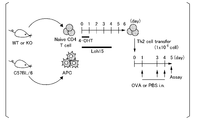
- FIG. It is a schematic diagram which shows the experiment schedule of Experiment Example 1.
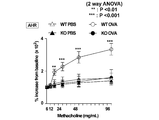
- FIG. It is a graph which shows the result of having analyzed the cell in the bronchoalveolar lavage fluid (BALF) in Experimental Example 1. It is a graph which shows the result of having measured the airflow blockage in Experimental Example 1.
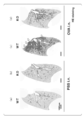
- A) to (d) are micrographs showing the results of hematoxylin / eosin staining of tissue sections of mouse lungs in Experimental Example 2.
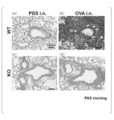
- (A) to (d) are micrographs showing the results of PAS staining of tissue sections of mouse lungs in Experimental Example 3.
- It is a schematic diagram which shows the experiment schedule of Experiment Example 4. 6 is a volcano plot showing the results of RNA-seq in Experimental Example 4.
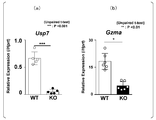
- (A) and (b) are graphs showing the results of quantitative RT-PCR in Experimental Example 4.
- (A) is the result of measuring the expression level of the Usp7 gene
- (b) is the result of measuring the expression level of the Gzma gene.
- (A) is a graph showing the result of flow cytometry analysis in Experimental Example 5.
- (B) is a graph summarizing the results of (a). It is a photograph which shows the result of Western blotting in Experimental Example 6.
- human genes and human proteins are represented by uppercase alphabets.
- the first letter is represented by an uppercase alphabet, and the subsequent letters are represented by a lowercase alphabet.
- mouse protein shall be represented by an uppercase alphabet.
- human genes, mouse genes, and genes of other species may be represented by the uppercase alphabet without strict distinction.
- human proteins, mouse proteins, and other types of proteins may be represented by uppercase alphabets without strict distinction.
- the present invention provides a prophylactic or therapeutic agent for IL-33-related diseases, which comprises a USP7 inhibitor as an active ingredient.
- Th2 cells allergy-related type 2 helper T cells
- Granzyme A was shown to cleave IL-33, a cytokine that plays a central role in IL-33-related diseases. It is known that IL-33 becomes active IL-33 by cleavage, and the degree of inducing inflammation is about 30 times higher than that before cleavage.
- IL-33-related diseases can be prevented or prevented by inhibiting any reaction in the reaction pathway of USP7 expression ⁇ increased expression of granzyme A ⁇ cleavage / activation of IL-33 by granzyme A ⁇ induction of inflammatory reaction. Can be treated.
- Th2 cells are a subgroup of CD4-positive T cells (so-called helper T cells), and T cells (naive T cells) that have no history of contact with antigen proteins are stimulated by cytokines such as IL-4 and IL-13. It is a cell that has differentiated by receiving.
- NCBI accession numbers of the cDNA sequence of the human USP7 gene are NM_0012864557.1, NM_001286458.1, NM_00132185.8.1, NM_003470.2. , NP_003461.2., NP_0012733386.1, NP_0012733387.1, XP_016879141.1, etc., the NCBI accession number of the cDNA sequence of the mouse USP7 gene is NM_001003918.2, etc. Is NP_001003918.2.
- NCBI accession number of the cDNA sequence of the human granzyme A gene is NM_006144.3, etc.
- the NCBI accession number of the amino acid sequence of the human granzyme A protein is NP_006135.1, etc.
- the mouse granzyme A gene is NM_0103700.2 or the like
- the NCBI accession number of the amino acid sequence of the mouse granzyme A protein is NP_034500.1 or the like.
- NCBI accession numbers of the cDNA sequence of the human IL-33 gene are NM_001199640.1, NM_00119964.11, NM_001314044.1, NM_001314045.1, NM_001314046.1, etc.
- the NCBI accession numbers of the sequences are XP_016870774.1, NP_0013007977.1, NP_254274.1., NP_001340731.1, NP_00130090976.1, NP_001186569.1, NP_001300775.1, NP_001186570.1.
- NCBI accession numbers of the cDNA sequence of the mouse IL-33 gene are NM_001164724.1, NM_133775.2, etc.
- NCBI accession numbers of the amino acid sequence of the mouse IL-33 protein are NP_001158196.1, NP_598536.2. And so on.
- examples of IL-33-related diseases include allergic airway inflammation, eosinophilic sinusitis, and eosinophilic esophagitis.
- asthma is mentioned as an allergic airway inflammation, and among them, eosinophilic asthma is mentioned.
- asthma in which the number of eosinophils in peripheral blood is 150 cells / ⁇ L or more can be determined to be eosinophilic asthma.
- the IL-33 related disease is eosinophilic asthma in which the number of eosinophils in the peripheral blood is 500 / ⁇ L or more.
- eosinophilic sinusitis is a type of fibrotic disease in which multiple nasal polyps (nasal polyps) with marked eosinophilic infiltration are formed in both paranasal sinuses and nasal cavities, and its pathogenic mechanism is clear. Not made. Even if the nasal polyps of patients with eosinophilic sinusitis are removed by surgery, they are likely to recur, which has become a major clinical problem as intractable chronic sinusitis. Eosinophilic esophagitis is a disease in which eosinophils concentrate on the mucous membrane of the esophagus and cause chronic inflammation.
- Patients with IL-33-related diseases for whom administration of a USP7 inhibitor is effective include patients with a higher concentration of IL-33 or eosinophil count in blood or bronchoalveolar lavage fluid than in healthy subjects.
- the prophylactic or therapeutic agent of the present embodiment is, for example, an IL-33-related disease patient having 150 or more eosinophils in peripheral blood or 500 or more eosinophils in peripheral blood. It is effective for patients with IL-33 related diseases.
- the USP7 inhibitor may constitute a kit for preventing or treating IL-33-related diseases together with a reagent for measuring the concentration of IL-33 in blood or bronchoalveolar lavage fluid.
- a reagent for measuring the concentration of IL-33 include an anti-IL-33 antibody, an immunoplate on which an anti-IL-33 antibody is immobilized, and a flow strip on which an anti-IL-33 antibody is immobilized.
- the USP7 inhibitor may constitute a kit for preventing or treating IL-33-related diseases together with a reagent for measuring the number of eosinophils in blood or bronchoalveolar lavage fluid.
- a reagent for measuring the eosinophil count include hematoxylin / eosin stain, Giemsa stain, field stain, Wright's stain, and antibodies specific for eosinophil markers.
- the prophylactic or therapeutic agent of the present embodiment targets inflammation in the respiratory tract, a local administration method such as inhalation administration is also a realistic option. Therefore, the prophylactic or therapeutic agent of the present embodiment can be easily administered and is unlikely to cause systemic side effects.
- the USP7 inhibitor may be an inhibitory nucleic acid for the USP7 gene.
- the inhibitory nucleic acid include small interfering RNA (siRNA), short hairpin RNA (SHRNA) and the like.
- siRNA small interfering RNA
- SHRNA short hairpin RNA
- An expression vector expressing these inhibitory nucleic acids in mammalian cells may be used as a USP7 inhibitor.
- SiRNA is a 21-23 base pair low molecular weight double-stranded RNA used for gene silencing by RNA interference.
- the siRNA introduced into the cell binds to RNA-induced silencing complex (RISC).
- RISC RNA-induced silencing complex
- This complex binds to and cleaves mRNA having a sequence complementary to siRNA. As a result, gene expression is suppressed in a sequence-specific manner.
- sense strand and antisense strand oligonucleotides are synthesized by a DNA / RNA automatic synthesizer, respectively, and denatured in an appropriate annealing buffer at about 90 to 95 ° C. for about 1 minute, and then 30 to 70. It can be prepared by annealing at about ° C. for about 1 to 8 hours.
- ShRNA is a hairpin-type RNA sequence used for gene silencing by RNA interference.
- SiRNA or shRNA is introduced into a target cell (eg, Th2 cell) intended to suppress the expression of the USP7 gene by administering it to a patient in the form of an expression vector into which an expression construct encoding siRNA or shRNA is introduced, and a short chain is introduced. It may be expressed by the RNA polymerase III (polIII) -based U6 promoter or H1 promoter having high RNA expression efficiency.
- a plasmid vector, an adenovirus vector, a retrovirus vector and the like can be used.
- RNA-induced silencing complex binds to and cleaves mRNA having a sequence complementary to siRNA.
- the USP7 inhibitor may be a low molecular weight compound. More specifically, the following formulas (A1) to (A5), (B1) to (B2), (C1) to (C5), (D1) to (D6), (E1) to (E8), (F1) )-(F5), (G1)-(G4), (H1)-(H8), (I1)-(I14), compounds or derivatives thereof, or pharmacologically acceptable thereof. Examples include salts or solvates thereof.
- the USP7 inhibitors are the following formulas (A1) to (A5), (B1) to (B2), (C1) to (C5), (D1) to (D6), (E1) to (E8), ( It may be a compound represented by any of F1) to (F5), (G1) to (G4), (H1) to (H8), and (I1) to (I14), or may be a compound represented by the following formula (A1).
- the compounds represented by the above formulas (A1) to (A3) are the compounds described in the above non-patent documents 1 and the like, and the compounds represented by the above formulas (A4) to (A5) are the above non-patent documents. It is the compound described in No. 4 and the like.
- the compounds represented by the above formulas (B1) to (B2) are the compounds described in the above non-patent documents 2 and the like.
- the compounds represented by the above formulas (C1) to (C5) are the compounds described in the above non-patent documents 3 and the like.
- the compound represented by the above formula (D1) is a compound described in the above non-patent documents 4, 7, and the like.
- the compounds represented by the formulas (D2), (D5), and (D6) are the compounds described in Non-Patent Document 4 and the like.
- the compound represented by the above formula (D3) is a compound described in the above non-patent documents 4, 8 and the like.
- the compound represented by the above formula (D4) is the compound described in the above non-patent document 8 and the like.
- the compound represented by the above formula (E1) is a compound described in the above non-patent documents 4, 9, 10 and the like.
- the compound represented by the above formula (E2) is a compound described in the above non-patent documents 4, 5, 6, 10, and the like.
- the compound represented by the above formula (E3) is a compound described in the above non-patent documents 4, 9 and the like.
- the compounds represented by the formulas (E4) to (E8) are the compounds described in Non-Patent Document 4 and the like.
- the compounds represented by the above formulas (F1) to (F5) are the compounds described in the above non-patent documents 4 and the like.
- the compounds represented by the above formulas (G1) to (G4) are the compounds described in the above non-patent documents 4 and the like.
- the compounds represented by the above formulas (H1) to (H8) are the compounds described in the above non-patent documents 4 and the like.
- the compounds represented by the above formulas (I1) to (I14) are the compounds described in the above non-patent documents 10 and the like.
- one or more hydrogen atoms have a halogen atom, a hydroxyl group, an amino group, a nitro group, a thiol group, a sulfo group, and 1 to 3 carbon atoms. Examples include compounds substituted with alkyl groups.
- Examples of pharmacologically acceptable salts include salts with alkali metals, alkaline earth metals, ammonium, alkylammonium and the like, and salts with mineral acids or organic acids. More specifically, for example, sodium salt, potassium salt, calcium salt, ammonium salt, aluminum salt, triethylammonium salt, acetate, propionate, butyrate, formate, trifluoroacetate, maleate, etc.
- the solvate is not particularly limited as long as it is a pharmaceutically acceptable solvate, and examples thereof include hydrates and organic solvates.
- the USP7 inhibitor is a granzyme A expression inhibitor.
- the USP7 inhibitor is the same as that described above, and may be an inhibitory nucleic acid for the USP7 gene or a low molecular weight compound that inhibits the activity of the USP7 protein.
- USP7 inhibitor is an IL-33 activation inhibitor.
- the Granzyme A inhibitor is an IL-33 activation inhibitor.
- the granzyme A inhibitor may be an inhibitory nucleic acid for the granzyme A gene, a low molecular weight compound that inhibits the protease activity of the granzyme A protein, or an inhibitor of the protease activity of the granzyme A protein. It may be an anti-granzyme A antibody.
- Such inhibitory antibodies for example, bind to the catalytic domain of Granzyme A and inhibit the cleavage of the substrate protein by Granzyme A.
- the inhibitory antibody immunizes mice and the like with a fragment containing the catalytic domain of Granzyme A, and establishes a hybridoma that produces a monoclonal antibody that specifically binds to the immunized antigen by a well-known hybridoma technique, and from among them, Granzyme It can be obtained by selecting a clone that produces a monoclonal antibody that inhibits the protease activity of A.
- the catalytic domain of Granzyme A can be easily specified by those skilled in the art based on the above-mentioned sequence information of Granzyme A and the like.
- the anti-granzyme A antibody may be an antibody fragment.
- the anti-granzyme A antibody or fragment thereof is preferably humanized. Since the human antibody or a fragment thereof has low immunogenicity even when administered to humans, side effects such as anaphylactic shock can be suppressed.
- human antibodies examples include chimeric antibodies, humanized antibodies, and fully human antibodies.
- the chimeric antibody means an antibody in which the variable region is an antibody derived from a non-human animal and at least a part of the constant region is an antibody derived from a human.
- the humanized antibody means an antibody in which only the complementarity determining regions of the heavy chain and the light chain are derived from non-human animals, and the constant region and the framework region are human-derived antibodies.
- the fully human antibody means an antibody derived entirely from humans including the complementarity determining regions.
- the present invention provides a prophylactic or therapeutic agent for IL-33-related diseases containing a granzyme A inhibitor as an active ingredient.
- Granzyme A inhibitors are useful because they can be expected to have therapeutic effects on the prevention or treatment of IL-33-related diseases when administered in blood.
- the IL-33-related diseases are the same as those described above, and examples thereof include allergic airway inflammation, eosinophilic sinusitis, and eosinophilic esophagitis.
- asthma is mentioned as an allergic airway inflammation, and among them, eosinophilic asthma is mentioned.
- asthma in which the number of eosinophils in peripheral blood is 150 cells / ⁇ L or more can be determined to be eosinophilic asthma.
- the IL-33 related disease is eosinophilic asthma in which the number of eosinophils in the peripheral blood is 500 / ⁇ L or more.
- Patients with IL-33-related diseases for whom administration of a granzyme A inhibitor is effective include patients with a higher concentration of IL-33 or eosinophil count in blood or bronchoalveolar lavage fluid than in healthy subjects.
- administration of the granzyme A inhibitor includes, for example, patients with IL-33-related diseases having 150 or more eosinophils in peripheral blood and 500 eosinophils in peripheral blood / ⁇ L. It is effective for the above IL-33 related disease patients.
- the Granzyme A inhibitor may constitute a kit for preventing or treating IL-33-related diseases together with a reagent for measuring the concentration of IL-33 in blood or bronchoalveolar lavage fluid.
- the reagents for measuring the concentration of IL-33 are the same as those described above.
- the Granzyme A inhibitor may constitute a kit for preventing or treating IL-33-related diseases together with a reagent for measuring the number of eosinophils in blood or bronchoalveolar lavage fluid.
- the reagent for measuring the number of eosinophils is the same as that described above.
- the USP7 inhibitor or Granzyme A inhibitor described above is preferably formulated as a pharmaceutical composition mixed with a pharmaceutically acceptable carrier.
- the pharmaceutical composition may be in a dosage form used orally or in a dosage form used parenterally.
- Dosage forms used orally include, for example, tablets, capsules, elixirs, microcapsules and the like.
- Dosage forms used parenterally include, for example, injections, inhalants, suppositories, patches and the like.
- Pharmaceutically acceptable carriers include, for example, solvents such as sterilized water and physiological saline; binders such as gelatin, cornstarch, traganth gum and arabic rubber; excipients such as crystalline cellulose; swelling agents such as alginic acid and the like. Can be mentioned.
- pharmaceutically acceptable carriers include lipids and the like. Examples of the lipid include cationic lipids.
- the pharmaceutical composition may further contain additives.
- additives such as magnesium stearate; sweeteners such as sucrose, lactose, and saccharin; flavors such as peppermint and red mono oil; stabilizers of benzyl alcohol and phenol; buffers such as phosphate and sodium acetate.
- the pharmaceutical composition can be formulated by appropriately combining the above carriers and additives and mixing them in a generally accepted unit dose form required for pharmaceutical practice.
- Administration to patients is performed, for example, by intranasal, transbronchial, intramuscular, percutaneous, or oral methods known to those skilled in the art, in addition to intraarterial injection, intravenous injection, subcutaneous injection, and the like. sell.
- the dose varies depending on the weight and age of the patient, the patient's symptoms, the administration method, and the like, but those skilled in the art can appropriately select an appropriate dose.
- the dose of the USP7 inhibitor or granzyme A inhibitor varies depending on the type of USP7 inhibitor or granzyme A inhibitor, the patient's symptoms, etc., but in the case of oral administration, it is generally used in adults (assuming a body weight of 60 kg). It is appropriate to administer about 0.1 to 500 mg, preferably about 1.0 to 250 mg, more preferably about 1.0 to 100 mg per day once a day or in several divided doses. Conceivable.
- the dose When administered parenterally, the dose varies depending on the type of USP7 inhibitor or granzyme A inhibitor, patient symptoms, target organs, administration method, etc., but when systemic administration is performed, it is generally for adults. In (assuming a body weight of 60 kg), about 0.1 to 500 mg, preferably about 1.0 to 250 mg, more preferably about 1.0 to 100 mg per day is divided into once or several times a day. It is considered appropriate to administer. When topical administration is performed, in general, for adults (assuming a body weight of 60 kg), about 0.001 to 10 mg, preferably about 0.01 to 5 mg, and more preferably about 0.02 to 2 mg per day. It is considered appropriate to administer once a day or in several divided doses.
- the screening method of the first embodiment includes the step of measuring the activity of the USP7 protein in the presence of the test substance, and the activity is reduced as compared with the activity of the USP7 protein in the absence of the test substance.
- the screening method of the first embodiment may be performed at the test tube level using USP7 protein or at the cultured cell level using cells expressing USP7 protein.
- Examples of the activity of the USP7 protein include an activity of deubiquitinating a self-ubiquitinated MDM2 protein, an activity of deubiquitinating a ubiquitinated p53 protein, and the like.
- the degree of ubiquitination of the MDM2 protein and the degree of ubiquitination of the p53 protein can be measured by Western blotting or the like.
- a natural compound library, a synthetic compound library, an existing drug library, or the like can be used as the test substance.
- the USP7 expressing cells cells derived from humans and cells derived from non-human animals can be used. Examples of cells derived from non-human animals include Escherichia coli, yeast cells, insect cells, plant cells and the like.
- the USP7 expressing cell may be a cell into which an expression vector of the USP7 gene has been introduced, or may be a cell expressing the USP7 gene such as Th2 cell.
- the test substance is a prophylactic or therapeutic agent for IL-33 related diseases. Can be judged.
- test substance whose activity of the USP7 protein was reduced as compared with the negative control as a candidate substance was administered to an IL-33-related disease model animal for evaluation, and as a result, IL-33 was evaluated.
- a test substance whose preventive or therapeutic effect on related diseases may be selected as a prophylactic or therapeutic agent for IL-33 related diseases.
- a negative control a compound or the like that has been clarified in advance not to affect the activity of the USP7 protein can be used.
- examples of the IL-33-related disease model animal include an allergic airway inflammation model described later in Examples.
- the screening method of the second embodiment includes the step of incubating the Granzyme A protein and the IL-33 protein in the presence of the test substance, and the step of quantifying the cleaved IL-33 protein.
- the decrease in the amount of IL-33 protein compared to the amount of cleaved IL-33 protein in the absence of the test substance is that the test substance is a prophylactic or therapeutic agent for IL-33 related diseases.
- This is a method for screening a prophylactic or therapeutic agent for IL-33-related diseases.
- the screening method of the second embodiment is preferably performed at the test tube level using Granzyme A protein and IL-33 protein.
- the IL-33 protein may have a tag such as a GST-tag or a His ⁇ 6 tag from the viewpoint of facilitating purification, for example.
- the reaction temperature and reaction time of the Granzyme A protein and the IL-33 protein can be appropriately adjusted, and examples thereof include conditions such as 10 minutes to 24 hours at 25 to 40 ° C.
- the same substance as in the first embodiment can be used as the test substance.
- the quantification of the cleaved IL-33 protein can be measured by Western blotting or the like.
- the intensity of the band of the IL-33 protein whose molecular weight is smaller than that before cleavage may be quantified.
- the molecular weight of the untagged IL-33 protein before cleavage is about 30 kDa, and the molecular weight after cleavage with Granzyme A is about 17 to 20 kDa.
- the test substance is IL-. It can be determined that it is a preventive or therapeutic agent for 33-related diseases.
- test substance a test substance in which cleavage of IL-33 protein is suppressed
- the candidate substance is selected as IL-.
- a negative control a compound or the like that has been previously shown not to affect the IL-33 protein cleavage activity of Granzyme A protein can be used.
- examples of the IL-33-related disease model animal include an allergic airway inflammation model described later in Examples.
- the screening method of the third embodiment includes a step of culturing Th2 cells in the presence of a test substance and a step of measuring the expression level of the Granzyme A gene or protein by the Th2 cells, and the expression level is the said.
- a decrease in the expression level of the Granzyme A gene or protein in the absence of the test substance indicates that the test substance is a prophylactic or therapeutic agent for the IL-33-related disease.
- the screening method of the third embodiment is carried out at the cellular level.
- Th2 cells include cells derived from mammals, and examples thereof include human cells and mouse cells. Th2 cells may be cells induced to differentiate from naive CD4-positive T cells.
- the same substance as in the first embodiment can be used as the test substance.
- Culturing Th2 cells in the presence of the test substance may mean adding the test substance to the Th2 cell medium and culturing, or introducing the test substance into the Th2 cells by lipofection, electroporation, or the like. And may be cultivated.
- the expression level of the Granzyme A gene can be measured by, for example, RT-PCR, quantitative RT-PCR, DNA microarray, or the like.
- the expression level of Granzyme A protein can be measured by, for example, ELISA, Western blotting or the like.
- the test substance prevents IL-33-related diseases.
- it can be determined that it is a therapeutic agent.
- a test substance having a reduced expression level of the Granzyme A gene or protein by Th2 cells as compared with a negative control was selected as a candidate substance, and then the candidate substance was administered to an IL-33-related disease model animal for evaluation.
- a test substance whose preventive or therapeutic effect on IL-33-related diseases may be selected as a prophylactic or therapeutic agent for IL-33-related diseases.
- a negative control a compound or the like that has been clarified in advance not to affect the expression level of the Granzyme A gene or protein by Th2 cells can be used.
- examples of the IL-33-related disease model animal include an allergic airway inflammation model described later in Examples.
- the screening method of the fourth embodiment includes a step of culturing Th2 cells in the presence of a test substance and a step of measuring the expression level of the USP7 gene or protein by the Th2 cells, and the expression level is the test.
- a decrease in the expression level of the USP7 gene or protein in the absence of the substance indicates that the test substance is a prophylactic or therapeutic agent for the IL-33-related disease.
- the screening method of the fourth embodiment is carried out at the cellular level.
- the same Th2 cells as those in the third embodiment can be used.
- the same substance as in the first embodiment can be used as the test substance.
- Culturing Th2 cells in the presence of a test substance is the same as in the third embodiment, and the test substance may be added to the Th2 cell medium and cultured, or by lipofection, electroporation, or the like.
- the test substance may be introduced into Th2 cells and cultured.
- the expression level of the USP7 gene can be measured by, for example, RT-PCR, quantitative RT-PCR, DNA microarray, or the like.
- the expression level of the USP7 protein can be measured by, for example, ELISA, Western blotting or the like.
- the test substance prevents IL-33-related diseases or It can be determined that it is a therapeutic agent.
- a test substance having a reduced expression level of the USP7 gene or protein by Th2 cells as compared with a negative control was selected as a candidate substance, and then the candidate substance was administered to an IL-33-related disease model animal for evaluation.
- a test substance whose preventive or therapeutic effect on IL-33-related diseases may be selected as a prophylactic or therapeutic agent for IL-33-related diseases.
- a negative control a compound or the like that has been previously clarified not to affect the expression level of the USP7 gene or protein by Th2 cells can be used.
- examples of the IL-33-related disease model animal include an allergic airway inflammation model described later in Examples.
- the screening method of the fifth embodiment includes a step of culturing Th2 cells in the presence of a test substance and a step of measuring the amount of ubiquitinated histone H2A at the Granzyme A locus of the Th2 cells.
- the increase in the amount of ubiquitinated histone H2A compared to the amount of ubiquitinated histone H2A in the absence of the test substance is that the test substance is a prophylactic or therapeutic agent for IL-33 related diseases. It is a method for screening a prophylactic or therapeutic agent for IL-33-related diseases, which indicates that there is.
- the screening method of the fifth embodiment is carried out at the cellular level.
- the same Th2 cells as those in the third embodiment can be used.
- the same substance as in the first embodiment can be used as the test substance.
- Culturing Th2 cells in the presence of a test substance is the same as in the third embodiment, and the test substance may be added to the Th2 cell medium and cultured, or by lipofection, electroporation, or the like.
- the test substance may be introduced into Th2 cells and cultured.
- the amount of ubiquitinated histone H2A at the Granzyme A locus can be measured, for example, by the chromatin immunoprecipitation (ChIP) method or the like.
- ChIP chromatin immunoprecipitation
- a ChIP-qPCR method a ChIP-on-chip method, a ChIP-Seq method, or the like can be used.
- the amount of ubiquitinated histone H2A at the Granzyme A locus of Th2 cells was measured in the presence of the test substance and found to be increased compared to the amount of ubiquitinated histone H2A in the absence of the test substance. In some cases, it can be determined that the test substance is a prophylactic or therapeutic agent for IL-33 related diseases.
- test substance having an increased amount of ubiquitinated histone H2A at the Granzyme A locus of Th2 cells as compared with a negative control was selected as a candidate substance, and then the candidate substance was used as an IL-33-related disease model animal.
- a test substance that has been administered and evaluated and whose preventive or therapeutic effect on IL-33-related disease has been confirmed may be selected as a prophylactic or therapeutic agent for IL-33-related disease.
- a negative control a compound or the like that has been clarified in advance to not affect the amount of ubiquitinated histone H2A at the Granzyme A locus of Th2 cells can be used.
- examples of the IL-33-related disease model animal include an allergic airway inflammation model described later in Examples.
- the invention provides a method of preventing or treating an IL-33-related disease, comprising the step of administering an effective amount of a USP7 inhibitor to a patient in need of treatment.
- Patients include patients whose IL-33 concentration or eosinophil count in blood or bronchoalveolar lavage fluid is higher than that of healthy subjects. More specifically, for example, a patient having 150 eosinophils / ⁇ L or more in peripheral blood, a patient having 500 eosinophils / ⁇ L or more in peripheral blood, and the like can be mentioned.
- the treatment method of the present embodiment includes a step of measuring the concentration of IL-33 or the number of eosinophils in the blood or bronchoalveolar lavage fluid of a patient with an IL-33-related disease, and the concentration or favor of IL-33. It may be a method for preventing or treating IL-33-related diseases, which comprises a step of administering an effective amount of a USP7 inhibitor to the patient when the eosinophil count is higher than that of a healthy person. Measurement of IL-33 concentration or eosinophil count is performed in vitro using a sample (blood, bronchoalveolar lavage fluid) taken from a patient.
- IL-33 related diseases eg, allergic airway inflammation (eg, eosinophil asthma), eosinophil sinusitis, eosinophil esophagitis
- Eosinophil counts are measured, patients with higher peripheral blood eosinophil counts than healthy individuals (eg, 150 / ⁇ L or higher, 500 / ⁇ L or higher) are selected, and USP7 is given to the selected patients.
- the present invention provides a method for suppressing IL-33 activation, which comprises the step of administering an effective amount of a granzyme A inhibitor to a patient in need of treatment.
- Patients include patients whose IL-33 concentration or eosinophil count in blood or bronchoalveolar lavage fluid is higher than that of healthy subjects. More specifically, for example, a patient having 150 eosinophils / ⁇ L or more in peripheral blood, a patient having 500 eosinophils / ⁇ L or more in peripheral blood, and the like can be mentioned.
- the treatment method of the present embodiment includes a step of measuring the concentration of IL-33 or the number of eosinophils in the blood or bronchoalveolar lavage fluid of a patient with an IL-33-related disease, and the concentration or favor of IL-33. It may be a method for preventing or treating IL-33-related diseases, which comprises a step of administering an effective amount of a granzyme A inhibitor to the patient when the eosinophil count is higher than that of a healthy person. Measurement of IL-33 concentration or eosinophil count is performed in vitro using a sample (blood, bronchoalveolar lavage fluid) taken from a patient.
- IL-33 related diseases eg, allergic airway inflammation (eg, eosinophil asthma), eosinophil sinusitis, eosinophil esophagitis
- Eosinophil counts are measured, patients with higher peripheral blood eosinophil counts than healthy individuals (eg, 150 / ⁇ L or higher, 500 / ⁇ L or higher) are selected, and Granzyme is given to the selected patients.
- the present invention provides a USP7 inhibitor for the prevention or treatment of IL-33 related diseases.
- the present invention provides a Granzyme A inhibitor for suppressing IL-33 activation.
- the present invention provides the use of a USP7 inhibitor to produce a prophylactic or therapeutic agent for IL-33 related diseases.
- the invention provides the use of a Granzyme A inhibitor to produce an IL-33 activation inhibitor.
- the IL-33-related diseases include those similar to those described above.
- examples of the USP7 inhibitor and the granzyme A inhibitor include the same as those described above.
- mice The C57BL / 6 mouse was purchased from Claire Japan. Usp7 fl / fl mice were provided by Dr. Akihiko Koseki (RIKEN). Usp7 fl / fl mice were mated with Rosa: Cre-ERT mice (Taconic) and OTII-TCR- ⁇ Tg mice.
- OTII-TCR- ⁇ Tg mice having a TCR specific for residues 323-339 of the ovalbumin (OVA) protein were purchased from Jackson Laboratories.
- mice All mice were used at 6-10 weeks of age and maintained under specific pathogen-free (SPF) conditions. All experimental protocols using mice were carried out with the approval of the Chiba University Animal Committee. In addition, all animals were bred according to the guidelines of Chiba University.
- SPF pathogen-free
- the antibodies used for staining the cytoplasm and cell surface were as follows. Brilliant Violet (BV) 421-labeled anti-IFN- ⁇ monoclonal antibody (Clone XMG1.2, BioLegend), Phycoerythrin (PE) -labeled anti-Granzyme A antibody (3G8.5, BioLegend)
- naive CD4-positive T cells When inducing Th2 cells to differentiate, naive CD4-positive T cells are used as IL-2 (25 U / mL), IL-4 (100 U / mL), anti-IFN- ⁇ monoclonal antibody, anti-CD28 monoclonal antibody and anti-TCR ⁇ monoclonal. Cultured in the presence of antibody.
- Th cells were stimulated and intracellular staining of cytokines was performed. Specifically, cultured Th cells were stimulated with ionomycin (500 nM), phorbol 12-millistate 13-acetate (50 ng / mL) and monensin (2 ⁇ M, Sigma) for 4 hours. Subsequently, the cells were fixed with 4% paraformaldehyde at room temperature for 10 minutes in a permeation treatment solution containing 0.5% Triton X (50 mM NaCl, 5 mM EDTA, 0.02% sodium azide, pH 7.5). , Treated on ice for 10 minutes.
- Triton X 50 mM NaCl, 5 mM EDTA, 0.02% sodium azide, pH 7.5
- Quantitative RT-PCR analysis Total RNA extraction and cDNA synthesis were performed by a conventional method. Quantitative RT-PCR was performed by a threshold cycle comparison method using StepOnePlus Real-Time PCR System (Thermo Fisher Scientific). Primers and TaqMan probes were purchased from Roche. The expression of the target gene was standardized for the expression of the Hprt gene.
- RNA-Seqing RNA-Seqing
- RNA-Seq RNA-Seqing
- the FPKM fragment per kilobase of exon per million reads mapped
- Bronchial alveolar lavage fluid (BALF) was collected 24 hours after the last OVA administration.
- the cells in BALF were centrifuged on a slide glass using Cytospin 4 (Thermo Fisher Scientific) and stained with Diff-Quik Stein kit (Sysmex). 200 leukocytes were measured per slide using a microscope.
- Airway hyperresponsiveness Twenty-four hours after the last OVA administration, airway hyperresponsiveness was investigated by measuring airflow obstruction induced by metacholine (Sigma) using a computer-controlled small animal ventilator (SCIREQ).
- SCIREQ computer-controlled small animal ventilator
- H & E hematoxylin-eosin
- PAS periodic acid-Schiff
- FIG. 1 is a schematic diagram showing an experiment schedule.
- WT mice thymus-derived naive CD4 + T cells
- WT mice thymus-derived naive CD4 + T cells
- Cells and antigen-presenting cells derived from C57BL / 6 mice were prepared.
- OTII Tg mice have a T cell receptor (TCR) for ovalbumin (OVA).
- TCR T cell receptor
- OVA ovalbumin
- Th2 cells were transplanted into C57BL / 6 mice by tail vein injection at 1 ⁇ 10 6 cells / mouse.
- OVA or phosphate buffered saline (PBS) was administered intranasally on days 1, 3 and 4 after cell transplantation.
- OVA was administered at 100 ⁇ g / mouse.
- Each mouse was analyzed 5 days after Th2 cell transplantation.
- FIG. 2 is a graph showing the results of analysis of cells in bronchoalveolar lavage fluid (BALF).
- WALF bronchoalveolar lavage fluid
- WT PBS indicates that the result is a mouse in which Th2 cells derived from WT mice are transplanted and treated with PBS
- KO PBS is obtained by transplanting Th2 cells derived from KO mice and PBS.
- WT OVA indicates that it is the result of a mouse that has been transplanted with Th2 cells derived from WT mouse and has been administered OVA
- “KO OVA” is derived from KO mouse.
- FIG. 3 is a graph showing the results of measuring airflow obstruction by inducing airway contraction by administering mesacholine.
- WT PBS indicates that the result is a mouse in which Th2 cells derived from WT mice are transplanted and treated with PBS
- KO PBS is obtained by transplanting Th2 cells derived from KO mice and PBS.
- WT OVA indicates that it is the result of a mouse that has been transplanted with Th2 cells derived from WT mouse and has been administered OVA
- “KO OVA” is derived from KO mouse. This is the result of mice transplanted with Th2 cells and administered OVA.
- WT indicates the result of a mouse transplanted with Th2 cells derived from Usp7 +/+ Cre-ERT2 + OTII Tg mouse (WT mouse), and "KO” is , Upp7 fl / fl Cre-ERT2 + OTII Tg mouse-derived Th2 cells were transplanted, and "PBS in.” Is the result of mice nasally administered PBS. "OVA i.n.” indicates that it is the result of mice that received OVA nasally.
- the scale bar is 1000 ⁇ m.
- FIGS. 4A and 4B the lungs of the PBS-administered group were in an almost normal state.
- FIG. 4C infiltration of a large amount of inflammatory cells was observed in the lungs of the WT group to which OVA was administered.
- FIG. 4 (c) the region where infiltration of inflammatory cells was observed is indicated by an arrow.
- FIG. 4 (d) infiltration of inflammatory cells was observed in the lungs of the KO group to which OVA was administered, but allergic airway inflammation was remarkable as compared with FIG. 4 (c). It showed an improved condition.
- WT indicates the result of a mouse transplanted with Th2 cells derived from Usp7 +/+ Cre-ERT2 + OTII Tg mouse (WT mouse), and "KO” is , Upp7 fl / fl Cre-ERT2 + OTII Tg mouse-derived Th2 cells were transplanted, and "PBS in.” Is the result of mice nasally administered PBS. "OVA i.n.” indicates that it is the result of mice that received OVA nasally.
- the scale bar is 100 ⁇ m.
- FIGS. 5 (a) and 5 (c) the lungs of the PBS-administered group were in an almost normal state.
- FIG. 5 (b) a large amount of mucus was produced in the lungs of the WT group to which the OVA was administered.
- FIG. 5 (b) the region where mucus production is observed is indicated by an arrow.
- FIG. 5D almost no mucus production was observed in the lungs of the KO group to which the OVA was administered, indicating a state in which allergic airway inflammation was significantly improved.
- FIG. 6 is a schematic diagram showing an experiment schedule. First, Usp7 + / + Cre-ERT2 + OTII Tg mice (WT mice) of thymus-derived na ⁇ ve CD4-positive T cells, and, Usp7 fl / fl Cre-ERT2 + OTII Tg na ⁇ ve CD4 from thymus of mice (KO mice) Positive T cells were prepared.
- these cells were cultured under Th2 conditions for 5 days.
- the first 24 hours were treated with 4-hydroxytamoxifen (4-OHT).
- stimulation was performed with an anti-TCR ⁇ antibody (clone H57-597), and each cell was recovered 4 hours after stimulation, and RNA-Seq analysis was performed.
- FIG. 7 is a volcano plot showing the results of RNA-seq.
- the vertical axis shows the p-value, and the horizontal axis shows the ratio of the expression level of each gene in the WT mouse and the KO mouse.
- the upper part of the graph shows that the difference in expression level between WT mice and KO mice is large.
- the circled plot shows genes whose expression levels are significantly lower in KO mice as compared to WT mice.
- FIGS. 8 (a) and 8 (b) are graphs showing the results of confirming the results of RNA-Seq by quantitative RT-PCR.
- FIG. 8A is the result of measuring the expression level of the Usp7 gene
- FIG. 8B is the result of measuring the expression level of the Gzma gene.
- WT indicates that it is the result of cells derived from Usp7 +/+ Cre-ERT2 + OTII Tg mouse (WT mouse)
- “KO” indicates Usp7 fl / f Cre.
- the Il13 gene which encodes IL-13, which is a Th2 cytokine, was also detected as an important gene.
- FIG. 9A is a graph showing the results of flow cytometry analysis.
- the vertical axis represents the amount of granzyme A produced, and the horizontal axis represents the amount of interferon (IFN) - ⁇ produced.
- FIG. 9B is a graph of the results of FIG. 9A.
- FIG. 10 is a photograph showing the result of Western blotting.
- full-length IL-33 indicates the position of the band of the total length IL-33
- cleaved IL-33 indicates the position of the band of the cut IL-33.
- GzmA indicates granzyme A
- AEBSF indicates a serine protease inhibitor 4- (2-aminoethyl) benzenesulfonylfluoride hydrochloride
- E-64 indicates a cysteine protease.
- GzmB indicates granzyme B
- OVA indicates obalbumin
- Pa Indicates papain
- Asp Indicates Aspergillus cells
- HDM indicates an inhibitor.
- Granzyme A was used at a concentration of 100-2500 mM.
- Granzyme B was used at a concentration of 100-2500 mM.
- OVA was used at a concentration of 5 mg / mL.
- Papain was used at a concentration of 10 ⁇ g / mL.
- Alpergillus cells were used at a concentration of 3.2 ⁇ g / mL.
- indoor dust mites were used at a concentration of 400 ⁇ g / mL.
- AEBSF was used at a concentration of 5 mM.
- E-64 was used at a concentration of 50 ⁇ M.
Landscapes
- Health & Medical Sciences (AREA)
- Chemical & Material Sciences (AREA)
- Life Sciences & Earth Sciences (AREA)
- Organic Chemistry (AREA)
- Engineering & Computer Science (AREA)
- General Health & Medical Sciences (AREA)
- Proteomics, Peptides & Aminoacids (AREA)
- Bioinformatics & Cheminformatics (AREA)
- Wood Science & Technology (AREA)
- Zoology (AREA)
- Medicinal Chemistry (AREA)
- Pharmacology & Pharmacy (AREA)
- Molecular Biology (AREA)
- Animal Behavior & Ethology (AREA)
- Public Health (AREA)
- Veterinary Medicine (AREA)
- Chemical Kinetics & Catalysis (AREA)
- Immunology (AREA)
- Biochemistry (AREA)
- Analytical Chemistry (AREA)
- Biophysics (AREA)
- Physics & Mathematics (AREA)
- Biotechnology (AREA)
- Genetics & Genomics (AREA)
- Nuclear Medicine, Radiotherapy & Molecular Imaging (AREA)
- Microbiology (AREA)
- General Chemical & Material Sciences (AREA)
- General Engineering & Computer Science (AREA)
- Pulmonology (AREA)
- Epidemiology (AREA)
- Otolaryngology (AREA)
- Food Science & Technology (AREA)
- General Physics & Mathematics (AREA)
- Pathology (AREA)
- Pharmaceuticals Containing Other Organic And Inorganic Compounds (AREA)
Abstract
Ubiquitin Specific Peptidase 7(USP7)阻害剤を有効成分とする、インターロイキン(IL)-33関連疾患の予防又は治療剤。
Description
本発明は、インターロイキン(IL)-33関連疾患の予防又は治療剤に関する。より具体的には、IL-33関連疾患の予防又は治療剤、IL-33活性化抑制剤、及び、IL-33関連疾患の予防又は治療剤のスクリーニング方法に関する。本願は、2019年3月25日に、日本に出願された特願2019-057333号に基づき優先権を主張し、その内容をここに援用する。
アレルギー性気道炎症はIL-33関連疾患の一種であり、ヒト疾患では気管支喘息に代表される病態である。気管支喘息の治療剤として、吸入ステロイド薬、β2受容体刺激薬、ロイコトリエン受容体拮抗薬、テオフィリン製剤、経口ステロイド薬等が古くから用いられてきた。
また、近年では、免疫グロブリンE(IgE)を標的としたオマリズマブや、炎症性サイトカインの1つであるIL-5を標的としたメポリズマブ等の生物学的製剤(注射製剤)も難治性喘息患者に対して臨床応用されている。
これらの従来の気管支喘息治療法では、治療効果が不十分である難治性の患者が一定数存在し、その患者数の割合は最大で約10%との報告もある。最重症の気管支喘息は、現代においても死に至る可能性のある病であり、難治性患者に対する治療技術の開発が非常に重要である。
ところで、Ubiquitin Specific Peptidase 7(USP7)は脱ユビキチン化酵素の一種であり、p53のE3ユビキチンリガーゼであるMurine Double Minute 2(MDM2)を基質とすることが知られている。特許文献1~12及び非特許文献1~11には、USP7の活性を特異的に阻害する低分子化合物が記載されている。特許文献1~12及び非特許文献1~11は、その全体が参照により本明細書に組み込まれる。
Kategaya L, et al, USP7 small-molecule inhibitors interfere with ubiquitin binding., Nature, 550 (7677), 534-538, 2017
Turnbull A. P., et al., Molecular basis of USP7 inhibition by selective small-molecule inhibitors., Nature, 550 (7677), 481-486, 2017
Gavory G., et al., Discovery and characterization of highly potent and selective allosteric USP7 inhibitors., Nat Chem Biol., 14 (2), 118-125, 2018
Wu J., et al., Chemical Approaches to Intervening in Ubiquitin Specific Protease 7 (USP7) Function for Oncology and Immune Oncology Therapies., J Med Chem., 61 (2), 422-443, 2018
Tian X.,et al., Characterization of selective ubiquitin and ubiquitin-like protease inhibitors using a fluorescence-based multiplex assay format., Assay Drug Dev Technol., 9 (2), 165-173, 2011
Altun M., et al., Activity-based chemical proteomics accelerates inhibitor development for deubiquitylating enzymes., Chem Biol., 18 (11), 1401-1412, 2011
Colland F., et al., Small-molecule inhibitor of USP7/HAUSP ubiquitin protease stabilizes and activates p53 in cells., Mol Cancer Ther., 8 (8), 2286-2295, 2009
Reverdy C., et al., Discovery of specific inhibitors of human USP7/HAUSP deubiquitinating enzyme., Chem Biol., 19 (4), 467-477, 2012
Weinstock J., et al., Selective Dual Inhibitors of the Cancer-Related Deubiquitylating Proteases USP7 and USP47., ACS Med Chem Lett., 3 (10), 789-792, 2012
Chen C., et al., Synthesis and biological evaluation of thiazole derivatives as novel USP7 inhibitors., Bioorg Med Chem Lett., 27 (4), 845-849, 2017
Kemp M., Chapter Three - Recent Advances in the Discovery of Deubiquitinating Enzyme Inhibitors., Progress in Medicinal Chemistry, 55, 149-192, 2016
このような背景のもと、本発明は、アレルギー性気道炎症をはじめとするIL-33関連疾患を効果的に予防又は治療する技術を提供することを目的とする。
本発明は以下の態様を含む。
[1]USP7阻害剤を有効成分とする、インターロイキン(IL)-33関連疾患の予防又は治療剤。
[2]前記IL-33関連疾患が、アレルギー性気道炎症、好酸球性副鼻腔炎又は好酸球性食道炎である、[1]に記載の予防又は治療剤。
[3]前記アレルギー性気道炎症が、好酸球性喘息である、[2]に記載の予防又は治療剤。
[4]前記USP7阻害剤が、USP7遺伝子に対する阻害性核酸である、[1]~[3]のいずれかに記載の予防又は治療剤。
[5]グランザイムA発現抑制剤である、[1]~[4]のいずれかに記載の予防又は治療剤。
[6]IL-33活性化抑制剤である、[1]~[5]のいずれかに記載の予防又は治療剤。
[7]グランザイムA阻害剤を有効成分とする、IL-33関連疾患の予防又は治療剤。
[8]グランザイムA阻害剤を有効成分とする、IL-33活性化抑制剤。
[9]被験物質の存在下でUSP7タンパク質の活性を測定する工程を含み、前記活性が、前記被験物質の非存在下におけるUSP7タンパク質の活性と比較して低下したことが、前記被験物質がIL-33関連疾患の予防又は治療剤であることを示す、IL-33関連疾患の予防又は治療剤のスクリーニング方法。
[10]被験物質の存在下でグランザイムAタンパク質及びIL-33タンパク質をインキュベートする工程と、切断された前記IL-33タンパク質を定量する工程と、を含み、切断された前記IL-33タンパク質の量が前記被験物質の非存在下における切断された前記IL-33タンパク質の量と比較して減少したことが、前記被験物質がIL-33関連疾患の予防又は治療剤であることを示す、IL-33関連疾患の予防又は治療剤のスクリーニング方法。
[11]被験物質の存在下でTh2細胞を培養する工程と、前記Th2細胞によるグランザイムA遺伝子又はタンパク質の発現量を測定する工程と、を含み、前記発現量が、前記被験物質の非存在下におけるグランザイムA遺伝子又はタンパク質の発現量と比較して低下したことが、前記被験物質がIL-33関連疾患の予防又は治療剤であることを示す、IL-33関連疾患の予防又は治療剤のスクリーニング方法。
[12]被験物質の存在下でTh2細胞を培養する工程と、前記Th2細胞によるUSP7遺伝子又はタンパク質の発現量を測定する工程と、を含み、前記発現量が、前記被験物質の非存在下におけるUSP7遺伝子又はタンパク質の発現量と比較して低下したことが、前記被験物質がIL-33関連疾患の予防又は治療剤であることを示す、IL-33関連疾患の予防又は治療剤のスクリーニング方法。
[13]被験物質の存在下でTh2細胞を培養する工程と、前記Th2細胞のグランザイムA遺伝子座におけるユビキチン化されたヒストンH2Aの量を測定する工程と、を含み、前記ユビキチン化されたヒストンH2Aの量が、前記被験物質の非存在下におけるユビキチン化されたヒストンH2Aの量と比較して増加したことが、前記被験物質がIL-33関連疾患の予防又は治療剤であることを示す、IL-33関連疾患の予防又は治療剤のスクリーニング方法。
[1]USP7阻害剤を有効成分とする、インターロイキン(IL)-33関連疾患の予防又は治療剤。
[2]前記IL-33関連疾患が、アレルギー性気道炎症、好酸球性副鼻腔炎又は好酸球性食道炎である、[1]に記載の予防又は治療剤。
[3]前記アレルギー性気道炎症が、好酸球性喘息である、[2]に記載の予防又は治療剤。
[4]前記USP7阻害剤が、USP7遺伝子に対する阻害性核酸である、[1]~[3]のいずれかに記載の予防又は治療剤。
[5]グランザイムA発現抑制剤である、[1]~[4]のいずれかに記載の予防又は治療剤。
[6]IL-33活性化抑制剤である、[1]~[5]のいずれかに記載の予防又は治療剤。
[7]グランザイムA阻害剤を有効成分とする、IL-33関連疾患の予防又は治療剤。
[8]グランザイムA阻害剤を有効成分とする、IL-33活性化抑制剤。
[9]被験物質の存在下でUSP7タンパク質の活性を測定する工程を含み、前記活性が、前記被験物質の非存在下におけるUSP7タンパク質の活性と比較して低下したことが、前記被験物質がIL-33関連疾患の予防又は治療剤であることを示す、IL-33関連疾患の予防又は治療剤のスクリーニング方法。
[10]被験物質の存在下でグランザイムAタンパク質及びIL-33タンパク質をインキュベートする工程と、切断された前記IL-33タンパク質を定量する工程と、を含み、切断された前記IL-33タンパク質の量が前記被験物質の非存在下における切断された前記IL-33タンパク質の量と比較して減少したことが、前記被験物質がIL-33関連疾患の予防又は治療剤であることを示す、IL-33関連疾患の予防又は治療剤のスクリーニング方法。
[11]被験物質の存在下でTh2細胞を培養する工程と、前記Th2細胞によるグランザイムA遺伝子又はタンパク質の発現量を測定する工程と、を含み、前記発現量が、前記被験物質の非存在下におけるグランザイムA遺伝子又はタンパク質の発現量と比較して低下したことが、前記被験物質がIL-33関連疾患の予防又は治療剤であることを示す、IL-33関連疾患の予防又は治療剤のスクリーニング方法。
[12]被験物質の存在下でTh2細胞を培養する工程と、前記Th2細胞によるUSP7遺伝子又はタンパク質の発現量を測定する工程と、を含み、前記発現量が、前記被験物質の非存在下におけるUSP7遺伝子又はタンパク質の発現量と比較して低下したことが、前記被験物質がIL-33関連疾患の予防又は治療剤であることを示す、IL-33関連疾患の予防又は治療剤のスクリーニング方法。
[13]被験物質の存在下でTh2細胞を培養する工程と、前記Th2細胞のグランザイムA遺伝子座におけるユビキチン化されたヒストンH2Aの量を測定する工程と、を含み、前記ユビキチン化されたヒストンH2Aの量が、前記被験物質の非存在下におけるユビキチン化されたヒストンH2Aの量と比較して増加したことが、前記被験物質がIL-33関連疾患の予防又は治療剤であることを示す、IL-33関連疾患の予防又は治療剤のスクリーニング方法。
本発明によれば、IL-33関連疾患を効果的に予防又は治療する技術を提供することができる。
[遺伝子名及びタンパク質名の表記]
本明細書では、ヒト遺伝子及びヒトタンパク質は、大文字のアルファベットで表すものとする。また、マウス遺伝子は、先頭文字を大文字のアルファベットで、それ以降を小文字のアルファベットで表すものとする。また、マウスタンパク質は大文字のアルファベットで表すものとする。しかしながら、場合により、ヒト遺伝子、マウス遺伝子、その他の種の遺伝子を厳密に区別せずに大文字のアルファベットで表す場合がある。また、ヒトタンパク質、マウスタンパク質、その他の種のタンパク質を厳密に区別せずに大文字のアルファベットで表す場合がある。
本明細書では、ヒト遺伝子及びヒトタンパク質は、大文字のアルファベットで表すものとする。また、マウス遺伝子は、先頭文字を大文字のアルファベットで、それ以降を小文字のアルファベットで表すものとする。また、マウスタンパク質は大文字のアルファベットで表すものとする。しかしながら、場合により、ヒト遺伝子、マウス遺伝子、その他の種の遺伝子を厳密に区別せずに大文字のアルファベットで表す場合がある。また、ヒトタンパク質、マウスタンパク質、その他の種のタンパク質を厳密に区別せずに大文字のアルファベットで表す場合がある。
[IL-33関連疾患の予防又は治療剤]
1実施形態において、本発明は、USP7阻害剤を有効成分とする、IL-33関連疾患の予防又は治療剤を提供する。
1実施形態において、本発明は、USP7阻害剤を有効成分とする、IL-33関連疾患の予防又は治療剤を提供する。
実施例において後述するように、発明者らは、アレルギーに関連する2型ヘルパーT細胞(Th2細胞)がUSP7タンパク質の制御下でグランザイムAを産生することを明らかにした。さらに、グランザイムAは、IL-33関連疾患における中心的な役割を担うサイトカインであるIL-33を切断することを明らかにした。IL-33は切断されることにより活性型IL-33になり、切断前と比較して炎症を誘導する程度が約30倍にもなることが知られている。
したがって、USP7の発現→グランザイムAの発現上昇→グランザイムAによるIL-33の切断・活性化→炎症反応の誘導の反応経路に
おけるいずれかの反応を阻害することにより、IL-33関連疾患を予防又は治療することができる。
おけるいずれかの反応を阻害することにより、IL-33関連疾患を予防又は治療することができる。
Th2細胞とは、CD4陽性T細胞(いわゆるヘルパーT細胞)の亜群であり、抗原タンパク質との接触経歴を持たないT細胞(ナイーブT細胞)がIL-4やIL-13等のサイトカインの刺激を受けることにより分化した細胞である。
ヒトUSP7遺伝子のcDNA配列のNCBIアクセッション番号はNM_001286457.1、NM_001286458.1、NM_001321858.1、NM_003470.2等であり、ヒトUSP7タンパク質のアミノ酸配列のNCBIアクセッション番号はNP_001308787.1、XP_016879142.1、NP_003461.2、NP_001273386.1、NP_001273387.1、XP_016879141.1等であり、マウスUSP7遺伝子のcDNA配列のNCBIアクセッション番号はNM_001003918.2等であり、マウスUSP7タンパク質のアミノ酸配列のNCBIアクセッション番号はNP_001003918.2等である。
また、ヒトグランザイムA遺伝子(GZMA遺伝子)のcDNA配列のNCBIアクセッション番号はNM_006144.3等であり、ヒトグランザイムAタンパク質のアミノ酸配列のNCBIアクセッション番号はNP_006135.1等であり、マウスグランザイムA遺伝子(Gzma遺伝子)のcDNA配列のNCBIアクセッション番号はNM_010370.2等であり、マウスグランザイムAタンパク質のアミノ酸配列のNCBIアクセッション番号はNP_034500.1等である。
また、ヒトIL-33遺伝子(IL33遺伝子)のcDNA配列のNCBIアクセッション番号はNM_001199640.1、NM_001199641.1、NM_001314044.1、NM_001314045.1、NM_001314046.1等であり、ヒトIL-33タンパク質のアミノ酸配列のNCBIアクセッション番号はXP_016870774.1、NP_001300977.1、NP_254274.1、NP_001340731.1、NP_001300976.1、NP_001186569.1、NP_001300975.1、NP_001186570.1、NP_001300973.1、NP_001300974.1等であり、マウスIL-33遺伝子(Il33遺伝子)のcDNA配列のNCBIアクセッション番号はNM_001164724.1、NM_133775.2等であり、マウスIL-33タンパク質のアミノ酸配列のNCBIアクセッション番号はNP_001158196.1、NP_598536.2等である。
本実施形態の予防又は治療剤において、IL-33関連疾患としては、アレルギー性気道炎症、好酸球性副鼻腔炎、好酸球性食道炎等が挙げられる。また、アレルギー性気道炎症としては喘息が挙げられ、中でも、好酸球性喘息が挙げられる。例えば、末梢血中の好酸球が150個/μL以上である喘息を、好酸球性喘息であると判断することができる。一態様において、IL-33関連疾患は、末梢血中の好酸球が500個/μL以上である好酸球性喘息である。
また、好酸球性副鼻腔炎は、両側副鼻腔及び鼻腔に著明な好酸球浸潤を伴う多発性の鼻茸(鼻ポリープ)ができる線維化疾患の一種であり、その病態形成機構は明らかにされていない。好酸球性副鼻腔炎患者の鼻茸を手術で除去しても再発しやすく、難治性の慢性副鼻腔炎として臨床上大きな問題となっている。また、好酸球性食道炎とは、好酸球が、食道の粘膜に集中し慢性的に炎症を起こす疾患である。
USP7阻害剤の投与が有効なIL-33関連疾患患者としては、血液中又は気管支肺胞洗浄液中のIL-33の濃度又は好酸球数が健常人よりも高い患者が挙げられる。本実施形態の予防又は治療剤は、例えば、末梢血中の好酸球が150個/μL以上であるIL-33関連疾患患者や、末梢血中の好酸球が500個/μL以上であるIL-33関連疾患患者に有効である。
USP7阻害剤は、血液中又は気管支肺胞洗浄液中のIL-33の濃度を測定する試薬と共にIL-33関連疾患の予防又は治療用キットを構成していてもよい。IL-33の濃度を測定する試薬としては、抗IL-33抗体、抗IL-33抗体が固定化されたイムノプレート、抗IL-33抗体が固定化されたフローストリップ等が挙げられる。
USP7阻害剤は、血液中又は気管支肺胞洗浄液中の好酸球数を測定する試薬と共にIL-33関連疾患の予防又は治療用キットを構成していてもよい。好酸球数を測定する試薬としては、ヘマトキシリン・エオシン染色液、ギムザ染色液、フィールド染色液、ライト染色液、好酸球マーカーに特異的な抗体等が挙げられる。
本実施形態の予防又は治療剤は、気道における炎症をターゲットとしているため、吸入投与等の局所的な投与方法も現実的な選択肢である。したがって、本実施形態の予防又は治療剤は、簡便に投与することができ、全身性の副作用を起こす可能性も低い。
本実施形態において、USP7阻害剤は、USP7遺伝子に対する阻害性核酸であってもよい。阻害性核酸としては、small interfering RNA(siRNA)、short hairpin RNA(shRNA)等が挙げられる。これらの阻害性核酸を哺乳動物細胞(例えば、Th2細胞)において発現する発現ベクターをUSP7阻害剤として用いてもよい。
siRNAは、RNA干渉による遺伝子サイレンシングのために用いられる21~23塩基対の低分子2本鎖RNAである。細胞内に導入されたsiRNAは、RNA誘導サイレンシング複合体(RISC)と結合する。この複合体はsiRNAと相補的な配列を持つmRNAに結合し切断する。これにより、配列特異的に遺伝子の発現を抑制する。
siRNAは、センス鎖及びアンチセンス鎖オリゴヌクレオチドをDNA/RNA自動合成機でそれぞれ合成し、例えば、適当なアニーリング緩衝液中、90~95℃程度で約1分程度変性させた後、30~70℃程度で1~8時間程度アニーリングさせることにより調製することができる。
shRNAは、RNA干渉による遺伝子サイレンシングのために用いられるヘアピン型のRNA配列である。siRNA又はshRNAは、siRNA又はshRNAをコードする発現コンストラクトを導入した発現ベクターの形態で患者へ投与することにより、USP7遺伝子の発現抑制を意図する対象細胞(例、Th2細胞)に導入し、短鎖RNAの発現効率が高いRNA polymerase III(polIII)系のU6プロモーター又はH1プロモーターで発現させてもよい。発現ベクターとしては、プラスミドベクター、アデノウイルスベクター、レトロウイルスベクター等を利用することができる。
あるいは、shRNA配列を有するオリゴヌクレオチドをDNA/RNA自動合成機で合成し、siRNAと同様の方法によりセルフアニーリングさせることによって調製してもよい。細胞内に導入されたshRNAのヘアピン構造は、siRNAへと切断され、RNA誘導サイレンシング複合体(RISC)と結合する。この複合体はsiRNAと相補的な配列を持つmRNAに結合し切断する。これにより、配列特異的に遺伝子の発現を抑制する。
USP7阻害剤は低分子化合物であってもよい。より具体的には、下記式(A1)~(A5)、(B1)~(B2)、(C1)~(C5)、(D1)~(D6)、(E1)~(E8)、(F1)~(F5)、(G1)~(G4)、(H1)~(H8)、(I1)~(I14)のいずれかで表される化合物又はその誘導体若しくはそれらの薬理学的に許容される塩若しくはそれらの溶媒和物が挙げられる。
すなわち、USP7阻害剤は、下記式(A1)~(A5)、(B1)~(B2)、(C1)~(C5)、(D1)~(D6)、(E1)~(E8)、(F1)~(F5)、(G1)~(G4)、(H1)~(H8)、(I1)~(I14)のいずれかで表される化合物であってもよいし、下記式(A1)~(A5)、(B1)~(B2)、(C1)~(C5)、(D1)~(D6)、(E1)~(E8)、(F1)~(F5)、(G1)~(G4)、(H1)~(H8)、(I1)~(I14)のいずれかで表される化合物の誘導体であってもよいし、下記式(A1)~(A5)、(B1)~(B2)、(C1)~(C5)、(D1)~(D6)、(E1)~(E8)、(F1)~(F5)、(G1)~(G4)、(H1)~(H8)、(I1)~(I14)のいずれかで表される化合物又はその誘導体の薬理学的に許容される塩であってもよいし、上記の化合物、誘導体、塩の溶媒和物であってもよい。
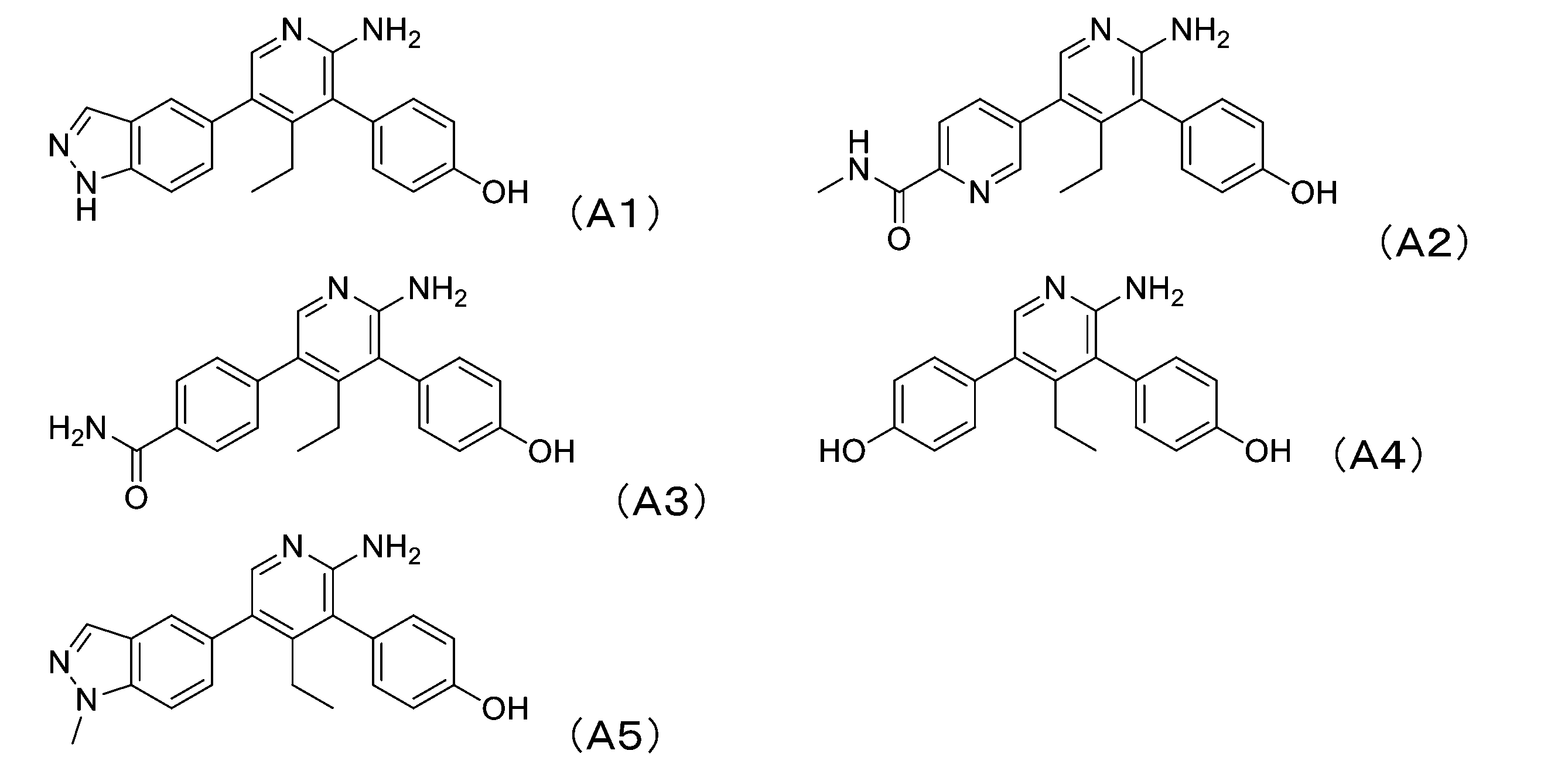
上記式(A1)~(A3)で表される化合物は、上記非特許文献1等に記載された化合物であり、上記式(A4)~(A5)で表される化合物は、上記非特許文献4等に記載された化合物である。
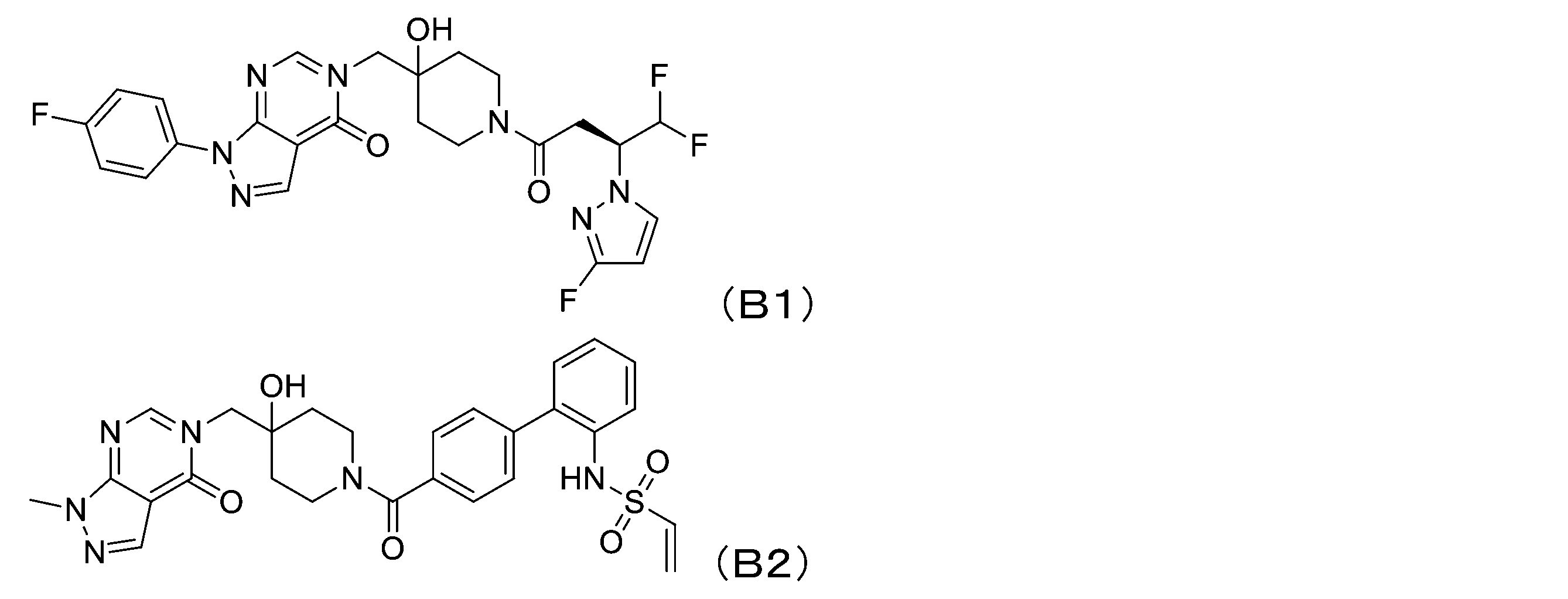
上記式(B1)~(B2)で表される化合物は、上記非特許文献2等に記載された化合物である。
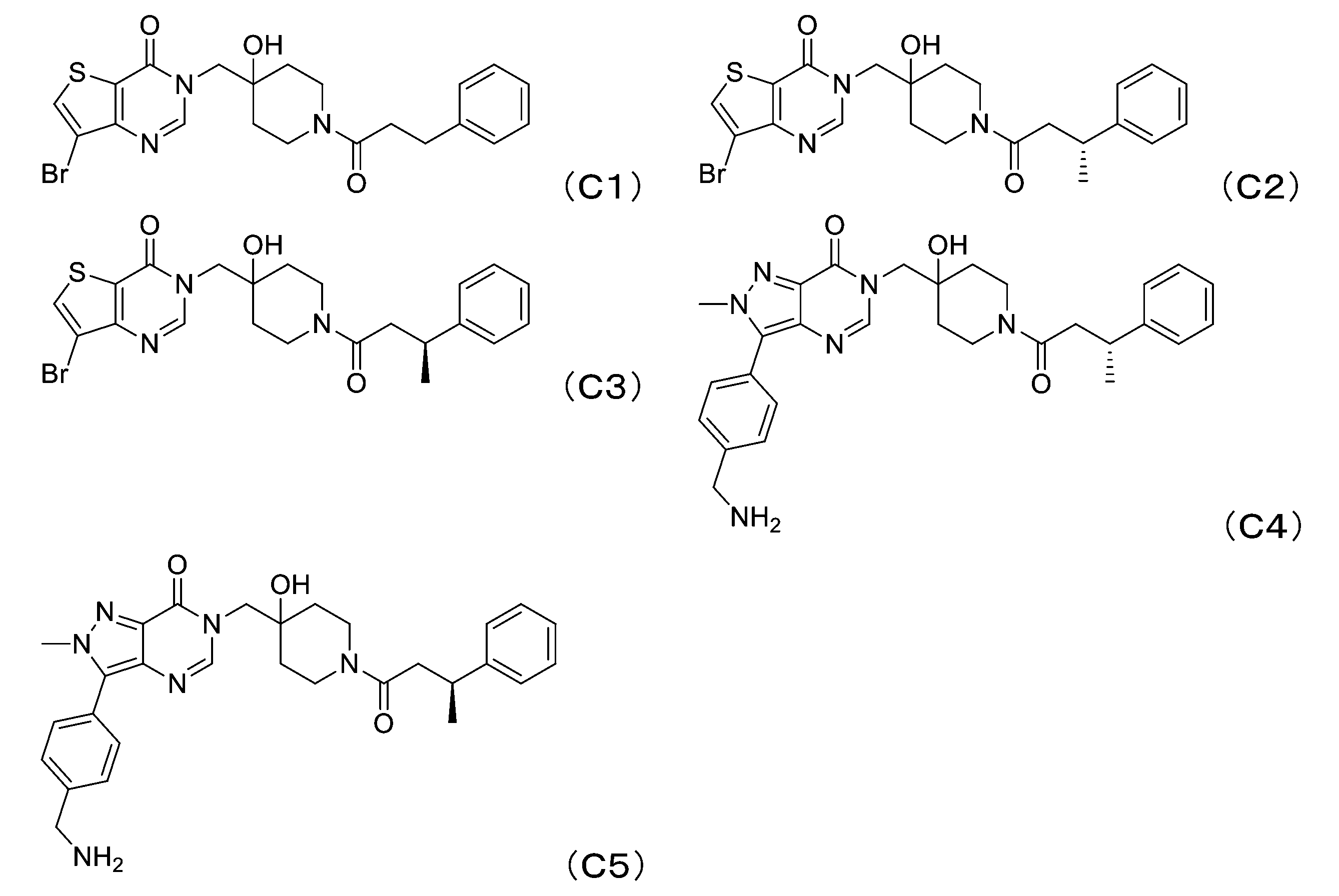
上記式(C1)~(C5)で表される化合物は、上記非特許文献3等に記載された化合物である。
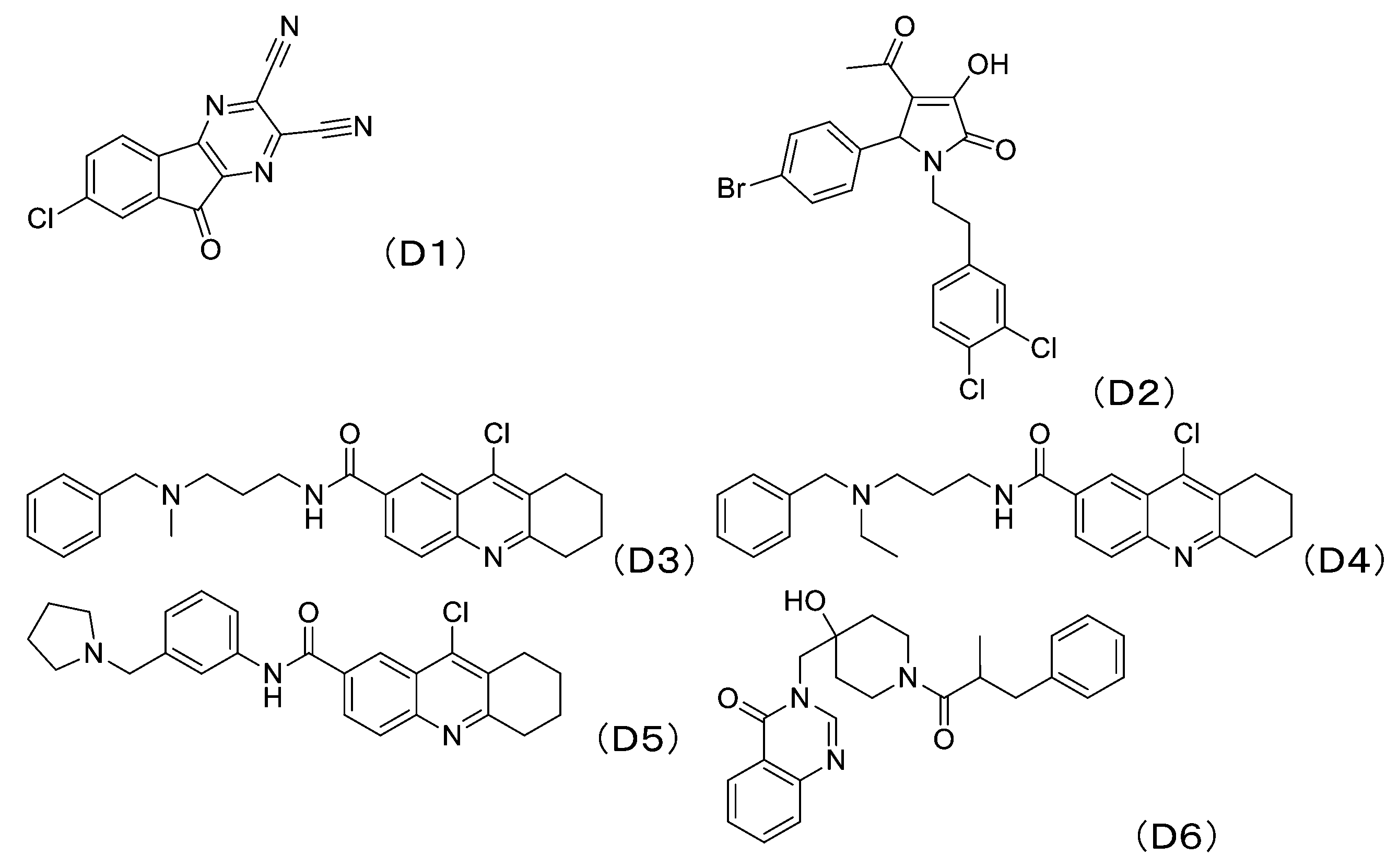
上記式(D1)で表される化合物は、上記非特許文献4、7等に記載された化合物である。上記式(D2)、(D5)、(D6)で表される化合物は、上記非特許文献4等に記載された化合物である。上記式(D3)で表される化合物は、上記非特許文献4、8等に記載された化合物である。上記式(D4)で表される化合物は、上記非特許文献8等に記載された化合物である。

上記式(E1)で表される化合物は、上記非特許文献4、9、10等に記載された化合物である。上記式(E2)で表される化合物は、上記非特許文献4、5、6、10等に記載された化合物である。上記式(E3)で表される化合物は、上記非特許文献4、9等に記載された化合物である。上記式(E4)~(E8)で表される化合物は、上記非特許文献4等に記載された化合物である。

上記式(F1)~(F5)で表される化合物は、上記非特許文献4等に記載された化合物である。

上記式(G1)~(G4)で表される化合物は、上記非特許文献4等に記載された化合物である。

上記式(H1)~(H8)で表される化合物は、上記非特許文献4等に記載された化合物である。
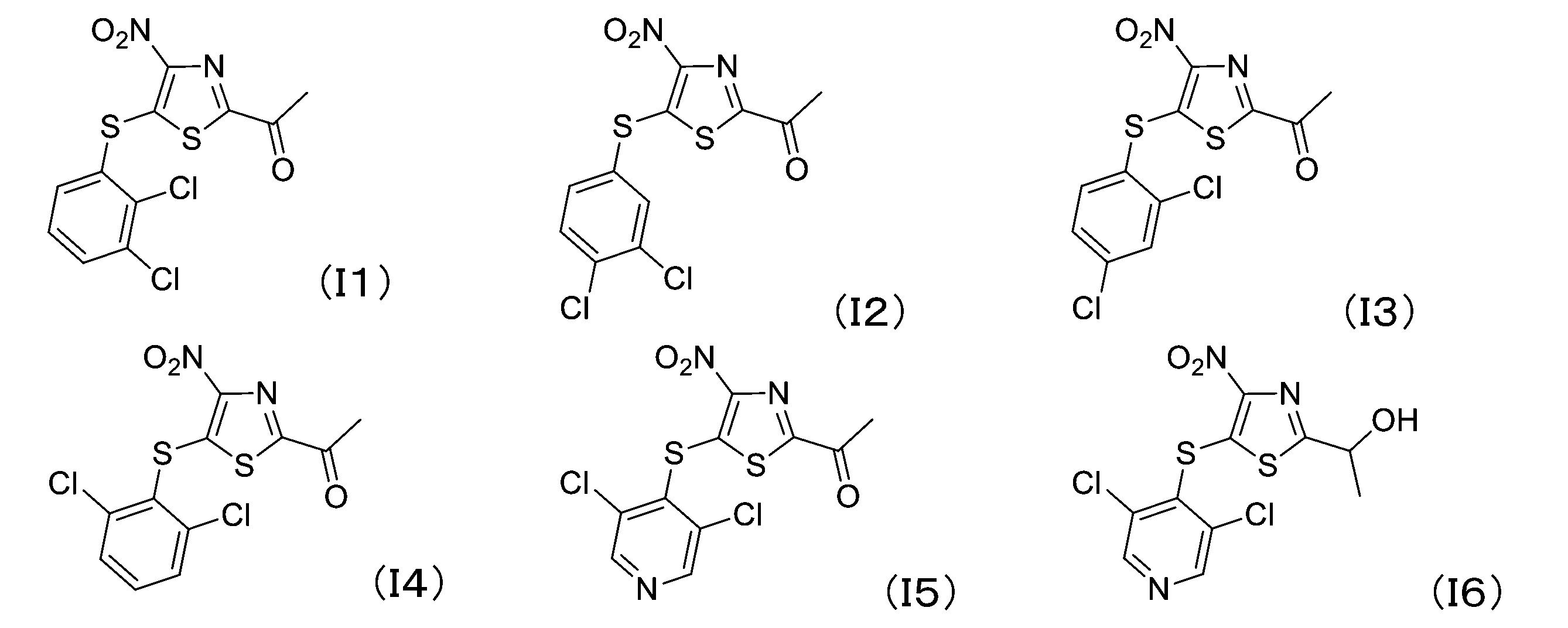

上記式(I1)~(I14)で表される化合物は、上記非特許文献10等に記載された化合物である。
上記式(A1)~(A5)、(B1)~(B2)、(C1)~(C5)、(D1)~(D6)、(E1)~(E8)、(F1)~(F5)、(G1)~(G4)、(H1)~(H8)、(I1)~(I14)のいずれかで表される化合物の誘導体としては、例えば上記式(A1)~(A5)、(B1)~(B2)、(C1)~(C5)、(D1)~(D6)、(E1)~(E8)、(F1)~(F5)、(G1)~(G4)、(H1)~(H8)、(I1)~(I14)のいずれかで表される化合物において、1又は複数の水素原子がハロゲン原子、水酸基、アミノ基、ニトロ基、チオール基、スルホ基、炭素数1~3のアルキル基で置換された化合物が挙げられる。
また、薬理学的に許容される塩としては、アルカリ金属類、アルカリ土類金属類、アンモニウム、アルキルアンモニウム等との塩、鉱酸又は有機酸との塩が挙げられる。より具体的には、例えば、ナトリウム塩、カリウム塩、カルシウム塩、アンモニウム塩、アルミニウム塩、トリエチルアンモニウム塩、酢酸塩、プロピオン酸塩、酪酸塩、ぎ酸塩、トリフルオロ酢酸塩、マレイン酸塩、酒石酸塩、クエン酸塩、ステアリン酸塩、コハク酸塩、エチルコハク酸塩、ラクトビオン酸塩、グルコン酸塩、グルコヘプトン酸塩、安息香酸塩、メタンスルホン酸塩、エタンスルホン酸塩、2-ヒドロキシエタンスルホン酸塩、ベンゼンスルホン酸塩、p-トルエンスルホン酸塩、ラウリル硫酸塩、リンゴ酸塩、アスパラギン酸塩、グルタミン酸塩、アジピン酸塩、システインとの塩、N-アセチルシステインとの塩、塩酸塩、臭化水素酸塩、リン酸塩、硫酸塩、ヨウ化水素酸塩、ニコチン酸塩、シュウ酸塩、ピクリン酸塩、チオシアン酸塩、ウンデカン酸塩、アクリル酸ポリマーとの塩、カルボキシビニルポリマーとの塩等が挙げられる。
また、溶媒和物としては、薬学的に許容される溶媒和物であれば特に制限されず、例えば、水和物、有機溶媒和物等が挙げられる。
実施例において後述するように、Th2細胞のUSP7遺伝子を欠損させると、グランザイムAの発現が有意に抑制される。したがって、USP7阻害剤はグランザイムA発現抑制剤であるということができる。ここで、USP7阻害剤は、上述したものと同様であり、USP7遺伝子に対する阻害性核酸であってもよいし、USP7タンパク質の活性を阻害する低分子化合物であってもよい。
また、USP7を阻害すると、グランザイムA遺伝子又はタンパク質の発現が抑制され、その結果IL-33タンパク質の活性化が抑制される。したがって、USP7阻害剤はIL-33活性化抑制剤であるということができる。
また、実施例において後述するように、グランザイムAはIL-33タンパク質を切断し活性化する。したがって、グランザイムA阻害剤は、IL-33活性化抑制剤であるということができる。ここで、グランザイムA阻害剤は、グランザイムA遺伝子に対する阻害性核酸であってもよいし、グランザイムAタンパク質のプロテアーゼ活性を阻害する低分子化合物であってもよいし、グランザイムAタンパク質のプロテアーゼ活性を阻害する抗グランザイムA抗体であってもよい。そのような阻害抗体は、例えば、グランザイムAの触媒ドメインに結合し、グランザイムAによる基質タンパク質の切断を阻害する。前記阻害抗体は、グランザイムAの触媒ドメインを含む断片によりマウス等を免疫し、周知のハイブリドーマ技術により、免疫した抗原に特異的に結合するモノクローナル抗体を産生するハイブリドーマを樹立し、その中から、グランザイムAのプロテアーゼ活性を阻害するモノクローナル抗体を産生するクローンを選択することにより取得することができる。グランザイムAの触媒ドメインは、上述のグランザイムAの配列情報等に基づき、当業者であれば容易に特定することができる。また、抗グランザイムA抗体は抗体断片であってもよい。抗グランザイムA抗体又はその断片は、ヒト型化されていることが好ましい。ヒト型抗体又はその断片は、ヒトに投与しても免疫原性が低いため、アナフィラキシーショック等の副作用を抑制することができる。
ヒト型抗体としては、キメラ抗体、ヒト化抗体、完全ヒト抗体等が挙げられる。ここで、キメラ抗体とは、可変領域が非ヒト動物由来の抗体であり、定常領域の少なくとも一部がヒト由来の抗体である抗体を意味する。また、ヒト化抗体とは、重鎖及び軽鎖の相補性決定領域のみが非ヒト動物由来の抗体であり、定常領域及びフレームワーク領域がヒト由来の抗体である抗体を意味する。また、完全ヒト抗体とは、相補性決定領域を含めて全体がヒト由来の抗体を意味する。
したがって、1実施形態において、本発明は、グランザイムA阻害剤を有効成分とする、IL-33関連疾患の予防又は治療剤を提供する。グランザイムA阻害剤は、血中投与でIL-33関連疾患の予防又は治療の薬効が期待でき、有用である。
ここで、IL-33関連疾患は上述したものと同様であり、アレルギー性気道炎症、好酸球性副鼻腔炎又は好酸球性食道炎等が挙げられる。また、アレルギー性気道炎症としては喘息が挙げられ、中でも、好酸球性喘息が挙げられる。例えば、末梢血中の好酸球が150個/μL以上である喘息を、好酸球性喘息であると判断することができる。一態様において、IL-33関連疾患は、末梢血中の好酸球が500個/μL以上である好酸球性喘息である。
グランザイムA阻害剤の投与が有効なIL-33関連疾患患者としては、血液中又は気管支肺胞洗浄液中のIL-33の濃度又は好酸球数が健常人よりも高い患者が挙げられる。具体的には、グランザイムA阻害剤の投与は、例えば、末梢血中の好酸球が150個/μL以上であるIL-33関連疾患患者や、末梢血中の好酸球が500個/μL以上であるIL-33関連疾患患者に有効である。
グランザイムA阻害剤は、血液中又は気管支肺胞洗浄液中のIL-33の濃度を測定する試薬と共にIL-33関連疾患の予防又は治療用キットを構成していてもよい。IL-33の濃度を測定する試薬については、上述したものと同様である。
グランザイムA阻害剤は、血液中又は気管支肺胞洗浄液中の好酸球数を測定する試薬と共にIL-33関連疾患の予防又は治療用キットを構成していてもよい。好酸球数を測定する試薬については、上述したものと同様である。
上述したUSP7阻害剤又はグランザイムA阻害剤は、薬学的に許容される担体と混合された医薬組成物として製剤化されていることが好ましい。医薬組成物は、経口的に使用される剤型であってもよく、非経口的に使用される剤型であってもよい。経口的に使用される剤型としては、例えば錠剤、カプセル剤、エリキシル剤、マイクロカプセル剤等が挙げられる。非経口的に使用される剤型としては、例えば注射剤、吸入剤、坐剤、貼付剤等が挙げられる。
薬学的に許容される担体としては、例えば、滅菌水、生理食塩水等の溶媒;ゼラチン、コーンスターチ、トラガントガム、アラビアゴム等の結合剤;結晶性セルロース等の賦形剤;アルギン酸等の膨化剤等が挙げられる。また、核酸が有効成分である場合には、薬学的に許容される担体として脂質等が挙げられる。脂質としてはカチオン性脂質が挙げられる。
医薬組成物は添加剤を更に含んでいてもよい。添加剤としては、ステアリン酸マグネシウム等の潤滑剤;ショ糖、乳糖、サッカリン等の甘味剤;ペパーミント、アカモノ油等の香味剤;ベンジルアルコール、フェノールの安定剤;リン酸塩、酢酸ナトリウム等の緩衝剤;安息香酸ベンジル、ベンジルアルコール等の溶解補助剤;酸化防止剤;防腐剤等が挙げられる。
医薬組成物は、上記の担体及び添加剤を適宜組み合わせて、一般に認められた製薬実施に要求される単位用量形態で混和することによって製剤化することができる。
患者への投与は、例えば、動脈内注射、静脈内注射、皮下注射等のほか、鼻腔内的、経気管支的、筋内的、経皮的、又は経口的に当業者に公知の方法により行いうる。投与量は、患者の体重や年齢、患者の症状、投与方法等により変動するが、当業者であれば適当な投与量を適宜選択することが可能である。
USP7阻害剤又はグランザイムA阻害剤の投与量は、USP7阻害剤又はグランザイムA阻害剤の種類、患者の症状等により変動するが、経口投与の場合、一般的に成人(体重60kgとして)においては、1日あたり約0.1~500mg、好ましくは約1.0~250mg、より好ましくは約1.0~100mg程度を、1日1回、又は数回に分けて投与することが適切であると考えられる。
非経口的に投与する場合、その投与量は、USP7阻害剤又はグランザイムA阻害剤の種類、患者の症状、対象臓器、投与方法等により変動するが、全身投与を行う場合は、一般的に成人(体重60kgとして)においては、1日あたり約0.1~500mg、好ましくは約1.0~250mg、より好ましくは約1.0~100mg程度を、1日1回、又は数回に分けて投与することが適切であると考えられる。局所投与を行う場合は、一般的に成人(体重60kgとして)においては、1日あたり約0.001~10mg、好ましくは約0.01~5mg、より好ましくは約0.02~2mg程度を、1日1回、又は数回に分けて投与することが適切であると考えられる。
[IL-33関連疾患の予防又は治療剤のスクリーニング方法]
(第1実施形態)
第1実施形態のスクリーニング方法は、被験物質の存在下でUSP7タンパク質の活性を測定する工程を含み、前記活性が、前記被験物質の非存在下におけるUSP7タンパク質の活性と比較して低下したことが、前記被験物質がIL-33関連疾患の予防又は治療剤であることを示す、IL-33関連疾患の予防又は治療剤のスクリーニング方法である。
(第1実施形態)
第1実施形態のスクリーニング方法は、被験物質の存在下でUSP7タンパク質の活性を測定する工程を含み、前記活性が、前記被験物質の非存在下におけるUSP7タンパク質の活性と比較して低下したことが、前記被験物質がIL-33関連疾患の予防又は治療剤であることを示す、IL-33関連疾患の予防又は治療剤のスクリーニング方法である。
第1実施形態のスクリーニング方法は、USP7タンパク質を用いて試験管レベルで行ってもよいし、USP7タンパク質を発現する細胞を用いて培養細胞レベルで行ってもよい。
USP7タンパク質の活性としては、例えば、自己ユビキチン化したMDM2タンパク質を脱ユビキチン化する活性、ユビキチン化させたp53タンパク質を脱ユビキチン化する活性等が挙げられる。MDM2タンパク質のユビキチン化の程度、p53タンパク質のユビキチン化の程度は、ウエスタンブロッティング等により測定することができる。
第1実施形態のスクリーニング方法において、被験物質としては、例えば、天然化合物ライブラリ、合成化合物ライブラリ、既存薬ライブラリ等を用いることができる。
また、USP7発現細胞としては、ヒト由来の細胞、非ヒト動物由来の細胞を用いることができる。非ヒト動物由来の細胞としては、例えば、大腸菌、酵母細胞、昆虫細胞、植物細胞等が挙げられる。USP7発現細胞は、USP7遺伝子の発現ベクターを導入した細胞であってもよいし、例えばTh2細胞等のUSP7遺伝子を発現する細胞であってもよい。
被験物質の存在下でUSP7タンパク質の活性を測定した結果、被験物質の非存在下におけるUSP7タンパク質の活性と比較して低下した場合に、被験物質がIL-33関連疾患の予防又は治療剤であると判断することができる。
また、陰性対照と比較してUSP7タンパク質の活性を低下させた被験物質を候補物質として選択した後、当該候補物質をIL-33関連疾患モデル動物に投与して評価し、その結果、IL-33関連疾患の予防又は治療効果が確認された被験物質を、IL-33関連疾患の予防又は治療剤として選択してもよい。ここで、陰性対照としては、予めUSP7タンパク質の活性に影響を与えないことが明らかとなっている化合物等を用いることができる。また、IL-33関連疾患モデル動物としては、例えば、実施例において後述するアレルギー性気道炎症モデルが挙げられる。
(第2実施形態)
第2実施形態のスクリーニング方法は、被験物質の存在下でグランザイムAタンパク質及びIL-33タンパク質をインキュベートする工程と、切断された前記IL-33タンパク質を定量する工程と、を含み、切断された前記IL-33タンパク質の量が前記被験物質の非存在下における切断された前記IL-33タンパク質の量と比較して減少したことが、前記被験物質がIL-33関連疾患の予防又は治療剤であることを示す、IL-33関連疾患の予防又は治療剤のスクリーニング方法である。
第2実施形態のスクリーニング方法は、被験物質の存在下でグランザイムAタンパク質及びIL-33タンパク質をインキュベートする工程と、切断された前記IL-33タンパク質を定量する工程と、を含み、切断された前記IL-33タンパク質の量が前記被験物質の非存在下における切断された前記IL-33タンパク質の量と比較して減少したことが、前記被験物質がIL-33関連疾患の予防又は治療剤であることを示す、IL-33関連疾患の予防又は治療剤のスクリーニング方法である。
第2実施形態のスクリーニング方法は、グランザイムAタンパク質及びIL-33タンパク質を用いて試験管レベルで行うことが好ましい。IL-33タンパク質は、例えば精製を容易にする観点から、GST-タグ、His×6タグ等のタグを有していてもよい。また、グランザイムAタンパク質及びIL-33タンパク質の反応温度、反応時間は適宜調整することができ、例えば25~40℃で10分~24時間等の条件が挙げられる。
第2実施形態のスクリーニング方法において、被験物質としては、第1実施形態と同様のものを用いることができる。また、切断された前記IL-33タンパク質の定量は、ウエスタンブロッティング等により測定することができる。
切断されたIL-33タンパク質としては、例えば、切断前と比較して分子量が小さくなったIL-33タンパク質のバンドの強度を定量すればよい。なお、タグのないIL-33タンパク質の切断前の分子量は30kDa程度であり、グランザイムAによる切断後の分子量は17~20kDa程度である。
被験物質の存在下で切断されたIL-33タンパク質を定量した結果、被験物質の非存在下における、切断された前記IL-33タンパク質の量と比較して減少した場合に、被験物質がIL-33関連疾患の予防又は治療剤であると判断することができる。
また、陰性対照と比較して切断されたIL-33タンパク質の量を減少させた被験物質(IL-33タンパク質の切断を抑制した被験物質)を候補物質として選択した後、当該候補物質をIL-33関連疾患モデル動物に投与して評価し、その結果、IL-33関連疾患の予防又は治療効果が確認された被験物質を、IL-33関連疾患の予防又は治療剤として選択してもよい。ここで、陰性対照としては、予めグランザイムAタンパク質のIL-33タンパク質切断活性に影響を与えないことが明らかとなっている化合物等を用いることができる。また、IL-33関連疾患モデル動物としては、例えば、実施例において後述するアレルギー性気道炎症モデルが挙げられる。
(第3実施形態)
第3実施形態のスクリーニング方法は、被験物質の存在下でTh2細胞を培養する工程と、前記Th2細胞によるグランザイムA遺伝子又はタンパク質の発現量を測定する工程と、を含み、前記発現量が、前記被験物質の非存在下におけるグランザイムA遺伝子又はタンパク質の発現量と比較して低下したことが、前記被験物質がIL-33関連疾患の予防又は治療剤であることを示す、IL-33関連疾患の予防又は治療剤のスクリーニング方法である。
第3実施形態のスクリーニング方法は、被験物質の存在下でTh2細胞を培養する工程と、前記Th2細胞によるグランザイムA遺伝子又はタンパク質の発現量を測定する工程と、を含み、前記発現量が、前記被験物質の非存在下におけるグランザイムA遺伝子又はタンパク質の発現量と比較して低下したことが、前記被験物質がIL-33関連疾患の予防又は治療剤であることを示す、IL-33関連疾患の予防又は治療剤のスクリーニング方法である。
第3実施形態のスクリーニング方法は、細胞レベルで実施するものである。Th2細胞としては、哺乳動物由来の細胞が挙げられ、例えばヒト細胞、マウス細胞等が挙げられる。Th2細胞はナイーブCD4陽性T細胞から分化誘導した細胞であってもよい。
第3実施形態のスクリーニング方法において、被験物質としては、第1実施形態と同様のものを用いることができる。被験物質の存在下でTh2細胞を培養するとは、Th2細胞の培地に被験物質を添加して培養することであってもよいし、リポフェクション、エレクトロポレーション等によりTh2細胞の内部に被験物質を導入し、培養することであってもよい。
グランザイムA遺伝子の発現量は、例えばRT-PCR、定量的RT-PCR等、DNAマイクロアレイ等により測定することができる。また、グランザイムAタンパク質の発現量は、例えばELISA、ウエスタンブロッティング等により測定することができる。
被験物質の存在下でTh2細胞によるグランザイムA遺伝子又はタンパク質の発現量を測定した結果、被験物質の非存在下における発現量と比較して低下した場合に、被験物質がIL-33関連疾患の予防又は治療剤であると判断することができる。
また、陰性対照と比較してTh2細胞によるグランザイムA遺伝子又はタンパク質の発現量を低下させた被験物質を候補物質として選択した後、当該候補物質をIL-33関連疾患モデル動物に投与して評価し、その結果、IL-33関連疾患の予防又は治療効果が確認された被験物質を、IL-33関連疾患の予防又は治療剤として選択してもよい。ここで、陰性対照としては、予めTh2細胞によるグランザイムA遺伝子又はタンパク質の発現量に影響を与えないことが明らかとなっている化合物等を用いることができる。また、IL-33関連疾患モデル動物としては、例えば、実施例において後述するアレルギー性気道炎症モデルが挙げられる。
(第4実施形態)
第4実施形態のスクリーニング方法は、被験物質の存在下でTh2細胞を培養する工程と、前記Th2細胞によるUSP7遺伝子又はタンパク質の発現量を測定する工程と、を含み、前記発現量が、前記被験物質の非存在下におけるUSP7遺伝子又はタンパク質の発現量と比較して低下したことが、前記被験物質がIL-33関連疾患の予防又は治療剤であることを示す、IL-33関連疾患の予防又は治療剤のスクリーニング方法である。
第4実施形態のスクリーニング方法は、被験物質の存在下でTh2細胞を培養する工程と、前記Th2細胞によるUSP7遺伝子又はタンパク質の発現量を測定する工程と、を含み、前記発現量が、前記被験物質の非存在下におけるUSP7遺伝子又はタンパク質の発現量と比較して低下したことが、前記被験物質がIL-33関連疾患の予防又は治療剤であることを示す、IL-33関連疾患の予防又は治療剤のスクリーニング方法である。
第4実施形態のスクリーニング方法は、細胞レベルで実施するものである。Th2細胞としては、第3実施形態と同様のものを用いることができる。第4実施形態のスクリーニング方法において、被験物質としては、第1実施形態と同様のものを用いることができる。
被験物質の存在下でTh2細胞を培養するとは、第3実施形態と同様であり、Th2細胞の培地に被験物質を添加して培養することであってもよいし、リポフェクション、エレクトロポレーション等によりTh2細胞の内部に被験物質を導入し、培養することであってもよい。
USP7遺伝子の発現量は、例えばRT-PCR、定量的RT-PCR等、DNAマイクロアレイ等により測定することができる。また、USP7タンパク質の発現量は、例えばELISA、ウエスタンブロッティング等により測定することができる。
被験物質の存在下でTh2細胞によるUSP7遺伝子又はタンパク質の発現量を測定した結果、被験物質の非存在下における発現量と比較して低下した場合に、被験物質がIL-33関連疾患の予防又は治療剤であると判断することができる。
また、陰性対照と比較してTh2細胞によるUSP7遺伝子又はタンパク質の発現量を低下させた被験物質を候補物質として選択した後、当該候補物質をIL-33関連疾患モデル動物に投与して評価し、その結果、IL-33関連疾患の予防又は治療効果が確認された被験物質を、IL-33関連疾患の予防又は治療剤として選択してもよい。ここで、陰性対照としては、予めTh2細胞によるUSP7遺伝子又はタンパク質の発現量に影響を与えないことが明らかとなっている化合物等を用いることができる。また、IL-33関連疾患モデル動物としては、例えば、実施例において後述するアレルギー性気道炎症モデルが挙げられる。
(第5実施形態)
第5実施形態のスクリーニング方法は、被験物質の存在下でTh2細胞を培養する工程と、前記Th2細胞のグランザイムA遺伝子座におけるユビキチン化されたヒストンH2Aの量を測定する工程と、を含み、前記ユビキチン化されたヒストンH2Aの量が、前記被験物質の非存在下におけるユビキチン化されたヒストンH2Aの量と比較して増加したことが、前記被験物質がIL-33関連疾患の予防又は治療剤であることを示す、IL-33関連疾患の予防又は治療剤のスクリーニング方法である。
第5実施形態のスクリーニング方法は、被験物質の存在下でTh2細胞を培養する工程と、前記Th2細胞のグランザイムA遺伝子座におけるユビキチン化されたヒストンH2Aの量を測定する工程と、を含み、前記ユビキチン化されたヒストンH2Aの量が、前記被験物質の非存在下におけるユビキチン化されたヒストンH2Aの量と比較して増加したことが、前記被験物質がIL-33関連疾患の予防又は治療剤であることを示す、IL-33関連疾患の予防又は治療剤のスクリーニング方法である。
第5実施形態のスクリーニング方法は、細胞レベルで実施するものである。Th2細胞としては、第3実施形態と同様のものを用いることができる。第5実施形態のスクリーニング方法において、被験物質としては、第1実施形態と同様のものを用いることができる。
被験物質の存在下でTh2細胞を培養するとは、第3実施形態と同様であり、Th2細胞の培地に被験物質を添加して培養することであってもよいし、リポフェクション、エレクトロポレーション等によりTh2細胞の内部に被験物質を導入し、培養することであってもよい。
グランザイムA遺伝子座におけるユビキチン化されたヒストンH2Aの量の測定は、例えばクロマチン免疫沈降(ChIP)法等により行うことができる。ChIP法としては、ChIP-qPCR法、ChIP-on-chip法、ChIP-Seq法等を利用することができる。
被験物質の存在下で、Th2細胞のグランザイムA遺伝子座におけるユビキチン化されたヒストンH2Aの量を測定した結果、被験物質の非存在下における、ユビキチン化されたヒストンH2Aの量と比較して増加した場合に、被験物質がIL-33関連疾患の予防又は治療剤であると判断することができる。
また、陰性対照と比較してTh2細胞のグランザイムA遺伝子座におけるユビキチン化されたヒストンH2Aの量を増加させた被験物質を候補物質として選択した後、当該候補物質をIL-33関連疾患モデル動物に投与して評価し、その結果、IL-33関連疾患の予防又は治療効果が確認された被験物質を、IL-33関連疾患の予防又は治療剤として選択してもよい。ここで、陰性対照としては、予めTh2細胞のグランザイムA遺伝子座におけるユビキチン化されたヒストンH2Aの量に影響を与えないことが明らかとなっている化合物等を用いることができる。また、IL-33関連疾患モデル動物としては、例えば、実施例において後述するアレルギー性気道炎症モデルが挙げられる。
[その他の実施形態]
1実施形態において、本発明は、USP7阻害剤の有効量を、治療を必要とする患者に投与する工程を含む、IL-33関連疾患の予防又は治療方法を提供する。
1実施形態において、本発明は、USP7阻害剤の有効量を、治療を必要とする患者に投与する工程を含む、IL-33関連疾患の予防又は治療方法を提供する。
患者としては、血液中又は気管支肺胞洗浄液中のIL-33の濃度又は好酸球数が健常人よりも高い患者が挙げられる。より具体的には、例えば、末梢血中の好酸球が150個/μL以上である患者、あるいは末梢血中の好酸球が500個/μL以上である患者等が挙げられる。
したがって、本実施形態の治療方法は、IL-33関連疾患患者の血液中又は気管支肺胞洗浄液中のIL-33の濃度又は好酸球数を測定する工程と、前記IL-33の濃度又は好酸球数が健常人よりも高い場合に、前記患者にUSP7阻害剤の有効量を投与する工程を含む、IL-33関連疾患の予防又は治療方法であってもよい。IL-33の濃度又は好酸球数の測定は、患者から採取した試料(血液、気管支肺胞洗浄液)を用いてインビトロで行われる。例えば、IL-33関連疾患(例、アレルギー性気道炎症(例、好酸球性喘息)、好酸球性副鼻腔炎、好酸球性食道炎)患者集団について、各患者の末梢血中の好酸球数を測定し、末梢血中の好酸球数が健常人よりも高い(例、150個/μL以上、500個/μL以上)患者を選択し、選択された患者に対してUSP7阻害剤の有効量を投与する。
1実施形態において、本発明は、グランザイムA阻害剤の有効量を、治療を必要とする患者に投与する工程を含む、IL-33活性化抑制方法を提供する。
患者としては、血液中又は気管支肺胞洗浄液中のIL-33の濃度又は好酸球数が健常人よりも高い患者が挙げられる。より具体的には、例えば、末梢血中の好酸球が150個/μL以上である患者、あるいは末梢血中の好酸球が500個/μL以上である患者等が挙げられる。
したがって、本実施形態の治療方法は、IL-33関連疾患患者の血液中又は気管支肺胞洗浄液中のIL-33の濃度又は好酸球数を測定する工程と、前記IL-33の濃度又は好酸球数が健常人よりも高い場合に、前記患者にグランザイムA阻害剤の有効量を投与する工程を含む、IL-33関連疾患の予防又は治療方法であってもよい。IL-33の濃度又は好酸球数の測定は、患者から採取した試料(血液、気管支肺胞洗浄液)を用いてインビトロで行われる。例えば、IL-33関連疾患(例、アレルギー性気道炎症(例、好酸球性喘息)、好酸球性副鼻腔炎、好酸球性食道炎)患者集団について、各患者の末梢血中の好酸球数を測定し、末梢血中の好酸球数が健常人よりも高い(例、150個/μL以上、500個/μL以上)患者を選択し、選択された患者に対してグランザイムA阻害剤の有効量を投与する。
1実施形態において、本発明は、IL-33関連疾患の予防又は治療のためのUSP7阻害剤を提供する。
1実施形態において、本発明は、IL-33活性化抑制のためのグランザイムA阻害剤を提供する。
1実施形態において、本発明は、IL-33関連疾患の予防剤又は治療剤を製造するためのUSP7阻害剤の使用を提供する。
1実施形態において、本発明は、IL-33活性化抑制剤を製造するためのグランザイムA阻害剤の使用を提供する。
これらの実施形態において、IL-33関連疾患としては上述したものと同様のものが挙げられる。また、USP7阻害剤、グランザイムA阻害剤としては、上述したものと同様のものが挙げられる。
[材料及び方法]
(マウス)
C57BL/6マウスはクレアジャパン社より購入した。Usp7fl/flマウスは古関明彦博士(理化学研究所)より分与された。Usp7fl/flマウスはRosa:Cre-ERTマウス(タコニック社)、OTII-TCR-αβTgマウスと交配した。
(マウス)
C57BL/6マウスはクレアジャパン社より購入した。Usp7fl/flマウスは古関明彦博士(理化学研究所)より分与された。Usp7fl/flマウスはRosa:Cre-ERTマウス(タコニック社)、OTII-TCR-αβTgマウスと交配した。
オボアルブミン(OVA)タンパク質の323-339残基に特異的なTCRを有するOTII-TCR-αβTgマウスはジャクソンラボラトリーズ社より購入した。
全てのマウスは6~10週齢で使用し、特定病原菌フリー(SPF)条件下で維持した。マウスを用いる全ての実験プロトコールは千葉大学動物委員会により承認を得たうえで実施した。また、全ての動物の飼育は千葉大学の指針にしたがって行った。
(抗体)
細胞質内及び細胞表面の染色に用いた抗体は次の通りであった。Brilliant Violet(BV)421標識抗IFN-γモノクローナル抗体(クローンXMG1.2、バイオレジェンド社)、フィコエリスリン(PE)標識抗グランザイムA抗体(3G8.5、バイオレジェンド社)
細胞質内及び細胞表面の染色に用いた抗体は次の通りであった。Brilliant Violet(BV)421標識抗IFN-γモノクローナル抗体(クローンXMG1.2、バイオレジェンド社)、フィコエリスリン(PE)標識抗グランザイムA抗体(3G8.5、バイオレジェンド社)
(インビトロTh細胞分化培養)
Usp7+/+Cre-ERT2+マウス(WTマウス)又はUsp7fl/flCre-ERT2+マウス(cKOマウス)の胸腺由来のナイーブCD4陽性T細胞(CD44loCD62Lhi)を、マグネティックセルソーター(商品名「autoMACS」、ミルテニーバイオテック社)を用いて精製した。
Usp7+/+Cre-ERT2+マウス(WTマウス)又はUsp7fl/flCre-ERT2+マウス(cKOマウス)の胸腺由来のナイーブCD4陽性T細胞(CD44loCD62Lhi)を、マグネティックセルソーター(商品名「autoMACS」、ミルテニーバイオテック社)を用いて精製した。
Th2細胞を分化誘導する場合には、ナイーブCD4陽性T細胞を、IL-2(25U/mL)、IL-4(100U/mL)、抗IFN-γモノクローナル抗体、抗CD28モノクローナル抗体及び抗TCRβモノクローナル抗体の存在下で培養した。
(免疫蛍光染色及びフローサイトメトリー解析)
Th細胞を刺激しサイトカインの細胞内染色を行った。具体的には、培養したTh細胞を、イオノマイシン(500nM)、ホルボール12-ミリステート13-アセテート(50ng/mL)及びモネンシン(2μM、シグマ社)で4時間刺激した。続いて、4%パラホルムアルデヒドを用いて細胞を室温で10分間固定し、0.5%Triton Xを含む透過処理液(50mM NaCl、5mM EDTA、0.02%アジ化ナトリウム、pH7.5)中、氷上で10分間処理した。続いて、細胞を3%ウシ血清アルブミン(BSA)で15分間ブロッキングした。続いて、適切な抗体で30分以上染色した後、フローサイトメーター(商品名「FACSVerse」又は商品名「FACSCantoII」、いずれもBDバイオサイエンス社)を用いて解析した。データ解析はFlowJoソフトウエア(BDバイオサイエンス社)を用いて行った。
Th細胞を刺激しサイトカインの細胞内染色を行った。具体的には、培養したTh細胞を、イオノマイシン(500nM)、ホルボール12-ミリステート13-アセテート(50ng/mL)及びモネンシン(2μM、シグマ社)で4時間刺激した。続いて、4%パラホルムアルデヒドを用いて細胞を室温で10分間固定し、0.5%Triton Xを含む透過処理液(50mM NaCl、5mM EDTA、0.02%アジ化ナトリウム、pH7.5)中、氷上で10分間処理した。続いて、細胞を3%ウシ血清アルブミン(BSA)で15分間ブロッキングした。続いて、適切な抗体で30分以上染色した後、フローサイトメーター(商品名「FACSVerse」又は商品名「FACSCantoII」、いずれもBDバイオサイエンス社)を用いて解析した。データ解析はFlowJoソフトウエア(BDバイオサイエンス社)を用いて行った。
(定量的RT-PCR解析)
全RNA抽出、cDNA合成は定法により行った。定量的RT-PCRはStepOnePlus Real-Time PCR System(サーモフィッシャーサイエンティフィック社)を用いてスレッシュホールドサイクル比較法により行った。プライマー及びTaqManプローブはロシュ社より購入した。標的遺伝子の発現はHprt遺伝子の発現に対して標準化した。
全RNA抽出、cDNA合成は定法により行った。定量的RT-PCRはStepOnePlus Real-Time PCR System(サーモフィッシャーサイエンティフィック社)を用いてスレッシュホールドサイクル比較法により行った。プライマー及びTaqManプローブはロシュ社より購入した。標的遺伝子の発現はHprt遺伝子の発現に対して標準化した。
(RNA-シーケンシング)
RNA-シーケンシング(RNA-Seq)は次のようにして行った。全RNAをTRIzol試薬(サーモフィッシャーサイエンティフィック社)を用いて抽出した。cDNAライブラリ調製では、TruSeq RNA Sample Prep Kit v2(イルミナ社)を使用説明書にしたがって使用した。
RNA-シーケンシング(RNA-Seq)は次のようにして行った。全RNAをTRIzol試薬(サーモフィッシャーサイエンティフィック社)を用いて抽出した。cDNAライブラリ調製では、TruSeq RNA Sample Prep Kit v2(イルミナ社)を使用説明書にしたがって使用した。
ライブラリ断片のシーケンシングはHiSEquation 1500 System(イルミナ社)を用いて行った。データ解析では、リード配列(50bp)を、Bowtie(バージョン0.12.8)及びTopHat(バージョン1.3.2)ソフトウエアを用いてmm10マウス参照ゲノム(カリフォルニア大学、2011年12月)にアラインメントした。
各遺伝子のFPKM(fragments per kilobase of exon per million reads mapped)は、Cufflinks(バージョン2.0.2)ソフトウエアを用いて計算した。
(Th2細胞の移植により誘導された気道炎症モデル)
WTマウス又はUsp7fl/flCre-ERT2+OVA特異的OTII TCRマウス由来のナイーブCD4陽性T細胞を、Th2条件で培養した。最初の24時間は4-ヒドロキシタモキシフェン(4-OHT)処理した。6日後、培養した細胞を尾静脈投与によりC57BL/6マウスに1×104個/マウスで移植した。細胞移植後、1、3、4日目にオブアルブミン(OVA)を鼻腔内投与した。細胞移植後5日目にマウスを安楽死させ解析した。
WTマウス又はUsp7fl/flCre-ERT2+OVA特異的OTII TCRマウス由来のナイーブCD4陽性T細胞を、Th2条件で培養した。最初の24時間は4-ヒドロキシタモキシフェン(4-OHT)処理した。6日後、培養した細胞を尾静脈投与によりC57BL/6マウスに1×104個/マウスで移植した。細胞移植後、1、3、4日目にオブアルブミン(OVA)を鼻腔内投与した。細胞移植後5日目にマウスを安楽死させ解析した。
(気管支肺胞洗浄液の採取)
最後のOVA投与から24時間後に気管支肺胞洗浄液(BALF)を採取した。BALF中の細胞はCytospin4(サーモフィッシャーサイエンティフィック社)を用いてスライドガラス上に遠心し、Diff-Quick Stain kit(シスメックス社)を用いて染色した。顕微鏡を用いてスライド1枚当たり200個の白血球を計測した。
最後のOVA投与から24時間後に気管支肺胞洗浄液(BALF)を採取した。BALF中の細胞はCytospin4(サーモフィッシャーサイエンティフィック社)を用いてスライドガラス上に遠心し、Diff-Quick Stain kit(シスメックス社)を用いて染色した。顕微鏡を用いてスライド1枚当たり200個の白血球を計測した。
(気道過敏反応)
最後のOVA投与から24時間後に、コンピューター制御された小動物ベンチレーター(SCIREQ)を用いて、メタコリン(シグマ社)により誘導された気流閉塞を測定することにより、気道過敏反応を検討した。
最後のOVA投与から24時間後に、コンピューター制御された小動物ベンチレーター(SCIREQ)を用いて、メタコリン(シグマ社)により誘導された気流閉塞を測定することにより、気道過敏反応を検討した。
(肺の組織学的解析)
肺組織の病理学的変化は、ヘマトキシリン・エオシン(H&E)染色及び過ヨウ素酸-シッフ(PAS)染色によって評価した。
肺組織の病理学的変化は、ヘマトキシリン・エオシン(H&E)染色及び過ヨウ素酸-シッフ(PAS)染色によって評価した。
(統計学的解析)
データはGraphPad Prismソフトウエア(バージョン6)を用いて解析した。2グループの比較はtwo-tailed unpaired t testにより計算した。3グループ以上の比較はtwo-way analysis of variance(ANOVA)と共にテューキーの多重比較検定又はシダックの多重比較検定により行った。0.05以下のp値を有意であると判断した。
データはGraphPad Prismソフトウエア(バージョン6)を用いて解析した。2グループの比較はtwo-tailed unpaired t testにより計算した。3グループ以上の比較はtwo-way analysis of variance(ANOVA)と共にテューキーの多重比較検定又はシダックの多重比較検定により行った。0.05以下のp値を有意であると判断した。
[実験例1]
(Th2特異的なUsp7遺伝子の欠損はアレルギー性気道炎症における好酸球の浸潤の減少及び気道過敏反応の改善につながった)
図1は実験スケジュールを示す模式図である。まず、Usp7+/+Cre-ERT2+OTII Tgマウス(WTマウス)の胸腺由来のナイーブCD4陽性T細胞、Usp7fl/flCre-ERT2+OTII Tgマウス(KOマウス)の胸腺由来のナイーブCD4陽性T細胞、及び、C57BL/6マウス由来の抗原提示細胞を準備した。OTII Tgマウスはオブアルブミン(OVA)に対するT細胞受容体(TCR)を有する。
(Th2特異的なUsp7遺伝子の欠損はアレルギー性気道炎症における好酸球の浸潤の減少及び気道過敏反応の改善につながった)
図1は実験スケジュールを示す模式図である。まず、Usp7+/+Cre-ERT2+OTII Tgマウス(WTマウス)の胸腺由来のナイーブCD4陽性T細胞、Usp7fl/flCre-ERT2+OTII Tgマウス(KOマウス)の胸腺由来のナイーブCD4陽性T細胞、及び、C57BL/6マウス由来の抗原提示細胞を準備した。OTII Tgマウスはオブアルブミン(OVA)に対するT細胞受容体(TCR)を有する。
続いて、これらの細胞をインビトロで6日間共培養した。図1中、「4-OHT」は4-ヒドロキシタモキシフェンを示し、「Loh15」はオブアルブミンの第323~339番目のアミノ酸配列からなるペプチド(ISQAVHAAHAEINEAGR、配列番号1)を示す。4-OHTは100nMで添加し、Loh15は300nMで添加した。
続いて、6日目に、Th2細胞を尾静脈注射によりC57BL/6マウスに1×106個/マウスで移植した。細胞移植後、1、3、4日目にOVA又はリン酸緩衝生理食塩水(PBS)を鼻腔内投与により投与した。OVAは100μg/マウスで投与した。Th2細胞の移植後5日目に各マウスを解析した。
図2は、気管支肺胞洗浄液(BALF)中の細胞を解析した結果を示すグラフである。図2中、「WT PBS」は、WTマウス由来のTh2細胞を移植し、PBSを投与したマウスの結果であることを示し、「KO PBS」は、KOマウス由来のTh2細胞を移植し、PBSを投与したマウスの結果であることを示し、「WT OVA」は、WTマウス由来のTh2細胞を移植し、OVAを投与したマウスの結果であることを示し、「KO OVA」は、KOマウス由来のTh2細胞を移植し、OVAを投与したマウスの結果であることを示し、「Eosi.」は好酸球を示し、「Neut.」は好中球を示し、「Lymp.」はリンパ球を示し、「Mac.」はマクロファージを示し、「Total」は全白血球を意味する。
その結果、KO OVA群において、好酸球及び全白血球の数が有意に減少したことが明らかとなった。
また、図3はメサコリンを投与して気道の収縮を誘導し、気流閉塞を測定した結果を示すグラフである。図3中、「WT PBS」は、WTマウス由来のTh2細胞を移植し、PBSを投与したマウスの結果であることを示し、「KO PBS」は、KOマウス由来のTh2細胞を移植し、PBSを投与したマウスの結果であることを示し、「WT OVA」は、WTマウス由来のTh2細胞を移植し、OVAを投与したマウスの結果であることを示し、「KO OVA」は、KOマウス由来のTh2細胞を移植し、OVAを投与したマウスの結果であることを示す。
その結果、KO OVA群において、気道過敏反応が有意に改善したことが明らかとなった。
以上の結果から、Th2特異的にUsp7を欠損させると、アレルギー性気道炎症における好酸球の浸潤が有意に減少し、また、気道過敏反応が有意に改善したことが明らかとなった。
[実験例2]
(Th2特異的なUsp7遺伝子の欠損はアレルギー性気道炎症における炎症性細胞の浸潤の減少につながった)
実験例1でTh2細胞を移植した各群のマウスの肺の組織学的解析を行った。図4(a)~(d)はマウスの肺の組織切片をヘマトキシリン・エオシン染色した結果を示す顕微鏡写真である。図4(a)~(d)中、「WT」はUsp7+/+Cre-ERT2+OTII Tgマウス(WTマウス)由来のTh2細胞を移植したマウスの結果であることを示し、「KO」は、Usp7fl/flCre-ERT2+OTII Tgマウス由来のTh2細胞を移植したマウスの結果であることを示し、「PBS i.n.」はPBSを経鼻腔的に投与したマウスの結果であることを示し、「OVA i.n.」は、OVAを経鼻腔的に投与したマウスの結果であることを示す。スケールバーは1000μmである。
(Th2特異的なUsp7遺伝子の欠損はアレルギー性気道炎症における炎症性細胞の浸潤の減少につながった)
実験例1でTh2細胞を移植した各群のマウスの肺の組織学的解析を行った。図4(a)~(d)はマウスの肺の組織切片をヘマトキシリン・エオシン染色した結果を示す顕微鏡写真である。図4(a)~(d)中、「WT」はUsp7+/+Cre-ERT2+OTII Tgマウス(WTマウス)由来のTh2細胞を移植したマウスの結果であることを示し、「KO」は、Usp7fl/flCre-ERT2+OTII Tgマウス由来のTh2細胞を移植したマウスの結果であることを示し、「PBS i.n.」はPBSを経鼻腔的に投与したマウスの結果であることを示し、「OVA i.n.」は、OVAを経鼻腔的に投与したマウスの結果であることを示す。スケールバーは1000μmである。
その結果、図4(a)、(b)に示すように、PBS投与群の肺はほぼ正常な状態であった。これに対し、図4(c)に示すように、OVAを投与したWT群の肺では、大量の炎症性細胞の浸潤が認められた。図4(c)中、炎症性細胞の浸潤が認められた領域を矢印で示す。また、図4(d)に示すように、OVAを投与したKO群の肺では、炎症性細胞の浸潤が認められたものの、図4(c)と比較して、アレルギー性気道炎症が顕著に改善された状態を示した。
[実験例3]
(Th2特異的なUsp7遺伝子の欠損はアレルギー性気道炎症における粘液産生の減少につながった)
実験例1でTh2細胞を移植した各群のマウスの肺の組織学的解析を行った。図5(a)~(d)はマウスの肺の組織切片をPAS染色した結果を示す顕微鏡写真である。図5(a)~(d)中、「WT」はUsp7+/+Cre-ERT2+OTII Tgマウス(WTマウス)由来のTh2細胞を移植したマウスの結果であることを示し、「KO」は、Usp7fl/flCre-ERT2+OTII Tgマウス由来のTh2細胞を移植したマウスの結果であることを示し、「PBS i.n.」はPBSを経鼻腔的に投与したマウスの結果であることを示し、「OVA i.n.」は、OVAを経鼻腔的に投与したマウスの結果であることを示す。スケールバーは100μmである。
(Th2特異的なUsp7遺伝子の欠損はアレルギー性気道炎症における粘液産生の減少につながった)
実験例1でTh2細胞を移植した各群のマウスの肺の組織学的解析を行った。図5(a)~(d)はマウスの肺の組織切片をPAS染色した結果を示す顕微鏡写真である。図5(a)~(d)中、「WT」はUsp7+/+Cre-ERT2+OTII Tgマウス(WTマウス)由来のTh2細胞を移植したマウスの結果であることを示し、「KO」は、Usp7fl/flCre-ERT2+OTII Tgマウス由来のTh2細胞を移植したマウスの結果であることを示し、「PBS i.n.」はPBSを経鼻腔的に投与したマウスの結果であることを示し、「OVA i.n.」は、OVAを経鼻腔的に投与したマウスの結果であることを示す。スケールバーは100μmである。
その結果、図5(a)、(c)に示すように、PBS投与群の肺はほぼ正常な状態であった。これに対し、図5(b)に示すように、OVAを投与したWT群の肺では、大量の粘液の産生が認められた。図5(b)中、粘液の産生が認められる領域を矢印で示す。また、図5(d)に示すように、OVAを投与したKO群の肺ではほとんど粘液の産生が認められず、アレルギー性気道炎症が顕著に改善された状態を示した。
以上、実験例1~3の結果から、Th2細胞特異的なUsp7遺伝子の欠損は、OVAに暴露した場合のアレルギー性気道炎症の病態の改善につながることが明らかとなった。
[実験例4]
(Usp7遺伝子の欠損は、Th2細胞におけるGzma遺伝子及びIl13遺伝子の発現の減少につながった)
RNA-シーケンシング(RNA-Seq)によりUsp7遺伝子の欠損の影響を解析した。図6は実験スケジュールを示す模式図である。まず、Usp7+/+Cre-ERT2+OTII Tgマウス(WTマウス)の胸腺由来のナイーブCD4陽性T細胞、及び、Usp7fl/flCre-ERT2+OTII Tgマウス(KOマウス)の胸腺由来のナイーブCD4陽性T細胞を調製した。
(Usp7遺伝子の欠損は、Th2細胞におけるGzma遺伝子及びIl13遺伝子の発現の減少につながった)
RNA-シーケンシング(RNA-Seq)によりUsp7遺伝子の欠損の影響を解析した。図6は実験スケジュールを示す模式図である。まず、Usp7+/+Cre-ERT2+OTII Tgマウス(WTマウス)の胸腺由来のナイーブCD4陽性T細胞、及び、Usp7fl/flCre-ERT2+OTII Tgマウス(KOマウス)の胸腺由来のナイーブCD4陽性T細胞を調製した。
続いて、これらの細胞をTh2条件で5日間培養した。最初の24時間は4-ヒドロキシタモキシフェン(4-OHT)処理した。その後、抗TCRβ抗体(クローンH57-597)で刺激を行い、刺激の4時間後に各細胞を回収し、RNA-Seq解析を行った。
図7はRNA-seqの結果を示すボルカノプロットである。縦軸はp値を示し、横軸はWTマウス及びKOマウスにおける各遺伝子の発現量の比を示す。グラフの上部ほどWTマウスとKOマウスで発現量の差が大きいことを示す。図7中、丸で囲んだプロットは、WTマウスと比較してKOマウスで発現量が顕著に低い遺伝子を示す。
これらの遺伝子のうち、グランザイムAをコードするGzma遺伝子の発現量が、WTマウスと比較してKOマウスで顕著に減少したことが明らかとなった。
図8(a)及び(b)は、定量的RT-PCRによりRNA-Seqの結果を確認した結果を示すグラフである。図8(a)はUsp7遺伝子の発現量を測定した結果であり、図8(b)はGzma遺伝子の発現量を測定した結果である。図8(a)及び(b)中、「WT」はUsp7+/+Cre-ERT2+OTII Tgマウス(WTマウス)由来の細胞の結果であることを示し、「KO」はUsp7fl/flCre-ERT2+OTII Tgマウス(KOマウス)由来の細胞の結果であることを示す。
その結果、Gzma遺伝子の発現量はWTマウスと比較してKOマウスで確かに減少していることが確認された。
Gzma遺伝子に加えて、Th2サイトカインの一種であるIL-13をコードするIl13遺伝子も、重要な遺伝子として検出された。
[実験例5]
(Usp7遺伝子の欠損は、インビトロにおいて、グランザイムAの産生の減少につながった)
続いて、実験例4と同様にして、Usp7+/+Cre-ERT2+OTII Tgマウス(WTマウス)由来のナイーブCD4陽性T細胞、及び、Usp7fl/flCre-ERT2+OTII Tgマウス(KOマウス)由来のナイーブCD4陽性T細胞をTh2条件で培養し、得られたTh2細胞におけるグランザイムAタンパク質の産生量をフローサイトメトリーにより解析した。
(Usp7遺伝子の欠損は、インビトロにおいて、グランザイムAの産生の減少につながった)
続いて、実験例4と同様にして、Usp7+/+Cre-ERT2+OTII Tgマウス(WTマウス)由来のナイーブCD4陽性T細胞、及び、Usp7fl/flCre-ERT2+OTII Tgマウス(KOマウス)由来のナイーブCD4陽性T細胞をTh2条件で培養し、得られたTh2細胞におけるグランザイムAタンパク質の産生量をフローサイトメトリーにより解析した。
図9(a)はフローサイトメトリー解析の結果を示すグラフである。図9(a)中、縦軸はグランザイムAの産生量を示し、横軸はインターフェロン(IFN)-γの産生量を示す。図9(b)は、図9(a)の結果をグラフにしたものである。
その結果、KOマウス由来のTh2細胞では、WTマウス由来のTh2細胞と比較して、グランザイムA陽性細胞の割合が有意に減少したことが明らかとなった。
[実験例6]
(グランザイムAはIL-33を切断し成熟型IL-33を生成する)
ヒトIL-33を、濃度を変えたグランザイムAと混合し、37℃で1時間インキュベートした。続いて、SDSポリアクリルアミドゲル電気泳動(SDS-PAGE)及び抗ヒトIL-33抗体を用いたウエスタンブロッティングを行い、ヒトIL-33の切断を検出した。
(グランザイムAはIL-33を切断し成熟型IL-33を生成する)
ヒトIL-33を、濃度を変えたグランザイムAと混合し、37℃で1時間インキュベートした。続いて、SDSポリアクリルアミドゲル電気泳動(SDS-PAGE)及び抗ヒトIL-33抗体を用いたウエスタンブロッティングを行い、ヒトIL-33の切断を検出した。
また、比較のために、グランザイムAにプロテアーゼインヒビターを混合したサンプルも用意した。また、比較のために、グランザイムAの代わりにグランザイムB、オブアルブミン、パパイン、アスペルギルス属菌体、室内塵ダニ(House dust mite、HDM)を反応させたサンプルも用意した。
図10はウエスタンブロッティングの結果を示す写真である。図10中、「full-length IL-33」は全長のIL-33のバンドの位置を示し、「cleaved IL-33」は切断されたIL-33のバンドの位置を示す。
また、図10中、「GzmA」はグランザイムAを示し、「AEBSF」はセリンプロテアーゼ阻害剤である4-(2-アミノエチル)ベンゼンスルホニルフルオリド塩酸塩を示し、「E-64」はシステインプロテアーゼ阻害剤を示し、「GzmB」はグランザイムBを示し、「OVA」はオブアルブミンを示し、「Pa.」はパパインを示し、「Asp.」はアスペルギルス属菌体を示し、「H.D.M.」は室内塵ダニを示す。
グランザイムAは100~2500mMの濃度で使用した。また、グランザイムBは100~2500mMの濃度で使用した。また、OVAは5mg/mLの濃度で使用した。また、パパインは10μg/mLの濃度で使用した。また、アルペルギルス属菌体は3.2μg/mLの濃度で使用した。また、室内塵ダニは400μg/mLの濃度で使用した。また、AEBSFは5mMの濃度で使用した。また、E-64は50μMの濃度で使用した。
その結果、グランザイムAをヒトIL-33に添加した場合に、切断されたIL-33がグランザイムAの濃度依存的に増加したことが明らかとなった。更に、グランザイムAにセリンプロテアーゼ阻害剤を添加すると、切断されたIL-33のバンドが消失することが明らかとなった。この結果は、グランザイムAがヒトIL-33を切断することを示す。
以上実験例4~6の結果から、グランザイムAがアレルギー性気道炎症の病態に関わっていることが明らかとなった。また、グランザイムAはIL-33を切断することが明らかとなった。
本発明によれば、IL-33関連疾患を効果的に予防又は治療する技術を提供することができる。
Claims (25)
- Ubiquitin Specific Peptidase 7(USP7)阻害剤を有効成分とする、インターロイキン(IL)-33関連疾患の予防又は治療剤。
- 前記IL-33関連疾患が、アレルギー性気道炎症、好酸球性副鼻腔炎又は好酸球性食道炎である、請求項1に記載の予防又は治療剤。
- 前記アレルギー性気道炎症が、好酸球性喘息である、請求項2に記載の予防又は治療剤。
- 前記USP7阻害剤が、USP7遺伝子に対する阻害性核酸である、請求項1~3のいずれか一項に記載の予防又は治療剤。
- グランザイムA発現抑制剤である、請求項1~4のいずれか一項に記載の予防又は治療剤。
- IL-33活性化抑制剤である、請求項1~5のいずれか一項に記載の予防又は治療剤。
- グランザイムA阻害剤を有効成分とする、IL-33関連疾患の予防又は治療剤。
- グランザイムA阻害剤を有効成分とする、IL-33活性化抑制剤。
- 被験物質の存在下でUSP7タンパク質の活性を測定する工程を含み、
前記活性が、前記被験物質の非存在下におけるUSP7タンパク質の活性と比較して低下したことが、前記被験物質がIL-33関連疾患の予防又は治療剤であることを示す、IL-33関連疾患の予防又は治療剤のスクリーニング方法。 - 被験物質の存在下でグランザイムAタンパク質及びIL-33タンパク質をインキュベートする工程と、
切断された前記IL-33タンパク質を定量する工程と、を含み、
切断された前記IL-33タンパク質の量が前記被験物質の非存在下における切断された前記IL-33タンパク質の量と比較して減少したことが、前記被験物質がIL-33関連疾患の予防又は治療剤であることを示す、IL-33関連疾患の予防又は治療剤のスクリーニング方法。 - 被験物質の存在下でTh2細胞を培養する工程と、
前記Th2細胞によるグランザイムA遺伝子又はタンパク質の発現量を測定する工程と、を含み、
前記発現量が、前記被験物質の非存在下におけるグランザイムA遺伝子又はタンパク質の発現量と比較して低下したことが、前記被験物質がIL-33関連疾患の予防又は治療剤であることを示す、IL-33関連疾患の予防又は治療剤のスクリーニング方法。 - 被験物質の存在下でTh2細胞を培養する工程と、
前記Th2細胞によるUSP7遺伝子又はタンパク質の発現量を測定する工程と、を含み、
前記発現量が、前記被験物質の非存在下におけるUSP7遺伝子又はタンパク質の発現量と比較して低下したことが、前記被験物質がIL-33関連疾患の予防又は治療剤であることを示す、IL-33関連疾患の予防又は治療剤のスクリーニング方法。 - 被験物質の存在下でTh2細胞を培養する工程と、
前記Th2細胞のグランザイムA遺伝子座におけるユビキチン化されたヒストンH2Aの量を測定する工程と、を含み、
前記ユビキチン化されたヒストンH2Aの量が、前記被験物質の非存在下におけるユビキチン化されたヒストンH2Aの量と比較して増加したことが、前記被験物質がIL-33関連疾患の予防又は治療剤であることを示す、IL-33関連疾患の予防又は治療剤のスクリーニング方法。 - USP7阻害剤の有効量を、治療を必要とする患者に投与する工程を含む、IL-33関連疾患の予防又は治療方法。
- 前記IL-33関連疾患が、アレルギー性気道炎症、好酸球性副鼻腔炎又は好酸球性食道炎である、請求項14に記載の予防又は治療方法。
- 前記アレルギー性気道炎症が、好酸球性喘息である、請求項15に記載の予防又は治療方法。
- 前記USP7阻害剤が、USP7遺伝子に対する阻害性核酸である、請求項14~16のいずれか一項に記載の予防又は治療方法。
- IL-33関連疾患の予防又は治療のためのUSP7阻害剤。
- 前記IL-33関連疾患が、アレルギー性気道炎症、好酸球性副鼻腔炎又は好酸球性食道炎である、請求項18記載のUSP7阻害剤。
- 前記アレルギー性気道炎症が、好酸球性喘息である、請求項19記載のUSP7阻害剤。
- USP7遺伝子に対する阻害性核酸である、請求項18~20のいずれか一項に記載のUSP7阻害剤。
- IL-33関連疾患の予防剤又は治療剤を製造するためのUSP7阻害剤の使用。
- 前記IL-33関連疾患が、アレルギー性気道炎症、好酸球性副鼻腔炎又は好酸球性食道炎である、請求項22記載の使用。
- 前記アレルギー性気道炎症が、好酸球性喘息である、請求項23記載の使用。
- 前記USP7阻害剤が、USP7遺伝子に対する阻害性核酸である、請求項22~24のいずれか一項に記載の使用。
Applications Claiming Priority (2)
| Application Number | Priority Date | Filing Date | Title |
|---|---|---|---|
| JP2019057333 | 2019-03-25 | ||
| JP2019-057333 | 2019-03-25 |
Publications (1)
| Publication Number | Publication Date |
|---|---|
| WO2020196453A1 true WO2020196453A1 (ja) | 2020-10-01 |
Family
ID=72610989
Family Applications (1)
| Application Number | Title | Priority Date | Filing Date |
|---|---|---|---|
| PCT/JP2020/012841 Ceased WO2020196453A1 (ja) | 2019-03-25 | 2020-03-24 | Il-33関連疾患の予防又は治療剤 |
Country Status (1)
| Country | Link |
|---|---|
| WO (1) | WO2020196453A1 (ja) |
-
2020
- 2020-03-24 WO PCT/JP2020/012841 patent/WO2020196453A1/ja not_active Ceased
Non-Patent Citations (14)
| Title |
|---|
| ALTUN, M. ET AL.: "Activity-Based Chemical Proteomics Accelerates Inhibitors Development for Deubiquitylating Enzymes", CHEM BIOL, vol. 18, 2011, pages 1401 - 12, XP055217598, ISSN: 1074-5521, DOI: 10.1016/j.chembiol.2011.08.018 * |
| CHEN, C. ET AL.: "Synthesis and biological evaluation of thiazole derivatives as novel USP 7 inhibitors", BIOORG MED CHEM LETT, vol. 27, 2017, pages 845 - 9, XP029906433, ISSN: 0960-894X, DOI: 10.1016/j.bmcl.2017.01.018 * |
| COLLAND, F. ET AL.: "Small-molecule inhibitor of USP 7/HAUSP ubiquitin protease stabilizes and activates p53 in cells", MOL CANCER THER, vol. 8, no. 8, 2009, pages 2286 - 95, XP002629465, ISSN: 1535-7163, DOI: 10.1158/1535-7163.MCT-09-0097 * |
| GAVORY, G. ET AL.: "Discovery and characterization of highly potent and selective allosteric USP 7 inhibitors", NAT CHEM BIOL, vol. 14, 2018, pages 118 - 25, XP055453500, ISSN: 1552-4450, DOI: 10.1038/nchembio.2528 * |
| HOLGADO, A. ET AL.: "IL -33trap is a novel IL -33-neutralizing biologic that inhibits allergic airway inflammation", J ALLERGY CLIN IMMUNOL, vol. 144, 13 March 2019 (2019-03-13), pages 204 - 15, XP085726350, ISSN: 0091-6749, DOI: 10.1016/j.jaci.2019.02.028 * |
| KATEGAYA, L. ET AL.: "USP 7 small-molecule inhibitors interfere with ubiquitin binding", NATURE, vol. 550, 2017, pages 534 - 8, XP055744653, ISSN: 0028-0836 * |
| KEMP, M. ET AL.: "Recent Advances in the Discovery of Deubiquitinating Enzyme Inhibitors", PROG MED CHEM, vol. 55, 2016, pages 149 - 92, XP055333853, ISSN: 0079-6468, DOI: 10.1016/bs.pmch.2015.10.002 * |
| KUMAGAI, HITOSHI,: ""A deubiquitinating enzyme, USP7 regulates allergic airway inflammation", CHIBA MEDICAL JOURNAL, vol. 95, 10 June 2019 (2019-06-10), pages 93 - 6, ISSN: 0303-5476 * |
| REVERDY, C. ET AL.: "Discovery of Specific Inhibitors of Human USP 7/ HAUSP deubiquitinating Enzyme", CHEM BIOL, vol. 19, 2012, pages 467 - 77, XP055268933, ISSN: 1074-5521, DOI: 10.1016/j.chembiol.2012.02.007 * |
| SU , D. ET AL.: "Ubiquitin-specific protease 7 sustains DNA damage response and promotes cervical carcinogenesis", J CLIN INVEST, vol. 128, no. 10, 2018, pages 4280 - 96, XP055744651, ISSN: 0021-9738 * |
| TIAN, X. ET AL.: "Characterizaition of Selective Ubiquitin and Ubiquitin-Like Protease Inhibitors Using a Fluorescence-Based Multiplex Assay Format", ASSAY DRUG DEV TECHNOL, vol. 9, no. 2, 2011, pages 165 - 73, XP055744664, ISSN: 1540-658X * |
| TURNBULL, A.P. ET AL.: "Molecular basis of USP 7 inhibition by selective small-molecule inhibitors", NATURE, vol. 550, 2017, pages 481 - 6, XP055453666, ISSN: 0028-0836, DOI: 10.1038/nature24451 * |
| WEINSTOCK, J. ET AL.: "Selective Dual Inhibitors of the Cancer-Related Deubiquitylating Protease USP 7 and USP 47", ACS MED CHEM LETT, vol. 3, 2012, pages 789 - 92, XP009186731, ISSN: 1948-5875, DOI: 10.1021/ml200276j * |
| WU, J. ET AL.: "Chemical Approaches to Intervening in Ubiquitin Specific Protease 7 ( USP 7) Function for Oncology and Immune Oncology Therapies", J MED CHEM, vol. 61, 2018, pages 422 - 43, XP055744660, ISSN: 0022-2623 * |
Similar Documents
| Publication | Publication Date | Title |
|---|---|---|
| JP5291129B2 (ja) | 細胞および/または組織および/または疾患フェーズ特異的な薬剤の製造方法 | |
| US10385088B2 (en) | Polynucleotide molecules and uses thereof | |
| WO2023101608A2 (en) | A method of treating acute myeloid leukemia | |
| JP2023531935A (ja) | Gタンパク質共役受容体75(gpr75)阻害剤による肥満の治療 | |
| CN104066452A (zh) | 治疗和预防气道损伤的含mg53组合物及方法 | |
| KR20200044695A (ko) | Syt11 억제제를 유효성분으로 포함하는 위암 치료용 조성물 | |
| CN118974084A (zh) | 减少呼吸系统感染的方法 | |
| US12377092B2 (en) | Polycomb inhibitors and uses thereof | |
| US20120214728A1 (en) | Ex vivo and in vivo methods and related compositions for regenerating hematopoietic stem cell populations | |
| US20210338615A1 (en) | Inhibition of Acetyl-CoA Metabolism for Treatment and Prevention of Immune System Diseases and Disorders | |
| JP5762103B2 (ja) | 頭頸部癌及び食道癌用抗癌剤及び増強剤 | |
| Lan et al. | Toll-like receptor 7 selective synthetic oligoribonucleotide agonists: Synthesis and structure− activity relationship studies | |
| EP4480494A1 (en) | Composition for use in treatment of cancer, inflammatory diseases, or obesity, and use thereof | |
| WO2020196453A1 (ja) | Il-33関連疾患の予防又は治療剤 | |
| US20230270881A1 (en) | Oncogenic trim37 is a targetable epigenetic driver of metastasis and links chemoresistance and metastatic fate in triple-negative breast cancer | |
| CN110305962B (zh) | DKC1与HIF-1α在协同治疗结直肠癌中的应用 | |
| JP2018536384A (ja) | 単球集団を調節するための方法及び組成物及び関連するそれらの使用 | |
| Bai et al. | Sema7a drives an immunosuppressive microenvironment of breast cancer via Kdm4a-mediated DNA replication regulation | |
| US20240401012A1 (en) | Sgf29 as a target for hox/myc driven cancers | |
| AU2009279375B2 (en) | Methods of treating and preventing glucose toxicity | |
| KR20240161931A (ko) | 염증성 장 질환에서 섬유화 억제 타겟 발굴 | |
| US20250019700A1 (en) | Treating chemoresistant forms of leukemia and other cancers that overexpress rna binding protein fxr1 | |
| US20040138161A1 (en) | Methods of modulating proliferative conditions | |
| RU2811918C2 (ru) | Способы лечения раковых заболеваний и опухолей с использованием ингибиторов pde1 | |
| 이나 | The role of epidermal ABH blood group antigen in psoriasis and atopic dermatitis mice models |
Legal Events
| Date | Code | Title | Description |
|---|---|---|---|
| 121 | Ep: the epo has been informed by wipo that ep was designated in this application |
Ref document number: 20777856 Country of ref document: EP Kind code of ref document: A1 |
|
| NENP | Non-entry into the national phase |
Ref country code: DE |
|
| 122 | Ep: pct application non-entry in european phase |
Ref document number: 20777856 Country of ref document: EP Kind code of ref document: A1 |
|
| NENP | Non-entry into the national phase |
Ref country code: JP |