WO2020153483A1 - 鉄道車両向けモニタシステム - Google Patents
鉄道車両向けモニタシステム Download PDFInfo
- Publication number
- WO2020153483A1 WO2020153483A1 PCT/JP2020/002533 JP2020002533W WO2020153483A1 WO 2020153483 A1 WO2020153483 A1 WO 2020153483A1 JP 2020002533 W JP2020002533 W JP 2020002533W WO 2020153483 A1 WO2020153483 A1 WO 2020153483A1
- Authority
- WO
- WIPO (PCT)
- Prior art keywords
- unit
- ground
- image data
- data
- vehicle
- Prior art date
- Legal status (The legal status is an assumption and is not a legal conclusion. Google has not performed a legal analysis and makes no representation as to the accuracy of the status listed.)
- Ceased
Links
Images


Classifications
-
- B—PERFORMING OPERATIONS; TRANSPORTING
- B61—RAILWAYS
- B61L—GUIDING RAILWAY TRAFFIC; ENSURING THE SAFETY OF RAILWAY TRAFFIC
- B61L25/00—Recording or indicating positions or identities of vehicles or trains or setting of track apparatus
- B61L25/02—Indicating or recording positions or identities of vehicles or trains
-
- G—PHYSICS
- G08—SIGNALLING
- G08B—SIGNALLING SYSTEMS, e.g. PERSONAL CALLING SYSTEMS; ORDER TELEGRAPHS; ALARM SYSTEMS
- G08B25/00—Alarm systems in which the location of the alarm condition is signalled to a central station, e.g. fire or police telegraphic systems
-
- H—ELECTRICITY
- H04—ELECTRIC COMMUNICATION TECHNIQUE
- H04N—PICTORIAL COMMUNICATION, e.g. TELEVISION
- H04N19/00—Methods or arrangements for coding, decoding, compressing or decompressing digital video signals
- H04N19/10—Methods or arrangements for coding, decoding, compressing or decompressing digital video signals using adaptive coding
- H04N19/102—Methods or arrangements for coding, decoding, compressing or decompressing digital video signals using adaptive coding characterised by the element, parameter or selection affected or controlled by the adaptive coding
- H04N19/115—Selection of the code volume for a coding unit prior to coding
-
- H—ELECTRICITY
- H04—ELECTRIC COMMUNICATION TECHNIQUE
- H04N—PICTORIAL COMMUNICATION, e.g. TELEVISION
- H04N19/00—Methods or arrangements for coding, decoding, compressing or decompressing digital video signals
- H04N19/10—Methods or arrangements for coding, decoding, compressing or decompressing digital video signals using adaptive coding
- H04N19/134—Methods or arrangements for coding, decoding, compressing or decompressing digital video signals using adaptive coding characterised by the element, parameter or criterion affecting or controlling the adaptive coding
- H04N19/164—Feedback from the receiver or from the transmission channel
-
- H—ELECTRICITY
- H04—ELECTRIC COMMUNICATION TECHNIQUE
- H04N—PICTORIAL COMMUNICATION, e.g. TELEVISION
- H04N7/00—Television systems
- H04N7/18—Closed-circuit television [CCTV] systems, i.e. systems in which the video signal is not broadcast
Definitions
- the embodiment of the present invention relates to a railway vehicle monitor system.
- Stations and railway cars are facilities that can be used by many unspecified people.For security reasons, surveillance staff monitors images taken by cameras installed at multiple locations to check suspicious persons and suspicious objects. It is hoped to be seen.
- an access router is installed in a railway vehicle and information (image information, etc.) is transmitted to the ground.
- the access router directly transmits the input data without processing it.
- wireless communication is performed between the access router and the ground terminal, and there is a limit to the data capacity that can be communicated. From the above, it is assumed that it may be difficult to quickly grasp the situation inside the railway vehicle on the ground depending on the communication radio wave environment, and the communication band is effectively used in the communication between the railway vehicle and the ground. It was desired to do.
- the embodiment of the present invention has been made in view of the above circumstances, and an object thereof is to provide a monitor system for a railway vehicle that enhances crime prevention in the railway vehicle.
- a railway vehicle monitor system includes a plurality of cameras installed at a plurality of positions in a vehicle, a video information aggregating unit capable of aggregating at least a part of images captured by the plurality of cameras, and the video.
- a transmission amount adjusting unit that changes the size of the image data aggregated by the information aggregating unit and compresses it, and generates thumbnail image data that combines a plurality of compressed images, and transmits the thumbnail image data to the ground system.
- a transmitting unit that does.
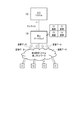
- FIG. 1 is a diagram schematically showing a configuration example of a railway vehicle monitor system according to an embodiment.
- FIG. 2 is a sequence diagram for explaining an example of the operation of the railway vehicle monitor system according to the embodiment.
- FIG. 3 is a diagram for explaining an example of an operation of transmitting a thumbnail from the on-board gateway of the railcar monitor system of the embodiment to the ground system.
- FIG. 1 is a diagram schematically showing a configuration example of a railway vehicle monitor system according to an embodiment.
- the railway vehicle monitor system of the present embodiment includes a ground system 102, an on-board gateway 103, an on-board network 104, and a plurality of cameras C1-C4.
- the plurality of cameras C1 to C4 are installed in various places, for example, for passenger compartments, entrance/exit gates, luggage racks at both ends of passenger compartments, aisles, etc. in a railroad car, and are arranged in a traveling direction (upward or downward direction). Can be installed unidirectionally or bidirectionally.
- the plurality of cameras C1 to C4 are configured to be communicable via the on-vehicle network 104, and can output image data taken at a predetermined frame rate, for example.
- the on-board gateway 103 can receive image (moving image or still image) data from all cameras installed in the rail car, and receives image data from some cameras selected from all the cameras. It is also possible.
- the on-board network 104 may be a network used exclusively for in-vehicle crime prevention, and for example, a LAN for communicating between various devices installed in the vehicle such as a plurality of cameras C1-C4 and the on-board gateway 103. It may be a (Local Area Network) network, or may be a wireless network or a wired network.
- a network used exclusively for in-vehicle crime prevention, and for example, a LAN for communicating between various devices installed in the vehicle such as a plurality of cameras C1-C4 and the on-board gateway 103. It may be a (Local Area Network) network, or may be a wireless network or a wired network.
- the on-board gateway 103 can transmit the in-vehicle information obtained via the on-vehicle network 104 to the ground system 102 and the information received from the ground system 102 to various devices installed in the vehicle. it can.
- the on-board gateway 103 can process the information data obtained from the on-board network and transmit the processed data to the ground system 102.
- the on-board gateway 103 can be connected to the ground system 102 in a communicable state by a mobile phone network (LTE (registered trademark) or the like), wireless LAN (Wi-Fi or the like), millimeter wave, or wired communication. , Wireless communication or wired communication.
- LTE registered trademark
- Wi-Fi wireless LAN
- Wi-Fi Wireless LAN
- the on-vehicle gateway 103 includes, for example, an arithmetic unit including at least one processor such as a CPU (central processing unit) and an MPU (micro processing unit), and a memory in which a program executed by the processor is recorded.
- the software program is installed so that the processing described below can be realized.
- the on-board gateway 103 includes a video information aggregating unit 31, a ground transmission amount adjusting unit 32, a ground transmitting unit 33, and a ground communication band measuring unit 34.
- the configuration of transmitting data from the on-board gateway 103 to the ground system 102 will be mainly described.
- the on-board gateway 103 includes a ground receiving unit (not shown) and an on-board device transmitting unit. It is possible to transmit and receive signal data to and from the ground system 102 via the ground transmission unit and the ground reception unit.
- the video information aggregating unit 31 can aggregate data of images taken by a plurality of cameras C1-C4.
- the video information aggregating unit 31 can extract a part of the data from the aggregated image data and transmit the data to the ground transmission amount adjusting unit 32.
- the video information aggregating unit 31 displays the data of the image captured by the camera installed in the direction opposite to the traveling direction of the railway vehicle, for example. It may be transmitted to the ground transmission amount adjusting unit 32.
- the video information aggregating unit 31 sends the data captured by the cameras installed at different positions to the ground transmission amount adjusting unit 32 when the railway vehicle is traveling and when the railway vehicle is stopped at the station.
- the data may be transmitted, or the data of different frame rates may be transmitted to the ground transmission amount adjusting unit 32.
- the video information aggregating unit 31 is installed at different positions depending on whether it is crowded or not.
- the data captured by the camera may be transmitted to the ground transmission amount adjusting unit 32, or the data having a different frame rate may be transmitted to the ground transmission amount adjusting unit 32.
- the video information aggregating unit 31 receives, for example, data of images taken by the cameras C1 to C4 installed in the railroad car and correlates them with information such as a shooting location (camera position) and shooting date and time.
- a buffer memory for recording may be provided. If the cameras C1-C4 are equipped with a microphone, the video information aggregating unit 31 can aggregate audio data together with image data. In this case, for example, voice data can be transmitted from the onboard gateway 103 to the ground system 102 in response to a request from the ground system 102.
- the ground communication band measurement unit 34 can transmit, for example, the communication band used between the ground transmission unit 33 and the ground system 102 within a predetermined time based on the communication capacity currently used.
- the image data capacity can be acquired.
- the ground communication band measurement unit 34 can obtain information on the current communication status from the ground system 102, for example.
- the ground communication band measuring unit 34 transmits the measured image data capacity to the ground transmission amount adjusting unit 32.
- the ground transmission amount adjusting unit 32 adjusts the data amount of the image data received from the video information aggregating unit 31, based on the transmittable data amount received from the ground communication band measuring unit 34.
- the ground transmission amount adjusting unit 32 can compress the image data, for example, by changing the data size of the image data received from the video information aggregating unit 31.
- the ground-to-ground transmission amount adjusting unit 32 uses, for example, compressed image data to generate a thumbnail that combines images captured by the plurality of cameras C1 to C4, and transmits the thumbnail to the ground system 102. It is possible to adjust the amount of data. At this time, by generating a thumbnail that combines images taken by the plurality of cameras C1 to C4 at substantially the same time, it is possible to check the inside of the vehicle at a plurality of angles at the same time and at the same time. It is possible to collectively manage the image capturing time.
- the ground transmission amount adjusting unit 32 combines, for example, four pieces of data in which data of the number of pixels corresponding to VGA (Video Graphics Array) is compressed into data of the number of pixels corresponding to QVGA (Quarter Video Graphics Array), and thumbnails are combined. Images can be generated.
- VGA Video Graphics Array
- QVGA Quadrater Video Graphics Array
- the ground transmission amount adjustment unit 32 transmits the transmission data after adjusting the data amount to the ground transmission unit 33. Further, the ground transmission amount adjusting unit 32 can adjust the transmission data to be transmitted to the ground system 102 in accordance with the information and the request received from the ground system 102.
- the ground transmission unit 33 receives the transmission data from the ground transmission amount adjustment unit 32 and transmits the received transmission data to the ground system 102.
- the ground system 102 is capable of receiving transmission data transmitted from a plurality of railway vehicles, displays the received data on a monitor, and makes it visible to an observer.
- the ground system 102 is provided with, for example, an interface through which an observer can perform an investigation, and when the observer determines that a suspicious object or a suspicious person is photographed, the position information of the camera that photographs the suspicious object or the suspicious person is displayed on the vehicle. It is possible to notify the gateway 103 or request the on-board gateway 103 to enlarge and display a suspicious object or a suspicious person by designating a specific camera.
- FIG. 2 is a sequence diagram for explaining an example of the operation of the railway vehicle monitor system according to the embodiment.
- an operation of transmitting image data from the onboard gateway 103 to the ground system 102 using image data captured by the four cameras C1 to C4 will be described.
- Each of the plurality of cameras C1 to C4 transmits the captured image data to the on-board gateway 103 at a predetermined frame rate (step S1).
- the video information aggregating unit 31 of the on-board gateway 103 receives the data of the images captured by the plurality of cameras C1-C4 and aggregates the image data captured by the plurality of cameras C1-C4 (step S2). ).
- the video information aggregating unit 31 transmits data based on the aggregated image data to the ground transmission amount adjusting unit 32 (step S3).
- the video information aggregating unit 31 can transmit a part of the data extracted from the image data received from the plurality of cameras C1-C4 to the ground transmission amount adjusting unit 32 at a predetermined frame rate.
- the image data transmitted from the video information aggregating unit 31 to the ground transmission amount adjusting unit 32 may not be based on the image data aggregated from all the cameras C1-C4. It may be data based on image data taken by a camera of the unit.
- the video information aggregating unit 31 aggregates according to the traveling position and the traveling direction of the railway vehicle derived from the timetable and the time. It is possible to select the image data to be processed. Further, when the traveling distance of the railway vehicle can be acquired, the video information aggregation unit 31 can select the image data to be aggregated according to the traveling position and traveling direction of the railway vehicle corresponding to the traveling distance. Is.
- the video information aggregating unit 31 can select and aggregate data of images captured by a camera installed in a direction opposite to the traveling direction of the railway vehicle.
- the image information aggregating unit 31 selectively aggregates the data of the images taken by the cameras installed in the direction opposite to the traveling direction, so that the passenger sitting on the seat can be seen from the front side. It is possible to acquire the data of the image captured from the, and it is possible to efficiently check the presence or absence of a suspicious person or a suspicious object with the image data that fits in the limited data capacity.
- the video information aggregating unit 31 displays images captured by different cameras depending on the traveling position of the railroad vehicle when the train is stopped at the station and when traveling between the stations. It is possible to aggregate data.
- a camera installed to capture the appearance of passengers getting off and getting on is prioritized to collect image data, and the railroad car travels between stations.
- the image data can be preferentially aggregated from the camera installed so as to capture an image inside the passenger compartment of the vehicle.
- the ground transmission amount adjusting unit 32 requests the ground communication band measuring unit 34 for the image data capacity that can be transmitted from the onboard gateway 103 to the ground system 102.
- the ground communication band measuring unit 34 measures the communication capacity currently used between the on-board gateway 103 and the ground system 102, and based on the measurement result. Then, the image data capacity that can be transmitted from the on-board gateway 103 to the ground system 102 is transmitted to the ground transmission amount adjusting unit 32 (step S4).
- the ground communication band measuring unit 34 uses the communication band used between the on-board gateway 103 and the ground system 102 and the communication load based on the information received from the ground system 102, for example. Can be acquired in real time. Therefore, the ground communication band measurement unit 34 can dynamically measure the optimum number and size of frames of camera image data that can be transmitted from the onboard gateway 103 to the ground system 102.
- step S4 can be omitted.
- the ground transmission amount adjusting unit 32 changes the size of the image data received from the video information aggregating unit 31 and compresses the data according to the image data capacity that can be transmitted to the ground system 102 (step S5).
- the ground transmission amount adjusting unit 32 can change the size of the image data as data obtained by compressing the data of the pixel number corresponding to VGA into the data of the pixel number corresponding to QVGA.
- the ground-to-ground transmission amount adjusting unit 32 may send the compressed image data to the ground-to-ground transmitting unit 33.
- the ground transmission unit 33 can transmit the image data received from the ground transmission amount adjustment unit 32 to the ground system 102 (step S6).
- FIG. 3 is a diagram for explaining an example of an operation of transmitting a thumbnail from the onboard gateway to the ground system of the railway vehicle monitor system according to the embodiment.
- the ground transmission amount adjusting unit 32 may generate a thumbnail that is a combination of compressed image data.
- the transmission amount adjusting unit 32 to the ground can combine, for example, four pieces of image data having the number of pixels corresponding to QVGA to generate thumbnail image data having the number of pixels corresponding to VGA (step S7).
- the ground transmission amount adjusting unit 32 transmits the generated thumbnail image data to the ground transmitting unit 33.
- the ground transmission unit 33 can transmit the thumbnail image data received from the ground transmission amount adjustment unit 32 to the ground system 102 (step S8).
- the data amount of the image data aggregated by the onboard gateway 103 is adjusted, and the limited communication from the onboard gateway 103 to the ground system 102 is performed.
- the image data can be transmitted within the capacity, and the crime prevention in the railway vehicle can be enhanced.
- the ground system 102 includes a display unit such as a monitor for displaying the image data received from the on-board gateway 103 so that an observer can monitor the inside of the railway vehicle.
- the surveillance staff operates the user interface of the ground system 102 to display the image captured by the specific camera. It is possible to make a request to the upper gateway 103.
- the surveillance staff can also request the on-board gateway 103 to display an image other than the image displayed on the display means by operating the user interface of the ground system 102.
- the on-board gateway 103 When receiving the request from the ground system 102, the on-board gateway 103 transmits the data of the image captured by the specific camera (or a camera different from the camera currently selected) from the video information aggregating unit 31 to the ground. It is possible to transmit the requested image data from the ground transmission unit 33 to the ground system 102 after transmitting it to the amount adjustment unit 32 and adjusting the size of the image data as necessary. As a result, the observer can confirm the image displayed on the display unit, confirm whether or not the person is a suspicious person or a suspicious object, and take an appropriate response depending on the presence or absence of abnormality.
- the image size and the frame rate can be appropriately adjusted by the on-board gateway 103 according to the available communication capacity between the on-board gateway 103 and the ground system 102. Therefore, it is possible to smoothly communicate between the ground system 102 and the on-board gateway 103, and the on-ground observer looks like the inside of the vehicle in the same manner as when the crew members monitor the inside of the vehicle with images. Can be monitored.
- the monitor system of the present embodiment is based on image data (or image data and audio data) transmitted from the camera installed in the vehicle, and only when the state of the vehicle is visually confirmed by a monitor on the ground. Not only that, but it is also effective when monitoring is performed on the side of the ground system 102 using an image analysis technique. For example, when performing image analysis on the ground system 102, it is necessary to transmit a large amount of image data to the ground system 102 from the onboard gateway 103 by wireless communication or wired communication. By making maximum use of the communication capacity available with the system 102, it is possible to improve the accuracy of image analysis.
- the monitor system for monitoring the inside of the railway vehicle has been described as an example, but the monitor system of the present embodiment is not limited to this.
- it may be applied to vehicles other than railway vehicles (airplanes, ships, buses, taxis, etc.), or may be applied to facilities other than vehicles (transportation means such as elevators). Even in that case, the same effect as that of the above-described embodiment can be obtained.
Landscapes
- Engineering & Computer Science (AREA)
- Multimedia (AREA)
- Signal Processing (AREA)
- Business, Economics & Management (AREA)
- Emergency Management (AREA)
- Physics & Mathematics (AREA)
- General Physics & Mathematics (AREA)
- Mechanical Engineering (AREA)
- Closed-Circuit Television Systems (AREA)
- Train Traffic Observation, Control, And Security (AREA)
- Alarm Systems (AREA)
- Compression Or Coding Systems Of Tv Signals (AREA)
Abstract
実施形態によるモニタシステムは、鉄道車両内の防犯を強化する鉄道車両向けモニタシステムを提供するものであって、車両内の複数の位置に設置された複数のカメラ(C1-C4)と、複数のカメラ(C1-C4)で撮影された画像の少なくとも一部を集約可能な映像情報集約部(31)と、映像情報集約部(31)にて集約された画像のデータサイズを変更して圧縮し、圧縮後の複数の画像を合成したサムネイル画像データを生成する送信量調節部(32)と、サムネイル画像データを地上システムへ送信する送信部(33)と、を備えた鉄道車両向けモニタシステムである。
Description
本発明の実施形態は、鉄道車両向けモニタシステムに関する。
駅や鉄道車両は不特定の多くの人が利用可能な施設であり、防犯上、複数ヶ所に設置されたカメラにより撮影された画像を監視員が監視し、不審者や不審物の確認が行われることが望まれている。
また、昨今、車両内での様々なトラブルの増加により、鉄道車両内における防犯に対する取り組みを一層強化することが要求されている。車両内の犯罪を事前に食い止めるには、車内に設置されたカメラにより撮影された画像から、乗客の異常行動を事前に察知する必要があるが、車掌や乗務員が業務遂行と同時に、逐次、カメラ画像を確認することは困難である。このため、車両内に設置されたカメラにより撮影された画像を、地上にて監視することが検討されている。
しかしながら、例えば走行中の鉄道車両などの移動体から地上へ無線通信を行う際には、電波環境の変化により、場所によっては十分な通信帯域を確保できない状況となることが想定される。特に、画像情報はデータサイズが大きく、無線通信の帯域を多く使用するため、通信完了までに時間を要したり、通信エラーが発生したりする可能性があった。
従来、例えば鉄道車両にアクセスルータを設置して、情報(画像情報等)を地上へ送信する技術が提案されている。この技術において、アクセスルータは、入力されたデータを加工せずにそのまま送信するものである。また、アクセスルータと地上端末との間では無線通信が行われ、通信可能なデータ容量に制約がある。上記のことから、通信電波環境に応じて、地上にて鉄道車両内の状況を迅速に把握することが困難な場合が想定され、鉄道車両と地上との間の通信において、通信帯域を有効活用することが望まれていた。
本発明の実施形態は上記事情を鑑みて成されたものであって、鉄道車両内の防犯を強化する鉄道車両向けモニタシステムを提供することを目的とする。
実施形態による鉄道車両向けモニタシステムは、車両内の複数の位置に設置された複数のカメラと、複数の前記カメラで撮影された画像の少なくとも一部を集約可能な映像情報集約部と、前記映像情報集約部にて集約された画像のデータのサイズを変更して圧縮し、圧縮後の複数の画像を合成したサムネイル画像データを生成する送信量調節部と、前記サムネイル画像データを地上システムへ送信する送信部と、を備える。
以下、一実施形態の鉄道車両向けモニタシステムについて、図面を参照して詳細に説明する。
図1は、一実施形態の鉄道車両向けモニタシステムの一構成例を概略的に示す図である。
図1は、一実施形態の鉄道車両向けモニタシステムの一構成例を概略的に示す図である。
本実施形態の鉄道車両向けモニタシステムは、地上システム102と、車上ゲートウェイ103と、車上ネットワーク104と、複数のカメラC1-C4と、を備えている。
複数のカメラC1-C4は、例えば、鉄道車両内において、客室用、乗降口用、客室の両端の荷棚用、通路用等、様々な箇所に設置され、進行方向(上り方向又は下り方向)の一方向または双方向に設置され得る。複数のカメラC1-C4は車上ネットワーク104を介して通信可能に構成され、例えば所定のフレームレートで撮影した画像データを出力することが可能である。
複数のカメラC1-C4は、例えば、鉄道車両内において、客室用、乗降口用、客室の両端の荷棚用、通路用等、様々な箇所に設置され、進行方向(上り方向又は下り方向)の一方向または双方向に設置され得る。複数のカメラC1-C4は車上ネットワーク104を介して通信可能に構成され、例えば所定のフレームレートで撮影した画像データを出力することが可能である。
なお、図1では4台のカメラC1-C4を示しているが、鉄道車両内には多数のカメラを設置することが可能である。車上ゲートウェイ103は、鉄道車両内に設置されたすべてのカメラから画像(動画像又は静止画像)データを受信可能であり、すべてのカメラの中から選択した一部のカメラから画像データを受信することも可能である。
車上ネットワーク104は、車内防犯専用に用いられるネットワークであってもよく、例えば、複数のカメラC1-C4等の車内に設置された種々の機器と車上ゲートウェイ103との間で通信を行うLAN(Local Area Network)ネットワークであってもよく、無線ネットワークと有線ネットワークとのいずれであってもよい。
車上ゲートウェイ103は、車上ネットワーク104を介して得られる車両内の情報を地上システム102へ送信するとともに、地上システム102から受信した情報を車両内に搭載された種々の機器へ送信することができる。車上ゲートウェイ103は、車上ネットワークから得られた情報のデータを加工し、加工後のデータを地上システム102へ送信することができる。
車上ゲートウェイ103は、携帯電話網(LTE(登録商標)等)、無線LAN(Wi-Fi等)、ミリ波、又は有線通信等により、地上システム102と通信可能な状態で接続することができ、無線通信又は有線通信を行う。
車上ゲートウェイ103は、例えば、CPU(central processing unit)やMPU(micro processing unit)などのプロセッサを少なくとも1つと、プロセッサにより実行されるプログラムが記録されたメモリと、を備えた演算装置を含み、後述の処理を実現可能となるようにソフトウエア(プログラム)をインストールしたものである。
車上ゲートウェイ103は、映像情報集約部31と、対地上送信量調節部32と、対地上送信部33と、対地上通信帯域測定部34と、を備えている。なお、本実施形態では、車上ゲートウェイ103から地上システム102へデータを送信する構成について主に説明するが、車上ゲートウェイ103は、図示しない対地上受信部と、車上機器送信部と、を備え、対地上送信部および対地上受信部を介して、地上システム102との間で信号データを送信および受信することが可能である。
映像情報集約部31は、複数のカメラC1-C4で撮影された画像のデータを集約することができる。映像情報集約部31は、集約した画像データから一部のデータを抽出して対地上送信量調節部32へ送信することができる。例えば、鉄道車両の進行方向により客室内のシートの向きが変わる場合には、映像情報集約部31は、例えば鉄道車両の進行方向に対向する向きに設置されたカメラにより撮影された画像のデータを対地上送信量調節部32へ送信してもよい。
また、映像情報集約部31は、鉄道車両が走行しているときと、駅に停止しているときとで、異なる位置に設置されたカメラにより撮影されたデータを対地上送信量調節部32へ送信してもよく、異なるフレームレートのデータを対地上送信量調節部32へ送信してもよい。
また、例えば地上システム102から鉄道車両の混雑状況を取得することが可能である場合には、映像情報集約部31は、混雑しているときと混雑していないときとで、異なる位置に設置されたカメラにより撮影されたデータを対地上送信量調整部32へ送信してもよく、異なるフレームレートのデータを対地上送信量調整部32へ送信してもよい。
また、例えば地上システム102から鉄道車両の混雑状況を取得することが可能である場合には、映像情報集約部31は、混雑しているときと混雑していないときとで、異なる位置に設置されたカメラにより撮影されたデータを対地上送信量調整部32へ送信してもよく、異なるフレームレートのデータを対地上送信量調整部32へ送信してもよい。
なお、映像情報集約部31は、例えば、鉄道車両内に設置されたカメラC1-C4にて撮影された画像のデータを受信して、撮影場所(カメラ位置)や撮影日時などの情報と関連付けて記録するバッファメモリを備えていてもよい。
また、カメラC1-C4がマイクを備えている場合には、映像情報集約部31は、画像データと合わせて音声データを集約することができる。この場合、例えば地上システム102からの要求に応じて、音声データを車上ゲートウェイ103から地上システム102へ送信することができる。
また、カメラC1-C4がマイクを備えている場合には、映像情報集約部31は、画像データと合わせて音声データを集約することができる。この場合、例えば地上システム102からの要求に応じて、音声データを車上ゲートウェイ103から地上システム102へ送信することができる。
対地上通信帯域測定部34は、例えば、対地上送信部33と地上システム102との間で利用される通信帯域について、現在使用されている通信容量に基づいて、所定の時間内に送信可能な画像データ容量を取得することができる。なお、対地上通信帯域測定部34は、例えば地上システム102から、現在の通信状況に関する情報を得ることができる。対地上通信帯域測定部34は、測定した画像データ容量を対地上送信量調節部32へ送信する。
対地上送信量調節部32は、対地上通信帯域測定部34から受信した送信可能なデータ量に基づいて、映像情報集約部31から受信した画像データのデータ量を調整する。対地上送信量調節部32は、例えば、映像情報集約部31から受信した画像データのデータサイズを変更することにより、画像データを圧縮することが可能である。
また、対地上送信量調節部32は、例えば、圧縮された画像データを用いて、複数のカメラC1-C4にて撮影された画像を組み合わせたサムネイルを生成し、地上システム102へ送信する画像データのデータ量を調整することが可能である。このとき、複数のカメラC1-C4にて略同時に撮影された画像を組み合わせたサムネイルを生成することにより、同時刻における車両内の様子を複数のアングルで確認することが可能となるとともに、複数の画像の撮影時刻をまとめて管理することが可能となる。
対地上送信量調節部32は、例えば、VGA(Video Graphics Array)に対応した画素数のデータをQVGA(Quarter Video Graphics Array)に対応した画素数のデータに圧縮したデータを4つ組み合わせて、サムネイル画像を生成することができる。
対地上送信量調節部32は、データ量を調整した後の送信用データを対地上送信部33へ送信する。また、対地上送信量調節部32は、地上システム102から受信した情報や要求に応じて、地上システム102へ送信する送信用データを調整することが可能である。
対地上送信部33は、対地上送信量調節部32から送信用データを受信し、地上システム102へ受信した送信用データを送信する。
対地上送信部33は、対地上送信量調節部32から送信用データを受信し、地上システム102へ受信した送信用データを送信する。
地上システム102は、複数の鉄道車両から送信された送信用データを受信することが可能であり、受信したデータをモニタに表示させて、監視員により視認可能とする。地上システム102は、例えば監視員が捜査可能なインタフェースを備え、監視員が不審物や不審者が撮影されていると判断したときに、不審物や不審者を撮影したカメラの位置情報を車上ゲートウェイ103へ通知したり、特定のカメラを指定して不審物や不審者を拡大して表示するように車上ゲートウェイ103へ要求したりすることが可能である。
図2は、一実施形態の鉄道車両向けモニタシステムの動作の一例について説明するためのシーケンス図である。
ここでは、一例として、4台のカメラC1-C4で撮影された画像データを用いて、車上ゲートウェイ103から地上システム102へ画像データを送信する動作について説明する。
ここでは、一例として、4台のカメラC1-C4で撮影された画像データを用いて、車上ゲートウェイ103から地上システム102へ画像データを送信する動作について説明する。
複数のカメラC1-C4それぞれは、撮影した画像のデータを所定のフレームレートで車上ゲートウェイ103に送信する(ステップS1)。
車上ゲートウェイ103の映像情報集約部31は、複数のカメラC1-C4それぞれにて撮影された画像のデータを受信し、複数のカメラC1-C4にて撮影された画像データを集約する(ステップS2)。
車上ゲートウェイ103の映像情報集約部31は、複数のカメラC1-C4それぞれにて撮影された画像のデータを受信し、複数のカメラC1-C4にて撮影された画像データを集約する(ステップS2)。
続いて、映像情報集約部31は、集約した画像データに基づくデータを対地上送信量調節部32へ送信する(ステップS3)。このとき、映像情報集約部31は、複数のカメラC1-C4から受信した画像データから抽出した一部のデータを、所定のフレームレートで対地上送信量調節部32へ送信することができる。
なお、映像情報集約部31から対地上送信量調節部32へ送信される画像データは、全てのカメラC1-C4から集約した画像データに基づくものでなくてもよく、例えばカメラC1-C4の一部のカメラにて撮影された画像データに基づくデータであってもよい。
また、映像情報集約部31は、あらかじめ鉄道車両の当日の時刻表と時刻とを取得可能である場合には、時刻表と時刻とから導かれる鉄道車両の走行位置や走行方向に応じて、集約する画像データを選択することが可能である。
また、映像情報集約部31は、鉄道車両の走行距離を取得可能である場合には、走行距離に対応する鉄道車両の走行位置や走行方向に応じて、集約する画像データを選択することが可能である。
また、映像情報集約部31は、鉄道車両の走行距離を取得可能である場合には、走行距離に対応する鉄道車両の走行位置や走行方向に応じて、集約する画像データを選択することが可能である。
例えば、映像情報集約部31は、鉄道車両の走行方向と対向する方向に向かって設置されたカメラにより撮影された画像のデータを選択して集約することが可能である。鉄道車両の走行方向に応じてシートの向きが変わる場合には、走行方向と同じ向きに設置されたカメラからは、多くの場合、シートに座っている乗客の様子を後方側から撮影することとなり、不審者や不審物の有無を確認することが難しい。そこで、映像情報集約部31にて、走行方向と対向する方向に向かって設置されたカメラにより撮影された画像のデータを選択的に集約することにより、シートに座っている乗客の様子を正面側から撮影した画像のデータを取得可能となり、限られたデータ容量に収まる画像データにて、効率よく不審者や不審物の有無を確認することが可能となる。
また、例えば、映像情報集約部31は、鉄道車両の走行位置により、駅に停車しているときと、駅と駅との間を走行しているときとで、異なるカメラにより撮影された画像のデータを集約することが可能である。鉄道車両が駅に停車しているときには、例えば乗客の降車と乗車との様子を撮影するように設置されたカメラから優先して画像データを集約し、鉄道車両が駅と駅との間を走行しているときには、例えば車両の客室内を撮影するように設置されたカメラによりから優先して画像データを集約することができる。
対地上送信量調節部32は、対地上通信帯域測定部34へ、車上ゲートウェイ103から地上システム102へ送信可能な画像データ容量を要求する。
対地上通信帯域測定部34は、対地上送信量調節部32から要求を受信すると、車上ゲートウェイ103と地上システム102にとの間で現在使用されている通信容量を測定し、測定結果に基づいて車上ゲートウェイ103から地上システム102へ送信可能な画像データ容量を対地上送信量調節部32へ送信する(ステップS4)。
対地上通信帯域測定部34は、対地上送信量調節部32から要求を受信すると、車上ゲートウェイ103と地上システム102にとの間で現在使用されている通信容量を測定し、測定結果に基づいて車上ゲートウェイ103から地上システム102へ送信可能な画像データ容量を対地上送信量調節部32へ送信する(ステップS4)。
なお、対地上通信帯域測定部34は、例えば地上システム102から受信する情報等に基づいて、車上ゲートウェイ103と地上システム102との間で利用されている通信帯域の使用状況や通信負荷の状況をリアルタイムに取得することが可能である。したがって、対地上通信帯域測定部34は、車上ゲートウェイ103から地上システム102へ送信可能なカメラ画像データの最適なフレーム数およびサイズを動的に測定することが可能である。
なお、車上ゲートウェイ103と地上システム102との間で利用可能な通信データ容量が十分確保されている場合には、対地上通信帯域測定部34にて通信可能な画像データ容量を取得する必要はなく、上記ステップS4は省略することが可能である。
対地上送信量調節部32は、地上システム102へ送信可能な画像データ容量に応じて、映像情報集約部31から受信した画像データのサイズを変更してデータを圧縮する(ステップS5)。例えば、対地上送信量調節部32は、VGAに対応した画素数のデータをQVGAに対応した画素数のデータに圧縮したデータとして画像データのサイズを変更することができる。
対地上送信量調節部32は、圧縮した画像データを対地上送信部33へ送信してもよい。対地上送信部33は、対地上送信量調節部32から受信した画像データを地上システム102へ送信することができる(ステップS6)。
図3は、一実施形態の鉄道車両向けモニタシステムの車上ゲートウェイから地上システムへサムネイルを送信する動作の一例について説明するための図である。
対地上送信量調節部32は、圧縮した画像データを組み合わせて合成したサムネイルを生成してもよい。対地上送信量調節部32は、例えばQVGAに対応した画素数の画像データを4つ組み合わせて合成し、VGAに対応した画素数のサムネイル画像データを生成することができる(ステップS7)。
対地上送信量調節部32は、圧縮した画像データを組み合わせて合成したサムネイルを生成してもよい。対地上送信量調節部32は、例えばQVGAに対応した画素数の画像データを4つ組み合わせて合成し、VGAに対応した画素数のサムネイル画像データを生成することができる(ステップS7)。
対地上送信量調節部32は、生成したサムネイル画像データを対地上送信部33へ送信する。対地上送信部33は、対地上送信量調節部32から受信したサムネイル画像データを地上システム102へ送信することができる(ステップS8)。
上記のように、本実施形態の鉄道車両向けモニタシステムによれば、車上ゲートウェイ103にて集約された画像データのデータ量を調整し、車上ゲートウェイ103から地上システム102へ、限られた通信容量内にて画像データを送信することが可能となり、鉄道車両内の防犯を強化することができる。
なお、地上システム102は、車上ゲートウェイ103から受信された画像データを表示させるモニタ等の表示手段を備え、監視員が鉄道車両内の様子を監視可能としている。監視員は、表示手段に表示された画像において不審者や不審物などであることを特定するために、地上システム102のユーザインタフェースを操作することにより、特定のカメラにて撮影された画像を車上ゲートウェイ103へ要求することが可能である。
また、監視員は、地上システム102のユーザインタフェースを操作することにより、表示手段に表示されている画像以外の画像を表示するように、車上ゲートウェイ103へ要求することも可能である。
また、監視員は、地上システム102のユーザインタフェースを操作することにより、表示手段に表示されている画像以外の画像を表示するように、車上ゲートウェイ103へ要求することも可能である。
車上ゲートウェイ103は、地上システム102からの要求を受信したときには、映像情報集約部31から特定のカメラ(若しくは現在選択しているカメラと異なるカメラ)により撮影された画像のデータを、対地上送信量調節部32へ送信し、必要に応じて画像データのサイズを調整したのち、対地上送信部33から地上システム102へ要求された画像データを送信することが可能である。この結果、監視員は、表示手段に表示された画像を確認し、不審者や不審物であるか否かを確認し、異常の有無に応じて適切な対応をとることが可能である。
上記のように、本実施形態のモニタシステムでは、車上ゲートウェイ103と地上システム102との間で利用可能な通信容量に応じて、車上ゲートウェイ103にて画像のサイズおよびフレームレートを適宜調整可能であるため、地上システム102と車上ゲートウェイ103との通信をスムーズに行うことが可能であり、地上の監視員は、乗務員が車両内にて画像による監視を行うのと同様に車両内の様子を監視することが可能となる。
上記のように、本実施形態のモニタシステムでは、車上ゲートウェイ103と地上システム102との間で利用可能な通信容量に応じて、車上ゲートウェイ103にて画像のサイズおよびフレームレートを適宜調整可能であるため、地上システム102と車上ゲートウェイ103との通信をスムーズに行うことが可能であり、地上の監視員は、乗務員が車両内にて画像による監視を行うのと同様に車両内の様子を監視することが可能となる。
また本実施形態のモニタシステムは、車内に設置されたカメラから送信される画像データ(若しくは画像データおよび音声データ)を元に、車内の様子を地上にて監視員が目視にて確認する場合だけでなく、地上システム102側で画像解析技術を用いて監視する場合にも、効果的である。例えば、地上システム102にて画像解析を行う場合には、地上システム102に対して車上ゲートウェイ103から大容量の画像データを無線通信または有線通信により送信する必要があり、車上ゲートウェイ103と地上システム102との間にて利用可能である通信容量を最大限に活用することにより、画像解析の精度を向上させることが可能である。
本発明のいくつかの実施形態を説明したが、これらの実施形態は、例として提示したものであり、発明の範囲を限定することは意図していない。これら新規な実施形態は、その他の様々な形態で実施されることが可能であり、発明の要旨を逸脱しない範囲で、種々の省略、置き換え、変更を行うことができる。これら実施形態やその変形は、発明の範囲や要旨に含まれるとともに、特許請求の範囲に記載された発明とその均等の範囲に含まれる。
例えば、上記実施形態では、一例として鉄道車両内の様子を監視するモニタシステムについて説明したが、本実施形態のモニタシステムはこれに限定されるものではない。例えば、鉄道車両以外の乗り物(飛行機、船、バス、タクシー等)に適用されてもよく、乗り物以外の施設(エレベータ等の移動手段)に適用されても構わない。その場合であっても上述の実施形態と同様の効果を得ることができる。
Claims (4)
- 車両内の複数の位置に設置された複数のカメラと、
複数の前記カメラで撮影された画像の少なくとも一部を集約可能な映像情報集約部と、 前記映像情報集約部にて集約された画像のデータサイズを変更して圧縮し、圧縮後の複数の画像を合成したサムネイル画像データを生成する送信量調節部と、
前記サムネイル画像データを地上システムへ送信する送信部と、を備えた鉄道車両向けモニタシステム。 - 前記地上システムへ送信可能なデータ容量を測定し、前記送信量調節部へ測定結果を通知する通信帯域測定部をさらに備え、
前記送信量調節部は、前記通信帯域測定部での測定結果に応じて、圧縮後の前記画像のデータのサイズおよび前記サムネイル画像データのフレームレートを調整することができる、請求項1記載の鉄道車両向けモニタシステム。 - 前記映像情報集約部は、前記車両の進行方向と対向する向きに設置された前記カメラで撮影された画像を集約するように選択可能である、請求項1記載の鉄道車両向けモニタシステム。
- 前記地上システムから送信された信号を受信可能な受信部をさらに備え、
前記通信帯域測定部は、前記受信部を介して前記地上システムから取得される通信状況に応じて、前記地上システムへ送信可能なデータ容量を測定する、請求項2記載の鉄道車両向けモニタシステム。
Applications Claiming Priority (2)
| Application Number | Priority Date | Filing Date | Title |
|---|---|---|---|
| JP2019010278A JP2020117087A (ja) | 2019-01-24 | 2019-01-24 | 鉄道車両向けモニタシステム |
| JP2019-010278 | 2019-01-24 |
Publications (1)
| Publication Number | Publication Date |
|---|---|
| WO2020153483A1 true WO2020153483A1 (ja) | 2020-07-30 |
Family
ID=71736885
Family Applications (1)
| Application Number | Title | Priority Date | Filing Date |
|---|---|---|---|
| PCT/JP2020/002533 Ceased WO2020153483A1 (ja) | 2019-01-24 | 2020-01-24 | 鉄道車両向けモニタシステム |
Country Status (3)
| Country | Link |
|---|---|
| JP (1) | JP2020117087A (ja) |
| TW (1) | TW202028038A (ja) |
| WO (1) | WO2020153483A1 (ja) |
Cited By (1)
| Publication number | Priority date | Publication date | Assignee | Title |
|---|---|---|---|---|
| JP2024168498A (ja) * | 2023-05-24 | 2024-12-05 | トヨタ自動車株式会社 | 管理システム |
Families Citing this family (2)
| Publication number | Priority date | Publication date | Assignee | Title |
|---|---|---|---|---|
| JP7665978B2 (ja) * | 2020-12-23 | 2025-04-22 | 沖電気工業株式会社 | 通信システム |
| JP2024066276A (ja) * | 2022-11-01 | 2024-05-15 | トヨタ自動車株式会社 | 情報処理装置、情報処理方法及びプログラム |
Citations (5)
| Publication number | Priority date | Publication date | Assignee | Title |
|---|---|---|---|---|
| JP2005289248A (ja) * | 2004-04-01 | 2005-10-20 | Nec Corp | 列車情報提供装置、列車情報提供方法、及び列車情報提供処理プログラム |
| JP2013025523A (ja) * | 2011-07-20 | 2013-02-04 | Hitachi Kokusai Electric Inc | 監視システム、および、混雑率算出方法 |
| WO2013099488A1 (ja) * | 2011-12-28 | 2013-07-04 | 日産自動車株式会社 | 監視システム |
| JP2016116004A (ja) * | 2014-12-12 | 2016-06-23 | コニカミノルタ株式会社 | 被監視者監視装置および該方法ならびに被監視者監視システム |
| JP2017184045A (ja) * | 2016-03-30 | 2017-10-05 | 株式会社Nexpoint | 監視カメラシステム及び監視方法 |
-
2019
- 2019-01-24 JP JP2019010278A patent/JP2020117087A/ja active Pending
- 2019-09-20 TW TW108133968A patent/TW202028038A/zh unknown
-
2020
- 2020-01-24 WO PCT/JP2020/002533 patent/WO2020153483A1/ja not_active Ceased
Patent Citations (5)
| Publication number | Priority date | Publication date | Assignee | Title |
|---|---|---|---|---|
| JP2005289248A (ja) * | 2004-04-01 | 2005-10-20 | Nec Corp | 列車情報提供装置、列車情報提供方法、及び列車情報提供処理プログラム |
| JP2013025523A (ja) * | 2011-07-20 | 2013-02-04 | Hitachi Kokusai Electric Inc | 監視システム、および、混雑率算出方法 |
| WO2013099488A1 (ja) * | 2011-12-28 | 2013-07-04 | 日産自動車株式会社 | 監視システム |
| JP2016116004A (ja) * | 2014-12-12 | 2016-06-23 | コニカミノルタ株式会社 | 被監視者監視装置および該方法ならびに被監視者監視システム |
| JP2017184045A (ja) * | 2016-03-30 | 2017-10-05 | 株式会社Nexpoint | 監視カメラシステム及び監視方法 |
Cited By (1)
| Publication number | Priority date | Publication date | Assignee | Title |
|---|---|---|---|---|
| JP2024168498A (ja) * | 2023-05-24 | 2024-12-05 | トヨタ自動車株式会社 | 管理システム |
Also Published As
| Publication number | Publication date |
|---|---|
| TW202028038A (zh) | 2020-08-01 |
| JP2020117087A (ja) | 2020-08-06 |
Similar Documents
| Publication | Publication Date | Title |
|---|---|---|
| CN204517967U (zh) | 监视系统 | |
| US10723481B2 (en) | Method and system for monitoring and securing an enclosure of a vehicle, in particular of an aircraft | |
| US20130083196A1 (en) | Vehicle monitoring systems | |
| WO2020153483A1 (ja) | 鉄道車両向けモニタシステム | |
| CN107810506B (zh) | 具有隐私保护的远程查看系统 | |
| JP2020036211A (ja) | 照合システム | |
| JP2013025523A5 (ja) | ||
| US20040160340A1 (en) | Methods and apparatus for transportation vehicle security monitoring | |
| JP5436726B1 (ja) | 車両内監視システムおよび車両内監視方法 | |
| JP2020004252A (ja) | 残留物検出システム | |
| JP5340123B2 (ja) | 車両内監視システム、車両内監視方法、撮像装置、および、撮像方法 | |
| CN103299344B (zh) | 监视系统以及占用比例检测方法 | |
| TW201002072A (en) | Monitor system inside train | |
| KR101012324B1 (ko) | 열차의 탑승 안내 시스템 | |
| US20170316664A1 (en) | Method and system for monitoring and securing an enclosure of a vehicle, in particular of an aircraft | |
| JP4845580B2 (ja) | 列車混雑度通知システム | |
| CN204131640U (zh) | 一种高铁无线视频传输系统 | |
| Blancou et al. | eCall++: An enhanced emergency call system for improved road safety | |
| CN107730958B (zh) | 智能公交调度及数据传输系统 | |
| KR101660848B1 (ko) | 지하철 객실 감시 cctv시스템 및 그것을 이용한 지하철 객실정보 전송방법 | |
| JP2008085685A (ja) | 小型カメラ搭載型の列車内情報表示システム | |
| US20170355378A1 (en) | System, Method, and Apparatus for Detecting Vehicle Operator Conduct | |
| WO2021033304A1 (ja) | 列車監視システム及び列車監視方法 | |
| DE102021112520A1 (de) | Überwachungssystem und Überwachungsverfahren für ein Fahrzeug | |
| CN208538196U (zh) | 一种行车记录器 |
Legal Events
| Date | Code | Title | Description |
|---|---|---|---|
| 121 | Ep: the epo has been informed by wipo that ep was designated in this application |
Ref document number: 20744836 Country of ref document: EP Kind code of ref document: A1 |
|
| NENP | Non-entry into the national phase |
Ref country code: DE |
|
| 122 | Ep: pct application non-entry in european phase |
Ref document number: 20744836 Country of ref document: EP Kind code of ref document: A1 |