WO2020122237A1 - ポリウレタン組成物原料液剤、ポリウレタン組成物、及び混合吐出システム - Google Patents
ポリウレタン組成物原料液剤、ポリウレタン組成物、及び混合吐出システム Download PDFInfo
- Publication number
- WO2020122237A1 WO2020122237A1 PCT/JP2019/048996 JP2019048996W WO2020122237A1 WO 2020122237 A1 WO2020122237 A1 WO 2020122237A1 JP 2019048996 W JP2019048996 W JP 2019048996W WO 2020122237 A1 WO2020122237 A1 WO 2020122237A1
- Authority
- WO
- WIPO (PCT)
- Prior art keywords
- polyurethane composition
- raw material
- material liquid
- liquid agent
- cartridge
- Prior art date
- Legal status (The legal status is an assumption and is not a legal conclusion. Google has not performed a legal analysis and makes no representation as to the accuracy of the status listed.)
- Ceased
Links
Images


Classifications
-
- C—CHEMISTRY; METALLURGY
- C08—ORGANIC MACROMOLECULAR COMPOUNDS; THEIR PREPARATION OR CHEMICAL WORKING-UP; COMPOSITIONS BASED THEREON
- C08G—MACROMOLECULAR COMPOUNDS OBTAINED OTHERWISE THAN BY REACTIONS ONLY INVOLVING UNSATURATED CARBON-TO-CARBON BONDS
- C08G18/00—Polymeric products of isocyanates or isothiocyanates
- C08G18/06—Polymeric products of isocyanates or isothiocyanates with compounds having active hydrogen
- C08G18/70—Polymeric products of isocyanates or isothiocyanates with compounds having active hydrogen characterised by the isocyanates or isothiocyanates used
- C08G18/72—Polyisocyanates or polyisothiocyanates
- C08G18/77—Polyisocyanates or polyisothiocyanates having heteroatoms in addition to the isocyanate or isothiocyanate nitrogen and oxygen or sulfur
- C08G18/78—Nitrogen
- C08G18/79—Nitrogen characterised by the polyisocyanates used, these having groups formed by oligomerisation of isocyanates or isothiocyanates
- C08G18/791—Nitrogen characterised by the polyisocyanates used, these having groups formed by oligomerisation of isocyanates or isothiocyanates containing isocyanurate groups
-
- C—CHEMISTRY; METALLURGY
- C09—DYES; PAINTS; POLISHES; NATURAL RESINS; ADHESIVES; COMPOSITIONS NOT OTHERWISE PROVIDED FOR; APPLICATIONS OF MATERIALS NOT OTHERWISE PROVIDED FOR
- C09D—COATING COMPOSITIONS, e.g. PAINTS, VARNISHES OR LACQUERS; FILLING PASTES; CHEMICAL PAINT OR INK REMOVERS; INKS; CORRECTING FLUIDS; WOODSTAINS; PASTES OR SOLIDS FOR COLOURING OR PRINTING; USE OF MATERIALS THEREFOR
- C09D5/00—Coating compositions, e.g. paints, varnishes or lacquers, characterised by their physical nature or the effects produced; Filling pastes
- C09D5/18—Fireproof paints including high temperature resistant paints
-
- B—PERFORMING OPERATIONS; TRANSPORTING
- B29—WORKING OF PLASTICS; WORKING OF SUBSTANCES IN A PLASTIC STATE IN GENERAL
- B29B—PREPARATION OR PRETREATMENT OF THE MATERIAL TO BE SHAPED; MAKING GRANULES OR PREFORMS; RECOVERY OF PLASTICS OR OTHER CONSTITUENTS OF WASTE MATERIAL CONTAINING PLASTICS
- B29B7/00—Mixing; Kneading
- B29B7/30—Mixing; Kneading continuous, with mechanical mixing or kneading devices
- B29B7/32—Mixing; Kneading continuous, with mechanical mixing or kneading devices with non-movable mixing or kneading devices
-
- C—CHEMISTRY; METALLURGY
- C08—ORGANIC MACROMOLECULAR COMPOUNDS; THEIR PREPARATION OR CHEMICAL WORKING-UP; COMPOSITIONS BASED THEREON
- C08G—MACROMOLECULAR COMPOUNDS OBTAINED OTHERWISE THAN BY REACTIONS ONLY INVOLVING UNSATURATED CARBON-TO-CARBON BONDS
- C08G18/00—Polymeric products of isocyanates or isothiocyanates
- C08G18/06—Polymeric products of isocyanates or isothiocyanates with compounds having active hydrogen
- C08G18/28—Polymeric products of isocyanates or isothiocyanates with compounds having active hydrogen characterised by the compounds used containing active hydrogen
- C08G18/40—High-molecular-weight compounds
- C08G18/42—Polycondensates having carboxylic or carbonic ester groups in the main chain
-
- C—CHEMISTRY; METALLURGY
- C08—ORGANIC MACROMOLECULAR COMPOUNDS; THEIR PREPARATION OR CHEMICAL WORKING-UP; COMPOSITIONS BASED THEREON
- C08G—MACROMOLECULAR COMPOUNDS OBTAINED OTHERWISE THAN BY REACTIONS ONLY INVOLVING UNSATURATED CARBON-TO-CARBON BONDS
- C08G18/00—Polymeric products of isocyanates or isothiocyanates
- C08G18/06—Polymeric products of isocyanates or isothiocyanates with compounds having active hydrogen
- C08G18/70—Polymeric products of isocyanates or isothiocyanates with compounds having active hydrogen characterised by the isocyanates or isothiocyanates used
- C08G18/72—Polyisocyanates or polyisothiocyanates
-
- C—CHEMISTRY; METALLURGY
- C08—ORGANIC MACROMOLECULAR COMPOUNDS; THEIR PREPARATION OR CHEMICAL WORKING-UP; COMPOSITIONS BASED THEREON
- C08J—WORKING-UP; GENERAL PROCESSES OF COMPOUNDING; AFTER-TREATMENT NOT COVERED BY SUBCLASSES C08B, C08C, C08F, C08G or C08H
- C08J9/00—Working-up of macromolecular substances to porous or cellular articles or materials; After-treatment thereof
- C08J9/0014—Use of organic additives
- C08J9/0019—Use of organic additives halogenated
-
- C—CHEMISTRY; METALLURGY
- C08—ORGANIC MACROMOLECULAR COMPOUNDS; THEIR PREPARATION OR CHEMICAL WORKING-UP; COMPOSITIONS BASED THEREON
- C08J—WORKING-UP; GENERAL PROCESSES OF COMPOUNDING; AFTER-TREATMENT NOT COVERED BY SUBCLASSES C08B, C08C, C08F, C08G or C08H
- C08J9/00—Working-up of macromolecular substances to porous or cellular articles or materials; After-treatment thereof
- C08J9/0014—Use of organic additives
- C08J9/0038—Use of organic additives containing phosphorus
-
- C—CHEMISTRY; METALLURGY
- C08—ORGANIC MACROMOLECULAR COMPOUNDS; THEIR PREPARATION OR CHEMICAL WORKING-UP; COMPOSITIONS BASED THEREON
- C08J—WORKING-UP; GENERAL PROCESSES OF COMPOUNDING; AFTER-TREATMENT NOT COVERED BY SUBCLASSES C08B, C08C, C08F, C08G or C08H
- C08J9/00—Working-up of macromolecular substances to porous or cellular articles or materials; After-treatment thereof
- C08J9/0066—Use of inorganic compounding ingredients
-
- C—CHEMISTRY; METALLURGY
- C08—ORGANIC MACROMOLECULAR COMPOUNDS; THEIR PREPARATION OR CHEMICAL WORKING-UP; COMPOSITIONS BASED THEREON
- C08J—WORKING-UP; GENERAL PROCESSES OF COMPOUNDING; AFTER-TREATMENT NOT COVERED BY SUBCLASSES C08B, C08C, C08F, C08G or C08H
- C08J9/00—Working-up of macromolecular substances to porous or cellular articles or materials; After-treatment thereof
- C08J9/04—Working-up of macromolecular substances to porous or cellular articles or materials; After-treatment thereof using blowing gases generated by a previously added blowing agent
- C08J9/12—Working-up of macromolecular substances to porous or cellular articles or materials; After-treatment thereof using blowing gases generated by a previously added blowing agent by a physical blowing agent
- C08J9/14—Working-up of macromolecular substances to porous or cellular articles or materials; After-treatment thereof using blowing gases generated by a previously added blowing agent by a physical blowing agent organic
- C08J9/143—Halogen containing compounds
- C08J9/144—Halogen containing compounds containing carbon, halogen and hydrogen only
-
- C—CHEMISTRY; METALLURGY
- C08—ORGANIC MACROMOLECULAR COMPOUNDS; THEIR PREPARATION OR CHEMICAL WORKING-UP; COMPOSITIONS BASED THEREON
- C08L—COMPOSITIONS OF MACROMOLECULAR COMPOUNDS
- C08L75/00—Compositions of polyureas or polyurethanes; Compositions of derivatives of such polymers
- C08L75/04—Polyurethanes
- C08L75/06—Polyurethanes from polyesters
-
- C—CHEMISTRY; METALLURGY
- C09—DYES; PAINTS; POLISHES; NATURAL RESINS; ADHESIVES; COMPOSITIONS NOT OTHERWISE PROVIDED FOR; APPLICATIONS OF MATERIALS NOT OTHERWISE PROVIDED FOR
- C09D—COATING COMPOSITIONS, e.g. PAINTS, VARNISHES OR LACQUERS; FILLING PASTES; CHEMICAL PAINT OR INK REMOVERS; INKS; CORRECTING FLUIDS; WOODSTAINS; PASTES OR SOLIDS FOR COLOURING OR PRINTING; USE OF MATERIALS THEREFOR
- C09D175/00—Coating compositions based on polyureas or polyurethanes; Coating compositions based on derivatives of such polymers
- C09D175/04—Polyurethanes
- C09D175/06—Polyurethanes from polyesters
-
- C—CHEMISTRY; METALLURGY
- C09—DYES; PAINTS; POLISHES; NATURAL RESINS; ADHESIVES; COMPOSITIONS NOT OTHERWISE PROVIDED FOR; APPLICATIONS OF MATERIALS NOT OTHERWISE PROVIDED FOR
- C09D—COATING COMPOSITIONS, e.g. PAINTS, VARNISHES OR LACQUERS; FILLING PASTES; CHEMICAL PAINT OR INK REMOVERS; INKS; CORRECTING FLUIDS; WOODSTAINS; PASTES OR SOLIDS FOR COLOURING OR PRINTING; USE OF MATERIALS THEREFOR
- C09D5/00—Coating compositions, e.g. paints, varnishes or lacquers, characterised by their physical nature or the effects produced; Filling pastes
- C09D5/02—Emulsion paints including aerosols
- C09D5/021—Aerosols
-
- C—CHEMISTRY; METALLURGY
- C09—DYES; PAINTS; POLISHES; NATURAL RESINS; ADHESIVES; COMPOSITIONS NOT OTHERWISE PROVIDED FOR; APPLICATIONS OF MATERIALS NOT OTHERWISE PROVIDED FOR
- C09D—COATING COMPOSITIONS, e.g. PAINTS, VARNISHES OR LACQUERS; FILLING PASTES; CHEMICAL PAINT OR INK REMOVERS; INKS; CORRECTING FLUIDS; WOODSTAINS; PASTES OR SOLIDS FOR COLOURING OR PRINTING; USE OF MATERIALS THEREFOR
- C09D7/00—Features of coating compositions, not provided for in group C09D5/00; Processes for incorporating ingredients in coating compositions
- C09D7/40—Additives
- C09D7/45—Anti-settling agents
-
- C—CHEMISTRY; METALLURGY
- C09—DYES; PAINTS; POLISHES; NATURAL RESINS; ADHESIVES; COMPOSITIONS NOT OTHERWISE PROVIDED FOR; APPLICATIONS OF MATERIALS NOT OTHERWISE PROVIDED FOR
- C09D—COATING COMPOSITIONS, e.g. PAINTS, VARNISHES OR LACQUERS; FILLING PASTES; CHEMICAL PAINT OR INK REMOVERS; INKS; CORRECTING FLUIDS; WOODSTAINS; PASTES OR SOLIDS FOR COLOURING OR PRINTING; USE OF MATERIALS THEREFOR
- C09D7/00—Features of coating compositions, not provided for in group C09D5/00; Processes for incorporating ingredients in coating compositions
- C09D7/40—Additives
- C09D7/60—Additives non-macromolecular
- C09D7/61—Additives non-macromolecular inorganic
-
- C—CHEMISTRY; METALLURGY
- C09—DYES; PAINTS; POLISHES; NATURAL RESINS; ADHESIVES; COMPOSITIONS NOT OTHERWISE PROVIDED FOR; APPLICATIONS OF MATERIALS NOT OTHERWISE PROVIDED FOR
- C09D—COATING COMPOSITIONS, e.g. PAINTS, VARNISHES OR LACQUERS; FILLING PASTES; CHEMICAL PAINT OR INK REMOVERS; INKS; CORRECTING FLUIDS; WOODSTAINS; PASTES OR SOLIDS FOR COLOURING OR PRINTING; USE OF MATERIALS THEREFOR
- C09D7/00—Features of coating compositions, not provided for in group C09D5/00; Processes for incorporating ingredients in coating compositions
- C09D7/40—Additives
- C09D7/65—Additives macromolecular
-
- C—CHEMISTRY; METALLURGY
- C09—DYES; PAINTS; POLISHES; NATURAL RESINS; ADHESIVES; COMPOSITIONS NOT OTHERWISE PROVIDED FOR; APPLICATIONS OF MATERIALS NOT OTHERWISE PROVIDED FOR
- C09K—MATERIALS FOR MISCELLANEOUS APPLICATIONS, NOT PROVIDED FOR ELSEWHERE
- C09K21/00—Fireproofing materials
- C09K21/06—Organic materials
- C09K21/12—Organic materials containing phosphorus
-
- B—PERFORMING OPERATIONS; TRANSPORTING
- B05—SPRAYING OR ATOMISING IN GENERAL; APPLYING FLUENT MATERIALS TO SURFACES, IN GENERAL
- B05C—APPARATUS FOR APPLYING FLUENT MATERIALS TO SURFACES, IN GENERAL
- B05C17/00—Hand tools or apparatus using hand held tools, for applying liquids or other fluent materials to, for spreading applied liquids or other fluent materials on, or for partially removing applied liquids or other fluent materials from, surfaces
- B05C17/005—Hand tools or apparatus using hand held tools, for applying liquids or other fluent materials to, for spreading applied liquids or other fluent materials on, or for partially removing applied liquids or other fluent materials from, surfaces for discharging material from a reservoir or container located in or on the hand tool through an outlet orifice by pressure without using surface contacting members like pads or brushes
- B05C17/00553—Hand tools or apparatus using hand held tools, for applying liquids or other fluent materials to, for spreading applied liquids or other fluent materials on, or for partially removing applied liquids or other fluent materials from, surfaces for discharging material from a reservoir or container located in or on the hand tool through an outlet orifice by pressure without using surface contacting members like pads or brushes with means allowing the stock of material to consist of at least two different components
-
- B—PERFORMING OPERATIONS; TRANSPORTING
- B05—SPRAYING OR ATOMISING IN GENERAL; APPLYING FLUENT MATERIALS TO SURFACES, IN GENERAL
- B05C—APPARATUS FOR APPLYING FLUENT MATERIALS TO SURFACES, IN GENERAL
- B05C17/00—Hand tools or apparatus using hand held tools, for applying liquids or other fluent materials to, for spreading applied liquids or other fluent materials on, or for partially removing applied liquids or other fluent materials from, surfaces
- B05C17/005—Hand tools or apparatus using hand held tools, for applying liquids or other fluent materials to, for spreading applied liquids or other fluent materials on, or for partially removing applied liquids or other fluent materials from, surfaces for discharging material from a reservoir or container located in or on the hand tool through an outlet orifice by pressure without using surface contacting members like pads or brushes
- B05C17/00553—Hand tools or apparatus using hand held tools, for applying liquids or other fluent materials to, for spreading applied liquids or other fluent materials on, or for partially removing applied liquids or other fluent materials from, surfaces for discharging material from a reservoir or container located in or on the hand tool through an outlet orifice by pressure without using surface contacting members like pads or brushes with means allowing the stock of material to consist of at least two different components
- B05C17/00559—Hand tools or apparatus using hand held tools, for applying liquids or other fluent materials to, for spreading applied liquids or other fluent materials on, or for partially removing applied liquids or other fluent materials from, surfaces for discharging material from a reservoir or container located in or on the hand tool through an outlet orifice by pressure without using surface contacting members like pads or brushes with means allowing the stock of material to consist of at least two different components the different components being stored in coaxial chambers
-
- B—PERFORMING OPERATIONS; TRANSPORTING
- B05—SPRAYING OR ATOMISING IN GENERAL; APPLYING FLUENT MATERIALS TO SURFACES, IN GENERAL
- B05C—APPARATUS FOR APPLYING FLUENT MATERIALS TO SURFACES, IN GENERAL
- B05C17/00—Hand tools or apparatus using hand held tools, for applying liquids or other fluent materials to, for spreading applied liquids or other fluent materials on, or for partially removing applied liquids or other fluent materials from, surfaces
- B05C17/005—Hand tools or apparatus using hand held tools, for applying liquids or other fluent materials to, for spreading applied liquids or other fluent materials on, or for partially removing applied liquids or other fluent materials from, surfaces for discharging material from a reservoir or container located in or on the hand tool through an outlet orifice by pressure without using surface contacting members like pads or brushes
- B05C17/00583—Hand tools or apparatus using hand held tools, for applying liquids or other fluent materials to, for spreading applied liquids or other fluent materials on, or for partially removing applied liquids or other fluent materials from, surfaces for discharging material from a reservoir or container located in or on the hand tool through an outlet orifice by pressure without using surface contacting members like pads or brushes the container for the material to be dispensed being deformable
-
- B—PERFORMING OPERATIONS; TRANSPORTING
- B05—SPRAYING OR ATOMISING IN GENERAL; APPLYING FLUENT MATERIALS TO SURFACES, IN GENERAL
- B05C—APPARATUS FOR APPLYING FLUENT MATERIALS TO SURFACES, IN GENERAL
- B05C17/00—Hand tools or apparatus using hand held tools, for applying liquids or other fluent materials to, for spreading applied liquids or other fluent materials on, or for partially removing applied liquids or other fluent materials from, surfaces
- B05C17/005—Hand tools or apparatus using hand held tools, for applying liquids or other fluent materials to, for spreading applied liquids or other fluent materials on, or for partially removing applied liquids or other fluent materials from, surfaces for discharging material from a reservoir or container located in or on the hand tool through an outlet orifice by pressure without using surface contacting members like pads or brushes
- B05C17/015—Hand tools or apparatus using hand held tools, for applying liquids or other fluent materials to, for spreading applied liquids or other fluent materials on, or for partially removing applied liquids or other fluent materials from, surfaces for discharging material from a reservoir or container located in or on the hand tool through an outlet orifice by pressure without using surface contacting members like pads or brushes with pneumatically or hydraulically actuated piston or the like
-
- B—PERFORMING OPERATIONS; TRANSPORTING
- B05—SPRAYING OR ATOMISING IN GENERAL; APPLYING FLUENT MATERIALS TO SURFACES, IN GENERAL
- B05C—APPARATUS FOR APPLYING FLUENT MATERIALS TO SURFACES, IN GENERAL
- B05C9/00—Apparatus or plant for applying liquid or other fluent material to surfaces by means not covered by any preceding group, or in which the means of applying the liquid or other fluent material is not important
- B05C9/06—Apparatus or plant for applying liquid or other fluent material to surfaces by means not covered by any preceding group, or in which the means of applying the liquid or other fluent material is not important for applying two different liquids or other fluent materials, or the same liquid or other fluent material twice, to the same side of the work
-
- C—CHEMISTRY; METALLURGY
- C08—ORGANIC MACROMOLECULAR COMPOUNDS; THEIR PREPARATION OR CHEMICAL WORKING-UP; COMPOSITIONS BASED THEREON
- C08G—MACROMOLECULAR COMPOUNDS OBTAINED OTHERWISE THAN BY REACTIONS ONLY INVOLVING UNSATURATED CARBON-TO-CARBON BONDS
- C08G2110/00—Foam properties
-
- C—CHEMISTRY; METALLURGY
- C08—ORGANIC MACROMOLECULAR COMPOUNDS; THEIR PREPARATION OR CHEMICAL WORKING-UP; COMPOSITIONS BASED THEREON
- C08J—WORKING-UP; GENERAL PROCESSES OF COMPOUNDING; AFTER-TREATMENT NOT COVERED BY SUBCLASSES C08B, C08C, C08F, C08G or C08H
- C08J2203/00—Foams characterized by the expanding agent
- C08J2203/16—Unsaturated hydrocarbons
- C08J2203/162—Halogenated unsaturated hydrocarbons, e.g. H2C=CF2
-
- C—CHEMISTRY; METALLURGY
- C08—ORGANIC MACROMOLECULAR COMPOUNDS; THEIR PREPARATION OR CHEMICAL WORKING-UP; COMPOSITIONS BASED THEREON
- C08J—WORKING-UP; GENERAL PROCESSES OF COMPOUNDING; AFTER-TREATMENT NOT COVERED BY SUBCLASSES C08B, C08C, C08F, C08G or C08H
- C08J2375/00—Characterised by the use of polyureas or polyurethanes; Derivatives of such polymers
- C08J2375/04—Polyurethanes
Definitions
- the present invention relates to a polyurethane composition raw material liquid agent filled in a cartridge-like container, a polyurethane composition formed from this polyurethane composition raw material liquid agent and another polyurethane composition raw material liquid agent, and this polyurethane composition raw material liquid agent
- the present invention relates to a mixing/discharging system including a cartridge-like container having an opening.
- polyurethane foam is formed by spraying a mixture of a polyol liquid agent containing a polyol and a polyisocyanate liquid agent containing a polyisocyanate with a large-sized device such as a spray gun.
- Patent Literature 1 discloses an on-site foaming urethane construction device. This device is a raw material supply part that pumps each liquid foaming raw material from two drums, a raw material preliminary tank that preliminarily stores and controls the temperature of each liquid foaming raw material from the raw material supply part, and each liquid foaming raw material is stirred and mixed. And an agitating and discharging unit for discharging.
- the polyol liquid and the polyisocyanate liquid stored in the drum can are stirred by stirring blades immediately before use, and the components that have settled in the liquid are uniformly dispersed.
- Polyurethane foam may be filled as a repairing agent in a small area defect that has occurred in vehicles, buildings, etc.
- the polyol liquid and polyisocyanate liquid should be used with a small device such as a caulking gun that can be easily installed on site. It is mixed and discharged.
- a polyol liquid agent and a polyisocyanate liquid agent are filled in a cartridge-like container and stored at room temperature or low temperature for a long time.
- polyurethane foam used as a heat insulating material is required to have high flame retardant performance, and it is considered to add a flame retardant having a high flame retardant effect to liquid agents used in small-sized devices.
- Many of the flame retardants having a high flame retardant effect are in a solid state, and are mixed with a liquid agent as a filler.
- the filler contained in the liquid agent often precipitates at the bottom of the container, and when the filler precipitates at the bottom of the container, the liquid agent is agitated to precipitate the filler. Need to be uniformly dispersed.
- the cartridge-shaped container filled with the liquid agent cannot be stirred by the stirring blade for a large device immediately before its use, and the cartridge-shaped container filled with the liquid agent has to be shaken by hand for stirring.
- the cartridge-shaped container filled with each of the polyol liquid agent and the polyisocyanate liquid agent is shaken by hand, it is difficult to uniformly disperse the settled filler in each liquid agent.
- a polyurethane composition raw material liquid agent filled in a cartridge-like container, which contains a polyol or a polyisocyanate and which can uniformly disperse the filler that has settled by shaking by hand.
- the present inventors have found that when the viscosity of a polyurethane composition raw material liquid agent filled in a cartridge-like container containing a polyol or polyisocyanate and a filler is made larger than a predetermined value, the precipitated filler can be uniformly dispersed only by shaking by hand.
- the present invention has been completed and the present invention has been completed.
- the present invention provides a mixture discharge system comprising the following polyurethane composition raw material liquid agent, a polyurethane composition formed by using the polyurethane composition raw material liquid agent, and a cartridge-like container filled with the polyurethane composition raw material liquid agent. To do.
- the solid flame retardant is selected from the group consisting of red phosphorus flame retardants, boron-containing flame retardants, bromine-containing flame retardants, phosphate-containing flame retardants, chlorine-containing flame retardants, antimony-containing flame retardants, and metal hydroxides. At least one of the following is the polyurethane composition raw material liquid agent described in [4]. [6] The polyurethane composition raw material liquid according to any one of [1] to [5], which has a viscosity of 3300 mPa ⁇ s or more at 25°C and a rotation speed of 10 rpm.
- a mixed discharge system comprising two cartridge-like containers.
- the polyurethane composition raw material liquid agent filled in the cartridge-shaped container of the present invention is such that even if the filler is settled during long-term storage at room temperature or low temperature, the settling filler is uniformly dispersed only by shaking by hand. Is done.
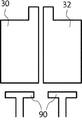
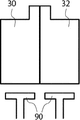
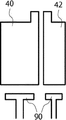
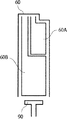
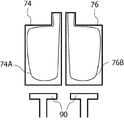
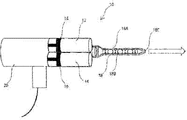
- FIG. 1 is a schematic diagram showing an embodiment of a two-liquid type cartridge-like container applied to the present invention. It is a schematic diagram which shows other embodiment of the 2 liquid type cartridge-like container applied to this invention. It is a schematic diagram which shows other embodiment of the 2 liquid type cartridge-like container applied to this invention. It is a schematic diagram which shows other embodiment of the 2 liquid type cartridge-like container applied to this invention. It is a schematic diagram which shows other embodiment of the 2 liquid type cartridge-like container applied to this invention. It is a schematic diagram which shows other embodiment of the 2 liquid type cartridge-like container applied to this invention. It is a schematic diagram which shows other embodiment of the 2 liquid type cartridge-like container applied to this invention. It is a schematic diagram which shows other embodiment of the 2 liquid type cartridge-like container applied to this invention. It is a schematic diagram which shows one Embodiment of the mixed discharge system of this invention.
- the polyurethane composition raw material liquid agent of the present invention contains a polyol or polyisocyanate and a filler, has a viscosity of 2300 mPa ⁇ s or more at 25° C. and a rotation speed of 10 rpm, and is filled in a cartridge-like container.
- the viscosity of the polyurethane composition raw material liquid agent of the present invention at 25° C. and a rotation speed of 10 rpm is 2300 mPa ⁇ s or more.
- the viscosity is less than 2300 mPa ⁇ s, the filler contained in the raw material liquid agent for the polyurethane composition settles and hardens in the lower portion of the cartridge-like container during long-term storage at room temperature or low temperature, and the cartridge-like container is shaken by hand. However, it is difficult to uniformly disperse the settled filler.
- the preferred viscosity is 3300 mP ⁇ s or higher, the more preferred viscosity is 4200 mP ⁇ s or higher, and the still more preferred viscosity is 4500 mP ⁇ s or higher.
- the upper limit of the viscosity is not particularly limited, but if the viscosity is not too large, it is possible to prevent the liquid agent from overflowing due to an increase in internal pressure when the cartridge is opened when the liquid temperature exceeds 40°C. Therefore, the viscosity is, for example, 7200 mP ⁇ s or less.
- the filler content may be adjusted, or when a sedimentation inhibitor is added, the amount may be adjusted.
- the foaming agent or the like to be added to the polyurethane composition raw material liquid agent which has a low compatibility with the polyol or isocyanate that is the main ingredient of the polyurethane composition raw material liquid agent, the polyurethane composition even with the same number
- the raw material is made highly viscous.
- the viscosity of the polyol or isocyanate is high, the viscosity of the raw material liquid agent for polyurethane composition can be increased.
- the polyurethane composition raw material liquid agent of the present invention preferably has a solid content concentration of 15 to 55% by mass.
- the solid content is a component that is removed by filtration of the polyurethane composition raw material liquid agent, and means an insoluble component that is not dissolved in the polyurethane composition raw material liquid agent. Details of the method for measuring the solid content concentration are as described in Examples.
- the solid content concentration is more preferably 17% by mass or more, and further preferably 20% by mass or more.
- the solid content concentration of the polyurethane composition raw material liquid is 55% by mass or less, it is possible to discharge at a high discharge flow rate, and the mixing property of the two liquids is enhanced, whereby the flame retardancy of the polyurethane foam is improved.
- Various performances such as sex will be excellent.
- the solid content concentration is more preferably 40% by mass or less, and further preferably 35% by mass or less.
- the raw material liquid agent for polyurethane composition of the present invention contains a polyol or isocyanate and a filler, and further contains a sedimentation inhibitor, a resinification catalyst, a trimerization catalyst, a foaming agent, water, a foam stabilizer, and the like.
- the raw material liquid agent for the polyurethane composition of the present invention contains a polyol and a filler, and further contains at least one selected from the group consisting of a sedimentation inhibitor, a resinification catalyst, a trimerization catalyst, a foaming agent, water and a foam stabilizer.
- a liquid agent containing seeds can be given.
- liquid material for the raw material of the polyurethane composition of the present invention a liquid agent containing an isocyanate and a filler, and further containing at least one selected from the group consisting of a sedimentation inhibitor, a foaming agent and a foam stabilizer is mentioned.
- a liquid agent containing a polyol and a filler and further containing at least one selected from the group consisting of a sedimentation inhibitor, a resinification catalyst, a trimerization catalyst, a foaming agent, water and a foam stabilizer is preferable.
- a liquid agent containing a polyol and a filler, and further containing a sedimentation inhibitor, a resinification catalyst, a trimerization catalyst, a foaming agent, water and a foam stabilizer is more preferable.
- a polyurethane composition raw material liquid agent containing a polyol may be referred to as a polyol liquid agent
- a polyurethane composition raw material liquid agent containing an isocyanate may be referred to as an isocyanate liquid agent.
- the raw material liquid agent for a polyurethane composition of the present invention contains a polyol or a polyisocyanate.
- Polyol examples of the polyol used in the present invention include polylactone polyol, polycarbonate polyol, aromatic polyol, alicyclic polyol, aliphatic polyol, polyester polyol, polymer polyol, and polyether polyol.
- polylactone polyol examples include polypropiolactone glycol, polycaprolactone glycol, and polyvalerolactone glycol.
- polycarbonate polyol examples include polyols obtained by dealcoholation reaction of a hydroxyl group-containing compound such as ethylene glycol, propylene glycol, butanediol, pentanediol, hexanediol, octanediol, and nonanediol with ethylene carbonate, propylene carbonate, and the like. Etc.
- aromatic polyols include bisphenol A, bisphenol F, phenol novolac, and cresol novolac.
- alicyclic polyol examples include cyclohexanediol, methylcyclohexanediol, isophoronediol, dicyclohexylmethanediol, and dimethyldicyclohexylmethanediol.
- aliphatic polyol include ethylene glycol, propylene glycol, butanediol, pentanediol, and hexanediol.
- polyester polyols examples include polymers obtained by dehydration condensation of polybasic acids and polyhydric alcohols, polymers obtained by ring-opening polymerization of lactones such as ⁇ -caprolactone and ⁇ -methyl- ⁇ -caprolactone. , And a condensate of a hydroxycarboxylic acid and the above polyhydric alcohol.
- the polybasic acid examples include adipic acid, azelaic acid, sebacic acid, isophthalic acid (m-phthalic acid), terephthalic acid (p-phthalic acid), and succinic acid.
- polyhydric alcohols examples include bisphenol A, ethylene glycol, 1,2-propylene glycol, 1,4-butanediol, diethylene glycol, 1,6-hexane glycol, and neopentyl glycol.
- hydroxycarboxylic acid examples include castor oil, a reaction product of castor oil and ethylene glycol, and the like.
- polymer polyol for example, a polymer obtained by graft-polymerizing an ethylenically unsaturated compound such as acrylonitrile, styrene, methyl acrylate, and methacrylate onto an aromatic polyol, an alicyclic polyol, an aliphatic polyol, a polyester polyol, or the like.
- polybutadiene polyol and modified polyol of polyhydric alcohol or hydrogenated products thereof.
- modified polyol of a polyhydric alcohol examples include those modified by reacting a polyhydric alcohol as a raw material with an alkylene oxide.
- polyhydric alcohols include trihydric alcohols such as glycerin and trimethylolpropane, pentaerythritol, sorbitol, mannitol, sorbitan, diglycerin, dipentaerythritol, sucrose, glucose, mannose, fructose, methylglucoside and 4- to 8-valent alcohols such as derivatives thereof, phloroglucinol, cresol, pyrogallol, catechol, hydroquinone, bisphenol A, bisphenol F, bisphenol S, 1,3,6,8-tetrahydroxynaphthalene, and 1,4 ,5,8-Tetrahydroxyanthracene and other polyols, castor oil polyols, hydroxyalkyl (meth)acrylate (co)polymers and polyvinyl alcohol and other polyfunctional (
- the method of modifying the polyhydric alcohol is not particularly limited, but a method of adding alkylene oxide (hereinafter, also referred to as “AO”) is preferably used.
- AO alkylene oxide
- examples of AO include those having 2 to 6 carbon atoms, such as ethylene oxide (hereinafter, also referred to as “EO”), 1,2-propylene oxide (hereinafter, also referred to as “PO”), 1,3-propyleneoxide, Examples include 1,2-butylene oxide and 1,4-butylene oxide.
- EO ethylene oxide
- PO 1,2-propylene oxide
- PO and 1,3-propyleneoxide 1,3-propyleneoxide
- Examples include 1,2-butylene oxide and 1,4-butylene oxide.
- PO, EO, and 1,2-butylene oxide are preferable, and PO and EO are more preferable, from the viewpoint of properties and reactivity.
- the addition method may be block addition, random addition, or a combination thereof.
- the polyether polyol for example, at least one kind of alkylene oxide such as ethylene oxide, propylene oxide or tetrahydrofuran is ring-opened in the presence of at least one kind of low molecular weight active hydrogen compound having two or more active hydrogens.
- polymerizing is mentioned.
- the low molecular weight active hydrogen compound having two or more active hydrogens include diols such as bisphenol A, ethylene glycol, propylene glycol, butylene glycol, 1,6-hexanediol, triols such as glycerin and trimethylolpropane.
- amines such as ethylenediamine and butylenediamine.
- polyester polyol and polyether polyol are preferable. Further, a polyol having two hydroxyl groups is preferable. Among them, polybasic acids having an aromatic ring such as isophthalic acid (m-phthalic acid) and terephthalic acid (p-phthalic acid), and dihydric alcohols such as bisphenol A, ethylene glycol, and 1,2-propylene glycol. A polyester polyol obtained by dehydration condensation of is more preferable.
- the hydroxyl value of the polyol is preferably 20 to 300 mgKOH/g, more preferably 30 to 250 mgKOH/g, and further preferably 50 to 220 mgKOH/g.
- the hydroxyl value of the polyol is less than or equal to the above upper limit, the viscosity of the raw material liquid agent for polyurethane composition does not become excessively large, which is preferable from the viewpoint of handleability and the like.
- the hydroxyl value of the polyol is equal to or more than the lower limit value, the crosslink density of the polyurethane foam is increased and the strength is increased.
- the hydroxyl value of the polyol can be measured according to JIS K 1557-1:2007.
- polyisocyanate As the polyisocyanate used in the present invention, known polyisocyanates used for forming polyurethane foam can be used. Examples of polyisocyanates include aromatic polyisocyanates, alicyclic polyisocyanates, and aliphatic polyisocyanates. Examples of the aromatic polyisocyanate include phenylene diisocyanate, tolylene diisocyanate, xylylene diisocyanate, diphenylmethane diisocyanate, dimethyldiphenylmethane diisocyanate, triphenylmethane triisocyanate, naphthalene diisocyanate, and polymethylene polyphenyl polyisocyanate.
- alicyclic polyisocyanate examples include cyclohexylene diisocyanate, methylcyclohexylene diisocyanate, isophorone diisocyanate, dicyclohexylmethane diisocyanate, and dimethyldicyclohexylmethane diisocyanate.
- aliphatic polyisocyanate examples include methylene diisocyanate, ethylene diisocyanate, propylene diisocyanate, tetramethylene diisocyanate, hexamethylene diisocyanate and the like.
- aromatic polyisocyanates are preferable, and diphenylmethane diisocyanate is more preferable, from the viewpoints of ease of use and availability.
- the polyisocyanate one type may be used alone, or two or more types may be mixed and used.
- the filler preferably contains a flame retardant.
- a flame retardant used as the filler, it is possible to impart high flame retardancy to the polyurethane foam.
- the flame retardant used as a filler is a solid flame retardant.
- the flame retardancy can be more effectively enhanced by using the solid flame retardant.
- the solid flame retardant is usually in a state of being dispersed as a solid component in the polyurethane composition raw material liquid agent, and constitutes at least a part of the above-mentioned solid content (insoluble content).
- the solid flame retardant is a flame retardant that becomes solid at room temperature (23° C.) and normal pressure (1 atm).
- Solid flame retardant from the viewpoint of effectively increasing the flame retardancy, red phosphorus flame retardant, boron-containing flame retardant, bromine-containing flame retardant, phosphate-containing flame retardant, chlorine-containing flame retardant, antimony-containing flame retardant, At least one selected from the group consisting of metal hydroxides and needle-shaped fillers is preferable, and red phosphorus flame retardant, boron-containing flame retardant, bromine-containing flame retardant, phosphate-containing flame retardant, chlorine-containing flame retardant, antimony-containing flame retardant. More preferably, it is at least one selected from the group consisting of flame retardants and metal hydroxides.
- the red phosphorus-based flame retardant may be composed of a simple substance of red phosphorus, or may be a coating of red phosphorus with a resin, metal hydroxide, metal oxide, or the like, or red phosphorus with resin, metal hydroxide, or metal. It may be a mixture with an oxide or the like.
- the resin coated with red phosphorus or mixed with red phosphorus is not particularly limited, but examples thereof include thermosetting resins such as phenol resin, epoxy resin, unsaturated polyester resin, melamine resin, urea resin, aniline resin, and silicone resin. Be done. From the viewpoint of flame retardancy, metal hydroxide is preferable as the film or the compound to be mixed. As the metal hydroxide, those described below may be appropriately selected and used.
- the blending amount of the red phosphorus flame retardant in the raw material liquid for the polyurethane composition is preferably 3 to 45 parts by mass, more preferably 14 to 40 parts by mass, and further preferably 18 to 38 parts by mass with respect to 100 parts by mass of the polyol or isocyanate. Parts, and particularly preferably 23 to 32 parts by mass.
- boron-containing flame retardant used in the present invention examples include borax, boron oxide, boric acid, borate and the like.
- boron oxide examples include diboron trioxide, boron trioxide, diboron dioxide, tetraboron trioxide, tetraboron pentaoxide and the like.
- borate examples include alkali metal, alkaline earth metal, elements of Group 4, Group 12, and Group 13 of the periodic table, ammonium borate, and the like.
- alkali borate metal salts such as lithium borate, sodium borate, potassium borate, and cesium borate
- alkaline earth metal borate salts such as magnesium borate, calcium borate, and barium borate
- the boron-containing flame retardants may be used alone or in combination of two or more.
- the boron-containing flame retardant used in the present invention is preferably a borate, more preferably zinc borate.
- the content of the boron-containing flame retardant in the liquid material for the polyurethane composition is not particularly limited, but is preferably 1 to 40 parts by mass, more preferably 3 to 20 parts by mass, and further preferably 100 parts by mass of the polyol or isocyanate.
- the amount is 5 to 15 parts by mass, particularly preferably 7 to 13 parts by mass.
- the bromine-containing flame retardant is not particularly limited as long as it is a compound that contains bromine in its molecular structure and is solid at room temperature and atmospheric pressure, and examples thereof include brominated aromatic ring-containing aromatic compounds.
- brominated aromatic ring-containing aromatic compound examples include hexabromobenzene, pentabromotoluene, hexabromobiphenyl, decabromobiphenyl, decabromodiphenyl ether, octabromodiphenyl ether, hexabromodiphenyl ether, bis(pentabromophenoxy)ethane, ethylenebis( Pentabromophenyl), ethylene bis(tetrabromophthalimide), tetrabromobisphenol A, and other monomer organic bromine compounds.
- the brominated aromatic ring-containing aromatic compound may be a bromine compound polymer.
- a polycarbonate oligomer produced using brominated bisphenol A as a raw material a brominated polycarbonate such as a copolymer of this polycarbonate oligomer and bisphenol A, a diepoxy compound produced by the reaction of brominated bisphenol A and epichlorohydrin And so on.
- brominated epoxy compounds such as monoepoxy compounds obtained by the reaction of brominated phenols with epichlorohydrin, poly(brominated benzyl acrylate), brominated polyphenylene ether, brominated bisphenol A and brominated phenol with cyanuric chloride.
- brominated polystyrene examples thereof include brominated polystyrene, brominated (polystyrene), poly(brominated styrene), brominated polystyrene such as crosslinked brominated polystyrene, and crosslinked or non-crosslinked brominated poly(-methylstyrene).
- it may be a compound other than a brominated aromatic ring-containing aromatic compound such as hexabromocyclododecane.
- These bromine-containing flame retardants may be used alone or in combination of two or more.
- a brominated aromatic ring-containing aromatic compound is preferable, and above all, a monomer organic bromine compound such as ethylene bis(pentabromophenyl) is preferable.
- the blending amount of the bromine-containing flame retardant in the raw material liquid for the polyurethane composition is preferably 3 to 45 parts by mass, more preferably 14 to 40 parts by mass, and further preferably 18 to 38 parts by mass with respect to 100 parts by mass of the polyol or isocyanate. And particularly preferably 23 to 32 parts by mass.
- the phosphate-containing flame retardant is, for example, at least one selected from various phosphoric acids and metals of Group IA to IVB of the periodic table, ammonia, aliphatic amines, aromatic amines, and heterocyclic compounds containing nitrogen in the ring. And a phosphate consisting of a salt with a metal or compound thereof.
- the phosphoric acid is not particularly limited, and examples thereof include monophosphoric acid, pyrophosphoric acid, polyphosphoric acid and the like.
- metals of Groups IA to IVB of the periodic table include lithium, sodium, calcium, barium, iron (II), iron (III), and aluminum.
- Examples of the aliphatic amine include methylamine, ethylamine, diethylamine, triethylamine, ethylenediamine, piperazine and the like.
- Examples of aromatic amines include aniline, o-triidine, 2,4,6-trimethylaniline, anisidine, 3-(trifluoromethyl)aniline and the like.
- Examples of the heterocyclic compound containing nitrogen in the ring include pyridine, triazine, melamine and the like.
- the phosphate-containing flame retardant examples include monophosphates such as tribasic aluminum phosphate, pyrophosphates, polyphosphates and the like.
- the polyphosphate salt is not particularly limited, and examples thereof include ammonium polyphosphate, piperazine polyphosphate, melamine polyphosphate, ammonium polyphosphate amide, and aluminum polyphosphate.
- the phosphate-containing flame retardant one kind or two or more kinds from the above-mentioned ones can be used.
- the blending amount of the phosphate-containing flame retardant in the liquid material for the polyurethane composition is not particularly limited, but is 3 to 40 parts by mass, more preferably 5 to 35 parts by mass, and still more preferably 100 parts by mass of the polyol or isocyanate. It is 10 to 30 parts by mass.
- chlorine-containing flame retardants include those commonly used in flame-retardant resin compositions, for example, polychlorinated naphthalene, chlorendic acid, dodecachlorododecahydrodimethanodibenzocyclo sold under the trade name of "Dechlorane Plus". Examples include octene.
- the amount of the chlorine-containing flame retardant used in the present invention is not particularly limited, but is preferably 3 to 40 parts by mass, more preferably 5 to 35 parts by mass, still more preferably 10 parts by mass with respect to 100 parts by mass of the polyol or isocyanate. To 30 parts by mass.
- the blending amount of the chlorine-containing flame retardant By setting the blending amount of the chlorine-containing flame retardant to be the lower limit value or more, it becomes easy to exert the effect of containing the chlorine-containing flame retardant. On the other hand, when the content is not more than the upper limit, the foaming is not hindered by the chlorine-containing flame retardant.
- antimony-containing flame retardant examples include antimony oxide, antimonate, and pyroantimonate.
- antimony oxide examples include antimony trioxide and antimony pentoxide.
- antimonate examples include sodium antimonate, potassium antimonate and the like.
- pyroantimonate examples include sodium pyroantimonate, potassium pyroantimonate and the like.
- the antimony-containing flame retardants may be used alone or in combination of two or more.
- the preferred antimony-containing flame retardant used in the present invention is antimony trioxide.
- the blending amount of the antimony-containing flame retardant in the raw material liquid for the polyurethane composition is not particularly limited, but is preferably 1 to 40 parts by mass, more preferably 2 to 35 parts by mass, further preferably 100 parts by mass of the polyol or isocyanate. 3 to 30 parts by mass.
- Metal hydroxide used in the present invention for example, magnesium hydroxide, calcium hydroxide, aluminum hydroxide, iron hydroxide, nickel hydroxide, zirconium hydroxide, titanium hydroxide, zinc hydroxide, copper hydroxide, Examples thereof include vanadium hydroxide and tin hydroxide.
- the metal hydroxides may be used alone or in combination of two or more.
- the amount of the metal hydroxide compounded in the raw material liquid for the polyurethane composition is, for example, 0.1 to 50 parts by mass, preferably 0.2 to 30 parts by mass, and more preferably 0.
- the amount is 3 to 20 parts by mass, more preferably 0.5 to 15 parts by mass.
- needle-like filler examples include potassium titanate whiskers, aluminum borate whiskers, magnesium-containing whiskers, silicon-containing whiskers, wollastonite, sepiolite, zonolite, elestadite, boehmite, rod-shaped hydroxyapatite, glass fiber, Examples thereof include carbon fiber, graphite fiber, metal fiber, slag fiber, gypsum fiber, silica fiber, alumina fiber, silica-alumina fiber, zirconia fiber, boron nitride fiber, boron fiber, and stainless fiber. These needle-like fillers may be used alone or in combination of two or more.
- the aspect ratio (length/diameter) of the needle-like filler used in the present invention is preferably in the range of 5 to 50, and more preferably in the range of 10 to 40.
- the aspect ratio can be obtained by observing the needle-shaped filler with a scanning electron microscope and measuring the length and width.
- the blending amount of the needle filler in the raw material liquid for the polyurethane composition is, for example, 3 to 30 parts by mass, preferably 3 to 20 parts by mass, more preferably 3 to 18 parts by mass, based on 100 parts by mass of the polyol or isocyanate. It is preferably 6 to 18 parts by mass.
- the blending amount of the solid flame retardant in the polyurethane composition raw material liquid is a fixed amount or less, as described above, the solid content concentration of the polyurethane composition raw material liquid agent, the viscosity, or both are within the desired range. It As a result, it becomes possible to discharge the polyurethane composition raw material liquid agent of the present invention at a high discharge flow rate, and the mixing property with other polyurethane composition raw material liquid agent that produces the polyurethane composition also becomes good.
- the amount of the precipitated filler in the raw material liquid composition for polyurethane composition during storage is reduced, and the precipitate can be easily dispersed uniformly by simply shaking the cartridge-shaped container filled with the raw material liquid material for polyurethane composition by hand.
- the blending amount of the solid flame retardant in the polyurethane composition raw material liquid may be, for example, 150 parts by mass or less, preferably 90 parts by mass or less, and more preferably 85 parts by mass with respect to 100 parts by mass of the polyol or isocyanate. It is not more than 75 parts by mass, more preferably not more than 75 parts by mass.
- the solid flame retardant can impart appropriate flame retardancy to the polyurethane foam.
- the amount of the solid flame retardant to be blended is, for example, 20 parts by mass or more with respect to 100 parts by mass of the polyol or isocyanate, but in order to sufficiently enhance the flame retardancy by the solid flame retardant, it is preferable.
- the amount is 30 parts by mass or more, more preferably 45 parts by mass or more, further preferably 55 parts by mass or more, and most preferably 60 parts by mass or more.
- an inorganic filler other than the above flame retardant may be blended.
- an inorganic filler alumina, titanium oxide, calcium oxide, magnesium oxide, iron oxide, tin oxide, ferrites, basic magnesium carbonate, calcium carbonate, magnesium carbonate, zinc carbonate, barium carbonate, dawsonite, hydrotalcite, calcium sulfate , Barium sulfate, calcium silicate, talc, clay, mica, montmorillonite, bentonite, activated clay, imogolite, sericite, glass beads, silica balun, aluminum nitride, boron nitride, silicon nitride, graphite, carbon balun, charcoal powder, various metals Powder, magnesium sulfate, lead zirconate titanate, molybdenum sulfide, silicon carbide, various magnetic powders, fly ash and the like can be used as appropriate.
- the inorganic fillers may be used alone or in combination of two or more.
- the flame retardant contained in the liquid material for the polyurethane composition preferably contains a liquid flame retardant in addition to the solid flame retardant described above.
- the liquid flame retardant is a flame retardant which becomes liquid at room temperature (23° C.) and normal pressure (1 atm).
- a phosphoric acid ester is mentioned as a specific example of a liquid flame retardant.
- monophosphoric acid ester it is preferable to use monophosphoric acid ester, condensed phosphoric acid ester, or the like.
- monophosphates include trialkyl phosphates such as trimethyl phosphate, triethyl phosphate, tributyl phosphate, tri(2-ethylhexyl) phosphate, halogen-containing phosphates such as tris( ⁇ -chloropropyl) phosphate, tributoxyethyl phosphate.
- Aromatic ring-containing phosphate ester such as trialkoxy phosphate, tricresyl phosphate, trixylenyl phosphate, trixylenyl phosphate, tris(isopropylphenyl) phosphate, cresyl diphenyl phosphate, diphenyl(2-ethylhexyl) phosphate, monoisodecyl phosphate, diisodecyl Examples thereof include acidic phosphoric acid esters such as phosphate.
- condensed phosphoric acid ester examples include aromatic condensed phosphoric acid esters such as trialkyl polyphosphate, resorcinol polyphenyl phosphate, bisphenol A polycresyl phosphate, and bisphenol A polyphenyl phosphate.
- aromatic condensed phosphoric acid esters such as trialkyl polyphosphate, resorcinol polyphenyl phosphate, bisphenol A polycresyl phosphate, and bisphenol A polyphenyl phosphate.
- commercially available condensed phosphate esters include "CR-733S”, “CR-741”, “CR747” manufactured by Daihachi Chemical Industry Co., Ltd., "ADEKA STAB PFR”, "FP-600” manufactured by ADEKA. Etc.
- the liquid flame retardant may be used alone or in combination of two or more from the above.
- the viewpoint of facilitating the production of polyurethane foam by lowering the viscosity of the mixture of the polyurethane composition raw material liquid agent of the present invention and another polyurethane composition raw material liquid agent, and improving the flame retardancy of the polyurethane foam From the viewpoint, monophosphate ester is preferable, and tris( ⁇ -chloropropyl)phosphate is more preferable.
- the blending amount of the liquid flame retardant in the raw material liquid preparation for polyurethane composition is preferably 5 to 70 parts by mass with respect to 100 parts by mass of the polyol or isocyanate. It is more preferably to 60 parts by mass, still more preferably 20 to 50 parts by mass.
- the solid flame retardant it is preferable to use a red phosphorus-based flame retardant, a boron-containing flame retardant, and a bromine-containing flame retardant among the above-mentioned substances, and it is preferable to use a red phosphorus-based flame retardant.
- Use of the red phosphorus flame retardant makes it easier to improve the flame retardancy.
- the solid flame retardant it is also preferable to use a red phosphorus flame retardant in combination with a solid flame retardant other than the red phosphorus flame retardant.
- the solid flame retardant other than the red phosphorus flame retardant is selected from boron-containing flame retardants, bromine-containing flame retardants, phosphate-containing flame retardants, chlorine-containing flame retardants, antimony-containing flame retardants, and metal hydroxides. However, it is preferably at least one selected from a boron-containing flame retardant and a bromine-containing flame retardant.
- the combined use of the red phosphorus flame retardant and the boron-containing flame retardant or the bromine-containing flame retardant makes it easier to further improve the flame retardancy.
- the solid flame retardant used in combination with the red phosphorus flame retardant is more preferably both a boron-containing flame retardant and a bromine-containing flame retardant from the viewpoint of flame retardancy.
- the solid flame retardant and the liquid flame retardant together. Therefore, as the flame retardant, it is preferable to use at least a red phosphorus flame retardant that is a solid flame retardant and a phosphoric acid ester that is a liquid flame retardant. From the viewpoint of flame retardancy, in addition to red phosphorus flame retardants and phosphates, phosphate-containing flame retardants, bromine-containing flame retardants, chlorine-containing flame retardants, antimony-containing flame retardants, boron-containing flame retardants, and metallic water. It is preferable to further use one or more selected from oxides.
- bromine-containing flame retardants It is more preferable to further use one or more selected from bromine-containing flame retardants and boron-containing flame retardants. It is most preferable to use both the bromine-containing flame retardant and the boron-containing flame retardant in addition to the red phosphorus flame retardant and the phosphoric acid ester.
- the polyurethane composition raw material liquid agent of the present invention preferably further contains a sedimentation inhibitor.
- the sedimentation inhibitor suppresses the precipitation of the filler dispersed in the polyurethane composition raw material liquid during long-term storage at room temperature or low temperature, and evenly shakes the polyurethane composition raw material liquid of the present invention by hand to uniformly disperse the filler. Make it easier to disperse.
- the sedimentation inhibitor is generally a solid at room temperature and atmospheric pressure, and usually becomes a solid content (insoluble content) in the raw material liquid composition of the polyurethane composition.
- the sedimentation inhibitor is not particularly limited. Specific examples of the sedimentation inhibitor are powdered silica, organic clay, carbon black, hydrogenated castor oil wax, fatty acid amide wax and the like. These 1 type(s) or 2 or more types are used. As the powdery silica, fumed silica, colloidal silica, silica gel and the like can be used. Among these, fumed silica is preferable, and hydrophobic fumed silica is particularly preferable. As the fumed silica, Aerosil (registered trademark) of Nippon Aerosil Co., Ltd. can be used. As the organic clay, a phyllosilicate having an affinity for organic substances can be used.
- carbon black one produced by a method such as a furnace method, a channel method or a thermal method can be used.
- a commercially available product may be appropriately selected and used.
- Hydrogenated castor oil wax, fatty acid amide wax and the like form a swollen gel structure in a liquid.
- these are generally marketed under the names of thixotropic agents, thickeners, anti-settling agents, anti-sagging agents and the like, and commercially available products can be appropriately selected and used.
- the preferred sedimentation inhibitor is a sedimentation inhibitor having a thickening action, and among them, those containing Si as an element constituting the sedimentation inhibitor are more preferable.
- Specific examples of the sedimentation inhibitor having a thickening action are fumed silica and an organophilic phyllosilicate, and fumed silica is more preferable.
- the raw material liquid agent for polyurethane composition of the present invention contains a sedimentation inhibitor
- its content is not particularly limited, but is, for example, 1 to 20 parts by mass, preferably 2 to 12 parts with respect to 100 parts by mass of the polyol or polyisocyanate. Parts by mass, more preferably 3.5 to 8 parts by mass.
- the raw material liquid agent for polyurethane composition of the present invention preferably contains a catalyst.
- the polyurethane composition raw material liquid agent of the present invention may contain, as a catalyst, for example, a resinification catalyst, a trimerization catalyst, or both, but it is preferable to contain both. These catalysts may be included when a polyol is used in the raw material liquid agent for the polyurethane composition of the present invention.
- a catalyst for example, a resinification catalyst, a trimerization catalyst, or both, but it is preferable to contain both.
- These catalysts may be included when a polyol is used in the raw material liquid agent for the polyurethane composition of the present invention.
- the resinification catalyst is a catalyst that promotes the reaction between the polyol and the polyisocyanate.
- the foaming catalyst that catalyzes the reaction between water and isocyanate is also included in the resinification catalyst.
- Examples of the resin-forming catalyst include amine catalysts such as imidazole compounds and piperazine compounds, and metal catalysts.
- Examples of the imidazole compound include tertiary amines obtained by substituting the secondary amine at the 1-position of the imidazole ring with an alkyl group or an alkenyl group. Specifically, N-methylimidazole, 1,2-dimethylimidazole, 1-ethyl-2-methylimidazole, 1-methyl-2-ethylimidazole, 1,2-diethylimidazole, and 1-isobutyl-2-methyl Examples include imidazole. Moreover, the imidazole compound etc.
- piperazine compound examples include tertiary amines such as N-methyl-N′,N′-dimethylaminoethylpiperazine and trimethylaminoethylpiperazine.
- amine-based catalyst other than imidazole compounds and piperazine compounds, pentamethyldiethylenetriamine, triethylamine, N-methylmorpholine bis(2-dimethylaminoethyl)ether, N,N,N',N",N"-pentamethyl Diethylenetriamine, N,N,N'-trimethylaminoethyl-ethanolamine, bis(2-dimethylaminoethyl)ether, N,N-dimethylcyclohexylamine, diazabicycloundecene, triethylenediamine, tetramethylhexamethylenediamine, tri Examples include various tertiary amines such as propylamine.
- the metal-based catalyst examples include metal salts of lead, tin, bismuth, copper, zinc, cobalt, nickel and the like, preferably organic acid metal salts of lead, tin, bismuth, copper, zinc, cobalt, nickel and the like. .. More preferably, organic acid tin salts such as dibutyltin dilaurate, dioctyltin dilaurate and dioctyltin versatate, organic acid bismuth salts such as bismuth trioctate, bismuth tris(2-ethylhexanoate) and the like, among them, organic acid bismuth Salt is preferred.
- the resinification catalyst may be used alone or in combination of two or more. Among the above, it is preferable to use one or more selected from 1,2-dimethylimidazole and bismuth tris(2-ethylhexanoate).
- the content of the resinification catalyst is 1 to 15 parts by mass, preferably 2 to 10 parts by mass, more preferably 3 to 8 parts by mass, based on 100 parts by mass of the polyol.
- the content of the resinification catalyst is at least the lower limit value, urethane bonds are formed and the reaction proceeds rapidly.
- the reaction rate can be easily controlled.
- the trimerization catalyst is a catalyst that promotes the formation of isocyanurate rings by reacting the isocyanate groups contained in polyisocyanate to cause trimerization.
- nitrogen-containing aromatic compounds such as tris(dimethylaminomethyl)phenol, 2,4-bis(dimethylaminomethyl)phenol, 2,4,6-tris(dialkylaminoalkyl)hexahydro-S-triazine
- Carboxylic acid alkali metal salts such as potassium acetate, potassium 2-ethylhexanoate and potassium octylate, tertiary ammonium salts such as trimethylammonium salt, triethylammonium salt, triphenylammonium salt, tetramethylammonium salt, tetraethylammonium salt, Quaternary ammonium salts such as tetraphenylammonium salt, triethylmonomethylammonium salt and
- the content of the trimerization catalyst is 1 to 20 parts by mass, preferably 3 to 15 parts by mass, and more preferably 5 to 13 parts by mass, relative to 100 parts by mass of the polyol.
- the content of the trimerization catalyst is at least the above lower limit, trimerization of the polyisocyanate is likely to occur, and the flame retardancy of the resulting polyurethane foam is improved.
- the content of the trimerization catalyst is less than or equal to the upper limit value, the reaction can be easily controlled.
- the total content of the trimerization catalyst and the resinification catalyst in the liquid material for the polyurethane composition of the present invention is not particularly limited, but is preferably 2 to 35 parts by mass, more preferably 5 to 5 parts by mass with respect to 100 parts by mass of the polyol.
- the amount is 25 parts by mass, more preferably 8 to 21 parts by mass. If the total content of both catalysts in the raw material liquid agent for polyurethane composition of the present invention is not less than these lower limit values, urethane bond formation and trimerization appropriately proceed, and the flame retardancy of the polyurethane foam tends to be good. Further, when the total content of both catalysts in the raw material liquid agent for polyurethane composition of the present invention is not more than these upper limit values, the urethanization and trimerization reactions can be easily controlled.
- the preferable range of the content of the resinification catalyst is 1:1 to 1:50, and the more preferable range is 1:1 to 1:20. And the more preferable range is 1:1 to 1:10.
- the content of the trimerization catalyst/the content of the resinification catalyst is at least the lower limit value, urethane bond formation and trimerization appropriately proceed, and the flame retardancy of the polyurethane foam tends to be good.
- the content of the trimerization catalyst/content of the resinification catalyst is not more than the upper limit value, it becomes difficult to cause clogging in the static mixer due to curing of the mixture of the polyol liquid agent and the isocyanate liquid agent.
- the raw material liquid agent for polyurethane composition of the present invention preferably contains a foaming agent.
- the foaming agent contained in the raw material liquid material for the polyurethane composition is not particularly limited, and examples thereof include hydrofluoroolefin.
- the hydrofluoroolefin include fluoroalkenes having 3 to 6 carbon atoms.
- the hydrofluoroolefin may be a hydrochlorofluoroolefin having a chlorine atom, and thus may be a chlorofluoroalkene having 3 to 6 carbon atoms.
- the hydrofluoroolefin preferably has 3 or 4 carbon atoms.
- trifluoropropene tetrafluoropropene such as HFO-1234
- pentafluoropropene such as HFO-1225
- chlorotrifluoropropene such as HFO-1233
- chlorodifluoropropene chlorotrifluoropropene
- chlorotetrapropene chlorotetrapropene. Fluoropropene and the like can be mentioned.
- 1,3,3,3-tetrafluoropropene HFO-1234ze
- 1,1,3,3-tetrafluoropropene 1,2,3,3,3-pentafluoropropene
- HFO-1225ye 1,1,1-trifluoropropene
- 1,1,1,3,3-pentafluoropropene HFO-1225zc
- 1,1,1,3,3,3-hexafluorobut-2 -Ene 1,1,2,3,3-pentafluoropropene (HFO-1225yc), 1,1,1,2,3-pentafluoropropene (HFO-1225yez)
- 1-chloro-3,3,3 -Trifluoropropene HFO-1233zd
- 1,1,1,4,4,4-hexafluorobut-2-ene 1,1,1,4,4,4-hexafluoro-2-butene ( HFO-1336mzz) and the like.
- HFO-1233zd and HFO-1336mzz are preferable. Further, HFO-1336mzz is particularly preferable from the viewpoint of handling property such as boiling point.
- These hydrofluoroolefins may be used alone or in combination of two or more kinds. The hydrofluoroolefin may be used alone, or may be used in combination with one or more selected from hydrocarbons and dimethyl ether.
- the content of the foaming agent is preferably 10 to 60 parts by mass, more preferably 15 to 45 parts by mass, and further preferably 20 to 35 parts by mass with respect to 100 parts by mass of the polyol or isocyanate.
- the content of the foaming agent is at least the lower limit value, foaming is promoted, and the density of the obtained polyurethane foam can be reduced.
- the content of the foaming agent is equal to or less than the upper limit value, it is possible to suppress excessive progress of foaming, and it is easy to increase the viscosity of the polyurethane composition raw material liquid agent.
- the raw material liquid agent for polyurethane composition of the present invention may contain water. By containing water, the foamability at the time of forming a polyurethane foam becomes good.
- Water is included when a polyol is used as the raw material liquid agent for the polyurethane composition of the present invention.
- the amount of water blended is, for example, 0.1 to 10 parts by mass, preferably 0.2 to 5 parts by mass, and more preferably 0.3 to 3 parts by mass, relative to 100 parts by mass of the polyol. By setting the blending amount of water within these ranges, it becomes easy to properly foam the polyurethane composition.
- the raw material liquid agent for polyurethane composition of the present invention preferably contains a foam stabilizer.
- the foam stabilizer improves the foamability of a polyurethane composition obtained from a polyurethane composition raw material liquid agent and another polyurethane composition raw material liquid agent.
- the foam stabilizer include polyoxyalkylene foam stabilizers such as polyoxyalkylene alkyl ether, and surfactants such as silicone foam stabilizers such as organopolysiloxane. These foam stabilizers may be used alone or in combination of two or more.
- the blending amount of the foam stabilizer is preferably 0.1 to 10 parts by mass, more preferably 0.5 to 8 parts by mass, still more preferably 1 to 5 parts by mass with respect to 100 parts by mass of the polyol or isocyanate.
- the compounding amount of the foam stabilizer is more than these lower limit values, it becomes easy to foam the polyurethane composition which is a reaction product of the polyurethane composition raw material liquid and other polyurethane composition raw material liquid, and it becomes easy to obtain a homogeneous polyurethane foam. ..
- the blending amount of the foam stabilizer is not more than these upper limits, the balance between the manufacturing cost and the obtained effect becomes good.
- the polyurethane composition raw material liquid agent of the present invention contains a phenol-based, amine-based, sulfur-based, etc. antioxidant, a heat stabilizer, a metal-damage-preventing agent, an antistatic agent, if necessary, within a range that does not impair the object of the present invention. It may contain one or more selected from agents, stabilizers, cross-linking agents, lubricants, softeners, pigments, additives such as tackifying resins, tackifiers such as polybutene and petroleum resins, and the like. However, it is desirable that the raw material liquid agent for polyurethane composition of the present invention does not contain a solid component that becomes solid at room temperature and atmospheric pressure more than necessary.
- the solid content of components other than the above-mentioned components is 100 parts by mass of polyol or isocyanate. For example, it is 10 parts by mass or less, preferably 5 parts by mass or less, and more preferably 1 part by mass or less.
- the method for producing the polyurethane composition raw material liquid agent of the present invention is not particularly limited, and for example, each component other than the foaming agent is mixed as necessary using a disper or the like, and then the foaming agent is added and then stirred. , Confirm that the specified amount is included in the liquid agent excluding volatile matter. Then, it may be manufactured by filling the inside of a container such as a cartridge-like container and sealing the container.
- the polyurethane composition of the present invention is composed of a reaction product of the above-mentioned raw material liquid agent for polyurethane composition. That is, when the raw material liquid agent for polyurethane composition contains a polyol, the polyurethane composition of the present invention is constituted by reacting with another raw material liquid agent for polyurethane composition containing isocyanate. When the raw material liquid agent for polyurethane composition contains isocyanate, the polyurethane composition of the present invention is constituted by reacting with another liquid material raw material for polyurethane composition containing polyol.
- the polyurethane composition raw material liquid agent and the other polyurethane composition raw material liquid agent that reacts with the polyurethane composition raw material liquid agent may be mixed in a mass ratio such that the isocyanate index falls within a predetermined range as described later. Further, the polyurethane composition is formed while foaming by the foaming agent contained in the above-mentioned polyurethane composition raw material liquid agent or the foaming agent contained in another polyurethane composition raw material liquid agent which reacts with the foaming agent. Yes, it becomes polyurethane foam.
- the isocyanate index of the polyurethane composition of the present invention is not particularly limited, but is preferably 200 or more.
- the isocyanate index is equal to or more than the above lower limit, the amount of polyisocyanate with respect to the polyol becomes excessive, and isocyanurate bonds due to the trimerization product of polyisocyanate are easily generated, resulting in improvement in flame retardancy of the polyurethane foam.
- the content is at least the above lower limit, it is easy to produce a polyurethane foam having an isocyanurate bond, that is, a polyurethane foam having a high level of flame retardancy and heat insulation.
- the isocyanate index is more preferably 250 or more, further preferably 300 or more, and particularly preferably 350 or more.
- the isocyanate index is preferably 1000 or less, more preferably 800 or less, and particularly preferably 500 or less.
- the resulting polyurethane foam has a good balance between flame retardancy and production cost.
- -Equivalent number of water amount of water used (g) / molecular weight of water (mol) x number of OH groups in water
- the molecular weight of NCO is 42 (mol)
- the molecular weight of KOH is 56100 (mmol)
- the molecular weight of water is 18 (mol)
- the number of OH groups in water is 2.
- the "cartridge-like container” in the present invention is a container in which a raw material liquid agent for a polyurethane composition is filled in an unreacted state in a sealed room, and the raw material liquid agent can be taken out from the opening by any method when forming the polyurethane composition. is there.
- Two or more rooms are provided in one cartridge-like container, and two or more types of undiluted solution of polyurethane composition (for example, two or more types of polyol solutions, two or more types of isocyanate solutions, or one or more types of polyol solutions and 1 One or more isocyanate liquids) may be filled.
- one cartridge-shaped container may have only one room, and only one kind of undiluted solution of polyurethane composition may be filled.
- the shape of the cartridge is not limited, and may be one that functions by being loaded in a device such as a caulking gun, or one that has a mechanism in which the cartridge itself serves as a drive source such as a spray. Further, one side of the chamber may be movable such as a piston, or the cartridge may have a pressure resistant structure so that the internal pressure can be increased.
- the cartridge-shaped container is a two-component cartridge-shaped container
- the constitution is such that another polyurethane composition is used at the time of manufacturing, filling the container, and/or storing the raw material liquid material for polyurethane composition of the present invention.
- the raw material liquid agent may be separated from the raw material liquid agent, and may be used by joining the polyurethane composition raw material liquid agent from each container at the time of use.
- the two cartridges may be originally integrated.
- FIGS. 1 to 7 can be cited.
- the two-component cartridge container shown in FIG. 1 is provided with a cartridge container 30 and a cartridge container 32 as separate bodies. Then, for example, the cartridge-shaped container 30 is filled with the polyurethane composition raw material liquid agent of the present invention, and the cartridge container 32 is filled with another polyurethane composition raw material liquid agent, for example, a cylinder 90 or the like prepared separately from the cartridge. Each is pushed out by external force.
- the “other polyurethane composition raw material liquid” includes the case where the polyurethane composition raw material liquid of the present invention is used and the case where it is not. Further, the polyurethane composition raw material of the present invention and another polyurethane composition raw material liquid agent may be collectively referred to as a raw material liquid agent.
- the two cartridge-shaped containers are separate bodies, but the cartridge-shaped container 30 and the cartridge container 32 may be integrated as shown in FIG. If it is a separate body as shown in FIG. 1, there is an advantage that the raw material liquid agent can be filled in each cartridge container depending on the situation, but if it is integrated as shown in FIG. 2, a two-liquid type cartridge container can be compacted.
- the two cartridge-shaped containers have the same shape, but the container shapes may be changed as shown in FIG. 3 to have different capacities. That is, the two-component cartridge-like container may be composed of the cartridge-like container 70 and the cartridge-like container 70 having a small capacity.
- the replacement time of the cartridge-shaped container can be made the same.
- the cartridge-shaped container 70 and the cartridge-shaped container 72 may be integrated as in FIG.
- one cartridge-like container may be configured.
- a cylindrical cartridge-shaped container 50 is divided into two raw material liquid filling chambers 50A and 50B by a partition wall extending in the axial direction.
- the raw material liquid filling chamber 50A has a polyurethane composition of the present invention.
- the raw material liquid agent may be filled, and the raw material liquid agent filling chamber 50B may be filled with another polyurethane composition raw material liquid agent.
- the two-liquid cartridge-like container can be made compact.
- the volumes of the raw material liquid filling chambers 50A and 50B may be the same or different.
- the raw material liquid agent filling chambers 60A and 60B may be arranged vertically in a cylindrical cartridge-shaped container 60. Even with such a configuration, the two-liquid cartridge-like container can be made compact.
- the pressing force is applied to the raw material liquid agent filling chamber 60B by the cylinder 90, and the raw material liquid agent filling chamber 60B is pushed upward to come into contact with the lower portion of the raw material liquid agent filling chamber 60B. Each raw material liquid agent is also discharged to reach the liquid agent filling chamber 60B.
- the volumes of the raw material liquid filling chambers 60A and 60B may be the same or different.
- Each cartridge-shaped container is preferably made of a plastic such as polyethylene or polypropylene and has a cylindrical, prismatic, or semi-cylindrical shape, but it may be a pouch-shaped flexible bag.
- a plastic such as polyethylene or polypropylene
- the surface to which an external force is applied by a cylinder or the like is made into a piston shape so that the external force can be applied to discharge the internal liquid agent.
- the two-liquid cartridge-like container is provided with two pouch-like bags 74A and 76A as shown in FIG. 6, and each is filled with the raw material liquid agent. It may be configured.
- the raw material liquid inside can be discharged by crushing with an external force, but since the pouch-shaped cartridge is properly crushed, guides 74 and 76 made of a rigid material are provided around the periphery when used. Preferably. Such a guide may be supplied as a member of the cartridge, or may be included in the design of an apparatus using the cartridge.
- the present invention is not limited to this, and there may be three or more raw material liquid filling parts.
- three cartridge-like containers 80, 82, 84 may be provided.
- two cartridge-shaped containers are filled with the polyurethane composition raw material liquid agent of the present invention, and one cartridge-shaped container is filled with another polyurethane composition raw material liquid agent.
- the three cartridge-shaped containers 80, 82, 84 may be integrated, or two may be integrated and separated from the other one. Each size may be the same or different.
- the raw material liquid agent for polyurethane composition of the present invention is filled in at least one of two-component cartridge-shaped containers having two cartridge-shaped containers.
- a specific example of an apparatus provided with a two-liquid type cartridge-like container is a caulking gun capable of mixing two liquids. Therefore, the polyurethane composition raw material liquid agent of the present invention may be filled in at least one cartridge container of a caulking gun capable of mixing two liquids, which comprises a two-liquid cartridge container.
- the polyurethane composition raw material liquid agent of the present invention filled in at least one cartridge container of the caulking gun and the other polyurethane composition raw material liquid agent are extruded separately, and mixed, for example, in a mixing section, and then from the caulking gun.
- the polyurethane composition raw material liquid agent of the present invention to be filled in one cartridge-shaped container of the caulking gun is a polyol liquid agent containing a polyol and a filler
- the other polyurethane composition raw material liquid agent is an isocyanate liquid agent containing an isocyanate. ..
- This isocyanate liquid may be one embodiment of the polyurethane composition raw material liquid of the present invention.
- the polyurethane composition raw material liquid agent of the present invention filled in one of the caulking gun cartridge-shaped containers is an isocyanate liquid agent containing a polyisocyanate and a filler
- the other polyurethane composition raw material liquid agent is a polyol liquid agent containing a polyol. is there.
- This polyol solution may be an embodiment of the polyurethane composition raw material solution of the present invention.
- the present invention also provides a mixing and dispensing system for mixing a polyurethane composition raw material liquid and another polyurethane composition raw material liquid.
- This mixing and dispensing system is the caulking gun shown in FIG. The caulking gun will be described below with reference to FIG.
- the mixing/discharging system 10 reacts with the first cartridge-shaped container 12 in which the polyurethane composition raw material liquid agent of the present invention is filled, and the polyurethane composition raw material liquid agent of the present invention to react with polyurethane.
- a second cartridge-shaped container 14 having another polyurethane composition raw material liquid forming a composition filled therein.
- the first and second cartridge-shaped containers 12 and 14 are incorporated in a caulking gun capable of mixing two liquids. Then, the polyurethane composition raw material liquid extruded from the first cartridge and another polyurethane composition extruded from the second cartridge-like container by the discharge mechanism of the caulking gun 20, for example, the piston 16 driven manually or by gas pressure. The raw material liquid agent is mixed.
- the piston 16 is driven manually or by an external force such as gas pressure to push out the respective polyurethane composition raw material liquids in the first and second cartridge-shaped containers 12 and 14, and mixing is carried out at a mixing portion where they join.
- an external force such as gas pressure
- the extrusion driving force of the two liquid raw materials for the polyurethane composition include gas pressure manually or by using a cylinder or a compressor.
- the preferred extrusion driving force is gas pressure.
- gas pressure makes it possible to stably apply a stronger pressure than manual operation, which contributes to improving the mixing properties of the polyurethane composition liquid agent and stabilizing its quality.
- the secondary pressure of the cylinder or the compressor when the gas pressure is used is not particularly limited, but is preferably 0.05 MPa or more and 1 MPa or less, more preferably 0.1 MPa or more and 0.7 MPa or less.
- the piston 16 can be driven reliably.
- the secondary pressure to the upper limit value or less the pressures in the first and second cartridge-shaped containers 12 and 14 are rapidly increased, and the mixing of the two polyurethane composition raw material liquid agents becomes insufficient. It is also possible to prevent these containers from being damaged.
- the mixing section is a place for mixing the polyurethane composition raw material liquid agent extruded from the first cartridge and the other polyurethane composition raw material liquid agent extruded from the second cartridge-shaped container, a so-called static mixer.
- a static mixer 18 is a mixer without a drive unit, and the fluid is mixed as the fluid passes through the inside of the pipe body.
- the static mixer 18 may be, for example, one in which a mixer element 18B is arranged inside a pipe 18A as shown in FIG. As the mixer element 18B, there are one having a spiral shape, one having a plurality of baffle plates, and the like.
- the static mixer 18 may also have the function of an injector. In that case, as shown in FIG. 8, the mixture mixed inside the pipe 18A may be injected from the tip 18C of the pipe.
- the first and second cartridge-shaped containers are provided, and each container is filled with the polyol liquid agent or the isocyanate liquid agent, but another mode may be used.
- one cartridge-like container may be provided with at least two chambers, and two different types of polyurethane composition stock solutions (polyol solution and isocyanate solution) may be filled in separate chambers.
- the cartridge-like container may be incorporated in a caulking gun, and a mixing section for mixing a polyol liquid agent and an isocyanate liquid agent filled in separate chambers may be appropriately provided. As above.
- the polyurethane composition of the present invention can be used in various applications, it is preferably used as a heat insulating material. Since the polyurethane composition has a large number of cells due to the polyurethane foam, it has a heat insulating effect.
- the polyurethane composition is more preferably used as a heat insulating material for vehicles or buildings. Examples of the vehicle include railway cars, automobiles, ships, and aircraft.
- the polyurethane composition of the present invention has high flame retardancy by using the above-mentioned raw material liquid agent for polyurethane composition. Therefore, from the viewpoint of disaster prevention and safety, it can be suitably used for the purpose of vehicles or buildings.
- the polyurethane composition of the present invention is particularly suitable, for example, when it is formed by using a caulking gun and the surface to be constructed is relatively small. Therefore, for example, it is preferable to use the polyurethane composition raw material liquid agent of the present invention for repairing by spraying the existing heat-resistant material on a site where it is deteriorated or damaged.
- the invention is not limited to such an application, and the polyurethane composition raw material liquid agent of the present invention may be used for forming a new heat-resistant material.
- Solid flame retardant 2 Zinc borate (Firebrake ZB manufactured by Hayakawa Shoji) 7) Solid flame retardant 3: ethylene bis(pentabromophenyl) (Albemarle SAYTEX 8010) 8) Liquid flame retardant: tris( ⁇ -chloropropyl)phosphate (TMCPP manufactured by Daihachi Chemical Co., Ltd.) 9) Resinification catalyst 1: bismuth carboxylate salt (U-600 manufactured by Nitto Kasei Co., Ltd., 55 to 58 mass% of active ingredient, diluted with 2-ethylhexanoic acid) 10) Resinization catalyst 2: imidazole compound (TOYOCAT-DM70 manufactured by Tosoh Corporation, active ingredient amount 65 to 75% by mass, diluted with ethylene glycol) 11) Trimerization catalyst 1: carboxylic acid quaternary ammonium salt (DABCO TMR-7 manufactured by Evonik Japan Ltd., active ingredient amount 45 to 55% by mass, diluted with ethylene glycol
- Examples 1-9 and Comparative Examples 1-3 According to the formulation shown in Table 1, the components other than the foaming agent were weighed in a 1000 ml polypropylene beaker and mixed with a disper at 1500 rpm for 5 minutes, and then the foaming agent was added and further mixed. The amount of the foaming agent remaining in the mixed solution was finally adjusted to be Table 1 to obtain a polyurethane composition raw material liquid agent. The viscosity of the obtained polyurethane composition raw material liquid agent was measured, and each polyurethane composition raw material liquid agent was filled in a cartridge-like container as shown below, and room temperature sedimentation evaluation and low temperature sedimentation evaluation were performed.
- Viscosity of Polyurethane Composition Raw Material Liquid When 300 ml of the polyurethane composition raw material liquid was placed in a 300 ml polypropylene cup and the viscosity of the polyurethane composition raw material liquid was measured using a B-type viscometer at 25° C. and a rotation speed of 10 rpm. The value 1 minute after was observed.
- the above-mentioned liquid material of the polyurethane composition raw material was suction-filtered using the above filter paper.
- the residue on the filter paper was washed several times with acetone, and then the filter paper and the residue were suction-filtered for 30 minutes to dry them.
- the total weight of the filter paper and the residue after drying was measured, and the value was designated as W2.
- the solid content concentration (mass %) was calculated by ⁇ (W1-W2)/(W1-W0) ⁇ 100.
- the cartridge-shaped container is shaken by hand 20 times, two holes are opened in the upper part of the filled cartridge-shaped container, and the upper part is inclined obliquely downward at 45° C. to form a liquid polyurethane composition raw material liquid in the cartridge form. It was discharged to the outside of the container. After confirming that the raw material liquid agent for the polyurethane composition to be discharged was exhausted, it was laterally cut 5 cm above the bottom of the cartridge-like container, and the mass of the precipitate remaining inside was measured. The determination was made as follows according to the mass at that time.
Landscapes
- Chemical & Material Sciences (AREA)
- Organic Chemistry (AREA)
- Engineering & Computer Science (AREA)
- Materials Engineering (AREA)
- Health & Medical Sciences (AREA)
- Chemical Kinetics & Catalysis (AREA)
- Medicinal Chemistry (AREA)
- Polymers & Plastics (AREA)
- Wood Science & Technology (AREA)
- Life Sciences & Earth Sciences (AREA)
- Dispersion Chemistry (AREA)
- Inorganic Chemistry (AREA)
- Mechanical Engineering (AREA)
- Polyurethanes Or Polyureas (AREA)
- Coating Apparatus (AREA)
- Processing And Handling Of Plastics And Other Materials For Molding In General (AREA)
Abstract
カートリッジ状容器に充填されたポリウレタン組成物原料液剤が、ポリオール若しくはポリイソシアネートとフィラーとを含み、25℃、回転数10rpmにおける粘度が2300mPa・s以上である。フィラーは固形難燃剤を含んでいてよい。このポリウレタン組成物原料液剤と他のポリウレタン組成物原料液剤が混合され、吐出されてポリウレタン組成物が形成される。
Description
本発明は、カートリッジ状容器に充填されたポリウレタン組成物原料液剤、このポリウレタン組成物原料液剤と他のポリウレタン組成物原料液剤から形成されるポリウレタン組成物、及びこのポリウレタン組成物原料液剤が充填されているカートリッジ状容器を備える混合吐出システムに関する。
一般的に、ポリウレタンフォームは、ポリオールを含むポリオール液剤とポリイソシアネートを含むポリイソシアネート液剤の混合物が吹付ガン等の大型装置で吹き付けられ、形成される。例えば、特許文献1には、現場発泡用ウレタン施工装置が示されている。この装置は、2つのドラム缶から各液状発泡原料を汲み上げる原料供給部と、原料供給部からの各液状発泡原料を予備的に収容すると共に温調する原料予備タンクと、各液状発泡原料を攪拌混合して吐出する攪拌吐出部とを備えている。ドラム缶中で保管されるポリオール液剤とポリイソシアネート液剤は、それぞれ、使用直前に攪拌羽により攪拌され、それぞれの液剤中の沈降していた成分が均一に分散される。
ポリウレタンフォームは、乗り物、建物等に生じた小面積の欠損に補修剤として充填されることがあり、その場合、ポリオール液剤とポリイソシアネート液剤は、現場で簡易に施工できるコーキングガン等の小型装置で混合されて、吐出される。コーキングガン等の小型装置では、ポリオール液剤とポリイソシアネート液剤は、それぞれカートリッジ状容器に充填され、室温又は低温で長期間保管される。
近年、防災意識の高まりなどから、断熱材として使用されるポリウレタンフォームに高い難燃性能が求められつつあり、小型装置で使用する液剤においても難燃効果の高い難燃剤を配合することが検討されている。難燃効果の高い難燃剤は、固形状のものが多く、フィラーとして液剤に配合される。
液剤は、小型装置に装填されるカートリッジ状容器に充填される場合、液剤に含まれるフィラーは容器底部に沈殿することが多く、フィラーが容器底部に沈殿した場合、液剤を攪拌し、沈殿したフィラーを均一に分散させる必要がある。液剤が充填されたカートリッジ状容器は、その使用直前に大型装置用の攪拌羽で攪拌できず、液剤が充填されたカートリッジ状容器を手で振って攪拌せざるを得ない。しかし、ポリオール液剤とポリイソシアネート液剤のそれぞれが充填されたカートリッジ状容器を手で振っても、それぞれの液剤中の沈降していたフィラーは均一に分散されがたい。
液剤は、小型装置に装填されるカートリッジ状容器に充填される場合、液剤に含まれるフィラーは容器底部に沈殿することが多く、フィラーが容器底部に沈殿した場合、液剤を攪拌し、沈殿したフィラーを均一に分散させる必要がある。液剤が充填されたカートリッジ状容器は、その使用直前に大型装置用の攪拌羽で攪拌できず、液剤が充填されたカートリッジ状容器を手で振って攪拌せざるを得ない。しかし、ポリオール液剤とポリイソシアネート液剤のそれぞれが充填されたカートリッジ状容器を手で振っても、それぞれの液剤中の沈降していたフィラーは均一に分散されがたい。
そこで、本発明は、手で振るだけで沈降していたフィラーを均一に分散できる、ポリオール又はポリイソシアネートを含む、カートリッジ状容器に充填されたポリウレタン組成物原料液剤を提供することを課題とする。
本発明者らは、ポリオール若しくはポリイソシアネートとフィラーを含む、カートリッジ状容器に充填されたポリウレタン組成物原料液剤の粘度を所定より大きくすると、手で振るだけで沈降していたフィラーを均一に分散できることを見出し、本発明を完成させるに至った。
本発明は、以下のポリウレタン組成物原料液剤、このポリウレタン組成物原料液剤が使用されて形成されるポリウレタン組成物、このポリウレタン組成物原料液剤が充填されているカートリッジ状容器を備える混合吐出システムを提供する。
[1]ポリオール若しくはイソシアネートとフィラーとを含有するポリウレタン組成物原料液剤であって、25℃、回転数10rpmにおける粘度が2300mPa・s以上であり、カートリッジ状容器に充填される、前記ポリウレタン組成物原料液剤。
[2]沈降抑制剤を更に含む、[1]に記載されたポリウレタン組成物原料液剤。
[3]沈降抑制剤が増粘作用を有する沈降抑制剤を含む、[2]に記載されたポリウレタン組成物原料液剤。
[4]フィラーが固形難燃剤を含む、[1]~[3]のいずれか1つに記載されたポリウレタン組成物原料液剤。
[5]固形難燃剤が、赤燐系難燃剤、ホウ素含有難燃剤、臭素含有難燃剤、リン酸塩含有難燃剤、塩素含有難燃剤、アンチモン含有難燃剤及び金属水酸化物からなる群から選ばれる少なくとも1つである、[4]に記載されたポリウレタン組成物原料液剤。
[6]25℃、回転数10rpmにおける粘度が3300mPa・s以上である、[1]~[5]のいずれか1つに記載されたポリウレタン組成物原料液剤。
[7]25℃、回転数10rpmにおける粘度が4200mPa・s以上である、[1]~[6]のいずれか1項に記載されたポリウレタン組成物原料液剤。
[8][1]~[7]のいずれか1つに記載されたポリウレタン組成物原料液剤の反応物から構成されるポリウレタン組成物。
[9]ポリウレタンフォームを構成する[8]に記載されたポリウレタン組成物。
[10]乗り物又は建物の断熱材として使用される、[8]又は[9]に記載されたポリウレタン組成物。
[11][1]~[7]のいずれか1つに記載されたポリウレタン組成物原料液剤が充填されている第1のカートリッジ状容器と、他のポリウレタン組成物原料液剤が充填されている第2のカートリッジ状容器とを備える混合吐出システム。
[12]第1のカートリッジ状容器から吐出されたポリウレタン組成物原料液剤と、第2のカートリッジ状容器から吐出された他のポリウレタン組成物原料液剤を混合する静止型混合器を更に備える、[11]に記載された混合吐出システム。
本発明は、以下のポリウレタン組成物原料液剤、このポリウレタン組成物原料液剤が使用されて形成されるポリウレタン組成物、このポリウレタン組成物原料液剤が充填されているカートリッジ状容器を備える混合吐出システムを提供する。
[1]ポリオール若しくはイソシアネートとフィラーとを含有するポリウレタン組成物原料液剤であって、25℃、回転数10rpmにおける粘度が2300mPa・s以上であり、カートリッジ状容器に充填される、前記ポリウレタン組成物原料液剤。
[2]沈降抑制剤を更に含む、[1]に記載されたポリウレタン組成物原料液剤。
[3]沈降抑制剤が増粘作用を有する沈降抑制剤を含む、[2]に記載されたポリウレタン組成物原料液剤。
[4]フィラーが固形難燃剤を含む、[1]~[3]のいずれか1つに記載されたポリウレタン組成物原料液剤。
[5]固形難燃剤が、赤燐系難燃剤、ホウ素含有難燃剤、臭素含有難燃剤、リン酸塩含有難燃剤、塩素含有難燃剤、アンチモン含有難燃剤及び金属水酸化物からなる群から選ばれる少なくとも1つである、[4]に記載されたポリウレタン組成物原料液剤。
[6]25℃、回転数10rpmにおける粘度が3300mPa・s以上である、[1]~[5]のいずれか1つに記載されたポリウレタン組成物原料液剤。
[7]25℃、回転数10rpmにおける粘度が4200mPa・s以上である、[1]~[6]のいずれか1項に記載されたポリウレタン組成物原料液剤。
[8][1]~[7]のいずれか1つに記載されたポリウレタン組成物原料液剤の反応物から構成されるポリウレタン組成物。
[9]ポリウレタンフォームを構成する[8]に記載されたポリウレタン組成物。
[10]乗り物又は建物の断熱材として使用される、[8]又は[9]に記載されたポリウレタン組成物。
[11][1]~[7]のいずれか1つに記載されたポリウレタン組成物原料液剤が充填されている第1のカートリッジ状容器と、他のポリウレタン組成物原料液剤が充填されている第2のカートリッジ状容器とを備える混合吐出システム。
[12]第1のカートリッジ状容器から吐出されたポリウレタン組成物原料液剤と、第2のカートリッジ状容器から吐出された他のポリウレタン組成物原料液剤を混合する静止型混合器を更に備える、[11]に記載された混合吐出システム。
本発明のカートリッジ状容器に充填されたポリウレタン組成物原料液剤は、常温又は低温での長期間の保管中にフィラーが沈降しても、手で振られるだけで沈降していたフィラーが均一に分散されるものである。
[ポリウレタン組成物原料液剤]
本発明のポリウレタン組成物原料液剤は、ポリオール若しくはポリイソシアネートとフィラーを含み、25℃、回転数10rpmにおける粘度が2300mPa・s以上であり、カートリッジ状容器に充填されている。
本発明のポリウレタン組成物原料液剤は、ポリオール若しくはポリイソシアネートとフィラーを含み、25℃、回転数10rpmにおける粘度が2300mPa・s以上であり、カートリッジ状容器に充填されている。
(ポリウレタン組成物原料液剤の粘度)
本発明のポリウレタン組成物原料液剤の25℃、回転数10rpmにおける粘度は、2300mPa・s以上である。当該粘度が2300mPa・s未満であると、ポリウレタン組成物原料液剤に含まれるフィラーが常温又は低温での長期間の保管中にカートリッジ状容器下部に沈降して固まり、カートリッジ状容器を手で振っても沈降していたフィラーが均一に分散されにくくなる。好ましい当該粘度は3300mP・s以上であり、より好ましい当該粘度は4200mP・s以上であり、更に好ましい当該粘度は4500mP・s以上である。当該粘度の上限は特に限定されないが、当該粘度が過度に大きすぎないと、液温が40℃を超えた際にカートリッジを開封すると内圧上昇等により液剤が溢れ出す不具合を防止できる。したがって、当該粘度は、例えば7200mP・s以下である。
本発明のポリウレタン組成物原料液剤の25℃、回転数10rpmにおける粘度は、2300mPa・s以上である。当該粘度が2300mPa・s未満であると、ポリウレタン組成物原料液剤に含まれるフィラーが常温又は低温での長期間の保管中にカートリッジ状容器下部に沈降して固まり、カートリッジ状容器を手で振っても沈降していたフィラーが均一に分散されにくくなる。好ましい当該粘度は3300mP・s以上であり、より好ましい当該粘度は4200mP・s以上であり、更に好ましい当該粘度は4500mP・s以上である。当該粘度の上限は特に限定されないが、当該粘度が過度に大きすぎないと、液温が40℃を超えた際にカートリッジを開封すると内圧上昇等により液剤が溢れ出す不具合を防止できる。したがって、当該粘度は、例えば7200mP・s以下である。
25℃で10rpmにおける粘度を2300mPa・s以上とするには、例えば、フィラー含有量を調整したり、沈降抑制剤を添加する場合は、その量を調整するなどすればよい。また、例えば、ポリウレタン組成物原料液剤に配合する発泡剤等として、ポリウレタン組成物原料液剤の主剤となるポリオール又はイソシアネートと相溶性の低いものを選定することにより、同部数であってもポリウレタン組成物原料は高粘度化される。ポリオール又はイソシアネートの粘度が高ければ、ポリウレタン組成物原料液剤の粘度を高くできる。
(固形分濃度)
本発明のポリウレタン組成物原料液剤は、固形分濃度が15~55質量%となることが好ましい。ここで、固形分とは、ポリウレタン組成物原料液剤の濾過により取り除かれる成分であり、ポリウレタン組成物原料液剤に溶解されない不溶分を意味する。固形分濃度の測定方法の詳細は実施例に記載されるとおりである。
本発明のポリウレタン組成物原料液剤は、固形分濃度が15~55質量%となることが好ましい。ここで、固形分とは、ポリウレタン組成物原料液剤の濾過により取り除かれる成分であり、ポリウレタン組成物原料液剤に溶解されない不溶分を意味する。固形分濃度の測定方法の詳細は実施例に記載されるとおりである。
固形分濃度を15質量%以上とすることで、一定量以上の固形難燃剤等のフィラーを配合しやすくなり、得られるポリウレタンフォームの難燃性等を向上させやすくなる。難燃性のようなフィラーの特性をより優れたものとする観点から、固形分濃度は、17質量%以上がより好ましく、20質量%以上が更に好ましい。
いっぽう、ポリウレタン組成物原料液剤は、固形分濃度を55質量%以下とすることで、高い吐出流速で吐出することが可能になり、2液混合性が高められ、それにより、ポリウレタンフォームの難燃性などの各種性能が優れたものとなる。混合性を向上させて難燃性などをより一層高める観点から、上記固形分濃度は、40質量%以下であることがより好ましく、35質量%以下であることが更に好ましい。
いっぽう、ポリウレタン組成物原料液剤は、固形分濃度を55質量%以下とすることで、高い吐出流速で吐出することが可能になり、2液混合性が高められ、それにより、ポリウレタンフォームの難燃性などの各種性能が優れたものとなる。混合性を向上させて難燃性などをより一層高める観点から、上記固形分濃度は、40質量%以下であることがより好ましく、35質量%以下であることが更に好ましい。
本発明のポリウレタン組成物原料液剤は、ポリオール若しくはイソシアネートとフィラーとを含有し、更に、沈降抑制剤、樹脂化触媒、三量化触媒、発泡剤、水、整泡剤等が適宜含有される。
例えば、本発明のポリウレタン組成物原料液剤としては、ポリオール及びフィラーを含み、更に、沈降抑制剤、樹脂化触媒、三量化触媒、発泡剤、水及び整泡剤からなる群から選択される少なくとも1種を含む液剤があげられる。また、本発明のポリウレタン組成物原料液剤として、イソシアネート及びフィラーを含み、更に沈降抑制剤、発泡剤及び整泡剤からなる群から選択される少なくとも1種を含む液剤が挙げられる。なかでも、ポリオール、フィラーを含み、更に沈降抑制剤、樹脂化触媒、三量化触媒、発泡剤、水及び整泡剤からなる群から選択される少なくとも1種を含む液剤が好ましい。ポリオール、フィラーを含み、更に沈降抑制剤、樹脂化触媒、三量化触媒、発泡剤、水及び整泡剤を含む液剤がより好ましい。
以下、本発明のポリウレタン組成物原料液剤に使用する各成分についてより詳細に説明する。以下の説明では、ポリオールを含むポリウレタン組成物原料液剤をポリオール液剤、イソシアネートを含むポリウレタン組成物原料液剤をイソシアネート液剤ということがある。
例えば、本発明のポリウレタン組成物原料液剤としては、ポリオール及びフィラーを含み、更に、沈降抑制剤、樹脂化触媒、三量化触媒、発泡剤、水及び整泡剤からなる群から選択される少なくとも1種を含む液剤があげられる。また、本発明のポリウレタン組成物原料液剤として、イソシアネート及びフィラーを含み、更に沈降抑制剤、発泡剤及び整泡剤からなる群から選択される少なくとも1種を含む液剤が挙げられる。なかでも、ポリオール、フィラーを含み、更に沈降抑制剤、樹脂化触媒、三量化触媒、発泡剤、水及び整泡剤からなる群から選択される少なくとも1種を含む液剤が好ましい。ポリオール、フィラーを含み、更に沈降抑制剤、樹脂化触媒、三量化触媒、発泡剤、水及び整泡剤を含む液剤がより好ましい。
以下、本発明のポリウレタン組成物原料液剤に使用する各成分についてより詳細に説明する。以下の説明では、ポリオールを含むポリウレタン組成物原料液剤をポリオール液剤、イソシアネートを含むポリウレタン組成物原料液剤をイソシアネート液剤ということがある。
本発明のポリウレタン組成物原料液剤はポリオール又はポリイソシアネートを含有する。
(ポリオール)
本発明に用いるポリオールとしては、例えば、ポリラクトンポリオール、ポリカーボネートポリオール、芳香族ポリオール、脂環族ポリオール、脂肪族ポリオール、ポリエステルポリオール、ポリマーポリオール、及びポリエーテルポリオール等が挙げられる。
(ポリオール)
本発明に用いるポリオールとしては、例えば、ポリラクトンポリオール、ポリカーボネートポリオール、芳香族ポリオール、脂環族ポリオール、脂肪族ポリオール、ポリエステルポリオール、ポリマーポリオール、及びポリエーテルポリオール等が挙げられる。
ポリラクトンポリオールとしては、例えば、ポリプロピオラクトングリコール、ポリカプロラクトングリコール、及びポリバレロラクトングリコール等が挙げられる。
ポリカーボネートポリオールとしては、例えば、エチレングリコール、プロピレングリコール、ブタンジオール、ペンタンジオール、ヘキサンジオール、オクタンジオール、及びノナンジオール等の水酸基含有化合物と、エチレンカーボネート、プロピレンカーボネート等との脱アルコール反応により得られるポリオール等が挙げられる。
ポリカーボネートポリオールとしては、例えば、エチレングリコール、プロピレングリコール、ブタンジオール、ペンタンジオール、ヘキサンジオール、オクタンジオール、及びノナンジオール等の水酸基含有化合物と、エチレンカーボネート、プロピレンカーボネート等との脱アルコール反応により得られるポリオール等が挙げられる。
芳香族ポリオールとしては、例えば、ビスフェノールA、ビスフェノールF、フェノールノボラック、及びクレゾールノボラック等が挙げられる。
脂環族ポリオールとしては、例えば、シクロヘキサンジオール、メチルシクロヘキサンジオール、イソホロンジオール、ジシクロへキシルメタンジオール、及びジメチルジシクロへキシルメタンジオール等が挙げられる。
脂肪族ポリオールとしては、例えば、エチレングリコール、プロピレングリコール、ブタンジオール、ペンタンジオール、及びヘキサンジオール等が挙げられる。
脂環族ポリオールとしては、例えば、シクロヘキサンジオール、メチルシクロヘキサンジオール、イソホロンジオール、ジシクロへキシルメタンジオール、及びジメチルジシクロへキシルメタンジオール等が挙げられる。
脂肪族ポリオールとしては、例えば、エチレングリコール、プロピレングリコール、ブタンジオール、ペンタンジオール、及びヘキサンジオール等が挙げられる。
ポリエステルポリオールとしては、例えば、多塩基酸と多価アルコールとを脱水縮合して得られる重合体、ε-カプロラクトン、及びα-メチル-ε-カプロラクトン等のラクトンを開環重合して得られる重合体、及びヒドロキシカルボン酸と前記多価アルコール等との縮合物が挙げられる。
多塩基酸としては、例えば、アジピン酸、アゼライン酸、セバシン酸、イソフタル酸(m-フタル酸)、テレフタル酸(p-フタル酸)、及びコハク酸等が挙げられる。また、多価アルコールとしては、例えば、ビスフェノールA、エチレングリコール、1,2-プロピレングリコール、1,4-ブタンジオール、ジエチレングリコール、1,6-ヘキサングリコール、及びネオペンチルグリコール等が挙げられる。
また、ヒドロキシカルボン酸としては、例えば、ひまし油、ひまし油とエチレングリコールの反応生成物等が挙げられる。
多塩基酸としては、例えば、アジピン酸、アゼライン酸、セバシン酸、イソフタル酸(m-フタル酸)、テレフタル酸(p-フタル酸)、及びコハク酸等が挙げられる。また、多価アルコールとしては、例えば、ビスフェノールA、エチレングリコール、1,2-プロピレングリコール、1,4-ブタンジオール、ジエチレングリコール、1,6-ヘキサングリコール、及びネオペンチルグリコール等が挙げられる。
また、ヒドロキシカルボン酸としては、例えば、ひまし油、ひまし油とエチレングリコールの反応生成物等が挙げられる。
ポリマーポリオールとしては、例えば、芳香族ポリオール、脂環族ポリオール、脂肪族ポリオール、及びポリエステルポリオール等に対し、アクリロニトリル、スチレン、メチルアクリレート、及びメタクリレート等のエチレン性不飽和化合物をグラフト重合させた重合体、ポリブタジエンポリオール、及び多価アルコールの変性ポリオール又はこれらの水素添加物等が挙げられる。
多価アルコールの変性ポリオールとしては、例えば、原料の多価アルコールにアルキレンオキサイドを反応させて変性したもの等が挙げられる。
多価アルコールとしては、例えば、グリセリン及びトリメチロールプロパン等の三価アルコール、ペンタエリスリトール、ソルビトール、マンニトール、ソルビタン、ジグリセリン、ジペンタエリスリトール等、ショ糖、グルコース、マンノース、フルクト-ス、メチルグルコシド及びその誘導体等の4~8価のアルコール、フロログルシノール、クレゾール、ピロガロール、カテコ-ル、ヒドロキノン、ビスフェノールA、ビスフェノールF、ビスフェノールS、1,3,6,8-テトラヒドロキシナフタレン、及び1,4,5,8-テトラヒドロキシアントラセン等のポリオール、ひまし油ポリオール、ヒドロキシアルキル(メタ)アクリレートの(共)重合体及びポリビニルアルコール等の多官能(例えば官能基数2~100)ポリオール、フェノールとホルムアルデヒドとの縮合物(ノボラック)が挙げられる。
多価アルコールとしては、例えば、グリセリン及びトリメチロールプロパン等の三価アルコール、ペンタエリスリトール、ソルビトール、マンニトール、ソルビタン、ジグリセリン、ジペンタエリスリトール等、ショ糖、グルコース、マンノース、フルクト-ス、メチルグルコシド及びその誘導体等の4~8価のアルコール、フロログルシノール、クレゾール、ピロガロール、カテコ-ル、ヒドロキノン、ビスフェノールA、ビスフェノールF、ビスフェノールS、1,3,6,8-テトラヒドロキシナフタレン、及び1,4,5,8-テトラヒドロキシアントラセン等のポリオール、ひまし油ポリオール、ヒドロキシアルキル(メタ)アクリレートの(共)重合体及びポリビニルアルコール等の多官能(例えば官能基数2~100)ポリオール、フェノールとホルムアルデヒドとの縮合物(ノボラック)が挙げられる。
多価アルコールの変性方法は特に限定されないが、アルキレンオキサイド(以下、「AO」ともいう)を付加させる方法が好適に用いられる。AOとしては、炭素数2~6のAO、例えば、エチレンオキサイド(以下、「EO」ともいう)、1,2-プロピレンオキサイド(以下、「PO」ともいう)、1,3-プロピレオキサイド、1,2-ブチレンオキサイド、及び1,4-ブチレンオキサイド等が挙げられる。
これらの中でも性状や反応性の観点から、PO、EO及び1,2-ブチレンオキサイドが好ましく、PO及びEOがより好ましい。AOを2種以上使用する場合(例えば、PO及びEO)の付加方法としては、ブロック付加であってもランダム付加であってもよく、これらの併用であってもよい。
これらの中でも性状や反応性の観点から、PO、EO及び1,2-ブチレンオキサイドが好ましく、PO及びEOがより好ましい。AOを2種以上使用する場合(例えば、PO及びEO)の付加方法としては、ブロック付加であってもランダム付加であってもよく、これらの併用であってもよい。
ポリエーテルポリオ-ルとしては、例えば、活性水素を2個以上有する低分子量活性水素化合物等の少なくとも1種の存在下に、エチレンオキサイド、プロピレンオキサイド、テトラヒドロフラン等のアルキレンオキサイドの少なくとも1種を開環重合させて得られる重合体が挙げられる。活性水素を2個以上有する低分子量活性水素化合物としては、例えば、ビスフェノールA、エチレングリコール、プロピレングリコール、ブチレングリコール、1,6-ヘキサンジオ-ル等のジオール類、グリセリン、トリメチロールプロパン等のトリオール類、エチレンジアミン、及びブチレンジアミン等のアミン類等が挙げられる。
本発明に使用するポリオールとしては、ポリエステルポリオール、及びポリエーテルポリオールが好ましい。また、水酸基を2個有するポリオールが好ましい。中でも、イソフタル酸(m-フタル酸)、テレフタル酸(p-フタル酸)等の芳香族環を有する多塩基酸と、ビスフェノールA、エチレングリコール、及び1,2-プロピレングリコール等の2価アルコールとを脱水縮合して得られるポリエステルポリオールがより好ましい。
ポリオールの水酸基価は、20~300mgKOH/gが好ましく、30~250mgKOH/gがより好ましく、50~220mgKOH/gが更に好ましい。ポリオールの水酸基価が前記上限値以下であるとポリウレタン組成物原料液剤の粘度が過度に大きくならず、取り扱い性等の観点で好ましい。いっぽう、ポリオールの水酸基価が前記下限値以上であるとポリウレタンフォームの架橋密度が上がることにより強度が高くなる。
なお、ポリオールの水酸基価は、JIS K 1557-1:2007に従って測定可能である。
なお、ポリオールの水酸基価は、JIS K 1557-1:2007に従って測定可能である。
(ポリイソシアネート)
本発明に用いるポリイソシアネートとしては、ポリウレタンフォームの形成に使用される公知のポリイソシアネートを使用できる。ポリイソシアネートとしては、例えば、芳香族ポリイソシアネート、脂環族ポリイソシアネート、及び脂肪族ポリイソシアネート等が挙げられる。
芳香族ポリイソシアネートとしては、例えば、フェニレンジイソシアネート、トリレンジイソシアネート、キシリレンジイソシアネート、ジフェニルメタンジイソシアネート、ジメチルジフェニルメタンジイソシアネート、トリフェニルメタントリイソシアネート、ナフタレンジイソシアネート、及びポリメチレンポリフェニルポリイソシアネート等が挙げられる。
本発明に用いるポリイソシアネートとしては、ポリウレタンフォームの形成に使用される公知のポリイソシアネートを使用できる。ポリイソシアネートとしては、例えば、芳香族ポリイソシアネート、脂環族ポリイソシアネート、及び脂肪族ポリイソシアネート等が挙げられる。
芳香族ポリイソシアネートとしては、例えば、フェニレンジイソシアネート、トリレンジイソシアネート、キシリレンジイソシアネート、ジフェニルメタンジイソシアネート、ジメチルジフェニルメタンジイソシアネート、トリフェニルメタントリイソシアネート、ナフタレンジイソシアネート、及びポリメチレンポリフェニルポリイソシアネート等が挙げられる。
脂環族ポリイソシアネートとしては、例えば、シクロヘキシレンジイソシアネート、メチルシクロヘキシレンジイソシアネート、イソホロンジイソシアネート、ジシクロヘキシルメタンジイソシアネート、及びジメチルジシクロヘキシルメタンジイソシアネート等が挙げられる。
脂肪族ポリイソシアネートとしては、例えば、メチレンジイソシアネート、エチレンジイソシアネート、プロピレンジイソシアネート、テトラメチレンジイソシアネート、ヘキサメチレンジイソシアネート等が挙げられる。
これらの中でも、使いやすさの観点、及び入手容易性の観点から、芳香族ポリイソシアネートが好ましく、ジフェニルメタンジイソシアネートがより好ましい。ポリイソシアネートは、1種を単独で用いてもよく、2種以上を混合して用いてもよい。
(フィラー)
フィラーとしては、難燃剤を含むことが好ましい。フィラーとして難燃剤を使用することで、ポリウレタンフォームに高い難燃性能を付与できる。
フィラーとして用いられる難燃剤は固形難燃剤である。本発明では、固形難燃剤を使用することで、より難燃性を効果的に高めることができる。また、固形難燃剤は、通常、固形成分としてポリウレタン組成物原料液剤に分散した状態にあり、上記した固形分(不溶分)の少なくとも一部を構成する。
なお、固形難燃剤とは、常温(23℃)、常圧(1気圧)において、固体となる難燃剤である。
フィラーとしては、難燃剤を含むことが好ましい。フィラーとして難燃剤を使用することで、ポリウレタンフォームに高い難燃性能を付与できる。
フィラーとして用いられる難燃剤は固形難燃剤である。本発明では、固形難燃剤を使用することで、より難燃性を効果的に高めることができる。また、固形難燃剤は、通常、固形成分としてポリウレタン組成物原料液剤に分散した状態にあり、上記した固形分(不溶分)の少なくとも一部を構成する。
なお、固形難燃剤とは、常温(23℃)、常圧(1気圧)において、固体となる難燃剤である。
固形難燃剤は、より難燃性を効果的に高める観点から、赤燐系難燃剤、ホウ素含有難燃剤、臭素含有難燃剤、リン酸塩含有難燃剤、塩素含有難燃剤、アンチモン含有難燃剤、金属水酸化物、及び針状フィラーからなる群から選ばれる少なくとも1つが好ましく、赤燐系難燃剤、ホウ素含有難燃剤、臭素含有難燃剤、リン酸塩含有難燃剤、塩素含有難燃剤、アンチモン含有難燃剤及び金属水酸化物からなる群から選ばれる少なくとも1つであることがより好ましい。
<赤燐系難燃剤>
赤燐系難燃剤は、赤燐単体からなるものでもよいが、赤燐に樹脂、金属水酸化物、金属酸化物などを被膜したものでもよいし、赤燐に樹脂、金属水酸化物、金属酸化物などと混合したものでもよい。赤燐を被膜し、または赤燐と混合する樹脂は、特に限定されないがフェノール樹脂、エポキシ樹脂、不飽和ポリエステル樹脂、メラミン樹脂、尿素樹脂、アニリン樹脂、及びシリコーン樹脂などの熱硬化性樹脂が挙げられる。被膜ないし混合する化合物としては、難燃性の観点から、金属水酸化物が好ましい。金属水酸化物は、後述するものを適宜選択して使用するとよい。
赤燐系難燃剤は、赤燐単体からなるものでもよいが、赤燐に樹脂、金属水酸化物、金属酸化物などを被膜したものでもよいし、赤燐に樹脂、金属水酸化物、金属酸化物などと混合したものでもよい。赤燐を被膜し、または赤燐と混合する樹脂は、特に限定されないがフェノール樹脂、エポキシ樹脂、不飽和ポリエステル樹脂、メラミン樹脂、尿素樹脂、アニリン樹脂、及びシリコーン樹脂などの熱硬化性樹脂が挙げられる。被膜ないし混合する化合物としては、難燃性の観点から、金属水酸化物が好ましい。金属水酸化物は、後述するものを適宜選択して使用するとよい。
ポリウレタン組成物原料液剤における赤燐系難燃剤の配合量は、ポリオール若しくはイソシアネート100質量部に対して、好ましくは3~45質量部、より好ましくは14~40質量部、更に好ましくは18~38質量部であり、特に好ましくは23~32質量部である。赤燐系難燃剤の配合量をこれら下限値以上とすることで、赤燐系難燃剤を含有させた効果を発揮しやすくなる。一方で、上限値以下とすることで、赤燐系難燃剤によって発泡が阻害されたりすることがない。
<ホウ素含有難燃剤>
本発明で使用するホウ素含有難燃剤としては、ホウ砂、酸化ホウ素、ホウ酸、ホウ酸塩等が挙げられる。酸化ホウ素としては、例えば、三酸化二ホウ素、三酸化ホウ素、二酸化二ホウ素、三酸化四ホウ素、五酸化四ホウ素等が挙げられる。
ホウ酸塩としては、例えば、アルカリ金属、アルカリ土類金属、周期表第4族、第12族、第13族の元素およびアンモニウムのホウ酸塩等が挙げられる。具体的には、ホウ酸リチウム、ホウ酸ナトリウム、ホウ酸カリウム、ホウ酸セシウム等のホウ酸アルカリ金属塩、ホウ酸マグネシウム、ホウ酸カルシウム、ホウ酸バリウム等のホウ酸アルカリ土類金属塩、ホウ酸ジルコニウム、ホウ酸亜鉛、ホウ酸アルミニウム、ホウ酸アンモニウム等が挙げられる。
ホウ素含有難燃剤は、1種単独で使用してもよいし、2種以上を併用してもよい。
本発明に使用するホウ素含有難燃剤は、ホウ酸塩であることが好ましく、ホウ酸亜鉛がより好ましい。
本発明で使用するホウ素含有難燃剤としては、ホウ砂、酸化ホウ素、ホウ酸、ホウ酸塩等が挙げられる。酸化ホウ素としては、例えば、三酸化二ホウ素、三酸化ホウ素、二酸化二ホウ素、三酸化四ホウ素、五酸化四ホウ素等が挙げられる。
ホウ酸塩としては、例えば、アルカリ金属、アルカリ土類金属、周期表第4族、第12族、第13族の元素およびアンモニウムのホウ酸塩等が挙げられる。具体的には、ホウ酸リチウム、ホウ酸ナトリウム、ホウ酸カリウム、ホウ酸セシウム等のホウ酸アルカリ金属塩、ホウ酸マグネシウム、ホウ酸カルシウム、ホウ酸バリウム等のホウ酸アルカリ土類金属塩、ホウ酸ジルコニウム、ホウ酸亜鉛、ホウ酸アルミニウム、ホウ酸アンモニウム等が挙げられる。
ホウ素含有難燃剤は、1種単独で使用してもよいし、2種以上を併用してもよい。
本発明に使用するホウ素含有難燃剤は、ホウ酸塩であることが好ましく、ホウ酸亜鉛がより好ましい。
ポリウレタン組成物原料液剤におけるホウ素含有難燃剤の配合量は、特に限定されないが、ポリオール若しくはイソシアネート100質量部に対して、好ましくは1~40質量部、より好ましくは3~20質量部、更に好ましくは5~15質量部、特に好ましくは7~13質量部である。ホウ素含有難燃剤の配合量をこれら下限値以上とすることで、ホウ素含有難燃剤を含有させた効果を発揮しやすくなり、難燃性が高められる。一方で、上限値以下とすることでホウ素含有難燃剤によって発泡が阻害されたりすることがない。
<臭素含有難燃剤>
臭素含有難燃剤としては、分子構造中に臭素を含有し、常温、常圧で固体となる化合物であれば特に限定されないが、例えば、臭素化芳香環含有芳香族化合物等が挙げられる。
臭素化芳香環含有芳香族化合物としては、ヘキサブロモベンゼン、ペンタブロモトルエン、ヘキサブロモビフェニル、デカブロモビフェニル、デカブロモジフェニルエーテル、オクタブロモジフェニルエーテル、ヘキサブロモジフェニルエーテル、ビス(ペンタブロモフェノキシ)エタン、エチレンビス(ペンタブロモフェニル)、エチレンビス(テトラブロモフタルイミド)、テトラブロモビスフェノールA等のモノマー系有機臭素化合物が挙げられる。
臭素含有難燃剤としては、分子構造中に臭素を含有し、常温、常圧で固体となる化合物であれば特に限定されないが、例えば、臭素化芳香環含有芳香族化合物等が挙げられる。
臭素化芳香環含有芳香族化合物としては、ヘキサブロモベンゼン、ペンタブロモトルエン、ヘキサブロモビフェニル、デカブロモビフェニル、デカブロモジフェニルエーテル、オクタブロモジフェニルエーテル、ヘキサブロモジフェニルエーテル、ビス(ペンタブロモフェノキシ)エタン、エチレンビス(ペンタブロモフェニル)、エチレンビス(テトラブロモフタルイミド)、テトラブロモビスフェノールA等のモノマー系有機臭素化合物が挙げられる。
また、臭素化芳香環含有芳香族化合物は、臭素化合物ポリマーであってもよい。具体的には、臭素化ビスフェノールAを原料として製造されたポリカーボネートオリゴマー、このポリカーボネートオリゴマーとビスフェノールAとの共重合物等の臭素化ポリカーボネート、臭素化ビスフェノールAとエピクロルヒドリンとの反応によって製造されるジエポキシ化合物などが挙げられる。さらには、臭素化フェノール類とエピクロルヒドリンとの反応によって得られるモノエポキシ化合物等の臭素化エポキシ化合物、ポリ(臭素化ベンジルアクリレート)、臭素化ポリフェニレンエーテルと臭素化ビスフェノールAと塩化シアヌールとの臭素化フェノールの縮合物、臭素化(ポリスチレン)、ポリ(臭素化スチレン)、架橋臭素化ポリスチレン等の臭素化ポリスチレン、架橋または非架橋臭素化ポリ(-メチルスチレン)等が挙げられる。
また、ヘキサブロモシクロドデカンなどの臭素化芳香環含有芳香族化合物以外の化合物であってもよい。
これら臭素含有難燃剤は、1種単独で使用してもよいし、2種以上を併用してもよい。また、上記した中では、臭素化芳香環含有芳香族化合物が好ましく、中でも、エチレンビス(ペンタブロモフェニル)などのモノマー系有機臭素化合物が好ましい。
また、ヘキサブロモシクロドデカンなどの臭素化芳香環含有芳香族化合物以外の化合物であってもよい。
これら臭素含有難燃剤は、1種単独で使用してもよいし、2種以上を併用してもよい。また、上記した中では、臭素化芳香環含有芳香族化合物が好ましく、中でも、エチレンビス(ペンタブロモフェニル)などのモノマー系有機臭素化合物が好ましい。
ポリウレタン組成物原料液剤における臭素含有難燃剤の配合量は、ポリオール若しくはイソシアネート100質量部に対して、好ましくは3~45質量部、より好ましくは14~40質量部、更に好ましくは18~38質量部、特に好ましくは23~32質量部である。臭素含有難燃剤の配合量をこれら下限値以上とすることで、臭素含有難燃剤を含有させた効果を発揮しやすくなる。いっぽう、上限値以下とすることで、臭素含有難燃剤によって発泡が阻害されたりすることがない。
<リン酸塩含有難燃剤>
リン酸塩含有難燃剤としては、例えば、各種リン酸と周期表IA族~IVB族の金属、アンモニア、脂肪族アミン、芳香族アミン、環中に窒素を含む複素環式化合物から選ばれる少なくとも一種の金属または化合物との塩からなるリン酸塩が挙げられる。
リン酸としては、特に限定されないが、モノリン酸、ピロリン酸、ポリリン酸等が挙げられる。
周期表IA族~IVB族の金属として、リチウム、ナトリウム、カルシウム、バリウム、鉄(II)、鉄(III)、アルミニウム等が挙げられる。
前記脂肪族アミンとして、メチルアミン、エチルアミン、ジエチルアミン、トリエチルアミン、エチレンジアミン、ピペラジン等が挙げられる。芳香族アミンとしては、アニリン、o-トリイジン、2,4,6-トリメチルアニリン、アニシジン、3-(トリフルオロメチル)アニリン等が挙げられる。環中に窒素を含む複素環式化合物として、ピリジン、トリアジン、メラミン等が挙げられる。
リン酸塩含有難燃剤としては、例えば、各種リン酸と周期表IA族~IVB族の金属、アンモニア、脂肪族アミン、芳香族アミン、環中に窒素を含む複素環式化合物から選ばれる少なくとも一種の金属または化合物との塩からなるリン酸塩が挙げられる。
リン酸としては、特に限定されないが、モノリン酸、ピロリン酸、ポリリン酸等が挙げられる。
周期表IA族~IVB族の金属として、リチウム、ナトリウム、カルシウム、バリウム、鉄(II)、鉄(III)、アルミニウム等が挙げられる。
前記脂肪族アミンとして、メチルアミン、エチルアミン、ジエチルアミン、トリエチルアミン、エチレンジアミン、ピペラジン等が挙げられる。芳香族アミンとしては、アニリン、o-トリイジン、2,4,6-トリメチルアニリン、アニシジン、3-(トリフルオロメチル)アニリン等が挙げられる。環中に窒素を含む複素環式化合物として、ピリジン、トリアジン、メラミン等が挙げられる。
リン酸塩含有難燃剤の具体例としては、例えば、第三リン酸アルミニウム等のモノリン酸塩、ピロリン酸塩、ポリリン酸塩等が挙げられる。ここで、ポリリン酸塩としては、特に限定されないが、例えば、ポリリン酸アンモニウム、ポリリン酸ピペラジン、ポリリン酸メラミン、ポリリン酸アンモニウムアミド、ポリリン酸アルミニウム等が挙げられる。
リン酸塩含有難燃剤は、上記したものから1種もしくは2種以上を使用することができる。
リン酸塩含有難燃剤は、上記したものから1種もしくは2種以上を使用することができる。
ポリウレタン組成物原料液剤におけるリン酸塩含有難燃剤の配合量は、特に限定されないが、ポリオール若しくはイソシアネート100質量部に対して、3~40質量部、より好ましくは5~35質量部、更に好ましくは10~30質量部である。リン酸塩含有難燃剤の配合量をこれら下限値以上とすることで、リン酸塩含有難燃剤を含有させた効果を発揮しやすくなる。いっぽう、上限値以下とすることでリン酸塩含有難燃剤によって発泡が阻害されたりすることがない。
<塩素含有難燃剤>
塩素含有難燃剤は、難燃性樹脂組成物に通常用いられるものが挙げられ、例えば、ポリ塩化ナフタレン、クロレンド酸、「デクロランプラス」の商品名で販売されるドデカクロロドデカヒドロジメタノジベンゾシクロオクテンなどが挙げられる。
本発明に使用する塩素含有難燃剤の配合量は、特に限定されないが、ポリオール若しくはイソシアネート100質量部に対して、好ましくは3~40質量部、より好ましくは5~35質量部、更に好ましくは10~30質量部である。塩素含有難燃剤の配合量をこれら下限値以上とすることで、塩素含有難燃剤を含有させた効果を発揮しやすくなる。一方で、上限値以下とすることで塩素含有難燃剤によって発泡が阻害されたりすることがない。
塩素含有難燃剤は、難燃性樹脂組成物に通常用いられるものが挙げられ、例えば、ポリ塩化ナフタレン、クロレンド酸、「デクロランプラス」の商品名で販売されるドデカクロロドデカヒドロジメタノジベンゾシクロオクテンなどが挙げられる。
本発明に使用する塩素含有難燃剤の配合量は、特に限定されないが、ポリオール若しくはイソシアネート100質量部に対して、好ましくは3~40質量部、より好ましくは5~35質量部、更に好ましくは10~30質量部である。塩素含有難燃剤の配合量をこれら下限値以上とすることで、塩素含有難燃剤を含有させた効果を発揮しやすくなる。一方で、上限値以下とすることで塩素含有難燃剤によって発泡が阻害されたりすることがない。
<アンチモン含有難燃剤>
アンチモン含有難燃剤としては、例えば、酸化アンチモン、アンチモン酸塩、ピロアンチモン酸塩等が挙げられる。酸化アンチモンとしては、例えば、三酸化アンチモン、五酸化アンチモン等が挙げられる。アンチモン酸塩としては、例えば、アンチモン酸ナトリウム、アンチモン酸カリウム等が挙げられる。ピロアンチモン酸塩としては、例えば、ピロアンチモン酸ナトリウム、ピロアンチモン酸カリウム等が挙げられる。
アンチモン含有難燃剤は、1種単独で使用してもよいし、2種以上を併用してもよい。本発明に使用する好ましいアンチモン含有難燃剤は三酸化アンチモンである。
アンチモン含有難燃剤としては、例えば、酸化アンチモン、アンチモン酸塩、ピロアンチモン酸塩等が挙げられる。酸化アンチモンとしては、例えば、三酸化アンチモン、五酸化アンチモン等が挙げられる。アンチモン酸塩としては、例えば、アンチモン酸ナトリウム、アンチモン酸カリウム等が挙げられる。ピロアンチモン酸塩としては、例えば、ピロアンチモン酸ナトリウム、ピロアンチモン酸カリウム等が挙げられる。
アンチモン含有難燃剤は、1種単独で使用してもよいし、2種以上を併用してもよい。本発明に使用する好ましいアンチモン含有難燃剤は三酸化アンチモンである。
ポリウレタン組成物原料液剤におけるアンチモン含有難燃剤の配合量は、特に限定されないが、ポリオール若しくはイソシアネート100質量部に対して、好ましくは1~40質量部、より好ましくは2~35質量部、更に好ましくは3~30質量部である。アンチモン含有難燃剤の配合量をこれら下限値以上とすることで、アンチモン含有難燃剤を含有させた効果を発揮しやすくなり、難燃性が高められる。一方で、上限値以下とすることでアンチモン含有難燃剤によって発泡が阻害されたりすることがない。
<金属水酸化物>
本発明に使用する金属水酸化物としては、例えば、水酸化マグネシウム、水酸化カルシウム、水酸化アルミニウム、水酸化鉄、水酸化ニッケル、水酸化ジルコニウム、水酸化チタン、水酸化亜鉛、水酸化銅、水酸化バナジウム、水酸化スズ等が挙げられる。金属水酸化物は、1種単独で使用してもよいし、2種以上を併用してもよい。
本発明に使用する金属水酸化物としては、例えば、水酸化マグネシウム、水酸化カルシウム、水酸化アルミニウム、水酸化鉄、水酸化ニッケル、水酸化ジルコニウム、水酸化チタン、水酸化亜鉛、水酸化銅、水酸化バナジウム、水酸化スズ等が挙げられる。金属水酸化物は、1種単独で使用してもよいし、2種以上を併用してもよい。
ポリウレタン組成物原料液剤における金属水酸化物の配合量は、ポリオール若しくはイソシアネート100質量部に対して、例えば、0.1~50質量部、好ましくは0.2~30質量部、より好ましくは0.3~20質量部、更に好ましくは0.5~15質量部である。金属水酸化物の配合量をこれら下限値以上とすることで、金属水酸化物を含有させた効果を発揮しやすくなり、難燃性が高められる。一方で、上限値以下とすることで金属水酸化物によって発泡が阻害されたりすることがない。
<針状フィラー>
本発明に使用する針状フィラーとしては、例えば、チタン酸カリウムウィスカー、ホウ酸アルミニウムウィスカー、マグネシウム含有ウィスカー、珪素含有ウィスカー、ウォラストナイト、セピオライト、ゾノライト、エレスタダイト、ベーマイト、棒状ヒドロキシアパタイト、ガラス繊維、炭素繊維、グラファイト繊維、金属繊維、スラグ繊維、石膏繊維、シリカ繊維、アルミナ繊維、シリカアルミナ繊維、ジルコニア繊維、窒化硼素繊維、硼素繊維、ステンレス繊維等が挙げられる。
これらの針状フィラーは、一種もしくは二種以上を使用することができる。
本発明に使用する針状フィラーとしては、例えば、チタン酸カリウムウィスカー、ホウ酸アルミニウムウィスカー、マグネシウム含有ウィスカー、珪素含有ウィスカー、ウォラストナイト、セピオライト、ゾノライト、エレスタダイト、ベーマイト、棒状ヒドロキシアパタイト、ガラス繊維、炭素繊維、グラファイト繊維、金属繊維、スラグ繊維、石膏繊維、シリカ繊維、アルミナ繊維、シリカアルミナ繊維、ジルコニア繊維、窒化硼素繊維、硼素繊維、ステンレス繊維等が挙げられる。
これらの針状フィラーは、一種もしくは二種以上を使用することができる。
本発明に使用する針状フィラーのアスペクト比(長さ/直径)の範囲は、5~50の範囲であることが好ましく、10~40の範囲であればより好ましい。なお、当該アスペクト比は、走査型電子顕微鏡で針状フィラーを観察してその長さと幅を測定して求めることができる。
ポリウレタン組成物原料液剤における針状フィラーの配合量は、ポリオール若しくはイソシアネート100質量部に対して、例えば、3~30質量部、好ましくは3~20質量部、より好ましくは3~18質量部、さらに好ましくは6~18質量部である。針状フィラーをこれら下限値以上とすることで、ポリウレタン組成物の燃焼後の形状が保持されやすくなる。一方、これら上限値以下とすることでポリウレタン組成物の発泡が阻害されにくくなる。
<固形難燃剤の配合量>
本発明では、ポリウレタン組成物原料液剤における固形難燃剤の配合量が一定量以下とされ、上記のようにポリウレタン組成物原料液剤の固形分濃度、粘度、又はこれらの両方が所望の範囲内とされる。その結果、本発明のポリウレタン組成物原料液剤を高い吐出流速で吐出させることが可能になり、当該ポリウレタン組成物を生成する他のポリウレタン組成物原料液剤との混合性も良好となる。さらに、保管中のポリウレタン組成物原料液剤中のフィラーの沈殿量が減少し、ポリウレタン組成物原料液剤が充填されたカートリッジ状容器を手で振るだけで、沈殿物を均一に分散させやすくなる。そのような観点からポリウレタン組成物原料液剤における固形難燃剤の配合量は、ポリオール若しくはイソシアネート100質量部に対して、例えば150質量部以下であればよく、好ましくは90質量部以下、より好ましくは85質量部以下、更に好ましくは75質量部以下である。
いっぽう、ポリウレタン組成物原料液剤における固形難燃剤の配合量を一定量以上とすることで、固形難燃剤によって、ポリウレタンフォームに適切な難燃性を付与できる。そのような観点から、固形難燃剤の配合量は、ポリオール若しくはイソシアネート100質量部に対して、例えば20質量部以上であるが、固形難燃剤によって難燃性を十分に高めるためには、好ましくは30質量部以上、より好ましくは45質量部以上、更に好ましくは55質量部以上、最も好ましくは60質量部以上である。
本発明では、ポリウレタン組成物原料液剤における固形難燃剤の配合量が一定量以下とされ、上記のようにポリウレタン組成物原料液剤の固形分濃度、粘度、又はこれらの両方が所望の範囲内とされる。その結果、本発明のポリウレタン組成物原料液剤を高い吐出流速で吐出させることが可能になり、当該ポリウレタン組成物を生成する他のポリウレタン組成物原料液剤との混合性も良好となる。さらに、保管中のポリウレタン組成物原料液剤中のフィラーの沈殿量が減少し、ポリウレタン組成物原料液剤が充填されたカートリッジ状容器を手で振るだけで、沈殿物を均一に分散させやすくなる。そのような観点からポリウレタン組成物原料液剤における固形難燃剤の配合量は、ポリオール若しくはイソシアネート100質量部に対して、例えば150質量部以下であればよく、好ましくは90質量部以下、より好ましくは85質量部以下、更に好ましくは75質量部以下である。
いっぽう、ポリウレタン組成物原料液剤における固形難燃剤の配合量を一定量以上とすることで、固形難燃剤によって、ポリウレタンフォームに適切な難燃性を付与できる。そのような観点から、固形難燃剤の配合量は、ポリオール若しくはイソシアネート100質量部に対して、例えば20質量部以上であるが、固形難燃剤によって難燃性を十分に高めるためには、好ましくは30質量部以上、より好ましくは45質量部以上、更に好ましくは55質量部以上、最も好ましくは60質量部以上である。
また、フィラーとしては、上記した難燃剤以外の無機充填剤が配合されてもよい。無機充填剤として、アルミナ、酸化チタン、酸化カルシウム、酸化マグネシウム、酸化鉄、酸化錫、フェライト類、塩基性炭酸マグネシウム、炭酸カルシウム、炭酸マグネシウム、炭酸亜鉛、炭酸バリウム、ドーソナイト、ハイドロタルサイト、硫酸カルシウム、硫酸バリウム、ケイ酸カルシウム、タルク、クレー、マイカ、モンモリロナイト、ベントナイト、活性白土、イモゴライト、セリサイト、ガラスビーズ、シリカバルン、窒化アルミニウム、窒化ホウ素、窒化ケイ素、グラファイト、炭素バルン、木炭粉末、各種金属粉、硫酸マグネシウム、チタン酸ジルコン酸鉛、硫化モリブデン、炭化ケイ素、各種磁性粉、フライアッシュ等を適宜使用できる。無機充填剤は、1種単独で使用してもよいし、2種以上を併用してもよい。
(液状難燃剤)
ポリウレタン組成物原料液剤に含有される難燃剤は、上記した固形難燃剤に加えて、液状難燃剤を含有することが好ましい。液状難燃剤とは、常温(23℃)、常圧(1気圧)にて液体となる難燃剤である。液状難燃剤の具体例としては、リン酸エステルが挙げられる。ポリウレタン組成物原料液剤に液状難燃剤を含有させることで、本発明のポリウレタン組成物原料液剤が保管中に沈殿を生じにくいものとなり、本発明のポリウレタン組成物の難燃性をより向上させやすくなる。
ポリウレタン組成物原料液剤に含有される難燃剤は、上記した固形難燃剤に加えて、液状難燃剤を含有することが好ましい。液状難燃剤とは、常温(23℃)、常圧(1気圧)にて液体となる難燃剤である。液状難燃剤の具体例としては、リン酸エステルが挙げられる。ポリウレタン組成物原料液剤に液状難燃剤を含有させることで、本発明のポリウレタン組成物原料液剤が保管中に沈殿を生じにくいものとなり、本発明のポリウレタン組成物の難燃性をより向上させやすくなる。
リン酸エステルとしては、モノリン酸エステル、縮合リン酸エステル等を使用することが好ましい。モノリン酸エステルとしては、例えば、トリメチルホスフェート、トリエチルホスフェート、トリブチルホスフェート、トリ(2-エチルヘキシル)ホスフェートなどのトリアルキルホスフェート、トリス(β-クロロプロピル)ホスフェートなどのハロゲン含有リン酸エステル、トリブトキシエチルホスフェートなどのトリアルコキシホスフェート、トリクレジルホスフェート、トリキシレニルホスフェート、トリス(イソプロピルフェニル)ホスフェート、クレジルジフェニルホスフェート、ジフェニル(2-エチルヘキシル)ホスフェートなどの芳香環含有リン酸エステル、モノイソデシルホスフェート、ジイソデシルホスフェートなどの酸性リン酸エステル等が挙げられる。
縮合リン酸エステルとしては、例えば、トリアルキルポリホスフェート、レゾルシノールポリフェニルホスフェート、ビスフェノールAポリクレジルホスフェート、ビスフェノールAポリフェニルホスフェートなどの芳香族縮合リン酸エステルが挙げられる。
縮合リン酸エステルの市販品としては、例えば、大八化学工業株式会社製の「CR-733S」、「CR-741」、「CR747」、ADEKA社製の「アデカスタブPFR」、「FP-600」等が挙げられる。
縮合リン酸エステルの市販品としては、例えば、大八化学工業株式会社製の「CR-733S」、「CR-741」、「CR747」、ADEKA社製の「アデカスタブPFR」、「FP-600」等が挙げられる。
液状難燃剤は、上記したものの中から1種単独で使用してもよいし、2種以を併用してもよい。これらの中でも、本発明のポリウレタン組成物原料液剤と、他のポリウレタン組成物原料液剤との混合物の粘度を低下させてポリウレタンフォームの製造を容易にする観点、及びポリウレタンフォームの難燃性を向上させる観点から、モノリン酸エステルが好ましく、トリス(β-クロロプロピル)ホスフェートがより好ましい。
本発明のポリウレタン組成物原料液剤が液状難燃剤を含有する場合、ポリウレタン組成物原料液剤における液状難燃剤の配合量は、ポリオール若しくはイソシアネート100質量部に対して、5~70質量部が好ましく、10~60質量部がより好ましく、20~50質量部が更に好ましい。液状難燃剤の配合量をこれら下限値以上とすることで、液状難燃剤を含有させる効果を発揮しやすくなる。また、上限値以下とすることで、液状難燃剤によって、ポリウレタンフォームの発泡が阻害されたりすることもない。
固形難燃剤としては、上記したものの中では、赤燐系難燃剤、ホウ素含有難燃剤、臭素含有難燃剤を使用することが好ましく、中でも赤燐系難燃剤を使用することが好ましい。赤燐系難燃剤を使用することで、難燃性をより向上させやすくなる。
また、固形難燃剤は、赤燐系難燃剤と、赤燐系難燃剤以外の固形難燃剤とを併用することも好ましい。この場合、赤燐系難燃剤以外の固形難燃剤は、ホウ素含有難燃剤、臭素含有難燃剤、リン酸塩含有難燃剤、塩素含有難燃剤、アンチモン含有難燃剤、及び金属水酸化物から選択される1種以上であればよいが、好ましくはホウ素含有難燃剤及び臭素含有難燃剤から選択される1種以上である。赤燐系難燃剤と、ホウ素含有難燃剤又は臭素含有難燃剤とを併用することで、難燃性をより一層向上しやすくなる。
また、赤燐系難燃剤と併用される固形難燃剤は、難燃性の観点から、より好ましくはホウ素含有難燃剤及び臭素含有難燃剤の両方である。
また、固形難燃剤は、赤燐系難燃剤と、赤燐系難燃剤以外の固形難燃剤とを併用することも好ましい。この場合、赤燐系難燃剤以外の固形難燃剤は、ホウ素含有難燃剤、臭素含有難燃剤、リン酸塩含有難燃剤、塩素含有難燃剤、アンチモン含有難燃剤、及び金属水酸化物から選択される1種以上であればよいが、好ましくはホウ素含有難燃剤及び臭素含有難燃剤から選択される1種以上である。赤燐系難燃剤と、ホウ素含有難燃剤又は臭素含有難燃剤とを併用することで、難燃性をより一層向上しやすくなる。
また、赤燐系難燃剤と併用される固形難燃剤は、難燃性の観点から、より好ましくはホウ素含有難燃剤及び臭素含有難燃剤の両方である。
また、本発明では、上記したように、固形難燃剤と液状難燃剤を併用することも好ましい。したがって、難燃剤としては、固形難燃剤である赤燐系難燃剤と、液状難燃剤であるリン酸エステルとを少なくとも使用することが好ましい。
難燃性の観点から、赤燐系難燃剤及びリン酸エステルに加えて、リン酸塩含有難燃剤、臭素含有難燃剤、塩素含有難燃剤、アンチモン含有難燃剤、ホウ素含有難燃剤、及び金属水酸化物から選択される1種以上を更に使用することが好ましい。臭素含有難燃剤及びホウ素含有難燃剤から選択される1種以上を更に使用することがより好ましい。
また、赤燐系難燃剤及びリン酸エステルに加えて、臭素含有難燃剤及びホウ素含有難燃剤の両方を使用することが最も好ましい。
難燃性の観点から、赤燐系難燃剤及びリン酸エステルに加えて、リン酸塩含有難燃剤、臭素含有難燃剤、塩素含有難燃剤、アンチモン含有難燃剤、ホウ素含有難燃剤、及び金属水酸化物から選択される1種以上を更に使用することが好ましい。臭素含有難燃剤及びホウ素含有難燃剤から選択される1種以上を更に使用することがより好ましい。
また、赤燐系難燃剤及びリン酸エステルに加えて、臭素含有難燃剤及びホウ素含有難燃剤の両方を使用することが最も好ましい。
(沈降抑制剤)
本発明のポリウレタン組成物原料液剤は、更に沈降抑制剤を含有することが好ましい。沈降抑制剤は、常温又は低温での長期間の保管中にポリウレタン組成物原料液剤に分散されたフィラーの沈殿を抑制し、本発明のポリウレタン組成物原料液剤を手で振るだけでフィラーを均一に分散させやすくする。沈降抑制剤は、一般的に常温、常圧で固体となるものであり、通常、ポリウレタン組成物原料液剤において固形分(不溶分)となる。
本発明のポリウレタン組成物原料液剤は、更に沈降抑制剤を含有することが好ましい。沈降抑制剤は、常温又は低温での長期間の保管中にポリウレタン組成物原料液剤に分散されたフィラーの沈殿を抑制し、本発明のポリウレタン組成物原料液剤を手で振るだけでフィラーを均一に分散させやすくする。沈降抑制剤は、一般的に常温、常圧で固体となるものであり、通常、ポリウレタン組成物原料液剤において固形分(不溶分)となる。
沈降抑制剤としては、特に限定はない。沈降抑制剤の具体例は、粉状シリカ、有機クレー、カーボンブラック、水添ひまし油ワックス、脂肪酸アミドワックス等である。これらの1種又は2種以上が使用される。
粉状シリカとしては、ヒュームドシリカ、コロイダルシリカ、シリカゲルなどを使用できる。これらの中では、ヒュームドシリカが好ましく、特に疎水性ヒュームドシリカが好ましい。ヒュームドシリカとしては、日本アエロジル社のアエロジル(登録商標)などを使用できる。
有機クレーとしては、有機物親和性フィロケイ酸塩などを使用できる。
カーボンブラックとしては、ファーネス法、チャンネル法、サーマル法等の方法で製造されたものを使用できる。カーボンブラックは、市販品を適宜選択して使用すればよい。
水添ひまし油ワックス、脂肪酸アミドワックス等は、液体中で膨潤ゲル構造を形成するものである。
なお、これらは、一般的に、チクソトロピック付与剤、増粘剤、沈降防止剤、たれ防止剤等の名称により市販されており、市販品を適宜選択して使用できる。
粉状シリカとしては、ヒュームドシリカ、コロイダルシリカ、シリカゲルなどを使用できる。これらの中では、ヒュームドシリカが好ましく、特に疎水性ヒュームドシリカが好ましい。ヒュームドシリカとしては、日本アエロジル社のアエロジル(登録商標)などを使用できる。
有機クレーとしては、有機物親和性フィロケイ酸塩などを使用できる。
カーボンブラックとしては、ファーネス法、チャンネル法、サーマル法等の方法で製造されたものを使用できる。カーボンブラックは、市販品を適宜選択して使用すればよい。
水添ひまし油ワックス、脂肪酸アミドワックス等は、液体中で膨潤ゲル構造を形成するものである。
なお、これらは、一般的に、チクソトロピック付与剤、増粘剤、沈降防止剤、たれ防止剤等の名称により市販されており、市販品を適宜選択して使用できる。
好ましい沈降抑制剤は増粘作用を有する沈降抑制剤であり、中でも沈降抑制剤を構成する元素としてSiを含むものがより好ましい。増粘作用を有する沈降抑制剤の具体例は、ヒュームドシリカ、有機物親和性フィロケイ酸塩であり、ヒュームドシリカがより好ましい。
本発明のポリウレタン組成物原料液剤が沈降抑制剤を含有する場合、その含有量は、特に限定されないが、ポリオール若しくはポリイソシアネート100質量部に対して、例えば1~20質量部、好ましくは2~12質量部、より好ましくは3.5~8質量部である。沈降抑制剤の含有量を上記下限値以上とすることで、ポリウレタン組成物原料液剤を増粘し、フィラーの沈降を抑制して、その分散性を良好にできる。また、沈降抑制剤の含有量を上記下限値以下とすることで、ポリウレタン組成物原料液剤の粘度が過度に大きくなり、その取扱い性の低下が防止される。
(触媒)
本発明のポリウレタン組成物原料液剤は、好ましくは触媒を含有する。本発明のポリウレタン組成物原料液剤は、触媒として、例えば樹脂化触媒、三量化触媒、又はこの両方を含有するとよいが、両方を含有することが好ましい。これら触媒は、本発明のポリウレタン組成物原料液剤にポリオールを使用している場合に含まれるとよい。
<樹脂化触媒>
樹脂化触媒は、ポリオールとポリイソシアネートとの反応を促進させる触媒である。本発明では、水とイソシアネートの反応を触媒する泡化触媒も樹脂化触媒に包含される。樹脂化触媒としては、イミダゾール化合物、ピペラジン化合物などのアミン系触媒、金属系触媒などが挙げられる。
イミダゾール化合物としては、イミダゾール環の1位の第2級アミンをアルキル基、アルケニル基などで置換した3級アミンが挙げられる。具体的には、N-メチルイミダゾール、1,2-ジメチルイミダゾール、1-エチル-2-メチルイミダゾール、1-メチル-2-エチルイミダゾール、1,2-ジエチルイミダゾール、及び1-イソブチル-2-メチルイミダゾールなどが挙げられる。また、イミダゾール環中の第2級アミンをシアノエチル基で置換したイミダゾール化合物なども挙げられる。
また、ピペラジン化合物として、N-メチル-N’,N’-ジメチルアミノエチルピペラジン、トリメチルアミノエチルピペラジンなどの3級アミンが挙げられる。
アミン系触媒としては、イミダゾール化合物、ピペラジン化合物以外にも、ペンタメチルジエチレントリアミン、トリエチルアミン、N-メチルモルホリンビス(2-ジメチルアミノエチル)エーテル、N,N,N’,N”,N”-ペンタメチルジエチレントリアミン、N,N,N’-トリメチルアミノエチル-エタノールアミン、ビス(2-ジメチルアミノエチル)エーテル、N,N-ジメチルシクロヘキシルアミン、ジアザビシクロウンデセン、トリエチレンジアミン、テトラメチルヘキサメチレンジアミン、トリプロピルアミン等の各種の3級アミンなどが挙げられる。
本発明のポリウレタン組成物原料液剤は、好ましくは触媒を含有する。本発明のポリウレタン組成物原料液剤は、触媒として、例えば樹脂化触媒、三量化触媒、又はこの両方を含有するとよいが、両方を含有することが好ましい。これら触媒は、本発明のポリウレタン組成物原料液剤にポリオールを使用している場合に含まれるとよい。
<樹脂化触媒>
樹脂化触媒は、ポリオールとポリイソシアネートとの反応を促進させる触媒である。本発明では、水とイソシアネートの反応を触媒する泡化触媒も樹脂化触媒に包含される。樹脂化触媒としては、イミダゾール化合物、ピペラジン化合物などのアミン系触媒、金属系触媒などが挙げられる。
イミダゾール化合物としては、イミダゾール環の1位の第2級アミンをアルキル基、アルケニル基などで置換した3級アミンが挙げられる。具体的には、N-メチルイミダゾール、1,2-ジメチルイミダゾール、1-エチル-2-メチルイミダゾール、1-メチル-2-エチルイミダゾール、1,2-ジエチルイミダゾール、及び1-イソブチル-2-メチルイミダゾールなどが挙げられる。また、イミダゾール環中の第2級アミンをシアノエチル基で置換したイミダゾール化合物なども挙げられる。
また、ピペラジン化合物として、N-メチル-N’,N’-ジメチルアミノエチルピペラジン、トリメチルアミノエチルピペラジンなどの3級アミンが挙げられる。
アミン系触媒としては、イミダゾール化合物、ピペラジン化合物以外にも、ペンタメチルジエチレントリアミン、トリエチルアミン、N-メチルモルホリンビス(2-ジメチルアミノエチル)エーテル、N,N,N’,N”,N”-ペンタメチルジエチレントリアミン、N,N,N’-トリメチルアミノエチル-エタノールアミン、ビス(2-ジメチルアミノエチル)エーテル、N,N-ジメチルシクロヘキシルアミン、ジアザビシクロウンデセン、トリエチレンジアミン、テトラメチルヘキサメチレンジアミン、トリプロピルアミン等の各種の3級アミンなどが挙げられる。
金属系触媒としては、鉛、錫、ビスマス、銅、亜鉛、コバルト、ニッケル等の金属塩が挙げられ、好ましくは鉛、錫、ビスマス、銅、亜鉛、コバルト、ニッケル等の有機酸金属塩である。より好ましくはジブチル錫ジラウレート、ジオクチル錫ジラウレート、ジオクチル錫バーサテート等の有機酸錫塩、ビスマストリオクテート、ビスマストリス(2-エチルへキサノエート)等の有機酸ビスマス塩などが挙げられ、中でも有機酸ビスマス塩が好ましい。
樹脂化触媒は、1種単独で使用してもよいし、2種以上を併用してもよい。上記した中では、1,2-ジメチルイミダゾール及びビスマストリス(2-エチルへキサノエート)から選択される1種又は2種以上を使用することが好ましい。
樹脂化触媒は、1種単独で使用してもよいし、2種以上を併用してもよい。上記した中では、1,2-ジメチルイミダゾール及びビスマストリス(2-エチルへキサノエート)から選択される1種又は2種以上を使用することが好ましい。
樹脂化触媒の含有量は、ポリオール100質量部に対して、1~15質量部であり、2~10質量部が好ましく、3~8質量部がより好ましい。樹脂化触媒の含有量が前記下限値以上であると、ウレタン結合が形成され、反応が速やかに進行する。いっぽう、前記上限値以下であると、反応速度が制御しやすくなる。
<三量化触媒>
三量化触媒は、ポリイソシアネートに含まれるイソシアネート基を反応させて三量化させ、イソシアヌレート環の生成を促進する触媒である。三量化触媒としては、トリス(ジメチルアミノメチル)フェノール、2,4-ビス(ジメチルアミノメチル)フェノール、2,4,6-トリス(ジアルキルアミノアルキル)ヘキサヒドロ-S-トリアジン等の窒素含有芳香族化合物、酢酸カリウム、2-エチルヘキサン酸カリウム、オクチル酸カリウム等のカルボン酸アルカリ金属塩、トリメチルアンモニウム塩、トリエチルアンモニウム塩、トリフェニルアンモニウム塩等の3級アンモニウム塩、テトラメチルアンモニウム塩、テトラエチルアンモニウム塩、テトラフェニルアンモニウム塩、トリエチルモノメチルアンモニウム塩、カルボン酸4級アンモニウム塩等の4級アンモニウム塩等を使用できる。これらは1種単独で使用してもよいし、2種以上を併用してもよい。
これらの中では、カルボン酸アルカリ金属塩、カルボン酸4級アンモニウム塩からなる群から選択される1種又は2種以上が好ましい。
三量化触媒は、ポリイソシアネートに含まれるイソシアネート基を反応させて三量化させ、イソシアヌレート環の生成を促進する触媒である。三量化触媒としては、トリス(ジメチルアミノメチル)フェノール、2,4-ビス(ジメチルアミノメチル)フェノール、2,4,6-トリス(ジアルキルアミノアルキル)ヘキサヒドロ-S-トリアジン等の窒素含有芳香族化合物、酢酸カリウム、2-エチルヘキサン酸カリウム、オクチル酸カリウム等のカルボン酸アルカリ金属塩、トリメチルアンモニウム塩、トリエチルアンモニウム塩、トリフェニルアンモニウム塩等の3級アンモニウム塩、テトラメチルアンモニウム塩、テトラエチルアンモニウム塩、テトラフェニルアンモニウム塩、トリエチルモノメチルアンモニウム塩、カルボン酸4級アンモニウム塩等の4級アンモニウム塩等を使用できる。これらは1種単独で使用してもよいし、2種以上を併用してもよい。
これらの中では、カルボン酸アルカリ金属塩、カルボン酸4級アンモニウム塩からなる群から選択される1種又は2種以上が好ましい。
三量化触媒の含有量は、ポリオール100質量部に対して、1~20質量部であり、3~15質量部が好ましく、5~13質量部がより好ましい。三量化触媒の含有量が前記下限値以上であると、ポリイソシアネートの三量化が起こりやすくなり、得られるポリウレタンフォームの難燃性が向上する。いっぽう、三量化触媒の含有量が前記上限値以下であると、反応の制御が容易になる。
また、本発明のポリウレタン組成物原料液剤における三量化触媒及び樹脂化触媒の合計含有量は、特に限定されないが、ポリオール100質量部に対して、好ましくは2~35質量部、より好ましくは5~25質量部、更に好ましくは8~21質量部である。本発明のポリウレタン組成物原料液剤における両触媒の合計含有量がこれら下限値以上であると、ウレタン結合の形成と三量化が適切に進行して、ポリウレタンフォームの難燃性が良好となりやい。また、本発明のポリウレタン組成物原料液剤における両触媒の合計含有量がこれら上限値以下であると、ウレタン化及び三量化反応の制御が容易となる。
本発明のポリウレタン組成物原料液剤において、樹脂化触媒の含有量:三量化触媒の含有量の好ましい範囲は1:1~1:50であり、より好ましい前記範囲は1:1~1:20であり、更に好ましい前記範囲は1:1~1:10である。三量化触媒の含有量/樹脂化触媒の含有量が下限値以上であると、ウレタン結合の形成と三量化が適切に進行して、ポリウレタンフォームの難燃性が良好となりやい。いっぽう、三量化触媒の含有量/樹脂化触媒の含有量が上限値以下であると、ポリオール液剤とイソシアネート液剤の混合物の硬化による静止型混合器内での詰まりを発生させにくくなる。
(発泡剤)
本発明のポリウレタン組成物原料液剤は、発泡剤を含有することが好ましい。ポリウレタン組成物原料液剤に含有される発泡剤としては特に限定されないが、例えば、ハイドロフルオロオレフィンが挙げられる。
上記ハイドロフルオロオレフィンとしては、例えば、炭素数が3~6であるフルオロアルケン等を挙げることができる。また、ハイドロフルオロオレフィンは塩素原子を有するハイドロクロロフルオロオレフィンであってもよく、したがって、炭素数が3~6であるクロロフルオロアルケン等であってもよい。ハイドロフルオロオレフィンは、炭素数が3又は4のものが好ましい。
より具体的には、トリフルオロプロペン、HFO-1234等のテトラフルオロプロペン、HFO-1225等のペンタフルオロプロペン、HFO-1233等のクロロトリフルオロプロペン、クロロジフルオロプロペン、クロロトリフルオロプロペン、及びクロロテトラフルオロプロペン等が挙げられる。より具体的には、1,3,3,3-テトラフルオロプロペン(HFO-1234ze)、1,1,3,3-テトラフルオロプロペン、1,2,3,3,3-ペンタフルオロプロペン(HFO-1225ye)、1,1,1-トリフルオロプロペン、1,1,1,3,3-ペンタフルオロプロペン(HFO-1225zc)、1,1,1,3,3,3-ヘキサフルオロブト-2-エン、1,1,2,3,3-ペンタフルオロプロペン(HFO-1225yc)、1,1,1,2,3-ペンタフルオロプロペン(HFO-1225yez)、1-クロロ-3,3,3-トリフルオロプロペン(HFO-1233zd)、及び1,1,1,4,4,4-ヘキサフルオロブト-2-エン、1,1,1,4,4,4-ヘキサフルオロ-2-ブテン(HFO-1336mzz)等が挙げられる。これらの中ではHFO-1233zd及びHFO-1336mzzが好ましい。さらに沸点等によるハンドリング性の観点からHFO-1336mzzが特に好ましい。
これらのハイドロフルオロオレフィンは、単独でも、2種以上を組み合わせて用いてもよい。
ハイドロフルオロオレフィンは単独で使用されてもよいが、炭化水素及びジメチルエーテルから選択される1種以上と併用されてもよい。
本発明のポリウレタン組成物原料液剤は、発泡剤を含有することが好ましい。ポリウレタン組成物原料液剤に含有される発泡剤としては特に限定されないが、例えば、ハイドロフルオロオレフィンが挙げられる。
上記ハイドロフルオロオレフィンとしては、例えば、炭素数が3~6であるフルオロアルケン等を挙げることができる。また、ハイドロフルオロオレフィンは塩素原子を有するハイドロクロロフルオロオレフィンであってもよく、したがって、炭素数が3~6であるクロロフルオロアルケン等であってもよい。ハイドロフルオロオレフィンは、炭素数が3又は4のものが好ましい。
より具体的には、トリフルオロプロペン、HFO-1234等のテトラフルオロプロペン、HFO-1225等のペンタフルオロプロペン、HFO-1233等のクロロトリフルオロプロペン、クロロジフルオロプロペン、クロロトリフルオロプロペン、及びクロロテトラフルオロプロペン等が挙げられる。より具体的には、1,3,3,3-テトラフルオロプロペン(HFO-1234ze)、1,1,3,3-テトラフルオロプロペン、1,2,3,3,3-ペンタフルオロプロペン(HFO-1225ye)、1,1,1-トリフルオロプロペン、1,1,1,3,3-ペンタフルオロプロペン(HFO-1225zc)、1,1,1,3,3,3-ヘキサフルオロブト-2-エン、1,1,2,3,3-ペンタフルオロプロペン(HFO-1225yc)、1,1,1,2,3-ペンタフルオロプロペン(HFO-1225yez)、1-クロロ-3,3,3-トリフルオロプロペン(HFO-1233zd)、及び1,1,1,4,4,4-ヘキサフルオロブト-2-エン、1,1,1,4,4,4-ヘキサフルオロ-2-ブテン(HFO-1336mzz)等が挙げられる。これらの中ではHFO-1233zd及びHFO-1336mzzが好ましい。さらに沸点等によるハンドリング性の観点からHFO-1336mzzが特に好ましい。
これらのハイドロフルオロオレフィンは、単独でも、2種以上を組み合わせて用いてもよい。
ハイドロフルオロオレフィンは単独で使用されてもよいが、炭化水素及びジメチルエーテルから選択される1種以上と併用されてもよい。
発泡剤の含有量は、ポリオール若しくはイソシアネート100質量部に対して、10~60質量部が好ましく、15~45質量部がより好ましく、20~35質量部が更に好ましい。前記発泡剤の含有量が前記下限値以上であると発泡が促進され、得られるポリウレタンフォームの密度を低減できる。いっぽう、前記発泡剤の含有量が前記上限値以下であると発泡が過度に進行することを抑制でき、ポリウレタン組成物原料液剤の粘度を増加させやすくなる。
(水)
本発明のポリウレタン組成物原料液剤は、水を含有してもよい。水を含有することで、ポリウレタンフォームを形成するときの発泡性が良好となる。なお、水は、本発明のポリウレタン組成物原料液剤にポリオールを使用している場合に含まれる。
水の配合量は、ポリオール100質量部に対して、例えば0.1~10質量部、好ましくは0.2~5質量部、より好ましくは0.3~3質量部である。水の配合量をこれら範囲内とすることで、ポリウレタン組成物を適切に発泡しやすくなる。
本発明のポリウレタン組成物原料液剤は、水を含有してもよい。水を含有することで、ポリウレタンフォームを形成するときの発泡性が良好となる。なお、水は、本発明のポリウレタン組成物原料液剤にポリオールを使用している場合に含まれる。
水の配合量は、ポリオール100質量部に対して、例えば0.1~10質量部、好ましくは0.2~5質量部、より好ましくは0.3~3質量部である。水の配合量をこれら範囲内とすることで、ポリウレタン組成物を適切に発泡しやすくなる。
(整泡剤)
本発明のポリウレタン組成物原料液剤は、整泡剤を含有すること好ましい。整泡剤は、ポリウレタン組成物原料液剤と他のポリウレタン組成物原料液剤とから得られるポリウレタン組成物の発泡性を向上させる。
整泡剤としては、例えば、ポリオキシアルキレンアルキルエーテル等のポリオキシアルキレン系整泡剤、オルガノポリシロキサン等のシリコーン系整泡剤等の界面活性剤等が挙げられる。これらの整泡剤は、単独で使用してもよいし、2種以上を組み合わせて用いてもよい。
整泡剤の配合量は、ポリオール若しくはイソシアネート100質量部に対して、0.1~10質量部が好ましく、0.5~8質量部がより好ましく、1~5質量部が更に好ましい。整泡剤の配合量がこれら下限値以上であるとポリウレタン組成物原料液剤と他のポリウレタン組成物原料液剤との反応物であるポリウレタン組成物を発泡させやすくなり、均質なポリウレタンフォームを得やすくなる。また、整泡剤の配合量がこれら上限値以下であると製造コストと得られる効果のバランスが良好になる。
本発明のポリウレタン組成物原料液剤は、整泡剤を含有すること好ましい。整泡剤は、ポリウレタン組成物原料液剤と他のポリウレタン組成物原料液剤とから得られるポリウレタン組成物の発泡性を向上させる。
整泡剤としては、例えば、ポリオキシアルキレンアルキルエーテル等のポリオキシアルキレン系整泡剤、オルガノポリシロキサン等のシリコーン系整泡剤等の界面活性剤等が挙げられる。これらの整泡剤は、単独で使用してもよいし、2種以上を組み合わせて用いてもよい。
整泡剤の配合量は、ポリオール若しくはイソシアネート100質量部に対して、0.1~10質量部が好ましく、0.5~8質量部がより好ましく、1~5質量部が更に好ましい。整泡剤の配合量がこれら下限値以上であるとポリウレタン組成物原料液剤と他のポリウレタン組成物原料液剤との反応物であるポリウレタン組成物を発泡させやすくなり、均質なポリウレタンフォームを得やすくなる。また、整泡剤の配合量がこれら上限値以下であると製造コストと得られる効果のバランスが良好になる。
(その他成分)
本発明のポリウレタン組成物原料液剤には、本発明の目的を損なわない範囲で必要に応じて、フェノール系、アミン系、イオウ系等の酸化防止剤、熱安定剤、金属害防止剤、帯電防止剤、安定剤、架橋剤、滑剤、軟化剤、顔料、粘着付与樹脂等の添加剤、ポリブテン、石油樹脂等の粘着付与剤等から選択される1種以上を含むことができる。
ただし、本発明のポリウレタン組成物原料液剤は、常温、常圧で固体となる固形成分を、必要以上に配合しないことが望ましい。上記した成分以外の固形成分の配合量をできる限り少なくすることが好ましく、固形難燃剤及び沈降抑制剤の合計配合量よりも少なくするとよい。上記成分(すなわち、ポリオール、イソシアネート、フィラー、難燃剤、沈降抑制剤、触媒、発泡剤、水及び整泡剤)以外の成分の固形分の配合量は、ポリオール若しくはイソシアネート100質量部に対して、例えば10質量部以下、好ましくは5質量部以下、より好ましくは1質量部以下である。
本発明のポリウレタン組成物原料液剤には、本発明の目的を損なわない範囲で必要に応じて、フェノール系、アミン系、イオウ系等の酸化防止剤、熱安定剤、金属害防止剤、帯電防止剤、安定剤、架橋剤、滑剤、軟化剤、顔料、粘着付与樹脂等の添加剤、ポリブテン、石油樹脂等の粘着付与剤等から選択される1種以上を含むことができる。
ただし、本発明のポリウレタン組成物原料液剤は、常温、常圧で固体となる固形成分を、必要以上に配合しないことが望ましい。上記した成分以外の固形成分の配合量をできる限り少なくすることが好ましく、固形難燃剤及び沈降抑制剤の合計配合量よりも少なくするとよい。上記成分(すなわち、ポリオール、イソシアネート、フィラー、難燃剤、沈降抑制剤、触媒、発泡剤、水及び整泡剤)以外の成分の固形分の配合量は、ポリオール若しくはイソシアネート100質量部に対して、例えば10質量部以下、好ましくは5質量部以下、より好ましくは1質量部以下である。
(ポリウレタン組成物原料液剤の製造方法)
本発明のポリウレタン組成物原料液剤の製造方法は、特に制限はなく、例えば、発泡剤以外の各成分を、ディスパーなどを用いて必要に応じて混合した後、発泡剤を添加してから撹拌し、揮発分を除いて所定の量が液剤中に含まれていることを確認する。次いで、カートリッジ状容器などの容器内部に充填して、容器を密閉させることで製造するとよい。
本発明のポリウレタン組成物原料液剤の製造方法は、特に制限はなく、例えば、発泡剤以外の各成分を、ディスパーなどを用いて必要に応じて混合した後、発泡剤を添加してから撹拌し、揮発分を除いて所定の量が液剤中に含まれていることを確認する。次いで、カートリッジ状容器などの容器内部に充填して、容器を密閉させることで製造するとよい。
[ポリウレタン組成物]
本発明のポリウレタン組成物は、既述のポリウレタン組成物原料液剤の反応物から構成される。すなわち、ポリウレタン組成物原料液剤がポリオールを含む場合は、イソシアネートを含む他のポリウレタン組成物原料液剤と反応することで、本発明のポリウレタン組成物が構成される。また、ポリウレタン組成物原料液剤がイソシアネートを含む場合は、ポリオールを含む他のポリウレタン組成物原料液剤と反応することで、本発明のポリウレタン組成物が構成される。このとき、ポリウレタン組成物原料液剤、及びこれと反応する他のポリウレタン組成物原料液剤は、後述するようにイソシアネートインデックスが所定の範囲になる質量割合で混合させるとよい。
また、ポリウレタン組成物は、上記したポリウレタン組成物原料液剤に含有される発泡剤、又はこれと反応する他のポリウレタン組成物原料液剤に含有される発泡剤などによって、発泡しながら形成されるものであり、ポリウレタンフォームとなる。
本発明のポリウレタン組成物は、既述のポリウレタン組成物原料液剤の反応物から構成される。すなわち、ポリウレタン組成物原料液剤がポリオールを含む場合は、イソシアネートを含む他のポリウレタン組成物原料液剤と反応することで、本発明のポリウレタン組成物が構成される。また、ポリウレタン組成物原料液剤がイソシアネートを含む場合は、ポリオールを含む他のポリウレタン組成物原料液剤と反応することで、本発明のポリウレタン組成物が構成される。このとき、ポリウレタン組成物原料液剤、及びこれと反応する他のポリウレタン組成物原料液剤は、後述するようにイソシアネートインデックスが所定の範囲になる質量割合で混合させるとよい。
また、ポリウレタン組成物は、上記したポリウレタン組成物原料液剤に含有される発泡剤、又はこれと反応する他のポリウレタン組成物原料液剤に含有される発泡剤などによって、発泡しながら形成されるものであり、ポリウレタンフォームとなる。
(イソシアネートインデックス)
本発明のポリウレタン組成物のイソシアネートインデックスに特に制限はないが、200以上が好ましい。イソシアネートインデックスが前記下限値以上であると、ポリオールに対するポリイソシアネートの量が過剰になりポリイソシアネートの三量化体によるイソシアヌレート結合が生成し易くなる結果、ポリウレタンフォームの難燃性が向上する。さらに、上記下限値以上とすると、イソシアヌレート結合を有するポリウレタンフォーム、すなわち難燃性と断熱性とを高い水準で兼ね備えるポリウレタンフォームを製造しやすい。これら観点から、イソシアネートインデックスは、250以上が更に好ましく、300以上より更に好ましく、350以上が特に好ましい。
また、イソシアネートインデックスは、1000以下が好ましく、800以下が更に好ましく、500以下が特に好ましい。イソシアネートインデックスが前記上限値以下であると、得られるポリウレタンフォームの難燃性と製造コストとのバランスが良好になる。
本発明のポリウレタン組成物のイソシアネートインデックスに特に制限はないが、200以上が好ましい。イソシアネートインデックスが前記下限値以上であると、ポリオールに対するポリイソシアネートの量が過剰になりポリイソシアネートの三量化体によるイソシアヌレート結合が生成し易くなる結果、ポリウレタンフォームの難燃性が向上する。さらに、上記下限値以上とすると、イソシアヌレート結合を有するポリウレタンフォーム、すなわち難燃性と断熱性とを高い水準で兼ね備えるポリウレタンフォームを製造しやすい。これら観点から、イソシアネートインデックスは、250以上が更に好ましく、300以上より更に好ましく、350以上が特に好ましい。
また、イソシアネートインデックスは、1000以下が好ましく、800以下が更に好ましく、500以下が特に好ましい。イソシアネートインデックスが前記上限値以下であると、得られるポリウレタンフォームの難燃性と製造コストとのバランスが良好になる。
なお、イソシアネートインデックスは、以下の方法により計算することができる。
イソシアネートインデックス
=ポリイソシアネートの当量数÷(ポリオールの当量数+水の当量数)×100
ここで、各当量数は以下のとおり計算することができる。
・ポリイソシアネートの当量数=ポリイソシアネートの使用量(g)×NCO含有量(質量%)/NCOの分子量(モル)×100
・ポリオールの当量数=OHV×ポリオールの使用量(g)÷KOHの分子量(ミリモル)
OHVはポリオールの水酸基価(mgKOH/g)である。
・水の当量数=水の使用量(g)/水の分子量(モル)×水のOH基の数
上記各式において、NCOの分子量は42(モル)、KOHの分子量は56100(ミリモル)、水の分子量は18(モル)、水のOH基の数は2とする。
イソシアネートインデックス
=ポリイソシアネートの当量数÷(ポリオールの当量数+水の当量数)×100
ここで、各当量数は以下のとおり計算することができる。
・ポリイソシアネートの当量数=ポリイソシアネートの使用量(g)×NCO含有量(質量%)/NCOの分子量(モル)×100
・ポリオールの当量数=OHV×ポリオールの使用量(g)÷KOHの分子量(ミリモル)
OHVはポリオールの水酸基価(mgKOH/g)である。
・水の当量数=水の使用量(g)/水の分子量(モル)×水のOH基の数
上記各式において、NCOの分子量は42(モル)、KOHの分子量は56100(ミリモル)、水の分子量は18(モル)、水のOH基の数は2とする。
(カートリッジ状容器)
本発明における「カートリッジ状容器」とは、ポリウレタン組成物原料液剤を未反応状態で密閉された部屋に充填し、ポリウレタン組成物を形成する際に何らかの方法で開口部より上記原料液剤を取り出せる容器である。1つのカートリッジ状容器に2個以上の部屋を設け、2種類以上のポリウレタン組成物原液液剤(例えば、2種以上のポリオール液剤、2種以上のイソシアネート液剤、又は、1種以上のポリオール液剤と1種以上のイソシアネート液剤)を充填してもよい。また、1つのカートリッジ状容器に部屋が1つのみあり、1種類のポリウレタン組成物原液液剤のみを充填してもよい。カートリッジの形状も限定されず、コーキングガンのような装置に装填することで機能するものでもよく、スプレーのようにカートリッジ自体が駆動源となる機構を持つものでもよい。さらに、部屋の1辺をピストン等の可動式にしてもよく、カートリッジを耐圧構造にすることで内圧を上げられるようにしてもよい。
本発明における「カートリッジ状容器」とは、ポリウレタン組成物原料液剤を未反応状態で密閉された部屋に充填し、ポリウレタン組成物を形成する際に何らかの方法で開口部より上記原料液剤を取り出せる容器である。1つのカートリッジ状容器に2個以上の部屋を設け、2種類以上のポリウレタン組成物原液液剤(例えば、2種以上のポリオール液剤、2種以上のイソシアネート液剤、又は、1種以上のポリオール液剤と1種以上のイソシアネート液剤)を充填してもよい。また、1つのカートリッジ状容器に部屋が1つのみあり、1種類のポリウレタン組成物原液液剤のみを充填してもよい。カートリッジの形状も限定されず、コーキングガンのような装置に装填することで機能するものでもよく、スプレーのようにカートリッジ自体が駆動源となる機構を持つものでもよい。さらに、部屋の1辺をピストン等の可動式にしてもよく、カートリッジを耐圧構造にすることで内圧を上げられるようにしてもよい。
ここで、カートリッジ状容器が2液式カートリッジ状容器である場合、その構成としては、本発明のポリウレタン組成物原料液剤の製造時、容器への充填時、および/または保管時に、他のポリウレタン組成物原料液剤と分離させ、使用時にそれぞれの容器からポリウレタン組成物原料液剤を合流させることで使用する形でもよいし、元々2つのカートリッジが一体化した形でもよい。例えば、図1~図7に示すような構成が挙げられる。
図1に示す2液式カートリッジ状容器には、カートリッジ状容器30とカートリッジ容器32とが別体として備えられている。そして、例えば、カートリッジ状容器30には本発明のポリウレタン組成物原料液剤が充填され、カートリッジ容器32には他のポリウレタン組成物原料液剤が充填され、例えば、カートリッジとは別に用意するシリンダー90等の外力によりそれぞれが押し出される。
なお、当該「他のポリウレタン組成物原料液剤」は、本発明のポリウレタン組成物原料液剤である場合とそうでない場合を含む。また、本発明のポリウレタン組成物原料及び他のポリウレタン組成物原料液剤をまとめて原料液剤ということがある。
図1に示す例では2つのカートリッジ状容器が別体となっているが、図2に示すようにカートリッジ状容器30とカートリッジ容器32とが一体化していてもよい。図1のように別体であると、それぞれのカートリッジ容器に対して状況に応じて原料液剤を充填できるメリットがあるが、図2のように一体化していると2液式カートリッジ状容器をコンパクトにすることができる。
また、図1に示す例では、2つのカートリッジ状容器が同一形状となっているが、図3に示すように容器の形状を変えて、異なる容量としてもよい。すなわち、2液式カートリッジ状容器を、カートリッジ状容器70と当該カートリッジ状容器70も容量が小さいカートリッジ容器72で構成してもよい。配合比率の大きい原料液剤をカートリッジ状容器70に充填し、配合比率の小さい原料液剤をカートリッジ状容器72に充填することで、カートリッジ状容器の交換時期を同じにすることができる。なお、カートリッジ状容器70とカートリッジ状容器72は図2と同様で一体型としてもよい。
また、2液式カートリッジ状容器において、カートリッジ状容器を1つで構成してもよい。図4に示すように、筒状のカートリッジ状容器50を軸方向に延びる隔壁等で原料液剤充填室50A及び50Bの2つに分けて、例えば、原料液剤充填室50Aには本発明のポリウレタン組成物原料液剤が充填され、原料液剤充填室50Bには他のポリウレタン組成物原料液剤が充填される構成としてもよい。かかる構成により2液式カートリッジ状容器のコンパクト化が図れる。なお、原料液剤充填室50A及び50Bの容積は、同一でも異なっていてもよい。
カートリッジ状容器を1つとする例として他に、図5に示すように、筒状のカートリッジ状容器60に、原料液剤充填室60A及び60Bを軸方向上下に配置してもよい。かかる構成でも2液式カートリッジ状容器のコンパクト化が図れる。なお、図5の場合、シリンダー90により押圧力が原料液剤充填室60Bに及び、原料液剤充填室60Bが上方に押されて原料液剤充填室60Bの下部と接触し、シリンダー90により押圧力が原料液剤充填室60Bにも及んで、それぞれの原料液剤が吐出される。図5の場合も原料液剤充填室60A及び60Bの容積は、同一でも異なっていてもよい。
各カートリッジ状容器はポリエチレンやポリプロピレン等のプラスチックでできた円柱状や角柱状、半円柱状等の形状を持つ剛直なものがよいが、パウチ状等の柔軟な袋体でもよい。剛直な素材でできている場合、シリンダー等で外力を加える面についてはピストン状にすることで外力を加えて内部の液剤を吐出することができる。
パウチ状等の柔軟な袋体を用いる場合は、2液式カートリッジ状容器において、図6に示すように、2つのパウチ状の袋体74A、76Aが備えられ、それぞれに原料液剤が充填される構成でもよい。パウチ状の場合、外力で押しつぶすことにより内部の原料液剤を吐出することができるが、パウチ状のカートリッジは適正に押しつぶされるために、使用時には剛直な素材でできたガイド74、76を周囲に設けることが好ましい。このようなガイドはカートリッジの部材として供給されてもよいし、カートリッジを用いる装置等の設計として具有されていてもよい。
以上にように、2液式カートリッジ状容器が原料液剤充填部を2つ備える場合を説明したが、これに限定されず、原料液剤充填部が3つ以上あってもよい。図7に示すように3つのカートリッジ状容器80、82、84を備える構成でもよい。この場合は、例えば、2つカートリッジ状容器に本発明のポリウレタン組成物原料液剤が充填され、1つカートリッジ状容器に他のポリウレタン組成物原料液剤が充填されることになる。なお、カートリッジ状容器80、82、84は3つが一体となっていてもよく、又は、2つが一体となり、他の1つと別体となっていてもよい。それぞれの大きさもそれぞれ同一でも異なっていてもよい。
好ましい具体例において本発明のポリウレタン組成物原料液剤は、2つのカートリッジ状容器を備える2液式カートリッジ状容器の少なくとも一方に充填される。2液式カートリッジ状容器を備える装置の具体例は2液混合可能なコーキングガンである。したがって、本発明のポリウレタン組成物原料液剤は、2液式カートリッジ状容器を具備する2液混合可能なコーキングガンの少なくとも一方のカートリッジ状容器に充填されてよい。
上記コーキングガンの少なくとも一方のカートリッジ状容器に充填された本発明のポリウレタン組成物原料液剤と、他のポリウレタン組成物原料液剤とは別々に押出され、例えば混合部で混合されて、上記コーキングガンから吐出され、本発明のポリウレタン組成物が生成される。
上記コーキングガンの一方のカートリッジ状容器に充填される本発明のポリウレタン組成物原料液剤が、ポリオール及びフィラーを含むポリオール液剤である場合、他のポリウレタン組成物原料液剤は、イソシアネートを含むイソシアネート液剤である。このイソシアネート液剤は本発明のポリウレタン組成物原料液剤の一実施形態であってよい。
上記コーキングガンの一方のカートリッジ状容器に充填される本発明のポリウレタン組成物原料液剤が、ポリイソシアネート及びフィラーを含むイソシアネート液剤である場合、他のポリウレタン組成物原料液剤は、ポリオールを含むポリオール液剤である。このポリオール液剤は本発明のポリウレタン組成物原料液剤の一実施形態であってよい。
上記コーキングガンの少なくとも一方のカートリッジ状容器に充填された本発明のポリウレタン組成物原料液剤と、他のポリウレタン組成物原料液剤とは別々に押出され、例えば混合部で混合されて、上記コーキングガンから吐出され、本発明のポリウレタン組成物が生成される。
上記コーキングガンの一方のカートリッジ状容器に充填される本発明のポリウレタン組成物原料液剤が、ポリオール及びフィラーを含むポリオール液剤である場合、他のポリウレタン組成物原料液剤は、イソシアネートを含むイソシアネート液剤である。このイソシアネート液剤は本発明のポリウレタン組成物原料液剤の一実施形態であってよい。
上記コーキングガンの一方のカートリッジ状容器に充填される本発明のポリウレタン組成物原料液剤が、ポリイソシアネート及びフィラーを含むイソシアネート液剤である場合、他のポリウレタン組成物原料液剤は、ポリオールを含むポリオール液剤である。このポリオール液剤は本発明のポリウレタン組成物原料液剤の一実施形態であってよい。
(混合吐出システム)
本発明は、ポリウレタン組成物原料液剤と他のポリウレタン組成物原料液剤とを混合するための混合吐出システムも提供する。この混合吐出システムの一実施形態は、図8に示されるコーキングガンである。以下、図8に基づいて、コーキングガンについて説明する。
図8に示すように、混合吐出システム10は、本発明のポリウレタン組成物原料液剤が内部に充填された第1のカートリッジ状容器12と、本発明のポリウレタン組成物原料液剤と反応して、ポリウレタン組成物を生成する他のポリウレタン組成物原料液剤が内部に充填された第2のカートリッジ状容器14とを備える。第1及び第2のカートリッジ状容器12、14は2液混合可能なコーキングガンに組み込まれている。そして、コーキングガン20の吐出機構、例えば手動やガス圧で駆動するピストン16によって、第1のカートリッジから押し出されたポリウレタン組成物原料液剤と、第2のカートリッジ状容器から押し出された他のポリウレタン組成物原料液剤とを混合させる。
本発明は、ポリウレタン組成物原料液剤と他のポリウレタン組成物原料液剤とを混合するための混合吐出システムも提供する。この混合吐出システムの一実施形態は、図8に示されるコーキングガンである。以下、図8に基づいて、コーキングガンについて説明する。
図8に示すように、混合吐出システム10は、本発明のポリウレタン組成物原料液剤が内部に充填された第1のカートリッジ状容器12と、本発明のポリウレタン組成物原料液剤と反応して、ポリウレタン組成物を生成する他のポリウレタン組成物原料液剤が内部に充填された第2のカートリッジ状容器14とを備える。第1及び第2のカートリッジ状容器12、14は2液混合可能なコーキングガンに組み込まれている。そして、コーキングガン20の吐出機構、例えば手動やガス圧で駆動するピストン16によって、第1のカートリッジから押し出されたポリウレタン組成物原料液剤と、第2のカートリッジ状容器から押し出された他のポリウレタン組成物原料液剤とを混合させる。
混合は、手動、ガス圧等の外力によりピストン16が駆動して第1及び第2のカートリッジ状容器12、14内のそれぞれのポリウレタン組成物原料液剤が押し出され、これらが合流する混合部で混合される。2つのポリウレタン組成物原料液剤の押出駆動力としては、手動若しくはボンベやコンプレッサーを用いたガス圧等が挙げられる。好ましい押出駆動力はガス圧である。ガス圧の使用は、手動よりも強い圧力を安定的に印加することを可能とし、ポリウレタン組成物液剤の混合性の向上と、その品質の安定化に資する。また、ガス圧を用いる際のボンベもしくはコンプレッサーの2次圧は特に限定されないが、0.05MPa以上1MPa以下であることが好ましく、0.1MPa以上0.7MPa以下であることがより好ましい。上記2次圧を下限値以上とすることで、ピストン16を確実に駆動できる。また、上記2次圧を上限値以下とすることで、第1及び第2のカートリッジ状容器12、14内の圧力が急激に上昇し、2つのポリウレタン組成物原料液剤の混合が不十分になったり、これらの容器が破損することが防止される。
混合部は、第1のカートリッジから押し出された前記ポリウレタン組成物原料液剤と、第2のカートリッジ状容器から押し出された前記他のポリウレタン組成物原料液剤とを混合させる場所であり、いわゆるスタテックミキサーと呼ばれる静止型混合器18であることが好ましい。
静止型混合器18は、駆動部のない混合器であって、流体が管体内部を通過することで、流体が混合されるものである。静止型混合器18は、例えば、図8に示すように管体18Aの内部にミキサーエレメント18Bが配置されたものが挙げられる。ミキサーエレメント18Bとしては、螺旋状に形成されたもの、複数の邪魔板が形成されたものなどがある。
静止型混合器18は、噴射器の機能を兼ね備えたものでもよく、その場合、図8に示すように管体18A内部で混合された混合物を管体の先端18Cから噴射するとよい。
静止型混合器18は、駆動部のない混合器であって、流体が管体内部を通過することで、流体が混合されるものである。静止型混合器18は、例えば、図8に示すように管体18Aの内部にミキサーエレメント18Bが配置されたものが挙げられる。ミキサーエレメント18Bとしては、螺旋状に形成されたもの、複数の邪魔板が形成されたものなどがある。
静止型混合器18は、噴射器の機能を兼ね備えたものでもよく、その場合、図8に示すように管体18A内部で混合された混合物を管体の先端18Cから噴射するとよい。
以上の混合吐出システムの説明では、第1及び第2のカートリッジ状容器が設けられ、各容器にポリオール液剤又はイソシアネート液剤が充填されている態様であったが、別の態様でもよい。別の態様では、例えば、1つのカートリッジ状容器に少なくとも2つの部屋を設け、2種類のポリウレタン組成物原液液剤(ポリオール液剤とイソシアネート液剤)のそれぞれを別々の部屋に充填してもよい。その場合でもカートリッジ状容器は、コーキングガンに組み込まれてもよく、また、別々の部屋に充填されたポリオール液剤と、イソシアネート液剤が混合される混合部が適宜設けられてもよく、これらの詳細は上記のとおりである。
(ポリウレタン組成物の用途)
本発明のポリウレタン組成物は、様々な用途で使用可能であるが、断熱材として使用することが好ましい。ポリウレタン組成物は、ポリウレタンフォームを構成することで多数の気泡を有するので、それにより断熱効果を有する。
ポリウレタン組成物は、特に、乗り物又は建築物の断熱材として使用することがより好ましい。乗り物としては、鉄道車輌、自動車、船舶、航空機などが挙げられる。本発明のポリウレタン組成物は、上記したポリウレタン組成物原料液剤を使用することで、高い難燃性を有する。そのため、防災、安全性の観点から、乗り物又は建築物の用途に好適に使用できる。
本発明のポリウレタン組成物は、様々な用途で使用可能であるが、断熱材として使用することが好ましい。ポリウレタン組成物は、ポリウレタンフォームを構成することで多数の気泡を有するので、それにより断熱効果を有する。
ポリウレタン組成物は、特に、乗り物又は建築物の断熱材として使用することがより好ましい。乗り物としては、鉄道車輌、自動車、船舶、航空機などが挙げられる。本発明のポリウレタン組成物は、上記したポリウレタン組成物原料液剤を使用することで、高い難燃性を有する。そのため、防災、安全性の観点から、乗り物又は建築物の用途に好適に使用できる。
また、本発明のポリウレタン組成物は、例えば、コーキングガンを用いて形成され、施工対象面が比較的小さい場合に特に好適である。したがって、例えば、本発明のポリウレタン組成物原料液剤は、既設の耐熱材が劣化、損傷などした箇所に吹き付けて補修する補修用途に使用することが好ましい。もちろん、そのような用途に限定されず、本発明のポリウレタン組成物原料液剤を新設の耐熱材を形成するために使用してもよい。
以下に実施例を挙げて本発明をより具体的に説明するが、本発明はこれらに限定されない。
実施例及び比較例で用いた各成分を下記に示し、各成分の含有(質量部)を表1に示す。
実施例及び比較例で用いた各成分を下記に示し、各成分の含有(質量部)を表1に示す。
1)ポリオール:ポリエステルポリオール(川崎化成工業社製マキシモールRLK-087、水酸基価200mgKOH/g)
2)沈降抑制剤1:フュームドシリカ(日本アエロジル社製アエロジルR976S)
3)沈降抑制剤2:有機物親和性フィロケイ酸塩(BYK社製GARAMITE-1958)
4)沈降抑制剤3:ポリアミノアマイドポリカルボン酸塩(BYK社製ANTI-TERRA-204)
5)固形難燃剤1:赤燐系難燃剤(燐化学工業株式会社製ノーバエクセル140、金属水酸化物被覆、赤燐分94質量%以上)
6)固形難燃剤2:ホウ酸亜鉛(早川商事社製Firebrake ZB)
7)固形難燃剤3:エチレンビス(ペンタブロモフェニル)(アルベマール社製SAYTEX 8010)
8)液状難燃剤:トリス(β―クロロプロピル)ホスフェート(大八化学社製TMCPP)
9)樹脂化触媒1:カルボン酸ビスマス塩(日東化成株式会社製U-600、有効成分55~58質量%、2-エチルヘキサン酸希釈物)
10)樹脂化触媒2:イミダゾール化合物(東ソー株式会社製TOYOCAT-DM70、有効成分量65~75質量%、エチレングリコールによる希釈物)
11)三量化触媒1:カルボン酸4級アンモニウム塩(エボニック ジャパン株式会社製DABCO TMR-7、有効成分量45~55質量%、エチレングリコールによる希釈物)
12)三量化触媒2:カルボン酸カリウム塩(エボニック ジャパン株式会社製DABCO K-15、有効成分約75質量%、エタンジオール希釈物)
13)発泡剤1:HFO-1233zd(E)(セントラル硝子社製ソルスティスLBA)
14)発泡剤2:HFO-1336mzz(Z)(三井・ケマーズ フロロプロダクツ社製Opteon1100)
15)発泡剤3:ハイドロフルオロオレフィン(三井・ケマーズ フロロプロダクツ社製Opteon1150)
16)整泡剤:ポリオキシアルキレン系整泡剤(東レダウコーニング社製SH-193)
2)沈降抑制剤1:フュームドシリカ(日本アエロジル社製アエロジルR976S)
3)沈降抑制剤2:有機物親和性フィロケイ酸塩(BYK社製GARAMITE-1958)
4)沈降抑制剤3:ポリアミノアマイドポリカルボン酸塩(BYK社製ANTI-TERRA-204)
5)固形難燃剤1:赤燐系難燃剤(燐化学工業株式会社製ノーバエクセル140、金属水酸化物被覆、赤燐分94質量%以上)
6)固形難燃剤2:ホウ酸亜鉛(早川商事社製Firebrake ZB)
7)固形難燃剤3:エチレンビス(ペンタブロモフェニル)(アルベマール社製SAYTEX 8010)
8)液状難燃剤:トリス(β―クロロプロピル)ホスフェート(大八化学社製TMCPP)
9)樹脂化触媒1:カルボン酸ビスマス塩(日東化成株式会社製U-600、有効成分55~58質量%、2-エチルヘキサン酸希釈物)
10)樹脂化触媒2:イミダゾール化合物(東ソー株式会社製TOYOCAT-DM70、有効成分量65~75質量%、エチレングリコールによる希釈物)
11)三量化触媒1:カルボン酸4級アンモニウム塩(エボニック ジャパン株式会社製DABCO TMR-7、有効成分量45~55質量%、エチレングリコールによる希釈物)
12)三量化触媒2:カルボン酸カリウム塩(エボニック ジャパン株式会社製DABCO K-15、有効成分約75質量%、エタンジオール希釈物)
13)発泡剤1:HFO-1233zd(E)(セントラル硝子社製ソルスティスLBA)
14)発泡剤2:HFO-1336mzz(Z)(三井・ケマーズ フロロプロダクツ社製Opteon1100)
15)発泡剤3:ハイドロフルオロオレフィン(三井・ケマーズ フロロプロダクツ社製Opteon1150)
16)整泡剤:ポリオキシアルキレン系整泡剤(東レダウコーニング社製SH-193)
実施例1~9及び比較例1~3
表1に示した配合により、発泡剤以外の成分を1000mlのポリプロピレンビーカーに測りとり、ディスパーを用いて1500rpmで5分間混合した後、発泡剤を添加し、更に混合した。混合液内に残る発泡剤量が、最終的に表1になるよう調整してポリウレタン組成物原料液剤を得た。得られたポリウレタン組成物原料液剤の粘度を測定し、各ポリウレタン組成物原料液剤を下記に示すようにカートリッジ状容器に充填し、室温沈降評価及び低温沈降評価を行った。
表1に示した配合により、発泡剤以外の成分を1000mlのポリプロピレンビーカーに測りとり、ディスパーを用いて1500rpmで5分間混合した後、発泡剤を添加し、更に混合した。混合液内に残る発泡剤量が、最終的に表1になるよう調整してポリウレタン組成物原料液剤を得た。得られたポリウレタン組成物原料液剤の粘度を測定し、各ポリウレタン組成物原料液剤を下記に示すようにカートリッジ状容器に充填し、室温沈降評価及び低温沈降評価を行った。
(1)ポリウレタン組成物原料液剤の粘度
300mlのポリウレタン組成物原料液剤を300mlのポリプロピレンカップに入れ、B型粘度計を用いて25℃、回転数10rpmでポリウレタン組成物原料液剤の粘度を測定した際の1分後の値を観測した。
(2)固形分濃度
粘度の測定と同様に発泡剤を揮発させた後、ポリウレタン組成物原料液剤と濾紙(アドバンテック社製、円形定量ろ紙No.3)の重量をそれぞれ測定した。濾紙の重量をW0とし、ポリウレタン組成物原料液剤と濾紙の合計重量をW1とした。上記濾紙を用いて上記ポリウレタン組成物原料液剤を吸引濾過した。アセトンを用いて濾紙上の残存物を数回洗浄した後、上記濾紙および残存物を吸引濾過した状態で30分間置くことで乾燥させた。乾燥後の濾紙と残存物の合計重量を計量し、その値をW2とした。{(W1-W2)/(W1-W0)}×100により固形分濃度(質量%)を算出した。
(3)室温沈降評価
約130gのポリウレタン組成物原料液剤を空気層が挿入されないようにカートリッジ状容器に充填し、ピストンを下側にした状態で30℃下で4週間静置した。静置後、カートリッジ状容器を手で20回振り、充填されたカートリッジ状容器の上部に穴を2ヶ所開け、上部を斜め下45℃に傾けて流動性を持つポリウレタン組成物原料液剤をカートリッジ状容器の外部に排出した。排出されるポリウレタン組成物原料液剤がなくなったことを確認した後、カートリッジ状容器底部から5cm上を横方向に切断し、内部に残った沈殿物の質量を測定した。その時の質量によって以下のように判定を行った。
A:5g未満
B:5g以上10g未満
C:10g以上
(4)低温沈降評価
室温沈降評価と同様にして、ポリウレタン組成物原料液剤をカートリッジ状容器に充填し、5℃で12週間静置した後、室温下に移し、液温を20℃以上に戻した。その後、室温沈降評価と同様にして沈殿物量を測定し、上記評価基準により判定した。
300mlのポリウレタン組成物原料液剤を300mlのポリプロピレンカップに入れ、B型粘度計を用いて25℃、回転数10rpmでポリウレタン組成物原料液剤の粘度を測定した際の1分後の値を観測した。
(2)固形分濃度
粘度の測定と同様に発泡剤を揮発させた後、ポリウレタン組成物原料液剤と濾紙(アドバンテック社製、円形定量ろ紙No.3)の重量をそれぞれ測定した。濾紙の重量をW0とし、ポリウレタン組成物原料液剤と濾紙の合計重量をW1とした。上記濾紙を用いて上記ポリウレタン組成物原料液剤を吸引濾過した。アセトンを用いて濾紙上の残存物を数回洗浄した後、上記濾紙および残存物を吸引濾過した状態で30分間置くことで乾燥させた。乾燥後の濾紙と残存物の合計重量を計量し、その値をW2とした。{(W1-W2)/(W1-W0)}×100により固形分濃度(質量%)を算出した。
(3)室温沈降評価
約130gのポリウレタン組成物原料液剤を空気層が挿入されないようにカートリッジ状容器に充填し、ピストンを下側にした状態で30℃下で4週間静置した。静置後、カートリッジ状容器を手で20回振り、充填されたカートリッジ状容器の上部に穴を2ヶ所開け、上部を斜め下45℃に傾けて流動性を持つポリウレタン組成物原料液剤をカートリッジ状容器の外部に排出した。排出されるポリウレタン組成物原料液剤がなくなったことを確認した後、カートリッジ状容器底部から5cm上を横方向に切断し、内部に残った沈殿物の質量を測定した。その時の質量によって以下のように判定を行った。
A:5g未満
B:5g以上10g未満
C:10g以上
(4)低温沈降評価
室温沈降評価と同様にして、ポリウレタン組成物原料液剤をカートリッジ状容器に充填し、5℃で12週間静置した後、室温下に移し、液温を20℃以上に戻した。その後、室温沈降評価と同様にして沈殿物量を測定し、上記評価基準により判定した。

粘度が低すぎる比較例1~3のポリウレタン組成物原料液剤が室温又は低温で長期間保管されると、フィラーがカートリッジ状容器の下部に沈降し、カートリッジ状容器が手で振られても沈降していたフィラーが均一に分散されなかった。
12・・・第1のカートリッジ状容器、14・・・第2のカートリッジ状容器、20・・・コーキングガン、16・・・ピストン、18・・・静止型混合器、18A・・・管体、18B・・・ミキサーエレメント、18C・・・先端、30,32・・・カートリッジ状容器
Claims (12)
- ポリオール若しくはイソシアネートとフィラーとを含有するポリウレタン組成物原料液剤であって、25℃、回転数10rpmにおける粘度が2300mPa・s以上であり、カートリッジ状容器に充填される、前記ポリウレタン組成物原料液剤。
- 沈降抑制剤を更に含む、請求項1に記載されたポリウレタン組成物原料液剤。
- 沈降抑制剤が増粘作用を有する沈降抑制剤を含む、請求項2に記載されたポリウレタン組成物原料液剤。
- フィラーが固形難燃剤を含む、請求項1~3のいずれか1項に記載されたポリウレタン組成物原料液剤。
- 固形難燃剤が、赤燐系難燃剤、ホウ素含有難燃剤、臭素含有難燃剤、リン酸塩含有難燃剤、塩素含有難燃剤、アンチモン含有難燃剤及び金属水酸化物からなる群から選ばれる少なくとも1つである、請求項4に記載されたポリウレタン組成物原料液剤。
- 25℃、回転数10rpmにおける粘度が3300mPa・s以上である、請求項1~5のいずれか1項に記載されたポリウレタン組成物原料液剤。
- 25℃、回転数10rpmにおける粘度が4200mPa・s以上である、請求項1~6のいずれか1項に記載されたポリウレタン組成物原料液剤。
- 請求項1~7のいずれか1項に記載されたポリウレタン組成物原料液剤の反応物から構成されるポリウレタン組成物。
- ポリウレタンフォームを構成する請求項8に記載されたポリウレタン組成物。
- 乗り物又は建物の断熱材として使用される、請求項8又は9に記載されたポリウレタン組成物。
- 請求項1~7のいずれか1項に記載されたポリウレタン組成物原料液剤が充填されている第1のカートリッジ状容器と、
他のポリウレタン組成物原料液剤が充填されている第2のカートリッジ状容器とを備える混合吐出システム。 - 第1のカートリッジ状容器から吐出されたポリウレタン組成物原料液剤と、第2のカートリッジ状容器から吐出された他のポリウレタン組成物原料液剤を混合する静止型混合器を更に備える、請求項11に記載された混合吐出システム。
Priority Applications (3)
| Application Number | Priority Date | Filing Date | Title |
|---|---|---|---|
| US17/312,655 US20220049113A1 (en) | 2018-12-14 | 2019-12-13 | Polyurethane composition raw material liquid, polyurethane composition, and mixed discharge system |
| JP2020502730A JP7064568B2 (ja) | 2018-12-14 | 2019-12-13 | ポリウレタン組成物原料液剤、ポリウレタン組成物、及び混合吐出システム |
| JP2022071110A JP2022090067A (ja) | 2018-12-14 | 2022-04-22 | ポリウレタン組成物原料液剤、ポリウレタン組成物、及び混合吐出システム |
Applications Claiming Priority (2)
| Application Number | Priority Date | Filing Date | Title |
|---|---|---|---|
| JP2018234206 | 2018-12-14 | ||
| JP2018-234206 | 2018-12-14 |
Publications (1)
| Publication Number | Publication Date |
|---|---|
| WO2020122237A1 true WO2020122237A1 (ja) | 2020-06-18 |
Family
ID=71076480
Family Applications (1)
| Application Number | Title | Priority Date | Filing Date |
|---|---|---|---|
| PCT/JP2019/048996 Ceased WO2020122237A1 (ja) | 2018-12-14 | 2019-12-13 | ポリウレタン組成物原料液剤、ポリウレタン組成物、及び混合吐出システム |
Country Status (3)
| Country | Link |
|---|---|
| US (1) | US20220049113A1 (ja) |
| JP (2) | JP7064568B2 (ja) |
| WO (1) | WO2020122237A1 (ja) |
Cited By (12)
| Publication number | Priority date | Publication date | Assignee | Title |
|---|---|---|---|---|
| WO2021039289A1 (ja) * | 2019-08-28 | 2021-03-04 | 積水化学工業株式会社 | ポリオール含有組成物、発泡性ポリウレタン組成物及びポリウレタンフォーム |
| JP2022003112A (ja) * | 2020-06-23 | 2022-01-11 | 積水化学工業株式会社 | ポリオール組成物、発泡性ポリウレタン組成物及びポリウレタンフォーム |
| JP2022025985A (ja) * | 2020-07-30 | 2022-02-10 | 積水化学工業株式会社 | 充填用ポリオール液剤、充填用ポリウレタン組成物、及びポリウレタンフォーム |
| JP2022030312A (ja) * | 2020-08-06 | 2022-02-18 | 積水化学工業株式会社 | ポリオール組成物、発泡性ポリウレタン組成物、及びポリウレタンフォーム |
| JP2022030317A (ja) * | 2020-08-06 | 2022-02-18 | 積水化学工業株式会社 | ポリオール組成物、発泡性ポリウレタン組成物、及びポリウレタンフォーム |
| JP2022077921A (ja) * | 2020-11-12 | 2022-05-24 | 積水化学工業株式会社 | ポリオール組成物と発泡剤組成物のセット、発泡性ポリウレタン組成物、ポリウレタンフォーム及びポリウレタンフォームの製造方法 |
| JP2022079375A (ja) * | 2020-11-16 | 2022-05-26 | 積水化学工業株式会社 | ポリオール組成物と触媒のセット、発泡性ポリウレタン組成物、ポリウレタンフォーム及びポリウレタンフォームの製造方法 |
| JP2022080068A (ja) * | 2020-11-17 | 2022-05-27 | 株式会社イノアック技術研究所 | 難燃剤組成物 |
| JP2022086832A (ja) * | 2020-11-30 | 2022-06-09 | 積水化学工業株式会社 | 難燃性ウレタン樹脂組成物 |
| JP2022168780A (ja) * | 2021-04-26 | 2022-11-08 | 積水化学工業株式会社 | ポリオール含有組成物、発泡性ポリウレタン組成物、及びポリウレタンフォーム |
| JP2022168779A (ja) * | 2021-04-26 | 2022-11-08 | 積水化学工業株式会社 | ポリオール含有組成物、発泡性ポリウレタン組成物、及びポリウレタンフォーム |
| JP2025083534A (ja) * | 2021-03-31 | 2025-05-30 | 積水化学工業株式会社 | ポリオール組成物及びウレタン樹脂組成物 |
Families Citing this family (2)
| Publication number | Priority date | Publication date | Assignee | Title |
|---|---|---|---|---|
| GR20210100039A (el) * | 2021-01-21 | 2022-08-08 | Αναστασιος Θεοφιλου Ριζοπουλος | Μεθοδος εγχυσης πολυουρεθανης σε προμονωμενους σωληνες στα σημεια ενωσης με εξαρτηματα |
| JP7850033B2 (ja) * | 2022-07-26 | 2026-04-22 | 積水化学工業株式会社 | ポリオール組成物 |
Citations (8)
| Publication number | Priority date | Publication date | Assignee | Title |
|---|---|---|---|---|
| WO2001032389A1 (fr) * | 1999-11-02 | 2001-05-10 | Sunstar Giken Kabushiki Kaisha | Procede permettant de former facilement de la mousse d'urethane |
| WO2011136230A1 (ja) * | 2010-04-28 | 2011-11-03 | 旭硝子株式会社 | 硬質発泡合成樹脂の製造方法 |
| WO2013008465A1 (ja) * | 2011-07-11 | 2013-01-17 | 積水化学工業株式会社 | 耐火補強構造、耐火補強建築部材および建築部材の耐火補強方法 |
| WO2014162718A1 (ja) * | 2013-03-31 | 2014-10-09 | 積水化学工業株式会社 | 熱膨張性耐火材料およびそれを用いた樹脂サッシの防火構造 |
| JP2014211081A (ja) * | 2013-03-31 | 2014-11-13 | 積水化学工業株式会社 | 樹脂サッシの防火構造 |
| JP2014211079A (ja) * | 2013-03-31 | 2014-11-13 | 積水化学工業株式会社 | 樹脂サッシの防火構造 |
| JP2014211080A (ja) * | 2013-03-31 | 2014-11-13 | 積水化学工業株式会社 | 樹脂サッシの防火構造 |
| JP2015098773A (ja) * | 2013-10-17 | 2015-05-28 | 積水化学工業株式会社 | 樹脂サッシの防火構造 |
Family Cites Families (1)
| Publication number | Priority date | Publication date | Assignee | Title |
|---|---|---|---|---|
| EP3029129A1 (de) * | 2014-12-04 | 2016-06-08 | HILTI Aktiengesellschaft | Dämmschichtbildende zusammensetzung und deren verwendung |
-
2019
- 2019-12-13 US US17/312,655 patent/US20220049113A1/en not_active Abandoned
- 2019-12-13 JP JP2020502730A patent/JP7064568B2/ja active Active
- 2019-12-13 WO PCT/JP2019/048996 patent/WO2020122237A1/ja not_active Ceased
-
2022
- 2022-04-22 JP JP2022071110A patent/JP2022090067A/ja active Pending
Patent Citations (8)
| Publication number | Priority date | Publication date | Assignee | Title |
|---|---|---|---|---|
| WO2001032389A1 (fr) * | 1999-11-02 | 2001-05-10 | Sunstar Giken Kabushiki Kaisha | Procede permettant de former facilement de la mousse d'urethane |
| WO2011136230A1 (ja) * | 2010-04-28 | 2011-11-03 | 旭硝子株式会社 | 硬質発泡合成樹脂の製造方法 |
| WO2013008465A1 (ja) * | 2011-07-11 | 2013-01-17 | 積水化学工業株式会社 | 耐火補強構造、耐火補強建築部材および建築部材の耐火補強方法 |
| WO2014162718A1 (ja) * | 2013-03-31 | 2014-10-09 | 積水化学工業株式会社 | 熱膨張性耐火材料およびそれを用いた樹脂サッシの防火構造 |
| JP2014211081A (ja) * | 2013-03-31 | 2014-11-13 | 積水化学工業株式会社 | 樹脂サッシの防火構造 |
| JP2014211079A (ja) * | 2013-03-31 | 2014-11-13 | 積水化学工業株式会社 | 樹脂サッシの防火構造 |
| JP2014211080A (ja) * | 2013-03-31 | 2014-11-13 | 積水化学工業株式会社 | 樹脂サッシの防火構造 |
| JP2015098773A (ja) * | 2013-10-17 | 2015-05-28 | 積水化学工業株式会社 | 樹脂サッシの防火構造 |
Cited By (25)
| Publication number | Priority date | Publication date | Assignee | Title |
|---|---|---|---|---|
| WO2021039289A1 (ja) * | 2019-08-28 | 2021-03-04 | 積水化学工業株式会社 | ポリオール含有組成物、発泡性ポリウレタン組成物及びポリウレタンフォーム |
| JPWO2021039289A1 (ja) * | 2019-08-28 | 2021-03-04 | ||
| JP7583536B2 (ja) | 2020-06-23 | 2024-11-14 | 積水化学工業株式会社 | ポリオール組成物、発泡性ポリウレタン組成物及びポリウレタンフォーム |
| JP2024023753A (ja) * | 2020-06-23 | 2024-02-21 | 積水化学工業株式会社 | ポリオール組成物、発泡性ポリウレタン組成物及びポリウレタンフォーム |
| JP7705917B2 (ja) | 2020-06-23 | 2025-07-10 | 積水化学工業株式会社 | ポリオール組成物、発泡性ポリウレタン組成物及びポリウレタンフォーム |
| JP2022003112A (ja) * | 2020-06-23 | 2022-01-11 | 積水化学工業株式会社 | ポリオール組成物、発泡性ポリウレタン組成物及びポリウレタンフォーム |
| JP2024103691A (ja) * | 2020-07-30 | 2024-08-01 | 積水化学工業株式会社 | 充填用ポリオール液剤、充填用ポリウレタン組成物、及びポリウレタンフォーム |
| JP7857075B2 (ja) | 2020-07-30 | 2026-05-12 | 積水化学工業株式会社 | 充填用ポリオール液剤、充填用ポリウレタン組成物、及びポリウレタンフォーム |
| JP2022025985A (ja) * | 2020-07-30 | 2022-02-10 | 積水化学工業株式会社 | 充填用ポリオール液剤、充填用ポリウレタン組成物、及びポリウレタンフォーム |
| JP7583549B2 (ja) | 2020-08-06 | 2024-11-14 | 積水化学工業株式会社 | ポリオール組成物、発泡性ポリウレタン組成物、及びポリウレタンフォーム |
| JP2022030312A (ja) * | 2020-08-06 | 2022-02-18 | 積水化学工業株式会社 | ポリオール組成物、発泡性ポリウレタン組成物、及びポリウレタンフォーム |
| JP2022030317A (ja) * | 2020-08-06 | 2022-02-18 | 積水化学工業株式会社 | ポリオール組成物、発泡性ポリウレタン組成物、及びポリウレタンフォーム |
| JP2022077921A (ja) * | 2020-11-12 | 2022-05-24 | 積水化学工業株式会社 | ポリオール組成物と発泡剤組成物のセット、発泡性ポリウレタン組成物、ポリウレタンフォーム及びポリウレタンフォームの製造方法 |
| JP2022079375A (ja) * | 2020-11-16 | 2022-05-26 | 積水化学工業株式会社 | ポリオール組成物と触媒のセット、発泡性ポリウレタン組成物、ポリウレタンフォーム及びポリウレタンフォームの製造方法 |
| JP7530274B2 (ja) | 2020-11-16 | 2024-08-07 | 積水化学工業株式会社 | ポリオール組成物と触媒のセット、発泡性ポリウレタン組成物、ポリウレタンフォーム及びポリウレタンフォームの製造方法 |
| JP2022080068A (ja) * | 2020-11-17 | 2022-05-27 | 株式会社イノアック技術研究所 | 難燃剤組成物 |
| JP2024155941A (ja) * | 2020-11-17 | 2024-10-31 | 株式会社イノアック技術研究所 | 難燃剤組成物 |
| JP7579122B2 (ja) | 2020-11-30 | 2024-11-07 | 積水化学工業株式会社 | 難燃性ウレタン樹脂組成物 |
| JP2022086832A (ja) * | 2020-11-30 | 2022-06-09 | 積水化学工業株式会社 | 難燃性ウレタン樹脂組成物 |
| JP2025010208A (ja) * | 2020-11-30 | 2025-01-20 | 積水化学工業株式会社 | 難燃性ウレタン樹脂組成物 |
| JP7855048B2 (ja) | 2020-11-30 | 2026-05-07 | 積水化学工業株式会社 | 難燃性ウレタン樹脂組成物 |
| JP2025083534A (ja) * | 2021-03-31 | 2025-05-30 | 積水化学工業株式会社 | ポリオール組成物及びウレタン樹脂組成物 |
| JP7670537B2 (ja) | 2021-04-26 | 2025-04-30 | 積水化学工業株式会社 | ポリオール含有組成物、発泡性ポリウレタン組成物、及びポリウレタンフォーム |
| JP2022168780A (ja) * | 2021-04-26 | 2022-11-08 | 積水化学工業株式会社 | ポリオール含有組成物、発泡性ポリウレタン組成物、及びポリウレタンフォーム |
| JP2022168779A (ja) * | 2021-04-26 | 2022-11-08 | 積水化学工業株式会社 | ポリオール含有組成物、発泡性ポリウレタン組成物、及びポリウレタンフォーム |
Also Published As
| Publication number | Publication date |
|---|---|
| JP7064568B2 (ja) | 2022-05-10 |
| JP2022090067A (ja) | 2022-06-16 |
| US20220049113A1 (en) | 2022-02-17 |
| JPWO2020122237A1 (ja) | 2021-10-21 |
Similar Documents
| Publication | Publication Date | Title |
|---|---|---|
| JP7064568B2 (ja) | ポリウレタン組成物原料液剤、ポリウレタン組成物、及び混合吐出システム | |
| JP6945714B2 (ja) | ポリウレタン組成物原料液剤、ポリウレタン組成物、及び混合システム | |
| JP7339888B2 (ja) | 混合液剤、ポリウレタン組成物、ポリウレタンフォーム、スプレー缶、及び混合システム | |
| JP7463588B2 (ja) | 混合液剤、ポリウレタン組成物、コーキングガン用カートリッジ容器、スプレー用耐圧容器及び混合システム | |
| JP2022003112A (ja) | ポリオール組成物、発泡性ポリウレタン組成物及びポリウレタンフォーム | |
| JP7628491B2 (ja) | ポリオール組成物、ポリウレタン組成物、及びポリウレタン発泡体 | |
| US20240001315A1 (en) | Mixing system | |
| JP7290992B2 (ja) | スプレー缶、ポリウレタン組成物、及び混合システム | |
| WO2021193872A1 (ja) | ポリオール組成物を封入した容器、ポリウレタン組成物、及びポリウレタン発泡体 | |
| JP7649109B2 (ja) | ポリオール組成物、ポリウレタン組成物、及びポリウレタン発泡体 | |
| WO2022059566A1 (ja) | ポリオール組成物、発泡性ポリウレタン組成物及びポリウレタンフォーム | |
| JP2022025989A (ja) | ポリウレタンフォームの製造方法 | |
| JP7579135B2 (ja) | ポリオール組成物、混合システム及びポリウレタン発泡体 | |
| JP2022053336A (ja) | 混合システム及びポリウレタンフォームの製造方法 | |
| JP2022025987A (ja) | ポリウレタンフォームの製造方法 | |
| JP2022114938A (ja) | 混合システム、及びポリウレタンフォーム | |
| JP2022099912A (ja) | 混合システム及びポリウレタン発泡体 | |
| JP2024103691A (ja) | 充填用ポリオール液剤、充填用ポリウレタン組成物、及びポリウレタンフォーム | |
| JP2022030312A (ja) | ポリオール組成物、発泡性ポリウレタン組成物、及びポリウレタンフォーム | |
| JP2021127153A (ja) | パウチ状カートリッジ及び混合吐出システム | |
| JP2021113066A (ja) | 吐出容器 | |
| JP2022064217A (ja) | ウレタン発泡体及びウレタン発泡体の製造方法 | |
| JP2022077922A (ja) | ポリオール組成物とフィラーのセット、発泡性ポリウレタン組成物、ポリウレタンフォーム及びポリウレタンフォームの製造方法 | |
| JP2022144289A (ja) | ポリオール液剤、ポリウレタン組成物、及びポリウレタンフォーム | |
| JP2024146628A (ja) | 充填用ポリオール液剤、充填用ポリウレタン組成物、及びポリウレタンフォーム |
Legal Events
| Date | Code | Title | Description |
|---|---|---|---|
| ENP | Entry into the national phase |
Ref document number: 2020502730 Country of ref document: JP Kind code of ref document: A |
|
| 121 | Ep: the epo has been informed by wipo that ep was designated in this application |
Ref document number: 19896414 Country of ref document: EP Kind code of ref document: A1 |
|
| NENP | Non-entry into the national phase |
Ref country code: DE |
|
| 122 | Ep: pct application non-entry in european phase |
Ref document number: 19896414 Country of ref document: EP Kind code of ref document: A1 |