WO2020022402A1 - ネットワークシステム、情報取得装置、情報取得方法およびプログラム - Google Patents
ネットワークシステム、情報取得装置、情報取得方法およびプログラム Download PDFInfo
- Publication number
- WO2020022402A1 WO2020022402A1 PCT/JP2019/029100 JP2019029100W WO2020022402A1 WO 2020022402 A1 WO2020022402 A1 WO 2020022402A1 JP 2019029100 W JP2019029100 W JP 2019029100W WO 2020022402 A1 WO2020022402 A1 WO 2020022402A1
- Authority
- WO
- WIPO (PCT)
- Prior art keywords
- agent
- control
- information
- rule
- type
- Prior art date
- Legal status (The legal status is an assumption and is not a legal conclusion. Google has not performed a legal analysis and makes no representation as to the accuracy of the status listed.)
- Ceased
Links
Images



Classifications
-
- H—ELECTRICITY
- H04—ELECTRIC COMMUNICATION TECHNIQUE
- H04L—TRANSMISSION OF DIGITAL INFORMATION, e.g. TELEGRAPHIC COMMUNICATION
- H04L43/00—Arrangements for monitoring or testing data switching networks
- H04L43/14—Arrangements for monitoring or testing data switching networks using software, i.e. software packages
-
- H—ELECTRICITY
- H04—ELECTRIC COMMUNICATION TECHNIQUE
- H04L—TRANSMISSION OF DIGITAL INFORMATION, e.g. TELEGRAPHIC COMMUNICATION
- H04L41/00—Arrangements for maintenance, administration or management of data switching networks, e.g. of packet switching networks
- H04L41/04—Network management architectures or arrangements
- H04L41/046—Network management architectures or arrangements comprising network management agents or mobile agents therefor
-
- G—PHYSICS
- G06—COMPUTING OR CALCULATING; COUNTING
- G06F—ELECTRIC DIGITAL DATA PROCESSING
- G06F11/00—Error detection; Error correction; Monitoring
- G06F11/30—Monitoring
-
- G—PHYSICS
- G06—COMPUTING OR CALCULATING; COUNTING
- G06F—ELECTRIC DIGITAL DATA PROCESSING
- G06F8/00—Arrangements for software engineering
- G06F8/60—Software deployment
-
- G—PHYSICS
- G06—COMPUTING OR CALCULATING; COUNTING
- G06F—ELECTRIC DIGITAL DATA PROCESSING
- G06F8/00—Arrangements for software engineering
- G06F8/60—Software deployment
- G06F8/61—Installation
-
- H—ELECTRICITY
- H04—ELECTRIC COMMUNICATION TECHNIQUE
- H04L—TRANSMISSION OF DIGITAL INFORMATION, e.g. TELEGRAPHIC COMMUNICATION
- H04L43/00—Arrangements for monitoring or testing data switching networks
- H04L43/04—Processing captured monitoring data, e.g. for logfile generation
Definitions
- the present invention relates to a network system, an information acquisition device, an information acquisition method, and a program.
- Maintenance work includes “measurement” to acquire the traffic and machine load flowing through the NW (Network), "analysis” to detect abnormalities and improve quality, and device replacement / restart to recover from failures. It can be broadly divided into “control” to be performed. “Measurement” is for acquiring information that is the basis of analysis and control.
- the information acquisition method used in “measurement” must be designed based on configuration information such as the connection relation of devices and the software configuration of each device. In addition, designing an information acquisition method based on configuration information requires many maintenance operations.
- Patent Document 1 describes a network operation monitoring system including a manager device that introduces an agent in an in-house infrastructure environment and collects operation monitoring data from the agent device.
- the service provider can use information provided by the respective infrastructure providers (for example, access network infrastructure, core network infrastructure, cloud infrastructure) for information (communication volume, machine load, radio wave intensity, etc.). Can be measured.
- the respective infrastructure providers for example, access network infrastructure, core network infrastructure, cloud infrastructure
- Patent Document 2 describes a management device that automatically cooperates information necessary for using an API (Application Programming Interface) in a BtoBtoX environment.
- the device described in Patent Literature 2 uses key information (such as a VM (Virtual Machine) ID) determined at the time of service construction to automatically set an infrastructure provider's information acquisition API (Application Programming Interface). Is possible.
- key information such as a VM (Virtual Machine) ID
- the measuring means provided by each infrastructure provider does not always have the type and granularity of information that can be obtained (time interval, unit of device, etc.). There is also a problem that the type and granularity of information that can be obtained differs for each infrastructure provider.
- the present invention has been made in view of such a background, and an object of the present invention is to provide a network system, an information acquisition device, an information acquisition method, and a program capable of acquiring measurement information with a small number of maintenance operations. I do.
- an invention collects information on infrastructure of a network service constructed in a network, and transmits the collected information to an information acquisition device via the network.
- a network system comprising: an information acquisition device that acquires information from the agent, wherein the information acquisition device stores at least a login method of the agent and an arrangement rule indicating an arrangement corresponding to the login method.
- the network system is dynamically arranged in the network service according to the arrangement of the agent and control processing of the agent.
- the invention according to claim 3 is an information acquisition apparatus for acquiring information from an agent that has collected information on a network service infrastructure constructed in a network, wherein at least a login method of the agent and the login method are provided.
- An arrangement rule storage unit for storing an arrangement rule indicating a corresponding arrangement
- a control rule storage unit for storing at least an OS type of a target device of the network service and a control rule indicating information of a control process corresponding to the OS type
- a data extraction unit for extracting configuration information including a login method and an OS type of a target device of the network service from a response result of the construction process, a login method of the extracted configuration information, and a configuration information stored in the arrangement rule storage unit.
- An agent control unit that determines control processing of the agent based on an OS type of the extracted configuration information and the control rule stored in the control rule storage unit; And an external control unit that dynamically allocates the network service in accordance with the determined arrangement of the agent and the control processing of the agent.
- an information acquisition method for an information acquisition apparatus for acquiring information from an agent that has collected information on a network service infrastructure constructed in a network, wherein at least a login method for the agent is provided.
- An arrangement rule indicating an arrangement corresponding to the login method and at least an OS type of a target device of the network service and a control rule indicating information of control processing corresponding to the OS type are stored in the storage unit.
- configuration information including a login method and an OS type of the target device of the network service; a login method of the extracted configuration information; and the stored arrangement rule, Determining the location of the agent; and the extracted configuration information Determining the control processing of the agent based on the OS type and the stored control rule; and setting the agent to the network service according to the determined arrangement of the agent and the control processing of the agent. And a step of dynamically arranging the information.
- a computer as an information acquisition device that acquires information from an agent that has collected information on the infrastructure of a network service built on a network includes at least a login method of the agent and the login method.
- An arrangement rule storage unit for storing an arrangement rule indicating an arrangement corresponding to the above, a control rule storage unit for storing at least an OS type of a target device of the network service and a control rule indicating information of a control process corresponding to the OS type, construction
- a data extraction unit for extracting configuration information including a login method and an OS type of the target device of the network service from a response result of the processing, a login method of the extracted configuration information, and Based on the placement rules, the agent Agent arranging means for deciding the location of the agent, agent control means for deciding the control processing of the agent based on the OS type of the extracted configuration information and the control rules stored in the control rule storing means, Program to function as
- Agents that collect measurement information are dynamically allocated. That is, the agent is dynamically arranged by the information acquisition device in a device or the like provided in each infrastructure, and the type and granularity of the information collected by the agent are set by the control processing. Even if the type and granularity of the information that can be obtained differs for each infrastructure provider, or if the information acquisition device crosses multiple infrastructures to isolate service failures, the information acquisition device can send information from the agent that monitors each environment. Measurement information having the same type and granularity can be acquired with a small number of maintenance operations.
- control rule storage unit further stores the control rule indicating a connection relationship with another device and control information corresponding to the connection relationship
- the data extraction unit Extracts, from the response result of the construction process, the configuration information including the connection relationship of the target device of the network service, and the agent control unit determines the target device of the extracted configuration information based on the control rule.
- control process of the agent can be determined based on the control rule corresponding to the connection relationship of the target device of the network service.
- the present invention it is possible to provide a network system, an information acquisition device, an information acquisition method, and a program capable of acquiring measurement information with a small number of maintenance operations.
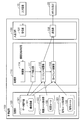
- FIG. 1 is a diagram schematically illustrating a network system according to an embodiment of the present invention. It is a block diagram showing the information acquisition device of the network system concerning the above-mentioned embodiment. It is a figure showing an example of composition information stored in a data storage part of an information acquisition device of a network system concerning the above-mentioned embodiment. It is a figure showing an example of an arrangement rule stored in an arrangement rule storage part of an information acquisition device of a network system concerning the above-mentioned embodiment. It is a figure showing an example of a control rule stored in a control rule storage part of an information acquisition device of a network system concerning the above-mentioned embodiment. It is an image figure showing the measuring method by the dynamic arrangement of the agent of the network system concerning the above-mentioned embodiment.
- FIG. 1 is a diagram schematically showing a network system according to an embodiment of the present invention.
- the network system according to the present embodiment is an example in which the network system is applied to an infrastructure configuring a BtoBtoX service, for example.
- the present invention is applicable to services other than the BtoBtoX service.
- the network system analyzes the service environments # 1 to # 3 arranged in the control NW (Network) 5 and the service environments # 1 to # 3 connected to the control NW 5 (network).
- NW Network
- a measurement device 100 information acquisition device that acquires measurement information serving as a basis for control.
- the service environments # 1 to # 3 are elements constituting the BtoBtoX service, and are assumed to be different infrastructure providers.
- the service environment # 1 is an access network infrastructure.
- Service environment # 2 is a core Network infrastructure.
- Service environment # 3 is a cloud network infrastructure.
- the Network Infrastructure, the Core Network Infrastructure, and the Cloud Network Infrastructure are different infrastructure providers, and the types and granularities of information that can be obtained (such as time intervals and device units) differ for each infrastructure provider.
- the service environment # 1 includes a device 1 which is a device to be measured of the access network infrastructure.
- the device 1 is, for example, a network device or a server device.
- an agent 200 that acquires measurement information such as the load of the device 1, the communication amount (traffic amount) flowing through the NW, and the radio wave intensity, and provides the measurement information to the measurement device 100 is dynamically arranged. Is done.
- the dynamic allocation means determining where the agent 200 is to be allocated or not according to the configuration information (the configuration information 151 in FIG. 3 described later).
- the service environment # 2 includes a device 2 which is a device to be measured in the core network infrastructure.
- the device 2 is, for example, an OLT (Optical Line Terminal), a core router, an L2SW (Layer 2 Switch), an L3SW (Layer 3 Switch), an NTE (Network Terminal Equipment), or the like.
- an agent 200 that acquires measurement information such as a load of the device 2 and a communication amount (traffic amount) flowing through the NW and provides the measurement information to the measurement device 100 is arranged.
- the service environment # 3 includes devices 3 and 4 which are devices to be measured in the cloud network infrastructure.
- the devices 3 and 4 are, for example, server devices.
- the server device includes, for example, a DC (Data Center), a general-purpose server installed on the DC, and a virtual server (VM (Virtual Machine); virtual machine) that virtualizes the general-purpose server.
- VM Virtual Machine
- an agent 200 that acquires measurement information such as a load on the devices 3 and 4 and a communication amount (traffic amount) flowing through the NW and provides the measurement information to the measurement device 100 is arranged.
- the agent 200 collects information (communication amount, machine load, and the like) of a network service infrastructure built in the network, and transmits the collected information to the measurement device 100 via the control NW 5.
- the agent 200 is a device (agent device) having software for realizing the function of the agent, or a computer having the software. Since each infrastructure provider is different, the type and granularity of information that the agent 200 can acquire (time interval, unit of device, etc.) differs for each infrastructure provider.
- the agent 200 is dynamically allocated to the network service according to the contents of the agent arrangement processing and the contents of the agent control processing. To give a supplementary explanation, the agent 200 does not have a dynamic arrangement that may or may not be installed in the network service infrastructure, but adopts an installation mode according to the configuration of the network service.
- the agent 200 may be provided in a device different from the device to be measured, or may be provided in the device to be measured.
- the agent 200 and the device to be monitored are the same device.
- the measuring device 100 is a server device that acquires information from the agent 200.
- the measuring device 100 includes a data extraction unit 111, an agent arrangement unit 112, and an agent control unit 113.
- the data extraction unit 111 extracts the configuration information 151 including the login method and the OS type of the target device of the network service from the response result (described later) of the construction process.
- the data extraction unit 111 extracts, from the response result of the construction process, the configuration information 151 including the connection relation of the target device of the network service.
- the agent placement unit 112 determines the placement of the agent 200 based on the login method of the extracted configuration information 151 and the placement rule 152 stored in the placement rule storage unit 121 (described later).
- the agent control unit 113 determines the control process of the agent 200 based on the OS type of the extracted configuration information 151 and the control rule 153 stored in the control rule storage unit 121 (described later).
- FIG. 2 is a block diagram showing the measuring device 100 of the network system according to the embodiment of the present invention.
- the measuring device 100 (information acquisition device) includes a processing unit 110 including a CPU, a storage unit 120 including a memory and an external storage device, a wireless / wired interface, an IO device, a device manager, and the like.
- an input / output unit 130 comprising:
- the processing unit 110 includes a data extraction unit 111, an agent arrangement unit 112, an agent control unit 113, and a construction unit 114.
- the storage unit 120 includes a data storage unit 121, an arrangement rule storage unit 122, and a control rule storage unit 123.
- the data storage unit 121 stores the configuration information 151 (see FIG. 3) of the network service extracted by the data extraction unit 111.
- the arrangement rule storage unit 122 stores an arrangement rule 152 (see FIG. 4) indicating at least a login method of the agent 200 and an arrangement corresponding to the login method.
- the control rule storage unit 123 stores a control rule 153 (see FIG. 5) indicating at least the OS type of the target device of the network service and information of a control process corresponding to the OS type.
- the control rule storage unit 123 stores a control rule 153 indicating a connection relationship with another device and control information corresponding to the connection relationship.
- the input / output unit 130 includes a reception unit 131 and a transmission unit 132 (external control unit).
- the receiving unit 131 receives a response of the construction process from the input device 10.
- the input device 10 includes a keyboard, a pointing device, a keyboard, and the like.
- the input device 10 receives a response of information processing from, for example, an IaaS service (Infrastructure as a Service).
- IaaS service Infrastructure as a Service
- the transmitting unit 132 has a function as an external control unit that dynamically allocates the agent 200 to a network service in accordance with the content of the agent placement process and the content of the agent control process.
- the transmission unit 132 transmits external control information from the agent arrangement unit 112 and the agent control unit 113. Specifically, the transmission unit 132 transmits external control information (information for controlling the arrangement of the agents and the agents) to the API (Application Programming Interface) / CLI (Command Line Interface) 20.
- the API / CLI 20 provides arrangement of agents and control of agents by external control information.
- the transmission unit 132 transmits a construction request from the construction unit 114 to the IaaS service.
- the construction unit 114 receives the response of the construction process from the network service, and outputs the response to the data extraction unit 111.
- the construction unit 114 issues a construction request for constructing a VM to the IaaS service (Infrastructure @ as @ a @ Service), and receives a construction process response from the IaaS service.
- the IaaS service is a service that provides an IT infrastructure such as hardware resources (CPU / memory / storage) on demand through the Internet using virtualization technology.
- the data extraction unit 111 extracts “data necessary for agent arrangement” from the response result of the construction process, and stores the extracted data in the data storage unit 121 as configuration information 151 (see FIG. 3).
- the “data necessary for agent arrangement” is, for example, an IP address, installed software information, and the like.
- the data extraction unit 111 obtains “data necessary for agent placement” from the response result when the construction unit 114 constructs resources on the infrastructure.
- the agent placement unit 112 determines the placement of the agent 200 based on the login method of the extracted configuration information 151 (see FIG. 3) and the placement rule 152 (see FIG. 4) stored in the placement rule storage unit 121. .
- the agent control unit 113 determines the control process of the agent 200 based on the OS type of the extracted configuration information 151 and the control rule 153 (see FIG. 5) stored in the control rule storage unit 121.
- the agent control unit 113 determines the control process of the agent 200 based on the control rule 153 corresponding to the connection relation of the target device in the extracted configuration information 151.
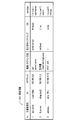
- FIG. 3 is a diagram illustrating an example of the configuration information 151 stored in the data storage unit 121.
- the configuration information 151 includes the configuration information record No.
- Each device hereinafter referred to as configuration information No.
- the target device name is the configuration information No. In the case of No. 1, “app # server”, No. In the case of No. 2, it is “lb # server”, and in the case of No. 3, it is "gateway".
- the “control / login method” is the configuration information No. In case of 1, control "ssh” / login method “admin / admin”, in case of No2, control "certificate” / login method “/root/ssh/login.pem”, in case of No3, control "REST-API” -The login method is "-”.
- the “installed software” is the configuration information No. In the case of “1”, “snmp-server”, No. In the case of No. 2, “netflowd”, No.
- the configuration information 151 for example, the configuration information No.
- the configuration information No. When the “OS” is “Windows” as in 1, the software running on “Windows” is introduced as the agent 200. Configuration information No. If the “OS” is “Linux” as in 2, the software running on “Linux” is introduced as the agent 200. On the other hand, the configuration information No. In the case where the “OS” is “Junos” as in 3, the devices arranged in the service environment are server devices and routers. In particular, if the agent 200 is located in a router, it is difficult to easily install software like a server device.
- the transfer setting (mirror port and the like) is set in the router, and the software is introduced as an agent 200 in the transfer destination server device.
- the arrangement method of the agent 200 is changed (dynamically arranged) according to the status of the service environment.
- FIG. 4 is a diagram illustrating an example of the placement rule 152 stored in the placement rule storage unit 122.
- the placement rule 152 has a plurality of agent placement methods, and defines rules to be selected and executed according to the control / login method of the target device.
- the arrangement rule 152 associates a login method with its target for each arrangement rule record No (hereinafter, referred to as an arrangement rule No).
- Arrangement rule No. 1 designates “service # start # snmpd.sh” for the login method “ssh” and the installed software “snmp-server”. Arrangement rule No. In the case of 2, the login method “certificate” and the installed software “none” specify “install # snmpd.sh / service # start # snmpd.sh”. Arrangement rule No. For the login method “REST-API” and the installed software “snmp-server”, “curl # snmpd # start.sh” is specified.
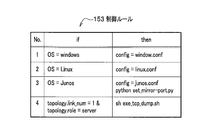
- FIG. 5 is a diagram illustrating an example of the control rule 153 stored in the control rule storage unit 123.
- the control rule 153 includes a Config file to be used and necessary settings (mirror port settings for network devices, etc.) (information on control processing) according to the environment (OS type, connection relationship / role with other devices) for which information is to be obtained. ).
- the control rule 153 includes the control rule record No.
- the OS and its control information are associated with each other (hereinafter, referred to as control rule No.).
- FIG. 6 is an image diagram showing a measurement method by dynamic placement of agents 200.
- the agent 200 is represented by an illustration of a robot.
- a network for example, the control NW 5 in FIG. 1 includes an access network infrastructure 30 (service environment # 1), a core network infrastructure 40 (service environment # 2), and a cloud network infrastructure 50 (service environment). # 3) has been constructed.
- the user terminal 60 (for example, a smart phone) can be used across a plurality of infrastructures.
- one agent 200 for acquiring information of the device 1 is dynamically arranged (see reference numeral a in FIG. 6).
- the core network infrastructure 40 (service environment # 2), for example, three agents 200 for acquiring information on the device 2 (see FIG. 1) are dynamically arranged (see reference numeral a in FIG. 6). This will be described in more detail.
- the core network infrastructure 40 includes an infrastructure internal device 2a and an infrastructure external device 2b.
- the agent 200 may be installed only in the external device 2b that is connected to another infrastructure.
- the cloud network infrastructure 50 (service environment # 3), for example, two agents 200 for acquiring information of the devices 3 and 4 (see FIG. 1) are dynamically arranged (see reference numeral a in FIG. 6).
- the agent 200 transmits measurement information 210 of a device provided in each infrastructure to the measurement device 100.
- the measurement information 210 transmitted by the agent 200 is collected so as to be analyzed by the configuration information 151 (see FIG. 3), the arrangement rule 152 (see FIG. 4), and the control rule 153 (see FIG. 5) (reference numeral b in FIG. 6). reference). That is, the agent 200 is dynamically arranged by the measuring device 100 on a device provided in each infrastructure, and the type and granularity (time interval, time interval, etc.) of information collected by the agent 200 by control processing (for example, config specification). Device unit) is set.
- the measurement device 100 can acquire the measurement information 210 with the same information type and granularity from the agents 200 dynamically arranged in each infrastructure.
- the processing unit 110 of the measurement device 100 includes a construction unit 114.
- the construction unit 114 issues a construction request for constructing a VM to the IaaS service to the transmission unit 132 of the input / output unit 130.
- the transmitting unit 132 transmits a construction request to the IaaS service.
- the receiving unit 131 of the input / output unit 130 receives a response of the construction process from the IaaS service, and outputs the response to the construction unit 114.
- the data extraction unit 111 of the processing unit 110 receives a response of the construction process from the reception unit 131.
- the data extraction unit 111 extracts data (IP address, management password, installed software information, and the like) necessary for agent arrangement from the received response result of the construction process, and extracts the data as configuration information 151 (see FIG. 3).
- the configuration information 151 includes a target device name, an ID, an IP address, a control / login method, installed software, an OS, and a topology for each configuration information No.
- the data extraction unit 111 acquires configuration information that spans a plurality of infrastructures from a catalog or order information of a construction function.
- the agent arranging unit 112 of the processing unit 110 arranges the data based on the data stored in the data storage unit 121 and the allocation rule 152 (see FIG. 4) stored in the allocation rule storage unit 122. Determine the content of the process. Specifically, the agent arranging unit 112 determines an arrangement location of software for acquiring information according to the control / login method of the target device indicated by the arrangement rule 152 (see FIG. 4). For example, the agent arrangement unit 112 assigns the arrangement rule No. of the arrangement rule 152 shown in FIG.
- the agent allocating unit 112 transmits external control information (information for allocating an agent) to the API / CLI 20 by the transmitting unit 132, and performs agent allocating.
- the API / CLI 20 provides the arrangement of the agent according to the external control information.
- the agent control unit 113 of the processing unit 110 performs control based on the data stored in the data storage unit 121 and the control rules 153 (see FIG. 5) stored in the control rule storage unit 123. Determine the content of the process. Specifically, based on the control rule 153, the agent control unit 113 uses the Config file to be used and necessary settings according to the environment (OS type, connection relationship / role with other devices) of the information acquisition target. (Mirror port settings for network devices, etc.). For example, the agent control unit 113 sets the control rule No. of the control rule 153 shown in FIG.
- the agent control unit 113 controls the agent by transmitting external control information (information for controlling the agent) to the API / CLI 20 by the transmission unit 132.
- the API / CLI 20 provides control of the agent by external control information.
- Example 2 Configuration information No. 2 ⁇ Placement rule No. 2 ⁇ Control rule No. 2> Configuration information No.
- the agent placement method for the device No. 2 is based on the placement rule No. 2 (see FIG. 4), install_snmpd.sh and service # start # snmpd.sh are selected.
- the agents 200 are dynamically arranged according to the status of the service environment.
- the measuring device 100 includes the placement rule storage unit 122 that stores at least the agent login method and the placement rule 152 indicating the location corresponding to the login method, and the network.
- a control rule storage unit 123 for storing at least an OS type of the target device of the service and a control rule 153 indicating control information corresponding to the OS type; and a login method and an OS type of the target device of the network service based on a response result of the construction process.
- a data extraction unit 111 for extracting configuration information 151 including the following, an agent arrangement unit 112 for determining an arrangement of the agent 200 based on a login method of the extracted configuration information 151, and an arrangement rule 152; 151 based on the OS type 151 and the control rule 153, It includes an agent placement unit 112 for determining a control process Jento 200, the agent 200, a transmission unit 132 for dynamically deployed in the network services in response to the control process content of the arrangement and an Agent, a.
- the agent 200 that absorbs the difference and collects the measurement information is dynamically arranged in the network service infrastructure. Is done.
- the measuring apparatus 100 can obtain information from an agent that monitors each environment even when the type and granularity of information that can be acquired differs from one infrastructure provider to another, or when a plurality of infrastructures are crossed to isolate a service failure. Measurement information having the same type and granularity can be acquired with a small number of maintenance operations.
- each of the above-described configurations, functions, and the like may be partially or entirely realized by hardware, for example, by designing an integrated circuit. Further, each of the above-described configurations, functions, and the like may be realized by software that causes a processor to interpret and execute a program that realizes each function. Information such as programs, tables, and files for realizing each function is stored in a memory, a hard disk, a recording device such as an SSD (Solid State Drive), or an IC (Integrated Circuit) card, an SD (Secure Digital) card, or an optical disk. It can be stored in a recording medium.
- SSD Solid State Drive
- IC Integrated Circuit
- SD Secure Digital
Landscapes
- Engineering & Computer Science (AREA)
- Theoretical Computer Science (AREA)
- General Engineering & Computer Science (AREA)
- Software Systems (AREA)
- Computer Networks & Wireless Communication (AREA)
- Signal Processing (AREA)
- General Physics & Mathematics (AREA)
- Physics & Mathematics (AREA)
- Computer Security & Cryptography (AREA)
- Data Mining & Analysis (AREA)
- Quality & Reliability (AREA)
- Data Exchanges In Wide-Area Networks (AREA)
- Debugging And Monitoring (AREA)
- Stored Programmes (AREA)
- Computer And Data Communications (AREA)
Abstract
【課題】少ない保守稼働で計測情報を取得可能なネットワークシステム、情報取得装置、情報取得方法およびプログラムを提供する。 【解決手段】エージェントの少なくともログイン方法と当該ログイン方法に対応する配置を示す配置ルール152を保存する配置ルール保存部122と、ネットワークサービスの対象機器の少なくともOS種別と当該OS種別に対応する制御情報を示す制御ルール153を保存する制御ルール保存部123と、構築処理の応答結果から、ネットワークサービスの対象機器のログイン方法およびOS種別を含む構成情報151を抽出するデータ抽出部111と、抽出された構成情報151のログイン方法と、配置ルール152に基づいて、エージェント200の配置を決定するエージェント配置部112と、抽出された構成情報151のOS種別と、制御ルール153に基づいて、エージェント200の制御処理を決定するエージェント配置部112と、を備える。
Description
本発明は、ネットワークシステム、情報取得装置、情報取得方法およびプログラムに関する。
保全業務は、NW(Network)を流れる通信量やマシンの負荷を取得する「計測」、異常検知や品質改善などに繋げるための「分析」、故障の復旧のための装置交換・再起動などを行う「制御」に大別することができる。「計測」は、分析・制御の根拠となる情報を取得するものである。
「計測」で用いる情報取得方法は、機器の接続関係や機器ごとのソフトウェア構成などの構成情報に基づいて設計する必要がある。また、構成情報を踏まえた情報取得方法の設計には、多くの保守稼働が必要となる。
(1)自社インフラを用いたサービスにおける「計測」技術の具体例について述べる。
自社インフラ(例えば、アクセスNetwork、コアNetwork、クラウド)を用いたサービスの場合、各装置の仕様や制御方法が明確である。このため、事前に各環境を監視するソフトウェアを配置もしくは設定投入することにより「計測」での情報取得が可能である。
自社インフラ(例えば、アクセスNetwork、コアNetwork、クラウド)を用いたサービスの場合、各装置の仕様や制御方法が明確である。このため、事前に各環境を監視するソフトウェアを配置もしくは設定投入することにより「計測」での情報取得が可能である。
特許文献1には、自社インフラ環境にて、エージェントを導入し、エージェント装置から運用監視データを収集するマネージャ装置を備えるネットワーク運用監視システムが記載されている。
(2)BtoBtoXサービスにおける「計測」技術の具体例について述べる。
BtoBtoXサービスの場合、サービス事業者は、それぞれのインフラ提供者が用意した手段により、インフラ(例えば、アクセスNetworkインフラ、コアNetworkインフラ、クラウドインフラ)の情報(通信量や、マシン負荷、電波強度など)を計測することが可能である。
BtoBtoXサービスの場合、サービス事業者は、それぞれのインフラ提供者が用意した手段により、インフラ(例えば、アクセスNetworkインフラ、コアNetworkインフラ、クラウドインフラ)の情報(通信量や、マシン負荷、電波強度など)を計測することが可能である。
特許文献2には、BtoBtoX環境にて、API(Application Programming Interface)利用に必要な情報を自動連携する管理装置が記載されている。特許文献2に記載の装置は、サービス構築時に決定されるKey情報(VM(Virtual Machine)のIDなど)を用いて、インフラ提供者の情報取得API(Application Programming Interface)を利用するための自動設定を可能とする。
サービス障害の切り分けなどの場合、複数のインフラを跨って同じ種類・粒度の情報が必要となる。しかしながら、個々のインフラ事業者が提供する計測手段は、取得可能な情報の種類や粒度(時間間隔や装置の単位など)が整っているとは限らない。また、取得可能な情報の種類や粒度がインフラ提供者ごとに異なるという課題がある。
このような背景を鑑みて本発明がなされたのであり、本発明は、少ない保守稼働で計測情報を取得することができるネットワークシステム、情報取得装置および情報取得方法およびプログラムを提供することを課題とする。
前記した課題を解決するため、請求項1に記載の発明は、ネットワークに構築されるネットワークサービスのインフラの情報を収集し、収集した前記情報を前記ネットワークを介して情報取得装置に送信するエージェントと、前記エージェントからの情報を取得する前記情報取得装置と、を備えるネットワークシステムであって、前記情報取得装置は、前記エージェントの少なくともログイン方法と当該ログイン方法に対応する配置を示す配置ルールを保存する配置ルール保存部と、前記ネットワークサービスの対象機器の少なくともOS種別と当該OS種別に対応する制御処理の情報を示す制御ルールを保存する制御ルール保存部と、構築処理の応答結果から、前記ネットワークサービスの対象機器のログイン方法およびOS種別を含む構成情報を抽出するデータ抽出部と、抽出された前記構成情報のログイン方法と、前記配置ルール保存部に保存された前記配置ルールとに基づいて、前記エージェントの配置を決定するエージェント配置部と、抽出された前記構成情報のOS種別と、前記制御ルール保存部に保存された前記制御ルールとに基づいて、前記エージェントの制御処理を決定するエージェント制御部と、を備え、前記エージェントは、決定された前記エージェントの配置および前記エージェントの制御処理に応じて前記ネットワークサービスに動的配置されることを特徴とするネットワークシステムとした。
また、請求項3に記載の発明は、ネットワークに構築されるネットワークサービスのインフラの情報を収集したエージェントからの情報を取得する情報取得装置であって、前記エージェントの少なくともログイン方法と当該ログイン方法に対応する配置を示す配置ルールを保存する配置ルール保存部と、前記ネットワークサービスの対象機器の少なくともOS種別と当該OS種別に対応する制御処理の情報を示す制御ルールを保存する制御ルール保存部と、構築処理の応答結果から、前記ネットワークサービスの対象機器のログイン方法およびOS種別を含む構成情報を抽出するデータ抽出部と、抽出された前記構成情報のログイン方法と、前記配置ルール保存部に保存された前記配置ルールとに基づいて、前記エージェントの配置を決定するエージェント配置部と、抽出された前記構成情報のOS種別と、前記制御ルール保存部に保存された前記制御ルールとに基づいて、前記エージェントの制御処理を決定するエージェント制御部と、前記エージェントを、決定された前記エージェントの配置および前記エージェントの制御処理に応じて前記ネットワークサービスに動的配置する外部制御部と、を備えることを特徴とする情報取得装置とした。
また、請求項4に記載の発明は、ネットワークに構築されるネットワークサービスのインフラの情報を収集したエージェントからの情報を取得する情報取得装置の情報取得方法であって、前記エージェントの少なくともログイン方法と当該ログイン方法に対応する配置を示す配置ルールと、前記ネットワークサービスの対象機器の少なくともOS種別と当該OS種別に対応する制御処理の情報を示す制御ルールと、が記憶部に記憶されており、構築処理の応答結果から、前記ネットワークサービスの対象機器のログイン方法およびOS種別を含む構成情報を抽出するステップと、抽出された前記構成情報のログイン方法と、保存された前記配置ルールとに基づいて、前記エージェントの配置を決定するステップと、抽出された前記構成情報のOS種別と、保存された前記制御ルールとに基づいて、前記エージェントの制御処理を決定するステップと、前記エージェントを、決定された前記エージェントの配置および前記エージェントの制御処理に応じて前記ネットワークサービスに動的配置するステップと、を実行することを特徴とする情報取得方法とした。
また、請求項5に記載の発明は、ネットワークに構築されるネットワークサービスのインフラの情報を収集したエージェントからの情報を取得する情報取得装置としてのコンピュータを、前記エージェントの少なくともログイン方法と当該ログイン方法に対応する配置を示す配置ルールを保存する配置ルール保存手段、前記ネットワークサービスの対象機器の少なくともOS種別と当該OS種別に対応する制御処理の情報を示す制御ルールを保存する制御ルール保存手段、構築処理の応答結果から、前記ネットワークサービスの対象機器のログイン方法およびOS種別を含む構成情報を抽出するデータ抽出手段、抽出された前記構成情報のログイン方法と、前記配置ルール保存手段に保存された前記配置ルールとに基づいて、前記エージェントの配置を決定するエージェント配置手段、抽出された前記構成情報のOS種別と、前記制御ルール保存手段に保存された前記制御ルールとに基づいて、前記エージェントの制御処理を決定するエージェント制御手段、として機能させるためのプログラムとした。
このようにすることで、ネットワークサービスには、インフラを構築する各装置の仕様や制御方法、情報の種類および粒度(時間間隔や装置の単位など)が異なっていてもそれらの違いを吸収して計測情報を収集するエージェントが動的配置される。すなわち、エージェントは、情報取得装置によって、各インフラに備えられた機器等に動的配置され、かつ、制御処理により、エージェントが収集する情報の種類および粒度が設定される。
情報取得装置は、取得可能な情報の種類や粒度がインフラ提供者ごとに異なる場合や、サービス障害の切り分けなどで複数のインフラを跨る場合であっても、各環境を監視するエージェントから、情報の種類および粒度が揃えられた計測情報を、少ない保守稼働で取得することができる。
情報取得装置は、取得可能な情報の種類や粒度がインフラ提供者ごとに異なる場合や、サービス障害の切り分けなどで複数のインフラを跨る場合であっても、各環境を監視するエージェントから、情報の種類および粒度が揃えられた計測情報を、少ない保守稼働で取得することができる。
また、請求項2に記載の発明は、前記制御ルール保存部が、他の機器との接続関係と当該接続関係に対応する制御情報を示す前記制御ルールをさらに保存しており、前記データ抽出部は、構築処理の応答結果から、前記ネットワークサービスの対象機器の接続関係を含む前記構成情報を抽出し、前記エージェント制御部は、前記制御ルールに基づいて、抽出された前記構成情報の対象機器の接続関係に対応する前記エージェントの制御処理を決定することを特徴とする請求項1記載のネットワークシステムとした。
このようにすることで、ネットワークサービスの対象機器の接続関係に対応する、制御ルールに基づいて、エージェントの制御処理を決定することができる。
本発明によると、少ない保守稼働で計測情報を取得可能なネットワークシステム、情報取得装置、情報取得方法およびプログラムを提供することができる。
以下、図面を参照して本発明を実施するための形態(以下、「本実施形態」という)におけるネットワークシステムについて説明する。
(実施形態)
図1は、本発明の実施形態に係るネットワークシステムを模式的に示す図である。
本実施形態に係るネットワークシステムは、例えば、BtoBtoXサービスを構成するインフラに適用した例である。本発明は、BtoBtoXサービス以外の他のサービスに適用できる。
図1に示すように、ネットワークシステムは、制御用NW(Network)5に配置されるサービス環境#1~#3と、制御用NW5(ネットワーク)に接続され、サービス環境#1~#3について分析・制御の根拠となる計測情報を取得する計測装置100(情報取得装置)と、を有する。
(実施形態)
図1は、本発明の実施形態に係るネットワークシステムを模式的に示す図である。
本実施形態に係るネットワークシステムは、例えば、BtoBtoXサービスを構成するインフラに適用した例である。本発明は、BtoBtoXサービス以外の他のサービスに適用できる。
図1に示すように、ネットワークシステムは、制御用NW(Network)5に配置されるサービス環境#1~#3と、制御用NW5(ネットワーク)に接続され、サービス環境#1~#3について分析・制御の根拠となる計測情報を取得する計測装置100(情報取得装置)と、を有する。
サービス環境#1~#3は、BtoBtoXサービスを構成する要素であり、異なるインフラ事業者であるとする。
例えば、サービス環境#1は、アクセスNetworkインフラである。サービス環境#2は、コアNetworkインフラである。サービス環境#3は、クラウドNetworkインフラである。これらNetworkインフラ、コアNetworkインフラ、クラウドNetworkインフラは、異なるインフラ事業者であり、取得可能な情報の種類や粒度(時間間隔や装置の単位など)はインフラ事業者ごとに異なる。
例えば、サービス環境#1は、アクセスNetworkインフラである。サービス環境#2は、コアNetworkインフラである。サービス環境#3は、クラウドNetworkインフラである。これらNetworkインフラ、コアNetworkインフラ、クラウドNetworkインフラは、異なるインフラ事業者であり、取得可能な情報の種類や粒度(時間間隔や装置の単位など)はインフラ事業者ごとに異なる。
サービス環境#1は、アクセスNetworkインフラの計測対象機器である機器1を備える。機器1は、例えばネットワーク機器やサーバ装置等である。サービス環境#1(アクセスNetworkインフラ)には、機器1の負荷、NWを流れる通信量(トラフィック量)や電波強度等の計測情報を取得して、計測装置100に提供するエージェント200が動的配置される。なお、以下説明において、動的配置とは、構成情報(後記図3の構成情報151)に応じてどこにエージェント200を配置するかしないかを決めることをいう。
サービス環境#2は、コアNetworkインフラの計測対象機器である機器2を備える。機器2は、例えばOLT(Optical Line Terminal:光加入者回線終端装置)、コアルータ、L2SW(Layer2Switch)、L3SW(Layer3Switch)、NTE(Network Terminal Equipment:ネットワーク終端装置)等である。サービス環境#2(コアNetworkインフラ)には、機器2の負荷やNWを流れる通信量(トラフィック量)等の計測情報を取得して、計測装置100に提供するエージェント200が配置される。
サービス環境#3は、クラウドNetworkインフラの計測対象機器である機器3,4を備える。機器3,4は、例えばサーバ装置である。サーバ装置には、例えば、DC(Data Center:データセンタ)、DC上に設置されている汎用サーバ、汎用サーバを仮想化した仮想サーバ(VM(Virtual Machine)。仮想マシン。)がある。サービス環境#3(クラウドNetworkインフラ)には、機器3,4の負荷やNWを流れる通信量(トラフィック量)等の計測情報を取得して、計測装置100に提供するエージェント200が配置される。
<エージェント200>
エージェント200は、ネットワークに構築されるネットワークサービスのインフラの情報(通信量や、マシン負荷など)を収集し、収集した情報を制御用NW5を介して計測装置100に送信する。
エージェント200は、エージェントの機能を実現するためのソフトウェア、またはソフトウェアを備えたコンピュータの構成を有する装置(エージェント装置)である。
個々のインフラ事業者が異なるため、エージェント200が取得可能な情報の種類や粒度(時間間隔や装置の単位など)がインフラ提供者ごとに異なる。
エージェント200は、ネットワークに構築されるネットワークサービスのインフラの情報(通信量や、マシン負荷など)を収集し、収集した情報を制御用NW5を介して計測装置100に送信する。
エージェント200は、エージェントの機能を実現するためのソフトウェア、またはソフトウェアを備えたコンピュータの構成を有する装置(エージェント装置)である。
個々のインフラ事業者が異なるため、エージェント200が取得可能な情報の種類や粒度(時間間隔や装置の単位など)がインフラ提供者ごとに異なる。
エージェント200は、エージェントの配置処理の内容およびエージェントの制御処理の内容に応じてネットワークサービスに動的配置される。補足説明すると、エージェント200は、ネットワークサービスのインフラに導入されたりされなかったりするような動的配置ではなく、ネットワークサービスの構成に応じた導入形態をとる。
なお、エージェント200は、計測対象機器とは別の装置に備えられていてもよし、計測対象機器内に備えられていてもよい。エージェント200の機能が計測対象機器内に備えられている場合、エージェント200と監視対象機器とは同一装置になる。
<計測装置100>
計測装置100は、エージェント200からの情報を取得するサーバ装置である。
計測装置100は、データ抽出部111と、エージェント配置部112と、エージェント制御部113と、を備える。
データ抽出部111は、構築処理の応答結果(後記)から、ネットワークサービスの対象機器のログイン方法およびOS種別を含む構成情報151を抽出する。
データ抽出部111は、構築処理の応答結果から、前記ネットワークサービスの対象機器の接続関係を含む構成情報151を抽出する。
計測装置100は、エージェント200からの情報を取得するサーバ装置である。
計測装置100は、データ抽出部111と、エージェント配置部112と、エージェント制御部113と、を備える。
データ抽出部111は、構築処理の応答結果(後記)から、ネットワークサービスの対象機器のログイン方法およびOS種別を含む構成情報151を抽出する。
データ抽出部111は、構築処理の応答結果から、前記ネットワークサービスの対象機器の接続関係を含む構成情報151を抽出する。
エージェント配置部112は、抽出された構成情報151のログイン方法と、配置ルール保存部121(後記)に保存された配置ルール152に基づいて、エージェント200の配置を決定する。
エージェント制御部113は、抽出された構成情報151のOS種別と、制御ルール保存部121(後記)に保存された制御ルール153に基づいて、エージェント200の制御処理を決定する。
エージェント制御部113は、抽出された構成情報151のOS種別と、制御ルール保存部121(後記)に保存された制御ルール153に基づいて、エージェント200の制御処理を決定する。
図2は、本発明の実施形態に係るネットワークシステムの計測装置100を示すブロック図である。
図2に示すように、計測装置100(情報取得装置)は、CPU等からなる処理部110と、メモリおよび外部記憶装置等からなる記憶部120と、無線/有線インターフェース,IOデバイス,デバイスマネージャ等からなる入出力部130と、を備える。
図2に示すように、計測装置100(情報取得装置)は、CPU等からなる処理部110と、メモリおよび外部記憶装置等からなる記憶部120と、無線/有線インターフェース,IOデバイス,デバイスマネージャ等からなる入出力部130と、を備える。
処理部110は、データ抽出部111と、エージェント配置部112と、エージェント制御部113と、構築部114と、を備える。
記憶部120は、データ保存部121、配置ルール保存部122と、制御ルール保存部123と、を備える。
データ保存部121は、データ抽出部111が抽出したネットワークサービスの構成情報151(図3参照)を保存する。
記憶部120は、データ保存部121、配置ルール保存部122と、制御ルール保存部123と、を備える。
データ保存部121は、データ抽出部111が抽出したネットワークサービスの構成情報151(図3参照)を保存する。
配置ルール保存部122は、エージェント200の少なくともログイン方法と当該ログイン方法に対応する配置を示す配置ルール152(図4参照)を保存する。
制御ルール保存部123は、ネットワークサービスの対象機器の少なくともOS種別と当該OS種別に対応する制御処理の情報を示す制御ルール153(図5参照)を保存する。
制御ルール保存部123は、他の機器との接続関係と当該接続関係に対応する制御情報を示す制御ルール153を保存する。
制御ルール保存部123は、他の機器との接続関係と当該接続関係に対応する制御情報を示す制御ルール153を保存する。
入出力部130は、受信部131と、送信部132(外部制御部)と、を備える。
受信部131は、入力装置10からの構築処理の応答を受信する。入力装置10は、キーボード,ポインティングデバイス,キーボード等からなる。入力装置10は、例えばIaaSサービス(Infrastructure as a Service)から情報処理の応答を受付ける。
受信部131は、入力装置10からの構築処理の応答を受信する。入力装置10は、キーボード,ポインティングデバイス,キーボード等からなる。入力装置10は、例えばIaaSサービス(Infrastructure as a Service)から情報処理の応答を受付ける。
送信部132は、エージェント200を、エージェントの配置処理内容およびエージェントの制御処理内容に応じてネットワークサービスに動的配置する外部制御部としての機能を有する。
送信部132は、エージェント配置部112およびエージェント制御部113からの外部制御情報を送信する。具体的には、送信部132は、外部制御情報(エージェントの配置およびエージェントの制御を行うための情報)をAPI(Application Programming Interface)/CLI(Command Line Interface)20に送信する。API/CLI20は、外部制御情報によりエージェントの配置およびエージェントの制御を提供する。
送信部132は、IaaSサービスに構築部114からの構築要求を送信する。
送信部132は、エージェント配置部112およびエージェント制御部113からの外部制御情報を送信する。具体的には、送信部132は、外部制御情報(エージェントの配置およびエージェントの制御を行うための情報)をAPI(Application Programming Interface)/CLI(Command Line Interface)20に送信する。API/CLI20は、外部制御情報によりエージェントの配置およびエージェントの制御を提供する。
送信部132は、IaaSサービスに構築部114からの構築要求を送信する。
構築部114は、ネットワークサービスから構築処理の応答を受け取り、データ抽出部111に出力する。例えば、構築部114は、IaaSサービス(Infrastructure as a Service)にVMを構築するための構築要求を発行し、IaaSサービスから構築処理の応答を受け取る。IaaSサービスは、仮想化技術を利用してハードウェアリソース(CPU/メモリ/ストレージ)などのITインフラをインターネット経由でオンデマンドで提供するサービスである。
データ抽出部111は、構築処理の応答結果から「エージェント配置に必要なデータ」を抽出し、構成情報151(図3参照)として、データ保存部121に保存する。上記「エージェント配置に必要なデータ」は、例えばIPアドレス、導入済みソフトウェア情報などである。データ抽出部111は、構築部114が「エージェント配置に必要なデータ」をインフラ上にリソースを構築した際の応答結果から取得する。
エージェント配置部112は、抽出された構成情報151(図3参照)のログイン方法と、配置ルール保存部121に保存された配置ルール152(図4参照)に基づいて、エージェント200の配置を決定する。
エージェント制御部113は、抽出された構成情報151のOS種別と、制御ルール保存部121に保存された制御ルール153(図5参照)に基づいて、エージェント200の制御処理を決定する。
エージェント制御部113は、抽出された構成情報151の対象機器の接続関係に対応する、制御ルール153に基づいて、エージェント200の制御処理を決定する。
エージェント制御部113は、抽出された構成情報151の対象機器の接続関係に対応する、制御ルール153に基づいて、エージェント200の制御処理を決定する。
<構成情報151>
図3は、データ保存部121に保存される構成情報151の一例を示す図である。
図3に示すように、構成情報151は、構成情報レコードNo.(以下、構成情報No.という)毎に、対象装置名、ID、IPアドレス、制御・ログイン方法、導入済みソフトウェア、OS、topology(繋がり情報や空きポート情報)を有する。
図3は、データ保存部121に保存される構成情報151の一例を示す図である。
図3に示すように、構成情報151は、構成情報レコードNo.(以下、構成情報No.という)毎に、対象装置名、ID、IPアドレス、制御・ログイン方法、導入済みソフトウェア、OS、topology(繋がり情報や空きポート情報)を有する。
対象装置名は、構成情報No.1の場合「app#server」、No.2の場合「lb#server」、No3の場合「gateway」である。
「制御・ログイン方法」は、構成情報No.1の場合、制御「ssh」・ログイン方法「admin/admin」、No2の場合、制御「証明書」・ログイン方法「/root/ssh/login.pem」、No3の場合、制御「REST-API」・ログイン方法「-」である。
「導入済みソフトウェア」は、構成情報No.1の場合「snmp-server」、No.2の場合「netflowd」、No.3の場合「-(なし)」である。
「OS」は、構成情報No.1の場合「Windows」(サーバのOS)、No2.の場合「Linux」(サーバのOS)、No.3の場合「Junos」(ネットワーク装置,ルータのOS)である。
「Topology」は、構成情報No.1の場合「link#num=1 role=server」、No.2の場合「link#num=3 role=lb」、No.3の場合「link#num=2 role=gw」である。
「制御・ログイン方法」は、構成情報No.1の場合、制御「ssh」・ログイン方法「admin/admin」、No2の場合、制御「証明書」・ログイン方法「/root/ssh/login.pem」、No3の場合、制御「REST-API」・ログイン方法「-」である。
「導入済みソフトウェア」は、構成情報No.1の場合「snmp-server」、No.2の場合「netflowd」、No.3の場合「-(なし)」である。
「OS」は、構成情報No.1の場合「Windows」(サーバのOS)、No2.の場合「Linux」(サーバのOS)、No.3の場合「Junos」(ネットワーク装置,ルータのOS)である。
「Topology」は、構成情報No.1の場合「link#num=1 role=server」、No.2の場合「link#num=3 role=lb」、No.3の場合「link#num=2 role=gw」である。
構成情報151を参照することで、例えば構成情報No.1の場合、対象装置名「app#server」、ID「1usjs-sfgkj」、IPアドレス「192.168.10.2」、制御・ログイン方法「ssh」「admin/admin」、導入済みソフトウェア「snmp-server」、OS「Windows」、Topology「link#num=1 role=server」であることが分かる。
上記したように、エージェント200は、構成情報151に応じてどこに配置するかしないか動的に決められる。例えば、構成情報No.1のように「OS」が「Windows」の場合、「Windows」で動作するソフトウェアをエージェント200として導入する。構成情報No.2のように「OS」が「Linux」の場合、「Linux」で動作するソフトウェアをエージェント200として導入する。一方、構成情報No.3のように「OS」が「Junos」の場合、サービス環境に配置される機器は、サーバ装置やルータである。特にルータに配置されるエージェント200であれば、サーバ装置のように簡単にソフトウェアを導入することは難しい。この場合は、ルータに転送の設定(ミラーポート等の設定)をして、転送先のサーバ装置にソフトウェアをエージェント200として導入する。このように、サービス環境の状況に応じて、エージェント200の配置方法を変えて(動的配置して)いる。
<配置ルール152>
図4は、配置ルール保存部122に保存される配置ルール152の一例を示す図である。
配置ルール152は、複数のエージェント配置方法を持ち、対象装置の制御・ログイン方法に応じて、選択・実行するルールを定める。
図4に示すように、配置ルール152は、配置ルールレコードNo(以下、配置ルールNoという)毎に、ログイン方法とその対象を紐付ける。
図4は、配置ルール保存部122に保存される配置ルール152の一例を示す図である。
配置ルール152は、複数のエージェント配置方法を持ち、対象装置の制御・ログイン方法に応じて、選択・実行するルールを定める。
図4に示すように、配置ルール152は、配置ルールレコードNo(以下、配置ルールNoという)毎に、ログイン方法とその対象を紐付ける。
配置ルールNo.1は、ログイン方法「ssh」・導入済みソフトウェア「snmp-server」の場合、「service#start#snmpd.sh」を指定する。
配置ルールNo.2は、ログイン方法「証明書」・導入済みソフトウェア「なし」の場合、「install#snmpd.sh /service#start#snmpd.sh」を指定する。
配置ルールNo.3は、ログイン方法「REST-API」・導入済みソフトウェア「snmp-server」の場合、「curl#snmpd#start.sh」を指定する。
配置ルールNo.2は、ログイン方法「証明書」・導入済みソフトウェア「なし」の場合、「install#snmpd.sh /service#start#snmpd.sh」を指定する。
配置ルールNo.3は、ログイン方法「REST-API」・導入済みソフトウェア「snmp-server」の場合、「curl#snmpd#start.sh」を指定する。
<制御ルール153>
図5は、制御ルール保存部123に保存される制御ルール153の一例を示す図である。
制御ルール153は、情報取得対象の環境(OS種別、他の機器との接続関係・役割)に応じて、利用するConfigファイルや必要な設定(NW機器に対するミラーポート設定など)(制御処理の情報)を定める。
図5に示すように、制御ルール153は、制御ルールレコードNo.(以下、制御ルールNo.という)毎に、OSとその制御情報を紐付ける。
図5は、制御ルール保存部123に保存される制御ルール153の一例を示す図である。
制御ルール153は、情報取得対象の環境(OS種別、他の機器との接続関係・役割)に応じて、利用するConfigファイルや必要な設定(NW機器に対するミラーポート設定など)(制御処理の情報)を定める。
図5に示すように、制御ルール153は、制御ルールレコードNo.(以下、制御ルールNo.という)毎に、OSとその制御情報を紐付ける。
制御ルールNo.1は、OS「windows」の場合、「config = window.conf」を指定する。
制御ルールNo.2は、OS「Linux」の場合、「config = linux.conf」を指定する。
制御ルールNo.3は、OS「Junos」の場合、「config = junos.conf/python set#mirror-port.py」を指定する。
制御ルールNo.4は、「topology.link#num = 1 &topology.role = server」の場合、「sh exe#tcp#dump.sh」を指定する。
config指定により、エージェント200が収集する情報の種類および粒度(時間間隔や装置の単位など)を設定することができる。
制御ルールNo.2は、OS「Linux」の場合、「config = linux.conf」を指定する。
制御ルールNo.3は、OS「Junos」の場合、「config = junos.conf/python set#mirror-port.py」を指定する。
制御ルールNo.4は、「topology.link#num = 1 &topology.role = server」の場合、「sh exe#tcp#dump.sh」を指定する。
config指定により、エージェント200が収集する情報の種類および粒度(時間間隔や装置の単位など)を設定することができる。
以下、上述のように構成されたネットワークシステムの情報取得方法を説明する。
まず、エージェント200の動的配置について述べる。
図6は、エージェント200の動的配置による計測方法を示すイメージ図である。なお、エージェント200は、ロボットのイラストで表している。
図6に示すように、ネットワーク(例えば、図1の制御用NW5)には、アクセスNetworkインフラ30(サービス環境#1)、コアNetworkインフラ40(サービス環境#2)、クラウドNetworkインフラ50(サービス環境#3)が構築されている。利用者端末60(例えばスマートホン)は、複数のインフラを横断して使用することができる。
まず、エージェント200の動的配置について述べる。
図6は、エージェント200の動的配置による計測方法を示すイメージ図である。なお、エージェント200は、ロボットのイラストで表している。
図6に示すように、ネットワーク(例えば、図1の制御用NW5)には、アクセスNetworkインフラ30(サービス環境#1)、コアNetworkインフラ40(サービス環境#2)、クラウドNetworkインフラ50(サービス環境#3)が構築されている。利用者端末60(例えばスマートホン)は、複数のインフラを横断して使用することができる。
アクセスNetworkインフラ30(サービス環境#1)には、機器1(図1参照)の情報取得のためのエージェント200が、例えば1つ動的配置される(図6の符号a参照)。
コアNetworkインフラ40(サービス環境#2)には、機器2(図1参照)の情報取得のためのエージェント200が、例えば3つ動的配置される(図6の符号a参照)。より詳細に説明する。コアNetworkインフラ40は、インフラの内部機器2aと、インフラの外部機器2bと、を有する。このコアNetworkインフラ40では、エージェント200を、他のインフラに介している外部機器2bにのみに設置すればよい。
クラウドNetworkインフラ50(サービス環境#3)には、機器3,4(図1参照)の情報取得のためのエージェント200が、例えば2つ動的配置される(図6の符号a参照)。
エージェント200は、各インフラに備えられた機器の計測情報210を計測装置100に送信する。エージェント200が送信する計測情報210は、構成情報151(図3参照)、配置ルール152(図4参照)および制御ルール153(図5参照)によって分析可能に収集されている(図6の符号b参照)。
すなわち、エージェント200は、計測装置100によって、各インフラに備えられた機器等に動的配置され、かつ、制御処理(例えばconfig指定)により、エージェント200が収集する情報の種類および粒度(時間間隔や装置の単位など)が設定される。
すなわち、エージェント200は、計測装置100によって、各インフラに備えられた機器等に動的配置され、かつ、制御処理(例えばconfig指定)により、エージェント200が収集する情報の種類および粒度(時間間隔や装置の単位など)が設定される。
計測装置100は、各インフラに動的配置されたエージェント200から同じ情報の種類および粒度で計測情報210を取得可能である。
[計測装置100の各機能]
<データ抽出機能>
構築処理の応答結果からエージェント配置に必要なデータを抽出する機能について述べる。
IaaSサービス上にVMを構築した場合を例に採る。IaaSサービスは、例えば図6のクラウドNetworkインフラ50(サービス環境#3)のクラウドコンピューティングである。
図2に示すように、計測装置100の処理部110は、構築部114を備える。構築部114は、入出力部130の送信部132にIaaSサービスにVMを構築するための構築要求を発行する。送信部132は、IaaSサービスに構築要求を送信する。入出力部130の受信部131は、IaaSサービスから構築処理の応答を受信し、構築部114に出力する。
<データ抽出機能>
構築処理の応答結果からエージェント配置に必要なデータを抽出する機能について述べる。
IaaSサービス上にVMを構築した場合を例に採る。IaaSサービスは、例えば図6のクラウドNetworkインフラ50(サービス環境#3)のクラウドコンピューティングである。
図2に示すように、計測装置100の処理部110は、構築部114を備える。構築部114は、入出力部130の送信部132にIaaSサービスにVMを構築するための構築要求を発行する。送信部132は、IaaSサービスに構築要求を送信する。入出力部130の受信部131は、IaaSサービスから構築処理の応答を受信し、構築部114に出力する。
図2に示すように、処理部110のデータ抽出部111は、受信部131から構築処理の応答を受信する。データ抽出部111は、受信した構築処理の応答結果からエージェント配置に必要なデータ(IPアドレス、管理パスワード、導入済みソフトウェア情報など)を抽出し、構成情報151(図3参照)としてデータ保存部121に保存する。図3に示すように、構成情報151は、構成情報No毎に、対象装置名、ID、IPアドレス、制御・ログイン方法、導入済みソフトウェア、OS、topologyを有する。
データ抽出部111は、BtoBtoXサービスの場合、複数インフラを跨った構成情報を構築機能のカタログやオーダ情報から取得する。
データ抽出部111は、BtoBtoXサービスの場合、複数インフラを跨った構成情報を構築機能のカタログやオーダ情報から取得する。
<エージェントの配置ルールおよび機能>
次に、エージェントの配置ルールおよび機能について述べる。
図2に示すように、処理部110のエージェント配置部112は、データ保存部121に保存されたデータと、配置ルール保存部122に保存された配置ルール152(図4参照)に基づいて、配置処理の内容を決定する。具体的には、エージェント配置部112は、配置ルール152(図4参照)で示される対象装置の制御・ログイン方法に応じて、情報取得のためのソフトウェアの配置場所を決定する。例えば、エージェント配置部112は、図5に示す配置ルール152の配置ルールNo.1では、ログイン方法「ssh」・導入済みソフトウェア「snmp-server」の場合であり、「service#start#snmpd.sh」を選択・実行する。
エージェント配置部112は、送信部132によりAPI/CLI20に外部制御情報(エージェントの配置を行うための情報)を送信して、エージェントの配置を行う。
API/CLI20は、外部制御情報によりエージェントの配置を提供する。
次に、エージェントの配置ルールおよび機能について述べる。
図2に示すように、処理部110のエージェント配置部112は、データ保存部121に保存されたデータと、配置ルール保存部122に保存された配置ルール152(図4参照)に基づいて、配置処理の内容を決定する。具体的には、エージェント配置部112は、配置ルール152(図4参照)で示される対象装置の制御・ログイン方法に応じて、情報取得のためのソフトウェアの配置場所を決定する。例えば、エージェント配置部112は、図5に示す配置ルール152の配置ルールNo.1では、ログイン方法「ssh」・導入済みソフトウェア「snmp-server」の場合であり、「service#start#snmpd.sh」を選択・実行する。
エージェント配置部112は、送信部132によりAPI/CLI20に外部制御情報(エージェントの配置を行うための情報)を送信して、エージェントの配置を行う。
API/CLI20は、外部制御情報によりエージェントの配置を提供する。
<エージェントの制御ルールおよび機能>
次に、エージェントの制御ルールおよび機能について述べる。
図2に示すように、処理部110のエージェント制御部113は、データ保存部121に保存されたデータと、制御ルール保存部123に保存された制御ルール153(図5参照)に基づいて、制御処理の内容を決定する。具体的には、エージェント制御部113は、制御ルール153をもとに、情報取得対象の環境(OS種別、他の機器との接続関係・役割)に応じて、利用するConfigファイルや必要な設定(NW機器に対するミラーポート設定など)を行う。例えば、エージェント制御部113は、図5に示す制御ルール153の制御ルールNo.1では、OS「windows」が指定されており、「config = window.conf」を選択・実行する。
エージェント制御部113は、送信部132によりAPI/CLI20に外部制御情報(エージェントの制御を行うための情報)を送信して、エージェントの制御を行う。
API/CLI20は、外部制御情報によりエージェントの制御を提供する。
次に、エージェントの制御ルールおよび機能について述べる。
図2に示すように、処理部110のエージェント制御部113は、データ保存部121に保存されたデータと、制御ルール保存部123に保存された制御ルール153(図5参照)に基づいて、制御処理の内容を決定する。具体的には、エージェント制御部113は、制御ルール153をもとに、情報取得対象の環境(OS種別、他の機器との接続関係・役割)に応じて、利用するConfigファイルや必要な設定(NW機器に対するミラーポート設定など)を行う。例えば、エージェント制御部113は、図5に示す制御ルール153の制御ルールNo.1では、OS「windows」が指定されており、「config = window.conf」を選択・実行する。
エージェント制御部113は、送信部132によりAPI/CLI20に外部制御情報(エージェントの制御を行うための情報)を送信して、エージェントの制御を行う。
API/CLI20は、外部制御情報によりエージェントの制御を提供する。
[ルール間の組み合わせ例]
図2~図5を参照して、ルール間の組み合わせ例について説明する。
<例1:構成情報No.1→配置ルールNo.1→制御ルールNo.1>
構成情報No.1(図3参照)の装置に対するエージェント配置方法は、配置ルールNo.1(図4参照)により、service#start#snmpd.shを選択する。
配置したエージェントに対する制御方法は、制御ルールNo.1(図5参照)により、config=windows.confを選択する。
図2~図5を参照して、ルール間の組み合わせ例について説明する。
<例1:構成情報No.1→配置ルールNo.1→制御ルールNo.1>
構成情報No.1(図3参照)の装置に対するエージェント配置方法は、配置ルールNo.1(図4参照)により、service#start#snmpd.shを選択する。
配置したエージェントに対する制御方法は、制御ルールNo.1(図5参照)により、config=windows.confを選択する。
<例2:構成情報No.2→配置ルールNo.2→制御ルールNo.2>
構成情報No.2(図3参照)の装置に対するエージェント配置方法は、配置ルールNo.2(図4参照)により、install#snmpd.sh,service#start#snmpd.shを選択する。
配置したエージェントに対する制御方法は、制御ルールNo.2(図5参照)により、config=linux.confを選択する。
このように、エージェント200は、サービス環境の状況に応じて、動的配置される。
構成情報No.2(図3参照)の装置に対するエージェント配置方法は、配置ルールNo.2(図4参照)により、install#snmpd.sh,service#start#snmpd.shを選択する。
配置したエージェントに対する制御方法は、制御ルールNo.2(図5参照)により、config=linux.confを選択する。
このように、エージェント200は、サービス環境の状況に応じて、動的配置される。
以上説明したように、本実施形態に係る計測装置100(図1参照)は、エージェントの少なくともログイン方法と当該ログイン方法に対応する配置を示す配置ルール152を保存する配置ルール保存部122と、ネットワークサービスの対象機器の少なくともOS種別と当該OS種別に対応する制御情報を示す制御ルール153を保存する制御ルール保存部123と、構築処理の応答結果から、ネットワークサービスの対象機器のログイン方法およびOS種別を含む構成情報151を抽出するデータ抽出部111と、抽出された構成情報151のログイン方法と、配置ルール152に基づいて、エージェント200の配置を決定するエージェント配置部112と、抽出された構成情報151のOS種別と、制御ルール153に基づいて、エージェント200の制御処理を決定するエージェント配置部112と、エージェント200を、エージェントの配置およびエージェントの制御処理内容に応じてネットワークサービスに動的配置する送信部132と、を備える。
これにより、ネットワークサービスのインフラには、インフラを構築する各装置の仕様や制御方法、情報の種類および粒度が異なっていてもそれらの違いを吸収して計測情報を収集するエージェント200が動的配置される。計測装置100は、取得可能な情報の種類や粒度がインフラ提供者ごとに異なる場合や、サービス障害の切り分けなどで複数のインフラを跨る場合であっても、各環境を監視するエージェントから、情報の種類および粒度が揃えられた計測情報を、少ない保守稼働で取得することができる。
なお、上記実施形態において説明した各処理のうち、自動的に行われるものとして説明した処理の全部又は一部を手作業で行うこともでき、あるいは、手作業で行われるものとして説明した処理の全部又は一部を公知の方法で自動的に行うこともできる。この他、上述文書中や図面中に示した処理手順、制御手順、具体的名称、各種のデータやパラメータを含む情報については、特記する場合を除いて任意に変更することができる。
また、図示した各装置の各構成要素は機能概念的なものであり、必ずしも物理的に図示の如く構成されていることを要しない。すなわち、各装置の分散・統合の具体的形態は図示のものに限られず、その全部又は一部を、各種の負荷や使用状況などに応じて、任意の単位で機能的又は物理的に分散・統合して構成することができる。
また、図示した各装置の各構成要素は機能概念的なものであり、必ずしも物理的に図示の如く構成されていることを要しない。すなわち、各装置の分散・統合の具体的形態は図示のものに限られず、その全部又は一部を、各種の負荷や使用状況などに応じて、任意の単位で機能的又は物理的に分散・統合して構成することができる。
また、上記の各構成、機能、処理部、処理手段等は、それらの一部又は全部を、例えば集積回路で設計する等によりハードウェアで実現してもよい。また、上記の各構成、機能等は、プロセッサがそれぞれの機能を実現するプログラムを解釈し、実行するためのソフトウェアで実現してもよい。各機能を実現するプログラム、テーブル、ファイル等の情報は、メモリや、ハードディスク、SSD(Solid State Drive)等の記録装置、又は、IC(Integrated Circuit)カード、SD(Secure Digital)カード、光ディスク等の記録媒体に保持することができる。
1~4 機器
5 制御用NW(ネットワーク)
100 計測装置(情報取得装置)
110 処理部
111 データ抽出部
112 エージェント配置部
113 エージェント制御部
114 構築部
120 記憶部
121 データ保存部
122 配置ルール保存部
123 制御ルール保存部
151 構成情報
152 配置ルール
153 制御ルール
200 エージェント
#1~#3 サービス環境
5 制御用NW(ネットワーク)
100 計測装置(情報取得装置)
110 処理部
111 データ抽出部
112 エージェント配置部
113 エージェント制御部
114 構築部
120 記憶部
121 データ保存部
122 配置ルール保存部
123 制御ルール保存部
151 構成情報
152 配置ルール
153 制御ルール
200 エージェント
#1~#3 サービス環境
Claims (5)
- ネットワークに構築されるネットワークサービスのインフラの情報を収集し、収集した前記情報を前記ネットワークを介して情報取得装置に送信するエージェントと、前記エージェントからの情報を取得する前記情報取得装置と、を備えるネットワークシステムであって、
前記情報取得装置は、
前記エージェントの少なくともログイン方法と当該ログイン方法に対応する配置を示す配置ルールを保存する配置ルール保存部と、
前記ネットワークサービスの対象機器の少なくともOS種別と当該OS種別に対応する制御処理の情報を示す制御ルールを保存する制御ルール保存部と、
構築処理の応答結果から、前記ネットワークサービスの対象機器のログイン方法およびOS種別を含む構成情報を抽出するデータ抽出部と、
抽出された前記構成情報のログイン方法と、前記配置ルール保存部に保存された前記配置ルールとに基づいて、前記エージェントの配置を決定するエージェント配置部と、
抽出された前記構成情報のOS種別と、前記制御ルール保存部に保存された前記制御ルールとに基づいて、前記エージェントの制御処理を決定するエージェント制御部と、を備え、
前記エージェントは、決定された前記エージェントの配置および前記エージェントの制御処理に応じて前記ネットワークサービスに動的配置される
ことを特徴とするネットワークシステム。 - 前記制御ルール保存部は、
他の機器との接続関係と当該接続関係に対応する制御情報を示す前記制御ルールをさらに保存しており、
前記データ抽出部は、
構築処理の応答結果から、前記ネットワークサービスの対象機器の接続関係を含む前記構成情報を抽出し、
前記エージェント制御部は、
前記制御ルールに基づいて、抽出された前記構成情報の対象機器の接続関係に対応する前記エージェントの制御処理を決定する
ことを特徴とする請求項1記載のネットワークシステム。 - ネットワークに構築されるネットワークサービスのインフラの情報を収集したエージェントからの情報を取得する情報取得装置であって、
前記エージェントの少なくともログイン方法と当該ログイン方法に対応する配置を示す配置ルールを保存する配置ルール保存部と、
前記ネットワークサービスの対象機器の少なくともOS種別と当該OS種別に対応する制御処理の情報を示す制御ルールを保存する制御ルール保存部と、
構築処理の応答結果から、前記ネットワークサービスの対象機器のログイン方法およびOS種別を含む構成情報を抽出するデータ抽出部と、
抽出された前記構成情報のログイン方法と、前記配置ルール保存部に保存された前記配置ルールとに基づいて、前記エージェントの配置を決定するエージェント配置部と、
抽出された前記構成情報のOS種別と、前記制御ルール保存部に保存された前記制御ルールとに基づいて、前記エージェントの制御処理を決定するエージェント制御部と、
前記エージェントを、決定された前記エージェントの配置および前記エージェントの制御処理に応じて前記ネットワークサービスに動的配置する外部制御部と、を備える
ことを特徴とする情報取得装置。 - ネットワークに構築されるネットワークサービスのインフラの情報を収集したエージェントからの情報を取得する情報取得装置の情報取得方法であって、
前記エージェントの少なくともログイン方法と当該ログイン方法に対応する配置を示す配置ルールと、前記ネットワークサービスの対象機器の少なくともOS種別と当該OS種別に対応する制御処理の情報を示す制御ルールと、が記憶部に記憶されており、
構築処理の応答結果から、前記ネットワークサービスの対象機器のログイン方法およびOS種別を含む構成情報を抽出するステップと、
抽出された前記構成情報のログイン方法と、保存された前記配置ルールとに基づいて、前記エージェントの配置を決定するステップと、
抽出された前記構成情報のOS種別と、保存された前記制御ルールとに基づいて、前記エージェントの制御処理を決定するステップと、
前記エージェントを、決定された前記エージェントの配置および前記エージェントの制御処理に応じて前記ネットワークサービスに動的配置するステップと、
を実行することを特徴とする情報取得方法。 - ネットワークに構築されるネットワークサービスのインフラの情報を収集したエージェントからの情報を取得する情報取得装置としてのコンピュータを、
前記エージェントの少なくともログイン方法と当該ログイン方法に対応する配置を示す配置ルールを保存する配置ルール保存手段、
前記ネットワークサービスの対象機器の少なくともOS種別と当該OS種別に対応する制御処理の情報を示す制御ルールを保存する制御ルール保存手段、
構築処理の応答結果から、前記ネットワークサービスの対象機器のログイン方法およびOS種別を含む構成情報を抽出するデータ抽出手段、
抽出された前記構成情報のログイン方法と、前記配置ルール保存手段に保存された前記配置ルールとに基づいて、前記エージェントの配置を決定するエージェント配置手段、
抽出された前記構成情報のOS種別と、前記制御ルール保存手段に保存された前記制御ルールとに基づいて、前記エージェントの制御処理を決定するエージェント制御手段、として機能させるためのプログラム。
Priority Applications (1)
| Application Number | Priority Date | Filing Date | Title |
|---|---|---|---|
| US17/262,922 US11979306B2 (en) | 2018-07-27 | 2019-07-24 | Network system, information acquisition device, information acquisition method, and program |
Applications Claiming Priority (2)
| Application Number | Priority Date | Filing Date | Title |
|---|---|---|---|
| JP2018141394A JP6992697B2 (ja) | 2018-07-27 | 2018-07-27 | ネットワークシステム、情報取得装置、情報取得方法およびプログラム |
| JP2018-141394 | 2018-07-27 |
Publications (1)
| Publication Number | Publication Date |
|---|---|
| WO2020022402A1 true WO2020022402A1 (ja) | 2020-01-30 |
Family
ID=69180875
Family Applications (1)
| Application Number | Title | Priority Date | Filing Date |
|---|---|---|---|
| PCT/JP2019/029100 Ceased WO2020022402A1 (ja) | 2018-07-27 | 2019-07-24 | ネットワークシステム、情報取得装置、情報取得方法およびプログラム |
Country Status (3)
| Country | Link |
|---|---|
| US (1) | US11979306B2 (ja) |
| JP (1) | JP6992697B2 (ja) |
| WO (1) | WO2020022402A1 (ja) |
Cited By (1)
| Publication number | Priority date | Publication date | Assignee | Title |
|---|---|---|---|---|
| JPWO2022024277A1 (ja) * | 2020-07-29 | 2022-02-03 |
Families Citing this family (1)
| Publication number | Priority date | Publication date | Assignee | Title |
|---|---|---|---|---|
| CN112165482B (zh) * | 2020-09-24 | 2021-07-27 | 腾讯科技(深圳)有限公司 | 数据处理方法、装置、计算机设备及介质 |
Citations (3)
| Publication number | Priority date | Publication date | Assignee | Title |
|---|---|---|---|---|
| JP2015026154A (ja) * | 2013-07-25 | 2015-02-05 | 日本電信電話株式会社 | 機器情報管理装置、機器監視システム、機器情報管理方法、機器監視方法、機器情報管理プログラム、および機器監視プログラム |
| WO2015084638A1 (en) * | 2013-12-03 | 2015-06-11 | Vmware, Inc. | Methods and apparatus to automatically configure monitoring of a virtual machine |
| US20160103669A1 (en) * | 2014-10-13 | 2016-04-14 | Nimal K. K. Gamage | Installing and Configuring a Probe in a Distributed Computing Environment |
Family Cites Families (33)
| Publication number | Priority date | Publication date | Assignee | Title |
|---|---|---|---|---|
| US8161149B2 (en) * | 2007-03-07 | 2012-04-17 | International Business Machines Corporation | Pseudo-agent |
| US20180324064A1 (en) * | 2007-04-17 | 2018-11-08 | Datatrendz, Llc | Unobtrusive methods and systems for collecting information transmitted over a network |
| JP5069168B2 (ja) | 2008-04-18 | 2012-11-07 | 日本電信電話株式会社 | ネットワーク運用監視システム、マネージャ装置、及びネットワーク運用監視方法 |
| US10116696B2 (en) * | 2012-05-22 | 2018-10-30 | Sri International | Network privilege manager for a dynamically programmable computer network |
| US10404556B2 (en) * | 2012-06-22 | 2019-09-03 | Microsoft Technology Licensing, Llc | Methods and computer program products for correlation analysis of network traffic in a network device |
| US9712375B2 (en) * | 2012-12-12 | 2017-07-18 | Microsoft Technology Licensing, Llc | Workload deployment with infrastructure management agent provisioning |
| US11233841B2 (en) * | 2013-03-15 | 2022-01-25 | Yottaa, Inc. | Systems and methods for configuration-based optimization by an intermediary |
| US10997191B2 (en) * | 2013-04-30 | 2021-05-04 | Splunk Inc. | Query-triggered processing of performance data and log data from an information technology environment |
| US10284427B2 (en) * | 2013-10-30 | 2019-05-07 | Hewlett Packard Enterprise Development Lp | Managing the lifecycle of a cloud service modeled as topology decorated by a number of policies |
| JP6289095B2 (ja) * | 2013-12-27 | 2018-03-07 | キヤノン株式会社 | 管理システム、管理システムにおける制御方法およびそのプログラム |
| US10558719B2 (en) * | 2014-10-30 | 2020-02-11 | Quantifind, Inc. | Apparatuses, methods and systems for insight discovery and presentation from structured and unstructured data |
| US10250641B2 (en) * | 2015-01-27 | 2019-04-02 | Sri International | Natural language dialog-based security help agent for network administrator |
| US10454974B2 (en) * | 2015-06-29 | 2019-10-22 | Citrix Systems, Inc. | Systems and methods for flexible, extensible authentication subsystem that enabled enhance security for applications |
| US10084672B2 (en) * | 2015-11-10 | 2018-09-25 | Dynatrace Llc | System and method for measuring performance and availability of applications utilizing monitoring of distributed systems processes combined with analysis of the network communication between the processes |
| US20170161101A1 (en) * | 2015-12-04 | 2017-06-08 | Vmware, Inc. | Modularized automated-application-release-management subsystem |
| US10116675B2 (en) * | 2015-12-08 | 2018-10-30 | Vmware, Inc. | Methods and systems to detect anomalies in computer system behavior based on log-file sampling |
| US9983860B1 (en) * | 2016-02-05 | 2018-05-29 | Equinix, Inc. | Continuous application delivery monitoring |
| JP6533475B2 (ja) | 2016-02-12 | 2019-06-19 | 日本電信電話株式会社 | 管理装置、および、ネットワークサービス管理方法 |
| US20170288941A1 (en) * | 2016-03-29 | 2017-10-05 | Wipro Limited | Method and system for managing servers across plurality of data centres of an enterprise |
| US10505785B2 (en) * | 2016-09-13 | 2019-12-10 | Panasonic Intellectual Property Management Co., Ltd. | Terminal monitoring control device for controlling and monitoring a terminal device connected in a network |
| US11567994B2 (en) * | 2017-01-24 | 2023-01-31 | Apstra, Inc. | Configuration, telemetry, and analytics of a computer infrastructure using a graph model |
| WO2018138553A1 (en) * | 2017-01-30 | 2018-08-02 | Telefonaktiebolaget Lm Ericsson (Publ) | Methods, apparatuses and products for automated network management |
| US20180262991A1 (en) * | 2017-03-10 | 2018-09-13 | Futurewei Technologies, Inc. | Optimization of energy management of mobile devices based on specific user and device metrics uploaded to cloud |
| US10873794B2 (en) * | 2017-03-28 | 2020-12-22 | Cisco Technology, Inc. | Flowlet resolution for application performance monitoring and management |
| US11165856B2 (en) * | 2017-04-25 | 2021-11-02 | Citrix Systems, Inc. | Detecting uneven load balancing through multi-level outlier detection |
| US11405300B2 (en) * | 2017-06-20 | 2022-08-02 | Vmware, Inc. | Methods and systems to adjust resources and monitoring configuration of objects in a distributed computing system |
| US20190058709A1 (en) * | 2017-08-16 | 2019-02-21 | Telefonaktiebolaget Lm Ericsson (Publ) | Tenant management method and system in a cloud computing environment |
| US10587484B2 (en) * | 2017-09-12 | 2020-03-10 | Cisco Technology, Inc. | Anomaly detection and reporting in a network assurance appliance |
| US10643002B1 (en) * | 2017-09-28 | 2020-05-05 | Amazon Technologies, Inc. | Provision and execution of customized security assessments of resources in a virtual computing environment |
| US10673716B1 (en) * | 2017-10-31 | 2020-06-02 | Amazon Technologies, Inc. | Graph-based generation of dependency-adherent execution plans for data center migrations |
| US20190166031A1 (en) * | 2017-11-29 | 2019-05-30 | LogicMonitor, Inc. | Robust monitoring of it infrastructure performance |
| US10771327B2 (en) * | 2018-05-07 | 2020-09-08 | Servicenow, Inc. | Multi-instance architecture supporting out-of-band delivery of configuration data |
| US11706099B2 (en) * | 2018-06-29 | 2023-07-18 | Juniper Networks, Inc. | Monitoring and policy control of distributed data and control planes for virtual nodes |
-
2018
- 2018-07-27 JP JP2018141394A patent/JP6992697B2/ja active Active
-
2019
- 2019-07-24 WO PCT/JP2019/029100 patent/WO2020022402A1/ja not_active Ceased
- 2019-07-24 US US17/262,922 patent/US11979306B2/en active Active
Patent Citations (3)
| Publication number | Priority date | Publication date | Assignee | Title |
|---|---|---|---|---|
| JP2015026154A (ja) * | 2013-07-25 | 2015-02-05 | 日本電信電話株式会社 | 機器情報管理装置、機器監視システム、機器情報管理方法、機器監視方法、機器情報管理プログラム、および機器監視プログラム |
| WO2015084638A1 (en) * | 2013-12-03 | 2015-06-11 | Vmware, Inc. | Methods and apparatus to automatically configure monitoring of a virtual machine |
| US20160103669A1 (en) * | 2014-10-13 | 2016-04-14 | Nimal K. K. Gamage | Installing and Configuring a Probe in a Distributed Computing Environment |
Cited By (3)
| Publication number | Priority date | Publication date | Assignee | Title |
|---|---|---|---|---|
| JPWO2022024277A1 (ja) * | 2020-07-29 | 2022-02-03 | ||
| WO2022024277A1 (ja) * | 2020-07-29 | 2022-02-03 | 日本電信電話株式会社 | 情報流通装置、情報流通方法及びプログラム |
| JP7456507B2 (ja) | 2020-07-29 | 2024-03-27 | 日本電信電話株式会社 | 情報流通装置、情報流通方法及びプログラム |
Also Published As
| Publication number | Publication date |
|---|---|
| US20210243103A1 (en) | 2021-08-05 |
| US11979306B2 (en) | 2024-05-07 |
| JP6992697B2 (ja) | 2022-01-13 |
| JP2020017201A (ja) | 2020-01-30 |
Similar Documents
| Publication | Publication Date | Title |
|---|---|---|
| US8806015B2 (en) | Workload-aware placement in private heterogeneous clouds | |
| US8863138B2 (en) | Application service performance in cloud computing | |
| US9003411B2 (en) | Automated provisioning and configuration of virtual and physical servers | |
| US8370481B2 (en) | Inventory management in a computing-on-demand system | |
| US9563459B2 (en) | Creating multiple diagnostic virtual machines to monitor allocated resources of a cluster of hypervisors | |
| JP6614340B2 (ja) | ネットワーク機能仮想化管理オーケストレーション装置と方法とプログラム | |
| US8387013B2 (en) | Method, apparatus, and computer product for managing operation | |
| US11520609B2 (en) | Template-based software discovery and management in virtual desktop infrastructure (VDI) environments | |
| CN102684970B (zh) | 瘦客户端环境提供系统、服务器和瘦客户端环境管理方法 | |
| JP2017112607A (ja) | ハイブリッド・クラウド環境における動的に定められた仮想プライベート・ネットワーク・トンネル | |
| US20190025903A1 (en) | Virtual Machine Power Management | |
| US11159646B1 (en) | Identifying, presenting, and launching preferred applications on virtual desktop instances | |
| KR20160136489A (ko) | 클라우드 서비스를 위한 가상화 기반 자원 관리 방법 | |
| JP5596716B2 (ja) | リソース管理装置、リソース管理システム、リソース管理方法およびリソース管理プログラム | |
| US11886927B2 (en) | ICT resource management device, ICT resource management method and ICT resource management program | |
| US10917323B2 (en) | System and method for managing a remote office branch office location in a virtualized environment | |
| US10397071B2 (en) | Automated deployment of cloud-hosted, distributed network monitoring agents | |
| Venâncio et al. | Beyond vnfm: Filling the gaps of the etsi vnf manager to fully support vnf life cycle operations | |
| CN109076027B (zh) | 网络服务请求 | |
| JP6992697B2 (ja) | ネットワークシステム、情報取得装置、情報取得方法およびプログラム | |
| EP3240232B1 (en) | Cloud-configuration storage system, cloud-configuration storage method, and cloud-configuration storage program | |
| CN114584515B (zh) | 存储区域网络拥塞的端点通知 | |
| US20240394089A1 (en) | Method and system for compliance-based flex on demand in a multi application programming interface (api) virtual desktop infrastructure (vdi) environment | |
| TW202031016A (zh) | Ict資源管理裝置、ict資源管理方法以及ict資源管理程式 | |
| US10783465B1 (en) | Dynamic port bandwidth for dedicated physical connections to a provider network |
Legal Events
| Date | Code | Title | Description |
|---|---|---|---|
| 121 | Ep: the epo has been informed by wipo that ep was designated in this application |
Ref document number: 19841226 Country of ref document: EP Kind code of ref document: A1 |
|
| NENP | Non-entry into the national phase |
Ref country code: DE |
|
| 122 | Ep: pct application non-entry in european phase |
Ref document number: 19841226 Country of ref document: EP Kind code of ref document: A1 |