WO2020015580A1 - 一种终端与基站的通信、终端的入网方法和装置 - Google Patents
一种终端与基站的通信、终端的入网方法和装置 Download PDFInfo
- Publication number
- WO2020015580A1 WO2020015580A1 PCT/CN2019/095709 CN2019095709W WO2020015580A1 WO 2020015580 A1 WO2020015580 A1 WO 2020015580A1 CN 2019095709 W CN2019095709 W CN 2019095709W WO 2020015580 A1 WO2020015580 A1 WO 2020015580A1
- Authority
- WO
- WIPO (PCT)
- Prior art keywords
- preamble
- terminal
- network access
- relay device
- frame
- Prior art date
- Legal status (The legal status is an assumption and is not a legal conclusion. Google has not performed a legal analysis and makes no representation as to the accuracy of the status listed.)
- Ceased
Links
Images




Classifications
-
- H—ELECTRICITY
- H04—ELECTRIC COMMUNICATION TECHNIQUE
- H04W—WIRELESS COMMUNICATION NETWORKS
- H04W52/00—Power management, e.g. Transmission Power Control [TPC] or power classes
- H04W52/02—Power saving arrangements
- H04W52/0209—Power saving arrangements in terminal devices
- H04W52/0225—Power saving arrangements in terminal devices using monitoring of external events, e.g. the presence of a signal
- H04W52/0229—Power saving arrangements in terminal devices using monitoring of external events, e.g. the presence of a signal where the received signal is a wanted signal
- H04W52/0235—Power saving arrangements in terminal devices using monitoring of external events, e.g. the presence of a signal where the received signal is a wanted signal where the received signal is a power saving command
-
- H—ELECTRICITY
- H04—ELECTRIC COMMUNICATION TECHNIQUE
- H04W—WIRELESS COMMUNICATION NETWORKS
- H04W48/00—Access restriction; Network selection; Access point selection
- H04W48/08—Access restriction or access information delivery, e.g. discovery data delivery
-
- G—PHYSICS
- G16—INFORMATION AND COMMUNICATION TECHNOLOGY [ICT] SPECIALLY ADAPTED FOR SPECIFIC APPLICATION FIELDS
- G16Y—INFORMATION AND COMMUNICATION TECHNOLOGY SPECIALLY ADAPTED FOR THE INTERNET OF THINGS [IoT]
- G16Y10/00—Economic sectors
- G16Y10/75—Information technology; Communication
-
- G—PHYSICS
- G16—INFORMATION AND COMMUNICATION TECHNOLOGY [ICT] SPECIALLY ADAPTED FOR SPECIFIC APPLICATION FIELDS
- G16Y—INFORMATION AND COMMUNICATION TECHNOLOGY SPECIALLY ADAPTED FOR THE INTERNET OF THINGS [IoT]
- G16Y40/00—IoT characterised by the purpose of the information processing
- G16Y40/10—Detection; Monitoring
-
- H—ELECTRICITY
- H04—ELECTRIC COMMUNICATION TECHNIQUE
- H04B—TRANSMISSION
- H04B7/00—Radio transmission systems, i.e. using radiation field
- H04B7/14—Relay systems
-
- H—ELECTRICITY
- H04—ELECTRIC COMMUNICATION TECHNIQUE
- H04B—TRANSMISSION
- H04B7/00—Radio transmission systems, i.e. using radiation field
- H04B7/14—Relay systems
- H04B7/15—Active relay systems
- H04B7/155—Ground-based stations
- H04B7/15528—Control of operation parameters of a relay station to exploit the physical medium
-
- H—ELECTRICITY
- H04—ELECTRIC COMMUNICATION TECHNIQUE
- H04L—TRANSMISSION OF DIGITAL INFORMATION, e.g. TELEGRAPHIC COMMUNICATION
- H04L5/00—Arrangements affording multiple use of the transmission path
-
- H—ELECTRICITY
- H04—ELECTRIC COMMUNICATION TECHNIQUE
- H04W—WIRELESS COMMUNICATION NETWORKS
- H04W48/00—Access restriction; Network selection; Access point selection
- H04W48/08—Access restriction or access information delivery, e.g. discovery data delivery
- H04W48/14—Access restriction or access information delivery, e.g. discovery data delivery using user query or user detection
-
- H—ELECTRICITY
- H04—ELECTRIC COMMUNICATION TECHNIQUE
- H04W—WIRELESS COMMUNICATION NETWORKS
- H04W52/00—Power management, e.g. Transmission Power Control [TPC] or power classes
- H04W52/02—Power saving arrangements
-
- H—ELECTRICITY
- H04—ELECTRIC COMMUNICATION TECHNIQUE
- H04W—WIRELESS COMMUNICATION NETWORKS
- H04W74/00—Wireless channel access
-
- H—ELECTRICITY
- H04—ELECTRIC COMMUNICATION TECHNIQUE
- H04W—WIRELESS COMMUNICATION NETWORKS
- H04W76/00—Connection management
- H04W76/20—Manipulation of established connections
- H04W76/28—Discontinuous transmission [DTX]; Discontinuous reception [DRX]
-
- H—ELECTRICITY
- H04—ELECTRIC COMMUNICATION TECHNIQUE
- H04W—WIRELESS COMMUNICATION NETWORKS
- H04W84/00—Network topologies
- H04W84/02—Hierarchically pre-organised networks, e.g. paging networks, cellular networks, WLAN [Wireless Local Area Network] or WLL [Wireless Local Loop]
- H04W84/04—Large scale networks; Deep hierarchical networks
- H04W84/042—Public Land Mobile systems, e.g. cellular systems
- H04W84/047—Public Land Mobile systems, e.g. cellular systems using dedicated repeater stations
-
- H—ELECTRICITY
- H04—ELECTRIC COMMUNICATION TECHNIQUE
- H04W—WIRELESS COMMUNICATION NETWORKS
- H04W88/00—Devices specially adapted for wireless communication networks, e.g. terminals, base stations or access point devices
- H04W88/16—Gateway arrangements
-
- Y—GENERAL TAGGING OF NEW TECHNOLOGICAL DEVELOPMENTS; GENERAL TAGGING OF CROSS-SECTIONAL TECHNOLOGIES SPANNING OVER SEVERAL SECTIONS OF THE IPC; TECHNICAL SUBJECTS COVERED BY FORMER USPC CROSS-REFERENCE ART COLLECTIONS [XRACs] AND DIGESTS
- Y02—TECHNOLOGIES OR APPLICATIONS FOR MITIGATION OR ADAPTATION AGAINST CLIMATE CHANGE
- Y02D—CLIMATE CHANGE MITIGATION TECHNOLOGIES IN INFORMATION AND COMMUNICATION TECHNOLOGIES [ICT], I.E. INFORMATION AND COMMUNICATION TECHNOLOGIES AIMING AT THE REDUCTION OF THEIR OWN ENERGY USE
- Y02D30/00—Reducing energy consumption in communication networks
- Y02D30/70—Reducing energy consumption in communication networks in wireless communication networks
Definitions
- the present application relates to the field of communication technologies, and in particular, to a communication method between a terminal and a base station, a communication device between a terminal and a base station, a method for accessing a network of a terminal, and a device for accessing a network of a terminal.
- LoRa is an ultra-long-distance transmission scheme based on spread-spectrum technology in the Internet of Things. It has the characteristics of long transmission distance, low power consumption, multiple nodes, and low cost.
- a LoRa network usually includes a terminal, a base station, and a server.
- the uplink signal of the terminal is directly received by the base station, and the downlink signal of the base station is also directly received by the terminal.
- the signals of the base station and the terminal cannot reach each other due to attenuation. For example, if the terminal is installed underground, the signal strength will be attenuated, making communication between the base station and the terminal impossible.
- embodiments of the present application are provided in order to provide a terminal and base station communication method, a terminal and base station communication device, a terminal network access method, and a terminal overcoming the above problems or at least partially solving the above problems.
- a terminal network access device is provided.
- an embodiment of the present application discloses a communication method between a terminal and a base station, including:
- the terminal sends a network access request frame with a first preamble to a relay device;
- the relay device is configured to receive the network access request frame according to the first preamble, and send a second preamble to the base station
- the network access request frame of the code and receive the network access response frame returned by the base station;
- the length of the second preamble is smaller than the length of the first preamble;
- it further includes:
- the terminal sends an uplink data frame with the first preamble to the relay device; the relay device is further configured to receive the uplink data frame according to the first preamble, and send the uplink data frame to the base station. Receiving the uplink data frame with the second preamble; receiving the downlink data frame returned by the base station;
- the step of the terminal sending a network access request frame with a first preamble to the relay device includes:
- the terminal If the terminal does not receive the network response frame within the first receiving window and the second receiving window after sending the network access request frame with the second preamble, the terminal sends the relay device with the first Preamble access request frame;
- the terminal If the terminal receives the network response frame within a second receiving window after sending the network access request frame with the second preamble, the terminal sends the network access request frame with the first preamble to the relay device.
- it further includes:
- the terminal If the terminal receives a network access request frame within a first receiving window after sending the network access request frame with a first preamble, the terminal sends a network access request frame with a second preamble to the base station .
- it further includes:
- the terminal If the terminal does not receive a network response frame within the first receiving window and the second receiving window after sending the network access request frame with the first preamble, the terminal sends the Network access request frame with two preambles.
- the step of the terminal receiving the network access response frame sent by the relay device includes:
- the terminal receives a network access response frame sent by the relay device within a second receiving window after sending the network access request frame with the first preamble.
- the step of the terminal receiving a downlink data frame sent by the relay device includes:
- the terminal receives a downlink data frame sent by the relay device within a second receiving window after sending the uplink data frame with the first preamble.
- the embodiment of the present application also discloses a network access method for a terminal, including:
- the terminal sends a network access request frame with a second preamble in a normal mode
- the terminal If the terminal receives a network response frame within a second receiving window after sending the network access request frame with the second preamble, the terminal switches from the normal mode to the relay mode;
- the terminal sends a network access request frame with a first preamble in a relay mode; the length of the second preamble is smaller than the length of the first preamble;
- the terminal If the terminal receives a network response frame within a first receiving window after sending the network access request frame with the first preamble; or if the terminal sends the network access frame with the first preamble Neither the first reception window nor the second reception window after the request frame receives a network response frame; the terminal switches from the relay mode to the normal mode.
- it further includes:
- the terminal receives the network access response frame and enters the network in a normal mode within a first receiving window after sending the network access request frame with the second preamble.
- it further includes:
- the terminal receives the network access response frame and enters the network in a relay mode within a second receiving window after sending the network access request frame with the first preamble.
- An embodiment of the present application further discloses a communication method between a terminal and a base station, including:
- the terminal accesses the network in a normal mode, the terminal sends an uplink data frame with a second preamble to the base station in the normal mode;
- the terminal accesses the network in a relay mode
- the terminal sends an uplink data frame with a first preamble to the relay device in the relay mode;
- the relay device is configured to replace the first preamble with a second preamble.
- the step of the terminal receiving a downlink data frame returned by the base station includes:
- the terminal receives a downlink data frame returned by the base station within a first receiving window after sending the uplink data frame with a second preamble.
- the step of the terminal receiving a downlink data frame forwarded by the relay device and returned by the base station includes:
- the terminal receives a downlink data frame returned by the relay device and returned by the base station within a second receiving window after sending the uplink data frame with the first preamble.
- An embodiment of the present application further discloses a communication method between a terminal and a base station, including:
- the relay device receives a network access request frame with a first preamble sent by the terminal;
- the relay device replaces the first preamble with a second preamble, and sends a network access request frame with the second preamble to the base station; the length of the second preamble is shorter than the first The length of the preamble;
- the relay device receives a network access response frame returned by the base station, and sends the network access response frame to the terminal.
- it further includes:
- the relay device replaces the first preamble with a second preamble, and sends an uplink data frame with the second preamble to the base station;
- the relay device receives a downlink data frame returned by the base station, and sends the downlink data frame to the terminal.
- the step of the relay device receiving the network access request frame with the first preamble sent by the terminal includes:
- the relay device wakes up periodically from an intermittent sleep state, and detects whether there is a first preamble when waking up;
- the relay device receives a network access request frame after the first preamble.
- the step of the relay device sending the network access response frame to the terminal includes:
- the relay device After sending the network access response frame, the relay device enters an intermittent sleep state.
- the step of the relay device receiving the uplink data frame with the first preamble sent by the terminal includes:
- the relay device wakes up periodically from an intermittent sleep state, and detects whether there is a first preamble when waking up;
- the relay device receives an uplink data frame after the first preamble.
- the step of the relay device sending the downlink data frame to the terminal includes:
- the relay device sends a downlink data frame to the terminal within a second receiving window after the terminal sends the uplink data frame with the first preamble;
- the relay device After sending a downlink data frame, the relay device enters an intermittent sleep state.
- the wake-up period of the relay device is smaller than the length of the first preamble.
- the embodiment of the present application also discloses a network access method for a terminal, including:
- the relay device receives the network access request frame with the first preamble sent by the terminal in the relay mode;
- the relay device replaces the first preamble with a second preamble, and sends a network access request frame with the second preamble to the base station; the length of the second preamble is shorter than the first The length of the preamble;
- the relay device receives a network access response frame returned by the base station, and sends the network access response frame to the terminal.
- the step of the relay device receiving the network access request frame with the first preamble sent by the terminal in the relay mode includes:
- the relay device wakes up periodically from an intermittent sleep state, and detects whether there is a first preamble when waking up;
- the relay device receives a network access request frame after the first preamble.
- the step of the relay device sending the network access response frame to the terminal includes:
- the relay device After sending the network access response frame, the relay device enters an intermittent sleep state.
- the wake-up period of the relay device is smaller than the length of the first preamble.
- An embodiment of the present application further discloses a communication method between a terminal and a base station, including:
- the relay device receives the uplink data frame with the first preamble sent by the terminal that enters the network in the relay mode;
- the relay device replaces the first preamble with a second preamble, and sends an uplink data frame with the second preamble to the base station; the length of the second preamble is shorter than the first The length of the preamble;
- the relay device receives a downlink data frame returned by the base station, and forwards the downlink data frame to the terminal.
- receiving, by the relay device, an uplink data frame with a first preamble sent by a terminal connected to the network in a relay mode includes:
- the relay device wakes up periodically from an intermittent sleep state, and detects whether there is a first preamble when waking up;
- the relay device receives an uplink data frame after the first preamble.
- the step of the relay device forwarding the downlink data frame to the terminal includes:
- the relay device sends a downlink data frame to the terminal within a second receiving window after the terminal sends the uplink data frame with the first preamble;
- the relay device After sending a downlink data frame, the relay device enters an intermittent sleep state.
- the wake-up period of the relay device is smaller than the length of the first preamble.
- An embodiment of the present application further discloses a communication device between a terminal and a base station, including:
- a first preamble request frame sending module located at the terminal, configured to send a network access request frame with a first preamble to a relay device; the relay device is configured to receive the network access according to the first preamble Request a frame, and send the network access request frame with a second preamble to the base station, and receive a network access response frame returned by the base station; the length of the second preamble is less than the length of the first preamble;
- the network response frame receiving module located at the terminal is configured to receive a network response frame sent by the relay device.
- it further includes:
- a first preamble data frame sending module located at the terminal, configured to send an uplink data frame with the first preamble to a relay device; the relay device is further configured to send the uplink data frame according to the first preamble Receive the uplink data frame, and send the uplink data frame with a second preamble to the base station; receive the downlink data frame returned by the base station;
- a downlink data frame receiving module located at the terminal is configured to receive a downlink data frame sent by the relay device.
- the first preamble request frame sending module includes:
- a first preamble request frame sending submodule configured to: if the terminal does not receive a network response frame within the first receiving window and the second receiving window after sending the network access request frame with the second preamble, Sending, by the terminal, a network access request frame with a first preamble to the relay device;
- a second preamble request frame sending submodule configured to, if the terminal receives a network response frame within a second receiving window after sending the network access request frame with the second preamble, the terminal sends a relay device Send a network access request frame with a first preamble.
- it further includes:
- a third preamble request frame sending module located at the terminal, configured to send a network access request frame to the terminal if the terminal receives a network access request frame within a first receiving window after sending the network access request frame with the first preamble;
- the base station sends a network access request frame with a second preamble.
- it further includes:
- a fourth preamble request frame sending module located at the terminal is configured to: if the terminal does not receive within the first receiving window and the second receiving window after sending the network access request frame with the first preamble
- the network access response frame sends a network access request frame with a second preamble to the base station.
- the network response frame receiving module includes:
- the network access response frame receiving submodule is configured to receive the network access response frame sent by the relay device within a second receiving window after sending the network access request frame with the first preamble.
- the downlink data frame receiving module includes:
- a downlink data frame receiving submodule is configured to receive a downlink data frame sent by the relay device within a second receiving window after the uplink data frame with the first preamble is sent.
- An embodiment of the present application further discloses a terminal network access device, including:
- a second preamble request frame sending module located at the terminal, configured to send a network access request frame with a second preamble in a normal mode
- a first mode switching module located at the terminal, configured to switch from a normal mode if the terminal receives a network response frame within a second receiving window after sending the network access request frame with a second preamble To relay mode;
- a first preamble request frame sending module located at the terminal, configured to send a network access request frame with a first preamble in a relay mode; a length of the second preamble is less than a length of the first preamble;
- a second mode switching module located at the terminal, configured to receive a network response frame if the terminal receives a network response frame within a first receiving window after sending the network access request frame with a first preamble; or, if After the terminal does not receive the network response frame in the first receiving window and the second receiving window after sending the network access request frame with the first preamble, the terminal switches from the relay mode to the normal mode.
- it further includes:
- the first network access response frame receiving module located at the terminal is configured to receive the network access response frame and enter the network in a normal mode within a first receiving window after sending the network access request frame with the second preamble.
- it further includes:
- the first network access response frame receiving module located at the terminal is configured to receive the network access response frame and enter the network in a relay mode within a second receiving window after sending the network access request frame with the first preamble.
- An embodiment of the present application further discloses a communication device between a terminal and a base station, including:
- a second preamble data frame sending module located at the terminal, configured to send the uplink data frame with the second preamble to the base station in the normal mode if the terminal accesses the network in the normal mode;
- a first downlink data frame receiving module located at the terminal, configured to receive a downlink data frame returned by the base station;
- a first preamble data frame sending module located at the terminal, configured to send the uplink data frame with the first preamble to the relay device in the relay mode if the terminal accesses the network in the relay mode;
- the relay device is configured to replace the first preamble with a second preamble, and forward an uplink data frame with the second preamble to a base station; the length of the second preamble is shorter than the first preamble. The length of the preamble;
- a second downlink data frame receiving module located at the terminal is configured to receive a downlink data frame forwarded by the relay device and returned by the base station.
- the first downlink data frame receiving module includes:
- the first downlink data frame receiving submodule is configured to receive a downlink data frame returned by the base station within a first receiving window after sending the uplink data frame with a second preamble.
- the second downlink data frame receiving module includes:
- a second downlink data frame receiving submodule configured to receive, in a second receiving window after sending the uplink data frame with the first preamble, the downlink data frame returned by the relay device and returned by the base station .
- An embodiment of the present application further discloses a communication device between a terminal and a base station, including:
- a first preamble request frame receiving module located at a relay device, configured to receive a network access request frame with a first preamble sent by the terminal;
- a first preamble request frame forwarding module located in the relay device, configured to replace the first preamble with a second preamble, and send a network access request frame with the second preamble to the base station;
- a length of the second preamble is smaller than a length of the first preamble;
- the network access response frame forwarding module located in the relay device is configured to receive the network access response frame returned by the base station, and send the network access response frame to the terminal.
- it further includes:
- a first preamble data frame receiving module located in the relay device, configured to receive an uplink data frame with a first preamble sent by the terminal;
- a first preamble data frame forwarding module located in the relay device, configured to replace the first preamble with a second preamble, and send an uplink data frame with the second preamble to the base station;
- a downlink data frame forwarding module located in the relay device is configured to receive a downlink data frame returned by the base station and send the downlink data frame to the terminal.
- the first preamble request frame receiving module includes:
- a first preamble detection sub-module configured to periodically wake up from an intermittent sleep state, and detect whether there is a first preamble when waking up;
- the first preamble request frame receiving submodule is configured to receive a network access request frame after the first preamble if the first preamble is detected.
- the network response frame forwarding module includes:
- a network access response frame forwarding submodule configured to send the network access response frame to the terminal within a second receiving window after the terminal sends a network access request frame with a first preamble
- the first sleep submodule is configured to enter an intermittent sleep state after sending the network access response frame.
- the first preamble data frame receiving module includes:
- a second preamble detection sub-module configured to periodically wake up from an intermittent sleep state, and detect whether there is a first preamble when waking up;
- the first preamble data frame receiving submodule is configured to receive an uplink data frame after the first preamble if the first preamble is detected.
- the downlink data frame forwarding module includes:
- a downlink data frame forwarding submodule configured to send a downlink data frame to the terminal within a second receiving window after the terminal sends the uplink data frame with the first preamble;
- the second sleep sub-module is configured to enter an intermittent sleep state after sending a downlink data frame.
- the wake-up period of the relay device is smaller than the length of the first preamble.
- An embodiment of the present application further discloses a terminal network access device, including:
- a first preamble request frame receiving module located in a relay device, configured to receive a network access request frame with a first preamble sent by the terminal in a relay mode;
- a first preamble request frame forwarding module located in the relay device, configured to replace the first preamble with a second preamble, and send a network access request frame with the second preamble to the base station;
- a length of the second preamble is smaller than a length of the first preamble;
- the network access response frame forwarding module located in the relay device is configured to receive the network access response frame returned by the base station, and send the network access response frame to the terminal.
- the first preamble request frame receiving module includes:
- a first preamble detection sub-module configured to periodically wake up from an intermittent sleep state, and detect whether there is a first preamble when waking up;
- a first preamble request frame receiving submodule is configured to, if a first preamble is detected, the relay device receives a network access request frame after the first preamble.
- the network response frame forwarding module includes:
- a network access response frame forwarding submodule configured to send the network access response frame to the terminal within a second receiving window after the terminal sends a network access request frame with a first preamble
- the sleep submodule is configured to enter an intermittent sleep state after sending the network access response frame.
- the wake-up period of the relay device is smaller than the length of the first preamble.
- An embodiment of the present application further discloses a communication device between a terminal and a base station, including:
- a first preamble data frame receiving module located in a relay device, configured to receive an uplink data frame with a first preamble sent by a terminal connected to the network in a relay mode;
- a first preamble data frame forwarding module located in the relay device, configured to replace the first preamble with a second preamble, and send an uplink data frame with the second preamble to the base station;
- a length of the second preamble is smaller than a length of the first preamble;
- a downlink data frame forwarding module located in the relay device is configured to receive a downlink data frame returned by the base station, and forward the downlink data frame to the terminal.
- the first preamble data frame receiving module includes:
- a first preamble detection sub-module configured to periodically wake up from an intermittent sleep state, and detect whether there is a first preamble when waking up;
- a first preamble data frame receiving submodule is configured to, if a first preamble is detected, the relay device receives an uplink data frame after the first preamble.
- the downlink data frame forwarding module includes:
- a downlink data frame forwarding submodule configured to send a downlink data frame to the terminal within a second receiving window after the terminal sends the uplink data frame with a first preamble
- the sleep sub-module is used to enter an intermittent sleep state after sending a downlink data frame.
- the wake-up period of the relay device is smaller than the length of the first preamble.
- An embodiment of the present application further discloses a device, including:
- One or more processors are One or more processors.
- One or more machine-readable media having instructions stored thereon, when executed by the one or more processors, cause the apparatus to perform one or more methods as described above.
- Embodiments of the present application also disclose one or more machine-readable media having instructions stored thereon that, when executed by one or more processors, cause the device to execute one or more of the methods described above.
- An embodiment of the present application further discloses a communication method between a terminal and a base station, including:
- the terminal sends a first network access request frame to a relay device, where the network access request frame includes a wake-up sequence, and the wake-up sequence is composed of multiple consecutive wake-up data frames;
- the relay device is configured to receive according to the wake-up sequence The network access request frame, and sending a second network access request frame to the base station, and receiving a network access response frame returned by the base station;
- it further includes:
- the wake-up data frame includes a first count value and a terminal identifier, and the first count value is used to enable the relay device to obtain information about the number of remaining wake-up data frames in the wake-up sequence;
- it further includes:
- the wake-up data frame is encrypted by a wake-up session key, and the wake-up session key is used to enable a relay device to decrypt the wake-up data frame with the wake-up session key when the wake-up data frame is received in the wake-up state.
- An embodiment of the present application further discloses a communication method between a terminal and a base station, including:
- the relay device receives a first network access request frame sent by the terminal, the network access request frame includes a wake-up sequence, and the wake-up sequence is composed of multiple consecutive wake-up data frames;
- the relay device receives a network access response frame returned by the base station, and sends the network access response frame to the terminal.
- it further includes:
- the wake-up data frame includes a first count value and a terminal identifier, and the first count value is used to enable the relay device to obtain information about the number of remaining wake-up data frames in the wake-up sequence;
- it further includes:
- the wake-up data frame is encrypted by a wake-up session key, and the wake-up session key is used to enable a relay device to decrypt the wake-up data frame with the wake-up session key when the wake-up data frame is received in the wake-up state.
- An embodiment of the present application further discloses a communication method between a terminal and a base station, including:
- the relay device judges that the number of network access request frames with the first preamble received within the first time range exceeds the first threshold
- the relay device stops monitoring or receiving a network access request frame with a first preamble within a second time range after the first time range;
- the relay device restarts receiving a network access request frame with a first preamble after the second time range
- the relay device receives a network access response frame returned by the base station, and sends the network access response frame to the terminal.
- the terminal may send the network access request frame with the first preamble to the relay device, the relay device forwards the network access request frame to the base station, and then the relay device sends the network access response frame returned by the base station. Send to the terminal to complete the network access process of the terminal.
- the terminal After the terminal enters the network through the relay device, the terminal can send the uplink data frame with the first preamble to the relay device, and the relay device forwards the uplink data frame to the base station, and then the relay device sends the downlink data returned by the base station.
- the frame is sent to the terminal to complete the communication process between the terminal and the base station.
- the terminal may access the network through a relay device and communicate with the base station.
- the LoRaWAN radio frame format of the terminal is not changed, and only the length of the preamble is lengthened.
- Such a relay device does not use a private frame structure, but is highly compatible with the LoRaWAN standard, providing a guarantee for the unified LoRa relay standard of various manufacturers.
- FIG. 1 is a flowchart of steps in Embodiment 1 of a communication method between a terminal and a base station of the present application;
- Embodiment 2 is a flowchart of steps in Embodiment 1 of a method for accessing a network of a terminal according to the present application;
- Embodiment 3 is a flowchart of steps in Embodiment 2 of a communication method between a terminal and a base station according to the present application;
- Embodiment 4 is a flowchart of steps in Embodiment 3 of a communication method between a terminal and a base station according to the present application;
- FIG. 5 is a flowchart of steps in Embodiment 2 of a network access method for a terminal according to the present application;
- FIG. 6 is a flowchart of steps in Embodiment 4 of a communication method between a terminal and a base station according to the present application;
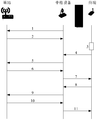
- FIG. 7 is a flowchart of communication between a terminal and a base station in an embodiment of the present application.
- Embodiment 8 is a structural block diagram of Embodiment 1 of a communication apparatus between a terminal and a base station of the present application;
- Embodiment 9 is a structural block diagram of Embodiment 1 of a network access device for a terminal according to the present application.
- FIG. 10 is a structural block diagram of a second embodiment of a communication device between a terminal and a base station according to the present application;
- FIG. 11 is a structural block diagram of a third embodiment of a communication apparatus between a terminal and a base station according to the present application.
- FIG. 12 is a structural block diagram of Embodiment 2 of a network access device for a terminal according to the present application.
- FIG. 13 is a structural block diagram of Embodiment 4 of a communication apparatus between a terminal and a base station according to the present application.
- FIG. 14 is a flowchart of steps in Embodiment 5 of a communication method between a terminal and a base station according to the present application;
- FIG. 16 is a flowchart of steps in Embodiment 7 of a communication method between a terminal and a base station according to the present application.
- the LoRa network consists of terminal nodes, base station nodes, and servers.
- the terminal has a LoRa network connection capability and accesses the LoRa network.
- the terminal may include different electronic devices. For example, when the LoRa network is used in city management, the terminal may include a smart meter; and when the LoRa network is used in a digital home At this time, the terminal may include various smart home appliances and the like.
- the base station also known as a gateway or concentrator in the LoRa network, has the function of wireless connection aggregation, including the terminal providing access to the LoRa network, forwarding data from the server or terminal, and realizing the data between the terminal and the server Interaction.
- the base station can also perform data interaction with other base stations within the signal coverage range of the base station by transmitting wireless frames.
- the server may include a server or a server cluster, configured to perform service processing according to data obtained from the base station or terminal, and control the working mode and working state of the base station or the terminal.
- One of the core concepts of the embodiments of the present application is to set up a LoRa relay device between the terminal and the base station, and establish communication between the terminal and the base station through the LoRa relay device.
- the communication process between the terminal and the base station is first introduced from the perspective of the terminal.
- Embodiment 1 of a method for communication between a terminal and a base station is shown, which may specifically include the following steps:
- Step 101 The terminal sends a network access request frame with a first preamble to a relay device; the relay device is configured to receive the network access request frame according to the first preamble, and send the network access frame to the base station.
- the terminal sends a network access request frame with a second preamble to the base station. If the terminal can receive the network access response frame returned by the base station, the standard network access is successful.
- a LoRa relay device is provided between the terminal and the base station, and communication between the terminal and the base station can be established through the relay device.
- the terminal is buried underground, 500 meters from the base station. If the terminal cannot receive the signal of the base station due to the obstacle on the ground, then the relay device can be placed on the ground above the buried point of the terminal to play the role of signal relay.
- the relay device as a standard node first accesses the LoRa network according to a standard network access procedure. That is, the relay device first sends the network access request frame with the second preamble to the base station, and then receives the network access response frame returned by the base station. After the standard network is successfully connected, the relay device enters an intermittent sleep state to save power consumption.
- the terminal may send a network access request frame with a first preamble to the networked relay device.
- the preamble is a regular piece of wireless signal used to inform the wireless receiver that the wireless signal behind contains valid information.
- the second preamble and the first preamble are both a section of wireless signals before the network access request frame.
- the second preamble is a standard preamble, which is a preamble in a standard format specified by the LoRaWAN protocol.
- the first preamble is a long preamble, and the length of the first preamble is longer than the length of the second preamble.
- the length of the preamble may include a duration.
- Another purpose of the first preamble is to activate the dormant wireless receiver, so its length is longer than that of the second preamble.
- the sleep period of the receiver is 4 seconds, and the length of the first preamble must be at least 4 seconds.
- the relay device periodically wakes itself up from the intermittent sleep state.
- the relay device detects whether the first preamble exists. If the first preamble is detected, the relay device activates a data receiving function and receives a radio frame after the first preamble.
- the step 101 may include the following sub-steps:
- Sub-step S11 if the terminal does not receive a network response frame within the first receiving window and the second receiving window after sending the network access request frame with the second preamble, the terminal sends to the relay device A network access request frame with a first preamble;
- Sub-step S12 if the terminal receives a network response frame within a second receiving window after sending a network access request frame with a second preamble, the terminal sends a Network access request frame.
- the terminal must open two short receiving windows after each uplink transmission: the first receiving window RX (receive) 1 and the second receiving window RX2, and the start time of the first receiving window and the second receiving window
- the provisions are based on the end time of uplink transmission.
- the relay device is set to transmit downlink to the terminal within the second receiving window after the terminal transmits upstream.
- the terminal if the terminal does not receive the network response frame within the first reception window and the second reception window after sending the network access request frame with the second preamble, the standard network access is considered to have failed. At this time, the terminal sends a network access request frame with the first preamble to the relay device.
- the terminal receives the network response frame within the second receiving window after sending the network access request frame with the second preamble, the standard network access is considered to have failed. At this time, the terminal sends a network access request frame with the first preamble to the relay device.
- the method may further include:
- the terminal If the terminal receives a network access request frame within a first receiving window after sending the network access request frame with a first preamble, the terminal sends a network access request frame with a second preamble to the base station .
- the terminal may initiate the standard network access procedure again and send a network access request frame with a second preamble to the base station.
- the method may further include:
- the terminal If the terminal does not receive a network response frame within the first receiving window and the second receiving window after sending the network access request frame with the first preamble, the terminal sends the Network access request frame with two preambles.
- the terminal if the terminal does not receive the network access request frame in the first reception window and the second reception window after sending the network access request frame with the first preamble, the terminal is considered to have a network access flow through the relay device. failure.
- the terminal can initiate a standard network access procedure to the base station again after sleeping for a period of time.
- the terminal Only when the terminal receives the network response frame within the second receiving window after sending the network access request frame with the first preamble, the terminal is considered to be successfully connected to the network through the relay device.
- the relay device after the relay device receives the network access request frame with the first preamble sent by the terminal, the relay device replaces the first preamble in front of the network access request frame with the second preamble. Then, the network access request frame with the second preamble is forwarded to the base station.
- the base station After receiving the network access request frame forwarded by the relay device, the base station returns a network access response frame to the relay device.
- the network response frame also carries a second preamble, and the relay device receives the network response frame according to the preamble. Finally, the relay device returns the network access response frame with the second preamble to the terminal, and the terminal successfully connects to the network.
- Step 102 The terminal receives a network access response frame sent by the relay device.
- the terminal After receiving the network response frame forwarded by the relay device, the terminal completes network access.
- the step 102 may include the following sub-steps:
- Sub-step S21 The terminal receives the network access response frame sent by the relay device within a second receiving window after sending the network access request frame with the first preamble.
- the relay device transmits downlink to the terminal within the second receiving window after the terminal transmits upstream.
- the terminal can receive the network response frame sent by the relay device within a second receiving window after sending the network access request frame with the first preamble.
- the method may further include: after receiving the network response frame, the terminal sends an uplink data frame with the first preamble to the relay device; the relay The device is further configured to receive the uplink data frame according to the first preamble, and send the uplink data frame with a second preamble to the base station; receive a downlink data frame returned by the base station;
- each uplink data frame sent by the terminal needs to carry a first preamble.
- the relay device needs to receive an uplink data frame according to the first preamble.
- the relay device After receiving the uplink data frame, the relay device replaces the first preamble before the uplink data frame with the second preamble, and then sends the uplink data frame with the first preamble to the base station.
- the base station After receiving the uplink data frame, the base station returns the downlink data frame with the second preamble to the relay device, and the relay device forwards the downlink data frame with the second preamble to the terminal.
- the method may further include: the terminal receiving a downlink data frame sent by the relay device.
- the terminal receives the downlink data frame forwarded by the relay device from the base station, thereby completing the communication between the terminal and the base station.
- the step of the terminal receiving a downlink data frame sent by the relay device may include the following sub-steps:
- Sub-step S31 The terminal receives the downlink data frame sent by the relay device within a second receiving window after sending the uplink data frame with the first preamble.
- the relay device transmits downlink to the terminal within the second receiving window after the terminal transmits upstream.
- the terminal can receive the downlink data frame sent by the relay device within the second receiving window after sending the uplink data frame with the first preamble.
- the terminal may send the network access request frame with the first preamble to the relay device, the relay device forwards the network access request frame to the base station, and then the relay device sends the network access response frame returned by the base station. Send to the terminal to complete the network access process of the terminal.
- the terminal After the terminal enters the network through the relay device, the terminal can send the uplink data frame with the first preamble to the relay device, and the relay device forwards the uplink data frame to the base station, and then the relay device sends the downlink data returned by the base station.
- the frame is sent to the terminal to complete the communication process between the terminal and the base station.
- the terminal may access the network through a relay device and communicate with the base station.
- the LoRaWAN radio frame format of the terminal is not changed, and only the length of the preamble is lengthened.
- Such a relay device does not use a private frame structure, but is highly compatible with the LoRaWAN standard, providing a guarantee for the unified LoRa relay standard of various manufacturers.
- the terminal's network access process is described from the perspective of the terminal.
- Embodiment 1 of a method for accessing a network of a terminal may specifically include the following steps:
- Step 201 The terminal sends a network access request frame with a second preamble in a normal mode.
- the terminal has two working modes of a normal mode and a relay mode.
- the terminal can initiate the network access process in normal mode or relay mode.
- the terminal may first send a network access request frame with a second preamble to the base station.
- the sending method may be a broadcasting or unicasting method.
- Step 202 If the terminal receives a network response frame within a second receiving window after sending the network access request frame with the second preamble, the terminal switches from the normal mode to the relay mode;
- the relay device sends data to the terminal within a second receiving window after the terminal transmits upstream.
- the terminal If the terminal receives a network access response frame within the second receiving window after sending the network access request frame with the second preamble in the normal mode, the network access response frame can be considered to be forwarded by the relay device instead of directly receiving the base station. Sent. At this time, the terminal switches from the normal mode to the relay mode, and initiates the network access process in the relay mode.
- the method may further include:
- the terminal receives the network access response frame and enters the network in a normal mode within a first receiving window after sending the network access request frame with the second preamble.
- the terminal If the terminal receives the network access response frame in the first receiving window after sending the network access request frame with the second preamble in the normal mode, it can be considered that the network response frame is directly received and sent directly. At this time, the terminal accesses the network in normal mode.
- Step 203 The terminal sends a network access request frame with a first preamble in a relay mode; the length of the second preamble is smaller than the length of the first preamble;
- the terminal may first send a network access request frame with a first preamble to the relay.
- the sending method may be a broadcasting or unicasting method.
- Step 204 if the terminal receives a network response frame within a first receiving window after sending the network access request frame with the first preamble; or, if the terminal sends the network response frame with the first preamble Neither the first reception window nor the second reception window after the code's network access request frame receives a network access response frame; the terminal switches from the relay mode to the normal mode.
- the terminal may consider that the network response frame is directly received and sent directly. At this point, the terminal can switch to normal mode and try to access the network in normal mode.
- the terminal does not receive the network response frame in the first receiving window and the second receiving window after sending the network access request frame with the first preamble in the relay mode, it is considered that the network access process through the relay device also fails.
- the terminal can initiate a standard network access procedure to the base station again after sleeping for a period of time.
- the method may further include:
- the terminal receives the network access response frame and enters the network in a relay mode within a second receiving window after sending the network access request frame with the first preamble.
- the terminal Only when the terminal receives the network response frame within the second receiving window after sending the network access request frame with the first preamble, the terminal is considered to be successfully connected to the network through the relay device.
- the terminal may send the network access request frame with the first preamble to the relay device, the relay device forwards the network access request frame to the base station, and then the relay device sends the network access response frame returned by the base station. Send to the terminal to complete the network access process of the terminal.
- Embodiment 2 a flowchart of steps in Embodiment 2 of a method for communication between a terminal and a base station according to the present application is shown, which may specifically include the following steps:
- Step 301 if the terminal accesses the network in a normal mode, the terminal sends an uplink data frame with a second preamble to the base station in the normal mode;
- the terminal has two working modes of a normal mode and a relay mode.
- the terminal can initiate the network access process in normal mode or relay mode.
- the data uplink method of the terminal is to add a second preamble before the uplink data frame, and then send the uplink data frame with the second preamble to the base station.
- Step 302 The terminal receives a downlink data frame returned by the base station.
- the terminal directly receives the downlink data frame returned by the base station.
- the step 302 may include the following sub-steps:
- Sub-step S41 The terminal receives a downlink data frame returned by the base station within a first receiving window after sending the uplink data frame with a second preamble.
- the terminal may directly receive the downlink data frame returned by the base station within a first receiving window after the uplink data frame with the second preamble is sent in the normal mode.
- Step 303 If the terminal accesses the network in a relay mode, the terminal sends an uplink data frame with a first preamble to the relay device in the relay mode; the relay device is configured to replace with a second preamble.
- the data uplink mode of the terminal is to add a first preamble before the uplink data frame, and then send the uplink data frame with the first preamble to the relay device.
- the relay device After receiving the uplink data frame, the relay device replaces the first preamble with the second preamble, and forwards the uplink data frame with the second preamble to the base station.
- Step 304 The terminal receives a downlink data frame forwarded by the relay device and returned by the base station.
- the terminal receives a downlink data frame forwarded by the relay device and sent by the base station.
- the step 304 may include the following sub-steps:
- Sub-step S51 The terminal receives the downlink data frame returned by the relay device and returned by the base station within a second receiving window after sending the uplink data frame with the first preamble.
- the relay device initiates downlink transmission to the terminal within a second receiving window after the terminal transmits upstream.
- the terminal may receive the downlink data frame returned by the relay device from the base station within a second receiving window after the uplink data frame with the first preamble is transmitted in the relay mode.
- the terminal may forward the uplink data frame with the first preamble to the relay device, and the relay device forwards the uplink data frame to the base station, and then the relay The device sends the downlink data frame returned by the base station to the terminal, and completes the communication process between the terminal and the base station.
- the communication flow between the terminal and the base station is first introduced from the perspective of the relay device.
- Embodiment 3 of a method for communication between a terminal and a base station according to the present application is shown, which may specifically include the following steps:
- Step 401 The relay device receives a network access request frame with a first preamble sent by the terminal.
- a LoRa relay device is provided between the terminal and the base station, and communication between the terminal and the base station can be established through the relay device.
- the terminal can initiate the network access process to the relay device. First, the terminal sends a network access request frame with a first preamble to the relay device.
- the relay device may have a CAD (Channel Activity Detection) mode.
- the channel activity detection mode is designed to detect the LoRa preamble on a wireless channel with the highest possible power consumption efficiency.
- the relay device quickly scans the frequency band to detect the preamble of the LoRa radio frame.
- the step 401 may include the following sub-steps:
- Sub-step S61 the relay device periodically wakes up from the intermittent sleep state, and detects whether there is a first preamble when waking up;
- step S62 if a first preamble is detected, the relay device receives a network access request frame after the first preamble.
- the relay device as a standard node first accesses the LoRa network according to a standard network access procedure. That is, the relay device first sends the network access request frame with the second preamble to the base station, and then receives the network access response frame returned by the base station. After the standard network is successfully connected, the relay device enters an intermittent sleep state to save power consumption.
- the relay device periodically wakes up from the intermittent sleep state, and detects whether the first preamble is detected when the relay device wakes up. If the first preamble is detected, the relay device activates a data receiving function and receives a radio frame after the first preamble.
- the wake-up period of the relay device is shorter than the length of the first preamble, so that the first preamble does not miss detection when the relay device wakes up.
- the wake-up period of the relay device is 4s, that is, the relay device wakes up every 4s, then the length of the first preamble is greater than or equal to 4s.
- Step 402 The relay device replaces the first preamble with a second preamble, and sends a network access request frame with the second preamble to the base station; the length of the second preamble is less than The length of the first preamble;
- the relay device replaces the first preamble with the second preamble, and forwards the network access request frame with the second preamble to the base station.
- Step 403 The relay device receives a network access response frame returned by the base station, and sends the network access response frame to the terminal.
- the base station After receiving the network access request frame forwarded by the relay device, the base station returns a network access response frame to the relay device.
- the network response frame also carries a second preamble, and the relay device receives the network response frame according to the preamble. Finally, the relay device returns the network access response frame with the second preamble to the terminal, and the terminal successfully connects to the network.
- the step of the relay device sending the network access response frame to the terminal may include the following sub-steps:
- Sub-step S71 the relay device sends the network response frame to the terminal within a second receiving window after the terminal sends a network access request frame with a first preamble;
- Sub-step S72 After sending the network access response frame, the relay device enters an intermittent sleep state.
- the relay device is set to transmit downlink to the terminal within the second receiving window after the terminal transmits upstream. Therefore, the relay device sends a network access response frame to the terminal within a second receiving window after the terminal sends the network access request frame with the first preamble. After sending the network response frame, the relay device enters the intermittent sleep state and waits for the next wake-up.
- the method may further include: the relay device receiving an uplink data frame with a first preamble sent by the terminal;
- the terminal After the terminal enters the network through the relay device, it sends an uplink data frame with the first preamble to the relay device.
- the step of the relay device receiving the uplink data frame with the first preamble sent by the terminal may include the following sub-steps:
- Sub-step S81 the relay device periodically wakes up from the intermittent sleep state, and detects whether there is a first preamble when waking up;
- step S82 if a first preamble is detected, the relay device receives an uplink data frame after the first preamble.
- the method may further include: the relay device replaces the first preamble with a second preamble, and sends uplink data with the second preamble to the base station. frame;
- the relay device uses the second preamble to replace the first preamble, and forwards the uplink data frame with the second preamble to the base station.
- the method may further include: the relay device receiving a downlink data frame returned by the base station, and sending the downlink data frame to the terminal.
- the step of the relay device sending the downlink data frame to the terminal may include the following sub-steps:
- Sub-step S91 the relay device sends a downlink data frame to the terminal within a second receiving window after the terminal sends the uplink data frame with the first preamble;
- Sub-step S92 After sending a downlink data frame, the relay device enters an intermittent sleep state.
- the relay device is set to transmit downlink to the terminal within the second receiving window after the terminal transmits upstream. Therefore, the relay device sends a downlink data frame to the terminal within a second receiving window after the terminal sends the uplink data frame with the first preamble. After sending a downlink data frame, the relay device enters an intermittent sleep state and waits for the next wake-up.
- the terminal may send the network access request frame with the first preamble to the relay device, the relay device forwards the network access request frame to the base station, and then the relay device sends the network access response frame returned by the base station. Send to the terminal to complete the network access process of the terminal.
- the terminal After the terminal enters the network through the relay device, the terminal can send the uplink data frame with the first preamble to the relay device, and the relay device forwards the uplink data frame to the base station, and then the relay device sends the downlink data returned by the base station.
- the frame is sent to the terminal to complete the communication process between the terminal and the base station.
- the terminal may access the network through a relay device and communicate with the base station.
- the LoRaWAN radio frame format of the terminal is not changed, and only the length of the preamble is lengthened.
- Such a relay device does not use a private frame structure, but is highly compatible with the LoRaWAN standard, providing a guarantee for the unified LoRa relay standard of various manufacturers.
- Embodiment 2 a flowchart of steps in Embodiment 2 of a method for accessing a network of a terminal according to the present application is shown, which may specifically include the following steps:
- Step 501 The relay device receives a network access request frame with a first preamble sent by the terminal in a relay mode;
- the terminal has two working modes of a normal mode and a relay mode.
- the terminal can initiate the network access process in normal mode or relay mode.
- the terminal may first send a network access request frame with a first preamble to the relay.
- the sending method may be a broadcasting or unicasting method.
- the step 501 may include the following sub-steps:
- Sub-step S1001 the relay device periodically wakes up from the intermittent sleep state, and detects whether there is a first preamble when waking up;
- step S1002 if a first preamble is detected, the relay device receives a network access request frame after the first preamble.
- the wake-up period of the relay device is shorter than the length of the first preamble, so that the first preamble does not miss detection when the relay device wakes up.
- the relay device periodically wakes up from the intermittent sleep state, and detects whether the first preamble is detected when the relay device wakes up. If the first preamble is detected, the relay device activates a data receiving function and receives a radio frame after the first preamble.
- the relay device may have a CAD mode.
- the channel activity detection mode is designed to detect the LoRa preamble on a wireless channel with the highest possible power consumption efficiency.
- the relay device quickly scans the frequency band to detect the preamble of the LoRa radio frame.
- Step 502 The relay device replaces the first preamble with a second preamble, and sends a network access request frame with the second preamble to the base station; the length of the second preamble is less than The length of the first preamble;
- Step 503 The relay device receives a network access response frame returned by the base station, and sends the network access response frame to the terminal.
- the step of the relay device sending the network access response frame to the terminal includes the following sub-steps:
- Sub-step S1101 the relay device sends the network access response frame to the terminal within a second receiving window after the terminal sends a network access request frame with a first preamble;
- Sub-step S1102 after sending the network access response frame, the relay device enters an intermittent sleep state.
- the terminal may send the network access request frame with the first preamble to the relay device, the relay device forwards the network access request frame to the base station, and then the relay device sends the network access response frame returned by the base station. Send to the terminal to complete the network access process of the terminal.
- the following describes the communication process after the terminal enters the network from the perspective of the relay device.
- Embodiment 4 of a method for communication between a terminal and a base station according to the present application is shown, which may specifically include the following steps:
- Step 601 The relay device receives an uplink data frame with a first preamble sent by a terminal connected to the network in a relay mode;
- the terminal has two working modes of a normal mode and a relay mode.
- the terminal can initiate the network access process in normal mode or relay mode.
- the data uplink mode of the terminal is to add a first preamble before the uplink data frame, and then send the uplink data frame with the first preamble to the relay device.
- the step 601 may include the following sub-steps:
- Sub-step S1201 the relay device periodically wakes up from the intermittent sleep state, and detects whether there is a first preamble when waking up;
- step S1202 if a first preamble is detected, the relay device receives an uplink data frame after the first preamble.
- the wake-up period of the relay device is smaller than the length of the first preamble.
- the relay device may have a CAD mode.
- the channel activity detection mode is designed to detect the LoRa preamble on a wireless channel with the highest possible power consumption efficiency.
- the relay device quickly scans the frequency band to detect the preamble of the LoRa radio frame.
- the relay device periodically wakes up from the intermittent sleep state, and detects whether the first preamble is detected when the relay device wakes up. If the first preamble is detected, the relay device activates a data receiving function and receives a radio frame after the first preamble.
- Step 602 The relay device replaces the first preamble with a second preamble, and sends an uplink data frame with the second preamble to the base station; the length of the second preamble is less than The length of the first preamble;
- the relay device After receiving the uplink data frame, the relay device replaces the first preamble with the second preamble, and forwards the uplink data frame with the second preamble to the base station.
- Step 603 The relay device receives a downlink data frame returned by the base station, and forwards the downlink data frame to the terminal.
- Step 603 in the embodiment of the present application may include the following sub-steps:
- Sub-step S1301 the relay device sends a downlink data frame to the terminal within a second receiving window after the terminal sends the uplink data frame with the first preamble;
- Sub-step S1302 after sending a downlink data frame, the relay device enters an intermittent sleep state.
- the relay device is set to transmit downlink to the terminal within the second receiving window after the terminal transmits upstream. Therefore, the relay device sends a downlink data frame to the terminal within a second receiving window after the terminal sends the uplink data frame with the first preamble. After sending a downlink data frame, the relay device enters an intermittent sleep state and waits for the next wake-up.
- the terminal may forward the uplink data frame with the first preamble to the relay device, and the relay device forwards the uplink data frame to the base station, and the relay The device sends the downlink data frame returned by the base station to the terminal, and completes the communication process between the terminal and the base station.
- FIG. 7 is a flowchart of a communication between a terminal and a base station according to an embodiment of the present application.
- the LoRa relay device sends a network access request frame to the LoRa base station.
- the LoRa relay receives the network confirmation frame returned by the LoRa base station, and then enters an intermittent sleep state.
- the LoRa terminal sends the network access request frame with the second preamble in normal mode, but does not receive the network response frame, and the standard network access process fails.
- the LoRa terminal switches to the relay mode and sends a network access request frame with the first preamble in the relay mode.
- the LoRa relay device is activated by the first preamble and receives the network access request frame; replaces the first preamble with the second preamble, and then forwards the network access request frame with the first preamble to the LoRa base station.
- the LoRa relay device receives the network access response frame returned by the LoRa base station.
- the LoRa relay device forwards the network confirmation frame to the LoRa terminal in relay mode in the RX2 window, and then enters the intermittent sleep state.
- the LoRa terminal sends an uplink data frame with a first preamble in a relay mode.
- the LoRa relay device is activated by the first preamble, receives the uplink data frame, replaces the first preamble with the second preamble, and then forwards the uplink data frame with the first preamble to the LoRa base station.
- the LoRa relay device receives the downlink data frame returned by the LoRa base station.
- the LoRa relay device forwards the downlink data frame to the LoRa terminal in the relay mode in the RX2 window, and then enters an intermittent sleep state, waiting for the next activation.
- Embodiment 1 of a communication apparatus between a terminal and a base station is shown, and may specifically include the following modules:
- the device may further include:
- a first preamble data frame sending module located at the terminal, configured to send an uplink data frame with the first preamble to a relay device; the relay device is further configured to send the uplink data frame according to the first preamble Receive the uplink data frame, and send the uplink data frame with a second preamble to the base station; receive the downlink data frame returned by the base station;
- a downlink data frame receiving module located at the terminal is configured to receive a downlink data frame sent by the relay device.
- the first preamble request frame sending module 801 may include:
- a first preamble request frame sending submodule configured to: if the terminal does not receive a network response frame within the first receiving window and the second receiving window after sending the network access request frame with the second preamble, Sending, by the terminal, a network access request frame with a first preamble to the relay device;
- a second preamble request frame sending submodule configured to, if the terminal receives a network response frame within a second receiving window after sending the network access request frame with the second preamble, the terminal sends a relay device Send a network access request frame with a first preamble.
- the device may further include:
- a third preamble request frame sending module located at the terminal, configured to send a network access request frame to the terminal if the terminal receives a network access request frame within a first receiving window after sending the network access request frame with the first preamble;
- the base station sends a network access request frame with a second preamble.
- the device may further include:
- a fourth preamble request frame sending module located at the terminal is configured to: if the terminal does not receive within the first receiving window and the second receiving window after sending the network access request frame with the first preamble
- the network access response frame sends a network access request frame with a second preamble to the base station.
- the network access response frame receiving module 802 may include:
- the network access response frame receiving submodule is configured to receive the network access response frame sent by the relay device within a second receiving window after sending the network access request frame with the first preamble.
- the downlink data frame receiving module may include:
- a downlink data frame receiving submodule is configured to receive a downlink data frame sent by the relay device within a second receiving window after the uplink data frame with the first preamble is sent.
- Embodiment 1 of a network access device of a terminal may specifically include the following modules:
- the first mode switching module 902 located in the terminal is configured to, if the terminal receives a network response frame within a second receiving window after sending the network access request frame with a second preamble, the terminal switches from a normal mode. Switch to relay mode;
- a second mode switching module 904 located in the terminal is configured to receive a network response frame if the terminal receives a network response frame within a first receiving window after sending the network access request frame with a first preamble; or, if If the terminal does not receive the network response frame in the first receiving window and the second receiving window after sending the network access request frame with the first preamble, the terminal switches from the relay mode to the normal mode.
- the device may further include:
- the first network access response frame receiving module located at the terminal is configured to receive the network access response frame and enter the network in a normal mode within a first receiving window after sending the network access request frame with the second preamble.
- the device may further include:
- the first network access response frame receiving module located at the terminal is configured to receive the network access response frame and enter the network in a relay mode within a second receiving window after sending the network access request frame with the first preamble.
- Embodiment 2 of a communication apparatus between a terminal and a base station is shown, and may specifically include the following modules:
- a second preamble data frame sending module 1001 located at the terminal is configured to send an uplink data frame with a second preamble to a base station in the normal mode if the terminal accesses the network in a normal mode;
- the first preamble data frame sending module 1003 located at the terminal is configured to send the uplink data frame with the first preamble to the relay device in the relay mode if the terminal accesses the network in the relay mode.
- the relay device is configured to replace the first preamble with a second preamble, and forward an uplink data frame with the second preamble to a base station; the length of the second preamble is less than the first The length of a preamble;
- a second downlink data frame receiving module 1004 located at the terminal is configured to receive a downlink data frame returned by the base station and forwarded by the relay device.
- the first downlink data frame receiving module 1002 may include:
- the first downlink data frame receiving submodule is configured to receive a downlink data frame returned by the base station within a first receiving window after sending the uplink data frame with a second preamble.
- the second downlink data frame receiving module 1004 may include:
- a second downlink data frame receiving submodule configured to receive, in a second receiving window after sending the uplink data frame with the first preamble, the downlink data frame returned by the relay device and returned by the base station .
- Embodiment 3 of a communication device between a terminal and a base station may specifically include the following modules:
- the length of the second preamble is smaller than the length of the first preamble
- the network access response frame forwarding module 1103 located in the relay device is configured to receive the network access response frame returned by the base station, and send the network access response frame to the terminal.
- the device may further include:
- a first preamble data frame receiving module located in the relay device, configured to receive an uplink data frame with a first preamble sent by the terminal;
- a first preamble data frame forwarding module located in the relay device, configured to replace the first preamble with a second preamble, and send an uplink data frame with the second preamble to the base station;
- a downlink data frame forwarding module located in the relay device is configured to receive a downlink data frame returned by the base station and send the downlink data frame to the terminal.
- the first preamble request frame receiving module 1101 may include:
- a first preamble detection sub-module configured to periodically wake up from an intermittent sleep state, and detect whether there is a first preamble when waking up;
- the first preamble request frame receiving submodule is configured to receive a network access request frame after the first preamble if the first preamble is detected.
- the network access response frame forwarding module 1103 may include:
- a network access response frame forwarding submodule configured to send the network access response frame to the terminal within a second receiving window after the terminal sends a network access request frame with a first preamble
- the first sleep submodule is configured to enter an intermittent sleep state after sending the network access response frame.
- the first preamble data frame receiving module may include:
- a second preamble detection sub-module configured to periodically wake up from an intermittent sleep state, and detect whether there is a first preamble when waking up;
- the first preamble data frame receiving submodule is configured to receive an uplink data frame after the first preamble if the first preamble is detected.
- the downlink data frame forwarding module may include:
- a downlink data frame forwarding submodule configured to send a downlink data frame to the terminal within a second receiving window after the terminal sends the uplink data frame with a first preamble
- the second sleep sub-module is configured to enter an intermittent sleep state after sending a downlink data frame.
- the wake-up period of the relay device is smaller than the length of the first preamble.
- Embodiment 2 of a network access device for a terminal may specifically include the following modules:
- the length of the second preamble is smaller than the length of the first preamble
- the network access response frame forwarding module 1203 located in the relay device is configured to receive the network access response frame returned by the base station and send the network access response frame to the terminal.
- the first preamble request frame receiving module 1201 may include:
- a first preamble detection sub-module configured to periodically wake up from an intermittent sleep state, and detect whether there is a first preamble when waking up;
- a first preamble request frame receiving submodule is configured to, if a first preamble is detected, the relay device receives a network access request frame after the first preamble.
- the network access response frame forwarding module 1203 may include:
- a network access response frame forwarding submodule configured to send the network access response frame to the terminal within a second receiving window after the terminal sends a network access request frame with a first preamble
- the sleep submodule is configured to enter an intermittent sleep state after sending the network access response frame.
- the wake-up period of the relay device is smaller than the length of the first preamble.
- Embodiment 4 of a communication device between a terminal and a base station is shown, and may specifically include the following modules:
- the length of the second preamble is smaller than the length of the first preamble
- a downlink data frame forwarding module 1303 located in the relay device is configured to receive a downlink data frame returned by the base station, and forward the downlink data frame to the terminal.
- the first preamble data frame receiving module 1301 may include:
- a first preamble detection sub-module configured to periodically wake up from an intermittent sleep state, and detect whether there is a first preamble when waking up;
- a first preamble data frame receiving submodule is configured to, if a first preamble is detected, the relay device receives an uplink data frame after the first preamble.
- the downlink data frame forwarding module 1303 may include:
- a downlink data frame forwarding submodule configured to send a downlink data frame to the terminal within a second receiving window after the terminal sends the uplink data frame with a first preamble
- the sleep sub-module is used to enter an intermittent sleep state after sending a downlink data frame.
- the wake-up period of the relay device is smaller than the length of the first preamble.
- Embodiment 5 of a method for communication between a terminal and a base station according to the present application is shown, which may specifically include the following steps:
- Step 1401 The terminal sends a first network access request frame to the relay device, where the network access request frame includes a wake-up sequence, and the wake-up sequence is composed of multiple consecutive wake-up data frames;
- the wake-up sequence receives the network access request frame, sends a second network access request frame to the base station, and receives a network access response frame returned by the base station;
- the first network access request frame is a network access request frame including a wake-up sequence.
- the wake-up data frame is a small data frame.
- the wake-up data frame may also be a wake-up data packet.
- the wake-up sequence consists of multiple wake-up data frames connected end to end.
- the wake-up sequence may consist of 30 wake-up data frames connected end to end.
- a spreading factor of 9 can be used for the wake-up data frame.
- the wake-up sequence may or may not include a preamble.
- the preamble may be a second preamble.
- the second network access request frame is a network access request frame that includes a preamble and does not include a wake-up sequence.
- the preamble in the second network access request frame is a normal-length preamble.
- the preamble in the second network access request may be a second preamble.
- Step 1402 The terminal receives a network access response frame sent by the relay device.
- the relay device receives the network access response frame corresponding to the second network access request frame sent by the base station, and sends the network access response frame to the terminal.
- the method may further include:
- the wake-up data frame includes a first count value and a terminal identifier, and the first count value is used to enable the relay device to obtain information about the number of remaining wake-up data frames in the wake-up sequence;
- the first count value carries information about the number of wake-up data frames after the wake-up data frame. For example, if the relay device parses out that the first count value carried in a certain wake-up data frame is 7, it means that there are still six wake-up data frames after the wake-up data frame.
- the relay device can calculate the time for the next wake-up and receive the data payload part of the network access request frame, or the next wake-up and receive the data payload part of the uplink data frame according to the transmission time information of each wake-up data frame and the number of wake-up data frames. time.
- the first count value may also be used to cause the relay device to obtain time information for next wake-up.
- the terminal identifier may be a terminal extended unique identifier (DevEUI), or a terminal address (DevAddr) obtained by the terminal, or may include both a terminal extended unique identifier and a terminal address.
- the relay device analyzes the terminal identifier in the wake-up data frame, and determines whether the terminal identifier exists in the service whitelist. If the terminal identifier exists in the service white list, the relay device sends a second network access request frame or an uplink data frame to the base station. Otherwise, no second network access request frame is sent.
- the terminal identifier included in the wake-up data frame in the first network access request frame sent by the terminal may be DevEUI.
- the terminal identifier included in the wake-up data frame in the uplink data frame sent by the terminal may be DevEUI, DevAddr, or both.
- the service white list includes at least one terminal identifier.
- the service white list is used to record the terminal identification of the terminal that the relay device can serve.
- the service white list can be preset in the relay device.
- the terminal may send at least one of DevEUI and DevAddr to the service whitelist.
- the service whitelist may update at least one of DevEUI and DevAddr according to the message received from the terminal.
- the service whitelist can also be configured by using a Media Access Control (MAC) command issued by the network server.
- MAC Media Access Control
- the network server may send a whitelist configuration command (WhiteListConfigCommand) to the relay device through the base station.
- the whitelist configuration command includes the terminal identifier to be deleted or the terminal identifier to be added.
- the relay device After receiving the whitelist configuration command, the relay device deletes the corresponding terminal identifier or adds the corresponding terminal identifier according to the configuration command.
- the terminal identifier may be at least one of DevEUI and DevAddr.
- the method may further include:
- the wake-up data frame is encrypted by a wake-up session key, and the wake-up session key is used to enable a relay device to decrypt the wake-up data frame with the wake-up session key when the wake-up data frame is received in the wake-up state.
- the wake-up session key can be preset in the terminal and the relay device.
- the wake-up session key may also be dynamically generated according to a root key existing in the terminal and the relay device.
- the relay device can receive a wake-up data frame by awakening, and receive a subsequent data payload part according to the information in the wake-up data frame, which can effectively reduce Distributed Denial of Service (DDoS).
- DDoS Distributed Denial of Service
- the power consumption impact of the attack improves the battery use efficiency of the relay device.
- Embodiment 6 a flowchart of steps in Embodiment 6 of a method for communication between a terminal and a base station according to the present application is shown, which may specifically include the following steps:
- Step 1501 The relay device receives a first network access request frame sent by the terminal, where the network access request frame includes a wake-up sequence, and the wake-up sequence is composed of multiple consecutive wake-up data frames;
- the first network access request frame is a network access request frame including a wake-up sequence.
- the wake-up data frame is a small data frame.
- the wake-up data frame may also be a wake-up data packet.
- the wake-up sequence consists of multiple wake-up data frames connected end to end.
- the wake-up sequence may consist of 30 wake-up data frames connected end to end.
- the idle slots between each two adjacent wake-up data frames are required to be equal.
- the wake-up sequence may or may not include a preamble.
- the preamble may be a second preamble.
- Step 1502 the relay device sends a second network access request frame to the base station
- the second network access request frame is a network access request frame that includes a preamble and does not include a wake-up sequence.
- Step 1503 The relay device receives a network access response frame returned by the base station, and sends the network access response frame to the terminal.
- the relay device receives the network access response frame corresponding to the second network access request frame sent by the base station, and sends the network access response frame to the terminal.
- the method may further include:
- the wake-up data frame includes a first count value and a terminal identifier, and the first count value is used to enable the relay device to obtain information about the number of remaining wake-up data frames in the wake-up sequence;
- the first count value carries information about the number of wake-up data frames after the wake-up data frame. For example, if the relay device parses out that the first count value carried in a certain wake-up data frame is 7, it means that there are still six wake-up data frames after the wake-up data frame.
- the relay device can calculate the time of the next wake-up and receive the data load part of the network access request frame according to the transmission time information of each wake-up data frame plus the number of wake-up data frames, or the next wake-up and receive uplink data frame Load time.
- the first count value may also be used to cause the relay device to obtain time information for next wake-up.
- the terminal identifier may be a terminal extended unique identifier (Device Extended Unique Identifier, DevEUI).
- the relay device analyzes the terminal identifier in the wake-up data frame, and determines whether the terminal identifier exists in the service whitelist. If the terminal identity exists in the service whitelist, the relay device sends a second network access request frame to the base station. Otherwise, no second network access request frame is sent.
- the service white list includes at least one terminal identifier.
- the service white list is used to record the terminal identification of the terminal that the relay device can serve.
- the service white list can be preset in the relay device.
- the service whitelist can also be configured by using a Media Access Control (MAC) command issued by the network server.
- MAC Media Access Control
- the network server may send a whitelist configuration command (WhiteListConfigCommand) to the relay device through the base station.
- the whitelist configuration command includes the terminal identifier to be deleted or the terminal identifier to be added.
- the relay device After receiving the whitelist configuration command, the relay device deletes the corresponding terminal ID or adds the corresponding terminal ID according to the configuration command.
- the method may further include:
- the wake-up data frame is encrypted by a wake-up session key, and the wake-up session key is used to enable a relay device to decrypt the wake-up data frame with the wake-up session key when the wake-up data frame is received in the wake-up state.
- the wake-up session key can be preset in the terminal and the relay device.
- the wake-up session key may also be dynamically generated according to a root key existing in the terminal and the relay device.
- the relay device can receive a wake-up data frame by awakening, and receive a subsequent data payload part according to the information in the wake-up data frame, which can effectively reduce Distributed Denial of Service (DDoS)
- DDoS Distributed Denial of Service
- Embodiment 7 of a method for communication between a terminal and a base station according to the present application is shown, which may specifically include the following steps:
- Step 1601 The relay device determines that the number of network access request frames with the first preamble received within the first time range exceeds the first threshold value.
- the first time range may be a preset time interval range, such as one minute, two minutes, one minute and thirty seconds.
- the length of the first time range can also be configured through a Media Access Control (MAC) command issued by the network server.
- the network server may send a long preamble detection time configuration command to the relay device through the base station, and the command carries a new first time range. After receiving the long preamble detection time configuration command, the relay device replaces the old first time range with the new first time range.
- the first threshold value can be a number, such as 4 or 5.
- Step 1602 The relay device stops monitoring or receiving a network access request frame with a first preamble within a second time range after the first time range.
- the second time range may be a preset time interval range, such as 5 minutes, 6 minutes, 5 minutes and 30 seconds.
- the length of the second time range can also be configured through a Media Access Control (MAC) command issued by the web server.
- the network server may send a relay service suspension configuration command to the relay device through the base station, and the command carries a new second time range. After receiving the relay service suspension configuration command, the relay device replaces the old second time range with the new second time range. If the relay device detects that multiple network access request frames with the first preamble are continuously detected within a period of time (the first time range), and the number of network access request frames with the first preamble is greater than the first gate A limit value, such as 5, determines that there is a DDoS attack.
- the first gate A limit value such as 5
- the second time range for example, a value of 10 minutes
- stop monitoring or receive the network access request frame with the first preamble Specifically, in the second time range, if the relay device detects the long preamble, it will continue to be in a sleep state without receiving a subsequent data payload portion.
- Step 1603 the relay device restarts receiving the network access request frame with the first preamble after the second time range
- the second time range may be another time range that is different from the first time range.
- the relay device judges that it receives up to 7 times with the first preamble within 2 minutes (the first time range).
- the first threshold value can be 6.
- the relay device stops monitoring or receiving the network access request frame or the uplink data frame with the first preamble within the next 5 minutes (the second time range).
- the relay device may also detect that the number of network access request frames with the first preamble is less than a second threshold within the second time range, and then restart to receive the network request frames with the first preamble. .
- the relay device can determine whether the DDoS attack is mitigated by detecting that the network access request frame with a long preamble is less than a second threshold within the second time range. If the DDoS attack is mitigated, the relay is restarted after the second time range. service.
- Step 1604 The relay device receives a network access response frame returned by the base station, and sends the network access response frame to the terminal.
- the relay device may temporarily stop monitoring or receiving a network access request frame or an uplink data frame with a first preamble within a period of time by determining that an attacker DDoS attack exists within a period of time. And restarting the relay service afterwards can effectively reduce the power consumption impact caused by the Distributed Denial of Service (DDoS) attack and improve the battery usage efficiency of the relay device.
- DDoS Distributed Denial of Service
- the description is relatively simple.
- the related parts refer to the description of the method embodiment.
- An embodiment of the present application further provides a device, including:
- One or more processors are One or more processors.
- One or more machine-readable media having instructions stored thereon, when executed by the one or more processors, cause the apparatus to execute the method described in the embodiment of the present application.
- the embodiments of the present application further provide one or more machine-readable media, on which instructions are stored, which when executed by one or more processors, cause the apparatus to execute the method described in the embodiments of the present application.
- the embodiments of the embodiments of the present application may be provided as a method, an apparatus, or a computer program product. Therefore, the embodiments of the present application may take the form of an entirely hardware embodiment, an entirely software embodiment, or an embodiment combining software and hardware aspects. Moreover, the embodiments of the present application may take the form of a computer program product implemented on one or more computer-usable storage media (including, but not limited to, disk storage, CD-ROM, optical storage, etc.) containing computer-usable program code.
- computer-usable storage media including, but not limited to, disk storage, CD-ROM, optical storage, etc.
- These computer program instructions may be provided to a processor of a general purpose computer, special purpose computer, embedded processor, or other programmable data processing terminal device to produce a machine, such that the instructions executed by the processor of the computer or other programmable data processing terminal device Means are generated for implementing the functions specified in one or more of the flowcharts and / or one or more of the block diagrams.
- These computer program instructions may also be stored in a computer-readable memory capable of directing a computer or other programmable data processing terminal device to work in a specific manner, such that the instructions stored in the computer-readable memory produce a manufactured article including the instruction means, the The instruction device implements the functions specified in one or more flowcharts and / or one or more blocks of the block diagram.
Landscapes
- Engineering & Computer Science (AREA)
- Signal Processing (AREA)
- Computer Networks & Wireless Communication (AREA)
- Computer Security & Cryptography (AREA)
- Computing Systems (AREA)
- Business, Economics & Management (AREA)
- Accounting & Taxation (AREA)
- Development Economics (AREA)
- Economics (AREA)
- General Business, Economics & Management (AREA)
- Mobile Radio Communication Systems (AREA)
Abstract
本申请实施例提供了一种终端与基站的通信、终端的入网方法和装置,所述终端与基站的通信包括:所述终端向中继设备发送带有第一前导码的入网请求帧;所述中继设备用于依据所述第一前导码接收所述入网请求帧,并向所述基站发送带第二前导码的所述入网请求帧,并接收所述基站返回的入网响应帧;所述第二前导码的长度小于所述第一前导码的长度;所述终端接收所述中继设备发送的入网响应帧。本申请实施例中,终端可以通过中继设备入网,并与基站通信。本申请实施例中没有改变终端的LoRaWAN无线帧格式,仅仅加长了前导码的长度。这样的中继设备没有采用私有的帧结构,而是与LoRaWAN标准高度兼容,为各厂商统一LoRa中继标准提供了保障。
Description
本申请要求2018年07月20日递交的申请号为201810806527.1、发明名称为“一种终端与基站的通信、终端的入网方法和装置”的中国专利申请的优先权,其全部内容通过引用结合在本申请中。
本申请涉及通信技术领域,特别是涉及一种终端与基站的通信方法、一种终端与基站的通信装置、一种终端的入网方法和一种终端的入网装置。
物联网技术是继计算机和互联网之后的第三次信息技术革命,具有实时性和交互性等优点,已经被广泛应用于城市管理、数字家庭、定位导航、物流管理、安保系统等多个领域。其中,LoRa是物联网中一种基于扩频技术的超远距离传输方案,具有传输距离远、低功耗、多节点和低成本等特性。
现有的数据传输方法中,LoRa网络中通常包括终端、基站和服务器。
一般情况下,终端的上行信号直接被基站所接收,基站的下行信号也会直接被终端所接收。但是在有些情况下,基站和终端的信号由于衰减而无法相互到达对方。例如,终端被安装在地下,信号强度会衰减,使得基站和终端之间无法通信。
发明内容
鉴于上述问题,提出了本申请实施例以便提供一种克服上述问题或者至少部分地解决上述问题的一种终端与基站的通信方法、一种终端与基站的通信装置、一种终端的入网方法和一种终端的入网装置。
为了解决上述问题,本申请实施例公开了一种终端与基站的通信方法,包括:
所述终端向中继设备发送带有第一前导码的入网请求帧;所述中继设备用于依据所述第一前导码接收所述入网请求帧,并向所述基站发送带第二前导码的所述入网请求帧,并接收所述基站返回的入网响应帧;所述第二前导码的长度小于所述第一前导码的长度;
所述终端接收所述中继设备发送的入网响应帧。
优选的,还包括:
所述终端向所中继设备发送带有所述第一前导码的上行数据帧;所述中继设备还用 于依据所述第一前导码接收所述上行数据帧,并向所述基站发送带第二前导码的所述上行数据帧;接收所述基站返回的下行数据帧;
所述终端接收所述中继设备发送的下行数据帧。
优选的,所述终端向中继设备发送带有第一前导码的入网请求帧的步骤包括:
若所述终端在发送带有第二前导码的入网请求帧之后的第一接收窗口和第二接收窗口内,都没有接收到入网响应帧,则所述终端向中继设备发送带有第一前导码的入网请求帧;
或,
若所述终端在发送带有第二前导码的入网请求帧之后的第二接收窗口内,接收到入网响应帧,则所述终端向中继设备发送带有第一前导码的入网请求帧。
优选的,还包括:
若所述终端在发送所述带有第一前导码的入网请求帧之后的第一接收窗口内接收到入网请求帧,则所述终端向所述基站发送带有第二前导码的入网请求帧。
优选的,还包括:
若所述终端在发送所述带有第一前导码的入网请求帧之后的第一接收窗口和第二接收窗口内都没有接收到入网响应帧,则所述终端向所述基站发送带有第二前导码的入网请求帧。
优选的,所述终端接收所述中继设备发送的入网响应帧的步骤包括:
所述终端在发送所述带有第一前导码的入网请求帧之后的第二接收窗口内,接收所述中继设备发送的入网响应帧。
优选的,所述终端接收所述中继设备发送的下行数据帧的步骤包括:
所述终端在发送所述带有第一前导码的上行数据帧之后的第二接收窗口内,接收所述中继设备发送的下行数据帧。
本申请实施例还公开了一种终端的入网方法,包括:
所述终端在正常模式发送带有第二前导码的入网请求帧;
若所述终端在发送所述带有第二前导码的入网请求帧之后的第二接收窗口内,接收到入网响应帧,则所述终端从正常模式切换到中继模式;
所述终端在中继模式发送带有第一前导码的入网请求帧;所述第二前导码的长度小于所述第一前导码的长度;
若所述终端在发送所述带有第一前导码的入网请求帧之后的第一接收窗口内,接收 到入网响应帧;或,若所述终端在发送所述带有第一前导码的入网请求帧之后的第一接收窗口和第二接收窗口内,都没有接收到入网响应帧;则所述终端从中继模式切换到正常模式。
优选的,还包括:
所述终端在发送所述带有第二前导码的入网请求帧之后的第一接收窗口内,接收入网响应帧以正常模式入网。
优选的,还包括:
所述终端在发送所述带有第一前导码的入网请求帧之后的第二接收窗口内,接收入网响应帧以中继模式入网。
本申请实施例还公开了一种终端与基站的通信方法,包括:
若所述终端以正常模式入网,则所述终端在正常模式向基站发送带有第二前导码的上行数据帧;
所述终端接收所述基站返回的下行数据帧;
若所述终端以中继模式入网,则所述终端在中继模式向中继设备发送带有第一前导码的上行数据帧;所述中继设备用于采用第二前导码替换所述第一前导码,并向基站转发带有所述第二前导码的上行数据帧;所述第二前导码的长度小于所述第一前导码的长度;
所述终端接收所述中继设备转发的由所述基站返回的下行数据帧。
优选的,所述终端接收所述基站返回的下行数据帧的步骤包括:
所述终端在发送所述带有第二前导码的上行数据帧之后的第一接收窗口内,接收所述基站返回的下行数据帧。
优选的,所述终端接收所述中继设备转发的由所述基站返回的下行数据帧的步骤包括:
所述终端在发送所述带有第一前导码的上行数据帧之后的第二接收窗口内,接收所述中继设备转发的由所述基站返回的下行数据帧。
本申请实施例还公开了一种终端与基站的通信方法,包括:
中继设备接收所述终端发送的带有第一前导码的入网请求帧;
所述中继设备采用第二前导码替换所述第一前导码,并向所述基站发送带有所述第二前导码的入网请求帧;所述第二前导码的长度小于所述第一前导码的长度;
所述中继设备接收所述基站返回的入网响应帧,并将所述入网响应帧发送至所述终 端。
优选的,还包括:
所述中继设备接收所述终端发送的带有第一前导码的上行数据帧;
所述中继设备采用第二前导码替换所述第一前导码,并向所述基站发送带有所述第二前导码的上行数据帧;
所述中继设备接收所述基站返回的下行数据帧,并将所述下行数据帧发送至所述终端。
优选的,所述中继设备接收终端发送的带有第一前导码的入网请求帧的步骤包括:
所述中继设备从间歇性休眠状态周期性唤醒,在唤醒时检测是否有第一前导码;
若检测到第一前导码,则所述中继设备接收所述第一前导码之后的入网请求帧。
优选的,所述中继设备将所述入网响应帧发送至所述终端的步骤包括:
所述中继设备在所述终端发送带有第一前导码的入网请求帧之后的第二接收窗口内,将所述入网响应帧发送至所述终端;
在发送所述入网响应帧后,所述中继设备进入间歇性休眠状态。
优选的,所述中继设备接收所述终端发送的带有第一前导码的上行数据帧的步骤包括:
所述中继设备从间歇性休眠状态周期性唤醒,在唤醒时检测是否有第一前导码;
若检测到第一前导码,则所述中继设备接收所述第一前导码之后的上行数据帧。
优选的,所述中继设备将所述下行数据帧发送至所述终端的步骤包括:
所述中继设备在所述终端发送所述带有第一前导码的上行数据帧之后的第二接收窗口内,向所述终端发送下行数据帧;
在发送下行数据帧后,所述中继设备进入间歇性休眠状态。
优选的,所述中继设备的唤醒周期小于所述第一前导码的长度。
本申请实施例还公开了一种终端的入网方法,包括:
中继设备接收所述终端在中继模式下发送的带有第一前导码的入网请求帧;
所述中继设备采用第二前导码替换所述第一前导码,并向所述基站发送带有所述第二前导码的入网请求帧;所述第二前导码的长度小于所述第一前导码的长度;
所述中继设备接收所述基站返回的入网响应帧,并将所述入网响应帧发送至所述终端。
优选的,所述中继设备接收所述终端在中继模式下发送的带有第一前导码的入网请 求帧的步骤包括:
所述中继设备从间歇性休眠状态周期性唤醒,在唤醒时检测是否有第一前导码;
若检测到第一前导码,则所述中继设备接收所述第一前导码之后的入网请求帧。
优选的,所述中继设备将所述入网响应帧发送至所述终端的步骤包括:
所述中继设备在所述终端发送带有第一前导码的入网请求帧之后的第二接收窗口内,将所述入网响应帧发送至所述终端;
在发送所述入网响应帧后,所述中继设备进入间歇性休眠状态。
优选的,所述中继设备的唤醒周期小于所述第一前导码的长度。
本申请实施例还公开了一种终端与基站的通信方法,包括:
中继设备接收以中继模式入网的终端发送的,带有第一前导码的上行数据帧;
所述中继设备采用第二前导码替换所述第一前导码,并向所述基站发送带有所述第二前导码的上行数据帧;所述第二前导码的长度小于所述第一前导码的长度;
所述中继设备接收所述基站返回的下行数据帧,并将所述下行数据帧转发至所述终端。
优选的,所述中继设备接收以中继模式入网的终端发送的,带有第一前导码的上行数据帧的包括:
所述中继设备从间歇性休眠状态周期性唤醒,在唤醒时检测是否有第一前导码;
若检测到第一前导码,则所述中继设备接收第一前导码之后的上行数据帧。
优选的,所述中继设备将所述下行数据帧转发至所述终端的步骤包括:
所述中继设备在所述终端发送所述带有第一前导码的上行数据帧之后的第二接收窗口内,向所述终端发送下行数据帧;
在发送下行数据帧后,所述中继设备进入间歇性休眠状态。
优选的,所述中继设备的唤醒周期小于所述第一前导码的长度。
本申请实施例还公开了一种终端与基站的通信装置,包括:
位于所述终端的第一前导码请求帧发送模块,用于向中继设备发送带有第一前导码的入网请求帧;所述中继设备用于依据所述第一前导码接收所述入网请求帧,并向所述基站发送带第二前导码的所述入网请求帧,并接收所述基站返回的入网响应帧;所述第二前导码的长度小于所述第一前导码的长度;
位于所述终端的入网响应帧接收模块,用于接收所述中继设备发送的入网响应帧。
优选的,还包括:
位于所述终端的第一前导码数据帧发送模块,用于向所中继设备发送带有所述第一前导码的上行数据帧;所述中继设备还用于依据所述第一前导码接收所述上行数据帧,并向所述基站发送带第二前导码的所述上行数据帧;接收所述基站返回的下行数据帧;
位于所述终端的下行数据帧接收模块,用于接收所述中继设备发送的下行数据帧。
优选的,所述第一前导码请求帧发送模块包括:
第一前导码请求帧发送子模块,用于若所述终端在发送带有第二前导码的入网请求帧之后的第一接收窗口和第二接收窗口内,都没有接收到入网响应帧,则所述终端向中继设备发送带有第一前导码的入网请求帧;
或,
第二前导码请求帧发送子模块,用于若所述终端在发送带有第二前导码的入网请求帧之后的第二接收窗口内,接收到入网响应帧,则所述终端向中继设备发送带有第一前导码的入网请求帧。
优选的,还包括:
位于所述终端的第三前导码请求帧发送模块,用于若所述终端在发送所述带有第一前导码的入网请求帧之后的第一接收窗口内接收到入网请求帧,则向所述基站发送带有第二前导码的入网请求帧。
优选的,还包括:
位于所述终端的第四前导码请求帧发送模块,用于若所述终端在发送所述带有第一前导码的入网请求帧之后的第一接收窗口和第二接收窗口内都没有接收到入网响应帧,则向所述基站发送带有第二前导码的入网请求帧。
优选的,所述入网响应帧接收模块包括:
入网响应帧接收子模块,用于在发送所述带有第一前导码的入网请求帧之后的第二接收窗口内,接收所述中继设备发送的入网响应帧。
优选的,所述下行数据帧接收模块包括:
下行数据帧接收子模块,用于在发送所述带有第一前导码的上行数据帧之后的第二接收窗口内,接收所述中继设备发送的下行数据帧。
本申请实施例还公开了一种终端的入网装置,包括:
位于所述终端的第二前导码请求帧发送模块,用于在正常模式发送带有第二前导码的入网请求帧;
位于所述终端的第一模式切换模块,用于若所述终端在发送所述带有第二前导码的 入网请求帧之后的第二接收窗口内,接收到入网响应帧,则从正常模式切换到中继模式;
位于所述终端的第一前导码请求帧发送模块,用于在中继模式发送带有第一前导码的入网请求帧;所述第二前导码的长度小于所述第一前导码的长度;
位于所述终端的第二模式切换模块,用于若所述终端在发送所述带有第一前导码的入网请求帧之后的第一接收窗口内,接收到入网响应帧;或,若所述终端在发送所述带有第一前导码的入网请求帧之后的第一接收窗口和第二接收窗口内,都没有接收到入网响应帧;则从中继模式切换到正常模式。
优选的,还包括:
位于所述终端的第一入网响应帧接收模块,用于在发送所述带有第二前导码的入网请求帧之后的第一接收窗口内,接收入网响应帧以正常模式入网。
优选的,还包括:
位于所述终端的第一入网响应帧接收模块,用于在发送所述带有第一前导码的入网请求帧之后的第二接收窗口内,接收入网响应帧以中继模式入网。
本申请实施例还公开了一种终端与基站的通信装置,包括:
位于所述终端的第二前导码数据帧发送模块,用于若所述终端以正常模式入网,则在正常模式向基站发送带有第二前导码的上行数据帧;
位于所述终端的第一下行数据帧接收模块,用于接收所述基站返回的下行数据帧;
位于所述终端的第一前导码数据帧发送模块,用于若所述终端以中继模式入网,则所述终端在中继模式向中继设备发送带有第一前导码的上行数据帧;所述中继设备用于采用第二前导码替换所述第一前导码,并向基站转发带有所述第二前导码的上行数据帧;所述第二前导码的长度小于所述第一前导码的长度;
位于所述终端的第二下行数据帧接收模块,用于接收所述中继设备转发的由所述基站返回的下行数据帧。
优选的,所述第一下行数据帧接收模块包括:
第一下行数据帧接收子模块,用于在发送所述带有第二前导码的上行数据帧之后的第一接收窗口内,接收所述基站返回的下行数据帧。
优选的,所述第二下行数据帧接收模块包括:
第二下行数据帧接收子模块,用于在发送所述带有第一前导码的上行数据帧之后的第二接收窗口内,接收所述中继设备转发的由所述基站返回的下行数据帧。
本申请实施例还公开了一种终端与基站的通信装置,包括:
位于中继设备的第一前导码请求帧接收模块,用于接收所述终端发送的带有第一前导码的入网请求帧;
位于所述中继设备的第一前导码请求帧转发模块,用于采用第二前导码替换所述第一前导码,并向所述基站发送带有所述第二前导码的入网请求帧;所述第二前导码的长度小于所述第一前导码的长度;
位于所述中继设备的入网响应帧转发模块,用于接收所述基站返回的入网响应帧,并将所述入网响应帧发送至所述终端。
优选的,还包括:
位于所述中继设备的第一前导码数据帧接收模块,用于接收所述终端发送的带有第一前导码的上行数据帧;
位于所述中继设备的第一前导码数据帧转发模块,用于采用第二前导码替换所述第一前导码,并向所述基站发送带有所述第二前导码的上行数据帧;
位于所述中继设备的下行数据帧转发模块,用于接收所述基站返回的下行数据帧,并将所述下行数据帧发送至所述终端。
优选的,所述第一前导码请求帧接收模块包括:
第一前导码检测子模块,用于从间歇性休眠状态周期性唤醒,在唤醒时检测是否有第一前导码;
第一前导码请求帧接收子模块,用于若检测到第一前导码,则接收所述第一前导码之后的入网请求帧。
优选的,所述入网响应帧转发模块包括:
入网响应帧转发子模块,用于在所述终端发送带有第一前导码的入网请求帧之后的第二接收窗口内,将所述入网响应帧发送至所述终端;
第一休眠子模块,用于在发送所述入网响应帧后,进入间歇性休眠状态。
优选的,所述第一前导码数据帧接收模块包括:
第二前导码检测子模块,用于从间歇性休眠状态周期性唤醒,在唤醒时检测是否有第一前导码;
第一前导码数据帧接收子模块,用于若检测到第一前导码,则接收所述第一前导码之后的上行数据帧。
优选的,所述下行数据帧转发模块包括:
下行数据帧转发子模块,用于在所述终端发送所述带有第一前导码的上行数据帧之 后的第二接收窗口内,向所述终端发送下行数据帧;
第二休眠子模块,用于在发送下行数据帧后,进入间歇性休眠状态。
优选的,所述中继设备的唤醒周期小于所述第一前导码的长度。
本申请实施例还公开了一种终端的入网装置,包括:
位于中继设备的第一前导码请求帧接收模块,用于接收所述终端在中继模式下发送的带有第一前导码的入网请求帧;
位于所述中继设备的第一前导码请求帧转发模块,用于采用第二前导码替换所述第一前导码,并向所述基站发送带有所述第二前导码的入网请求帧;所述第二前导码的长度小于所述第一前导码的长度;
位于所述中继设备的入网响应帧转发模块,用于接收所述基站返回的入网响应帧,并将所述入网响应帧发送至所述终端。
优选的,所述第一前导码请求帧接收模块包括:
第一前导码检测子模块,用于从间歇性休眠状态周期性唤醒,在唤醒时检测是否有第一前导码;
第一前导码请求帧接收子模块,用于若检测到第一前导码,则所述中继设备接收所述第一前导码之后的入网请求帧。
优选的,所述入网响应帧转发模块包括:
入网响应帧转发子模块,用于在所述终端发送带有第一前导码的入网请求帧之后的第二接收窗口内,将所述入网响应帧发送至所述终端;
休眠子模块,用于在发送所述入网响应帧后,进入间歇性休眠状态。
优选的,所述中继设备的唤醒周期小于所述第一前导码的长度。
本申请实施例还公开了一种终端与基站的通信装置,包括:
位于中继设备的第一前导码数据帧接收模块,用于接收以中继模式入网的终端发送的,带有第一前导码的上行数据帧;
位于所述中继设备的第一前导码数据帧转发模块,用于采用第二前导码替换所述第一前导码,并向所述基站发送带有所述第二前导码的上行数据帧;所述第二前导码的长度小于所述第一前导码的长度;
位于所述中继设备的下行数据帧转发模块,用于接收所述基站返回的下行数据帧,并将所述下行数据帧转发至所述终端。
优选的,所述第一前导码数据帧接收模块包括:
第一前导码检测子模块,用于从间歇性休眠状态周期性唤醒,在唤醒时检测是否有第一前导码;
第一前导码数据帧接收子模块,用于若检测到第一前导码,则所述中继设备接收第一前导码之后的上行数据帧。
优选的,所述下行数据帧转发模块包括:
下行数据帧转发子模块,用于在所述终端发送所述带有第一前导码的上行数据帧之后的第二接收窗口内,向所述终端发送下行数据帧;
休眠子模块,用于在发送下行数据帧后,进入间歇性休眠状态。
优选的,所述中继设备的唤醒周期小于所述第一前导码的长度。
本申请实施例还公开了一种装置,包括:
一个或多个处理器;和
其上存储有指令的一个或多个机器可读介质,当由所述一个或多个处理器执行时,使得所述装置执行如上所述的一个或多个的方法。
本申请实施例还公开了一个或多个机器可读介质,其上存储有指令,当由一个或多个处理器执行时,使得装置执行如权上所述的一个或多个的方法。
本申请实施例还公开了一种终端与基站的通信方法,包括:
所述终端向中继设备发送第一入网请求帧,所述入网请求帧包括唤醒序列,所述唤醒序列由多个连续的唤醒数据帧组成;所述中继设备用于依据所述唤醒序列接收所述入网请求帧,并向所述基站发送第二入网请求帧,并接收所述基站返回的入网响应帧;
所述终端接收所述中继设备发送的入网响应帧。
优选的,还包括:
所述唤醒数据帧包括第一计数值以及终端标识,所述第一计数值用于使得中继设备获取唤醒序列中剩余唤醒数据帧的个数信息;
优选的,还包括:
所述唤醒数据帧由唤醒会话密钥加密,所述唤醒会话密钥用于使得中继设备在唤醒状态收到所述唤醒数据帧时,用唤醒会话密钥解密所述唤醒数据帧。
本申请实施例还公开了一种终端与基站的通信方法,包括:
中继设备接收所述终端发送的第一入网请求帧,所述入网请求帧包括唤醒序列,所述唤醒序列由多个连续的唤醒数据帧组成;
所述中继设备向所述基站发送第二入网请求帧;
所述中继设备接收所述基站返回的入网响应帧,并将所述入网响应帧发送至所述终端。
优选的,还包括:
所述唤醒数据帧包括第一计数值以及终端标识,所述第一计数值用于使得中继设备获取唤醒序列中剩余唤醒数据帧的个数信息;
优选的,还包括:
所述唤醒数据帧由唤醒会话密钥加密,所述唤醒会话密钥用于使得中继设备在唤醒状态收到所述唤醒数据帧时,用唤醒会话密钥解密所述唤醒数据帧。
本申请实施例还公开了一种终端与基站的通信方法,包括:
中继设备判断在第一时间范围内接收到的带有第一前导码的入网请求帧数量超过第一门限值;
所述中继设备在所述第一时间范围之后的第二时间范围内停止监听或接收带有第一前导码的入网请求帧;
所述中继设备在所述第二时间范围之后重新开始接收带有第一前导码的入网请求帧;
所述中继设备接收所述基站返回的入网响应帧,并将所述入网响应帧发送至所述终端。
本申请实施例包括以下优点:
在本申请实施例中,终端可以通过向中继设备发送带有第一前导码的入网请求帧,由中继设备将入网请求帧转发给基站,再由中继设备将基站返回的入网响应帧发送给终端,完成终端的入网过程。
终端通过中继设备入网后,终端可以通过向中继设备发送带有第一前导码的上行数据帧,由中继设备将上行数据帧转发给基站,再由中继设备将基站返回的下行数据帧发送给终端,完成终端与基站的通信过程。
本申请实施例中,终端可以通过中继设备入网,并与基站通信。本申请实施例中没有改变终端的LoRaWAN无线帧格式,仅仅加长了前导码的长度。这样的中继设备没有采用私有的帧结构,而是与LoRaWAN标准高度兼容,为各厂商统一LoRa中继标准提供了保障。
图1是本申请的一种终端与基站的通信方法实施例1的步骤流程图;
图2是本申请的一种终端的入网方法实施例1的步骤流程图;
图3是本申请的一种终端与基站的通信方法实施例2的步骤流程图;
图4是本申请的一种终端与基站的通信方法实施例3的步骤流程图;
图5是本申请的一种终端的入网方法实施例2的步骤流程图;
图6是本申请的一种终端与基站的通信方法实施例4的步骤流程图;
图7是本申请实施例中终端与基站的通信流程图;
图8是本申请的一种终端与基站的通信装置实施例1的结构框图;
图9是本申请的一种终端的入网装置实施例1的结构框图;
图10是本申请的一种终端与基站的通信装置实施例2的结构框图;
图11是本申请的一种终端与基站的通信装置实施例3的结构框图;
图12是本申请的一种终端的入网装置实施例2的结构框图;
图13是本申请的一种终端与基站的通信装置实施例4的结构框图。
图14是本申请的一种终端与基站的通信方法实施例5的步骤流程图;
图15是本申请的一种终端与基站的通信方法实施例6的步骤流程图;
图16是本申请的一种终端与基站的通信方法实施例7的步骤流程图。
为使本申请的上述目的、特征和优点能够更加明显易懂,下面结合附图和具体实施方式对本申请作进一步详细的说明。
LoRa网络由终端节点、基站节点和服务器组成。终端具有LoRa网络连接能力,并接入该LoRa网络。根据该LoRa网络所部署的应用场景的不同,该终端可以包括不同的电子设备,比如,在该LoRa网络应用于城市管理中时,该终端可以包括智能电表;在该LoRa网络应用于数字家庭中时,该终端可以包括各种智能家电等等。
基站,在LoRa网络中又称为网关或者集中器,具有无线连接汇聚功能,包括终端提供接入LoRa网络的入口,对来自服务器或终端的数据进行转发,实现该终端与该服务器之间的数据交互。当然,基站也能够与处于该基站的信号覆盖范围内的其它基站通过传输无线帧的方式进行数据交互。
服务器可以包括一个服务器或者服务器集群,用于根据从基站或终端获取到的数据进行业务处理,以及对该基站或该终端的工作模式和工作状态进行控制。
本申请实施例的核心构思之一在于,在终端和基站之间设置LoRa中继设备,通过LoRa中继设备建立终端与基站之间的通信。
以下,首先从终端的角度介绍终端与基站的通信流程。
参照图1,示出了本申请的一种终端与基站的通信方法实施例1的步骤流程图,具体可以包括如下步骤:
步骤101,所述终端向中继设备发送带有第一前导码的入网请求帧;所述中继设备用于依据所述第一前导码接收所述入网请求帧,并向所述基站发送带第二前导码的所述入网请求帧,并接收所述基站返回的入网响应帧;所述第二前导码的长度小于所述第一前导码的长度;
在标准的入网过程中,终端会向基站发送带有第二前导码的入网请求帧,如果终端能接收到基站返回的入网响应帧,则标准入网成功。
但是当终端与基站之间的相互的信号强度不够时,终端发送的入网请求帧无法到达基站,或基站返回的入网响应帧无法到达终端,则标准入网失败。
本申请实施例中在终端和基站之间设置有LoRa中继设备,可以通过中继设备建立终端与基站之间的通信。
例如,终端埋在地下,距离基站500米。如果终端因为地面的阻碍无法接收到基站信号,这时可以把中继设备放在终端的埋设点的地面上方,起到信号中继的作用。
在本申请实施例中,中继设备作为标准节点首先按标准的入网流程接入LoRa网络。即中继设备首先向基站发送带有第二前导码的入网请求帧,然后接收基站返回的入网响应帧。在标准入网成功后,中继设备进行间歇性休眠状态以节省功耗。
当终端标准入网流程失败时,终端可以向已入网的中继设备发送带有第一前导码的入网请求帧。
前导码是一段规则的无线信号,用以通知无线接收者后面的无线信号含有有效信息。
在本申请实施例中,第二前导码和第一前导码都是入网请求帧前的一段无线信号。
第二前导码为标准前导码,是按LoRaWAN协议规定的标准格式的前导码。第一前导码为长前导码,第一前导码的长度比第二前导码的长度要长。前导码的长度可以包括时长。
第一前导码的另一个目的是激活休眠的无线接收者,所以它的长度比第二前导码的长度更长。比如接收者的休眠周期是4秒,那第一前导码的长度至少要有4秒。
在本申请实施例中,中继设备从间歇性休眠状态周期性地自我唤醒,在唤醒时,中 继设备检测是否存在第一前导码。若检测到第一前导码,则中继设备激活数据接收功能,接收第一前导码之后的无线帧。
在本申请实施例中,所述步骤101可以包括如下子步骤:
子步骤S11,若所述终端在发送带有第二前导码的入网请求帧之后的第一接收窗口和第二接收窗口内,都没有接收到入网响应帧,则所述终端向中继设备发送带有第一前导码的入网请求帧;
或,
子步骤S12,若所述终端在发送带有第二前导码的入网请求帧之后的第二接收窗口内,接收到入网响应帧,则所述终端向中继设备发送带有第一前导码的入网请求帧。
按照LoRaWAN协议,终端在每次上行传输后,都要开两个短的接收窗口:第一接收窗口RX(receive)1和第二接收窗口RX2,第一接收窗口和第二接收窗口的开始时间的规定是以上行传输结束时间为参考的。
在本申请实施例中,设定中继设备在终端上行传输之后的第二接收窗口之内向终端下行传输。
在一种情况中,如果终端在发送带有第二前导码的入网请求帧之后的第一接收窗口和第二接收窗口内,都没有接收到入网响应帧,则认为标准入网失败。此时终端向中继设备发送带有第一前导码的入网请求帧。
在另一种情况中,如果终端在发送带有第二前导码的入网请求帧之后的第二接收窗口内,接收到入网响应帧,则认为标准入网失败。此时终端向中继设备发送带有第一前导码的入网请求帧。
只有当终端在发送带有第二前导码的入网请求帧之后的第一接收窗口内,接收到入网响应帧,才认为标准入网成功。
在本申请实施例中,所述的方法还可以包括:
若所述终端在发送所述带有第一前导码的入网请求帧之后的第一接收窗口内接收到入网请求帧,则所述终端向所述基站发送带有第二前导码的入网请求帧。
在一种情况中,如果终端在发送带有第一前导码的入网请求帧之后的第一接收窗口内接收到基站发送的入网请求帧,则认为终端与基站之间的信号强度是可以通信的。终端可以再次发起标准入网流程,向基站发送带有第二前导码的入网请求帧。
在本申请实施例中,所述的方法还可以包括:
若所述终端在发送所述带有第一前导码的入网请求帧之后的第一接收窗口和第二接 收窗口内都没有接收到入网响应帧,则所述终端向所述基站发送带有第二前导码的入网请求帧。
在一种情况中,如果终端在在发送带有第一前导码的入网请求帧之后的第一接收窗口和第二接收窗口内未接收到入网请求帧,则认为通过中继设备的入网流程也失败。终端可以在休眠一段时间后,再次向基站发起标准入网流程。
只有当终端在发送带有第一前导码的入网请求帧之后的第二接收窗口内,接收到入网响应帧,才认为终端通过中继设备入网成功。
在本申请实施例中,当中继设备接收到终端发送的带有第一前导码的入网请求帧后,中继设备采用第二前导码替换入网请求帧前面的第一前导码。然后将带有第二前导码的入网请求帧转发给基站。
基站在接收到中继设备转发的入网请求帧后,向中继设备返回入网响应帧,该入网响应帧前也会带有第二前导码,中继设备依据该前导码接收入网响应帧。最后,中继设备将带有第二前导码的入网响应帧返回给终端,终端入网成功。
步骤102,所述终端接收所述中继设备发送的入网响应帧;
终端在接收到中继设备转发的入网响应帧后,完成入网。
在本申请实施例中,所述步骤102可以包括如下子步骤:
子步骤S21,所述终端在发送所述带有第一前导码的入网请求帧之后的第二接收窗口内,接收所述中继设备发送的入网响应帧。
在本申请实施例中,中继设备在终端上行传输之后的第二接收窗口之内向终端下行传输。
因此,终端可以在发送带有第一前导码的入网请求帧之后的第二接收窗口内,接收到中继设备发送的入网响应帧。
在本申请实施例中,所述的方法还可以包括:所述终端在接收所述入网响应帧后,向所中继设备发送带有所述第一前导码的上行数据帧;所述中继设备还用于依据所述第一前导码接收所述上行数据帧,并向所述基站发送带第二前导码的所述上行数据帧;接收所述基站返回的下行数据帧;
终端在通过中继设备入网成功后,每次发送的上行数据帧都需要带有第一前导码。中继设备需要根据该第一前导码接收上行数据帧。
中继设备接收上行数据帧后,采用第二前导码替换上行数据帧前的第一前导码,然后将带有第一前导码的上行数据帧发送给基站。
基站接收到上行数据帧后向中继设备返回带有第二前导码的下行数据帧,中继设备将该带有第二前导码的下行数据帧转发给终端。
在本申请实施例中,所述的方法还可以包括:所述终端接收所述中继设备发送的下行数据帧。
终端接收中继设备转发的由基站返回的下行数据帧,从而完成终端与基站的通信。
在本申请实施例中,所述终端接收所述中继设备发送的下行数据帧的步骤可以包括如下子步骤:
子步骤S31,所述终端在发送所述带有第一前导码的上行数据帧之后的第二接收窗口内,接收所述中继设备发送的下行数据帧。
在本申请实施例中,中继设备在终端上行传输之后的第二接收窗口之内向终端下行传输。
因此,终端可以在发送带有第一前导码的上行数据帧之后的第二接收窗口内,接收到中继设备发送的下行数据帧。
在本申请实施例中,终端可以通过向中继设备发送带有第一前导码的入网请求帧,由中继设备将入网请求帧转发给基站,再由中继设备将基站返回的入网响应帧发送给终端,完成终端的入网过程。
终端通过中继设备入网后,终端可以通过向中继设备发送带有第一前导码的上行数据帧,由中继设备将上行数据帧转发给基站,再由中继设备将基站返回的下行数据帧发送给终端,完成终端与基站的通信过程。
本申请实施例中,终端可以通过中继设备入网,并与基站通信。本申请实施例中没有改变终端的LoRaWAN无线帧格式,仅仅加长了前导码的长度。这样的中继设备没有采用私有的帧结构,而是与LoRaWAN标准高度兼容,为各厂商统一LoRa中继标准提供了保障。
以下,从终端的角度介绍终端的入网流程。
参照图2,示出了本申请的一种终端的入网方法实施例1的步骤流程图,具体可以包括如下步骤:
步骤201,所述终端在正常模式发送带有第二前导码的入网请求帧;
在本申请实施例中,终端具有正常模式和中继模式两种工作模式。终端可以在正常模式或中继模式发起入网流程。
如果终端在正常模式发起入网流程,则终端可以首先向基站发送带有第二前导码的 入网请求帧。发送方式可以是广播、单播等方式。
步骤202,若所述终端在发送所述带有第二前导码的入网请求帧之后的第二接收窗口内,接收到入网响应帧,则所述终端从正常模式切换到中继模式;
在本申请实施例中,规定了中继设备在终端上行传输之后的第二接收窗口内,向终端发送数据。
如果终端在正常模式发送带有第二前导码的入网请求帧之后的第二接收窗口内,接收到入网响应帧,则可以认为该入网响应帧是由中继设备转发的,而不是直接接收基站发送的。此时终端从正常模式切换到中继模式,以中继模式发起入网流程。
在本申请实施例中,所述的方法还可以包括:
所述终端在发送所述带有第二前导码的入网请求帧之后的第一接收窗口内,接收入网响应帧以正常模式入网。
如果终端在正常模式发送带有第二前导码的入网请求帧之后的第一接收窗口内,接收到入网响应帧,则可以认为该入网响应帧是直接接收直接发送的。此时,终端以正常模式入网。
步骤203,所述终端在中继模式发送带有第一前导码的入网请求帧;所述第二前导码的长度小于所述第一前导码的长度;
若终端在中继模式发起入网流程,则终端可以首先向中继发送带有第一前导码的入网请求帧。发送方式可以是广播、单播等方式。
步骤204,若所述终端在发送所述带有第一前导码的入网请求帧之后的第一接收窗口内,接收到入网响应帧;或,若所述终端在发送所述带有第一前导码的入网请求帧之后的第一接收窗口和第二接收窗口内,都没有接收到入网响应帧;则所述终端从中继模式切换到正常模式。
如果终端在中继模式发送带有第一前导码的入网请求帧之后的第一接收窗口内,接收到入网响应帧,则可以认为该入网响应帧是直接接收直接发送的。此时,终端可以切换到正常模式,尝试以正常模式入网。
如果终端在中继模式发送带有第一前导码的入网请求帧之后的第一接收窗口和第二接收窗口内,都没有接收到入网响应帧,则认为通过中继设备的入网流程也失败。终端可以在休眠一段时间后,再次向基站发起标准入网流程。
在本申请实施例中,所述的方法还可以包括:
所述终端在发送所述带有第一前导码的入网请求帧之后的第二接收窗口内,接收入 网响应帧以中继模式入网。
只有当终端在发送带有第一前导码的入网请求帧之后的第二接收窗口内,接收到入网响应帧,才认为终端通过中继设备入网成功。
在本申请实施例中,终端可以通过向中继设备发送带有第一前导码的入网请求帧,由中继设备将入网请求帧转发给基站,再由中继设备将基站返回的入网响应帧发送给终端,完成终端的入网过程。
以下,从终端的角度介绍终端入网后的通信流程。
参照图3,示出了本申请的一种终端与基站的通信方法实施例2的步骤流程图,具体可以包括如下步骤:
步骤301,若所述终端以正常模式入网,则所述终端在正常模式向基站发送带有第二前导码的上行数据帧;
在本申请实施例中,终端具有正常模式和中继模式两种工作模式。终端可以在正常模式或中继模式发起入网流程。
如果终端已经以正常模式入网,则终端的数据上行方式是在上行数据帧前添加第二前导码,然后将带有第二前导码的上行数据帧发送给基站。
步骤302,所述终端接收所述基站返回的下行数据帧;
终端直接接收基站返回的下行数据帧。
在本申请实施例中,所述步骤302可以包括如下子步骤:
子步骤S41,所述终端在发送所述带有第二前导码的上行数据帧之后的第一接收窗口内,接收所述基站返回的下行数据帧。
终端可以在正常模式发送带有第二前导码的上行数据帧之后的第一接收窗口内,直接接收基站返回的下行数据帧。
步骤303,若所述终端以中继模式入网,则所述终端在中继模式向中继设备发送带有第一前导码的上行数据帧;所述中继设备用于采用第二前导码替换所述第一前导码,并向基站转发带有所述第二前导码的上行数据帧;所述第二前导码的长度小于所述第一前导码的长度;
如果终端已经以中继模式入网,则终端的数据上行方式是在上行数据帧前添加第一前导码,然后将带有第一前导码的上行数据帧发送给中继设备。
中继设备接收到上行数据帧后,采用第二前导码替换第一前导码,并向基站转发带有第二前导码的上行数据帧。
步骤304,所述终端接收所述中继设备转发的由所述基站返回的下行数据帧。
终端接收中继设备转发的由基站发送的下行数据帧。
在本申请实施例中,所述步骤304可以包括如下子步骤:
子步骤S51,所述终端在发送所述带有第一前导码的上行数据帧之后的第二接收窗口内,接收所述中继设备转发的由所述基站返回的下行数据帧。
在本申请实施例中,规定了中继设备在终端上行传输之后的第二接收窗口内向终端发起下行传输。
终端可以在中继模式发送带有第一前导码的上行数据帧之后的第二接收窗口内,接收中继设备转发的由基站返回的下行数据帧。
在本申请实施例中,终端通过中继设备入网后,终端可以通过向中继设备发送带有第一前导码的上行数据帧,由中继设备将上行数据帧转发给基站,再由中继设备将基站返回的下行数据帧发送给终端,完成终端与基站的通信过程。
以下,首先从中继设备的角度介绍终端与基站的通信流程。
参照图4,示出了本申请的一种终端与基站的通信方法实施例3的步骤流程图,具体可以包括如下步骤:
步骤401,中继设备接收终端发送的带有第一前导码的入网请求帧;
本申请实施例在终端和基站之间设置有LoRa中继设备,可以通过中继设备建立终端与基站之间的通信。
终端在标准入网流程失败后,可以向中继设备发起入网流程。首先终端向中继设备发送带有第一前导码的入网请求帧。
在本申请实施例中,中继设备可以具备CAD(Channel Activity Detection,信道活动检测)模式。
信道活动检测模式旨在以尽可能高的功耗效率检测无线信道上的LoRa前导码。在CAD模式下,中继设备快速扫描频段,以检测LoRa无线帧的前导码。
在本申请实施例中,所述步骤401可以包括如下子步骤:
子步骤S61,所述中继设备从间歇性休眠状态周期性唤醒,在唤醒时检测是否有第一前导码;
子步骤S62,若检测到第一前导码,则所述中继设备接收所述第一前导码之后的入网请求帧。
在本申请实施例中,中继设备作为标准节点首先按标准的入网流程接入LoRa网络。 即中继设备首先向基站发送带有第二前导码的入网请求帧,然后接收基站返回的入网响应帧。在标准入网成功后,中继设备进行间歇性休眠状态以节省功耗。
在本申请实施例中,中继设备从间歇性休眠状态周期性唤醒,在唤醒时检测是否第一前导码。若检测到第一前导码,则中继设备激活数据接收功能,接收第一前导码之后的无线帧。
在本申请实施例中,所述中继设备的唤醒周期小于所述第一前导码的长度,以使第一前导码不会在中继设备唤醒时漏检。
例如,中继设备的唤醒周期是4s,即中继设备每4s唤醒一次,则第一前导码的长度大于或等于4s。
步骤402,所述中继设备采用第二前导码替换所述第一前导码,并向所述基站发送带有所述第二前导码的入网请求帧;所述第二前导码的长度小于所述第一前导码的长度;
中继设备采用第二前导码替换第一前导码,并向基站转发带有所述第二前导码的入网请求帧。
步骤403,所述中继设备接收所述基站返回的入网响应帧,并将所述入网响应帧发送至所述终端。
基站在接收到中继设备转发的入网请求帧后,向中继设备返回入网响应帧,该入网响应帧前也会带有第二前导码,中继设备依据该前导码接收入网响应帧。最后,中继设备将带有第二前导码的入网响应帧返回给终端,终端入网成功。
在本申请实施例中,所述中继设备将所述入网响应帧发送至所述终端的步骤可以包括如下子步骤:
子步骤S71,所述中继设备在所述终端发送带有第一前导码的入网请求帧之后的第二接收窗口内,将所述入网响应帧发送至所述终端;
子步骤S72,在发送所述入网响应帧后,所述中继设备进入间歇性休眠状态。
在本申请实施例中,设定中继设备在终端上行传输之后的第二接收窗口之内向终端下行传输。因此,中继设备在终端发送带有第一前导码的入网请求帧之后的第二接收窗口内,向终端发送入网响应帧。中继设备在发送入网响应帧后,进入间歇性休眠状态,等待下一次唤醒。
在本申请实施例中,所述的方法还可以包括:所述中继设备接收所述终端发送的带有第一前导码的上行数据帧;
在终端通过中继设备入网后,向中继设备发送带有第一前导码的上行数据帧。
在本申请实施例中,所述中继设备接收所述终端发送的带有第一前导码的上行数据帧的步骤可以包括如下子步骤:
子步骤S81,所述中继设备从间歇性休眠状态周期性唤醒,在唤醒时检测是否有第一前导码;
子步骤S82,若检测到第一前导码,则所述中继设备接收所述第一前导码之后的上行数据帧。
在本申请实施例中,所述的方法还可以包括:所述中继设备采用第二前导码替换所述第一前导码,并向所述基站发送带有所述第二前导码的上行数据帧;
中继设备采用第二前导码替换第一前导码,并向基站转发带有第二前导码的上行数据帧。
在本申请实施例中,所述的方法还可以包括:所述中继设备接收所述基站返回的下行数据帧,并将所述下行数据帧发送至所述终端。
在本申请实施例中,所述中继设备将所述下行数据帧发送至所述终端的步骤可以包括如下子步骤:
子步骤S91,所述中继设备在所述终端发送所述带有第一前导码的上行数据帧之后的第二接收窗口内,向所述终端发送下行数据帧;
子步骤S92,在发送下行数据帧后,所述中继设备进入间歇性休眠状态。
在本申请实施例中,设定中继设备在终端上行传输之后的第二接收窗口之内向终端下行传输。因此,中继设备在终端发送带有第一前导码的上行数据帧之后的第二接收窗口内,向终端发送下行数据帧。中继设备在发送下行数据帧后,进入间歇性休眠状态,等待下一次唤醒。
在本申请实施例中,终端可以通过向中继设备发送带有第一前导码的入网请求帧,由中继设备将入网请求帧转发给基站,再由中继设备将基站返回的入网响应帧发送给终端,完成终端的入网过程。
终端通过中继设备入网后,终端可以通过向中继设备发送带有第一前导码的上行数据帧,由中继设备将上行数据帧转发给基站,再由中继设备将基站返回的下行数据帧发送给终端,完成终端与基站的通信过程。
本申请实施例中,终端可以通过中继设备入网,并与基站通信。本申请实施例中没有改变终端的LoRaWAN无线帧格式,仅仅加长了前导码的长度。这样的中继设备没有采用私有的帧结构,而是与LoRaWAN标准高度兼容,为各厂商统一LoRa中继标准提 供了保障。
以下,从中继设备的角度介绍终端的入网流程。
参照图5,示出了本申请的一种终端的入网方法实施例2的步骤流程图,具体可以包括如下步骤:
步骤501,中继设备接收所述终端在中继模式下发送的带有第一前导码的入网请求帧;
在本申请实施例中,终端具有正常模式和中继模式两种工作模式。终端可以在正常模式或中继模式发起入网流程。
若终端在中继模式发起入网流程,则终端可以首先向中继发送带有第一前导码的入网请求帧。发送方式可以是广播、单播等方式。
在本申请实施例中,所述步骤501可以包括如下子步骤:
子步骤S1001,所述中继设备从间歇性休眠状态周期性唤醒,在唤醒时检测是否有第一前导码;
子步骤S1002,若检测到第一前导码,则所述中继设备接收所述第一前导码之后的入网请求帧。
在本申请实施例中,所述中继设备的唤醒周期小于所述第一前导码的长度,以使第一前导码不会在中继设备唤醒时漏检。
在本申请实施例中,中继设备从间歇性休眠状态周期性唤醒,在唤醒时检测是否第一前导码。若检测到第一前导码,则中继设备激活数据接收功能,接收第一前导码之后的无线帧。
在本申请实施例中,中继设备可以具备CAD模式。
信道活动检测模式旨在以尽可能高的功耗效率检测无线信道上的LoRa前导码。在CAD模式下,中继设备快速扫描频段,以检测LoRa无线帧的前导码。
步骤502,所述中继设备采用第二前导码替换所述第一前导码,并向所述基站发送带有所述第二前导码的入网请求帧;所述第二前导码的长度小于所述第一前导码的长度;
步骤503,所述中继设备接收所述基站返回的入网响应帧,并将所述入网响应帧发送至所述终端。
在本申请实施例中,所述中继设备将所述入网响应帧发送至所述终端的步骤包括如下子步骤:
子步骤S1101,所述中继设备在所述终端发送带有第一前导码的入网请求帧之后的 第二接收窗口内,将所述入网响应帧发送至所述终端;
子步骤S1102,在发送所述入网响应帧后,所述中继设备进入间歇性休眠状态。
在本申请实施例中,终端可以通过向中继设备发送带有第一前导码的入网请求帧,由中继设备将入网请求帧转发给基站,再由中继设备将基站返回的入网响应帧发送给终端,完成终端的入网过程。
以下,从中继设备的角度介绍终端入网后的通信流程。
参照图6,示出了本申请的一种终端与基站的通信方法实施例4的步骤流程图,具体可以包括如下步骤:
步骤601,中继设备接收以中继模式入网的终端发送的,带有第一前导码的上行数据帧;
在本申请实施例中,终端具有正常模式和中继模式两种工作模式。终端可以在正常模式或中继模式发起入网流程。
如果终端已经以中继模式入网,则终端的数据上行方式是在上行数据帧前添加第一前导码,然后将带有第一前导码的上行数据帧发送给中继设备。
在本申请实施例中,所述步骤601可以包括如下子步骤:
子步骤S1201,所述中继设备从间歇性休眠状态周期性唤醒,在唤醒时检测是否有第一前导码;
子步骤S1202,若检测到第一前导码,则所述中继设备接收第一前导码之后的上行数据帧。
在本申请实施例中,所述中继设备的唤醒周期小于所述第一前导码的长度。
在本申请实施例中,中继设备可以具备CAD模式。
信道活动检测模式旨在以尽可能高的功耗效率检测无线信道上的LoRa前导码。在CAD模式下,中继设备快速扫描频段,以检测LoRa无线帧的前导码。
在本申请实施例中,中继设备从间歇性休眠状态周期性唤醒,在唤醒时检测是否第一前导码。若检测到第一前导码,则中继设备激活数据接收功能,接收第一前导码之后的无线帧。
步骤602,所述中继设备采用第二前导码替换所述第一前导码,并向所述基站发送带有所述第二前导码的上行数据帧;所述第二前导码的长度小于所述第一前导码的长度;
中继设备接收到上行数据帧后,采用第二前导码替换第一前导码,并向基站转发带有第二前导码的上行数据帧。
步骤603,所述中继设备接收所述基站返回的下行数据帧,并将所述下行数据帧转发至所述终端。
在本申请实施例中所述步骤603可以包括如下子步骤:
子步骤S1301,所述中继设备在所述终端发送所述带有第一前导码的上行数据帧之后的第二接收窗口内,向所述终端发送下行数据帧;
子步骤S1302,在发送下行数据帧后,所述中继设备进入间歇性休眠状态。
在本申请实施例中,设定中继设备在终端上行传输之后的第二接收窗口之内向终端下行传输。因此,中继设备在终端发送带有第一前导码的上行数据帧之后的第二接收窗口内,向终端发送下行数据帧。中继设备在发送下行数据帧后,进入间歇性休眠状态,等待下一次唤醒。在本申请实施例中,终端通过中继设备入网后,终端可以通过向中继设备发送带有第一前导码的上行数据帧,由中继设备将上行数据帧转发给基站,再由中继设备将基站返回的下行数据帧发送给终端,完成终端与基站的通信过程。
为了使本领域技术人员能够更好地理解本申请实施例,下面通过一个例子对本申请实施例加以说明:
参照图7所示为本申请实施例中终端与基站的通信流程图。
1、LoRa中继设备作为标准节点向LoRa基站发出入网请求帧。
2、LoRa中继作为标准节点接收LoRa基站返回的入网确定帧,然后进入间歇性休眠状态。
3、LoRa终端以正常模式发送带第二前导码的入网请求帧,但没有接收到入网响应帧,标准入网流程失败。
4、LoRa终端切换到中继模式,并以中继模式发送带第一前导码的入网请求帧。
5、LoRa中继设备被第一前导码激活,接收该入网请求帧;并将第一前导码替换为第二前导码,然后向LoRa基站转发带第一前导码的入网请求帧。
6、LoRa中继设备接收LoRa基站返回的入网响应帧。
7、LoRa中继设备向中继模式的LoRa终端在RX2窗口转发入网确认帧,然后进入间歇性休眠状态。
8、LoRa终端以中继模式发送带第一前导码的上行数据帧。
9、LoRa中继设备被第一前导码激活,接收该上行数据帧,并将第一前导码替换为第二前导码,然后向LoRa基站转发带第一前导码的上行数据帧。
10、LoRa中继设备接收LoRa基站返回的下行数据帧。
11、LoRa中继设备向中继模式的LoRa终端在RX2窗口转发下行数据帧,然后进入间歇性休眠状态,等待下一次被激活。
需要说明的是,对于方法实施例,为了简单描述,故将其都表述为一系列的动作组合,但是本领域技术人员应该知悉,本申请实施例并不受所描述的动作顺序的限制,因为依据本申请实施例,某些步骤可以采用其他顺序或者同时进行。其次,本领域技术人员也应该知悉,说明书中所描述的实施例均属于优选实施例,所涉及的动作并不一定是本申请实施例所必须的。
参照图8,示出了本申请的一种终端与基站的通信装置实施例1的结构框图,具体可以包括如下模块:
位于所述终端的第一前导码请求帧发送模块801,用于向中继设备发送带有第一前导码的入网请求帧;所述中继设备用于依据所述第一前导码接收所述入网请求帧,并向所述基站发送带第二前导码的所述入网请求帧,并接收所述基站返回的入网响应帧;所述第二前导码的长度小于所述第一前导码的长度;
位于所述终端的入网响应帧接收模块802,用于接收所述中继设备发送的入网响应帧;
在本申请实施例中,所述的装置还可以包括:
位于所述终端的第一前导码数据帧发送模块,用于向所中继设备发送带有所述第一前导码的上行数据帧;所述中继设备还用于依据所述第一前导码接收所述上行数据帧,并向所述基站发送带第二前导码的所述上行数据帧;接收所述基站返回的下行数据帧;
位于所述终端的下行数据帧接收模块,用于接收所述中继设备发送的下行数据帧。
在本申请实施例中,所述第一前导码请求帧发送模块801可以包括:
第一前导码请求帧发送子模块,用于若所述终端在发送带有第二前导码的入网请求帧之后的第一接收窗口和第二接收窗口内,都没有接收到入网响应帧,则所述终端向中继设备发送带有第一前导码的入网请求帧;
或,
第二前导码请求帧发送子模块,用于若所述终端在发送带有第二前导码的入网请求帧之后的第二接收窗口内,接收到入网响应帧,则所述终端向中继设备发送带有第一前导码的入网请求帧。
在本申请实施例中,所述的装置还可以包括:
位于所述终端的第三前导码请求帧发送模块,用于若所述终端在发送所述带有第一 前导码的入网请求帧之后的第一接收窗口内接收到入网请求帧,则向所述基站发送带有第二前导码的入网请求帧。
在本申请实施例中,所述的装置还可以包括:
位于所述终端的第四前导码请求帧发送模块,用于若所述终端在发送所述带有第一前导码的入网请求帧之后的第一接收窗口和第二接收窗口内都没有接收到入网响应帧,则向所述基站发送带有第二前导码的入网请求帧。
在本申请实施例中,所述入网响应帧接收模块802可以包括:
入网响应帧接收子模块,用于在发送所述带有第一前导码的入网请求帧之后的第二接收窗口内,接收所述中继设备发送的入网响应帧。
在本申请实施例中,所述下行数据帧接收模块可以包括:
下行数据帧接收子模块,用于在发送所述带有第一前导码的上行数据帧之后的第二接收窗口内,接收所述中继设备发送的下行数据帧。
参照图9,示出了本申请的一种终端的入网装置实施例1的结构框图,具体可以包括如下模块:
位于所述终端的第二前导码请求帧发送模块901,用于在正常模式发送带有第二前导码的入网请求帧;
位于所述终端的第一模式切换模块902,用于若所述终端在发送所述带有第二前导码的入网请求帧之后的第二接收窗口内,接收到入网响应帧,则从正常模式切换到中继模式;
位于所述终端的第一前导码请求帧发送模块903,用于在中继模式发送带有第一前导码的入网请求帧;所述第二前导码的长度小于所述第一前导码的长度;
位于所述终端的第二模式切换模块904,用于若所述终端在发送所述带有第一前导码的入网请求帧之后的第一接收窗口内,接收到入网响应帧;或,若所述终端在发送所述带有第一前导码的入网请求帧之后的第一接收窗口和第二接收窗口内,都没有接收到入网响应帧;则从中继模式切换到正常模式。
在本申请实施例中,所述的装置还可以包括:
位于所述终端的第一入网响应帧接收模块,用于在发送所述带有第二前导码的入网请求帧之后的第一接收窗口内,接收入网响应帧以正常模式入网。
在本申请实施例中,所述的装置还可以包括:
位于所述终端的第一入网响应帧接收模块,用于在发送所述带有第一前导码的入网 请求帧之后的第二接收窗口内,接收入网响应帧以中继模式入网。
参照图10,示出了本申请的一种终端与基站的通信装置实施例2的结构框图,具体可以包括如下模块:
位于所述终端的第二前导码数据帧发送模块1001,用于若所述终端以正常模式入网,则在正常模式向基站发送带有第二前导码的上行数据帧;
位于所述终端的第一下行数据帧接收模块1002,用于接收所述基站返回的下行数据帧;
位于所述终端的第一前导码数据帧发送模块1003,用于若所述终端以中继模式入网,则所述终端在中继模式向中继设备发送带有第一前导码的上行数据帧;所述中继设备用于采用第二前导码替换所述第一前导码,并向基站转发带有所述第二前导码的上行数据帧;所述第二前导码的长度小于所述第一前导码的长度;
位于所述终端的第二下行数据帧接收模块1004,用于接收所述中继设备转发的由所述基站返回的下行数据帧。
在本申请实施例中,所述第一下行数据帧接收模块1002可以包括:
第一下行数据帧接收子模块,用于在发送所述带有第二前导码的上行数据帧之后的第一接收窗口内,接收所述基站返回的下行数据帧。
在本申请实施例中,所述第二下行数据帧接收模块1004可以包括:
第二下行数据帧接收子模块,用于在发送所述带有第一前导码的上行数据帧之后的第二接收窗口内,接收所述中继设备转发的由所述基站返回的下行数据帧。
参照图11,示出了本申请的一种终端与基站的通信装置实施例3的结构框图,具体可以包括如下模块:
位于中继设备的第一前导码请求帧接收模块1101,用于接收所述终端发送的带有第一前导码的入网请求帧;
位于所述中继设备的第一前导码请求帧转发模块1102,用于采用第二前导码替换所述第一前导码,并向所述基站发送带有所述第二前导码的入网请求帧;所述第二前导码的长度小于所述第一前导码的长度;
位于所述中继设备的入网响应帧转发模块1103,用于接收所述基站返回的入网响应帧,并将所述入网响应帧发送至所述终端。
在本申请实施例中,所述的装置还可以包括:
位于所述中继设备的第一前导码数据帧接收模块,用于接收所述终端发送的带有第一前导码的上行数据帧;
位于所述中继设备的第一前导码数据帧转发模块,用于采用第二前导码替换所述第一前导码,并向所述基站发送带有所述第二前导码的上行数据帧;
位于所述中继设备的下行数据帧转发模块,用于接收所述基站返回的下行数据帧,并将所述下行数据帧发送至所述终端。
在本申请实施例中,所述第一前导码请求帧接收模块1101可以包括:
第一前导码检测子模块,用于从间歇性休眠状态周期性唤醒,在唤醒时检测是否有第一前导码;
第一前导码请求帧接收子模块,用于若检测到第一前导码,则接收所述第一前导码之后的入网请求帧。
在本申请实施例中,所述入网响应帧转发模块1103可以包括:
入网响应帧转发子模块,用于在所述终端发送带有第一前导码的入网请求帧之后的第二接收窗口内,将所述入网响应帧发送至所述终端;
第一休眠子模块,用于在发送所述入网响应帧后,进入间歇性休眠状态。
在本申请实施例中,所述第一前导码数据帧接收模块可以包括:
第二前导码检测子模块,用于从间歇性休眠状态周期性唤醒,在唤醒时检测是否有第一前导码;
第一前导码数据帧接收子模块,用于若检测到第一前导码,则接收所述第一前导码之后的上行数据帧。
在本申请实施例中,所述下行数据帧转发模块可以包括:
下行数据帧转发子模块,用于在所述终端发送所述带有第一前导码的上行数据帧之后的第二接收窗口内,向所述终端发送下行数据帧;
第二休眠子模块,用于在发送下行数据帧后,进入间歇性休眠状态。
在本申请实施例中,所述中继设备的唤醒周期小于所述第一前导码的长度。
参照图12,示出了本申请的一种终端的入网装置实施例2的结构框图,具体可以包括如下模块:
位于中继设备的第一前导码请求帧接收模块1201,用于接收所述终端在中继模式下发送的带有第一前导码的入网请求帧;
位于所述中继设备的第一前导码请求帧转发模块1202,用于采用第二前导码替换所述第一前导码,并向所述基站发送带有所述第二前导码的入网请求帧;所述第二前导码的长度小于所述第一前导码的长度;
位于所述中继设备的入网响应帧转发模块1203,用于接收所述基站返回的入网响应帧,并将所述入网响应帧发送至所述终端。
在本申请实施例中,所述第一前导码请求帧接收模块1201可以包括:
第一前导码检测子模块,用于从间歇性休眠状态周期性唤醒,在唤醒时检测是否有第一前导码;
第一前导码请求帧接收子模块,用于若检测到第一前导码,则所述中继设备接收所述第一前导码之后的入网请求帧。
在本申请实施例中,所述入网响应帧转发模块1203可以包括:
入网响应帧转发子模块,用于在所述终端发送带有第一前导码的入网请求帧之后的第二接收窗口内,将所述入网响应帧发送至所述终端;
休眠子模块,用于在发送所述入网响应帧后,进入间歇性休眠状态。
在本申请实施例中,所述中继设备的唤醒周期小于所述第一前导码的长度。
参照图13,示出了本申请的一种终端与基站的通信装置实施例4的结构框图,具体可以包括如下模块:
位于中继设备的第一前导码数据帧接收模块1301,用于接收以中继模式入网的终端发送的,带有第一前导码的上行数据帧;
位于所述中继设备的第一前导码数据帧转发模块1302,用于采用第二前导码替换所述第一前导码,并向所述基站发送带有所述第二前导码的上行数据帧;所述第二前导码的长度小于所述第一前导码的长度;
位于所述中继设备的下行数据帧转发模块1303,用于接收所述基站返回的下行数据帧,并将所述下行数据帧转发至所述终端。
在本申请实施例中,所述第一前导码数据帧接收模块1301可以包括:
第一前导码检测子模块,用于从间歇性休眠状态周期性唤醒,在唤醒时检测是否有第一前导码;
第一前导码数据帧接收子模块,用于若检测到第一前导码,则所述中继设备接收第一前导码之后的上行数据帧。
在本申请实施例中,所述下行数据帧转发模块1303可以包括:
下行数据帧转发子模块,用于在所述终端发送所述带有第一前导码的上行数据帧之后的第二接收窗口内,向所述终端发送下行数据帧;
休眠子模块,用于在发送下行数据帧后,进入间歇性休眠状态。
在本申请实施例中,所述中继设备的唤醒周期小于所述第一前导码的长度。
参照图14,示出了本申请的一种终端与基站的通信方法实施例5的步骤流程图,具体可以包括如下步骤:
步骤1401,所述终端向中继设备发送第一入网请求帧,所述入网请求帧包括唤醒序列,所述唤醒序列由多个连续的唤醒数据帧组成;所述中继设备用于依据所述唤醒序列接收所述入网请求帧,并向所述基站发送第二入网请求帧,并接收所述基站返回的入网响应帧;
具体地,第一入网请求帧为包含唤醒序列的入网请求帧。唤醒数据帧是一种小数据帧。可选的,唤醒数据帧也可以是唤醒数据包。唤醒序列由多个唤醒数据帧头尾相连组成。例如,唤醒序列可以由30个唤醒数据帧头尾相连组成。两个相邻的唤醒数据帧之间不存在任何空闲时隙。可选的,为了使唤醒的中继设备能够更好地接收到唤醒数据帧,两个相邻的唤醒数据帧之间也可以存在一个空闲时隙。每两个相邻的唤醒数据帧之间的空闲时隙要求相等。考虑到平衡时长以及信号灵敏度等因素,唤醒数据帧可以采用扩频因子9。可选的,唤醒序列可以包括前导码,也可以不包括前导码。前导码可以是第二前导码。第二入网请求帧为包含前导码并且不包括唤醒序列的入网请求帧。第二入网请求帧中的前导码为正常长度的前导码。可选的,第二入网请求中的前导码可以是第二前导码。
步骤1402,所述终端接收所述中继设备发送的入网响应帧。
具体地,中继设备接收到基站发送的对应第二入网请求帧的入网响应帧,并且向终端发送该入网响应帧。
在本申请实施例中,所述的方法还可以包括:
所述唤醒数据帧包括第一计数值以及终端标识,所述第一计数值用于使得中继设备获取唤醒序列中剩余唤醒数据帧的个数信息;
具体地,第一计数值携带了该唤醒数据帧之后的唤醒数据帧数量信息。例如,如果中继设备解析出某个唤醒数据帧中携带的第一计数值为7,则代表该唤醒数据帧之后还有6个唤醒数据帧。中继设备可以根据每一个唤醒数据帧的发送时长信息以及唤醒数据帧的个数信息计算出下一次唤醒并且接收入网请求帧数据载荷部分的时间,或者下一次 唤醒并且接收上行数据帧数据载荷部分的时间。可选的,所述第一计数值也可以用于使得中继设备获取下次唤醒的时间信息。终端标识可以是终端扩展唯一标识符(Device Extended Unique Identifier,DevEUI),也可以是终端得到的终端地址(DevAddr),也可以同时包含终端扩展唯一标识符以及终端地址。中继设备解析出唤醒数据帧中的终端标识,判断该终端标识是否存在于服务白名单中。如果该终端标识存在于服务白名单中,则中继设备向基站发送第二入网请求帧或者上行数据帧。否则,不发送第二入网请求帧。终端发送的第一入网请求帧中的唤醒数据帧所包括的终端标识可以是DevEUI。终端发送的上行数据帧中的唤醒数据帧所包括的终端标识可以是DevEUI,或者DevAddr,或者两者都包括。服务白名单包括至少一个终端标识。服务白名单用于记录中继设备可以服务的终端的终端标识。服务白名单可以是预置在中继设备中。可选的,终端在接收到入网响应帧后,可以将DevEUI以及DevAddr之中的至少一个发送给服务白名单。服务白名单可以依照从终端接收到的消息来更新DevEUI以及DevAddr之中的至少一个。可选的,服务白名单也可以通过网络服务器下发的介质访问控制(Media Access Control,MAC)命令来配置。例如,网络服务器可以通过基站向中继设备下发白名单配置命令(WhiteListConfig Command)。白名单配置命令中包括需要删除的终端标识或者是需要添加的终端标识。中继设备收到白名单配置命令后,根据配置命令来删除相应的终端标识,或者添加相应的终端标识。所述终端标识可以是DevEUI以及DevAddr之中的至少一个。
在本申请实施例中,所述的方法还可以包括:
所述唤醒数据帧由唤醒会话密钥加密,所述唤醒会话密钥用于使得中继设备在唤醒状态收到所述唤醒数据帧时,用唤醒会话密钥解密所述唤醒数据帧。
具体地,唤醒会话密钥可以预置在终端以及中继设备中。可选的,唤醒会话密钥也可以是根据终端和中继设备中存在的一个根密钥动态生成。
在本申请实施例中,中继设备可以通过唤醒接收唤醒数据帧,并且根据唤醒数据帧内的信息来接收后续的数据载荷部分,可以有效地降低分布式拒绝服务(Distributed Denial of Service,DDoS)攻击带来的耗电影响,提升中继设备的电池使用效率。
参照图15,示出了本申请的一种终端与基站的通信方法实施例6的步骤流程图,具体可以包括如下步骤:
步骤1501,中继设备接收所述终端发送的第一入网请求帧,所述入网请求帧包括唤醒序列,所述唤醒序列由多个连续的唤醒数据帧组成;
具体地,第一入网请求帧为包含唤醒序列的入网请求帧。唤醒数据帧是一种小数据帧。可选的,唤醒数据帧也可以是唤醒数据包。唤醒序列由多个唤醒数据帧头尾相连组成。例如,唤醒序列可以由30个唤醒数据帧头尾相连组成。两个相邻的唤醒数据帧之间不存在任何空闲时隙。可选的,为了使唤醒的中继设备能够更好地接收到唤醒数据帧,两个相邻的唤醒数据帧之间也可以存在一个空闲时隙。每两个相邻的唤醒数据帧之间的空闲时隙要求相等。可选的,唤醒序列可以包括前导码,也可以不包括前导码。前导码可以是第二前导码。
步骤1502,所述中继设备向所述基站发送第二入网请求帧;
具体地,第二入网请求帧为包含前导码并且不包括唤醒序列的入网请求帧。
步骤1503,所述中继设备接收所述基站返回的入网响应帧,并将所述入网响应帧发送至所述终端。
具体地,中继设备接收到基站发送的对应第二入网请求帧的入网响应帧,并且向终端发送该入网响应帧。
在本申请实施例中,所述的方法还可以包括:
所述唤醒数据帧包括第一计数值以及终端标识,所述第一计数值用于使得中继设备获取唤醒序列中剩余唤醒数据帧的个数信息;
具体地,第一计数值携带了该唤醒数据帧之后的唤醒数据帧数量信息。例如,如果中继设备解析出某个唤醒数据帧中携带的第一计数值为7,则代表该唤醒数据帧之后还有6个唤醒数据帧。中继设备可以根据每一个唤醒数据帧的发送时长信息加上唤醒数据帧的个数信息及计算出下一次唤醒并且接收入网请求帧数据载荷部分的时间,或者下一次唤醒并且接收上行数据帧数据载荷部分的时间。可选的,所述第一计数值也可用于使得中继设备获取下次唤醒的时间信息。终端标识可以是终端扩展唯一标识符(Device Extended Unique Identifier,DevEUI)。中继设备解析出唤醒数据帧中的终端标识,判断该终端标识是否存在于服务白名单中。如果该终端标识存在于服务白名单中,则中继设备向基站发送第二入网请求帧。否则,不发送第二入网请求帧。服务白名单包括至少一个终端标识。服务白名单用于记录中继设备可以服务的终端的终端标识。服务白名单可以是预置在中继设备中。可选的,服务白名单也可以通过网络服务器下发的介质访问控制(Media Access Control,MAC)命令来配置。例如,网络服务器可以通过基站向中继设备下发白名单配置命令(WhiteListConfig Command)。白名单配置命令中包括需要删除的终端标识或者是需要添加的终端标识。中继设备收到白名单配置命令后,根据配 置命令来删除相应的终端标识,或者添加相应的终端标识。
在本申请实施例中,所述的方法还可以包括:
所述唤醒数据帧由唤醒会话密钥加密,所述唤醒会话密钥用于使得中继设备在唤醒状态收到所述唤醒数据帧时,用唤醒会话密钥解密所述唤醒数据帧。
具体地,唤醒会话密钥可以预置在终端以及中继设备中。可选的,唤醒会话密钥也可以是根据终端和中继设备中存在的一个根密钥动态生成。
在本申请实施例中,中继设备可以通过唤醒接收唤醒数据帧,并且根据唤醒数据帧内的信息来接收后续的数据载荷部分,可以有效地降低分布式拒绝服务(Distributed Denial of Service,DDoS)攻击带来的耗电影响,提升中继设备的电池使用效率。
参照图16,示出了本申请的一种终端与基站的通信方法实施例7的步骤流程图,具体可以包括如下步骤:
步骤1601,中继设备判断在第一时间范围内接收到的带有第一前导码的入网请求帧数量超过第一门限值;
具体地,第一时间范围可以是一个预设的时间区间范围,例如一分钟,2分钟,1分30秒等。第一时间范围的长度也可以通过网络服务器下发的介质访问控制(Media Access Control,MAC)命令来配置。例如,网络服务器可以通过基站向中继设备下发长前导码检测时间配置命令,命令中携带一个新的第一时间范围。中继设备接收到长前导码检测时间配置命令后,用新的第一时间范围来替换旧的第一时间范围。第一门限值可以是一个数字,例如4或者5。
步骤1602,所述中继设备在所述第一时间范围之后的第二时间范围内停止监听或接收带有第一前导码的入网请求帧;
具体地,第二时间范围可以是一个预设的时间区间范围,例如5分钟,6分钟,5分30秒等。第二时间范围的长度也可以通过网络服务器下发的介质访问控制(Media Access Control,MAC)命令来配置。例如,网络服务器可以通过基站向中继设备下发中继服务暂停配置命令,命令中携带一个新的第二时间范围。中继设备接收到中继服务暂停配置命令后,用新的第二时间范围来替换旧的第二时间范围。如果中继设备检测到在一段时间内(第一时间范围)连续检测到多个带有第一前导码的入网请求帧,并且检测到带有第一前导码的入网请求帧次数大于第一门限值,例如5,则判断有DDoS攻击。并且在判断的时间点后的另一个时间范围内(第二时间范围,例如取值为10分钟),停止监听或接收带有第一前导码的入网请求帧。具体地,在第二时间范围当中,如果中继设备检 测到长前导码后,将继续处在休眠状态而不再接收后面数据载荷部分。
步骤1603,所述中继设备在所述第二时间范围之后重新开始接收带有第一前导码的入网请求帧;
具体地,第二时间范围可以是区别于第一时间范围的另一个时间范围,例如,中继设备判断在2分钟(第一时间范围)内接收到多达7个带有第一前导码的入网请求帧。第一门限值可取值为6。则中继设备在接下来的5分钟时间(第二时间范围)内停止监听或接收带有第一前导码的入网请求帧或者上行数据帧。可选的,中继设备也可以在第二时间范围内,检测带有第一前导码的入网请求帧数量小于一个第二门限值,则重新开始接收带有第一前导码的入网请求帧。中继设备可以通过在第二时间范围内检测到带有长前导码的入网请求帧小于一个第二门限值来判断DDoS攻击是否缓解,如果缓解,则在第二时间范围之后重新开始中继服务。
步骤1604,所述中继设备接收所述基站返回的入网响应帧,并将所述入网响应帧发送至所述终端。
在本申请实施例中,中继设备可以通过判断一段时间内存在攻击者DDoS攻击,来在接下来的一段时间内暂时停止监听或接收带有第一前导码的入网请求帧或者上行数据帧,并且在之后重新开始中继服务,可以有效地降低分布式拒绝服务(Distributed Denial of Service,DDoS)攻击带来的耗电影响,提升中继设备的电池使用效率。
对于装置实施例而言,由于其与方法实施例基本相似,所以描述的比较简单,相关之处参见方法实施例的部分说明即可。
本申请实施例还提供了一种装置,包括:
一个或多个处理器;和
其上存储有指令的一个或多个机器可读介质,当由所述一个或多个处理器执行时,使得所述装置执行本申请实施例所述的方法。
本申请实施例还提供了一个或多个机器可读介质,其上存储有指令,当由一个或多个处理器执行时,使得装置执行本申请实施例所述的方法。
本说明书中的各个实施例均采用递进的方式描述,每个实施例重点说明的都是与其他实施例的不同之处,各个实施例之间相同相似的部分互相参见即可。
本领域内的技术人员应明白,本申请实施例的实施例可提供为方法、装置、或计算机程序产品。因此,本申请实施例可采用完全硬件实施例、完全软件实施例、或结合软 件和硬件方面的实施例的形式。而且,本申请实施例可采用在一个或多个其中包含有计算机可用程序代码的计算机可用存储介质(包括但不限于磁盘存储器、CD-ROM、光学存储器等)上实施的计算机程序产品的形式。
本申请实施例是参照根据本申请实施例的方法、终端设备(系统)、和计算机程序产品的流程图和/或方框图来描述的。应理解可由计算机程序指令实现流程图和/或方框图中的每一流程和/或方框、以及流程图和/或方框图中的流程和/或方框的结合。可提供这些计算机程序指令到通用计算机、专用计算机、嵌入式处理机或其他可编程数据处理终端设备的处理器以产生一个机器,使得通过计算机或其他可编程数据处理终端设备的处理器执行的指令产生用于实现在流程图一个流程或多个流程和/或方框图一个方框或多个方框中指定的功能的装置。
这些计算机程序指令也可存储在能引导计算机或其他可编程数据处理终端设备以特定方式工作的计算机可读存储器中,使得存储在该计算机可读存储器中的指令产生包括指令装置的制造品,该指令装置实现在流程图一个流程或多个流程和/或方框图一个方框或多个方框中指定的功能。
这些计算机程序指令也可装载到计算机或其他可编程数据处理终端设备上,使得在计算机或其他可编程终端设备上执行一系列操作步骤以产生计算机实现的处理,从而在计算机或其他可编程终端设备上执行的指令提供用于实现在流程图一个流程或多个流程和/或方框图一个方框或多个方框中指定的功能的步骤。
尽管已描述了本申请实施例的优选实施例,但本领域内的技术人员一旦得知了基本创造性概念,则可对这些实施例做出另外的变更和修改。所以,所附权利要求意欲解释为包括优选实施例以及落入本申请实施例范围的所有变更和修改。
最后,还需要说明的是,在本文中,诸如第一和第二等之类的关系术语仅仅用来将一个实体或者操作与另一个实体或操作区分开来,而不一定要求或者暗示这些实体或操作之间存在任何这种实际的关系或者顺序。而且,术语“包括”、“包含”或者其任何其他变体意在涵盖非排他性的包含,从而使得包括一系列要素的过程、方法、物品或者终端设备不仅包括那些要素,而且还包括没有明确列出的其他要素,或者是还包括为这种过程、方法、物品或者终端设备所固有的要素。在没有更多限制的情况下,由语句“包括一个……”限定的要素,并不排除在包括所述要素的过程、方法、物品或者终端设备中还存在另外的相同要素。
以上对本申请所提供的一种终端与基站的通信方法、一种终端与基站的通信装置、 一种终端的入网方法和一种终端的入网装置,进行了详细介绍,本文中应用了具体个例对本申请的原理及实施方式进行了阐述,以上实施例的说明只是用于帮助理解本申请的方法及其核心思想;同时,对于本领域的一般技术人员,依据本申请的思想,在具体实施方式及应用范围上均会有改变之处,综上所述,本说明书内容不应理解为对本申请的限制。
Claims (65)
- 一种终端与基站的通信方法,其特征在于,包括:所述终端向中继设备发送带有第一前导码的入网请求帧;所述中继设备用于依据所述第一前导码接收所述入网请求帧,并向所述基站发送带第二前导码的所述入网请求帧,并接收所述基站返回的入网响应帧;所述第二前导码的长度小于所述第一前导码的长度;所述终端接收所述中继设备发送的入网响应帧。
- 根据权利要求1所述的方法,其特征在于,还包括:所述终端向所中继设备发送带有所述第一前导码的上行数据帧;所述中继设备还用于依据所述第一前导码接收所述上行数据帧,并向所述基站发送带第二前导码的所述上行数据帧;接收所述基站返回的下行数据帧;所述终端接收所述中继设备发送的下行数据帧。
- 根据权利要求1所述的方法,其特征在于,所述终端向中继设备发送带有第一前导码的入网请求帧的步骤包括:若所述终端在发送带有第二前导码的入网请求帧之后的第一接收窗口和第二接收窗口内,都没有接收到入网响应帧,则所述终端向中继设备发送带有第一前导码的入网请求帧;或,若所述终端在发送带有第二前导码的入网请求帧之后的第二接收窗口内,接收到入网响应帧,则所述终端向中继设备发送带有第一前导码的入网请求帧。
- 根据权利要求1所述的方法,其特征在于,还包括:若所述终端在发送所述带有第一前导码的入网请求帧之后的第一接收窗口内接收到入网请求帧,则所述终端向所述基站发送带有第二前导码的入网请求帧。
- 根据权利要求4所述的方法,其特征在于,还包括:若所述终端在发送所述带有第一前导码的入网请求帧之后的第一接收窗口和第二接收窗口内都没有接收到入网响应帧,则所述终端向所述基站发送带有第二前导码的入网请求帧。
- 根据权利要求1所述的方法,其特征在于,所述终端接收所述中继设备发送的入网响应帧的步骤包括:所述终端在发送所述带有第一前导码的入网请求帧之后的第二接收窗口内,接收所 述中继设备发送的入网响应帧。
- 根据权利要求2所述的方法,其特征在于,所述终端接收所述中继设备发送的下行数据帧的步骤包括:所述终端在发送所述带有第一前导码的上行数据帧之后的第二接收窗口内,接收所述中继设备发送的下行数据帧。
- 一种终端的入网方法,其特征在于,包括:所述终端在正常模式发送带有第二前导码的入网请求帧;若所述终端在发送所述带有第二前导码的入网请求帧之后的第二接收窗口内,接收到入网响应帧,则所述终端从正常模式切换到中继模式;所述终端在中继模式发送带有第一前导码的入网请求帧;所述第二前导码的长度小于所述第一前导码的长度;若所述终端在发送所述带有第一前导码的入网请求帧之后的第一接收窗口内,接收到入网响应帧;或,若所述终端在发送所述带有第一前导码的入网请求帧之后的第一接收窗口和第二接收窗口内,都没有接收到入网响应帧;则所述终端从中继模式切换到正常模式。
- 根据权利要求8所述的方法,其特征在于,还包括:所述终端在发送所述带有第二前导码的入网请求帧之后的第一接收窗口内,接收入网响应帧以正常模式入网。
- 根据权利要求8所述的方法,其特征在于,还包括:所述终端在发送所述带有第一前导码的入网请求帧之后的第二接收窗口内,接收入网响应帧以中继模式入网。
- 一种终端与基站的通信方法,其特征在于,包括:若所述终端以正常模式入网,则所述终端在正常模式向基站发送带有第二前导码的上行数据帧;所述终端接收所述基站返回的下行数据帧;若所述终端以中继模式入网,则所述终端在中继模式向中继设备发送带有第一前导码的上行数据帧;所述中继设备用于采用第二前导码替换所述第一前导码,并向基站转发带有所述第二前导码的上行数据帧;所述第二前导码的长度小于所述第一前导码的长 度;所述终端接收所述中继设备转发的由所述基站返回的下行数据帧。
- 根据权利要求11所述的方法,其特征在于,所述终端接收所述基站返回的下行数据帧的步骤包括:所述终端在发送所述带有第二前导码的上行数据帧之后的第一接收窗口内,接收所述基站返回的下行数据帧。
- 根据权利要求11所述的方法,其特征在于,所述终端接收所述中继设备转发的由所述基站返回的下行数据帧的步骤包括:所述终端在发送所述带有第一前导码的上行数据帧之后的第二接收窗口内,接收所述中继设备转发的由所述基站返回的下行数据帧。
- 一种终端与基站的通信方法,其特征在于,包括:中继设备接收所述终端发送的带有第一前导码的入网请求帧;所述中继设备采用第二前导码替换所述第一前导码,并向所述基站发送带有所述第二前导码的入网请求帧;所述第二前导码的长度小于所述第一前导码的长度;所述中继设备接收所述基站返回的入网响应帧,并将所述入网响应帧发送至所述终端。
- 根据权利要求14所述的方法,其特征在于,还包括:所述中继设备接收所述终端发送的带有第一前导码的上行数据帧;所述中继设备采用第二前导码替换所述第一前导码,并向所述基站发送带有所述第二前导码的上行数据帧;所述中继设备接收所述基站返回的下行数据帧,并将所述下行数据帧发送至所述终端。
- 根据权利要求14所述的方法,其特征在于,所述中继设备接收终端发送的带有第一前导码的入网请求帧的步骤包括:所述中继设备从间歇性休眠状态周期性唤醒,在唤醒时检测是否有第一前导码;若检测到第一前导码,则所述中继设备接收所述第一前导码之后的入网请求帧。
- 根据权利要求16所述的方法,其特征在于,所述中继设备将所述入网响应帧发送至所述终端的步骤包括:所述中继设备在所述终端发送带有第一前导码的入网请求帧之后的第二接收窗口 内,将所述入网响应帧发送至所述终端;在发送所述入网响应帧后,所述中继设备进入间歇性休眠状态。
- 根据权利要求15所述的方法,其特征在于,所述中继设备接收所述终端发送的带有第一前导码的上行数据帧的步骤包括:所述中继设备从间歇性休眠状态周期性唤醒,在唤醒时检测是否有第一前导码;若检测到第一前导码,则所述中继设备接收所述第一前导码之后的上行数据帧。
- 根据权利要求18所述的方法,其特征在于,所述中继设备将所述下行数据帧发送至所述终端的步骤包括:所述中继设备在所述终端发送所述带有第一前导码的上行数据帧之后的第二接收窗口内,向所述终端发送下行数据帧;在发送下行数据帧后,所述中继设备进入间歇性休眠状态。
- 根据权利要求16所述的方法,其特征在于,所述中继设备的唤醒周期小于所述第一前导码的长度。
- 一种终端的入网方法,其特征在于,包括:中继设备接收终端在中继模式下发送的带有第一前导码的入网请求帧;所述中继设备采用第二前导码替换所述第一前导码,并向基站发送带有所述第二前导码的入网请求帧;所述第二前导码的长度小于所述第一前导码的长度;所述中继设备接收所述基站返回的入网响应帧,并将所述入网响应帧发送至所述终端。
- 根据权利要求21所述的方法,其特征在于,所述中继设备接收所述终端在中继模式下发送的带有第一前导码的入网请求帧的步骤包括:所述中继设备从间歇性休眠状态周期性唤醒,在唤醒时检测是否有第一前导码;若检测到第一前导码,则所述中继设备接收所述第一前导码之后的入网请求帧。
- 根据权利要求21所述的方法,其特征在于,所述中继设备将所述入网响应帧发送至所述终端的步骤包括:所述中继设备在所述终端发送带有第一前导码的入网请求帧之后的第二接收窗口内,将所述入网响应帧发送至所述终端;在发送所述入网响应帧后,所述中继设备进入间歇性休眠状态。
- 根据权利要求22所述的方法,其特征在于,所述中继设备的唤醒周期小于所述第一前导码的长度。
- 一种终端与基站的通信方法,其特征在于,包括:中继设备接收以中继模式入网的终端发送的,带有第一前导码的上行数据帧;所述中继设备采用第二前导码替换所述第一前导码,并向所述基站发送带有所述第二前导码的上行数据帧;所述第二前导码的长度小于所述第一前导码的长度;所述中继设备接收所述基站返回的下行数据帧,并将所述下行数据帧转发至所述终端。
- 根据权利要求25所述的方法,其特征在于,所述中继设备接收以中继模式入网的终端发送的,带有第一前导码的上行数据帧的包括:所述中继设备从间歇性休眠状态周期性唤醒,在唤醒时检测是否有第一前导码;若检测到第一前导码,则所述中继设备接收第一前导码之后的上行数据帧。
- 根据权利要求26所述的方法,其特征在于,所述中继设备将所述下行数据帧转发至所述终端的步骤包括:所述中继设备在所述终端发送所述带有第一前导码的上行数据帧之后的第二接收窗口内,向所述终端发送下行数据帧;在发送下行数据帧后,所述中继设备进入间歇性休眠状态。
- 根据权利要求26所述的方法,其特征在于,所述中继设备的唤醒周期小于所述第一前导码的长度。
- 一种终端与基站的通信装置,其特征在于,包括:位于所述终端的第一前导码请求帧发送模块,用于向中继设备发送带有第一前导码的入网请求帧;所述中继设备用于依据所述第一前导码接收所述入网请求帧,并向所述基站发送带第二前导码的所述入网请求帧,并接收所述基站返回的入网响应帧;所述第二前导码的长度小于所述第一前导码的长度;位于所述终端的入网响应帧接收模块,用于接收所述中继设备发送的入网响应帧。
- 根据权利要求29所述的装置,其特征在于,还包括:位于所述终端的第一前导码数据帧发送模块,用于向所中继设备发送带有所述第一前导码的上行数据帧;所述中继设备还用于依据所述第一前导码接收所述上行数据帧, 并向所述基站发送带第二前导码的所述上行数据帧;接收所述基站返回的下行数据帧;位于所述终端的下行数据帧接收模块,用于接收所述中继设备发送的下行数据帧。
- 根据权利要求29所述的装置,其特征在于,所述第一前导码请求帧发送模块包括:第一前导码请求帧发送子模块,用于若所述终端在发送带有第二前导码的入网请求帧之后的第一接收窗口和第二接收窗口内,都没有接收到入网响应帧,则所述终端向中继设备发送带有第一前导码的入网请求帧;或,第二前导码请求帧发送子模块,用于若所述终端在发送带有第二前导码的入网请求帧之后的第二接收窗口内,接收到入网响应帧,则所述终端向中继设备发送带有第一前导码的入网请求帧。
- 根据权利要求29所述的装置,其特征在于,还包括:位于所述终端的第三前导码请求帧发送模块,用于若所述终端在发送所述带有第一前导码的入网请求帧之后的第一接收窗口内接收到入网请求帧,则向所述基站发送带有第二前导码的入网请求帧。
- 根据权利要求32所述的装置,其特征在于,还包括:位于所述终端的第四前导码请求帧发送模块,用于若所述终端在发送所述带有第一前导码的入网请求帧之后的第一接收窗口和第二接收窗口内都没有接收到入网响应帧,则向所述基站发送带有第二前导码的入网请求帧。
- 根据权利要求29所述的装置,其特征在于,所述入网响应帧接收模块包括:入网响应帧接收子模块,用于在发送所述带有第一前导码的入网请求帧之后的第二接收窗口内,接收所述中继设备发送的入网响应帧。
- 根据权利要求30所述的装置,其特征在于,所述下行数据帧接收模块包括:下行数据帧接收子模块,用于在发送所述带有第一前导码的上行数据帧之后的第二接收窗口内,接收所述中继设备发送的下行数据帧。
- 一种终端的入网装置,其特征在于,包括:位于所述终端的第二前导码请求帧发送模块,用于在正常模式发送带有第二前导码的入网请求帧;位于所述终端的第一模式切换模块,用于若所述终端在发送所述带有第二前导码的 入网请求帧之后的第二接收窗口内,接收到入网响应帧,则从正常模式切换到中继模式;位于所述终端的第一前导码请求帧发送模块,用于在中继模式发送带有第一前导码的入网请求帧;所述第二前导码的长度小于所述第一前导码的长度;位于所述终端的第二模式切换模块,用于若所述终端在发送所述带有第一前导码的入网请求帧之后的第一接收窗口内,接收到入网响应帧;或,若所述终端在发送所述带有第一前导码的入网请求帧之后的第一接收窗口和第二接收窗口内,都没有接收到入网响应帧;则从中继模式切换到正常模式。
- 根据权利要求36所述的装置,其特征在于,还包括:位于所述终端的第一入网响应帧接收模块,用于在发送所述带有第二前导码的入网请求帧之后的第一接收窗口内,接收入网响应帧以正常模式入网。
- 根据权利要求36所述的装置,其特征在于,还包括:位于所述终端的第一入网响应帧接收模块,用于在发送所述带有第一前导码的入网请求帧之后的第二接收窗口内,接收入网响应帧以中继模式入网。
- 一种终端与基站的通信装置,其特征在于,包括:位于所述终端的第二前导码数据帧发送模块,用于若所述终端以正常模式入网,则在正常模式向基站发送带有第二前导码的上行数据帧;位于所述终端的第一下行数据帧接收模块,用于接收所述基站返回的下行数据帧;位于所述终端的第一前导码数据帧发送模块,用于若所述终端以中继模式入网,则所述终端在中继模式向中继设备发送带有第一前导码的上行数据帧;所述中继设备用于采用第二前导码替换所述第一前导码,并向基站转发带有所述第二前导码的上行数据帧;所述第二前导码的长度小于所述第一前导码的长度;位于所述终端的第二下行数据帧接收模块,用于接收所述中继设备转发的由所述基站返回的下行数据帧。
- 根据权利要求39所述的装置,其特征在于,所述第一下行数据帧接收模块包括:第一下行数据帧接收子模块,用于在发送所述带有第二前导码的上行数据帧之后的第一接收窗口内,接收所述基站返回的下行数据帧。
- 根据权利要求39所述的装置,其特征在于,所述第二下行数据帧接收模块包括:第二下行数据帧接收子模块,用于在发送所述带有第一前导码的上行数据帧之后的第二接收窗口内,接收所述中继设备转发的由所述基站返回的下行数据帧。
- 一种终端与基站的通信装置,其特征在于,包括:位于中继设备的第一前导码请求帧接收模块,用于接收所述终端发送的带有第一前导码的入网请求帧;位于所述中继设备的第一前导码请求帧转发模块,用于采用第二前导码替换所述第一前导码,并向所述基站发送带有所述第二前导码的入网请求帧;所述第二前导码的长度小于所述第一前导码的长度;位于所述中继设备的入网响应帧转发模块,用于接收所述基站返回的入网响应帧,并将所述入网响应帧发送至所述终端。
- 根据权利要求42所述的装置,其特征在于,还包括:位于所述中继设备的第一前导码数据帧接收模块,用于接收所述终端发送的带有第一前导码的上行数据帧;位于所述中继设备的第一前导码数据帧转发模块,用于采用第二前导码替换所述第一前导码,并向所述基站发送带有所述第二前导码的上行数据帧;位于所述中继设备的下行数据帧转发模块,用于接收所述基站返回的下行数据帧,并将所述下行数据帧发送至所述终端。
- 根据权利要求42所述的装置,其特征在于,所述第一前导码请求帧接收模块包括:第一前导码检测子模块,用于从间歇性休眠状态周期性唤醒,在唤醒时检测是否有第一前导码;第一前导码请求帧接收子模块,用于若检测到第一前导码,则接收所述第一前导码之后的入网请求帧。
- 根据权利要求44所述的装置,其特征在于,所述入网响应帧转发模块包括:入网响应帧转发子模块,用于在所述终端发送带有第一前导码的入网请求帧之后的第二接收窗口内,将所述入网响应帧发送至所述终端;第一休眠子模块,用于在发送所述入网响应帧后,进入间歇性休眠状态。
- 根据权利要求43所述的装置,其特征在于,所述第一前导码数据帧接收模块包括:第二前导码检测子模块,用于从间歇性休眠状态周期性唤醒,在唤醒时检测是否有第一前导码;第一前导码数据帧接收子模块,用于若检测到第一前导码,则接收所述第一前导码之后的上行数据帧。
- 根据权利要求46所述的装置,其特征在于,所述下行数据帧转发模块包括:下行数据帧转发子模块,用于在所述终端发送所述带有第一前导码的上行数据帧之后的第二接收窗口内,向所述终端发送下行数据帧;第二休眠子模块,用于在发送下行数据帧后,进入间歇性休眠状态。
- 根据权利要求44所述的装置,其特征在于,所述中继设备的唤醒周期小于所述第一前导码的长度。
- 一种终端的入网装置,其特征在于,包括:位于中继设备的第一前导码请求帧接收模块,用于接收所述终端在中继模式下发送的带有第一前导码的入网请求帧;位于所述中继设备的第一前导码请求帧转发模块,用于采用第二前导码替换所述第一前导码,并向基站发送带有所述第二前导码的入网请求帧;所述第二前导码的长度小于所述第一前导码的长度;位于所述中继设备的入网响应帧转发模块,用于接收所述基站返回的入网响应帧,并将所述入网响应帧发送至所述终端。
- 根据权利要求49所述的装置,其特征在于,所述第一前导码请求帧接收模块包括:第一前导码检测子模块,用于从间歇性休眠状态周期性唤醒,在唤醒时检测是否有第一前导码;第一前导码请求帧接收子模块,用于若检测到第一前导码,则所述中继设备接收所述第一前导码之后的入网请求帧。
- 根据权利要求49所述的装置,其特征在于,所述入网响应帧转发模块包括:入网响应帧转发子模块,用于在所述终端发送带有第一前导码的入网请求帧之后的第二接收窗口内,将所述入网响应帧发送至所述终端;休眠子模块,用于在发送所述入网响应帧后,进入间歇性休眠状态。
- 根据权利要求50所述的装置,其特征在于,所述中继设备的唤醒周期小于所述第一前导码的长度。
- 一种终端与基站的通信装置,其特征在于,包括:位于中继设备的第一前导码数据帧接收模块,用于接收以中继模式入网的终端发送的,带有第一前导码的上行数据帧;位于所述中继设备的第一前导码数据帧转发模块,用于采用第二前导码替换所述第一前导码,并向所述基站发送带有所述第二前导码的上行数据帧;所述第二前导码的长度小于所述第一前导码的长度;位于所述中继设备的下行数据帧转发模块,用于接收所述基站返回的下行数据帧,并将所述下行数据帧转发至所述终端。
- 根据权利要求53所述的装置,其特征在于,所述第一前导码数据帧接收模块包括:第一前导码检测子模块,用于从间歇性休眠状态周期性唤醒,在唤醒时检测是否有第一前导码;第一前导码数据帧接收子模块,用于若检测到第一前导码,则所述中继设备接收第一前导码之后的上行数据帧。
- 根据权利要求54所述的装置,其特征在于,所述下行数据帧转发模块包括:下行数据帧转发子模块,用于在所述终端发送所述带有第一前导码的上行数据帧之后的第二接收窗口内,向所述终端发送下行数据帧;休眠子模块,用于在发送下行数据帧后,进入间歇性休眠状态。
- 根据权利要求54所述的装置,其特征在于,所述中继设备的唤醒周期小于所述第一前导码的长度。
- 一种通信装置,其特征在于,包括:一个或多个处理器;和其上存储有指令的一个或多个机器可读介质,当由所述一个或多个处理器执行时,使得所述装置执行如权利要求1-7或8-10或11-13或14-20或21-24或25-28所述的一个或多个的方法。
- 一个或多个机器可读介质,其上存储有指令,当由一个或多个处理器执行时,使得装置执行如权利要求1-7或8-10或11-13或14-20或21-24或25-28所述的一个或多个的方法。
- 一种终端与基站的通信方法,其特征在于,包括:所述终端向中继设备发送第一入网请求帧,所述入网请求帧包括唤醒序列,所述唤醒序列由多个连续的唤醒数据帧组成;所述中继设备用于依据所述唤醒序列接收所述入网请求帧,并向所述基站发送第二入网请求帧,并接收所述基站返回的入网响应帧;所述终端接收所述中继设备发送的入网响应帧。
- 根据权利要求59所述的方法,其特征在于,还包括:所述唤醒数据帧包括第一计数值以及终端标识,所述第一计数值用于使得中继设备获取唤醒序列中剩余唤醒数据帧的个数信息。
- 根据权利要求59所述的方法,其特征在于,还包括:所述唤醒数据帧由唤醒会话密钥加密,所述唤醒会话密钥用于使得中继设备在唤醒状态收到所述唤醒数据帧时,用唤醒会话密钥解密所述唤醒数据帧。
- 一种终端与基站的通信方法,其特征在于,包括:中继设备接收所述终端发送的第一入网请求帧,所述入网请求帧包括唤醒序列,所述唤醒序列由多个连续的唤醒数据帧组成;所述中继设备向所述基站发送第二入网请求帧;所述中继设备接收所述基站返回的入网响应帧,并将所述入网响应帧发送至所述终端。
- 根据权利要求62所述的方法,其特征在于,还包括:所述唤醒数据帧包括第一计数值以及终端标识,所述第一计数值用于使得中继设备获取唤醒序列中剩余唤醒数据帧的个数信息。
- 根据权利要求62所述的方法,其特征在于,还包括:所述唤醒数据帧由唤醒会话密钥加密,所述唤醒会话密钥用于使得中继设备在唤醒状态收到所述唤醒数据帧时,用唤醒会话密钥解密所述唤醒数据帧。
- 一种终端与基站的通信方法,其特征在于,包括:中继设备判断在第一时间范围内接收到的带有第一前导码的入网请求帧数量超过第一门限值;所述中继设备在所述第一时间范围之后的第二时间范围内停止监听或接收带有第一前导码的入网请求帧;所述中继设备在所述第二时间范围之后重新开始接收带有第一前导码的入网请求 帧;所述中继设备接收所述基站返回的入网响应帧,并将所述入网响应帧发送至所述终端。
Priority Applications (1)
| Application Number | Priority Date | Filing Date | Title |
|---|---|---|---|
| US17/153,267 US11711748B2 (en) | 2017-11-28 | 2021-01-20 | Method and apparatus of communication between terminal and base station, and network access method and apparatus of a terminal |
Applications Claiming Priority (3)
| Application Number | Priority Date | Filing Date | Title |
|---|---|---|---|
| CN201711218307 | 2017-11-28 | ||
| CN201810806527.1A CN109842919B (zh) | 2017-11-28 | 2018-07-20 | 一种终端与基站的通信、终端的入网方法和装置 |
| CN201810806527.1 | 2018-07-20 |
Related Child Applications (1)
| Application Number | Title | Priority Date | Filing Date |
|---|---|---|---|
| US17/153,267 Continuation US11711748B2 (en) | 2017-11-28 | 2021-01-20 | Method and apparatus of communication between terminal and base station, and network access method and apparatus of a terminal |
Publications (1)
| Publication Number | Publication Date |
|---|---|
| WO2020015580A1 true WO2020015580A1 (zh) | 2020-01-23 |
Family
ID=66664377
Family Applications (2)
| Application Number | Title | Priority Date | Filing Date |
|---|---|---|---|
| PCT/CN2018/117107 Ceased WO2019105291A1 (zh) | 2017-11-28 | 2018-11-23 | 一种终端与基站的通信、终端的入网方法和装置 |
| PCT/CN2019/095709 Ceased WO2020015580A1 (zh) | 2017-11-28 | 2019-07-12 | 一种终端与基站的通信、终端的入网方法和装置 |
Family Applications Before (1)
| Application Number | Title | Priority Date | Filing Date |
|---|---|---|---|
| PCT/CN2018/117107 Ceased WO2019105291A1 (zh) | 2017-11-28 | 2018-11-23 | 一种终端与基站的通信、终端的入网方法和装置 |
Country Status (4)
| Country | Link |
|---|---|
| US (2) | US11102704B2 (zh) |
| CN (1) | CN109842919B (zh) |
| TW (2) | TW201927061A (zh) |
| WO (2) | WO2019105291A1 (zh) |
Cited By (1)
| Publication number | Priority date | Publication date | Assignee | Title |
|---|---|---|---|---|
| CN110312299A (zh) * | 2019-07-11 | 2019-10-08 | 京东方科技集团股份有限公司 | 基于LoRa技术的通信系统、网关、终端和通信方法 |
Families Citing this family (15)
| Publication number | Priority date | Publication date | Assignee | Title |
|---|---|---|---|---|
| CN109842919B (zh) * | 2017-11-28 | 2021-11-23 | 阿里巴巴集团控股有限公司 | 一种终端与基站的通信、终端的入网方法和装置 |
| CN110299966B (zh) * | 2019-07-26 | 2020-05-19 | 华中科技大学 | 一种数据传输方法、终端及基站 |
| CN111194073B (zh) * | 2019-09-24 | 2021-12-21 | 腾讯科技(深圳)有限公司 | 数据接收或发送方法、装置、终端及可读存储介质 |
| CN110572843B (zh) * | 2019-09-29 | 2022-06-28 | 陈小艺 | 一种基于LoRa无线模块CAD模式的嗅探方法及系统 |
| CN110621086B (zh) * | 2019-10-30 | 2022-11-01 | 京东方科技集团股份有限公司 | 一种通信系统、网关、终端和通信方法 |
| CN113382423B (zh) * | 2020-03-09 | 2023-08-22 | 维沃移动通信有限公司 | 信号传输方法、信息指示方法和相关设备 |
| CN113543088A (zh) * | 2020-04-16 | 2021-10-22 | 上海泽辛信息技术有限公司 | 一种基于LoRaWAN多通道的数据传输方法 |
| CN113766463B (zh) * | 2020-06-05 | 2025-01-17 | 阿里巴巴集团控股有限公司 | 一种终端与基站的通信方法和装置 |
| CN115989696B (zh) * | 2020-08-28 | 2024-10-11 | 华为技术有限公司 | 一种通信的方法及装置 |
| CN114205838B (zh) * | 2020-09-02 | 2024-09-13 | 深圳绿米联创科技有限公司 | 网络接入方法、装置、电子设备及计算机可读存储介质 |
| WO2022213237A1 (zh) * | 2021-04-05 | 2022-10-13 | Oppo广东移动通信有限公司 | 消息发送方法、消息接收方法、装置、设备及存储介质 |
| US12192870B1 (en) * | 2021-05-20 | 2025-01-07 | Orbcomm, Inc. | System, method and apparatus for non-invasive sensor configuration and networking |
| CN117616793A (zh) * | 2021-07-08 | 2024-02-27 | 维萨国际服务协会 | 使用距离测量值用于数据安全的系统和方法 |
| CN115633376B (zh) * | 2022-11-22 | 2023-03-21 | 天津七一二通信广播股份有限公司 | 一种基于LoRa的电台通信方法及系统 |
| CN115884404B (zh) * | 2022-12-08 | 2026-02-13 | 陕西烽火电子股份有限公司 | 一种解决loRa多通道网关通道间串扰的方法 |
Citations (6)
| Publication number | Priority date | Publication date | Assignee | Title |
|---|---|---|---|---|
| CN102447707A (zh) * | 2011-12-30 | 2012-05-09 | 北京交通大学 | 一种基于映射请求的DDoS检测与响应方法 |
| CN103873131A (zh) * | 2014-04-09 | 2014-06-18 | 成都千嘉科技有限公司 | 一种无线抄表通信中继方法 |
| US20160366633A1 (en) * | 2014-02-27 | 2016-12-15 | Huawei Technologies Co., Ltd. | Access point, station, and beacon frame sending method and system |
| CN107104722A (zh) * | 2017-05-31 | 2017-08-29 | 国动物联网技术(上海)有限公司 | 一种LoRaWAN复杂透传中继实现方法 |
| CN107769834A (zh) * | 2017-09-30 | 2018-03-06 | 中兴克拉科技(苏州)有限公司 | 一种LoRaWAN物联网信号中继方法 |
| CN109842919A (zh) * | 2017-11-28 | 2019-06-04 | 阿里巴巴集团控股有限公司 | 一种终端与基站的通信、终端的入网方法和装置 |
Family Cites Families (10)
| Publication number | Priority date | Publication date | Assignee | Title |
|---|---|---|---|---|
| US8462676B2 (en) * | 2006-10-17 | 2013-06-11 | Intel Corporation | Frame structure for support of large delay spread deployment scenarios |
| CN101389121B (zh) * | 2007-09-11 | 2012-12-26 | 电信科学技术研究院 | 一种随机接入方法、系统及其组成模块 |
| JP5675772B2 (ja) * | 2009-04-15 | 2015-02-25 | コーニンクレッカ フィリップス エヌ ヴェ | ネットワークにおけるエネルギー効率の良い送信 |
| CN101998547B (zh) * | 2009-08-18 | 2013-08-07 | 华为技术有限公司 | 数据前转方法、基站和中继站 |
| FR2971662B1 (fr) * | 2011-02-10 | 2013-03-15 | Commissariat Energie Atomique | Methode de communication asynchrone pour reseau de capteurs sans fil |
| WO2012130270A1 (en) * | 2011-03-25 | 2012-10-04 | Nokia Siemens Networks Oy | Configuration of random access preamble |
| CN103427944B (zh) * | 2012-05-26 | 2017-04-12 | 华为技术有限公司 | 一种数据发送、转发方法、装置和系统 |
| CN104065452B (zh) * | 2014-04-30 | 2017-10-13 | 魅族科技(中国)有限公司 | 一种无线通信方法、相关设备及系统 |
| CN108521851B (zh) * | 2016-03-30 | 2021-06-29 | Oppo广东移动通信有限公司 | 中继传输的方法、装置和计算机可读存储介质 |
| CN107105488A (zh) * | 2017-06-26 | 2017-08-29 | 东华理工大学 | 一种基于lora通信的抄表中继器控制方法及抄表中继器 |
-
2018
- 2018-07-20 CN CN201810806527.1A patent/CN109842919B/zh active Active
- 2018-09-26 TW TW107133776A patent/TW201927061A/zh unknown
- 2018-11-23 WO PCT/CN2018/117107 patent/WO2019105291A1/zh not_active Ceased
-
2019
- 2019-06-17 TW TW108120848A patent/TW202008845A/zh unknown
- 2019-07-12 WO PCT/CN2019/095709 patent/WO2020015580A1/zh not_active Ceased
-
2020
- 2020-04-17 US US16/851,939 patent/US11102704B2/en active Active
-
2021
- 2021-01-20 US US17/153,267 patent/US11711748B2/en active Active
Patent Citations (6)
| Publication number | Priority date | Publication date | Assignee | Title |
|---|---|---|---|---|
| CN102447707A (zh) * | 2011-12-30 | 2012-05-09 | 北京交通大学 | 一种基于映射请求的DDoS检测与响应方法 |
| US20160366633A1 (en) * | 2014-02-27 | 2016-12-15 | Huawei Technologies Co., Ltd. | Access point, station, and beacon frame sending method and system |
| CN103873131A (zh) * | 2014-04-09 | 2014-06-18 | 成都千嘉科技有限公司 | 一种无线抄表通信中继方法 |
| CN107104722A (zh) * | 2017-05-31 | 2017-08-29 | 国动物联网技术(上海)有限公司 | 一种LoRaWAN复杂透传中继实现方法 |
| CN107769834A (zh) * | 2017-09-30 | 2018-03-06 | 中兴克拉科技(苏州)有限公司 | 一种LoRaWAN物联网信号中继方法 |
| CN109842919A (zh) * | 2017-11-28 | 2019-06-04 | 阿里巴巴集团控股有限公司 | 一种终端与基站的通信、终端的入网方法和装置 |
Cited By (2)
| Publication number | Priority date | Publication date | Assignee | Title |
|---|---|---|---|---|
| CN110312299A (zh) * | 2019-07-11 | 2019-10-08 | 京东方科技集团股份有限公司 | 基于LoRa技术的通信系统、网关、终端和通信方法 |
| CN110312299B (zh) * | 2019-07-11 | 2022-07-22 | 京东方科技集团股份有限公司 | 基于LoRa技术的通信系统、网关、终端和通信方法 |
Also Published As
| Publication number | Publication date |
|---|---|
| TW201927061A (zh) | 2019-07-01 |
| US11102704B2 (en) | 2021-08-24 |
| US11711748B2 (en) | 2023-07-25 |
| CN109842919A (zh) | 2019-06-04 |
| WO2019105291A1 (zh) | 2019-06-06 |
| TW202008845A (zh) | 2020-02-16 |
| CN109842919B (zh) | 2021-11-23 |
| US20200245227A1 (en) | 2020-07-30 |
| US20210143896A1 (en) | 2021-05-13 |
Similar Documents
| Publication | Publication Date | Title |
|---|---|---|
| WO2020015580A1 (zh) | 一种终端与基站的通信、终端的入网方法和装置 | |
| TWI797274B (zh) | 基於中繼設備的通信、終端與基地台的通信方法和裝置 | |
| KR102862138B1 (ko) | 사이드링크 통신을 위한 방법 및 디바이스 | |
| US11812360B2 (en) | Method and apparatus for communication between a terminal and a base station | |
| US20220353948A1 (en) | Method and device for sidelink communication | |
| TWI795537B (zh) | 基於中繼設備的通信、終端與基地台的通信方法和裝置 | |
| US20130046821A1 (en) | Advanced Machine-To-Machine Communications | |
| CN108235404B (zh) | 一种无线网络中继的实现方法及系统 | |
| TW201943311A (zh) | 一種rrc狀態的控制方法及裝置、電腦存儲媒介 | |
| WO2021191780A2 (en) | Bluetooth mesh network | |
| CN116210341B (zh) | 用于管理侧行传输的方法和设备 | |
| JP2018533324A (ja) | 情報伝送方法、装置、およびシステム | |
| CN106792694B (zh) | 一种接入认证方法,及接入设备 | |
| WO2020140930A1 (zh) | 一种终端与基站的通信方法和装置 | |
| WO2018149280A1 (zh) | 数据接收方法及装置 | |
| KR20190069534A (ko) | 서비스 가입 방법 및 장치 | |
| WO2018113192A1 (zh) | 一种唤醒无线设备的方法、发送设备及接收设备 | |
| CN104797002A (zh) | 一种让现场设备快速加入无线hart网络的方法 | |
| WO2025167054A1 (zh) | 公共信号传输方法、存储介质和电子装置 | |
| CN120660398A (zh) | 设备连接的方法和装置、芯片、存储介质和计算机程序 | |
| CN120660439A (zh) | 设备连接的方法和装置、芯片、存储介质和计算机程序 | |
| CN119450700A (zh) | 一种通信方法、装置以及系统 | |
| CN120091458A (zh) | 监听时机指示方法、监听方法、通信节点及存储介质 |
Legal Events
| Date | Code | Title | Description |
|---|---|---|---|
| 121 | Ep: the epo has been informed by wipo that ep was designated in this application |
Ref document number: 19837613 Country of ref document: EP Kind code of ref document: A1 |
|
| NENP | Non-entry into the national phase |
Ref country code: DE |
|
| 122 | Ep: pct application non-entry in european phase |
Ref document number: 19837613 Country of ref document: EP Kind code of ref document: A1 |