WO2020012918A1 - 無線通信システム、制御方法、制御装置及び制御プログラム - Google Patents
無線通信システム、制御方法、制御装置及び制御プログラム Download PDFInfo
- Publication number
- WO2020012918A1 WO2020012918A1 PCT/JP2019/024686 JP2019024686W WO2020012918A1 WO 2020012918 A1 WO2020012918 A1 WO 2020012918A1 JP 2019024686 W JP2019024686 W JP 2019024686W WO 2020012918 A1 WO2020012918 A1 WO 2020012918A1
- Authority
- WO
- WIPO (PCT)
- Prior art keywords
- wireless
- wireless communication
- unit
- frame
- communication device
- Prior art date
- Legal status (The legal status is an assumption and is not a legal conclusion. Google has not performed a legal analysis and makes no representation as to the accuracy of the status listed.)
- Ceased
Links
Images









Classifications
-
- H—ELECTRICITY
- H04—ELECTRIC COMMUNICATION TECHNIQUE
- H04L—TRANSMISSION OF DIGITAL INFORMATION, e.g. TELEGRAPHIC COMMUNICATION
- H04L1/00—Arrangements for detecting or preventing errors in the information received
- H04L1/12—Arrangements for detecting or preventing errors in the information received by using return channel
- H04L1/16—Arrangements for detecting or preventing errors in the information received by using return channel in which the return channel carries supervisory signals, e.g. repetition request signals
- H04L1/18—Automatic repetition systems, e.g. Van Duuren systems
- H04L1/1829—Arrangements specially adapted for the receiver end
- H04L1/1835—Buffer management
-
- H—ELECTRICITY
- H04—ELECTRIC COMMUNICATION TECHNIQUE
- H04W—WIRELESS COMMUNICATION NETWORKS
- H04W72/00—Local resource management
- H04W72/50—Allocation or scheduling criteria for wireless resources
- H04W72/56—Allocation or scheduling criteria for wireless resources based on priority criteria
- H04W72/566—Allocation or scheduling criteria for wireless resources based on priority criteria of the information or information source or recipient
-
- H—ELECTRICITY
- H04—ELECTRIC COMMUNICATION TECHNIQUE
- H04L—TRANSMISSION OF DIGITAL INFORMATION, e.g. TELEGRAPHIC COMMUNICATION
- H04L1/00—Arrangements for detecting or preventing errors in the information received
- H04L1/08—Arrangements for detecting or preventing errors in the information received by repeating transmission, e.g. Verdan system
-
- H—ELECTRICITY
- H04—ELECTRIC COMMUNICATION TECHNIQUE
- H04L—TRANSMISSION OF DIGITAL INFORMATION, e.g. TELEGRAPHIC COMMUNICATION
- H04L1/00—Arrangements for detecting or preventing errors in the information received
- H04L1/12—Arrangements for detecting or preventing errors in the information received by using return channel
- H04L1/16—Arrangements for detecting or preventing errors in the information received by using return channel in which the return channel carries supervisory signals, e.g. repetition request signals
- H04L1/18—Automatic repetition systems, e.g. Van Duuren systems
- H04L1/1867—Arrangements specially adapted for the transmitter end
- H04L1/188—Time-out mechanisms
-
- H—ELECTRICITY
- H04—ELECTRIC COMMUNICATION TECHNIQUE
- H04W—WIRELESS COMMUNICATION NETWORKS
- H04W28/00—Network traffic management; Network resource management
- H04W28/02—Traffic management, e.g. flow control or congestion control
- H04W28/0231—Traffic management, e.g. flow control or congestion control based on communication conditions
- H04W28/0242—Determining whether packet losses are due to overload or to deterioration of radio communication conditions
-
- H—ELECTRICITY
- H04—ELECTRIC COMMUNICATION TECHNIQUE
- H04W—WIRELESS COMMUNICATION NETWORKS
- H04W28/00—Network traffic management; Network resource management
- H04W28/02—Traffic management, e.g. flow control or congestion control
- H04W28/04—Error control
-
- H—ELECTRICITY
- H04—ELECTRIC COMMUNICATION TECHNIQUE
- H04W—WIRELESS COMMUNICATION NETWORKS
- H04W40/00—Communication routing or communication path finding
- H04W40/02—Communication route or path selection, e.g. power-based or shortest path routing
- H04W40/12—Communication route or path selection, e.g. power-based or shortest path routing based on transmission quality or channel quality
-
- H—ELECTRICITY
- H04—ELECTRIC COMMUNICATION TECHNIQUE
- H04W—WIRELESS COMMUNICATION NETWORKS
- H04W40/00—Communication routing or communication path finding
- H04W40/02—Communication route or path selection, e.g. power-based or shortest path routing
- H04W40/12—Communication route or path selection, e.g. power-based or shortest path routing based on transmission quality or channel quality
- H04W40/14—Communication route or path selection, e.g. power-based or shortest path routing based on transmission quality or channel quality based on stability
-
- H—ELECTRICITY
- H04—ELECTRIC COMMUNICATION TECHNIQUE
- H04W—WIRELESS COMMUNICATION NETWORKS
- H04W72/00—Local resource management
- H04W72/12—Wireless traffic scheduling
- H04W72/121—Wireless traffic scheduling for groups of terminals or users
-
- H—ELECTRICITY
- H04—ELECTRIC COMMUNICATION TECHNIQUE
- H04W—WIRELESS COMMUNICATION NETWORKS
- H04W72/00—Local resource management
- H04W72/50—Allocation or scheduling criteria for wireless resources
- H04W72/56—Allocation or scheduling criteria for wireless resources based on priority criteria
Definitions
- the present invention relates to a wireless communication system, a control method, a control device, and a control program.
- a wireless communication system a transmitter that performs redundant communication for transmitting the duplicated packet by using wireless frames in a plurality of frequency bands, and a receiver that acquires the earliest normally received wireless frame as a packet. May be provided.
- Such a wireless communication system can realize high reliability regarding a wireless frame arrival probability (packet arrival probability) within a required delay time even in an environment where a wireless frame loss probability is high. Reference 1).
- the wireless communication system consumes an extra amount of wireless frames (wireless resources) due to redundant communication using a plurality of frequency bands simultaneously. There is a case where the loss probability of the radio frame is increased by the radio frame of the excessively consumed communication amount. In addition, when a single wireless access method is used, there may be cases where high reliability regarding the wireless frame arrival probability cannot be sufficiently obtained. As described above, the conventional wireless communication system may not be able to reduce the amount of wireless frame communication due to redundant communication after improving the reliability of the wireless frame arrival probability.
- the present invention provides a wireless communication system, a control method, a control device, and a control that can reduce the amount of wireless frame communication by redundant communication while improving the reliability of the wireless frame arrival probability. It is intended to provide programs.
- One aspect of the present invention is a wireless communication system including a plurality of wireless communication devices that transmit a wireless frame to a terminal, and a control device, wherein the wireless communication device transmits information indicating the number of retransmissions of the wireless frame. Transmit to the control device, the control device acquires information indicating the number of retransmissions of the radio frame, selects the radio communication device according to the number of retransmissions, the selected radio communication device of the radio frame A wireless communication system for starting transmission.
- One aspect of the present invention is the above wireless communication system, wherein the control device determines a priority for each of the wireless communication devices, and the wireless communication device having the highest priority among a plurality of the wireless communication devices.
- the wireless communication device selected according to the increase in the number of retransmissions in the device starts transmitting the wireless frame.
- One embodiment of the present invention is the above-described wireless communication system, wherein the control device is configured to perform at least one of a communication cost of the wireless communication device and a loss probability of the wireless frame of the wireless communication device. The priority is determined for each of the wireless communication devices.
- One aspect of the present invention is a control method executed by a wireless communication system including a plurality of wireless communication devices transmitting a wireless frame to a terminal and a control device, wherein the wireless communication device performs the number of retransmissions of the wireless frame.
- the control device acquires information indicating the number of retransmissions of the radio frame, selects the radio communication device according to the number of retransmissions, the selected radio communication device To start transmission of the radio frame.
- One embodiment of the present invention is the above control method, wherein the control device determines a priority for each of the wireless communication devices, and the wireless communication device having the highest priority among a plurality of the wireless communication devices And causing the wireless communication device selected according to the increase in the number of retransmissions to start transmitting the wireless frame.
- One aspect of the present invention is a control device that controls a plurality of wireless communication devices that transmit a wireless frame to a terminal, a reception control unit that receives information indicating the number of retransmissions of the wireless frame from the wireless communication device, A control unit that selects the wireless communication device according to the number of retransmissions and causes the selected wireless communication device to start transmitting the wireless frame.
- One aspect of the present invention is the control device described above, wherein the request unit sets a priority for each of the wireless communication devices, and the wireless communication device having the highest priority among a plurality of the wireless communication devices And causing the wireless communication device selected according to the increase in the number of retransmissions to start transmitting the wireless frame.
- One embodiment of the present invention is a control program for causing a computer to function as the control device.
- the present invention it is possible to improve the reliability of the radio frame arrival probability and reduce the traffic of the radio frame due to the redundant communication.
- FIG. 2 is a diagram illustrating an example of a configuration of a wireless communication system according to the first embodiment.
- FIG. 5 is a diagram illustrating an example of a usage management table according to the first embodiment.
- FIG. 5 is a diagram illustrating an example of a wireless transmission unit management table in the first embodiment.
- FIG. 6 is a diagram illustrating an example of a connection state management table according to the first embodiment.
- FIG. 6 is a sequence diagram illustrating an example of a pre-connection process and a connection process according to the first embodiment.
- 9 is a flowchart illustrating an example of a process of updating a connection state management table in the first embodiment.
- 5 is a flowchart illustrating an example of a transmission process and a reception process of a wireless frame in the first embodiment.
- FIG. 4 is a sequence diagram illustrating an example of a transmission process and a reception process of a wireless frame in the first embodiment.
- FIG. 3 is a diagram illustrating an example of a transmission pattern of a radio frame in the first embodiment.
- FIG. 11 is a diagram illustrating an example of a conventional wireless frame transmission pattern.
- FIG. 13 is a diagram illustrating an example of a wireless transmission unit management table in the second embodiment.
- FIG. 13 is a diagram illustrating an example of a connection state management table according to the second embodiment.
- FIG. 13 is a diagram illustrating an example of a transmission pattern of a radio frame having a different average transmission time in the second embodiment.
- FIG. 11 is a diagram illustrating a conventional example of a transmission pattern of a radio frame having a different average transmission time.
- FIG. 13 is a diagram illustrating an example of a configuration of a wireless communication system according to a third embodiment.
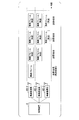
- FIG. 1 is a diagram illustrating an example of the configuration of the wireless communication system 1.
- the wireless communication system 1 is a system that executes wireless communication.
- the wireless communication system 1 includes a wireless facility 2 and one or more terminals 3.
- the wireless equipment 2 includes a control device 4, a network 5, and a plurality of wireless communication devices 6.
- Terminal 3 is a terminal that executes redundant communication using a wireless frame, and is, for example, a smartphone terminal or a tablet terminal.
- the terminal 3 includes a terminal transmission control unit 30, a first transmission unit 31, a second transmission unit 32, a terminal reception control unit 33, a first reception unit 34, and a second reception unit 35.
- the terminal transmission control unit 30 and the terminal reception control unit 33 may be integrated.
- the first transmitting unit 31 and the first receiving unit 34 may be integrated.
- the second transmitting unit 32 and the second receiving unit 35 may be integrated.
- the control device 4 is an information processing device (transmission / reception processor) that executes control related to transmission of a wireless frame of the wireless communication device 6 and the like.
- the control device 4 controls the redundant communication by each wireless communication device 6.
- the control device 4 communicates with each wireless communication device 6 via the network 5. Therefore, the control device 4 executes the control related to the transmission of the wireless frame of the wireless communication device 6 at the end point of the redundant communication separated from the wireless communication device 6.
- the control device 4 includes a transmission control unit 40 and a reception control unit 41.
- Each functional unit is realized using hardware such as an LSI (Large Scale Integration) or an ASIC (Application Specific Integrated Circuit).
- Each functional unit may be realized by a processor such as a CPU (Central Processing Unit) executing a program stored in the storage unit.
- the transmission control unit 40 and the reception control unit 41 may be integrated.
- the control device 4 includes a storage unit 42.
- the storage unit 42 is a non-volatile recording medium (non-temporary recording medium) such as a flash memory and an HDD (Hard Disk Drive).
- the storage unit 42 may include a volatile recording medium such as a RAM (Random Access Memory) or a register.
- the storage unit 42 stores programs and data tables.
- the network 5 is a communication line such as a LAN (Local Area Network).
- the network 5 may be a wired communication line or a wireless communication line.
- the wireless communication device 6 is a device that performs redundant communication using a wireless frame.
- the wireless communication device 6 performs redundant communication with the terminal 3.
- Each wireless communication device 6 may belong to a different management domain.
- Each wireless communication device 6 communicates with the control device 4 via the network 5.
- the wireless communication device 6 includes a wireless transmission unit 60 and a wireless reception unit 61.
- Each functional unit is realized, for example, by a processor such as a CPU executing a program stored in a storage unit.
- Each functional unit may be realized using hardware such as an LSI and an ASIC.
- the wireless communication device 6 may further include a storage unit.
- the terminal transmission control unit 30 controls the transmission of the radio frame by the first transmission unit 31 and the second transmission unit 32.
- the first transmission unit 31 transmits a wireless frame to the wireless communication device 6 using a predetermined wireless method.
- the second transmission unit 32 transmits a wireless frame to the wireless communication device 6 using a predetermined wireless method.
- the wireless system of the first transmitting unit 31 and the wireless system of the second transmitting unit 32 may be the same system or different systems.
- the terminal reception control unit 33 executes control relating to transmission of a radio frame by the first reception unit 34 and the second reception unit 35.
- the first receiving unit 34 receives a wireless frame from the wireless communication device 6 using the wireless method of the first transmitting unit 31.
- the second transmitting unit 32 receives a wireless frame from the wireless communication device 6 using the wireless method of the second transmitting unit 32.
- FIG. 2 is a diagram illustrating an example of the usage management table.
- the usage management table is a data table in which management information of communication usage is registered.
- the transmission control unit 40 refers to the use management table. Items in the usage management table include usage, required delay, required reliability, and a terminal permitted to connect.
- “Usage” indicates the communication usage.
- “Requested delay” indicates a wireless frame delay time (packet delay time) required for the wireless communication system 1.
- “Required reliability” indicates a wireless frame arrival probability (packet arrival probability) required for the wireless communication system 1.
- the “terminal permitted to connect” indicates the terminal 3 permitted to connect to the communication with the wireless communication device 6.
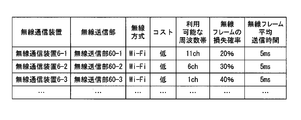
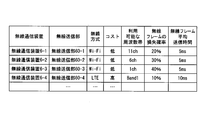
- FIG. 3 is a diagram showing an example of the wireless transmission unit management table.
- the wireless transmission unit management table is a data table in which management information of the wireless transmission unit 60 is registered.
- the transmission control unit 40 refers to the wireless transmission unit management table. Items in the wireless transmission unit management table include a wireless communication device, a wireless transmission unit, a wireless system, a cost, an available frequency band, a wireless frame loss probability, and an average wireless frame transmission time.
- wireless communication device represents the wireless communication device 6 including the wireless transmission unit 60 registered in the “wireless transmission unit”.
- the “wireless transmitting unit” is a wireless transmitting unit 60 provided in the wireless communication device 6 registered in the “wireless communication device”, and represents the wireless transmitting unit 60 that transmits a wireless frame.
- the “wireless system” indicates a wireless system (for example, Wi-Fi) of communication executed by the wireless transmission unit 60.
- “Cost” indicates the cost of communication performed by the wireless transmission unit 60.
- “Available frequency band” indicates a frequency band (channel) in which the wireless communication executed by the wireless transmission unit 60 is available.
- Radio frame loss probability indicates a loss probability of a wireless frame between the terminal 3 and the wireless communication device 6.
- Average wireless frame transmission time indicates the average of the transmission time of a wireless frame between the terminal 3 and the wireless communication device 6.
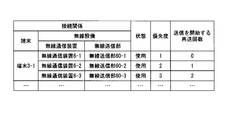
- FIG. 4 is a diagram showing an example of the connection state management table.
- the connection state management table is a data table in which management information of the connection state of communication between the terminal 3 and the wireless communication device 6 is registered.
- the transmission control unit 40 refers to the connection state management table. Items in the connection state management table include a connection relation, a state, a priority, and the number of retransmissions to start transmission.
- the connection-related items include terminals and wireless equipment.
- the items of the wireless equipment include a wireless communication device and a wireless transmission unit.
- terminal represents the terminal 3 that executes communication with the wireless communication device 6 registered in “wireless communication device”.
- the “wireless communication device” is a wireless communication device 6 that executes communication with the terminal 3 registered in the “terminal”.
- the “wireless transmitting unit” is a wireless transmitting unit 60 that performs communication in the wireless communication device 6 registered in the “wireless communication device”.
- the “state” indicates whether or not the wireless transmission unit 60 registered in the “wireless transmission unit” is in a state used for communication.
- “Priority” indicates the priority of the wireless transmission unit 60 registered in the “wireless transmission unit”. The priority value indicates that the smaller the value, the higher the priority.
- the “transmission retransmission count” indicates the number of retransmissions at which the wireless transmission unit 60 registered in the “wireless transmission unit” starts transmitting a wireless frame.
- the number of retransmissions indicates the number of retransmissions of a radio frame by the radio transmission unit 60-1 having the highest priority. In FIG. 4, for example, when the number of times of retransmission of the radio frame by the radio transmission unit 60-1 having the highest priority is one, the transmission control unit 40 determines that the radio transmission unit 60-2 has the second highest priority. Transmission of a wireless frame is started.
- the transmission control unit 40 includes a request unit 400.
- the request unit 400 acquires information indicating the cost of communication by the wireless transmission unit 60 from a wireless transmission unit management table as shown in FIG.
- the request unit 400 sets a priority for each wireless transmission unit 60 in the connection state management table as shown in FIG.
- the request unit 400 sets a priority for each wireless transmission unit 60 based on the communication cost and the loss probability of the wireless frame as shown in FIG.
- the request unit 400 sets the priority so that the wireless transmission unit 60 having a low communication cost is preferentially used for communication. That is, the request unit 400 sets a high priority to the wireless transmission unit 60 having a low communication cost.
- the request unit 400 sets the priority so that the wireless transmission unit 60 having a low wireless frame loss probability is preferentially used for communication. That is, the request unit 400 sets a high priority to the wireless transmission unit 60 having a low wireless frame loss probability.
- the request unit 400 may prioritize low communication cost over low radio frame loss probability. That is, the request unit 400 may set a higher priority than the priority set for the wireless transmission unit 60 having a low loss probability of the wireless frame to the wireless transmission unit 60 having a low communication cost.
- the request unit 400 performs the “transmission start retransmission count” in the connection state management table as shown in FIG. 4 based on the “radio frame loss probability” in the wireless transmission unit management table as shown in FIG. Is set.
- the request unit 400 sets a small value to “the number of retransmissions to start transmission” of the wireless transmission unit 60 having a low wireless frame loss probability. For example, the request unit 400 sets “0” to “the number of retransmissions to start transmission” of the wireless transmission unit 60-1 having the lowest loss probability of the wireless frame.
- the request unit 400 sets 1 to “the number of retransmissions to start transmission” of the wireless transmission unit 60-2 having the second lowest wireless frame loss probability.
- the request unit 400 sets “2” to “the number of retransmissions to start transmission” of the wireless transmission unit 60-3 having the third lowest loss probability of the wireless frame.
- the request unit 400 controls the start or stop of the transmission or retransmission of the radio frame to one or more radio transmission units 60 based on the retransmission status or the transmission completion status of each radio frame and the priority of each radio transmission unit 60. Request.
- the wireless frame retransmission status indicates the number of times a wireless frame is retransmitted or the retransmission timeout for each wireless transmission unit 60.
- the retransmission timeout indicates that the time from when the radio frame is retransmitted to when the radio receiving unit 61 receives a response signal (ACK radio frame) from the terminal 3 that receives the retransmitted radio frame has timed out.
- ACK radio frame response signal
- the request unit 400 compares the “retransmission count for starting transmission” in the connection state management table as shown in FIG. 4 with the retransmission count notified from the wireless transmission unit 60-1 having the highest priority. Based on the request, the wireless transmission unit 60 requests the wireless transmission unit 60 to start transmitting or retransmitting the wireless frame.
- the request unit 400 causes more wireless transmitting units 60 to start transmitting (retransmitting) wireless frames in accordance with an increase in the number of retransmissions of wireless frames in the wireless transmitting unit 60-1 having the highest priority. Thereby, the request unit 400 can reduce the traffic of the radio frame by the redundant communication.
- the request unit 400 preferentially uses the set wireless transmission unit 60 with a high priority (the wireless transmission unit 60 with a small priority value) for communication. For example, when the number of times of retransmission of the radio frame by the radio transmission unit 60-1 having the highest priority becomes one, the request unit 400 transmits the radio frame by the radio transmission unit 60-2 having the second highest priority. To start. For example, when the number of times of retransmission of the radio frame by the radio transmission unit 60-1 having the highest priority becomes two, the request unit 400 transmits the radio frame by the radio transmission unit 60-3 having the third highest priority. To start.
- the reception control unit 41 acquires a packet from the reception control unit 41.
- the reception control unit 41 acquires a response signal of the packet from the reception control unit 41.
- the wireless transmission unit 60 includes a notification unit 600 and an antenna.
- the notification unit 600 notifies the request unit 400 of the retransmission status (the number of retransmissions, etc.) of the wireless frame transmitted from the wireless communication device 6 to the terminal 3.
- the notification unit 600 notifies the request unit 400 of the completion of transmission (ACK) of the wireless frame transmitted from the wireless communication device 6 to the terminal 3.
- the notifying unit 600 separates the end point of the redundant communication from the terminal 3 and the wireless communication device 6, and sets the end point of the redundant communication to the control device 4. Can be.
- the wireless receiving unit 61 acquires the wireless frame of the packet from the terminal 3-1.
- the wireless reception unit 61 transmits the packet to the reception control unit 41.
- the wireless receiving unit 61 acquires a wireless frame of a packet response signal from the terminal 3-1.
- the wireless reception unit 61 transmits a response signal of the packet to the reception control unit 41.
- FIG. 5 is a sequence diagram illustrating an example of the pre-connection processing and the connection processing.
- the pre-connection process is a process from step S101 to step S111.
- the connection process is a process of step S112.
- the control device 4 transmits a group identifier (for example, an identifier of the control device 4) indicating one or more wireless transmission units 60 that can be used for redundant communication to the wireless communication device 6-1 (step S101). .
- the wireless communication device 6-1 transmits a wireless frame including the group identifier and the identifier of the wireless communication device 6-1 to the terminal 3-1 (step S102).
- the control device 4 transmits the group identifier to the wireless communication device 6-1 (step S103).
- the wireless communication device 6-1 transmits a wireless frame including the group identifier and the identifier of the wireless communication device 6-2 to the terminal 3-1 (step S104).
- the terminal 3-1 groups the wireless transmission units 60 having the same group identifier (step S105).
- the terminal 3-1 selects one wireless transmission unit 60 from one or more grouped wireless transmission units 60 having the same group identifier (step S106).
- the terminal 3-1 notifies the wireless communication device 6-1 of information indicating a connection request.
- the information indicating the connection request includes information indicating a list of one or more wireless transmission units 60 to which the terminal 3-1 is connectable among the wireless transmission units 60 having the same group identifier, and information indicating the use of communication. (Step S107).
- the wireless communication device 6-1 transmits information representing the connection request to the control device 4 (step S108).
- the control device 4 updates the connection state management table based on the information indicating the connection request (step S109).
- the control device 4 notifies the wireless communication device 6-1 of information indicating a response to the connection request.
- the information indicating the response to the connection request includes information indicating a list of the wireless transmission units 60 used by the terminal 3-1 for connection and communication (step S110).
- the wireless communication device 6-1 notifies the terminal 3-1 of information indicating a response to the connection request by a wireless frame (step S111).
- the control device 4, the wireless communication device 6-1 and the terminal 3-1 execute a predetermined connection process (step S112).
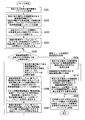
- FIG. 6 is a flowchart illustrating an example of a process of updating the connection state management table. This updating process is the process of step S109 in FIG.
- the request unit 400 indicates a list of one or more wireless transmission units 60 to which the terminal 3-1 can connect, among the wireless transmission units 60 having the same group identifier.
- the information and the information indicating the usage are extracted from the information indicating the connection request.
- the length L of this list indicates the number of wireless transmission units 60 to which the terminal 3 connects (Step S201).
- the request unit 400 determines whether the terminal 3-1 that transmitted the connection request is included in the “terminals permitted to connect” associated with the “use” in the use management table as illustrated in FIG. It is determined whether or not it is (step S202). If the terminal 3-1 that has transmitted the connection request is included in the “terminal permitted to connect” (step S202: YES), the request unit 400 sets the “request delay” associated with the “use”. And “requested reliability” are acquired from the usage management table (step S203). The request unit 400 calculates the upper limit M of the number of transmissions corresponding to the acquired request delay time (step S204).
- the request unit 400 adds an entry associated with the “use” to the connection state management table. For example, the request unit 400 sets the terminal 3-1 that has transmitted the connection request to “connection relation: terminal” of the entry. The request unit 400 sets a list of one or more wireless transmission units 60 to which the terminal 3-1 is connectable among the wireless transmission units 60 having the same group identifier in the “connection relation: wireless equipment” of the entry. . The request unit 400 sets "unused" in the "state” of the entry (step S205).
- the request unit 400 selects the wireless transmission unit 60 for each terminal 3 in ascending order of “loss of wireless frame” in the wireless transmission unit management table.
- the request unit 400 sets, in the connection state management table, a value that is incremented in order from 1 to the priority of the selected wireless transmission unit 60 among the wireless transmission units 60 in the “wireless transmission unit” of the added entry. I do. If different costs are registered in the wireless transmission unit management table, the request unit 400 sets the wireless transmission unit 60 to a higher priority in ascending order of communication costs (step S206).
- the request unit 400 sets M to N1 where the priority i is 1, and sets 0 to Ni where the priority i is other than 1 (step S207).
- the initial value of the priority i is 2 after step S208.
- the request unit 400 adds 1 to the value of the priority i.
- the request unit 400 determines whether N2 is greater than M (Step S208). If N2 is equal to or less than M (step S208: NO), the request unit 400 determines whether the value of the priority i is equal to or less than the length L (step S209).
- step S209: i> L the request unit 400 returns the process to step S208.
- the request unit 400 satisfies the required reliability when the wireless transmission unit 60 of the priority i transmits the wireless frame Ni times. It is determined whether or not to be performed (step S210). When the required reliability is not satisfied (step S210: NO). The request unit 400 adds 1 to the number of transmissions Ni (step S211). The requesting unit 400 returns the process to Step S209.
- the request unit 400 transmits the “transmission request” associated with the wireless transmission unit 60 having the priority i in the connection state management table as illustrated in FIG.
- the “number of retransmissions to start” is set to (M ⁇ Ni) times (step S212).
- the request unit 400 sets “use” in the “state” of the wireless transmission unit 60 in which the number of transmissions Ni is not 0 in the connection state management table (step S213).
- the request unit 400 notifies the terminal 3-1 of information indicating a response to the connection request. That is, the request unit 400 stores the list of the wireless transmission units 60 whose “state” is “used” in the connection state management table as shown in FIG. Is notified to the terminal 3-1 as a list (step S214).
- step S208 If the number of transmissions N2 exceeds M (step S208: YES), the request unit 400 transmits a response to the connection request to the terminal 3-1. That is, the request unit 400 notifies the terminal 3-1 that the required reliability cannot be satisfied (step S215).
- the request unit 400 notifies the terminal 3-1 of the rejection of the connection (step S216). ).
- FIG. 7 is a flowchart illustrating an example of a transmission process and a reception process of a wireless frame (packet).
- the request unit 400 acquires the identification information of the terminal 3-1 as the destination from the packet (step S301).
- the request unit 400 sends, to all the wireless communication devices 6 having the connection relationship with the terminal 3-1 as the destination, all the wireless communication devices 6 for which the “transmission start retransmission count” is 0 in the connection state management table.
- the packet is transmitted (step S302).
- the requesting unit 400 records a copy of the transmitted packet in a buffer for waiting for reception of a response signal (ACK) (step S303).
- the request unit 400 sets a retransmission timeout time corresponding to the minimum number of retransmissions among the number of retransmissions greater than 0 in the connection state management table in the timer (step S304).
- the request unit 400 waits for reception of the response signal (ACK) transmitted from the wireless communication device 6 (Step S305).
- step S305 when the request unit 400 receives the information indicating the retransmission status from the wireless communication device 6 having the smallest priority value, the request unit 400 is included in the information indicating the retransmission status based on the connection status management table.
- the packet is transmitted to all the wireless communication devices 6 corresponding to “the number of retransmissions to start transmission” which is equal to the number of retransmissions. If the retransmission timeout time is exceeded, the request unit 400 determines, based on the connection state management table, all radios corresponding to the “transmission retransmission count” equal to the retransmission count included in the information indicating the retransmission status.
- the packet is transmitted to the communication device 6.
- the wireless communication device 6 acquires the packet, the wireless communication device 6 transmits the packet to the terminal 3-1 by using the wireless frame of the frequency band registered in the “available frequency band” in the wireless transmission unit management table. (Step S306).
- the request unit 400 determines the retransmission timeout time corresponding to the minimum number of retransmissions among the number of retransmissions greater than the current number of retransmissions in the wireless transmission unit 60-1, based on the connection state management table. For example, the request unit 400 determines a retransmission timeout time based on the result of multiplying the average transmission time of the radio frame by the number of retransmissions (step S307). The request unit 400 returns the process to Step S305.
- step S305 when the delay of the wireless frame exceeds the required delay, the request unit 400 requests all wireless communication devices 6 having a connection relationship with the destination terminal 3-1 to stop retransmission of the wireless frame.
- a signal to be transmitted is transmitted (step S308).
- the request unit 400 deletes a copy of the packet for which the response signal (ACK) has been received or a copy of the packet for which the request delay has been exceeded from the buffer for waiting for the reception of the response signal (step S309).
- step S305 when the control device 4 receives the response signal (ACK) from the wireless communication device 6, the wireless communication device that has received the response signal among the wireless communication devices 6 that have a connection relationship with the destination terminal 3-1. Except for the device 6, a signal requesting that the retransmission of the radio frame be stopped is transmitted to all the radio communication devices 6 that are retransmitting the radio frame (step S310).
- the request unit 400 advances the process to step S309.
- FIG. 8 is a sequence diagram illustrating an example of transmission processing and reception processing of a radio frame (packet).
- the transmission control unit 40 acquires a first packet and copies the first packet (step S401).
- the transmission control unit 40 requests the wireless transmission unit 60-1 to transmit the first packet (Step S402).
- the wireless transmitting unit 60-1 transmits the wireless frame of the first packet to the first receiving unit 34-1 (Step S403).
- the first receiving unit 34-1 transmits the first packet included in the radio frame to the terminal reception control unit 33-1 (Step S404).
- the terminal reception control unit 33-1 acquires the first packet (Step S405). Since the first transmitting unit 31-1 has normally received the first packet, the first transmitting unit 31-1 transmits the wireless frame of the response signal (ACK) of the first packet to the wireless receiving unit 61-1 (step S406).
- the wireless reception unit 61-1 transmits a response signal of the first packet to the reception control unit 41 (Step S407).
- step S301 shown in FIG. 7 the transmission control unit 40 acquires the second packet and copies the second packet (step S408).
- the transmission control unit 40 requests the wireless transmission unit 60-1 to start transmission of the second packet (step S409).
- the wireless transmitting section 60-1 transmits the wireless frame of the second packet to the first receiving section 34-1.
- the transmitted radio frame of the second packet has been lost (step S410).
- the first receiver 34-1 transmits a response signal (ACK wireless frame), and the time from when the wireless receiver 61-1 receives the transmitted response signal times out (step S411).
- Radio transmitting section 60-1 retransmits the radio frame of the second packet to first receiving section 34-1.
- the radio frame of the retransmitted second packet has been lost (step S412).
- the number of retransmissions of the radio frame of the second packet has exceeded the specified number (step S413).
- the wireless transmission unit 60-1 notifies the reception control unit 41 of the retransmission status (the number of retransmissions) of the second packet (step S414).
- the transmission control unit 40 determines whether it is necessary to request transmission control based on the retransmission status of the second packet (step S415).
- step S306 shown in FIG. 7 the transmission control unit 40 requests the wireless transmission unit 60-2 to transmit the second packet (step S416).
- the wireless transmitting unit 60-2 transmits the wireless frame of the second packet to the second receiving unit 35-1 (Step S417).
- the second receiving unit 35-1 transmits the second packet included in the radio frame to the terminal reception control unit 33-1 (Step S418).
- the terminal reception control unit 33-1 acquires the second packet (Step S419).
- the first receiver 34-1 transmits a response signal (ACK radio frame), and the time from when the radio receiver 61-1 receives the transmitted response signal times out (step S420).
- Radio transmitting section 60-1 retransmits the radio frame of the second packet to first receiving section 34-1. In FIG. 8, the wireless frame of the retransmitted second packet has been lost (step S421).
- the terminal transmission control unit 30-1 determines that the second receiving unit 35-1 has received the second packet radio frame even when the first receiving unit 34-1 has not received the second packet radio frame.
- the wireless frame of the response signal of the second packet is transmitted not only from the second transmitting section 32-1 but also from the first transmitting section 31-1. For this reason, the terminal transmission control unit 30-1 transmits the response signal of the second packet to the first transmission unit 31-1 (step S422).
- the first transmitting unit 31-1 transmits the radio frame of the response signal of the second packet to the radio receiving unit 61-1. In FIG. 8, the radio frame of the transmitted response signal of the second packet has been lost (step S423).
- the second transmitting unit 32-1 sends the wireless frame (ACK wireless frame) of the response signal of the second packet to the wireless receiving unit 61. -2 (step S424).
- the wireless receiving unit 61-2 transmits the response signal of the second packet to the reception control unit 41 (Step S425).
- step S310 shown in FIG. 7 the transmission control unit 40 determines that the radio reception unit 61-2 transmits the second packet even if the radio reception unit 61-1 has not received the radio frame of the response signal of the second packet. Since the wireless frame of the response signal has been received, the stop of the retransmission of the second packet is requested not only to the wireless transmitting section 60-2 but also to the wireless transmitting section 60-1. Therefore, the transmission control unit 40 requests the wireless transmission unit 60-1 to stop the retransmission of the second packet (step S426).
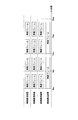
- FIG. 9 is a diagram illustrating an example of a transmission pattern of a radio frame.
- the radio frame arrival probability is the highest in the channel of the radio transmission unit 60-1.
- the wireless frame arrival probability is the lowest.
- the control device 4 sets the timing at which the wireless transmitting unit 60-2 starts transmitting a wireless frame later than the timing at which the wireless transmitting unit 60-1 having the highest wireless frame arrival probability starts transmitting a wireless frame.
- the control device 4 makes the timing at which the wireless transmission unit 60-3 having the lowest wireless frame arrival probability starts transmitting a wireless frame later than the timing at which the wireless transmission unit 60-2 starts transmitting the wireless frame.
- the control device 4 controls the operation of each wireless transmission unit 60 so that the channel of the wireless transmission unit 60-1 having the highest wireless frame arrival probability is preferentially used for communication, the probability of occurrence of a retransmitted wireless frame is as follows. Low. Therefore, the control device 4 can reduce the amount of wireless frame communication by redundant communication while improving the reliability of the wireless frame arrival probability.
- FIG. 10 is a diagram illustrating an example of a transmission pattern of a wireless frame in the related art.
- Each wireless transmission unit replicates a wireless frame when wireless resources are congested and performs redundant communication, thereby improving the reliability of the wireless frame arrival probability.
- the same wireless frame copied three times is transmitted at the same time. By performing the redundant communication in this manner, each wireless transmission unit may consume extra wireless resources.
- the wireless communication system 1 includes the plurality of wireless communication devices 6 and the control device 4.
- the plurality of wireless communication devices 6 transmit wireless frames to the terminal 3.
- the wireless communication device 6 transmits information indicating the number of retransmissions of the wireless frame to the control device.
- the control device 4 acquires information indicating the number of retransmissions of the radio frame.
- the control device 4 selects the wireless communication device 6 (wireless transmission unit 60) according to the number of retransmissions.
- the control device 4 causes the selected wireless communication device 6 to start transmitting a wireless frame.
- the wireless communication system 1 can reduce the amount of wireless frame communication due to redundant communication while improving the reliability of the wireless frame arrival probability.
- the control device 4 controls the plurality of wireless communication devices 6.
- the control device 4 includes a reception control unit 41 and a request unit 400.
- the reception control unit 41 receives information indicating the number of retransmissions of a wireless frame from the wireless communication device.
- the request unit 400 selects a wireless communication device according to the number of retransmissions, and causes the selected wireless communication device to start transmitting a wireless frame.
- control device 4 of the first embodiment can reduce the amount of wireless frame communication by redundant communication while improving the reliability of the wireless frame arrival probability.
- the wireless communication system 1 can execute redundant communication using a plurality of wireless transmission units 60 connected via a wired network and belonging to different management domains.
- the wireless communication system 1 can use a plurality of wireless transmission units 60 at the same time, and even if the wireless frame arrival probability is low in all frequency bands where a single wireless transmission unit 60 is available, a plurality of wireless transmission units 60 can be used. Using the wireless transmission unit 60, it is possible to improve the reliability of the wireless frame arrival probability.
- the request unit 400 determines the priority for each wireless communication device 6 (wireless transmission unit 60).
- the request unit 400 determines a priority for each wireless communication device 6 based on at least one of a communication cost of the wireless communication device 6 and a loss probability of a wireless frame of the wireless communication device 6.
- the request unit 400 causes the wireless communication device 6 selected according to the increase in the number of retransmissions in the wireless communication device 6 having the highest priority among the plurality of wireless communication devices to start transmitting a wireless frame.
- the request unit 400 preferentially uses the high-priority wireless transmission unit 60 determined according to the cost and the like for communication.
- the wireless communication system 1 allows the wireless communication system 1 to expand the communication area by cooperating with heterogeneous cellular networks, while improving the reliability of the radio frame arrival probability while suppressing communication costs.
- the wireless communication system 1 can improve communication continuity by cooperation of heterogeneous cellular networks.
- the wireless communication system 1 can significantly reduce the influence on wireless resources when performing redundant communication in an environment where wireless resources are congested.
- the wireless communication system 1 can improve the reliability of the wireless frame arrival probability of image data or the like having a large data amount.
- the control device 4 can control the operation of the wireless communication device 6 at the end point of the redundant communication separated from the wireless communication device 6.
- the control device 4 can provide an interface of mRAT (multi-Radio @ Access @ Technology) to the wireless communication devices 6 having different management domains.
- the second embodiment differs from the first embodiment in that the average transmission time (wireless frame length) of wireless frames transmitted from different wireless transmission units 60 is different from each other. In the second embodiment, differences from the first embodiment will be described.
- FIG. 11 is a diagram illustrating an example of the wireless transmission unit management table.
- the wireless transmission unit 60-4 is further registered in the wireless transmission unit management table shown in FIG.
- the wireless transmission unit 60-4 uses LTE (Long Term Evolution) instead of Wi-Fi.
- the communication cost of the wireless transmission unit 60-4 is higher than the communication cost of the other wireless transmission units 60.
- the usable frequency of the wireless transmission unit 60-4 is “Band1”.
- the radio frame loss probability of the radio transmission unit 60-4 is 10%.
- the average transmission time of the radio frame of the radio transmission unit 60-4 is 10 ms.
- FIG. 12 is a diagram showing an example of the connection state management table.
- the wireless transmission unit 60-4 is further registered in the connection state management table shown in FIG.
- the communication state of the wireless transmission unit 60-4 is "used”.
- the priority of the wireless transmission unit 60-4 is “4”.
- the “number of retransmissions to start transmission” of the wireless transmission unit 60-4 is “2”.
- the request unit 400 determines the wireless frame length in the processing from step S209 to step S111 shown in FIG. Executes skip processing according to the ratio. For example, the radio frame length of a radio frame whose transmission time is 10 ms is twice the radio frame length of a radio frame whose transmission time is 5 ms. Therefore, the request unit 400 determines that the frequency of incrementing the transmission count Ni of the radio transmission unit 60-4 that transmits the radio frame whose transmission time is 10 ms is once every two times in step S211 shown in FIG. Frequency.
- FIG. 13 is a diagram illustrating an example of a transmission pattern of a radio frame having a different average transmission time. From 0 ms to 5 ms on the time axis, the wireless communication device 6-1 transmits one wireless frame. From 5 ms to 10 ms on the time axis, the wireless communication device 6-1 retransmits one wireless frame.
- the wireless communication device 6-1 retransmits one wireless frame.
- the wireless communication device 6-2 having the second highest priority retransmits one wireless frame.
- the wireless communication device 6-4 having the second highest priority retransmits one wireless frame whose wireless frame length is twice as long.
- the wireless communication device 6-1 retransmits one wireless frame.
- the wireless communication device 6-2 having the second highest priority retransmits one wireless frame.
- the wireless communication device 6-4 having the second highest priority keeps retransmitting one wireless frame whose wireless frame length is twice as long.
- the wireless communication device 6-3 having the third highest priority retransmits one wireless frame.
- the probability that each radio frame will be retransmitted from 10 ms to 20 ms on the time axis is 4% or less.
- the expected value of the number of times of transmission of the radio frame for one packet is 1.29 times according to the “probability of loss of radio frame” in the radio transmission unit management table as shown in FIG.
- FIG. 14 is a diagram illustrating an example of a conventional transmission pattern of a radio frame having different average transmission times.
- the control device determines the number of wireless frames transmitted simultaneously (minimum redundancy) according to the loss probability of the wireless frames so as to satisfy the required reliability.
- the expected value of the number of times of transmission of the radio frame for one packet is 4.07 times according to the “probability of loss of radio frame” in the radio transmission unit management table as shown in FIG.
- the request unit 400 of the second embodiment changes the frequency of transmission of a radio frame in the radio transmission unit 60 according to the ratio of the radio frame length.
- the wireless communication system 1 of the second embodiment improves the reliability of the wireless frame arrival probability even when the average transmission times (wireless frame lengths) of the wireless frames transmitted from the different wireless transmission units 60 are different from each other.
- the third embodiment differs from the first and second embodiments in that the wireless communication device includes a transmission control unit and a reception control unit. In the third embodiment, differences from the first embodiment and the second embodiment will be described.
- FIG. 15 is a diagram illustrating an example of a configuration of the wireless communication system 1.
- the wireless communication device 6 includes a plurality of wireless transmission units 60, a plurality of wireless reception units 61, a wireless transmission control unit 62, and a wireless reception control unit 63.
- each wireless transmission unit 60 may not include the notification unit 600.
- the wireless transmission control unit 62 executes control related to the transmission of wireless frames by the wireless transmission units 60-2 and 60-3.
- the wireless transmission control unit 62 includes a notification unit 600.
- the notification unit 600 of the wireless transmission control unit 62 notifies the request unit 400 of the retransmission status (the number of retransmissions, etc.) of the wireless frame transmitted from the wireless transmission units 60-2 and 60-3 to the terminal 3.
- the wireless reception control unit 63 executes control related to the reception of wireless frames by the wireless reception units 61-2 and 61-3.
- the wireless reception control unit 63 acquires a packet of the wireless frame received by the wireless reception unit 61-2.
- the wireless reception control unit 63 acquires the packet of the wireless frame received by the wireless reception unit 61-3.
- the wireless reception control unit 63 transmits the received packet to the reception control unit 41.
- the wireless communication device 6 includes the plurality of wireless transmission units 60 and the notification unit 600.
- the notification unit 600 notifies the request unit 400 of the retransmission status (the number of retransmissions, etc.) of the radio frame transmitted from the plurality of radio transmission units 60 to the terminal 3.
- the wireless communication system 1 of the third embodiment can improve the reliability with respect to the wireless frame arrival probability even when the wireless communication device 6 includes the plurality of wireless transmitting units 60 and the wireless receiving units 61.
- the terminal, the control device, and the wireless communication device in the above-described embodiment may be realized by a computer.
- a program for realizing this function may be recorded on a computer-readable recording medium, and the program recorded on this recording medium may be read and executed by a computer system.
- the “computer system” includes an OS and hardware such as peripheral devices.
- the “computer-readable recording medium” refers to a portable medium such as a flexible disk, a magneto-optical disk, a ROM, and a CD-ROM, and a storage device such as a hard disk built in a computer system.
- the “computer-readable recording medium” refers to a communication line for transmitting a program via a network such as the Internet or a communication line such as a telephone line, which dynamically holds the program for a short time.
- a program may include a program that holds a program for a certain period of time, such as a volatile memory in a computer system serving as a server or a client in that case.
- the program may be for realizing a part of the functions described above, or may be a program that can realize the functions described above in combination with a program already recorded in a computer system, It may be realized by using a programmable logic device such as an FPGA (Field Programmable Gate Array).
- FPGA Field Programmable Gate Array
- the present invention is applicable to a wireless communication system.
Landscapes
- Engineering & Computer Science (AREA)
- Computer Networks & Wireless Communication (AREA)
- Signal Processing (AREA)
- Mobile Radio Communication Systems (AREA)
Abstract
無線通信システムは、無線フレームを端末に送信する複数の無線通信装置と、制御装置とを備える無線通信システムであって、無線通信装置は、無線フレームの再送回数を表す情報を制御装置に送信し、制御装置は、無線フレームの再送回数を表す情報を取得し、再送回数に応じて無線通信装置を選択し、選択された無線通信装置に無線フレームの送信を開始させる。
Description
本発明は、無線通信システム、制御方法、制御装置及び制御プログラムに関する。
無線通信システムが、複製されたパケットを複数の周波数帯の無線フレームを利用して送信する冗長通信を実行する送信機と、最先で正常に受信された無線フレームをパケットとして取得する受信機とを備える場合がある。このような無線通信システムは、無線フレームの損失確率が高い環境であっても、要求される遅延時間内の無線フレーム到達確率(パケット到達確率)に関して高い信頼性を実現することができる(非特許文献1参照)。
宗、納谷、藤田、吉澤、清水、「複数無線方式冗長送信を用いた高信頼・低遅延無線アクセスの他システム干渉下における遅延特性評価」、信学技報、RCC2017-42(2017-07)
しかしながら、無線通信システムは、複数の周波数帯を同時に利用する冗長通信によって、無線フレームの通信量(無線リソース)を余分に消費する。余分に消費された通信量の無線フレームによって、無線フレームの損失確率が高くなる場合がある。また、無線アクセスの方式が単一である場合、無線フレーム到達確率に関して高い信頼性が十分には得られない場合がある。このように、従来の無線通信システムは、無線フレーム到達確率に関して信頼性を向上させたうえで、冗長通信による無線フレームの通信量を低減させることができない場合があった。
上記事情に鑑み、本発明は、無線フレーム到達確率に関して信頼性を向上させたうえで、冗長通信による無線フレームの通信量を低減させることが可能である無線通信システム、制御方法、制御装置及び制御プログラムを提供することを目的としている。
本発明の一態様は、無線フレームを端末に送信する複数の無線通信装置と、制御装置とを備える無線通信システムであって、前記無線通信装置は、前記無線フレームの再送回数を表す情報を前記制御装置に送信し、前記制御装置は、前記無線フレームの再送回数を表す情報を取得し、前記再送回数に応じて前記無線通信装置を選択し、選択された前記無線通信装置に前記無線フレームの送信を開始させる、無線通信システムである。
本発明の一態様は、上記の無線通信システムであって、前記制御装置は、前記無線通信装置ごとに優先度を定め、複数の前記無線通信装置のうちで前記優先度が最も高い前記無線通信装置における前記再送回数の増加に応じて選択された前記無線通信装置に、前記無線フレームの送信を開始させる。
本発明の一態様は、上記の無線通信システムであって、前記制御装置は、前記無線通信装置の通信のコストと前記無線通信装置の前記無線フレームの損失確率とのうちの少なくとも一方に基づいて、前記無線通信装置ごとに優先度を定める。
本発明の一態様は、無線フレームを端末に送信する複数の無線通信装置と、制御装置とを備える無線通信システムが実行する制御方法であって、前記無線通信装置は、前記無線フレームの再送回数を表す情報を前記制御装置に送信し、前記制御装置は、前記無線フレームの再送回数を表す情報を取得し、前記再送回数に応じて前記無線通信装置を選択し、選択された前記無線通信装置に前記無線フレームの送信を開始させる。
本発明の一態様は、上記の制御方法であって、前記制御装置は、前記無線通信装置ごとに優先度を定め、複数の前記無線通信装置のうちで前記優先度が最も高い前記無線通信装置における前記再送回数の増加に応じて選択された前記無線通信装置に、前記無線フレームの送信を開始させる。
本発明の一態様は、無線フレームを端末に送信する複数の無線通信装置を制御する制御装置であって、前記無線フレームの再送回数を表す情報を前記無線通信装置から受信する受信制御部と、前記再送回数に応じて前記無線通信装置を選択し、選択された前記無線通信装置に前記無線フレームの送信を開始させる要求部とを備える制御装置である。
本発明の一態様は、上記の制御装置であって、前記要求部は、前記無線通信装置ごとに優先度を定め、複数の前記無線通信装置のうちで前記優先度が最も高い前記無線通信装置における前記再送回数の増加に応じて選択された前記無線通信装置に、前記無線フレームの送信を開始させる。
本発明の一態様は、上記の制御装置としてコンピュータを機能させるための制御プログラムである。
本発明により、無線フレーム到達確率に関して信頼性を向上させたうえで、冗長通信による無線フレームの通信量を低減させることが可能である。
本発明の実施形態について、図面を参照して詳細に説明する。
(第1実施形態)
図1は、無線通信システム1の構成の例を示す図である。無線通信システム1は、無線通信を実行するシステムである。無線通信システム1は、無線設備2と、1以上の端末3とを備える。無線設備2は、制御装置4と、ネットワーク5と、複数の無線通信装置6とを備える。
(第1実施形態)
図1は、無線通信システム1の構成の例を示す図である。無線通信システム1は、無線通信を実行するシステムである。無線通信システム1は、無線設備2と、1以上の端末3とを備える。無線設備2は、制御装置4と、ネットワーク5と、複数の無線通信装置6とを備える。
端末3は、無線フレームを用いた冗長通信を実行する端末であり、例えば、スマートフォン端末、タブレット端末である。端末3は、端末送信制御部30と、第1送信部31と、第2送信部32と、端末受信制御部33と、第1受信部34と、第2受信部35とを備える。端末送信制御部30と端末受信制御部33とは、一体でもよい。第1送信部31と第1受信部34とは、一体でもよい。第2送信部32と第2受信部35とは、一体でもよい。
制御装置4は、無線通信装置6の無線フレームの送信等に関する制御を実行する情報処理装置(送受信処理機)である。制御装置4は、各無線通信装置6による冗長通信の制御を実行する。制御装置4は、ネットワーク5を介して、各無線通信装置6と通信する。したがって、制御装置4は、無線通信装置6から分離された冗長通信の端点で、無線通信装置6の無線フレームの送信に関する制御を実行する。
制御装置4は、送信制御部40と、受信制御部41とを備える。各機能部は、例えば、LSI(Large Scale Integration)やASIC(Application Specific Integrated Circuit)等のハードウェアを用いて実現される。各機能部は、CPU(Central Processing Unit)等のプロセッサが、記憶部に記憶されたプログラムを実行することにより実現されてもよい。送信制御部40と受信制御部41とは、一体でもよい。
制御装置4は、記憶部42を備える。記憶部42は、例えばフラッシュメモリ、HDD(Hard Disk Drive)などの不揮発性の記録媒体(非一時的な記録媒体)である。記憶部42は、例えば、RAM(Random Access Memory)やレジスタなどの揮発性の記録媒体を有してもよい。記憶部42は、プログラム及びテータテーブルを記憶する。
ネットワーク5は、LAN(Local Area Network)等の通信回線である。ネットワーク5は、有線の通信回線でもよいし、無線の通信回線でもよい。
無線通信装置6は、無線フレームを用いて冗長通信を実行する装置である。無線通信装置6は、端末3との間で冗長通信を実行する。各無線通信装置6は、異なる管理ドメインに属してもよい。各無線通信装置6は、ネットワーク5を介して制御装置4と通信する。
無線通信装置6は、無線送信部60と、無線受信部61とを備える。各機能部は、例えば、CPU等のプロセッサが、記憶部に記憶されたプログラムを実行することにより実現される。各機能部は、LSIやASIC等のハードウェアを用いて実現されてもよい。無線通信装置6は、記憶部を更に備えてもよい。
次に、端末3の詳細を説明する。
端末送信制御部30は、第1送信部31及び第2送信部32の無線フレームの送信に関する制御を実行する。第1送信部31は、予め定められた無線方式で、無線フレームを無線通信装置6に送信する。第2送信部32は、予め定められた無線方式で、無線フレームを無線通信装置6に送信する。第1送信部31の無線方式と、第2送信部32の無線方式とは、同じ方式でもよいし、異なる方式でもよい。
端末送信制御部30は、第1送信部31及び第2送信部32の無線フレームの送信に関する制御を実行する。第1送信部31は、予め定められた無線方式で、無線フレームを無線通信装置6に送信する。第2送信部32は、予め定められた無線方式で、無線フレームを無線通信装置6に送信する。第1送信部31の無線方式と、第2送信部32の無線方式とは、同じ方式でもよいし、異なる方式でもよい。
端末受信制御部33は、第1受信部34及び第2受信部35の無線フレームの送信に関する制御を実行する。第1受信部34は、第1送信部31の無線方式で、無線フレームを無線通信装置6から受信する。第2送信部32は、第2送信部32の無線方式で、無線フレームを無線通信装置6から受信する。
次に、制御装置4の詳細を説明する。
図2は、用途管理テーブルの例を示す図である。用途管理テーブルは、通信の用途の管理情報が登録されるデータテーブルである。送信制御部40は、用途管理テーブルを参照する。用途管理テーブルの項目には、用途と、要求遅延と、要求信頼性と、接続を許可された端末とがある。
図2は、用途管理テーブルの例を示す図である。用途管理テーブルは、通信の用途の管理情報が登録されるデータテーブルである。送信制御部40は、用途管理テーブルを参照する。用途管理テーブルの項目には、用途と、要求遅延と、要求信頼性と、接続を許可された端末とがある。
用途管理テーブルにおいて、「用途」は、通信の用途を表す。「要求遅延」は、無線通信システム1に対して要求される無線フレーム遅延時間(パケット遅延時間)を表す。「要求信頼性」は、無線通信システム1に対して要求される無線フレーム到達確率(パケット到達確率)を表す。「接続を許可された端末」は、無線通信装置6との通信の接続を許可された端末3を表す。
図3は、無線送信部管理テーブルの例を示す図である。無線送信部管理テーブルは、無線送信部60の管理情報が登録されるデータテーブルである。送信制御部40は、無線送信部管理テーブルを参照する。無線送信部管理テーブルの項目には、無線通信装置と、無線送信部と、無線方式と、コストと、利用可能な周波数帯と、無線フレームの損失確率と、無線フレーム平均送信時間とがある。
無線送信部管理テーブルにおいて、「無線通信装置」は、「無線送信部」に登録されている無線送信部60を備える無線通信装置6を表す。「無線送信部」は、「無線通信装置」に登録されている無線通信装置6に備えらえた無線送信部60であり、無線フレームを送信する無線送信部60を表す。「無線方式」は、無線送信部60が実行する通信の無線方式(例えば、Wi-Fi)を表す。「コスト」は、無線送信部60が実行する通信のコストを表す。「利用可能な周波数帯」は、無線送信部60が実行する無線通信が利用可能である周波数帯(チャネル)を表す。「無線フレームの損失確率」は、端末3及び無線通信装置6の間における無線フレームの損失確率を表す。「無線フレーム平均送信時間」は、端末3及び無線通信装置6の間における無線フレームの送信時間の平均を表す。
図4は、接続状態管理テーブルの例を示す図である。接続状態管理テーブルは、端末3及び無線通信装置6の間における通信の接続状態の管理情報が登録されるデータテーブルである。送信制御部40は、接続状態管理テーブルを参照する。接続状態管理テーブルの項目には、接続関係と、状態と、優先度と、送信を開始する再送回数とがある。接続関係の項目には、端末と、無線設備とがある。無線設備の項目には、無線通信装置と、無線送信部とがある。
接続状態管理テーブルにおいて、「端末」は、「無線通信装置」に登録されている無線通信装置6との通信を実行する端末3を表す。「無線通信装置」は、「端末」に登録されている端末3との通信を実行する無線通信装置6である。「無線送信部」は、「無線通信装置」に登録されている無線通信装置6において通信を実行する無線送信部60である。
「状態」は、「無線送信部」に登録されている無線送信部60が通信に使用されている状態であるか否かを表す。「優先度」は、「無線送信部」に登録されている無線送信部60の優先度を表す。優先度の値は、その値が小さいほど、その優先度が高いことを表す。「送信を開始する再送回数」は、「無線送信部」に登録されている無線送信部60が無線フレームの送信を開始する再送回数を表す。この再送回数は、優先度が最も高い無線送信部60-1による無線フレームの再送回数を表す。図4では、例えば、優先度が最も高い無線送信部60-1による無線フレームの再送回数が1回となった場合、送信制御部40は、優先度が2番目に高い無線送信部60-2による無線フレームの送信を開始させる。
「状態」は、「無線送信部」に登録されている無線送信部60が通信に使用されている状態であるか否かを表す。「優先度」は、「無線送信部」に登録されている無線送信部60の優先度を表す。優先度の値は、その値が小さいほど、その優先度が高いことを表す。「送信を開始する再送回数」は、「無線送信部」に登録されている無線送信部60が無線フレームの送信を開始する再送回数を表す。この再送回数は、優先度が最も高い無線送信部60-1による無線フレームの再送回数を表す。図4では、例えば、優先度が最も高い無線送信部60-1による無線フレームの再送回数が1回となった場合、送信制御部40は、優先度が2番目に高い無線送信部60-2による無線フレームの送信を開始させる。
図1に戻り、制御装置4の詳細の説明を続ける。送信制御部40は、要求部400を備える。要求部400は、無線送信部60による通信のコストを表す情報を、図3に示されたような無線送信部管理テーブルから取得する。
要求部400は、図4に示されたような接続状態管理テーブルにおいて、各無線送信部60に優先度を設定する。要求部400は、図3に示されたような通信のコストと無線フレームの損失確率とに基づいて、各無線送信部60に優先度を設定する。
要求部400は、通信のコストの低い無線送信部60が優先的に通信に使用されるように、優先度を設定する。すなわち、要求部400は、通信のコストの低い無線送信部60に、高い優先度を設定する。要求部400は、無線フレームの損失確率の低い無線送信部60が優先的に通信に使用されるように、優先度を設定する。すなわち、要求部400は、無線フレームの損失確率の低い無線送信部60に、高い優先度を設定する。
ここで、要求部400は、無線フレームの損失確率の低さよりも、通信のコストの低さを優先してもよい。すなわち、要求部400は、無線フレームの損失確率の低い無線送信部60に設定された優先度よりも高い優先度を、通信のコストの低い無線送信部60に設定してもよい。
要求部400は、図3に示されたような無線送信部管理テーブルにおける「無線フレームの損失確率」に基づいて、図4に示されたような接続状態管理テーブルにおける「送信を開始する再送回数」を設定する。要求部400は、無線フレームの損失確率が低い無線送信部60の「送信を開始する再送回数」に、小さい値を設定する。例えば、要求部400は、無線フレームの損失確率が最も低い無線送信部60-1の「送信を開始する再送回数」に、0を設定する。要求部400は、無線フレームの損失確率が2番目に低い無線送信部60-2の「送信を開始する再送回数」に、1を設定する。要求部400は、無線フレームの損失確率が3番目に低い無線送信部60-3の「送信を開始する再送回数」に、2を設定する。
要求部400は、無線フレームごとの再送状況又は送信完了状況と、無線送信部60ごとの優先度に基づいて、無線フレームの送信若しくは再送の開始又は停止を、1以上の無線送信部60に対して要求する。
無線フレームの再送状況は、無線送信部60ごとの無線フレームの再送回数又は再送タイムアウトを表す。再送タイムアウトは、無線フレームが再送されてから、その再送された無線フレームを受信する端末3からの応答信号(ACK無線フレーム)を無線受信部61が受信するまでの時間がタイムアウトしたことを表す。
要求部400は、図4に示されたような接続状態管理テーブルにおける「送信を開始する再送回数」と、優先度が最も高い無線送信部60-1から通知された再送回数との比較結果に基づいて、無線フレームの送信又は再送の開始を無線送信部60に対して要求する。
要求部400は、優先度が最も高い無線送信部60-1における無線フレームの再送回数の増加に応じて、より多くの無線送信部60に、無線フレームの送信(再送)を開始させる。これによって、要求部400は、冗長通信による無線フレームの通信量を低減することができる。
ここで、要求部400は、設定された優先度の高い無線送信部60(優先度の値が小さい無線送信部60)を優先的に通信に使用する。例えば、優先度が最も高い無線送信部60-1による無線フレームの再送回数が1回となった場合、要求部400は、優先度が2番目に高い無線送信部60-2による無線フレームの送信を開始させる。例えば、優先度が最も高い無線送信部60-1による無線フレームの再送回数が2回となった場合、要求部400は、優先度が3番目に高い無線送信部60-3による無線フレームの送信を開始させる。
受信制御部41は、パケットを受信制御部41から取得する。例えば、受信制御部41は、パケットの応答信号を受信制御部41から取得する。
次に、無線通信装置6の詳細を説明する。
無線送信部60は、通知部600と、アンテナとを備える。通知部600は、無線通信装置6から端末3に送信された無線フレームの再送状況(再送回数等)を、要求部400に通知する。通知部600は、無線通信装置6から端末3に送信された無線フレームの送信完了(ACK)を、要求部400に通知する。無線フレームの再送状況及び送信完了を要求部400に通知することによって、通知部600は、冗長通信の端点を端末3及び無線通信装置6から分離し、冗長通信の端点を制御装置4とすることができる。
無線送信部60は、通知部600と、アンテナとを備える。通知部600は、無線通信装置6から端末3に送信された無線フレームの再送状況(再送回数等)を、要求部400に通知する。通知部600は、無線通信装置6から端末3に送信された無線フレームの送信完了(ACK)を、要求部400に通知する。無線フレームの再送状況及び送信完了を要求部400に通知することによって、通知部600は、冗長通信の端点を端末3及び無線通信装置6から分離し、冗長通信の端点を制御装置4とすることができる。
無線受信部61は、パケットの無線フレームを、端末3-1から取得する。無線受信部61は、パケットを受信制御部41に送信する。例えば、無線受信部61は、パケットの応答信号の無線フレームを、端末3-1から取得する。無線受信部61は、パケットの応答信号を受信制御部41に送信する。
次に、無線通信システム1の動作を説明する。
図5は、接続前処理及び接続処理の例を示すシーケンス図である。図5において、接続前処理は、ステップS101からステップS111までの処理である。接続処理は、ステップS112の処理である。
図5は、接続前処理及び接続処理の例を示すシーケンス図である。図5において、接続前処理は、ステップS101からステップS111までの処理である。接続処理は、ステップS112の処理である。
制御装置4は、冗長通信に使用することが可能である1以上の無線送信部60を表すグループ識別子(例えば、制御装置4の識別子)を、無線通信装置6-1に送信する(ステップS101)。無線通信装置6-1は、グループ識別子と無線通信装置6-1の識別子とを含む無線フレームを、端末3-1に送信する(ステップS102)。
制御装置4は、グループ識別子を無線通信装置6-1に送信する(ステップS103)。無線通信装置6-1は、グループ識別子と無線通信装置6-2の識別子とを含む無線フレームを、端末3-1に送信する(ステップS104)。
端末3-1は、同じグループ識別子の無線送信部60をグループ化する(ステップS105)。端末3-1は、同じグループ識別子を持つグループ化された1以上の無線送信部60のうちから、一つの無線送信部60を選択する(ステップS106)。端末3-1は、接続要求を表す情報を、無線通信装置6-1に通知する。接続要求を表す情報は、同じグループ識別子を持つ無線送信部60のうちで端末3-1が接続可能である1以上の無線送信部60のリストを表す情報と、通信の用途を表す情報とを含む(ステップS107)。無線通信装置6-1は、接続要求を表す情報を、制御装置4に送信する(ステップS108)。
制御装置4は、接続要求を表す情報に基づいて、接続状態管理テーブルを更新する(ステップS109)。制御装置4は、接続要求に対する応答を表す情報を、無線通信装置6-1に通知する。接続要求に対する応答を表す情報は、端末3-1が接続して通信に使用する無線送信部60のリストを表す情報を含む(ステップS110)。無線通信装置6-1は、接続要求に対する応答を表す情報を、無線フレームによって端末3-1に通知する(ステップS111)。制御装置4と無線通信装置6-1と端末3-1とは、所定の接続処理を実行する(ステップS112)。
図6は、接続状態管理テーブルの更新処理の例を示すフローチャートである。この更新処理は、図5ではステップS109の処理である。接続要求を表す情報を端末3から受信した場合、要求部400は、同じグループ識別子を持つ無線送信部60のうちで端末3-1が接続可能である1以上の無線送信部60のリストを表す情報と、用途を表す情報とを、接続要求を表す情報から取り出す。このリストの長さLは、端末3が接続する無線送信部60の個数を表す(ステップS201)。
要求部400は、図2に示されたような用途管理テーブルにおいて「用途」に対応付けられている「接続を許可された端末」に、接続要求を送信した端末3-1が含まれているか否かを判定する(ステップS202)。接続要求を送信した端末3-1が「接続を許可された端末」に含まれている場合(ステップS202:YES)、要求部400は、その「用途」に対応付けられている「要求遅延」と「要求信頼性」とを、用途管理テーブルから取得する(ステップS203)。要求部400は、取得された要求遅延の時間に対応する送信回数の上限Mを算出する(ステップS204)。
要求部400は、その「用途」に対応付けられているエントリを、接続状態管理テーブルに追加する。例えば、要求部400は、そのエントリの「接続関係:端末」に、その接続要求を送信した端末3-1を設定する。要求部400は、そのエントリの「接続関係:無線設備」に、同じグループ識別子を持つ無線送信部60のうちで端末3-1が接続可能である1以上の無線送信部60のリストを設定する。要求部400は、そのエントリの「状態」に「未使用」を設定する(ステップS205)。
要求部400は、無線送信部管理テーブルにおいて「無線フレームの損失確率」が低い順に、無線送信部60を端末3ごとに選択する。要求部400は、接続状態管理テーブルにおいて、追加されたエントリの「無線送信部」における無線送信部60のうち、選択された無線送信部60の優先度に、1から順にインクリメントされた値を設定する。要求部400は、異なるコストが無線送信部管理テーブルに登録されている場合、通信のコストが低い順に、高い優先度を無線送信部60に設定する(ステップS206)。
以下、優先度iの無線送信部60の送信回数を「Ni」と表記する。要求部400は、優先度iが1であるN1にはMを設定し、優先度iが1以外であるNiには0を設定する(ステップS207)。
図6において、ステップS208以降では、優先度iの初期値は2である。要求部400は、優先度iの値に1を加算する。要求部400は、N2がMより大きいか否かを判定する(ステップS208)。N2がM以下である場合(ステップS208:NO)、要求部400は、優先度iの値が長さL以下であるか否かを判定する(ステップS209)。
優先度iの値が長さLを超えている場合(ステップS209:i>L)、要求部400は、ステップS208に処理を戻す。優先度iの値が長さL以下である場合(ステップS209:i≦L)、要求部400は、優先度iの無線送信部60において無線フレームをNi回送信した場合に要求信頼性が満たされるか否かを判定する(ステップS210)。
要求信頼性が満たされない場合(ステップS210:NO)。要求部400は、送信回数Niに、1を加算する(ステップS211)。要求部400は、ステップS209に処理を戻す。
要求信頼性が満たされない場合(ステップS210:NO)。要求部400は、送信回数Niに、1を加算する(ステップS211)。要求部400は、ステップS209に処理を戻す。
要求信頼性が満たされる場合(ステップS210:YES)、要求部400は、図4に示されたような接続状態管理テーブルにおいて、優先度iの無線送信部60に対応付けられている「送信を開始する再送回数」を、(M-Ni)回に設定する(ステップS212)。要求部400は、接続状態管理テーブルにおいて、送信回数Niが0でない無線送信部60の「状態」に、「使用」を設定する(ステップS213)。要求部400は、接続要求に対する応答を表す情報を、端末3-1に通知する。すなわち、要求部400は、図4に示されたような接続状態管理テーブルにおいて「状態」が「使用」となっている無線送信部60のリストを、端末3-1が接続する無線送信部60のリストとして、端末3-1に通知する(ステップS214)。
送信回数N2がMを超えている場合(ステップS208:YES)、要求部400は、接続要求に対する応答を、端末3-1に送信する。すなわち、要求部400は、要求信頼性を満たすことができないことを、端末3-1に通知する(ステップS215)。
接続要求を送信した端末3-1が「接続を許可された端末」に含まれていない場合(ステップS202:NO)、要求部400は、接続の拒否を端末3-1に通知する(ステップS216)。
図7は、無線フレーム(パケット)の送信処理及び受信処理の例を示すフローチャートである。端末3-1に送信されるパケットが制御装置4に到着した場合、要求部400は、宛先である端末3-1の識別情報をパケットから取得する(ステップS301)。要求部400は、宛先である端末3-1との接続関係がある無線通信装置6のうち、接続状態管理テーブルにおいて「送信を開始する再送回数」が0である全ての無線通信装置6に、パケットを送信する(ステップS302)。
要求部400は、送信されたパケットの複製を、応答信号(ACK)の受信を待つためのバッファに記録する(ステップS303)。要求部400は、接続状態管理テーブルにおいて、0より大きい再送回数のうち最小の再送回数に対応する再送タイムアウトの時間をタイマに設定する(ステップS304)。要求部400は、無線通信装置6から送信された応答信号(ACK)の受信を待つ(ステップS305)。
ステップS305において、要求部400は、優先度の値が最小である無線通信装置6から再送状況を表す情報を受信した場合、接続状態管理テーブルに基づいて、再送状況を表す情報に含まれている再送回数と等しい「送信を開始する再送回数」に対応する全ての無線通信装置6に、パケットを送信する。要求部400は、再送タイムアウトの時間が超過した場合、接続状態管理テーブルに基づいて、再送状況を表す情報に含まれている再送回数と等しい「送信を開始する再送回数」に対応する全ての無線通信装置6に、パケットを送信する。無線通信装置6は、無線通信装置6がパケットを取得した場合、無線送信部管理テーブルにおける「利用可能な周波数帯」に登録されている周波数帯の無線フレームを用いて、パケットを端末3-1に送信する(ステップS306)。
要求部400は、接続状態管理テーブルに基づいて、無線送信部60-1における現在の再送回数よりも多い再送回数うちの最小の再送回数に対応する再送タイムアウトの時間を定める。例えば、要求部400は、無線フレーム平均送信時間に再送回数を乗算した結果に基づいて、再送タイムアウトの時間を定める(ステップS307)。要求部400は、ステップS305に処理を戻す。
ステップS305において、無線フレームの遅延が要求遅延を超過した場合、要求部400は、宛先である端末3-1との接続関係がある全ての無線通信装置6に、無線フレームの再送の停止を要求する信号を送信する(ステップS308)。要求部400は、応答信号(ACK)が受信されたパケットの複製、又は要求遅延を超過したパケットの複製を、応答信号の受信を待つためのバッファから削除する(ステップS309)。
ステップS305において、制御装置4が応答信号(ACK)を無線通信装置6から受信した場合、宛先である端末3-1との接続関係がある無線通信装置6のうち、応答信号を受信した無線通信装置6を除き、無線フレームを再送している全ての無線通信装置6に、無線フレームの再送の停止を要求する信号を送信する(ステップS310)。要求部400は、ステップS309に処理を進める。
図8は、無線フレーム(パケット)の送信処理及び受信処理の例を示すシーケンス図である。図7に示されたステップS301において、送信制御部40は、第1パケットを取得し、第1パケットを複製する(ステップS401)。送信制御部40は、第1パケットの送信を無線送信部60-1に要求する(ステップS402)。無線送信部60-1は、第1パケットの無線フレームを第1受信部34-1に送信する(ステップS403)。
第1受信部34-1は、無線フレームに含まれている第1パケットを、端末受信制御部33-1に送信する(ステップS404)。端末受信制御部33-1は、第1パケットを取得する(ステップS405)。第1送信部31-1は、第1パケットを正常に受信したので、第1パケットの応答信号(ACK)の無線フレームを、無線受信部61-1に送信する(ステップS406)。無線受信部61-1は、第1パケットの応答信号を、受信制御部41に送信する(ステップS407)。
図7に示されたステップS301において、送信制御部40は、第2パケットを取得し、第2パケットを複製する(ステップS408)。送信制御部40は、第2パケットの送信の開始を、無線送信部60-1に要求する(ステップS409)。無線送信部60-1は、第2パケットの無線フレームを、第1受信部34-1に送信する。図8では、送信された第2パケットの無線フレームが失われた(ステップS410)。
第1受信部34-1が応答信号(ACK無線フレーム)を送信し、送信された応答信号を無線受信部61-1が受信するまでの時間は、タイムアウトする(ステップS411)。無線送信部60-1は、第2パケットの無線フレームを、第1受信部34-1に再送する。図8では、再送された第2パケットの無線フレームが失われた(ステップS412)。これによって、第2パケットの無線フレームの再送回数が規定回数を超過した(ステップS413)。
無線送信部60-1は、第2パケットの再送状況(再送回数)を、受信制御部41に通知する(ステップS414)。図7に示されたステップS305において、送信制御部40は、送信制御を要求する必要があるか否かを、第2パケットの再送状況に基づいて判定する(ステップS415)。
図7に示されたステップS306において、送信制御部40は、第2パケットの送信を無線送信部60-2に要求する(ステップS416)。無線送信部60-2は、第2パケットの無線フレームを第2受信部35-1に送信する(ステップS417)。第2受信部35-1は、無線フレームに含まれている第2パケットを、端末受信制御部33-1に送信する(ステップS418)。端末受信制御部33-1は、第2パケットを取得する(ステップS419)。
第1受信部34-1が応答信号(ACK無線フレーム)を送信し、送信された応答信号を無線受信部61-1が受信するまでの時間は、タイムアウトする(ステップS420)。無線送信部60-1は、第2パケットの無線フレームを、第1受信部34-1に再送する。図8では、再送された第2パケットの無線フレームが失われた(ステップS421)。
端末送信制御部30-1は、第1受信部34-1が第2パケットの無線フレームを受信していない場合でも、第2受信部35-1が第2パケットの無線フレームを受信したので、第2パケットの応答信号の無線フレームを、第2送信部32-1からだけでなく第1送信部31-1からも送信させる。このため、端末送信制御部30-1は、第2パケットの応答信号を第1送信部31-1に送信する(ステップS422)。第1送信部31-1は、第2パケットの応答信号の無線フレームを、無線受信部61-1に送信する。図8では、送信された第2パケットの応答信号の無線フレームが失われた(ステップS423)。
第2受信部35-1が第2パケットの無線フレームを正常に受信したので、第2送信部32-1は、第2パケットの応答信号の無線フレーム(ACK無線フレーム)を、無線受信部61-2に送信する(ステップS424)。無線受信部61-2は、第2パケットの応答信号を、受信制御部41に送信する(ステップS425)。
図7に示されたステップS310において、送信制御部40は、無線受信部61-1が第2パケットの応答信号の無線フレームを受信していない場合でも、無線受信部61-2が第2パケットの応答信号の無線フレームを受信したので、第2パケットの再送の停止を、無線送信部60-2に対してだけでなく無線送信部60-1に対しても要求する。このため、送信制御部40は、第2パケットの再送の停止を、無線送信部60-1に要求する(ステップS426)。
図9は、無線フレームの送信パターンの例を示す図である。図9では、無線送信部60-1のチャネルにおいて、無線フレーム到達確率が最も高い。無線送信部60-3のチャネルにおいて、無線フレーム到達確率が最も低い。
制御装置4は、無線送信部60-2が無線フレームの送信を開始するタイミングを、無線フレーム到達確率が最も高い無線送信部60-1が無線フレームの送信を開始するタイミングよりも遅くする。制御装置4は、無線フレーム到達確率が最も低い無線送信部60-3が無線フレームの送信を開始するタイミングを、無線送信部60-2が無線フレームの送信を開始するタイミングよりも遅くする。
無線フレーム到達確率が最も高い無線送信部60-1のチャネルを優先的に通信に用いるように各無線送信部60の動作を制御装置4が制御するので、再送される無線フレームが発生する確率は低い。したがって、制御装置4は、無線フレーム到達確率に関して信頼性を向上させたうえで、冗長通信による無線フレームの通信量を低減させることが可能である。
図9との比較のため、従来における無線フレームの送信パターンの例を、図10に示す。
図10は、従来における、無線フレームの送信パターンの例を示す図である。各無線送信部は、無線リソースの混雑時に無線フレームを複製し、冗長通信を実行することによって、無線フレーム到達確率に関して信頼性を向上させる。図10では、3個に複製された同じ無線フレームが、同時刻において送信される。各無線送信部は、このように冗長通信を実行することによって、無線リソースを余計に消費してしまう場合がある。
図10は、従来における、無線フレームの送信パターンの例を示す図である。各無線送信部は、無線リソースの混雑時に無線フレームを複製し、冗長通信を実行することによって、無線フレーム到達確率に関して信頼性を向上させる。図10では、3個に複製された同じ無線フレームが、同時刻において送信される。各無線送信部は、このように冗長通信を実行することによって、無線リソースを余計に消費してしまう場合がある。
以上のように、第1実施形態の無線通信システム1は、複数の無線通信装置6と、制御装置4とを備える。複数の無線通信装置6は、無線フレームを端末3に送信する。無線通信装置6は、無線フレームの再送回数を表す情報を制御装置に送信する。制御装置4は、無線フレームの再送回数を表す情報を取得する。制御装置4は、再送回数に応じて無線通信装置6(無線送信部60)を選択する。制御装置4は、選択された無線通信装置6に無線フレームの送信を開始させる。
これによって、第1実施形態の無線通信システム1は、無線フレーム到達確率に関して信頼性を向上させたうえで、冗長通信による無線フレームの通信量を低減させることが可能である。
制御装置4は、複数の無線通信装置6を制御する。制御装置4は、受信制御部41と、要求部400とを備える。受信制御部41は、無線フレームの再送回数を表す情報を無線通信装置から受信する。要求部400は、再送回数に応じて無線通信装置を選択し、選択された無線通信装置に無線フレームの送信を開始させる。
これによって、第1実施形態の制御装置4は、無線フレーム到達確率に関して信頼性を向上させたうえで、冗長通信による無線フレームの通信量を低減させることが可能である。
無線通信システム1は、有線ネットワークを介して接続された複数の無線送信部60であって、異なる管理ドメインに属する複数の無線送信部60を用いて、冗長通信を実行することが可能である。無線通信システム1は、複数の無線送信部60を同時に使用することが可能であり、単一の無線送信部60が利用可能である全ての周波数帯で無線フレーム到達確率が低い場合でも、複数の無線送信部60を用いて、無線フレーム到達確率に関して信頼性を向上させることが可能である。
要求部400は、無線通信装置6(無線送信部60)ごとに優先度を定める。要求部400は、無線通信装置6の通信のコストと無線通信装置6の無線フレームの損失確率とのうちの少なくとも一方に基づいて、無線通信装置6ごとに優先度を定める。要求部400は、複数の無線通信装置のうちで優先度が最も高い無線通信装置6における再送回数の増加に応じて選択された無線通信装置6に、無線フレームの送信を開始させる。要求部400は、通信のコスト及び信頼性が互いに異なる複数の無線アクセス方式を同時に利用する場合、コスト等に応じて定められた優先度の高い無線送信部60を優先的に通信に使用する。
これによって、無線通信システム1は、通信のコストを抑えながら、無線フレーム到達確率に関して信頼性を向上させたうえで、異種セルラネットワーク連携によって通信のエリアを拡大することが可能である。また、無線通信システム1は、異種セルラネットワークの連携によって通信継続性を向上させることが可能である。
無線通信システム1は、無線リソースが混雑している環境で冗長通信を実行する場合における、無線リソースへの影響を大幅に減らすことが可能である。無線通信システム1は、データ量が多い画像データ等の無線フレーム到達確率に関して信頼性を向上させることが可能である。
制御装置4は、無線通信装置6から分離された冗長通信の端点で、無線通信装置6の動作を制御することが可能である。制御装置4は、mRAT(multi-Radio Access Technology)のインターフェースを、管理ドメインの異なる無線通信装置6に提供することが可能である。
(第2実施形態)
第2実施形態では、異なる無線送信部60から送信される無線フレームの平均送信時間(無線フレーム長)が互いに異なる点が、第1実施形態と相違する。第2実施形態では、第1実施形態との相違点を説明する。
第2実施形態では、異なる無線送信部60から送信される無線フレームの平均送信時間(無線フレーム長)が互いに異なる点が、第1実施形態と相違する。第2実施形態では、第1実施形態との相違点を説明する。
図11は、無線送信部管理テーブルの例を示す図である。図11では、図3に示された無線送信部管理テーブルに、無線送信部60-4が更に登録されている。無線送信部60-4の無線方式は、Wi-Fiではなく、LTE(Long Term Evolution)である。無線送信部60-4の通信のコストは、他の無線送信部60の通信のコストと比較して高い。
無線送信部60-4の利用可能な周波数は「Band1」である。無線送信部60-4の無線フレームの損失確率は、10%である。無線送信部60-4の無線フレームの平均送信時間は、10msである。
無線送信部60-4の利用可能な周波数は「Band1」である。無線送信部60-4の無線フレームの損失確率は、10%である。無線送信部60-4の無線フレームの平均送信時間は、10msである。
図12は、接続状態管理テーブルの例を示す図である。図12では、図3に示された接続状態管理テーブルに、無線送信部60-4が更に登録されている。無線送信部60-4の通信の状態は「使用」である。無線送信部60-4の優先度は「4」である。無線送信部60-4の「送信を開始する再送回数」は「2」である。
異なる無線送信部60から送信される無線フレームの平均送信時間(無線フレーム長)が互いに異なるので、要求部400は、図6に示されたステップS209からステップS111までの処理において、無線フレーム長の比率に応じたスキップ処理を実行する。例えば、送信時間が10msである無線フレームの無線フレーム長は、送信時間が5msである無線フレームの無線フレーム長の2倍である。このため、要求部400は、送信時間が10msである無線フレームを送信する無線送信部60-4の送信回数Niをインクリメントする頻度は、図6に示されたステップS211において、2回に1回の頻度とする。
図13は、平均送信時間が異なる無線フレームの送信パターンの例を示す図である。時間軸の0msから5msまでにおいて、無線通信装置6-1は、1個の無線フレームを送信する。時間軸の5msから10msまでにおいて、無線通信装置6-1は、1個の無線フレームを再送する。
時間軸の10msから15msまでにおいて、無線通信装置6-1は、1個の無線フレームを再送する。優先度が2番目に高い無線通信装置6-2は、1個の無線フレームを再送する。優先度が2番目に高い無線通信装置6-4は、無線フレーム長が2倍である1個の無線フレームを再送する。
時間軸の15msから20msまでにおいて、無線通信装置6-1は、1個の無線フレームを再送する。優先度が2番目に高い無線通信装置6-2は、1個の無線フレームを再送する。優先度が2番目に高い無線通信装置6-4は、無線フレーム長が2倍である1個の無線フレームを再送し続ける。優先度が3番目に高い無線通信装置6-3は、1個の無線フレームを再送する。
時間軸の10msから20msまでにおいて、各無線フレームが再送される確率は4%以下である。1パケットに対する無線フレームの送信回数の期待値は、図11に示されたような無線送信部管理テーブルの「無線フレームの損失確率」に応じて、1.29回となる。
図13との比較のため、従来における無線フレームの送信パターンの例を、図14に示す。
図14は、従来における、平均送信時間が異なる無線フレームの送信パターンの例を示す図である。図14では、制御装置は、要求信頼性を満たすように、無線フレームの損失確率に応じて、同時に送信される無線フレームの個数(最小の冗長度)を定める。1パケットに対する無線フレームの送信回数の期待値は、図11に示されたような無線送信部管理テーブルの「無線フレームの損失確率」に応じて、4.07回となる。
図14は、従来における、平均送信時間が異なる無線フレームの送信パターンの例を示す図である。図14では、制御装置は、要求信頼性を満たすように、無線フレームの損失確率に応じて、同時に送信される無線フレームの個数(最小の冗長度)を定める。1パケットに対する無線フレームの送信回数の期待値は、図11に示されたような無線送信部管理テーブルの「無線フレームの損失確率」に応じて、4.07回となる。
以上のように、第2実施形態の要求部400は、無線フレーム長の比率に応じて、無線送信部60における無線フレームの送信の頻度を変更する。これによって、第2実施形態の無線通信システム1は、異なる無線送信部60から送信される無線フレームの平均送信時間(無線フレーム長)が互いに異なる場合でも、無線フレーム到達確率に関して信頼性を向上させたうえで、冗長通信による無線フレームの通信量を低減させることが可能である。
(第3実施形態)
第3実施形態では、無線通信装置が送信制御部及び受信制御部を備える点が、第1実施形態及び第2実施形態と相違する。第3実施形態では、第1実施形態及び第2実施形態との相違点を説明する。
第3実施形態では、無線通信装置が送信制御部及び受信制御部を備える点が、第1実施形態及び第2実施形態と相違する。第3実施形態では、第1実施形態及び第2実施形態との相違点を説明する。
図15は、無線通信システム1の構成の例を示す図である。無線通信装置6は、複数の無線送信部60と、複数の無線受信部61と、無線送信制御部62と、無線受信制御部63とを備える。図15では、各無線送信部60は、通知部600を備えていなくてもよい。
無線送信制御部62は、無線送信部60-2及び60-3の無線フレームの送信に関する制御を実行する。無線送信制御部62は、通知部600を備える。無線送信制御部62の通知部600は、無線送信部60-2及び60-3から端末3に送信された無線フレームの再送状況(再送回数等)を、要求部400に通知する。
無線受信制御部63は、無線受信部61-2及び61-3の無線フレームの受信に関する制御を実行する。無線受信制御部63は、無線受信部61-2によって受信された無線フレームのパケットを取得する。同様に、無線受信制御部63は、無線受信部61-3によって受信された無線フレームのパケットを取得する。無線受信制御部63は、受信されたパケットを受信制御部41に送信する。
以上のように、第3実施形態の無線通信装置6は、複数の無線送信部60と、通知部600とを備える。通知部600は、複数の無線送信部60から端末3に送信された無線フレームの再送状況(再送回数等)を、要求部400に通知する。これによって、第3実施形態の無線通信システム1は、複数の無線送信部60及び無線受信部61を無線通信装置6が備えている場合でも、無線フレーム到達確率に関して信頼性を向上させたうえで、冗長通信による無線フレームの通信量を低減させることが可能である。
以上、この発明の実施形態について図面を参照して詳述してきたが、具体的な構成はこの実施形態に限られるものではなく、この発明の要旨を逸脱しない範囲の設計等も含まれる。
上述した実施形態における端末、制御装置及び無線通信装置をコンピュータで実現するようにしてもよい。その場合、この機能を実現するためのプログラムをコンピュータ読み取り可能な記録媒体に記録して、この記録媒体に記録されたプログラムをコンピュータシステムに読み込ませ、実行することによって実現してもよい。なお、ここでいう「コンピュータシステム」とは、OSや周辺機器等のハードウェアを含むものとする。また、「コンピュータ読み取り可能な記録媒体」とは、フレキシブルディスク、光磁気ディスク、ROM、CD-ROM等の可搬媒体、コンピュータシステムに内蔵されるハードディスク等の記憶装置のことをいう。さらに「コンピュータ読み取り可能な記録媒体」とは、インターネット等のネットワークや電話回線等の通信回線を介してプログラムを送信する場合の通信線のように、短時間の間、動的にプログラムを保持するもの、その場合のサーバやクライアントとなるコンピュータシステム内部の揮発性メモリのように、一定時間プログラムを保持しているものも含んでもよい。また上記プログラムは、前述した機能の一部を実現するためのものであってもよく、さらに前述した機能をコンピュータシステムにすでに記録されているプログラムとの組み合わせで実現できるものであってもよく、FPGA(Field Programmable Gate Array)等のプログラマブルロジックデバイスを用いて実現されるものであってもよい。
本発明は、無線通信システムに適用可能である。
1…無線通信システム、2…無線設備、3…端末、4…制御装置、5…ネットワーク、6…無線通信装置、30…端末送信制御部、31…第1送信部、32…第2送信部、33…端末受信制御部、34…第1受信部、35…第2受信部、40…送信制御部、41…受信制御部、42…記憶部、60…無線送信部、61…無線受信部、62…無線送信制御部、63…無線受信制御部、400…要求部、600…通知部
Claims (8)
- 無線フレームを端末に送信する複数の無線通信装置と、制御装置とを備える無線通信システムであって、
前記無線通信装置は、前記無線フレームの再送回数を表す情報を前記制御装置に送信し、
前記制御装置は、前記無線フレームの再送回数を表す情報を取得し、前記再送回数に応じて前記無線通信装置を選択し、選択された前記無線通信装置に前記無線フレームの送信を開始させる、
無線通信システム。 - 前記制御装置は、前記無線通信装置ごとに優先度を定め、複数の前記無線通信装置のうちで前記優先度が最も高い前記無線通信装置における前記再送回数の増加に応じて選択された前記無線通信装置に、前記無線フレームの送信を開始させる、請求項1に記載の無線通信システム。
- 前記制御装置は、前記無線通信装置の通信のコストと前記無線通信装置の前記無線フレームの損失確率とのうちの少なくとも一方に基づいて、前記無線通信装置ごとに優先度を定める、請求項2に記載の無線通信システム。
- 無線フレームを端末に送信する複数の無線通信装置と、制御装置とを備える無線通信システムが実行する制御方法であって、
前記無線通信装置は、前記無線フレームの再送回数を表す情報を前記制御装置に送信し、
前記制御装置は、前記無線フレームの再送回数を表す情報を取得し、前記再送回数に応じて前記無線通信装置を選択し、選択された前記無線通信装置に前記無線フレームの送信を開始させる、
制御方法。 - 前記制御装置は、前記無線通信装置ごとに優先度を定め、複数の前記無線通信装置のうちで前記優先度が最も高い前記無線通信装置における前記再送回数の増加に応じて選択された前記無線通信装置に、前記無線フレームの送信を開始させる、請求項4に記載の制御方法。
- 無線フレームを端末に送信する複数の無線通信装置を制御する制御装置であって、
前記無線フレームの再送回数を表す情報を前記無線通信装置から受信する受信制御部と、
前記再送回数に応じて前記無線通信装置を選択し、選択された前記無線通信装置に前記無線フレームの送信を開始させる要求部と
を備える制御装置。 - 前記要求部は、前記無線通信装置ごとに優先度を定め、複数の前記無線通信装置のうちで前記優先度が最も高い前記無線通信装置における前記再送回数の増加に応じて選択された前記無線通信装置に、前記無線フレームの送信を開始させる、請求項6に記載の制御装置。
- 請求項6又は請求項7に記載の制御装置としてコンピュータを機能させるための制御プログラム。
Priority Applications (1)
| Application Number | Priority Date | Filing Date | Title |
|---|---|---|---|
| US17/258,535 US11528726B2 (en) | 2018-07-12 | 2019-06-21 | Wireless communication system, control method, control apparatus, and control program |
Applications Claiming Priority (2)
| Application Number | Priority Date | Filing Date | Title |
|---|---|---|---|
| JP2018132347A JP7208465B2 (ja) | 2018-07-12 | 2018-07-12 | 無線通信システム、制御方法、制御装置及び制御プログラム |
| JP2018-132347 | 2018-07-12 |
Publications (1)
| Publication Number | Publication Date |
|---|---|
| WO2020012918A1 true WO2020012918A1 (ja) | 2020-01-16 |
Family
ID=69141413
Family Applications (1)
| Application Number | Title | Priority Date | Filing Date |
|---|---|---|---|
| PCT/JP2019/024686 Ceased WO2020012918A1 (ja) | 2018-07-12 | 2019-06-21 | 無線通信システム、制御方法、制御装置及び制御プログラム |
Country Status (3)
| Country | Link |
|---|---|
| US (1) | US11528726B2 (ja) |
| JP (1) | JP7208465B2 (ja) |
| WO (1) | WO2020012918A1 (ja) |
Families Citing this family (2)
| Publication number | Priority date | Publication date | Assignee | Title |
|---|---|---|---|---|
| TWI707564B (zh) * | 2019-11-01 | 2020-10-11 | 瑞昱半導體股份有限公司 | 無線通訊裝置以及無線通訊方法 |
| US20260006529A1 (en) * | 2022-07-07 | 2026-01-01 | Nippon Telegraph And Telephone Corporation | Wireless communication system, control apparatus, relay station apparatus, and data transmission method determination method |
Citations (2)
| Publication number | Priority date | Publication date | Assignee | Title |
|---|---|---|---|---|
| JP2014171106A (ja) * | 2013-03-04 | 2014-09-18 | Sumitomo Electric Ind Ltd | 管理装置、無線通信システム、無線端末装置および通信制御プログラム |
| JP2016220164A (ja) * | 2015-05-26 | 2016-12-22 | 富士通株式会社 | 無線基地局、システム、通信装置、及び、端末接続制御プログラム |
Family Cites Families (7)
| Publication number | Priority date | Publication date | Assignee | Title |
|---|---|---|---|---|
| EP2518920A1 (en) * | 2004-09-13 | 2012-10-31 | Panasonic Corporation | Automatic retransmission request control system and retransmission method in MIMO-OFDM system |
| US7747921B2 (en) * | 2005-08-05 | 2010-06-29 | Sony Corporation | Systems and methods for transmitting data over lossy networks |
| US8134932B2 (en) * | 2006-03-24 | 2012-03-13 | Telefonaktiebolaget Lm Ericsson (Publ) | Method and arrangement in a telecommunication system |
| US9455897B2 (en) * | 2010-04-06 | 2016-09-27 | Qualcomm Incorporated | Cooperative bandwidth aggregation using multipath transport |
| KR20160145172A (ko) | 2014-04-18 | 2016-12-19 | 노키아 테크놀로지스 오와이 | 인터-오퍼레이터 디바이스간 동작 |
| US11019500B2 (en) * | 2015-09-11 | 2021-05-25 | Apple Inc. | Apparatus for determining an estimated number of bytes to send over a link |
| JP6422903B2 (ja) | 2016-02-25 | 2018-11-14 | 株式会社東芝 | 無線通信装置および無線通信方法 |
-
2018
- 2018-07-12 JP JP2018132347A patent/JP7208465B2/ja active Active
-
2019
- 2019-06-21 US US17/258,535 patent/US11528726B2/en active Active
- 2019-06-21 WO PCT/JP2019/024686 patent/WO2020012918A1/ja not_active Ceased
Patent Citations (2)
| Publication number | Priority date | Publication date | Assignee | Title |
|---|---|---|---|---|
| JP2014171106A (ja) * | 2013-03-04 | 2014-09-18 | Sumitomo Electric Ind Ltd | 管理装置、無線通信システム、無線端末装置および通信制御プログラム |
| JP2016220164A (ja) * | 2015-05-26 | 2016-12-22 | 富士通株式会社 | 無線基地局、システム、通信装置、及び、端末接続制御プログラム |
Non-Patent Citations (2)
| Title |
|---|
| TAENAKA , YUZO ET AL.: "Implementation of Proactive AP Selection Algorithm based on Frame Retransmissions", IEICE TECHNICAL REPORT, vol. 107, no. 261, 11 October 2007 (2007-10-11), pages 27 - 32 * |
| TAENAKA , YUZO ET AL.: "Implementation of TCP handover method in inter-domain WLANs", IEICE TECHNICAL REPORT, vol. 108, no. 458, 24 February 2009 (2009-02-24), pages 203 - 208 * |
Also Published As
| Publication number | Publication date |
|---|---|
| JP7208465B2 (ja) | 2023-01-19 |
| US11528726B2 (en) | 2022-12-13 |
| US20210235470A1 (en) | 2021-07-29 |
| JP2020010283A (ja) | 2020-01-16 |
Similar Documents
| Publication | Publication Date | Title |
|---|---|---|
| RU2617717C2 (ru) | Устройство и способ для планирования услуги адаптивного предоставления и опроса в системе широкополосного беспроводного доступа | |
| US20200112989A1 (en) | Terminal Communication Method and Related Device | |
| JP2021517783A (ja) | Csi報告の伝送方法、端末機器及びネットワーク機器 | |
| CN114175735A (zh) | 测量数据的上报、接收方法、装置、设备及可读存储介质 | |
| US20230403611A1 (en) | Handover processing method and apparatus, and communication device | |
| US20220287074A1 (en) | Resource transmission method, terminal and network device | |
| US20170086186A1 (en) | Method and apparatus for providing network access to a user equipment requesting voice service | |
| CN109803351B (zh) | 一种资源分配的方法及设备 | |
| WO2020012918A1 (ja) | 無線通信システム、制御方法、制御装置及び制御プログラム | |
| CN110972231B (zh) | 配置系统信息的方法、装置、存储介质及网络设备和终端 | |
| US20190020688A1 (en) | Security configuration method for radio bearer and device | |
| WO2019192353A1 (zh) | 资源分配方法及装置、基站和终端 | |
| US20240365343A1 (en) | Information processing method, terminal, and readable storage medium | |
| CN114765877A (zh) | Pucch重传确定、配置方法及装置、存储介质、用户设备、网络侧设备 | |
| CN113115274B (zh) | 蜂窝网络的接入节点设备和通信设备及由它们执行的方法 | |
| CN106797626B (zh) | 一种寻呼消息发送方法及设备 | |
| US11191113B2 (en) | Communication device, method, and storage medium | |
| CN111836389B (zh) | 上行资源调度方法、终端及网络侧设备 | |
| JP6673860B2 (ja) | 無線通信システム、無線通信方法及び無線通信装置 | |
| WO2020063472A1 (zh) | 资源分配方法和设备 | |
| CN111107655B (zh) | Sr和配置信息传输方法和设备 | |
| WO2023044751A1 (en) | Method for pdcch buffer management | |
| WO2011131004A1 (zh) | 最好小区上报处理方法及终端 | |
| CN107925884B (zh) | 无线通信装置、发送方法以及记录介质 | |
| CN115004750B (zh) | 电信系统中的小区间主动协调 |
Legal Events
| Date | Code | Title | Description |
|---|---|---|---|
| 121 | Ep: the epo has been informed by wipo that ep was designated in this application |
Ref document number: 19833017 Country of ref document: EP Kind code of ref document: A1 |
|
| NENP | Non-entry into the national phase |
Ref country code: DE |
|
| 122 | Ep: pct application non-entry in european phase |
Ref document number: 19833017 Country of ref document: EP Kind code of ref document: A1 |