WO2020008740A1 - 人材育成支援システムおよび記録媒体 - Google Patents
人材育成支援システムおよび記録媒体 Download PDFInfo
- Publication number
- WO2020008740A1 WO2020008740A1 PCT/JP2019/019966 JP2019019966W WO2020008740A1 WO 2020008740 A1 WO2020008740 A1 WO 2020008740A1 JP 2019019966 W JP2019019966 W JP 2019019966W WO 2020008740 A1 WO2020008740 A1 WO 2020008740A1
- Authority
- WO
- WIPO (PCT)
- Prior art keywords
- grade
- area
- correction coefficient
- training
- servicemen
- Prior art date
- Legal status (The legal status is an assumption and is not a legal conclusion. Google has not performed a legal analysis and makes no representation as to the accuracy of the status listed.)
- Ceased
Links
Images
















Classifications
-
- G—PHYSICS
- G06—COMPUTING OR CALCULATING; COUNTING
- G06Q—INFORMATION AND COMMUNICATION TECHNOLOGY [ICT] SPECIALLY ADAPTED FOR ADMINISTRATIVE, COMMERCIAL, FINANCIAL, MANAGERIAL OR SUPERVISORY PURPOSES; SYSTEMS OR METHODS SPECIALLY ADAPTED FOR ADMINISTRATIVE, COMMERCIAL, FINANCIAL, MANAGERIAL OR SUPERVISORY PURPOSES, NOT OTHERWISE PROVIDED FOR
- G06Q10/00—Administration; Management
- G06Q10/06—Resources, workflows, human or project management; Enterprise or organisation planning; Enterprise or organisation modelling
-
- G—PHYSICS
- G06—COMPUTING OR CALCULATING; COUNTING
- G06Q—INFORMATION AND COMMUNICATION TECHNOLOGY [ICT] SPECIALLY ADAPTED FOR ADMINISTRATIVE, COMMERCIAL, FINANCIAL, MANAGERIAL OR SUPERVISORY PURPOSES; SYSTEMS OR METHODS SPECIALLY ADAPTED FOR ADMINISTRATIVE, COMMERCIAL, FINANCIAL, MANAGERIAL OR SUPERVISORY PURPOSES, NOT OTHERWISE PROVIDED FOR
- G06Q10/00—Administration; Management
- G06Q10/10—Office automation; Time management
Definitions
- the present invention relates to a human resource development support system and a recording medium on which the program is recorded.
- Patent Document 1 discloses a sales support system that can select an appropriate customer in order to support sales activities of construction machinery.
- a database that stores customer information is provided, and customer information that matches a customer search condition input by an information recipient is extracted from the database. Thereafter, when at least two evaluation items related to the graphic display are input by the information recipient, the analysis and evaluation of the extracted customer information is executed based on the combination of the evaluation items.
- the information receiver can select an appropriate customer as a business target.
- the present invention has been made in view of the above problems, and a main object of the present invention is to provide a human resource development support system and a program capable of centrally managing service personnel while considering the circumstances of each area.
- An object of the present invention is to provide a recorded recording medium.
- the human resource development support system according to the present invention and the program stored in the recording medium acquire the number of service personnel belonging to one area based on the information on the number of service personnel of industrial machines by area.
- the number of service personnel belonging to the area is normalized by a correction coefficient determined for each area, and the number of service personnel belonging to the one area normalized by the correction coefficient is output.
- the human resource development support system according to the present invention and the program stored in the recording medium are provided in such a manner that a service person belonging to one area has one grade based on grade stay period information for each area and grade of a service person of an industrial machine.
- the representative value of the grade stay period during which the user stayed in the area is obtained, the representative value of the grade stay period is normalized by a correction coefficient determined for each area, and the representative value of the grade stay period normalized by the correction coefficient is output. .
- FIG. 1 is a diagram illustrating a configuration of a human resource development support system according to an embodiment as an example.
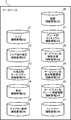
- FIG. 3 is a diagram illustrating an example of a database (DB) in the human resource development support system.
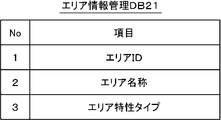
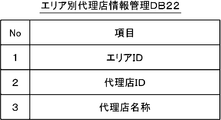
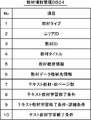
- FIG. 3 is a diagram illustrating an example of an area information management DB in the database. It is a figure showing the example of the agency information management DB according to area in the database. It is a figure showing the example of the service person information management DB for every agency in the database. It is a figure showing the example of the teaching material information management DB in the database. It is a figure showing the example of the chapter teaching material information management DB in the above-mentioned database. It is a figure showing the example of the training information management DB in the database.
- FIG. DB database
- FIG. 3 is a diagram illustrating an example of an area information management DB in the database. It is a figure showing the example of the agency information management DB according to area in the database. It is a figure showing the example of the
- FIG. 4 is a diagram illustrating an example of a grade-based curriculum information management DB in the database. It is a figure showing the example of the training attendance information management DB classified by serviceman in the database. It is a figure showing the example of the teaching material learning history information management DB classified by serviceman in the database. It is a figure which shows the example of the grade retention period information management DB classified by serviceman in the said database. It is a figure showing the example of composition of the trainer information management DB in the above-mentioned database. It is a figure showing the example of a display of a training list screen. It is a figure showing the example of a display of a training screen. It is a figure showing the example of a display of a chapter screen.
- FIG. 1 It is a flowchart which shows the example of a procedure of a grade promotion management process. It is a flowchart following FIG. It is a flowchart which shows the example of a procedure of a grade promotion management process. It is a figure which shows the example of a correction coefficient (economic growth degree) table. It is a figure showing the example of a correction coefficient (market entry degree) table. It is a figure showing an example of a service person number ratio pattern. It is a flowchart which shows the example of a procedure of the service person number ratio calculation process. It is a flowchart following FIG. It is a figure showing an example of a correction coefficient (education level coefficient) table.
- FIG. 1 It is a flowchart which shows the example of a procedure of a grade promotion management process. It is a flowchart following FIG. It is a flowchart following FIG. It is a figure showing an example of a correction coefficient (education level coefficient) table.
- FIG. 1 It is a flowchart which shows the
- FIG. 14 is a diagram illustrating an example of a correction coefficient (total number of chapter teaching material coefficients) table. It is a figure showing an example of a correction coefficient (social infrastructure maintenance coefficient) table. It is a flowchart which shows the example of a procedure of a raise speed calculation process. It is a flowchart following FIG. It is a figure showing the example of a display of a visualization screen.
- FIG. 1 is a diagram illustrating, as an example, a configuration of a human resource development support system 1 according to the embodiment in the embodiment.
- the human resource development support system 1 includes a management server 10 and terminals 3 and 4.
- the management server 10 and the terminals 3 and 4 are connected to a network (wide area network) and can communicate with each other.
- the network is a transmission path such as a telephone network, a digital communication network, and a wireless communication network, and data is transmitted using a predetermined communication protocol.
- the network includes, for example, a communication protocol such as HTTP (Hyper Text Transfer Protocol), FTP (File Transfer Protocol), SMTP (Simple Mail Transfer Protocol), POP3 (Post Office Protocol Version 3), and TCP / IP (Transmission Control Protocol / Internet).
- HTTP Hyper Text Transfer Protocol
- FTP File Transfer Protocol
- SMTP Simple Mail Transfer Protocol
- POP3 Post Office Protocol Version 3
- TCP / IP Transmission Control Protocol / Internet
- the Internet is configured using an Internet protocol such as the Internet Protocol.
- the terminal 3 is a terminal arranged at the global training headquarters, and the terminal 4 is a terminal arranged at an agency or an education center in each area.
- the terminals 3 and 4 are personal computers such as a notebook computer and a desktop computer, for example.
- the management server 10 is a server computer including a CPU (Central Processing Unit), a RAM (Random Access Memory), a ROM (Read Only Memory), a rewritable nonvolatile memory, an input / output interface, and the like.
- the CPU executes information processing according to a program loaded from the ROM to the RAM.
- the program may be supplied via an information recording medium such as an optical disk (CD-ROM, DVD-ROM, CD-R, DVD-RW, etc.), an information storage medium such as a memory card, or the like. It may be supplied via a network.
- the management server 10 can access the database (database server) 2.
- the database 2 may be provided inside the management server 10 or may be provided outside the management server 10.
- the management server 10 activates, for example, an HTTP daemon, and upon receiving a processing request (HTTP request) transmitted from the terminals 3 and 4 via a browser, the management server 10 transmits a processing result (HTTP response) corresponding to the processing request to the terminal 3. Reply to 4.
- HTTP request a processing request
- HTTP response a processing result
- the management server 10 transmits the page data described in the web page description language to the terminals 3 and 4 as a processing result, and the terminals 3 and 4 transmit the page image representing the page data received from the management server 10 to the own server. Is output to the display unit.
- the human resource development support system 1 is a system that provides online training (so-called e-learning) for training service personnel engaged in maintenance services for industrial machines.
- industrial machines various construction machines and factories such as reciprocating compressors, screw compressors, turbo compressors, vacuum film forming apparatuses, tire testing machines, continuous kneading machines and rubber kneading machines, etc.
- Various devices are assumed, such as devices (equipment) installed in a production facility of the company. Since industrial machines are used for a long period of time, maintenance services such as repair, inspection, replacement of parts, and technical guidance are essential.
- Such maintenance services are provided by agents in each area to which industrial machine manufacturers cooperate. The service technicians who belong to the agents in each area have a role to carry out sales activities for customers and to encourage the customers to receive maintenance services appropriately.
- the human resource development support system 1 prepares training materials for the maintenance technology of its own industrial machines in the languages of each country, and then expands the education worldwide. At the same time, it is also possible to develop individual education according to the individual's course progress and proficiency level based on the past learning records of each serviceman (the contents of the courses taken, training courses taken, and test results at that time). .
- the training by the human resource development support system 1 is implemented in combination with online training as well as group-based face-to-face training using actual machines at training facilities in each area.
- the Global Training Headquarters which develops and supplies education content and curriculum common to the whole world, and the area-specific education center that provides actual education to service personnel in each area using the education content, has been established.
- the trainer of the center combines online training and face-to-face training, and provides guidance so that each service person can understand the contents of the training and be able to execute it in business.
- the education implementation method / education method (teaching method, etc.) in each area using the education content prepared and supplied by the Global Training Headquarters depends on the country's economic development level, climate, cultural characteristics, and business It needs to be adjusted according to the environment (eg, the power relationship between the manufacturer and the agency outsourcing the after-sales service), and as a result depends on or is limited to the experience and competence of the trainer in the area-specific education center.
- the introduction of universal teaching materials and IT education tools such as e-learning has made it possible to efficiently raise the technical level of individual service personnel.
- the level of skill acquisition expected by the training headquarters and the time required to reach that level vary from area to area.
- the Global Training Headquarters prepares globally common teaching materials and supplies them to the education centers by area. It will be possible to develop education using the same teaching method, and it will be possible to globalize the maintenance skills of servicemen globally.
- educational materials textbooks and proficiency assessment tests
- the service personnel to be educated are divided into a plurality of grades according to years of work experience and the level of ability to perform work, and then the contents and curriculum are prepared for each grade, and education is conducted.
- Area-based education centers shall, at the discretion of the trainer, plan and implement education using the teaching materials supplied by the Global Training Headquarters.
- the grade promotion conditions and criteria for global education are set for the upper grade, and the grade promotion conditions and criteria for the serviceman for other grades (lower grades) can be set in each area.
- the human resource development support system 1 can plan and conduct online training and face-to-face training according to the actual situation of each area using the teaching materials supplied from the Global Training Headquarters in each area. Have been. At least one face-to-face training for each grade (face-to-face training by trainers at training center facilities equipped with practical training equipment, etc.) or online training (e-learning-style training without training by face-to-face training by trainers) However, it is defined as the educational content that the serviceman of the grade should learn, and it is possible to manage the data as an educational curriculum for each grade.
- the test results when the proficiency confirmation test is imposed in online training and the evaluation results for each trainee by face-to-face training in the face-to-face training can be managed as the training attendance results, and the completion of each training based on the data Presence or absence can be determined.
- Ability to perform grade-specific education for service technicians according to the grade-specific education curriculum and automatically or manually upgrade the service technician's grade when all training defined in the grade-specific education curriculum is completed Is manageable. In the case of higher-grade education, practical skills and paper tests common to all over the world are imposed and evaluated. Based on the evaluation results, it is possible to automatically or manually manage the grade upgrade of service personnel.
- FIG. 2 is a diagram showing an example of the database 2 in the human resource development support system.
- the database 2 includes an area information management DB21, an area-based agency information management DB22, an agency-based serviceman information management DB23, a teaching material information management DB24, a chapter teaching material information management DB25, a training information management DB26, a grade-based curriculum information management DB27, and a service. It includes a training-management information management DB 28 for each serviceman, a learning material learning history information management DB29 for each serviceman, a grade stay period information management DB30 for each serviceman, and a trainer information management DB31.
- the area information management DB 21 is a database for managing information about the area, and is an “area ID” that is an identifier for identifying and identifying the area, and an “area name” that represents the name of the area. , And “area characteristic type” representing a type corresponding to the characteristic of the area.
- the area-specific agency information management DB 22 is a database for managing information on the agency by area, and includes an “area ID” and an identifier “agent” for identifying and identifying the agency. Store ID "and” Agent Name "representing the name of the agency.
- the agency-specific serviceman information management DB 23 is a database for managing information about servicemen for each agency, and specifies and identifies “area ID”, “agent ID”, and serviceman.
- “Serviceman ID” which is an identifier for performing the service
- "login password” indicating password information for the serviceman to log in to the system
- serviceman personal information indicating personal information such as the name of the serviceman, and the service.
- “current serviceman rank” which indicates the rank (grade) according to the number of years of work experience of the man and the level of work performance.
- the teaching material information management DB 24 is a database for managing information on the teaching materials used for the training, and includes a “teaching material type” indicating whether the material is a text material or a test material, “Area ID”, “Teaching Material ID” which is an identifier for identifying and identifying the teaching material, “Teaching Material Title” indicating the title of the teaching material, “Teaching Material Summary Information” indicating the outline of the teaching material content, and the storage location of the teaching material data is URL "Text material storage location information” represented by etc., "text material / total number of pages” representing the total number of pages of text material, "text material learning completion condition", “text material learning completion condition / detail conditions", and “ Completion conditions for test material learning ”.
- “Text learning material learning completion condition” indicates whether the learning completion condition is “minimum browsing time” or “all page browsing” when the “learning material type” is “text learning material”.
- the “text teaching material learning completion condition / detailed condition” is specified by a positive value as the minimum viewing time (for example, minutes) of the text learning material when the “text learning material learning completion condition” is “minimum viewing time”.
- the “test teaching material learning completion condition” is specified as a learning completion condition by a positive value of a percentage conversion correct answer rate (0 to 100%) at the lowest pass point when the “teaching material type” is “test teaching material”.
- the chapter teaching material information management DB 25 is a database for managing information related to the chapter teaching materials.
- the chapter teaching material corresponds to a higher rank of the teaching material (text teaching material or test teaching material), and includes one or a plurality of teaching materials.
- the chapter teaching material information management DB 25 stores “area ID”, “chapter teaching material ID” which is an identifier for identifying and identifying the chapter teaching material, “chapter teaching material title” indicating the title of the chapter teaching material, and “summarizing the contents of the chapter teaching material”.
- the training information management DB 26 is a database for managing information related to training.
- the training corresponds to the top of the chapter teaching materials and is composed of one or a plurality of chapter teaching materials.
- the training information management DB 26 stores “area ID”, “training ID” as an identifier for identifying and identifying the training, “training name” indicating the name of the training, and “training type” (online training or face-to-face training).
- “Training type” "Training summary information” indicating the outline of the training contents, “Training completion conditions", "Number of chapters (N)” indicating the total number of chapter teaching materials constituting the training, and the ID of the chapter teaching materials set as Chapter n "Chapter n teaching material ID of chapter n".
- the “area ID” is 0, it indicates that the training is common to the whole world.
- “Training Completion Condition” is “Online Training”
- the training shall be completed once all of the chapter materials for the training have been studied, and if the “Training Type” is “Online Training”, and If the chapter teaching materials for the training include test teaching materials, students must complete the test if the learning results of all test materials satisfy the requirements for completing the test teaching materials, and if the “training type” is “face-to-face training” If the result of the evaluation by the trainer is a pass, the student shall complete.
- the grade-specific curriculum information management DB 27 is a database for managing information on the curriculum for each grade, and includes “area ID”, “grade ID” that is an identifier for identifying and identifying the grade, "Grade basic information” indicating basic information such as grade name, "Serviceman grade” indicating serviceman rank corresponding to grade, "Grade promotion mode”, “Grade renewal”, “Grade promotion condition”, “Grade” “Update interval”, “grade update count”, “number of training (N)” indicating the total number of trainings to be taken by the serviceman of the grade, and “training n ID” indicating the training ID set as training n And so on.
- any one of “automatic”, “manual”, and “with promotion condition” is specified.
- “Automatic” is a mode in which the upgrade is automatically performed when all the training groups to be taken in the grade are completed.
- the “manual” mode is a mode in which all the training groups to be taken in the grade are completed, and the grade is upgraded when the trainer makes a grade determination.
- “Upgrade conditions exist” is a mode in which, after completing all the training groups to be taken in the grade, if a predetermined grade-specific upgrade condition is satisfied, the mode is upgraded.
- the minimum residence time of the grade is specified by, for example, the number of years. That is, from the viewpoint of accumulating work experience, the minimum staying years after being promoted to the grade are specified in order to perform the work in the grade for a certain period of time. If the “grade promotion condition” is 0, no designation is made.
- grade update interval when “grade update presence / absence” is “grade update present”, the period until the next grade update is specified, for example, in years.
- grade update count when “grade update presence / absence” is “grade updated”, the minimum grade update count as a grade promotion condition is designated.
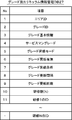
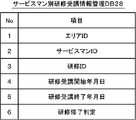
- the serviceman-specific training attendance information management DB 28 is a database for managing information on serviceman training attendance, and includes “area ID”, “serviceman ID”, and serviceman applying for training.
- “Training ID” which is an identifier for identifying and identifying training
- "Training start date” which indicates the date when the training was started
- "Training,” which indicates the date when the training was completed “Date of attendance” and "Judgment of completion of training”.
- “Training completion judgment” indicates the completion judgment of the training for which the serviceman has applied for the course, and one of “under study”, “completed”, “not completed”, and “retaken” is designated.
- the service-manual teaching material learning history information management DB 29 is a database for managing information related to the serviceman's learning material learning history, and includes a “serviceman ID” and a teaching material that the serviceman has applied for.
- “Teaching material ID” which is an identifier for identifying and identifying
- "Teaching material learning start date” indicating the date when learning of the teaching material was started
- "Teaching material learning completion year” indicating the date when learning of the teaching material was completed
- “Test Material Learning Completion Judgment” which indicates whether the test material learning has been completed or not completed
- “Test Material Score” which shows the test result of the test material as a percentage of correct answers
- text material learning learning "Text teaching material learning completion judgment” indicating whether the content is completed or completed
- “Text teaching material viewing time” indicating the reading time of the text teaching material as an integrated value (for example, minutes)
- the total number of pages of text materials which represents the total number of pages of, including a page n
- the information stored in the service person-specific training attendance information management DB 28 and the service person-specific learning material learning history information management DB 29 is an example of the training attendance history information.
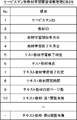
- the service person-specific grade stay period information management DB 30 is a database for managing information on the grade stay period for each service person, and includes “area ID”, “agent ID”, “serviceman ID”. , "Grade ID”, “Grade promotion date” indicating the date of promotion to the grade of the grade ID, "Grade update count” indicating the number of times the grade of the grade ID is updated, and the like. “Grade promotion date” is an example of grade stay period information, and “grade update count” is an example of grade update count information.
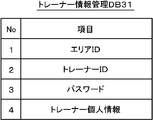
- the trainer information management DB 31 is a database for managing information about the trainer, and includes “area ID”, “trainer ID” that is an identifier for identifying and identifying the trainer, and “Password” representing password information for logging in, and "Trainer personal information etc.” representing personal information such as the name of the trainer are included.
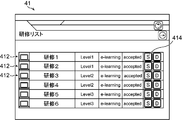
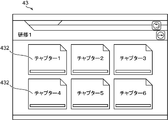
- FIGS. 14 to 16 are diagrams showing display examples of the screen displayed on the display unit of the terminal 4 used by the service person who takes the training.
- FIG. 14 is a diagram illustrating a display example of the training list screen 41
- FIG. 15 is a diagram illustrating a display example of the training screen 43
- FIG. 16 is a diagram illustrating a display example of the chapter screen 45.
- Online training and face-to-face training are made up of one or more chapter materials, and the chapter materials are made up of one or more learning items.
- the chapter teaching material is the minimum unit of the training content, and one learning material is linked to each learning item.
- the Global Training Headquarters prepares text materials and test materials translated in the local language of each area and supplies them in the form of chapter materials.
- the training list screen 41 includes a plurality of training items 412. These training items 412 are created based on information stored in the training information management DB 26 (see FIG. 8). Specifically, among the trainings managed by the training information management DB 26, those having the same “area ID” as the area to which the serviceman belongs are extracted and displayed as training items 412. In the illustrated example, a case where all the training items 412 are online training (e-learning) is illustrated. A training application button 414 is provided for each training item 412. When the training application button 414 is selected, the training list screen 41 is switched to a training screen 43 shown in FIG.
- the training screen 43 includes a plurality of chapter icons 432. These chapter icons 432 are created based on information stored in the training information management DB 26 (see FIG. 8) and the chapter teaching material information management DB 25 (see FIG. 7). More specifically, the chapter learning materials having the “chapter learning material IDs” of the chapters 1 to N corresponding to the training item 412 selected on the training list screen 41 shown in FIG. It is extracted and displayed as a chapter icon 432. When the chapter icon 432 is selected, the training screen 43 is switched to a chapter screen 45 shown in FIG.
- the chapter screen 45 includes a text icon 452 and a test icon 454.
- These text icons 452 and test icons 454 are created based on information stored in the chapter teaching material information management DB 25 (see FIG. 7) and the teaching material information management DB 24 (see FIG. 6). Specifically, a learning material having a “chapter learning material ID” corresponding to the chapter icon 432 selected on the training screen 43 shown in FIG. 15 is extracted from the learning material information management DB 24 and displayed as a text icon 452 and a test icon 454. .
- the text icon 452 or the test icon 454 is selected, the corresponding teaching material data is read, a teaching material screen (not shown) is displayed, and the user can take a course.
- Training management in each area using the human resource development support system 1 is performed, for example, as follows.
- Trainers in each area create online training and face-to-face training for their own area based on the chapter materials supplied by the Global Training Headquarters, and create them for each grade. Register in the system as a training curriculum on a training basis.
- the rank of the serviceman in all areas is defined by, for example, five grades.
- ⁇ ⁇ ⁇ Trainers in each area register information on servicemen in their area for each agency in the system. At this time, the current serviceman rank (grade) is set for the serviceman. The trainer in each area notifies the service person of the login information (ID and password) registered in the system.
- the service person logs in to the system using the login information (ID and password) notified by the trainer.
- a curriculum for each grade corresponding to the serviceman rank (grade) set for the serviceman is displayed as a training list to be taken.
- the service person applies for the training that he / she wants to take in this training list and starts taking the training.
- the training for which the service person has applied for the training is an online training, you will be able to browse and study the chapter materials linked to the training immediately after applying for the training. Specifically, the service person applies for training on the training list screen 41 (see FIG. 14) and starts training. When the learning of all the chapter materials included in the training is completed, the training is completed.
- the trainer in the area to which the service person belongs confirms the face-to-face training application and, if permitted, takes the course. Approve the application. In the training where the trainer has accepted the application, the service person can perform pre-learning with chapter materials. On the day of the face-to-face training at the training center, the service person goes to the training center and participates in face-to-face training. The trainer confirms whether or not the applicant for the face-to-face training is participating in the training, and if so, registers the training completion determination result in the system.
- Upgrading a grade is to determine whether or not to upgrade the serviceman's rank from the current grade to a higher grade when all the training groups set for each grade have been completed.
- the timing is once a year, and the “grade promotion mode” in the grade-specific curriculum information management DB 27 (see FIG. 9) is set for each area and for each grade.
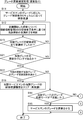
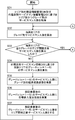
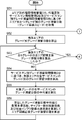
- FIGS. 17 to 19 are flowcharts showing an example of the procedure of the grade promotion management process executed by the management server 10.
- the CPU of the management server 10 functions as a first determination unit, a second determination unit, a grade management unit, and a reset unit by executing the processing shown in these figures.
- FIG. 17 shows a process in the case of the non-update system grade (“grade update presence / absence” is “no grade update”), and FIG. In the case of "grade update”).
- the CPU executes a process for attending training in accordance with the curriculum for each grade according to the grade of the serviceman (S11).
- the serviceman's grade is acquired from “current serviceman rank” in the serviceman information management DB 23 for each agency (see FIG. 5).
- the training to be taken is trainings 1 to N associated with the same grade as the serviceman's grade in the grade-specific curriculum information management DB 27 (see FIG. 9).
- the screens 41 to 43 shown in FIGS. 14 to 16 and the teaching material screen of the text teaching material or the test teaching material are generated and transmitted to the terminal 4.
- the CPU judges the completion of the training for the training that has started, based on the completion conditions described in the teaching material information management DB 24 (see FIG. 6) (S12). Specifically, when the serviceman starts attending the training, the CPU determines, for each teaching material included in the training, the viewing time and the number of viewed pages of the text teaching material in the learning material learning history information management DB 29 for each serviceman (see FIG. 11). In the case where the information on the attendance such as the correct answer rate of the test teaching material is updated, and the information on the attendance satisfies the completion condition described in the educational material information management DB 24 (see FIG. 6), the “completion judgment” is made. Is updated from incomplete to completed.
- the CPU determines whether or not all the training groups of the grade have been taken (S13, processing as first determination means). Specifically, the CPU determines whether or not all the trainings 1 to N associated with the same grade as the serviceman in the grade-based curriculum information management DB 27 (see FIG. 9) have been completed. The determination is made by referring to the separate training attendance information management DB 28 (see FIG. 10) and the service person-specific teaching material learning history information management DB 29 (see FIG. 11).
- the CPU refers to the grade-specific curriculum information management DB 27 (see FIG. 9) and determines whether the grade raise mode of the grade is "automatic”. It is determined whether or not it is (S14).
- the CPU raises the grade of the serviceman (S15) and ends the process.
- the CPU updates the “current serviceman rank” in the agency-specific serviceman information management DB 23 (see FIG. 5) to the grade after the promotion.
- the CPU determines whether the grade increase mode of the grade is “manual” (S16 in FIG. 18).
- the CPU obtains a determination result of determining whether or not to upgrade the grade of the serviceman by the trainer in the area (S17, 2 Example of processing as determination means). Specifically, the CPU obtains, from the terminal 4 used by the trainer, promotion enable / disable information, which is input by the trainer and indicates whether or not the promotion of the serviceman is permitted, as the determination result.
- promotion enable / disable information which is input by the trainer and indicates whether or not the promotion of the serviceman is permitted, as the determination result.
- the recognition of promotion by the trainer is an example of the “predetermined promotion condition”.
- the CPU raises the serviceman's grade (S15) and ends the process.
- the CPU determines the grade of the serviceman in the serviceman-specific teaching material learning history information management DB 29 (see FIG. 11).
- the training attendance history is cleared (S19), and the process ends. As a result, the service person is required to retake the course.
- the CPU determines whether the grade increasing condition is satisfied. (S20, an example of a process as a second determination unit). In the present embodiment, it is determined whether or not the grade stay period in which the serviceman stays in the grade exceeds the threshold as an example of the “predetermined grade promotion condition”.
- the grade stay period is an elapsed period from the “training start date” in the service person-specific training attendance information management DB 28 (see FIG. 10).
- the threshold value is the minimum grade residence time stored in the “grade upgrade condition” of the grade-specific curriculum information management DB 27 (see FIG. 9).
- FIG. 19 shows the processing in the case of the update system grade (when “grade update presence / absence” is “grade update present”). Steps that are the same as those in FIGS. 17 and 18 are denoted by the same step numbers, and detailed description is omitted.
- the CPU determines whether it is time to update the grade (S21). Whether or not it is the update timing is determined based on the “grade update interval” of the grade-specific curriculum information management DB 27 (see FIG. 9). That is, it is determined whether or not the period of the “grade update interval” has elapsed since the latest promotion or update.
- the CPU determines whether the current update is less than the grade update count of the grade (S22). The number of updates this time is obtained from “grade update count” in the service person-specific grade stay period information management DB 30 (see FIG. 12). The grade update count as the threshold is obtained from “grade update count” in the grade-specific curriculum information management DB 27 (see FIG. 9).
- the CPU stores the training attendance history of the grade for the service person in the teaching material learning history information management DB 29 for each service person (see FIG. 11). Clear or reset (S19, processing as reset means), and terminate the processing. As a result, the service person is required to retake the course.
- the CPU proceeds to the above-mentioned S14 to S20 determination of whether or not the grade can be upgraded according to the grade raising mode.
- the “grade upgrade mode”, “grade upgrade presence / absence”, “grade upgrade condition”, “grade update interval”, and “grade update count” in the grade-specific curriculum information management DB 27 (see FIG. 9).
- Etc. it is possible to adjust the upgrade of the serviceman's grade.
- the level of technical acquisition related to the contents of globally common education between areas which occurs due to differences in the teaching experience and competence of the trainers at the area-specific education centers, and the level of that level It is possible to improve the level of competence and equalize the level of servicemen around the world while compensating for variations in the time required to reach.
- the following two indexes are managed as common indices for globally leveling the maintenance technicians of servicemen.
- the first index is the ratio of the number of service personnel by grade.
- the second index is the grade promotion speed for each grade (the number of days required to be promoted to a higher grade, that is, the grade stay period).
- the first index "ratio of service personnel by grade” will be described.
- the first index includes an “economic growth coefficient” for correcting the difference due to the degree of economic growth for each area and a “market entry coefficient” for correcting the difference due to the degree of market entry of the company into the area.
- the type of coefficient is used as a correction coefficient.
- FIG. 20 is a diagram showing a table of economic growth coefficients (correction coefficients relating to the degree of economic growth).
- the "economic growth coefficient” is a three-stage economic growth rate of low / medium / high, referring to economic indicators such as GNP (Gross National Product). And then set for each grade in each category.
- the composition ratio of the number of service personnel by grade is likely to be a pyramid as shown in pattern A in FIG.
- areas with low economic growth are countries such as economically developing countries, where it is often required to provide ordinary construction machinery and inspection and maintenance work at the lowest possible cost and with a constant quality.
- the composition ratio of the number of service personnel by grade tends to be rhombic as shown in the pattern C in FIG. In an area where the degree of economic growth is at an intermediate position, the customer is required to provide intermediate value between the “low” and “high” positions. Therefore, the composition ratio of the number of service personnel by grade is as shown in pattern B in FIG. It is easy to become a barrel shape.
- the “economic growth coefficient” is set to be relatively low for the number of servicemen of grades (for example, grades 1 and 2). Is set so as to increase as the economic growth rate increases, and to decrease as the economic growth rate increases with respect to the number of servicemen of relatively high grades (for example, grades 4 and 5). In other words, the “economic growth coefficient” increases as the grade increases with respect to the number of servicemen with a relatively low economic growth rate (for example, low), and increases with the relatively high economic growth rate (for example, high). Is set to decrease as the economic growth rate increases.
- FIG. 21 is a diagram showing a table of market entry coefficients (correction coefficients relating to the market entry degree).
- the “market entry coefficient” is set for each section after the area group in which the company enters the market is classified into three stages of low / medium / high market entry.
- the market entry time into the area is early, the company can enter the market more advantageously than competitors by acquiring a partner who outsources the service business in the area, and therefore the number of partners / the number of service personnel increases.
- the market entry time into the area is late, it is difficult to acquire partners, and therefore the number of partners / the number of service personnel also decreases. Therefore, in order to make it possible to compare the number of servicemen even in areas where the market entry degrees are different from each other, the “market entry coefficient” should decrease as the market entry degree increases, in other words, the market entry degree It is set to increase as the value decreases.
- FIGS. 23 and 24 are flowcharts illustrating an example of the procedure of the serviceman number ratio calculation process executed by the management server 10.
- the CPU of the management server 10 functions as an acquisition unit, a correction unit, and an output unit by executing the processes shown in these figures.
- the CPU obtains the number of servicemen by area and by grade based on the agency information management DB22 by area (see FIG. 4) and the serviceman information management DB23 by agency (see FIG. 5) (S31, acquisition). Processing as a means).
- the serviceman ID of each serviceman is associated with the area ID and the current serviceman rank (grade). Generate number of people information.
- the CPU calculates the number of servicemen by grade in the area (S32, processing as acquisition means). That is, the CPU obtains the number of servicemen of each grade belonging to one area selected from a plurality of areas.
- the CPU calculates the number of servicemen after correction between areas of all grades in all areas (S33 to S38, processing as correction means).
- the number of servicemen is multiplied by the economic growth coefficient according to the area and the grade n (S35, see FIG. 20), and further multiplied by the market entry coefficient according to the area (S36, see FIG. 21) to correct between the areas. After that, the number of servicemen is obtained (S37).
- the CPU repeats the processing of S34 to S37 until the number of servicemen after inter-area correction of all five grades of the area is calculated (S33), and further calculates the number of servicemen after inter-area correction of all areas. , S32 to S37 are repeated (S38 in FIG. 24).
- the CPU calculates the average value of the number of service personnel after correction between areas according to grade based on the number of service personnel after correction between areas in all areas. While calculating as a representative value (S39), a gap value between "the number of servicemen after correction between areas by grade” and “the average value of the number of servicemen by grade” is calculated for each area (S40).
- the representative value is not limited to the average value, and may be a median value or the like.
- the CPU creates a visualization graph based on the "number of servicemen after correction between areas by grade” and the "average number of servicemen by grade” for each area (S41), and the gap value is equal to or larger than a threshold value.
- guidance is provided to confirm and examine the training contents and configuration of the service personnel of the corresponding grade, and the current attendance status (S42).
- the visualization screen including the visualization graph and the guidance is output to the terminal 3 of the global training headquarters (details will be described later).
- the second index “grade upgrade speed by grade,” will be described.
- the grade promotion speed for each grade is the number of days required to be promoted to a higher grade, that is, the grade stay period.
- the second index includes an “education level coefficient” for correcting the difference due to the educational level of each area, a “coefficient of the total number of chapter teaching materials” for correcting the difference due to the total number of chapter teaching materials for each area, and a social coefficient for each area.
- FIG. 25 is a diagram showing a table of education level coefficients (correction coefficients related to education levels).
- the "education level coefficient” divides the area group in which the company enters the market into three levels of education level of low / middle / high with reference to educational indicators such as university enrollment rate. The above is set in each section. In general, the lower the level of education, the longer it takes to learn the same educational content. Therefore, in order to make it possible to compare the grade promotion speeds even in areas where the educational levels are different from each other, the “education level coefficient” is set to decrease as the educational level decreases, in other words, to increase as the educational level increases. Is set to
- FIG. 26 is a diagram illustrating an example of a table of the chapter teaching material total number coefficient (correction coefficient related to the chapter teaching material total number).
- the training configuration the composition of the chapter teaching materials
- the training configuration contents the total number of the chapter teaching materials for each grade are used. Also, variations occur. Therefore, in order to make it possible to compare grade promotion speeds even in areas where the total number of chapter teaching materials is different from each other, the “total number of chapter teaching materials” defined by the average value and the standard deviation ( ⁇ ) of the total number of chapter teaching materials by area and by grade Coefficient "is used.
- the “total coefficient of chapter teaching materials” is set so as to decrease as the total number of chapter teaching materials increases, in other words, to increase as the total number of chapter teaching materials decreases. Specifically, the “total coefficient of chapter teaching materials” is higher than “average ⁇ to average + ⁇ ” when the total number of chapter teaching materials is less than “average ⁇ ”, and the total number of chapter teaching materials is “average”. The value is set lower than the case of “average value ⁇ to average value + ⁇ ” when “value + ⁇ ” is exceeded.
- FIG. 27 is a diagram illustrating an example of a table of social infrastructure development coefficients (correction coefficients related to the level of social infrastructure development).
- the “social infrastructure development coefficient” is used to determine the area group in which the company enters the market in three levels of low / medium / high, referring to infrastructure development status indicators such as communication and transportation infrastructure. It is set in each category after being divided into social infrastructure development levels. In general, in areas where the level of social infrastructure development is lower, more time is required to attend training due to the effects of the time required to move to the training center and the effects of unstable operation of the power and communication infrastructure.
- the “social infrastructure development factor” should increase as the social infrastructure development level increases, in other words, It is set so that it becomes smaller as the maintenance level becomes lower.
- FIGS. 28 and 29 are flowcharts showing an example of the procedure of the promotion speed calculation process executed by the management server 10.
- the CPU of the management server 10 functions as an acquisition unit, a correction unit, and an output unit by executing the processes shown in these figures.
- the CPU is based on the area-based agency information management DB 22 (see FIG. 4), the agency-based serviceman information management DB23 (see FIG. 5), and the serviceman-based grade retention period information management DB30 (see FIG. 12).
- the number of staying days for grades (that is, grade promotion speed) is obtained for each grade (S51).
- the CPU calculates the number of grade stay days for each grade in the area (S52). That is, the CPU acquires the number of grade stay days of each grade belonging to one area selected from a plurality of areas.
- the CPU calculates the number of days of staying in the grade after the correction between the areas of all the grades in all the areas (S53 to S56, processing as correction means).
- the CPU calculates the number of grade stay days by grade for all servicemen in the area based on the serviceman-specific grade stay period information management DB 30 (see FIG. 12) (S54).
- the grade residence time is calculated as the difference between the upper grade promotion date and the target grade promotion date.
- the number of days of staying in the grade is calculated as the difference between the current date and the promotion date of the target grade.
- the CPU calculates, as a representative value, the average value of the staying days of the grades of all servicemen of the target grade (S55), and adds the education level coefficient (see FIG. 25) to the calculated average value of the staying days of the grade, and the coefficient of the total number of chapter teaching materials. (See FIG. 26) and the social infrastructure maintenance coefficient (see FIG. 27) are multiplied to obtain the number of days of staying grade after correction between areas (S56).
- the representative value is not limited to the average value and may be a median value or the like.
- the CPU repeats the processing of S54 to S56 until the corrected inter-area corrected stay days of all five grades in the area are calculated (S53), and further calculates the inter-corrected inter-area corrected stay days of all areas. , S52 to S56 are repeated (S57 in FIG. 29).
- the CPU calculates the average of the grade-specific inter-area corrected grade stay days based on the grade-by-area corrected grade stay days of all areas. In addition to calculating as a representative value (S58), a gap value between "the number of grade staying days after correction between areas by grade” and "the average value of the number of grade staying days by grade” is calculated for each area (S59).
- the CPU creates a visualization graph for each area based on the “Grade staying days after correction between areas by grade” and “Average value of staying days by grade” (S60), and when the gap value is equal to or larger than the threshold value.
- Guidance is then provided for confirming and examining the training content and configuration of the service personnel of the corresponding grade, and the current attendance status (S61).
- the visualization screen including the visualization graph and the guidance is output to the terminal 3 of the global training headquarters.
- FIG. 30 is a diagram showing a display example of the visualization screen 51 output to the terminal 3 of the global training headquarters. At the top of the visualization screen 51, an area selection button 512 for selecting an area is provided.
- the left half of the visualization screen 51 is an area for comparing the number of service persons by grade, and includes a service person number graph 521, an average value graph 523, and a guidance character string 525.
- the service person number graph 521 represents “the number of service persons after correction between areas by grade” of the selected area
- the average value graph 523 represents “the average value of the service person number by grade” (FIG. 24). See S41).
- the guidance character string 525 is selected from messages prepared in advance when the gap value between “the number of service personnel after correction between areas by grade” and “the average value of the number of service personnel by grade” is equal to or greater than a threshold value. It is displayed (see S42 in FIG. 24). The message of the guidance string 525 may be transmitted to the trainer in the target area.
- the right half of the visualization screen 51 is an area for comparing grade promotion speeds by grade, and includes a grade promotion speed graph 531, an average value graph 533, and a guidance character string 535.
- the grade ascending speed graph 531 indicates “the number of grade stays after correction between areas by grade” of the selected area
- the average value graph 533 indicates “the average value of the grade stay days by grade” (S60 in FIG. 29). See).
- the guidance character string 535 is selected from messages prepared in advance when the gap value between “grade-stayed days after correction between areas by grade” and “average of grade-stayed days by grade” is equal to or greater than a threshold value. It is displayed (see S61 in FIG. 29). The message of the guidance string 525 may be transmitted to the trainer in the target area.
- composition ratio of service personnel and the speed of grade promotion are centralized. It becomes possible to manage.
- the human resource development support system includes: an obtaining unit configured to obtain the number of servicemen belonging to one area based on information on the number of servicemen of industrial machines by area; Correction means for normalizing the number of people by a correction coefficient determined for each area, and output means for outputting the number of servicemen belonging to the one area, normalized by the correction coefficient.
- the recording medium on which the human resource development support program according to another aspect is recorded includes acquisition means for acquiring the number of servicemen belonging to one area based on information on the number of servicemen of industrial machines by area. Correction means for normalizing the number of servicemen belonging to the area by a correction coefficient determined for each area; and output means for outputting the number of servicemen belonging to the one area normalized by the correction coefficient.
- a program for causing a computer to function as is recorded.
- the acquisition unit acquires the number of servicemen of each grade belonging to one area based on the number of people of the serviceman by area and by grade.
- the correction means corrects the number of servicemen of each grade belonging to the one area with a correction coefficient determined for each area and for each grade, and the output means corrects the number of servicemen for each grade.
- the number of servicemen of each grade belonging to the area is output.
- the correction coefficient is determined according to an economic growth degree for each area.
- the correction coefficient is determined according to the market entry degree for each area.
- the output unit normalizes the number of servicemen belonging to the one area normalized by the correction coefficient by the correction coefficient. And the representative value of the number of servicemen belonging to each area.
- Such a human resource development support system and its program can centrally and suitably manage the number of servicemen belonging to the area and their representative values.
- the output unit includes a number of servicemen belonging to the one area normalized by the correction coefficient and a number of servicemen normalized by the correction coefficient. If the difference between the representative value of the number of servicemen belonging to each area and the representative value is equal to or greater than a threshold, a predetermined message is output.
- Such a human resource development support system and its program can be suitably checked and examined.
- a human resource development support system is based on grade stay period information for each area and grade of a service person of an industrial machine, the grade stay period of a service person belonging to one area staying at one grade.
- a serviceman belonging to one area is assigned a grade of one based on grade stay period information for each area of an industrial machine serviceman and for each grade.
- Acquisition means for acquiring a representative value of the stay period of the grade, correction means for normalizing the representative value of the stay period of the grade with a correction coefficient determined for each area, and the grade stay period normalized by the correction coefficient
- a program for causing a computer to function as an output unit that outputs a representative value of.
- the correction coefficient is determined according to the educational level for each area.
- the correction coefficient is determined according to the number of teaching materials included in the training that the serviceman takes.
- Such a human resource development support system and its program can appropriately consider the number of training materials for each area.
- the correction coefficient is determined according to a social infrastructure maintenance level for each area.
- the output unit converts a representative value of the grade stay period normalized by the correction coefficient into each area normalized by the correction coefficient. Is output together with the representative value of the grade stay period.
- Such a human resource development support system and its program can centrally and suitably manage the representative value of the grade stay period.
- the output unit includes a representative value of the grade stay period normalized by the correction coefficient, and each area normalized by the correction coefficient. If the difference from the representative value of the grade stay period is equal to or greater than a threshold, a predetermined message is output.
- Such a human resource development support system and its program can be suitably checked and examined.
Landscapes
- Engineering & Computer Science (AREA)
- Business, Economics & Management (AREA)
- Human Resources & Organizations (AREA)
- Strategic Management (AREA)
- Entrepreneurship & Innovation (AREA)
- Economics (AREA)
- Operations Research (AREA)
- Theoretical Computer Science (AREA)
- General Physics & Mathematics (AREA)
- Marketing (AREA)
- General Business, Economics & Management (AREA)
- Quality & Reliability (AREA)
- Tourism & Hospitality (AREA)
- Physics & Mathematics (AREA)
- Development Economics (AREA)
- Educational Administration (AREA)
- Game Theory and Decision Science (AREA)
- Data Mining & Analysis (AREA)
- Management, Administration, Business Operations System, And Electronic Commerce (AREA)
- Electrically Operated Instructional Devices (AREA)
Abstract
Description
図1は、一例として、実施形態における実施形態に係る人材育成支援システム1の構成を示す図である。人材育成支援システム1は、管理サーバ10と、端末3、4とを備える。管理サーバ10と端末3、4とは、ネットワーク(ワイドエリアネットワーク)に接続されており、相互に通信が可能である。前記ネットワークは、例えば、電話網、ディジタル通信網および無線通信網等の伝送路であり、所定の通信プロトコルを用いてデータが伝送される。前記ネットワークは、例えば、通信プロトコルにHTTP(Hyper Text Transfer Protocol)、FTP(File Transfer Protocol)、SMTP(Simple Mail Transfer Protocol)、POP3(Post Office Protocol Version 3)およびTCP/IP(Transmission Control Protocol/Internet Protocol)等のインターネットプロトコルが用いられてインターネットを構成する。端末3は、グローバル研修本部に配置された端末であり、端末4は、各エリアの代理店や教育センター等に配置された端末である。端末3、4は、例えばノート型コンピュータおよびデスクトップ型コンピュータ等のパーソナルコンピュータである。
図2は、前記人材育成支援システムにおけるデータベース2の例を示す図である。データベース2は、エリア情報管理DB21、エリア別代理店情報管理DB22、代理店別サービスマン情報管理DB23、教材情報管理DB24、チャプター教材情報管理DB25、研修情報管理DB26、グレード別カリキュラム情報管理DB27、サービスマン別研修受講情報管理DB28、サービスマン別教材学習履歴情報管理DB29、サービスマン別グレード滞留期間情報管理DB30、およびトレーナー情報管理DB31を含む。
図14~図16は、研修を受講するサービスマンが使用する端末4の表示部に表示される画面の表示例を示す図である。図14は、研修リスト画面41の表示例を示す図であり、図15は、研修画面43の表示例を示す図であり、図16は、チャプター画面45の表示例を示す図である。
人材育成支援システム1を利用した各エリアでの研修運営は、例えば次のように行われる。
以下、人材育成支援システム1を利用した、サービスマンのグレードの昇級の管理について説明する。グレードの昇級とは、各グレードで設定された研修群を全て修了した場合に、現在のグレードから上位のグレードに、サービスマンのランクをランクアップさせるか否かを判断することである。本実施形態では、例えば、そのタイミングが年に1回であり、グレード別カリキュラム情報管理DB27(図9参照)の「グレード昇級モード」がエリア毎かつグレード毎に設定される。
以下、人材育成支援システム1を利用した、グローバル研修本部におけるサービスマンの一元的な管理について説明する。グローバル研修本部の端末3では、各エリアの、グレード別サービスマン人材および人数構成比率や、グレード別グレード昇級スピード(上位グレード昇級に要する日数)が確認でき、これらのデータを基に人材育成上のアドバイスを必要とするエリアを抽出して可視化することによって、エリア別トレーナーに対する研修運営支援が可能となる。
Claims (14)
- 産業用機械のサービスマンのエリア別の人数情報に基づき、1のエリアに属するサービスマンの人数を取得する取得手段と、
前記1のエリアに属するサービスマンの人数を、エリア別に定められた補正係数で正規化する補正手段と、
前記補正係数で正規化された前記1のエリアに属するサービスマンの人数を出力する出力手段と、を備える、
人材育成支援システム。 - 前記取得手段は、前記サービスマンのエリア別かつグレード別の人数情報に基づき、1のエリアに属する各グレードのサービスマンの人数を取得し、前記補正手段は、前記1のエリアに属する各グレードのサービスマンの人数を、エリア別かつグレード別に定められた補正係数で補正し、
前記出力手段は、前記補正係数で正規化された前記1のエリアに属する各グレードのサービスマンの人数を出力する、
請求項1に記載の人材育成支援システム。 - 前記補正係数は、エリア別の経済成長度に応じて定められる、
請求項1または請求項2に記載の人材育成支援システム。 - 前記補正係数は、エリア別の市場参入度に応じて定められる、
請求項1または請求項2に記載の人材育成支援システム。 - 前記出力手段は、前記補正係数で正規化された前記1のエリアに属するサービスマンの人数を、前記補正係数で正規化された各エリアに属するサービスマンの人数の代表値とともに出力する、
請求項1または請求項2に記載の人材育成支援システム。 - 前記出力手段は、前記補正係数で正規化された前記1のエリアに属するサービスマンの人数と、前記補正係数で正規化された各エリアに属するサービスマンの人数の代表値との差が閾値以上である場合に、所定のメッセージを出力する、
請求項1または請求項2に記載の人材育成支援システム。 - 産業用機械のサービスマンのエリア別かつグレード別のグレード滞在期間情報に基づき、1のエリアに属するサービスマンが1のグレードに滞在したグレード滞在期間の代表値を取得する取得手段と、
前記グレード滞在期間の代表値をエリア別に定められた補正係数で正規化する補正手段と、
前記補正係数で正規化された前記グレード滞在期間の代表値を出力する出力手段と、を備える、
人材育成支援システム。 - 前記補正係数は、エリア別の教育水準に応じて定められる、
請求項7に記載の人材育成支援システム。 - 前記補正係数は、前記サービスマンが受講する研修に含まれる教材数に応じて定められる、
請求項7または請求項8に記載の人材育成支援システム。 - 前記補正係数は、エリア別の社会インフラ整備水準に応じて定められる、
請求項7または請求項8に記載の人材育成支援システム。 - 前記出力手段は、前記補正係数で正規化された前記グレード滞在期間の代表値を、前記補正係数で正規化された各エリアの前記グレード滞在期間の代表値とともに出力する、
請求項7または請求項8に記載の人材育成支援システム。 - 前記出力手段は、前記補正係数で正規化された前記グレード滞在期間の代表値と、前記補正係数で正規化された各エリアの前記グレード滞在期間の代表値との差が閾値以上である場合に、所定のメッセージを出力する、
請求項7または請求項8に記載の人材育成支援システム。 - 産業用機械のサービスマンのエリア別の人数情報に基づき、1のエリアに属するサービスマンの人数を取得する取得手段、前記1のエリアに属するサービスマンの人数を、エリア別に定められた補正係数で正規化する補正手段、および、前記補正係数で正規化された前記1のエリアに属するサービスマンの人数を出力する出力手段、としてコンピュータを機能させるためのプログラムを記録した記録媒体。
- 産業用機械のサービスマンのエリア別かつグレード別のグレード滞在期間情報に基づき、1のエリアに属するサービスマンが1のグレードに滞在したグレード滞在期間の代表値を取得する取得手段、前記グレード滞在期間の代表値をエリア別に定められた補正係数で正規化する補正手段、および、前記補正係数で正規化された前記グレード滞在期間の代表値を出力する出力手段、としてコンピュータを機能させるためのプログラムを記録した記録媒体。
Priority Applications (1)
| Application Number | Priority Date | Filing Date | Title |
|---|---|---|---|
| CN201980039774.6A CN112262400B (zh) | 2018-07-02 | 2019-05-20 | 人才培训支援系统 |
Applications Claiming Priority (2)
| Application Number | Priority Date | Filing Date | Title |
|---|---|---|---|
| JP2018-125950 | 2018-07-02 | ||
| JP2018125950A JP7126881B2 (ja) | 2018-07-02 | 2018-07-02 | 人材育成支援システム及びプログラム |
Publications (1)
| Publication Number | Publication Date |
|---|---|
| WO2020008740A1 true WO2020008740A1 (ja) | 2020-01-09 |
Family
ID=69059881
Family Applications (1)
| Application Number | Title | Priority Date | Filing Date |
|---|---|---|---|
| PCT/JP2019/019966 Ceased WO2020008740A1 (ja) | 2018-07-02 | 2019-05-20 | 人材育成支援システムおよび記録媒体 |
Country Status (3)
| Country | Link |
|---|---|
| JP (1) | JP7126881B2 (ja) |
| CN (1) | CN112262400B (ja) |
| WO (1) | WO2020008740A1 (ja) |
Families Citing this family (1)
| Publication number | Priority date | Publication date | Assignee | Title |
|---|---|---|---|---|
| JP7677617B2 (ja) * | 2021-05-28 | 2025-05-15 | All Different株式会社 | 情報処理装置、情報処理方法及びプログラム |
Citations (2)
| Publication number | Priority date | Publication date | Assignee | Title |
|---|---|---|---|---|
| JP2008257541A (ja) * | 2007-04-06 | 2008-10-23 | Tetsumasa Yamamoto | 配送車両運転従業員管理システム |
| JP2017072910A (ja) * | 2015-10-05 | 2017-04-13 | 株式会社日立製作所 | 計画生成装置および計画生成方法 |
Family Cites Families (8)
| Publication number | Priority date | Publication date | Assignee | Title |
|---|---|---|---|---|
| JP2944575B2 (ja) * | 1997-06-06 | 1999-09-06 | 九州日本電気ソフトウェア株式会社 | 要員配置計画システム |
| US20080228549A1 (en) * | 2007-03-14 | 2008-09-18 | Harrison Michael J | Performance evaluation systems and methods |
| JP2012058848A (ja) | 2010-09-06 | 2012-03-22 | Chugoku Electric Power Co Inc:The | 業務担当者割当支援システム |
| JP2012098926A (ja) * | 2010-11-02 | 2012-05-24 | Hitachi Ltd | 人員配置支援方法 |
| JP6605407B2 (ja) * | 2016-07-05 | 2019-11-13 | 株式会社神戸製鋼所 | 人材育成支援システム |
| CN106878952B (zh) * | 2017-03-20 | 2020-07-10 | 迪爱斯信息技术股份有限公司 | 区域人员数量的预测方法及装置 |
| CN107203872B (zh) * | 2017-05-26 | 2020-06-02 | 山东省科学院情报研究所 | 基于大数据的区域人才需求量化分析方法 |
| CN107403296B (zh) * | 2017-06-29 | 2020-12-01 | 北京星选科技有限公司 | 运力配置方法及装置 |
-
2018
- 2018-07-02 JP JP2018125950A patent/JP7126881B2/ja active Active
-
2019
- 2019-05-20 CN CN201980039774.6A patent/CN112262400B/zh active Active
- 2019-05-20 WO PCT/JP2019/019966 patent/WO2020008740A1/ja not_active Ceased
Patent Citations (2)
| Publication number | Priority date | Publication date | Assignee | Title |
|---|---|---|---|---|
| JP2008257541A (ja) * | 2007-04-06 | 2008-10-23 | Tetsumasa Yamamoto | 配送車両運転従業員管理システム |
| JP2017072910A (ja) * | 2015-10-05 | 2017-04-13 | 株式会社日立製作所 | 計画生成装置および計画生成方法 |
Also Published As
| Publication number | Publication date |
|---|---|
| JP2020004327A (ja) | 2020-01-09 |
| JP7126881B2 (ja) | 2022-08-29 |
| CN112262400A (zh) | 2021-01-22 |
| CN112262400B (zh) | 2025-04-29 |
Similar Documents
| Publication | Publication Date | Title |
|---|---|---|
| Shepherd et al. | A new venture's cognitive legitimacy: An assessment by customers | |
| US9575616B2 (en) | Educator effectiveness | |
| US20090319338A1 (en) | Method and system for virtual mentoring | |
| US20190385471A1 (en) | Assessment-based assignment of remediation and enhancement activities | |
| US20210357872A1 (en) | Job opening and candidate matching system | |
| AU2007242042B2 (en) | A method and system for measuring organisational culture | |
| US20050181338A1 (en) | Management system for education and training, computer for management of training, terminal device for trainee, terminal device for manager, and method for management of education and training | |
| US20080033792A1 (en) | Computer and internet-based performance assessment questionnaire and method of candidate assessment | |
| Foxon et al. | Training manager competencies: The standards | |
| WO2014011045A1 (en) | Computer implemented method for matchmaking employers and job candidates | |
| US20150088774A1 (en) | Platform for generating personalized career pathways | |
| JP2009530711A (ja) | 心理的アセスメントのためのシステムおよび方法 | |
| US20210248529A1 (en) | Information processing apparatus, information processing method, and storage medium | |
| US20150254995A1 (en) | System for identifying orientations of an individual | |
| Armstrong et al. | Best practices of mobile health in clinical care: The development and evaluation of a competency-based provider training program. | |
| WO2020008739A1 (ja) | 人材育成支援システムおよび記録媒体 | |
| JP4187682B2 (ja) | 学習項目提案方法及びコンピュータ | |
| KR102044219B1 (ko) | 학과 맞춤형 직무기반 교육을 위한 교육과정 설계 서비스 방법 | |
| JP2020091808A (ja) | 人材採用支援方法、コンピュータプログラム及び人材採用支援装置 | |
| JP7126881B2 (ja) | 人材育成支援システム及びプログラム | |
| JP2024147784A (ja) | 策定システム | |
| JP2005108025A (ja) | 能力開発支援システム、その方法及びプログラム | |
| KR20070114869A (ko) | 웹을 이용한 맞춤 학습 관리 서비스 방법 및 시스템 | |
| JP6760649B2 (ja) | 学習支援システム、学習支援方法、サーバ装置、及びプログラム | |
| US20140344182A1 (en) | Learning application ranking in a modular learning system |
Legal Events
| Date | Code | Title | Description |
|---|---|---|---|
| 121 | Ep: the epo has been informed by wipo that ep was designated in this application |
Ref document number: 19829842 Country of ref document: EP Kind code of ref document: A1 |
|
| WWE | Wipo information: entry into national phase |
Ref document number: 202047056640 Country of ref document: IN |
|
| NENP | Non-entry into the national phase |
Ref country code: DE |
|
| 122 | Ep: pct application non-entry in european phase |
Ref document number: 19829842 Country of ref document: EP Kind code of ref document: A1 |
|
| WWG | Wipo information: grant in national office |
Ref document number: 201980039774.6 Country of ref document: CN |