WO2019227614A1 - 样例三元组的获取方法、装置、计算机设备以及存储介质 - Google Patents
样例三元组的获取方法、装置、计算机设备以及存储介质 Download PDFInfo
- Publication number
- WO2019227614A1 WO2019227614A1 PCT/CN2018/095462 CN2018095462W WO2019227614A1 WO 2019227614 A1 WO2019227614 A1 WO 2019227614A1 CN 2018095462 W CN2018095462 W CN 2018095462W WO 2019227614 A1 WO2019227614 A1 WO 2019227614A1
- Authority
- WO
- WIPO (PCT)
- Prior art keywords
- sample
- training
- data
- person
- model
- Prior art date
- Legal status (The legal status is an assumption and is not a legal conclusion. Google has not performed a legal analysis and makes no representation as to the accuracy of the status listed.)
- Ceased
Links
Images
Classifications
-
- G—PHYSICS
- G06—COMPUTING OR CALCULATING; COUNTING
- G06V—IMAGE OR VIDEO RECOGNITION OR UNDERSTANDING
- G06V40/00—Recognition of biometric, human-related or animal-related patterns in image or video data
- G06V40/10—Human or animal bodies, e.g. vehicle occupants or pedestrians; Body parts, e.g. hands
- G06V40/16—Human faces, e.g. facial parts, sketches or expressions
-
- G—PHYSICS
- G06—COMPUTING OR CALCULATING; COUNTING
- G06F—ELECTRIC DIGITAL DATA PROCESSING
- G06F18/00—Pattern recognition
- G06F18/20—Analysing
- G06F18/21—Design or setup of recognition systems or techniques; Extraction of features in feature space; Blind source separation
- G06F18/214—Generating training patterns; Bootstrap methods, e.g. bagging or boosting
Definitions
- This application relates to the field of machine learning, and in particular, to a method, an apparatus, a computer device, and a storage medium for acquiring sample triples.
- the selection of the existing sample triples is filtered from the entire training data, resulting in a serious expansion of the total number of sample triples.
- the magnitude of the total number of samples is a cubic relationship with the magnitude of the sample number.
- the main purpose of this application is to provide a method for obtaining sample triads, which aims to solve the problem that the current method of obtaining sample triads leads to an excessively large number of sample triples, which affects the training process of the training model.
- This application proposes a method for obtaining a sample triplet, including:
- the second example corresponding to the maximum difference and the first example binary group are formed into a plurality of sample triples corresponding to the first example binary group, so as to obtain the target batch data. All sample triples corresponding to each sample binary corresponding to each designated person.
- This application also provides a sample triplet acquisition device, including:
- the first screening module is configured to filter all first instances belonging to each designated person in the preset target batch data, and combine all the first instances in pairs to obtain a corresponding number of each designated person. Sample two-tuples;
- a calculation module configured to select a first instance of the plurality of sample tuples and calculate a first vector distance between two first instances of the first instance tuple, And calculating the second vector distance between the target first instance specified in the first example two-tuple and each second sample; wherein the second sample is the preset target batch data Sample data other than the first example;
- a second screening module configured to screen a second example corresponding to a maximum distance difference according to a distance difference between each second vector distance and the first vector distance;
- the first composition module is configured to compose the second sample corresponding to the maximum distance difference and the sample two-tuple to form a plurality of sample three-tuples corresponding to the first two-tuple, so as to obtain each of the target batch data. All sample triples corresponding to each sample binary corresponding to the specified person.
- the present application also provides a computer device including a memory and a processor, where the memory stores computer-readable instructions, and the processor implements the steps of the foregoing method when the processor executes the computer-readable instructions.
- the present application also provides a computer non-volatile readable storage medium having computer-readable instructions stored thereon, the computer-readable instructions implementing the steps of the above method when executed by a processor.
- the entire training data on the order of tens of thousands or hundreds of thousands is divided into small batches of data containing a specified number of samples, and then sample triads are obtained in the small batches of data, thereby avoiding the excessive number of sample triads.
- the large and slow model training speed, or even smooth training accelerates the training model training speed, and at the same time restricts the acquisition of only the candidate N that has the largest distance to the vector from the AP to form the APN, further reducing the number of sample triples.
- the sample triad is representative in the entire training data, and the training process of the training model is better, and the performance is consistent with the parameters of the training model; this application obtains the sample ternary in a smaller batch data range
- the generated sample triples can be used as a batch of data when training a deep learning model in a small batch random gradient descent method.
- All the characteristics are sent to the training model for training, which avoids the change of the training model parameters during multiple inputs, which leads to a decline in the utility of the sample triples compared to the training model under the current parameters; this application is within the range of smaller batch data Obtain the sample triples and select only the candidate N that has the largest distance to the vector from the AP to form the APN, so that the obtained sample triples and subsequent model training using the sample triples can be performed continuously, avoiding because the training data is too Many, resulting in the need to spend additional computing time after obtaining the sample triples, batching the sample triples and then sending them to the training model for training, which improves the training speed.
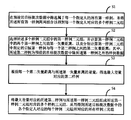
- FIG. 1 is a schematic flowchart of a sample triplet acquisition method according to an embodiment of the present application
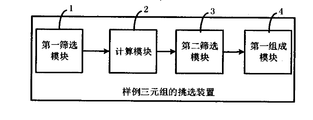
- FIG. 2 is a schematic structural diagram of a sample triplet acquisition apparatus according to an embodiment of the present application.
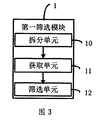
- FIG. 3 is a schematic structural diagram of a first screening module according to an embodiment of the present application.
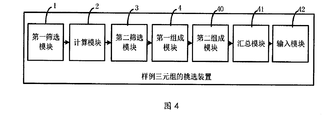
- FIG. 4 is a schematic structural diagram of a sample triplet obtaining apparatus according to another embodiment of the present application.
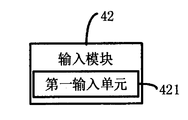
- FIG. 5 is a schematic structural diagram of an input module according to an embodiment of the present application.
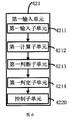
- FIG. 6 is a schematic structural diagram of a first input unit according to an embodiment of the present application.
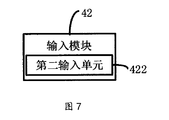
- FIG. 7 is a schematic structural diagram of an input module according to another embodiment of the present application.
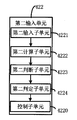
- FIG. 8 is a schematic structural diagram of a second input unit according to another embodiment of the present application.
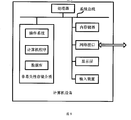
- FIG. 9 is a schematic diagram of an internal structure of a computer device according to an embodiment of the present application.
- a method for acquiring a sample triplet includes:
- S1 Filter all first instances belonging to each designated person in the preset target batch data, and combine all the first instances in pairs to obtain a plurality of sample binary corresponding to each designated person group.
- the designator of this embodiment refers generally to the sample data of the designator as a subset of the batch data.
- the sample data of the designator is defined as the first example to distinguish it from the designator in the batch data.
- the "first" here is only a difference and is not limited.
- the batch data A includes sample data of M individuals such as a, b, c, d, e, and f.
- the specified person may be any of a, b, c, d, e, and f.
- all the sample data belonging to a is 10 ,
- the number of AP pairs corresponds to C 7 2 ;
- the sample data of others other than a becomes the candidate N (Negative) of the sample triplet APN.
- the sample data belonging to each of the M individuals are respectively combined to form a pair of AP pairs that are opposite to each person, and then a suitable N-composed sample triple APN is selected to form a usable
- representative data set of sample triples are taken from the batch data to improve the training model training speed and The training effect improves the training timeliness and practicability of the training model.
- S2 selecting a first example binary group among the plurality of example binary groups, and calculating a first vector distance between two first instance examples in the first example binary group, and separately calculating The second vector distance between the target first instance specified in the first instance and the second instance of each second instance; wherein the second example is the preset target batch data divided by Sample data other than the first example.
- the sample data other than the designated person in the batch data is defined as the second sample to distinguish it from the first example.
- the “second” is only different from the above “first”, and is not limited to other The functions of the “first” and “second” parts are the same and will not be repeated.
- the first vector distance in this embodiment is the vector distance of the first two-tuple AP pair
- the second vector distance is the vector distance between A and the candidate N in the first two-tuple AP pair, where A is the first The first instance specified in the same example two-tuple.
- the selection condition of the candidate N in this embodiment is limited to the candidate N whose distance between the second vector distance AN and the first vector distance AP is the largest, that is, Filter candidate N, where a is a constant, s i ap is the Euclidean distance between x a and x p , s i an is the Euclidean distance between x a and x n ; s i ap is calculated as x a is the vector corresponding to Anchor, x p is the vector corresponding to Positive; s i an is calculated in the same manner as above, and x p in the above formula can be replaced with x n , where x n is the vector corresponding to Negative.
- Candidate N in this embodiment not only satisfies that the distance difference between the second vector distance and the first vector distance is greater than zero, and further on the premise that it is greater than zero, it is further preferred that the difference between the second vector distance and the first vector distance is the largest.
- a sample binary corresponds to a sample triple, which further improves the sample triple APN formed by screening candidate N.
- the data is representative, and the total number of sample APNs is further reduced to improve the training speed and training effect in model training.
- the difference between the second vector distance and the first vector distance is the largest to further limit the acquisition range of candidate N.
- the maximum distance between candidate N and A or P is to minimize the data deviation when the amount of data is small, and improve the representativeness of the minimum number of sample triples in the entire batch of data after screening That is, it can fully represent the distribution status of all data in the training data, and ensure the validity of the weight of the training model obtained from the training model of the triad with a small number of examples.
- S4 The second example corresponding to the maximum difference and the first example binary group are formed into a plurality of sample triples corresponding to the first example binary group, so as to obtain the target batch data. All sample triples corresponding to each sample binary corresponding to each specified person in.
- the proper sample triples are selected as the training data input for the training model in the batch data, which greatly reduces the amount of data that the training model needs to enter during the training process, speeds up the training model training time, and avoids When all the training data is input into the training model for training, it is prone to slow training or interrupted training.
- this application maximizes the number of sample triads obtained by only obtaining the candidate N that has the greatest distance from the AP to the vector, and simultaneously optimizes the group's rationality of the sample triads to reduce the training data bias and improve the sample.
- the representativeness of the example triplet in the entire training data makes it possible to train a more practical training model by inputting less training data.
- the sample data of any designated person in the batch data is arranged and combined to form an AP pair, and any AP pair of the designated person and the candidate N having the largest vector distance from the AP pair form a sample triple APN.
- the batch data is optimized into a set of sample triad APNs to further optimize the input into the training model
- the composition and distribution of training data improves the training effect of the training model.
- step S1 includes:
- the training data in this step refers to all data of the training data conventionally used for deep learning training models, and the total amount of training data includes tens of thousands or hundreds of thousands.
- the training data of a large order of tens of thousands or hundreds of thousands is divided into a plurality of small amounts of batch data to further limit the number of combined sample triples to improve the training efficiency of the training model. , Saving time-consuming training of training models.
- the specified quantity in this embodiment takes into account both the computing power of the training equipment and the performance requirements of the training model during training.
- the preferred quantity in this embodiment is no more than 128 sample data, so that the sample triples only It can be obtained in the batch data range of 128 sample data.
- the number of sample triples formed by permutation and combination is effectively controlled, so that the training model can be guaranteed by the limited storage capacity of the GPU during the training process.
- Continuous and effective high-speed computing capabilities to speed up the training of the training model at the same time, because the total number of batch data is limited, the number of sample triples in each batch of data will not be excessively expanded, making each batch of data All the sample triples in the sample triple set generated in can be input into the training model at one time for model training, which avoids the input of each batch when large batches of training data are input in multiple batches.
- the training model parameters that occur when the data changes follow make the disadvantages of the training effect of the sample triples on the training model decrease.
- the order of magnitude data is first divided into batch data, and the sample data in the batch data is then formed into sample triples, which effectively controls the total amount of sample triples, so that the sample triples can be input to the training model at one time.
- the model training is carried out in the process to ensure the stability of the parameters of the training model and make the training model have a good application effect.
- the performance is the lowest error rate (equal error rate, that is, the wrong identification error of the correct data is equal to the misjudged pass error of the wrong data) .
- the batch data in this embodiment includes sample data of M individuals. Each sample data is R, and the value of M is much smaller than the total number of people in the training data.
- M is between 30 and 60, and R is 20 Between -40, the total number of samples that satisfy the batch data is not greater than 128.
- R includes the same sample data and different sample data.
- the sample can be optimized.
- the distribution status of the sample data improves the optimization effect of the training model; however, if a person's different example data is less than R, in order to meet the requirement of the number R, partial duplicate data can be allowed.
- S11 The target batch data in the plurality of batches of data is input into a preset training model, and the specified number of samples in each batch of data is obtained through forward training of the preset training model, respectively. Corresponding vector.
- the vector values corresponding to each input example are calculated through the forward training of the training model, so that the sample triples are reasonably combined according to the vector distance between the two examples, and the group coordination of the sample triples is improved. , Reduce the deviation between each batch of data, and improve the training effect of the training model, for example: improve the accuracy of the two-class training model.
- S12 Filter all the first instances that belong to a specified person in the target batch data, and perform two sets of all the first instances to synthesize multiple sample tuples, where the first instance contains The corresponding vector.
- all the sample data of a specified person is defined as the first example, and one is designated as A in the first example, and the other first examples are respectively P, which are sequentially arranged and combined to form an AP pair.
- the first vector distance AP corresponding to each AP pair is obtained, and the candidate N with the largest difference in the batch data is filtered according to the first vector distance AP to form a sample triple APN. .
- step S4 the method includes:
- This embodiment first obtains the first example binary group and its corresponding second example that meets a preset condition, and forms a set of sample triples corresponding to the first example binary group.
- a sample triad training set is collected by using the first subsets corresponding to a plurality of the batch data in the training data to obtain the sample triad data that is optimally filtered from the entire training data as training. set.
- S42 The sample triad training set is input into a two-class classification network model with Triplet Loss as a loss function for model training.
- the two-category network model of this embodiment refers to a network model that performs only a “yes or no” judgment on input data.
- the face recognition model or the speaker confirmation model are both the above-mentioned two-category network models.
- the Triplet Loss of this embodiment has three parameters. During the training process, three sample data needs to be input at the same time to complete the training process of the training model. Therefore, the selection method of the sample triplet APN of this embodiment is based on Triplet Loss as The network optimization effect of the loss function is more significant.
- s i is the sample data itself, and l i is its corresponding person to be tested.
- the first and second examples are speaker utterance examples, and the two-class network model is a speaker confirmation network model; the above step S42 includes:
- S421 The sample triple training set consisting of the speaker's utterance samples is input into the speaker confirmation network model with Triple Loss as a loss function for model training.
- This embodiment is used for speaker confirmation as an example.
- the differences in the articulation organs and phonation habits of a person when speaking are reflected in the speaker's voice characteristics in a complex situation, so that each person's utterance has a strong personal color.
- the embodiment excavates the personality factors of the speakers included in the discourse examples by averaging the semantic information in the discourse examples, and emphasizes the feature differences of the speech features between different people.
- M is 40 people and R is 30 different voice samples. For example, 10 different voice samples are selected in a normal speaking state, 10 different voice samples are selected in an angry state, and 10 different voices are selected in a sad state.
- the speaker's sample triple includes sample 3 of the speaker's utterance sample. Tuple.
- a method of extracting speech features such as speech rate, sound quality, and speech waveform in the discourse example is formed.
- speech features such as speech rate, sound quality, and speech waveform in the discourse example.
- a pair of the test speaker and the pre-registered speaker are paired.
- a confirmation is output for confirming that the speaker under test is the same person as the pre-registered speaker or that the speaker under test is not the same person as the pre-registered speaker.
- This embodiment uses the above method to divide a large number of speaker utterance examples into batch data containing a specified number of speakers, and then select a suitable sample triple APN in the batch data to improve the speaker confirmation network model.
- Training speed and training effect in order to expand the application area of speaker confirmation network model, including in finance, securities, social security, public security, military and other civil security certification industries and departments to meet the corresponding use needs.
- step S421 includes:
- S4211 Input the utterance example of the person to be tested into the trained speaker confirmation network model.
- the utterance examples of the person under test in this embodiment include speech examples of the person under test including one or more speech features such as sound quality, such as natural voice and synthetic speech.
- the synthesized speech includes utterance examples that have undergone noise removal processing, utterance examples that have undergone noise reduction and secondary permutations, and new background sounds have been added after noise removal. If at least one of the speech features with strong personal color in the synthesized speech remains unchanged, speaker confirmation can be achieved.
- S4212 Calculate a first similarity between the first speech characteristic in the utterance sample of the person under test and the second speech characteristic of the pre-registered person in the speaker confirmation network model.
- the first similarity between the first speech characteristic of the person's utterance example in this embodiment and the second speech characteristic of the pre-registered person can be determined by Euclidean distance, Markov distance, etc., and preferably by Euclidean distance. .
- This embodiment passes Screen candidate N, where a is a constant, s i ap is the Euclidean distance between x a and x p , s i an is the Euclidean distance between x a and x n ; x a is the discourse sample batch data
- the candidate N with the largest distance difference is preferred, that is, the voice of the person who has the greatest difference in speech characteristics from the designated person is preferred. Examples to further improve the representativeness of the sample triple APN data, reduce the total number of sample triple APNs, and improve the training speed and training effect of speaker confirmation network model training.
- the preset range is that the Euclidean distance between the first speech characteristic of the person under test and the second speech characteristic of the pre-registered person is greater than 0.9, the first similarity is high or the first speech characteristic is determined to be tested
- the pre-registered person corresponding to the person and the second voice characteristic is the same person.
- the first and second examples are examples of a face image
- the two-class network model is a face recognition network model
- S4215 The sample triad training set composed of the face image is input to a face recognition network model with Triplet Loss as a loss function for model training.
- This embodiment uses face recognition as an example.
- the example is a face image. It is used to train a face recognition model. According to the face recognition model, one-to-one determination of the face image of a specified person to be recognized is achieved. That is, the result is yes or no in order to determine whether the person to be identified and the registrant are the same person.
- M is 50 people
- R is face images of 20 different angles. For example, when the front face image is rotated to the right side face image, 10 different face images are selected, and the front face is Rotate the image to the left face image and select 10 different face images.
- a sample triple consisting of the face image of the specified person and the face image of the other person.
- an extraction method for extracting face features in the face image is formed, so that by comparing the similarity of the face features, the person to be tested and the pre-registered person are confirmed one-to-one, and the Confirmation result that the test person and the pre-registered person are the same person or the test person and the pre-registered person are not the same person.
- This embodiment uses the above method to screen suitable batches of sample triples APN in the batch data composed of 50 people's face images to improve the training speed and training effect of the face recognition network model, so as to expand the face recognition network model.
- Application fields in order to meet the usage needs in industries and departments such as finance, securities, social security, public security, military and other civil safety certification.
- step S4215 the method includes:
- S4216 Input the face image of the person to be tested into the trained face recognition network model.
- the face image of the person under test in this embodiment includes the features of the facial features of the person under test, such as their respective sizes, postures, and positions.
- S4217 Calculate a second similarity between the first face feature in the face image of the person under test and the second face feature of the pre-registered person in the face recognition network model.
- This embodiment passes Filter candidate N, where a is a constant, s i ap is the Euclidean distance between x a and x p , s i an is the Euclidean distance between x a and x n ; x a is the face data batch data The vector corresponding to Anchor, x p is the vector corresponding to Positive; x n is the vector corresponding to Negative.
- the candidate N with the largest distance difference is further preferred, that is, the person with the largest difference in face characteristics from the specified person is preferred.
- the second similarity of this embodiment can be determined by Euclidean distance, Mahalanobis distance, and the like, and is preferably determined by Euclidean distance.
- the preset range in this embodiment is 0.8 or more.
- a larger Euclidean distance indicates a higher degree of similarity or determines that the person to be tested is the same person as the pre-registered person.
- step S4214 or step S4219 the method includes:
- S4220 The security authentication system controlling the assembly of the speaker confirmation network model demonstrates that the authentication is passed.
- the confirmation result of the speaker confirmation network model is converted into a control instruction of the security authentication system associated with the confirmation result, so as to improve the practical application effect of the speaker confirmation system.
- the speaker confirms that the network model confirms that the person to be tested is the same person as the pre-registered person
- the person to be tested can open the application platform controlled by the security authentication system to make the application platform in a usable state.
- the authentication manners shown in this embodiment include a dialog text display and / or a voice broadcast and / or a warning bell sound and / or a flashing manner of a warning light, and the like.
- this application divides the entire training data on the order of tens of thousands or hundreds of thousands into small batches of data containing a specified number of samples, and then obtains the sample triples in the small batch of data, thereby avoiding the sample triples.
- the model training speed is slow, and even the smooth training cannot be performed. It speeds up the training model's training speed, and at the same time restricts the acquisition of only the candidate N with the largest vector distance to the AP to form the APN, further reducing the acquisition of sample ternary
- the number of groups improves the training speed, and based on the sample triplet APN composed of the candidate N with the greatest distance to the vector from the AP, the data has better representation.
- the effect of training the model is optimized.
- a sample triplet acquiring apparatus includes:
- the first screening module 1 is configured to screen all first instances belonging to each designated person in the preset target batch data, and combine all the first instances in pairs to obtain a corresponding one for each designated person. Multiple multiple sample tuples.
- the designator of this embodiment refers to the sample data of the designator as a subset of the batch data. By defining the sample data of the designator as the first example, it is different from those other than the designator in the batch data.
- Human sample data For example, the batch data A includes sample data of M individuals such as a, b, c, d, e, and f.
- the specified person may be any of a, b, c, d, e, and f.
- all the sample data belonging to a is 10
- the number of AP pairs corresponds to C 7 2 ; the sample data of others other than a becomes the candidate N (Negative) of the sample triplet APN.
- the sample data belonging to each of the M individuals are respectively combined to form a pair of AP pairs that are opposite to each person, and then a suitable N-composed sample triple APN is selected to form a usable Sample representative triple data set for training model training, which improves the training timeliness and practicability of the training model.
- a calculation module 2 for selecting a first example binary group among the plurality of example binary groups and calculating a first vector distance between two first instance examples of the first example binary group , And calculate the second vector distance between the target first instance specified in the first instance two-tuple and each second instance; wherein the second example is preset target batch data Sample data except for the first example.
- the sample data other than a specified person in the batch data is defined as the second sample to distinguish it from the first example.
- the “second” and the above “first” are only differences and are not made.
- the functions of "first” and “second” that define other parts are the same, and are not repeated here.
- the first vector distance in this embodiment is the vector distance of the first two-tuple AP pair
- the second vector distance is the vector distance between A and the candidate N in the first two-tuple AP pair, where A is the first The first instance specified in the same example two-tuple.
- the second screening module 3 is configured to screen a second example corresponding to a maximum difference according to a difference between each second vector distance and the first vector distance.
- the selection condition of the candidate N in this embodiment is limited to the candidate N whose distance between the second vector distance AN and the first vector distance AP is the largest, that is, Filter candidate N, where a is a constant, s i ap is the Euclidean distance between x a and x p , s i an is the Euclidean distance between x a and x n ; s i ap is calculated as x a is the vector corresponding to Anchor, x p is the vector corresponding to Positive; s i an is calculated in the same manner as above, and x p in the above formula can be replaced with x n , where x n is the vector corresponding to Negative.
- the candidate N in this embodiment not only satisfies the distance difference between the second vector distance and the first vector distance greater than zero, but also on the premise that the distance difference between the second vector distance and the first vector distance is the largest.
- the unique candidate N corresponding to the situation, in order to further reduce the number of sample triples, a sample binary corresponding to the formation of a sample triple, and further improve the sample triple APN data formed after screening candidate N Representative, and reduce the total number of sample APNs to improve the training speed and training effect in model training.
- the difference between the second vector distance and the first vector distance is the largest to limit the acquisition range of the candidate N, and only the unique candidate N corresponding to the largest difference is selected to ensure that the total number of sample triples formed is the smallest and the largest This eliminates the problem of excessive expansion of the number of sample triples that affects model training, and at the same time ensures that the sample triples APN are representative, which can fully represent the distribution of all data in the training data and ensure training Model validity.
- the difference between the second vector distance and the first vector distance is greater than zero, and the candidate N with the largest difference is selected, the number of candidate N is greatly reduced, the data input amount of the training model is reduced, and the model is improved.
- Training speed the maximum distance between the candidate N and A or P is to minimize the data deviation in the case of less data and improve the representativeness of the minimum set of sample triples after screening in the entire batch of data, That is, it can fully represent the distribution status of all data in the training data, and the weight validity of the training model obtained from the training model of the triad with a small number of examples.
- a first composition module 4 is configured to compose the second example corresponding to the maximum difference and the first example binary group into a plurality of example triples corresponding to the first example binary group, and obtain the target batch data. All sample triples corresponding to each sample binary corresponding to each specified person of.
- the proper sample triples are selected as the training data input for the training model in the batch data, which greatly reduces the amount of data that the training model needs to enter during the training process, speeds up the training model training time, and avoids When all the training data is input into the training model for training, it is prone to slow training or interrupted training.
- this application maximizes the number of sample triads obtained by only obtaining the candidate N that has the greatest distance from the AP to the vector, and simultaneously optimizes the group's rationality of the sample triads to reduce the training data bias and improve the sample.
- the representativeness of the example triplet in the entire training data makes it possible to train a more practical training model by inputting less training data.
- the sample data of any designated person in the batch data is arranged and combined to form an AP pair, and any AP pair of the designated person and the candidate N having the largest vector distance from the AP pair form a sample triple APN.
- the batch data is optimized into a set of sample triad APNs to further optimize the input into the training model
- the composition and distribution of training data improves the training effect of the training model.
- the above-mentioned first screening module 1 includes:
- the splitting unit 10 is configured to split the training data into a plurality of batch data including a specified number of samples.
- the training data of this embodiment refers to all data of training data conventionally used for deep learning training models, and the total amount of training data includes tens of thousands or hundreds of thousands.
- the training data of a large order of tens of thousands or hundreds of thousands is divided into a plurality of small amounts of batch data to further limit the number of combined sample triples to improve the training efficiency of the training model.
- the specified quantity in this embodiment takes into account both the computing power of the training equipment and the performance requirements of the training model during training.
- the preferred quantity in this embodiment is no more than 128 sample data, so that the sample triples only It can be obtained in the batch data range of 128 sample data.
- the number of sample triples formed by permutation and combination is effectively controlled, so that the training model can be guaranteed by the limited storage capacity of the GPU during the training process.
- the training model parameters that occur when the data changes follow make the disadvantages of the training effect of the sample triples on the training model decrease.
- the magnitude of data is first divided into batches of data.
- the sample data in the batch data is then formed into sample triples, which effectively controls the total amount of sample triples, so that the sample triples can be input to the training at one time.
- Model training in the model ensures the stability of the parameters of the training model, makes the training model have a good application effect, and exhibits the lowest error rate.
- the batch data in this embodiment includes sample data of M individuals. Each sample data is R, and the value of M is much smaller than the total number of people in the training data. For example, M is between 30 and 60, and R is 20 Between -40, the total number of samples that satisfy the batch data is not greater than 128. Among them, R includes the same sample data and different sample data. When the sample data in R are different, the sample can be optimized. The distribution status of the sample data improves the optimization effect of the training model; however, if a person's different example data is less than R, in order to meet the requirement of the number R, partial duplicate data can be allowed.
- An obtaining unit 11 is configured to input the target batch data in the multiple batch data into a preset training model, and obtain all the data in each batch data through forward training of the preset training model.
- the vectors corresponding to the specified number of examples are described.
- the vector values corresponding to each input example are calculated through the forward training of the training model, so that the sample triples are reasonably combined according to the vector distance between the two examples, and the group coordination of the sample triples is improved. , Reduce the deviation between each batch of data, and improve the training effect of the training model, for example: improve the accuracy of the two-class training model.
- a screening unit 12 is configured to screen all the first instances that belong to a specified person in the target batch data, and perform two sets of all the first instances to synthesize multiple sample tuples, where the first The same example contains the corresponding vector.
- all the sample data of a specified person is defined as the first example, and one is designated as A in the first example, and the other first examples are respectively P, which are sequentially arranged and combined to form an AP pair.
- the first vector distance AP corresponding to each AP pair is obtained, so that according to the first vector distance AP, the candidate N corresponding to the largest difference in the batch data is filtered to form a sample.
- Triple APN the first vector distance AP corresponding to each AP pair
- a sample triplet acquiring apparatus includes:
- An aggregation module 41 is configured to aggregate a first subset corresponding to a plurality of batch data in the training data into a sample triplet training set.
- This embodiment first obtains the first example binary group and its corresponding second example that meets a preset condition, and forms a set of sample triples corresponding to the first example binary group.
- a sample triad training set is collected by using the first subsets corresponding to a plurality of the batch data in the training data to obtain the sample triad data that is optimally filtered from the entire training data as training. set.
- An input module 42 is configured to input the sample triplet training set into a two-class classification network model with Triplet Loss as a loss function for model training.
- the two-category network model of this embodiment refers to a network model that performs only a “yes or no” judgment on input data.
- the face recognition model or the speaker confirmation model are both the above-mentioned two-category network models.
- the Triplet Loss of this embodiment has three parameters. During training, three sample data needs to be input simultaneously to complete the training process of the training model. Therefore, the selection method of the sample triples APN of this embodiment uses Triplet Loss as the loss. The network optimization effect of the function is more significant.
- an input module 42 includes:
- a first input unit 421 is configured to input a sample triple training set composed of speaker utterance examples into a speaker confirmation network model with Triplet Loss as a loss function for model training.
- This embodiment is used for speaker confirmation as an example.
- the differences in the articulation organs and phonation habits of a person when speaking are reflected in the speaker's voice characteristics in a complex situation, so that each person's utterance has a strong personal color.
- the embodiment excavates the personality factors of the speakers included in the discourse examples by averaging the semantic information in the discourse examples, and emphasizes the feature differences of the speech features between different people.
- M is 40 people
- R is 30 different voice samples. For example, 10 different voice samples are selected in a normal speaking state, and 10 different voice samples are selected in an angry state. Next select 10 different voice samples, and the sample triples composed of the voice samples of the designated person and the voice samples of other people.
- the specified number in this embodiment is 128.
- the speaker sample triples include A sample triple consisting of samples of the speaker's words.
- a method of extracting speech features such as speed, sound quality, and speech waveform in the discourse example is formed.
- a confirmation result is output in which the speaker to be tested is the same person as the pre-registered speaker or the speaker to be tested is not the same person as the pre-registered speaker.
- This embodiment uses the above method to divide a large number of speaker utterance examples into batch data containing a specified number of speakers, and then select a suitable sample triple APN in the batch data to improve the speaker confirmation network model. Training speed and training effect, in order to expand the application area of speaker confirmation network model, including in finance, securities, social security, public security, military and other civil security certification industries and departments to meet the corresponding use needs.
- the first input unit 421 of this embodiment includes:
- a first input sub-unit 4211 is configured to input a utterance example of a person to be tested into the trained speaker confirmation network model.
- the utterance examples of the person under test in this embodiment include speech examples of the person under test including one or more speech features such as sound quality, such as natural voice and synthetic speech.
- the synthesized speech includes utterance examples that have undergone noise removal processing, utterance examples that have undergone noise reduction and secondary permutations, and new background sounds have been added after noise removal. If at least one of the speech features with strong personal color in the synthesized speech remains unchanged, speaker confirmation can be achieved.
- a first calculation sub-unit 4212 is configured to calculate a first similarity between a first speech characteristic in a utterance sample of a person to be tested and a second speech characteristic of a pre-registered person in a speaker confirmation network model.
- the first similarity between the first speech characteristic of the person's utterance example in this embodiment and the second speech characteristic of the pre-registered person can be determined by Euclidean distance, Markov distance, etc., and preferably by Euclidean distance. .
- This embodiment passes Screen candidate N, where a is a constant, s i ap is the Euclidean distance between x a and x p , s i an is the Euclidean distance between x a and x n ; x a is the discourse sample batch data
- the candidate N with the largest distance difference is further preferred, that is, the person with the largest difference in speech characteristics from the specified person is preferred.
- the speech samples are to improve the representativeness of the sample triplet APN data and reduce the total number of sample triplet APNs to improve the training speed and training effect of speaker confirmation network model training.
- the first judging subunit 4213 is configured to judge whether the first similarity is within a preset threshold range.
- the preset range is that the Euclidean distance between the first speech characteristic in the utterance sample of the person to be tested and the second speech characteristic of the pre-registered person is greater than 0.9, which indicates that the first similarity is high or the first speech characteristic is determined to be tested.
- the person and the pre-registered person corresponding to the second voice characteristic are the same person.
- the first determining subunit 4214 is configured to determine that the person under test and the pre-registered person are the same person if the first similarity is within a preset threshold range.
- the input module 42 includes:
- a second input unit 422 is configured to input a sample triple of a face image into a face recognition network model with Triple Loss as a loss function for model training.
- This embodiment uses face recognition as an example.
- the example is a face image. It is used to train a face recognition model. According to the face recognition model, one-to-one determination of the face image of a specified person to be recognized is achieved. That is, the result is yes or no in order to determine whether the person to be identified and the registrant are the same person.
- M is 50 people
- R is face images of 20 different angles. For example, when the front face image is rotated to the right side face image, 10 different face images are selected, and the front face is Rotate the image to the left face image and select 10 different face images.
- a sample triple consisting of the face image of the specified person and the face image of the other person.
- an extraction method for extracting face features in the face image is formed, so that by comparing the similarity of the face features, the person to be tested and the pre-registered person are confirmed one-to-one, and the Confirmation result that the test person and the pre-registered person are the same person or the test person and the pre-registered person are not the same person.
- This embodiment uses the above method to screen suitable batches of sample triples APN in the batch data composed of 50 people's face images to improve the training speed and training effect of the face recognition network model, so as to expand the face recognition network model.
- Application fields in order to meet the usage needs in industries and departments such as finance, securities, social security, public security, military and other civil safety certification.
- the second input unit 422 of this embodiment includes:
- the second input subunit 4221 is configured to input a face image of the person to be tested into the trained face recognition network model.
- the face image of the person under test in this embodiment includes the features of the facial features of the person under test, such as their respective sizes, postures, and positions.
- the second calculation subunit 4222 is configured to calculate a second similarity between the first face feature in the face image of the person to be tested and the second face feature of the pre-registered person in the face recognition network model.
- This embodiment passes Filter candidate N, where a is a constant, s i ap is the Euclidean distance between x a and x p , s i an is the Euclidean distance between x a and x n ; x a is the The vector corresponding to Anchor, x p is the vector corresponding to Positive; x n is the vector corresponding to Negative.
- the candidate N with the largest distance difference is further preferred, that is, the person with the largest difference in face characteristics from the specified person is preferred.
- a second judging subunit 4223 is configured to judge whether the second similarity is within a preset threshold range.
- the second similarity of this embodiment can be determined by Euclidean distance, Mahalanobis distance, and the like, and is preferably determined by Euclidean distance.
- the preset range is 0.8 or more.
- a larger Euclidean distance indicates a higher degree of similarity or determines that the person under test is the same person as the pre-registered person.
- the second determining sub-unit 4224 is configured to determine that the person under test and the pre-registered person are the same person if the second similarity is within a preset threshold range.
- first input unit 421 or the second input unit 422 includes:
- a control subunit 4220 is configured to control a security authentication system equipped with the speaker confirmation network model to show that the authentication is passed.
- the confirmation result of the speaker confirmation network model is converted into a control instruction of the security authentication system associated with the confirmation result, so as to improve the practical application effect of the speaker confirmation system.
- the speaker confirms that the network model confirms that the person to be tested is the same person as the pre-registered person
- the person to be tested can open the application platform controlled by the security authentication system to make the application platform in a usable state.
- the authentication manners shown in this embodiment include a dialog text display and / or a voice broadcast and / or a warning bell sound and / or a flashing manner of a warning light, and the like.
- an embodiment of the present application further provides a computer device.
- the computer device may be a server, and its internal structure may be as shown in FIG.
- the computer device includes a processor, a memory, a network interface, and a database connected through a system bus.
- the computer design processor is used to provide computing and control capabilities.
- the memory of the computer device includes a non-volatile storage medium and an internal memory.
- the non-volatile storage medium stores an operating system, computer-readable instructions, and a database.
- the memory provides an environment for operating systems and computer-readable instructions in a non-volatile storage medium.
- the database of the computer equipment is used to store data such as sample triples.
- the network interface of the computer device is used to communicate with an external terminal through a network connection.
- FIG. 9 is only a block diagram of a part of the structure related to the solution of the present application, and does not constitute a limitation on the computer equipment to which the solution of the present application is applied.
- An embodiment of the present application further provides a computer non-volatile readable storage medium having computer readable instructions stored thereon.
- the processes of the embodiments of the methods described above are executed.
- the above is only a preferred embodiment of the present application, and does not limit the patent scope of the present application. Any equivalent structure or equivalent process transformation made using the description of the application and the drawings, or directly or indirectly used in other related The technical fields are equally included in the patent protection scope of this application.
Landscapes
- Engineering & Computer Science (AREA)
- Theoretical Computer Science (AREA)
- Physics & Mathematics (AREA)
- Data Mining & Analysis (AREA)
- General Physics & Mathematics (AREA)
- General Engineering & Computer Science (AREA)
- Life Sciences & Earth Sciences (AREA)
- Evolutionary Biology (AREA)
- Evolutionary Computation (AREA)
- Bioinformatics & Computational Biology (AREA)
- Bioinformatics & Cheminformatics (AREA)
- Artificial Intelligence (AREA)
- Computer Vision & Pattern Recognition (AREA)
- Health & Medical Sciences (AREA)
- General Health & Medical Sciences (AREA)
- Oral & Maxillofacial Surgery (AREA)
- Human Computer Interaction (AREA)
- Multimedia (AREA)
- Image Analysis (AREA)
- Collating Specific Patterns (AREA)
Abstract
本申请揭示了样例三元组的获取方法,包括:筛选指定人的所有第一样例,并两两组合得到多个样例二元组;选择第一样例二元组,并计算其两个第一样例的第一矢量距离,以及某一第一样例与第二样例的第二矢量距离;根据第二矢量距离与第一矢量距离的差量,筛选最大差量对应的第二样例与第一样例二元组组成样例三元组。
Description
本申请要求于2018年6月01日提交中国专利局、申请号为2018105572024,发明名称为“样例三元组的获取方法、装置、计算机设备以及存储介质”的中国专利申请的优先权,其全部内容通过引用结合在本申请中。
本申请涉及到机器学习领域,特别涉及到样例三元组的获取方法、装置、计算机设备以及存储介质。
现有的样例三元组的选择是从整个训练数据中筛选的,导致样例三元组的总数量严重膨胀,其总数量的数量级跟样例数量的数量级是一个三次方的比例关系,导致现有方法获取出的样例三元组需要分批输入到网络模型中进行模型训练,但由于将每一分批的样例三元组送入训练模型中进行模型训练时,都会更改训练模型参数,使得训练模型训练时的各分批次的训练模型参量不同,使得后批次进入训练模型的样例三元组与训练模型的当前参量产生不匹配,样例三元组的效用逐渐下降。因此,从批次数量中合理获取样例三元组成为亟待解决的问题。
本申请的主要目的为提供一种样例三元组的获取方法,旨在解决现有样例三元组的获取方法导致样例三元组的数量过于庞大影响训练模型的训练过程。
本申请提出一种样例三元组的获取方法,包括:
在预设的目标批次数据中筛选属于每一个指定人的所有第一样例,并将所述所有第一样例两两组合以得到每一个指定人对应的多个样例二元组;
选择所述多个样例二元组中的第一样例二元组,并计算第一样例二元组中的两个第一样例之间的第一矢量距离,以及分别计算第一样例二元组中指定的目标第一样例与每一个第二样例之间的第二矢量距离;其中,所述第二样例为预设的目标批次数据中除所述第一样例之外的样例数据;
根据每一个第二矢量距离与所述第一矢量距离的差量,筛选最大差量对应的第二样例;
将最大差量对应的第二样例与所述第一样例二元组组成所述第一样例二元组对应的多个样例三元组,从而得到所述目标批次数据中的各个指定人对应的每个样例二元组所对应的所有样例三元组。
本申请还提供了一种样例三元组的获取装置,包括:
第一筛选模块,用于在预设的目标批次数据中筛选属于每一个指定人的所有第一样例,并将所述所有第一样例两两组合以得到每一个指定人对应的多个样例二元组;
计算模块,用于选择所述多个样例二元组中的第一样例二元组,并计算第一样例二元组中的两个第一样例之间的第一矢量距离,以及分别计算第一样例二元组中指定的目标第一样例与每一个第二样例之 间的第二矢量距离;其中,所述第二样例为预设的目标批次数据中除所述第一样例之外的样例数据;
第二筛选模块,用于根据每一个第二矢量距离与所述第一矢量距离的距离差,筛选最大距离差对应的第二样例;
第一组成模块,用于将最大距离差对应的第二样例与样例二元组组成第一样例二元组对应的多个样例三元组,从而得到目标批次数据中的各个指定人对应的每个样例二元组所对应的所有样例三元组。
本申请还提供了一种计算机设备,包括存储器和处理器,所述存储器存储有计算机可读指令,所述处理器执行所述计算机可读指令时实现上述方法的步骤。
本申请还提供了一种计算机非易失性可读存储介质,其上存储有计算机可读指令,所述计算机可读指令被处理器执行时实现上述的方法的步骤。
本申请通过将几万或几十万数量级的整个训练数据分成包含指定数量样例的小批次数据,然后在小批次数据中获取样例三元组,避免了样例三元组数量过于庞大而导致的模型训练速度缓慢、甚至无法顺畅训练的情况,加快训练模型的训练速度,且同时限定只获取与AP对矢量距离最大的候选N组成APN,进一步减少获取样例三元组的数量,提高训练速度,同时基于与AP对矢量距离最大的候选N组成的样例三元组APN的具有更好的数据代表性,在进一步提升训练速度的同时,优化训练模型的效果,使得筛选的样例三元组在整个训练数据中具有代表性,且对训练模型的训练过程更优,表现为训练模型的参量一致性好;本申请在较小的批次数据范围内获取样例三元组,所产生的样例三元组可作为小批量随机梯度下降方法进行深度学习模型训练时的一个批量数据,一次性全部送入训练模型进行训练,避免了多次输入时训练模型参量发生改变,导致样例三元组相对于当前参量下的训练模型效用下降的情况;本申请在较小批次数据范围内获取样例三元组且只选择与AP对矢量距离最大的候选N组成APN,使得获取的样例三元组和随后使用样例三元组进行模型训练可以连续进行,避免了因为训练数据太多,导致获取样例三元组后需要额外花费计算时间对样例三元组进行分批后再送入训练模型进行训练,提高了训练速度。
图1本申请一实施例的样例三元组的获取方法的流程示意图;
图2本申请一实施例的样例三元组的获取装置的结构示意图;
图3本申请一实施例的第一筛选模块的结构示意图;
图4本申请另一实施例的样例三元组的获取装置的结构示意图;
图5本申请一实施例的输入模块的结构示意图;
图6本申请一实施例的第一输入单元的结构示意图;
图7本申请另一实施例的输入模块的结构示意图;
图8本申请另一实施例的第二输入单元的结构示意图;
图9本申请一实施例的计算机设备的内部结构示意图。
参照图1,本申请一实施例的样例三元组的获取方法,包括:
S1:在预设的目标批次数据中筛选属于每一个指定人的所有第一样例,并将所述所有第一样例两两组合以得到每一个指定人对应的多个样例二元组。
本实施例的指定人为泛指,上述指定人的样例数据为批次数据的子集,本实施例通过定义指定人的样例数据为第一样例,以区别于批次数据中指定人之外的其他人的样例数据,此处“第一”仅为区别,不作限定。举例地,批次数据A中,包括a、b、c、d、e、f等M个人的样例数据,上述指定人可以为a、b、c、d、e、f等人中的任意一个,比如指定a为指定人,则将属于a的所有样例数据按照两两组合的方式组配二元组AP对(Anchor,Positive对),比如,属于a的所有样例数据为10个,则AP对的数量对应为C
7
2;除a之外的其他人的样例数据成为样例三元组APN的候选N(Negative)。本实施例通过分别对M个人中分别属于各自的样例数据,分别进行两两组合形成每个人相对的二元组AP对,然后再筛选合适的N组成样例三元组APN,以便形成可用于训练模型训练的、具有数据代表性的样例三元组数据集合,本实施例通过在批次数据中取最少量、最具代表性的样例三元组,提高训练模型的训练速度及训练效果,提高训练模型的训练时效性以及实用性。
S2:选择所述多个样例二元组中的第一样例二元组,并计算第一样例二元组中的两个第一样例之间的第一矢量距离,以及分别计算第一样例二元组中指定的目标第一样例与每一个第二样例之间的第二矢量距离;其中,所述第二样例为预设的目标批次数据中除所述第一样例之外的样例数据。
本实施例通过定义批次数据中指定人之外的样例数据为第二样例,以区别于第一样例,此处“第二”同上述“第一”仅为区别,不作限定其他部分的“第一”、“第二”的作用相同,不赘述。本实施例的第一矢量距离为第一二元组AP对的矢量距离,第二矢量距离为第一样例二元组AP对中的A与候选N之间的矢量距离,其中A为第一样例二元组中指定的第一样例。
S3:根据每一个第二矢量距离与所述第一矢量距离的差量,筛选最大差量对应的第二样例。
本实施例对候选N的筛选条件限定为第二矢量距离AN与第一矢量距离AP相距距离最大的候选N,即通过
 筛选候选N,其中,a是常量,s
i
ap为x
a和x
p之间的欧式距离,s
i
an为x
a和x
n之间的欧式距离;s
i
ap计算公式为
筛选候选N,其中,a是常量,s
i
ap为x
a和x
p之间的欧式距离,s
i
an为x
a和x
n之间的欧式距离;s
i
ap计算公式为
 x
a为Anchor对应的矢量,x
p为Positive对应的矢量;s
i
an计算过程同上,将上述公式中的x
p替换为x
n即可,其中x
n为Negative对应的矢量。本实施例的候选N不仅满足第二矢量距离与所述第一矢量距离的距离差大于零,且在大于零的前提下,进一步优选第二矢量距离与所述第一矢量距离的差量最大的情况下对应的唯一候选N,以进一步减少样例三元组的数量,一个样例二元组对应形成一个样例三元组,进一步提高筛选候选N后组成的样例三元组APN的数据代表性,且进一步减少样例三元组APN的总数量,以提 高模型训练中的训练速度和训练效果。第二矢量距离与所述第一矢量距离的差量最大,以进一步限定候选N的获取范围,只选差量最大时对应的唯一候选N,确保形成的样例三元组的总数量最小,最大化消除了样例三元组数量过分膨胀而影响模型训练的问题,且同时确保组配的样例三元组APN具有代表性,能够充分的代表训练数据数据中的全部数据分布状态,保障训练模型的有效性。本实施例优选第二矢量距离与所述第一矢量距离的差量大于零的情况下,且选择差量最大的候选N,大量缩减候选N的数量,进一步减少训练模型的数据输入量,提高模型训练速度;候选N与A或P相距最大距离,以最大化减少数据量较少情况下的数据偏差,提高筛选后的最少量的样例三元组集合在整个批次数据中的代表性,即能够充分的代表训练数据中的全部数据分布状态,确保通过较少量样例三元组训练模型中获得的训练模型的权重有效性。
x
a为Anchor对应的矢量,x
p为Positive对应的矢量;s
i
an计算过程同上,将上述公式中的x
p替换为x
n即可,其中x
n为Negative对应的矢量。本实施例的候选N不仅满足第二矢量距离与所述第一矢量距离的距离差大于零,且在大于零的前提下,进一步优选第二矢量距离与所述第一矢量距离的差量最大的情况下对应的唯一候选N,以进一步减少样例三元组的数量,一个样例二元组对应形成一个样例三元组,进一步提高筛选候选N后组成的样例三元组APN的数据代表性,且进一步减少样例三元组APN的总数量,以提 高模型训练中的训练速度和训练效果。第二矢量距离与所述第一矢量距离的差量最大,以进一步限定候选N的获取范围,只选差量最大时对应的唯一候选N,确保形成的样例三元组的总数量最小,最大化消除了样例三元组数量过分膨胀而影响模型训练的问题,且同时确保组配的样例三元组APN具有代表性,能够充分的代表训练数据数据中的全部数据分布状态,保障训练模型的有效性。本实施例优选第二矢量距离与所述第一矢量距离的差量大于零的情况下,且选择差量最大的候选N,大量缩减候选N的数量,进一步减少训练模型的数据输入量,提高模型训练速度;候选N与A或P相距最大距离,以最大化减少数据量较少情况下的数据偏差,提高筛选后的最少量的样例三元组集合在整个批次数据中的代表性,即能够充分的代表训练数据中的全部数据分布状态,确保通过较少量样例三元组训练模型中获得的训练模型的权重有效性。
S4:将最大差量对应的所述第二样例与所述第一样例二元组组成第一样例二元组对应的多个样例三元组,从而得到所述目标批次数据中的各个指定人对应的每个样例二元组所对应的所有样例三元组。
本实施例通过在批次数据中筛选合适的样例三元组作为训练模型的训练数据输入,大大减少了训练模型在训练过程中需要输入的数据量,加快了训练模型的训练速度,避免了将所有训练数据输入到训练模型中进行训练时易发生的训练缓慢或训练堵塞中断等现象。而且本申请通过只获取与AP对矢量距离最大的候选N组成APN,最大化减少获取样例三元组的数量,并同时优化样例三元组的组配合理性,减少训练数据偏差,提高样例三元组在整个训练数据中的代表性,使得输入较少的训练数据量却训练得到更具有实用性的训练模型。本实施例对批次数据中的任一指定人的样例数据进行排列组合形成AP对,并将指定人的任一AP对分别与AP对矢量距离最大的候选N组成样例三元组APN,通过对批次数据中所有人的所有AP对进行组配样例三元组APN,将批次数据优化成具有一定数量的样例三元组APN的集合,以进一步优化输入到训练模型中的训练数据组成与分布,提高训练模型的训练效果。
进一步地,上述步骤S1,包括:
S10:将训练数据拆分成包含指定数量样例的多个批次数据。
本步骤的训练数据是指常规用于深度学习训练模型的训练数据的所有数据,训练数据总量包括几万或几十万数量级。本实施例通过将几万或几十万数量的大数量级的训练数据拆分成多个小数量的批次数据,以进一步限制组合的样例三元组的数量,以提高训练模型的训练效率,节省训练模型的训练耗费时间。本实施例的指定数量兼顾了训练模型在训练时的硬件设备计算能力和训练模型性能要求的双方面因素,本实施例优选指定数量为不大于128个样例数据,使得样例三元组只能在128个样例数据的批次数据范围中进行获取,经过排列组合形成的样例三元组的数量得到有效控制,使得训练模型在训练过程中能在GPU的有限储存容量下,可保证持续有效的高速计算能力,加快训练模型的训练速度;同时由于批次数据的总数量有限,使得每个批次数据中的样例三元组的数量不会过分膨胀,使得每个批次数据中产生的样例三元组集合中的所有样例三元组,都能一次性输入到训练模型中进行模型训练,避免了大批次 训练数据分多批次输入时,会导致每批次输入数据时发生的训练模型参数跟随变更,使得样例三元组对训练模型的训练效用下降的弊端,本实施例通过将大数量级的数据先分成各批次数据,批次数据中的样例数据再形成样例三元组,有效控制样例三元组的总量,使得样例三元组可一次性输入到训练模型中进行模型训练,保证了训练模型的参数稳定性,使得训练模型具有良好的应用效果,表现为等错误率最低(等错率即正确数据的错误辨识误差与错误数据的误判通过误差相等)。本实施例的批次数据中包括M个人的样例数据,每个人的样例数据为R个,M取值远小于训练数据中的总人数,比如M为30至60之间,R为20-40之间,则满足批次数据的全部样例数量不大于128,其中,R包括相同的样例数据和不同的样例数据,当R个中的样例数据均不同时更能优化样例数据的分布状态,提高训练模型的优化效果;但若某一人的不同样例数据小于R,为满足数量R的要求,可允许使用部分重复数据。
S11:将所述多个批次数据中的目标批次数据输入到预设训练模型中,通过预设训练模型的正向训练获取到所述每个批次数据中所述指定数量样例分别对应的矢量。
本实施例通过训练模型的正向训练计算各输入样例分别对应的矢量值,以便根据两个样例之间的矢量距离合理组合样例三元组,提高样例三元组的组配合理性,减小各批次数据之间的偏差,提高训练模型的训练效果,比如:提高二分类训练模型的判断准确率。
S12:筛选所述目标批次数据中属于某一指定人的所有第一样例,并将所述所有第一样例进行两两组合成多个样例二元组,其中第一样例包含与其对应的矢量。
本实施例通过将某一指定人的所有样例数据定义为第一样例,并在第一样例中指定一个为A,其他的第一样例分别为P,依次排列组合形成AP对,并根据第一样例分别对应的各矢量,获取各AP对对应的第一矢量距离AP,根据第一矢量距离AP在批次数据中筛选差量最大的候选N,组成样例三元组APN。
进一步地,上述步骤S4之后,包括:
S41:将训练数据中的多个批次数据中所有第一样例二元组分别对应的所有样例三元组汇总成样例三元组训练集。
本实施例先获取第一样例二元组与其对应的满足预设条件的第二样例,组成第一样例二元组对应的样例三元组集合。本实施例通过训练数据中的多个所述批次数据分别对应的第一子集汇总成样例三元组训练集,以获取从整个训练数据中优化筛选的样例三元组数据作为训练集。
S42:将所述样例三元组训练集输入以Triplet Loss为损失函数的二分类网络模型中进行模型训练。
本实施例的二分类网络模型是指只对输入数据进行‘是或否’判断的网络模型,举例地,人脸识别模型或说话人确认模型均为上述的二分类网络模型。本实施例的Triplet Loss具有三个参数,则训练过程中需要同时输入三个样例数据才能完成训练模型的训练过程,因此本实施例的样例三元组APN的挑选方式对以Triplet Loss为损失函数的网络优化效果更加显著。本实施例将样例数据表示为(s
i,l
i),i=1,2,3,...N,其中s
i是样例数据本身,l
i是其对应的待测人。本实施例的Triplet Loss其具体计算方 法如下:将所有样例数据(s
i,l
i)都输入到二分类网络模型中,得到各样例数据分别对应输出的矢量x
i;从上述矢量x
i中随机选取一个矢量作为x
a,然后再随机选取另一个矢量作为x
p,x
a和x
p应该属于同一个人;计算x
a和x
p之间的欧式距离s
i
ap;设矢量x
i=x
i1,x
i2,...,x
in,则s
i
ap计算公式为
 随机选取另一个矢量作为x
n,x
a和x
n分别属于不同的人;计算x
a和x
n之间的欧式距离s
i
an;则损失函数L由下面的公式计算:
随机选取另一个矢量作为x
n,x
a和x
n分别属于不同的人;计算x
a和x
n之间的欧式距离s
i
an;则损失函数L由下面的公式计算:
 a是常量取值范围在0.1至0.25之间,N是选取的样例三元组的个数。
进一步地,所述第一样例和所述第二样例为说话人的话语样例,所述二分类网络模型为说话人确认网络模型;上述步骤S42,包括:
S421:将说话人的话语样例组成的样例三元组训练集输入以Triplet Loss为损失函数的说话人确认网络模型中进行模型训练。
本实施例以用于说话人确认为例,人说话时发音器官和发音习惯的差异都以复杂的形势反映在说话人的语音特征中,使得每个人的话语都带有强烈的个人色彩,本实施例通过将话语样例中的语义信息平均化,挖掘出包含在话语样例中的说话人的个性因素,强调不同人之间的语音特征的特征差异。批次数据中M为40个人,R为30个不同语音样例,比如正常说话状态下选择10个不同语音样例,愤怒状态下选择10个不同语音样例,伤心状态下选择10个不同语音样例,将指定人的语音样例与其他人的语音样例组成的样例三元组,指定数量为128,说话人的样例三元组包括说话人的话语样例组成的样例三元组。通过训练说话人确认网络模型训练,形成提取话语样例中的语速、音质、语音波形等语音特征的提取方式,通过比较语音特征的相似度,对待测说话人与预注册说话人进行一对一的确认,输出待测说话人与预注册说话人是同一人或待测说话人与预注册说话人不是同一人的确认结果。本实施例通过上述方法在众多说话人的话语样例中,先分成包含指定数量说话人的批次数据,并在批次数据中筛选合适的样例三元组APN,提高说话人确认网络模型的训练速度以及训练效果,以便扩展说话人确认网络模型的应用领域,包括在金融、证券、社保、公安、军队及其他民用安全认证等行业和部门满足相应的使用需求。
进一步地,上述步骤S421,包括:
S4211:将待测人的话语样例输入到训练好的所述说话人确认网络模型中。
本实施例的待测人的话语样例包括待测人的自然语音、合成语音等包含音质等一种或多种语音特征的语音样例。举例地,合成语音包括经过去除噪音处理的话语样例、经过去噪音处理并二次排列拼接的话语样例以及去除噪音后添加了新的背景音等。合成语音中带有强烈的个人色彩的语音特征中至少一种语音特征保持不变,则可实现说话人确认。
S4212:在说话人确认网络模型中计算待测人的话语样例中的第一语音特性与预注册人的第二语音特性的第一相似度。
本实施例的待测人的话语样例中的第一语音特性与预注册人的第二语音特性的第一相似度,可通过欧式距离、马氏距离等进行判定,优选通过欧式距离进行判定。本实施例通过
 筛选候选N,其中,a是常量,s
i
ap为x
a和x
p之间的欧式距离,s
i
an为x
a和x
n之间的欧式距离;x
a为话语样例批次数据中的Anchor对应的矢量,x
p为Positive对应的矢量;x
n为Negative对应的矢量。通过计算第二矢量距离与所述第一矢量距离的距离差,在距离差大于零的候选N集合中,优选距离差最大的候选N,即优选与指定人的语音特性差别最大的人的语音样例,以进一步提高的样例三元组APN的数据代表性,且减少样例三元组APN的总数量,提高说话人确认网络模型训练中的训练速度和训练效果。
筛选候选N,其中,a是常量,s
i
ap为x
a和x
p之间的欧式距离,s
i
an为x
a和x
n之间的欧式距离;x
a为话语样例批次数据中的Anchor对应的矢量,x
p为Positive对应的矢量;x
n为Negative对应的矢量。通过计算第二矢量距离与所述第一矢量距离的距离差,在距离差大于零的候选N集合中,优选距离差最大的候选N,即优选与指定人的语音特性差别最大的人的语音样例,以进一步提高的样例三元组APN的数据代表性,且减少样例三元组APN的总数量,提高说话人确认网络模型训练中的训练速度和训练效果。
S4213:判断所述第一相似度是否在预设阈值范围内。
举例地,预设范围为待测人的话语样例中的第一语音特性与预注册人的第二语音特性的欧式距离大于0.9,则第一相似度高或判定第一语音特性的待测人与第二语音特性对应定的预注册人为同一人。
S4214:若是,则判定待测人与预注册人为同一个人。
本申请另一实施例中,所述第一样例和所述第二样例为人脸影像的样例,所述二分类网络模型为人脸识别网络模型;上述步骤S421,包括:
S4215:将人脸影像组成的样例三元组训练集输入以Triplet Loss为损失函数的人脸识别网络模型中进行模型训练。
本实施例以用于人脸识别为例,样例为人脸影像,用于训练人脸识别模型,并根据人脸识别模型实现对指定待识别人的人脸影像的一对一判定,即通过便是结果为是或否,以便确定待识别人与注册人为否为同一个人。本实施例的批次数据中M为50个人,R为20个不同角度的人脸影像,比如,正面人脸影像旋转到正右侧脸影像之间选择10个不同人脸影像,正面人脸影像旋转到正左侧脸影像之间再选择10个不同人脸影像。将指定人的人脸影像与其他人的人脸影像组成的样例三元组。通过对训练人脸识别网络模型训练,形成提取人脸影像中的人脸特征的提取方式,以便通过比较人脸特征的相似度,对待测人与预注册人进行一对一的确认,输出待测人与预注册人是同一人或待测人与预注册人不是同一人的确认结果。本实施例通过上述方法在50个人的人脸影像组成的批次数据中筛选合适的样例三元组APN,提高人脸识别网络模型的训练速度以及训练效果,以便扩展人脸识别网络模型的应用领域,以便在金融、证券、社保、公安、军队及其他民用安全认证等行业和部门满足使用需求。
进一步地,上述步骤S4215之后,包括:
S4216:将待测人的人脸影像输入到训练好的所述人脸识别网络模型中。
本实施例的待测人的人脸影像包括待测人脸五官的五官特征,比如五官各自的大小、姿态、位置等。
S4217:在人脸识别网络模型中计算待测人的人脸影像中的第一人脸特征与预注册人的第二人脸特性的第二相似度。
本实施例通过
 筛选候选N,其中,a是常量,s
i
ap为x
a和x
p之间的欧式距离, s
i
an为x
a和x
n之间的欧式距离;x
a为人脸影像批次数据中的Anchor对应的矢量,x
p为Positive对应的矢量;x
n为Negative对应的矢量。通过计算第二矢量距离与所述第一矢量距离的距离差,在距离差大于零的候选N集合中,进一步优选距离差最大的候选N,即优选与指定人的人脸特性差别最大的人的人脸影像,以进一步提高的样例三元组APN的数据代表性,且减少样例三元组APN的总数量,以提高人脸识别网络模型训练中的训练速度和训练效果。
筛选候选N,其中,a是常量,s
i
ap为x
a和x
p之间的欧式距离, s
i
an为x
a和x
n之间的欧式距离;x
a为人脸影像批次数据中的Anchor对应的矢量,x
p为Positive对应的矢量;x
n为Negative对应的矢量。通过计算第二矢量距离与所述第一矢量距离的距离差,在距离差大于零的候选N集合中,进一步优选距离差最大的候选N,即优选与指定人的人脸特性差别最大的人的人脸影像,以进一步提高的样例三元组APN的数据代表性,且减少样例三元组APN的总数量,以提高人脸识别网络模型训练中的训练速度和训练效果。
S4218:判断所述第二相似度是否在预设阈值范围内。
本实施例的第二相似度可通过欧式距离、马氏距离等进行判定,优选通过欧式距离进行判定。举例地,本实施例的预设范围为0.8或以上,欧氏距离越大表示相似度高或判定待测人与预注册人为同一人。
S4219:若是,则判定待测人与预注册人为同一个人。
进一步地,上述步骤S4214或步骤S4219之后,包括:
S4220:控制装配所述说话人确认网络模型的安全认证系统展示通过认证。
本实施例通过将说话人确认网络模型的确认结果,转换成与其相关联的安全认证系统的控制指令,以提高说话人确认系统的实际应用效果。举例地,说话人确认网络模型的确认待测人与预注册人为同一个人后,待测人可打开安全认证系统控制的应用平台,使应用平台处于可使用的状态。本实施例展示的通过认证的方式包括对话框文本显示和/或语音播报和/或警示铃鸣声和/或警示灯的闪光方式等。
本实施例本申请通过将几万或几十万数量级的整个训练数据分成包含指定数量样例的小批次数据,然后在小批次数据中获取样例三元组,避免了样例三元组数量过于庞大而导致的模型训练速度缓慢、甚至无法顺畅训练的情况,加快训练模型的训练速度,且同时限定只获取与AP对矢量距离最大的候选N组成APN,进一步减少获取样例三元组的数量,提高训练速度,同时基于与AP对矢量距离最大的候选N组成的样例三元组APN的具有更好的数据代表性,在进一步提升训练速度的同时,优化训练模型的效果,使得筛选的样例三元组在整个训练数据中具有代表性,且对训练模型的训练过程更优,表现为训练模型的参量一致性好;通过在较小的批次数据范围内获取样例三元组,所产生的样例三元组可作为小批量随机梯度下降方法进行深度学习模型训练时的一个批量数据,一次性全部送入训练模型进行训练,避免了多次输入时训练模型参量发生改变,导致样例三元组相对于当前参量下的训练模型效用下降的情况;在较小批次数据范围内获取样例三元组且只选择与AP对矢量距离最大的候选N组成APN,使得获取的样例三元组和随后使用样例三元组进行模型训练可以连续进行,避免了因为训练数据太多,导致获取样例三元组后需要额外花费计算时间对样例三元组进行分批后再送入训练模型进行训练,提高了训练速度。
参照图2,本申请一实施例的样例三元组的获取装置,包括:
第一筛选模块1,用于在预设的目标批次数据中筛选属于每一个指定人的所有第一样例,并将所述所有第一样例两两组合以得到每一个指定人对应的多个多个样例二元组。
本实施例的指定人为泛指,上述指定人的样例数据为批次数据的子集,通过定义指定人的样例数据 为第一样例,区别于批次数据中指定人之外的其他人的样例数据。举例地,批次数据A中,包括a、b、c、d、e、f等M个人的样例数据,上述指定人可以为a、b、c、d、e、f等人中的任意一个,比如指定a为指定人,则将属于a的所有样例数据按照两两组合的方式组配二元组AP对(Anchor,Positive对),比如,属于a的所有样例数据为10个,则AP对的数量对应为C
7
2;除a之外的其他人的样例数据成为样例三元组APN的候选N(Negative)。本实施例通过分别对M个人中分别属于各自的样例数据,分别进行两两组合形成每个人相对的二元组AP对,然后再筛选合适的N组成样例三元组APN,以便形成可用于训练模型训练的、具有数据代表性的样例三元组数据集合,提高训练模型的训练时效性以及实用性。
计算模块2,用于选择所述多个样例二元组中的第一样例二元组,并计算第一样例二元组中的两个第一样例之间的第一矢量距离,以及分别计算第一样例二元组中指定的目标第一样例与每一个第二样例之间的第二矢量距离;其中,所述第二样例为预设的目标批次数据中除所述第一样例之外的样例数据。
本实施例通过定义批次数据中某一指定人之外的样例数据为第二样例,以区别于第一样例,此处“第二”同上述“第一”仅为区别,不作限定其他部分的“第一”、“第二”的作用相同,不赘述。本实施例的第一矢量距离为第一二元组AP对的矢量距离,第二矢量距离为第一样例二元组AP对中的A与候选N之间的矢量距离,其中A为第一样例二元组中指定的第一样例。
第二筛选模块3,用于根据每一个第二矢量距离与第一矢量距离的差量,筛选最大差量对应的第二样例。
本实施例对候选N的筛选条件限定为第二矢量距离AN与第一矢量距离AP相距距离最大的候选N,即通过
 筛选候选N,其中,a是常量,s
i
ap为x
a和x
p之间的欧式距离,s
i
an为x
a和x
n之间的欧式距离;s
i
ap计算公式为
筛选候选N,其中,a是常量,s
i
ap为x
a和x
p之间的欧式距离,s
i
an为x
a和x
n之间的欧式距离;s
i
ap计算公式为
 x
a为Anchor对应的矢量,x
p为Positive对应的矢量;s
i
an计算过程同上,将上述公式中的x
p替换为x
n即可,其中x
n为Negative对应的矢量。本实施例的候选N不仅满足第二矢量距离与所述第一矢量距离的距离差大于零,且在大于零的前提下,优选第二矢量距离与所述第一矢量距离的差量最大的情况下对应的唯一候选N,以进一步减少样例三元组的数量,一个样例二元组对应形成一个样例三元组,进一步提高筛选候选N后组成的样例三元组APN的数据代表性,且减少样例三元组APN的总数量,以提高模型训练中的训练速度和训练效果。第二矢量距离与所述第一矢量距离的差量最大,以限定候选N的获取范围,只选差量最大时对应的唯一候选N,确保形成的样例三元组的总数量最小,最大化消除了样例三元组数量过分膨胀而影响模型训练的问题,且同时确保组配的样例三元组APN具有代表性,能够充分的代表训练数据数据中的全部数据分布状态,保障训练模型的有效性。本实施例优选第二矢量距离与所述第一矢量距离的差量大于零的情况下,且选择差量最大的候选N,大量缩减候选N的数量,减少训练模型的数据输入量,提高模型训练速度;候选N与A或P相距最大距离,以最大化减少数据量较少情况下的数据偏差,提高筛选后的最少量的样例三元组集合在整个批次数据中的代表性,即能够充分的代表训练数据中 的全部数据分布状态,通过较少量样例三元组训练模型中获得的训练模型的权重有效性。
x
a为Anchor对应的矢量,x
p为Positive对应的矢量;s
i
an计算过程同上,将上述公式中的x
p替换为x
n即可,其中x
n为Negative对应的矢量。本实施例的候选N不仅满足第二矢量距离与所述第一矢量距离的距离差大于零,且在大于零的前提下,优选第二矢量距离与所述第一矢量距离的差量最大的情况下对应的唯一候选N,以进一步减少样例三元组的数量,一个样例二元组对应形成一个样例三元组,进一步提高筛选候选N后组成的样例三元组APN的数据代表性,且减少样例三元组APN的总数量,以提高模型训练中的训练速度和训练效果。第二矢量距离与所述第一矢量距离的差量最大,以限定候选N的获取范围,只选差量最大时对应的唯一候选N,确保形成的样例三元组的总数量最小,最大化消除了样例三元组数量过分膨胀而影响模型训练的问题,且同时确保组配的样例三元组APN具有代表性,能够充分的代表训练数据数据中的全部数据分布状态,保障训练模型的有效性。本实施例优选第二矢量距离与所述第一矢量距离的差量大于零的情况下,且选择差量最大的候选N,大量缩减候选N的数量,减少训练模型的数据输入量,提高模型训练速度;候选N与A或P相距最大距离,以最大化减少数据量较少情况下的数据偏差,提高筛选后的最少量的样例三元组集合在整个批次数据中的代表性,即能够充分的代表训练数据中 的全部数据分布状态,通过较少量样例三元组训练模型中获得的训练模型的权重有效性。
第一组成模块4,用于将最大差量对应的第二样例与第一样例二元组组成第一样例二元组对应的多个样例三元组,得到目标批次数据中的各个指定人对应的每个样例二元组所对应的所有样例三元组。
本实施例通过在批次数据中筛选合适的样例三元组作为训练模型的训练数据输入,大大减少了训练模型在训练过程中需要输入的数据量,加快了训练模型的训练速度,避免了将所有训练数据输入到训练模型中进行训练时易发生的训练缓慢或训练堵塞中断等现象。而且本申请通过只获取与AP对矢量距离最大的候选N组成APN,最大化减少获取样例三元组的数量,并同时优化样例三元组的组配合理性,减少训练数据偏差,提高样例三元组在整个训练数据中的代表性,使得输入较少的训练数据量却训练得到更具有实用性的训练模型。本实施例对批次数据中的任一指定人的样例数据进行排列组合形成AP对,并将指定人的任一AP对分别与AP对矢量距离最大的候选N组成样例三元组APN,通过对批次数据中所有人的所有AP对进行组配样例三元组APN,将批次数据优化成具有一定数量的样例三元组APN的集合,以进一步优化输入到训练模型中的训练数据组成与分布,提高训练模型的训练效果。
参照图3,上述第一筛选模块1,包括:
拆分单元10,用于将训练数据拆分成包含指定数量样例的多个批次数据。
本实施例的训练数据是指常规用于深度学习训练模型的训练数据的所有数据,训练数据总量包括几万或几十万数量级。本实施例通过将几万或几十万数量的大数量级的训练数据拆分成多个小数量的批次数据,以进一步限制组合的样例三元组的数量,以提高训练模型的训练效率。本实施例的指定数量兼顾了训练模型在训练时的硬件设备计算能力和训练模型性能要求的双方面因素,本实施例优选指定数量为不大于128个样例数据,使得样例三元组只能在128个样例数据的批次数据范围中进行获取,经过排列组合形成的样例三元组的数量得到有效控制,使得训练模型在训练过程中能在GPU的有限储存容量下,可保证持续有效的高速计算能力,加快训练模型的训练速度;同时由于批次数据的总数量有限,使得每个批次数据中的样例三元组的数量不会过分膨胀,使得每个批次数据中产生的样例三元组集合中的所有样例三元组,都能一次性输入到训练模型中进行模型训练,避免了大批次训练数据分多批次输入时,会导致每批次输入数据时发生的训练模型参数跟随变更,使得样例三元组对训练模型的训练效用下降的弊端,本实施例通过将大数量级的数据先分成各批次数据,批次数据中的样例数据再形成样例三元组,有效控制样例三元组的总量,使得样例三元组可一次性输入到训练模型中进行模型训练,保证了训练模型的参数稳定性,使得训练模型具有良好的应用效果,表现为等错误率最低。本实施例的批次数据中包括M个人的样例数据,每个人的样例数据为R个,M取值远小于训练数据中的总人数,比如M为30至60之间,R为20-40之间,则满足批次数据的全部样例数量不大于128,其中,R包括相同的样例数据和不同的样例数据,当R个中的样例数据均不同时更能优化样例数据的分布状态,提高训练模型的优化效果;但若某一人的不同样例数据小于R,为满足数量R的要求,可允许使用部分重复数据。
获取单元11,用于将所述多个批次数据中的目标所述批次数据输入到预设训练模型中,通过预设训练模型的正向训练获取到所述每个批次数据中所述指定数量样例分别对应的矢量。
本实施例通过训练模型的正向训练计算各输入样例分别对应的矢量值,以便根据两个样例之间的矢量距离合理组合样例三元组,提高样例三元组的组配合理性,减小各批次数据之间的偏差,提高训练模型的训练效果,比如:提高二分类训练模型的判断准确率。
筛选单元12,用于筛选所述目标批次数据中属于某一指定人的所有第一样例,并将所述所有第一样例进行两两组合成多个样例二元组,其中第一样例包含与其对应的矢量。
本实施例通过将某一指定人的所有样例数据定义为第一样例,并在第一样例中指定一个为A,其他的第一样例分别为P,依次排列组合形成AP对,并根据第一样例分别对应的各矢量,获取各AP对对应的第一矢量距离AP,以便根据第一矢量距离AP,在批次数据中筛选差量最大时对应的候选N,组成样例三元组APN。
参照图4,本申请另一实施例的样例三元组的获取装置,包括:
汇总模块41,用于将训练数据中的多个批次数据分别对应的第一子集汇总成样例三元组训练集。
本实施例先获取第一样例二元组与其对应的满足预设条件的第二样例,组成第一样例二元组对应的样例三元组集合。本实施例通过训练数据中的多个所述批次数据分别对应的第一子集汇总成样例三元组训练集,以获取从整个训练数据中优化筛选的样例三元组数据作为训练集。
输入模块42,用于将所述样例三元组训练集输入以Triplet Loss为损失函数的二分类网络模型中进行模型训练。
本实施例的二分类网络模型是指只对输入数据进行‘是或否’判断的网络模型,举例地,人脸识别模型或说话人确认模型均为上述的二分类网络模型。本实施例的Triplet Loss具有三个参数,则训练中需要同时输入三个样例数据,完成训练模型的训练过程,因此本实施例的样例三元组APN的挑选方式对以Triplet Loss为损失函数的网络优化效果更加显著。本实施例将样例数据表示为(s
i,l
i),i=1,2,3,...N,其中s
i是样例数据本身,l
i是其对应待测人。本实施例的Triplet Loss其具体计算方法如下:将所有样例数据(s
i,l
i)都输入到二分类网络模型中,得到各样例数据分别对应输出的矢量x
i;从上述矢量x
i中随机选取一个矢量作为x
a,然后再随机选取另一个矢量作为x
p,x
a和x
p应该属于同一个人;计算x
a和x
p之间的欧式距离s
i
ap;设矢量x
i=x
i1,x
i2,...,x
in,则s
i
ap计算公式为
 随机选取另一个矢量作为x
n,x
a和x
n分别属于不同的人;计算x
a和x
n之间的欧式距离s
i
an;则损失函数L由下面的公式计算:
随机选取另一个矢量作为x
n,x
a和x
n分别属于不同的人;计算x
a和x
n之间的欧式距离s
i
an;则损失函数L由下面的公式计算:
 a是常量,取值范围在0.1至0.25之间,N是选取的样例三元组的个数。
参照图5,本实施例的所述第一样例和所述第二样例为说话人的话语样例,所述二分类网络模型为 说话人确认网络模型;输入模块42,包括:
第一输入单元421,用于将说话人的话语样例组成的样例三元组训练集输入以Triplet Loss为损失函数的说话人确认网络模型中进行模型训练。
本实施例以用于说话人确认为例,人说话时发音器官和发音习惯的差异都以复杂的形势反映在说话人的语音特征中,使得每个人的话语都带有强烈的个人色彩,本实施例通过将话语样例中的语义信息平均化,挖掘出包含在话语样例中的说话人的个性因素,强调不同人之间的语音特征的特征差异。本实施例的批次数据中M为40个人,R为30个不同语音样例,比如,正常说话状态下选择10个不同语音样例,愤怒状态下再选择10个不同语音样例,伤心状态下再选择10个不同语音样例,将指定人的语音样例与其他人的语音样例组成的样例三元组,本实施例的指定数量为128,说话人的样例三元组包括说话人的话语样例组成的样例三元组。通过训练说话人确认网络模型训练,形成提取话语样例中的语速、音质、语音波形等语音特征的提取方式,以便通过比较语音特征的相似度,对待测说话人与预注册说话人进行一对一的确认,输出待测说话人与预注册说话人是同一人或待测说话人与预注册说话人不是同一人的确认结果。本实施例通过上述方法在众多说话人的话语样例中,先分成包含指定数量说话人的批次数据,并在批次数据中筛选合适的样例三元组APN,提高说话人确认网络模型的训练速度以及训练效果,以便扩展说话人确认网络模型的应用领域,包括在金融、证券、社保、公安、军队及其他民用安全认证等行业和部门满足相应的使用需求。
参照图6,本实施例的第一输入单元421,包括:
第一输入子单元4211,用于将待测人的话语样例输入到训练好的所述说话人确认网络模型中。
本实施例的待测人的话语样例包括待测人的自然语音、合成语音等包含音质等一种或多种语音特征的语音样例。举例地,合成语音包括经过去除噪音处理的话语样例、经过去噪音处理并二次排列拼接的话语样例以及去除噪音后添加了新的背景音等。合成语音中带有强烈的个人色彩的语音特征中至少一种语音特征保持不变,则可实现说话人确认。
第一计算子单元4212,用于在说话人确认网络模型中计算待测人的话语样例中的第一语音特性与预注册人的第二语音特性的第一相似度。
本实施例的待测人的话语样例中的第一语音特性与预注册人的第二语音特性的第一相似度,可通过欧式距离、马氏距离等进行判定,优选通过欧式距离进行判定。本实施例通过
 筛选候选N,其中,a是常量,s
i
ap为x
a和x
p之间的欧式距离,s
i
an为x
a和x
n之间的欧式距离;x
a为话语样例批次数据中的Anchor对应的矢量,x
p为Positive对应的矢量;x
n为Negative对应的矢量。通过计算第二矢量距离与所述第一矢量距离的距离差,在距离差大于零的候选N集合中,进一步优选距离差最大的候选N,即优选与指定人的语音特性差别最大的人的语音样例,以提高的样例三元组APN的数据代表性,且减少样例三元组APN的总数量,以提高说话人确认网络模型训练中的训练速度和训练效果。
筛选候选N,其中,a是常量,s
i
ap为x
a和x
p之间的欧式距离,s
i
an为x
a和x
n之间的欧式距离;x
a为话语样例批次数据中的Anchor对应的矢量,x
p为Positive对应的矢量;x
n为Negative对应的矢量。通过计算第二矢量距离与所述第一矢量距离的距离差,在距离差大于零的候选N集合中,进一步优选距离差最大的候选N,即优选与指定人的语音特性差别最大的人的语音样例,以提高的样例三元组APN的数据代表性,且减少样例三元组APN的总数量,以提高说话人确认网络模型训练中的训练速度和训练效果。
第一判断子单元4213,用于判断所述第一相似度是否在预设阈值范围内。
举例地,预设范围为待测人的话语样例中的第一语音特性与预注册人的第二语音特性的欧式距离大于0.9,表示第一相似度高或判定第一语音特性的待测人与第二语音特性对应的预注册人为同一个人。
第一判定子单元4214,用于若第一相似度在预设阈值范围内,判定待测人与预注册人为同一个人。
参照图7,本申请另一实施例的所述第一样例和所述第二样例为人脸影像的样例,所述二分类网络模型为人脸识别网络模型;输入模块42,包括:
第二输入单元422,用于将人脸影像的样例三元组输入以Triplet Loss为损失函数的人脸识别网络模型中进行模型训练。
本实施例以用于人脸识别为例,样例为人脸影像,用于训练人脸识别模型,并根据人脸识别模型实现对指定待识别人的人脸影像的一对一判定,即通过便是结果为是或否,以便确定待识别人与注册人为否为同一个人。本实施例的批次数据中M为50个人,R为20个不同角度的人脸影像,比如,正面人脸影像旋转到正右侧脸影像之间选择10个不同人脸影像,正面人脸影像旋转到正左侧脸影像之间再选择10个不同人脸影像。将指定人的人脸影像与其他人的人脸影像组成的样例三元组。通过对训练人脸识别网络模型训练,形成提取人脸影像中的人脸特征的提取方式,以便通过比较人脸特征的相似度,对待测人与预注册人进行一对一的确认,输出待测人与预注册人是同一人或待测人与预注册人不是同一人的确认结果。本实施例通过上述方法在50个人的人脸影像组成的批次数据中筛选合适的样例三元组APN,提高人脸识别网络模型的训练速度以及训练效果,以便扩展人脸识别网络模型的应用领域,以便在金融、证券、社保、公安、军队及其他民用安全认证等行业和部门满足使用需求。
参照图8,本实施例的第二输入单元422,包括:
第二输入子单元4221,用于将待测人的人脸影像输入到训练好的所述人脸识别网络模型中。
本实施例的待测人的人脸影像包括待测人脸五官的五官特征,比如五官各自的大小、姿态、位置等。
第二计算子单元4222,用于在人脸识别网络模型中计算待测人的人脸影像中的第一人脸特征与预注册人的第二人脸特性的第二相似度。
本实施例通过
 筛选候选N,其中,a是常量,s
i
ap为x
a和x
p之间的欧式距离,s
i
an为x
a和x
n之间的欧式距离;x
a为人脸影像批次数据中的Anchor对应的矢量,x
p为Positive对应的矢量;x
n为Negative对应的矢量。通过计算第二矢量距离与所述第一矢量距离的距离差,在距离差大于零的候选N集合中,进一步优选距离差最大的候选N,即优选与指定人的人脸特性差别最大的人的人脸影像,以进一步提高的样例三元组APN的数据代表性,且减少样例三元组APN的总数量,以提高人脸识别网络模型训练中的训练速度和训练效果。
筛选候选N,其中,a是常量,s
i
ap为x
a和x
p之间的欧式距离,s
i
an为x
a和x
n之间的欧式距离;x
a为人脸影像批次数据中的Anchor对应的矢量,x
p为Positive对应的矢量;x
n为Negative对应的矢量。通过计算第二矢量距离与所述第一矢量距离的距离差,在距离差大于零的候选N集合中,进一步优选距离差最大的候选N,即优选与指定人的人脸特性差别最大的人的人脸影像,以进一步提高的样例三元组APN的数据代表性,且减少样例三元组APN的总数量,以提高人脸识别网络模型训练中的训练速度和训练效果。
第二判断子单元4223,用于判断所述第二相似度是否在预设阈值范围内。
本实施例的第二相似度可通过欧式距离、马氏距离等进行判定,优选通过欧式距离进行判定。举例 地,预设范围为0.8或以上,欧氏距离越大表示相似度高或判定待测人与预注册人为同一个人。
第二判定子单元4224,用于若第二相似度在预设阈值范围内,判定待测人与预注册人为同一个人。
进一步地,上述第一输入单元421或第二输入单元422,包括:
控制子单元4220,用于控制装配所述说话人确认网络模型的安全认证系统展示通过认证。
本实施例通过将说话人确认网络模型的确认结果,转换成与其相关联的安全认证系统的控制指令,以提高说话人确认系统的实际应用效果。举例地,说话人确认网络模型的确认待测人与预注册人为同一个人后,待测人可打开安全认证系统控制的应用平台,使应用平台处于可使用的状态。本实施例展示的通过认证的方式包括对话框文本显示和/或语音播报和/或警示铃鸣声和/或警示灯的闪光方式等。
参照图9,本申请实施例中还提供一种计算机设备,该计算机设备可以是服务器,其内部结构可以如图9所示。该计算机设备包括通过系统总线连接的处理器、存储器、网络接口和数据库。其中,该计算机设计的处理器用于提供计算和控制能力。该计算机设备的存储器包括非易失性存储介质、内存储器。该非易失性存储介质存储有操作系统、计算机可读指令和数据库。该内存器为非易失性存储介质中的操作系统和计算机可读指令的运行提供环境。该计算机设备的数据库用于存储样例三元组等数据。该计算机设备的网络接口用于与外部的终端通过网络连接通信。该计算机可读指令在执行时,执行如上述各方法的实施例的流程。本领域技术人员可以理解,图9中示出的结构,仅仅是与本申请方案相关的部分结构的框图,并不构成对本申请方案所应用于其上的计算机设备的限定。
本申请一实施例还提供一种计算机非易失性可读存储介质,其上存储有计算机可读指令,该计算机可读指令在执行时,执行如上述各方法的实施例的流程。以上所述仅为本申请的优选实施例,并非因此限制本申请的专利范围,凡是利用本申请说明书及附图内容所作的等效结构或等效流程变换,或直接或间接运用在其他相关的技术领域,均同理包括在本申请的专利保护范围内。
Claims (20)
- 一种样例三元组的获取方法,其特征在于,包括:在预设的目标批次数据中筛选属于每一个指定人的所有第一样例,并将所述所有第一样例两两组合以得到每一个指定人对应的多个样例二元组;选择所述多个样例二元组中的第一样例二元组,并计算第一样例二元组中的两个第一样例之间的第一矢量距离,以及分别计算第一样例二元组中指定的目标第一样例与每一个第二样例之间的第二矢量距离;其中,所述第二样例为预设的目标批次数据中除所述第一样例之外的样例数据;根据每一个第二矢量距离与所述第一矢量距离的差量,筛选最大差量对应的第二样例;将最大差量对应的第二样例与所述第一样例二元组组成所述第一样例二元组对应的多个样例三元组,从而得到所述目标批次数据中的各个指定人对应的每个样例二元组所对应的所有样例三元组。
- 根据权利要求1所述的样例三元组的获取方法,其特征在于,所述在预设的目标批次数据中筛选属于每一个指定人的所有第一样例,并将所述所有第一样例两两组合以得到每一个指定人对应的多个样例二元组的步骤,包括:将训练数据拆分成包含指定数量样例的多个批次数据;将所述多个批次数据中的目标批次数据输入到预设训练模型中,通过预设训练模型的正向训练获取到所述每个批次数据中所述指定数量样例分别对应的矢量;筛选所述目标批次数据中属于某一指定人的所有第一样例,并将所述所有第一样例进行两两组合形成多个样例二元组,其中所述第一样例包含与其对应的矢量。
- 根据权利要求1所述的样例三元组的获取方法,其特征在于,所述将最大差量对应的所述第二样例与所述第一样例二元组组成所述第一样例二元组对应的多个样例三元组的步骤之后,包括:将所述训练数据中的所述多个批次数据中所有第一样例二元组分别对应的所有样例三元组汇总成样例三元组训练集;将所述样例三元组训练集输入以Triplet Loss为损失函数的二分类网络模型中进行模型训练。
- 根据权利要求3所述的样例三元组的获取方法,其特征在于,所述第一样例和所述第二样例为说话人的话语样例,所述二分类网络模型为说话人确认网络模型;所述将所述样例三元组训练集输入以Triplet Loss为损失函数的二分类网络模型中进行模型训练的步骤,包括:将所述说话人的话语样例组成的样例三元组训练集输入以Triplet Loss为损失函数的说话人确认网络模型中进行模型训练。
- 根据权利要求4所述的样例三元组的获取方法,其特征在于,所述将所述说话人的话语样例组成的样例三元组训练集输入以Triplet Loss为损失函数的说话人确认网络模型中进行模型训练的步骤之后,包括:将待测人的话语样例输入到训练好的所述说话人确认网络模型中;在所述说话人确认网络模型中计算所述待测人的话语样例中的第一语音特性与预注册人的第二语音特性的第一相似度;判断所述第一相似度是否在预设阈值范围内;若是,则判定所述待测人与所述预注册人为同一个人。
- 根据权利要求3所述的样例三元组的获取方法,其特征在于,所述第一样例和所述第二样例为人脸影像的样例,所述二分类网络模型为人脸识别网络模型;所述将所述样例三元组训练集输入以Triplet Loss为损失函数的二分类网络模型中进行模型训练的步骤,包括:将所述人脸影像组成的样例三元组训练集输入以Triplet Loss为损失函数的人脸识别网络模型中进行模型训练。
- 根据权利要求6所述的样例三元组的获取方法,其特征在于,所述将所述人脸影像组成的样例三元组训练集输入以Triplet Loss为损失函数的人脸识别网络模型中进行模型训练的步骤之后,包括:将待测人的人脸影像输入到训练好的所述人脸识别网络模型中;在所述人脸识别网络模型中计算所述待测人的人脸影像中的第一人脸特性与预注册人的第二人脸特性的第二相似度;判断所述第二相似度是否在预设阈值范围内;若是,则判定所述待测人与所述预注册人为同一个人。
- 一种样例三元组的获取装置,其特征在于,包括:第一筛选模块,用于在预设的目标批次数据中筛选属于每一个指定人的所有第一样例,并将所述所有第一样例两两组合以得到每一个指定人对应的多个多个样例二元组;计算模块,用于选择所述多个样例二元组中的第一样例二元组,并计算第一样例二元组中的两个第一样例之间的第一矢量距离,以及分别计算第一样例二元组中指定的目标第一样例与每一个第二样例之间的第二矢量距离;其中,所述第二样例为预设的目标批次数据中除所述第一样例之外的样例数据;第二筛选模块,用于根据每一个所述第二矢量距离与所述第一矢量距离的差量,筛选最大差量对应的第二样例;第一组成模块,用于将最大差量对应的第二样例与所述第一样例二元组组成所述第一样例二元组对应的多个样例三元组,从而得到所述目标批次数据中的各个指定人对应的每个样例二元组所对应的所有样例三元组。
- 根据权利要求8所述的样例三元组的获取装置,其特征在于,所述第一筛选模块,包括:拆分单元,用于将训练数据拆分成包含指定数量样例的多个批次数据;获取单元,用于将所述多个批次数据中的目标批次数据输入到预设训练模型中,通过预设训练模型 的正向训练获取到所述每个批次数据中所述指定数量样例分别对应的矢量;筛选单元,用于筛选所述目标批次数据中属于某一指定人的所有第一样例,并将所述所有第一样例进行两两组合形成多个样例二元组,其中所述第一样例包含与其对应的矢量。
- 根据权利要求8所述的样例三元组的获取装置,其特征在于,包括:汇总模块,用于将所述训练数据中的所述多个批次数据中所有第一样例二元组分别对应的所有样例三元组汇总成样例三元组训练集;输入模块,用于将所述样例三元组训练集输入以Triplet Loss为损失函数的二分类网络模型中进行模型训练。
- 根据权利要求10所述的样例三元组的获取装置,其特征在于,所述第一样例和所述第二样例为说话人的话语样例,所述二分类网络模型为说话人确认网络模型;所述输入模块,包括:第一输入单元,用于将所述说话人的话语样例组成的样例三元组训练集输入以Triplet Loss为损失函数的说话人确认网络模型中进行模型训练。
- 根据权利要求11所述的样例三元组的获取装置,其特征在于,所述第一输入单元,包括:第一输入子单元,用于将待测人的话语样例输入到训练好的所述说话人确认网络模型中;第一计算子单元,用于在所述说话人确认网络模型中计算所述待测人的话语样例中的第一语音特性与预注册人的第二语音特性的第一相似度;第一判断子单元,用于判断所述第一相似度是否在预设阈值范围内;第一判定子单元,用于,则判定所述待测人与所述预注册人为同一个人。
- 根据权利要求10所述的样例三元组的获取装置,其特征在于,所述第一样例和所述第二样例为人脸影像的样例,所述二分类网络模型为人脸识别网络模型;所述输入模块,包括:第二输入单元,用于将所述人脸影像组成的样例三元组训练集输入以Triplet Loss为损失函数的人脸识别网络模型中进行模型训练。
- 根据权利要求13所述的样例三元组的获取装置,其特征在于,所述第二输入单元,包括:第二输入子单元,用于将待测人的人脸影像输入到训练好的所述人脸识别网络模型中;第二计算子单元,用于在所述人脸识别网络模型中计算所述待测人的人脸影像中的第一人脸特性与预注册人的第二人脸特性的第二相似度;第二判断子单元,用于判断所述第二相似度是否在预设阈值范围内;第二判定子单元,用于若第二相似度在预设阈值范围内,则判定所述待测人与所述预注册人为同一个人。
- 一种计算机设备,包括存储器和处理器,所述存储器存储有计算机可读指令,其特征在于,所述处理器执行所述计算机可读指令时实现样例三元组的获取方法,方法包括:在预设的目标批次数据中筛选属于每一个指定人的所有第一样例,并将所述所有第一样例两两组合以得到每一个指定人对应的多个样例二元组;选择所述多个样例二元组中的第一样例二元组,并计算第一样例二元组中的两个第一样例之间的第一矢量距离,以及分别计算第一样例二元组中指定的目标第一样例与每一个第二样例之间的第二矢量距离;其中,所述第二样例为预设的目标批次数据中除所述第一样例之外的样例数据;根据每一个第二矢量距离与所述第一矢量距离的差量,筛选最大差量对应的第二样例;将最大差量对应的第二样例与所述第一样例二元组组成所述第一样例二元组对应的多个样例三元组,从而得到所述目标批次数据中的各个指定人对应的每个样例二元组所对应的所有样例三元组。
- 根据权利要求15所述的计算机设备,其特征在于,所述在预设的目标批次数据中筛选属于每一个指定人的所有第一样例,并将所述所有第一样例两两组合以得到每一个指定人对应的多个样例二元组的步骤,包括:将训练数据拆分成包含指定数量样例的多个批次数据;将所述多个批次数据中的目标批次数据输入到预设训练模型中,通过预设训练模型的正向训练获取到所述每个批次数据中所述指定数量样例分别对应的矢量;筛选所述目标批次数据中属于某一指定人的所有第一样例,并将所述所有第一样例进行两两组合形成多个样例二元组,其中所述第一样例包含与其对应的矢量。
- 根据权利要求15所述的计算机设备,其特征在于,所述将最大差量对应的所述第二样例与所述第一样例二元组组成所述第一样例二元组对应的多个样例三元组的步骤之后,包括:将所述训练数据中的所述多个批次数据中所有第一样例二元组分别对应的所有样例三元组汇总成样例三元组训练集;将所述样例三元组训练集输入以Triplet Loss为损失函数的二分类网络模型中进行模型训练。
- 一种计算机非易失性可读存储介质,其上存储有计算机可读指令,其特征在于,所述计算机可读指令被处理器执行时实现样例三元组的获取方法,方法包括:在预设的目标批次数据中筛选属于每一个指定人的所有第一样例,并将所述所有第一样例两两组合以得到每一个指定人对应的多个样例二元组;选择所述多个样例二元组中的第一样例二元组,并计算第一样例二元组中的两个第一样例之间的第一矢量距离,以及分别计算第一样例二元组中指定的目标第一样例与每一个第二样例之间的第二矢量距离;其中,所述第二样例为预设的目标批次数据中除所述第一样例之外的样例数据;根据每一个第二矢量距离与所述第一矢量距离的差量,筛选最大差量对应的第二样例;将最大差量对应的第二样例与所述第一样例二元组组成所述第一样例二元组对应的多个样例三元组,从而得到所述目标批次数据中的各个指定人对应的每个样例二元组所对应的所有样例三元组。
- 根据权利要求18所述的计算机非易失性可读存储介质,其特征在于,所述在预设的目标批次数据中筛选属于每一个指定人的所有第一样例,并将所述所有第一样例两两组合以得到每一个指定人对应的多个样例二元组的步骤,包括:将训练数据拆分成包含指定数量样例的多个批次数据;将所述多个批次数据中的目标批次数据输入到预设训练模型中,通过预设训练模型的正向训练获取到所述每个批次数据中所述指定数量样例分别对应的矢量;筛选所述目标批次数据中属于某一指定人的所有第一样例,并将所述所有第一样例进行两两组合形成多个样例二元组,其中所述第一样例包含与其对应的矢量。
- 根据权利要求18所述的计算机非易失性可读存储介质,其特征在于,所述将最大差量对应的所述第二样例与所述第一样例二元组组成所述第一样例二元组对应的多个样例三元组的步骤之后,包括:将所述训练数据中的所述多个批次数据中所有第一样例二元组分别对应的所有样例三元组汇总成样例三元组训练集;将所述样例三元组训练集输入以Triplet Loss为损失函数的二分类网络模型中进行模型训练。
Applications Claiming Priority (2)
| Application Number | Priority Date | Filing Date | Title |
|---|---|---|---|
| CN201810557202.4A CN108830201B (zh) | 2018-06-01 | 2018-06-01 | 样例三元组的获取方法、装置、计算机设备以及存储介质 |
| CN201810557202.4 | 2018-06-01 |
Publications (1)
| Publication Number | Publication Date |
|---|---|
| WO2019227614A1 true WO2019227614A1 (zh) | 2019-12-05 |
Family
ID=64146854
Family Applications (1)
| Application Number | Title | Priority Date | Filing Date |
|---|---|---|---|
| PCT/CN2018/095462 Ceased WO2019227614A1 (zh) | 2018-06-01 | 2018-07-12 | 样例三元组的获取方法、装置、计算机设备以及存储介质 |
Country Status (2)
| Country | Link |
|---|---|
| CN (1) | CN108830201B (zh) |
| WO (1) | WO2019227614A1 (zh) |
Cited By (3)
| Publication number | Priority date | Publication date | Assignee | Title |
|---|---|---|---|---|
| CN111325242A (zh) * | 2020-02-03 | 2020-06-23 | Oppo广东移动通信有限公司 | 一种图像的分类方法、终端及计算机存储介质 |
| CN113269125A (zh) * | 2021-06-10 | 2021-08-17 | 北京中科闻歌科技股份有限公司 | 一种人脸识别方法、装置、设备及存储介质 |
| CN115280328A (zh) * | 2020-03-11 | 2022-11-01 | 西门子交通有限公司 | 用于基于样例的系统的质量保证的方法 |
Families Citing this family (3)
| Publication number | Priority date | Publication date | Assignee | Title |
|---|---|---|---|---|
| CN108417217B (zh) * | 2018-01-11 | 2021-07-13 | 思必驰科技股份有限公司 | 说话人识别网络模型训练方法、说话人识别方法及系统 |
| CN110660484B (zh) * | 2019-08-01 | 2022-08-23 | 平安科技(深圳)有限公司 | 骨龄预测方法、装置、介质及电子设备 |
| CN111145761B (zh) * | 2019-12-27 | 2022-05-24 | 携程计算机技术(上海)有限公司 | 模型训练的方法、声纹确认的方法、系统、设备及介质 |
Citations (4)
| Publication number | Priority date | Publication date | Assignee | Title |
|---|---|---|---|---|
| US20060074604A1 (en) * | 2004-09-24 | 2006-04-06 | International Business Machines (Ibm) Corporation | Identifying a state of a system using an artificial neural network generated model |
| US20130212090A1 (en) * | 2012-02-09 | 2013-08-15 | Stroz Friedberg, LLC | Similar document detection and electronic discovery |
| CN105740327A (zh) * | 2016-01-22 | 2016-07-06 | 天津中科智能识别产业技术研究院有限公司 | 一种基于用户偏好的自适应采样方法 |
| CN106484675A (zh) * | 2016-09-29 | 2017-03-08 | 北京理工大学 | 融合分布式语义和句义特征的人物关系抽取方法 |
Family Cites Families (7)
| Publication number | Priority date | Publication date | Assignee | Title |
|---|---|---|---|---|
| JP5643430B2 (ja) * | 2011-06-28 | 2014-12-17 | インターナショナル・ビジネス・マシーンズ・コーポレーションInternational Business Machines Corporation | 主観的な階層クラスタリングにおける特徴量ごとの重みを求める情報処理装置、方法、およびプログラム |
| US20160034814A1 (en) * | 2014-08-01 | 2016-02-04 | University Of Southern California | Noise-boosted back propagation and deep learning neural networks |
| CN105389471A (zh) * | 2015-11-19 | 2016-03-09 | 电子科技大学 | 一种机器学习训练集缩减方法 |
| CN106096538B (zh) * | 2016-06-08 | 2019-08-23 | 中国科学院自动化研究所 | 基于定序神经网络模型的人脸识别方法及装置 |
| CN106682233B (zh) * | 2017-01-16 | 2020-03-10 | 华侨大学 | 一种基于深度学习与局部特征融合的哈希图像检索方法 |
| CN107679078B (zh) * | 2017-08-29 | 2020-01-10 | 银江股份有限公司 | 一种基于深度学习的卡口图像车辆快速检索方法及系统 |
| CN108417217B (zh) * | 2018-01-11 | 2021-07-13 | 思必驰科技股份有限公司 | 说话人识别网络模型训练方法、说话人识别方法及系统 |
-
2018
- 2018-06-01 CN CN201810557202.4A patent/CN108830201B/zh active Active
- 2018-07-12 WO PCT/CN2018/095462 patent/WO2019227614A1/zh not_active Ceased
Patent Citations (4)
| Publication number | Priority date | Publication date | Assignee | Title |
|---|---|---|---|---|
| US20060074604A1 (en) * | 2004-09-24 | 2006-04-06 | International Business Machines (Ibm) Corporation | Identifying a state of a system using an artificial neural network generated model |
| US20130212090A1 (en) * | 2012-02-09 | 2013-08-15 | Stroz Friedberg, LLC | Similar document detection and electronic discovery |
| CN105740327A (zh) * | 2016-01-22 | 2016-07-06 | 天津中科智能识别产业技术研究院有限公司 | 一种基于用户偏好的自适应采样方法 |
| CN106484675A (zh) * | 2016-09-29 | 2017-03-08 | 北京理工大学 | 融合分布式语义和句义特征的人物关系抽取方法 |
Cited By (4)
| Publication number | Priority date | Publication date | Assignee | Title |
|---|---|---|---|---|
| CN111325242A (zh) * | 2020-02-03 | 2020-06-23 | Oppo广东移动通信有限公司 | 一种图像的分类方法、终端及计算机存储介质 |
| CN115280328A (zh) * | 2020-03-11 | 2022-11-01 | 西门子交通有限公司 | 用于基于样例的系统的质量保证的方法 |
| CN113269125A (zh) * | 2021-06-10 | 2021-08-17 | 北京中科闻歌科技股份有限公司 | 一种人脸识别方法、装置、设备及存储介质 |
| CN113269125B (zh) * | 2021-06-10 | 2024-05-14 | 北京中科闻歌科技股份有限公司 | 一种人脸识别方法、装置、设备及存储介质 |
Also Published As
| Publication number | Publication date |
|---|---|
| CN108830201B (zh) | 2020-06-23 |
| CN108830201A (zh) | 2018-11-16 |
Similar Documents
| Publication | Publication Date | Title |
|---|---|---|
| WO2019227614A1 (zh) | 样例三元组的获取方法、装置、计算机设备以及存储介质 | |
| CN108417217B (zh) | 说话人识别网络模型训练方法、说话人识别方法及系统 | |
| CN109214360B (zh) | 一种基于ParaSoftMax损失函数的人脸识别模型的构建方法及应用 | |
| DE102016125494B4 (de) | Das sichere Ausführen von Sprachfunktionen unter der Verwendung kontextabhängiger Signale | |
| CN102664011B (zh) | 一种快速说话人识别方法 | |
| CN110289003A (zh) | 一种声纹识别的方法、模型训练的方法以及服务器 | |
| CN106448685B (zh) | 一种基于音素信息的声纹认证系统及方法 | |
| CN103605990B (zh) | 基于图聚类标签传播的集成多分类器融合分类方法和系统 | |
| CN111524527A (zh) | 话者分离方法、装置、电子设备和存储介质 | |
| CN109712628A (zh) | 一种基于rnn的语音降噪方法及语音识别方法 | |
| CN107220600A (zh) | 一种基于深度学习的图片生成方法及生成对抗网络 | |
| WO2017162053A1 (zh) | 一种身份认证的方法和装置 | |
| CN105096955A (zh) | 一种基于模型生长聚类的说话人快速识别方法及系统 | |
| CN116863939A (zh) | 一种基于全局注意力机制的DenseNet-LSTM-ED的声纹识别方法 | |
| WO2021088640A1 (zh) | 一种基于启发式高斯云变换的人脸识别技术 | |
| CN113113023A (zh) | 面向自动声纹识别系统的黑盒定向对抗攻击方法及系统 | |
| CN110223699B (zh) | 一种说话人身份确认方法、装置及存储介质 | |
| CN118982989A (zh) | 一种基于听觉调制机制和对比学习的单通道语音分离方法及装置 | |
| CN110570871A (zh) | 一种基于TristouNet的声纹识别方法、装置及设备 | |
| WO2019227613A1 (zh) | 样例三元组的获取方法、装置、计算机设备以及存储介质 | |
| CN113076929A (zh) | 一种角度余量自适应的人脸识别模型训练方法 | |
| CN114283486B (zh) | 图像处理、模型训练、识别方法、装置、设备及存储介质 | |
| CN110858484A (zh) | 一种基于声纹识别技术的语音识别方法 | |
| CN102236898A (zh) | 基于无限成分数的t混合模型的图像分割方法 | |
| CN116108177A (zh) | 一种语音交互与品牌定位关系的评价方法及装置 |
Legal Events
| Date | Code | Title | Description |
|---|---|---|---|
| 121 | Ep: the epo has been informed by wipo that ep was designated in this application |
Ref document number: 18921040 Country of ref document: EP Kind code of ref document: A1 |
|
| NENP | Non-entry into the national phase |
Ref country code: DE |
|
| 32PN | Ep: public notification in the ep bulletin as address of the adressee cannot be established |
Free format text: NOTING OF LOSS OF RIGHTS (EPO FORM 1205A DATED 25.03.2021) |
|
| 122 | Ep: pct application non-entry in european phase |
Ref document number: 18921040 Country of ref document: EP Kind code of ref document: A1 |