WO2019218263A1 - 基于极限学习机的极限ts模糊推理方法及系统 - Google Patents
基于极限学习机的极限ts模糊推理方法及系统 Download PDFInfo
- Publication number
- WO2019218263A1 WO2019218263A1 PCT/CN2018/087049 CN2018087049W WO2019218263A1 WO 2019218263 A1 WO2019218263 A1 WO 2019218263A1 CN 2018087049 W CN2018087049 W CN 2018087049W WO 2019218263 A1 WO2019218263 A1 WO 2019218263A1
- Authority
- WO
- WIPO (PCT)
- Prior art keywords
- learning machine
- fuzzy
- extreme learning
- new sample
- membership function
- Prior art date
- Legal status (The legal status is an assumption and is not a legal conclusion. Google has not performed a legal analysis and makes no representation as to the accuracy of the status listed.)
- Ceased
Links
Images



Classifications
-
- G—PHYSICS
- G06—COMPUTING OR CALCULATING; COUNTING
- G06N—COMPUTING ARRANGEMENTS BASED ON SPECIFIC COMPUTATIONAL MODELS
- G06N5/00—Computing arrangements using knowledge-based models
- G06N5/04—Inference or reasoning models
Definitions
- the invention relates to the technical field of computers, and in particular to a limit TS fuzzy inference method and system based on an extreme learning machine.
- TS fuzzy inference system was first proposed by Japanese scholars T. Takagi and M. Sugeno, and further refined by M.Sugeno and GTKang.
- TS fuzzy reasoning is also called Sugeno fuzzy reasoning or Takagi-Sugeno-Kang (TSK). Fuzzy reasoning.
- the core idea is to "fuse a simple linear system to fit a complex nonlinear system" by using a series of localizations by fuzzification of the input, inference calculus based on fuzzy rules, and defuzzification of the output.
- the linear model goes to approximate the purpose of an overall nonlinear model.
- Theoretical studies show that the TS fuzzy inference system can approximate any nonlinear model with arbitrary precision.
- the key point of constructing the TS fuzzy inference system is the determination of the fuzzy rule front trigger intensity (Firing Strength: measure the amount of input and fuzzy rule matching) and the final conclusion of the Qualified Consequent (input corresponding fuzzy rule output). .
- the premise of determining the trigger strength and the true value of the conclusion is to determine the learning parameters of the membership function in the rule predecessor and the regression coefficients of the multiple linear regression model in the rule poster.
- the classical TS fuzzy inference system is based on Adaptive Neural-Fuzzy Inference System (ANFIS) (published by IEEE TSMC in 1993), which uses a five-layer topology similar to neural networks and uses back propagation.
- the algorithm and least squares method determine the premise parameters and Consequent Coefficients of the fuzzy rules.
- the main object of the present invention is to provide a method and system for constructing a limit TS fuzzy inference system, which aims to solve the technical problem that the TS fuzzy inference system has a long training time in the prior art.
- a first aspect of the present invention provides a TS fuzzy rule inference method based on an extreme learning machine, including:
- Step A K-means clustering algorithm is used to cluster the original conditional attribute value matrix corresponding to the training data set, and the clustering result is obtained, and the expansion decision is constructed according to the clustering result and the predicted output data of the training data set. Attribute value matrix;
- Step B training the single extreme learning machine by using the extended decision attribute value matrix, obtaining the output layer weight of the extreme learning machine, and the trained extreme learning machine;
- Step C input an unknown new sample into the trained limit learning machine, and obtain a trigger strength of the fuzzy rule front piece of the new sample and a conclusion true value of the fuzzy rule back piece;
- Step D Defuzzify the new sample according to the trigger strength, the true value of the conclusion, and the preset Softmax function, to obtain a predicted output of the new sample.
- a second aspect of the present invention provides a limit TS fuzzy inference system based on an extreme learning machine, including:
- a clustering building module is configured to cluster the original conditional attribute value matrix corresponding to the training data set by using a K-means clustering algorithm to obtain a clustering result, and according to the clustering result and the predicted output of the training data set Data construction extends the decision attribute value matrix;
- a training module configured to use the extended decision attribute value matrix to train a single extreme learning machine, obtain an output layer weight of the extreme learning machine, and a trained extreme learning machine;
- An input obtaining module configured to input an unknown new sample into the trained extreme learning machine, to obtain a triggering strength of the fuzzy rule front piece of the new sample and a conclusion true value of the fuzzy rule back piece;
- the defuzzification module is configured to defuzzify the new sample according to the trigger strength, the conclusion true value, and the preset Softmax function, to obtain a predicted output of the new sample.
- the invention provides a limit TS fuzzy inference method based on an extreme learning machine, the method comprising: clustering a raw condition attribute value matrix corresponding to a training data set by using a K-means clustering algorithm to obtain a clustering result, and according to the clustering
- the class result and the predicted output data of the training data set construct a matrix of extended decision attribute values, and the single limit learning machine is trained by using the extended decision attribute value matrix to obtain the output layer weight of the extreme learning machine, and the ultimate learning machine after training.
- the unknown new sample is input into the trained extreme learning machine, and the trigger strength of the fuzzy rule front piece of the new sample and the conclusion true value of the fuzzy rule back piece are obtained, according to the trigger strength, the conclusion true value and the preset softmax function,
- the new sample is defuzzified to obtain the predicted output of the new sample.
- the single extreme learning machine is trained by using the extended decision attribute value matrix, so that the parameter optimization without iteration can be completed, the training process can be completed quickly, the training time is short, and further, the softmax function based solution blur is performed.
- the operation can effectively realize the normalization processing of the trigger strength and effectively realize the output of the predicted output data.
- FIG. 1 is a schematic flow chart of a limit TS fuzzy inference method based on an extreme learning machine according to an embodiment of the present invention
- FIG. 2 is a schematic structural diagram of a limit TS fuzzy inference system based on an extreme learning machine according to an embodiment of the present invention
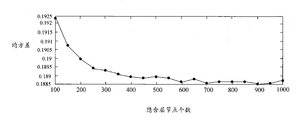
- FIG. 3 is a schematic diagram showing the fuzzy inference performance of E-TSFIS on a Laser regression data set in an embodiment of the present invention
- 4 is four fuzzy membership functions of the third rule in the fuzzy rule base constructed by E-TSFIS on the Laser regression data set according to an embodiment of the present invention
- FIG. 1 is a schematic flowchart of a limit TS fuzzy inference method based on an extreme learning machine according to an embodiment of the present invention, where the method includes:
- Step 101 Using a K-means clustering algorithm to cluster the original conditional attribute value matrix corresponding to the training data set, obtain a clustering result, and construct an extended decision attribute value matrix according to the clustering result and the predicted output data of the training data set;
- the training data set is as follows:
- D represents the training data set
- N is the number of samples
- D is the number of conditional attributes of the sample
- R is the fuzzy rule
- t n is the fuzzy rule of the nth sample.
- X represents the original conditional attribute value matrix corresponding to the training data set
- x 11 to x ND represents the samples in the training data set.
- the K-means clustering algorithm is used to cluster the original conditional attribute value matrix corresponding to the training data set, and the clustering result is obtained, and the clustering result and the predicted output data of the training data set are used to construct the expansion decision.
- the attribute value matrix, the matrix of the extended decision attribute value is as follows:
- O represents the expanded decision attribute value matrix
- Z represents the clustering result
- Y represents the predicted output data of the training data set
- Step 102 Using a matrix of extended decision attribute values to train a single extreme learning machine, obtaining an output layer weight of the extreme learning machine, and an extreme learning machine after training;
- a single extreme learning machine is trained by using the above extended decision attribute value matrix, wherein the extreme learning machine is also called a single implicit layer feedforward neural network, and the extreme learning machine includes L implicit words.
- the extreme learning machine is also called a single implicit layer feedforward neural network, and the extreme learning machine includes L implicit words.
- a layer node, and L is greater than or equal to the number of conditional attributes D of the sample.
- the input layer weight of the extreme learning machine is as follows:
- the hidden layer offset of the extreme learning machine is as follows:
- the extended decision attribute value matrix is input into the extreme learning machine, and the extreme learning machine is trained to obtain the output layer weight of the extreme learning machine, which can be understood. After obtaining the weight of the output layer of the extreme learning machine, it indicates that the training of the extreme learning machine has been completed.
- the output layer weights of the Extreme Learning Machine are as follows:
- Step 103 Input an unknown new sample into the trained extreme learning machine, and obtain a trigger strength of the fuzzy rule front piece of the new sample and a conclusion true value of the fuzzy rule back piece;
- the unknown new learning sample may be processed by the trained extreme learning machine to obtain the triggering strength of the new fuzzy sample for the fuzzy rule and the conclusion true value of the fuzzy rule.
- the original conditional attribute value matrix corresponding to the new sample according to the following formula, the triggering strength of the fuzzy rule front piece and the fuzzy value of the fuzzy rule Hou Jian:
- Z is the trigger strength
- Y is the conclusion true value
- (h 1 h 2 ... h L ) is the implicit layer output matrix of the extreme learning machine after the new sample input limit learning machine
- B is the output layer weight
- D is the new
- x d represents the dth data in the new sample
- w d1 , w d2 to w dL represent the input layer weight of the extreme learning machine
- L represents the number of hidden layer nodes of the extreme learning machine
- ⁇ 1 , ⁇ 2 to ⁇ L represent the implicit layer offset of the extreme learning machine.
- Step 104 Defuzzify the new sample according to the trigger strength, the true value of the conclusion, and the preset Softmax function, to obtain a predicted output of the new sample.
- the new sample is defuzzified by using the trigger strength, the conclusion true value, and the preset softmax function.
- Obtain the predicted output of the new sample which can be done as follows:
- Q represents the predicted output of the new sample
- K represents the number of clusters at the time of clustering
- z k represents the triggering strength of the fuzzy rule front of the new sample
- ⁇ represents the temperature parameter of the softmax function, and is greater than
- y k represents The true value of the conclusion of the fuzzy rule of the new sample.
- the softmax function is used to normalize the trigger strength of the fuzzy rule's front piece. It is transformed into a K-dimensional probability vector (v 1 v 2 ... v K ), where each element in the probability vector has a value between (0, 1) and the sum of all elements is 1, such as :
- the single extreme learning machine is trained by using the extended decision attribute value matrix, so that the parameter optimization without iteration can be completed, the training process can be completed quickly, the training time period, and further, the solution based on the softmax function.
- the fuzzification operation can effectively realize the normalization processing of the trigger strength and effectively realize the output of the predicted output data.
- step 105 refers to step 105 to step 108 in the embodiment shown in FIG. 2, as follows:
- Step 105 Input the training data set into the trained extreme learning machine, obtain the trigger strength of the fuzzy rule front piece corresponding to the actual output data and the training data, and construct the actual extended decision attribute value matrix by using the trigger strength and the actual output data;
- the training data set is input into the trained extreme learning machine, and the extreme learning machine outputs the actual output data of the training data set.
- the trigger strength of the fuzzy rule front piece corresponding to the training data set can be obtained.
- use the trigger strength and actual output data to construct the actual extended decision attribute value matrix as follows:
- B represents the output layer weight of the extreme learning machine
- (h n1 h n2 ... h nL ) represents the hidden layer output matrix of the extreme learning machine
- N represents the number of samples in the training data set
- K represents the number of clusters.
- the intensity will be triggered here. Converted into a trigger strength probability vector (v n1 v n2 ... v nK ), ie the trigger strength probability vector is:
- v nk represents the trigger strength probability vector of the nth sample corresponding to the kth cluster. Indicates the trigger strength of the nth sample corresponding to the kth cluster, and ⁇ represents the temperature parameter of the softmax function, and is greater than zero.
- Step 106 Select a uniformly distributed random number from the preset interval as a center of the fuzzy membership function in the fuzzy rule front piece;
- Step 107 Obtain a trigger strength probability vector of the fuzzy rule preamble of the training data set based on the actual extended decision attribute value matrix, and use the center of the fuzzy membership function to solve the fuzzy condition under the condition that the trigger strength probability vector is equal to the product of the fuzzy membership function The radius of the membership function;
- Step 108 When there is a non-positive value in the radius of the fuzzy membership function, return to step 106.
- the radius of the fuzzy membership function is positive, the fuzzy rule base is obtained based on the center and radius of the fuzzy membership function.
- a randomly distributed random number is selected from the preset interval, for example, selected from the interval [0, 1].
- the selected random number represents the center m kd of the fuzzy membership function in the fuzzy rule front.
- v 11 to v NK represent the trigger strength probability vector
- m 11 to m KD represent the radius of the fuzzy membership function
- x 11 to x ND represent the value in the original conditional attribute value matrix corresponding to the training data set
- c 11 To c KD represents the center of the fuzzy membership function.
- the radius of the fuzzy membership function can be obtained by solving the pseudo inverse of the matrix:
- the process returns to step 106, and the center of the fuzzy membership function is re-selected, and then solved.
- the fuzzy rule base is obtained based on the center and radius of the fuzzy membership function.
- the fuzzy rule base is as follows:
- R 1 to R K represent K fuzzy rules in the fuzzy rule base, and A 11 to A KD represent membership degrees
- the membership function including the center and radius of the membership function
- x D represents a sample
- y 1 to y K represent output data
- K represents the number of clusters
- D represents the number of conditional attributes
- the inference speed is extremely fast, and the iterative parameter optimization is not needed, and the training process can be completed quickly, and the training is performed.
- the time is short, and at the same time, an efficient fuzzy rule base construction mechanism is provided, which can quickly and accurately determine the membership function in the fuzzy rule predecessor, and can provide a complete fuzzy rule base.
- a single implicit layer feedforward neural network trained based on the extended decision attribute value matrix for training fuzzy reasoning may also be used in the method of error back propagation, and the above fuzzy membership function
- fuzzy membership function There may be various types, such as Gaussian membership function, triangular membership function, trapezoidal membership function, bell membership function, etc.
- the corresponding type of membership function can be selected based on specific needs. Make a limit.
- FIG. 2 is a schematic structural diagram of a limit TS fuzzy inference system based on an extreme learning machine according to an embodiment of the present invention, including:
- the clustering construction module 201 is configured to cluster the original conditional attribute value matrix corresponding to the training data set by using a K-means clustering algorithm to obtain a clustering result, and according to the clustering result and the prediction of the training data set Output data construction to expand the decision attribute value matrix;
- the training module 202 is configured to use the extended decision attribute value matrix to train a single extreme learning machine to obtain an output layer weight of the extreme learning machine, and a trained extreme learning machine;
- An input obtaining module 203 configured to input an unknown new sample into the trained extreme learning machine, to obtain a triggering strength of the fuzzy rule front piece of the new sample and a conclusion true value of the fuzzy rule back piece;
- the defuzzification module 204 is configured to defuzzify the new sample according to the trigger strength, the conclusion true value, and the preset Softmax function, to obtain a predicted output of the new sample.
- system further includes:
- the input construction module 205 is configured to input the training data set into the trained extreme learning machine, obtain the trigger strength of the actual output data and the fuzzy rule front piece corresponding to the training data, and utilize the trigger strength and the actual output data. Construct a matrix of actual extended decision attribute values;
- the selecting module 206 is configured to select, from the preset interval, a uniformly distributed random number as a center of the fuzzy membership function in the fuzzy rule front piece;
- the solving module 207 is configured to obtain, according to the actual extended decision attribute value matrix, a trigger strength probability vector of the fuzzy rule preamble of the training data set, where the trigger strength probability vector is equal to a condition of a product of the fuzzy membership function Calculating a radius of the fuzzy membership function by using a center of the fuzzy membership function;
- a determining module 208 configured to return the selection module when there is a non-positive value in a radius of the fuzzy membership function, and when the radius of the fuzzy membership function is a positive value, based on the fuzzy membership degree The center and radius of the function get the fuzzy rule base.
- each module in the embodiment shown in FIG. 2 is similar to the content of each step in the embodiment shown in FIG. 1 .
- the inference speed is extremely fast, and the iterative parameter optimization is not needed, and the training process can be completed quickly, and the training is performed.
- the time is short, and at the same time, an efficient fuzzy rule base construction mechanism is provided, which can quickly and accurately determine the membership function in the fuzzy rule predecessor, and can provide a complete fuzzy rule base.
- the fuzzy membership function in the fuzzy rule base For example, for the third rule, the four fuzzy membership functions in the antecedent are:
- An embodiment of the present invention further provides a terminal, including a memory, a processor, and a computer program stored on the memory and running on the processor.
- a terminal including a memory, a processor, and a computer program stored on the memory and running on the processor.
- the processor executes the computer program, the implementation is as shown in the embodiment shown in FIG.
- the disclosed apparatus and method may be implemented in other manners.
- the device embodiments described above are merely illustrative.
- the division of the modules is only a logical function division.
- there may be another division manner for example, multiple modules or components may be combined or Can be integrated into another system, or some features can be ignored or not executed.
- the mutual coupling or direct coupling or communication connection shown or discussed may be an indirect coupling or communication connection through some interface, device or module, and may be electrical, mechanical or otherwise.
- the modules described as separate components may or may not be physically separated.
- the components displayed as modules may or may not be physical modules, that is, may be located in one place, or may be distributed to multiple network modules. Some or all of the modules may be selected according to actual needs to achieve the purpose of the solution of the embodiment.
- each functional module in each embodiment of the present invention may be integrated into one processing module, or each module may exist physically separately, or two or more modules may be integrated into one module.
- the above integrated modules can be implemented in the form of hardware or in the form of software functional modules.
- the integrated modules if implemented in the form of software functional modules and sold or used as separate products, may be stored in a computer readable storage medium.
- the technical solution of the present invention which is essential or contributes to the prior art, or all or part of the technical solution, may be embodied in the form of a software product stored in a storage medium.
- a number of instructions are included to cause a computer device (which may be a personal computer, server, or network device, etc.) to perform all or part of the steps of the methods described in various embodiments of the present invention.
- the foregoing storage medium includes: a U disk, a mobile hard disk, a read-only memory (ROM), a random access memory (RAM), a magnetic disk, or an optical disk, and the like. .
Landscapes
- Engineering & Computer Science (AREA)
- Theoretical Computer Science (AREA)
- Computing Systems (AREA)
- Data Mining & Analysis (AREA)
- Evolutionary Computation (AREA)
- Physics & Mathematics (AREA)
- Computational Linguistics (AREA)
- General Engineering & Computer Science (AREA)
- General Physics & Mathematics (AREA)
- Mathematical Physics (AREA)
- Software Systems (AREA)
- Artificial Intelligence (AREA)
- Management, Administration, Business Operations System, And Electronic Commerce (AREA)
Abstract
一种基于极限学习机的极限TS模糊推理方法及系统,方法包括:使用K-means聚类算法对训练数据集对应的原始条件属性值矩阵进行聚类,根据聚类结果构建拓展决策属性值矩阵,利用拓展决策属性值矩阵对单个极限学习机进行训练,得到输出层权重,及训练后的极限学习机,将新样本输入极限学习机,得到模糊规则前件的触发强度和后件的结论真值,根据触发强度及结论真值,进行解模糊化,得到新样本的预测输出。通过利用拓展决策属性值矩阵对单个极限学习机进行训练,使得不需要迭代的参数优化,能够快速的完成训练过程,训练时间短,且基于softmax函数的解模糊化操作,能够有效的实现对触发强度的规范化处理,有效实现预测输出数据的输出。
Description
本发明涉及计算机技术领域,尤其涉及一种基于极限学习机的极限TS模糊推理方法及系统。
Takagi-Sugeno(TS)模糊推理系统最早由日本学者T.Takagi和M.Sugeno提出,后经M.Sugeno和G.T.Kang进一步完善,TS模糊推理亦称为Sugeno模糊推理或者Takagi-Sugeno-Kang(TSK)模糊推理。其核心思想是“利用若干简单的线性系统去拟合一个复杂的非线性系统”,通过对输入的模糊化、基于模糊规则的推理演算、以及对输出的解模糊化来达到“使用一系列局部线性模型去逼近一个整体非线性模型”的目的。理论研究表明,TS模糊推理系统能以任意精度逼近任意非线性模型。
构建TS模糊推理系统的关键点在于模糊规则前件触发强度(Firing Strength:衡量输入与模糊规则匹配度的量)和后件结论真值(Qualified Consequent:输入对应的模糊规则后件输出)的确定。确定触发强度和结论真值的前提是确定规则前件中隶属度函数的学习参数和规则后件中多元线性回归模型的回归系数。经典的TS模糊推理系统是基于自适应神经网络的模糊推理系统(Adaptive Neuro-FuzzyInference System,ANFIS)(1993年IEEE TSMC发表),其利用一个类似于神经网络的5层拓扑结构,采用反向传播算法和最小二乘法确定出模糊规则的前件参数(Premise Parameters)和后件系数(Consequent Coefficients)。
然而,ANFIS的主要缺陷是训练时间长。
发明内容
本发明的主要目的在于提供一种极限TS模糊推理系统的构建方法及系统,旨在解决现有技术中TS模糊推理系统存在训练时间长的技术问题。
为实现上述目的,本发明第一方面提供一种基于极限学习机的TS模糊规则推理方法,包括:
步骤A、使用K-means聚类算法对训练数据集对应的原始条件属性值矩阵进行聚类,得到聚类结果,并根据所述聚类结果及所述训练数据集的预测输出数据构建拓展决策属性值矩阵;
步骤B、利用所述拓展决策属性值矩阵对单个极限学习机进行训练,得到所述极限学习机的输出层权重,及训练后的极限学习机;
步骤C、将未知的新样本输入训练后的所述极限学习机,得到所述新样本的模糊规则前件的触发强度和模糊规则后件的结论真值;
步骤D、根据所述触发强度、结论真值及预设的Softmax函数,对新样本进行解模糊化,得到所述新样本的预测输出。
为实现上述目的,本发明第二方面提供一种基于极限学习机的极限TS模糊推理系统,包括:
聚类构建模块,用于使用K-means聚类算法对训练数据集对应的原始条件属性值矩阵进行聚类,得到聚类结果,并根据所述聚类结果及所述训练数据集的预测输出数据构建拓展决策属性值矩阵;
训练模块,用于利用所述拓展决策属性值矩阵对单个极限学习机进行训练,得到所述极限学习机的输出层权重,及训练后的极限学习机;
输入得到模块,用于将未知的新样本输入训练后的所述极限学习机,得到所述新样本的模糊规则前件的触发强度和模糊规则后件的结论真值;
解模糊化模块,用于根据所述触发强度、结论真值及预设的Softmax函数,对新样本进行解模糊化,得到所述新样本的预测输出。
本发明提供一种基于极限学习机的极限TS模糊推理方法,该方法包括: 使用K-means聚类算法对训练数据集对应的原始条件属性值矩阵进行聚类,得到聚类结果,并根据聚类结果及训练数据集的预测输出数据构建拓展决策属性值矩阵,利用拓展决策属性值矩阵对单个极限学习机进行训练,得到所述极限学习机的输出层权重,及训练后的极限学习机,将未知的新样本输入训练后的极限学习机,得到该新样本的模糊规则前件的触发强度和模糊规则后件的结论真值,根据该触发强度、结论真值及预设的softmax函数,对新样本进行解模糊化,得到所述新样本的预测输出。相对于现有技术,通过利用拓展决策属性值矩阵对单个极限学习机进行训练,使得不需要迭代的参数优化,能够快速的完成训练过程,训练时间短,且进一步的,基于softmax函数的解模糊化操作,能够有效的实现对触发强度的规范化处理,有效实现预测输出数据的输出。
为了更清楚地说明本发明实施例或现有技术中的技术方案,下面将对实施例或现有技术描述中所需要使用的附图作简单地介绍,显而易见地,下面描述中的附图仅仅是本发明的一些实施例,对于本领域技术人员来讲,在不付出创造性劳动的前提下,还可以根据这些附图获得其他的附图。
图1为本发明实施例中基于极限学习机的极限TS模糊推理方法的流程示意图;
图2为本发明实施例中基于极限学习机的极限TS模糊推理系统的结构示意图;
图3为本发明实施例中为E-TSFIS在Laser回归数据集上的模糊推理表现的示意图;
图4为本发明实施例中E-TSFIS在Laser回归数据集上构建的模糊规则库中第3条规则的4个模糊隶属度函数
为使得本发明的发明目的、特征、优点能够更加的明显和易懂,下面将结合本发明实施例中的附图,对本发明实施例中的技术方案进行清楚、完整地描述,显然,所描述的实施例仅仅是本发明一部分实施例,而非全部实施例。基于本发明中的实施例,本领域技术人员在没有做出创造性劳动前提下所获得的所有其他实施例,都属于本发明保护的范围。
请参阅图1,为本发明实施例中基于极限学习机的极限TS模糊推理方法的流程示意图,该方法包括:
步骤101、使用K-means聚类算法对训练数据集对应的原始条件属性值矩阵进行聚类,得到聚类结果,并根据聚类结果及训练数据集的预测输出数据构建拓展决策属性值矩阵;
在本发明实施例中,给定训练数据集,该训练数据集如下:

其中,D表示训练数据集,N为样本个数,D为样本的条件属性个数,R表示模糊规则,t
n表示第n个样本的模糊规则。
基于上述训练数据集,得到其对应的原始条件属性值矩阵(Original Condition Attribute-Value Matrix OCM),如下:

其中,X表示训练数据集对应的原始条件属性值矩阵,x
11至x
ND表示训练数据集中的样本。假设类簇的个数为K,且K>1,可以理解的是,模糊规则库中模糊规则的条数和类簇的个数是一致的,也是K。
在本发明实施例中,使用K-means聚类算法对训练数据集对应的原始条件属性值矩阵进行聚类,得到聚类结果,利用该聚类结果及训练数据集的预测输出数据构建拓展决策属性值矩阵,该拓展决策属性值矩阵如下:

其中,


其中,n=1,2,…,N,k=1,2,…,K。
其中,O表示拓展决策属性值矩阵,Z表示聚类结果,Y表示训练数据集的预测输出数据,
 表示训练数据集中的样本。
步骤102、利用拓展决策属性值矩阵对单个极限学习机进行训练,得到极限学习机的输出层权重,及训练后的极限学习机;
在本发明实施例中,将利用上述拓展决策属性值矩阵对单个极限学习机进行训练,其中,极限学习机也称为单隐含层前馈神经网络,该极限学习机中包含L个隐含层节点,且L大于或等于样本的条件属性个数D。
其中,极限学习机的输入层权重如下:

其中,该输入层权重是随机选取的(例如,在区间[-1,1]内服从均匀分布的随机数),且
 表示第l(l=1,2,3,.......,L)个隐含层节点的输入层权重。
其中,极限学习机的隐含层偏置如下:

其中,σ
l表示第l(l=1,2,3,.......,L)个隐含层节点的偏置,且隐含层节点采用sigmoid激活函数得到。
在已经确定极限学习机的输入层权重及隐含层偏置之后,将拓展决策属性值矩阵输入该极限学习机中,对该极限学习机进行训练,得到极限学习机的输出层权重,可以理解的是,在得到极限学习机的输出层权重之后,表明已经完成了极限学习机的训练。
极限学习机的输出层权重如下:

需要说明的是,因为HB=O,因此,输出层权重的计算公式可以为:B=(H
TH)
-1H
TO
其中,

其中,

其中,n=1,2,…,N,l=1,2,…,L,H为训练数据集对应的原始条件属性值矩阵输入极限学习机后,极限学习机的隐含层输出矩阵。
步骤103、将未知的新样本输入训练后的极限学习机,得到新样本的模糊规则前件的触发强度和模糊规则后件的结论真值;
在本发明实施例中,还可以利用训练后的极限学习机对未知的新样本进行处理,得到新样本对于模糊规则前件的触发强度和模糊规则侯建的结论真值。具体的,将基于极限学习机的隐含层输出矩阵及输出层权重,新样本对应的原 始条件属性值矩阵,按照如下公式得到模糊规则前件的触发强度和模糊规则侯建的结论真值:

其中,Z表示触发强度、Y表示结论真值,(h
1h
2…h
L)表示新样本输入极限学习机后,极限学习机的隐含层输出矩阵,B表示输出层权重,D表示新样本的条件属性个数,x
d表示新样本中的第d个数据,w
d1、w
d2至w
dL表示极限学习机的输入层权重,L表示极限学习机的隐含层节点的个数,σ
1、σ
2至σ
L表示极限学习机的隐含层偏置。
步骤104、根据触发强度、结论真值及预设的Softmax函数,对新样本进行解模糊化,得到新样本的预测输出。
在本发明实施例中,在得到模糊规则前件的触发强度和模糊规则后件的结论真值之后,利用该触发强度、结论真值及预设的softmax函数,对新样本进行解模糊化,得到新样本的预测输出,具体可按如下公式进行:

其中,Q表示新样本的预测输出,K表示聚类时类簇的个数,z
k表示新样本的模糊规则前件的触发强度,τ表示softmax函数的温度参数,且大于0,y
k表示新样本的模糊规则后件的结论真值。
此处使用softmax函数的目的在于,因为在极限TS模糊推理中不能保证新样本对于模糊规则前件的触发强度全部大于0,因此,使用softmax函数对模糊规则前件的触发强度进行规范化处理,即将其转化成一个K维的概率向量(v
1 v
2 … v
K),其中该概率向量中每个元素的取值介于(0,1)之间,且所有元素的加和为1,如:


在本发明实施例中,通过利用拓展决策属性值矩阵对单个极限学习机进行训练,使得不需要迭代的参数优化,能够快速的完成训练过程,训练时间段,且进一步的,基于softmax函数的解模糊化操作,能够有效的实现对触发强度的规范化处理,有效实现预测输出数据的输出。
此外,还可进一步得到模糊规则库,具体的,请参阅图2所示实施例中的步骤105至步骤108,如下:
步骤105、将训练数据集输入训练后的极限学习机,得到实际输出数据及训练数据对应的模糊规则前件的触发强度,并利用触发强度及实际输出数据构建实际拓展决策属性值矩阵;
在本发明实施例中,将训练数据集输入训练后的极限学习机,极限学习机将输出该训练数据集的实际输出数据
 且可得到训练数据集对应的模糊规则前件的触发强度
 并利用触发强度及实际输出数据构建实际拓展决策属性值矩阵,如下:

其中,

其中,B表示极限学习机的输出层权重,(h
n1 h
n2 … h
nL)表示极限学习机的隐含层输出矩阵,N表示训练数据集中的样本个数,K表示类簇的个数。
为了避免触发强度中存在负值对模糊规则库的构建的影响,此处将触发强 度
 转化成触发强度概率向量(v
n1 v
n2 … v
nK),即触发强度概率向量为:
转化成触发强度概率向量(v
n1 v
n2 … v
nK),即触发强度概率向量为:

其中,v
nk表示第n个样本对应第k个类簇的触发强度概率向量,
 表示第n个样本对应第k个类簇的触发强度,τ表示softmax函数的温度参数,且大于0。
步骤106、从预设区间内选取服从均匀分布的随机数作为模糊规则前件中模糊隶属度函数的中心;
步骤107、基于实际拓展决策属性值矩阵得到训练数据集的模糊规则前件的触发强度概率向量,在触发强度概率向量等于模糊隶属度函数的乘积的条件下,利用模糊隶属度函数的中心求解模糊隶属度函数的半径;
步骤108、当模糊隶属度函数的半径中存在非正值时,返回步骤106,当模糊隶属度函数的半径均为正值时,则基于模糊隶属度函数的中心及半径得到模糊规则库。
在本发明实施例中,将从预设区间内选取服从均匀分布的随机数,例如,从区间[0,1]内选取。其中,选取的随机数表示模糊规则前件中模糊隶属度函数的中心m
kd。
令触发强度概率向量等于隶属度函数的乘积,即:

对上述公式进行推导,可得到:

其中,
 表示触发强度概率向量,
 表示第n个且具有第D个样本 属性的样本的隶属度函数,x
nd表示第n个且具有第d个样本属性的样本,c
kd表示第k个类簇且具有第d个样本属性的样本对应的模糊隶属度函数的中心,m
kd表示第k个类簇且具有第d个样本属性的样本对应的模糊隶属度函数的半径,D表示样本属性的个数。
表示第n个且具有第D个样本 属性的样本的隶属度函数,x
nd表示第n个且具有第d个样本属性的样本,c
kd表示第k个类簇且具有第d个样本属性的样本对应的模糊隶属度函数的中心,m
kd表示第k个类簇且具有第d个样本属性的样本对应的模糊隶属度函数的半径,D表示样本属性的个数。
进一步的,基于推导得到的公式,构建如下所示的矩阵乘积运算:

其中,


其中,v
11至v
NK表示触发强度概率向量,m
11至m
KD表示所述模糊隶属度函数的半径,x
11至x
ND表示训练数据集对应的原始条件属性值矩阵中的值,c
11至c
KD表示模糊隶属度函数的中心。
由于
 所以,求解模糊隶属度函数的半径可以通过求解该矩阵的伪逆获得:

其中,在求解得到模糊隶属度函数的半径之后,将确定该模糊隶属度函数的半径中存在非正值时,返回到步骤106中,重新选取模糊隶属度函数的中心,并再进行求解,当模糊隶属度函数的半径均为正值时,则基于模糊隶属度函数的中心及半径得到模糊规则库。
在本发明实施例中,是通过采用多次“随机选取模糊隶属度函数的中心---求解模糊隶属度函数的半径”的方式,直至得到的模糊隶属度函数的半径中不存在负值为止,使得能够利用模糊隶属度函数的中心及半径得到模糊规则库。
其中,模糊规则库如下:

其中,R
1至R
K表示模糊规则库中的K个模糊规则,A
11至A
KD表示隶属度函数,该隶属度函数包含隶属度函数的中心及半径,x
1,x
2,…,x
D表示样本,y
1至y
K表示输出数据,K表示类簇的个数,D表示条件属性个数。
在本发明实施例中,通过使用单个极限学习机同时计算模糊规则前件的触发强度和后件结论真值,推理速度极快,且不需要迭代的参数优化,能够快速的完成训练过程,训练时间短,且同时,提供了一个高效的模糊规则库构建机制,能够快速准确的确定模糊规则前件中的隶属度函数,能够提供完备的模糊规则库。
需要说明的是,上述技术方案中,还可以采用误差反传的方式训练用于进行模糊推理的,基于扩展决策属性值矩阵进行训练的单隐含层前馈神经网络,上述的模糊隶属度函数可以有多种,例如高斯隶属度函数、三角隶属度函数、梯形隶属度函数、钟型隶属度函数等等,在实际应用中,可以基于具体的需要选择相应类型的隶属度函数,此处不做限定。
请参阅图2,为本发明实施例中基于极限学习机的极限TS模糊推理系统的结构示意图,包括:
聚类构建模块201,用于使用K-means聚类算法对训练数据集对应的原始条件属性值矩阵进行聚类,得到聚类结果,并根据所述聚类结果及所述训练数据集的预测输出数据构建拓展决策属性值矩阵;
训练模块202,用于利用所述拓展决策属性值矩阵对单个极限学习机进行训练,得到所述极限学习机的输出层权重,及训练后的极限学习机;
输入得到模块203,用于将未知的新样本输入训练后的所述极限学习机,得到所述新样本的模糊规则前件的触发强度和模糊规则后件的结论真值;
解模糊化模块204,用于根据所述触发强度、结论真值及预设的Softmax函数,对新样本进行解模糊化,得到所述新样本的预测输出。
在本发明实施例中,上述系统还包括:
输入构建模块205,用于将所述训练数据集输入训练后的极限学习机,得到实际输出数据及训练数据对应的模糊规则前件的触发强度,并利用所述触发强度及所述实际输出数据构建实际拓展决策属性值矩阵;
选取模块206,用于从预设区间内选取服从均匀分布的随机数作为模糊规则前件中模糊隶属度函数的中心;
求解模块207,用于基于所述实际拓展决策属性值矩阵得到所述训练数据集的模糊规则前件的触发强度概率向量,在所述触发强度概率向量等于所述模糊隶属度函数的乘积的条件下,利用所述模糊隶属度函数的中心求解所述模糊隶属度函数的半径;
确定模块208,用于当所述模糊隶属度函数的半径中存在非正值时,返回所述选取模块,当所述模糊隶属度函数的半径均为正值时,则基于所述模糊隶属度函数的中心及半径得到模糊规则库。
需要说明的是,图2所示实施例中各个模块的内容与图1所示实施例中各个步骤的内容相似,具体可参阅图1所示实施例中的内容,此处不做赘述。
在本发明实施例中,通过使用单个极限学习机同时计算模糊规则前件的触发强度和后件结论真值,推理速度极快,且不需要迭代的参数优化,能够快速的完成训练过程,训练时间短,且同时,提供了一个高效的模糊规则库构建机制,能够快速准确的确定模糊规则前件中的隶属度函数,能够提供完备的模糊规则库。
以下提供的为本发明实施例的技术方案的实验数据:
在Laser回归数据集(4个条件属性,993个样本,可在KEEL下载:http://www.keel.es/)上对本发明实施例中的“极限TS模糊推理系统E-TSFIS”的推理表现进行了验证。E-TSFIS中模糊规则的条数为K=5,极限学习机的隐含层节点个数L={100,150,…,950,1000},Softmax函数中温度参数τ=0.005。我们测试了E-TSFIS的整个数据集上的训练误差(采用均方差Mean Squared Error-MSE度量)。对于每一个隐含层节点,我们采用10次MSE的均值表示最终的推理结果,实验结果图3所示,为E-TSFIS(极限模糊推理系统)在Laser回归数据集上的模糊推理表现的示意图。
从图3中,我们可以发现随着极限学习机隐含层节点个数L的增加,E-TSFIS的训练误差逐渐减小,呈现收敛的趋势,这表明我们仅使用一个极限学习机进行模糊推理的想法是可行和有效的。同时,在本实验中我们重构了一个针对Laser回归数据集的模糊规则库,模糊规则前件中高斯隶属度函数的中心和半径取值如下(5条规则,4个条件属性):

和

基于上述的C矩阵和M矩阵,我们可以构建模糊规则库中的模糊隶属度函数。例如,对于第3条规则,其前件中的4个模糊隶属度函数分别为:


和

对应的隶属度函数的图形如图4所示,为E-TSFIS在Laser回归数据集上构建的模糊规则库中第3条规则的4个模糊隶属度函数。
本发明实施例还提供一种终端,包括存储器、处理器及存储在所述存储器上且在处理器上运行的计算机程序,该处理器执行上述计算机程序时,实现如图1所示实施例中基于极限学习机的极限TS模糊推理方法中的各个步骤。
在本申请所提供的几个实施例中,应该理解到,所揭露的装置和方法,可以通过其它的方式实现。例如,以上所描述的装置实施例仅仅是示意性的,例 如,所述模块的划分,仅仅为一种逻辑功能划分,实际实现时可以有另外的划分方式,例如多个模块或组件可以结合或者可以集成到另一个系统,或一些特征可以忽略,或不执行。另一点,所显示或讨论的相互之间的耦合或直接耦合或通信连接可以是通过一些接口,装置或模块的间接耦合或通信连接,可以是电性,机械或其它的形式。
所述作为分离部件说明的模块可以是或者也可以不是物理上分开的,作为模块显示的部件可以是或者也可以不是物理模块,即可以位于一个地方,或者也可以分布到多个网络模块上。可以根据实际的需要选择其中的部分或者全部模块来实现本实施例方案的目的。
另外,在本发明各个实施例中的各功能模块可以集成在一个处理模块中,也可以是各个模块单独物理存在,也可以两个或两个以上模块集成在一个模块中。上述集成的模块既可以采用硬件的形式实现,也可以采用软件功能模块的形式实现。
所述集成的模块如果以软件功能模块的形式实现并作为独立的产品销售或使用时,可以存储在一个计算机可读取存储介质中。基于这样的理解,本发明的技术方案本质上或者说对现有技术做出贡献的部分或者该技术方案的全部或部分可以以软件产品的形式体现出来,该计算机软件产品存储在一个存储介质中,包括若干指令用以使得一台计算机设备(可以是个人计算机,服务器,或者网络设备等)执行本发明各个实施例所述方法的全部或部分步骤。而前述的存储介质包括:U盘、移动硬盘、只读存储器(ROM,Read-Only Memory)、随机存取存储器(RAM,Random Access Memory)、磁碟或者光盘等各种可以存储程序代码的介质。
需要说明的是,对于前述的各方法实施例,为了简便描述,故将其都表述为一系列的动作组合,但是本领域技术人员应该知悉,本发明并不受所描述的动作顺序的限制,因为依据本发明,某些步骤可以采用其它顺序或者同时进行。其次,本领域技术人员也应该知悉,说明书中所描述的实施例均属于优选实施 例,所涉及的动作和模块并不一定都是本发明所必须的。
在上述实施例中,对各个实施例的描述都各有侧重,某个实施例中没有详述的部分,可以参见其它实施例的相关描述。
以上为对本发明所提供的一种基于极限学习机的极限TS模糊规则推理方法及系统的描述,对于本领域的技术人员,依据本发明实施例的思想,在具体实施方式及应用范围上均会有改变之处,综上,本说明书内容不应理解为对本发明的限制。
Claims (10)
- 一种基于极限学习机的极限TS模糊推理方法,其特征在于,所述方法包括:步骤A、使用K-means聚类算法对训练数据集对应的原始条件属性值矩阵进行聚类,得到聚类结果,并根据所述聚类结果及所述训练数据集的预测输出数据构建拓展决策属性值矩阵;步骤B、利用所述拓展决策属性值矩阵对单个极限学习机进行训练,得到所述极限学习机的输出层权重,及训练后的极限学习机;步骤C、将未知的新样本输入训练后的所述极限学习机,得到所述新样本的模糊规则前件的触发强度和模糊规则后件的结论真值;步骤D、根据所述触发强度、结论真值及预设的Softmax函数,对新样本进行解模糊化,得到所述新样本的预测输出。
- 根据权利要求1所述的方法,其特征在于,所述方法还包括:步骤E、将所述训练数据集输入训练后的极限学习机,得到实际输出数据及训练数据对应的模糊规则前件的触发强度,并利用所述触发强度及所述实际输出数据构建实际拓展决策属性值矩阵;步骤F、从预设区间内选取服从均匀分布的随机数作为模糊规则前件中模糊隶属度函数的中心;步骤G、基于所述实际拓展决策属性值矩阵得到所述训练数据集的模糊规则前件的触发强度概率向量,在所述触发强度概率向量等于所述模糊隶属度函数的乘积的条件下,利用所述模糊隶属度函数的中心求解所述模糊隶属度函数的半径;步骤H、当所述模糊隶属度函数的半径中存在非正值时,返回所述步骤F,当所述模糊隶属度函数的半径均为正值时,则基于所述模糊隶属度函数的中心及半径得到模糊规则库。
- 根据权利要求1所述的方法,其特征在于,所述步骤C具体包括:基于所述极限学习机的隐含层输出矩阵及所述输出层权重、所述新样本对应的原始条件属性值矩阵,按照如下公式得到所述模糊规则前件的触发强度和模糊规则后件的结论真值:
 其中,Z表示触发强度、Y表示结论真值,(h 1h 2…h L)表示所述新样本输入所述极限学习机后,所述极限学习机的隐含层输出矩阵,B表示输出层权重,D表示新样本的条件属性个数,x d表示新样本中的第d个数据,w d1、w d2至w dL表示所述极限学习机的输入层权重,L表示极限学习机的隐含层节点的个数,σ 1、σ 2至σ L表示极限学习机的隐含层偏置。
 - 根据权利要求1所述的方法,其特征在于,所述步骤D具体包括:利用如下公式进行解模糊化处理,以得到所述新样本的预测输出:
 其中,Q表示所述新样本的预测输出,K表示聚类时类簇的个数,z k表示新样本的模糊规则前件的触发强度,τ表示softmax函数的温度参数,且大于0,y k表示所述新样本的模糊规则后件的结论真值。
 - 根据权利要求2所述的方法,其特征在于,在所述步骤G中按照如下公式求解所述模糊隶属度函数的半径:
 其中:
其中:
 其中,v 11至v NK表示触发强度概率向量,m 11至m KD表示所述模糊隶属度函数的半径,x 11至x ND表示训练数据集对应的原始条件属性值矩阵中的值,c 11至c KD表示所述模糊隶属度函数的中心。
 - 一种基于极限学习机的极限TS模糊推理系统,其特征在于,所述系统包括:聚类构建模块,用于使用K-means聚类算法对训练数据集对应的原始条件属性值矩阵进行聚类,得到聚类结果,并根据所述聚类结果及所述训练数据集的预测输出数据构建拓展决策属性值矩阵;训练模块,用于利用所述拓展决策属性值矩阵对单个极限学习机进行训练, 得到所述极限学习机的输出层权重,及训练后的极限学习机;输入得到模块,用于将未知的新样本输入训练后的所述极限学习机,得到所述新样本的模糊规则前件的触发强度和模糊规则后件的结论真值;解模糊化模块,用于根据所述触发强度、结论真值及预设的Softmax函数,对新样本进行解模糊化,得到所述新样本的预测输出。
- 根据权利要求6所述的系统,其特征在于,所述系统还包括:输入构建模块,用于将所述训练数据集输入训练后的极限学习机,得到实际输出数据及训练数据对应的模糊规则前件的触发强度,并利用所述触发强度及所述实际输出数据构建实际拓展决策属性值矩阵;选取模块,用于从预设区间内选取服从均匀分布的随机数作为模糊规则前件中模糊隶属度函数的中心;求解模块,用于基于所述实际拓展决策属性值矩阵得到所述训练数据集的模糊规则前件的触发强度概率向量,在所述触发强度概率向量等于所述模糊隶属度函数的乘积的条件下,利用所述模糊隶属度函数的中心求解所述模糊隶属度函数的半径;确定模块,用于当所述模糊隶属度函数的半径中存在非正值时,返回所述选取模块,当所述模糊隶属度函数的半径均为正值时,则基于所述模糊隶属度函数的中心及半径得到模糊规则库。
- 根据权利要求6所述的系统,其特征在于,所述输入得到模块具体用于:基于所述极限学习机的隐含层输出矩阵及所述输出层权重、所述新样本对应的原始条件属性值矩阵,按照如下公式得到所述模糊规则前件的触发强度和模糊规则后件的结论真值:
 其中,Z表示触发强度、Y表示结论真值,(h 1h 2…h L)表示所述新样本输入所述极限学习机后,所述极限学习机的隐含层输出矩阵,B表示输出层权重, D表示新样本的条件属性个数,x d表示新样本中的第d个数据,w d1、w d2至w dL表示所述极限学习机的输入层权重,L表示极限学习机的隐含层节点的个数,σ 1、σ 2至σ L表示极限学习机的隐含层偏置。
 - 根据权利要求6所述的系统,其特征在于,所述解模糊化模块具体用于:利用如下公式进行解模糊化处理,以得到所述新样本的预测输出:
 其中,Q表示所述新样本的预测输出,K表示聚类时类簇的个数,z k表示新样本的模糊规则前件的触发强度,τ表示softmax函数的温度参数,且大于0,y k表示所述新样本的模糊规则后件的结论真值。
 - 根据权利要求7所述的系统,其特征在于,所述求解模块具体用于按照如下公式求解所述模糊隶属度函数的半径:
 其中:
其中:
 其中,v 11至v NK表示触发强度概率向量,m 11至m KD表示所述模糊隶属度函数的半径,x 11至x ND表示训练数据集对应的原始条件属性值矩阵中的值,c 11至c KD表示所述模糊隶属度函数的中心。
Priority Applications (1)
| Application Number | Priority Date | Filing Date | Title |
|---|---|---|---|
| PCT/CN2018/087049 WO2019218263A1 (zh) | 2018-05-16 | 2018-05-16 | 基于极限学习机的极限ts模糊推理方法及系统 |
Applications Claiming Priority (1)
| Application Number | Priority Date | Filing Date | Title |
|---|---|---|---|
| PCT/CN2018/087049 WO2019218263A1 (zh) | 2018-05-16 | 2018-05-16 | 基于极限学习机的极限ts模糊推理方法及系统 |
Publications (1)
| Publication Number | Publication Date |
|---|---|
| WO2019218263A1 true WO2019218263A1 (zh) | 2019-11-21 |
Family
ID=68539289
Family Applications (1)
| Application Number | Title | Priority Date | Filing Date |
|---|---|---|---|
| PCT/CN2018/087049 Ceased WO2019218263A1 (zh) | 2018-05-16 | 2018-05-16 | 基于极限学习机的极限ts模糊推理方法及系统 |
Country Status (1)
| Country | Link |
|---|---|
| WO (1) | WO2019218263A1 (zh) |
Cited By (39)
| Publication number | Priority date | Publication date | Assignee | Title |
|---|---|---|---|---|
| CN111008584A (zh) * | 2019-11-29 | 2020-04-14 | 天津大学 | 一种模糊自组织神经网络的电能质量量测缺失修复方法 |
| CN111444937A (zh) * | 2020-01-15 | 2020-07-24 | 湖州师范学院 | 一种基于集成tsk模糊分类器的众包质量提升的方法 |
| CN111784061A (zh) * | 2020-07-07 | 2020-10-16 | 广东电网有限责任公司 | 一种电网工程造价预测模型的训练方法、装置和设备 |
| CN111783531A (zh) * | 2020-05-27 | 2020-10-16 | 福建亿华源能源管理有限公司 | 一种基于sdae-ielm的水轮机组故障诊断方法 |
| CN112215492A (zh) * | 2020-10-12 | 2021-01-12 | 国网甘肃省电力公司电力科学研究院 | 一种基于电源空间分布及调节特性的聚合分群方法 |
| CN112561303A (zh) * | 2020-12-10 | 2021-03-26 | 清华大学 | 基于集成学习和电网拓扑变化的电力系统动态分析方法 |
| CN112685962A (zh) * | 2021-01-22 | 2021-04-20 | 华东理工大学 | 一种基于机器学习的材料屈服强度预测方法 |
| CN113392594A (zh) * | 2021-08-13 | 2021-09-14 | 北京科技大学 | 一种基于abc极限学习机的力学性能区间预测方法及装置 |
| CN113435595A (zh) * | 2021-07-08 | 2021-09-24 | 南京理工大学 | 基于自然进化策略的极限学习机网络参数两阶段优化方法 |
| CN113495800A (zh) * | 2020-04-02 | 2021-10-12 | 北京航空航天大学 | 基于扩展多属性决策的诊断预测数据和特征再认知方法 |
| CN113642632A (zh) * | 2021-08-11 | 2021-11-12 | 国网冀北电力有限公司计量中心 | 基于自适应竞争和均衡优化的电力系统客户分类方法及装置 |
| CN113764108A (zh) * | 2021-08-16 | 2021-12-07 | 淮阴工学院 | 一种面向covid-19的经验模态分解模糊预测方法 |
| CN114036973A (zh) * | 2021-10-12 | 2022-02-11 | 浙江工业大学 | 基于动态在线序列的极限学习机的串联电弧故障识别方法 |
| CN114035548A (zh) * | 2021-11-14 | 2022-02-11 | 北京工业大学 | 一种基于核表征的t-s模糊控制系统的故障检测方法 |
| CN114139785A (zh) * | 2021-11-23 | 2022-03-04 | 北京华能新锐控制技术有限公司 | 锅炉燃烧热效率预测方法及装置 |
| CN114154701A (zh) * | 2021-11-25 | 2022-03-08 | 南方电网数字电网研究院有限公司 | 基于加权极限学习机的电力故障预测方法和装置 |
| CN114169721A (zh) * | 2021-11-26 | 2022-03-11 | 华中科技大学 | 一种基于自适应模糊推理的全流程零件加工质量预测方法 |
| CN114239938A (zh) * | 2021-12-08 | 2022-03-25 | 国网浙江省电力有限公司经济技术研究院 | 一种基于状态的能源数字孪生体的构建方法 |
| CN114254827A (zh) * | 2021-12-21 | 2022-03-29 | 中国电子科技集团公司第三十八研究所 | 一种数据驱动的smt制造周期预测及修正方法 |
| CN114299345A (zh) * | 2022-01-04 | 2022-04-08 | 北京理工大学 | 一种基于跟踪微分器的极限学习机的图像分类方法 |
| CN114707319A (zh) * | 2022-03-29 | 2022-07-05 | 重庆理工大学 | 一种瞬态分布热负荷交替方向加权模糊反演方法 |
| CN114722723A (zh) * | 2022-04-29 | 2022-07-08 | 湖北工业大学 | 基于核极限学习机优化的情感倾向预测方法及设备 |
| CN114881438A (zh) * | 2022-04-27 | 2022-08-09 | 联想新视界(南昌)人工智能工研院有限公司 | 一种城市分布式储能的配置方法 |
| CN115410001A (zh) * | 2022-08-30 | 2022-11-29 | 北京理工大学 | 一种基于循环迭代最小二乘的极限学习机的图像识别方法 |
| CN115423005A (zh) * | 2022-08-22 | 2022-12-02 | 江苏大学 | 一种联合收获机大数据重构方法与装置 |
| CN115587538A (zh) * | 2022-07-08 | 2023-01-10 | 北京工商大学 | 基于smrelm模型的湖库蓝藻水华预测系统 |
| CN115618722A (zh) * | 2022-09-28 | 2023-01-17 | 中法渤海地质服务有限公司 | 一种基于改进极限学习机的钻具刺漏识别方法 |
| CN115759411A (zh) * | 2022-11-21 | 2023-03-07 | 广东电网有限责任公司 | 一种配电网边缘侧光伏自适应集成预测方法 |
| CN115795944A (zh) * | 2022-11-11 | 2023-03-14 | 西安电子科技大学 | 一种基于anfis的锥形tsv阵列峰值应力优化方法 |
| CN115809553A (zh) * | 2022-12-01 | 2023-03-17 | 国网福建省电力有限公司 | 一种变电站保护小室内的温湿度计算方法及终端 |
| CN115907235A (zh) * | 2023-01-06 | 2023-04-04 | 江苏海洋大学 | 基于模糊样本颗粒的光伏功率超短期非参数概率预测方法 |
| CN116975672A (zh) * | 2023-09-22 | 2023-10-31 | 山东乐普矿用设备股份有限公司 | 一种煤矿皮带输送电机温度监测方法及系统 |
| CN116992274A (zh) * | 2023-09-28 | 2023-11-03 | 国网山东省电力公司滨州市滨城区供电公司 | 基于改进主成分回归模型的短期风速预测方法及系统 |
| CN117495435A (zh) * | 2023-12-29 | 2024-02-02 | 国网浙江省电力有限公司营销服务中心 | 基于fig-irelm的售电量区间预测方法和装置 |
| CN118296540A (zh) * | 2024-06-03 | 2024-07-05 | 四川华鲲振宇智能科技有限责任公司 | 一种基于模糊粗糙集的机房电量预警检测方法 |
| CN118364328A (zh) * | 2024-04-23 | 2024-07-19 | 中国人民解放军国防科技大学 | 一种虚拟机资源高效利用的并行模糊聚类方法 |
| CN118464130A (zh) * | 2024-05-09 | 2024-08-09 | 交通运输部天津水运工程科学研究所 | 一种基于多传感器阵列的明渠断面输沙量测量方法 |
| CN120260693A (zh) * | 2025-05-28 | 2025-07-04 | 电子科技大学长三角研究院(衢州) | 基于深度堆叠编码器的多核模糊系统预测治疗肽新方法 |
| CN121122074A (zh) * | 2025-11-07 | 2025-12-12 | 中港疏浚有限公司 | 耙吸挖泥船航行碰撞风险动态评估与避碰决策方法 |
Citations (6)
| Publication number | Priority date | Publication date | Assignee | Title |
|---|---|---|---|---|
| JP2000339165A (ja) * | 1999-05-31 | 2000-12-08 | Toshiba Mach Co Ltd | ファジィ制御の推論規則作成用データ生成方法 |
| CN1325088A (zh) * | 2000-05-22 | 2001-12-05 | 中国科学院计算技术研究所 | 选择性地执行被激励规则的模糊推理系统 |
| US20090005953A1 (en) * | 2005-03-04 | 2009-01-01 | Stmicroelectronics S.R.L. | Method and associated device for sensing the air/fuel ratio of an internal combustion engine |
| CN107229973A (zh) * | 2017-05-12 | 2017-10-03 | 中国科学院深圳先进技术研究院 | 一种用于车辆自动驾驶的策略网络模型的生成方法及装置 |
| CN107512267A (zh) * | 2017-07-20 | 2017-12-26 | 上海工程技术大学 | 一种基于自适应神经模糊模型的车速预测方法 |
| CN107729943A (zh) * | 2017-10-23 | 2018-02-23 | 辽宁大学 | 信息反馈极限学习机优化估值的缺失数据模糊聚类算法及其应用 |
-
2018
- 2018-05-16 WO PCT/CN2018/087049 patent/WO2019218263A1/zh not_active Ceased
Patent Citations (6)
| Publication number | Priority date | Publication date | Assignee | Title |
|---|---|---|---|---|
| JP2000339165A (ja) * | 1999-05-31 | 2000-12-08 | Toshiba Mach Co Ltd | ファジィ制御の推論規則作成用データ生成方法 |
| CN1325088A (zh) * | 2000-05-22 | 2001-12-05 | 中国科学院计算技术研究所 | 选择性地执行被激励规则的模糊推理系统 |
| US20090005953A1 (en) * | 2005-03-04 | 2009-01-01 | Stmicroelectronics S.R.L. | Method and associated device for sensing the air/fuel ratio of an internal combustion engine |
| CN107229973A (zh) * | 2017-05-12 | 2017-10-03 | 中国科学院深圳先进技术研究院 | 一种用于车辆自动驾驶的策略网络模型的生成方法及装置 |
| CN107512267A (zh) * | 2017-07-20 | 2017-12-26 | 上海工程技术大学 | 一种基于自适应神经模糊模型的车速预测方法 |
| CN107729943A (zh) * | 2017-10-23 | 2018-02-23 | 辽宁大学 | 信息反馈极限学习机优化估值的缺失数据模糊聚类算法及其应用 |
Cited By (52)
| Publication number | Priority date | Publication date | Assignee | Title |
|---|---|---|---|---|
| CN111008584B (zh) * | 2019-11-29 | 2023-09-08 | 天津大学 | 一种模糊自组织神经网络的电能质量量测缺失修复方法 |
| CN111008584A (zh) * | 2019-11-29 | 2020-04-14 | 天津大学 | 一种模糊自组织神经网络的电能质量量测缺失修复方法 |
| CN111444937A (zh) * | 2020-01-15 | 2020-07-24 | 湖州师范学院 | 一种基于集成tsk模糊分类器的众包质量提升的方法 |
| CN111444937B (zh) * | 2020-01-15 | 2023-05-12 | 湖州师范学院 | 一种基于集成tsk模糊分类器的众包质量提升的方法 |
| CN113495800A (zh) * | 2020-04-02 | 2021-10-12 | 北京航空航天大学 | 基于扩展多属性决策的诊断预测数据和特征再认知方法 |
| CN111783531A (zh) * | 2020-05-27 | 2020-10-16 | 福建亿华源能源管理有限公司 | 一种基于sdae-ielm的水轮机组故障诊断方法 |
| CN111783531B (zh) * | 2020-05-27 | 2024-03-19 | 福建亿华源能源管理有限公司 | 一种基于sdae-ielm的水轮机组故障诊断方法 |
| CN111784061A (zh) * | 2020-07-07 | 2020-10-16 | 广东电网有限责任公司 | 一种电网工程造价预测模型的训练方法、装置和设备 |
| CN111784061B (zh) * | 2020-07-07 | 2023-06-06 | 广东电网有限责任公司 | 一种电网工程造价预测模型的训练方法、装置和设备 |
| CN112215492A (zh) * | 2020-10-12 | 2021-01-12 | 国网甘肃省电力公司电力科学研究院 | 一种基于电源空间分布及调节特性的聚合分群方法 |
| CN112561303A (zh) * | 2020-12-10 | 2021-03-26 | 清华大学 | 基于集成学习和电网拓扑变化的电力系统动态分析方法 |
| CN112685962A (zh) * | 2021-01-22 | 2021-04-20 | 华东理工大学 | 一种基于机器学习的材料屈服强度预测方法 |
| CN112685962B (zh) * | 2021-01-22 | 2024-03-29 | 华东理工大学 | 一种基于机器学习的材料屈服强度预测方法 |
| CN113435595A (zh) * | 2021-07-08 | 2021-09-24 | 南京理工大学 | 基于自然进化策略的极限学习机网络参数两阶段优化方法 |
| CN113435595B (zh) * | 2021-07-08 | 2024-02-06 | 南京理工大学 | 基于自然进化策略的极限学习机网络参数两阶段优化方法 |
| CN113642632B (zh) * | 2021-08-11 | 2023-10-27 | 国网冀北电力有限公司计量中心 | 基于自适应竞争和均衡优化的电力系统客户分类方法及装置 |
| CN113642632A (zh) * | 2021-08-11 | 2021-11-12 | 国网冀北电力有限公司计量中心 | 基于自适应竞争和均衡优化的电力系统客户分类方法及装置 |
| CN113392594A (zh) * | 2021-08-13 | 2021-09-14 | 北京科技大学 | 一种基于abc极限学习机的力学性能区间预测方法及装置 |
| CN113764108A (zh) * | 2021-08-16 | 2021-12-07 | 淮阴工学院 | 一种面向covid-19的经验模态分解模糊预测方法 |
| CN114036973A (zh) * | 2021-10-12 | 2022-02-11 | 浙江工业大学 | 基于动态在线序列的极限学习机的串联电弧故障识别方法 |
| CN114035548A (zh) * | 2021-11-14 | 2022-02-11 | 北京工业大学 | 一种基于核表征的t-s模糊控制系统的故障检测方法 |
| CN114035548B (zh) * | 2021-11-14 | 2024-03-26 | 北京工业大学 | 一种基于核表征的t-s模糊控制系统的故障检测方法 |
| CN114139785A (zh) * | 2021-11-23 | 2022-03-04 | 北京华能新锐控制技术有限公司 | 锅炉燃烧热效率预测方法及装置 |
| CN114154701A (zh) * | 2021-11-25 | 2022-03-08 | 南方电网数字电网研究院有限公司 | 基于加权极限学习机的电力故障预测方法和装置 |
| CN114169721A (zh) * | 2021-11-26 | 2022-03-11 | 华中科技大学 | 一种基于自适应模糊推理的全流程零件加工质量预测方法 |
| CN114239938A (zh) * | 2021-12-08 | 2022-03-25 | 国网浙江省电力有限公司经济技术研究院 | 一种基于状态的能源数字孪生体的构建方法 |
| CN114254827A (zh) * | 2021-12-21 | 2022-03-29 | 中国电子科技集团公司第三十八研究所 | 一种数据驱动的smt制造周期预测及修正方法 |
| CN114299345A (zh) * | 2022-01-04 | 2022-04-08 | 北京理工大学 | 一种基于跟踪微分器的极限学习机的图像分类方法 |
| CN114707319A (zh) * | 2022-03-29 | 2022-07-05 | 重庆理工大学 | 一种瞬态分布热负荷交替方向加权模糊反演方法 |
| CN114881438A (zh) * | 2022-04-27 | 2022-08-09 | 联想新视界(南昌)人工智能工研院有限公司 | 一种城市分布式储能的配置方法 |
| CN114722723A (zh) * | 2022-04-29 | 2022-07-08 | 湖北工业大学 | 基于核极限学习机优化的情感倾向预测方法及设备 |
| CN115587538A (zh) * | 2022-07-08 | 2023-01-10 | 北京工商大学 | 基于smrelm模型的湖库蓝藻水华预测系统 |
| CN115423005A (zh) * | 2022-08-22 | 2022-12-02 | 江苏大学 | 一种联合收获机大数据重构方法与装置 |
| CN115423005B (zh) * | 2022-08-22 | 2023-10-31 | 江苏大学 | 一种联合收获机大数据重构方法与装置 |
| CN115410001A (zh) * | 2022-08-30 | 2022-11-29 | 北京理工大学 | 一种基于循环迭代最小二乘的极限学习机的图像识别方法 |
| CN115618722A (zh) * | 2022-09-28 | 2023-01-17 | 中法渤海地质服务有限公司 | 一种基于改进极限学习机的钻具刺漏识别方法 |
| CN115795944A (zh) * | 2022-11-11 | 2023-03-14 | 西安电子科技大学 | 一种基于anfis的锥形tsv阵列峰值应力优化方法 |
| CN115759411A (zh) * | 2022-11-21 | 2023-03-07 | 广东电网有限责任公司 | 一种配电网边缘侧光伏自适应集成预测方法 |
| CN115809553A (zh) * | 2022-12-01 | 2023-03-17 | 国网福建省电力有限公司 | 一种变电站保护小室内的温湿度计算方法及终端 |
| CN115907235A (zh) * | 2023-01-06 | 2023-04-04 | 江苏海洋大学 | 基于模糊样本颗粒的光伏功率超短期非参数概率预测方法 |
| CN116975672B (zh) * | 2023-09-22 | 2023-12-15 | 山东乐普矿用设备股份有限公司 | 一种煤矿皮带输送电机温度监测方法及系统 |
| CN116975672A (zh) * | 2023-09-22 | 2023-10-31 | 山东乐普矿用设备股份有限公司 | 一种煤矿皮带输送电机温度监测方法及系统 |
| CN116992274B (zh) * | 2023-09-28 | 2024-02-02 | 国网山东省电力公司滨州市滨城区供电公司 | 基于改进主成分回归模型的短期风速预测方法及系统 |
| CN116992274A (zh) * | 2023-09-28 | 2023-11-03 | 国网山东省电力公司滨州市滨城区供电公司 | 基于改进主成分回归模型的短期风速预测方法及系统 |
| CN117495435A (zh) * | 2023-12-29 | 2024-02-02 | 国网浙江省电力有限公司营销服务中心 | 基于fig-irelm的售电量区间预测方法和装置 |
| CN117495435B (zh) * | 2023-12-29 | 2024-05-28 | 国网浙江省电力有限公司营销服务中心 | 基于fig-irelm的售电量区间预测方法和装置 |
| CN118364328A (zh) * | 2024-04-23 | 2024-07-19 | 中国人民解放军国防科技大学 | 一种虚拟机资源高效利用的并行模糊聚类方法 |
| CN118464130A (zh) * | 2024-05-09 | 2024-08-09 | 交通运输部天津水运工程科学研究所 | 一种基于多传感器阵列的明渠断面输沙量测量方法 |
| CN118464130B (zh) * | 2024-05-09 | 2025-06-17 | 交通运输部天津水运工程科学研究所 | 一种基于多传感器阵列的明渠断面输沙量测量方法 |
| CN118296540A (zh) * | 2024-06-03 | 2024-07-05 | 四川华鲲振宇智能科技有限责任公司 | 一种基于模糊粗糙集的机房电量预警检测方法 |
| CN120260693A (zh) * | 2025-05-28 | 2025-07-04 | 电子科技大学长三角研究院(衢州) | 基于深度堆叠编码器的多核模糊系统预测治疗肽新方法 |
| CN121122074A (zh) * | 2025-11-07 | 2025-12-12 | 中港疏浚有限公司 | 耙吸挖泥船航行碰撞风险动态评估与避碰决策方法 |
Similar Documents
| Publication | Publication Date | Title |
|---|---|---|
| WO2019218263A1 (zh) | 基于极限学习机的极限ts模糊推理方法及系统 | |
| Priyadarshini et al. | A novel LSTM–CNN–grid search-based deep neural network for sentiment analysis: I. Priyadarshini, C. Cotton | |
| CN108665070A (zh) | 基于极限学习机的极限ts模糊推理方法及系统 | |
| CN114116995B (zh) | 基于增强图神经网络的会话推荐方法、系统及介质 | |
| He et al. | Towards more accurate uncertainty estimation in text classification | |
| CN111126674B (zh) | 基于深度模型的传播预测方法及其系统 | |
| US11914672B2 (en) | Method of neural architecture search using continuous action reinforcement learning | |
| Dasaratha et al. | Network structure and naive sequential learning | |
| Torija et al. | A general procedure to generate models for urban environmental-noise pollution using feature selection and machine learning methods | |
| CN114117945B (zh) | 基于用户-服务交互图的深度学习云服务QoS预测方法 | |
| Chen et al. | Structured dialogue policy with graph neural networks | |
| Cao et al. | Fuzziness-based online sequential extreme learning machine for classification problems | |
| CN109934330A (zh) | 基于多样化种群的果蝇优化算法来构建预测模型的方法 | |
| CN114817571A (zh) | 基于动态知识图谱的成果被引用量预测方法、介质及设备 | |
| CN111985623A (zh) | 基于最大化互信息和图神经网络的属性图群组发现方法 | |
| Gandy et al. | MMCTest—a safe algorithm for implementing multiple Monte Carlo tests | |
| Mall et al. | Regression-based neural network training for the solution of ordinary differential equations | |
| CN109191276A (zh) | 一种基于强化学习的p2p网络借贷机构风险评估方法 | |
| Zhang et al. | A novel hybrid framework based on temporal convolution network and transformer for network traffic prediction | |
| Nettasinghe et al. | Diffusion in social networks: Effects of monophilic contagion, friendship paradox, and reactive networks | |
| Xiao et al. | WSGCN4SLP: Weighted signed graph convolutional network for service link prediction | |
| CN114398954A (zh) | 一种基于混合优化策略极限学习机的云服务器负载预测方法 | |
| CN116796073A (zh) | 一种基于特征增强的图对比学习会话推荐方法 | |
| Rezvanian et al. | Learning automata theory | |
| Wang et al. | QoSBERT: An uncertainty-aware approach based on pre-trained language models for service quality prediction |
Legal Events
| Date | Code | Title | Description |
|---|---|---|---|
| 121 | Ep: the epo has been informed by wipo that ep was designated in this application |
Ref document number: 18918895 Country of ref document: EP Kind code of ref document: A1 |
|
| NENP | Non-entry into the national phase |
Ref country code: DE |
|
| 32PN | Ep: public notification in the ep bulletin as address of the adressee cannot be established |
Free format text: NOTING OF LOSS OF RIGHTS PURSUANT TO RULE 112(1) EPC (EPO FORM 1205A DATED 190321) |
|
| 122 | Ep: pct application non-entry in european phase |
Ref document number: 18918895 Country of ref document: EP Kind code of ref document: A1 |