WO2019004136A1 - 変異vhh抗体及びその製造方法 - Google Patents
変異vhh抗体及びその製造方法 Download PDFInfo
- Publication number
- WO2019004136A1 WO2019004136A1 PCT/JP2018/024026 JP2018024026W WO2019004136A1 WO 2019004136 A1 WO2019004136 A1 WO 2019004136A1 JP 2018024026 W JP2018024026 W JP 2018024026W WO 2019004136 A1 WO2019004136 A1 WO 2019004136A1
- Authority
- WO
- WIPO (PCT)
- Prior art keywords
- tyrosine
- antigen
- vhh antibody
- gene
- affinity
- Prior art date
- Legal status (The legal status is an assumption and is not a legal conclusion. Google has not performed a legal analysis and makes no representation as to the accuracy of the status listed.)
- Ceased
Links
Images









Classifications
-
- C—CHEMISTRY; METALLURGY
- C07—ORGANIC CHEMISTRY
- C07K—PEPTIDES
- C07K16/00—Immunoglobulins [IG], e.g. monoclonal or polyclonal antibodies
-
- C—CHEMISTRY; METALLURGY
- C12—BIOCHEMISTRY; BEER; SPIRITS; WINE; VINEGAR; MICROBIOLOGY; ENZYMOLOGY; MUTATION OR GENETIC ENGINEERING
- C12Q—MEASURING OR TESTING PROCESSES INVOLVING ENZYMES, NUCLEIC ACIDS OR MICROORGANISMS; COMPOSITIONS OR TEST PAPERS THEREFOR; PROCESSES OF PREPARING SUCH COMPOSITIONS; CONDITION-RESPONSIVE CONTROL IN MICROBIOLOGICAL OR ENZYMOLOGICAL PROCESSES
- C12Q1/00—Measuring or testing processes involving enzymes, nucleic acids or microorganisms; Compositions therefor; Processes of preparing such compositions
- C12Q1/68—Measuring or testing processes involving enzymes, nucleic acids or microorganisms; Compositions therefor; Processes of preparing such compositions involving nucleic acids
Definitions
- the present invention relates to a mutant VHH antibody, a method for producing the same, and the like.
- the present invention particularly relates to a mutant VHH antibody having improved affinity (antigen affinity) to an antigen, a method for producing the same, and the like.
- the present invention relates to a method of measuring the presence or absence of amino acid substitution which improves the affinity to the antigen in a mutant VHH antibody, a method of screening a mutant VHH antibody having improved affinity to the antigen, or a specific amino acid in the VHH antibody
- the present invention relates to a method for locating one or more tyrosines whose substitution enhances the affinity for an antigen.
- VHH antibody is a molecule obtained by excising the antigen binding domain of such a heavy chain antibody, and generally has three antigen binding loops (antigen complementarity determining region; CDRs) in the same manner as the antibody heavy chain etc. It is a small molecule antibody of constitution. In general, antibodies are less stable to heat and acid, but VHH antibodies are stable over time at room temperature and at excessive pH.
- VHH antibody has three CDRs as described above, The sequences and lengths of the CDRs are also generally different from those in the antibody or fragment thereof. Therefore, the use of VHH antibodies is being examined because they show the ability to bind to an epitope that is not usually recognized by the antibody.
- the VHH antibody is an antibody obtained by in vivo immunization of camels etc.
- its affinity is generally lower by 2 to 3 digits compared to the IgG antibody, so improvement in antigen affinity is desirable for practical use
- various sites in the molecule are related in a complex manner to simultaneously achieve antigen affinity and structural stability. Therefore, it is possible to improve the properties of the antibody once obtained by protein engineering methods. In general, it is difficult, and protein engineering methods may be aggravated other than the nature used as an indicator of selection. For example, as a result of improving antigen affinity by means of protein engineering, it is fully conceivable that affinity to non-target molecules is also increased.
- phage and other display technologies need to be able to use sophisticated and delicate sorting techniques.
- the affinity of the candidate is separated by separating it from the phage even though it shows good properties as a fusion. It is not uncommon to decrease or show insolubility.
- the second problem is that, in general, the change in chemical structure due to amino acid substitution is large, and the substitution may cause deterioration in properties other than antigen affinity as an index for selection. For example, the affinity to non-target molecules is considered to be increased, and even if it is possible to select variants with improved antigen affinity by phage display, antigen specificity may be reduced.
- the present invention provides a method for producing a mutant VHH antibody having improved affinity to the antigen, different from the phage display method, a method for measuring the presence or absence of amino acid substitution to improve the affinity for the antigen in the mutant VHH antibody, and antigen A method of screening for a mutant VHH antibody with improved affinity, or a method for locating one or more tyrosines that improves the affinity for an antigen by specific amino acid substitution in a VHH antibody, or an improvement for the affinity for an antigen It is an object of the present invention to provide a mutant VHH antibody etc.
- the present inventors substituted tyrosine which is the amino acid most abundant in the antigen binding site of the VHH antibody with halogenated tyrosine, compared to before the introduction of the amino acid substitution. It has been found that the antigen affinity of the VHH antibody can be improved.
- the present invention has been completed based on such novel findings.
- a method of identifying one or more tyrosine positions that improve affinity to an antigen by substitution for halogenated tyrosine in a VHH antibody comprising: (1) (i) a mutant VHH antibody gene having a DNA sequence in which one or more triplets encoding tyrosine have been changed to TAG triplets, as compared to the DNA sequence of the wild type VHH antibody, and (ii) said TAG Preparing a recombinant bacterium into which a tRNA for translating a UAG codon corresponding to a triplet into a halogenated tyrosine and a gene expressing a halogenated tyrosyl-tRNA synthetase have been introduced; (2) a step of expressing the gene (i) and the gene (ii), wherein the recombinant bacterium is cultured in a medium containing a halogenated tyrosine, or a halogen is added to an extract of
- the halogenated tyrosine is 3-chlorotyrosine or 3-bromotyrosine.
- the position of one or more tyrosines whose affinity to an antigen is improved by substituting tyrosine for halogenated tyrosine is three antigen complementarity determining regions CDR1. , CDR2 and CDR3.
- the position of one or more tyrosines whose affinity to the antigen is improved by substituting tyrosine for halogenated tyrosine is within the antigen complementarity determining region CDR3.
- one or more positions of tyrosine whose affinity to antigen is improved by substituting tyrosine for halogenated tyrosine are numbered according to Kabat numbering. In positions 26-35, positions 50-65, positions 90-102. In one embodiment of the present invention, for example, in the above-mentioned specific method, one or more positions of tyrosine whose affinity to antigen is improved by substituting tyrosine for halogenated tyrosine are numbered according to Kabat numbering. At positions 90-102.
- a method of producing a mutant VHH antibody having improved affinity for an antigen comprising: (1) (i) one or more triplets encoding tyrosines at one or more tyrosine positions that improve affinity for antigen by substitution for halogenated tyrosines relative to the DNA sequence of the wild type VHH antibody Expresses a mutant VHH antibody gene having a DNA sequence which has been changed into TAG triplet, and (ii) expresses tRNA and tyrosyl-tRNA synthetase for translating UAG codon corresponding to the TAG triplet into halogenated tyrosine
- the halogenated tyrosine is 3-chlorotyrosine or 3-bromotyrosine.
- the position of one or more tyrosines whose affinity to an antigen is improved by substituting tyrosine for halogenated tyrosine is three antigen complementarity determining regions CDR1. , CDR2 and CDR3.
- the position of one or more tyrosines whose affinity to the antigen is improved by substituting tyrosine for halogenated tyrosine is within the antigen complementarity determining region CDR3. is there.
- one or more positions of tyrosine whose affinity for antigen is improved by substituting tyrosine for halogenated tyrosine are numbered according to Kabat numbering. In positions 26-35, positions 50-65, positions 90-102.
- one or more positions of tyrosine whose affinity for antigen is improved by substituting tyrosine for halogenated tyrosine are numbered according to Kabat numbering. At positions 90-102.
- a method of measuring the presence or absence of an amino acid substitution that improves the affinity for an antigen in a mutant VHH antibody comprising (1) (i) a mutant VHH antibody gene having a DNA sequence in which one or more triplets encoding tyrosine have been changed to TAG triplets, as compared to the DNA sequence of the wild type VHH antibody, and (ii) said TAG Preparing a recombinant bacterium into which a tRNA for translating a UAG codon corresponding to a triplet into a halogenated tyrosine and a gene expressing a halogenated tyrosyl-tRNA synthetase have been introduced; (2) a step of expressing the gene (i) and the gene (ii), wherein the recombinant bacterium is cultured in a medium containing a halogenated tyrosine, or a halogen is added to an extract of the recombinant bacterium Adding
- the halogenated tyrosine is 3-chlorotyrosine or 3-bromotyrosine.
- the amino acid substitution in the mutant VHH antibody is in any of three antigen complementarity determining regions CDR1, CDR2 and CDR3.
- an amino acid substitution in a mutant VHH antibody is in the antigen complementarity determining region CDR3.
- amino acid substitution in a mutant VHH antibody is position 26 to 35, position 50 to 65, position 90 to 102 when numbered according to Kabat numbering Exists.
- an amino acid substitution in a mutant VHH antibody is present at position 90 to 102 when numbered according to Kabat numbering.
- a method of screening for a mutant VHH antibody having improved affinity to an antigen which comprises evaluating one or more mutant VHH antibodies by the above-mentioned specific method or the above-mentioned measurement method.
- a mutant VHH having an amino acid sequence comprising an amino acid substitution from tyrosine to halogenated tyrosine which improves the affinity for an antigen whose position or presence has been confirmed by the aforementioned specific method or the aforementioned measurement method.
- the recombinant bacteria is derived from E. coli or Bacillus subtilis,
- the function of one or more genes selected from the group of genes that lose function due to a deletion of a gene encoding a translation termination factor that terminates translation at UAG codons in the absence of the translation termination factor And / or a modification for expressing the function of the gene in the absence of the translation termination factor is introduced into the one or more genes on the bacterial chromosome.
- the one or more genes may be coaD, murF, hda, mreC, hemA, lpxK and lolA of E.
- the DNA construct comprises a modified version of the one or more genes such that the stop codon of the one or more genes is replaced by an amber codon (UAG) to an aurker codon (UAA) or an opal codon (UGA);
- the modification is a modification for replacing the stop codon of the one or more genes on the chromosome of the bacterium with an amber codon (UAG) by an ocher codon (UAA) or an opal codon (UGA).
- a mutated VHH antibody having an amino acid sequence in which one or more of the tyrosines has been replaced with a halogenated tyrosine as compared to the amino acid sequence of a wild type VHH antibody, wherein tyrosine to halogenated tyrosine
- the above mutant VHH antibody is provided, wherein the amino acid substitution of ⁇ 1> improves the affinity to the antigen.
- the present invention it is possible to provide a mutant VHH antibody having an improved affinity for an antigen and a method for producing the same.
- the number of variants prepared to find and produce antibody variants with improved antigen affinity is significantly smaller than in the prior art, such as phage display.
- experimental operation is also simpler than conventional techniques such as phage display. Therefore, as compared with the conventional techniques such as the phage display method, the time for finding and producing an antibody variant with improved antigen affinity can be significantly shortened, and the cost can also be reduced.
- the amino acid sequence (SEQ ID NO: 1) of a VHH antibody (9g8) binding to EGFR is shown, with tyrosine residues shown in bold italics.
- the underlined portions in the sequences represent the antigen complementarity determining regions CDR1, CDR2 and CDR3 in order from the N-terminal side.
- the nucleotide sequence of 9g8 gene (SEQ ID NO: 2) is shown.
- the underlined portion in the sequence represents the triplet corresponding to tyrosine.
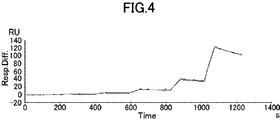
- the antigen affinity measurement result (sensorgram) of 9g8 (wild type VHH antibody) measured by Biacore 3000 is shown.
- the vertical axis represents response difference (RU), and the horizontal axis represents time (seconds).
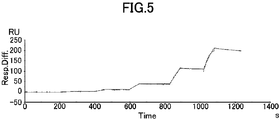
- the antigen affinity measurement result (sensorgram) of 3-chlorotyrosine substitution 9g8 variant in position 32 which is measured by Biacore 3000 is shown.
- the vertical axis represents response difference (RU), and the horizontal axis represents time (seconds).
- the antigen affinity measurement result (sensorgram) of 3-chlorotyrosine substitution 9g8 variant in position 59 which is measured by Biacore 3000 is shown.
- the vertical axis represents response difference (RU), and the horizontal axis represents time (seconds).
- the antigen affinity measurement result (sensorgram) of 3-chlorotyrosine substitution 9g8 variant in position 60 measured by Biacore 3000 is shown.
- the vertical axis represents response difference (RU), and the horizontal axis represents time (seconds).
- the antigen affinity measurement result (sensorgram) of 3-chlorotyrosine substitution 9g8 variant in position 80 which is measured by Biacore 3000 is shown.
- the vertical axis represents response difference (RU), and the horizontal axis represents time (seconds).
- the antigen affinity measurement result (sensorgram) of 3-chlorotyrosine substitution 9g8 variant in position 94 which is measured by Biacore 3000 is shown.
- the vertical axis represents response difference (RU), and the horizontal axis represents time (seconds).
- the antigen affinity measurement result (sensorgram) of 3-chlorotyrosine substitution 9g8 variant in position 95 which is measured by Biacore 3000 is shown.
- the vertical axis represents response difference (RU), and the horizontal axis represents time (seconds).
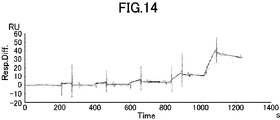
- the antigen affinity measurement result (sensorgram) of 3-chlorotyrosine substitution 9g8 variant in position 100 measured by Biacore 3000 is shown.
- the vertical axis represents response difference (RU), and the horizontal axis represents time (seconds).
- the antigen affinity measurement result (sensorgram) of 3-chlorotyrosine substitution 9g8 variant in position 107 which is measured by Biacore 3000 is shown.
- the vertical axis represents response difference (RU), and the horizontal axis represents time (seconds).
- the antigen affinity measurement result (sensorgram) of 3-chlorotyrosine substitution 9g8 variant in position 112 which is measured by Biacore 3000 is shown.
- the vertical axis represents response difference (RU), and the horizontal axis represents time (seconds).
- the antigen affinity measurement result (sensorgram) of 3-chlorotyrosine substitution 9g8 variant in position 114 which is measured by Biacore 3000 is shown.
- the vertical axis represents response difference (RU), and the horizontal axis represents time (seconds).
- the antigen affinity measurement result (sensorgram) of 3-chlorotyrosine substitution 9g8 variant in position 116 which is measured by Biacore 3000 is shown.
- the vertical axis represents response difference (RU), and the horizontal axis represents time (seconds).
- the antigen affinity measurement result (sensorgram) of 3-chlorotyrosine substitution 9g8 variant in position 59 and 112 measured by Biacore 3000 is shown.
- the vertical axis represents response difference (RU), and the horizontal axis represents time (seconds).
- the antigen-affinity measurement result (sensorgram) of 3-chlorotyrosine substitution 9g8 variant in position 95 and 112 measured by Biacore 3000 is shown.
- the vertical axis represents response difference (RU), and the horizontal axis represents time (seconds).
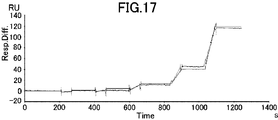
- the antigen affinity measurement result (sensorgram) of 3-chlorotyrosine substitution 9g8 variants in position 100 and position 112 measured by Biacore 3000 is shown.
- the vertical axis represents response difference (RU), and the horizontal axis represents time (seconds).
- the amino acid sequence (SEQ ID NO: 3) of anti-lysozyme (chicken egg white origin) VHH antibody (cAb_Lys3) is shown, and the tyrosine residue is shown in bold italics.
- the underlined portions in the sequences represent the antigen complementarity determining regions CDR1, CDR2 and CDR3 in order from the N-terminal side.
- the nucleotide sequence of cAb_Lys3 gene (SEQ ID NO: 4) is shown.
- the underlined portion in the sequence represents the triplet corresponding to tyrosine.
- For each 3-chloro-tyrosine substituted CAb_Lys3 variants (the horizontal axis shows the position of substitution) and cAb_Lys3 (WT), shows a comparison of the K D values were calculated based on the SPR measurement (surface plasmon resonance) [M] It is a graph. Note that n 2 and the K D value is indicated by an average value.
- the amino acid sequence (SEQ ID NO: 5) of anti-lysozyme (human-derived) VHH antibody (cAb_HuL5) is shown, and tyrosine residues are shown in bold italics.
- the underlined portions in the sequences represent the antigen complementarity determining regions CDR1, CDR2 and CDR3 in order from the N-terminal side.
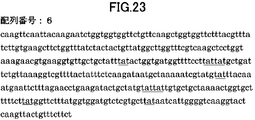
- the nucleotide sequence of cAb_HuL5 gene (SEQ ID NO: 6) is shown.
- the underlined portion in the sequence represents the triplet corresponding to tyrosine.
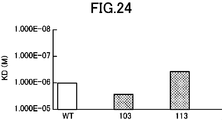
- cAb_HuL5 (WT)
- K D K D
- a mutant VHH antibody having improved affinity for an antigen has an amino acid sequence in which one or more tyrosines are substituted with a halogenated tyrosine, as compared to the amino acid sequence of a wild-type VHH antibody. More specifically, in the present invention, a mutant VHH antibody having improved affinity for an antigen is one in which tyrosine is substituted with a halogenated tyrosine among the positions of one or more tyrosines present in the amino acid sequence of a wild-type VHH antibody.
- the amino acid sequence has one or more tyrosines substituted with a halogenated tyrosine at one or more tyrosine positions that improve the affinity for the antigen.
- the conventional techniques such as phage display have a great risk of changing the interaction between existing antigens and antibodies, and it is therefore necessary to evaluate a very large number of combinations of amino acid substitutions.
- After preserving the existing interaction it is possible to aim only at the effect of improving the antigen affinity.
- substitution from tyrosine to halogenated tyrosine is an infinitesimal change from the viewpoint of the whole antibody molecule exceeding 10 kDa, this amino acid substitution, ie, addition of a halogen atom to tyrosine, improves the antigen affinity of the antibody.
- This amino acid substitution ie, addition of a halogen atom to tyrosine, improves the antigen affinity of the antibody. The new finding is surprising.
- one or more, even one, multiple, for example, two, substitution of tyrosine to halogenated tyrosine improves the antigen affinity of the antibody.
- the effect of improving the affinity of the antigen obtained by one substitution is additively added. Can be preferred.
- the substitution from tyrosine to halogenated tyrosine which improves the antigen affinity of the antibody is one of any of the three antigen complementarity determining regions CDR1, CDR2 and CDR3 in the VHH antibody. It may be, preferably in the antigen complementarity determining region CDR3.
- substitution of tyrosine with halogenated tyrosine, which improves the antigen affinity of the antibody is not limited in the VHH antibody, but positions 26 to 35, positions 50 to 65, when numbered according to Kabat numbering, The trend is to be present in the positions 90-102, for example in positions 26-35, positions 50-65, positions 95-102.
- the substitution may be in positions 90-102, mainly in positions 95-102.
- Kabat numbering adopts any of those described in US Department of Health and Human Services, Public Health Services, NIH, Bethesda, MD, Publication 91-3242 (1991), The contents of this document are hereby incorporated by reference as forming part of the present specification.
- a mutant VHH antibody having improved affinity for an antigen may contain amino acid substitutions other than those for tyrosine to a halogenated tyrosine, as long as the affinity enhancing action is not affected.
- halogenated tyrosine for example, 3-chlorotyrosine, 3-bromotyrosine, 3-iodotyrosine, 3,5-dichlorotyrosine, 3,5-dibromotyrosine, and 3,5-diiodotyrosine are exemplified. Examples include, but are not limited to.
- the halogenated tyrosine is 3-chlorotyrosine or 3-bromotyrosine, more preferably 3-chlorotyrosine.
- tyrosine is referred to without distinction between D-form and L-form.
- wild-type VHH antibody refers to a VHH antibody having the same amino acid sequence as a naturally occurring non-mutated VHH antibody.
- mutated VHH antibody refers to a VHH antibody having an amino acid sequence different from that of a wild-type VHH antibody.
- mutant VHH antibody gene means a gene encoding a mutant VHH antibody.
- VHH antibody when simply referred to as a VHH antibody, there is no intention to distinguish between a wild type VHH antibody and a mutant VHH antibody in particular, and therefore, both a wild type VHH antibody and a mutant VHH antibody can be included.
- the method for locating one or more tyrosines that improves affinity to the antigen by substituting for halogenated tyrosines comprises at least the following five steps. (1) (i) a mutant VHH antibody gene having a DNA sequence in which one or more triplets encoding tyrosine have been changed to TAG triplets, as compared to the DNA sequence of the wild type VHH antibody, and (ii) said TAG Preparing a recombinant bacterium into which a tRNA for translating a UAG codon corresponding to a triplet into a halogenated tyrosine and a gene expressing a halogenated tyrosyl-tRNA synthetase have been introduced.
- a mutant VHH antibody gene (herein referred to herein as having a DNA sequence in which one or more triplets encoding tyrosine have been altered to TAG triplets as compared to the DNA sequence of a wild type VHH antibody as described in step (1) , “Gene (i)” can be produced using well-known gene recombination technology, for example, using PrimeSTAR (registered trademark) Mutagenesis Basal Kit.
- a gene for translating a UAG codon corresponding to a TAG triplet described in step (1) into a halogenated tyrosine and a gene expressing a halogenated tyrosyl tRNA synthetase (herein, “gene (ii)” and The same can be said with the above-mentioned gene (i) using well-known gene recombination technology.
- the gene (ii) is a gene encoding a tRNA that recognizes a UAG codon (herein also referred to as “amber suppressor tRNA”), and a halogenated tyrosine is ester-linked to this tRNA to generate a halogen.
- the gene (ii) may be a known gene, for example, those described in Biochem. Biophys. Res. Commun. 411, 757-761 (2011) and Structure 17, 335-344 (2009). The contents of the two documents are hereby incorporated by reference as forming part of the present specification. Specifically, with regard to a tyrosine at which the 3-position is halogenated, variants derived from the tyrosyl-tRNA synthetase and the tRNA Tyr pair of Methanocaldococcus jannaschii are known.
- the recombinant bacterium may be an existing recombinant bacterium that has already been produced, or a recombinant bacterium that is newly produced by introducing the gene (i) and the gene (ii). It is also good.
- the introduction of gene (i) and gene (ii) into bacteria can be carried out using well-known genetic recombination techniques.
- the recombinant bacterium is not particularly limited as long as it is derived from a bacterium capable of introducing a foreign gene or modifying a gene, but is preferably derived from Escherichia coli or Bacillus subtilis, More preferably, it is derived from E. coli.
- the function of one or more genes selected from the group of genes that lose function due to deletion of a gene encoding a translation termination factor that terminates translation at UAG codons And / or a modification for expressing the function of the gene in the absence of the translation termination factor is introduced into the one or more genes on the bacterial chromosome. It is done.
- the recombinant bacterium is from E. coli
- one or more genes selected from the group of genes that lose function due to a deletion of the gene encoding the translation termination factor that terminates translation at the UAG codon are coaD, murF, It may be selected from hda, mreC, hemA, lpxK and lolA.
- the recombinant bacterium is from B.
- subtilis one or more genes selected from the group of genes that lose function due to a deletion of the gene encoding the translation termination factor that terminates translation at UAG codons are accD, acpS , CspR, dapB, divIC, dnaA, fmt, folD, ftsA, map, mrpD, murE, murG, plsX, ppnK, racE, resB, resC, rmpA, rplA, rpmGB, rpmH, rpsG, secA, secA, topA, trmD , YacM, ydiC, yloQ, ypuH and ysxC.
- bacteria to which the present invention can be applied are not limited to Escherichia coli and Bacillus subtilis, but include other bacteria.
- translation termination factor is also referred to as termination factor or polypeptide chain termination factor, and is a factor that recognizes stop codons on mRNA and causes the polypeptide chain to be released from ribosomes.
- the translation termination factor that terminates translation at the UAG codon (hereinafter, also simply referred to as “translation termination factor that recognizes UAG”) is, for example, RF-1 in bacteria such as E. coli and Bacillus subtilis. Examples of the gene encoding RF-1 include the prfA gene of E. coli.
- a deletion of a gene encoding a translation termination factor that terminates translation at a UAG codon refers to the absence of the gene in a cell, as well as deletion of most of the ORF of the gene. If the main part of the gene is deleted, if the gene is not expressed, or if the gene contains a mutation, the translation termination factor can not recognize the UAG codon, and functions as a translation termination factor. It is intended that the case where it is inhibited etc. is also included.
- a gene encoding a translation termination factor that recognizes UAG (hereinafter, also simply referred to as "UAG recognition translation termination factor gene") is deleted by a known gene disruption method such as a method using homologous recombination of the gene.
- UAG recognition translation termination factor gene a gene encoding a translation termination factor that recognizes UAG
- a known gene disruption method such as a method using homologous recombination of the gene.
- a function is lost due to a deletion of a gene encoding a translation termination factor that terminates translation at UAG codon
- a function is completely completed by a deletion of a UAG recognition translation termination factor gene.
- loss it is intended to include loss of a part of the function, inhibition of the function, and loss of the function.
- the translation is not terminated at the UAG codon, and an extra peptide is added to the C terminus to inhibit the function of the protein. Mechanisms are considered.
- a mechanism may be considered in which the translation is not terminated at the UAG codon, the translation of the gene located on the chromosome downstream of the gene is not properly performed, and the protein function of this downstream gene is inhibited.
- the mechanism for losing the function is not limited to these.
- a gene whose function is lost due to a deletion of a gene encoding a translation termination factor that terminates translation at a UAG codon is a gene whose stop codon is a UAG codon, of the UAG recognition translation termination factor gene A gene whose function is lost due to the above-mentioned deficiency, and a gene downstream of a gene whose stop codon is not a UAG codon but whose chromosome is a stop codon being a UAG codon, wherein the stop codon is a UAG codon
- to express the function of a gene is intended to cause a normally functional protein of the gene to be translated. Therefore, “the function of a gene that loses function by deletion of a gene encoding a translation termination factor that terminates translation at the UAG codon is expressed in the absence of the translation termination factor” means a UAG-recognizing translation termination factor gene It is intended that the normal protein of the gene whose function is lost due to the deletion of the gene is expressed in the absence of the translation termination factor.
- DNA construct is intended to be a form which can be introduced into bacteria, which is capable of self-replication in cells, or which can be integrated into the chromosome of cells.
- DNA constructs can be in the form of bacterial artificial chromosomes (BACs), plasmids and linear DNA.
- BACs bacterial artificial chromosomes
- plasmids plasmids
- linear DNA DNA sequences
- the DNA construct When the DNA construct is introduced into a bacterial chromosome, it may be introduced into the bacterial chromosome in trans or in cis.
- “introduced into the bacterial chromosome in trans” is intended to be introduced into bacterial cells but not integrated into the bacterial chromosome.
- to introduce cis into bacterial chromosome is intended to be introduced into bacterial cells and further integrated into bacterial chromosomes.
- a DNA construct that causes a function of a gene that loses function by the deletion of a gene encoding a translation termination factor that terminates translation at a UAG codon is expressed in the absence of the translation termination factor, specifically, UAG recognition translation termination It refers to a DNA construct containing these modified genes, in which the stop codon of the gene whose function is lost due to the deletion of the factor gene is replaced with an amber codon (UAG) by an aurker codon (UAA) or an opal codon (UGA).
- the introduction of a modification for a gene that loses function due to a deletion of a gene encoding a translation termination factor that terminates translation at the UAG codon means, specifically, that of a UAG-recognizing translation termination factor gene located on the bacterial chromosome. It refers to the introduction of a modification that replaces the stop codon of the gene from amber codon (UAG) to ochre codon (UAA) or opal codon (UGA) for a gene whose function is lost due to deletion.
- the stop codon of these genes on the bacterial chromosome be a stop codon other than the amber codon, even if there is no translation termination factor that recognizes UAG, the translation can be stopped at the original position. And capable of producing normally functional proteins of these genes. Therefore, by introducing a DNA construct containing such a modified gene into bacteria, or by introducing such a modification into the bacterial chromosome, even in the absence of a translation termination factor that recognizes UAG, The function of a gene that loses function due to the deletion of the UAG-recognizing translation terminator gene can be expressed in bacteria.
- a known method can be used, for example, a method using homologous recombination of the gene, or a mutation randomly generated on a bacterial chromosome It is possible to select a relevant mutation from among the above.
- the genes that lose function due to deletion of the UAG-recognizing translation termination factor gene include genes that become lethal if they are genetically deleted alone, and in E. coli, such genes include the seven types described above. .
- genes that lose function due to a defect in the UAG-recognizing translation termination factor gene genes that do not cause bacterial lethality due to loss of function, but genes whose growth rate of bacteria is reduced due to loss of function are included. . If the growth rate of the bacteria is reduced, it is expected that the amount of protein obtained will be reduced. Therefore, it is known that loss of function reduces the growth rate of bacteria for one or more genes selected from genes whose function is lost by deletion of a gene encoding a translation termination factor that terminates translation at the UAG codon.
- the gene contains For example, in E. coli BL21 (DE3), there are 273 genes ending with TAG. Of these, 95 genes are replaced with TAA or TGA, and an E.
- the recombinant bacteria used in the present invention can be prepared based on the description of Japanese Patent No. 5858543.
- the recombinant bacteria used in the present invention can be produced by the following production method based on the description of Japanese Patent No. 58585433.
- the contents of Japanese Patent No. 5858543 are incorporated herein by reference as forming part of the present specification.
- a method of producing a recombinant bacterium for non-naturally occurring protein production comprising (A) expressing in tRNA a tRNA that recognizes a UAG codon; (B) expressing in a bacterium a halogenated tyrosyl-tRNA synthetase which acylates the tRNA with a halogenated tyrosine; (C) Expressing the function of one or more genes selected from the group of genes whose function is lost due to the deletion of the gene encoding the translation termination factor that terminates translation at the UAG codon, in the absence of the translation termination factor Processing the bacteria for bacteria; (D) deleting a gene encoding the translation termination factor in bacteria; Including The bacteria in the steps (A) to (D) are all the same bacteria, The bacteria is E.
- the one or more genes may be coaD, murF, hda, mreC, hemA, lpxK and lolA of E. coli, and accD, acpS, cspR, dapB, divIC, dnaA, fmt, folD, ftsA, map, mrpD, murE of Bacillus subtilis.
- the DNA construct includes a modified gene of the one or more genes in which the stop codon of the one or more genes is replaced with an amber codon (UAG) to an aurker codon (UAA) or an opal codon (UGA), and the modification is The production method, wherein the stop codon of the one or
- the recombinant bacteria used in the present invention can also be prepared by the following preparation method based on the description of Japanese Patent No. 58585433.
- a method of producing a recombinant bacterium for non-naturally occurring protein production comprising For bacteria expressing a tRNA that recognizes the UAG codon, (E) expressing a halogenated tyrosyl-tRNA synthetase which acylates the tRNA with a halogenated tyrosine; (F) A function of one or more genes selected from the group of genes that lose function due to a deletion of a gene encoding a translation termination factor that terminates translation at UAG codon is expressed in the absence of the translation termination factor To perform the processing for (G) deleting the gene encoding the translation termination factor; Including The bacteria is E.
- the one or more genes may be coaD, murF, hda, mreC, hemA, lpxK and lolA of E. coli, and accD, acpS, cspR, dapB, divIC, dnaA, fmt, folD, ftsA, map, mrpD, murE of Bacillus subtilis.
- the DNA construct includes a modified gene of the one or more genes in which the stop codon of the one or more genes is replaced with an amber codon (UAG) to an aurker codon (UAA) or an opal codon (UGA), and the modification is The production method, wherein the stop codon of the one or
- step (2) the gene (i) and gene (ii) introduced into the recombinant bacterium are expressed. Expression of genes (i) and (ii) produces the desired mutant VHH antibody having an amino acid sequence having a halogenated tyrosine at a position corresponding to the TAG triplet in the DNA sequence of gene (i).
- the gene (i) and the gene (ii) may be expressed in recombinant bacteria or may be expressed in extracts of recombinant bacteria.
- the recombinant bacteria are cultured in a medium containing halogenated tyrosine.
- the culture medium can be appropriately selected based on the technical common knowledge of those skilled in the art according to the type of recombinant bacteria used as long as it contains a halogenated tyrosine.
- culture conditions such as temperature, oxygen partial pressure, carbon dioxide partial pressure, and time when culturing recombinant bacteria are appropriately selected based on the common general knowledge of those skilled in the art according to the type of recombinant bacteria used. It can be done.
- halogenated tyrosine is added to the extract and the above conditions are applied under the conditions that the gene (i) and the gene (ii) are expressed.
- Pratt et al. Pratt, J Metall., Transcription and Translation-A practical approach, (1984).
- pp. 179-209 Henes, BD et al. eds., IRL Press, Oxford
- Kigawa et al. Kigawa et al.
- the extract of the recombinant bacterial strain may be prepared according to the method described in 1.), and the gene (i) and the gene (ii) may be expressed in the extract, which constitutes a part of the present specification herein.
- the contents of the three documents are cited as references.
- the treatment of the extract under the conditions in which the gene (i) and the gene (ii) are expressed can be appropriately carried out based on the common general knowledge of those skilled in the art.
- extracts of recombinant bacteria can be prepared using, but not limited to, the following preparation methods.
- Recombinant bacteria capable of producing a halogenated tyrosyl-tRNA synthetase specific for halogenated tyrosine are cultured and recovered by centrifugation.
- the collected bacteria are washed, resuspended in buffer, and disrupted using a French press, glass beads, Waring blender or the like.
- the insoluble fraction of bacteria is removed by centrifugation and incubated. By this incubation, endogenous nucleic acids (DNA and RNA) can be degraded.
- the endogenous nucleic acid can be further degraded by adding a calcium salt, micrococcal nuclease or the like to the incubation solution.
- the extract is prepared by removing endogenous amino acids, nucleic acids, nucleosides and the like by dialysis.
- Treating the extract of the recombinant bacterium under the conditions in which the gene (i) and the gene (ii) are expressed may employ, for example, the following methods, but is not limited thereto.
- An amber suppressor tRNA prepared in vitro, a commercially available tRNA fraction, and a template DNA / RNA are added to the extract of recombinant bacteria.
- halogenated tyrosine may be added, and further energy, ions, buffers, ATP regeneration systems, nucleolytic enzyme inhibitors, reducing agents, polyethylene glycol, cAMP, folic acids, antibacterial agents and the like may be added. Furthermore, a halogenated tyrosyl-tRNA synthetase may be added.
- an RNA synthesis system substrate, polymerase and the like. The extract to which various components are added in this manner is incubated at a temperature of 20 ° C to 37 ° C.
- Desired mutant VHH antibody having an amino acid sequence having a halogenated tyrosine at a position corresponding to the TAG triplet in the DNA sequence of gene (i) when genes (i) and gene (ii) are expressed in step (2) Is produced.
- the mutant VHH antibodies produced can be isolated, purified and / or recovered as appropriate based on the common technical knowledge of those skilled in the art.
- the thus-produced mutant VHH antibody is appropriately isolated, purified and / or isolated from the cultured bacteria or the treated extract according to the common general knowledge of those skilled in the art. Includes collecting.
- the mutant VHH antibody thus obtained has an amino acid sequence in which one or more tyrosines have been substituted with a halogenated tyrosine as compared to the amino acid sequence of a wild-type VHH antibody.
- step (4) can be performed using a known technique for measuring the affinity of an antibody for an antigen, for example, by Surface Plasmon Resonance (SPR) measurement (surface plasmon resonance method) It is also good.
- the affinity of the obtained mutant VHH antibody for the antigen may be compared to the affinity of the wild-type VHH antibody for the antigen.
- the tyrosine is appropriately halogenated among the positions of one or more tyrosines present in the amino acid sequence of the wild type VHH antibody Substitution at a tyrosine may identify one or more tyrosine positions that improve affinity for the antigen.
- the position of the one or more tyrosines that improves the affinity for the antigen by replacing the tyrosine with a halogenated tyrosine corresponds to the three antigen complementarity determining regions CDR1, CDR2 and VH2 in the VHH antibody. It may be in any of the CDR3s, preferably in the antigen complementarity determining region CDR3.
- the position of one or more tyrosines that improve their affinity for antigen by substituting tyrosine for halogenated tyrosines is not limited in the VHH antibody, but may be numbered according to Kabat numbering, position 26 A tendency is seen to be present in 35, positions 50-65, positions 90-102, for example, positions 26-35, positions 50-65, positions 95-102.
- the position of the tyrosine may be in positions 90-102, mainly in positions 95-102.
- the method for producing a mutant VHH antibody having improved affinity for an antigen comprises at least the following three steps. (1) (i) one or more triplets encoding tyrosines at one or more tyrosine positions that improve affinity for antigen by substitution for halogenated tyrosines relative to the DNA sequence of the wild type VHH antibody Expresses a mutant VHH antibody gene having a DNA sequence which has been changed into TAG triplet, and (ii) expresses tRNA and tyrosyl-tRNA synthetase for translating UAG codon corresponding to the TAG triplet into halogenated tyrosine Preparing a recombinant bacterium into which the gene to be (2) a step of expressing the gene (i) and the gene (ii), wherein the recombinant bacterium is cultured in a medium containing a halogenated tyrosine, or a halogen is added to an extract of the recombinant bacterium Adding the modified
- the step (1) in the above production method may be substantially the same as the step (1) in the above identification method, but in the step (1) in the above production method, the gene (i) One or more triplets encoding a tyrosine at one or more tyrosine positions are substituted for TAG triplets, which substitute for a halogenated tyrosine to improve the affinity for the antigen compared to the DNA sequence of the type VHH antibody
- the mutant VHH antibody gene having the DNA sequence Therefore, a mutant VHH antibody produced by the production method of the present invention, which is encoded from such a mutant VHH antibody gene, is a tyrosine of one or more tyrosine positions present in the amino acid sequence of a wild-type VHH antibody.
- step (2) in the above production method may be substantially the same as step (2) in the above specific method.
- step (3) in the above production method may be substantially the same as the step (3) in the above specific method.
- a method of measuring the presence or absence of an amino acid substitution that improves the affinity to an antigen in a mutant VHH antibody comprises at least the following four steps. (1) (i) a mutant VHH antibody gene having a DNA sequence in which one or more triplets encoding tyrosine have been changed to TAG triplets, as compared to the DNA sequence of the wild type VHH antibody, and (ii) said TAG Preparing a recombinant bacterium into which a tRNA for translating a triplet UAG codon into a halogenated tyrosine and a gene expressing a halogenated tyrosyl tRNA synthetase have been introduced.
- the step (1) in the above measurement method may be substantially the same as the step (1) in the above specific method.
- the step (2) in the above measurement method may be substantially the same as the step (2) in the above specific method.
- the step (3) in the above measurement method may be substantially the same as the step (3) in the above specific method.
- step (4) in the above-mentioned measurement method the measurement of the affinity of the mutant VHH antibody for the antigen can be carried out using a known technique, for example, by using Surface Plasmon Resonance (SPR) measurement (surface plasmon resonance method). It may be In step (4) in the above-mentioned measurement method, the affinity of the obtained VHH antibody for the antigen may be compared with the affinity of the wild-type VHH antibody for the antigen. In step (4) of the above-mentioned measurement method, the affinity of the mutant VHH antibody to the antigen is measured to thereby determine the presence or absence of the amino acid substitution from tyrosine to halogenated tyrosine which improves the affinity to the antigen in the mutant VHH antibody. can do.
- SPR Surface Plasmon Resonance
- the amino acid substitution in the mutant VHH antibody may be in any of the three antigen complementarity determining regions CDR1, CDR2 and CDR3, preferably in the antigen complementarity determining region CDR3. It is inside.
- the above-mentioned measurement method is a method of measuring the presence or absence of an amino acid substitution which improves the affinity to the antigen in a mutant VHH antibody, which is in any of three antigen complementarity determining regions CDR1, CDR2 and CDR3. It may be a method of measuring the presence or absence of amino acid substitution in the antigen complementarity determining region CDR3 that improves the affinity to the antigen in the mutant VHH antibody.
- the above-mentioned measurement method is an amino acid which improves the affinity to the antigen in the mutant VHH antibody, which is present in position 26 to 35, position 50 to 65, and position 90 to 102 when numbered according to Kabat numbering. It may be a method of measuring the presence or absence of substitution, and determines the presence or absence of an amino acid substitution which improves the affinity to the antigen in the mutant VHH antibody, which is present at position 90 to 102 when numbered according to Kabat numbering. May be used. Similarly, the above measurement method improves the affinity to the antigen for the mutant VHH antibody, which is present in position 26 to 35, position 50 to 65, and position 95 to 102 when numbered according to Kabat numbering.
- It may be a method of measuring the presence or absence of an amino acid substitution, and the presence or absence of an amino acid substitution which improves the affinity to the antigen in the mutant VHH antibody, which is present in position 95 to 102 when numbered according to Kabat numbering It may be a method of measurement. For example, it preferentially substitutes for the tyrosine present in positions 90 to 102, in particular positions 95 to 102 when numbered according to the tyrosine or Kabat numbering in CDR3, and the affinity of the mutant VHH antibody for the antigen is By measuring, amino acid substitutions that can improve the affinity of VHH antibody for antigen can be determined more quickly and easily as compared with the combination of conventional amino acid sequence randomization and display technology.
- the method of screening a mutant VHH antibody having improved affinity for an antigen is one or more methods for improving affinity for an antigen by substituting halogenated tyrosine in the VHH antibody described above.
- Each step of the method of determining the position of tyrosine of In one embodiment of the present invention, the method of screening a mutant VHH antibody having improved affinity for an antigen is one or more methods for improving affinity for an antigen by substituting halogenated tyrosine in the VHH antibody described above.
- the method includes evaluating one or more mutant VHH antibodies by a method of locating a tyrosine of
- a method of screening a mutant VHH antibody having improved affinity for an antigen comprises the steps of the method for determining the presence or absence of amino acid substitution for improving the affinity for the antigen in the mutant VHH antibody described above. including.
- a method of screening a mutant VHH antibody having improved affinity for the antigen is the method of measuring the presence or absence of the amino acid substitution for improving the affinity for the antigen in the mutant VHH antibody described above. Assessing species or more mutant VHH antibodies.
- the number of mutants prepared to find a mutant VHH antibody with improved antigen affinity is far less than in the prior art such as phage display, and experimental manipulation is also possible. It is simpler than conventional techniques such as phage display. Therefore, as compared with the conventional techniques such as phage display method, the time for finding a mutant VHH antibody having improved antigen affinity can be shortened significantly, and cost can be reduced.
- the method for producing a mutant VHH antibody comprises the method for locating one or more tyrosines that improves the affinity to an antigen by substituting a halogenated tyrosine in the VHH antibody described above.
- the present invention is directed to a mutant VHH antibody having an amino acid sequence including a position-confirmed amino acid substitution from tyrosine to halogenated tyrosine which improves the affinity for an antigen.
- the method for producing a mutant VHH antibody comprises the affinity to the antigen whose presence is confirmed by the method of measuring the presence or absence of an amino acid substitution that improves the affinity to the antigen in the mutant VHH antibody described above. It is directed to a mutant VHH antibody having an amino acid sequence comprising an amino acid substitution from tyrosine to halogenated tyrosine which is to be improved.
- Example 1 Preparation of Variant of Epidermal-Growth-Factor Receptor (EGFR) VHH Antibody in which Tyrosine Residues Are Site-Specifically Substituted to Halogenated Tyrosine> 1.
- Preparation of Plasmid Vector Containing Mutant VHH Antibody (9g8) Gene VHH antibody (9g8) that binds to EGFR (the amino acid sequence (SEQ ID NO: 1) is shown in FIG. 1) has a halogenated tyrosine (3-chloro) at the tyrosine site.
- pET26b vector pET26b (+) vector together with pelB leader sequence and C-terminal His tag sequence in the downstream region of T7 promoter
- the kanamycin drug resistance of (Novagen) was cloned into ampicillin drug resistance).
- the triplet (TAT / TAC) encoding a tyrosine residue to substitute for a halogenated tyrosine in the 9g8 gene was changed to a TAG triplet corresponding to UAG codon which is one of the stop codons.
- 9g8 as shown in FIG.
- the tyrosine residues are at positions 32, 59, 60, 80, 94, 95, 100, 107, 112, 114 and 116, respectively.
- the 9g8 gene the base sequence (SEQ ID NO: 2) of which is shown in FIG. 2)
- 11 triplets of tyrosine-encoding triplets at each site were changed to one TAG triplet, respectively.
- 1 substitution mutation VHH antibody (9g8) gene was created.
- 9g8 gene was used in place of the mutant VHH antibody (9g8) gene.
- the IYN3 DNA cassette is a halogenated tyrosyl-tRNA synthetase specialized for archaea-derived halogenated tyrosine, and a suppressor tRNA also capable of translating a halogenated tyrosine-specific and UAG codon. It is a DNA fragment encoding a molecule (Biochem. Biophys. Res. Commun. 411, 757-761 (2011)).
- the UAG codon becomes a codon for halogenated tyrosine but not a stop codon in strain B-95 ⁇ A.
- the halogenated tyrosine added to the medium is incorporated into the B-95 ⁇ A strain, and bound to the end of the suppressor tRNA by a halogenated tyrosyl-tRNA synthetase.
- This complex is translated as a halogenated tyrosine at the position of the UAG codon in mRNA in the protein biosynthesis process of the B-95 ⁇ A strain, and a protein in which the halogenated tyrosine is introduced at the position of the UAG codon is synthesized.
- This IYN3 DNA cassette was cloned downstream of the lacI gene on a plasmid derived from the pCDF-1b vector (Novagen).
- Example 2 Evaluation of Antigen Affinity of 9g8 Mutant in which Tyrosine Residues Are Site-Specifically Substituted to Halogenated Tyrosine>
- the affinity of 9g8 mutants and 9g8 for EGFR was evaluated by Surface Plasmon Resonance (SPR) measurement (Biacore 3000 (GE Healthcare)) using EGFR extracellular domain. The measurement was performed at 25 ° C., and running buffer used HBS-P (10 mM HEPES (pH 7.4), 150 mM NaCl, and 0.05% Surfactant P20) (GE Healthcare).
- SPR Surface Plasmon Resonance
- a ligand 5 [ ⁇ g / ml] (sodium acetate buffer, pH 5.5) EGFR was immobilized on the surface of a CM5 sensor chip (GE Healthcare) so as to give 3000 RU (amine coupling).
- the concentration of each 9g8 mutant was 0.37 to 30 [nM] (HBS-P buffer), and was measured by single cycle kinetics method, injection amount 30 ⁇ L, flow rate 30 ⁇ L / min, antigen-antibody dissociation time 15 seconds.
- the sensor chip was regenerated with 10 [mM] citrate buffer (pH 4) containing 1 [M] NaCl between measurements of different samples. The resulting sensorgrams were analyzed by a single cycle kinetics 1: 1 binding model (FIGS. 3-14).
- the dissociation constant K D which is an indicator of binding affinity, is summarized in Table 1.
- the variant with the highest affinity improvement was a disubstituted form at positions 100 and 112, and the affinity was improved to about 40 times as compared to 9 g 8 (wild-type VHH antibody).
- the dissociation constant K D which is an indicator of binding affinity, is summarized in Table 3.
- Example 3 Preparation of a variant of anti-lysozyme (Lysozyme) (chicken egg white-derived) VHH antibody in which a tyrosine residue is site-specifically substituted to 3-chlorotyrosine> 1.
- cAb_Lys3 Plasmid Vector Containing Mutant VHH Antibody
- cAb_Lys3 its amino acid sequence (SEQ ID NO: 3) is shown in FIG. 18. Therefore, the cAb_Lys3 gene was cloned into the T7 promoter downstream region on the pET26b vector (pET26b (+) vector (changing kanamycin drug resistance to ampicillin drug resistance in vector (Novagen)) together with the pelB leader sequence and the C-terminal His tag sequence.
- the triplet (TAT / TAC) encoding a tyrosine residue substituting for 3-chlorotyrosine in the cAb_Lys3 gene was changed to a TAG triplet corresponding to UAG codon which is one of the stop codons.
- tyrosine residues are at positions 27, 32, 59, 60, 80, 94, 95, 103, 106, 107, 118 and 120. To be present. It is known that the antigen complementarity determining region CDR3 is largely involved in the binding of the VHH antibody to the antigen.
- cAb_Lys3 correspond to Protein Science 11, 500-515 (2002) (US Department of Health and Human Services, Public Health Services, NIH, Bethesda, MD, Publication 91-3242 ( Corresponding to the positions 99, 100b, 100c, 100n and 100p when numbered according to the Kabat numbering described in 1991)).
- cAb_Lys3 gene was used instead of the mutant VHH antibody (cAb_Lys3) gene.
- Each cAb_Lys3 mutant was obtained. Thereafter, purification was performed using a Ni-Sepharose column (GE Healthcare), and each cAb_Lys3 mutant was obtained in the order of [mg / L]. As a control, cAb_Lys3 (wild-type VHH antibody) was obtained using cAb_Lys3 gene instead of the mutant VHH antibody (cAb_Lys3) gene.
- ⁇ Example 4 Evaluation of Antigen Affinity of cAb_Lys3 Mutant in which Tyrosine Residue is Site-Directed Substitution to 3-Chlorotyrosine> cAb_Lys3 affinity for Lysozyme mutants (from chicken egg white), with a reagent Lysozyme (SIGMA-ALDRICH), and rated K D values by SPR measurements (Biacore T200 (GE Healthcare)). The measurement was performed at 25 ° C., and the running buffer used HBS-EP + (10 [mM] HEPES (pH 7.4), 150 [mM] NaCl, and 0.05% Surfactant P20) (GE Healthcare).
- CM5 sensor chip As a ligand, 1 to 5 ⁇ g / ml (sodium phosphate buffer, pH 7.0) Lysozyme was immobilized on the surface of a CM5 sensor chip (GE Healthcare) so as to have 50 RU (amine coupling).
- concentration of each cAb_Lys3 mutant was 1.2 to 100 [nM] (HBS-P buffer), and was measured at a single cycle kinetics method, a flow rate of 30 ⁇ L / min, and an antigen-antibody dissociation time of 300 seconds.
- 10 [mM] Gly-HCl buffer (pH 1.5) was used for regeneration of the sensor chip. The obtained sensorgrams were analyzed by a single cycle kinetics 1: 1 binding model.
- Example 5 Preparation of Variant of Anti-Lysozyme (Human-derived) VHH Antibody in which Tyrosine Residues Are Site-Specifically Substituted to 3-Chlorotyrosine> 1.
- cAb_HuL5 Plasmid Vector Containing Mutant VHH Antibody (cAb_HuL5) Gene
- the cAb_HuL5 gene was cloned into the T7 promoter downstream region of the pET26b vector (pET26b (+) vector (Novagen) changes the kanamycin drug resistance to ampicillin drug resistance) together with the pelB leader sequence and the C-terminal His tag sequence. Subsequently, the triplet (TAT / TAC) encoding a tyrosine residue to be substituted for 3-chlorotyrosine in the cAb_HuL5 gene was changed to a TAG triplet corresponding to the UAG codon which is one of the stop codons.
- cAb_HuL5 tyrosine residues are present at positions 50, 57, 58, 78, 92, 93, 103 and 113, as shown in FIG. It is known that the antigen complementarity determining region CDR3 is largely involved in the binding of the VHH antibody to the antigen. Therefore, in the present example, in the cAb_HuL5 gene (the base sequence (SEQ ID NO: 6) of which is shown in FIG. 23), one triplet each of triplets encoding two tyrosines present in the region corresponding to CDR3. The TAG triplet was changed to generate two 1-substituted mutant VHH antibody (cAb_HuL5) genes. Chem.
- cAb_HuL5 mutants were obtained respectively. Thereafter, purification was performed using a Ni-Sepharose column (GE Healthcare), and each cAb_HuL5 mutant was obtained in the order of [mg / L]. As a control, cAb_HuL5 (wild-type VHH antibody) was obtained using cAb_HuL5 gene instead of the mutant VHH antibody (cAb_HuL5) gene.
- ⁇ Example 6 Evaluation of Antigen Affinity of cAb_HuL5 Mutant in which Tyrosine Residues are Site-Directedly Substituted to 3-Chlorotyrosine>
- the affinity of cAb_HuL5 variants for Lysozyme was evaluated by SPR measurement (Biacore T200 (GE Healthcare)) using the reagent Lysozyme (SIGMA-ALDRICH). The measurement was performed at 25 ° C., and the running buffer used HBS-EP + (10 [mM] HEPES (pH 7.4), 150 [mM] NaCl, and 0.05% Surfactant P20) (GE Healthcare).
- CM5 sensor chip As a ligand, 1 to 5 ⁇ g / ml (sodium phosphate buffer, pH 7.0) Lysozyme was immobilized on the surface of a CM5 sensor chip (GE Healthcare) so as to have 50 RU (amine coupling).
- concentration of each cAb_HuL5 variant was 1.2 to 100 [nM] (HBS-P buffer), and was measured at a single cycle kinetics method, a flow rate of 30 ⁇ L / min, and an antigen-antibody dissociation time of 300 seconds.
- 10 [mM] Gly-HCl buffer (pH 1.5) was used for regeneration of the sensor chip. The obtained sensorgrams were analyzed by a single cycle kinetics 1: 1 binding model.
Landscapes
- Chemical & Material Sciences (AREA)
- Organic Chemistry (AREA)
- Health & Medical Sciences (AREA)
- Life Sciences & Earth Sciences (AREA)
- Proteomics, Peptides & Aminoacids (AREA)
- Zoology (AREA)
- Engineering & Computer Science (AREA)
- Genetics & Genomics (AREA)
- Immunology (AREA)
- Molecular Biology (AREA)
- Biophysics (AREA)
- Biochemistry (AREA)
- Wood Science & Technology (AREA)
- General Health & Medical Sciences (AREA)
- Analytical Chemistry (AREA)
- Biotechnology (AREA)
- Microbiology (AREA)
- Physics & Mathematics (AREA)
- Medicinal Chemistry (AREA)
- Bioinformatics & Cheminformatics (AREA)
- General Engineering & Computer Science (AREA)
- Peptides Or Proteins (AREA)
- Preparation Of Compounds By Using Micro-Organisms (AREA)
- Measuring Or Testing Involving Enzymes Or Micro-Organisms (AREA)
Abstract
本発明は、抗原に対する親和性を向上させた変異VHH抗体若しくはその製造方法、抗原に対する親和性を向上させた変異VHH抗体をスクリーニングする方法、又はVHH抗体において、抗原に対する親和性を向上させる1つ以上のチロシンの位置を特定する方法等に関する。本発明において、抗原に対する親和性を向上させた変異VHH抗体は、チロシンからハロゲン化チロシンへのアミノ酸置換を含む。また、本発明において、抗原に対する親和性を向上させた変異VHH抗体を製造する方法等は、VHH抗体のアミノ酸配列中、チロシンをハロゲン化チロシンに置換することを含む。
Description
本発明は、変異VHH抗体及びその製造方法等に関する。本発明は、特には、抗原に対する親和性(抗原親和性)を向上させた変異VHH抗体及びその製造方法等に関する。
また、本発明は、変異VHH抗体における抗原に対する親和性を向上させるアミノ酸置換の有無を測定する方法、抗原に対する親和性を向上させた変異VHH抗体をスクリーニングする方法、又はVHH抗体において、特定のアミノ酸置換により抗原に対する親和性を向上させる1つ以上のチロシンの位置を特定する方法等に関する。
また、本発明は、変異VHH抗体における抗原に対する親和性を向上させるアミノ酸置換の有無を測定する方法、抗原に対する親和性を向上させた変異VHH抗体をスクリーニングする方法、又はVHH抗体において、特定のアミノ酸置換により抗原に対する親和性を向上させる1つ以上のチロシンの位置を特定する方法等に関する。
ラクダ科動物は、通常抗体と異なり軽鎖を持たない重鎖抗体を有することが知られている。VHH抗体は、このような重鎖抗体の抗原結合ドメインを切り出した分子であり、通常抗体のH鎖等と同様に3本の抗原結合ループ(抗原相補性決定領域;CDR)を有する、シングルドメイン構成の低分子抗体である。
通常抗体は熱や酸に対して安定性が低いが、VHH抗体は室温や過度のpHでも長期的に安定である。また、重鎖及び軽鎖を有する通常抗体又はそのフラグメント抗体は、重鎖及び軽鎖に各3つ、合計6つのCDRを有するのに対し、VHH抗体は上記のとおり3つのCDRを有し、CDRの配列や長さも通常抗体又はそのフラグメント抗体におけるものと異なるのが一般的である。そのため、VHH抗体は通常抗体で認識されないエピトープへの結合能を示すことなどから、その利用が検討されている。
VHH抗体は、ラクダ等の生体免疫によって得られる抗体であるにもかかわらず、IgG抗体と比較して一般的に2~3桁親和性が低いため、実用的には抗原親和性の向上が望まれる。しかしながら、VHH抗体では分子内の様々な部位が複雑に関係し合って抗原親和性と構造安定性を同時に実現しているため、一旦取得された抗体の性状をタンパク質工学的手法によって改善することは一般的に難しく、タンパク質工学的手法では選別の指標とした性質以外については改悪されることもある。例えば、タンパク質工学的手法により抗原親和性を改善した結果、非標的分子に対する親和性をも増大させてしまうことも十分考えられる。
通常抗体は熱や酸に対して安定性が低いが、VHH抗体は室温や過度のpHでも長期的に安定である。また、重鎖及び軽鎖を有する通常抗体又はそのフラグメント抗体は、重鎖及び軽鎖に各3つ、合計6つのCDRを有するのに対し、VHH抗体は上記のとおり3つのCDRを有し、CDRの配列や長さも通常抗体又はそのフラグメント抗体におけるものと異なるのが一般的である。そのため、VHH抗体は通常抗体で認識されないエピトープへの結合能を示すことなどから、その利用が検討されている。
VHH抗体は、ラクダ等の生体免疫によって得られる抗体であるにもかかわらず、IgG抗体と比較して一般的に2~3桁親和性が低いため、実用的には抗原親和性の向上が望まれる。しかしながら、VHH抗体では分子内の様々な部位が複雑に関係し合って抗原親和性と構造安定性を同時に実現しているため、一旦取得された抗体の性状をタンパク質工学的手法によって改善することは一般的に難しく、タンパク質工学的手法では選別の指標とした性質以外については改悪されることもある。例えば、タンパク質工学的手法により抗原親和性を改善した結果、非標的分子に対する親和性をも増大させてしまうことも十分考えられる。
抗原親和性を改善する技術としては、ファージディスプレイ法が挙げられる(Filamentous fusion phage: novel expression vectors that display cloned antigens on the virion surface, Smith, G P, Science (1985) 228, 1315)。例えば、全長が120アミノ酸のVHH抗体の場合、いずれか1ヶ所のアミノ酸を置換するだけでも240(=20×120)通りの可能性があり、3ヶ所の置換の組合せでさえ総数は107通り以上になる。そのような多数のバリアントを全て解析するのは現実的には実施不可能なので、バリアントライブラリー中から目的のバリアントを見出すために、ファージディスプレイ等を活用して親和性が向上した抗体バリアントを選別する方法が広く実施されているものの、大きく2つの問題点がある。
1つは、ファージ等のディスプレイ技術は高度で繊細な選別技術を使いこなす必要があることである。また、そこで得られた候補分子はファージ等との融合体の形で抗原親和性が判定されているため、融合体としては良好な性質を示していても、ファージから切り離されることで親和性が低下する、あるいは不溶性を示すことも稀ではない。
2つ目の問題は、一般にアミノ酸置換による化学構造の変化は大きなものであり、置換によって選別の指標とした抗原親和性以外の性質については改悪される場合がある。例えば、非標的分子に対する親和性が増すことも考えられ、ファージディスプレイ法で抗原親和性が向上した変異体を選別できたとしても、抗原特異性は低下することがある。
1つは、ファージ等のディスプレイ技術は高度で繊細な選別技術を使いこなす必要があることである。また、そこで得られた候補分子はファージ等との融合体の形で抗原親和性が判定されているため、融合体としては良好な性質を示していても、ファージから切り離されることで親和性が低下する、あるいは不溶性を示すことも稀ではない。
2つ目の問題は、一般にアミノ酸置換による化学構造の変化は大きなものであり、置換によって選別の指標とした抗原親和性以外の性質については改悪される場合がある。例えば、非標的分子に対する親和性が増すことも考えられ、ファージディスプレイ法で抗原親和性が向上した変異体を選別できたとしても、抗原特異性は低下することがある。
ファージディスプレイ法を利用しつつ、20種類の天然アミノ酸レパートリーに非天然アミノ酸である硫酸チロシン等を加えて抗体分子を作製する技術が報告されている(Protein evolution with an expanded genetic code, Liu C C et al., Proc. Natl. Acad. Sci. USA (2008) 105, 17688)。当該技術は硫酸チロシン等を用いることで、より多様な抗体バリアントライブラリーを作り出しているが(20億種類)、抗体バリアントを作製してディスプレイ法によって選別すること、および導入している非天然アミノ酸は通常のアミノ酸と大きく化学構造が異なるという点で、上記ファージディスプレイ法における問題点は何ら解決されていない。
そこで、本発明は、ファージディスプレイ法とは異なる、抗原に対する親和性を向上させた変異VHH抗体を製造する方法、変異VHH抗体における抗原に対する親和性を向上させるアミノ酸置換の有無を測定する方法、抗原親和性を向上させた変異VHH抗体をスクリーニングする方法、又はVHH抗体において、特定のアミノ酸置換により抗原に対する親和性を向上させる1つ以上のチロシンの位置を特定する方法、或いは抗原に対する親和性を向上させた変異VHH抗体等を提供することを目的とする。
本発明者らは、上記課題を解決するために鋭意検討した結果、VHH抗体の抗原結合部位に最も多く存在するアミノ酸であるチロシンをハロゲン化チロシンに置換することで、当該アミノ酸置換導入前に比べてVHH抗体の抗原親和性を向上させ得ることを見出した。本発明は、このような新規な知見に基づいて完成されたものである。
本発明の一実施態様において、
VHH抗体において、ハロゲン化チロシンへ置換することにより抗原に対する親和性を向上させる1つ以上のチロシンの位置を特定する方法であって、
(1)(i)野生型VHH抗体のDNA配列と比較して、チロシンをコードする1つ以上のトリプレットがTAGトリプレットに変更されているDNA配列を有する変異VHH抗体遺伝子、及び
(ii)前記TAGトリプレットに対応するUAGコドンを、ハロゲン化チロシンに翻訳するためのtRNA及びハロゲン化チロシルtRNA合成酵素を発現する遺伝子
を導入した組換え細菌を準備する工程と、
(2)前記遺伝子(i)と前記遺伝子(ii)を発現させる工程であって、前記組換え細菌を、ハロゲン化チロシンを含む培地にて培養するか、又は前記組換え細菌の抽出液にハロゲン化チロシンを添加し、前記遺伝子(i)と前記遺伝子(ii)が発現する条件下で前記抽出液を処理することを含む、該工程と、
(3)前記培養した細菌又は前記処理した抽出液から、変異VHH抗体を得る工程であって、前記変異VHH抗体が、前記野生型VHH抗体のアミノ酸配列と比較して1つ以上のチロシンがハロゲン化チロシンに置換されているアミノ酸配列を有する、該工程と、
(4)前記変異VHH抗体の抗原に対する親和性を測定する工程と、
(5)前記野生型VHH抗体のアミノ酸配列中に存在する1つ以上のチロシンの位置のうち、チロシンをハロゲン化チロシンへ置換することにより前記抗原に対する親和性を向上させる1つ以上のチロシンの位置を特定する工程と
を含む、前記方法が提供される。
VHH抗体において、ハロゲン化チロシンへ置換することにより抗原に対する親和性を向上させる1つ以上のチロシンの位置を特定する方法であって、
(1)(i)野生型VHH抗体のDNA配列と比較して、チロシンをコードする1つ以上のトリプレットがTAGトリプレットに変更されているDNA配列を有する変異VHH抗体遺伝子、及び
(ii)前記TAGトリプレットに対応するUAGコドンを、ハロゲン化チロシンに翻訳するためのtRNA及びハロゲン化チロシルtRNA合成酵素を発現する遺伝子
を導入した組換え細菌を準備する工程と、
(2)前記遺伝子(i)と前記遺伝子(ii)を発現させる工程であって、前記組換え細菌を、ハロゲン化チロシンを含む培地にて培養するか、又は前記組換え細菌の抽出液にハロゲン化チロシンを添加し、前記遺伝子(i)と前記遺伝子(ii)が発現する条件下で前記抽出液を処理することを含む、該工程と、
(3)前記培養した細菌又は前記処理した抽出液から、変異VHH抗体を得る工程であって、前記変異VHH抗体が、前記野生型VHH抗体のアミノ酸配列と比較して1つ以上のチロシンがハロゲン化チロシンに置換されているアミノ酸配列を有する、該工程と、
(4)前記変異VHH抗体の抗原に対する親和性を測定する工程と、
(5)前記野生型VHH抗体のアミノ酸配列中に存在する1つ以上のチロシンの位置のうち、チロシンをハロゲン化チロシンへ置換することにより前記抗原に対する親和性を向上させる1つ以上のチロシンの位置を特定する工程と
を含む、前記方法が提供される。
本発明の一実施態様では、例えば、前記特定方法において、ハロゲン化チロシンは、3-クロロチロシン又は3-ブロモチロシンである。
本発明の一実施態様では、例えば、前記特定方法において、チロシンをハロゲン化チロシンへ置換することにより抗原に対する親和性を向上させる1つ以上のチロシンの位置が、3個の抗原相補性決定領域CDR1、CDR2及びCDR3のいずれかの中にある。
本発明の一実施態様では、例えば、前記特定方法において、チロシンをハロゲン化チロシンへ置換することにより抗原に対する親和性を向上させる1つ以上のチロシンの位置が、抗原相補性決定領域CDR3の中にある。
本発明の一実施態様では、例えば、前記特定方法において、チロシンをハロゲン化チロシンへ置換することにより抗原に対する親和性を向上させる1つ以上のチロシンの位置が、Kabatのナンバリングに従って番号処理された場合の位置26~35、位置50~65、位置90~102の中に存在する。
本発明の一実施態様では、例えば、前記特定方法において、チロシンをハロゲン化チロシンへ置換することにより抗原に対する親和性を向上させる1つ以上のチロシンの位置が、Kabatのナンバリングに従って番号処理された場合の位置90~102の中に存在する。
本発明の一実施態様では、例えば、前記特定方法において、チロシンをハロゲン化チロシンへ置換することにより抗原に対する親和性を向上させる1つ以上のチロシンの位置が、3個の抗原相補性決定領域CDR1、CDR2及びCDR3のいずれかの中にある。
本発明の一実施態様では、例えば、前記特定方法において、チロシンをハロゲン化チロシンへ置換することにより抗原に対する親和性を向上させる1つ以上のチロシンの位置が、抗原相補性決定領域CDR3の中にある。
本発明の一実施態様では、例えば、前記特定方法において、チロシンをハロゲン化チロシンへ置換することにより抗原に対する親和性を向上させる1つ以上のチロシンの位置が、Kabatのナンバリングに従って番号処理された場合の位置26~35、位置50~65、位置90~102の中に存在する。
本発明の一実施態様では、例えば、前記特定方法において、チロシンをハロゲン化チロシンへ置換することにより抗原に対する親和性を向上させる1つ以上のチロシンの位置が、Kabatのナンバリングに従って番号処理された場合の位置90~102の中に存在する。
本発明の一実施態様において、
抗原に対する親和性を向上させた変異VHH抗体を製造する方法であって、
(1)(i)野生型VHH抗体のDNA配列と比較して、ハロゲン化チロシンへ置換することにより抗原に対する親和性を向上させる1つ以上のチロシンの位置におけるチロシンをコードする1つ以上のトリプレットが、TAGトリプレットに変更されているDNA配列を有する変異VHH抗体遺伝子、及び
(ii)前記TAGトリプレットに対応するUAGコドンを、ハロゲン化チロシンに翻訳するためのtRNA及びハロゲン化チロシルtRNA合成酵素を発現する遺伝子
を導入した組換え細菌を準備する工程と、
(2)前記遺伝子(i)と前記遺伝子(ii)を発現させる工程であって、前記組換え細菌を、ハロゲン化チロシンを含む培地にて培養するか、又は前記組換え細菌の抽出液にハロゲン化チロシンを添加し、前記遺伝子(i)と前記遺伝子(ii)が発現する条件下で前記抽出液を処理することを含む、該工程と、
(3)前記培養した細菌又は前記処理した抽出液から、変異VHH抗体を得る工程と
を含み、
前記変異VHH抗体が、前記野生型VHH抗体のアミノ酸配列中に存在する1つ以上のチロシンの位置のうち、チロシンをハロゲン化チロシンへ置換することにより前記抗原に対する親和性を向上させる1つ以上のチロシンの位置において、1つ以上のチロシンがハロゲン化チロシンに置換されているアミノ酸配列を有する、前記方法が提供される。
抗原に対する親和性を向上させた変異VHH抗体を製造する方法であって、
(1)(i)野生型VHH抗体のDNA配列と比較して、ハロゲン化チロシンへ置換することにより抗原に対する親和性を向上させる1つ以上のチロシンの位置におけるチロシンをコードする1つ以上のトリプレットが、TAGトリプレットに変更されているDNA配列を有する変異VHH抗体遺伝子、及び
(ii)前記TAGトリプレットに対応するUAGコドンを、ハロゲン化チロシンに翻訳するためのtRNA及びハロゲン化チロシルtRNA合成酵素を発現する遺伝子
を導入した組換え細菌を準備する工程と、
(2)前記遺伝子(i)と前記遺伝子(ii)を発現させる工程であって、前記組換え細菌を、ハロゲン化チロシンを含む培地にて培養するか、又は前記組換え細菌の抽出液にハロゲン化チロシンを添加し、前記遺伝子(i)と前記遺伝子(ii)が発現する条件下で前記抽出液を処理することを含む、該工程と、
(3)前記培養した細菌又は前記処理した抽出液から、変異VHH抗体を得る工程と
を含み、
前記変異VHH抗体が、前記野生型VHH抗体のアミノ酸配列中に存在する1つ以上のチロシンの位置のうち、チロシンをハロゲン化チロシンへ置換することにより前記抗原に対する親和性を向上させる1つ以上のチロシンの位置において、1つ以上のチロシンがハロゲン化チロシンに置換されているアミノ酸配列を有する、前記方法が提供される。
本発明の一実施態様では、例えば、前記製造方法において、ハロゲン化チロシンは、3-クロロチロシン又は3-ブロモチロシンである。
本発明の一実施態様では、例えば、前記製造方法において、チロシンをハロゲン化チロシンへ置換することにより抗原に対する親和性を向上させる1つ以上のチロシンの位置が、3個の抗原相補性決定領域CDR1、CDR2及びCDR3のいずれかの中にある。
本発明の一実施態様では、例えば、前記製造方法において、チロシンをハロゲン化チロシンへ置換することにより抗原に対する親和性を向上させる1つ以上のチロシンの位置が、抗原相補性決定領域CDR3の中にある。
本発明の一実施態様では、例えば、前記製造方法において、チロシンをハロゲン化チロシンへ置換することにより抗原に対する親和性を向上させる1つ以上のチロシンの位置が、Kabatのナンバリングに従って番号処理された場合の位置26~35、位置50~65、位置90~102の中に存在する。
本発明の一実施態様では、例えば、前記製造方法において、チロシンをハロゲン化チロシンへ置換することにより抗原に対する親和性を向上させる1つ以上のチロシンの位置が、Kabatのナンバリングに従って番号処理された場合の位置90~102の中に存在する。
本発明の一実施態様では、例えば、前記製造方法において、チロシンをハロゲン化チロシンへ置換することにより抗原に対する親和性を向上させる1つ以上のチロシンの位置が、3個の抗原相補性決定領域CDR1、CDR2及びCDR3のいずれかの中にある。
本発明の一実施態様では、例えば、前記製造方法において、チロシンをハロゲン化チロシンへ置換することにより抗原に対する親和性を向上させる1つ以上のチロシンの位置が、抗原相補性決定領域CDR3の中にある。
本発明の一実施態様では、例えば、前記製造方法において、チロシンをハロゲン化チロシンへ置換することにより抗原に対する親和性を向上させる1つ以上のチロシンの位置が、Kabatのナンバリングに従って番号処理された場合の位置26~35、位置50~65、位置90~102の中に存在する。
本発明の一実施態様では、例えば、前記製造方法において、チロシンをハロゲン化チロシンへ置換することにより抗原に対する親和性を向上させる1つ以上のチロシンの位置が、Kabatのナンバリングに従って番号処理された場合の位置90~102の中に存在する。
本発明の一実施態様において、
変異VHH抗体における抗原に対する親和性を向上させるアミノ酸置換の有無を測定する方法であって、
(1)(i)野生型VHH抗体のDNA配列と比較して、チロシンをコードする1つ以上のトリプレットがTAGトリプレットに変更されているDNA配列を有する変異VHH抗体遺伝子、及び
(ii)前記TAGトリプレットに対応するUAGコドンを、ハロゲン化チロシンに翻訳するためのtRNA及びハロゲン化チロシルtRNA合成酵素を発現する遺伝子
を導入した組換え細菌を準備する工程と、
(2)前記遺伝子(i)と前記遺伝子(ii)を発現させる工程であって、前記組換え細菌を、ハロゲン化チロシンを含む培地にて培養するか、又は前記組換え細菌の抽出液にハロゲン化チロシンを添加し、前記遺伝子(i)と前記遺伝子(ii)が発現する条件下で前記抽出液を処理することを含む、該工程と、
(3)前記培養した細菌又は前記処理した抽出液から、変異VHH抗体を得る工程であって、前記変異VHH抗体が、前記野生型VHH抗体のアミノ酸配列と比較して1つ以上のチロシンがハロゲン化チロシンに置換されているアミノ酸配列を有する、該工程と、
(4)前記変異VHH抗体の抗原に対する親和性を測定し、前記変異VHH抗体における、抗原に対する親和性を向上させる、チロシンからハロゲン化チロシンへのアミノ酸置換の有無を測定する工程と
を含む、前記方法が提供される。
変異VHH抗体における抗原に対する親和性を向上させるアミノ酸置換の有無を測定する方法であって、
(1)(i)野生型VHH抗体のDNA配列と比較して、チロシンをコードする1つ以上のトリプレットがTAGトリプレットに変更されているDNA配列を有する変異VHH抗体遺伝子、及び
(ii)前記TAGトリプレットに対応するUAGコドンを、ハロゲン化チロシンに翻訳するためのtRNA及びハロゲン化チロシルtRNA合成酵素を発現する遺伝子
を導入した組換え細菌を準備する工程と、
(2)前記遺伝子(i)と前記遺伝子(ii)を発現させる工程であって、前記組換え細菌を、ハロゲン化チロシンを含む培地にて培養するか、又は前記組換え細菌の抽出液にハロゲン化チロシンを添加し、前記遺伝子(i)と前記遺伝子(ii)が発現する条件下で前記抽出液を処理することを含む、該工程と、
(3)前記培養した細菌又は前記処理した抽出液から、変異VHH抗体を得る工程であって、前記変異VHH抗体が、前記野生型VHH抗体のアミノ酸配列と比較して1つ以上のチロシンがハロゲン化チロシンに置換されているアミノ酸配列を有する、該工程と、
(4)前記変異VHH抗体の抗原に対する親和性を測定し、前記変異VHH抗体における、抗原に対する親和性を向上させる、チロシンからハロゲン化チロシンへのアミノ酸置換の有無を測定する工程と
を含む、前記方法が提供される。
本発明の一実施態様では、例えば、前記測定方法において、ハロゲン化チロシンは、3-クロロチロシン又は3-ブロモチロシンである。
本発明の一実施態様では、例えば、前記測定方法において、変異VHH抗体におけるアミノ酸置換が、3個の抗原相補性決定領域CDR1、CDR2及びCDR3のいずれかの中にある。
本発明の一実施態様では、例えば、前記測定方法において、変異VHH抗体におけるアミノ酸置換が、抗原相補性決定領域CDR3の中にある。
本発明の一実施態様では、例えば、前記測定方法において、変異VHH抗体におけるアミノ酸置換が、Kabatのナンバリングに従って番号処理された場合の位置26~35、位置50~65、位置90~102の中に存在する。
本発明の一実施態様では、例えば、前記測定方法において、変異VHH抗体におけるアミノ酸置換が、Kabatのナンバリングに従って番号処理された場合の位置90~102の中に存在する。
本発明の一実施態様では、例えば、前記測定方法において、変異VHH抗体におけるアミノ酸置換が、3個の抗原相補性決定領域CDR1、CDR2及びCDR3のいずれかの中にある。
本発明の一実施態様では、例えば、前記測定方法において、変異VHH抗体におけるアミノ酸置換が、抗原相補性決定領域CDR3の中にある。
本発明の一実施態様では、例えば、前記測定方法において、変異VHH抗体におけるアミノ酸置換が、Kabatのナンバリングに従って番号処理された場合の位置26~35、位置50~65、位置90~102の中に存在する。
本発明の一実施態様では、例えば、前記測定方法において、変異VHH抗体におけるアミノ酸置換が、Kabatのナンバリングに従って番号処理された場合の位置90~102の中に存在する。
本発明の一実施態様において、前記特定方法又は前記測定方法によって1種以上の変異VHH抗体を評価することを含む、抗原に対する親和性を向上させた変異VHH抗体をスクリーニングする方法が提供される。
本発明の一実施態様において、前記特定方法又は前記測定方法によって位置又は存在が確認された、抗原に対する親和性を向上させる、チロシンからハロゲン化チロシンへのアミノ酸置換、を含むアミノ酸配列を有する変異VHH抗体の製造方法が提供される。
本発明の一実施態様では、例えば、
前記組換え細菌が、大腸菌由来又は枯草菌由来であり、
前記組換え細菌には、UAGコドンで翻訳を終結する翻訳終結因子をコードする遺伝子の欠損によって機能を喪失する遺伝子の群から選択される1以上の遺伝子の機能を前記翻訳終結因子の非存在下において発現させるDNA構築物が導入されている、及び/又は細菌染色体上の前記1以上の遺伝子に、当該遺伝子の機能を前記翻訳終結因子の非存在下において発現させるための改変が導入されていて、
前記1以上の遺伝子が、大腸菌のcoaD、murF、hda、mreC、hemA、lpxK及びlolA、並びに枯草菌のaccD、acpS、cspR、dapB、divIC、dnaA、fmt、folD、ftsA、map、mrpD、murE、murG、plsX、ppnK、racE、resB、resC、rnpA、rplX、rpmGB、rpmH、rpsG、secA、secY、topA、trmD、yacM、ydiC、yloQ、ypuH及びysxCの中から選択される1以上の遺伝子であり、
前記DNA構築物が、前記1以上の遺伝子の終止コドンがアンバーコドン(UAG)からオーカーコドン(UAA)又はオパールコドン(UGA)に置き換えられるようにした前記1以上の遺伝子の改変型遺伝子を含み、かつ
前記改変が、前記細菌の染色体上の前記1以上の遺伝子の終止コドンをアンバーコドン(UAG)からオーカーコドン(UAA)又はオパールコドン(UGA)に置き換えるための改変である。
前記組換え細菌が、大腸菌由来又は枯草菌由来であり、
前記組換え細菌には、UAGコドンで翻訳を終結する翻訳終結因子をコードする遺伝子の欠損によって機能を喪失する遺伝子の群から選択される1以上の遺伝子の機能を前記翻訳終結因子の非存在下において発現させるDNA構築物が導入されている、及び/又は細菌染色体上の前記1以上の遺伝子に、当該遺伝子の機能を前記翻訳終結因子の非存在下において発現させるための改変が導入されていて、
前記1以上の遺伝子が、大腸菌のcoaD、murF、hda、mreC、hemA、lpxK及びlolA、並びに枯草菌のaccD、acpS、cspR、dapB、divIC、dnaA、fmt、folD、ftsA、map、mrpD、murE、murG、plsX、ppnK、racE、resB、resC、rnpA、rplX、rpmGB、rpmH、rpsG、secA、secY、topA、trmD、yacM、ydiC、yloQ、ypuH及びysxCの中から選択される1以上の遺伝子であり、
前記DNA構築物が、前記1以上の遺伝子の終止コドンがアンバーコドン(UAG)からオーカーコドン(UAA)又はオパールコドン(UGA)に置き換えられるようにした前記1以上の遺伝子の改変型遺伝子を含み、かつ
前記改変が、前記細菌の染色体上の前記1以上の遺伝子の終止コドンをアンバーコドン(UAG)からオーカーコドン(UAA)又はオパールコドン(UGA)に置き換えるための改変である。
本発明の一実施態様において、野生型VHH抗体のアミノ酸配列と比較して1つ以上のチロシンがハロゲン化チロシンに置換されているアミノ酸配列を有する変異VHH抗体であって、チロシンからハロゲン化チロシンへのアミノ酸置換が抗原に対する親和性を向上させるものである、前記変異VHH抗体が提供される。
本発明の一実施態様によれば、抗原に対する親和性を向上させた変異VHH抗体及びその製造方法を提供することができる。
また、本発明の一実施態様によれば、抗原親和性が向上した抗体バリアントを見出し製造するために作製するバリアントの数が、ファージディスプレイ法等の従来技術による場合に比べて圧倒的に少なく、また、実験操作もファージディスプレイ法等の従来技術に比べて簡便である。そのため、ファージディスプレイ法等の従来技術に比べて、抗原親和性が向上した抗体バリアントを見出し製造するための時間を大幅に短縮することができ、コストの削減も可能となる。
また、本発明の一実施態様によれば、抗原親和性が向上した抗体バリアントを見出し製造するために作製するバリアントの数が、ファージディスプレイ法等の従来技術による場合に比べて圧倒的に少なく、また、実験操作もファージディスプレイ法等の従来技術に比べて簡便である。そのため、ファージディスプレイ法等の従来技術に比べて、抗原親和性が向上した抗体バリアントを見出し製造するための時間を大幅に短縮することができ、コストの削減も可能となる。
本発明において、抗原に対する親和性を向上させた変異VHH抗体は、野生型VHH抗体のアミノ酸配列と比較して、1つ以上のチロシンがハロゲン化チロシンに置換されているアミノ酸配列を有する。より詳細には、本発明において、抗原に対する親和性を向上させた変異VHH抗体は、野生型VHH抗体のアミノ酸配列中に存在する1つ以上のチロシンの位置のうち、チロシンをハロゲン化チロシンへ置換することにより前記抗原に対する親和性を向上させる1つ以上のチロシンの位置において、1つ以上のチロシンがハロゲン化チロシンに置換されているアミノ酸配列を有する。
このようなチロシンからハロゲン化チロシンへの置換は、チロシンにハロゲン原子が付与されるのみのわずかな変化であるが、抗原に対する親和性を向上させ得ることが新たに見出された。一方で、チロシンからハロゲン化チロシンへの置換により生じる変化は、アミノ酸単位で見ても小さなものであり、抗原と抗体の相互作用の様式を変える可能性は極めて低い。例えば、チロシン環の水酸基はしばしば水素結合の形成に関わるが、このような相互作用も維持されている。ファージディスプレイ法等の従来技術は、既存の抗原・抗体間の相互作用に変更を加えてしまう大きなリスクがあり、そのため極めて多くのアミノ酸置換の組合せを評価する必要があるが、本発明によれば、既存の相互作用を保存した上で、抗原親和性の向上効果だけを狙うことができる。
チロシンからハロゲン化チロシンへの置換は、10 kDaを超える抗体分子全体から見れば限りなく小さな変化であるが、このアミノ酸置換、即ちチロシンへのハロゲン原子の付与、が抗体の抗原親和性を向上させるという新たな知見は、驚くべきものである。
また、本発明において、[nM]以下の低いKD値を示す良質なVHH抗体においても、抗原に対する親和性を向上させた変異体を簡便・迅速に取得でき、このことは本発明の高い有用性を表している。
このようなチロシンからハロゲン化チロシンへの置換は、チロシンにハロゲン原子が付与されるのみのわずかな変化であるが、抗原に対する親和性を向上させ得ることが新たに見出された。一方で、チロシンからハロゲン化チロシンへの置換により生じる変化は、アミノ酸単位で見ても小さなものであり、抗原と抗体の相互作用の様式を変える可能性は極めて低い。例えば、チロシン環の水酸基はしばしば水素結合の形成に関わるが、このような相互作用も維持されている。ファージディスプレイ法等の従来技術は、既存の抗原・抗体間の相互作用に変更を加えてしまう大きなリスクがあり、そのため極めて多くのアミノ酸置換の組合せを評価する必要があるが、本発明によれば、既存の相互作用を保存した上で、抗原親和性の向上効果だけを狙うことができる。
チロシンからハロゲン化チロシンへの置換は、10 kDaを超える抗体分子全体から見れば限りなく小さな変化であるが、このアミノ酸置換、即ちチロシンへのハロゲン原子の付与、が抗体の抗原親和性を向上させるという新たな知見は、驚くべきものである。
また、本発明において、[nM]以下の低いKD値を示す良質なVHH抗体においても、抗原に対する親和性を向上させた変異体を簡便・迅速に取得でき、このことは本発明の高い有用性を表している。
抗原に対する親和性を向上させた変異VHH抗体において、抗体の抗原親和性を向上させる、チロシンからハロゲン化チロシンへの置換は1つ以上であり、1個であっても、複数、例えば、2個、3個、4個、5個、6個、7個、8個、9個又は10個であってもよい。本発明の一実施態様において、抗体の抗原親和性を向上させる、チロシンからハロゲン化チロシンへの置換が複数あると、それぞれ1つの置換により得られる抗原親和性の向上効果を相加的に加算することができ、好ましい。
本発明の一実施態様において、抗体の抗原親和性を向上させる、チロシンからハロゲン化チロシンへの置換は、VHH抗体中の3個の抗原相補性決定領域CDR1、CDR2及びCDR3のいずれかの中にあってもよく、好ましくは、抗原相補性決定領域CDR3の中にある。
また、抗体の抗原親和性を向上させる、チロシンからハロゲン化チロシンへの置換は、VHH抗体中において限定されないが、Kabatのナンバリングに従って番号処理された場合の、位置26~35、位置50~65、位置90~102の中に存在する傾向が見られ、例えば、位置26~35、位置50~65、位置95~102の中に存在し得る。特には、当該置換は、位置90~102の中に、その中でも主に位置95~102の中に存在し得る。本明細書及び本発明において、Kabatのナンバリングは、いずれもUS Department of Health and Human Services, Public Health Services, NIH, Bethesda, MD, Publication 91-3242 (1991)に記載のものを採用しており、ここに本明細書の一部を構成するものとして当該文献の内容を参照により引用する。
なお、本発明において、抗原に対する親和性を向上させた変異VHH抗体は、その親和性向上作用に影響を与えない範囲内で、チロシンからハロゲン化チロシンへの置換以外のアミノ酸置換を含んでもよい。
本発明の一実施態様において、抗体の抗原親和性を向上させる、チロシンからハロゲン化チロシンへの置換は、VHH抗体中の3個の抗原相補性決定領域CDR1、CDR2及びCDR3のいずれかの中にあってもよく、好ましくは、抗原相補性決定領域CDR3の中にある。
また、抗体の抗原親和性を向上させる、チロシンからハロゲン化チロシンへの置換は、VHH抗体中において限定されないが、Kabatのナンバリングに従って番号処理された場合の、位置26~35、位置50~65、位置90~102の中に存在する傾向が見られ、例えば、位置26~35、位置50~65、位置95~102の中に存在し得る。特には、当該置換は、位置90~102の中に、その中でも主に位置95~102の中に存在し得る。本明細書及び本発明において、Kabatのナンバリングは、いずれもUS Department of Health and Human Services, Public Health Services, NIH, Bethesda, MD, Publication 91-3242 (1991)に記載のものを採用しており、ここに本明細書の一部を構成するものとして当該文献の内容を参照により引用する。
なお、本発明において、抗原に対する親和性を向上させた変異VHH抗体は、その親和性向上作用に影響を与えない範囲内で、チロシンからハロゲン化チロシンへの置換以外のアミノ酸置換を含んでもよい。
本発明において、ハロゲン化チロシンとしては、例えば、3-クロロチロシン、3-ブロモチロシン、3-ヨードチロシン、3,5-ジクロロチロシン、3,5-ジブロモチロシン、及び3,5-ジヨードチロシンが挙げられるが、これらに限定されない。好ましくは、ハロゲン化チロシンは、3-クロロチロシン又は3-ブロモチロシンであり、より好ましくは、3-クロロチロシンである。なお、本明細書において、D体とL体の区別なくチロシンに言及するが、通常、チロシンはL-チロシンのことであるものの、チロシンがD-チロシンである可能性を排除するものではない。
本明細書において、「野生型VHH抗体」とは、天然に存在する変異されていないVHH抗体と同じアミノ酸配列を有するVHH抗体を意味する。
本明細書において、「変異VHH抗体」とは、野生型VHH抗体とは異なるアミノ酸配列を有するVHH抗体を意味する。
本明細書において、「変異VHH抗体遺伝子」とは、変異VHH抗体をコードする遺伝子を意味する。
なお、本明細書において、単にVHH抗体と言った場合には、特に野生型VHH抗体と変異VHH抗体の区別をする意図がなく、従って、野生型VHH抗体と変異VHH抗体の両方を含み得る。
本明細書において、「野生型VHH抗体」とは、天然に存在する変異されていないVHH抗体と同じアミノ酸配列を有するVHH抗体を意味する。
本明細書において、「変異VHH抗体」とは、野生型VHH抗体とは異なるアミノ酸配列を有するVHH抗体を意味する。
本明細書において、「変異VHH抗体遺伝子」とは、変異VHH抗体をコードする遺伝子を意味する。
なお、本明細書において、単にVHH抗体と言った場合には、特に野生型VHH抗体と変異VHH抗体の区別をする意図がなく、従って、野生型VHH抗体と変異VHH抗体の両方を含み得る。
本発明の一実施態様において、VHH抗体において、ハロゲン化チロシンへ置換することにより抗原に対する親和性を向上させる1つ以上のチロシンの位置を特定する方法は、以下の5つの工程を少なくとも含む。
(1)(i)野生型VHH抗体のDNA配列と比較して、チロシンをコードする1つ以上のトリプレットがTAGトリプレットに変更されているDNA配列を有する変異VHH抗体遺伝子、及び
(ii)前記TAGトリプレットに対応するUAGコドンを、ハロゲン化チロシンに翻訳するためのtRNA及びハロゲン化チロシルtRNA合成酵素を発現する遺伝子
を導入した組換え細菌を準備する工程。
(2)前記遺伝子(i)と前記遺伝子(ii)を発現させる工程であって、前記組換え細菌を、ハロゲン化チロシンを含む培地にて培養するか、又は前記組換え細菌の抽出液にハロゲン化チロシンを添加し、前記遺伝子(i)と前記遺伝子(ii)が発現する条件下で前記抽出液を処理することを含む、該工程。
(3)前記培養した細菌又は前記処理した抽出液から、変異VHH抗体を得る工程であって、前記変異VHH抗体が、前記野生型VHH抗体のアミノ酸配列と比較して1つ以上のチロシンがハロゲン化チロシンに置換されているアミノ酸配列を有する、該工程。
(4)前記変異VHH抗体の抗原に対する親和性を測定する工程。
(5)前記野生型VHH抗体のアミノ酸配列中に存在する1つ以上のチロシンの位置のうち、チロシンをハロゲン化チロシンへ置換することにより前記抗原に対する親和性を向上させる1つ以上のチロシンの位置を特定する工程。
(1)(i)野生型VHH抗体のDNA配列と比較して、チロシンをコードする1つ以上のトリプレットがTAGトリプレットに変更されているDNA配列を有する変異VHH抗体遺伝子、及び
(ii)前記TAGトリプレットに対応するUAGコドンを、ハロゲン化チロシンに翻訳するためのtRNA及びハロゲン化チロシルtRNA合成酵素を発現する遺伝子
を導入した組換え細菌を準備する工程。
(2)前記遺伝子(i)と前記遺伝子(ii)を発現させる工程であって、前記組換え細菌を、ハロゲン化チロシンを含む培地にて培養するか、又は前記組換え細菌の抽出液にハロゲン化チロシンを添加し、前記遺伝子(i)と前記遺伝子(ii)が発現する条件下で前記抽出液を処理することを含む、該工程。
(3)前記培養した細菌又は前記処理した抽出液から、変異VHH抗体を得る工程であって、前記変異VHH抗体が、前記野生型VHH抗体のアミノ酸配列と比較して1つ以上のチロシンがハロゲン化チロシンに置換されているアミノ酸配列を有する、該工程。
(4)前記変異VHH抗体の抗原に対する親和性を測定する工程。
(5)前記野生型VHH抗体のアミノ酸配列中に存在する1つ以上のチロシンの位置のうち、チロシンをハロゲン化チロシンへ置換することにより前記抗原に対する親和性を向上させる1つ以上のチロシンの位置を特定する工程。
工程(1)に記載の、野生型VHH抗体のDNA配列と比較して、チロシンをコードする1つ以上のトリプレットがTAGトリプレットに変更されているDNA配列を有する変異VHH抗体遺伝子(本明細書において、「遺伝子(i)」と言う。)は、周知の遺伝子組み換え技術を用いて、例えば、PrimeSTAR(登録商標) Mutagenesis Basal Kitを用いて作成することができる。
工程(1)に記載の、TAGトリプレットに対応するUAGコドンを、ハロゲン化チロシンに翻訳するためのtRNA及びハロゲン化チロシルtRNA合成酵素を発現する遺伝子(本明細書において、「遺伝子(ii)」と言う。)は、上記遺伝子(i)と同じように、周知の遺伝子組み換え技術を用いて作成することができる。遺伝子(ii)は、具体的には、UAGコドンを認識するtRNA(本明細書において、「アンバーサプレッサーtRNA」ともいう。)をコードする遺伝子と、このtRNAにハロゲン化チロシンをエステル結合させてハロゲン化チロシルtRNAを合成する酵素をコードする遺伝子の組合せである。
遺伝子(ii)は、既知の遺伝子を用いることもでき、例えば、Biochem. Biophys. Res. Commun. 411, 757-761 (2011)やStructure 17, 335-344 (2009)に記載のものを用いることができ、ここに本明細書の一部を構成するものとして当該2つの文献の内容を参照により引用する。具体的には、3位がハロゲン化されたチロシンについては、Methanocaldococcus jannaschiiのチロシルtRNA合成酵素およびtRNATyrペア由来の改変体が知られている。
工程(1)に記載の、TAGトリプレットに対応するUAGコドンを、ハロゲン化チロシンに翻訳するためのtRNA及びハロゲン化チロシルtRNA合成酵素を発現する遺伝子(本明細書において、「遺伝子(ii)」と言う。)は、上記遺伝子(i)と同じように、周知の遺伝子組み換え技術を用いて作成することができる。遺伝子(ii)は、具体的には、UAGコドンを認識するtRNA(本明細書において、「アンバーサプレッサーtRNA」ともいう。)をコードする遺伝子と、このtRNAにハロゲン化チロシンをエステル結合させてハロゲン化チロシルtRNAを合成する酵素をコードする遺伝子の組合せである。
遺伝子(ii)は、既知の遺伝子を用いることもでき、例えば、Biochem. Biophys. Res. Commun. 411, 757-761 (2011)やStructure 17, 335-344 (2009)に記載のものを用いることができ、ここに本明細書の一部を構成するものとして当該2つの文献の内容を参照により引用する。具体的には、3位がハロゲン化されたチロシンについては、Methanocaldococcus jannaschiiのチロシルtRNA合成酵素およびtRNATyrペア由来の改変体が知られている。
本発明において、組換え細菌は、既に作成されている既存の組換え細菌であってもよいし、遺伝子(i)と遺伝子(ii)を導入して新たに作成された組換え細菌であってもよい。細菌への遺伝子(i)と遺伝子(ii)の導入は、周知の遺伝子組み換え技術を用いて行うことができる。
組換え細菌は、外来遺伝子の導入又は遺伝子の改変が可能な細菌に由来するものである限り、特に制限はないが、好ましくは大腸菌(Escherichia coli)由来又は枯草菌(Bacillus subtilis)由来であり、より好ましくは大腸菌由来である。
また、組換え細菌には、好ましくは、UAGコドンで翻訳を終結する翻訳終結因子をコードする遺伝子の欠損によって機能を喪失する遺伝子の群から選択される1以上の遺伝子の機能を前記翻訳終結因子の非存在下において発現させるDNA構築物が導入されている、及び/又は細菌染色体上の前記1以上の遺伝子に、当該遺伝子の機能を前記翻訳終結因子の非存在下において発現させるための改変が導入されている。
組換え細菌は、外来遺伝子の導入又は遺伝子の改変が可能な細菌に由来するものである限り、特に制限はないが、好ましくは大腸菌(Escherichia coli)由来又は枯草菌(Bacillus subtilis)由来であり、より好ましくは大腸菌由来である。
また、組換え細菌には、好ましくは、UAGコドンで翻訳を終結する翻訳終結因子をコードする遺伝子の欠損によって機能を喪失する遺伝子の群から選択される1以上の遺伝子の機能を前記翻訳終結因子の非存在下において発現させるDNA構築物が導入されている、及び/又は細菌染色体上の前記1以上の遺伝子に、当該遺伝子の機能を前記翻訳終結因子の非存在下において発現させるための改変が導入されている。
例えば、組換え細菌が大腸菌由来である場合、UAGコドンで翻訳を終結する翻訳終結因子をコードする遺伝子の欠損によって機能を喪失する遺伝子の群から選択される1以上の遺伝子は、coaD、murF、hda、mreC、hemA、lpxK及びlolAの中から選択され得る。
例えば、組換え細菌が枯草菌由来である場合、UAGコドンで翻訳を終結する翻訳終結因子をコードする遺伝子の欠損によって機能を喪失する遺伝子の群から選択される1以上の遺伝子は、accD、acpS、cspR、dapB、divIC、dnaA、fmt、folD、ftsA、map、mrpD、murE、murG、plsX、ppnK、racE、resB、resC、rnpA、rplX、rpmGB、rpmH、rpsG、secA、secY、topA、trmD、yacM、ydiC、yloQ、ypuH及びysxCの中から選択され得る。
大腸菌や枯草菌以外においても、UAGコドンで翻訳終結する全ての遺伝子中で、UAGコドンで翻訳を終結する翻訳終結因子をコードする遺伝子の欠損によって機能を喪失する遺伝子、特には、単独で欠損させると致死になる遺伝子を発現させると、UAGコドンで翻訳を終結する翻訳終結因子をコードする遺伝子を欠損させても生育可能になると考えられる。そのため、本発明を適用できる細菌は、大腸菌や枯草菌に限定されず、他の細菌を含む。
例えば、組換え細菌が枯草菌由来である場合、UAGコドンで翻訳を終結する翻訳終結因子をコードする遺伝子の欠損によって機能を喪失する遺伝子の群から選択される1以上の遺伝子は、accD、acpS、cspR、dapB、divIC、dnaA、fmt、folD、ftsA、map、mrpD、murE、murG、plsX、ppnK、racE、resB、resC、rnpA、rplX、rpmGB、rpmH、rpsG、secA、secY、topA、trmD、yacM、ydiC、yloQ、ypuH及びysxCの中から選択され得る。
大腸菌や枯草菌以外においても、UAGコドンで翻訳終結する全ての遺伝子中で、UAGコドンで翻訳を終結する翻訳終結因子をコードする遺伝子の欠損によって機能を喪失する遺伝子、特には、単独で欠損させると致死になる遺伝子を発現させると、UAGコドンで翻訳を終結する翻訳終結因子をコードする遺伝子を欠損させても生育可能になると考えられる。そのため、本発明を適用できる細菌は、大腸菌や枯草菌に限定されず、他の細菌を含む。
本明細書において、「翻訳終結因子」は、終結因子又はポリペプチド鎖終結因子ともいい、mRNA上の終止コドンを認識し、ポリペプチド鎖をリボソームから遊離させる因子である。UAGコドンで翻訳を終結する翻訳終結因子(以下、単に、「UAGを認識する翻訳終結因子」ともいう。)としては、例えば、大腸菌及び枯草菌等の細菌では、RF-1である。RF-1をコードする遺伝子としては、例えば、大腸菌のprfA遺伝子が挙げられる。
本明細書において、「UAGコドンで翻訳を終結する翻訳終結因子をコードする遺伝子の欠損」とは、当該遺伝子が細胞内に存在しないことを指す場合のほか、当該遺伝子のORFの大半が欠損している場合、当該遺伝子の主要部分が欠損している場合、当該遺伝子が発現しない場合、あるいは当該遺伝子に変異が含まれており翻訳終結因子がUAGコドンを認識できないなど翻訳終結因子としての機能が阻害されている場合なども含むことを意図している。
本明細書において、「UAGコドンで翻訳を終結する翻訳終結因子をコードする遺伝子の欠損」とは、当該遺伝子が細胞内に存在しないことを指す場合のほか、当該遺伝子のORFの大半が欠損している場合、当該遺伝子の主要部分が欠損している場合、当該遺伝子が発現しない場合、あるいは当該遺伝子に変異が含まれており翻訳終結因子がUAGコドンを認識できないなど翻訳終結因子としての機能が阻害されている場合なども含むことを意図している。
UAGを認識する翻訳終結因子をコードする遺伝子(以下、単に、「UAG認識翻訳終結因子遺伝子」ともいう。)は、遺伝子の相同性組換えを利用した方法など、周知の遺伝子破壊方法によって欠損させることができるが、特に、Red/ET Recombination SystemQuick and Easy BAC MODIFICATION Kit(Gene Bridges GmbH、ドイツ)を用いることが好ましい。ここで、アンバーサプレッサーtRNAを発現するように細菌を形質転換した後に、UAG認識翻訳終結因子遺伝子を欠損させることが、欠損効率の点で好ましい。
本明細書において、「UAGコドンで翻訳を終結する翻訳終結因子をコードする遺伝子の欠損によって機能を喪失する」とは、ある遺伝子の機能に関し、UAG認識翻訳終結因子遺伝子の欠損によって機能を完全に喪失する場合のほか、機能の一部を喪失する場合、機能が阻害される場合、及び機能が低下する場合も含むことを意図している。ある遺伝子が、UAG認識翻訳終結因子遺伝子の欠損によって機能を喪失する機構としては、例えば、UAGコドンで翻訳が終結せず、C末端に余分なペプチドが付加されることによって、タンパク質の機能が阻害される機構が考えられる。あるいは、UAGコドンで翻訳が終結せず、染色体上その遺伝子の下流にある遺伝子の翻訳が適切になされなくなり、この下流の遺伝子のタンパク質の機能が阻害される機構が考えられる。しかしながら機能を喪失する機構はこれらに限定されるものではない。
本明細書において、「UAGコドンで翻訳を終結する翻訳終結因子をコードする遺伝子の欠損によって機能を喪失する」とは、ある遺伝子の機能に関し、UAG認識翻訳終結因子遺伝子の欠損によって機能を完全に喪失する場合のほか、機能の一部を喪失する場合、機能が阻害される場合、及び機能が低下する場合も含むことを意図している。ある遺伝子が、UAG認識翻訳終結因子遺伝子の欠損によって機能を喪失する機構としては、例えば、UAGコドンで翻訳が終結せず、C末端に余分なペプチドが付加されることによって、タンパク質の機能が阻害される機構が考えられる。あるいは、UAGコドンで翻訳が終結せず、染色体上その遺伝子の下流にある遺伝子の翻訳が適切になされなくなり、この下流の遺伝子のタンパク質の機能が阻害される機構が考えられる。しかしながら機能を喪失する機構はこれらに限定されるものではない。
本明細書において、「UAGコドンで翻訳を終結する翻訳終結因子をコードする遺伝子の欠損によって機能を喪失する遺伝子」は、終止コドンがUAGコドンである遺伝子であって、UAG認識翻訳終結因子遺伝子の上記定義の欠損によって、機能を喪失する遺伝子、及び、終止コドンがUAGコドンではないが、染色体上、終止コドンがUAGコドンである遺伝子の下流にある遺伝子であって、終止コドンがUAGコドンである上流の遺伝子の翻訳終結が適切になされないことによって、適切に翻訳されなくなる遺伝子を意図している。
本明細書において、「遺伝子の機能を発現させる」とは、その遺伝子の正常に機能するタンパク質が翻訳されるようにすることを意図している。したがって、「UAGコドンで翻訳を終結する翻訳終結因子をコードする遺伝子の欠損によって機能を喪失する遺伝子の機能を、前記翻訳終結因子の非存在下において発現させる」とは、UAG認識翻訳終結因子遺伝子の欠損によって機能を喪失する遺伝子の正常なタンパク質が、当該翻訳終結因子の非存在下において発現するようにすることを意図している。
本明細書において、「遺伝子の機能を発現させる」とは、その遺伝子の正常に機能するタンパク質が翻訳されるようにすることを意図している。したがって、「UAGコドンで翻訳を終結する翻訳終結因子をコードする遺伝子の欠損によって機能を喪失する遺伝子の機能を、前記翻訳終結因子の非存在下において発現させる」とは、UAG認識翻訳終結因子遺伝子の欠損によって機能を喪失する遺伝子の正常なタンパク質が、当該翻訳終結因子の非存在下において発現するようにすることを意図している。
本明細書において、「DNA構築物」とは、細菌に導入できる形態であって、細胞内で自己複製が可能なもの、又は細胞の染色体内に組み込まれ得るものが意図される。DNA構築物としては、バクテリア人工染色体(BAC)、プラスミド及び直鎖状DNAの形態が可能である。
DNA構築物を細菌染色体に導入する場合、細菌染色体にトランスに導入してもよいし、シスに導入してもよい。本明細書において「細菌染色体にトランスに導入する」とは、細菌の細胞内には導入されるものの、細菌染色体に組み込まれないことを意図している。また、本明細書において「細菌染色体にシスに導入する」とは、細菌の細胞内に導入され、さらに細菌染色体に組み込まれることを意図している。
UAGコドンで翻訳を終結する翻訳終結因子をコードする遺伝子の欠損によって機能を喪失する遺伝子の機能を前記翻訳終結因子の非存在下において発現させるDNA構築物とは、具体的には、UAG認識翻訳終結因子遺伝子の欠損によって機能を喪失する遺伝子の終止コドンがアンバーコドン(UAG)からオーカーコドン(UAA)又はオパールコドン(UGA)に置き換えられるようにした、これらの改変型遺伝子を含むDNA構築物を指す。
UAGコドンで翻訳を終結する翻訳終結因子をコードする遺伝子の欠損によって機能を喪失する遺伝子のための改変の導入とは、具体的には、細菌の染色体上にある、UAG認識翻訳終結因子遺伝子の欠損によって機能を喪失する遺伝子に対して、当該遺伝子の終止コドンを、アンバーコドン(UAG)からオーカーコドン(UAA)又はオパールコドン(UGA)に置き換えるための改変を導入することを指す。
DNA構築物を細菌染色体に導入する場合、細菌染色体にトランスに導入してもよいし、シスに導入してもよい。本明細書において「細菌染色体にトランスに導入する」とは、細菌の細胞内には導入されるものの、細菌染色体に組み込まれないことを意図している。また、本明細書において「細菌染色体にシスに導入する」とは、細菌の細胞内に導入され、さらに細菌染色体に組み込まれることを意図している。
UAGコドンで翻訳を終結する翻訳終結因子をコードする遺伝子の欠損によって機能を喪失する遺伝子の機能を前記翻訳終結因子の非存在下において発現させるDNA構築物とは、具体的には、UAG認識翻訳終結因子遺伝子の欠損によって機能を喪失する遺伝子の終止コドンがアンバーコドン(UAG)からオーカーコドン(UAA)又はオパールコドン(UGA)に置き換えられるようにした、これらの改変型遺伝子を含むDNA構築物を指す。
UAGコドンで翻訳を終結する翻訳終結因子をコードする遺伝子の欠損によって機能を喪失する遺伝子のための改変の導入とは、具体的には、細菌の染色体上にある、UAG認識翻訳終結因子遺伝子の欠損によって機能を喪失する遺伝子に対して、当該遺伝子の終止コドンを、アンバーコドン(UAG)からオーカーコドン(UAA)又はオパールコドン(UGA)に置き換えるための改変を導入することを指す。
細菌の染色体上にあるこれらの遺伝子の終止コドンをアンバーコドン以外の終止コドンとすることによって、UAGを認識する翻訳終結因子が存在しない場合であっても、本来の位置で翻訳を終止させることができ、これらの遺伝子の正常に機能するタンパク質を生成することができる。従って、このような改変型遺伝子を含むDNA構築物を細菌に導入すること、又はこのような改変を細菌の染色体に導入することによって、UAGを認識する翻訳終結因子が存在しない場合であっても、UAG認識翻訳終結因子遺伝子の欠損によって機能を喪失する遺伝子の機能を細菌内において発現させることができる。
染色体上の遺伝子の終止コドンに改変を導入する方法としては、周知の方法を用いて行うことができ、例えば、遺伝子の相同性組換えを利用する方法、あるいはランダムに細菌染色体上に生じる突然変異の中から該当する変異を選別する方法などが可能である。
染色体上の遺伝子の終止コドンに改変を導入する方法としては、周知の方法を用いて行うことができ、例えば、遺伝子の相同性組換えを利用する方法、あるいはランダムに細菌染色体上に生じる突然変異の中から該当する変異を選別する方法などが可能である。
大腸菌において、UAG認識翻訳終結因子遺伝子の非存在下においてもその機能を発現させる遺伝子としては、coaD、murF、hda、mreC、hemA、lpxK及びlolAの中から選択される1以上の遺伝子であることが好ましく、これらの中から選択される任意の6つの遺伝子であることがより好ましく、これら全ての遺伝子が選択されることが特に好ましい。UAG認識翻訳終結因子遺伝子の欠損によって機能を喪失する遺伝子の中には、単独で遺伝子欠損させると致死になる遺伝子も含まれ、大腸菌において、このような遺伝子としては、上記の7種類が挙げられる。
また、UAG認識翻訳終結因子遺伝子の欠損によって機能を喪失する遺伝子の中には、機能の喪失によって細菌が致死になるわけではないが、機能の喪失によって細菌の増殖速度が低下する遺伝子も含まれる。細菌の増殖速度が低下すると、得られるタンパク質の量が低下することが予想される。そのため、UAGコドンで翻訳を終結する翻訳終結因子をコードする遺伝子の欠損によって機能を喪失する遺伝子から選択される1以上の遺伝子には、機能の喪失によって細菌の増殖速度が低下することが知られている遺伝子が含まれていることが好ましい。
例えば、大腸菌BL21(DE3)において、TAGで終了する遺伝子は273個あるが、このうちの95個の遺伝子をTAA又はTGAに置換し、prfA遺伝子を欠損した大腸菌株は、B-95ΔA株として知られている(“Highly reproductive Escherichia coli cells with no specific assignment to the UAG codon”, Mukai T. et al., Scientific Reports (2015) 5: 9699、ここに本明細書の一部を構成するものとして当該文献の内容を参照により引用する。)。
また、UAG認識翻訳終結因子遺伝子の欠損によって機能を喪失する遺伝子の中には、機能の喪失によって細菌が致死になるわけではないが、機能の喪失によって細菌の増殖速度が低下する遺伝子も含まれる。細菌の増殖速度が低下すると、得られるタンパク質の量が低下することが予想される。そのため、UAGコドンで翻訳を終結する翻訳終結因子をコードする遺伝子の欠損によって機能を喪失する遺伝子から選択される1以上の遺伝子には、機能の喪失によって細菌の増殖速度が低下することが知られている遺伝子が含まれていることが好ましい。
例えば、大腸菌BL21(DE3)において、TAGで終了する遺伝子は273個あるが、このうちの95個の遺伝子をTAA又はTGAに置換し、prfA遺伝子を欠損した大腸菌株は、B-95ΔA株として知られている(“Highly reproductive Escherichia coli cells with no specific assignment to the UAG codon”, Mukai T. et al., Scientific Reports (2015) 5: 9699、ここに本明細書の一部を構成するものとして当該文献の内容を参照により引用する。)。
なお、本発明において用いられる組換え細菌は、特許第5858543号公報の記載に基づいて作製することができる。例えば、本発明において用いられる組換え細菌は、特許第5858543号公報の記載に基づき、以下の作製方法により作製することができる。また、ここに本明細書の一部を構成するものとして特許第5858543号公報の内容を参照により引用する。
非天然タンパク質製造用の組換え細菌の作製方法であって、
(A)UAGコドンを認識するtRNAを細菌内に発現させるステップと、
(B)前記tRNAをハロゲン化チロシンによってアシル化するハロゲン化チロシル-tRNA合成酵素を細菌内に発現させるステップと、
(C)UAGコドンで翻訳を終結する翻訳終結因子をコードする遺伝子の欠損によって機能を喪失する遺伝子の群から選択される1以上の遺伝子の機能を、前記翻訳終結因子の非存在下において発現させるための処理を細菌に対して行うステップと、
(D)細菌内の前記翻訳終結因子をコードする遺伝子を欠損させるステップと、
を含み、
前記(A)~(D)のステップにおける前記各細菌は全て同一の細菌であり、
前記細菌は、大腸菌または枯草菌であり、
前記1以上の遺伝子が、大腸菌のcoaD、murF、hda、mreC、hemA、lpxK及びlolA、並びに枯草菌のaccD、acpS、cspR、dapB、divIC、dnaA、fmt、folD、ftsA、map、mrpD、murE、murG、plsX、ppnK、racE、resB、resC、rnpA、rplX、rpmGB、rpmH、rpsG、secA、secY、topA、trmD、yacM、ydiC、yloQ、ypuH及びysxCの中から選択される1以上の遺伝子であり、
前記処理が、前記1以上の遺伝子の機能を前記翻訳終結因子の非存在下において発現させるDNA構築物を前記細菌に導入する処理及び/又は前記細菌の染色体上の前記1以上の遺伝子に、当該遺伝子の機能を前記翻訳終結因子の非存在下において発現させるための改変を導入する処理であり、
前記DNA構築物は、前記1以上の遺伝子の終止コドンをアンバーコドン(UAG)からオーカーコドン(UAA)又はオパールコドン(UGA)に置き換えた前記1以上の遺伝子の改変型遺伝子を含み、かつ
前記改変は、前記細菌の染色体上の前記1以上の遺伝子の終止コドンをアンバーコドン(UAG)からオーカーコドン(UAA)又はオパールコドン(UGA)に置き換える改変である、作製方法。
非天然タンパク質製造用の組換え細菌の作製方法であって、
(A)UAGコドンを認識するtRNAを細菌内に発現させるステップと、
(B)前記tRNAをハロゲン化チロシンによってアシル化するハロゲン化チロシル-tRNA合成酵素を細菌内に発現させるステップと、
(C)UAGコドンで翻訳を終結する翻訳終結因子をコードする遺伝子の欠損によって機能を喪失する遺伝子の群から選択される1以上の遺伝子の機能を、前記翻訳終結因子の非存在下において発現させるための処理を細菌に対して行うステップと、
(D)細菌内の前記翻訳終結因子をコードする遺伝子を欠損させるステップと、
を含み、
前記(A)~(D)のステップにおける前記各細菌は全て同一の細菌であり、
前記細菌は、大腸菌または枯草菌であり、
前記1以上の遺伝子が、大腸菌のcoaD、murF、hda、mreC、hemA、lpxK及びlolA、並びに枯草菌のaccD、acpS、cspR、dapB、divIC、dnaA、fmt、folD、ftsA、map、mrpD、murE、murG、plsX、ppnK、racE、resB、resC、rnpA、rplX、rpmGB、rpmH、rpsG、secA、secY、topA、trmD、yacM、ydiC、yloQ、ypuH及びysxCの中から選択される1以上の遺伝子であり、
前記処理が、前記1以上の遺伝子の機能を前記翻訳終結因子の非存在下において発現させるDNA構築物を前記細菌に導入する処理及び/又は前記細菌の染色体上の前記1以上の遺伝子に、当該遺伝子の機能を前記翻訳終結因子の非存在下において発現させるための改変を導入する処理であり、
前記DNA構築物は、前記1以上の遺伝子の終止コドンをアンバーコドン(UAG)からオーカーコドン(UAA)又はオパールコドン(UGA)に置き換えた前記1以上の遺伝子の改変型遺伝子を含み、かつ
前記改変は、前記細菌の染色体上の前記1以上の遺伝子の終止コドンをアンバーコドン(UAG)からオーカーコドン(UAA)又はオパールコドン(UGA)に置き換える改変である、作製方法。
また、本発明において用いられる組換え細菌は、特許第5858543号公報の記載に基づき、以下の作製方法により作製することもできる。
非天然タンパク質製造用の組換え細菌の作製方法であって、
UAGコドンを認識するtRNAを発現する細菌に対して、
(E)前記tRNAをハロゲン化チロシンによってアシル化するハロゲン化チロシル-tRNA合成酵素を発現させるステップと、
(F)UAGコドンで翻訳を終結する翻訳終結因子をコードする遺伝子の欠損によって機能を喪失する遺伝子の群から選択される1以上の遺伝子の機能を、前記翻訳終結因子の非存在下において発現させるための処理を行うステップと、
(G)前記翻訳終結因子をコードする遺伝子を欠損させるステップと、
を含み、
前記細菌は、大腸菌または枯草菌であり、
前記1以上の遺伝子が、大腸菌のcoaD、murF、hda、mreC、hemA、lpxK及びlolA、並びに枯草菌のaccD、acpS、cspR、dapB、divIC、dnaA、fmt、folD、ftsA、map、mrpD、murE、murG、plsX、ppnK、racE、resB、resC、rnpA、rplX、rpmGB、rpmH、rpsG、secA、secY、topA、trmD、yacM、ydiC、yloQ、ypuH及びysxCの中から選択される1以上の遺伝子であり、
前記処理が、前記1以上の遺伝子の機能を前記翻訳終結因子の非存在下において発現させるDNA構築物を前記細菌に導入する処理及び/又は前記細菌の染色体上の前記1以上の遺伝子に、当該遺伝子の機能を前記翻訳終結因子の非存在下において発現させるための改変を導入する処理であり、
前記DNA構築物は、前記1以上の遺伝子の終止コドンをアンバーコドン(UAG)からオーカーコドン(UAA)又はオパールコドン(UGA)に置き換えた前記1以上の遺伝子の改変型遺伝子を含み、かつ
前記改変は、前記細菌の染色体上の前記1以上の遺伝子の終止コドンをアンバーコドン(UAG)からオーカーコドン(UAA)又はオパールコドン(UGA)に置き換える改変である、作製方法。
非天然タンパク質製造用の組換え細菌の作製方法であって、
UAGコドンを認識するtRNAを発現する細菌に対して、
(E)前記tRNAをハロゲン化チロシンによってアシル化するハロゲン化チロシル-tRNA合成酵素を発現させるステップと、
(F)UAGコドンで翻訳を終結する翻訳終結因子をコードする遺伝子の欠損によって機能を喪失する遺伝子の群から選択される1以上の遺伝子の機能を、前記翻訳終結因子の非存在下において発現させるための処理を行うステップと、
(G)前記翻訳終結因子をコードする遺伝子を欠損させるステップと、
を含み、
前記細菌は、大腸菌または枯草菌であり、
前記1以上の遺伝子が、大腸菌のcoaD、murF、hda、mreC、hemA、lpxK及びlolA、並びに枯草菌のaccD、acpS、cspR、dapB、divIC、dnaA、fmt、folD、ftsA、map、mrpD、murE、murG、plsX、ppnK、racE、resB、resC、rnpA、rplX、rpmGB、rpmH、rpsG、secA、secY、topA、trmD、yacM、ydiC、yloQ、ypuH及びysxCの中から選択される1以上の遺伝子であり、
前記処理が、前記1以上の遺伝子の機能を前記翻訳終結因子の非存在下において発現させるDNA構築物を前記細菌に導入する処理及び/又は前記細菌の染色体上の前記1以上の遺伝子に、当該遺伝子の機能を前記翻訳終結因子の非存在下において発現させるための改変を導入する処理であり、
前記DNA構築物は、前記1以上の遺伝子の終止コドンをアンバーコドン(UAG)からオーカーコドン(UAA)又はオパールコドン(UGA)に置き換えた前記1以上の遺伝子の改変型遺伝子を含み、かつ
前記改変は、前記細菌の染色体上の前記1以上の遺伝子の終止コドンをアンバーコドン(UAG)からオーカーコドン(UAA)又はオパールコドン(UGA)に置き換える改変である、作製方法。
工程(2)では、組換え細菌に導入された遺伝子(i)と遺伝子(ii)を発現させる。遺伝子(i)と遺伝子(ii)が発現すると、遺伝子(i)のDNA配列中のTAGトリプレットに対応する箇所おいてハロゲン化チロシンを有するアミノ酸配列を有する、所望の変異VHH抗体が産生される。
工程(2)において、遺伝子(i)と遺伝子(ii)を組換え細菌内で発現させてもよいし、組換え細菌の抽出液内で発現させてもよい。
遺伝子(i)と遺伝子(ii)を組換え細菌内で発現させる場合には、組換え細菌を、ハロゲン化チロシンを含む培地にて培養する。この場合、培養培地は、ハロゲン化チロシンを含む限り、使用される組換え細菌の種類に応じて、当業者の技術常識に基づき適宜選択されることができる。また、組換え細菌を培養する際の温度、酸素分圧、二酸化炭素分圧、及び時間等の培養条件は、使用される組換え細菌の種類に応じて、当業者の技術常識に基づき適宜選択されることができる。
工程(2)において、遺伝子(i)と遺伝子(ii)を組換え細菌内で発現させてもよいし、組換え細菌の抽出液内で発現させてもよい。
遺伝子(i)と遺伝子(ii)を組換え細菌内で発現させる場合には、組換え細菌を、ハロゲン化チロシンを含む培地にて培養する。この場合、培養培地は、ハロゲン化チロシンを含む限り、使用される組換え細菌の種類に応じて、当業者の技術常識に基づき適宜選択されることができる。また、組換え細菌を培養する際の温度、酸素分圧、二酸化炭素分圧、及び時間等の培養条件は、使用される組換え細菌の種類に応じて、当業者の技術常識に基づき適宜選択されることができる。
遺伝子(i)と遺伝子(ii)を組換え細菌の抽出液内で発現させる場合には、抽出液にハロゲン化チロシンを添加し、遺伝子(i)と遺伝子(ii)が発現する条件下で前記抽出液を処理する。例えば、Zubayら(Zubay et al., Ann. Rev. Genet. Vol.7, pp.267-287 (1973))、Prattら(Pratt,J.M.et al., Transcription and Translation - A practical approach, (1984), pp.179-209, Henes,B.D.et al. eds.,IRL Press, Oxford)、又はKigawaら(Kigawa, T. et al, J. Struct. Funct. Genomics, Vol.5, pp63-68 (2004))に記載の方法に従って組換え細菌株の抽出液を調製し、該抽出液の中で遺伝子(i)と遺伝子(ii)を発現させてもよく、ここに本明細書の一部を構成するものとして当該3つの文献の内容を参照により引用する。
遺伝子(i)と前記遺伝子(ii)が発現する条件下での抽出液の処理は、適宜、当業者の技術常識に基づいて実施され得る。
遺伝子(i)と前記遺伝子(ii)が発現する条件下での抽出液の処理は、適宜、当業者の技術常識に基づいて実施され得る。
組換え細菌の抽出物は、具体的には、以下の調製方法を用いて調製することができるが、これに限定されるものではない。ハロゲン化チロシンに特異的なハロゲン化チロシル-tRNA合成酵素を生成することができる組換え細菌を培養し、遠心分離により回収する。回収した細菌を、洗浄し、緩衝液に再懸濁し、フレンチプレスやガラスビーズ、ワーリングブレンダー等を用いて破砕する。細菌の不溶分画を遠心分離で除去し、インキュベーションする。このインキュベーションによって内在性の核酸(DNA及びRNA)を分解することができる。内在性の核酸は、インキュベーション溶液に、さらにカルシウム塩やマイクロコッカスのヌクレアーゼ等を添加することでさらに分解できる。インキュベーション後、透析によって内在性のアミノ酸、核酸、ヌクレオシドなど除去して、抽出液を調製する。
組換え細菌の抽出物を、遺伝子(i)と前記遺伝子(ii)が発現する条件下で処理するとは、例えば以下の方法を採用することができるが、これに限定されるものではない。インビトロで調製したアンバーサプレッサーtRNAと、市販のtRNA画分と、鋳型DNA/RNAとを、組換え細菌の抽出物に加える。ここで、ハロゲン化チロシンを加え、さらにエネルギー、イオン、緩衝液、ATP再生系、核酸分解酵素阻害剤、還元剤、ポリエチレングリコール、cAMP、葉酸類及び抗菌剤等を加えてもよい。さらに、ハロゲン化チロシル‐tRNA合成酵素を添加してもよい。また、鋳型としてDNAを用いる場合には、RNA合成系(基質、及びポリメラーゼなど)を加えることが好ましい。このように種々の成分が添加された抽出液を、20℃~37℃の温度にて、インキュベーションする。
組換え細菌の抽出物を、遺伝子(i)と前記遺伝子(ii)が発現する条件下で処理するとは、例えば以下の方法を採用することができるが、これに限定されるものではない。インビトロで調製したアンバーサプレッサーtRNAと、市販のtRNA画分と、鋳型DNA/RNAとを、組換え細菌の抽出物に加える。ここで、ハロゲン化チロシンを加え、さらにエネルギー、イオン、緩衝液、ATP再生系、核酸分解酵素阻害剤、還元剤、ポリエチレングリコール、cAMP、葉酸類及び抗菌剤等を加えてもよい。さらに、ハロゲン化チロシル‐tRNA合成酵素を添加してもよい。また、鋳型としてDNAを用いる場合には、RNA合成系(基質、及びポリメラーゼなど)を加えることが好ましい。このように種々の成分が添加された抽出液を、20℃~37℃の温度にて、インキュベーションする。
工程(2)において遺伝子(i)と遺伝子(ii)が発現すると、遺伝子(i)のDNA配列中のTAGトリプレットに対応する箇所おいてハロゲン化チロシンを有するアミノ酸配列を有する、所望の変異VHH抗体が産生される。産生された変異VHH抗体は、当業者の技術常識に基づき、適宜、単離、精製及び/又は回収され得る。
本発明において、工程(3)は、このように産生された変異VHH抗体を、当業者の技術常識に基づき、前記培養した細菌又は前記処理した抽出液から、適宜、単離、精製及び/又は回収することを含む。
本発明の一実施態様において、このようにして得られた変異VHH抗体は、野生型VHH抗体のアミノ酸配列と比較して1つ以上のチロシンがハロゲン化チロシンに置換されているアミノ酸配列を有する。
本発明において、工程(3)は、このように産生された変異VHH抗体を、当業者の技術常識に基づき、前記培養した細菌又は前記処理した抽出液から、適宜、単離、精製及び/又は回収することを含む。
本発明の一実施態様において、このようにして得られた変異VHH抗体は、野生型VHH抗体のアミノ酸配列と比較して1つ以上のチロシンがハロゲン化チロシンに置換されているアミノ酸配列を有する。
本発明において、工程(4)は、抗体の抗原に対する親和性を測定する周知の技術を用いて行われることができ、例えば、Surface Plasmon Resonance (SPR)測定(表面プラズモン共鳴法)により行われてもよい。工程(4)において、得られた変異VHH抗体の抗原に対する親和性を、野生型VHH抗体の前記抗原に対する親和性と比較してもよい。
本発明において、工程(5)では、工程(4)で得られた測定結果に基づき、適宜、野生型VHH抗体のアミノ酸配列中に存在する1つ以上のチロシンの位置のうち、チロシンをハロゲン化チロシンへ置換することにより抗原に対する親和性を向上させる1つ以上のチロシンの位置を特定し得る。
本発明の一実施態様において、チロシンをハロゲン化チロシンへ置換することにより抗原に対する親和性を向上させる1つ以上のチロシンの位置は、VHH抗体中の3個の抗原相補性決定領域CDR1、CDR2及びCDR3のいずれかの中にあってもよく、好ましくは、抗原相補性決定領域CDR3の中にある。
また、チロシンをハロゲン化チロシンへ置換することにより抗原に対する親和性を向上させる1つ以上のチロシンの位置は、VHH抗体中において限定されないが、Kabatのナンバリングに従って番号処理された場合の、位置26~35、位置50~65、位置90~102の中に存在する傾向が見られ、例えば、位置26~35、位置50~65、位置95~102の中に存在し得る。特には、当該チロシンの位置は、位置90~102の中に、その中でも主に位置95~102の中に存在し得る。
本発明において、工程(5)では、工程(4)で得られた測定結果に基づき、適宜、野生型VHH抗体のアミノ酸配列中に存在する1つ以上のチロシンの位置のうち、チロシンをハロゲン化チロシンへ置換することにより抗原に対する親和性を向上させる1つ以上のチロシンの位置を特定し得る。
本発明の一実施態様において、チロシンをハロゲン化チロシンへ置換することにより抗原に対する親和性を向上させる1つ以上のチロシンの位置は、VHH抗体中の3個の抗原相補性決定領域CDR1、CDR2及びCDR3のいずれかの中にあってもよく、好ましくは、抗原相補性決定領域CDR3の中にある。
また、チロシンをハロゲン化チロシンへ置換することにより抗原に対する親和性を向上させる1つ以上のチロシンの位置は、VHH抗体中において限定されないが、Kabatのナンバリングに従って番号処理された場合の、位置26~35、位置50~65、位置90~102の中に存在する傾向が見られ、例えば、位置26~35、位置50~65、位置95~102の中に存在し得る。特には、当該チロシンの位置は、位置90~102の中に、その中でも主に位置95~102の中に存在し得る。
抗原に対する親和性を向上させた変異VHH抗体を製造する方法は、以下の3つの工程を少なくとも含む。
(1)(i)野生型VHH抗体のDNA配列と比較して、ハロゲン化チロシンへ置換することにより抗原に対する親和性を向上させる1つ以上のチロシンの位置におけるチロシンをコードする1つ以上のトリプレットが、TAGトリプレットに変更されているDNA配列を有する変異VHH抗体遺伝子、及び
(ii)前記TAGトリプレットに対応するUAGコドンを、ハロゲン化チロシンに翻訳するためのtRNA及びハロゲン化チロシルtRNA合成酵素を発現する遺伝子
を導入した組換え細菌を準備する工程。
(2)前記遺伝子(i)と前記遺伝子(ii)を発現させる工程であって、前記組換え細菌を、ハロゲン化チロシンを含む培地にて培養するか、又は前記組換え細菌の抽出液にハロゲン化チロシンを添加し、前記遺伝子(i)と前記遺伝子(ii)が発現する条件下で前記抽出液を処理することを含む、該工程。
(3)前記培養した細菌又は前記処理した抽出液から、変異VHH抗体を得る工程。
(1)(i)野生型VHH抗体のDNA配列と比較して、ハロゲン化チロシンへ置換することにより抗原に対する親和性を向上させる1つ以上のチロシンの位置におけるチロシンをコードする1つ以上のトリプレットが、TAGトリプレットに変更されているDNA配列を有する変異VHH抗体遺伝子、及び
(ii)前記TAGトリプレットに対応するUAGコドンを、ハロゲン化チロシンに翻訳するためのtRNA及びハロゲン化チロシルtRNA合成酵素を発現する遺伝子
を導入した組換え細菌を準備する工程。
(2)前記遺伝子(i)と前記遺伝子(ii)を発現させる工程であって、前記組換え細菌を、ハロゲン化チロシンを含む培地にて培養するか、又は前記組換え細菌の抽出液にハロゲン化チロシンを添加し、前記遺伝子(i)と前記遺伝子(ii)が発現する条件下で前記抽出液を処理することを含む、該工程。
(3)前記培養した細菌又は前記処理した抽出液から、変異VHH抗体を得る工程。
本発明において、上記製造方法における工程(1)は、上記特定方法における工程(1)と実質的に同じものであり得るが、上記製造方法における工程(1)では、遺伝子(i)は、野生型VHH抗体のDNA配列と比較して、ハロゲン化チロシンへ置換することにより抗原に対する親和性を向上させる1つ以上のチロシンの位置におけるチロシンをコードする1つ以上のトリプレットが、TAGトリプレットに変更されているDNA配列を有する変異VHH抗体遺伝子である。
従って、このような変異VHH抗体遺伝子からコードされる、本発明の製造方法によって製造される変異VHH抗体は、野生型VHH抗体のアミノ酸配列中に存在する1つ以上のチロシンの位置のうち、チロシンをハロゲン化チロシンへ置換することにより抗原に対する親和性を向上させる1つ以上のチロシンの位置において、1つ以上のチロシンがハロゲン化チロシンに置換されているアミノ酸配列を有する。
上記製造方法において、野生型VHH抗体のアミノ酸配列中に存在する1つ以上のチロシンの位置のうち、チロシンをハロゲン化チロシンへ置換することにより抗原に対する親和性を向上させる1つ以上のチロシンの位置は、上記特定方法と実質的同じ方法により特定され得る。
従って、このような変異VHH抗体遺伝子からコードされる、本発明の製造方法によって製造される変異VHH抗体は、野生型VHH抗体のアミノ酸配列中に存在する1つ以上のチロシンの位置のうち、チロシンをハロゲン化チロシンへ置換することにより抗原に対する親和性を向上させる1つ以上のチロシンの位置において、1つ以上のチロシンがハロゲン化チロシンに置換されているアミノ酸配列を有する。
上記製造方法において、野生型VHH抗体のアミノ酸配列中に存在する1つ以上のチロシンの位置のうち、チロシンをハロゲン化チロシンへ置換することにより抗原に対する親和性を向上させる1つ以上のチロシンの位置は、上記特定方法と実質的同じ方法により特定され得る。
本発明において、上記製造方法における工程(2)は、上記特定方法における工程(2)と実質的に同じものであり得る。
本発明において、上記製造方法における工程(3)は、上記特定方法における工程(3)と実質的に同じものであり得る。
本発明において、上記製造方法における工程(3)は、上記特定方法における工程(3)と実質的に同じものであり得る。
本発明の一実施態様において、変異VHH抗体における抗原に対する親和性を向上させるアミノ酸置換の有無を測定する方法は、以下の4つの工程を少なくとも含む。
(1)(i)野生型VHH抗体のDNA配列と比較して、チロシンをコードする1つ以上のトリプレットがTAGトリプレットに変更されているDNA配列を有する変異VHH抗体遺伝子、及び
(ii)前記TAGトリプレットUAGコドンを、ハロゲン化チロシンに翻訳するためのtRNA及びハロゲン化チロシルtRNA合成酵素を発現する遺伝子
を導入した組換え細菌を準備する工程。
(2)前記遺伝子(i)と前記遺伝子(ii)を発現させる工程であって、前記組換え細菌を、ハロゲン化チロシンを含む培地にて培養するか、又は前記組換え細菌の抽出液にハロゲン化チロシンを添加し、前記遺伝子(i)と前記遺伝子(ii)が発現する条件下で前記抽出液を処理することを含む、該工程。
(3)前記培養した細菌又は前記処理した抽出液から、変異VHH抗体を得る工程であって、前記変異VHH抗体が、前記野生型VHH抗体のアミノ酸配列と比較して1つ以上のチロシンがハロゲン化チロシンに置換されているアミノ酸配列を有する、該工程。
(4)前記変異VHH抗体の抗原に対する親和性を測定し、前記変異VHH抗体における、抗原に対する親和性を向上させる、チロシンからハロゲン化チロシンへのアミノ酸置換の有無を測定する工程。
(1)(i)野生型VHH抗体のDNA配列と比較して、チロシンをコードする1つ以上のトリプレットがTAGトリプレットに変更されているDNA配列を有する変異VHH抗体遺伝子、及び
(ii)前記TAGトリプレットUAGコドンを、ハロゲン化チロシンに翻訳するためのtRNA及びハロゲン化チロシルtRNA合成酵素を発現する遺伝子
を導入した組換え細菌を準備する工程。
(2)前記遺伝子(i)と前記遺伝子(ii)を発現させる工程であって、前記組換え細菌を、ハロゲン化チロシンを含む培地にて培養するか、又は前記組換え細菌の抽出液にハロゲン化チロシンを添加し、前記遺伝子(i)と前記遺伝子(ii)が発現する条件下で前記抽出液を処理することを含む、該工程。
(3)前記培養した細菌又は前記処理した抽出液から、変異VHH抗体を得る工程であって、前記変異VHH抗体が、前記野生型VHH抗体のアミノ酸配列と比較して1つ以上のチロシンがハロゲン化チロシンに置換されているアミノ酸配列を有する、該工程。
(4)前記変異VHH抗体の抗原に対する親和性を測定し、前記変異VHH抗体における、抗原に対する親和性を向上させる、チロシンからハロゲン化チロシンへのアミノ酸置換の有無を測定する工程。
本発明において、上記測定方法における工程(1)は、上記特定方法における工程(1)と実質的に同じものであり得る。
本発明において、上記測定方法における工程(2)は、上記特定方法における工程(2)と実質的に同じものであり得る。
本発明において、上記測定方法における工程(3)は、上記特定方法における工程(3)と実質的に同じものであり得る。
本発明において、上記測定方法における工程(2)は、上記特定方法における工程(2)と実質的に同じものであり得る。
本発明において、上記測定方法における工程(3)は、上記特定方法における工程(3)と実質的に同じものであり得る。
上記測定方法における工程(4)において、変異VHH抗体の抗原に対する親和性の測定は周知の技術を用いて行われることができ、例えば、Surface Plasmon Resonance (SPR)測定(表面プラズモン共鳴法)により行われてもよい。上記測定方法における工程(4)において、得られたVHH抗体の抗原に対する親和性を、野生型VHH抗体の前記抗原に対する親和性と比較してもよい。
上記測定方法における工程(4)では、変異VHH抗体の抗原に対する親和性を測定することにより、変異VHH抗体中、抗原に対する親和性を向上させる、チロシンからハロゲン化チロシンへのアミノ酸置換の有無を測定することができる。
上記測定方法における工程(4)では、変異VHH抗体の抗原に対する親和性を測定することにより、変異VHH抗体中、抗原に対する親和性を向上させる、チロシンからハロゲン化チロシンへのアミノ酸置換の有無を測定することができる。
本発明の一実施態様において、変異VHH抗体におけるアミノ酸置換が、3個の抗原相補性決定領域CDR1、CDR2及びCDR3のいずれかの中にあってもよく、好ましくは、抗原相補性決定領域CDR3の中にある。具体的には、上記測定方法は、3個の抗原相補性決定領域CDR1、CDR2及びCDR3のいずれかの中にある、変異VHH抗体における抗原に対する親和性を向上させるアミノ酸置換の有無を測定する方法であってもよく、抗原相補性決定領域CDR3の中にある、変異VHH抗体における抗原に対する親和性を向上させるアミノ酸置換の有無を測定する方法であってもよい。また、上記測定方法は、Kabatのナンバリングに従って番号処理された場合の、位置26~35、位置50~65、位置90~102の中に存在する、変異VHH抗体における抗原に対する親和性を向上させるアミノ酸置換の有無を測定する方法であってもよく、Kabatのナンバリングに従って番号処理された場合の位置90~102の中に存在する、変異VHH抗体における抗原に対する親和性を向上させるアミノ酸置換の有無を測定する方法であってもよい。同様に、上記測定方法は、Kabatのナンバリングに従って番号処理された場合の、位置26~35、位置50~65、位置95~102の中に存在する、変異VHH抗体における抗原に対する親和性を向上させるアミノ酸置換の有無を測定する方法であってもよく、Kabatのナンバリングに従って番号処理された場合の位置95~102の中に存在する、変異VHH抗体における抗原に対する親和性を向上させるアミノ酸置換の有無を測定する方法であってもよい。
例えば、CDR3中のチロシン又はKabatのナンバリングに従って番号処理された場合の位置90~102、特には位置95~102の中に存在するチロシンを優先的に置換し、変異VHH抗体の抗原に対する親和性を測定することで、従来のアミノ酸配列ランダマイズおよびディスプレイ技術の組合せと比較して、より迅速および簡便にVHH抗体の抗原に対する親和性を向上し得るアミノ酸置換を判別することができる。
例えば、CDR3中のチロシン又はKabatのナンバリングに従って番号処理された場合の位置90~102、特には位置95~102の中に存在するチロシンを優先的に置換し、変異VHH抗体の抗原に対する親和性を測定することで、従来のアミノ酸配列ランダマイズおよびディスプレイ技術の組合せと比較して、より迅速および簡便にVHH抗体の抗原に対する親和性を向上し得るアミノ酸置換を判別することができる。
本発明の一実施態様において、抗原に対する親和性を向上させた変異VHH抗体をスクリーニングする方法は、上記した、VHH抗体において、ハロゲン化チロシンへ置換することにより抗原に対する親和性を向上させる1つ以上のチロシンの位置を特定する方法の各工程を含む。
本発明の一実施態様において、抗原に対する親和性を向上させた変異VHH抗体をスクリーニングする方法は、上記した、VHH抗体において、ハロゲン化チロシンへ置換することにより抗原に対する親和性を向上させる1つ以上のチロシンの位置を特定する方法によって、1種以上の変異VHH抗体を評価することを含む。
本発明の一実施態様において、抗原に対する親和性を向上させた変異VHH抗体をスクリーニングする方法は、上記した、VHH抗体において、ハロゲン化チロシンへ置換することにより抗原に対する親和性を向上させる1つ以上のチロシンの位置を特定する方法によって、1種以上の変異VHH抗体を評価することを含む。
本発明の一実施態様において、抗原に対する親和性を向上させた変異VHH抗体をスクリーニングする方法は、上記した、変異VHH抗体における抗原に対する親和性を向上させるアミノ酸置換の有無を測定する方法の各工程を含む。
本発明の一実施態様において、抗原に対する親和性を向上させた変異VHH抗体をスクリーニングする方法は、上記した、変異VHH抗体における抗原に対する親和性を向上させるアミノ酸置換の有無を測定する方法によって、1種以上の変異VHH抗体を評価することを含む。
本発明のスクリーニング方法は、抗原親和性が向上した変異VHH抗体を見出すために作製する変異体の数が、ファージディスプレイ法等の従来技術による場合に比べて圧倒的に少なく、また、実験操作もファージディスプレイ法等の従来技術に比べて簡便である。そのため、ファージディスプレイ法等の従来技術に比べて、抗原親和性が向上した変異VHH抗体を見出すための時間を大幅に短縮することができ、コストの削減も可能となる。
本発明の一実施態様において、抗原に対する親和性を向上させた変異VHH抗体をスクリーニングする方法は、上記した、変異VHH抗体における抗原に対する親和性を向上させるアミノ酸置換の有無を測定する方法によって、1種以上の変異VHH抗体を評価することを含む。
本発明のスクリーニング方法は、抗原親和性が向上した変異VHH抗体を見出すために作製する変異体の数が、ファージディスプレイ法等の従来技術による場合に比べて圧倒的に少なく、また、実験操作もファージディスプレイ法等の従来技術に比べて簡便である。そのため、ファージディスプレイ法等の従来技術に比べて、抗原親和性が向上した変異VHH抗体を見出すための時間を大幅に短縮することができ、コストの削減も可能となる。
本発明の一実施態様において、変異VHH抗体の製造方法は、上記した、VHH抗体において、ハロゲン化チロシンへ置換することにより抗原に対する親和性を向上させる1つ以上のチロシンの位置を特定する方法によって位置が確認された、抗原に対する親和性を向上させる、チロシンからハロゲン化チロシンへのアミノ酸置換、を含むアミノ酸配列を有する変異VHH抗体を対象とするものである。
本発明の一実施態様において、変異VHH抗体の製造方法は、上記した、変異VHH抗体における抗原に対する親和性を向上させるアミノ酸置換の有無を測定する方法によって存在が確認された、抗原に対する親和性を向上させる、チロシンからハロゲン化チロシンへのアミノ酸置換、を含むアミノ酸配列を有する変異VHH抗体を対象とするものである。
本発明の一実施態様において、変異VHH抗体の製造方法は、上記した、変異VHH抗体における抗原に対する親和性を向上させるアミノ酸置換の有無を測定する方法によって存在が確認された、抗原に対する親和性を向上させる、チロシンからハロゲン化チロシンへのアミノ酸置換、を含むアミノ酸配列を有する変異VHH抗体を対象とするものである。
以下、実施例により本発明を更に詳細に説明するが、本発明はこれに限定されるものではない。
<実施例1:チロシン残基を部位特異的にハロゲン化チロシンへ置換した抗上皮成長因子受容体(Epidermal-Growth-Factor Receptor:EGFR)VHH抗体の変異体の調製>
1.変異VHH抗体(9g8)遺伝子を含むプラスミドベクターの作成
EGFRへ結合するVHH抗体(9g8)(そのアミノ酸配列(配列番号:1)を図1に示す。)のチロシン部位にハロゲン化チロシン(3-クロロチロシン又は3-ブロモチロシン)を導入(チロシンをハロゲン化チロシンに置換)するため、9g8遺伝子を、T7プロモーターの下流領域に、pelBリーダー配列およびC末端Hisタグ配列と共にpET26bベクター(pET26b(+)ベクター(Novagen)のカナマイシン薬剤耐性をアンピシリン薬剤耐性に変更)へクローニングした。続いて、9g8遺伝子中のハロゲン化チロシンへ置換するチロシン残基をコードするトリプレット(TAT/TAC)を、終止コドンの1つであるUAGコドンに対応するTAGトリプレットに変更した。
9g8中、チロシン残基は、図1に示されるとおり、32位、59位、60位、80位、94位、95位、100位、107位、112位、114位及び116位の11ヶ所に存在する。本実施例においては、9g8遺伝子(その塩基配列(配列番号:2)を図2に示す。)中、各部位におけるチロシンをコードするトリプレットを、それぞれ1ヶ所ずつTAGトリプレットに変更して、11種類の1置換変異VHH抗体(9g8)遺伝子を作成した。
また、対照として、変異VHH抗体(9g8)遺伝子に代えて9g8遺伝子を用いた。
1.変異VHH抗体(9g8)遺伝子を含むプラスミドベクターの作成
EGFRへ結合するVHH抗体(9g8)(そのアミノ酸配列(配列番号:1)を図1に示す。)のチロシン部位にハロゲン化チロシン(3-クロロチロシン又は3-ブロモチロシン)を導入(チロシンをハロゲン化チロシンに置換)するため、9g8遺伝子を、T7プロモーターの下流領域に、pelBリーダー配列およびC末端Hisタグ配列と共にpET26bベクター(pET26b(+)ベクター(Novagen)のカナマイシン薬剤耐性をアンピシリン薬剤耐性に変更)へクローニングした。続いて、9g8遺伝子中のハロゲン化チロシンへ置換するチロシン残基をコードするトリプレット(TAT/TAC)を、終止コドンの1つであるUAGコドンに対応するTAGトリプレットに変更した。
9g8中、チロシン残基は、図1に示されるとおり、32位、59位、60位、80位、94位、95位、100位、107位、112位、114位及び116位の11ヶ所に存在する。本実施例においては、9g8遺伝子(その塩基配列(配列番号:2)を図2に示す。)中、各部位におけるチロシンをコードするトリプレットを、それぞれ1ヶ所ずつTAGトリプレットに変更して、11種類の1置換変異VHH抗体(9g8)遺伝子を作成した。
また、対照として、変異VHH抗体(9g8)遺伝子に代えて9g8遺伝子を用いた。
2.IYN3 DNAカセットを含むプラスミドベクターの作成
IYN3 DNAカセットは、古細菌由来のハロゲン化チロシンに特化させたハロゲン化チロシルtRNA合成酵素、および同じくハロゲン化チロシン特異的、かつUAGコドンを翻訳可能なサプレッサーtRNA分子をコードするDNAフラグメントである(Biochem. Biophys. Res. Commun. 411, 757-761 (2011))。このIYN3 DNAカセットを大腸菌B-95ΔA株に導入すると、B-95ΔA株内では、UAGコドンは終止コドンではなくハロゲン化チロシンのコドンとなる。具体的には、培地に添加されたハロゲン化チロシンはB-95ΔA株に取込まれ、ハロゲン化チロシルtRNA合成酵素によりサプレッサーtRNAの末端に結合される。この複合体はB-95ΔA株のタンパク質生合成過程において、mRNA中のUAGコドンの位置でハロゲン化チロシンとして翻訳され、UAGコドンの位置にハロゲン化チロシンが導入されたタンパク質が合成される。
このIYN3 DNAカセットを、pCDF-1bベクター(Novagen)由来のプラスミド上、lacI遺伝子の下流にクローニングした。
IYN3 DNAカセットは、古細菌由来のハロゲン化チロシンに特化させたハロゲン化チロシルtRNA合成酵素、および同じくハロゲン化チロシン特異的、かつUAGコドンを翻訳可能なサプレッサーtRNA分子をコードするDNAフラグメントである(Biochem. Biophys. Res. Commun. 411, 757-761 (2011))。このIYN3 DNAカセットを大腸菌B-95ΔA株に導入すると、B-95ΔA株内では、UAGコドンは終止コドンではなくハロゲン化チロシンのコドンとなる。具体的には、培地に添加されたハロゲン化チロシンはB-95ΔA株に取込まれ、ハロゲン化チロシルtRNA合成酵素によりサプレッサーtRNAの末端に結合される。この複合体はB-95ΔA株のタンパク質生合成過程において、mRNA中のUAGコドンの位置でハロゲン化チロシンとして翻訳され、UAGコドンの位置にハロゲン化チロシンが導入されたタンパク質が合成される。
このIYN3 DNAカセットを、pCDF-1bベクター(Novagen)由来のプラスミド上、lacI遺伝子の下流にクローニングした。
3.9g8変異体の作成
上記のとおり作成した変異VHH抗体(9g8)遺伝子を含むプラスミドベクターおよびIYN3 DNAカセットを含むプラスミドベクターによりB-95ΔA株を同時に形質転換し、11種類の変異VHH抗体(9g8)遺伝子のうちのいずれか1種が導入され、かつIYN3 DNAカセットが導入された11種類のB-95ΔA株をそれぞれ調製した。この11種類のB-95ΔA株を、1 [mM]のハロゲン化チロシンを添加した培地にて25 ℃で、30時間培養することで、本来チロシンであった位置にハロゲン化チロシンが導入された9g8変異体をそれぞれ取得した。その後、Ni-Sepharoseカラム(GE Healthcare)にて精製し、各9g8変異体を[mg/L]オーダーにて取得した。
また、対照として、変異VHH抗体(9g8)遺伝子に代えて9g8遺伝子を用いて、9g8(野生型VHH抗体)を得た。
上記のとおり作成した変異VHH抗体(9g8)遺伝子を含むプラスミドベクターおよびIYN3 DNAカセットを含むプラスミドベクターによりB-95ΔA株を同時に形質転換し、11種類の変異VHH抗体(9g8)遺伝子のうちのいずれか1種が導入され、かつIYN3 DNAカセットが導入された11種類のB-95ΔA株をそれぞれ調製した。この11種類のB-95ΔA株を、1 [mM]のハロゲン化チロシンを添加した培地にて25 ℃で、30時間培養することで、本来チロシンであった位置にハロゲン化チロシンが導入された9g8変異体をそれぞれ取得した。その後、Ni-Sepharoseカラム(GE Healthcare)にて精製し、各9g8変異体を[mg/L]オーダーにて取得した。
また、対照として、変異VHH抗体(9g8)遺伝子に代えて9g8遺伝子を用いて、9g8(野生型VHH抗体)を得た。
<実施例2:チロシン残基を部位特異的にハロゲン化チロシンへ置換した9g8変異体の抗原親和性の評価>
9g8変異体および9g8のEGFRに対する親和性を、EGFR細胞外ドメインを用いたSurface Plasmon Resonance (SPR)測定(Biacore3000 (GE Healthcare))により評価した。測定は25 ℃にて実施し、ランニングバッファーはHBS-P (10 mM HEPES (pH 7.4), 150 mM NaCl, および0.05% Surfactant P20) (GE Healthcare)を用いた。リガンドとして5 [μg/ml](酢酸ナトリウムバッファー、pH 5.5)EGFRをCM5センサーチップ (GE Healthcare)表面に3000RUとなるように固定化した(アミンカップリング)。各9g8変異体の濃度は0.37~30 [nM] (HBS-Pバッファー)とし、single cycle kinetics method、インジェクション量30 μL、流速30 μL/分、抗原-抗体解離時間15秒にて測定した。異なるサンプルの測定間に1 [M] NaCl を含む10 [mM]クエン酸バッファー(pH 4)でセンサーチップを再生した。得られたセンサグラムはsingle cycle kinetics 1:1結合モデルによって解析した(図3~14)。結合親和性の指標となる解離定数KDを、表1にまとめる。
9g8変異体および9g8のEGFRに対する親和性を、EGFR細胞外ドメインを用いたSurface Plasmon Resonance (SPR)測定(Biacore3000 (GE Healthcare))により評価した。測定は25 ℃にて実施し、ランニングバッファーはHBS-P (10 mM HEPES (pH 7.4), 150 mM NaCl, および0.05% Surfactant P20) (GE Healthcare)を用いた。リガンドとして5 [μg/ml](酢酸ナトリウムバッファー、pH 5.5)EGFRをCM5センサーチップ (GE Healthcare)表面に3000RUとなるように固定化した(アミンカップリング)。各9g8変異体の濃度は0.37~30 [nM] (HBS-Pバッファー)とし、single cycle kinetics method、インジェクション量30 μL、流速30 μL/分、抗原-抗体解離時間15秒にて測定した。異なるサンプルの測定間に1 [M] NaCl を含む10 [mM]クエン酸バッファー(pH 4)でセンサーチップを再生した。得られたセンサグラムはsingle cycle kinetics 1:1結合モデルによって解析した(図3~14)。結合親和性の指標となる解離定数KDを、表1にまとめる。

なお、9g8における59、95、100及び112位は、Structure 21, 1214-1224 (2013)(US Department of Health and Human Services, Public Health Services, NIH, Bethesda, MD, Publication 91-3242 (1991)を参照している)に記載のKabatのナンバリングに従って番号処理された場合、それぞれ、58、91、96及び100kの位置に相当する。
3-クロロチロシンによる置換に代えて3-ブロモチロシンによる置換においても同様に試験したところ、おおよそ同様の傾向であった。結合親和性の指標となる解離定数KDを、表2にまとめる。

更に、3-クロロチロシン置換による親和性向上効果が高かった59、95、100および112位における置換について、いくつかの置換の組合せを有する9g8変異体を、上記実施例1と同じように作成し、EGFRに対する親和性を上記と同様に測定した。
1置換9g8変異体において親和性向上効果が最も高かった112位における3-クロロチロシン置換を、1置換9g8変異体において親和性向上効果が認められた他の置換と組合せることで、更に親和性が向上した(図15~17)。中でも、最も親和性が向上した変異体は100位と112位の二置換体であり、親和性は9g8(野生型VHH抗体)と比較して約40倍にまで向上した。結合親和性の指標となる解離定数KDを、表3にまとめる。

1置換9g8変異体において親和性向上効果が最も高かった112位における3-クロロチロシン置換を、1置換9g8変異体において親和性向上効果が認められた他の置換と組合せることで、更に親和性が向上した(図15~17)。中でも、最も親和性が向上した変異体は100位と112位の二置換体であり、親和性は9g8(野生型VHH抗体)と比較して約40倍にまで向上した。結合親和性の指標となる解離定数KDを、表3にまとめる。
<実施例3:チロシン残基を部位特異的に3-クロロチロシンへ置換した抗リゾチーム(Lysozyme)(ニワトリ卵白由来)VHH抗体の変異体の調製>
1.変異VHH抗体(cAb_Lys3)遺伝子を含むプラスミドベクターの作成
本発明の汎用性を確認するため、異なる抗原に対するVHH抗体の親和性改善を検討した。
抗リゾチーム(ニワトリ卵白由来)VHH抗体(cAb_Lys3)(そのアミノ酸配列(配列番号:3)を図18に示す。)のチロシン部位に3-クロロチロシンを導入(チロシンを3-クロロチロシンに置換)するため、cAb_Lys3遺伝子をpET26bベクター(pET26b(+)ベクター(Novagen)のカナマイシン薬剤耐性をアンピシリン薬剤耐性に変更)上のT7プロモーター下流領域に、pelBリーダー配列およびC末端Hisタグ配列と共にクローニングした。続いて、cAb_Lys3遺伝子中の3-クロロチロシンへ置換するチロシン残基をコードするトリプレット(TAT/TAC)を、終止コドンの1つであるUAGコドンに対応するTAGトリプレットに変更した。
cAb_Lys3中、チロシン残基は、図18に示されるとおり、27位、32位、59位、60位、80位、94位、95位、103位、106位、107位、118位及び120位に存在する。VHH抗体の抗原との結合には、抗原相補性決定領域CDR3が大きく関与していることが知られている。そこで、本実施例においては、cAb_Lys3遺伝子(その塩基配列(配列番号:4)を図19に示す。)中、CDR3に対応する領域に存在する5つのチロシンをコードするトリプレットを、それぞれ1ヶ所ずつTAGトリプレットに変更して、5種類の1置換変異VHH抗体(cAb_Lys3)遺伝子を作成した。なお、cAb_Lys3における103、106、107、118及び120位は、Protein Science 11, 500-515 (2002)(US Department of Health and Human Services, Public Health Services, NIH, Bethesda, MD, Publication 91-3242 (1991)を参照している)に記載のKabatのナンバリングに従って番号処理された場合、それぞれ、99、100b、100c、100n及び100pの位置に相当する。
また、対照として、変異VHH抗体(cAb_Lys3)遺伝子に代えてcAb_Lys3遺伝子を用いた。
1.変異VHH抗体(cAb_Lys3)遺伝子を含むプラスミドベクターの作成
本発明の汎用性を確認するため、異なる抗原に対するVHH抗体の親和性改善を検討した。
抗リゾチーム(ニワトリ卵白由来)VHH抗体(cAb_Lys3)(そのアミノ酸配列(配列番号:3)を図18に示す。)のチロシン部位に3-クロロチロシンを導入(チロシンを3-クロロチロシンに置換)するため、cAb_Lys3遺伝子をpET26bベクター(pET26b(+)ベクター(Novagen)のカナマイシン薬剤耐性をアンピシリン薬剤耐性に変更)上のT7プロモーター下流領域に、pelBリーダー配列およびC末端Hisタグ配列と共にクローニングした。続いて、cAb_Lys3遺伝子中の3-クロロチロシンへ置換するチロシン残基をコードするトリプレット(TAT/TAC)を、終止コドンの1つであるUAGコドンに対応するTAGトリプレットに変更した。
cAb_Lys3中、チロシン残基は、図18に示されるとおり、27位、32位、59位、60位、80位、94位、95位、103位、106位、107位、118位及び120位に存在する。VHH抗体の抗原との結合には、抗原相補性決定領域CDR3が大きく関与していることが知られている。そこで、本実施例においては、cAb_Lys3遺伝子(その塩基配列(配列番号:4)を図19に示す。)中、CDR3に対応する領域に存在する5つのチロシンをコードするトリプレットを、それぞれ1ヶ所ずつTAGトリプレットに変更して、5種類の1置換変異VHH抗体(cAb_Lys3)遺伝子を作成した。なお、cAb_Lys3における103、106、107、118及び120位は、Protein Science 11, 500-515 (2002)(US Department of Health and Human Services, Public Health Services, NIH, Bethesda, MD, Publication 91-3242 (1991)を参照している)に記載のKabatのナンバリングに従って番号処理された場合、それぞれ、99、100b、100c、100n及び100pの位置に相当する。
また、対照として、変異VHH抗体(cAb_Lys3)遺伝子に代えてcAb_Lys3遺伝子を用いた。
2.IYN3 DNAカセットを含むプラスミドベクターの作成
実施例1の2.に記載のとおり作成した。
実施例1の2.に記載のとおり作成した。
3.cAb_Lys3変異体の作成
上記のとおり作成した変異VHH抗体(cAb_Lys3)遺伝子を含むプラスミドベクターおよびIYN3 DNAカセットをを含むプラスミドベクターによりB-95ΔA株を同時に形質転換し、5種類の変異VHH抗体(cAb_Lys3)遺伝子のうちのいずれか1種が導入され、かつIYN3 DNAカセットが導入された5種類のB-95ΔA株をそれぞれ調製した。この5種類のB-95ΔA株を、1 [mM]のハロゲン化チロシンを添加した培地にて25 ℃で、30時間培養することで、本来チロシンであった位置に3-クロロチロシンが導入されたcAb_Lys3変異体をそれぞれ取得した。その後、Ni-Sepharoseカラム(GE Healthcare)にて精製し、各cAb_Lys3変異体を[mg/L]オーダーにて取得した。
また、対照として、変異VHH抗体(cAb_Lys3)遺伝子に代えてcAb_Lys3遺伝子を用いて、cAb_Lys3(野生型VHH抗体)を得た。
上記のとおり作成した変異VHH抗体(cAb_Lys3)遺伝子を含むプラスミドベクターおよびIYN3 DNAカセットをを含むプラスミドベクターによりB-95ΔA株を同時に形質転換し、5種類の変異VHH抗体(cAb_Lys3)遺伝子のうちのいずれか1種が導入され、かつIYN3 DNAカセットが導入された5種類のB-95ΔA株をそれぞれ調製した。この5種類のB-95ΔA株を、1 [mM]のハロゲン化チロシンを添加した培地にて25 ℃で、30時間培養することで、本来チロシンであった位置に3-クロロチロシンが導入されたcAb_Lys3変異体をそれぞれ取得した。その後、Ni-Sepharoseカラム(GE Healthcare)にて精製し、各cAb_Lys3変異体を[mg/L]オーダーにて取得した。
また、対照として、変異VHH抗体(cAb_Lys3)遺伝子に代えてcAb_Lys3遺伝子を用いて、cAb_Lys3(野生型VHH抗体)を得た。
<実施例4:チロシン残基を部位特異的に3-クロロチロシンへ置換したcAb_Lys3変異体の抗原親和性の評価>
cAb_Lys3変異体のLysozyme(ニワトリ卵白由来)に対する親和性を、試薬Lysozyme(SIGMA-ALDRICH)を用い、SPR測定(Biacore T200 (GE Healthcare))によりKD値を評価した。測定は25 ℃にて実施し、ランニングバッファーはHBS-EP+ (10 [mM] HEPES (pH 7.4), 150 [mM] NaCl, および0.05% Surfactant P20) (GE Healthcare)を用いた。リガンドとして1~5 [μg/ml](リン酸ナトリウムバッファー、pH 7.0)LysozymeをCM5センサーチップ (GE Healthcare)表面に50RUとなるように固定化した(アミンカップリング)。各cAb_Lys3変異体の濃度は1.2~100 [nM] (HBS-Pバッファー)とし、single cycle kinetics method、流速30 μL/分、抗原-抗体解離時間は300秒にて測定した。センサーチップの再生には10 [mM] Gly-HClバッファー(pH 1.5)を用いた。得られたセンサグラムはsingle cycle kinetics 1:1結合モデルによって解析した。
各KD値を比較したところ(n=2)、図20及び21に示すように、107位における3-クロロチロシン置換により、親和性がcAb_Lys3(野生型)と比較して約3倍向上した。この結果は、VHH抗体のCDR3中のチロシンを優先的に置換することで、従来のアミノ酸配列ランダマイズおよびディスプレイ技術の組合せと比較して、より迅速および簡便にVHH抗体の親和性を向上できる可能性を示唆している。
cAb_Lys3変異体のLysozyme(ニワトリ卵白由来)に対する親和性を、試薬Lysozyme(SIGMA-ALDRICH)を用い、SPR測定(Biacore T200 (GE Healthcare))によりKD値を評価した。測定は25 ℃にて実施し、ランニングバッファーはHBS-EP+ (10 [mM] HEPES (pH 7.4), 150 [mM] NaCl, および0.05% Surfactant P20) (GE Healthcare)を用いた。リガンドとして1~5 [μg/ml](リン酸ナトリウムバッファー、pH 7.0)LysozymeをCM5センサーチップ (GE Healthcare)表面に50RUとなるように固定化した(アミンカップリング)。各cAb_Lys3変異体の濃度は1.2~100 [nM] (HBS-Pバッファー)とし、single cycle kinetics method、流速30 μL/分、抗原-抗体解離時間は300秒にて測定した。センサーチップの再生には10 [mM] Gly-HClバッファー(pH 1.5)を用いた。得られたセンサグラムはsingle cycle kinetics 1:1結合モデルによって解析した。
各KD値を比較したところ(n=2)、図20及び21に示すように、107位における3-クロロチロシン置換により、親和性がcAb_Lys3(野生型)と比較して約3倍向上した。この結果は、VHH抗体のCDR3中のチロシンを優先的に置換することで、従来のアミノ酸配列ランダマイズおよびディスプレイ技術の組合せと比較して、より迅速および簡便にVHH抗体の親和性を向上できる可能性を示唆している。
<実施例5:チロシン残基を部位特異的に3-クロロチロシンへ置換した抗リゾチーム(Lysozyme)(ヒト由来)VHH抗体の変異体の調製>
1.変異VHH抗体(cAb_HuL5)遺伝子を含むプラスミドベクターの作成
本発明の汎用性を確認するため、また異なる抗原に対するVHH抗体の親和性改善を検討した。
抗リゾチーム(ヒト由来)VHH抗体(cAb_HuL5)(そのアミノ酸配列(配列番号:5)を図22に示す。)のチロシン部位に3-クロロチロシンを導入(チロシンを3-クロロチロシンに置換)するため、cAb_HuL5遺伝子をpET26bベクター(pET26b(+)ベクター(Novagen)のカナマイシン薬剤耐性をアンピシリン薬剤耐性に変更)上のT7プロモーター下流領域に、pelBリーダー配列およびC末端Hisタグ配列と共にクローニングした。続いて、cAb_HuL5遺伝子中の3-クロロチロシンへ置換するチロシン残基をコードするトリプレット(TAT/TAC)を、終止コドンの1つであるUAGコドンに対応するTAGトリプレットに変更した。
cAb_HuL5中、チロシン残基は、図22に示されるとおり、50位、57位、58位、78位、92位、93位、103位及び113位に存在する。VHH抗体の抗原との結合には、抗原相補性決定領域CDR3が大きく関与していることが知られている。そこで、本実施例においては、cAb_HuL5遺伝子(その塩基配列(配列番号:6)を図23に示す。)中、CDR3に対応する領域に存在する2つのチロシンをコードするトリプレットを、それぞれ1ヶ所ずつTAGトリプレットに変更して、2種類の1置換変異VHH抗体(cAb_HuL5)遺伝子を作成した。なお、cAb_HuL5における103及び113位は、J. Phys. Chem. B 117, 13245-13258 (2013)(US Department of Health and Human Services, Public Health Services, NIH, Bethesda, MD, Publication 91-3242 (1991)を参照している)に記載のKabatのナンバリングに従って番号処理された場合、それぞれ、100a及び100kの位置に相当する。
また、対照として、変異VHH抗体(cAb_HuL5)遺伝子に代えてcAb_HuL5遺伝子を用いた。
1.変異VHH抗体(cAb_HuL5)遺伝子を含むプラスミドベクターの作成
本発明の汎用性を確認するため、また異なる抗原に対するVHH抗体の親和性改善を検討した。
抗リゾチーム(ヒト由来)VHH抗体(cAb_HuL5)(そのアミノ酸配列(配列番号:5)を図22に示す。)のチロシン部位に3-クロロチロシンを導入(チロシンを3-クロロチロシンに置換)するため、cAb_HuL5遺伝子をpET26bベクター(pET26b(+)ベクター(Novagen)のカナマイシン薬剤耐性をアンピシリン薬剤耐性に変更)上のT7プロモーター下流領域に、pelBリーダー配列およびC末端Hisタグ配列と共にクローニングした。続いて、cAb_HuL5遺伝子中の3-クロロチロシンへ置換するチロシン残基をコードするトリプレット(TAT/TAC)を、終止コドンの1つであるUAGコドンに対応するTAGトリプレットに変更した。
cAb_HuL5中、チロシン残基は、図22に示されるとおり、50位、57位、58位、78位、92位、93位、103位及び113位に存在する。VHH抗体の抗原との結合には、抗原相補性決定領域CDR3が大きく関与していることが知られている。そこで、本実施例においては、cAb_HuL5遺伝子(その塩基配列(配列番号:6)を図23に示す。)中、CDR3に対応する領域に存在する2つのチロシンをコードするトリプレットを、それぞれ1ヶ所ずつTAGトリプレットに変更して、2種類の1置換変異VHH抗体(cAb_HuL5)遺伝子を作成した。なお、cAb_HuL5における103及び113位は、J. Phys. Chem. B 117, 13245-13258 (2013)(US Department of Health and Human Services, Public Health Services, NIH, Bethesda, MD, Publication 91-3242 (1991)を参照している)に記載のKabatのナンバリングに従って番号処理された場合、それぞれ、100a及び100kの位置に相当する。
また、対照として、変異VHH抗体(cAb_HuL5)遺伝子に代えてcAb_HuL5遺伝子を用いた。
2.IYN3 DNAカセットを含むプラスミドベクターの作成
実施例1の2.に記載のとおり作成した。
実施例1の2.に記載のとおり作成した。
3.cAb_HuL5変異体の作成
上記のとおり作成した変異VHH抗体(cAb_HuL5)遺伝子を含むプラスミドベクターおよびIYN3 DNAカセットを含むプラスミドベクターによりB-95ΔA株を同時に形質転換し、2種類の変異VHH抗体(cAb_HuL5)遺伝子のうちのいずれか1種が導入され、かつIYN3 DNAカセットが導入された2種類のB-95ΔA株をそれぞれ調製した。この2種類のB-95ΔA株を、1 [mM]のハロゲン化チロシンを添加した培地にて25 ℃で、30時間培養することで、本来チロシンであった位置に3-クロロチロシンが導入されたcAb_HuL5変異体をそれぞれ取得した。その後、Ni-Sepharoseカラム(GE Healthcare)にて精製し、各cAb_HuL5変異体を[mg/L]オーダーにて取得した。
また、対照として、変異VHH抗体(cAb_HuL5)遺伝子に代えてcAb_HuL5遺伝子を用いて、cAb_HuL5(野生型VHH抗体)を得た。
上記のとおり作成した変異VHH抗体(cAb_HuL5)遺伝子を含むプラスミドベクターおよびIYN3 DNAカセットを含むプラスミドベクターによりB-95ΔA株を同時に形質転換し、2種類の変異VHH抗体(cAb_HuL5)遺伝子のうちのいずれか1種が導入され、かつIYN3 DNAカセットが導入された2種類のB-95ΔA株をそれぞれ調製した。この2種類のB-95ΔA株を、1 [mM]のハロゲン化チロシンを添加した培地にて25 ℃で、30時間培養することで、本来チロシンであった位置に3-クロロチロシンが導入されたcAb_HuL5変異体をそれぞれ取得した。その後、Ni-Sepharoseカラム(GE Healthcare)にて精製し、各cAb_HuL5変異体を[mg/L]オーダーにて取得した。
また、対照として、変異VHH抗体(cAb_HuL5)遺伝子に代えてcAb_HuL5遺伝子を用いて、cAb_HuL5(野生型VHH抗体)を得た。
<実施例6:チロシン残基を部位特異的に3-クロロチロシンへ置換したcAb_HuL5変異体の抗原親和性の評価>
cAb_HuL5変異体のLysozyme(ヒト由来)に対する親和性を、試薬Lysozyme (SIGMA-ALDRICH)を用い、SPR測定(Biacore T200 (GE Healthcare))により評価した。測定は25 ℃にて実施し、ランニングバッファーはHBS-EP+ (10 [mM] HEPES (pH 7.4), 150 [mM] NaCl, および0.05% Surfactant P20) (GE Healthcare)を用いた。リガンドとして1~5 [μg/ml](リン酸ナトリウムバッファー、pH 7.0) LysozymeをCM5センサーチップ (GE Healthcare)表面に50RUとなるように固定化した(アミンカップリング)。各cAb_HuL5変異体の濃度は1.2~100 [nM](HBS-Pバッファー)とし、single cycle kinetics method、流速30 μL/分、抗原-抗体解離時間は300秒にて測定した。センサーチップの再生には10 [mM] Gly-HClバッファー(pH 1.5)を用いた。得られたセンサグラムはsingle cycle kinetics 1:1結合モデルによって解析した。
各KD値を比較したところ(n=2)、図24及び25に示すように、113位における3-クロロチロシン置換により、親和性がcAb_HuL5(野生型)と比較して約2.7倍向上した。この結果は、VHH抗体のCDR3中のチロシンを優先的に置換することで、従来のアミノ酸配列ランダマイズおよびディスプレイ技術の組合せと比較して、より迅速および簡便にVHH抗体の親和性を向上できる可能性を示唆している。
cAb_HuL5変異体のLysozyme(ヒト由来)に対する親和性を、試薬Lysozyme (SIGMA-ALDRICH)を用い、SPR測定(Biacore T200 (GE Healthcare))により評価した。測定は25 ℃にて実施し、ランニングバッファーはHBS-EP+ (10 [mM] HEPES (pH 7.4), 150 [mM] NaCl, および0.05% Surfactant P20) (GE Healthcare)を用いた。リガンドとして1~5 [μg/ml](リン酸ナトリウムバッファー、pH 7.0) LysozymeをCM5センサーチップ (GE Healthcare)表面に50RUとなるように固定化した(アミンカップリング)。各cAb_HuL5変異体の濃度は1.2~100 [nM](HBS-Pバッファー)とし、single cycle kinetics method、流速30 μL/分、抗原-抗体解離時間は300秒にて測定した。センサーチップの再生には10 [mM] Gly-HClバッファー(pH 1.5)を用いた。得られたセンサグラムはsingle cycle kinetics 1:1結合モデルによって解析した。
各KD値を比較したところ(n=2)、図24及び25に示すように、113位における3-クロロチロシン置換により、親和性がcAb_HuL5(野生型)と比較して約2.7倍向上した。この結果は、VHH抗体のCDR3中のチロシンを優先的に置換することで、従来のアミノ酸配列ランダマイズおよびディスプレイ技術の組合せと比較して、より迅速および簡便にVHH抗体の親和性を向上できる可能性を示唆している。
Claims (22)
- VHH抗体において、ハロゲン化チロシンへ置換することにより抗原に対する親和性を向上させる1つ以上のチロシンの位置を特定する方法であって、
(1)(i)野生型VHH抗体のDNA配列と比較して、チロシンをコードする1つ以上のトリプレットがTAGトリプレットに変更されているDNA配列を有する変異VHH抗体遺伝子、及び
(ii)前記TAGトリプレットに対応するUAGコドンを、ハロゲン化チロシンに翻訳するためのtRNA及びハロゲン化チロシルtRNA合成酵素を発現する遺伝子
を導入した組換え細菌を準備する工程と、
(2)前記遺伝子(i)と前記遺伝子(ii)を発現させる工程であって、前記組換え細菌を、ハロゲン化チロシンを含む培地にて培養するか、又は前記組換え細菌の抽出液にハロゲン化チロシンを添加し、前記遺伝子(i)と前記遺伝子(ii)が発現する条件下で前記抽出液を処理することを含む、該工程と、
(3)前記培養した細菌又は前記処理した抽出液から、変異VHH抗体を得る工程であって、前記変異VHH抗体が、前記野生型VHH抗体のアミノ酸配列と比較して1つ以上のチロシンがハロゲン化チロシンに置換されているアミノ酸配列を有する、該工程と、
(4)前記変異VHH抗体の抗原に対する親和性を測定する工程と、
(5)前記野生型VHH抗体のアミノ酸配列中に存在する1つ以上のチロシンの位置のうち、チロシンをハロゲン化チロシンへ置換することにより前記抗原に対する親和性を向上させる1つ以上のチロシンの位置を特定する工程と
を含む、前記方法。 - 前記ハロゲン化チロシンが、3-クロロチロシン又は3-ブロモチロシンである、請求項1に記載の方法。
- 前記チロシンをハロゲン化チロシンへ置換することにより前記抗原に対する親和性を向上させる1つ以上のチロシンの位置が、3個の抗原相補性決定領域CDR1、CDR2及びCDR3のいずれかの中にある、請求項1又は2に記載の方法。
- 前記チロシンをハロゲン化チロシンへ置換することにより前記抗原に対する親和性を向上させる1つ以上のチロシンの位置が、抗原相補性決定領域CDR3の中にある、請求項1~3のいずれか1項に記載の方法。
- 前記チロシンをハロゲン化チロシンへ置換することにより前記抗原に対する親和性を向上させる1つ以上のチロシンの位置が、Kabatのナンバリングに従って番号処理された場合の位置26~35、位置50~65、位置90~102の中に存在する、請求項1又は2に記載の方法。
- 前記チロシンをハロゲン化チロシンへ置換することにより前記抗原に対する親和性を向上させる1つ以上のチロシンの位置が、Kabatのナンバリングに従って番号処理された場合の位置90~102の中に存在する、請求項5に記載の方法。
- 抗原に対する親和性を向上させた変異VHH抗体を製造する方法であって、
(1)(i)野生型VHH抗体のDNA配列と比較して、ハロゲン化チロシンへ置換することにより抗原に対する親和性を向上させる1つ以上のチロシンの位置におけるチロシンをコードする1つ以上のトリプレットが、TAGトリプレットに変更されているDNA配列を有する変異VHH抗体遺伝子、及び
(ii)前記TAGトリプレットに対応するUAGコドンを、ハロゲン化チロシンに翻訳するためのtRNA及びハロゲン化チロシルtRNA合成酵素を発現する遺伝子
を導入した組換え細菌を準備する工程と、
(2)前記遺伝子(i)と前記遺伝子(ii)を発現させる工程であって、前記組換え細菌を、ハロゲン化チロシンを含む培地にて培養するか、又は前記組換え細菌の抽出液にハロゲン化チロシンを添加し、前記遺伝子(i)と前記遺伝子(ii)が発現する条件下で前記抽出液を処理することを含む、該工程と、
(3)前記培養した細菌又は前記処理した抽出液から、変異VHH抗体を得る工程と
を含み、
前記変異VHH抗体が、前記野生型VHH抗体のアミノ酸配列中に存在する1つ以上のチロシンの位置のうち、チロシンをハロゲン化チロシンへ置換することにより前記抗原に対する親和性を向上させる1つ以上のチロシンの位置において、1つ以上のチロシンがハロゲン化チロシンに置換されているアミノ酸配列を有する、前記方法。 - 前記ハロゲン化チロシンが、3-クロロチロシン又は3-ブロモチロシンである、請求項7に記載の方法。
- 前記チロシンをハロゲン化チロシンへ置換することにより前記抗原に対する親和性を向上させる1つ以上のチロシンの位置が、3個の抗原相補性決定領域CDR1、CDR2及びCDR3のいずれかの中にある、請求項7又は8に記載の方法。
- 前記チロシンをハロゲン化チロシンへ置換することにより前記抗原に対する親和性を向上させる1つ以上のチロシンの位置が、抗原相補性決定領域CDR3の中にある、請求項7~9のいずれか1項に記載の方法。
- 前記チロシンをハロゲン化チロシンへ置換することにより前記抗原に対する親和性を向上させる1つ以上のチロシンの位置が、Kabatのナンバリングに従って番号処理された場合の位置26~35、位置50~65、位置90~102の中に存在する、請求項7又は8に記載の方法。
- 前記チロシンをハロゲン化チロシンへ置換することにより前記抗原に対する親和性を向上させる1つ以上のチロシンの位置が、Kabatのナンバリングに従って番号処理された場合の位置90~102の中に存在する、請求項11に記載の方法。
- 変異VHH抗体における抗原に対する親和性を向上させるアミノ酸置換の有無を測定する方法であって、
(1)(i)野生型VHH抗体のDNA配列と比較して、チロシンをコードする1つ以上のトリプレットがTAGトリプレットに変更されているDNA配列を有する変異VHH抗体遺伝子、及び
(ii)前記TAGトリプレットに対応するUAGコドンを、ハロゲン化チロシンに翻訳するためのtRNA及びハロゲン化チロシルtRNA合成酵素を発現する遺伝子
を導入した組換え細菌を準備する工程と、
(2)前記遺伝子(i)と前記遺伝子(ii)を発現させる工程であって、前記組換え細菌を、ハロゲン化チロシンを含む培地にて培養するか、又は前記組換え細菌の抽出液にハロゲン化チロシンを添加し、前記遺伝子(i)と前記遺伝子(ii)が発現する条件下で前記抽出液を処理することを含む、該工程と、
(3)前記培養した細菌又は前記処理した抽出液から、変異VHH抗体を得る工程であって、前記変異VHH抗体が、前記野生型VHH抗体のアミノ酸配列と比較して1つ以上のチロシンがハロゲン化チロシンに置換されているアミノ酸配列を有する、該工程と、
(4)前記変異VHH抗体の抗原に対する親和性を測定し、前記変異VHH抗体における、抗原に対する親和性を向上させる、チロシンからハロゲン化チロシンへのアミノ酸置換の有無を測定する工程と
を含む、前記方法。 - 前記ハロゲン化チロシンが、3-クロロチロシン又は3-ブロモチロシンである、請求項13に記載の方法。
- 前記変異VHH抗体におけるアミノ酸置換が、3個の抗原相補性決定領域CDR1、CDR2及びCDR3のいずれかの中にある、請求項13又は14に記載の方法。
- 前記変異VHH抗体におけるアミノ酸置換が、抗原相補性決定領域CDR3の中にある、請求項13~15のいずれか1項に記載の方法。
- 前記変異VHH抗体におけるアミノ酸置換が、Kabatのナンバリングに従って番号処理された場合の位置26~35、位置50~65、位置90~102の中に存在する、請求項13又は14に記載の方法。
- 前記変異VHH抗体におけるアミノ酸置換が、Kabatのナンバリングに従って番号処理された場合の位置90~102の中に存在する、請求項17に記載の方法。
- 請求項1~6及び13~18のいずれか1項に記載の方法によって1種以上の変異VHH抗体を評価することを含む、抗原に対する親和性を向上させた変異VHH抗体をスクリーニングする方法。
- 請求項1~6及び13~18のいずれか1項に記載の方法によって位置又は存在が確認された、抗原に対する親和性を向上させる、チロシンからハロゲン化チロシンへのアミノ酸置換、を含むアミノ酸配列を有する変異VHH抗体の製造方法。
- 前記組換え細菌が、大腸菌由来又は枯草菌由来であり、
前記組換え細菌には、UAGコドンで翻訳を終結する翻訳終結因子をコードする遺伝子の欠損によって機能を喪失する遺伝子の群から選択される1以上の遺伝子の機能を前記翻訳終結因子の非存在下において発現させるDNA構築物が導入されている、及び/又は細菌染色体上の前記1以上の遺伝子に、当該遺伝子の機能を前記翻訳終結因子の非存在下において発現させるための改変が導入されていて、
前記1以上の遺伝子が、大腸菌のcoaD、murF、hda、mreC、hemA、lpxK及びlolA、並びに枯草菌のaccD、acpS、cspR、dapB、divIC、dnaA、fmt、folD、ftsA、map、mrpD、murE、murG、plsX、ppnK、racE、resB、resC、rnpA、rplX、rpmGB、rpmH、rpsG、secA、secY、topA、trmD、yacM、ydiC、yloQ、ypuH及びysxCの中から選択される1以上の遺伝子であり、
前記DNA構築物が、前記1以上の遺伝子の終止コドンがアンバーコドン(UAG)からオーカーコドン(UAA)又はオパールコドン(UGA)に置き換えられるようにした前記1以上の遺伝子の改変型遺伝子を含み、かつ
前記改変が、前記細菌の染色体上の前記1以上の遺伝子の終止コドンをアンバーコドン(UAG)からオーカーコドン(UAA)又はオパールコドン(UGA)に置き換えるための改変である、請求項1~20のいずれか1項に記載の方法。 - 野生型VHH抗体のアミノ酸配列と比較して1つ以上のチロシンがハロゲン化チロシンに置換されているアミノ酸配列を有する変異VHH抗体であって、チロシンからハロゲン化チロシンへのアミノ酸置換が抗原に対する親和性を向上させるものである、前記変異VHH抗体。
Applications Claiming Priority (2)
| Application Number | Priority Date | Filing Date | Title |
|---|---|---|---|
| JP2017-124289 | 2017-06-26 | ||
| JP2017124289A JP2020137414A (ja) | 2017-06-26 | 2017-06-26 | 変異vhh抗体及びその製造方法 |
Publications (1)
| Publication Number | Publication Date |
|---|---|
| WO2019004136A1 true WO2019004136A1 (ja) | 2019-01-03 |
Family
ID=64740701
Family Applications (1)
| Application Number | Title | Priority Date | Filing Date |
|---|---|---|---|
| PCT/JP2018/024026 Ceased WO2019004136A1 (ja) | 2017-06-26 | 2018-06-25 | 変異vhh抗体及びその製造方法 |
Country Status (2)
| Country | Link |
|---|---|
| JP (1) | JP2020137414A (ja) |
| WO (1) | WO2019004136A1 (ja) |
Citations (2)
| Publication number | Priority date | Publication date | Assignee | Title |
|---|---|---|---|---|
| WO2011158895A1 (ja) * | 2010-06-16 | 2011-12-22 | 独立行政法人理化学研究所 | 非天然タンパク質製造用の組換え細菌の作製方法、及びその利用 |
| JP2014527065A (ja) * | 2011-09-02 | 2014-10-09 | ザ セクレタリー オブ ステート フォー ヘルス | インフルエンザウイルス抗体組成物 |
-
2017
- 2017-06-26 JP JP2017124289A patent/JP2020137414A/ja active Pending
-
2018
- 2018-06-25 WO PCT/JP2018/024026 patent/WO2019004136A1/ja not_active Ceased
Patent Citations (2)
| Publication number | Priority date | Publication date | Assignee | Title |
|---|---|---|---|---|
| WO2011158895A1 (ja) * | 2010-06-16 | 2011-12-22 | 独立行政法人理化学研究所 | 非天然タンパク質製造用の組換え細菌の作製方法、及びその利用 |
| JP2014527065A (ja) * | 2011-09-02 | 2014-10-09 | ザ セクレタリー オブ ステート フォー ヘルス | インフルエンザウイルス抗体組成物 |
Non-Patent Citations (5)
| Title |
|---|
| MUYLDERMANS, S. ET AL.: "Sequence and structure of VH domain from naturally occurring camel heavy chain immunoglobulins lacking light chains", PROTEIN ENGINEERING, vol. 7, no. 9, September 1994 (1994-09-01), pages 1129 - 1135, XP002011333, DOI: 10.1093/protein/7.9.1129 * |
| OHTAKE, K. ET AL.: "Protein stabilization utilizing a redefined codon", SCIENTIFIC REPORTS, vol. 5, no. 9762, 18 May 2015 (2015-05-18), pages 1 - 6, XP055672739, DOI: 10.1038/srep09762 * |
| SAKAMOTO, KENSAKU: "Development of the technology for synthesizing VHH antibodies with high affinity and stability based on a novel repertoire of genetically encoded amino acids", 2016, pages 1 - 4, XP009519153, Retrieved from the Internet <URL:https://www.amed.go.jp/program/list/06/01/i-biomed/subject/2015/02/index.html> * |
| SAKAMOTO, KENSAKU: "Development of the technology for synthesizing VHH antibodies with high affinity and stability based on a novel repertoire of genetically encoded amino acids", BASIC SCIENCE AND PLATFORM TECHNOLOGY PROGRAM FOR INNOVATIVE BIOLOGICAL MEDICINE OF JAPAN AGENCY FOR MEDICAL RESEARCH AND DEVELOPMENT, 3 May 2017 (2017-05-03), XP055672736 * |
| VU, K.B. ET AL.: "Comparison of llama VH sequences from conventional and heavy chain antibodies", MOLECULAR IMMUNOLOGY, vol. 34, no. 16-17, November 1997 (1997-11-01), pages 1121 - 1131, XP002628905, DOI: 10.1016/S0161-5890(97)00146-6 * |
Also Published As
| Publication number | Publication date |
|---|---|
| JP2020137414A (ja) | 2020-09-03 |
Similar Documents
| Publication | Publication Date | Title |
|---|---|---|
| JP7203800B2 (ja) | ヌクレオチド・ライブラリー | |
| EP2917388B1 (en) | Nucleic acids encoding chimeric polypeptides for library screening | |
| JP5920835B2 (ja) | 無細胞翻訳系でFabを提示しうるポリヌクレオチド構築物ならびにそれを用いたFabの製造方法およびスクリーニング方法 | |
| US20070248536A1 (en) | Ubiquitin or gamma-crystalline conjugates for use in therapy, diagnosis and chromatography | |
| KR101732552B1 (ko) | 안정화된 면역글로불린가변도메인 선별방법 및 선별된 도메인의 응용 | |
| WO2014026136A2 (en) | Protease-resistant systems for polypeptide display and methods of making and using thereof | |
| EP2761064B1 (en) | Molecular display method | |
| JP2002542259A (ja) | ヒト第viii因子の少なくとも1ドメインと相互作用するスタフィロコッカスタンパク質a(spa)由来のbまたはzドメインの誘導体 | |
| JP5717143B2 (ja) | ポリペプチドライブラリーを調製する方法 | |
| RU2702087C2 (ru) | Новые способы дисплея циклических пептидов на частицах бактериофага | |
| KR20210060541A (ko) | 개선된 고처리량 조합 유전적 변형 시스템 및 최적화된 Cas9 효소 변이체 | |
| US11208436B2 (en) | Populations of polypeptides having a triple-helical structure | |
| EP3077508A2 (en) | Methods of utilizing recombination for the identification of binding moieties | |
| Li et al. | Revisiting the phosphotyrosine binding pocket of Fyn SH2 domain led to the identification of novel SH2 superbinders. | |
| JP2020137414A (ja) | 変異vhh抗体及びその製造方法 | |
| US20100036106A1 (en) | High-Affinity RNA Aptamer Molecule Against Glutathione-S-Transferase Protein | |
| JP2023179537A (ja) | 改変されたヒト可変ドメイン | |
| JP2020099302A (ja) | 変異抗体又は変異抗体フラグメント及びその製造方法 | |
| US10400234B2 (en) | Phage display library | |
| WO2012073045A2 (en) | Polypeptide scaffold | |
| US20250283070A1 (en) | Method for screening alpha beta-tcr heterodimer mutants | |
| Möhrle | Nanobody selection from a highly variable gene library using mRNA/cDNA display | |
| WO2025210195A1 (en) | Apsab combines a nuclease/helicase protein and an argonaute-like protein to cleave dna | |
| JP2024112827A (ja) | 新規足場に基づくポリペプチド | |
| WO2025152756A1 (zh) | 重组抗fap抗体及其应用 |
Legal Events
| Date | Code | Title | Description |
|---|---|---|---|
| 121 | Ep: the epo has been informed by wipo that ep was designated in this application |
Ref document number: 18825343 Country of ref document: EP Kind code of ref document: A1 |
|
| NENP | Non-entry into the national phase |
Ref country code: DE |
|
| 122 | Ep: pct application non-entry in european phase |
Ref document number: 18825343 Country of ref document: EP Kind code of ref document: A1 |
|
| NENP | Non-entry into the national phase |
Ref country code: JP |