WO2018235653A1 - 情報処理装置、情報処理方法及び情報処理プログラム - Google Patents
情報処理装置、情報処理方法及び情報処理プログラム Download PDFInfo
- Publication number
- WO2018235653A1 WO2018235653A1 PCT/JP2018/022222 JP2018022222W WO2018235653A1 WO 2018235653 A1 WO2018235653 A1 WO 2018235653A1 JP 2018022222 W JP2018022222 W JP 2018022222W WO 2018235653 A1 WO2018235653 A1 WO 2018235653A1
- Authority
- WO
- WIPO (PCT)
- Prior art keywords
- information
- health
- subjects
- subject
- information processing
- Prior art date
- Legal status (The legal status is an assumption and is not a legal conclusion. Google has not performed a legal analysis and makes no representation as to the accuracy of the status listed.)
- Ceased
Links
Images



Classifications
-
- H—ELECTRICITY
- H04—ELECTRIC COMMUNICATION TECHNIQUE
- H04L—TRANSMISSION OF DIGITAL INFORMATION, e.g. TELEGRAPHIC COMMUNICATION
- H04L12/00—Data switching networks
- H04L12/02—Details
- H04L12/16—Arrangements for providing special services to substations
- H04L12/18—Arrangements for providing special services to substations for broadcast or conference, e.g. multicast
- H04L12/185—Arrangements for providing special services to substations for broadcast or conference, e.g. multicast with management of multicast group membership
-
- H—ELECTRICITY
- H04—ELECTRIC COMMUNICATION TECHNIQUE
- H04L—TRANSMISSION OF DIGITAL INFORMATION, e.g. TELEGRAPHIC COMMUNICATION
- H04L51/00—User-to-user messaging in packet-switching networks, transmitted according to store-and-forward or real-time protocols, e.g. e-mail
- H04L51/58—Message adaptation for wireless communication
-
- G—PHYSICS
- G06—COMPUTING OR CALCULATING; COUNTING
- G06Q—INFORMATION AND COMMUNICATION TECHNOLOGY [ICT] SPECIALLY ADAPTED FOR ADMINISTRATIVE, COMMERCIAL, FINANCIAL, MANAGERIAL OR SUPERVISORY PURPOSES; SYSTEMS OR METHODS SPECIALLY ADAPTED FOR ADMINISTRATIVE, COMMERCIAL, FINANCIAL, MANAGERIAL OR SUPERVISORY PURPOSES, NOT OTHERWISE PROVIDED FOR
- G06Q50/00—Information and communication technology [ICT] specially adapted for implementation of business processes of specific business sectors, e.g. utilities or tourism
- G06Q50/10—Services
- G06Q50/22—Social work or social welfare, e.g. community support activities or counselling services
-
- G—PHYSICS
- G16—INFORMATION AND COMMUNICATION TECHNOLOGY [ICT] SPECIALLY ADAPTED FOR SPECIFIC APPLICATION FIELDS
- G16H—HEALTHCARE INFORMATICS, i.e. INFORMATION AND COMMUNICATION TECHNOLOGY [ICT] SPECIALLY ADAPTED FOR THE HANDLING OR PROCESSING OF MEDICAL OR HEALTHCARE DATA
- G16H10/00—ICT specially adapted for the handling or processing of patient-related medical or healthcare data
- G16H10/60—ICT specially adapted for the handling or processing of patient-related medical or healthcare data for patient-specific data, e.g. for electronic patient records
-
- G—PHYSICS
- G16—INFORMATION AND COMMUNICATION TECHNOLOGY [ICT] SPECIALLY ADAPTED FOR SPECIFIC APPLICATION FIELDS
- G16H—HEALTHCARE INFORMATICS, i.e. INFORMATION AND COMMUNICATION TECHNOLOGY [ICT] SPECIALLY ADAPTED FOR THE HANDLING OR PROCESSING OF MEDICAL OR HEALTHCARE DATA
- G16H50/00—ICT specially adapted for medical diagnosis, medical simulation or medical data mining; ICT specially adapted for detecting, monitoring or modelling epidemics or pandemics
- G16H50/30—ICT specially adapted for medical diagnosis, medical simulation or medical data mining; ICT specially adapted for detecting, monitoring or modelling epidemics or pandemics for calculating health indices; for individual health risk assessment
-
- G—PHYSICS
- G16—INFORMATION AND COMMUNICATION TECHNOLOGY [ICT] SPECIALLY ADAPTED FOR SPECIFIC APPLICATION FIELDS
- G16H—HEALTHCARE INFORMATICS, i.e. INFORMATION AND COMMUNICATION TECHNOLOGY [ICT] SPECIALLY ADAPTED FOR THE HANDLING OR PROCESSING OF MEDICAL OR HEALTHCARE DATA
- G16H50/00—ICT specially adapted for medical diagnosis, medical simulation or medical data mining; ICT specially adapted for detecting, monitoring or modelling epidemics or pandemics
- G16H50/70—ICT specially adapted for medical diagnosis, medical simulation or medical data mining; ICT specially adapted for detecting, monitoring or modelling epidemics or pandemics for mining of medical data, e.g. analysing previous cases of other patients
-
- H—ELECTRICITY
- H04—ELECTRIC COMMUNICATION TECHNIQUE
- H04L—TRANSMISSION OF DIGITAL INFORMATION, e.g. TELEGRAPHIC COMMUNICATION
- H04L51/00—User-to-user messaging in packet-switching networks, transmitted according to store-and-forward or real-time protocols, e.g. e-mail
- H04L51/52—User-to-user messaging in packet-switching networks, transmitted according to store-and-forward or real-time protocols, e.g. e-mail for supporting social networking services
Definitions
- the present invention relates to an information processing apparatus, an information processing method, and an information processing program for processing information related to the health of a subject.
- Japanese Patent Application Laid-Open No. 2013-233256 discloses a technique of using a heart rate variability index for diagnosis of a mental disease and detection of an onset risk.
- Patent Document 1 does not disclose a technique for reducing the load required for medical staff to provide advice.
- the present invention seeks to provide an information processing apparatus, an information processing method, and an information processing program for improving the efficiency of tasks related to health management by medical workers.
- an acquisition unit for acquiring information on the health of a plurality of subjects, and one or more subjects including one or more subjects among the plurality of subjects according to the information on the health.
- An information processing apparatus comprising: a grouping processing unit that constructs a group of and a generation unit that generates a room that shares a posting message for each of the one or more groups.
- a medical worker can provide advice not on a subject-by-subject basis but on a group-by-group basis, so the load of providing the advice can be reduced.
- the medical staff can streamline the work related to health management for the target person.
- the target person can use the room as a place of learning or interaction with another target person who has the same trouble or trouble.
- the information on health is obtained based on biological information of each of the plurality of subjects.
- the information processing apparatus can acquire highly accurate information on the health of the subject. Also, the subject can eliminate the burden of inputting information related to health.
- a third aspect of the present invention is the information processing apparatus according to the first or second aspect, wherein each of the one or more groups includes one or more medical workers.
- the subject utilizes the room as a place of learning or interaction with a healthcare professional as well as with another subject having the same distress or trouble. Can.
- the information processing method includes a grouping process of constructing a group of and a generation process of generating a room for sharing a post message for each of the one or more groups.
- the information processing method can obtain the same effect as that of the first aspect described above.
- a fifth aspect of the present invention is an information processing program for causing a computer to function as each unit included in the information processing apparatus of any one of the first to third aspects.
- the information processing program can obtain the same effect as that of the first aspect described above.
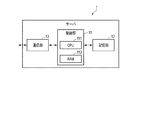
- FIG. 1 is a figure which shows typically an example of the application scene of the server which concerns on embodiment.
- FIG. 2 is a block diagram schematically showing an example of the hardware configuration of the server according to the embodiment.
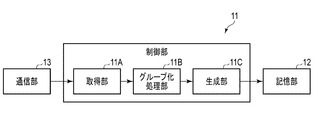
- FIG. 3 is a block diagram schematically showing an example of the configuration implemented by the software of the server according to the embodiment.
- FIG. 4 is a diagram showing some examples of groups constructed by the server according to the embodiment.
- FIG. 5 is a view schematically showing an example of a display screen of the portable terminal according to the embodiment.
- FIG. 6 is a flowchart illustrating an example of the processing procedure of the server according to the embodiment.
- FIG. 1 is a figure which shows typically an example of the application scene of the server 1 which concerns on embodiment.
- the server 1 has an acquisition unit 11A, a grouping processing unit 11B, and a generation unit 11C.
- the acquisition unit 11A acquires information on the health of a plurality of subjects.
- the acquisition unit 11A can acquire information on the health of each of a plurality of subjects based on the input of the information on their own health by each of the plurality of subjects.
- the acquisition unit 11A acquires biological information of each of a plurality of subjects.
- Acquisition part 11A can acquire information about each health of a plurality of subjects based on living body information on each of a plurality of subjects.
- the grouping processing unit 11B constructs one or more groups including one or more subjects among a plurality of subjects according to the information on health. Furthermore, the grouping processing unit 11B can also process such that each of the one or more groups includes one or more medical personnel.
- the generation unit 11C generates a room that shares the posting message for each of the one or more groups.
- One room can share, within the members, posting messages from members (one or more subjects and one or more medical workers) belonging to a group associated with the room.
- FIG. 2 is a block diagram schematically showing an example of the hardware configuration of the server 1 according to the embodiment.
- the server 1 is an example of an information processing apparatus.
- the server 1 includes a control unit 11, a storage unit 12, and a communication unit 13.
- the control unit 11 controls each component of the server 1.
- the control unit 11 includes a CPU 111 (Central Processing Unit) 111, a RAM (Random Access Memory) 112, and the like.
- the CPU 111 is an example of a processor.
- the control unit 11 may include a plurality of processors.
- the control unit 11 develops the program stored in the storage unit 12 on the RAM 112.
- the control unit 11 interprets and executes the program developed in the RAM 112 by the CPU 111 to control each component of the server 1. The configuration of each unit implemented in the control unit 11 by the program will be described later.
- the storage unit 12 stores programs, data, and the like.
- the storage unit 12 is a non-volatile memory such as a hard disk drive or a solid state drive.
- the storage unit 12 stores a program that causes the control unit 11 or the CPU 111 to function as each unit included in the server 1.
- the program can also be referred to as an instruction to operate the control unit 11 or the CPU 111.
- the storage unit 12 stores data used to control the server 1 and data for setting various functions of the server 1.
- the communication unit 13 is an interface for wirelessly communicating with an apparatus other than the server 1.
- the communication unit 13 includes a wireless local area network (LAN) module.
- the communication unit 13 communicates with the mobile terminal 2 via the network.
- the communication unit 13 outputs the information received from the portable terminal 2 to the control unit 11 via the network.
- the network is the Internet, but is not limited thereto.
- the portable terminal 2 is a smart phone, a tablet terminal, etc., it is not restricted to these.
- the portable terminal 2 acquires blood pressure values (systolic blood pressure SBP (Diastolic Blood Pressure) and diastolic blood pressure DBP (Diastolic Blood Pressure)) from the sphygmomanometer 3 by near field communication such as Bluetooth (registered trademark), for example. Can.
- the portable terminal 2 transmits the blood pressure value to the server 1.
- the sphygmomanometer 3 is an example of a biological information measurement device.
- the blood pressure value is an example of biological information.
- the portable terminal 2 may acquire biological information from a biological information measuring device of a type different from that of the sphygmomanometer 3 and transmit the biological information to the server 1.
- the biological information may be, but is not limited to, elements related to the subject such as electrocardiogram, pulse rate, body temperature, bone density, height, weight, body fat rate, activity amount and number of steps.
- FIG. 3 is a block diagram which shows typically an example of the structure mounted by the program of the server 1 which concerns on embodiment.
- the control unit 11 implements an acquisition unit 11A, a grouping processing unit 11B, and a generation unit 11C.
- the acquisition unit 11A will be described.
- the acquisition unit 11A acquires information on the health of a plurality of subjects.
- the information on health is information indicating any one of one or more ranks defined for the index on health.
- the index is, but not limited to, a blood pressure value or a body mass index (BMI).
- BMI body mass index
- a rank corresponding to high blood pressure systolic blood pressure of 140 mmHg or more and diastolic blood pressure of 90 mmHg or more
- a rank corresponding to BMI of 25 or more and less than 30 and a rank corresponding to BMI of 30 or more and less than 35 are defined.
- the number of ranks defined in the index and the numerical range associated with each rank can be arbitrarily set and changed.
- the information on health is, for example, information indicating the presence or absence of a suspected disease.
- the disease is, but not limited to, myocardial infarction and the like.
- the acquisition unit 11A can acquire information on the health of each of a plurality of subjects based on the input of the information on their own health by each of the plurality of subjects.
- acquisition unit 11A acquires information on the health of any one target person.
- Acquisition part 11A acquires information about a subject's health by cooperating with personal digital assistant 2 as follows, for example.
- the subject activates a predetermined application using the portable terminal 2 and inputs information on his / her health. For example, when the subject's blood pressure value belongs to a rank corresponding to high blood pressure, the subject inputs a rank corresponding to high blood pressure as an index of the blood pressure value. Similarly, if there is a rank to which one's own BMI belongs among one or more ranks specified for the index of BMI, the subject inputs that rank. Similarly, the subject inputs the presence or absence of suspicion of his / her own disease.
- the portable terminal 2 transmits, to the server 1, information on health based on the input by the subject and identification information of the subject.
- the acquisition unit 11A acquires information on the health of the subject and identification information of the subject from the portable terminal 2 via the communication unit 13.
- the acquisition unit 11A stores the information on the health of the subject and the identification information of the subject in the storage unit 12.
- the storage unit 12 associates and stores information on the health of the subject and the identification information of the subject.
- the acquisition unit 11A can acquire information on the health of a plurality of subjects.
- the storage unit 12 can store information on health and identification information in association with each subject.
- the acquiring unit 11A replaces the input of the information on the health of the subject with each of the plurality of subjects, based on the biological information of each of the plurality of subjects collected by the portable terminal 2, It is possible to obtain information on each subject's health.
- acquisition unit 11A acquires information on the health of any one target person.
- Acquisition part 11A acquires information about a subject's health by cooperating with personal digital assistant 2 as follows, for example.
- the portable terminal 2 collects biological information of the subject person.
- the portable terminal 2 can collect the biological information of the subject person measured by the biological information measurement device by communicating with the biological information measurement device.
- the portable terminal 2 can collect the blood pressure value of the subject measured by the sphygmomanometer 3 by communicating with the sphygmomanometer 3.
- the portable terminal 2 can collect the subject's weight measured by the weight scale by communicating with the weight scale.
- the portable terminal 2 can collect the biometric information of the subject based on the input of the biometric information by the subject.
- the subject activates a predetermined application using the portable terminal 2 and inputs his or her blood pressure value or weight. Thereby, the portable terminal 2 can collect the blood pressure value or the weight of the subject.
- the portable terminal 2 transmits the biometric information of the object person and the identification information of the object person related to the biometric information to the server 1.
- the acquisition unit 11A acquires, from the portable terminal 2, the biometric information of the target person and the identification information of the target person collected by the portable terminal 2 via the communication unit 13.
- the acquisition unit 11A causes the storage unit 12 to store the biometric information of the subject and the identification information of the subject.
- the storage unit 12 associates and stores the biometric information of the object person and the identification information of the object person.
- the acquiring unit 11A can acquire biological information of a plurality of subjects. Thereby, the storage unit 12 can associate and store the biometric information and the identification information for each subject.
- the acquisition unit 11A acquires information on the health of the subject based on the biological information acquired as described above. For example, as described below, the acquiring unit 11A acquires, as information related to health, information indicating any rank among one or more ranks defined for an index related to health based on biological information.
- the acquisition unit 11A refers to a blood pressure value as biological information. In this example, the acquisition unit 11A determines whether the blood pressure value of the subject belongs to a rank corresponding to high blood pressure. When the blood pressure value of the subject belongs to a rank corresponding to high blood pressure, the acquisition unit 11A acquires, as the information on the health of the subject, information indicating a rank corresponding to high blood pressure.
- the acquisition unit 11A refers to the height and weight of the subject as the biological information.
- the acquisition unit 11A calculates the BMI of the subject based on the height and weight of the subject.
- the acquisition unit 11A determines whether or not there is a rank to which the BMI of the subject belongs to among one or more ranks defined for the index of the BMI. If there is a rank to which the BMI of the subject belongs, the acquiring unit 11A acquires information indicating the rank to which the BMI of the subject belongs, as the information on the health of the subject.
- the acquiring unit 11A acquires information indicating the presence or absence of a suspicion of a disease as information on health based on biological information.
- the acquisition unit 11A may refer to a guideline that defines the relationship between the biological information and the suspicion of the disease.
- this guideline when the element X1 to be biological information does not satisfy the reference value Y1, it can be defined that there is a suspicion of the disease Z1.
- the acquisition unit 11A can acquire information regarding the presence or absence of a suspected disease based on the biological information.
- the acquisition unit 11A causes the storage unit 12 to store information on the health of the subject.
- the storage unit 12 associates and stores information on the health of the subject and the identification information of the subject. Similarly, the acquisition unit 11A can acquire information on the health of a plurality of subjects. Thereby, the storage unit 12 can store information on health and identification information in association with each subject.
- the grouping processing unit 11B will be described. For example, as described below, the grouping processing unit 11B constructs one or more groups including one or more subjects among a plurality of subjects according to information on health.
- the grouping processing unit 11B refers to the information related to the health associated with each subject stored in the storage unit 12.
- the grouping processing unit 11 ⁇ / b> B extracts all the subjects associated with the information on the first health among all the subjects stored in the storage unit 12.
- the grouping processing unit 11B constructs a group including all the subjects associated with the first health related information. All subjects associated with the first health information belong to the group corresponding to the first health information.
- the grouping processing unit 11B extracts all the subjects associated with the information on the second health among all the subjects stored in the storage unit 12.
- the grouping processing unit 11B constructs a group including all the subjects associated with the second health information. All subjects associated with the second health information belong to the group corresponding to the second health information.
- each of the one or more groups constructed as described above includes one or more medical workers.
- Healthcare workers are those who have knowledge about health.
- health care workers may be, but are not limited to, a public health nurse or a dietitian.
- the grouping processing unit 11B causes the storage unit 12 to store information on one or more groups.
- the grouping processing unit 11B outputs information on one or more groups to the generation unit 11C.
- the generation unit 11C will be described.
- the generation unit 11C generates, for example, a room sharing the posting message for each of one or more groups as follows.
- the generation unit 11C acquires information on one or more groups from the grouping processing unit 11B.
- the generation unit 11C generates a room sharing the posting message for each of the one or more groups with reference to the information on the one or more groups.
- One room can share, within the members, posting messages from members (one or more subjects and one or more medical workers) belonging to a group associated with the room.
- the generation unit 11C causes the storage unit 12 to store a room for each of one or more groups. An example of the display screen on the portable terminal 2 of the room generated by the generation unit 11C will be described later.
- FIG. 4 is a diagram showing some examples of groups constructed by the server 1 according to the embodiment.
- the grouping processing unit 11B constructs first to fourth groups including one or more subjects among a plurality of subjects according to the information on health.
- the grouping processing unit 11B constructs a first group including one or more subjects and a registered dietician associated with information indicating a rank corresponding to high blood pressure.
- the grouping processing unit 11B constructs a second group including one or more subjects and a registered dietician associated with information indicating a rank corresponding to a BMI of 25 or more and less than 30.
- the grouping processing unit 11B constructs a third group including one or more subjects and a registered dietitian associated with information indicating a rank corresponding to a BMI of 30 or more and less than 35.
- the grouping processing unit 11B constructs a fourth group including one or more subjects and a registered dietitian associated with information indicating a suspected myocardial infarction.
- the first group is a group corresponding to information on health that is different from the second group, the third group and the fourth group. Therefore, members belonging to the first group may overlap with members belonging to the second group or the third group. Similarly, members belonging to the first group may overlap with members belonging to the fourth group.
- the second group and the third group are both groups that have BMI as an index. Therefore, members belonging to the third group do not overlap with members belonging to the second group except for the dietitian.
- FIG. 5 is a view schematically showing an example of a display screen of the portable terminal 2 according to the embodiment.
- the owner of the mobile terminal 2 is the target person A.
- the portable terminal 2 can download a room of one or more groups to which the target person A belongs from the server 1.
- a room is for sharing post messages for each of one or more groups.
- the portable terminal 2 can display a room of one group selected from the one or more groups to which the target person A belongs.
- the portable terminal 2 can display the room of the first group as shown in FIG. 5 based on the display instruction of the room of the first group by the object person A.
- the portable terminal 2 transmits a post message to the server 1 based on the input of the post message by the target person A to the room of the first group. At the same time, the portable terminal 2 displays a post message in the room of the first group downloaded to the portable terminal 2.
- the mobile terminal 2 receives from the server 1 a post message by a member other than the target person A belonging to the first group, and displays the post message in the room of the first group downloaded to the mobile terminal 2.
- FIG. 6 is a flowchart illustrating an example of the processing procedure of the server 1 according to the embodiment.
- the process sequence demonstrated below is only an example, and each process may be changed as much as possible.
- processing procedures described below can omit, replace, and add steps as appropriate.
- the acquisition unit 11A acquires information on the health of a plurality of subjects (step S101).
- the acquiring unit 11A can acquire information on health for each of a plurality of subjects.
- the grouping processing unit 11B constructs one or more groups including one or more subjects among the plurality of subjects according to the information on health (step S102). In step S102, the grouping processing unit 11B can construct one or more groups as illustrated. In step S102, the grouping processing unit 11B can also process such that each of the one or more groups includes one or more medical workers.
- the generation unit 11C generates a room sharing the post message for each of the one or more groups (step S103). In step S103, the generation unit 11C can generate one or more rooms, as illustrated.
- the server 1 can also add one or more new target persons to a group associated with the room.
- the server 1 constructs one or more groups including one or more subjects among a plurality of subjects according to information related to health, and one or more A room can be created to share post messages for each of the groups of.
- the medical staff can provide the advice not for each subject but for each group, so that the load of providing the advice can be reduced.
- the medical staff can streamline the work related to health management for the target person.
- the target person can use the room as a place of learning or interaction with another target person who has the same trouble or trouble.
- the server 1 can acquire the information on the health of each of the plurality of subjects based on the biological information of each of the plurality of subjects.
- the server 1 can obtain highly accurate information on the health of the subject.
- the subject can eliminate the burden of inputting information related to health.
- the server 1 can be processed such that each of the one or more groups includes one or more medical personnel. This allows the target person to utilize the room as a place of learning or interaction with a healthcare professional as well as with another target person having the same trouble or trouble.
- the program for realizing the above process may be provided by being stored in a computer readable recording medium.
- the program is stored in the recording medium as an installable file or an executable file.
- the recording medium may store the program and be readable by a computer. Recording media include magnetic disks, optical disks (CD-ROM (Compact Disc-Read Only Memory), CD-R (Compact Disc-Recordable), DVD (Digital Versatile Disc), etc.), magneto-optical disks (MO (Magneto Optical), etc. And semiconductor memory.
- the program for realizing the above processing may be stored on a computer (server) connected to a network such as the Internet, and may be downloaded to the computer (client) via the network.
Landscapes
- Engineering & Computer Science (AREA)
- Health & Medical Sciences (AREA)
- Medical Informatics (AREA)
- Public Health (AREA)
- General Health & Medical Sciences (AREA)
- Primary Health Care (AREA)
- Epidemiology (AREA)
- Data Mining & Analysis (AREA)
- Business, Economics & Management (AREA)
- Signal Processing (AREA)
- Computer Networks & Wireless Communication (AREA)
- Pathology (AREA)
- Databases & Information Systems (AREA)
- Biomedical Technology (AREA)
- Tourism & Hospitality (AREA)
- Physics & Mathematics (AREA)
- Marketing (AREA)
- Strategic Management (AREA)
- Child & Adolescent Psychology (AREA)
- General Business, Economics & Management (AREA)
- General Physics & Mathematics (AREA)
- Theoretical Computer Science (AREA)
- Computing Systems (AREA)
- Human Resources & Organizations (AREA)
- Economics (AREA)
- Medical Treatment And Welfare Office Work (AREA)
- Measuring And Recording Apparatus For Diagnosis (AREA)
Abstract
医療従事者による健康管理に関する業務の効率化を図ることができる。 情報処理装置は、複数の対象者の健康に関する情報を取得する取得部と、前記健康に関する情報に応じて、前記複数の対象者のうちの1人以上の対象者を含む1以上のグループを構築するグループ化処理部と、前記1以上のグループのそれぞれについて投稿メッセージを共有するルームを生成する生成部とを備える。
Description
この発明は、対象者の健康に関する情報を処理する情報処理装置、情報処理方法及び情報処理プログラムに関する。
近年の健康志向の高まりに伴い、医療従事者に対して健康管理に関するアドバイスを求める人が増えてきている。医療従事者には、高血圧や疾病の疑いなど、健康管理の対象者が抱えている健康上の課題を把握した上で、対象者に対してアドバイスを提供することが求められている。
また、対象者の健康上の課題を検出するための技術が提案されている。日本国特開2013-233256号公報には、心拍変動指数を精神疾患の診断や発病リスクの検出に利用する技術が開示されている。
医療従事者は、担当する全ての対象者に対して、対面または電子的手段(例えばチャットなど)で、健康管理に関するアドバイスを提供しなければならない。しかしながら、全ての対象者にアドバイスを提供する作業は、医療従事者にとって負荷が大きい。特許文献1には、医療従事者によるアドバイスの提供に要する負荷を軽減するための技術は開示されていない。
この発明は、医療従事者による健康管理に関する業務の効率化を図る情報処理装置、情報処理方法及び情報処理プログラムを提供しようとするものである。
この発明の第1の態様は、複数の対象者の健康に関する情報を取得する取得部と、前記健康に関する情報に応じて、前記複数の対象者のうちの1人以上の対象者を含む1以上のグループを構築するグループ化処理部と、前記1以上のグループのそれぞれについて投稿メッセージを共有するルームを生成する生成部とを備える情報処理装置である。
この発明の第1の態様によれば、医療従事者は、対象者毎ではなくグループ毎にアドバイスを提供することできるので、アドバイスを提供する負荷を減らすことができる。その結果、医療従事者は、対象者に対する健康管理に関する業務の効率化を図ることができる。また、対象者は、同じ悩みや困りごとを持つ別の対象者との学びの場または交流の場として、ルームを活用することができる。
この発明の第1の態様によれば、医療従事者は、対象者毎ではなくグループ毎にアドバイスを提供することできるので、アドバイスを提供する負荷を減らすことができる。その結果、医療従事者は、対象者に対する健康管理に関する業務の効率化を図ることができる。また、対象者は、同じ悩みや困りごとを持つ別の対象者との学びの場または交流の場として、ルームを活用することができる。
この発明の第2の態様は、第1の態様の情報処理装置において、前記健康に関する情報が、前記複数の対象者のそれぞれの生体情報に基づいて取得されるようにしたものである。
この発明の第2の態様によれば、情報処理装置は、精度の高い対象者の健康に関する情報を取得することができる。また、対象者は、健康に関する情報を入力する負荷を省くことができる。
この発明の第3の態様は、第1の態様または第2の態様の情報処理装置において、1以上のグループのそれぞれが、1人以上の医療従事者を含むようにしたものである。
この発明の第3の態様によれば、対象者は、同じ悩みや困りごとを持つ別の対象者とだけでなく、医療従事者との学びの場または交流の場として、ルームを活用することができる。
この発明の第4の態様は、複数の対象者の健康に関する情報を取得する取得過程と、前記健康に関する情報に応じて、前記複数の対象者のうちの1人以上の対象者を含む1以上のグループを構築するグループ化処理過程と、前記1以上のグループのそれぞれについて投稿メッセージを共有するルームを生成する生成過程とを備える情報処理方法である。
この発明の第4の態様によれば、情報処理方法は、上述の第1の態様と同様の効果を得ることができる。
この発明の第5の態様は、第1の態様から第3の態様のうちの何れかの態様の情報処理装置が備える各部としてコンピュータを機能させる情報処理プログラムである。
この発明の第5の態様によれば、情報処理プログラムは、上述の第1の態様と同様の効果を得ることができる。
本発明によれば、医療従事者による健康管理に関する業務の効率化を図る技術を提供することができる。
以下、図面を参照して、この発明に係る実施形態を説明する。
[適用例]
図1は、実施形態に係るサーバ1の適用場面の一例を模式的に示す図である。
サーバ1は、取得部11Aと、グループ化処理部11Bと、生成部11Cとを実装している。
図1は、実施形態に係るサーバ1の適用場面の一例を模式的に示す図である。
サーバ1は、取得部11Aと、グループ化処理部11Bと、生成部11Cとを実装している。
取得部11Aは、複数の対象者の健康に関する情報を取得する。一例では、取得部11Aは、複数の対象者のそれぞれによる自己の健康に関する情報の入力に基づいて、複数の対象者のそれぞれの健康に関する情報を取得することができる。別の例では、取得部11Aは、複数の対象者のそれぞれの生体情報を取得する。取得部11Aは、複数の対象者のそれぞれの生体情報に基づいて、複数の対象者のそれぞれの健康に関する情報を取得することができる。
グループ化処理部11Bは、健康に関する情報に応じて、複数の対象者のうちの1人以上の対象者を含む1以上のグループを構築する。さらに、グループ化処理部11Bは、1以上のグループのそれぞれが1人以上の医療従事者を含むように処理することもできる。
生成部11Cは、1以上のグループのそれぞれについて投稿メッセージを共有するルームを生成する。1つのルームは、そのルームと対応付けられているグループに属するメンバー(1人以上の対象者及び1人以上の医療従事者)からの投稿メッセージをメンバー内で共有することができる。
以上のとおり、本実施形態によれば、医療従事者による健康管理に関する業務の効率化を図ることできる。
[構成例]
(サーバ)
<ハードウェア構成>
図2は、実施形態に係るサーバ1のハードウェア構成の一例を模式的に示すブロック図である。サーバ1は、情報処理装置の一例である。
サーバ1は、制御部11と、記憶部12と、通信部13とを備えている。
(サーバ)
<ハードウェア構成>
図2は、実施形態に係るサーバ1のハードウェア構成の一例を模式的に示すブロック図である。サーバ1は、情報処理装置の一例である。
サーバ1は、制御部11と、記憶部12と、通信部13とを備えている。
制御部11は、サーバ1の各構成要素を制御する。制御部11は、CPU111(Central Processing Unit)111及びRAM(Random Access Memory)112などを備えている。CPU111は、プロセッサの一例である。制御部11は、複数のプロセッサを備えていてもよい。制御部11は、記憶部12に記憶されているプログラムをRAM112に展開する。制御部11は、RAM112に展開されたプログラムをCPU111により解釈及び実行して、サーバ1の各構成要素を制御する。プログラムによって制御部11に実装される各部の構成については後述する。
記憶部12は、プログラム及びデータなどを記憶する。例えば、記憶部12は、ハードディスクドライブまたはソリッドステートドライブなどの不揮発性メモリである。記憶部12は、サーバ1が備える各部として制御部11またはCPU111を機能させるプログラムを記憶する。プログラムは、制御部11またはCPU111を動作させる命令ということもできる。記憶部12は、サーバ1を制御するために用いられるデータ及びサーバ1の各種機能を設定するためのデータなどを記憶する。
通信部13は、サーバ1とは別の機器と無線で通信するためのインタフェースである。通信部13は、無線LAN(Local Area Network)モジュールを含む。通信部13は、ネットワークを介して、携帯端末2と通信する。通信部13は、ネットワークを介して携帯端末2から受信した情報を制御部11へ出力する。例えば、ネットワークは、インターネットであるが、これに限られるものではない。
ここで、携帯端末2について説明する。携帯端末2は、スマートフォン及びタブレット端末などであるが、これらに限られるものではない。携帯端末2は、例えばブルートゥース(登録商標)などの近距離無線通信により、血圧計3から血圧値(収縮期血圧SBP(Systolic Blood Pressure)及び拡張期血圧DBP(Diastolic Blood Pressure))を取得することができる。携帯端末2は、血圧値をサーバ1へ送信する。血圧計3は、生体情報測定装置の一例である。血圧値は、生体情報の一例である。なお、携帯端末2は、血圧計3とは異なる種別の生体情報測定装置から生体情報を取得し、生体情報をサーバ1へ送信するようにしてもよい。生体情報は、心電、脈拍数、体温、骨密度、身長、体重、体脂肪率、活動量及び歩数など対象者に関する要素であればよく、これらに限られるものではない。
<ソフトウェアにより実装される構成>
図3は、実施形態に係るサーバ1のプログラムによって実装される構成の一例を模式的に示すブロック図である。
図3は、実施形態に係るサーバ1のプログラムによって実装される構成の一例を模式的に示すブロック図である。
制御部11は、取得部11Aと、グループ化処理部11Bと、生成部11Cとを実装する。
取得部11Aについて説明する。
取得部11Aは、複数の対象者の健康に関する情報を取得する。
取得部11Aについて説明する。
取得部11Aは、複数の対象者の健康に関する情報を取得する。
一例では、健康に関する情報は、健康に関する指標について規定される1以上のランクのうちの何れかのランクを示す情報である。例えば、指標は、血圧値またはBMI(Body Mass Index)などであるが、これらに限られるものではない。指標が血圧値である場合、例えば、高血圧(収縮期血圧140mmHg以上及び拡張期血圧90mmHg以上)に相当するランクが規定されているものとする。指標がBMIである場合、BMIが25以上30未満に相当するランク及びBMIが30以上35未満に相当するランクが規定されているものとする。なお、指標に規定されるランク数及び各ランクに対応付けられる数値範囲は任意に設定変更することができる。
別の例では、健康に関する情報は、例えば、疾病の疑いの有無を示す情報である。例えば、疾病は、心筋梗塞などであるが、これに限られるものではない。
次に、取得部11Aが複数の対象者の健康に関する情報を取得する例について説明する。
一例では、取得部11Aは、複数の対象者のそれぞれによる自己の健康に関する情報の入力に基づいて、複数の対象者のそれぞれの健康に関する情報を取得することができる。ここでは、取得部11Aが任意の1人の対象者の健康に関する情報を取得する例について説明する。取得部11Aは、例えば以下のように携帯端末2と連携することで、対象者の健康に関する情報を取得する。
一例では、取得部11Aは、複数の対象者のそれぞれによる自己の健康に関する情報の入力に基づいて、複数の対象者のそれぞれの健康に関する情報を取得することができる。ここでは、取得部11Aが任意の1人の対象者の健康に関する情報を取得する例について説明する。取得部11Aは、例えば以下のように携帯端末2と連携することで、対象者の健康に関する情報を取得する。
対象者は、携帯端末2を用いて所定のアプリケーションを起動し、自身の健康に関する情報を入力する。例えば、対象者は、自身の血圧値が高血圧に相当するランクに属する場合、血圧値の指標について、高血圧に相当するランクを入力する。同様に、対象者は、BMIの指標について規定される1以上のランクのうち自身のBMIの属するランクがある場合、そのランクを入力する。同様に、対象者は、自身の疾病の疑いの有無を入力する。携帯端末2は、対象者による入力に基づく健康に関する情報及び対象者の識別情報をサーバ1へ送信する。
取得部11Aは、通信部13を介して、対象者の健康に関する情報及び対象者の識別情報を携帯端末2から取得する。取得部11Aは、対象者の健康に関する情報及び対象者の識別情報を記憶部12に記憶させる。記憶部12は、対象者の健康に関する情報と、この対象者の識別情報とを関連付けて記憶する。
取得部11Aは、同様に、複数の対象者の健康に関する情報を取得することができる。これにより、記憶部12は、健康に関する情報と識別情報とを対象者毎に関連付けて記憶することができる。
別の例では、取得部11Aは、複数の対象者のそれぞれによる自己の健康に関する情報の入力に替えて、携帯端末2で収集される複数の対象者のそれぞれの生体情報に基づいて、複数の対象者のそれぞれの健康に関する情報を取得することができる。ここでは、取得部11Aが任意の1人の対象者の健康に関する情報を取得する例について説明する。取得部11Aは、例えば以下のように携帯端末2と連携することで、対象者の健康に関する情報を取得する。
携帯端末2は、対象者の生体情報を収集する。一例では、携帯端末2は、生体情報測定装置と通信することで、生体情報測定装置で測定される対象者の生体情報を収集することができる。例えば、携帯端末2は、血圧計3と通信することで、血圧計3で測定される対象者の血圧値を収集することができる。例えば、携帯端末2は、体重計と通信することで、体重計で測定される対象者の体重を収集することができる。別の例では、携帯端末2は、対象者による生体情報の入力に基づいて、対象者の生体情報を収集することができる。例えば、対象者は、携帯端末2を用いて所定のアプリケーションを起動し、自身の血圧値または体重などを入力する。これにより、携帯端末2は、対象者の血圧値または体重などを収集することができる。携帯端末2は、対象者の生体情報及び生体情報に関連する対象者の識別情報をサーバ1へ送信する。
取得部11Aは、通信部13を介して、携帯端末2で収集される対象者の生体情報及び対象者の識別情報を携帯端末2から取得する。取得部11Aは、対象者の生体情報及び対象者の識別情報を記憶部12に記憶させる。記憶部12は、対象者の生体情報と、この対象者の識別情報とを関連付けて記憶する。取得部11Aは、同様に、複数の対象者の生体情報を取得することができる。これにより、記憶部12は、生体情報と識別情報とを対象者毎に関連付けて記憶することができる。
取得部11Aは、上述のように取得した生体情報に基づいて、対象者の健康に関する情報を取得する。
取得部11Aは、例えば以下のように、生体情報に基づいて、健康に関する情報として、健康に関する指標について規定される1以上のランクのうちの何れかのランクを示す情報を取得する。
取得部11Aは、例えば以下のように、生体情報に基づいて、健康に関する情報として、健康に関する指標について規定される1以上のランクのうちの何れかのランクを示す情報を取得する。
一例では、取得部11Aは、生体情報として血圧値を参照する。この例では、取得部11Aは、対象者の血圧値が高血圧に相当するランクに属するか否かを判断する。対象者の血圧値が高血圧に相当するランクに属する場合、取得部11Aは、対象者の健康に関する情報として、高血圧に相当するランクを示す情報を取得する。
別の例では、取得部11Aは、生体情報として対象者の身長及び体重を参照する。この例では、取得部11Aは、対象者の身長及び体重に基づいて、対象者のBMIを算出する。取得部11Aは、BMIの指標について規定される1以上のランクのうち対象者のBMIの属するランクがあるか否かを判断する。対象者のBMIの属するランクがある場合、取得部11Aは、対象者の健康に関する情報として、対象者のBMIの属するランクを示す情報を取得する。
取得部11Aは、例えば以下のように、生体情報に基づいて、健康に関する情報として、疾病の疑いの有無を示す情報を取得する。
例えば、取得部11Aは、生体情報と疾病の疑いとの関係を規定するガイドラインを参照するようにしてもよい。例えば、このガイドラインでは、生体情報となる要素X1が基準値Y1を満たさない場合、疾病Z1の疑いがあると規定することができる。また、生体情報となる要素X2が基準値Y2を満たさず、かつ、要素X3が基準値Y3を満たさない場合、疾病Z2の疑いがあると規定することができる。このように、取得部11Aは、生体情報に基づいて、疾病の疑いの有無に関する情報を取得することができる。取得部11Aは、対象者の健康に関する情報を記憶部12に記憶させる。記憶部12は、対象者の健康に関する情報と、この対象者の識別情報とを関連付けて記憶する。取得部11Aは、同様に、複数の対象者の健康に関する情報を取得することができる。これにより、記憶部12は、健康に関する情報と識別情報とを対象者毎に関連付けて記憶することができる。
グループ化処理部11Bについて説明する。
グループ化処理部11Bは、例えば以下のように、健康に関する情報に応じて、複数の対象者のうちの1人以上の対象者を含む1以上のグループを構築する。
グループ化処理部11Bは、例えば以下のように、健康に関する情報に応じて、複数の対象者のうちの1人以上の対象者を含む1以上のグループを構築する。
グループ化処理部11Bは、記憶部12に記憶されている対象者毎に関連付けられている健康に関する情報を参照する。グループ化処理部11Bは、記憶部12に記憶されている全ての対象者のうち、第1の健康に関する情報に関連付けられている全ての対象者を抽出する。グループ化処理部11Bは、第1の健康に関する情報に関連付けられている全ての対象者を含むグループを構築する。第1の健康に関する情報に関連付けられている全ての対象者は、第1の健康に関する情報に対応するグループに属する。同様に、グループ化処理部11Bは、記憶部12に記憶されている全ての対象者のうち、第2の健康に関する情報に関連付けられている全ての対象者を抽出する。グループ化処理部11Bは、第2の健康に関する情報に関連付けられている全ての対象者を含むグループを構築する。第2の健康に関する情報に関連付けられている全ての対象者は、第2の健康に関する情報に対応するグループに属する。
グループ化処理部11Bが構築するグループのいくつかの例については後述する。
グループ化処理部11Bが構築するグループのいくつかの例については後述する。
さらに、グループ化処理部11Bは、上述のように構築した1以上のグループのそれぞれが1人以上の医療従事者を含むように処理することもできる。医療従事者は、健康に関する知識を有する者である。例えば、医療従事者は、保健師または管理栄養士などであるが、これらに限られるものではない。
グループ化処理部11Bは、1以上のグループに関する情報を記憶部12に記憶させる。グループ化処理部11Bは、1以上のグループに関する情報を生成部11Cへ出力する。
生成部11Cについて説明する。
生成部11Cは、例えば以下のように、1以上のグループのそれぞれについて投稿メッセージを共有するルームを生成する。
生成部11Cは、例えば以下のように、1以上のグループのそれぞれについて投稿メッセージを共有するルームを生成する。
生成部11Cは、1以上のグループに関する情報をグループ化処理部11Bから取得する。生成部11Cは、1以上のグループに関する情報を参照して、1以上のグループのそれぞれについて投稿メッセージを共有するルームを生成する。1つのルームは、そのルームと対応付けられているグループに属するメンバー(1人以上の対象者及び1人以上の医療従事者)からの投稿メッセージをメンバー内で共有することができる。生成部11Cは、1以上のグループのそれぞれについてのルームを記憶部12に記憶させる。
生成部11Cが生成したルームの携帯端末2における表示画面の例については後述する。
生成部11Cが生成したルームの携帯端末2における表示画面の例については後述する。
(グループ構成例)
図4は、実施形態に係るサーバ1によって構築されるグループのいくつかの例を示す図である。
例えば、グループ化処理部11Bは、健康に関する情報に応じて、複数の対象者のうちの1人以上の対象者を含む第1~第4グループを構築する。
図4は、実施形態に係るサーバ1によって構築されるグループのいくつかの例を示す図である。
例えば、グループ化処理部11Bは、健康に関する情報に応じて、複数の対象者のうちの1人以上の対象者を含む第1~第4グループを構築する。
グループ化処理部11Bは、高血圧に相当するランクを示す情報に関連付けられている1人以上の対象者及び管理栄養士を含む第1グループを構築する。グループ化処理部11Bは、BMIが25以上30未満に相当するランクを示す情報に関連付けられている1人以上の対象者及び管理栄養士を含む第2グループを構築する。グループ化処理部11Bは、BMIが30以上35未満に相当するランクを示す情報に関連付けられている1人以上の対象者及び管理栄養士を含む第3グループを構築する。グループ化処理部11Bは、心筋梗塞の疑いを示す情報に関連付けられている1人以上の対象者及び管理栄養士を含む第4グループを構築する。
第1グループは、第2グループ、第3グループ及び第4のグループとは異なる健康に関する情報に対応するグループである。そのため、第1グループに属するメンバーは、第2グループまたは第3のグループに属するメンバーと重複していてもよい。同様に、第1グループに属するメンバーは、第4グループに属するメンバーと重複していてもよい。
第2グループ及び第3グループは、いずれもBMIを指標とするグループである。そのため、第3グループに属するメンバーは、管理栄養士を除いて、第2グループに属するメンバーと重複することはない。
(ルームの表示例)
図5は、実施形態に係る携帯端末2の表示画面の一例を模式的に示す図である。
ここでは、携帯端末2の所有者を対象者Aとする。携帯端末2は、対象者Aの属する1以上のグループのルームをサーバ1からダウンロードすることができる。ルームは、1以上のグループのそれぞれについて投稿メッセージを共有するためのものである。携帯端末2は、対象者Aの属する1以上のグループのうちから選択された1つのグループのルームを表示することができる。図5に示すように、携帯端末2は、対象者Aによる第1グループのルームの表示指示に基づいて、図5に示すように第1グループのルームを表示することができる。
図5は、実施形態に係る携帯端末2の表示画面の一例を模式的に示す図である。
ここでは、携帯端末2の所有者を対象者Aとする。携帯端末2は、対象者Aの属する1以上のグループのルームをサーバ1からダウンロードすることができる。ルームは、1以上のグループのそれぞれについて投稿メッセージを共有するためのものである。携帯端末2は、対象者Aの属する1以上のグループのうちから選択された1つのグループのルームを表示することができる。図5に示すように、携帯端末2は、対象者Aによる第1グループのルームの表示指示に基づいて、図5に示すように第1グループのルームを表示することができる。
携帯端末2は、第1グループのルームに対する対象者Aによる投稿メッセージの入力に基づいて、投稿メッセージをサーバ1へ送信する。これと共に、携帯端末2は、携帯端末2にダウンロードされている第1グループのルームに投稿メッセージを表示する。携帯端末2は、第1グループに属する対象者A以外のメンバーによる投稿メッセージをサーバ1から受信し、携帯端末2にダウンロードされている第1グループのルームに表示する。
このように、第1グループのルームでは、第1グループに属するメンバー(1人以上の対象者及び1人以上の医療従事者)のみが投稿メッセージをアップロードすることができる。第1グループのルームにアップロードされた投稿メッセージは、第1グループに属するメンバー以外の人が見ることはできない。
[動作例]
(サーバの動作)
図6は、実施形態に係るサーバ1の処理手順の一例を示すフローチャートである。なお、以下で説明する処理手順は一例に過ぎず、各処理は可能な限り変更されてよい。また、以下で説明する処理手順は、適宜、ステップの省略、置換及び追加をすることができる。
(サーバの動作)
図6は、実施形態に係るサーバ1の処理手順の一例を示すフローチャートである。なお、以下で説明する処理手順は一例に過ぎず、各処理は可能な限り変更されてよい。また、以下で説明する処理手順は、適宜、ステップの省略、置換及び追加をすることができる。
取得部11Aは、複数の対象者の健康に関する情報を取得する(ステップS101)。ステップS101では、取得部11Aは、例示したように、複数の対象者のそれぞれについて、健康に関する情報を取得することができる。
グループ化処理部11Bは、健康に関する情報に応じて、複数の対象者のうちの1人以上の対象者を含む1以上のグループを構築する(ステップS102)。ステップS102では、グループ化処理部11Bは、例示したように、1以上のグループを構築することができる。ステップS102では、グループ化処理部11Bは、1以上のグループのそれぞれが1人以上の医療従事者を含むように処理することもできる。
生成部11Cは、1以上のグループのそれぞれについて投稿メッセージを共有するルームを生成する(ステップS103)。ステップS103では、生成部11Cは、例示したように、1以上のルームを生成することができる。
なお、サーバ1は、ルームを生成した後であっても、そのルームと対応付けられているグループに新たな1以上の対象者を追加することもできる。
[作用・効果]
以上詳述したように、この発明の実施形態では、サーバ1は、健康に関する情報に応じて、複数の対象者のうちの1人以上の対象者を含む1以上のグループを構築し、1以上のグループのそれぞれについて投稿メッセージを共有するルームを生成することができる。これにより、医療従事者は、対象者毎ではなくグループ毎にアドバイスを提供することできるので、アドバイスを提供する負荷を減らすことができる。その結果、医療従事者は、対象者に対する健康管理に関する業務の効率化を図ることができる。また、対象者は、同じ悩みや困りごとを持つ別の対象者との学びの場または交流の場として、ルームを活用することができる。
以上詳述したように、この発明の実施形態では、サーバ1は、健康に関する情報に応じて、複数の対象者のうちの1人以上の対象者を含む1以上のグループを構築し、1以上のグループのそれぞれについて投稿メッセージを共有するルームを生成することができる。これにより、医療従事者は、対象者毎ではなくグループ毎にアドバイスを提供することできるので、アドバイスを提供する負荷を減らすことができる。その結果、医療従事者は、対象者に対する健康管理に関する業務の効率化を図ることができる。また、対象者は、同じ悩みや困りごとを持つ別の対象者との学びの場または交流の場として、ルームを活用することができる。
この発明の実施形態では、サーバ1は、複数の対象者のそれぞれの健康に関する情報を、複数の対象者のそれぞれの生体情報に基づいて取得することができる。これにより、サーバ1は、精度の高い対象者の健康に関する情報を取得することができる。また、対象者は、健康に関する情報を入力する負荷を省くことができる。
この発明の実施形態では、サーバ1は、1以上のグループのそれぞれが、1人以上の医療従事者を含むように処理することができる。これにより、対象者は、同じ悩みや困りごとを持つ別の対象者とだけでなく、医療従事者との学びの場または交流の場として、ルームを活用することができる。
[変形例]
なお、上記実施形態は、例えば以下のように変更することができる。なお、以下では、上記実施形態と同様の構成要素に関しては同様の符号を用い、上記実施形態と同様の点については、適宜説明を省略している。以下の変形例は適宜組み合わせ可能である。
要するにこの発明は、上記の実施形態そのままに限定されるものではなく、実施段階ではその要旨を逸脱しない範囲で構成要素を変形して具体化できる。また、上記実施形態に開示されている複数の構成要素の適宜な組み合せにより種々の発明を形成できる。例えば、実施形態に示される全構成要素からいくつかの構成要素を削除してもよい。さらに、異なる実施形態に亘る構成要素を適宜組み合わせてもよい。
なお、上記実施形態は、例えば以下のように変更することができる。なお、以下では、上記実施形態と同様の構成要素に関しては同様の符号を用い、上記実施形態と同様の点については、適宜説明を省略している。以下の変形例は適宜組み合わせ可能である。
要するにこの発明は、上記の実施形態そのままに限定されるものではなく、実施段階ではその要旨を逸脱しない範囲で構成要素を変形して具体化できる。また、上記実施形態に開示されている複数の構成要素の適宜な組み合せにより種々の発明を形成できる。例えば、実施形態に示される全構成要素からいくつかの構成要素を削除してもよい。さらに、異なる実施形態に亘る構成要素を適宜組み合わせてもよい。
上記の実施形態の処理の少なくとも一部は、汎用のコンピュータを基本ハードウェアとして用いることでも実現可能である。上記処理を実現するプログラムは、コンピュータで読み取り可能な記録媒体に格納して提供されてもよい。プログラムは、インストール可能な形式のファイルまたは実行可能な形式のファイルとして記録媒体に記憶される。記録媒体は、プログラムを記憶でき、かつ、コンピュータが読み取り可能であればよい。記録媒体は、磁気ディスク、光ディスク(CD-ROM(Compact Disc-Read Only Memory)、CD-R(Compact Disc-Recordable)、DVD(Digital Versatile Disc)など)、光磁気ディスク(MO(Magneto Optical)など)及び半導体メモリなどである。また、上記処理を実現するプログラムは、インターネットなどのネットワークに接続されたコンピュータ(サーバ)上に格納され、ネットワーク経由でコンピュータ(クライアント)にダウンロードされてもよい。
Claims (5)
- 複数の対象者の健康に関する情報を取得する取得部と、
前記健康に関する情報に応じて、前記複数の対象者のうちの1人以上の対象者を含む1以上のグループを構築するグループ化処理部と、
前記1以上のグループのそれぞれについて投稿メッセージを共有するルームを生成する生成部と、
を備える情報処理装置。 - 前記健康に関する情報は、前記複数の対象者のそれぞれの生体情報に基づいて取得される、請求項1に記載の情報処理装置。
- 前記1以上のグループのそれぞれは、1人以上の医療従事者を含む、請求項1または2に記載の情報処理装置。
- 複数の対象者の健康に関する情報を取得する取得過程と、
前記健康に関する情報に応じて、前記複数の対象者のうちの1人以上の対象者を含む1以上のグループを構築するグループ化処理過程と、
前記1以上のグループのそれぞれについて投稿メッセージを共有するルームを生成する生成過程と、
を備える情報処理方法。 - 請求項1から3のうちの何れか1項に記載の情報処理装置が備える各部としてコンピュータを機能させる情報処理プログラム。
Priority Applications (3)
| Application Number | Priority Date | Filing Date | Title |
|---|---|---|---|
| DE112018003115.2T DE112018003115T5 (de) | 2017-06-19 | 2018-06-11 | Informationsverarbeitungsvorrichtung, Informationsverarbeitungsverfahren und Informationsverarbeitungsprogramm |
| CN201880040656.2A CN110770847B (zh) | 2017-06-19 | 2018-06-11 | 信息处理装置、信息处理方法以及记录介质 |
| US16/699,906 US20200106736A1 (en) | 2017-06-19 | 2019-12-02 | Information processing device and information processing method |
Applications Claiming Priority (2)
| Application Number | Priority Date | Filing Date | Title |
|---|---|---|---|
| JP2017-120014 | 2017-06-19 | ||
| JP2017120014A JP6965035B2 (ja) | 2017-06-19 | 2017-06-19 | 情報処理装置、情報処理方法及び情報処理プログラム |
Related Child Applications (1)
| Application Number | Title | Priority Date | Filing Date |
|---|---|---|---|
| US16/699,906 Continuation US20200106736A1 (en) | 2017-06-19 | 2019-12-02 | Information processing device and information processing method |
Publications (1)
| Publication Number | Publication Date |
|---|---|
| WO2018235653A1 true WO2018235653A1 (ja) | 2018-12-27 |
Family
ID=64737593
Family Applications (1)
| Application Number | Title | Priority Date | Filing Date |
|---|---|---|---|
| PCT/JP2018/022222 Ceased WO2018235653A1 (ja) | 2017-06-19 | 2018-06-11 | 情報処理装置、情報処理方法及び情報処理プログラム |
Country Status (5)
| Country | Link |
|---|---|
| US (1) | US20200106736A1 (ja) |
| JP (1) | JP6965035B2 (ja) |
| CN (1) | CN110770847B (ja) |
| DE (1) | DE112018003115T5 (ja) |
| WO (1) | WO2018235653A1 (ja) |
Families Citing this family (1)
| Publication number | Priority date | Publication date | Assignee | Title |
|---|---|---|---|---|
| US12537107B2 (en) | 2020-11-04 | 2026-01-27 | Hill-Rom Services, Inc. | Managing caregiver messages |
Citations (2)
| Publication number | Priority date | Publication date | Assignee | Title |
|---|---|---|---|---|
| JP2002245178A (ja) * | 2001-02-16 | 2002-08-30 | Matsushita Electric Ind Co Ltd | 健康管理システム |
| JP2013161103A (ja) * | 2012-02-01 | 2013-08-19 | Tmdance Corp | 情報処理システム、及び情報処理方法 |
Family Cites Families (4)
| Publication number | Priority date | Publication date | Assignee | Title |
|---|---|---|---|---|
| JP2001325356A (ja) * | 2000-05-12 | 2001-11-22 | Fujio Matsuno | 在宅医療システムおよびその方法ならびに在宅医療システム用プログラム |
| US20150104770A1 (en) * | 2013-10-11 | 2015-04-16 | Health Dialog Services Corporation | Systems and methods for personalized incentive-based health support |
| US10084880B2 (en) * | 2013-11-04 | 2018-09-25 | Proteus Digital Health, Inc. | Social media networking based on physiologic information |
| US10978208B2 (en) * | 2013-12-05 | 2021-04-13 | International Business Machines Corporation | Patient risk stratification by combining knowledge-driven and data-driven insights |
-
2017
- 2017-06-19 JP JP2017120014A patent/JP6965035B2/ja active Active
-
2018
- 2018-06-11 CN CN201880040656.2A patent/CN110770847B/zh active Active
- 2018-06-11 WO PCT/JP2018/022222 patent/WO2018235653A1/ja not_active Ceased
- 2018-06-11 DE DE112018003115.2T patent/DE112018003115T5/de active Pending
-
2019
- 2019-12-02 US US16/699,906 patent/US20200106736A1/en not_active Abandoned
Patent Citations (2)
| Publication number | Priority date | Publication date | Assignee | Title |
|---|---|---|---|---|
| JP2002245178A (ja) * | 2001-02-16 | 2002-08-30 | Matsushita Electric Ind Co Ltd | 健康管理システム |
| JP2013161103A (ja) * | 2012-02-01 | 2013-08-19 | Tmdance Corp | 情報処理システム、及び情報処理方法 |
Also Published As
| Publication number | Publication date |
|---|---|
| JP6965035B2 (ja) | 2021-11-10 |
| JP2019003572A (ja) | 2019-01-10 |
| CN110770847A (zh) | 2020-02-07 |
| CN110770847B (zh) | 2024-04-26 |
| DE112018003115T5 (de) | 2020-03-05 |
| US20200106736A1 (en) | 2020-04-02 |
Similar Documents
| Publication | Publication Date | Title |
|---|---|---|
| Paschou et al. | Health Internet of Things: Metrics and methods for efficient data transfer | |
| CN102299952A (zh) | 一种远程医疗系统及智能家居医疗系统 | |
| US20210407633A1 (en) | System and method for tracking informal observations about a care recipient by caregivers | |
| JP2017517088A (ja) | 健康状態の改善方法、装置及びシステム | |
| Cisotto et al. | Evolution of ICT for the improvement of quality of life | |
| KR20150112423A (ko) | 가상 병원 시스템, 가상 병원 생성 방법 및 장치, 이를 이용하는 의료 서비스 제공 방법 | |
| Alluhaidan et al. | Designing patient-centered mHealth technology intervention to reduce hospital readmission for heart-failure patients | |
| KR20180106099A (ko) | 웹 기반의 개인화된 건강 데이터 관리 시스템 및 방법 | |
| Panagopoulos et al. | Utilizing a homecare platform for remote monitoring of patients with idiopathic pulmonary fibrosis | |
| JP2019191765A (ja) | 患者情報共有サーバ、患者情報共有システム、患者情報共有方法および患者情報共有プログラム | |
| Ahammed et al. | An iot-based real-time remote health monitoring system | |
| CN119053281A (zh) | 远程健康监测系统 | |
| WO2018235653A1 (ja) | 情報処理装置、情報処理方法及び情報処理プログラム | |
| Imouokhome et al. | Mobile-device-based telemedicine for improved health-wealth | |
| Saeed | A conceptual system on ubiquitous cardiovascular health-care system (UCHS) | |
| Benvenuto et al. | A new social and technological paradigm to assess chronic patient management process: preliminary results | |
| Baig et al. | Tablet-based patient monitoring and decision support systems in hospital care | |
| Krishnasamy et al. | An innovative outcome of internet of things and artificial intelligence in remote centered healthcare application schemes | |
| Schmitz-Grosz | Changes in medical processes due to digitalization: examples from telemedicine | |
| Agostinho et al. | Healthier and Independent Living of the Elderly: Interoperability in a Cross-Project Pilot | |
| Yüksel | AN OVERVIEW OF HEALTHCARE SERVICES IN THE INDUSTRY 5.0 ERA | |
| Odirichukwu et al. | Internet of Things (IoT) based patient information and heart beat monitoring system for health information system | |
| Bąkała et al. | Mobile applications as a tool supporting healthcare management | |
| Garg et al. | ICMR-CIBioD Telehealth Kiosk: Futuristic Healthcare Delivery Ecosystem | |
| JP2016186771A (ja) | 健康管理システム |
Legal Events
| Date | Code | Title | Description |
|---|---|---|---|
| 121 | Ep: the epo has been informed by wipo that ep was designated in this application |
Ref document number: 18820707 Country of ref document: EP Kind code of ref document: A1 |
|
| 122 | Ep: pct application non-entry in european phase |
Ref document number: 18820707 Country of ref document: EP Kind code of ref document: A1 |