WO2018235243A1 - コンテンツ視聴システム、コンテンツ視聴方法およびコンテンツ視聴端末 - Google Patents
コンテンツ視聴システム、コンテンツ視聴方法およびコンテンツ視聴端末 Download PDFInfo
- Publication number
- WO2018235243A1 WO2018235243A1 PCT/JP2017/023083 JP2017023083W WO2018235243A1 WO 2018235243 A1 WO2018235243 A1 WO 2018235243A1 JP 2017023083 W JP2017023083 W JP 2017023083W WO 2018235243 A1 WO2018235243 A1 WO 2018235243A1
- Authority
- WO
- WIPO (PCT)
- Prior art keywords
- content
- information
- program
- service
- user
- Prior art date
- Legal status (The legal status is an assumption and is not a legal conclusion. Google has not performed a legal analysis and makes no representation as to the accuracy of the status listed.)
- Ceased
Links
Images






Classifications
-
- H—ELECTRICITY
- H04—ELECTRIC COMMUNICATION TECHNIQUE
- H04N—PICTORIAL COMMUNICATION, e.g. TELEVISION
- H04N21/00—Selective content distribution, e.g. interactive television or video on demand [VOD]
- H04N21/40—Client devices specifically adapted for the reception of or interaction with content, e.g. set-top-box [STB]; Operations thereof
- H04N21/45—Management operations performed by the client for facilitating the reception of or the interaction with the content or administrating data related to the end-user or to the client device itself, e.g. learning user preferences for recommending movies, resolving scheduling conflicts
- H04N21/466—Learning process for intelligent management, e.g. learning user preferences for recommending movies
-
- H—ELECTRICITY
- H04—ELECTRIC COMMUNICATION TECHNIQUE
- H04N—PICTORIAL COMMUNICATION, e.g. TELEVISION
- H04N21/00—Selective content distribution, e.g. interactive television or video on demand [VOD]
- H04N21/40—Client devices specifically adapted for the reception of or interaction with content, e.g. set-top-box [STB]; Operations thereof
- H04N21/47—End-user applications
- H04N21/482—End-user interface for programme selection
Definitions
- the present invention relates to a technology for promoting the reuse of broadcast content.
- Patent Document 1 “In the digital broadcast receiving apparatus, when a program broadcasted in the past in the program guide is selected, content information of the program can be acquired from a plurality of routes (for example, broadcast signals and the Internet) Disclosed is a technique for displaying a search result by the program search means on an electronic program guide (abstract excerpt).
- Patent Document 1 deals with a broadcast program guide for notifying a user of broadcast contents scheduled to be broadcast a week ahead, for example, from the present time, and a past broadcast program guide for storing the broadcast program guide retroactively in the past.
- a broadcast program guide for notifying a user of broadcast contents scheduled to be broadcast a week ahead, for example, from the present time
- a past broadcast program guide for storing the broadcast program guide retroactively in the past.
- the technology disclosed in Patent Document 1 when the past content that is broadcast content broadcast in the past is selected, after selection, whether there is recording only for the broadcast content or reservice such as VOD or rebroadcast Search to see if it has been done and present it to the user. Therefore, it takes time for the user to know whether past content can be reused. Also, only information of the selected past content can be obtained.
- the present invention has been made in view of the above-mentioned point, and presents the presence or absence of re-service of past content immediately to the user in an all-purpose and easy-to-see manner, and provides the content viewing technology highly convenient for the user.
- the purpose is to
- the present invention is a content viewing system for receiving and playing back re-service content which is broadcast content to be re-served, and corresponds to broadcast start time of program information of past content which is broadcast content broadcasted in the past
- the storage unit to be accumulated and the presence / absence of re-service of the past content whose program information is accumulated in the storage unit is searched, and the obtained search result is associated with the program information of the past content to construct program data
- the agent to be stored in the storage unit as information, the reconstruction unit for creating reconstruction program data using the program data construction information and presenting it to the user, and the re-service content to be viewed via the reconstruction program data
- a selection receiving unit for receiving a selection of The agent repeatedly searches for the presence or absence of the re-service, reflects the search result every time the search result is obtained, and updates the program data construction information, and the restructuring unit
- the content viewing system is characterized in that the reconstructed program data is created using the updated program data construction information.
- the present invention is a content viewing method in a content viewing system that receives and plays back re-service content which is broadcast content to be re-served, and is reconstructed using program data construction information stored in advance.
- a reconstructed program data presenting step of generating program data and presenting it to the user a selection receiving step of accepting selection of the reservice content to be viewed via the presented reconstructed program data, and the program data construction information
- the program data construction information includes Search for presence / absence of re-service for past content that is broadcast content broadcasted,
- the search result is stored in association with the program information of the past content, the presence or absence of the re-service is repeatedly searched, the program data construction information is updated every time the search result is obtained, and the program information is
- a content viewing method characterized in that the content is stored in association with the broadcast start time of the past content.
- the present invention is a content viewing terminal that receives and reproduces re-service content that is broadcast content to be re-served, and receives selection of the re-service content to be viewed through the rebuilt program data generated.
- the construction information is searched for the presence / absence of reservice for past content which is broadcast content broadcasted in the past, the search result is stored in association with program information of the past content, and the presence / absence of the reservice is
- the program data construction information is repeatedly searched every time the search result is obtained, and the program information is updated. It is stored in association with the broadcast start time of the content removed by providing a content viewing terminal and said.
- the presence / absence of re-service of past content can be immediately presented to the user in an all-purpose and easy-to-see manner, and content viewing technology highly convenient for the user can be provided.
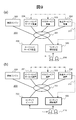
- (A) is a system configuration diagram of a first embodiment.
- (B) is a system configuration diagram of a modification of the embodiment of the present invention. It is a hardware block diagram of the agent service apparatus of 1st embodiment. It is a hardware block diagram of the content viewing-and-listening apparatus of 1st embodiment. It is an explanatory view for explaining an operation sequence of a contents processing section of a first embodiment. It is a hardware block diagram of the content viewing-and-listening apparatus of 2nd embodiment. It is explanatory drawing for demonstrating the operation
- FIG. 1 is a functional block diagram of a content viewing system 200 according to an embodiment of the present invention.
- embodiments of the present invention deal with broadcast content and network content. When there is no need to distinguish between the two, they are called broadcast content or content.
- the content viewing system 200 of this embodiment includes a broadcast service device 202, a VOD service device 203, a streaming service device 204, a search engine 205, and a content processing unit 206. These units are connected via the network 201.
- the network 201 is, for example, a network based on IP (Internet Protocol).
- IP Internet Protocol
- the present embodiment includes not only the Internet but also an intranet, a router device for connecting to the Internet, and the like.
- the broadcast service apparatus 202 is disposed at a broadcast station (broadcast service provider) or the like.
- the broadcast service apparatus 202 serves broadcast content as the broadcast signal 217 by means of radio waves or the like.
- the broadcast service apparatus 202 may stream the broadcast content via the network 201.
- the broadcast service provider supplies broadcast content that has already been broadcast to a VOD content provider (VOD service provider) and a streaming service provider (streaming service provider).
- VOD service provider VOD content provider
- streaming service provider streaming service provider
- the VOD service device 203 is owned by a VOD service provider.
- the VOD service apparatus 203 provides the provided broadcast content as VOD content to the request source via the network 201.
- the streaming service apparatus 204 is owned by a streaming service provider.
- the streaming service apparatus 204 streaming-distributes the provided broadcast content via the network 201 in accordance with the instruction of the request source.
- the content provided from the VOD service device 203 and the streaming service device 204 is, for example, live performance such as a movie or a concert, sports broadcast, or broadcast content broadcasted in the past.
- the broadcast service device 202 provides the VOD service device 203 and the streaming service device 204 so that the user 216 can view the broadcast content that the user 216 holds even after broadcasting.
- the VOD distribution service is highly convenient because the user 216 can view broadcast content in a desired time zone.
- the streaming service device 204 and the VOD service device 203 may be operated by the owner of the broadcast content, but may be different operators.
- the search engine 205 searches various types of information in the network 201 in accordance with an instruction from the content processing unit 206 and the like, and presents the information to the request source.
- the content processing unit 206 provides the user with the broadcast content selected by the user 216 in a viewable manner for the user.
- the broadcast content is provided from the broadcast service device 202, the VOD service device 203, and the streaming service device 204.
- the number of the broadcast service device 202, the VOD service device 203, the streaming service device 204, the search engine 205, and the content processing unit 206 is not limited.
- the content processing unit 206 includes a program guide agent 211, a program guide rebuilding unit 212, a content receiving / control unit 213, a user input unit 214, and an output unit 215.
- the content processing unit 206 holds a program information storage unit 221, a user information holding unit 222, and a search unit as storage units that hold data used for processing by the above-described units or hold processing results. And a result holding unit 223.
- the content reception / control unit 213 receives and reproduces broadcast content in real time, and outputs the broadcast content via the output unit 215 in a viewable manner to the user. Also, the content transmitted from the VOD service device 203 and the streaming service device 204 is received and reproduced, and output via the output unit 215 in a viewable manner to the user. That is, the content reception / control unit 213 and the output unit 215 function as a reception and reproduction unit.
- the content reception / control unit 213 acquires program information of broadcast content from the broadcast service apparatus 202 in response to a request from the user.
- the acquired program information is accumulated in the program information accumulation unit 221 via the program guide agent 211.
- the program information is, for example, information used in the EPG function, and includes a program title, broadcast date and time (broadcast start time), channel, performer, genre, and information for specifying a series.
- the program guide agent 211 accesses the broadcast service apparatus 202 and the like at predetermined time intervals, acquires program information, and stores the program information in the program information storage unit 221. Further, for the broadcast content stored in the program information storage unit 221, the presence or absence of reservice is searched, and the search result is stored in the program information storage unit 221 in association with the broadcast content.
- the search results include reservice information including the presence or absence of reservice, information related to broadcast content, and the like.
- the program guide agent 211 searches for the presence / absence of re-service of broadcast content broadcasted in the past using the search engine 205 based on a search keyword or the like.
- the search for reservices may be performed periodically, for example, at predetermined time intervals. For example, as described above, when program information is acquired at predetermined time intervals, a search for reservice may be performed each time program information is acquired.
- the search for reservice may be performed in response to a specific event.
- the specific event is, for example, the timing at which program information is newly received via the content reception / control unit 213.
- it may be configured to search only for the broadcast content (past content) broadcasted in the past among the newly received program information.
- the program guide agent 211 receives program information via the content reception / control unit 213. Then, immediately after the end of the broadcast content, the re-service search is performed.
- re-service includes all methods for re-providing broadcast content broadcast in the past, such as re-broadcasting, provision by VOD, and the like, and the form thereof is not limited.
- the reservice information includes, for example, a rebroadcast, a form of reservice such as VOD, a start time of the rebroadcast, and the like.
- the program guide agent 211 when the program guide agent 211 according to the present embodiment receives an instruction to select broadcast content to be viewed from the user via the user input unit 214 and the below-mentioned reconstructed program guide, the program reception agent 211 receives content to view the broadcast content Give instructions to the department.
- the program information storage unit 221 stores the program information acquired by the content reception / control unit 213 and the program information acquired by the program guide agent 211.
- the program information storage unit 221 keeps holding not only program information from the current time to the future provided in real time but also program information acquired in the past for a predetermined period.
- the period of the program information to be stored is, for example, predetermined in the past one month, in the past one year, or the like.
- the user information holding unit 222 holds personal information of the user 216. Details will be described later.
- the search result holding unit 223 holds the search result searched by the program guide agent 211.
- the information related to the broadcast content for example, the presence or absence of reservice, the information of the reservice provider in the case of presence, etc. are held in association with the program information stored in the program information storage unit 221. For example, it is held for each broadcast content.
- the related information may include, for example, metadata subordinate to the broadcast content.
- the search result holding unit 223 holds, for example, graphic symbols and the like 224, charging information 225, advertisement information 226, evaluation information 227 and the like as other information. Details of these will also be described later.
- the program guide reconstruction unit 212 reconstructs a program guide from the program information stored in the program information storage unit 221 in response to the request of the user 216, and presents the same to the user.
- the program information storage unit 221 also includes program information of contents broadcasted in the past. Therefore, here, the program guide to be reconstructed includes not only program information of present and future programs but also program information of contents broadcasted in the past.
- the program guide reconstructed by the program guide restructuring unit 212 may not necessarily be in the form of a table.
- the program information may be program data (restructured program data) associated with time information such as the start time of each broadcast content and the broadcast time.
- time information such as the start time of each broadcast content and the broadcast time.
- a reconstructed program guide including such program data, it is called a reconstructed program guide.
- the program guide restructuring unit 212 uses the search result held in the search result holding unit 223 and the user information held in the user information holding unit 222 when reconstructing the program guide.
- the program guide restructuring unit 212 collectively refers to program information used when the program guide is reconstructed, search results, and user information, collectively as program data construction information.
- the program guide agent 211 updates the program information and the search result at a predetermined timing. Therefore, when receiving the instruction, the program guide reconstruction unit 212 can always reconstruct the program guide using these pieces of information updated to the latest state.
- the processing executed by the program guide agent 211 and the program guide rebuilding unit 212 is referred to as an agent process.
- the agent process for example, performs processing such as collection and update of program information, collection and update of search results, and in response to an instruction from the user, creates a reconstructed program guide using program information and search results and presents it to the user Processing, processing for receiving an instruction from the user via the rebuilt program guide, and the like.
- the user input unit 214 is an interface that receives an instruction from the user 216.
- an instruction to display a reconstructed program guide is received.
- the instruction is output to the program guide reconstruction unit 212.
- the specification of the broadcast content to be viewed is received.
- the designation is received, for example, via the reconstruction program guide. That is, the user input unit 214 functions as a selection receiving unit along with the reconstructed program guide.
- the content reception / control unit 213 specifies a distribution source of the broadcast content whose specification has been received via the user input unit 214, and makes a transmission request to the distribution source.
- the user 216 receives a distribution service of content to be viewed from the network 201 and the broadcast signal 217.
- the program guide reconstruction unit 212 can create different reconstructed program guide for each user or user group by referring to the user information. Thereby, the viewing of the broadcast content can be effectively promoted.
- the user information 310 includes user authentication information 312 and a service list 313 for each user 311.
- the user authentication information 312 stores information used for the authentication process. For example, for each user 311, a user ID specifying the user, a password of the user, and personal information of the user are stored. As personal information, for example, an IP address, device information, name, gender, date of birth, email address, etc. are registered.
- the user authentication information 312 As the user authentication information 312, as shown to this figure, several user ID may be registered with respect to one user. This is assumed to be, for example, a family group user group or the like.
- registration information of a VOD distribution service to which the user 311 has made a contract or to use is registered.
- four services of MNK on demand, Re: TV, Net Prime and You Cast are registered.
- a service name, a user ID, a service URI, a link destination of logo data, data, and the like are registered.
- the storage format of the user information 310 is not limited to the format shown in FIG. 2, and may conform to database software that is generally used. Also, the information to be registered is not limited to the above example.
- the graphic symbol etc. 224 includes, for example, a logo of a VOD service provider operating the VOD service apparatus 203, a thumbnail of broadcast content, and the like.
- the program guide reconstructing unit 212 superimposes and displays these graphic symbols on the reconstructed program guide in order to give visual effects.
- the charge information 225 includes price information, payment information by a registered payment method, and the like.
- the advertisement information 226 includes PR (promotion) information and normal advertisement information to be displayed by being multiplexed in the reconstructed program guide.
- the PR information and the advertisement information may be held in association with the broadcast content.
- the program guide reconstructing unit 212 reconstructs the program guide so that the information is superimposed on the program guide.
- PR information and advertisement information differ depending on the profile of the user, viewing history information, and the like. By superimposing these, in addition to charging for viewing of broadcast content, it leads to income such as advertisement fee.
- the diversification of the profit of the broadcaster operating the broadcast service device 202 or the VOD service operator operating the VOD service device 203 can be achieved.
- the evaluation information 227 includes program evaluation information such as a review of broadcast content.
- the evaluation information 227 is simultaneously acquired, for example, when the program guide agent 211 acquires related information and reservice information as described above.
- an evaluation information collection unit that manages the evaluation information 227 may be provided, and the evaluation information collection unit may be configured to directly collect information via the search engine 205.
- the program guide reconstruction unit 212 reconstructs the program guide so that the collected evaluation information is superimposed and displayed. As a result, the user 216 can be provided with broadcast content information, given preliminary knowledge of the broadcast content, and helping to view the broadcast content.
- FIG. 3 is a diagram for explaining the reconstructed program guide 100 of the present embodiment.
- the reconstructed program guide 100 presents program information to the user, and receives an instruction from the user.
- the rebuilt program guide 100 includes a current time display area 101, a date reverse button 102a, a date forward button 102b, a date display area 103, a media type display area 104, and a broadcaster (channel) display area 105.
- the current time is displayed in the current time display area 101.
- a range in which program information can be displayed is displayed in date units.
- the current time display area 101 includes a date reverse feed button 102 a and a date sequential feed button 102 b. These accept an instruction to change the date range displayed in the date display area 103.
- the user 216 can change the range via the date reverse feed button 102a and the date sequential feed button 102b.
- the current time displayed in the current time display area 101 is January 5 (Thu) 18:25.
- the date display area 103 displays dates before and after the current time. In this example, dates from January 1 (Sun) to January 7 (Saturday) are displayed. From January 1 (Sun) to January 4 (Wed) is the past date, January 5 (Thu) is the current date, January 6 (Fri) and January 7 (Sat) is the future Is the date of
- the program guide rebuilding unit 212 creates a reconfigured program guide so that program information on the date when the user 216 receives a selection instruction via the date display area 103 is displayed in the broadcast information display area 107 in tabular form. Do. In the example of this figure, January 3 (Tuesday) is selected, and broadcast program information for January 3 which is past the present (Jan 5) is displayed in the broadcast information display area 107.
- program information is displayed in chronological order for each date and for each broadcaster (channel).
- program column in which each program information is displayed for example, a title of a program and information indicating the presence or absence of re-service are displayed.
- the program information of the broadcast content whose title is "photo” is displayed in the program column of time 20:00 to 21:00 of the broadcaster "02ETE".
- the display mode may be changed depending on the presence or absence of re-service.
- the color of the background is changed.
- a white background indicates that the past broadcast content is being re-serviced.
- the background color is another color, it indicates that there is no reservice.
- the user 216 can confirm the presence or absence of re-service at a glance.
- an evaluation information display object 111a As program information, an evaluation information display object 111a, a rebroadcasting schedule display object 110, a pay content display object 112a, a logo 113a of a VOD service provider, and a thumbnail image 109a are displayed in each program column. It is also good. By displaying these pieces of information, the user can easily understand what type of distribution service of each broadcast content is being performed.
- re-services it may be created so that only re-services by the service provider to which the user 216 targeted for provision of the rebuilt program guide 100 is contracted may be displayed. This is realized with reference to the service list 313.
- all re-services provided may be displayed, and those by the service provider to which the user 216 has a contract and others may be displayed in a distinguishable manner.
- the operation instruction receiving unit 116 is an area for receiving an operation instruction from the user 216. As described above, the user 216 selects a desired program with a desired date and time via the date display area 103 and the broadcast information display area 107. Operation instruction accepting unit 116 accepts an instruction to decide the selection, an instruction such as movement, and the like.
- the operation instruction receiving unit 116 includes a determination button 116 b for receiving the intention of determination and a cross key button 116 a for receiving an instruction for movement.
- a move button 117a a setting button 117b for selecting various setting screens
- a volume button 117c for selecting a volume adjustment screen
- a button 117d for returning to a home screen etc.
- the date selected via the cursor and the instruction in the operation instruction accepting unit 116 is displayed in a display mode different from the other.
- the background color and the text color are changed and displayed.
- the selection candidate or the selected broadcast content (program) is displayed in a manner clearly indicated to be a selection candidate. For example, in this example, it is surrounded by the selection display frame 108.
- the display mode may be changed depending on whether it is a candidate or selected.
- the cross key button 116a, the enter button 116b, the move button 117a, the setting button 117b, the volume button 117c, and the return button 117d correspond to buttons of a remote controller (not shown), and the cursor movement and various operations are performed. It is a button for user operation such as transition to the screen. The user issues an instruction to scroll the broadcast information display area 107 using the cross key button 116 a.
- the content reception / control unit 213 When the content reception / control unit 213 receives an instruction to change the display mode of the reconstructed program guide 100 via the user input unit 214, the content reception / control unit 213 transmits the instruction to the program guide reconstruction unit 212.
- the program guide reconstruction unit 212 receives the instruction, reconstructs the program guide to be displayed according to the instruction, and causes the output unit 215 to output the program guide.
- the content reception / control unit 213 accesses the distribution source of the selected content via the network 201, and makes a distribution request.
- incidental information of the broadcast content selected as the selection candidate is displayed.
- the incidental information includes, for example, program explanatory information, evaluation information, charging information, a representative image, and the like. These are respectively indicated by text, an evaluation information display object 111b, a charging information display object 112b, and a thumbnail image 109b of broadcast content.
- the program guide restructuring unit 212 extracts related information from the program information storage unit 221 or the search result holding unit 223 for a program that the user has made a selection candidate in the broadcast information display area 107 and displays the related information in the explanation display area 114.
- the explanation display area 114 for example, the explanation of the selected broadcast content to which the selection display frame 108 is attached may be displayed.
- the case where “Japan GPX” is selected is illustrated.
- the evaluation information display object 111b indicates, for example, an evaluation score of the evaluation information with a star.
- the VOD service provider logo 113b may be displayed. These help the user 216 to view.
- PR (promotion) information and advertisement information associated with the broadcast content of the selection candidate are displayed.
- PR (promotion) information and advertisement information associated with the broadcast content of the selection candidate are displayed.
- advance notice for example, the contents of the next broadcast content, the scheduled broadcast time, and the like are displayed. Providing such various information to encourage the user to view.
- the program guide reconstruction unit 212 refers to the advertisement information 226, and when the advertisement information is registered in association with the broadcast content selected as a selection candidate, the advertisement information is extracted and displayed in this column. Do.
- the content processing unit 206 When receiving the start instruction from the user 216, the content processing unit 206 causes the program guide agent 211 to execute an agent process (step S1001). Further, the content reception / control unit 213 executes the content reception / output process (step S1002). The content processing unit 206 executes these processes until it receives an instruction to end the user 216 such as power off.
- Inter-process communication (S1003) is executed between the agent process (S1001) and the content reception output process (S1002) via the network 201. For example, when broadcast content is selected in the agent process, the inter-process communication sends an instruction to receive the broadcast content to the content reception output process.
- the user 216 instructs start and end, and performs input operations directly or indirectly to the two processes.
- the process of updating program information and search results and the process of presenting a rebuilt program guide are performed separately and independently.
- FIG. 5 is a processing flow of processing for updating program information and search results by the program guide agent 211 according to the embodiment.
- a periodic search performed at a predetermined time interval and an additional search performed with a specific event as a trigger are performed.
- the periodic search is performed on all the broadcast contents designated to be subjected to the reservice search among the broadcast contents in which the program information is stored in the program information storage unit 221.
- the additional search is a search for the past content in the newly received program information.
- the program guide agent 211 determines whether a predetermined time has elapsed (step S1101). If the predetermined time has elapsed, the timer is first reset (step S1102). Then, for all target broadcast contents, the presence or absence of re-service is searched (step S1103). Then, the obtained search result is overwritten on the search result holding unit 223, thereby updating the search result held in the search result holding unit 223 (step S1104).
- the program guide agent 211 determines whether program information has been received (step S1106). Here, it may be acquired via the network 201 at predetermined time intervals, or may be received from the content reception / control unit 213. If not received, the process returns to step S1101.
- the program guide agent 211 If received (S1106: Yes), the program guide agent 211 first stores the received program information in the program information storage unit 221 (step S1107).
- the program guide agent 211 determines whether there is any past content in the received program information (step S1108).
- the current time is compared with the end time information of each content in the program information, and the content whose time of the end time information is before the current time is determined as the past content. If there is no past content, the process returns to step S1101.
- step S1108 If there is past content (step S1108; Yes), the program guide agent 211 searches for the presence / absence of reservice for the past content (step S1101). Then, the process returns to step S1101.
- the program guide agent 211 repeats the above processing until an end instruction is received.
- search and collection processes not only the presence or absence of re-service but also related information related to the broadcast content to be re-served, eg, information on service providers, description of broadcast content, billing information, review and evaluation of broadcast content Search and collect information etc.
- the program guide agent 211 repeats the above process regardless of whether the user 216 is watching the broadcast content while the content processing unit 206 is activated. As a result, the program data construction information is always updated to the latest one.
- the presence or absence of reservice and related information are searched for all programs in step S1103 above, but the present invention is not limited to this.
- the type of the program to be searched may be determined in advance. For example, only programs with a length of 5 minutes or more, news and weather forecasts are excluded, and so on.
- step S1201 When the program guide agent 211 receives the input of the user ID and the password from the user 216 via the user input unit 214, the program guide agent 211 performs login processing (step S1201).
- the program guide agent 211 causes the program guide reconstruction unit 212 to create a reconstructed program guide (step S1202).
- the program guide rebuilding unit 212 includes the program information stored in the program information storage unit 221, the user information stored in the user information storage unit 222, and the search results stored in the search result storage unit 223. Use The search results and program information to be used are the latest ones updated by the update process.
- the VOD distribution request via the created reconstructed program guide is directly transmitted to the VOD service apparatus 203 by the user 216, as shown in FIG. 6 (c). , And may be transmitted to the VOD service device 203 via the program guide agent 211.
- the program guide agent 211 obtains program information from the VOD service device 203 (step S1301), and creates a reconstructed program guide according to the procedure of FIG. 6A (step S1302), It is presented to the user 216.
- Program information is associated with each broadcast content (VOD content) displayed in the reconstructed program guide.
- the program information includes, for example, access information of a distribution source.
- the user input unit 214 receives the designation, and the content reception / control unit 213 transmits a distribution request to the VOD service apparatus 203 (step S1303).
- the content reception / control unit 213 uses the access information of the distribution source included in the program guide.
- the VOD service apparatus 203 receives the distribution request, and distributes the VOD content (moving image) to the content reception / control unit 213 of the transmission source (step S1304).
- the content reception / control unit 213 outputs the distributed moving image to the output unit 215 and presents it to the user 216.
- the program guide agent 211 obtains program information from the VOD service device 203 (step S1401), as in the above. In the procedure, a reconstructed program guide is created (step S1402) and presented to the user 216.
- the user input unit 214 receives the designation, and the content reception / control unit 213 transmits a distribution request and member information to the program guide agent 211 (step S1403). Then, the program guide agent 211 transmits the distribution request to the VOD service apparatus 203 of the distribution source of the VOD content (moving image) requested to be distributed (step S1404). At this time, the program guide agent 211 also transmits information (distribution destination information) specifying the distribution destination of the VOD content (moving image) (step S1404).
- the distribution destination information is, for example, an IP address of the content reception / control unit 213 or the like.
- the VOD service apparatus 203 distributes the VOD content (moving image) to the content reception / control unit 213 specified by the distribution destination information (step S1405).
- the content reception / control unit 213 outputs the distributed moving image to the output unit 215 and presents it to the user 216.
- the content reception / control unit 213 transmits authentication information to the program guide agent 211, and the program guide agent 211 transmits the authentication information to the VOD service apparatus 203. .
- the display mode of the reconstructed program guide 100 is not limited to the above example. For example, in a past direction, for a period exceeding a predetermined period, only the broadcast content of the series may be displayed for each broadcasting station.
- a display example of the reconstructed program guide 100a in this case is shown in FIG.
- the present date is 18:25 on January 5, 2017. And let the period (past display period) which can be displayed as past content be one month. That is, until December 5, each program information is displayed in the broadcast information display area 107 in the mode shown in the above-mentioned reconstructed program guide 100.
- the program guide rebuilding unit 212 may display the content limited to the content the user is interested in.
- the program guide agent 211 may further hold, for example, the viewing history of the user. Then, the user's viewing history is referred to, and the content is limited to the viewed content, the content related to the viewing history, or the series of content displayed in the past or future broadcast program guide, and presented to the user.
- the determination of the presence or absence of association is performed using, for example, program information of the content. For example, if there is a match between keywords registered in the program information, a match between part of program names, a match between performer names, etc., it is determined that there is a relation.
- the broadcast content is a series
- the latest broadcast content in the range before December 5 can be grasped and the past broadcast content can be further grasped. It may be displayed in the aspect 118.
- the program guide restructuring unit 212 displays a series selection button 119 for receiving series selection in the description display area 114 of each broadcast content, and receives selection of a series via this button. That is, the program guide restructuring unit 212 causes the series selection button 119 to be displayed together with incidental information of the series of broadcast content selected by the user via the broadcast information display area 107. Then, through the series selection button 119, the selection of the series to be displayed on the output unit 215 among one or more series of the broadcast content is received.
- the presence or absence of a program provided as the series in the past, and / or the evaluation information thereof may be displayed.
- FIG. 8 shows a display example of the reconstructed program guide 100b in this case.
- the current time is January 5th. Therefore, the program information for January 5 or later is for the future.
- the program guide restructuring unit 212 searches the program information stored in the program information storage unit 221 and the search results stored in the search result storage unit 223
- the evaluation information 227 is referred to, and the series information and the evaluation information held in association with the broadcast content are created to be displayed.
- the program information includes series identification information identifying broadcast contents of the same series.
- the program guide restructuring unit 212 creates a reconstructed program guide so that evaluation information of past content of the series is displayed together with program information of future content, using the series identification information.
- the program guide rebuilding unit 212 further displays the series as series information in the selection display frame 108, for example.
- the object 120a is displayed.
- the evaluation information display object 111b is displayed in the selection display frame 108.
- the series display object 120 b and the evaluation information display object 111 b may also be displayed in the explanation display area 114.
- a “view past broadcast program” button 120c may be displayed that receives an instruction to transition to a screen for selecting past broadcast content.
- the program guide reconstruction unit 212 creates a reconstruction program guide so that past series information of the broadcast content selected as the selection candidate is displayed by the selection display frame 108 when an instruction is received via the main button 120 c. Do.
- the VOD scheduled object 121 may be displayed within the program display of each broadcast content in the broadcast information display area 107. If the program information storage unit 221 or the search result holding unit 223 holds information that the VOD distribution service will be scheduled in the future, the program information storage unit 221 or the search result holding unit 223 corresponds to the program contents storage unit 221 or Based on the information, this VOD scheduled object 121 is displayed. Note that the VOD service device 203 provides the presence or absence of a schedule for this VOD distribution service. This allows the user to determine whether to view live or to view VOD.
- the above-described functions of the content processing unit 206 are variously distributed and implemented on the device on the user side and the device on the service side. This flexibly provides a service oriented system to a user oriented system.
- an embodiment for each specific implementation mode will be described.
- the functions surrounded by the broken line 231 in FIG. 1, that is, the content reception / control unit 213, the user input unit 214, and the output unit 215 are devices on the user 216 side.
- the remaining program guide agent 211 and the program guide restructuring unit 212 are examples realized by other devices accessible via the network 201.
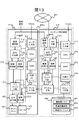
- the content viewing system 200 of this embodiment includes the broadcast service device 202, the VOD service device 203, the streaming service device 204, the search engine 205, the agent service device 400, and the content. And a viewing device 500.
- the agent service apparatus 400 implements the program guide agent 211 and the program guide rebuilding unit 212 of the content processing unit 206 in FIG. 1 and includes various data.
- the content viewing device 500 implements a content reception / control unit 213, a user input unit 214, and an output unit 215. Also in the present embodiment, the number of devices is not limited.
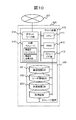
- FIG. 10 is a block diagram of the agent service apparatus 400 of this embodiment.
- the agent service device 400 of this embodiment includes a server device 410 and a storage device 430.
- the server device 410 includes a CPU 411, a RAM 412, a storage IF unit 413, an IP network unit 414, and an internal storage 415.
- the storage device 430 holds a program information database (DB) 431, a user information DB 432, and a search result DB 433. These are databases storing data held by the program information storage unit 221, the user information holding unit 222, and the search result holding unit 223 of FIG. 1, respectively.
- DB program information database
- a search result DB 433 search result database
- the internal storage 415 holds a program for realizing the program guide agent 211 of FIG. 1 and the program guide rebuilding unit 212.
- the CPU 411 deploys these programs in the internal storage 415 on the RAM 412 to realize the respective functions.
- the CPU 411 reads data of the storage device 430 via the storage IF unit 413 as needed, and uses it for processing.
- the obtained result is stored in the storage device 430.
- the reconstructed program guide 100 obtained as the processing result is provided to the content viewing device 500 via the IP network unit 414.
- the agent service apparatus 400 of the present embodiment provides the user 216 with the agent service realized by the program guide agent 211 and the program guide rebuilding unit 212.
- the agent service device 400 when the agent service device 400 according to the present embodiment receives various instructions from the user 216 via the reconstructed program guide 100, the agent service device 400 performs processing according to the instructions. For example, when an instruction as a selection candidate is received, the program guide restructuring unit 212 creates a reconstructed program guide so that program information and the like of the broadcast content is displayed in the description display area 114, and the content viewing apparatus 500 Send.
- the program guide agent 211 transmits, to the content viewing apparatus 500, access information to the distribution source of the broadcast content. For example, when an instruction to distribute VOD content is received, the IP address of the VOD service device 203 that distributes the corresponding VOD content is transmitted to the content viewing device 500.
- program guide agent 211 may be configured to transmit the access information of the content viewing device 500 of the distribution destination to the distribution source, and request the distribution.
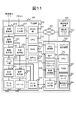
- FIG. 11 is a block diagram of the content viewing device (content viewing terminal) 500 of the present embodiment.
- the content viewing device 500 of the present embodiment includes a TV apparatus 510, an information terminal device 530, and a content terminal device 550.
- the information terminal device 530 can be realized by, for example, a smartphone or a tablet PC (Personal Computer).
- the content terminal device 550 can be realized by a stick-type PC or the like. By using these components, the content viewing device 500 can be realized only by implementing software in existing hardware without using dedicated hardware including the TV device 510.
- the TV apparatus 510 includes an IP network (NW) unit 511, a CPU 512, a RAM 513, an internal storage 514, a digital IF unit 515, a reception selector 516, a user input unit 517, a signal separation unit 518, A processing unit 519, a graphics unit 521, a display output unit 522, an audio processing unit 520, an audio output unit 523, a display 524, and a speaker 525.
- NW IP network
- the TV apparatus 510 realizes the output unit 215 of FIG. 1 and a broadcast content receiving function which is a function of a part of the content reception / control unit 213.
- the reception selector 516 receives the broadcast signal 217 and outputs it to the signal separation unit 518.
- the reception selector 516 includes an RF tuner and the like, and selects a channel designated by the user via the user input unit 517 using a remote control or the like from the broadcast signal 217. Then, the selected broadcast signal 217 is demodulated and sent to the signal separation unit 518 as reception data of the broadcast program.
- Reception data of a broadcast program is multiplexed video data, audio data, broadcast data, and the like.
- the signal separation unit 518 separates the video data and the audio data from the reception data, and sends them to the video processing unit 519 and the audio processing unit 520, respectively.
- the video data and audio data are encoded to compress the amount of information of the original data.
- the video processing unit 519 and the audio processing unit 520 respectively perform decompression and decoding processing on the video data and audio data to obtain video data and audio data of a TV broadcast program, and the graphics unit 521 and the audio output unit 523 respectively. send.
- the graphics unit 521 manages the video to be displayed on a plane basis, for example, superimposes an OSD (On Screen Display) plane on the video data of the broadcast program, and sends it to the display output unit 522.
- OSD On Screen Display
- the display 524 displays video data on which the OSD and the like are superimposed.
- the speaker 525 outputs audio data of the TV broadcast program as a sound.
- the TV apparatus 510 provides the user with the viewing of the broadcast content.
- the TV apparatus 510 may be an apparatus in which all or part of the display 524 and the speaker 525 are separated.
- the digital IF unit 515 has, for example, a digital IF function of HDMI (registered trademark) or USB.
- the digital IF unit 515 receives video and audio content data as external input, and outputs the content data to the display 524 and the speaker 525 through the graphics unit 521, the display output unit 522, and the audio output unit 523.
- the content terminal device 550 realizes a network content reception function which is a part of the content reception / control unit 213 in FIG.
- the network content includes, for example, VOD content, streaming content, and the like.
- the content terminal device 550 includes a CPU 551, a RAM 552, an internal storage 553, a network (NW) communication unit 555, an audio processor 556, a graphic processor 557, and a digital IF unit 559.
- a program presentation application 554 is installed in the internal storage 553.
- the graphic processor 557 further includes a video processing unit 558.
- the NW communication unit 555 may have at least an IP network function and may include other communication functions.
- the CPU 551 of the content terminal device 550 loads the program stored in the internal storage 553 into the RAM 552 and executes it.
- the programs stored in the internal storage 553 include a web browser for processing data such as HTML and the program presentation application 554. Also, a program for decoding compression-coded video data utilizing the video processing unit 558 in the graphic processor 557 as an auxiliary processor, and audio data compressed and encoded using the audio processor 556 as an auxiliary processor Further includes a program for decrypting.
- the digital IF unit 559 multiplexes the video data from the graphic processor 557 and the audio data from the audio processor 556, and sends the multiplexed data to the digital IF unit 515 of the TV apparatus 510.
- the program presentation application 554 processes the network content received via the NW communication unit 555, and transmits the network content to the TV apparatus 510 via the digital IF unit 559. That is, the program presentation function is realized.
- the CPU 551 implements a program presentation function by expanding and executing the program presentation application 554 in the RAM 552.
- the function of the content terminal device 550 may be included in the TV device 510.
- connection is made to the network 201 via the IPNW unit 511, and broadcast content is received from the VOD service.
- the internal storage 514 holds a program of the program presentation application 554.
- the CPU 512 develops the program presentation application 554 in the RAM 513 and executes it.
- the information terminal device 530 implements the function of the user input unit 214 in FIG. Although not illustrated, the same configuration as the content terminal device 550, that is, an NW communication unit, a CPU, a RAM, an internal storage, an audio processor, and a graphic processor are included. Furthermore, the information terminal device 530 includes an input display unit as a user interface. The input display unit is configured of, for example, a liquid crystal panel with an input sensor. Further, a program guide access application 531 is installed in the information terminal device 530.
- the program guide access application 531 displays the reconstructed program guide received via the network 201 on the input display unit, and receives an instruction from the user 216.
- the CPU implements a program guide access function by developing and executing a program guide access application in the RAM.
- the program presentation application 554 of the content terminal device 550 and the program guide access application 531 of the information terminal device 530 cooperate with each other to receive an agent service provided by the agent service device 400.
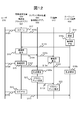
- the program guide access application 531 When the program guide access application 531 receives a start instruction from the user 216, the program guide access application 531 displays a login screen. Then, when the user 216 inputs login information (S101), it receives that (S17).
- the start instruction may be, for example, activation of a program guide access application.
- the login information may be, for example, a user ID and a password.
- the program guide access application 531 transmits the accepted log-in information to the agent service device 400 as a reconstruction program guide request (S102).
- the agent service device 400 receives login information as an agent process, and performs authentication processing of the user 216 (S18).
- authentication of the user 216 is performed using the user information DB 432.
- a reconstructed program guide is created (S18a), and transmitted to the program guide access application 531 of the request source (S103).
- the program guide access application 531 displays the received reconstructed program guide on the input display unit (S19). Note that the reconstructed program guide is transmitted to the TV apparatus 510 via the content terminal apparatus 550 (S104) so as to make it easier for the user 216 to check on a larger screen (S105), and is also displayed on the TV apparatus 510. You may.
- the user 216 selects the broadcast content to be viewed from the displayed reconstructed program guide (S106).
- the program guide access application 531 receives the selection by the user 216 (S20)
- the program guide access application 531 transmits the URI of the selected broadcast content (VOD) as the selection result to the program presentation application 554 (S107).
- VOD the selected broadcast content
- the agent service device 400 S108. This is to monitor the operation state of the entire system in the agent service device 400.
- the program presentation application 554 transmits a distribution request to the VOD service apparatus 203 specified by the URI of the broadcast content (S20a), and receives the broadcast content transmitted in response to the distribution request (S21). Then, the content terminal device 550 decrypts the received broadcast content and transmits it to the TV device 510 (S109).
- the TV apparatus 510 displays the broadcast content (S22).
- the user 216 instructs the end (logout) (S110), the program guide access application 531 receives this (S23), and transmits it to the agent service device 400 (S111).
- the agent service device 400 terminates the agent process (S18).
- the VOD service device 203 when transmitting a VOD distribution request via the program guide agent 211, the VOD service device 203 in which the agent service device 400 is specified by the URI of the broadcast content instead of S20a.
- the distribution request is sent to (S18b).
- the content viewing system 200 that receives and reproduces the provision of reservice content, which is broadcast content to be re-served, is a program of the past content that is broadcast content broadcast in the past
- the program guide agent 211 is stored in the program information storage unit 221 and the search result storage unit 223 as program data construction information in association with the information, and the reconstructed program data is created using the program data construction information and presented to the user 216
- Program guide rebuilding unit 212, and the re-viewing program for viewing via the reconfigured program data Includes a user input unit 214 and output unit 215 functions as a selection acceptance section for accepting selection of a scan content, the content receiving-control unit 213 and the output unit 215 to receive and reproduce the re service content selected, the.
- the program guide agent 211 repeatedly searches for the presence or absence of the re-service, reflects the search result every time a search result is obtained, and updates the program data construction information, and the program guide reconstruction unit 212 A content viewing system 200 is provided that creates the reconstructed program data using the updated program data construction information.
- program data construction information which is information such as the presence / absence of re-service of past content, can always be maintained in the latest state. Then, in response to the user's request, the program data construction information is used to reconstruct the program guide and present it to the user.
- the present embodiment when searching for re-services of the past content on the network, it is necessary to eliminate the time for waiting for the search result of the user, the presence or absence of re-service for the past content, etc. Can provide a system that can That is, the user can know the presence or absence of re-service at one time for a plurality of past contents displayed in the program guide. Also, the program guide is reconstructed using program data construction information that is always kept up-to-date. Since the search is not performed after receiving the user's request, the user's waiting time is also reduced.
- the content viewing device 500 which is the device on the user 216 side, can be realized by software implementation without using dedicated hardware. Therefore, a service-oriented system can be realized.
- program data construction information is searched and collected by the agent service apparatus 400 on the service side. For this reason, even when a large number of users use it, the search processing does not overlap. This is efficient.
- the program guide rebuilding unit 212 is realized by the device on the user 216 side, when creating a reconstructed program guide, it is possible to reflect information held by the device on the user 216 side. For example, information related to the recorded content held by the device on the side of the user 216 can be reflected.
- the system configuration of the content viewing system 200 of the present embodiment is basically the same as that of the first embodiment shown in FIG. However, as described above, in the present embodiment, the content viewing device 500 a includes the function surrounded by the broken line 232 in the content processing unit 206 of FIG. 1. Then, the agent service device 400 includes the other functions of the content processing unit 206.
- the agent service device 400 of this embodiment has basically the same configuration as the agent service device 400 of the first embodiment shown in FIG.
- the internal storage 415 does not have a program for realizing the program guide reconstruction unit 212.
- a content presentation device 500a of the present embodiment is shown in FIG.
- the content viewing device 500a includes a TV device 510a, a set top box (also referred to as a content receiving device) 570, and a content storage 600.
- the TV apparatus 510a implements the function of the output unit 215 of FIG. Further, the content receiving device 570 implements the functions of the content receiving / controlling unit 213, the program guide restructuring unit 212, and the user input unit 214 in FIG.
- the TV apparatus 510a has basically the same configuration as the TV apparatus 510 described with reference to FIG. However, the IPNW unit 511 may not be provided.
- the content receiving apparatus 570 includes a user input unit 571, a network IF unit 577, a reception tuning unit 576, a signal separation unit 578, a video processing unit 579, an audio processing unit 580, a graphics unit 581, and a digital IF.
- a unit 582, a CPU 572, a RAM 573, and an internal storage 574 are provided. These basically implement the same function as the function of the TV device 510 with the same name.
- the content reception device 570 further includes a storage IF unit 575.
- the storage IF unit 575 is an interface with the content storage 600.
- the CPU 572 accesses data stored in the content storage 600 via the storage IF unit 575.
- the content storage 600 holds a program guide application 601 and recorded content 603. Furthermore, the reconstructed program guide 602 is also held in the content storage 600.
- the recorded content 603 is data obtained by recording the broadcast content by the content reception device 570.
- the recorded content 603 accumulated in the content storage 600 is for making it possible to view the broadcast content again and is a kind of re-service.
- Recorded content 603 is stored in association with information specifying broadcast content.
- the program guide application 601 receives the provision of the agent service of the agent service apparatus 400. Further, in the present embodiment, the function of the program guide reconstruction unit 212 is also realized. In the content reception device 570, the CPU 572 realizes these functions by developing the program guide application 601 in the RAM 573 and executing it.
- the reconstructed program guide 602 created by the program guide reconstruction unit 212 by the program guide application 601 is sent to the TV apparatus 510 a via the digital IF unit 582 and displayed on the display 524.
- the program guide restructuring unit 212 presents the reconstructed program guide 602 to the user 216 and prompts the user to select broadcast content.
- the program guide rebuilding unit 212 rebuilds a program guide, it accesses the program information storage unit 221, the user information holding unit 222, and the search result holding unit 223 on the agent service apparatus 400 side, and necessary data (program data construction Get information). Furthermore, in the present embodiment, when the recorded content 603 is stored in the content storage 600 in association with each acquired broadcast content, the information is also reflected in the reconstructed program table 602.
- the program guide reconstruction unit 212 is realized on the content viewing device 500 a side. Therefore, the program guide rebuilding unit 212 can reflect the presence / absence of the recorded content 603 accumulated by the content viewing device 500a in the reconstructed program guide 602.
- the program guide application 601 When the program guide application 601 receives a start instruction from the user, the program guide application 601 displays a login screen. Then, when the user 216 inputs login information (S101), it receives that (S17).
- the program guide application 601 transmits the accepted log-in information to the agent service device 400 as a reconstruction program guide request (S102).
- the agent service device 400 receives login information as an agent process, and performs authentication processing of the user 216 (S18).
- authentication of the user 216 is performed using the user information DB 432.
- the program data construction information is transmitted to the program guide application 601 of the request source (S18a, S121).
- the program guide restructuring unit 212 realized by the program guide application 601 creates a reconstructed program guide using the program data construction information (S24). At this time, the information on the recorded content held by the content storage 600 of the content viewing device 500 of its own is also reflected. Then, the created reconstructed program guide is transmitted to the TV set 510a (S105) and displayed (S19).
- the user 216 selects the broadcast content to be viewed from the displayed reconstructed program guide (S106).
- the program guide application 601 receives the selection by the user 216 (S20), it transmits the URI of the selected broadcast content (VOD) to the agent service apparatus 400 as a selection result (S108).
- the program guide application 601 transmits a distribution request to the VOD service apparatus 203 specified by the URI of the broadcast content (S20a), and receives the broadcast content transmitted in response to the distribution request (S21). Then, the received broadcast content is decoded and transmitted to the TV apparatus 510 (S109).
- the TV apparatus 510 displays the broadcast content (S22).
- the user 216 instructs the end (logout) (S110), and the program guide application 601 receives this (S23), and transmits it to the agent service apparatus 400 (S111).
- the agent service device 400 terminates the agent process (S18).
- the VOD service device 203 when transmitting a VOD distribution request via the program guide agent 211, the VOD service device 203 in which the agent service device 400 is specified by the URI of the broadcast content instead of S20a.
- the distribution request is sent to (S18b).
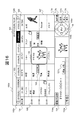
- FIG. 15 is an example of the reconstructed program guide 100c of the present embodiment.
- the reconstructed program guide 100c reflects the recorded content.
- the same parts as those of the reconstructed program guide 100, 100a, and 100b are assigned the same numbers, and duplicate explanations are omitted.
- Recorded content 603 is reflected in the reconstructed program guide 100c.
- the broadcast content broadcasted in the past is in the list of the recorded content 603, for example, the recorded content display object 131 is superimposed on the broadcast content in the broadcast information display area 107.
- a recorded content display object 131a indicating that the content is recorded content is superimposed and displayed.
- the reconstructed program guide 100d is one in which a recording reservation button 131b for broadcast content is arranged.
- the recording reservation button 131 b is displayed in the explanation display area 114 as shown in the figure.
- the program guide restructuring unit 212 displays the recording reservation button 121b in the description display area 114 of the reconstructed program guide 100d.
- the program guide application 601 When the program guide application 601 detects that the recording reservation button 121 b is pressed, it specifies broadcast content corresponding to the program information displayed in the explanation display area 114 at that time. The program guide application 601 instructs the recording and reproduction application (not shown) to record the specified broadcast content.
- the recording and reproducing application performs recording when the broadcast start time comes due to the passage of time.
- the recorded content is stored in the content storage 600 as the recorded content 603 in association with the information specifying the broadcast content of the recording source.
- the present embodiment when searching for re-services of past content on the network, there is no time for the user to wait for the search results, and It is possible to provide a system capable of immediately and easily presenting the presence or absence of re-service, etc., and eliminating duplication of search processing among a large number of users. That is, the user can know the presence or absence of re-service at one time for a plurality of past contents displayed in the program guide. In addition, it is possible to obtain a reconfigured program guide with less waiting time.
- the function of the program guide reconstruction unit 212 is realized by the content viewing device 500 used by the user 216. Therefore, it is possible to reflect information unique to the device itself, for example, information such as the presence or absence of video recording, in the reconfigured program guide.
- the content viewing device 500a can be configured by using a general-purpose product such as a TV device, a smartphone, a tablet PC, a stick type PC, and the user viewing cost can be reduced by reflecting the presence of recorded content. Reduction, etc. can be realized.
- the content viewing apparatus 500a has been described as being realized by the TV apparatus 510a and the content receiving apparatus 570. However, it is not limited to this form.
- the content viewing device 500a may be realized by the TV device 510, the information terminal device 530, and the content terminal device 550, as shown in FIG.
- the content terminal device 550 includes, in the internal storage 553, a program for realizing the program guide rebuilding unit 212. Then, the CPU 551 develops the program in the RAM 552 and executes the program, thereby realizing the program guide reconstruction unit 212.
- a content storage 600 may be provided.
- the content terminal device 550 has a storage IF function and is configured to be able to access the content storage 600.
- the agent service device 400 realizes the other functions.
- the program guide application 601 may implement a priority determination function of determining the priority of selection by the user 216. For example, when the broadcast content for which a plurality of types of re-services are provided is selected, the priority determining unit selects the content to be reproduced according to a predetermined priority.
- the priority may be determined by the type of re-service or may be determined by conditions.
- the recorded content 603 is automatically selected if broadcast content re-serviced by the VOD content and the recorded content 603 is selected. Be done.
- priority is determined under conditions such as lower prices, free VOD delivery is selected when there are paid VOD content and free VOD content. Other conditions may be selected such as, for example, one that can further reduce the amount of communication.
- the user 216 can receive the desired content re-service without any trouble.
- the priority order determination unit is realized, for example, by the CPU 572 developing a program stored in the content storage 600 or the internal storage 574 in the RAM 573 and executing the program.
- the function of the program guide agent 211 is also realized by the device on the user 216 side. Therefore, in the present embodiment, for example, when the program guide agent 211 collects program data construction information, the collection range can be limited using information specific to the user 216.
- the configuration of the content viewing system of this embodiment is obtained by removing the agent service apparatus 400 from the system configuration of the first embodiment and the second embodiment shown in FIG. 9A.
- FIG. 17 is a block diagram of the content presentation device 500b of this embodiment.
- the content viewing device 500b of this embodiment includes a display device 590, a content receiving device 570, and a content storage 600b.
- the display device 590 has at least a configuration capable of realizing the display function of the TV devices 510 and 510a shown in FIGS. 11 and 13.
- a digital IF unit 515, a display output unit 522, an audio output unit 523, a display 524, and a speaker 525 are provided.
- the output of the content reception device 570 is received by the digital IF unit 515, and output from the display 524 and the speaker 525.
- TV devices 510 and 510a may be used.
- the content storage 600 b stores an agent application 611 that is a program for realizing the function of the program guide agent 211 and the function of the program guide rebuilding unit 212. Further, in the present embodiment, a service list 612, program data construction information 613, a reconstructed program table 614, and recorded contents 615 are further stored.
- the CPU 572 realizes the function of the program guide agent 211 and the function of the program guide reconstruction unit 212 by developing the agent application 611 in the RAM 573 and executing it.
- the program data construction information 613 is information collected by the program guide agent 211 and used by the program guide rebuilding unit 212 when creating the reconstructed program guide.
- the information is information held in the program information storage unit 221, the user information holding unit 222, and the search result holding unit 223 in FIG.
- the service list 612 is a list storing contract information of the user 216 with each VOD service provider.
- the program guide agent 211 refers to it at the time of search
- the program guide restructuring unit 212 refers to it at the time of reconstruction.
- FIG. 18 is an example of the service list 612.
- the service list 612 includes login information (here, the user ID 612 b and the password 612 c) in the case of using the service for each information (here, service name) 612 a specifying the VOD service,
- the URI 612 d of the VOD service and related information 612 e such as a logo used for display are registered.
- the service name of an uncontracted VOD service may also be registered. That is, regardless of the presence or absence of a contract, the content viewing device 500b may register a list of VOD services for searching for the presence or absence of re-service via the network 201. The list of unsubscribed VOD services is listed by the user 216 or the manufacturer of the content viewing device 500b.
- a user ID 612b and a password 612c are registered as login information for the VOD service to which the user 216 subscribes. On the other hand, login information is not registered for an unsubscribed VOD service.
- the service list 612 illustrated in FIG. 18 is an example in which the user 216 has a viewing contract only for the “MNK on demand” service.
- the user 216 may be configured to be able to edit the service list 612.
- the agent application 611 displays the edit button 612f along with the list. Then, when depression of the edit button 612 f is received, the agent application 611 receives an input by the user to the service list 612.
- the edit button 612 f is illustrated in FIG. 18 for the sake of convenience, it is not a button managed as user information, and is a button for transitioning to an edit screen.
- the content viewing device 500b is usually owned by an individual or a family. For this reason, in the present embodiment, the service list 612 is made available as the content viewing device 500b is activated.
- the program guide agent 211 realized by the agent application 611 searches only the service of the VOD service provider who has a contract with the service list 612 for the presence or absence of the VOD distribution.
- the search may be performed for all VOD services to be searched regardless of whether the contract is or not.
- the program guide rebuilding unit 212 refers to the service list 612, and creates a rebuild program guide so that the presence or absence of a contract or contract can be displayed in a distinguishable manner.
- the agent application 611 confirms the presence / absence of re-service of the broadcast content directly or indirectly to the VOD service device 203, the broadcast service device 202, and the streaming service device 204. , And hold the confirmed results as search results. It also manages user information. As described above, such collection of program data construction information is performed periodically or upon occurrence of a predetermined event.
- the agent application 611 reconstructs the broadcast program guide in response to the request of the user 216.
- the user 216 when receiving the provision of the re-service, the user 216 confirms the reconstructed program guide by the content viewing device 500b, and selects the broadcast content to view.
- the content viewing device 500b receives reprovision from the VOD service device 203, the broadcast service device 202, or the streaming service device 204 according to the user's selection, and reproduces the service.
- the reconstructed program guide 100e basically has the same configuration as any of the reconstructed program guide 100, 100a, 100b, 100c, and 100d.
- a list of broadcast contents with reservice is displayed in a distinguishable manner for past contents.
- the logo 113a of the VOD service provider is displayed in each broadcast content field of the broadcast information display area 107.
- the logo 113 e may be displayed in the explanation display area 114 as well.
- the broadcast content with contract has a white background color
- the broadcast content without a contract has a background color other than white.
- the user 216 can know the presence or absence of the viewing contract of the broadcast content desired to be viewed.
- the program guide restructuring unit 212 may further display such a re-service in a distinguishable manner.
- the spot viewable display object 123 is superimposed on the broadcast content display of the broadcast information display area 107. At this time, it may be displayed in the same display mode as the broadcast content with contract. Thereby, the user can easily understand that the user can view and listen.
- the function of the program guide agent 211 is also provided to the user 216 side apparatus. That is, search and collection of program data construction information are performed by the user side device. Therefore, user-specific conditions such as the presence or absence of a contract with a VOD service provider can be reflected at the time of search. That is, the search range can be limited using the personal information of the user.
- the content viewer 700 may be provided.
- the system configuration in this case is shown in FIG.
- the content viewer 700 is connected to other devices via the network 201.
- the content viewing device 500 is directly connected.
- the user 216 may view the broadcast content to be VOD distributed on the content viewer 700.
- the content viewing device 500 functions as a server for providing the reconstructed program guide to the content viewer 700.
- the content viewer 700 functions as a client and receives the reconstructed program guide.
- the user 216 confirms the reconstructed program guide displayed on the content viewer 700, and receives the provision of the distribution service from the VOD service device 203.
- the content viewer 700 identifies the broadcast content selected by the user via the reconstructed program guide, and notifies the content viewing apparatus 500 of the broadcast content. Then, the content viewing device 500 notifies the content viewer 700 of distribution source information (distribution source address) of the VOD distribution service associated with the broadcast content. The content viewer 700 receives it, transmits a distribution request to the distribution source, and receives distribution.
- distribution source information distributed source address
- the content viewer 700 is realized by, for example, a tablet PC.
- the content viewer 700 and the content viewing device 500 are connected by a LAN such as a home network. Thereby, personal information of the user 216 is protected.
- the network means is not limited to this as long as the personal information of the user 216 is protected.
- the functions and the like of the invention may be implemented by hardware, for example, by designing part or all of them with an integrated circuit.
- the program may be implemented by software by a microprocessor unit, a CPU or the like interpreting and executing an operation program for realizing each function and the like.
- the implementation range of software is not limited, and hardware and software may be used in combination.
Landscapes
- Engineering & Computer Science (AREA)
- Databases & Information Systems (AREA)
- Multimedia (AREA)
- Signal Processing (AREA)
- Human Computer Interaction (AREA)
- Two-Way Televisions, Distribution Of Moving Picture Or The Like (AREA)
Abstract
過去に放送された放送コンテンツである過去コンテンツの番組情報を、放送開始時刻に対応づけて蓄積する番組情報蓄積部221と、番組情報蓄積部221に番組情報が蓄積される過去コンテンツの再サービスの有無を検索し、得られた検索結果を、当該過去コンテンツの番組情報に対応づけて番組データ構築情報として蓄積するエージェント211と、番組データ構築情報を用いて再構築番組データを作成し、ユーザに提示する再構築部212と、再構築番組データを介して視聴する再サービスコンテンツの選択を受け付ける選択受付部と、選択された再サービスコンテンツを受信して再生する受信再生部と、を備え、エージェント211は、再サービスの有無を繰り返し検索し、検索結果を得る毎に当該検索結果を反映させて番組データ構築情報を更新し、再構築部212は、更新された番組データ構築情報を用いる。
Description
本発明は、放送コンテンツの再利用を促進する技術に関する。
過去に放送された放送コンテンツの情報も含め、電子番組ガイド(EPG)の利便性や利用時の操作性を向上させる技術がある。この技術分野の背景技術として、特許文献1に開示の技術がある。特許文献1では、「デジタル放送受信装置において、番組表において過去に放送された番組が選択された場合に、複数の経路(例えば、放送信号やインターネット)から当該番組のコンテンツ情報が取得可能であるかを検索する番組検索手段を備え、この番組検索手段による検索結果を電子番組ガイド上に表示させるようにした(要約抜粋)。」技術が開示されている。
特許文献1に開示の技術では、現時点から、例えば1週間先の放送予定の放送コンテンツをユーザに知らせる放送番組表と、該放送番組表を過去に遡って保存した過去の放送番組表とを取り扱う。しかしながら、特許文献1に開示の技術では、過去に放送された放送コンテンツである過去コンテンツが選択された場合、選択後に、当該放送コンテンツについてのみ、録画があるか、VODや再放送等の再サービスがなされているか検索し、ユーザに提示する。従って、ユーザが、過去コンテンツの再利用が可能か把握するために、時間がかかる。また、選択した、特定の過去コンテンツの情報しか得られない。
本発明は、上記の点を鑑みてなされたものであり、過去コンテンツの再サービスの有無を、即座に、俯瞰的で見易い態様でユーザに提示し、ユーザにとって利便性の高いコンテンツ視聴技術を提供することを目的とする。
本発明は、再サービスされる放送コンテンツである再サービスコンテンツの提供を受けて再生するコンテンツ視聴システムであって、過去に放送された放送コンテンツである過去コンテンツの番組情報を、放送開始時刻に対応づけて蓄積するストレージ部と、前記ストレージ部に番組情報が蓄積される前記過去コンテンツの再サービスの有無を検索し、得られた検索結果を、当該過去コンテンツの番組情報に対応づけて番組データ構築情報として前記ストレージ部に記憶するエージェントと、前記番組データ構築情報を用いて再構築番組データを作成し、ユーザに提示する再構築部と、前記再構築番組データを介して視聴する前記再サービスコンテンツの選択を受け付ける選択受付部と、選択された前記再サービスコンテンツを受信して再生する受信再生部と、を備え、前記エージェントは、前記再サービスの有無を繰り返し検索し、検索結果を得る毎に当該検索結果を反映させて前記番組データ構築情報を更新し、前記再構築部は、更新された前記番組データ構築情報を用いて前記再構築番組データを作成することを特徴とするコンテンツ視聴システムを提供する。
また、本発明は、再サービスされる放送コンテンツである再サービスコンテンツの提供を受けて再生するコンテンツ視聴システムにおけるコンテンツ視聴方法であって、予め蓄積されている番組データ構築情報を用いて、再構築番組データを生成し、ユーザに提示する再構築番組データ提示ステップと、提示した前記再構築番組データを介して視聴する前記再サービスコンテンツの選択を受け付ける選択受付ステップと、前記番組データ構築情報を参照して、前記選択された再サービスコンテンツを提供元に要求し、要求に応じて提供された前記再サービスコンテンツを受信し再生する受信再生ステップと、を備え、前記番組データ構築情報は、過去に放送された放送コンテンツである過去コンテンツについて、再サービスの有無検索し、検索結果を当該過去コンテンツの番組情報に対応づけて蓄積したものであり、前記再サービスの有無は、繰り返し検索され、前記番組データ構築情報は、検索結果を得る毎に更新され、前記番組情報は、当該過去コンテンツの放送開始時刻に対応づけて蓄積されることを特徴とするコンテンツ視聴方法を提供する。
さらに、本発明は、再サービスされる放送コンテンツである再サービスコンテンツを受信して再生するコンテンツ視聴端末であって、生成された再構築番組データを介して視聴する前記再サービスコンテンツの選択を受け付ける選択受付部と、選択された前記再サービスコンテンツを受信し再生する受信再生部と、を備え、前記再構築番組データは、予め蓄積されている番組データ構築情報を用いて生成され、前記番組データ構築情報は、過去に放送された放送コンテンツである過去コンテンツについて、再サービスの有無検索し、検索結果を当該過去コンテンツの番組情報に対応づけて蓄積したものであり、前記再サービスの有無は、繰り返し検索され、前記番組データ構築情報は、検索結果を得る毎に更新され、前記番組情報は、当該過去コンテンツの放送開始時刻に対応づけて蓄積されることを特徴とするコンテンツ視聴端末を提供する。
本発明によれば、過去コンテンツの再サービスの有無を、即座に、俯瞰的で見易い態様でユーザに提示でき、ユーザにとって利便性の高いコンテンツ視聴技術を提供できる。上記した以外の課題、構成及び効果は、以下の実施形態の説明により明らかにされる。
以下、図面を参照しながら本発明の実施形態について説明する。以下、本明細書において、同一機能を有するものは、特に断らない限り、同一の符号を付し、繰り返しの説明は省略する。本発明の実施形態では、過去に放送された放送コンテンツ(過去コンテンツ)の再サービスの有無を常時検索し、最新の状態で保持し、ユーザの求めに応じて、番組表に反映させて表示する。
まず、上記機能を実現する本発明の実施形態の構成および動作を説明する。
図1は、本発明の実施形態に係るコンテンツ視聴システム200の機能ブロック図である。なお、以下、本発明の実施形態では、放送コンテンツとネットワークコンテンツとを扱う。両者を、特に区別する必要がない場合は、放送コンテンツまたはコンテンツと呼ぶ。
本図に示すように、本実施形態のコンテンツ視聴システム200は、放送サービス装置202と、VODサービス装置203と、ストリーミングサービス装置204と、検索エンジン205と、コンテンツ処理部206と、を備える。これらの各部は、ネットワーク201を介して接続される。
ネットワーク201は、例えば、IP(Internet Protocol)によるネットワークである。本実施形態では、インターネットだけでなく、イントラネット、インターネットに接続するためのルータ装置等を含む。
放送サービス装置202は、放送局(放送サービス事業者)等に配置される。放送サービス装置202は、電波などの手段で放送信号217として放送コンテンツをサービスする。なお、放送サービス装置202は、放送コンテンツを、ネットワーク201を介して、ストリーミング配信してもよい。なお、放送サービス事業者は、放送済みの放送コンテンツを、VODコンテンツプロバイダ(VODサービス事業者)やストリーミングサービスプロバイダ(ストリーミングサービス事業者)に供給する。
VODサービス装置203は、VODサービス事業者が保有する。VODサービス装置203は、提供された放送コンテンツをVODコンテンツとして、ネットワーク201を介して要求元に提供する。
ストリーミングサービス装置204は、ストリーミングサービス事業者が保有する。ストリーミングサービス装置204は、提供された放送コンテンツを、要求元の指示に応じて、ネットワーク201を介してストリーミング配信する。
VODサービス装置203およびストリーミングサービス装置204から提供されるコンテンツは、例えば、映画やコンサート等のライブ、スポーツ中継、あるいは過去に放送された放送コンテンツなどである。
ユーザの時間制約等により、放送コンテンツをリアルタイムに視聴できない場合が発生する。放送サービス装置202は、ユーザ216が、放送後も、保有する放送コンテンツを視聴できるよう、VODサービス装置203やストリーミングサービス装置204に提供する。特に、VOD配信サービスは、ユーザ216が希望の時間帯で放送コンテンツを視聴できるため、利便性が高い。
これにより、放送局等の放送事業者は、放送コンテンツで得る事業リターンが増加する。なお、ストリーミングサービス装置204や、VODサービス装置203は、放送コンテンツのオーナが運営してもよいが、異なる事業者であっても良い。
検索エンジン205は、コンテンツ処理部206等の指示に従って、ネットワーク201内の各種の情報を検索し、要求元に提示する。
コンテンツ処理部206は、ユーザ216が選択した放送コンテンツを、ユーザが視聴可能な態様でユーザに提供する。放送コンテンツは、放送サービス装置202、VODサービス装置203、ストリーミングサービス装置204から提供を受ける。
なお、放送サービス装置202と、VODサービス装置203と、ストリーミングサービス装置204と、検索エンジン205と、コンテンツ処理部206の数は問わない。
次に、コンテンツ処理部206の構成を説明する。本実施形態のコンテンツ処理部206は、番組表エージェント211と、番組表再構築部212と、コンテンツ受信・制御部213と、ユーザ入力部214と、出力部215とを備える。
また、本実施形態のコンテンツ処理部206は、上記各部が処理に用いるデータを保持したり、処理結果を保持したりするストレージ部として、番組情報蓄積部221と、ユーザ情報保持部222と、検索結果保持部223とを備える。
コンテンツ受信・制御部213は、放送コンテンツをリアルタイムで受信し、再生し、出力部215を介してユーザに視聴可能な態様で出力する。また、VODサービス装置203、ストリーミングサービス装置204から送信されるコンテンツを受信し、再生し、出力部215を介して、ユーザに視聴可能な態様で出力する。すなわち、コンテンツ受信・制御部213と出力部215とは、受信再生部として機能する。
さらに、コンテンツ受信・制御部213は、ユーザからの求めに応じて、放送サービス装置202から、放送コンテンツの番組情報を取得する。取得した番組情報は、番組表エージェント211を介して番組情報蓄積部221に蓄積される。番組情報は、例えば、EPG機能で用いられる情報で、番組タイトル、放送日時(放送開始時刻)、チャンネル、出演者、ジャンル、シリーズを特定する情報等を含む。
番組表エージェント211は、所定の時間間隔で、放送サービス装置202等にアクセスし、番組情報を取得し、番組情報蓄積部221に蓄積する。また、番組情報蓄積部221に蓄積される放送コンテンツについて、再サービスの有無を検索し、検索結果を、放送コンテンツに対応づけて、番組情報蓄積部221に蓄積する。なお、検索結果には、再サービスの有無を含む再サービス情報、放送コンテンツの関連情報等が含まれる。
番組表エージェント211は、検索キーワード等により、検索エンジン205を用いて、過去に放送された放送コンテンツの再サービスの有無を検索する。再サービスの検索は、例えば、所定の時間間隔で周期的に行われてもよい。例えば、上述のように、所定の時間間隔で、番組情報を取得する場合、番組情報を取得する毎に再サービスの検索を行うよう構成してもよい。
また、再サービスの検索は、特定のイベントに応じて行われてもよい。特定のイベントは、例えば、コンテンツ受信・制御部213を介して、新たに番組情報を受信したタイミング等である。この場合、新たに受信した番組情報のうち、過去に放送された放送コンテンツ(過去コンテンツ)に関してのみ、検索するよう構成してもよい。例えば、ユーザ216が放送コンテンツを視聴した際、番組表エージェント211は、コンテンツ受信・制御部213を介して番組情報を受信する。そして、この放送コンテンツの終了直後に再サービスの検索を行う。
なお、再サービスは、例えば、再放送、VODによる提供等、過去に放送された放送コンテンツを再度提供する手法全てを含み、その形態は問わない。また、再サービス情報は、例えば、再放送、VOD等の再サービスの形態、再放送であれば、その開始時刻等を含む。
さらに、本実施形態の番組表エージェント211は、ユーザ入力部214と後述の再構築番組表とを介してユーザから視聴する放送コンテンツの選択の指示を受け付けると、当該放送コンテンツを視聴するようコンテンツ受信部に指示を出す。
番組情報蓄積部221は、コンテンツ受信・制御部213で取得した番組情報および番組表エージェント211が取得した番組情報を蓄積する。番組情報蓄積部221は、リアルタイムに提供される現時点から未来の番組情報だけでなく、過去に取得した番組情報も、所定期間、保持し続ける。蓄積する番組情報の期間は、例えば、過去一か月分、過去一年分等、予め定めておく。
ユーザ情報保持部222は、ユーザ216の個人情報を保持する。詳細は後述する。
検索結果保持部223は、番組表エージェント211が検索した検索結果を保持する。検索結果のうち、放送コンテンツに関連する情報、例えば、再サービスの有無、有の場合の再サービス提供元の情報等は、番組情報蓄積部221が蓄積する番組情報に対応づけて保持される。例えば、放送コンテンツ毎に保持される。関連する情報には、例えば、放送コンテンツに従属するメタデータを含んでもよい。
検索結果保持部223は、その他の情報として、例えば、図形記号等224と、課金情報225と、広告情報226と、評価情報227等を保持する。これらの詳細も後述する。
番組表再構築部212は、ユーザ216の求めに応じて、番組情報蓄積部221に蓄積される番組情報から番組表を再構築し、ユーザに提示する。番組情報蓄積部221には、過去に放送されたコンテンツの番組情報も含まれる。従って、ここで、再構築される番組表は、現在から未来の番組情報だけでなく、過去に放送されたコンテンツの番組情報も含まれる。
なお、番組表再構築部212が再構築する番組表は、必ずしも表形式でなくてもよい。番組情報が各放送コンテンツの開始時刻、放送時間等の時間情報に対応づけられた番組データ(再構築番組データ)であればよい。以下、このような番組データも含め、再構築番組表と呼ぶ。
さらに、番組表再構築部212は、番組表を再構築するにあたり、検索結果保持部223に保持される検索結果と、ユーザ情報保持部222に保持されるユーザ情報とを用いる。以下、番組表再構築部212が、番組表を再構築する際に用いる番組情報、検索結果、ユーザ情報を合わせて、番組データ構築情報と総称する。
本実施形態では、上述のように、番組表エージェント211が、所定のタイミングで、番組情報および検索結果を更新している。このため、番組表再構築部212は、指示を受けると、常に最新の状態に更新されたこれらの情報を用いて、番組表を再構築できる。
なお、以下、実施形態において、番組表エージェント211および番組表再構築部212が実行する処理を、エージェントプロセスと呼ぶ。エージェントプロセスは、例えば、番組情報の収集および更新、検索結果の収集および更新等の処理、ユーザからの指示に応じて、番組情報および検索結果を用いて再構築番組表を作成し、ユーザに提示する処理、再構築番組表を介して、ユーザからの指示を受け付ける処理等である。
ユーザ入力部214は、ユーザ216から指示を受け付けるインタフェースである。本実施形態では、例えば、再構築番組表の表示指示を受け付ける。指示は、番組表再構築部212に出力される。また、例えば、視聴する放送コンテンツの指定を受け付ける。指定は、例えば、再構築番組表を介して受け付ける。すなわち、ユーザ入力部214は、再構築番組表とともに、選択受付部として機能する。
コンテンツ受信・制御部213は、ユーザ入力部214を介して指定を受け付けた放送コンテンツの配信元を特定し、当該配信元に送信要求を行う。
これにより、ユーザ216は、ネットワーク201、および放送信号217から視聴するコンテンツの配信サービスを受ける。
次に、ユーザ情報保持部222に保持されるユーザ情報、検索結果保持部223に保持される情報について説明する。
ユーザ情報として、ひとつ以上のユーザもしくはユーザグループごとに、例えば、登録しているVODサービスへのログイン情報が登録される。番組表再構築部212は、ユーザ情報を参照することにより、ユーザもしくはユーザグループ毎に、異なる再構築番組表を作成できる。これにより、放送コンテンツの視聴を効果的に促すことができる。
ユーザ情報310の具体例を図2に示す。本図に示すように、ユーザ情報310は、ユーザ311毎に、ユーザ認証情報312と、サービスリスト313と備える。
ユーザ認証情報312には、認証処理に用いる情報等が格納される。例えば、ユーザ311毎に、ユーザを特定するユーザIDと、当該ユーザのパスワードと、ユーザの個人情報とが格納される。個人情報として、例えば、IPアドレス、機器情報、氏名、性別、生年月日、Emailアドレス等が登録される。
ユーザ認証情報312は、本図に示すように、1のユーザに対し、複数のユーザIDが登録されてもよい。これは、例えば、家族単位のユーザグループ等を想定したものである。
サービスリスト313には、当該ユーザ311が契約している、あるいは、利用するVOD配信サービスの登録情報が登録される。本例では、MNKオンデマンド、Re:TV、Net Prime、You Castの4つのサービスが登録されている。例えば、それぞれのサービスについて、サービス名、ユーザID、サービスURI、ロゴデータのリンク先とデータ等が登録される。
なお、ユーザ情報310の保存形式は、図2に示す形式に限られるものではなく、汎用的に使われているデータベースソフトウェアに準じたものでも良い。また、登録される情報も、上記例に限定されない。
図形記号等224は、例えば、VODサービス装置203を運用するVODサービス事業者のロゴや放送コンテンツのサムネイル等を含む。番組表再構築部212は、視覚的な効果を与えるため、これらの図形記号を再構築番組表に重畳表示する。
課金情報225は、例えば、VODサービス装置203が配信する放送コンテンツが有料コンテンツである場合、価格情報や登録している支払い方法による決済情報等を含む。
広告情報226は、再構築番組表に多重して表示するPR(プロモーション)情報や通常の広告情報を含む。PR情報や広告情報は、放送コンテンツに対応づけて保持されてもよい。番組表再構築部212は、番組表にこれらの情報が重畳表示されるよう、番組表を再構築する。PR情報や広告情報は、ユーザのプロファイルや視聴履歴情報などにより異なる。これらを重畳表示することにより、放送コンテンツの視聴への課金に加えて、広告料等の収入に繋がる。放送サービス装置202を運用する放送事業者、あるいは、VODサービス装置203を運用するVODサービス事業者の収益の多角化が達成できる。
評価情報227は、放送コンテンツのレビュー等の番組評価情報を含む。評価情報227は、例えば、上述のように、番組表エージェント211が、関連情報、再サービス情報を取得する際、同時に取得される。なお、評価情報227を管理する評価情報収集部を備え、当該評価情報収集部が検索エンジン205を介して直接収集するよう構成してもよい。番組表再構築部212は、収集された評価情報が重畳表示されるよう、番組表を再構築する。これにより、ユーザ216に放送コンテンツの情報提供を行い、放送コンテンツに対する予備知識を与えることができ、放送コンテンツの視聴を助ける。
[再構築番組表]
ここで、上記情報を用いて再構築され、出力部215によりディスプレイに表示される再構築番組表の例を説明する。図3は、本実施形態の再構築番組表100を説明するための図である。
ここで、上記情報を用いて再構築され、出力部215によりディスプレイに表示される再構築番組表の例を説明する。図3は、本実施形態の再構築番組表100を説明するための図である。
本実施形態の再構築番組表100は、ユーザに、番組情報を提示するとともに、ユーザからの指示を受け付ける。
再構築番組表100は、現在時刻表示領域101と、日付逆送り釦102aと、日付順送り釦102bと、日付表示領域103と、メディア種別表示領域104と、放送事業者(チャンネル)表示領域105と、時刻系列表示領域106と、放送情報表示領域107と、選択された放送コンテンツの説明表示領域114と、広告表示領域115と、操作指示受付部116と、を備える。
現在時刻表示領域101には、現在時刻が表示される。日付表示領域103には、番組情報を表示可能な範囲が、日付単位で表示される。現在時刻表示領域101は、日付逆送り釦102aと日付順送り釦102bとを備える。これらは、日付表示領域103に表示される日付範囲の変更指示を受け付ける。ユーザ216は、表示可能な範囲が、日付表示領域103に収まらない場合、日付逆送り釦102aと日付順送り釦102bを介して、範囲を変更できる。
例えば、本図の例では、現在時刻表示領域101に表示される現在時刻が1月5日(木)18:25である。日付表示領域103には、この現在時刻の前後の日付が表示される。本例では、1月1日(日)から1月7日(土)までの日付が表示されている。1月1日(日)から1月4日(水)までが過去の日付、1月5日(木)が現在の日付、1月6日(金)と1月7日(土)は未来の日付である。
番組表再構築部212は、ユーザ216から日付表示領域103を介して選択の指示を受け付けた日付の番組情報が、表形式で放送情報表示領域107に表示されるよう、再構築番組表を作成する。本図の例では、1月3日(火)が選択され、放送情報表示領域107には、現在(1月5日)よりも過去である1月3日の放送番組情報が表示される。
放送情報表示領域107には、番組情報が、日付ごと、放送事業者(チャンネル)毎に、時系列に表示される。各番組情報が表示される番組欄には、例えば、番組のタイトル、再サービスの有無を示す情報が表示される。
本図の例では、例えば、放送事業者が「02ETE」の時刻20:00~21:00の番組欄には、タイトルが「写真」の放送コンテンツの番組情報が表示される。
なお、番組情報の表示において、再サービスの有無により、表示態様を変更してもよい。例えば、本図の例では、背景の色を変えている。背景色が白のものは、過去の放送コンテンツが再サービスされていることを示す。一方、背景色が他の色のものは、再サービスが無いことを示す。このような表示態様により、ユーザ216は、一目で再サービスの有無が確認できる。
また、番組情報として、各番組欄に、評価情報表示オブジェクト111aと、再放送予定表示オブジェクト110と、有料コンテンツ表示オブジェクト112aと、VODサービス事業者のロゴ113aと、サムネイル画像109aとが表示されてもよい。これらの情報を表示することにより、各放送コンテンツの配信サービスがどのような形態で行われているのかを、ユーザは、把握しやすい。
さらに、提供されている再サービスのうち、再構築番組表100の提供対象のユーザ216が契約しているサービス事業者による再サービスのみ表示されるよう作成してもよい。これは、サービスリスト313を参照して実現する。また、提供されている全ての再サービスを表示し、ユーザ216が契約しているサービス事業者によるものと、その他とを、識別可能な態様で表示されるよう作成してもよい。
また、操作指示受付部116は、ユーザ216からの操作指示を受け付ける領域である。なお、上述のように、日付表示領域103および放送情報表示領域107を介して、ユーザ216は所望の日時、所望の番組を選択する。操作指示受付部116では、その選択を決定する意思、移動等の指示を受け付ける。
操作指示受付部116は、決定の意思を受け付ける決定釦116bと、移動の指示を受け付ける十字キー釦116aとを備える。また、その他、放送コンテンツ視聴時の各種指示を受け付ける、移動釦117aと、各種設定画面を選択する設定釦117bと、音量調整画面を選択する音量釦117cと、ホーム画面等への戻る釦117dと、を備える。
カーソルおよび操作指示受付部116での指示を介して選択された日付は、他とことなる表示態様で表示される。本例では、背景色、文字色を変えて表示される。また、同様に選択候補あるいは選択された放送コンテンツ(番組)は、選択候補であることが明示される態様で表示される。例えば、本例では、選択表示枠108で囲まれる。候補である場合と選択された場合とで、表示態様を変えてもよい。
なお、十字キー釦116a、決定釦116b、移動釦117a、設定釦117b、音量釦117c、戻る釦117dは、図示はしていないリモートコンコントローラの釦と対応しており、カーソルの移動や各種操作画面への移行などのユーザ操作のための釦である。ユーザは、十字キー釦116aを用い、放送情報表示領域107のスクロール指示を行う。
コンテンツ受信・制御部213は、ユーザ入力部214を介して再構築番組表100の表示態様を変更する指示を受け付けると、当該指示を番組表再構築部212に送信する。番組表再構築部212は、指示を受け、指示に従った表示がなされる番組表を再構築し、出力部215に出力させる。
また、コンテンツ受信・制御部213は、ユーザ入力部214を介して視聴する放送コンテンツの選択を受け付けると、ネットワーク201を介して、選択されたコンテンツの配信元にアクセスし、配信要求を行う。
選択された放送コンテンツの説明表示領域114には、選択候補とされた放送コンテンツの付帯情報が表示される。付帯情報は、例えば、番組の説明情報と、評価情報と、課金情報と、代表画像等を含む。これらは、それぞれ、テキスト、評価情報表示オブジェクト111bと、課金情報表示オブジェクト112bと、放送コンテンツのサムネイル画像109b等で示される。番組表再構築部212は、ユーザが放送情報表示領域107で選択候補とした番組について、番組情報蓄積部221または検索結果保持部223から関連情報を抽出し、説明表示領域114に表示する。
説明表示領域114には、例えば、選択表示枠108が付された選択された放送コンテンツの説明が表示されてもよい。ここでは、「Japan GPX」が選択されている場合を例示する。また、評価情報表示オブジェクト111bは、例えば、評価情報の評価スコアを星印で示す。
また、説明表示領域114には、放送コンテンツの詳細説明画面へ移行するための指示を受け付ける「番組の説明」釦114aと、評価コメントの画面に移行するための指示を受け付ける「評価を見る」釦111cとを備えてもよい。さらに、選択された放送コンテンツの再サービスがVODの場合、VODサービス事業者のロゴ113bが表示されてもよい。これらにより、ユーザ216の視聴を補助する。
広告表示領域115には、選択候補の放送コンテンツに関連づけられたPR(プロモーション)情報や広告情報が表示される。ここでは、一例として、選択されたまたは選択候補の放送コンテンツに関連する放送コンテンツの予告が表示される場合を例示する。予告として、例えば、次回の放送コンテンツの内容、放送予定時刻等を表示する。このような多彩な情報を提供し、ユーザの視聴を促す。
本実施形態では、番組表再構築部212が、広告情報226を参照し、選択候補とされた放送コンテンツに関連づけて広告情報が登録されている場合、当該広告情報を抽出し、本欄に表示する。
[コンテンツ処理部が実行するプロセス]
本実施形態のコンテンツ処理部206では、番組表エージェント211および番組表再構築部212によるエージェントプロセスと、コンテンツ受信・制御部213によるコンテンツ受信出力プロセスとが、別個独立に実行される。両プロセスの流れを、図4を用いて説明する。
本実施形態のコンテンツ処理部206では、番組表エージェント211および番組表再構築部212によるエージェントプロセスと、コンテンツ受信・制御部213によるコンテンツ受信出力プロセスとが、別個独立に実行される。両プロセスの流れを、図4を用いて説明する。
コンテンツ処理部206は、ユーザ216から開始の指示を受け付けると、番組表エージェント211に、エージェントプロセスを実行させる(ステップS1001)。また、コンテンツ受信・制御部213に、コンテンツ受信出力プロセスを実行させる(ステップS1002)。コンテンツ処理部206は、ユーザ216によるパワーオフ等の終了の指示を受け付けるまで、これらのプロセスを実行させる。
エージェントプロセス(S1001)と、コンテンツ受信出力プロセス(S1002)との間では、ネットワーク201を介して、プロセス間通信(S1003)が実行される。例えば、エージェントプロセスにおいて放送コンテンツが選択されると、該プロセス間通信により、コンテンツ受信出力プロセスに放送コンテンツの受信指示が送られる。
ユーザ216は、開始、終了を指示するほか、該両プロセスに対しても、直接的あるいは間接的に入力操作を行う。
さらに、本実施形態では、エージェントプロセス内でも、番組情報および検索結果の更新処理と、再構築番組表提示処理とは、別個独立に行われる。
以下、これらの処理の流れを説明する。図5は、実施形態の番組表エージェント211による、番組情報および検索結果の更新処理の処理フローである。ここでは、所定の時間間隔で行う周期的検索と、特定のイベントを契機に行う追加検索とを行う。周期的検索は、番組情報蓄積部221に番組情報が蓄積されている放送コンテンツのうち、再サービス検索を行うよう指定されている全ての放送コンテンツを対象に行う。一方、追加検索は、新たに受信した番組情報内の過去コンテンツを対象に検索を行う。
番組表エージェント211は、所定時間が経過したか否かを判別する(ステップS1101)。所定時間が経過している場合は、まず、タイマーをリセットする(ステップS1102)。そして、対象の全ての放送コンテンツに関し、再サービスの有無を検索する(ステップS1103)。そして、得られた検索結果を検索結果保持部223に上書きすることにより、検索結果保持部223に保持される検索結果を更新する(ステップS1104)。
一方、所定時間が経過していない場合、番組表エージェント211は、番組情報を受信したか否かを判別する(ステップS1106)。ここでは、自身が所定の時間間隔で、ネットワーク201を経由して取得してもよいし、コンテンツ受信・制御部213から受信したものであってもよい。受信していない場合、ステップS1101へ戻る。
受信した場合(S1106:Yes)、番組表エージェント211は、まず、受信した番組情報を、番組情報蓄積部221に蓄積する(ステップS1107)。
次に、番組表エージェント211は、受信した番組情報内に過去コンテンツがあるか否かを判別する(ステップS1108)。ここでは、現在時刻と、番組情報内の各コンテンツの終了時刻情報とを比較し、終了時刻情報の時刻が現在時刻以前のコンテンツを、過去コンテンツと判断する。過去コンテンツが無い場合、ステップS1101へ戻る。
過去コンテンツがある場合(ステップS1108;Yes)、番組表エージェント211は、過去コンテンツについて、再サービスの有無を検索する(ステップS1101)。そして、ステップS1101へ戻る。
番組表エージェント211は、以上の処理を、終了の指示を受け付けるまで、繰り返す。このとき、検索、収集過程において、再サービスの有無だけでなく、再サービスされる放送コンテンツに関する関連情報、例えば、サービス事業者の情報、放送コンテンツの内容説明、課金情報、放送コンテンツのレビューや評価情報等も検索、収集する。
本実施形態の番組表エージェント211は、コンテンツ処理部206が起動中、ユーザ216が放送コンテンツを視聴中であるか否かにかかわらず、上記処理を繰り返す。これにより、番組データ構築情報は、常に最新のものに更新(refresh)される。
なお、上記処理では、上記ステップS1103において、全ての番組について、再サービスの有無および関連情報等を検索しているが、これに限定されない。例えば、検索対象の番組の種別を予め決定しておいてもよい。例えば、5分以上の長さのある番組のみとする、ニュースや天気予報は除く、等である。
次に、番組表エージェント211による再構築番組表作成処理の流れを、図6(a)を用いて説明する。ここでは、ログイン処理により認証されたユーザの、選択指示を受け付ける場合の処理の流れを説明する。
番組表エージェント211は、ユーザ入力部214を介して、ユーザ216から、ユーザIDとパスワードとの入力を受け付けると、ログイン処理を行う(ステップS1201)。
認証に成功すると、番組表エージェント211は、番組表再構築部212に、再構築番組表を作成させる(ステップS1202)。このとき、番組表再構築部212は、番組情報蓄積部221に蓄積されている番組情報と、ユーザ情報保持部222に保持されるユーザ情報と、検索結果保持部223に保持される検索結果とを用いる。用いる検索結果、番組情報は、更新処理で更新された最新のものである。
例えば、ログインしているユーザ216がユーザ情報として登録しているVODサービス事業者のVODサービスの情報のみ抽出し、再構築番組表を作成する。
なお、作成された再構築番組表を介したVOD配信要求は、図6(b)に示すように、ユーザ216が直接VODサービス装置203に送信する場合と、図6(c)に示すように、番組表エージェント211を介してVODサービス装置203に送信する場合とがある。
図6(b)の手法では、番組表エージェント211は、VODサービス装置203から番組情報を得て(ステップS1301)、図6(a)の手順で再構築番組表を作成し(ステップS1302)、ユーザ216に提示する。再構築番組表に表示される各放送コンテンツ(VODコンテンツ)には、番組情報が対応づけられる。番組情報には、例えば、配信元のアクセス情報が含まれる。
ユーザ216が再構築番組表を介して所望の番組を指定すると、ユーザ入力部214が当該指定を受け付け、コンテンツ受信・制御部213がVODサービス装置203に配信要求を送信する(ステップS1303)。このとき、コンテンツ受信・制御部213は、番組表に含まれる配信元のアクセス情報を利用する。VODサービス装置203は、配信要求を受け、送信元のコンテンツ受信・制御部213にVODコンテンツ(動画)を配信する(ステップS1304)。コンテンツ受信・制御部213は、配信された動画を出力部215に出力し、ユーザ216に提示する。
なお、ユーザ216とVODサービス装置203との間のやり取り、すなわち、コンテンツ受信・制御部213とVODサービス装置203との間のやり取りの際は、ログイン処理等の認証処理を行うよう構成してもよい。
一方、図6(c)に示すように、番組表エージェント211を介する場合、上記同様、番組表エージェント211は、VODサービス装置203から番組情報を得て(ステップS1401)、図6(a)の手順で再構築番組表を作成し(ステップS1402)、ユーザ216に提示する。
ユーザ216が再構築番組表を介して所望の番組を指定すると、ユーザ入力部214が当該指定を受け付け、コンテンツ受信・制御部213が番組表エージェント211に配信要求と会員情報とを送信する(ステップS1403)。そして、番組表エージェント211は、配信要求されたVODコンテンツ(動画)の配信元のVODサービス装置203に、当該配信要求を送信する(ステップS1404)。このとき、番組表エージェント211は、VODコンテンツ(動画)の配信先を特定する情報(配信先情報)を合わせて送信する(ステップS1404)。配信先情報は、例えば、コンテンツ受信・制御部213のIPアドレス等である。
VODサービス装置203は、配信要求に応じ、配信先情報で特定されるコンテンツ受信・制御部213にVODコンテンツ(動画)を配信する(ステップS1405)。コンテンツ受信・制御部213は、配信された動画を出力部215に出力し、ユーザ216に提示する。なお、ログイン処理等の認証処理を行う場合は、コンテンツ受信・制御部213は、番組表エージェント211に対して認証情報を送信し、番組表エージェント211がその認証情報をVODサービス装置203に送信する。
なお、再構築番組表100の表示態様は、上記例に限定されない。例えば、過去方向において、所定の期間を超える期間については、シリーズものの放送コンテンツのみを、放送局ごとに表示するよう構成してもよい。
この場合の再構築番組表100aの表示例を図7に示す。例えば、本図の例では、現在日時は、2017年1月5日18時25分である。そして、過去コンテンツとして表示可能な期間(過去表示期間)を、1か月とする。すなわち、12月5日までは、上記の再構築番組表100に示す態様で、各番組情報を放送情報表示領域107に表示する。
一方、過去表示期間である1か月を超える期間については、シリーズものである放送コンテンツについてのみ、放送局ごとに表示する。この場合、放送番組を、時系列には、表示しない。
なお、全てのシリーズものの放送コンテンツを表示させなくてもよい。例えば、過去表示期間より前の放送コンテンツリストとして、番組表再構築部212は、ユーザが興味関心を有しているコンテンツに限定して表示してもよい。
また、番組表エージェント211は、例えば、さらに、ユーザの視聴履歴を保持しておいてもよい。そして、このユーザの視聴履歴を参照し、視聴されたコンテンツ、視聴履歴と関連するコンテンツ、あるいは過去あるいは未来の放送番組表に表示されるコンテンツのシリーズに制限して、ユーザに提示する。関連の有無の判別は、例えば、コンテンツの番組情報を用いて行う。例えば、番組情報に登録されているキーワードが一致するもの、番組名の一部が一致するもの、出演者名が一致するもの、等を関連有りと判別する。
このように構成することにより、本実施形態では、膨大な過去コンテンツの中から、所望するコンテンツを見つけることを容易にさせる。また、過去コンテンツの検索結果のデータ総容量を適切に制限できる。
なお、このとき、番組表再構築部212は、放送コンテンツがシリーズものである場合には、例えば、12月5日以前の範囲で最も新しいシリーズを前面に、さらに過去の放送コンテンツが把握可能な態様118で表示してもよい。
この場合、番組表再構築部212は、各放送コンテンツの説明表示領域114に、シリーズ選択を受け付けるシリーズ選択釦119を表示させ、本釦を介して、シリーズの選択を受け付ける。すなわち、番組表再構築部212は、ユーザが放送情報表示領域107を介して選択した放送コンテンツのシリーズの付帯情報とともに、シリーズ選択釦119を表示させる。そして、シリーズ選択釦119を介して、当該放送コンテンツの1以上のシリーズの中の、出力部215に表示させるシリーズの選択を受け付ける。
また、未来分の番組表表示において、過去に同シリーズとして提供された番組の有無、および/または、その評価情報を表示するよう構成してもよい。
図8にこの場合の、再構築番組表100bの表示例を示す。図8に示す再構築番組表100bにおいて、現在時刻は、1月5日である。従って、1月5日以降分の番組情報は、未来のものである。
例えば、未来の日時、および、当該日時における放送コンテンツが選択された場合、番組表再構築部212は、番組情報蓄積部221に保持される番組情報および検索結果保持部223に保持される検索結果、評価情報227を参照し、当該放送コンテンツに対応づけて保持されるシリーズ情報および評価情報が表示されるよう作成する。
この場合、例えば、番組情報は、同一シリーズの放送コンテンツを特定するシリーズ特定情報を含む。番組表再構築部212は、シリーズ特定情報を用いて、未来コンテンツの番組情報とともに、当該シリーズの過去コンテンツの評価情報が表示されるよう再構築番組表を作成する。
例えば、本図の例では、放送情報表示領域107内で、選択表示枠108により、「ドラマ01」が選択されている。選択された放送コンテンツに対応づけて、番組情報蓄積部221にシリーズ特定情報が登録されている場合、番組表再構築部212は、例えば、選択表示枠108内に、さらに、シリーズ情報としてシリーズ表示オブジェクト120aを表示する。また、同一のシリーズ特定情報を有する番組情報に対応づけて評価情報が登録されている場合、選択表示枠108内に、評価情報表示オブジェクト111bを表示する。
なお、シリーズ表示オブジェクト120bおよび評価情報表示オブジェクト111bは、説明表示領域114にも表示させてもよい。
また、説明表示領域114には、さらに、過去の放送コンテンツを選択する画面に遷移させる指示を受け付ける「過去放送番組を見る」釦120cを表示してもよい。番組表再構築部212は、本釦120cを介して指示を受け付けると、選択表示枠108により選択候補とされている放送コンテンツの、過去のシリーズ情報が表示されるよう、再構築番組表を作成する。
このような表示態様にすることにより、未来と過去の放送コンテンツの存在をわかりやすく示すことができる。また、ユーザ216は、再構築番組表で、過去の同シリーズの評価を見ることができる。すなわち、ユーザ216に有用な情報を新たに提供できる。
なお、放送情報表示領域107の各放送コンテンツの番組表示内で、さらに、VOD予定オブジェクト121を表示させてもよい。番組表再構築部212は、番組情報蓄積部221または検索結果保持部223に、当該放送コンテンツに対応づけて、さらなる未来においてVOD配信サービスの予定があるとの情報が保持されている場合、当該情報に基づき、このVOD予定オブジェクト121を表示させる。なお、このVOD配信サービスの予定の有無は、VODサービス装置203が提供する。これにより、ユーザは、ライブで視聴するかVODで視聴するかの判断を行うことができる。
本発明の実施形態では、コンテンツ処理部206の上記各機能を、ユーザ側の装置およびサービス側の装置に様々に分配し、実装する。これにより、サービス指向なシステムからユーザ指向のシステムまでを柔軟に提供する。以下、具体的な実装態様毎の実施形態を説明する。
<<第一の実施形態>>
まず、第一の実施形態を説明する。本実施形態では、コンテンツ処理部206のうち、図1の破線231で囲まれた機能、すなわち、コンテンツ受信・制御部213と、ユーザ入力部214と、出力部215とが、ユーザ216側の装置で実現され、残りの番組表エージェント211および番組表再構築部212とは、ネットワーク201を介してアクセス可能な他の装置で実現される例である。
まず、第一の実施形態を説明する。本実施形態では、コンテンツ処理部206のうち、図1の破線231で囲まれた機能、すなわち、コンテンツ受信・制御部213と、ユーザ入力部214と、出力部215とが、ユーザ216側の装置で実現され、残りの番組表エージェント211および番組表再構築部212とは、ネットワーク201を介してアクセス可能な他の装置で実現される例である。
まず、本実施形態のシステム構成を説明する。本実施形態のコンテンツ視聴システム200は、図9(a)に示すように、放送サービス装置202と、VODサービス装置203と、ストリーミングサービス装置204と、検索エンジン205と、エージェントサービス装置400と、コンテンツ視聴装置500と、を備える。
上述のように、エージェントサービス装置400は、図1のコンテンツ処理部206のうち、番組表エージェント211と番組表再構築部212とを実現するとともに各種のデータとを備える。また、コンテンツ視聴装置500は、コンテンツ受信・制御部213と、ユーザ入力部214と、出力部215とを実現する。なお、本実施形態においても、各装置の数は問わない。
次に、本実施形態のエージェントサービス装置400のハードウェア構成を説明する。図10は、本実施形態のエージェントサービス装置400の構成図である。本図に示すように、本実施形態のエージェントサービス装置400は、サーバ装置410と、ストレージ装置430とを備える。
サーバ装置410は、CPU411と、RAM412と、ストレージIF部413と、IPネットワーク部414と、内部ストレージ415とを備える。
ストレージ装置430は、番組情報データベース(DB)431と、ユーザ情報DB432と、検索結果DB433と、を保持する。これらは、それぞれ、図1の番組情報蓄積部221、ユーザ情報保持部222、および検索結果保持部223が保持するデータを格納するデータベースである。このデータベースには、番組表再構築部212が作成したユーザ毎の再構築番組表が格納される。
内部ストレージ415には、図1の番組表エージェント211と、番組表再構築部212とを実現するプログラムが保持される。CPU411は、内部ストレージ415内のこれらのプログラムをRAM412に展開し、それぞれの機能を実現する。このとき、CPU411は、必要に応じてストレージIF部413を介してストレージ装置430のデータを読み出し、処理に用いる。得られた結果は、ストレージ装置430に格納される。さらに、処理結果として得られた再構築番組表100は、IPネットワーク部414を介して、コンテンツ視聴装置500に提供される。
このように、本実施形態のエージェントサービス装置400は、番組表エージェント211と番組表再構築部212とで実現されるエージェントサービスをユーザ216に提供する。
さらに、本実施形態のエージェントサービス装置400は、再構築番組表100を介してユーザ216から各種の指示を受け付けると、指示に応じた処理を行う。例えば、選択候補としての指示を受け付けると、番組表再構築部212は、説明表示領域114に当該放送コンテンツの番組情報等が表示されるよう、再構築番組表を作成し、コンテンツ視聴装置500に送信する。
また、ユーザから放送コンテンツの視聴の指示を受け付けると、番組表エージェント211は、当該放送コンテンツの配信元へのアクセス情報を、コンテンツ視聴装置500に送信する。例えば、VODコンテンツの配信の指示を受け付けると、該当するVODコンテンツを配信するVODサービス装置203のIPアドレスをコンテンツ視聴装置500に送信する。
なお、番組表エージェント211が、配信元に、配信先のコンテンツ視聴装置500のアクセス情報を送信し、配信を要求するよう構成してもよい。
次に、本実施形態のコンテンツ視聴装置500の構成を説明する。図11は、本実施形態のコンテンツ視聴装置(コンテンツ視聴端末)500の構成図である。
本実施形態のコンテンツ視聴装置500は、TV装置510と、情報端末装置530と、コンテンツ端末装置550とを備える。
情報端末装置530は、例えばスマートフォンやタブレットPC(Personal Computer)等で実現できる。コンテンツ端末装置550は、スティック型PC等で実現できる。これらを用いることにより、TV装置510も含め、専用のハードウェアを用いることなく、既存記のハードウェアにソフトウェアを実装するだけでコンテンツ視聴装置500を実現できる。
TV装置510は、IPネットワーク(NW)部511と、CPU512と、RAM513と、内部ストレージ514と、デジタルIF部515と、受信選局部516と、ユーザ入力部517と、信号分離部518と、映像処理部519と、グラフィックス部521と、表示出力部522と、音声処理部520と、音声出力部523と、ディスプレイ524と、スピーカ525と、を備える。
TV装置510は、図1の出力部215と、コンテンツ受信・制御部213の一部の機能である放送コンテンツ受信機能と、を実現する。
受信選局部516は、放送信号217を受信し、信号分離部518に出力する。受信選局部516は、RFチューナー等を含み、ユーザがユーザ入力部517を介してリモコン等により指定するチャンネルを放送信号217から選択する。そして、選択した放送信号217を復調して放送番組の受信データとして、信号分離部518に送る。放送番組の受信データは、映像データ、音声データ、放送データなどが多重されたものである。
信号分離部518は、受信データから映像データと音声データを分離し、それぞれ映像処理部519、音声処理部520に送る。映像データ、音声データは、オリジナルデータの情報量を圧縮する符号化がなされている。映像処理部519および音声処理部520は、それぞれ、映像データ音声データに対し、伸張・復号処理を行い、TV放送番組の映像データ、音声データを得、それぞれグラフィックス部521、音声出力部523に送る。グラフィックス部521では、表示する映像をプレーン単位で管理し、例えばOSD(On Screen Display)プレーンを放送番組の映像データに重畳して、表示出力部522に送る。
ディスプレイ524では、該OSD等が重畳された映像データを表示する。スピーカ525は、前記TV放送番組の音声データを音として出力する。これにより、TV装置510は、放送コンテンツの視聴をユーザに提供する。なお、TV装置510は、ディスプレイ524、スピーカ525の全部もしくは一部を分離した装置であっても良い。
デジタルIF部515は、例えばHDMI(登録商標)、もしくはUSBのデジタルIF機能を有する。デジタルIF部515は、映像及び音声のコンテンツデータを外部入力として受け付け、グラフィックス部521、表示出力部522、音声出力部523を介して、ディスプレイ524、スピーカ525に出力する。
コンテンツ端末装置550は、図1のコンテンツ受信・制御部213の一部の機であるネットワークコンテンツ受信機能を実現する。なお、ネットワークコンテンツは、例えば、VODコンテンツ、ストリーミングコンテンツ等を含む。
コンテンツ端末装置550は、CPU551と、RAM552と、内部ストレージ553と、ネットワーク(NW)通信部555と、音声プロセッサ556と、グラフィックプロセッサ557と、デジタルIF部559と、を備える。内部ストレージ553には、番組提示アプリ554がインストールされている。また、グラフィックプロセッサ557は、映像処理部558を備える。
NW通信部555は、IPネットワークの機能を少なくとも有し、他通信機能も包含するものであってよい。
コンテンツ端末装置550のCPU551は、内部ストレージ553に記憶しているプログラムをRAM552に展開して、実行する。
内部ストレージ553に記憶されるプログラムには、HTML等のデータを処理するWEBブラウザ、番組提示アプリ554を含む。また、グラフィックプロセッサ557内の映像処理部558を補助プロセッサとして活用し、圧縮符号化されている映像データの復号を行うプログラム、音声プロセッサ556を補助プロセッサとして活用し、圧縮符号化されている音声データを復号するプログラムをさらに含む。
デジタルIF部559は、グラフィックプロセッサ557からの映像データと音声プロセッサ556からの音声データを多重して、TV装置510のデジタルIF部515に送出する。
番組提示アプリ554は、NW通信部555を介して受信するネットワークコンテンツを処理し、デジタルIF部559を介してTV装置510に送信する。すなわち、番組提示機能を実現する。CPU551は、番組提示アプリ554を、RAM552に展開して実行することにより、番組提示機能を実現する。
なお、コンテンツ端末装置550の機能は、TV装置510が備えていてもよい。この場合、IPNW部511を介してネットワーク201に接続し、VODサービスから放送コンテンツを受信する。また、内部ストレージ514は、番組提示アプリ554のプログラムを保持する。CPU512が、番組提示アプリ554をRAM513に展開し、実行する。
情報端末装置530は、図1のユーザ入力部214の機能を実現する。図示はしていないが、コンテンツ端末装置550と同様な構成、すなわち、NW通信部、CPU、RAM、内部ストレージ、音声プロセッサ、グラフィックプロセッサを含む。さらに、情報端末装置530は、ユーザインターフェースとして、入力表示部を備える。入力表示部は、例えば、入力センサ付きの液晶パネルで構成される。また、情報端末装置530には、番組表アクセスアプリ531がインストールされている。
番組表アクセスアプリ531は、ネットワーク201を介して受信する再構築番組表を入力表示部に表示し、ユーザ216からの指示を受け付ける。CPUは、番組表アクセスアプリを、RAMに展開して実行することにより、番組表アクセス機能を実現する。
なお、コンテンツ端末装置550の番組提示アプリ554と、情報端末装置530の番組表アクセスアプリ531とは、連携して、エージェントサービス装置400が実現するエージェントサービスの提供を受ける。
この場合の動作シーケンスを、図12を用いて説明する。ここでは、再構築番組表を要求し、当該再構築番組表において、VODコンテンツの視聴を要求する場合を例にあげて説明する。また、図6(b)に示すように、VOD配信要求を、ユーザ216が直接、VODサービス装置203に送信する場合を例にあげて説明する。
番組表アクセスアプリ531は、ユーザ216から開始の指示を受け付けると、ログイン画面を表示する。そして、ユーザ216がログイン情報を入力すると(S101)、それを受け付ける(S17)。なお、開始の指示は、例えば、番組表アクセスアプリを起動するなどであってもよい。また、ログイン情報は、例えば、ユーザIDとパスワード等であってもよい。
番組表アクセスアプリ531は、受け付けたログイン情報を、再構築番組表要求として、エージェントサービス装置400に送信する(S102)。エージェントサービス装置400では、エージェントプロセスとして、ログイン情報を受け、ユーザ216の認証処理を行う(S18)。ここでは、例えば、ユーザ情報DB432を用いて、ユーザ216の認証を行う。そして、認証が成功した場合、再構築番組表を作成し(S18a)、要求元の番組表アクセスアプリ531に送信する(S103)。
番組表アクセスアプリ531では、受信した再構築番組表を入力表示部に表示する(S19)。なお、再構築番組表は、ユーザ216がより大画面で確認しやすくするために、コンテンツ端末装置550を経由して(S104)、TV装置510に送信し(S105)、TV装置510にも表示しても良い。
ユーザ216は、表示されている再構築番組表から、視聴する放送コンテンツを選択する(S106)。番組表アクセスアプリ531は、ユーザ216による選択を受け付ける(S20)と、選択された放送コンテンツ(VOD)のURIを、選択結果として番組提示アプリ554に送信する(S107)。このとき、エージェントサービス装置400にも送信する(S108)。これは、エージェントサービス装置400において、システム全体の動作状態をモニタリングするためである。
番組提示アプリ554は、放送コンテンツのURIで特定されるVODサービス装置203に配信要求を送信し(S20a)、当該配信要求に応じて送信される放送コンテンツを受信する(S21)。そして、コンテンツ端末装置550は、受信した放送コンテンツを復号してTV装置510に送信する(S109)。
TV装置510は、該放送コンテンツの表示(S22)を行う。
ユーザ216が終了(ログアウト)の指示を行う(S110)、番組表アクセスアプリ531は、これを受け(S23)、エージェントサービス装置400に送信する(S111)。
エージェントサービス装置400は、エージェントプロセス(S18)を終了させる。
なお、図6(c)に示すように、番組表エージェント211を介してVOD配信要求を送信する場合は、S20aの代わりに、エージェントサービス装置400が放送コンテンツのURIで特定されるVODサービス装置203に配信要求を送信する(S18b)。
以上説明したように、本実施形態では、再サービスされる放送コンテンツである再サービスコンテンツの提供を受けて再生するコンテンツ視聴システム200であって、過去に放送された放送コンテンツである過去コンテンツの番組情報を、放送開始時刻に対応づけて蓄積するストレージ部と、前記ストレージ部に番組情報が蓄積される前記過去コンテンツの再サービスの有無を検索し、得られた検索結果を、当該過去コンテンツの番組情報に対応づけて番組データ構築情報として番組情報蓄積部221および検索結果保持部223に蓄積する番組表エージェント211と、前記番組データ構築情報を用いて再構築番組データを作成し、ユーザ216に提示する番組表再構築部212と、前記再構築番組データを介して視聴する前記再サービスコンテンツの選択を受け付ける選択受付部として機能するユーザ入力部214および出力部215と、選択された前記再サービスコンテンツを受信し再生するコンテンツ受信・制御部213および出力部215と、を備える。そして、前記番組表エージェント211は、前記再サービスの有無を繰り返し検索し、検索結果を得る毎に当該検索結果を反映させて前記番組データ構築情報を更新し、前記番組表再構築部212は、更新された前記番組データ構築情報を用いて前記再構築番組データを作成する、コンテンツ視聴システム200を提供する。
このように、本実施形態によれば、常に、過去コンテンツの再サービスの有無等の情報である番組データ構築情報を、最新の状態に保つことができる。そして、ユーザの求めに応じて、その番組データ構築情報を用いて、番組表を再構築し、ユーザに提示する。
このため、本実施形態によれば、過去コンテンツの再サービスをネットワーク上で検索する場合において、ユーザの検索結果待ちの時間を無くすこと、過去コンテンツの再サービスの有無等を直ちに、かつわかりやすく提示することが可能なシステムを提供できる。すなわち、ユーザは、番組表に表示される複数の過去コンテンツについて、一度に再サービスの有無を知ることができる。また、常に最新の状態に保たれている番組データ構築情報を用いて番組表が再構築される。ユーザの要求を受けてから検索を行わないため、ユーザの待ち時間も低減する。
さらに、本実施形態よれば、ユーザ216側の装置であるコンテンツ視聴装置500が、専用のハードウェアを用いることなく、ソフトウェアの実装で実現できる。このため、サービス指向のシステムが実現できる。
また、番組データ構築情報を、サービス側のエージェントサービス装置400で検索、収集している。このため、多数のユーザが利用する場合であっても、検索処理が重複しない。このため、効率がよい。
<<第二の実施形態>>
次に、第二の実施形態を説明する。本実施形態では、コンテンツ処理部206のうち、図1の破線232で囲まれた機能、すなわち、コンテンツ受信・制御部213と、ユーザ入力部214と、出力部215と、番組表再構築部212と、が、ユーザ216側の装置で実現され、残りの番組表エージェント211は、ネットワーク201を介してアクセス可能な他の装置に配される例である。
次に、第二の実施形態を説明する。本実施形態では、コンテンツ処理部206のうち、図1の破線232で囲まれた機能、すなわち、コンテンツ受信・制御部213と、ユーザ入力部214と、出力部215と、番組表再構築部212と、が、ユーザ216側の装置で実現され、残りの番組表エージェント211は、ネットワーク201を介してアクセス可能な他の装置に配される例である。
本実施形態では、番組表再構築部212が、ユーザ216側の装置で実現されるため、再構築番組表を作成する際、ユーザ216側の装置が保有する情報を反映することができる。例えば、ユーザ216側の装置が保持する録画コンテンツに関連する情報を反映することができる。
なお、本実施形態のコンテンツ視聴システム200のシステム構成は、図9(a)に示す第一の実施形態と基本的に同じである。ただし、上述のように、本実施形態では、図1のコンテンツ処理部206のうち、破線232で囲まれた機能をコンテンツ視聴装置500aが備える。そして、コンテンツ処理部206の、その他の機能を、エージェントサービス装置400が備える。
従って、本実施形態のエージェントサービス装置400は、図10に示す第一の実施形態のエージェントサービス装置400と基本的に同様の構成を備える。ただし、内部ストレージ415は、番組表再構築部212を実現するプログラムを備えない。
本実施形態のコンテンツ視聴装置500aを、図13に示す。本実施形態では、コンテンツ視聴装置500aは、TV装置510aと、セットトップボックス(コンテンツ受信装置とも記す。)570と、コンテンツストレージ600とを備える。
TV装置510aは、図1の出力部215の機能を実現する。また、コンテンツ受信装置570は、図1のコンテンツ受信・制御部213、番組表再構築部212およびユーザ入力部214の機能を実現する。
TV装置510aは、図11を用いて説明したTV装置510と基本的に同様の構成を有する。ただし、IPNW部511は備えなくてもよい。
コンテンツ受信装置570は、ユーザ入力部571と、ネットワークIF部577と、受信選局部576と、信号分離部578と、映像処理部579と、音声処理部580と、グラフィックス部581と、デジタルIF部582と、CPU572と、RAM573と、内部ストレージ574と、を備える。これらは、基本的にTV装置510の同名の機能と同じ機能を実現する。
コンテンツ受信装置570は、さらに、ストレージIF部575を備える。ストレージIF部575は、コンテンツストレージ600とのインタフェースである。CPU572は、ストレージIF部575を介して、コンテンツストレージ600に格納されるデータにアクセスする。
コンテンツストレージ600には、番組表アプリ601と、録画コンテンツ603と、が保持される。さらに、再構築番組表602もコンテンツストレージ600に保持される。
録画コンテンツ603は、コンテンツ受信装置570が放送コンテンツを録画したデータである。コンテンツストレージ600に蓄積された録画コンテンツ603は、放送コンテンツを再視聴可能とさせるものであり、再サービスの一種である。
録画コンテンツ603は、放送コンテンツを特定する情報に対応づけて蓄積される。
番組表アプリ601は、エージェントサービス装置400のエージェントサービスの提供を受ける。また、本実施形態では、番組表再構築部212の機能も実現する。コンテンツ受信装置570では、CPU572が、番組表アプリ601を、RAM573に展開して実行することにより、これらの機能を実現する。
番組表アプリ601による番組表再構築部212が作成した再構築番組表602は、デジタルIF部582を介し、TV装置510aに送られ、ディスプレイ524に表示される。このように、番組表再構築部212は、再構築番組表602をユーザ216に提示し、放送コンテンツの選択を促す。
番組表再構築部212は、番組表を再構築する際、エージェントサービス装置400側の番組情報蓄積部221、ユーザ情報保持部222、検索結果保持部223にアクセスし、必要なデータ(番組データ構築情報)を取得する。さらに、本実施形態では、コンテンツストレージ600に、取得した各放送コンテンツに対応づけて録画コンテンツ603が蓄積されている場合、その情報も、再構築番組表602に反映させる。
このように、本実施形態では、番組表再構築部212が、コンテンツ視聴装置500a側で実現される。このため、番組表再構築部212は、コンテンツ視聴装置500aが蓄積する録画コンテンツ603の有無を、再構築番組表602に反映させることができる。
次に、本実施形態の番組表アプリ601が、エージェントサービス装置400が実現するエージェントサービスの提供を受ける際の動作シーケンスを、図14を用いて説明する。ここでは、図12を用いた説明と同様に、再構築番組表において、VODコンテンツの視聴を要求する場合を例にあげて説明する。また、図6(b)に示すように、VOD配信要求を、ユーザ216が直接、VODサービス装置203に送信する場合を例にあげて説明する。なお、図12と同一の処理については、同一の符号を付す。
番組表アプリ601は、ユーザから開始の指示を受け付けると、ログイン画面を表示する。そして、ユーザ216がログイン情報を入力すると(S101)、それを受け付ける(S17)。
番組表アプリ601は、受け付けたログイン情報を、再構築番組表要求として、エージェントサービス装置400に送信する(S102)。エージェントサービス装置400では、エージェントプロセスとして、ログイン情報を受け、ユーザ216の認証処理を行う(S18)。ここでは、例えば、ユーザ情報DB432を用いて、ユーザ216の認証を行う。そして、認証が成功した場合、番組データ構築情報を、要求元の番組表アプリ601に送信する(S18a、S121)。
番組表アプリ601が実現する番組表再構築部212は、番組データ構築情報を用いて、再構築番組表を作成する(S24)。このとき、自身のコンテンツ視聴装置500のコンテンツストレージ600が保持する録画コンテンツの関する情報も反映させる。そして、作成した再構築番組表をTV装置510aに送信し(S105)、表示させる(S19)。
ユーザ216は、表示されている再構築番組表から、視聴する放送コンテンツを選択する(S106)。番組表アプリ601は、ユーザ216による選択を受け付ける(S20)と、選択された放送コンテンツ(VOD)のURIを、選択結果としてエージェントサービス装置400に送信する(S108)。
また、番組表アプリ601は、放送コンテンツのURIで特定されるVODサービス装置203に配信要求を送信し(S20a)、当該配信要求に応じて送信される放送コンテンツを受信する(S21)。そして、受信した放送コンテンツを復号してTV装置510に送信する(S109)。
TV装置510は、該放送コンテンツの表示(S22)を行う。
ユーザ216が終了(ログアウト)の指示を行う(S110)、番組表アプリ601は、これを受け(S23)、エージェントサービス装置400に送信する(S111)。
エージェントサービス装置400は、エージェントプロセス(S18)を終了させる。
なお、図6(c)に示すように、番組表エージェント211を介してVOD配信要求を送信する場合は、S20aの代わりに、エージェントサービス装置400が放送コンテンツのURIで特定されるVODサービス装置203に配信要求を送信する(S18b)。
ここで、本実施形態の番組表再構築部212が再構築し、TV装置510aのディスプレイ524に表示させる再構築番組表の例を説明する。
図15は、本実施形態の再構築番組表100cの一例である。再構築番組表100cは、録画コンテンツを反映させたものである。再構築番組表100,100a、100bと同一の部分には同一の番号を付与し、重複した説明は省く。
再構築番組表100cには、録画コンテンツ603が反映される。過去に放送された放送コンテンツが録画コンテンツ603のリストにある場合、放送情報表示領域107内の放送コンテンツに、例えば、録画コンテンツ表示オブジェクト131が重畳表示される。
また、説明表示領域114においても、録画コンテンツであることを示す録画コンテンツ表示オブジェクト131aが重畳表示される。
次に、本実施形態のコンテンツ視聴装置500に表示される再構築番組表の他の例を図16に示す。
再構築番組表100dは、放送コンテンツの録画予約釦131bを配置したものである。録画予約釦131bは、本図に示すように、説明表示領域114に表示される。
番組表再構築部212は、再構築番組表100dの説明表示領域114に、録画予約釦121bを表示させる。
番組表アプリ601は、録画予約釦121bの押下を検出すると、その時点で説明表示領域114に表示されている番組情報に対応する放送コンテンツを特定する。番組表アプリ601は、特定された放送コンテンツの録画を行うよう図示しない録画再生アプリに指示を行う。
録画再生アプリは、時間の経過により、放送開始時刻になった時、録画を行う。録画されたコンテンツは、録画元の放送コンテンツを特定する情報に対応づけて、録画コンテンツ603としてコンテンツストレージ600に保存される。
以上説明したように、本実施形態によれば、第一の実施形態と同様に、過去コンテンツの再サービスをネットワーク上で検索する場合において、ユーザの検索結果待ちの時間を無くすこと、過去コンテンツの再サービスの有無等を直ちに、かつわかりやすく提示すること、さらに、多数のユーザ間で、検索処理の重複を無くすことが可能なシステムを提供できる。すなわち、ユーザは、番組表に表示される複数の過去コンテンツについて、一度に再サービスの有無を知ることができる。また、少ない待ち時間で、再構成番組表を得ることができる。
さらに、本実施形態によれば、上述のように、ユーザ216が使用するコンテンツ視聴装置500で番組表再構築部212の機能を実現する。このため、再構成番組表に、自身の装置固有の情報、例えば、録画の有無等の情報を反映することができる。
これに加えて、TV装置、スマホ、タブレットPC、スティック型PCなど、汎用の製品を用いてコンテンツ視聴装置500aが構成可能になること、録画コンテンツの存在を反映させることにより、ユーザの視聴コストを低減すること、等が実現できる。
なお、上記実施形態では、図13に示すように、コンテンツ視聴装置500aは、TV装置510aと、コンテンツ受信装置570とにより実現されるものとして説明した。しかしながら、この形態に限定されない。コンテンツ視聴装置500aは、図11に示すように、TV装置510と、情報端末装置530と、コンテンツ端末装置550と、で実現されてもよい。
この場合、コンテンツ端末装置550が、内部ストレージ553に、番組表再構築部212を実現するプログラムを備える。そして、CPU551がRAM552に展開して実行することにより、番組表再構築部212を実現する。
また、図11に示す構成に加え、コンテンツストレージ600を備えてもよい。この場合、コンテンツ端末装置550が、ストレージIF機能を備え、コンテンツストレージ600にアクセス可能に構成する。
なお、コンテンツ受信装置570では、図1の番組表再構築部212の全ての機能を実現しなくてもよい。再構築番組表に録画コンテンツ603を反映させる機能が最小限実現されればよい。この場合、その他の機能は、エージェントサービス装置400側が実現する。
さらに、本実施形態の番組表アプリ601は、ユーザ216による選択の優先順位を決定する優先順位決定機能を実現してもよい。例えば、複数種の再サービスがなされている放送コンテンツが選択された場合、優先順位決定部は、予め定めた優先順位に従って、再生するコンテンツを選択する。
優先順位は、再サービス種によって定められてもよいし、条件により定められてもよい。
例えば、録画コンテンツ603を最優先するという優先順位が定められている場合、VODコンテンツと、録画コンテンツ603とにより再サービスがなされている放送コンテンツが選択された場合、録画コンテンツ603が自動的に選択される。また、より価格が低い方等の条件で優先順位が定められている場合、有料のVODコンテンツと、無料のVODコンテンツとがある場合、無料のVOD配信が選択される。その他、例えば、より通信量を抑えられるものを選択する等の条件であってもよい。
このように優先順位決定部を備えることにより、ユーザ216は、手間なく所望のコンテンツの再サービスを受けることができる。
優先順位決定部は、例えば、コンテンツストレージ600または内部ストレージ574に格納されるプログラムを、CPU572がRAM573に展開して実行することにより実現される。
<<第三の実施形態>>
次に、本発明の第三の実施形態を説明する。本実施形態では、コンテンツ処理部206の全ての機能がユーザ216側の装置で実現される例である。
次に、本発明の第三の実施形態を説明する。本実施形態では、コンテンツ処理部206の全ての機能がユーザ216側の装置で実現される例である。
本実施形態では、番組表エージェント211の機能もユーザ216側の装置で実現される。このため、本実施形態では、例えば、番組表エージェント211が番組データ構築情報を収集する際、ユーザ216固有の情報を用いて収集範囲を限定することができる。
なお、本実施形態のコンテンツ視聴システムの構成は、図9(a)に示す第一の実施形態、第二の実施形態のシステム構成から、エージェントサービス装置400を取り除いたものである。
まず、本実施形態のコンテンツ視聴装置500bを説明する。図17は、本実施形態のコンテンツ視聴装置500bの構成図である。
本実施形態のコンテンツ視聴装置500bは、表示装置590と、コンテンツ受信装置570とコンテンツストレージ600bとを備える。
表示装置590は、図11および図13に示したTV装置510、510aの表示機能を実現可能な構成を少なくとも備える。例えば、デジタルIF部515と、表示出力部522と、音声出力部523と、ディスプレイ524と、スピーカ525とを備える。コンテンツ受信装置570の出力をデジタルIF部515で受信し、ディスプレイ524およびスピーカ525から出力する。表示装置590の代わりに、TV装置510、510aを用いてもよい。
コンテンツストレージ600bには、番組表エージェント211の機能と番組表再構築部212の機能を実現するプログラムであるエージェントアプリ611が格納される。また、本実施形態では、さらに、サービスリスト612と、番組データ構築情報613と、再構築番組表614と、録画コンテンツ615と、が格納される。
CPU572は、エージェントアプリ611をRAM573に展開して実行することにより、番組表エージェント211の機能と番組表再構築部212の機能とを実現する。
番組データ構築情報613は、番組表エージェント211により収集され、番組表再構築部212が、再構築番組表を作成する際に用いる情報である。例えば、図1の、番組情報蓄積部221、ユーザ情報保持部222、検索結果保持部223に保持される情報である。
サービスリスト612は、ユーザ216の、各VODサービス事業者との契約情報を格納したリストである。本実施形態では、番組表エージェント211が、検索時に参照するとともに、番組表再構築部212が、再構築時に参照する。
ここで、サービスリスト612に登録される情報を説明する。図18は、サービスリスト612の一例である。
本図に示すようにサービスリスト612は、VODサービスを特定する情報(ここでは、サービス名)612a毎に、当該サービスを利用する場合のログイン情報(ここでは、ユーザID612bと、パスワード612c)と、当該VODサービスのURI612dと、表示に用いるロゴ等の関連情報612eとが登録される。
なお、本図に示すように、未契約のVODサービスのサービス名も登録されていてもよい。すなわち、契約の有無によらず、コンテンツ視聴装置500bが、ネットワーク201を介して再サービスの有無を検索するVODサービスのリストが登録されてもよい。未契約のVODサービスのリストは、ユーザ216または、コンテンツ視聴装置500bの製造業者がリスト化する。
サービスリスト612では、ユーザ216が視聴契約しているVODサービスについては、ログイン情報としてユーザID612bおよびパスワード612cが登録される。一方、未契約のVODサービスについては、ログイン情報が未登録となる。図18に示すサービスリスト612は、「MNKオンデマンド」サービスのみ、ユーザ216が視聴契約している例である。
なお、ユーザ216が、サービスリスト612を編集可能なように構成してもよい。例えば、ユーザの求めに応じて、エージェントアプリ611は、編集釦612fをリストとともに表示する。そして、編集釦612fの押下を受け付けると、エージェントアプリ611は、サービスリスト612へのユーザによる入力を受け付ける。
なお、編集釦612fは、便宜上図18に示しているが、ユーザ情報として管理されるものでなく、編集画面に遷移させるための釦である。
コンテンツ視聴装置500bは、通常、個人もしくは家族で所有する。このため、本実施形態では、サービスリスト612は、コンテンツ視聴装置500bの起動とともに、使用可能状態とする。
エージェントアプリ611で実現される番組表エージェント211は、再サービスを検索する際、例えば、VOD配信の有無については、サービスリスト612で契約ありとしているVODサービス事業者のサービスのみ検索する。
なお、他の実施形態同様、契約、未契約を問わず、検索対象の全てのVODサービスについて検索を行うよう構成してもよい。この場合、番組表再構築部212が、サービスリスト612を参照し、契約、未契約の有無が識別可能な態様で表示されるよう、再構築番組表を作成する。
上記構成を有する本実施形態のコンテンツ視聴装置500bにおいて、エージェントアプリ611は、VODサービス装置203、放送サービス装置202、ストリーミングサービス装置204に直接、もしくは間接的に放送コンテンツの再サービスの有無を確認し、確認した結果を検索結果として保持する。また、ユーザ情報を管理する。上述のように、このような番組データ構築情報の収集は、周期的、あるいは、所定のイベントの発生を受けて、実行される。
さらに、本実施形態のエージェントアプリ611は、ユーザ216の求めに応じて放送番組表を再構築する。
そして、本実施形態では、再サービスの提供を受ける際、ユーザ216は、コンテンツ視聴装置500bで再構築番組表を確認し、視聴する放送コンテンツを選択する。コンテンツ視聴装置500bは、ユーザの選択に応じてVODサービス装置203、放送サービス装置202、または、ストリーミングサービス装置204から再サービスの提供を受け、再生する。
ここで、本実施形態における、再構築番組表の例を図19に示す。再構築番組表100eは、基本的に、再構築番組表100、100a、100b、100c、100dのいずれかと同様の構成を有する。
再構築番組表100eでは、過去コンテンツについて、再サービスのある放送コンテンツの一覧が、識別可能な態様で表示される。ここでは、例えば、放送情報表示領域107の各放送コンテンツ欄に、VODサービス事業者のロゴ113aを表示する。また、説明表示領域114にも、同様にロゴ113eを表示させてもよい。
さらに、ユーザ216が契約しているVODサービス事業者による再サービスがある放送コンテンツと、未契約のVODサービス事業者によるものとも、例えば、背景色、文字色を変える等、識別可能な態様で表示される。
例えば、図19の例では、契約有の放送コンテンツは、背景色が白色で表示され、契約無しの放送コンテンツについては、背景色が白以外で表示される。
このような態様で表示することにより、ユーザ216は、視聴を希望する放送コンテンツの視聴契約の有無を知ることができる。
なお、例えば、視聴契約をしていないVODサービス事業者による再サービスであっても、一時的に無料で視聴可能な再サービスがある。番組表再構築部212は、このような再サービスを、さらに、識別可能な態様で表示させてもよい。
具体的には、図19に示すように、スポット視聴可能表示オブジェクト123を、放送情報表示領域107の放送コンテンツ表示に重畳表示させる。このとき、契約有の放送コンテンツと同じ表示態様で表示させてもよい。これにより、ユーザは視聴可能であることを容易に把握できる。
以上説明したように、本実施形態によれば、第一の実施形態と同様に、過去コンテンツの再サービスをネットワーク上で検索する場合において、ユーザの検索結果待ちの時間を無くすこと、過去コンテンツの再サービスの有無等を直ちに、かつわかりやすく提示することが可能なシステムを提供できる。
さらに、本実施形態によれば、番組表エージェント211の機能も、ユーザ216側装置が備える。すなわち、番組データ構築情報の検索、収集を、ユーザ側装置で行う。このため、VODサービス事業者との契約の有無等の、ユーザ固有の条件を、検索時に反映することができる。すなわち、ユーザの個人情報を用いて、検索範囲を制限することができる。
このため、本実施形態によれば、ユーザにとって有用な情報を含む再構築番組表を効率よく収集できる。そして、そのような情報を用いて再構築番組表が生成されるため、より、ユーザにとって使いやすい再構築番組表を、少ない待ち時間で提供できる。
なお、上記各実施形態においては、コンテンツビューワ700を備えてもよい。この場合のシステム構成を、図9(b)に示す。本図に示すように、コンテンツビューワ700は、ネットワーク201を介して、他の装置と接続される。また、コンテンツ視聴装置500とは、直接接続される。
このような構成の場合、ユーザ216は、VOD配信される放送コンテンツを、コンテンツビューワ700で視聴してもよい。この場合、コンテンツ視聴装置500は、再構築番組表をコンテンツビューワ700に提供するサーバとして機能する。一方、コンテンツビューワ700はクライアントとして機能し、再構築番組表を受信する。
ユーザ216は、コンテンツビューワ700に表示される再構築番組表を確認し、VODサービス装置203から配信サービスの提供を受ける。
すなわち、コンテンツビューワ700は、再構築番組表を介してユーザから選択された放送コンテンツを特定し、コンテンツ視聴装置500に通知する。そして、コンテンツ視聴装置500は、当該放送コンテンツに対応づけられたVOD配信サービスの配信元情報(配信元アドレス)をコンテンツビューワ700に通知する。コンテンツビューワ700は、それを受け、当該配信元に、配信リクエストを送信し、配信を受ける。
コンテンツビューワ700は、例えば、タブレットPCなどで実現される。コンテンツビューワ700とコンテンツ視聴装置500とは、ホームネットワークなどのLANで接続する。これにより、ユーザ216の個人情報などは保護される。ユーザ216の個人情報保護される手段であれば、ネットワーク手段は、これに限られるものではない。
以上、図1から図19を用いて説明した本発明の実施形態が、これらに限るものでなく、例えば、ある実施形態の構成の一部を他の実施形態に置き換えることが可能である。また、ある実施形態の構成に、他の実施形態の構成を加えることも可能である。これらは全て本発明の範疇に属するものである。
さらに、文中や図中に現れる数値やメッセージ等もあくまで一例であり、異なるものを用いても本発明の効果を損なうものではない。
また、発明の機能等は、それらの一部または全部を、例えば集積回路で設計する等によりハードウェアで実装してもよい。また、マイクロプロセッサユニット、CPU等がそれぞれの機能等を実現する動作プログラムを解釈して実行することによりソフトウェアで実装してもよい。また、ソフトウェアの実装範囲を限定するものでなく、ハードウェアとソフトウェアを併用しても良い。
100:再構築番組表、100a:再構築番組表、100b:再構築番組表、100c:再構築番組表、100d:再構築番組表、100e:再構築番組表、101:現在時刻表示領域、102a:日付逆送り釦、102b:日付順送り釦、103:日付表示領域、104:メディア種別表示領域、105:表示領域、106:時刻系列表示領域、107:放送情報表示領域、108:選択表示枠、109a:サムネイル画像、109b:サムネイル画像、110:再放送予定表示オブジェクト、111a:評価情報表示オブジェクト、111b:評価情報表示オブジェクト、111c:評価を見る釦、112a:有料コンテンツ表示オブジェクト、112b:課金情報表示オブジェクト、113a:ロゴ、113b:ロゴ、113e:ロゴ、114:説明表示領域、114a:番組の説明釦、115:広告表示領域、116:操作指示受付部、116a:十字キー釦、116b:決定釦、117a:移動釦、117b:設定釦、117c:音量釦、117d:ホーム画面等への戻る釦、119:シリーズ選択釦、120a:シリーズ表示オブジェクト、120b:シリーズ表示オブジェクト、120c:過去放送番組を見る釦、121:VOD予定オブジェクト、121b:録画予約釦、123:スポット視聴可能表示オブジェクト、131:録画コンテンツ表示オブジェクト、131a:録画コンテンツ表示オブジェクト、131b:録画予約釦、
200:コンテンツ視聴システム、201:ネットワーク、202:放送サービス装置、203:VODサービス装置、204:ストリーミングサービス装置、205:検索エンジン、206:コンテンツ処理部、211:番組表エージェント、212:番組表再構築部、213:コンテンツ受信・制御部、214:ユーザ入力部、215:出力部、216:ユーザ、217:放送信号、221:番組情報蓄積部、222:ユーザ情報保持部、223:検索結果保持部、224:図形記号等、225:課金情報、226:広告情報、227:評価情報、231:破線、232:破線、233:破線、
310:ユーザ情報、311:ユーザ、312:ユーザ認証情報、313:サービスリスト、
400:エージェントサービス装置、410:サーバ装置、411:CPU、412:RAM、413:ストレージIF部、414:IPネットワーク部、415:内部ストレージ、430:ストレージ装置、431:番組情報DB、432:ユーザ情報DB、433:検索結果DB、
500:コンテンツ視聴装置、500a:コンテンツ視聴装置、500b:コンテンツ視聴装置、510:TV装置、510:テレビ装置、510a:TV装置、511:IPNW部、512:CPU、513:RAM、514:内部ストレージ、515:デジタルIF部、516:受信選局部、517:ユーザ入力部、518:信号分離部、519:映像処理部、520:音声処理部、521:グラフィックス部、522:表示出力部、523:音声出力部、524:ディスプレイ、525:スピーカ、530:情報端末装置、531:番組表アクセスアプリ、550:コンテンツ端末装置、551:CPU、552:RAM、553:内部ストレージ、554:番組提示アプリ、555:NW通信部、556:音声プロセッサ、557:グラフィックプロセッサ、558:映像処理部、559:デジタルIF部、570:コンテンツ受信装置、571:ユーザ入力部、572:CPU、573:RAM、574:内部ストレージ、575:ストレージIF部、576:受信選局部、577:ネットワークIF部、578:信号分離部、579:映像処理部、580:音声処理部、581:グラフィックス部、582:デジタルIF部、590:表示装置、
600:コンテンツストレージ、600b:コンテンツストレージ、601:番組表アプリ、602:再構築番組表、603:録画コンテンツ、611:エージェントアプリ、612:サービスリスト、612b:ユーザID、612c:パスワード、612d:URI、612e:関連情報、612f:編集釦、613:番組データ構築情報、614:再構築番組表、615:録画コンテンツ、700:コンテンツビューワ
200:コンテンツ視聴システム、201:ネットワーク、202:放送サービス装置、203:VODサービス装置、204:ストリーミングサービス装置、205:検索エンジン、206:コンテンツ処理部、211:番組表エージェント、212:番組表再構築部、213:コンテンツ受信・制御部、214:ユーザ入力部、215:出力部、216:ユーザ、217:放送信号、221:番組情報蓄積部、222:ユーザ情報保持部、223:検索結果保持部、224:図形記号等、225:課金情報、226:広告情報、227:評価情報、231:破線、232:破線、233:破線、
310:ユーザ情報、311:ユーザ、312:ユーザ認証情報、313:サービスリスト、
400:エージェントサービス装置、410:サーバ装置、411:CPU、412:RAM、413:ストレージIF部、414:IPネットワーク部、415:内部ストレージ、430:ストレージ装置、431:番組情報DB、432:ユーザ情報DB、433:検索結果DB、
500:コンテンツ視聴装置、500a:コンテンツ視聴装置、500b:コンテンツ視聴装置、510:TV装置、510:テレビ装置、510a:TV装置、511:IPNW部、512:CPU、513:RAM、514:内部ストレージ、515:デジタルIF部、516:受信選局部、517:ユーザ入力部、518:信号分離部、519:映像処理部、520:音声処理部、521:グラフィックス部、522:表示出力部、523:音声出力部、524:ディスプレイ、525:スピーカ、530:情報端末装置、531:番組表アクセスアプリ、550:コンテンツ端末装置、551:CPU、552:RAM、553:内部ストレージ、554:番組提示アプリ、555:NW通信部、556:音声プロセッサ、557:グラフィックプロセッサ、558:映像処理部、559:デジタルIF部、570:コンテンツ受信装置、571:ユーザ入力部、572:CPU、573:RAM、574:内部ストレージ、575:ストレージIF部、576:受信選局部、577:ネットワークIF部、578:信号分離部、579:映像処理部、580:音声処理部、581:グラフィックス部、582:デジタルIF部、590:表示装置、
600:コンテンツストレージ、600b:コンテンツストレージ、601:番組表アプリ、602:再構築番組表、603:録画コンテンツ、611:エージェントアプリ、612:サービスリスト、612b:ユーザID、612c:パスワード、612d:URI、612e:関連情報、612f:編集釦、613:番組データ構築情報、614:再構築番組表、615:録画コンテンツ、700:コンテンツビューワ
Claims (11)
- 再サービスされる放送コンテンツである再サービスコンテンツの提供を受けて再生するコンテンツ視聴システムであって、
過去に放送された放送コンテンツである過去コンテンツの番組情報を、放送開始時刻に対応づけて蓄積するストレージ部と、
前記ストレージ部に番組情報が蓄積される前記過去コンテンツの再サービスの有無を検索し、得られた検索結果を、当該過去コンテンツの番組情報に対応づけて番組データ構築情報として前記ストレージ部に記憶するエージェントと、
前記番組データ構築情報を用いて再構築番組データを作成し、ユーザに提示する再構築部と、
前記再構築番組データを介して視聴する前記再サービスコンテンツの選択を受け付ける選択受付部と、
選択された前記再サービスコンテンツを受信して再生する受信再生部と、を備え、
前記エージェントは、前記再サービスの有無を繰り返し検索し、検索結果を得る毎に当該検索結果を反映させて前記番組データ構築情報を更新し、
前記再構築部は、更新された前記番組データ構築情報を用いて前記再構築番組データを作成すること
を特徴とするコンテンツ視聴システム。 - 請求項1記載のコンテンツ視聴システムであって、
前記再構築部は、前記再構築番組データを表形式で作成すること
を特徴とするコンテンツ視聴システム。 - 請求項1記載のコンテンツ視聴システムであって、
前記エージェントは、前記放送コンテンツの放送終了直後に、当該放送コンテンツの前記再サービスの有無を検索し、得られた検索結果を前記番組データ構築情報に反映させること
を特徴とするコンテンツ視聴システム。 - 請求項1記載のコンテンツ視聴システムであって、
前記再サービスコンテンツの提供元と前記ユーザとの契約の有無を保持するサービスリストを、前記ユーザ毎にさらに備え、
前記再構築部は、前記ユーザ毎に、前記サービスリストで契約有とされる前記提供元が提供している再サービスの前記検索結果を用いて、前記再構築番組データを作成すること
を特徴とするコンテンツ視聴システム。 - 請求項1記載のコンテンツ視聴システムであって、
前記再サービスコンテンツの提供元と前記ユーザとの契約の有無を保持するサービスリストを、前記ユーザ毎にさらに備え、
前記再構築部は、前記ユーザ毎に、前記提供元との契約の有無を識別可能に、前記再構築番組データを作成すること
を特徴とするコンテンツ視聴システム。 - 請求項1記載のコンテンツ視聴システムであって、
前記再構築部と前記選択受付部と前記受信再生部とを備える視聴装置を備え、
前記視聴装置は、当該視聴装置で視聴可能な前記過去コンテンツの録画データにアクセス可能な録画情報を、当該過去コンテンツを特定する情報に対応づけて保持する録画情報保持部を備え、
前記再構築部は、前記再構築番組データを作成する際、前記録画情報を反映させること
を特徴とするコンテンツ視聴システム。 - 請求項1記載のコンテンツ視聴システムであって、
前記再サービスコンテンツの提供元と前記ユーザとの契約の有無を保持するサービスリストを、前記ユーザ毎にさらに備え、
前記エージェントは、前記ユーザ毎に、前記サービスリストで契約有とされる前記提供元にアクセスし、前記再サービスの有無を検索すること
を特徴とするコンテンツ視聴システム。 - 請求項1記載のコンテンツ視聴システムであって、
前記ストレージ部は、放送予定の放送コンテンツである未来コンテンツの番組情報をさらに蓄積し、
前記エージェントは、前記未来コンテンツの再サービスの予定の有無をさらに検索し、得られた検索結果を、前記ストレージ部に蓄積すること
を特徴とするコンテンツ視聴システム。 - 請求項8記載のコンテンツ視聴システムであって、
前記エージェントは、前記番組データ構築情報として前記過去コンテンツの評価情報も検索し、
前記番組情報は、同一シリーズの番組を特定するシリーズ特定情報を含み、
前記再構築部は、前記未来コンテンツの番組情報に、前記シリーズ特定情報により同一シリーズの番組であると特定された過去コンテンツの前記評価情報を付加して前記再構築番組データを作成すること
を特徴とするコンテンツ視聴システム。 - 再サービスされる放送コンテンツである再サービスコンテンツの提供を受けて再生するコンテンツ視聴システムにおけるコンテンツ視聴方法であって、
予め蓄積されている番組データ構築情報を用いて、再構築番組データを生成し、ユーザに提示する再構築番組データ提示ステップと、
提示した前記再構築番組データを介して視聴する前記再サービスコンテンツの選択を受け付ける選択受付ステップと、
前記番組データ構築情報を参照して、前記選択された再サービスコンテンツを提供元に要求し、要求に応じて提供された前記再サービスコンテンツを受信し再生する受信再生ステップと、を備え、
前記番組データ構築情報は、過去に放送された放送コンテンツである過去コンテンツについて、再サービスの有無検索し、検索結果を当該過去コンテンツの番組情報に対応づけて蓄積したものであり、
前記再サービスの有無は、繰り返し検索され、
前記番組データ構築情報は、検索結果を得る毎に更新され、
前記番組情報は、当該過去コンテンツの放送開始時刻に対応づけて蓄積されること
を特徴とするコンテンツ視聴方法。 - 再サービスされる放送コンテンツである再サービスコンテンツを受信して再生するコンテンツ視聴端末であって、
生成された再構築番組データを介して視聴する前記再サービスコンテンツの選択を受け付ける選択受付部と、
選択された前記再サービスコンテンツを受信し再生する受信再生部と、を備え、
前記再構築番組データは、予め蓄積されている番組データ構築情報を用いて生成され、
前記番組データ構築情報は、過去に放送された放送コンテンツである過去コンテンツについて、再サービスの有無検索し、検索結果を当該過去コンテンツの番組情報に対応づけて蓄積したものであり、
前記再サービスの有無は、繰り返し検索され、
前記番組データ構築情報は、検索結果を得る毎に更新され、
前記番組情報は、当該過去コンテンツの放送開始時刻に対応づけて蓄積されること
を特徴とするコンテンツ視聴端末。
Priority Applications (3)
| Application Number | Priority Date | Filing Date | Title |
|---|---|---|---|
| JP2019524811A JP6929360B2 (ja) | 2017-06-22 | 2017-06-22 | コンテンツ視聴システム |
| PCT/JP2017/023083 WO2018235243A1 (ja) | 2017-06-22 | 2017-06-22 | コンテンツ視聴システム、コンテンツ視聴方法およびコンテンツ視聴端末 |
| JP2021130428A JP7288013B2 (ja) | 2017-06-22 | 2021-08-10 | 表示装置 |
Applications Claiming Priority (1)
| Application Number | Priority Date | Filing Date | Title |
|---|---|---|---|
| PCT/JP2017/023083 WO2018235243A1 (ja) | 2017-06-22 | 2017-06-22 | コンテンツ視聴システム、コンテンツ視聴方法およびコンテンツ視聴端末 |
Publications (1)
| Publication Number | Publication Date |
|---|---|
| WO2018235243A1 true WO2018235243A1 (ja) | 2018-12-27 |
Family
ID=64737696
Family Applications (1)
| Application Number | Title | Priority Date | Filing Date |
|---|---|---|---|
| PCT/JP2017/023083 Ceased WO2018235243A1 (ja) | 2017-06-22 | 2017-06-22 | コンテンツ視聴システム、コンテンツ視聴方法およびコンテンツ視聴端末 |
Country Status (2)
| Country | Link |
|---|---|
| JP (2) | JP6929360B2 (ja) |
| WO (1) | WO2018235243A1 (ja) |
Cited By (2)
| Publication number | Priority date | Publication date | Assignee | Title |
|---|---|---|---|---|
| JP2024035402A (ja) * | 2022-09-02 | 2024-03-14 | シャープ株式会社 | 受信装置、放送通信システム、受信方法、および、プログラム |
| JP2024051291A (ja) * | 2022-09-30 | 2024-04-11 | サントリーホールディングス株式会社 | 情報提供装置、情報提供方法、およびプログラム |
Families Citing this family (1)
| Publication number | Priority date | Publication date | Assignee | Title |
|---|---|---|---|---|
| JP7690857B2 (ja) * | 2021-10-29 | 2025-06-11 | 株式会社三洋物産 | 遊技機 |
Citations (4)
| Publication number | Priority date | Publication date | Assignee | Title |
|---|---|---|---|---|
| JP2002335463A (ja) * | 2001-05-08 | 2002-11-22 | Alpine Electronics Inc | 放送受信機 |
| JP2004193943A (ja) * | 2002-12-11 | 2004-07-08 | Mitsubishi Electric Corp | 番組予約録画装置および番組予約録画方法 |
| JP2007088722A (ja) * | 2005-09-21 | 2007-04-05 | Toshiba Corp | シリーズ番組検索装置及びシリーズ番組検索方法 |
| JP2008199345A (ja) * | 2007-02-14 | 2008-08-28 | Funai Electric Co Ltd | ディジタル放送受信装置 |
-
2017
- 2017-06-22 WO PCT/JP2017/023083 patent/WO2018235243A1/ja not_active Ceased
- 2017-06-22 JP JP2019524811A patent/JP6929360B2/ja active Active
-
2021
- 2021-08-10 JP JP2021130428A patent/JP7288013B2/ja active Active
Patent Citations (4)
| Publication number | Priority date | Publication date | Assignee | Title |
|---|---|---|---|---|
| JP2002335463A (ja) * | 2001-05-08 | 2002-11-22 | Alpine Electronics Inc | 放送受信機 |
| JP2004193943A (ja) * | 2002-12-11 | 2004-07-08 | Mitsubishi Electric Corp | 番組予約録画装置および番組予約録画方法 |
| JP2007088722A (ja) * | 2005-09-21 | 2007-04-05 | Toshiba Corp | シリーズ番組検索装置及びシリーズ番組検索方法 |
| JP2008199345A (ja) * | 2007-02-14 | 2008-08-28 | Funai Electric Co Ltd | ディジタル放送受信装置 |
Cited By (3)
| Publication number | Priority date | Publication date | Assignee | Title |
|---|---|---|---|---|
| JP2024035402A (ja) * | 2022-09-02 | 2024-03-14 | シャープ株式会社 | 受信装置、放送通信システム、受信方法、および、プログラム |
| JP7797340B2 (ja) | 2022-09-02 | 2026-01-13 | シャープ株式会社 | 受信装置、放送通信システム、受信方法、および、プログラム |
| JP2024051291A (ja) * | 2022-09-30 | 2024-04-11 | サントリーホールディングス株式会社 | 情報提供装置、情報提供方法、およびプログラム |
Also Published As
| Publication number | Publication date |
|---|---|
| JPWO2018235243A1 (ja) | 2020-02-27 |
| JP7288013B2 (ja) | 2023-06-06 |
| JP6929360B2 (ja) | 2021-09-01 |
| JP2021177671A (ja) | 2021-11-11 |
Similar Documents
| Publication | Publication Date | Title |
|---|---|---|
| US8707358B2 (en) | Apparatus for providing metadata of broadcast program | |
| KR101138433B1 (ko) | 프로그램 표 표시 방법, 프로그램 표 표시 장치, 및 기록 매체 | |
| KR101396383B1 (ko) | 콘텐츠 분배 시스템, 이를 위한 컴퓨터로 구현되는 방법 및 수신기 | |
| JP5777206B2 (ja) | 双方向番組ガイドシステムおよびその方法 | |
| US8255966B2 (en) | Method and apparatus for internet-based interactive programming | |
| JP4344185B2 (ja) | クライアント端末装置、情報処理方法、サブクライアント端末装置、コンピュータ実行可能なプログラム、及び記録媒体 | |
| US20050050070A1 (en) | Daypart guide workflow | |
| CN100362865C (zh) | 因特网电视节目指南系统 | |
| MX2010011108A (es) | Iconos configurables para la presentacion de contenido. | |
| CN101888528A (zh) | 用于可执行应用检索的系统 | |
| US7587729B2 (en) | Tracking promoted listings | |
| JP7288013B2 (ja) | 表示装置 | |
| JP4991678B2 (ja) | 端末装置、コンピュータ実行可能なプログラム及び記録媒体 | |
| JPWO2008090799A1 (ja) | テレビ情報処理装置、テレビ番組情報表示プログラムおよびウェブ・テレビ連携方法 | |
| JP5079205B2 (ja) | 番組表データを提供するシステムおよび方法 | |
| JP4510487B2 (ja) | 番組表表示方法,番組表表示装置,およびコンピュータプログラム | |
| US8510776B2 (en) | Information providing system, information receiving terminal, information providing apparatus, information providing method and program | |
| JP2022100140A (ja) | テレビゲートウェイ、テレビクラウド、ビデオプラットフォーム、および配信システム | |
| CN116134824B (zh) | 动态图像内容发布方法和系统 | |
| JP5604794B2 (ja) | 情報受信装置、情報受信方法、情報受信プログラム、並びに情報配信システム | |
| JP2011009971A (ja) | 番組予約装置及び方法及びプログラム | |
| JP2004165702A (ja) | テレビ広告システム | |
| JP2001203944A (ja) | 放送サービス方法及び装置 | |
| WO2020125787A1 (zh) | 接收装置及接收方法、发送装置及发送方法、以及收发系统及收发方法 |
Legal Events
| Date | Code | Title | Description |
|---|---|---|---|
| 121 | Ep: the epo has been informed by wipo that ep was designated in this application |
Ref document number: 17914133 Country of ref document: EP Kind code of ref document: A1 |
|
| ENP | Entry into the national phase |
Ref document number: 2019524811 Country of ref document: JP Kind code of ref document: A |
|
| NENP | Non-entry into the national phase |
Ref country code: DE |
|
| 122 | Ep: pct application non-entry in european phase |
Ref document number: 17914133 Country of ref document: EP Kind code of ref document: A1 |