WO2018139564A1 - メタノール資化性酵母の自律複製型プラスミド - Google Patents
メタノール資化性酵母の自律複製型プラスミド Download PDFInfo
- Publication number
- WO2018139564A1 WO2018139564A1 PCT/JP2018/002383 JP2018002383W WO2018139564A1 WO 2018139564 A1 WO2018139564 A1 WO 2018139564A1 JP 2018002383 W JP2018002383 W JP 2018002383W WO 2018139564 A1 WO2018139564 A1 WO 2018139564A1
- Authority
- WO
- WIPO (PCT)
- Prior art keywords
- plasmid
- yeast
- dna fragment
- present
- autonomous replication
- Prior art date
- Legal status (The legal status is an assumption and is not a legal conclusion. Google has not performed a legal analysis and makes no representation as to the accuracy of the status listed.)
- Ceased
Links
Images

Classifications
-
- C—CHEMISTRY; METALLURGY
- C12—BIOCHEMISTRY; BEER; SPIRITS; WINE; VINEGAR; MICROBIOLOGY; ENZYMOLOGY; MUTATION OR GENETIC ENGINEERING
- C12N—MICROORGANISMS OR ENZYMES; COMPOSITIONS THEREOF; PROPAGATING, PRESERVING, OR MAINTAINING MICROORGANISMS; MUTATION OR GENETIC ENGINEERING; CULTURE MEDIA
- C12N15/00—Mutation or genetic engineering; DNA or RNA concerning genetic engineering, vectors, e.g. plasmids, or their isolation, preparation or purification; Use of hosts therefor
- C12N15/09—Recombinant DNA-technology
-
- C—CHEMISTRY; METALLURGY
- C12—BIOCHEMISTRY; BEER; SPIRITS; WINE; VINEGAR; MICROBIOLOGY; ENZYMOLOGY; MUTATION OR GENETIC ENGINEERING
- C12P—FERMENTATION OR ENZYME-USING PROCESSES TO SYNTHESISE A DESIRED CHEMICAL COMPOUND OR COMPOSITION OR TO SEPARATE OPTICAL ISOMERS FROM A RACEMIC MIXTURE
- C12P21/00—Preparation of peptides or proteins
Definitions
- the present invention relates to an autonomously replicable plasmid containing, for example, an autonomously replicating sequence derived from yeast (hereinafter referred to as “ARS”).
- ARS autonomously replicating sequence derived from yeast
- the budding yeast Saccharomyces cerevisiae has an autonomously replicating plasmid and chromosomal integration type.
- Vectors have been used, and chromosomal integration vectors have been mainly used except for the budding yeast Saccharomyces cerevisiae.
- autonomously replicating vectors are plasmids that can replicate autonomously without being integrated into the host chromosome, plasmid DNA is distributed without being affected by the distribution of chromosomal DNA associated with host division. Introduction efficiency and easy handling are possible.
- This autonomously replicating plasmid has yeast-derived ARS.
- Patent Document 1 discloses a DNA fragment having an autonomous replication function derived from a white-rot fungus, Alagekawaratake.
- Patent Document 2 discloses a DNA fragment having an autonomous replication function in a host yeast belonging to the genus Pichia.
- Patent Document 3 discloses a DNA fragment having an autonomous replication function in Candida utilis yeast.
- Non-Patent Documents 1 and 2 disclose ARS of Hansenula polymorpha, a related species of Ogataea minuta.
- autonomously replicating plasmids can be used, but they have been used only for some studies, and various ARSs that can be used for autonomously replicating plasmids are known. There is a need for an autonomously replicating plasmid containing a more stable ARS that can be utilized for high-expression of proteins in the art.
- the present invention has been made in view of the above circumstances, and an object thereof is to provide an autonomously replicating plasmid containing ARS that can be used to stably and / or highly express a protein in yeast.
- the autonomously replicating plasmid containing ARS derived from the methanol-assimilating yeast Ogata Air Minuta has a high copy number in the introduced yeast and highly expresses the target protein.
- the present invention has been completed.
- the present invention includes the following. (1) A DNA fragment having an autonomous replication function isolated from a genomic DNA library of Ogata Air Minuta. (2) A DNA fragment having an autonomous replication function, comprising a base sequence having at least 90% identity to the base sequence described in SEQ ID NO: 1 or a part thereof. (3) A DNA fragment having an autonomous replication function, comprising the base sequence described in SEQ ID NO: 2 or a part thereof, wherein the DNA fragment comprises at least the 1st to 346th base sequences in the base sequence described in SEQ ID NO: 2 . (4) An autonomously replicable plasmid comprising the DNA fragment according to any one of (1) to (3). (5) The plasmid according to (4), further comprising a gene encoding the target protein.
- a method for transforming yeast comprising the step of introducing the plasmid according to (5) into a yeast host.
- a method for producing a protein comprising a step of culturing the yeast transformant according to (7).
- the target protein can be highly expressed in yeast, and the production amount of the protein can be improved.
- Ogata Air Minutta ade1 ura3 per1 disruption strain (cannot grow at 30 °C).
- 4 A strain obtained by introducing a plasmid in which PER1 and 2B-1 of S. cerevisiae (S. cerevisiae) are inserted into the Ogata Air Minutta ade1 ura3 per1 disruption strain.
- 5 A strain obtained by introducing a plasmid in which Saccharomyces cerevisiae PER1 (HA tag addition) and 2B-1 were inserted into the Ogata Air Minutta ade1 ura3 per1 disruption strain.
- 6 A strain obtained by introducing a plasmid in which PER1 and 2B-1 of Ogata Air Minuta are inserted into the Ogata Air Minuta ade1 ura3 per1 disruption strain.
- DNA fragment having an autonomous replication function according to the present invention is an ARS-containing DNA fragment having an autonomous replication function isolated from a genomic DNA library of Ogata Air Minuta. is there.
- autonomous replication function means a function capable of autonomous replication without being integrated into a chromosome in a yeast host.
- the plasmid containing the DNA fragment according to the present invention can replicate autonomously without being incorporated into the chromosome in the introduced yeast, and is retained at a significant copy number in the introduced yeast. Therefore, compared with the case where a gene encoding the target protein is inserted into the yeast chromosome, a plasmid comprising the DNA fragment according to the present invention and a gene encoding the target protein operably linked to the DNA fragment is provided. In the introduced yeast, the production amount of the target protein can be increased.
- Ogata Air minuta from which the genomic DNA library is derived examples include NBRC 0975 strain, NBRC 10402 strain, and NBRC 10746 strain. These strains can be obtained from the National Institute of Technology and Evaluation (NITE) Biotechnology Center (NBRC) (2-5-8 Kazusa Kamashichi, Kisarazu City, Chiba Prefecture 292-0818).
- NITE National Institute of Technology and Evaluation
- NBRC Biotechnology Center
- the DNA fragment according to the present invention can be isolated by the following method, for example. Specifically, genomic DNA is prepared from Ogata Air Minuta according to a conventional method, the prepared genomic DNA is partially decomposed with an appropriate restriction enzyme, and the decomposed DNA fragment is subjected to agarose gel electrophoresis. After the electrophoresis, a portion corresponding to a DNA fragment having a length of, for example, 3 to 4 kb is cut out from the gel and the DNA fragment is purified.
- each purified DNA fragment is functionally linked to a vector that can be expressed in a host (eg, E. coli), and this plasmid is introduced into the host. Plasmid DNA is extracted from each transformant thus obtained and used as a genomic DNA library for Ogata Air Minuta.
- a host eg, E. coli
- a genomic DNA library containing a selection marker (for example, an auxotrophic marker) operably linked to the above-described DNA fragment is transformed into yeast as a plasmid, and the transformant is expressed using the expression of the selection marker as an index.
- a selection marker for example, an auxotrophic marker
- the DNA fragment according to the present invention thus obtained includes, for example, the DNA fragment containing ARS derived from Ogata Air Minutta NBRC 10746, or the homologue thereof, which comprises or consists of the nucleotide sequence of SEQ ID NO: 1. Or some of them are mentioned.
- the DNA fragment according to the present invention is at least 90%, at least 95%, at least 96%, at least 97%, at least 98%, at least 99% relative to the nucleotide sequence set forth in SEQ ID NO: 1. It is a DNA fragment having an autonomous replication function, comprising a base sequence having 100% identity or a part thereof. The autonomous replication function of these base sequences or a part thereof can be confirmed according to the method for isolating a DNA fragment according to the present invention from the genomic DNA library described above.
- the DNA fragment according to the present invention is a DNA fragment having an autonomous replication function, comprising the base sequence described in SEQ ID NO: 2 or a part thereof.
- the base sequence described in SEQ ID NO: 2 corresponds to the 255th to 754th base sequences in the base sequence described in SEQ ID NO: 1.
- the base sequence of SEQ ID NO: 2 functions as an ARS-containing DNA fragment having an autonomous replication function.
- a part of the base sequence described in SEQ ID NO: 2 contained in the DNA fragment according to the present invention is an essential region as an ARS having an autonomous replication function, and includes at least the 1st to 346th base sequences in the base sequence described in SEQ ID NO: 2. It only has to be included.
- the DNA fragment according to the present invention has a nucleotide sequence having at least 90%, at least 95%, at least 96%, at least 97%, at least 98%, at least 99% identity to the nucleotide sequence set forth in SEQ ID NO: 2.
- a DNA fragment having an autonomous replication function has a nucleotide sequence having at least 90%, at least 95%, at least 96%, at least 97%, at least 98%, at least 99% identity to the nucleotide sequence set forth in SEQ ID NO: 2.
- the DNA fragment according to the present invention can be obtained, for example, by chemical synthesis, or by PCR using a primer designed based on the nucleotide sequence described in SEQ ID NO: 1 or 2 using genomic DNA of Ogata Air / Minuta as a template. Furthermore, a variant of the DNA fragment according to the present invention having a function equivalent to that before mutation can be synthesized by site-directed mutagenesis or the like.
- the plasmid according to the present invention is a plasmid containing the DNA fragment according to the present invention and capable of autonomous replication in a yeast host.
- the plasmid according to the present invention can be prepared by inserting the DNA fragment according to the present invention into an appropriate vector.
- the vector include YIp5, pRS303, pRS304, pRS305, and pRS306, which are shuttle vectors for yeast and E. coli.
- a gene encoding the target protein in addition to the DNA fragment according to the present invention, can be further inserted.
- the gene encoding the target protein may be a gene encoding any protein or peptide.
- the gene encoding the target protein is preferably operably linked to a regulatory sequence (eg, promoter, terminator, etc.).
- the yeast transformant according to the present invention can be obtained by introducing the plasmid according to the present invention into a yeast host.
- yeast host include yeasts belonging to genera such as Ogataea genus such as Ogataea minuta, Hansenula genus such as Hansenula polymorpha, and Komagataela genus (formerly Pichia genus) such as Komagataela pastoris.
- the method for introducing the plasmid according to the present invention into yeast is not particularly limited as long as it is a method for introducing DNA into yeast, and examples thereof include an electroporation method, a spheroplast method, and a lithium acetate method.
- the method for producing a protein according to the present invention includes a step of culturing a yeast transformant into which the plasmid according to the present invention containing the DNA fragment according to the present invention and a gene encoding the target protein is introduced. Since the number of copies of the plasmid according to the present invention in the yeast transformant is large, a gene encoding the target protein is highly expressed by culturing the yeast transformant, and a large amount of the target protein can be produced.
- Yeast transformants are cultured under known yeast culture conditions. For example, using SC medium (synthetic medium) as a medium, shaking culture or stationary culture is performed at a temperature of 25 to 30 ° C.
- SC medium synthetic medium
- the obtained culture may be used as the target protein as it is, or the target protein may be isolated or purified from the culture.
- Example 1 Isolation of ARS from Ogata Air Minuta Construction of Ogata Air Minuta genomic DNA library
- Ogata Air Minuta NBRC 10746 was obtained from National Institute of Technology and Evaluation. This strain was inoculated into 5 mL of YPAD (2% peptone, 1% yeast extract, 2% glucose, 100 mg / L adenine sulfate) and cultured at 30 ° C. for 16 hours. After collection, genomic DNA was prepared according to a conventional method.
- YPAD 2% peptone, 1% yeast extract, 2% glucose, 100 mg / L adenine sulfate
- yeast plasmid pRS306 vector available from ATCC was cleaved with the restriction enzyme BamHI, dephosphorylated at the 5 ′ end, and ligated with the purified DNA fragment described above (using Toyobo's Ligation High Ver.2). Thereafter, this plasmid was introduced into Escherichia coli DH5 ⁇ strain.
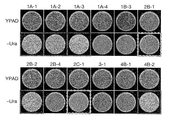
- ARS candidate regions from the library If ARS is included in the insert of the genomic DNA library prepared in Section 1, the plasmid is amplified in yeast cells without being incorporated into the nucleus in a circular form. Expected to be done. In order to search for such a plasmid, the constructed genomic DNA library was introduced into Ogata Air Minuta YRI1 strain (ade1 ura3) by electroporation to obtain 19 transformants that became uracil non-required. From these transformants, DNA was prepared by a conventional method and re-introduced into Escherichia coli DH5 ⁇ strain to isolate 14 types from which transformants were obtained (FIG. 1).
- SEQ ID NO: 1 shows the base sequence of DNA fragment 2B-1 used for detailed analysis.
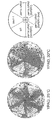
- Yeast cells retaining plasmids containing ARS candidates are pre-incubated in uracil-free synthetic medium (-Ura) and then inoculated into YPAD medium, which is a non-selective condition (conditions for dropping the plasmid). Incubated for 24 hours. After culturing, the culture solution was diluted and spread on YPAD plates and -Ura plates, and the number of colonies that appeared was counted (FIG. 2).
- the plasmid retention was calculated by dividing the number of colonies on the -Ura plate by the number of colonies on the YPAD plate. Those having a high plasmid retention rate are likely to have been inserted into the genome, and were judged to be unusable. 2B-1 with a medium retention rate and a short ARS candidate region length was selected as the most promising candidate for further analysis.
- the PER1 gene was cloned by PCR method from those derived from Ogata Air Minuta, those derived from Saccharomyces cerevisiae, and those added with an HA tag, and a total of 3 types were used.
- ADE1 was used as an auxotrophic marker for the plasmid. These three kinds of plasmids having PER1 gene, ADE1 marker and sequence 2B-1 were introduced into the per1 gene disruption strain by electroporation, and adenine non-required transformants were isolated.
- DNA was extracted from Ogata Air / Minuta cells containing plasmids cultured in -Ura medium for 16 hours by a conventional method, and this was used as a template for QPCR.
- the number of moles of the plasmid in the extracted DNA was measured using the marker URA3 on the plasmid, and the number of moles of the ACT1 gene on the chromosomal DNA was measured as a 1-copy reference.
- the number of plasmid copies per cell was calculated by dividing the number of moles of URA3 by the number of moles of ACT1. The measurement results are shown in Table 1 below.
- the copy number was calculated to be an average of 2.91 and a standard deviation of 1.15 (Table 1).
- the expression level is expected to increase by about 3 times.
- region essential for autonomous replication The region essential for autonomous replication in sequence 2B-1 was searched. Specifically, a zeocin-resistant gene-containing plasmid inserted with a sequence truncated to an appropriate length from sequence 2B-1 is introduced into Ogata air minuta cells by electroporation, and an YPAD plate containing an appropriate concentration of zeocin The presence or absence of colony formation was confirmed by smearing.
Landscapes
- Life Sciences & Earth Sciences (AREA)
- Health & Medical Sciences (AREA)
- Engineering & Computer Science (AREA)
- Chemical & Material Sciences (AREA)
- Organic Chemistry (AREA)
- Genetics & Genomics (AREA)
- Zoology (AREA)
- Wood Science & Technology (AREA)
- Bioinformatics & Cheminformatics (AREA)
- Biotechnology (AREA)
- General Engineering & Computer Science (AREA)
- Biomedical Technology (AREA)
- Microbiology (AREA)
- General Health & Medical Sciences (AREA)
- Molecular Biology (AREA)
- Biochemistry (AREA)
- Biophysics (AREA)
- Plant Pathology (AREA)
- Physics & Mathematics (AREA)
- Chemical Kinetics & Catalysis (AREA)
- General Chemical & Material Sciences (AREA)
- Micro-Organisms Or Cultivation Processes Thereof (AREA)
- Preparation Of Compounds By Using Micro-Organisms (AREA)
Abstract
本発明は、酵母においてタンパク質を高発現させるために使用できる自律複製配列(ARS)を含む自律複製型プラスミドを提供することを目的とし、具体的には、メタノール資化性酵母オガタエア・ミニュータ(Ogataea minuta)由来のARSを含む自律複製型プラスミドに関する。
Description
本発明は、例えば酵母由来の自律複製配列(以下、「ARS」と称する)を含む自律的に複製可能なプラスミドに関する。
これまでに宿主として酵母等を用いた合成生物学(タンパク質の発現・高発現や遺伝子工学的な育種)では、遺伝子を導入する際に、出芽酵母サッカロミセス・セレビシエでは自律複製型プラスミドと染色体組込み型ベクターが活用され、出芽酵母サッカロミセス・セレビシエ以外では染色体組込み型ベクターが主として活用されてきた。自律複製型ベクターは、宿主の染色体に組み込まれることなく自律的に複製可能なプラスミドであるため、宿主の分裂に伴う染色体DNAの分配に影響されることなく、プラスミドDNAが分配されるため、高い導入効率と簡便に取り扱うことが可能である。この自律複製型プラスミドは、酵母由来のARSを有する。
例えば、特許文献1は、白色腐朽菌アラゲカワラタケ由来の自律複製機能を持つDNA断片を開示する。特許文献2は、ピキア属に属する宿主酵母で自律複製機能を有するDNA断片を開示する。特許文献3は、キャンディダ・ユティリス酵母で自律複製機能を有するDNA断片を開示する。非特許文献1及び2は、オガタエア・ミニュータ(Ogataea minuta)の近縁種であるハンセヌラ・ポリモルファ(Hansenula polymorpha)のARSを開示する。
しかしながら、サッカロミセス・セレビシエ以外では、上述したように自律複製型プラスミドは利用できるものの一部の研究にしか活用されておらず、自律複製型プラスミドに使用できる様々なARSが知られている一方、酵母でのタンパク質の高発現等に活用できるより安定なARSを含む自律複製型プラスミドが求められている。
Bogdanova A.I.ら, Yeast, 1995年, 11(4), pp. 343-353
Roggenkamp R.ら, Mol. Gen. Genet., 1986年, 202, pp. 302-308
本発明は、上述した実情に鑑み、酵母においてタンパク質を安定且つ/又は高発現させるために使用できるARSを含む自律複製型プラスミドを提供することを目的とする。
上記課題を解決するため鋭意研究を行った結果、メタノール資化性酵母オガタエア・ミニュータ由来のARSを含む自律複製型プラスミドは、導入された酵母内でコピー数が多く、目的のタンパク質を高発現させることができることを見出し、本発明を完成するに至った。
すなわち、本発明は以下を包含する。
(1)オガタエア・ミニュータのゲノムDNAライブラリーから単離した、自律複製機能を有するDNA断片。
(2)配列番号1記載の塩基配列に対して少なくとも90%の同一性を有する塩基配列又はその一部を含む、自律複製機能を有するDNA断片。
(3)配列番号2記載の塩基配列又はその一部を含む、自律複製機能を有するDNA断片であって、配列番号2記載の塩基配列における少なくとも1~346番目の塩基配列を含む、前記DNA断片。
(4)(1)~(3)のいずれか1記載のDNA断片を含む、自律複製可能なプラスミド。
(5)目的タンパク質をコードする遺伝子をさらに含む、(4)記載のプラスミド。
(6)(5)記載のプラスミドを酵母宿主に導入する工程を含む、酵母の形質転換方法。
(7)(5)記載のプラスミドを有する酵母形質転換体。
(8)(7)記載の酵母形質転換体を培養する工程を含む、タンパク質の生産方法。
(1)オガタエア・ミニュータのゲノムDNAライブラリーから単離した、自律複製機能を有するDNA断片。
(2)配列番号1記載の塩基配列に対して少なくとも90%の同一性を有する塩基配列又はその一部を含む、自律複製機能を有するDNA断片。
(3)配列番号2記載の塩基配列又はその一部を含む、自律複製機能を有するDNA断片であって、配列番号2記載の塩基配列における少なくとも1~346番目の塩基配列を含む、前記DNA断片。
(4)(1)~(3)のいずれか1記載のDNA断片を含む、自律複製可能なプラスミド。
(5)目的タンパク質をコードする遺伝子をさらに含む、(4)記載のプラスミド。
(6)(5)記載のプラスミドを酵母宿主に導入する工程を含む、酵母の形質転換方法。
(7)(5)記載のプラスミドを有する酵母形質転換体。
(8)(7)記載の酵母形質転換体を培養する工程を含む、タンパク質の生産方法。
本明細書は本願の優先権の基礎となる日本国特許出願番号2017-013666号の開示内容を包含する。
本発明によれば、酵母において目的のタンパク質を高発現させることができ、当該タンパク質の生産量を向上させることができる。
本発明に係る自律複製機能を有するDNA断片(以下、「本発明に係るDNA断片」と称する)は、オガタエア・ミニュータのゲノムDNAライブラリーから単離した、自律複製機能を有するARS含有DNA断片である。ここで、「自律複製機能」とは、酵母宿主において染色体に組み込まれることなく自律的に複製が可能な機能を意味する。
本発明に係るDNA断片を含むプラスミドは、導入した酵母において染色体に組み込まれることなく自律的に複製可能であり、且つ導入した酵母内で有意なコピー数で保持される。従って、目的タンパク質をコードする遺伝子を酵母の染色体上に挿入する場合と比較して、本発明に係るDNA断片と当該DNA断片に機能的に連結された目的タンパク質をコードする遺伝子とを含むプラスミドを導入した酵母において、当該目的タンパク質の生産量を増加させることができる。
ゲノムDNAライブラリーが由来するオガタエア・ミニュータとしては、例えばNBRC 0975株、NBRC 10402株、NBRC 10746株等が挙げられる。これらの株は、独立行政法人製品評価技術基盤機構(NITE)のバイオテクノロジーセンター(NBRC)(〒292-0818 日本国千葉県木更津市かずさ鎌足2-5-8)から入手することができる。
本発明に係るDNA断片は、例えば以下に示す方法により単離することができる。具体的には、オガタエア・ミニュータから常法に従いゲノムDNAを調製し、調製したゲノムDNAを適当な制限酵素で部分分解し、分解したDNA断片をアガロースゲル電気泳動に供する。当該電気泳動後、例えば3~4 kbに渡る長さのDNA断片に相当する部分をゲルから切り出し、当該DNA断片を精製する。
次いで、精製した各DNA断片を、宿主(例えば大腸菌)で発現可能なベクターに機能的に連結し、このプラスミドを宿主に導入する。このようにして得られた各形質転換体からプラスミドDNAを抽出し、これをオガタエア・ミニュータのゲノムDNAライブラリーとして使用する。
さらに、上述のDNA断片に機能的に連結された選択マーカー(例えば、栄養要求性マーカー)等を含むゲノムDNAライブラリーをプラスミドとして酵母に形質転換し、選択マーカーの発現を指標として形質転換体を選抜し、選抜した形質転換体のプラスミド内のゲノムDNAライブラリー由来のDNA断片を本発明に係るDNA断片として単離する。
このようにして得られる本発明に係るDNA断片としては、例えば配列番号1記載の塩基配列を含むか若しくは当該塩基配列から成る、オガタエア・ミニュータNBRC 10746株由来のARSを含むDNA断片又はその相同体若しくはそれらの一部が挙げられる。
従って、一実施形態においては、本発明に係るDNA断片は、配列番号1記載の塩基配列に対して少なくとも90%、少なくとも95%、少なくとも96%、少なくとも97%、少なくとも98%、少なくとも99%又は100%の同一性を有する塩基配列又はその一部を含む、自律複製機能を有するDNA断片である。これら塩基配列又はその一部の自律複製機能は、上述のゲノムDNAライブラリーからの本発明に係るDNA断片の単離方法に準じて確認することができる。
また、別の実施形態においては、本発明に係るDNA断片は、配列番号2記載の塩基配列又はその一部を含む、自律複製機能を有するDNA断片である。配列番号2記載の塩基配列は、配列番号1記載の塩基配列における255~754番目の塩基配列に相当する。配列番号1記載の塩基配列同様に、配列番号2の塩基配列も自律複製機能を有するARS含有DNA断片として機能する。本発明に係るDNA断片において含まれる配列番号2記載の塩基配列の一部は、自律複製機能を有するARSとして必須領域である、配列番号2記載の塩基配列における少なくとも1~346番目の塩基配列を含むものであればよい。
さらに、本発明に係るDNA断片は、配列番号2記載の塩基配列に対して少なくとも90%、少なくとも95%、少なくとも96%、少なくとも97%、少なくとも98%、少なくとも99%の同一性を有する塩基配列を含む、自律複製機能を有するDNA断片である。
本発明に係るDNA断片は、例えば化学合成によって、又はオガタエア・ミニュータのゲノムDNAを鋳型とし、配列番号1又は2記載の塩基配列に基づいて設計したプライマーを用いたPCRによって得ることができる。さらに、部位特異的突然変異誘発法等によって本発明に係るDNA断片の変異型であって変異前と同等の機能を有するものを合成することができる。
本発明に係るプラスミドは、本発明に係るDNA断片を含む、酵母宿主内において自律複製可能なプラスミドである。本発明に係るプラスミドは、本発明に係るDNA断片を適当なベクターに挿入することによって作製することができる。ベクターとしては、例えば酵母と大腸菌のシャトルベクターである、YIp5、pRS303、pRS304、pRS305、pRS306等が挙げられる。
本発明に係るプラスミドにおいては、本発明に係るDNA断片に加えて、さらに目的タンパク質をコードする遺伝子を挿入することができる。目的タンパク質をコードする遺伝子としては、いかなるタンパク質やペプチドをコードする遺伝子であってもよい。また、目的タンパク質をコードする遺伝子は、本発明に係るDNA断片の他に、制御配列(例えば、プロモーター、ターミネーター等)に機能的に連結されていることが好ましい。
本発明に係る酵母形質転換体は、本発明に係るプラスミドを酵母宿主中に導入することにより得ることができる。酵母宿主としては、例えばオガタエア・ミニュータ等のオガタエア属、ハンセヌラ・ポリモルファ等のハンセヌラ属、コマガタエラ・パストリス等のコマガタエラ属(旧名ピキア属)等の属に属する酵母が挙げられる。
酵母への本発明に係るプラスミドの導入方法は、酵母にDNAを導入する方法であれば特に限定されず、例えばエレクトロポレーション法、スフェロプラスト法、酢酸リチウム法等が挙げられる。
本発明に係るタンパク質の生産方法は、本発明に係るDNA断片と目的タンパク質をコードする遺伝子とを含む本発明に係るプラスミドが導入された酵母形質転換体を培養する工程を含む。当該酵母形質転換体内の本発明に係るプラスミドのコピー数が多いことから、当該酵母形質転換体の培養により、目的タンパク質をコードする遺伝子が高発現され、目的タンパク質を多く生産することができる。
酵母形質転換体は、公知の酵母の培養条件下で培養する。例えば、培地としてSC培地(合成培地)を用いて、25~30℃の温度条件下で振盪培養又は静置培養を行う。
培養後、得られた培養物をそのまま目的タンパク質として使用してもよく、あるいは培養物から目的タンパク質を単離又は精製してもよい。
以下、実施例により本発明をより詳細に説明するが、本発明の技術的範囲は以下の実施例に限定されるものではない。
〔実施例1〕オガタエア・ミニュータ由来のARSの単離
1.オガタエア・ミニュータのゲノムDNAライブラリーの構築
オガタエア・ミニュータNBRC 10746株は独立行政法人製品評価技術基盤機構より入手した。この株をYPAD(2%ペプトン、1%酵母エキス、2%グルコース、100 mg/L硫酸アデニン)5 mLに植菌し、30℃で16時間培養した。集菌後、常法に従いゲノムDNAを調製した。
1.オガタエア・ミニュータのゲノムDNAライブラリーの構築
オガタエア・ミニュータNBRC 10746株は独立行政法人製品評価技術基盤機構より入手した。この株をYPAD(2%ペプトン、1%酵母エキス、2%グルコース、100 mg/L硫酸アデニン)5 mLに植菌し、30℃で16時間培養した。集菌後、常法に従いゲノムDNAを調製した。
次に、調製したゲノムDNA 200 μgを制限酵素Sau3AIで部分分解した後、0.7%アガロースゲル電気泳動に供し、3-4 kbに渡る長さのDNA断片に相当する部分をゲルから切り出した後、QIAquick Gel Extraction Kit(キアゲン社)によって精製した。
次に、ATCCより入手可能な酵母プラスミドpRS306ベクターを制限酵素BamHIで切断、5'末端の脱リン酸化後、精製した先述のDNA断片とライゲーション処理を行い(東洋紡社のLigation High Ver.2を使用)、その後、このプラスミドを大腸菌DH5α株に導入した。
大腸菌の形質転換体約39,000コロニーをピックアップし、これらをまとめて50 μg/mLアンピシリン添加LB液体培地(1%トリプトン、0.5%酵母エキス、1%塩化ナトリウム)で培養し、プラスミドDNAを常法により抽出した。これをオガタエア・ミニュータのゲノムDNAライブラリーとした。
2.ライブラリーからのARS候補領域の検索
第1節で作製したゲノムDNAライブラリーのインサート中にARSが含まれていれば、そのプラスミドは環状のまま核内に取り込まれることなしに酵母細胞内で増幅されると期待される。そのようなプラスミドを検索するため、構築したゲノムDNAライブラリーをオガタエア・ミニュータYRI1株(ade1 ura3)に電気穿孔法により導入し、ウラシル非要求性となった形質転換体を19個取得した。これらの形質転換体から常法によりDNAを調製し、大腸菌DH5α株に再び導入して形質転換体が得られるものを14種類分離した(図1)。
第1節で作製したゲノムDNAライブラリーのインサート中にARSが含まれていれば、そのプラスミドは環状のまま核内に取り込まれることなしに酵母細胞内で増幅されると期待される。そのようなプラスミドを検索するため、構築したゲノムDNAライブラリーをオガタエア・ミニュータYRI1株(ade1 ura3)に電気穿孔法により導入し、ウラシル非要求性となった形質転換体を19個取得した。これらの形質転換体から常法によりDNAを調製し、大腸菌DH5α株に再び導入して形質転換体が得られるものを14種類分離した(図1)。
プラスミドDNAのインサート部分の塩基配列を決定した結果、ARS候補を含む、200から4000 bpまでの様々な長さのDNAを12種類得た。これらのうち、詳細な解析に用いたDNA断片2B-1の塩基配列を配列番号1に示す。
3.プラスミド保持率の測定
ARS候補を含んだプラスミドを保持した酵母細胞をウラシル非含有合成培地(-Ura)で前培養した後、非選択条件(プラスミドを落としうる条件)であるYPAD培地に植菌し、24時間培養を行った。培養後、培養液を稀釈してYPADプレート及び-Uraプレートに蒔き、出現したコロニー数をカウントした(図2)。
ARS候補を含んだプラスミドを保持した酵母細胞をウラシル非含有合成培地(-Ura)で前培養した後、非選択条件(プラスミドを落としうる条件)であるYPAD培地に植菌し、24時間培養を行った。培養後、培養液を稀釈してYPADプレート及び-Uraプレートに蒔き、出現したコロニー数をカウントした(図2)。
-Uraプレートのコロニー数をYPADプレートのコロニー数で割ることにより、プラスミドの保持率を算出した。プラスミドの保持率が高いものは、ゲノム上にプラスミドが挿入された可能性が高く、使い勝手が良くないと判断した。保持率が中程度のもので、ARS候補領域の長さが短い2B-1を最有力候補として選定し、さらに解析を行った。
4.プラスミドの有用性の検証
オガタエア・ミニュータにおいて、PER1遺伝子を破壊すると細胞の増殖が悪化することが判明している。ARSを有したプラスミド上のPER1遺伝子がこの増殖悪化をレスキューできるかを調べるため、配列2B-1とPER1遺伝子とを機能的に挿入したプラスミドを作製した。
オガタエア・ミニュータにおいて、PER1遺伝子を破壊すると細胞の増殖が悪化することが判明している。ARSを有したプラスミド上のPER1遺伝子がこの増殖悪化をレスキューできるかを調べるため、配列2B-1とPER1遺伝子とを機能的に挿入したプラスミドを作製した。
具体的には、PER1遺伝子は、オガタエア・ミニュータ由来のもの、出芽酵母サッカロミセス・セレビシエ由来のもの、及び、これにHAタグを付加したものをPCR法によりクローニングし、合計3種類を用いた。プラスミドの栄養要求性マーカーは、ADE1を使用した。PER1遺伝子、ADE1マーカー、配列2B-1を有するこれら3種類のプラスミドを電気穿孔法によりper1遺伝子破壊株に導入し、アデニン非要求性となった形質転換体を分離した。
これらの形質転換体及び対照株をYPAD培地上にストリークし、25℃及び30℃で3日間培養を行ったところ、プラスミドを導入したper1遺伝子破壊株の増殖が回復した(図3)。ARS候補を含んだプラスミドが酵母細胞内で複製され、挿入されたDNA上のPER1遺伝子が発現した効果と考えられる。
5.プラスミドコピー数の測定
プラスミドを保持した細胞からDNAを抽出し、リアルタイム定量PCR法により、1細胞当たりに含まれるプラスミドのコピー数を測定した。QPCR反応は、Brilliant III Ultra-Fast SYBR Green QPCR Master Mix(Agilent社)を用いて行い、リアルタイムQPCR装置はMx3000P Real-Time QPCR System(Stratagene社)を用いた。
プラスミドを保持した細胞からDNAを抽出し、リアルタイム定量PCR法により、1細胞当たりに含まれるプラスミドのコピー数を測定した。QPCR反応は、Brilliant III Ultra-Fast SYBR Green QPCR Master Mix(Agilent社)を用いて行い、リアルタイムQPCR装置はMx3000P Real-Time QPCR System(Stratagene社)を用いた。
-Ura培地で16時間培養した、プラスミドを含むオガタエア・ミニュータ細胞から常法によりDNAを抽出し、これをQPCRの鋳型とした。抽出したDNA中のプラスミドのモル数を、プラスミド上のマーカーURA3を用いて測定するとともに、1コピーのリファレンスとして、染色体DNA上のACT1遺伝子のモル数を測定した。URA3のモル数をACT1のモル数で割ることにより、1細胞あたりのプラスミドのコピー数を算出した。測定結果を以下の表1に示す。
配列2B-1を含むプラスミドを導入した形質転換体3株を用いて測定したところ、コピー数は平均2.91、標準偏差1.15と算出された(表1)。目的タンパク質の遺伝子を染色体上に挿入する場合と比較して、およそ3倍の発現量の増加が期待される。

6.自律複製に必須な領域の探索
配列2B-1中の自律複製に必須な領域を探索した。具体的には、配列2B-1より適当な長さに切り縮めた配列を挿入したゼオシン耐性遺伝子含有プラスミドを、オガタエア・ミニュータ細胞に電気穿孔法により導入し、適当な濃度のゼオシンを含むYPADプレートに塗沫することで、コロニー形成の有無を確認した。
配列2B-1中の自律複製に必須な領域を探索した。具体的には、配列2B-1より適当な長さに切り縮めた配列を挿入したゼオシン耐性遺伝子含有プラスミドを、オガタエア・ミニュータ細胞に電気穿孔法により導入し、適当な濃度のゼオシンを含むYPADプレートに塗沫することで、コロニー形成の有無を確認した。
その結果、配列番号2に示す500bp(配列番号1記載の塩基配列における255~754番目の塩基配列に相当)を含む断片2B-1nを含むプラスミドを導入した場合にのみ形質転換体が得られた。
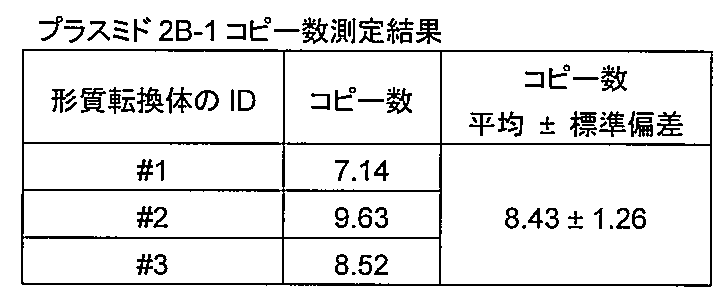
同様の方法で作製した、配列2B-1を挿入したゼオシン耐性遺伝子含有プラスミドを導入した形質転換体3株を用いてプラスミドコピー数を測定したところ、コピー数は平均8.43、標準偏差1.26と算出された(表2)。
一方、配列2B-1nを含むプラスミドを導入した形質転換体3株を用いてプラスミドコピー数を測定したところ、コピー数は平均5.29、標準偏差0.88と算出された(表3)。最終的に、必須領域は配列番号2に示す500bpのうち1~346番目の塩基配列であることが明らかになった。

本明細書で引用した全ての刊行物、特許及び特許出願はそのまま引用により本明細書に組み入れられるものとする。
Claims (8)
- オガタエア・ミニュータ(Ogataea minuta)のゲノムDNAライブラリーから単離した、自律複製機能を有するDNA断片。
- 配列番号1記載の塩基配列に対して少なくとも90%の同一性を有する塩基配列又はその一部を含む、自律複製機能を有するDNA断片。
- 配列番号2記載の塩基配列又はその一部を含む、自律複製機能を有するDNA断片であって、配列番号2記載の塩基配列における少なくとも1~346番目の塩基配列を含む、前記DNA断片。
- 請求項1~3のいずれか1項記載のDNA断片を含む、自律複製可能なプラスミド。
- 目的タンパク質をコードする遺伝子をさらに含む、請求項4記載のプラスミド。
- 請求項5記載のプラスミドを酵母宿主に導入する工程を含む、酵母の形質転換方法。
- 請求項5記載のプラスミドを有する酵母形質転換体。
- 請求項7記載の酵母形質転換体を培養する工程を含む、タンパク質の生産方法。
Applications Claiming Priority (2)
| Application Number | Priority Date | Filing Date | Title |
|---|---|---|---|
| JP2017-013666 | 2017-01-27 | ||
| JP2017013666 | 2017-01-27 |
Publications (1)
| Publication Number | Publication Date |
|---|---|
| WO2018139564A1 true WO2018139564A1 (ja) | 2018-08-02 |
Family
ID=62979425
Family Applications (1)
| Application Number | Title | Priority Date | Filing Date |
|---|---|---|---|
| PCT/JP2018/002383 Ceased WO2018139564A1 (ja) | 2017-01-27 | 2018-01-26 | メタノール資化性酵母の自律複製型プラスミド |
Country Status (2)
| Country | Link |
|---|---|
| JP (1) | JP2018121626A (ja) |
| WO (1) | WO2018139564A1 (ja) |
Citations (1)
| Publication number | Priority date | Publication date | Assignee | Title |
|---|---|---|---|---|
| WO2016088824A1 (ja) * | 2014-12-03 | 2016-06-09 | 株式会社カネカ | セントロメアdna配列を含むベクター及びその用途 |
-
2018
- 2018-01-26 JP JP2018011082A patent/JP2018121626A/ja active Pending
- 2018-01-26 WO PCT/JP2018/002383 patent/WO2018139564A1/ja not_active Ceased
Patent Citations (1)
| Publication number | Priority date | Publication date | Assignee | Title |
|---|---|---|---|---|
| WO2016088824A1 (ja) * | 2014-12-03 | 2016-06-09 | 株式会社カネカ | セントロメアdna配列を含むベクター及びその用途 |
Non-Patent Citations (1)
| Title |
|---|
| KOMATSUZAKI, AKIKO ET AL.: "Construction of plasmids and diploid cells in the yeast Ogataea minuta", ABSTRACT OF THE MOLECULAR BIOLOGY SOCIETY OF JAPAN, 16 November 2016 (2016-11-16) * |
Also Published As
| Publication number | Publication date |
|---|---|
| JP2018121626A (ja) | 2018-08-09 |
Similar Documents
| Publication | Publication Date | Title |
|---|---|---|
| Näätsaari et al. | Deletion of the Pichia pastoris KU70 homologue facilitates platform strain generation for gene expression and synthetic biology | |
| US8236528B2 (en) | Method for methanol independent induction from methanol inducible promoters in Pichia | |
| Branduardi et al. | The yeast Zygosaccharomyces bailii: a new host for heterologous protein production, secretion and for metabolic engineering applications | |
| Siewers | An overview on selection marker genes for transformation of Saccharomyces cerevisiae | |
| Klabunde et al. | Integration of heterologous genes in several yeast species using vectors containing a Hansenula polymorpha-derived rDNA-targeting element | |
| Ito et al. | Deletion of DNA ligase IV homolog confers higher gene targeting efficiency on homologous recombination in Komagataella phaffii | |
| US11214809B2 (en) | Vector containing centromere DNA sequence and use thereof | |
| Weiss et al. | Scalable protein production by Komagataella phaffii enabled by ARS plasmids and carbon source-based selection | |
| Tsyrulnyk et al. | Overexpression of riboflavin excretase enhances riboflavin production in the yeast Candida famata | |
| Heo et al. | Simultaneous integration of multiple genes into the Kluyveromyces marxianus chromosome | |
| Badura et al. | PCR-based gene targeting in Hanseniaspora uvarum | |
| WO2018139564A1 (ja) | メタノール資化性酵母の自律複製型プラスミド | |
| Krasovska et al. | Stable overproducer of hepatitis B surface antigen in the methylotrophic yeast Hansenula polymorpha due to multiple integration of heterologous auxotrophic selective markers and defect in peroxisome biogenesis | |
| Rebnegger et al. | Knock-out of the major regulator Flo8 in Komagataella phaffii results in unique host strain performance for methanol-free recombinant protein production | |
| Tsuda et al. | Selection of the methylotrophic yeast Ogataea minuta as a high-producing host for heterologous protein expression | |
| US20240400974A1 (en) | Novel yeast strains | |
| Tkachenko et al. | CRISPR/Cas9-mediated genome editing of the Komagataella phaffii to obtain a phytase-producer markerless strain | |
| Bischoff et al. | Selection of the optimal yeast host for the synthesis of recombinant enzymes | |
| Heistinger et al. | Komagataella phaffii YPS1-5 encodes the alpha-factor degrading protease Bar1 | |
| JP4587750B2 (ja) | 転写活性化タンパク質をコードするキャンディダユティリス由来の遺伝子 | |
| Kutyna et al. | Genetic engineering of industrial Saccharomyces cerevisiae strains using a selection/counter-selection approach | |
| Gordeeva et al. | The expression potential of novel Komagataella strains | |
| JP4671394B2 (ja) | キャンディダ・ユティリス由来のプロモーターdna | |
| CN112725337B (zh) | 一种深海真菌FS140氧化还原酶基因GliT启动子及其应用 | |
| Wang et al. | Scarless Genomic Protein Labeling in Saccharomyces cerevisiae |
Legal Events
| Date | Code | Title | Description |
|---|---|---|---|
| 121 | Ep: the epo has been informed by wipo that ep was designated in this application |
Ref document number: 18745268 Country of ref document: EP Kind code of ref document: A1 |
|
| NENP | Non-entry into the national phase |
Ref country code: DE |
|
| 122 | Ep: pct application non-entry in european phase |
Ref document number: 18745268 Country of ref document: EP Kind code of ref document: A1 |