WO2018135329A1 - 管理装置、制御方法、および管理プログラム - Google Patents
管理装置、制御方法、および管理プログラム Download PDFInfo
- Publication number
- WO2018135329A1 WO2018135329A1 PCT/JP2018/000123 JP2018000123W WO2018135329A1 WO 2018135329 A1 WO2018135329 A1 WO 2018135329A1 JP 2018000123 W JP2018000123 W JP 2018000123W WO 2018135329 A1 WO2018135329 A1 WO 2018135329A1
- Authority
- WO
- WIPO (PCT)
- Prior art keywords
- group
- information processing
- management apparatus
- virtual machine
- information
- Prior art date
- Legal status (The legal status is an assumption and is not a legal conclusion. Google has not performed a legal analysis and makes no representation as to the accuracy of the status listed.)
- Ceased
Links
Images












Classifications
-
- G—PHYSICS
- G06—COMPUTING OR CALCULATING; COUNTING
- G06F—ELECTRIC DIGITAL DATA PROCESSING
- G06F9/00—Arrangements for program control, e.g. control units
- G06F9/06—Arrangements for program control, e.g. control units using stored programs, i.e. using an internal store of processing equipment to receive or retain programs
- G06F9/46—Multiprogramming arrangements
- G06F9/48—Program initiating; Program switching, e.g. by interrupt
- G06F9/4806—Task transfer initiation or dispatching
- G06F9/4843—Task transfer initiation or dispatching by program, e.g. task dispatcher, supervisor, operating system
-
- G—PHYSICS
- G06—COMPUTING OR CALCULATING; COUNTING
- G06F—ELECTRIC DIGITAL DATA PROCESSING
- G06F9/00—Arrangements for program control, e.g. control units
- G06F9/06—Arrangements for program control, e.g. control units using stored programs, i.e. using an internal store of processing equipment to receive or retain programs
- G06F9/46—Multiprogramming arrangements
-
- G—PHYSICS
- G06—COMPUTING OR CALCULATING; COUNTING
- G06F—ELECTRIC DIGITAL DATA PROCESSING
- G06F9/00—Arrangements for program control, e.g. control units
- G06F9/06—Arrangements for program control, e.g. control units using stored programs, i.e. using an internal store of processing equipment to receive or retain programs
- G06F9/46—Multiprogramming arrangements
- G06F9/50—Allocation of resources, e.g. of the central processing unit [CPU]
-
- G—PHYSICS
- G06—COMPUTING OR CALCULATING; COUNTING
- G06F—ELECTRIC DIGITAL DATA PROCESSING
- G06F9/00—Arrangements for program control, e.g. control units
- G06F9/06—Arrangements for program control, e.g. control units using stored programs, i.e. using an internal store of processing equipment to receive or retain programs
- G06F9/46—Multiprogramming arrangements
- G06F9/50—Allocation of resources, e.g. of the central processing unit [CPU]
- G06F9/5061—Partitioning or combining of resources
- G06F9/5077—Logical partitioning of resources; Management or configuration of virtualized resources
-
- G—PHYSICS
- G06—COMPUTING OR CALCULATING; COUNTING
- G06F—ELECTRIC DIGITAL DATA PROCESSING
- G06F2209/00—Indexing scheme relating to G06F9/00
- G06F2209/50—Indexing scheme relating to G06F9/50
- G06F2209/501—Performance criteria
Definitions
- the present invention relates to a management device, a control method, and a management program.
- data resources manage data resources such as information processing devices in the data center to satisfy the SLA (Service Level Agreement), which is the required level of service content and service quality, etc. promised to customers.
- SLA Service Level Agreement
- VM Virtual Machine
- the two virtual machines are the same
- an index value indicating the appropriateness of placing the new virtual machine on the server device is calculated, and a new value is obtained by referring to the calculated index value.
- a technique for determining the placement destination of a virtual machine for example, a virtual server provided on a plurality of physical servers, on the condition that a group condition indicating whether the virtual server should be allocated to different physical servers or the same physical server is maintained. There is a technology to perform rearrangement.
- an object of the present invention is to provide a management device, a control method, and a management program capable of minimizing calculation resources used in an information processing system.
- an information processing system including a plurality of information processing devices each having a plurality of computing resources is managed, and the plurality of information processing devices belong to each other and each of a plurality of groups each providing a predetermined service
- An acquisition unit that stores configuration information and performance information of each information processing apparatus acquired from each host OS that is executed in each storage unit for each of the plurality of groups, and the storage unit stores each of the plurality of groups.
- a selection unit that selects, for each of the plurality of groups, a migration target virtual machine that is a migration target from the target group to which the virtual machine to be selected belongs to another group based on the configuration information and the performance information to be moved, and the migration target virtual machine
- the performance value of the service corresponding to the movement target virtual machine satisfies a predetermined reference value.
- FIG. 1 is an explanatory diagram of an example of a control method of the information processing system 110 according to the embodiment.
- FIG. 2 is an explanatory diagram illustrating an example of the information processing system 110.
- FIG. 3 is an explanatory diagram illustrating a usage example of the information processing system 110.
- FIG. 4 is a block diagram illustrating a hardware configuration example of the management apparatus 100.
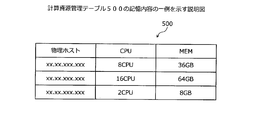
- FIG. 5 is an explanatory diagram showing an example of the stored contents of the computing resource management table 500.
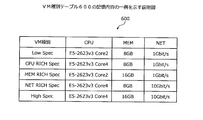
- FIG. 6 is an explanatory diagram showing an example of the contents stored in the VM type table 600.
- FIG. 7 is an explanatory diagram illustrating an example of the contents stored in the VM operation status sheet 700.
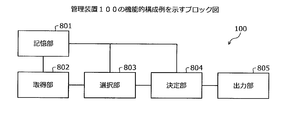
- FIG. 8 is a block diagram illustrating a functional configuration example of the management apparatus 100.
- FIG. 1 is an explanatory diagram of an example of a control method of the information processing system 110 according to the embodiment.
- FIG. 2 is an explanatory diagram illustrating an example of the information processing system 110.
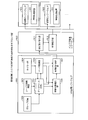
- FIG. 9 is a block diagram illustrating a specific example of a functional configuration of the management apparatus 100.
- FIG. 10 is an explanatory diagram (part 1) of an operation example 1 of the management apparatus 100.
- FIG. 11 is an explanatory diagram (part 2) of the operation example 1 of the management apparatus 100.
- FIG. 12 is an explanatory diagram (part 3) of the operation example 1 of the management apparatus 100.
- FIG. 13 is an explanatory diagram (part 4) of the operation example 1 of the management apparatus 100.
- FIG. 14 is an explanatory diagram (part 5) of the operation example 1 of the management apparatus 100.
- FIG. 15 is an explanatory diagram (part 6) of the operation example 1 of the management apparatus 100.
- FIG. 16 is an explanatory diagram (part 7) of the operation example 1 of the management apparatus 100.
- FIG. 10 is an explanatory diagram (part 1) of an operation example 1 of the management apparatus 100.
- FIG. 11 is an explanatory diagram (part 2) of the operation example 1 of the management apparatus 100
- FIG. 17 is an explanatory diagram (part 8) of the operation example 1 of the management apparatus 100.
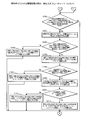
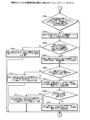
- FIG. 18 is a flowchart (part 1) illustrating an example of a management processing procedure according to the first embodiment.
- FIG. 19 is a flowchart (part 2) illustrating an example of the management processing procedure according to the first embodiment.
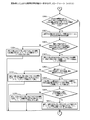
- FIG. 20 is a flowchart (part 3) illustrating an example of a management processing procedure according to the first embodiment.
- FIG. 21 is a flowchart (part 4) illustrating an example of a management processing procedure according to the first embodiment.
- FIG. 22 is a flowchart (part 5) illustrating an example of a management processing procedure according to the first embodiment.
- FIG. 23 is an explanatory diagram (part 1) of an operation example 2 of the management apparatus 100.
- FIG. 1 is illustrating an example of a management processing procedure according to the first embodiment.
- FIG. 19 is a flowchart (part 2) illustrating an example of the management processing procedure according to the first embodiment.
- FIG. 24 is an explanatory diagram (part 2) of the operation example 2 of the management apparatus 100.
- FIG. 25 is an explanatory diagram (part 3) of the operation example 2 of the management apparatus 100.
- FIG. 26 is an explanatory diagram (part 4) of the operation example 2 of the management apparatus 100.
- FIG. 27 is an explanatory diagram (part 5) of the operation example 2 of the management apparatus 100.
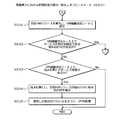
- FIG. 28 is a flowchart (part 1) illustrating an example of a management processing procedure according to the second embodiment.
- FIG. 29 is a flowchart (part 2) illustrating an example of a management processing procedure according to the second embodiment.
- FIG. 30 is a flowchart (part 3) illustrating an example of a management processing procedure according to the second embodiment.
- FIG. 31 is a flowchart (part 4) illustrating an example of a management processing procedure according to the second embodiment.
- FIG. 1 is an explanatory diagram of an example of a control method of the information processing system 110 according to the embodiment.
- the management apparatus 100 is a computer that manages an information processing system 110 including a plurality of information processing apparatuses 101.
- the information processing apparatus 101 is a computer having a plurality of calculation resources and capable of executing a virtual machine.
- the information processing apparatus 101 is a server in a data center, for example.
- the computing resource is, for example, a hardware resource.
- the hardware resources are, for example, server CPU (Central Processing Unit) resources.
- the CPU resource is expressed by, for example, the number of CPUs allocated to the virtual machine, the number of cores in the CPU, or the number of virtual CPUs.
- the hardware resource may be, for example, a server storage capacity, a network bandwidth, or the like.
- VM virtual machine
- HW resource hardware resource
- Services that use data centers tend to be required to ensure the usability desired by service users by satisfying the SLA agreed between service providers and service users. . Also, there is a tendency to minimize HW resources used for services in order to reduce power consumption of the data center or increase the number of services that can be provided in the data center. Thus, in a service that uses a data center, it is preferable to reduce the HW resources used for the service while satisfying the SLA.
- the HW resource allocated to the VM is adjusted within a range that satisfies the SLA, and the HW resource allocated to the VM is minimized. It can be considered. However, even if an attempt is made to minimize the HW resource within a range that satisfies the SLA for each VM, the HW resource used for the service in the entire data center may not be minimized.
- mapping the HW resource allocated to a plurality of VMs that provide a service and the performance information calculate resources used in the entire information processing system 110 that provides the service are minimized.
- a control method that can be used will be described.
- FIG. 1 there are a VMA in which application a operates, a VMB in which application b operates, and a VMC in which application c operates.
- a plurality of information processing apparatuses 10 There are a plurality of groups each of which 1 belongs to and provides predetermined services by the applications a to c.
- the group G1 for example, is a group to which an information processing apparatus 101A that executes VMA, an information processing apparatus 101B that executes VMB, and an information processing apparatus 101C that executes VMC belong.
- the same information processing apparatus 101 may belong to different groups, such as the groups G1 and G2.
- the group G3 is, for example, a group to which an information processing apparatus 101A that executes VMA, an information processing apparatus 101B that executes VMB, and an information processing apparatus 101C that executes VMC belong.
- the information processing apparatus 101A allocates an HW resource different from that belonging to the group G1 to the VMA.
- the information processing apparatuses 101 belonging to different groups may have the same combination.
- the management apparatus 100 acquires configuration information and performance information of each information processing apparatus 101 from a host OS (Operating System) executed by each of the plurality of groups, and stores the information in the storage unit for each of the plurality of groups.
- the configuration information is, for example, the number of CPUs, storage capacity, network bandwidth, and the like.
- the performance information is a performance value indicating the state of the information processing apparatus 101 such as latency and throughput, for example.
- the performance information is obtained, for example, by executing a benchmark.
- the management apparatus 100 acquires configuration information indicating the number of CPUs, storage capacity, network bandwidth, etc. used for the VMA to VMC in each information processing apparatus 101 belonging to each group, for example. Further, the management apparatus 100, for example, causes VMA to VMC to be executed for each group, and indicates the latency, throughput, etc. of the information processing apparatus 101 from the performance monitor on the host OS executed by the information processing apparatus 101 belonging to the group. Get performance information.
- the management apparatus 100 can map the size of the HW resource used for the VMA to VMC in each information processing apparatus 101 belonging to the group and the performance information of the service provided in the group for each group. it can. For this reason, the management apparatus 100 considers more variations for allocating HW resources to VMs than when attempting to minimize HW resources so as to satisfy the SLA by paying attention to each VM. You can consider minimizing resources.
- the management apparatus 100 Based on the configuration information and performance information stored in the storage unit for each of the plurality of groups, the management apparatus 100 sets the movement target VMs to be moved from the target group to which the selection target VM belongs to another group for each of the plurality of groups.
- Select The VMs to be selected are a plurality of VMs that provide services.
- the target group is a group to which the information processing apparatus 101 that is currently executing the VM to be selected belongs. For example, when the VMA to VMC are allocated to each information processing apparatus 101 belonging to the group, the management apparatus 100 selects a VM whose HW resource allocation is changed.
- the management apparatus 100 determines whether or not the performance value of the service corresponding to the migration target VM satisfies a predetermined reference value.
- the service corresponding to the migration target VM is a service provided by a plurality of VMs executed by each information processing apparatus 101 belonging to another group, and a plurality of services executed by each information processing apparatus 101 belonging to the target group. This service is the same as the service provided by the VM.
- the performance value is, for example, latency or throughput.
- the management apparatus 100 calculates the performance value of the service provided by the VMA to VMC based on the performance information of each information processing apparatus 101 belonging to another group, and determines whether the performance value satisfies the SLA.
- the management apparatus 100 determines the movement of the movement target VM from the target group to another group. For example, the management apparatus 100 arranges VMA to VMC in each information processing apparatus 101 belonging to another group. Thereby, the management apparatus 100 can identify a group in which the HW resource used for the service may be smaller than the target group within a range satisfying the SLA. Then, the management apparatus 100 can move the VMA to VMC to another group that satisfies the SLA to minimize the HW resource.
- a group indicates variations of HW resources to which each information processing apparatus 101 belongs, and each information processing apparatus 101 can be allocated to a plurality of VMs, but is not limited thereto.
- the group may indicate a variation in which a VM type is set for each VM, and each information processing apparatus 101 allocates a HW resource corresponding to the VM type set for each VM. According to this, the management apparatus 100 can reduce the number of variations to be considered and reduce the burden when considering minimization of HW resources.
- the management apparatus 100 may create a group.
- an administrator of the information processing system 110 may input a group to the management apparatus 100.
- FIG. 2 is an explanatory diagram showing an example of the information processing system 110.
- the information processing system 110 includes a management device 100 and an information processing device 101.
- the management apparatus 100 and the information processing apparatus 101 are connected via a wired or wireless network 210.
- the network 210 is, for example, a LAN (Local Area Network), a WAN (Wide Area Network), the Internet, or the like.
- the management apparatus 100 is a computer that manages the information processing apparatus 101.
- the management apparatus 100 is specifically a server.
- the management device 100 is a server in the data center.
- the management device 100 may be a server outside the data center.
- the information processing apparatus 101 is a computer having calculation resources.
- the information processing apparatus 101 can execute a VM.
- the information processing apparatus 101 executes the VM by the host OS.
- the information processing apparatus 101 may execute the VM using, for example, a hypervisor.
- the information processing apparatus 101 is a server.
- the management device 100 may be integrated with any one of the information processing devices 101.
- FIG. 3 is an explanatory diagram illustrating a usage example of the information processing system 110.
- the information processing system 110 is used via a client device 303 in cooperation with a VM that realizes a function of a front-end server, a VM that realizes a function of an application server, and a VM that realizes a function of a back-end server. Provide services to consumers.
- the information processing system 110 implements a front-end server by arranging a VM that realizes the function of the front-end server in any one of the information processing apparatuses 101.
- the front-end server is a server that communicates with the client device 303 via the Internet 301 and the firewall 302, for example.
- the information processing system 110 implements an application server by arranging a VM that realizes the function of the application server in any of the information processing apparatuses 101.
- the application server is a server that performs predetermined processing in accordance with the communication content from the client device 303.
- the information processing system 110 implements a back-end server by arranging a VM that realizes the function of the back-end server in one of the information processing apparatuses 101.
- the back-end server is a server that manages, for example, a DB (Data Base).
- the management apparatus 100 controls the HW resource that each information processing apparatus 101 allocates to the VM, or controls the placement of the VM among the plurality of information processing apparatuses 101.
- the management apparatus 100 controls the HW resource allocated to the VM, or controls the placement of the VM among the plurality of information processing apparatuses 101, and information on the HW resource allocated to the VM by each information processing apparatus 101; Get service performance information.
- the management apparatus 100 controls the HW resources that each information processing apparatus 101 allocates to the VM within a range that satisfies the SLA, or a plurality of information processing
- the placement of VMs in the device 101 is controlled.
- FIG. 4 is a block diagram illustrating a hardware configuration example of the management apparatus 100.
- the management apparatus 100 includes a CPU 401, a memory 402, a network I / F (Interface) 403, a recording medium I / F 404, and a recording medium 405. Each component is connected by a bus 400.
- the CPU 401 governs overall control of the management apparatus 100.
- the memory 402 includes, for example, a ROM (Read Only Memory), a RAM (Random Access Memory), a flash ROM, and the like. Specifically, for example, a flash ROM or ROM stores various programs, and the RAM is used as a work area of the CPU 401.
- the program stored in the memory 402 is loaded on the CPU 401 to cause the CPU 401 to execute the coded process.
- the network I / F 403 is connected to the network 210 via a communication line, and is connected to another computer via the network 210.
- the network I / F 403 controls an internal interface with the network 210 and controls input / output of data from other computers.
- a modem or a LAN adapter can be employed as the network I / F 403, for example, a modem or a LAN adapter can be employed.
- the recording medium I / F 404 controls reading / writing of data with respect to the recording medium 405 according to the control of the CPU 401.
- the recording medium I / F 404 is, for example, a disk drive, an SSD (Solid State Drive), a USB (Universal Serial Bus) port, or the like.
- the recording medium 405 is a nonvolatile memory that stores data written under the control of the recording medium I / F 404.
- the recording medium 405 is, for example, a disk, a semiconductor memory, a USB memory, or the like.
- the recording medium 405 may be detachable from the management apparatus 100.
- the management apparatus 100 may include, for example, a keyboard, a mouse, a display, and the like in addition to the above-described components. Further, the management apparatus 100 may not include the recording medium I / F 404 and the recording medium 405. Further, the hardware configuration example of the information processing apparatus 101 is the same as the hardware configuration example of the management apparatus 100, and thus the description thereof is omitted.
- the computing resource management table 500 is realized by, for example, a storage area such as the memory 402 and the recording medium 405 of the management apparatus 100 illustrated in FIG.
- FIG. 5 is an explanatory diagram showing an example of the storage contents of the computing resource management table 500.
- the computing resource management table 500 includes fields for a physical host, a CPU, and a MEM.
- the computing resource management table 500 stores computing resource management information as a record by setting information in each field for each physical host.
- the calculation resource management table 500 can determine how many HW resources can be allocated to the information processing apparatus 101 as long as the VMs can be arranged.
- the VM type table 600 is realized by, for example, a storage area such as the memory 402 and the recording medium 405 of the management apparatus 100 illustrated in FIG.
- FIG. 6 is an explanatory diagram showing an example of the contents stored in the VM type table 600.
- the VM type table 600 includes fields for a VM type, a CPU, a MEM, and a NET.
- the VM type table 600 stores VM type information as a record by setting information in each field for each VM type.
- a VM type corresponding to the specification required for the VM is set.
- CPU conditions to be assigned to the VM are set.
- the CPU condition may be the number of cores.
- MEM field a condition for the size of the memory 402 allocated to the VM is set in order to realize the specification.
- NET field a condition for the size of the network bandwidth allocated to the VM is set in order to realize the specification.
- the VM type table 600 can specify the size of the HW resource used for a VM of a certain VM type.
- the VM operation status sheet 700 is realized by, for example, a storage area such as the memory 402 and the recording medium 405 of the management apparatus 100 illustrated in FIG.
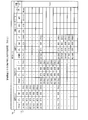
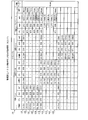
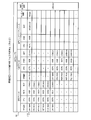
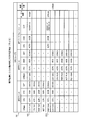
- FIG. 7 is an explanatory diagram illustrating an example of the contents stored in the VM operation status sheet 700.
- the VM operation status sheet 700 includes fields for one or more VMs, total HW resources, service performance, and target service performance.
- the VM operation status information is stored as a record by setting information in each field for each variation of HW resources allocated to a plurality of VMs that realize a service.
- the VM field is provided for each VM that implements the service.
- the VM field further includes a VM type field, a CPU field, a MEM field, and a NET field.
- VM type field a VM type corresponding to the specification required for the VM is set.
- CPU field in order to realize the specifications, CPU conditions to be assigned to the VM are set.
- MEM field a condition for the size of the memory 402 allocated to the VM is set in order to realize the specification.
- NET field a condition for the size of the network bandwidth allocated to the VM is set in order to realize the specification.
- the total HW resource field further includes fields of CPU, MEM, and NET.
- CPU field a total value of the number of CPUs used in each information processing apparatus 101 is set in order to execute a plurality of VMs that implement services.
- MEM field a total value of the size of the memory 402 used in each information processing apparatus 101 is set in order to execute a plurality of VMs that implement services.
- NET field a total value of the size of the network bandwidth used in each information processing apparatus 101 is set in order to execute a plurality of VMs that realize the service.
- the VM operation status sheet 700 can make more consideration of variations in which HW resources are allocated to a plurality of VMs that provide a certain service. Specific examples of the VM operation status sheet 700 will be described later with reference to FIGS. 10 to 17 and FIGS. 23 to 27.
- FIG. 8 is a block diagram illustrating a functional configuration example of the management apparatus 100.
- the management device 100 includes a storage unit 801, an acquisition unit 802, a selection unit 803, a determination unit 804, and an output unit 805.
- the storage unit 801 is realized by a storage area such as the memory 402 and the recording medium 405 shown in FIG.
- the acquisition unit 802 to the output unit 805 are functions serving as a control unit. Specifically, the acquisition unit 802 to the output unit 805, for example, cause the CPU 401 to execute a program stored in a storage area such as the memory 402 and the recording medium 405 illustrated in FIG. By realizing the function.
- the processing result of each functional unit is stored in a storage area such as the memory 402 and the recording medium 405 shown in FIG.
- the storage unit 801 stores configuration information and performance information of each information processing apparatus 101 for each of a plurality of groups.
- the information processing apparatus 101 has a plurality of calculation resources and is provided in the information processing system 110. A plurality of information processing apparatuses 101 belong to each group and provide a predetermined service.
- the storage unit 801 is, for example, the VM operation status sheet 700.
- the configuration information is, for example, the number of CPUs, storage capacity, network bandwidth, and the like.
- the performance information is a performance value indicating the state of the information processing apparatus 101 such as latency and throughput, for example.
- the performance information is obtained, for example, by executing a benchmark.
- the calculation resource is an HW resource.
- the storage unit 801 can store a relatively large number of variations in which HW resources are allocated to a plurality of VMs that provide a certain service. Therefore, the storage unit 801 makes it possible to consider more variations for allocating HW resources to VMs than when trying to minimize HW resources so as to satisfy SLA by paying attention to each VM. Can do.
- the acquisition unit 802 acquires configuration information and performance information of each information processing apparatus 101 from the host OS executed by each of the plurality of groups, and stores the information in the storage unit 801 for each of the plurality of groups. For example, the acquisition unit 802 acquires configuration information indicating the number of CPUs, storage capacity, network bandwidth, and the like used for a plurality of VMs in each information processing apparatus 101 belonging to each group. Further, the acquisition unit 802 executes, for example, a plurality of VMs in each group, and from the performance monitor on the host OS executed by the information processing apparatus 101 belonging to the group, status such as latency and throughput of the information processing apparatus 101 Get performance information that indicates.
- the acquisition unit 802 can map the size of the HW resource used for a plurality of VMs in each information processing apparatus 101 belonging to the group and the performance information of the service provided by the group for each group. it can. For this reason, the acquisition unit 802 can specify which group satisfies the SLA and which group has a relatively small HW resource.
- the acquisition unit 802 determines whether to acquire performance information for a group for which performance information has not been acquired, acquires performance information for the group that has been determined to be acquired, You may memorize
- the acquisition unit 802 specifies, for example, one or more groups when a HW resource to be allocated to a certain VM among a plurality of VMs is variable and a HW resource to be allocated to another VM is fixed.
- the acquisition unit 802 determines whether or not the performance value is improved by 10% or more when the group having the smallest HW resource is changed to the group having the largest HW resource among the specified one or more groups. If the acquisition unit 802 does not improve, the acquisition unit 802 omits acquisition of performance information for the remaining one or more specified groups. Thereby, the acquisition unit 802 can reduce the time required to acquire performance information by placing a VM in the information processing apparatus 101 and executing a benchmark, and reduce the burden on the management apparatus 100.
- the acquisition unit 802 specifies, for example, one or more groups when a HW resource to be allocated to a certain VM among a plurality of VMs is variable and a HW resource to be allocated to another VM is fixed.
- the acquisition unit 802 acquires performance information from the group having the smallest HW resource among the specified one or more groups until the SLA is satisfied in order, and the performance information of the group for which the performance information has not been acquired at the time when the SLA is satisfied. Acquisition is omitted. Thereby, the acquisition unit 802 can reduce the time required to acquire performance information by placing a VM in the information processing apparatus 101 and executing a benchmark, and reduce the burden on the management apparatus 100.
- the acquisition unit 802 specifies, for example, one or more groups when a HW resource to be allocated to a certain VM among a plurality of VMs is variable and a HW resource to be allocated to another VM is fixed.
- the acquisition unit 802 acquires performance information in order from the group with the largest HW resource among the identified one or more groups until the SLA is not satisfied, and the performance information is not acquired for the group for which performance information has not been acquired when the SLA is not satisfied. Information acquisition is omitted. Thereby, the acquisition unit 802 can reduce the time required to acquire performance information by placing a VM in the information processing apparatus 101 and executing a benchmark, and reduce the burden on the management apparatus 100.
- the acquisition unit 802 may store the VM type corresponding to the configuration information of each information processing apparatus 101 in the storage unit 801 based on the VM type table 600 for each of a plurality of groups.
- the VM type is This is a type indicating the VM specifications.
- the acquisition unit 802 acquires a VM type combination for each VM of a plurality of VMs in a plurality of groups defined in units of VM types, and stores the combination in the storage unit 801.
- the acquisition unit 802 can map the size of the HW resource used for a plurality of VMs in each information processing apparatus 101 belonging to the group and the performance information of the service provided by the group for each group. it can. For this reason, the acquisition unit 802 can specify which group satisfies the SLA and which group has a relatively small HW resource. Since the acquisition unit 802 considers variations of combinations of HW resources to be allocated to a plurality of VMs in units of VM types, the number of variations to be considered can be reduced, and the burden on considering minimization of HW resources Can be reduced.
- the selection unit 803 selects a plurality of groups of migration target VMs to be migrated from the target group to which the selection target VM belongs to another group. Select every time.
- the VMs to be selected are a plurality of VMs that provide services.
- the target group is a group to which the information processing apparatus 101 that is currently executing the VM to be selected belongs.
- the migration target VM is a VM whose HW resource allocation is changed among the plurality of VMs when the plurality of VMs are migrated between groups.
- the selection unit 803 selects a VM whose HW resource allocation is changed when a plurality of VMs are allocated to each information processing apparatus 101 belonging to the group. To do. Thereby, the selection unit 803 can identify which VM's HW resource allocation should be changed in order to execute a plurality of VMs in each group.
- the selection unit 803 may select the migration target VM for each of a plurality of groups based on the VM type and performance information stored in the storage unit 801 for each of the plurality of groups. For example, when the selection unit 803 executes a plurality of VMs with a VM type defined in a certain group based on the calculation resource management table 500 and the VM type table 600, the VM whose HW resource allocation is changed is changed. Select. As a result, the selection unit 803 determines which VM HW resource allocation should be changed in order to execute a plurality of VMs that provide services corresponding to combinations of VM types in each group. Can be identified.
- the determination unit 804 determines whether or not the performance value of the service corresponding to the movement target VM satisfies a predetermined reference value when the movement target VM is moved to another group. When the determination unit 804 determines that the reference value is satisfied, the determination unit 804 determines the movement of the movement target VM from the target group to another group.
- the service corresponding to the migration target VM is a service provided by a plurality of VMs executed by each information processing apparatus 101 belonging to another group, and a plurality of services executed by each information processing apparatus 101 belonging to the target group. This service is the same as the service provided by the VM.
- the service performance value is, for example, latency or throughput.
- the service performance value is, for example, the latency or throughput for the client device used by the user of the service, which is obtained from the latency or throughput of each information processing apparatus 101.
- the determination unit 804 calculates the performance value of the service provided by the plurality of VMs based on the performance information of each information processing apparatus 101 belonging to another group, and determines whether the performance value satisfies the SLA. To do. Then, the determination unit 804 determines to arrange a plurality of VMs in each information processing apparatus 101 belonging to another group, for example. As a result, the determination unit 804 can identify a group in which the HW resource used for the service may be smaller than the target group within a range that satisfies the SLA. Then, the management apparatus 100 can move the VMA to VMC to another group that satisfies the SLA to minimize the HW resource.
- the determination unit 804 when the movement target VM is moved to another group, the determination unit 804 has a better performance value of the service corresponding to the movement target VM than the performance value of the service corresponding to the movement target VM before movement. It may be determined whether or not this is indicated. Then, the determination unit 804 determines the movement of the movement target VM from the target group to another group when it satisfies the reference value and indicates that it is good. For example, if the performance value is latency, a smaller value is better. For example, if the performance value is throughput, a larger value is better. As a result, the determination unit 804 moves the VM when the service performance value is better than the current value, so that the service performance value can be improved efficiently.
- the determining unit 804 may further determine whether or not there are fewer computational resources in another group than in the target group. Then, the determination unit 804 determines the movement of the movement target VM from the target group to another group when there are few. As a result, the determination unit 804 moves the VM when the HW resource used for the service is smaller than the current one, so that the calculation resource used for the service can be efficiently minimized.
- the output unit 805 outputs an instruction to change allocation of HW resources to a VM, an instruction to allocate a VM, or the like.
- the output unit 805 may output the result of changing the allocation of the HW resource to the VM, the result of the placement of the VM, or the like.
- the output unit 805 may output the performance information of each information processing apparatus 101 or the performance value of the service.
- the output format is, for example, display on a display, print output to a printer, transmission to an external device via the network I / F 403, or storage in a storage area such as the memory 402 or the recording medium 405.
- FIG. 9 is a block diagram illustrating a specific example of a functional configuration of the management apparatus 100.
- the management apparatus 100 uses a VM management software 900 to manage a DB 901, a group definition 902, service performance information 903, a timer unit 904, a data acquisition unit 905, a movement target selection unit 906,
- the control policy determination unit 907 is managed.
- the management apparatus 100 manages the control reception unit 911 and the control instruction unit 912 with the infrastructure management software 910.
- the DB 901 is a storage area for storing an HW resource management table, a VM type table 600, a VM operation status sheet 700, and the like.
- the group definition 902 is information that defines a VM group including a plurality of VMs that provide a service, which is input by an administrator of the information processing system 110.
- the service performance information 903 is information indicating the current service performance of the service.
- the service performance information 903 is acquired by the data acquisition unit 905, for example.
- the timer unit 904 outputs a request input to the data acquisition unit 905 at regular time intervals. Based on the DB 901, the data acquisition unit 905 acquires a combination of VM types and service performance information 903 indicating the service performance of the service provided by the combination. The data acquisition unit 905 updates the DB 901 based on the acquired combination of VM types and the service performance information 903 indicating the service performance of the service provided by the combination.
- the movement target selection unit 906 selects a movement target VM based on the DB 901.
- the control policy determination unit 907 determines a control policy for the HW resource allocated to the selected migration target VM. For example, the control policy determination unit 907 determines the size of the CPU resource allocated to the selected VM, or determines the information processing apparatus 101 that moves the selected VM.
- the control policy determination unit 907 outputs the selected VM and the determined control policy to the control reception unit 911.
- the control receiving unit 911 receives the VM to be controlled and the control policy from the control policy determining unit 907, and outputs them to the control instruction unit 912.
- the control instruction unit 912 outputs a control signal according to the control policy to the information processing apparatus 101 that is executing the VM to be controlled.
- the virtualization software 921, 922 and the like operating on the information processing apparatus 101 receives the control signal, controls the virtualization environment of the information processing apparatus 101 according to the control signal, and controls the allocation of HW resources to the VM. To do.
- the control instruction unit 912 can control the information processing apparatus 101 and control the HW resource allocated to the VM.
- FIG. Operation example 1 is an operation example when the management apparatus 100 uses latency [usec] as performance information.
- the management apparatus 100 creates a plurality of combinations of HW resources in units of VM types, and creates a VM operation status sheet 700. For example, based on the VM type table 600, the management apparatus 100 creates 125 combinations by combining five VM types related to VMA, five VM types related to VMB, and five VM types related to VMC.
- the VM type is, for example, Low Spec, CPU Rich, MEM Rich, NET Rich, or High Spec.
- the management apparatus 100 stores the created combinations by setting them in the VMA to VMC fields of the respective records of the VM operation status sheet 700.
- the management apparatus 100 can make it possible to consider a relatively large number of variations in which HW resources are allocated to a plurality of VMs that provide a certain service.
- the management apparatus 100 since the management apparatus 100 considers variations in which HW resources are allocated to a plurality of VMs in units of VM types, the number of variations to be considered is reduced, and the burden on the minimization of HW resources is reduced. Can be achieved.
- the description proceeds to FIG.
- the management apparatus 100 selects the combination with the smallest HW resource from one or more combinations in which the VM type of VMA is variable and the VM type of VMB or VMC is fixed.
- the management apparatus 100 selects the record 1100 of the VM operation status sheet 700. Based on the selected record 1100, the management apparatus 100 arranges VMA to VMC in the plurality of information processing apparatuses 101 so that the VM types of VMA to VMC are changed, and executes benchmarks.
- the management apparatus 100 obtains 6 CPU, 24 GB, 1 Gbit / s ⁇ 3, etc. as information on the size of the HW resource used for the service, and sets it in the field of the total HW resource of the VM operation status sheet 700.
- the management apparatus 100 acquires the service latency 48 usec and stores it by setting it in the service performance field of the VM operation status sheet 700.
- the management apparatus 100 selects a combination having the largest HW resource from one or more combinations in which the VM type of VMA is variable and the VM type of VMB or VMC is fixed.
- the management apparatus 100 selects the record 1200 of the VM operation status sheet 700. Based on the selected record 1200, the management apparatus 100 arranges VMA to VMC in the plurality of information processing apparatuses 101 so that the VM types of VMA to VMC are changed, and executes benchmarks.
- the management apparatus 100 acquires 8CPU, 32 GB, 1 Gbit / s ⁇ 2 + 10 Gbit / s ⁇ 1, etc. as information on the size of the HW resource used for the service, and stores it in the total HW resource field of the VM operation status sheet 700. Memorize by setting. The management apparatus 100 acquires the service latency 38 usec and stores it by setting it in the service performance field of the VM operation status sheet 700. Next, the description proceeds to FIG.
- the management apparatus 100 sequentially selects records 1300 to 1302 of the VM operation status sheet 700. First, the management apparatus 100 arranges VMA to VMC in a plurality of information processing apparatuses 101 so that the VM types of VMA to VMC are changed based on the selected record 1300, and executes a benchmark.
- the management apparatus 100 acquires 8CPU, 24 GB, 1 Gbit / s ⁇ 3, and the like as information on the size of the HW resource used for the service, and sets the information in the field of the total HW resource of the VM operation status sheet 700.
- the management apparatus 100 acquires the service latency 48 usec and stores it by setting it in the service performance field of the VM operation status sheet 700.
- the management apparatus 100 arranges VMA to VMC in a plurality of information processing apparatuses 101 so that the VM types of VMA to VMC are changed based on the selected record 1301, and executes a benchmark.
- the management apparatus 100 acquires 6CPU, 32 GB, 1 Gbit / s ⁇ 3, and the like as information on the size of the HW resource used for the service, and sets it in the total HW resource field of the VM operation status sheet 700.
- the management apparatus 100 acquires the service latency 46 usec and stores it by setting it in the service performance field of the VM operation status sheet 700.
- the management apparatus 100 arranges VMA to VMC in the plurality of information processing apparatuses 101 so that the VM types of VMA to VMC are changed based on the selected record 1302, and executes the benchmark.
- the management apparatus 100 obtains 6 CPU, 24 GB, 1 Gbit / s ⁇ 2 + 10 Gbit / s ⁇ 1, etc. as information on the size of the HW resource used for the service, and stores it in the total HW resource field of the VM operation status sheet 700. Memorize by setting. The management apparatus 100 acquires the service latency 45 usec and stores it by setting it in the service performance field of the VM operation status sheet 700. Next, the description proceeds to FIG.
- the management apparatus 100 selects the combination with the smallest HW resource from one or more combinations in which the VM type of VMB is variable and the VM type of VMA or VMC is fixed.
- the management apparatus 100 selects the record 1400 of the VM operation status sheet 700. Based on the selected record 1400, the management apparatus 100 arranges VMA to VMC in the plurality of information processing apparatuses 101 so that the VM types of VMA to VMC are changed, and executes benchmarks.
- the management apparatus 100 obtains 6 CPU, 24 GB, 1 Gbit / s ⁇ 3, etc. as information on the size of the HW resource used for the service, and sets it in the field of the total HW resource of the VM operation status sheet 700.
- the management apparatus 100 acquires the service latency 48 usec and stores it by setting it in the service performance field of the VM operation status sheet 700.
- the management device 100 selects the combination having the largest HW resource from one or more combinations in which the VM type of VMB is variable and the VM type of VMA or VMC is fixed.
- the management apparatus 100 selects the record 1500 of the VM operation status sheet 700. Based on the selected record 1500, the management apparatus 100 arranges VMA to VMC in the plurality of information processing apparatuses 101 so that the VM types of VMA to VMC are changed, and executes benchmarks.
- the management apparatus 100 acquires 8CPU, 32 GB, 1 Gbit / s ⁇ 2 + 10 Gbit / s ⁇ 1, etc. as information on the size of the HW resource used for the service, and stores it in the total HW resource field of the VM operation status sheet 700. Memorize by setting. The management apparatus 100 acquires the service latency 45 usec and stores it by setting it in the service performance field of the VM operation status sheet 700. Next, the description proceeds to FIG.
- the management apparatus 100 sets “not benchmark executed” in the total HW resource field and the service performance field of the records 1600 to 1602 of the VM operation status sheet 700.
- the management apparatus 100 can reduce the time taken to place the VM in the information processing apparatus 101, execute the benchmark, and acquire the latency, and reduce the burden on the management apparatus 100.
- the management apparatus 100 similarly sets the total HW resource field and the service performance field of the VM operation status sheet 700.
- the management apparatus 100 selects a combination that minimizes the total HW resource among the combinations of VM types whose service performance satisfies the target service performance.
- the target service performance is a performance value corresponding to the SLA. Then, the management apparatus 100 arranges VMA to VMC in a plurality of information processing apparatuses 101 with a combination of the selected VM types.
- the management apparatus 100 has a service performance latency smaller than the target service performance latency, and the VM type corresponding to the record 1700 among the combinations of VM types satisfying the SLA. Select a combination. Then, the management apparatus 100 arranges VMA to VMC in a plurality of information processing apparatuses 101 with the combination of the VM types.
- the management apparatus 100 can minimize the HW resource used for the service within a range satisfying the SLA. For this reason, the management apparatus 100 can aim at reduction of the power consumption concerning a service.
- the management apparatus 100 can secure HW resources that can be used for other services, and can provide more services on the information processing system 110.
- the management apparatus 100 can secure a free HW resource that can be allocated to the service, and can improve the stability of the information processing system 110.
- HW resources are to be minimized so as to satisfy the SLA by paying attention to each VM.
- attention is paid to the VM that realizes the function of the application server without considering the HW resource assigned to the VM that realizes the function of the front-end server, and an attempt is made to minimize the HW resource assigned to the VM.
- the network bandwidth of the front-end server becomes a bottleneck, and even if the HW resource allocated to the VM that realizes the function of the application server is increased, the service performance value may not be improved. For this reason, in order to satisfy the SLA, it may be determined that a relatively large HW resource must be allocated to the VM that realizes the function of the application server. There is also a possibility that the service will determine that it does not meet the SLA. As a result, there is a possibility that the HW resources used for the service cannot be minimized.
- the management apparatus 100 can consider providing the service with a plurality of VMs in addition to providing the service with one VM. For example, the management apparatus 100 can consider more variations for allocating HW resources to VMs than when trying to minimize HW resources so as to satisfy the SLA by paying attention to each VM. For this reason, the management apparatus 100 can make the HW resource used for the service smaller as long as the SLA is satisfied.
- the management apparatus 100 may identify the size of the HW resource that can be allocated to each VM based on the computing resource management table 500 and create a plurality of combinations of HW resources that can be allocated to each VM. May be.
- the management apparatus 100 specifies the minimum number and the maximum number of CPUs that can be assigned to each VM, delimits between the minimum number and the maximum number in a predetermined unit, and becomes the number of CPUs to be assigned to each VM. Identify candidates. Similarly, the management apparatus 100 specifies a plurality of candidates for the storage capacity allocated to each VM and a plurality of candidates for the network bandwidth. Then, the management apparatus 100 creates a plurality of combinations of HW resources to be allocated to the respective VMs by combining the candidates, and sets the combinations in the VM operation status sheet 700.
- Step S1801 the data acquisition unit 905 acquires the upper limit value of the HW resource in the VM group operating the user-defined service from the OS in response to detecting the request input generated by the timer unit 904, and the DB 901.
- the data acquisition unit 905 acquires the latency that is the service performance and the usage status of the HW resource of each VM for the VM group that operates the user-defined service, and stores it in the DB 901 ( Step S1802).
- the data acquisition unit 905 acquires the usage status of the physical host to be moved and stores it in the DB 901 (step S1803).
- the data acquisition unit 905 identifies a combination of VM types, creates a VM operation status sheet 700, and stores it in the DB 901 (step S1804).
- the management apparatus 100 proceeds to the process of step S1901 in FIG.
- the data acquisition unit 905 does not set the service performance on the VM operation status sheet 700 among one or more combinations in which the VM type of VMA is variable and the VM type of VMB and VMC is fixed. It is determined whether there is a combination (step S1901). If there is no combination that has not been set (step S1901: NO), the management apparatus 100 proceeds to the process of step S2001 in FIG.
- step S1901 when there is an unset combination (step S1901: Yes), the data acquisition unit 905 selects the uppermost combination on the VM operation status sheet 700 from the unset combinations (step S1902). ).
- the control policy determination unit 907 determines whether there is a physical host in which the VMA, VMB, and VMC can be arranged with the VM type of the selected combination of VMA, VMB, and VMC (step S1903). Here, when it does not exist (step S1903: No), the control policy determination unit 907 sets the service performance not to be benchmarked for a combination including the VM type of the same VMB and VMC as the selected combination (step S1904). .
- the management apparatus 100 proceeds to the process of step S2001 in FIG.
- step S1903 the control policy determination unit 907 proceeds to the process of step S1905.
- the control policy determination unit 907 arranges VMA, VMB, and VMC in the VM type of the selected combination of VMA, VMB, and VMC, acquires latency for the combination, and sets service performance (step S1905).
- the control policy determination unit 907 determines whether there is a physical host capable of placing a VMA with the VM type having the largest HW resource (step S1906). Here, when it does not exist (step S1906: No), the control policy determination unit 907 proceeds to the process of step S1907.
- the control policy determination unit 907 sets the service performance to not be benchmarked for a combination that includes the VM type of VMB and VMC that is the same as the selected combination and for which the service performance is not set (step S1907).
- the management apparatus 100 proceeds to the process of step S2001 in FIG.
- control policy determination unit 907 places the VMA on the physical host where the VMA can be placed with the VM type having the largest HW resource that the VMA can take, and acquires the latency. Service performance is set (step S1908).
- the control policy determination unit 907 determines whether or not the service performance has improved by 10% or more as a result of arranging the VMA (step S1909). Here, when not improving (step S1909: No), the control policy determination part 907 transfers to the process of step S1910. The control policy determination unit 907 sets the service performance to be not benchmarked for a combination that includes the VM type of VMB and VMC that is the same as the selected combination and for which the service performance is not set (step S1910). The management apparatus 100 proceeds to the process of step S2001 in FIG.
- step S1909 Yes
- the control policy determination part 907 transfers to the process of step S1911.
- the control policy determination unit 907 acquires the latency and sets the service performance for a combination that includes the same VM type of VMB and VMC as the selected combination and for which the service performance has not been set (step S1911).
- the management apparatus 100 proceeds to the process of step S2001 in FIG.
- the data acquisition unit 905 does not set the service performance on the VM operation status sheet 700 among one or more combinations in which the VM type of VMB is variable and the VM type of VMA and VMC is fixed. It is determined whether there is a combination (step S2001). If there is no combination that has not been set (step S2001: NO), the management apparatus 100 proceeds to the process of step S2101 in FIG.
- step S2001: Yes the data acquisition unit 905 selects the uppermost combination on the VM operation status sheet 700 from the unset combinations (step S2002). ).
- the control policy determination unit 907 determines whether there is a physical host in which the VMA, VMB, and VMC can be arranged with the VM type of the selected combination of VMA, VMB, and VMC (step S2003). Here, when it does not exist (step S2003: No), the control policy determination unit 907 sets the service performance to not perform benchmark execution for the combination including the VM type of the same VMA and VMC as the selected combination (step S2004). .
- the management apparatus 100 proceeds to the process of step S2101 in FIG.
- step S2003 Yes
- the control policy determination unit 907 proceeds to the process of step S2005.
- the control policy determination unit 907 arranges VMA, VMB, and VMC in the VM type of the selected combination of VMA, VMB, and VMC, acquires latency for the combination, and sets service performance (step S2005). .
- the control policy determination unit 907 determines whether there is a physical host capable of placing a VMB with the VM type having the largest HW resource (step S2006). Here, when it does not exist (step S2006: No), the control policy determination unit 907 proceeds to the process of step S2007.
- the control policy determination unit 907 sets the service performance to be not benchmarked for a combination that includes the same VMA and VMC type as the selected combination and the service performance is not set (step S2007).
- the management apparatus 100 proceeds to the process of step S2101 in FIG.
- step S2006 if it exists (step S2006: Yes), the control policy determination unit 907 places the VMB on the physical host that can place the VMB with the VM type having the largest HW resource that the VMB can take, and acquires the latency. Service performance is set (step S2008).
- the control policy determination unit 907 determines whether or not the service performance has improved by 10% or more as a result of arranging the VMB (step S2009). Here, when not improving (step S2009: No), the control policy determination part 907 transfers to the process of step S2010. The control policy determination unit 907 sets the service performance to be not benchmarked for a combination including the VM type of VMA and VMC that is the same as the selected combination and the service performance is not set (step S2010). The management apparatus 100 proceeds to the process of step S2101 in FIG.
- step S2009 Yes
- the control policy determination part 907 transfers to the process of step S2011.
- the control policy determination unit 907 acquires the latency and sets the service performance for the combination including the VM type of VMA and VMC that is the same as the selected combination and the service performance is not set (step S2011).
- the management apparatus 100 proceeds to the process of step S2101 in FIG.
- the data acquisition unit 905 makes the VM type of VMC variable and fixes the VM type of VMA and VMB, and the service performance is not set on the VM operation status sheet 700 among one or more combinations. It is determined whether there is a combination (step S2101). If there is no combination that has not been set (step S2101: No), the management apparatus 100 proceeds to the process of step S2201 in FIG.
- step S2101 when there is a combination that has not been set (step S2101: Yes), the data acquisition unit 905 selects the combination that is on the top of the VM operation status sheet 700 from the combinations that have not been set (step S2102). ).
- the control policy determination unit 907 determines whether there is a physical host in which the VMA, VMB, and VMC can be arranged with the VM type of the selected combination of VMA, VMB, and VMC (step S2103). Here, when it does not exist (step S2103: No), the control policy determination unit 907 sets the service performance not to be benchmarked for the combination including the VM type of the same VMA and VMB as the selected combination (step S2104). .
- the management apparatus 100 proceeds to the process of step S2201 in FIG.
- control policy determination unit 907 proceeds to the process of step S2105.
- the control policy determination unit 907 arranges VMA, VMB, and VMC in the VM type of the selected combination of VMA, VMB, and VMC, acquires latency for the combination, and sets service performance (step S2105).
- the control policy determination unit 907 determines whether there is a physical host in which the VMC can be placed with the VM type having the largest HW resource (step S2106). Here, when it does not exist (step S2106: No), the control policy determination unit 907 proceeds to the process of step S2107.
- the control policy determination unit 907 sets the service performance to be not benchmarked for a combination that includes the same VMA and VMB VM types as the selected combination and for which the service performance is not set (step S2107).
- the management apparatus 100 proceeds to the process of step S2201 in FIG.
- control policy determination unit 907 places the VMC on the physical host where the VMC can be placed with the VM type having the largest HW resource that the VMC can take, and acquires the latency. Service performance is set (step S2108).
- the control policy determination unit 907 determines whether the service performance has improved by 10% or more as a result of arranging the VMC (step S2109). Here, when it does not improve (Step S210) 9: No), the control policy determination unit 907 proceeds to the process of step S2110. The control policy determination unit 907 sets the service performance to be not benchmarked for a combination that includes the same VMA and VMB VM types as the selected combination and for which the service performance is not set (step S2110). The management apparatus 100 proceeds to the process of step S2201 in FIG.
- step S2109 Yes
- the control policy determination part 907 transfers to the process of step S2111.
- the control policy determination unit 907 acquires the latency and sets the service performance for the combination including the VM type of VMA and VMB that is the same as the selected combination and the service performance is not set (step S2111).
- the management apparatus 100 proceeds to the process of step S2201 in FIG.
- the data acquisition unit 905 calculates the total HW resource and sets it in the VM operation status sheet 700 (step S2201).
- the data acquisition unit 905 refers to the DB 901 and determines whether there is a combination for which the service performance is not set on the VM operation status sheet 700 (step S2202). If there is a combination that has not been set (step S2202: YES), the management apparatus 100 proceeds to the process of step S1901 in FIG.
- step S2202 when there is no combination that has not been set (step S2202: No), the movement target selection unit 906 refers to the DB 901 and determines whether there is service performance that satisfies the SLA on the VM operation status sheet 700. Determination is made (step S2203).
- step S2203 when there is no service performance that satisfies the SLA (step S2203: No), the management apparatus 100 ends the management process.
- step S2203 when there is service performance that satisfies the SLA (step S2203: Yes), the control policy determination unit 907 selects a combination that satisfies the SLA and has the smallest total HW resource (step S2204). The control policy determination unit 907 arranges the VMs so that the selected combination is obtained (step S2205). The management apparatus 100 ends the management process. Thereby, the management apparatus 100 can minimize the HW resource used for the service within a range satisfying the SLA.
- FIG. 23 to 27 are explanatory diagrams showing an operation example 2 of the management apparatus 100.
- FIG. The operation example 2 is an operation example when the management apparatus 100 uses the processing amount [ops (operations)] or the throughput [ops / sec] as performance information.
- the management apparatus 100 creates a plurality of combinations of HW resources in units of VM types, and creates a VM operation status sheet 700. For example, based on the VM type table 600, the management apparatus 100 creates 25 combinations that combine five VM types related to VMD and five VM types related to VME.
- the VM type is, for example, Low Spec, CPU Rich, MEM Rich, NET Rich, and High Spec.
- the management apparatus 100 stores the created combinations by setting them in the VMD and VME fields of the respective records of the VM operation status sheet 700.
- the management apparatus 100 can make it possible to consider a relatively large number of variations in which HW resources are allocated to a plurality of VMs that provide a certain service.
- the management apparatus 100 since the management apparatus 100 considers variations in which HW resources are allocated to a plurality of VMs in units of VM types, the number of variations to be considered is reduced, and the burden on the minimization of HW resources is reduced. Can be achieved.
- the description proceeds to FIG.
- the management apparatus 100 selects a combination having the smallest HW resource from one or more combinations in which the VM type VM type is variable and the VM type VM type is fixed.
- the management apparatus 100 selects the record 2400 of the VM operation status sheet 700. Based on the selected record 2400, the management apparatus 100 arranges the VMD or VME in the plurality of information processing apparatuses 101 so that the VM type of VMD or VME is changed, and executes the benchmark.
- the management apparatus 100 acquires 4CPU, 16 GB, 1 Gbit / s ⁇ 2, etc. as information on the size of the HW resource used for the service, and sets it in the total HW resource field of the VM operation status sheet 700.
- the management apparatus 100 acquires the service processing amount of 90 ops and stores it by setting it in the service performance field of the VM operation status sheet 700.
- the management apparatus 100 selects the combination having the largest HW resource from one or more combinations in which the VM type VM type is variable and the VM type VM type is fixed.
- the management apparatus 100 selects the record 2500 of the VM operation status sheet 700. Based on the selected record 2500, the management apparatus 100 arranges the VMD or VME in the plurality of information processing apparatuses 101 so that the VM type of VMD or VME is changed, and executes the benchmark.
- the management apparatus 100 obtains 6 CPU, 24 GB, 1 Gbit / s ⁇ 1 + 10 Gbit / s ⁇ 1, and the like as information on the size of the HW resource used for the service, and enters the total HW resource field of the VM operation status sheet 700. Memorize by setting. The management apparatus 100 acquires the service processing amount of 104 ops and stores it by setting it in the service performance field of the VM operation status sheet 700. Next, the description proceeds to FIG.
- the service processing amount is improved by 10% or more. It is determined whether or not. Since the management apparatus 100 is improved by 10% or more, the process for the other combination between the combination with the smallest HW resource corresponding to the record 2400 and the combination with the largest HW resource corresponding to the record 2500 is performed. Do not omit.
- the management apparatus 100 sequentially selects records 2600 to 2602 of the VM operation status sheet 700. First, the management apparatus 100 arranges the VMD or VME in the plurality of information processing apparatuses 101 so that the VM type of the VMD or VME is changed based on the selected record 2600, and executes the benchmark.
- the management apparatus 100 acquires 6CPU, 16 GB, 1 Gbit / s ⁇ 2, etc. as information on the size of the HW resource used for the service, and sets it in the total HW resource field of the VM operation status sheet 700.
- the management apparatus 100 acquires the service processing amount of 90 ops and stores it by setting it in the service performance field of the VM operation status sheet 700.
- the management apparatus 100 determines the VMD or VME V based on the selected record 2601.
- VMD and VME are arranged in a plurality of information processing apparatuses 101 so that the M type is changed, and a benchmark is executed.
- the management apparatus 100 acquires 4CPU, 24 GB, 1 Gbit / s ⁇ 2, etc. as information on the size of the HW resource used for the service, and sets it in the total HW resource field of the VM operation status sheet 700.
- the management apparatus 100 acquires the processing amount of 96 ops and stores it by setting it in the service performance field of the VM operation status sheet 700.
- the management apparatus 100 arranges the VMD or VME in the plurality of information processing apparatuses 101 so that the VM type of VMD or VME is changed based on the selected record 2602, and executes the benchmark.
- the management apparatus 100 acquires 4CPU, 16 GB, 1 Gbit / s ⁇ 1 + 10 Gbit / s ⁇ 1, and the like as information on the size of the HW resource used for the service, and enters the total HW resource field of the VM operation status sheet 700. Memorize by setting.
- the management apparatus 100 acquires the service processing amount of 94 ops and stores it by setting it in the service performance field of the VM operation status sheet 700. Thereafter, the management apparatus 100 similarly sets the total HW resource field and the service performance field of the VM operation status sheet 700.
- the description proceeds to FIG.
- the management apparatus 100 selects a combination that minimizes the total HW resource among the combinations of VM types whose service performance satisfies the target service performance.
- the target service performance is a performance value corresponding to the SLA. Then, the management apparatus 100 arranges the VMD and the VME in the plurality of information processing apparatuses 101 with the combination of the selected VM types.
- the management apparatus 100 has a processing capacity of the service performance larger than the processing capacity of the target service performance, and the VM corresponding to the record 2700 among the combinations of VM types satisfying the SLA. Select a combination of types. Then, the management apparatus 100 arranges the VMD and VME in the plurality of information processing apparatuses 101 with the combination of the VM types.
- the management apparatus 100 can minimize the HW resource used for the service within a range satisfying the SLA. For this reason, the management apparatus 100 can aim at reduction of the power consumption concerning a service.
- the management apparatus 100 can secure HW resources that can be used for other services, and can provide more services on the information processing system 110.
- the management apparatus 100 can secure a free HW resource that can be allocated to the service, and can improve the stability of the information processing system 110.
- the management apparatus 100 may identify the size of the HW resource that can be allocated to each VM based on the computing resource management table 500 and create a plurality of combinations of HW resources that can be allocated to each VM. May be.
- the management apparatus 100 specifies the minimum number and the maximum number of CPUs that can be assigned to each VM, delimits between the minimum number and the maximum number in a predetermined unit, and becomes the number of CPUs to be assigned to each VM. Identify candidates. Similarly, the management apparatus 100 specifies a plurality of candidates for the storage capacity allocated to each VM and a plurality of candidates for the network bandwidth. Then, the management apparatus 100 creates a plurality of combinations of HW resources to be allocated to the respective VMs by combining the candidates, and sets the combinations in the VM operation status sheet 700.
- Step S2801 the data acquisition unit 905 acquires the upper limit value of the HW resource in the VM group that operates the user-defined service from the OS in response to detecting the request input generated by the timer unit 904, and the DB 901.
- the data acquisition unit 905 acquires the processing amount that is the service performance and the usage status of the HW resource of each VM for the VM group that operates the user-defined service, and stores it in the DB 901. (Step S2802).
- the data acquisition unit 905 acquires the usage status of the physical host to be moved and stores it in the DB 901 (step S2803).
- the data acquisition unit 905 identifies a combination of VM types, creates a VM operation status sheet 700, and stores it in the DB 901 (step S2804).
- the management apparatus 100 proceeds to the process of step S2901 in FIG.
- the data acquisition unit 905 has a combination in which the service performance is not set on the VM operation status sheet 700 among one or more combinations in which the VM type of the VMD is variable and the VM type of the VM is fixed. It is determined whether or not (step S2901). If there is no combination that has not been set (step S2901: NO), the management apparatus 100 proceeds to the process of step S3001 in FIG.
- step S2901: YES when there is a combination that has not been set (step S2901: YES), the data acquisition unit 905 selects the top combination on the VM operation status sheet 700 from the combinations that have not been set (step S2902). ).
- the control policy determination unit 907 determines whether there is a physical host on which the VMD and VME can be arranged with the VM type of the selected combination of VMD and VME (step S2903). Here, when it does not exist (step S2903: No), the control policy determination unit 907 sets the service performance to not perform benchmark execution for the combination including the VM type of the same VME as the selected combination (step S2904).
- the management apparatus 100 proceeds to the process of step S3001 in FIG.
- control policy determination unit 907 arranges VMD and VME in the VM type of the selected combination VMD and VME, and acquires the processing amount for the combination. Service performance is set (step S2905).
- the control policy determination unit 907 determines whether there is a physical host in which the VMD can be placed with the VM type having the largest HW resource (step S2906). Here, when it does not exist (step S2906: No), the control policy determination unit 907 sets the service performance to be not benchmarked for a combination that includes the same VM type VM type as the selected combination and the service performance is not set. (Step S2907).
- the management apparatus 100 proceeds to the process of step S3001 in FIG.
- step S2906 Yes
- the control policy determination unit 907 The VM type having the largest HW resource that can be taken by the MD is allocated to a physical host on which the VMD can be allocated, the processing amount is acquired, and the service performance is set (step S2908).
- the control policy determination unit 907 determines whether or not the service performance has improved by 10% or more as a result of arranging the VMD (step S2909). If no improvement is made (step S2909: No), the control policy determination unit 907 sets the service performance to not be benchmarked for a combination that includes the same VM type VM type as the selected combination and the service performance is not set. (Step S2910).
- the management apparatus 100 proceeds to the process of step S3001 in FIG.
- step S2909 Yes
- the control policy determination unit 907 acquires the processing amount for the combination that includes the same VM type VM type as the selected combination and the service performance is not set. Service performance is set (step S2911).
- the management apparatus 100 proceeds to the process of step S3001 in FIG.
- the data acquisition unit 905 has a combination in which the service performance is not set on the VM operation status sheet 700 among one or more combinations in which the VM type of the VM is variable and the VM type of the VMD is fixed. It is determined whether or not (step S3001). If there is no combination that has not been set (step S3001: NO), the management apparatus 100 proceeds to the process of step S3101 in FIG.
- step S3001 when there is a combination that has not been set (step S3001: Yes), the data acquisition unit 905 selects the top combination on the VM operation status sheet 700 from the combinations that have not been set (step S3002). ).
- the control policy determination unit 907 determines whether there is a physical host capable of arranging the VMD and the VME by the VM type of the selected combination of the VMD and the VME (step S3003). Here, when it does not exist (step S3003: No), the control policy determination unit 907 sets the service performance to not perform benchmark execution for the combination including the VM type of the same VMD as the selected combination (step S3004).
- the management apparatus 100 proceeds to the process of step S3101 in FIG.
- step S3003 when it exists (step S3003: Yes), the control policy determination unit 907 arranges the VMD and the VME in the VM type of the selected combination VMD and VME, and acquires the processing amount for the combination. Service performance is set (step S3005).
- the control policy determination unit 907 determines whether there is a physical host capable of placing a VME with the VM type having the largest HW resource (step S3006). Here, when it does not exist (step S3006: No), the control policy determination unit 907 sets the service performance to be not benchmarked for a combination that includes the same VM type VM type as the selected combination and the service performance is not set. (Step S3007).
- the management apparatus 100 proceeds to the process of step S3101 in FIG.
- step S3006 if it exists (step S3006: Yes), the control policy decision unit 907 places the VME on the physical host where the VME can be placed with the VM type having the largest HW resource that can be taken by the VME, and acquires the processing amount. Then, service performance is set (step S3008).
- the control policy determination unit 907 determines whether or not the service performance has improved by 10% or more as a result of arranging the VME (step S3009). If no improvement is made (step S3009: No), the control policy determination unit 907 sets the service performance to be not benchmarked for a combination that includes the same VMD VM type as the selected combination and the service performance is not set. (Step S3010).
- the management apparatus 100 proceeds to the process of step S3101 in FIG.
- step S3009: Yes the control policy determination unit 907 acquires the processing amount for the combination including the VM type of the same VMD as the selected combination and the service performance is not set. Service performance is set (step S3011). The management apparatus 100 proceeds to the process of step S3101 in FIG.
- the data acquisition unit 905 calculates the total HW resource and sets it in the VM operation status sheet 700 (step S3101).
- the data acquisition unit 905 refers to the DB 901 and determines whether there is a combination for which the service performance is not set on the VM operation status sheet 700 (step S3102). If there is a combination that has not been set (step S3102: YES), the management apparatus 100 proceeds to the process of step S2901 in FIG.
- step S3102 when there is no combination that has not been set (step S3102: No), the movement target selection unit 906 refers to the DB 901 and determines whether there is service performance that satisfies the SLA on the VM operation status sheet 700. Determination is made (step S3103).
- step S3103: No when there is no service performance that satisfies the SLA (step S3103: No), the management apparatus 100 ends the management process.
- the control policy determination unit 907 selects a combination that satisfies the SLA and has the smallest total HW resource (step S3104).
- the control policy determination unit 907 arranges the VMs so that the selected combination is obtained (step S3105).
- the management apparatus 100 ends the management process. Thereby, the management apparatus 100 can minimize the HW resource used for the service within a range satisfying the SLA.
- the configuration information and the performance information of each information processing apparatus 101 are acquired for each of a plurality of groups to which a plurality of information processing apparatuses 101 belong and each provide a predetermined service. And can be stored in the storage unit. Further, according to the management apparatus 100, based on the configuration information and performance information that the storage unit stores for each of a plurality of groups, the migration target virtual that is a migration target from the target group to which the selection target virtual machine belongs to another group. Machines can be selected for multiple groups.
- the management apparatus 100 when the migration target virtual machine is moved to another group, when the performance value of the service corresponding to the migration target virtual machine satisfies a predetermined reference value, The movement of the virtual machine to be moved to the group can be determined. Thereby, the management apparatus 100 can identify a group in which the HW resource used for the service may be smaller than the target group within a range satisfying the SLA. Then, the management apparatus 100 can move the VMA to VMC to another group that satisfies the SLA to minimize the HW resource.
- the virtual machine type corresponding to the configuration information of each information processing apparatus 101 can be stored in the storage unit for each of a plurality of groups. Further, according to the management apparatus 100, the migration target virtual machine can be selected for each of the plurality of groups based on the virtual machine type and performance information stored in the storage unit for each of the plurality of groups. Thereby, the management apparatus 100 can consider the variation of the combination of HW resources allocated to a plurality of VMs in units of VM types. For this reason, the management apparatus 100 can reduce the number of variations to be considered, and can reduce the burden required when considering minimization of HW resources.
- the performance value of the service corresponding to the movement target virtual machine is the value of the service corresponding to the movement target virtual machine before movement. It can be determined whether or not it is better than the performance value. Further, according to the management apparatus 100, when the reference value is satisfied and satisfactory, the movement of the migration target virtual machine from the target group to another group can be determined. As a result, the management apparatus 100 moves the VM when the service performance value is better than the current value, so that the service performance value can be improved efficiently.
- the management apparatus 100 when there are fewer calculation resources of another group than calculation resources of the target group, it is possible to determine the movement of the migration target virtual machine from the target group to another group. As a result, the management apparatus 100 moves the VM when the HW resource used for the service is smaller than that at the present time. Therefore, it is possible to efficiently minimize the calculation resource used for the service.
- the management apparatus 100 based on the acquired configuration information and performance information, it is determined whether or not to acquire performance information for a group for which performance information has not been acquired. Can be acquired and stored in the storage unit. As a result, the management apparatus 100 can reduce the time taken to place the VM in the information processing apparatus 101, execute the benchmark, and acquire performance information, and reduce the burden on the management apparatus 100.
- control method of the information processing system described in this embodiment can be realized by executing a program prepared in advance on a computer such as a personal computer or a workstation.
- the management apparatus management program described in the present embodiment is recorded on a computer-readable recording medium such as a hard disk, a flexible disk, a CD-ROM, an MO, and a DVD, and is executed by being read from the recording medium by the computer.
- the management program of the management apparatus described in this embodiment may be distributed via a network such as the Internet.
- a management apparatus that manages an information processing system including a plurality of information processing apparatuses each having a plurality of calculation resources, The configuration information and the performance information of each information processing apparatus acquired from the host OS respectively executed by each of the plurality of groups to which each of the plurality of information processing apparatuses belongs and respectively provide a predetermined service are obtained for each of the plurality of groups.
- a selection section to select, When the migration target virtual machine is moved to the other group, it is determined whether or not the performance value of the service corresponding to the migration target virtual machine satisfies a predetermined reference value, and satisfies the reference value
- a determination unit that determines movement of the migration target virtual machine from the target group to the other group;
- a management apparatus comprising:
- the said acquisition part memorize
- the selection unit selects the migration target virtual machine for each of a plurality of groups based on the virtual machine type and performance information stored in the storage unit for each of the plurality of groups.
- the management apparatus according to appendix 1, wherein:
- the said acquisition part determines whether performance information is acquired about the group which has not acquired performance information based on the acquired structure information and performance information, and performance information about the group determined to acquire
- the management apparatus according to any one of appendices 1 to 4, wherein the management device is acquired and stored in the storage unit.
- a method for controlling an information processing system including a plurality of information processing apparatuses each having a plurality of computing resources, A management device that manages the information processing system, The configuration information and the performance information of each information processing apparatus acquired from the host OS respectively executed by each of the plurality of groups to which each of the plurality of information processing apparatuses belongs and respectively provide a predetermined service are obtained for each of the plurality of groups.
- Memorize it in the memory Based on the configuration information and performance information that the storage unit stores for each of the plurality of groups, a migration target virtual machine to be migrated from the target group to which the selection target virtual machine belongs to another group is assigned to the plurality of groups.
- a management device management program for managing an information processing system including a plurality of information processing devices each having a plurality of computing resources, The configuration information and the performance information of each information processing apparatus acquired from the host OS respectively executed by each of the plurality of groups to which each of the plurality of information processing apparatuses belongs and respectively provide a predetermined service are obtained for each of the plurality of groups.
- Memorize it in the memory Based on the configuration information and performance information that the storage unit stores for each of the plurality of groups, a migration target virtual machine to be migrated from the target group to which the selection target virtual machine belongs to another group is assigned to the plurality of groups.
Landscapes
- Engineering & Computer Science (AREA)
- Software Systems (AREA)
- Theoretical Computer Science (AREA)
- Physics & Mathematics (AREA)
- General Engineering & Computer Science (AREA)
- General Physics & Mathematics (AREA)
- Debugging And Monitoring (AREA)
Abstract
【課題】情報処理システムにおいて用いられる計算資源の最小化を図ること。 【解決手段】管理装置100は、複数のグループの各々がそれぞれ実行するホストOSから、各情報処理装置101の構成情報と性能情報とを取得し、複数のグループ毎に記憶部に記憶する。管理装置100は、記憶部が複数のグループ毎に記憶する構成情報と性能情報とに基づき、選択対象のVMが属する対象グループから他のグループへの移動対象となる移動対象VMを複数のグループ毎に選択する。管理装置100は、移動対象VMを他のグループに移動させた場合、移動対象VMに対応するサービスの性能値が予め定められた基準値を満たすか否かを判断する。管理装置100は、基準値を満たすと判断したとき、対象グループから他のグループへの移動対象VMの移動を決定する。
Description
本発明は、管理装置、制御方法、および管理プログラムに関する。
従来、データセンター業者が顧客に対して約定する、サービス内容やサービス品質等に関する要求水準であるSLA(Service Level Agreement)を満たすよう、データセンター内の情報処理装置等の計算資源を管理し、データセンターにおいてVM(Virtual Machine:仮想マシン)に割り当てる計算資源を自律的に制御する技術がある。
先行技術としては、例えば、異なる物理マシンで実行されている2つの仮想マシン間の双方向間における通信量について、通信量閾値を超えた回数が規定値を超えたとき、2つの仮想マシンが同じ物理マシンで実行されるようにするものがある。また、例えば、新規の仮想マシンを配置可能な1以上のサーバ装置について、新規の仮想マシンをそのサーバ装置に配置する適切度を示す指標値を計算し、計算した指標値を参照して新規の仮想マシンの配置先を決定する技術がある。また、例えば、複数の物理サーバ上に設けられた複数の仮想サーバについて、互いに異なる物理サーバに配置すべきか同一の物理サーバに配置すべきかを示すグループ条件が保たれることを条件に、仮想サーバの再配置を行う技術がある。
しかしながら、従来技術では、複数の仮想マシンを用いて1つのサービスを提供する情報処理システムにおいて用いられる計算資源を、そのサービスのSLAを満たす範囲で最小化することは難しい。例えば、1つ1つの仮想マシンに着目してSLAを満たすように計算資源を最小化しようとしても、情報処理システム全体について計算資源を最小化することができるとは限らない。
1つの実施態様によれば、本発明は、情報処理システムにおいて用いられる計算資源の最小化を図ることができる管理装置、制御方法、および管理プログラムを提供することを目的とする。
1つの実施態様によれば、複数の計算資源をそれぞれ有する複数の情報処理装置を備える情報処理システムを管理し、前記複数の情報処理装置がそれぞれ属し、所定のサービスをそれぞれ提供する複数のグループの各々がそれぞれ実行するホストOSから取得した、各情報処理装置の構成情報と性能情報とを、前記複数のグループ毎に記憶部に記憶する取得部と、前記記憶部が前記複数のグループ毎に記憶する構成情報と性能情報とに基づき、選択対象の仮想マシンが属する対象グループから他のグループへの移動対象となる移動対象仮想マシンを前記複数のグループ毎に選択する選択部と、前記移動対象仮想マシンを前記他のグループに移動させた場合、前記移動対象仮想マシンに対応するサービスの性能値
が予め定められた基準値を満たすか否かを判断し、前記基準値を満たすとき、前記対象グループから前記他のグループへの前記移動対象仮想マシンの移動を決定する管理装置、制御方法、および管理プログラムが提案される。
が予め定められた基準値を満たすか否かを判断し、前記基準値を満たすとき、前記対象グループから前記他のグループへの前記移動対象仮想マシンの移動を決定する管理装置、制御方法、および管理プログラムが提案される。
本発明の一態様によれば、情報処理システムにおいて用いられる計算資源の最小化を図ることができるという効果を奏する。
以下に、図面を参照して、本発明にかかる管理装置、制御方法、および管理プログラムの実施の形態を詳細に説明する。
(実施の形態にかかる情報処理システム110の制御方法の一実施例)
図1は、実施の形態にかかる情報処理システム110の制御方法の一実施例を示す説明図である。管理装置100は、複数の情報処理装置101を備える情報処理システム110を管理するコンピュータである。情報処理装置101は、複数の計算資源を有し、仮想マシンを実行可能なコンピュータである。情報処理装置101は、例えば、データセンターにあるサーバである。
図1は、実施の形態にかかる情報処理システム110の制御方法の一実施例を示す説明図である。管理装置100は、複数の情報処理装置101を備える情報処理システム110を管理するコンピュータである。情報処理装置101は、複数の計算資源を有し、仮想マシンを実行可能なコンピュータである。情報処理装置101は、例えば、データセンターにあるサーバである。
計算資源は、例えば、ハードウェアリソースである。ハードウェアリソースは、例えば、サーバのCPU(Central Processing Unit)リソースなどである。CPUリソースは、例えば、仮想マシンに割り当てるCPUの数、CPU内のコアの数、または、仮想CPUの数などによって表現される。ハードウェアリソースは、例えば、サーバの記憶容量、ネットワーク帯域などであってもよい。
以下の説明では、仮想マシンを「VM」と表記する場合がある。また、以下の説明では、ハードウェアリソースを「HWリソース」と表記する場合がある。
データセンターを利用させるサービスでは、サービスの提供者とサービスの利用者との間で取り決められたSLAを満たすようにして、サービスの利用者が望んでいるユーザビリティを確保することが求められる傾向がある。また、データセンターの消費電力を低減すること、または、データセンターで提供可能なサービスの数を増大することなどのために、サービスに用いられるHWリソースを最小化することも求められる傾向がある。このように、データセンターを利用させるサービスでは、SLAを満たしつつ、そのサービスに用いられるHWリソースを低減することが好ましい。
これに対し、データセンターにあるサーバによって実行され、利用者によって利用されるVM毎に、そのVMに割り当てられるHWリソースをSLAを満たす範囲で調整し、そのVMに割り当てられるHWリソースを最小化しようとすることが考えられる。しかしながら、VM毎にSLAを満たす範囲でHWリソースを最小化しようとしても、データセンター全体でサービスのために用いられるHWリソースを最小化することができないことがある。
例えば、複数のVMを用いて1つのサービスを提供する場合、あるVMに割り当てるHWリソースを増減すると、他のVMの動作にも影響し、他のVMに最小でどのくらいのHWリソースを割り当てればよいかも変動してしまう傾向がある。具体的には、あるVMがSLAに対するボトルネックである場合、そのVMに割り当てるHWリソースを調整せずに固定したまま、他のVMに割り当てるHWリソースを低減しようとしても、他のVMに割り当てるHWリソースを最小化することは難しい。
そこで、本実施の形態では、サービスを提供する複数のVMに割り当てるHWリソースと性能情報とをマッピングすることにより、そのサービスを提供する情報処理システム110全体で用いられる計算資源の最小化を図ることができる制御方法について説明する。
図1において、アプリケーションaが動作するVMA、アプリケーションbが動作するVMB、アプリケーションcが動作するVMCがある。そして、複数の情報処理装置10
1がそれぞれ属し、アプリケーションa~cによって所定のサービスをそれぞれ提供する複数のグループがある。
1がそれぞれ属し、アプリケーションa~cによって所定のサービスをそれぞれ提供する複数のグループがある。
図1の例では、グループG1~G3がある。グループG1は、例えば、VMAを実行する情報処理装置101Aと、VMBを実行する情報処理装置101Bと、VMCを実行する情報処理装置101Cとが属するグループである。グループG2は、例えば、VMAを実行する情報処理装置101Aと、VMBを実行する情報処理装置101Dと、VMCを実行する情報処理装置101Eとが属するグループである。グループG1,G2のように、異なるグループに、同じ情報処理装置101が属する場合があってもよい。
グループG3は、例えば、VMAを実行する情報処理装置101Aと、VMBを実行する情報処理装置101Bと、VMCを実行する情報処理装置101Cとが属するグループである。グループG3では、情報処理装置101Aは、グループG1に属する場合とは異なるHWリソースを、VMAに割り当てる。グループG1,G3のように、異なるグループでVMに割り当てられるHWリソースの大きさが異なれば、異なるグループに属する情報処理装置101が同じ組み合わせである場合があってもよい。
管理装置100は、複数のグループの各々がそれぞれ実行するホストOS(Operating System)から、各情報処理装置101の構成情報と性能情報とを取得し、複数のグループ毎に記憶部に記憶する。構成情報は、例えば、CPU数、記憶容量、ネットワーク帯域などである。性能情報は、例えば、情報処理装置101のレイテンシやスループットなどの状態を示す性能値である。性能情報は、例えば、ベンチマークの実行によって求められる。
管理装置100は、例えば、それぞれのグループに属する各情報処理装置101においてVMA~VMCに用いられるCPU数、記憶容量、ネットワーク帯域などを示す構成情報を取得する。また、管理装置100は、例えば、それぞれのグループにVMA~VMCを実行させ、そのグループに属する情報処理装置101が実行するホストOS上のパフォーマンスモニタから、情報処理装置101のレイテンシやスループットなどを示す性能情報を取得する。
これにより、管理装置100は、それぞれのグループについて、そのグループに属する各情報処理装置101においてVMA~VMCに用いられるHWリソースの大きさと、そのグループで提供するサービスの性能情報とをマッピングすることができる。このため、管理装置100は、1つ1つのVMに着目してSLAを満たすようにHWリソースを最小化しようとする場合に比べて、VMにHWリソースを割り当てるバリエーションをより多く考慮して、HWリソースの最小化を検討することができる。
管理装置100は、記憶部が複数のグループ毎に記憶する構成情報と性能情報とに基づき、選択対象のVMが属する対象グループから他のグループへの移動対象となる移動対象VMを複数のグループ毎に選択する。選択対象のVMは、サービスを提供する複数のVMである。対象グループは、現在、選択対象のVMを実行中の情報処理装置101が属するグループである。管理装置100は、例えば、それぞれのグループについて、そのグループに属する各情報処理装置101にVMA~VMCを配置する場合、HWリソースの割り当てが変更されるVMを選択する。
管理装置100は、移動対象VMを他のグループに移動させた場合、移動対象VMに対応するサービスの性能値が予め定められた基準値を満たすか否かを判断する。移動対象のVMに対応するサービスは、他のグループに属する各情報処理装置101で実行される複数のVMで提供されるサービスであり、対象グループに属する各情報処理装置101で実
行していた複数のVMが提供するサービスと同じサービスである。性能値は、例えば、レイテンシやスループットである。管理装置100は、他のグループに属する各情報処理装置101の性能情報に基づいて、VMA~VMCで提供するサービスの性能値を算出し、その性能値がSLAを満たすか否かを判定する。
行していた複数のVMが提供するサービスと同じサービスである。性能値は、例えば、レイテンシやスループットである。管理装置100は、他のグループに属する各情報処理装置101の性能情報に基づいて、VMA~VMCで提供するサービスの性能値を算出し、その性能値がSLAを満たすか否かを判定する。
管理装置100は、基準値を満たすと判断したとき、対象グループから他のグループへの移動対象VMの移動を決定する。管理装置100は、例えば、VMA~VMCを、他のグループに属する各情報処理装置101に配置する。これにより、管理装置100は、SLAを満たす範囲で、対象グループより、サービスのために用いられるHWリソースが小さい可能性があるグループを特定することができる。そして、管理装置100は、VMA~VMCを、SLAを満たす他のグループに移動して、HWリソースの最小化を図ることができる。
ここでは、グループが、各情報処理装置101がそれぞれ属し、各情報処理装置101が複数のVMに割り当て可能であるHWリソースのバリエーションを示している場合について説明したが、これに限らない。例えば、グループが、それぞれのVMにVM種別が設定され、各情報処理装置101がそれぞれのVMに設定されたVM種別に対応したHWリソースを割り当てるバリエーションを示している場合があってもよい。これによれば、管理装置100は、考慮するバリエーションの数を低減して、HWリソースの最小化を検討する際にかかる負担の低減化を図ることができる。
ここでは、予めグループがある場合について説明したが、これに限らない。例えば、管理装置100が、グループを作成する場合があってもよい。また、情報処理システム110の管理者が、グループを管理装置100に入力する場合があってもよい。
(情報処理システム110の一例)
次に、図2を用いて、図1に示した管理装置100を適用した、情報処理システム110の一例について説明する。
次に、図2を用いて、図1に示した管理装置100を適用した、情報処理システム110の一例について説明する。
図2は、情報処理システム110の一例を示す説明図である。図2において、情報処理システム110は、管理装置100と、情報処理装置101とを含む。情報処理システム110において、管理装置100と情報処理装置101とは、有線または無線のネットワーク210を介して接続される。ネットワーク210は、例えば、LAN(Local Area Network)、WAN(Wide Area Network)、インターネットなどである。
管理装置100は、情報処理装置101を管理するコンピュータである。管理装置100は、具体的には、サーバである。管理装置100は、データセンターにあるサーバである。管理装置100は、データセンターの外にあるサーバであってもよい。情報処理装置101は、計算資源を有するコンピュータである。情報処理装置101は、VMを実行することができる。情報処理装置101は、例えば、ホストOSによってVMを実行する。情報処理装置101は、例えば、ハイパーバイザによってVMを実行してもよい。情報処理装置101は、具体的には、サーバである。管理装置100は、いずれかの情報処理装置101と一体であってもよい。
(情報処理システム110の使用例)
次に、図3を用いて、情報処理システム110の使用例について説明する。
次に、図3を用いて、情報処理システム110の使用例について説明する。
図3は、情報処理システム110の使用例を示す説明図である。図3において、情報処理システム110は、フロントエンドサーバの機能を実現するVMとアプリケーションサ
ーバの機能を実現するVMとバックエンドサーバの機能を実現するVMとの連携により、クライアント装置303を介して利用者にサービスを提供する。
ーバの機能を実現するVMとバックエンドサーバの機能を実現するVMとの連携により、クライアント装置303を介して利用者にサービスを提供する。
情報処理システム110は、フロントエンドサーバの機能を実現するVMを、いずれかの情報処理装置101に配置し、フロントエンドサーバを実現している。フロントエンドサーバは、例えば、インターネット301とファイアウォール302とを介して、クライアント装置303と通信するサーバである。情報処理システム110は、アプリケーションサーバの機能を実現するVMを、いずれかの情報処理装置101に配置し、アプリケーションサーバを実現している。アプリケーションサーバは、例えば、クライアント装置303からの通信内容に応じて、所定の処理を行うサーバである。情報処理システム110は、バックエンドサーバの機能を実現するVMを、いずれかの情報処理装置101に配置し、バックエンドサーバを実現している。バックエンドサーバは、例えば、DB(Data Base)などを管理するサーバである。
管理装置100は、それぞれの情報処理装置101がVMに割り当てるHWリソースを制御し、または、複数の情報処理装置101のうちのVMの配置を制御する。管理装置100は、VMに割り当てるHWリソースを制御し、または、複数の情報処理装置101のうちのVMの配置を制御しつつ、それぞれの情報処理装置101がVMに割り当てたHWリソースの情報と、サービスの性能情報とを取得する。管理装置100は、取得したHWリソースの情報と、サービスの性能情報とに基づいて、SLAを満たす範囲で、それぞれの情報処理装置101がVMに割り当てるHWリソースを制御し、または、複数の情報処理装置101のうちのVMの配置を制御する。
(管理装置100のハードウェア構成例)
次に、図4を用いて、管理装置100のハードウェア構成例について説明する。
次に、図4を用いて、管理装置100のハードウェア構成例について説明する。
図4は、管理装置100のハードウェア構成例を示すブロック図である。図4において、管理装置100は、CPU401と、メモリ402と、ネットワークI/F(Interface)403と、記録媒体I/F404と、記録媒体405とを有する。また、各構成部は、バス400によってそれぞれ接続される。
ここで、CPU401は、管理装置100の全体の制御を司る。メモリ402は、例えば、ROM(Read Only Memory)、RAM(Random Access Memory)およびフラッシュROMなどを有する。具体的には、例えば、フラッシュROMやROMが各種プログラムを記憶し、RAMがCPU401のワークエリアとして使用される。メモリ402に記憶されるプログラムは、CPU401にロードされることで、コーディングされている処理をCPU401に実行させる。
ネットワークI/F403は、通信回線を通じてネットワーク210に接続され、ネットワーク210を介して他のコンピュータに接続される。そして、ネットワークI/F403は、ネットワーク210と内部のインターフェースを司り、他のコンピュータからのデータの入出力を制御する。ネットワークI/F403には、例えば、モデムやLANアダプタなどを採用することができる。
記録媒体I/F404は、CPU401の制御にしたがって記録媒体405に対するデータのリード/ライトを制御する。記録媒体I/F404は、例えば、ディスクドライブ、SSD(Solid State Drive)、USB(Universal Serial Bus)ポートなどである。記録媒体405は、記録媒体I/F404の制御で書き込まれたデータを記憶する不揮発メモリである。記録媒体405は、例えば、ディスク、半導体メモリ、USBメモリなどである。記録媒体405は、管理装置100から
着脱可能であってもよい。
着脱可能であってもよい。
管理装置100は、上述した構成部のほか、例えば、キーボード、マウス、ディスプレイなどを有してもよい。また、管理装置100は、記録媒体I/F404や記録媒体405を有していなくてもよい。また、情報処理装置101のハードウェア構成例は、管理装置100のハードウェア構成例と同様であるため、説明を省略する。
(計算資源管理テーブル500の記憶内容)
次に、図5を用いて、計算資源管理テーブル500の記憶内容について説明する。計算資源管理テーブル500は、例えば、図4に示した管理装置100のメモリ402や記録媒体405などの記憶領域により実現される。
次に、図5を用いて、計算資源管理テーブル500の記憶内容について説明する。計算資源管理テーブル500は、例えば、図4に示した管理装置100のメモリ402や記録媒体405などの記憶領域により実現される。
図5は、計算資源管理テーブル500の記憶内容の一例を示す説明図である。図5に示すように、計算資源管理テーブル500は、物理ホストと、CPUと、MEMとのフィールドを有する。計算資源管理テーブル500は、物理ホスト毎に各フィールドに情報を設定することにより、計算資源管理情報がレコードとして記憶される。
物理ホストのフィールドは、VMを実行可能な情報処理装置101のアドレスが設定される。CPUのフィールドは、その情報処理装置101が有するCPUの数が設定される。MEMのフィールドは、その情報処理装置101が有するメモリ402の大きさが設定される。これにより、計算資源管理テーブル500は、情報処理装置101にどのくらいのHWリソースを用いるVMであれば配置することができるかを判定可能にすることができる。
(VM種別テーブル600の記憶内容)
次に、図6を用いて、VM種別テーブル600の記憶内容について説明する。VM種別テーブル600は、例えば、図4に示した管理装置100のメモリ402や記録媒体405などの記憶領域により実現される。
次に、図6を用いて、VM種別テーブル600の記憶内容について説明する。VM種別テーブル600は、例えば、図4に示した管理装置100のメモリ402や記録媒体405などの記憶領域により実現される。
図6は、VM種別テーブル600の記憶内容の一例を示す説明図である。図6に示すように、VM種別テーブル600は、VM種別と、CPUと、MEMと、NETとのフィールドを有する。VM種別テーブル600は、VM種別毎に各フィールドに情報を設定することにより、VM種別情報がレコードとして記憶される。
VM種別のフィールドは、VMに要求されるスペックに対応するVM種別が設定される。CPUのフィールドは、そのスペックを実現するために、そのVMに割り当てるCPUの条件が設定される。CPUの条件は、コアの数であってもよい。MEMのフィールドは、そのスペックを実現するために、そのVMに割り当てるメモリ402の大きさの条件が設定される。NETのフィールドは、そのスペックを実現するために、そのVMに割り当てるネットワーク帯域の大きさの条件が設定される。これにより、VM種別テーブル600は、あるVM種別のVMに用いられるHWリソースの大きさを特定可能にすることができる。
(VM稼働状況シート700の記憶内容)
次に、図7を用いて、VM稼働状況シート700の記憶内容について説明する。VM稼働状況シート700は、例えば、図4に示した管理装置100のメモリ402や記録媒体405などの記憶領域により実現される。
次に、図7を用いて、VM稼働状況シート700の記憶内容について説明する。VM稼働状況シート700は、例えば、図4に示した管理装置100のメモリ402や記録媒体405などの記憶領域により実現される。
図7は、VM稼働状況シート700の記憶内容の一例を示す説明図である。図7に示すように、VM稼働状況シート700は、1以上のVMと、合計HWリソースと、サービス
性能と、目標サービス性能とのフィールドを有する。VM稼働状況シート700は、サービスを実現する複数のVMに割り当てられるHWリソースのバリエーション毎に、各フィールドに情報を設定することにより、VM稼働状況情報がレコードとして記憶される。
性能と、目標サービス性能とのフィールドを有する。VM稼働状況シート700は、サービスを実現する複数のVMに割り当てられるHWリソースのバリエーション毎に、各フィールドに情報を設定することにより、VM稼働状況情報がレコードとして記憶される。
VMのフィールドは、サービスを実現するそれぞれのVMについて設けられる。VMのフィールドは、さらに、VM種別と、CPUと、MEMと、NETとのフィールドを有する。VM種別のフィールドは、VMに要求されるスペックに対応するVM種別が設定される。CPUのフィールドは、そのスペックを実現するために、そのVMに割り当てるCPUの条件が設定される。MEMのフィールドは、そのスペックを実現するために、そのVMに割り当てるメモリ402の大きさの条件が設定される。NETのフィールドは、そのスペックを実現するために、そのVMに割り当てるネットワーク帯域の大きさの条件が設定される。
合計HWリソースのフィールドは、さらに、CPUと、MEMと、NETとのフィールドを有する。CPUのフィールドは、サービスを実現する複数のVMを実行するために、各情報処理装置101で用いられるCPUの数の合計値が設定される。MEMのフィールドは、サービスを実現する複数のVMを実行するために、各情報処理装置101で用いられるメモリ402の大きさの合計値が設定される。NETのフィールドは、サービスを実現する複数のVMを実行するために、各情報処理装置101で用いられるネットワーク帯域の大きさの合計値が設定される。これにより、VM稼働状況シート700は、あるサービスを提供する複数のVMにHWリソースを割り当てるバリエーションをより多く考慮可能にすることができる。VM稼働状況シート700の具体例は、図10~図17や図23~図27に後述する。
(管理装置100の機能的構成例)
次に、図8を用いて、管理装置100の機能的構成例について説明する。
次に、図8を用いて、管理装置100の機能的構成例について説明する。
図8は、管理装置100の機能的構成例を示すブロック図である。図8に示すように、管理装置100は、記憶部801と、取得部802と、選択部803と、決定部804と、出力部805とを含む。
記憶部801は、例えば、図4に示したメモリ402や記録媒体405などの記憶領域によって実現される。取得部802~出力部805は、制御部となる機能である。取得部802~出力部805は、具体的には、例えば、図3に示したメモリ402や記録媒体405などの記憶領域に記憶されたプログラムをCPU401に実行させることにより、または、ネットワークI/F403により、その機能を実現する。各機能部の処理結果は、例えば、図3に示したメモリ402や記録媒体405などの記憶領域に記憶される。
記憶部801は、複数のグループ毎に、各情報処理装置101の構成情報と性能情報とを記憶する。情報処理装置101は、複数の計算資源を有し、情報処理システム110に備えられる。グループは、複数の情報処理装置101がそれぞれ属し、所定のサービスを提供する。記憶部801は、例えば、VM稼働状況シート700である。構成情報は、例えば、CPU数、記憶容量、ネットワーク帯域などである。性能情報は、例えば、情報処理装置101のレイテンシやスループットなどの状態を示す性能値である。性能情報は、例えば、ベンチマークの実行によって求められる。計算資源は、HWリソースである。
これにより、記憶部801は、あるサービスを提供する複数のVMにHWリソースを割り当てるバリエーションを、比較的多く記憶しておくことができる。このため、記憶部801は、1つ1つのVMに着目してSLAを満たすようにHWリソースを最小化しようとする場合に比べて、VMにHWリソースを割り当てるバリエーションをより多く考慮可能
にすることができる。
にすることができる。
取得部802は、複数のグループの各々がそれぞれ実行するホストOSから、各情報処理装置101の構成情報と性能情報とを取得し、複数のグループ毎に記憶部801に記憶する。取得部802は、例えば、それぞれのグループに属する各情報処理装置101において複数のVMに用いられるCPU数、記憶容量、ネットワーク帯域などを示す構成情報を取得する。また、取得部802は、例えば、それぞれのグループに複数のVMを実行させ、そのグループに属する情報処理装置101が実行するホストOS上のパフォーマンスモニタから、情報処理装置101のレイテンシやスループットなどの状態を示す性能情報を取得する。
これにより、取得部802は、それぞれのグループについて、そのグループに属する各情報処理装置101において複数のVMに用いられるHWリソースの大きさと、そのグループで提供するサービスの性能情報とをマッピングすることができる。このため、取得部802は、どのグループがSLAを満たすか、どのグループのHWリソースが比較的小さいかを特定可能にすることができる。
取得部802は、取得済みの構成情報と性能情報とに基づき、性能情報を未取得であるグループについて性能情報を取得するか否かを判定し、取得すると判定したグループについて性能情報を取得して記憶部801に記憶してもよい。
取得部802は、例えば、複数のVMのうち、あるVMに割り当てるHWリソースを可変にし、他のVMに割り当てるHWリソースを固定した場合についての1以上のグループを特定する。取得部802は、特定した1以上のグループのうち、最もHWリソースが小さいグループから、最もHWリソースが大きいグループに変更した場合に、10%以上性能値が良好になるか否かを判定する。取得部802は、良好にならなければ、特定した1以上のグループの残りのグループについては性能情報の取得を省略する。これにより、取得部802は、情報処理装置101にVMを配置してベンチマークを実行して性能情報を取得する際にかかる時間を削減し、管理装置100にかかる負担を低減することができる。
取得部802は、例えば、複数のVMのうち、あるVMに割り当てるHWリソースを可変にし、他のVMに割り当てるHWリソースを固定した場合についての1以上のグループを特定する。取得部802は、特定した1以上のグループのうち、最もHWリソースが小さいグループから順にSLAを満たすまで性能情報を取得し、SLAを満たした時点で性能情報が未取得のグループについては性能情報の取得を省略する。これにより、取得部802は、情報処理装置101にVMを配置してベンチマークを実行して性能情報を取得する際にかかる時間を削減し、管理装置100にかかる負担を低減することができる。
取得部802は、例えば、複数のVMのうち、あるVMに割り当てるHWリソースを可変にし、他のVMに割り当てるHWリソースを固定した場合についての1以上のグループを特定する。取得部802は、特定した1以上のグループのうち、最もHWリソースが大きいグループから順にSLAを満たさなくなるまで性能情報を取得し、SLAを満たさなくなった時点で性能情報が未取得のグループについては性能情報の取得を省略する。これにより、取得部802は、情報処理装置101にVMを配置してベンチマークを実行して性能情報を取得する際にかかる時間を削減し、管理装置100にかかる負担を低減することができる。
取得部802は、VM種別テーブル600に基づいて、各情報処理装置101の構成情報に応じたVM種別を複数のグループ毎に記憶部801に記憶してもよい。VM種別は、
VMのスペックを示す種別である。取得部802は、例えば、VM種別の単位で規定される複数のグループにおける複数のVMのそれぞれのVMについてのVM種別の組み合わせを取得し、記憶部801に保存する。
VMのスペックを示す種別である。取得部802は、例えば、VM種別の単位で規定される複数のグループにおける複数のVMのそれぞれのVMについてのVM種別の組み合わせを取得し、記憶部801に保存する。
これにより、取得部802は、それぞれのグループについて、そのグループに属する各情報処理装置101において複数のVMに用いられるHWリソースの大きさと、そのグループで提供するサービスの性能情報とをマッピングすることができる。このため、取得部802は、どのグループがSLAを満たすか、どのグループのHWリソースが比較的小さいかを特定可能にすることができる。取得部802は、VM種別の単位で複数のVMに割り当てるHWリソースの組み合わせのバリエーションを考慮するため、考慮するバリエーションの数を低減することができ、HWリソースの最小化を検討する際にかかる負担の低減化を図ることができる。
選択部803は、記憶部801が複数のグループ毎に記憶する構成情報と性能情報とに基づき、選択対象のVMが属する対象グループから他のグループへの移動対象となる移動対象VMを複数のグループ毎に選択する。選択対象のVMは、サービスを提供する複数のVMである。対象グループは、現在、選択対象のVMを実行中の情報処理装置101が属するグループである。移動対象VMは、複数のVMをグループ間で移動する際に、複数のVMのうちでHWリソースの割り当てが変更されるVMである。
選択部803は、例えば、計算資源管理テーブル500に基づいて、それぞれのグループについて、そのグループに属する各情報処理装置101に複数のVMを配置する場合、HWリソースの割り当てが変更されるVMを選択する。これにより、選択部803は、それぞれのグループで複数のVMを実行するために、どのVMのHWリソースの割り当てを変更すればよいかを特定することができる。
選択部803は、記憶部801が複数のグループ毎に記憶するVM種別と性能情報とに基づき、移動対象VMを複数のグループ毎に選択してもよい。選択部803は、例えば、計算資源管理テーブル500と、VM種別テーブル600とに基づいて、あるグループに規定されたVM種別で複数のVMを実行する際に、HWリソースの割り当てが変更されるVMを選択する。これにより、選択部803は、それぞれのグループでのVM種別の組み合わせに対応して、サービスを提供する複数のVMを実行するためには、どのVMのHWリソースの割り当てを変更すればよいかを特定することができる。
決定部804は、移動対象VMを他のグループに移動させた場合、移動対象VMに対応するサービスの性能値が予め定められた基準値を満たすか否かを判断する。そして、決定部804は、基準値を満たすと判断したとき、対象グループから他のグループへの移動対象VMの移動を決定する。移動対象のVMに対応するサービスは、他のグループに属する各情報処理装置101で実行される複数のVMで提供されるサービスであり、対象グループに属する各情報処理装置101で実行していた複数のVMが提供するサービスと同じサービスである。サービスの性能値は、例えば、レイテンシやスループットである。サービスの性能値は、例えば、各情報処理装置101のレイテンシやスループットなどから求められる、そのサービスの利用者が用いるクライアント装置に対するレイテンシやスループットなどである。
決定部804は、例えば、他のグループに属する各情報処理装置101の性能情報に基づいて、複数のVMで提供するサービスの性能値を算出し、その性能値がSLAを満たすか否かを判定する。そして、決定部804は、例えば、複数のVMを、他のグループに属する各情報処理装置101に配置すると決定する。これにより、決定部804は、SLAを満たす範囲で、対象グループより、サービスのために用いられるHWリソースが小さく
なる可能性があるグループを特定することができる。そして、管理装置100は、VMA~VMCを、SLAを満たす他のグループに移動して、HWリソースの最小化を図ることができる。
なる可能性があるグループを特定することができる。そして、管理装置100は、VMA~VMCを、SLAを満たす他のグループに移動して、HWリソースの最小化を図ることができる。
決定部804は、さらに、移動対象VMを他のグループに移動させた場合、移動対象VMに対応するサービスの性能値が、移動前の移動対象VMに対応するサービスの性能値よりも良好であることを示すか否かを判断してもよい。そして、決定部804は、基準値を満たし、かつ、良好であることを示すとき、対象グループから他のグループへの移動対象VMの移動を決定する。性能値は、例えば、レイテンシであれば、小さい値の方が良好である。性能値は、例えば、スループットであれば、大きい値の方が良好である。これにより、決定部804は、現在よりもサービスの性能値が良好になる場合にVMを移動するため、効率よくサービスの性能値の向上を図ることができる。
決定部804は、さらに、対象グループの計算資源より他のグループの計算資源が少ないか否かを判断してもよい。そして、決定部804は、少ないとき、対象グループから他のグループへの移動対象VMの移動を決定する。これにより、決定部804は、現在よりもサービスに用いられるHWリソースが小さくなる場合にVMを移動するため、効率よくサービスに用いられる計算資源の最小化を図ることができる。
出力部805は、VMへのHWリソースの割り当ての変更指示、または、VMの配置指示などを出力する。出力部805は、VMへのHWリソースの割り当ての変更の結果、または、VMの配置の結果などを出力してもよい。出力部805は、各情報処理装置101の性能情報、または、サービスの性能値を出力してもよい。出力形式は、例えば、ディスプレイへの表示、プリンタへの印刷出力、ネットワークI/F403による外部装置への送信、または、メモリ402や記録媒体405などの記憶領域への記憶である。
(管理装置100の機能的構成の具体例)
次に、図9を用いて、管理装置100の機能的構成の具体例について説明する。
次に、図9を用いて、管理装置100の機能的構成の具体例について説明する。
図9は、管理装置100の機能的構成の具体例を示すブロック図である。図9に示すように、管理装置100は、VM管理ソフトウェア900によって、DB901と、グループ定義902と、サービス性能情報903と、タイマー部904と、データ取得部905と、移動対象選択部906と、制御方針決定部907とを管理する。また、管理装置100は、インフラ管理ソフトウェア910によって、制御受け取り部911と、制御指示部912とを管理する。
DB901は、HWリソース管理テーブル、VM種別テーブル600、および、VM稼働状況シート700などを記憶する記憶領域である。グループ定義902は、情報処理システム110の管理者によって入力された、サービスを提供する複数のVMが含まれるVMグループを定義する情報である。サービス性能情報903は、そのサービスの現在のサービス性能を示す情報である。サービス性能情報903は、例えば、データ取得部905によって取得される。
タイマー部904は、一定時間毎に、要求入力をデータ取得部905に出力する。データ取得部905は、DB901に基づいて、VM種別の組み合わせと、その組み合わせで提供するサービスのサービス性能を示すサービス性能情報903とを取得する。データ取得部905は、取得した、VM種別の組み合わせと、その組み合わせで提供するサービスのサービス性能を示すサービス性能情報903とに基づいて、DB901を更新する。
移動対象選択部906は、DB901に基づいて、移動対象のVMを選択する。制御方
針決定部907は、選択された移動対象のVMに割り当てるHWリソースについての制御方針を決定する。制御方針決定部907は、例えば、選択されたVMに割り当てるCPUリソースの大きさを決定し、または、選択されたVMを移動させる情報処理装置101を決定する。制御方針決定部907は、選択したVMと、決定した制御方針とを、制御受け取り部911に出力する。
針決定部907は、選択された移動対象のVMに割り当てるHWリソースについての制御方針を決定する。制御方針決定部907は、例えば、選択されたVMに割り当てるCPUリソースの大きさを決定し、または、選択されたVMを移動させる情報処理装置101を決定する。制御方針決定部907は、選択したVMと、決定した制御方針とを、制御受け取り部911に出力する。
制御受け取り部911は、制御方針決定部907から制御対象のVMと制御方針とを受け付け、制御指示部912に出力する。制御指示部912は、制御対象のVMを実行中の情報処理装置101に対して、制御方針にしたがって制御信号を出力する。情報処理装置101上で動作する仮想化ソフトウェア921,922などは、制御信号を受信し、その制御信号にしたがって情報処理装置101の仮想化環境を制御し、VMへのHWリソースの割り当てなどを制御する。これにより、制御指示部912は、情報処理装置101を制御し、VMに割り当てるHWリソースを制御することができる。
(管理装置100の動作例1)
次に、図10~図17を用いて、管理装置100の動作例1について説明する。
次に、図10~図17を用いて、管理装置100の動作例1について説明する。
図10~図17は、管理装置100の動作例1を示す説明図である。動作例1は、管理装置100が、性能情報としてレイテンシ[usec]を用いる場合についての動作例である。
図10において、管理装置100は、VM種別の単位で、HWリソースの組み合わせを複数作成し、VM稼働状況シート700を作成する。管理装置100は、例えば、VM種別テーブル600に基づいて、VMAに関する5つのVM種別と、VMBに関する5つのVM種別と、VMCに関する5つのVM種別とを組み合わせた、125の組み合わせを作成する。VM種別は、例えば、Low Spec、CPU Rich、MEM Rich、NET Rich、High Specなどである。管理装置100は、作成したそれぞれの組み合わせを、VM稼働状況シート700のそれぞれのレコードのVMA~VMCのフィールドに設定することにより記憶する。
これにより、管理装置100は、あるサービスを提供する複数のVMにHWリソースを割り当てるバリエーションを、比較的多く考慮可能にすることができる。また、管理装置100は、VM種別の単位で複数のVMにHWリソースを割り当てるバリエーションを考慮するため、考慮するバリエーションの数を低減し、HWリソースの最小化を検討する際にかかる負担の低減化を図ることができる。次に、図11の説明に移行する。
図11において、管理装置100は、VMAのVM種別を可変にし、VMBやVMCのVM種別を固定した1以上の組み合わせのうち、最もHWリソースが小さい組み合わせを選択する。図11の例では、管理装置100は、VM稼働状況シート700のレコード1100を選択する。管理装置100は、選択したレコード1100に基づいて、VMA~VMCのVM種別が変更されるように、VMA~VMCを複数の情報処理装置101に配置し、ベンチマークを実行する。
その後、管理装置100は、サービスに用いられるHWリソースの大きさの情報として、6CPU、24GB、1Gbit/s×3などを取得し、VM稼働状況シート700の合計HWリソースのフィールドに設定することにより記憶する。管理装置100は、サービスのレイテンシ48usecを取得し、VM稼働状況シート700のサービス性能のフィールドに設定することにより記憶する。次に、図12の説明に移行する。
図12において、管理装置100は、VMAのVM種別を可変にし、VMBやVMCの
VM種別を固定した1以上の組み合わせのうち、最もHWリソースが大きい組み合わせを選択する。図12の例では、管理装置100は、VM稼働状況シート700のレコード1200を選択する。管理装置100は、選択したレコード1200に基づいて、VMA~VMCのVM種別が変更されるように、VMA~VMCを複数の情報処理装置101に配置し、ベンチマークを実行する。
VM種別を固定した1以上の組み合わせのうち、最もHWリソースが大きい組み合わせを選択する。図12の例では、管理装置100は、VM稼働状況シート700のレコード1200を選択する。管理装置100は、選択したレコード1200に基づいて、VMA~VMCのVM種別が変更されるように、VMA~VMCを複数の情報処理装置101に配置し、ベンチマークを実行する。
その後、管理装置100は、サービスに用いられるHWリソースの大きさの情報として、8CPU、32GB、1Gbit/s×2+10Gbit/s×1などを取得し、VM稼働状況シート700の合計HWリソースのフィールドに設定することにより記憶する。管理装置100は、サービスのレイテンシ38usecを取得し、VM稼働状況シート700のサービス性能のフィールドに設定することにより記憶する。次に、図13の説明に移行する。
図13において、管理装置100は、レコード1100に対応する最もHWリソースが小さい組み合わせから、レコード1200に対応する最もHWリソースが大きい組み合わせに変更した場合に、サービスのレイテンシが10%以上改善されるか否かを判定する。管理装置100は、10%以上改善されるため、レコード1100に対応する最もHWリソースが小さい組み合わせと、レコード1200に対応する最もHWリソースが大きい組み合わせとの間にある、他の組み合わせについての処理を省略しない。
図13の例では、管理装置100は、VM稼働状況シート700のレコード1300~1302を順次選択する。まず、管理装置100は、選択したレコード1300に基づいて、VMA~VMCのVM種別が変更されるように、VMA~VMCを複数の情報処理装置101に配置し、ベンチマークを実行する。
その後、管理装置100は、サービスに用いられるHWリソースの大きさの情報として、8CPU、24GB、1Gbit/s×3などを取得し、VM稼働状況シート700の合計HWリソースのフィールドに設定することにより記憶する。管理装置100は、サービスのレイテンシ48usecを取得し、VM稼働状況シート700のサービス性能のフィールドに設定することにより記憶する。
また、管理装置100は、選択したレコード1301に基づいて、VMA~VMCのVM種別が変更されるように、VMA~VMCを複数の情報処理装置101に配置し、ベンチマークを実行する。
その後、管理装置100は、サービスに用いられるHWリソースの大きさの情報として、6CPU、32GB、1Gbit/s×3などを取得し、VM稼働状況シート700の合計HWリソースのフィールドに設定することにより記憶する。管理装置100は、サービスのレイテンシ46usecを取得し、VM稼働状況シート700のサービス性能のフィールドに設定することにより記憶する。
また、管理装置100は、選択したレコード1302に基づいて、VMA~VMCのVM種別が変更されるように、VMA~VMCを複数の情報処理装置101に配置し、ベンチマークを実行する。
その後、管理装置100は、サービスに用いられるHWリソースの大きさの情報として、6CPU、24GB、1Gbit/s×2+10Gbit/s×1などを取得し、VM稼働状況シート700の合計HWリソースのフィールドに設定することにより記憶する。管理装置100は、サービスのレイテンシ45usecを取得し、VM稼働状況シート700のサービス性能のフィールドに設定することにより記憶する。次に、図14の説明に
移行する。
移行する。
図14において、管理装置100は、VMBのVM種別を可変にし、VMAやVMCのVM種別を固定した1以上の組み合わせのうち、最もHWリソースが小さい組み合わせを選択する。図14の例では、管理装置100は、VM稼働状況シート700のレコード1400を選択する。管理装置100は、選択したレコード1400に基づいて、VMA~VMCのVM種別が変更されるように、VMA~VMCを複数の情報処理装置101に配置し、ベンチマークを実行する。
その後、管理装置100は、サービスに用いられるHWリソースの大きさの情報として、6CPU、24GB、1Gbit/s×3などを取得し、VM稼働状況シート700の合計HWリソースのフィールドに設定することにより記憶する。管理装置100は、サービスのレイテンシ48usecを取得し、VM稼働状況シート700のサービス性能のフィールドに設定することにより記憶する。次に、図15の説明に移行する。
図15において、管理装置100は、VMBのVM種別を可変にし、VMAやVMCのVM種別を固定した1以上の組み合わせのうち、最もHWリソースが大きい組み合わせを選択する。図15の例では、管理装置100は、VM稼働状況シート700のレコード1500を選択する。管理装置100は、選択したレコード1500に基づいて、VMA~VMCのVM種別が変更されるように、VMA~VMCを複数の情報処理装置101に配置し、ベンチマークを実行する。
その後、管理装置100は、サービスに用いられるHWリソースの大きさの情報として、8CPU、32GB、1Gbit/s×2+10Gbit/s×1などを取得し、VM稼働状況シート700の合計HWリソースのフィールドに設定することにより記憶する。管理装置100は、サービスのレイテンシ45usecを取得し、VM稼働状況シート700のサービス性能のフィールドに設定することにより記憶する。次に、図16の説明に移行する。
図16において、管理装置100は、レコード1400に対応する最もHWリソースが小さい組み合わせから、レコード1500に対応する最もHWリソースが大きい組み合わせに変更した場合に、サービスのレイテンシが10%以上改善されるか否かを判定する。管理装置100は、10%以上改善されないため、レコード1400に対応する最もHWリソースが小さい組み合わせと、レコード1500に対応する最もHWリソースが大きい組み合わせとの間にある、他の組み合わせについての処理を省略する。
図16の例では、管理装置100は、VM稼働状況シート700のレコード1600~1602の、合計HWリソースのフィールド、および、サービス性能のフィールドには、「ベンチマーク実施しない」を設定する。これにより、管理装置100は、情報処理装置101にVMを配置してベンチマークを実行してレイテンシを取得する際にかかる時間を削減し、管理装置100にかかる負担を低減することができる。その後、管理装置100は、同様に、VM稼働状況シート700の、合計HWリソースのフィールド、および、サービス性能のフィールドを設定する。次に、図17の説明に移行する。
図17において、管理装置100は、VM稼働状況シート700において、サービス性能が目標サービス性能を満たすVM種別の組み合わせのうち、合計HWリソースが最小になる組み合わせを選択する。目標サービス性能は、SLAに対応する性能値である。そして、管理装置100は、選択したVM種別の組み合わせで、VMA~VMCを複数の情報処理装置101に配置する。
図17の例では、管理装置100は、具体的には、サービス性能のレイテンシが、目標サービス性能のレイテンシよりも小さくなり、SLAを満たすVM種別の組み合わせのうち、レコード1700に対応するVM種別の組み合わせを選択する。そして、管理装置100は、そのVM種別の組み合わせで、VMA~VMCを複数の情報処理装置101に配置する。
これにより、管理装置100は、サービスに用いられるHWリソースを、SLAを満たす範囲で最小化することができる。このため、管理装置100は、サービスにかかる消費電力の低減化を図ることができる。また、管理装置100は、他のサービスに利用可能なHWリソースを確保し、情報処理システム110上でより多くのサービスを提供可能にすることができる。また、管理装置100は、あるサービスの負荷が急上昇した際に、そのサービスに割り当て可能な、空きHWリソースを確保しておき、情報処理システム110の安定性の向上を図ることができる。
ここで、1つ1つのVMに着目してSLAを満たすようにHWリソースを最小化しようとする場合が考えられる。例えば、フロントエンドサーバの機能を実現するVMに割り当てるHWリソースを考慮せず、アプリケーションサーバの機能を実現するVMに着目し、そのVMに割り当てるHWリソースを最小化しようとしてしまう場合が考えられる。
しかしながら、フロントエンドサーバのネットワーク帯域がボトルネックになり、アプリケーションサーバの機能を実現するVMに割り当てるHWリソースを増大させても、サービスの性能値が良好になりにくいことがある。このため、SLAを満たすために、アプリケーションサーバの機能を実現するVMに、比較的大きいHWリソースを割り当てなければならないと判断してしまう可能性がある。また、サービスがSLAを満たさないと判断してしまう可能性もある。結果として、サービスに用いられるHWリソースを最小化することができない可能性がある。
これに対し、管理装置100は、サービスを1つのVMで提供することのほか、サービスを複数のVMで提供することについても考慮することができる。管理装置100は、例えば、1つ1つのVMに着目してSLAを満たすようにHWリソースを最小化しようとする場合に比べて、VMにHWリソースを割り当てるバリエーションをより多く考慮することができる。このため、管理装置100は、サービスに用いられるHWリソースを、SLAを満たす範囲で、より小さくすることができる。
ここでは、管理装置100が、VM種別の単位で、HWリソースの組み合わせを複数作成する場合について説明したが、これに限らない。例えば、管理装置100が、計算資源管理テーブル500に基づいて、それぞれのVMに割り当て可能なHWリソースの大きさを特定し、それぞれのVMに割り当て可能なHWリソースの組み合わせを複数作成する場合があってもよい。
例えば、管理装置100は、それぞれのVMに割り当て可能なCPUの最小数と最大数とを特定し、最小数と最大数の間を所定単位で区切り、それぞれのVMに割り当てるCPUの数になる複数の候補を特定する。また、管理装置100は、同様に、それぞれのVMに割り当てる記憶容量になる複数の候補、ネットワーク帯域になる複数の候補を特定する。そして、管理装置100は、それぞれの候補を組み合わせて、それぞれのVMに割り当てるHWリソースの組み合わせを複数作成し、VM稼働状況シート700に設定する。
(実施例1における管理処理手順の一例)
次に、図18~図22を用いて、実施例1における管理処理手順の一例について説明する。
次に、図18~図22を用いて、実施例1における管理処理手順の一例について説明する。
図18~図22は、実施例1における管理処理手順の一例を示すフローチャートである。図18において、データ取得部905は、タイマー部904が発生する要求入力を検出したことに応じて、ユーザ定義されたサービスを運用するVMグループにおけるHWリソースの上限値を、OSから取得し、DB901に保存する(ステップS1801)。
データ取得部905は、要求入力に応じて、ユーザ定義されたサービスを運用するVMグループに対して、サービス性能となるレイテンシと各VMのHWリソースの使用状況を取得して、DB901に保存する(ステップS1802)。
データ取得部905は、移動対象となる物理ホストの使用状況を取得して、DB901に保存する(ステップS1803)。データ取得部905は、VM種別の組み合わせを特定し、VM稼働状況シート700を作成し、DB901に保存する(ステップS1804)。管理装置100は、図19のステップS1901の処理に移行する。
図19において、データ取得部905は、VMAのVM種別を可変にし、VMBとVMCとのVM種別を固定した、1以上の組み合わせのうち、VM稼働状況シート700上でサービス性能が未設定である組み合わせがあるか否かを判定する(ステップS1901)。ここで、未設定である組み合わせがない場合(ステップS1901:No)、管理装置100は、図20のステップS2001の処理に移行する。
一方で、未設定である組み合わせがある場合(ステップS1901:Yes)、データ取得部905は、未設定である組み合わせのうち、VM稼働状況シート700上で最も上にある組み合わせを選択する(ステップS1902)。
制御方針決定部907は、選択した組み合わせのVMAとVMBとVMCとのVM種別で、VMAとVMBとVMCとを配置可能な物理ホストが存在するか否かを判定する(ステップS1903)。ここで、存在しない場合(ステップS1903:No)、制御方針決定部907は、選択した組み合わせと同じVMBとVMCとのVM種別を含む組み合わせについて、サービス性能をベンチマーク実施しないに設定する(ステップS1904)。管理装置100は、図20のステップS2001の処理に移行する。
一方で、存在する場合(ステップS1903:Yes)、制御方針決定部907は、ステップS1905の処理に移行する。制御方針決定部907は、選択した組み合わせのVMAとVMBとVMCとのVM種別で、VMAとVMBとVMCとを配置し、その組み合わせについて、レイテンシを取得してサービス性能を設定する(ステップS1905)。
制御方針決定部907は、最もHWリソースが大きいVM種別で、VMAを配置可能な物理ホストが存在するか否かを判定する(ステップS1906)。ここで、存在しない場合(ステップS1906:No)、制御方針決定部907は、ステップS1907の処理に移行する。制御方針決定部907は、選択した組み合わせと同じVMBとVMCとのVM種別を含み、サービス性能が未設定である組み合わせについて、サービス性能をベンチマーク実施しないに設定する(ステップS1907)。管理装置100は、図20のステップS2001の処理に移行する。
一方で、存在する場合(ステップS1906:Yes)、制御方針決定部907は、VMAが取りうる最もHWリソースが大きいVM種別で、VMAを配置可能な物理ホストにVMAを配置し、レイテンシを取得してサービス性能を設定する(ステップS1908)。
制御方針決定部907は、VMAを配置した結果、サービス性能が10%以上改善したか否かを判定する(ステップS1909)。ここで、改善しない場合(ステップS1909:No)、制御方針決定部907は、ステップS1910の処理に移行する。制御方針決定部907は、選択した組み合わせと同じVMBとVMCとのVM種別を含み、サービス性能が未設定である組み合わせについて、サービス性能をベンチマーク実施しないに設定する(ステップS1910)。管理装置100は、図20のステップS2001の処理に移行する。
一方で、改善している場合(ステップS1909:Yes)、制御方針決定部907は、ステップS1911の処理に移行する。制御方針決定部907は、選択した組み合わせと同じVMBとVMCとのVM種別を含み、サービス性能が未設定である組み合わせについて、レイテンシを取得してサービス性能を設定する(ステップS1911)。管理装置100は、図20のステップS2001の処理に移行する。
図20において、データ取得部905は、VMBのVM種別を可変にし、VMAとVMCとのVM種別を固定した、1以上の組み合わせのうち、VM稼働状況シート700上でサービス性能が未設定である組み合わせがあるか否かを判定する(ステップS2001)。ここで、未設定である組み合わせがない場合(ステップS2001:No)、管理装置100は、図21のステップS2101の処理に移行する。
一方で、未設定である組み合わせがある場合(ステップS2001:Yes)、データ取得部905は、未設定である組み合わせのうち、VM稼働状況シート700上で最も上にある組み合わせを選択する(ステップS2002)。
制御方針決定部907は、選択した組み合わせのVMAとVMBとVMCとのVM種別で、VMAとVMBとVMCとを配置可能な物理ホストが存在するか否かを判定する(ステップS2003)。ここで、存在しない場合(ステップS2003:No)、制御方針決定部907は、選択した組み合わせと同じVMAとVMCとのVM種別を含む組み合わせについて、サービス性能をベンチマーク実施しないに設定する(ステップS2004)。管理装置100は、図21のステップS2101の処理に移行する。
一方で、存在する場合(ステップS2003:Yes)、制御方針決定部907は、ステップS2005の処理に移行する。制御方針決定部907は、選択した組み合わせのVMAとVMBとVMCとのVM種別で、VMAとVMBとVMCとを配置し、その組み合わせについて、レイテンシを取得してサービス性能を設定する(ステップS2005)。
制御方針決定部907は、最もHWリソースが大きいVM種別で、VMBを配置可能な物理ホストが存在するか否かを判定する(ステップS2006)。ここで、存在しない場合(ステップS2006:No)、制御方針決定部907は、ステップS2007の処理に移行する。制御方針決定部907は、選択した組み合わせと同じVMAとVMCとのVM種別を含み、サービス性能が未設定である組み合わせについて、サービス性能をベンチマーク実施しないに設定する(ステップS2007)。管理装置100は、図21のステップS2101の処理に移行する。
一方で、存在する場合(ステップS2006:Yes)、制御方針決定部907は、VMBが取りうる最もHWリソースが大きいVM種別で、VMBを配置可能な物理ホストにVMBを配置し、レイテンシを取得してサービス性能を設定する(ステップS2008)。
制御方針決定部907は、VMBを配置した結果、サービス性能が10%以上改善した
か否かを判定する(ステップS2009)。ここで、改善しない場合(ステップS2009:No)、制御方針決定部907は、ステップS2010の処理に移行する。制御方針決定部907は、選択した組み合わせと同じVMAとVMCとのVM種別を含み、サービス性能が未設定である組み合わせについて、サービス性能をベンチマーク実施しないに設定する(ステップS2010)。管理装置100は、図21のステップS2101の処理に移行する。
か否かを判定する(ステップS2009)。ここで、改善しない場合(ステップS2009:No)、制御方針決定部907は、ステップS2010の処理に移行する。制御方針決定部907は、選択した組み合わせと同じVMAとVMCとのVM種別を含み、サービス性能が未設定である組み合わせについて、サービス性能をベンチマーク実施しないに設定する(ステップS2010)。管理装置100は、図21のステップS2101の処理に移行する。
一方で、改善している場合(ステップS2009:Yes)、制御方針決定部907は、ステップS2011の処理に移行する。制御方針決定部907は、選択した組み合わせと同じVMAとVMCとのVM種別を含み、サービス性能が未設定である組み合わせについて、レイテンシを取得してサービス性能を設定する(ステップS2011)。管理装置100は、図21のステップS2101の処理に移行する。
図21において、データ取得部905は、VMCのVM種別を可変にし、VMAとVMBとのVM種別を固定した、1以上の組み合わせのうち、VM稼働状況シート700上でサービス性能が未設定である組み合わせがあるか否かを判定する(ステップS2101)。ここで、未設定である組み合わせがない場合(ステップS2101:No)、管理装置100は、図22のステップS2201の処理に移行する。
一方で、未設定である組み合わせがある場合(ステップS2101:Yes)、データ取得部905は、未設定である組み合わせのうち、VM稼働状況シート700上で最も上にある組み合わせを選択する(ステップS2102)。
制御方針決定部907は、選択した組み合わせのVMAとVMBとVMCとのVM種別で、VMAとVMBとVMCとを配置可能な物理ホストが存在するか否かを判定する(ステップS2103)。ここで、存在しない場合(ステップS2103:No)、制御方針決定部907は、選択した組み合わせと同じVMAとVMBとのVM種別を含む組み合わせについて、サービス性能をベンチマーク実施しないに設定する(ステップS2104)。管理装置100は、図22のステップS2201の処理に移行する。
一方で、存在する場合(ステップS2103:Yes)、制御方針決定部907は、ステップS2105の処理に移行する。制御方針決定部907は、選択した組み合わせのVMAとVMBとVMCとのVM種別で、VMAとVMBとVMCとを配置し、その組み合わせについて、レイテンシを取得してサービス性能を設定する(ステップS2105)。
制御方針決定部907は、最もHWリソースが大きいVM種別で、VMCを配置可能な物理ホストが存在するか否かを判定する(ステップS2106)。ここで、存在しない場合(ステップS2106:No)、制御方針決定部907は、ステップS2107の処理に移行する。制御方針決定部907は、選択した組み合わせと同じVMAとVMBとのVM種別を含み、サービス性能が未設定である組み合わせについて、サービス性能をベンチマーク実施しないに設定する(ステップS2107)。管理装置100は、図22のステップS2201の処理に移行する。
一方で、存在する場合(ステップS2106:Yes)、制御方針決定部907は、VMCが取りうる最もHWリソースが大きいVM種別で、VMCを配置可能な物理ホストにVMCを配置し、レイテンシを取得してサービス性能を設定する(ステップS2108)。
制御方針決定部907は、VMCを配置した結果、サービス性能が10%以上改善したか否かを判定する(ステップS2109)。ここで、改善しない場合(ステップS210
9:No)、制御方針決定部907は、ステップS2110の処理に移行する。制御方針決定部907は、選択した組み合わせと同じVMAとVMBとのVM種別を含み、サービス性能が未設定である組み合わせについて、サービス性能をベンチマーク実施しないに設定する(ステップS2110)。管理装置100は、図22のステップS2201の処理に移行する。
9:No)、制御方針決定部907は、ステップS2110の処理に移行する。制御方針決定部907は、選択した組み合わせと同じVMAとVMBとのVM種別を含み、サービス性能が未設定である組み合わせについて、サービス性能をベンチマーク実施しないに設定する(ステップS2110)。管理装置100は、図22のステップS2201の処理に移行する。
一方で、改善している場合(ステップS2109:Yes)、制御方針決定部907は、ステップS2111の処理に移行する。制御方針決定部907は、選択した組み合わせと同じVMAとVMBとのVM種別を含み、サービス性能が未設定である組み合わせについて、レイテンシを取得してサービス性能を設定する(ステップS2111)。管理装置100は、図22のステップS2201の処理に移行する。
図22において、データ取得部905は、合計HWリソースを算出し、VM稼働状況シート700に設定する(ステップS2201)。データ取得部905は、DB901を参照して、VM稼働状況シート700上でサービス性能が未設定である組み合わせがあるか否かを判定する(ステップS2202)。ここで、未設定である組み合わせがある場合(ステップS2202:Yes)、管理装置100は、図19のステップS1901の処理に移行する。
一方で、未設定である組み合わせがない場合(ステップS2202:No)、移動対象選択部906は、DB901を参照して、VM稼働状況シート700上で、SLAを満たすサービス性能があるか否かを判定する(ステップS2203)。ここで、SLAを満たすサービス性能がない場合(ステップS2203:No)、管理装置100は、管理処理を終了する。
一方で、SLAを満たすサービス性能がある場合(ステップS2203:Yes)、制御方針決定部907は、SLAを満たし、合計HWリソースが最も小さい組み合わせを選択する(ステップS2204)。制御方針決定部907は、選択した組み合わせになるように、VMを配置する(ステップS2205)。管理装置100は、管理処理を終了する。これにより、管理装置100は、サービスに用いられるHWリソースを、SLAを満たす範囲で最小化することができる。
(管理装置100の動作例2)
次に、図23~図27を用いて、管理装置100の動作例2について説明する。
次に、図23~図27を用いて、管理装置100の動作例2について説明する。
図23~図27は、管理装置100の動作例2を示す説明図である。動作例2は、管理装置100が、性能情報として処理量[ops(operations)]またはスループット[ops/sec]を用いる場合についての動作例である。
図23において、管理装置100は、VM種別の単位で、HWリソースの組み合わせを複数作成し、VM稼働状況シート700を作成する。管理装置100は、例えば、VM種別テーブル600に基づいて、VMDに関する5つのVM種別と、VMEに関する5つのVM種別とを組み合わせた、25の組み合わせを作成する。VM種別は、例えば、Low
Spec、CPU Rich、MEM Rich、NET Rich、High Specなどである。管理装置100は、作成したそれぞれの組み合わせを、VM稼働状況シート700のそれぞれのレコードのVMDやVMEのフィールドに設定することにより記憶する。
Spec、CPU Rich、MEM Rich、NET Rich、High Specなどである。管理装置100は、作成したそれぞれの組み合わせを、VM稼働状況シート700のそれぞれのレコードのVMDやVMEのフィールドに設定することにより記憶する。
これにより、管理装置100は、あるサービスを提供する複数のVMにHWリソースを割り当てるバリエーションを、比較的多く考慮可能にすることができる。また、管理装置
100は、VM種別の単位で複数のVMにHWリソースを割り当てるバリエーションを考慮するため、考慮するバリエーションの数を低減し、HWリソースの最小化を検討する際にかかる負担の低減化を図ることができる。次に、図24の説明に移行する。
100は、VM種別の単位で複数のVMにHWリソースを割り当てるバリエーションを考慮するため、考慮するバリエーションの数を低減し、HWリソースの最小化を検討する際にかかる負担の低減化を図ることができる。次に、図24の説明に移行する。
図24において、管理装置100は、VMDのVM種別を可変にし、VMEのVM種別を固定した1以上の組み合わせのうち、最もHWリソースが小さい組み合わせを選択する。図24の例では、管理装置100は、VM稼働状況シート700のレコード2400を選択する。管理装置100は、選択したレコード2400に基づいて、VMDやVMEのVM種別が変更されるように、VMDやVMEを複数の情報処理装置101に配置し、ベンチマークを実行する。
その後、管理装置100は、サービスに用いられるHWリソースの大きさの情報として、4CPU、16GB、1Gbit/s×2などを取得し、VM稼働状況シート700の合計HWリソースのフィールドに設定することにより記憶する。管理装置100は、サービスの処理量90opsを取得し、VM稼働状況シート700のサービス性能のフィールドに設定することにより記憶する。次に、図25の説明に移行する。
図25において、管理装置100は、VMDのVM種別を可変にし、VMEのVM種別を固定した1以上の組み合わせのうち、最もHWリソースが大きい組み合わせを選択する。図25の例では、管理装置100は、VM稼働状況シート700のレコード2500を選択する。管理装置100は、選択したレコード2500に基づいて、VMDやVMEのVM種別が変更されるように、VMDやVMEを複数の情報処理装置101に配置し、ベンチマークを実行する。
その後、管理装置100は、サービスに用いられるHWリソースの大きさの情報として、6CPU、24GB、1Gbit/s×1+10Gbit/s×1などを取得し、VM稼働状況シート700の合計HWリソースのフィールドに設定することにより記憶する。管理装置100は、サービスの処理量104opsを取得し、VM稼働状況シート700のサービス性能のフィールドに設定することにより記憶する。次に、図26の説明に移行する。
図26において、管理装置100は、レコード2400に対応する最もHWリソースが小さい組み合わせから、レコード2500に対応する最もHWリソースが大きい組み合わせに変更した場合に、サービスの処理量が10%以上改善されるか否かを判定する。管理装置100は、10%以上改善されるため、レコード2400に対応する最もHWリソースが小さい組み合わせと、レコード2500に対応する最もHWリソースが大きい組み合わせとの間にある、他の組み合わせについての処理を省略しない。
図26の例では、管理装置100は、VM稼働状況シート700のレコード2600~2602を順次選択する。まず、管理装置100は、選択したレコード2600に基づいて、VMDやVMEのVM種別が変更されるように、VMDやVMEを複数の情報処理装置101に配置し、ベンチマークを実行する。
その後、管理装置100は、サービスに用いられるHWリソースの大きさの情報として、6CPU、16GB、1Gbit/s×2などを取得し、VM稼働状況シート700の合計HWリソースのフィールドに設定することにより記憶する。管理装置100は、サービスの処理量90opsを取得し、VM稼働状況シート700のサービス性能のフィールドに設定することにより記憶する。
また、管理装置100は、選択したレコード2601に基づいて、VMDやVMEのV
M種別が変更されるように、VMDやVMEを複数の情報処理装置101に配置し、ベンチマークを実行する。
M種別が変更されるように、VMDやVMEを複数の情報処理装置101に配置し、ベンチマークを実行する。
その後、管理装置100は、サービスに用いられるHWリソースの大きさの情報として、4CPU、24GB、1Gbit/s×2などを取得し、VM稼働状況シート700の合計HWリソースのフィールドに設定することにより記憶する。管理装置100は、サービスの処理量96opsを取得し、VM稼働状況シート700のサービス性能のフィールドに設定することにより記憶する。
また、管理装置100は、選択したレコード2602に基づいて、VMDやVMEのVM種別が変更されるように、VMDやVMEを複数の情報処理装置101に配置し、ベンチマークを実行する。
その後、管理装置100は、サービスに用いられるHWリソースの大きさの情報として、4CPU、16GB、1Gbit/s×1+10Gbit/s×1などを取得し、VM稼働状況シート700の合計HWリソースのフィールドに設定することにより記憶する。管理装置100は、サービスの処理量94opsを取得し、VM稼働状況シート700のサービス性能のフィールドに設定することにより記憶する。その後、管理装置100は、同様に、VM稼働状況シート700の、合計HWリソースのフィールド、および、サービス性能のフィールドを設定する。次に、図27の説明に移行する。
図27において、管理装置100は、VM稼働状況シート700において、サービス性能が目標サービス性能を満たすVM種別の組み合わせのうち、合計HWリソースが最小になる組み合わせを選択する。目標サービス性能は、SLAに対応する性能値である。そして、管理装置100は、選択したVM種別の組み合わせで、VMDやVMEを複数の情報処理装置101に配置する。
図27の例では、管理装置100は、具体的には、サービス性能の処理量が、目標サービス性能の処理量よりも大きくなり、SLAを満たすVM種別の組み合わせのうち、レコード2700に対応するVM種別の組み合わせを選択する。そして、管理装置100は、そのVM種別の組み合わせで、VMDやVMEを複数の情報処理装置101に配置する。
これにより、管理装置100は、サービスに用いられるHWリソースを、SLAを満たす範囲で最小化することができる。このため、管理装置100は、サービスにかかる消費電力の低減化を図ることができる。また、管理装置100は、他のサービスに利用可能なHWリソースを確保し、情報処理システム110上でより多くのサービスを提供可能にすることができる。また、管理装置100は、あるサービスの負荷が急上昇した際に、そのサービスに割り当て可能な、空きHWリソースを確保しておき、情報処理システム110の安定性の向上を図ることができる。
ここでは、管理装置100が、VM種別の単位で、HWリソースの組み合わせを複数作成する場合について説明したが、これに限らない。例えば、管理装置100が、計算資源管理テーブル500に基づいて、それぞれのVMに割り当て可能なHWリソースの大きさを特定し、それぞれのVMに割り当て可能なHWリソースの組み合わせを複数作成する場合があってもよい。
例えば、管理装置100は、それぞれのVMに割り当て可能なCPUの最小数と最大数とを特定し、最小数と最大数の間を所定単位で区切り、それぞれのVMに割り当てるCPUの数になる複数の候補を特定する。また、管理装置100は、同様に、それぞれのVMに割り当てる記憶容量になる複数の候補、ネットワーク帯域になる複数の候補を特定する
。そして、管理装置100は、それぞれの候補を組み合わせて、それぞれのVMに割り当てるHWリソースの組み合わせを複数作成し、VM稼働状況シート700に設定する。
。そして、管理装置100は、それぞれの候補を組み合わせて、それぞれのVMに割り当てるHWリソースの組み合わせを複数作成し、VM稼働状況シート700に設定する。
(実施例2における管理処理手順の一例)
次に、図28~図31を用いて、実施例2における管理処理手順の一例について説明する。
次に、図28~図31を用いて、実施例2における管理処理手順の一例について説明する。
図28~図31は、実施例2における管理処理手順の一例を示すフローチャートである。図28において、データ取得部905は、タイマー部904が発生する要求入力を検出したことに応じて、ユーザ定義されたサービスを運用するVMグループにおけるHWリソースの上限値を、OSから取得し、DB901に保存する(ステップS2801)。
データ取得部905は、要求入力に応じて、ユーザ定義されたサービスを運用するVMグループに対して、サービス性能となる処理量と各VMのHWリソースの使用状況を取得して、DB901に保存する(ステップS2802)。
データ取得部905は、移動対象となる物理ホストの使用状況を取得して、DB901に保存する(ステップS2803)。データ取得部905は、VM種別の組み合わせを特定し、VM稼働状況シート700を作成し、DB901に保存する(ステップS2804)。管理装置100は、図29のステップS2901の処理に移行する。
図29において、データ取得部905は、VMDのVM種別を可変にし、VMEのVM種別を固定した、1以上の組み合わせのうち、VM稼働状況シート700上でサービス性能が未設定である組み合わせがあるか否かを判定する(ステップS2901)。ここで、未設定である組み合わせがない場合(ステップS2901:No)、管理装置100は、図30のステップS3001の処理に移行する。
一方で、未設定である組み合わせがある場合(ステップS2901:Yes)、データ取得部905は、未設定である組み合わせのうち、VM稼働状況シート700上で最も上にある組み合わせを選択する(ステップS2902)。
制御方針決定部907は、選択した組み合わせのVMDとVMEとのVM種別で、VMDとVMEとを配置可能な物理ホストが存在するか否かを判定する(ステップS2903)。ここで、存在しない場合(ステップS2903:No)、制御方針決定部907は、選択した組み合わせと同じVMEのVM種別を含む組み合わせについて、サービス性能をベンチマーク実施しないに設定する(ステップS2904)。管理装置100は、図30のステップS3001の処理に移行する。
一方で、存在する場合(ステップS2903:Yes)、制御方針決定部907は、選択した組み合わせのVMDとVMEとのVM種別で、VMDとVMEとを配置し、その組み合わせについて、処理量を取得してサービス性能を設定する(ステップS2905)。
制御方針決定部907は、最もHWリソースが大きいVM種別で、VMDを配置可能な物理ホストが存在するか否かを判定する(ステップS2906)。ここで、存在しない場合(ステップS2906:No)、制御方針決定部907は、選択した組み合わせと同じVMEのVM種別を含み、サービス性能が未設定である組み合わせについて、サービス性能をベンチマーク実施しないに設定する(ステップS2907)。管理装置100は、図30のステップS3001の処理に移行する。
一方で、存在する場合(ステップS2906:Yes)、制御方針決定部907は、V
MDが取りうる最もHWリソースが大きいVM種別で、VMDを配置可能な物理ホストにVMDを配置し、処理量を取得してサービス性能を設定する(ステップS2908)。
MDが取りうる最もHWリソースが大きいVM種別で、VMDを配置可能な物理ホストにVMDを配置し、処理量を取得してサービス性能を設定する(ステップS2908)。
制御方針決定部907は、VMDを配置した結果、サービス性能が10%以上改善したか否かを判定する(ステップS2909)。ここで、改善しない場合(ステップS2909:No)、制御方針決定部907は、選択した組み合わせと同じVMEのVM種別を含み、サービス性能が未設定である組み合わせについて、サービス性能をベンチマーク実施しないに設定する(ステップS2910)。管理装置100は、図30のステップS3001の処理に移行する。
一方で、改善している場合(ステップS2909:Yes)、制御方針決定部907は、選択した組み合わせと同じVMEのVM種別を含み、サービス性能が未設定である組み合わせについて、処理量を取得してサービス性能を設定する(ステップS2911)。管理装置100は、図30のステップS3001の処理に移行する。
図30において、データ取得部905は、VMEのVM種別を可変にし、VMDのVM種別を固定した、1以上の組み合わせのうち、VM稼働状況シート700上でサービス性能が未設定である組み合わせがあるか否かを判定する(ステップS3001)。ここで、未設定である組み合わせがない場合(ステップS3001:No)、管理装置100は、図31のステップS3101の処理に移行する。
一方で、未設定である組み合わせがある場合(ステップS3001:Yes)、データ取得部905は、未設定である組み合わせのうち、VM稼働状況シート700上で最も上にある組み合わせを選択する(ステップS3002)。
制御方針決定部907は、選択した組み合わせのVMDとVMEとのVM種別で、VMDとVMEとを配置可能な物理ホストが存在するか否かを判定する(ステップS3003)。ここで、存在しない場合(ステップS3003:No)、制御方針決定部907は、選択した組み合わせと同じVMDのVM種別を含む組み合わせについて、サービス性能をベンチマーク実施しないに設定する(ステップS3004)。管理装置100は、図31のステップS3101の処理に移行する。
一方で、存在する場合(ステップS3003:Yes)、制御方針決定部907は、選択した組み合わせのVMDとVMEとのVM種別で、VMDとVMEとを配置し、その組み合わせについて、処理量を取得してサービス性能を設定する(ステップS3005)。
制御方針決定部907は、最もHWリソースが大きいVM種別で、VMEを配置可能な物理ホストが存在するか否かを判定する(ステップS3006)。ここで、存在しない場合(ステップS3006:No)、制御方針決定部907は、選択した組み合わせと同じVMDのVM種別を含み、サービス性能が未設定である組み合わせについて、サービス性能をベンチマーク実施しないに設定する(ステップS3007)。管理装置100は、図31のステップS3101の処理に移行する。
一方で、存在する場合(ステップS3006:Yes)、制御方針決定部907は、VMEが取りうる最もHWリソースが大きいVM種別で、VMEを配置可能な物理ホストにVMEを配置し、処理量を取得してサービス性能を設定する(ステップS3008)。
制御方針決定部907は、VMEを配置した結果、サービス性能が10%以上改善したか否かを判定する(ステップS3009)。ここで、改善しない場合(ステップS3009:No)、制御方針決定部907は、選択した組み合わせと同じVMDのVM種別を含
み、サービス性能が未設定である組み合わせについて、サービス性能をベンチマーク実施しないに設定する(ステップS3010)。管理装置100は、図31のステップS3101の処理に移行する。
み、サービス性能が未設定である組み合わせについて、サービス性能をベンチマーク実施しないに設定する(ステップS3010)。管理装置100は、図31のステップS3101の処理に移行する。
一方で、改善している場合(ステップS3009:Yes)、制御方針決定部907は、選択した組み合わせと同じVMDのVM種別を含み、サービス性能が未設定である組み合わせについて、処理量を取得してサービス性能を設定する(ステップS3011)。管理装置100は、図31のステップS3101の処理に移行する。
図31において、データ取得部905は、合計HWリソースを算出し、VM稼働状況シート700に設定する(ステップS3101)。データ取得部905は、DB901を参照して、VM稼働状況シート700上でサービス性能が未設定である組み合わせがあるか否かを判定する(ステップS3102)。ここで、未設定である組み合わせがある場合(ステップS3102:Yes)、管理装置100は、図29のステップS2901の処理に移行する。
一方で、未設定である組み合わせがない場合(ステップS3102:No)、移動対象選択部906は、DB901を参照して、VM稼働状況シート700上で、SLAを満たすサービス性能があるか否かを判定する(ステップS3103)。ここで、SLAを満たすサービス性能がない場合(ステップS3103:No)、管理装置100は、管理処理を終了する。
一方で、SLAを満たすサービス性能がある場合(ステップS3103:Yes)、制御方針決定部907は、SLAを満たし、合計HWリソースが最も小さい組み合わせを選択する(ステップS3104)。制御方針決定部907は、選択した組み合わせになるように、VMを配置する(ステップS3105)。管理装置100は、管理処理を終了する。これにより、管理装置100は、サービスに用いられるHWリソースを、SLAを満たす範囲で最小化することができる。
以上説明したように、管理装置100によれば、複数の情報処理装置101がそれぞれ属し、所定のサービスをそれぞれ提供する複数のグループ毎に、各情報処理装置101の構成情報と性能情報とを取得し、記憶部に記憶することができる。また、管理装置100によれば、記憶部が複数のグループ毎に記憶する構成情報と性能情報とに基づき、選択対象の仮想マシンが属する対象グループから他のグループへの移動対象となる移動対象仮想マシンを複数のグループ毎に選択することができる。また、管理装置100によれば、移動対象仮想マシンを他のグループに移動させた場合、移動対象仮想マシンに対応するサービスの性能値が予め定められた基準値を満たすとき、対象グループから他のグループへの移動対象仮想マシンの移動を決定することができる。これにより、管理装置100は、SLAを満たす範囲で、対象グループより、サービスのために用いられるHWリソースが小さい可能性があるグループを特定することができる。そして、管理装置100は、VMA~VMCを、SLAを満たす他のグループに移動して、HWリソースの最小化を図ることができる。
管理装置100によれば、各情報処理装置101の構成情報に応じた仮想マシン種別を複数のグループ毎に記憶部に記憶することができる。また、管理装置100によれば、記憶部が複数のグループ毎に記憶する仮想マシン種別と性能情報とに基づき、移動対象仮想マシンを複数のグループ毎に選択することができる。これにより、管理装置100は、VM種別の単位で、複数のVMに割り当てるHWリソースの組み合わせのバリエーションを考慮することができる。このため、管理装置100は、考慮するバリエーションの数を低減することができ、HWリソースの最小化を検討する際にかかる負担の低減化を図ること
ができる。
ができる。
また、管理装置100によれば、さらに、移動対象仮想マシンを他のグループに移動させた場合、移動対象仮想マシンに対応するサービスの性能値が、移動前の移動対象仮想マシンに対応するサービスの性能値よりも良好であるか否かを判断することができる。また、管理装置100によれば、基準値を満たし、かつ、良好であるとき、対象グループから他のグループへの移動対象仮想マシンの移動を決定することができる。これにより、管理装置100は、現在よりもサービスの性能値が良好になる場合にVMを移動するため、効率よくサービスの性能値の向上を図ることができる。
また、管理装置100によれば、対象グループの計算資源より他のグループの計算資源が少ないとき、対象グループから他のグループへの移動対象仮想マシンの移動を決定することができる。これにより、管理装置100は、現在よりもサービスに用いられるHWリソースが小さくなる場合にVMを移動するため、効率よくサービスに用いられる計算資源の最小化を図ることができる。
また、管理装置100によれば、取得済みの構成情報と性能情報とに基づき、性能情報を未取得であるグループについて性能情報を取得するか否かを判定し、取得すると判定したグループについて性能情報を取得して記憶部に記憶することができる。これにより、管理装置100は、情報処理装置101にVMを配置してベンチマークを実行して性能情報を取得する際にかかる時間を削減し、管理装置100にかかる負担を低減することができる。
なお、本実施の形態で説明した情報処理システムの制御方法は、予め用意されたプログラムをパーソナル・コンピュータやワークステーション等のコンピュータで実行することにより実現することができる。本実施の形態で説明した管理装置の管理プログラムは、ハードディスク、フレキシブルディスク、CD-ROM、MO、DVD等のコンピュータで読み取り可能な記録媒体に記録され、コンピュータによって記録媒体から読み出されることによって実行される。また、本実施の形態で説明した管理装置の管理プログラムは、インターネット等のネットワークを介して配布してもよい。
上述した実施の形態に関し、さらに以下の付記を開示する。
(付記1)複数の計算資源をそれぞれ有する複数の情報処理装置を備える情報処理システムを管理する管理装置であって、
前記複数の情報処理装置がそれぞれ属し、所定のサービスをそれぞれ提供する複数のグループの各々がそれぞれ実行するホストOSから取得した、各情報処理装置の構成情報と性能情報とを、前記複数のグループ毎に記憶部に記憶する取得部と、
前記記憶部が前記複数のグループ毎に記憶する構成情報と性能情報とに基づき、選択対象の仮想マシンが属する対象グループから他のグループへの移動対象となる移動対象仮想マシンを前記複数のグループ毎に選択する選択部と、
前記移動対象仮想マシンを前記他のグループに移動させた場合、前記移動対象仮想マシンに対応するサービスの性能値が予め定められた基準値を満たすか否かを判断し、前記基準値を満たすとき、前記対象グループから前記他のグループへの前記移動対象仮想マシンの移動を決定する決定部と、
を有することを特徴とする管理装置。
前記複数の情報処理装置がそれぞれ属し、所定のサービスをそれぞれ提供する複数のグループの各々がそれぞれ実行するホストOSから取得した、各情報処理装置の構成情報と性能情報とを、前記複数のグループ毎に記憶部に記憶する取得部と、
前記記憶部が前記複数のグループ毎に記憶する構成情報と性能情報とに基づき、選択対象の仮想マシンが属する対象グループから他のグループへの移動対象となる移動対象仮想マシンを前記複数のグループ毎に選択する選択部と、
前記移動対象仮想マシンを前記他のグループに移動させた場合、前記移動対象仮想マシンに対応するサービスの性能値が予め定められた基準値を満たすか否かを判断し、前記基準値を満たすとき、前記対象グループから前記他のグループへの前記移動対象仮想マシンの移動を決定する決定部と、
を有することを特徴とする管理装置。
(付記2)前記取得部は、各情報処理装置の構成情報に応じた仮想マシン種別を前記複数のグループ毎に記憶部に記憶し、
前記選択部は、前記記憶部が前記複数のグループ毎に記憶する仮想マシン種別と性能情
報とに基づき、前記移動対象仮想マシンを複数のグループ毎に選択する、
ことを特徴とする付記1に記載の管理装置。
前記選択部は、前記記憶部が前記複数のグループ毎に記憶する仮想マシン種別と性能情
報とに基づき、前記移動対象仮想マシンを複数のグループ毎に選択する、
ことを特徴とする付記1に記載の管理装置。
(付記3)前記決定部は、前記移動対象仮想マシンを前記他のグループに移動させた場合、前記移動対象仮想マシンに対応するサービスの性能値が、前記基準値を満たすか否か、および、移動前の前記移動対象仮想マシンに対応するサービスの性能値よりも良好であることを示すか否かを判断し、前記基準値を満たし、かつ、良好であることを示すとき、前記対象グループから前記他のグループへの前記移動対象仮想マシンの移動を決定する、ことを特徴とする付記1または2に記載の管理装置。
(付記4)前記決定部は、前記対象グループの計算資源より前記他のグループの計算資源が少ないとき、前記対象グループから前記他のグループへの前記移動対象仮想マシンの移動を決定する、ことを特徴とする付記1~3のいずれか一つに記載の管理装置。
(付記5)前記取得部は、取得済みの構成情報と性能情報とに基づき、性能情報を未取得であるグループについて性能情報を取得するか否かを判定し、取得すると判定したグループについて性能情報を取得して前記記憶部に記憶する、ことを特徴とする付記1~4のいずれか一つに記載の管理装置。
(付記6)複数の計算資源をそれぞれ有する複数の情報処理装置を備える情報処理システムの制御方法であって、
前記情報処理システムを管理する管理装置が、
前記複数の情報処理装置がそれぞれ属し、所定のサービスをそれぞれ提供する複数のグループの各々がそれぞれ実行するホストOSから取得した、各情報処理装置の構成情報と性能情報とを、前記複数のグループ毎に記憶部に記憶し、
前記記憶部が前記複数のグループ毎に記憶する構成情報と性能情報とに基づき、選択対象の仮想マシンが属する対象グループから他のグループへの移動対象となる移動対象仮想マシンを前記複数のグループ毎に選択し、
前記移動対象仮想マシンを前記他のグループに移動させた場合、前記移動対象仮想マシンに対応するサービスの性能値が予め定められた基準値を満たすか否かを判断し、前記基準値を満たすとき、前記対象グループから前記他のグループへの前記移動対象仮想マシンの移動を決定する、
処理を実行することを特徴とする制御方法。
前記情報処理システムを管理する管理装置が、
前記複数の情報処理装置がそれぞれ属し、所定のサービスをそれぞれ提供する複数のグループの各々がそれぞれ実行するホストOSから取得した、各情報処理装置の構成情報と性能情報とを、前記複数のグループ毎に記憶部に記憶し、
前記記憶部が前記複数のグループ毎に記憶する構成情報と性能情報とに基づき、選択対象の仮想マシンが属する対象グループから他のグループへの移動対象となる移動対象仮想マシンを前記複数のグループ毎に選択し、
前記移動対象仮想マシンを前記他のグループに移動させた場合、前記移動対象仮想マシンに対応するサービスの性能値が予め定められた基準値を満たすか否かを判断し、前記基準値を満たすとき、前記対象グループから前記他のグループへの前記移動対象仮想マシンの移動を決定する、
処理を実行することを特徴とする制御方法。
(付記7)複数の計算資源をそれぞれ有する複数の情報処理装置を備える情報処理システムを管理する管理装置の管理プログラムであって、
前記複数の情報処理装置がそれぞれ属し、所定のサービスをそれぞれ提供する複数のグループの各々がそれぞれ実行するホストOSから取得した、各情報処理装置の構成情報と性能情報とを、前記複数のグループ毎に記憶部に記憶し、
前記記憶部が前記複数のグループ毎に記憶する構成情報と性能情報とに基づき、選択対象の仮想マシンが属する対象グループから他のグループへの移動対象となる移動対象仮想マシンを前記複数のグループ毎に選択し、
前記移動対象仮想マシンを前記他のグループに移動させた場合、前記移動対象仮想マシンに対応するサービスの性能値が予め定められた基準値を満たすか否かを判断し、前記基準値を満たすとき、前記対象グループから前記他のグループへの前記移動対象仮想マシンの移動を決定する、
処理を前記管理装置に実行させることを特徴とする管理プログラム。
前記複数の情報処理装置がそれぞれ属し、所定のサービスをそれぞれ提供する複数のグループの各々がそれぞれ実行するホストOSから取得した、各情報処理装置の構成情報と性能情報とを、前記複数のグループ毎に記憶部に記憶し、
前記記憶部が前記複数のグループ毎に記憶する構成情報と性能情報とに基づき、選択対象の仮想マシンが属する対象グループから他のグループへの移動対象となる移動対象仮想マシンを前記複数のグループ毎に選択し、
前記移動対象仮想マシンを前記他のグループに移動させた場合、前記移動対象仮想マシンに対応するサービスの性能値が予め定められた基準値を満たすか否かを判断し、前記基準値を満たすとき、前記対象グループから前記他のグループへの前記移動対象仮想マシンの移動を決定する、
処理を前記管理装置に実行させることを特徴とする管理プログラム。
100 管理装置
101 情報処理装置
110 情報処理システム
210 ネットワーク
301 インターネット
302 ファイアウォール
303 クライアント装置
400 バス
401 CPU
402 メモリ
403 ネットワークI/F
404 記録媒体I/F
405 記録媒体
500 計算資源管理テーブル
600 VM種別テーブル
700 VM稼働状況シート
801 記憶部
802 取得部
803 選択部
804 決定部
805 出力部
900 VM管理ソフトウェア
901 DB
902 グループ定義
903 サービス性能情報
904 タイマー部
905 データ取得部
906 移動対象選択部
907 制御方針決定部
910 インフラ管理ソフトウェア
911 制御受け取り部
912 制御指示部
921,922 仮想化ソフトウェア
101 情報処理装置
110 情報処理システム
210 ネットワーク
301 インターネット
302 ファイアウォール
303 クライアント装置
400 バス
401 CPU
402 メモリ
403 ネットワークI/F
404 記録媒体I/F
405 記録媒体
500 計算資源管理テーブル
600 VM種別テーブル
700 VM稼働状況シート
801 記憶部
802 取得部
803 選択部
804 決定部
805 出力部
900 VM管理ソフトウェア
901 DB
902 グループ定義
903 サービス性能情報
904 タイマー部
905 データ取得部
906 移動対象選択部
907 制御方針決定部
910 インフラ管理ソフトウェア
911 制御受け取り部
912 制御指示部
921,922 仮想化ソフトウェア
Claims (7)
- 複数の計算資源をそれぞれ有する複数の情報処理装置を備える情報処理システムを管理する管理装置であって、
前記複数の情報処理装置がそれぞれ属し、所定のサービスをそれぞれ提供する複数のグループの各々がそれぞれ実行するホストOSから取得した、各情報処理装置の構成情報と性能情報とを、前記複数のグループ毎に記憶部に記憶する取得部と、
前記記憶部が前記複数のグループ毎に記憶する構成情報と性能情報とに基づき、選択対象の仮想マシンが属する対象グループから他のグループへの移動対象となる移動対象仮想マシンを前記複数のグループ毎に選択する選択部と、
前記移動対象仮想マシンを前記他のグループに移動させた場合、前記移動対象仮想マシンに対応するサービスの性能値が予め定められた基準値を満たすか否かを判断し、前記基準値を満たすとき、前記対象グループから前記他のグループへの前記移動対象仮想マシンの移動を決定する決定部と、
を有することを特徴とする管理装置。 - 前記取得部は、各情報処理装置の構成情報に応じた仮想マシン種別を前記複数のグループ毎に記憶部に記憶し、
前記選択部は、前記記憶部が前記複数のグループ毎に記憶する仮想マシン種別と性能情
報とに基づき、前記移動対象仮想マシンを複数のグループ毎に選択する、
ことを特徴とする請求項1に記載の管理装置。 - 前記決定部は、前記移動対象仮想マシンを前記他のグループに移動させた場合、前記移動対象仮想マシンに対応するサービスの性能値が、前記基準値を満たすか否か、および、移動前の前記移動対象仮想マシンに対応するサービスの性能値よりも良好であることを示すか否かを判断し、前記基準値を満たし、かつ、良好であることを示すとき、前記対象グループから前記他のグループへの前記移動対象仮想マシンの移動を決定する、ことを特徴とする請求項1または2に記載の管理装置。
- 前記決定部は、前記対象グループの計算資源より前記他のグループの計算資源が少ないとき、前記対象グループから前記他のグループへの前記移動対象仮想マシンの移動を決定する、ことを特徴とする請求項1~3のいずれか一つに記載の管理装置。
- 前記取得部は、取得済みの構成情報と性能情報とに基づき、性能情報を未取得であるグループについて性能情報を取得するか否かを判定し、取得すると判定したグループについて性能情報を取得して前記記憶部に記憶する、ことを特徴とする請求項1~4のいずれか一つに記載の管理装置。
- 複数の計算資源をそれぞれ有する複数の情報処理装置を備える情報処理システムの制御方法であって、
前記情報処理システムを管理する管理装置が、
前記複数の情報処理装置がそれぞれ属し、所定のサービスをそれぞれ提供する複数のグループの各々がそれぞれ実行するホストOSから取得した、各情報処理装置の構成情報と性能情報とを、前記複数のグループ毎に記憶部に記憶し、
前記記憶部が前記複数のグループ毎に記憶する構成情報と性能情報とに基づき、選択対象の仮想マシンが属する対象グループから他のグループへの移動対象となる移動対象仮想マシンを前記複数のグループ毎に選択し、
前記移動対象仮想マシンを前記他のグループに移動させた場合、前記移動対象仮想マシンに対応するサービスの性能値が予め定められた基準値を満たすか否かを判断し、前記基準値を満たすとき、前記対象グループから前記他のグループへの前記移動対象仮想マシンの移動を決定する、
処理を実行することを特徴とする制御方法。 - 複数の計算資源をそれぞれ有する複数の情報処理装置を備える情報処理システムを管理する管理装置の管理プログラムであって、
前記複数の情報処理装置がそれぞれ属し、所定のサービスをそれぞれ提供する複数のグループの各々がそれぞれ実行するホストOSから取得した、各情報処理装置の構成情報と性能情報とを、前記複数のグループ毎に記憶部に記憶し、
前記記憶部が前記複数のグループ毎に記憶する構成情報と性能情報とに基づき、選択対象の仮想マシンが属する対象グループから他のグループへの移動対象となる移動対象仮想マシンを前記複数のグループ毎に選択し、
前記移動対象仮想マシンを前記他のグループに移動させた場合、前記移動対象仮想マシンに対応するサービスの性能値が予め定められた基準値を満たすか否かを判断し、前記基準値を満たすとき、前記対象グループから前記他のグループへの前記移動対象仮想マシンの移動を決定する、
処理を前記管理装置に実行させることを特徴とする管理プログラム。
Priority Applications (1)
| Application Number | Priority Date | Filing Date | Title |
|---|---|---|---|
| US16/281,452 US11119815B2 (en) | 2017-01-19 | 2019-02-21 | Management apparatus, control method of calculation resources, and storage medium |
Applications Claiming Priority (2)
| Application Number | Priority Date | Filing Date | Title |
|---|---|---|---|
| JP2017007695A JP6801468B2 (ja) | 2017-01-19 | 2017-01-19 | 管理装置、制御方法、および管理プログラム |
| JP2017-007695 | 2017-01-19 |
Related Child Applications (1)
| Application Number | Title | Priority Date | Filing Date |
|---|---|---|---|
| US16/281,452 Continuation US11119815B2 (en) | 2017-01-19 | 2019-02-21 | Management apparatus, control method of calculation resources, and storage medium |
Publications (1)
| Publication Number | Publication Date |
|---|---|
| WO2018135329A1 true WO2018135329A1 (ja) | 2018-07-26 |
Family
ID=62907897
Family Applications (1)
| Application Number | Title | Priority Date | Filing Date |
|---|---|---|---|
| PCT/JP2018/000123 Ceased WO2018135329A1 (ja) | 2017-01-19 | 2018-01-05 | 管理装置、制御方法、および管理プログラム |
Country Status (3)
| Country | Link |
|---|---|
| US (1) | US11119815B2 (ja) |
| JP (1) | JP6801468B2 (ja) |
| WO (1) | WO2018135329A1 (ja) |
Families Citing this family (1)
| Publication number | Priority date | Publication date | Assignee | Title |
|---|---|---|---|---|
| WO2023032272A1 (ja) * | 2021-09-06 | 2023-03-09 | ソニーグループ株式会社 | 情報処理装置、情報処理方法及び情報処理システム |
Citations (4)
| Publication number | Priority date | Publication date | Assignee | Title |
|---|---|---|---|---|
| WO2010024027A1 (ja) * | 2008-08-28 | 2010-03-04 | 日本電気株式会社 | 仮想サーバシステム及び物理サーバ選択方法 |
| JP2010113677A (ja) * | 2008-11-10 | 2010-05-20 | Hitachi Ltd | サービス管理装置、サービス管理方法およびサービス管理システム |
| WO2012066640A1 (ja) * | 2010-11-16 | 2012-05-24 | 株式会社日立製作所 | 計算機システム、マイグレーション方法及び管理サーバ |
| JP2016110248A (ja) * | 2014-12-03 | 2016-06-20 | 日本電信電話株式会社 | 仮想化実行装置、仮想化システム、および、リソース最適化方法 |
Family Cites Families (12)
| Publication number | Priority date | Publication date | Assignee | Title |
|---|---|---|---|---|
| WO2007136021A1 (ja) | 2006-05-24 | 2007-11-29 | Nec Corporation | 仮想マシン管理装置、仮想マシン管理方法およびプログラム |
| US8732699B1 (en) * | 2006-10-27 | 2014-05-20 | Hewlett-Packard Development Company, L.P. | Migrating virtual machines between physical machines in a define group |
| US8095929B1 (en) * | 2007-04-16 | 2012-01-10 | Vmware, Inc. | Method and system for determining a cost-benefit metric for potential virtual machine migrations |
| JP5035011B2 (ja) | 2008-02-22 | 2012-09-26 | 日本電気株式会社 | 仮想サーバ管理装置および仮想サーバ管理方法 |
| JP5159421B2 (ja) * | 2008-05-14 | 2013-03-06 | 株式会社日立製作所 | ストレージシステム及び管理装置を用いたストレージシステムの管理方法 |
| JP2010140134A (ja) | 2008-12-10 | 2010-06-24 | Hitachi Ltd | 仮想マシン管理方法、プログラムおよび管理サーバ |
| JP2010271863A (ja) | 2009-05-20 | 2010-12-02 | Toshiba Corp | 情報処理装置 |
| CN103827823A (zh) * | 2011-07-29 | 2014-05-28 | 惠普发展公司,有限责任合伙企业 | 迁移虚拟机 |
| US9003409B2 (en) * | 2012-11-30 | 2015-04-07 | International Business Machines Corporation | Common contiguous memory region optimized long distance virtual machine migration |
| US9384115B2 (en) * | 2013-05-21 | 2016-07-05 | Amazon Technologies, Inc. | Determining and monitoring performance capabilities of a computer resource service |
| US9535738B2 (en) * | 2015-04-03 | 2017-01-03 | International Business Machines Corporation | Migrating virtual machines based on relative priority of virtual machine in the context of a target hypervisor environment |
| EP3314424A4 (en) * | 2015-06-26 | 2019-02-06 | Intel Corporation | METHOD FOR MIGRATING A VIRTUAL MACHINE |
-
2017
- 2017-01-19 JP JP2017007695A patent/JP6801468B2/ja not_active Expired - Fee Related
-
2018
- 2018-01-05 WO PCT/JP2018/000123 patent/WO2018135329A1/ja not_active Ceased
-
2019
- 2019-02-21 US US16/281,452 patent/US11119815B2/en not_active Expired - Fee Related
Patent Citations (4)
| Publication number | Priority date | Publication date | Assignee | Title |
|---|---|---|---|---|
| WO2010024027A1 (ja) * | 2008-08-28 | 2010-03-04 | 日本電気株式会社 | 仮想サーバシステム及び物理サーバ選択方法 |
| JP2010113677A (ja) * | 2008-11-10 | 2010-05-20 | Hitachi Ltd | サービス管理装置、サービス管理方法およびサービス管理システム |
| WO2012066640A1 (ja) * | 2010-11-16 | 2012-05-24 | 株式会社日立製作所 | 計算機システム、マイグレーション方法及び管理サーバ |
| JP2016110248A (ja) * | 2014-12-03 | 2016-06-20 | 日本電信電話株式会社 | 仮想化実行装置、仮想化システム、および、リソース最適化方法 |
Also Published As
| Publication number | Publication date |
|---|---|
| US20190188033A1 (en) | 2019-06-20 |
| JP2018116556A (ja) | 2018-07-26 |
| US11119815B2 (en) | 2021-09-14 |
| JP6801468B2 (ja) | 2020-12-16 |
Similar Documents
| Publication | Publication Date | Title |
|---|---|---|
| US11237871B1 (en) | Methods, systems, and devices for adaptive data resource assignment and placement in distributed data storage systems | |
| Chowdhury et al. | Implementation and performance analysis of various VM placement strategies in CloudSim | |
| EP3254196B1 (en) | Method and system for multi-tenant resource distribution | |
| Chen et al. | RIAL: Resource intensity aware load balancing in clouds | |
| US10191771B2 (en) | System and method for resource management | |
| Sampaio et al. | PIASA: A power and interference aware resource management strategy for heterogeneous workloads in cloud data centers | |
| JP2015115059A (ja) | クラウド・コンピューティング環境を動的に変更する方法、情報処理システム、およびコンピュータ・プログラム | |
| US9690608B2 (en) | Method and system for managing hosts that run virtual machines within a cluster | |
| CN107534583A (zh) | 具有多资源可调度单元(mrsu)的数据中心的应用驱动和自适应统一资源管理 | |
| Singh | Scheduling tasks based on branch and bound algorithm in cloud computing environment | |
| Mollamotalebi et al. | Multi-objective dynamic management of virtual machines in cloud environments | |
| Babu et al. | Interference aware prediction mechanism for auto scaling in cloud | |
| Bey et al. | New tasks scheduling strategy for resources allocation in cloud computing environment | |
| WO2018135329A1 (ja) | 管理装置、制御方法、および管理プログラム | |
| Chauhan et al. | Load balancing algorithms for cloud computing performance: a review | |
| Wu et al. | iShare: Balancing I/O performance isolation and disk I/O efficiency in virtualized environments | |
| JP6158751B2 (ja) | 計算機資源割当装置及び計算機資源割当プログラム | |
| Muniyandi | Multi-Tenant SaaS Performance Isolation Using Container-Based Resource Sandboxing | |
| Ru et al. | Providing fairer resource allocation for multi-tenant cloud-based systems | |
| Rahman et al. | Differential time-shared virtual machine multiplexing for handling QoS variation in clouds | |
| Bey et al. | Load balancing heuristic for tasks scheduling in cloud environment | |
| Banerjee et al. | An approach towards amelioration of an efficient VM allocation policy in cloud computing domain | |
| Melhem et al. | Minimizing biased VM selection in live VM migration | |
| Yadav et al. | Energy-aware vm migration in cloud computing | |
| Vila et al. | Cloud Resources Reassignment Based on CPU and Bandwidth Correlation |
Legal Events
| Date | Code | Title | Description |
|---|---|---|---|
| 121 | Ep: the epo has been informed by wipo that ep was designated in this application |
Ref document number: 18742310 Country of ref document: EP Kind code of ref document: A1 |
|
| NENP | Non-entry into the national phase |
Ref country code: DE |
|
| 122 | Ep: pct application non-entry in european phase |
Ref document number: 18742310 Country of ref document: EP Kind code of ref document: A1 |