WO2018123591A1 - 活動量算出プログラム、活動量算出方法、携帯端末および記録媒体 - Google Patents
活動量算出プログラム、活動量算出方法、携帯端末および記録媒体 Download PDFInfo
- Publication number
- WO2018123591A1 WO2018123591A1 PCT/JP2017/044716 JP2017044716W WO2018123591A1 WO 2018123591 A1 WO2018123591 A1 WO 2018123591A1 JP 2017044716 W JP2017044716 W JP 2017044716W WO 2018123591 A1 WO2018123591 A1 WO 2018123591A1
- Authority
- WO
- WIPO (PCT)
- Prior art keywords
- value
- acceleration value
- acceleration
- max
- maximum
- Prior art date
- Legal status (The legal status is an assumption and is not a legal conclusion. Google has not performed a legal analysis and makes no representation as to the accuracy of the status listed.)
- Ceased
Links
Images







Classifications
-
- A—HUMAN NECESSITIES
- A61—MEDICAL OR VETERINARY SCIENCE; HYGIENE
- A61B—DIAGNOSIS; SURGERY; IDENTIFICATION
- A61B5/00—Measuring for diagnostic purposes; Identification of persons
- A61B5/22—Ergometry; Measuring muscular strength or the force of a muscular blow
Definitions
- the present invention relates to an activity amount calculation program, an activity amount calculation method, a portable terminal, and a recording medium.
- Patent document 1 is disclosing the exercise
- movement consumption energy estimation apparatus which can measure an active mass accurately.
- the performance of the mounted acceleration sensor is often different depending on the model of the smartphone.
- G represents gravitational acceleration
- an acceleration value larger than 2G or an acceleration value smaller than ⁇ 2G cannot be detected. Since the activity amount is calculated based on the acceleration value, when an acceleration exceeding the measurement range of the acceleration sensor occurs, an activity amount lower than the original activity amount is easily obtained.
- the present invention has been made in view of the above circumstances, and provides an activity amount calculation program, an activity amount calculation method, a portable terminal, and a recording medium that generate an index indicating the reliability of an activity amount.
- an activity amount calculation program is a computer that calculates an activity amount indicating a magnitude of physical activity based on an acceleration value obtained by an acceleration sensor.
- the number of times is specified, and based on the specified number of saturations, the number of times of the saturation is specified to function as a generation unit that generates an index representing the reliability of the activity amount.
- the calculation unit calculates the amount of activity based on the acceleration value obtained by the acceleration sensor.
- the generation unit specifies the number of saturations based on the acceleration value.
- the number of saturations is the number of times that the saturation state occurs when the saturation state is that the acceleration value obtained by the acceleration sensor matches the upper limit value or the lower limit value of the measurement range of the acceleration sensor.
- generation part produces
- the activity amount calculation program further determines whether the current acceleration value is greater than the maximum acceleration value when the computer further sets a maximum acceleration value as a maximum acceleration value among a plurality of acceleration values obtained in the past by the acceleration sensor.
- a maximum acceleration value as a maximum acceleration value among a plurality of acceleration values obtained in the past by the acceleration sensor.
- an update unit that updates the maximum acceleration value to the current acceleration value
- the maximum acceleration value is not updated by the update unit
- the acceleration value may function as a counting unit that increments the number of saturations.
- the update unit When the update unit detects an acceleration value larger than any acceleration value obtained in the past, the update unit updates the maximum acceleration value to the current acceleration value. That the current acceleration value is greater than the maximum acceleration value means that no saturation condition has occurred.
- the counting unit increments the number of saturations assuming that a saturation state has occurred. Therefore, the occurrence of the saturation state can be efficiently captured.
- the activity amount calculation program further functions as an estimation unit that identifies the estimated measurement range based on the maximum acceleration value, when the estimated measurement range of the acceleration sensor is an estimated measurement range, When the current acceleration value does not match the maximum acceleration value, the saturation count may be incremented when the current acceleration value is equal to or greater than an allowable value determined according to the estimated measurement range.
- the estimation unit specifies the estimated measurement range based on the maximum acceleration value.
- the estimated measurement range is an estimated measurement range of the acceleration sensor. Even if the current acceleration value does not match the maximum acceleration value, the counting unit increments the number of saturations when a saturation state occurs when the current acceleration value is equal to or greater than an allowable value determined according to the estimated measurement range. To do. As described above, since the current acceleration value does not have to coincide with the maximum acceleration value, occurrence of the saturation state can be accurately grasped.
- the acceleration sensor obtains a first acceleration value that is an acceleration value in the first axis direction and a second acceleration value that is an acceleration value in the second axis direction, and a plurality of the acceleration values obtained in the past by the acceleration sensor.
- the maximum value of the first acceleration values is the first maximum acceleration value and the maximum value of the plurality of second acceleration values obtained in the past by the acceleration sensor is the second maximum acceleration value
- the estimation is performed.
- the unit specifies the estimated measurement range based on the current first acceleration value when the current first acceleration value is greater than the first maximum acceleration value, and the updating unit determines the first maximum acceleration value.
- the second maximum acceleration value is smaller than a specified value corresponding to the estimated measurement range. In case The maximum acceleration value may be updated to the specified value.
- the updating unit updates the first maximum acceleration value to the current first acceleration value, and even if the current second acceleration value is smaller than the second maximum acceleration value, the second maximum acceleration value is included in the estimated measurement range. If it is smaller than the specified value, the second maximum acceleration value is updated to the specified value. That is, when the first maximum acceleration value is updated to the current first acceleration value, if the second maximum acceleration value is a small value, the updating unit updates the second maximum acceleration value to the specified value. This can increase the efficiency with which the estimation unit identifies the estimated measurement range.
- the generation unit may generate an index indicating that the greater the number of saturations, the lower the reliability of the activity amount.
- the activity amount calculation program may cause the computer to further function as a correction unit that corrects the activity amount based on the number of saturations.
- the generation unit generates an index indicating that the more the number of saturations, the lower the reliability of the activity amount.
- the correction unit corrects the activity amount based on the number of saturations. Therefore, it is understood that the reliability of the activity amount is low, and the user can grasp an appropriate activity amount.
- An activity amount calculation method calculates an activity amount indicating the magnitude of physical activity based on an acceleration value obtained by an acceleration sensor, and the acceleration value is an upper limit of a measurement range of the acceleration sensor.
- the saturation state is equal to a value or a lower limit value, and the number of times the saturation state occurs is the number of saturations, the number of saturations is specified based on the acceleration value, and the activity is determined based on the specified number of saturations.
- the amount of activity is calculated based on the acceleration value obtained by the acceleration sensor, and the number of saturations is specified.
- the number of saturations is the number of times that the saturation state occurs when the saturation state is that the acceleration value obtained by the acceleration sensor matches the upper limit value or the lower limit value of the measurement range of the acceleration sensor. Then, an index representing the reliability of the activity amount is generated based on the specified number of saturations. If an activity amount lower than the original activity amount is calculated due to the occurrence of acceleration exceeding the measurement range of the acceleration sensor, there is a possibility that an incorrect activity amount is notified to the user. However, since an index indicating the reliability of the activity amount is generated, the user can grasp how much reliability the calculated activity amount has.
- a portable terminal includes a calculation unit that calculates an amount of activity indicating the magnitude of physical activity based on an acceleration value obtained by an acceleration sensor, and the acceleration value is within a measurement range of the acceleration sensor.
- the saturation state corresponds to the upper limit value or the lower limit value, and the number of times the saturation state occurs is the number of saturations, the number of saturations is specified based on the acceleration value, and based on the specified number of saturations
- a generating unit that generates an index representing the reliability of the activity amount.
- the recording medium of one embodiment of the present invention includes a calculation unit that calculates an activity amount indicating the magnitude of physical activity based on an acceleration value obtained by an acceleration sensor, and the acceleration value of the acceleration sensor.
- the saturation state is the coincidence with the upper limit value or the lower limit value of the measurement range, and the number of times the saturation state occurs is the saturation number
- the number of saturations is specified based on the acceleration value, and based on the specified number of saturations
- the calculation unit calculates the amount of activity based on the acceleration value obtained by the acceleration sensor.
- the generation unit specifies the number of saturations based on the acceleration value.
- the number of saturations is the number of times that the saturation state occurs when the saturation state is that the acceleration value obtained by the acceleration sensor matches the upper limit value or the lower limit value of the measurement range of the acceleration sensor.
- generation part produces
- FIG. 1 is a schematic diagram of a mobile terminal 1.
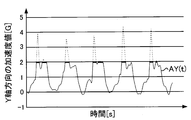
- FIG. 6 is a graph illustrating an acceleration value AY (t) in the Y-axis direction obtained from the acceleration sensor 10 when the position of the mobile terminal 1 changes in the positive direction of the Y-axis on the acceleration sensor 10.
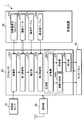
- 2 is a functional block diagram illustrating a configuration example of a mobile terminal 1.
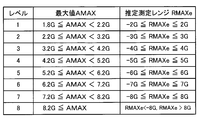
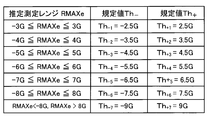
- FIG. It is a figure which shows an example of the condition table. It is a figure which illustrates an example of regulation value table 340.
- Acceleration values AX at time t 1 (t 1) is a diagram for explaining how AY (t 1) and how measurement range RMAX from AZ (t 1) is estimated.
- 4 is a graph illustrating an acceleration value AX (t) in the X-axis direction obtained by the acceleration sensor 10. It is a graph which illustrates the relationship between saturation rate RS and error rate R E of a user's consumption energy.
- energy consumption EE before correction is a graph illustrating the relationship between the original energy consumption E 1.
- energy consumption EE C after correction is a graph illustrating the relationship between the original energy consumption E 1.
- 4 is a flowchart illustrating an operation of a processor 20.
- 4 is a flowchart illustrating an operation of a processor 20.
- 4 is a flowchart illustrating an operation of a processor 20.
- 4 is a flowchart illustrating an operation of a processor 20.
- 4 is a flowchart illustrating an operation of a processor 20.
- 4 is a flowchart illustrating an operation of a processor 20.
- Drawing 1 is a mimetic diagram of personal digital assistant 1 of an embodiment.
- the mobile terminal 1 includes an acceleration sensor 10 and a processor 20. Other configurations of the portable terminal 1 will be described later.
- the mobile terminal 1 is, for example, a smartphone. Alternatively, the mobile terminal 1 may be a mobile phone.
- the mobile terminal 1 is installed with an application (an activity amount calculation program 310 described later) that calculates the activity amount of the user. With this application, the mobile terminal 1 notifies the user of the reliability of the calculated activity amount in addition to the calculation of the activity amount. Since the reliability of the activity amount is notified, the user can grasp the reliability of the calculated activity amount.
- the “activity amount” is an index indicating the magnitude of physical activity based on the acceleration value.
- the amount of activity corresponds to, for example, exercise consumption energy that is energy consumed by physical activity.
- the body includes a human body and an animal body. Examples of animals include dogs and cats.
- the acceleration sensor 10 is, for example, a triaxial acceleration sensor. As shown in FIG. 1, the acceleration sensor 10 detects an acceleration value AX (t) in the X-axis direction, an acceleration value AY (t) in the Y-axis direction, and an acceleration value AZ (t) in the Z-axis direction. . t represents an arbitrary time. In the example of the embodiment, even if acceleration exceeding the measurement range RMAX occurs, the acceleration sensor 10 cannot detect the acceleration value.
- the measurement range RMAX is a range in which the acceleration sensor 10 can measure an acceleration value, and has a range from a lower limit value to an upper limit value that the acceleration value can take.
- the X-axis acceleration value AX (t) takes a positive value.
- the X-axis acceleration value AX (t) takes a negative value.
- the acceleration value AY (t) in the Y axis takes a positive value.
- the Y-axis acceleration value AY (t) takes a negative value.
- the Z-axis acceleration value AZ (t) takes a positive value.
- the Z-axis acceleration value AZ (t) takes a negative value.
- the processor 20 is, for example, a CPU (Central Processing Unit).
- the processor 20 functions as a controller that controls the entire mobile terminal 1.
- the processor 20 may include a DSP (Digital Signal Processor) function, an A / D converter function, or a sub CPU.
- the configuration of the processor 20 is not limited to a specific configuration.
- the outline of the function of the processor 20 is as follows. First, the processor 20 determines the acceleration value AX (t) in the X-axis direction, the acceleration value AY (t) in the Y-axis direction, and the acceleration value AZ (t) in the Z-axis direction obtained by the acceleration sensor 10. Based on, the amount of activity is calculated. Second, the processor 20 generates an index representing the reliability of the activity amount based on the number of saturations indicating how many times the saturation state of the acceleration value has occurred.
- the “acceleration value saturation state” means that acceleration exceeding the measurement range RMAX of the acceleration sensor 10 is generated in the acceleration sensor 10, and the acceleration value measured by the acceleration sensor 10 is the upper limit value of the measurement range RMAX or Say to match the lower limit. Further, if any one of the accelerations in the three axis directions exceeds the measurement range RMAX, the saturation state of the acceleration value has occurred.
- FIG. 2 is a graph illustrating the acceleration value AY (t) in the Y-axis direction obtained from the acceleration sensor 10 when the position of the mobile terminal 1 is changed in the positive direction of the Y-axis by the user.
- the measurement range RMAX of the acceleration sensor 10 is ⁇ 2G or more and 2G or less.
- the acceleration sensor 10 can detect an acceleration value of ⁇ 2G or more and 2G or less.
- the location where the saturation state of the acceleration value occurs is a location where the acceleration value AY (t) exceeds 2G of the measurement range RMAX, as indicated by the dotted line.
- FIG. 3 is a functional block diagram illustrating a configuration example of the mobile terminal 1.
- the mobile terminal 1 includes a storage device 30, a touch panel 40, and a communication unit 50 in addition to the acceleration sensor 10 and the processor 20.
- the storage device 30 stores an activity amount calculation program 310 for calculating the activity amount of the user.
- the acceleration sensor 10 and the processor 20 are provided, the structure of the portable terminal 1 is not limited to the example of FIG.
- the mobile terminal 1 may further include a camera.
- the acceleration sensor 10 detects acceleration values AX (t), AY (t), and AZ (t), and outputs the detected acceleration values AX (t), AY (t), and AZ (t) to the acquisition unit 210.
- the detection method of the acceleration sensor 10 may be a capacitance method or a piezo method, and is not limited to a specific method.
- the output of the acceleration sensor 10 may be a digital signal or an analog signal. When the output of the acceleration sensor 10 is an analog signal, the processor 20 may convert the analog signal into a digital signal.
- the processor 20 reads the activity amount calculation program 310 from the storage device 30 and executes the activity amount calculation program 310, thereby obtaining the acquisition unit 210, the first update unit 220, the estimation unit 230, and the second update unit 240.
- the functions of the counting unit 250, the index generating unit 260, the calculating unit 270, and the correcting unit 280 are realized.
- the 1st update part 220 and the 2nd update part 240 may be comprised as one update part.
- the counting unit 250 and the index generating unit 260 may be configured as one generating unit.
- the storage device 30 includes a nonvolatile memory and a volatile memory.
- the storage device 30 stores history data 320, a condition table 330 described later, and a specified value table 340 described later.
- the activity amount calculation program 310 is a program in which the processing procedure of the activity amount calculation method of the embodiment is described in a predetermined computer language.
- the next acceleration value is recorded.
- the maximum acceleration value AX + MAX in the positive direction of the X axis is an acceleration value that takes the largest positive value among a plurality of acceleration values in the positive direction of the X axis obtained by the acceleration sensor 10 in the past. That is, the maximum acceleration value AX + MAX in the positive direction of the X axis means a past maximum value in the positive direction of the X axis.
- Maximum acceleration value AX- MAX in the negative direction of the X axis is an acceleration value that takes the largest negative value among a plurality of acceleration values in the negative direction of the X axis obtained in the past by the acceleration sensor 10.
- the maximum acceleration value AX- MAX in the negative direction of the X axis means a past maximum value in the negative direction of the X axis.
- Maximum acceleration value AY + MAX in the positive direction of the Y axis is an acceleration value that takes the largest positive value among a plurality of acceleration values in the positive direction of the Y-axis obtained by the acceleration sensor 10 in the past. That is, the maximum acceleration value AY + MAX in the positive direction of the Y axis means a past maximum value in the positive direction of the Y axis.
- Maximum acceleration value AY- MAX in the negative direction of the Y-axis is an acceleration value that takes the largest negative value among a plurality of acceleration values in the negative direction of the Y axis obtained in the past by the acceleration sensor 10. That is, the maximum acceleration value AY- MAX in the negative direction of the Y axis means a past maximum value in the negative direction of the Y axis.
- Maximum acceleration value AZ + MAX in the positive direction of the Z axis is an acceleration value that takes the largest positive value among a plurality of acceleration values in the positive direction of the Z axis obtained in the past by the acceleration sensor 10. That is, the maximum acceleration value AZ + MAX in the positive direction of the Z axis means a past maximum value in the positive direction of the Z axis.
- Maximum acceleration value AZ- MAX in the negative direction of the Z axis The maximum acceleration value AZ- MAX in the negative direction of the Z axis is an acceleration value that takes the largest negative value among a plurality of acceleration values in the negative direction of the Z axis obtained by the acceleration sensor 10 in the past. That is, the maximum acceleration value AZ- MAX in the negative direction of the Z axis means a past maximum value in the negative direction of the Z axis.
- the storage device 30 is, for example, a non-transitory recording medium.
- the storage device 30 is a known arbitrary type of recording medium, for example, a semiconductor recording medium, a magnetic recording medium, or an optical recording medium.
- the storage device 30 may be a recording medium in which these recording media are combined.
- the non-transitory recording medium includes all computer-readable recording media except a transient propagation signal (transitory, propagating signal), and excludes volatile recording media. Absent.
- the touch panel 40 is, for example, a capacitive touch panel.
- the touch panel 40 has functions of both an input device and a display device.
- the touch panel 40 detects a touch operation by the user as a function of the input device, and outputs the detection result to the processor 20 as a user instruction.
- the touch panel 40 displays the output result of the processor 20 according to the instruction of the processor 20 as a function of the display device.
- the portable terminal 1 may have an input device (a plurality of buttons including a numeric keypad) and a display device.
- the communication unit 50 is configured to be able to communicate with an external device such as a mobile terminal. Specifically, for example, the communication unit 50 performs voice communication with a mobile terminal that is a call destination via a base station of a cell in which the mobile terminal 1 is located. Furthermore, the communication part 50 communicates with a content server apparatus via the base station of the cell in which the portable terminal 1 is located, for example.
- the functions of the processor 20 are as follows.
- the acquisition unit 210 acquires an acceleration value AX (t) in the X-axis direction, an acceleration value AY (t) in the Y-axis direction, and an acceleration value AZ (t) in the Z-axis direction from the acceleration sensor 10, and these The acceleration value is output to the first update unit 220.
- the first updating unit 220 executes the following processing for each of the acceleration value AX (t) in the X-axis direction, the acceleration value AY (t) in the Y-axis direction, and the acceleration value AZ (t) in the Z-axis direction. If the current acceleration value AX (t) in the X-axis direction takes a positive value, the first updating unit 220 determines the maximum acceleration value AX + in the positive X-axis direction from the history data 320 stored in the storage device 30. Read MAX . Then, the first updating unit 220 determines whether the current acceleration value AX (t) in the X-axis direction is greater than the maximum acceleration value AX + MAX in the positive direction of the X-axis.
- the first updating unit 220 uses the maximum acceleration value AX + MAX in the positive direction of the X axis as the current acceleration value. Update to AX (t). That is, the first update unit 220 overwrites the maximum acceleration value AX + MAX in the positive direction of the X axis recorded in the history data 320 with the acceleration value AX (t). Otherwise, the first updating unit 220 does not update the maximum acceleration value AX + MAX in the positive direction of the X axis to the current acceleration value AX (t).
- the first update unit 220 determines the maximum value in the negative X-axis direction from the history data 320 stored in the storage device 30. Reads acceleration value AX- MAX . Then, the first updating unit 220 determines whether or not the current acceleration value AX (t) in the X-axis direction is smaller than the maximum acceleration value AX ⁇ MAX ( ⁇ 0) in the X-axis negative direction.
- the first updating unit 220 obtains the maximum acceleration value AX ⁇ MAX in the negative direction of the X axis at present.
- the acceleration value AX (t) is updated. That is, the first update unit 220 overwrites the maximum acceleration value AX- MAX recorded in the history data 320 with the current acceleration value AX (t). Otherwise, the first updating unit 220 does not update the minimum acceleration value AX MIN in the negative direction of the X axis to the current acceleration value AX (t).
- the first updating unit 220 performs the same processing for the current acceleration value AY (t) in the Y-axis direction and the current acceleration value AZ (t) in the Z-axis direction.
- the outline of the estimation unit 230 is as follows. A case is assumed in which the first updating unit 220 updates any one of the six maximum acceleration values AX + MAX , AY + MAX , AZ + MAX , AX- MAX , AY- MAX , and AZ- MAX . In this case, it means that the acceleration value detected by the acceleration sensor 10 does not coincide with the upper limit value or the lower limit value of the measurement range RMAX.
- the estimation unit 230 specifies the estimated measurement range RMAXe of the acceleration sensor 10 based on these maximum acceleration values.
- the estimated measurement range RMAXe is a measurement range estimated by the acceleration sensor 10. However, the estimation unit 230 does not obtain the final estimated measurement range RMAXe by a single process.
- the estimation unit 230 expands the estimated measurement range RMAXe if any of the acceleration values AX (t), AY (t), and AZ (t) is larger than any acceleration value obtained in the past. That is, the estimation unit 230 updates the estimated measurement range RMAXe every time an acceleration value larger than any acceleration value obtained in the past is detected. By repeating the update of the estimated measurement range RMAXe many times, the accuracy of the estimated measurement range RMAXe can be increased.
- the estimation unit 230 Details of the estimation unit 230 are as follows. As described above, in the history data 320, six maximum acceleration values AX + MAX , AY + MAX , AZ + MAX, AX- MAX , AY- MAX , AZ- MAX are recorded. The estimation unit 230 extracts a value having the largest absolute value from these. Hereinafter, the extracted value is referred to as a maximum value AMAX. The estimation unit 230 estimates the estimated measurement range RMAXe of the acceleration sensor 10 based on the extracted maximum value AMAX.
- the estimation unit 230 refers to the condition table 330 stored in the storage device 30.
- the condition table 330 is a table in which the maximum value AMAX is associated with the estimated measurement range RMAXe as shown in FIG. 4 described later.
- the estimation unit 230 specifies that the acceleration value associated with the maximum value AMAX is the current estimated measurement range RMAXe of the acceleration sensor 10. In this specification, in order to simplify the explanation, when the extracted maximum value AMAX is negative, the absolute value of the value is considered.
- FIG. 4 is a diagram illustrating an example of the condition table 330.
- the possible range of the maximum value AMAX is divided into a plurality.
- each of the plurality of sections is referred to as a level.
- the condition table 330 is a table in which an estimated measurement range RMAXe is associated with each of a plurality of levels.
- the estimated measurement range RMAXe of each level has a lower limit value and an upper limit value as shown in FIG.
- the range of the maximum value AMAX is divided into 8 levels. Each of the eight levels is associated with an estimated measurement range RMAXe.
- Level 1 When the maximum value AMAX is 1.8G or more and smaller than 2.2G, the estimation unit 230 specifies that the estimated measurement range RMAXe is ⁇ 2G ( ⁇ 2G ⁇ RMAXe ⁇ 2G). 2) Level 2: When the maximum value AMAX is 2.2G or more and smaller than 3.2G, the estimation unit 230 specifies that the estimated measurement range RMAXe is ⁇ 3G ( ⁇ 3G ⁇ RMAXe ⁇ 3G). 3) Level 3: When the maximum value AMAX is 3.2 G or more and smaller than 4.2 G, the estimation unit 230 specifies that the estimated measurement range RMAXe is ⁇ 4 G ( ⁇ 4 G ⁇ RMAXe ⁇ 4 G).
- Level 4 When the maximum value AMAX is 4.2G or more and smaller than 5.2G, the estimation unit 230 specifies that the estimated measurement range RMAXe is ⁇ 5G ( ⁇ 5G ⁇ RMAXe ⁇ 5G). 5) Level 5: When the maximum value AMAX is equal to or greater than 5.2G and smaller than 6.2G, the estimation unit 230 specifies that the estimated measurement range RMAXe is ⁇ 6G ( ⁇ 6G ⁇ RMAXe ⁇ 6G). 6) Level 6: When the maximum value AMAX is 6.2G or more and smaller than 7.2G, the estimation unit 230 specifies that the estimated measurement range RMAXe is ⁇ 7G ( ⁇ 7G ⁇ RMAXe ⁇ 7G).
- Level 7 When the maximum value AMAX is 7.2 G or more and smaller than 8.2 G, the estimation unit 230 specifies that the estimated measurement range RMAXe is ⁇ 8 G ( ⁇ 8G ⁇ RMAXe ⁇ 8G). 8) Level 8: When the maximum value AMAX is 8.2 G or more, the estimation unit 230 specifies that the estimated measurement range RMAXe is smaller than -8G and larger than 8G (RMAXe ⁇ -8G, RMAXe> 8G).
- the estimation unit 230 determines which level the maximum value AMAX is suitable for. After the determination, the estimation unit 230 uses the estimated measurement range RMAXe corresponding to the adapted level.
- the first decimal place is 2 instead of 0. This is because variation in sensitivity and offset of the acceleration sensor 10 is taken into consideration.
- the measurement range RMAX of the acceleration sensor 10 is ⁇ 2 G, and a range from ⁇ 2 G to 2 G is obtained with 256 levels of voltages.
- ⁇ 2G is associated with the minimum voltage 0V
- 2G is associated with the maximum voltage 3V.
- the voltage for example, the acceleration value in the X-axis direction
- an acceleration value of 0 G may be obtained.
- 0G may not be detected due to an error in the output of the acceleration sensor 10. That is, the output of the acceleration sensor 10 may not be the original output.
- the estimation unit 230 may erroneously determine which level the maximum value AMAX is suitable for. Therefore, the upper limit value of the maximum value AMAX in each of the levels 1 to 7 is set larger.
- the second updating unit 240 refers to the specified value table 340 and refers to the maximum acceleration value AX + MAX in the positive direction of the X axis, the maximum acceleration value AY + MAX in the positive direction of the Y axis, and the maximum acceleration value AZ + MAX in the positive direction of the Z axis. It is determined whether or not there is a maximum acceleration value AN MAX smaller than the specified value Th + . As a result, if there is a prescribed value Th + less than the maximum acceleration value AN MAX, the second updating unit 240 updates the maximum acceleration value AN MAX a predetermined value Th +.
- the second updating unit 240 refers to the specified value table 340 stored in the storage device 30 and refers to the maximum acceleration value AX ⁇ MAX in the negative direction of the X axis and the maximum acceleration value AY ⁇ MAX in the negative direction of the Y axis. and in the negative direction of the maximum acceleration value AZ-MAX of Z-axis, the specified value Th - determining whether there is greater than the maximum acceleration value aN MAX.
- the second updating unit 240 updates the maximum acceleration value AN MAX to the specified value Th ⁇ .
- Each of the prescribed value Th + and the prescribed value Th ⁇ is not uniform, but is determined by a value corresponding to the current estimated measurement range RMAXe by the estimation unit 230. More specifically, the prescribed value Th + takes a positive value smaller than the upper limit value of the current estimated measurement range RMAXe. The prescribed value Th ⁇ takes a negative value larger than the lower limit value of the current estimated measurement range RMAXe. Specified value Th - the absolute value is the same as the specified value Th +. Specific examples of the specified value Th + and the specified value Th ⁇ will be described later.
- the first updating unit 220 updates only the maximum acceleration value AX + MAX in the positive direction of the X axis to the current acceleration value AX (t) in the X axis direction.
- the second updating unit 240 determines that the maximum acceleration value AY + MAX in the positive Y-axis direction is the specified value Th. Determine if less than + .
- the second updating unit 240 updates the maximum acceleration value AY + MAX in the positive direction of the Y axis to the specified value Th + .
- the second update unit 240 performs the same processing.
- the second updating unit 240 the maximum acceleration value of the negative direction of the X axis AX-MAX is specified value Th - determines greater.
- the second update unit 240 updates the maximum acceleration value AX ⁇ MAX in the negative direction of the X axis to the specified value Th ⁇ .
- the second updating unit 240 executes the same processing for the maximum acceleration value AY- MAX in the negative direction of the Y axis and the maximum acceleration value AZ- MAX in the negative direction of the Z axis.
- the first updating unit 220 has a maximum acceleration value (for example, , AX + MAX ) is updated to the current acceleration value, but the updated acceleration value is also assumed to be smaller than the specified value Th + .
- the second updating unit 240 further updates the maximum acceleration value once updated by the first updating unit 220 to the prescribed value Th + .
- the first update unit 220 includes the maximum acceleration value AX ⁇ MAX in the negative direction of the X axis, the maximum acceleration value AY ⁇ MAX in the negative direction of the Y axis, and the maximum acceleration value AZ ⁇ MAX in the negative direction of the Z axis. It is also assumed that the updated acceleration value is larger than the specified value Th ⁇ even though the maximum acceleration value (for example, AX ⁇ MAX ⁇ 0) is updated to the current acceleration value (AX (t) ⁇ 0). The If the updated acceleration value is larger than the prescribed value Th ⁇ , the second updating unit 240 further updates the maximum acceleration value once updated by the first updating unit 220 to the prescribed value Th ⁇ .
- the second update unit 240 By providing the second update unit 240, the following effects can be obtained. For example, consider a case in which the position of the mobile terminal 1 changes in the positive direction of the X axis or the negative direction of the X axis on the XY plane shown in FIG. In this case, the fluctuation of the acceleration value AZ (t) in the Z-axis direction is relatively small. Therefore, when the second updating unit 240 is not provided, the first updating unit 220 sets the maximum acceleration value AZ + MAX in the positive direction of the Z axis and the maximum acceleration value AZ ⁇ MAX in the negative direction of the Z axis to the small acceleration value AZ ( t). If such an update occurs many times, the processor 20 is loaded. However, since the second update unit 240 is provided, the number of updates described above is reduced. As a result, a load on the processor 20 is suppressed. As a result, the power consumption of the portable terminal device 1 can be reduced.
- FIG. 5 is a diagram illustrating an example of the specified value table 340.
- the specified value table 340 is a table in which the specified value Th + and the specified value Th ⁇ are associated with the maximum value AMAX assigned to each of a plurality of levels.
- 7 steps specified value Th +1 ⁇ Th +7 are provided.
- These specified values Th +1 to Th +7 and Th ⁇ 1 to Th ⁇ 7 are determined by values corresponding to the current measurement range RMAX estimated by the estimation unit 230.
- Each specified value Th +1 to Th +7 is smaller than the upper limit value of the corresponding estimated measurement range RMAXe, and each specified value Th ⁇ 1 to Th ⁇ 7 is lower than the lower limit value of the corresponding estimated measurement range RMAXe.
- 5 is not limited to the example of FIG.
- each specified value Th +1 to Th +7 is 90% of the upper limit value of the corresponding estimated measurement range RMAXe
- each specified value Th -1 to Th -7 is the lower limit value of the corresponding estimated measurement range RMAXe. It may be a value of 90 percent.
- each specified value Th +1 to Th +7 is a value that is 80% or more of the upper limit value of the corresponding estimated measurement range RMAXe, and each Th -1 to Th -7 is the lower limit of the corresponding estimated measurement range RMAXe.
- the value may be 80% or less of the value.
- 6A is an acceleration value AX (t 1) at time t 1, is a diagram for explaining how AY (t 1) and how measurement range RMAX from AZ (t 1) is estimated.
- 6A the symbol of a black circle, the acceleration value AX (t 1) at time t 1, representing the AY (t 1) and AZ (t 1).
- Open circle symbol represents six maximum acceleration at the initial time t 0 values AX + MAX, AY + MAX, AZ + MAX AX- MAX, AY- MAX, the AZ-MAX.
- “+ X” represents an acceleration value in the positive direction of the X axis. The same applies to “+ Y” and “+ Z”.
- “ ⁇ X” represents an acceleration value in the negative direction of the X axis. The same applies to "-Y” and "-Z”.
- acceleration value AX at time t 1 (t 1), AY (t 1) and AZ (t 1) is assumed to have taken the following values.
- the first updating unit 220 determines whether the acceleration value AX (t 1 ) in the X-axis direction is a positive value, so that the acceleration value AX (t 1 ) is greater than the maximum acceleration value AX + MAX in the X-axis positive direction. .
- the acceleration value AX (t 1 ) is 3.9 G
- the maximum acceleration value AX + MAX is 1.8 G.
- the former acceleration value AX (t 1 ) is larger than the latter maximum acceleration value AX + MAX . Therefore, the first updating unit 220 updates the maximum acceleration value AX + MAX in the positive direction of the X axis to 3.9G.
- the first updating unit 220 determines whether the acceleration value AX (t 1 ) is greater than the maximum acceleration value AY + MAX in the positive direction of the Y axis because the acceleration value AY (t 1 ) in the Y axis direction has a positive value. To do. In the example of FIG. 6A, the acceleration value AY (t 1 ) is 2.1 G, and the maximum acceleration value AX + MAX is 1.8 G. In this case, the former acceleration value AX (t 1 ) is larger than the latter maximum acceleration value AY + MAX . Therefore, the first updating unit 220 updates the maximum acceleration value AY + MAX in the positive direction of the Y axis to 2.1G.
- the first updating unit 220 the acceleration value in the Z-axis direction AZ (t 1) is a negative value, the acceleration value AZ (t 1) is the maximum or acceleration value AZ-MAX is less than the negative direction of the Z axis judge.
- the acceleration value AZ (t 1 ) is ⁇ 3.6G
- the maximum acceleration value AZ ⁇ MAX is ⁇ 1.8G.
- the former acceleration value AZ (t 1 ) is smaller than the latter maximum acceleration value AZ- MAX . Therefore, the first updating unit 220 updates the maximum acceleration value AX ⁇ MAX in the negative direction of the Z axis to ⁇ 3.6G.
- the first updating unit 220 records the following maximum acceleration values AX + MAX , AY + MAX, and AZ ⁇ MAX in the history data 320.
- the estimation unit 230 obtains the value having the largest absolute value from the maximum acceleration values AX + MAX , AY + MAX , AZ + MAX , AX- MIN , AY- MAX , AZ- MAX recorded in the history data 320. Extracted as the maximum value AMAX. In the example of FIG. 6A, the estimation unit 230 extracts 3.9G as the maximum value AMAX. Subsequently, the estimation unit 230 refers to the condition table 330 and determines which level the maximum value AMAX is suitable for. In the example of FIG. 6A, the maximum value AMAX is 3.9G. Therefore, the estimation unit 230 determines that the maximum value AMAX is suitable for level 3. As a result, the estimation unit 230 estimates that the current estimated measurement range RMAXe of the acceleration sensor 10 is ⁇ 4G.
- the maximum acceleration value AN MAX that has not been updated how specified value Th + or defined value Th - is a view for explaining how is updated.
- the white triangle symbol represents the maximum acceleration value that has not been updated.
- the black triangle symbol represents the acceleration value updated by the second updating unit 240 to the specified value Th + or the specified value Th ⁇ .
- the maximum acceleration value AN MAX not updated is the maximum acceleration value AZ + MAX in the positive direction of the Z axis, the maximum acceleration value AX ⁇ MAX in the negative direction of the X axis, and the maximum acceleration in the negative direction of the Y axis.
- the value was AY- MAX .
- the estimation unit 230 specifies that the current estimated measurement range RMAXe of the acceleration sensor 10 is 4G.
- the second update unit 240 refers to the specified value table 340 and extracts the specified value Th +2 and the specified value Th -2 corresponding to the current estimated measurement range RMAXe. Subsequently, the second update unit 240 determines whether or not the X-axis negative maximum acceleration value AX ⁇ MAX ( ⁇ 0) that has not been updated is greater than the specified value Th ⁇ 2 ( ⁇ 0). In the example of FIG. 6B, the maximum acceleration value AX ⁇ MAX that has not been updated is ⁇ 1.8G, and the specified value Th ⁇ 2 is ⁇ 3.5G. In this case, the former maximum acceleration value AX- MAX is larger than the latter specified value Th- 2 .
- the second updating unit 240 updates the X axis negative maximum acceleration value AX ⁇ MAX that has not been updated to the specified value Th ⁇ 2 .
- the second update unit 240 updates the negative maximum acceleration value AY ⁇ MAX in the negative direction of the Y axis, which has not been updated, to the specified value Th ⁇ 2 .
- the second updating unit 240 determines whether the maximum acceleration value AZ + MAX in the positive direction of the Z axis that has not been updated is smaller than the specified value Th + 2 .
- the maximum acceleration value AZ + MAX that has not been updated is 1.8 G
- the specified value Th +2 is 3.5 G.
- the former maximum acceleration value AZ + MAX is smaller than the latter specified value Th + 2 . Therefore, the second updating unit 240 updates the maximum acceleration value AZ + MAX in the positive direction of the Z axis that has not been updated to the specified value Th + 2 .
- the maximum acceleration value AY + MAX in the positive direction of the Y axis is updated from 1.8 G to 2.1 G by the first updating unit 220, but is smaller than the specified value Th +2 of 3.5 G. Also in this case, the second updating unit 240 further updates the maximum acceleration value once updated by the first updating unit 220 to the specified value Th +2 . Therefore, the maximum acceleration value AY + MAX in the positive direction of the Y axis is updated twice.
- the counting unit 250 specifies the number of times of saturation N indicating the number of times that the saturation state of the acceleration value occurs.
- Counting section 250 measures the saturation number N X in the X-axis direction as follows. It is assumed that the acceleration value AX (t n ) in the X-axis direction takes a positive value at a certain sampling time t n ⁇ 1 . Further, since the acceleration value AX (t n ) is larger than the maximum acceleration value AX + MAX in the positive direction of the X axis, it is assumed that the first updating unit 220 updates the maximum acceleration value AX + MAX . In this case, as the current estimation measurement range RAMXe was not a true measurement range RMAX, the counting unit 250 resets the saturation number N X 0.
- the maximum acceleration value AX + MAX in the forward direction of the X axis in the current sampling time t n is not updated, and the acceleration value AX (t n) coincides with the maximum acceleration value AX + MAX at the present sampling time t n If counting unit 250 increments the saturation number N X.
- the counting unit 250 determines whether the acceleration value AX (t n ) in the X-axis direction at the current sampling time t n matches the maximum acceleration value AX + MAX . Note that the present embodiment does not require that the former acceleration value AX (t n ) completely match the latter maximum acceleration value AX + MAX .
- the counting unit 250 increments the saturation number N X.
- the counting unit 250 has a role of capturing the occurrence of the saturation state.
- the counting unit 250 is counting the saturation number N X, total time saturation state of acceleration values AX in the X-axis direction (t) is generated is known.
- the acceleration value AX (t n ) taking a positive value is taken as an example.
- the counting unit 250 does not update the maximum acceleration value AX ⁇ MAX in the negative direction of the X axis at the current sampling time t n and the current sampling time If the acceleration value AX (t n) coincides with the maximum acceleration value AX-MAX at t n, and increments the saturation number n X.
- saturation number N Z saturation number N Y and Z-axis directions of the acceleration values AZ acceleration value in the Y-axis direction AY (t) (t) the counting unit 250 performs the same process.
- the counting unit 250 estimates that a saturation state has occurred. However, it may be difficult to capture the saturation state of the acceleration value only by determining whether the maximum acceleration value is not updated and whether the current acceleration value matches the maximum acceleration value. This is due to the high and low sampling frequency.
- FIG. 7 is a graph illustrating the acceleration value AX (t) in the X-axis direction obtained by the acceleration sensor 10.
- a solid line L1 in FIG. 7 indicates the acceleration value AX (t) obtained by the acceleration sensor 10 whose measurement range RMAX is ⁇ 4G or more and 4G or less.
- a dotted line L2 in FIG. 7 indicates the original acceleration value AX (t) in the X-axis direction.
- the saturation state of the acceleration value AX (t) occurs in the period from the sampling time t n ⁇ 1 to t n .
- the saturation state of the acceleration value AX (t) occurs.
- the saturation state of the acceleration value AX (t) cannot be captured in any period as indicated by the solid line L1.
- the acceleration value AX (t n ⁇ 1 ) at the sampling time t n ⁇ 1 is slightly smaller than 4G as indicated by the dotted line L2 during the period from the sampling time t n ⁇ 1 to t n .
- Acceleration values AX at the next sampling time t n (t n) is the same as the acceleration value AX (t n-1) at the previous sampling time t n-1.
- the current maximum acceleration value AX + MAX in the positive direction of the X axis is 4G.
- the acceleration value AX (t n ⁇ 1 ) at the sampling time t n ⁇ 1 is smaller than 4G which is the maximum acceleration value AX + MAX . Therefore, the first updating unit 220 does not update the maximum acceleration value AX + MAX to the acceleration value AX (t n ⁇ 1 ).
- the acceleration value AX (t n ) at the sampling time t n does not coincide with 4G, which is the maximum acceleration value AX + MAX .
- the counting unit 250 does not increment the saturation number N X. As described above, although the saturation state is generated in the period from the sampling time t n ⁇ 1 to t n , the counting unit 250 cannot capture the saturation state.
- acceleration values AX at sampling time t n + 14 (t n + 14) is in the previous sampling time t n-1 It is larger than the acceleration value AX (t n-1 ). Furthermore, the acceleration value AX at sampling time t n + 15 (t n + 15) is smaller than the acceleration value AX (t n + 14) at the previous sampling time t n + 14.
- the acceleration value AX at sampling time t n + 14 (t n + 14) also, the acceleration value AX (t n + 15) at the sampling time t n + 15 is also, 4G smaller the measurement range RMAX.
- the first update unit 220 does not update the maximum acceleration value AX + MAX to the acceleration value AX (t n + 14 ) for the same reason as in the period from the sampling time t n ⁇ 1 to t n .
- the acceleration value AX (t n + 15 ) at the sampling time t n + 15 does not coincide with 4G, which is the maximum acceleration value AX + MAX .
- the counting unit 250 does not increment the saturation number N X. As described above, although the saturation state is generated in the period from the sampling time t n + 14 to t n + 15 , the counting unit 250 cannot capture this saturation state.
- the counting section 250 when the acceleration value AX in the X-axis direction in the present sampling time t n (t n) is a positive value, whether the acceleration value AX (t n) is the allowable value T + A more judge. After that, the counting unit 250 determines whether the acceleration value AX (t n ⁇ 1 ) in the X-axis direction at the previous sampling time t n ⁇ 1 is equal to or greater than the allowable value T + A.
- the allowable value T + A is a positive value determined according to the upper limit value of the current estimated measurement range RMAXe, and is, for example, a value obtained by multiplying the upper limit value of the current estimated measurement range RMAXe by 0.9.
- the current acceleration value AX (t n ) is greater than or equal to the allowable value T + A (AX (t n ) ⁇ T + A ), and the previous acceleration value AX (t n ⁇ 1 ) is greater than or equal to the allowable value T + A. If (AX (t n-1) ⁇ T + a), the counting unit 250 increments the saturation number n X. In the example of FIG. 7, in both the sampling time t n and the sampling time t n + 15, the counting unit 250 increments the saturation number N X.
- the counting unit 250 when an acceleration value AX at the current sampling time t n (t n) is a negative value, it is determined whether the acceleration value AX (t n) is equal to or less than the allowable value T -A. After that, the counting unit 250 determines whether or not the acceleration value AX (t n ⁇ 1 ) in the X-axis direction at the previous sampling time t n ⁇ 1 is equal to or less than the allowable value T ⁇ A .
- the allowable value T 1 -A is a negative value determined according to the lower limit value of the current estimated measurement range RMAXe, and is, for example, a value obtained by multiplying the lower limit value of the current estimated measurement range RMAXe by 0.9.
- the current acceleration value AX (t n ) is less than or equal to the allowable value T ⁇ A (AX (t n ) ⁇ T ⁇ A ), and the previous acceleration value AX (t n ⁇ 1 ) is the allowable value T ⁇ A. If it is less (AX (t n-1) ⁇ T -A), the counting unit 250 increments the saturation number n X.
- the tolerance value T + A is a value obtained by multiplying the upper limit value of the current estimated measurement range RMAXe by 0.85, and the tolerance value T 1 -A is 0.85 times the lower limit value of the current estimated measurement range RMAXe. It may be a value multiplied by. However, if the value multiplied by the current estimated measurement range RMAXe is too small or too large, it is difficult to accurately grasp the occurrence of the saturation state of the acceleration value. Therefore, practically, the value multiplied by the current estimated measurement range RMAXe is 0.8 or more and 0.9 or less.
- the counting unit 250 performs the same processing as in the saturation number N X To do. As described above, the determination condition whether the maximum acceleration value is not updated and the current acceleration value matches the maximum acceleration value is relaxed. Therefore, even if the sampling frequency is relatively low, the saturation state of the acceleration value can be accurately captured.
- N SAMPLING represents the number of samplings per unit time (for example, 1 minute).
- the capture rate Re indicates how many times the acceleration values (AX (t), AY (t), AZ (t)) can be captured per unit time.
- the greater the number of saturations N the lower the activity rate capture rate Re. As a result, the reliability of the activity amount is also lowered.
- the index generation unit 260 may calculate the saturation rate R S based on the following expression (2).
- R S N / N SAMPLING ⁇ 100 (%) (2)
- error rate R E may be calculated as an index representing the amount of activity reliability.
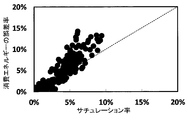
- FIG. 8 is a graph illustrating the relationship between the saturation rate R S and the error rate R E of the user's energy consumption.
- a black dot indicates a value obtained when a user with the mobile terminal 1 runs.
- the original measurement range RMAX of the acceleration sensor 10 was ⁇ 4G or more and 4G or less.
- the error rate R E of the energy consumption shown on the vertical axis indicates how much the energy consumption has an error when the saturation state of the acceleration value does not occur. expressed.
- R E
- Equation (3) E 1 represents the original energy consumption obtained when an ideal acceleration sensor having a sufficiently large measurement range RMAX is used. That, E 1 represents an energy consumption that is estimated to be obtained if the saturation state of the acceleration value is not generated. E 2 indicates energy consumption obtained when the acceleration sensor 10 is used.
- ⁇ and ⁇ are coefficients determined from the saturation rate R S and the error rate R E of consumed energy.
- the index generation unit 260 calculates ⁇ and ⁇ by obtaining a quadratic function from a plurality of black circle points shown in FIG.
- the index generation unit 260 Since the index generation unit 260 is provided, even if an erroneous activity amount is measured, there is no possibility that the user will trust that the measured activity amount is the original activity amount.
- the calculation unit 270 calculates the activity amount of the user.
- the amount of activity is, for example, the user's energy consumption EE shown in the following formula (5).
- the calculation unit 270 calculates energy consumption EE per unit time (for example, 1 minute) using Expression (5).
- EE a 1 + b 1 ⁇ X ⁇ W + c 1 ⁇ FFM + d 1 ⁇ A + f 1 ⁇ S (5)
- X is the magnitude of the acceleration value, and is represented by (AX (t) 2 + AY (t) 2 + AZ (t) 2 ) 1/2 .
- W represents the weight of the user.
- FFM indicates a user's lean mass.
- A indicates the age of the user.
- S indicates gender and takes a value according to gender.
- a 1 , b 1 , c 1 , d 1 and f 1 represent given constants.
- the calculation unit 270 outputs the calculated energy consumption EE to the correction unit 280.
- the calculation unit 270 may calculate the user's energy consumption EE using the following equation (6).
- EE a 2 + b 2 ⁇ X ⁇ W + c 2 ⁇ FFM + d 2 ⁇ FM + e 2 ⁇ A + f 2 ⁇ S ... (6)
- FM represents the fat mass of the user.
- a 2 , b 2 , c 2 , d 2 and f 2 denote given constants.
- the calculation method of consumption energy EE is not limited to the method shown to Formula (5), or the method shown to Formula (6).
- the correction unit 280 corrects the amount of activity of the user calculated by the calculation unit 270 based on the number of times of saturation N. In other words, the correction unit 280 calculates the amount of activity of the user obtained when it is assumed that there is no occurrence of a saturation state of acceleration values. Details of the correction unit 280 are as follows.
- EE C shows the energy consumption of the corrected.
- E is an estimated error rate.
- Estimated error rate E, the use of saturation ratio R S and saturation count N, the energy consumption EE C after correction can be expressed by the following equation (8).
- EE C [1+ ( ⁇ ⁇ R S 2 + ⁇ R S )]
- ⁇ EE [1+ ( ⁇ ⁇ (N / N SAMPLING ) 2 + ⁇ ⁇ N / N SAMPLING )] ⁇ EE ...
- the correction unit 280 corrects the consumed energy EE using the saturation rate RS .
- the correction unit 280 instead of directly using the saturation rate R S , the correction unit 280 corrects the energy consumption EE based on the consumption energy EE and the sampling number N SAMPLING per unit time in addition to the number of saturations N. To do. Then, the correction unit 280 outputs the energy consumption EE C corrected on the touch panel 40.
- 9A is a energy consumption EE before correction is a graph illustrating the relationship between the original energy consumption E 1.
- the energy consumption EE shown on the horizontal axis indicates the energy consumption (kcal / min) that has not been corrected by the correction unit 280.
- Energy consumption E 1 along the vertical axis shows the original energy consumption obtained by using the measurement range RMAX acceleration sensor sufficiently large (kcal / min). As shown in FIG. 9A, the more the original energy consumption E 1 increases, the energy consumption EE before correction is distributed away from the solid line. This means that the correlation between the two is small.
- FIG. 9B the energy consumption EE C after correction is a graph illustrating the relationship between the original energy consumption E 1.
- Energy consumption EE C indicated on the horizontal axis shows the energy consumption corrected by the correction section 280 (kcal / min).
- Energy consumption E 1 shown in the vertical axis, as in FIG. 9A, showing the energy consumption measurement range RMAX is obtained when an ideal acceleration sensor sufficiently large (kcal / min).
- FIG. 9B even increasing the actual energy consumption E 1, energy consumption EE C after correction is distributed along the solid line. This means that the correlation between the two is large.
- Equation (2) can be modified as the following equation (9).
- N N SAMPLING ⁇ R S (9)
- the correction unit 280 may correct the energy consumption EE using the capture rate Re, as shown in Expression (11).
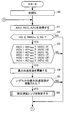
- FIGS. 10A to 10C are flowcharts illustrating the operation of the processor 20.
- the processor 20 executes initialization when the activity amount calculation program 310 is activated for the first time (step S0).
- the processor 20 sets the current estimated measurement range RMAXe to an initial value. This initial value is, for example, not less than ⁇ 2G and not more than 2G.
- the initial lower limit value may be, for example, ⁇ 1.8 G or more and 1.8 G or less.
- the counting unit 250 resets the saturation count N to zero. Specifically, the counting unit 250 resets the number of saturations N X , N Y , and NZ .
- the processor 20 the maximum acceleration value AX + MAX as follows, AY + MAX, AZ + MAX AX- MAX, AY- MAX, set the AZ-MAX historical data 320.
- the acquisition unit 210 acquires the acceleration value AX (t) in the X-axis direction, the acceleration value AY (t) in the Y-axis direction, and the acceleration value AZ (t) in the Z-axis direction from the acceleration sensor 10. These accelerations are output to the first updating unit 220 (step S1).
- the estimation unit 230 determines whether the current estimated measurement range RMAXe is ⁇ 8G or more and 8G or less ( ⁇ 8G ⁇ RMAXe ⁇ 8G) (step S2). The process of step S2 is provided to determine whether it is necessary to specify the estimated measurement range RMAXe. In the example of FIG. 10A, it is assumed that if the estimated measurement range RMAXe is not in the range of ⁇ 8G to 8G, the performance of the acceleration sensor 10 is sufficient and it is not necessary to specify the estimated measurement range RMAXe.
- step S2 If the current estimated measurement range RMAXe is -8G or more and 8G or less (step S2: YES), the processor 20 executes the process of step S3 in order to identify the estimated measurement range RMAXe.
- step S2: NO when the current estimated measurement range RMAXe is not in the range of ⁇ 8G or more and 8G or less (RMAXe ⁇ 8G and RMAXe> 8G) (step S2: NO), it is assumed that the specification of the estimated measurement range RMAXe is unnecessary.
- 20 executes the process of step S7 shown in FIG. 10B.
- step S2 determines that the acceleration value AX (t) in the X-axis direction, the acceleration value AY (t) in the Y-axis direction, and the acceleration value AZ ( The following processing is executed for each of t).
- the acceleration value AX (t) in the X-axis direction is taken as an example.
- the first update unit 220 determines that the current acceleration value AX (t) in the X-axis direction is greater than the maximum acceleration value AX + MAX in the positive direction of the X-axis. It is determined whether it is larger (step S3).
- the first updating unit 220 determines that the current acceleration value AX (t) in the X axis direction is the maximum acceleration value AX ⁇ MAX in the negative direction of the X axis. It is determined whether it is smaller (step S3).
- step S3 determines the maximum acceleration in the positive direction of the X-axis.
- the value AX + MAX is updated to the current acceleration value AX (t) in the X-axis direction (step S4). If the acceleration value AX (t) in the X-axis direction takes a negative value, the first updating unit 220 converts the maximum acceleration value AX- MAX in the negative X-axis direction to the current acceleration value AX (t in the X-axis direction. (Step S4).
- step S3 when the determination result of step S3 is negative (step S3: NO), the first updating unit 220 does not update the maximum acceleration value AX + MAX in the positive direction of the X axis to the acceleration value AX (t), and the X axis The maximum acceleration value AX ⁇ MAX in the negative direction is not updated to the acceleration value AX (t). Also for the acceleration value AY (t) in the Y-axis direction and the acceleration value AZ (t) in the Z-axis direction, the first updating unit 220 performs the same processing as the processing in step S4 according to the determination result in step S3. To do.
- step S3 the estimation unit 230 determines which of the maximum acceleration values AX + MAX , AY + MAX , AZ + MAX AX- MAX , AY- MAX , AZ- MAX has been updated (step S5).
- the estimation unit 230 specifies the estimated measurement range RMAXe of the acceleration sensor 10 (step S6). Details of step S6 will be described later.
- the estimation unit 230 does not newly specify the estimated measurement range RMAXe, assuming that the current estimated measurement range RMAXe is not changed.
- the processor 20 executes the process of step S7 shown in FIG. 10B.
- the first updating unit 220 updates any one of the maximum acceleration values AX + MAX , AY + MAX , AZ + MAX, AX- MAX , AY- MAX , AZ- MAX (step S7: YES), and the estimation unit 230 further estimates. If you update the measurement range RMAXe (step S8: YES) counting unit 250 resets the saturation number N X 0. Similarly, the counting unit 250 resets the number of saturations NY to 0, and resets the number of saturations NZ to 0 (step S9). This is because the current estimated measurement range RMAXe is not the original measurement range RMAX of the acceleration sensor 10.
- step S7 YES
- step S8 NO
- the processor 20 executes the process of step S14 illustrated in FIG. 10C.
- step S7 determines whether the maximum acceleration value AX + MAX, AY + MAX, AZ + MAX AX- MAX, AY- MAX, none of the AZ-MAX not updated.
- the counting unit 250 executes the following processing regarding the number of times of saturation N.
- N acceleration value in the X-axis direction as an example.
- the counting unit 250 determines that the acceleration value AX (t n ) in the X axis direction at the current sampling time t n is the maximum in the positive direction of the X axis.
- step S10 It is determined whether or not it coincides with the acceleration value AX + MAX (step S10).
- the counting unit 250 determines that the acceleration value AX (t n ) in the X axis direction at the current sampling time t n is the maximum in the negative direction of the X axis. It is determined whether or not it coincides with the acceleration value AX- MAX (step S10). Even when the acceleration value AX (t n ) in the X-axis direction is a positive value or a negative value, if the determination result in step S10 is affirmative (YES), the counter 250 counts the number of saturations N. X is incremented (step S11).
- step S10 the decision result in the step S10 is also a negative (NO)
- the process in the case both of the conditions are satisfied in step S12 and S13 are counting section 250 increments the saturation number N X.
- the counting unit 250 determines that the acceleration value AX (t n ) is greater than or equal to the allowable value T + A. It is determined whether or not there is (step S12).
- step S12 determines whether the acceleration value AX (t n ⁇ 1 ) in the X-axis direction at the previous sampling time t n ⁇ 1 is greater than or equal to the allowable value T + A. Is determined (step S13). When the acceleration value AX (t n ) in the X-axis direction at the current sampling time t n takes a negative value, the counting unit 250 determines whether the acceleration value AX (t n ) is less than or equal to the allowable value T ⁇ A. (Step S12).
- step S12 determines that the acceleration value AX (t n-1 ) in the X-axis direction at the previous sampling time t n-1 is equal to or less than the allowable value T -A. Is determined (step S13).
- the determination result of step S12 is affirmative (YES), and when the determination result in step S13 is affirmative (YES), the counting unit 250 increments the saturation number N X (step S11).
- step S12 When the determination result of step S12 is negative (NO), the counting unit 250 does not increment the saturation number N X. Similarly, if the decision result in the step S13 is negative (NO), the counting unit 250 does not increment the saturation number N X.
- the counting unit 250 performs the same processing as from step S10 S13 .
- the processor 20 performs a filtering process on the acceleration values AX (t), AY (t), and AZ (t) acquired in step S1 (step S14).
- the filtering process includes, for example, a process of removing a noise component from the acceleration values AX (t), AY (t), and AZ (t).
- the time determination unit (not shown) of the processor 20 determines whether a certain time (for example, 1 minute) has elapsed (step S15). When the time determination unit of the processor 20 determines that the predetermined time has elapsed (YES), the index generation unit 260 generates an index that represents the reliability of the activity amount of the user based on the number of saturations N (step S16). .
- the index representing the reliability of the activity amount may be the capture rate Re shown in Equation (1), the saturation rate RS shown in Equation (2), or the estimated error rate E shown in Equation (4). Alternatively, the index representing the reliability of the activity amount may be any two of the capture rate Re, the saturation rate RS, and the estimated error rate E, or all of them.
- the index generation unit 260 outputs the generated index indicating the reliability to the touch panel 40.
- the calculation unit 270 calculates the amount of activity of the user using the user's energy consumption EE shown in Expression (5) (step S17).
- the correction unit 280 corrects the amount of activity of the user calculated by the calculation unit 270 based on the number of saturations N (step S18).
- the correction unit 280 corrects the consumed energy EE using Expression (7).
- the correction unit 280 may correct the consumed energy EE using Equation (11).
- the correction unit 280 outputs the energy consumption EE C corrected on the touch panel 40.
- the processor 20 After the process of step S18, the processor 20 returns to the process of step S1. Even when the predetermined time has not elapsed in step S15 (NO), the processor 20 returns to the process of step S1.
- the processor 20 repeats the processing from steps S1 to S18 to specify the estimated measurement range RMAXe. Moreover, the processor 20 specifies the estimated measurement range RMAXe of the acceleration sensor 10 in the background of the process of measuring the activity amount. Therefore, the user of the portable terminal 1 only needs to use the application for calculating the activity amount (activity amount calculation program 310) as usual. In order to obtain the estimated measurement range RMAXe of the acceleration sensor 10, a troublesome operation of shaking the mobile terminal 1 is unnecessary.
- step S6 shown to FIG. 10A is demonstrated.
- 10D and 10E are flowcharts illustrating the operation of the processor 20.
- the estimation unit 230 extracts a value having the largest absolute value from the maximum acceleration values AX + MAX , AY + MAX , AZ + MAX AX- MAX , AY- MAX , AZ- MAX as the maximum value AMAX (step S61).
- the estimation unit 230 determines whether the maximum value AMAX is 1.8 G or more and smaller than 2.2 G (step S62). When the determination result of step S62 is affirmative (YES), the estimation unit 230 specifies that the estimated measurement range RMAXe is ⁇ 2G or more and 2G or less (step S63).
- step S62 determines whether the maximum value AMAX is 2.2 G or more and smaller than 3.2 G (step S64). If the determination result of step S64 is affirmative (YES), the estimation unit 230 specifies that the estimated measurement range RMAXe is ⁇ 3G or more and 3G or less (step S65). Subsequently, the second updating unit 240 refers to the specified value table 340, refers to the maximum acceleration value AX + MAX in the positive direction of the X axis, the maximum acceleration value AY + MAX in the positive direction of the Y axis, and the maximum acceleration in the positive direction of the Z axis.
- step S66 It is determined whether there is a maximum acceleration value AN MAX within the value AZ + MAX , which is smaller than the specified value Th + , 2.5 G (step S66).
- the second update unit 240 updates the maximum acceleration value AN MAX to 2.5G (step S67).
- the second update unit 240 does not update the maximum acceleration value AN MAX to 2.5G.
- the second updating unit 240 refers to the specified value table 340 and refers to the maximum acceleration value AX ⁇ MAX in the negative direction of the X axis, the maximum acceleration value AY ⁇ MAX in the negative direction of the Y axis, and the negative direction of the Z axis. It is determined whether the maximum acceleration value AZ- MAX includes a maximum acceleration value AN MAX that is larger than the prescribed value Th -- 2.5G (step S66). If the determination result of step S66 is affirmative (YES), the second update unit 240 updates the maximum acceleration value AN MAX to -2.5G (step S67). On the other hand, if the determination result of step S66 is negative (NO), the second update unit 240 does not update the maximum acceleration value AN MAX to -2.5G.
- step S64 determines whether the maximum value AMAX is 3.2 G or more and smaller than 4.2 G (step S68). If the determination result of step S68 is affirmative (YES), the estimation unit 230 specifies that the estimated measurement range RMAXe is ⁇ 4G or more and 4G or less (step S69).
- the second updating unit 240 refers to the specified value table 340, refers to the maximum acceleration value AX + MAX in the positive direction of the X axis, the maximum acceleration value AY + MAX in the positive direction of the Y axis, and the maximum acceleration in the positive direction of the Z axis. It is determined whether there is a maximum acceleration value AN MAX within the value AZ + MAX , which is smaller than the specified value Th + , 3.5 G (step S610). When the determination result of step S610 is affirmative (YES), the second update unit 240 updates the maximum acceleration value AN MAX to 3.5G (step S611). On the other hand, when the determination result of step S610 is negative (NO), the second update unit 240 does not update the maximum acceleration value AN MAX to 3.5G.
- the second updating unit 240 refers to the specified value table 340 and refers to the maximum acceleration value AX ⁇ MAX in the negative direction of the X axis, the maximum acceleration value AY ⁇ MAX in the negative direction of the Y axis, and the negative direction of the Z axis. It is determined whether the maximum acceleration value AZ- MAX includes a maximum acceleration value AN MAX that is larger than the specified value Th -- 3.5G (step S610). If the determination result of step S610 is affirmative (YES), the second update unit 240 updates the maximum acceleration value AN MAX to ⁇ 3.5G (step S611). On the other hand, when the determination result of step S610 is negative (NO), the second update unit 240 does not update the maximum acceleration value AN MAX to ⁇ 3.5G.
- step S612 determines whether the maximum value AMAX is 4.2 G or more and smaller than 5.2 G (step S612).
- step S612 estimates that the estimated measurement range RMAXe is ⁇ 5G or more and 5G or less (step S613).
- the second updating unit 240 refers to the specified value table 340, refers to the maximum acceleration value AX + MAX in the positive direction of the X axis, the maximum acceleration value AY + MAX in the positive direction of the Y axis, and the maximum acceleration in the positive direction of the Z axis.
- step S614 It is determined whether there is a maximum acceleration value AN MAX within the value AZ + MAX , which is smaller than the specified value Th + 4.5G (step S614). If the determination result of step S614 is affirmative (YES), the second update unit 240 updates the maximum acceleration value AN MAX to 4.5G (step S615). On the other hand, when the determination result of step S614 is negative (NO), the second update unit 240 does not update the maximum acceleration value AN MAX to 4.5G.
- the second updating unit 240 refers to the specified value table 340 and refers to the maximum acceleration value AX ⁇ MAX in the negative direction of the X axis, the maximum acceleration value AY ⁇ MAX in the negative direction of the Y axis, and the negative direction of the Z axis. It is determined whether the maximum acceleration value AZ- MAX includes a maximum acceleration value AN MAX that is larger than the specified value Th -- 4.5G (step S614). If the determination result of step S614 is affirmative (YES), the second update unit 240 updates the maximum acceleration value AN MAX to ⁇ 4.5G (step S615). On the other hand, when the determination result of step S614 is negative (NO), the second update unit 240 does not update the maximum acceleration value AN MAX to -4.5G.
- step S612 determines whether the maximum value AMAX is 5.2 G or more and smaller than 6.2 G (step S616). If the determination result of step S616 is affirmative (YES), the estimation unit 230 estimates that the estimated measurement range RMAXe is ⁇ 6G or more and 6G or less (step S617). Subsequently, the second updating unit 240 refers to the specified value table 340, refers to the maximum acceleration value AX + MAX in the positive direction of the X axis, the maximum acceleration value AY + MAX in the positive direction of the Y axis, and the maximum acceleration in the positive direction of the Z axis.
- step S618 It is determined whether or not the value AZ + MAX includes a maximum acceleration value AN MAX that is smaller than the specified value Th + 5.5 G (step S618). If the determination result of step S618 is affirmative (YES), the second updating unit 240 updates the maximum acceleration value AN MAX to 5.5G (step S619). On the other hand, when the determination result of step S618 is negative (NO), the second update unit 240 does not update the maximum acceleration value AN MAX to 5.5G.
- the second updating unit 240 refers to the specified value table 340 and refers to the maximum acceleration value AX ⁇ MAX in the negative direction of the X axis, the maximum acceleration value AY ⁇ MAX in the negative direction of the Y axis, and the negative direction of the Z axis. It is determined whether the maximum acceleration value AZ- MAX includes a maximum acceleration value AN MAX that is larger than the prescribed value Th -- 5.5G (step S618). If the determination result of step S618 is affirmative (YES), the second update unit 240 updates the maximum acceleration value AN MAX to ⁇ 5.5G (step S618). On the other hand, when the determination result of step S618 is negative (NO), the second update unit 240 does not update the maximum acceleration value AN MAX to -5.5G.
- step S616 determines whether the maximum value AMAX is 6.2 G or more and smaller than 7.2 G (step S620).
- step S620 determines that the estimated measurement range RMAXe is ⁇ 7G or more and 7G or less (step S621).
- the second updating unit 240 refers to the specified value table 340, refers to the maximum acceleration value AX + MAX in the positive direction of the X axis, the maximum acceleration value AY + MAX in the positive direction of the Y axis, and the maximum acceleration in the positive direction of the Z axis.
- step S622 It is determined whether there is a maximum acceleration value AN MAX that is smaller than the specified value Th + of 6.5 G in the value AZ + MAX (step S622).
- the second update unit 240 updates the maximum acceleration value AN MAX to 6.5G (step S623).
- the second update unit 240 does not update the maximum acceleration value AN MAX to 6.5G.
- the second updating unit 240 refers to the specified value table 340 and refers to the maximum acceleration value AX ⁇ MAX in the negative direction of the X axis, the maximum acceleration value AY ⁇ MAX in the negative direction of the Y axis, and the negative direction of the Z axis. It is determined whether the maximum acceleration value AZ- MAX includes a maximum acceleration value AN MAX that is larger than the specified value Th -- 6.5 G (step S622). If the determination result of step S622 is affirmative (YES), the second update unit 240 updates the maximum acceleration value AN MAX to ⁇ 6.5G (step S623). On the other hand, when the determination result of step S622 is negative (NO), the second update unit 240 does not update the maximum acceleration value AN MAX to ⁇ 6.5G.
- step S620 determines whether the maximum value AMAX is 7.2 G or more and smaller than 8.2 G (step S624).
- step S624 specifies that the estimated measurement range RMAXe is ⁇ 8G or more and 8G or less (step S625).
- the second updating unit 240 refers to the specified value table 340, refers to the maximum acceleration value AX + MAX in the positive direction of the X axis, the maximum acceleration value AY + MAX in the positive direction of the Y axis, and the maximum acceleration in the positive direction of the Z axis.
- step S626 It is determined whether there is a maximum acceleration value AN MAX that is smaller than 7.5 G of the specified value Th + in the value AZ + MAX (step S626). If the determination result of step S626 is affirmative (YES), the estimation unit 230 updates the maximum acceleration value AN MAX to 7.5G (step S627). On the other hand, when the determination result of step S626 is negative (NO), the estimation unit 230 does not update the maximum acceleration value AN MAX to 7.5G.
- the second updating unit 240 refers to the specified value table 340 and refers to the maximum acceleration value AX ⁇ MAX in the negative direction of the X axis, the maximum acceleration value AY ⁇ MAX in the negative direction of the Y axis, and the negative direction of the Z axis. It is determined whether the maximum acceleration value AZ- MAX includes a maximum acceleration value AN MAX that is greater than the specified value Th -- 7.5G (step S626). If the determination result of step S626 is affirmative (YES), the second update unit 240 updates the maximum acceleration value AN MAX to ⁇ 7.5G (step S627). On the other hand, when the determination result of step S626 is negative (NO), the second update unit 240 does not update the maximum acceleration value AN MAX to -7.5G.
- step S624 If the determination result of step S624 is negative (NO), the estimation unit 230 estimates that the estimated measurement range RMAXe is smaller than -8G and larger than 8G (step S628). Subsequently, the second updating unit 240 refers to the specified value table 340, refers to the maximum acceleration value AX + MAX in the positive direction of the X axis, the maximum acceleration value AY + MAX in the positive direction of the Y axis, and the maximum acceleration in the positive direction of the Z axis. It is determined whether there is a maximum acceleration value AN MAX smaller than 9.0 G of the specified value Th + in the value AZ + MAX (step S629).
- step S629 If the determination result of step S629 is affirmative (YES), the first updating unit 220 updates the maximum acceleration value AN MAX to 9G (step S630). On the other hand, when the determination result of step S629 is negative (NO), the first update unit 220 does not update the maximum acceleration value AN MAX to 9G.
- the second updating unit 240 refers to the specified value table 340 and refers to the maximum acceleration value AX ⁇ MAX in the negative direction of the X axis, the maximum acceleration value AY ⁇ MAX in the negative direction of the Y axis, and the negative direction of the Z axis. It is determined whether the maximum acceleration value AZ- MAX includes a maximum acceleration value AN MAX that is greater than the specified value Th -- 9.0 G (step S629). If the determination result of step S629 is affirmative (YES), the second update unit 240 updates the maximum acceleration value AN MAX to -9.0G (step S630). On the other hand, if the determination result of step S629 is negative (NO), the second update unit 240 does not update the maximum acceleration value AN MAX to -9.0G.
- the present embodiment even if an erroneous activity amount is calculated, there is no possibility that the user will trust that the calculated activity amount is the original activity amount. Moreover, since the user's activity amount obtained when it is assumed that there is no saturation state of the acceleration value is calculated, it is convenient for the user.
- the application developer also has an advantage that it does not depend on what kind of acceleration sensor 10 is mounted on the mobile terminal 1. In addition, it is not affected by the specifications of the OS installed in the mobile terminal 1. For example, a certain OS has a command for obtaining the original measurement range of the acceleration sensor. However, the measurement range obtained by this command is not always accurate. Since the estimated measurement range RMAXe is specified, the present embodiment has a remarkable effect even in such a case.
- Modification 1 In the embodiment, as illustrated in FIG. 10C, after the index generation unit 260 generates an index indicating the reliability of the activity amount of the user in step S16, the calculation unit 270 calculates the activity amount of the user in step S17. Subsequently, in step S18, the correction unit 280 corrects the activity amount of the user. Alternatively, the process of step S16 may be after the process of step S18. That is, after the correction unit 280 corrects the activity amount of the user, the index generation unit 260 may notify an index indicating the reliability of the activity amount of the user. In the first modification, the same effect as in the embodiment can be obtained.
- step S14 the processor 20 performs a filtering process on the acceleration values AX (t), AY (t), and AZ (t) in the triaxial directions.
- the acquisition unit 210 may execute the process of step S14 in step S1. That is, the acquisition unit 210 performs filtering processing on the acceleration values AX (t), AY (t), and AZ (t) in the three-axis directions, and outputs these acceleration values from which noise has been removed to the first update unit 220. May be. Also in Modification 2, the same effect as in the embodiment can be obtained.
- step S2 when the determination result of step S2 is negative (NO), the processor 20 executes the process of step S3 in order to estimate the estimated measurement range RMAXe.
- the processor 20 may advance the process of step S14 assuming that the original measurement range RMAX has already been estimated. In this case, the processor 20 does not have to execute the processing from step S3 to step S13.
- the same effect as the embodiment can be obtained, and the processing speed of the activity amount calculation program 310 can be improved.
- the processor 20 repeats the processes of steps S1 to S18. Therefore, when the processor 20 receives an application (activity amount calculation program 310) termination command, the current estimated measurement range RMAXe is deleted at that time.
- the function (activity amount calculation program 310) of the processor 20 may be configured so that the process can be resumed from the estimated measurement range RMAXe specified last even after the above end command.
- the estimation unit 230 stores the estimated measurement range RMAXe identified in step 6 in the nonvolatile storage device.
- the processor 20 sets the lower limit value of the current estimated measurement range RMAXe to the estimated measurement range RMAXe specified last.
- the estimation unit 230 may display the estimated measurement range RMAX on the touch panel 40 as one of the indexes representing the reliability of the activity amount.
- the display of the measurement range RMAX is meaningful for the user of the mobile terminal 1 or the developer of the application (activity amount calculation program 310).
- the counting unit 250 performs the following process.
- the positive direction of maximum acceleration values AX + MAX of the X axis is not updated in the current sampling time t n, and, if the acceleration value AX at the current sampling time t n (t n) coincides with the maximum acceleration value AX + MAX, counting section 250 estimates the saturation occurs, increments the saturation number N X.
- the counting unit 250 may count one period in which the acceleration value AX (t n ) having the same magnitude as the maximum acceleration value AX + MAX is continuous as one saturation state.
- the maximum acceleration value AX MAX in the positive direction of the X axis is not updated in the current sampling time t n, and acceleration values AX (t n) is the maximum acceleration at the current sampling time t n
- the counting unit 250 sets a flag. Thereafter, when the acceleration value AX no longer corresponds to the maximum acceleration values AX + MAX, the counting unit 250 lowers the flag, and increments the saturation number N X.
Landscapes
- Health & Medical Sciences (AREA)
- Life Sciences & Earth Sciences (AREA)
- Heart & Thoracic Surgery (AREA)
- Medical Informatics (AREA)
- Biophysics (AREA)
- Pathology (AREA)
- Engineering & Computer Science (AREA)
- Biomedical Technology (AREA)
- Physical Education & Sports Medicine (AREA)
- Physics & Mathematics (AREA)
- Molecular Biology (AREA)
- Surgery (AREA)
- Animal Behavior & Ethology (AREA)
- General Health & Medical Sciences (AREA)
- Public Health (AREA)
- Veterinary Medicine (AREA)
- Telephone Function (AREA)
Abstract
活動量算出プログラムは、コンピュータを、加速度センサによって得られた加速度値に基づいて、身体の活動の大きさを示す活動量を算出する算出部と、加速度値が加速度センサの測定レンジの上限値又は下限値と一致することをサチュレーション状態とし、サチュレーション状態が発生する回数をサチュレーション回数としたとき、加速度値に基づいてサチュレーション回数を特定し、特定したサチュレーション回数に基づいて、前記活動量の信頼性を表す指標を生成する生成部として機能させる。
Description
本発明は、活動量算出プログラム、活動量算出方法、携帯端末および記録媒体に関する。
ユーザの活動量を算出する活動量計が提供されている。特許文献1は、精度よく活動量を計測することが可能な運動消費エネルギー推定装置を開示している。
ところで、近年は、スマートフォンの需要の増加に伴い、スマートフォンに対応した種々のアプリケーションが開発されている。種々のアプリケーションの1つに、ユーザの活動量を算出するものがある。そのようなアプリケーションがインストールされたスマートフォンを利用することで、ユーザは、従来の活動量計の機能と同様の機能を手にすることができる。
ユーザの活動量を算出するアプリケーションの多くは、スマートフォンに内蔵された加速度センサを使用している。加速度センサが搭載されたスマートフォンで従来の活動量計の機能と同様の機能を実現しようとする場合、以下の問題がある。
多種多様なスマートフォンの個々の性能に合わせて、最適化されたアプリケーションを開発することが難しい。なぜなら、スマートフォンの機種に応じて、搭載されている加速度センサの性能が異なることが多いからである。例えば、搭載されている加速度センサの測定レンジが-2G以上2G以下の場合(以下、Gは重力加速度を表す。)、2Gより大きい加速度値または-2Gより小さい加速度値を検出することができない。活動量が加速度値に基づいて算出されるので、加速度センサの測定レンジを超える加速度が発生した場合、本来の活動量よりも低い活動量が得られやすくなる。
加速度センサの測定レンジを超える加速度が発生したことに起因して、本来の活動量よりも低い活動量が算出された場合、誤った活動量がユーザに通知されてしまう虞がある。
本発明は、上述の事情に鑑みてなされたものであり、活動量の信頼性を示す指標を生成する活動量算出プログラム、活動量算出方法、携帯端末および記録媒体を提供することを解決課題の一つとする。
以上の課題を解決するために、本発明の一態様の活動量算出プログラムは、コンピュータを、加速度センサによって得られた加速度値に基づいて、身体の活動の大きさを示す活動量を算出する算出部と、前記加速度値が前記加速度センサの測定レンジの上限値又は下限値と一致することをサチュレーション状態とし、前記サチュレーション状態が発生する回数をサチュレーション回数としたとき、前記加速度値に基づいて前記サチュレーション回数を特定し、特定したサチュレーション回数に基づいて、前記活動量の信頼性を表す指標を生成する生成部として機能させる。
算出部は、加速度センサによって得られた加速度値に基づいて、活動量を算出する。一方、生成部は、加速度値に基づいて、サチュレーション回数を特定する。サチュレーション回数とは、加速度センサによって得られた加速度値が加速度センサの測定レンジの上限値又は下限値と一致することをサチュレーション状態とするとき、そのサチュレーション状態が発生する回数である。そして、生成部は、特定したサチュレーション回数に基づいて、活動量の信頼性を表す指標を生成する。加速度センサの測定レンジを超える加速度が発生したことに起因して、本来の活動量よりも低い活動量が算出された場合、誤った活動量がユーザに通知されてしまう虞がある。しかしながら、活動量の信頼性を表す指標が生成されるので、算出された活動量にどの程度の信頼性があるかをユーザは把握することができる。
前記活動量算出プログラムは、前記コンピュータを更に、前記加速度センサによって過去に得られた複数の加速度値のうちの最大値を最大加速度値としたとき、現在の加速度値が前記最大加速度値より大きいかを判定し、前記現在の加速度値が前記最大加速度値より大きい場合、前記最大加速度値を前記現在の加速度値に更新する更新部と、前記更新部によって前記最大加速度値が更新されず、且つ、前記現在の加速度値が前記最大加速度値と一致する場合、前記サチュレーション回数をインクリメントする計数部として機能させてもよい。
更新部は、過去に得られたどの加速度値よりも大きな加速度値を検出すると、最大加速度値を現在の加速度値に更新する。現在の加速度値が最大加速度値より大きいということは、サチュレーション状態が発生していないことを意味する。そして、計数部は、最大加速度値が更新されず、且つ、現在の加速度値が最大加速度値と一致する場合、サチュレーション状態が発生したとして、サチュレーション回数をインクリメントする。よって、サチュレーション状態の発生を効率よく捉えることができる。
前記活動量算出プログラムは、前記加速度センサの推定される測定レンジを推定測定レンジとしたとき、前記最大加速度値に基づいて、前記推定測定レンジを特定する推定部として更に機能させ、前記計数部は、前記現在の加速度値が前記最大加速度値と一致していない場合、前記現在の加速度値が前記推定測定レンジに応じて定まる許容値以上であるとき、前記サチュレーション回数をインクリメントしてもよい。
推定部は、最大加速度値に基づいて、推定測定レンジを特定する。推定測定レンジとは、加速度センサの推定される測定レンジである。計数部は、現在の加速度値が最大加速度値と一致していなくても、現在の加速度値が推定測定レンジに応じて定まる許容値以上であるとき、サチュレーション状態が発生したとして、サチュレーション回数をインクリメントする。このように、現在の加速度値が最大加速度値と一致していなくてもよいので、サチュレーション状態の発生を的確に捉えることができる。
前記加速度センサによって、第1軸方向の加速度値である第1加速度値と、第2軸方向の加速度値である第2加速度値とが得られ、前記加速度センサによって過去に得られた複数の前記第1加速度値のうちの最大値を第1最大加速度値とし、前記加速度センサによって過去に得られた複数の前記第2加速度値のうちの最大値を第2最大加速度値としたとき、前記推定部は、前記現在の第1加速度値が前記第1最大加速度値より大きい場合、現在の第1加速度値に基づいて前記推定測定レンジを特定し、前記更新部は、前記第1最大加速度値を前記現在の第1加速度値に更新し、現在の第2加速度値が前記第2最大加速度値より小さい場合であっても、前記第2最大加速度値が前記推定測定レンジに応じた規定値より小さい場合には、前記第2最大加速度値を前記規定値に更新してもよい。
更新部は、第1最大加速度値を現在の第1加速度値に更新し、現在の第2加速度値が第2最大加速度値より小さい場合であっても、第2最大加速度値が推定測定レンジに応じた規定値より小さい場合には、第2最大加速度値を規定値に更新する。つまり、第1最大加速度値が現在の第1加速度値に更新されたとき、第2最大加速度値が小さな値であれば、更新部は、第2最大加速度値を規定値に更新しておく。このことにより、推定部が推定測定レンジを特定する効率を上げることができる。
前記生成部は、前記サチュレーション回数が多いほど、前記活動量の信頼性が低いことを示す指標を生成してもよい。
前記活動量算出プログラムは、前記コンピュータを更に、前記サチュレーション回数に基づいて、前記活動量を補正する補正部として機能させてもよい。
サチュレーション回数が多いほど、活動量の信頼性が低いことを示す指標を生成部が生成する。補正部は、サチュレーション回数に基づいて、活動量を補正する。よって、活動量の信頼性が低いことが分かる上、適切な活動量をユーザは把握することができる。
本発明の一態様の活動量算出方法は、加速度センサによって得られた加速度値に基づいて、身体の活動の大きさを示す活動量を算出し、前記加速度値が前記加速度センサの測定レンジの上限値又は下限値と一致することをサチュレーション状態とし、前記サチュレーション状態が発生する回数をサチュレーション回数としたとき、前記加速度値に基づいて前記サチュレーション回数を特定し、特定したサチュレーション回数に基づいて、前記活動量の信頼性を表す指標を生成する。
加速度センサによって得られた加速度値に基づいて、活動量が算出され、サチュレーション回数が特定される。サチュレーション回数とは、加速度センサによって得られた加速度値が加速度センサの測定レンジの上限値又は下限値と一致することをサチュレーション状態とするとき、そのサチュレーション状態が発生する回数である。そして、特定したサチュレーション回数に基づいて、活動量の信頼性を表す指標が生成される。加速度センサの測定レンジを超える加速度が発生したことに起因して、本来の活動量よりも低い活動量が算出された場合、誤った活動量がユーザに通知されてしまう虞がある。しかしながら、活動量の信頼性を表す指標が生成されるので、算出された活動量にどの程度の信頼性があるかをユーザは把握することができる。
本発明の一態様の携帯端末は、加速度センサによって得られた加速度値に基づいて、身体の活動の大きさを示す活動量を算出する算出部と、前記加速度値が前記加速度センサの測定レンジの上限値又は下限値と一致することをサチュレーション状態とし、前記サチュレーション状態が発生する回数をサチュレーション回数としたとき、前記加速度値に基づいて前記サチュレーション回数を特定し、特定したサチュレーション回数に基づいて、前記活動量の信頼性を表す指標を生成する生成部とを備える。
本発明の一態様の記録媒体は、コンピュータを、加速度センサによって得られた加速度値に基づいて、身体の活動の大きさを示す活動量を算出する算出部と、前記加速度値が前記加速度センサの測定レンジの上限値又は下限値と一致することをサチュレーション状態とし、前記サチュレーション状態が発生する回数をサチュレーション回数としたとき、前記加速度値に基づいて前記サチュレーション回数を特定し、特定したサチュレーション回数に基づいて、前記活動量の信頼性を表す指標を生成する生成部として機能させる活動量算出プログラムが記録された記録媒体である。
本発明の一態様の記録媒体は、コンピュータを、加速度センサによって得られた加速度値に基づいて、身体の活動の大きさを示す活動量を算出する算出部と、前記加速度値が前記加速度センサの測定レンジの上限値又は下限値と一致することをサチュレーション状態とし、前記サチュレーション状態が発生する回数をサチュレーション回数としたとき、前記加速度値に基づいて前記サチュレーション回数を特定し、特定したサチュレーション回数に基づいて、前記活動量の信頼性を表す指標を生成する生成部として機能させる活動量算出プログラムが記録された記録媒体である。
算出部は、加速度センサによって得られた加速度値に基づいて、活動量を算出する。一方、生成部は、加速度値に基づいて、サチュレーション回数を特定する。サチュレーション回数とは、加速度センサによって得られた加速度値が加速度センサの測定レンジの上限値又は下限値と一致することをサチュレーション状態とするとき、そのサチュレーション状態が発生する回数である。そして、生成部は、特定したサチュレーション回数に基づいて、活動量の信頼性を表す指標を生成する。加速度センサの測定レンジを超える加速度が発生したことに起因して、本来の活動量よりも低い活動量が算出された場合、誤った活動量がユーザに通知されてしまう虞がある。しかしながら、活動量の信頼性を表す指標が生成されるので、算出された活動量にどの程度の信頼性があるかをユーザは把握することができる。
以下、図面を参照しながら本発明に係る実施形態を説明する。また、以下に記載する実施形態は、本発明の好適な具体例である。このため、本実施形態には、技術的に好ましい種々の限定が付されている。しかしながら、本発明の範囲は、以下の説明において特に本発明を限定する旨の記載がない限り、これらの形態に限られるものではない。
<実施形態>
1.概要
実施形態の概要について述べる。図1は、実施形態の携帯端末1の模式図である。携帯端末1は、加速度センサ10と、プロセッサ20とを有する。携帯端末1の他の構成については後述する。
1.概要
実施形態の概要について述べる。図1は、実施形態の携帯端末1の模式図である。携帯端末1は、加速度センサ10と、プロセッサ20とを有する。携帯端末1の他の構成については後述する。
携帯端末1は、例えば、スマートフォンである。代替的に、携帯端末1は、携帯電話機であってもよい。携帯端末1には、ユーザの活動量を算出するアプリケーション(後述の活動量算出プログラム310)がインストールされている。このアプリケーションにより、携帯端末1は、活動量の算出に加え、算出した活動量の信頼性をユーザに通知する。活動量の信頼性が通知されるので、ユーザは、算出された活動量にどの程度の信頼性があるかを把握することができる。
本願明細書において、「活動量」とは、加速度値に基づいた、身体の活動の大きさを示す指標のことである。活動量には、例えば、身体の活動によって消費されるエネルギーである運動消費エネルギーが該当する。また、身体には、人間の身体および動物の身体が該当する。動物の例には、犬および猫が挙げられる。
加速度センサ10は、例えば、3軸加速度センサである。図1に示すように、加速度センサ10は、X軸方向の加速度値AX(t)と、Y軸方向の加速度値AY(t)と、Z軸方向の加速度値AZ(t)とを検出する。tは、任意の時刻を表す。実施形態の例において、加速度センサ10は、測定レンジRMAXを超える加速度が発生しても、当該加速度値を検出することができない。
なお、測定レンジRMAXは、加速度センサ10が加速度値を測定可能な範囲であって、加速度値の取り得る下限値から上限値までの範囲を持つ。
以下の説明では、加速度センサ10に発生した加速度がX軸の正方向成分を持つとき、X軸方向の加速度値AX(t)は、正の値をとる。逆に、発生した加速度がX軸の負方向成分を持つとき、X軸方向の加速度値AX(t)は、負の値をとる。
同様に、加速度センサ10に発生した加速度がY軸の正方向成分を持つとき、Y軸方向の加速度値AY(t)は、正の値をとる。逆に、発生した加速度がY軸の負方向成分を持つとき、Y軸方向の加速度値AY(t)は、負の値をとる。
同様に、加速度センサ10に発生した加速度がZ軸の正方向成分を持つとき、Z軸方向の加速度値AZ(t)は、正の値をとる。逆に、発生した加速度がZ軸の負方向成分を持つとき、Z軸方向の加速度値AZ(t)は、負の値をとる。
同様に、加速度センサ10に発生した加速度がY軸の正方向成分を持つとき、Y軸方向の加速度値AY(t)は、正の値をとる。逆に、発生した加速度がY軸の負方向成分を持つとき、Y軸方向の加速度値AY(t)は、負の値をとる。
同様に、加速度センサ10に発生した加速度がZ軸の正方向成分を持つとき、Z軸方向の加速度値AZ(t)は、正の値をとる。逆に、発生した加速度がZ軸の負方向成分を持つとき、Z軸方向の加速度値AZ(t)は、負の値をとる。
プロセッサ20は、例えば、CPU(Central Processing Unit)である。プロセッサ20は、携帯端末1の全体を制御するコントローラとして機能する。プロセッサ20は、DSP(Digital Signal Processor)の機能を包含していてもよいし、A/Dコンバータの機能を包含していてもよいし、サブのCPUを包含していてもよい。プロセッサ20の構成は、特定の構成に限定されない。
プロセッサ20の機能の概要は、次の通りである。第1に、プロセッサ20は、加速度センサ10によって得られたX軸方向の加速度値AX(t)と、Y軸方向の加速度値AY(t)と、Z軸方向の加速度値AZ(t)とに基づいて、活動量を算出する。第2に、プロセッサ20は、加速度値のサチュレーション状態が何回発生したかを示すサチュレーション回数に基づいて、活動量の信頼性を表す指標を生成する。
本願明細書において、「加速度値のサチュレーション状態」とは、加速度センサ10の測定レンジRMAXを超える加速度が加速度センサ10に発生し、加速度センサ10によって測定された加速度値が測定レンジRMAXの上限値又は下限値と一致することを言う。また、3軸方向の加速度のいずれか1つでも測定レンジRMAXを超えれば、加速度値のサチュレーション状態が発生したことになる。
図2は、ユーザによって携帯端末1の位置がY軸の正方向に変化した場合に加速度センサ10から得られたY軸方向の加速度値AY(t)を例示するグラフである。例えば、加速度センサ10の測定レンジRMAXが-2G以上2G以下であると仮定する。図2の例では、加速度センサ10は、-2G以上2G以下の加速度値を検出可能である。しかしながら、点線で示すように、2Gを超える加速度が発生したとしても、加速度センサ10は、2Gを超える加速度値を検出することができない。図2の例では、加速度値のサチュレーション状態が発生した箇所は、点線で示すように、加速度値AY(t)が測定レンジRMAXの2Gを超えている箇所である。
2.構成
図3は、携帯端末1の構成例を示す機能ブロック図である。携帯端末1は、加速度センサ10と、プロセッサ20とに加え、記憶装置30と、タッチパネル40と、通信部50とを有する。記憶装置30は、ユーザの活動量を算出する活動量算出プログラム310を格納している。なお、加速度センサ10およびプロセッサ20が設けられていれば、携帯端末1の構成は、図3の例に限定されない。例えば、携帯端末1がカメラを更に有していてもよい。
図3は、携帯端末1の構成例を示す機能ブロック図である。携帯端末1は、加速度センサ10と、プロセッサ20とに加え、記憶装置30と、タッチパネル40と、通信部50とを有する。記憶装置30は、ユーザの活動量を算出する活動量算出プログラム310を格納している。なお、加速度センサ10およびプロセッサ20が設けられていれば、携帯端末1の構成は、図3の例に限定されない。例えば、携帯端末1がカメラを更に有していてもよい。
加速度センサ10は、加速度値AX(t)、AY(t)、AZ(t)を検出し、検出した加速度値AX(t)、AY(t)、AZ(t)を取得部210に出力する。加速度センサ10の検出方式は、静電容量方式でもよいし、ピエゾ方式でもよく、特定の方式に限定されない。なお、加速度センサ10の出力は、デジタル信号であってもいし、アナログ信号であってもよい。加速度センサ10の出力がアナログ信号である場合、プロセッサ20がアナログ信号をデジタル信号に変換すればよい。
プロセッサ20は、活動量算出プログラム310を記憶装置30から読み出し、活動量算出プログラム310を実行することで、取得部210と、第1更新部220と、推定部230と、第2更新部240と、計数部250と、指標生成部260と、算出部270と、補正部280との機能を実現する。なお、第1更新部220および第2更新部240が1つの更新部として構成されていてもよい。計数部250および指標生成部260が1つの生成部として構成されていてもよい。
記憶装置30は、不揮発性メモリと、揮発性メモリとを包含する。記憶装置30は、活動量算出プログラム310に加え、履歴データ320と、後述の条件テーブル330と、後述の規定値テーブル340とを格納する。活動量算出プログラム310は、実施形態の活動量算出方法の処理手順が所定のコンピュータ言語で記述されたものである。
履歴データ320には、次の加速度値が記録されている。
1)X軸の正方向の最大加速度値AX+MAX
X軸の正方向の最大加速度値AX+MAXとは、加速度センサ10によって過去に得られたX軸の正方向における複数の加速値の中で最も大きい正の値をとる加速度値である。つまり、X軸の正方向の最大加速度値AX+MAXとは、X軸の正方向における過去の最大値を意味する。
2)X軸の負方向の最大加速度値AX-MAX
X軸の負方向の最大加速度値AX-MAXとは、加速度センサ10によって過去に得られたX軸の負方向における複数の加速値の中で最も大きい負の値をとる加速度値である。つまり、X軸の負方向の最大加速度値AX-MAXとは、X軸の負方向における過去の最大値を意味する。
3)Y軸の正方向の最大加速度値AY+MAX
Y軸方向の最大加速度値AY+MAXとは、加速度センサ10によって過去に得られたY軸の正方向における複数の加速値の中で最も大きい正の値をとる加速度値である。つまり、Y軸の正方向の最大加速度値AY+MAXとは、Y軸の正方向における過去の最大値を意味する。
4)Y軸の負方向の最大加速度値AY-MAX
Y軸の負方向の最大加速度値AY-MAXとは、加速度センサ10によって過去に得られたY軸の負方向における複数の加速値の中で最も大きい負の値をとる加速度値である。つまり、Y軸の負方向の最大加速度値AY-MAXとは、Y軸の負方向における過去の最大値を意味する。
5)Z軸の正方向の最大加速度値AZ+MAX
Z軸の正方向の最大加速度値AZ+MAXとは、加速度センサ10によって過去に得られたZ軸の正方向における複数の加速値の中で最も大きい正の値をとる加速度値である。つまり、Z軸の正方向の最大加速度値AZ+MAXとは、Z軸の正方向における過去の最大値を意味する。
6)Z軸の負方向の最大加速度値AZ-MAX
Z軸の負方向の最大加速度値AZ-MAXとは、加速度センサ10によって過去に得られたZ軸の負方向における複数の加速値の中で最も大きい負の値をとる加速度値である。つまり、Z軸の負方向の最大加速度値AZ-MAXとは、Z軸の負方向における過去の最大値を意味する。
1)X軸の正方向の最大加速度値AX+MAX
X軸の正方向の最大加速度値AX+MAXとは、加速度センサ10によって過去に得られたX軸の正方向における複数の加速値の中で最も大きい正の値をとる加速度値である。つまり、X軸の正方向の最大加速度値AX+MAXとは、X軸の正方向における過去の最大値を意味する。
2)X軸の負方向の最大加速度値AX-MAX
X軸の負方向の最大加速度値AX-MAXとは、加速度センサ10によって過去に得られたX軸の負方向における複数の加速値の中で最も大きい負の値をとる加速度値である。つまり、X軸の負方向の最大加速度値AX-MAXとは、X軸の負方向における過去の最大値を意味する。
3)Y軸の正方向の最大加速度値AY+MAX
Y軸方向の最大加速度値AY+MAXとは、加速度センサ10によって過去に得られたY軸の正方向における複数の加速値の中で最も大きい正の値をとる加速度値である。つまり、Y軸の正方向の最大加速度値AY+MAXとは、Y軸の正方向における過去の最大値を意味する。
4)Y軸の負方向の最大加速度値AY-MAX
Y軸の負方向の最大加速度値AY-MAXとは、加速度センサ10によって過去に得られたY軸の負方向における複数の加速値の中で最も大きい負の値をとる加速度値である。つまり、Y軸の負方向の最大加速度値AY-MAXとは、Y軸の負方向における過去の最大値を意味する。
5)Z軸の正方向の最大加速度値AZ+MAX
Z軸の正方向の最大加速度値AZ+MAXとは、加速度センサ10によって過去に得られたZ軸の正方向における複数の加速値の中で最も大きい正の値をとる加速度値である。つまり、Z軸の正方向の最大加速度値AZ+MAXとは、Z軸の正方向における過去の最大値を意味する。
6)Z軸の負方向の最大加速度値AZ-MAX
Z軸の負方向の最大加速度値AZ-MAXとは、加速度センサ10によって過去に得られたZ軸の負方向における複数の加速値の中で最も大きい負の値をとる加速度値である。つまり、Z軸の負方向の最大加速度値AZ-MAXとは、Z軸の負方向における過去の最大値を意味する。
なお、記憶装置30は、例えば、非一過性(non-transitory)の記録媒体である。更に言えば、記憶装置30は、公知の任意の形式の記録媒体、例えば、半導体記録媒体、磁気式記録媒体または光学式記録媒体である。代替的に、記憶装置30は、これらの記録媒体が組み合わされた記録媒体であってもよい。本願明細書において、非一過性の記録媒体とは、一過性の伝播信号(transitory, propagating signal)を除く全てのコンピュータ読み取り可能な記録媒体を含み、揮発性の記録媒体を除外するものではない。
タッチパネル40は、例えば、静電容量方式のタッチパネルである。タッチパネル40は、入力デバイスおよび表示デバイスの双方の機能を持つ。タッチパネル40は、入力デバイスの機能として、ユーザによるタッチ操作を検出し、検出結果をユーザの指示としてプロセッサ20に出力する。タッチパネル40は、表示デバイスの機能として、プロセッサ20の指示に従って、プロセッサ20の出力結果を表示する。なお、タッチパネル40の代わりに、入力デバイス(テンキーを含む複数のボタン)および表示デバイスを携帯端末1が有していてもよい。
通信部50は、携帯端末等の外部機器と通信可能に構成されている。具体的には、通信部50は、例えば、携帯端末1が位置するセルの基地局を経由して通話先の携帯端末と音声通信する。更に、通信部50は、例えば、携帯端末1が位置するセルの基地局を経由してコンテンツサーバ装置と通信する。
3.プロセッサの機能
プロセッサ20の機能は、次の通りである。取得部210は、X軸方向の加速度値AX(t)と、Y軸方向の加速度値AY(t)と、Z軸方向の加速度値AZ(t)とを加速度センサ10から取得し、これらの加速度値を第1更新部220に出力する。
プロセッサ20の機能は、次の通りである。取得部210は、X軸方向の加速度値AX(t)と、Y軸方向の加速度値AY(t)と、Z軸方向の加速度値AZ(t)とを加速度センサ10から取得し、これらの加速度値を第1更新部220に出力する。
第1更新部220は、X軸方向の加速度値AX(t)、Y軸方向の加速度値AY(t)およびZ軸方向の加速度値AZ(t)の各々について、次の処理を実行する。第1更新部220は、X軸方向の現在の加速度値AX(t)が正の値をとるならば、記憶装置30に格納されている履歴データ320からX軸の正方向の最大加速度値AX+MAXを読み出す。そして、第1更新部220は、X軸方向の現在の加速度値AX(t)がX軸の正方向の最大加速度値AX+MAXより大きいかを判定する。現在の加速度値AX(t)が最大加速度値AX+MAXより大きい場合(AX(t)>AX+MAX)、第1更新部220は、X軸の正方向の最大加速度値AX+MAXを現在の加速度値AX(t)に更新する。つまり、第1更新部220は、履歴データ320に記録されているX軸の正方向の最大加速度値AX+MAXを加速度値AX(t)で上書きする。そうでない場合、第1更新部220は、X軸の正方向の最大加速度値AX+MAXを現在の加速度値AX(t)に更新しない。
同様に、第1更新部220は、X軸方向の現在の加速度値AX(t)が負の値をとるならば、記憶装置30に格納されている履歴データ320からX軸の負方向の最大加速度値AX-MAXを読み出す。そして、第1更新部220は、X軸方向の現在の加速度値AX(t)がX軸の負方向の最大加速度値AX-MAX(<0)より小さいかを判定する。現在の加速度値AX(t)が最大加速度値AX-MAXより小さい場合(AX(t)<AX-MAX)、第1更新部220は、X軸の負方向の最大加速度値AX-MAXを現在の加速度値AX(t)に更新する。つまり、第1更新部220は、履歴データ320に記録されている最大加速度値AX-MAXを現在の加速度値AX(t)で上書きする。そうでない場合、第1更新部220は、X軸の負方向の最小加速度値AXMINを現在の加速度値AX(t)に更新しない。
Y軸方向の現在の加速度値AY(t)およびZ軸方向の現在の加速度値AZ(t)に関しても、第1更新部220は、同様の処理を実行する。
推定部230の概要は、次の通りである。上述した6つの最大加速度値AX+MAX、AY+MAX、AZ+MAX、AX-MAX、AY-MAX、AZ-MAXのうちの1つでも第1更新部220が更新した場合を想定する。この場合は、加速度センサ10によって検出された加速度値が測定レンジRMAXの上限値又は下限値と一致していないことを意味する。推定部230は、これらの最大加速度値に基づいて、加速度センサ10の推定測定レンジRMAXeを特定する。推定測定レンジRMAXeは、加速度センサ10において推定される測定レンジである。ただし、推定部230は、最終的な推定測定レンジRMAXeを1回の処理で得るのではない。推定部230は、加速度値AX(t)、AY(t)およびAZ(t)のうちのいずれかが、過去に得られたどの加速度値よりも大きければ、推定測定レンジRMAXeを拡げていく。つまり、推定部230は、過去に得られたどの加速度値よりも大きな加速度値を検出する度に、推定測定レンジRMAXeを更新する。推定測定レンジRMAXeの更新を何回も繰り返すことで、推定測定レンジRMAXeの精度を高めることが可能となる。
推定部230の詳細は、次の通りである。上述のように、履歴データ320には、6つの最大加速度値AX+MAX、AY+MAX、AZ+MAX、AX-MAX、AY-MAX、AZ-MAXが記録されている。推定部230は、これらの中から絶対値が最も大きい値を抽出する。以下、抽出された値を最大値AMAXと呼ぶ。推定部230は、抽出された最大値AMAXに基づいて、加速度センサ10の推定測定レンジRMAXeを推定する。
より詳細には、推定部230は、記憶装置30に格納されている条件テーブル330を参照する。条件テーブル330は、後述の図4に示すように、最大値AMAXを推定測定レンジRMAXeに関連付けたテーブルである。推定部230は、最大値AMAXに関連付けられた加速度値が加速度センサ10の現在の推定測定レンジRMAXeであると特定する。なお、本願明細書では、説明を簡単にするため、抽出された最大値AMAXが負をとる場合、その値の絶対値について考える。
条件テーブル330について説明する。図4は、条件テーブル330の一例を示す図である。本実施形態では、最大値AMAXの取り得る範囲を複数に区分する。以下、複数の区分の各々をレベルと称する。条件テーブル330は、複数のレベルの各々に、推定測定レンジRMAXeを関連付けたテーブルである。各レベルの推定測定レンジRMAXeは、図4に示すように、下限値と上限値とを持つ。図4の例では、最大値AMAXのとる範囲が8個のレベルに区分されている。8個のレベルの各々には、推定測定レンジRMAXeが関連付けられている。
1)レベル1:最大値AMAXが1.8G以上、かつ2.2Gよりも小さい場合、推定部230は、推定測定レンジRMAXeが±2Gであると特定する(-2G≦RMAXe≦2G)。
2)レベル2:最大値AMAXが2.2G以上、かつ3.2Gよりも小さい場合、推定部230は、推定測定レンジRMAXeが±3Gであると特定する(-3G≦RMAXe≦3G)。
3)レベル3:最大値AMAXが3.2G以上、かつ4.2Gよりも小さい場合、推定部230は、推定測定レンジRMAXeが±4Gであると特定する(-4G≦RMAXe≦4G)。
4)レベル4:最大値AMAXが4.2G以上、かつ5.2Gよりも小さい場合、推定部230は、推定測定レンジRMAXeが±5Gであると特定する(-5G≦RMAXe≦5G)。
5)レベル5:最大値AMAXが5.2G以上、かつ6.2Gよりも小さい場合、推定部230は、推定測定レンジRMAXeが±6Gであると特定する(-6G≦RMAXe≦6G)。
6)レベル6:最大値AMAXが6.2G以上、かつ7.2Gよりも小さい場合、推定部230は、推定測定レンジRMAXeが±7Gであると特定する(-7G≦RMAXe≦7G)。
7)レベル7:最大値AMAXが7.2G以上、かつ8.2Gよりも小さい場合、推定部230は、推定測定レンジRMAXeが±8Gであると特定する(-8G≦RMAXe≦8G)。
8)レベル8:最大値AMAXが8.2G以上である場合、推定部230は、推定測定レンジRMAXeが-8Gより小さく、8Gより大きいと特定する(RMAXe<-8G、RMAXe>8G)。
2)レベル2:最大値AMAXが2.2G以上、かつ3.2Gよりも小さい場合、推定部230は、推定測定レンジRMAXeが±3Gであると特定する(-3G≦RMAXe≦3G)。
3)レベル3:最大値AMAXが3.2G以上、かつ4.2Gよりも小さい場合、推定部230は、推定測定レンジRMAXeが±4Gであると特定する(-4G≦RMAXe≦4G)。
4)レベル4:最大値AMAXが4.2G以上、かつ5.2Gよりも小さい場合、推定部230は、推定測定レンジRMAXeが±5Gであると特定する(-5G≦RMAXe≦5G)。
5)レベル5:最大値AMAXが5.2G以上、かつ6.2Gよりも小さい場合、推定部230は、推定測定レンジRMAXeが±6Gであると特定する(-6G≦RMAXe≦6G)。
6)レベル6:最大値AMAXが6.2G以上、かつ7.2Gよりも小さい場合、推定部230は、推定測定レンジRMAXeが±7Gであると特定する(-7G≦RMAXe≦7G)。
7)レベル7:最大値AMAXが7.2G以上、かつ8.2Gよりも小さい場合、推定部230は、推定測定レンジRMAXeが±8Gであると特定する(-8G≦RMAXe≦8G)。
8)レベル8:最大値AMAXが8.2G以上である場合、推定部230は、推定測定レンジRMAXeが-8Gより小さく、8Gより大きいと特定する(RMAXe<-8G、RMAXe>8G)。
推定部230は、最大値AMAXがどのレベルに適合するかを判定する。その判定後、推定部230は、適合したレベルに対応する推定測定レンジRMAXeを用いる。
なお、レベル1から7の各々における最大値AMXの上限値において、小数第一位が0ではなく2となっている。これは、加速度センサ10の感度およびオフセットのばらつきを考慮したためである。説明を簡単にするため、加速度センサ10の測定レンジRMAXが±2Gであり、-2Gから2Gまでの範囲が256段階の電圧で得られるとする。また、-2Gが最小電圧0Vに対応付けられ、2Gが最大電圧3Vに対応付けられたとする。例えば、加速度センサ10によって得られた電圧(例えば、X軸方向の加速度値)が最大電圧の半分の1.5Vであった場合、理想的には、0Gの加速度値が得られればよい。しかしながら、同じ加速度センサ10であっても、加速度センサ10の出力の誤差により、0Gが検出されない場合がある。つまり、加速度センサ10の出力が本来の出力でないことがある。このような場合、上述の小数第一位が0であると、最大値AMAXがどのレベルに適合するか推定部230が誤った判定をすることがある。そこで、レベル1から7の各々における最大値AMAXの上限値が大きめにとられている。
第2更新部240は、規定値テーブル340を参照し、X軸の正方向の最大加速度値AX+MAX、Y軸の正方向の最大加速度値AY+MAXおよびZ軸の正方向の最大加速度値AZ+MAXの中に、規定値Th+より小さい最大加速度値ANMAXがあるかを判定する。その結果、規定値Th+より小さい最大加速度値ANMAXがある場合、第2更新部240は、その最大加速度値ANMAXを規定値Th+に更新する。同様に、第2更新部240は、記憶装置30に格納された規定値テーブル340を参照し、X軸の負方向の最大加速度値AX-MAX、Y軸の負方向の最大加速度値AY-MAXおよびZ軸の負方向の最大加速度値AZ-MAXの中に、規定値Th-より大きい最大加速度値ANMAXがあるかを判定する。その結果、規定値Th-より大きい最大加速度値ANMAXがある場合、第2更新部240は、その最大加速度値ANMAXを規定値Th-に更新する。
規定値Th+および規定値Th-の各々は、一律ではなく、推定部230による現在の推定測定レンジRMAXeに応じた値によって定まる。より詳細には、規定値Th+は、現在の推定測定レンジRMAXeの上限値より小さい正の値をとる。規定値Th-は、現在の推定測定レンジRMAXeの下限値より大きい負の値をとる。規定値Th-の絶対値は、規定値Th+と同じである。規定値Th+および規定値Th-の具体例については、後述する。
例えば、第1更新部220がX軸の正方向の最大加速度値AX+MAXのみをX軸方向の現在の加速度値AX(t)に更新した場合を考える。Y軸方向の現在の加速度値AY(t)がY軸の正方向の最大加速度値AY+MAXより小さい場合、第2更新部240は、Y軸の正方向の最大加速度値AY+MAXが規定値Th+より小さいかを判定する。Y軸の正方向の最大加速度値AY+MAXが規定値Th+より小さい場合、第2更新部240は、Y軸の正方向の最大加速度値AY+MAXを規定値Th+に更新する。Z軸の正方向の最大加速度値Z+MAXについても、第2更新部240は、同様の処理を実行する。
また、第2更新部240は、X軸の負方向の最大加速度値AX-MAXが規定値Th-より大きいかを判定する。X軸の負方向の最大加速度値AX-MAXが規定値Th-より大きい場合、第2更新部240は、X軸の負方向の最大加速度値AX-MAXを規定値Th-に更新する。Y軸の負方向の最大加速度値AY-MAXおよびZ軸の負方向の最大加速度値AZ-MAXについても、第2更新部240は、同様の処理を実行する。
X軸の正方向の最大加速度値AX+MAX、Y軸の正方向の最大加速度値AY+MAXおよびZ軸の正方向の最大加速度値AZ+MAXの中で、第1更新部220が最大加速度値(例えば、AX+MAX)を現在の加速度値に更新したにもかかわらず、更新後の加速度値が規定値Th+より小さい場合も想定される。更新後の加速度値が規定値Th+より小さい場合、第2更新部240は、第1更新部220によって一度更新された最大加速値を更に規定値Th+に更新する。同様に、X軸の負方向の最大加速度値AX-MAX、Y軸の負方向の最大加速度値AY-MAXおよびZ軸の負方向の最大加速度値AZ-MAXの中で、第1更新部220が最大加速度値(例えば、AX-MAX<0)を現在の加速度値(AX(t)<0)に更新したにもかかわらず、更新後の加速度値が規定値Th-より大きい場合も想定される。更新後の加速度値が規定値Th-より大きい場合、第2更新部240は、第1更新部220によって一度更新された最大加速値を更に規定値Th-に更新する。
第2更新部240が設けられていることにより、次の効果が得られる。例えば、図1に示すX-Y面で、ユーザによってX軸の正方向またはX軸の負方向に携帯端末1の位置が変化する場合を考える。この場合、Z軸方向の加速度値AZ(t)の変動は、相対的に小さい。よって、第2更新部240が設けられていない場合、Z軸の正方向の最大加速度値AZ+MAXおよびZ軸の負方向の最大加速度値AZ-MAXを第1更新部220が小さな加速度値AZ(t)に更新してしまう。このような更新が何度も発生すると、プロセッサ20に負荷がかかる。しかしながら、第2更新部240が設けられているので、上述の更新の回数が減る。その結果、プロセッサ20に負荷がかかることが抑制される。ひいては、携帯端末置1の低消費電力化を図ることができる。
図5は、規定値テーブル340の一例を示す図である。規定値テーブル340は、複数レベルの各々に割り当てられた最大値AMAXに規定値Th+および規定値Th-を関連付けたテーブルである。図5の例では、規定値Th+に関しては、7段階の規定値Th+1~Th+7が設けられている。規定値Th-に関しても、7段階の規定値Th-1~Th-7が設けられている。これらの規定値Th+1~Th+7、Th-1~Th-7は、推定部230によって推定される現在の測定レンジRMAXに応じた値で定まる。
1)現在の推定測定レンジRMAXeが-3G以上3G以下である場合、規定値Th+1は、2.5Gをとり、規定値Th-1は、-2.5Gをとる。
2)現在の推定測定レンジRMAXeが-4G以上4G以下である場合、規定値Th+2は、3.5Gをとり、規定値Th-2は、-3.5Gをとる。
3)現在の推定測定レンジRMAXeが-5G以上5G以下である場合、規定値Th+3は、4.5Gをとり、規定値Th-3は、-4.5Gをとる。
4)現在の推定測定レンジRMAXeが-6G以上6G以下である場合、規定値Th+4は、5.5Gをとり、規定値Th-4は、-5.5Gをとる。
5)現在の推定測定レンジRMAXeが-7G以上7G以下である場合、規定値Th+5は、6.5Gをとり、規定値Th-5は、-6.5Gをとる。
6)現在の推定測定レンジRMAXeが-8G以上8G以下である場合、規定値Th+6は、7.5Gをとり、規定値Th-6は、-7.5Gをとる。
7)現在の推定測定レンジRMAXeが-8Gより小さく、8Gより大きい場合、規定値Th+7は、9Gをとり、規定値Th-7は、-9Gをとる。
2)現在の推定測定レンジRMAXeが-4G以上4G以下である場合、規定値Th+2は、3.5Gをとり、規定値Th-2は、-3.5Gをとる。
3)現在の推定測定レンジRMAXeが-5G以上5G以下である場合、規定値Th+3は、4.5Gをとり、規定値Th-3は、-4.5Gをとる。
4)現在の推定測定レンジRMAXeが-6G以上6G以下である場合、規定値Th+4は、5.5Gをとり、規定値Th-4は、-5.5Gをとる。
5)現在の推定測定レンジRMAXeが-7G以上7G以下である場合、規定値Th+5は、6.5Gをとり、規定値Th-5は、-6.5Gをとる。
6)現在の推定測定レンジRMAXeが-8G以上8G以下である場合、規定値Th+6は、7.5Gをとり、規定値Th-6は、-7.5Gをとる。
7)現在の推定測定レンジRMAXeが-8Gより小さく、8Gより大きい場合、規定値Th+7は、9Gをとり、規定値Th-7は、-9Gをとる。
なお、各規定値Th+1~Th+7は、対応する推定測定レンジRMAXeの上限値よりも小さい値をとり、各規定値Th-1~Th-7は、対応する推定測定レンジRMAXeの下限値よりも大きい値をとれば、図5の例に限定されない。例えば、各規定値Th+1~Th+7は、対応する推定測定レンジRMAXeの上限値の90パーセントの値であり、各規定値Th-1~Th-7は、対応する推定測定レンジRMAXeの下限値の90パーセントの値であってもよい。代替的に、各規定値Th+1~Th+7は、対応する推定測定レンジRMAXeの上限値の80パーセント以上の値であり、各Th-1~Th-7は、対応する推定測定レンジRMAXeの下限値の80パーセント以下の値であってもよい。
以下に、第1更新部220の処理および推定部230の処理を図6Aに関連付けて説明する。図6Aは、時刻t1における加速度値AX(t1)、AY(t1)およびAZ(t1)からどのように測定レンジRMAXが推定されるかを説明するための図である。
図6Aにおいて、黒丸の記号は、時刻t1における加速度値AX(t1)、AY(t1)およびAZ(t1)を表す。白丸の記号は、初期の時刻t0における6つの最大加速度値AX+MAX、AY+MAX、AZ+MAXAX-MAX、AY-MAX、AZ-MAXを表す。
また、「+X」は、X軸の正方向の加速度値を表す。「+Y」および「+Z」についても同様である。「-X」は、X軸の負方向の加速度値を表す。「-Y」および「-Z」についても同様である。
図6Aにおいて、黒丸の記号は、時刻t1における加速度値AX(t1)、AY(t1)およびAZ(t1)を表す。白丸の記号は、初期の時刻t0における6つの最大加速度値AX+MAX、AY+MAX、AZ+MAXAX-MAX、AY-MAX、AZ-MAXを表す。
また、「+X」は、X軸の正方向の加速度値を表す。「+Y」および「+Z」についても同様である。「-X」は、X軸の負方向の加速度値を表す。「-Y」および「-Z」についても同様である。
説明を簡単にするため、履歴データ320には、次のような最大加速度値AX+MAX、AY+MAX、AZ+MAX、AX-MAX、AY-MAX、AZ-MAXが予め記録されていると仮定する。
X軸の正方向の最大加速度値AX+MAX=1.8G
X軸の負方向の最大加速度値AX-MAX=-1.8G
Y軸の正方向の最大加速度値AY+MAX=1.8G
Y軸の負方向の最大加速度値AY-MAX=-1.8G
Z軸の正方向の最大加速度値AZ+MAX=1.8G
Z軸の負方向の最大加速度値AZ-MAX=-1.8G
X軸の正方向の最大加速度値AX+MAX=1.8G
X軸の負方向の最大加速度値AX-MAX=-1.8G
Y軸の正方向の最大加速度値AY+MAX=1.8G
Y軸の負方向の最大加速度値AY-MAX=-1.8G
Z軸の正方向の最大加速度値AZ+MAX=1.8G
Z軸の負方向の最大加速度値AZ-MAX=-1.8G
次に、黒丸の記号で示すように、時刻t1における加速度値AX(t1)、AY(t1)およびAZ(t1)が次の値をとったと仮定する。
加速度値AX(t1)=3.9G
加速度値AY(t1)=2.1G
加速度値AZ(t1)=-3.6G
加速度値AX(t1)=3.9G
加速度値AY(t1)=2.1G
加速度値AZ(t1)=-3.6G
第1更新部220は、X軸方向の加速度値AX(t1)が正の値をとるので、加速度値AX(t1)がX軸の正方向の最大加速度値AX+MAXより大きいか判定する。図6Aの例では、加速度値AX(t1)が3.9Gであり、最大加速度値AX+MAXが1.8Gである。この場合、前者の加速度値AX(t1)が後者の最大加速度値AX+MAXより大きい。よって、第1更新部220は、X軸の正方向の最大加速度値AX+MAXを3.9Gに更新する。
第1更新部220は、Y軸方向の加速度値AY(t1)が正の値をとるので、加速度値AX(t1)がY軸の正方向の最大加速度値AY+MAXより大きいかを判定する。図6Aの例では、加速度値AY(t1)が2.1Gであり、最大加速度値AX+MAXが1.8Gである。この場合、前者の加速度値AX(t1)が後者の最大加速度値AY+MAXより大きい。よって、第1更新部220は、Y軸の正方向の最大加速度値AY+MAXを2.1Gに更新する。
第1更新部220は、Z軸方向の加速度値AZ(t1)が負の値をとるので、加速度値AZ(t1)がZ軸の負方向の最大加速度値AZ-MAXより小さいかを判定する。図6Aの例では、加速度値AZ(t1)が-3.6Gであり、最大加速度値AZ-MAXが-1.8Gである。この場合、前者の加速度値AZ(t1)が後者の最大加速度値AZ-MAXより小さい。よって、第1更新部220は、Z軸の負方向の最大加速度値AX-MAXを-3.6Gに更新する。
以上の結果、第1更新部220は、次のような最大加速度値AX+MAX、AY+MAXおよびAZ-MAXを履歴データ320に記録することとなる。
X軸の正方向の最大加速度値AX+MAX=3.9G(更新済)
X軸の負方向の最大加速度値AX-MAX=-1.8G
Y軸の正方向の最大加速度値AY+MAX=2.1G(更新済)
Y軸の負方向の最大加速度値AY-MAX=-1.8G
Z軸の正方向の最大加速度値AZ+MAX=1.8G
Z軸の負方向の最大加速度値AZ-MAX=-3.6G(更新済)
X軸の正方向の最大加速度値AX+MAX=3.9G(更新済)
X軸の負方向の最大加速度値AX-MAX=-1.8G
Y軸の正方向の最大加速度値AY+MAX=2.1G(更新済)
Y軸の負方向の最大加速度値AY-MAX=-1.8G
Z軸の正方向の最大加速度値AZ+MAX=1.8G
Z軸の負方向の最大加速度値AZ-MAX=-3.6G(更新済)
続いて、推定部230は、履歴データ320に記録されている最大加速度値AX+MAX、AY+MAX、AZ+MAX、AX-MIN、AY-MAX、AZ-MAXの中から、絶対値が最も大きい値を最大値AMAXとして抽出する。図6Aの例では、推定部230は、3.9Gを最大値AMAXとして抽出する。続いて、推定部230は、条件テーブル330を参照し、最大値AMAXがどのレベルに適合するかを判定する。図6Aの例では、最大値AMAXが3.9Gである。よって、推定部230は、最大値AMAXがレベル3に適合すると判定する。その結果、推定部230は、加速度センサ10の現在の推定測定レンジRMAXeが±4Gであると推定する。
次に、第2更新部240の処理を図6Bに関連付けて説明する。図6Bは、更新されなかった最大加速度値ANMAXがどのように規定値Th+または規定値Th-に更新されるかを説明するための図である。図6Bにおいて、白三角の記号は、更新されなかった最大加速度値を表す。黒三角の記号は、第2更新部240によって規定値Th+または規定値Th-に更新された加速度値を表す。
図6Aの例において、更新されなかった最大加速度値ANMAXは、Z軸の正方向の最大加速度値AZ+MAX、X軸の負方向の最大加速度値AX-MAXおよびY軸の負方向の最大加速度値AY-MAXであった。また、推定部230によって加速度センサ10の現在の推定測定レンジRMAXeが4Gであると特定されている。
以上の場合、第2更新部240は、規定値テーブル340を参照し、現在の推定測定レンジRMAXeに対応する規定値Th+2および規定値Th-2を抽出する。続いて、第2更新部240は、更新されなかったX軸の負方向の最大加速度値AX-MAX(<0)が規定値Th-2(<0)より大きいかを判定する。図6Bの例では、更新されなかった最大加速度値AX-MAXが-1.8Gであり、規定値Th-2が-3.5Gである。この場合、前者の最大加速度値AX-MAXが後者の規定値Th-2より大きい。よって、第2更新部240は、更新されなかったX軸の負方向の最大加速度値AX-MAXを規定値Th-2に更新する。同様に、第2更新部240は、更新されなかったY軸の負方向の最大加速度値AY-MAXを規定値Th-2に更新する。
第2更新部240は、更新されなかったZ軸の正方向の最大加速度値AZ+MAXが規定値Th+2より小さいかを判定する。図6Bの例では、更新されなかった最大加速度値AZ+MAXが1.8Gであり、規定値Th+2が3.5Gである。この場合、前者の最大加速度値AZ+MAXが後者の規定値Th+2より小さい。よって、第2更新部240は、更新されなかったZ軸の正方向の最大加速度値AZ+MAXを規定値Th+2に更新する。
また、Y軸の正方向の最大加速度値AY+MAXは、第1更新部220によって1.8Gから2.1Gに更新されたが、規定値Th+2の3.5Gより小さい。この場合についても、第2更新部240は、第1更新部220によって一度更新された最大加速度値を更に規定値Th+2に更新する。よって、Y軸の正方向の最大加速度値AY+MAXは、2回更新されることとなる。
計数部250は、加速度値のサチュレーション状態が発生する回数を示すサチュレーション回数Nを特定する。サチュレーション回数Nは、X軸方向の加速度値AX(t)のサチュレーション回数NXと、Y軸方向の加速度値AY(t)のサチュレーション回数NYと、Z軸方向の加速度値AZ(t)のサチュレーション回数NZとの合計で表される(N=NX+NY+NZ)。
計数部250は、X軸方向のサチュレーション回数NXを次のように計測する。あるサンプリング時刻tn-1において、X軸方向の加速度値AX(tn)が正の値をとるとする。また、加速度値AX(tn)がX軸の正方向の最大加速度値AX+MAXよりも大きいため、第1更新部220が最大加速度値AX+MAXを更新したとする。この場合、現在の推定測定レンジRAMXeが本来の測定レンジRMAXではなかったとして、計数部250は、サチュレーション回数NXを0にリセットする。その後、今回のサンプリング時刻tnにおいてX軸の正方向の最大加速度値AX+MAXが更新されず、且つ、今回のサンプリング時刻tnにおける加速度値AX(tn)が最大加速度値AX+MAXに一致した場合、計数部250は、サチュレーション回数NXをインクリメントする。
X軸方向のサチュレーション回数NXについて具体的に説明する。今回のサンプリング時刻tnにおいて、第1更新部220が最大加速度値AX+MAXを更新しなかった場合、加速度値のサチュレーション状態が発生した可能性がある。そのため、計数部250は、今回のサンプリング時刻tnにおけるX軸方向の加速度値AX(tn)が最大加速度値AX+MAXと一致するかを判定する。なお、本実施形態は、前者の加速度値AX(tn)が後者の最大加速度値AX+MAXと完全に一致すること要求しない。今回の加速度値AX(tn)が最大加速度値AX+MAXと一致している場合、計数部250は、サチュレーション状態が発生したと推定し、サチュレーション回数NXをインクリメントする(NX=NX+1)。その後、次のサンプリング時刻tn+1においても、最大加速度値AX+MAXが更新されず、サンプリング時刻tn+1における加速度値AX(tn+1)が最大加速度値AX+MAXと一致した場合、計数部250は、サチュレーション回数NXをインクリメントする。言い換えれば、最大加速度値AX+MAXが更新された後、最大加速度値AX+MAXと同じ大きさの加速度値が得られるたびに、計数部250は、サチュレーション回数NXをインクリメントする。このように、計数部250は、サチュレーション状態の発生を捉える役割を持つ。また、計数部250がサチュレーション回数NXを計数することで、X軸方向の加速度値AX(t)のサチュレーション状態が発生した総時間が分かる。
上述の説明では、正の値をとる加速度値AX(tn)を例に挙げた。加速度値AX(tn)が負の値をとる場合、計数部250は、今回のサンプリング時刻tnにおいてX軸の負方向の最大加速度値AX-MAXが更新されず、且つ、今回のサンプリング時刻tnにおける加速度値AX(tn)が最大加速度値AX-MAXと一致した場合、サチュレーション回数NXをインクリメントする。また、Y軸方向の加速度値AY(t)のサチュレーション回数NYおよびZ軸方向の加速度値AZ(t)のサチュレーション回数NZに関しても、計数部250は、同じ処理を実行する。
上述の説明では、ある軸方向における加速度値に関して、最大加速度値が更新されず、且つ、現在の加速度値が最大加速度値に一致した場合、計数部250は、サチュレーション状態が発生したと推定する。しかしながら、最大加速度値が更新されず、且つ現在の加速度値が最大加速度値と一致するかという判定だけでは、加速度値のサチュレーション状態を捉えることが難しい場合がある。それは、サンプリング周波数の高低に起因している。
図7は、加速度センサ10によって得られたX軸方向の加速度値AX(t)を例示するグラフである。図7の実線L1は、測定レンジRMAXが-4G以上4G以下である加速度センサ10によって得られた加速度値AX(t)を示している。図7の点線L2は、本来のX軸方向の加速度値AX(t)を示している。図7の例では、点線L2で示すように、サンプリング時刻tn-1からtnにかけての期間において、加速度値AX(t)のサチュレーション状態が発生している。同様に、サンプリング時刻tn+14からtn+15にかけての期間においても、加速度値AX(t)のサチュレーション状態が発生している。しかしながら、サンプリング周波数が相対的に低いために、簡単に言えば、サンプリングが粗いために、実線L1で示すように、いずれの期間においても、加速度値AX(t)のサチュレーション状態を捉えることができない場合がある。それは、次の理由による。
図7の例では、サンプリング時刻tn-1からtnにかけての期間において、点線L2で示すように、サンプリング時刻tn-1における加速度値AX(tn-1)が4Gよりわずかに小さい。次のサンプリング時刻tnにおける加速度値AX(tn)は、前回のサンプリング時刻tn-1における加速度値AX(tn-1)と同じである。ここで、説明を分かりやすくするため、X軸の正方向における現在の最大加速度値AX+MAXが4Gであるとする。このような場合においては、サンプリング時刻tn-1における加速度値AX(tn-1)が最大加速度値AX+MAXである4Gより小さい。そのため、第1更新部220は、最大加速度値AX+MAXを加速度値AX(tn-1)に更新しない。しかも、サンプリング時刻tnにおける加速度値AX(tn)が最大加速度値AX+MAXである4Gと一致しない。よって、計数部250は、サチュレーション回数NXをインクリメントしない。以上のように、サンプリング時刻tn-1からtnにかけての期間においてサチュレーション状態が発生しているのに、計数部250は、このサチュレーション状態を捉えることができない。
図7の例では、サンプリング時刻tn-1からtnにかけての期間において、点線L2で示すように、サンプリング時刻tn-1における加速度値AX(tn-1)が4Gよりわずかに小さい。次のサンプリング時刻tnにおける加速度値AX(tn)は、前回のサンプリング時刻tn-1における加速度値AX(tn-1)と同じである。ここで、説明を分かりやすくするため、X軸の正方向における現在の最大加速度値AX+MAXが4Gであるとする。このような場合においては、サンプリング時刻tn-1における加速度値AX(tn-1)が最大加速度値AX+MAXである4Gより小さい。そのため、第1更新部220は、最大加速度値AX+MAXを加速度値AX(tn-1)に更新しない。しかも、サンプリング時刻tnにおける加速度値AX(tn)が最大加速度値AX+MAXである4Gと一致しない。よって、計数部250は、サチュレーション回数NXをインクリメントしない。以上のように、サンプリング時刻tn-1からtnにかけての期間においてサチュレーション状態が発生しているのに、計数部250は、このサチュレーション状態を捉えることができない。
また、図7の例では、サンプリング時刻tn+14からtn+15にかけての期間において、点線L2で示すように、サンプリング時刻tn+14における加速度値AX(tn+14)は、先のサンプリング時刻tn-1における加速度値AX(tn-1)より大きい。その上、サンプリング時刻tn+15における加速度値AX(tn+15)が前回のサンプリング時刻tn+14における加速度値AX(tn+14)より小さくなっている。つまり、サンプリング時刻tn+14における加速度値AX(tn+14)も、サンプリング時刻tn+15における加速度値AX(tn+15)も、測定レンジRMAXである4Gより小さい。この場合においても、サンプリング時刻tn-1からtnにかけての期間の場合と同様の理由により、第1更新部220は、最大加速度値AX+MAXを加速度値AX(tn+14)に更新しない。しかも、サンプリング時刻tn+15における加速度値AX(tn+15)が最大加速度値AX+MAXである4Gと一致しない。よって、計数部250は、サチュレーション回数NXをインクリメントしない。以上のように、サンプリング時刻tn+14からtn+15にかけての期間においてもサチュレーション状態が発生しているのに、計数部250は、このサチュレーション状態を捉えることができない。
そこで、計数部250は、今回のサンプリング時刻tnにおけるX軸方向の加速度値AX(tn)が正の値をとるとき、加速度値AX(tn)が許容値T+A以上であるかを判定する。その上で、計数部250は、前回のサンプリング時刻tn-1におけるX軸方向の加速度値AX(tn-1)が許容値T+A以上であるかを判定する。許容値T+Aは、現在の推定測定レンジRMAXeの上限値に応じて定まる正の値であって、例えば、現在の推定測定レンジRMAXeの上限値に0.9を乗じた値である。例えば、現在の推定測定レンジRMAXeが-4G以上4G以下である場合、許容値T+Aは、3.6G(=4G×0.9)となる。今回の加速度値AX(tn)が許容値T+A許容値以上であり(AX(tn)≧T+A)、且つ前回の加速度値AX(tn-1)が許容値T+A以上である場合(AX(tn-1)≧T+A)、計数部250は、サチュレーション回数NXをインクリメントする。図7の例では、サンプリング時刻tnおよびサンプリング時刻tn+15の双方において、計数部250は、サチュレーション回数NXをインクリメントする。
一方、今回のサンプリング時刻tnにおけるX軸方向の加速度値AX(tn)が許容値T+Aより小さい場合(AX(tn)<T+A)、計数部250は、サチュレーション回数NXをインクリメントしない。同様に、前回のサンプリング時刻tn-1に検出されたX軸方向の加速度値AX(tn-1)が許容値T+A以下である場合についても(AX(tn-1)≦TA)、計数部250は、サチュレーション回数NXをインクリメントしない。
一方、計数部250は、今回のサンプリング時刻tnにおける加速度値AX(tn)が負の値をとるとき、加速度値AX(tn)が許容値T-A以下であるかを判定する。その上で、計数部250は、前回のサンプリング時刻tn-1におけるX軸方向の加速度値AX(tn-1)が許容値T-A以下であるかを判定する。許容値T-Aは、現在の推定測定レンジRMAXeの下限値に応じて定まる負の値であって、例えば、現在の推定測定レンジRMAXeの下限値に0.9を乗じた値である。今回の加速度値AX(tn)が許容値T-A許容値以下であり(AX(tn)≦T-A)、且つ前回の加速度値AX(tn-1)が許容値T-A以下である場合(AX(tn-1)≦T-A)、計数部250は、サチュレーション回数NXをインクリメントする。
代替的に、許容値T+Aは、現在の推定測定レンジRMAXeの上限値に0.85を乗じた値であり、許容値T-Aは、現在の推定測定レンジRMAXeの下限値に0.85を乗じた値であってもよい。ただし、現在の推定測定レンジRMAXeに乗じる値が小さすぎても、大きすぎても、加速度値のサチュレーション状態の発生を的確に捉えることが難しくなる。よって、実用的には、現在の推定測定レンジRMAXeに乗じる値は、0.8以上、0.9以下である。
Y軸方向の加速度値AY(t)のサチュレーション回数NYおよびZ軸方向の加速度値AZ(t)のサチュレーション回数NZに関しても、計数部250は、サチュレーション回数NXの場合と同じ処理を実行する。以上のように、最大加速度値が更新されず、且つ現在の加速度値が最大加速度値と一致するかという判定条件が緩和される。よって、サンプリング周波数が相対的に低くても、加速度値のサチュレーション状態を的確に捉えることができる。
指標生成部260は、サチュレーション回数Nに基づいて、活動量の信頼性を表す指標を生成する。活動量の信頼性を表す指標の一つとして、単位時間あたりに、本来の加速度値をどの程度正しく捉えることができたかを表す捕捉率がある。指標生成部260は、次の式(1)に基づいて、以下の捕捉率Reを算出し、算出した捕捉率Reをタッチパネル40に出力する。
Re=(NSAMPLING-N)/NSAMPLING×100(%) …(1)
Re=(NSAMPLING-N)/NSAMPLING×100(%) …(1)
式(1)において、NSAMPLINGは、単位時間(例えば、1分間)あたりのサンプリング回数を表す。捕捉率Reは、単位時間あたりに加速度値(AX(t)、AY(t)、AZ(t))を何回捕捉することができたかを示す。当然ながら、サチュレーション回数Nが多いほど、活動量の捕捉率Reは低くなる。その結果として、活動量の信頼性も低くなる。
また、活動量の信頼性を表す指標の一つとして、単位時間(例えば、1分間)あたりにサチュレーション状態が何回発生したかを表すサチュレーション率RSがある。(1)式の替わりに、指標生成部260は、次の式(2)に基づいて、サチュレーション率RSを算出してもよい。
RS=N/NSAMPLING×100(%) …(2)
RS=N/NSAMPLING×100(%) …(2)
式(2)に示すとおり、サチュレーション回数Nが多いほど、サチュレーション率RSも高くなる。その結果として、活動量の信頼性は低くなる。
活動量の信頼性を表す指標の一つとして、どの程度の誤差が単位時間あたりの消費エネルギーに含まれるかを表す誤差率がある。指標生成部260は、次に述べる誤差率REを活動量の信頼性を表す指標として算出してもよい。
加速度センサ10の本来の測定レンジRMAXの大きさによるが、サチュレーション率RSと消費エネルギーの誤差率REとの間には相関がある。図8は、サチュレーション率RSとユーザの消費エネルギーの誤差率REとの間の関係を例示するグラフである。黒丸の点は、携帯端末1を持ったユーザが走った場合に得られた値を示したものである。なお、加速度センサ10の本来の測定レンジRMAXは、-4G以上4G以下であった。
図8において、縦軸に示す消費エネルギーの誤差率REは、加速度値のサチュレーション状態が発生しなかった場合に、消費エネルギーにどの程度の誤差があるかを示し、次の式(3)で表される。
RE=|E1-E2|/E1×100(%) …(3)
RE=|E1-E2|/E1×100(%) …(3)
式(3)において、E1は、測定レンジRMAXが十分に大きい理想的な加速度センサを用いた場合に得られる本来の消費エネルギーを示す。つまり、E1は、加速度値のサチュレーション状態が発生しない場合に得られると推定される消費エネルギーを示す。E2は、加速度センサ10を用いた場合に得られる消費エネルギーを示す。
図8に示すように、サチュレーション率RSが高いほど、消費エネルギーの誤差率REも高くなる傾向にある。図8の例では、両者の間の関係に正の相関が見られることを本願発明者は確認している。そこで、指標生成部260は、以下の推定誤差率Eを次の式(4)を用いて算出する。推定誤差率Eは、図8におけるサチュレーション率RSと消費エネルギーの誤差率REとの間の関係に示すように、あるサチュレーション率に対して、消費エネルギーにどの程度の誤差が含まれるかを推定したものである。指標生成部260は、算出した推定誤差率Eをタッチパネル40に出力する。
E=α×RS 2+βRS(%) …(4)
E=α×RS 2+βRS(%) …(4)
式(4)において、αおよびβは、サチュレーション率RSおよび消費エネルギーの誤差率REから決まる係数である。例えば、指標生成部260は、図8に示す複数の黒丸の点から2次関数を求めることによって、αおよびβを算出する。
指標生成部260が設けられているので、仮に誤った活動量が測定されたとしても、測定された活動量を本来の活動量であるとユーザが信頼してしまう虞がなくなる。
算出部270は、ユーザの活動量を算出する。活動量は、例えば、以下の式(5)に示すユーザの消費エネルギーEEである。算出部270は、式(5)を用いて、単位時間(例えば、1分)あたりの消費エネルギーEEを算出する。
EE=a1+b1×X×W+c1×FFM+d1×A+f1×S …(5)
EE=a1+b1×X×W+c1×FFM+d1×A+f1×S …(5)
式(5)において、Xは、加速度値の大きさであって、(AX(t)2+AY(t)2+AZ(t)2)1/2で表される。Wは、ユーザの体重を示す。FFMは、ユーザの除脂肪量を示す。Aは、ユーザの年齢を示す。Sは、性別を示し、性別に応じた値をとる。a1、b1、c1、d1およびf1は、与えられた定数を示す。算出部270は、算出した消費エネルギーEEを補正部280に出力する。
代替的に、算出部270は、次の式(6)を用いて、ユーザの消費エネルギーEEを算出してもよい。
EE=a2+b2×X×W+c2×FFM+d2×FM+e2×A+f2×S
…(6)
EE=a2+b2×X×W+c2×FFM+d2×FM+e2×A+f2×S
…(6)
式(6)において、FMは、ユーザの脂肪量を示す。a2、b2、c2、d2およびf2は、与えられた定数を示す。なお、消費エネルギーEEの算出方法は、式(5)に示す方法または式(6)に示す方法に限定されない。
補正部280は、サチュレーション回数Nに基づいて、算出部270が算出したユーザの活動量を補正する。換言すれば、補正部280は、加速度値のサチュレーション状態の発生がないと仮定した場合に得られるユーザの活動量を算出する。補正部280の詳細は、次の通りである。補正部280は、次の式(7)を用いて、消費エネルギーEEを補正する。
EEC=(1+E)×EE …(7)
EEC=(1+E)×EE …(7)
EECは、補正後の消費エネルギーを示す。Eは、推定される誤差率である。推定誤差率E、サチュレーション率RSおよびサチュレーション回数Nを用いると、補正後の消費エネルギーEECは、次の式(8)で表される。
EEC=[1+(α×RS 2+βRS)]×EE
=[1+(α×(N/NSAMPLING)2+β×N/NSAMPLING)]×EE
…(8)
EEC=[1+(α×RS 2+βRS)]×EE
=[1+(α×(N/NSAMPLING)2+β×N/NSAMPLING)]×EE
…(8)
式(8)に示すように、補正部280は、サチュレーション率RSを用いて消費エネルギーEEを補正する。本実施形態では、サチュレーション率RSを直接用いる替わりに、補正部280は、サチュレーション回数Nに加え、消費エネルギーをEEと、単位時間当たりのサンプリング数NSAMPLINGとに基づいて、消費エネルギーEEを補正する。そして、補正部280は、補正した消費エネルギーEECをタッチパネル40に出力する。
以下に、補正部280の効果を図9Aおよび図9Bに関連付けて説明する。図9Aは、補正前の消費エネルギーEEと、本来の消費エネルギーE1との間の関係を例示するグラフである。横軸に示す消費エネルギーEEは、補正部280によって補正されていない消費エネルギー(kcal/分)を示す。縦軸に示す消費エネルギーE1は、測定レンジRMAXが十分に大きい加速度センサを用いた場合に得られる本来の消費エネルギーを示す(kcal/分)。図9Aに示すように、本来の消費エネルギーE1が増えるほど、補正前の消費エネルギーEEが実線から遠ざかるように分布している。このことは、両者の間の相関が小さいことを意味する。
一方、図9Bは、補正後の消費エネルギーEECと、本来の消費エネルギーE1との間の関係を例示するグラフである。横軸に示す消費エネルギーEECは、補正部280による補正後の消費エネルギーを示す(kcal/分)。縦軸に示す消費エネルギーE1は、図9Aと同様に、測定レンジRMAXが十分に大きい理想的な加速度センサを用いた場合に得られる消費エネルギーを示す(kcal/分)。図9Aの例と比較すると、図9Bの例では、実際の消費エネルギーE1が増えても、補正後の消費エネルギーEECが実線に沿うように分布している。このことは、両者の間の相関が大きいことを意味する。補正部280が設けられていることにより、本来の活動量に近い活動量が得られる。
なお、式(8)に示す補正後の消費エネルギーEECは、式(1)に示す捕捉率Reを用いて表すことができる。その詳細は、次の通りである。式(2)は、次の式(9)のように変形することができる。
N=NSAMPLING×RS …(9)
N=NSAMPLING×RS …(9)
式(9)を式(1)に代入すると、次の式(10)が得られる。
RS=1-Re …(10)
RS=1-Re …(10)
式(10)を式(8)に代入することにより、補正後の消費エネルギーEECは、次の式(11)で表される。
EEC=[1+(α×RS 2+βRS)]×EE
=[1+{α×(1-Re)2+β×(1-Re)}]×EE
…(11)
EEC=[1+(α×RS 2+βRS)]×EE
=[1+{α×(1-Re)2+β×(1-Re)}]×EE
…(11)
サチュレーション率RSを用いる替わりに、補正部280は、式(11)に示すように、捕捉率Reを用いて消費エネルギーEEを補正してもよい。
4.動作
図10Aから図10Cは、プロセッサ20の動作を例示するフローチャートである。プロセッサ20は、活動量算出プログラム310を初めて起動したとき、初期化を実行する(ステップS0)。第1に、プロセッサ20は、現在の推定測定レンジRMAXeを初期値に設定する。この初期値は、例えば、-2G以上2G以下である。初期の下限値は、例えば、-1.8G以上1.8G以下であっても差し支えはない。第2に、計数部250は、サチュレーション回数Nを0にリセットする。具体的には、計数部250は、サチュレーション回数NX、NY、NZをリセットする。第3に、プロセッサ20は、以下のような最大加速度値AX+MAX、AY+MAX、AZ+MAXAX-MAX、AY-MAX、AZ-MAXを履歴データ320に設定する。
図10Aから図10Cは、プロセッサ20の動作を例示するフローチャートである。プロセッサ20は、活動量算出プログラム310を初めて起動したとき、初期化を実行する(ステップS0)。第1に、プロセッサ20は、現在の推定測定レンジRMAXeを初期値に設定する。この初期値は、例えば、-2G以上2G以下である。初期の下限値は、例えば、-1.8G以上1.8G以下であっても差し支えはない。第2に、計数部250は、サチュレーション回数Nを0にリセットする。具体的には、計数部250は、サチュレーション回数NX、NY、NZをリセットする。第3に、プロセッサ20は、以下のような最大加速度値AX+MAX、AY+MAX、AZ+MAXAX-MAX、AY-MAX、AZ-MAXを履歴データ320に設定する。
X軸の正方向の最大加速度値AX+MAX=1.8G
X軸の負方向の最大加速度値AX-MAX=-1.8G
Y軸の正方向の最大加速度値AY+MAX=1.8G
Y軸の負方向の最大加速度値AY+MAX=-1.8G
Z軸の正方向の最大加速度値AZ+MAX=1.8G
Z軸の負方向の最大加速度値AZ-MAX=-1.8G
X軸の負方向の最大加速度値AX-MAX=-1.8G
Y軸の正方向の最大加速度値AY+MAX=1.8G
Y軸の負方向の最大加速度値AY+MAX=-1.8G
Z軸の正方向の最大加速度値AZ+MAX=1.8G
Z軸の負方向の最大加速度値AZ-MAX=-1.8G
続いて、取得部210は、X軸方向の加速度値AX(t)と、Y軸方向の加速度値AY(t)と、Z軸方向の加速度値AZ(t)とを加速度センサ10から取得し、これらの加速度を第1更新部220に出力する(ステップS1)。続いて、推定部230は、現在の推定測定レンジRMAXeが-8G以上8G以下であるかを判定する(-8G≦RMAXe≦8G)(ステップS2)。ステップS2の処理は、推定測定レンジRMAXeの特定が必要かどうかを判定するために設けられている。図10Aの例では、推定測定レンジRMAXeが-8Gから8Gの範囲になければ、加速度センサ10の性能が十分であり、推定測定レンジRMAXeの特定が不要であるとしている。
現在の推定測定レンジRMAXeが-8G以上8G以下である場合(ステップS2:YES)、推定測定レンジRMAXeを特定するため、プロセッサ20は、ステップS3の処理を実行する。一方、現在の推定測定レンジRMAXeが-8G以上8G以下の範囲にない場合(RMAXe<-8G、かつRMAXe>8G)(ステップS2:NO)、推定測定レンジRMAXeの特定は不要であるとして、プロセッサ20は、図10Bに示すステップS7の処理を実行する。
ステップS2の判定結果が肯定の場合(YES)、第1更新部220は、X軸方向の加速度値AX(t)、Y軸方向の加速度値AY(t)およびZ軸方向の加速度値AZ(t)の各々について、次の処理を実行する。ここでは、X軸方向の加速度値AX(t)を例に挙げる。X軸方向の加速度値AX(t)が正の値をとる場合、第1更新部220は、X軸方向の現在の加速度値AX(t)がX軸の正方向の最大加速度値AX+MAXより大きいかを判定する(ステップS3)。X軸方向の加速度値AX(t)が負の値をとる場合、第1更新部220は、X軸方向の現在の加速度値AX(t)がX軸の負方向の最大加速度値AX-MAXより小さいかを判定する(ステップS3)。
ステップS3の判定結果が肯定の場合(ステップS3:YES)、X軸方向の加速度値AX(t)が正の値をとるならば、第1更新部220は、X軸の正方向の最大加速度値AX+MAXをX軸方向の現在の加速度値AX(t)に更新する(ステップS4)。X軸方向の加速度値AX(t)が負の値をとるならば、第1更新部220は、X軸の負方向の最大加速度値AX-MAXをX軸方向の現在の加速度値AX(t)に更新する(ステップS4)。一方、ステップS3の判定結果が否定の場合(ステップS3:NO)、第1更新部220は、X軸の正方向の最大加速度値AX+MAXを加速度値AX(t)に更新しないし、X軸の負方向の最大加速度値AX-MAXも加速度値AX(t)に更新しない。Y軸方向の加速度値AY(t)およびZ軸方向の加速度値AZ(t)に関しても、第1更新部220は、ステップS3の判定結果に応じて、ステップS4の処理と同様の処理を実行する。
続いて、ステップS3において、推定部230は、最大加速度値AX+MAX、AY+MAX、AZ+MAXAX-MAX、AY-MAX、AZ-MAXのうちのいずれが更新されたかを判定する(ステップS5)。ステップS5の判定結果が肯定である場合(YES)、推定部230は、加速度センサ10の推定測定レンジRMAXeを特定する(ステップS6)。ステップS6の詳細については後述する。一方、ステップS5の判定結果が否定である場合(NO)、現在の推定測定レンジRMAXeに変更がないとして、推定部230は、推定測定レンジRMAXeを新たに特定しない。
次に、プロセッサ20は、図10Bに示すステップS7の処理を実行する。最大加速度値AX+MAX、AY+MAX、AZ+MAX、AX-MAX、AY-MAX、AZ-MAXのうちのいずれかを第1更新部220が更新し(ステップS7:YES)、更に推定部230が推定測定レンジRMAXeを更新した場合(ステップS8:YES)計数部250は、サチュレーション回数NXを0にリセットする。同様に、計数部250は、サチュレーション回数NYを0にリセットし、サチュレーション回数NZを0にリセットする(ステップS9)。これは、現在の推定測定レンジRMAXeが加速度センサ10の本来の測定レンジRMAXではないためである。一方、最大加速度値AX+MAX、AY+MAX、AZ+MAX、AX-MAX、AY-MAX、AZ-MAXのうちのいずれかを第1更新部220が更新したにもかかわらず(ステップS7:YES)、推定部230が推定測定レンジRMAXeを更新しなかった場合(ステップS8:NO)、プロセッサ20は、図10Cに示すステップS14の処理を実行する。
ステップS7の判定結果が否定であった場合(ステップS7:NO)、つまり、最大加速度値AX+MAX、AY+MAX、AZ+MAXAX-MAX、AY-MAX、AZ-MAXのうちのいずれも更新されなかった場合、計数部250は、サチュレーション回数Nに関して、次の処理を実行する。ここでは、X軸方向の加速度値のサチュレーション回数NXを例に挙げる。X軸方向の加速度値AX(tn)が正の値をとるとき、計数部250は、今回のサンプリング時刻tnにおけるX軸方向の加速度値AX(tn)がX軸の正方向の最大加速度値AX+MAXと一致するかを判定する(ステップS10)。X軸方向の加速度値AX(tn)が負の値をとるとき、計数部250は、今回のサンプリング時刻tnにおけるX軸方向の加速度値AX(tn)がX軸の負方向の最大加速度値AX-MAXと一致するかを判定する(ステップS10)。X軸方向の加速度値AX(tn)が正の値をとる場合でも、負の値をとる場合でも、ステップS10の判定結果が肯定である場合(YES)、計数部250は、サチュレーション回数NXをインクリメントする(ステップS11)。
ただし、ステップS10の判定結果が否定であっても(NO)、ステップS12およびS13の双方の条件を満たす場合には、計数部250は、サチュレーション回数NXをインクリメントする。具体的には、今回のサンプリング時刻tnにおけるX軸方向の加速度値AX(tn)が正の値をとるとき、計数部250は、加速度値AX(tn)が許容値T+A以上であるかを判定する(ステップS12)。ステップS12の判定結果が肯定である場合(YES)、計数部250は、前回のサンプリング時刻tn-1におけるX軸方向の加速度値AX(tn-1)が許容値T+A以上であるかを判定する(ステップS13)。今回のサンプリング時刻tnにおけるX軸方向の加速度値AX(tn)が負の値をとるとき、計数部250は、加速度値AX(tn)が許容値T-A以下であるかを判定する(ステップS12)。ステップS12の判定結果が肯定である場合(YES)、計数部250は、前回のサンプリング時刻tn-1におけるX軸方向の加速度値AX(tn-1)が許容値T-A以下であるかを判定する(ステップS13)。ステップS12の判定結果が肯定であり(YES)、且つステップS13の判定結果が肯定である場合(YES)、計数部250は、サチュレーション回数NXをインクリメントする(ステップS11)。
ステップS12の判定結果が否定である場合(NO)、計数部250は、サチュレーション回数NXをインクリメントしない。同様に、ステップS13の判定結果が否定である場合も(NO)、計数部250は、サチュレーション回数NXをインクリメントしない。
Y軸方向の加速度値AY(t)のサチュレーション回数NYおよびZ軸方向の加速度値AZ(t)のサチュレーション回数NZに関しても、計数部250は、ステップS10からS13と同様の処理を実行する。
続いて、プロセッサ20は、ステップS1において取得された加速度値AX(t)、AY(t)およびAZ(t)にフィルタリング処理を施す(ステップS14)。フィルタリング処理は、例えば、加速度値AX(t)、AY(t)およびAZ(t)からノイズ成分を除去する処理を含む。続いて、プロセッサ20の時間判定部(図示しない)は、一定時間(例えば、1分)が経過したかを判定する(ステップS15)。一定時間が経過したとプロセッサ20の時間判定部が判定した場合(YES)、指標生成部260は、サチュレーション回数Nに基づいて、ユーザの活動量の信頼性を表す指標を生成する(ステップS16)。活動量の信頼性を表す指標は、式(1)に示す捕捉率Reでもよいし、式(2)に示すサチュレーション率RSでもよいし、式(4)に示す推定誤差率Eでもよい。あるいは、活動量の信頼性を表す指標は、捕捉率Re、サチュレーション率RSおよび推定誤差率Eのうちの任意の2つでもよいし、全てでもよい。そして、指標生成部260は、生成した信頼性を表す指標をタッチパネル40に出力する。続いて、算出部270は、式(5)に示すユーザの消費エネルギーEEを用いて、ユーザの活動量を算出する(ステップS17)。続いて、補正部280は、サチュレーション回数Nに基づいて、算出部270が算出したユーザの活動量を補正する(ステップS18)。具体的には、補正部280は、式(7)を用いて、消費エネルギーEEを補正する。代替的に、補正部280は、式(11)を用いて、消費エネルギーEEを補正してもよい。そして、補正部280は、補正した消費エネルギーEECをタッチパネル40に出力する。ステップS18の処理の後、プロセッサ20は、ステップS1の処理に戻る。ステップS15で一定時間が経過していない場合についても(NO)、プロセッサ20は、ステップS1の処理に戻る。
以上の説明の通り、プロセッサ20は、活動量算出プログラム310を一度起動すると、ステップS1からS18の処理を繰り返し、推定測定レンジRMAXeを特定する。また、プロセッサ20は、活動量を計測する処理のバックグラウンドで加速度センサ10の推定測定レンジRMAXeを特定する。よって、携帯端末1のユーザは、活動量を算出するアプリケーション(活動量算出プログラム310)を普段どおりに使うだけでよい。加速度センサ10の推定測定レンジRMAXeを得るためだけに、携帯端末1を振ると言った面倒な操作が不要である。
以下に、図10Aに示すステップS6の処理を説明する。図10Dおよび図10Eは、プロセッサ20の動作を例示するフローチャートである。推定部230は、最大加速度値AX+MAX、AY+MAX、AZ+MAXAX-MAX、AY-MAX、AZ-MAXの中から絶対値が最も大きい値を最大値AMAXとして抽出する(ステップS61)。
推定部230は、最大値AMAXが1.8G以上、かつ2.2Gよりも小さいかを判定する(ステップS62)。ステップS62の判定結果が肯定の場合(YES)、推定部230は、推定測定レンジRMAXeが-2G以上2G以下であると特定する(ステップS63)。
ステップS62の判定結果が否定の場合(NO)、推定部230は、最大値AMAXが2.2G以上、かつ3.2Gよりも小さいかを判定する(ステップS64)。ステップS64の判定結果が肯定の場合(YES)、推定部230は、推定測定レンジRMAXeが-3G以上3G以下であると特定する(ステップS65)。続いて、第2更新部240は、規定値テーブル340を参照し、X軸の正方向の最大加速度値AX+MAX、Y軸の正方向の最大加速度値AY+MAXおよびZ軸の正方向の最大加速度値AZ+MAXの中に、規定値Th+の2.5Gより小さい最大加速度値ANMAXがあるかを判定する(ステップS66)。ステップS66の判定結果が肯定の場合(YES)、第2更新部240は、その最大加速度値ANMAXを2.5Gに更新する(ステップS67)。一方、ステップS66の判定結果が否定の場合(NO)、第2更新部240は、その最大加速度値ANMAXを2.5Gに更新しない。
同様に、第2更新部240は、規定値テーブル340を参照し、X軸の負方向の最大加速度値AX-MAX、Y軸の負方向の最大加速度値AY-MAXおよびZ軸の負方向の最大加速度値AZ-MAXの中に、規定値Th-の-2.5Gより大きい最大加速度値ANMAXがあるかを判定する(ステップS66)。ステップS66の判定結果が肯定の場合(YES)、第2更新部240は、その最大加速度値ANMAXを-2.5Gに更新する(ステップS67)。一方、ステップS66の判定結果が否定の場合(NO)、第2更新部240は、その最大加速度値ANMAXを-2.5Gに更新しない。
以下、プロセッサ20は、ステップS64からS67と同様の処理を繰り返す。その詳細は、次の通りである。ステップS64の判定結果が否定の場合(NO)、推定部230は、最大値AMAXが3.2G以上、かつ4.2Gよりも小さいかを判定する(ステップS68)。ステップS68の判定結果が肯定の場合(YES)、推定部230は、推定測定レンジRMAXeが-4G以上4G以下であると特定する(ステップS69)。続いて、第2更新部240は、規定値テーブル340を参照し、X軸の正方向の最大加速度値AX+MAX、Y軸の正方向の最大加速度値AY+MAXおよびZ軸の正方向の最大加速度値AZ+MAXの中に、規定値Th+の3.5Gより小さい最大加速度値ANMAXがあるかを判定する(ステップS610)。ステップS610の判定結果が肯定の場合(YES)、第2更新部240は、その最大加速度値ANMAXを3.5Gに更新する(ステップS611)。一方、ステップS610の判定結果が否定の場合(NO)、第2更新部240は、その最大加速度値ANMAXを3.5Gに更新しない。
同様に、第2更新部240は、規定値テーブル340を参照し、X軸の負方向の最大加速度値AX-MAX、Y軸の負方向の最大加速度値AY-MAXおよびZ軸の負方向の最大加速度値AZ-MAXの中に、規定値Th-の-3.5Gより大きい最大加速度値ANMAXがあるかを判定する(ステップS610)。ステップS610の判定結果が肯定の場合(YES)、第2更新部240は、その最大加速度値ANMAXを-3.5Gに更新する(ステップS611)。一方、ステップS610の判定結果が否定の場合(NO)、第2更新部240は、その最大加速度値ANMAXを-3.5Gに更新しない。
ステップS68の判定結果が否定の場合(NO)、推定部230は、最大値AMAXが4.2G以上、かつ5.2Gよりも小さいかを判定する(ステップS612)。ステップS612の結果が肯定の場合(YES)、推定部230は、推定測定レンジRMAXeが-5G以上5G以下であると推定する(ステップS613)。続いて、第2更新部240は、規定値テーブル340を参照し、X軸の正方向の最大加速度値AX+MAX、Y軸の正方向の最大加速度値AY+MAXおよびZ軸の正方向の最大加速度値AZ+MAXの中に、規定値Th+の4.5Gより小さい最大加速度値ANMAXがあるかを判定する(ステップS614)。ステップS614の判定結果が肯定の場合(YES)、第2更新部240は、その最大加速度値ANMAXを4.5Gに更新する(ステップS615)。一方、ステップS614の判定結果が否定の場合(NO)、第2更新部240は、その最大加速度値ANMAXを4.5Gに更新しない。
同様に、第2更新部240は、規定値テーブル340を参照し、X軸の負方向の最大加速度値AX-MAX、Y軸の負方向の最大加速度値AY-MAXおよびZ軸の負方向の最大加速度値AZ-MAXの中に、規定値Th-の-4.5Gより大きい最大加速度値ANMAXがあるかを判定する(ステップS614)。ステップS614の判定結果が肯定の場合(YES)、第2更新部240は、その最大加速度値ANMAXを-4.5Gに更新する(ステップS615)。一方、ステップS614の判定結果が否定の場合(NO)、第2更新部240は、その最大加速度値ANMAXを-4.5Gに更新しない。
ステップS612の判定結果が否定の場合(NO)、推定部230は、最大値AMAXが5.2G以上、かつ6.2Gよりも小さいかを判定する(ステップS616)。ステップS616の判定結果が肯定の場合(YES)、推定部230は、推定測定レンジRMAXeが-6G以上6G以下であると推定する(ステップS617)。続いて、第2更新部240は、規定値テーブル340を参照し、X軸の正方向の最大加速度値AX+MAX、Y軸の正方向の最大加速度値AY+MAXおよびZ軸の正方向の最大加速度値AZ+MAXの中に、規定値Th+の5.5Gより小さい最大加速度値ANMAXがあるかを判定する(ステップS618)。ステップS618の判定結果が肯定の場合(YES)、第2更新部240は、その最大加速度値ANMAXを5.5Gに更新する(ステップS619)。一方、ステップS618の判定結果が否定の場合(NO)、第2更新部240は、その最大加速度値ANMAXを5.5Gに更新しない。
同様に、第2更新部240は、規定値テーブル340を参照し、X軸の負方向の最大加速度値AX-MAX、Y軸の負方向の最大加速度値AY-MAXおよびZ軸の負方向の最大加速度値AZ-MAXの中に、規定値Th-の-5.5Gより大きい最大加速度値ANMAXがあるかを判定する(ステップS618)。ステップS618の判定結果が肯定の場合(YES)、第2更新部240は、その最大加速度値ANMAXを-5.5Gに更新する(ステップS618)。一方、ステップS618の判定結果が否定の場合(NO)、第2更新部240は、その最大加速度値ANMAXを-5.5Gに更新しない。
ステップS616の判定結果が否定の場合(NO)、推定部230は、最大値AMAXが6.2G以上、かつ7.2Gよりも小さいかを判定する(ステップS620)。ステップS620の判定結果が肯定の場合(YES)、推定部230は、推定測定レンジRMAXeが-7G以上7G以下であると特定する(ステップS621)。続いて、第2更新部240は、規定値テーブル340を参照し、X軸の正方向の最大加速度値AX+MAX、Y軸の正方向の最大加速度値AY+MAXおよびZ軸の正方向の最大加速度値AZ+MAXの中に、規定値Th+の6.5Gより小さい最大加速度値ANMAXがあるかを判定する(ステップS622)。ステップS622の判定結果が肯定の場合(YES)、第2更新部240は、その最大加速度値ANMAXを6.5Gに更新する(ステップS623)。一方、ステップS622の判定結果が否定の場合(NO)、第2更新部240は、その最大加速度値ANMAXを6.5Gに更新しない。
同様に、第2更新部240は、規定値テーブル340を参照し、X軸の負方向の最大加速度値AX-MAX、Y軸の負方向の最大加速度値AY-MAXおよびZ軸の負方向の最大加速度値AZ-MAXの中に、規定値Th-の-6.5Gより大きい最大加速度値ANMAXがあるかを判定する(ステップS622)。ステップS622の判定結果が肯定の場合(YES)、第2更新部240は、その最大加速度値ANMAXを-6.5Gに更新する(ステップS623)。一方、ステップS622の判定結果が否定の場合(NO)、第2更新部240は、その最大加速度値ANMAXを-6.5Gに更新しない。
ステップS620の判定結果が否定の場合(NO)、推定部230は、最大値AMAXが7.2G以上、かつ8.2Gよりも小さいかを判定する(ステップS624)。ステップS624の判定結果が肯定の場合(YES)、推定部230は、推定測定レンジRMAXeが-8G以上8G以下であると特定する(ステップS625)。続いて、第2更新部240は、規定値テーブル340を参照し、X軸の正方向の最大加速度値AX+MAX、Y軸の正方向の最大加速度値AY+MAXおよびZ軸の正方向の最大加速度値AZ+MAXの中に、規定値Th+の7.5Gより小さい最大加速度値ANMAXがあるかを判定する(ステップS626)。ステップS626の判定結果が肯定の場合(YES)、推定部230は、その最大加速度値ANMAXを7.5Gに更新する(ステップS627)。一方、ステップS626の判定結果が否定の場合(NO)、推定部230は、その最大加速度値ANMAXを7.5Gに更新しない。
同様に、第2更新部240は、規定値テーブル340を参照し、X軸の負方向の最大加速度値AX-MAX、Y軸の負方向の最大加速度値AY-MAXおよびZ軸の負方向の最大加速度値AZ-MAXの中に、規定値Th-の-7.5Gより大きい最大加速度値ANMAXがあるかを判定する(ステップS626)。ステップS626の判定結果が肯定の場合(YES)、第2更新部240は、その最大加速度値ANMAXを-7.5Gに更新する(ステップS627)。一方、ステップS626の判定結果が否定の場合(NO)、第2更新部240は、その最大加速度値ANMAXを-7.5Gに更新しない。
ステップS624の判定結果が否定の場合(NO)、推定部230は、推定測定レンジRMAXeが-8Gより小さく、8Gより大きいと推定する(ステップS628)。続いて、第2更新部240は、規定値テーブル340を参照し、X軸の正方向の最大加速度値AX+MAX、Y軸の正方向の最大加速度値AY+MAXおよびZ軸の正方向の最大加速度値AZ+MAXの中に、規定値Th+の9.0Gより小さい最大加速度値ANMAXがあるかを判定する(ステップS629)。ステップS629の判定結果が肯定の場合(YES)、第1更新部220は、その最大加速度値ANMAXを9Gに更新する(ステップS630)。一方、ステップS629の判定結果が否定の場合(NO)、第1更新部220は、その最大加速度値ANMAXを9Gに更新しない。
同様に、第2更新部240は、規定値テーブル340を参照し、X軸の負方向の最大加速度値AX-MAX、Y軸の負方向の最大加速度値AY-MAXおよびZ軸の負方向の最大加速度値AZ-MAXの中に、規定値Th-の-9.0Gより大きい最大加速度値ANMAXがあるかを判定する(ステップS629)。ステップS629の判定結果が肯定の場合(YES)、第2更新部240は、その最大加速度値ANMAXを-9.0Gに更新する(ステップS630)。一方、ステップS629の判定結果が否定の場合(NO)、第2更新部240は、その最大加速度値ANMAXを-9.0Gに更新しない。
以上の実施形態により、仮に誤った活動量が算出されたとしても、算出された活動量を本来の活動量であるとユーザが信頼してしまう虞がなくなる。また、加速度値のサチュレーション状態の発生がないと仮定した場合に得られるユーザの活動量が算出されるので、ユーザにとっては便利である。アプリケーションの開発者にとっても、携帯端末1にどのような種類の加速度センサ10が搭載されているかに左右されないという利点がある。その上、携帯端末1に搭載されるOSの仕様に左右されない。例えば、あるOSには、加速度センサの本来の測定レンジを得るためのコマンドが用意されている。しかしながら、このコマンドによって得られた測定レンジが正確であるとは限らない。推定測定レンジRMAXeが特定されるので、このような場合においても、本実施形態は顕著な効果を奏する。
<変形例>
本発明の一例として実施形態を説明したが、本発明はこれに限定されるものではなく、以下に述べる各種の変形が可能である。更に、以下の例示から任意に選択された2以上の態様は、技術的に矛盾しない限り適宜併合され得る。
本発明の一例として実施形態を説明したが、本発明はこれに限定されるものではなく、以下に述べる各種の変形が可能である。更に、以下の例示から任意に選択された2以上の態様は、技術的に矛盾しない限り適宜併合され得る。
(1)変形例1
実施形態では、図10Cに示すように、ステップS16において指標生成部260がユーザの活動量の信頼性を表す指標を生成した後に、ステップS17において算出部270がユーザの活動量を算出する。続いて、ステップS18において補正部280がユーザの活動量を補正する。代替的に、ステップS16の処理は、ステップS18の処理の後でもよい。つまり、補正部280がユーザの活動量を補正した後に、指標生成部260がユーザの活動量の信頼性を表す指標を通知してもよい。変形例1においても、実施形態と同様の効果が得られる。
実施形態では、図10Cに示すように、ステップS16において指標生成部260がユーザの活動量の信頼性を表す指標を生成した後に、ステップS17において算出部270がユーザの活動量を算出する。続いて、ステップS18において補正部280がユーザの活動量を補正する。代替的に、ステップS16の処理は、ステップS18の処理の後でもよい。つまり、補正部280がユーザの活動量を補正した後に、指標生成部260がユーザの活動量の信頼性を表す指標を通知してもよい。変形例1においても、実施形態と同様の効果が得られる。
(2)変形例2
実施形態では、図10Cに示すように、ステップS14においてプロセッサ20が3軸方向の加速度値AX(t)、AY(t)およびAZ(t)にフィルタリング処理を施す。代替的に、取得部210がステップS14の処理をステップS1で実行してもよい。つまり、取得部210が3軸方向の加速度値AX(t)、AY(t)およびAZ(t)にフィルタリング処理を施し、ノイズが除去されたこれらの加速度値を第1更新部220に出力してもよい。変形例2においても、実施形態と同様の効果が得られる。
実施形態では、図10Cに示すように、ステップS14においてプロセッサ20が3軸方向の加速度値AX(t)、AY(t)およびAZ(t)にフィルタリング処理を施す。代替的に、取得部210がステップS14の処理をステップS1で実行してもよい。つまり、取得部210が3軸方向の加速度値AX(t)、AY(t)およびAZ(t)にフィルタリング処理を施し、ノイズが除去されたこれらの加速度値を第1更新部220に出力してもよい。変形例2においても、実施形態と同様の効果が得られる。
(3)変形例3
実施形態では、図10Aに示すように、ステップS2の判定結果が否定である場合(NO)、推定測定レンジRMAXeを推定するため、プロセッサ20は、ステップS3の処理を実行する。代替的に、ステップS2の判定結果が否定である場合(NO)、本来の測定レンジRMAXが既に推定されているとして、プロセッサ20がステップS14の処理を進めてもよい。この場合、プロセッサ20は、ステップS3からステップS13にかけての処理を実行しなくてもよい。変形例3においても、実施形態と同様の効果が得られる上、活動量算出プログラム310の処理速度が向上する。
実施形態では、図10Aに示すように、ステップS2の判定結果が否定である場合(NO)、推定測定レンジRMAXeを推定するため、プロセッサ20は、ステップS3の処理を実行する。代替的に、ステップS2の判定結果が否定である場合(NO)、本来の測定レンジRMAXが既に推定されているとして、プロセッサ20がステップS14の処理を進めてもよい。この場合、プロセッサ20は、ステップS3からステップS13にかけての処理を実行しなくてもよい。変形例3においても、実施形態と同様の効果が得られる上、活動量算出プログラム310の処理速度が向上する。
(4)変形例4
実施形態では、プロセッサ20は、ステップS1からS18の処理を繰り返す。よって、アプリケーション(活動量算出プログラム310)の終了命令をプロセッサ20が受け付けると、その時点で、現在の推定測定レンジRMAXeが消去されることとなる。上述の終了命令の後も、最後に特定された推定測定レンジRMAXeから処理を再開できるように、プロセッサ20の機能(活動量算出プログラム310)が構成されていてもよい。例えば、ステップ6において特定した推定測定レンジRMAXeを推定部230が不揮発性記憶装置に格納しておく。アプリケーション(活動量算出プログラム310)が復帰したとき、ステップS0において、プロセッサ20は、現在の推定測定レンジRMAXeの下限値を最後に特定した推定測定レンジRMAXeに設定する。
実施形態では、プロセッサ20は、ステップS1からS18の処理を繰り返す。よって、アプリケーション(活動量算出プログラム310)の終了命令をプロセッサ20が受け付けると、その時点で、現在の推定測定レンジRMAXeが消去されることとなる。上述の終了命令の後も、最後に特定された推定測定レンジRMAXeから処理を再開できるように、プロセッサ20の機能(活動量算出プログラム310)が構成されていてもよい。例えば、ステップ6において特定した推定測定レンジRMAXeを推定部230が不揮発性記憶装置に格納しておく。アプリケーション(活動量算出プログラム310)が復帰したとき、ステップS0において、プロセッサ20は、現在の推定測定レンジRMAXeの下限値を最後に特定した推定測定レンジRMAXeに設定する。
(5)変形例5
活動量の信頼性を表す指標の1つとして、推定される測定レンジRMAXを推定部230がタッチパネル40に表示してもよい。測定レンジRMAXの表示は、携帯端末1のユーザあるいはアプリケーション(活動量算出プログラム310)の開発者にとって有意義である。
活動量の信頼性を表す指標の1つとして、推定される測定レンジRMAXを推定部230がタッチパネル40に表示してもよい。測定レンジRMAXの表示は、携帯端末1のユーザあるいはアプリケーション(活動量算出プログラム310)の開発者にとって有意義である。
(6)変形例6
実施形態では、X軸方向の加速度値AX(t)が正の値をとる場合、計数部250は、以下の処理をする。今回のサンプリング時刻tnにおいてX軸の正方向の最大加速度値AX+MAXが更新されず、且つ、今回のサンプリング時刻tnにおける加速度値AX(tn)が最大加速度値AX+MAXに一致した場合、計数部250は、サチュレーション状態が発生したと推定し、サチュレーション回数NXをインクリメントする。代替的に、最大加速度値AX+MAXと同じ大きさの加速度値AX(tn)が連続するひとつの期間を1回のサチュレーション状態として計数部250が計数してもよい。例えば、実施形態と同様に、今回のサンプリング時刻tnにおいてX軸の正方向の最大加速度値AXMAXが更新されず、且つ、今回のサンプリング時刻tnにおける加速度値AX(tn)が最大加速度値AX+MAXに一致した場合に、計数部250は、フラグを立てる。その後、加速度値AXが最大加速度値AX+MAXに一致しなくなった場合に、計数部250は、そのフラグを下げて、サチュレーション回数NXをインクリメントする。Y軸方向のサチュレーション回数NY、およびZ軸方向のサチュレーション回数NZに関しても、同様である。変形例6においても、実施形態と同様の効果が得られる。
実施形態では、X軸方向の加速度値AX(t)が正の値をとる場合、計数部250は、以下の処理をする。今回のサンプリング時刻tnにおいてX軸の正方向の最大加速度値AX+MAXが更新されず、且つ、今回のサンプリング時刻tnにおける加速度値AX(tn)が最大加速度値AX+MAXに一致した場合、計数部250は、サチュレーション状態が発生したと推定し、サチュレーション回数NXをインクリメントする。代替的に、最大加速度値AX+MAXと同じ大きさの加速度値AX(tn)が連続するひとつの期間を1回のサチュレーション状態として計数部250が計数してもよい。例えば、実施形態と同様に、今回のサンプリング時刻tnにおいてX軸の正方向の最大加速度値AXMAXが更新されず、且つ、今回のサンプリング時刻tnにおける加速度値AX(tn)が最大加速度値AX+MAXに一致した場合に、計数部250は、フラグを立てる。その後、加速度値AXが最大加速度値AX+MAXに一致しなくなった場合に、計数部250は、そのフラグを下げて、サチュレーション回数NXをインクリメントする。Y軸方向のサチュレーション回数NY、およびZ軸方向のサチュレーション回数NZに関しても、同様である。変形例6においても、実施形態と同様の効果が得られる。
本出願は、2016年12月26日に出願された日本出願特願2016-250650を基礎とする優先権を主張し、その開示の全てをここに取り込む。
1…携帯端末、10…加速度センサ、20…プロセッサ、30…記憶装置、40…タッチパネル、50…通信部、210…取得部、220…第1更新部、230…推定部、240…第2更新部、250…計数部、260…指標生成部、270…算出部、280…補正部、310…活動量算出プログラム、320…履歴データ、330…条件テーブル、340…規定値テーブル
Claims (9)
- コンピュータを、
加速度センサによって得られた加速度値に基づいて、身体の活動の大きさを示す活動量を算出する算出部と、
前記加速度値が前記加速度センサの測定レンジの上限値又は下限値と一致することをサチュレーション状態とし、前記サチュレーション状態が発生する回数をサチュレーション回数としたとき、
前記加速度値に基づいて前記サチュレーション回数を特定し、特定したサチュレーション回数に基づいて、前記活動量の信頼性を表す指標を生成する生成部と
して機能させる活動量算出プログラム。 - 前記コンピュータを更に、
前記加速度センサによって過去に得られた複数の加速度値のうちの最大値を最大加速度値としたとき、現在の加速度値が前記最大加速度値より大きいかを判定し、前記現在の加速度値が前記最大加速度値より大きい場合、前記最大加速度値を前記現在の加速度値に更新する更新部と、
前記更新部によって前記最大加速度値が更新されず、且つ、前記現在の加速度値が前記最大加速度値と一致する場合、前記サチュレーション回数をインクリメントする計数部
として機能させる請求項1に記載の活動量算出プログラム。 - 前記加速度センサの推定される測定レンジを推定測定レンジとしたとき、前記最大加速度値に基づいて、前記推定測定レンジを特定する推定部として更に機能させ、
前記計数部は、前記現在の加速度値が前記最大加速度値と一致していない場合、前記現在の加速度値が前記推定測定レンジに応じて定まる許容値以上であるとき、前記サチュレーション回数をインクリメントする
請求項2に記載の活動量算出プログラム。 - 前記加速度センサによって、第1軸方向の加速度値である第1加速度値と、第2軸方向の加速度値である第2加速度値とが得られ、
前記加速度センサによって過去に得られた複数の前記第1加速度値のうちの最大値を第1最大加速度値とし、前記加速度センサによって過去に得られた複数の前記第2加速度値のうちの最大値を第2最大加速度値としたとき、
前記推定部は、前記現在の第1加速度値が前記第1最大加速度値より大きい場合、現在の第1加速度値に基づいて前記推定測定レンジを特定し、
前記更新部は、
前記第1最大加速度値を前記現在の第1加速度値に更新し、
現在の第2加速度値が前記第2最大加速度値より小さい場合であっても、前記第2最大加速度値が前記推定測定レンジに応じた規定値より小さい場合には、前記第2最大加速度値を前記規定値に更新する
請求項3に記載の活動量算出プログラム。 - 前記生成部は、前記サチュレーション回数が多いほど、前記活動量の信頼性が低いことを示す指標を生成する
請求項1から4のいずれか一項に記載の活動量算出プログラム。 - 前記コンピュータを更に、
前記サチュレーション回数に基づいて、前記活動量を補正する補正部として機能させる
請求項1から5のいずれか一項に記載の活動量算出プログラム。 - 加速度センサによって得られた加速度値に基づいて、身体の活動の大きさを示す活動量を算出し、
前記加速度値が前記加速度センサの測定レンジの上限値又は下限値と一致することをサチュレーション状態とし、前記サチュレーション状態が発生する回数をサチュレーション回数としたとき、
前記加速度値に基づいて前記サチュレーション回数を特定し、
特定したサチュレーション回数に基づいて、前記活動量の信頼性を表す指標を生成する
活動量算出方法。 - 加速度センサによって得られた加速度値に基づいて、身体の活動の大きさを示す活動量を算出する算出部と、
前記加速度値が前記加速度センサの測定レンジの上限値又は下限値と一致することをサチュレーション状態とし、前記サチュレーション状態が発生する回数をサチュレーション回数としたとき、
前記加速度値に基づいて前記サチュレーション回数を特定し、特定したサチュレーション回数に基づいて、前記活動量の信頼性を表す指標を生成する生成部と
を備える携帯端末。 - 請求項1から6のいずれか一項に記載の活動量算出プログラムが記録された
記録媒体。
Applications Claiming Priority (2)
| Application Number | Priority Date | Filing Date | Title |
|---|---|---|---|
| JP2016250650A JP6787572B2 (ja) | 2016-12-26 | 2016-12-26 | 活動量算出プログラム、活動量算出方法および携帯端末 |
| JP2016-250650 | 2016-12-26 |
Publications (1)
| Publication Number | Publication Date |
|---|---|
| WO2018123591A1 true WO2018123591A1 (ja) | 2018-07-05 |
Family
ID=62707999
Family Applications (1)
| Application Number | Title | Priority Date | Filing Date |
|---|---|---|---|
| PCT/JP2017/044716 Ceased WO2018123591A1 (ja) | 2016-12-26 | 2017-12-13 | 活動量算出プログラム、活動量算出方法、携帯端末および記録媒体 |
Country Status (2)
| Country | Link |
|---|---|
| JP (1) | JP6787572B2 (ja) |
| WO (1) | WO2018123591A1 (ja) |
Citations (4)
| Publication number | Priority date | Publication date | Assignee | Title |
|---|---|---|---|---|
| JPH02111404U (ja) * | 1989-02-21 | 1990-09-06 | ||
| US20130178958A1 (en) * | 2012-01-09 | 2013-07-11 | Garmin Switzerland Gmbh | Method and system for determining user performance characteristics |
| WO2016112021A1 (en) * | 2015-01-05 | 2016-07-14 | Nike, Inc. | Energy expenditure calculation using data from multiple devices |
| WO2017126320A1 (ja) * | 2016-01-19 | 2017-07-27 | ソニー株式会社 | 情報処理装置、情報処理方法、並びにプログラム |
Family Cites Families (1)
| Publication number | Priority date | Publication date | Assignee | Title |
|---|---|---|---|---|
| JP3720346B2 (ja) * | 2004-03-30 | 2005-11-24 | シャープ株式会社 | 携帯情報処理装置 |
-
2016
- 2016-12-26 JP JP2016250650A patent/JP6787572B2/ja active Active
-
2017
- 2017-12-13 WO PCT/JP2017/044716 patent/WO2018123591A1/ja not_active Ceased
Patent Citations (4)
| Publication number | Priority date | Publication date | Assignee | Title |
|---|---|---|---|---|
| JPH02111404U (ja) * | 1989-02-21 | 1990-09-06 | ||
| US20130178958A1 (en) * | 2012-01-09 | 2013-07-11 | Garmin Switzerland Gmbh | Method and system for determining user performance characteristics |
| WO2016112021A1 (en) * | 2015-01-05 | 2016-07-14 | Nike, Inc. | Energy expenditure calculation using data from multiple devices |
| WO2017126320A1 (ja) * | 2016-01-19 | 2017-07-27 | ソニー株式会社 | 情報処理装置、情報処理方法、並びにプログラム |
Also Published As
| Publication number | Publication date |
|---|---|
| JP6787572B2 (ja) | 2020-11-18 |
| JP2018102490A (ja) | 2018-07-05 |
Similar Documents
| Publication | Publication Date | Title |
|---|---|---|
| KR102561574B1 (ko) | 충전 중 배터리의 전압 변화량에 기반하여 배터리의 상태에 대한 정보를 획득하기 위한 방법 및 이를 지원하는 전자 장치 | |
| KR101263481B1 (ko) | 센서의 온도보상 방법 및 온도보상기능을 갖는 센서 | |
| EP2365605B1 (en) | Charging apparatus, program | |
| JP5862401B2 (ja) | 睡眠状態管理装置、睡眠状態管理方法、及び睡眠状態管理プログラム | |
| US20140039828A1 (en) | Drop determining device and drop determining method | |
| WO2016155950A1 (en) | An electronic mobile device | |
| WO2016038880A1 (ja) | 電池残容量演算装置、方法および記録媒体 | |
| JP2023101509A (ja) | 半導体装置、およびバッテリの残量の検出方法 | |
| JP2017192563A (ja) | 活動量計および運動量算出装置 | |
| CN111855019A (zh) | 一种温度测量方法、装置、腕戴设备及存储介质 | |
| JP6100299B2 (ja) | 歩数検出装置、歩数検出方法及びコンピュータプログラム | |
| KR101982820B1 (ko) | 센서를 제어하는 방법 및 그 단말기 | |
| KR20150013986A (ko) | 방위각 계산장치 및 그 방법 | |
| JP2016020870A (ja) | 半導体装置、電池監視システムおよび電池監視方法 | |
| KR101048553B1 (ko) | 자기 데이터 처리 장치, 자기 데이터 처리 방법, 네비게이션 장치 및 기계 판독 가능 매체 | |
| JP6033418B2 (ja) | オフセット推定装置、オフセット推定方法、およびプログラム | |
| JP6787572B2 (ja) | 活動量算出プログラム、活動量算出方法および携帯端末 | |
| KR20170113861A (ko) | 관성센서 제어장치 및 그 방법 | |
| JP2016125988A (ja) | 携帯端末装置及びキャリブレーション方法 | |
| JP2015001513A (ja) | 地磁気データ処理装置、およびそのプログラム | |
| JP6718166B1 (ja) | 情報処理システム、情報処理装置、プログラム、及び情報処理方法 | |
| WO2020071284A1 (ja) | 情報処理装置、情報処理方法およびプログラム | |
| JP6511157B2 (ja) | 歩数計測装置及び歩数計測プログラム | |
| WO2018186239A1 (ja) | 歩数計測プログラム、携帯端末及び記録媒体 | |
| US20220085602A1 (en) | Condition monitoring system and storage medium storing thereon condition monitoring program |
Legal Events
| Date | Code | Title | Description |
|---|---|---|---|
| 121 | Ep: the epo has been informed by wipo that ep was designated in this application |
Ref document number: 17886075 Country of ref document: EP Kind code of ref document: A1 |
|
| NENP | Non-entry into the national phase |
Ref country code: DE |
|
| 122 | Ep: pct application non-entry in european phase |
Ref document number: 17886075 Country of ref document: EP Kind code of ref document: A1 |