WO2018079499A1 - 同種造血幹細胞移植後の予後の予測を補助する方法 - Google Patents
同種造血幹細胞移植後の予後の予測を補助する方法 Download PDFInfo
- Publication number
- WO2018079499A1 WO2018079499A1 PCT/JP2017/038227 JP2017038227W WO2018079499A1 WO 2018079499 A1 WO2018079499 A1 WO 2018079499A1 JP 2017038227 W JP2017038227 W JP 2017038227W WO 2018079499 A1 WO2018079499 A1 WO 2018079499A1
- Authority
- WO
- WIPO (PCT)
- Prior art keywords
- hla
- donor
- recipient
- nlrp3
- transplantation
- Prior art date
- Legal status (The legal status is an assumption and is not a legal conclusion. Google has not performed a legal analysis and makes no representation as to the accuracy of the status listed.)
- Ceased
Links
Images









Classifications
-
- C—CHEMISTRY; METALLURGY
- C12—BIOCHEMISTRY; BEER; SPIRITS; WINE; VINEGAR; MICROBIOLOGY; ENZYMOLOGY; MUTATION OR GENETIC ENGINEERING
- C12M—APPARATUS FOR ENZYMOLOGY OR MICROBIOLOGY; APPARATUS FOR CULTURING MICROORGANISMS FOR PRODUCING BIOMASS, FOR GROWING CELLS OR FOR OBTAINING FERMENTATION OR METABOLIC PRODUCTS, i.e. BIOREACTORS OR FERMENTERS
- C12M1/00—Apparatus for enzymology or microbiology
-
- C—CHEMISTRY; METALLURGY
- C12—BIOCHEMISTRY; BEER; SPIRITS; WINE; VINEGAR; MICROBIOLOGY; ENZYMOLOGY; MUTATION OR GENETIC ENGINEERING
- C12Q—MEASURING OR TESTING PROCESSES INVOLVING ENZYMES, NUCLEIC ACIDS OR MICROORGANISMS; COMPOSITIONS OR TEST PAPERS THEREFOR; PROCESSES OF PREPARING SUCH COMPOSITIONS; CONDITION-RESPONSIVE CONTROL IN MICROBIOLOGICAL OR ENZYMOLOGICAL PROCESSES
- C12Q1/00—Measuring or testing processes involving enzymes, nucleic acids or microorganisms; Compositions therefor; Processes of preparing such compositions
- C12Q1/68—Measuring or testing processes involving enzymes, nucleic acids or microorganisms; Compositions therefor; Processes of preparing such compositions involving nucleic acids
-
- G—PHYSICS
- G01—MEASURING; TESTING
- G01N—INVESTIGATING OR ANALYSING MATERIALS BY DETERMINING THEIR CHEMICAL OR PHYSICAL PROPERTIES
- G01N33/00—Investigating or analysing materials by specific methods not covered by groups G01N1/00 - G01N31/00
- G01N33/48—Biological material, e.g. blood, urine; Haemocytometers
- G01N33/50—Chemical analysis of biological material, e.g. blood, urine; Testing involving biospecific ligand binding methods; Immunological testing
- G01N33/53—Immunoassay; Biospecific binding assay; Materials therefor
-
- C—CHEMISTRY; METALLURGY
- C12—BIOCHEMISTRY; BEER; SPIRITS; WINE; VINEGAR; MICROBIOLOGY; ENZYMOLOGY; MUTATION OR GENETIC ENGINEERING
- C12N—MICROORGANISMS OR ENZYMES; COMPOSITIONS THEREOF; PROPAGATING, PRESERVING, OR MAINTAINING MICROORGANISMS; MUTATION OR GENETIC ENGINEERING; CULTURE MEDIA
- C12N15/00—Mutation or genetic engineering; DNA or RNA concerning genetic engineering, vectors, e.g. plasmids, or their isolation, preparation or purification; Use of hosts therefor
- C12N15/09—Recombinant DNA-technology
Definitions
- the present invention relates to a method for assisting prediction of prognosis after allogeneic hematopoietic stem cell transplantation, and a prognostic prediction kit after allogeneic hematopoietic stem cell transplantation used in such a method.
- Allogeneic hematopoietic stem cell transplantation refers to hematopoietic stem cell transplantation using a cell other than itself as a donor. Although the survival rate after allogeneic transplantation has improved compared to before, the 5-year survival rate is only 40-60%. In addition, means for preventing post-transplant complications such as acute graft-versus-host disease (AGvHD) and chronic graft-versus-host disease (CGvHD) are still limited. ing.
- AGvHD acute graft-versus-host disease
- CGvHD chronic graft-versus-host disease
- the allele (match) mismatch (match / mismatch) at the HLA locus between donor and recipient is well known. It is standard practice to match HLA alleles between recipients.
- the major HLA genes are composed of 6 loci of HLA-A, HLA-B, HLA-C, HLA-DRB1, HLA-DPB1, and HLA-DQB1, and there are a total of 12 alleles in the diploid human genome. Because the HLA locus is very polymorphic, it is extremely difficult to find a 12/12 allele matching donor for all recipients.
- HLA-DPB1 and HLA-DQB1 which are relatively unimportant in bone marrow transplantation between unrelated individuals, are not considered, and a total of three loci of HLA-A, HLA-B, and HLA-DRB1 are used. It is standard in developed countries to match and to match the HLA-C locus for possible recipients (6 / 8-8 / 8 allyl match).
- polymorphisms of genes other than HLA As a method for further improving the prognosis after allogeneic transplantation, it is conceivable to use polymorphisms of genes other than HLA. In fact, search for genetic polymorphisms such as single-nucleotide polymorphism (SNP) affecting prognosis after allogeneic transplantation has been conducted all over the world. However, no polymorphism has been found that is reproducible and has a strong effect that affects clinical practice.
- SNP single-nucleotide polymorphism
- KIR Insert cell immunoglobulin like receptor
- Patent Document 1 The KIR (Killer cell immunoglobulin like receptor) gene family has been proposed as one of the few non-HLA SNP candidates that affect the prognosis after allogeneic transplantation (see Patent Document 1 and Non-Patent Document 1).
- KIR encodes a receptor protein that physically binds directly to HLA at the cell surface.
- the combination of the KIR gene and the recipient HLA-C allele (not a donor mismatch) in this document affects recurrence after allogeneic transplantation for patients with acute myelogenous leukemia (AML).
- AML acute myelogenous leukemia
- NLRP3 which is an intracellular NOD-like receptor family, is a protein that activates Caspase-1 by inflammasome formation.
- Such single nucleotide polymorphisms of NLRP3 are related to the onset of familial cold autoinflammatory syndrome, fulminant allergic diseases, etc.
- HLA mismatch allogeneic hematopoietic cell transplantation the relationship between the single nucleotide polymorphism of NLRP3 and the prognosis in the transplantation is not described, and the type of recipient disease is not considered. .
- an object of the present invention is to provide a method for predicting the prognosis after transplantation for each primary disease even when the HLA is partially mismatched.
- the present inventors first attempted to identify both donor and recipient SNPs affecting prognosis after bone marrow transplantation. From October 2006 to April 2009, the subjects performed unrelated bone marrow transplantation that minimally matched a total of 3 loci and 6 alleles of HLA-A, HLA-B, and HLA-DRB1 via the Japan Bone Marrow Bank. 999 pairs of donors and recipients received. Since the HLA-C locus is not always matched, it can be said to be an HLA locus 6 / 8-8 / 8 allyl match.
- SNPs single nucleotide polymorphisms
- the present invention is as follows. (1) Among alleles at all four loci of HLA genes HLA-A, HLA-B, HLA-C, and HLA-DRB1, 1 allele or 2 alleles are mismatched between donor and recipient in allogeneic hematopoietic stem cell transplantation And when the recipient's primary disease is a malignant blood disease (excluding myelodysplastic syndrome (MDS)), the 26th base (rs10925027, C) of the nucleotide sequence shown in SEQ ID NO: 1 of the donor or recipient NLRP3 gene Or a single nucleotide polymorphism in T), or a single nucleotide polymorphism in the 26th base of the nucleotide sequence shown in SEQ ID NO: 2 (rs46212666, C or T) or a single nucleotide polymorphism in linkage disequilibrium with these, and A method of assisting in predicting the prognosis after transplantation using the type of the primary
- Prognosis is onset of 2-4 grade acute graft-versus-host disease (2-4AGvHD), onset of chronic graft-versus-host disease (CGvHD), overall survival (OS), or non-recurrent mortality (NRM)
- 2-4AGvHD acute myeloid leukemia
- ALL acute lymphocytic leukemia
- CML chronic myelogenous leukemia
- LM lymphoid malignant tumor
- MPD myeloproliferative disease
- plasma cell is a sex tumor (PCD) or a solid tumor (ST).
- a prognostic kit for predicting prognosis after allogeneic hematopoietic stem cell transplantation which is used in the method according to (1) to (6) above, comprising the probe according to [1] or [2] below: And a kit.
- HLA is partially mismatched, that is, the same species in the case where 1 allele or 2 alleles are mismatched among 8 alleles at the 4 loci of HLA-A, HLA-B, HLA-C, and HLA-DRB1 of the HLA gene It becomes possible to predict the prognosis after transplantation. By performing such a prognostic prediction, it is possible to select a donor with a lower risk of developing complications or mortality when selecting a donor.
- FIG. 7 shows clinical data for 999 pairs of recipients.
- FIG. 9 shows clinical data (upper) and transplantation data (lower) of 999 pairs of donors. It is a figure which shows matching of HLA and blood type in a 999 pair donor and a recipient.
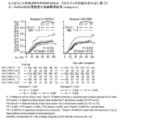
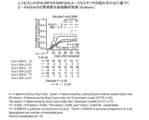
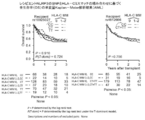
- Example 1 shows the results of cumulative incidence curves (CICs) analysis (unadjusted analysis) of extensive CGvHD (ExCGvHD) based on the combination of donor NLRP3 SNP (rs10925027 or rs46212666) and HLA-C mismatch FIG.
- CICs cumulative incidence curves
- HLA-C MM means HLA-C mismatch
- HLA-C MM 0 means no HLA-C mismatch
- HLA-C MM 1 means an HLA-C mismatch of 1 or 2 (dashed line: 1 or 2 allyl mismatch of HLA-C).
- the numerical value of N indicates the number of donor-recipient pairs used in the analysis (the same applies to FIGS. 4A to 14B below).
- pmt represents a value obtained by Gray test using permutation (the same applies to FIGS. 4A, B, 6C, and 8 below).
- P is a value obtained by a normal Gray test (the same applies to the NRM and release in FIGS. 4A to C, FIGS. 6A to E, FIGS. 7A and B, FIGS. 8, 10, and 14A and B below).
- CICs cumulative generation curve
- the horizontal axis is the number of years after transplantation, and the vertical axis is the cumulative incidence of ExCGvHD (the same applies to FIGS. 4B and 4C below).
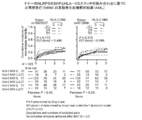
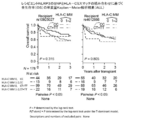
- the cumulative occurrence curve (CICs) analysis (unadjusted analysis) result of EXCGvHD based on the combination of SNP (rs10925027 or rs46212666) and HLA-C mismatch of donor NLRP3 (ALL patient or 6others patient (6others patient: CML))
- FIG. 4 is a view showing other patients (any of leukemia, LM, MPD, PCD, and ST other than AML / ALL / CML).
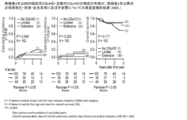
- Example 1 it is a figure which shows the cumulative generation curve (CICs) analysis (unadjusted analysis) result (MDS patient) of ExCGvHD based on the combination of SNP (rs10925027 or rs46212666) and HLA-C mismatch of donor NLRP3.
- CICs cumulative generation curve
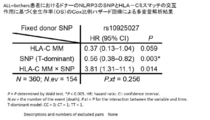
- production of ExCGvHD multivariate analysis
- HLA-C MM is the number of HLA-C mismatches (HLA-A, HLA-B, HLA-DRB1 total tridentate 6 alleles match, and at least one allele of HLA-C 2 alleles is mismatched) ( 0, 1, or 2) (same in FIGS. 9 and 12 below),
- Donor rs10925027 (T-additive) shows the effect based on the number of T alleles (0, 1, or 2)
- HLA -C MM x Donor rs10925027 shows the effect of the product of these two numbers.
- P and P.I. xt is a value obtained by the Wald test (the same applies to FIGS. 9 and 12 below).
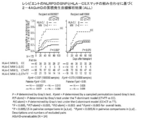
- Example 2 shows the results of cumulative curve analysis (unadjusted analysis) of 2-4AGvHD based on the combination of recipient NLRP3 SNP (rs10925027 or rs46261266) and HLA-C mismatch (all malignant patients)
- FIG. The horizontal axis is the number of days after transplantation, and the vertical axis is the cumulative incidence of 2-4AGvHD (the same applies to FIGS. 6B to 6E below).
- it is a figure which shows the cumulative generation curve analysis (unadjusted analysis) result (AML patient) of 2-4AGvHD based on the combination of recipient's NLRP3 SNP (rs10925027 or rs46261266) and HLA-C mismatch.
- Example 2 it is a figure which shows the cumulative generation curve analysis (unadjusted analysis) result (ALL patient) of 2-4AGvHD based on the combination of recipient's NLRP3 SNP (rs10925027 or rs46261266) and HLA-C mismatch.
- Example 2 it is a figure which shows the cumulative generation curve analysis (unadjusted analysis) result (MDS patient) of 2-4AGvHD based on the combination of recipient's NLRP3 SNP (rs10925027 or rs46212666) and HLA-C mismatch.
- Example 2 it is a figure which shows the cumulative generation curve analysis (unadjusted analysis) result (6others patient) of 2-4AGvHD based on the combination of SNP (rs46212666) and HLA-C mismatch of recipient NLRP3.
- Example 3 it is a figure which shows the cumulative occurrence curve analysis (unadjusted analysis) result (AML patient) of the non-relapse death (NRM) based on the combination of donor's NLRP3 SNP (rs10925027 or rs46212666) and HLA-C mismatch.
- P (T-domi) is a value obtained by a normal Gray test under the T dominant model (the same applies to FIG. 7B below).
- Example 3 it is a figure which shows the cumulative occurrence curve analysis (unadjusted analysis) result (ALL patient) of the non-relapse mortality (NRM) based on the combination of donor's NLRP3 SNP (rs10925027 or rs46212666) and HLA-C mismatch. .
- Example 3 it is a figure which shows the cumulative occurrence curve analysis (unadjusted analysis) result of non-relapse mortality (NRM) based on the combination of donor NLRP3 SNP (rs46212666) and HLA-C mismatch.
- 8A is a 6others patient
- FIG. 8B is a CML patient or other leukemia patient
- FIG. 8C is a LM, PCD, MPD, or ST patient.
- Example 3 it is a figure which shows the multivariate analysis result by Fine-Gray proportional hazard regression of the non-recurrence death (NRM) based on the interaction of donor's NLRP3 SNP (rs10925027 or rs46212666) and HLA-C mismatch.
- FIG. 9A shows the case of HLA-C MM, which is non-relapse mortality (NRM) over the entire follow-up period.
- Example 9 shows HLA-C / Q / P MM (HLA-A, HLA-B, HLA-DRB1 total 3 6 alleles match, HLA-C, HLA-DPB1, HLA-DQB1 total 3 This is the case of at least one allele of locus 6 alleles and mismatched deaths (NRM) within 100.
- Example 4 it is a figure which shows the cumulative occurrence curve analysis (unadjusted analysis) result of the non-relapse mortality (NRM) based on the combination of SNP of recipient NLRP3, and HLA-C mismatch.
- the patient's primary disease is ALL.
- the horizontal axis is the number of years after transplantation, and the vertical axis is the cumulative incidence of non-recurrent deaths.
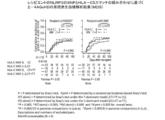
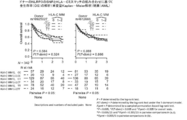
- Example 5 it is a figure which shows the univariate Kaplan-Meier analysis result (AML patient) of the overall survival rate (OS) based on the combination of SNP (rs10925027 or rs46212666) and HLA-C mismatch of donor NLRP3.
- P is a value obtained by a normal log-rank test (the same applies to the OS in FIGS. 11B and 11C, FIGS. 13A and 13B, and FIGS. 14A and 14B below).
- P (T-domi) is a value obtained by a normal log-rank test under the T dominant model (the same applies to FIG. 13A below).
- the horizontal axis represents the number of years after transplantation, and the vertical axis represents the overall survival rate (OS) (the same applies to FIGS. 11B and 11C below).
- OS overall survival rate
- Example 5 it is a figure which shows the univariate Kaplan-Meier analysis result (ALL patient) of the overall survival rate (OS) based on the combination of SNP (rs10925027 or rs46212666) and HLA-C mismatch of donor NLRP3.
- P. pmt is a value obtained by a log-rank test using permutation (the same applies to FIG. 11C below).
- Example 5 it is a figure which shows the univariate Kaplan-Meier analysis result (6others patient) of the overall survival rate (OS) based on the combination of SNP (rs46212666) and HLA-C mismatch of donor NLRP3.
- Example 5 it is a figure which shows the multivariate analysis result by Cox proportional hazard regression of the overall survival rate (OS) based on interaction of SNP (rs10925027) and HLA-C mismatch of donor NLRP3.
- Example 6 it is a figure which shows the univariate Kaplan-Meier analysis result (AML patient) of the survival rate (OS) based on the combination of SNP (rs10925027 or rs46212666) and HLA-C mismatch of recipient NLRP3.
- the horizontal axis represents the number of years after transplantation, and the vertical axis represents the overall survival rate (OS) (the same applies to FIG. 13B below).
- Example 6 it is a figure which shows the univariate Kaplan-Meier analysis result (ALL patient) of the overall survival rate (OS) based on the combination of recipient's NLRP3 SNP (rs10925027 or rs46212666) and HLA-C mismatch.
- Example 7 it is a figure which shows the analysis result (original disease is an AML patient) about the relationship between onset of CGvHD, non-relapsed death, relapse, and overall survival rate.
- “Limited” indicates a case where localized CGvHD is developed
- “Extensive” indicates a case where ExCGvHD is developed.
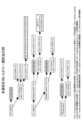
- Example 7 it is a figure which shows the analysis result (original disease is a 6others patient) about the relationship between onset of CGvHD, non-relapsed death, relapse, and overall survival rate. It is a figure which shows the example of the donor selection method using this invention.
- the HLA genes HLA-A, HLA-B, HLA-C, and HLA-DRB1 at the four loci between donors and recipients in allogeneic hematopoietic stem cell transplantation Among 8 alleles, in the case where 1 allele or 2 alleles are mismatched and the recipient's primary disease is malignant blood disease (excluding myelodysplastic syndrome (MDS)), SEQ ID NO: 1 of the donor or recipient NLRP3 gene
- MDS myelodysplastic syndrome
- Allogeneic hematopoietic stem cell transplantation means hematopoietic stem cell transplantation using cells other than autologous donors. Such allogeneic transplantation is a radical treatment method for malignant blood diseases, and can be classified into bone marrow transplantation, peripheral blood transplantation, or umbilical cord blood transplantation according to stem cell-derived tissue. Bone marrow transplantation is preferable. Further, allogeneic hematopoietic stem cell transplantation can be classified according to the donor into interrelated allogeneic hematopoietic stem cell transplantation and unrelated allogeneic hematopoietic stem cell transplantation.
- the race of the recipient and / or donor of the present invention is not particularly limited, and may be any of Japanese, East Asian, West Asian, North American, South American, European, African, preferably East Asians, more preferably Japanese.
- the recipient using the present invention is preferably a first transplant patient.
- malignant blood diseases means diseases other than MDS among malignant blood diseases.
- diseases other than MDS include acute myeloid leukemia (AML), acute lymphoblastic leukemia (ALL), chronic myeloid leukemia (CML), leukemia (OL) other than AML, ALL and CML, lymphatic system Malignant tumor (LM), myeloproliferative disease (MPD), plasma cell tumor (PCD), or solid tumor (ST) can be mentioned, ALL or AML can be mentioned preferably, ALL more preferably Can be mentioned.
- the SNP at the 26th base of the base sequence shown in SEQ ID NO: 1 of the NLRP3 gene is an intron SNP involved in susceptibility to food-induced anaphylaxis and aspirin-induced asthma in Japanese.
- SNP (rs10925027) in the 26th base of the base sequence shown to sequence number 2 of NLRP3 gene is SNP located downstream of both NLRP3 and OR2B11 genes.
- the rs number is a reference number (Reference SNP ID number) of the SNP in the National Center for Biotechnology Information (NCBI) SNP database (http://www.ncbi.nlm.nih.gov/SNP/).
- the linkage disequilibrium relationship means that in a population of organisms, there is a non-random correlation between alleles or genetic markers (polymorphisms) of a plurality of loci, that is, a specific combination thereof ( Haplotype) means a population genetic phenomenon where the frequency of the haplotype is significantly higher, linkage disequilibrium coefficient r 2 > 0.5, preferably r 2 > 0.6, more preferably r 2 > 0. Examples include bases that satisfy 64 relationships.
- the SNPs having a linkage disequilibrium (r 2 > 0.64) relationship with rs10925027 include rs121143966, rs4925659, rs111307268, rs60882383, rs1015932929, rs60883325, rs1074753, rs104853, rs104853 , Rs10733112, and rs4925663, and SRSs that have a linkage disequilibrium (r 2 > 0.64) relationship with rs46212666 include rs3806265 and rs3838354.
- the linkage disequilibrium coefficient can be calculated with VCFtools version 0.1.11.
- the prognosis in the present invention is not particularly limited as long as it is a complication, survival rate or death resulting from allogeneic hematopoietic stem cell transplantation, but the onset of class 2-4 acute graft-versus-host disease (2-4AGvHD), extensive chronic graft Mention of host disease (ExCGvHD), overall survival (OS), or non-recurrent mortality (death without primary disease recurrence: NRM).
- 2-4AGvHD acute graft-versus-host disease
- ExCGvHD extensive chronic graft Mention of host disease
- OS overall survival
- NRM non-recurrent mortality
- kits for predicting prognosis after transplantation of allogeneic hematopoietic stem cells of the present invention the kit for predicting prognosis after transplantation of allogeneic hematopoietic stem cells used in the method for assisting prediction of prognosis after transplantation in the above-mentioned allogeneic hematopoietic stem cell transplantation of the present invention
- the kit is not particularly limited as long as it includes the following probe (1) or (2), and each SNP can be detected by using such a probe.
- a probe comprising an oligonucleotide that hybridizes under stringent conditions with a sequence of 15 to 50 bases comprising
- a single nucleotide polymorphism at the 26th base (rs46212666, T or C) of the nucleotide sequence shown in SEQ ID NO: 2 or a single nucleotide polymorphism in a relationship of linkage disequilibrium with the single nucleotide polymorphism
- a probe comprising an oligonucleotide that hybridizes under stringent conditions with a sequence of 15 to 50 bases comprising
- the probe may be 15 to 50 bases, preferably 10 to 40 bases, more preferably 15 to 30 bases.
- an oligo probe synthesized using an artificial nucleic acid such as Locked Nucleic Acid (LNA) as a probe it is possible to obtain a probe that specifically hybridizes even with a short base.
- LNA Locked Nucleic Acid
- the above stringent conditions refer to conditions in which so-called specific hybrids are formed and non-specific hybrids are not formed. Specifically, 6 ⁇ SSC (1.5 M NaCl, 0.15 M tricitrate A solution containing sodium is assumed to be 10 ⁇ SSC), and a hybrid is formed at 45 ° C. in a solution containing 50% formamide, followed by washing with 2 ⁇ SSC at 50 ° C. (Molecular Biology, John Wiley & Sons, N.Y. (1989), 6.3.1-6.3.6) or 3 ⁇ SSC / 0.3 ⁇ SDS in a solution containing hybrids at 54 ° C. (10 ⁇ SSC / 1% SDS solution), cleaning solution B (20 ⁇ SSC), and cleaning solution C (5 ⁇ SSC) are sequentially washed (see JP 2011-250726 A).
- SNP a method for analyzing a known SNP can be used.
- a real-time PCR method a direct sequencing method, a Taqman (registered trademark) PCR method, an Invader (registered trademark) method, a Luminex (registered trademark) method, a quenching primer / Probe (QP) method, MALDI-TOF method, molecular beacon method and the like.
- a nucleic acid fragment containing a SNP site to be measured by an amplification reaction using genomic DNA of a biological sample collected from a donor or a recipient as a template is amplified by PCR using a primer, and the nucleic acid fragment obtained
- a method for detecting hybridization with a pair of probes corresponding to a wild type and a variant type and a method for detecting a wild type and a variant type by using a probe specific to the SNP site in the PCR amplification process. Can be mentioned.
- the probe of the present invention may be used by being fixed on a carrier.
- the carrier include a planar substrate and a bead-like spherical carrier. Specifically, the above-mentioned JP2011-250726A. And the carrier described in the publication.
- the probe for detecting the wild type and the probe for detecting the variant type may be fixed to the same carrier or different carriers.
- the probe can be obtained by, for example, chemically synthesizing with a nucleic acid synthesizer.
- a nucleic acid synthesizer a DNA synthesizer, a fully automatic nucleic acid synthesizer, or the like can be used.
- the method for measuring HLA is not particularly limited, and examples thereof include an LCT method, a DNA typing method, and a fluorescent bead method.
- the prognostic kit for prognosis after transplantation of allogeneic hematopoietic stem cells may contain a reagent for HLA measurement according to the method for measuring each HLA.
- Genomic DNA was purified from 200 ⁇ L of donor and recipient peripheral blood using QIAamp DNA Blood Mini kit (manufactured by Qiagen), and amplified with Illustra GenomiPhiHY kit (manufactured by GE Healthcare).
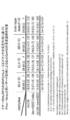
- FIG. 1 shows the TaqMan assay probe, the sequence of the primers used in the PCR direct sequence, and the sequence in the vicinity of the SNP.
- DNA sequencing reaction was performed using primers and BigDye Terminator v3.1 Cycle Sequencing kit, and analyzed with 3730 ⁇ DNA Analyzer (Applied Biosystems). For each SNP base, after visual inspection of each chromatogram, the ratio of the peak height of the strongest signal base and the second strongest base was calculated. When the peak ratio was less than 3, the genotype was judged to be heterozygous. When the peak ratio was 3 or more, it was judged to be homozygous for the strongest signal base.
- the subjects performed unrelated bone marrow transplantation with minimal matching of all three loci and 6 alleles of HLA-A, HLA-B, and HLA-DRB1 through the Japan Bone Marrow Bank from October 2006 to April 2009. 999 pairs of donors and recipients that meet the following four conditions: The four conditions are: a Japanese pair, a donor age of 20 years or older, survival data after transplantation of the patient, and the HLA12 locus was actually genotyped and actually HLA-A , HLA-B, HLA-DRB1 6 alleles are confirmed to be matched. Since the HLA-C locus is not necessarily matched, it can be said to be an HLA locus 6/8, 7/8, or 8/8 allyl match.
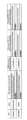
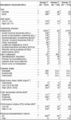
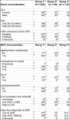
- the donor and recipient clinical data, transplant data and matching are shown in FIGS. 2A-C.
- CGvHD Primary endpoints for prognosis after transplantation are grade 2-4 acute GvHD (2-4AGvHD), overall survival (OS), chronic GvHD (CGvHD), non-recurrent mortality (NRM), and relapse within 100 days after transplantation .
- Major events for OS and NRM were defined as death from all factors and death from without relapse, respectively.
- AGvHD is a classic classification (Glucksberg, H. et al.
- the following libraries of R language environment were used as statistical analysis software. Survival library (version 2.38) for Kaplan-Meier curve, Log-rank test, cumulative occurrence curve, and Cox proportional hazard regression, Gray test, and cmprsk library (version for Fine-Gray proportional hazard regression) 2.2), MASS library (version 7.3) and crrstep (version 2015-2) were used for variable selection, and aod library (version 1.3) was used for Wald test. The Log-rank test and Gray test using permutation were performed in the same manner as the permllogrank function included in the clinfun library (version 1.0).
- Example 1 Interaction (combination) of donor NLRP3 SNP and HLA-C mismatch on diffuse chronic GvHD (ExCGvHD)
- the cumulative occurrence curves (CICs) of ExCGvHD based on the combination of donor NLRP3 SNP (rs10925027 or rs46212666) and HLA-C mismatch were analyzed by the above method. The results are shown in FIGS. 3 and 4A to C. Furthermore, multivariate analysis was performed by Fine-Gray proportional hazard regression based on the interaction between the donor NLRP3 SNP (rs10925027) and HLA-C mismatch. The results are shown in FIG.
- the genotype of the NLRP3 SNP (rs10925027 or rs46212666) on the donor side should be a high expression type (CC).
- CC high expression type
- the cumulative incidence of ExCGvHD is low at the same level as the 8/8 allele match of HLA-A, HLA-B, HLA-C, and HLA-DRB1
- TT low expression type
- the NLRP3 SNP genotype on the recipient side may be a high expression type (CC).
- CC high expression type
- the cumulative incidence of 2-4AGvHD was low, but when HLA-C was 1-2 allyl mismatch, it was revealed that the cumulative incidence of 2-4AGvHD was rather high.
- FIGS. 6B to 6E a subgroup analysis was performed for each primary disease of the recipient. As a result, the cumulative incidence of 2-4AGvHD when HLA-C is 2 allele mismatch and the recipient NLRP3 SNP genotype is high expression type (CC) is high in AML or ALL patients. High in ALL patients.
- Example 3 Effect of Donor NLRP3 SNP and HLA-C Mismatch Combination on Non-Recurrent Mortality (NRM) NRM Based on Combination of Donor NLRP3 SNP (rs10925027 or rs46212666) and HLA-C Mismatch Using the above Method A cumulative generation curve analysis was performed. The results are shown in FIGS. 7A, B, and 8. Furthermore, multivariate analysis was performed by Fine-Gray proportional hazard regression based on the interaction between the donor NLRP3 SNP (rs10925027 or rs46212666) and HLA-C mismatch. The results are shown in FIG.
- NRM HLA-
- CT or TT low expression type
- NRM HLA-
- the cumulative incidence was higher than the 8/8 allele match of A, HLA-B, HLA-C, and HLA-DRB1, and this risk trend was strongly seen in the early post-transplant period within 4 months after transplant.
- NRM is more cumulative than HLA8 / 8 allele match if HLA-C is mismatched and donor NLRP3 SNP genotype is highly expressed (CC) The rate was even lower.
- Example 4 Effect of Combination of Recipient NLRP3 SNP and HLA-C Mismatch on Non-Recurrent Death (NRM) In combination of recipient NLRP3 SNP (rs10925027 or rs46212666) and HLA-C mismatch Based on the NRM cumulative generation curve analysis. The results are shown in FIG.
- Example 5 Effect of Donor NLRP3 SNP and HLA-C Mismatch Combination on Overall Survival (OS) All of the above based on the combination of donor NLRP3 SNP (rs10925027 or rs46212666) and HLA-C mismatch A Kaplan-Meier curve (KMCs) analysis of viability was performed. The results are shown in FIGS. 11A-C. Furthermore, multivariate analysis was performed by Cox proportional hazard regression based on the interaction between the donor NLRP3 SNP (rs10925027) and the HLA-C mismatch. The results are shown in FIG.
- KMCs Kaplan-Meier curve
- donor NLRP3 SNPs are under-expressed when 8/8 allele matches of HLA-A, HLA-B, HLA-C, and HLA-DRB1
- the type (CT or TT) was higher in OS than the high expression type (CC).
- the donor NLRP3 SNP was higher in the high expression type (CC) than in the low expression type (CT or TT).
- OS Since OS has a combined effect of adding the effect of relapse (due to death) to the effect of NRM, and relapse showed a tendency opposite to that of NRM (not shown), OS has a difference in the vertical axis compared to NRM. The width became smaller.
- Example 6 Effect of combination of recipient NLRP3 SNP and HLA-C mismatch on overall survival (OS) Combination of recipient NLRP3 SNP (rs10925027 or rs46212666) and HLA-C mismatch by the above method Kaplan-Meier curve (KMCs) analysis of OS based on. The results are shown in FIGS. 13A and 13B.
- Example 7 Effect of CGvHD on non-recurrent mortality (NRM), recurrence, and overall survival (OS) Presence of CGvHD onset within 1 year after transplantation is related to NRM, recurrence, and OS after 1 year A univariate analysis was performed to see what effect it had. The results are shown in FIGS. 14A and 14B.
- the present invention can be used in donor selection in allogeneic hematopoietic stem cell transplantation.
Landscapes
- Health & Medical Sciences (AREA)
- Life Sciences & Earth Sciences (AREA)
- Chemical & Material Sciences (AREA)
- Engineering & Computer Science (AREA)
- Organic Chemistry (AREA)
- Biotechnology (AREA)
- Zoology (AREA)
- Wood Science & Technology (AREA)
- Bioinformatics & Cheminformatics (AREA)
- Immunology (AREA)
- Biochemistry (AREA)
- Microbiology (AREA)
- Molecular Biology (AREA)
- Biomedical Technology (AREA)
- General Health & Medical Sciences (AREA)
- Physics & Mathematics (AREA)
- Genetics & Genomics (AREA)
- Medicinal Chemistry (AREA)
- Proteomics, Peptides & Aminoacids (AREA)
- Analytical Chemistry (AREA)
- General Engineering & Computer Science (AREA)
- Hematology (AREA)
- Urology & Nephrology (AREA)
- Sustainable Development (AREA)
- Food Science & Technology (AREA)
- Pathology (AREA)
- Cell Biology (AREA)
- Biophysics (AREA)
- General Physics & Mathematics (AREA)
- Measuring Or Testing Involving Enzymes Or Micro-Organisms (AREA)
Abstract
本発明の課題は、同種造血幹細胞移植において、ドナーとレシピエントとのHLAが一部ミスマッチの場合においても移植後の予後を予測する方法を提供することにある。 同種造血幹細胞移植におけるドナーとレシピエント間でHLA遺伝子のHLA-A、HLA-B、HLA-C、及びHLA-DRB1の4座における8アリルのうち、1アリル又は2アリルがミスマッチで、かつレシピエントが悪性血液疾患(骨髄異形形成症候群(MDS)を除く)の患者の場合において、ドナー若しくはレシピエントのNLRP3遺伝子の配列番号1に示す塩基配列の26番目の塩基(rs10925027、C又はT)における一塩基多型、若しくは配列番号2に示す塩基配列の26番目の塩基(rs4612666、C又はT)における一塩基多型又はこれらの連鎖不平衡の関係にある一塩基多型、及びレシピエントの原疾患の種類を指標として移植後の予後の予測を補助する。
Description
本発明は、同種造血幹細胞移植後の予後の予測を補助する方法や、かかる方法に使用する、同種造血幹細胞移植後の予後の予測用キットに関する。
同種造血幹細胞移植(allogeneic hematopoietic stem cell transplantation:以下、「同種移植」ともいう)とは自分以外の細胞をドナーとする造血幹細胞移植のことである。同種移植後の生存率は以前より改善されてはいるものの、5年生存率は40-60%にとどまっている。また急性移植片対宿主病(acute graft―versus―host disease:AGvHD)や慢性移植片対宿主病(chronic graft―versus―host disease:CGvHD)等の移植後の合併症を防ぐ手段は依然限られている。
同種移植においては、投薬治療よりも最適なドナーの選択法を確立することによって死亡や合併症を予防することが望ましい。同種移植後の予後に影響を与える遺伝学的因子としてドナーとレシピエント間のHLA座における対立遺伝子(アリル)の適合度(マッチ/ミスマッチ)は良く知られており、同種移植の際にドナーとレシピエント間のHLAアリルをマッチさせることが標準的に行われている。主要なHLA遺伝子はHLA-A、HLA-B、HLA-C、HLA-DRB1、HLA-DPB1、HLA-DQB1の6座からなり、2倍体であるヒトゲノムにおいて合計12アリル存在する。HLA遺伝子座は非常に多型的であるため、全てのレシピエントについて12/12アリルマッチするドナーを見つけることは極めて難しい。また、主要なHLAがある程度以上マッチしていれば、12/12アリル全マッチと移植後の予後に大きな差はないという報告もある。これらの理由で、非血縁者間骨髄移植においては重要性の相対的に低いHLA-DPB1、HLA-DQB1は考慮せず、最低限HLA-A、HLA-B、HLA-DRB1の合計3座をマッチさせて、可能なレシピエントについてはさらにHLA-C座もマッチ(6/8-8/8アリルマッチ)させる方法が先進国では標準的である。
同種移植後の予後をさらに改善する方法として、HLA以外の遺伝子の多型を利用することが考えられる。実際、同種移植後の予後に影響する一塩基多型(Single―nucleotide polymorphism:SNP)等の遺伝的多型の探索が世界中で行われてきた。しかし、再現性があり臨床に影響を与えるような強い効果を持つ多型は見出されていない。
同種移植後の予後に影響を与える数少ない非HLAのSNPの候補としてはKIR(killer cell immunoglobulin like receptor)遺伝子ファミリーが提案されている(特許文献1、非特許文献1参照)。KIRは細胞表面でHLAと直接物理的に結合する受容体タンパク質をコードする。しかし、かかる文献におけるKIR遺伝子とレシピエント側のHLA-Cアリル(ドナーとのミスマッチではない)の組み合わせが急性骨髄性白血病(Acute Myelold Leukemia:AML)患者に対する同種移植後の再発に影響を与えるという主要な結果の解釈に疑問が呈され(非特許文献2参照)、対する非特許文献1の著者の返答で交互作用は有意でない(P=0.14)ことが報告された(非特許文献3参照)。また、非特許文献1のFigure 3Cには、KIR遺伝子の再発予防効果がHLA-Cのミスマッチの存在に依存するという結果も報告されていたが、論文の遺伝子型解読結果が多くの誤りを含んでいたことが著者から後に報告されて、修正後のFigure 3Cの解析結果は有意でない(P=0.24)ことが判明した(非特許文献4参照)。さらに同じグループからの追加研究では元の結果は再現されなかった(非特許文献5参照)。上記からKIR遺伝子とHLAアリルの組み合わせの効果は世界的にも十分に確認されているとは言えない現状である。また、日本人等の集団ではそもそもHLA-CのKIRタンパク質との結合に関与するアリルの多型の頻度が非常に低いため、臨床応用は難しいと思われる。
一方、細胞内のNOD-like receptor familyであるNLRP3は、インフラマソーム形成によりCaspase-1を活性化させるタンパク質である。かかるNLRP3の一塩基多型は、家族性感冒自己炎症性症候群の発症原因やアレルギー疾患の劇症化等と関係していること(特許文献2、非特許文献6参照)や、同種造血細胞移植において、マウスのレシピエントNLRP3遺伝子がMHCミスマッチ移植におけるAGvHDに関与すること(非特許文献7参照)や、HLAが完全に一致した兄弟姉妹間移植の同種造血細胞移植において、ドナーのNLRP3の一塩基多型が再発、全生存率、移植関連死亡率、又はGvHDに関与すること(非特許文献8-10参照)が開示されている。しかしながら、HLAミスマッチの同種造血細胞移植において、かかるNLRP3の一塩基多型と前記移植における予後との関係は記載されておらず、またレシピエントの原疾患(underlying disease)の種類も考慮されていない。
このように、HLAの適合度以外には同種移植後の予後を予測する手段は実用化されていない。
Venstrom et al., HLA-C-dependent prevention of leukemia relapse by donor activating KIR2DS1. N. Engl. J. Med. 367, 805-816(2012)
Fischer & Uhrberg. Prevention of leukemia relapse by donor activating KIR2DS1. N. Engl. J. Med. 367, 2054-2055(2012)
N. Engl. J. Med. 367, author reply 2055.(2012)
Venstrom et al., Donor activating KIR2DS1 in leukemia. N. Engl. J. Med. 371, 2042(2014)
Sobecks, R.M. et al. Impact of KIR and HLA Genotypes on Outcomes after Reduced-Intensity Conditioning Hematopoietic Cell Transplantation. Biol. Blood Marrow Transplant. 21, 1589-159(2015)
Hitomi, Y et al. Associations of functional NLRP3 polymorphisms with susceptibility to food-induced anaphylaxis and aspirin-induced asthma. Journal of Allergy and Clinical Immunology Volume 124, Issue 4, Pages 779-785.e6(2009)
Jankovic, D. et al. The Nlrp3 inflammasome regulates acute graft-versus-host disease. J. Exp. Med. 210, 1899-1910(2013).
Granell M. et al. Common variants in NLRP2 and NLRP3 genes are strong prognostic factors for the outcome of HLA-identical sibling allogeneic stem cell transplantation. Blood 15:4337-4342(2008)
Takami, A. et al. Association of Functional Single Nucleotide Variation in the NLRP3 Gene with Survival Outcomes After Unrelated Bone Marrow Transplantation. Blood 120:3140(2012)
Takami, A. et al. A Single Nucleotide Polymorphism in the NLRP3 Gene Is Associated with Acute Graft-Versus-Host Disease After HLA-Matched Unrelated Bone Marrow Transplantation. Blood 118:4073(2011)
上述のように、これまでは同種移植後の予後予測に関する研究において、HLAが12/12アリルマッチした同種移植を対象にして、レシピエントの原疾患を区別せずに解析している例が多かった。しかしながら、HLAが12/12アリルマッチした同種移植は現在の臨床現場では少数に限られており、実際には多数の実施例を占めるHLAが一部ミスマッチの場合において、原疾患ごとに移植後の予後を予測する方法が求められていた。そこで本発明の課題は、HLAが一部ミスマッチの場合においても原疾患ごとに移植後の予後を予測する方法を提供することにある。
本発明者らは、まず骨髄移植後の予後に影響を与えるドナーとレシピエント側両方のSNPの同定を試みた。対象者は、HLA-A、HLA-B、及びHLA-DRB1の合計3座6アリルを最低限マッチさせた非血縁骨髄移植を、日本骨髄バンクを介して2006年10月から2009年4月に受けた999ペアのドナーとレシピエントである。HLA-C座はマッチしているとは限らないので、HLA座6/8-8/8アリルマッチといえる。日本骨髄バンクから提供されたこれら計1998の被験者のDNA検体を用いて、NLRP1、NLRP2、NLRP3、及びCARD8の一塩基多型(SNP)を計5つ(NLRP3のみ2つずつで、他は1つずつ)の遺伝子型を決定した。そして、移植後の予後と、ドナー及び/又はレシピエントのSNPの遺伝子型との関連について、被験者の臨床データを用いて統計解析を行った。その結果、移植後の予後に関してHLAのミスマッチ(6/8、7/8アリルマッチ)とNLRP3の一塩基多型であるrs10925027又はrs4612666の発現型との間で統計的に有意な交互作用があることを見出し、本発明を完成した。
すなわち、本発明は、以下のとおりである。
(1)同種造血幹細胞移植におけるドナーとレシピエント間でHLA遺伝子のHLA-A、HLA-B、HLA-C、及びHLA-DRB1の4座における8アリルのうち、1アリル又は2アリルがミスマッチで、かつレシピエントの原疾患が悪性血液疾患(骨髄異形形成症候群(MDS)を除く)の場合において、ドナー若しくはレシピエントのNLRP3遺伝子の配列番号1に示す塩基配列の26番目の塩基(rs10925027、C又はT)における一塩基多型、若しくは配列番号2に示す塩基配列の26番目の塩基(rs4612666、C又はT)における一塩基多型又はこれらと連鎖不平衡の関係にある一塩基多型、及びレシピエントの原疾患の種類を指標として移植後の予後の予測を補助する方法。
(2)同種造血幹細胞移植におけるドナーとレシピエント間でHLA遺伝子のHLA-A、HLA-B、及びHLA-DRB1の3座における6アリルがマッチしていることを特徴とする上記(1)記載の方法。
(3)同種造血幹細胞移植が非血縁者間同種造血幹細胞移植であることを特徴とする上記(1)又は(2)記載の方法。
(4)予後が、2-4級急性移植片対宿主病(2-4AGvHD)発症、慢性移植片対宿主病(CGvHD)発症、全生存率(OS)、又は非再発死亡(NRM)であることを特徴とする上記(1)~(3)のいずれか記載の方法。
(5)悪性血液疾患が、急性骨髄性白血病(AML)、急性リンパ性白血病(ALL)、慢性骨髄性白血病(CML)、リンパ系悪性腫瘍(LM)、骨髄増殖性疾患(MPD)、形質細胞性腫瘍(PCD)、又は固形腫瘍(ST)であることを特徴とする上記(1)~(4)のいずれか記載の方法。
(6)悪性血液疾患が、急性骨髄性白血病(AML)、又は急性リンパ性白血病(ALL)であることを特徴とする上記(5)記載の方法。
(7)上記(1)~(6)記載の方法に使用する、同種造血幹細胞移植後の予後の予測用キットであって、以下の〔1〕又は〔2〕記載のプローブを含むことを特徴とするキット。
〔1〕NLRP3遺伝子において、配列番号1に示す26番目の塩基(rs10925027、C又はT)における一塩基多型、又は該一塩基多型と連鎖不平衡の関係にある一塩基多型を含む連続する15~50塩基からなる配列、又はその相補配列とストリンジェントな条件下でハイブリダイズするオリゴヌクレオチドからなるプローブ;
〔2〕NLRP3遺伝子において、配列番号2に示す26番目の塩基(rs4612666、C又はT)における一塩基多型、又は該一塩基多型と連鎖不平衡の関係にある一塩基多型を含む連続する15~50塩基からなる配列、又はその相補配列とストリンジェントな条件下でハイブリダイズするオリゴヌクレオチドからなるプローブ;
(8)HLAを測定するための試薬を含むことを特徴とする上記(7)記載のキット。
(1)同種造血幹細胞移植におけるドナーとレシピエント間でHLA遺伝子のHLA-A、HLA-B、HLA-C、及びHLA-DRB1の4座における8アリルのうち、1アリル又は2アリルがミスマッチで、かつレシピエントの原疾患が悪性血液疾患(骨髄異形形成症候群(MDS)を除く)の場合において、ドナー若しくはレシピエントのNLRP3遺伝子の配列番号1に示す塩基配列の26番目の塩基(rs10925027、C又はT)における一塩基多型、若しくは配列番号2に示す塩基配列の26番目の塩基(rs4612666、C又はT)における一塩基多型又はこれらと連鎖不平衡の関係にある一塩基多型、及びレシピエントの原疾患の種類を指標として移植後の予後の予測を補助する方法。
(2)同種造血幹細胞移植におけるドナーとレシピエント間でHLA遺伝子のHLA-A、HLA-B、及びHLA-DRB1の3座における6アリルがマッチしていることを特徴とする上記(1)記載の方法。
(3)同種造血幹細胞移植が非血縁者間同種造血幹細胞移植であることを特徴とする上記(1)又は(2)記載の方法。
(4)予後が、2-4級急性移植片対宿主病(2-4AGvHD)発症、慢性移植片対宿主病(CGvHD)発症、全生存率(OS)、又は非再発死亡(NRM)であることを特徴とする上記(1)~(3)のいずれか記載の方法。
(5)悪性血液疾患が、急性骨髄性白血病(AML)、急性リンパ性白血病(ALL)、慢性骨髄性白血病(CML)、リンパ系悪性腫瘍(LM)、骨髄増殖性疾患(MPD)、形質細胞性腫瘍(PCD)、又は固形腫瘍(ST)であることを特徴とする上記(1)~(4)のいずれか記載の方法。
(6)悪性血液疾患が、急性骨髄性白血病(AML)、又は急性リンパ性白血病(ALL)であることを特徴とする上記(5)記載の方法。
(7)上記(1)~(6)記載の方法に使用する、同種造血幹細胞移植後の予後の予測用キットであって、以下の〔1〕又は〔2〕記載のプローブを含むことを特徴とするキット。
〔1〕NLRP3遺伝子において、配列番号1に示す26番目の塩基(rs10925027、C又はT)における一塩基多型、又は該一塩基多型と連鎖不平衡の関係にある一塩基多型を含む連続する15~50塩基からなる配列、又はその相補配列とストリンジェントな条件下でハイブリダイズするオリゴヌクレオチドからなるプローブ;
〔2〕NLRP3遺伝子において、配列番号2に示す26番目の塩基(rs4612666、C又はT)における一塩基多型、又は該一塩基多型と連鎖不平衡の関係にある一塩基多型を含む連続する15~50塩基からなる配列、又はその相補配列とストリンジェントな条件下でハイブリダイズするオリゴヌクレオチドからなるプローブ;
(8)HLAを測定するための試薬を含むことを特徴とする上記(7)記載のキット。
本発明により、HLAが一部ミスマッチ、すなわちHLA遺伝子のHLA-A、HLA-B、HLA-C、及びHLA-DRB1の4座における8アリルのうち、1アリル又は2アリルがミスマッチの場合における同種移植後の予後を予測することが可能となる。かかる予後の予測を行うことで、ドナーを選択する際により合併症発症リスクや死亡リスクが少ないドナーを選択することが可能となる。
本発明の移植後の予後の予測を補助する方法としては、同種造血幹細胞移植におけるドナーとレシピエント間でHLA遺伝子のHLA-A、HLA-B、HLA-C、及びHLA-DRB1の4座における8アリルのうち、1アリル又は2アリルがミスマッチで、かつレシピエントの原疾患が悪性血液疾患(骨髄異形形成症候群(MDS)を除く)の場合において、ドナー若しくはレシピエントのNLRP3遺伝子の配列番号1に示す塩基配列の26番目の塩基(rs10925027、C又はT)における一塩基多型、若しくは配列番号2に示す塩基配列の26番目の塩基(rs4612666、C又はT)における一塩基多型又はこれらの連鎖不平衡の関係にある一塩基多型、及びレシピエントの原疾患の種類を指標として移植後の予後の予測を補助する方法であれば特に制限されず、かかる方法は、医師による診断は含まれない。
同種造血幹細胞移植とは、自己以外の細胞をドナーとする造血幹細胞移植のことを意味する。かかる同種移植は悪性血液疾患の根治療法であり、幹細胞の由来組織によって骨髄移植、末梢血移植、又は臍帯血移植のいずれかに分類することができ、本発明の同種移植は上記いずれの移植でもよいが、骨髄移植であることが好ましい。また、同種造血幹細胞移植は、そのドナーによって血縁者間同種造血幹細胞移植と非血縁者間同種造血幹細胞移植に分類できるが、本発明においては非血縁者間同種造血幹細胞移植であることが好ましい。
本発明のレシピエント及び/又はドナーの人種は特に制限されず、日本人、東アジア人、西アジア人、北アメリカ人、南アメリカ人、欧州人、アフリカ人のいずれでもよいが、好ましくは東アジア人、より好ましくは日本人である。また、本発明を用いるレシピエントとしては、初回移植の患者であることが好ましい。
ドナーとレシピエント間でHLA遺伝子のHLA-A、HLA-B、HLA-C、及びHLA-DRB1の4座における8アリルのうち、1アリル又は2アリルがミスマッチの場合とは、HLA-A、HLA-B、HLA-C、及びHLA-DRB1の4座における8アリル中1アリルがミスマッチで7アリルがマッチ(7/8)、又はHLA-A、HLA-B、HLA-C、及びHLA-DRB1の4座における8アリル中2アリルがミスマッチで6アリルがマッチする場合を意味し、マッチするアリルは特に限定されないが、少なくともHLA-A、HLA-B、及びHLA-DRB1の3座における6アリルがマッチしていることが好ましい。
本発明において、悪性血液疾患(骨髄異形形成症候群(MDS)を除く)とは、悪性血液疾患のうち、MDS以外の疾患を意味する。かかるMDS以外の疾患としては、急性骨髄性白血病(AML)、急性リンパ性白血病(ALL)、又は慢性骨髄性白血病(CML)、その他(AML、ALL、CML以外)の白血病(OL)、リンパ系悪性腫瘍(LM)、骨髄増殖性疾患(MPD)、形質細胞性腫瘍(PCD)、又は固形腫瘍(ST)を挙げることができ、ALL又はAMLを好適に挙げることができ、ALLをより好適に挙げることができる。
本発明において、NLRP3遺伝子の配列番号1に示す塩基配列の26番目の塩基におけるSNP(rs4612666)は、日本人における食物誘因アナフィラキシーやアスピリン誘因喘息に対する感受性に関与するイントロンSNPである。また、NLRP3遺伝子の配列番号2に示す塩基配列の26番目の塩基におけるSNP(rs10925027)は、NLRP3とOR2B11遺伝子の両方の下流に位置しているSNPである。ここで、rs番号は米国バイオテクノロジー情報センター(NCBI)SNPデータベース(http://www.ncbi.nlm.nih.gov/SNP/)におけるSNPのリファレンス番号(Reference SNP ID number)である。
本発明において、上記連鎖不平衡の関係とは、生物の集団において、複数の遺伝子座の対立遺伝子又は遺伝的マーカー(多型)の間にランダムでない相関がみられる、すなわちそれらの特定の組合せ(ハプロタイプ)の頻度が有意に高くなる集団遺伝学的な現象にある関係を意味し、連鎖不平衡係数r2>0.5、好ましくはr2>0.6、より好ましくはr2>0.64の関係を満たす塩基を挙げることができる。具体的には、rs10925027と連鎖不平衡(r2>0.64)の関係にあるSNPとしてはrs12143966、rs4925659、rs111307268、rs60823583、rs10159239、rs56383829、rs60831025、rs10754558、rs34691535、rs10802502、rs4925547、rs10754559、rs10733111、rs10733112、rs4925663を挙げることができ、rs4612666と連鎖不平衡(r2>0.64)の関係にあるSNPとしてはrs3806265、rs3835304を挙げることができる。連鎖不平衡係数は、VCFtoolsのバージョン0.1.11で算出することができる。
本発明における予後としては、同種造血幹細胞移植後に生じる合併症、生存率又は死亡であれば特に制限されないが、2-4級急性移植片対宿主病(2-4AGvHD)発症、広範性慢性移植片対宿主病(ExCGvHD)発症、全生存率(OS)、又は非再発死亡(原疾患の再発が起こっていない死亡:NRM)を挙げることができる。
本発明により、移植後の予後の予測の補助は、1)ドナー若しくはレシピエントのNLRP3遺伝子の配列番号1に示す塩基配列の26番目の塩基(rs10925027、C又はT)における一塩基多型、若しくは配列番号2に示す塩基配列の26番目の塩基(rs4612666、C又はT)における一塩基多型又はこれらの連鎖不平衡の関係にある一塩基多型、及び、2)レシピエントの原疾患、の1)及び2)の2種類を指標として行うことができる。従来、ドナーの選択については原疾患の種類が考慮されずにHLAのマッチ/ミスマッチのみが指標として用いられており、移植後の予後については、よりHLAがマッチした方がリスクが少ないという指標しかなく、HLAの一部ミスマッチの場合において、より詳細に予後のリスクを判断する指標はなかった。こうした中、本発明によりHLA-Cがミスマッチの場合において、レシピエントの原疾患の種類と、ドナー若しくはレシピエントのNLRP3のSNPとの組み合わせによって移植後の予後のリスクが異なることが明らかとなった。そのため、かかる組み合わせに基づき様々な予後リスクを予測することが可能となる。具体的には、例えば以下の表1に示すようにそれぞれの指標に基づいて、予後の予測を補助することができる。
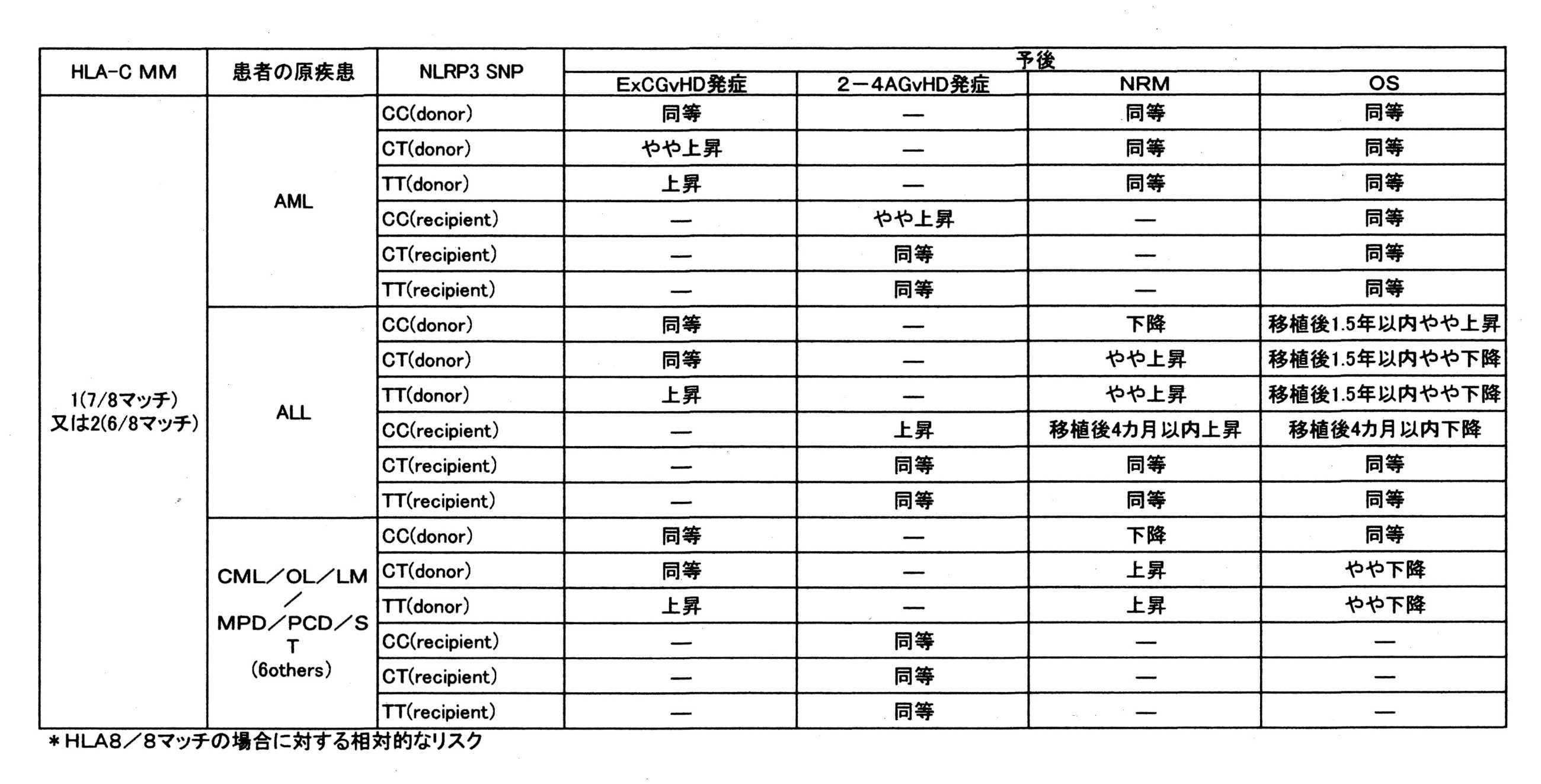
本発明の同種造血幹細胞移植後の予後の予測用キットとしては、上記本発明の同種造血幹細胞移植における移植後の予後の予測を補助する方法に使用する、同種造血幹細胞移植後の予後の予測用キットであって、以下の(1)又は(2)のプローブを含む限り特に制限されず、かかるプローブを用いることによってそれぞれのSNPを検出することが可能となる。
(1)NLRP3遺伝子において、配列番号1に示す塩基配列の26番目の塩基(rs10925027、T又はC)における一塩基多型、又は該一塩基多型と連鎖不平衡の関係にある一塩基多型を含む連続する15~50塩基からなる配列、又はその相補配列とストリンジェントな条件下でハイブリダイズするオリゴヌクレオチドからなるプローブ;
(2)NLRP3遺伝子において、配列番号2に示す塩基配列の26番目の塩基(rs4612666、T又はC)における一塩基多型、又は該一塩基多型と連鎖不平衡の関係にある一塩基多型を含む連続する15~50塩基からなる配列、又はその相補配列とストリンジェントな条件下でハイブリダイズするオリゴヌクレオチドからなるプローブ;
(1)NLRP3遺伝子において、配列番号1に示す塩基配列の26番目の塩基(rs10925027、T又はC)における一塩基多型、又は該一塩基多型と連鎖不平衡の関係にある一塩基多型を含む連続する15~50塩基からなる配列、又はその相補配列とストリンジェントな条件下でハイブリダイズするオリゴヌクレオチドからなるプローブ;
(2)NLRP3遺伝子において、配列番号2に示す塩基配列の26番目の塩基(rs4612666、T又はC)における一塩基多型、又は該一塩基多型と連鎖不平衡の関係にある一塩基多型を含む連続する15~50塩基からなる配列、又はその相補配列とストリンジェントな条件下でハイブリダイズするオリゴヌクレオチドからなるプローブ;
上記プローブとしては、15~50塩基であればよいが、好ましくは10~40塩基、より好ましくは15~30塩基からなるプローブを挙げることができる。なお、プローブとしてLocked Nucleic Acid(LNA)等の人工核酸を用いて合成したオリゴプローブを用いることで、短い塩基でも特異的にハイブリダイズするプローブとすることが可能となる。
上記ストリンジェントな条件下としては、いわゆる特異的なハイブリッドが形成され、非特異的なハイブリッドが形成されない条件をいい、具体的には、6×SSC(1.5M NaCl、0.15M クエン酸三ナトリウムを含む溶液を10×SSCとする)、50%フォルムアミドを含む溶液中で45℃にてハイブリッドを形成させた後、2×SSCで50℃にて洗浄するような条件(Molecular Biology, John Wiley & Sons, N. Y. (1989), 6.3.1-6.3.6)や、3×SSC/0.3×SDSを含む溶液中で54℃にてハイブリッドを形成させた後、洗浄液A(10×SSC/1%SDS溶液)、洗浄液B(20×SSC)及び洗浄液C(5×SSC)で順次洗浄するような条件(特開2011-250726号公報参照)等を挙げることができる。
SNPは、公知のSNPを分析する方法を用いることができ、リアルタイムPCR法、ダイレクトシーケンシング法、Taqman(登録商標)PCR法、インベーダー(登録商標)法、ルミネックス(登録商標)法、クエンチングプライマー/プローブ(QP)法、MALDI―TOF法、分子ビーコン法等を挙げることができる。具体的には、ドナー又はレシピエントから採取した生体試料のゲノムDNAを鋳型とする増幅反応によって測定対象のSNP部位を含む核酸断片を、プライマーを用いてPCRで増幅し、得られた核酸断片と、野生型及びバリアント型に対応する一対のプローブとのハイブリダイゼーションを検出する方法や、上記PCR増幅過程において、当該SNP部位に特異的なプローブを用いることで、野生型及びバリアント型を検出する方法を挙げることができる。
また、本発明のプローブは、担体上に固定して用いてもよく、担体としては、平面状の基板やビーズ状の球状担体を挙げることができ、具体的には、上記特開2011-250726号公報に記載された担体を挙げることができる。また、野生型を検出するプローブとバリアント型を検出するプローブとを同一の担体に固定してもよいし、異なる担体に固定してもよい。
上記プローブは、例えば、核酸合成装置によって化学的に合成することで取得することができる。核酸合成装置としては、DNAシンセサイザー、全自動核酸合成装置等を使用することができる。
HLAを測定する方法としては特に制限されず、LCT法、DNAタイピング法、蛍光ビーズ法等を挙げることができる。また、上記同種造血幹細胞移植後の予後の予測用キットには、上記それぞれのHLAを測定する方法に応じたHLA測定用の試薬を含んでもよい。
以下、実施例により本発明をより具体的に説明するが、本発明の技術的範囲はこれらの例示に限定されるものではない。なお、本発明の実施例において、SNP遺伝子型の同定、ドナー・レシピエント、評価項目、統計解析については、次に示すとおりに行った。
(SNP遺伝子型の同定)
ドナー及びレシピエントそれぞれの末梢血200μLをQIAamp DNA Blood Mini kit(Qiagen社製)を用いてゲノムDNAを精製し、Illustra GenomiPhiHY kit(GE Healthcare社製)で増幅した。SNP遺伝子型の同定は、20ngの増幅したDNAを、TaqMan Genotyping Master Mix 及び TaqMan SNP Genotyping Assays(Applied Biosystems社製)を用い、7900HT及び/又はViiA7 real―time PCR system (Applied Biosystems社製)装置でPCRし、かかる装置に付属のソフトウェアを用いて行った。デフォルト閾値(quality=95)を超えたシグナルだけを正しく遺伝子型判定されたものとした。遺伝子型判定されなかったサンプルや正しく遺伝子型判定されたサンプルの一部は、PCR及びダイレクトサンガーシークエンスによって遺伝子型を同定した。
ドナー及びレシピエントそれぞれの末梢血200μLをQIAamp DNA Blood Mini kit(Qiagen社製)を用いてゲノムDNAを精製し、Illustra GenomiPhiHY kit(GE Healthcare社製)で増幅した。SNP遺伝子型の同定は、20ngの増幅したDNAを、TaqMan Genotyping Master Mix 及び TaqMan SNP Genotyping Assays(Applied Biosystems社製)を用い、7900HT及び/又はViiA7 real―time PCR system (Applied Biosystems社製)装置でPCRし、かかる装置に付属のソフトウェアを用いて行った。デフォルト閾値(quality=95)を超えたシグナルだけを正しく遺伝子型判定されたものとした。遺伝子型判定されなかったサンプルや正しく遺伝子型判定されたサンプルの一部は、PCR及びダイレクトサンガーシークエンスによって遺伝子型を同定した。
rs10925027、又はrs4612666のSNPをカバーする短鎖ゲノム領域は、それぞれ上記で得られた10ngのゲノムDNAをテンプレートとし、ExTaq HS(Takara社製)を用いたPCRによって増幅した。TaqManアッセイのプローブ、上記PCRダイレクトシークエンスに用いたプライマーの配列、及びSNP近傍の配列を図1に示す。
DNAシークエンス反応はプライマーとBigDye Terminator v3.1 Cycle Sequencing kitを用いて行い、3730×DNA Analyzer(Applied Biosystems社製)によって解析した。それぞれのSNP塩基において、それぞれのクロマトグラム目視検査の後、シグナルの最も強い塩基及び二番目に強い塩基のピークの高さの比を算出した。ピークの比が3未満の場合、遺伝子型はヘテロ接合と判断し、3以上の場合にはシグナルの最も強い塩基のホモ接合と判断した。
(ドナー・レシピエント)
被験者は、HLA-A、HLA-B、HLA-DRB1の合計3座6アリルを最低限マッチさせた非血縁骨髄移植を、公益財団法人日本骨髄バンクを介して2006年10月から2009年4月に受けた次の4つの条件を満たす999ペアのドナー及びレシピエントである。4つの条件とは、日本人ペアであること、ドナー年齢が20歳以上であること、患者の移植後の生存日数データが存在すること、HLA12座が遺伝子型再決定されて実際にHLA-A、HLA-B、HLA-DRB1の6アリルがマッチしていることが確認されたペアであること、である。HLA-C座はマッチしているとは限らないので、HLA座6/8、7/8、又は8/8アリルマッチといえる。上記ドナー及びレシピエントの臨床データ、移植のデータ及びマッチングを図2A~Cに示す。
被験者は、HLA-A、HLA-B、HLA-DRB1の合計3座6アリルを最低限マッチさせた非血縁骨髄移植を、公益財団法人日本骨髄バンクを介して2006年10月から2009年4月に受けた次の4つの条件を満たす999ペアのドナー及びレシピエントである。4つの条件とは、日本人ペアであること、ドナー年齢が20歳以上であること、患者の移植後の生存日数データが存在すること、HLA12座が遺伝子型再決定されて実際にHLA-A、HLA-B、HLA-DRB1の6アリルがマッチしていることが確認されたペアであること、である。HLA-C座はマッチしているとは限らないので、HLA座6/8、7/8、又は8/8アリルマッチといえる。上記ドナー及びレシピエントの臨床データ、移植のデータ及びマッチングを図2A~Cに示す。
(評価項目)
移植後の予後の主要評価項目は移植後100日以内の2-4級急性GvHD(2-4AGvHD)、全生存率(OS)、慢性GvHD(CGvHD)、非再発死亡(NRM)、再発である。慢性GvHD(CGvHD)としては、広範型慢性GvHD(extensive CGvHD:ExCGvHD)、限局的慢性GvHD(limited CGvHD)、広範型と限局型両方の慢性型GvHD(overall CGvHD)のいずれかの項目とした。OSとNRMに対する主要イベントは、それぞれすべての要因による死、再発歴なし(without prior relapse)による死と定義づけた。AGvHDは次の文献に記載の古典的な分類(Glucksberg, H. et al. Clinical manifestations of graft-versus-host disease in human recipients of marrow from HL-A-matched sibling donors. Transplantation 18, 295-304 (1974)、Przepiorka, D. et al. 1994 Consensus Conference on Acute GVHD Grading. Bone Marrow Transplant. 15, 825-828 (1995))に基づいて分類した。CGvHDは次の文献に記載のSeattle分類(Shulman, H.M. et al. Chronic graft-versus-host syndrome in man. A long-term clinicopathologic study of 20 Seattle patients. Am. J. Med. 69, 204-217 (1980))に基づき診断した。
移植後の予後の主要評価項目は移植後100日以内の2-4級急性GvHD(2-4AGvHD)、全生存率(OS)、慢性GvHD(CGvHD)、非再発死亡(NRM)、再発である。慢性GvHD(CGvHD)としては、広範型慢性GvHD(extensive CGvHD:ExCGvHD)、限局的慢性GvHD(limited CGvHD)、広範型と限局型両方の慢性型GvHD(overall CGvHD)のいずれかの項目とした。OSとNRMに対する主要イベントは、それぞれすべての要因による死、再発歴なし(without prior relapse)による死と定義づけた。AGvHDは次の文献に記載の古典的な分類(Glucksberg, H. et al. Clinical manifestations of graft-versus-host disease in human recipients of marrow from HL-A-matched sibling donors. Transplantation 18, 295-304 (1974)、Przepiorka, D. et al. 1994 Consensus Conference on Acute GVHD Grading. Bone Marrow Transplant. 15, 825-828 (1995))に基づいて分類した。CGvHDは次の文献に記載のSeattle分類(Shulman, H.M. et al. Chronic graft-versus-host syndrome in man. A long-term clinicopathologic study of 20 Seattle patients. Am. J. Med. 69, 204-217 (1980))に基づき診断した。
(統計解析)
全生存率の分析方法は、未調整解析としてKaplan-Meier法とLog-rankテストを用い、多変量解析としてはCox比例ハザード回帰を用いた。全生存率以外の指標の分析方法は、未調整解析として累積発生率とGrayのテストを用い、多変量解析としてFine-Gray比例ハザード回帰を用いた。これらの解析には統計ソフトR(ver.3.2.2)を用いた。多変量解析の調整因子は、HLA-C、HLA-DPB1、HLA-DQB1のアリルマッチ度、性別、年齢、レシピエントの病期や状態、移植時の処置等である。尚、本研究の多変量解析では、変数選択を行ったあとに残った変数間の交互作用の項についても変数選択を再度行った。最終モデルに残った変数と変数間交互作用の両方について、移植後成績と有意に関連しているかどうかについてWaldテストを用いて検定した。
全生存率の分析方法は、未調整解析としてKaplan-Meier法とLog-rankテストを用い、多変量解析としてはCox比例ハザード回帰を用いた。全生存率以外の指標の分析方法は、未調整解析として累積発生率とGrayのテストを用い、多変量解析としてFine-Gray比例ハザード回帰を用いた。これらの解析には統計ソフトR(ver.3.2.2)を用いた。多変量解析の調整因子は、HLA-C、HLA-DPB1、HLA-DQB1のアリルマッチ度、性別、年齢、レシピエントの病期や状態、移植時の処置等である。尚、本研究の多変量解析では、変数選択を行ったあとに残った変数間の交互作用の項についても変数選択を再度行った。最終モデルに残った変数と変数間交互作用の両方について、移植後成績と有意に関連しているかどうかについてWaldテストを用いて検定した。
統計解析ソフトとして、R言語環境(バージョン3.2.2)の以下のライブラリーを用いた。Kaplan-Meier曲線、Log-rankテスト、累積発生曲線、及びCox比例ハザード回帰にはsurvivalライブラリー(バージョン2.38)を、Grayのテスト、及びFine-Gray比例ハザード回帰にはcmprskライブラリー(バージョン2.2)を、変数選択にはMASSライブラリー(バージョン7.3)とcrrstep(バージョン2015-2)を、Waldテストにはaodライブラリー(バージョン1.3)を用いた。パーミュテーションを用いたLog-rankテストやGrayのテストは、clinfunライブラリー(バージョン1.0)に含まれるpermlogrank関数と同様の方法で行った。
<実施例1>広範性慢性GvHD(ExCGvHD)に対するドナーのNLRP3のSNPとHLA-Cミスマッチの交互作用(組み合わせ)
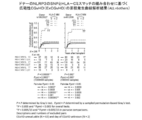
上記の方法でドナーのNLRP3のSNP(rs10925027又はrs4612666)とHLA-Cミスマッチの組み合わせに基づくExCGvHDの累積発生曲線(cumulative incidence curves:CICs)解析を行った。結果を図3、図4A~Cに示す。さらに、ドナーのNLRP3のSNP(rs10925027)とHLA-Cミスマッチの交互作用に基づくFine-Gray比例ハザード回帰による多変量解析を行った。結果を図5に示す。
上記の方法でドナーのNLRP3のSNP(rs10925027又はrs4612666)とHLA-Cミスマッチの組み合わせに基づくExCGvHDの累積発生曲線(cumulative incidence curves:CICs)解析を行った。結果を図3、図4A~Cに示す。さらに、ドナーのNLRP3のSNP(rs10925027)とHLA-Cミスマッチの交互作用に基づくFine-Gray比例ハザード回帰による多変量解析を行った。結果を図5に示す。
まず、図3に示すように、悪性(malignant)疾患全体において、HLA-Cがミスマッチであっても、ドナー側のNLRP3のSNP(rs10925027又はrs4612666)の遺伝子型が高発現型(CC)であれば、HLA-A、HLA-B、HLA-C、及びHLA-DRB1の8/8アリルマッチと同等レベルにExCGvHDの累積発生率が低く、低発現型(TT)であれば、ExCGvHDの累積発生率が高いことが明らかになった。そこでさらにレシピエントの原疾患ごとに分類して解析したところ、図4A~C、図5に示すように、MDS患者以外で上記傾向があり、特にALL患者において高値であることや、かかる傾向は、移植後4カ月以内の移植後初期に強く見られることが明らかとなった。すなわち、ExCGvHDはHLA-Cミスマッチ単独の存在でリスクが高くなるのではなく、ドナーのNLRP3のrs10925027又はrs4612666における低発現型(TT)と組み合わさった時に発症リスクが高くなること、上記傾向はすべての原疾患において同様ではなく、MDS患者以外においてみられることが明らかとなった。
<実施例2>2-4級急性GvHD(2-4AGvHD)に対するレシピエントのNLRP3のSNPとHLA-Cミスマッチの交互作用
上記の方法でレシピエントのNLRP3のSNP(rs10925027又はrs4612666)とHLA-Cミスマッチの組み合わせに基づく2-4AGvHDの累積発生曲線解析を行った。結果を図6A~Eに示す。
上記の方法でレシピエントのNLRP3のSNP(rs10925027又はrs4612666)とHLA-Cミスマッチの組み合わせに基づく2-4AGvHDの累積発生曲線解析を行った。結果を図6A~Eに示す。
図6Aに示すように、悪性(malignant)疾患全体において、HLA-C MMが0(8アリルマッチ)の場合には、レシピエント側のNLRP3のSNPの遺伝子型が高発現型(CC)であれば2-4AGvHD累積発生率は低いが、HLA-Cが1-2アリルミスマッチの場合、2-4AGvHD累積発生率がむしろ高いことが明らかとなった。次に、図6B~Eに示すように、レシピエントの原疾患ごとのサブグループ解析を行った。その結果、HLA-Cが2アリルミスマッチかつレシピエント側のNLRP3のSNPの遺伝子型が高発現型(CC)の場合における上記2-4AGvHD累積発生率は、AML又はALL患者で高値であり、特にALL患者において高値であった。上記結果から、HLA-C座におけるアリルの適合度(マッチ/ミスマッチ)のみが2-4AGvHD累積発生率に影響を与えるのではなく、HLA-C座におけるアリルの適合度(マッチ/ミスマッチ)とNLRP3のSNPの遺伝子型の組み合わせが2-4AGvHD累積発生率に影響を与えることが明らかとなった。換言すれば、2-4AGvHD発症を予測する際には、HLA-C座におけるアリルの適合度(マッチ/ミスマッチ)と共にNLRP3のSNPの遺伝子型も考慮する必要があることが明らかとなった。
<実施例3>非再発死亡(NRM)に対するドナーのNLRP3のSNPとHLA-Cミスマッチの組み合わせの影響
上記の方法でドナーのNLRP3のSNP(rs10925027又はrs4612666)とHLA-Cミスマッチの組み合わせに基づくNRMの累積発生曲線解析を行った。結果を図7A、B、図8に示す。さらに、ドナーのNLRP3のSNP(rs10925027又はrs4612666)とHLA-Cミスマッチの交互作用に基づくFine-Gray比例ハザード回帰による多変量解析を行った。結果を図9に示す。
上記の方法でドナーのNLRP3のSNP(rs10925027又はrs4612666)とHLA-Cミスマッチの組み合わせに基づくNRMの累積発生曲線解析を行った。結果を図7A、B、図8に示す。さらに、ドナーのNLRP3のSNP(rs10925027又はrs4612666)とHLA-Cミスマッチの交互作用に基づくFine-Gray比例ハザード回帰による多変量解析を行った。結果を図9に示す。
図7A、B、図8に示すように、ALL患者、及び6others患者では、HLA-Cがミスマッチでさらにドナー側のNLRP3のSNPが低発現型(CT又はTT)であれば、NRMはHLA-A、HLA-B、HLA-C、及びHLA-DRB1の8/8アリルマッチよりも累積発生率が高く、かかるリスクの傾向は、移植後4カ月以内の移植後初期に強く見られた。さらに、ALL患者、及び6others患者では、HLA-Cがミスマッチでドナー側のNLRP3のSNPの遺伝子型が高発現型(CC)であれば予想外にもNRMはHLA8/8アリルマッチよりも累積発生率はさらに低かった。上記結果から、HLA-Cミスマッチ単独の存在でNRMの発症リスクが高くなるのではなく、ドナーのNLRP3のrs10925027又はrs4612666におけるSNPが低発現型(CT又はTT)と組み合わさった時に発症リスクが高くなることが明らかとなった。なお、このNRMの中で、移植後数か月以降の死についてはExGvHDによる死亡と解釈できる。しかし、図7A、B、図8、図9において、ドナー側のNLRP3におけるSNPが低発現型(CT又はTT)であれば、移植後初期におけるNRM発症率の上昇が高いことから、数か月以降に加えて移植後初期のNRMにもドナーのNLRP3におけるSNPとHLA-Cの交互作用が関与していることを示している。その詳細な機構は不明だが、例えば感染症による死亡に対するドナーのNLRP3におけるSNPとHLA-Cの特定の組み合わせによる防御作用等が考えられる。
<実施例4>非再発死亡(NRM)に対するレシピエントのNLRP3のSNPとHLA-Cミスマッチの組み合わせの影響
上記の方法でレシピエントのNLRP3のSNP(rs10925027又はrs4612666)とHLA-Cミスマッチの組み合わせに基づくNRMの累積発生曲線解析を行った。結果を図10に示す。
上記の方法でレシピエントのNLRP3のSNP(rs10925027又はrs4612666)とHLA-Cミスマッチの組み合わせに基づくNRMの累積発生曲線解析を行った。結果を図10に示す。
図10に示すように、ALL患者では、HLA-Cがミスマッチでさらにレシピエント側のNLRP3のSNPが高発現型(CC)であればNRMはHLA8/8アリルマッチよりもNRMの累積発生リスクが高くなることが明らかとなった。かかるリスクの傾向は、移植後4カ月以内の移植後初期に見られたので、図6Cで示した急性GvHDの影響と考えられる。
<実施例5>全生存率(OS)に対するドナーのNLRP3のSNPとHLA-Cミスマッチの組み合わせの影響
上記の方法でドナーのNLRP3のSNP(rs10925027又はrs4612666)とHLA-Cミスマッチの組み合わせに基づく全生存率のKaplan-Meier曲線(KMCs)解析を行った。結果を図11A~Cに示す。さらに、ドナーのNLRP3のSNP(rs10925027)とHLA-Cミスマッチの交互作用に基づくCox比例ハザード回帰による多変量解析を行った。結果を図12に示す。
上記の方法でドナーのNLRP3のSNP(rs10925027又はrs4612666)とHLA-Cミスマッチの組み合わせに基づく全生存率のKaplan-Meier曲線(KMCs)解析を行った。結果を図11A~Cに示す。さらに、ドナーのNLRP3のSNP(rs10925027)とHLA-Cミスマッチの交互作用に基づくCox比例ハザード回帰による多変量解析を行った。結果を図12に示す。
図11A~C、12に示すように、ALL及び6pthers患者では、HLA-A、HLA-B、HLA-C、及びHLA-DRB1の8/8アリルマッチした場合、ドナーのNLRP3のSNPは低発現型(CT又はTT)の方が高発現型(CC)よりもOSが高かった。HLA-Cがミスマッチの場合では、移植後1.5年以内においてドナーのNLRP3のSNPは高発現型(CC)の方が低発現型(CT又はTT)よりもOSが高かった。上記結果から、HLA-C座におけるアリルの適合度(マッチ/ミスマッチ)のみがOSに影響を与えるのではなく、HLA-C座におけるアリルの適合度(マッチ/ミスマッチ)とNLRP3のSNPの遺伝子型の組み合わせがOSに影響を与えることが明らかとなった。換言すれば、OSを予測する際には、HLA-C座におけるアリルの適合度(マッチ/ミスマッチ)と共にNLRP3のSNPの遺伝子型も考慮する必要があることが明らかとなった。一方、MDS患者においてはHLA-C座におけるアリルの適合度(マッチ/ミスマッチ)とNLRP3のSNPの遺伝子型の組み合わせは全生存率に影響を与えなかった(図示せず)。なお、OSは、NRMの影響に再発(による死亡)の影響を足し合わせる複合効果となり、再発はNRMと反対の傾向を示したため(図示せず)、OSはNRMと比較して縦軸における差幅が小さくなった。
<実施例6>全生存率(OS)へのレシピエントのNLRP3のSNPとHLA-Cミスマッチの組み合わせの影響
上記の方法でレシピエントのNLRP3のSNP(rs10925027又はrs4612666)とHLA-Cミスマッチの組み合わせに基づくOSのKaplan-Meier曲線(KMCs)解析を行った。結果を図13A、Bに示す。
上記の方法でレシピエントのNLRP3のSNP(rs10925027又はrs4612666)とHLA-Cミスマッチの組み合わせに基づくOSのKaplan-Meier曲線(KMCs)解析を行った。結果を図13A、Bに示す。
上述の実施例2で示したようにALLの患者ではレシピエントのNLRP3のSNPとHLA-Cミスマッチの組み合わせが2-4AGvHDに強く影響する。この結果と一致して、図13A、Bに示すように、レシピエントのNLRP3のSNPが高発現型(CC)でHLA-CがミスマッチであるALL患者は移植直後の数か月のOSが低下した。また、AML患者の場合、高発現型(CC)でAGvHDがやや上昇するが、OSは高発現型(CC)と低発現型(CT+TT)とで有意差は見られなかった。一方、MDS患者においてはレシピエントのNLRP3のSNPによる影響は見られなかった(図示せず)。
<実施例7>非再発死亡(NRM)、再発、及び全生存率(OS)対するCGvHDの影響
移植後1年以内のCGvHDの発症の有無が、1年経過後のNRM、再発、及びOSにどのような影響を及ぼすかについて単変量解析を行った。結果を図14A、Bに示す。
移植後1年以内のCGvHDの発症の有無が、1年経過後のNRM、再発、及びOSにどのような影響を及ぼすかについて単変量解析を行った。結果を図14A、Bに示す。
図14Aに示すように、AML患者の場合にはCGvHDを発症した場合にはNRMが起こりにくく、また、OSが上昇していた。他方、図14Bに示すように、ALL又は6others患者の場合には、CGvHDが発症した方がNRMを起こしやすく、また、OSが低下していた。この結果から、原疾患の種類によって、CGvHD発症がその後のNRM、再発、及びOSへ及ぼす影響が異なることが明らかとなった。この結果は、ドナーのNLRP3のSNPとHLA-Cミスマッチの交互作用(組み合わせ)がNRMやOSに対して有害な作用を示すのはALL及び6othersでありAMLではないことをうまく説明する。
<実施例のまとめ>
現在、同種造血幹細胞移植のドナー選択法は、ドナーとレシピエント間のHLAのマッチングに基づいている。上記実施例により、MDS以外の悪性血液疾患ではHLAの適合度単独が重要なのではなく、HLAの適合度とNLRP3のSNPとの交互作用が重要であることが新たに判明した。すなわち、HLA-CがミスマッチであってもNLRP3のSNPの適切な遺伝子型と組み合わされば、HLA-A、HLA-B、及びHLA-DRB1完全マッチと同等もしくはそれ以上の良好な生存率若しくは合併症予防効果が得られることが明らかとなった。これらの結果をまとめて新しいドナー選択法の一例を図15に示す。本発明の方法を用いて適切なドナーを選択することによって同種造血幹細胞移植における合併症が低減することが見込まれる。また、HLAの一部ミスマッチの場合でも適切なSNPと組み合わせれば生存率がむしろ高くなることがあるという結果は意外であり、HLAの6/8-8/8アリルマッチを行っていない国、若しくは行うことができない国等では、今後ドナーの選択肢が広がることが期待される。また、GvHDや死亡の起こる確率の高いHLAとNLRP3のSNPの組み合わせをドナーとして選択せざると得ない場合においても、予後のハイリスク群として投薬等による予防や治療を考慮することができる。
現在、同種造血幹細胞移植のドナー選択法は、ドナーとレシピエント間のHLAのマッチングに基づいている。上記実施例により、MDS以外の悪性血液疾患ではHLAの適合度単独が重要なのではなく、HLAの適合度とNLRP3のSNPとの交互作用が重要であることが新たに判明した。すなわち、HLA-CがミスマッチであってもNLRP3のSNPの適切な遺伝子型と組み合わされば、HLA-A、HLA-B、及びHLA-DRB1完全マッチと同等もしくはそれ以上の良好な生存率若しくは合併症予防効果が得られることが明らかとなった。これらの結果をまとめて新しいドナー選択法の一例を図15に示す。本発明の方法を用いて適切なドナーを選択することによって同種造血幹細胞移植における合併症が低減することが見込まれる。また、HLAの一部ミスマッチの場合でも適切なSNPと組み合わせれば生存率がむしろ高くなることがあるという結果は意外であり、HLAの6/8-8/8アリルマッチを行っていない国、若しくは行うことができない国等では、今後ドナーの選択肢が広がることが期待される。また、GvHDや死亡の起こる確率の高いHLAとNLRP3のSNPの組み合わせをドナーとして選択せざると得ない場合においても、予後のハイリスク群として投薬等による予防や治療を考慮することができる。
本発明は、同種造血幹細胞移植におけるドナーの選択において利用可能である。
Claims (8)
- 同種造血幹細胞移植におけるドナーとレシピエント間でHLA遺伝子のHLA-A、HLA-B、HLA-C、及びHLA-DRB1の4座における8アリルのうち、1アリル又は2アリルがミスマッチで、かつレシピエントの原疾患が悪性血液疾患(骨髄異形形成症候群(MDS)を除く)の場合において、ドナー若しくはレシピエントのNLRP3遺伝子の配列番号1に示す塩基配列の26番目の塩基(rs10925027、C又はT)における一塩基多型、若しくは配列番号2に示す塩基配列の26番目の塩基(rs4612666、C又はT)における一塩基多型又はこれらと連鎖不平衡の関係にある一塩基多型、及びレシピエントの原疾患の種類を指標として移植後の予後の予測を補助する方法。
- 同種造血幹細胞移植におけるドナーとレシピエント間でHLA遺伝子のHLA-A、HLA-B、及びHLA-DRB1の3座における6アリルがマッチしていることを特徴とする請求項1記載の方法。
- 同種造血幹細胞移植が非血縁者間同種造血幹細胞移植であることを特徴とする請求項1又は2記載の方法。
- 予後が、2-4級急性移植片対宿主病(2-4AGvHD)発症、慢性移植片対宿主病(CGvHD)発症、全生存率(OS)、又は非再発死亡(NRM)であることを特徴とする請求項1~3のいずれか記載の方法。
- 悪性血液疾患が、急性骨髄性白血病(AML)、急性リンパ性白血病(ALL)、慢性骨髄性白血病(CML)、リンパ系悪性腫瘍(LM)、骨髄増殖性疾患(MPD)、形質細胞性腫瘍(PCD)、又は固形腫瘍(ST)であることを特徴とする請求項1~4のいずれか記載の方法。
- 悪性血液疾患が、急性骨髄性白血病(AML)、又は急性リンパ性白血病(ALL)であることを特徴とする請求項5記載の方法。
- 請求項1~6記載の方法に使用する、同種造血幹細胞移植後の予後の予測用キットであって、以下の〔1〕又は〔2〕記載のプローブを含むことを特徴とするキット。
〔1〕NLRP3遺伝子において、配列番号1に示す26番目の塩基(rs10925027、C又はT)における一塩基多型、又は該一塩基多型と連鎖不平衡の関係にある一塩基多型を含む連続する15~50塩基からなる配列、又はその相補配列とストリンジェントな条件下でハイブリダイズするオリゴヌクレオチドからなるプローブ;
〔2〕NLRP3遺伝子において、配列番号2に示す26番目の塩基(rs4612666、C又はT)における一塩基多型、又は該一塩基多型と連鎖不平衡の関係にある一塩基多型を含む連続する15~50塩基からなる配列、又はその相補配列とストリンジェントな条件下でハイブリダイズするオリゴヌクレオチドからなるプローブ; - HLAを測定するための試薬を含むことを特徴とする請求項7記載のキット。
Priority Applications (1)
| Application Number | Priority Date | Filing Date | Title |
|---|---|---|---|
| JP2018547663A JPWO2018079499A1 (ja) | 2016-10-25 | 2017-10-24 | 同種造血幹細胞移植後の予後の予測を補助する方法 |
Applications Claiming Priority (2)
| Application Number | Priority Date | Filing Date | Title |
|---|---|---|---|
| JP2016208263 | 2016-10-25 | ||
| JP2016-208263 | 2016-10-25 |
Publications (1)
| Publication Number | Publication Date |
|---|---|
| WO2018079499A1 true WO2018079499A1 (ja) | 2018-05-03 |
Family
ID=62024905
Family Applications (1)
| Application Number | Title | Priority Date | Filing Date |
|---|---|---|---|
| PCT/JP2017/038227 Ceased WO2018079499A1 (ja) | 2016-10-25 | 2017-10-24 | 同種造血幹細胞移植後の予後の予測を補助する方法 |
Country Status (2)
| Country | Link |
|---|---|
| JP (1) | JPWO2018079499A1 (ja) |
| WO (1) | WO2018079499A1 (ja) |
Cited By (2)
| Publication number | Priority date | Publication date | Assignee | Title |
|---|---|---|---|---|
| WO2024048440A1 (ja) * | 2022-08-31 | 2024-03-07 | 国立大学法人広島大学 | 臓器移植における免疫学的な高リスク群を特定するためのデータの取得方法、ならびにそれに関連するデータの処理装置、データの処理システム、データの処理プログラム、およびキット |
| CN118016160A (zh) * | 2024-04-08 | 2024-05-10 | 北京博富瑞基因诊断技术有限公司 | 一种hla单倍体相合造血干细胞移植生存率的预测方法、系统、设备、存储介质 |
Citations (1)
| Publication number | Priority date | Publication date | Assignee | Title |
|---|---|---|---|---|
| JP2011024478A (ja) * | 2009-07-24 | 2011-02-10 | Institute Of Physical & Chemical Research | Nlrp3遺伝子の多型に基づくアレルギー疾患劇症化の検査方法 |
-
2017
- 2017-10-24 WO PCT/JP2017/038227 patent/WO2018079499A1/ja not_active Ceased
- 2017-10-24 JP JP2018547663A patent/JPWO2018079499A1/ja active Pending
Patent Citations (1)
| Publication number | Priority date | Publication date | Assignee | Title |
|---|---|---|---|---|
| JP2011024478A (ja) * | 2009-07-24 | 2011-02-10 | Institute Of Physical & Chemical Research | Nlrp3遺伝子の多型に基づくアレルギー疾患劇症化の検査方法 |
Non-Patent Citations (6)
| Title |
|---|
| GRANELL, M. ET AL.: "Common variants in NLRP2 and NLRP3 genes are strong prognostic factors for the outcome of HLA-identical sibling allogeneic stem cell transplantation", BLOOD, vol. 112, no. 10, 15 November 2008 (2008-11-15), pages 4337 - 4342, XP055479761, Retrieved from the Internet <URL:DOI:10.1182/blood-2007-12-129247> * |
| HITOMI, Y. ET AL.: "Associations of functional NLRP3 polymorphisms with susceptibility to food-induced anaphylaxis and aspirin-induced asthma", JOURNAL OF ALLERGY AND CLINICAL IMMUNOLOGY, vol. 124, no. 4, October 2009 (2009-10-01), pages 779 - 785, XP055479778, Retrieved from the Internet <URL:doi:10.1016/j.jaci.2009.07.044> * |
| JANKOVIC, D. ET AL.: "The Nlrp3 inflammasome regulates acute graft-versus-host disease", THE JOURNAL OF EXPERIMENTAL MEDICINE, vol. 210, no. 10, 2013, pages 1899 - 1910, XP002762116, Retrieved from the Internet <URL:doi:10.1084/jem.20130084> * |
| KANDA, YOSHINOBU: "Current status of HLA-mismatched related hematopoietic stem cell transplantation in Japan", JOURNAL OF HEMATOPOIETIC CELL TRANSPLANTATION, vol. 1, no. 3, 2012, pages 66 - 75, XP055479766, Retrieved from the Internet <URL:https://doi.org/10.7889/hct.1.66> * |
| TAKAHASHI, H. ET AL.: "Associations of interactions between NLRP3 SNPs and HLA mismatch with acute and extensive chronic graft-versus-host diseases", SCIENTIFIC REPORTS, vol. 7, no. 13097, 12 October 2017 (2017-10-12), pages 1 - 10, XP055479772, ISSN: 2045-2322, Retrieved from the Internet <URL:doi:10.1038/s41598-017-13506-w> * |
| TAKAMI, AKIYOSHI: "Clinical meaning of non-HLA gene polymorphism in hematopoietic cell transplantation", 22TH JAPANESE SOCIETY FOR HISTOCOMPATIBILITY AND IMMUNOGENETICS: ABSTRACTS, 2013, pages 49 * |
Cited By (3)
| Publication number | Priority date | Publication date | Assignee | Title |
|---|---|---|---|---|
| WO2024048440A1 (ja) * | 2022-08-31 | 2024-03-07 | 国立大学法人広島大学 | 臓器移植における免疫学的な高リスク群を特定するためのデータの取得方法、ならびにそれに関連するデータの処理装置、データの処理システム、データの処理プログラム、およびキット |
| CN118016160A (zh) * | 2024-04-08 | 2024-05-10 | 北京博富瑞基因诊断技术有限公司 | 一种hla单倍体相合造血干细胞移植生存率的预测方法、系统、设备、存储介质 |
| CN118016160B (zh) * | 2024-04-08 | 2024-05-31 | 北京博富瑞基因诊断技术有限公司 | 一种hla单倍体相合造血干细胞移植生存率的预测方法、系统、设备、存储介质 |
Also Published As
| Publication number | Publication date |
|---|---|
| JPWO2018079499A1 (ja) | 2019-09-19 |
Similar Documents
| Publication | Publication Date | Title |
|---|---|---|
| Perdigones et al. | Clonal hematopoiesis in patients with dyskeratosis congenita | |
| Monemi et al. | Identification of a novel adult-onset primary open-angle glaucoma (POAG) gene on 5q22. 1 | |
| Hollink et al. | Characterization of CEBPA mutations and promoter hypermethylation in pediatric acute myeloid leukemia | |
| Zhou et al. | Association of a genetic variation in a miR-191 binding site in MDM4 with risk of esophageal squamous cell carcinoma | |
| Binder et al. | Common and low frequency variants in MERTK are independently associated with multiple sclerosis susceptibility with discordant association dependent upon HLA-DRB1* 15: 01 status | |
| CN101495651A (zh) | 染色体10q26上的年龄-相关黄斑病变(ARM)易感基因 | |
| JP2012507306A (ja) | 核酸配列を調査するための手段および方法 | |
| Chan et al. | 8q24 and 17q prostate cancer susceptibility loci in a multiethnic Asian cohort | |
| Daca-Roszak et al. | EurEAs_Gplex—a new SNaPshot assay for continental population discrimination and gender identification | |
| Saadah et al. | Replication of GWAS coding SNPs implicates MMEL1 as a potential susceptibility locus among Saudi Arabian celiac disease patients | |
| WO2018079499A1 (ja) | 同種造血幹細胞移植後の予後の予測を補助する方法 | |
| KR102063486B1 (ko) | Rnf213 단일염기다형성과 한국인 모야모야병 발병 위험도의 연관성 | |
| Chien et al. | A homologue of the Drosophila headcase protein is a novel tumor marker for early-stage colorectal cancer | |
| Malivanova et al. | The overall survival of breast cancer patients depends on a combination of polymorphisms of tumor necrosis factor gene and HLA haplotypes | |
| Al‐Hussein et al. | HLA‐DPB1* 0401 is associated with dominant protection against type 1 diabetes in the general Saudi population and in subjects with a high‐risk DR/DQ haplotype | |
| Li et al. | TNRC9/LOC643714 polymorphisms are not associated with breast cancer risk in Chinese women | |
| Moatter et al. | Molecular analysis of human leukocyte antigen class I and class II allele frequencies and haplotype distribution in Pakistani population | |
| TW201514309A (zh) | 檢測p/p血型的方法及其檢測套組 | |
| CN107557468A (zh) | 一种与原发性肺癌辅助诊断相关的癌‑睾丸基因遗传标志物及其应用 | |
| AU2017270496B2 (en) | Determination of genetic predisposition to aggressive prostate cancer | |
| KR102893400B1 (ko) | 당뇨병 예측 또는 진단용 hectd4 snp 마커 및 이의 용도 | |
| WO2012079008A2 (en) | Single nucleotide polymorphism biomarkers for diagnosing autism | |
| WO2010141362A1 (en) | Compositions and methods for diagnosing the occurrence or likelihood of occurrence of testicular germ cell cancer | |
| WO2019027005A1 (ja) | 結核菌遺伝系統特異的に結核症発症のリスクを判定する方法 | |
| Sybouts et al. | eP404: Evidence supporting the pathogenicity of the NADSYN1 c. 1717G> A (p. Ala573Thr) variant in individuals referred for clinical testing |
Legal Events
| Date | Code | Title | Description |
|---|---|---|---|
| 121 | Ep: the epo has been informed by wipo that ep was designated in this application |
Ref document number: 17864778 Country of ref document: EP Kind code of ref document: A1 |
|
| ENP | Entry into the national phase |
Ref document number: 2018547663 Country of ref document: JP Kind code of ref document: A |
|
| NENP | Non-entry into the national phase |
Ref country code: DE |
|
| 122 | Ep: pct application non-entry in european phase |
Ref document number: 17864778 Country of ref document: EP Kind code of ref document: A1 |