WO2018036276A1 - 图片品质的检测方法、装置、服务器及存储介质 - Google Patents
图片品质的检测方法、装置、服务器及存储介质 Download PDFInfo
- Publication number
- WO2018036276A1 WO2018036276A1 PCT/CN2017/091306 CN2017091306W WO2018036276A1 WO 2018036276 A1 WO2018036276 A1 WO 2018036276A1 CN 2017091306 W CN2017091306 W CN 2017091306W WO 2018036276 A1 WO2018036276 A1 WO 2018036276A1
- Authority
- WO
- WIPO (PCT)
- Prior art keywords
- photo
- training
- neural network
- network model
- convolutional neural
- Prior art date
- Legal status (The legal status is an assumption and is not a legal conclusion. Google has not performed a legal analysis and makes no representation as to the accuracy of the status listed.)
- Ceased
Links
Images



Classifications
-
- G—PHYSICS
- G06—COMPUTING OR CALCULATING; COUNTING
- G06V—IMAGE OR VIDEO RECOGNITION OR UNDERSTANDING
- G06V10/00—Arrangements for image or video recognition or understanding
- G06V10/40—Extraction of image or video features
-
- G—PHYSICS
- G06—COMPUTING OR CALCULATING; COUNTING
- G06F—ELECTRIC DIGITAL DATA PROCESSING
- G06F18/00—Pattern recognition
- G06F18/20—Analysing
- G06F18/24—Classification techniques
-
- G—PHYSICS
- G06—COMPUTING OR CALCULATING; COUNTING
- G06N—COMPUTING ARRANGEMENTS BASED ON SPECIFIC COMPUTATIONAL MODELS
- G06N3/00—Computing arrangements based on biological models
- G06N3/02—Neural networks
Definitions
- the present invention relates to the field of image processing technologies, and in particular, to a method, an apparatus, a server, and a storage medium for detecting picture quality.
- the quality of the picture is closely related to the accuracy of the vehicle image recognition. Specifically, if the user uploads a clear vehicle image, the claim system can accurately analyze the situation of the car insurance site; conversely, if the image of the vehicle uploaded by the user is not clear enough, the claim system cannot obtain the car insurance according to the image analysis of the vehicle. On-site information, not working properly. Therefore, how to accurately identify whether the resolution of the image uploaded by the user meets the requirements and meet the needs of analysis has become an urgent problem to be solved.
- the first aspect of the present invention provides a method for detecting picture quality, and the method for detecting picture quality includes:
- the auto insurance claim server uses the deep convolutional neural network model generated by the pre-training to perform the definition recognition on the received claim photo to determine the clarity level of the claim photo;
- a second aspect of the present invention provides a picture quality detecting apparatus, where the picture quality detecting apparatus includes:
- An identification module configured to: after receiving the claim photo uploaded by the user terminal, use a deep convolutional neural network model generated by the pre-training to perform resolution recognition on the received claim photo to determine a clarity level of the claim photo;
- the reminding module is configured to send the first prompt information to the user terminal to remind the user to re-upload the claim photo if the clarity level of the claim photo is lower than the preset sharpness level.
- a third aspect of the invention provides a server comprising a memory and a processor coupled to the memory, the memory storing at least one computer readable instruction executable by the processor to perform the following step:
- a fourth aspect of the invention provides a computer readable storage medium having stored thereon at least one computer instruction executable by a processor to perform the following steps:
- the invention has the beneficial effects that the picture quality detecting method, the picture quality detecting device, the server and the computer readable storage medium according to the present invention are used by the user terminal to the car insurance when processing the car insurance claim photo compared with the prior art.
- the claim server uploads the claim photo, and uses the deep convolutional neural network model generated by the pre-training to analyze the resolution of the claim photo to determine whether the clarity level of the claim photo meets the actual needs, if the clarity level of the claim photo does not meet the actual needs , sending a reminder message to the user terminal to remind them to re-upload the claim photo.
- the invention realizes the definition of the claim photo by the deep convolutional neural network model generated by the pre-training, and ensures that the claim photos uploaded by the user are the claim photos that can accurately analyze the car insurance site information, thereby helping to improve the self-help.
- the efficiency of the claims system improves the user experience.
- FIG. 1 is a hardware operating environment for detecting a picture quality according to various embodiments of the present invention
- FIG. 2 is a schematic structural diagram of a car insurance claim server according to an embodiment of the present invention.
- FIG. 3 is a schematic flow chart of a first embodiment of a method for detecting picture quality according to the present invention.
- FIG. 4 is a schematic flow chart of a second embodiment of a method for detecting picture quality according to the present invention.
- FIG. 5 is a schematic flowchart diagram of a third embodiment of a method for detecting picture quality according to the present invention.
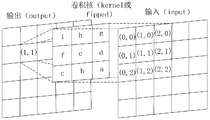
- FIG. 6 is a schematic diagram of convolution when performing feature extraction for each training photo or verification photo in each category in FIG. 4;
- FIG. 7 is a schematic structural view of an embodiment of a picture quality detecting apparatus according to the present invention.
- the operating environment includes a car insurance claim server 10 and at least one user who implements communication interaction with the car insurance claim server 10 through a network. Terminal 20.
- the user terminal 20 may be a smart terminal such as a mobile phone, a tablet computer, a personal digital assistant (PDA), a wearable device (eg, a smart watch, smart glasses, etc.) or any other suitable electronic device.
- User terminal 20 can be through the Internet, a wide area network, a metropolitan area The network, the local area network, the virtual private network (VPN) and the like implement communication interaction with the auto insurance claim server 10.
- PDA personal digital assistant
- VPN virtual private network
- the auto insurance claim server 10 can automatically perform numerical calculation and/or information processing in accordance with an instruction set or stored in advance. As shown in FIG. 2, the auto insurance claim server 10 includes a processor 11, a memory 12, and a network interface 13 connected by a system bus. The processor 11 is configured to provide computing and control capabilities to support the operation of the auto insurance claims server 10, which may include one or more microprocessors, digital processors, and the like.
- the memory 12 is configured to store various data and computer readable instructions required by the auto insurance claim server 10 to implement a specific function or operation, which may include a memory and at least one storage medium; the memory provides a cache environment for the operation of the auto insurance claim server 10; the storage medium An operating system and at least one computer readable instruction are stored thereon, the at least one computer readable storage instruction being executable by the processor 12 to implement a method for detecting picture quality of embodiments of the present application.
- the network interface 13 is for exchanging data with the user terminal 20 under the instruction of the processor 11, for example, receiving a photo from the user terminal 20 and returning a corresponding detection result to the user terminal 20.
- the above storage medium may be a non-volatile storage medium such as a ROM, an EPROM or a Flash Memory.
- the structure shown in FIG. 2 is only a block diagram of a part of the structure of the auto insurance claim server 10 related to the present application scheme, and does not constitute a limitation on the auto insurance claim server 10.
- the server may include more or fewer components than shown in the figures, or some components may be combined, or have different component arrangements.
- the car insurance claims server 10 may further include an input device, a display screen, a sound collection device, and the like.
- the auto insurance claim server 10 can store the claim photo in the memory 12, and execute the computer readable instructions in the memory 12 through the processor 11 to implement the present application.
- FIG. 3 is a schematic flowchart of an embodiment of a method for detecting picture quality according to the present invention.
- the method for detecting picture quality includes the following steps:
- Step S1 After receiving the claim photo uploaded by the user terminal, the auto insurance claim server uses the deep convolutional neural network model generated by the pre-training to perform the resolution recognition on the received claim photo to determine the clarity level of the claim photo;
- the car insurance claim server receives the claim photo uploaded by the user terminal and needs to perform the definition recognition.
- the deep convolutional neural network model is pre-trained, and the deep convolutional neural network model generated by the pre-training is used to identify the resolution of the uploaded claim photo.
- the pre-training and generating the deep convolutional neural network model is A multi-layer neural network, including a feature extraction layer (C layer) and a feature mapping layer (S layer), each layer is composed of a plurality of two-dimensional planes, and each plane is composed of a plurality of independent neurons, each feature extraction The layer (C layer) is followed by a computational layer (S layer) for local averaging and secondary extraction.
- This unique feature extraction structure makes it highly distortion-tolerant to the input samples during recognition. ability.
- the input of each neuron is connected with the local perceptual region of the previous layer (ie, a small portion of the photo), and the local experience is extracted.
- the characteristics of the area, after extraction, The positional relationship with other features is also determined; in the S layer, it consists of multiple feature maps, each of which is mapped to a plane, and the weights of all neurons on the plane are equal.
- the feature mapping structure can adopt the sigmoid function which affects the function kernel as the activation function of the convolution network, so that the feature map has displacement invariance.
- the claim photo is subjected to the depth recognition by the pre-trained deep convolutional neural network model, and the claim photos are respectively output according to the definition level, wherein the resolution level can be divided into a high definition level, a medium definition level, and a low definition. Degree level, etc., of course, the level of clarity can also be distinguished in other ways.
- Step S2 If the clarity level of the claim photo is lower than the preset sharpness level, send the first prompt information to the user terminal to remind the user to re-upload the claim photo.
- the resolution level of the claim photo recognized by the deep convolutional neural network model is lower than the preset definition level, for example, if the uploaded claim photo is a low definition level, the claim photo uploaded by the user terminal is indicated. It is a photo that does not meet the requirements and cannot be used to accurately analyze the situation of the car insurance site.
- the first reminder message is sent to the user terminal to remind the user to re-upload the claim photo; of course, if the resolution of the claim photo has a higher definition
- the user terminal is required to upload a higher-definition level claim photo, such as uploading a high-definition level claim photo, and the claim photo uploaded by the user terminal does not meet the requirements if it is in the medium-definition level or the low-definition level.
- the first reminder information needs to be sent to the user terminal to remind the user to re-upload the claim photo.
- the user terminal uploads the claim photo to the auto insurance claim server, and uses the deep convolutional neural network model generated by the pre-training to analyze the resolution of the claim photo to determine whether the clarity level of the claim photo satisfies the actual situation. If the clarity level of the claim photo does not meet the actual needs, the reminder information is sent to the user terminal to remind them to re-upload the claim photo.
- the depth convolutional neural network model generated by the pre-training is used to identify the resolution of the claim photo, and the claim photo uploaded by the user is able to accurately analyze the claim photo of the auto insurance site information, thereby helping to improve The work efficiency of the self-assisted compensation system improves the user experience.
- the foregoing step S1 includes:
- the preset number of claim photos may be classified in advance according to a predetermined definition level, for example, the classification of 500,000 claims photos may be classified in advance.
- the resolution of the claim photo is sorted according to a predetermined definition level, the high resolution claim photo is a high definition level, the medium resolution claim photo is a medium definition level, and the low resolution claim photo is a low definition level.
- a predetermined proportion of the claim photos are extracted as the training photos for each claim photo in each category, for example, 70% of the claim photos in the preset number of claims photos are used as training photos, and the remaining claims for each category are The photo is used as a verification photo, for example, the remaining 30% of the claim photo is taken as a training photo.
- feature extraction is performed on each training photo in each category to extract different feature maps, and the feature map is convoluted to finally obtain the first pixel vector input into the deep convolutional neural network model.
- first pixel vector training to generate a deep convolutional neural network model for identification; performing feature extraction on each verification photo under each classification to extract different feature images, and convolving the feature image to Finally, a second pixel vector input into the deep convolutional neural network model is obtained, and the accuracy of the depth convolutional neural network model generated by the training is verified by the second pixel vector.
- the accuracy of the deep convolutional neural network model generated by the training is greater than or equal to a preset value, for example, greater than or equal to 0.95, it indicates that the deep convolutional neural network model generated by the training can achieve the desired definition of clarity, and the training ends.
- the deep convolutional neural network model generated by the training can be used to identify the resolution of the claim.
- the method further includes:
- the accuracy of the depth convolutional neural network model generated by the training is less than a preset threshold, for example, less than 0.95, it indicates that the deep convolutional neural network model generated by the training cannot achieve the desired definition recognition effect, and generates the first Second reminder information to remind the user to increase the sample size of the claim photo, and continue to train the deep convolutional neural network model based on the added claim photo, specifically, after receiving the added claim photo uploaded by the user terminal, may return to In the above step S01, the added claim photos are classified according to a predetermined definition level until the accuracy of the depth convolutional neural network model generated by the training is greater than or equal to a preset threshold.
- a preset threshold for example, less than 0.95
- the step of performing step feature extraction on each training photo in each category in step S02 includes:
- the step of performing feature extraction for each verification photo in each category in step S03 includes:
- the feature map of each of the extracted verification photos is subjected to pooling and rasterization processing to process each of the extracted verification photo feature maps into a second pixel vector of uniform dimensions.
- each training photo or verification photo under each category different convolution kernels are used to traverse from the first pixel block of each training photo or verification photo to the last pixel block for convolution operation, As shown in FIG. 6, for each pixel block to be input [(0, 0), (1, 0), (2, 0), (0, 1), (1, 1), (2, 1) , (0, 2), (1, 2), (2, 2)], using convolution kernels (i, h, g, f, e, d, c, b, a) for convolution operations, from A pixel block performs a convolution operation and traverses to the last pixel block, and each pixel block corresponds to an output vector (1, 1), and the set of all output vectors can obtain different feature maps corresponding to the training photos or verification photos.
- convolution kernels i, h, g, f, e, d, c, b, a
- each training photo is subjected to pooling and rasterization processing, and each extracted training photo feature map is processed into a first pixel vector with uniform dimensions, and a feature map of each verification photo is pooled. And rasterizing the processing, and processing each of the extracted verification photo feature maps into a second pixel vector of uniform dimensions.
- the parameters of the deep convolutional neural network model are estimated by using the backward propagation BP method.
- the convolution, the pooling, and the raster operation are sequentially performed for each training photo, and the residual between the real value and the estimated value of the claim photo can be obtained, and the residual generated by each time is rasterized,
- the pooling and convolution update the parameters in the reverse direction, and repeatedly perform the above operations in the reverse direction until the overall error converges.
- the parameters of the deep convolutional neural network model are obtained when the overall error converges.
- the parameters of the deep convolutional neural network model are default parameters, and will not be described here.
- FIG. 7 is a schematic structural diagram of an embodiment of a picture quality detecting apparatus according to the present invention.
- the picture quality detecting apparatus includes:
- the identification module 101 is configured to: after receiving the claim photo uploaded by the user terminal, perform depth recognition on the received claim photo by using a deep convolutional neural network model generated by the pre-training to determine a clarity level of the claim photo.
- the deep convolutional neural network model is pre-trained, and the deep convolutional neural network model generated by the pre-training is used to identify the resolution of the uploaded claim photo.
- the pre-training and generating the deep convolutional neural network model is A multi-layer neural network, including a feature extraction layer (C layer) and a feature mapping layer (S layer), each layer is composed of a plurality of two-dimensional planes, and each plane is composed of a plurality of independent neurons, each feature extraction The layer (C layer) is followed by a computational layer (S layer) for local averaging and secondary extraction.
- This unique feature extraction structure makes it highly distortion-tolerant to the input samples during recognition. ability.
- the input of each neuron is connected with the local perceptual region of the previous layer (ie, a small portion of the photo), and the local experience is extracted.
- the characteristics of the region, after extraction, its positional relationship with other features is also determined; in the S layer, it consists of multiple feature maps, each feature is mapped to a plane, and the weights of all neurons on the plane are equal.
- Feature mapping structure The sigmoid function with the influence function kernel is used as the activation function of the convolution network, so that the feature map has displacement invariance.
- the claim photo is subjected to the depth recognition by the pre-trained deep convolutional neural network model, and the claim photos are respectively output according to the definition level, wherein the resolution level can be divided into a high definition level, a medium definition level, and a low definition. Degree level, etc., of course, the level of clarity can also be distinguished in other ways.
- the reminding module 102 is configured to send the first prompt information to the user terminal to remind the user to re-upload the claim photo if the clarity level of the claim photo is lower than the preset sharpness level.
- the resolution level of the claim photo recognized by the deep convolutional neural network model is lower than the preset definition level, for example, if the uploaded claim photo is a low definition level, the claim photo uploaded by the user terminal is indicated. It is a photo that does not meet the requirements and cannot be used to accurately analyze the situation of the car insurance site.
- the first reminder message is sent to the user terminal to remind the user to re-upload the claim photo; of course, if the resolution of the claim photo has a higher definition
- the user terminal is required to upload a higher-definition level claim photo, such as uploading a high-definition level claim photo, and the claim photo uploaded by the user terminal does not meet the requirements if it is in the medium-definition level or the low-definition level.
- the first reminder information needs to be sent to the user terminal to remind the user to re-upload the claim photo.
- the image quality detecting apparatus further includes:
- a classification module configured to classify a preset number of claim photos according to a predetermined definition level, and extract a preset proportion of the claim photos in the claim photos in each category as training photos, and extract the remaining claims photos in each category As a verification photo;
- a training module configured to perform feature extraction on each training photo in each category to obtain a first pixel vector to be input into the deep convolutional neural network model, and each training photo in each category Corresponding first pixel vector is input into the deep convolutional neural network model to train to generate a deep convolutional neural network model for identification;
- a verification module configured to perform feature extraction on each verification photo under each category to obtain a second pixel vector input into the depth convolutional neural network model generated by the training, and each verification photo under each classification Corresponding second pixel vector is input into the depth convolutional neural network model generated by the training to verify the accuracy of the depth convolutional neural network model generated by the training;
- the end module is configured to end the training if the accuracy of the deep convolutional neural network model generated by the training is greater than or equal to a preset threshold.
- the preset number of claim photos may be classified in advance according to a predetermined definition level, for example, the classification of 500,000 claims photos may be classified in advance.
- the resolution of the claim photo is sorted according to a predetermined definition level, the high resolution claim photo is a high definition level, the medium resolution claim photo is a medium definition level, and the low resolution claim photo is a low definition level.
- a predetermined proportion of the claim photos are extracted as the training photos for each claim photo in each category, for example, 70% of the claim photos in the preset number of claims photos are used as training photos, and the remaining claims for each category are The photo is used as a verification photo, for example, the remaining 30% of the claim photo is taken as a training photo.
- feature extraction is performed on each training photo under each category to extract different a feature map, convolution processing the feature map to finally obtain a first pixel vector input into the deep convolutional neural network model, and using the first pixel vector training to generate a deep convolutional neural network model for identification;
- Each verification photo under a classification performs feature extraction to extract different feature maps, and convolves the feature map to finally obtain a second pixel vector input into the deep convolutional neural network model, and utilizes the second The accuracy of the deep convolutional neural network model generated by the pixel vector verification training.
- the accuracy of the deep convolutional neural network model generated by the training is greater than or equal to a preset value, for example, greater than or equal to 0.95, it indicates that the deep convolutional neural network model generated by the training can achieve the desired definition of clarity, and the training ends.
- the deep convolutional neural network model generated by the training can be used to identify the resolution of the claim.
- the picture quality detecting apparatus further includes: a looping module, configured to: if the accuracy of the deep convolutional neural network model generated by the training is less than a preset threshold, A second reminder message is generated to remind the user to increase the number of samples of the claim photo, trigger the recognition module and cycle.
- the accuracy of the depth convolutional neural network model generated by the training is less than a preset threshold, for example, less than 0.95, it indicates that the deep convolutional neural network model generated by the training cannot achieve the desired definition recognition effect, and generates the first Second reminder information to remind the user to increase the sample size of the claim photo, and continue to train the deep convolutional neural network model based on the added claim photo, specifically, after receiving the added claim photo uploaded by the user terminal, the above may be triggered
- the recognition module loops and classifies the added claim photos according to a predetermined definition level until the accuracy of the trained deep convolutional neural network model is greater than or equal to a preset threshold.
- the training module is specifically configured to use the different convolution kernels from the first one of each training photo for each training photo under each category.
- the pixel block starts to traverse to the last pixel block for convolution operation to extract different feature maps corresponding to each training photo; the extracted feature map of each training photo is pooled and rasterized to be extracted
- Each training photo feature map is processed into a first pixel vector of uniform dimensions;
- the verification module is specifically configured to: for each verification photo under each category, use a different convolution kernel to traverse from the first pixel block of each verification photo to the last pixel block for convolution operation to extract Each of the extracted feature maps is subjected to pooling and rasterization processing to process each of the extracted verification photo feature maps into a second pixel vector of uniform dimensions.
- each training photo or verification photo under each category different convolution kernels are used to traverse from the first pixel block of each training photo or verification photo to the last pixel block for convolution operation, As shown in FIG. 6, for each pixel block to be input [(0, 0), (1, 0), (2, 0), (0, 1), (1, 1), (2, 1) , (0, 2), (1, 2), (2, 2)], using convolution kernels (i, h, g, f, e, d, c, b, a) for convolution operations, from A pixel block performs a convolution operation and traverses to the last pixel block, and each pixel block corresponds to an output vector (1, 1), and the set of all output vectors can obtain different feature maps corresponding to the training photos or verification photos.
- convolution kernels i, h, g, f, e, d, c, b, a
- each training photo is subjected to pooling and rasterization processing, and each extracted training photo feature map is processed into a first pixel vector with uniform dimensions, and a feature map of each verification photo is pooled. And rasterization, will Each of the extracted verification photo feature maps is processed into a second pixel vector of uniform dimensions.
- the training module is specifically configured to estimate parameters of the deep convolutional neural network model by using a backward propagation BP method.
- the convolution, the pooling, and the raster operation are sequentially performed for each training photo, and the residual between the real value and the estimated value of the claim photo can be obtained, and the residual generated by each time is rasterized,
- the pooling and convolution update the parameters in the reverse direction, and repeatedly perform the above operations in the reverse direction until the overall error converges.
- the parameters of the deep convolutional neural network model are obtained when the overall error converges.
- the parameters of the deep convolutional neural network model are default parameters, and will not be described here.
- the respective modules of the picture quality detecting apparatus described above may be implemented in whole or in part by software, hardware or a combination thereof.
- the above identification module 101 can be implemented by a network interface on a server in combination with an image processor
- the reminder module 102 can be implemented by a comparator in combination with an output device such as a speaker or a display screen, and the like.
- the above modules may be embedded in the hardware of the server or may be stored in the memory of the server in a software form, so that the processor can call the corresponding operations of the above modules.
- a person skilled in the art can understand that all or part of the process of implementing the above embodiment method can be completed by a computer program to instruct related hardware, and the program can be stored in a non-transitory computer readable storage medium.
- the program when executed, may include the flow of an embodiment of the methods as described above.
- the storage medium may be a magnetic disk, an optical disk, a read-only storage memory, or the like.
- serial numbers before the steps of the image quality detecting method in the embodiments of the present application such as "S1", “S2", “S01”, and “S02", are not used to uniquely limit the execution between the steps of the method. In order, it will be understood by those of ordinary skill in the art that in different embodiments, the order between the steps can be adjusted accordingly.
Landscapes
- Engineering & Computer Science (AREA)
- Theoretical Computer Science (AREA)
- Physics & Mathematics (AREA)
- General Physics & Mathematics (AREA)
- Data Mining & Analysis (AREA)
- General Engineering & Computer Science (AREA)
- Life Sciences & Earth Sciences (AREA)
- Artificial Intelligence (AREA)
- Multimedia (AREA)
- Evolutionary Computation (AREA)
- Molecular Biology (AREA)
- General Health & Medical Sciences (AREA)
- Software Systems (AREA)
- Health & Medical Sciences (AREA)
- Biomedical Technology (AREA)
- Biophysics (AREA)
- Computational Linguistics (AREA)
- Mathematical Physics (AREA)
- Computing Systems (AREA)
- Bioinformatics & Computational Biology (AREA)
- Evolutionary Biology (AREA)
- Computer Vision & Pattern Recognition (AREA)
- Bioinformatics & Cheminformatics (AREA)
- Image Analysis (AREA)
Abstract
本发明涉及一种图片品质的检测方法、装置、服务器及存储介质,所述图片品质的检测方法包括:车险理赔服务器在接收到用户终端上传的理赔照片后,采用预先训练生成的深度卷积神经网络模型对接收到的理赔照片进行清晰度识别,以确定所述理赔照片的清晰度等级;若所述理赔照片的清晰度等级低于预设清晰度等级,则发送第一提示信息至所述用户终端,以提醒用户重新上传理赔照片。本发明通过预先训练生成的深度卷积神经网络模型对理赔照片进行清晰度识别,保证用户所上传的理赔照片均是能够准确地分析得出车险现场信息的理赔照片,这样,有助于提高自助理赔系统的工作效率,提高用户体验。
Description
优先权申明
本申请基于巴黎公约申明享有2016年8月22日递交的申请号为CN2016107047991、名称为“图片品质的检测方法及装置”中国专利申请的优先权,该中国专利申请的整体内容以参考的方式结合在本申请中。
本发明涉及图像处理技术领域,尤其涉及一种图片品质的检测方法、装置、服务器及存储介质。
目前,在车险智能自助理赔系统中,图片的品质与车辆图像识别的精确率息息相关。具体地,若用户上传清晰的车辆图像,则该理赔系统可以很准确地分析车险现场的情况;反之,若用户所上传的车辆图像不够清晰,则理赔系统无法根据所述车辆图像分析得出车险现场信息,无法正常工作。因此,如何准确地识别出用户上传的车辆图像的清晰度是否符合要求,满足分析的需要,成了一个亟待解决的问题。
发明内容
鉴于此,本发明第一方面提供一种图片品质的检测方法,所述图片品质的检测方法包括:
S1,车险理赔服务器在接收到用户终端上传的理赔照片后,采用预先训练生成的深度卷积神经网络模型对接收到的理赔照片进行清晰度识别,以确定所述理赔照片的清晰度等级;
S2,若所述理赔照片的清晰度等级低于预设清晰度等级,则发送第一提示信息至所述用户终端,以提醒用户重新上传理赔照片。
本发明第二方面提供一种图片品质的检测装置,所述图片品质的检测装置包括:
识别模块,用于在接收到用户终端上传的理赔照片后,采用预先训练生成的深度卷积神经网络模型对接收到的理赔照片进行清晰度识别,以确定所述理赔照片的清晰度等级;
提醒模块,用于若所述理赔照片的清晰度等级低于预设清晰度等级,则发送第一提示信息至所述用户终端,以提醒用户重新上传理赔照片。
本发明第三方面提供一种服务器,包括存储器及与该存储器连接的处理器,所述存储器上存储有至少一个计算机可读指令,该计算机可读指令可被所述处理器执行,以执行以下步骤:
S1,接收来自用户终端上传的理赔照片,采用预先训练生成的深度卷积神经网络模型对接收到的理赔照片进行清晰度识别,以确定所述理赔照片的
清晰度等级;
S2,若所述理赔照片的清晰度等级低于预设清晰度等级,则发送第一提示信息至所述用户终端,以提醒用户重新上传理赔照片。
本发明第四方面提供一种计算机可读存储介质,其上存储有至少一个计算机指令,该至少一个计算机指令可被处理器所执行,以执行以下步骤:
S1,接收来自用户终端上传的理赔照片,采用预先训练生成的深度卷积神经网络模型对接收到的理赔照片进行清晰度识别,以确定所述理赔照片的清晰度等级;
S2,若所述理赔照片的清晰度等级低于预设清晰度等级,则发送第一提示信息至所述用户终端,以提醒用户重新上传理赔照片。
本发明的有益效果是:相较于现有技术,本发明所述的图片品质的检测方法、图片品质的检测装置、服务器及计算机可读存储介质在处理车险理赔照片时,由用户终端向车险理赔服务器上传理赔照片,通过预先训练生成的深度卷积神经网络模型对理赔照片进行清晰度分析,确定理赔照片的清晰度等级是否满足实际需要,如果所述理赔照片的清晰度等级不满足实际需要,则向用户终端发送提醒信息,以提醒其重新上传理赔照片。本发明通过预先训练生成的深度卷积神经网络模型对理赔照片进行清晰度识别,保证用户所上传的理赔照片均是能够准确地分析得出车险现场信息的理赔照片,这样,有助于提高自助理赔系统的工作效率,提高用户体验。
图1为本发明各实施例的图片品质的检测方法硬件运行环境;
图2为本发明一实施例中车险理赔服务器的结构示意图;
图3为本发明图片品质的检测方法第一实施例的流程示意图;
图4为本发明图片品质的检测方法第二实施例的流程示意图;
图5为本发明图片品质的检测方法第三实施例的流程示意图;
图6为图4中对每一分类下的每一训练照片或验证照片进行特征提取时进行卷积的示意图;
图7为本发明图片品质的检测装置一实施例的结构示意图。
以下结合附图对本发明的原理和特征进行描述,所举实例只用于解释本发明,并非用于限定本发明的范围。
如图1所示,其为图3至图5任一实施例的图片品质的检测方法硬件运行环境,该运行环境包括车险理赔服务器10及通过网络与车险理赔服务器10实现通信交互的至少一个用户终端20。
用户终端20可以是手机、平板电脑、个人数字助理(Personal Digital Assistant,PDA)、可穿戴设备(例如,智能手表、智能眼镜等)等智能终端或者是其它任意适用的电子设备。用户终端20可通过互联网、广域网、城域
网、局域网、虚拟专用网络(Virtual Private Network,VPN)等与车险理赔服务器10实现通信交互。
车险理赔服务器10能够按照事先设定或者存储的指令,自动进行数值计算和/或信息处理。如图2所示,车险理赔服务器10包括通过系统总线连接的处理器11、存储器12及网络接口13。其中,处理器11用于提供计算和控制能力,以支撑车险理赔服务器10的运行,其可以包括一个或者多个微处理器、数字处理器等。存储器12用于存储车险理赔服务器10实现特定功能或操作所需的各种数据及计算机可读指令,其可以包括内存及至少一个存储介质;内存为车险理赔服务器10的运行提供缓存环境;存储介质上存储有操作系统及至少一个计算机可读指令,该至少一个计算机可读存储指令可被处理器12所执行,以实现本申请各实施例的图片品质的检测方法。网络接口13用于在处理器11的指令下与用户终端20交换数据,例如,接收来自用户终端20的照片以及返回相应的检测结果至用户终端20。
可以理解,上述存储介质可为非易失性存储介质,如ROM、EPROM或Flash Memory(快闪存储器)等。
可以理解,图2中示出的结构,仅仅是车险理赔服务器10与本申请方案相关的部分结构的框图,并不构成对车险理赔服务器10的限定。在不同的实施例中,服务器可以包括比图中所示更多或更少的部件,或者组合某些部件,或者具有不同的部件布置。例如,在某一实施例中,车险理赔服务器10可进一步包括输入装置、显示屏、声音采集装置,等等。
本实施例中,车险理赔服务器10接收到用户终端20通过网络上传的理赔照片后,可将其存储在存储器12中,并通过处理器11执行存储器12中的计算机可读指令,以实现本申请各实施例的图片品质的检测方法。
图3为本发明图片品质的检测方法一实施例的流程示意图,该图片品质的检测方法包括以下步骤:
步骤S1,车险理赔服务器在接收到用户终端上传的理赔照片后,采用预先训练生成的深度卷积神经网络模型对接收到的理赔照片进行清晰度识别,以确定所述理赔照片的清晰度等级;
本实施例中,由车险理赔服务器接收用户终端上传的需要进行清晰度识别的理赔照片。
本实施例中,预先训练生成深度卷积神经网络模型,采用该预先训练生成的深度卷积神经网络模型对上传的理赔照片进行清晰度识别,具体的,预先训练生成深度卷积神经网络模型是一个多层的神经网络,包括特征提取层(C层)、特征映射层(S层),每层由多个二维平面组成,而每个平面由多个独立神经元组成,每一个特征提取层(C层)都紧跟着一个用来求局部平均与二次提取的计算层(S层),这种特有的两次特征提取结构使其在识别时对输入样本有较高的畸变容忍能力。理赔照片输入至该预先训练生成的深度卷积神经网络模型识别时,在C层,每个神经元的输入与前一层的局部感受区域(即照片的一小部分)相连,提取该局部感受区域的特征,提取后,
其与其他特征间的位置关系也随之确定;在S层,其由多个特征映射组成,每个特征映射为一个平面,平面上所有神经元的权值相等。特征映射结构可以采用影响函数核小的sigmoid函数作为卷积网络的激活函数,使得特征映射具有位移不变性。理赔照片经该预先训练生成的深度卷积神经网络模型进行清晰度识别后,将理赔照片按照清晰度等级分别输出,其中,清晰度等级可以分为高清晰度等级、中清晰度等级、低清晰度等级等,当然,也可以按照其他的方式区分清晰度等级。
步骤S2,若所述理赔照片的清晰度等级低于预设清晰度等级,则发送第一提示信息至所述用户终端,以提醒用户重新上传理赔照片。
本实施例中,如果经深度卷积神经网络模型识别出的理赔照片的清晰度等级低于预设清晰度等级,例如上传的理赔照片为低清晰度等级时,则说明用户终端上传的理赔照片是不符合要求的照片,不能用于准确地分析车险现场的情况,这时向用户终端发送第一提醒信息,以提醒用户重新上传理赔照片;当然,如果对理赔照片的清晰度有更高的要求时,需要用户终端上传更高清晰度等级的理赔照片,例如上传高清晰度等级的理赔照片,而用户终端上传的理赔照片如果是中清晰度等级或者低清晰度等级的,均不符合要求,需要向用户终端发送第一提醒信息,以提醒用户重新上传理赔照片。
与现有技术相比,本实施例由用户终端向车险理赔服务器上传理赔照片,通过预先训练生成的深度卷积神经网络模型对理赔照片进行清晰度分析,确定理赔照片的清晰度等级是否满足实际需要,如果所述理赔照片的清晰度等级不满足实际需要,则向用户终端发送提醒信息,以提醒其重新上传理赔照片。本实施例通过预先训练生成的深度卷积神经网络模型对理赔照片进行清晰度识别,保证用户所上传的理赔照片均是能够准确地分析得出车险现场信息的理赔照片,这样,有助于提高自助理赔系统的工作效率,提高用户体验。
在一优选的实施例中,如图4所示,在上述图3的实施例的基础上,上述的步骤S1之前包括:
S01,将预设数量的理赔照片按预定的清晰度等级进行分类,并提取每一分类下的理赔照片中预设比例的理赔照片作为训练照片,提取每一分类下剩余的理赔照片作为验证照片;
S02,对每一分类下的每一训练照片进行特征提取,以获取待输入至所述深度卷积神经网络模型中的第一像素向量,并将每一分类下的每一训练照片对应的第一像素向量输入至所述深度卷积神经网络模型中,以训练生成用于识别的深度卷积神经网络模型;
S03,对每一分类下的每一验证照片进行特征提取,以获取输入至训练生成的深度卷积神经网络模型中的第二像素向量,并将每一分类下的每一验证照片对应的第二像素向量输入至训练生成的深度卷积神经网络模型中,以验证训练生成的深度卷积神经网络模型的准确率;
S04,若训练生成的深度卷积神经网络模型的准确率大于等于预设阈值,
则训练结束。
本实施例中,在训练生成深度卷积神经网络模型时,可以预先按照预定的清晰度等级对预设数量的理赔照片进行分类,例如对50万张理赔照片进行清晰度等级分类,可以预先按照理赔照片的分辨率按照预定的清晰度等级进行分类,高分辨率的理赔照片为高清晰度等级、中等分辨率的理赔照片为中清晰度等级、低分辨率的理赔照片为低清晰度等级。分类完成后,对每一分类下的理赔照片各提取预设比例的理赔照片作为训练照片,例如将预设数量的理赔照片中的70%的理赔照片作为训练照片,将每一分类剩余的理赔照片作为验证照片,例如将剩余的30%的理赔照片作为训练照片。
然后,对每一分类下的每一训练照片进行特征提取,以提取得到不同的特征图,对特征图进行卷积处理,以最终得到输入至深度卷积神经网络模型中的第一像素向量,利用该第一像素向量训练生成用于识别的深度卷积神经网络模型;对每一分类下的每一验证照片进行特征提取,以提取得到不同的特征图,对特征图进行卷积处理,以最终得到输入至深度卷积神经网络模型中的第二像素向量,利用该第二像素向量验证训练生成的深度卷积神经网络模型的准确率。如果验证得到训练生成的深度卷积神经网络模型的准确率大于等于预设值,例如大于等于0.95,则说明训练生成的深度卷积神经网络模型能够达到预期的清晰度识别效果,训练结束,后续可使用该训练生成的深度卷积神经网络模型对理赔照片进行清晰度识别。
在一优选的实施例中,如图5所示,在上述图4的实施例的基础上,在上述步骤S03之后还包括:
S05,若训练生成的深度卷积神经网络模型的准确率小于预设阈值,则生成第二提醒信息,以提醒用户增加理赔照片的样本数量,返回至所述步骤S01并循环。
本实施例中,如果训练生成的深度卷积神经网络模型的准确率小于预设阈值,例如小于0.95,则说明训练生成的深度卷积神经网络模型不能够达到预期的清晰度识别效果,生成第二提醒信息,以提醒用户增加理赔照片的样本数量,基于增加的理赔照片继续对深度卷积神经网络模型进行训练,具体地,在接收到用户终端上传的所增加的理赔照片后,可返回至上述的步骤S01中,将增加的理赔照片按预定的清晰度等级进行分类,直至训练生成的深度卷积神经网络模型的准确率大于等于预设阈值为止。
在一优选的实施例中,在上述图4的实施例的基础上,上述步骤S02对每一分类下的每一训练照片进行特征提取的步骤包括:
对于每一分类下的每一训练照片,利用不同卷积核从每一训练照片的第一个像素块开始遍历至最后一个像素块进行卷积运算,以提取出每一训练照片对应的不同特征图;
对提取出的每一训练照片的特征图进行池化及光栅化处理,以将提取出的每一训练照片特征图处理成维度一致的第一像素向量;
步骤S03中对每一分类下的每一验证照片进行特征提取的步骤包括:
对于每一分类下的每一验证照片,利用不同卷积核从每一验证照片的第一个像素块开始遍历至最后一个像素块进行卷积运算,以提取出每一验证照片对应的不同特征图;
对提取出的每一验证照片的特征图进行池化及光栅化处理,以将提取出的每一验证照片特征图处理成维度一致的第二像素向量。
本实施例中,对于每一分类下的每一训练照片或验证照片,利用不同卷积核从每一训练照片或验证照片的第一个像素块开始遍历至最后一个像素块进行卷积运算,如图6所示,对于待输入的每一像素块[(0,0),(1,0),(2,0),(0,1),(1,1),(2,1),(0,2),(1,2),(2,2)],利用卷积核(i,h,g,f,e,d,c,b,a)进行卷积运算,从第一像素块进行卷积运算并遍历至最后一个像素块,每一像素块对应得到输出向量(1,1),所有输出向量的集合可得到训练照片或验证照片对应的不同特征图。然后,对每一训练照片的特征图进行池化及光栅化处理,将提取出的每一训练照片特征图处理成维度一致的第一像素向量,以及,对每一验证照片的特征图进行池化及光栅化处理,将提取出的每一验证照片特征图处理成维度一致的第二像素向量。
在一优选的实施例中,在上述图4的实施例的基础上,上述步骤S02中,深度卷积神经网络模型的参数通过利用向后传播BP方法估计得到。其中,在训练时,针对每一训练照片按序进行卷积、池化、光栅操作,可以得到理赔照片的真实值与估计值之间的残差,利用每次产生的残差通过光栅化、池化、卷积逆向地对参数进行更新,反复地正向逆向地进行上述操作直至整体误差收敛为止。当整体误差收敛时得到深度卷积神经网络模型的参数。其中,第一次训练时,该深度卷积神经网络模型的参数采用的是默认参数,在此不做赘述。
如图7所示,图7为本发明图片品质的检测装置一实施例的结构示意图,该图片品质的检测装置包括:
识别模块101,用于在接收到用户终端上传的理赔照片后,采用预先训练生成的深度卷积神经网络模型对接收到的理赔照片进行清晰度识别,以确定所述理赔照片的清晰度等级。
本实施例中,预先训练生成深度卷积神经网络模型,采用该预先训练生成的深度卷积神经网络模型对上传的理赔照片进行清晰度识别,具体的,预先训练生成深度卷积神经网络模型是一个多层的神经网络,包括特征提取层(C层)、特征映射层(S层),每层由多个二维平面组成,而每个平面由多个独立神经元组成,每一个特征提取层(C层)都紧跟着一个用来求局部平均与二次提取的计算层(S层),这种特有的两次特征提取结构使其在识别时对输入样本有较高的畸变容忍能力。理赔照片输入至该预先训练生成的深度卷积神经网络模型识别时,在C层,每个神经元的输入与前一层的局部感受区域(即照片的一小部分)相连,提取该局部感受区域的特征,提取后,其与其他特征间的位置关系也随之确定;在S层,其由多个特征映射组成,每个特征映射为一个平面,平面上所有神经元的权值相等。特征映射结构可
以采用影响函数核小的sigmoid函数作为卷积网络的激活函数,使得特征映射具有位移不变性。理赔照片经该预先训练生成的深度卷积神经网络模型进行清晰度识别后,将理赔照片按照清晰度等级分别输出,其中,清晰度等级可以分为高清晰度等级、中清晰度等级、低清晰度等级等,当然,也可以按照其他的方式区分清晰度等级。
提醒模块102,用于若所述理赔照片的清晰度等级低于预设清晰度等级,则发送第一提示信息至所述用户终端,以提醒用户重新上传理赔照片。
本实施例中,如果经深度卷积神经网络模型识别出的理赔照片的清晰度等级低于预设清晰度等级,例如上传的理赔照片为低清晰度等级时,则说明用户终端上传的理赔照片是不符合要求的照片,不能用于准确地分析车险现场的情况,这时向用户终端发送第一提醒信息,以提醒用户重新上传理赔照片;当然,如果对理赔照片的清晰度有更高的要求时,需要用户终端上传更高清晰度等级的理赔照片,例如上传高清晰度等级的理赔照片,而用户终端上传的理赔照片如果是中清晰度等级或者低清晰度等级的,均不符合要求,需要向用户终端发送第一提醒信息,以提醒用户重新上传理赔照片。
在一优选的实施例中,在上述图7的实施例的基础上,上述图片品质的检测装置还包括:
分类模块,用于将预设数量的理赔照片按预定的清晰度等级进行分类,并提取每一分类下的理赔照片中预设比例的理赔照片作为训练照片,提取每一分类下剩余的理赔照片作为验证照片;
训练模块,用于对每一分类下的每一训练照片进行特征提取,以获取待输入至所述深度卷积神经网络模型中的第一像素向量,并将每一分类下的每一训练照片对应的第一像素向量输入至所述深度卷积神经网络模型中,以训练生成用于识别的深度卷积神经网络模型;
验证模块,用于对每一分类下的每一验证照片进行特征提取,以获取输入至训练生成的深度卷积神经网络模型中的第二像素向量,并将每一分类下的每一验证照片对应的第二像素向量输入至训练生成的深度卷积神经网络模型中,以验证训练生成的深度卷积神经网络模型的准确率;
结束模块,用于若训练生成的深度卷积神经网络模型的准确率大于等于预设阈值,则训练结束。
本实施例中,在训练生成深度卷积神经网络模型时,可以预先按照预定的清晰度等级对预设数量的理赔照片进行分类,例如对50万张理赔照片进行清晰度等级分类,可以预先按照理赔照片的分辨率按照预定的清晰度等级进行分类,高分辨率的理赔照片为高清晰度等级、中等分辨率的理赔照片为中清晰度等级、低分辨率的理赔照片为低清晰度等级。分类完成后,对每一分类下的理赔照片各提取预设比例的理赔照片作为训练照片,例如将预设数量的理赔照片中的70%的理赔照片作为训练照片,将每一分类剩余的理赔照片作为验证照片,例如将剩余的30%的理赔照片作为训练照片。
然后,对每一分类下的每一训练照片进行特征提取,以提取得到不同的
特征图,对特征图进行卷积处理,以最终得到输入至深度卷积神经网络模型中的第一像素向量,利用该第一像素向量训练生成用于识别的深度卷积神经网络模型;对每一分类下的每一验证照片进行特征提取,以提取得到不同的特征图,对特征图进行卷积处理,以最终得到输入至深度卷积神经网络模型中的第二像素向量,利用该第二像素向量验证训练生成的深度卷积神经网络模型的准确率。如果验证得到训练生成的深度卷积神经网络模型的准确率大于等于预设值,例如大于等于0.95,则说明训练生成的深度卷积神经网络模型能够达到预期的清晰度识别效果,训练结束,后续可使用该训练生成的深度卷积神经网络模型对理赔照片进行清晰度识别。
在一优选的实施例中,在上述的实施例的基础上,上述图片品质的检测装置还包括:循环模块,用于若训练生成的深度卷积神经网络模型的准确率小于预设阈值,则生成第二提醒信息,以提醒用户增加理赔照片的样本数量,触发所述识别模块并循环。
本实施例中,如果训练生成的深度卷积神经网络模型的准确率小于预设阈值,例如小于0.95,则说明训练生成的深度卷积神经网络模型不能够达到预期的清晰度识别效果,生成第二提醒信息,以提醒用户增加理赔照片的样本数量,基于增加的理赔照片继续对深度卷积神经网络模型进行训练,具体地,在接收到用户终端上传的所增加的理赔照片后,可触发上述的识别模块并循环,并将增加的理赔照片按预定的清晰度等级进行分类,直至训练生成的深度卷积神经网络模型的准确率大于等于预设阈值为止。
在一优选的实施例中,在上述的实施例的基础上,所述训练模块具体用于,对于每一分类下的每一训练照片,利用不同卷积核从每一训练照片的第一个像素块开始遍历至最后一个像素块进行卷积运算,以提取出每一训练照片对应的不同特征图;对提取出的每一训练照片的特征图进行池化及光栅化处理,以将提取出的每一训练照片特征图处理成维度一致的第一像素向量;
所述验证模块具体用于,对于每一分类下的每一验证照片,利用不同卷积核从每一验证照片的第一个像素块开始遍历至最后一个像素块进行卷积运算,以提取出每一验证照片对应的不同特征图;对提取出的每一验证照片的特征图进行池化及光栅化处理,以将提取出的每一验证照片特征图处理成维度一致的第二像素向量。
本实施例中,对于每一分类下的每一训练照片或验证照片,利用不同卷积核从每一训练照片或验证照片的第一个像素块开始遍历至最后一个像素块进行卷积运算,如图6所示,对于待输入的每一像素块[(0,0),(1,0),(2,0),(0,1),(1,1),(2,1),(0,2),(1,2),(2,2)],利用卷积核(i,h,g,f,e,d,c,b,a)进行卷积运算,从第一像素块进行卷积运算并遍历至最后一个像素块,每一像素块对应得到输出向量(1,1),所有输出向量的集合可得到训练照片或验证照片对应的不同特征图。然后,对每一训练照片的特征图进行池化及光栅化处理,将提取出的每一训练照片特征图处理成维度一致的第一像素向量,以及,对每一验证照片的特征图进行池化及光栅化处理,将
提取出的每一验证照片特征图处理成维度一致的第二像素向量。
在一优选的实施例中,在上述的实施例的基础上,所述训练模块具体用于通过利用向后传播BP方法估计得到所述深度卷积神经网络模型的参数。其中,在训练时,针对每一训练照片按序进行卷积、池化、光栅操作,可以得到理赔照片的真实值与估计值之间的残差,利用每次产生的残差通过光栅化、池化、卷积逆向地对参数进行更新,反复地正向逆向地进行上述操作直至整体误差收敛为止。当整体误差收敛时得到深度卷积神经网络模型的参数。其中,第一次训练时,该深度卷积神经网络模型的参数采用的是默认参数,在此不做赘述。
上述图片品质的检测装置的各个模块可全部或部分通过软件、硬件或其组合来实现。例如,在硬件实现上,上述识别模块101可通过服务器上的网络接口结合图像处理器来实现,提醒模块102可通过比较器结合扬声器、显示屏等输出设备来实现,等等。上述各模块可以硬件形式内嵌于或独立于服务器的处理器中,也可以以软件形式存储于服务器的存储器中,以便于处理器调用执行以上各个模块对应的操作。
本领域普通技术人员可以理解实现上述实施例方法中的全部或部分流程,是可以通过计算机程序来指令相关的硬件来完成,所述的程序可存储于一非易失性计算机可读存储介质中,该程序在执行时,可包括如上述各方法的实施例的流程。其中,所述的存储介质可为磁盘、光盘、只读存储记忆体等。此外,本申请各实施例的图片品质的检测方法各步骤前的序号,如“S1”、“S2”、“S01”及“S02”等,并非用于唯一限定此方法各步骤之间的执行顺序,本领域普通技术人员应当可以理解,在不同的实施例中,各步骤之间的顺序可以根据需要相应调整。
以上所述仅为本发明的较佳实施例,并不用以限制本发明,凡在本发明的精神和原则之内,所作的任何修改、等同替换、改进等,均应包含在本发明的保护范围之内。
Claims (20)
- 一种图片品质的检测方法,其特征在于,所述图片品质的检测方法包括:S1,车险理赔服务器在接收到用户终端上传的理赔照片后,采用预先训练生成的深度卷积神经网络模型对接收到的理赔照片进行清晰度识别,以确定所述理赔照片的清晰度等级;S2,若所述理赔照片的清晰度等级低于预设清晰度等级,则发送第一提示信息至所述用户终端,以提醒用户重新上传理赔照片。
- 根据权利要求1所述图片品质的检测方法,其特征在于,所述步骤S1之前,该方法还包括:S01,将预设数量的理赔照片按预定的清晰度等级进行分类,并提取每一分类下的理赔照片中预设比例的理赔照片作为训练照片,提取每一分类下剩余的理赔照片作为验证照片;S02,对每一分类下的每一训练照片进行特征提取,以获取待输入至所述深度卷积神经网络模型中的第一像素向量,并将每一分类下的每一训练照片对应的第一像素向量输入至所述深度卷积神经网络模型中,以训练生成用于识别的深度卷积神经网络模型;S03,对每一分类下的每一验证照片进行特征提取,以获取输入至训练生成的深度卷积神经网络模型中的第二像素向量,并将每一分类下的每一验证照片对应的第二像素向量输入至训练生成的深度卷积神经网络模型中,以验证训练生成的深度卷积神经网络模型的准确率;S04,若训练生成的深度卷积神经网络模型的准确率大于等于预设阈值,则训练结束。
- 根据权利要求2所述图片品质的检测方法,其特征在于,所述步骤S03之后,该方法还包括:S05,若训练生成的深度卷积神经网络模型的准确率小于预设阈值,则生成第二提醒信息,以提醒用户增加理赔照片的样本数量。
- 根据权利要求2所述图片品质的检测方法,其特征在于,所述对每一分类下的每一训练照片或验证照片进行特征提取的步骤包括:对于每一分类下的每一训练照片或验证照片,利用不同卷积核从每一训练照片或验证照片的第一个像素块开始遍历至最后一个像素块进行卷积运算,以提取出每一训练照片或验证照片对应的不同特征图;对提取出的每一训练照片或验证照片的特征图进行池化及光栅化处理,以将提取出的每一训练照片特征图处理成维度一致的第一像素向量,将提取出的每一验证照片特征图处理成维度一致的第二像素向量。
- 根据权利要求2所述图片品质的检测方法,其特征在于,在所述步骤S02中,所述深度卷积神经网络模型的参数是通过利用向后传播BP方法估计得到的。
- 一种图片品质的检测装置,其特征在于,所述图片品质的检测装置包括:识别模块,用于在接收到用户终端上传的理赔照片后,采用预先训练生成的深度卷积神经网络模型对接收到的理赔照片进行清晰度识别,以确定所述理赔照片的清晰度等级;提醒模块,用于若所述理赔照片的清晰度等级低于预设清晰度等级,则发送第一提示信息至所述用户终端,以提醒用户重新上传理赔照片。
- 根据权利要求6所述图片品质的检测装置,其特征在于,所述图片品质的检测装置还包括:分类模块,用于将预设数量的理赔照片按预定的清晰度等级进行分类,并提取每一分类下的理赔照片中预设比例的理赔照片作为训练照片,提取每一分类下剩余的理赔照片作为验证照片;训练模块,用于对每一分类下的每一训练照片进行特征提取,以获取待输入至所述深度卷积神经网络模型中的第一像素向量,并将每一分类下的每一训练照片对应的第一像素向量输入至所述深度卷积神经网络模型中,以训练生成用于识别的深度卷积神经网络模型;验证模块,用于对每一分类下的每一验证照片进行特征提取,以获取输入至训练生成的深度卷积神经网络模型中的第二像素向量,并将每一分类下的每一验证照片对应的第二像素向量输入至训练生成的深度卷积神经网络模型中,以验证训练生成的深度卷积神经网络模型的准确率;结束模块,用于若训练生成的深度卷积神经网络模型的准确率大于等于预设阈值,则训练结束。
- 根据权利要求7所述图片品质的检测装置,其特征在于,所述图片品质的检测装置还包括:循环模块,用于若训练生成的深度卷积神经网络模型的准确率小于预设阈值,则生成第二提醒信息,以提醒用户增加理赔照片的样本数量。
- 根据权利要求7所述图片品质的检测装置,其特征在于,所述训练模块具体用于,对于每一分类下的每一训练照片,利用不同卷积核从每一训练照片的第一个像素块开始遍历至最后一个像素块进行卷积运算,以提取出每一训练照片对应的不同特征图;对提取出的每一训练照片的特征图进行池化及光栅化处理,以将提取出的每一训练照片特征图处理成维度一致的第一 像素向量;所述验证模块具体用于,对于每一分类下的每一验证照片,利用不同卷积核从每一验证照片的第一个像素块开始遍历至最后一个像素块进行卷积运算,以提取出每一验证照片对应的不同特征图;对提取出的每一验证照片的特征图进行池化及光栅化处理,以将提取出的每一验证照片特征图处理成维度一致的第二像素向量。
- 根据权利要求7所述图片品质的检测装置,其特征在于,所述训练模块具体用于通过利用向后传播BP方法估计得到所述深度卷积神经网络模型的参数。
- 一种服务器,包括存储器及与该存储器连接的处理器,所述存储器上存储有至少一个计算机可读指令,所述处理器执行该计算机可读指令以执行以下步骤:S1,接收来自用户终端上传的理赔照片,采用预先训练生成的深度卷积神经网络模型对接收到的理赔照片进行清晰度识别,以确定所述理赔照片的清晰度等级;S2,若所述理赔照片的清晰度等级低于预设清晰度等级,则发送第一提示信息至所述用户终端,以提醒用户重新上传理赔照片。
- 根据权利要求11所述的服务器,其特征在于,在步骤S1之前,所述处理器执行所述计算机可读指令以执行以下步骤:S01,将预设数量的理赔照片按预定的清晰度等级进行分类,并提取每一分类下的理赔照片中预设比例的理赔照片作为训练照片,提取每一分类下剩余的理赔照片作为验证照片;S02,对每一分类下的每一训练照片进行特征提取,以获取待输入至所述深度卷积神经网络模型中的第一像素向量,并将每一分类下的每一训练照片对应的第一像素向量输入至所述深度卷积神经网络模型中,以训练生成用于识别的深度卷积神经网络模型;S03,对每一分类下的每一验证照片进行特征提取,以获取输入至训练生成的深度卷积神经网络模型中的第二像素向量,并将每一分类下的每一验证照片对应的第二像素向量输入至训练生成的深度卷积神经网络模型中,以验证训练生成的深度卷积神经网络模型的准确率;S04,若训练生成的深度卷积神经网络模型的准确率大于等于预设阈值,则训练结束。
- 根据权利要求12所述的服务器,其特征在于,在步骤S03之后,所述处理器执行所述计算机可读指令以执行以下步骤:S05,若训练生成的深度卷积神经网络模型的准确率小于预设阈值,则 生成第二提醒信息以提醒用户增加理赔照片的样本数量。
- 根据权利要求12所述的服务器,其特征在于,所述对每一分类下的每一训练照片或验证照片进行特征提取的步骤包括:对于每一分类下的每一训练照片或验证照片,利用不同卷积核从每一训练照片或验证照片的第一个像素块开始遍历至最后一个像素块进行卷积运算,以提取出每一训练照片或验证照片对应的不同特征图;对提取出的每一训练照片或验证照片的特征图进行池化及光栅化处理,以将提取出的每一训练照片特征图处理成维度一致的第一像素向量,将提取出的每一验证照片特征图处理成维度一致的第二像素向量。
- 根据权利要求12所述的服务器,其特征在于,在所述步骤S02中,所述深度卷积神经网络模型的参数是通过利用向后传播BP方法估计得到的。
- 一种计算机可读存储介质,其上存储有至少一个计算机指令,该至少一个计算机指令可被处理器所执行,以执行以下步骤:S1,接收来自用户终端上传的理赔照片,采用预先训练生成的深度卷积神经网络模型对接收到的理赔照片进行清晰度识别,以确定所述理赔照片的清晰度等级;S2,若所述理赔照片的清晰度等级低于预设清晰度等级,则发送第一提示信息至所述用户终端,以提醒用户重新上传理赔照片。
- 根据权利要求16所述的计算机可读存储介质,其特征在于,在步骤S1之前,所述至少一个计算机指令还可被处理器所执行,以执行以下步骤:S01,将预设数量的理赔照片按预定的清晰度等级进行分类,并提取每一分类下的理赔照片中预设比例的理赔照片作为训练照片,提取每一分类下剩余的理赔照片作为验证照片;S02,对每一分类下的每一训练照片进行特征提取,以获取待输入至所述深度卷积神经网络模型中的第一像素向量,并将每一分类下的每一训练照片对应的第一像素向量输入至所述深度卷积神经网络模型中,以训练生成用于识别的深度卷积神经网络模型;S03,对每一分类下的每一验证照片进行特征提取,以获取输入至训练生成的深度卷积神经网络模型中的第二像素向量,并将每一分类下的每一验证照片对应的第二像素向量输入至训练生成的深度卷积神经网络模型中,以验证训练生成的深度卷积神经网络模型的准确率;S04,若训练生成的深度卷积神经网络模型的准确率大于等于预设阈值,则训练结束。
- 根据权利要求17所述的计算机可读存储介质,其特征在于,在步骤S03之后,所述至少一个计算机指令还可被处理器所执行,以执行以下步骤:S05,若训练生成的深度卷积神经网络模型的准确率小于预设阈值,则生成第二提醒信息以提醒用户增加理赔照片的样本数量。
- 根据权利要求17所述的计算机可读存储介质,其特征在于,所述对每一分类下的每一训练照片或验证照片进行特征提取的步骤包括:对于每一分类下的每一训练照片或验证照片,利用不同卷积核从每一训练照片或验证照片的第一个像素块开始遍历至最后一个像素块进行卷积运算,以提取出每一训练照片或验证照片对应的不同特征图;对提取出的每一训练照片或验证照片的特征图进行池化及光栅化处理,以将提取出的每一训练照片特征图处理成维度一致的第一像素向量,将提取出的每一验证照片特征图处理成维度一致的第二像素向量。
- 根据权利要求17所述的计算机可读存储介质,其特征在于,在所述步骤S02中,所述深度卷积神经网络模型的参数是通过利用向后传播BP方法估计得到的。
Applications Claiming Priority (2)
| Application Number | Priority Date | Filing Date | Title |
|---|---|---|---|
| CN201610704799.1 | 2016-08-22 | ||
| CN201610704799.1A CN106372651B (zh) | 2016-08-22 | 2016-08-22 | 图片品质的检测方法及装置 |
Publications (1)
| Publication Number | Publication Date |
|---|---|
| WO2018036276A1 true WO2018036276A1 (zh) | 2018-03-01 |
Family
ID=57878027
Family Applications (1)
| Application Number | Title | Priority Date | Filing Date |
|---|---|---|---|
| PCT/CN2017/091306 Ceased WO2018036276A1 (zh) | 2016-08-22 | 2017-06-30 | 图片品质的检测方法、装置、服务器及存储介质 |
Country Status (2)
| Country | Link |
|---|---|
| CN (1) | CN106372651B (zh) |
| WO (1) | WO2018036276A1 (zh) |
Cited By (13)
| Publication number | Priority date | Publication date | Assignee | Title |
|---|---|---|---|---|
| CN109949323A (zh) * | 2019-03-19 | 2019-06-28 | 广东省农业科学院农业生物基因研究中心 | 一种基于深度学习卷积神经网络的作物种子净度判断方法 |
| CN109948625A (zh) * | 2019-03-07 | 2019-06-28 | 上海汽车集团股份有限公司 | 文本图像清晰度评估方法及系统、计算机可读存储介质 |
| CN110689322A (zh) * | 2019-09-27 | 2020-01-14 | 成都知识视觉科技有限公司 | 一种适用于保险理赔流程的人工智能辅助核赔系统 |
| CN110705847A (zh) * | 2019-09-18 | 2020-01-17 | 中国南方电网有限责任公司超高压输电公司广州局 | 一种基于图像识别技术的变电站智能巡检方法及系统 |
| CN110795579A (zh) * | 2019-10-29 | 2020-02-14 | Oppo广东移动通信有限公司 | 图片清理方法、装置、终端及存储介质 |
| WO2020041399A1 (en) * | 2018-08-22 | 2020-02-27 | Alibaba Group Holding Limited | Image processing method and apparatus |
| CN111327831A (zh) * | 2020-03-30 | 2020-06-23 | 北京智美智学科技有限公司 | 一种用于ugc的图像获取方法、装置、电子设备和系统 |
| CN111563663A (zh) * | 2020-04-16 | 2020-08-21 | 五邑大学 | 一种机器人、服务质量评价方法及系统 |
| CN111709906A (zh) * | 2020-04-13 | 2020-09-25 | 北京深睿博联科技有限责任公司 | 医学图像的质量评估方法和装置 |
| CN112017100A (zh) * | 2019-05-31 | 2020-12-01 | Oppo广东移动通信有限公司 | 卷积运算方法及相关产品 |
| CN112365451A (zh) * | 2020-10-23 | 2021-02-12 | 微民保险代理有限公司 | 图像质量等级的确定方法、装置、设备及计算机可读介质 |
| CN112803341A (zh) * | 2020-12-31 | 2021-05-14 | 国网浙江省电力有限公司嘉兴供电公司 | 一种非入侵式电缆防挖断监测装置及方法 |
| CN112911393A (zh) * | 2018-07-24 | 2021-06-04 | 广州虎牙信息科技有限公司 | 部位识别方法、装置、终端及存储介质 |
Families Citing this family (17)
| Publication number | Priority date | Publication date | Assignee | Title |
|---|---|---|---|---|
| CN106372651B (zh) * | 2016-08-22 | 2018-03-06 | 平安科技(深圳)有限公司 | 图片品质的检测方法及装置 |
| CN107358596B (zh) * | 2017-04-11 | 2020-09-18 | 阿里巴巴集团控股有限公司 | 一种基于图像的车辆定损方法、装置、电子设备及系统 |
| CN107392218B (zh) | 2017-04-11 | 2020-08-04 | 创新先进技术有限公司 | 一种基于图像的车辆定损方法、装置及电子设备 |
| CN107403424B (zh) | 2017-04-11 | 2020-09-18 | 阿里巴巴集团控股有限公司 | 一种基于图像的车辆定损方法、装置及电子设备 |
| CN107342962B (zh) * | 2017-07-03 | 2019-12-13 | 北京邮电大学 | 基于卷积神经网络的深度学习智能星座图分析方法 |
| CN107918916A (zh) * | 2017-09-13 | 2018-04-17 | 平安科技(深圳)有限公司 | 自助理赔申请处理方法、装置、计算机设备及存储介质 |
| CN108764261A (zh) * | 2018-05-31 | 2018-11-06 | 努比亚技术有限公司 | 一种图像处理方法、移动终端及存储介质 |
| CN109785312B (zh) * | 2019-01-16 | 2020-10-09 | 创新奇智(广州)科技有限公司 | 一种图像模糊检测方法、系统及电子设备 |
| CN112906741B (zh) * | 2019-05-21 | 2024-11-12 | 北京嘀嘀无限科技发展有限公司 | 图像处理方法、装置、电子设备及存储介质 |
| CN110502998B (zh) * | 2019-07-23 | 2023-01-31 | 平安科技(深圳)有限公司 | 车辆定损方法、装置、设备和存储介质 |
| CN112788131B (zh) * | 2020-12-31 | 2024-06-28 | 平安科技(深圳)有限公司 | 基于人工智能生成预警图片的方法、系统以及存储介质 |
| WO2022167299A1 (en) | 2021-02-02 | 2022-08-11 | Inait Sa | Machine annotation of photographic images |
| US11971953B2 (en) | 2021-02-02 | 2024-04-30 | Inait Sa | Machine annotation of photographic images |
| US11544914B2 (en) | 2021-02-18 | 2023-01-03 | Inait Sa | Annotation of 3D models with signs of use visible in 2D images |
| EP4295310A1 (en) | 2021-02-18 | 2023-12-27 | Inait SA | Annotation of 3d models with signs of use visible in 2d images |
| CN114241180A (zh) * | 2021-12-15 | 2022-03-25 | 平安科技(深圳)有限公司 | 车损理赔的图片检测方法、装置、计算机设备及存储介质 |
| US12541876B2 (en) | 2021-12-23 | 2026-02-03 | Inait Sa | Processing images of objects and object portions, including multi-object arrangements and deformed objects |
Citations (8)
| Publication number | Priority date | Publication date | Assignee | Title |
|---|---|---|---|---|
| CN101609500A (zh) * | 2008-12-01 | 2009-12-23 | 公安部第一研究所 | 出入境数字人像相片质量评估方法 |
| CN103544705A (zh) * | 2013-10-25 | 2014-01-29 | 华南理工大学 | 一种基于深度卷积神经网络的图像质量测试方法 |
| CN104866524A (zh) * | 2015-04-10 | 2015-08-26 | 大连交通大学 | 一种商品图像精细分类方法 |
| US9154692B2 (en) * | 2012-04-10 | 2015-10-06 | Samsung Electronics Co., Ltd. | Apparatus and method for continuously taking a picture |
| CN105160678A (zh) * | 2015-09-02 | 2015-12-16 | 山东大学 | 基于卷积神经网络的无参考立体图像质量评估方法 |
| CN105405054A (zh) * | 2015-12-11 | 2016-03-16 | 平安科技(深圳)有限公司 | 基于理赔照片深度学习实现保险理赔反欺诈的方法及服务器 |
| CN105719188A (zh) * | 2016-01-22 | 2016-06-29 | 平安科技(深圳)有限公司 | 基于多张图片一致性实现保险理赔反欺诈的方法及服务器 |
| CN106372651A (zh) * | 2016-08-22 | 2017-02-01 | 平安科技(深圳)有限公司 | 图片品质的检测方法及装置 |
Family Cites Families (1)
| Publication number | Priority date | Publication date | Assignee | Title |
|---|---|---|---|---|
| CN105512624B (zh) * | 2015-12-01 | 2019-06-21 | 天津中科智能识别产业技术研究院有限公司 | 一种人脸图像的笑脸识别方法及其装置 |
-
2016
- 2016-08-22 CN CN201610704799.1A patent/CN106372651B/zh active Active
-
2017
- 2017-06-30 WO PCT/CN2017/091306 patent/WO2018036276A1/zh not_active Ceased
Patent Citations (8)
| Publication number | Priority date | Publication date | Assignee | Title |
|---|---|---|---|---|
| CN101609500A (zh) * | 2008-12-01 | 2009-12-23 | 公安部第一研究所 | 出入境数字人像相片质量评估方法 |
| US9154692B2 (en) * | 2012-04-10 | 2015-10-06 | Samsung Electronics Co., Ltd. | Apparatus and method for continuously taking a picture |
| CN103544705A (zh) * | 2013-10-25 | 2014-01-29 | 华南理工大学 | 一种基于深度卷积神经网络的图像质量测试方法 |
| CN104866524A (zh) * | 2015-04-10 | 2015-08-26 | 大连交通大学 | 一种商品图像精细分类方法 |
| CN105160678A (zh) * | 2015-09-02 | 2015-12-16 | 山东大学 | 基于卷积神经网络的无参考立体图像质量评估方法 |
| CN105405054A (zh) * | 2015-12-11 | 2016-03-16 | 平安科技(深圳)有限公司 | 基于理赔照片深度学习实现保险理赔反欺诈的方法及服务器 |
| CN105719188A (zh) * | 2016-01-22 | 2016-06-29 | 平安科技(深圳)有限公司 | 基于多张图片一致性实现保险理赔反欺诈的方法及服务器 |
| CN106372651A (zh) * | 2016-08-22 | 2017-02-01 | 平安科技(深圳)有限公司 | 图片品质的检测方法及装置 |
Cited By (16)
| Publication number | Priority date | Publication date | Assignee | Title |
|---|---|---|---|---|
| CN112911393A (zh) * | 2018-07-24 | 2021-06-04 | 广州虎牙信息科技有限公司 | 部位识别方法、装置、终端及存储介质 |
| US10984293B2 (en) | 2018-08-22 | 2021-04-20 | Advanced New Technologies Co., Ltd. | Image processing method and apparatus |
| WO2020041399A1 (en) * | 2018-08-22 | 2020-02-27 | Alibaba Group Holding Limited | Image processing method and apparatus |
| CN109948625A (zh) * | 2019-03-07 | 2019-06-28 | 上海汽车集团股份有限公司 | 文本图像清晰度评估方法及系统、计算机可读存储介质 |
| CN109949323B (zh) * | 2019-03-19 | 2022-12-20 | 广东省农业科学院农业生物基因研究中心 | 一种基于深度学习卷积神经网络的作物种子净度判断方法 |
| CN109949323A (zh) * | 2019-03-19 | 2019-06-28 | 广东省农业科学院农业生物基因研究中心 | 一种基于深度学习卷积神经网络的作物种子净度判断方法 |
| CN112017100A (zh) * | 2019-05-31 | 2020-12-01 | Oppo广东移动通信有限公司 | 卷积运算方法及相关产品 |
| CN110705847A (zh) * | 2019-09-18 | 2020-01-17 | 中国南方电网有限责任公司超高压输电公司广州局 | 一种基于图像识别技术的变电站智能巡检方法及系统 |
| CN110689322A (zh) * | 2019-09-27 | 2020-01-14 | 成都知识视觉科技有限公司 | 一种适用于保险理赔流程的人工智能辅助核赔系统 |
| CN110795579A (zh) * | 2019-10-29 | 2020-02-14 | Oppo广东移动通信有限公司 | 图片清理方法、装置、终端及存储介质 |
| CN111327831A (zh) * | 2020-03-30 | 2020-06-23 | 北京智美智学科技有限公司 | 一种用于ugc的图像获取方法、装置、电子设备和系统 |
| CN111709906A (zh) * | 2020-04-13 | 2020-09-25 | 北京深睿博联科技有限责任公司 | 医学图像的质量评估方法和装置 |
| CN111563663A (zh) * | 2020-04-16 | 2020-08-21 | 五邑大学 | 一种机器人、服务质量评价方法及系统 |
| CN111563663B (zh) * | 2020-04-16 | 2023-03-21 | 五邑大学 | 一种机器人、服务质量评价方法及系统 |
| CN112365451A (zh) * | 2020-10-23 | 2021-02-12 | 微民保险代理有限公司 | 图像质量等级的确定方法、装置、设备及计算机可读介质 |
| CN112803341A (zh) * | 2020-12-31 | 2021-05-14 | 国网浙江省电力有限公司嘉兴供电公司 | 一种非入侵式电缆防挖断监测装置及方法 |
Also Published As
| Publication number | Publication date |
|---|---|
| CN106372651B (zh) | 2018-03-06 |
| CN106372651A (zh) | 2017-02-01 |
Similar Documents
| Publication | Publication Date | Title |
|---|---|---|
| WO2018036276A1 (zh) | 图片品质的检测方法、装置、服务器及存储介质 | |
| CN108710847B (zh) | 场景识别方法、装置及电子设备 | |
| US20200372243A1 (en) | Image processing method and apparatus, facial recognition method and apparatus, and computer device | |
| JP2020504358A (ja) | 画像ベースの車両損害評価方法、装置、およびシステム、ならびに電子デバイス | |
| KR20190021187A (ko) | 딥 러닝에 기반한 차량번호판 분류 방법, 시스템, 전자장치 및 매체 | |
| WO2017166586A1 (zh) | 基于卷积神经网络的图片鉴别方法、系统和电子设备 | |
| WO2019233166A1 (zh) | 一种表面缺陷检测方法、装置及电子设备 | |
| CN108805016B (zh) | 一种头肩区域检测方法及装置 | |
| CN113837257A (zh) | 一种目标检测方法及装置 | |
| CN110570358A (zh) | 基于gan网络的车损图像增强方法和装置 | |
| WO2018166116A1 (zh) | 车损识别方法、电子装置及计算机可读存储介质 | |
| CN110135406A (zh) | 图像识别方法、装置、计算机设备和存储介质 | |
| CN110427859A (zh) | 一种人脸检测方法、装置、电子设备及存储介质 | |
| CN114663726B (zh) | 目标类别检测模型的训练方法、目标检测方法及电子设备 | |
| WO2019056503A1 (zh) | 门店监控评价方法、装置及存储介质 | |
| CN114387451B (zh) | 异常图像检测模型的训练方法、装置及介质 | |
| US20250342562A1 (en) | Image processing methods, devices, electronic devices, and mediums | |
| CN116052230B (zh) | 一种掌静脉识别方法、装置、设备及存储介质 | |
| WO2022134354A1 (zh) | 车损检测模型训练、车损检测方法、装置、设备及介质 | |
| CN110245621A (zh) | 人脸识别装置及图像处理方法、特征提取模型、存储介质 | |
| CN114359892A (zh) | 三维目标检测方法、装置及计算机可读存储介质 | |
| CN110781980A (zh) | 目标检测模型的训练方法、目标检测方法及装置 | |
| CN116704203A (zh) | 目标检测方法、装置、电子设备、计算机可读存储介质 | |
| CN112070022A (zh) | 人脸图像识别方法、装置、电子设备和计算机可读介质 | |
| CN112101395A (zh) | 一种图像的识别方法及装置 |
Legal Events
| Date | Code | Title | Description |
|---|---|---|---|
| 121 | Ep: the epo has been informed by wipo that ep was designated in this application |
Ref document number: 17842699 Country of ref document: EP Kind code of ref document: A1 |
|
| NENP | Non-entry into the national phase |
Ref country code: DE |
|
| 32PN | Ep: public notification in the ep bulletin as address of the adressee cannot be established |
Free format text: NOTING OF LOSS OF RIGHTS PURSUANT TO RULE 112(1) EPC (EPO FORM 1205A DATED 27/06/2019) |
|
| 122 | Ep: pct application non-entry in european phase |
Ref document number: 17842699 Country of ref document: EP Kind code of ref document: A1 |