WO2018024136A1 - 一种随机接入方法及终端 - Google Patents
一种随机接入方法及终端 Download PDFInfo
- Publication number
- WO2018024136A1 WO2018024136A1 PCT/CN2017/094358 CN2017094358W WO2018024136A1 WO 2018024136 A1 WO2018024136 A1 WO 2018024136A1 CN 2017094358 W CN2017094358 W CN 2017094358W WO 2018024136 A1 WO2018024136 A1 WO 2018024136A1
- Authority
- WO
- WIPO (PCT)
- Prior art keywords
- random access
- network
- terminal
- access
- resource
- Prior art date
- Legal status (The legal status is an assumption and is not a legal conclusion. Google has not performed a legal analysis and makes no representation as to the accuracy of the status listed.)
- Ceased
Links
Images




Classifications
-
- H—ELECTRICITY
- H04—ELECTRIC COMMUNICATION TECHNIQUE
- H04W—WIRELESS COMMUNICATION NETWORKS
- H04W74/00—Wireless channel access
- H04W74/08—Non-scheduled access, e.g. ALOHA
-
- H—ELECTRICITY
- H04—ELECTRIC COMMUNICATION TECHNIQUE
- H04W—WIRELESS COMMUNICATION NETWORKS
- H04W74/00—Wireless channel access
- H04W74/08—Non-scheduled access, e.g. ALOHA
- H04W74/0833—Random access procedures, e.g. with 4-step access
-
- H—ELECTRICITY
- H04—ELECTRIC COMMUNICATION TECHNIQUE
- H04W—WIRELESS COMMUNICATION NETWORKS
- H04W74/00—Wireless channel access
- H04W74/08—Non-scheduled access, e.g. ALOHA
- H04W74/0866—Non-scheduled access, e.g. ALOHA using a dedicated channel for access
- H04W74/0875—Non-scheduled access, e.g. ALOHA using a dedicated channel for access with assigned priorities based access
Definitions
- the present disclosure relates to the field of communications technologies, and in particular, to a random access method and a terminal.
- the current LTE system does not have different service delay requirements in the random access process, and therefore cannot guarantee different delay guarantees for the access process of services with different delay requirements.
- the resources of the initial transmission and the retransmission of the random access procedure are basically the same, in this case, the initial transmission failure due to the conflict cannot be improved well at the time of retransmission.
- the technical problem to be solved by the present disclosure is to provide a random access method and a terminal, which can improve the access success rate of the random access sequence retransmission, thereby shortening the delay of the entire random access.
- an embodiment of the present disclosure provides a random access method, including:
- the terminal After the access failure of the terminal in the random access network process, the terminal accesses the network again according to the replaced access configuration adopted by the random access network.
- the steps of performing the re-random access to the network according to the access configuration after the replacement of the random access network include:
- the terminal accesses the re-random access network according to the replaced access configuration adopted by the random access network again after the N access failures occur;
- N the maximum number of accesses in the entire random access procedure.
- the access failure in the process of the terminal accessing the network includes: the random access sequence sent by the terminal fails to be sent or the conflict resolution process in the random access network fails.
- the replaced access configuration adopted by the re-random access network includes: a random access resource configuration or a fallback parameter in a random access procedure.
- the replacement access configuration used by the re-random access network includes: when other random access resources are configured under the same network access point, the acquisition terminal randomly accesses the network after the random access network process.
- the steps of the replaced access configuration used include:
- the first random access configuration resource is different from the second random access configuration resource.
- the steps of obtaining the second random access configuration resource used by the random access network include:
- the steps of performing the re-random access to the network according to the access configuration after the replacement of the random access network include:
- the random access process After the access failure of the terminal in the random access network process, the random access process is stopped, and the random access process is re-initiated according to the second random access configuration resource used by the random access network; or
- the first random access configuration resource is replaced with the second random access configuration resource, and the second random access configuration resource used by the re-random access network is configured. Re-initiate the random access procedure.
- the second random access configuration resource is discarded, and the configuration of the first random access configuration resource is restored.
- the acquiring terminal uses the random access network after the random access network process.
- the steps of the replaced access configuration include:
- the terminal uses the first frequency to perform a random access network in the high and low frequency overlapping coverage area of the network, and acquires the second frequency used by the random access network again after the access failure in the random access network process;
- the first frequency is a frequency within a frequency range employed by the high frequency region
- the second frequency is a frequency within a frequency range employed by the low frequency region
- the first frequency is a frequency within a frequency range employed by the low frequency region
- the second frequency is a frequency within a frequency range employed by the high frequency region.
- the acquiring terminal randomly accesses the network after the random access network process.
- the steps of the replaced access configuration used include:
- the terminal resides in a network in which a single frequency point is composed of multiple network access points, and performs a random access network process in the first cell in the network, and after the access fails, triggers the cell reselection process to obtain a new The selected second cell in the network or directly acquires a second cell whose signal strength is different from the signal strength of the first cell; wherein one network access point is a cell.
- the acquiring terminal randomly accesses the network after the random access network process.
- the steps of the replaced access configuration used include:
- the terminal resides in a network in which a single frequency point is composed of multiple network access points, and at least one of the multiple network access points forms a cell, and the network access point residing from the terminal
- the first random access configuration resource corresponding to the network access point accessed by the terminal and the second random access configuration resource corresponding to the cell are obtained in the sent system message block.
- the step of performing the re-random access to the network according to the replaced access configuration adopted by the re-random access network includes:
- the terminal After the access failure occurs in the random access process according to the first random access configuration resource, the terminal performs the re-random access network according to the second random access configuration resource;
- the terminal After the access failure occurs in the cell in which the terminal is located according to the second random access configuration resource, the terminal performs the re-random access network according to the first random access configuration resource.
- the acquisition terminal randomly accesses the network after the random access network process.
- the steps of the replaced access configuration used include:
- the backoff time parameter used by the random access network is obtained;
- the signal strength is monitored on the preset channel, and when the signal strength is higher than the preset signal strength value, the backoff time parameter used by the random access network is obtained.
- the acquisition terminal randomly accesses the network after the random access network process.
- the steps of the replaced access configuration used include:
- the replacement access configuration adopted by the re-random access network includes: when the back-off parameter in the random access process is acquired, the replacement used by the terminal after randomly accessing the network after the random access network process
- the steps of the subsequent access configuration include:
- the backoff time is obtained according to the backoff time parameter indication.
- the steps for obtaining the backoff time parameter indication include:
- the backoff time parameter indication is obtained by the MSG2 message or by the system message block or by the intercepted air interface message or by the backoff time parameter indication of the initial transmission.
- the steps of obtaining the backoff time include:
- the backoff time corresponding to the current service is obtained according to the corresponding relationship between the service and the service with different delay requirement attributes.
- An embodiment of the present disclosure further provides a terminal, including:
- the obtaining module is configured to obtain a replacement access configuration that is adopted when the terminal randomly accesses the network after the random access network process;
- the access module is configured to perform a random access network again according to the replaced access configuration adopted by the re-random access network after the access failure in the random access network process.
- the access module performs a re-random access network according to the replaced access configuration adopted by the re-random access network after the N access fails in the random access network process;
- N the maximum number of accesses in the entire random access procedure.
- the access failure in the process of the terminal accessing the network includes: the random access sequence sent by the terminal fails to be sent or the conflict resolution process in the random access network fails.
- the replaced access configuration used by the re-random access network includes: a random access resource configuration or a fallback parameter in a random access procedure.
- the acquiring module of the re-random access network includes: when the other random access resources are configured under the same network access point, the acquiring module includes:
- a first acquiring unit configured to acquire a first random access configuration resource used by a terminal that is sent by a network access point by using a broadcast message in a random access network process, and a second random access that is used by the random access network again Configure resources;
- a second acquiring unit configured to acquire, by the network access point, the first random access carried by the system message block After the resource is configured to perform the random access network process according to the first random access configuration resource, acquiring the second random access configuration resource used by the random access network again;
- the first random access configuration resource is different from the second random access configuration resource.
- the second obtaining unit acquires a second random access configuration resource that is sent by the network access point by using an MSG2 message or L1/L2 signaling.
- the access module is specifically configured to:
- the random access process is stopped, and the random access process is re-initiated according to the second random access configuration resource used by the random access network;
- the first random access configuration resource is replaced with the second random access configuration resource, and the resource is re-configured according to the second random access configuration resource used by the re-random access network. Initiate a random access procedure.
- the access module is further configured to: after the random access to the network is successful, discard the second random access configuration resource, and restore the configuration of the first random access configuration resource.
- the acquiring module is specifically configured to: when the random access resource configured by the re-random access network is configured to be a frequency of the replacement,
- the terminal uses the first frequency to perform a random access network in the high and low frequency overlapping coverage area of the network, and acquires the second frequency used by the random access network again after the access failure in the random access network process;
- the first frequency is a frequency within a frequency range employed by the high frequency region
- the second frequency is a frequency within a frequency range employed by the low frequency region
- the first frequency is a frequency within a frequency range employed by the low frequency region
- the second frequency is a frequency within a frequency range employed by the high frequency region.
- the acquiring module is specifically configured to: when the random access resource used in the re-random access network is configured as a network access point after the replacement,
- the terminal resides in a network in which a single frequency point is composed of multiple network access points, and performs a random access network process in the first cell in the network, and after the access fails, triggers the cell reselection process to obtain a new The selected second cell in the network or directly acquires a second cell whose signal strength is different from the signal strength of the first cell; wherein one network access point is a cell.
- the acquiring module is specifically configured to: when the random access resource used in the re-random access network is configured as a network access point after the replacement,
- the terminal resides in a network in which a single frequency point is composed of multiple network access points, and the multiple networks At least one network access point of the access point forms a cell, and the first random access configuration resource corresponding to the network access point accessed by the terminal is obtained from a system message block sent by the network access point where the terminal resides a second random access configuration resource corresponding to the cell.
- the access module is specifically configured to: after the access failure of the terminal in the random access procedure according to the first random access configuration resource, the access module is configured according to the second random access configuration Resources to conduct random access to the network again;
- the terminal After the access failure occurs in the cell in which the terminal is located according to the second random access configuration resource, the terminal performs the re-random access network according to the first random access configuration resource.
- the acquiring module is specifically configured to: the terminal randomly accesses the network process, when the random access resource configured by the re-random access network is configured as the access configuration in the interception mechanism. After the failure, if the number of MSG1 detected within the predetermined length of time is greater than the preset value, the backoff time parameter used by the random access network is obtained again; or
- the signal strength is monitored on the preset channel, and when the signal strength is higher than the preset signal strength value, the backoff time parameter used by the random access network is obtained.
- the acquiring module is specifically configured to: when the random access resource configured by the re-random access network is configured as the access configuration in the interception mechanism,
- the acquiring module of the re-random access network includes: when the back-off parameter is in the random access process, the acquiring module is specifically configured to: acquire the first random that is carried by the network through the system message block Accessing the configuration resource; after the initial random access procedure fails according to the first random access configuration resource, obtaining a backoff time parameter indication; and obtaining a backoff time according to the backoff time parameter indication.
- the obtaining the back-off time parameter indicates that the back-off time parameter indication is obtained by using the MSG2 message or by the system message block or by the intercepted air interface message or by the back-off time parameter indication of the initial transmission.
- the method is specifically configured to: obtain a backoff corresponding to the current number of transmissions according to the correspondence between the backoff time parameter indication and the number of transmission times
- the time of the rollback time is obtained according to the backoff time parameter indication, the number of transmission times, and the superposition coefficient; or the corresponding relationship between the service with different delay requirement attributes is indicated according to the backoff time parameter, and the back time corresponding to the current service is obtained.
- Embodiments of the present disclosure also provide a terminal, including a processor, a transceiver, and a memory;
- the processor is configured to read a program in the memory and perform the following process:
- the re-random access network is performed according to the replaced access configuration adopted by the random access network again;
- the transceiver is configured to receive and transmit data
- the memory is used to store data used by the processor to perform operations.
- the embodiment of the present disclosure obtains the replaced access configuration adopted when the terminal accesses the network again after the random access network process; after the terminal fails to access in the random access network process, the terminal randomly connects again according to the random access network.
- the replaced access configuration adopted by the network is used to perform random access to the network again. Therefore, the success rate and real-time performance of the retransmission when the terminal randomly accesses the network are improved, thereby ensuring the random access transmission delay requirement of the specific service and the delay requirement of the overall random access.
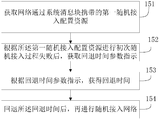
- FIG. 1 is a flow chart of a random access method according to some implementations of the present disclosure
- FIG. 3 is a specific signaling flowchart of the embodiment shown in FIG. 2;
- FIG. 4 is a specific signaling flowchart of the embodiment shown in FIG. 2;
- FIG. 5 is a flowchart of a random access method according to some embodiments of the present disclosure.
- FIG. 6 is a scenario diagram of a communication system deployment
- Figure 7 is a high and low frequency heterogeneous scene graph
- FIG. 8 is a flowchart of a random access method according to some embodiments of the present disclosure.
- FIG. 9 is a deployment scenario in which the same frequency layer has multiple TRPs, and each TRP is one cell;
- FIG. 10 is a flowchart of a random access method according to some embodiments of the present disclosure.
- FIG. 11 shows that the UE resides in a network composed of multiple TRPs at a single frequency point, and multiple TRPs form one. a scenario in which the cells are uniformly managed by the NB (Node B);
- FIG. 12 is a specific implementation flowchart of the embodiment shown in FIG. 10;
- FIG. 13 is a flowchart of a random access method according to some embodiments of the present disclosure.
- Figure 16 is a flowchart showing a specific implementation of the embodiment shown in Figure 15;
- 17 is a structural block diagram of a terminal of some embodiments of the present disclosure.
- Embodiments of the present disclosure provide a processing method after random access failure.
- the core idea is to initiate a subsequent random access procedure by using a new access method after the initial random access fails.
- a random access method provided by some embodiments of the present disclosure includes:
- Step 11 Obtain a replacement access configuration that is adopted when the terminal randomly accesses the network after the random access network process
- the resources of the initial transmission and the retransmission of the random access procedure are basically the same.
- the initial transmission failure due to the conflict cannot be improved well during the retransmission;
- the replacement access configuration is adopted to improve the success rate and real-time performance of the retransmission when the terminal randomly accesses the network;
- Step 12 After the access failure of the terminal in the random access network process, the terminal performs the re-random access network according to the replaced access configuration adopted by the random access network again;
- the access failure in the terminal access network process includes: the random access sequence sent by the terminal fails to be sent or the conflict resolution process in the random access network fails.
- the terminal performs the re-random access network according to the replaced access configuration adopted by the re-random access network;
- N the maximum number of accesses in the entire random access procedure.
- the random access network is initiated by using the replaced access configuration, including:
- the first N access failures (N> 1), the Msg1 retransmission is performed in a new manner; or
- the embodiment of the present disclosure obtains the replaced access configuration adopted when the terminal accesses the network again after the random access network process; after the terminal fails to access in the random access network process, the terminal randomly connects again according to the random access network.
- the replaced access configuration adopted by the network is used to perform random access to the network again. Therefore, the success rate and real-time performance of the retransmission when the terminal randomly accesses the network are improved, thereby ensuring the random access transmission delay requirement of the specific service and the delay requirement of the overall random access.
- the random access method includes:
- the replaced access configuration adopted by the re-random access network includes: when other random access resources are configured under the same network access point,
- Step 21 Acquire a first random access configuration resource used by a terminal that is sent by the network access point by using a broadcast message in a random access network process, and a second random access configuration resource that is used by the random access network again; or Obtaining, by the network access point, the first random access configuration resource carried in the system message block, after performing the random access network process according to the first random access configuration resource, acquiring the second random used by the random access network again Access configuration resources;
- the second random access configuration resource that is sent by the network access point by using the MSG2 message or the L1/L2 signaling, where the first random access configuration resource is different from the second random access configuration resource;
- Step 22 After the access failure in the process of the random access network, the terminal stops the random access process, and re-initiates the random access process according to the second random access configuration resource used by the random access network again; or the terminal is After the access fails in the process of the random access network, the first random access configuration resource is replaced with the second random access configuration resource, and is re-initiated according to the second random access configuration resource used by the re-random access network. Random access process.
- Step 1 The network notifies the UE of the random access procedure in the cell to the UE by using the broadcast, where the initial transmission configuration is Cfg-1, and the retransmission configuration is Cfg-2.
- the network side can configure each retransmission number for the UE.
- the random access configuration can also be set to use Cfg-1 for the initial X transmissions, Cfg-2 for the subsequent Y transmissions, and Cfg-3... for the subsequent Z times.
- Step 2 The UE initiates random access by using a Cfg-1 configuration.
- Step 3 After the random access fails, the subsequent retransmission uses the Cfg-2 configuration to initiate random access.
- Step 1 The UE acquires a RACH (Random Access Channel) configuration cfg-1 through system information, and stores it;
- RACH Random Access Channel
- Step 2 The UE initiates a random access procedure by using a Cfg-1 configuration.
- Step 3 The network side directly reports that the RACH used for retransmission is Cfg-2 through L1/L2 signaling; wherein the information may also be directly carried by the Msg2 message, or may be a new L1/L2 signaling independent of the Msg2 message. Carrying; the UE initiates subsequent retransmission according to the Cfg-2 configuration indicated by the signaling;
- Step 4 When the RA process fails, the random access sequence is retransmitted by using the configuration of Cfg-2, where the previous RA process may be stopped to re-initiate a new random access procedure, or the current random access procedure may not be interrupted. Directly apply the updated configuration for retransmission;
- Step 5 After the random access succeeds, the UE discards the random access configuration Cfg-2 and restores the original Cfg-1 configuration. That is, the second random access configuration resource is discarded, and the configuration of the first random access configuration resource is restored.
- the embodiment of the present disclosure obtains the access configuration of the same network access point, and enables the terminal to adopt the replaced access configuration when the network is randomly accessed again after the random access network process; the terminal is in random access. After the access failure in the network process, the network is re-randomly accessed according to the replaced access configuration adopted by the random access network again. Therefore, the success rate and real-time performance of the retransmission when the terminal randomly accesses the network are improved, thereby ensuring the random access transmission delay requirement of the specific service and the delay requirement of the overall random access.
- some embodiments of the present disclosure provide a random access method, including:
- Step 51 The terminal uses the first frequency to perform a random access network in the high and low frequency overlapping coverage area of the network, and obtains the second frequency used by the random access network again after the access failure in the random access network process;
- Step 52 After the access failure of the terminal in the random access network process, the terminal performs the re-random access network according to the second frequency after the replacement of the random access network.
- the first frequency is a frequency in a frequency range adopted by the high frequency region
- the second frequency is a frequency in a frequency range adopted by the low frequency region; or the first frequency is within a frequency range adopted by the low frequency region Frequency, the second frequency being a frequency within a frequency range employed by the high frequency region.
- ultra-dense networking is a trend in the future development of mobile communication systems.
- the distributed processing node is also called a TRP (Transmission Reception Point)
- the centralized processing node also becomes a CU (Central Unit, Central Processing Node) or NR eNB. (New RAT eNB, new access technology base station).
- TRP Transmission Reception Point
- CU Central Unit, Central Processing Node
- NR eNB New RAT eNB, new access technology base station
- the deployment scenario high-low frequency heterogeneous scenarios, in the same coverage area, that is, there is a high-frequency point TRP (HF), and there is a low-frequency point TRP (LF), if the terminal resides in the coverage In the range, the low-frequency point TRP can be accessed, or the high-frequency point TRP can be accessed.
- HF high-frequency point
- LF low-frequency point
- the terminal uses the low-frequency access low-frequency point TRP in the high-low frequency overlapping coverage area of the network, after the access fails, The high frequency access high frequency point TRP can be used for random access again; of course, after the high frequency access high frequency point TRP fails, the low frequency access low frequency point TRP is used for random access again.
- Embodiments of the present disclosure acquire a second frequency used by a re-random access network by using a first frequency to perform a random access network in a high-low frequency overlapping coverage area of the network, and access failure in a random access network process.
- the second random access network is used according to the second frequency that is replaced by the random access network, so that after the low frequency point fails to be accessed, the high frequency may be adopted.
- Point random access of course, it can also be low frequency point random access after high frequency point access failure. Therefore, the success rate and real-time performance of the retransmission when the terminal randomly accesses the network are improved, thereby ensuring the random access transmission delay requirement of the specific service and the delay requirement of the overall random access.
- some embodiments of the present disclosure provide a random access method, including:
- Step 81 The terminal resides in a network in which a single frequency point is composed of multiple network access points, and performs a random access network process in the first cell in the network, and triggers cell reselection after the access fails. Obtaining, by the process, the second cell in the network that is reselected or directly acquiring a second cell whose signal strength is different from the signal strength of the first cell; wherein, one network access point is one cell;
- Step 82 After the access failure of the terminal in the random access network process, the terminal performs the re-random access network according to the replaced second cell used by the random access network again.
- the same frequency layer has multiple TRPs, and each TRP is a cell.
- the specific implementation process 1 of the method includes:
- the UE resides in a network composed of multiple TRPs at a single frequency point, and each TRP is a cell;
- Step 1 The UE first camps on the cell 1 and initiates random access through the cell 1;
- Step 2 If the random access fails N times before, or the access of the entire random access procedure fails, the UE triggers a cell selection reselection process and selects to the cell 2;
- Step 3 The UE directly initiates a subsequent random access procedure to the cell 2 (corresponding to the first N times of failures), or re-initiates the random access procedure (corresponding to the entire random access procedure access failure).
- the specific implementation process 2 of the method includes:
- the UE resides in a network composed of multiple TRPs at a single frequency point, and each TRP is a cell;
- Step 1 The UE first camps on the cell 1 and initiates random access through the cell 1;
- Step 2 If the random access fails N times before, or the random access fails, the UE directly cuts the signal strength to the second strongest cell 2;
- Step 3 The UE initiates a subsequent random access procedure directly in the cell 2 (corresponding to the first N times of failures), or re-initiates the random access procedure (corresponding to the entire random access procedure access failure).
- the embodiment of the present disclosure can improve the success rate and real-time performance of the retransmission when the terminal randomly accesses the network by replacing another network access point, thereby ensuring the random access transmission delay requirement of the specific service, and the overall random connection. Delay requirements.
- some embodiments of the present disclosure provide a random access method, including:
- Step 101 The terminal resides in a network in which a single frequency point is composed of multiple network access points, and at least one of the multiple network access points forms a cell, and the network that resides from the terminal Obtaining, by the system message block sent by the access point, a first random access configuration resource corresponding to the network access point accessed by the terminal, and a second random access configuration resource corresponding to the cell;
- Step 102 After the access failure occurs in the random access process according to the first random access configuration resource, the terminal performs a re-random access network according to the second random access configuration resource after the network access point that the terminal camps on according to the first random access configuration resource. Or, after the terminal fails in the random access process according to the second random access configuration resource, the terminal performs the re-random access network according to the first random access configuration resource.
- the UE resides in a network consisting of multiple TRPs.
- the multiple TRPs form a cell and are managed by the NB (Node B).
- the specific implementation process of the method includes:
- Step 1 The network allocates two levels of RACH (random access channel) resources to the UE through the SIB (system information block);
- Step 2 The UE first camps on the TRP and initiates random access through the TRP level RACH resource;
- the random access procedure is used for transmission and reception through TRP related reference signals;
- Step 3 After the random access failure of the TRP level, the random access procedure is initiated by the RACH resource at the cell level; the random access procedure is used for transmission and reception by using the cell level reference signal.
- the UE may also be switched to use the TRP-level RACH resource to initiate random access.
- the embodiment of the present disclosure implements random access at the TRP level in a scenario in which a plurality of TRPs form a cell in a network in which a single frequency point is composed of multiple TRPs, and is managed by the NB (Node B).
- the random access procedure is initiated by the RACH resource at the cell level; the random access procedure may be initiated by using the RACH resource at the cell level, and after the access failure, the random access may be initiated by using the RACH resource of the TRP level; Therefore, the success rate and real-time performance of the retransmission when the terminal randomly accesses the network can be improved, thereby ensuring the random access transmission delay requirement of the specific service and the delay requirement of the overall random access.
- some embodiments of the present disclosure provide a random access method, including:
- Step 131 After the access failure of the terminal accessing the network process fails, when the number of the detected MSG1 is greater than the preset value, the backoff time parameter used by the random access network is obtained; or the terminal randomly accesses After the network process fails to access, the signal strength is monitored on the preset channel, and when the signal strength is higher than the preset signal strength value, the backoff time parameter used by the random access network is obtained;
- Step 132 After the terminal retreats for a period of time, the terminal initiates a random access procedure.
- the specific implementation process of the method includes: after the initial random access fails,
- the UE monitors the signal strength or the Msg1 sent by other users on the Msg1 or the special channel before initiating the random access procedure;
- the random access procedure is directly initiated, otherwise, the random access process is initiated, or the random access process is initiated, or Continue LBT monitoring to initiate a random access procedure.
- some implementations of the present disclosure provide a random access method, including:
- Step 141 Monitor a load indication sent by the network, and obtain a backoff time parameter used by the random access network again when the load indication indicates that the network load exceeds a preset load value.
- Step 142 After the terminal retreats for a period of time, the terminal initiates a random access procedure.
- the specific implementation process of the method includes: after the initial random access fails,
- the network displays a load indication to the UE.
- the UE determines whether to initiate random access according to the indication, and reads the load information again if the T time is not returned.
- the terminal passes the interception mechanism, so that after the access fails, the terminal retreats for a period of time, and then performs random access, thereby improving the success rate and real-time performance of the retransmission when the terminal randomly accesses the network, thereby ensuring specific The random access transmission delay requirement of the service and the delay requirement of the overall random access.
- some embodiments of the present disclosure provide a method for random access, including:
- Step 151 Acquire a first random access configuration resource that is carried by the network through the system message block.
- Step 152 After the initial random access procedure fails according to the first random access configuration resource, obtain a backoff time parameter indication.
- the backoff time parameter indication may be obtained by using the MSG2 message or by using the system message block or by listening to the air interface message or by using the backoff time parameter indication of the initial transmission;
- Step 153 Obtain a backoff time according to the backoff time parameter indication.
- the backoff time corresponding to the current number of transmissions may be obtained according to the correspondence between the backoff time parameter indication and the number of transmissions; or the backoff time may be obtained according to the backoff time parameter indication, the number of transmission times, and the superposition coefficient; or according to the backoff
- the time parameter indicates a correspondence relationship with a service of a different delay requirement attribute, and obtains a back time corresponding to the current service;
- Step 154 After the terminal retreats for a period of time, the terminal enters the random access network again.
- the specific random access procedure includes:
- Step 1 The UE acquires RACH (Random Access Channel) configuration Cfg-1 through system information;
- Step 2 The UE initiates a random access procedure by using a Cfg-1 configuration.
- Step 3 If the UE can pass the system information or the information of the air interface in advance, or the BI parameter of the initial transmission, the BI parameter is used to perform the back-off processing and then initiate the random access process;
- Step 4 the UE receives Msg2, which carries BI;
- Step 5 According to the current number of transmissions, the UE searches for the actual value corresponding to the BI according to the number of times, and performs a backoff rollback.
- the search process may be performed according to a corresponding table with different transmission times, or may be based on a backoff time parameter indication.
- the number of transmissions and the superposition coefficient are calculated by superimposing, or the corresponding relationship between the service with different delay requirement attributes according to the backoff time parameter indication, and the actual value corresponding to the BI is obtained;
- Step 6 After the certain time is returned, the UE re-initiates the random access process; wherein, the number of different transmissions
- the corresponding table or coefficient can be configured to the UE by signaling.
- the different transmission times correspond to different backoff time lengths, that is, if one transmission fails, the length of one back-off time is A, the two transmissions fail, and the length of one back-off time is B.
- the three transmissions fail, and the length of one rollback time is C, where A, B, and C are different from each other.
- the terminal passes the fallback mechanism, so that after the access fails, the terminal retreats for a period of time, and then performs random access, thereby improving the success rate and real-time performance of the retransmission when the terminal randomly accesses the network.
- the terminal passes the fallback mechanism, so that after the access fails, the terminal retreats for a period of time, and then performs random access, thereby improving the success rate and real-time performance of the retransmission when the terminal randomly accesses the network.
- the access configuration resource when the changed access configuration is configured to access the configuration resource, the access configuration resource may include a time-frequency resource of the random access channel, a home network transmission point, an uplink synchronization code, or a preamble preamble sequence.
- the coded resource can be carried in the Msg2 message, and the random access resource required for the retransmission carried by the Msg2 can be carried in any Msg2 message.
- different backoff parameters (controlling the time when the UE performs preamble retransmission) are used to perform rollback, and then random access is initiated; the eNodeB informs the UE of a backoff value by using a random access response, and the UE needs For preamble retransmission, a value is randomly selected between 0 and the backoff value as the backoff time, and the preamble retransmission is performed after the backoff time is over.
- the different fallback parameters may be: 1) different backoff parameters to different services; 2) different transmission times to different backoff parameters; Backoff parameters may be displayed to specific values, or may be the same BI, different services or different transmission times are mapped to different values;
- the backoff value of the initial access needs to be known when the UE is initially accessed, and the value may be notified to the UE by using L1/L2/L3 signaling;
- the overload control requirement of the RACH is looser than that of the previous mobile communication system, because in LTE, the random access occupies a separate time-frequency resource and does not interfere with other uplink channels.
- the collision probability of the RACH is at a relatively low level, but also because the UE accessing on one PRACH is too large, causing the UE to have a leading collision and the access fails.
- a fallback mechanism is introduced in LTE to control the time when the UE performs preamble retransmission.
- the eNodeB informs the UE of a backoff value by using a random access response. If the UE needs to perform preamble retransmission, the UE randomly selects a value between 0 and the backoff value as the backoff time, and after the backoff time ends. Perform a pre-retransmission.
- the replaced random access configuration may be adopted or the access may be re-opened after a period of time. Therefore, the success rate and real-time performance of the retransmission when the terminal randomly accesses the network are improved, the random transmission delay requirement of the specific service is ensured, and the delay requirement of the overall random access is required.
- Some embodiments of the present disclosure also provide a terminal, including:
- the obtaining module is configured to obtain a replacement access configuration that is adopted when the terminal randomly accesses the network after the random access network process;
- the access module is configured to perform a random access network again according to the replaced access configuration adopted by the re-random access network after the access failure in the random access network process.
- the access module performs a re-random access network according to the replaced access configuration adopted by the re-random access network after the N access fails in the random access network process;
- N the maximum number of accesses in the entire random access procedure.
- the access failure in the process of the terminal accessing the network includes: the random access sequence sent by the terminal fails to be sent or the conflict resolution process in the random access network fails.
- the replaced access configuration used by the re-random access network includes: a random access resource configuration or a fallback parameter in a random access procedure.
- the acquiring module of the re-random access network includes: when the other random access resources are configured under the same network access point, the acquiring module includes:
- a first acquiring unit configured to acquire a first random access configuration resource used by a terminal that is sent by a network access point by using a broadcast message in a random access network process, and a second random access that is used by the random access network again Configure resources;
- a second acquiring unit configured to acquire a first random access configuration resource that is carried by the network access point by using the system message block, and perform a random access network process according to the first random access configuration resource, and obtain a random access again.
- a second random access configuration resource used by the network
- the first random access configuration resource is different from the second random access configuration resource.
- the second obtaining unit acquires a second random access configuration resource that is sent by the network access point by using an MSG2 message or L1/L2 signaling.
- the access module is specifically configured to:
- the random access process is stopped, and the random access process is re-initiated according to the second random access configuration resource used by the random access network;
- the first random access configuration resource is replaced with the second random access configuration resource, and the resource is re-configured according to the second random access configuration resource used by the re-random access network. Initiate a random access procedure.
- the access module is further configured to: after the random access to the network is successful, discard the second random access configuration resource, and restore the configuration of the first random access configuration resource.
- the acquiring module is specifically configured to: when the random access resource configured by the re-random access network is configured to be a frequency of the replacement,
- the terminal uses the first frequency to perform a random access network in the high and low frequency overlapping coverage area of the network, and acquires the second frequency used by the random access network again after the access failure in the random access network process;
- the first frequency is a frequency within a frequency range employed by the high frequency region
- the second frequency is a frequency within a frequency range employed by the low frequency region
- the first frequency is a frequency within a frequency range employed by the low frequency region
- the second frequency is a frequency within a frequency range employed by the high frequency region.
- the acquiring module is specifically configured to: when the random access resource used in the re-random access network is configured as a network access point after the replacement,
- the terminal resides in a network in which a single frequency point is composed of multiple network access points, and performs a random access network process in the first cell in the network, and after the access fails, triggers the cell reselection process to obtain a new The selected second cell in the network or directly acquires a second cell whose signal strength is different from the signal strength of the first cell; wherein one network access point is a cell.
- the acquiring module is specifically configured to: when the random access resource used in the re-random access network is configured as a network access point after the replacement,
- the terminal resides in a network in which a single frequency point is composed of multiple network access points, and at least one of the multiple network access points forms a cell, and the network access point residing from the terminal
- the first random access configuration resource corresponding to the network access point accessed by the terminal and the second random access configuration resource corresponding to the cell are obtained in the sent system message block.
- the access module is specifically configured to:
- the terminal randomly accesses the network access point where it resides according to the first random access configuration resource. After the access failure in the process, the second random access configuration resource is used to perform the random access network again;
- the terminal After the access failure occurs in the cell in which the terminal is located according to the second random access configuration resource, the terminal performs the re-random access network according to the first random access configuration resource.
- the acquiring module is specifically configured to: when the random access resource configured by the re-random access network is configured as the access configuration in the interception mechanism,
- the backoff time parameter used by the random access network is obtained;
- the signal strength is monitored on the preset channel, and when the signal strength is higher than the preset signal strength value, the backoff time parameter used by the random access network is obtained.
- the acquiring module is specifically configured to: when the random access resource configured by the re-random access network is configured as the access configuration in the interception mechanism,
- the acquiring module of the re-random access network includes: when the back-off parameter is in the random access process, the acquiring module is specifically configured to:
- the backoff time is obtained according to the backoff time parameter indication.
- the obtaining the back-off time parameter indicates that the back-off time parameter indication is obtained by using the MSG2 message or by the system message block or by the intercepted air interface message or by the back-off time parameter indication of the initial transmission.
- the obtaining module is specifically configured to: when the backoff time is obtained according to the backoff time parameter indication:
- the embodiment of the terminal is a device corresponding to the above method, and all implementations of the foregoing method embodiments are applicable to the embodiment of the device, and the same technical effects can be achieved.
- a terminal including:
- the transceiver is configured to acquire a replacement access configuration that is adopted when the terminal randomly accesses the network after the random access network process;
- the processor is configured to perform a random access network again according to the replaced access configuration adopted by the re-random access network after the access failure in the random access network process.
- the processor is connected to the memory; the memory is configured to store the program and data used by the processor when performing the operation; and the acquisition terminal randomly accesses the network after the random access network process The replaced access configuration adopted; when the processor invokes and executes the program and data stored in the memory, after the access failure in the random access network process, according to the replacement used by the random access network again The access configuration is performed to access the network again.
- the bus architecture can include any number of interconnected buses and bridges that can also link various other circuits, such as peripherals, voltage regulators, and power management circuits, as is known in the art. Therefore, it will not be further described in this article.
- the transceiver can be a plurality of components, including a transmitter and a receiver, providing means for communicating with various other devices on a transmission medium.
- the processor is responsible for managing the bus architecture and the usual processing, and the memory can store the data that the processor uses when performing operations.
- the processor After the N access fails, the processor performs a re-random access network according to the replaced access configuration adopted by the re-random access network after the N access fails.
- N the maximum number of accesses in the entire random access procedure.
- the access failure in the process of the terminal accessing the network includes: the random access sequence sent by the terminal fails to be sent or the conflict resolution process in the random access network fails.
- the replaced access configuration used by the re-random access network includes: a random access resource configuration or a fallback parameter in a random access procedure.
- the replacement access configuration used by the re-random access network includes: when other random access resources are configured under the same network access point, the transceiver is specifically configured to: obtain a network access point to broadcast The first random access configuration adopted by the terminal for message transmission in the process of random access network And the second random access configuration resource used by the network to access the network again; or the first random access configuration resource carried by the network access point through the system message block, according to the first random access configuration resource After the random access network process fails, the second random access configuration resource used by the random access network is obtained. The first random access configuration resource is different from the second random access configuration resource.
- the transceiver acquires a second random access configuration resource that is sent by the network access point by using an MSG2 message or L1/L2 signaling.
- the processor is specifically configured to: after the access failure in the random access network process, stop the random access process, and re-initiate the random connection according to the second random access configuration resource used by the random access network again. After the access fails in the random access network process, the first random access configuration resource is replaced with the second random access configuration resource, and the second random connection is adopted according to the re-random access network. The configuration resource re-initiates the random access procedure.
- the processor is further configured to: after the random access to the network is successful, discard the second random access configuration resource, and restore the configuration of the first random access configuration resource.
- the transceiver is specifically configured to: the terminal is in the high and low frequency overlapping coverage area of the network, when the random access resource used in the re-random access network configuration is configured as the frequency of the replacement. After the random access network is performed by using the first frequency, and the access fails in the random access network process, acquiring the second frequency used by the random access network again;
- the first frequency is a frequency in a frequency range adopted by the high frequency region
- the second frequency is a frequency in a frequency range adopted by the low frequency region; or the first frequency is within a frequency range adopted by the low frequency region Frequency, the second frequency being a frequency within a frequency range employed by the high frequency region.
- the transceiver is specifically configured to: the terminal resides in a single frequency, when the random access resource used in the re-random access network is configured as a network access point after the replacement. Pointing in a network consisting of multiple network access points, and performing a random access network process in the first cell in the network, and after failing to access, triggering a cell reselection process to obtain a reselected network in the network.
- the transceiver is specifically configured to: the terminal resides in a single frequency, when the random access resource used in the re-random access network is configured as a network access point after the replacement. Pointing into a network consisting of multiple network access points, and at least one of the plurality of network access points The access point forms a cell, and the first random access configuration resource corresponding to the network access point accessed by the terminal and the second corresponding to the cell are obtained from the system message block sent by the network access point where the terminal resides. Random access configuration resources.
- the processor is specifically configured to: after the access failure occurs in the random access process according to the first random access configuration resource, the processor is configured to allocate resources according to the second random access Re-randomly accessing the network again; or the terminal in the cell in which it resides, after performing the access failure in the random access process according to the second random access configuration resource, performing randomization again according to the first random access configuration resource Access to the network.
- the transceiver is specifically configured to: the terminal randomly accesses the network process when the random access resource used in the re-random access network configuration is configured as the access configuration in the interception mechanism. After the failure, if the number of MSG1 detected in the predetermined length of time is greater than the preset value, the backoff time parameter used by the random access network is obtained again; or after the terminal randomly fails to access the network, the preset is preset.
- the signal strength is monitored on the channel, and when the signal strength is higher than the preset signal strength value, the backoff time parameter used by the random access network is obtained.
- the transceiver is specifically configured to: monitor a load indication sent by the network, when the random access resource configured by the re-random access network is configured as an access configuration in a listening mechanism; When the load indication indicates that the network load exceeds a preset load value, acquiring a backoff time parameter used by the random access network again.
- the replacement access configuration adopted by the re-random access network includes: when the back-off parameter is in the random access process, the transceiver is specifically configured to: acquire the first random that is carried by the network through the system message block. Accessing the configuration resource; after the initial random access procedure fails according to the first random access configuration resource, obtaining a backoff time parameter indication; and obtaining a backoff time according to the backoff time parameter indication.
- the obtaining the back-off time parameter indicates that the back-off time parameter indication is obtained by using the MSG2 message or by the system message block or by the intercepted air interface message or by the back-off time parameter indication of the initial transmission.
- the transceiver When the transceiver obtains the backoff time according to the backoff time parameter, the transceiver is specifically configured to obtain a backoff time corresponding to the current number of transmissions according to the correspondence between the backoff time parameter indication and the number of transmissions; or
- the new access mode is used to perform the random access network again, and the replaced random access configuration may be adopted or the access may be re-opened for a period of time, thereby performing the access again.
- the success rate and real-time performance of retransmission when the terminal randomly accesses the network ensure the random transmission delay requirement of a specific service, and the delay requirement of the overall random access.
- the disclosed method and apparatus may be implemented in other manners.
- the device embodiments described above are merely illustrative.
- the division of the unit is only a logical function division.
- there may be another division manner for example, multiple units or components may be combined or Can be integrated into another system, or some features can be ignored or not executed.
- the mutual coupling or direct coupling or communication connection shown or discussed may be an indirect coupling or communication connection through some interface, device or unit, and may be in an electrical, mechanical or other form.
- each functional unit in various embodiments of the present disclosure may be integrated into one processing unit, or each unit may be physically included separately, or two or more units may be integrated into one unit.
- the above integrated unit can be implemented in the form of hardware or in the form of hardware plus software functional units.
- the above-described integrated unit implemented in the form of a software functional unit can be stored in a computer readable storage medium.
- the above software functional unit is stored in a storage medium and includes a plurality of instructions for causing a computer device (which may be a personal computer, a server, or a network device, etc.) to perform part of the steps of the transceiving method of the various embodiments of the present disclosure.
- the foregoing storage medium includes: a U disk, a mobile hard disk, a read-only memory (ROM), a random access memory (RAM), a magnetic disk, or an optical disk, and the like, and the program code can be stored. Medium.
- the computer program instructions can also be stored in a computer readable memory that can direct a computer or other programmable data processing device to operate in a particular manner, such that the instructions stored in the computer readable memory produce an article of manufacture comprising the instruction device.
- the apparatus implements the functions specified in one or more blocks of a flow or a flow and/or block diagram of the flowchart.
- These computer program instructions can also be loaded onto a computer or other programmable data processing device such that a series of operational steps are performed on a computer or other programmable device to produce computer-implemented processing for execution on a computer or other programmable device.
- the instructions provide steps for implementing the functions specified in one or more of the flow or in a block or blocks of a flow diagram.
Landscapes
- Engineering & Computer Science (AREA)
- Computer Networks & Wireless Communication (AREA)
- Signal Processing (AREA)
- Mobile Radio Communication Systems (AREA)
Abstract
本公开提供了一种随机接入方法及终端,涉及通信技术领域,该方法包括:获取终端在随机接入网络过程后,再次随机接入网络时,所采用的更换后的接入配置;终端在随机接入网络过程中接入失败后,根据再次随机接入网络所采用的更换后的所述接入配置,进行再次随机接入网络。
Description
相关申请的交叉引用
本申请主张在2016年8月5日在中国提交的中国专利申请号No.201610641256.X的优先权,其全部内容通过引用包含于此。
本公开涉及通信技术领域,特别涉及一种随机接入方法及终端。
在5G NR(New RAT,新无线接入技术)中,由于其拥有超大小区和超大用户密度的特征,当UE(终端)根据内部高层业务触发或高层信令触发的需求而要接入网络时候,由于用户密度很大,会导致随机接入的碰撞概增加。而多次尝试的碰撞,将会导致接入时延的进一步增加;如果将随机接入的回退因子加大,尽管可以一定程度上降低本次传输的失败概率,但也会导致时延增加。
同时在5G系统中将会支持不同类型的切片或业务,即需要体现不同的时延需求,有的切片或业务有很苛刻的接入时延需求。因此需要考虑在初始随机接入过程中,当本次随机接入失败后,用以保证业务所需的接入时延要求。
当前LTE系统中,随机接入的原因主要有如下几种:
1)从RRC_IDLE(无线资源控制_空闲)状态接入(也称为初始接入,initial access);
2)无线链路失败发起RRC(无线资源控制)连接重建(也是初始接入的一种);
3)切换过程需要随机接入;
4)UE处于RRC_CONNECTED(无线资源控制连接态)时有下行数据到达;
5)UE处于RRC_CONNECTED(无线资源控制连接态)时有上行数据到达。
当前LTE系统在随机接入过程中,没有不同业务时延要求的体现的,因此无法很好的保证不同时延需求的业务的接入过程的不同的时延保证。同时由于随机接入过程的初传和重传的资源基本是相同的,在这种情况下由于冲突导致初次传输失败的情况,在重传的时候也无法很好的改善。
发明内容
本公开要解决的技术问题是提供一种随机接入方法及终端,可以提高随机接入序列重传的接入成功率,从而缩短整个随机接入的时延。
为解决上述技术问题,本公开的实施例提供一种随机接入方法,包括:
获取终端在随机接入网络过程后,再次随机接入网络时,所采用的更换后的接入配置;
终端在随机接入网络过程中接入失败后,根据再次随机接入网络所采用的更换后的所述接入配置,进行再次随机接入网络。
终端在随机接入网络过程中接入失败后,根据再次随机接入网络所采用的更换后所述接入配置,进行再次随机接入网络的步骤包括:
终端在随机接入网络过程中,N次接入失败后,根据再次随机接入网络所采用的更换后的所述接入配置,进行再次随机接入网络;
其中,1≤N≤M,N、M均为正整数,且M为整个随机接入过程中最大接入次数。
终端接入网络过程中的接入失败包括:终端发送的随机接入序列发送失败或者随机接入网络过程中的冲突解决过程失败。
所述再次随机接入网络所采用的更换后的接入配置包括:随机接入资源配置或者随机接入过程中的回退参数。
所述再次随机接入网络所采用的更换后的接入配置包括:同一网络接入点下的其它随机接入资源配置时,获取终端在随机接入网络过程后,再次随机接入网络时,所采用的更换后的接入配置的步骤包括:
获取网络接入点通过广播消息发送的终端在随机接入网络过程中所采用的第一随机接入配置资源以及之后再次随机接入网络所采用的第二随机接入配置资源;或者
获取网络接入点通过系统消息块携带的第一随机接入配置资源,根据所述第一随机接入配置资源进行随机接入网络过程失败后,获取再次随机接入网络所采用的第二随机接入配置资源;
其中,第一随机接入配置资源与第二随机接入配置资源不同。
获取再次随机接入网络所采用的第二随机接入配置资源的步骤包括:
获取网络接入点通过MSG2消息或者L1/L2信令发送的第二随机接入配置资源。
终端在随机接入网络过程中接入失败后,根据再次随机接入网络所采用的更换后所述接入配置,进行再次随机接入网络的步骤包括:
终端在随机接入网络过程中接入失败后,停止随机接入过程,根据再次随机接入网络所采用的所述第二随机接入配置资源重新发起随机接入过程;或者
终端在随机接入网络过程中接入失败后,将所述第一随机接入配置资源替换为第二随机接入配置资源,并根据再次随机接入网络所采用的第二随机接入配置资源重新发起随机接入过程。
再次随机接入网络成功后,还包括:
丢弃所述第二随机接入配置资源,恢复第一随机接入配置资源的配置。
所述再次随机接入网络所采用的更换后的接入配置包括的随机接入资源配置为更换后的频点时,获取终端在随机接入网络过程后,再次随机接入网络时,所采用的更换后的接入配置的步骤包括:
终端在网络的高低频重叠覆盖区采用第一频率进行随机接入网络,并在随机接入网络过程中接入失败后,获取再次随机接入网络所采用的第二频率;
其中,所述第一频率为高频区域采用的频率范围内的频率,所述第二频率为低频区域采用的频率范围内的频率;或者
所述第一频率为低频区域采用的频率范围内的频率,所述第二频率为高频区域采用的频率范围内的频率。
所述再次随机接入网络所采用的更换后的接入配置包括的随机接入资源配置为更换后的网络接入点时,获取终端在随机接入网络过程后,再次随机接入网络时,所采用的更换后的接入配置的步骤包括:
终端驻留在一个单频点由多个网络接入点组成的网络中,并在所述网络中的第一小区进行随机接入网络过程,并接入失败后,触发小区重选过程获取重新选择的所述网络中的第二小区或者直接获取信号强度不同于所述第一小区的信号强度的第二小区;其中,一个网络接入点是一个小区。
所述再次随机接入网络所采用的更换后的接入配置包括的随机接入资源配置为更换后的网络接入点时,获取终端在随机接入网络过程后,再次随机接入网络时,所采用的更换后的接入配置的步骤包括:
终端驻留在一个单频点由多个网络接入点组成的网络中,且所述多个网络接入点中至少一个网络接入点形成一个小区,从该终端驻留的网络接入点发送的系统消息块中获取该终端接入的网络接入点对应的第一随机接入配置资源以及所述小区对应的第二随机接入配置资源。
终端在随机接入网络过程中接入失败后,根据再次随机接入网络所采用的更换后的所述接入配置,进行再次随机接入网络的步骤包括:
终端在其驻留的网络接入点,根据第一随机接入配置资源进行随机接入过程中接入失败后,根据所述第二随机接入配置资源,进行再次随机接入网络;
或者
终端在其驻留的小区,根据第二随机接入配置资源进行随机接入过程中接入失败后,根据所述第一随机接入配置资源,进行再次随机接入网络。
所述再次随机接入网络所采用的更换后的接入配置包括的随机接入资源配置为监听机制下的接入配置时,获取终端在随机接入网络过程后,再次随机接入网络时,所采用的更换后的接入配置的步骤包括:
终端随机接入网络过程接入失败后,在预定时间长度内检测到的MSG1个数大于预设值时,获取再次随机接入网络所采用的回退时间参数;或者
终端随机接入网络过程接入失败后,在预设信道上监听信号强度,并在所述信号强度高于预设信号强度值时,获取再次随机接入网络所采用的回退时间参数。
所述再次随机接入网络所采用的更换后的接入配置包括的随机接入资源配置为监听机制下的接入配置时,获取终端在随机接入网络过程后,再次随机接入网络时,所采用的更换后的接入配置的步骤包括:
监听网络发送的负荷指示;
在所述负荷指示表示网络负荷超过一预设负荷值时,获取再次随机接入网络所采用的回退时间参数。
所述再次随机接入网络所采用的更换后的接入配置包括:随机接入过程中的回退参数时,获取终端在随机接入网络过程后,再次随机接入网络时,所采用的更换后的接入配置的步骤包括:
获取网络通过系统消息块携带的第一随机接入配置资源;
根据所述第一随机接入配置资源进行初次随机接入过程失败后,获取回退
时间参数指示;
根据回退时间参数指示,获得回退时间。
获取回退时间参数指示的步骤包括:
通过MSG2消息或者通过系统消息块或者通过监听到的空口消息或者通过初次传输的回退时间参数指示,获取回退时间参数指示。
根据回退时间参数指示,获得回退时间的步骤包括:
根据回退时间参数指示与传输次数的对应关系,获得当前传输次数对应的回退时间;或者
根据回退时间参数指示、传输次数以及叠加系数,得到回退时间;或者
根据回退时间参数指示与不同时延需求属性的业务的对应关系,获得当前业务对应的回退时间。
本公开的实施例还提供一种终端,包括:
获取模块,用于获取终端在随机接入网络过程后,再次随机接入网络时,所采用的更换后的接入配置;
接入模块,用于在随机接入网络过程中接入失败后,根据再次随机接入网络所采用的更换后的所述接入配置,进行再次随机接入网络。
其中,所述接入模块在随机接入网络过程中,N次接入失败后,根据再次随机接入网络所采用的更换后的所述接入配置,进行再次随机接入网络;
其中,1≤N≤M,N、M均为正整数,且M为整个随机接入过程中最大接入次数。
其中,终端接入网络过程中的接入失败包括:终端发送的随机接入序列发送失败或者随机接入网络过程中的冲突解决过程失败。
其中,所述再次随机接入网络所采用的更换后的接入配置包括:随机接入资源配置或者随机接入过程中的回退参数。
其中,所述再次随机接入网络所采用的更换后的接入配置包括:同一网络接入点下的其它随机接入资源配置时,所述获取模块包括:
第一获取单元,用于获取网络接入点通过广播消息发送的终端在随机接入网络过程中所采用的第一随机接入配置资源以及之后再次随机接入网络所采用的第二随机接入配置资源;或者
第二获取单元,用于获取网络接入点通过系统消息块携带的第一随机接入
配置资源,根据所述第一随机接入配置资源进行随机接入网络过程失败后,获取再次随机接入网络所采用的第二随机接入配置资源;
其中,第一随机接入配置资源与第二随机接入配置资源不同。
其中,所述第二获取单元获取网络接入点通过MSG2消息或者L1/L2信令发送的第二随机接入配置资源。
其中,所述接入模块具体用于:
在随机接入网络过程中接入失败后,停止随机接入过程,根据再次随机接入网络所采用的所述第二随机接入配置资源重新发起随机接入过程;或者
在随机接入网络过程中接入失败后,将所述第一随机接入配置资源替换为第二随机接入配置资源,并根据再次随机接入网络所采用的第二随机接入配置资源重新发起随机接入过程。
其中,所述接入模块还用于:再次随机接入网络成功后,丢弃所述第二随机接入配置资源,恢复第一随机接入配置资源的配置。
其中,所述再次随机接入网络所采用的更换后的接入配置包括的随机接入资源配置为更换后的频点时,所述获取模块具体用于:
终端在网络的高低频重叠覆盖区采用第一频率进行随机接入网络,并在随机接入网络过程中接入失败后,获取再次随机接入网络所采用的第二频率;
其中,所述第一频率为高频区域采用的频率范围内的频率,所述第二频率为低频区域采用的频率范围内的频率;或者
所述第一频率为低频区域采用的频率范围内的频率,所述第二频率为高频区域采用的频率范围内的频率。
其中,所述再次随机接入网络所采用的更换后的接入配置包括的随机接入资源配置为更换后的网络接入点时,所述获取模块具体用于:
终端驻留在一个单频点由多个网络接入点组成的网络中,并在所述网络中的第一小区进行随机接入网络过程,并接入失败后,触发小区重选过程获取重新选择的所述网络中的第二小区或者直接获取信号强度不同于所述第一小区的信号强度的第二小区;其中,一个网络接入点是一个小区。
其中,所述再次随机接入网络所采用的更换后的接入配置包括的随机接入资源配置为更换后的网络接入点时,所述获取模块具体用于:
终端驻留在一个单频点由多个网络接入点组成的网络中,且所述多个网络
接入点中至少一个网络接入点形成一个小区,从该终端驻留的网络接入点发送的系统消息块中获取该终端接入的网络接入点对应的第一随机接入配置资源以及所述小区对应的第二随机接入配置资源。
其中,所述接入模块具体用于:终端在其驻留的网络接入点,根据第一随机接入配置资源进行随机接入过程中接入失败后,根据所述第二随机接入配置资源,进行再次随机接入网络;
或者
终端在其驻留的小区,根据第二随机接入配置资源进行随机接入过程中接入失败后,根据所述第一随机接入配置资源,进行再次随机接入网络。
其中,所述再次随机接入网络所采用的更换后的接入配置包括的随机接入资源配置为监听机制下的接入配置时,所述获取模块具体用于:终端随机接入网络过程接入失败后,在预定时间长度内检测到的MSG1个数大于预设值时,获取再次随机接入网络所采用的回退时间参数;或者
终端随机接入网络过程接入失败后,在预设信道上监听信号强度,并在所述信号强度高于预设信号强度值时,获取再次随机接入网络所采用的回退时间参数。
其中,所述再次随机接入网络所采用的更换后的接入配置包括的随机接入资源配置为监听机制下的接入配置时,所述获取模块具体用于:
监听网络发送的负荷指示;
在所述负荷指示表示网络负荷超过一预设负荷值时,获取再次随机接入网络所采用的回退时间参数。
其中,所述再次随机接入网络所采用的更换后的接入配置包括:随机接入过程中的回退参数时,所述获取模块具体用于:获取网络通过系统消息块携带的第一随机接入配置资源;根据所述第一随机接入配置资源进行初次随机接入过程失败后,获取回退时间参数指示;根据回退时间参数指示,获得回退时间。
其中,获取回退时间参数指示具体通过MSG2消息或者通过系统消息块或者通过监听到的空口消息或者通过初次传输的回退时间参数指示,获取回退时间参数指示。
其中,所述获取模块根据回退时间参数指示获得回退时间时,具体用于:根据回退时间参数指示与传输次数的对应关系,获得当前传输次数对应的回退
时间;或者根据回退时间参数指示、传输次数以及叠加系数,得到回退时间;或者根据回退时间参数指示与不同时延需求属性的业务的对应关系,获得当前业务对应的回退时间。
本公开的实施例还提供一种终端,包括处理器、收发机和存储器;
其中,所述处理器用于读取所述存储器中的程序,执行下列过程:
获取终端在随机接入网络过程后,再次随机接入网络时,所采用的更换后的接入配置;
在随机接入网络过程中接入失败后,根据再次随机接入网络所采用的更换后的所述接入配置,进行再次随机接入网络;
所述收发机用于接收和发送数据;
所述存储器用于保存所述处理器执行操作时所使用的数据。
本公开的上述技术方案的有益效果如下:
本公开的实施例通过获取终端在随机接入网络过程后,再次随机接入网络时,所采用的更换后的接入配置;终端在随机接入网络过程中接入失败后,根据再次随机接入网络所采用的更换后的所述接入配置,进行再次随机接入网络。从而提高终端随机接入网络时,重传的成功率和实时性,从而保证特定业务的随机接入传输时延需求,以及整体随机接入的时延需求。
图1为本公开的一些实施的随机接入方法流程图;
图2为本公开的一些实施例的随机接入方法流程图;
图3为图2所示实施例的具体信令流程图;
图4为图2所示实施例的具体信令流程图;
图5为本公开的一些实施例的随机接入方法流程图;
图6为通信系统部署场景图;
图7为高低频异构场景图;
图8为本公开的一些实施例的随机接入方法流程图;
图9为同一个频率层有多个TRP组成,每个TRP为一个小区的部署场景;
图10为本公开的一些实施例的随机接入方法流程图;
图11为UE驻留在一个单频点由多个TRP组成的网络中,多个TRP形成一
个小区,由NB(节点B)统一管理的场景;
图12为图10所示实施例的具体实现流程图;
图13为本公开的一些实施例的随机接入方法流程图;
图14为本公开的一些实施例的随机接入方法流程图;
图15为本公开的一些实施例的随机接入方法流程图;
图16为图15所示实施例的具体实现流程图;
图17为本公开的一些实施例的终端的结构框架图。
为使本公开要解决的技术问题、技术方案和优点更加清楚,下面将结合附图及具体实施例进行详细描述。
本公开的实施例给出了一种随机接入失败后的处理方法。其核心思想是当初始随机接入失败后,采用新的接入方式发起后续的随机接入过程。
如图1所示,本公开的一些实施例提供的随机接入方法,包括:
步骤11,获取终端在随机接入网络过程后,再次随机接入网络时,所采用的更换后的接入配置;
当前LTE机制中,随机接入过程的初传和重传的资源基本是相同的,在这种情况下由于冲突导致初次传输失败的情况,在重传的时候也无法很好的改善;这里在再次随机接入网络时,采用更换后的接入配置,提高终端随机接入网络时,重传的成功率和实时性;
步骤12,终端在随机接入网络过程中接入失败后,根据再次随机接入网络所采用的更换后的所述接入配置,进行再次随机接入网络;
这里的终端接入网络过程中的接入失败包括:终端发送的随机接入序列发送失败或者随机接入网络过程中的冲突解决过程失败。
另外,终端在随机接入网络过程中,N次接入失败后,根据再次随机接入网络所采用的更换后的所述接入配置,进行再次随机接入网络;
其中,1≤N≤M,N、M均为正整数,且M为整个随机接入过程中最大接入次数。
也就是说,随机接入过程失败后采用更换后的接入配置发起随机接入网络包括:
(1)1次随机接入过程中前N次接入失败(N>=1),采用新的方式进行Msg1重传;或
(2)1次完整的随机接入失败,之后采用新的方式重新发起随机接入过程。
本公开的实施例通过获取终端在随机接入网络过程后,再次随机接入网络时,所采用的更换后的接入配置;终端在随机接入网络过程中接入失败后,根据再次随机接入网络所采用的更换后的所述接入配置,进行再次随机接入网络。从而提高终端随机接入网络时,重传的成功率和实时性,从而保证特定业务的随机接入传输时延需求,以及整体随机接入的时延需求。
如图2所示,本公开的一些实施例提供的随机接入方法包括:
所述再次随机接入网络所采用的更换后的接入配置包括:同一网络接入点下的其它随机接入资源配置时,
步骤21,获取网络接入点通过广播消息发送的终端在随机接入网络过程中所采用的第一随机接入配置资源以及之后再次随机接入网络所采用的第二随机接入配置资源;或者获取网络接入点通过系统消息块携带的第一随机接入配置资源,根据所述第一随机接入配置资源进行随机接入网络过程失败后,获取再次随机接入网络所采用的第二随机接入配置资源;
具体的,获取网络接入点通过MSG2消息或者L1/L2信令发送的第二随机接入配置资源;其中,第一随机接入配置资源与第二随机接入配置资源不同;
步骤22,终端在随机接入网络过程中接入失败后,停止随机接入过程,根据再次随机接入网络所采用的所述第二随机接入配置资源重新发起随机接入过程;或者终端在随机接入网络过程中接入失败后,将所述第一随机接入配置资源替换为第二随机接入配置资源,并根据再次随机接入网络所采用的第二随机接入配置资源重新发起随机接入过程。
具体的信令流程,如图3所示:
步骤1,网络通过广播将本小区内的随机接入过程通知给UE,其中初次传输配置为Cfg-1,重传配置为Cfg-2;(同样,网络侧可以为UE配置每个重传次数的随机接入配置,也可以设置初始X次传输采用Cfg-1,后续Y次传输采用Cfg-2,再后Z次采用Cfg-3…);
步骤2,UE用Cfg-1配置发起随机接入;
步骤3,随机接入失败后,后续重传采用Cfg-2配置发起随机接入。
具体的信令流程,如图4所示:
步骤1,UE通过系统信息获取RACH(随机接入信道)配置cfg-1,并存储;
步骤2,UE用Cfg-1配置发起随机接入过程;
步骤3,网络侧直接通过L1/L2信令通知重传使用的RACH配置为Cfg-2;其中该信息也可以直接通过Msg2消息携带,也可以是独立于Msg2消息的新的L1/L2信令携带;UE根据该信令指示的Cfg-2配置发起后续的重传;
步骤4,当RA过程失败,则用Cfg-2的配置重新发送随机接入序列,这里可以停止之前的RA过程重新发起一个新的随机接入过程,也可以不中断当前的随机接入过程,直接应用更新的配置进行重传;
步骤5,当随机接入成功后,UE丢弃随机接入配置Cfg-2,恢复原有的Cfg-1的配置。即丢弃所述第二随机接入配置资源,恢复第一随机接入配置资源的配置。
本公开的实施例通过获取同一网络接入点的其它接入配置,使终端在随机接入网络过程后,再次随机接入网络时,所采用的更换后的接入配置;终端在随机接入网络过程中接入失败后,根据再次随机接入网络所采用的更换后的所述接入配置,进行再次随机接入网络。从而提高终端随机接入网络时,重传的成功率和实时性,从而保证特定业务的随机接入传输时延需求,以及整体随机接入的时延需求。
如图5所示,本公开的一些实施例提供一种随机接入方法,包括:
步骤51,终端在网络的高低频重叠覆盖区采用第一频率进行随机接入网络,并在随机接入网络过程中接入失败后,获取再次随机接入网络所采用的第二频率;
步骤52,终端在随机接入网络过程中接入失败后,根据再次随机接入网络所采用的更换后的第二频率,进行再次随机接入网络。
其中,所述第一频率为高频区域采用的频率范围内的频率,所述第二频率为低频区域采用的频率范围内的频率;或者所述第一频率为低频区域采用的频率范围内的频率,所述第二频率为高频区域采用的频率范围内的频率。
如图6所示,未来移动通信系统的网络部署部署场景,超密集组网是未来移动通信系统发展的一个趋势,在超密集组网情况下,为了实现对大量分布式处理节点的统一控制面管理,需要将部分协议功能进行集中式处理。这样就形
成了集中处理节点和分布式处理节点的双层结构,分布式处理节点也称为TRP(Transmission Reception Point,发送接收节点),集中处理节点也成为CU(Central Unit,集中处理节点)或者NR eNB(New RAT eNB,新接入技术基站)。对于集中处理节点,根据功能不同,还可以进一步划分为集中处理节点的控制面和集中处理节点的用户面。
如图7所示,部署场景:高低频异构场景,在同一个覆盖范围内,即存在高频点的TRP(HF),又存在低频点的TRP(LF),终端若驻留在该覆盖范围内时,即可以接入低频点TRP,也可以接入高频点TRP,在此场景中,终端在网络的高低频重叠覆盖区采用低频率接入低频点TRP时,接入失败后,可以采用高频率接入高频点TRP进行再次随机接入;当然也可以是采用高频率接入高频点TRP失败后,采用低频率接入低频点TRP进行再次随机接入。
本公开的实施例通过终端在网络的高低频重叠覆盖区采用第一频率进行随机接入网络,并在随机接入网络过程中接入失败后,获取再次随机接入网络所采用的第二频率;终端在随机接入网络过程中接入失败后,根据再次随机接入网络所采用的更换后的第二频率,进行再次随机接入网络;从而在低频点接入失败后,可以采用高频点随机接入;当然也可以是高频点接入失败后,采用低频点随机接入。从而提高终端随机接入网络时,重传的成功率和实时性,从而保证特定业务的随机接入传输时延需求,以及整体随机接入的时延需求。
如8所示,本公开的一些实施例提供一种随机接入方法,包括:
步骤81,终端驻留在一个单频点由多个网络接入点组成的网络中,并在所述网络中的第一小区进行随机接入网络过程,并接入失败后,触发小区重选过程获取重新选择的所述网络中的第二小区或者直接获取信号强度不同于所述第一小区的信号强度的第二小区;其中,一个网络接入点是一个小区;
步骤82,终端在随机接入网络过程中接入失败后,根据再次随机接入网络所采用的更换后的第二小区,进行再次随机接入网络。
如图9所示的场景部署,同一个频率层有多个TRP组成,每个TRP为一个小区。
该方法的具体实现流程1包括:
UE驻留在一个单频点由多个TRP组成的网络中,每个TRP是一个小区;
步骤1,UE首先驻留在小区1,并通过小区1发起随机接入;
步骤2,若随机接入前N次失败,或整个随机接入过程接入失败,则UE触发小区选择重选过程,选择到小区2;
步骤3,UE直接到小区2发起后续的随机接入过程(对应于前N次失败),或者重新发起随机接入过程(对应于整个随机接入过程接入失败)。
该方法的具体实现流程2包括:
UE驻留在一个单频点由多个TRP组成的网络中,每个TRP是一个小区;
步骤1,UE首先驻留在小区1,并通过小区1发起随机接入;
步骤2,若随机接入前N次失败,或随机接入整个失败,则UE直接切到信号强度为次强小区2;
步骤3,UE直接在小区2发起后续的随机接入过程(对应于前N次失败),或者重新发起随机接入过程(对应于整个随机接入过程接入失败)。
本公开的实施例通过更换另一个网络接入点,从而可以提高终端随机接入网络时,重传的成功率和实时性,从而保证特定业务的随机接入传输时延需求,以及整体随机接入的时延需求。
如图10所示,本公开的一些实施例提供一种随机接入方法,包括:
步骤101,终端驻留在一个单频点由多个网络接入点组成的网络中,且所述多个网络接入点中至少一个网络接入点形成一个小区,从该终端驻留的网络接入点发送的系统消息块中获取该终端接入的网络接入点对应的第一随机接入配置资源以及所述小区对应的第二随机接入配置资源;
步骤102,终端在其驻留的网络接入点,根据第一随机接入配置资源进行随机接入过程中接入失败后,根据所述第二随机接入配置资源,进行再次随机接入网络;或者终端在其驻留的小区,根据第二随机接入配置资源进行随机接入过程中接入失败后,根据所述第一随机接入配置资源,进行再次随机接入网络。
如图11所示的场景部署,UE驻留在一个单频点由多个TRP组成的网络中,多个TRP形成一个小区,由NB(节点B)统一管理。
如图12所示,该方法的具体实现流程包括:
步骤1,网络通过SIB(系统信息块)将两级RACH(随机接入信道)资源配置给UE;
步骤2,UE首先驻留在TRP,并通过TRP级别RACH资源发起随机接入;该
随机接入过程是通过TRP相关的参考信号用于传输和接收;
步骤3,TRP级别随机接入失败后,通过小区级别的RACH资源发起随机接入过程;该随机接入过程是通过小区级参考信号用于传输和接收。
当然,如果UE先采用了小区级RACH资源发起随机接入过程,在接入失败后,也可以转为采用TRP级别RACH资源发起随机接入。
本公开的实施例实现了在UE驻留在一个单频点由多个TRP组成的网络中,多个TRP形成一个小区,由NB(节点B)统一管理的场景中,在TRP级别随机接入失败后,通过小区级别的RACH资源发起随机接入过程;也可以在采用了小区级RACH资源发起随机接入过程,在接入失败后,也可以转为采用TRP级别RACH资源发起随机接入;从而可以提高终端随机接入网络时,重传的成功率和实时性,从而保证特定业务的随机接入传输时延需求,以及整体随机接入的时延需求。
如图13,本公开的一些实施例提供一种随机接入方法,包括:
步骤131,终端随机接入网络过程接入失败后,在预定时间长度内检测到的MSG1个数大于预设值时,获取再次随机接入网络所采用的回退时间参数;或者终端随机接入网络过程接入失败后,在预设信道上监听信号强度,并在所述信号强度高于预设信号强度值时,获取再次随机接入网络所采用的回退时间参数;
步骤132,终端回退一段时间后,再发起随机接入过程。
该方法的具体实现流程包括:初次随机接入失败后,
UE在发起随机接入过程前先在Msg1或特别信道上监听信号强度或其他用户发送的Msg1;
当预定义时间长度内的检测到的Msg1个数低于预定义取值或者信道强度低于预配置取值,则直接发起随机接入过程,否则回退一段时间,发起随机接入过程,或继续LBT监听发起随机接入过程。
如图14所示,本公开的一些实施提供一种随机接入方法,包括:
步骤141,监听网络发送的负荷指示,在所述负荷指示表示网络负荷超过一预设负荷值时,获取再次随机接入网络所采用的回退时间参数;
步骤142,终端回退一段时间后,再发起随机接入过程。
该方法的具体实现流程包括:初次随机接入失败后,
网络显示给UE网络负荷(load)指示,UE根据该指示判断是否发起随机接入,如果不行回退T时间再次读取load信息。
该实施例中,终端通过监听机制,从而在接入失败后,回退一段时间,再进行随机接入,从而可以提高终端随机接入网络时,重传的成功率和实时性,从而保证特定业务的随机接入传输时延需求,以及整体随机接入的时延需求。
如图15所示,本公开的一些实施例提供一种随机接入的方法,包括:
步骤151,获取网络通过系统消息块携带的第一随机接入配置资源;
步骤152,根据所述第一随机接入配置资源进行初次随机接入过程失败后,获取回退时间参数指示;
具体的,可以通过MSG2消息或者通过系统消息块或者通过监听到的空口消息或者通过初次传输的回退时间参数指示,获取回退时间参数指示;
步骤153,根据回退时间参数指示,获得回退时间;
具体的,可以根据回退时间参数指示与传输次数的对应关系,获得当前传输次数对应的回退时间;或者根据回退时间参数指示、传输次数以及叠加系数,得到回退时间;或者根据回退时间参数指示与不同时延需求属性的业务的对应关系,获得当前业务对应的回退时间;
步骤154,终端回退一段时间后,再次进入随机接入网络。
如图16所示,具体的随机接入流程包括:
步骤1,UE通过系统信息获取RACH(随机接入信道)配置Cfg-1;
步骤2,UE用Cfg-1配置发起随机接入过程;
步骤3,若UE可以提前通过系统信息或通过监听空口的信息,或者初次传输的BI参数,则直接用该BI参数进行回退处理后再发起随机接入过程;
步骤4,UE收到Msg2,其中携带BI;
步骤5,UE根据当前传输次数,根据次数查找BI对应的实际取值,并进行backoff回退;其中查找过程可以是根据不同传输次数不同的对应表格查找,也可以是根据回退时间参数指示、传输次数以及叠加系数叠加计算而成,也可以是根据回退时间参数指示与不同时延需求属性的业务的对应关系,得到BI对应的实际取值;
步骤6,回退一定时间后UE重新发起随机接入过程;其中,不同传输次数
对应的表格或系数是可以通过信令配置给UE的。
本公开的实施例中,不同传输次数对应不同的回退时间长度,是指,1次传输失败,则对应一个回退时间长度为A,2次传输失败,对应一个回退时间长度为B,3次传输失败,对应一个回退时间长度为C,其中,A、B、C互不相同。
本公开的实施例中,终端通过回退机制,从而在接入失败后,回退一段时间,再进行随机接入,从而可以提高终端随机接入网络时,重传的成功率和实时性,从而保证特定业务的随机接入传输时延需求,以及整体随机接入的时延需求。
本公开的上述实施例中,更换后的接入配置为接入配置资源时,该接入配置资源可以包括随机接入信道的时频资源、所归属网络传输点、上行同步码或preamble前导序列等码分资源;其中接入配置资源可以通过Msg2携带,其中Msg2携带的重传所需的随机接入资源可以是在任意一条Msg2消息中携带。
本公开的上述实施例中,采用不同的回退参数(控制UE进行前导重传的时间)进行回退,再发起随机接入;eNodeB通过随机接入响应告知UE一个回退值,UE如果需要进行前导重传,则在0到这个回退值之间随机选择一个值作为退避时间,在退避时间结束后再进行前导重传。
其中不同的回退参数可以是:1)不同的backoff(回退)参数给不同的业务;2)不同传输次数给不同的backoff参数;Backoff参数可以是显示给具体取值,也可以是同一个BI,不同的业务或不同传输次数映射为不同的取值;
当backoff参数是和传输次数相关,则需要UE初始接入时候也需要知道初次接入的backoff取值,该取值可以通过L1/L2/L3信令通知UE;
在LTE系统中,RACH的过载控制要求相对于以前的移动通信系统要宽松,这是因为在LTE中,随机接入占用单独的时频资源,不会对其它上行信道产干扰。一般情况下RACH的碰撞概率处在一个相对较低的水平,但也会因为在一个PRACH上接入的UE过多,导致UE发生前导碰撞而接入失败。
为了降低这种情况发生的可能性,LTE中引入回退机制,控制UE进行前导重传的时间。
eNodeB通过随机接入响应告知UE一个回退值,UE如果需要进行前导重传,则在0到这个回退值之间随机选择一个值作为退避时间,在退避时间结束后再
进行前导重传。
本公开的上述实施例中,在随机接入失败后,采用新的接入方式进行再次随机接入网络时,可以采用更换后的随机接入配置或者回退一段时间后,再次进行接入,从而提高终端随机接入网络时重传的成功率和实时性,保证特定业务的随机传输时延需求,以及整体随机接入的时延需求。
本公开的一些实施例还提供一种终端,包括:
获取模块,用于获取终端在随机接入网络过程后,再次随机接入网络时,所采用的更换后的接入配置;
接入模块,用于在随机接入网络过程中接入失败后,根据再次随机接入网络所采用的更换后的所述接入配置,进行再次随机接入网络。
其中,所述接入模块在随机接入网络过程中,N次接入失败后,根据再次随机接入网络所采用的更换后的所述接入配置,进行再次随机接入网络;
其中,1≤N≤M,N、M均为正整数,且M为整个随机接入过程中最大接入次数。
其中,终端接入网络过程中的接入失败包括:终端发送的随机接入序列发送失败或者随机接入网络过程中的冲突解决过程失败。
其中,所述再次随机接入网络所采用的更换后的接入配置包括:随机接入资源配置或者随机接入过程中的回退参数。
其中,所述再次随机接入网络所采用的更换后的接入配置包括:同一网络接入点下的其它随机接入资源配置时,所述获取模块包括:
第一获取单元,用于获取网络接入点通过广播消息发送的终端在随机接入网络过程中所采用的第一随机接入配置资源以及之后再次随机接入网络所采用的第二随机接入配置资源;或者
第二获取单元,用于获取网络接入点通过系统消息块携带的第一随机接入配置资源,根据所述第一随机接入配置资源进行随机接入网络过程失败后,获取再次随机接入网络所采用的第二随机接入配置资源;
其中,第一随机接入配置资源与第二随机接入配置资源不同。
其中,所述第二获取单元获取网络接入点通过MSG2消息或者L1/L2信令发送的第二随机接入配置资源。
其中,所述接入模块具体用于:
在随机接入网络过程中接入失败后,停止随机接入过程,根据再次随机接入网络所采用的所述第二随机接入配置资源重新发起随机接入过程;或者
在随机接入网络过程中接入失败后,将所述第一随机接入配置资源替换为第二随机接入配置资源,并根据再次随机接入网络所采用的第二随机接入配置资源重新发起随机接入过程。
其中,所述接入模块还用于:再次随机接入网络成功后,丢弃所述第二随机接入配置资源,恢复第一随机接入配置资源的配置。
其中,所述再次随机接入网络所采用的更换后的接入配置包括的随机接入资源配置为更换后的频点时,所述获取模块具体用于:
终端在网络的高低频重叠覆盖区采用第一频率进行随机接入网络,并在随机接入网络过程中接入失败后,获取再次随机接入网络所采用的第二频率;
其中,所述第一频率为高频区域采用的频率范围内的频率,所述第二频率为低频区域采用的频率范围内的频率;或者
所述第一频率为低频区域采用的频率范围内的频率,所述第二频率为高频区域采用的频率范围内的频率。
其中,所述再次随机接入网络所采用的更换后的接入配置包括的随机接入资源配置为更换后的网络接入点时,所述获取模块具体用于:
终端驻留在一个单频点由多个网络接入点组成的网络中,并在所述网络中的第一小区进行随机接入网络过程,并接入失败后,触发小区重选过程获取重新选择的所述网络中的第二小区或者直接获取信号强度不同于所述第一小区的信号强度的第二小区;其中,一个网络接入点是一个小区。
其中,所述再次随机接入网络所采用的更换后的接入配置包括的随机接入资源配置为更换后的网络接入点时,所述获取模块具体用于:
终端驻留在一个单频点由多个网络接入点组成的网络中,且所述多个网络接入点中至少一个网络接入点形成一个小区,从该终端驻留的网络接入点发送的系统消息块中获取该终端接入的网络接入点对应的第一随机接入配置资源以及所述小区对应的第二随机接入配置资源。
其中,所述接入模块具体用于:
终端在其驻留的网络接入点,根据第一随机接入配置资源进行随机接入过
程中接入失败后,根据所述第二随机接入配置资源,进行再次随机接入网络;
或者
终端在其驻留的小区,根据第二随机接入配置资源进行随机接入过程中接入失败后,根据所述第一随机接入配置资源,进行再次随机接入网络。
其中,所述再次随机接入网络所采用的更换后的接入配置包括的随机接入资源配置为监听机制下的接入配置时,所述获取模块具体用于:
终端随机接入网络过程接入失败后,在预定时间长度内检测到的MSG1个数大于预设值时,获取再次随机接入网络所采用的回退时间参数;或者
终端随机接入网络过程接入失败后,在预设信道上监听信号强度,并在所述信号强度高于预设信号强度值时,获取再次随机接入网络所采用的回退时间参数。
其中,所述再次随机接入网络所采用的更换后的接入配置包括的随机接入资源配置为监听机制下的接入配置时,所述获取模块具体用于:
监听网络发送的负荷指示;
在所述负荷指示表示网络负荷超过一预设负荷值时,获取再次随机接入网络所采用的回退时间参数。
其中,所述再次随机接入网络所采用的更换后的接入配置包括:随机接入过程中的回退参数时,所述获取模块具体用于:
获取网络通过系统消息块携带的第一随机接入配置资源;
根据所述第一随机接入配置资源进行初次随机接入过程失败后,获取回退时间参数指示;
根据回退时间参数指示,获得回退时间。
其中,获取回退时间参数指示具体通过MSG2消息或者通过系统消息块或者通过监听到的空口消息或者通过初次传输的回退时间参数指示,获取回退时间参数指示。
其中,所述获取模块根据回退时间参数指示获得回退时间时,具体用于:
根据回退时间参数指示与传输次数的对应关系,获得当前传输次数对应的回退时间;或者
根据回退时间参数指示、传输次数以及叠加系数,得到回退时间;或者
根据回退时间参数指示与不同时延需求属性的业务的对应关系,获得当前
业务对应的回退时间。
该终端的实施例是与上述方法对应的装置,上述方法实施例所有实现方式均适用于该装置的实施例中,也能达到相同的技术效果。
如图17所示,本公开的一些实施例提供一种终端,包括:
收发机,用于获取终端在随机接入网络过程后,再次随机接入网络时,所采用的更换后的接入配置;
处理器,用于在随机接入网络过程中接入失败后,根据再次随机接入网络所采用的更换后的所述接入配置,进行再次随机接入网络。
本公开的实施例中,处理器与存储器连接;存储器用于存储所述处理器在执行操作时所使用的程序和数据;获取终端在随机接入网络过程后,再次随机接入网络时,所采用的更换后的接入配置;当处理器调用并执行所述存储器中所存储的程序和数据时,在随机接入网络过程中接入失败后,根据再次随机接入网络所采用的更换后的所述接入配置,进行再次随机接入网络。
总线架构可以包括任意数量的互联的总线和桥,总线架构还可以将诸如外围设备、稳压器和功率管理电路等之类的各种其他电路链接在一起,这些都是本领域所公知的,因此,本文不再对其进行进一步描述。收发机可以是多个元件,即包括发送机和接收机,提供用于在传输介质上与各种其他装置通信的单元。处理器负责管理总线架构和通常的处理,存储器可以存储处理器在执行操作时所使用的数据。
其中,所述处理器在随机接入网络过程中,N次接入失败后,根据再次随机接入网络所采用的更换后的所述接入配置,进行再次随机接入网络;
其中,1≤N≤M,N、M均为正整数,且M为整个随机接入过程中最大接入次数。
其中,终端接入网络过程中的接入失败包括:终端发送的随机接入序列发送失败或者随机接入网络过程中的冲突解决过程失败。
其中,所述再次随机接入网络所采用的更换后的接入配置包括:随机接入资源配置或者随机接入过程中的回退参数。
其中,所述再次随机接入网络所采用的更换后的接入配置包括:同一网络接入点下的其它随机接入资源配置时,所述收发机具体用于:获取网络接入点通过广播消息发送的终端在随机接入网络过程中所采用的第一随机接入配置
资源以及之后再次随机接入网络所采用的第二随机接入配置资源;或者获取网络接入点通过系统消息块携带的第一随机接入配置资源,根据所述第一随机接入配置资源进行随机接入网络过程失败后,获取再次随机接入网络所采用的第二随机接入配置资源;其中,第一随机接入配置资源与第二随机接入配置资源不同。
其中,所述收发机获取网络接入点通过MSG2消息或者L1/L2信令发送的第二随机接入配置资源。
其中,所述处理器具体用于:在随机接入网络过程中接入失败后,停止随机接入过程,根据再次随机接入网络所采用的所述第二随机接入配置资源重新发起随机接入过程;或者在随机接入网络过程中接入失败后,将所述第一随机接入配置资源替换为第二随机接入配置资源,并根据再次随机接入网络所采用的第二随机接入配置资源重新发起随机接入过程。
其中,所述处理器还用于:再次随机接入网络成功后,丢弃所述第二随机接入配置资源,恢复第一随机接入配置资源的配置。
其中,所述再次随机接入网络所采用的更换后的接入配置包括的随机接入资源配置为更换后的频点时,所述收发机具体用于:终端在网络的高低频重叠覆盖区采用第一频率进行随机接入网络,并在随机接入网络过程中接入失败后,获取再次随机接入网络所采用的第二频率;
其中,所述第一频率为高频区域采用的频率范围内的频率,所述第二频率为低频区域采用的频率范围内的频率;或者所述第一频率为低频区域采用的频率范围内的频率,所述第二频率为高频区域采用的频率范围内的频率。
其中,所述再次随机接入网络所采用的更换后的接入配置包括的随机接入资源配置为更换后的网络接入点时,所述收发机具体用于:终端驻留在一个单频点由多个网络接入点组成的网络中,并在所述网络中的第一小区进行随机接入网络过程,并接入失败后,触发小区重选过程获取重新选择的所述网络中的第二小区或者直接获取信号强度不同于所述第一小区的信号强度的第二小区;其中,一个网络接入点是一个小区。
其中,所述再次随机接入网络所采用的更换后的接入配置包括的随机接入资源配置为更换后的网络接入点时,所述收发机具体用于:终端驻留在一个单频点由多个网络接入点组成的网络中,且所述多个网络接入点中至少一个网络
接入点形成一个小区,从该终端驻留的网络接入点发送的系统消息块中获取该终端接入的网络接入点对应的第一随机接入配置资源以及所述小区对应的第二随机接入配置资源。
其中,所述处理器具体用于:终端在其驻留的网络接入点,根据第一随机接入配置资源进行随机接入过程中接入失败后,根据所述第二随机接入配置资源,进行再次随机接入网络;或者终端在其驻留的小区,根据第二随机接入配置资源进行随机接入过程中接入失败后,根据所述第一随机接入配置资源,进行再次随机接入网络。
其中,所述再次随机接入网络所采用的更换后的接入配置包括的随机接入资源配置为监听机制下的接入配置时,所述收发机具体用于:终端随机接入网络过程接入失败后,在预定时间长度内检测到的MSG1个数大于预设值时,获取再次随机接入网络所采用的回退时间参数;或者终端随机接入网络过程接入失败后,在预设信道上监听信号强度,并在所述信号强度高于预设信号强度值时,获取再次随机接入网络所采用的回退时间参数。
其中,所述再次随机接入网络所采用的更换后的接入配置包括的随机接入资源配置为监听机制下的接入配置时,所述收发机具体用于:监听网络发送的负荷指示;在所述负荷指示表示网络负荷超过一预设负荷值时,获取再次随机接入网络所采用的回退时间参数。
其中,所述再次随机接入网络所采用的更换后的接入配置包括:随机接入过程中的回退参数时,所述收发机具体用于:获取网络通过系统消息块携带的第一随机接入配置资源;根据所述第一随机接入配置资源进行初次随机接入过程失败后,获取回退时间参数指示;根据回退时间参数指示,获得回退时间。
其中,获取回退时间参数指示具体通过MSG2消息或者通过系统消息块或者通过监听到的空口消息或者通过初次传输的回退时间参数指示,获取回退时间参数指示。
其中,所述收发机根据回退时间参数指示获得回退时间时,具体用于:根据回退时间参数指示与传输次数的对应关系,获得当前传输次数对应的回退时间;或者
根据回退时间参数指示、传输次数以及叠加系数,得到回退时间;或者根据回退时间参数指示与不同时延需求属性的业务的对应关系,获得当前业务对
应的回退时间。
本公开的上述实施例,在随机接入失败后,采用新的接入方式进行再次随机接入网络时,可以采用更换后的随机接入配置或者回退一段时间后,再次进行接入,从而提高终端随机接入网络时重传的成功率和实时性,保证特定业务的随机传输时延需求,以及整体随机接入的时延需求。
在本申请所提供的几个实施例中,应该理解到,所揭露方法和装置,可以通过其它的方式实现。例如,以上所描述的装置实施例仅仅是示意性的,例如,所述单元的划分,仅仅为一种逻辑功能划分,实际实现时可以有另外的划分方式,例如多个单元或组件可以结合或者可以集成到另一个系统,或一些特征可以忽略,或不执行。另一点,所显示或讨论的相互之间的耦合或直接耦合或通信连接可以是通过一些接口,装置或单元的间接耦合或通信连接,可以是电性,机械或其它的形式。
另外,在本公开各个实施例中的各功能单元可以集成在一个处理单元中,也可以是各个单元单独物理包括,也可以两个或两个以上单元集成在一个单元中。上述集成的单元既可以采用硬件的形式实现,也可以采用硬件加软件功能单元的形式实现。
上述以软件功能单元的形式实现的集成的单元,可以存储在一个计算机可读取存储介质中。上述软件功能单元存储在一个存储介质中,包括若干指令用以使得一台计算机设备(可以是个人计算机,服务器,或者网络设备等)执行本公开各个实施例所述收发方法的部分步骤。而前述的存储介质包括:U盘、移动硬盘、只读存储器(Read-Only Memory,简称ROM)、随机存取存储器(Random Access Memory,简称RAM)、磁碟或者光盘等各种可以存储程序代码的介质。
本公开是参照根据本公开的一些实施例的方法、设备(系统)、和计算机程序产品的流程图和/或方框图来描述的。应理解可由计算机程序指令实现流程图和/或方框图中的每一流程和/或方框、以及流程图和/或方框图中的流程和/或方框的结合。可提供这些计算机程序指令到通用计算机、专用计算机、嵌入式处理机或其他可编程数据处理设备的处理器以产生一个机器,使得通过计算机或其他可编程数据处理设备的处理器执行的指令产生用于实现在流程图一个流程或多个流程和/或方框图一个方框或多个方框中指定的功能的装置。
这些计算机程序指令也可存储在能引导计算机或其他可编程数据处理设备以特定方式工作的计算机可读存储器中,使得存储在该计算机可读存储器中的指令产生包括指令装置的制造品,该指令装置实现在流程图一个流程或多个流程和/或方框图一个方框或多个方框中指定的功能。
这些计算机程序指令也可装载到计算机或其他可编程数据处理设备上,使得在计算机或其他可编程设备上执行一系列操作步骤以产生计算机实现的处理,从而在计算机或其他可编程设备上执行的指令提供用于实现在流程图一个流程或多个流程和/或方框图一个方框或多个方框中指定的功能的步骤。
以上所述是本公开的优选实施方式,应当指出,对于本技术领域的普通技术人员来说,在不脱离本公开所述原理的前提下,还可以作出若干改进和润饰,这些改进和润饰也应视为本公开的保护范围。
Claims (35)
- 一种随机接入方法,包括:获取终端在随机接入网络过程后,再次随机接入网络时,所采用的更换后的接入配置;终端在随机接入网络过程中接入失败后,根据再次随机接入网络所采用的更换后的所述接入配置,进行再次随机接入网络。
- 根据权利要求1所述的随机接入方法,其中,终端在随机接入网络过程中接入失败后,根据再次随机接入网络所采用的更换后所述接入配置,进行再次随机接入网络的步骤包括:终端在随机接入网络过程中,N次接入失败后,根据再次随机接入网络所采用的更换后的所述接入配置,进行再次随机接入网络;其中,1≤N≤M,N、M均为正整数,且M为整个随机接入过程中最大接入次数。
- 根据权利要求1所述的随机接入方法,其中,终端接入网络过程中的接入失败包括:终端发送的随机接入序列发送失败或者随机接入网络过程中的冲突解决过程失败。
- 根据权利要求1所述的随机接入方法,其中,所述再次随机接入网络所采用的更换后的接入配置包括:随机接入资源配置或者随机接入过程中的回退参数。
- 根据权利要求4所述的随机接入方法,其中,所述再次随机接入网络所采用的更换后的接入配置包括:同一网络接入点下的其它随机接入资源配置时,获取终端在随机接入网络过程后,再次随机接入网络时,所采用的更换后的接入配置的步骤包括:获取网络接入点通过广播消息发送的终端在随机接入网络过程中所采用的第一随机接入配置资源以及之后再次随机接入网络所采用的第二随机接入配置资源;或者获取网络接入点通过系统消息块携带的第一随机接入配置资源,根据所述第一随机接入配置资源进行随机接入网络过程失败后,获取再次随机接入网络所采用的第二随机接入配置资源;其中,第一随机接入配置资源与第二随机接入配置资源不同。
- 根据权利要求5所述的随机接入方法,其中,获取再次随机接入网络所采用的第二随机接入配置资源的步骤包括:获取网络接入点通过MSG2消息或者L1/L2信令发送的第二随机接入配置资源。
- 根据权利要求6所述的随机接入方法,其中,终端在随机接入网络过程中接入失败后,根据再次随机接入网络所采用的更换后所述接入配置,进行再次随机接入网络的步骤包括:终端在随机接入网络过程中接入失败后,停止随机接入过程,根据再次随机接入网络所采用的所述第二随机接入配置资源重新发起随机接入过程;或者终端在随机接入网络过程中接入失败后,将所述第一随机接入配置资源替换为第二随机接入配置资源,并根据再次随机接入网络所采用的第二随机接入配置资源重新发起随机接入过程。
- 根据权利要求7所述的随机接入方法,其中,再次随机接入网络成功后,所述方法还包括:丢弃所述第二随机接入配置资源,恢复第一随机接入配置资源的配置。
- 根据权利要求4所述的随机接入方法,其中,所述再次随机接入网络所采用的更换后的接入配置包括的随机接入资源配置为更换后的频点时,获取终端在随机接入网络过程后,再次随机接入网络时,所采用的更换后的接入配置的步骤包括:终端在网络的高低频重叠覆盖区采用第一频率进行随机接入网络,并在随机接入网络过程中接入失败后,获取再次随机接入网络所采用的第二频率;其中,所述第一频率为高频区域采用的频率范围内的频率,所述第二频率为低频区域采用的频率范围内的频率;或者所述第一频率为低频区域采用的频率范围内的频率,所述第二频率为高频区域采用的频率范围内的频率。
- 根据权利要求4所述的随机接入方法,其中,所述再次随机接入网络所采用的更换后的接入配置包括的随机接入资源配置为更换后的网络接入点时,获取终端在随机接入网络过程后,再次随机接入网络时,所采用的更换后的接入配置的步骤包括:终端驻留在一个单频点由多个网络接入点组成的网络中,并在所述网络中的第一小区进行随机接入网络过程,并接入失败后,触发小区重选过程获取重新选择的所述网络中的第二小区或者直接获取信号强度不同于所述第一小区的信号强度的第二小区;其中,一个网络接入点是一个小区。
- 根据权利要求4所述的随机接入方法,其中,所述再次随机接入网络所采用的更换后的接入配置包括的随机接入资源配置为更换后的网络接入点时,获取终端在随机接入网络过程后,再次随机接入网络时,所采用的更换后的接入配置的步骤包括:终端驻留在一个单频点由多个网络接入点组成的网络中,且所述多个网络接入点中至少一个网络接入点形成一个小区,从该终端驻留的网络接入点发送的系统消息块中获取该终端接入的网络接入点对应的第一随机接入配置资源以及所述小区对应的第二随机接入配置资源。
- 根据权利要求11所述的随机接入方法,其中,终端在随机接入网络过程中接入失败后,根据再次随机接入网络所采用的更换后的所述接入配置,进行再次随机接入网络的步骤包括:终端在其驻留的网络接入点,根据第一随机接入配置资源进行随机接入过程中接入失败后,根据所述第二随机接入配置资源,进行再次随机接入网络;或者终端在其驻留的小区,根据第二随机接入配置资源进行随机接入过程中接入失败后,根据所述第一随机接入配置资源,进行再次随机接入网络。
- 根据权利要求4所述的随机接入方法,其中,所述再次随机接入网络所采用的更换后的接入配置包括的随机接入资源配置为监听机制下的接入配置时,获取终端在随机接入网络过程后,再次随机接入网络时,所采用的更换后的接入配置的步骤包括:终端随机接入网络过程接入失败后,在预定时间长度内检测到的MSG1个数大于预设值时,获取再次随机接入网络所采用的回退时间参数;或者终端随机接入网络过程接入失败后,在预设信道上监听信号强度,并在所述信号强度高于预设信号强度值时,获取再次随机接入网络所采用的回退时间参数。
- 根据权利要求4所述的随机接入方法,其中,所述再次随机接入网络 所采用的更换后的接入配置包括的随机接入资源配置为监听机制下的接入配置时,获取终端在随机接入网络过程后,再次随机接入网络时,所采用的更换后的接入配置的步骤包括:监听网络发送的负荷指示;在所述负荷指示表示网络负荷超过一预设负荷值时,获取再次随机接入网络所采用的回退时间参数。
- 根据权利要求4所述的随机接入方法,其中,所述再次随机接入网络所采用的更换后的接入配置包括:随机接入过程中的回退参数时,获取终端在随机接入网络过程后,再次随机接入网络时,所采用的更换后的接入配置的步骤包括:获取网络通过系统消息块携带的第一随机接入配置资源;根据所述第一随机接入配置资源进行初次随机接入过程失败后,获取回退时间参数指示;根据回退时间参数指示,获得回退时间。
- 根据权利要求15所述的随机接入方法,其中,获取回退时间参数指示的步骤包括:通过MSG2消息或者通过系统消息块或者通过监听到的空口消息或者通过初次传输的回退时间参数指示,获取回退时间参数指示。
- 根据权利要求15或16所述的随机接入方法,其中,根据回退时间参数指示,获得回退时间的步骤包括:根据回退时间参数指示与传输次数的对应关系,获得当前传输次数对应的回退时间;或者根据回退时间参数指示、传输次数以及叠加系数,得到回退时间;或者根据回退时间参数指示与不同时延需求属性的业务的对应关系,获得当前业务对应的回退时间。
- 一种终端,包括:获取模块,用于获取终端在随机接入网络过程后,再次随机接入网络时,所采用的更换后的接入配置;接入模块,用于在随机接入网络过程中接入失败后,根据再次随机接入网络所采用的更换后的所述接入配置,进行再次随机接入网络。
- 根据权利要求18所述的终端,其中,所述接入模块在随机接入网络过程中,N次接入失败后,根据再次随机接入网络所采用的更换后的所述接入配置,进行再次随机接入网络;其中,1≤N≤M,N、M均为正整数,且M为整个随机接入过程中最大接入次数。
- 根据权利要求18所述的终端,其中,终端接入网络过程中的接入失败包括:终端发送的随机接入序列发送失败或者随机接入网络过程中的冲突解决过程失败。
- 根据权利要求18所述的终端,其中,所述再次随机接入网络所采用的更换后的接入配置包括:随机接入资源配置或者随机接入过程中的回退参数。
- 根据权利要求21所述的终端,其中,所述再次随机接入网络所采用的更换后的接入配置包括:同一网络接入点下的其它随机接入资源配置时,所述获取模块包括:第一获取单元,用于获取网络接入点通过广播消息发送的终端在随机接入网络过程中所采用的第一随机接入配置资源以及之后再次随机接入网络所采用的第二随机接入配置资源;或者第二获取单元,用于获取网络接入点通过系统消息块携带的第一随机接入配置资源,根据所述第一随机接入配置资源进行随机接入网络过程失败后,获取再次随机接入网络所采用的第二随机接入配置资源;其中,第一随机接入配置资源与第二随机接入配置资源不同。
- 根据权利要求22所述的终端,其中,所述第二获取单元获取网络接入点通过MSG2消息或者L1/L2信令发送的第二随机接入配置资源。
- 根据权利要求23所述的终端,其中,所述接入模块具体用于:在随机接入网络过程中接入失败后,停止随机接入过程,根据再次随机接入网络所采用的所述第二随机接入配置资源重新发起随机接入过程;或者在随机接入网络过程中接入失败后,将所述第一随机接入配置资源替换为第二随机接入配置资源,并根据再次随机接入网络所采用的第二随机接入配置资源重新发起随机接入过程。
- 根据权利要求24所述的终端,其中,所述接入模块还用于:再次随机接入网络成功后,丢弃所述第二随机接入配置资源,恢复第一随机接入配置 资源的配置。
- 根据权利要求21所述的终端,其中,所述再次随机接入网络所采用的更换后的接入配置包括的随机接入资源配置为更换后的频点时,所述获取模块具体用于:终端在网络的高低频重叠覆盖区采用第一频率进行随机接入网络,并在随机接入网络过程中接入失败后,获取再次随机接入网络所采用的第二频率;其中,所述第一频率为高频区域采用的频率范围内的频率,所述第二频率为低频区域采用的频率范围内的频率;或者所述第一频率为低频区域采用的频率范围内的频率,所述第二频率为高频区域采用的频率范围内的频率。
- 根据权利要求21所述的终端,其中,所述再次随机接入网络所采用的更换后的接入配置包括的随机接入资源配置为更换后的网络接入点时,所述获取模块具体用于:终端驻留在一个单频点由多个网络接入点组成的网络中,并在所述网络中的第一小区进行随机接入网络过程,并接入失败后,触发小区重选过程获取重新选择的所述网络中的第二小区或者直接获取信号强度不同于所述第一小区的信号强度的第二小区;其中,一个网络接入点是一个小区。
- 根据权利要求21所述的终端,其中,所述再次随机接入网络所采用的更换后的接入配置包括的随机接入资源配置为更换后的网络接入点时,所述获取模块具体用于:终端驻留在一个单频点由多个网络接入点组成的网络中,且所述多个网络接入点中至少一个网络接入点形成一个小区,从该终端驻留的网络接入点发送的系统消息块中获取该终端接入的网络接入点对应的第一随机接入配置资源以及所述小区对应的第二随机接入配置资源。
- 根据权利要求28所述的终端,其中,所述接入模块具体用于:终端在其驻留的网络接入点,根据第一随机接入配置资源进行随机接入过程中接入失败后,根据所述第二随机接入配置资源,进行再次随机接入网络;或者终端在其驻留的小区,根据第二随机接入配置资源进行随机接入过程中接入失败后,根据所述第一随机接入配置资源,进行再次随机接入网络。
- 根据权利要求21所述的终端,其中,所述再次随机接入网络所采用的更换后的接入配置包括的随机接入资源配置为监听机制下的接入配置时,所述获取模块具体用于:终端随机接入网络过程接入失败后,在预定时间长度内检测到的MSG1个数大于预设值时,获取再次随机接入网络所采用的回退时间参数;或者终端随机接入网络过程接入失败后,在预设信道上监听信号强度,并在所述信号强度高于预设信号强度值时,获取再次随机接入网络所采用的回退时间参数。
- 根据权利要求21所述的终端,其中,所述再次随机接入网络所采用的更换后的接入配置包括的随机接入资源配置为监听机制下的接入配置时,所述获取模块具体用于:监听网络发送的负荷指示;在所述负荷指示表示网络负荷超过一预设负荷值时,获取再次随机接入网络所采用的回退时间参数。
- 根据权利要求21所述的终端,其中,所述再次随机接入网络所采用的更换后的接入配置包括:随机接入过程中的回退参数时,所述获取模块具体用于:获取网络通过系统消息块携带的第一随机接入配置资源;根据所述第一随机接入配置资源进行初次随机接入过程失败后,获取回退时间参数指示;根据回退时间参数指示,获得回退时间。
- 根据权利要求32所述的终端,其中,获取回退时间参数指示具体通过MSG2消息或者通过系统消息块或者通过监听到的空口消息或者通过初次传输的回退时间参数指示,获取回退时间参数指示。
- 根据权利要求32或33所述的终端,其中,所述获取模块根据回退时间参数指示获得回退时间时,具体用于:根据回退时间参数指示与传输次数的对应关系,获得当前传输次数对应的回退时间;或者根据回退时间参数指示、传输次数以及叠加系数,得到回退时间;或者根据回退时间参数指示与不同时延需求属性的业务的对应关系,获得当前 业务对应的回退时间。
- 一种终端,包括处理器、收发机和存储器;其中,所述处理器用于读取所述存储器中的程序,执行下列过程:获取终端在随机接入网络过程后,再次随机接入网络时,所采用的更换后的接入配置;在随机接入网络过程中接入失败后,根据再次随机接入网络所采用的更换后的所述接入配置,进行再次随机接入网络;所述收发机用于接收和发送数据;所述存储器用于保存所述处理器执行操作时所使用的数据。
Applications Claiming Priority (2)
| Application Number | Priority Date | Filing Date | Title |
|---|---|---|---|
| CN201610641256.X | 2016-08-05 | ||
| CN201610641256.XA CN107690200B (zh) | 2016-08-05 | 2016-08-05 | 一种随机接入方法及终端 |
Publications (1)
| Publication Number | Publication Date |
|---|---|
| WO2018024136A1 true WO2018024136A1 (zh) | 2018-02-08 |
Family
ID=61072808
Family Applications (1)
| Application Number | Title | Priority Date | Filing Date |
|---|---|---|---|
| PCT/CN2017/094358 Ceased WO2018024136A1 (zh) | 2016-08-05 | 2017-07-25 | 一种随机接入方法及终端 |
Country Status (2)
| Country | Link |
|---|---|
| CN (1) | CN107690200B (zh) |
| WO (1) | WO2018024136A1 (zh) |
Cited By (2)
| Publication number | Priority date | Publication date | Assignee | Title |
|---|---|---|---|---|
| CN112203337A (zh) * | 2020-09-08 | 2021-01-08 | 深圳市广和通无线通信软件有限公司 | 小区接入方法、装置、计算机设备和存储介质 |
| CN114302363A (zh) * | 2022-03-08 | 2022-04-08 | 江西泉森科技有限公司 | 基于无线通信的室内空气质量远程监测方法及监测系统 |
Families Citing this family (6)
| Publication number | Priority date | Publication date | Assignee | Title |
|---|---|---|---|---|
| US10791502B2 (en) * | 2018-04-02 | 2020-09-29 | FG Innovation Company Limited | On-demand system information request procedure and error handling |
| TW202008810A (zh) * | 2018-08-01 | 2020-02-16 | 大陸商Oppo廣東移動通信有限公司 | 隨機接入的方法、終端設備和網路設備 |
| US12075489B2 (en) | 2019-05-31 | 2024-08-27 | Beijing Xiaomi Mobile Software Co., Ltd. | Method, apparatus, communication device and storage medium for random access |
| CN112350807A (zh) * | 2019-08-07 | 2021-02-09 | 德科仕通信(上海)有限公司 | 终端大数据采集系统避免网络风暴的容错方法 |
| CN113938901B (zh) * | 2020-06-29 | 2024-11-15 | 华为技术有限公司 | 一种信息传输方法、通信装置及计算机可读存储介质 |
| CN113133073B (zh) * | 2021-04-22 | 2022-09-20 | 荣耀终端有限公司 | 网络连接重建方法及其装置 |
Citations (5)
| Publication number | Priority date | Publication date | Assignee | Title |
|---|---|---|---|---|
| CN102014515A (zh) * | 2009-12-31 | 2011-04-13 | 大唐移动通信设备有限公司 | 一种随机接入方法、设备和系统 |
| CN102123458A (zh) * | 2010-01-11 | 2011-07-13 | 中兴通讯股份有限公司 | 无线链路失败的处理方法及终端 |
| CN103037473A (zh) * | 2011-09-30 | 2013-04-10 | 中兴通讯股份有限公司 | 一种终端对上行无线公共资源的使用方法和终端 |
| CN103987127A (zh) * | 2013-02-07 | 2014-08-13 | 华为技术有限公司 | 一种接入方法、装置和系统 |
| CN105684491A (zh) * | 2013-10-30 | 2016-06-15 | 株式会社Kt | 用于在移动通信网络中配置双连接的方法及其装置 |
Family Cites Families (5)
| Publication number | Priority date | Publication date | Assignee | Title |
|---|---|---|---|---|
| CN101489274B (zh) * | 2008-01-16 | 2012-10-10 | 中兴通讯股份有限公司 | 无线链路恢复方法及系统 |
| CN102740495B (zh) * | 2011-04-02 | 2016-01-06 | 华为技术有限公司 | 随机接入的方法、终端设备和通信系统 |
| CN103024922A (zh) * | 2011-09-23 | 2013-04-03 | 中兴通讯股份有限公司 | 接入处理方法及装置 |
| CN103037437A (zh) * | 2011-10-10 | 2013-04-10 | 国民技术股份有限公司 | 射频链路传输批量数据方法及系统、射频发送/接收终端 |
| KR20140145524A (ko) * | 2013-06-13 | 2014-12-23 | 주식회사 케이티 | 듀얼 커넥티비티 구성 처리 방법 및 장치 |
-
2016
- 2016-08-05 CN CN201610641256.XA patent/CN107690200B/zh active Active
-
2017
- 2017-07-25 WO PCT/CN2017/094358 patent/WO2018024136A1/zh not_active Ceased
Patent Citations (5)
| Publication number | Priority date | Publication date | Assignee | Title |
|---|---|---|---|---|
| CN102014515A (zh) * | 2009-12-31 | 2011-04-13 | 大唐移动通信设备有限公司 | 一种随机接入方法、设备和系统 |
| CN102123458A (zh) * | 2010-01-11 | 2011-07-13 | 中兴通讯股份有限公司 | 无线链路失败的处理方法及终端 |
| CN103037473A (zh) * | 2011-09-30 | 2013-04-10 | 中兴通讯股份有限公司 | 一种终端对上行无线公共资源的使用方法和终端 |
| CN103987127A (zh) * | 2013-02-07 | 2014-08-13 | 华为技术有限公司 | 一种接入方法、装置和系统 |
| CN105684491A (zh) * | 2013-10-30 | 2016-06-15 | 株式会社Kt | 用于在移动通信网络中配置双连接的方法及其装置 |
Cited By (4)
| Publication number | Priority date | Publication date | Assignee | Title |
|---|---|---|---|---|
| CN112203337A (zh) * | 2020-09-08 | 2021-01-08 | 深圳市广和通无线通信软件有限公司 | 小区接入方法、装置、计算机设备和存储介质 |
| CN112203337B (zh) * | 2020-09-08 | 2023-08-18 | 深圳市广和通无线通信软件有限公司 | 小区接入方法、装置、计算机设备和存储介质 |
| CN114302363A (zh) * | 2022-03-08 | 2022-04-08 | 江西泉森科技有限公司 | 基于无线通信的室内空气质量远程监测方法及监测系统 |
| CN114302363B (zh) * | 2022-03-08 | 2022-06-03 | 江西泉森科技有限公司 | 基于无线通信的室内空气质量远程监测方法及监测系统 |
Also Published As
| Publication number | Publication date |
|---|---|
| CN107690200A (zh) | 2018-02-13 |
| CN107690200B (zh) | 2019-12-10 |
Similar Documents
| Publication | Publication Date | Title |
|---|---|---|
| US12160728B2 (en) | Handover method, communications apparatus, and terminal device | |
| US10834703B2 (en) | Resource selection method and terminal device | |
| CN115278920B (zh) | 针对辅小区的波束故障恢复 | |
| JP6856300B2 (ja) | ランダムアクセス方法、ネットワークデバイス、及びユーザ機器 | |
| US10187246B2 (en) | Method and apparatus for transmission mode conversion | |
| CN107690200B (zh) | 一种随机接入方法及终端 | |
| US11617213B2 (en) | Method for random access, and terminal device and network device | |
| US20160105917A1 (en) | Method and apparatus for establishing rrc connection | |
| CN111989976A (zh) | 按需系统信息请求过程和错误处理 | |
| US20240080699A1 (en) | Sdt failure reporting method, terminal device, and network device | |
| CN110859011A (zh) | 一种通信方法及相关设备 | |
| WO2019154272A1 (zh) | 波束失败恢复方法及用户终端 | |
| US10764856B2 (en) | Uplink data transmission method and apparatus | |
| WO2018201926A1 (zh) | 上行载波切换的方法、网络设备和终端设备 | |
| CN114095983B (zh) | 小区切换方法、装置、电子设备和计算机可读存储介质 | |
| CN111263452A (zh) | 信息传输的方法和终端设备 | |
| AU2023306441B2 (en) | Random-Access Method and Device, UE and Network Equipment | |
| WO2018024016A1 (zh) | 无线网络中的接入方法及设备 | |
| US20220053558A1 (en) | Random access method and apparatus | |
| WO2016183813A1 (zh) | Mtc设备接入方法、基站和系统 | |
| CN111836289A (zh) | 波束失败恢复的处理方法、终端及网络侧设备 | |
| US20220191098A1 (en) | Wireless communication method and terminal device | |
| AU2018416730A1 (en) | Switching method and access network device | |
| CN119729881A (zh) | 一种通信方法及装置 | |
| WO2024207726A9 (zh) | 通信方法及装置 |
Legal Events
| Date | Code | Title | Description |
|---|---|---|---|
| 121 | Ep: the epo has been informed by wipo that ep was designated in this application |
Ref document number: 17836318 Country of ref document: EP Kind code of ref document: A1 |
|
| NENP | Non-entry into the national phase |
Ref country code: DE |
|
| 122 | Ep: pct application non-entry in european phase |
Ref document number: 17836318 Country of ref document: EP Kind code of ref document: A1 |