WO2017204253A1 - 介護支援装置、該方法、該プログラムおよび該システム - Google Patents
介護支援装置、該方法、該プログラムおよび該システム Download PDFInfo
- Publication number
- WO2017204253A1 WO2017204253A1 PCT/JP2017/019391 JP2017019391W WO2017204253A1 WO 2017204253 A1 WO2017204253 A1 WO 2017204253A1 JP 2017019391 W JP2017019391 W JP 2017019391W WO 2017204253 A1 WO2017204253 A1 WO 2017204253A1
- Authority
- WO
- WIPO (PCT)
- Prior art keywords
- care
- procedure
- output device
- information input
- wearable
- Prior art date
- Legal status (The legal status is an assumption and is not a legal conclusion. Google has not performed a legal analysis and makes no representation as to the accuracy of the status listed.)
- Ceased
Links
Images




Classifications
-
- G—PHYSICS
- G16—INFORMATION AND COMMUNICATION TECHNOLOGY [ICT] SPECIALLY ADAPTED FOR SPECIFIC APPLICATION FIELDS
- G16H—HEALTHCARE INFORMATICS, i.e. INFORMATION AND COMMUNICATION TECHNOLOGY [ICT] SPECIALLY ADAPTED FOR THE HANDLING OR PROCESSING OF MEDICAL OR HEALTHCARE DATA
- G16H40/00—ICT specially adapted for the management or administration of healthcare resources or facilities; ICT specially adapted for the management or operation of medical equipment or devices
- G16H40/60—ICT specially adapted for the management or administration of healthcare resources or facilities; ICT specially adapted for the management or operation of medical equipment or devices for the operation of medical equipment or devices
- G16H40/67—ICT specially adapted for the management or administration of healthcare resources or facilities; ICT specially adapted for the management or operation of medical equipment or devices for the operation of medical equipment or devices for remote operation
-
- G—PHYSICS
- G16—INFORMATION AND COMMUNICATION TECHNOLOGY [ICT] SPECIALLY ADAPTED FOR SPECIFIC APPLICATION FIELDS
- G16H—HEALTHCARE INFORMATICS, i.e. INFORMATION AND COMMUNICATION TECHNOLOGY [ICT] SPECIALLY ADAPTED FOR THE HANDLING OR PROCESSING OF MEDICAL OR HEALTHCARE DATA
- G16H70/00—ICT specially adapted for the handling or processing of medical references
- G16H70/20—ICT specially adapted for the handling or processing of medical references relating to practices or guidelines
Definitions
- the present invention relates to a care support apparatus, a care support method, a care support program, and a care support system that support care work.
- Japan is an aging society, more specifically the ratio of population over 65 years old to the total population due to the improvement of living standards accompanying the post-war high economic growth, improvement of sanitary environment and improvement of medical standards, etc. It is a super-aging society with an aging rate exceeding 21%.
- the elderly population aged 65 and over was about 25.56 million compared to the total population of 127.65 million, whereas in 2020, the elderly population was about 124.11 million.
- the population is predicted to be about 34.56 million.
- the number of care recipients who require care due to illness, injury, elderly age, etc. is expected to increase compared to the care recipient who occurs in a normal society that is not an aging society. For this reason, in recent years, techniques related to care for the care recipient have been researched and developed. As an example, there is a care monitoring device disclosed in Patent Document 1.
- the care monitoring device disclosed in Patent Document 1 includes an input unit that inputs a video of a caregiver's motion, a sample data storage unit that records a video of a sample of the care operation, and video data input by the input unit. Extraction means for extracting a care scene from the data, and comparison means for extracting a care action name having a large difference by comparing the sample data stored in the sample data storage means with the care scene extracted by the extraction means .
- the care monitoring device disclosed in the above-mentioned patent document 1 outputs that the result of comparison by the comparison means is different from the sample, but does not output the way of care.
- the present invention has been made in view of the above circumstances, and an object thereof is to provide a care support device, a care support method, a care support program, and a care support system that can support care work.
- a plurality of care procedures associated with each of a plurality of types of care are stored in the storage unit as care procedure information, and the wearable information input / output device worn by the caregiver is one piece of predetermined information.
- the care procedure corresponding to the type of care received and received from the wearable information input / output device is extracted from the care procedure information stored in the storage unit, and the extracted care procedure is input to the wearable information input / output Reply to the device. Therefore, the care support device, care support method, care support program, and care support system according to the present invention can support care work.
- FIG. 1 is a diagram showing a configuration of a care support system in the embodiment.
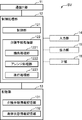
- FIG. 2 is a diagram illustrating a configuration of a care support apparatus in the care support system.
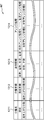
- FIG. 3 is a diagram showing a care procedure information table stored in the care support apparatus.
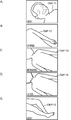
- FIG. 4 is a diagram for explaining an example of a care procedure stored in the care support apparatus.
- FIG. 4A shows a first step (procedure) in wiping
- FIG. 4B shows a second step (procedure) in the wiping
- FIG. 4C shows a third step in the wiping.
- 4D shows the fourth step (procedure) in the wiping
- FIG. 4E shows the fifth step (procedure) in the wiping.
- FIG. 5 and 6 are diagrams for explaining another example of the care procedure stored in the care support apparatus.
- FIG. 5A shows the first step (procedure) in getting up assistance
- FIG. 5B shows the second step (procedure) in getting up assistance
- FIG. 6A shows the third step in getting up assistance.
- FIG. 6B shows a fourth step (procedure) in the assistance of getting up.
- FIG. 7 is a diagram showing a body condition information table stored in the care support apparatus.
- FIG. 8 is a perspective view showing an external configuration of a wearable information input / output device in the care support system.
- FIG. 9 is a diagram showing an electrical configuration of the wearable information input / output device.
- the care support system MS in the embodiment can communicate with one or a plurality of wearable information input / output devices MD (MD-1 to MD-4) and the wearable information input / output devices MD via a network NW.
- the user (caregiver) NS of the wearable information input / output device MD supports care work performed on the care receiver Ob of the care target.
- the network NW may be, for example, a public line network, and may be a LAN (Local Area Network), for example.
- the network NW may be wired, for example, wireless, or may be a mixture of wired and wireless.
- the network NW may be provided with repeaters such as repeaters, bridges, and routers that relay communication signals.
- the network NW is a LAN according to the IEEE 802.11 standard.
- the care support device SV includes a communication interface unit (communication IF unit) 11, a control processing unit 12, and a storage unit 13, and the wearable information input / output device MD is a client. It is a server device.
- the communication IF unit 11 is a communication circuit that is connected to the control processing unit 12 and performs communication according to the control of the control processing unit 12.
- the communication IF unit 11 generates a communication signal containing data to be transferred input from the control processing unit 12 in accordance with a communication protocol used in the network NW of the care support system MS, and generates the generated communication signal in the network NW.
- To the wearable information input / output device MD The communication IF unit 11 receives a communication signal from the wearable information input / output device MD via the network NW, extracts data from the received communication signal, and has a format in which the control processing unit 12 can process the extracted data. The data is converted into data and output to the control processing unit 12.
- the communication IF unit 11 includes, for example, a communication interface circuit that complies with the IEEE 802.11 standard or the like.
- the storage unit 13 is a circuit that is connected to the control processing unit 12 and stores various predetermined programs and various predetermined data under the control of the control processing unit 12.
- the various predetermined programs include, for example, a control program for controlling each part of the care support device SV according to the function of each part, and a predetermined care based on various information received from the wearable information input / output device MD.
- a control processing program such as a care procedure processing program for returning the procedure to the wearable information input / output device MD is included.
- a care procedure corresponding to the type of care received from the wearable information input / output device MD as one of predetermined information input to the wearable information input / output device MD is described later.
- the physical information of the care receiver Ob corresponding to the care receiver identification information received as input from the wearable information input / output device MD is stored in the body condition information storage unit 132 described later.
- the care procedure after taking out the cared person's physical condition information, executing a predetermined process based on the extracted body information in the taken-out care procedure, and executing the predetermined process
- the step corresponding to the image of the care receiver Ob received from the wearable information input / output device MD is selected from the program to be sent back to the wearable information input / output device MD and the taken care procedure.
- the image of the care receiver Ob received from the wearable information input / output device MD from among the program for returning the care procedure after the selected step to the wearable information input / output device MD and the taken care procedure
- the storage unit 13 includes, for example, a ROM (Read Only Memory) that is a nonvolatile storage element, an EEPROM (Electrically Erasable Programmable Read Only Memory) that is a rewritable nonvolatile storage element, and the like.
- the storage unit 13 includes a RAM (Random Access Memory) serving as a working memory for the so-called control processing unit 12 that stores data generated during the execution of the predetermined program.
- the storage unit 13 may include a hard disk having a relatively large storage capacity.
- the storage unit 13 functionally includes a care procedure information storage unit 131 and a body information storage unit 132.
- the care procedure information storage unit 131 stores a plurality of care procedures associated with a plurality of types of care as care procedure information.
- the care procedure represents the order of actions performed by the caregiver NS for the care recipient Ob in order to achieve the desired care.
- the action that the caregiver NS performs for the care receiver Ob includes not only the action that the caregiver NS performs directly on the care receiver Ob but also the preparation action thereof. More specifically, in the present embodiment, a care name and a care procedure representing the type of care are stored in the care procedure information storage unit 131 in association with each other as the care procedure information.
- the care procedure information storage unit 131 stores the body information and the arrangement process. Are further stored in association with each other. That is, in this embodiment, the care procedure information storage unit 131 stores a care name, a care procedure, physical information, and an arrangement process in association with each other.
- the physical information is at least one of presence / absence of injury, presence / absence of paralysis, and illness.
- the predetermined process (arrangement process) is, for example, a process useful for reducing pain or discomfort given to the care recipient Ob by performing the step (procedure). It is a skip (omitted) of a step (procedure) according to physical information. Further, for example, the predetermined processing is addition of caution information according to the extracted physical information.
- this care procedure information is stored in the care procedure information storage unit 131 in a table format.
- the care procedure information table NT for registering the care procedure information includes, for example, a care name field 1311 for registering a care name indicating the type of care and a care name registered in the care name field 1311 as shown in FIG.
- a care procedure field 1312 for registering a care procedure in care a body information field 1313 for registering body information when arranging a care procedure in care of a care name registered in the care name field 1311, and a care name field 1311
- An arrangement process field 1314 for registering an arrangement process for performing a care procedure in care of a registered care name corresponding to the physical information registered in the physical information field 1313 is provided, and each care name has a record.
- the file name of the electronic file indicating the processing content (algorithm) of the arranging processing is registered, and the electronic information indicating the processing content of the arranging processing is registered.
- the file is stored in the storage unit 13.
- One or more data are registered in the physical information field 1313, and one or more file names are registered in the arrangement processing field 1314 accordingly.
- the care procedure information for wiping is registered in the first record, and “wiping” is registered in the care name field 1311 as a care name indicating the type of care.
- “wiping procedure” is registered as the file name of the electronic file indicating the wiping care procedure
- injury information is provided as physical information when arranging the wiping procedure.
- "Right elbow, left elbow, right foot, left foot” is registered as a place with numbness, paralysis or illness
- an arrangement processing field 1314 shows an electronic file indicating processing contents of arrangement processing according to physical information
- “right elbow arrangement processing 1,..., Left foot arrangement processing” is registered. For example, as shown in FIG.
- the electronic file indicating the wiping care procedure includes, for each step (procedure) in the wiping care procedure, an image that symbolically represents the content of the step and text indicating the procedure content. Including. More specifically, the wiping care procedure is configured with five steps (procedures), and the electronic file indicating the wiping care procedure is configured with data indicating each step. As shown in FIG. 4A, the data indicating the first step includes “wipe face” as text indicating the first procedure content, and symbolically represents the procedure content for wiping this face. A person image ObP-11 with a close-up portion is included. As shown in FIG.
- the data indicating the second step includes “wipe hands and arms” as text indicating the contents of the second procedure, and symbolizes the procedure contents for wiping the hands and arms.
- a human image ObP-12 in which the hand and arm portions are shown close-up is included.
- the data indicating the third step includes “wipe the chest and tummy” as the text indicating the third procedure content, and symbolizes the procedure content for wiping the chest and tummy.
- a human image ObP-13 in which the chest and tummy are shown close-up is included.
- the data indicating the fourth step includes “wipe the back” as text indicating the contents of the fourth procedure, and symbolically represents the procedure contents for wiping the back.
- a person image ObP-14 in which a portion is close-up is included.
- the data indicating the fifth step includes “wipe your feet” as text indicating the contents of the fifth procedure.
- a person image ObP-15, which is a close-up portion, is included.
- the electronic file for the right elbow arrangement process includes an instruction (command, command) to skip the second step (wiping the hand or arm).
- the electronic file of the right elbow arrangement process may include an instruction (command, command) for outputting a message “Let's hurt because the right elbow hurts” when the second step is presented.
- care procedure information for waking up assistance is registered in the second record, and “waking up assistance” is registered in the care name field 1311 as a care name indicating the type of care, “Wake-up assistance procedure” is registered in the care procedure field 1312 as the file name of the electronic file indicating the care procedure for waking-up assistance.
- injury information is provided as physical information when arranging the waking-up assistance procedure.
- "Right elbow, Left elbow” is registered as a place where there is a numb, a place where there is paralysis, or a place where there is a disease.
- “Right elbow arrangement process 2, Left elbow arrangement process 2” are registered. For example, as shown in FIG. 5 and FIG.
- the electronic file indicating the care procedure for getting up assistance is an image and procedure contents that symbolically represent the contents of the step for each step (procedure) in the care procedure for getting up assistance.
- the care procedure for getting up assistance is configured with four steps (procedures)
- the electronic file indicating the care procedure for getting up assistance is configured with data indicating each step.
- the data indicating the first step includes the text indicating the contents of the first step, “put in the lateral position, put the hand from the neck to the shoulder, and support the shoulder and knee”
- a person image ObP-21 symbolically representing the contents of the first procedure is included.
- the data indicating the second step as shown in FIG.
- the text indicating the content of the second procedure is “the principle of lever, so that the head of the care receiver Ob draws an arc around the buttocks. Includes a person image ObP-22 symbolically representing the contents of the second procedure.
- the data indicating the third step includes “supporting the body so that it does not fall forward, backward, left and right when it reaches the end sitting position” as the text indicating the content of the third procedure, A person image ObP-23 symbolically representing the contents of the third procedure is included.
- the data indicating the fourth step includes, as shown in FIG. 6B, the text indicating the contents of the fourth procedure, “the care receiver Ob himself also holds both hands firmly and supports his body”.
- the electronic file for the right elbow arrangement process includes an instruction (command, command) for changing “side position” to “lower left position” when the first step is presented.
- the electronic file of the right elbow arrangement process may include an instruction (command, command) for outputting a message “Let's hurt because the right elbow hurts” when the second step is presented.
- the body state information storage unit 132 associates the cared person identification information for identifying and identifying the cared person Ob with the body information related to the body state of the cared person Ob. It is stored as physical condition information. More specifically, in the present embodiment, the cared person who is the name of the cared person Ob, as an example of the cared person identification information, is stored in the body condition information storage unit 132 as the cared person body condition information. Name and physical information are stored in association with each other.
- the care receiver identification information is not limited to the name of the care receiver, and may be, for example, an ID that is assigned to the care receiver Ob and includes, for example, a predetermined symbol string.
- the care recipient's physical condition information is stored in the physical condition information storage unit 132 in a table format.
- the physical condition information table PT for registering the care receiver physical condition information is registered in a care receiver name field 1321 for registering a care receiver name and a care receiver name field 1321, for example, as shown in FIG.
- the body information of the cared person Ob is prepared in advance for candidate parts suffering from injury, paralysis and illness in the body, and the presence or absence of injury, paralysis or illness at the part of the cared person Ob is registered in the body information field 1322.
- the body information field 1322 includes a plurality of subfields corresponding to the candidate locations. More specifically, in the example shown in FIG. 7, the body information field 1322 is a neck field 13221 for registering body information for the neck, a right shoulder field 13222 for registering body information for the right shoulder, and a body information for the left shoulder. A left elbow field 13223 and a right elbow field 13224 for registering body information for the right elbow are provided. If there is an injury, paralysis, or illness at the location, a flag (present flag) “ ⁇ ” indicating that fact is registered. If there is no injury, paralysis or illness at the location, a flag (none flag) “*” indicating that fact is registered.
- the neck field 13221, the right shoulder field 13222, and the left shoulder field 13223 are respectively set to the absence flag “ “*” Is registered, and there is no injury, palsy or illness in the neck, right shoulder and left shoulder, and a flag “O” is registered in the right elbow field 13224, and injury, paralysis is registered in the right elbow. And / or disease.
- control processing unit 12 controls each part of the care support device SV according to the function of each part, and performs a predetermined care procedure based on various information received from the wearable information input / output device MD. The information is returned to the wearable information input / output device MD.
- the control processing unit 12 includes, for example, a CPU (Central Processing Unit) and its peripheral circuits.
- the control processing unit 12 functionally includes a control unit 121 and a care procedure processing unit 122 by executing the control processing program.
- the control unit 121 controls each part of the care support apparatus SV according to the function of each part, and controls the entire care support apparatus SV.
- the care procedure processing unit 122 returns a predetermined care procedure based on various information received from the wearable information input / output device MD to the wearable information input / output device MD.
- the care procedure processing unit 122 functionally includes an extraction processing unit 1221, an arrangement processing unit 1222, and a progress processing unit 1223 by executing the control processing program.
- the extraction processing unit 1221 performs a care procedure corresponding to the type of care input as one of predetermined information to the wearable information input / output device MD and received from the wearable information input / output device MD by the communication IF unit 11.
- the care procedure information stored in the care procedure information storage unit 131 is extracted, and the extracted care procedure is returned to the wearable information input / output device MD by the communication IF unit 11.
- the arrangement processing unit 1222 further inputs the other information as another one of the predetermined information to the wearable information input / output device MD.
- the physical information of the care receiver Ob corresponding to the care receiver identification information (the name of the care receiver in this embodiment) received by the communication IF unit 11 from the wearable information input / output device MD is stored in the body condition information memory. After taking out from the cared person's physical condition information stored in the unit 132, executing a predetermined process (arrangement process) based on the extracted body information in the care procedure taken out as described above, and executing this arrangement process Is returned to the wearable information input / output device MD by the communication IF unit 11.
- the progress processing unit 1223 selects the wearable information input / output device from the care procedures taken out as described above.
- a step (procedure) corresponding to the image of the care receiver Ob received from the MD by the communication IF unit 11 is selected, and the care procedure after the selected step is returned to the wearable information input / output device MD by the communication IF unit 11.
- the progress processing unit 1223 performs steps (procedures) according to the image of the care receiver Ob received by the communication IF unit 11 from the wearable information input / output device MD from the care procedures taken out as described above. Based on the selected step, each step of the care procedure is sequentially returned to the wearable information input / output device MD by the communication IF unit 11.
- care support device SV is connected to the control processing unit 12 as necessary, as shown by a broken line in FIG.
- An output unit 15 that outputs various commands, various data, and the like, and an interface unit (IF unit) 16 that inputs and outputs data with external devices may be provided.
- IF unit interface unit
- Such a care support device SV can be configured by, for example, a server computer with a communication function.
- the wearable information input / output device is a device that is worn by the caregiver NS and inputs / outputs predetermined information.
- the wearing site may be any body, and is preferably worn on the arm or head.
- the wearable information input / output device attached to the arm (for example, wrist) is a so-called wristwatch type, and the wearable information input / output device attached to the head is a so-called head-mounted display, so-called full-face type.
- a spectacle-type and see-through type wearable information input / output device MD will be described.
- the see-through type wearable information input / output device MD allows the caregiver NS to visually check the care receiver Ob while referring to the care procedure, so that the care work can be performed more appropriately.
- such a see-through type wearable information input / output device MD includes a frame 101 that is an example of a head-mounted member for mounting on the head.
- a frame 101 that is substantially U-shaped when viewed from above includes a front part 101a to which two spectacle lenses 102 are attached, and side parts 101b and 101c that extend rearward from both ends of the front part 101a.
- the two spectacle lenses 102 attached to the frame 101 may or may not have refractive power (optical power, reciprocal of focal length).
- the cylindrical main body 103 is fixed to the front part 101 a of the frame 101 on the upper part of the eyeglass lens 102 on the right side (which may be the left side according to the dominant eye of the user (caregiver NS)).
- the main body 103 is provided with a display unit 24 that displays predetermined information in accordance with the control of the control processing unit 23 described later so as to be disposed in front of the right eyeglass lens 102.
- the display unit 24 is a device that displays the predetermined information by, for example, a so-called volume phase reflection hologram, and the predetermined unit is formed by a hologram optical element formed in a translucent resin member such as an acrylic resin.
- Image light indicating information is diffracted and reflected and guided to the user's pupil, while external light is transmitted and guided to the user's pupil. For this reason, the user can visually recognize the outside world while referring to the predetermined information.
- the display part 24 may be arrange
- the lens 21a of the camera 21 disposed near the side is provided on the front surface of the main body 103 so as to face the front.
- a right sub-main body 108 is attached to the right side 101b of the frame 101.
- a microphone 22 and a speaker (or earphone) 25 are disposed in the right sub-main body portion 108.
- the main main body 103 and the right sub main body 108 are connected to each other by a wiring HS so that signals can be transmitted.
- the right sub-main body 108 is connected to a control unit CTU (not shown in FIG. 8, see FIG. 9) via a cord CD extending from the rear end.
- the control unit CTU has a box-shaped housing, and is attached to the user's waist, for example, via a belt or the like.
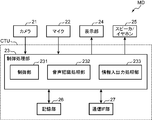
- the wearable information input / output device MD includes, for example, as shown in FIG. 9, a camera 21, a microphone 22, a control processing unit 23, a display unit 24, a speaker (or earphone) 25, a storage unit 26, And a communication IF unit 27.
- the control processing unit 23, the storage unit 26, and the communication IF unit 27 constitute the control unit CTU and are accommodated in the box-shaped housing.
- the camera 21 is an apparatus that is connected to the control processing unit 23 and generates an image of a subject (mainly a care receiver Ob in the present embodiment) under the control of the control processing unit 23.
- the camera 21 is, for example, an image forming optical system that forms an optical image of a subject on a predetermined image forming surface, and a light receiving surface that coincides with the image forming surface.
- An image sensor that converts the image sensor into a digital signal processor (DSP) that performs known image processing on the output of the image sensor to generate an image (image data).
- the imaging optical system includes one or more lenses, and includes the lens 21a as one of them.
- the camera 21 outputs the generated image data to the control processing unit 23.
- the microphone 22 is a circuit that is connected to the control processing unit 23 and converts acoustic vibration of sound into an electrical signal.
- the microphone 22 outputs the converted electric signal representing the external sound to the control processing unit 23.
- the display unit 24 is a device that is connected to the control processing unit 23 and displays predetermined information under the control of the control processing unit 23.
- the speaker (or earphone) 25 is a circuit that is connected to the control processing unit 23 and generates and outputs a sound corresponding to an electrical signal representing a sound according to the control of the control processing unit 23.
- the communication IF unit 27 is a communication circuit that is connected to the control processing unit 23 and performs communication according to the control of the control processing unit 23.
- the storage unit 26 is a circuit that is connected to the control processing unit 23 and stores various predetermined programs and various predetermined data in accordance with the control of the control processing unit 23.
- Examples of the various predetermined programs include a control program for controlling each part of the wearable information input / output device MD according to the function of each part, a voice recognition program for recognizing voice input from the microphone 22, A control processing program such as an information input / output processing program for inputting / outputting predetermined information is included.
- Examples of the various predetermined data include a communication address of the care support device SV, an image generated by imaging with the camera 21, a voice input from the microphone 22, and a care procedure received from the care support device SV. Data necessary for executing each program is included.
- the storage unit 26 includes, for example, a ROM or an EEPROM.
- the storage unit 26 includes a RAM serving as a working memory for the so-called control processing unit 23 that stores data generated during execution of the predetermined program.
- the control processing unit 23 controls each part of the wearable information input / output device MD according to the function of each part, and inputs and outputs predetermined information.
- the control processing unit 23 includes, for example, a CPU and its peripheral circuits.
- the control processing unit 23 functionally includes a control unit 231, a voice recognition processing unit 232, and an information input / output processing unit 233 by executing a control processing program.
- the control unit 231 controls each part of the wearable information input / output device MD according to the function of each part, and controls the wearable information input / output device MD.
- the voice recognition processing unit 232 recognizes the voice input from the microphone 22 by a known conventional method.
- the information input / output processing unit 233 processes input / output of predetermined information. More specifically, the information input / output processing unit 233 uses, as a communication signal (cared person name notification signal), the name of the cared person recognized by the voice recognition processing unit 232 processing the voice input from the microphone.
- the communication IF unit 27 transmits the data to the care support device SV.
- the information input / output processing unit 233 accommodates the nursing name recognized by processing the voice input from the microphone by the voice recognition processing unit 232 in the communication signal (nursing name notification signal), and the communication IF unit 27 supports the nursing care. Send to device SV.
- the information input / output processing unit 233 accommodates the image of the care receiver Ob generated by imaging with the camera 21 in a communication signal (care receiver image notification signal), and transmits the image to the care support device SV through the communication IF unit 27.
- the information input / output processing unit 233 displays the information contained in the communication signal received by the communication IF unit 27 from the care support device SV, for example, the care procedure on the display unit 24.
- FIG. 1 shows, as an example, four first to fourth wearable information input / output devices MD-1 to MD-4.
- the second wearable information input / output device MD-2 is attached to the caregiver NS-1 who cares for Ob-1 who is one of the caregivers Ob.
- the third wearable information input / output device MD-3 is attached to the caregiver NS-3 who cares for the other caregiver Ob-3.
- the fourth wearable information input / output device MD-4 is worn by a caregiver NS-4 who cares for Ob-4 who is another care receiver Ob.
- These first to fourth wearable information input / output devices MD-1 to MD-4 are connected to the care support device SV via the network NW, respectively.
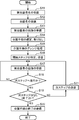
- FIG. 10 is a flowchart showing the operation of the care support apparatus.
- FIG. 11 is a flowchart showing the operation of the wearable information input / output device.
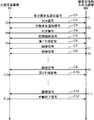
- FIG. 12 is a sequence diagram showing the operation of the care support system.
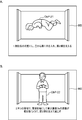
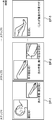
- FIG. 13 is a diagram for explaining an example of a care procedure displayed on the wearable information input / output device.
- each of the devices SV and MD executes necessary initialization and starts its operation.
- the control processing unit 12 is functionally configured with a control unit 121 and a care procedure processing unit 122
- the care procedure processing unit 122 includes an extraction processing unit 1221, Arrangement processing unit 1222 and progress processing unit 1223 are functionally configured.
- the control processing unit 23 is functionally configured with a control unit 231, a voice recognition processing unit 232, and an information input / output processing unit 233 by executing the control processing program.
- the caregiver NS inputs, from the microphone 22, a care receiver name and an instruction (transmission instruction, transmission command) for transmitting the care receiver name to the care support device SV. 10 to 13, when voice input is received by the microphone 22, the wearable information input / output device MD recognizes the voice input from the microphone 22 by the voice recognition processing unit 232 of the control processing unit 23, Each input of a person name and a care receiver name transmission instruction is accepted, and according to the care receiver name transmission instruction, the information input / output processing unit 233 of the control processing unit 23 supports the received care receiver name and care procedure.
- a care receiver name notification signal containing instructions (request for support, support request command) for requesting is transmitted to the care support apparatus SV (S21 in FIG. 11, C1 in FIG. 12).
- the care procedure processing section 122 of the control processing section 12 notifies the care receiver name of the received care receiver name.
- the reception response communication signal (Ack signal) for the care receiver name notification signal is the wearing type information input / output of the care receiver name notification signal transmission source.
- a reply is made to the device MD (S11 in FIG. 10, C2 in FIG. 12).
- the wearable information input / output device MD transmits and receives communication signals using the communication IF unit 27, and the care support device SV transmits and receives communication signals using the communication IF unit 11.
- the care support device SV transmits and receives communication signals using the communication IF unit 11.
- the caregiver NS inputs a care name and a care name transmission instruction from the microphone 22 by voice.
- the wearable information input / output device MD recognizes the voice input from the microphone 22 by the voice recognition processing unit 232, and receives each input of the care name and the care name transmission instruction,
- the information input / output processing unit 233 transmits the care name notification signal containing the accepted care name to the care support device SV. (S22 in FIG. 11, C3 in FIG. 12).
- the care procedure processing unit 122 associates the received care name with the communication address of the source of the care name notification signal and stores the care name. 13 and returns an Ack signal corresponding to the care name notification signal to the wearable information input / output device MD that is the source of the care name notification signal (S12 in FIG. 10, C4 in FIG. 12).
- the wearable information input / output device MD captures and generates an image of the care receiver Ob by the camera 21, and the information input / output processing unit 233 generates this image.
- the care receiver image notification signal (initial image signal) at the start of accommodating the image of the care receiver Ob that has been received is transmitted to the care support device SV (S23 in FIG. 11, C5 in FIG. 12).
- the care procedure processing unit 122 converts the received image of the care receiver Ob to the communication address of the transmission source of the initial image signal. And stored in the storage unit 13 (S13 in FIG. 10).
- the care support device SV selects and extracts a care procedure from the care procedure information storage unit 131 by the care procedure processing unit 122 (S14 in FIG. 10). More specifically, the care procedure processing unit 122 extracts the care name associated with the communication address of the transmission source of the initial image signal received in the process S13 by the extraction processing unit 1221 and uses the extracted care name as the extracted care name. A corresponding care procedure is selected and extracted from the care procedure information stored in the care procedure information storage unit. More specifically, in the present embodiment, the extraction processing unit 1221 of the care procedure processing unit 122 registers the extracted care name in the care name field 1311 of the care procedure information table NT stored in the care procedure information storage unit 131. The selected record is selected (searched), and the care procedure registered in the care procedure field 1312 of the selected record (in this embodiment, the file name of the electronic file indicating the care procedure) is extracted.
- the care support device SV performs an arrangement process in which the care procedure processing unit 122 executes an arrangement process based on the body information of the care receiver Ob for the extracted care procedure (S15 in FIG. 10). More specifically, the care procedure processing unit 122 first extracts the care receiver name associated with the communication address of the transmission source of the initial image signal received in the process S13 by the arrangement processing unit 1222, and extracts the care receiver name. The physical information corresponding to the name of the cared person is extracted from the cared person's physical condition information stored in the physical condition information storage unit 132. More specifically, in the present embodiment, the arrangement processing unit 1222 of the care procedure processing unit 122 uses the extracted care receiver name in the physical condition information table PT stored in the physical condition information storage unit 132.
- the record registered in the field 1321 is selected (searched), and the physical information registered in the physical information field 1322 of the selected record is extracted.
- the care procedure processing unit 122 determines whether or not the extracted physical information of the care receiver Ob is registered in the physical information field 1313 of the record selected in the processing S14 by the arrangement processing unit 1222. .
- the arrangement processing unit 1222 of the care procedure processing unit 122 registers in the arrangement processing field 1314 of the record selected in the processing S14.
- the arranged processing (in this embodiment, the file name of the electronic file indicating the processing contents of the arranging processing) is taken out, and the taken out arranging processing is executed in the care procedure taken out in the processing S14.
- the arrangement processing unit 1222 of the care procedure processing unit 122 performs the extraction in the process S14 without performing the arrangement process. Adopt the care procedure as it is.
- the care support device SV identifies a start step (start procedure) from the care procedures taken out in the process S14 by the care procedure processing unit 122 and arranged as necessary in the process S15.
- the specified start step is returned to the wearable information input / output device MD that is the transmission source of the initial image signal received in the processing S13 (S16 in FIG. 10, C6 in FIG. 12).
- the care procedure processing unit 122 is extracted by the progress processing unit 1223 in the process S14 and included in the care procedure arranged in the process S15 as necessary, and received in the process S13. It is determined whether there is a step (procedure) that matches the image of the caregiver Ob.
- the progress processing unit 1223 of the care procedure processing unit 122 extracts the moving object region as the person region of the care receiver Ob from the image of the care receiver Ob received in the processing S13 by, for example, the background difference method or the frame difference method. Then, for each person image ObP in each step (each procedure) in the care procedure extracted in the process S14 and arranged as necessary in the process S15, the person image ObP in the step and the extracted care receiver Ob The degree of coincidence with the person area is determined, and it is determined whether or not the obtained degree of coincidence is equal to or greater than a preset threshold (start step determination threshold).
- start step determination threshold a preset threshold
- the degree of coincidence when determining the degree of coincidence, a known conventional method is used for at least one of the steps so that the size and direction of the person image ObP of the step and the extracted person area of the care receiver Ob are substantially aligned with each other.
- the enlargement, reduction, rotation, and translation processes may be performed.
- the progress processing unit 1223 of the care procedure processing unit 122 matches the image of the care receiver Ob received in step S13.
- a step (procedure) is determined to exist, a step having a degree of coincidence equal to or higher than the start step determination threshold is determined as a start step, and a communication signal (first procedure signal) containing the determined start step is processed as the process. It returns to the wearing type information input / output device MD which is the transmission source of the initial image signal received in S13.
- the step with the highest (larger) matching degree is determined as the starting step.
- the progress processing unit 1223 of the care procedure processing unit 122 matches the image of the care receiver Ob received in the process S13. It is determined that there is no step (procedure) to be performed, the first step in the care procedure taken out in the process S14 and arranged as necessary in the process S15 is determined as a start step, and the determined start step is The accommodated first procedure signal is returned to the wearable information input / output device MD which is the transmission source of the initial image signal received in the process S13.
- the start step determination threshold is set to an appropriate numerical value, and is set to 60%, 75%, 90%, or the like, for example, when the unit of coincidence is a percentage.
- the wearable information input / output device MD When receiving the first procedure signal, the wearable information input / output device MD causes the information input / output processing unit 233 to display the start step contained in the received first procedure signal on the display unit 24 (S24 in FIG. 11). ).
- the wearable information input / output device MD captures and generates an image of the care receiver Ob by the camera 21, and stores the generated image of the care receiver Ob by the information input / output processing unit 233.
- the care receiver image notification signal (image signal) at the time is transmitted to the care support device SV (S25 in FIG. 11, C7 in FIG. 12).
- the wearable information input / output device MD determines whether or not the end of the care procedure has been received by the information input / output processing unit 233 from the care support device SV based on a procedure end signal to be described later (S26 in FIG. 11). ). As a result of this determination, when the end of the care procedure is received (Yes), the wearable information input / output device MD displays the end of the care procedure on the display unit 24 by the information input / output processing unit 233 ( In S27 of FIG. 11, this process is terminated. On the other hand, as a result of the determination, if the end of the care procedure has not been received (No), the wearable information input / output device MD returns the process to step S24 by the control processing unit 23.
- the wearable information input / output device MD returns the process to the process S24 and receives the next procedure signal (second procedure signal, third procedure signal, etc.) from the care support device SV
- the next step (the second step, the third step, etc.) accommodated in the newly received next procedure signal is displayed on the display unit 24. Therefore, the steps accommodated in the most recently received procedure signal continue to be displayed on the display unit 24 until the next procedure signal is newly received.
- the care procedure processing unit 122 associates the received image of the care receiver Ob with the communication address of the transmission source of the image signal. Is stored in the storage unit 13 (S17 in FIG. 10).
- the care support device SV determines whether the care procedure should proceed to the next step by the care procedure processing unit 122 (S18 in FIG. 10). More specifically, the care procedure processing unit 122 uses the progress processing unit 1223 as a moving object as a person area of the care receiver Ob from the image of the care receiver Ob received in the process S17 by, for example, the background difference method or the frame difference method.
- step progress determination threshold a preset threshold
- the progress processing unit 1223 determines that the process should proceed to the next step (Yes), and then executes process S19.
- the step progress determination threshold is set to an appropriate numerical value, and is set to 40%, 30%, 20% or the like, for example, when the unit of coincidence is a percentage.
- the care support device SV uses the care procedure processing unit 122 to determine whether there is a next step, that is, whether the care procedure is finished. More specifically, the care procedure processing unit 122 determines whether or not there is a next step in the care procedure taken out in the processing S14 and arranged as necessary in the processing S15 by the progress processing unit 1223. To do. As a result of this determination, when there is no next step (Yes), the progress processing unit 1223 of the care procedure processing unit 122 executes the next processing S20 and ends this processing. On the other hand, if the result of the determination is that there is a next step (No), the progress processing unit 1223 returns the process to the process S17 after executing the next process S21.
- the care support apparatus SV processes the communication signal (procedure end signal) containing information indicating that the care procedure is ended (care process end information) by the progress processing unit 1223 of the care procedure processing unit 122.
- the image signal received in S17 is transmitted to the wearable information input / output device MD as the transmission source.
- the care support apparatus SV accommodates the next step in the care procedure that is taken out in the process S14 and arranged as necessary in the process S15 by the progress processing unit 1223 of the care procedure processing unit 122.
- the signal is transmitted to the wearable information input / output device MD that is the transmission source of the image signal received in step S17.
- each of the above-described processing S24 to S26 is repeated until a procedure end signal is received, while in the care support device SV, the above-described processing is performed until the next step is eliminated.
- the processes S17 to S19 and S21 are repeated. Therefore, after the process C7 shown in FIG. 12, the wearable information input / output device MD repeatedly transmits an image signal to the care support device SV (C8 to C9 in FIG. 12), and the care support device SV receives the received image. Based on the image of the care recipient Ob contained in the signal, it is determined whether to proceed to the next step. When it is determined that the next step should be performed and it is determined that there is a next step, the second step is the next step.
- a second procedure signal containing the step is returned to the wearable information input / output device MD (C10 in FIG. 12).
- the screen DP-2 shown second from the left side of FIG. Such processing is repeated, and sequentially, a procedure signal containing the next step is transmitted from the care support device SV to the wearable information input / output device MD, and a procedure signal containing the last step is sent to the care support device SV.
- the screen DP-5 shown on the right side of FIG. 13 is displayed on the display unit 24.
- a procedure end signal is transmitted from the care support device SV to the wearable information input / output device MD (C12 in FIG. 12).
- the type information input / output device MD the end of the care procedure is displayed on the display unit 24, and the care support device SV and the wearing type information input / output device MD each end this processing.
- the care support system MS, the care support device SV, and the care support method and the care support program implemented in the embodiment support the care procedure corresponding to the type of care for wearing type information input / output.
- the user MD (caregiver) NS of the wearable information input / output device MD can refer to the care procedure output from the wearable information input / output device MD.
- the device MD that outputs the care procedure is a wearable type such as an arm-mounted type or a head-mounted type
- the caregiver NS can refer to the care procedure even when the hand is blocked by the care work. For this reason, even if it is caregivers NS, such as a person with no nursing care experience, an immature person (person with little nursing care experience), etc., more appropriate care can be performed. Therefore, the care support system MS, the care support device SV, the care support method, and the care support program can support care work.
- the care support system MS, the care support device SV, the care support method, and the care support program store physical information related to the physical state of the care receiver Ob, and arrange processing based on the physical information of the care receiver Ob as a care procedure. Since it returns to wearable information input / output device MD after performing, caregiver NS performs the care procedure after performing the arrangement process based on the body information of care receiver Ob by said wearable information input / output device MD. You can refer to it. For this reason, the caregiver NS can perform care corresponding to the physical condition of the care receiver Ob (care customized according to the care receiver Ob), and the care receiver Ob does not care for the physical condition. Can reduce pain and discomfort. Therefore, the care support system MS, the care support device SV, the care support method, and the care support program can support care work according to the physical condition of the care receiver Ob.
- the care support system MS, the care support device SV, the care support method, and the care support program select steps corresponding to the image of the care receiver Ob from the care procedures, the current position of the care receiver Ob ( Steps according to (posture) can be selected, and the care procedure can be returned to the wearable information input / output device MD from the step according to the current posture (posture) of the care receiver Ob. Therefore, the caregiver NS can refer to an appropriate step according to the current position (posture) of the care receiver Ob when starting care. Therefore, the care support system MS, the care support device SV, the care support method, and the care support program can support care work according to the current position (posture) of the care receiver Ob when starting care.
- the care support system MS, the care support device SV, the care support method, and the care support program select steps corresponding to the image of the care receiver Ob from the care procedures, and based on the selected steps, Since each step is sequentially returned to the wearable information input / output device MD, the steps corresponding to the progress of the care procedure can be sequentially returned to the wearable information input / output device MD. For this reason, the caregiver NS can refer to timely (timely) steps corresponding to the progress of the care procedure. Therefore, the care support system MS, the care support device SV, the care support method, and the care support program can support care work according to the progress of the care procedure.
- the wearable information input / output device MD is configured to input data such as a care receiver name, a care name, and a transmission instruction by voice.
- the wearable information input / output device MD may be configured to input data by other input methods.
- the wearable information input / output device MD may include a plurality of input switches to which data contents are assigned, and may be configured to input data by an input operation of the input switches.
- the wearable information input / output device MD may be configured to display data options on the display unit 24 and to input data by selecting the displayed options.
- the care support device SV is configured to detect the person area of the care receiver Ob by extracting the moving body area.
- the detection method detects the person area of the care receiver Ob.
- the care support device SV may be configured to detect the person area of the care receiver Ob by another detection method.
- the wearable information input / output device MD includes an infrared camera as the camera 21, and the care support device SV is configured to detect the person area of the care receiver Ob from the temperature distribution image generated by the infrared camera. May be.
- care support is provided so that the care procedure is returned one by one by providing a “return” button, or the care procedure is advanced one by one by providing a “next” button, for example.
- the device SV and the wearable information input / output device MD may be configured.
- a care support device is a care support device that is attached to a caregiver and connected to a wearable information input / output device that inputs and outputs predetermined information in a communicable manner, and corresponds to each of a plurality of types of care
- a care procedure information storage unit that stores a plurality of attached care procedures as care procedure information, and is input as one of the predetermined information to the wearable information input / output device and received from the wearable information input / output device
- a care procedure processing unit that extracts a care procedure corresponding to the type of care from the care procedure information stored in the care procedure information storage unit and returns the taken care procedure to the wearable information input / output device; Prepare.
- a user of the wearable information input / output device can use the wearable information input / output device.
- You can refer to the care procedure that is output.
- the device for outputting the care procedure is, for example, a wearable type such as an arm-mounted type or a head-mounted type, the user can refer to the care procedure even when the hand is blocked by the care work. For this reason, for example, even a user such as a person who has no care experience or an immature person (a person who has little care experience) can perform more appropriate care. Therefore, the care support device can support care work.
- physical information regarding the physical state of the care receiver is associated with the care receiver identification information for identifying and identifying the care receiver.
- the care procedure processing unit is further input to the wearable information input / output device as another one of the predetermined information and received from the wearable information input / output device.
- the care receiver's physical information corresponding to the care receiver identification information is extracted from the care receiver's physical condition information stored in the physical condition information storage unit, and a predetermined process based on the extracted physical information is performed.
- the care procedure executed after the taken care procedure is executed and the predetermined processing is executed is returned to the wearable information input / output device.
- the physical information is at least one of presence / absence of injury, presence / absence of paralysis, and illness.
- the predetermined process is a skip (omitted) of a step (procedure) corresponding to the extracted physical information from the extracted care procedure.
- the predetermined process is addition of caution information according to the extracted physical information.
- Such a care support device stores physical information related to the physical condition of the cared person, and after performing predetermined processing based on the cared person's physical information in the care procedure, to the wearable information input / output device Since the reply is made, the user of the wearable information input / output device can refer to the care procedure after executing a predetermined process based on the physical information of the care recipient by the wearable information input / output device. For this reason, the user can perform care corresponding to the physical condition of the cared person (care that is customized according to the cared person), and the cared person feels pain and discomfort due to care that is not matched to the physical condition. Can be reduced. Therefore, the care support device can support care work in accordance with the physical condition of the care recipient.
- the wearable information input / output device further obtains an image of the care recipient
- the care procedure processing unit includes the extracted care procedure
- the step corresponding to the image of the care receiver received from the wearable information input / output device is selected, and the care procedure after the selected step is returned to the wearable information input / output device.
- such a care support device selects a step according to the image of the cared person from the care procedure, it can select a step according to the current position (posture) of the cared person, The care procedure can be returned to the wearable information input / output device from the step corresponding to the current posture (posture). For this reason, the user can refer to an appropriate step according to the current posture (posture) of the care recipient when starting care. Therefore, when starting the care, the care support device can support the care work according to the current posture (posture) of the care recipient.
- the wearable information input / output device further obtains an image of the care recipient
- the care procedure processing unit includes the extracted care procedure
- Steps corresponding to the image of the care receiver received from the wearable information input / output device are selected, and each step of the care procedure is sequentially returned to the wearable information input / output device based on the selected steps.
- Such a care support device selects a step corresponding to the image of the care recipient from the care procedure, and sequentially performs each step of the care procedure to the wearable information input / output device based on the selected step. Since the reply is made, the steps corresponding to the progress of the care procedure can be sequentially returned to the wearable information input / output device. For this reason, the user can refer to a timely (timely) step according to the progress of the care procedure. Therefore, the care support device can support care work according to the progress of the care procedure.
- the wearable information input / output device is a head-mounted type and a see-through type.
- Such a care support apparatus can perform the care work more appropriately because the caregiver can visually check the care recipient while referring to the care procedure.
- the wearable information input / output device includes a microphone and a voice recognition processing unit that recognizes a voice input from the microphone.
- Such a care support device can be input by voice.
- the care support method is a care support method of a care support device that is attached to a caregiver and is communicably connected to a wearable information input / output device that inputs and outputs predetermined information.
- a receiving step for receiving the type of care input as one of the predetermined information in the type information input / output device from the wearing type information input / output device, and a care procedure corresponding to the type of care received in the receiving step.
- a care procedure extraction step for taking out a plurality of care procedures associated with each of a plurality of types of care, and a reply step for returning the care procedure extracted in the care procedure extraction step to the wearable information input / output device .
- a care support program is provided in a computer connected to a wearable information input / output device that can be communicated with a wearable information input / output device that is worn by a caregiver and inputs / outputs predetermined information.
- a receiving step for receiving the type of care input as one of the information from the wearable information input / output device, and a care procedure corresponding to the type of care received in the receiving step for each of the plurality of types of care It is a program for executing a care procedure extraction process that is extracted from a plurality of associated care procedures and a reply process that returns the care procedure extracted in the care procedure extraction process to the wearable information input / output device.
- the care support method and the care support program can support care work.
- a care support system includes a wearable information input / output device that is worn by a caregiver and inputs / outputs predetermined information, and a care support device that is communicably connected to the wearable information input / output device.
- the care support system is any one of these above-described care support apparatuses.
- Such a care support system uses any of the above-described care support devices, it can support care work.
- the care support apparatus care support method, care support program, and care support system which support care work can be provided.
Landscapes
- Health & Medical Sciences (AREA)
- Engineering & Computer Science (AREA)
- Epidemiology (AREA)
- General Health & Medical Sciences (AREA)
- Medical Informatics (AREA)
- Primary Health Care (AREA)
- Public Health (AREA)
- Biomedical Technology (AREA)
- Bioethics (AREA)
- Business, Economics & Management (AREA)
- General Business, Economics & Management (AREA)
- Medical Treatment And Welfare Office Work (AREA)
Abstract
本発明では、介護の複数の種類それぞれに対応付けられた複数の介護手順を介護手順情報として記憶部に記憶し、介護者に装着される装着型情報入出力装置に所定の情報の1つとして入力されて前記装着型情報入出力装置から受信した介護の種類、に対応する介護手順を、前記記憶部に記憶された前記介護手順情報から取り出し、この取り出した介護手順を前記装着型情報入出力装置へ返信する。したがって、本発明にかかる介護支援装置、介護支援方法、介護支援プログラムおよび介護支援システムは、介護作業を支援できる。
Description
本発明は、介護作業を支援する介護支援装置、介護支援方法、介護支援プログラムおよび介護支援システムに関する。
我が国(日本)は、戦後の高度経済成長に伴う生活水準の向上、衛生環境の改善および医療水準の向上等によって、高齢化社会、より詳しくは、総人口に対する65歳以上の人口の割合である高齢化率が21%を超える超高齢化社会になっている。2005年では、総人口約1億2765万人に対し65歳以上の高齢者人口は、約2556万人であったのに対し、2020年では、総人口約1億2411万人に対し高齢者人口は、約3456万人となる予測もある。このような高齢化社会では、病気や怪我や高齢等による介護を必要とする被介護者は、高齢化社会ではない通常の社会で生じる被介護者よりもその増加が見込まれる。このため、近年では、被介護者の介護に関する技術が研究、開発され、一例では、特許文献1に開示された介護監視装置がある。
この特許文献1に開示された介護監視装置は、介護者の動作の映像を入力する入力手段と、介護動作の見本の映像を記録する見本データ記憶手段と、前記入力手段で入力された映像データから介護シーンを抽出する抽出手段と、前記見本データ記憶手段に記憶された見本データと前記抽出手段で抽出された介護シーンとを比較して違いが大きい介護動作名を抽出する比較手段とを備える。
ところで、上述のように、要介護者が増加していくと、介護経験の無い者や未熟な者(介護経験の少ない者)等による介護の増加が見込まれるが、このような場合でも、より適正な介護が望まれる。
前記特許文献1に開示された介護監視装置は、比較手段による比較の結果、見本と異なることは、出力されるが、介護の仕方を出力するものではない。
本発明は、上述の事情に鑑みて為された発明であり、その目的は、介護作業を支援できる介護支援装置、介護支援方法、介護支援プログラムおよび介護支援システムを提供することである。
本発明では、介護の複数の種類それぞれに対応付けられた複数の介護手順を介護手順情報として記憶部に記憶し、介護者に装着される装着型情報入出力装置に所定の情報の1つとして入力されて前記装着型情報入出力装置から受信した介護の種類、に対応する介護手順を、前記記憶部に記憶された前記介護手順情報から取り出し、この取り出した介護手順を前記装着型情報入出力装置へ返信する。したがって、本発明にかかる介護支援装置、介護支援方法、介護支援プログラムおよび介護支援システムは、介護作業を支援できる。
上記並びにその他の本発明の目的、特徴及び利点は、以下の詳細な記載と添付図面から明らかになるであろう。
以下、本発明にかかる実施の一形態を図面に基づいて説明する。なお、各図において同一の符号を付した構成は、同一の構成であることを示し、適宜、その説明を省略する。本明細書において、総称する場合には添え字を省略した参照符号で示し、個別の構成を指す場合には添え字を付した参照符号で示す。
図1は、実施形態における介護支援システムの構成を示す図である。図2は、前記介護支援システムにおける介護支援装置の構成を示す図である。図3は、前記介護支援装置に記憶される介護手順情報テーブルを示す図である。図4は、前記介護支援装置に記憶される介護手順の一例を説明するための図である。図4Aは、清拭における第1番目のステップ(手順)を示し、図4Bは、前記清拭における第2番目のステップ(手順)を示し、図4Cは、前記清拭における第3番目のステップ(手順)を示し、図4Dは、前記清拭における第4番目のステップ(手順)を示し、そして、図4Eは、前記清拭における第5番目のステップ(手順)を示す。図5および図6は、前記介護支援装置に記憶される介護手順の他の一例を説明するための図である。図5Aは、起き上がり介助における第1番目のステップ(手順)を示し、図5Bは、前記起き上がり介助における第2番目のステップ(手順)を示し、図6Aは、前記起き上がり介助における第3番目のステップ(手順)を示し、そして、図6Bは、前記起き上がり介助における第4番目のステップ(手順)を示す。図7は、前記介護支援装置に記憶される身体状態情報テーブルを示す図である。図8は、前記介護支援システムにおける装着型情報入出力装置の外観構成を示す斜視図である。図9は、前記装着型情報入出力装置の電気的な構成を示す図である。
図1において、実施形態における介護支援システムMSは、1または複数の装着型情報入出力装置MD(MD-1~MD-4)と、装着型情報入出力装置MDにネットワークNWを介して通信可能に接続される介護支援装置SVとを備え、装着型情報入出力装置MDのユーザ(介護者)NSが介護対象の被介護者Obに実施する介護作業を支援する。
ネットワークNWは、例えば公衆回線網であって良く、また例えばLAN(Local Area Network)であって良い。ネットワークNWは、例えば有線であって良く、また例えば無線であって良く、また例えば有線および無線の混在したものであって良い。ネットワークNWは、通信信号を中継する例えばリピーター、ブリッジおよびルーター等の中継機が備えられて良い。一例では、ネットワークNWは、IEEE802.11規格に従ったLANである。
まず、介護支援装置について説明する。介護支援装置SVは、例えば、図2に示すように、通信インターフェース部(通信IF部)11と、制御処理部12と、記憶部13とを備え、装着型情報入出力装置MDをクライアントとするサーバ装置である。
通信IF部11は、制御処理部12に接続され、制御処理部12の制御に従って通信を行うための通信回路である。通信IF部11は、制御処理部12から入力された転送すべきデータを収容した通信信号を、この介護支援システムMSのネットワークNWで用いられる通信プロトコルに従って生成し、この生成した通信信号をネットワークNWを介して装着型情報入出力装置MDへ送信する。通信IF部11は、ネットワークNWを介して装着型情報入出力装置MDから通信信号を受信し、この受信した通信信号からデータを取り出し、この取り出したデータを制御処理部12が処理可能な形式のデータに変換して制御処理部12へ出力する。通信IF部11は、例えば、IEEE802.11規格等に従った通信インターフェース回路を備えて構成される。
記憶部13は、制御処理部12に接続され、制御処理部12の制御に従って、各種の所定のプログラムおよび各種の所定のデータを記憶する回路である。前記各種の所定のプログラムには、例えば、介護支援装置SVの各部を当該各部の機能に応じてそれぞれ制御する制御プログラムや、装着型情報入出力装置MDから受信した各種情報に基づいた所定の介護手順を前記装着型情報入出力装置MDへ返信する介護手順処理プログラム等の制御処理プログラムが含まれる。前記介護手順処理プログラムには、装着型情報入出力装置MDに所定の情報の1つとして入力されて前記装着型情報入出力装置MDから受信した介護の種類、に対応する介護手順を、後述の介護手順情報記憶部131に記憶された介護手順情報から取り出し、この取り出した介護手順を前記装着型情報入出力装置MDへ返信するプログラムや、さらに前記装着型情報入出力装置MDに前記所定の情報の他の1つとして入力されて前記装着型情報入出力装置MDから受信した被介護者識別情報、に対応する被介護者Obの身体情報を、後述の身体状態情報記憶部132に記憶された被介護者身体状態情報から取り出し、この取り出した身体情報に基づく所定の処理を、前記取り出した介護手順に実行し、前記所定の処理を実行した後の介護手順を、前記装着型情報入出力装置MDへ返信するプログラムや、前記取り出した介護手順の中から、前記装着型情報入出力装置MDから受信した被介護者Obの画像に応じたステップを選定し、この選定したステップ以降の介護手順を前記装着型情報入出力装置MDへ返信するプログラムや、前記取り出した介護手順の中から、前記装着型情報入出力装置MDから受信した被介護者Obの画像に応じたステップを選定し、この選定したステップに基づいて介護手順の各ステップを順次に前記装着型情報入出力装置MDへ返信するプログラム等が含まれる。前記各種の所定のデータには、例えば前記装着型情報入出力装置MDから取得(受信)した被介護者Obの画像や、介護手順情報や、被介護者身体状態情報等の、各プログラムを実行する上で必要なデータ等が含まれる。記憶部13は、例えば不揮発性の記憶素子であるROM(Read Only Memory)や書き換え可能な不揮発性の記憶素子であるEEPROM(Electrically Erasable Programmable Read Only Memory)等を備える。記憶部13は、前記所定のプログラムの実行中に生じるデータ等を記憶するいわゆる制御処理部12のワーキングメモリとなるRAM(Random Access Memory)等を含む。記憶部13は、比較的大容量の記憶容量を持つハードディスク等を含んで良い。前記介護手順情報および前記身体状態情報それぞれを記憶するために、記憶部13は、機能的に、介護手順情報記憶部131および身体情報記憶部132を備える。
介護手順情報記憶部131は、介護の複数の種類それぞれに対応付けられた複数の介護手順を介護手順情報として記憶するものである。前記介護手順は、目的の介護を達成するために、介護者NSが被介護者Obのために行う行為の順番を表したものである。介護者NSが被介護者Obのために行う行為には、介護者NSが被介護者Obに直接的に行う行為だけでなく、その準備の行為も含まれる。より具体的には、介護手順情報記憶部131には、本実施形態では、前記介護手順情報として、介護の種類を表す介護名および介護手順が互いに対応付けられて記憶される。そして、本実施形態では、被介護者Obの身体情報に基づいて介護手順に予め設定された所定の処理(アレンジ処理)を実行するので、介護手順情報記憶部131には、身体情報およびアレンジ処理がさらに互いに対応付けられて記憶される。すなわち、介護手順情報記憶部131には、本実施形態では、介護名、介護手順、身体情報およびアレンジ処理が互いに対応付けられて記憶される。前記身体情報は、怪我の有無、マヒの有無および疾病のうちの少なくとも1つである。前記所定の処理(アレンジ処理)は、例えば、当該ステップ(手順)の実施によって被介護者Obに与える苦痛の軽減や不快感の軽減等に役立つ処理であり、一例では、介護手順の中から、身体情報に応じたステップ(手順)のスキップ(省略)である。また例えば、前記所定の処理は、前記取り出した身体情報に応じた注意情報の付加である。
この介護手順情報は、本実施形態では、テーブル形式で介護手順情報記憶部131に記憶されている。この介護手順情報を登録する介護手順情報テーブルNTは、例えば、図3に示すように、介護の種類を表す介護名を登録する介護名フィールド1311と、介護名フィールド1311に登録された介護名の介護における介護手順を登録する介護手順フィールド1312と、介護名フィールド1311に登録された介護名の介護における介護手順をアレンジ処理する場合の身体情報を登録する身体情報フィールド1313と、介護名フィールド1311に登録された介護名の介護における介護手順を、身体情報フィールド1313に登録された身体情報に対応して行うアレンジ処理を登録するアレンジ処理フィールド1314とを備え、介護名ごとにレコードを持つ。介護手順フィールド1312には、介護手順そのものが登録されて良いが、本実施形態では、介護手順を示す電子ファイルのファイル名が登録され、介護手順を示す前記電子ファイルは、記憶部13に記憶される。アレンジ処理フィールド1314には、アレンジ処理そのものが登録されて良いが、本実施形態では、アレンジ処理の処理内容(アルゴリズム)を示す電子ファイルのファイル名が登録され、アレンジ処理の処理内容を示す前記電子ファイルは、記憶部13に記憶される。身体情報フィールド1313には、1または複数のデータが登録され、これに応じてアレンジ処理フィールド1314には、1または複数のファイル名が登録される。
図3に示す例では、1番目のレコードには、清拭の介護手順情報が登録されており、その介護名フィールド1311には、介護の種類を表す介護名として「清拭」が登録され、介護手順フィールド1312には、清拭の介護手順を示す電子ファイルのファイル名として「清拭手順」が登録され、身体情報フィールド1313には、清拭手順をアレンジ処理する場合の身体情報として、怪我のある箇所、マヒのある箇所あるいは疾病のある箇所として「右肘、左肘、右足、左足」が登録され、アレンジ処理フィールド1314には、身体情報に応じたアレンジ処理の処理内容を示す電子ファイルのファイル名として、「右肘アレンジ処理1、・・・・、左足アレンジ処理」が登録されている。清拭の介護手順を示す電子ファイルは、例えば、図4に示すように、清拭の介護手順における各ステップ(手順)ごとに、当該ステップの内容を象徴的に表す画像と手順内容を示すテキストとを含む。より詳しくは、清拭の介護手順は、5個のステップ(手順)を備えて構成され、清拭の介護手順を示す電子ファイルは、各ステップを示すデータを備えて構成される。1番目のステップを示すデータには、図4Aに示すように、その1番目の手順内容を示すテキストとして「顔を拭く」が含まれ、この顔を拭く手順内容を象徴的に表す、顔の部分をクローズアップした人物画像ObP-11が含まれる。2番目のステップを示すデータには、図4Bに示すように、その2番目の手順内容を示すテキストとして「手や腕を拭く」が含まれ、この手や腕を拭く手順内容を象徴的に表す、手や腕の部分をクローズアップした人物画像ObP-12が含まれる。3番目のステップを示すデータには、図4Cに示すように、その3番目の手順内容を示すテキストとして「胸やおなかを拭く」が含まれ、この胸やおなかを拭く手順内容を象徴的に表す、胸やおなかの部分をクローズアップした人物画像ObP-13が含まれる。4番目のステップを示すデータには、図4Dに示すように、その4番目の手順内容を示すテキストとして「背中を拭く」が含まれ、この背中を拭く手順内容を象徴的に表す、背中の部分をクローズアップした人物画像ObP-14が含まれる。5番目のステップを示すデータには、図4Eに示すように、その5番目の手順内容を示すテキストとして「足を拭く」が含まれ、この足を拭く手順内容を象徴的に表す、足の部分をクローズアップした人物画像ObP-15が含まれる。右肘アレンジ処理の電子ファイルには、2番目のステップ(手や腕を拭く)をスキップする指示(命令、コマンド)が含まれる。なお、右肘アレンジ処理の電子ファイルには、2番目のステップを提示する際に「右肘が痛いので注意しましょう」というメッセージを出力する指示(命令、コマンド)が含まれても良い。
図3に戻って、その2番目のレコードには、起き上がり介助の介護手順情報が登録されており、その介護名フィールド1311には、介護の種類を表す介護名として「起き上がり介助」が登録され、介護手順フィールド1312には、起き上がり介助の介護手順を示す電子ファイルのファイル名として「起き上がり介助手順」が登録され、身体情報フィールド1313には、起き上がり介助手順をアレンジ処理する場合の身体情報として、怪我のある箇所、マヒのある箇所あるいは疾病のある箇所として「右肘、左肘」が登録され、アレンジ処理フィールド1314には、身体情報に応じたアレンジ処理の処理内容を示す電子ファイルのファイル名として、「右肘アレンジ処理2、左肘アレンジ処理2」が登録されている。起き上がり介助の介護手順を示す電子ファイルは、例えば、図5および図6に示すように、起き上がり介助の介護手順における各ステップ(手順)ごとに、当該ステップの内容を象徴的に表す画像と手順内容を示すテキストとを含む。より詳しくは、起き上がり介助の介護手順は、4個のステップ(手順)を備えて構成され、起き上がり介助の介護手順を示す電子ファイルは、各ステップを示すデータを備えて構成される。1番目のステップを示すデータには、図5Aに示すように、その1番目の手順内容を示すテキストとして「側臥位の状態にし、首から肩に手を入れ、肩と膝を支える」が含まれ、この1番目の手順内容を象徴的に表す人物画像ObP-21が含まれる。2番目のステップを示すデータには、図5Bに示すように、その2番目の手順内容を示すテキストとして「テコの原理で、臀部を軸にして被介護者Obの頭部が弧を描くように、肩と膝とを支えて起こす」が含まれ、この2番目の手順内容を象徴的に表す人物画像ObP-22が含まれる。3番目のステップを示すデータには、図6Aに示すように、その3番目の手順内容を示すテキストとして「端座位になったら、前後左右に倒れないように、身体を支える」が含まれ、この3番目の手順内容を象徴的に表す人物画像ObP-23が含まれる。4番目のステップを示すデータには、図6Bに示すように、その4番目の手順内容を示すテキストとして「被介護者Ob本人にも両手をしっかりついて身体を支えてもらう」が含まれ、この4番目の手順内容を象徴的に表す人物画像ObP-24が含まれる。右肘アレンジ処理の電子ファイルには、1番目のステップを提示する際に「側臥位」を「左下側臥位」に変更する指示(命令、コマンド)が含まれる。なお、右肘アレンジ処理の電子ファイルには、2番目のステップを提示する際に「右肘が痛いので注意しましょう」というメッセージを出力する指示(命令、コマンド)が含まれても良い。
図2に戻って、身体状態情報記憶部132は、被介護者Obを特定し識別するための被介護者識別情報に対応付けて前記被介護者Obにおける身体の状態に関する身体情報を被介護者身体状態情報として記憶するものである。より具体的には、身体状態情報記憶部132には、本実施形態では、前記被介護者身体状態情報として、被介護者識別情報の一例としての、被看護者Obの名前である被介護者名および身体情報が互いに対応付けられて記憶される。なお、被介護者識別情報は、被介護者名に限定されるものではなく、例えば、例えば所定の記号列から成る、被介護者Obに割り付けられたIDであって良い。
この被介護者身体状態情報は、本実施形態では、テーブル形式で身体状態情報記憶部132に記憶されている。この被介護者身体状態情報を登録する身体状態情報テーブルPTは、例えば、図7に示すように、被介護者名を登録する被介護者名フィールド1321と、被介護者名フィールド1321に登録された被介護者名の被介護者Obにおける身体情報を登録する身体情報フィールド1322とを備え、被介護者名ごとにレコードを持つ。被介護者Obの身体情報は、身体における怪我、マヒおよび疾病を患う候補の箇所が予め用意され、被介護者Obにおける当該箇所での怪我、マヒあるいは疾病の有無を身体情報フィールド1322に登録することで、身体状態情報テーブルPTに登録される。このため、身体情報フィールド1322は、前記候補の箇所に応じた複数のサブフィールドを備えている。より具体的には、身体情報フィールド1322は、図7に示す例では、首に対する身体情報を登録する首フィールド13221、右肩に対する身体情報を登録する右肩フィールド13222、左肩に対する身体情報を登録する左肩フィールド13223および右肘に対する身体情報を登録する右肘フィールド13224等を備える。そして、当該箇所に、怪我、マヒあるいは疾病がある場合には、その旨を表すフラグ(有りフラグ)「○」が登録される。なお、当該箇所に、怪我、マヒおよび疾病のいずれもない場合には、その旨を表すフラグ(無しフラグ)「*」が登録される。例えば、図7に示す例において、被介護者名フィールド1321に「Ob-1」を登録する1番目のレコードでは、首フィールド13221、右肩フィールド13222および左肩フィールド13223には、それぞれ、無しフラグ「*」が登録され、首、右肩および左肩それぞれには、怪我、マヒおよび疾病のいずれもなく、右肘フィールド13224には、有りフラグ「○」が登録され、右肘には、怪我、マヒおよび疾病のうちの少なくともいずれかが有る。
図2に戻って、制御処理部12は、介護支援装置SVの各部を当該各部の機能に応じてそれぞれ制御し、装着型情報入出力装置MDから受信した各種情報に基づいた所定の介護手順を前記装着型情報入出力装置MDへ返信するものである。制御処理部12は、例えば、CPU(Central Processing Unit)およびその周辺回路を備えて構成される。制御処理部12は、前記制御処理プログラムが実行されることによって、制御部121および介護手順処理部122を機能的に備える。
制御部121は、介護支援装置SVの各部を当該各部の機能に応じてそれぞれ制御し、介護支援装置SVの全体制御を司るものである。
介護手順処理部122は、装着型情報入出力装置MDから受信した各種情報に基づいた所定の介護手順を前記装着型情報入出力装置MDへ返信するものである。介護手順処理部122は、前記制御処理プログラムが実行されることによって、抽出処理部1221、アレンジ処理部1222および進行処理部1223を機能的に備える。
抽出処理部1221は、装着型情報入出力装置MDに所定の情報の1つとして入力されて前記装着型情報入出力装置MDから通信IF部11で受信した介護の種類、に対応する介護手順を、介護手順情報記憶部131に記憶された介護手順情報から取り出し、この取り出した介護手順を通信IF部11で前記装着型情報入出力装置MDへ返信するものである。
この抽出処理部1221が介護手順を前記装着型情報入出力装置MDへ返信する際に、アレンジ処理部1222は、さらに前記装着型情報入出力装置MDに前記所定の情報の他の1つとして入力されて前記装着型情報入出力装置MDから通信IF部11で受信した被介護者識別情報(本実施形態では被介護者名)、に対応する被介護者Obの身体情報を、身体状態情報記憶部132に記憶された被介護者身体状態情報から取り出し、この取り出した身体情報に基づく所定の処理(アレンジ処理)を、上述のように取り出した介護手順に実行し、このアレンジ処理を実行した後の介護手順を、通信IF部11で前記装着型情報入出力装置MDへ返信する。
さらに、この抽出処理部1221が介護手順を前記装着型情報入出力装置MDへ返信する際に、進行処理部1223は、上述のように取り出した介護手順の中から、前記装着型情報入出力装置MDから通信IF部11で受信した被介護者Obの画像に応じたステップ(手順)を選定し、この選定したステップ以降の介護手順を通信IF部11で前記装着型情報入出力装置MDへ返信する。そして、進行処理部1223は、上述のように取り出した介護手順の中から、前記装着型情報入出力装置MDから通信IF部11で受信した被介護者Obの画像に応じたステップ(手順)を選定し、この選定したステップに基づいて介護手順の各ステップを順次に通信IF部11で前記装着型情報入出力装置MDへ返信する。
なお、介護支援装置SVは、図2に破線で示すように、必要に応じて、さらに、制御処理部12に接続され例えば各種コマンドや各種データ等を入力する入力部14、入力部14で入力された各種コマンドや各種データ等を出力する出力部15、および、外部機器との間でデータの入出力を行うインターフェース部(IF部)16等を備えても良い。
このような介護支援装置SVは、例えば、通信機能付きのサーバコンピュータによって構成可能である。
次に、装着型情報入出力装置について説明する。装着型情報入出力装置は、介護者NSに装着され、所定の情報を入出力する装置である。装着部位は、身体のいずれかであって良く、好ましくは、腕や頭部に装着される。腕(例えば手首等)に装着される装着型情報入出力装置は、いわゆる腕時計タイプであり、頭部に装着される装着型情報入出力装置は、いわゆるヘッドマウントディスプレイであり、いわゆるフルフェイスタイプであって良く、また眼鏡タイプであって良い。本実施形態では、一例として、眼鏡タイプ、さらにはシースルータイプの装着型情報入出力装置MDについて説明する。このシースルータイプの装着型情報入出力装置MDは、介護者NSが介護手順を参照しながら被介護者Obの様子も視認できるので、介護作業をより適切に実施できる。
このようなシースルータイプの装着型情報入出力装置MDは、例えば、図8に示すように、構造的な構成では、頭部に装着するための頭部装着部材の一例であるフレーム101を備える。上方から見て略コ字状であるフレーム101は、2つの眼鏡レンズ102を取り付ける前方部101aと、前方部101aの両端から後方へと延在する側部101b、101cとを備える。フレーム101に取り付けられた2つの眼鏡レンズ102は、屈折力(光学的パワー、焦点距離の逆数)を有して良く、また、有しなくて良い。
右側(ユーザ(介護者NS)の利き目等に応じて左側でもよい)の眼鏡レンズ102の上部において、円筒状の主本体部103がフレーム101の前方部101aに固定されている。主本体部103には、後述する制御処理部23の制御に従って所定の情報を表示する表示部24が右側の眼鏡レンズ102の前に配置されるように設けられている。表示部24は、例えば、いわゆる体積位相型の反射型ホログラムで前記所定の情報を表示する装置であり、例えばアクリル系樹脂等の透光性樹脂部材内に形成されたホログラム光学素子によって前記所定の情報を示す画像光を回折反射してユーザの瞳孔に導く一方、外光を透過させてユーザの瞳に導く。このため、ユーザは、前記所定の情報を参照しつつ、外界も視認できる。なお、必要に応じて両眼の前にそれぞれに表示部24が配置されてもよい。
主本体部103の正面には、側部寄りに配置されたカメラ21のレンズ21aが、前方を向くようにして設けられている。
フレーム101の右側の側部101bには、右副本体部108が取り付けられている。右副本体部108内には、マイク22およびスピーカ(またはイヤホン)25が配置されている。主本体部103と右副本体部108とは、配線HSで信号伝達可能に接続されている。図8に簡略図示するように、右副本体部108は、その後端から延在するコードCDを介して制御ユニットCTU(図8に不図示、図9参照)に接続されている。制御ユニットCTUは、箱形筐体を有し、例えばベルト等を介してユーザの腰部に装着される。
次に、装着型情報入出力装置MDの電気的な構成について説明する。装着型情報入出力装置MDは、例えば、図9に示すように、カメラ21と、マイク22と、制御処理部23と、表示部24と、スピーカ(またはイヤホン)25と、記憶部26と、通信IF部27とを備える。これら制御処理部23、記憶部26および通信IF部27は、前記制御ユニットCTUを構成し、前記箱形筐体内に収容される。
カメラ21は、制御処理部23に接続され、制御処理部23の制御に従って、被写体(本実施形態では主に被介護者Ob)の画像を生成する装置である。カメラ21は、例えば、被写体の光学像を所定の結像面上に結像する結像光学系、前記結像面に受光面を一致させて配置され、前記被写体の光学像を電気的な信号に変換するイメージセンサ、前記イメージセンサの出力に対し公知の画像処理を施して画像(画像データ)を生成するデジタルシグナルプロセッサ(DSP)等を備えて構成される。前記結像光学系は、1または複数のレンズを備えて構成され、その1つとして前記レンズ21aを含む。カメラ21は、前記生成した画像データを制御処理部23へ出力する。
マイク22は、制御処理部23に接続され、音の音響振動を電気信号に変換する回路である。マイク22は、前記変換した、外部の音を表す前記電気信号を制御処理部23へ出力する。表示部24は、上述したように、制御処理部23に接続され、制御処理部23の制御に従って所定の情報を表示する装置である。スピーカ(またはイヤホン)25は、制御処理部23に接続され、制御処理部23の制御に従って音を表す電気信号に応じた音を生成して出力するための回路である。通信IF部27は、通信IF部11と同様に、制御処理部23に接続され、制御処理部23の制御に従って通信を行うための通信回路である。
記憶部26は、制御処理部23に接続され、制御処理部23の制御に従って、各種の所定のプログラムおよび各種の所定のデータを記憶する回路である。前記各種の所定のプログラムには、例えば、装着型情報入出力装置MDの各部を当該各部の機能に応じてそれぞれ制御する制御プログラムや、マイク22から入力された音声を認識する音声認識プログラムや、所定の情報の入出力を行う情報入出力処理プログラム等の制御処理プログラムが含まれる。前記各種の所定のデータには、例えば介護支援装置SVの通信アドレスや、カメラ21で撮像して生成した画像や、マイク22から入力された音声や、介護支援装置SVから受信した介護手順等の、各プログラムを実行する上で必要なデータ等が含まれる。記憶部26は、例えばROMやEEPROM等を備える。記憶部26は、前記所定のプログラムの実行中に生じるデータ等を記憶するいわゆる制御処理部23のワーキングメモリとなるRAM等を含む。
制御処理部23は、装着型情報入出力装置MDの各部を当該各部の機能に応じてそれぞれ制御し、所定の情報を入出力するものである。制御処理部23は、例えば、CPUおよびその周辺回路を備えて構成される。制御処理部23は、制御処理プログラムが実行されることによって、制御部231、音声認識処理部232および情報入出力処理部233を機能的に備える。
制御部231は、装着型情報入出力装置MDの各部を当該各部の機能に応じてそれぞれ制御し、装着型情報入出力装置MDの全体制御を司るものである。
音声認識処理部232は、公知の常套手法によって、マイク22から入力された音声を認識するものである。
情報入出力処理部233は、所定の情報の入出力を処理するものである。より具体的には、情報入出力処理部233は、マイクから入力された音声を音声認識処理部232で処理することによって認識された被介護者名を通信信号(被介護者名通知信号)に収容し、通信IF部27で介護支援装置SVへ送信する。情報入出力処理部233は、マイクから入力された音声を音声認識処理部232で処理することによって認識された介護名を通信信号(介護名通知信号)に収容し、通信IF部27で介護支援装置SVへ送信する。情報入出力処理部233は、カメラ21で撮像して生成した被介護者Obの画像を通信信号(被介護者画像通知信号)に収容し、通信IF部27で介護支援装置SVへ送信する。情報入出力処理部233は、介護支援装置SVから通信IF部27で受信した通信信号に収容された情報、例えば介護手順を表示部24に表示する。
図1には、一例として、4個の第1ないし第4装着型情報入出力装置MD-1~MD-4が示されており、第1装着型情報入出力装置MD-1は、被介護者Obの一人であるOb-1さんを介護する介護者NS-1さんに装着され、第2装着型情報入出力装置MD-2は、被介護者Obの他の一人であるOb-2さんを介護する介護者NS-2さんに装着され、第3装着型情報入出力装置MD-3は、被介護者Obの他の一人であるOb-3さんを介護する介護者NS-3さんに装着され、そして、第4装着型情報入出力装置MD-4は、被介護者Obの他の一人であるOb-4さんを介護する介護者NS-4さんに装着されている。これら第1ないし第4装着型情報入出力装置MD-1~MD-4は、それぞれ、ネットワークNWを介して介護支援装置SVと通信可能に接続されている。
次に、本実施形態の動作について説明する。図10は、前記介護支援装置の動作を示すフローチャートである。図11は、前記装着型情報入出力装置の動作を示すフローチャートである。図12は、前記介護支援システムの動作を示すシーケンス図である。図13は、前記装着型情報入出力装置に表示される介護手順の一例を説明するための図である。
上記構成の介護支援システムMSでは、各装置SV、MDは、電源が投入されると、必要な各部の初期化を実行し、その稼働を始める。介護支援装置SVでは、その制御処理プログラムの実行によって、制御処理部12には、制御部121および介護手順処理部122が機能的に構成され、介護手順処理部122には、抽出処理部1221、アレンジ処理部1222および進行処理部1223が機能的に構成される。装着型情報入出力装置MDでは、その制御処理プログラムの実行によって、制御処理部23には、制御部231、音声認識処理部232および情報入出力処理部233が機能的に構成される。
まず、介護者NSは、被介護者名および被介護者名を介護支援装置SVへ送信する指示(送信指示、送信コマンド)を音声でマイク22から入力する。図10ないし図13において、マイク22で音声入力を受け付けると、装着型情報入出力装置MDは、制御処理部23の音声認識処理部232によって、マイク22から入力された音声を認識し、被介護者名および被介護者名の送信指示の各入力を受け付け、被介護者名の送信指示に従って、制御処理部23の情報入出力処理部233によって、この受け付けた被介護者名および介護手順の支援を要請する指示(支援要請指示、支援要請コマンド)を収容した被介護者名通知信号を介護支援装置SVへ送信する(図11のS21、図12のC1)。
次に、介護支援装置SVは、被介護者名通知信号によって、被介護者名を受信すると、制御処理部12の介護手順処理部122によって、この受信した被介護者名を被介護者名通知信号の送信元の通信アドレスと対応付けて記憶部13に記憶し、被介護者名通知信号に対する受信応答通信信号(Ack信号)を、被介護者名通知信号の送信元の装着型情報入出力装置MDへ返信する(図10のS11、図12のC2)。
なお、上述において、装着型情報入出力装置MDは、通信IF部27を用いて通信信号を送受信し、介護支援装置SVは、通信IF部11を用いて通信信号を送受信する。以下も同様である。
一方、介護者NSは、介護名および介護名の送信指示を音声でマイク22から入力する。マイク22で音声入力を受け付けると、装着型情報入出力装置MDは、音声認識処理部232によって、マイク22から入力された音声を認識し、介護名および介護名の送信指示の各入力を受け付け、被介護者名通知信号に対するAck信号を受信すると、被介護者名の送信指示に従って、情報入出力処理部233によって、この受け付けた介護名を収容した介護名通知信号を介護支援装置SVへ送信する(図11のS22、図12のC3)。
次に、介護支援装置SVは、介護名通知信号によって、介護名を受信すると、介護手順処理部122によって、この受信した介護名を介護名通知信号の送信元の通信アドレスと対応付けて記憶部13に記憶し、介護名通知信号に対するAck信号を、介護名通知信号の送信元の装着型情報入出力装置MDへ返信する(図10のS12、図12のC4)。
次に、介護名通知信号に対するAck信号を受信すると、装着型情報入出力装置MDは、カメラ21によって、被介護者Obの画像を撮像して生成し、情報入出力処理部233によって、この生成した被介護者Obの画像を収容した開始時の被介護者画像通知信号(初期画像信号)を介護支援装置SVへ送信する(図11のS23、図12のC5)。
次に、介護支援装置SVは、初期画像信号によって、被介護者Obの画像を受信すると、介護手順処理部122によって、この受信した被介護者Obの画像を初期画像信号の送信元の通信アドレスと対応付けて記憶部13に記憶する(図10のS13)。
次に、介護支援装置SVは、介護手順処理部122によって、介護手順情報記憶部131から介護手順を選定して取り出す(図10のS14)。より具体的には、介護手順処理部122は、抽出処理部1221によって、前記処理S13で受信した初期画像信号の送信元の通信アドレスと対応付けられた介護名を取り出し、この取り出した介護名に対応する介護手順を、前記介護手順情報記憶部に記憶された前記介護手順情報から選定して取り出す。より詳しくは、本実施形態では、介護手順処理部122の抽出処理部1221は、前記取り出した介護名を、介護手順情報記憶部131に記憶された介護手順情報テーブルNTの介護名フィールド1311に登録しているレコードを選定(検索)し、この選定したレコードの介護手順フィールド1312に登録されている介護手順(本実施形態では介護手順を示す電子ファイルのファイル名)を取り出す。
次に、介護支援装置SVは、介護手順処理部122によって、被介護者Obの身体情報に基づくアレンジ処理を、前記取り出した介護手順に実行するアレンジ処理を行う(図10のS15)。より具体的には、介護手順処理部122は、アレンジ処理部1222によって、まず、前記処理S13で受信した初期画像信号の送信元の通信アドレスと対応付けられた被介護者名を取り出し、この取り出した被介護者名に対応する身体情報を、身体状態情報記憶部132に記憶された被介護者身体状態情報から取り出す。より詳しくは、本実施形態では、介護手順処理部122のアレンジ処理部1222は、前記取り出した被介護者名を、身体状態情報記憶部132に記憶された身体状態情報テーブルPTの被介護者名フィールド1321に登録しているレコードを選定(検索)し、この選定したレコードの身体情報フィールド1322に登録されている身体情報を取り出す。次に、介護手順処理部122は、アレンジ処理部1222によって、前記処理S14で選定したレコードの身体情報フィールド1313に、前記取り出した被介護者Obの身体情報が登録されているか否かを判定する。この判定の結果、前記取り出した被介護者Obの身体情報が登録されている場合には、介護手順処理部122のアレンジ処理部1222は、前記処理S14で選定したレコードのアレンジ処理フィールド1314に登録されているアレンジ処理(本実施形態ではアレンジ処理の処理内容を示す電子ファイルのファイル名)を取り出し、この取り出したアレンジ処理を、前記処理S14で取り出した介護手順に実行する。一方、前記判定の結果、前記取り出した被介護者Obの身体情報が登録されていない場合には、介護手順処理部122のアレンジ処理部1222は、アレンジ処理をせずに、前記処理S14で取り出した介護手順をそのまま採用する。
次に、介護支援装置SVは、介護手順処理部122によって、前記処理S14で取り出し、前記処理S15で必要に応じてアレンジ処理された介護手順の中から、開始ステップ(開始手順)を特定し、この特定した開始ステップを、前記処理S13で受信した初期画像信号の送信元の装着型情報入出力装置MDへ返信する(図10のS16、図12のC6)。より具体的には、介護手順処理部122は、進行処理部1223によって、前記処理S14で取り出し、前記処理S15で必要に応じてアレンジ処理された介護手順の中に、前記処理S13で受信した被介護者Obの画像に一致するステップ(手順)が存在するか否かを判定する。より詳しくは、介護手順処理部122の進行処理部1223は、前記処理S13で受信した被介護者Obの画像から例えば背景差分法やフレーム差分法によって被介護者Obの人物領域として動体領域を抽出し、前記処理S14で取り出し前記処理S15で必要に応じてアレンジ処理された介護手順における各ステップ(各手順)の各人物画像ObPそれぞれについて、当該ステップの人物画像ObPと前記抽出した被介護者Obの人物領域との一致度を求め、この求めた一致度が、予め設定した閾値(開始ステップ判定閾値)以上であるか否かを判定する。一致度は、例えば、人物画像ObPの輪郭形状と前記抽出した被介護者Obの人物領域の輪郭形状との相関値として求められる。また例えば、一致度は、前記抽出した被介護者Obの人物領域が人物画像ObPに重なる領域の面積(重なり面積)を求め、人物画像ObPの面積に対する前記重なり面積の百分率として求められる((一致度)=((重なり面積)/(人物画像ObPの面積))×100[%])。なお、この一致度を求める際に、当該ステップの人物画像ObPと前記抽出した被介護者Obの人物領域とのサイズおよび方向が互いに略揃うように、少なくともいずれか一方に対し、公知の常套手法である、その拡大、縮小、回転および並進の各処理が、実行されて良い。この判定の結果、前記開始ステップ判定閾値以上の一致度を持つステップが有る場合には、介護手順処理部122の進行処理部1223は、前記処理S13で受信した被介護者Obの画像に一致するステップ(手順)が存在すると判定し、前記開始ステップ判定閾値以上の一致度を持つステップを、開始ステップに決定し、この決定した開始ステップを収容した通信信号(第1手順信号)を、前記処理S13で受信した初期画像信号の送信元の装着型情報入出力装置MDへ返信する。なお、判定の結果、前記開始ステップ判定閾値以上の一致度を持つステップが複数有る場合には、最も一致度が高い(大きい)ステップが開始ステップに決定される。一方、判定の結果、前記開始ステップ判定閾値以上の一致度を持つステップが無い場合には、介護手順処理部122の進行処理部1223は、前記処理S13で受信した被介護者Obの画像に一致するステップ(手順)が存在しないと判定し、前記処理S14で取り出し前記処理S15で必要に応じてアレンジ処理された介護手順における1番目のステップを、開始ステップに決定し、この決定した開始ステップを収容した第1手順信号を、前記処理S13で受信した初期画像信号の送信元の装着型情報入出力装置MDへ返信する。前記開始ステップ判定閾値は、適宜な数値に設定され、一致度の単位が百分率である場合には、例えば、60%、75%および90%等に設定される。
第1手順信号を受信すると、装着型情報入出力装置MDは、情報入出力処理部233によって、この受信した第1手順信号に収容された開始ステップを表示部24に表示する(図11のS24)。一例では、清拭の介護手順の場合であってその1番目のステップから開始される場合では、図13の紙面左側に示す画面DP-1が表示部24に表示される。この図13に示す例では、1番目のステップを示す画面DP-1には、介護者NSが次ステップを予測できるように、1番目のステップだけでなく、次ステップも1番目のステップよりも小さい領域サイズで表示されている。
次に、装着型情報入出力装置MDは、カメラ21によって、被介護者Obの画像を撮像して生成し、情報入出力処理部233によって、この生成した被介護者Obの画像を収容した現在時の被介護者画像通知信号(画像信号)を介護支援装置SVへ送信する(図11のS25、図12のC7)。
次に、装着型情報入出力装置MDは、情報入出力処理部233によって、介護支援装置SVから、後述の手順終了信号によって、介護手順の終了を受信したか否かを判定する図11のS26)。この判定の結果、介護手順の終了を受信している場合(Yes)には、装着型情報入出力装置MDは、情報入出力処理部233によって、介護手順の終了を表示部24に表示し(図11のS27)、本処理を終了する。一方、前記判定の結果、介護手順の終了を受信していない場合(No)には、装着型情報入出力装置MDは、制御処理部23によって、処理を処理S24に戻す。ここで、装着型情報入出力装置MDは、処理を処理S24に戻す際に、次の手順信号(第2手順信号や第3手順信号等)を介護支援装置SVから受信している場合には、前記戻って実行される処理S24では、この新たに受信した次の手順信号に収容された次のステップ(2番目のステップや3番目のステップ等)を表示部24に表示する。したがって、新たに次の手順信号が受信されるまで、直近に受信された手順信号に収容されたステップが表示部24に表示され続ける。
一方、介護支援装置SVは、画像信号によって、被介護者Obの画像を受信すると、介護手順処理部122によって、この受信した被介護者Obの画像を画像信号の送信元の通信アドレスと対応付けて記憶部13に記憶する(図10のS17)。
次に、介護支援装置SVは、介護手順処理部122によって、介護手順を次ステップに進行するべきか否かを判定する(図10のS18)。より具体的には、介護手順処理部122は、進行処理部1223によって、前記処理S17で受信した被介護者Obの画像から例えば背景差分法やフレーム差分法によって被介護者Obの人物領域として動体領域を抽出し、前記処理S16または後述の処理S21の処理によって、装着型情報入出力装置MDへ直近(最後)に送信した手順信号に収容したステップ(手順)の人物画像ObPと前記抽出した被介護者Obの人物領域との一致度を求め、この求めた一致度が、予め設定した閾値(ステップ進行判定閾値)以下であるか否かを判定する。この判定の結果、前記ステップ進行判定閾値以下ではない場合には、介護手順処理部122の進行処理部1223は、次ステップに進行するべきではないと判定し(No)、処理を処理S17に戻す。一方、前記ステップ進行判定閾値以下である場合には、進行処理部1223は、次ステップに進行するべきであると判定し(Yes)、次に処理S19を実行する。前記ステップ進行判定閾値は、適宜な数値に設定され、一致度の単位が百分率である場合には、例えば、40%、30%および20%等に設定される。
この処理S19では、介護支援装置SVは、介護手順処理部122によって、次ステップが有るか否か、すなわち、介護手順の終了か否かを判定する。より具体的には、介護手順処理部122は、進行処理部1223によって、前記処理S14で取り出し前記処理S15で必要に応じてアレンジ処理された介護手順に、次のステップが有るか否かを判定する。この判定の結果、次のステップが無い場合(Yes)には、介護手順処理部122の進行処理部1223は、次の処理S20を実行して本処理を終了する。一方、前記判定の結果、次のステップが有る場合(No)には、進行処理部1223は、次の処理S21を実行した後に、処理を処理S17に戻す。
処理S20では、介護支援装置SVは、介護手順処理部122の進行処理部1223によって、介護手順が終了した旨を表す情報(介護手順終了情報)を収容した通信信号(手順終了信号)を、処理S17で受信した画像信号の送信元の装着型情報入出力装置MDへ送信する。
前記処理S21では、介護支援装置SVは、介護手順処理部122の進行処理部1223によって、前記処理S14で取り出し前記処理S15で必要に応じてアレンジ処理された介護手順における次のステップを収容した手順信号を、処理S17で受信した画像信号の送信元の装着型情報入出力装置MDへ送信する。
このように、装着型情報入出力装置MDでは、手順終了信号が受信されるまで、上述の処理S24ないし処理S26の各処理が繰り返される一方、介護支援装置SVでは、次ステップが無くなるまで、上述の処理S17ないし処理S19、および、処理S21が繰り返される。したがって、図12に示す処理C7の後、装着型情報入出力装置MDは、繰り返し画像信号を介護支援装置SVへ送信し(図12のC8~C9)、介護支援装置SVは、この受信した画像信号に収容された被介護者Obの画像に基づき次ステップへ進行すべきか判定され、次ステップへ進行すべきと判定されるとともに次ステップが有ると判定されると、次ステップである2番目のステップを収容した第2手順信号を装着型情報入出力装置MDへ返信する(図12のC10)。これにより、図13に示す上述の例では、図13の紙面左側から2番目に示す画面DP-2が表示部24に表示される。このような処理が繰り返され、順次に、次ステップを収容した手順信号が介護支援装置SVから装着型情報入出力装置MDへ送信され、そして、最後のステップを収容した手順信号が介護支援装置SVから装着型情報入出力装置MDへ送信される。これにより、図13に示す上述の例では、図13の紙面右側に示す画面DP-5が表示部24に表示される。そして、次ステップへ進行すべきと判定されるとともに次ステップが無いと判定されると、手順終了信号が介護支援装置SVから装着型情報入出力装置MDへ送信され(図12のC12)、装着型情報入出力装置MDには、介護手順の終了が表示部24に表示され、介護支援装置SVおよび装着型情報入出力装置MDは、それぞれ、本処理を終了する。
以上説明したように、本実施形態における介護支援システムMS、介護支援装置SV、ならびに、これに実装された介護支援方法および介護支援プログラムは、介護の種類に対応する介護手順を装着型情報入出力装置MDへ返信するので、装着型情報入出力装置MDのユーザ(介護者)NSは、前記装着型情報入出力装置MDから出力される介護手順を参照できる。介護手順を出力する装置MDが例えば腕装着型や頭部装着型等の装着型であるので、前記介護者NSは、介護作業により手が塞がる場合でも、介護手順を参照できる。このため、例えば介護経験の無い者や未熟な者(介護経験の少ない者)等の介護者NSであっても、より適正な介護ができる。したがって、上記介護支援システムMS、介護支援装置SV、介護支援方法および介護支援プログラムは、介護作業を支援できる。
上記介護支援システムMS、介護支援装置SV、介護支援方法および介護支援プログラムは、被介護者Obにおける身体の状態に関する身体情報を記憶し、被介護者Obの身体情報に基づくアレンジ処理を介護手順に実行した後に、装着型情報入出力装置MDへ返信するので、介護者NSは、前記装着型情報入出力装置MDによって、被介護者Obの身体情報に基づくアレンジ処理を実行した後の介護手順を参照できる。このため、前記介護者NSは、被介護者Obにおける身体の状態に合わせた介護(被介護者Obに応じてカスタマイズした介護)ができ、被介護者Obは、身体の状態に合わせていない介護による痛みや不快感を低減できる。したがって、上記介護支援システムMS、介護支援装置SV、介護支援方法および介護支援プログラムは、被介護者Obにおける身体の状態に合わせた介護作業を支援できる。
上記介護支援システムMS、介護支援装置SV、介護支援方法および介護支援プログラムは、介護手順の中から、被介護者Obの画像に応じたステップを選定するので、被介護者Obにおける現状の体位(姿勢)に応じたステップを選定でき、被介護者Obにおける現状の体位(姿勢)に応じたステップから、介護手順を装着型情報入出力装置MDへ返信できる。このため、介護者NSは、介護を始める際に、被介護者Obにおける現状の体位(姿勢)に応じた適切なステップを参照できる。したがって、上記介護支援システムMS、介護支援装置SV、介護支援方法および介護支援プログラムは、介護を始める際に、被介護者Obにおける現状の体位(姿勢)に応じた介護作業を支援できる。
上記介護支援システムMS、介護支援装置SV、介護支援方法および介護支援プログラムは、介護手順の中から、被介護者Obの画像に応じたステップを選定し、この選定したステップに基づいて介護手順の各ステップを順次に装着型情報入出力装置MDへ返信するので、介護手順の進行状況に応じたステップを順次に前記装着型情報入出力装置MDへ返信できる。このため、介護者NSは、介護手順の進行状況に応じた適時な(タイムリーな)ステップを参照できる。したがって、上記介護支援システムMS、介護支援装置SV、介護支援方法および介護支援プログラムは、介護手順の進行状況に応じて介護作業を支援できる。
なお、上述の実施形態では、装着型情報入出力装置MDは、音声によって被介護者名、介護名および送信指示等のデータを入力するように構成されたが、データの入力方法は、これに限定されるものではなく、装着型情報入出力装置MDは、他の入力方法によってデータを入力するように構成されても良い。例えば、装着型情報入出力装置MDは、データの内容を割り付けられた複数の入力スイッチを備え、前記入力スイッチの入力操作によってデータを入力するように構成されて良い。また例えば、装着型情報入出力装置MDは、データの選択肢を表示部24に表示し、この表示された選択肢の選択によってデータを入力するように構成されて良い。
また、上述の実施形態では、介護支援装置SVは、動体領域を抽出することで被介護者Obの人物領域を検出するように構成されたが、被介護者Obの人物領域を検出する検出方法は、これに限定されるものではなく、介護支援装置SVは、他の検出方法によって被介護者Obの人物領域を検出するように構成されても良い。例えば、装着型情報入出力装置MDは、カメラ21として赤外線カメラを備え、介護支援装置SVは、前記赤外線カメラで生成された温度分布画像から被介護者Obの人物領域を検出するように構成されても良い。
また、上述の実施形態において、例えば「戻る」ボタンを備えることで介護手順を1つずつ戻したり、例えば「次へ」ボタンを備えることで介護手順を1つずつ進めたりするように、介護支援装置SVおよび装着型情報入出力装置MDが構成されても良い。
本明細書は、上記のように様々な態様の技術を開示しているが、そのうち主な技術を以下に纏める。
一態様にかかる介護支援装置は、介護者に装着され、所定の情報を入出力する装着型情報入出力装置と通信可能に接続される介護支援装置であって、介護の複数の種類それぞれに対応付けられた複数の介護手順を介護手順情報として記憶する介護手順情報記憶部と、前記装着型情報入出力装置に前記所定の情報の1つとして入力されて前記装着型情報入出力装置から受信した介護の種類、に対応する介護手順を、前記介護手順情報記憶部に記憶された前記介護手順情報から取り出し、前記取り出した介護手順を前記装着型情報入出力装置へ返信する介護手順処理部とを備える。
このような介護支援装置は、介護の種類に対応する介護手順を装着型情報入出力装置へ返信するので、装着型情報入出力装置のユーザ(介護者)は、前記装着型情報入出力装置から出力される介護手順を参照できる。介護手順を出力する装置が例えば腕装着型や頭部装着型等の装着型であるので、前記ユーザは、介護作業により手が塞がる場合でも、介護手順を参照できる。このため、例えば介護経験の無い者や未熟な者(介護経験の少ない者)等のユーザであっても、より適正な介護ができる。したがって、上記介護支援装置は、介護作業を支援できる。
他の一態様では、上述の介護支援装置において、被介護者を特定し識別するための被介護者識別情報に対応付けて前記被介護者における身体の状態に関する身体情報を被介護者身体状態情報として記憶する身体状態情報記憶部をさらに備え、前記介護手順処理部は、さらに前記装着型情報入出力装置に前記所定の情報の他の1つとして入力されて前記装着型情報入出力装置から受信した被介護者識別情報、に対応する前記被介護者の身体情報を、前記身体状態情報記憶部に記憶された前記被介護者身体状態情報から取り出し、前記取り出した身体情報に基づく所定の処理を、前記取り出した介護手順に実行し、前記所定の処理を実行した後の介護手順を、前記装着型情報入出力装置へ返信する。好ましくは、上述の介護支援装置において、前記身体情報は、怪我の有無、マヒの有無および疾病のうちの少なくとも1つである。好ましくは、上述の介護支援装置において、前記所定の処理は、前記取り出した介護手順の中から、前記取り出した身体情報に応じたステップ(手順)のスキップ(省略)である。好ましくは、上述の介護支援装置において、前記所定の処理は、前記取り出した身体情報に応じた注意情報の付加である。
このような介護支援装置は、被介護者における身体の状態に関する身体情報を記憶し、被介護者の身体情報に基づく所定の処理を前記介護手順に実行した後に、前記装着型情報入出力装置へ返信するので、装着型情報入出力装置のユーザは、前記装着型情報入出力装置によって、被介護者の身体情報に基づく所定の処理を実行した後の介護手順を参照できる。このため、ユーザは、被介護者における身体の状態に合わせた介護(被介護者に応じてカスタマイズした介護)ができ、被介護者は、身体の状態に合わせていない介護による痛みや不快感を低減できる。したがって、上記介護支援装置は、被介護者における身体の状態に合わせた介護作業を支援できる。
他の一態様では、これら上述の介護支援装置において、前記装着型情報入出力装置は、さらに前記被介護者の画像を取得し、前記介護手順処理部は、前記取り出した介護手順の中から、前記装着型情報入出力装置から受信した被介護者の画像に応じたステップを選定し、前記選定したステップ以降の介護手順を前記装着型情報入出力装置へ返信する。
このような介護支援装置は、介護手順の中から、被介護者の画像に応じたステップを選定するので、被介護者における現状の体位(姿勢)に応じたステップを選定でき、被介護者における現状の体位(姿勢)に応じたステップから、介護手順を前記装着型情報入出力装置へ返信できる。このため、ユーザは、介護を始める際に、被介護者における現状の体位(姿勢)に応じた適切なステップを参照できる。したがって、上記介護支援装置は、介護を始める際に、被介護者における現状の体位(姿勢)に応じた介護作業を支援できる。
他の一態様では、これら上述の介護支援装置において、前記装着型情報入出力装置は、さらに前記被介護者の画像を取得し、前記介護手順処理部は、前記取り出した介護手順の中から、前記装着型情報入出力装置から受信した被介護者の画像に応じたステップを選定し、前記選定したステップに基づいて介護手順の各ステップを順次に前記装着型情報入出力装置へ返信する。
このような介護支援装置は、介護手順の中から、被介護者の画像に応じたステップを選定し、この選定したステップに基づいて介護手順の各ステップを順次に前記装着型情報入出力装置へ返信するので、介護手順の進行状況に応じたステップを順次に前記装着型情報入出力装置へ返信できる。このため、ユーザは、介護手順の進行状況に応じた適時な(タイムリーな)ステップを参照できる。したがって、上記介護支援装置は、介護手順の進行状況に応じて介護作業を支援できる。
他の一態様では、これら上述の介護支援装置において、前記装着型情報入出力装置は、頭部装着型であり、かつ、シースルータイプである。
このような介護支援装置は、介護者が介護手順を参照しながら被介護者の様子も視認できるので、介護作業をより適切に実施できる。
他の一態様では、これら上述の介護支援装置において、前記装着型情報入出力装置は、マイクと、前記マイクから入力された音声を認識する音声認識処理部とを備える。
このような介護支援装置は、音声で入力できる。
他の一態様にかかる介護支援方法は、介護者に装着され、所定の情報を入出力する装着型情報入出力装置と通信可能に接続される介護支援装置の介護支援方法であって、前記装着型情報入出力装置に前記所定の情報の1つとして入力された介護の種類を前記装着型情報入出力装置から受信する受信工程と、前記受信工程で受信した介護の種類に対応する介護手順を、介護の複数の種類それぞれに対応付けられた複数の介護手順から取り出す介護手順取出工程と、前記介護手順取出工程で取り出した介護手順を前記装着型情報入出力装置へ返信する返信工程とを備える。
他の一態様にかかる介護支援プログラムは、介護者に装着され、所定の情報を入出力する装着型情報入出力装置と通信可能に接続されるコンピュータに、前記装着型情報入出力装置に前記所定の情報の1つとして入力された介護の種類を前記装着型情報入出力装置から受信する受信工程と、前記受信工程で受信した介護の種類に対応する介護手順を、介護の複数の種類それぞれに対応付けられた複数の介護手順から取り出す介護手順取出工程と、前記介護手順取出工程で取り出した介護手順を前記装着型情報入出力装置へ返信する返信工程とを実行させるためのプログラムである。
このような介護支援方法および介護支援プログラムは、介護の種類に対応する介護手順を装着型情報入出力装置へ返信するので、装着型情報入出力装置のユーザ(介護者)は、前記装着型情報入出力装置から出力される介護手順を参照できる。また、介護手順を出力する装置が例えば腕装着型や頭部装着型等の装着型であるので、介護作業により手がふさがる場合でも、介護手順を参照できる。このため、例えば介護経験の無い者や未熟な者(介護経験の少ない者)等のユーザであっても、より適正な介護ができる。したがって、上記介護支援方法および介護支援プログラムは、介護作業を支援できる。
他の一態様にかかる介護支援システムは、介護者に装着され、所定の情報を入出力する装着型情報入出力装置と、前記装着型情報入出力装置に通信可能に接続される介護支援装置とを備える介護支援システムであって、前記介護支援装置は、これら上述のいずれかの介護支援装置である。
このような介護支援システムは、これら上述のいずれかの介護支援装置を用いるので、介護作業を支援できる。
この出願は、2016年5月26日に出願された日本国特許出願特願2016-104871を基礎とするものであり、その内容は、本願に含まれるものである。
本発明を表現するために、上述において図面を参照しながら実施形態を通して本発明を適切且つ十分に説明したが、当業者であれば上述の実施形態を変更および/または改良することは容易に為し得ることであると認識すべきである。したがって、当業者が実施する変更形態または改良形態が、請求の範囲に記載された請求項の権利範囲を離脱するレベルのものでない限り、当該変更形態または当該改良形態は、当該請求項の権利範囲に包括されると解釈される。
本発明によれば、介護作業を支援する介護支援装置、介護支援方法、介護支援プログラムおよび介護支援システムが提供できる。
Claims (9)
- 介護者に装着され、所定の情報を入出力する装着型情報入出力装置と通信可能に接続される介護支援装置であって、
介護の複数の種類それぞれに対応付けられた複数の介護手順を介護手順情報として記憶する介護手順情報記憶部と、
前記装着型情報入出力装置に前記所定の情報の1つとして入力されて前記装着型情報入出力装置から受信した介護の種類、に対応する介護手順を、前記介護手順情報記憶部に記憶された前記介護手順情報から取り出し、前記取り出した介護手順を前記装着型情報入出力装置へ返信する介護手順処理部とを備える、
介護支援装置。 - 被介護者を特定し識別するための被介護者識別情報に対応付けて前記被介護者における身体の状態に関する身体情報を被介護者身体状態情報として記憶する身体状態情報記憶部をさらに備え、
前記介護手順処理部は、さらに前記装着型情報入出力装置に前記所定の情報の他の1つとして入力されて前記装着型情報入出力装置から受信した被介護者識別情報、に対応する前記被介護者の身体情報を、前記身体状態情報記憶部に記憶された前記被介護者身体状態情報から取り出し、前記取り出した身体情報に基づく所定の処理を、前記取り出した介護手順に実行し、前記所定の処理を実行した後の介護手順を、前記装着型情報入出力装置へ返信する、
請求項1に記載の介護支援装置。 - 前記装着型情報入出力装置は、さらに前記被介護者の画像を取得し、
前記介護手順処理部は、前記取り出した介護手順の中から、前記装着型情報入出力装置から受信した被介護者の画像に応じたステップを選定し、前記選定したステップ以降の介護手順を前記装着型情報入出力装置へ返信する、
請求項1または請求項2に記載の介護支援装置。 - 前記装着型情報入出力装置は、さらに前記被介護者の画像を取得し、
前記介護手順処理部は、前記取り出した介護手順の中から、前記装着型情報入出力装置から受信した被介護者の画像に応じたステップを選定し、前記選定したステップに基づいて介護手順の各ステップを順次に前記装着型情報入出力装置へ返信する、
請求項1ないし請求項3のいずれか1項に記載の介護支援装置。 - 前記装着型情報入出力装置は、頭部装着型であり、かつ、シースルータイプである、
請求項1ないし請求項4のいずれか1項に記載の介護支援装置。 - 前記装着型情報入出力装置は、マイクと、前記マイクから入力された音声を認識する音声認識処理部とを備える、
請求項1ないし請求項5のいずれか1項に記載の介護支援装置。 - 介護者に装着され、所定の情報を入出力する装着型情報入出力装置と通信可能に接続される介護支援装置の介護支援方法であって、
前記装着型情報入出力装置に前記所定の情報の1つとして入力された介護の種類を前記装着型情報入出力装置から受信する受信工程と、
前記受信工程で受信した介護の種類に対応する介護手順を、介護の複数の種類それぞれに対応付けられた複数の介護手順から取り出す介護手順取出工程と、
前記介護手順取出工程で取り出した介護手順を前記装着型情報入出力装置へ返信する返信工程とを備える、
介護支援方法。 - 介護者に装着され、所定の情報を入出力する装着型情報入出力装置と通信可能に接続されるコンピュータに、
前記装着型情報入出力装置に前記所定の情報の1つとして入力された介護の種類を前記装着型情報入出力装置から受信する受信工程と、
前記受信工程で受信した介護の種類に対応する介護手順を、介護の複数の種類それぞれに対応付けられた複数の介護手順から取り出す介護手順取出工程と、
前記介護手順取出工程で取り出した介護手順を前記装着型情報入出力装置へ返信する返信工程と
を実行させるための介護支援プログラム。 - 介護者に装着され、所定の情報を入出力する装着型情報入出力装置と、前記装着型情報入出力装置に通信可能に接続される介護支援装置とを備える介護支援システムであって、
前記介護支援装置は、請求項1ないし請求項6のいずれか1項に記載の介護支援装置である、
介護支援システム。
Applications Claiming Priority (2)
| Application Number | Priority Date | Filing Date | Title |
|---|---|---|---|
| JP2016104871 | 2016-05-26 | ||
| JP2016-104871 | 2016-05-26 |
Publications (1)
| Publication Number | Publication Date |
|---|---|
| WO2017204253A1 true WO2017204253A1 (ja) | 2017-11-30 |
Family
ID=60412282
Family Applications (1)
| Application Number | Title | Priority Date | Filing Date |
|---|---|---|---|
| PCT/JP2017/019391 Ceased WO2017204253A1 (ja) | 2016-05-26 | 2017-05-24 | 介護支援装置、該方法、該プログラムおよび該システム |
Country Status (1)
| Country | Link |
|---|---|
| WO (1) | WO2017204253A1 (ja) |
Cited By (4)
| Publication number | Priority date | Publication date | Assignee | Title |
|---|---|---|---|---|
| WO2020250492A1 (ja) * | 2019-06-12 | 2020-12-17 | オムロン株式会社 | 支援装置、支援方法およびプログラム |
| JP2022112781A (ja) * | 2021-01-22 | 2022-08-03 | コニカミノルタ株式会社 | ケア対応支援プログラムおよびケア対応支援システム |
| JP2024085454A (ja) * | 2022-12-15 | 2024-06-27 | 幸夫 本田 | サービス提供システム |
| JP7776096B1 (ja) * | 2025-06-05 | 2025-11-26 | 株式会社Kroim | 自立支援型日常生活動作介助方法の訓練補助装置、プログラム、及び訓練補助方法 |
Citations (3)
| Publication number | Priority date | Publication date | Assignee | Title |
|---|---|---|---|---|
| JP2001344355A (ja) * | 2000-03-27 | 2001-12-14 | National Institute Of Advanced Industrial & Technology | 支援必要者用遠隔支援システム |
| JP2002282220A (ja) * | 2001-03-26 | 2002-10-02 | Dainippon Printing Co Ltd | 介護支援方法およびシステム |
| JP2013097466A (ja) * | 2011-10-28 | 2013-05-20 | Hitachi Ltd | 作業支援システム、作業支援方法、および、作業用端末 |
-
2017
- 2017-05-24 WO PCT/JP2017/019391 patent/WO2017204253A1/ja not_active Ceased
Patent Citations (3)
| Publication number | Priority date | Publication date | Assignee | Title |
|---|---|---|---|---|
| JP2001344355A (ja) * | 2000-03-27 | 2001-12-14 | National Institute Of Advanced Industrial & Technology | 支援必要者用遠隔支援システム |
| JP2002282220A (ja) * | 2001-03-26 | 2002-10-02 | Dainippon Printing Co Ltd | 介護支援方法およびシステム |
| JP2013097466A (ja) * | 2011-10-28 | 2013-05-20 | Hitachi Ltd | 作業支援システム、作業支援方法、および、作業用端末 |
Non-Patent Citations (1)
| Title |
|---|
| ENKAKU SAGYO SHIEN SEN'YO SMART GLASS 'REMOTE ACTION' O HAPPYO, 5 August 2015 (2015-08-05), Retrieved from the Internet <URL:https://www.optim.co.jp/wp-content/uploads/2015/08/20150805_remote_action.pdf> [retrieved on 20170609] * |
Cited By (6)
| Publication number | Priority date | Publication date | Assignee | Title |
|---|---|---|---|---|
| WO2020250492A1 (ja) * | 2019-06-12 | 2020-12-17 | オムロン株式会社 | 支援装置、支援方法およびプログラム |
| JP2022112781A (ja) * | 2021-01-22 | 2022-08-03 | コニカミノルタ株式会社 | ケア対応支援プログラムおよびケア対応支援システム |
| JP7753639B2 (ja) | 2021-01-22 | 2025-10-15 | コニカミノルタ株式会社 | ケア対応支援プログラムおよびケア対応支援システム |
| JP2024085454A (ja) * | 2022-12-15 | 2024-06-27 | 幸夫 本田 | サービス提供システム |
| JP7796411B2 (ja) | 2022-12-15 | 2026-01-09 | 株式会社フィールドロジックデータサービス | サービス提供システム |
| JP7776096B1 (ja) * | 2025-06-05 | 2025-11-26 | 株式会社Kroim | 自立支援型日常生活動作介助方法の訓練補助装置、プログラム、及び訓練補助方法 |
Similar Documents
| Publication | Publication Date | Title |
|---|---|---|
| WO2017204253A1 (ja) | 介護支援装置、該方法、該プログラムおよび該システム | |
| JP2016194612A (ja) | 視覚認識支援装置および視覚認識支援プログラム | |
| JP7626915B2 (ja) | 読み上げ装置 | |
| JP7442318B2 (ja) | 生体情報処理装置 | |
| JP2025052585A (ja) | システム | |
| JP2025051269A (ja) | システム | |
| JP2025052561A (ja) | システム | |
| JP2017068360A (ja) | 情報表示装置 | |
| JP2025045722A (ja) | システム | |
| JP2025053378A (ja) | システム | |
| JP2025048518A (ja) | システム | |
| JP2025049456A (ja) | システム | |
| JP2025043854A (ja) | システム | |
| JP2025058362A (ja) | システム | |
| JP2025045151A (ja) | システム | |
| JP2025048442A (ja) | システム | |
| JP2025056340A (ja) | システム | |
| JP2025045416A (ja) | システム | |
| JP2025056054A (ja) | システム | |
| JP2025054344A (ja) | システム | |
| JP2025052535A (ja) | システム | |
| JP2025052960A (ja) | システム | |
| JP2025047120A (ja) | システム | |
| JP2025048150A (ja) | システム | |
| JP2025046772A (ja) | システム |
Legal Events
| Date | Code | Title | Description |
|---|---|---|---|
| NENP | Non-entry into the national phase |
Ref country code: DE |
|
| 121 | Ep: the epo has been informed by wipo that ep was designated in this application |
Ref document number: 17802839 Country of ref document: EP Kind code of ref document: A1 |
|
| 122 | Ep: pct application non-entry in european phase |
Ref document number: 17802839 Country of ref document: EP Kind code of ref document: A1 |
|
| NENP | Non-entry into the national phase |
Ref country code: JP |