WO2017183115A1 - 無線通信システム、無線通信方法、基地局、及び、無線装置 - Google Patents
無線通信システム、無線通信方法、基地局、及び、無線装置 Download PDFInfo
- Publication number
- WO2017183115A1 WO2017183115A1 PCT/JP2016/062423 JP2016062423W WO2017183115A1 WO 2017183115 A1 WO2017183115 A1 WO 2017183115A1 JP 2016062423 W JP2016062423 W JP 2016062423W WO 2017183115 A1 WO2017183115 A1 WO 2017183115A1
- Authority
- WO
- WIPO (PCT)
- Prior art keywords
- base station
- information
- wireless device
- communication
- wireless
- Prior art date
- Legal status (The legal status is an assumption and is not a legal conclusion. Google has not performed a legal analysis and makes no representation as to the accuracy of the status listed.)
- Ceased
Links
Images



Classifications
-
- H—ELECTRICITY
- H04—ELECTRIC COMMUNICATION TECHNIQUE
- H04W—WIRELESS COMMUNICATION NETWORKS
- H04W28/00—Network traffic management; Network resource management
- H04W28/16—Central resource management; Negotiation of resources or communication parameters, e.g. negotiating bandwidth or QoS [Quality of Service]
-
- H—ELECTRICITY
- H04—ELECTRIC COMMUNICATION TECHNIQUE
- H04W—WIRELESS COMMUNICATION NETWORKS
- H04W36/00—Hand-off or reselection arrangements
- H04W36/24—Reselection being triggered by specific parameters
- H04W36/30—Reselection being triggered by specific parameters by measured or perceived connection quality data
- H04W36/302—Reselection being triggered by specific parameters by measured or perceived connection quality data due to low signal strength
-
- H—ELECTRICITY
- H04—ELECTRIC COMMUNICATION TECHNIQUE
- H04W—WIRELESS COMMUNICATION NETWORKS
- H04W92/00—Interfaces specially adapted for wireless communication networks
- H04W92/16—Interfaces between hierarchically similar devices
- H04W92/20—Interfaces between hierarchically similar devices between access points
Definitions
- the present invention relates to a wireless communication system, a wireless communication method, a base station, and a wireless device.
- Non-Patent Documents 1 to 6 There are known wireless communication systems that include a plurality of base stations and wireless devices, and that perform wireless communication between the plurality of base stations and the wireless devices (see, for example, Non-Patent Documents 1 to 6).
- the wireless device When the wireless device is not connected to any base station, the wireless device receives the wireless signal transmitted by each base station, and the wireless device is connected based on the strength of the received wireless signal (in other words, the received strength).
- Base station in other words, a base station to be connected
- the wireless device when the wireless device is communicably connected to the first base station, the wireless device receives reception strength for the wireless signal transmitted by the first base station and reception for the wireless signal transmitted by the second base station. The strength is reported to the first base station. Based on the reported reception strength, the first base station determines whether or not to execute a handover for switching the base station to which the wireless device is connected from the first base station to the second base station.
- the speed of communication performed by the base station is likely to change according to the load on the base station (for example, the number of wireless devices connected to the base station or the amount of communication performed by the base station).
- the reception strength is difficult to reflect the load on the base station. Therefore, in the communication system, communication between the radio apparatus and the base station may not be appropriately controlled, and the overall speed of the communication system may not be increased. Such a problem may also occur in cooperative communication, which is communication performed by cooperation of a plurality of base stations.
- One of the objects of the present invention is to increase the overall speed of the communication system.
- a wireless communication system includes a plurality of base stations and a wireless device, and performs wireless communication between the plurality of base stations and the wireless device.
- the first base station of the plurality of base stations receives second information regarding the speed of communication performed by the second base station from the second base station of the plurality of base stations.
- the wireless communication system includes the plurality of base stations based on first information regarding a speed of communication performed by the first base station and the second information received by the first base station.
- a control unit for controlling the communication between the wireless device and the wireless device.
- FIG. 2 is a block diagram illustrating an example of composition of a radio communications system of a 1st embodiment. It is a block diagram showing an example of a structure of the base station of FIG.
- FIG. 2 is a block diagram illustrating an example of a configuration of a wireless device in FIG. 1.
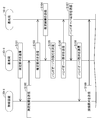
- FIG. 2 is a sequence diagram illustrating an example of an operation of the wireless communication system in FIG. 1.
- FIG. 2 is an explanatory diagram illustrating an example of an operation of the wireless communication system in FIG. 1.
- the wireless communication system 1 includes M base stations 10-1,..., 10-M and N wireless devices 20-1,. 20-N.
- M represents an integer of 2 or more.
- the base station 10-m is also referred to as a base station 10 when it is not necessary to distinguish between them.
- m represents each integer from 1 to M.
- N represents an integer of 1 or more.
- the wireless device 20-n is also referred to as a wireless device 20 when it is not necessary to distinguish between them.
- n represents each integer of 1 to N.
- the wireless communication system 1 performs wireless communication according to a predetermined communication method between the base station 10-m and the wireless device 20-n.
- the communication method is the LTE method.
- LTE is an abbreviation for Long Term Evolution.
- the communication method may be a method different from the LTE method (for example, a method such as LTE-Advanced or 5G (5th Generation)).
- the communication method may be a method using NOMA (Non-Orthogonal Multiple Access).
- the base station 10-m forms a wireless area WA-m.
- the wireless area WA-m is also referred to as a wireless area WA when it is not necessary to distinguish between them.
- the base station 10-m may form a plurality of radio areas.
- the wireless area may be represented as a coverage area or a communication area.
- the wireless area may be represented as a cell.
- the cell is a macro cell, a micro cell, a nano cell, a pico cell, a femto cell, a home cell, a small cell, a sector cell, or the like.
- the base station 10-m communicates wirelessly with the wireless device 20-n located in the cell WA-m formed by the base station 10-m.
- the base station 10-m provides radio resources in the cell WA-m formed by the base station 10-m.
- radio resources are identified by time and frequency.
- the radio resource includes a plurality of resource elements (REs) having different combinations of time and frequency.
- REs resource elements
- a period corresponding to seven REs that are continuous along the time axis is called a slot.
- Two slots that are continuous along the time axis form one subframe.
- 10 subframes that are continuous along the time axis form one radio frame.
- the base station 10-m communicates with the radio apparatus 20-n located in the cell WA-m formed by the base station 10-m by using radio resources provided in the cell WA-m.
- the base station 10-m may be represented as a base station device, a wireless communication device, an eNB (Evolved Node B), or an NB (Node B).
- eNB evolved Node B
- NB Node B
- the base station 10-m is communicably connected to a communication network NW (for example, a core network).
- NW for example, a core network
- An interface between the base station 10-m and a device (for example, an exchange station) different from the base station 10 via the communication network NW may be represented as an S1 interface.
- an interface between the base stations 10 via the communication network NW may be expressed as an X2 interface.
- EPC The portion of the wireless communication system 1 on the side of the communication network NW higher than the base station 10 may be represented as EPC.
- EPC is an abbreviation for Evolved Packet Core.
- a portion formed by the base station 10 in the wireless communication system 1 may be represented as E-UTRAN.
- E-UTRAN is an abbreviation for Evolved Universal Terrestrial Radio Access Network.
- the radio apparatus 20-n communicates by radio with the base station 10-m that forms the cell WA-m, using radio resources provided in the cell WA-m in which the radio apparatus 20-n is located.
- the radio device 20-n may be represented as a mobile station, a radio terminal, a terminal device, a radio device, or a user terminal (UE; User Equipment).
- the wireless device 20-n may be carried by a user, may be mounted on a moving body such as a vehicle, or may be fixed.
- the base station 10-m includes an antenna 101, a reception radio unit 102, a demodulation / decoding unit 103, a control unit 104, an inter-base station communication unit 105, and a coded modulation.
- Unit 106 and transmission radio unit 107 are examples of a receiving unit.
- the transmission radio unit 107 is an example of a transmission unit.
- the base station 10-m is realized by an LSI (Large Scale Integration). Note that at least a part of the base station 10-m may be realized by a programmable logic circuit device (PLD; Programmable Logic Device). Further, the base station 10-m includes a processing device and a storage device, and at least a part of the functions of the base station 10-m is realized by the processing device executing a program stored in the storage device. May be.
- LSI Large Scale Integration
- PLD Programmable Logic Device
- the base station 10-m includes a processing device and a storage device, and at least a part of the functions of the base station 10-m is realized by the processing device executing a program stored in the storage device. May be.
- the processing device is a CPU (Central Processing Unit) or a DSP (Digital Signal Processor).
- the storage device is at least one of a RAM, a ROM, an HDD, an SSD, a semiconductor memory, and an organic memory.
- RAM is an abbreviation for Random Access Memory.
- ROM is an abbreviation for Read Only Memory.
- HDD is an abbreviation for Hard Disk Drive.
- SSD is an abbreviation for Solid State Drive.
- the storage device may include a recording medium such as a flexible disk, an optical disk, a magneto-optical disk, or a semiconductor memory, and a reading device that can read information from the recording medium.
- the reception radio unit 102 receives a radio signal via the antenna 101.
- Reception radio section 102 performs frequency conversion from the radio frequency band to the base band (in other words, down conversion) on the received radio signal.
- Reception radio section 102 performs A / D conversion on the frequency-converted signal.
- a / D is an abbreviation for Analog to Digital.
- Reception radio section 102 outputs the signal after A / D conversion.
- the demodulation decoding unit 103 performs demodulation decoding processing on the signal output from the reception radio unit 102.
- the demodulation / decoding process includes demodulation and error correction decoding.
- Demodulation / decoding section 103 outputs a signal after demodulation / decoding processing (in other words, received data).
- the control unit 104 processes the reception data output from the demodulation / decoding unit 103. Further, the control unit 104 generates transmission data and outputs the generated transmission data. In addition, the control unit 104 controls communication as will be described later.
- the inter-base station communication unit 105 communicates with a base station 10-p different from the base station 10-m according to the control of the control unit 104.
- p represents an integer different from m among integers of 1 to M.
- the coding modulation unit 106 performs coding modulation processing on the transmission data output from the control unit 104.
- the coded modulation process includes error correction coding and modulation.
- the error correction code is a turbo code.
- the error correction code may be a Reed-Solomon code or a convolutional code.
- the modulation may be in accordance with a modulation scheme including a multilevel modulation scheme such as QPSK, 16QAM, or 64QAM.
- QPSK is an abbreviation for Quadriphase Phase-Shift Keying.
- QAM is an abbreviation for Quadrature Amplitude Modulation.
- the code modulation unit 106 outputs a signal after the code modulation process.
- the transmission radio unit 107 performs D / A conversion on the signal output from the encoding modulation unit 106.
- D / A is an abbreviation for Digital to Analog.
- Transmission radio section 107 performs frequency conversion from the base band to the radio frequency band (in other words, up-conversion) on the D / A converted signal.
- Transmission radio section 107 transmits a signal after frequency conversion (in other words, a radio signal) via antenna 101.
- the control unit 104 includes a scheduler unit 1041, a connection control unit 1042, and a broadcast information generation unit 1043.
- the scheduler unit 1041 allocates radio resources to the radio device 20 connected to the base station 10-m.
- the scheduler unit 1041 performs radio resource allocation according to a PF (Proportional Fair) method for each predetermined allocation unit.
- the allocation unit is RB.
- the PF method may be a method described in Non-Patent Documents 5 and 6.
- the scheduler unit 1041 acquires the instantaneous channel capacity for each of the radio apparatuses 20 connected to the base station 10-m.
- the instantaneous channel capacity R n (t) for the wireless device 20-n represents the amount of data communicated per unit time between the wireless device 20-n and the base station 10-m at time t.
- the instantaneous channel capacity may be expressed as instantaneous throughput or instantaneous communication speed.
- the scheduler unit 1041 stores the relationship between the efficiency and the CQI in advance, and the stored relationship and the radio signal transmitted from the base station 10-m (from the radio device 20-n (for example, the efficiency is acquired based on the CQI measured by the wireless device 20-n with respect to the reference signal). The efficiency represents the amount of data communicated between the wireless device 20-n and the base station 10-m per unit bandwidth and per unit time.
- CQI is an abbreviation for Channel Quality Indicator.
- the scheduler unit 1041 acquires a value obtained by multiplying the acquired efficiency by the system bandwidth of the radio resource provided by the base station 10-m as the instantaneous channel capacity R n (t). For example, the system bandwidth is 20 MHz, 15 MHz, 10 MHz, 5 MHz, 3 MHz, or 1.4 MHz.
- the scheduler unit 1041 acquires the average channel capacity for each of the radio apparatuses 20 connected to the base station 10-m.
- the average channel capacity T n (t + ⁇ t) at the time point t + ⁇ t for the wireless device 20-n is a moving average of the instantaneous channel capacity R n (t).
- t c represents a predetermined time.
- the average channel capacity may be expressed as average throughput or average communication speed.
- the scheduler unit 1041 uses the mathematical formula 2 and the acquired instantaneous channel capacity R n (t) and average channel capacity T n (t) to obtain a metric value for the k-th wireless device group S k .
- f k is calculated.
- k represents an integer of 1 or more.
- the wireless device group is a set of wireless devices 20 selected from the wireless devices 20 connected to the base station 10-m.
- Equation 2 is expressed as Equation 3.
- the scheduler unit 1041 calculates the metric value f k for the k-th wireless device group based on Equation 3.
- the scheduler unit 1041 allocates radio resources to the radio devices 20 included in the radio device group having the maximum calculated metric value f k .
- the metric value f k may be calculated based on a parameter representing communication quality such as SINR or CQI instead of the channel capacity.
- SINR is an abbreviation for Signal to Interference plus Noise Power Ratio.
- the connection control unit 1042 generates transmission data so that a measurement request is transmitted to the radio apparatus 20-n connected to the base station 10-m.
- the measurement request is information for requesting measurement of a parameter indicating a communication state.
- the measurement request includes an identifier that is formed by the base station 10-p to which the radio apparatus 20-n is not connected and identifies the cell WA-p that is the measurement target.
- the cell WA-p to be measured may be adjacent to or overlap the cell WA-m formed by the base station 10-m.
- the measurement request may be transmitted according to an RRC (Radio Resource Control) protocol.
- the connection control unit 1042 is transmitted by the radio device 20-n according to the measurement request from the reception data output by the demodulation / decoding unit 103. Get the measurement results.
- the measurement result is information indicating the result of measurement of a parameter indicating the communication state.
- the measurement result is a radio signal transmitted by the base station 10-p forming the cell WA-p identified by the CQI for the radio signal transmitted by the base station 10-m and the identifier included in the measurement request.
- CQI is an example of a parameter indicating a communication state.
- the measurement result may include at least one of RSRP and RSRQ in addition to the CQI.
- RSRP is an abbreviation for Reference Signal Received Power.
- RSRQ is an abbreviation for Reference Signal Received Quality.
- the measurement result may be expressed as a measurement report.
- the connection control unit 1042 makes an estimation request to the base station 10-p that forms the cell WA-p identified by the identifier included in the measurement request.
- the inter-base station communication unit 105 is controlled so as to be transmitted.
- the estimation request is information for requesting estimation of a parameter related to the communication speed.
- the estimation request is calculated by the scheduler unit 1041 for the CQI for the radio signal included in the measurement result and transmitted by the base station 10-p, and the radio apparatus 20-n that is the transmission source of the measurement result.
- the connection control unit 1042 transmits the estimation request from the data received by the inter-base station communication unit 105 according to the estimation request. Obtained estimation results.
- the estimation result is information representing a parameter estimation result regarding the communication speed.
- the estimation result includes an expected channel capacity, a cell channel capacity, and an expected metric value.
- Each of the expected channel capacity, the cell channel capacity, and the expected metric value included in the estimation result relates to the speed of communication performed by the base station 10-p that is the estimation result transmission source (in other words, the second base station). It is an example of information (in other words, 2nd information).
- the expected channel capacity is an expected value of the channel capacity for the radio apparatus 20-n under the assumption that the radio apparatus 20-n is connected to the base station 10-p.
- the expected channel capacity is estimated based on the estimation request, as will be described later.
- the cell channel capacity is the sum of the average channel capacities for all the radio devices 20 connected to the base station 10-p.
- the cell channel capacity may be the sum of the average channel capacity for all the radio devices 20 connected to the base station 10-p and the expected channel capacity.
- the expected metric value is an expected value of the metric value for the wireless device group including the wireless device 20-n under the assumption that the wireless device 20-n is connected to the base station 10-p.
- the expected metric value is estimated based on the estimation request, as will be described later.
- the connection control unit 1042 moves the base station 10 to which the radio apparatus 20-n is connected from the base station 10-m to the base station 10-p. Whether or not to execute the handover to be switched is determined based on the estimation result.
- connection control unit 1042 determines whether or not the first condition for the expected channel capacity included in the estimation result is satisfied, and determines that the handover is performed when the first condition is satisfied.
- the first condition is that the value obtained by subtracting the average channel capacity T n (t) for the radio apparatus 20-n calculated by the scheduler unit 1041 from the expected channel capacity included in the estimation result is greater than the first threshold value. It is a condition that it is large.
- the average channel capacity T n (t) for the radio apparatus 20-n calculated by the scheduler unit 1041 is information on the speed of communication performed by the base station 10-m (in other words, the first base station). It is an example (in other words, 1st information).
- connection control unit 1042 determines whether or not the second condition for the cell channel capacity included in the estimation result is satisfied. When the second condition is satisfied, the connection control unit 1042 performs handover. To execute.
- the second condition is that a value obtained by subtracting the cell channel capacity for the cell WA-m from the cell channel capacity included in the estimation result (in other words, the cell channel capacity for the cell WA-p) is larger than the second threshold value.
- the cell channel capacity for the cell WA-m is the sum of the average channel capacities for all the radio apparatuses 20 other than the radio apparatus 20-n connected to the base station 10-m.
- the cell channel capacity for the cell WA-m may be the sum of the average channel capacities for all the radio apparatuses 20 connected to the base station 10-m.
- the cell channel capacity for the cell WA-m may be calculated based on the average channel capacity calculated by the scheduler unit 1041.
- the cell channel capacity for the cell WA-m is an example of information (in other words, first information) regarding the speed of communication performed by the base station 10-m (in other words, the first base station).
- connection control unit 1042 determines whether or not the third condition for the expected metric value included in the estimation result is satisfied. If the third condition is satisfied, the connection control unit 1042 performs handover. To execute.
- the third condition is that the value obtained by subtracting the metric value f k for the wireless device group including the wireless device 20-n calculated by the scheduler unit 1041 from the expected metric value included in the estimation result is less than the third threshold value. It is also a condition that is large.
- the metric value f k for the wireless device group including the wireless device 20-n calculated by the scheduler unit 1041 relates to the speed of communication performed by the base station 10-m (in other words, the first base station). It is an example of information (in other words, 1st information).
- connection control unit 1042 determines not to execute the handover when all of the first condition to the third condition are not satisfied. Note that the connection control unit 1042 may determine whether or not to execute the handover by using any one of the first condition to the third condition, or any combination of two or more. .
- connection control unit 1042 determines to execute handover, the connection control unit 1042 controls the inter-base station communication unit 105 so that a handover request is transmitted to the base station 10-p.
- the handover request is information that requests execution of the handover.
- the connection control unit 1042 transmits data from the data received by the inter-base station communication unit 105 by the base station 10-p in response to the handover request. Obtained handover response.
- the handover response is information indicating permission to execute the handover.
- connection control unit 1042 transmits the handover instruction to the radio apparatus 20-n connected to the base station 10-m. Generate data.
- the handover instruction is information instructing transmission of a connection request to the handover destination base station 10-p.
- the connection request is information for requesting a connection.
- the base station 10-m has the same configuration as that of the base station 10-p with respect to reception of estimation requests, transmission of estimation results, reception of handover requests, transmission of handover responses, and reception of connection requests.
- the connection control unit 1042 acquires the estimation request from the data received by the inter-base station communication unit 105.
- the scheduler unit 1041 increases the efficiency based on the CQI for the radio signal included in the acquired estimation request and transmitted by the base station 10-p, and the stored relationship between the efficiency and the CQI. get.
- the scheduler unit 1041 acquires a value obtained by multiplying the acquired efficiency by the system bandwidth of the radio resource provided by the base station 10-p as an expected instantaneous channel capacity.
- the scheduler unit 1041 uses the expected instantaneous channel capacity as the instantaneous channel capacity R n (t), and uses the average channel capacity included in the estimation request as the average channel capacity T n (t) for the cell WA-p.
- the scheduler unit 1041 performs wireless communication including the wireless device 20-n in the cell WA-p under the assumption that the wireless device 20-n is connected to the base station 10-p based on Equation 3.
- a metric value f k for the device group is calculated.
- the metric value for the wireless device group including the wireless device 20-n in the cell WA-p is also expressed as an expected metric value.
- the connection control unit 1042 estimates the expected instantaneous channel capacity as the expected channel capacity when the metric value for the wireless device group including the wireless device 20-n is the maximum among the metric values calculated by the scheduler unit 1041. On the other hand, when the metric value for the wireless device group including the wireless device 20-n is not the maximum among the metric values calculated by the scheduler unit 1041, the connection control unit 1042 estimates “0” as the expected channel capacity.
- the connection control unit 1042 calculates the sum of the average channel capacities calculated by the scheduler unit 1041 for all the radio apparatuses 20 connected to the base station 10-p as the cell channel capacity for the cell WA-p. .
- the connection control unit 1042 controls the inter-base station communication unit 105 so that the estimation result is transmitted to the base station 10-m.
- the estimation result includes the expected channel capacity, the cell channel capacity, and the expected metric value.
- connection control unit 1042 controls the inter-base station communication unit 105 so that a handover response is transmitted to the base station 10-m.
- the connection control unit 1042 transmits data from the data received by the inter-base station communication unit 105 by the radio apparatus 20-n according to the handover response. Get the requested connection. In this case, the connection control unit 1042 connects the radio device 20-n to the base station 10-p based on the acquired connection request.
- the broadcast information generation unit 1043 generates broadcast information, and generates transmission data so that the generated broadcast information is transmitted.
- the broadcast information includes an identifier for identifying the cell WA-m formed by the base station 10-m.
- the radio device 20-n includes an antenna 201, a reception radio unit 202, a demodulation / decoding unit 203, a measurement unit 204, a control unit 205, an encoding modulation unit 206, and the like. And a transmission wireless unit 207.
- the reception radio unit 202 is an example of a reception unit.
- the wireless device 20-n is realized by an LSI.
- at least a part of the wireless device 20-n may be realized by PLD.
- the wireless device 20-n includes a processing device and a storage device, and at least a part of the functions of the wireless device 20-n is realized by the processing device executing a program stored in the storage device. May be.
- the reception radio unit 202, the demodulation decoding unit 203, the encoding modulation unit 206, and the transmission radio unit 207 are the same as the reception radio unit 102, the demodulation decoding unit 103, the encoding modulation unit 106, and the transmission radio unit 107, respectively. Composed.
- the measurement unit 204 measures RSRP based on the signal output from the reception radio unit 202.
- the control unit 205 processes the reception data output from the demodulation / decoding unit 203. Furthermore, the control unit 205 generates transmission data and outputs the generated transmission data.
- the control unit 205 includes a cell selection unit 2051, a connection control unit 2052, and a quality information generation unit 2053.
- the cell selection unit 2051 forms the cell WA from the received data output from the demodulation / decoding unit 203 for each of the specified cells WA.
- the broadcast information transmitted by the base station 10 that performs the acquisition is acquired.
- the cell search is a process of searching for a cell WA that is a connection destination candidate based on a correlation between a predetermined replica signal and a received radio signal.
- the cell selection unit 2051 Based on the broadcast information acquired for each cell WA specified by the cell search and the RSRP measured by the measurement unit 204 for the cell WA, the cell selection unit 2051 connects to the cell WA that is the connection destination. -Select m.
- connection control unit 2052 When the cell selection unit 2051 selects the connection destination cell WA-m, the connection control unit 2052 generates transmission data so that a connection request is transmitted to the base station 10-m forming the cell WA-m. .
- the quality information generation unit 2053 acquires RSRQ and CQI based on the reception data output from the demodulation / decoding unit 203 and the RSRP measured by the measurement unit 204. Note that the quality information generation unit 2053 may acquire the RSRQ and the CQI based only on the reception data output from the demodulation / decoding unit 203.
- the connection control unit 2052 acquires the measurement request from the reception data output from the demodulation / decoding unit 203.
- the quality information generation unit 2053 acquires the CQI for the radio signal transmitted by the base station 10-m that is the transmission source of the measurement request. Further, in this case, the quality information generation unit 2053 acquires the CQI for the radio signal transmitted by the base station 10-p that forms the cell WA-p identified by the identifier included in the measurement request.
- connection control unit 2052 generates transmission data so that the measurement result including at least two CQIs acquired by the quality information generation unit 2053 is transmitted to the base station 10-m that is the transmission source of the measurement request. To do.
- the connection control unit 2052 acquires the handover instruction from the received data output from the demodulation / decoding unit 203. In this case, the connection control unit 2052 generates transmission data so that a connection request is transmitted to the handover destination base station 10-p specified by the acquired handover instruction.
- the operation of the wireless communication system 1 according to the first embodiment will be described with reference to FIGS. 4 and 5.
- the cell WA-1 formed by the base station 10-1 and the cell WA-2 formed by the base station 10-2 are adjacent to each other, and the radio device 20-1 is connected to the base station 10-1 Is assumed to be communicably connected.
- the base station 10-1 transmits a measurement request including an identifier for identifying the cell WA-2 to the radio apparatus 20-1 (step S101 in FIG. 4).
- the radio apparatus 20-1 receives the measurement request transmitted by the base station 10-1.
- the radio apparatus 20-1 acquires the CQI (CQI # 1 in FIG. 5) for the radio signal (RS # 1 in FIG. 5) transmitted by the base station 10-1 that is the transmission source of the received measurement request.
- the radio apparatus 20-1 receives the CQI (RSQ2) of the radio signal (RS # 2 in FIG. 5) transmitted by the base station 10-2 that forms the cell WA-2 identified by the identifier included in the received measurement request.
- CQI # 2) in FIG. 5 is acquired.
- the radio apparatus 20-1 obtains the obtained measurement result including the CQI for the base station 10-1 (CQI # 1 in FIG. 5) and the CQI for the base station 10-2 (CQI # 2 in FIG. 5). It transmits to the base station 10-1 (step S102 in FIG. 4).
- the base station 10-1 receives the measurement result transmitted by the wireless device 20-1. Then, the base station 10-1 acquires the instantaneous channel capacity R 1 (t) for the radio apparatus 20-1 based on the CQI for the base station 10-1 included in the received measurement result. Next, the base station 10-1 calculates an average channel capacity T 1 (t) for the radio apparatus 20-1 based on the acquired instantaneous channel capacity R 1 (t).
- the base station 10-1 includes the CQI for the base station 10-2 included in the received measurement result and measured by the radio apparatus 20-1, and the calculated average channel capacity T for the radio apparatus 20-1. 1 (t) is transmitted to the base station 10-2 (step S103 in FIG. 4).
- the base station 10-2 receives the estimation request transmitted by the base station 10-1. Then, the base station 10-2 acquires an expected channel capacity, a cell channel capacity, and an expected metric value based on the received estimation request. Next, the base station 10-2 transmits the obtained estimation result including the expected channel capacity, cell channel capacity, and expected metric value to the base station 10-1 (step S104 in FIG. 4).
- the base station 10-1 receives the estimation result transmitted from the base station 10-2. Then, the base station 10-1 determines whether to execute handover based on the received estimation result.
- the base station 10-1 determines to execute the handover (step S105 in FIG. 4). In this case, the base station 10-1 transmits a handover request to the base station 10-2 (step S106 in FIG. 4).
- the base station 10-2 receives the handover request transmitted by the base station 10-1, and transmits a handover response to the base station 10-1 in response to the reception of the handover request (step S107 in FIG. 4).
- the base station 10-1 receives the handover response transmitted by the base station 10-2, and transmits a handover instruction to the radio apparatus 20-1 in response to the reception of the handover response (step S108 in FIG. 4).
- the wireless device 20-1 receives the handover instruction transmitted by the base station 10-1, and transmits a connection request to the wireless device 20-2 in response to the reception of the handover instruction (step S109 in FIG. 4). Then, the base station 10-2 receives the connection request transmitted by the radio apparatus 20-1, and connects the base station 10-2 and the radio apparatus 20-1 so that they can communicate in response to the reception of the connection request. . Thereby, the handover is executed.
- the wireless communication system 1 does not execute the processing from step S106 to step S109 in FIG. Therefore, handover is not executed.
- the base station 10-1 receives the second information regarding the speed of communication performed by the base station 10-2 from the base station 10-2. . Furthermore, the wireless communication system 1 uses the first information regarding the speed of communication performed by the base station 10-1 and the second information received by the base station 10-1 to generate a plurality of base stations 10- 1,..., 10-M and the communication between the wireless device 20-1 are controlled.
- the base station 10-1 determines whether or not to execute a handover when the base station 10-1 is communicably connected to the wireless device 20-1. Control communication by making decisions.
- the base station 10-1 determines whether or not to execute the handover based on the first information and the second information. Thereby, the handover is executed based on the first information and the second information. Therefore, it is possible to appropriately control communication between the radio apparatus 20-1 and the plurality of base stations 10-1,. Thereby, the communication speed of the whole radio
- the wireless communication system according to the second embodiment is different from the wireless communication system according to the first embodiment in that cooperative communication is controlled instead of handover.
- the difference will be mainly described.
- symbol used in 1st Embodiment is the same or substantially the same.
- the wireless communication system 1 executes cooperative communication, which is communication performed when at least two of the plurality of base stations 10-1, ..., 10-M cooperate.
- the cooperative communication may be expressed as CoMP (Coordinated Multi-Point) communication.
- the cooperative communication is Dynamic Point Selection.
- the cooperative communication is selected by the base station 10-p from the base station 10-m and the base station 10-p when the wireless device 20-n is communicably connected to the base station 10-m. This corresponds to communication between the base station 10-p and the radio apparatus 20-n.
- the estimation result includes the channel capacity gain in addition to the expected channel capacity, the cell channel capacity, and the expected metric value.
- the expected channel capacity, the cell channel capacity, and the expected metric value are acquired in the same manner as in the first embodiment.
- the channel capacity gain is a value obtained by dividing the expected value of the cell channel capacity under the assumption that cooperative communication is executed by the cell channel capacity in a state where cooperative communication is not executed.
- the connection control unit 1042 of the base station 10-m performs communication performed by cooperation between the base station 10-m and the base station 10-p. Whether or not to execute cooperative communication is determined based on the estimation result.
- the connection control unit 1042 determines whether or not the fourth condition for the channel capacity gain included in the estimation result is satisfied, and determines that the cooperative communication is to be performed when the fourth condition is satisfied.
- the fourth condition is a condition that the channel capacity gain included in the estimation result is larger than the fourth threshold value. In the present example, the fourth threshold is greater than 1.
- connection control unit 1042 determines whether or not the fifth condition for the expected channel capacity included in the estimation result is satisfied. If the fifth condition is satisfied, the connection control unit 1042 It is decided to execute communication.
- the fifth condition is that the value obtained by subtracting the average channel capacity T n (t) for the radio apparatus 20-n calculated by the scheduler unit 1041 from the expected channel capacity included in the estimation result is greater than the fifth threshold value. It is a condition that it is large.
- connection control unit 1042 determines whether or not the sixth condition for the cell channel capacity included in the estimation result is satisfied. If the sixth condition is satisfied, the connection control unit 1042 cooperates. It is decided to execute communication.
- the sixth condition is that a value obtained by subtracting the cell channel capacity for the cell WA-m from the cell channel capacity included in the estimation result (in other words, the cell channel capacity for the cell WA-p) is larger than the sixth threshold value. This is the condition.
- connection control unit 1042 determines whether the seventh condition for the expected metric value included in the estimation result is satisfied. If the seventh condition is satisfied, the connection control unit 1042 cooperates. It is decided to execute communication.
- the seventh condition is that the value obtained by subtracting the metric value f k for the wireless device group including the wireless device 20-n calculated by the scheduler unit 1041 from the expected metric value included in the estimation result is less than the seventh threshold value. It is also a condition that is large.
- connection control unit 1042 determines not to perform cooperative communication when all of the fourth to seventh conditions are not satisfied. Note that the connection control unit 1042 may determine whether or not to execute cooperative communication using any one of the fourth condition to the seventh condition, or any combination of two or more. Good.
- connection control unit 1042 determines to execute cooperative communication
- the connection control unit 1042 controls the inter-base station communication unit 105 so that a cooperative communication request is transmitted to the base station 10-p.
- the cooperative communication request is information that requests execution of cooperative communication.
- the connection control unit 1042 uses the base station 10-p in response to the cooperative communication request from the data received by the inter-base station communication unit 105.
- the cooperative communication response transmitted by is acquired.
- the cooperative communication response is information indicating permission to execute the cooperative communication.
- connection control unit 1042 transmits a cooperative communication instruction to the radio apparatus 20-n connected to the base station 10-m. Generate transmission data.
- the cooperative communication instruction is information that instructs execution of cooperative communication.
- the base station 10-m has the same configuration as that of the base station 10-p for receiving the cooperative communication request and transmitting the cooperative communication response.
- connection control unit 1042 controls the inter-base station communication unit 105 so that a cooperative communication response is transmitted to the base station 10-m. .
- the cooperative communication is Coordinated Scheduling.
- the cooperative communication is performed when the base station 10-p reduces the transmission power by a predetermined decrease amount when the radio apparatus 20-n is connected to the base station 10-m so as to be communicable. This corresponds to communication between 10-m and radio apparatus 20-n.
- the estimation result includes an expected channel capacity, an expected cell channel capacity, and a channel capacity gain.
- the channel capacity gain is obtained in the same manner as in the case where the cooperative communication is Dynamic Point Selection.
- the expected channel capacity is set to “0”.
- CQI and SNR (Signal to Noise Ratio) have the relationship expressed in Formula 4.
- Each of a 0 and a 1 represents a constant.
- the constant a 0 is “0.46”
- the constant a 1 is “4.8”.
- the base station 10-p decreases the transmission power by a reduction amount
- the SNR in each of the radio apparatuses 20 connected to the base station 10-p also decreases by the reduction amount.
- the scheduler section 1041 of the base station 10-p based on Equation 5, assumes the CQI expected value CQI for each radio apparatus 20 under the assumption that the transmission power is reduced by the reduction amount ⁇ P. e is calculated.
- CQI 0 represents the CQI for the radio signal received from each radio apparatus 20 and transmitted by the base station 10-p.
- the scheduler unit 1041 of the base station 10-p obtains the first efficiency based on the relationship between the efficiency and the CQI and the CQI for the radio signal transmitted from the radio station 20 and transmitted from the radio station 10-p. get. Further, the scheduler unit 1041 of the base station 10-p determines the relationship between the efficiency and the CQI and the expected CQI value CQI e for each radio apparatus 20 under the assumption that the transmission power is reduced by the reduction amount ⁇ P. To obtain the second efficiency.
- the scheduler unit 1041 of the base station 10-p multiplies the value obtained by dividing the second efficiency by the first efficiency to the sum of the average channel capacities for all the radio apparatuses 20 connected to the base station 10-p. Is calculated as the expected cell channel capacity.
- the connection control unit 1042 of the base station 10-m performs communication performed by cooperation between the base station 10-m and the base station 10-p. Whether or not to execute cooperative communication is determined based on the estimation result.
- the connection control unit 1042 determines whether or not the eighth condition for the channel capacity gain included in the estimation result is satisfied, and determines that the cooperative communication is to be executed when the eighth condition is satisfied.
- the eighth condition is a condition that the channel capacity gain included in the estimation result is larger than the eighth threshold value. In the present example, the eighth threshold is greater than 1.
- connection control unit 1042 determines whether or not the ninth condition for the expected channel capacity included in the estimation result is satisfied. When the ninth condition is satisfied, the connection control unit 1042 cooperates. It is decided to execute communication.
- the ninth condition is that the value obtained by subtracting the average channel capacity T n (t) for the radio apparatus 20-n calculated by the scheduler unit 1041 from the expected channel capacity included in the estimation result is greater than the ninth threshold value. It is a condition that it is large.
- connection control unit 1042 determines whether or not the tenth condition for the expected cell channel capacity included in the estimation result is satisfied, and when the tenth condition is satisfied, It decides to execute cooperative communication.
- the tenth condition is that the value obtained by subtracting the cell channel capacity for the cell WA-m from the expected cell channel capacity (in other words, the expected cell channel capacity for the cell WA-p) included in the estimation result is less than the tenth threshold value. It is also a condition that is large.
- connection control unit 1042 determines not to perform cooperative communication when all of the eighth to tenth conditions are not satisfied. Note that the connection control unit 1042 may determine whether or not to execute the cooperative communication using any one of the eighth condition to the tenth condition, or any combination of two or more. Good.
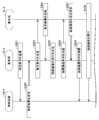
- the operation of the wireless communication system 1 according to the second embodiment will be described with reference to FIG.
- the cell WA-1 formed by the base station 10-1 and the cell WA-2 formed by the base station 10-2 are adjacent to each other, and the radio device 20-1 is connected to the base station 10-1 Is assumed to be communicably connected.
- the wireless communication system 1 executes the processes of Steps S201 to S204 in FIG. 6 in the same manner as Steps S101 to S104 in FIG.
- the base station 10-1 receives the estimation result transmitted from the base station 10-2. Then, base station 10-1 determines whether or not to execute cooperative communication based on the received estimation result.
- the base station 10-1 determines to execute the cooperative communication (FIG. 6 step S205). In this case, the base station 10-1 transmits a cooperative communication request to the base station 10-2 (step S206 in FIG. 6).
- the base station 10-2 receives the cooperative communication request transmitted from the base station 10-1, and transmits a cooperative communication response to the base station 10-1 in response to the reception of the cooperative communication request (step S207 in FIG. 6). ).
- the base station 10-1 receives the cooperative communication response transmitted from the base station 10-2, and transmits a cooperative communication instruction to the radio apparatus 20-1 in response to the reception of the cooperative communication response (step S208 in FIG. 6). ).
- the wireless device 20-1 receives the cooperative communication instruction transmitted from the base station 10-1, and waits for execution of the cooperative communication in response to the reception of the cooperative communication instruction.
- the base station 10-1 and the base station 10-2 communicate with the wireless device 20-1 by executing cooperative communication (step S209 in FIG. 6).
- the wireless communication system 1 does not execute the processes in steps S206 to S209 in FIG. Therefore, cooperative communication is not executed.
- the base station 10-1 receives the second information related to the speed of communication performed by the base station 10-2 from the base station 10-2. . Furthermore, the wireless communication system 1 uses the first information regarding the speed of communication performed by the base station 10-1 and the second information received by the base station 10-1 to generate a plurality of base stations 10- 1,..., 10-M and the communication between the wireless device 20-1 are controlled.
- the base station 10-1 determines whether or not to execute cooperative communication when the base station 10-1 is communicably connected to the wireless device 20-1.
- the communication is controlled by determining.
- the base station 10-1 determines whether or not to execute cooperative communication based on the first information and the second information. Thereby, cooperative communication is performed based on 1st information and 2nd information. Therefore, it is possible to appropriately control communication between the radio apparatus 20-1 and the plurality of base stations 10-1,. Thereby, the communication speed of the whole radio
- the wireless communication system according to the third embodiment is different from the wireless communication system according to the first embodiment in that the wireless device selects a connection destination base station based on broadcast information including cell channel capacity in a plurality of base stations. It is different.
- the difference will be mainly described.
- symbol used in 1st Embodiment is the same or substantially the same.
- connection control unit 1042 of the base station 10-m calculates the sum of average channel capacities for all the radio devices 20 connected to the base station 10-m as the cell channel capacity.
- the connection control unit 1042 transmits the capacity information indicating the calculated cell channel capacity to each of the base stations 10 forming the cell WA set as the exchange target, and receives the capacity information from the base station 10. In this manner, the inter-base station communication unit 105 is controlled.
- the cell WA to be exchanged may be adjacent to or overlap the cell WA-m formed by the base station 10-m.
- the notification information generation unit 1043 generates notification information, and generates transmission data so that the generated notification information is transmitted.
- the broadcast information includes an identifier for identifying the cell WA-m formed by the base station 10-m.
- the broadcast information includes the cell channel capacity for the cell WA-m, an identifier for identifying each of the cells WA set as the exchange target, and the cell for each of the cells WA set as the exchange target Channel capacity.
- the broadcast information may include the number of cells WA set as exchange targets.
- the broadcast information may be expressed as a System Information Block.
- the cell channel capacity for the cell WA-m which is included in the broadcast information transmitted by the base station 10-m, is information regarding the speed of communication performed by the base station 10-m (in other words, the first base station). It is an example (in other words, 1st information).
- the cell channel capacity for the cell WA-p set as the exchange target included in the broadcast information transmitted by the base station 10-m is the base station 10-p (in other words, the second base station). Is an example of information (in other words, second information) relating to the speed of communication performed by.
- the cell selection unit 2051 of the radio apparatus 20-n of the third embodiment selects a connection destination cell WA-m based on broadcast information, RSRP, and RSRQ for each of the cells WA specified by the cell search. To do.
- the cell selection unit 2051 extracts a cell WA that satisfies Expression 6 among the cells WA specified by the cell search.
- Equation 7 Srxlev and Squal are expressed by Equation 7 and Equation 8, respectively.
- ⁇ 1 and ⁇ 2 represent a first offset amount and a second offset amount, respectively.
- the cell selection unit 2051 selects the cell WA having the maximum selection parameter Slb as the connection destination cell WA among the extracted cells WA.
- the selection parameter Slb is expressed by Equation 9.
- T is a parameter that increases as the cell channel capacity increases.
- the parameter T may represent each integer from 0 to 15.
- the parameter T may be directly proportional to the cell channel capacity.
- cell selection unit 2051 may use the selection parameter Slb represented by Expression 10 instead of Expression 9.
- the cell selection unit 2051 may use the selection parameter Slb represented by Expression 11 instead of Expression 9.
- Each of h 1 and h 2 represents a predetermined coefficient.
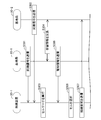
- the operation of the wireless communication system 1 according to the third embodiment will be described with reference to FIG.
- the cell WA-1 formed by the base station 10-1 and the cell WA-2 formed by the base station 10-2 are adjacent to each other, and the wireless device 20-1 It is assumed that it is not connected to either.
- Each of the base station 10-1 and the base station 10-2 transmits a synchronization signal (step S301 and step S302 in FIG. 7).
- the order in which the synchronization signals are transmitted may be reverse to the order shown in FIG.
- the radio apparatus 20-1 receives the synchronization signal transmitted by the base station 10-1, and identifies the cell WA-1 based on the received synchronization signal. Similarly, the radio apparatus 20-1 receives the synchronization signal transmitted from the base station 10-2, and identifies the cell WA-2 based on the received synchronization signal. In this way, the wireless device 20-1 performs a cell search (step S303 in FIG. 7).
- the base station 10-1 and the base station 10-2 exchange capacity information (step S304 in FIG. 7). Note that the exchange of capacity information may be performed before any of the processes in steps S301 to S303.
- the base station 10-1 has a cell channel capacity (in other words, first information) for the cell WA-1 formed by the base station 10-1 and a cell channel capacity for the cell WA-2 formed by the base station 10-2. (In other words, the second information) is transmitted (step S305 in FIG. 7).
- first information for the cell WA-1 formed by the base station 10-1
- second information is transmitted (step S305 in FIG. 7).
- the radio apparatus 20-1 receives the broadcast information transmitted by the base station 10-1 that forms the cell WA-1 specified by the cell search. Note that the radio apparatus 20-1 may also receive broadcast information transmitted by the base station 10-2 that forms the cell WA-2 specified by the cell search. In other words, in this example, the base station 10-1 transmits the broadcast information to the radio apparatus 20-1 by transmitting the broadcast information.
- the radio apparatus 20-1 selects a connection destination cell WA based on the cell channel capacity for the cell WA-1 and the cell channel capacity for the cell WA-2 included in the received broadcast information (FIG. 7). Step S306). In this example, it is assumed that the wireless device 20-1 selects the cell WA-2 as the connection destination cell WA.
- the wireless device 20-1 transmits a connection request to the base station 10-2 (step S307 in FIG. 7). Then, the base station 10-2 receives the connection request transmitted by the radio apparatus 20-1, and connects the base station 10-2 and the radio apparatus 20-1 so that they can communicate in response to the reception of the connection request. .
- the base station 10-1 receives the second information related to the speed of communication performed by the base station 10-2 from the base station 10-2. . Furthermore, the wireless communication system 1 uses the first information regarding the speed of communication performed by the base station 10-1 and the second information received by the base station 10-1 to generate a plurality of base stations 10- 1,..., 10-M and the communication between the wireless device 20-1 are controlled.
- the base station 10-1 transmits the first information and the second information. Further, the wireless device 20-1 receives the first information and the second information. In addition, the wireless device 20-1 is connected to the base station to which the wireless device 20-1 is connected when the wireless device 20-1 is not connected to any of the plurality of base stations 10-1,. Communication is controlled by selecting the station 10 from a plurality of base stations 10-1,..., 10-M.
- the radio apparatus 20-1 selects the connection destination base station 10 based on the first information and the second information. Thereby, communication between the radio apparatus 20-1 and the plurality of base stations 10-1,..., 10-M can be quickly controlled. Thereby, the communication speed of the whole radio
- wireless communications system 1 can be raised.
- wireless communications system 1 of each embodiment may have at least one part of the function of the radio
Landscapes
- Engineering & Computer Science (AREA)
- Computer Networks & Wireless Communication (AREA)
- Signal Processing (AREA)
- Quality & Reliability (AREA)
- Mobile Radio Communication Systems (AREA)
Abstract
無線通信システム(1)は、複数の基地局(10)と無線装置(20)とを備えるとともに、複数の基地局(10)と無線装置(20)との間で無線による通信を行なう。複数の基地局(10)のうちの第1の基地局(10-1)は、複数の基地局(10)のうちの第2の基地局(10-2)から、第2の基地局(10-2)が行なう通信の速度に関する第2の情報を受信する受信部を備える。無線通信システム(1)は、第1の基地局(10-1)が行なう通信の速度に関する第1の情報と、第1の基地局(10-1)により受信された第2の情報と、に基づいて、複数の基地局(10)と無線装置(20)との間の上記通信を制御する制御部を備える。
Description
本発明は、無線通信システム、無線通信方法、基地局、及び、無線装置に関する。
複数の基地局と無線装置とを備えるとともに、複数の基地局と無線装置との間で無線による通信を行なう無線通信システムが知られている(例えば、非特許文献1乃至6を参照)。
無線装置は、いずれの基地局にも接続されていない場合、各基地局により送信された無線信号を受信し、受信した無線信号の強度(換言すると、受信強度)に基づいて、無線装置が接続される基地局(換言すると、接続先の基地局)を選択する。
また、無線装置は、第1の基地局と通信可能に接続されている場合、第1の基地局により送信された無線信号に対する受信強度と、第2の基地局により送信された無線信号に対する受信強度と、を第1の基地局に報告する。第1の基地局は、報告された受信強度に基づいて、無線装置が接続される基地局を第1の基地局から第2の基地局へ切り替えるハンドオーバを実行するか否かを決定する。
3GPP TS36.331,2016年1月、V12.8.0
3GPP TS36.423,2015年12月、V12.8.0
3GPP TS36.304,2016年1月、V12.7.0
3GPP TS36.213,2016年1月、V12.8.0
ベンジャブール・アナス、外4名、「下りリンクNOMAにおけるマルチユーザ電力割り当て及びスケジューリング法に関する検討」、電子情報通信学会技術研究報告書、電子情報通信学会、RCS2013-197、2013年
瀬山崇志、伊達木隆、「SICを用いた下りリンク非直交多元アクセスのPFスケジューリングにおける一検討」、電子情報通信学会技術研究報告書、電子情報通信学会、RCS2014-164、2014年
ところで、基地局が行なう通信の速度は、基地局の負荷(例えば、基地局に接続されている無線装置の数、又は、基地局が行なう通信の量等)に応じて変化しやすい。しかしながら、受信強度は、基地局の負荷を反映しにくい。従って、上記通信システムにおいては、無線装置と基地局との間の通信を適切に制御し、且つ、通信システムの全体の速度を高めることができないことがある。
なお、このような課題は、複数の基地局が協調することにより行なわれる通信である協調通信においても同様に生じることがある。
なお、このような課題は、複数の基地局が協調することにより行なわれる通信である協調通信においても同様に生じることがある。
本発明の目的の一つは、通信システムの全体の速度を高めることにある。
一つの側面では、無線通信システムは、複数の基地局と無線装置とを備えるとともに、上記複数の基地局と上記無線装置との間で無線による通信を行なう。
上記複数の基地局のうちの第1の基地局は、上記複数の基地局のうちの第2の基地局から、上記第2の基地局が行なう通信の速度に関する第2の情報を受信する受信部を備える。
上記無線通信システムは、上記第1の基地局が行なう通信の速度に関する第1の情報と、上記第1の基地局により受信された上記第2の情報と、に基づいて、上記複数の基地局と上記無線装置との間の上記通信を制御する制御部を備える。
上記複数の基地局のうちの第1の基地局は、上記複数の基地局のうちの第2の基地局から、上記第2の基地局が行なう通信の速度に関する第2の情報を受信する受信部を備える。
上記無線通信システムは、上記第1の基地局が行なう通信の速度に関する第1の情報と、上記第1の基地局により受信された上記第2の情報と、に基づいて、上記複数の基地局と上記無線装置との間の上記通信を制御する制御部を備える。
通信の速度を高める。
以下、図面を参照して実施形態を説明する。ただし、以下に説明される実施形態は例示である。従って、以下に明示しない種々の変形や技術が実施形態に適用されることは排除されない。なお、以下の実施形態で用いる図面において、同一の符号を付した部分は、変更又は変形が明示されない限り、同一若しくは同様の部分を表す。
<第1実施形態>
(構成)
例えば、図1に表されるように、第1実施形態に係る無線通信システム1は、M個の基地局10-1,…,10-Mと、N個の無線装置20-1,…,20-Nと、を備える。
(構成)
例えば、図1に表されるように、第1実施形態に係る無線通信システム1は、M個の基地局10-1,…,10-Mと、N個の無線装置20-1,…,20-Nと、を備える。
本例では、Mは、2以上の整数を表す。また、以下において、基地局10-mは、区別する必要がない場合、基地局10とも表される。mは、1からMの各整数を表す。本例では、Nは、1以上の整数を表す。また、以下において、無線装置20-nは、区別する必要がない場合、無線装置20とも表される。nは、1からNの各整数を表す。
無線通信システム1は、基地局10-mと無線装置20-nとの間で、所定の通信方式に従った無線通信を行なう。例えば、通信方式は、LTE方式である。LTEは、Long Term Evolutionの略記である。なお、通信方式は、LTE方式と異なる方式(例えば、LTE-Advanced、又は、5G(5th Generation)等の方式)であってもよい。また、通信方式は、NOMA(Non-Orthogonal Multiple Access)を用いる方式であってもよい。
基地局10-mは、無線エリアWA-mを形成する。また、以下において、無線エリアWA-mは、区別する必要がない場合、無線エリアWAとも表される。なお、基地局10-mは、複数の無線エリアを形成してもよい。無線エリアは、カバレッジ・エリア、又は、通信エリアと表されてもよい。また、無線エリアは、セルと表されてよい。例えば、セルは、マクロセル、マイクロセル、ナノセル、ピコセル、フェムトセル、ホームセル、スモールセル、又は、セクタセル等である。
基地局10-mは、基地局10-mが形成するセルWA-m内に位置する無線装置20-nと無線により通信する。
本例では、基地局10-mは、基地局10-mが形成するセルWA-mにおいて無線リソースを提供する。本例では、無線リソースは、時間及び周波数により識別される。
本例では、基地局10-mは、基地局10-mが形成するセルWA-mにおいて無線リソースを提供する。本例では、無線リソースは、時間及び周波数により識別される。
換言すると、無線リソースは、時間及び周波数の組み合わせが互いに異なる複数のリソースエレメント(RE;Resource Element)を含む。本例では、時間軸に沿って連続する7個のREに対応する期間は、スロットと呼ばれる。また、時間軸に沿って連続する2つのスロットは、1つのサブフレームを形成する。更に、時間軸に沿って連続する10個のサブフレームは、1つの無線フレームを形成する。
本例では、時間軸において1つのスロットに含まれるREのうちの、周波数軸に沿って連続する12個のサブキャリアに対応するREは、リソースブロック(RB;Resource Block)と呼ばれる。従って、本例では、1つのRBは、84(=12×7)個のREからなる。
基地局10-mは、基地局10-mが形成するセルWA-m内に位置する無線装置20-nと、セルWA-mにおいて提供している無線リソースを用いることにより通信を行なう。
なお、基地局10-mは、基地局装置、無線通信装置、eNB(Evolved Node B)、又は、NB(Node B)と表されてよい。
本例では、図1に表されるように、基地局10-mは、通信網NW(例えば、コアネットワーク)に通信可能に接続されている。通信網NWを介した、基地局10-mと、基地局10と異なる装置(例えば、交換局等)と、の間のインタフェースは、S1インタフェースと表されてよい。また、通信網NWを介した基地局10間のインタフェースは、X2インタフェースと表されてもよい。
無線通信システム1のうちの基地局10よりも上位の通信網NW側の部分は、EPCと表されてもよい。EPCは、Evolved Packet Coreの略記である。無線通信システム1のうちの基地局10により形成される部分は、E-UTRANと表されてもよい。E-UTRANは、Evolved Universal Terrestrial Radio Access Networkの略記である。
無線装置20-nは、無線装置20-nが位置するセルWA-mにおいて提供されている無線リソースを用いて、セルWA-mを形成する基地局10-mと無線により通信する。
なお、無線装置20-nは、移動局、無線端末、端末装置、無線機器、又は、ユーザ端末(UE;User Equipment)と表されてよい。無線装置20-nは、ユーザによって携帯されていてもよいし、車両等の移動体に搭載されていてもよいし、固定されていてもよい。
なお、無線装置20-nは、移動局、無線端末、端末装置、無線機器、又は、ユーザ端末(UE;User Equipment)と表されてよい。無線装置20-nは、ユーザによって携帯されていてもよいし、車両等の移動体に搭載されていてもよいし、固定されていてもよい。
(構成:基地局)
例えば、図2に表されるように、基地局10-mは、アンテナ101と、受信無線部102と、復調復号部103と、制御部104と、基地局間通信部105と、符号化変調部106と、送信無線部107と、を備える。基地局間通信部105は、受信部の一例である。送信無線部107は、送信部の一例である。
例えば、図2に表されるように、基地局10-mは、アンテナ101と、受信無線部102と、復調復号部103と、制御部104と、基地局間通信部105と、符号化変調部106と、送信無線部107と、を備える。基地局間通信部105は、受信部の一例である。送信無線部107は、送信部の一例である。
本例では、基地局10-mの少なくとも一部は、LSI(Large Scale Integration)により実現される。なお、基地局10-mの少なくとも一部は、プログラム可能な論理回路装置(PLD;Programmable Logic Device)により実現されてもよい。また、基地局10-mは、処理装置と記憶装置とを備え、処理装置が、記憶装置に記憶されているプログラムを実行することにより、基地局10-mの機能の少なくとも一部が実現されてもよい。
例えば、処理装置は、CPU(Central Processing Unit)、又は、DSP(Digital Signal Processor)である。例えば、記憶装置は、RAM、ROM、HDD、SSD、半導体メモリ、及び、有機メモリの少なくとも1つである。RAMは、Random Access Memoryの略記である。ROMは、Read Only Memoryの略記である。HDDは、Hard Disk Driveの略記である。SSDは、Solid State Driveの略記である。また、例えば、記憶装置は、フレキシブルディスク、光ディスク、光磁気ディスク、又は、半導体メモリ等の記録媒体と、記録媒体から情報を読み取り可能な読取装置と、を備えていてもよい。
受信無線部102は、アンテナ101を介して無線信号を受信する。受信無線部102は、受信した無線信号に対して、無線周波数帯域から基底帯域への周波数変換(換言すると、ダウンコンバージョン)を行なう。受信無線部102は、周波数変換後の信号に対してA/D変換を行なう。A/Dは、Analog to Digitalの略記である。受信無線部102は、A/D変換後の信号を出力する。
復調復号部103は、受信無線部102により出力された信号に対して復調復号処理を行なう。復調復号処理は、復調、及び、誤り訂正復号を含む。復調復号部103は、復調復号処理後の信号(換言すると、受信データ)を出力する。
制御部104は、復調復号部103により出力された受信データを処理する。更に、制御部104は、送信データを生成し、生成した送信データを出力する。
加えて、制御部104は、後述するように、通信を制御する。
加えて、制御部104は、後述するように、通信を制御する。
基地局間通信部105は、制御部104の制御に従って、基地局10-mと異なる基地局10-pと通信する。pは、1からMの整数のうちのmと異なる整数を表す。
符号化変調部106は、制御部104により出力された送信データに対して、符号化変調処理を行なう。符号化変調処理は、誤り訂正符号化、及び、変調を含む。例えば、誤り訂正符号は、ターボ符号である。なお、誤り訂正符号は、リード・ソロモン符号、又は、畳み込み符号等であってもよい。例えば、変調は、QPSK、16QAM、又は、64QAM等の多値変調方式を含む変調方式に従ってよい。QPSKは、Quadriphase Phase-Shift Keyingの略記である。QAMは、Quadrature Amplitude Modulationの略記である。符号化変調部106は、符号化変調処理後の信号を出力する。
送信無線部107は、符号化変調部106により出力された信号に対してD/A変換を行なう。D/Aは、Digital to Analogの略記である。送信無線部107は、D/A変換後の信号に対して、基底帯域から無線周波数帯域への周波数変換(換言すると、アップコンバージョン)を行なう。送信無線部107は、周波数変換後の信号(換言すると、無線信号)をアンテナ101を介して送信する。
次に、制御部104について説明を加える。制御部104は、スケジューラ部1041と、接続制御部1042と、報知情報生成部1043と、を備える。
スケジューラ部1041は、基地局10-mに接続されている無線装置20に無線リソースを割り当てる。本例では、スケジューラ部1041は、所定の割当単位毎に、PF(Proportional Fair)方式に従って無線リソースの割り当てを行なう。例えば、割当単位は、RBである。例えば、PF方式は、非特許文献5及び6に記載された方式であってよい。
本例では、スケジューラ部1041は、基地局10-mに接続されている無線装置20のそれぞれに対して、瞬時チャネル容量を取得する。無線装置20-nに対する瞬時チャネル容量Rn(t)は、時点tにおいて、無線装置20-nと基地局10-mとの間で単位時間あたりに通信されるデータの量を表す。瞬時チャネル容量は、瞬時スループット、又は、瞬時通信速度と表されてもよい。
本例では、スケジューラ部1041は、効率とCQIとの関係を予め記憶するとともに、当該記憶している関係と、無線装置20-nから受信した、基地局10-mにより送信された無線信号(例えば、参照信号)に対して、無線装置20-nが測定したCQIと、に基づいて効率を取得する。効率は、無線装置20-nと基地局10-mとの間で、単位帯域幅あたり且つ単位時間あたりに通信されるデータの量を表す。CQIは、Channel Quality Indicatorの略記である。本例では、スケジューラ部1041は、取得した効率に、基地局10-mが提供する無線リソースのシステム帯域幅を乗じた値を瞬時チャネル容量Rn(t)として取得する。例えば、システム帯域幅は、20MHz、15MHz、10MHz、5MHz、3MHz、又は、1.4MHzである。
本例では、スケジューラ部1041は、基地局10-mに接続されている無線装置20のそれぞれに対して、平均チャネル容量を取得する。本例では、数式1に表されるように、無線装置20-nに対する時点t+Δtの平均チャネル容量Tn(t+Δt)は、瞬時チャネル容量Rn(t)の移動平均である。tcは、予め定められた時間を表す。平均チャネル容量は、平均スループット、又は、平均通信速度と表されてもよい。

本例では、スケジューラ部1041は、数式2と、取得した、瞬時チャネル容量Rn(t)及び平均チャネル容量Tn(t)と、に基づいて、k番目の無線装置群Skに対するメトリック値fkを算出する。kは、1以上の整数を表す。無線装置群は、基地局10-mに接続されている無線装置20から選択された無線装置20の集合である。

なお、時間tcが1よりも十分に大きい場合、数式2は、数式3のように表される。本例では、時間tcが1よりも十分に大きいため、スケジューラ部1041は、数式3に基づいて、k番目の無線装置群に対するメトリック値fkを算出する。

本例では、スケジューラ部1041は、算出したメトリック値fkが最大である無線装置群に含まれる無線装置20に無線リソースを割り当てる。
なお、メトリック値fkは、チャネル容量に代えて、SINR、又は、CQI等の通信品質を表すパラメータに基づいて算出されてもよい。SINRは、Signal to Interference plus Noise Power Ratioの略記である。
なお、メトリック値fkは、チャネル容量に代えて、SINR、又は、CQI等の通信品質を表すパラメータに基づいて算出されてもよい。SINRは、Signal to Interference plus Noise Power Ratioの略記である。
接続制御部1042は、基地局10-mに接続されている無線装置20-nへ測定要求が送信されるように送信データを生成する。測定要求は、通信の状態を表すパラメータの測定を要求する情報である。本例では、測定要求は、無線装置20-nが接続されていない基地局10-pが形成し且つ測定の対象であるセルWA-pを識別する識別子を含む。例えば、測定の対象であるセルWA-pは、基地局10-mが形成するセルWA-mに隣接又は重複してよい。例えば、測定要求の送信は、RRC(Radio Resource Control)プロトコルに従って行なわれてよい。
接続制御部1042は、基地局10-mが無線装置20-nへ測定要求を送信した場合、復調復号部103により出力された受信データから、測定要求に応じて無線装置20-nにより送信された測定結果を取得する。測定結果は、通信の状態を表すパラメータの測定の結果を表す情報である。本例では、測定結果は、基地局10-mにより送信された無線信号に対するCQIと、測定要求に含まれる識別子により識別されるセルWA-pを形成する基地局10-pにより送信された無線信号に対するCQIと、を含む。CQIは、通信の状態を表すパラメータの一例である。
なお、測定結果は、CQIに加えて、RSRP及びRSRQの少なくとも1つを含んでいてもよい。RSRPは、Reference Signal Received Powerの略記である。RSRQは、Reference Signal Received Qualityの略記である。
また、測定結果は、測定報告と表されてもよい。
また、測定結果は、測定報告と表されてもよい。
接続制御部1042は、基地局10-mが無線装置20-nから測定結果を受信した場合、測定要求に含まれる識別子により識別されるセルWA-pを形成する基地局10-pへ推定要求が送信されるように基地局間通信部105を制御する。推定要求は、通信の速度に関するパラメータの推定を要求する情報である。本例では、推定要求は、測定結果に含まれ且つ基地局10-pにより送信された無線信号に対するCQIと、測定結果の送信元の無線装置20-nに対してスケジューラ部1041により算出された平均チャネル容量Tn(t)と、を含む。
接続制御部1042は、基地局10-mが基地局10-pへ推定要求を送信した場合、基地局間通信部105により受信されたデータから、推定要求に応じて基地局10-pにより送信された推定結果を取得する。推定結果は、通信の速度に関するパラメータの推定の結果を表す情報である。本例では、推定結果は、期待チャネル容量と、セルチャネル容量と、期待メトリック値と、を含む。推定結果に含まれる、期待チャネル容量、セルチャネル容量、及び、期待メトリック値のそれぞれは、推定結果の送信元の基地局10-p(換言すると、第2の基地局)が行なう通信の速度に関する情報(換言すると、第2の情報)の一例である。
期待チャネル容量は、無線装置20-nが基地局10-pに接続されたという仮定の下での、無線装置20-nに対するチャネル容量の期待値である。本例では、期待チャネル容量は、後述するように、推定要求に基づいて推定される。
本例では、セルチャネル容量は、基地局10-pに接続されている、すべての無線装置20に対する平均チャネル容量の総和である。なお、セルチャネル容量は、基地局10-pに接続されている、すべての無線装置20に対する平均チャネル容量の総和と、期待チャネル容量と、の和であってもよい。
期待メトリック値は、無線装置20-nが基地局10-pに接続されたという仮定の下での、無線装置20-nを含む無線装置群に対するメトリック値の期待値である。本例では、期待メトリック値は、後述するように、推定要求に基づいて推定される。
接続制御部1042は、基地局10-mが基地局10-pから推定結果を受信した場合、無線装置20-nが接続される基地局10を基地局10-mから基地局10-pへ切り替えるハンドオーバを実行するか否かを推定結果に基づいて決定する。
接続制御部1042は、推定結果に含まれる期待チャネル容量に対する第1の条件が満足されるか否かを判定し、第1の条件が満足される場合、ハンドオーバを実行すると決定する。
第1の条件は、推定結果に含まれる期待チャネル容量から、スケジューラ部1041により算出された、無線装置20-nに対する平均チャネル容量Tn(t)を減じた値が、第1の閾値よりも大きい、という条件である。本例では、スケジューラ部1041により算出された、無線装置20-nに対する平均チャネル容量Tn(t)は、基地局10-m(換言すると、第1の基地局)が行なう通信の速度に関する情報(換言すると、第1の情報)の一例である。
接続制御部1042は、第1の条件が満足されない場合、推定結果に含まれるセルチャネル容量に対する第2の条件が満足されるか否かを判定し、第2の条件が満足される場合、ハンドオーバを実行すると決定する。
第2の条件は、推定結果に含まれるセルチャネル容量(換言すると、セルWA-pに対するセルチャネル容量)から、セルWA-mに対するセルチャネル容量を減じた値が、第2の閾値よりも大きい、という条件である。セルWA-mに対するセルチャネル容量は、基地局10-mに接続されている、無線装置20-n以外のすべての無線装置20に対する平均チャネル容量の総和である。なお、セルWA-mに対するセルチャネル容量は、基地局10-mに接続されている、すべての無線装置20に対する平均チャネル容量の総和であってもよい。セルWA-mに対するセルチャネル容量は、スケジューラ部1041により算出された平均チャネル容量に基づいて算出されてよい。
本例では、セルWA-mに対するセルチャネル容量は、基地局10-m(換言すると、第1の基地局)が行なう通信の速度に関する情報(換言すると、第1の情報)の一例である。
接続制御部1042は、第2の条件が満足されない場合、推定結果に含まれる期待メトリック値に対する第3の条件が満足されるか否かを判定し、第3の条件が満足される場合、ハンドオーバを実行すると決定する。
第3の条件は、推定結果に含まれる期待メトリック値から、スケジューラ部1041により算出された、無線装置20-nを含む無線装置群に対するメトリック値fkを減じた値が、第3の閾値よりも大きい、という条件である。本例では、スケジューラ部1041により算出された、無線装置20-nを含む無線装置群に対するメトリック値fkは、基地局10-m(換言すると、第1の基地局)が行なう通信の速度に関する情報(換言すると、第1の情報)の一例である。
接続制御部1042は、第1の条件乃至第3の条件のすべてが満足されない場合、ハンドオーバを実行しないと決定する。
なお、接続制御部1042は、第1の条件乃至第3の条件のうちの、いずれか1つ、又は、2つ以上の任意の組み合わせを用いて、ハンドオーバの実行の可否を決定してもよい。
なお、接続制御部1042は、第1の条件乃至第3の条件のうちの、いずれか1つ、又は、2つ以上の任意の組み合わせを用いて、ハンドオーバの実行の可否を決定してもよい。
接続制御部1042は、ハンドオーバを実行すると決定した場合、ハンドオーバ要求が基地局10-pへ送信されるように基地局間通信部105を制御する。ハンドオーバ要求は、ハンドオーバの実行を要求する情報である。
接続制御部1042は、基地局10-mが基地局10-pへハンドオーバ要求を送信した場合、基地局間通信部105により受信されたデータから、ハンドオーバ要求に応じて基地局10-pにより送信されたハンドオーバ応答を取得する。ハンドオーバ応答は、ハンドオーバの実行の許可を表す情報である。
接続制御部1042は、基地局10-mが基地局10-pからハンドオーバ応答を受信した場合、基地局10-mに接続されている無線装置20-nへハンドオーバ指示が送信されるように送信データを生成する。ハンドオーバ指示は、ハンドオーバ先の基地局10-pへの接続要求の送信を指示する情報である。接続要求は、接続を要求する情報である。
以下、説明の便宜上、推定要求の受信と、推定結果の送信と、ハンドオーバ要求の受信と、ハンドオーバ応答の送信と、接続要求の受信と、については、基地局10-pの構成を説明する。推定要求の受信と、推定結果の送信と、ハンドオーバ要求の受信と、ハンドオーバ応答の送信と、接続要求の受信と、について、基地局10-mも基地局10-pと同様の構成を有する。
接続制御部1042は、基地局10-pが基地局10-mから推定要求を受信した場合、基地局間通信部105により受信されたデータから推定要求を取得する。この場合、スケジューラ部1041は、取得された推定要求に含まれ且つ基地局10-pにより送信された無線信号に対するCQIと、記憶している、効率とCQIとの関係と、に基づいて効率を取得する。
更に、スケジューラ部1041は、取得した効率に、基地局10-pが提供する無線リソースのシステム帯域幅を乗じた値を期待瞬時チャネル容量として取得する。
スケジューラ部1041は、期待瞬時チャネル容量を瞬時チャネル容量Rn(t)として用い、且つ、推定要求に含まれる平均チャネル容量を、セルWA-pに対する平均チャネル容量Tn(t)として用いる。これにより、スケジューラ部1041は、数式3に基づいて、無線装置20-nが基地局10-pに接続されたという仮定の下での、セルWA-pにおける、無線装置20-nを含む無線装置群に対するメトリック値fkを算出する。セルWA-pにおける、無線装置20-nを含む無線装置群に対するメトリック値は、期待メトリック値とも表される。
スケジューラ部1041は、期待瞬時チャネル容量を瞬時チャネル容量Rn(t)として用い、且つ、推定要求に含まれる平均チャネル容量を、セルWA-pに対する平均チャネル容量Tn(t)として用いる。これにより、スケジューラ部1041は、数式3に基づいて、無線装置20-nが基地局10-pに接続されたという仮定の下での、セルWA-pにおける、無線装置20-nを含む無線装置群に対するメトリック値fkを算出する。セルWA-pにおける、無線装置20-nを含む無線装置群に対するメトリック値は、期待メトリック値とも表される。
接続制御部1042は、無線装置20-nを含む無線装置群に対するメトリック値が、スケジューラ部1041により算出されたメトリック値の中で最大である場合、期待瞬時チャネル容量を期待チャネル容量として推定する。一方、接続制御部1042は、無線装置20-nを含む無線装置群に対するメトリック値が、スケジューラ部1041により算出されたメトリック値の中で最大でない場合、期待チャネル容量として「0」を推定する。
接続制御部1042は、基地局10-pに接続されている、すべての無線装置20に対してスケジューラ部1041により算出された平均チャネル容量の総和を、セルWA-pに対するセルチャネル容量として算出する。
接続制御部1042は、基地局10-pが基地局10-mから推定要求を受信した場合、基地局10-mへ推定結果が送信されるように基地局間通信部105を制御する。上述したように、推定結果は、期待チャネル容量と、セルチャネル容量と、期待メトリック値と、を含む。
接続制御部1042は、基地局10-pが基地局10-mからハンドオーバ要求を受信した場合、基地局10-mへハンドオーバ応答が送信されるように基地局間通信部105を制御する。
接続制御部1042は、基地局10-pが基地局10-mへハンドオーバ応答を送信した場合、基地局間通信部105により受信されたデータから、ハンドオーバ応答に応じて無線装置20-nにより送信された接続要求を取得する。この場合、接続制御部1042は、取得した接続要求に基づいて無線装置20-nを基地局10-pに接続する。
以下、再び、基地局10-mの構成を説明する。
報知情報生成部1043は、報知情報を生成し、生成した報知情報が送信されるように送信データを生成する。本例では、報知情報は、基地局10-mが形成するセルWA-mを識別する識別子を含む。
報知情報生成部1043は、報知情報を生成し、生成した報知情報が送信されるように送信データを生成する。本例では、報知情報は、基地局10-mが形成するセルWA-mを識別する識別子を含む。
(構成:無線装置)
例えば、図3に表されるように、無線装置20-nは、アンテナ201と、受信無線部202と、復調復号部203と、測定部204と、制御部205と、符号化変調部206と、送信無線部207と、を備える。受信無線部202は、受信部の一例である。
例えば、図3に表されるように、無線装置20-nは、アンテナ201と、受信無線部202と、復調復号部203と、測定部204と、制御部205と、符号化変調部206と、送信無線部207と、を備える。受信無線部202は、受信部の一例である。
本例では、無線装置20-nの少なくとも一部は、LSIにより実現される。なお、無線装置20-nの少なくとも一部は、PLDにより実現されてもよい。また、無線装置20-nは、処理装置と記憶装置とを備え、処理装置が、記憶装置に記憶されているプログラムを実行することにより、無線装置20-nの機能の少なくとも一部が実現されてもよい。
受信無線部202、復調復号部203、符号化変調部206、及び、送信無線部207は、受信無線部102、復調復号部103、符号化変調部106、及び、送信無線部107とそれぞれ同様に構成される。
測定部204は、受信無線部202により出力された信号に基づいて、RSRPを測定する。
制御部205は、復調復号部203により出力された受信データを処理する。更に、制御部205は、送信データを生成し、生成した送信データを出力する。
制御部205は、セル選択部2051と、接続制御部2052と、品質情報生成部2053と、を備える。
制御部205は、セル選択部2051と、接続制御部2052と、品質情報生成部2053と、を備える。
セル選択部2051は、無線装置20-nがセルサーチによりセルWAを特定した場合、当該特定したセルWAのそれぞれに対して、復調復号部203により出力された受信データから、当該セルWAを形成する基地局10により送信された報知情報を取得する。セルサーチは、予め定められたレプリカ信号と、受信された無線信号と、の相関に基づいて、接続先の候補となるセルWAを探索する処理である。
セル選択部2051は、セルサーチにより特定されたセルWAのそれぞれに対して取得した報知情報と、当該セルWAに対して測定部204により測定されたRSRPと、に基づいて、接続先のセルWA-mを選択する。
接続制御部2052は、セル選択部2051により接続先のセルWA-mが選択された場合、セルWA-mを形成する基地局10-mへ接続要求が送信されるように送信データを生成する。
品質情報生成部2053は、復調復号部203により出力された受信データ、及び、測定部204により測定されたRSRPに基づいて、RSRQ、及び、CQIを取得する。なお、品質情報生成部2053は、復調復号部203により出力された受信データのみに基づいて、RSRQ、及び、CQIを取得してもよい。
接続制御部2052は、無線装置20-nが基地局10-mから測定要求を受信した場合、復調復号部203により出力された受信データから測定要求を取得する。
品質情報生成部2053は、接続制御部2052により測定要求が取得された場合、測定要求の送信元の基地局10-mにより送信された無線信号に対するCQIを取得する。更に、この場合、品質情報生成部2053は、測定要求に含まれる識別子により識別されるセルWA-pを形成する基地局10-pにより送信された無線信号に対するCQIを取得する。
品質情報生成部2053は、接続制御部2052により測定要求が取得された場合、測定要求の送信元の基地局10-mにより送信された無線信号に対するCQIを取得する。更に、この場合、品質情報生成部2053は、測定要求に含まれる識別子により識別されるセルWA-pを形成する基地局10-pにより送信された無線信号に対するCQIを取得する。
加えて、接続制御部2052は、品質情報生成部2053により取得された、少なくとも2つのCQIを含む測定結果が、測定要求の送信元の基地局10-mへ送信されるように送信データを生成する。
接続制御部2052は、無線装置20-nが基地局10-mからハンドオーバ指示を受信した場合、復調復号部203により出力された受信データからハンドオーバ指示を取得する。この場合、接続制御部2052は、取得されたハンドオーバ指示により特定される、ハンドオーバ先の基地局10-pへ接続要求が送信されるように送信データを生成する。
(動作)
次に、第1実施形態の無線通信システム1の動作について図4及び図5を参照しながら説明する。本例では、基地局10-1が形成するセルWA-1と、基地局10-2が形成するセルWA-2と、が互いに隣接し、且つ、無線装置20-1が基地局10-1に通信可能に接続されている場合を想定する。
次に、第1実施形態の無線通信システム1の動作について図4及び図5を参照しながら説明する。本例では、基地局10-1が形成するセルWA-1と、基地局10-2が形成するセルWA-2と、が互いに隣接し、且つ、無線装置20-1が基地局10-1に通信可能に接続されている場合を想定する。
基地局10-1は、セルWA-2を識別する識別子を含む測定要求を無線装置20-1へ送信する(図4のステップS101)。
無線装置20-1は、基地局10-1により送信された測定要求を受信する。そして、無線装置20-1は、受信した測定要求の送信元の基地局10-1により送信された無線信号(図5のRS#1)に対するCQI(図5のCQI#1)を取得する。更に、無線装置20-1は、受信した測定要求に含まれる識別子により識別されるセルWA-2を形成する基地局10-2により送信された無線信号(図5のRS#2)に対するCQI(図5のCQI#2)を取得する。
無線装置20-1は、基地局10-1により送信された測定要求を受信する。そして、無線装置20-1は、受信した測定要求の送信元の基地局10-1により送信された無線信号(図5のRS#1)に対するCQI(図5のCQI#1)を取得する。更に、無線装置20-1は、受信した測定要求に含まれる識別子により識別されるセルWA-2を形成する基地局10-2により送信された無線信号(図5のRS#2)に対するCQI(図5のCQI#2)を取得する。
そして、無線装置20-1は、取得した、基地局10-1に対するCQI(図5のCQI#1)、及び、基地局10-2に対するCQI(図5のCQI#2)を含む測定結果を基地局10-1へ送信する(図4のステップS102)。
基地局10-1は、無線装置20-1により送信された測定結果を受信する。そして、基地局10-1は、受信した測定結果に含まれる、基地局10-1に対するCQIに基づいて、無線装置20-1に対する瞬時チャネル容量R1(t)を取得する。次いで、基地局10-1は、取得した瞬時チャネル容量R1(t)に基づいて、無線装置20-1に対する平均チャネル容量T1(t)を算出する。
次いで、基地局10-1は、受信した測定結果に含まれ、且つ、無線装置20-1により測定された基地局10-2に対するCQIと、算出した、無線装置20-1に対する平均チャネル容量T1(t)と、を含む推定要求を基地局10-2へ送信する(図4のステップS103)。
基地局10-2は、基地局10-1により送信された推定要求を受信する。そして、基地局10-2は、受信した推定要求に基づいて、期待チャネル容量と、セルチャネル容量と、期待メトリック値と、を取得する。次いで、基地局10-2は、取得した、期待チャネル容量、セルチャネル容量、及び、期待メトリック値を含む推定結果を基地局10-1へ送信する(図4のステップS104)。
基地局10-1は、基地局10-2により送信された推定結果を受信する。そして、基地局10-1は、受信した推定結果に基づいて、ハンドオーバを実行するか否かを決定する。
第1の条件乃至第3の条件の少なくとも1つが満足される場合、基地局10-1は、ハンドオーバを実行すると決定する(図4のステップS105)。この場合、基地局10-1は、ハンドオーバ要求を基地局10-2へ送信する(図4のステップS106)。
基地局10-2は、基地局10-1により送信されたハンドオーバ要求を受信し、ハンドオーバ要求の受信に応じて、ハンドオーバ応答を基地局10-1へ送信する(図4のステップS107)。
基地局10-1は、基地局10-2により送信されたハンドオーバ応答を受信し、ハンドオーバ応答の受信に応じて、ハンドオーバ指示を無線装置20-1へ送信する(図4のステップS108)。
無線装置20-1は、基地局10-1により送信されたハンドオーバ指示を受信し、ハンドオーバ指示の受信に応じて、接続要求を無線装置20-2へ送信する(図4のステップS109)。そして、基地局10-2は、無線装置20-1により送信された接続要求を受信し、接続要求の受信に応じて、基地局10-2と無線装置20-1とを通信可能に接続する。これにより、ハンドオーバが実行される。
なお、基地局10-1がハンドオーバを実行しないと決定した場合、無線通信システム1は、図4のステップS106乃至ステップS109の処理を実行しない。従って、ハンドオーバは実行されない。
以上、説明したように、第1実施形態の無線通信システム1において、基地局10-1は、基地局10-2から、基地局10-2が行なう通信の速度に関する第2の情報を受信する。更に、無線通信システム1は、基地局10-1が行なう通信の速度に関する第1の情報と、基地局10-1により受信された第2の情報と、に基づいて、複数の基地局10-1,…,10-Mと無線装置20-1との間の通信を制御する。
これによれば、無線装置20-1と複数の基地局10-1,…,10-Mとの間の通信を適切に制御できる。これにより、無線通信システム1の全体の通信の速度を高めることができる。
更に、第1実施形態の無線通信システム1において、基地局10-1は、基地局10-1が無線装置20-1と通信可能に接続されている場合において、ハンドオーバを実行するか否かを決定することにより通信を制御する。
これによれば、基地局10-1は、第1の情報と第2の情報とに基づいてハンドオーバを実行するか否かを決定する。これにより、ハンドオーバが、第1の情報と第2の情報とに基づいて実行される。従って、無線装置20-1と複数の基地局10-1,…,10-Mとの間の通信を適切に制御できる。これにより、無線通信システム1の全体の通信の速度を高めることができる。
<第2実施形態>
次に、第2実施形態の無線通信システムについて説明する。第2実施形態の無線通信システムは、第1実施形態の無線通信システムに対して、ハンドオーバに代えて、協調通信を制御する点において相違している。以下、相違点を中心として説明する。なお、第2実施形態の説明において、第1実施形態にて使用した符号と同じ符号を付したものは、同一又はほぼ同様のものである。
次に、第2実施形態の無線通信システムについて説明する。第2実施形態の無線通信システムは、第1実施形態の無線通信システムに対して、ハンドオーバに代えて、協調通信を制御する点において相違している。以下、相違点を中心として説明する。なお、第2実施形態の説明において、第1実施形態にて使用した符号と同じ符号を付したものは、同一又はほぼ同様のものである。
(構成)
第2実施形態の無線通信システム1は、複数の基地局10-1,…,10-Mの少なくとも2つが協調することにより行なわれる通信である協調通信を実行する。協調通信は、CoMP(Coordinated Multi-Point)通信と表されてもよい。
第2実施形態の無線通信システム1は、複数の基地局10-1,…,10-Mの少なくとも2つが協調することにより行なわれる通信である協調通信を実行する。協調通信は、CoMP(Coordinated Multi-Point)通信と表されてもよい。
先ず、協調通信が、Dynamic Point Selectionである場合から説明する。本例では、協調通信は、無線装置20-nが基地局10-mに通信可能に接続されている場合において基地局10-m及び基地局10-pの中から基地局10-pが選択されることにより基地局10-pと無線装置20-nとの間で通信が行なわれることに対応する。
本例では、推定結果は、期待チャネル容量、セルチャネル容量、及び、期待メトリック値、に加えて、チャネル容量ゲインを含む。期待チャネル容量、セルチャネル容量、及び、期待メトリック値は、第1実施形態と同様に取得される。
本例では、チャネル容量ゲインは、協調通信を実行したという仮定の下でのセルチャネル容量の期待値を、協調通信を実行していない状態におけるセルチャネル容量により除した値である。
基地局10-mの接続制御部1042は、基地局10-mが基地局10-pから推定結果を受信した場合、基地局10-m及び基地局10-pが協調することにより行なわれる通信である協調通信を実行するか否かを推定結果に基づいて決定する。
接続制御部1042は、推定結果に含まれるチャネル容量ゲインに対する第4の条件が満足されるか否かを判定し、第4の条件が満足される場合、協調通信を実行すると決定する。第4の条件は、推定結果に含まれるチャネル容量ゲインが第4の閾値よりも大きい、という条件である。本例では、第4の閾値は、1よりも大きい。
接続制御部1042は、第4の条件が満足されない場合、推定結果に含まれる期待チャネル容量に対する第5の条件が満足されるか否かを判定し、第5の条件が満足される場合、協調通信を実行すると決定する。
第5の条件は、推定結果に含まれる期待チャネル容量から、スケジューラ部1041により算出された、無線装置20-nに対する平均チャネル容量Tn(t)を減じた値が、第5の閾値よりも大きい、という条件である。
接続制御部1042は、第5の条件が満足されない場合、推定結果に含まれるセルチャネル容量に対する第6の条件が満足されるか否かを判定し、第6の条件が満足される場合、協調通信を実行すると決定する。
第6の条件は、推定結果に含まれるセルチャネル容量(換言すると、セルWA-pに対するセルチャネル容量)から、セルWA-mに対するセルチャネル容量を減じた値が、第6の閾値よりも大きい、という条件である。
接続制御部1042は、第6の条件が満足されない場合、推定結果に含まれる期待メトリック値に対する第7の条件が満足されるか否かを判定し、第7の条件が満足される場合、協調通信を実行すると決定する。
第7の条件は、推定結果に含まれる期待メトリック値から、スケジューラ部1041により算出された、無線装置20-nを含む無線装置群に対するメトリック値fkを減じた値が、第7の閾値よりも大きい、という条件である。
接続制御部1042は、第4の条件乃至第7の条件のすべてが満足されない場合、協調通信を実行しないと決定する。
なお、接続制御部1042は、第4の条件乃至第7の条件のうちの、いずれか1つ、又は、2つ以上の任意の組み合わせを用いて、協調通信の実行の可否を決定してもよい。
なお、接続制御部1042は、第4の条件乃至第7の条件のうちの、いずれか1つ、又は、2つ以上の任意の組み合わせを用いて、協調通信の実行の可否を決定してもよい。
接続制御部1042は、協調通信を実行すると決定した場合、協調通信要求が基地局10-pへ送信されるように基地局間通信部105を制御する。協調通信要求は、協調通信の実行を要求する情報である。
接続制御部1042は、基地局10-mが基地局10-pへ協調通信要求を送信した場合、基地局間通信部105により受信されたデータから、協調通信要求に応じて基地局10-pにより送信された協調通信応答を取得する。協調通信応答は、協調通信の実行の許可を表す情報である。
接続制御部1042は、基地局10-mが基地局10-pから協調通信応答を受信した場合、基地局10-mに接続されている無線装置20-nへ協調通信指示が送信されるように送信データを生成する。協調通信指示は、協調通信の実行を指示する情報である。
以下、説明の便宜上、協調通信要求の受信と、協調通信応答の送信と、については、基地局10-pの構成を説明する。協調通信要求の受信と、協調通信応答の送信と、について、基地局10-mも基地局10-pと同様の構成を有する。
接続制御部1042は、基地局10-pが基地局10-mから協調通信要求を受信した場合、基地局10-mへ協調通信応答が送信されるように基地局間通信部105を制御する。
次に、協調通信が、Coordinated Schedulingである場合について説明する。本例では、協調通信は、無線装置20-nが基地局10-mに通信可能に接続されている場合において、基地局10-pが送信電力を所定の減少量だけ減少させることにより基地局10-mと無線装置20-nとの間で通信が行なわれることに対応する。
本例では、推定結果は、期待チャネル容量と、期待セルチャネル容量と、チャネル容量ゲインと、を含む。
本例では、チャネル容量ゲインは、協調通信が、Dynamic Point Selectionである場合と同様に取得される。
本例では、期待チャネル容量は、「0」に設定される。
本例では、期待チャネル容量は、「0」に設定される。
ところで、CQIとSNR(Signal to Noise Ratio)とは、数式4に表される関係を有する。a0及びa1のそれぞれは、定数を表す。例えば、定数a0は、「0.46」であり、定数a1は、「4.8」である。

基地局10-pが送信電力を減少量だけ減少させた場合、基地局10-pに接続されている無線装置20のそれぞれにおけるSNRも減少量だけ減少することが想定される。
そこで、本例では、基地局10-pのスケジューラ部1041は、数式5に基づいて、送信電力が減少量ΔPだけ減少されたという仮定の下での、各無線装置20に対するCQIの期待値CQIeを算出する。CQI0は、各無線装置20から受信した、基地局10-pにより送信された無線信号に対するCQIを表す。

基地局10-pのスケジューラ部1041は、効率とCQIとの関係と、各無線装置20から受信した、基地局10-pにより送信された無線信号に対するCQIと、に基づいて第1の効率を取得する。更に、基地局10-pのスケジューラ部1041は、効率とCQIとの関係と、送信電力が減少量ΔPだけ減少されたという仮定の下での、各無線装置20に対するCQIの期待値CQIeと、に基づいて第2の効率を取得する。
基地局10-pのスケジューラ部1041は、第2の効率を第1の効率により除した値を、基地局10-pに接続されている、すべての無線装置20に対する平均チャネル容量の総和に乗じた値を、期待セルチャネル容量として算出する。
基地局10-mの接続制御部1042は、基地局10-mが基地局10-pから推定結果を受信した場合、基地局10-m及び基地局10-pが協調することにより行なわれる通信である協調通信を実行するか否かを推定結果に基づいて決定する。
接続制御部1042は、推定結果に含まれるチャネル容量ゲインに対する第8の条件が満足されるか否かを判定し、第8の条件が満足される場合、協調通信を実行すると決定する。第8の条件は、推定結果に含まれるチャネル容量ゲインが第8の閾値よりも大きい、という条件である。本例では、第8の閾値は、1よりも大きい。
接続制御部1042は、第8の条件が満足されない場合、推定結果に含まれる期待チャネル容量に対する第9の条件が満足されるか否かを判定し、第9の条件が満足される場合、協調通信を実行すると決定する。
第9の条件は、推定結果に含まれる期待チャネル容量から、スケジューラ部1041により算出された、無線装置20-nに対する平均チャネル容量Tn(t)を減じた値が、第9の閾値よりも大きい、という条件である。
接続制御部1042は、第9の条件が満足されない場合、推定結果に含まれる期待セルチャネル容量に対する第10の条件が満足されるか否かを判定し、第10の条件が満足される場合、協調通信を実行すると決定する。
第10の条件は、推定結果に含まれる期待セルチャネル容量(換言すると、セルWA-pに対する期待セルチャネル容量)から、セルWA-mに対するセルチャネル容量を減じた値が、第10の閾値よりも大きい、という条件である。
接続制御部1042は、第8の条件乃至第10の条件のすべてが満足されない場合、協調通信を実行しないと決定する。
なお、接続制御部1042は、第8の条件乃至第10の条件のうちの、いずれか1つ、又は、2つ以上の任意の組み合わせを用いて、協調通信の実行の可否を決定してもよい。
なお、接続制御部1042は、第8の条件乃至第10の条件のうちの、いずれか1つ、又は、2つ以上の任意の組み合わせを用いて、協調通信の実行の可否を決定してもよい。
協調通信要求、及び、協調通信応答の、送信及び受信については、協調通信が、Dynamic Point Selectionである場合と同様に説明されるので説明を省略する。
(動作)
次に、第2実施形態の無線通信システム1の動作について図6を参照しながら説明する。本例では、基地局10-1が形成するセルWA-1と、基地局10-2が形成するセルWA-2と、が互いに隣接し、且つ、無線装置20-1が基地局10-1に通信可能に接続されている場合を想定する。
次に、第2実施形態の無線通信システム1の動作について図6を参照しながら説明する。本例では、基地局10-1が形成するセルWA-1と、基地局10-2が形成するセルWA-2と、が互いに隣接し、且つ、無線装置20-1が基地局10-1に通信可能に接続されている場合を想定する。
無線通信システム1は、図4のステップS101乃至ステップS104と同様に、図6のステップS201乃至ステップS204の処理を実行する。
基地局10-1は、基地局10-2により送信された推定結果を受信する。そして、基地局10-1は、受信した推定結果に基づいて、協調通信を実行するか否かを決定する。
基地局10-1は、基地局10-2により送信された推定結果を受信する。そして、基地局10-1は、受信した推定結果に基づいて、協調通信を実行するか否かを決定する。
第4の条件乃至第7の条件の少なくとも1つ、又は、第8の条件乃至第11の条件の少なくとも1つが満足される場合、基地局10-1は、協調通信を実行すると決定する(図6のステップS205)。この場合、基地局10-1は、協調通信要求を基地局10-2へ送信する(図6のステップS206)。
基地局10-2は、基地局10-1により送信された協調通信要求を受信し、協調通信要求の受信に応じて、協調通信応答を基地局10-1へ送信する(図6のステップS207)。
基地局10-1は、基地局10-2により送信された協調通信応答を受信し、協調通信応答の受信に応じて、協調通信指示を無線装置20-1へ送信する(図6のステップS208)。
無線装置20-1は、基地局10-1により送信された協調通信指示を受信し、協調通信指示の受信に応じて、協調通信の実行を待機する。そして、基地局10-1及び基地局10-2は、協調通信を実行することにより、無線装置20-1と通信する(図6のステップS209)。
なお、基地局10-1が協調通信を実行しないと決定した場合、無線通信システム1は、図6のステップS206乃至ステップS209の処理を実行しない。従って、協調通信は実行されない。
以上、説明したように、第2実施形態の無線通信システム1において、基地局10-1は、基地局10-2から、基地局10-2が行なう通信の速度に関する第2の情報を受信する。更に、無線通信システム1は、基地局10-1が行なう通信の速度に関する第1の情報と、基地局10-1により受信された第2の情報と、に基づいて、複数の基地局10-1,…,10-Mと無線装置20-1との間の通信を制御する。
これによれば、無線装置20-1と複数の基地局10-1,…,10-Mとの間の通信を適切に制御できる。これにより、無線通信システム1の全体の通信の速度を高めることができる。
更に、第2実施形態の無線通信システム1において、基地局10-1は、基地局10-1が無線装置20-1と通信可能に接続されている場合において、協調通信を実行するか否かを決定することにより通信を制御する。
これによれば、基地局10-1は、第1の情報と第2の情報とに基づいて協調通信を実行するか否かを決定する。これにより、協調通信が、第1の情報と第2の情報とに基づいて実行される。従って、無線装置20-1と複数の基地局10-1,…,10-Mとの間の通信を適切に制御できる。これにより、無線通信システム1の全体の通信の速度を高めることができる。
<第3実施形態>
次に、第3実施形態の無線通信システムについて説明する。第3実施形態の無線通信システムは、第1実施形態の無線通信システムに対して、複数の基地局におけるセルチャネル容量を含む報知情報に基づいて無線装置が接続先の基地局を選択する点において相違している。以下、相違点を中心として説明する。なお、第3実施形態の説明において、第1実施形態にて使用した符号と同じ符号を付したものは、同一又はほぼ同様のものである。
次に、第3実施形態の無線通信システムについて説明する。第3実施形態の無線通信システムは、第1実施形態の無線通信システムに対して、複数の基地局におけるセルチャネル容量を含む報知情報に基づいて無線装置が接続先の基地局を選択する点において相違している。以下、相違点を中心として説明する。なお、第3実施形態の説明において、第1実施形態にて使用した符号と同じ符号を付したものは、同一又はほぼ同様のものである。
(構成)
第3実施形態の基地局10-mの接続制御部1042は、基地局10-mに接続されている、すべての無線装置20に対する平均チャネル容量の総和をセルチャネル容量として算出する。
第3実施形態の基地局10-mの接続制御部1042は、基地局10-mに接続されている、すべての無線装置20に対する平均チャネル容量の総和をセルチャネル容量として算出する。
接続制御部1042は、算出したセルチャネル容量を表す容量情報が、交換の対象として設定されたセルWAを形成する基地局10のそれぞれへ送信されるとともに、当該基地局10から容量情報が受信されるように、基地局間通信部105を制御する。交換の対象であるセルWAは、基地局10-mが形成するセルWA-mに隣接又は重複してよい。
報知情報生成部1043は、報知情報を生成し、生成した報知情報が送信されるように送信データを生成する。本例では、報知情報は、基地局10-mが形成するセルWA-mを識別する識別子を含む。
更に、本例では、報知情報は、セルWA-mに対するセルチャネル容量と、交換の対象として設定されたセルWAのそれぞれを識別する識別子と、交換の対象として設定されたセルWAのそれぞれに対するセルチャネル容量と、を含む。なお、報知情報は、交換の対象として設定されたセルWAの数を含んでいてもよい。例えば、報知情報は、System Information Blockと表されてもよい。
本例では、基地局10-mが送信する報知情報に含まれる、セルWA-mに対するセルチャネル容量は、基地局10-m(換言すると、第1の基地局)が行なう通信の速度に関する情報(換言すると、第1の情報)の一例である。本例では、基地局10-mが送信する報知情報に含まれる、交換の対象として設定されたセルWA-pに対するセルチャネル容量は、基地局10-p(換言すると、第2の基地局)が行なう通信の速度に関する情報(換言すると、第2の情報)の一例である。
第3実施形態の無線装置20-nのセル選択部2051は、セルサーチにより特定されたセルWAのそれぞれに対する、報知情報、RSRP、及び、RSRQに基づいて、接続先のセルWA-mを選択する。
本例では、セル選択部2051は、セルサーチにより特定されたセルWAのうちの、数式6が満足されるセルWAを抽出する。

Srxlev、及び、Squalは、数式7、及び、数式8によりそれぞれ表される。δ1、及び、δ2は、第1のオフセット量、及び、第2のオフセット量をそれぞれ表す。


更に、セル選択部2051は、抽出したセルWAの中で、選択パラメータSlbが最大であるセルWAを接続先のセルWAとして選択する。本例では、選択パラメータSlbは、数式9により表される。Tは、セルチャネル容量が大きくなるほど大きくなるパラメータである。例えば、パラメータTは、0乃至15の各整数を表してよい。また、パラメータTは、セルチャネル容量に正比例してもよい。

なお、セル選択部2051は、数式9に代えて、数式10により表される選択パラメータSlbを用いてもよい。

また、セル選択部2051は、数式9に代えて、数式11により表される選択パラメータSlbを用いてもよい。h1、及び、h2のそれぞれは、予め定められた係数を表す。

(動作)
次に、第3実施形態の無線通信システム1の動作について図7を参照しながら説明する。本例では、基地局10-1が形成するセルWA-1と、基地局10-2が形成するセルWA-2と、が互いに隣接し、且つ、無線装置20-1がいずれの基地局10にも接続されていない場合を想定する。
次に、第3実施形態の無線通信システム1の動作について図7を参照しながら説明する。本例では、基地局10-1が形成するセルWA-1と、基地局10-2が形成するセルWA-2と、が互いに隣接し、且つ、無線装置20-1がいずれの基地局10にも接続されていない場合を想定する。
基地局10-1及び基地局10-2のそれぞれは、同期信号を送信する(図7のステップS301及びステップS302)。同期信号が送信される順序は、図7に表される順序と逆の順序であってもよい。
無線装置20-1は、基地局10-1により送信された同期信号を受信し、受信した同期信号に基づいてセルWA-1を特定する。同様に、無線装置20-1は、基地局10-2により送信された同期信号を受信し、受信した同期信号に基づいてセルWA-2を特定する。このようにして、無線装置20-1は、セルサーチを実行する(図7のステップS303)。
また、基地局10-1と基地局10-2とは、容量情報を交換する(図7のステップS304)。なお、容量情報の交換は、ステップS301乃至ステップS303のいずれかの処理の前に実行されてもよい。
基地局10-1は、基地局10-1が形成するセルWA-1に対するセルチャネル容量(換言すると、第1の情報)と、基地局10-2が形成するセルWA-2に対するセルチャネル容量(換言すると、第2の情報)と、を含む報知情報を送信する(図7のステップS305)。
無線装置20-1は、セルサーチにより特定したセルWA-1を形成する基地局10-1により送信された報知情報を受信する。なお、無線装置20-1は、セルサーチにより特定したセルWA-2を形成する基地局10-2により送信された報知情報も受信してよい。
換言すると、本例では、基地局10-1は、報知情報を送信することにより、報知情報を無線装置20-1に伝達する。
換言すると、本例では、基地局10-1は、報知情報を送信することにより、報知情報を無線装置20-1に伝達する。
無線装置20-1は、受信した報知情報に含まれる、セルWA-1に対するセルチャネル容量、及び、セルWA-2に対するセルチャネル容量に基づいて、接続先のセルWAを選択する(図7のステップS306)。本例では、無線装置20-1が接続先のセルWAとしてセルWA-2を選択した場合を想定する。
この場合、無線装置20-1は、接続要求を基地局10-2へ送信する(図7のステップS307)。そして、基地局10-2は、無線装置20-1により送信された接続要求を受信し、接続要求の受信に応じて、基地局10-2と無線装置20-1とを通信可能に接続する。
以上、説明したように、第3実施形態の無線通信システム1において、基地局10-1は、基地局10-2から、基地局10-2が行なう通信の速度に関する第2の情報を受信する。更に、無線通信システム1は、基地局10-1が行なう通信の速度に関する第1の情報と、基地局10-1により受信された第2の情報と、に基づいて、複数の基地局10-1,…,10-Mと無線装置20-1との間の通信を制御する。
これによれば、無線装置20-1と複数の基地局10-1,…,10-Mとの間の通信を適切に制御できる。これにより、無線通信システム1の全体の通信の速度を高めることができる。
更に、第3実施形態の無線通信システム1において、基地局10-1は、第1の情報と第2の情報とを送信する。更に、無線装置20-1は、第1の情報と第2の情報とを受信する。加えて、無線装置20-1は、無線装置20-1が複数の基地局10-1,…,10-Mのいずれにも接続されていない場合において、無線装置20-1が接続される基地局10を複数の基地局10-1,…,10-Mの中から選択することにより通信を制御する。
これによれば、無線装置20-1は、第1の情報と第2の情報とに基づいて接続先の基地局10を選択する。これにより、無線装置20-1と複数の基地局10-1,…,10-Mとの間の通信を迅速に制御できる。これにより、無線通信システム1の全体の通信の速度を高めることができる。
なお、各実施形態の無線通信システム1は、他の実施形態の無線通信システム1の機能の少なくとも一部を有していてもよい。
1 無線通信システム
10 基地局
101 アンテナ
102 受信無線部
103 復調復号部
104 制御部
1041 スケジューラ部
1042 接続制御部
1043 報知情報生成部
105 基地局間通信部
106 符号化変調部
107 送信無線部
20 無線装置
201 アンテナ
202 受信無線部
203 復調復号部
204 測定部
205 制御部
2051 セル選択部
2052 接続制御部
2053 品質情報生成部
206 符号化変調部
207 送信無線部
NW 通信網
WA セル
10 基地局
101 アンテナ
102 受信無線部
103 復調復号部
104 制御部
1041 スケジューラ部
1042 接続制御部
1043 報知情報生成部
105 基地局間通信部
106 符号化変調部
107 送信無線部
20 無線装置
201 アンテナ
202 受信無線部
203 復調復号部
204 測定部
205 制御部
2051 セル選択部
2052 接続制御部
2053 品質情報生成部
206 符号化変調部
207 送信無線部
NW 通信網
WA セル
Claims (9)
- 複数の基地局と無線装置とを備えるとともに、前記複数の基地局と前記無線装置との間で無線による通信を行なう無線通信システムであって、
前記複数の基地局のうちの第1の基地局は、前記複数の基地局のうちの第2の基地局から、前記第2の基地局が行なう通信の速度に関する第2の情報を受信する受信部を備え、
前記無線通信システムは、前記第1の基地局が行なう通信の速度に関する第1の情報と、前記第1の基地局により受信された前記第2の情報と、に基づいて、前記複数の基地局と前記無線装置との間の前記通信を制御する制御部を備える、無線通信システム。 - 請求項1に記載の無線通信システムであって、
前記第1の基地局は、前記制御部を備え、
前記制御部は、前記第1の基地局が前記無線装置と通信可能に接続されている場合において、前記無線装置が接続される基地局を前記第1の基地局から前記第2の基地局へ切り替えるハンドオーバを実行するか否かを決定することにより前記通信を制御する、無線通信システム。 - 請求項1又は請求項2に記載の無線通信システムであって、
前記第1の基地局は、前記制御部を備え、
前記制御部は、前記第1の基地局が前記無線装置と通信可能に接続されている場合において、前記第1の基地局及び前記第2の基地局が協調することにより行なわれる通信である協調通信を実行するか否かを決定することにより前記通信を制御する、無線通信システム。 - 請求項1に記載の無線通信システムであって、
前記第1の基地局は、前記第1の情報と前記第2の情報とを送信する送信部を備え、
前記無線装置は、前記第1の情報と前記第2の情報とを受信する受信部と、前記制御部と、を備え、
前記制御部は、前記無線装置が前記複数の基地局のいずれにも接続されていない場合において、前記無線装置が接続される基地局を前記複数の基地局の中から選択することにより前記通信を制御する、無線通信システム。 - 複数の基地局と無線装置との間で無線による通信を行なう無線通信方法であって、
前記複数の基地局のうちの第1の基地局は、前記複数の基地局のうちの第2の基地局から、前記第2の基地局が行なう通信の速度に関する第2の情報を受信し、
前記第1の基地局が行なう通信の速度に関する第1の情報と、前記第1の基地局により受信された前記第2の情報と、に基づいて、前記複数の基地局と前記無線装置との間の前記通信を制御する、無線通信方法。 - 無線装置と無線による通信を行なう基地局であって、
他の基地局から、前記他の基地局が行なう通信の速度に関する第2の情報を受信する受信部と、
前記基地局が行なう通信の速度に関する第1の情報と、前記受信された第2の情報と、に基づいて、前記複数の基地局と前記無線装置との間の前記通信を制御する制御部と、
を備える、基地局。 - 複数の基地局と無線装置とを備えるとともに、前記複数の基地局と前記無線装置との間で無線による通信を行なう無線通信システムであって、
前記複数の基地局のうちの第1の基地局は、前記複数の基地局のうちの第2の基地局に対して前記無線装置により測定されたCQI(Channel Quality Indicator)と、前記第1の基地局における前記無線装置に対する平均チャネル容量と、を、前記第2の基地局へ送信し、
前記第2の基地局は、期待チャネル容量、セルチャネル容量、及び、期待メトリック値の少なくとも1つを前記第1の基地局へ返信する、
ことを特徴とする無線通信システム。 - 複数の基地局と無線装置とを備えるとともに、前記複数の基地局と前記無線装置との間で無線による通信を行なう無線通信システムであって、
前記複数の基地局のうちの第1の基地局は、前記複数の基地局のうちの第2の基地局へ、前記第1の基地局が行なう通信の速度に関する第1の情報を送信し、
前記第2の基地局は、前記第1の基地局へ、前記第2の基地局が行なう通信の速度に関する第2の情報を送信し、
前記第1の基地局は、前記第1の情報、及び、前記第2の情報を報知することにより、前記第1の情報、及び、前記第2の情報を前記無線装置に伝達する、
ことを特徴とする無線通信システム。 - 複数の基地局と無線による通信を行なう無線装置であって、
前記複数の基地局のうちの第1の基地局により送信された、前記第1の基地局が行なう通信の速度に関する第1の情報、及び、前記複数の基地局のうちの第2の基地局が行なう通信の速度に関する第2の情報を受信する受信部と、
前記受信された第1の情報と、前記受信された第2の情報と、に基づいて、前記複数の基地局と前記無線装置との間の前記通信を制御する制御部と、
を備える、無線装置。
Priority Applications (1)
| Application Number | Priority Date | Filing Date | Title |
|---|---|---|---|
| PCT/JP2016/062423 WO2017183115A1 (ja) | 2016-04-19 | 2016-04-19 | 無線通信システム、無線通信方法、基地局、及び、無線装置 |
Applications Claiming Priority (1)
| Application Number | Priority Date | Filing Date | Title |
|---|---|---|---|
| PCT/JP2016/062423 WO2017183115A1 (ja) | 2016-04-19 | 2016-04-19 | 無線通信システム、無線通信方法、基地局、及び、無線装置 |
Publications (1)
| Publication Number | Publication Date |
|---|---|
| WO2017183115A1 true WO2017183115A1 (ja) | 2017-10-26 |
Family
ID=60116651
Family Applications (1)
| Application Number | Title | Priority Date | Filing Date |
|---|---|---|---|
| PCT/JP2016/062423 Ceased WO2017183115A1 (ja) | 2016-04-19 | 2016-04-19 | 無線通信システム、無線通信方法、基地局、及び、無線装置 |
Country Status (1)
| Country | Link |
|---|---|
| WO (1) | WO2017183115A1 (ja) |
Citations (5)
| Publication number | Priority date | Publication date | Assignee | Title |
|---|---|---|---|---|
| JP2004297621A (ja) * | 2003-03-27 | 2004-10-21 | Kyocera Corp | トラヒック負荷分散方法およびそれを利用した基地局装置 |
| JP2008172373A (ja) * | 2007-01-09 | 2008-07-24 | Ntt Docomo Inc | セル選択方法、ユーザ端末、セル選択装置及び基地局 |
| JP2011250173A (ja) * | 2010-05-27 | 2011-12-08 | Ntt Docomo Inc | 無線通信装置、移動端末装置及び無線通信方法 |
| JP2012156974A (ja) * | 2011-01-07 | 2012-08-16 | Kyocera Corp | 無線端末、基地局、及び移動通信システム |
| WO2015064054A1 (ja) * | 2013-10-28 | 2015-05-07 | 日本電気株式会社 | 無線基地局、トラフィック負荷分散方法およびプログラムが記憶された記憶媒体 |
-
2016
- 2016-04-19 WO PCT/JP2016/062423 patent/WO2017183115A1/ja not_active Ceased
Patent Citations (5)
| Publication number | Priority date | Publication date | Assignee | Title |
|---|---|---|---|---|
| JP2004297621A (ja) * | 2003-03-27 | 2004-10-21 | Kyocera Corp | トラヒック負荷分散方法およびそれを利用した基地局装置 |
| JP2008172373A (ja) * | 2007-01-09 | 2008-07-24 | Ntt Docomo Inc | セル選択方法、ユーザ端末、セル選択装置及び基地局 |
| JP2011250173A (ja) * | 2010-05-27 | 2011-12-08 | Ntt Docomo Inc | 無線通信装置、移動端末装置及び無線通信方法 |
| JP2012156974A (ja) * | 2011-01-07 | 2012-08-16 | Kyocera Corp | 無線端末、基地局、及び移動通信システム |
| WO2015064054A1 (ja) * | 2013-10-28 | 2015-05-07 | 日本電気株式会社 | 無線基地局、トラフィック負荷分散方法およびプログラムが記憶された記憶媒体 |
Similar Documents
| Publication | Publication Date | Title |
|---|---|---|
| JP5581230B2 (ja) | 無線基地局装置及び無線通信方法 | |
| TWI427948B (zh) | 基於資源品質指示之用於協作式波束成形的排程演算法 | |
| CN107113902B (zh) | 在无线通信网络中选择通信模式的网络节点、无线设备及其方法 | |
| JP6394608B2 (ja) | 無線通信システムでの干渉認識検出方法及び装置 | |
| JP5089504B2 (ja) | 無線通信システム、基地局及びユーザ装置並びに方法 | |
| EP2918091B1 (en) | Transmission mode selection and downlink scheduling using primary and dedicated pilot signals | |
| US8917647B2 (en) | Apparatus and method to allocate communication resources in a communication system | |
| JP5747125B2 (ja) | 通信ネットワークにおいて基本系列を処理する方法及びデバイス | |
| JP5432883B2 (ja) | 基地局及び方法 | |
| JP2012124859A (ja) | 通信システム、基地局装置、通信方法、及び通信プログラム | |
| JPWO2012020457A1 (ja) | 通信設定方法、無線基地局 | |
| JP2014143608A (ja) | 無線通信システム、無線通信方法、無線基地局及びユーザ端末 | |
| US10461829B2 (en) | Multiple access method in a massive MIMO system | |
| CN104871445B (zh) | 用于在无线通信系统中管理移动性的装置和方法 | |
| US20140315559A1 (en) | Communication system and base station apparatus | |
| Hoymann et al. | Distributed uplink signal processing of cooperating base stations based on IQ sample exchange | |
| US10004085B2 (en) | Scheduling for heterogeneous networks | |
| KR20110004567A (ko) | 협력적 무선 자원 관리 방법 | |
| KR20120064937A (ko) | 무선 통신 시스템에서 기지국의 자원 운용 방법 및 장치 | |
| JP2013243454A (ja) | 通信システム及び通信方法 | |
| US20150257072A1 (en) | Base station and terminal | |
| KR20210009068A (ko) | 차세대 이동통신 시스템에서 셀 측정 동작을 효과적으로 수행하는 방법 및 장치 | |
| WO2015018491A1 (en) | User equipment and method to report cqi when interference cancellation is supported at the receiver | |
| WO2014188573A1 (ja) | 基地局、端末、及びスケジューリング方法 | |
| WO2017183115A1 (ja) | 無線通信システム、無線通信方法、基地局、及び、無線装置 |
Legal Events
| Date | Code | Title | Description |
|---|---|---|---|
| NENP | Non-entry into the national phase |
Ref country code: DE |
|
| 121 | Ep: the epo has been informed by wipo that ep was designated in this application |
Ref document number: 16899389 Country of ref document: EP Kind code of ref document: A1 |
|
| 122 | Ep: pct application non-entry in european phase |
Ref document number: 16899389 Country of ref document: EP Kind code of ref document: A1 |
|
| NENP | Non-entry into the national phase |
Ref country code: JP |