WO2017166313A1 - 一种基于非授权频谱的寻呼方法以及相关设备 - Google Patents
一种基于非授权频谱的寻呼方法以及相关设备 Download PDFInfo
- Publication number
- WO2017166313A1 WO2017166313A1 PCT/CN2016/078377 CN2016078377W WO2017166313A1 WO 2017166313 A1 WO2017166313 A1 WO 2017166313A1 CN 2016078377 W CN2016078377 W CN 2016078377W WO 2017166313 A1 WO2017166313 A1 WO 2017166313A1
- Authority
- WO
- WIPO (PCT)
- Prior art keywords
- duration
- time
- terminal device
- synchronization
- frame information
- Prior art date
- Legal status (The legal status is an assumption and is not a legal conclusion. Google has not performed a legal analysis and makes no representation as to the accuracy of the status listed.)
- Ceased
Links
Images



Classifications
-
- H—ELECTRICITY
- H04—ELECTRIC COMMUNICATION TECHNIQUE
- H04W—WIRELESS COMMUNICATION NETWORKS
- H04W68/00—User notification, e.g. alerting and paging, for incoming communication, change of service or the like
-
- H—ELECTRICITY
- H04—ELECTRIC COMMUNICATION TECHNIQUE
- H04W—WIRELESS COMMUNICATION NETWORKS
- H04W56/00—Synchronisation arrangements
Definitions
- the present invention relates to the field of communications technologies, and in particular, to a paging method based on an unlicensed spectrum and related devices.
- the paging mode between the current base station and the terminal device is usually: the base station and the terminal device calculate the PF (paging frame) and the PO according to the information of the terminal device identifier and DRX (discontinuous reception), respectively. Paging occasion, the base station sends a paging message at the PO, and the terminal device listens for the paging message at the PO.
- the frame number or the subframe number changes continuously with time. Because the base station or the terminal device always occupies the channel, the terminal device can judge the frame number and the subframe of the current system according to the timer information even in the idle state. number.
- nodes base stations or terminals
- the base station may need to preempt the channel in a competitive manner, that is, the base station may have LBT (pre-conversation listening, Listen Before Talk)
- LBT pre-conversation listening, Listen Before Talk
- the duration of the LBT here refers specifically to the time when the base station or the terminal device in the unlicensed spectrum preempts the channel every time it listens to the session.
- the base station When the base station does not occupy the channel (that is, the base station is in the LBT duration), the base station does not transmit the system frame, and the base station continues to transmit the system frame only after preempting the channel again. Therefore, in the unlicensed spectrum, the system frame number may be discontinuous over time.
- the terminal device when the M2M (machine to machine) system is deployed on the unlicensed spectrum, the terminal device still adopts the DRX mechanism due to the low power consumption requirement, and enters sleep in the idle state to achieve the purpose of power saving. Wake up to listen to the paging message.
- the LBT duration occurs, since the terminal device is in a sleep state and the LBT duration is not recognized, the frame number and the subframe number maintained by the terminal device are still decremented according to continuous time, and the base station can know the LBT duration through channel detection. The existence of the base station does not send the frame in the LBT duration. Therefore, the frame number and the subframe number maintained by the base station are related to the LBT duration with respect to the frame number and the subframe number maintained by the terminal device.
- the existence of the lag The terminal device wakes up at the PO time according to the time of its own maintenance. After the terminal device wakes up, it does not deliberately determine whether the currently transmitted frame information is consistent with the system frame information maintained by itself. The terminal device considers that the terminal device is consistent by default, but actually The existence of the LBT duration, the PO time maintained by the base station has not arrived, so the base station will not send a paging message at this time, the terminal device wakes up and listens for a period of time, and if it does not hear the paging message, it considers that it has no self. The paging message, which leads to the miss of this page.
- the embodiment of the invention provides a paging method based on an unlicensed spectrum and related equipment, which can ensure that the terminal device can hear the paging message sent by the base station every time in the unlicensed spectrum.
- a first aspect of the present invention provides a paging method based on an unlicensed spectrum, including:
- the terminal device calculates a paging frame PF and a paging occasion PO, and calculates a first duration of time when the PO is in a sleep state from the terminal device according to the PF and the PO, and starts timing when entering the sleep state;
- the awake state is entered, and the second duration of the current time distance PO is calculated according to the frame information of the current time;
- the target duration is the difference between the first duration and the preset early wakeup duration;
- the difference between the second duration and the preset advance wakeup duration is taken as the new target duration, and continues to enter the sleep state and start timing;
- the listening state is continuously maintained until the paging message sent by the base station at the PO is detected.
- the wake-up time of the terminal device may be far from the pre-calculated PO.
- the terminal device may obtain the current frame. The information is used to calculate the duration of the distance PO, and determines whether to continue to enter the sleep state or continue to maintain the listening state according to the calculated duration, thereby ensuring that the terminal device can detect the paging message sent by the base station.
- the terminal device calculates a paging frame PF and a paging occasion PO, and calculates, according to the PF and the PO, a first duration of time when the PO is in a sleep state from the terminal device, and Start timing when entering sleep, including:
- the terminal device calculates the PF and the PO, and acquires frame information corresponding to the first channel occupation time at which the terminal device enters the sleep state;
- the calculated PF is 34
- PO is 3
- the time to enter the sleep state is 0 of the 0 frame of the 0 channel occupation time.
- No. sub-frame ie corresponding frame information in the first channel occupation time
- PF is the second frame in the 12th channel occupation time (assuming the frame number and the sub-frame number both start from 0)
- PO is In the 4th subframe of the second frame in the 12th channel occupation time (ie, the corresponding frame information in the second channel occupation time)
- the corresponding frame information in the first channel occupation time can be calculated from the second channel.
- the third duration T1 (8 + 3 + 1) * t between the preamble of the two channel occupation time (specifically, the starting position of the preamble, the length of one preamble is equal to the length of one subframe).
- the awake state is entered, and the current time distance PO is calculated according to the frame information of the current time.
- the second duration includes:
- the awake state is entered, and the preset early wake-up duration is detected;
- the preset early wake-up duration is at least the length of time required for the terminal device to perform discrete synchronization, determining the synchronization mode of the terminal device according to the third duration and the length of time required for the terminal device to perform discrete synchronization;
- determining a synchronization manner of the terminal device according to the third duration and a length of time required for the terminal device to perform the discrete synchronization including:
- the synchronization mode of the terminal device is a continuous synchronization mode
- the synchronization mode of the terminal device is a discrete synchronization mode.
- the terminal device can determine the corresponding synchronization mode by judging the duration of the third duration and the discrete synchronization, so that the selected synchronization mode can ensure that the terminal device does not miss the PO due to the long synchronization time, further Ensure that the terminal device can accurately hear the paging message sent by the base station.
- the awake state is entered, and the current time distance PO is calculated according to the frame information of the current time.
- the second duration includes:
- the awake state is entered, and the preset early wake-up duration is detected;
- the synchronization is performed in a continuous synchronization manner, and after the synchronization is completed, the system message is intercepted to obtain the corresponding frame information in the third channel occupation time at which the current time is located;
- the preset early wake-up duration is at least the third duration, and the synchronization duration of the terminal device and the duration of the listening system message may also be considered.
- the terminal device can determine the synchronization mode as the continuous synchronization mode by determining the preset pre-awake duration for at least the third duration, and can also ensure that the terminal device does not miss the PO due to the long synchronization time, further ensuring that the terminal device can Accurately hear the paging message sent by the base station.
- a second aspect of the present invention provides a paging method based on an unlicensed spectrum, including:
- the base station calculates a paging frame PF and a paging occasion PO, and calculates a first duration of time when the PO is in a sleep state from the terminal device according to the PF and the PO, and starts timing when the terminal device enters a sleep state;
- the synchronization signal is sent, and the synchronization mode of the terminal device is acquired;
- the target duration is the difference between the first duration and the preset early wakeup duration, and the target duration is the terminal.
- the time window for transmitting the paging message is determined according to the synchronization manner, and the paging message is sent to the terminal device within the time window.
- the base station is no longer fixed at the PO to send the paging message, but selects the time at which the paging message is sent according to the actual wake-up time of the terminal device and the synchronization duration of the terminal device, thereby ensuring that the terminal device can detect each time. I heard the paging message sent by the base station.
- the specific process of the base station acquiring the synchronization mode of the terminal device may be: determining a preset early wake-up duration according to a preset protocol or rule to determine a synchronization mode of the terminal device.
- the terminal device can also calculate the PF and the PO, and calculate the first duration of the PO from the moment when the terminal device enters the sleep state according to the PF and the PO, and start timing when entering the sleep state, so that the terminal device can reach the time duration The target duration is awakened.
- the time window for sending the paging message is determined according to the synchronization manner, and the paging message is sent to the terminal device in the time window, including:
- the synchronization mode is the continuous synchronization mode
- the preamble sequence preamble of the first channel occupation time after the terminal device enters the awake state is searched, and the time window is set after the preamble, and the paging message is sent to the terminal device in the time window.
- the synchronization success time of the terminal device is determined according to the length of time required for the terminal device to perform the discrete synchronization, and the time window is set after the synchronization success time, and the paging is sent to the terminal device in the time window. Message.
- a third aspect of the present invention provides a terminal device having a function of realizing the behavior of a terminal device in the method of the first aspect described above.
- the functions may be implemented by hardware or by corresponding software implemented by hardware.
- the hardware or software includes one or more corresponding to the above functions Module.
- the structure of the terminal device includes a processor and a receiver, the processor being configured to support the terminal device to perform the corresponding function in the method of the above first aspect.
- the receiver is configured to support communication between the terminal device and the base station, and receive a paging message sent by the base station at the time of the PO.
- the terminal device may also include a memory for coupling with the processor, which stores program instructions and data necessary for the terminal device.
- a fourth aspect of the present invention provides a base station having a function of realizing the behavior of a base station in the method of the second aspect described above.
- the functions may be implemented by hardware or by corresponding software implemented by hardware.
- the hardware or software includes one or more modules corresponding to the functions described above.
- the structure of the base station includes a processor, a receiver, and a transmitter, the processor being configured to support the base station to perform the corresponding function in the method of the second aspect above.
- the receiver and the transmitter are configured to support communication between a base station and a terminal device, the transmitter is configured to send a synchronization signal and configured to send a paging message to the terminal device within a determined time window, the receiver for Receive the synchronization mode of the terminal device.
- the base station can also include a memory for coupling with the processor that stores the necessary program instructions and data for the base station.
- a fifth aspect of the present invention provides a paging system based on an unlicensed spectrum, the system comprising a base station and a terminal device provided by the foregoing third aspect; the base station of the system is configured to calculate a PF and a PO, and The location of the PO is calculated from the PF and the PO, and a paging message is sent at the location of the PO.
- a sixth aspect of the present invention provides another paging system based on an unlicensed spectrum, the system comprising a terminal device and a base station provided by the fourth aspect, wherein the terminal device of the system is configured to calculate a paging frame The PF and the paging opportunity PO, and calculate the first duration of the PO from the moment when the terminal device enters the sleep state according to the PF and the PO, and start timing when the terminal device enters the sleep state, and enter the wakeup when the time duration reaches the target duration Status, and continue to maintain the listening state until the paging message sent by the base station is heard.
- the terminal device in the embodiment of the present invention may calculate, according to the PF and the PO, a first duration of time when the PO is in a sleep state from the terminal device, and start timing when entering the sleep state, and enter the awake state when the time duration reaches the target duration.
- the target time length is the difference between the first time length and the preset early wake-up time; and when the second time length is greater than the preset time length threshold, the difference between the second time length and the early wake-up time As the new target duration, and continue to enter the sleep state and start timing; when the second duration is less than the duration threshold, the listening state is continuously maintained until the paging message sent by the base station at the PO is detected; thus, the terminal device is visible
- the current frame information can be obtained to calculate the duration of the distance PO, and it is determined whether to continue to enter the sleep state or continue to maintain the listening state according to the calculated duration, so that the terminal device can be guaranteed in the unlicensed spectrum every time. Listening to the paging message sent by the base station.
- FIG. 1 is a schematic flowchart of a paging method based on an unlicensed spectrum according to an embodiment of the present invention
- FIG. 2 is a schematic flowchart of another paging method based on an unlicensed spectrum according to an embodiment of the present invention
- 2a is a schematic diagram of a paging mechanism of an unlicensed spectrum according to an embodiment of the present invention
- FIG. 3 is a schematic flowchart of still another paging method based on an unlicensed spectrum according to an embodiment of the present invention
- FIG. 4 is a schematic flowchart of still another paging method based on an unlicensed spectrum according to an embodiment of the present invention.
- FIG. 5 is a schematic structural diagram of a terminal device according to an embodiment of the present disclosure.
- FIG. 6 is a schematic structural diagram of a base station according to an embodiment of the present disclosure.
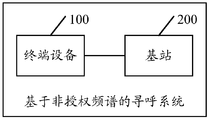
- FIG. 7 is a schematic structural diagram of a paging system based on an unlicensed spectrum according to an embodiment of the present invention.
- FIG. 8 is a schematic structural diagram of another paging system based on unlicensed spectrum according to an embodiment of the present invention. intention.
- the terminal device may be a device that provides voice and/or data connectivity to a user, a handheld device with a wireless connection function, or other processing device connected to a wireless modem.
- the terminal device can communicate with one or more core networks via a Radio Access Network (RAN), and the terminal device can be a mobile terminal, such as a mobile phone (or "cellular" phone) and a computer with a mobile terminal.
- RAN Radio Access Network
- the terminal device can be a mobile terminal, such as a mobile phone (or "cellular" phone) and a computer with a mobile terminal.
- RAN Radio Access Network
- it may be a portable, pocket, handheld, computer built-in or in-vehicle mobile device that exchanges language and/or data with a wireless access network.
- the terminal device may also be referred to as a system, a Subscriber Unit, a Subscriber Station, a Mobile Station, a Mobile, a Remote Station, an Access Point, Remote Terminal, Access Terminal, User Terminal, User Agent, or User Equipment.
- PCS Personal Communication Service
- SIP Session Initiation Protocol
- WLL Wireless Local Loop
- PDA Personal Digital Assistant
- FIG. 1 is a schematic flowchart of a method for paging based on an unlicensed spectrum according to an embodiment of the present disclosure, where the method includes:
- the terminal device calculates a paging frame PF and a paging occasion PO, and calculates a first duration of time when the PO is in a sleep state from the terminal device according to the PF and the PO, and enters the sleep state. Start timing;
- the process for the terminal device to calculate the PF and the PO may be: the terminal device calculates the PF and the PO according to the identifier of the terminal device, DRX, and the like, and calculates The method of the PF and the PO is prior art, and details are not described herein. While the terminal device calculates the PF and the PO, the base station may calculate the PF and the PO by using the same method, and the base station may find the location of the PO according to the PF and the PO. And sending a paging message at the location of the PO.
- the terminal device may calculate, according to the PF and the PO, a first duration of time when the PO is in a sleep state from the terminal device. For example, suppose there are 3 frames in a channel occupation time, 8 subframes in each frame, the calculated PF is 34, and PO is 3, and the time to enter the sleep state is 0 of the 0 frame of the 0 channel occupation time. No. subframe, then PF is the second frame in the 12th channel occupation time (assuming the frame number and the subframe number both start from 0), then PO is the second frame in the 12th channel occupation time.
- the target duration is a difference between the first duration and a preset early wakeup duration.
- the terminal device When the duration counted by the terminal device reaches the target duration, the terminal device will be woken up and be in an awake state, and if the awake terminal device is not in the LBT duration, the terminal device may immediately Synchronizing in a corresponding synchronization manner, and acquiring corresponding frame information in the channel occupation time of the current time after synchronization, and calculating a second duration of the PO from the current time according to the frame information of the current time, and calculating the second For the method of the second time, refer to the above S101, and no further description is made here.
- the terminal device After waking up is in the LBT duration, the terminal device needs to wait for the end of the LBT duration, and starts to synchronize through the corresponding synchronization mode when the first preamble sequence preamble is encountered, and is in synchronization. Then, the corresponding frame information in the channel occupation time of the current time is obtained, and the second time length of the current time from the PO is calculated according to the frame information of the current time.
- the difference between the second duration and the preset early wakeup duration is used as a new target duration, and continues to enter the sleep state and begins. Timing, that is, performing a loop operation between S102 and S103 until the second duration is less than the preset duration threshold.
- the listening state is continuously maintained until a paging message sent by the base station at the PO is detected.
- the step S104 is juxtaposed with the step S103, that is, when the second duration is less than the preset duration threshold, the step S103 is not performed, but the terminal device continues to maintain the listening state until the detection A paging message sent by the base station at the PO is heard.
- the terminal device can determine that the time interval of the PO maintained by the base station is currently awake to determine whether the paging message needs to be intercepted at this time, so that the terminal device can be guaranteed to be close to the The PO then determines to listen to the paging message to ensure that the terminal device does not miss the paging because the paging message is not heard.
- the terminal device in the embodiment of the present invention may calculate, according to the PF and the PO, a first duration of time when the PO is in a sleep state from the terminal device, and start timing when entering the sleep state, and enter when the time duration reaches the target duration.
- Awakening state and calculating a second duration of the current time distance PO according to the frame information of the current time; wherein, the target duration is a difference between the first duration and the preset advance wakeup duration; and when the second duration is greater than the preset duration threshold
- the difference between the second duration and the early wake-up duration is taken as the new target duration, and continues to enter the sleep state and start timing; when the second duration is less than the duration threshold, the listening state is continuously maintained until the base station is detected.
- the paging message sent by the PO thus, the terminal device can calculate the duration of the distance PO by acquiring the current frame information after each wake-up, and determine whether to continue to enter the sleep state or continue to maintain the listening state according to the calculated duration.
- the unlicensed spectrum can ensure that the terminal device can hear the paging message sent by the base station every time.
- FIG. 2 is a schematic flowchart of another method for paging based on an unlicensed spectrum according to an embodiment of the present invention.
- the method may include:
- the terminal device calculates the PF and the PO, and acquires frame information corresponding to a first channel occupation time in which the terminal device enters a sleep state;
- the process of the terminal device calculating the PF and the PO may be: the terminal device calculates the PF and the PO according to the identifier of the terminal device and the DRX, and the PF and the PF are calculated.
- the method of the PO is prior art, and details are not described herein. While the terminal device calculates the PF and the PO, the base station may calculate the PF and the PO by using the same method, and the base station may find the location of the PO according to the PF and the PO. And sending a paging message at the location of the PO.
- the terminal device may further acquire frame information corresponding to the first channel occupation time in which the terminal device enters a sleep state, for example, the terminal device may obtain
- the frame information corresponding to the first channel occupation time is the subframe 3 of frame 0 of the channel 2 occupation time.
- S202 Determine, according to the PF, the PO, and the corresponding frame information in the first channel occupation time, the frame information corresponding to the second channel occupation time of the PO, and calculate the first channel occupation time.
- the terminal device further determines, according to the PF, the PO, and the corresponding frame information in the first channel occupation time, the frame information corresponding to the second channel occupation time of the PO, and calculates the The first time duration between the corresponding frame information in the first channel occupation time and the corresponding frame information in the second channel occupation time. For example, suppose there are 3 frames in a channel occupation time, 8 subframes in each frame, the calculated PF is 34, and PO is 3, and the time to enter the sleep state is 0 of the 0 frame of the 0 channel occupation time. No.
- the PO is the fourth subframe of the second frame in the 12th channel occupation time (ie, the corresponding frame information in the second channel occupation time), and therefore, the corresponding one of the first channel occupation time can be calculated.
- the terminal device may further calculate, according to the frame information corresponding to the second channel occupation time of the PO, the preamble sequence preamble of the PO distance of the second channel occupation time (ie, the second channel The third duration between the start positions of the occupied time, and starts timing when entering the sleep state. For example, suppose there are 3 frames in a channel occupation time, 8 subframes in each frame, the calculated PF is 34, and PO is 3, and the time to enter the sleep state is 0 of the 0 frame of the 0 channel occupation time. No.
- the terminal device when the duration counted by the terminal device reaches the target duration, the terminal device is to wake up and is in the awake state, and detects the preset early wake-up duration.
- the target duration is a difference between the first duration and the preset early wakeup duration.
- the preset early wake-up duration is at least a duration required for the terminal device to perform discrete synchronization
- the synchronization mode of the device
- the terminal device when detecting that the preset early wake-up duration is at least a duration required for the terminal device to perform discrete synchronization, the terminal device further performs discrete synchronization according to the third duration and the terminal device.
- Determining the synchronization mode of the terminal device the specific process of determining the synchronization mode may be: determining whether the third duration is less than a duration required for the terminal device to perform discrete synchronization; if the determination is yes, Then, the synchronization mode of the terminal device is determined to be a continuous synchronization mode; otherwise, the synchronization mode of the terminal device is determined to be a discrete synchronization mode.
- the length of time required for the terminal device to perform discrete synchronization may be broadcast by the base station or specified by the protocol.
- FIG. 2a is a schematic diagram of a paging mechanism of an unlicensed spectrum according to an embodiment of the present invention.
- the COD in 2a refers to the channel occupation time in which the PO is located.
- the LBT duration that is, the LBT duration
- the first duration is a time interval from a moment when the terminal device enters a sleep state to a time between POUEs. T1 in FIG.
- the synchronization mode determined by the terminal device corresponding to FIG. 2a is a discrete synchronization mode
- T3 is the preset early wake-up duration, that is, T3 is an early wake-up time relative to the POUE, as shown in FIG. 2a, The terminal device corresponding to 2a wakes up in the LBT duration, so the terminal device will start discrete synchronization after the end of the LBT duration and when the preamble is encountered.
- S206 Synchronize according to the determined synchronization manner, and after the synchronization is completed, listen to the system message to obtain the corresponding frame information in the third channel occupation time at which the current time is located;
- the terminal device may immediately synchronize through the determined synchronization manner, and after the synchronization is completed, listen to the system message to obtain the current time.
- the third channel occupies corresponding frame information in time. If the terminal device after waking up is in the LBT duration, the terminal device needs to wait for the end of the LBT duration, and starts to synchronize through the determined synchronization mode when the first preamble is encountered, and completes the synchronization. After that, the system message is intercepted to obtain the corresponding frame information in the occupied time of the third channel where the current time is located.
- the process of calculating the second time length of the corresponding frame information in the second channel occupation time from the corresponding frame information in the third channel occupation time may be referred to in S202 above, and details are not described herein.
- the second duration is greater than a preset duration threshold, the second duration is compared to the pre- Setting the difference of the early wake-up duration as the new target duration, and continuing to enter the sleep state and start timing;
- the difference between the second duration and the preset early wakeup duration is used as a new target duration, and continues to enter the sleep state and begins. Timing, that is, performing a loop operation between S204 and S208 until the second duration is less than the preset duration threshold.
- the listening state is continuously maintained until a paging message sent by the base station in the PO is detected.
- the step S209 is juxtaposed with the step S208, that is, when the second duration is less than the preset duration threshold, the step S208 is not performed, but the terminal device continues to maintain the listening state until the detection A paging message sent by the base station at the PO is heard.
- the terminal device can determine that the time interval of the PO maintained by the base station is currently awake to determine whether the paging message needs to be intercepted at this time, so that the terminal device can be guaranteed to be close to the The PO then determines to listen to the paging message to ensure that the terminal device does not miss the paging because the paging message is not heard.
- the terminal device in the embodiment of the present invention may calculate, according to the PF and the PO, a first duration of time when the PO is in a sleep state from the terminal device, and start timing when entering the sleep state, and enter when the time duration reaches the target duration.
- Awakening state and calculating a second duration of the current time distance PO according to the frame information of the current time; wherein, the target duration is a difference between the first duration and the preset advance wakeup duration; and when the second duration is greater than the preset duration threshold
- the difference between the second duration and the early wake-up duration is taken as the new target duration, and continues to enter the sleep state and start timing; when the second duration is less than the duration threshold, the listening state is continuously maintained until the base station is detected.
- the paging message sent by the PO thus, the terminal device can calculate the duration of the distance PO by acquiring the current frame information after each wake-up, and determine whether to continue to enter the sleep state or continue to maintain the listening state according to the calculated duration. It is possible to ensure that the terminal device can hear the paging message sent by the base station every time in the unlicensed spectrum; Determining a third time length and size of the terminal device between the length of time required for discrete synchronization, the terminal can be determined in a synchronized manner the device should be used to avoid too long a time synchronization leads to miss The PO further ensures that the terminal device can accurately detect the paging message sent by the base station.
- FIG. 3 is a schematic flowchart of still another method for paging based on an unlicensed spectrum according to an embodiment of the present invention.
- the method may include:
- the terminal device calculates the PF and the PO, and acquires frame information corresponding to a first channel occupation time in which the terminal device enters a sleep state.
- the terminal device when the duration counted by the terminal device reaches the target duration, the terminal device is to wake up and is in the awake state, and detects the preset early wake-up duration.
- the target duration is a difference between the first duration and a preset early wakeup duration.
- the terminal device when detecting that the preset early wakeup duration is at least the third duration, the terminal device will always synchronize in a continuous synchronization manner, and after the synchronization is completed, listen to the system message to obtain the current
- the third channel in which the time is located occupies the corresponding frame information in the time.
- the preset early wake-up duration is at least the third duration
- the synchronization duration, the duration of the listening system message, and other factors that need to wake up in advance may also be considered together.
- the process of calculating the second time duration of the corresponding frame information in the second channel occupation time from the corresponding frame information in the third channel occupation time may be referred to in S302 above, and details are not described herein.
- the difference between the second duration and the preset early wakeup duration is used as a new target duration, and continues to enter the sleep state and start timing.
- the difference between the second duration and the preset early wakeup duration is used as a new target duration, and continues to enter the sleep state and begins. Timing, that is, performing a loop operation between S304 and S307 until the second duration is less than the preset duration threshold.
- the listening state is continuously maintained until the paging message sent by the base station in the PO is detected.
- the step S208 is juxtaposed with the step S307, that is, when the second duration is less than the preset duration threshold, the step S307 is not performed, but the terminal device continues to maintain the listening state until listening.
- the terminal device can determine that the time interval of the PO maintained by the base station is currently awake to determine whether the paging message needs to be intercepted at this time, so that the terminal device can be guaranteed to be close to the The PO then determines to listen to the paging message to ensure that the terminal device does not miss the paging because the paging message is not heard.
- the terminal device in the embodiment of the present invention may calculate, according to the PF and the PO, a first duration of time when the PO is in a sleep state from the terminal device, and start timing when entering the sleep state, and enter when the time duration reaches the target duration.
- the listening state is continuously maintained until the paging message sent by the base station at the PO is detected; thus, the terminal device can calculate the distance of the PO by acquiring the current frame information after each wake-up, and Determining whether to continue to enter the sleep state or continue to maintain the listening state according to the calculated duration, so that the terminal device can be guaranteed
- FIG. 4 is a schematic flowchart of still another method for paging based on an unlicensed spectrum according to an embodiment of the present invention.
- the method may include:
- the base station calculates a paging frame PF and a paging occasion PO, and calculates, according to the PF and the PO, a first duration of time when the PO is in a sleep state, and enters the sleep at the terminal device. Start timing when the status is up;
- the process of the base station calculating the PF and the PO may be: the base station calculates the PF and the PO according to the identifier of the terminal device, the DRX, and the like, and calculates the PF and the
- the PO method is prior art and will not be described again here.
- the base station may calculate the PF and the PO by using the same method, and the base station and the terminal device may calculate according to the PF and the PO, respectively.
- the PO is a first time duration from a moment when the terminal device enters a sleep state, and starts timing when the terminal device enters the sleep state.
- the specific process of calculating the first duration may be: acquiring frame information corresponding to the first channel occupation time at which the terminal device enters a sleep state, and according to the PF, the PO, and the Corresponding frame information in a channel occupation time, determining corresponding frame information in the second channel occupation time of the PO, and calculating a corresponding frame information in the first channel occupation time from the second channel occupation time
- the first duration between the corresponding frame information For example, suppose there are 3 frames in a channel occupation time, 8 subframes in each frame, the calculated PF is 34, and PO is 3, and the time to enter the sleep state is 0 of the 0 frame of the 0 channel occupation time. No.
- the base station when the time duration reaches the target duration, and the base station has successfully preempted the channel, the base station sends a synchronization signal, and acquires a synchronization manner of the terminal device.
- the target duration is a difference between the first duration and a preset early wakeup duration
- the target duration is a duration in which the terminal device is in a sleep state, that is, the terminal device enters the sleep state.
- the terminal device will be woken up.
- the base station performs the uplink operation and/or the downlink operation in the prior art while transmitting the synchronization signal, and details are not described herein.
- the specific process of the base station acquiring the synchronization mode of the terminal device may be: determining, according to a preset protocol or rule, the preset early wake-up time to determine the synchronization mode of the terminal device.
- the protocol or the rule for determining the preset early wake-up duration may be: if the preset early wake-up duration is greater than or equal to the duration T2 required for the terminal device to perform discrete synchronization, determining the Whether the duration T1 of the PO from the initial position of the channel occupation time is less than T2.
- the synchronization mode is determined to be a continuous synchronization mode. If the preset early wake-up time is less than T1, it is further determined whether the preset early wake-up duration is greater than or equal to T2, if it is determined to be greater than or equal to T2 (indicating that T1 is greater than T2), it is determined that the synchronization mode is a discrete synchronization mode, and if it is determined to be less than T2, it is determined that the terminal device fails to synchronize.
- the protocol or the rule for determining the preset early wake-up duration in the present invention may also be in other forms (just ensure that the terminal device does not miss synchronization), and details are not described herein again.
- S403. Determine, according to the synchronization manner, a time window for sending a paging message, and send the paging message to the terminal device in the time window.
- the synchronization mode is the continuous synchronization mode
- the preamble of the first channel occupation time after the terminal device enters the awake state is searched, and the time window is set after the preamble, and Sending the paging message to the terminal device in the time window; determining the synchronization success time of the terminal device according to the length of time required for the terminal device to perform discrete synchronization when the synchronization mode is obtained in the discrete synchronization mode, and Setting a time window after the synchronization success time, and sending the paging message to the terminal device in the time window, for example, acquiring the terminal device when the synchronization mode is obtained in a discrete synchronization mode
- the duration T2 required for discrete synchronization is performed, and the base station can set the time window after the duration of T2.
- the base station is configured to select, according to the actual wake-up time of the terminal device and the synchronization duration of the terminal device, the time at which the paging message is sent, so that the terminal device can detect the sending of the base station each time.
- the paging message is configured to select, according to the actual wake-up time of the terminal device and the synchronization duration of the terminal device, the time at which the paging message is sent, so that the terminal device can detect the sending of the base station each time.
- the paging message is configured to select, according to the actual wake-up time of the terminal device and the synchronization duration of the terminal device, the time at which the paging message is sent, so that the terminal device can detect the sending of the base station each time.
- the base station When the base station of the embodiment of the present invention reaches the target duration and the base station has successfully preempted the channel, the base station synchronizes with the terminal device in the awake state, acquires the synchronization mode of the terminal device, and determines to send the paging message according to the synchronization manner. a time window, and sending a paging message to the terminal device in the time window; it can be seen that the base station selects the time at which the paging message is sent according to the actual wake-up time of the terminal device and the synchronization duration of the terminal device, thereby ensuring that the terminal device can Both can hear the paging message sent by the base station.
- FIG. 5 is a schematic structural diagram of a terminal device according to an embodiment of the present invention.
- the terminal device 1 may include: a receiving module 11 and a processing module 12; the terminal device 1 is configured to execute the foregoing FIG. 1 to FIG. A paging method based on unlicensed spectrum is shown.
- the processing module 12 is configured to calculate a paging frame PF and a paging occasion PO, and calculate, according to the PF and the PO, a first duration of time when the PO is in a sleep state from the terminal device 1, and Start timing when entering the sleep state;
- the process of the processing module 12 for calculating the PF and the PO may be: the processing module 12 calculates the PF and the information according to the identifier of the terminal device 1 and DRX information.
- the method of calculating the PF and the PO is a prior art, and details are not described herein.
- the processing module 12 calculates the PF and the PO
- the base station may also calculate the PF and the PO by using the same method, and the base station may find the location of the PO according to the PF and the PO. And sending a paging message at the location of the PO.
- the processing module 12 may calculate, according to the PF and the PO, a first duration of time when the PO is in a sleep state from the terminal device 1 . For example, suppose there are 3 frames in a channel occupation time, 8 subframes in each frame, the calculated PF is 34, and PO is 3, and the time to enter the sleep state is 0 of the 0 frame of the 0 channel occupation time. No. subframe, then PF is the second frame in the 12th channel occupation time (assuming the frame number and the subframe number both start from 0), then PO is the second frame in the 12th channel occupation time.
- the processing module 12 is configured to enter a awake state when the time duration reaches the target duration, and calculate a second duration of the current time from the PO according to the frame information of the current time; the target duration is the The difference between the first duration and the preset early wake-up duration;
- the target duration is a difference between the first duration and a preset early wakeup duration.
- the processing module 12 can immediately synchronize the corresponding synchronization mode, and obtain the corresponding frame information in the channel occupation time of the current time after the synchronization, and calculate the second time duration of the PO from the current time according to the frame information of the current time.
- the method for calculating the second duration is the same as the method for the first calculation module to calculate the first duration, and details are not described herein.
- the processing module 12 needs to wait for the end of the LBT duration, and starts to synchronize by the corresponding synchronization mode when the first preamble sequence preamble is encountered, and Obtaining corresponding frame information in the channel occupation time of the current time after the synchronization, and calculating a second duration of the PO from the current time according to the frame information of the current time.
- the processing module 12 is configured to: when the second duration is greater than a preset duration threshold, The difference between the second duration and the preset early wake-up duration is taken as the new target duration, and continues to enter the sleep state and start timing;
- the processing module 12 takes the difference between the second duration and the preset early wakeup duration as the new target duration, and continues to enter the location.
- the sleep state and the start timing that is, performing a loop operation between the second calculation module and the determination notification module until the second duration is less than the preset duration threshold.
- the receiving module 11 is configured to continuously maintain a listening state when the second duration is less than the preset duration threshold, until the paging message sent by the base station in the PO is detected;
- the processing module 12 does not continue to enter the sleep state and starts timing, but the receiving module 11 continuously maintains the listening state. Until the paging message sent by the base station at the PO is heard. Since the terminal device 1 can calculate the time interval from the PO maintained by the base station at the current time after being awake to determine whether the paging message needs to be intercepted at this time, the terminal device 1 can be guaranteed to be close. The PO then determines to listen to the paging message to ensure that the terminal device 1 does not miss the paging because it cannot detect the paging message.
- the processing module 12 is configured to calculate a paging frame PF and a paging occasion PO, and calculate, according to the PF and the PO acquired by the receiving module 11, the PO distance from the terminal device 1 to enter a sleep state.
- the first time of the moment, and starts timing when entering the sleep state specifically including:
- the processing module 12 may further obtain The frame information corresponding to the first channel occupation time in which the terminal device 1 enters the sleep state is obtained.
- the processing module 12 may obtain the frame information corresponding to the first channel occupation time as the channel 2 Subframe No. 3 of frame 0 occupying time.
- the processing module 12 may determine that the PF is the second frame in the 12th channel occupation time (assuming the frame number and the subframe number are both Starting from 0), and determining that the PO is the fourth subframe of the second frame in the 12th channel occupation time (ie, the corresponding frame information in the second channel occupation time), therefore, the determination calculation
- the processing module 12 may calculate, according to the corresponding frame information in the second channel occupation time of the PO, the preamble sequence preamble of the PO distance from the second channel occupation time (ie, the time of the second channel occupation time) The third time period between the start positions) and starts timing when entering the sleep state. For example, suppose that PF is the second frame in the 12th channel occupation time (assuming that both the frame number and the subframe number start from 0), and PO is the fourth frame of the second frame in the 12th channel occupation time.
- the processing module 12 may calculate a preamble of the PO from the second channel occupation time (specifically, a starting position of the preamble, one of the sub-frames (ie, the corresponding frame information in the second channel occupation time)
- the third duration T1 (8 + 3 + 1) * t between the length of the preamble and the length of one subframe.
- processing module 12 is configured to calculate, according to the frame information of the current time, a second duration of the current time from the PO, specifically:
- the preset early wake-up duration is at least the length of time required for the terminal device 1 to perform discrete synchronization
- determining the terminal according to the third duration and a length of time required for the terminal device 1 to perform discrete synchronization The synchronization mode of the device 1 is synchronized according to the determined synchronization manner, and after the synchronization is completed, the system message is intercepted, and the corresponding frame in the third channel occupation time at which the current time is located is obtained.
- the information is used to calculate a second duration between the corresponding frame information in the second channel occupation time and the corresponding frame information in the third channel occupation time.
- the target duration is a difference between the first duration and a preset early wakeup duration; the duration required for the terminal device 1 to perform discrete synchronization may be broadcast by the base station or specified by the protocol.
- processing module 12 is configured to determine the synchronization mode of the terminal device 1 according to the third duration and the length of time required for the terminal device 1 to perform the discrete synchronization, which specifically includes:
- processing module 12 is configured to: when calculating, according to the frame information of the current time, the second time duration of the current time from the PO, specifically:
- the synchronization is performed according to the continuous synchronization manner, and after the synchronization is completed, the system message is intercepted to obtain the corresponding time in the third channel occupation time at which the current time is located.
- the frame information is used to calculate a second duration between the corresponding frame information in the second channel occupation time and the corresponding frame information in the third channel occupation time.
- the preset early wake-up duration is at least the third duration
- the synchronization duration, the duration of the listening system message, and other factors that need to wake up in advance may also be considered together.
- the receiving module 11 in the corresponding embodiment of FIG. 5 may be a receiver of the physical device (the terminal device 1), and the processing module 12 may be a processor of the physical device (the terminal device 1).
- the terminal device in the embodiment of the present invention may calculate, according to the PF and the PO, a first duration of time when the PO is in a sleep state from the terminal device, and start timing when entering the sleep state, and enter when the time duration reaches the target duration.
- Awakening state and calculating a second duration of the current time distance PO according to the frame information of the current time; wherein, the target duration is a difference between the first duration and the preset advance wakeup duration; and when the second duration is greater than the preset duration threshold
- the difference between the second duration and the early wake-up duration is taken as the new target duration, and continues to enter the sleep state and start timing; when the second duration is less than the duration threshold, the listening state is continuously maintained until the base station is detected.
- the paging message sent by the PO thus, the terminal device can calculate the distance PO by acquiring the current frame information after each wake-up And determine whether to continue to enter the sleep state or continue to maintain the listening state according to the calculated duration, so that the terminal device can be sure to hear the paging message sent by the base station every time in the unlicensed spectrum;
- the length between the duration and the length of time required for the discrete synchronization of the terminal device can determine the synchronization mode that the terminal device should use to avoid missing the PO due to the long synchronization time, further ensuring that the terminal device can accurately detect A paging message sent by the base station.
- FIG. 6 is a schematic structural diagram of a base station according to an embodiment of the present invention.
- the base station 2 may include: a processing module 21, a sending module 23, and a receiving module 22.
- the base station 2 is configured to perform the foregoing FIG. A paging method based on unlicensed spectrum.
- the processing module 21 is configured to calculate a paging frame PF and a paging occasion PO, and calculate, according to the PF and the PO, a first duration of time when the PO is in a sleep state from the terminal device, and at the terminal The device starts timing when it enters the sleep state;
- the process of the processing module 21 for calculating the PF and the PO may be: calculating the PF and the PO according to the identifier of the terminal device, DRX, and the like, and calculating the PF and the PO.
- the method is prior art and will not be described here.
- the processing module 21 calculates the PF and the PO, and the terminal device may calculate the PF and the PO by using the same method, and the processing module 21 and the terminal device may respectively perform the PF and the PF.
- the PO calculates a first duration of time when the PO is in a sleep state from the terminal device, and starts timing when the terminal device enters the sleep state.
- the specific process of the processing module 21 for calculating the first duration may be: acquiring frame information corresponding to the first channel occupation time at which the terminal device enters the sleep state, and according to the PF, the Determining frame information corresponding to the second channel occupation time of the PO, and calculating a frame information distance corresponding to the first channel occupation time by the PO and the corresponding frame information in the first channel occupation time
- the first duration between the corresponding frame information in the two channel occupation time For example, suppose there are 3 frames in a channel occupation time, 8 subframes in each frame, the calculated PF is 34, and PO is 3, and the time to enter the sleep state is 0 of the 0 frame of the 0 channel occupation time. No.
- the processing module 21 can calculate the corresponding one of the first channel occupation time
- the sending module 23 is configured to: when the duration counted by the processing module 21 reaches the target duration, and the preempted channel is successful, send a synchronization signal; the target duration is the first duration and the preset early wakeup duration a difference, and the target duration is a duration of the terminal device being in a sleep state;
- the sending module 23 sends a synchronization signal.
- the target duration is a difference between the first duration and a preset early wakeup duration
- the target duration is a duration in which the terminal device is in a sleep state, that is, the terminal device enters the sleep state.
- the terminal device will be woken up.
- the sending module 23 performs the uplink operation and/or the downlink operation in the prior art while transmitting the synchronization signal, and details are not described herein.
- the receiving module 22 is configured to acquire a synchronization mode of the terminal device after the sending module 23 sends the synchronization signal;
- the specific process of the receiving module 22 to obtain the synchronization mode of the terminal device may be: determining, according to a preset protocol or rule, the preset early wake-up duration to determine the terminal device. Synchronously.
- the protocol or the rule for determining the preset early wake-up duration may be: if the preset early wake-up duration is greater than or equal to the duration T2 required for the terminal device to perform discrete synchronization, determining the Whether the duration T1 of the PO from the initial position of the channel occupation time is less than T2.
- the synchronization mode is determined to be a continuous synchronization mode. If the preset early wake-up time is less than T1, it is further determined whether the preset early wake-up duration is greater than or equal to T2, if it is determined to be greater than or equal to T2 (indicating that T1 is greater than T2), it is determined that the synchronization mode is a discrete synchronization mode, and if it is determined to be less than T2, it is determined that the terminal device fails to synchronize.
- the protocol or rule for judging the preset pre-awake duration may also be in other forms (just ensure that the terminal device does not miss synchronization), and no further description is made here.
- the processing module 21 is configured to determine, according to the synchronization manner acquired by the receiving module 22, a time window for sending a paging message;
- the processing module 21 is specifically configured to: when the synchronization mode is the continuous synchronization mode, search for a preamble sequence preamble of the first channel occupation time after the terminal device enters the awake state, and set the time window. After the preamble; or the processing module 21 is specifically configured to determine, according to the length of time required for the terminal device to perform discrete synchronization, when the synchronization mode is the discrete synchronization mode, determine the synchronization success time of the terminal device. And setting the time window after the synchronization success time.
- the sending module 23 is configured to send the paging message to the terminal device within the time window determined by the processing module 21.
- the receiving module 22 in the corresponding embodiment of FIG. 6 may be a receiver of a physical device (base station 2), the sending module 23 may be a transmitter of a physical device (base station 2), and the processing module 21 may be an entity.
- the base station 2 in the embodiment of the present invention synchronizes with the terminal device in the awake state when the time period of the base station 2 reaches the target duration, and the base station 2 has successfully preempted the channel, and acquires the synchronization mode of the terminal device, and determines the transmission mode according to the synchronization mode.
- the time window of the message is sent, and the paging message is sent to the terminal device in the time window. It can be seen that the base station selects the time for sending the paging message according to the actual wake-up time of the terminal device and the synchronization duration of the terminal device, thereby ensuring the terminal device. Each time, you can hear the paging message sent by the base station.
- FIG. 7 is a schematic structural diagram of a paging system based on an unlicensed spectrum according to an embodiment of the present invention, where the system includes: a terminal device 100 and a base station 200;
- the terminal device 100 is configured to calculate a paging frame PF and a paging occasion PO, and calculate, according to the PF and the PO, a first duration of time when the PO is in a sleep state from the terminal device 100, and Start timing when entering the sleep state;
- the terminal device 100 is further configured to enter an awake when the time duration reaches the target duration And calculating, according to the frame information of the current time, a second duration of the current time from the PO; the target duration is a difference between the first duration and a preset early wakeup duration;
- the terminal device 100 is further configured to use, when the second duration is greater than a preset duration threshold, a difference between the second duration and the preset early wakeup duration as a new target duration, and continue to enter The sleep state and start timing;
- the terminal device 100 is further configured to continue to maintain a listening state when the second duration is less than the preset duration threshold, until the paging message sent by the base station 200 at the PO is detected;
- the base station 200 is configured to calculate the PF and the PO, calculate a location of the PO according to the PF and the PO, and send the paging message at a location of the PO.
- the terminal device 100 is configured to calculate a paging frame PF and a paging occasion PO, and calculate, according to the PF and the PO, a first duration of time when the PO is in a sleep state from the terminal device 100, And start timing when entering the sleep state, specifically including:
- the calculated PF is 34
- PO is 3
- the time to enter the sleep state is 0 of the 0 frame of the 0 channel occupation time.
- No. subframe ie, corresponding frame information in the first channel occupation time
- PF is the second frame in the 12th channel occupation time (assuming the frame number and the subframe number both start from 0)
- the PO is the fourth subframe of the second frame in the 12th channel occupation time (ie, the corresponding frame information in the second channel occupation time), and therefore, the corresponding one of the first channel occupation time can be calculated.
- the third duration T1 (8+3+1)*t between the time-consuming preamble (specifically the starting position of the preamble and the length of one preamble equal to the length of one subframe).
- the terminal device 100 is configured to enter a awake state when the time duration reaches the target duration, and calculate a second duration of the current time from the PO according to the frame information of the current time, which specifically includes:
- the time duration When the time duration reaches the target duration, enter the awake state, and detect the preset early wake-up duration, and when the preset early wake-up duration is at least the length of time required for the terminal device 100 to perform discrete synchronization Determining a synchronization manner of the terminal device 100 according to the third duration and a length of time required for the terminal device 100 to perform discrete synchronization, performing synchronization according to the determined synchronization manner, and after the synchronization is completed, listening And the system message is configured to obtain a frame information corresponding to the third channel occupation time of the current time, and calculate a frame information corresponding to the frame information in the second channel occupation time. Two hours long.
- the terminal device 100 can immediately synchronize through the determined synchronization manner, and after the synchronization is completed, listen to the system message to obtain the current time.
- the third channel occupies corresponding frame information in time. If the terminal device 100 after waking up is in the LBT duration, the terminal device 100 needs to wait for the end of the LBT duration, and starts to synchronize through the determined synchronization manner when the first preamble is encountered, and After the synchronization is complete, the system message is intercepted to obtain the corresponding frame information in the occupied time of the third channel where the current time is located.
- the terminal device 100 is configured to determine a synchronization manner of the terminal device 100 according to the third duration and a length of time required for the terminal device 100 to perform the discrete synchronization, and specifically includes:
- Determining whether the third duration is less than a duration required for the terminal device 100 to perform discrete synchronization If the determination is yes, determining that the synchronization mode of the terminal device 100 is a continuous synchronization mode; otherwise, determining the terminal device 100
- the synchronization method is discrete synchronization.
- the terminal device 100 is configured to enter a awake state when the time duration reaches the target duration, and calculate a second duration of the current time from the PO according to the frame information of the current time, which specifically includes:
- the awake state is entered, and the preset early wake-up time is detected, and when the preset early wake-up duration is at least the third duration, the synchronization is performed according to the continuous synchronization manner.
- the system message is intercepted to obtain the corresponding frame information in the third channel occupation time of the current time, and the corresponding frame information in the second channel occupation time is calculated from the third channel occupation time. The second duration between the corresponding frame information.
- the terminal device 100 in the embodiment of the present invention may calculate a first duration of time when the PO is in a sleep state from the terminal device 100 according to the PF and the PO, and start timing when entering the sleep state, and when the time duration reaches the target duration Entering the awake state, and calculating the second duration of the current time distance PO according to the frame information of the current time; wherein the target duration is the difference between the first duration and the preset early wakeup duration; when the second duration is greater than the preset When the duration threshold is used, the difference between the second duration and the early wakeup duration is taken as the new target duration, and continues to enter the sleep state and start timing; when the second duration is less than the duration threshold, the listening state is continuously maintained until the interception is performed.
- FIG. 8 is a schematic structural diagram of a paging system based on an unlicensed spectrum according to an embodiment of the present invention, where the system includes: a base station 400 and a terminal device 300;
- the base station 400 is configured to calculate a paging frame PF and a paging occasion PO, and calculate, according to the PF and the PO, a first duration of time when the PO is in a sleep state from the terminal device 300, and at the terminal.
- the device 300 starts timing when entering the sleep state;
- the base station 400 is further configured to: when the time duration of the timeout reaches the target duration, and the base station 400 has successfully preempted the channel, send a synchronization signal, and obtain a synchronization mode of the terminal device 300;
- the target duration is the The difference between a duration and a preset early wake-up duration, and the target duration is The length of time in which the terminal device 300 is in a sleep state;
- the base station 400 is further configured to determine, according to the synchronization manner, a time window for sending a paging message, and send the paging message to the terminal device 300 within the time window;
- the terminal device 300 is configured to calculate a paging frame PF and a paging occasion PO, and calculate, according to the PF and the PO, a first duration of time when the PO is in a sleep state from the terminal device 300, and in the When the terminal device 300 enters the sleep state, timing starts, and when the time duration reaches the target duration, the awake state is entered, and the listening state is continuously maintained until the paging message sent by the base station 400 is detected.
- the calculated PF is 34
- PO is 3
- the time to enter the sleep state is 0 of the 0 frame of the 0 channel occupation time.
- No. subframe ie, corresponding frame information in the first channel occupation time
- PF is the second frame in the 12th channel occupation time (assuming the frame number and the subframe number both start from 0)
- the PO is the fourth subframe of the second frame in the 12th channel occupation time (ie, the corresponding frame information in the second channel occupation time), and therefore, the corresponding one of the first channel occupation time can be calculated.
- t is one subframe duration.
- the specific process of the base station 400 for acquiring the synchronization mode of the terminal device 300 may be: determining the preset early wake-up duration according to a preset protocol or rule, to determine the terminal device 300. Synchronously.
- the protocol or the rule for determining the preset early wake-up duration may be: if the preset early wake-up duration is greater than or equal to the duration T2 required for the terminal device 300 to perform discrete synchronization, The duration T1 of the initial distance of the PO is less than T2. If the determination is yes, the synchronization mode is determined to be a continuous synchronization mode.
- the synchronization mode is determined to be a discrete synchronization mode; or If the preset early wake-up time is greater than or equal to T1, it is determined that the synchronization mode is a continuous synchronization mode. If the preset early wake-up duration is less than T1, further determine whether the preset early wake-up duration is greater than or If it is determined to be greater than or equal to T2 (indicating that T1 is greater than T2), it is determined that the synchronization mode is a discrete synchronization mode. If it is determined to be less than T2, it is determined that the terminal device 300 fails to synchronize.
- the protocol or the rule for determining the preset early wake-up duration in the present invention may also be in other forms (only the terminal device 300 is guaranteed not to miss the synchronization), and details are not described herein again.
- the base station 400 is configured to determine, according to the synchronization manner, a time window for sending a paging message, and send the paging message to the terminal device 300 in the time window, which specifically includes:
- the synchronization mode is the continuous synchronization mode
- the preamble sequence preamble of the first channel occupation time after the terminal device 300 enters the awake state is searched, and the time window is set after the preamble, and Sending the paging message to the terminal device 300 in a time window;
- the synchronization success time of the terminal device 300 is determined according to the length of time required for the terminal device 300 to perform discrete synchronization, and the time window is set after the synchronization success time. And transmitting the paging message to the terminal device 300 within the time window.
- the base station 400 of the embodiment of the present invention synchronizes with the terminal device 300 in the awake state when the timed period of the base station 400 reaches the target duration, and the base station 400 has successfully preempted the channel, and acquires the synchronization mode of the terminal device 300, and determines according to the synchronization mode.
- the time window of the paging message is sent, and the paging message is sent to the terminal device 300 in the time window. It can be seen that the base station 400 selects the time to send the paging message according to the actual wake-up time of the terminal device 300 and the synchronization duration of the terminal device 300. Thus, it can be ensured that the terminal device 300 can detect the paging message sent by the base station 400 every time.
- the storage medium may be a magnetic disk, an optical disk, a read-only memory (ROM), or a random access memory (RAM).
Landscapes
- Engineering & Computer Science (AREA)
- Computer Networks & Wireless Communication (AREA)
- Signal Processing (AREA)
- Mobile Radio Communication Systems (AREA)
Abstract
本发明实施例公开一种基于非授权频谱的寻呼方法以及相关设备,其中方法包括:终端设备计算寻呼帧PF和寻呼时机PO,并根据PF和PO计算PO距离终端设备进入睡眠状态的时刻的第一时长,并在进入睡眠状态时开始计时;当所计时的时长达到目标时长时,进入唤醒状态,并根据当前时刻的帧信息,计算当前时刻距离PO的第二时长;目标时长为第一时长与预设的提前唤醒时长的差值;当第二时长大于预设的时长阈值时,将第二时长与提前唤醒时长的差值作为新的目标时长,并继续进入睡眠状态和开始计时;或者,当第二时长小于时长阈值时,持续保持侦听状态,直至侦听到寻呼消息。采用本发明,可以在非授权频谱中保证终端设备总能侦听到寻呼消息。
Description
本发明涉及通信技术领域,尤其涉及一种基于非授权频谱的寻呼方法以及相关设备。
目前的基站和终端设备之间的寻呼方式通常为:基站和终端设备分别根据终端设备标识和DRX(非连续接收,discontinuous reception)等信息计算出PF(寻呼帧,paging frame)和PO(寻呼时机,paging occasion),基站在PO发送寻呼消息,终端设备在PO侦听寻呼消息。
在授权频谱中,帧号或子帧号随着时间的变化是连续的,因为基站或终端设备一直在占用信道,终端设备即使在空闲状态也能根据定时器信息判断当前系统的帧号和子帧号。但是,在非授权频谱中,网络中的节点(基站或终端)由于法规的限制无法一直连续的占用信道,基站可能需要以竞争的方式来抢占信道,即基站会出现LBT(对话前侦听,Listen Before Talk)持续时间,这里的LBT持续时间具体指非授权频谱中基站或终端设备每次做对话前侦听时抢占信道的时间。当基站没有占用信道时(即基站处于LBT持续时间中),基站不会发送系统帧,基站只有在再次抢占到信道后才会继续发送系统帧。因此,在非授权频谱中,系统帧号随着时间的变化可能是不连续的。
例如,当M2M(机器对机器,machine to machine)系统部署在非授权频谱上时,终端设备由于低功耗的需求仍采用DRX机制,在空闲状态时进入睡眠以达到省电目的,在PO时刻醒来侦听寻呼消息。但是,当出现LBT持续时间时,由于终端设备处于睡眠状态识别不到LBT持续时间,终端设备维护的帧号和子帧号仍然按照连续的时间递减去计算,而基站能通过信道检测知道LBT持续时间的存在,基站不会在LBT持续时间中发送帧,因此,相对于终端设备维护的帧号和子帧号,基站维护的帧号和子帧号会由于LBT持续时间
的存在而滞后。终端设备根据自身维护的时间在PO时刻醒来,终端设备醒来后不会去特意判断当前发送的帧信息是否与自身维护的系统帧信息一致,终端设备默认认为是一致的,而实际上由于LBT持续时间的存在,基站所维护的PO时刻还未到来,因此基站不会在此时发寻呼消息,终端设备醒来后侦听一段时间,若侦听不到寻呼消息则认为没有自身的寻呼消息,从而导致错过本次寻呼。
发明内容
本发明实施例提供一种基于非授权频谱的寻呼方法以及相关设备,可以在非授权频谱中保证终端设备每次都能侦听到基站发送的寻呼消息。
本发明第一方面提供了一种基于非授权频谱的寻呼方法,包括:
终端设备计算寻呼帧PF和寻呼时机PO,并根据PF和PO计算PO距离终端设备进入睡眠状态的时刻的第一时长,并在进入睡眠状态时开始计时;
当所计时的时长达到目标时长时,进入唤醒状态,并根据当前时刻的帧信息,计算当前时刻距离PO的第二时长;目标时长为第一时长与预设的提前唤醒时长的差值;
当第二时长大于预设的时长阈值时,将第二时长与预设的提前唤醒时长的差值作为新的目标时长,并继续进入睡眠状态和开始计时;或者,
当第二时长小于预设的时长阈值时,持续保持侦听状态,直至侦听到由基站在PO发送的寻呼消息。
例如,当终端设备在睡眠状态过程中出现LBT持续时间时,终端设备的唤醒时刻距离预先计算的PO可能会比较远,为了避免终端设备无法侦听到寻呼消息,终端设备可以通过获取当前帧信息以计算距离PO的时长,并根据所计算时长确定继续进入睡眠状态还是持续保持侦听状态,从而可以保证终端设备能够侦听到基站发送的寻呼消息。
在第一种可能的实施方式中,终端设备计算寻呼帧PF和寻呼时机PO,并根据PF和PO计算PO距离终端设备进入睡眠状态的时刻的第一时长,并
在进入睡眠状态时开始计时,包括:
终端设备计算PF和PO,并获取终端设备进入睡眠状态的时刻所在的第一信道占用时间中对应的帧信息;
根据PF、PO以及第一信道占用时间中对应的帧信息,确定PO所在的第二信道占用时间中对应的帧信息,并计算第一信道占用时间中对应的帧信息距离第二信道占用时间中对应的帧信息之间的第一时长;
根据PO所在的第二信道占用时间中对应的帧信息,计算PO距离第二信道占用时间的前导序列preamble之间的第三时长,并在进入睡眠状态时开始计时。
例如,假设一个信道占用时间中有3个帧,每个帧有8个子帧,计算出来的PF是34,PO是3,设进入睡眠状态的时刻为0号信道占用时间的0号帧的0号子帧(即第一信道占用时间中对应的帧信息),则PF是在第12个信道占用时间中的第二个帧(假设帧号和子帧号都是从0开始),则PO是在第12个信道占用时间中的第二个帧的第4个子帧(即第二信道占用时间中对应的帧信息),因此,可以计算第一信道占用时间中对应的帧信息距离第二信道占用时间中对应的帧信息之间的第一时长T=11*(3*8+1)*t+(8+3+1)*t,t是一个子帧的时长;并可以计算PO距离第二信道占用时间的preamble(具体为preamble的起始位置,一个preamble的长度等于一个子帧的长度)之间的第三时长T1=(8+3+1)*t。
结合第一方面的第一种可能的实现方式,在第二种可能的实现方式中,当所计时的时长达到目标时长时,进入唤醒状态,并根据当前时刻的帧信息,计算当前时刻距离PO的第二时长,包括:
当所计时的时长达到目标时长时,进入唤醒状态,并检测预设的提前唤醒时长;
当预设的提前唤醒时长至少为终端设备进行离散同步时所需的时长时,根据第三时长和终端设备进行离散同步时所需的时长确定终端设备的同步方式;
根据所确定的同步方式进行同步,并在同步完成后,侦听系统消息,以获
取当前时刻所在的第三信道占用时间中对应的帧信息;
计算第二信道占用时间中对应的帧信息距离第三信道占用时间中对应的帧信息之间的第二时长。
结合第一方面的第二种可能的实现方式,在第三种可能的实现方式中,根据第三时长和终端设备进行离散同步时所需的时长确定终端设备的同步方式,包括:
判断第三时长是否小于终端设备进行离散同步时所需的时长;
若判断为是,则确定终端设备的同步方式为连续同步方式;
否则,确定终端设备的同步方式为离散同步方式。
终端设备通过对第三时长和离散同步所需的时长进行判断,可以选择出对应的同步方式,使得所选择出的同步方式可以保证终端设备不会因同步的时间过长而导致错过PO,进一步保证终端设备能准确侦听到基站发送的寻呼消息。
结合第一方面的第一种可能的实现方式,在第四种可能的实现方式中,当所计时的时长达到目标时长时,进入唤醒状态,并根据当前时刻的帧信息,计算当前时刻距离PO的第二时长,包括:
当所计时的时长达到目标时长时,进入唤醒状态,并检测预设的提前唤醒时长;
当预设的提前唤醒时长至少为第三时长时,按照连续同步方式进行同步,并在同步完成后,侦听系统消息,以获取当前时刻所在的第三信道占用时间中对应的帧信息;
计算第二信道占用时间中对应的帧信息距离第三信道占用时间中对应的帧信息之间的第二时长。预设的提前唤醒时长在至少为第三时长的同时,还可以考虑终端设备的同步时长以及侦听系统消息的时长。
终端设备通过确定预设的提前唤醒时长至少为第三时长,可以将同步方式始终确定为连续同步方式,也可以保证终端设备不会因同步的时间过长而导致错过PO,进一步保证终端设备能准确侦听到基站发送的寻呼消息。
本发明第二方面提供了一种基于非授权频谱的寻呼方法,包括:
基站计算寻呼帧PF和寻呼时机PO,并根据PF和PO计算PO距离终端设备进入睡眠状态的时刻的第一时长,并在终端设备进入睡眠状态时开始计时;
当所计时的时长达到目标时长,且基站已抢占信道成功时,发送同步信号,并获取终端设备的同步方式;目标时长为第一时长与预设的提前唤醒时长的差值,且目标时长为终端设备处于睡眠状态的时长;
根据同步方式确定发送寻呼消息的时间窗,并在时间窗内向终端设备发送寻呼消息。
由此可见,基站不再固定于PO处发送寻呼消息,而是根据终端设备实际的唤醒时刻以及终端设备的同步时长选择发送寻呼消息的时刻,从而也可以保证终端设备每次都能够侦听到基站发送的寻呼消息。
其中,基站获取终端设备的同步方式的具体过程可以为:根据预先设定好的协议或规则对预设的提前唤醒时长进行判断,以确定终端设备的同步方式。
其中,终端设备也可以计算PF和PO,并根据PF和PO计算PO距离终端设备进入睡眠状态的时刻的第一时长,并在进入睡眠状态时开始计时,使得终端设备可以在所计时的时长达到目标时长时被唤醒。
在第一种可能的实现方式中,根据同步方式确定发送寻呼消息的时间窗,并在时间窗内向终端设备发送寻呼消息,包括:
当获取到同步方式为连续同步方式时,查找终端设备进入唤醒状态后的第一个信道占用时间的前导序列preamble,并将时间窗设置在preamble之后,并在时间窗内向终端设备发送寻呼消息;
当获取到同步方式为离散同步方式时,根据终端设备进行离散同步所需的时长确定终端设备的同步成功时刻,并将时间窗设置在同步成功时刻之后,并在时间窗内向终端设备发送寻呼消息。
本发明第三方面提供了一种终端设备,该终端设备具有实现上述第一方面的方法实际中终端设备行为的功能。所述功能可以通过硬件实现,也可以通过硬件执行相应的软件实现。所述硬件或软件包括一个或多个与上述功能相对应
的模块。
在一个可能的设计中,终端设备的结构中包括处理器和接收器,所述处理器被配置为支持终端设备执行上述第一方面的方法中相应的功能。所述接收器被配置为支持终端设备与基站之间的通信,接收上述基站在PO时刻发送的寻呼消息。所述终端设备还可以包括存储器,所述存储器用于与处理器耦合,其保存终端设备必要的程序指令和数据。
本发明第四方面提供了一种基站,该基站具有实现上述第二方面的方法实际中基站行为的功能。所述功能可以通过硬件实现,也可以通过硬件执行相应的软件实现。所述硬件或软件包括一个或多个与上述功能相对应的模块。
在一个可能的设计中,基站的结构中包括处理器、接收器、发射器,所述处理器被配置为支持基站执行上述第二方面的方法中相应的功能。所述接收器和所述发射器用于支持基站与终端设备之间的通信,所述发射器用于发送同步信号且用于在确定出的时间窗内向终端设备发送寻呼消息,所述接收器用于接收终端设备的同步方式。所述基站还可以包括存储器,所述存储器用于与处理器耦合,其保存基站必要的程序指令和数据。
本发明第五方面提供了一种基于非授权频谱的寻呼系统,该系统包括基站以及上述第三方面所提供的一种终端设备;该系统的所述基站,用于计算PF和PO,并根据PF和PO计算PO的位置,并在PO的位置上发送寻呼消息。
本发明第六方面提供了另一种基于非授权频谱的寻呼系统,该系统包括终端设备以及上述第四方面所提供的一种基站;该系统的所述终端设备,用于计算寻呼帧PF和寻呼时机PO,并根据PF和PO计算PO距离终端设备进入睡眠状态的时刻的第一时长,并在终端设备进入睡眠状态时开始计时,并当所计时的时长达到目标时长时,进入唤醒状态,并持续保持侦听状态,直至侦听到由基站发送的寻呼消息。
本发明实施例中的终端设备可以根据PF和PO计算PO距离终端设备进入睡眠状态的时刻的第一时长,并在进入睡眠状态时开始计时,并且当所计时的时长达到目标时长时,进入唤醒状态,并根据当前时刻的帧信息,计算当前
时刻距离PO的第二时长;其中,目标时长为第一时长与预设的提前唤醒时长的差值;当第二时长大于预设的时长阈值时,将第二时长与提前唤醒时长的差值作为新的目标时长,并继续进入睡眠状态和开始计时;当第二时长小于时长阈值时,持续保持侦听状态,直至侦听到由基站在PO发送的寻呼消息;由此可见,终端设备在每次唤醒后都可以通过获取当前帧信息以计算距离PO的时长,并根据所计算时长确定继续进入睡眠状态还是持续保持侦听状态,从而可以在非授权频谱中保证终端设备每次都能侦听到基站发送的寻呼消息。
为了更清楚地说明本发明实施例或现有技术中的技术方案,下面将对实施例中所需要使用的附图作简单地介绍,显而易见地,下面描述中的附图仅仅是本发明的一些实施例,对于本领域普通技术人员来讲,在不付出创造性劳动的前提下,还可以根据这些附图获得其他的附图。
图1是本发明实施例提供的一种基于非授权频谱的寻呼方法的流程示意图;
图2是本发明实施例提供的另一种基于非授权频谱的寻呼方法的流程示意图;
图2a是本发明实施例提供的一种非授权频谱的寻呼机制示意图;
图3是本发明实施例提供的又一种基于非授权频谱的寻呼方法的流程示意图;
图4是本发明实施例提供的又一种基于非授权频谱的寻呼方法的流程示意图;
图5是本发明实施例提供的一种终端设备的结构示意图;
图6是本发明实施例提供的一种基站的结构示意图;
图7是本发明实施例提供的一种基于非授权频谱的寻呼系统的结构示意图;
图8是本发明实施例提供的另一种基于非授权频谱的寻呼系统的结构示
意图。
下面将结合本发明实施例中的附图,对本发明实施例中的技术方案进行清楚、完整地描述,显然,所描述的实施例仅仅是本发明一部分实施例,而不是全部的实施例。基于本发明中的实施例,本领域普通技术人员在没有作出创造性劳动前提下所获得的所有其他实施例,都属于本发明保护的范围。
本发明实施例涉及的终端设备,可以是指向用户提供语音和/或数据连通性的设备,具有无线连接功能的手持式设备、或连接到无线调制解调器的其他处理设备。终端设备可以经无线接入网(Radio Access Network,RAN)与一个或多个核心网进行通信,终端设备可以是移动终端,如移动电话(或称为“蜂窝”电话)和具有移动终端的计算机,例如,可以是便携式、袖珍式、手持式、计算机内置的或者车载的移动装置,它们与无线接入网交换语言和/或数据。例如,个人通信业务(PCS,Personal Communication Service)电话、无绳电话、会话发起协议(SIP)话机、无线本地环路(WLL,Wireless Local Loop)站、个人数字助理(PDA,Personal Digital Assistant)等设备。终端设备也可以称为系统、订户单元(Subscriber Unit)、订户站(Subscriber Station),移动站(Mobile Station)、移动台(Mobile)、远程站(Remote Station)、接入点(Access Point)、远程终端(Remote Terminal)、接入终端(Access Terminal)、用户终端(User Terminal)、用户代理(User Agent)、或用户装备(User Equipment)。
请参见图1,是本发明实施例提供的一种基于非授权频谱的寻呼方法的流程示意图,所述方法包括:
S101,终端设备计算寻呼帧PF和寻呼时机PO,并根据所述PF和所述PO计算所述PO距离所述终端设备进入睡眠状态的时刻的第一时长,并在进入所述睡眠状态时开始计时;
具体的,所述终端设备计算所述PF和所述PO的过程可以为:所述终端设备根据所述终端设备的标识和DRX等信息计算出所述PF和所述PO,计算
所述PF和所述PO的方法为现有技术,这里不再进行赘述。所述终端设备计算所述PF和所述PO的同时,基站也可以通过相同的方法计算所述PF和所述PO,所述基站可以根据所述PF和所述PO找到所述PO的位置,并在所述PO的位置上发送寻呼消息。
所述终端设备获取到所述PF和所述PO后,可以根据所述PF和所述PO计算所述PO距离所述终端设备进入睡眠状态的时刻的第一时长。例如,假设一个信道占用时间中有3个帧,每个帧有8个子帧,计算出来的PF是34,PO是3,设进入睡眠状态的时刻为0号信道占用时间的0号帧的0号子帧,则PF是在第12个信道占用时间中的第二个帧(假设帧号和子帧号都是从0开始),则PO是在第12个信道占用时间中的第二个帧的第4个子帧(3号子帧,即PO为3),PO距离进入睡眠时刻的时间间隔为第一时长T=11*(3*8+1)*t+(8+3+1)*t,t是一个子帧的时长。
S102,当所计时的时长达到目标时长时,进入唤醒状态,并根据当前时刻的帧信息,计算所述当前时刻距离所述PO的第二时长;
具体的,所述目标时长为所述第一时长与预设的提前唤醒时长的差值。当所述终端设备所计时的时长达到所述目标时长时,所述终端设备将被唤醒,并处于唤醒状态,若唤醒后的所述终端设备不处于LBT持续时间中,所述终端设备可以立即通过对应的同步方式进行同步,并在同步后获取当前时刻的信道占用时间中对应的帧信息,并根据当前时刻的帧信息计算所述当前时刻距离所述PO的第二时长,计算所述第二时长的方法可以参见上述S101,这里不再进行赘述。若唤醒后的所述终端设备处于LBT持续时间中,则所述终端设备需等待LBT持续时间的结束,并在遇到第一个前导序列preamble时开始通过对应的同步方式进行同步,并在同步后获取当前时刻的信道占用时间中对应的帧信息,并根据当前时刻的帧信息计算所述当前时刻距离所述PO的第二时长。
S103,当所述第二时长大于预设的时长阈值时,将所述第二时长与所述预设的提前唤醒时长的差值作为新的目标时长,并继续进入所述睡眠状态和开始计时;
具体的,当所述第二时长大于预设的时长阈值时,将所述第二时长与所述预设的提前唤醒时长的差值作为新的目标时长,并继续进入所述睡眠状态和开始计时,即在S102和S103之间执行循环操作,直至所述第二时长小于所述预设的时长阈值。
S104,当所述第二时长小于所述预设的时长阈值时,持续保持侦听状态,直至侦听到由基站在所述PO发送的寻呼消息;
具体的,S104步骤与S103步骤相并列,即当所述第二时长小于所述预设的时长阈值时,不再执行S103步骤,而是由所述终端设备将持续保持侦听状态,直至侦听到由基站在所述PO发送的寻呼消息。由于所述终端设备可以在被唤醒后计算当前时刻距离所述基站所维护的PO的时间间隔,以确定此时是否需要侦听所述寻呼消息,所以可以保证所述终端设备在靠近所述PO时再确定侦听所述寻呼消息,以保证所述终端设备不会因侦听不到所述寻呼消息而错过本次寻呼。
本发明实施例中的终端设备可以根据PF和PO计算PO距离终端设备进入睡眠状态的时刻的第一时长,并在进入所述睡眠状态时开始计时,并且当所计时的时长达到目标时长时,进入唤醒状态,并根据当前时刻的帧信息,计算当前时刻距离PO的第二时长;其中,目标时长为第一时长与预设的提前唤醒时长的差值;当第二时长大于预设的时长阈值时,将第二时长与提前唤醒时长的差值作为新的目标时长,并继续进入睡眠状态和开始计时;当第二时长小于时长阈值时,持续保持侦听状态,直至侦听到由基站在PO发送的寻呼消息;由此可见,终端设备在每次唤醒后都可以通过获取当前帧信息以计算距离PO的时长,并根据所计算时长确定继续进入睡眠状态还是持续保持侦听状态,从而可以在非授权频谱中保证终端设备每次都能侦听到基站发送的寻呼消息。
再请参见图2,是本发明实施例提供的另一种基于非授权频谱的寻呼方法的流程示意图,所述方法可以包括:
S201,所述终端设备计算所述PF和所述PO,并获取所述终端设备进入睡眠状态的时刻所在的第一信道占用时间中对应的帧信息;
具体的,所述终端设备计算所述PF和所述PO的过程可以为:所述终端设备根据所述终端设备的标识和DRX等信息计算出所述PF和所述PO,计算所述PF和所述PO的方法为现有技术,这里不再进行赘述。所述终端设备计算所述PF和所述PO的同时,基站也可以通过相同的方法计算所述PF和所述PO,所述基站可以根据所述PF和所述PO找到所述PO的位置,并在所述PO的位置上发送寻呼消息。
所述终端设备获取到所述PF和所述PO后,还可以进一步获取所述终端设备进入睡眠状态的时刻所在的第一信道占用时间中对应的帧信息,例如,所述终端设备可以获取到所述第一信道占用时间中对应的帧信息为2号信道占用时间的0号帧的3号子帧。
S202,根据所述PF、所述PO以及所述第一信道占用时间中对应的帧信息,确定所述PO所在的第二信道占用时间中对应的帧信息,并计算所述第一信道占用时间中对应的帧信息距离所述第二信道占用时间中对应的帧信息之间的第一时长;
具体的,所述终端设备进一步根据所述PF、所述PO以及所述第一信道占用时间中对应的帧信息,确定所述PO所在的第二信道占用时间中对应的帧信息,并计算所述第一信道占用时间中对应的帧信息距离所述第二信道占用时间中对应的帧信息之间的第一时长。例如,假设一个信道占用时间中有3个帧,每个帧有8个子帧,计算出来的PF是34,PO是3,设进入睡眠状态的时刻为0号信道占用时间的0号帧的0号子帧(即所述第一信道占用时间中对应的帧信息),则PF是在第12个信道占用时间中的第二个帧(假设帧号和子帧号都是从0开始),则PO是在第12个信道占用时间中的第二个帧的第4个子帧(即所述第二信道占用时间中对应的帧信息),因此,可以计算所述第一信道占用时间中对应的帧信息距离所述第二信道占用时间中对应的帧信息之间的第一时长T=11*(3*8+1)*t+(8+3+1)*t,t是一个子帧的时长。
S203,根据所述PO所在的第二信道占用时间中对应的帧信息,计算所述PO距离所述第二信道占用时间的前导序列preamble之间的第三时长,并在进
入所述睡眠状态时开始计时;
具体的,所述终端设备还可以进一步根据所述PO所在的第二信道占用时间中对应的帧信息,计算所述PO距离所述第二信道占用时间的前导序列preamble(即所述第二信道占用时间的起始位置)之间的第三时长,并在进入所述睡眠状态时开始计时。例如,假设一个信道占用时间中有3个帧,每个帧有8个子帧,计算出来的PF是34,PO是3,设进入睡眠状态的时刻为0号信道占用时间的0号帧的0号子帧(即所述第一信道占用时间中对应的帧信息),则PF是在第12个信道占用时间中的第二个帧(假设帧号和子帧号都是从0开始),则PO是在第12个信道占用时间中的第二个帧的第4个子帧(即所述第二信道占用时间中对应的帧信息),所述PO距离所述第二信道占用时间的preamble(具体为preamble的起始位置,一个preamble的长度等于一个子帧的长度)之间的第三时长T1=(8+3+1)*t。
S204,当所计时的时长达到目标时长时,进入唤醒状态,并检测所述预设的提前唤醒时长;
具体的,当所述终端设备所计时的时长达到目标时长时,所述终端设备将被唤醒,并处于唤醒状态,并检测所述预设的提前唤醒时长。其中,所述目标时长为所述第一时长与所述预设的提前唤醒时长的差值。
S205,当所述预设的提前唤醒时长至少为所述终端设备进行离散同步时所需的时长时,根据所述第三时长和所述终端设备进行离散同步时所需的时长确定所述终端设备的同步方式;
具体的,当检测到所述预设的提前唤醒时长至少为所述终端设备进行离散同步时所需的时长时,所述终端设备进一步根据所述第三时长和所述终端设备进行离散同步时所需的时长确定所述终端设备的同步方式,确定所述同步方式的具体过程可以为:判断所述第三时长是否小于所述终端设备进行离散同步时所需的时长;若判断为是,则确定所述终端设备的同步方式为连续同步方式;否则,确定所述终端设备的同步方式为离散同步方式。所述终端设备进行离散同步时所需的时长可以由基站广播或者由协议规定。
进一步的,请一并参见图2a,是本发明实施例提供的一种非授权频谱的寻呼机制示意图;图2a中的PO所在的位置为所述终端设备和所述基站预先计算出来的,图2a中的COD是指PO所处于的信道占用时间,由于出现了LBT Duration(即LBT持续时间),所以所述终端设备所认知的侦听寻呼消息的时刻是在POUE所在的位置,因此,所述第一时长是从所述终端设备进入睡眠状态的时刻到POUE之间的时间间隔。图2a中的T1为所述PO距离所述PO所在的信道占用时间的起始位置(preamble)的间隔时长;T2为所述终端设备进行离散同步时所需的时长,从图2a可以得知T1大于T2,因此,图2a对应的终端设备所确定的同步方式为离散同步方式;T3为所述预设的提前唤醒时长,即T3是相对于POUE的提前唤醒时长,由图2a可知,图2a对应的终端设备是在LBT持续时间中唤醒,因此,该终端设备将会在LBT持续时间结束后且在遇到preamble时,开始进行离散同步。
S206,根据所确定的所述同步方式进行同步,并在同步完成后,侦听系统消息,以获取当前时刻所在的第三信道占用时间中对应的帧信息;
具体的,若唤醒后的所述终端设备不处于LBT持续时间中,所述终端设备可以立即通过所确定的同步方式进行同步,并在同步完成后,侦听系统消息,以获取当前时刻所在的第三信道占用时间中对应的帧信息。若唤醒后的所述终端设备处于LBT持续时间中,则所述终端设备需等待LBT持续时间的结束,并在遇到第一个preamble时开始通过所确定的同步方式进行同步,并在同步完成后,侦听系统消息,以获取当前时刻所在的第三信道占用时间中对应的帧信息。
S207,计算所述第二信道占用时间中对应的帧信息距离所述第三信道占用时间中对应的帧信息之间的第二时长;
具体的,计算所述第二信道占用时间中对应的帧信息距离所述第三信道占用时间中对应的帧信息之间的第二时长的过程可以参见上述S202,这里不再进行赘述。
S208,当所述第二时长大于预设的时长阈值时,将所述第二时长与所述预
设的提前唤醒时长的差值作为新的目标时长,并继续进入所述睡眠状态和开始计时;
具体的,当所述第二时长大于预设的时长阈值时,将所述第二时长与所述预设的提前唤醒时长的差值作为新的目标时长,并继续进入所述睡眠状态和开始计时,即在S204至S208之间执行循环操作,直至所述第二时长小于所述预设的时长阈值。
S209,当所述第二时长小于所述预设的时长阈值时,持续保持侦听状态,直至侦听到由基站在所述PO发送的寻呼消息;
具体的,S209步骤与S208步骤相并列,即当所述第二时长小于所述预设的时长阈值时,不再执行S208步骤,而是由所述终端设备将持续保持侦听状态,直至侦听到由基站在所述PO发送的寻呼消息。由于所述终端设备可以在被唤醒后计算当前时刻距离所述基站所维护的PO的时间间隔,以确定此时是否需要侦听所述寻呼消息,所以可以保证所述终端设备在靠近所述PO时再确定侦听所述寻呼消息,以保证所述终端设备不会因侦听不到所述寻呼消息而错过本次寻呼。
本发明实施例中的终端设备可以根据PF和PO计算PO距离终端设备进入睡眠状态的时刻的第一时长,并在进入所述睡眠状态时开始计时,并且当所计时的时长达到目标时长时,进入唤醒状态,并根据当前时刻的帧信息,计算当前时刻距离PO的第二时长;其中,目标时长为第一时长与预设的提前唤醒时长的差值;当第二时长大于预设的时长阈值时,将第二时长与提前唤醒时长的差值作为新的目标时长,并继续进入睡眠状态和开始计时;当第二时长小于时长阈值时,持续保持侦听状态,直至侦听到由基站在PO发送的寻呼消息;由此可见,终端设备在每次唤醒后都可以通过获取当前帧信息以计算距离PO的时长,并根据所计算时长确定继续进入睡眠状态还是持续保持侦听状态,从而可以在非授权频谱中保证终端设备每次都能侦听到基站发送的寻呼消息;而且,通过判断第三时长与终端设备进行离散同步时所需的时长之间的大小,可以确定出终端设备应当使用的同步方式,以避免因同步的时间过长而导致错过
PO,进一步保证终端设备能准确侦听到基站发送的寻呼消息。
再请参见图3,是本发明实施例提供的又一种基于非授权频谱的寻呼方法的流程示意图,所述方法可以包括:
S301,所述终端设备计算所述PF和所述PO,并获取所述终端设备进入睡眠状态的时刻所在的第一信道占用时间中对应的帧信息;
S302,根据所述PF、所述PO以及所述第一信道占用时间中对应的帧信息,确定所述PO所在的第二信道占用时间中对应的帧信息,并计算所述第一信道占用时间中对应的帧信息距离所述第二信道占用时间中对应的帧信息之间的第一时长;
S303,根据所述PO所在的第二信道占用时间中对应的帧信息,计算所述PO距离所述第二信道占用时间的前导序列preamble之间的第三时长,并在进入所述睡眠状态时开始计时;
其中,S301至S303步骤的具体实现方式可以参见上述图2对应实施例中的S201至S203,这里不再进行赘述。
S304,当所计时的时长达到目标时长时,进入唤醒状态,并检测所述预设的提前唤醒时长;
具体的,当所述终端设备所计时的时长达到目标时长时,所述终端设备将被唤醒,并处于唤醒状态,并检测所述预设的提前唤醒时长。其中,所述目标时长为所述第一时长与预设的提前唤醒时长的差值。
S305,当所述预设的提前唤醒时长至少为所述第三时长时,按照连续同步方式进行同步,并在同步完成后,侦听系统消息,以获取当前时刻所在的第三信道占用时间中对应的帧信息;
具体的,当检测到所述预设的提前唤醒时长至少为所述第三时长时,所述终端设备将始终按照连续同步方式进行同步,并在同步完成后,侦听系统消息,以获取当前时刻所在的第三信道占用时间中对应的帧信息。其中,在所述预设的提前唤醒时长至少为所述第三时长的同时,还可以一并考虑同步时长、侦听系统消息的时长以及其他需要提前醒来的因素。
S306,计算所述第二信道占用时间中对应的帧信息距离所述第三信道占用时间中对应的帧信息之间的第二时长;
具体的,计算所述第二信道占用时间中对应的帧信息距离所述第三信道占用时间中对应的帧信息之间的第二时长的过程可以参见上述S302,这里不再进行赘述。
S307,当所述第二时长大于预设的时长阈值时,将所述第二时长与所述预设的提前唤醒时长的差值作为新的目标时长,并继续进入所述睡眠状态和开始计时;
具体的,当所述第二时长大于预设的时长阈值时,将所述第二时长与所述预设的提前唤醒时长的差值作为新的目标时长,并继续进入所述睡眠状态和开始计时,即在S304至S307之间执行循环操作,直至所述第二时长小于所述预设的时长阈值。
S308,当所述第二时长小于所述预设的时长阈值时,持续保持侦听状态,直至侦听到由基站在所述PO发送的寻呼消息;
具体的,S208步骤与S307步骤相并列,即当所述第二时长小于所述预设的时长阈值时,不再执行S307步骤,而是由所述终端设备持续保持侦听状态,直至侦听到由基站在所述PO发送的寻呼消息。由于所述终端设备可以在被唤醒后计算当前时刻距离所述基站所维护的PO的时间间隔,以确定此时是否需要侦听所述寻呼消息,所以可以保证所述终端设备在靠近所述PO时再确定侦听所述寻呼消息,以保证所述终端设备不会因侦听不到所述寻呼消息而错过本次寻呼。
本发明实施例中的终端设备可以根据PF和PO计算PO距离终端设备进入睡眠状态的时刻的第一时长,并在进入所述睡眠状态时开始计时,并且当所计时的时长达到目标时长时,进入唤醒状态,并根据当前时刻的帧信息,计算当前时刻距离PO的第二时长;其中,目标时长为第一时长与预设的提前唤醒时长的差值;当第二时长大于预设的时长阈值时,将第二时长与提前唤醒时长的差值作为新的目标时长,并继续进入睡眠状态和开始计时;当第二时长小于
时长阈值时,持续保持侦听状态,直至侦听到由基站在PO发送的寻呼消息;由此可见,终端设备在每次唤醒后都可以通过获取当前帧信息以计算距离PO的时长,并根据所计算时长确定继续进入睡眠状态还是持续保持侦听状态,从而可以在非授权频谱中保证终端设备每次都能侦听到基站发送的寻呼消息;而且,通过将提前唤醒时长至少设置为第三时长,并始终通过连续同步方式进行同步,以避免因同步的时间过长而导致错过PO,进一步保证终端设备能准确侦听到基站发送的寻呼消息。
请参见图4,是本发明实施例提供的又一种基于非授权频谱的寻呼方法的流程示意图,所述方法可以包括:
S401,基站计算寻呼帧PF和寻呼时机PO,并根据所述PF和所述PO计算所述PO距离终端设备进入睡眠状态的时刻的第一时长,并在所述终端设备进入所述睡眠状态时开始计时;
具体的,所述基站计算所述PF和所述PO的过程可以为:所述基站根据所述终端设备的标识和DRX等信息计算出所述PF和所述PO,计算所述PF和所述PO的方法为现有技术,这里不再进行赘述。所述基站计算所述PF和所述PO的同时,终端设备也可以通过相同的方法计算所述PF和所述PO,所述基站和所述终端设备可以分别根据所述PF和所述PO计算所述PO距离所述终端设备进入睡眠状态的时刻的第一时长,并在所述终端设备进入所述睡眠状态时开始计时。
其中,计算所述第一时长的具体过程可以为:获取所述终端设备进入睡眠状态的时刻所在的第一信道占用时间中对应的帧信息,并根据所述PF、所述PO以及所述第一信道占用时间中对应的帧信息,确定所述PO所在的第二信道占用时间中对应的帧信息,并计算所述第一信道占用时间中对应的帧信息距离所述第二信道占用时间中对应的帧信息之间的第一时长。例如,假设一个信道占用时间中有3个帧,每个帧有8个子帧,计算出来的PF是34,PO是3,设进入睡眠状态的时刻为0号信道占用时间的0号帧的0号子帧(即所述第一信道占用时间中对应的帧信息),则PF是在第12个信道占用时间中的第二个
帧(假设帧号和子帧号都是从0开始),则PO是在第12个信道占用时间中的第二个帧的第4个子帧(即所述第二信道占用时间中对应的帧信息),因此,可以计算所述第一信道占用时间中对应的帧信息距离所述第二信道占用时间中对应的帧信息之间的第一时长T=11*(3*8+1)*t+(8+3+1)*t,t是一个子帧的时长。
S402,当所计时的时长达到目标时长,且所述基站已抢占信道成功时,发送同步信号,并获取所述终端设备的同步方式;
具体的,当所计时的时长达到目标时长,且所述基站已抢占信道成功时,所述基站发送同步信号,并获取所述终端设备的同步方式。其中,所述目标时长为所述第一时长与预设的提前唤醒时长的差值,且所述目标时长为所述终端设备处于睡眠状态的时长,即所述终端设备在进入所述睡眠状态时开始计时并在所计时的时长达到所述目标时长时,所述终端设备将被唤醒。其中,所述基站在发送所述同步信号的同时,还会进行现有技术中的上行操作和/或下行操作,这里不再进行赘述。
进一步的,所述基站获取所述终端设备的同步方式的具体过程可以为:根据预先设定好的协议或规则对所述预设的提前唤醒时长进行判断,以确定所述终端设备的同步方式。其中,对所述预设的提前唤醒时长进行判断的协议或规则可以为:若所述预设的提前唤醒时长大于或等于所述终端设备进行离散同步时所需的时长T2,则判断所述PO距离其所在信道占用时间的初始位置的时长T1是否小于T2,若判断为是,则确定所述同步方式为连续同步方式,否则,确定所述同步方式为离散同步方式;或者可以为:若所述预设的提前唤醒时长大于或等于T1,则确定所述同步方式为连续同步方式,若所述预设的提前唤醒时长小于T1,进一步判断所述预设的提前唤醒时长是否大于或等于T2,若判断为大于或等于T2(说明T1大于T2),则确定所述同步方式为离散同步方式,若判断为小于T2,则确定所述终端设备同步失败。本发明中对所述预设的提前唤醒时长进行判断的协议或规则还可以是其他形式(只需保证所述终端设备不会错过同步即可),这里不再进行一一赘述。
S403,根据所述同步方式确定发送寻呼消息的时间窗,并在所述时间窗内向所述终端设备发送所述寻呼消息;
具体的,当获取到所述同步方式为连续同步方式时,查找所述终端设备进入唤醒状态后的第一个信道占用时间的preamble,并将时间窗设置在所述preamble之后,并在所述时间窗内向所述终端设备发送所述寻呼消息;当获取到所述同步方式为离散同步方式时,根据所述终端设备进行离散同步所需的时长确定所述终端设备的同步成功时刻,并将时间窗设置在所述同步成功时刻之后,并在所述时间窗内向所述终端设备发送所述寻呼消息,例如,当获取到所述同步方式为离散同步方式时,获取所述终端设备进行离散同步所需的时长T2,所述基站可以将所述时间窗设置在T2时长之后。由于所述基站是根据所述终端设备实际的唤醒时刻以及所述终端设备的同步时长选择发送所述寻呼消息的时刻,所以可以保证所述终端设备每次都能够侦听到所述基站发送的所述寻呼消息。
本发明实施例的基站在所计时的时长达到目标时长,且基站已抢占信道成功时,与处于唤醒状态的终端设备进行同步,并获取终端设备的同步方式,并根据同步方式确定发送寻呼消息的时间窗,并在时间窗内向终端设备发送寻呼消息;由此可见,基站是根据终端设备实际的唤醒时刻以及终端设备的同步时长选择发送寻呼消息的时刻,从而可以保证终端设备每次都能够侦听到基站发送的寻呼消息。
请参见图5,是本发明实施例提供的一种终端设备的结构示意图,所述终端设备1可以包括:接收模块11和处理模块12;所述终端设备1用于执行上述图1至图3所示的一种基于非授权频谱的寻呼方法。
所述处理模块12,用于计算寻呼帧PF和寻呼时机PO,并根据所述PF和所述PO计算所述PO距离所述终端设备1进入睡眠状态的时刻的第一时长,并在进入所述睡眠状态时开始计时;
具体的,所述处理模块12计算所述PF和所述PO的过程可以为:所述处理模块12根据所述终端设备1的标识和DRX等信息计算出所述PF和所述
PO,计算所述PF和所述PO的方法为现有技术,这里不再进行赘述。所述处理模块12计算所述PF和所述PO的同时,基站也可以通过相同的方法计算所述PF和所述PO,所述基站可以根据所述PF和所述PO找到所述PO的位置,并在所述PO的位置上发送寻呼消息。
所述处理模块12获取到所述PF和所述PO后,可以根据所述PF和所述PO计算所述PO距离所述终端设备1进入睡眠状态的时刻的第一时长。例如,假设一个信道占用时间中有3个帧,每个帧有8个子帧,计算出来的PF是34,PO是3,设进入睡眠状态的时刻为0号信道占用时间的0号帧的0号子帧,则PF是在第12个信道占用时间中的第二个帧(假设帧号和子帧号都是从0开始),则PO是在第12个信道占用时间中的第二个帧的第4个子帧(3号子帧,即PO为3),所述第一计算模块可以计算出PO距离进入睡眠时刻的时间间隔为第一时长T=11*(3*8+1)*t+(8+3+1)*t,t是一个子帧的时长。
所述处理模块12,用于当所计时的时长达到目标时长时,进入唤醒状态,并根据当前时刻的帧信息,计算所述当前时刻距离所述PO的第二时长;所述目标时长为所述第一时长与预设的提前唤醒时长的差值;
具体的,所述目标时长为所述第一时长与预设的提前唤醒时长的差值。当所述处理模块12所计时的时长达到所述目标时长时,所述终端设备1将被唤醒,并处于唤醒状态,若唤醒后的所述终端设备1不处于LBT持续时间中,所述处理模块12可以立即通过对应的同步方式进行同步,并在同步后获取当前时刻的信道占用时间中对应的帧信息,并根据当前时刻的帧信息计算所述当前时刻距离所述PO的第二时长,计算所述第二时长的方法与所述第一计算模块计算所述第一时长的方法相同,这里不再进行赘述。若唤醒后的所述终端设备1处于LBT持续时间中,则所述处理模块12需等待LBT持续时间的结束,并在遇到第一个前导序列preamble时开始通过对应的同步方式进行同步,并在同步后获取当前时刻的信道占用时间中对应的帧信息,并根据当前时刻的帧信息计算所述当前时刻距离所述PO的第二时长。
所述处理模块12,用于当所述第二时长大于预设的时长阈值时,将所述
第二时长与所述预设的提前唤醒时长的差值作为新的目标时长,并继续进入所述睡眠状态和开始计时;
具体的,当所述第二时长大于预设的时长阈值时,所述处理模块12将所述第二时长与所述预设的提前唤醒时长的差值作为新的目标时长,并继续进入所述睡眠状态和开始计时,即在所述第二计算模块和所述确定通知模块之间执行循环操作,直至所述第二时长小于所述预设的时长阈值。
所述接收模块11,用于当所述第二时长小于所述预设的时长阈值时,持续保持侦听状态,直至侦听到由基站在所述PO发送的寻呼消息;
具体的,当所述第二时长小于所述预设的时长阈值时,所述处理模块12不再继续进入所述睡眠状态和开始计时,而是由所述接收模块11持续保持侦听状态,直至侦听到由基站在所述PO发送的寻呼消息。由于所述终端设备1可以在被唤醒后计算当前时刻距离所述基站所维护的PO的时间间隔,以确定此时是否需要侦听所述寻呼消息,所以可以保证所述终端设备1在靠近所述PO时再确定侦听所述寻呼消息,以保证所述终端设备1不会因侦听不到所述寻呼消息而错过本次寻呼。
进一步的,所述处理模块12用于计算寻呼帧PF和寻呼时机PO,并根据所述接收模块11获取的所述PF和所述PO计算所述PO距离所述终端设备1进入睡眠状态的时刻的第一时长,并在进入所述睡眠状态时开始计时,具体包括:
计算所述PF和所述PO,并获取所述终端设备1进入睡眠状态的时刻所在的第一信道占用时间中对应的帧信息,根据所述PF、所述PO以及所述第一信道占用时间中对应的帧信息,确定所述PO所在的第二信道占用时间中对应的帧信息,并计算所述第一信道占用时间中对应的帧信息距离所述第二信道占用时间中对应的帧信息之间的第一时长,根据所述PO所在的第二信道占用时间中对应的帧信息,计算所述PO距离所述第二信道占用时间的前导序列preamble之间的第三时长,并在进入所述睡眠状态时开始计时。
具体的,所述处理模块12计算出所述PF和所述PO后,还可以进一步获
取所述终端设备1进入睡眠状态的时刻所在的第一信道占用时间中对应的帧信息,例如,所述处理模块12可以获取到所述第一信道占用时间中对应的帧信息为2号信道占用时间的0号帧的3号子帧。
例如,假设一个信道占用时间中有3个帧,每个帧有8个子帧,计算出来的PF是34,PO是3,设进入睡眠状态的时刻为0号信道占用时间的0号帧的0号子帧(即所述第一信道占用时间中对应的帧信息),则所述处理模块12可以确定PF是在第12个信道占用时间中的第二个帧(假设帧号和子帧号都是从0开始),并确定PO是在第12个信道占用时间中的第二个帧的第4个子帧(即所述第二信道占用时间中对应的帧信息),因此,所述确定计算单元可以计算所述第一信道占用时间中对应的帧信息距离所述第二信道占用时间中对应的帧信息之间的第一时长T=11*(3*8+1)*t+(8+3+1)*t,t是一个子帧的时长。
所述处理模块12可以根据所述PO所在的第二信道占用时间中对应的帧信息,计算所述PO距离所述第二信道占用时间的前导序列preamble(即所述第二信道占用时间的起始位置)之间的第三时长,并在进入所述睡眠状态时开始计时。例如,假设PF是在第12个信道占用时间中的第二个帧(假设帧号和子帧号都是从0开始),PO是在第12个信道占用时间中的第二个帧的第4个子帧(即所述第二信道占用时间中对应的帧信息),则所述处理模块12可以计算出所述PO距离所述第二信道占用时间的preamble(具体为preamble的起始位置,一个preamble的长度等于一个子帧的长度)之间的第三时长T1=(8+3+1)*t。
进一步的,所述处理模块12用于根据当前时刻的帧信息,计算所述当前时刻距离所述PO的第二时长,具体包括:
当所述预设的提前唤醒时长至少为所述终端设备1进行离散同步时所需的时长时,根据所述第三时长和所述终端设备1进行离散同步时所需的时长确定所述终端设备1的同步方式,根据所确定的所述同步方式进行同步,并在同步完成后,侦听系统消息,获取当前时刻所在的第三信道占用时间中对应的帧
信息,计算所述第二信道占用时间中对应的帧信息距离所述第三信道占用时间中对应的帧信息之间的第二时长。其中,所述目标时长为所述第一时长与预设的提前唤醒时长的差值;所述终端设备1进行离散同步时所需的时长可以由基站广播或者由协议规定。
进一步的,所述处理模块12用于根据所述第三时长和所述终端设备1进行离散同步时所需的时长确定所述终端设备1的同步方式,具体包括:
判断所述第三时长是否小于所述终端设备1进行离散同步时所需的时长,若判断为是,则确定所述终端设备1的同步方式为连续同步方式,若判断为否,则确定所述终端设备1的同步方式为离散同步方式。
进一步的,所述处理模块12用于根据当前时刻的帧信息,计算所述当前时刻距离所述PO的第二时长时,具体包括:
当所述预设的提前唤醒时长至少为所述第三时长时,按照连续同步方式进行同步,并在同步完成后,侦听系统消息,以获取当前时刻所在的第三信道占用时间中对应的帧信息,计算所述第二信道占用时间中对应的帧信息距离所述第三信道占用时间中对应的帧信息之间的第二时长。
其中,在所述预设的提前唤醒时长至少为所述第三时长的同时,还可以一并考虑同步时长、侦听系统消息的时长以及其他需要提前醒来的因素。
上述图5对应实施例中的所述接收模块11可以为实体设备(终端设备1)的接收器,所述处理模块12可以为实体设备(终端设备1)的处理器。
本发明实施例中的终端设备可以根据PF和PO计算PO距离终端设备进入睡眠状态的时刻的第一时长,并在进入所述睡眠状态时开始计时,并且当所计时的时长达到目标时长时,进入唤醒状态,并根据当前时刻的帧信息,计算当前时刻距离PO的第二时长;其中,目标时长为第一时长与预设的提前唤醒时长的差值;当第二时长大于预设的时长阈值时,将第二时长与提前唤醒时长的差值作为新的目标时长,并继续进入睡眠状态和开始计时;当第二时长小于时长阈值时,持续保持侦听状态,直至侦听到由基站在PO发送的寻呼消息;由此可见,终端设备在每次唤醒后都可以通过获取当前帧信息以计算距离PO
的时长,并根据所计算时长确定继续进入睡眠状态还是持续保持侦听状态,从而可以在非授权频谱中保证终端设备每次都能侦听到基站发送的寻呼消息;而且,通过判断第三时长与终端设备进行离散同步时所需的时长之间的大小,可以确定出终端设备应当使用的同步方式,以避免因同步的时间过长而导致错过PO,进一步保证终端设备能准确侦听到基站发送的寻呼消息。
请参见图6,是本发明实施例提供的一种基站的结构示意图,所述基站2可以包括:处理模块21,发送模块23,接收模块22;所述基站2用于执行上述图4所示的一种基于非授权频谱的寻呼方法。
所述处理模块21,用于计算寻呼帧PF和寻呼时机PO,并根据所述PF和所述PO计算所述PO距离终端设备进入睡眠状态的时刻的第一时长,并在所述终端设备进入所述睡眠状态时开始计时;
具体的,所述处理模块21计算所述PF和所述PO的过程可以为:根据所述终端设备的标识和DRX等信息计算出所述PF和所述PO,计算所述PF和所述PO的方法为现有技术,这里不再进行赘述。所述处理模块21计算所述PF和所述PO的同时,终端设备也可以通过相同的方法计算所述PF和所述PO,所述处理模块21和所述终端设备可以分别根据所述PF和所述PO计算所述PO距离所述终端设备进入睡眠状态的时刻的第一时长,并在所述终端设备进入所述睡眠状态时开始计时。
其中,所述处理模块21计算所述第一时长的具体过程可以为:获取所述终端设备进入睡眠状态的时刻所在的第一信道占用时间中对应的帧信息,并根据所述PF、所述PO以及所述第一信道占用时间中对应的帧信息,确定所述PO所在的第二信道占用时间中对应的帧信息,并计算所述第一信道占用时间中对应的帧信息距离所述第二信道占用时间中对应的帧信息之间的第一时长。例如,假设一个信道占用时间中有3个帧,每个帧有8个子帧,计算出来的PF是34,PO是3,设进入睡眠状态的时刻为0号信道占用时间的0号帧的0号子帧(即所述第一信道占用时间中对应的帧信息),则PF是在第12个信道占用时间中的第二个帧(假设帧号和子帧号都是从0开始),则PO是在第12
个信道占用时间中的第二个帧的第4个子帧(即所述第二信道占用时间中对应的帧信息),因此,所述处理模块21可以计算所述第一信道占用时间中对应的帧信息距离所述第二信道占用时间中对应的帧信息之间的第一时长T=11*(3*8+1)*t+(8+3+1)*t,t是一个子帧的时长。
所述发送模块23,用于当所述处理模块21所计时的时长达到目标时长,且已抢占信道成功时,发送同步信号;所述目标时长为所述第一时长与预设的提前唤醒时长的差值,且所述目标时长为所述终端设备处于睡眠状态的时长;
具体的,当所计时的时长达到目标时长,且所述基站2已抢占信道成功时,所述发送模块23发送同步信号。其中,所述目标时长为所述第一时长与预设的提前唤醒时长的差值,且所述目标时长为所述终端设备处于睡眠状态的时长,即所述终端设备在进入所述睡眠状态时开始计时并在所计时的时长达到所述目标时长时,所述终端设备将被唤醒。其中,所述发送模块23在发送所述同步信号的同时,还会进行现有技术中的上行操作和/或下行操作,这里不再进行赘述。
所述接收模块22,用于在所述发送模块23发送所述同步信号后,获取所述终端设备的同步方式;
具体的,所述接收模块22获取所述终端设备的同步方式的具体过程可以为:根据预先设定好的协议或规则对所述预设的提前唤醒时长进行判断,以确定所述终端设备的同步方式。其中,对所述预设的提前唤醒时长进行判断的协议或规则可以为:若所述预设的提前唤醒时长大于或等于所述终端设备进行离散同步时所需的时长T2,则判断所述PO距离其所在信道占用时间的初始位置的时长T1是否小于T2,若判断为是,则确定所述同步方式为连续同步方式,否则,确定所述同步方式为离散同步方式;或者可以为:若所述预设的提前唤醒时长大于或等于T1,则确定所述同步方式为连续同步方式,若所述预设的提前唤醒时长小于T1,进一步判断所述预设的提前唤醒时长是否大于或等于T2,若判断为大于或等于T2(说明T1大于T2),则确定所述同步方式为离散同步方式,若判断为小于T2,则确定所述终端设备同步失败。本发明中对所
述预设的提前唤醒时长进行判断的协议或规则还可以是其他形式(只需保证所述终端设备不会错过同步即可),这里不再进行一一赘述。
所述处理模块21,用于根据所述接收模块22获取的所述同步方式确定发送寻呼消息的时间窗;
具体的,所述处理模块21具体用于当获取到所述同步方式为连续同步方式时,查找所述终端设备进入唤醒状态后的第一个信道占用时间的前导序列preamble,并将时间窗设置在所述preamble之后;或者,所述处理模块21具体用于当获取到所述同步方式为离散同步方式时,根据所述终端设备进行离散同步所需的时长确定所述终端设备的同步成功时刻,并将时间窗设置在所述同步成功时刻之后。
所述发送模块23,用于在所述处理模块21确定出的所述时间窗内向所述终端设备发送所述寻呼消息。
上述图6对应实施例中的所述接收模块22可以为实体设备(基站2)的接收器,所述发送模块23可以为实体设备(基站2)的发射器,所述处理模块21可以为实体设备(基站2)的处理器。
本发明实施例的基站2在所计时的时长达到目标时长,且基站2已抢占信道成功时,与处于唤醒状态的终端设备进行同步,并获取终端设备的同步方式,并根据同步方式确定发送寻呼消息的时间窗,并在时间窗内向终端设备发送寻呼消息;由此可见,基站是根据终端设备实际的唤醒时刻以及终端设备的同步时长选择发送寻呼消息的时刻,从而可以保证终端设备每次都能够侦听到基站发送的寻呼消息。
请参见图7,是本发明实施例提供的一种基于非授权频谱的寻呼系统的结构示意图,该系统包括:终端设备100和基站200;
所述终端设备100,用于计算寻呼帧PF和寻呼时机PO,并根据所述PF和所述PO计算所述PO距离所述终端设备100进入睡眠状态的时刻的第一时长,并在进入所述睡眠状态时开始计时;
所述终端设备100,还用于当所计时的时长达到目标时长时,进入唤醒状
态,并根据当前时刻的帧信息,计算所述当前时刻距离所述PO的第二时长;所述目标时长为所述第一时长与预设的提前唤醒时长的差值;
所述终端设备100,还用于当所述第二时长大于预设的时长阈值时,将所述第二时长与所述预设的提前唤醒时长的差值作为新的目标时长,并继续进入所述睡眠状态和开始计时;
所述终端设备100,还用于当所述第二时长小于所述预设的时长阈值时,持续保持侦听状态,直至侦听到基站200在所述PO发送的寻呼消息;
所述基站200,用于计算所述PF和所述PO,并根据所述PF和所述PO计算所述PO的位置,并在所述PO的位置上发送所述寻呼消息。
进一步的,所述终端设备100用于计算寻呼帧PF和寻呼时机PO,并根据所述PF和所述PO计算所述PO距离所述终端设备100进入睡眠状态的时刻的第一时长,并在进入所述睡眠状态时开始计时,具体包括:
计算所述PF和所述PO,并获取所述终端设备100进入睡眠状态的时刻所在的第一信道占用时间中对应的帧信息,根据所述PF、所述PO以及所述第一信道占用时间中对应的帧信息,确定所述PO所在的第二信道占用时间中对应的帧信息,并计算所述第一信道占用时间中对应的帧信息距离所述第二信道占用时间中对应的帧信息之间的第一时长,并根据所述PO所在的第二信道占用时间中对应的帧信息,计算所述PO距离所述第二信道占用时间的前导序列preamble之间的第三时长,并在进入所述睡眠状态时开始计时。
例如,假设一个信道占用时间中有3个帧,每个帧有8个子帧,计算出来的PF是34,PO是3,设进入睡眠状态的时刻为0号信道占用时间的0号帧的0号子帧(即所述第一信道占用时间中对应的帧信息),则PF是在第12个信道占用时间中的第二个帧(假设帧号和子帧号都是从0开始),则PO是在第12个信道占用时间中的第二个帧的第4个子帧(即所述第二信道占用时间中对应的帧信息),因此,可以计算所述第一信道占用时间中对应的帧信息距离所述第二信道占用时间中对应的帧信息之间的第一时长T=11*(3*8+1)*t+(8+3+1)*t,t是一个子帧的时长;还可以计算出所述PO距离所述第二信道
占用时间的preamble(具体为preamble的起始位置,一个preamble的长度等于一个子帧的长度)之间的第三时长T1=(8+3+1)*t。
进一步的,所述终端设备100用于当所计时的时长达到目标时长时,进入唤醒状态,并根据当前时刻的帧信息,计算所述当前时刻距离所述PO的第二时长,具体包括:
当所计时的时长达到目标时长时,进入唤醒状态,并检测所述预设的提前唤醒时长,并当所述预设的提前唤醒时长至少为所述终端设备100进行离散同步时所需的时长时,根据所述第三时长和所述终端设备100进行离散同步时所需的时长确定所述终端设备100的同步方式,根据所确定的所述同步方式进行同步,并在同步完成后,侦听系统消息,以获取当前时刻所在的第三信道占用时间中对应的帧信息,计算所述第二信道占用时间中对应的帧信息距离所述第三信道占用时间中对应的帧信息之间的第二时长。
其中,若唤醒后的所述终端设备100不处于LBT持续时间中,所述终端设备100可以立即通过所确定的同步方式进行同步,并在同步完成后,侦听系统消息,以获取当前时刻所在的第三信道占用时间中对应的帧信息。若唤醒后的所述终端设备100处于LBT持续时间中,则所述终端设备100需等待LBT持续时间的结束,并在遇到第一个preamble时开始通过所确定的同步方式进行同步,并在同步完成后,侦听系统消息,以获取当前时刻所在的第三信道占用时间中对应的帧信息。
进一步的,所述终端设备100用于根据所述第三时长和所述终端设备100进行离散同步时所需的时长确定所述终端设备100的同步方式,具体包括:
判断所述第三时长是否小于所述终端设备100进行离散同步时所需的时长,若判断为是,则确定所述终端设备100的同步方式为连续同步方式,否则,确定所述终端设备100的同步方式为离散同步方式。
进一步的,所述终端设备100用于当所计时的时长达到目标时长时,进入唤醒状态,并根据当前时刻的帧信息,计算所述当前时刻距离所述PO的第二时长,具体包括:
当所计时的时长达到目标时长时,进入唤醒状态,,并检测所述预设的提前唤醒时长,并当所述预设的提前唤醒时长至少为所述第三时长时,按照连续同步方式进行同步,并在同步完成后,侦听系统消息,以获取当前时刻所在的第三信道占用时间中对应的帧信息,计算所述第二信道占用时间中对应的帧信息距离所述第三信道占用时间中对应的帧信息之间的第二时长。
本发明实施例中的终端设备100可以根据PF和PO计算PO距离终端设备100进入睡眠状态的时刻的第一时长,并在进入所述睡眠状态时开始计时,并且当所计时的时长达到目标时长时,进入唤醒状态,并根据当前时刻的帧信息,计算当前时刻距离PO的第二时长;其中,目标时长为第一时长与预设的提前唤醒时长的差值;当第二时长大于预设的时长阈值时,将第二时长与提前唤醒时长的差值作为新的目标时长,并继续进入睡眠状态和开始计时;当第二时长小于时长阈值时,持续保持侦听状态,直至侦听到由基站200在PO发送的寻呼消息;由此可见,终端设备100在每次唤醒后都可以通过获取当前帧信息以计算距离PO的时长,并根据所计算时长确定继续进入睡眠状态还是持续保持侦听状态,从而可以在非授权频谱中保证终端设备100每次都能侦听到基站200发送的寻呼消息;而且,通过判断第三时长与终端设备100进行离散同步时所需的时长之间的大小,可以确定出终端设备100应当使用的同步方式,以避免因同步的时间过长而导致错过PO,进一步保证终端设备100能准确侦听到基站200发送的寻呼消息。
再请参见图8,是本发明实施例提供的一种基于非授权频谱的寻呼系统的结构示意图,该系统包括:基站400和终端设备300;
所述基站400,用于计算寻呼帧PF和寻呼时机PO,并根据所述PF和所述PO计算所述PO距离终端设备300进入睡眠状态的时刻的第一时长,并在所述终端设备300进入所述睡眠状态时开始计时;
所述基站400,还用于当所计时的时长达到目标时长,且所述基站400已抢占信道成功时,发送同步信号,并获取所述终端设备300的同步方式;所述目标时长为所述第一时长与预设的提前唤醒时长的差值,且所述目标时长为所
述终端设备300处于睡眠状态的时长;
所述基站400,还用于根据所述同步方式确定发送寻呼消息的时间窗,并在所述时间窗内向所述终端设备300发送所述寻呼消息;
所述终端设备300,用于计算寻呼帧PF和寻呼时机PO,并根据所述PF和所述PO计算所述PO距离终端设备300进入睡眠状态的时刻的第一时长,并在所述终端设备300进入所述睡眠状态时开始计时,并当所计时的时长达到目标时长时,进入唤醒状态,并持续保持侦听状态,直至侦听到由基站400发送的所述寻呼消息。
例如,假设一个信道占用时间中有3个帧,每个帧有8个子帧,计算出来的PF是34,PO是3,设进入睡眠状态的时刻为0号信道占用时间的0号帧的0号子帧(即所述第一信道占用时间中对应的帧信息),则PF是在第12个信道占用时间中的第二个帧(假设帧号和子帧号都是从0开始),则PO是在第12个信道占用时间中的第二个帧的第4个子帧(即所述第二信道占用时间中对应的帧信息),因此,可以计算所述第一信道占用时间中对应的帧信息距离所述第二信道占用时间中对应的帧信息之间的第一时长T=11*(3*8+1)*t+(8+3+1)*t,t是一个子帧的时长。
其中,所述基站400获取所述终端设备300的同步方式的具体过程可以为:根据预先设定好的协议或规则对所述预设的提前唤醒时长进行判断,以确定所述终端设备300的同步方式。其中,对所述预设的提前唤醒时长进行判断的协议或规则可以为:若所述预设的提前唤醒时长大于或等于所述终端设备300进行离散同步时所需的时长T2,则判断所述PO距离其所在信道占用时间的初始位置的时长T1是否小于T2,若判断为是,则确定所述同步方式为连续同步方式,否则,确定所述同步方式为离散同步方式;或者可以为:若所述预设的提前唤醒时长大于或等于T1,则确定所述同步方式为连续同步方式,若所述预设的提前唤醒时长小于T1,进一步判断所述预设的提前唤醒时长是否大于或等于T2,若判断为大于或等于T2(说明T1大于T2),则确定所述同步方式为离散同步方式,若判断为小于T2,则确定所述终端设备300同步失败。
本发明中对所述预设的提前唤醒时长进行判断的协议或规则还可以是其他形式(只需保证所述终端设备300不会错过同步即可),这里不再进行一一赘述。
进一步的,所述基站400用于根据所述同步方式确定发送寻呼消息的时间窗,并在所述时间窗内向所述终端设备300发送所述寻呼消息,具体包括:
当获取到所述同步方式为连续同步方式时,查找所述终端设备300进入唤醒状态后的第一个信道占用时间的前导序列preamble,并将时间窗设置在所述preamble之后,并在所述时间窗内向所述终端设备300发送所述寻呼消息;
当获取到所述同步方式为离散同步方式时,根据所述终端设备300进行离散同步所需的时长确定所述终端设备300的同步成功时刻,并将时间窗设置在所述同步成功时刻之后,并在所述时间窗内向所述终端设备300发送所述寻呼消息。
本发明实施例的基站400在所计时的时长达到目标时长,且基站400已抢占信道成功时,与处于唤醒状态的终端设备300进行同步,并获取终端设备300的同步方式,并根据同步方式确定发送寻呼消息的时间窗,并在时间窗内向终端设备300发送寻呼消息;由此可见,基站400是根据终端设备300实际的唤醒时刻以及终端设备300的同步时长选择发送寻呼消息的时刻,从而可以保证终端设备300每次都能够侦听到基站400发送的寻呼消息。
本领域普通技术人员可以理解实现上述实施例方法中的全部或部分流程,是可以通过计算机程序来指令相关的硬件来完成,所述的程序可存储于一计算机可读取存储介质中,该程序在执行时,可包括如上述各方法的实施例的流程。其中,所述的存储介质可为磁碟、光盘、只读存储记忆体(Read-Only Memory,ROM)或随机存储记忆体(Random Access Memory,RAM)等。
以上所揭露的仅为本发明较佳实施例而已,当然不能以此来限定本发明之权利范围,因此依本发明权利要求所作的等同变化,仍属本发明所涵盖的范围。
Claims (16)
- 一种基于非授权频谱的寻呼方法,其特征在于,包括:终端设备计算寻呼帧PF和寻呼时机PO,并根据所述PF和所述PO计算所述PO距离所述终端设备进入睡眠状态的时刻的第一时长,并在进入所述睡眠状态时开始计时;当所计时的时长达到目标时长时,进入唤醒状态,并根据当前时刻的帧信息,计算所述当前时刻距离所述PO的第二时长;所述目标时长为所述第一时长与预设的提前唤醒时长的差值;当所述第二时长大于预设的时长阈值时,将所述第二时长与所述预设的提前唤醒时长的差值作为新的目标时长,并继续进入所述睡眠状态和开始计时;或者,当所述第二时长小于所述预设的时长阈值时,持续保持侦听状态,直至侦听到基站在所述PO发送的寻呼消息。
- 如权利要求1所述的方法,其特征在于,所述终端设备计算寻呼帧PF和寻呼时机PO,并根据所述PF和所述PO计算所述PO距离所述终端设备进入睡眠状态的时刻的第一时长,并在进入所述睡眠状态时开始计时,包括:所述终端设备计算所述PF和所述PO,并获取所述终端设备进入睡眠状态的时刻所在的第一信道占用时间中对应的帧信息;根据所述PF、所述PO以及所述第一信道占用时间中对应的帧信息,确定所述PO所在的第二信道占用时间中对应的帧信息,并计算所述第一信道占用时间中对应的帧信息距离所述第二信道占用时间中对应的帧信息之间的第一时长;根据所述PO所在的第二信道占用时间中对应的帧信息,计算所述PO距离所述第二信道占用时间的前导序列preamble之间的第三时长,并在进入所述睡眠状态时开始计时。
- 如权利要求2所述的方法,其特征在于,所述当所计时的时长达到目标时长时,进入唤醒状态,并根据当前时刻的帧信息,计算所述当前时刻距离所述PO的第二时长,包括:当所计时的时长达到目标时长时,进入唤醒状态,并检测所述预设的提前唤醒时长;当所述预设的提前唤醒时长至少为所述终端设备进行离散同步时所需的时长时,根据所述第三时长和所述终端设备进行离散同步时所需的时长确定所述终端设备的同步方式;根据所确定的所述同步方式进行同步,并在同步完成后,侦听系统消息,以获取当前时刻所在的第三信道占用时间中对应的帧信息;计算所述第二信道占用时间中对应的帧信息距离所述第三信道占用时间中对应的帧信息之间的第二时长。
- 如权利要求3所述的方法,其特征在于,所述根据所述第三时长和所述终端设备进行离散同步时所需的时长确定所述终端设备的同步方式,包括:判断所述第三时长是否小于所述终端设备进行离散同步时所需的时长;若判断为是,则确定所述终端设备的同步方式为连续同步方式;否则,确定所述终端设备的同步方式为离散同步方式。
- 如权利要求2所述的方法,其特征在于,所述当所计时的时长达到目标时长时,进入唤醒状态,并根据当前时刻的帧信息,计算所述当前时刻距离所述PO的第二时长,包括:当所计时的时长达到目标时长时,进入唤醒状态,并检测所述预设的提前唤醒时长;当所述预设的提前唤醒时长至少为所述第三时长时,按照连续同步方式进行同步,并在同步完成后,侦听系统消息,以获取当前时刻所在的第三信道占用时间中对应的帧信息;计算所述第二信道占用时间中对应的帧信息距离所述第三信道占用时间中对应的帧信息之间的第二时长。
- 一种基于非授权频谱的寻呼方法,其特征在于,包括:基站计算寻呼帧PF和寻呼时机PO,并根据所述PF和所述PO计算所述PO距离终端设备进入睡眠状态的时刻的第一时长,并在所述终端设备进入所述睡眠状态时开始计时;当所计时的时长达到目标时长,且所述基站已抢占信道成功时,发送同步信号,并获取所述终端设备的同步方式;所述目标时长为所述第一时长与预设的提前唤醒时长的差值,且所述目标时长为所述终端设备处于睡眠状态的时长;根据所述同步方式确定发送寻呼消息的时间窗,并在所述时间窗内向所述终端设备发送所述寻呼消息。
- 如权利要求6所述的方法,其特征在于,所述根据所述同步方式确定发送寻呼消息的时间窗,并在所述时间窗内向所述终端设备发送所述寻呼消息,包括:当获取到所述同步方式为连续同步方式时,查找所述终端设备进入唤醒状态后的第一个信道占用时间的前导序列preamble,并将时间窗设置在所述preamble之后,并在所述时间窗内向所述终端设备发送所述寻呼消息;当获取到所述同步方式为离散同步方式时,根据所述终端设备进行离散同步所需的时长确定所述终端设备的同步成功时刻,并将时间窗设置在所述同步成功时刻之后,并在所述时间窗内向所述终端设备发送所述寻呼消息。
- 一种终端设备,其特征在于,包括:处理模块,用于计算寻呼帧PF和寻呼时机PO,并根据所述PF和所述PO计算所述PO距离所述终端设备进入睡眠状态的时刻的第一时长,并在进入所 述睡眠状态时开始计时;所述处理模块,用于当所计时的时长达到目标时长时,进入唤醒状态,并根据当前时刻的帧信息,计算所述当前时刻距离所述PO的第二时长;所述目标时长为所述第一时长与预设的提前唤醒时长的差值;所述处理模块,用于当所述第二时长大于预设的时长阈值时,将所述第二时长与所述预设的提前唤醒时长的差值作为新的目标时长,并继续进入所述睡眠状态和开始计时;所述接收模块,用于当所述处理模块计算的第二时长小于所述预设的时长阈值时,持续保持侦听状态,直至侦听到由基站在所述PO发送的寻呼消息。
- 如权利要求8所述的终端设备,其特征在于,所述处理模块用于计算寻呼帧PF和寻呼时机PO,并根据所述接收模块获取的所述PF和所述PO计算所述PO距离所述终端设备进入睡眠状态的时刻的第一时长,并在进入所述睡眠状态时开始计时,具体包括:计算所述PF和所述PO,并获取所述终端设备进入睡眠状态的时刻所在的第一信道占用时间中对应的帧信息,根据所述PF、所述PO以及所述第一信道占用时间中对应的帧信息,确定所述PO所在的第二信道占用时间中对应的帧信息,并计算所述第一信道占用时间中对应的帧信息距离所述第二信道占用时间中对应的帧信息之间的第一时长,根据所述PO所在的第二信道占用时间中对应的帧信息,计算所述PO距离所述第二信道占用时间的前导序列preamble之间的第三时长,并在进入所述睡眠状态时开始计时。
- 如权利要求9所述的终端设备,其特征在于,所述处理模块用于根据当前时刻的帧信息,计算所述当前时刻距离所述PO的第二时长,具体包括:当所述预设的提前唤醒时长至少为所述终端设备进行离散同步时所需的时长时,根据所述第三时长和所述终端设备进行离散同步时所需的时长确定所述终端设备的同步方式,根据所确定的所述同步方式进行同步,并在同步完成 后,侦听系统消息,获取当前时刻所在的第三信道占用时间中对应的帧信息,计算所述第二信道占用时间中对应的帧信息距离所述第三信道占用时间中对应的帧信息之间的第二时长。
- 如权利要求10所述的终端设备,其特征在于,所述处理模块用于根据所述第三时长和所述终端设备进行离散同步时所需的时长确定所述终端设备的同步方式,具体包括:判断所述第三时长是否小于所述终端设备进行离散同步时所需的时长,若判断为是,则确定所述终端设备的同步方式为连续同步方式,若判断为否,则确定所述终端设备的同步方式为离散同步方式。
- 如权利要求9所述的终端设备,其特征在于,所述处理模块用于根据当前时刻的帧信息,计算所述当前时刻距离所述PO的第二时长时,具体包括:当所述预设的提前唤醒时长至少为所述第三时长时,按照连续同步方式进行同步,并在同步完成后,侦听系统消息,以获取当前时刻所在的第三信道占用时间中对应的帧信息,计算所述第二信道占用时间中对应的帧信息距离所述第三信道占用时间中对应的帧信息之间的第二时长。
- 一种基站,其特征在于,包括:处理模块,用于计算寻呼帧PF和寻呼时机PO,并根据所述PF和所述PO计算所述PO距离终端设备进入睡眠状态的时刻的第一时长,并在所述终端设备进入所述睡眠状态时开始计时;发送模块,用于当所述处理模块所计时的时长达到目标时长,且抢占信道成功时,发送同步信号;所述目标时长为所述第一时长与预设的提前唤醒时长的差值,且所述目标时长为所述终端设备处于睡眠状态的时长;所述接收模块,用于在所述发送模块发送所述同步信号后,获取所述终端设备的同步方式;所述处理模块,用于根据所述接收模块获取的所述同步方式确定发送寻呼消息的时间窗;所述发送模块,用于在所述处理模块确定出的所述时间窗内向所述终端设备发送所述寻呼消息。
- 如权利要求13所述的基站,其特征在于,所述所述处理模块用于根据所述接收模块获取的所述同步方式确定发送寻呼消息的时间窗,具体包括:当获取到所述同步方式为连续同步方式时,查找所述终端设备进入唤醒状态后的第一个信道占用时间的前导序列preamble,并将时间窗设置在所述preamble之后;当获取到所述同步方式为离散同步方式时,根据所述终端设备进行离散同步所需的时长确定所述终端设备的同步成功时刻,并将时间窗设置在所述同步成功时刻之后。
- 一种基于非授权频谱的寻呼系统,其特征在于,包括:基站以及如权利要求8-12任一项所述的终端设备;所述基站,用于计算寻呼帧PF和寻呼时机PO,并根据所述PF和所述PO计算所述PO的位置,并在所述PO的位置上发送寻呼消息。
- 一种基于非授权频谱的寻呼系统,其特征在于,包括:终端设备以及如权利要求13或14所述的基站;所述终端设备,用于计算寻呼帧PF和寻呼时机PO,并根据所述PF和所述PO计算所述PO距离终端设备进入睡眠状态的时刻的第一时长,并在所述终端设备进入所述睡眠状态时开始计时,并当所计时的时长达到目标时长时,进入唤醒状态,并持续保持侦听状态,直至侦听到由所述基站发送的寻呼消息。
Priority Applications (2)
| Application Number | Priority Date | Filing Date | Title |
|---|---|---|---|
| PCT/CN2016/078377 WO2017166313A1 (zh) | 2016-04-01 | 2016-04-01 | 一种基于非授权频谱的寻呼方法以及相关设备 |
| CN201680083762.XA CN108781430B (zh) | 2016-04-01 | 2016-04-01 | 一种基于非授权频谱的寻呼方法以及相关设备 |
Applications Claiming Priority (1)
| Application Number | Priority Date | Filing Date | Title |
|---|---|---|---|
| PCT/CN2016/078377 WO2017166313A1 (zh) | 2016-04-01 | 2016-04-01 | 一种基于非授权频谱的寻呼方法以及相关设备 |
Publications (1)
| Publication Number | Publication Date |
|---|---|
| WO2017166313A1 true WO2017166313A1 (zh) | 2017-10-05 |
Family
ID=59963318
Family Applications (1)
| Application Number | Title | Priority Date | Filing Date |
|---|---|---|---|
| PCT/CN2016/078377 Ceased WO2017166313A1 (zh) | 2016-04-01 | 2016-04-01 | 一种基于非授权频谱的寻呼方法以及相关设备 |
Country Status (2)
| Country | Link |
|---|---|
| CN (1) | CN108781430B (zh) |
| WO (1) | WO2017166313A1 (zh) |
Cited By (5)
| Publication number | Priority date | Publication date | Assignee | Title |
|---|---|---|---|---|
| WO2020034970A1 (zh) * | 2018-08-17 | 2020-02-20 | 华为技术有限公司 | 终端设备的分组方法、相关装置及系统 |
| WO2020088419A1 (en) * | 2018-11-02 | 2020-05-07 | JRD Communication (Shenzhen) Ltd. | Resource Scheduling for Unlicensed Band Operation |
| WO2020221341A1 (en) * | 2019-05-02 | 2020-11-05 | Mediatek Singapore Pte. Ltd. | Backup paging opportunities in new radio unlicensed |
| EP3628132A4 (en) * | 2018-08-03 | 2021-01-13 | Apple Inc. | DEVICE CAPACITY BASED AND INDEPENDENT RADIO CALL ON UNLICENSED BAND IN NEW RADIO |
| CN115426681A (zh) * | 2018-02-14 | 2022-12-02 | 华为技术有限公司 | 一种信息处理方法和装置 |
Families Citing this family (5)
| Publication number | Priority date | Publication date | Assignee | Title |
|---|---|---|---|---|
| WO2020107476A1 (zh) * | 2018-11-30 | 2020-06-04 | 北京小米移动软件有限公司 | 传输寻呼信令的方法及装置 |
| CN112584493B (zh) * | 2020-12-04 | 2022-11-04 | 展讯通信(上海)有限公司 | 终端设备及其寻呼方法、计算机可读存储介质 |
| CN113645683B (zh) * | 2021-10-14 | 2021-12-24 | 昂科信息技术(上海)股份有限公司 | 晶振自适应时钟同步方法及系统 |
| WO2023092526A1 (zh) * | 2021-11-29 | 2023-06-01 | Oppo广东移动通信有限公司 | 寻呼方法、终端设备和网络设备 |
| CN117676626A (zh) * | 2022-08-29 | 2024-03-08 | 华为技术有限公司 | 一种通信方法和装置 |
Citations (4)
| Publication number | Priority date | Publication date | Assignee | Title |
|---|---|---|---|---|
| CN101145829A (zh) * | 2006-09-15 | 2008-03-19 | 华为技术有限公司 | 休眠与唤醒的同步方法、接入终端及接入网 |
| US20140301263A1 (en) * | 2013-04-03 | 2014-10-09 | Qualcomm Incorporated | Timing resolution for devices with long sleep cycles |
| WO2016028505A1 (en) * | 2014-08-22 | 2016-02-25 | Qualcomm Incorporated | Techniques for transmitting and receiving paging messages over an unlicensed radio frequency spectrum band |
| CN105409307A (zh) * | 2013-07-26 | 2016-03-16 | 高通股份有限公司 | 在非授权频谱上寻呼用户设备 |
Family Cites Families (2)
| Publication number | Priority date | Publication date | Assignee | Title |
|---|---|---|---|---|
| CN102137475B (zh) * | 2010-01-21 | 2014-02-19 | 华为终端有限公司 | 节省无线终端功耗的方法及无线终端 |
| CN102858001B (zh) * | 2011-06-30 | 2016-03-30 | 联芯科技有限公司 | 寻呼指示信道监听方法及终端 |
-
2016
- 2016-04-01 CN CN201680083762.XA patent/CN108781430B/zh active Active
- 2016-04-01 WO PCT/CN2016/078377 patent/WO2017166313A1/zh not_active Ceased
Patent Citations (4)
| Publication number | Priority date | Publication date | Assignee | Title |
|---|---|---|---|---|
| CN101145829A (zh) * | 2006-09-15 | 2008-03-19 | 华为技术有限公司 | 休眠与唤醒的同步方法、接入终端及接入网 |
| US20140301263A1 (en) * | 2013-04-03 | 2014-10-09 | Qualcomm Incorporated | Timing resolution for devices with long sleep cycles |
| CN105409307A (zh) * | 2013-07-26 | 2016-03-16 | 高通股份有限公司 | 在非授权频谱上寻呼用户设备 |
| WO2016028505A1 (en) * | 2014-08-22 | 2016-02-25 | Qualcomm Incorporated | Techniques for transmitting and receiving paging messages over an unlicensed radio frequency spectrum band |
Non-Patent Citations (1)
| Title |
|---|
| NOKIA NETWORKS: "36. 304 running CR to capture agreements on NB-IoT", 3GPP TSG-RAN2 MEETING #93 R2-162071, 4 March 2016 (2016-03-04), XP051081862 * |
Cited By (10)
| Publication number | Priority date | Publication date | Assignee | Title |
|---|---|---|---|---|
| CN115426681A (zh) * | 2018-02-14 | 2022-12-02 | 华为技术有限公司 | 一种信息处理方法和装置 |
| EP3628132A4 (en) * | 2018-08-03 | 2021-01-13 | Apple Inc. | DEVICE CAPACITY BASED AND INDEPENDENT RADIO CALL ON UNLICENSED BAND IN NEW RADIO |
| US11317473B2 (en) | 2018-08-03 | 2022-04-26 | Apple Inc. | Device-capability-based and standalone paging in new radio unlicensed band |
| WO2020034970A1 (zh) * | 2018-08-17 | 2020-02-20 | 华为技术有限公司 | 终端设备的分组方法、相关装置及系统 |
| CN110839274A (zh) * | 2018-08-17 | 2020-02-25 | 华为技术有限公司 | 终端设备的分组方法、相关装置及系统 |
| CN110839274B (zh) * | 2018-08-17 | 2021-06-22 | 华为技术有限公司 | 终端设备的分组方法、相关装置及系统 |
| US11452068B2 (en) | 2018-08-17 | 2022-09-20 | Huawei Technologies Co., Ltd. | Terminal device grouping method, related apparatus, and system |
| WO2020088419A1 (en) * | 2018-11-02 | 2020-05-07 | JRD Communication (Shenzhen) Ltd. | Resource Scheduling for Unlicensed Band Operation |
| WO2020221341A1 (en) * | 2019-05-02 | 2020-11-05 | Mediatek Singapore Pte. Ltd. | Backup paging opportunities in new radio unlicensed |
| US11265845B2 (en) | 2019-05-02 | 2022-03-01 | Mediatek Singapore Pte. Ltd. | Backup paging opportunities in new radio unlicensed |
Also Published As
| Publication number | Publication date |
|---|---|
| CN108781430A (zh) | 2018-11-09 |
| CN108781430B (zh) | 2020-10-09 |
Similar Documents
| Publication | Publication Date | Title |
|---|---|---|
| CN108781430B (zh) | 一种基于非授权频谱的寻呼方法以及相关设备 | |
| KR101812135B1 (ko) | 웨이크 업 메시지를 사용하는 이웃 인식 네트워크(nan)의 발견 | |
| KR101045125B1 (ko) | 휴면 모드 웨이크업 시간을 조정하는 방법 및 시스템 | |
| CN111869274B (zh) | 数据传输处理方法、装置、用户设备及存储介质 | |
| CN113038575B (zh) | 唤醒信号处理方法、唤醒信号配置方法及相关设备 | |
| CN106416391B (zh) | 寻呼方法、用户设备、基站及核心网设备 | |
| WO2019233175A1 (zh) | 信号传输方法及装置 | |
| HK1203017A1 (zh) | 在接入點和站之間傳送配置變化消息的系統和方法 | |
| EP3571880A1 (en) | Power saving for wireless device | |
| CN110557807B (zh) | 一种终端睡眠状态下进行通信的方法及终端 | |
| CN103596632A (zh) | 调整终端的唤醒周期的方法、装置、终端、计算机程序及存储介质 | |
| CN115915496B (zh) | Drx通信方法、终端及计算机可读存储介质 | |
| EP4351229A1 (en) | Method and apparatus for determining energy-saving signal monitoring occasion, and terminal device | |
| WO2023173382A1 (zh) | 信息传输方法、装置、通信设备和存储介质 | |
| CN115039473B (zh) | 一种参考信号传输方法及相关设备 | |
| CN119697687A (zh) | 无线通信的方法和通信装置 | |
| US8918123B2 (en) | Method and apparatus for reducing standby power | |
| CN107181561A (zh) | 同步信号的发送方法、检测方法及装置 | |
| WO2016061786A1 (zh) | 一种数据重同步的方法及装置 | |
| WO2023024005A1 (zh) | 一种时间窗口的确定方法及装置、终端设备 | |
| CN115039453A (zh) | 省电信号的处理方法及装置、通信设备及存储介质 | |
| CN115298994A (zh) | 参考信号的处理方法、装置、通信设备及存储介质 | |
| WO2024027678A1 (zh) | 扩展非连续接收的配置方法及装置、通信设备 | |
| US20130039238A1 (en) | Method Of Operating A Wireless Device And Processor For A Wireless Device | |
| CN114765837B (zh) | 省电处理方法、装置及设备 |
Legal Events
| Date | Code | Title | Description |
|---|---|---|---|
| NENP | Non-entry into the national phase |
Ref country code: DE |
|
| 121 | Ep: the epo has been informed by wipo that ep was designated in this application |
Ref document number: 16896092 Country of ref document: EP Kind code of ref document: A1 |
|
| 122 | Ep: pct application non-entry in european phase |
Ref document number: 16896092 Country of ref document: EP Kind code of ref document: A1 |