WO2017158664A1 - 物体認識装置、物体認識方法、及び物体認識プログラム - Google Patents
物体認識装置、物体認識方法、及び物体認識プログラム Download PDFInfo
- Publication number
- WO2017158664A1 WO2017158664A1 PCT/JP2016/004821 JP2016004821W WO2017158664A1 WO 2017158664 A1 WO2017158664 A1 WO 2017158664A1 JP 2016004821 W JP2016004821 W JP 2016004821W WO 2017158664 A1 WO2017158664 A1 WO 2017158664A1
- Authority
- WO
- WIPO (PCT)
- Prior art keywords
- recognition
- light distribution
- object recognition
- headlight
- dictionary
- Prior art date
- Legal status (The legal status is an assumption and is not a legal conclusion. Google has not performed a legal analysis and makes no representation as to the accuracy of the status listed.)
- Ceased
Links
Images


Classifications
-
- B—PERFORMING OPERATIONS; TRANSPORTING
- B60—VEHICLES IN GENERAL
- B60R—VEHICLES, VEHICLE FITTINGS, OR VEHICLE PARTS, NOT OTHERWISE PROVIDED FOR
- B60R1/00—Optical viewing arrangements; Real-time viewing arrangements for drivers or passengers using optical image capturing systems, e.g. cameras or video systems specially adapted for use in or on vehicles
- B60R1/20—Real-time viewing arrangements for drivers or passengers using optical image capturing systems, e.g. cameras or video systems specially adapted for use in or on vehicles
- B60R1/22—Real-time viewing arrangements for drivers or passengers using optical image capturing systems, e.g. cameras or video systems specially adapted for use in or on vehicles for viewing an area outside the vehicle, e.g. the exterior of the vehicle
- B60R1/23—Real-time viewing arrangements for drivers or passengers using optical image capturing systems, e.g. cameras or video systems specially adapted for use in or on vehicles for viewing an area outside the vehicle, e.g. the exterior of the vehicle with a predetermined field of view
- B60R1/24—Real-time viewing arrangements for drivers or passengers using optical image capturing systems, e.g. cameras or video systems specially adapted for use in or on vehicles for viewing an area outside the vehicle, e.g. the exterior of the vehicle with a predetermined field of view in front of the vehicle
-
- B—PERFORMING OPERATIONS; TRANSPORTING
- B60—VEHICLES IN GENERAL
- B60Q—ARRANGEMENT OF SIGNALLING OR LIGHTING DEVICES, THE MOUNTING OR SUPPORTING THEREOF OR CIRCUITS THEREFOR, FOR VEHICLES IN GENERAL
- B60Q1/00—Arrangement of optical signalling or lighting devices, the mounting or supporting thereof or circuits therefor
-
- B—PERFORMING OPERATIONS; TRANSPORTING
- B60—VEHICLES IN GENERAL
- B60Q—ARRANGEMENT OF SIGNALLING OR LIGHTING DEVICES, THE MOUNTING OR SUPPORTING THEREOF OR CIRCUITS THEREFOR, FOR VEHICLES IN GENERAL
- B60Q1/00—Arrangement of optical signalling or lighting devices, the mounting or supporting thereof or circuits therefor
- B60Q1/02—Arrangement of optical signalling or lighting devices, the mounting or supporting thereof or circuits therefor the devices being primarily intended to illuminate the way ahead or to illuminate other areas of way or environments
- B60Q1/04—Arrangement of optical signalling or lighting devices, the mounting or supporting thereof or circuits therefor the devices being primarily intended to illuminate the way ahead or to illuminate other areas of way or environments the devices being headlights
-
- B—PERFORMING OPERATIONS; TRANSPORTING
- B60—VEHICLES IN GENERAL
- B60Q—ARRANGEMENT OF SIGNALLING OR LIGHTING DEVICES, THE MOUNTING OR SUPPORTING THEREOF OR CIRCUITS THEREFOR, FOR VEHICLES IN GENERAL
- B60Q1/00—Arrangement of optical signalling or lighting devices, the mounting or supporting thereof or circuits therefor
- B60Q1/02—Arrangement of optical signalling or lighting devices, the mounting or supporting thereof or circuits therefor the devices being primarily intended to illuminate the way ahead or to illuminate other areas of way or environments
- B60Q1/04—Arrangement of optical signalling or lighting devices, the mounting or supporting thereof or circuits therefor the devices being primarily intended to illuminate the way ahead or to illuminate other areas of way or environments the devices being headlights
- B60Q1/14—Arrangement of optical signalling or lighting devices, the mounting or supporting thereof or circuits therefor the devices being primarily intended to illuminate the way ahead or to illuminate other areas of way or environments the devices being headlights having dimming means
-
- G—PHYSICS
- G06—COMPUTING OR CALCULATING; COUNTING
- G06T—IMAGE DATA PROCESSING OR GENERATION, IN GENERAL
- G06T1/00—General purpose image data processing
-
- G—PHYSICS
- G06—COMPUTING OR CALCULATING; COUNTING
- G06T—IMAGE DATA PROCESSING OR GENERATION, IN GENERAL
- G06T7/00—Image analysis
-
- G—PHYSICS
- G08—SIGNALLING
- G08G—TRAFFIC CONTROL SYSTEMS
- G08G1/00—Traffic control systems for road vehicles
- G08G1/16—Anti-collision systems
Definitions
- the present invention relates to an object recognition device, an object recognition method, and an object recognition program.
- Patent Document 1 discloses a technique for switching the exposure amount of an in-vehicle camera depending on whether or not a light source of an oncoming vehicle is recognized so that an image of the driving environment can be recognized with high accuracy during night driving.
- An object of the present embodiment is to provide a technique for improving the accuracy of image recognition of the driving environment during night driving.
- the present embodiment is based on a video acquisition unit that acquires a video in front of the host vehicle, a light distribution acquisition unit that acquires a light distribution state of the headlight of the host vehicle, and the light distribution state of the headlight.
- a change unit that changes a recognition condition of the object recognition dictionary, and a recognition unit that performs object recognition on the video acquired by the video acquisition unit based on the object recognition dictionary in which the change unit has changed the recognition condition.
- the present embodiment includes an image acquisition step for acquiring an image ahead of the host vehicle, a light distribution acquisition step for acquiring a light distribution state of the headlight of the host vehicle, and the light distribution state of the headlight. Based on the object recognition dictionary in which the recognition condition is changed in the change step, the recognition step for changing the recognition condition of the object recognition dictionary and the video acquired in the video acquisition step And an object recognition method.
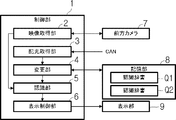
- the control unit 1 shown in FIG. 1 is an object recognition device.
- the control unit 1 recognizes an image of a person, a preceding vehicle, an oncoming vehicle, or the like existing in front of the host vehicle when traveling.
- the control unit 1 includes a CPU (Central Processing Unit) as a central processing unit, a read / write RAM (Random Access Memory), and a read-only ROM (Read Only Memory). Then, when the CPU reads out and executes the object recognition program stored in the ROM, the object recognition program executes the hardware such as the CPU, the video acquisition unit 2, the light distribution acquisition unit 3, the change unit 4, and the recognition unit. 5. To function as the display control unit 6.
- a CPU Central Processing Unit
- a read / write RAM Random Access Memory
- ROM Read Only Memory
- the video acquisition unit 2 acquires a video of the front of the host vehicle.
- the image in front of the host vehicle is output from the front camera 7 mounted toward the front of the host vehicle.
- FIG. 2 illustrates an image P in front of the host vehicle.
- the light distribution obtaining unit 3 obtains the light distribution state of the headlight of the host vehicle through, for example, CAN (Controller Area Network).
- the light distribution state of the headlight includes a high beam state, a low beam state, and a partially shielded high beam state.
- the headlight irradiation range R in the high beam state is illustrated in FIG.
- the irradiation range R of the headlight in the low beam state is illustrated in FIG.
- FIG. 4 illustrates the headlight irradiation range R in a partially light-shielded high beam state.
- the low beam state is a state in which the headlight is irradiated slightly downward as compared with the high beam state.
- the partially light-shielded high beam state is a state in which the traveling lane of the host vehicle is in a high beam state and the oncoming lane is in a low beam state.
- the partially shielded high beam state when an oncoming vehicle is detected by image recognition, millimeter wave radar, or the like, only the headlights in the direction of the oncoming vehicle are set to a low beam so that the oncoming vehicle is not irradiated with a high beam.
- the changing unit 4 changes the recognition condition of the recognition dictionary Q as the object recognition dictionary based on the light distribution state of the headlight.
- the recognition dictionary Q is a dictionary that is referred to when recognizing an object existing ahead of the host vehicle by analyzing the video acquired by the video acquisition unit 2.
- the recognition dictionary Q is prepared in advance according to a recognition algorithm for recognizing an object, and is stored in the storage unit 8. Examples of the recognition algorithm include a recognition method using Haar-like feature values, HOG (Histogram of Gradients) feature values, LBP (Local Binary Patterns) feature values, and the like.
- the recognition dictionary Q can be generated by machine learning of feature quantities of a number of correct images and incorrect images. The object can be recognized by calculating the similarity between the generated dictionary and the acquired video.
- the recognition unit 5 performs object recognition on the video acquired by the video acquisition unit 2 based on the recognition dictionary Q in which the change unit 4 has changed the recognition conditions.
- the display control unit 6 displays an image such as an icon on the display unit 9 according to the object recognized by the recognition unit 5.
- the display unit 9 includes, for example, a head-up display (Head-Up Display: HUD).
- the object recognition process including the process shown in FIG. 5 is continued during the operation of the host vehicle. Further, the object recognition process based on the light distribution state of the headlight is started when the headlight of the host vehicle is turned on.
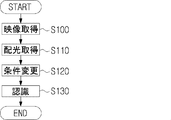
- the video acquisition unit 2 acquires a video in front of the host vehicle from the front camera 7 (S100).
- the video acquired by the video acquisition unit 2 is, for example, a video of 60 frames per second, and the following processing may be executed every frame or every predetermined frame.
- the light distribution acquisition unit 3 acquires the light distribution state of the headlight of the host vehicle from the CAN (S110).
- the processing of S110 may always acquire information indicating the light distribution state of the headlights regardless of the order of the flow of FIG. 5, and acquire information indicating the light distribution state when the light distribution state of the headlights changes. May be.
- the light distribution state of the headlight varies depending on the driver's operation or the automatic light distribution control based on the front recognition result of the host vehicle.
- the changing unit 4 changes the recognition condition of the recognition dictionary Q based on the light distribution state of the headlight (S120).
- the changing unit 4 changes the weighting coefficient set for each recognition position by the recognition dictionary Q based on the light distribution state of the headlight.
- the weighting coefficient will be described.
- the weighting factor is to give weight to each of the similarity of the portion that appears bright and the similarity of the portion that appears dark .
- the weighting coefficient may be reflected on the similarity itself, or may be reflected on a factor necessary for calculating the similarity.
- the changing unit 4 changes the weighting coefficient set for each recognition position by the recognition dictionary Q so that the weighting coefficient set for each recognition position by the recognition dictionary Q is uniform throughout the recognition position.
- the changing unit 4 determines that the weighting coefficient set for each recognition position by the recognition dictionary Q has an upper body and a lower body of the person S.
- the weighting coefficient set for each recognition position by the recognition dictionary Q is changed so as to be equivalent. That is, the changing unit 4 sets the weighting coefficient set for the upper body of the person S and the weighting coefficient set for the lower body of the person S to equivalent values.
- the changing unit 4 has a lower weighting coefficient set for each recognition position in the recognition dictionary Q at the upper recognition position as the second recognition position, which is the upper recognition position, and the lower recognition position.
- the weighting coefficient set for each recognition position by the recognition dictionary Q is changed so as to be higher at the lower recognition position as the recognition position.
- the changing unit 4 determines that the weighting coefficient set for each recognition position by the recognition dictionary Q is an upper recognition position as a second recognition position corresponding to the upper body of the person S.
- the weighting coefficient set for each recognition position by the recognition dictionary Q is changed so as to be lower and higher at the lower recognition position as the first recognition position corresponding to the lower body. That is, the changing unit 4 sets the weighting coefficient set for the upper body of the person S to a value smaller than the weighting coefficient set for the lower body of the person S.
- the person S is in front of the host vehicle, the headlight is not irradiated on the upper body of the person S, and the headlight is irradiated only on the lower body of the person S, with high accuracy, The person S can be recognized.
- the light distribution state of the headlight may be a high beam state in the traveling lane of the host vehicle and a low beam state in the opposite lane.
- the headlight is uniformly irradiated to the entire object existing in front of the host vehicle in the traveling lane of the host vehicle.
- FIG. 4 shows a case where, for example, a right headlight and a left headlight are used as headlights of the host vehicle, the left headlight is in a high beam state and the right headlight is in a low beam state.
- Such a state is controlled so that the oncoming vehicle is not directly irradiated with the high beam light by detecting the oncoming vehicle in front of the host vehicle which is the oncoming lane in the case of FIG.
- the oncoming vehicle may be detected by using a millimeter wave radar (not shown) or a vehicle recognition dictionary stored in the storage unit 8 by the recognition unit 5 for the video acquired by the video acquisition unit 2.
- the change unit 4 determines the recognition dictionary Q so that the weighting coefficient set for each recognition position by the recognition dictionary Q is uniform over the entire recognition position on the traveling lane side, in the case of FIG.
- the weighting coefficient set for each recognition position is changed.
- the changing unit 4 recognizes the recognition dictionary Q so that the weighting coefficient set for each recognition position by the recognition dictionary Q is equal between the upper body and the lower body of the person S.
- the weighting coefficient set for each position is changed.
- the headlight is considered to be applied only to the lower part of the object existing in front of the host vehicle.
- the weighting coefficient set for each recognition position is low at the upper recognition position as the second recognition position that is the upper recognition position, and is higher at the lower recognition position as the first recognition position that is the lower recognition position.
- the weighting coefficient set for each recognition position by the recognition dictionary Q is changed.
- the recognition dictionary Q is a person recognition dictionary
- the changing unit 4 determines that the weighting coefficient set for each recognition position by the recognition dictionary Q is an upper recognition position as a second recognition position corresponding to the upper body of the person S.
- the weighting coefficient set for each recognition position by the recognition dictionary Q is changed so as to be lower and higher at the lower recognition position as the first recognition position corresponding to the lower body. As a result, it is possible to accurately detect a person in both the traveling lane and the opposite lane of the host vehicle.
- the recognizing unit 5 performs object recognition on the video acquired by the video acquiring unit 2 based on the recognition dictionary Q whose recognition conditions are changed by the changing unit 4 (S130).
- the recognition target by the recognition unit 5 is a person
- person recognition is performed based on the person recognition dictionary whose recognition condition is changed by the change unit 4.
- an image such as an icon is displayed on the display unit 9 according to the object recognized by the recognition unit 5.
- the first embodiment has been described above, the first embodiment has the following features.
- the control unit 1 as the object recognition device includes a video acquisition unit 2 that acquires a video obtained by photographing the front of the host vehicle, a light distribution acquisition unit 3 that acquires a light distribution state of the headlight of the host vehicle, and a headlight distribution.
- a recognition unit Q that changes the recognition condition of the recognition dictionary Q as the object recognition dictionary based on the light state
- the recognition dictionary Q that the change unit 4 has changed the recognition condition on the video acquired by the video acquisition unit 2
- a recognition unit 5 that performs object recognition. According to the above configuration, it is possible to improve the accuracy of image recognition of the traveling environment during traveling.
- the way the light hits the detection target such as a vehicle or a pedestrian changes depending on the light distribution state of the headlight.
- the detection target such as a vehicle or a pedestrian
- the pedestrian cannot be detected properly.
- a plurality of dictionaries corresponding to all light distribution patterns may be used simultaneously to detect a detection target.
- the calculation cost increases. Therefore, as in the configuration described above, by using an optimal detector according to the light distribution state, it is possible to reliably detect the detection target while suppressing the calculation cost.
- the changing unit 4 changes the weighting coefficient set for each recognition position by the recognition dictionary Q based on the light distribution state of the headlight.
- the recognizing unit 5 applies high weighting to object recognition in a part of the detection target and irradiated with the light of the headlight, so that only a part of the detection target is the headlight. Even when light is not irradiated, the detection object can be detected with high accuracy.
- the recognition position by the recognition dictionary Q includes a lower recognition position as a first recognition position and an upper recognition position as a second recognition position that is vertically above the lower recognition position.
- the light distribution state includes a high beam state and a low beam state.
- the changing unit 4 changes the weighting coefficient of the lower recognition position to be higher than the weighting coefficient of the upper recognition position when the light distribution state of the headlight is the low beam state. According to the above configuration, it is possible to improve the detection accuracy when the light distribution state of the headlight is in the low beam state.
- the recognition position by the person recognition dictionary is the first recognition position corresponding to the lower body of the person S and the first position corresponding to the upper body of the person S. And the upper recognition position as the second recognition position.
- the light distribution state includes a high beam state and a low beam state.
- the changing unit 4 changes the weighting coefficient of the lower recognition position to be higher than the weighting coefficient of the upper recognition position when the light distribution state of the headlight is the low beam state. According to the above configuration, it is possible to improve the detection accuracy of the person S when the light distribution state of the headlight is the low beam state.
- the single recognition dictionary Q is used, and the weighting coefficient set for each recognition position of the recognition dictionary Q is changed each time according to the light distribution state.
- the recognition dictionary Q1 and the recognition dictionary Q2 are stored in advance in the storage unit 8 as a plurality of recognition dictionaries Q having different weighting coefficients set for each recognition position of the recognition dictionary Q. It is assumed that the changing unit 4 selects either the recognition dictionary Q1 or the recognition dictionary Q2 as the recognition dictionary Q used when the recognition unit 5 performs object recognition in accordance with the light distribution state of the headlight.
- the recognition dictionary Q1 is a recognition dictionary to be selected when the light distribution state of the headlight is a high beam state.
- the weighting coefficient set for each recognition position in the recognition dictionary Q1 is set to be uniform over the entire recognition position.
- the recognition dictionary Q2 is a recognition dictionary to be selected when the light distribution state of the headlight is in the low beam state.
- the weighting coefficient set for each recognition position in the recognition dictionary Q2 is lower in the upper recognition position (second recognition position) that is the upper recognition position and lower in the lower recognition position (first recognition position). 1 recognition position).
- the changing unit 4 when changing the recognition condition of the recognition dictionary Q (S120), the changing unit 4 substantially recognizes the recognition dictionary Q by selecting the recognition dictionary Q1 when the light distribution state of the headlight is the high beam state.
- the recognition condition of the recognition dictionary Q is substantially changed by selecting the recognition dictionary Q2.
- the changing unit 4 In each image constituting the video acquired by the video acquisition unit 2, the recognition dictionary Q1 is selected in the left area, and the recognition dictionary Q2 is selected in the right area.
- the second embodiment has been described above, the second embodiment has the following features.
- the recognition position by the recognition dictionary Q includes a lower recognition position as a first recognition position and an upper recognition position as a second recognition position different from the lower recognition position.
- the recognition dictionary Q used by the recognition unit 5 for object recognition uses a plurality of recognition dictionaries Q having different weighting coefficients for the lower recognition position and the upper recognition position based on the light distribution state of the headlights. Select from (recognition dictionary Q1, recognition dictionary Q2). According to the above configuration, the recognition condition of the recognition dictionary Q can be substantially changed by selecting a suitable recognition dictionary Q from the plurality of recognition dictionaries Q according to the light distribution state of the headlight.
- the upper recognition position is above the lower recognition position in the vertical direction.
- the light distribution state of the headlight includes a high beam state and a low beam state.
- the changing unit 4 uses a plurality of recognition dictionaries Q (recognition dictionaries Q1 and Q2) as the recognition dictionaries Q used by the recognizing unit 5 for object recognition.
- a recognition dictionary Q having a higher weighting coefficient than the weighting coefficient of the upper recognition position is selected. According to the above configuration, the accuracy of object recognition can be improved when the light distribution state of the headlight is in the low beam state.
- a recognition dictionary in which the configuration of the headlight of the host vehicle is configured by the right headlight and the left headlight, and the recognition conditions are changed corresponding to both or any one of the light distribution states is used.
- the object recognition has been described.
- the object recognition apparatus according to the present invention is not limited to the light distribution control by the right headlight and the left headlight, but can also be applied to the case where independent light distribution control is performed by the right headlight and the left headlight.
- the brightness difference between the irradiated part of the headlight and the non-irradiated part is such that it is difficult to recognize the object in the part where the headlight is not irradiated on the object to be recognized, such as at night. This is particularly effective when this occurs.
- an illuminance sensor (not shown) may be further provided for the present invention, and may be applied when the illuminance outside the vehicle by the illuminance sensor is less than a predetermined illuminance.
- Non-transitory computer readable media include various types of tangible storage media.
- Examples of non-transitory computer-readable media include magnetic recording media (for example, flexible disks, magnetic tapes, hard disk drives), magneto-optical recording media (for example, magneto-optical disks), CD-ROMs (Read Only Memory), CD-Rs, CD-R / W, semiconductor memory (for example, mask ROM, PROM (Programmable ROM), EPROM (Erasable PROM), flash ROM, RAM (Random access memory)).
- the object recognition program may be supplied to the computer by various types of temporary computer readable media. Examples of transitory computer readable media include electrical signals, optical signals, and electromagnetic waves.
- the temporary computer readable medium can supply the object recognition program to the computer via a wired communication path such as an electric wire and an optical fiber, or a wireless communication path.
- the object recognition apparatus can be used, for example, for image recognition of a traveling environment when a passenger car is traveling.
Landscapes
- Engineering & Computer Science (AREA)
- Mechanical Engineering (AREA)
- Multimedia (AREA)
- Physics & Mathematics (AREA)
- General Physics & Mathematics (AREA)
- Theoretical Computer Science (AREA)
- Computer Vision & Pattern Recognition (AREA)
- Lighting Device Outwards From Vehicle And Optical Signal (AREA)
- Image Processing (AREA)
- Traffic Control Systems (AREA)
- Image Analysis (AREA)
Abstract
物体認識装置としての制御部(1)は、自車両の前方を撮影した映像を取得する映像取得部(2)と、自車両のヘッドライトの配光状態を取得する配光取得部(3)と、配光取得部(3)が取得したヘッドライトの配光状態に基づき、物体認識に用いる物体認識辞書としての認識辞書(Q)の認識条件を変更する変更部(4)と、映像取得部(2)が取得した映像に対して、変更部(4)が認識条件を変更した認識辞書(Q)に基づき物体認識を行う認識部(5)と、を備える。
Description
本発明は、物体認識装置、物体認識方法、及び物体認識プログラムに関する。
特許文献1は、夜間走行時に走行環境を高い精度で画像認識できるよう、対向車の光源を認識した場合と認識しない場合とで、車載カメラの露光量を切り替える技術を開示している。
ところで、近年、走行環境の状況に応じてヘッドライトの配光態様を変更する所謂アダプティブヘッドライトが広く用いられるようになった。この事情に鑑み、認識アルゴリズム自体の改善が望まれている。
本実施の形態の目的は、夜間走行時における走行環境の画像認識の精度を向上させる技術を提供することにある。
本実施の形態は、自車両の前方の映像を取得する映像取得部と、前記自車両のヘッドライトの配光状態を取得する配光取得部と、前記ヘッドライトの前記配光状態に基づき、物体認識辞書の認識条件を変更する変更部と、前記映像取得部が取得した前記映像に対して、前記変更部が認識条件を変更した前記物体認識辞書に基づき物体認識を行う認識部と、を備えることを特徴とする、物体認識装置を提供する。
また、本実施の形態は、自車両の前方の映像を取得する映像取得ステップと、前記自車両のヘッドライトの配光状態を取得する配光取得ステップと、前記ヘッドライトの前記配光状態に基づき、物体認識辞書の認識条件を変更する変更ステップと、前記映像取得ステップで取得した前記映像に対して、前記変更ステップで認識条件が変更された前記物体認識辞書に基づき物体認識を行う認識ステップと、を含む、物体認識方法を提供する。
本実施の形態によれば、夜間走行時における走行環境の画像認識の精度を向上させることができる。
(第1実施形態)
以下、図1から図5を参照して、第1実施形態を説明する。
以下、図1から図5を参照して、第1実施形態を説明する。
図1に示す制御部1は、物体認識装置である。制御部1は、走行時において、自車両の前方に存在する人物や先行車、対向車などの物体を画像認識する。制御部1は、中央演算処理器としてのCPU(Central Processing Unit)と、読み書き自由のRAM(Random Access Memory)、読み出し専用のROM(Read Only Memory)を備えている。そして、CPUがROMに記憶されている物体認識プログラムを読み出して実行することで、物体認識プログラムは、CPUなどのハードウェアを、映像取得部2、配光取得部3、変更部4、認識部5、表示制御部6として機能させる。
映像取得部2は、自車両の前方を撮影した映像を取得する。自車両の前方の映像は、自車両の前方に向けて搭載された前方カメラ7から出力される。図2には、自車両の前方の映像Pを例示している。
配光取得部3は、例えばCAN(Controller Area Network)を通じて、自車両のヘッドライトの配光状態を取得する。ヘッドライトの配光状態は、ハイビーム状態、ロービーム状態、一部遮光ハイビーム状態を含む。ハイビーム状態でのヘッドライトの照射範囲Rを図2に例示する。ロービーム状態でのヘッドライトの照射範囲Rを図3に例示する。一部遮光ハイビーム状態でのヘッドライトの照射範囲Rを図4に例示する。ロービーム状態は、ハイビーム状態と比較して、ヘッドライトをやや下向きに照射する状態である。一部遮光ハイビーム状態は、自車両の走行車線に対してはハイビーム状態とし、対向車線に対してはロービーム状態とした状態である。一部遮光ハイビーム状態は、画像認識やミリ波レーダなどによって対向車が検出された場合、対向車をハイビームで照射しないように、対向車の方向のヘッドライトのみをロービームとする。
変更部4は、ヘッドライトの配光状態に基づき、物体認識辞書としての認識辞書Qの認識条件を変更する。ここで、認識辞書Qとは、映像取得部2が取得した映像を解析して、自車両の前方に存在する物体を認識する際に参照される辞書である。認識辞書Qは、物体を認識する認識アルゴリズムに応じて予め用意され、記憶部8に記憶されている。認識アルゴリズムは、例えば、Haar-like特徴量、HOG(Histogram of Gradients)特徴量、LBP(Local Binary Patterns)特徴量などを用いた認識手法がある。認識辞書Qは多数の正解画像と不正解画像の特徴量を機械学習させることにより生成できる。生成した辞書と取得映像間の類似度を計算することで対象物を認識することができる。
認識部5は、映像取得部2が取得した映像に対して、変更部4が認識条件を変更した認識辞書Qに基づき物体認識を行なう。
表示制御部6は、認識部5が認識した物体に応じて、例えばアイコンなどの画像を表示部9に表示する。表示部9は、例えば、ヘッドアップディスプレイ(Head-Up Display:HUD)などが挙げられる。
次に、図5を参照して、制御部1による物体認識方法を説明する。図5に示す処理を含めた物体認識処理は、自車両の動作中は継続される。また、ヘッドライトの配光状態に基づく物体認識処理は、自車両のヘッドライトの点灯により処理が開始される。
先ず、映像取得部2は、前方カメラ7から、自車両の前方の映像を取得する(S100)。映像取得部2が取得する映像は、一例としては毎秒60フレームの映像であり、以下の処理は毎フレームごとに実行されても、所定フレーム毎に実行されてもよい。
次に、配光取得部3は、CANから、自車両のヘッドライトの配光状態を取得する(S110)。S110の処理は、図5のフローの順序によらず、ヘッドライトの配光状態を示す情報を常時取得してもよく、ヘッドライトの配光状態の変化時に配光状態を示す情報を取得してもよい。ヘッドライトの配光は、運転者の操作によって切り替えられる場合や、自車両の前方認識結果による自動配光制御などにより、配光状態が変化する。
次に、変更部4は、ヘッドライトの配光状態に基づき、認識辞書Qの認識条件を変更する(S120)。本実施形態では、変更部4は、ヘッドライトの配光状態に基づき、認識辞書Qによる認識位置毎に設定されている重み付け係数を変更する。以下、重み付け係数について説明する。対象物を認識する際、まず取得映像を解析し、認識辞書Qとの類似度が一定値以上である領域を検索させるが、例えば取得映像内の対象物全体が明るく映る場合には類似度が高く、対象物全体または一部が暗く映る場合には類似度が低くなる場合がある。対象物全体または一部が暗く映る場合でも良好に対象物を認識させる為に、明るく映る分の類似度および暗く映る部分の類似度、それぞれに対して重みづけを持たせるのが重み付け係数である。重み付け係数は類似度そのものに反映してもよいし、類似度を算出するのに必要なファクターに対して反映してもよい。
具体的には、図2に示すように、ヘッドライトの配光状態がハイビーム状態であるとき、ヘッドライトは自車両の前方に存在する物体の全体に対して照射されると考えられる。図2の例は、自車両のヘッドライトとして例えば右ヘッドライトと左ヘッドライトとがある場合、右ヘッドライトと左ヘッドライトの双方がハイビーム状態であるときを示す。従って、変更部4は、認識辞書Qによる認識位置毎に設定されている重み付け係数が認識位置全体で均一となるように、認識辞書Qによる認識位置毎に設定されている重み付け係数を変更する。認識辞書Qが人物Sを検出するための専用の辞書である人物認識辞書である場合は、変更部4は、認識辞書Qによる認識位置毎に設定されている重み付け係数が人物Sの上半身と下半身で同等となるように、認識辞書Qによる認識位置毎に設定されている重み付け係数を変更する。即ち、変更部4は、人物Sの上半身に対して設定されている重み付け係数と、人物Sの下半身に対して設定されている重み付け係数を同等な値とする。
これに対し、図3に示すように、ヘッドライトの配光状態がロービーム状態であるとき、ヘッドライトは自車両の前方に存在する物体の下部のみに照射される場合があると考えられる。図3の例は、自車両のヘッドライトとして例えば右ヘッドライトと左ヘッドライトとがある場合、右ヘッドライトと左ヘッドライトの双方がロービーム状態であるときを示す。従って、変更部4は、認識辞書Qによる認識位置毎に設定されている重み付け係数が、上方の認識位置である第2の認識位置としての上認識位置で低く、下方の認識位置である第1の認識位置としての下認識位置で高くなるように、認識辞書Qによる認識位置毎に設定されている重み付け係数を変更する。認識辞書Qが人物認識辞書である場合は、変更部4は、認識辞書Qによる認識位置毎に設定されている重み付け係数が、人物Sの上半身に対応する第2の認識位置としての上認識位置で低く、下半身に対応する第1の認識位置としての下認識位置で高くなるように、認識辞書Qによる認識位置毎に設定されている重み付け係数を変更する。即ち、変更部4は、人物Sの上半身に対して設定されている重み付け係数を、人物Sの下半身に対して設定されている重み付け係数よりも小さな値とする。これにより、自車両の前方に人物Sがおり、人物Sの上半身にはヘッドライトが照射されておらず、人物Sの下半身にのみヘッドライトが照射されている場合であっても、精度よく、人物Sを認識することができるようになる。
また、図4に示すように、ヘッドライトの配光状態が、自車両の走行車線ではハイビーム状態であり、対向車線ではロービーム状態となる場合がある。この場合、自車両の走行車線では、ヘッドライトは自車両の前方に存在する物体の全体に対して均一に照射されると考えられる。図4の例は、自車両のヘッドライトとして例えば右ヘッドライトと左ヘッドライトとがある場合、左ヘッドライトがハイビーム状態であり、右ヘッドライトがロービーム状態であるときを示す。このような状態は、図4の場合における対向車線である自車両の右前方に対向車両を検出することで、対向車両にハイビームの光が直接照射されないように制御される。対向車両の検出は、図示しないミリ波レーダーや、映像取得部2が取得した映像に対して認識部5が記憶部8に記憶されている車両認識辞書を用いて対向車両を認識してもよい。従って、変更部4は、走行車線側、図4の場合においては左側に対して、認識辞書Qによる認識位置毎に設定されている重み付け係数が認識位置全体で均一となるように、認識辞書Qによる認識位置毎に設定されている重み付け係数を変更する。認識辞書Qが人物認識辞書である場合は、変更部4は、認識辞書Qによる認識位置毎に設定されている重み付け係数が人物Sの上半身と下半身で同等となるように、認識辞書Qによる認識位置毎に設定されている重み付け係数を変更する。
一方で、対向車線側、図4の場合においては右側に対しては、ヘッドライトは自車両の前方に存在する物体の下部のみに照射されると考えられるので、変更部4は、認識辞書Qによる認識位置毎に設定されている重み付け係数が、上方の認識位置である第2の認識位置としての上認識位置で低く、下方の認識位置である第1の認識位置としての下認識位置で高くなるように、認識辞書Qによる認識位置毎に設定されている重み付け係数を変更する。認識辞書Qが人物認識辞書である場合は、変更部4は、認識辞書Qによる認識位置毎に設定されている重み付け係数が、人物Sの上半身に対応する第2の認識位置としての上認識位置で低く、下半身に対応する第1の認識位置としての下認識位置で高くなるように、認識辞書Qによる認識位置毎に設定されている重み付け係数を変更する。これにより、自車両の走行車線においても対向車線においても精度よく人物検出ができるようになる。
次に、認識部5は、映像取得部2が取得した映像に対して、変更部4で認識条件が変更された認識辞書Qに基づき、物体認識を行なう(S130)。認識部5による認識対象が人物である場合は、変更部4で認識条件が変更された人物認識辞書に基づき、人物認識を行う。
そして、認識部5が認識した物体に応じて、例えばアイコンなどの画像を表示部9に表示する。
以上に、第1実施形態を説明したが、上記第1実施形態は、以下の特徴を有する。
物体認識装置としての制御部1は、自車両の前方を撮影した映像を取得する映像取得部2と、自車両のヘッドライトの配光状態を取得する配光取得部3と、ヘッドライトの配光状態に基づき、物体認識辞書としての認識辞書Qの認識条件を変更する変更部4と、映像取得部2が取得した映像に対して、変更部4が認識条件を変更した認識辞書Qに基づき物体認識を行う認識部5と、を備える。以上の構成によれば、走行時における走行環境の画像認識の精度を向上させることができる。
即ち、ヘッドライトの配光状態が変化した場合など、ヘッドライトの配光状態によって車両や歩行者等の検出対象物に対する光の当たり方が変化するため、単一の辞書では検出率が低下してしまう。例えば、歩行者を検出している状態で配光状態が変化したり、検出対象の歩行者の一部分にヘッドライトの光が照射されていない場合適切に歩行者を検出できなくなる場合がある。様々な配光状態に対応するため、あらゆる配光パターンに対応した複数の辞書を同時に使って検出対象物の検出を行えばよいとも考えられる。しかし、この場合、計算コストが上昇してしまう。そこで、上記構成のように、配光状態に応じて最適な検出器とすることで、計算コストを抑制しつつ、検出対象物を確実に検出できるようになる。
また、変更部4は、ヘッドライトの配光状態に基づき、認識辞書Qによる認識位置毎に設定する重み付け係数を変更する。以上の構成によれば、認識部5は、検出対象物の一部分であってヘッドライトの光が照射される部分における物体認識に高い重み付けをすることで、検出対象物の一部しかヘッドライトの光が照射されていない場合であっても、その検出対象物を精度よく検出することができるようになる。
具体的には、認識辞書Qによる認識位置は、第1の認識位置としての下認識位置と、下認識位置よりも鉛直方向上方となる第2の認識位置としての上認識位置と、を含む。配光状態は、ハイビーム状態及びロービーム状態を含む。そして、変更部4は、ヘッドライトの配光状態がロービーム状態であるとき、下認識位置の重み付け係数を、上認識位置の重み付け係数よりも高くなるように変更する。以上の構成によれば、ヘッドライトの配光状態がロービーム状態であるときの、検出精度を高めることができる。
また、認識辞書Qは、人物認識辞書である場合は、人物認識辞書による認識位置は、人物Sの下半身に対応する第1の認識位置としての下認識位置と、人物Sの上半身に対応する第2の認識位置としての上認識位置と、を含む。配光状態は、ハイビーム状態及びロービーム状態を含む。そして、変更部4は、ヘッドライトの配光状態がロービーム状態であるとき、下認識位置の重み付け係数を、上認識位置の重み付け係数よりも高くなるように変更する。以上の構成によれば、ヘッドライトの配光状態がロービーム状態であるときの、人物Sの検出精度を高めることができる。
(第2実施形態)
以下、図6を参照して、第2実施形態を説明する。以下、第2実施形態が第1実施形態と異なる点を中心に説明し、重複する説明は省略する。
以下、図6を参照して、第2実施形態を説明する。以下、第2実施形態が第1実施形態と異なる点を中心に説明し、重複する説明は省略する。
上記第1実施形態では、単一の認識辞書Qを用い、その認識辞書Qの認識位置毎に設定された重み付け係数を配光状態に応じて都度変更することとした。これに対し、本実施形態では、認識辞書Qの認識位置毎に設定された重み付け係数が相互に異なる複数の認識辞書Qとして、認識辞書Q1及び認識辞書Q2が予め記憶部8に記憶されているものとし、変更部4は、認識部5が物体認識を行なうに際し用いる認識辞書Qとして、ヘッドライトの配光状態に応じて、認識辞書Q1又は認識辞書Q2の何れかを選択することとしている。
認識辞書Q1は、ヘッドライトの配光状態がハイビーム状態であるときに選択すべき認識辞書である。認識辞書Q1では、認識辞書Q1による認識位置毎に設定されている重み付け係数が認識位置全体で均一となるように設定されている。
一方、認識辞書Q2は、ヘッドライトの配光状態がロービーム状態であるときに選択すべき認識辞書である。認識辞書Q2では、認識辞書Q2による認識位置毎に設定されている重み付け係数が、上方の認識位置である上認識位置(第2の認識位置)で低く下方の認識位置である下認識位置(第1の認識位置)で高くなるように設定されている。
そして、変更部4は、認識辞書Qの認識条件を変更するに際し(S120)、ヘッドライトの配光状態がハイビーム状態であるときは認識辞書Q1を選択することで実質的に認識辞書Qの認識条件を変更し、ヘッドライトの配光状態がロービーム状態であるときは認識辞書Q2を選択することで実質的に認識辞書Qの認識条件を変更する。また、図4に示すように、自車両の走行車線についてはヘッドライトの配光状態をハイビーム状態とし、対向車線についてはヘッドライトの配光状態をロービーム状態とするときは、変更部4は、映像取得部2が取得した映像を構成する各画像において、左側の領域では認識辞書Q1を選択し、右側の領域では認識辞書Q2を選択することになる。
以上に、第2実施形態を説明したが、上記第2実施形態は、以下の特徴を有する。
認識辞書Qによる認識位置は、第1の認識位置としての下認識位置と、下認識位置と異なる第2の認識位置としての上認識位置と、を含む。変更部4は、認識部5が物体認識に用いる認識辞書Qとして、ヘッドライトの配光状態に基づいて、下認識位置の重み付け係数及び上認識位置の重み付け係数が相互に異なる複数の認識辞書Q(認識辞書Q1、認識辞書Q2)から選択する。以上の構成によれば、ヘッドライトの配光状態に応じて複数の認識辞書Qから適した認識辞書Qを選択することで、認識辞書Qの認識条件を実質的に変更することができる。
また、上認識位置は、下認識位置よりも鉛直方向上方である。ヘッドライトの配光状態は、ハイビーム状態及びロービーム状態を含む。変更部4は、ヘッドライトの配光状態がロービーム状態であるとき、認識部5が物体認識に用いる認識辞書Qとして、複数の認識辞書Q(認識辞書Q1、認識辞書Q2)から、下認識位置の重み付け係数が上認識位置の重み付け係数よりも高い認識辞書Qを選択する。以上の構成によれば、ヘッドライトの配光状態がロービーム状態であるときの、物体認識の精度を向上することができる。
上記各実施形態においては、自車両のヘッドライトの構成が右ヘッドライトと左ヘッドライトとで構成され、双方またはいずれか一方の配光状態に対応して認識条件を変更した認識辞書を用いた物体認識について説明した。本発明の物体認識装置は、右ヘッドライトと左ヘッドライトによる配光制御に限らず、右ヘッドライトと左ヘッドライトの各々で独立した配光制御を行う場合にも適用可能である。
また、上記各実施形態は、夜間など、物体認識を行う対象に対してヘッドライトが照射されない部分の物体認識が困難となる程度に、ヘッドライトの照射部位と非照射部位とで明るさの差が生じる場合に特に有効である。このため、本発明に対しては、図示しない照度センサをさらに設け、照度センサによる自車両外の照度が所定照度未満の場合に適用してもよい。
また、物体認識プログラムは、様々なタイプの非一時的なコンピュータ可読媒体(non-transitory computer readable medium)を用いて格納され、コンピュータに供給することができる。非一時的なコンピュータ可読媒体は、様々なタイプの実体のある記録媒体(tangible storage medium)を含む。非一時的なコンピュータ可読媒体の例は、磁気記録媒体(例えばフレキシブルディスク、磁気テープ、ハードディスクドライブ)、光磁気記録媒体(例えば光磁気ディスク)、CD-ROM(Read Only Memory)、CD-R、CD-R/W、半導体メモリ(例えば、マスクROM、PROM(Programmable ROM)、EPROM(Erasable PROM)、フラッシュROM、RAM(random access memory))を含む。また、物体認識プログラムは、様々なタイプの一時的なコンピュータ可読媒体(transitory computer readable medium)によってコンピュータに供給されてもよい。一時的なコンピュータ可読媒体の例は、電気信号、光信号、及び電磁波を含む。一時的なコンピュータ可読媒体は、電線及び光ファイバ等の有線通信路、又は無線通信路を介して、物体認識プログラムをコンピュータに供給できる。
この出願は、2016年3月18日に出願された日本出願特願2016-054690を基礎とする優先権を主張し、その開示の全てをここに取り込む。
本実施の形態に係る物体認識装置は、例えば乗用車の走行時における走行環境の画像認識に利用可能である。
1 制御部
2 映像取得部
3 配光取得部
4 変更部
5 認識部
6 表示制御部
7 前方カメラ
8 記憶部
9 表示部
P 映像
Q 認識辞書
R 照射範囲
S 人物
Q1 認識辞書
Q2 認識辞書
2 映像取得部
3 配光取得部
4 変更部
5 認識部
6 表示制御部
7 前方カメラ
8 記憶部
9 表示部
P 映像
Q 認識辞書
R 照射範囲
S 人物
Q1 認識辞書
Q2 認識辞書
Claims (8)
- 自車両の前方を撮影した映像を取得する映像取得部と、
前記自車両のヘッドライトの配光状態を取得する配光取得部と、
前記配光取得部が取得した前記ヘッドライトの配光状態に基づき、物体認識に用いる物体認識辞書の認識条件を変更する変更部と、
前記映像取得部が取得した映像に対して、前記変更部が認識条件を変更した前記物体認識辞書に基づき物体認識を行う認識部と、
を備えることを特徴とする、物体認識装置。 - 前記変更部は、前記配光取得部が取得した前記ヘッドライトの配光状態に基づき、前記物体認識辞書による認識位置毎に設定する重み付け係数を変更する、
請求項1に記載の物体認識装置。 - 前記物体認識辞書による前記認識位置は、第1の認識位置と、前記第1の認識位置よりも鉛直方向上方となる第2の認識位置と、を含み、
前記ヘッドライトの配光状態は、ハイビーム状態及びロービーム状態を含み、
前記変更部は、前記ヘッドライトの配光状態がロービーム状態であるとき、前記第1の認識位置の重み付け係数を、前記第2の認識位置の重み付け係数よりも高くなるように変更する、
請求項2に記載の物体認識装置。 - 前記物体認識辞書は、人物認識辞書であり、
前記人物認識辞書による前記認識位置は、人物の下半身に対応する第1の認識位置と、人物の上半身に対応する第2の認識位置と、を含み、
前記ヘッドライトの配光状態は、ハイビーム状態及びロービーム状態を含み、
前記変更部は、前記ヘッドライトの配光状態がロービーム状態であるとき、前記第1の認識位置の重み付け係数を、前記第2の認識位置の重み付け係数よりも高くなるように変更する、
請求項2に記載の物体認識装置。 - 前記物体認識辞書による前記認識位置は、第1の認識位置と、前記第1の認識位置と異なる第2の認識位置と、を含み、
前記変更部は、前記認識部が物体認識に用いる前記物体認識辞書として、前記ヘッドライトの配光状態に基づいて、前記第1の認識位置の重み付け係数及び前記第2の認識位置の重み付け係数が相互に異なる複数の物体認識辞書から選択する、
請求項1に記載の物体認識装置。 - 前記第2の認識位置は、前記第1の認識位置よりも鉛直方向上方であり、
前記ヘッドライトの配光状態は、ハイビーム状態及びロービーム状態を含み、
前記変更部は、前記ヘッドライトの配光状態がロービーム状態であるとき、前記認識部が物体認識に用いる前記物体認識辞書として、前記複数の物体認識辞書から、前記第1の認識位置の重み付け係数が前記第2の認識位置の重み付け係数よりも高い物体認識辞書を選択する、
請求項5に記載の物体認識装置。 - 自車両の前方の映像を撮影するカメラからの映像を取得する映像取得ステップと、
前記自車両のヘッドライトの配光状態を取得する配光取得ステップと、
前記配光取得ステップで取得した前記ヘッドライトの配光状態に基づき、物体認識に用いる物体認識辞書の認識条件を変更する変更ステップと、
前記映像取得ステップで取得した映像に対して、前記変更ステップで認識条件が変更された前記物体認識辞書に基づき物体認識を行う認識ステップと、
を含む、物体認識方法。 - コンピュータに、請求項7に記載の物体認識方法を実行させるための、物体認識プログラム。
Applications Claiming Priority (2)
| Application Number | Priority Date | Filing Date | Title |
|---|---|---|---|
| JP2016-054690 | 2016-03-18 | ||
| JP2016054690A JP2017165345A (ja) | 2016-03-18 | 2016-03-18 | 物体認識装置、物体認識方法、及び物体認識プログラム |
Publications (1)
| Publication Number | Publication Date |
|---|---|
| WO2017158664A1 true WO2017158664A1 (ja) | 2017-09-21 |
Family
ID=59850155
Family Applications (1)
| Application Number | Title | Priority Date | Filing Date |
|---|---|---|---|
| PCT/JP2016/004821 Ceased WO2017158664A1 (ja) | 2016-03-18 | 2016-11-07 | 物体認識装置、物体認識方法、及び物体認識プログラム |
Country Status (2)
| Country | Link |
|---|---|
| JP (1) | JP2017165345A (ja) |
| WO (1) | WO2017158664A1 (ja) |
Cited By (3)
| Publication number | Priority date | Publication date | Assignee | Title |
|---|---|---|---|---|
| JP2019077391A (ja) * | 2017-10-26 | 2019-05-23 | トヨタ自動車株式会社 | ヘッドライト制御システム |
| CN111310708A (zh) * | 2020-02-14 | 2020-06-19 | 广州文远知行科技有限公司 | 交通信号灯状态识别方法、装置、设备和存储介质 |
| EP4180271A4 (en) * | 2020-07-08 | 2023-11-22 | Koito Manufacturing Co., Ltd. | LIGHT DISTRIBUTION CONTROL DEVICE, VEHICLE LAMP SYSTEM AND LIGHT DISTRIBUTION CONTROL METHOD |
Families Citing this family (1)
| Publication number | Priority date | Publication date | Assignee | Title |
|---|---|---|---|---|
| JP6759995B2 (ja) * | 2016-11-11 | 2020-09-23 | 株式会社デンソー | 画像処理装置 |
Citations (3)
| Publication number | Priority date | Publication date | Assignee | Title |
|---|---|---|---|---|
| JP2010128919A (ja) * | 2008-11-28 | 2010-06-10 | Hitachi Automotive Systems Ltd | 物体検知装置 |
| JP2014164426A (ja) * | 2013-02-22 | 2014-09-08 | Denso Corp | 物体検出装置 |
| JP2014229010A (ja) * | 2013-05-21 | 2014-12-08 | 株式会社デンソー | 物体検出装置 |
-
2016
- 2016-03-18 JP JP2016054690A patent/JP2017165345A/ja active Pending
- 2016-11-07 WO PCT/JP2016/004821 patent/WO2017158664A1/ja not_active Ceased
Patent Citations (3)
| Publication number | Priority date | Publication date | Assignee | Title |
|---|---|---|---|---|
| JP2010128919A (ja) * | 2008-11-28 | 2010-06-10 | Hitachi Automotive Systems Ltd | 物体検知装置 |
| JP2014164426A (ja) * | 2013-02-22 | 2014-09-08 | Denso Corp | 物体検出装置 |
| JP2014229010A (ja) * | 2013-05-21 | 2014-12-08 | 株式会社デンソー | 物体検出装置 |
Cited By (4)
| Publication number | Priority date | Publication date | Assignee | Title |
|---|---|---|---|---|
| JP2019077391A (ja) * | 2017-10-26 | 2019-05-23 | トヨタ自動車株式会社 | ヘッドライト制御システム |
| CN111310708A (zh) * | 2020-02-14 | 2020-06-19 | 广州文远知行科技有限公司 | 交通信号灯状态识别方法、装置、设备和存储介质 |
| CN111310708B (zh) * | 2020-02-14 | 2024-05-14 | 广州文远知行科技有限公司 | 交通信号灯状态识别方法、装置、设备和存储介质 |
| EP4180271A4 (en) * | 2020-07-08 | 2023-11-22 | Koito Manufacturing Co., Ltd. | LIGHT DISTRIBUTION CONTROL DEVICE, VEHICLE LAMP SYSTEM AND LIGHT DISTRIBUTION CONTROL METHOD |
Also Published As
| Publication number | Publication date |
|---|---|
| JP2017165345A (ja) | 2017-09-21 |
Similar Documents
| Publication | Publication Date | Title |
|---|---|---|
| US10636130B2 (en) | Image processing device | |
| JP5692180B2 (ja) | 車両光源検出装置、ライト制御装置、および車両光源検出プログラム | |
| WO2020121973A1 (ja) | 物体識別システム、演算処理装置、自動車、車両用灯具、分類器の学習方法 | |
| US20150279021A1 (en) | Video object tracking in traffic monitoring | |
| JP6569280B2 (ja) | 路面標示検出装置及び路面標示検出方法 | |
| KR101716928B1 (ko) | 차량 카메라의 영상 처리 방법 및 이를 이용하는 영상 처리 장치 | |
| Alcantarilla et al. | Automatic LightBeam Controller for driver assistance | |
| WO2017158664A1 (ja) | 物体認識装置、物体認識方法、及び物体認識プログラム | |
| US11106214B2 (en) | Artificial neural network-based projection information recognition apparatus and method thereof | |
| US10839235B2 (en) | Method and apparatus for detecting light source of vehicle | |
| WO2010047226A1 (ja) | 車線区画線検出装置、車線区画線検出方法、及び車線区画線検出プログラム | |
| JP6983334B2 (ja) | 画像認識装置 | |
| JP5884635B2 (ja) | 走行環境検出装置、走行環境検出プログラム、およびライト制御装置 | |
| JP6348592B2 (ja) | 前照灯の照射域指向性を調整するための方法および制御・評価ユニット、および、コンピュータプログラム | |
| WO2019085929A1 (zh) | 图像处理方法及其装置、安全驾驶方法 | |
| JP2018060422A (ja) | 物体検出装置 | |
| WO2020217283A1 (ja) | 物体検出装置、物体検出システム、物体検出方法及びプログラムが格納された非一時的なコンピュータ可読媒体 | |
| JP2015185135A (ja) | 停車認識装置、停車認識方法及びプログラム | |
| KR101276073B1 (ko) | 차량용 내비게이션에서의 영상에서 앞차 검출을 통한 거리 인식 시스템 및 방법 | |
| WO2019202969A1 (ja) | 認識装置、認識方法及び認識プログラム | |
| CN113196740B (zh) | 图像处理装置 | |
| US11748967B2 (en) | Vehicle exterior environment recognition apparatus | |
| KR102436848B1 (ko) | 센서 퓨전을 이용한 이미지센서 장치 및 제어 방법 | |
| JP2015099556A (ja) | 位置特定装置、および前照灯制御システム | |
| JP6698966B2 (ja) | 誤検出判定装置及び誤検出判定方法 |
Legal Events
| Date | Code | Title | Description |
|---|---|---|---|
| NENP | Non-entry into the national phase |
Ref country code: DE |
|
| 121 | Ep: the epo has been informed by wipo that ep was designated in this application |
Ref document number: 16894288 Country of ref document: EP Kind code of ref document: A1 |
|
| 122 | Ep: pct application non-entry in european phase |
Ref document number: 16894288 Country of ref document: EP Kind code of ref document: A1 |