WO2017153276A1 - A washer - Google Patents
A washer Download PDFInfo
- Publication number
- WO2017153276A1 WO2017153276A1 PCT/EP2017/055026 EP2017055026W WO2017153276A1 WO 2017153276 A1 WO2017153276 A1 WO 2017153276A1 EP 2017055026 W EP2017055026 W EP 2017055026W WO 2017153276 A1 WO2017153276 A1 WO 2017153276A1
- Authority
- WO
- WIPO (PCT)
- Prior art keywords
- water
- hot water
- temperature
- water inlet
- tub
- Prior art date
- Legal status (The legal status is an assumption and is not a legal conclusion. Google has not performed a legal analysis and makes no representation as to the accuracy of the status listed.)
- Ceased
Links
Images

Classifications
-
- A—HUMAN NECESSITIES
- A47—FURNITURE; DOMESTIC ARTICLES OR APPLIANCES; COFFEE MILLS; SPICE MILLS; SUCTION CLEANERS IN GENERAL
- A47L—DOMESTIC WASHING OR CLEANING; SUCTION CLEANERS IN GENERAL
- A47L15/00—Washing or rinsing machines for crockery or tableware
- A47L15/0018—Controlling processes, i.e. processes to control the operation of the machine characterised by the purpose or target of the control
- A47L15/0021—Regulation of operational steps within the washing processes, e.g. optimisation or improvement of operational steps depending from the detergent nature or from the condition of the crockery
- A47L15/0023—Water filling
-
- D—TEXTILES; PAPER
- D06—TREATMENT OF TEXTILES OR THE LIKE; LAUNDERING; FLEXIBLE MATERIALS NOT OTHERWISE PROVIDED FOR
- D06F—LAUNDERING, DRYING, IRONING, PRESSING OR FOLDING TEXTILE ARTICLES
- D06F33/00—Control of operations performed in washing machines or washer-dryers
- D06F33/30—Control of washing machines characterised by the purpose or target of the control
- D06F33/32—Control of operational steps, e.g. optimisation or improvement of operational steps depending on the condition of the laundry
-
- A—HUMAN NECESSITIES
- A47—FURNITURE; DOMESTIC ARTICLES OR APPLIANCES; COFFEE MILLS; SPICE MILLS; SUCTION CLEANERS IN GENERAL
- A47L—DOMESTIC WASHING OR CLEANING; SUCTION CLEANERS IN GENERAL
- A47L2401/00—Automatic detection in controlling methods of washing or rinsing machines for crockery or tableware, e.g. information provided by sensors entered into controlling devices
- A47L2401/12—Water temperature
-
- A—HUMAN NECESSITIES
- A47—FURNITURE; DOMESTIC ARTICLES OR APPLIANCES; COFFEE MILLS; SPICE MILLS; SUCTION CLEANERS IN GENERAL
- A47L—DOMESTIC WASHING OR CLEANING; SUCTION CLEANERS IN GENERAL
- A47L2501/00—Output in controlling method of washing or rinsing machines for crockery or tableware, i.e. quantities or components controlled, or actions performed by the controlling device executing the controlling method
- A47L2501/01—Water supply, e.g. opening or closure of the water inlet valve
-
- D—TEXTILES; PAPER
- D06—TREATMENT OF TEXTILES OR THE LIKE; LAUNDERING; FLEXIBLE MATERIALS NOT OTHERWISE PROVIDED FOR
- D06F—LAUNDERING, DRYING, IRONING, PRESSING OR FOLDING TEXTILE ARTICLES
- D06F2103/00—Parameters monitored or detected for the control of domestic laundry washing machines, washer-dryers or laundry dryers
- D06F2103/16—Washing liquid temperature
-
- D—TEXTILES; PAPER
- D06—TREATMENT OF TEXTILES OR THE LIKE; LAUNDERING; FLEXIBLE MATERIALS NOT OTHERWISE PROVIDED FOR
- D06F—LAUNDERING, DRYING, IRONING, PRESSING OR FOLDING TEXTILE ARTICLES
- D06F2105/00—Systems or parameters controlled or affected by the control systems of washing machines, washer-dryers or laundry dryers
- D06F2105/02—Water supply
-
- D—TEXTILES; PAPER
- D06—TREATMENT OF TEXTILES OR THE LIKE; LAUNDERING; FLEXIBLE MATERIALS NOT OTHERWISE PROVIDED FOR
- D06F—LAUNDERING, DRYING, IRONING, PRESSING OR FOLDING TEXTILE ARTICLES
- D06F2105/00—Systems or parameters controlled or affected by the control systems of washing machines, washer-dryers or laundry dryers
- D06F2105/10—Temperature of washing liquids; Heating means therefor
-
- D—TEXTILES; PAPER
- D06—TREATMENT OF TEXTILES OR THE LIKE; LAUNDERING; FLEXIBLE MATERIALS NOT OTHERWISE PROVIDED FOR
- D06F—LAUNDERING, DRYING, IRONING, PRESSING OR FOLDING TEXTILE ARTICLES
- D06F39/00—Details of washing machines not specific to a single type of machines covered by groups D06F9/00 - D06F27/00
- D06F39/08—Liquid supply or discharge arrangements
- D06F39/088—Liquid supply arrangements
-
- Y—GENERAL TAGGING OF NEW TECHNOLOGICAL DEVELOPMENTS; GENERAL TAGGING OF CROSS-SECTIONAL TECHNOLOGIES SPANNING OVER SEVERAL SECTIONS OF THE IPC; TECHNICAL SUBJECTS COVERED BY FORMER USPC CROSS-REFERENCE ART COLLECTIONS [XRACs] AND DIGESTS
- Y02—TECHNOLOGIES OR APPLICATIONS FOR MITIGATION OR ADAPTATION AGAINST CLIMATE CHANGE
- Y02B—CLIMATE CHANGE MITIGATION TECHNOLOGIES RELATED TO BUILDINGS, e.g. HOUSING, HOUSE APPLIANCES OR RELATED END-USER APPLICATIONS
- Y02B40/00—Technologies aiming at improving the efficiency of home appliances, e.g. induction cooking or efficient technologies for refrigerators, freezers or dish washers
- Y02B40/18—Technologies aiming at improving the efficiency of home appliances, e.g. induction cooking or efficient technologies for refrigerators, freezers or dish washers using renewables, e.g. solar cooking stoves, furnaces or solar heating
Definitions
- the present invention relates to a washer having dual water inlet.
- the water used in the washing process is supplied from two separate lines, namely, a cold water inlet from which the mains water is taken and a hot water inlet from which the hot water is supplied from an appliance such as combi boiler, solar thermal heater, storage water heater, instantaneous water heater, etc. Since the washers having dual water inlet consume less energy for the water to be used in the washing process to reach the target washing temperature, this kind of washers enable the users to save from the energy costs. However, in this type of washers, since the characteristics of the hot water supplied from different type of heaters, the hot water cannot be used efficiently.
- the water intake process may be completed before the heater completely heats the water.
- the hot water is supplied from the solar water heater, the water may be received into the washer at a temperature much higher than the target washing temperature and therefore, more cold water may be required to be supplied in order to reach the target temperature. Consequently, a washer wherein the hot water is efficiently used is needed.
- the aim of the present invention is the realization of a washer having dual water inlet with improved energy efficiency.
- the washer realized in order to attain the aim of the present invention, explicated in the claims, comprises a body; a tub that is disposed in the body and wherein the washing process is realized; a cold water inlet that provides the intake of the mains water into the body; a hot water inlet that provides the intake of the water supplied from a heater such as instantaneous water heater, storage water heater, solar thermal heater, etc., into the body and a temperature sensor that measures the temperature of the water received from the hot water inlet.
- the washer of the present invention comprises a control unit that monitors the instantaneous temperature data received from the temperature sensor and that determines the type of the heater from which the hot water is supplied by comparing the sensor data with the data stores in its memory. By opening/closing the hot water inlet and the cold water inlet according to the water heater type, the control unit enables the right amount of hot water to be taken into the tub. Thus, savings in energy and time required for the water to be used in the washing process to reach the target washing temperature are provided.
- the washer is a washing machine and comprises a drum that is disposed in the tub and wherein the laundry is placed and a hot water line that enables the water supplied from the hot water inlet to be transferred to the lower part of the tub.
- the temperature sensor measures the temperature of the water received from the hot water line into the tub and the control unit determines the type of the heater according to the data received from the temperature sensor.
- the type of the heater can be easily determined without installing an additional mixing chamber, valve, etc. into the body.
- the temperature sensor is disposed so as to be before the hot water line in the tub.
- the temperature of the mixture of the cold water and the hot water inside the tub and the temperature of the water supplied from the hot water inlet can be measured with a single temperature sensor.
- cost advantage and ease of assembly are provided.
- control unit determines that the heater is an instantaneous water heater that heats the water during usage upon detecting by means of the temperature sensor that the temperature of the water received from the hot water inlet first decreases and then rises, and provides the intake of water from the hot water inlet in an amount sufficient for reaching the inside of the drum.
- the control unit determines that the heater is an instantaneous water heater that heats the water during usage upon detecting by means of the temperature sensor that the temperature of the water received from the hot water inlet first decreases and then rises, and provides the intake of water from the hot water inlet in an amount sufficient for reaching the inside of the drum.
- the control unit determines that the heater is a type of heater such as storage water heater, central heating, etc. where the hot water is ready to be used if the temperature of the water supplied from the hot water inlet increases slowly in a predetermined time period and then remains almost constant.
- the control unit provides that the water is taken into the tub from the hot water inlet at the level almost in contact with the drum.
- the need for heating the water again in the body is minimized.
- the control determines that the hot water source is a solar energy heater such as solar thermal heater if the instantaneous temperature values measured by the temperature sensor quickly increase so as to exceed a threshold temperature value in a predetermined time.
- a small amount of water is enabled to be taken into the tub so as not to reach the level of the drum. Consequently, the need for taking additional water from the cold water inlet so as to obtain the water at the washing temperature is eliminated and the target washing temperature can be quickly reached.
- the temperature of the water taken from the cold water inlet is measured by means of a temperature sensor and the control unit compares the temperatures of the water supplied from the hot water inlet and of the water supplied from the cold water inlet. Upon detecting that the water taken from the cold water inlet is hotter than the water taken from the hot water inlet, the control unit provides that water is taken into the tub only from the cold water inlet. Thus, energy required to be consumed to heat the water inside the tub is saved.
- the control unit in case the temperature of the water taken into the tub is close to the target washing temperature, the control unit provides that the washing program is extended for a predetermined time.
- the washing efficiency is prevented from decreasing due to shortening of the washing time.
- a washer is realized, wherein the amount of hot water to be taken into the body is determined according to the type of the heater from which the hot water is supplied.
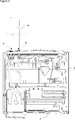
- Figure 1 – is the front partial schematic view of the washer related to an embodiment of the present invention.
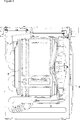
- Figure 2 – is the top partial schematic view of the washer related to an embodiment of the present invention.
- Figure 3 - is the sideways partial schematic view of the washer related to another embodiment of the present invention.
- the washer (1) comprises a body; a tub (3) that is disposed in the body (2) and wherein the washing process is realized; a cold water inlet (4) that provides the intake of the mains water into the body (2); a hot water inlet (5) that provides the intake of the water supplied from a heater (H) into the body (2), and a temperature sensor (6) that measures the temperature of the water received from the hot water inlet (5).
- the heater (H) can be different types of heater such as combi boiler, storage water heater, instantaneous water heater, central heating, solar energy heater, etc. connected to the household line.
- the washer (1) of the present invention comprises a control unit (7) that detects the type of the heater (H) by comparing the instantaneous temperature data received from the temperature sensor (6) with the data prerecorded in the memory by the producer and determines the amount of water to be taken from the hot water inlet (5) according to the heater (H) type. The highest temperatures the water received from different types of heaters (H) reach and the change of the temperatures in time are different from each other.
- the control unit (7) continuously monitors the temperature of the water taken from the hot water inlet (5) by means of the temperature sensor (6) and determines the type of the heater (H) by defining the increase-decrease profile in the temperature. Thus, the amount of water to be taken into the body (2) from the hot water inlet (5) depending on the type of the heater (H) and the highest efficiency is obtained from the hot water.
- the washer (1) is a washing machine comprising a drum (8) that is disposed in the tub (3) and wherein the laundry is placed, a hot water line (9) that enables the water supplied from the hot water inlet (5) to be transferred to the lower part of the tub (3), and the temperature sensor (6) that measures the temperature of the water supplied from the hot water line (9).
- a washing process is started in the washer (1), first water is taken from the hot water inlet (5) and the water is delivered directly to the base of the tub (3) by means of the hot water line (9).
- the control unit (7) determines the type of the heater (H) by monitoring the change in the temperature of the water and provides the intake of hot water into the tub (3) in a predetermined amount.
- the cold water inlet (4) is opened.
- the cold water is delivered to the detergent drawer wherein cleaning agents such as detergent, softener, etc. are placed and is sent onto the laundry in the drum (8) after sweeping the detergent.
- the control unit (7) may decide to take water from the hot water inlet (5) or from the cold water inlet (4) again ( Figure 1, Figure 3).
- the temperature sensor (6) is disposed in the tub (3) so as to be close to the port of the hot water line (9) opening into the tub (3).
- the temperature sensor (6) disposed in the tub (3) can be measured by the temperature sensor (6) disposed in the tub (3).
- the control unit (7) decides that the heater (H) is of a type that heats the water during the usage and enables the water to be taken from the hot water inlet (5) until the water level inside the tub (3) reaches a level to wet the laundry in the drum (8).
- the hot water is supplied from a instantaneous water heater (H)
- first the water in the ambient temperature waiting in the pipes of the household line reaches the body (2). Since the heater (H) is activated after an amount of water passes therethrough, the cold water reaches the body (2) after the warm water and the water starts heating up.
- the control unit (7) decides that the heater (H) is of a type that heats the water during the usage and enables the water to be taken into the tub (3) until the water level reaches a certain height in the drum (8).
- the heater (H) is of a type that heats the water during the usage and enables the water to be taken into the tub (3) until the water level reaches a certain height in the drum (8).
- the control unit (7) decides that the heater (H) is of a type that supplies hot water ready to use and enables the water to be taken from the hot water inlet (5) until the water level inside the tub (3) reaches almost the lowermost point of the drum (8).
- the hot water is supplied from a heater (H) that supplies ready-to-use hot water, first the water in the ambient temperature waiting in the pipes of the household line reaches the body (2) and then, the water heats up and reaches a constant temperature in a few minutes.
- the control unit (7) detects that the heater (H) is of a type such as storage water heater, combi boiler, central heating, etc. and enables the minimum amount of water required for the laundry to touch the water to be taken into the tub (3) from the hot water inlet (5).
- the heater (H) is of a type such as storage water heater, combi boiler, central heating, etc. and enables the minimum amount of water required for the laundry to touch the water to be taken into the tub (3) from the hot water inlet (5).
- the control unit (7) upon detecting that the instantaneous temperature values measured by means of the temperature sensor (6) increase in a predetermined time period and then exceeds a critical temperature value, decides that the heater (H) is of solar power type and enables the water to be taken from the hot water inlet (5) until the water level inside the tub (3) stays below the lowermost point of the drum (8).
- the hot water is supplied from a solar powered heater (H)
- the temperature of the water taken from the hot water inlet (5) quickly reaches a temperature around 90°C.
- the control unit (7) detects that the heater (H) is of a solar thermal type and enables the water to be taken into the tub (3) so as not to contact the laundry in the drum (8).
- the laundry is prevented from directly contacting the water at very high temperatures.
- the washer (1) comprises a temperature sensor (6) that measures the temperature of the water taken from the cold water inlet (4) and the control unit (7) stops the water intake from the hot water inlet (5) upon detecting that the temperature of the water taken from the cold water inlet (4) is higher than the temperature of the water taken from the hot water inlet (5).
- the heater (H) is turned off or out of order and in winter conditions where the solar powered heater (H) cannot heat the water
- the water supplied from the cold water inlet (4) can be hotter than the water supplied from the hot water inlet (5).
- the washing process is performed so as to be affected from adverse conditions at minimum.
- control unit (7) extends the washing process for a certain time in case the water inside the tub (3) reaches the target washing temperature in a predetermined time.
- the drum (8) movements that could not be performed are added to the washing program and the washing efficiency is prevented from decreasing.
- the type of the heater (H) from which the hot water is supplied is determined and the amount of hot water to be taken into the body (2) according to the type of the heater (H) is determined.
- the amount of hot water to be taken into the body (2) is determined.
Landscapes
- Engineering & Computer Science (AREA)
- Textile Engineering (AREA)
- Detail Structures Of Washing Machines And Dryers (AREA)
- Control Of Washing Machine And Dryer (AREA)
Abstract
The present invention relates to a washer (1) comprising a body; a tub (3) that is disposed in the body (2) and wherein the washing process is realized; a cold water inlet (4) that provides the intake of the mains water into the body (2); a hot water inlet (5) that provides the intake of the water supplied from a heater (H), and a temperature sensor (6) that measures the temperature of the water received from the hot water inlet (5).
Description
The present invention relates to a washer having dual water inlet.
In washers having dual water inlet such as laundry washing machines or dishwashers, the water used in the washing process is supplied from two separate lines, namely, a cold water inlet from which the mains water is taken and a hot water inlet from which the hot water is supplied from an appliance such as combi boiler, solar thermal heater, storage water heater, instantaneous water heater, etc. Since the washers having dual water inlet consume less energy for the water to be used in the washing process to reach the target washing temperature, this kind of washers enable the users to save from the energy costs. However, in this type of washers, since the characteristics of the hot water supplied from different type of heaters, the hot water cannot be used efficiently. For example, in case the hot water is supplied from a heater such as instantaneous water heater, that heats the water during usage, the water intake process may be completed before the heater completely heats the water. Similarly, in case the hot water is supplied from the solar water heater, the water may be received into the washer at a temperature much higher than the target washing temperature and therefore, more cold water may be required to be supplied in order to reach the target temperature. Consequently, a washer wherein the hot water is efficiently used is needed.
In the state of the art European Patent No. EP1683904, a shutter control method suitable for use in washers with dual water inlet is disclosed. By means of a revolving shutter structure, the water inlets can be opened/closed in a controlled manner.
The aim of the present invention is the realization of a washer having dual water inlet with improved energy efficiency.
The washer realized in order to attain the aim of the present invention, explicated in the claims, comprises a body; a tub that is disposed in the body and wherein the washing process is realized; a cold water inlet that provides the intake of the mains water into the body; a hot water inlet that provides the intake of the water supplied from a heater such as instantaneous water heater, storage water heater, solar thermal heater, etc., into the body and a temperature sensor that measures the temperature of the water received from the hot water inlet.
The washer of the present invention comprises a control unit that monitors the instantaneous temperature data received from the temperature sensor and that determines the type of the heater from which the hot water is supplied by comparing the sensor data with the data stores in its memory. By opening/closing the hot water inlet and the cold water inlet according to the water heater type, the control unit enables the right amount of hot water to be taken into the tub. Thus, savings in energy and time required for the water to be used in the washing process to reach the target washing temperature are provided.
In an embodiment of the present invention, the washer is a washing machine and comprises a drum that is disposed in the tub and wherein the laundry is placed and a hot water line that enables the water supplied from the hot water inlet to be transferred to the lower part of the tub. The temperature sensor measures the temperature of the water received from the hot water line into the tub and the control unit determines the type of the heater according to the data received from the temperature sensor. Thus, the type of the heater can be easily determined without installing an additional mixing chamber, valve, etc. into the body.
In an embodiment of the present invention, the temperature sensor is disposed so as to be before the hot water line in the tub. Thus, the temperature of the mixture of the cold water and the hot water inside the tub and the temperature of the water supplied from the hot water inlet can be measured with a single temperature sensor. Thus, cost advantage and ease of assembly are provided.
In another embodiment of the present invention, the control unit determines that the heater is an instantaneous water heater that heats the water during usage upon detecting by means of the temperature sensor that the temperature of the water received from the hot water inlet first decreases and then rises, and provides the intake of water from the hot water inlet in an amount sufficient for reaching the inside of the drum. Thus, in case the water is heated in a delayed manner, until the hot water reaches the washer, the water intake process continues and the hot water is enabled to be efficiently used.
In another embodiment of the present invention, the control unit determines that the heater is a type of heater such as storage water heater, central heating, etc. where the hot water is ready to be used if the temperature of the water supplied from the hot water inlet increases slowly in a predetermined time period and then remains almost constant. Thus, the control unit provides that the water is taken into the tub from the hot water inlet at the level almost in contact with the drum. Thus, the need for heating the water again in the body is minimized.
In another embodiment of the present invention, the control determines that the hot water source is a solar energy heater such as solar thermal heater if the instantaneous temperature values measured by the temperature sensor quickly increase so as to exceed a threshold temperature value in a predetermined time. Thus, a small amount of water is enabled to be taken into the tub so as not to reach the level of the drum. Consequently, the need for taking additional water from the cold water inlet so as to obtain the water at the washing temperature is eliminated and the target washing temperature can be quickly reached.
In another embodiment of the present invention, the temperature of the water taken from the cold water inlet is measured by means of a temperature sensor and the control unit compares the temperatures of the water supplied from the hot water inlet and of the water supplied from the cold water inlet. Upon detecting that the water taken from the cold water inlet is hotter than the water taken from the hot water inlet, the control unit provides that water is taken into the tub only from the cold water inlet. Thus, energy required to be consumed to heat the water inside the tub is saved.
In another embodiment of the present invention, in case the temperature of the water taken into the tub is close to the target washing temperature, the control unit provides that the washing program is extended for a predetermined time. Thus, the washing efficiency is prevented from decreasing due to shortening of the washing time.
By means of the present invention, a washer is realized, wherein the amount of hot water to be taken into the body is determined according to the type of the heater from which the hot water is supplied. Thus, by obtaining maximum efficiency from the hot water, savings in energy and water are provided.
The washer realized in order to attain the aim of the present invention is illustrated in the attached figures, where:
Figure 1 – is the front partial schematic view of the washer related to an embodiment of the present invention.
Figure 2 – is the top partial schematic view of the washer related to an embodiment of the present invention.
Figure 3 - is the sideways partial schematic view of the washer related to another embodiment of the present invention.
The elements illustrated in the figures are numbered as follows:
- Washer
- Body
- Tub
- Cold water inlet
- Hot water inlet
- Temperature sensor
- Control unit
- Drum
- Hot water line
H: Heater
The washer (1) comprises a body; a tub (3) that is disposed in the body (2) and wherein the washing process is realized; a cold water inlet (4) that provides the intake of the mains water into the body (2); a hot water inlet (5) that provides the intake of the water supplied from a heater (H) into the body (2), and a temperature sensor (6) that measures the temperature of the water received from the hot water inlet (5). The heater (H) can be different types of heater such as combi boiler, storage water heater, instantaneous water heater, central heating, solar energy heater, etc. connected to the household line. By mixing the hot water and the cold water taken into the body (2), the target washing water temperature is attained and the water is used in the washing process (Figure 2).
The washer (1) of the present invention comprises a control unit (7) that detects the type of the heater (H) by comparing the instantaneous temperature data received from the temperature sensor (6) with the data prerecorded in the memory by the producer and determines the amount of water to be taken from the hot water inlet (5) according to the heater (H) type. The highest temperatures the water received from different types of heaters (H) reach and the change of the temperatures in time are different from each other. The control unit (7) continuously monitors the temperature of the water taken from the hot water inlet (5) by means of the temperature sensor (6) and determines the type of the heater (H) by defining the increase-decrease profile in the temperature. Thus, the amount of water to be taken into the body (2) from the hot water inlet (5) depending on the type of the heater (H) and the highest efficiency is obtained from the hot water.
In another embodiment of the present invention, the washer (1) is a washing machine comprising a drum (8) that is disposed in the tub (3) and wherein the laundry is placed, a hot water line (9) that enables the water supplied from the hot water inlet (5) to be transferred to the lower part of the tub (3), and the temperature sensor (6) that measures the temperature of the water supplied from the hot water line (9). When a washing process is started in the washer (1), first water is taken from the hot water inlet (5) and the water is delivered directly to the base of the tub (3) by means of the hot water line (9). The control unit (7) determines the type of the heater (H) by monitoring the change in the temperature of the water and provides the intake of hot water into the tub (3) in a predetermined amount. When the hot water intake process is completed, the cold water inlet (4) is opened. The cold water is delivered to the detergent drawer wherein cleaning agents such as detergent, softener, etc. are placed and is sent onto the laundry in the drum (8) after sweeping the detergent. According to the temperature of the mixture of cold water and hot water accumulated in the tub (3), the control unit (7) may decide to take water from the hot water inlet (5) or from the cold water inlet (4) again (Figure 1, Figure 3).
In another embodiment of the present invention, the temperature sensor (6) is disposed in the tub (3) so as to be close to the port of the hot water line (9) opening into the tub (3). Thus, both the temperature of the hot water coming from the hot water line (9) and the temperature of the mixture of cold water and hot water accumulated in the tub (3) can be measured by the temperature sensor (6) disposed in the tub (3).
In another embodiment of the present invention, upon detecting that the instantaneous temperature values measured by means of the temperature sensor (6) first decrease and then increase, the control unit (7) decides that the heater (H) is of a type that heats the water during the usage and enables the water to be taken from the hot water inlet (5) until the water level inside the tub (3) reaches a level to wet the laundry in the drum (8). In case the hot water is supplied from a instantaneous water heater (H), first the water in the ambient temperature waiting in the pipes of the household line reaches the body (2). Since the heater (H) is activated after an amount of water passes therethrough, the cold water reaches the body (2) after the warm water and the water starts heating up. Thus, in case the temperature of the water taken from the hot water inlet (5) first decrease and then increase, the control unit (7) decides that the heater (H) is of a type that heats the water during the usage and enables the water to be taken into the tub (3) until the water level reaches a certain height in the drum (8). Thus, water intake continues for the time required to supply hot water in the sufficient amount from the heater (H).
In another embodiment of the present invention, upon detecting that the instantaneous temperature values measured by means of the temperature sensor (6) increase in a predetermined time period and then stays almost constant, the control unit (7) decides that the heater (H) is of a type that supplies hot water ready to use and enables the water to be taken from the hot water inlet (5) until the water level inside the tub (3) reaches almost the lowermost point of the drum (8). In case the hot water is supplied from a heater (H) that supplies ready-to-use hot water, first the water in the ambient temperature waiting in the pipes of the household line reaches the body (2) and then, the water heats up and reaches a constant temperature in a few minutes. In case the temperature of the water taken from the hot water inlet (5) slowly increases and stays almost constant at a temperature in the range of 30°C – 70°C, the control unit (7) detects that the heater (H) is of a type such as storage water heater, combi boiler, central heating, etc. and enables the minimum amount of water required for the laundry to touch the water to be taken into the tub (3) from the hot water inlet (5).
In another embodiment of the present invention, upon detecting that the instantaneous temperature values measured by means of the temperature sensor (6) increase in a predetermined time period and then exceeds a critical temperature value, the control unit (7) decides that the heater (H) is of solar power type and enables the water to be taken from the hot water inlet (5) until the water level inside the tub (3) stays below the lowermost point of the drum (8). In case the hot water is supplied from a solar powered heater (H), the temperature of the water taken from the hot water inlet (5) quickly reaches a temperature around 90°C. In this case, the control unit (7) detects that the heater (H) is of a solar thermal type and enables the water to be taken into the tub (3) so as not to contact the laundry in the drum (8). Thus, the laundry is prevented from directly contacting the water at very high temperatures.
In another embodiment of the present invention, the washer (1) comprises a temperature sensor (6) that measures the temperature of the water taken from the cold water inlet (4) and the control unit (7) stops the water intake from the hot water inlet (5) upon detecting that the temperature of the water taken from the cold water inlet (4) is higher than the temperature of the water taken from the hot water inlet (5). In case the heater (H) is turned off or out of order and in winter conditions where the solar powered heater (H) cannot heat the water, the water supplied from the cold water inlet (4) can be hotter than the water supplied from the hot water inlet (5). In these cases, by closing the hot water inlet (5), the water is taken into the tub (3) only from the cold water inlet (4) and thus, the washing process is performed so as to be affected from adverse conditions at minimum.
In another embodiment of the present invention, the control unit (7) extends the washing process for a certain time in case the water inside the tub (3) reaches the target washing temperature in a predetermined time. Thus, if the target washing temperature is reached immediately, the drum (8) movements that could not be performed are added to the washing program and the washing efficiency is prevented from decreasing.
In the washer (1) of the present invention, without requiring an additional temperature sensor (6), the type of the heater (H) from which the hot water is supplied is determined and the amount of hot water to be taken into the body (2) according to the type of the heater (H) is determined. Thus, excessive water and energy consumption due to taking hot water into the body (2) in an amount less or more than the required amount is prevented.
Claims (8)
- A washer (1) comprising a body; a tub (3) that is disposed in the body (2) and wherein the washing process is realized; a cold water inlet (4) that provides the intake of the mains water into the body (2); a hot water inlet (5) that provides the intake of the water supplied from a heater (H) into the body (2), and a temperature sensor (6) that measures the temperature of the water received from the hot water inlet (5), characterized by a control unit (7) that detects the type of the heater (H) by comparing the instantaneous temperature data received from the temperature sensor (6) with the data prerecorded in the memory by the producer and determines the amount of water to be taken from the hot water inlet (5) according to the heater (H) type.
- A washer (1) as in Claim 1, which is a washing machine, characterized by a drum (8) that is disposed in the tub (3) and wherein the laundry is placed, a hot water line (9) that enables the water supplied from the hot water inlet (5) to be transferred to the lower part of the tub (3), and the temperature sensor (6) that measures the temperature of the water supplied from the hot water line (9).
- A washer (1) as in Claim 2, characterized by the temperature sensor (6) that is disposed in the tub (3) so as to be close to the port of the hot water line (9) opening into the tub (3).
- A washer (1) as in Claim 2 or Claim 3, characterized by the control unit (7), upon detecting that the instantaneous temperature values measured by means of the temperature sensor (6) first decrease and then increase, that decides that the heater (H) is of a type that heats the water during the usage and that enables the water to be taken from the hot water inlet (5) until the water level inside the tub (3) reaches a level to wet the laundry in the drum (8).
- A washer (1) as in Claim 3, characterized by the control unit (7), upon detecting that the instantaneous temperature values measured by means of the temperature sensor (6) increase in a predetermined time period and then stays almost constant, that decides that the heater (H) is of a type that supplies hot water ready to use and enables the water to be taken from the hot water inlet (5) until the water level inside the tub (3) reaches almost the lowermost point of the drum (8).
- A washer (1) as in Claim 2 or Claim 3, characterized by the control unit (7), upon detecting that the instantaneous temperature values measured by means of the temperature sensor (6) increase in a predetermined time period and then exceeds a critical temperature value, that decides that the heater (H) is of solar power type and enables the water to be taken from the hot water inlet (5) until the water level inside the tub (3) stays below the lowermost point of the drum (8).
- A washer (1) as in any one of the above claims, characterized by a temperature sensor (6) that measures the temperature of the water taken from the cold water inlet (4) and the control unit (7) that stops the water intake from the hot water inlet (5) upon detecting that the temperature of the water taken from the cold water inlet (4) is higher than the temperature of the water taken from the hot water inlet (5).
- A washer (1) as in any one of the above claims, characterized by the control unit (7) that extends the washing process for a certain time in case the water inside the tub (3) reaches the target washing temperature in a predetermined time.
Applications Claiming Priority (2)
| Application Number | Priority Date | Filing Date | Title |
|---|---|---|---|
| TR201602985 | 2016-03-08 | ||
| TRA2016/02985 | 2016-03-08 |
Publications (1)
| Publication Number | Publication Date |
|---|---|
| WO2017153276A1 true WO2017153276A1 (en) | 2017-09-14 |
Family
ID=58213096
Family Applications (1)
| Application Number | Title | Priority Date | Filing Date |
|---|---|---|---|
| PCT/EP2017/055026 Ceased WO2017153276A1 (en) | 2016-03-08 | 2017-03-03 | A washer |
Country Status (1)
| Country | Link |
|---|---|
| WO (1) | WO2017153276A1 (en) |
Cited By (1)
| Publication number | Priority date | Publication date | Assignee | Title |
|---|---|---|---|---|
| US11807975B2 (en) | 2021-10-14 | 2023-11-07 | Haier Us Appliance Solutions, Inc. | Water temperature evaluation method using a humidity sensor in a laundry appliance |
Citations (5)
| Publication number | Priority date | Publication date | Assignee | Title |
|---|---|---|---|---|
| US4528709A (en) * | 1983-12-07 | 1985-07-16 | Whirlpool Corporation | Automatic temperature control for automatic washers |
| GB2262588A (en) * | 1991-12-17 | 1993-06-23 | Aqualisa Products Ltd | Fluid temperature controller |
| US6722575B1 (en) * | 2002-11-19 | 2004-04-20 | Robertshaw Controls Company | Temperature sensing adapter and automatic temperature regulating mixing valve constructed therewith |
| EP1683904A1 (en) | 2005-01-25 | 2006-07-26 | BSH Bosch und Siemens Hausgeräte GmbH | Method for controlling the temperature of mixed water |
| EP2286710A2 (en) * | 2009-08-17 | 2011-02-23 | BSH Bosch und Siemens Hausgeräte GmbH | Water-guiding household device and method for operating same |
-
2017
- 2017-03-03 WO PCT/EP2017/055026 patent/WO2017153276A1/en not_active Ceased
Patent Citations (5)
| Publication number | Priority date | Publication date | Assignee | Title |
|---|---|---|---|---|
| US4528709A (en) * | 1983-12-07 | 1985-07-16 | Whirlpool Corporation | Automatic temperature control for automatic washers |
| GB2262588A (en) * | 1991-12-17 | 1993-06-23 | Aqualisa Products Ltd | Fluid temperature controller |
| US6722575B1 (en) * | 2002-11-19 | 2004-04-20 | Robertshaw Controls Company | Temperature sensing adapter and automatic temperature regulating mixing valve constructed therewith |
| EP1683904A1 (en) | 2005-01-25 | 2006-07-26 | BSH Bosch und Siemens Hausgeräte GmbH | Method for controlling the temperature of mixed water |
| EP2286710A2 (en) * | 2009-08-17 | 2011-02-23 | BSH Bosch und Siemens Hausgeräte GmbH | Water-guiding household device and method for operating same |
Cited By (1)
| Publication number | Priority date | Publication date | Assignee | Title |
|---|---|---|---|---|
| US11807975B2 (en) | 2021-10-14 | 2023-11-07 | Haier Us Appliance Solutions, Inc. | Water temperature evaluation method using a humidity sensor in a laundry appliance |
Similar Documents
| Publication | Publication Date | Title |
|---|---|---|
| CN111206364B (en) | Multi-barrel washing machine heating washing control method and multi-barrel washing machine | |
| RU2367734C2 (en) | Method of washing machine control | |
| US9027371B2 (en) | Heat pump (server) coupled washer and dryer pair | |
| EP1870504B1 (en) | Washing control method | |
| EP3173513B1 (en) | Washing machine | |
| RU2322538C1 (en) | Washing machine with steam generator and method of controlling washing machine | |
| KR101848659B1 (en) | Laundry machine inclduing a steam generator and the controlling method of the same | |
| RU2765140C2 (en) | Dishwasher and cleaning method | |
| US20070180628A1 (en) | Method for controlling washing machine | |
| CN106498653B (en) | Clothes care machine and method for nursing clothes | |
| US20110048465A1 (en) | Dishwashing machine and method for executing a wash cycle with a dishwashing machine | |
| KR20090130669A (en) | Control method of the washing machine | |
| RU2006123537A (en) | WASHING MACHINE AND METHOD FOR MANAGING IT | |
| CN105401385A (en) | Heating method, heating device and washing machine | |
| CN104704156A (en) | Method for washing laundry items in a program-controlled domestic appliance, and such a domestic appliance | |
| EP2540895B1 (en) | Heat pump coupled washer and dryer pair | |
| KR20150025082A (en) | Contol Method for Laundry Treating Apparatus | |
| KR100841875B1 (en) | How to wash laundry in a process controlled household washing machine | |
| WO2013098008A1 (en) | A washer with reduced energy consumption expense | |
| EP2483464B1 (en) | A washing machine whereof the energy consumption and washing performance is optimized | |
| WO2017211412A1 (en) | Washer with an improved cleaning performance and an improved energy efficiency | |
| WO2007060582A1 (en) | A washer | |
| CN113355871B (en) | Door body washing mechanism with water storage structure and washing device | |
| KR101187080B1 (en) | Laundry machine inclduing a steam generator and the controlling method of the same | |
| KR101285399B1 (en) | Home appliance inclduing a steam generator and the controlling method of the same |
Legal Events
| Date | Code | Title | Description |
|---|---|---|---|
| NENP | Non-entry into the national phase |
Ref country code: DE |
|
| 121 | Ep: the epo has been informed by wipo that ep was designated in this application |
Ref document number: 17708512 Country of ref document: EP Kind code of ref document: A1 |
|
| 122 | Ep: pct application non-entry in european phase |
Ref document number: 17708512 Country of ref document: EP Kind code of ref document: A1 |