WO2017103587A1 - Substituted naphthalene diimides and their use - Google Patents
Substituted naphthalene diimides and their use Download PDFInfo
- Publication number
- WO2017103587A1 WO2017103587A1 PCT/GB2016/053937 GB2016053937W WO2017103587A1 WO 2017103587 A1 WO2017103587 A1 WO 2017103587A1 GB 2016053937 W GB2016053937 W GB 2016053937W WO 2017103587 A1 WO2017103587 A1 WO 2017103587A1
- Authority
- WO
- WIPO (PCT)
- Prior art keywords
- group
- compound
- groups
- alkyl
- substituted
- Prior art date
- Legal status (The legal status is an assumption and is not a legal conclusion. Google has not performed a legal analysis and makes no representation as to the accuracy of the status listed.)
- Ceased
Links
Classifications
-
- C—CHEMISTRY; METALLURGY
- C07—ORGANIC CHEMISTRY
- C07D—HETEROCYCLIC COMPOUNDS
- C07D471/00—Heterocyclic compounds containing nitrogen atoms as the only ring hetero atoms in the condensed system, at least one ring being a six-membered ring with one nitrogen atom, not provided for by groups C07D451/00 - C07D463/00
- C07D471/02—Heterocyclic compounds containing nitrogen atoms as the only ring hetero atoms in the condensed system, at least one ring being a six-membered ring with one nitrogen atom, not provided for by groups C07D451/00 - C07D463/00 in which the condensed system contains two hetero rings
- C07D471/04—Ortho-condensed systems
-
- C—CHEMISTRY; METALLURGY
- C07—ORGANIC CHEMISTRY
- C07D—HETEROCYCLIC COMPOUNDS
- C07D413/00—Heterocyclic compounds containing two or more hetero rings, at least one ring having nitrogen and oxygen atoms as the only ring hetero atoms
- C07D413/14—Heterocyclic compounds containing two or more hetero rings, at least one ring having nitrogen and oxygen atoms as the only ring hetero atoms containing three or more hetero rings
-
- A—HUMAN NECESSITIES
- A61—MEDICAL OR VETERINARY SCIENCE; HYGIENE
- A61P—SPECIFIC THERAPEUTIC ACTIVITY OF CHEMICAL COMPOUNDS OR MEDICINAL PREPARATIONS
- A61P1/00—Drugs for disorders of the alimentary tract or the digestive system
- A61P1/18—Drugs for disorders of the alimentary tract or the digestive system for pancreatic disorders, e.g. pancreatic enzymes
-
- A—HUMAN NECESSITIES
- A61—MEDICAL OR VETERINARY SCIENCE; HYGIENE
- A61P—SPECIFIC THERAPEUTIC ACTIVITY OF CHEMICAL COMPOUNDS OR MEDICINAL PREPARATIONS
- A61P35/00—Antineoplastic agents
Definitions
- Nadai M., et al., in Int. J. Oncol. (2015) 46, 369-380, disclose a tri- substituted naphthalene diimide compound, having 2-dimethylamino ethyl groups substituted at each imido nitrogen atom and having, as the third substituent a 2-(4-hydroxy-3-dimethyl amino methyl phenyl)ethyl amino group substituted at the 4-position on the NDI core. It has activity stabilising the telomeric G-quadruplex, causing telomere dysfunction and telomerase down regulation. Global gene expression on a panel of cell lines showed modulation of genes implicated in telomere function and mechanisms of cancer. However the authors conclude that direct evidence for the biological relevance of G-4s in the cell context is still lacking.
- the groups R 2 are the same and are selected from the group consisting of straight and branched Ci -6 -alkanediyl;
- R 3 is selected from the group consisting of H and Ci -6 alkyl
- the group X is selected from the group consisting of halo, R 1 , NR 5 2 , CONR 6 2, COOR 7 , H and COR 8 , R 1 is selected from the group consisting of H, optionally substituted Ci -6 alkyl, optionally substituted C 5- cycloalkyl, C 5- heterocycloalkyl and aryl.
- each R 5 is selected from the group consisting of H, Ci -6 alkyl, aryl and C 7- 12-arylkyl, or the groups R 5 together with the N-atom to which they are attached form a N-containing, 5-7 membered heterocyclic group;
- R 7 is selected from the group consisting of optionally substituted Ci -6 alkyl, C 7- i 2 aralkyl, and aryl;
- R 8 is selected from the group consisting of optionally substituted C 1-6 - alkyl, C -i 2 -aralkyl and aryl; and salts, hydrates and solvates thereof.
- Preferred definitions for the variable groups appear from the claims depending from claim 1.
- the invention further provides the new compounds for use in a method of treatment of an animal to inhibit the growth of a solid tumour, or to reduce the size of a solid tumour, for instance pancreatic tumour.
- compositions containing the new compound and a diluent or carrier are preferably pharmaceutical compositions and the carrier is then pharmaceutically acceptable.
- compositions further comprising a compound of formula II:
- R is NH 2 or N(R 13 )R 14 X 1 , wherein
- R 13 is selected from the same groups as R 3 ,
- R 14 is selected from the same groups as R 4
- X 1 is selected from the same groups as X
- the compound of formula II is present in an amount no higher than 50% by weight of the compound of formula I.
- Y is H or Br
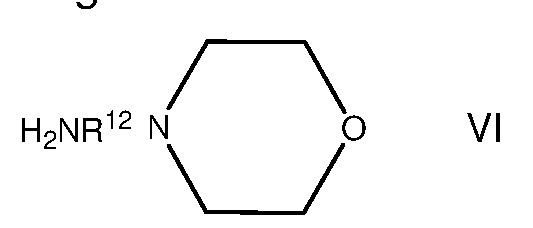
- the group R 12 are the same and are selected from the group consisting of straight and branched Ci -6 alkanediyl;
- R 13 HNR 14 X 2 IV wherein R 13 is selected from the group consisting of H and Ci -6 alkyl; R 14 is selected from the group consisting of straight and branched C 1-6 alkanediyl and C 7- i 2 aralkanediyl;
- X 2 is selected from the group consisting of halogens, OR, NR 15 2 , CONR 16 2, COOR 17 , SH and COR 18 ;
- R 11 is selected from is selected from the group consisting of H, optionally substituted Ci -6 alkyl, optionally substituted C 5-7 cycloalkyl, C 5-7 heterocycloalkyl and aryl; each R 15 is selected from the group consisting of H, Ci -6 alkyl, aryl and C 7- 12 aralkyl, or the groups R 15 together with the N-atom to which they are attached form a saturated heterocyclic ring of 5-7 atoms;
- each R 16 is selected from the group consisting of H and Ci -6 alkyl groups or the groups R 16 together with the N atom to which they are attached form a 5-7 membered heterocyclic ring;
- R 17 is selected from the group consisting of optionally substituted Ci -6 alkyl, C 7-12 aralkyl and aryl;
- R 18 is selected from the group consisting of optionally substituted Ci -6 alkyl, C 7- i 2 aralkyl and aryl;
- the method of the invention comprises the step of reacting a brominated naphthalene diimide with an amine reagent of formula IV in an aromatic nucleophilic substitution reaction whereby the bromine atom is replaced by an amino group N(R 13 )R 14 X 2 .
- the starting diimide may be a mono-bromo compound or (Y is H) a dibromo compound (Y is Br) or a mixture of both. Where the starting diimide comprises a dibromo compound, the aromatic nucleophilic substitution reaction may result in both bromine atoms being replaced by an amine group or just one of them.
- the second bromine atom may be replaced by H, in which event the product is a tri-substituted compound according to the first aspect of the invention. This occurs more readily at high temperatures. It is preferable to separate a mixture of both, for example by using column chromatography. Where the diimide starting material has one bromine substituent the product will be the new compound of the first aspect of the invention.
- the product may comprise a mixture of substituted NDIs and may also contain unreacted NDI. Where the product comprises a mixture of substituted NDIs, with or without unreacted NDIs, no higher than 50% by weight of the tetra- substituted NDIs compared to the tri-substituted NDIs may be present.
- the process step of reacting a compound of formula I II wherein Y is H is particularly preferred. If it is desired to form the novel tri-substituted compounds from starting compound of formula III wherein Y is Br, it may be desirable to use relatively high temperature conditions since this may optimise replacement of the second Br atom by H. Generally, however such high temperature conditions could lead to unwanted side reactions involving ring opening of the imide rings. Preferably therefore the process is carried out under reflex.
- the process usually involves a purification step for isolating the desired end product from the product mixture. It is an advantage of the process of the present invention that column chromatography can be used as a facile purification step. This is rendered possible by selection of reaction conditions and reagents for this step and for the preliminary steps of synthesising the imido and its precursor brominated tetracarboxylic anhydride and the precursor anhydride for that.
- the process of the invention preferably involves the preliminary steps as defined in the accompanying claims 20 and 23 and claims dependent thereon and as exemplified in the worked examples.
- novel compounds of the present invention being tri-substituted, have lower molecular weight than the compounds disclosed in our earlier publication US2014-0275062, which are tetra-substituted.
- the compounds are found to produce diminished stabilisation of a series of DNA quadruplexes of potential relevance to tumour growth.
- the IC 50 values are comparable to those of our earlier compound MM41 , a tetra- substituted compound.
- MIA-PaCa2 pancreatic cancer cells when treated with the novel compounds of the present invention, show changes in gene expression in a comparatively small number of genes, the majority of which have putative quadruplex-forming sequences in their promoters, consistent with the concept that the novel compounds selectively target these nuclear genes.
- the compounds of the present invention may be provided in the form of pharmaceutically acceptable compositions.
- the compositions may be administered by any route. For chemotherapy of tumours, the compositions are most conveniently administered intravenously.
- the compounds of the present invention especially when presented in the form of acid addition salts, for instance where some or all of the basic amine groups are converted to salt form, are water soluble and have approximately neutral pH. As such these salts are suitable for administration in the form of aqueous solution, which would be appropriate for intravenous administration.
- the pharmaceutical aqueous solutions preferably comprise 1.to 500 mg/l, of the compound.
- the compounds of the present invention may be provided in a form suitable to be made up into pharmaceutical compositions, for instance, in dried, rehydratable form, for instance with carrier or diluent. Such dried forms may be produced by crystallisation and/or evaporation. Alternatively, the compounds may be presented as concentrates, for instance in water or an organic, pharmaceutically acceptable, solvent for dilution before administration.
- the compounds of the present invention When used as treatment for existing tumours, the compounds of the present invention may be administered using regimens developed for chemotherapeutic agents.
- Preparative HPLC was carried out with a Gilson apparatus combining a 322 pump and a UV/vis-155 detector with detection at 280 nm, using a C18 5 pm (100 mm ⁇ 20 mm) column (201022272) (W), YMC, Japan, at a flow of 20 mL/min. Water and methanol with 0.1 % formic acid were used as solvents for HPLC.
- the following method was used: 100% aqueous solution for 5 min after injection, then gradually decreased to 60% aqueous solution over 25 min.
- NMR multiplicity abbreviations are s (singlet), bs (broad singlet), d (doublet), t (triplet), q (quartet), 5q (quintet), and m (multiplet). Coupling constants J are reported as observed in hertz (Hz).
- HRMS High resolution mass spectra
- HRMS were measured on a Micromass Q-TTOF Ultima global tandem mass spectrometer run under electrospray ionization (ESI), and processed using the MassLab 3.2 software. For compounds 2a and 2b, no 1 H and 13 C NMRs were obtained due to solubility issues.
- Compounds 2a and 2b (194 mg, 0.56 mmol) were suspended with sonication in glacial acetic acid (1.5 ml) in a microwave reaction vessel.
- 3-morpholinopropylamine (242 mg, 245 ⁇ _, 1.68 mmol) was added dropwise to the stirring mixture.
- the reaction tube was sealed and treated for 30 min at 125°C in the microwave.
- the solution was then basified with potassium carbonate and extracted with chloroform (3 x 5 ml). The organic phases were collected, dried over sodium sulphate and evaporated.
- BIOPHYSICAL AND CELL BIOLOGY DATA FRET assay The ability of the naphthalene diimide compounds to stabilize quadruplex DNA sequences was investigated using a fluorescence resonance energy transfer (FRET) assay modified to be used as a high- throughput screen in a 96-well format.
- FRET fluorescence resonance energy transfer
- Several quadruplex sequences were studied including the human telomeric G-quadruplex DNA sequence 5'-FAM- d(GGG[TTAGGG] 3 )-TAM RA-3' and the duplex sequence 5 -FAM- dTATAGCTATA-H EG-TATAGCTATA-TAM RA-3' (HEG linker: [(-CH 2 -CH 2 -0-) 6 .
- the labelled oligonucleotides have attached to them the donor fluorophore FAM: 6-carboxyfluorescein and the acceptor fluorophore TAMRA: 6- carboxytetramethylrhodamine.
- FAM 6-carboxyfluorescein
- TAMRA 6- carboxytetramethylrhodamine.
- the FRET probe sequences were diluted from stock to the correct concentration (400 nM) in a 60 mM potassium cacodylate buffer (pH 7.4) and then annealed by heating to 85 °C for 10 min, followed by cooling to room temperature in the heating block.
- the compound was stored as a 10 mM stock solution in DMSO; final solutions (at 2 ⁇ concentration) were prepared using 10 mM HQ in the initial 1 :10 dilution, after which 60 mM potassium cacodylate buffer (pH 7.4) was used in all subsequent steps.
- the maximum HCI concentration in the reaction volume (at a ligand concentration of 20 ⁇ ) is thus 200 ⁇ , well within the range of the buffer used. Relevant controls were also performed to check for interference with the assay.
- 96-Well plates (MJ Research, Waltham, MA) were prepared by aliquoting 50 ⁇ of the annealed DNA into each well, followed by 50 ⁇ of the compound solutions.
- Table 3 AT m values (°C) for FRET analyses of compounds 4a-j at 1 ⁇ concentrations with a series of G-rich sequences: human telomeric (F21 T), two sequences from the HSP90 promoter Hsp90A, Hsp90B (Heat Shock Protein 90), two sequences from the promoter region of the kras gene, one from the promoter region of the bcl-2 gene, and Tloop (representing duplex DNA). Esds are from triplicate measurements and average 0.3 °C.
- Human cancer cell lines and the somatic human cell line WI-38 (lung fibroblast) were purchased from the American Type Culture Collection. Cell lines were maintained in appropriate medium supplemented with 10 % foetal bovine serum (Invitrogen, UK), 2 mM L- glutamine (Invitrogen, Netherlands), and other components as specified by the suppliers. Cell lines were maintained at 37 °C, 5% CO 2 and routinely passaged. Drugs were dissolved in DMSO and filtered through 0.22 pm pore-size filter units before addition to cell line appropriate media. Cellular growth inhibition was measured using the sulforhodamine B (SRB) assay in 96 well plates. Fifty percent inhibitory concentrations (IC 50 ) were determined by taking the mean absorbance at 540 nm for each drug concentration expressed as a percentage of the absorbance of untreated control wells.
- SRB sulforhodamine B
- Mia-PaCa2 cells were seeded to a density equivalent to that used for IC 50 determinations in T75 culture flasks and grown for 24 h in 10 ml DM EM to allow attachment before addition of compound 3d to the culture medium. Following compound exposure, cells were washed twice in PBS, harvested by trypsinisation, collected by centrifugation (300 g, 5 min, 4 °C) and re-suspended in RLT buffer (Qiagen). Samples were homogenised using QIAshredder spin columns and stored at -80 °C prior to RNA extraction. Three biological replicates were performed on separate days.
- Table 4 short-term 96 hr IC 5 o values (in ⁇ ) for compounds 4a-j and MM41 in a cancer cell line panel, comprising MCF7 (breast), A549 (lung cancer), Mia-PaCa2/Panc1 (pancreatic cancer), ALT (Alternative Lengthening of Telomeres) and WI38 (lung fibroblast) cell lines. Esds average 0.25 ⁇ . (*) indicates concentration of 5 ⁇ instead of 1 ⁇ .
- MM41 is the di-morpholino-di-N-methyl-piperazine naphthalene diimide derivative highlighted in Micco et al J Med Chem, 2013.
- mice are ready to begin the therapy study.
- Group 1 8 mice treated with 15 mg/Kg of Gemcitabine twice weekly dose.
- Group 2 8 mice treated with 15 mg/Kg of MM41 (tetrasubstituted ND compound) twice weekly dose.
- Group 3 8 mice treated with 15 mg/Kg of Compound 4c twice weekly dose.
- Group 4 8 mice treated with 10 mg/Kg of Compound 4c twice weekly dose.
- Group 5 8 control mice treated with saline only twice weekly.
- MM41 -tri at 15 mg/kg is showing a highly significant anti-tumour response.
- MM41 is the di-morpholino-di-N-methyl-piperazine naphthalene diimide derivative highlighted in Micco et al J Med Chem). 2013. Animals did not have any significant weight loss on treatment.
- Cell culture Cell lines were purchased from American Type Culture Collection (ATCC) and stored under liquid nitrogen. Cells were maintained in monolayer culture T75 (75 cm2 flasks) in humidified 5% C02 atmosphere at 37°C. Cells were maintained in appropriate medium according to (ATCC) with necessary supplements including L-glutamine (Thermo Fisher Scientific Cat. No. 25030024), penicillin-streptomycin solution Hybrid-Max (Sigma Cat. No. P7539) and fetal bovine serum (FBS, Thermo Fisher Scientific Cat. No. 10270106). Cells were passaged at 80 - 90% confluence.
- ATCC American Type Culture Collection
- MIA-PaCa2 cells were seeded 48 hours prior to incubation, in MatTek
- RNA extraction cells (a maximum of 1 x 10⁷ cells) were harvested by trypsinization following rinsing the cells twice in 1 x PBS (without calcium chloride and magnesium chloride, purchased from Sigma Cat. No. D1408). After neutralising the medium with an equal volume of medium to trypsin cells were transferred to a sterile centrifuge tube for centrifugation for 4 minutes at 400 rpm at room temperate in order to pellet the cells. After removing the medium and trypsin following centrifugation RNA was extracted from the pellet of cells using the RNeasy Mini Kit by QIAGEN (Cat. no. 74104). RNA quality was checked by use of the NanoDrop 2000 Spectrophotometer, and a minimum quantity of ca 500 ng of RNA at >25 ng/ ⁇ concentration per replicate was verified.
- RNA-Seq sequencing studies were performed by the UCL Genomics Facility using an lllumina NextSeq 500 instrument, and data obtained on RNA expression levels of all individual genes in the genomes of the cells analysed, relative to the control cells at 0 hr exposure. Four replicates were used for each time-point, thus a total of 12 individual genomes were analysed and ststistics obtained for each time-point.
- the gene products of the TREX1 and TP73 genes are involved in DNA repair: it has been reported that polymorphisms in these genes also correlate with patient survival in pancreatic cancer (Dong X, Li Y, Hess KR, Abbruzzese JL, Li D. (2011 ) DNA Mismatch Repair Gene Polymorphisms Affect Survival in Pancreatic Cancer. Oncologist 16(1), 61 -70).
- MIA-PaCa2 pancreatic cancer cells when treated with compound 4c, show changes in gene expression in a comparatively small number of genes, the majority of which have putative quadruplex-forming sequences in their promoters, consistent with the concept that the compound is selectively targeting these nuclear genes.
Landscapes
- Organic Chemistry (AREA)
- Chemical & Material Sciences (AREA)
- Health & Medical Sciences (AREA)
- Life Sciences & Earth Sciences (AREA)
- General Health & Medical Sciences (AREA)
- Nuclear Medicine, Radiotherapy & Molecular Imaging (AREA)
- General Chemical & Material Sciences (AREA)
- Pharmacology & Pharmacy (AREA)
- Chemical Kinetics & Catalysis (AREA)
- Animal Behavior & Ethology (AREA)
- Medicinal Chemistry (AREA)
- Public Health (AREA)
- Veterinary Medicine (AREA)
- Engineering & Computer Science (AREA)
- Bioinformatics & Cheminformatics (AREA)
- Nitrogen Condensed Heterocyclic Rings (AREA)
- Pharmaceuticals Containing Other Organic And Inorganic Compounds (AREA)
- Organic Low-Molecular-Weight Compounds And Preparation Thereof (AREA)
Abstract
Description


Claims



Priority Applications (6)
| Application Number | Priority Date | Filing Date | Title |
|---|---|---|---|
| CN201680079695.4A CN108779112A (en) | 2015-12-15 | 2016-12-14 | Substituted naphthalimides and uses thereof |
| EP16816344.2A EP3402794A1 (en) | 2015-12-15 | 2016-12-14 | Substituted naphthalene diimides and their use |
| US16/063,089 US20190330197A1 (en) | 2015-12-15 | 2016-12-14 | Substituted naphthalene diimides and their use |
| CA3008215A CA3008215A1 (en) | 2015-12-15 | 2016-12-14 | Substituted naphthalene diimides and their use |
| AU2016373440A AU2016373440A1 (en) | 2015-12-15 | 2016-12-14 | Substituted naphthalene diimides and their use |
| JP2018531226A JP2019505495A (en) | 2015-12-15 | 2016-12-14 | Substituted naphthalene diimide and use thereof |
Applications Claiming Priority (2)
| Application Number | Priority Date | Filing Date | Title |
|---|---|---|---|
| GBGB1522118.7A GB201522118D0 (en) | 2015-12-15 | 2015-12-15 | Substituted naphthalene diimides and their use |
| GB1522118.7 | 2015-12-15 |
Publications (1)
| Publication Number | Publication Date |
|---|---|
| WO2017103587A1 true WO2017103587A1 (en) | 2017-06-22 |
Family
ID=55274786
Family Applications (1)
| Application Number | Title | Priority Date | Filing Date |
|---|---|---|---|
| PCT/GB2016/053937 Ceased WO2017103587A1 (en) | 2015-12-15 | 2016-12-14 | Substituted naphthalene diimides and their use |
Country Status (8)
| Country | Link |
|---|---|
| US (1) | US20190330197A1 (en) |
| EP (1) | EP3402794A1 (en) |
| JP (1) | JP2019505495A (en) |
| CN (1) | CN108779112A (en) |
| AU (1) | AU2016373440A1 (en) |
| CA (1) | CA3008215A1 (en) |
| GB (1) | GB201522118D0 (en) |
| WO (1) | WO2017103587A1 (en) |
Cited By (3)
| Publication number | Priority date | Publication date | Assignee | Title |
|---|---|---|---|---|
| WO2020138979A1 (en) * | 2018-12-26 | 2020-07-02 | 한국생명공학연구원 | Compound, graphene channel member and sensor comprising same |
| WO2020229840A1 (en) | 2019-05-16 | 2020-11-19 | Ucl Business Plc | Substituted naphthalene diimides and their use |
| RU2834299C2 (en) * | 2019-05-16 | 2025-02-05 | ЮСиЭл БИЗНЕС ЛТД | Substituted naphthalene diimides and use thereof |
Families Citing this family (1)
| Publication number | Priority date | Publication date | Assignee | Title |
|---|---|---|---|---|
| CN108774227B (en) * | 2018-08-27 | 2020-03-31 | 中国科学技术大学 | Colorimetric and fluorescent probe for rapidly detecting phosgene and synthesis method thereof |
Citations (2)
| Publication number | Priority date | Publication date | Assignee | Title |
|---|---|---|---|---|
| WO2009068916A1 (en) * | 2007-11-29 | 2009-06-04 | School Of Pharmacy, University Of London | Naphthalene diimide compounds interacting with g-quadruplex regions in dna |
| US20140275062A1 (en) * | 2013-03-13 | 2014-09-18 | Ucl Business Plc | Diimide compounds |
-
2015
- 2015-12-15 GB GBGB1522118.7A patent/GB201522118D0/en not_active Ceased
-
2016
- 2016-12-14 CN CN201680079695.4A patent/CN108779112A/en active Pending
- 2016-12-14 JP JP2018531226A patent/JP2019505495A/en active Pending
- 2016-12-14 US US16/063,089 patent/US20190330197A1/en not_active Abandoned
- 2016-12-14 EP EP16816344.2A patent/EP3402794A1/en not_active Withdrawn
- 2016-12-14 CA CA3008215A patent/CA3008215A1/en not_active Abandoned
- 2016-12-14 WO PCT/GB2016/053937 patent/WO2017103587A1/en not_active Ceased
- 2016-12-14 AU AU2016373440A patent/AU2016373440A1/en not_active Abandoned
Patent Citations (2)
| Publication number | Priority date | Publication date | Assignee | Title |
|---|---|---|---|---|
| WO2009068916A1 (en) * | 2007-11-29 | 2009-06-04 | School Of Pharmacy, University Of London | Naphthalene diimide compounds interacting with g-quadruplex regions in dna |
| US20140275062A1 (en) * | 2013-03-13 | 2014-09-18 | Ucl Business Plc | Diimide compounds |
Non-Patent Citations (1)
| Title |
|---|
| CUENCA F ET AL: "Tri- and tetra-substituted naphthalene diimides as potent G-quadruplex ligands", BIOORGANIC & MEDICINAL CHEMISTRY LETTERS, PERGAMON, AMSTERDAM, NL, vol. 18, no. 5, 1 March 2008 (2008-03-01), pages 1668 - 1673, XP022683116, ISSN: 0960-894X, [retrieved on 20080118], DOI: 10.1016/J.BMCL.2008.01.050 * |
Cited By (11)
| Publication number | Priority date | Publication date | Assignee | Title |
|---|---|---|---|---|
| WO2020138979A1 (en) * | 2018-12-26 | 2020-07-02 | 한국생명공학연구원 | Compound, graphene channel member and sensor comprising same |
| WO2020229840A1 (en) | 2019-05-16 | 2020-11-19 | Ucl Business Plc | Substituted naphthalene diimides and their use |
| KR20220035039A (en) * | 2019-05-16 | 2022-03-21 | 유씨엘 비즈니스 리미티드 | Substituted naphthalene diimides and uses thereof |
| JP2022533180A (en) * | 2019-05-16 | 2022-07-21 | ユーシーエル ビジネス エルティーディー | Substituted naphthalene diimide and its use |
| US11560380B2 (en) | 2019-05-16 | 2023-01-24 | Ucl Business Ltd | Substituted naphthalene diimides and their use |
| JP7476238B2 (en) | 2019-05-16 | 2024-04-30 | ユーシーエル ビジネス エルティーディー | Substituted naphthalene diimides and uses thereof |
| KR102714961B1 (en) | 2019-05-16 | 2024-10-07 | 유씨엘 비즈니스 리미티드 | Substituted naphthalene diimides and uses thereof |
| RU2834299C2 (en) * | 2019-05-16 | 2025-02-05 | ЮСиЭл БИЗНЕС ЛТД | Substituted naphthalene diimides and use thereof |
| EP4548919A2 (en) | 2019-05-16 | 2025-05-07 | UCL Business Ltd | Substituted naphthalene diimides and their use |
| EP4548919A3 (en) * | 2019-05-16 | 2025-07-16 | UCL Business Ltd | Substituted naphthalene diimides and their use |
| AU2020276902B2 (en) * | 2019-05-16 | 2026-01-29 | Ucl Business Ltd | Substituted naphthalene diimides and their use |
Also Published As
| Publication number | Publication date |
|---|---|
| AU2016373440A1 (en) | 2018-07-05 |
| CA3008215A1 (en) | 2017-06-22 |
| GB201522118D0 (en) | 2016-01-27 |
| US20190330197A1 (en) | 2019-10-31 |
| EP3402794A1 (en) | 2018-11-21 |
| JP2019505495A (en) | 2019-02-28 |
| CN108779112A (en) | 2018-11-09 |
Similar Documents
| Publication | Publication Date | Title |
|---|---|---|
| JP7167248B2 (en) | Compounds and methods for treating RNA-mediated diseases | |
| JP2019523242A (en) | Compounds and methods for modulating RNA function | |
| CN110563703B (en) | Compound for inducing PARP-1 degradation based on CRBN ligand, preparation method and application | |
| CA3080138A1 (en) | Processes for the resolution of benzodiazepin-2-one and benzoazepin-2-one derivatives | |
| US20180265911A1 (en) | Triptycene derivatives for nucleic acid junction stabilization | |
| CN116410207B (en) | A class of ubiquitination-specific protease inhibitors and preparation method and application thereof | |
| Liao et al. | 12-N-Methylated 5, 6-dihydrobenzo [c] acridine derivatives: A new class of highly selective ligands for c-myc G-quadruplex DNA | |
| CN119585276A (en) | Novel PRMT5 inhibitors and their applications | |
| Barandun et al. | From lin‐Benzoguanines to lin‐Benzohypoxanthines as Ligands for Zymomonas mobilis tRNA–Guanine Transglycosylase: Replacement of Protein–Ligand Hydrogen Bonding by Importing Water Clusters | |
| EP3402794A1 (en) | Substituted naphthalene diimides and their use | |
| Wei et al. | 4-(1H-Imidazo [4, 5-f]-1, 10-phenanthrolin-2-yl) phenol-based G-quadruplex DNA binding agents: Telomerase inhibition, cytotoxicity and DNA-binding studies | |
| CN117321056A (en) | An aromatic ring compound and its use | |
| Livendahl et al. | Synthesis of phenanthridine spiropyrans and studies of their effects on G-quadruplex DNA | |
| CN118930537B (en) | A compound that inhibits BRM | |
| WO2025119326A1 (en) | Novel prmt5 inhibitor and use thereof | |
| CN116514795A (en) | Process for preparing 3CLpro protease inhibitors | |
| CN104059053A (en) | Synthesis and application of a class of naphthalimide derivatives containing 1,2,3-triazole in the amide side chain | |
| CN111606888B (en) | Pyrrole derivative and preparation method and application thereof | |
| RU2527459C1 (en) | Novel heteroarene anthracenedione-based g-quadruplex ligands inhibiting tumour cell growth | |
| CN107540662B (en) | Schizocomulin derivative and preparation method and application thereof | |
| CN115073425B (en) | Compound serving as TBK1 inhibitor, pharmaceutical composition containing compound and application of compound | |
| CN109369674B (en) | A bis-fluoroquinolone-based oxadiazole urea derivative containing levofloxacin and its preparation method and application | |
| CN109400631B (en) | A kind of bis-fluoroquinolone oxadiazole urea ofloxacin derivative and its preparation method and application | |
| CN108371662B (en) | Application of a five-membered heterocyclic pyrimidine compound | |
| CN117486871A (en) | Preparation method of morpholine derivatives |
Legal Events
| Date | Code | Title | Description |
|---|---|---|---|
| 121 | Ep: the epo has been informed by wipo that ep was designated in this application |
Ref document number: 16816344 Country of ref document: EP Kind code of ref document: A1 |
|
| ENP | Entry into the national phase |
Ref document number: 3008215 Country of ref document: CA |
|
| WWE | Wipo information: entry into national phase |
Ref document number: 2018531226 Country of ref document: JP |
|
| NENP | Non-entry into the national phase |
Ref country code: DE |
|
| ENP | Entry into the national phase |
Ref document number: 2016373440 Country of ref document: AU Date of ref document: 20161214 Kind code of ref document: A |
|
| WWE | Wipo information: entry into national phase |
Ref document number: 2016816344 Country of ref document: EP |
|
| ENP | Entry into the national phase |
Ref document number: 2016816344 Country of ref document: EP Effective date: 20180716 |