WO2017061655A1 - Il10ra 유전자 내의 단일염기다형성 마커를 포함하는 소아 난치성 염증성장질환 진단용 조성물 - Google Patents
Il10ra 유전자 내의 단일염기다형성 마커를 포함하는 소아 난치성 염증성장질환 진단용 조성물 Download PDFInfo
- Publication number
- WO2017061655A1 WO2017061655A1 PCT/KR2015/011210 KR2015011210W WO2017061655A1 WO 2017061655 A1 WO2017061655 A1 WO 2017061655A1 KR 2015011210 W KR2015011210 W KR 2015011210W WO 2017061655 A1 WO2017061655 A1 WO 2017061655A1
- Authority
- WO
- WIPO (PCT)
- Prior art keywords
- il10ra
- seq
- growth disease
- inflammatory growth
- disease
- Prior art date
- Legal status (The legal status is an assumption and is not a legal conclusion. Google has not performed a legal analysis and makes no representation as to the accuracy of the status listed.)
- Ceased
Links
Images

Classifications
-
- C—CHEMISTRY; METALLURGY
- C12—BIOCHEMISTRY; BEER; SPIRITS; WINE; VINEGAR; MICROBIOLOGY; ENZYMOLOGY; MUTATION OR GENETIC ENGINEERING
- C12Q—MEASURING OR TESTING PROCESSES INVOLVING ENZYMES, NUCLEIC ACIDS OR MICROORGANISMS; COMPOSITIONS OR TEST PAPERS THEREFOR; PROCESSES OF PREPARING SUCH COMPOSITIONS; CONDITION-RESPONSIVE CONTROL IN MICROBIOLOGICAL OR ENZYMOLOGICAL PROCESSES
- C12Q1/00—Measuring or testing processes involving enzymes, nucleic acids or microorganisms; Compositions therefor; Processes of preparing such compositions
- C12Q1/68—Measuring or testing processes involving enzymes, nucleic acids or microorganisms; Compositions therefor; Processes of preparing such compositions involving nucleic acids
Definitions
- the present invention relates to a composition, a diagnostic kit, and a diagnostic method for diagnosing pediatric refractory inflammatory growth disease comprising a monobasic polymorphic marker in an interleukin-10 receptor alpha ( IL10RA ) gene.
- IL10RA interleukin-10 receptor alpha
- Cytokine interleukin-10 plays an important role in anti-inflammatory action in mucosal hemostasis.
- Deleious mutations in the gene encoding IL-10 and its receptors have been shown to cause inflammatory bowel disease (IBD).
- IBD inflammatory bowel disease
- Monovalent IBD caused by a deficiency of the IL-10 pathway is very aggressive and has been reported under 1 year of age in reported cases.
- IBD azathioprine, infliximab, antibiotics and surgery
- their clinical phenotypes manifest themselves primarily in severe colitis, recurrent infections and refractory anal disease.
- the pathogenesis of IBD caused by a deficiency of the IL-10 pathway is believed to be due to enteric disease, which appears as one of the Mendelian primary immune deficiencies (PID), rather than IBD, which appears to be a complex trait in adults.
- PID Mendelian primary immune deficiencies
- An object of the present invention is to provide a composition for diagnosing refractory inflammatory growth disease comprising a single nucleotide polymorphism marker in the IL10RA gene.
- Another object of the present invention to provide a method for providing information for diagnosing intractable inflammatory growth disease comprising the step of identifying the allele of the single nucleotide polymorphism marker in the IL10RA gene.
- Another object of the present invention to provide a refractory inflammatory growth disease diagnostic kit comprising a probe specifically binding to a polynucleotide comprising a mononucleotide polymorphism marker in the IL10RA gene or a primer for amplifying the polynucleotide.
- the present invention comprises a polynucleotide consisting of 10-100 contiguous DNA sequences comprising a single nucleotide polymorphism (SNP) marker of 537 nucleotide of SEQ ID NO: 1 or a complementary polynucleotide thereof It provides a composition for diagnosing intractable inflammatory growth disease,
- SNP single nucleotide polymorphism
- the present invention comprises the steps of extracting DNA from the sample; Identifying the allelic type of the 537th nucleotide of SEQ ID NO: 1 from the extracted DNA; And it provides a method for providing information for the diagnosis of refractory inflammatory growth disease comprising the step of identifying the refractory inflammatory growth disease with the identified allele type.
- the present invention provides a probe that specifically binds to a polynucleotide consisting of 10-100 contiguous DNA sequences or a complementary polynucleotide thereof comprising a single nucleotide polymorphism (SNP) marker of the 537 nucleotide of SEQ ID NO: 1 or It provides a refractory inflammatory growth disease diagnostic kit comprising a primer for amplifying the polynucleotide.
- SNP single nucleotide polymorphism
- the present invention is IL10RA It relates to a composition for diagnosing pediatric refractory inflammatory growth disease comprising a single nucleotide polymorphism marker in a gene.
- a mutation T179T
- IL10RA a mutation that does not induce amino acid change in IL10RA
- the protein product thus produced was confirmed to be a cause of refractory inflammatory growth disease by paralyzing IL10 signaling.
- the frequency of this mutation is 0.035% in normal Koreans, but it can be used as a prenatal diagnostic biomarker.
- IL10RA R101W c. C301T
- T179T c. G537A
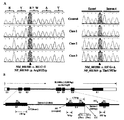
- B shows the location of the T179T mutation.
- Figure 2 shows the result of splicing error (splicing error) caused by the IL10RA T179T mutation.
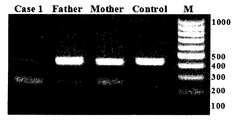
- A RT-PCR results of IL10RA (Exon 3-5) on RNA isolated from patients, their parents and healthy controls.
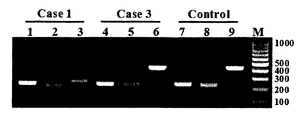
- B of exons 3 (lane 1, 4, 7), exon 4 (lane 2, 5, 8) and exon 3-5 (lane 3, 6, 9) for the first case, third case and healthy controls RT-PCR results.
- C The truncated RT-PCR product, the 252 bp sequence, shows a deficiency of exon 3 caused by premature stop codons.
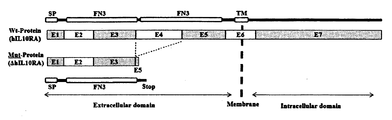
- D shows the predicted structure of the protein altered by the T179T mutation. Signaling peptide (SP), fibronectin 3 (FN3) and transmembrane (TM) domains.
- SP Signaling peptide
- FN3 fibronectin 3
- TM transmembrane
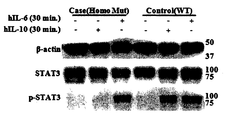
- FIG. 3 shows deficient IL-10 signaling versus IL-6 signaling in the first case homozygous for T179T.
- PBMCs peripheral blood mononuclear cells
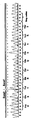
- IL-10 signaling deficient in the first case homozygous for T179T In case 1, its parent and healthy control-derived peripheral blood mononuclear cells (PBMCs), Western blot analysis of IL-10 induced STAT3 phosphorylation is shown.
- PBMCs peripheral blood mononuclear cells
- the present invention provides a composition for diagnosing intractable inflammatory growth disease comprising a polynucleotide consisting of 10-100 consecutive DNA sequences comprising a single nucleotide polymorphism (SNP) marker of SEQ ID NO: 1 or a complementary polynucleotide thereof. to provide.
- the refractory inflammatory growth disease may occur in infants or children.
- the allele of the 537th nucleotide of SEQ ID NO: 1 may be A / A or A / G, and the composition may be used for prenatal testing.
- the 537 nucleotide of SEQ ID NO: 1 is in IL10RA on chr11q23 , and the allele type is G> A.
- the 537th nucleotide of SEQ ID NO: 1 was prepared according to the multibase system, and may be A or G, so it was described as "r".
- the IL10RA protein was NCBI accession no. NP_001549. Even if the 537th nucleotide of SEQ ID NO: 1 is changed to G or A, the 179th amino acid of the IL10RA protein is threonine (Thre), indicating a synonymous variation (T179T) that does not induce amino acid changes.
- Thre threonine
- T179T synonymous variation
- Polymorphism of the present invention refers to a case in which two or more alleles exist in a single locus, and a 'polymorphic site' means a locus in which the allele exists.
- a 'polymorphic site' means a locus in which the allele exists.
- polymorphic sites a single base that differs from person to person is called “monobase polymorphism,” or SNP (single nucleotide polymorphism).
- the present invention comprises the steps of extracting DNA from the sample; Identifying the allelic type of the 537th nucleotide of SEQ ID NO: 1 from the extracted DNA; And it provides a method for providing information for the diagnosis of refractory inflammatory growth disease comprising the step of identifying the refractory inflammatory growth disease with the identified allele type.
- the refractory inflammatory growth disease may occur in infants or children. The method can also be used for prenatal testing.
- the step of identifying the refractory inflammatory growth disease may be identified as an intractable inflammatory growth disease when the allele of the 537th nucleotide of SEQ ID NO: 1 is A / A or A / G.
- RNA splicing affects production of the cleaved IL10RA protein.
- the cleaved protein may paralyze IL10 signaling and cause intractable inflammatory growth disease.
- the DNA may be separated from all cells, such as blood, skin cells, mucosal cells and hair of the subject.
- the method for extracting DNA from the cell is not particularly limited, and techniques known in the art or commercially available kits for DNA extraction can be used.
- sequence analysis may be performed. Sequencing may use any method known in the art, and the present invention is not limited thereto, but may include, but is not limited to, an autobase sequencer, pyrosequencing, PCR-RELP (restriction fragment length polymorphism), PCRSSCP (single strand conformation polymorphism), PCR-SSO (specific sequence oligonucleotide), PCR-SSO and dot hybridization combined ASO (allele specific oligonucleotide) hybridization, TaqMan-PCR, MALDI-TOF / MS, Any one or more selected from known methods such as RCA method (rolling circle amplification), HRM (high resolution melting) method, primer extension method, Southern blot hybridization method and dot hybridization method can be used.
- the present invention comprises the steps of extracting DNA from the sample; Identifying the allelic type of the 537th nucleotide of SEQ ID NO: 1 from the extracted DNA; And it provides a method for diagnosing refractory inflammatory growth disease comprising the step of diagnosing the refractory inflammatory growth disease with the identified allele type. If the allele of the 537th nucleotide of SEQ ID NO: 1 is A / A or A / G, it may be diagnosed as refractory inflammatory growth disease.
- the present invention is a polynucleotide or a complementary polynucleotide consisting of 10-100 consecutive DNA sequences comprising a single nucleotide polymorphism (SNP) marker of the 537 nucleotide of SEQ ID NO: 1 for the diagnosis of refractory inflammatory growth disease Serves the purpose of.
- SNP single nucleotide polymorphism
- the present invention provides a probe that specifically binds to a polynucleotide consisting of 10-100 contiguous DNA sequences or a complementary polynucleotide thereof comprising a single nucleotide polymorphism (SNP) marker of the 537 nucleotide of SEQ ID NO: 1 or It provides a refractory inflammatory growth disease diagnostic kit comprising a primer for amplifying the polynucleotide.
- the kit is preferably a PCR kit or a DNA chip kit, but is not limited thereto.
- the "probe” refers to nucleic acid fragments such as RNA or DNA corresponding to short bases to hundreds of bases capable of specific binding other than mRNA, and are labeled to identify presence or absence of expression of specific mRNAs. Can be.
- the probe may be manufactured in the form of an oligonucleotide probe, a single strand DNA probe, a double strand DNA probe, an RNA probe, or the like. Selection of appropriate probes and hybridization conditions may be appropriately selected according to techniques known in the art.
- the “primer” is a nucleic acid sequence having a short free 3-terminal hydroxyl group, which forms base pairs with complementary templates and acts as a starting point for template strand copying.
- Primers can initiate DNA synthesis in the presence of reagents for polymerization (ie, DNA polymerase or reverse transcriptase) and four different nucleoside triphosphates at appropriate buffers and temperatures. PCR conditions, sense and antisense primer lengths may be appropriately selected according to techniques known in the art.
- the first case patient was born in 41 weeks from a Korean parent who was not of the same kin, was a girl weighing 3.2 kg, and was healthy until the onset of recurrence of colitis at age six.
- the patient was diagnosed with Crohn's disease (CD) at 9 years of age with an early onset of recurrent abdominal pain and diarrhea. Endoscopic severe colitis was observed in the entire colon of the patient. Initial treatment proceeded to diet, but failed. The patient's disease showed steroid dependence and then steroid refractory. Colitis in this patient did not show any response to azathioprine, infliximab and adalimumab. Meanwhile, the patient suffered from five symptoms of severe gastrointestinal infection for eight months of follow-up.
- the symptom was alleviated by loop ileostomy at 10 years of age and showed severe stricture in the large intestine 15 months later.
- Laparoscopic colorectal resection was performed at the age of 12 with end ileostomy. The patient never suffered from perianal problems.
- the second case patient was born in 41 weeks from a Korean parent who was not of the same kinship, was a girl weighing 2.6 kg and was referred to pediatric surgeon for two months at work due to rectal seizures and dentition. Indicated. When the patient was 4 months old, phase S loop colon surgery was performed and showed growth disorders, persistent anemia and hypoalbuminemia. When the patient was 9 months old, colonoscopy was performed to show Crohn's disease from the hepatic curve to the distal colon. The patient used infliximab and azathioprine for fistula control at 10 months due to no response to corticosteroids. At 13 months, the patient was infected with chickenpox and died of sepsis.
- the third case patient was born in 39 weeks from a Korean parent who was not of the same kinship, was a girl weighing 3.9 kg and had recurrent recessive disease / infection and oral ulcer during infancy.
- the patient underwent surgery due to perianal fistula at 10 months, and was referred to the hospital for 1 month at diarrhea, growth disorder and recurrent fever at 15 months and diagnosed with whole colon colon disease with sepsis and perianal fistula.
- the use of azathioprine and infliximab temporarily relieved the patient's symptoms, but the patient often suffered from intraperitoneal abscesses and worsening perianal fistulas requiring antibiotic treatment.
- adalimumab treatment was started and lasted for 3 years.
- the genotype of the third case was reported in the previous report of WES for 22 severe pediatric Crohn's disease patients (publishing in the journal Gut and liver , 2015), the first case, the second case and the third case, respectively Probands 1, 5 and 9.
- the severity leading to mortality, such as incidence of infancy and cases 2 and 3 led to the attention of other unknown PID-related mutations in addition to having heterologous mutations of R101W in IL10RA.
- genomic DNA from a total of eight initiators in the second, third, and their parents and siblings was obtained from a buffer coat using the QIAamp DNA Blood Mini Kit (Qiagen, Germany). Purification was according to the manufacturer's instructions. Exome capture was performed using a Sure Select Human All Exon 38Mb kit (Agilent Technologies, Santa Clara, Calif.). Capture, purification, and amplified libraries targeting exomes from each patient were sequenced on IlluminaHiSeq2000. Capture and sequencing were performed in Macrogen (Seoul, Korea).
- the target region of IL10RA was amplified using intron primers placed next to each exon [forward primer 5'-GGCCTCTTGCGTCTCCC-3 '(SEQ ID NO: 2) and reverse primer 5'-GCAGACATGGTGAGCTATGG-3' (SEQ ID NO: 3) for R101W in exon 3; forward primer 5'-ATTCTGGAGGCAAAGTCTCG-3 '(SEQ ID NO: 4) and reverse primer 5'-AGTTCCCAATGGCACACAAG-3' (SEQ ID NO: 5) for T179T in exon 4].
- intron primers placed next to each exon [forward primer 5'-GGCCTCTTGCGTCTCCC-3 '(SEQ ID NO: 2) and reverse primer 5'-GCAGACATGGTGAGCTATGG-3' (SEQ ID NO: 3) for R101W in exon 3; forward primer 5'-ATTCTGGAGGCAAAGTCTCG-3 '(SEQ ID NO: 4) and reverse primer 5'-AGTTCCCAATG
- the amplification conditions were performed in 1 cycle for 95 °C-7 minutes, 95 °C-30 seconds, 56 °C-30 seconds, 30 cycles for 72 °C-1 minutes and 1 cycle for 72 °C-5 minutes.
- Amplification products of 360 bp and 348 bp were confirmed by agarose gel electrophoresis, and Exo-SAP (10: 1 U ratio mixture of Exo nuclease I and Shrimp Alkaline Phosphatase, Affymetrix, OH, USA) was 15 minutes at 37 ° C. Purified by treating at 80 ° C. for 15 minutes and maintaining at 4 ° C. Sequencing was performed using an ABI 3730XL sequencer (Cosmogenetech, Seoul, Korea). Amino acid numbering refers to positions in immature proteins (including signal peptides).
- the primer sequences for exon 5 in exon 3 of IL10RA are as follows: 7; P2), forward primer in exon 4 5'-CCTCGGGAAGATTCAGCTAC-3 '(SEQ ID NO: 8; P3), and reverse primer in exon 5 5'- ACTTCGGGAAGCGACAGATG-3' (SEQ ID NO: 9; P4)].
- PCR Polymerase chain reaction
- PBMCs Peripheral blood mononuclear cells
- the cells were washed twice with 10 ml of 1 ⁇ PBS (at 100 ⁇ g for 30 min) and resuspended with 1 ⁇ PBS.
- the cells (5 ⁇ 10 5 cells) were stimulated with 40 ng of recombinant human IL-10 (Peprotech, Inc, NJ, USA) for 30 minutes at room temperature.
- Cellular extracts were prepared following standard protocols. Protein concentration was measured by a protein assay kit (Bio-Rad, CA, USA), 100 ⁇ g of protein was isolated by 12% sodium dodecyl sulfate-polyacrylamide gel electrophoresis (SDS-PAGE) and transferred to the membrane. I was.
- the membrane was reacted with mouse anti-STAT3 (signal transducer and activator of transcription 3), rabbit anti-phosphorylated STAT3 antibodies (Cell Signaling Technology, MA, USA), followed by a goth anti-mouse and donkey anti-rabbit secondary antibody (Santa). Cruz Biotechnology, CA, USA).
- ⁇ -Actin was used as a loading control.
- the membrane was observed using the ECL method (Bio-Rad, CA, USA).
- Genotypes of healthy controls were analyzed using TaqMan SNP genotyping assay (Applied Biosystems, Foster City, CA, USA). A total of 2,885 unrelated healthy controls were 618 from Ulsan University College of Medicine and Asan Hospital, 665 from Seoul National University, 1,346 from National Central Human Resource Bank and 256 from the Gyeongsang National University Hospital, a member of National Central Human Resource Bank. Provided. All samples were obtained with written consent and were approved by the Institutional Review Board.
- the second case inherited a missense mutation (R101W) from his mother and a synonymous amino acid change (T179T) from his father. Sanger sequencing revealed that her siblings shared only the missense mutation (R101W).
- the third case inherited a missense mutation (R101W) from dad and inherited a synonymous amino acid change (T179T) from her mother, but her siblings were found to share only synonymous amino acid changes (T179T).
- CD Crohn's disease
- Missense mutations of IL10RA have been reported as alleles responsible for the homozygous state of refractory infant IBD. It is known to promote IL-10 and deficiency of STAT3 phosphorylation, paralyzing IL-10-induced signaling. However, the T179T has never been reported. Synonymous amino acid changes (T179T) appeared at the exon / intron boundary (FIG. 1B), which resulted in a G ⁇ A transition in one base of exon 4 before the splice donor of intron 4. The base substitution may induce splicing errors to indicate protein cleavage.
- RT-PCR analysis using blood cell mRNA of the first case and its asymptomatic parents.
- RT-PCR was performed using primers for exons on the exon 4 side: forward, CCAACTGTAGCCAGACCCTG (SEQ ID NO: 6; P1); And reverse, ACTTCGGGAAGCGACAGATG (SEQ ID NO: 9; P4).
- the expected full length RT-PCR product was 422 bp, while the expected product from mRNA except exon 4 was 252 bp.
- RT-PCR with wild-type IL10RA in healthy donors showed only 422-bp fragments, whereas the same response was performed with the mRNA of the parent of the patient, resulting in both full length and truncated fragments (FIG. 2A). In patients, truncated fragments were the main product, but faint bands were observed at 422-bp. In order to confirm that the mRNA of the patient can be normal splicing, the presence of exon 4 in the IL10RA transcript was analyzed by RT-PCR.
- the following primers were used: forward CCAACTGTAGCCAGACCCTG (SEQ ID NO: 6; P1) in exon 3 and reverse GGCCTGGGTAGCTGAATCTT (SEQ ID NO: 7; P2) in exon 4, forward CCTCGGGAAGATTCAGCTAC (SEQ ID NO: 8; P3) in exon 4 and reverse ACTTCGGGAAGCGACAGATG No. 9; P4) in exon 5.
- the full-length RT-PCR products expected for each are 226 bp (exon 3-4) and 223 bp (exon 4-5). As shown in FIG. 2B, the RT-PCR products expected in exons 3-4 and exon 4-5 were observed in the first case, indicating that normal splicing is likely to occur in the first case.
- the sequence contains a splice junction between the expected IL10RA exons 3 and exon 5 (FIG. 2C).
- the 3 'end of exon 3 ends between the first and second positions of codon 123 and the 5' end of exon 5 begins with codon 180.
- the frame of the splice junction between exon 3 and exon 5 was expected to add seven new codons at the 3 'end of codon 123 followed by a stop codon.
- 448 wild type amino acids were predicted to be cleaved and removed from the carboxy terminus of the IL10RA protein. Shortened mRNA causes premature stop codons in exon 5, which deletes one of two fibronectin type III, intracellular domains of transmembrane and IL-10 receptor (FIG. 2D).
- genotyping of IL10RA T179T mutations in 2,885 healthy controls was performed via TaqMan SNP genotyping. Of 2,885, only 2 had heterozygous T179T mutations. The minor allele frequency of the T179T mutation was 0.035%.
Landscapes
- Chemical & Material Sciences (AREA)
- Life Sciences & Earth Sciences (AREA)
- Organic Chemistry (AREA)
- Proteomics, Peptides & Aminoacids (AREA)
- Health & Medical Sciences (AREA)
- Engineering & Computer Science (AREA)
- Zoology (AREA)
- Wood Science & Technology (AREA)
- Analytical Chemistry (AREA)
- Genetics & Genomics (AREA)
- Microbiology (AREA)
- Molecular Biology (AREA)
- Physics & Mathematics (AREA)
- Immunology (AREA)
- Biotechnology (AREA)
- Biochemistry (AREA)
- Bioinformatics & Cheminformatics (AREA)
- General Engineering & Computer Science (AREA)
- General Health & Medical Sciences (AREA)
- Biophysics (AREA)
- Measuring Or Testing Involving Enzymes Or Micro-Organisms (AREA)
- Pathology (AREA)
Abstract
본 발명은 IL10RA 유전자 내의 단일염기다형성 마커를 포함하는 소아 난치성 염증성장질환 진단용 조성물에 관한 것으로서, 상세하게는, 소아 난치성 염증성장질환의 유전자로 알려진 IL10RA에서 아미노산의 변화를 유도하지 않는 변이(T179T)가 RNA 스플라이싱(splicing)에 영향을 주어 IL10RA에서 448개의 아미노산이 결여된 단백산물을 만들며, 이렇게 만들어진 단백산물은 IL10 신호전달을 마비시켜 난치성 염증성장질환의 원인이 되는 것을 확인한 것으로, 이 돌연변이의 정상 한국인에서의 빈도는 0.035%이지만, 산전 진단용 바이오마커로 활용될 수 있다.
Description
본 발명은 인터루킨-10 수용체 알파(interleukin-10 receptor alpha; IL10RA) 유전자 내의 단일염기다형성 마커를 포함하는 소아 난치성 염증성장질환 진단용 조성물, 진단 키트 및 진단 방법에 관한 것이다.
사이토카인 인터루킨-10(interleukin-10; IL-10)은 점막 지혈에 있어 항염증작용에 중요한 역할을 한다. IL-10을 코딩하는 유전자에서의 삭제 돌연변이(deleterious mutations) 및 이의 수용체들은 유아 염증성장질환(inflammatory bowel disease; IBD)을 일으키는 것으로 나타났다. IL-10 경로의 결핍에 의해 야기되는 단성 IBD는 매우 공격적이며, 보고된 케이스들에서는 1세 미만에서 발병되었다. 아자티오프린(azathioprine), 인플릭시맙(infliximab), 항생제 및 수술과 같은 IBD의 통상적인 치료에 대해 이들의 임상적 표현형은 주로 심한 대장염, 재발성 감염 및 난치성 항문 질병으로 나타난다. IL-10 경로의 결핍에 의해 야기되는 IBD의 발병 과정은 성인에서 복잡한 형질로 나타나는 IBD 보다는, 멘델 형태의 1차 면역 결핍증(primary immune deficiencies; PID) 중 하나로 나타나는 장질환으로 인한 것으로 추정된다.
최근, 유아 IBD를 가진 어린이를 유전적으로 진단하기 위해서, IBD 연구자들 사이에서는 전체 엑솜 서열분석(whole exome sequencing; WES)이 추천된다. 어린이에게서 나타나는 단성 IBD에 의해 야기되는 유전적 돌연변이 수가 50개 이상으로 증가하였으므로, 모든 돌연변이들에 대해 전통적인 생거(Sanger) 서열분석은 좋은 방법이 아니다. WES를 사용하여, XIAP 및 TTC7A에서의 기능 상실이 유아 IDB를 야기하는 것으로 최근 보고되었다. 하지만, WES의 분석 방법은 여전히 논란이 있으며, 개발 중에 있다. 우선, 다양한 삭제 돌연변이(deleterious mutations)에 대한 기본적인 검증을 위한 기능 연구가 임상에서 필요할 것으로 보인다.
본 발명의 목적은 IL10RA 유전자 내의 단일염기다형성 마커를 포함하는 난치성 염증성장질환 진단용 조성물을 제공하는데 있다.
또한, 본 발명의 다른 목적은 상기 IL10RA 유전자 내의 단일염기다형성 마커의 대립유전자형을 확인하는 단계를 포함하는 난치성 염증성장질환 진단을 위한 정보를 제공하는 방법을 제공하는데 있다.
또한, 본 발명의 또 다른 목적은 상기 IL10RA 유전자 내의 단일염기다형성 마커를 포함하는 폴리뉴클레오티드에 특이적으로 결합하는 프로브 또는 상기 폴리뉴클레오티드를 증폭하기 위한 프라이머를 포함하는 난치성 염증성장질환 진단 키트를 제공하는데 있다.
상기 과제의 해결을 위하여, 본 발명은 서열번호 1의 537번째 뉴클레오티드의 단일염기다형성(SNP) 마커를 포함하는 10-100개의 연속적인 DNA 서열로 구성되는 폴리뉴클레오티드 또는 그의 상보적 폴리뉴클레오티드를 포함하는 난치성 염증성장질환 진단용 조성물을 제공한다,
또한, 본 발명은 시료로부터 DNA를 추출하는 단계; 상기 추출한 DNA로부터 서열번호 1의 537번째 뉴클레오티드의 대립유전자형을 확인하는 단계; 및 상기 확인된 대립유전자형으로 난치성 염증성장질환을 확인하는 단계를 포함하는 난치성 염증성장질환 진단을 위한 정보를 제공하는 방법을 제공한다.
또한, 본 발명은 서열번호 1의 537번째 뉴클레오티드의 단일염기다형성(SNP) 마커를 포함하는 10-100개의 연속적인 DNA 서열로 구성되는 폴리뉴클레오티드 또는 그의 상보적 폴리뉴클레오티드에 특이적으로 결합하는 프로브 또는 상기 폴리뉴클레오티드를 증폭하기 위한 프라이머를 포함하는 난치성 염증성장질환 진단 키트를 제공한다.
본 발명은 IL10RA
유전자 내의 단일염기다형성 마커를 포함하는 소아 난치성 염증성장질환 진단용 조성물에 관한 것이다. 본 발명에 의하면, 소아 난치성 염증성장질환의 유전자로 알려진 IL10RA에서 아미노산의 변화를 유도하지 않는 변이(T179T)가 RNA 스플라이싱(splicing)에 영향을 주어 IL10RA에서 448개의 아미노산이 결여된 단백산물을 만들며, 이렇게 만들어진 단백산물은 IL10 신호전달을 마비시켜 난치성 염증성장질환의 원인이 되는 것을 확인한 것으로, 이 돌연변이의 정상 한국인에서의 빈도는 0.035%이지만, 산전 진단용 바이오마커로 활용될 수 있다.
도 1은 IL10RA 돌연변이의 확인 결과를 나타낸다. (A) 3명의 환자 및 건강한 대조군에서의 IL10RA R101W (c. C301T) 및 T179T (c. G537A) 돌연변이 확인 결과를 나타낸다. (B) T179T 돌연변이의 위치를 나타낸다.
도 2는 IL10RA T179T 돌연변이에 의해 야기되는 스플라이싱 에러(splicing error) 확인 결과를 나타낸다. (A) 환자, 그의 부모 및 건강한 대조군으로부터 분리된 RNA에 대한 IL10RA (엑손 3-5)의 RT-PCR 결과. (B) 제1 케이스, 제3 케이스 및 건강한 대조군에 대한 엑손 3 (lane 1, 4, 7), 엑손 4 (lane 2, 5, 8) 및 엑손 3-5 (lane 3, 6, 9)의 RT-PCR 결과. (C) 절단된 RT-PCR 산물인 252 bp 서열은 조기 정지 코돈에 의해 야기되는 엑손 3의 결핍을 보여준다. (D) T179T 돌연변이에 의해 변경되는 단백질의 예측 구조를 나타낸다. 신호전달 펩타이드(Signaling peptide; SP), 피브로넥틴 3(fibronectin 3; FN3) 및 트랜스멤브레인(transmembrane; TM) 도메인을 나타낸다.
도 3은 T179T에 대한 제1 케이스 동형접합체에서 IL-6 신호전달 대비 결핍된 IL-10 신호전달을 나타낸다. 제1 케이스 및 건강한 대조군 유래 말초혈액단핵구세포(PBMC)에 있어서, IL-10 및 IL-6 유도된 STAT3 인산화에 대한 웨스턴 블랏 분석 결과를 나타낸다.
도 4는 T179T에 대한 제1 케이스 동형접합체에서 결핍된 IL-10 신호전달을 나타낸다. 제1 케이스, 그의 부모 및 건강한 대조군 유래 말초혈액단핵구세포(PBMC)에 있어서, IL-10 유도된 STAT3 인산화에 대한 웨스턴 블랏 분석 결과를 나타낸다.
본 발명자들은 가족-기반 WES를 통해 확인된, 심한 IBD를 가진 3명의 어린이에서의 IL10RA 유전자형에 대해 연구하였다. 이는 IL10RA에서 스플라이싱 에러(splicing error)를 유발하여 IL-10 경로를 결핍시키는, 동의(synonymous) 돌연변이 T179T에 대해 최초로 보고하고, 본 발명을 완성하였다.
본 발명은 서열번호 1의 537번째 뉴클레오티드의 단일염기다형성(SNP) 마커를 포함하는 10-100개의 연속적인 DNA 서열로 구성되는 폴리뉴클레오티드 또는 그의 상보적 폴리뉴클레오티드를 포함하는 난치성 염증성장질환 진단용 조성물을 제공한다. 바람직하게는, 상기 난치성 염증성장질환은 유아 또는 소아에서 발병할 수 있다. 상세하게는, 상기 서열번호 1의 537번째 뉴클레오티드의 대립유전자형은 A/A 또는 A/G일 수 있으며, 상기 조성물은 산전 검사에 이용할 수 있다.
상기 서열번호 1의 537번째 뉴클레오티드는 chr11q23 상의 IL10RA 내에 존재하며, 대립유전자형은 G>A이다. 상기 서열번호 1의 537번째 뉴클레오티드는 다중염기기재 방식에 따라 작성하였는데, A 또는 G일 수 있으므로 "r"이라고 기재하였다.
상기 IL10RA 단백질은 NCBI accession no. NP_001549이다. 상기 서열번호 1의 537번째 뉴클레오티드가 G 또는 A로 변경되어도, IL10RA 단백질의 179번째 아미노산은 트레오닌(threonine; Thr)으로서 아미노산 변화는 유도하지 않는 동의(synonymous) 변이 (T179T)를 나타낸다.
본 발명의 다형성(polymorphism)은 단일 유전자 좌위에 두 가지 이상의 대립 유전자가 존재하는 경우를 의미하며, '다형성부위(polymorphic site)'란 상기 대립 유전자가 존재하는 유전자 좌위를 의미한다. 다형성 부위 중에서, 사람에 따라 단일 염기만이 상이한 것을 ‘단일염기다형성’, 즉 SNP(single nucleotide polymorphism)라고 한다.
또한, 본 발명은 시료로부터 DNA를 추출하는 단계; 상기 추출한 DNA로부터 서열번호 1의 537번째 뉴클레오티드의 대립유전자형을 확인하는 단계; 및 상기 확인된 대립유전자형으로 난치성 염증성장질환을 확인하는 단계를 포함하는 난치성 염증성장질환 진단을 위한 정보를 제공하는 방법을 제공한다. 바람직하게는, 상기 난치성 염증성장질환은 유아 또는 소아에서 발병할 수 있다. 또한, 상기 방법은 산전 검사에 이용할 수 있다.
상세하게는, 상기 난치성 염증성장질환을 확인하는 단계는 상기 서열번호 1의 537번째 뉴클레오티드의 대립유전자형이 A/A 또는 A/G인 경우, 난치성 염증성장질환으로 확인할 수 있다.
보다 상세하게는, 상기 서열번호 1의 537번째 뉴클레오티드의 대립유전자형이 A/A 또는 A/G인 경우, RNA 스플라이싱(splicing)에 영향을 미쳐 절단된 IL10RA 단백질을 생산한다. 상기 절단된 단백질은 IL10 신호전달을 마비시켜 난치성 염증성장질환의 원인이 될 수 있다.
상기 시료로부터 DNA를 추출하는 단계에서, DNA는 대상의 혈액, 피부세포, 점막 세포 및 모발 등 모든 세포로부터 분리될 수 있다. 해당 세포로부터 DNA를 추출하는 방법은 특별히 한정되지 않으며, 당업계에 공지된 기술 또는 시판되고 있는 DNA 추출용 키트를 사용할 수 있다.
상기 유전자형을 확인하는 단계에서는 유전자 서열 분석이 수행될 수 있다. 서열분석은 당업계에 공지된 방법을 모두 이용할 수 있으며, 구체적으로는 이에 제한되는 것은 아니나, 자동염기서열분석기를 사용하거나, 파이로시퀀싱(pyrosequencing), PCR-RELP법(restriction fragment length polymorphism), PCRSSCP법(single strand conformation polymorphism), PCR-SSO법(specific sequence oligonucleotide), PCR-SSO법과 도트 하이브리드화법을 조합한 ASO(allele specific oligonucleotide) 하이브리드화법, TaqMan-PCR법, MALDI-TOF/MS법, RCA법(rolling circle amplification), HRM(high resolution melting)법, 프라이머 신장법, 서던 블롯 하이브리드화법 및 도트 하이브리드화법 등의 공지의 방법 중 선택된 어느 하나 이상을 사용할 수 있다.
또한, 본 발명은 시료로부터 DNA를 추출하는 단계; 상기 추출한 DNA로부터 서열번호 1의 537번째 뉴클레오티드의 대립유전자형을 확인하는 단계; 및 상기 확인된 대립유전자형으로 난치성 염증성장질환을 진단하는 단계를 포함하는 난치성 염증성장질환 진단 방법을 제공한다. 상기 서열번호 1의 537번째 뉴클레오티드의 대립유전자형이 A/A 또는 A/G인 경우, 난치성 염증성장질환으로 진단할 수 있다.
또한, 본 발명은 난치성 염증성장질환의 진단을 위한 서열번호 1의 537번째 뉴클레오티드의 단일염기다형성(SNP) 마커를 포함하는 10-100개의 연속적인 DNA 서열로 구성되는 폴리뉴클레오티드 또는 그의 상보적 폴리뉴클레오티드의 용도를 제공한다.
또한, 본 발명은 서열번호 1의 537번째 뉴클레오티드의 단일염기다형성(SNP) 마커를 포함하는 10-100개의 연속적인 DNA 서열로 구성되는 폴리뉴클레오티드 또는 그의 상보적 폴리뉴클레오티드에 특이적으로 결합하는 프로브 또는 상기 폴리뉴클레오티드를 증폭하기 위한 프라이머를 포함하는 난치성 염증성장질환 진단 키트를 제공한다. 상기 키트는 PCR 키트 또는 DNA 칩 키트가 바람직하지만, 이에 제한되는 것은 아니다.
상기 "프로브"는 mRNA외 특이적으로 결합을 이룰 수 있는 짧게는 수 염기 내지 길게는 수백 염기에 해당하는 RNA 또는 DNA 등의 핵산 단편을 의미하며 라벨링되어 있어서 특정 mRNA의 존재 유무, 발현양을 확인할 수 있다. 프로브는 올리고뉴클레오타이드(oligonucleotide) 프로브, 단쇄 DNA(single strand DNA) 프로브, 이중쇄DNA(double strand DNA)프로브, RNA 프로브 등의 형태로 제작될 수 있다. 적절한 프로브의 선택 및 혼성화 조건은 당해 기술 분야에 공지된 기술에 따라 적절히 선택할 수 있다.
상기 "프라이머"는 짧은 자유 3-말단 수산화기(free 3' hydroxyl group)를 가지는 핵산 서열로 상보적인 템플레이트(template)와 염기쌍을 형성할 수 있고 템플레이트 가닥 복사를 위한 시작 지점으로서 작용하는 짧은 핵산 서열을 말한다. 프라이머는 적절한 완충용액 및 온도에서 중합반응을 위한 시약(즉, DNA 폴리머라제 또는 역전사효소) 및 상이한 4 가지의 뉴클레오사이드 트리포스페이트의 존재 하에서 DNA 합성을 개시할 수 있다. PCR 조건, 센스 및 안티센스 프라이머의 길이는 당업계에 공지된 기술에 따라 적절히 선택될 수 있다.
이하, 본 발명의 이해를 돕기 위하여 실시예를 들어 상세하게 설명하기로 한다. 다만 하기의 실시예는 본 발명의 내용을 예시하는 것일 뿐 본 발명의 범위가 하기 실시예에 한정되는 것은 아니다. 본 발명의 실시예는 당업계에서 평균적인 지식을 가진 자에게 본 발명을 보다 완전하게 설명하기 위해 제공되는 것이다.
<실험예>
하기의 실험예들은 본 발명에 따른 각각의 실시예에 공통적으로 적용되는 실험예를 제공하기 위한 것이다.
1. 실험 대상
1) 제1 케이스
제1 케이스 환자는 같은 혈족이 아닌 한국 부모로부터 41주 만에 태어났고, 출생 몸무게가 3.2 kg인 여아이며, 6세에 대장염의 재발성 상태가 발병하기 전까지 건강하였다. 상기 환자는 9세에 재발성 복부통의 초기 발병과 설사를 갖는 크론병(CD)으로 진단받았다. 내시경을 통해 상기 환자의 전체 대장에서 심한 대장염이 관찰되었다. 초기 치료는 식이요법으로 진행하였으나, 실패하였다. 상기 환자의 질병은 스테로이드 의존성을 나타내었으며 그 후 스테로이드 불응성을 나타내었다. 상기 환자의 대장염은 아자티오프린(azathioprine), 인플릭시맙(infliximab) 및 아달리무맙(adalimumab)에는 어떠한 반응도 나타내지 않았다. 한편, 상기 환자는 후속조치 8개월 동안 심한 위장 감염의 5개 증상으로 고통받았다. 10세에 루프 회장루술을 시행하여 증상이 완화되었으며, 15개월 후 대장에서 심한 협착을 나타내었다. 12세에 끝 회장루 형성술과 함께 복강경 대장절제술을 시행하였다. 상기 환자는 결코 항문 주변 문제를 겪지 않았다.
2) 제2 케이스
제2 케이스 환자는 같은 혈족이 아닌 한국 부모로부터 41주 만에 태어났고, 출생 몸무게가 2.6 kg인 여아이며, 2개월 때 직장 질루 및 치열로 인해 소아외과로 의뢰되었고, 그 후 재발성 열성 질환을 나타내었다. 상기 환자가 4개월 되었을 때, S상 루프 결장루술을 시행하였고, 성장 장애, 지속적인 빈혈 및 저알부민혈증을 나타내었다. 상기 환자가 9개월 되었을 때, 대장내시경을 수행하여 간 만곡부로부터 원위부 결장까지 크론병을 나타내었다. 상기 환자는 코르티코스테로이드에 대한 무반응으로 인해 10개월 때 누관 제어를 위해 인플릭시맙(infliximab) 및 아자티오프린(azathioprine)을 이용하였다. 13개월 때, 상기 환자는 수두에 감염되어 패혈증으로 사망하였다.
3) 제3 케이스
제3 케이스 환자는 같은 혈족이 아닌 한국 부모로부터 39주 만에 태어났고, 출생 몸무게가 3.9 kg인 여아이며, 영아기 동안 재발성 열성 질환/감염과 구강 궤양을 나타내었다. 상기 환자는 10개월 때 항문주위 누공으로 인해 수술을 받았으며, 15개월 때 1개월 설사, 성장 장애 및 재발성 발열로 인해 병원에 의뢰되었고 패혈증과 항문주위 누공을 갖는 대장 전체의 크론병으로 진단되었다. 아자티오프린(azathioprine) 및 인플릭시맙(infliximab)의 사용이 환자의 증상을 일시적으로 경감시켰으나, 상기 환자는 복강 내 생긴 농양과 악화된 항문주위 누공으로 자주 고통받아 항생제 치료를 필요로 하였다. 58개월 때 아달리무맙(adalimumab) 치료를 시작하여 3년 동안 지속하였다. 60개월 때 끝 회장루 형성술을 포함한 전대장절제술을 권유받았으나, 환자의 부모가 후속 치료를 거부하였다. 90개월 때 상기 환자는 갑작스러운 패혈성 쇼크로 내원하였으며, 그로 인해 사망하였다.
상기 제3 케이스의 유전자형은 22명의 극심한 소아 크론병 환자에 대한 WES의 이전 보고(publishing in the journal Gut and liver, 2015)에서 보고된 바 있으며, 제1 케이스, 제2 케이스 및 제3 케이스는 각각 발단자(proband) 1, 5 및 9로 나타났다. 유아기 발병과 제2 케이스와 제3 케이스와 같이 사망에 이르는 중증도로 인해 IL10RA에서 R101W의 이형 돌연변이를 갖는 것 외에 다른 알려지지 않은 PID-관련 돌연변이를 주목하게 되었다. 문헌에서 결함 있는 IL-10 경로의 보고된 케이스와 유사성으로 인해 본 발명자들은 제2 케이스, 제3 케이스, 그들의 부모 및 영향을 받지 않은 형제자매로부터 얻은 DNA에 대한 가족 근간 WES를 수행하였다.
2.
IL10RA
돌연변이의 확인
1) 게놈 DNA 준비 및 전체 엑솜 시퀀싱
가족 근간 WES 접근을 위해, 제2 케이스, 제3 케이스, 그들의 부모 및 형제자매의 총 8가지 발단자로부터 얻은 게놈 DNA는 연층(buffy coat)으로부터 QIAamp DNA Blood Mini Kit(Qiagen, Germany)를 이용하여 제조자의 지침에 따라 정제하였다. 엑솜 포획은 Sure Select Human All Exon 38Mb kit (Agilent Technologies, Santa Clara, CA)를 이용하여 수행하였다. 각 환자로부터 얻은 엑솜을 표적으로 하는 포획, 정제 및 증폭된 라이브러리를 IlluminaHiSeq2000 상에서 시퀀싱하였다. 포획 및 시퀀싱은 Macrogen(Seoul, Korea)에서 수행하였다. 염기 단편은 BWA v-0.7.5a를 이용하여 Hg19 레퍼런스 게놈에 대해 맵핑되었고, 변이체(SNVs 및 indels)는 Genome Analysis ToolKit (GATK) v2.7.2 Unified Genotyper를 이용하였고 GATK 'Best practices for variant calling v3'에 의해 추천받은 가이드라인에 따랐다. 다음의 철저한 필터가 적용되었다: "MQ0 >= 4 && ((MQ0 / (1.0 * DP)) > 0.1)", "QD < 2.0", "MQ < 40.0", "FS > 60.0", "HaplotypeScore > 13.0", "MQRankSum < -12.5", "ReadPosRankSum < -8.0", clusterWindowSize 8 for SNPs 및 "MQ0 >= 4 && ((MQ0 / (1.0 * DP)) > 0.1)", "QD < 2.0", "ReadPosRankSum < -20.0", "FS > 200.0", "SB >= -1.0" for 삽입-결실(indels). 이러한 8명 개체에서 GATK 필터를 통과한 총 44,092 (33,266 coding) 변이체를 확인하였다.
1000개 게놈 개체와 엑솜 변이체 서버(EVS) 데이터베이스의 1% 이하로 존재하지 않거나 존재하는 3,129개의 희귀 코딩 변이체 (1,846 missense, 1,113 silent, 56 frameshifts, 49 splice-site, 46 nonsense, 11 amino acid deletions, and 8 amino acid insertions)를 분석하였다. 그 후, 각 가족에서 영향을 받은 자손에서의 신생아 또는 유전의 상염색체 열성 모드에서 분리된(영향을 받은 자손에서의 동형 또는 이종접합) 비동의(nonsynonymous) 돌연변이를 갖는 유전자에 대해 조사하였다.
적어도 5개 염기 단편에 의해 둘러싸며 10점 이상의 SNP 퀄리티 스코어를 갖는 유일한 유전자형 조사 분석을 수행하였고, 모든 후보 질환 돌연변이는 integrative genomics viewer (https
://www.broadinstitute.org/igv/) 상에서 좋은 염기 단편 배열로서 잘 관찰되었다. 그 후, 각 가족에서 영향을 받은 자손(제2 케이스, 제3 케이스)에서의 신생아 또는 유전의 상염색체 열성 모드에서 분리된(영향을 받은 자손에서의 동형 또는 이종접합) 돌연변이를 갖는 유전자에 대해 조사하였다. 제2 케이스 및 제3 케이스의 독특한 변이체 중에서 50개 단일 유전자 IBD 유전자의 포괄적인 패널이 변이체에 대한 추가적인 고객 필터링 동안 사용되었다.
2) 시퀀싱의 유효성 (게놈 DNA의 생거 시퀀싱 분석)
IL10RA의 표적 영역은 각 엑손 옆에 배치된 인트론 프라이머를 이용하여 증폭하였다[forward primer 5'-GGCCTCTTGCGTCTCCC-3'(서열번호 2) 및 reverse primer 5'-GCAGACATGGTGAGCTATGG-3'(서열번호 3) for R101W in exon 3; forward primer 5'-ATTCTGGAGGCAAAGTCTCG-3'(서열번호 4) 및 reverse primer 5'-AGTTCCCAATGGCACACAAG-3'(서열번호 5) for T179T in exon 4]. 이때 증폭 조건은 95℃-7분 동안 1주기, 95℃-30초, 56℃-30초, 72℃-1분 동안 30주기와 72℃-5분 동안 1주기로 수행하였다. 360 bp 및 348 bp의 증폭 산물은 아가로스겔 전기영동을 통해 확인하였고, Exo-SAP(10 : 1 U ratio mixture of Exo nuclease I and Shrimp Alkaline Phosphatase, Affymetrix, OH, USA)를 37℃에서 15분, 80℃에서 15분 및 4℃에서 유지하는 조건으로 처리하여 정제하였다. 시퀀싱은 ABI 3730XL sequencer(Cosmogenetech, Seoul, Korea)를 이용하여 수행하였다. 아미노산 넘버링은 미성숙 단백질(신호 펩타이드 포함)에서의 위치를 참조한다.
3) 총 RNA 분리 및 RT-PCR 분석
제조자의 지침(Invitrogen, MA, USA)에 따라 Trizol®를 이용하여 혈액 버피코트로부터 RNA를 분리하였다. cDNA는 Premium reverse transcriptase (Thermo Scientific, MA, USA)를 이용하여 합성되었다. IL10RA의 엑손 3에서 엑손 5에 대한 프라이머 서열은 다음과 같다[forward primer in exon 3 5'- CCAACTGTAGCCAGACCCTG -3'(서열번호 6; P1) 및 reverse primer in exon4 5'- GGCCTGGGTAGCTGAATCTT - 3' (서열번호 7; P2), forward primer in exon 4 5'-CCTCGGGAAGATTCAGCTAC-3'(서열번호 8; P3), 및 reverse primer in exon 5 5'- ACTTCGGGAAGCGACAGATG - 3'(서열번호 9; P4)]. 중합효소 연쇄반응(PCR)은 표준 프로코톨에 따라 수행되었고, 엑손 4-스키핑 이벤트를 나타내는 250 bp의 PCR 산물은 QIAquick Gel Extraction Kit (Qiagen, Germany)를 이용하여 아가로스겔로부터 분리하였고, P1 및 P4 프라이머를 이용하여 ABI 3730XL sequencer에 의해 시퀀싱하였다.
3. T179T 대립유전자에 대한 동형접합적 환자에서의 기능적 IL-10 분석
IL-10R 결핍을 조사하기 위하여, 동의 변화 T179T의 기능성 연구를 수행하였다. 제조사의 지침에 따라 Ficoll-Paque PLUS[density = 1.077 ± 0.001 g/ml(GE healthcare, UK)]를 이용하여 T179T에 대한 동형접합적 환자와 건강한 환자로부터 말초혈액단핵구세포(PBMCs)를 분리하였다. 즉, 5 ml의 전혈을 동량 부피의 1X PBS로 희석하고, 상기 희석한 혈액 시료(10 ml)를 5 ml의 Ficoll-Paque PLUS 상에 층층이 조심스럽게 쌓았으며, 20℃에서 30분 동안 400 x g로 원심분리 하였다. 세포계면층을 조심스럽게 모은 후, 10ml의 1X PBS (at 100 x g for 30 min)로 2회 세정하고 1X PBS로 재현탁하였다. 상기 세포(5 x 10⁵ cells)는 실온에서 30분 동안 40 ng의 재조합 인간 IL-10(Peprotech, Inc, NJ, USA)으로 자극하였다. 세포성 추출물은 표준 프로토콜을 따라 준비하였다. 단백질 농도는 protein assay kit (Bio-Rad, CA, USA)에 의해 측정하였고, 12% 소듐도데실설페이트-폴리아크릴아마이드 겔 전기영동(SDS-PAGE)을 통해 100 ㎍의 단백질을 분리하였고 멤브레인으로 전이시켰다. 상기 멤브레인을 마우스 항-STAT3(signal transducer and activator of transcription 3), 래빗 항-인산화 STAT3 항체(Cell Signaling technology, MA, USA)와 반응시킨 후 고트 항-마우스 및 동키 항-래빗 2차 항체(Santa Cruz Biotechnology, CA, USA)와 반응시켰다. 로딩 대조군으로서 β-Actin을 이용하였다. ECL 방법(Bio-Rad, CA, USA)을 이용하여 상기 멤브레인을 관찰하였다.
4. 2,885명 대조군에서 IL10RA 의 유전형질 분석
TaqMan SNP genotyping assay (Applied Biosystems, Foster City, CA, USA)를 이용하여 건강한 대조군의 유전형질을 분석하였다. 총 2,885명의 관련없는 건강한 대조군은 울산대학교 의과대학과 아산병원으로부터 618명, 서울대학교로부터 665명, 국가중앙인체자원은행으로부터 1,346명과 국가중앙인체자원은행의 멤버인 경상대학병원으로부터 256명의 건강한 대조군을 제공받았다. 모든 시료는 서면동의 하에 얻어졌고, 임상시험심사위원회에 의해 승인받아 진행되었다.
<실시예 1>
IL10RA
돌연변이의 확인
제2 케이스의 가족에 대한 가족-기반 WES 분석 결과, 제2 케이스는 1개의 디 노보(de novo) 변이, 2개의 열성 동형접합(recessive homozygous) 변이 및 복합 이형접합(compound heterozygous) 변이를 가진 6개의 유전자가 나타났다(표 1). 제3 케이스의 가족에 대해서도 동일한 분석을 수행한 결과, 복합 이형접합(compound heterozygous) 변이를 가진 3개의 유전자가 나타났을 뿐, 어떠한 디 노보(de novo) 또는 열성 동형접합(recessive homozygous) 변이도 나타나지 않았다. 제2 케이스 및 제3 케이스 모두에서 복합 이형접합 변이를 가진 유일한 유전자가 IL10RA이며, 각 케이스에서 유전자 내 한 개의 미스센스 돌연변이(missense mutation) (R101W)와 1개의 동의(synonymous) 아미노산 변화 (T179T)를 나타냈다(표 2). 상기 2개의 변이는 생거(Sanger) 서열분석에 의해 확인되었다(도 1A).
| Analytic pipeline | Family 1 | Family 2 | Commons in Two Family |
| All coding variants | 35,088 | 34,580 | 26,202 |
| Filtering by quality | 26,656 | 26,346 | 19,743 |
| Filtering by 1000 genomes(< 1 %) | 1,872 | 1,773 | 520 |
| Filtering by family data | |||
| de novo | 1 | 0 | 0 |
| simple recessive | 2 | 0 | 0 |
| compound heterozygote | 12(6)* | 6(3)* | 2(1)* |
* 유전자 수
| Location | Exon 3 | Exon 4 |
| Chromosome position | chr11 : 117,860,269 | chr11 : 117,864,125 |
| SNP | rs368287711 | NA |
| Change of nucleotide | C301T | G537A |
| Change of amino acid | R101W | T179T |
| Case 1 | C/C | A/A |
| Case 2 | C/T | A/G |
| Case 3 | C/T | A/G |
제2 케이스는 엄마로부터 미스센스 돌연변이(R101W)를 물려받았고, 아빠로부터 동의 아미노산 변화(T179T)를 물려받았다. 생거(Sanger) 서열분석을 통해, 그녀의 형제 자매는 단지 미스센스 돌연변이(R101W)만 공유하는 것으로 밝혀졌다. 제3 케이스는 아빠로부터 미스센스 돌연변이(R101W)를 물려받았고, 엄마로부터 동의 아미노산 변화(T179T)를 물려받았으나, 그녀의 형제 자매는 동의 아미노산 변화(T179T)만 공유하는 것으로 밝혀졌다. 여기에서, 본 발명자들은 22명의 소아 크론병(CD) 환자에 대한 이전 WES 데이터를 다시 분석하였고, 제1 케이스가 T179T 동형접합체(homozygote)라는 것을 확인하였다. IL10RA 결핍의 전형적인 표현형과는 달리, 제1 케이스의 질병은 유아기에 시작되지 않았고, 항문주위 질병을 나타내지 않았다.
IL10RA의 미스센스 돌연변이(R101W)는 난치성 유아 IBD의 동형접합 상태에서 원인이 되는 대립형질(allele)로서 보고되었다. 이는 IL-10을 촉진시키고 STAT3 인산화를 결핍시켜, IL-10-유도 신호전달을 마비시키는 것으로 알려졌다. 하지만, T179T는 보고된 적이 없다. 동의 아미노산 변화(T179T)는 엑손/인트론 경계에서 나타났는데(도 1B), 이는 인트론 4의 스플라이스 공여 부위(splice donor) 전 엑손 4의 한 개의 염기에서 G→A 전이가 일어난다. 상기 염기 치환은 스플라이싱 에러를 유도하여 단백질 절단을 나타낼 수도 있다. 동의 아미노산 변화 대립형질(allele)의 임상적 관련성을 확인하기 위해서, 본 발명자들은 제1 케이스 및 그의 무증상 부모의 혈액 세포 mRNA를 이용하여 RT-PCR 분석을 수행하였다. RT-PCR은 엑손 4 측면의 엑손에 대해 프라이머를 사용하여 수행하였다: forward, CCAACTGTAGCCAGACCCTG (서열번호 6; P1); 및 reverse, ACTTCGGGAAGCGACAGATG (서열번호 9; P4). 예상되는 전장 길이 RT-PCR 산물은 422 bp였으나, 엑손 4을 제외한 mRNA로부터의 예상 산물은 252 bp였다. 건강한 공여자에서 야생형 IL10RA를 사용한 RT-PCR 결과, 단지 422-bp 단편만 나타난 반면, 환자 부모의 mRNA로 동일한 반응을 수행한 결과, 전장 길이 및 절단된 단편이 모두 나타났다(도 2A). 환자에서는 절단된 단편이 주요 산물로 나타났으나, 422-bp에서 희미한 밴드도 함께 관측되었다. 환자의 mRNA가 정상적인 스플라이싱을 할 수 있는지 확인하기 위해서, IL10RA 전사체 내에 엑손 4가 존재하는지 RT-PCR을 통해 분석하였다. 다음의 프라이머를 사용하였다: forward CCAACTGTAGCCAGACCCTG (서열번호 6; P1) in exon 3 및 reverse GGCCTGGGTAGCTGAATCTT (서열번호 7; P2) in exon 4, forward CCTCGGGAAGATTCAGCTAC (서열번호 8; P3) in exon 4 및 reverse ACTTCGGGAAGCGACAGATG (서열번호 9; P4) in exon 5. 각각에 대해 예상되는 전장 길이 RT-PCR 산물은 226 bp (엑손 3-4) 및 223 bp (엑손 4-5)이다. 도 2B에 나타낸 바와 같이, 제1 케이스에서는 엑손 3-4 및 엑손 4-5에서 예상되는 RT-PCR 산물이 관측되었는데, 이는 제1 케이스에서도 정상적인 스플라이싱이 일어날 가능성이 있음을 나타낸다. 252 bp 단편이 엑손 4-절단된 단편임을 보여주기 위해서, 본 발명자들은 상기 단편을 분리하였고, 양 방향으로 서열분석하였다. 상기 서열에는 예상되는 IL10RA 엑손 3 및 엑손 5 사이의 스플라이스 접합(splice junction)이 포함되어 있다(도 2C). 엑손 3의 3' 말단은 코돈 123의 첫번째 및 두번째 위치 사이에서 끝나고, 엑손 5의 5' 말단은 코돈 180으로 시작된다. 엑손 3 및 엑손 5 사이의 스플라이스 접합(splice junction)의 프레임은 코돈 123의 3' 말단에 7개의 새로운 코돈이 추가되고, 그 뒤에 정지 코돈이 추가되는 것으로 예측되었다. IL10RA 단백질의 카르복시 말단으로부터 448개의 야생형 아미노산이 절단되어 제거되는 것으로 예측되었다. 짧아진 mRNA는 엑손 5에서 조기 정지 코돈을 유발하고, 이는 2개의 피브로넥틴 타입 III 중 하나, 트랜스멤브레인 및 IL-10 수용체의 세포 내 도메인을 결실시킨다(도 2D).
<실시예 2> 결핍된 IL-10 경로의 기능적 검증
기능적 검증은 단지 제1 케이스에서만 수행하였는데(T179T 동형접합체), 이는 제2 케이스 및 제3 케이스는 WES 테스트 전에 이미 IBD로 사망하였기 때문이다. IL-10의 항염증 효과는 주로 STAT3을 통한 신호전달에 의해 매개된다. IL-10 매개 신호전달을 평가하기 위해서, 제1 케이스, 이의 부모 및 건강한 대조군의 말초혈액단핵구세포(PBMC)를 IL-10으로 촉진시켰고, 웨스턴 블랏 분석을 통해 타이로신(tyrosine) 705에서의 STAT3 인산화를 측정하였다. IL-10-유도된 STAT3 인산화는 제1 케이스에서는 결핍된 반면, IL-6-유도된 STAT3 인산화는 손상되지 않았다(도 3). 하지만, 부모 및 건강한 대조군에서는 IL-10이 STAT3 인산화를 유도하였다(도 4). 이는 IL10RA의 T179T가 IL-10 매개 신호전달의 결핍을 유도한다는 것을 뒷받침한다.
<실시예 3>
IL10RA
T179T 변이의 TaqMan 유전형 분석
개체군에 있어 상기 대립형질(allele)이 얼마나 흔한지 확인하기 위해서, 2,885명의 건강한 대조군에서 IL10RA T179T 변이에 대한 유전형 분석을 TaqMan SNP 유전형 분석을 통해 수행하였다. 2,885명 중에서, 단지 2명만이 이형접합 T179T 변이를 나타냈다. T179T 변이의 소수 대립형질 빈도는 0.035%였다.
이상으로 본 발명의 특정한 부분을 상세히 기술하였는 바, 당업계의 통상의 지식을 가진 자에게 있어서, 이러한 구체적 기술은 단지 바람직한 실시예일 뿐이며, 이에 의해 본 발명의 범위가 제한되는 것이 아닌 점은 명백할 것이다. 따라서, 본 발명의 실질적인 범위는 첨부된 청구항들과 그것들의 등가물에 의하여 정의된다고 할 것이다.
Claims (8)
- 서열번호 1의 537번째 뉴클레오티드의 단일염기다형성(SNP) 마커를 포함하는 10-100개의 연속적인 DNA 서열로 구성되는 폴리뉴클레오티드 또는 그의 상보적 폴리뉴클레오티드를 포함하는 난치성 염증성장질환 진단용 조성물.
- 제1항에 있어서, 상기 서열번호 1의 537번째 뉴클레오티드의 대립유전자형은 A/A 또는 A/G인 것을 특징으로 하는 난치성 염증성장질환 진단용 조성물.
- 제1항에 있어서, 상기 조성물은 산전 검사에 이용하는 것을 특징으로 하는 난치성 염증성장질환 진단용 조성물.
- 제1항 내지 제3항 중 어느 한 항에 있어서, 상기 난치성 염증성장질환은 유아 또는 소아에서 발병하는 것을 특징으로 하는 난치성 염증성장질환 진단용 조성물.
- 시료로부터 DNA를 추출하는 단계;상기 추출한 DNA로부터 서열번호 1의 537번째 뉴클레오티드의 대립유전자형을 확인하는 단계; 및상기 확인된 대립유전자형으로 난치성 염증성장질환을 확인하는 단계를 포함하는 난치성 염증성장질환 진단을 위한 정보를 제공하는 방법.
- 제5항에 있어서, 상기 난치성 염증성장질환을 확인하는 단계는 상기 서열번호 1의 537번째 뉴클레오티드의 대립유전자형이 A/A 또는 A/G인 경우, 난치성 염증성장질환으로 확인하는 것을 특징으로 하는 난치성 염증성장질환 진단을 위한 정보를 제공하는 방법.
- 제6항에 있어서, 상기 서열번호 1의 537번째 뉴클레오티드의 대립유전자형이 A/A 또는 A/G인 경우, RNA 스플라이싱(splicing)에 영향을 미쳐 절단된 IL10RA 단백질을 생산하는 것을 특징으로 하는 난치성 염증성장질환 진단을 위한 정보를 제공하는 방법.
- 서열번호 1의 537번째 뉴클레오티드의 단일염기다형성(SNP) 마커를 포함하는 10-100개의 연속적인 DNA 서열로 구성되는 폴리뉴클레오티드 또는 그의 상보적 폴리뉴클레오티드에 특이적으로 결합하는 프로브 또는 상기 폴리뉴클레오티드를 증폭하기 위한 프라이머를 포함하는 난치성 염증성장질환 진단 키트.
Applications Claiming Priority (2)
| Application Number | Priority Date | Filing Date | Title |
|---|---|---|---|
| KR10-2015-0141671 | 2015-10-08 | ||
| KR1020150141671A KR101684180B1 (ko) | 2015-10-08 | 2015-10-08 | Il10ra 유전자 내의 단일염기다형성 마커를 포함하는 소아 난치성 염증성장질환 진단용 조성물 |
Publications (1)
| Publication Number | Publication Date |
|---|---|
| WO2017061655A1 true WO2017061655A1 (ko) | 2017-04-13 |
Family
ID=57576645
Family Applications (1)
| Application Number | Title | Priority Date | Filing Date |
|---|---|---|---|
| PCT/KR2015/011210 Ceased WO2017061655A1 (ko) | 2015-10-08 | 2015-10-22 | Il10ra 유전자 내의 단일염기다형성 마커를 포함하는 소아 난치성 염증성장질환 진단용 조성물 |
Country Status (2)
| Country | Link |
|---|---|
| KR (1) | KR101684180B1 (ko) |
| WO (1) | WO2017061655A1 (ko) |
Citations (1)
| Publication number | Priority date | Publication date | Assignee | Title |
|---|---|---|---|---|
| US20110039918A1 (en) * | 2009-08-11 | 2011-02-17 | Verschoor Chris P | Single Nucleotide Polymorphisms (SNPs) in Genes Associated with Inflammatory Diseases |
-
2015
- 2015-10-08 KR KR1020150141671A patent/KR101684180B1/ko not_active Expired - Fee Related
- 2015-10-22 WO PCT/KR2015/011210 patent/WO2017061655A1/ko not_active Ceased
Patent Citations (1)
| Publication number | Priority date | Publication date | Assignee | Title |
|---|---|---|---|---|
| US20110039918A1 (en) * | 2009-08-11 | 2011-02-17 | Verschoor Chris P | Single Nucleotide Polymorphisms (SNPs) in Genes Associated with Inflammatory Diseases |
Non-Patent Citations (4)
| Title |
|---|
| DATABASE Genbank [O] 7 October 2016 (2016-10-07), XP055373538, accession no. ncbi Database accession no. NM_001558.3 * |
| DINWIDDIE ET AL.: "Molecular Diagnosis of Infantile Onset Inflammatory Bowel Disease by Exome Sequencing", GENOMICS, vol. 102, 31 August 2013 (2013-08-31), pages 442 - 447, XP028800568 * |
| GALATOLA ET AL.: "Synergistic Effect of Interleukin-10-receptor Variants in a Case of Early-onset Ulcerative Colitis", WORLD JOURNAL OF GASTROENTEROLOGY, vol. 19, no. 46, 14 December 2013 (2013-12-14), pages 8659 - 8670, XP055373541 * |
| VERSCHOOR ET AL.: "Polymorphisms in the Gene Rncoding Bovine Interleukin-10 Receptor Alpha are Associated with Mycobacterium AviumSsp. Paratuberculosis Infection Atatus", BMC GENETICS, vol. 11, no. 23, 15 April 2010 (2010-04-15), pages 1 - 9, XP021072424 * |
Also Published As
| Publication number | Publication date |
|---|---|
| KR101684180B1 (ko) | 2016-12-08 |
Similar Documents
| Publication | Publication Date | Title |
|---|---|---|
| US11279977B2 (en) | Materials and methods for identifying spinal muscular atrophy carriers | |
| Matern et al. | Glycogen storage disease type I: diagnosis and phenotype/genotype correlation | |
| Xiao et al. | Comprehensive mutation screening for 10 genes in Chinese patients suffering very early onset inflammatory bowel disease | |
| Findley et al. | Mutations in folate transporter genes and risk for human myelomeningocele | |
| Girardelli et al. | Genetic profile of patients with early onset inflammatory bowel disease | |
| JPH07501691A (ja) | ディジョージ症候群変異の検出 | |
| Wang et al. | Structural Variation Detection and Association Analysis of Whole-Genome-Sequence Data from 16,905 Alzheimer’s Diseases Sequencing Project Subjects | |
| WO2022114526A1 (ko) | 알츠하이머병 발병 위험도 예측을 위한 단일염기다형성 마커 및 이의 용도 | |
| US20090291451A1 (en) | Methods and primers for diagnosing idiopathic congenital central hypoventilation syndrome | |
| Ye et al. | Genetic factors responsible for cleft lip and palate | |
| Errichiello et al. | Whole exome sequencing in the differential diagnosis of Diamond-Blackfan anemia: clinical and molecular study of three patients with novel RPL5 and mosaic RPS19 mutations | |
| WO2015111852A1 (ko) | Nudt15 유전자 내의 단일염기다형성 마커를 포함하는 티오퓨린 유도 백혈구 감소증 발병 위험 예측용 조성물 | |
| Beygo et al. | First report of a single exon deletion in TCOF1 causing Treacher Collins syndrome | |
| Jaatinen et al. | Homozygous deletion of the CYP21A-TNXA-RP2-C4B gene region conferring C4B deficiency associated with recurrent respiratory infections | |
| Jiang et al. | RET compound inheritance in Chinese patients with Hirschsprung disease: lack of penetrance from insufficient gene dysfunction | |
| WO2017061655A1 (ko) | Il10ra 유전자 내의 단일염기다형성 마커를 포함하는 소아 난치성 염증성장질환 진단용 조성물 | |
| Bouzid et al. | The CREM gene is involved in genetic predisposition to inflammatory bowel disease in the Tunisian population | |
| Fan et al. | A Genome‐wide association study of premolar agenesis in a chinese population | |
| Yao et al. | Identification of a novel COL17A1 compound heterozygous mutation in a Chinese girl with non-herlitz junctional epidermolysis bullosa | |
| Ross et al. | DNA methylation and telomere length in 2–5 year olds with intrauterine preeclampsia exposure: a P4 sub-study | |
| US20140193440A1 (en) | Markers of alzheimers disease | |
| Albu et al. | Impact of genetic testing and family health history of cystic fibrosis in the early prenatal diagnosis and prevention of a new case of genetic disorder | |
| CN116004799B (zh) | Crtap致病突变体及在制备脆骨症ⅶ型诊断试剂盒中的应用 | |
| Xue et al. | Potential susceptibility genes in patients with stage III and IV periodontitis: A whole-exome sequencing pilot study | |
| Ding et al. | Complex clinical manifestations and new insights in RNA sequencing of children with diabetes and WFS1 variants |
Legal Events
| Date | Code | Title | Description |
|---|---|---|---|
| 121 | Ep: the epo has been informed by wipo that ep was designated in this application |
Ref document number: 15905898 Country of ref document: EP Kind code of ref document: A1 |
|
| NENP | Non-entry into the national phase |
Ref country code: DE |
|
| 122 | Ep: pct application non-entry in european phase |
Ref document number: 15905898 Country of ref document: EP Kind code of ref document: A1 |