WO2017051326A1 - New processes and intermediates useful in synthesis of nep inhibitors - Google Patents
New processes and intermediates useful in synthesis of nep inhibitors Download PDFInfo
- Publication number
- WO2017051326A1 WO2017051326A1 PCT/IB2016/055628 IB2016055628W WO2017051326A1 WO 2017051326 A1 WO2017051326 A1 WO 2017051326A1 IB 2016055628 W IB2016055628 W IB 2016055628W WO 2017051326 A1 WO2017051326 A1 WO 2017051326A1
- Authority
- WO
- WIPO (PCT)
- Prior art keywords
- formula
- compound
- alkyl
- heterocyclyl
- salt
- Prior art date
- Legal status (The legal status is an assumption and is not a legal conclusion. Google has not performed a legal analysis and makes no representation as to the accuracy of the status listed.)
- Ceased
Links
- 0 CCOC([C@](*)NCN)=* Chemical compound CCOC([C@](*)NCN)=* 0.000 description 8
- PESCSWWGZUTLIY-OYNHBKKZSA-N CCOC(C(C)C[C@@H](C[AlH2])NS=O)=O Chemical compound CCOC(C(C)C[C@@H](C[AlH2])NS=O)=O PESCSWWGZUTLIY-OYNHBKKZSA-N 0.000 description 1
- IHWTWLOGYYFZNV-RVDMUPIBSA-N O=S/N=C/Cc(cc1)ccc1-c1ccccc1 Chemical compound O=S/N=C/Cc(cc1)ccc1-c1ccccc1 IHWTWLOGYYFZNV-RVDMUPIBSA-N 0.000 description 1
Classifications
-
- C—CHEMISTRY; METALLURGY
- C07—ORGANIC CHEMISTRY
- C07C—ACYCLIC OR CARBOCYCLIC COMPOUNDS
- C07C313/00—Sulfinic acids; Sulfenic acids; Halides, esters or anhydrides thereof; Amides of sulfinic or sulfenic acids, i.e. compounds having singly-bound oxygen atoms of sulfinic or sulfenic groups replaced by nitrogen atoms, not being part of nitro or nitroso groups
- C07C313/02—Sulfinic acids; Derivatives thereof
- C07C313/06—Sulfinamides
-
- C—CHEMISTRY; METALLURGY
- C07—ORGANIC CHEMISTRY
- C07C—ACYCLIC OR CARBOCYCLIC COMPOUNDS
- C07C2/00—Preparation of hydrocarbons from hydrocarbons containing a smaller number of carbon atoms
- C07C2/86—Preparation of hydrocarbons from hydrocarbons containing a smaller number of carbon atoms by condensation between a hydrocarbon and a non-hydrocarbon
- C07C2/861—Preparation of hydrocarbons from hydrocarbons containing a smaller number of carbon atoms by condensation between a hydrocarbon and a non-hydrocarbon the non-hydrocarbon contains only halogen as hetero-atoms
-
- C—CHEMISTRY; METALLURGY
- C07—ORGANIC CHEMISTRY
- C07C—ACYCLIC OR CARBOCYCLIC COMPOUNDS
- C07C227/00—Preparation of compounds containing amino and carboxyl groups bound to the same carbon skeleton
- C07C227/14—Preparation of compounds containing amino and carboxyl groups bound to the same carbon skeleton from compounds containing already amino and carboxyl groups or derivatives thereof
- C07C227/18—Preparation of compounds containing amino and carboxyl groups bound to the same carbon skeleton from compounds containing already amino and carboxyl groups or derivatives thereof by reactions involving amino or carboxyl groups, e.g. hydrolysis of esters or amides, by formation of halides, salts or esters
- C07C227/20—Preparation of compounds containing amino and carboxyl groups bound to the same carbon skeleton from compounds containing already amino and carboxyl groups or derivatives thereof by reactions involving amino or carboxyl groups, e.g. hydrolysis of esters or amides, by formation of halides, salts or esters by hydrolysis of N-acylated amino-acids or derivatives thereof, e.g. hydrolysis of carbamates
-
- C—CHEMISTRY; METALLURGY
- C07—ORGANIC CHEMISTRY
- C07C—ACYCLIC OR CARBOCYCLIC COMPOUNDS
- C07C381/00—Compounds containing carbon and sulfur and having functional groups not covered by groups C07C301/00 - C07C337/00
-
- C—CHEMISTRY; METALLURGY
- C07—ORGANIC CHEMISTRY
- C07C—ACYCLIC OR CARBOCYCLIC COMPOUNDS
- C07C45/00—Preparation of compounds having >C = O groups bound only to carbon or hydrogen atoms; Preparation of chelates of such compounds
- C07C45/27—Preparation of compounds having >C = O groups bound only to carbon or hydrogen atoms; Preparation of chelates of such compounds by oxidation
- C07C45/32—Preparation of compounds having >C = O groups bound only to carbon or hydrogen atoms; Preparation of chelates of such compounds by oxidation with molecular oxygen
- C07C45/33—Preparation of compounds having >C = O groups bound only to carbon or hydrogen atoms; Preparation of chelates of such compounds by oxidation with molecular oxygen of CHx-moieties
- C07C45/34—Preparation of compounds having >C = O groups bound only to carbon or hydrogen atoms; Preparation of chelates of such compounds by oxidation with molecular oxygen of CHx-moieties in unsaturated compounds
- C07C45/36—Preparation of compounds having >C = O groups bound only to carbon or hydrogen atoms; Preparation of chelates of such compounds by oxidation with molecular oxygen of CHx-moieties in unsaturated compounds in compounds containing six-membered aromatic rings
-
- C—CHEMISTRY; METALLURGY
- C07—ORGANIC CHEMISTRY
- C07C—ACYCLIC OR CARBOCYCLIC COMPOUNDS
- C07C45/00—Preparation of compounds having >C = O groups bound only to carbon or hydrogen atoms; Preparation of chelates of such compounds
- C07C45/41—Preparation of compounds having >C = O groups bound only to carbon or hydrogen atoms; Preparation of chelates of such compounds by hydrogenolysis or reduction of carboxylic groups or functional derivatives thereof
-
- C—CHEMISTRY; METALLURGY
- C07—ORGANIC CHEMISTRY
- C07C—ACYCLIC OR CARBOCYCLIC COMPOUNDS
- C07C67/00—Preparation of carboxylic acid esters
- C07C67/30—Preparation of carboxylic acid esters by modifying the acid moiety of the ester, such modification not being an introduction of an ester group
- C07C67/31—Preparation of carboxylic acid esters by modifying the acid moiety of the ester, such modification not being an introduction of an ester group by introduction of functional groups containing oxygen only in singly bound form
-
- C—CHEMISTRY; METALLURGY
- C07—ORGANIC CHEMISTRY
- C07C—ACYCLIC OR CARBOCYCLIC COMPOUNDS
- C07C67/00—Preparation of carboxylic acid esters
- C07C67/30—Preparation of carboxylic acid esters by modifying the acid moiety of the ester, such modification not being an introduction of an ester group
- C07C67/317—Preparation of carboxylic acid esters by modifying the acid moiety of the ester, such modification not being an introduction of an ester group by splitting-off hydrogen or functional groups; by hydrogenolysis of functional groups
-
- C—CHEMISTRY; METALLURGY
- C07—ORGANIC CHEMISTRY
- C07C—ACYCLIC OR CARBOCYCLIC COMPOUNDS
- C07C67/00—Preparation of carboxylic acid esters
- C07C67/30—Preparation of carboxylic acid esters by modifying the acid moiety of the ester, such modification not being an introduction of an ester group
- C07C67/333—Preparation of carboxylic acid esters by modifying the acid moiety of the ester, such modification not being an introduction of an ester group by isomerisation; by change of size of the carbon skeleton
- C07C67/343—Preparation of carboxylic acid esters by modifying the acid moiety of the ester, such modification not being an introduction of an ester group by isomerisation; by change of size of the carbon skeleton by increase in the number of carbon atoms
-
- C—CHEMISTRY; METALLURGY
- C07—ORGANIC CHEMISTRY
- C07B—GENERAL METHODS OF ORGANIC CHEMISTRY; APPARATUS THEREFOR
- C07B2200/00—Indexing scheme relating to specific properties of organic compounds
- C07B2200/07—Optical isomers
-
- C—CHEMISTRY; METALLURGY
- C07—ORGANIC CHEMISTRY
- C07C—ACYCLIC OR CARBOCYCLIC COMPOUNDS
- C07C2523/00—Catalysts comprising metals or metal oxides or hydroxides, not provided for in group C07C2521/00
- C07C2523/38—Catalysts comprising metals or metal oxides or hydroxides, not provided for in group C07C2521/00 of noble metals
- C07C2523/40—Catalysts comprising metals or metal oxides or hydroxides, not provided for in group C07C2521/00 of noble metals of the platinum group metals
- C07C2523/44—Palladium
-
- C—CHEMISTRY; METALLURGY
- C07—ORGANIC CHEMISTRY
- C07C—ACYCLIC OR CARBOCYCLIC COMPOUNDS
- C07C2531/00—Catalysts comprising hydrides, coordination complexes or organic compounds
- C07C2531/02—Catalysts comprising hydrides, coordination complexes or organic compounds containing organic compounds or metal hydrides
- C07C2531/04—Catalysts comprising hydrides, coordination complexes or organic compounds containing organic compounds or metal hydrides containing carboxylic acids or their salts
Definitions
- the invention relates to a novel process, novel process steps and novel intermediates useful in the synthesis of pharmaceutically active compounds, in particular neutral endopeptidase (NEP) inhibitors such as sacubitril, and prodrugs thereof.
- NEP neutral endopeptidase
- NEP inhibitor prodrug sacubitril (/V-(3-carboxyl-1 -oxopropyl)-(4S)-(p-phenylphenyl- methyl)-4-amino-(2f?)-methyl butanoic acid ethyl ester; lUPAC name 4- ⁇ [(1 S,3f?)-1 -([1 ,1 '- biphenyl]-4-ylmethyl)-4-ethoxy-3-methyl-4-oxobutyl]amino ⁇ -4-oxobutanoic acid) is represented by the following formula (A)
- Sacubitril together with valsartan a known angiotensin receptor blocker (ARB), forms a sodium salt hydrate complex, known as LCZ696, comprising the anionic forms of sacubitril and valsartan, sodium cations and water molecules in the molar ratio of 1 :1 :3:2.5, respectively (ratio of 6:6:18:15 in the asymmetric unit cell of the solid state crystal) - see also WO 2007/056546 - and which is schematically present in formula (B).
- ARB angiotensin receptor blocker
- LCZ696 acts as angiotensin receptor neprilysin inhibitor (ARNI) and is therefore useful particularly in the treatment of hypertention or chronic heart failure. Its utility has been confirmed by clinical trials, e.g. in the landmark PARADIGM-HF trial.
- ARNI angiotensin receptor neprilysin inhibitor
- the present invention relates to a novel process for the manufacture of a compound of formula (I), or a salt thereof
- R is hydrogen or a carboxyl protecting group or C Ce-alkyl, preferably ethyl, and R' and R" are independently of each other hydrogen or a nitrogen protecting group, preferably a hydrogen, a tert-butoxy group or a succinimidyl group,
- R is hydrogen or a carboxyl protecting group or C Ce-alkyl, preferably ethyl, and R' and R" are independently of each other hydrogen or a nitrogen protecting group, preferably a hydrogen, a tert-butoxy group or a succinimidyl group,
- the invention also relates to specific process steps useful in the manufacture of the compound of formula (I), as well as to novel intermediates, specific process steps useful in the manufacture of said intermediates, and the use of said intermediates.
- the present invention relates to the following intermediate compounds
- R is hydrogen or a carboxyl protecting group or C CValkyl, preferably hydrogen or ethyl, especially of the formula (lla) or a salt thereof
- R is hydrogen or a carboxyl protecting group or Ci-C 6 -alkyl, preferably hydrogen or ethyl, especially of the formula (Ilia), or a salt thereof,
- the products of the formula (I) of the process of the present invention as well as the aforementioned intermediates of formula (II), (III) and (IV) can preferably be used in the synthesis (manufacture) of NEP inhibitors or prodrugs thereof, in particular they can be used in the synthesis of NEP inhibitors comprising an y-amino-5-biphenyl-a- methylalkanoic acid, or acid ester, backbone, in particular for the synthesis of the NEP inhibitor prodrug sacubitril.
- R is hydrogen or a carboxyl protecting group or C Ce-alkyl, preferably ethyl, and R' and R" are independently of each other hydrogen or a nitrogen protecting group, preferably a hydrogen, a tert-butoxy group or a succinimidyl group,
- Ra is as defined above
- X is a leaving group, especially halogen
- R* is a carboxyl protecting group, and, optionally, removing and/or replacing the protecting group R*,
- R is hydrogen or a carboxyl protecting group or Ci-C 6 -alkyl
- R is hydrogen or a carboxyl protecting group or C CValkyl, preferably ethyl, and
- Figure 1 shows some key features of flow chemistry in a typical continuous flow setup which is shown here merely for illustrative purposes, not intending to limit the scope of the invention:
- an injection loop 1 containing a reagent 1 and an injection loop 2 containing another reagent 2 two reagents are mixed by means e.g. of a T-piece mixer 3, driven by a continuous solvent stream driven by pumps 4.
- a reaction coil 5 provides residence time (reaction time) and reaction temperature control.
- QP-TU a thiourea polymer is shown as example
- An optional Back Pressure Regulator 7 can provide resistence for the pumps to push against.
- the product(s) 8 are leaving the system.
- Figure 2 shows a general overview for the manufacture of the Example (2R,4S)-1 , a compound falling under general formula la.
- Figure 3 shows the Scheme for "Scheme FLOW B", i.e. flow preparation of 4- phenylstyrene.
- Figure 4 shows the Scheme for "Scheme FLOW C", i.e. flow preparation of 4- (biphenylyl)acetaldehyde 16.
- Figure 5 shows the Scheme for "Scheme FLOW D", i.e. flow preparation of imine 29.
- Figure 6 shows the Scheme for "Scheme FLOW E", i.e. flow preparation of acrylic ester (4R)-30).
- Figure 7 shows the further reactions starting from compound (4R)-30 after hydrolysis of the ethyl group to the acid.
- NEP inhibitor describes a compound which inhibits the activity of the enzyme neutral endopeptidase (NEP, EC 3.4.24.1 1).
- prodrug describes a pharmacological substance which is administered in an inactive (or less active) form. Once administered, the prodrug is metabolized in the body in vivo into the active compound.
- a compound according to formula (la), or salt thereof is further reacted to obtain the NEP inhibitor prodrug sacubitril (N-(3-carboxy-1 -oxopropyl)-(4S)-p- phenylphenylmethyl)-4-amino-(2R)-methylbutanoic acid ethyl ester, also known in the art as AHU377) or a salt thereof:
- AHU377 or its calcium salt can then be used in the manufacture of a complex with valsartan, said complex also known as LCZ696 of formula (B) above, which acts as an angiotensin receptor neprilysin inhibitor which is useful in the treatment of hypertension or chronic heart failure.
- R1 is hydrogen or a nitrogen protecting group
- R1 and R2 are, independently of each other, hydrogen or a nitrogen protecting group, in particular tert-butoxycarbonyl and/or hydrogen, and R5 is hydrogen or C Cy- alkyl; and, in particular,
- Example 8 of WO 2008/083967 shows the reaction from the free amine - free acid form to an N-protected form:
- Example 9-1 shows formation of the free ethyl ester with thionyl chloride
- Example 9-2 provides a way of crystallization of the amino-ethylester.
- Example 1 in US 5,217,996 shows the manufacture as in step (a) in the scheme above and in Example 4 the direct formation of the sodium salt.
- AHU377 can be formed according to the following reaction scheme, according to processes known in the art:
- NEP inhibitor prodrug sacubitril (AHU377) can then be used for the synthesis of the complex LCZ696 comprising sacubitril and valsartan according to the processes depicted in WO 2007/056546.
- the present invention also allows for and relates to reactions that take place under flow preparation conditions, flow preparation especially relating to continuous flow.
- flow preparation especially relating to continuous flow.
- flow chemistry offers significant advantages over traditional batch techniques in many cases.
- Figure 1 shows some key features of flow chemistry in a typical continuous flow setup which is shown here merely for illustrative purposes, not intending to limit the scope of the invention.
- reaction coil 5 provides residence time (reaction time) and reaction temperature control.
- QP-TU a thiourea polymer is shown as example
- An optional Back Pressure Regulator 7 can provide resistence for the pumps to push against.
- the product(s) 8 are leaving the system.
- reagents can be injected into the system via injection loops 1 and 2 and combine at a T-piece mixer 3 to provide a single defined volume of reaction mixture which moves through the system, this is known as a reaction plug and the method is known as plug flow which is used most commonly for optimisations or for producing libraries of compounds.
- reaction plug or stream is then passed through a length of usually poly-fluorinated tubing known as a 'reactor coil' or "reaction coil” 5 which may be subject to heating or cooling.
- reaction coil By varying the flow rate through the reactor coil the reaction time can be controlled.
- reaction A The overall process according to the invention or the manufacture of a compound of the formula (I), especially (la), including a salt and/or an Nitrogen protected variant thereof, as described previously, includes the following reaction steps, each reaction step forming a separate embodiment of the invention: Reaction A
- R is hydrogen or a carboxyl protecting group or C-i-C 6 - alkyl, preferably hydrogen or ethyl
- R' and R" are independently of each other hydrogen or a nitrogen protecting group, preferably a hydrogen , a tert-butoxy group or a succinimidyl group,
- R is hydrogen or a carboxyl protecting group or C CValkyl, preferably hydrogen or ethyl, in the presence of an acyl halide reagent, and preferably in the presence of an alcohol of the formula R"'-OH wherein R'" is hydrogen or a carboxyl protecting group or C Ce-alkyl, especially ethyl, respectively,
- the reaction preferably takes place in a customary solvent, such as an alcohol, e.g.
- methanol or ethanol e.g. in the range from 0 to 50°C, e.g. from 10 to 30°C.
- the reaction can also be led under flow preparation conditions, e.g. using a pump for introducing the acyl halide reagent, and a reaction coil.
- the obtained compound of formula (I) / (la) can then be transformed via known reaction steps into the desired NEP inhibitor prodrug compounds.
- the NEP inhibitor prodrug sacubitril (AHU377) can then be used for the synthesis of the complex LCZ696 comprising sacubitril and valsartan according to the processes depicted in WO 2007/056546.
- a further embodiment of the invention relates to a process for the manufacture of a compound of the formula (II), or a salt thereof
- R is hydrogen or a carboxyl protecting group or C CValkyl, preferably hydrogen or ethyl, or - if R is other than hydrogen, namely especially C Ce-alkyl, preferably ethyl - of a compound of the formula (I), or a salt thereof
- R is C Ce-alkyl, preferably hydrogen or ethyl, and R' and R" are both hydrogen,
- R is hydrogen or a carboxyl protecting group or Ci-C 6 -alkyl, preferably hydrogen or ethyl, in the presence of a hydrogenation catalyst, to obtain the compound of formula (II).
- the hydrogenation catalyst is a chiral hydrogenation catalyst.
- the hydrogenation can take place under hydrogenation conditions that are known in the art, preferably in the presence of a chiral hydrogenation catalyst, e.g. selected from those mentioned in WO 2009/090251 .
- the hydrogenation takes place with hydrogen in the presence of a transition metal catalyst, preferably in the presence of a transition metal catalyst comprising an organometallic complex and a chiral ligand.
- the reduction may occur under hetereo- or homogeneous hydrogenation conditions, preferably under homogeneous hydrogenation conditions.
- the hetereo- or homogeneous hydrogenation takes place in the presence of a base, such as amine bases (e.g. triethylamine,
- the hetereogeneous hydrogenation takes place in the presence of an alkali metal, in particular in an alcohol solvent (e.g. isopropanol, EtOH, MeOH); for example KOH in ethanol.
- the hydrogenation, in particular the homogeneous hydrogenation takes place in the presence of an acid such as methanesulfonic acid or tetrafluoroboric acid.
- the heterogenous hydrogenation is carried out in the presence of a transition metal catalyst, wherein the transition metal is selected from group 9 or 10 of the periodic table. Therefore, the transition metal catalyst comprises, for example, Cobalt (Co), Rhodium (Rh), Iridium (Ir), Nickel (Ni), Palladium (Pd) and/or Platinum (Pt).
- the transition metal catalyst comprises, for example, Cobalt (Co), Rhodium (Rh), Iridium (Ir), Nickel (Ni), Palladium (Pd) and/or Platinum (Pt).
- the hydrogenation is usually performed in a solvent, such as an ether solvent (e.g.
- an ester solvent e.g. isopropyl acetate
- an alcohol solvent e.g.
- the homogeneous hydrogenation is carried out in the presence of a transition metal catalyst, wherein the transition metal is selected from group 7, 8 or 9 of the periodic table. Therefore, the transition metal catalyst comprises, for example, the transition metal Manganese (Mn), Rhenium (Re), Iron (Fe), Ruthenium (Ru), Osmium (Os), Cobalt (Co), Rhodium (Rh) and/or Iridium (Ir).
- the transition metal catalyst comprises, for example, the transition metal Manganese (Mn), Rhenium (Re), Iron (Fe), Ruthenium (Ru), Osmium (Os), Cobalt (Co), Rhodium (Rh) and/or Iridium (Ir).
- the transition metal catalyst comprises an organometallic complex and a chiral ligand.
- An organometallic complex comprising rhodium is particularly suitable.
- the organometallic complexes can comprise a single transition metal atom.
- the complexes can comprise two or more transition metal atoms, optionally comprising a metal-metal bond. In a preferred embodiment two metal atoms are bridged via two halides.
- the organometallic complex comprises one or more transition metal atoms and suitable achiral ligands.
- Suitable achiral ligands for the organometallic complex generally are ⁇ -donor ligands, ⁇ - donor/TT-acceptor ligands or ⁇ , ⁇ -donorArr-acceptor ligands.
- suitable achiral ligands are among others carbon monoxide, halides (e.g. CI, I or Br), phosphines [e.g. tricyclohexylphosphine (PCy 3 )], alkenyls (e.g. cod, nbd, 2-metallyl), alkynyls, aryls (e.g. pyridine, benzene, p-cymene), carbonyls (e.g. acac, trifluoroacetate or dimethylformamide) and mixtures thereof.
- halides e.g. CI, I or Br
- phosphines e.g. tricyclohexylphosphine (PCy 3 )]
- Suitable (preferred) chiral ligands are e.g. a Fenphos ligand, a Josiphos ligand, a
- the transition metal catalyst comprises a transition metal selected from the group 8 or 9, such as rhodium, ruthenium or iridium and a chiral ligand selected from the group consisting of BoPhoz ligand, BINAP ligand, BINOL ligand, a Phospholane ligand, PhanePhos ligand, P-Phos ligand, QuinaPhos ligand, ProPhos ligand, BDPP ligand, DIOP ligand, DIPAMP ligand, DuanPhos ligand, NorPhos ligand, BINAM ligand, CatAsium ligand, SimplePHOX ligand, PHOX ligand, ChiraPhos ligand, Ferrotane ligand, BPE ligand,
- TangPhos ligand JafaPhos ligand, DuPhos ligand, Binaphane ligand and mixtures of two or more thereof.
- the reaction can also be led under flow preparation conditions, e.g. using a pump, an injection loop, a gas reactor for the reaction with hydrogen, a reactor and then a scavenger, e.g. polymer supported thiourea/sulfonic acid.
- a scavenger e.g. polymer supported thiourea/sulfonic acid.
- a further embodiment of the invention relates to a process for the manufacture of a compound of the formula (III), or a salt thereof
- R is hydrogen or a carboxyl protecting group or C CValkyl, preferably hydrogen or ethyl, comprising reacting a compound of the formula (IV), or a salt thereof,
- the process comprises removing a protecting group R* to give the free acid of the compound of formula (III), especially (Ilia), wherein R is hydrogen, or a salt thereof.
- R* is other than hydrogen
- it can be R as defined for a compound of the formula (I) - other than hydrogen - so that the compound of the formula (III), especially (Ilia), is an ester instead of the free acid which, however, is preferably used in the hydrogenation of the compound of formula (III), especially (Ilia), to the compound of formula (II), especially (MA).
- leaving group X besides halo, especially chloro, iodo or especially bromo, also a sulfonate group, e.g. tosylate or mesylate, or a super leaving group, e.g. triflate, an alkenyl, an aryl triflate or perfluorobutanesulfonyl, is possible.
- a sulfonate group e.g. tosylate or mesylate
- a super leaving group e.g. triflate, an alkenyl, an aryl triflate or perfluorobutanesulfonyl
- methyl or ethyl 2-(bromomethyl)acrylate can be used.
- a preferred transition metal for this reaction is indium (c.f. Haythem K. Dema, Francisco Foubelo and Miguel Yus, Heterocycles, 201 1 , 82, 141 1 ) or zinc (c.f. An Shen, Min Liu, Zhen- Shan Jia, Ming-Hua Xu, and Guo-Qiang Lin, Org. Lett. 2010 , 12, 5154) can be used . Both metals give excellent selectivity but provide opposite diastereomers.
- Either metal can be used to obtain the desired 4R stereocentre provided the correct corresponding sulfur stereocentre is installed in the previous step.
- indium using the R-sulfinly stereochemistry will provide the desirable s ?-4R diastereomer [(4R)-5- (4-Biphenylyl)-4-[(R)-tert-butylsulfinylamino]-2-methylenepentanoic acid ethyl ester].
- the reaction is preferably conducted in an appropriate solvent or solvent mixture, such as an aqueous solvent, especially water and/or an alcohol, such as isopropanol, and preferably in the presence of a salt with an anion corresponding to X, e.g. MX, wherein M is a metal cation and X, is an anion and I is e.g. 1 , 2 or 3, especially with M being an alkaline metal, such as lithium or sodium, and X, being a halogenide anion, e.g. bromide or chloride, e.g. at a temperature in the range from 0 to 50°C, e.g. from 10 to 30°C.
- an appropriate solvent or solvent mixture such as an aqueous solvent, especially water and/or an alcohol, such as isopropanol
- a salt with an anion corresponding to X e.g. MX, wherein M is a metal cation and X, is an anion and I is e.g
- a carboxyl protecting group (e.g. R* here or R** further down in this disclosure) can be any group known in the art, especially C Ce-alkyl, e.g. ethyl, methyl, allyl or tert-butyl, or C 6 -C 10 - aryl-CrCValkyl, e.g. benzyl, or a silyl group SiR7R8R9, wherein R7, R8 and R9 are, independently of each other, C Ce-alkyl or C 6 -C 10 -aryl.
- Preferred examples for R7, R8 and R9 are methyl, ethyl, isopropyl, t-butyl and phenyl.
- an Ci-C 6 -alkyl, e.g. ethyl, protecting group R* can be removed by hydrolysis, e.g. in the presence of a base, such as an alkaline metal hydroxide, e.g. lithium hydroxide, in the presence of an appropriate solvent, e.g. a cyclic ether, such as tetrahydrofuran, and water, e.g. at a temperature in the range from 0 to 50 °C, such as from 10 to 30 °C.
- a base such as an alkaline metal hydroxide, e.g. lithium hydroxide
- an appropriate solvent e.g. a cyclic ether, such as tetrahydrofuran
- water e.g. at a temperature in the range from 0 to 50 °C, such as from 10 to 30 °C.
- the reaction to produce a compound of formula (IV) can also be led under flow preparation conditions, e.g. using a pump, two injection loops (one for each of the compounds of the formula IV/lva and of the formula V), a column with the transition metal followed by a reactor coil, then a scavenger, e.g. polymer supported sulfonic acid/thiourea.
- flow preparation conditions e.g. using a pump, two injection loops (one for each of the compounds of the formula IV/lva and of the formula V), a column with the transition metal followed by a reactor coil, then a scavenger, e.g. polymer supported sulfonic acid/thiourea.
- Yet a further embodiment of the invention relates to a process for the manufacture of a compound of the formula (IV), or a salt thereof,
- This reaction preferably takes place e.g. under the conditions of the Ellman reaction (cf. e.g. F. Chemla, F. Ferreira, J. Org. Chem. 2004, 69, 8244), especially in an appropriate solvent or solvent mixture, e.g. a halogenated hydrocarbon, such as dichloromethane, preferably in the presence of a weakly active acidic catalyst, such as pyridinium p-toluenesulfonate, Ti(OiPr) 4 or Ti(OEt) 4 as Lewis acid (cf. e.g. T. Boultwood, D. P. Affron, A. D. Trowbridge, J. A. Bull, J. Org. Chem. 2013, 78, 6632), for example at a temperature in the range from 0 to 100°C, e.g. from 15 to 70°C.
- a weakly active acidic catalyst such as pyridinium p-toluenesulfonate
- the process can also be led under flow preparation conditions, e.g. using a pump, at least one injection loop for each of the compounds of the formula VI and Vll/Vlla, a reaction column (e.g. with a dehydrating agent, such as magnesium sulfate) and a subsequent scavenger, e.g. polymer bound sulfonic acid/benzylamine.
- a reaction column e.g. with a dehydrating agent, such as magnesium sulfate
- a subsequent scavenger e.g. polymer bound sulfonic acid/benzylamine.
- One embodiment of the present invention comprises the reaction sequence comprising the reactions of steps D -> C -> B -> A.
- One embodiment of the present invention comprises the reaction sequence comprising the reactions of steps C -> B -> A.
- One embodiment of the present invention comprises the reaction sequence comprising the reactions of steps B -> A.
- One embodiment of the present invention comprises the reaction sequence comprising the reactions of steps C -> B.
- One embodiment of the present invention comprises the reaction sequence comprising the reactions of steps D -> C -> B.
- One embodiment of the present invention comprises the reaction sequence comprising the reactions of steps D -> C.
- R** is a carboxyl protecting group, especially C Ce-alkyl, such as ethyl, under selective reduction conditions to yield the aldehyde of the formula VI.
- selective reductant for use in the selective reduction conditions for example, diisobutyl aluminium hydride (DIBAL-H) which is especially preferred, lithium tri-tert-butoxyaluminium- hydride or aluminium-bis(N-methylpiperazino)hydride may be mentioned.
- DIBAL-H diisobutyl aluminium hydride
- lithium tri-tert-butoxyaluminium- hydride or aluminium-bis(N-methylpiperazino)hydride may be mentioned.
- the reaction can take place in an appropriate solvent or solvent mixture, such as an organic hydrocarbon, e.g. toluene, or a cyclic ether, such as tetrahydrofuran, preferably at low temperatures, e.g. from -100 to 5 °C, e.g. from -78 °C to 0 °C.
- an appropriate solvent or solvent mixture such as an organic hydrocarbon, e.g. toluene, or a cyclic ether, such as tetrahydrofuran
- R** is a carboxyl protecting group, especially Ci-C 6 -alkyl, is preferably obtained from a hydroxylic acid of the formula (IX)
- R** is a carboxyl protecting group, especially C Ce-alkyl, under selective reduction of the hydroxyl group.
- the selective reduction of the hydroxyl group in a compound of the formula (IX) resulting in a carboxylic acid ester compound of the formula (VIII) can e.g. be effected by using a trialkylsilylhalogenide wherein the halogenide is other than a iodide, e.g. the chloride, via in situ formation of an iodide in the presence of a metal iodide, especially an alkaline metal iodide, such as sodium iodide, in an organic solvent or solvent mixture, e.g. a nitrile, such as acetonitrile, e.g. at temperatures in the range from 10 °C to the reflux temperature of the reaction mixture, e.g. in the range from 40 to 80 °C.
- a trialkylsilylhalogenide wherein the halogenide is other than a iodide, e.g. the chloride, via in situ formation of an iodide
- R** is a carboxyl protecting group, especially C Ce-alkyl
- R** is a carboxyl protecting group, especially C Ce-alkyl, under selective reduction of the keto group to a hydroxyl group.
- the selective reduction of the keto group in a compound of formula (X) to the hydroxyl group of the compound of the formula IX preferably takes place in the presence of a selective reducing agent, for example using NaBH(OAc) 3 , e.g. in an organic solvent, e.g.
- a cyclic ester such as tetrahydrofuran; sodium borohydride, for example in water; sodium cyanoborohydride (Book review: Reductions by the Alumino- and Borohydrides in Organic Synthesis, 2nd Edition, Jacqueline Seyden-Penne, 1997, WILEY-VCH); a metal alkoxide can be used as reagent such as in the Meerwein-Ponndorf-Verley reduction (AI(OiPr) 3 in an appropriate organic solvent, such as isopropanol (for a review see: Organic Process
- the reaction preferably takes place at a temperature in the range from -20 to 50 °C, e.g. in the range from -10 to 30 °C.
- keto acid of the formula (X) is N-(2-aminoethyl)-2-aminoethyl keto acid of the formula (X)
- R** is a carboxyl protecting group, especially Ci-C 6 -alkyl
- Y is a leaving group or OH, especially halogen
- R** is a carboxyl protecting group, especially C Ce-alkyl, preferably in the presence of an (especially Lewis) acid.
- the leaving group (a preferred variant of Y) can be selected from halogeno, e.g. fluoro, chloro, bromo or iodo, especially chloro.
- As (Lewis) acid especially aluminium trichloride (AICI 3 ), or alternatively another Lewis acid e.g. selected from the group consisting of other aluminium halides (e.g.
- AIBr 3 titanium tetrabromide; tin tetrachloride; a lanthanide triflate; iron (III) chloride; zinc (II) chloride; a protic acid such as polyphosphoric acid; sulfuric acid; phosphoric acid; and a solid catalyst such as zinc (II) oxide; zinc and zeolites (review on solid catalysts: Giovanni Sartori and Raimondo Maggi, Chem. Rev., 201 1 , 1 1 1 1 (5), 181-214) can be used; or even little or no catalyst (Pearson, D. E.; Buehler, Calvin A. Synthesis (1972), (10), 533-42) can be used.
- the reaction preferably takes place under reaction conditions known to the person skilled in the art, especially in the presence of an organic solvent or solvent mixture, such as an aliphatic halide solvent, e.g. dichloromethane, at preferred temperatures in the range from - 20 to 50 °C, e.g. at -10 to 10°C.
- an organic solvent or solvent mixture such as an aliphatic halide solvent, e.g. dichloromethane
- the reaction in a flow preparation system driven by a pump and using an injection loop preferably takes place at a temperature of 25 to 100 °C, e.g. at 50 to 70 °C, and at an oxygen pressure of e.g. from 2 to 20 bar, e.g. from 6 to 10 bar.
- scavenger for example polymer bound thiourea may be used.
- This reaction can preferably take place in an appropriate solvent or solvent mixture, e.g. toluene and tert-butanol, in the presence of water, in the presence of a catalyst, e.g. a palladium catalyst, such as an organopalladium catalyst, e.g. palladium(ll)chloride or (MeCN) 2 PdCI 2 , and of a copper salt, especially a copper (ll)halogenide, such as copper(ll) chloride, preferably at an elevated temperature, e.g. in the range from 25 to 100 °C, such as from 50 to 70°C,
- a catalyst e.g. a palladium catalyst, such as an organopalladium catalyst, e.g. palladium(ll)chloride or (MeCN) 2 PdCI 2
- a copper salt especially a copper (ll)halogenide, such as copper(ll) chloride
- Hal is halo, especially iodo or bromo, preferably under flow preparation conditions.
- the reaction can, for example, be conducted with ethylene in the presence of a Pd catalyst, especially palladium chloride or more especially an organopalladium catalyst, such as tetrakis(triphenylphosphine)palladium(0) or palladium(ll)acetate (Pd(OAc) 2 ), preferably in the presence of a ligand, such as triphenylphosphine or t-Bu 3 PH BF 4 and in the presence of a base, such as a tertiary amine, e.g.
- trimethylamine triethylamine or N,N-dicyclohexyl-N- methylamine
- an appropriate solvent or solvent mixture such as toluene, methanol or a mixture thereof, preferably at an elevated temperature, e.g. in the range from 50 to 150 °C, e.g. from 100 to 140°C.
- the reaction is conducted under flow preparation conditions, using a pump, an injection loop, a gas reactor (administering an ethylene pressure of 2 to 30, e.g. 10 to 20 bar) and subsequently a scavenger, e.g. polymer bound thiourea/sulfonic acid.
- a gas reactor administering an ethylene pressure of 2 to 30, e.g. 10 to 20 bar
- a scavenger e.g. polymer bound thiourea/sulfonic acid.
- Ra is as just defined, with a metal amide and subsequent S N 2 attack to yield a thiol of the formula Ra-SH and the compound of the formula (VII), especially (Vila).
- the asymmetric mono- oxidation is preferably conducted in the presence of a chiral ligand , e.g. a benzo- cyclopentanolimine such as (1 S,2R)-1 -[(2-Hydroxy-3,5-di-tert-butyl-benzylidene)-amino]- indan-2-ol of the formula
- R 2 t-Bu, i-Pr, Bn, Ph
- N-(3,5-di-tert-butylsalicylmethylene)-(S)-tert-leucinol gives (RS)-thiosulfinate, which leads to (RS)-sulfinamide and visa versa.
- the mono-oxidation is preferably achieved with a peroxide, especially hydrogen peroxide, in an appropriate solvent, such as a ketone, e.g. acetone, e.g. under conditions described by Ellman et al. (cf. D. J. Weix, J. A. Ellman, Org. Lett. 2003, 5, 131 7) in the presence of a vanadyl complex, especially vanadyl-Jb/ ' s-acetylacetonate, in an appropriate solvent or solvent mixture, e.g. a ketone, such as acetone, preferably at lower temperatures e.g. in the range from -20 to 20 °C, e.g . from -5 to 5 °C.
- a peroxide especially hydrogen peroxide
- an appropriate solvent such as a ketone, e.g. acetone
- the resulting sulfinylsulfide compound of the formula (XVI), especially (XVIa), is then reacted under S N 2 substitution with a metal amide, especially an alkaline metal amide, such as lithium amide, in an appropriate solvent or solvent mixture, e.g . in NH 3 in a cyclic ether, such as tetrahydrofuran , preferably at low temperatures, e.g. in the range from -100 to 0 °C, e.g. from -80 to -50°C, resulting in the sulfinamide of the formula VI I, especially Vila.
- a metal amide especially an alkaline metal amide, such as lithium amide
- solvents from the following group may be used: water, esters, such as lower alkyl-lower alkanoates, for example ethyl acetate, ethers, such as aliphatic ethers, for example diethyl ether, or cyclic ethers, for example tetrahydrofuran or dioxane, liquid aromatic hydrocarbons, such as benzene or toluene, alcohols, such as methanol, ethanol or 1 - or 2-propanol, nitriles, such as acetonitrile, halogenated hydrocarbons, e.g.
- esters such as lower alkyl-lower alkanoates, for example ethyl acetate
- ethers such as aliphatic ethers, for example diethyl ether, or cyclic ethers, for example tetrahydrofuran or dioxane
- liquid aromatic hydrocarbons such as benzene or toluene
- the invention also relates to novel compounds mentioned above and below.
- R is hydrogen or a carboxyl protecting group or Ci-C 6 -alkyl, preferably hydrogen or ethyl, R' and R" are independently of each other hydrogen or a nitrogen protecting group, preferably a hydrogen, a tert-butoxy group or a succinimidyl group,
- the products of the formula (I) of the process of the present invention as well as the aforementioned intermediates of formula (II), (III) and (IV) can preferably be used in the synthesis (manufacture) of NEP inhibitors or prodrugs thereof, in particular they can be used in the synthesis of NEP inhibitors comprising an y-amino-5-biphenyl-a- methylalkanoic acid, or acid ester, backbone, in particular for the synthesis of the NEP inhibitor prodrug sacubitril.
- NEP inhibitor prodrug sacubitril (AHU377) can then be used for the synthesis of the complex LCZ696 comprising sacubitril and valsartan according to the processes depicted in WO 2007/056546.
- Alkyl being a radical or part of a radical is a straight or branch (one or, if desired and possible, more times) carbon chain, and is especially C C 6 -alkyl, preferably Crd-alkyl.
- C -C 6 - defines a moiety with up to and including maximally 7, especially up to and including maximally 4, carbon atoms, said moiety being branched (one or more times) or straight-chained and bound via a terminal or a non-terminal carbon.
- Cycloalkyl is, for example, C 3 -C 8 -cycloalkyl and is, for example, cyclopropyl, cyclobutyl, cyclopentyl, cyclohexyl and cycloheptyl. Cyclopentyl and cyclohexyl are preferred.
- cycloalkylalkyl the cycloalkyl is e.g. as defined for cycloalkyl and is attached to an alkyl as defined for alkyl, e.g. Cs-Cs-cycloalkyl-CrCe-alkyl.
- alkyl e.g. Cs-Cs-cycloalkyl-CrCe-alkyl.
- An example is cyclopropylmethyl or cyclohexylmethyl.
- Alkoxy is, for example, CrC alkoxy and is, for example, methoxy, ethoxy, n-propyloxy, isopropyloxy, n-butyloxy, isobutyloxy, sec-butyloxy, tert-butyloxy and also includes corresponding pentyloxy, hexyloxy and heptyloxy radicals.
- C ⁇ C ⁇ alkoxy is preferred.
- Aryl being a radical or part of a radical is, for example C 6 -C 10 -aryl, and is, preferably a mono- or polycyclic, especially monocyclic, bicyclic or tricyclic aryl moiety with 6 to 10 carbon atoms, preferably phenyl, napthenyl or fluorenyl and which can be unsubstituted or substituted, by one or more substituents independently selected from for example, C Cy- alkyl, CrCy-alkoxy-CrCy-alkyl or CrCy-alkoxy.
- Aryloxy refers to a Aryl-O- wherein aryl is as defined above.
- arylalkyl the aryl moiety is e.g. as defined for aryl and attached to an alkyl as defined for alkyl; e.g. Ce-C ⁇ -aryl-C Ce-alkyl. Examples are benzyl or 1 -phenylethyl.
- a heterocyclyl roup is unsubstituted or substituted by one or more, e.g. up to three, substitutents preferably independently selected from the group consisting of halo, C Cy-alkyl, halo-C C 7 -alkyl, C Cy-alkoxy,
- heterocyclyl such as trifluoromethoxy and C Cy-alkoxy-C Cy-alkoxy.
- heteroaryl When the heterocyclyl is an aromatic ring system, it is also referred to as heteroaryl.
- heterocyclylalkyl the heterocyclyl is preferably as just defined and is attached to an alkyl as defined for alkyl.
- alkyl as defined for alkyl. Examples are imidazolylmethyl, pyridylmethyl or piperidinylmethyl.
- Sulfonyl is (unsubstituted or substituted) C Cy-alkylsulfonyl, such as methylsulfonyl, (unsubstituted or substituted) phenyl- or naphthyl-CrCy-alkylsulfonyl, such as phenyl- methanesulfonyl, or (unsubstituted or substituted) phenyl-or naphthyl-sulfonyl; wherein if more than one substituent is present, e.g.
- the substituents are selected independently from cyano, halo, halo-C C 7 alkyl, halo-CrCy-alkyloxy- and CrC 7 - alkyloxy.
- C Cy-alkylsulfonyl such as methylsulfonyl
- phenyl- or naphthy -C Cy-alkylsulfonyl such as phenylmethanesulfonyl.
- nitrogen protecting group generally comprises any group which is capable of reversibly protecting a nitrogen functionality, preferably an amino and/or amide functionality.
- oxygen protecting group generally comprises any group which is capable of reversibly protecting the oxygen functionality.
- the nitrogen protecting group is an amine protecting group and/or an amide protecting group.
- Suitable nitrogen protecting groups are conventionally used in peptide chemistry and are described e.g. in the relevant chapters of standard reference works such as J. F. W. McOmie, "Protective Groups in Organic Chemistry", Plenum Press, London and New York 1973, in T. W. Greene and P. G. M.
- Preferred nitrogen protecting groups generally comprise:
- C Ce-alkyl preferably C ⁇ C ⁇ alkyl, more preferably C 1 -C 2 -alkyl, most preferably C alkyl which is optionally mono-, di- or tri-substituted by trialkylsilylC Cy-alkoxy (eg. trimethylsilyethoxy) aryl, preferably phenyl, or an heterocyclic group, preferably pyrrolidinyl, wherein the aryl ring or the heterocyclic group is unsubstituted or substituted by one or more, e.g. two or three, residues, e.g. selected from the group consisting of C C 7 -alkyl, hydroxy, CrCy-alkoxy, C 2 -C 8 -alkanoyl-oxy, halogen, nitro, cyano, and CF 3 ;
- aryl-C 1 -C 2 -alkoxycarbonyl (preferably phenyl-C 1 -C 2 -alkoxycarbonyl e.g. benzyloxy- carbonyl); C ⁇ C ⁇ -alkenyloxycarbonyl; C C 6 -alkylcarbonyl (eg. acetyl or pivaloyi); C 6 -C 10 - arylcarbonyl; C C 6 -alkoxycarbonyl (eg.
- nitrogen protecting groups are acetyl, benzyl, cumyl, benzhydryl, trityl, benzyloxycarbonyl (Cbz), 9-fluorenylmethyloxycarbony (Fmoc), benzyloxymethyl (BOM), pivaloyl-oxy-methyl (POM), trichloroethxoycarbonyl (Troc), 1 - adamantyloxycarbonyl (Adoc), allyl, allyloxycarbonyl, trimethylsilyl, tert.-butyl-dimethylsilyl, triethylsilyl (TES), triisopropylsilyl, trimethylsilyethoxymethyl (SEM), t-butoxycarbonyl (BOC), t-butyl, 1 -methyl-1 ,1 -dimethylbenzyl, (phenyl)methylbenzene, pyrridinyl and pivaloyi.
- nitrogen protecting groups are acetyl, benzyl, benzyloxycarbonyl (Cbz), triethylsilyl (TES), trimethylsilyethoxymethyl (SEM), t-butoxycarbonyl (BOC), pyrrolidinylmethyl and pivaloyi.
- nitrogen protecting groups are pivaloyi, pyrrolidinylmethyl, t- butoxycarbonyl, benzyl and silyl groups, particularly silyl groups according to the formula SiR7R8R9, wherein R7, R8 and R9 are, independently of each other, alkyl or aryl.
- R7, R8 and R9 are methyl, ethyl, isopropyl, t-butyl and phenyl.
- Particularly preferred as nitrogen protecting groups are pivaloyi and t-butoxycarbonyl (BOC).
- the nitrogen protecting group selected from the group consisting of C C 6 -alkyl, which is mono-, di- or tri-substituted by tri-CrCy-alkylsilyl-CrCy-alkoxy, C 6 -C 10 -aryl, or an heterocyclic group, wherein the aryl ring or the heterocyclic group is unsubstituted or substituted by one, two or three residues selected from the group consisting of C Cy-alkyl, hydroxyl, CrCy-alkoxy, C 2 -C 8 -alkanoyl-oxy, halogen, nitro, cyano, and CF 3 ; C 6 -Cio-aryl-Ci- C 2 -alkoxycarbonyl; C C ⁇ -alkenyloxycarbonyl; C Ce-alkylcarbonyl; C 6 -C 10 -arylcarbonyl; C C 6 -alkoxycarbonyl; Ce-C ⁇ -aryl-C
- CH 2 CI 2 , EtOAc, n-hexane, acetone and PE (distillate fraction 40-60 °C) were obtained as laboratory reagent grade solvents from Fisher scientific and distilled before use.
- Anhydrous CH 2 CI 2 , PhMe, MeCN, Et 2 0 and MeOH were obtained by distillation over CaH 2 .
- Anhydrous THF was obtained by distillation over LiAIH 4 and CaH 2 with triphenylmethane as an indicator.
- High resolution mass spectrometry was performed on a Waters Micromass LCT Premier spectrometer using time of flight analysis with positive electrospray ionisation (EST) or negative electrospray ionisation (EST), an ABI/MDS Sciex Q-STAR Pulsar with ESI+, or a Bruker BioApex II 4.7e FTICR utilising either ESI + or a positive electron ionisation ( ⁇ ) source equipped with a direct insertion probe. All reported values are within ⁇ 5 ppm of the calculated value.
- TLC was performed on 0.25 mm thickness plates pre-coated with Merck Kieselgel 60 F254 silica gel and were visualised using ultra-violet radiation (254 nm) and by oxidative staining with aqueous acidic ammonium molybdate(VII) or aqueous basic potassium permanganate solution.
- Flash column chromatography was carried out manually using Breckland 60 (0.040 - 0.063 mm) silica gel.
- QuadraPure® registered trademark of Johnson Matthey Finland Oy, available e.g. from SigmaAldrich.
- chloroglyoxylate (53.2 g; 390 mmol) was added to the C 16 H 16 0 3 20 mixture dropwise over a period of 0.5 h. After complete addition, the mixture was stirred at 0 °C for 1 h and allowed to warm to room temperature over an additional 3 h. The reaction was cooled to 0°C followed by the slow addition of water ( ⁇ 50 mL), maintaining the temperature below 20 °C. Once a colour change from dark red to light yellow was observed, water (300 mL) was added in one portion. The aqueous layer was separated and extracted with CH 2 CI 2 (200 mL), the combined organic layers were washed with saturated aq. NaHC0 3 solution (100 mL) followed by brine (100 mL) then dried with MgS0 4 and concentrated under vacuum.
- TMSCI (135 mL; 1068 mmol) was added to the mixture dropwise over a period of 0.5 h. Following addition, the mixture was heated to 60 °C and 0 16 ⁇ 16 0 2 stirred for 36 h. Upon completion of the reaction (as determined by 1 H NMR), the mixture was quenched with sat. aq. NaHS0 3 until no further effervescence occurred. The resulting solution was extracted with EtOAc (2 ⁇ 200 mL). The organic layers were collected, washed with sat. aq.
- Chiral sulfinamide 15 was prepared on multi-gram scale using methodology developed by Ellman and co-workers (cf. D. J. Weix, J. A. Ellman, Org. Lett. 2003, 5, 1317).
- Asymmetric mono-oxidation of di-fe/ -butyl disulfide 22 to give sulfinyl sulfide 23 was achieved using 5 hydrogen peroxide in acetone at 0 °C with vanadyl Jb/ ' s-acetylacetonate and chiral ligand 24
- Ligand was prepared from the corresponding 3,5-di-tert-butylsalicylaldehyde and (1 S,2R)-1 - amino-2-indanol (purchased from Sigma Aldrich) according to (Ruck, Rebecca T.; Jacobsen, Eric N.
- Example 7 (4R)-5-(4-Biphenylyl)-4-[(R)-tert-butylsulfinylamino]-2-methylenepentanoic acid ethyl ester ( ⁇ 4R)-30)
- the resulting mixture was extracted with EtOAc (3 ⁇ 20 ml_), dried over anhydrous MgS0 4 , filtered and the solvent was removed under vacuum to
- the reaction plug was pumped at 1 .0 mL/min (using PhMe/MeOH (9:1 ) as stock solvent) through a tube-in-tube gas reactor (1 .5 m AF2400 obtained from Biogeneral Inc.: http://www.biogeneral.com/teflon.html) pressurised with ethylene (15 bar) followed by a 20 mL PTFE reaction coil at 120 °C.
- the exiting reaction stream was passed through an Omnifit column ( Kinesis Ltd., St. Neots, Cambridgeshire, UK) containing a mixture of QP-TU and QP-SA followed by a BPR (20 bar).
- a fraction (containing the reaction plug and any dispersion) was collected and flushed with argon.
- the solvent was removed from the product fraction under vacuum to provide 4-phenylstyrene as a colourless solid (268 mg, 1 .5 mmol, 99%). colourless
- the combined reagent stream was then pumped through a tube-in-tube gas reactor (1 .5 m AF-2400) pressurised with pure 0 2 (8 bar) followed by a 30 mL stainless steel reaction coil at 60 °C (residence time: 60 min).
- the exiting product stream then passed through an Omnifit column containing QP-TU and a BPR (15 bar). A 6 mL fraction
- the reagents are pumped using a UniqsisTM Flowsyn reactor via the 2 mL PEEK injection loops A and B at a combined flow rate of 0.3 mL/min (using PhMe/'BuOH (1 :6) as stock solvent).
- the combined reagent stream then flow through an Omnifit column containing MgS0 4 (6 g) heated to 70 °C, followed by a column containing a mixture of QP- SA and QP-BZA, followed by a BPR (4 bar).
- a 6 mL fraction (containing the reaction plug and any dispersion) is collected and the solvent removed under vacuum to provide
- the combined reagent stream then flowed through an Omnifit column (3 mm i.d . ⁇ 100 mm) containing activated zinc dust (1 .35 g) followed by a PFA reactor coil (1 0 mL).
- the output stream was then passed through a column containing QP-SA and QP-TU , followed by a BPR (4 bar).
- a 6 mL fraction (containing the reaction plug and any dispersion) was collected and the solvent removed under vacuum.
Landscapes
- Chemical & Material Sciences (AREA)
- Organic Chemistry (AREA)
- Chemical Kinetics & Catalysis (AREA)
- Organic Low-Molecular-Weight Compounds And Preparation Thereof (AREA)
Abstract
The invention relates to a novel process, novel process steps and novel intermediates useful in the synthesis of pharmaceutically active compounds, in particular neutral endopeptidase (NEP) inhibitors such as sacubitril, and prodrugs thereof.
Description
TITLE OF INVENTION
New Processes and Intermediates Useful in Synthesis of NEP Inhibitors
FIELD OF THE INVENTION
The invention relates to a novel process, novel process steps and novel intermediates useful in the synthesis of pharmaceutically active compounds, in particular neutral endopeptidase (NEP) inhibitors such as sacubitril, and prodrugs thereof.
BACKGROUND OF THE INVENTION
The NEP inhibitor prodrug sacubitril (/V-(3-carboxyl-1 -oxopropyl)-(4S)-(p-phenylphenyl- methyl)-4-amino-(2f?)-methyl butanoic acid ethyl ester; lUPAC name 4-{[(1 S,3f?)-1 -([1 ,1 '- biphenyl]-4-ylmethyl)-4-ethoxy-3-methyl-4-oxobutyl]amino}-4-oxobutanoic acid) is represented by the following formula (A)

(A)
Sacubitril together with valsartan, a known angiotensin receptor blocker (ARB), forms a sodium salt hydrate complex, known as LCZ696, comprising the anionic forms of sacubitril and valsartan, sodium cations and water molecules in the molar ratio of 1 :1 :3:2.5, respectively (ratio of 6:6:18:15 in the asymmetric unit cell of the solid state crystal) - see also WO 2007/056546 - and which is schematically present in formula (B).

(B)
Said complex is also referred to by the following chemical names: Trisodium [3-((1 S,3R)-1 - biphenyl-4-ylmethyl-3-ethoxycarbonyl-1 -butylcarbamoyl)propionate-(S)-3'-methyl-2'- (pentanoyl{2"-(tetrazol-5-ylate)biphenyl-4'-ylmethyl}amino)butyrate] hemipentahydrate or Octadecasodium hexakis(4-{[(1 S,3R)-1 -([1 ,1 '-biphenyl]-4-ylmethyl)-4-ethoxy-3-methyl-4- oxobutyl]amino}-4-oxobutanoate) hexakis(/V-pentanoyl-/V-{[2'-(1 /-/-tetrazol-1 -id-5-yl)[1 ,1 '- biphenyl]-4-yl]methyl}-l-valinate)— water (1/15) (lUPAC nomenclature).
LCZ696 acts as angiotensin receptor neprilysin inhibitor (ARNI) and is therefore useful particularly in the treatment of hypertention or chronic heart failure. Its utility has been confirmed by clinical trials, e.g. in the landmark PARADIGM-HF trial.
Chemical synthesis routes to prepare NEP inhibitors and their prodrugs, in particular sacu- bitril, and its precursors have been described previously, e.g. in Ksander ef al. J. Med. Chem. 1995, 38, pp.1689-1700; in US patent No 5,217,996 and in the international patent applications WO 2008/031567, WO 2008/083967, WO 2009/090251 , WO 2010/081410, WO 201 1 /035569, WO 201 1 /088797, WO 2012/025501 , WO 2012/025502 and
WO 2014/032627.
However, there is still a need to design a chemical process for the synthesis of sacubitril which is suitable for industrial scale production under economically and environmentally favorable conditions and provides the drug substance in high chemical purity and with high stereo-chemical selectivity.
SUMMARY OF THE INVENTION
The present invention relates to a novel process for the manufacture of a compound of formula (I), or a salt thereof

wherein R is hydrogen or a carboxyl protecting group or C Ce-alkyl, preferably ethyl, and R' and R" are independently of each other hydrogen or a nitrogen protecting group, preferably a hydrogen, a tert-butoxy group or a succinimidyl group,
especially a process for the manufacture of a compound of formula (la), or a salt thereof,

wherein R is hydrogen or a carboxyl protecting group or C Ce-alkyl, preferably ethyl, and R' and R" are independently of each other hydrogen or a nitrogen protecting group, preferably a hydrogen, a tert-butoxy group or a succinimidyl group,
via the corresponding novel sulfinamide compound intermediates.
The invention also relates to specific process steps useful in the manufacture of the compound of formula (I), as well as to novel intermediates, specific process steps useful in the manufacture of said intermediates, and the use of said intermediates.
Accordingly, the present invention relates to the following intermediate compounds
(a) a sulfonamide compound of the formula (II) or a salt thereof

wherein Ra is C Ce-alkyl, C6-C10-aryl, Ce-C^-aryl-C Ce-alkyl, C3-C8-cycloalkyl, C3-C8- cycloalkyl-CrCe-alkyl, heterocyclyl or heterocyclyl-CrCe-alkyl, wherein said heterocyclyl is a mono- or polycyclic, unsaturated, partially saturated, saturated or aromatic ring system with 5 to 14 ring atoms and with one or more heteroatoms independently selected from nitrogen, oxygen, sulfur, S(=0)- or S-(=0)2, preferably Ra is tert-butyl or p-tolyl and
R is hydrogen or a carboxyl protecting group or C CValkyl, preferably hydrogen or ethyl, especially of the formula (lla) or a salt thereof


wherein Ra is C Ce-alkyl, C6-C10-aryl, Ce-C^-aryl-C Ce-alkyl, C3-C8-cycloalkyl, C3-C8- cycloalkyl-C Ce-alkyl, heterocyclyl or heterocyclyl-C Ce-alkyl, wherein said heterocyclyl is a mono- or polycyclic, unsaturated, partially saturated, saturated or aromatic ring system with 5 to 14 ring atoms and with one or more heteroatoms independently selected from nitrogen, oxygen, sulfur, S(=0)- or S-(=0)2, preferably Ra is tert-butyl or p-tolyl and
R is hydrogen or a carboxyl protecting group or Ci-C6-alkyl, preferably hydrogen or ethyl, especially of the formula (Ilia), or a salt thereof,

or
(c) a compound of formula (IV) or a salt thereof,

wherein Ra is C Ce-alkyl, C6-C10-aryl, Ce-C^-aryl-C Ce-alkyl, C3-C8-cycloalkyl, C3-C8- cycloalkyl-C Ce-alkyl, heterocyclyl or heterocyclyl-C Ce-alkyl, wherein said heterocyclyl is a mono- or polycyclic, unsaturated, partially saturated, saturated or aromatic ring system with
5 to 14 ring atoms and with one or more heteroatoms independently selected from nitrogen, oxygen, sulfur, S(=0)- or S-(=0)2, preferably Ra is tert-butyl or p-tolyl.
especially of the formula (Iva), or a salt thereof

or the enantiomer thereof.
The products of the formula (I) of the process of the present invention as well as the aforementioned intermediates of formula (II), (III) and (IV) can preferably be used in the synthesis (manufacture) of NEP inhibitors or prodrugs thereof, in particular they can be used in the synthesis of NEP inhibitors comprising an y-amino-5-biphenyl-a- methylalkanoic acid, or acid ester, backbone, in particular for the synthesis of the NEP inhibitor prodrug sacubitril.
Overall, the process of the present invention comprises the following sequence, wherein each synthesis step is also a separate embodiment of the invention:
A process for the manufacture of an intermediate of the formula I, or a salt thereof

wherein R is hydrogen or a carboxyl protecting group or C Ce-alkyl, preferably ethyl, and R' and R" are independently of each other hydrogen or a nitrogen protecting group, preferably a hydrogen, a tert-butoxy group or a succinimidyl group,
comprising
(i) providing an aldehyde of formula VI,

reacting the aldehyde of formula (VI) with a sulfinamide of the formula (VII), or a salt thereof
H2N
\
Ra (vii)
wherein Ra is Ci-C6-alkyl, C6-C10-aryl, Ce-C^-aryl-C Ce-alkyl, C3-C8-cycloalkyl, C3-C8- cycloalkyl-C Ce-alkyl, heterocyclyl or heterocyclyl-C Ce-alkyl, wherein said heterocyclyl is a mono- or polycyclic, unsaturated, partially saturated, saturated or aromatic ring system with 5 to 14 ring atoms and with one or more heteroatoms independently selected from nitrogen, oxygen, sulfur, S(=0)- or S-(=0)2,
to obtain a compound of the formula (IV), or a salt thereof,

wherein Ra is as defined above,
(iii) reacting the obtained compound of formula (IV), or a salt thereof, in the presence of a transition metal under carboxyethoxyallylation conditions with an acrylate compound of the formula V,

wherein X is a leaving group, especially halogen, and R* is a carboxyl protecting group, and, optionally, removing and/or replacing the protecting group R*,
to obtain a sulfinamide compound of the formula (III), or a salt thereof,

wherein Ra is C Ce-alkyl, C6-C10-aryl, Ce-C^-aryl-C Ce-alkyl, C3-C8-cycloalkyl, C3-C8- cycloalkyl-CrCe-alkyl, heterocyclyl or heterocyclyl-CrCe-alkyl, wherein said heterocyclyl is a mono- or polycyclic, unsaturated, partially saturated, saturated or aromatic ring system with 5 to 14 ring atoms and with one or more heteroatoms independently selected from nitrogen, oxygen, sulfur, S(=0)- or S-(=0)2, and
R is hydrogen or a carboxyl protecting group or Ci-C6-alkyl,
(iv) hydrogenating the obtained sulfinamide compound of the formula (III), or a salt thereof, in the presence of a hydrogenation catalyst to obtain a sulfinamide compound of the formula II, or a salt thereof,

wherein Ra is Ci-C6-alkyl, C6-C10-aryl, Ce-C^-aryl-C Ce-alkyl, C3-C8-cycloalkyl, C3-C8- cycloalkyl-C Ce-alkyl, heterocyclyl or heterocyclyl-C Ce-alkyl, wherein said heterocyclyl is a mono- or polycyclic, unsaturated, partially saturated, saturated or aromatic ring system with 5 to 14 ring atoms and with one or more heteroatoms independently selected from nitrogen, oxygen, sulfur, S(=0)- or S-(=0)2, and
R is hydrogen or a carboxyl protecting group or C CValkyl, preferably ethyl, and
(v) reacting the obtained sulfinamide compound of the formula (II), or a salt thereof, in the presence of an acyl halide reagent, preferably in the presence of an alcohol of the formula R"'-OH wherein R'" is hydrogen or a carboxy protecting group or C C6-alkyl, and optionally removing and/or replacing any protecting groups,
to obtain the desired compound of the formula I, or a salt thereof, as defined above.
Generally, all processes and process steps of the present invention also allow for and relate to reactions that take place under flow preparation conditions, flow preparation especially relating to continuous flow. BRIEF DESCRIPTION OF THE DRAWINGS
Figure 1 shows some key features of flow chemistry in a typical continuous flow setup which is shown here merely for illustrative purposes, not intending to limit the scope of the invention: Via an injection loop 1 containing a reagent 1 and an injection loop 2 containing another reagent 2, two reagents are mixed by means e.g. of a T-piece mixer 3, driven by a continuous solvent stream driven by pumps 4. A reaction coil 5 provides residence time (reaction time) and reaction temperature control. Via a cartridge 6 containing e.g. polymer supported reagents or scavengers (here QP-TU = a thiourea polymer is shown as example) the resulting mixture is purified. An optional Back Pressure Regulator 7 can provide resistence for the pumps to push against. The product(s) 8 are leaving the system.
Figure 2 shows a general overview for the manufacture of the Example (2R,4S)-1 , a compound falling under general formula la.
Figure 3 shows the Scheme for "Scheme FLOW B", i.e. flow preparation of 4- phenylstyrene.
Figure 4 shows the Scheme for "Scheme FLOW C", i.e. flow preparation of 4- (biphenylyl)acetaldehyde 16.
Figure 5 shows the Scheme for "Scheme FLOW D", i.e. flow preparation of imine 29.
Figure 6 shows the Scheme for "Scheme FLOW E", i.e. flow preparation of acrylic ester (4R)-30).
Figure 7 shows the further reactions starting from compound (4R)-30 after hydrolysis of the ethyl group to the acid.
DETAILED DESCRIPTION OF THE INVENTION
Synthesis of NEP inhibitors
The term "NEP inhibitor" describes a compound which inhibits the activity of the enzyme neutral endopeptidase (NEP, EC 3.4.24.1 1).
The term "prodrug" describes a pharmacological substance which is administered in an inactive (or less active) form. Once administered, the prodrug is metabolized in the body in vivo into the active compound.
In a preferred embodiment a compound according to formula (la), or salt thereof, is further reacted to obtain the NEP inhibitor prodrug sacubitril (N-(3-carboxy-1 -oxopropyl)-(4S)-p- phenylphenylmethyl)-4-amino-(2R)-methylbutanoic acid ethyl ester, also known in the art as AHU377) or a salt thereof:

More preferably, AHU377 or its calcium salt can then be used in the manufacture of a complex with valsartan, said complex also known as LCZ696 of formula (B) above, which acts as an angiotensin receptor neprilysin inhibitor which is useful in the treatment of hypertension or chronic heart failure.
Corresponding process steps for the manufacture of AHU377 are known in the art, e.g. WO2008/083967 describes a method for producing NEP inhibitors or prodrugs thereof, in particular /V-(3-carboxyl-1 -oxopropyl)-(4S)-(p-phenylphenylmethyl)-4-amino-(2R)-methyl butanoic acid ethyl ester, or a salt thereof, via intermediates such as:
- a compound according to formula (2*), or a tautomer, or a salt thereof,

(2*)
wherein R1 is hydrogen or a nitrogen protecting group;
a compound of formula (3*), or a salt thereof,

(3*)
wherein R1 and R2 are, independently of each other, hydrogen or a nitrogen protecting group, in particular tert-butoxycarbonyl and/or hydrogen, and R5 is hydrogen or C Cy- alkyl; and, in particular,
- a compound of formula (1 d*)

(1 d*)
or a salt thereof.
The conversion of the compound of formula (1 d) into /V-(3-carboxyl-1 -oxopropyl)-(4S)-(p- phenylphenylmethyl)-4-amino-(2R)-methyl butanoic acid ethyl ester (known in the art as AHU377), or a salt thereof, has been described, for example, in Subsection B-3 in WO 2008/083967.
In particular, Example 8 of WO 2008/083967, shows the reaction from the free amine - free acid form to an N-protected form:


Scheme 5 (page 40) in WO 2008/083967 then leads from the ethyl ester to the calcium salt:

Scheme 5 Example 9-2 provides a way of crystallization of the amino-ethylester.
Example 1 in US 5,217,996 shows the manufacture as in step (a) in the scheme above and in Example 4 the direct formation of the sodium salt.
Alternatively, AHU377 can be formed according to the following reaction scheme, according to processes known in the art:

These and other known processes are particular examples for a manufacture of AHU377 or a salt thereof from the compound of formula (I), especially (la), and thus represent a variant for those parts of the invention where the manufacture of AHU377 or related compounds is envisioned or mentioned.
In a following step the NEP inhibitor prodrug sacubitril (AHU377) can then be used for the synthesis of the complex LCZ696 comprising sacubitril and valsartan according to the processes depicted in WO 2007/056546.
Flow Chemistry
Generally, the present invention also allows for and relates to reactions that take place under flow preparation conditions, flow preparation especially relating to continuous flow. Over the last several decades flow chemistry has received a great deal of attention.
Attracted by its promise to revolutionise organic synthesis, many commercial and academic labs have invested a significant amount of time and resources into demonstrating the benefits of flow chemistry. As a result, flow chemistry now has a foothold in almost every area of chemistry, from the production of quantum dots and nanoparticles to the synthesis of active pharmaceutical ingredients (APIs) and complex natural products. Flow chemistry offers significant advantages over traditional batch techniques in many cases.
In recent years, large chemical and pharmaceutical companies have been under growing global and governmental pressure to reduce waste and become more environmentally friendly in their approach to organic synthesis. This has driven much of the industrial investment into methods for continuous manufacturing such as flow chemistry which has the potential to improve the efficiency of many processses, and as a result reduce the costs and environmental impacts associated with them.
Key features of flow chemistry
Figure 1 shows some key features of flow chemistry in a typical continuous flow setup which is shown here merely for illustrative purposes, not intending to limit the scope of the invention.
Via an injection loop 1 containing a reagent 1 and an injection loop 2 containing another reagent 2, two reagents are mixed by means e.g. of a T-piece mixer 3, driven by a continuous solvent stream driven by pumps 4. A reaction coil 5 provides residence time (reaction time) and reaction temperature control. Via a cartridge 6 containing e.g. polymer supported reagents or scavengers (here QP-TU = a thiourea polymer is shown as example) the resulting mixture is purified. An optional Back Pressure Regulator 7 can provide resistence for the pumps to push against. The product(s) 8 are leaving the system.
In the context of this invention we will deal with two realms of flow chemistry. In the first instance, reagents can be injected into the system via injection loops 1 and 2 and combine at a T-piece mixer 3 to provide a single defined volume of reaction mixture which moves through the system, this is known as a reaction plug and the method is known as plug flow which is used most commonly for optimisations or for producing libraries of compounds.
In the second and alternative instance, large stock solutions of reagent can be pumped continuously through the pumps 4 and combined at a T-piece mixer 3 to provide a continuous reaction stream, this is known as continuous flow and is most commonly used for the scale-up of a single compound. The reaction plug or stream is then passed through a length of usually poly-fluorinated tubing known as a 'reactor coil' or "reaction coil" 5 which may be subject to heating or cooling. By varying the flow rate through the reactor coil the reaction time can be controlled. Once the reaction leaves the reactor coil it is generally passed through a cartridge of polymer supported reagents 6 which quench, scavenge and purify the stream finally extruded through a back pressure regulator.
In the following, embodiments of the invention amenable to flow chemistry and/or conventional chemistry are described:
Individual Reaction Steps
The overall process according to the invention or the manufacture of a compound of the formula (I), especially (la), including a salt and/or an Nitrogen protected variant thereof, as described previously, includes the following reaction steps, each reaction step forming a separate embodiment of the invention:
Reaction A
In this reaction, a compound of formula (I) or a salt thereof,

wherein for both formulae (I) and (la) R is hydrogen or a carboxyl protecting group or C-i-C6- alkyl, preferably hydrogen or ethyl, and
R' and R" are independently of each other hydrogen or a nitrogen protecting group, preferably a hydrogen , a tert-butoxy group or a succinimidyl group,
is obtained by a process comprising
reacting a sulfinamide compound of the formula (I I), or a salt thereof,
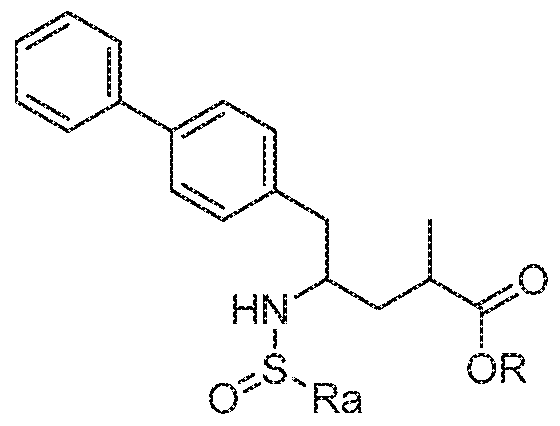

R is hydrogen or a carboxyl protecting group or C CValkyl, preferably hydrogen or ethyl, in the presence of an acyl halide reagent, and preferably in the presence of an alcohol of the formula R"'-OH wherein R'" is hydrogen or a carboxyl protecting group or C Ce-alkyl, especially ethyl, respectively,
and optionally removing and/or replacing any protecting groups, to obtain the compound of formula (I).
Suitable acyl halide reagents are for example selected from thionyl chloride, thionyl bromide, PCI3, PCI5, oxalyl chloride, Me2C=C(CI)NMe2, PhCOCI, PBr3, PBr5, Ph3PBr2, oxalyl bromide or Me2C=C(Br)NMe2.
The reaction preferably takes place in a customary solvent, such as an alcohol, e.g.
methanol or ethanol, and at appropriate temperatures, e.g. in the range from 0 to 50°C, e.g. from 10 to 30°C.
The reaction can also be led under flow preparation conditions, e.g. using a pump for introducing the acyl halide reagent, and a reaction coil.
As set out above, the obtained compound of formula (I) / (la) can then be transformed via known reaction steps into the desired NEP inhibitor prodrug compounds. And in a following step the NEP inhibitor prodrug sacubitril (AHU377) can then be used for the synthesis of the complex LCZ696 comprising sacubitril and valsartan according to the processes depicted in WO 2007/056546.
Reaction B
A further embodiment of the invention relates to a process for the manufacture of a compound of the formula (II), or a salt thereof


wherein for both formulae (II) and (Ma) Ra is C Ce-alkyl, C6-C10-aryl, Ce-C^-aryl-C Ce-alkyl, C3-C8-cycloalkyl, Cs-Cs-cycloalkyl-CrCe-alkyl, heterocyclyl or heterocyclyl-CrCe-alkyl, wherein said heterocyclyl is a mono- or polycyclic, unsaturated, partially saturated, saturated or aromatic ring system with 5 to 14 ring atoms and with one or more heteroatoms independently selected from nitrogen, oxygen, sulfur, S(=0)- or S-(=0)2, preferably Ra is butyl, especially tert-butyl, or p-tolyl, and
R is hydrogen or a carboxyl protecting group or C CValkyl, preferably hydrogen or ethyl, or - if R is other than hydrogen, namely especially C Ce-alkyl, preferably ethyl - of a compound of the formula (I), or a salt thereof


comprising hydrogenating a compound of the formula (III), or a salt thereof,

especially of the formula (Ilia), or a salt thereof

wherein for both formulae (III) and (Ilia) Ra is C Ce-alkyl, C6-C10-aryl, C6-C10-aryl-C C6- alkyl, C3-C8-cycloalkyl, Cs-Ce-cycloalkyl-C Ce-alkyl, heterocyclyl or heterocyclyl-C Ce-alkyl, wherein said heterocyclyl is a mono- or polycyclic, unsaturated, partially saturated, saturated or aromatic ring system with 5 to 14 ring atoms and with one or more heteroatoms independently selected from nitrogen, oxygen, sulfur, S(=0)- or S-(=0)2, preferably Ra is butyl, especially tert-butyl, or p-tolyl, and
R is hydrogen or a carboxyl protecting group or Ci-C6-alkyl, preferably hydrogen or ethyl, in the presence of a hydrogenation catalyst, to obtain the compound of formula (II).
In one embodiment, especially for manufacture of a compound of the formula (Ilia), the hydrogenation catalyst is a chiral hydrogenation catalyst.
The hydrogenation can take place under hydrogenation conditions that are known in the art, preferably in the presence of a chiral hydrogenation catalyst, e.g. selected from those mentioned in WO 2009/090251 .
In a preferred embodiment, the hydrogenation takes place with hydrogen in the presence of a transition metal catalyst, preferably in the presence of a transition metal catalyst comprising an organometallic complex and a chiral ligand. The reduction may occur under hetereo- or homogeneous hydrogenation conditions, preferably under homogeneous hydrogenation conditions. In one embodiment, the hetereo- or homogeneous hydrogenation takes
place in the presence of a base, such as amine bases (e.g. triethylamine,
diisopropylethylamine or 1 ,4-diazabicyclo[2.2.2]octane) or alkali metal bases (e.g. LiOH, NaOH or KOH). In one embodiment, the hetereogeneous hydrogenation takes place in the presence of an alkali metal, in particular in an alcohol solvent (e.g. isopropanol, EtOH, MeOH); for example KOH in ethanol. In a further embodiment, the hydrogenation, in particular the homogeneous hydrogenation, takes place in the presence of an acid such as methanesulfonic acid or tetrafluoroboric acid.
Generally, the heterogenous hydrogenation is carried out in the presence of a transition metal catalyst, wherein the transition metal is selected from group 9 or 10 of the periodic table. Therefore, the transition metal catalyst comprises, for example, Cobalt (Co), Rhodium (Rh), Iridium (Ir), Nickel (Ni), Palladium (Pd) and/or Platinum (Pt).
The hydrogenation is usually performed in a solvent, such as an ether solvent (e.g.
tetrahydrofuran), an ester solvent (e.g. isopropyl acetate) or an alcohol solvent (e.g.
isopropanol, ethanol or methanol).
Generally, the homogeneous hydrogenation is carried out in the presence of a transition metal catalyst, wherein the transition metal is selected from group 7, 8 or 9 of the periodic table. Therefore, the transition metal catalyst comprises, for example, the transition metal Manganese (Mn), Rhenium (Re), Iron (Fe), Ruthenium (Ru), Osmium (Os), Cobalt (Co), Rhodium (Rh) and/or Iridium (Ir).
In a preferred embodiment, the transition metal catalyst comprises an organometallic complex and a chiral ligand.
An organometallic complex comprising rhodium is particularly suitable.
The organometallic complexes can comprise a single transition metal atom. In preferred embodiments the complexes can comprise two or more transition metal atoms, optionally comprising a metal-metal bond. In a preferred embodiment two metal atoms are bridged via two halides. Generally, the organometallic complex, comprises one or more transition metal atoms and suitable achiral ligands.
Suitable achiral ligands for the organometallic complex generally are σ-donor ligands, σ- donor/TT-acceptor ligands or σ,π -donorArr-acceptor ligands. Examples for suitable achiral ligands are among others carbon monoxide, halides (e.g. CI, I or Br), phosphines [e.g. tricyclohexylphosphine (PCy3)], alkenyls (e.g. cod, nbd, 2-metallyl), alkynyls, aryls (e.g. pyridine, benzene, p-cymene), carbonyls (e.g. acac, trifluoroacetate or dimethylformamide) and mixtures thereof.
Suitable (preferred) chiral ligands are e.g. a Fenphos ligand, a Josiphos ligand, a
Mandyphos ligand, a Walphos ligand, a Taniaphos ligand, a Phospholane ligand, an
Atropisomer ligand, a BoPhoz ligand, a QUINAPHOS ligand or mixtures thereof; in particular the chiral ligand is selected from the group consisting of Fenphos ligand, Josiphos ligand, Mandyphos ligand, Walphos ligand, Taniaphos ligand, Phospholane ligand, Atropisomer ligand or mixtures of two or more thereof.
In one embodiment, the transition metal catalyst comprises a transition metal selected from the group 8 or 9, such as rhodium, ruthenium or iridium and a chiral ligand selected from the group consisting of BoPhoz ligand, BINAP ligand, BINOL ligand, a Phospholane ligand, PhanePhos ligand, P-Phos ligand, QuinaPhos ligand, ProPhos ligand, BDPP ligand, DIOP ligand, DIPAMP ligand, DuanPhos ligand, NorPhos ligand, BINAM ligand, CatAsium ligand, SimplePHOX ligand, PHOX ligand, ChiraPhos ligand, Ferrotane ligand, BPE ligand,
TangPhos ligand, JafaPhos ligand, DuPhos ligand, Binaphane ligand and mixtures of two or more thereof.
Especially preferred is (-)-2,3-Bis[(2R,5R)-2,5-dimethylphospholano]maleic anhydride(1 ,5- cyclooctadiene)rhodium(l) tetrafluoro-borate (CatASium® MRRh).
The reaction can also be led under flow preparation conditions, e.g. using a pump, an injection loop, a gas reactor for the reaction with hydrogen, a reactor and then a scavenger, e.g. polymer supported thiourea/sulfonic acid.
Reaction C
A further embodiment of the invention relates to a process for the manufacture of a compound of the formula (III), or a salt thereof

especially of the formula (Ilia), or a salt thereof

R is hydrogen or a carboxyl protecting group or C CValkyl, preferably hydrogen or ethyl, comprising reacting a compound of the formula (IV), or a salt thereof,

especially of the formula (Iva), or a salt thereof,

Ra (IVa)
or the respective enantiomer thereof;
wherein for both formulae (IV) and (IVa) Ra is C Ce-alkyl, C6-C10-aryl, Ce-C^-aryl-C Ce- alkyl, C3-C8-cycloalkyl, Cs-Ce-cycloalkyl-C Ce-alkyl, heterocyclyl or heterocyclyl-CrCe-alkyl, wherein said heterocyclyl is a mono- or polycyclic, unsaturated, partially saturated, saturated or aromatic ring system with 5 to 14 ring atoms and with one or more heteroatoms independently selected from nitrogen, oxygen, sulfur, S(=0)- or S-(=0)2, preferably Ra is a bulky moiety, such as a tert-alkyl, e.g. butyl, especially tert-butyl, or an aryl, e.g. p-tolyl, moiety,
in the presence of a transition metal under carboxyethoxyallylation conditions with an acrylate compound of the formula (V)

wherein X is a leaving group, especially halo, and R* is a carboxyl protecting group, and, optionally, removing a protecting group R*, to obtain the compound of the formula (III). In one embodiment, the process comprises removing a protecting group R* to give the free acid of the compound of formula (III), especially (Ilia), wherein R is hydrogen, or a salt thereof. Alternatively, if R* is other than hydrogen, it can be R as defined for a compound of the formula (I) - other than hydrogen - so that the compound of the formula (III), especially (Ilia), is an ester instead of the free acid which, however, is preferably used in the hydrogenation of the compound of formula (III), especially (Ilia), to the compound of formula (II), especially (MA).
As leaving group X, besides halo, especially chloro, iodo or especially bromo, also a sulfonate group, e.g. tosylate or mesylate, or a super leaving group, e.g. triflate, an alkenyl, an aryl triflate or perfluorobutanesulfonyl, is possible.
For the carbethoxyallylation especially methyl or ethyl 2-(bromomethyl)acrylate can be used. A preferred transition metal for this reaction is indium (c.f. Haythem K. Dema, Francisco Foubelo and Miguel Yus, Heterocycles, 201 1 , 82, 141 1 ) or zinc (c.f. An Shen, Min Liu, Zhen- Shan Jia, Ming-Hua Xu, and Guo-Qiang Lin, Org. Lett. 2010 , 12, 5154) can be used . Both metals give excellent selectivity but provide opposite diastereomers.
Either metal can be used to obtain the desired 4R stereocentre provided the correct corresponding sulfur stereocentre is installed in the previous step. In the case of indium, using the R-sulfinly stereochemistry will provide the desirable s ?-4R diastereomer [(4R)-5- (4-Biphenylyl)-4-[(R)-tert-butylsulfinylamino]-2-methylenepentanoic acid ethyl ester]. In the case of zinc, using the S-sulfinly stereochemistry will provide the desirable sS-4R diastereomer [(4R)-5-(4-biphenylyl)-4-[(S)-tert-butylsulfinylamino]-2-methylenepentanoic acid ethyl ester].
Zinc is favourable based e.g. on cost considerations. The reaction is preferably conducted in an appropriate solvent or solvent mixture, such as an aqueous solvent, especially water and/or an alcohol, such as isopropanol, and preferably in the presence of a salt with an anion corresponding to X, e.g. MX, wherein M is a metal cation and X, is an anion and I is e.g. 1 , 2 or 3, especially with M being an alkaline metal, such as lithium or sodium, and X,
being a halogenide anion, e.g. bromide or chloride, e.g. at a temperature in the range from 0 to 50°C, e.g. from 10 to 30°C.
A carboxyl protecting group (e.g. R* here or R** further down in this disclosure) can be any group known in the art, especially C Ce-alkyl, e.g. ethyl, methyl, allyl or tert-butyl, or C6-C10- aryl-CrCValkyl, e.g. benzyl, or a silyl group SiR7R8R9, wherein R7, R8 and R9 are, independently of each other, C Ce-alkyl or C6-C10-aryl. Preferred examples for R7, R8 and R9 are methyl, ethyl, isopropyl, t-butyl and phenyl. The carboxyl protecting groups themselves, their introduction reactions, and their removal reactions are described for example in standard reference works, such as J. F. W. McOmie, "Protective Groups in Organic Chemistry", Plenum Press, London and New York 1973, in T. W. Greene,
"Protective Groups in Organic Synthesis", Third edition, Wiley, New York 1999, in "The Peptides"; Volume 3 (editors: E. Gross and J. Meienhofer), Academic Press, London and New York 1981 , in "Methoden der organischen Chemie" (Methods of organic chemistry), Houben Weyl, 4th edition, Volume 15/1, Georg Thieme Verlag, Stuttgart 1974, in H.-D. Jakubke and H. Jescheit, "Aminosauren, Peptide, Proteine" (Amino acids, peptides, proteins), Verlag Chemie, Weinheim, Deerfield Beach, and Basel 1982, and in Jochen Lehmann, "Chemie der Kohlenhydrate: Monosaccharide und Derivate" (Chemistry of carbohydrates: monosaccharides and derivatives), Georg Thieme Verlag, Stuttgart 1974.
For example, an Ci-C6-alkyl, e.g. ethyl, protecting group R* can be removed by hydrolysis, e.g. in the presence of a base, such as an alkaline metal hydroxide, e.g. lithium hydroxide, in the presence of an appropriate solvent, e.g. a cyclic ether, such as tetrahydrofuran, and water, e.g. at a temperature in the range from 0 to 50 °C, such as from 10 to 30 °C.
The reaction to produce a compound of formula (IV) can also be led under flow preparation conditions, e.g. using a pump, two injection loops (one for each of the compounds of the formula IV/lva and of the formula V), a column with the transition metal followed by a reactor coil, then a scavenger, e.g. polymer supported sulfonic acid/thiourea.
Reaction D
Yet a further embodiment of the invention relates to a process for the manufacture of a compound of the formula (IV), or a salt thereof,

especially of the formula (IVa), or a salt thereof,

Ra (IVa)
or the respective enantiomer thereof;
wherein for both formulae (IV) and (IVa) Ra is C CValkyl, C6-C10-aryl, Ce-C^-aryl-C Ce- alkyl, C3-C8-cycloalkyl, Cs-Cs-cycloalkyl-CrCe-alkyl, heterocyclyl or heterocyclyl-CrCe-alkyl, wherein said heterocyclyl is a mono- or polycyclic, unsaturated, partially saturated, saturated or aromatic ring system with 5 to 14 ring atoms and with one or more heteroatoms independently selected from nitrogen, oxygen, sulfur, S(=0)- or S-(=0)2, preferably Ra is a bulky moiety, such as a tert-alkyl, e.g. butyl, especially tert-butyl, or an aryl, e.g. p-tolyl, moiety,
comprising reacting an aldehyde of the formula (VI),

with a sulfinamide of the formula (VII),
H

especially of formula (Vila)
H?N
" \
Ra (Vila),
or the enantiomer thereof;
wherein for both formulae (VII) and (Vila) Ra is Ci-C6-alkyl, C6-C10-aryl, Ce-C^-aryl-C Ce- alkyl, C3-C8-cycloalkyl, Cs-Ce-cycloalkyl-C Ce-alkyl, heterocyclyl or heterocyclyl-C Ce-alkyl, wherein said heterocyclyl is a mono- or polycyclic, unsaturated, partially saturated, saturated or aromatic ring system with 5 to 14 ring atoms and with one or more heteroatoms independently selected from nitrogen, oxygen, sulfur, S(=0)- or S-(=0)2, preferably Ra is a bulky moiety, such as a tert-alkyl, e.g. butyl, especially tert-butyl, or an aryl, e.g. p-tolyl, moiety,
to obtain the compound of formula (IV).
This reaction preferably takes place e.g. under the conditions of the Ellman reaction (cf. e.g. F. Chemla, F. Ferreira, J. Org. Chem. 2004, 69, 8244), especially in an appropriate solvent or solvent mixture, e.g. a halogenated hydrocarbon, such as dichloromethane, preferably in the presence of a weakly active acidic catalyst, such as pyridinium p-toluenesulfonate, Ti(OiPr)4 or Ti(OEt)4 as Lewis acid (cf. e.g. T. Boultwood, D. P. Affron, A. D. Trowbridge, J. A. Bull, J. Org. Chem. 2013, 78, 6632), for example at a temperature in the range from 0 to 100°C, e.g. from 15 to 70°C.
The process can also be led under flow preparation conditions, e.g. using a pump, at least one injection loop for each of the compounds of the formula VI and Vll/Vlla, a reaction column (e.g. with a dehydrating agent, such as magnesium sulfate) and a subsequent scavenger, e.g. polymer bound sulfonic acid/benzylamine.
Further Embodiments
One embodiment of the present invention comprises the reaction sequence comprising the reactions of steps D -> C -> B -> A.
One embodiment of the present invention comprises the reaction sequence comprising the reactions of steps C -> B -> A.
One embodiment of the present invention comprises the reaction sequence comprising the reactions of steps B -> A.
One embodiment of the present invention comprises the reaction sequence comprising the reactions of steps C -> B.
One embodiment of the present invention comprises the reaction sequence comprising the reactions of steps D -> C -> B.
One embodiment of the present invention comprises the reaction sequence comprising the reactions of steps D -> C.
Further Reaction Steps for making the compound of formula (VI)
Further embodiments of the present invention relate to the aforementioned reaction sequences wherein the starting compound of formula (VI) is prepared according to one of the following reactions:
Alternative A
The aldehyde of the formula (VI)

wherein R** is a carboxyl protecting group, especially C Ce-alkyl, such as ethyl, under selective reduction conditions to yield the aldehyde of the formula VI.
As selective reductant for use in the selective reduction conditions, for example, diisobutyl aluminium hydride (DIBAL-H) which is especially preferred, lithium tri-tert-butoxyaluminium- hydride or aluminium-bis(N-methylpiperazino)hydride may be mentioned. These and appropriate further reductants and reduction conditions may, e.g., be derived from
"Reductions by the Alumino- and Borohydrides" in Organic Synthesis, 2nd Edition,
Jacqueline Seyden-Penne, 1997, WILEY-VCH. For example, the reaction can take place in an appropriate solvent or solvent mixture, such as an organic hydrocarbon, e.g. toluene, or a cyclic ether, such as tetrahydrofuran, preferably at low temperatures, e.g. from -100 to 5 °C, e.g. from -78 °C to 0 °C.
The carboxylic ester of formula (VIII)

wherein R** is a carboxyl protecting group, especially Ci-C6-alkyl, is preferably obtained from a hydroxylic acid of the formula (IX)

wherein R** is a carboxyl protecting group, especially C Ce-alkyl, under selective reduction of the hydroxyl group.
The selective reduction of the hydroxyl group in a compound of the formula (IX) resulting in a carboxylic acid ester compound of the formula (VIII) can e.g. be effected by using a trialkylsilylhalogenide wherein the halogenide is other than a iodide, e.g. the chloride, via in situ formation of an iodide in the presence of a metal iodide, especially an alkaline metal iodide, such as sodium iodide, in an organic solvent or solvent mixture, e.g. a nitrile, such as acetonitrile, e.g. at temperatures in the range from 10 °C to the reflux temperature of the reaction mixture, e.g. in the range from 40 to 80 °C.
Preferably, the hydroxylic acid of the formula (IX)

wherein R** is a carboxyl protecting group, especially C Ce-alkyl,
is obtained from a keto acid of formula (X),

The selective reduction of the keto group in a compound of formula (X) to the hydroxyl group of the compound of the formula IX preferably takes place in the presence of a selective reducing agent, for example using NaBH(OAc)3, e.g. in an organic solvent, e.g. a cyclic ester, such as tetrahydrofuran; sodium borohydride, for example in water; sodium cyanoborohydride (Book review: Reductions by the Alumino- and Borohydrides in Organic Synthesis, 2nd Edition, Jacqueline Seyden-Penne, 1997, WILEY-VCH); a metal alkoxide can be used as reagent such as in the Meerwein-Ponndorf-Verley reduction (AI(OiPr)3 in an appropriate organic solvent, such as isopropanol (for a review see: Organic Process
Research & Development 2006, 10, 1032-1053)). The reaction preferably takes place at a temperature in the range from -20 to 50 °C, e.g. in the range from -10 to 30 °C.
Preferably, the keto acid of the formula (X)

wherein R** is a carboxyl protecting group, especially Ci-C6-alkyl,
is obtained by reaction of biphenyl of the formula (XI)

with a glyoxylate of formula (XII)
Y-CO-C02R** (XII)
wherein Y is a leaving group or OH, especially halogen, and R** is a carboxyl protecting group, especially C Ce-alkyl, preferably in the presence of an (especially Lewis) acid.
The leaving group (a preferred variant of Y) can be selected from halogeno, e.g. fluoro, chloro, bromo or iodo, especially chloro. As (Lewis) acid, especially aluminium trichloride (AICI3), or alternatively another Lewis acid e.g. selected from the group consisting of other aluminium halides (e.g. AIBr3); titanium tetrabromide; tin tetrachloride; a lanthanide triflate; iron (III) chloride; zinc (II) chloride; a protic acid such as polyphosphoric acid; sulfuric acid; phosphoric acid; and a solid catalyst such as zinc (II) oxide; zinc and zeolites (review on solid catalysts: Giovanni Sartori and Raimondo Maggi, Chem. Rev., 201 1 , 1 1 1 (5), 181-214)
can be used; or even little or no catalyst (Pearson, D. E.; Buehler, Calvin A. Synthesis (1972), (10), 533-42) can be used.
The reaction preferably takes place under reaction conditions known to the person skilled in the art, especially in the presence of an organic solvent or solvent mixture, such as an aliphatic halide solvent, e.g. dichloromethane, at preferred temperatures in the range from - 20 to 50 °C, e.g. at -10 to 10°C.
If needed, Pd/C/H2 mediated cleavage of any benzylic alcohol group is possible (more typical for industrial purposes), with or without prior activation of the alcohol as a
carbonate/O-acetyl. Other appropriate methods can e.g. be derived from Hydrogenolysis of Benzyl Groups Attached to Oxygen, Nitrogen, or Sulfur, Walter H. Hartung, Robert Simonoff, Published Online: 15 MAR 201 1 DOI: 10.1002/0471264180. or007.05, Copyright © 2004 by Organic Reactions, Inc. Published by John Wiley & Sons, Inc.
Alternative B
The aldehyde of the formula (VI)

can also be prepared from an allyl compound of the formula (XIII)

by anti-Markovnikov Wacker oxidation in the presence of oxygen, a catalyst and water, preferably under flow preparation conditions via a gas reactor, followed by a reactor coil and then a scavenger.
The reaction in a flow preparation system driven by a pump and using an injection loop preferably takes place at a temperature of 25 to 100 °C, e.g. at 50 to 70 °C, and at an oxygen pressure of e.g. from 2 to 20 bar, e.g. from 6 to 10 bar. As scavenger, for example polymer bound thiourea may be used.
This reaction can preferably take place in an appropriate solvent or solvent mixture, e.g. toluene and tert-butanol, in the presence of water, in the presence of a catalyst, e.g. a palladium catalyst, such as an organopalladium catalyst, e.g. palladium(ll)chloride or
(MeCN)2PdCI2, and of a copper salt, especially a copper (ll)halogenide, such as copper(ll) chloride, preferably at an elevated temperature, e.g. in the range from 25 to 100 °C, such as from 50 to 70°C,
The allyl compound of the formula (XIII)

can preferably be prepared by ethylene Heck reaction in the presence of a base and catalyst(s) from a compound of the formula (XIV),

wherein Hal is halo, especially iodo or bromo, preferably under flow preparation conditions. The reaction can, for example, be conducted with ethylene in the presence of a Pd catalyst, especially palladium chloride or more especially an organopalladium catalyst, such as tetrakis(triphenylphosphine)palladium(0) or palladium(ll)acetate (Pd(OAc)2), preferably in the presence of a ligand, such as triphenylphosphine or t-Bu3PH BF4 and in the presence of a base, such as a tertiary amine, e.g. trimethylamine, triethylamine or N,N-dicyclohexyl-N- methylamine, in the presence of an appropriate solvent or solvent mixture, such as toluene, methanol or a mixture thereof, preferably at an elevated temperature, e.g. in the range from 50 to 150 °C, e.g. from 100 to 140°C.
Preferably, the reaction is conducted under flow preparation conditions, using a pump, an injection loop, a gas reactor (administering an ethylene pressure of 2 to 30, e.g. 10 to 20 bar) and subsequently a scavenger, e.g. polymer bound thiourea/sulfonic acid.
Further Reaction Steps for making the compound of formula (VII)
Further embodiments of the present invention relate to the aforementioned reaction sequences wherein the starting compound of formula (VII)
H2N
\
Ra (vii)
especially of formula (Vila)
\
Ra (Vila),
wherein in both formulas (VII) and (Vila) Ra is C Ce-alkyl, C6-C10-aryl, C6-C10-aryl-C C6- alkyl, C3-C8-cycloalkyl, Cs-Ce-cycloalkyl-C Ce-alkyl, heterocyclyl or heterocyclyl-C Ce-alkyl, wherein said heterocyclyl is a mono- or polycyclic, unsaturated, partially saturated, saturated or aromatic ring system with 5 to 14 ring atoms and with one or more heteroatoms independently selected from nitrogen, oxygen, sulfur, S(=0)- or S-(=0)2, preferably Ra is a bulky moiety, such as a tert-alkyl, e.g. butyl, especially tert-butyl, or an aryl, e.g. p-tolyl, moiety,
can be prepared by (for the manufacture of the compound of formula (Vila) preferably asymmetric) mono-oxidation of a disulfide of the formula XV

wherein both Ra are C Ce-alkyl, C6-C10-aryl, C6-C10-aryl-C C6-alkyl, C3-C8-cycloalkyl, C3-C8- cycloalkyl-C Ce-alkyl, heterocyclyl or heterocyclyl-C Ce-alkyl, wherein said heterocyclyl is a mono- or polycyclic, unsaturated, partially saturated, saturated or aromatic ring system with 5 to 14 ring atoms and with one or more heteroatoms independently selected from nitrogen, oxygen, sulfur, S(=0)- or S-(=0)2, preferably Ra is a bulky moiety, such as a tert-alkyl, e.g. butyl, especially tert-butyl, or an aryl, e.g. p-tolyl, moiety,
followed by amidation of the resulting sulfinyl sulfide compound of the formula (XVI)
Ra

especially of the formula (XVIa)

or the enantiomer thereof;
wherein Ra is as just defined, with a metal amide and subsequent SN2 attack to yield a thiol of the formula Ra-SH and the compound of the formula (VII), especially (Vila).
For synthesis of the compound of the formula (Vi la) via (XVIa), the asymmetric mono- oxidation is preferably conducted in the presence of a chiral ligand , e.g. a benzo- cyclopentanolimine such as (1 S,2R)-1 -[(2-Hydroxy-3,5-di-tert-butyl-benzylidene)-amino]- indan-2-ol of the formula

other ligands selected from those of the following formula:

R2 = t-Bu, i-Pr, Bn, Ph
For example: for = R2 = t-Bu N-(3,5-di-tert-butylsalicylmethylene)-tert-leucinol
Note: (1 R, 2S)-(+)-cis-aminoindanol gives (SS)-thiosulfinate, which leads to (SS)-sulfinamide and visa versa.
Note: N-(3,5-di-tert-butylsalicylmethylene)-(S)-tert-leucinol gives (RS)-thiosulfinate, which leads to (RS)-sulfinamide and visa versa.
The mono-oxidation is preferably achieved with a peroxide, especially hydrogen peroxide, in an appropriate solvent, such as a ketone, e.g. acetone, e.g. under conditions described by Ellman et al. (cf. D. J. Weix, J. A. Ellman, Org. Lett. 2003, 5, 131 7) in the presence of a vanadyl complex, especially vanadyl-Jb/'s-acetylacetonate, in an appropriate solvent or solvent mixture, e.g. a ketone, such as acetone, preferably at lower temperatures e.g. in the range from -20 to 20 °C, e.g . from -5 to 5 °C.
The resulting sulfinylsulfide compound of the formula (XVI), especially (XVIa), is then reacted under SN2 substitution with a metal amide, especially an alkaline metal amide, such as lithium amide, in an appropriate solvent or solvent mixture, e.g . in NH3 in a cyclic ether, such as tetrahydrofuran , preferably at low temperatures, e.g. in the range from -100 to 0 °C, e.g. from -80 to -50°C, resulting in the sulfinamide of the formula VI I, especially Vila.
Where (appropriate) solvents or solvent mixtures are mentioned above and in any claims (the appropriate being a dispensable feature), apart from the specific solvents mentioned also one or more solvents from the following group may be used: water, esters, such as lower alkyl-lower alkanoates, for example ethyl acetate, ethers, such as aliphatic ethers, for example diethyl ether, or cyclic ethers, for example tetrahydrofuran or dioxane, liquid aromatic hydrocarbons, such as benzene or toluene, alcohols, such as methanol, ethanol or 1 - or 2-propanol, nitriles, such as acetonitrile, halogenated hydrocarbons, e.g. as methylene chloride or chloroform, acid amides, such as dimethylformamide or dimethyl acetamide, bases, such as heterocyclic nitrogen bases, for example pyridine or N-methylpyrrolidin-2-one, carboxylic acid anhydrides, such as lower alkanoic acid anhydrides, for example acetic anhydride, cyclic, linear or branched hydrocarbons, such as cyclohexane, hexane or isopen- tane, ketones, such as acetone or methylethylketone, or mixtures of these, for example aqueous solutions, unless otherwise indicated in the description of the processes. Such solvent mixtures may also be used in working up, for example by chromatography or partitioning. Where required or desired, water-free or absolute solvents can be used.
Compounds of the invention
The invention also relates to novel compounds mentioned above and below.
It relates especially to a compound of the formula II,

a compound of the formula III,

in particular of the formula Ilia,

particular of the formula IVa

or the enantiomer thereof, as defined above or especially in the examples; or a salt thereof, respectively.
In the aforementioned formulae, the substituents have the following meanings:
R is hydrogen or a carboxyl protecting group or Ci-C6-alkyl, preferably hydrogen or ethyl,
R' and R" are independently of each other hydrogen or a nitrogen protecting group, preferably a hydrogen, a tert-butoxy group or a succinimidyl group,
Ra is Ci-C6-alkyl, C6-C10-aryl, Ce-C^-aryl-C Ce-alkyl, C3-C8-cycloalkyl, Cs-Cs-cycloalkyl-Cr C6-alkyl, heterocyclyl or heterocyclyl-C CValkyl, wherein said heterocyclyl is a mono- or polycyclic, unsaturated, partially saturated, saturated or aromatic ring system with 5 to 14 ring atoms and with one or more heteroatoms independently selected from nitrogen, oxygen, sulfur, S(=0)- or S-(=0)2, preferably butyl, especially tert-butyl, or p-tolyl.
The products of the formula (I) of the process of the present invention as well as the aforementioned intermediates of formula (II), (III) and (IV) can preferably be used in the synthesis (manufacture) of NEP inhibitors or prodrugs thereof, in particular they can be used in the synthesis of NEP inhibitors comprising an y-amino-5-biphenyl-a- methylalkanoic acid, or acid ester, backbone, in particular for the synthesis of the NEP inhibitor prodrug sacubitril. In a following step the NEP inhibitor prodrug sacubitril (AHU377) can then be used for the synthesis of the complex LCZ696 comprising sacubitril and valsartan according to the processes depicted in WO 2007/056546.
The invention, in preferred embodiments, also relates to the subject matter in any of the claims, especially of the dependent claims; the claims are therefore incorporated here by reference.
Definitions
Alkyl being a radical or part of a radical is a straight or branch (one or, if desired and possible, more times) carbon chain, and is especially C C6-alkyl, preferably Crd-alkyl. The term "C -C6-" defines a moiety with up to and including maximally 7, especially up to and including maximally 4, carbon atoms, said moiety being branched (one or more times) or straight-chained and bound via a terminal or a non-terminal carbon.
Cycloalkyl is, for example, C3-C8-cycloalkyl and is, for example, cyclopropyl, cyclobutyl, cyclopentyl, cyclohexyl and cycloheptyl. Cyclopentyl and cyclohexyl are preferred.
In cycloalkylalkyl, the cycloalkyl is e.g. as defined for cycloalkyl and is attached to an alkyl as defined for alkyl, e.g. Cs-Cs-cycloalkyl-CrCe-alkyl. An example is cyclopropylmethyl or cyclohexylmethyl.
Alkoxy is, for example, CrC alkoxy and is, for example, methoxy, ethoxy, n-propyloxy, isopropyloxy, n-butyloxy, isobutyloxy, sec-butyloxy, tert-butyloxy and also includes corresponding pentyloxy, hexyloxy and heptyloxy radicals. C^C^alkoxy is preferred.
Aryl being a radical or part of a radical is, for example C6-C10-aryl, and is, preferably a mono- or polycyclic, especially monocyclic, bicyclic or tricyclic aryl moiety with 6 to 10 carbon atoms, preferably phenyl, napthenyl or fluorenyl and which can be unsubstituted or substituted, by one or more substituents independently selected from for example, C Cy- alkyl, CrCy-alkoxy-CrCy-alkyl or CrCy-alkoxy.
Aryloxy refers to a Aryl-O- wherein aryl is as defined above.
In arylalkyl, the aryl moiety is e.g. as defined for aryl and attached to an alkyl as defined for alkyl; e.g. Ce-C^-aryl-C Ce-alkyl. Examples are benzyl or 1 -phenylethyl.
Unsubstituted or substituted heterocyclyl is a mono- or polycyclic, preferably a mono-, bi- or tricyclic-, most preferably mono-, unsaturated, partially saturated, saturated or aromatic ring system with preferably 3 to 14 (more preferably 5 to 14) ring atoms and with one or more, preferably one to four, heteroatoms independently selected from nitrogen, oxygen, sulfur, S(=0)- or S-(=0)2, such as imizazolyl, pyrazolyl, oxazolyl, isoxazolyl, thiazolyl, isothiazolyl, pyridinyl, pyranyl, diazionyl, oxazinyl, thiazinyl, dioxinyl, dithiinyl, azepanyl, oxepanyl, thiepanyl, indolyl, isoindoly, quinolinyl, isoquinolinyl, benzazepinyl, carbazolyl, imidazolidinyl, pyrazolidinyl, oxazolidinyl, isoxazolinidyl, thiazolidy, dioxolanyl, dithiolanyl, furazanyl, oxadiazolyl, thiadiazolyl, dithiazolyl, tetrazolyl, piperidinyl, piperazinyl, morpholinyl, thiomorpholinyl, oxothiomorpholinyl, dioxothiomorpholinyl, dioxanyl, dithianyl, azepanyl, oxepanyl, thiepanyl, or benzo-fused variants thereof. A heterocyclyl roup is unsubstituted or substituted by one or more, e.g. up to three, substitutents preferably independently selected from the group consisting of halo, C Cy-alkyl, halo-C C7-alkyl, C Cy-alkoxy,

alkoxy, such as trifluoromethoxy and C Cy-alkoxy-C Cy-alkoxy. When the heterocyclyl is an aromatic ring system, it is also referred to as heteroaryl.
In heterocyclylalkyl, the heterocyclyl is preferably as just defined and is attached to an alkyl as defined for alkyl. Examples are imidazolylmethyl, pyridylmethyl or piperidinylmethyl.
Sulfonyl is (unsubstituted or substituted) C Cy-alkylsulfonyl, such as methylsulfonyl, (unsubstituted or substituted) phenyl- or naphthyl-CrCy-alkylsulfonyl, such as phenyl- methanesulfonyl, or (unsubstituted or substituted) phenyl-or naphthyl-sulfonyl; wherein if more than one substituent is present, e.g. one to three substitutents, the substituents are selected independently from cyano, halo, halo-C C7alkyl, halo-CrCy-alkyloxy- and CrC7- alkyloxy. Especially preferred is C Cy-alkylsulfonyl, such as methylsulfonyl, and (phenyl- or naphthy -C Cy-alkylsulfonyl, such as phenylmethanesulfonyl.
In the present application the term "nitrogen protecting group" generally comprises any group which is capable of reversibly protecting a nitrogen functionality, preferably an amino and/or amide functionality. The term "oxygen protecting group" generally comprises any group which is capable of reversibly protecting the oxygen functionality.
Preferably the nitrogen protecting group is an amine protecting group and/or an amide protecting group. Suitable nitrogen protecting groups are conventionally used in peptide chemistry and are described e.g. in the relevant chapters of standard reference works such as J. F. W. McOmie, "Protective Groups in Organic Chemistry", Plenum Press, London and New York 1973, in T. W. Greene and P. G. M. Wuts, "Protective Groups in Organic Synthesis", Third edition, Wiley, New York 1999, in "The Peptides"; Volume 3 (editors: E. Gross and J. Meienhofer), Academic Press, London and New York 1981 , and in "Methoden der organischen Chemie" (Methods of Organic Chemistry), Houben Weyl, 4th edition, Volume 15/1, Georg Thieme Verlag, Stuttgart 1974.
Preferred nitrogen protecting groups generally comprise:
C Ce-alkyl, preferably C^C^alkyl, more preferably C1-C2-alkyl, most preferably C alkyl which is optionally mono-, di- or tri-substituted by trialkylsilylC Cy-alkoxy (eg. trimethylsilyethoxy) aryl, preferably phenyl, or an heterocyclic group, preferably pyrrolidinyl, wherein the aryl ring or the heterocyclic group is unsubstituted or substituted by one or more, e.g. two or three, residues, e.g. selected from the group consisting of C C7-alkyl, hydroxy, CrCy-alkoxy, C2-C8-alkanoyl-oxy, halogen, nitro, cyano, and CF3;
aryl-C1-C2-alkoxycarbonyl (preferably phenyl-C1-C2-alkoxycarbonyl e.g. benzyloxy- carbonyl); C^C^-alkenyloxycarbonyl; C C6-alkylcarbonyl (eg. acetyl or pivaloyi); C6-C10- arylcarbonyl; C C6-alkoxycarbonyl (eg. t-butoxycarbonyl); Ce-C^-aryl-C Ce- alkoxycarbonyl; allyl or cinnamyl; sulfonyl or sulfenyl; succinimidyl group, silyl, e.g. triarylsilyl or trialkylsilyl (eg. triethylsilyl).
Examples of preferred nitrogen protecting groups are acetyl, benzyl, cumyl, benzhydryl, trityl, benzyloxycarbonyl (Cbz), 9-fluorenylmethyloxycarbony (Fmoc), benzyloxymethyl (BOM), pivaloyl-oxy-methyl (POM), trichloroethxoycarbonyl (Troc), 1 - adamantyloxycarbonyl (Adoc), allyl, allyloxycarbonyl, trimethylsilyl, tert.-butyl-dimethylsilyl, triethylsilyl (TES), triisopropylsilyl, trimethylsilyethoxymethyl (SEM), t-butoxycarbonyl (BOC), t-butyl, 1 -methyl-1 ,1 -dimethylbenzyl, (phenyl)methylbenzene, pyrridinyl and pivaloyi. Most preferred nitrogen protecting groups are acetyl, benzyl, benzyloxycarbonyl (Cbz), triethylsilyl (TES), trimethylsilyethoxymethyl (SEM), t-butoxycarbonyl (BOC), pyrrolidinylmethyl and pivaloyi.
Examples of more preferred nitrogen protecting groups are pivaloyi, pyrrolidinylmethyl, t- butoxycarbonyl, benzyl and silyl groups, particularly silyl groups according to the formula SiR7R8R9, wherein R7, R8 and R9 are, independently of each other, alkyl or aryl. Preferred examples for R7, R8 and R9 are methyl, ethyl, isopropyl, t-butyl and phenyl. Particularly preferred as nitrogen protecting groups are pivaloyi and t-butoxycarbonyl (BOC).
In one embodiment, the nitrogen protecting group selected from the group consisting of C C6-alkyl, which is mono-, di- or tri-substituted by tri-CrCy-alkylsilyl-CrCy-alkoxy, C6-C10-aryl, or an heterocyclic group, wherein the aryl ring or the heterocyclic group is unsubstituted or substituted by one, two or three residues selected from the group consisting of C Cy-alkyl, hydroxyl, CrCy-alkoxy, C2-C8-alkanoyl-oxy, halogen, nitro, cyano, and CF3; C6-Cio-aryl-Ci- C2-alkoxycarbonyl; C C^-alkenyloxycarbonyl; C Ce-alkylcarbonyl; C6-C10-arylcarbonyl; C C6-alkoxycarbonyl; Ce-C^-aryl-C Ce-alkoxycarbonyl; allyl; cinnamyl; sulfonyl; sulfenyl; succinimidyl group; and SiR'R"R"', wherein R', R" and R'" are, independently of each other, CrCy-alkyl, C6-C10-aryl or phenyl-Ci-C4-alkyl; wherein said heterocyclyl is a mono- or polycyclic, unsaturated, partially saturated, saturated or aromatic ring system with 5 to 14 ring atoms and with one or more heteroatoms independently selected from nitrogen, oxygen, sulfur, S(=0)- or S-(=0)2.
The following examples serve to illustrate the invention without limiting its scope, while they also represent preferred embodiments.
EXAMPLES
CH2CI2, EtOAc, n-hexane, acetone and PE (distillate fraction 40-60 °C) were obtained as laboratory reagent grade solvents from Fisher scientific and distilled before use. Anhydrous CH2CI2, PhMe, MeCN, Et20 and MeOH were obtained by distillation over CaH2. Anhydrous THF was obtained by distillation over LiAIH4 and CaH2 with triphenylmethane as an indicator.
1H NMR spectra were recorded in CDCI3 or DMSO-d6 on a Bruker Avance DPX-400 (400 MHz), DRX-500 (500 MHz) or DRX-600 (600 MHz) spectrometer with residual CHCI3 (δΗ = 7.26 ppm) or DMSO-d6 (δΗ = 2.50 ppm) as the internal reference. 13C NMR spectra were recorded in CDCI3 or DMSO-d6 on a Bruker Avance DPX-400 (101 MHz), DRX-500 (125 MHz) or DRX-600 (150 MHz) spectrometer with residual CHCI3 (5C = 77.16 ppm) or DMSO- d6 (5C = 39.51 ppm) as the internal reference. COSY, DEPT-135, HMQC and HMBC experiments were used to aid in the assignment of signals. The multiplicity of a signal is indicated as: s - singlet, d - doublet, t - triplet, q - quartet, m - multiplet, br - broad, etc. Coupling constants (J) are quoted in Hz and reported to the nearest 0.1 Hz. The centre of each signal is reported with the exception of multiplets, for which the range of ppm values covered by the signal is reported.
1H and 13C assignments were made according to the arbitrary numbering applied to the following compound figure:
Infrared spectra were recorded neat on a Perkin-Elmer Spectrum One FT-IR spectrometer using Universal ATR sampling accessories.
Melting points were determined using an OptiMelt automated melting point system available from Stanford Research Systems calibrated against vanillin (mp 83 °C), phenacetin (mp 136 °C) and caffeine (mp 237 °C).
Optical rotations were measured on a Perkin-Elmer Model 343 digital polarimeter at 24 °C using a sodium halogen lamp (589 nm) as the light source over a path length of 10 cm. [a]D 2' values are reported in units of 10-1 cm-1 g-1 at concentration (c) in g per 100 ml.
High resolution mass spectrometry was performed on a Waters Micromass LCT Premier spectrometer using time of flight analysis with positive electrospray ionisation (EST) or negative electrospray ionisation (EST), an ABI/MDS Sciex Q-STAR Pulsar with ESI+, or a Bruker BioApex II 4.7e FTICR utilising either ESI+ or a positive electron ionisation (Ε ) source equipped with a direct insertion probe. All reported values are within ±5 ppm of the calculated value.
TLC was performed on 0.25 mm thickness plates pre-coated with Merck Kieselgel 60 F254 silica gel and were visualised using ultra-violet radiation (254 nm) and by oxidative staining with aqueous acidic ammonium molybdate(VII) or aqueous basic potassium permanganate solution.
Flash column chromatography was carried out manually using Breckland 60 (0.040 - 0.063 mm) silica gel.
Flow chemistry experiments were performed on a Uniqsis™ FlowSyn and may have been monitored as indicated with a Mettler-Toledo ReactIR 45m diamond or silicon flow cell. All gas-flow reactions were performed with a tube-in-tube gas reactor as described to introduce gases into a continuous flow stream. Omnifit columns were used for the containment of polymer-supported reagent or other solid reagents.
Unless otherwise specified, reagents were obtained from commercial sources and used without further purification.
Abbreviations used:
Aq. Aqueous
BPR back pressure regulator
Brine sodium chloride solution saturated at room temperature
'BuOH tert-butanol
Calcd. Calculated
celite Celite®, Diatomaceous earth (IMERYS FILTRATION MINERALS), San Jose,
California, USA)
Cy2NMe dicyclohexylmethylamine
DABCO 1 ,4-diazabicyclo[2.2.2]octane
DIBAL-H Diisobutylaluminium-hydride
DMF dimethyl formamide
eq. equivalent(s)
ESI Electron Spray lonisation
Et ethyl
Et20 diethyl ether
EtOAc ethyl acetate
GC gas chromatography
h hour(s)
HPLC High Performance Liquid Chromatography
HRMS High Resolution Mass Spectrometry
IR Infrared spectroscopy
M molar
Me methyl
MeCN acetonitrile
mL milliliter(s)
mp melting point
NMR Nuclear Magnetic Resonance
PE Petroleum Ether
PEEK polyetheretherketone
PFA perfluoroalkoxy
Ph phenyl
PhMe toluene
'PrOH isopropanol
PPTS pyridinium p-toluene sulfonate
PTFE polytetra fluoroethylene
QP-BZA QuadraPure Macroporous polystyrene supported benzylamine
QP-SA QuadraPure Macroporous polystyrene supported sulfonic acid
QPSA-TU QuadraPure Macroporous polystyrene supported sulfonic acid/thiourea
QP-TU QuadraPure Macroporous polystyrene supported thiourea
(-CH2NH-C(=S)-NH2)
rt room temperature (23 °C)
sat. saturated
THF tetrahydrofuran
TMSCI Trimethylsilylchloride
tt retention time (column residence time)
Vmax frequency at peak maximum
QuadraPure®: registered trademark of Johnson Matthey Finland Oy, available e.g. from SigmaAldrich.
A general overview for the manufacture of (2R,4S)-1 , a compound falling under general formula la is given in Figure 2.
An adapted protocol was used for the conversion of 17 through to 21 (Takafumi Yamagami, Noriaki Moriyama, Masahiro Kyuhara, Atsushi Moroda, Takeshi Uemura, Hiroaki Matsumae, Yasunori Moritani, and Isao Inoue, Org. Process Res. Dev., 2014, 18 (3), pp 437-445). Example 1 : Ethyl biphenyl-4-yl(hydroxy)acetate (20)
To a suspension of AICI3 (60.0 g; 450 mmol) in CH2CI2 I (400 mL), a solution of biphenyl (46.3 g; 300 mmol) in CH2CI2 (200 mL) was added at 0 °C. Ethyl

The residue was dissolved in THF (200 mL) and cooled to 0 °C. A suspension of
NaBH(OAc)3 (95.4 g; 450 mmol) in THF (200 mL) was slowly added over a period of 10 min. The mixture was stirred for 1 h at 0°C and allowed to warm to room temperature over an additional 1 h. The resulting mixture was washed with brine (100 mL) and partially concentrated under vacuum. The residue was dissolved in EtOAc (300 mL), washed with saturated aq. NaHC03 solution (100 mL) followed by brine (100 mL) then dried with MgS04 and concentrated under vacuum. Crystallisation from Et20/hexane (20:80) yielded title compound 20 as a colourless solid (69.2 g, 270 mmol, 90% yield). Colourless amorphous
solid; 1H NMR (400 MHz, CDCI3) δ 1 .25 (t, J=7.1 Hz, 3H, H8), 4.12-4.31 (m, 2H, H7), 5.96 (s, 1 H, H5), 7.37 (t, J=7.4 Hz, 1 H, H4'), 7.45 (t, J=7.5 Hz, 2H, H3'), 7.54 (d, J=8.2 Hz, 2H, H3), 7.59 (d, J=7.4 Hz, 2H, H2), 7.62 (d, J=8.2 Hz, 2H, H2'), 13C NMR (100 MHz, CDCI3) δ 14.0 (CH3, C8), 61 .7 (CH2, C7), 74.3 (CHOH, C5), 127.1 (2CH, C2'), 127.5 (2CH, C2), 127.6 (CH, C4'), 128.0 (2CH, C3'), 128.8 (2CH, C3), 132.8 (C, C4), 140.3 (C, C1), 142.1 (C, C1 "), 170.3 (C, C6), IR (vmax cnY1) 2996 (C-H alkyl), 1737 (C=0 ester), 1 177 (C-O ester).
Example 2: Ethyl biphenyl-4-yl(hydroxy)acetate (21)
A reactor was charged with MeCN (200 mL), 20 10 (68.4 g; 267 mmol) and Nal (128 g; 854 mmol).
TMSCI (135 mL; 1068 mmol) was added to the
 mixture dropwise over a period of 0.5 h. Following addition, the mixture was heated to 60 °C and 016Η 1602 stirred for 36 h. Upon completion of the reaction (as determined by 1H NMR), the mixture was quenched with sat. aq. NaHS03 until no further effervescence occurred. The resulting solution was extracted with EtOAc (2 χ 200 mL). The organic layers were collected, washed with sat. aq. Na2S203 (100 mL), brine (100 mL), dried with MgS04, filtered and concentrated under vacuum to give the title compound 21 as a yellow oil (55.2 g, 229 mmol, 86% yield). 1H NMR (400 MHz, CDCI3) δ 1 .32 (t, J=7.1 Hz, 3H, H8), 3.70 (s, 2H, H5), 4.22 (q, J=7.3 Hz, 2H, H7), 7.38 (t, J=7.4 Hz, 1 H, H4'), 7.41 (d, J=8.1 Hz, 2H, H3), 7.47 (t, J=7.5 Hz, 2H, H3'), 7.61 (d, J=8.2 Hz, 2H, H2), 7.63 (d, J=7.8 Hz, 2H, H2'), 13C NMR (100 MHz, CDCI3) δ 14.2 (CH3, C8), 41 .1 (CH2, C5), 60.9 (CH2, C7), 127.1 (2CH, C2'), 127.3 (CH, C4'), 127.3 (2CH, C2), 128.8 (2CH, C3'), 129.7 (2CH, C3), 133.3 (C, C4), 140.0 (C, C1), 140.8 (C, C1 '), 171 .6 (C, C6), IR (vmax cm-1) 2980 (C-H alkyl), 1730 (C=0 ester), 1488, 1 151 (C-O ester), HRMS-ESI+: m/z [M+H]+ Calcd for C16H1702:
Expected: 241 .1229. Found: 241 .1221 .
Example 3: (4-Biphenylyl)acetaldehyde (16)
To a stirred solution of 4-biphenylmethylacetate 30 (1 1 .3 g; 47.1 mmol) in toluene (95 mL) at -78 °C, DIBAL-H (56.0 mL of 1 .0 M solution in PhMe, 56.0
 mmol) was added via syringe pump at a rate of 1 mL/min. The reaction mixture was then stirred at - 78 °C for 6 h. MeOH (18 mL) was added to quench the reaction at -78 °C. The resulting white emulsion was slowly poured into 3 M HCI (65 mL) over 20 min and the aqueous mixture was then extracted with Et20 (3 χ 150 mL). The
combined organic layers were washed with brine (2 χ 100 ml_), dried over anhydrous Na2S04, filtered and concentrated in vacuo to give the crude product. The crude product was purified by recrystallisation with hexane to yield pure (4-biphenylyl)acetaldehyde 16 (9.92 g, 50.5 mmol, 98%) as a colourless amorphous solid; mp 54-58 °C; 1H NMR (400 MHz, CDCI3) δ 3.75 (s, 2H, H5), 7.32 (d, J=7.8 Hz, 2H, H3), 7.39 (t, J=7.4 Hz, 1 H, H4'), 7.48 (t, J=7.4 Hz, 2H, H3'), 7.58 (d, J=7.8 Hz, 2H, H2), 7.60 (d, J=7.4 Hz, H2, H2'), 9.81 (t, J=2.5 Hz, 1 H, H6), 13C NMR (101 MHz, CDCI3) δ 50.0 (CH2, C5), 127.1 (2CH, C3'), 127.4 (CH, C4'), 127.7 (2CH, C2'), 128.9 (2CH, C2), 130.1 (2CH, C3), 130.9 (C, C4), 140.4 (C, C1), 140.6 (C, C1 "), 191 .4 (CHO, C6), IR (vmax cm 1) 3032 (C=C alkene), 1721 (C=0 aldehyde), 1488 (C=C aromatic), 758 (C=C alkene); HRMS-ESI+: m/z [M+H]+ Calcd for C14H130:
mmol) was added via syringe pump at a rate of 1 mL/min. The reaction mixture was then stirred at - 78 °C for 6 h. MeOH (18 mL) was added to quench the reaction at -78 °C. The resulting white emulsion was slowly poured into 3 M HCI (65 mL) over 20 min and the aqueous mixture was then extracted with Et20 (3 χ 150 mL). The
combined organic layers were washed with brine (2 χ 100 ml_), dried over anhydrous Na2S04, filtered and concentrated in vacuo to give the crude product. The crude product was purified by recrystallisation with hexane to yield pure (4-biphenylyl)acetaldehyde 16 (9.92 g, 50.5 mmol, 98%) as a colourless amorphous solid; mp 54-58 °C; 1H NMR (400 MHz, CDCI3) δ 3.75 (s, 2H, H5), 7.32 (d, J=7.8 Hz, 2H, H3), 7.39 (t, J=7.4 Hz, 1 H, H4'), 7.48 (t, J=7.4 Hz, 2H, H3'), 7.58 (d, J=7.8 Hz, 2H, H2), 7.60 (d, J=7.4 Hz, H2, H2'), 9.81 (t, J=2.5 Hz, 1 H, H6), 13C NMR (101 MHz, CDCI3) δ 50.0 (CH2, C5), 127.1 (2CH, C3'), 127.4 (CH, C4'), 127.7 (2CH, C2'), 128.9 (2CH, C2), 130.1 (2CH, C3), 130.9 (C, C4), 140.4 (C, C1), 140.6 (C, C1 "), 191 .4 (CHO, C6), IR (vmax cm 1) 3032 (C=C alkene), 1721 (C=0 aldehyde), 1488 (C=C aromatic), 758 (C=C alkene); HRMS-ESI+: m/z [M+H]+ Calcd for C14H130:
Expected: 197.0961 . Found: 197.0958.
Example 4: (E)-[2-(4-Biphenylyl)ethylidene](tert-butylsulfinyl)amine ((Rs)-29)
A reactor was charged with CH2CI2 (100 ml_), 15 4-biphenylacetaldeyde (42.5 g, 217 mmol), (f?)-fe/?-butanesulfinamide (27.6 g, 228 mmol), pyridinium p-toluenesulfonate (2.7 g, 5 mol%)

and anhydrous MgS04 (30.0 g, 255 mmol). The
C18H21 NOS reaction mixture was stirred at room temperature for 5 h and then filtered. The solvent was removed under vacuum to give the title compound (Rs)-29 as a crude orange amorphous solid (64.9 g, 217 mmol, 99% yield) which was used without further purification, mp 48-50 °C; 1H NMR (400 MHz, CDCI3) δ 1 .21 (s, 9H, H8), 3.87 (dd, J=15.2, 5.2 Hz, 1 H, H5'), 3.91 (dd, J=15.2, 5.2 Hz, 1 H, H5), 7.31 (d, J=8.0 Hz, 2H, H3), 7.35 (t, J=7.3 Hz, 1 H, H4'), 7.44 (t, J=7.4 Hz, 2H, H3'), 7.58 (d, J=7.8 Hz, 2H, H2), 7.60 (d, J=7.4 Hz, H2, H2'), 8.17 (t, J=5.2 Hz, 1 H, H6), 13C NMR (101 MHz, CDCI3) δ 22.4 (3CH3, C8), 42.3 (CH2, C5), 56.9 (C, C7), 127.0 (2CH, C2'), 127.3 (CH, C4'), 127.6 (2CH, C3'), 128.8 (2CH, C2), 129.6 (2CH, C3), 133.8 (C, C4), 140.1 (C, C1), 140.7 (C, C1 '), 167.3 (CH, C6), [a]D 24 -195.8 (c 1 .0, CHCI3), 99% e.e., IR (vmax cm 1) 2960 (C-H alkyl), 2328 (N-S=0 sulfinamide), 1620 (C=N imine), 1487 (C=C aromatic), 1363 (S=0 sulfinyl), 1086, HRMS- ESI+: m/z [M+H]+ Calcd for C18H22NOS: Expected: 300.1422. Found: 300.1417.
Example 5: Ethyl 2-(bromomethyl) acrylate (14)
To a stirred solution of ethyl 2-(hydroxyl-methyl) acrylate (2 g, 15.4 mmol) in diethyl ether (15 mL), at
 0 °C phosphorus tribromide (0.51 mL, 5.4 mmol) was
5 added dropwise. The reaction mixture was stirred for 3 h from 0 °C to room temperature. Water (5 mL) was
C6H9Br02
added and the product was extracted with hexanes (3 χ 10 mL). The combined organic layers was washed with brine (2 x 10 mL), dried over anhydrous MgS04, filtered and concentrated in vacuo to give 2-(bromomethyl)propenoic acid ethyl ester 14 (2.4 g, 12.3 mmol, 82 %) as a colourless liquid which was used in the next step without further purification. Colourless oil; 1 H NMR (400 MHz, CDCI3) δ 1 .30 (t, J=7.2 Hz, 3H, H6), 4.16 (s, 2H, H4), 4.24 (q, J=7.0 Hz, 2H, H5), 5.92 (s, 1 H, H1 '), 6.30 (s, 1 H, H1), 13C NMR (101 MHz, CDCI3) δ 14.1 (CH3, C6), 29.3 (CH2, C4), 61 .2 (CH2, C5), 128.8 (CH2, C1), 137.6 (C, C2), 164.8 (C, C3), IR (vmax cm 1) 1718 (C=0 ester), 1628 (C=C alkene), 1 182 (C-O ester), 523 (C-Br), HRMS-ΕΓ: m/z [M+H]+ Calcd for C6H10BrO2:
Expected: 192.9864. Found: 192.6870.
The starting material ethyl-2-(hydroxyl-methyl)acrylate was prepared as follows:
Ethyl 2-(hydroxyl-methyl) acrylate (28)
1 20 To a stirred solution of ethyl acrylate (32 mL,
I 300 mmol) in dioxane:H20 (1 :1 (v/v), 100 mL) at room temperature formaldehyde aqueous solution

(37 wt%, 8.2 mL, 100 mmol) and DABCO (1 1 .2 g, 100 mmol) were added, and the reaction mixture
6 J 25 was stirred at room temperature for 48 h. To the reaction mixture sodium chloride (5 g) and diethyl ether (100 mL) were added. The organic layers were separated and then the product was extracted with diethyl ether (3 χ 50 mL). The combined organic layers were washed with brine (100 mL), dried over MgS04, filtered, and concentrated in vacuo to give the crude product. Purification by silica gel
chromatography (30 % EtOAc-hexane) yielded ethyl 2-(hydroxyl-methyl) acrylate (10.4 g, 80 mmol, 80 %) as a colourless oil. 1H NMR (400 MHz, CDCI3) δ 1 .31 (t, J=7.1 Hz, 3H, H6), 2.40 (s, 1 H, OH), 4.24 (q, J=7.1 Hz, 2H, H5), 4.32 (d, J=6.2 Hz, 2H, H4), 5.82 (s, 1 H, H1 '), 6.24 (s, 1 H, H1), 13C NMR (101 MHz, CDCI3) δ 14.0 (CH3, C6), 60.7 (CH2, C5), 61 .9 (CH2, C4), 125.1 (C, C1), 139.7 (C, C2), 166.3 (C, C3), IR (vmax cm 1) 3414 (O-H, alcohol), 1707 (C=0 ester), 1637 (C=C alkene), 1 153 (C-O ester), 1052 (C-O ester)
Example 6: Sufinamide 15:
Chiral sulfinamide 15 was prepared on multi-gram scale using methodology developed by Ellman and co-workers (cf. D. J. Weix, J. A. Ellman, Org. Lett. 2003, 5, 1317). Asymmetric mono-oxidation of di-fe/ -butyl disulfide 22 to give sulfinyl sulfide 23 was achieved using 5 hydrogen peroxide in acetone at 0 °C with vanadyl Jb/'s-acetylacetonate and chiral ligand 24 Ligand was prepared from the corresponding 3,5-di-tert-butylsalicylaldehyde and (1 S,2R)-1 - amino-2-indanol (purchased from Sigma Aldrich) according to (Ruck, Rebecca T.; Jacobsen, Eric N. J. Am. Chem. Soc. 2002, 124, 2882). Dropwise addition of hydrogen peroxide over 18 hours and regular monitoring of the reaction by 1H NMR prevented over-oxidation and 10 98% conversion to the desired mono-oxidised product was achieved. The crude material was then dissolved in THF and added via a dropping funnel to LiNH2 in NH3 at -78 °C. Subsequent SN2 attack at the sulfinyl results in elimination of fe/ -butylthiol and inversion of the stereochemistry to provide enantiopure sulfinamide 15 in 48% yield, after
recrystallisation.

UNH2, NH3
G
Fe(N03)3 .9H20 i!
H2N"S'''f-Bu
recrystallization
48% yield
15
Scheme Batch 2: Synthesis of Sulfinamide 15
Example 7: (4R)-5-(4-Biphenylyl)-4-[(R)-tert-butylsulfinylamino]-2-methylenepentanoic acid ethyl ester ({4R)-30)
A mixture of (£)-[2-(4-biphenylyl)ethylidene](tert- butylsulfinyl)amine (2.0 g, 6.7 mmol), 2-(bromomethyl)- propenoic acid ethyl ester (1 .2 ml_, 8.7 mmol) and indium powder (3.1 g, 26.7 mmol) in a saturated aqueous NaBr solution (87 ml_) was stirred for 36 h at room temperature. The resulting mixture was extracted
 with EtOAc (3 χ 20 ml_), dried over anhydrous MgS04, filtered and the solvent was removed under vacuum to
C24H31 O3S
give crude product. Purification by silica gel chromatography (40% EtOAc-hexane) yielded (4R)-5-(4-biphenylyl)-4-[(R)-tert- butylsulfinylamino]-2-methylenepentanoic acid ethyl ester (4R)-30 (1 .9 g, 4.88 mmol, 73%) as a viscous yellow oil. 1H NMR (400 MHz, CDCI3) δ 1 .08 (s, 9H, H16), 1 .27 (t, J=7.2 Hz, 3H, H18), 2.63 (m, 2H, H3), 2.82 (dd, J=14.0, 6.4 Hz, 1 H, H5") 2.90 (dd, J=14.0, 7.2 Hz, 1 H, H5), 3.71 (d, J=5.5 Hz, 1 H, NH), 3.76 (m, 1 H, H4), 4.19 (q, 2H, H17), 5.67 (s, 1 H, H14"), 6.31 (s, 1 H, H14), 7.24 (d, J=8.0 Hz, 2H, H7), 7.29 (t, J=7.2 Hz, 1 H, H13), 7.39 (t, J=7.5 Hz, 2H, H12), 7.49 (d, J=8.0 Hz, 2H, H8), 7.54 (d, J=7.6 Hz, H2, H1 1), 13C NMR (101 MHz, CDCI3) δ 14.2 (CH3, C18), 22.6 (3CH3, C16), 38.0 (CH2, C3), 41 .9 (CH2, C5), 55.8 (CH, C4), 56.8 (C, C15), 61 .0 (CH2, C17), 126.9 (2CH, C1 1), 127.0 (CH2, C14), 127.2 (CH, C13), 128.5 (2CH, C8), 128.8 (2CH, C12), 130.03 (2CH, C7), 137.1 (C, C2), 137.3 (C, C6), 139.3 (C, C9), 140.8 (C, C10), 167.4 (C, C1), IR (vmax cm 1) 2980 (C-H alkyl), 1710 (C=0 ester), 1629 (C=C alkenyl), 1487 (C=C aromatic), 1 180 (C-O ester), 1049 (S=0 sulfinyl); [a]D 24 - 19.3 (c 1 .0, CHCI3), HRMS-ΕΓ: m/z [M+H]+ Calcd for C24H32N03S: Expected: 414.2103. Found: 414.2097. HPLC 98% ee Daicel Chiralpak AD-H column, 90:10
hexanes/isopropanol; 0.9 mL/min, 254 nm; tR, (R) = 12.4 min; tR, (S) = 17.0 min.
Example 8: (4R)-5-(4-Biphenylyl)-4-[(R)-tert-butylsulfinylamino]-2-methylenepentanoic acid ((4R)-3)
To a stirred solution of (4R)-5-(4-biphenylyl)-4-[(R)- tert-butylsulfinylamino]-2-methylenepentanoic acid 30 ethyl ester (200 mg, 0.5 mmol) in H20:THF (1 :1 , 2.5 ml_), at 0 °C lithium hydroxide monohydrate (120 , mg, 5.0 mmol) was added. The reaction mixture was ' stirred at room temperature for 12 h. The reaction was quenched by addition of phosphoric acid (85%

35 v/v) until pH 3-4 was obtained. Et20 (10 ml_) was
C22H27NC½S added and the aqueous layer removed. The remaining organic layer was washed with brine (5 ml_), dried with MgS04 and the solvent
removed under vacuum. The residue was dissolved in the minimum amount of CH2CI2 followed by slow addition of hexane to crystallise (4R)-5-(4-biphenylyl)-4-[(R)-tert- butylsulfinylamino]-2-methylenepentanoic acid (185 mg, 0.49 mmol, 98 %) (4R)-3 as a white amorphous solid; mp 136-137 °C; 1H NMR (400 MHz, CDCI3) δ 1 .19 (s, 9H, H16), 2.52 (dd, J=14.3, 9.2 Hz, 1 H, H3'), 2.58 (dd, J=14.2, 3.6 Hz, 1 H, H3), 2.78 (dd, J=13.8, 7.5 Hz, 1 H, H5'), 2.97 (dd, J=13.8, 6.6 Hz, 1 H, H5), 3.77 (m, 1 H, H4), 4.87 (s, 1 H, NH), 5.64 (s, 1 H, H14'), 6.34 (s, 1 H, H14), 7.27 (d, J=7.8 Hz, 2H, H7), 7.34 (t, J=7.4 Hz, 1 H, H13), 7.43 (t, J=7.6 Hz, 2H, H12), 7.53 (d, J=8.1 Hz, 2H, H8), 7.58 (d, J=7.2 Hz, 2H, H1 1), 13C NMR (101 MHz, CDCI3) δ 22.8 (3CH3, C16), 37.3 (CH2, C3), 42.6 (CH2, C5), 56.2 (C, C15), 57.5 (CH, C4), 127.0 (2CH, C1 1), 127.1 (2CH, C8), 127.2 (CH, C13), 128.7 (2CH, C12), 129.2 (CH2, C14), 130.0 (2CH, C7), 137.1 (C, C6), 137.5 (CCH2, C2), 139.4 (C, C9), 140.8 (C, C10), 170.1 (C, C1), IR (Vmax cm 1) 2963 (C-H alkyl), 1694 (C=0 ester), 1627 (C=C alkenyl), 1487 (C=C aromatic), 1 185 (C-O ester), 1007 (S=0 sulfinyl), [a]D 23 -70.3 (c 1 .0, CHCI3), HRMS- El+: m/z [M+H]+ Calcd for C22H28N03S: Expected: 386.1790. Found: 386.1780. HPLC 97 % ee Daicel Chiralpak AD-H column, 90:10 hexanes/isopropanol; 0.75 mL/min, 254 nm; tR, (R) = 16.9 min; tR, (S) = 8.8 min. The other diastereomers could not be observed above baseline noise.
Example 9: (2R, 4S)-5-(4-Biphenylyl)-4-[(R)-tert-butylsulfinylamino]-2-methylpentanoic acid ((2R,4S)-2)

C22H29NO3S (0.1 mol%), diisopropylethylamine (0.03 ml_, 194 vmol,
0.9 eq) and 'PrOH (0.72 ml_) at room temperature. The reactor was purged with H2 (20 bar) three times. The reaction mixture was stirred at room temperature under H2 (20 bar) for 20 h. After venting the H2 gas, the reaction mixture was filtered through celite and the solvent was removed in vacuo to yield crude product. Purification by recrystallization in hexane gave (2R, 4S)-5-(4-biphenylyl)-4-[(f?)-tert-butylsulfinylamino]-2-methylpentanoic acid (2R,4S)-2 (72 mg, 194 vmol, 90 %). Colourless amorphous solid; mp 151 -152 °C; 1H NMR (400 MHz, CDCI3) δ 1 .10 (s, 9H, H16), 1 .23 (d, J=6.8 Hz, 3H, H14), 1 .58 (ddd, J=14.4, 10.3, 4.0 Hz, 1 H, H3'), 2.07 (ddd, J = 14.4, 10.7, 3.6 Hz, 1 H, H3), 2.74 (dd, J=13.8, 8.2 Hz, 1 H, H5'), 2.81 -2.89 (m, 1 H, H2), 2.93 (dd, J=13.8, 5.1 Hz, 1 H, H5), 3.37 (d, J=7.5 Hz, 1 H, NH), 3.66
(m, 1 H, H4), 7.22 (d, J=8.1 Hz, 2H, H7), 7.34 (t, J=7.4 Hz, 1 H, H13), 7.43 (t, J=7.7 Hz, 2H, H12), 7.52 (d, J=8.1 Hz, 2H, H8), 7.56 (d, J=7.1 Hz, 2H, H1 1 ), 13C NMR (101 MHz, CDCI3) δ 18.1 (CH3, C14), 22.7 (3CH3, C16), 36.5 (CH2, C3), 41 .2 (CH2, C5), 43.2 (CH, C2), 56.2 (CH, C4), 57.2 (C, C15), 127.0 (2CH, C1 1), 127.1 (2CH, C8), 127.2 (2CH, C12), 128.8 (CH, C13), 130.1 (2CH, C7), 136.7 (C, C6), 139.5 (C, C9), 140.8 (C, C10), 171 .8 (C, C1), IR (vmax cm 1) 3264 (N-H sulfinamide), 2920 (C-H alkyl), 1708 (C=0 acid), 1206 (S=0 sulfinyl), 1006, [a]D 20 (c 1 .0, CHCI3) -15.8, HRMS-EI+: m/z [M+H]+ Calcd for C22H30NO3S: Expected: 388.1946. Found: 388.1958.
Example 10: (2R, 4S)-5-(4-Biphenylyl)-4-amino-2-methylpentanoic acid ethyl ester hydrochloride ((2R, 4S)1)
To a stirred solution of (2R, 4S)-5-(4-biphenylyl)-4-
[(R)-tert-butylsulfinylamino]-2-methylpentanoic acid (50 mg, 134 vmol) in absolute ethanol (0.4 ml_), at 0 °C thionylchloride (20 μΙ_, 268 μηιοΓ) was added. The reaction mixture was stirred at room temperature for 3 h. The reaction was evaporated to dryness to furnish (2R, 4S)-5-(4-biphenylyl)-4-amino-2-

methylpentanoic acid ethyl ester hydrochloride (2R, 4S)1 as a white solid (45 mg, 130 vmol, 99%). Colourless amorphous solid; 1H NMR (600 MHz, DMSO-c/6) δ 1 .06 (d, J=7.1 Hz, 3H, H14), 1 .09 (t, J=7.1 Hz, 3H, H16), 1 .58 (ddd,
J=13.8, 8.1 , 5.4 Hz, 1 H, H3'), 1 .85 (ddd, J=14.3, 9.1 , 5.0 Hz, 1 H, H3), 2.69-2.76 (m, 1 H, H2), 2.80 (dd, J=13.8, 8.1 Hz, 1 H, H5'), 3.03 (dd, J=13.8, 5.5 Hz, 1 H, H5), 3.35-3.41 (m, 1 H, H4), 3.98 (q, J=7.1 Hz, 2H, H15), 7.35 (d, J=8.0 Hz, 2H, H7), 7.35 (t, J=7.4 Hz, 1 H, H13), 7.46 (t, J=7.7 Hz, 2H, H12), 7.64 (dd, J=7.8 Hz, 2H, H8), 7.66 (d, J=7.8 Hz, 2H, H1 1 ), 8.16 (br. s, 3H, NH3), 13C NMR (151 MHz, DMSO-c/6) δ 13.9 (CH3, C16), 17.5 (CH3, C14), 35.0 (CH, C2), 35.5 (CH2, C3), 38.1 (CH2, C5), 50.4 (CH, C4), 60.1 (CH2, C15), 126.5 (2CH, C8), 126.8 (2CH, C1 1), 127.4 (CH, C13), 128.9 (2CH, C12), 130.0 (2CH, C7), 135.5 (C, C6), 138.7 (C, C9), 139.7 (C, C10), 174.7 (C, C1), HRMS-ESI+: m/z [M+H]+ Calcd for C2oH26N02: Expected: 312.1964. Found: 312.1967. HPLC (Chiralpak AD-H, 250mm, 4.6 mm I.D., 5.0 urn; isocratic n-Hexane/ethanol/methanol/triethylamine 80/10/10/0.2; 40°C; 0.8 ml/min; 254 nm; run time 23 mins) (2R,4S)-1 (97.07%) and isomers, (2S,4R)-1 (0.21 %), (2S,4S)-1
(2.32%) and (2R,4R)-1 (0.40%).
Flow Synthesis - Results and Discussion
Investigations into the flow route were carried out in parallel to the investigations into a batch route. Attention was focused on the Zn-mediated route to AHU377 as this route allowed for ample material to be put aside for flow optimisations.
As set out at the beginning the advances in gas-flow methodology could be utilised in the flow assisted API synthesis.
Proposed Flow Route
It was envisaged that by substituting biphenyl 17 from the batch route for 4-iodobiphenyl 33 it will be possible to apply both the ethylene Heck methodology and anti-Markovnikov Wacker oxidation methodology in the flow synthesis of AHU377 intermediate (2R,4S)-1 . It is expected that the same end-game approach used in the batch synthesis can be easily modified for flow mode, while key building block, acetaldehyde 16 may be prepared in two steps from iodide 33 via an ethylene Heck coupling followed by aerobic anti-Markovnikov Wacker oxidation.
enantioseiective meiai '-mediated
hydrogenation carbethoxyallyiation

3 key building blocks
kov tion

Commercially
available
Scheme FLOW A: Retrosynthetic flow approach to (2R,4S)-1
Synthesis of (4-biphenyl)acetaldehyde 16
Pleasingly, it was found that 4-iodobiphenyl 33 could be transformed into 4-phenylstyrene 32 in quantitative yield (Scheme FLOW B, see Figure 3). Solid supported scavengers QP-TU and QP-SA were employed to remove both palladium and base from the reaction stream respectively, after which removal of the solvent provided 32 which was used directly in the next step without further purification. The corresponding Scheme ("Flow B", flow preparation of 4-phenylstyrene)) is shown in Figure 3.
Using conditions for an anti-Markovnikov Wacker oxidation of styrenes, 4-phenylstyrene 32 could then be oxidised to acetaldehyde 16 (Fig. 4 = "Scheme FLOW C: Preparation of 4- (biphenylyl)acetaldehyde 16). Full conversion of the starting material was achieved with a 86% selectivity for the desired compound over formation of the corresponding benzaldehyde and methyl ketone by-products. Crystallization of the sulfite aldehyde adduct was investigated as a means of purification but mass recovery was very low (<20%). Therefore, column chromatography was necessary to provide pure 16 in 80% yield.
As shown in Fig. 5 ("Scheme Flow D"; flow preparation of imine 29), condensation of acetaldehyde 16 with sulfinamide 15 in the presence of PPTS (5 mol%) and MgS04 took several hours to reach completion in batch mode. However, we found that by flowing the reaction mixture through a column of MgS04 heated to 70 °C followed by QP-SA and QP- BZA, to scavenge PPTS and the small excess of sulfinamide 15, full conversion to imine 29 could be achieved in less than 10 minutes. It was also possible to apply the same solvent system as that used in the previous oxidation step, potentially allowing for the two steps to be telescoped together into a single multistep process if an in-line purification method for imine 29 could be found.
The key Reformatsky-type carbethoxyallylation reaction was also successfully transferred to flow mode (Fig. 6; "Scheme Flow E", flow preparation of acrylic ester (4R)-30). The reaction mixture containing imine 29, bromide 14 and LiCI as additive, was passed through a column containing activated zinc dust. A residence time of <5 minutes through the zinc column followed by quenching with polymer supported reagents never resulted in more than 95% conversion of imine 29. However, the addition of a 10 mL reaction coil maintained at room temperature after the zinc column extended the residence time by approximately 30 minutes resulting in full conversion of the imine. Initially, DMF was used as the solvent of choice but in our efforts to telescope the reaction with the previous imine formation we discovered that the Zn-mediated carbethoxyallylation also proceeded in 'PrOH or 'BuOH with similar conversions, this would allow the process to be telescoped with the previous 2 steps in the synthesis. Several unknown by-products were formed and analysis of the crude material revealed it to be roughly 80% pure, containing exclusively the (Ss,4R)-30 diastereomer.
Purification of the crude material by column chromatography provided the desired product as a yellow oil in 70% yield.
To our knowledge this is the first example of a Reformatsky-type reaction performed in continuous flow. There are clear benefits to running this reaction in flow; the reaction is run as a slurry in batch and requires slow addition of the bromide due to the exothermic formation of the organozinc. In flow, we were able to observe efficient dissipation of heat away from the narrow zinc packed column when reagents were combined in a 1 :1 .2 ratio with reaction times of less than 30 minutes, compared to several hours in batch.
Following development of the flow carbethoxyallylation it was our intention to perform the hydrolysis in batch so that we could quickly move onto the hydrogenation of (4R)-3 in flow using the tube-in-tube reactor.
The following steps as shown in Fig. 7 describe the further reactions starting from compound (4R)-30 after hydrolysis of the ethyl group to the acid:
(Note: The ethyl is removed by hydrolysis before the hydrogenation so that hydrogenation can be performed on the free acid (better selectivity). After hydrogenation, the ethyl ester is reformed and concomitant sulfinyl deprotection provides the final desired compound HCI salt.)
This work has demonstrated the potential benefits of a flow approach towards the synthesis of AHU377 and LCZ696.
In detail, reactions were as follows:
Example 10: 4-Phenylstyrene (32)
4-lodobiphenyl (1 .5 mmol), Cy2NMe (1 .2 eq), Pd(OAc)2 (1 mol%), iBuPH BF4 (2 mol%) were dissolved in PhMe/MeOH (5 ml_, 9:1 ). The reaction mixture was injected into a Uniqsis™ Flowsyn reactor (Uniqsis Ltd. Shepreth, Cambridgeshire, UK) via a 5 ml_ PEEK injection loop. The reaction plug was pumped at 1 .0 mL/min (using PhMe/MeOH (9:1 ) as stock solvent) through a tube-in-tube gas reactor (1 .5 m AF2400 obtained from Biogeneral Inc.: http://www.biogeneral.com/teflon.html) pressurised with ethylene (15 bar) followed by a 20 mL PTFE reaction coil at 120 °C. The exiting reaction stream was passed through an Omnifit column ( Kinesis Ltd., St. Neots, Cambridgeshire, UK) containing a mixture of QP-TU and QP-SA followed by a BPR (20 bar). A fraction (containing the reaction plug and any dispersion) was collected and flushed with argon. The solvent was removed from the product fraction under vacuum to provide 4-phenylstyrene as a colourless solid (268 mg, 1 .5 mmol, 99%).
colourless
°C; 1H NMR (400 H6a), 5.81 (d,
 1 1 .0 Hz, 1 H, H5),
C1 H1 12 5 7.36 (t, J=7.5 Hz, 1 H, H4'), 7.45 (t, J=7.5 Hz, 2H, H3'),
7.50 (d, J=8.2 Hz, 2H, H3), 7.59 (d, J=8.0 Hz, 2H, H2), 7.62 (d, J=7.8 Hz, 2H, H2'), 13C NMR (101 MHz, CDCI3) δ 1 13.8 (CH2, C6), 126.6 (2CH, C3), 126.9 (2CH, C2'), 127.2 (2CH, C2), 127.3 (CH, C4'), 128.7 (2CH, C3'), 136.4 (C, C5), 136.6 (C, C4), 140.5 (C, C1 ), 140.7 (C, C1 '), IR (Vmax Cm 1) 3034 (C-H aromatic), 1626 (C=C alkenyl), 1483 (C=C aromatic), HRMS- El+: m/z [M+H]+ Calcd for C14H13: Expected: 181 .1012. Found: 181 .1012.
Example 1 1 : (4-Biphenyl)acetaldehyde (16)
4-phenylstyrene (0.4 mmol) was dissolved in PhMe/'BuOH (1 :6, 2 mL, 0.2 M) and loaded into injection loop A (2 mL). (MeCN)2PdCI2 (5 mol%), CuCI2 (5 mol%) and H20 (1 .4 eq) were dissolved in PhMe/'BuOH (1 :6, 2 mL) and loaded into injection loop B (2 mL). The reagents were then both pumped using a Uniqsis™ Flowsyn reactor via the 2 mL PEEK injection loops A and B at a combined flow rate of 0.5 mL/min (using PhMe/'BuOH (1 :6) as stock solvent). The combined reagent stream was then pumped through a tube-in-tube gas reactor (1 .5 m AF-2400) pressurised with pure 02 (8 bar) followed by a 30 mL stainless steel reaction coil at 60 °C (residence time: 60 min). The exiting product stream then passed through an Omnifit column containing QP-TU and a BPR (15 bar). A 6 mL fraction
(containing the reaction plug and any dispersion) was collected into a vial (flushed with nitrogen) and a sample taken for GC analysis. The solvent was removed under vacuum and the crude residue purified by column chromatography to provide (4-biphenyl)acetaldehyde as a colourless crystalline solid (63 mg, 0.32 mmol, 80% yield).
Example 12: (E)-[2-(4-Biphenylyl)ethylidene](tert-butylsulfinyl)amine ((Ss)-29)
(4-Biphenyl)acetaldehyde (392 mg, 2 mmol) was dissolved in PhMe/'BuOH (1 :9, 2 mL, 1 M) and loaded into injection loop A (2 mL). (S)-fe/?-butylsulfinamide (266 mg, 2.2 mmol, 1 .1 eq) and PPTS (5 mol%) dissolved in PhMe/'BuOH (1 :6, 2 mL) and loaded into injection loop B (2 mL). The reagents are pumped using a Uniqsis™ Flowsyn reactor via the 2 mL PEEK injection loops A and B at a combined flow rate of 0.3 mL/min (using PhMe/'BuOH (1 :6) as stock solvent). The combined reagent stream then flow through an Omnifit column containing MgS04 (6 g) heated to 70 °C, followed by a column containing a mixture of QP- SA and QP-BZA, followed by a BPR (4 bar). A 6 mL fraction (containing the reaction plug and any dispersion) is collected and the solvent removed under vacuum to provide
(£)-[2-(4-Biphenylyl)ethylidene](tert-butylsulfinyl)amine (Ss)-29as an orange amorphous solid (595 mg, 2.0 mmol, 99%).
Example 1 3: (4R)-5-(4-biphenylyl)-4-[(S)-tert-butylsulfinylamino]-2-methylenepentanoic acid ethyl ester (30)
(£)-[2-(4-Biphenylyl)ethylidene](tert-butylsulfinyl)amine (595 mg, 2 mmol) dissolved in 'PrOH (2 mL, 1 M) and loaded into injection loop A (2 mL). (460 mg, 2.4 mmol, 1 .2 eq) and LiCI (4 eq) dissolved in 'PrOH (2 mL) and loaded into injection loop B (2 mL). The reagents were pumped using a Uniqsis™ Flowsyn reactor via the 2 mL PEEK injection loops A and B at a combined flow rate of 0.2 mL/min (using 'PrOH as stock solvent). The combined reagent stream then flowed through an Omnifit column (3 mm i.d . χ 100 mm) containing activated zinc dust (1 .35 g) followed by a PFA reactor coil (1 0 mL). The output stream was then passed through a column containing QP-SA and QP-TU , followed by a BPR (4 bar). A 6 mL fraction (containing the reaction plug and any dispersion) was collected and the solvent removed under vacuum. Purification of the crude residue by column chromatography provided (4R)-5-(4-biphenylyl)-4-[(S)-tert-butylsulfinylamino]-2-methylenepentanoic acid ethyl ester 30 as a colourless oil (579 mg , 1 .4 mmol, 70%).
Claims
Claims:

wherein R is hydrogen or a carboxyl protecting group or C Ce-alkyl, preferably ethyl, and R' and R" are independently of each other hydrogen or a nitrogen protecting group, preferably a hydrogen, a tert-butoxy group or a succinimidyl group,
comprising reacting a sulfinamide compound of the formula (II), or a salt thereof,

wherein Ra is C Ce-alkyl, C6-C10-aryl, Ce-C^-aryl-C Ce-alkyl, C3-C8-cycloalkyl, C3-C8- cycloalkyl-CrCe-alkyl, heterocyclyl or heterocyclyl-CrCe-alkyl, wherein said heterocyclyl is a mono- or polycyclic, unsaturated, partially saturated, saturated or aromatic ring system with 5 to 14 ring atoms and with one or more heteroatoms independently selected from nitrogen, oxygen, sulfur, S(=0)- or S-(=0)2, preferably Ra is butyl, especially tert-butyl, or p-tolyl, and R is as defined for a compound of the formula (I),
in the presence of an acyl halide reagent, preferably in the presence of an alcohol of the formula R"'-OH wherein R'" is hydrogen or a carboxyl protecting group or Ci-C6-alkyl, and optionally removing and/or replacing any protecting groups,
to obtain the compound of formula (I).
2. The process according to claim 1 , wherein the compound of the formula I is a compound of the formula la, or a salt thereof
 (|a)
(|a)
and the sulfinamide compound of formula II is a compound of the formula lla, or a salt thereof

3. A process for the manufacture of a sulfinamide compound of the formula (II) or a salt thereof,

wherein Ra is Ci-C6-alkyl, C6-C10-aryl, Ce-C^-aryl-C Ce-alkyl, C3-C8-cycloalkyl, C3-C8- cycloalkyl-C Ce-alkyl, heterocyclyl or heterocyclyl-C Ce-alkyl, wherein said heterocyclyl is a mono- or polycyclic, unsaturated, partially saturated, saturated or aromatic ring system with 5 to 14 ring atoms and with one or more heteroatoms independently selected from nitrogen, oxygen, sulfur, S(=0)- or S-(=0)2, preferably Ra is butyl, especially tert-butyl, or p-tolyl and R is hydrogen or a carboxyl protecting group or C CValkyl, preferably hydrogen or ethyl, comprising hydrogenating a compound of the formula (III), or a salt thereof,

wherein R and Ra are defined as for the compound of formula (II),
in the presence of a hydrogenation catalyst,
to obtain the compound of formula (II).
4. The process according to claim 3, wherein the compound of formula II is of the formula Ma, or a salt thereof,

and wherein the compound of the formula (III) is a compound of the formula (Ilia), or a salt thereof

and wherein the hydrogenation catalyst is a chiral hydrogenation catalyst.
5. The process according to claim 1 or 2, wherein the starting sulfinamide compound of formula (II) or (Ma) is obtained according to the process of claim 3 or 4.
6. A process for the manufacture of a compound of the formula (III), or a salt thereof,

wherein Ra is C Ce-alkyl, C6-C10-aryl, Ce-C^-aryl-C Ce-alkyl, C3-C8-cycloalkyl, C3-C8- cycloalkyl-CrCe-alkyl, heterocyclyl or heterocyclyl-CrCe-alkyl, wherein said heterocyclyl is a mono- or polycyclic, unsaturated, partially saturated, saturated or aromatic ring system with 5 to 14 ring atoms and with one or more heteroatoms independently selected from nitrogen, oxygen, sulfur, S(=0)- or S-(=0)2, preferably Ra is butyl, especially tert-butyl, or p-tolyl and R is hydrogen or a carboxyl protecting group or C CValkyl, preferably hydrogen or ethyl,
comprising reacting a compound of the formula IV or a salt thereof,

wherein Ra is as defined for a compound of the formula III,
in the presence of a transition metal under carboxyethoxyallylation conditions with an acrylate compound of the formula (V),

wherein X is a leaving group, especially halogen, and R* is a carboxyl protecting group, and, optionally, removing a protecting group R*,
to obtain the compound of formula (III).
7. The process according to claim 6, wherein the compound of the formula (III) is a compound of the formula (Ilia), or a salt thereof

and the compound of the formula (IV) is a compound of the formula (Iva), or a salt thereof

or the enantiomer thereof.
8. The process according to claim 3 or 4, wherein the starting compound of formula (III) or (Ilia) is obtained according to the process of claim 6 or 7.
5 9. The process according to claim 1 or 2, wherein the starting sulfinamide compound of formula (II) or (Ma) is obtained according to the process of claim 3 or 4, and the starting compound of formula (III) or (Ilia) in claim 3 or 4 is obtained according to the process of claim 6 or 7.
10 10. A process for the manufacture of a compound of the formula (IV), or a salt thereof,

wherein Ra is C Ce-alkyl, C6-C10-aryl, Ce-C^-aryl-C Ce-alkyl, C3-C8-cycloalkyl, C3-C8- cycloalkyl-C Ce-alkyl, heterocyclyl or heterocyclyl-C Ce-alkyl, wherein said heterocyclyl is a mono- or polycyclic, unsaturated, partially saturated, saturated or aromatic ring system with 15 5 to 14 ring atoms and with one or more heteroatoms independently selected from nitrogen, oxygen, sulfur, S(=0)- or S-(=0)2, preferably Ra is butyl, especially tert-butyl, or p-tolyl, comprising reacting an aldehyde

with a sulfinamide of the formula (VII),
H2N
\
20 Ra (vii)
wherein Ra is as defined for a compound of the formula (IV),
to obtain the compound of formula (IV).
1 1 . The process according to claim 10, wherein the compound of the formula (IV) is of 25 formula (IVa), or a salt thereof,

or the enantiomer thereof, and
the sulfinamide of formula (VII) is of the formula (Vila),
H

5 or the enantiomer thereof.
12. The process according to claim 6 or 7, wherein the starting compound of formula (IV) or (IVa) is obtained according to the process of claim 10 or 1 1 .
10 13. The process according to claim 3 or 4, wherein the starting compound of formula (III) or (Ilia) is obtained according to the process of claim 6 or 7, and the starting compound of formula (IV) or (IVa) in claim 6 or 7 is obtained according to the process of claim 10 or 1 1 .
14. The process according to claim 1 or 2, wherein the starting sulfinamide compound of 15 formula (II) or (Ma) is obtained according to the process of claim 3 or 4, and the starting compound of formula (III) or (Ilia) in claim 3 or 4 is obtained according to the process of claim 6 or 7, and the starting compound of formula (IV) or (IVa) in claim 6 or 7 is obtained according to the process of claim 10 or 1 1 .
20 15. The process according to any one of claims 10 to 14, wherein the aldehyde of
formula (VI)

is prepared by a process comprising
(i) treating a biphenyl of the formula (XI)

with a glyoxylate of formula (XII)
Y-CO-C02R** (XII)
wherein Y is a leaving group, especially halogen, and R** is a carboxyl protecting group, especially C C6-alkyl, preferably ethyl,
in the presence of an acid, preferably a Lewis acid,
to obtain a keto acid of the formul

wherein R** is a carboxyl protecting group, especially C Ce-alkyl, preferably ethyl;
(ii) treating the obtained keto acid of the formula (X) under selective reduction of the keto group to a hydroxyl group to obtain a hydroxylic acid of the formula (IX)

wherein R** is a carboxyl protecting group, especially C Ce-alkyl, preferably ethyl,
(iii) treating the obtained hydroxylic acid of the formula (IX) under selective reduction of the hydroxyl group to obtain a carboxylic acid ester of formula (VIII)

wherein R** is a carboxyl protecting group, especially C Ce-alkyl, preferably ethyl, and (iv) treating the obtained carboxylic acid ester of formula (VIII) under selective reduction conditions to obtain the desired compound of formula (VI).
16. The process according to any one of claims 10 to 14, wherein the aldehyde of formula (VI)

is prepared by a process comprising
(i) reacting a compound of the formula (XIV)

wherein Hal is halo, especially iodo or bromo,
in an ethylene Heck reaction to obtain a compound of the formula (XIII)

and
(ii) treating the obtained compound of the formula (XIII) via anti-Markovnikov Wacker oxidation in the presence of a catalyst, preferably under flow preparation conditions, to obtain the compound of formula (VI).
17. A process according to any one of claims 10 to 16, wherein the sulfinimide compound of the formula (VII)
H2N
\
Ra (Vii)
wherein Ra is C Ce-alkyl, C6-C10-aryl, Ce-C^-aryl-C Ce-alkyl, C3-C8-cycloalkyl, C3-C8- cycloalkyl-C Ce-alkyl, heterocyclyl or heterocyclyl-C Ce-alkyl, wherein said heterocyclyl is a mono- or polycyclic, unsaturated, partially saturated, saturated or aromatic ring system with 5 to 14 ring atoms and with one or more heteroatoms independently selected from nitrogen, oxygen, sulfur, S(=0)- or S-(=0)2,
is prepared by a process comprising
(i) a mono-oxidation of a disulfide of the formula (XV)
Ra— S
\
Ra (XV),
wherein both Ra are defined as above for a compound of the formula (VII),
(ii) followed by amidation of the resulting sulfinyl sulfide compound of the formula (XVI)

with a metal amide and subsequent SN2 attack to yield a thiol of the formula Ra-SH and the compound of the formula VII.
5
18. A process according to claims 17, wherein the compound of formula (VII) is of formula (Vila)

or the enantiomer thereof; and
10 the compound of formula (XVI) is of formula (XVIa)
Ra— s
\
0X Ra XVIa
or the enantiomer thereof,
and the mono-oxidation in step (i) is an asymmetric mono-oxidation.
15 19. The process according to any one of claims 1 to 18, wherein the process steps individually or all together are carried out under flow preparation conditions.
A sulfinamide compound selected from the group consisting of
compound of the formula (II) or a salt thereof
20
 (ii)
(ii)
wherein Ra is C Ce-alkyl, C6-C10-aryl, Ce-C^-aryl-C Ce-alkyl, C3-C8-cycloalkyl, C3-C8- cycloalkyl-C Ce-alkyl, heterocyclyl or heterocyclyl-C Ce-alkyl, wherein said heterocyclyl is a mono- or polycyclic, unsaturated, partially saturated, saturated or aromatic ring system with 5 to 14 ring atoms and with one or more heteroatoms independently selected from nitrogen,
25 oxygen, sulfur, S(=0)- or S-(=0)2, preferably Ra is tert-butyl or p-tolyl and
R is hydrogen or a carboxyl protecting group or C CValkyl, preferably hydrogen or ethyl,
especially of the formula (lla) or a salt thereof
5

wherein Ra is C Ce-alkyl, C6-C10-aryl, Ce-C^-aryl-C Ce-alkyl, C3-C8-cycloalkyl, C3-C8- cycloalkyl-CrCe-alkyl, heterocyclyl or heterocyclyl-CrCe-alkyl, wherein said heterocyclyl is a mono- or polycyclic, unsaturated, partially saturated, saturated or aromatic ring system with 5 to 14 ring atoms and with one or more heteroatoms independently selected from nitrogen, 10 oxygen, sulfur, S(=0)- or S-(=0)2, preferably Ra is tert-butyl or p-tolyl and
R is hydrogen or a carboxyl protecting group or C CValkyl, preferably hydrogen or ethyl, especially of the formula Ilia, or a salt thereof,

15 21 . A compound of formula (IV) or a salt thereof,

wherein Ra is C Ce-alkyl, C6-C10-aryl, Ce-C^-aryl-C Ce-alkyl, C3-C8-cycloalkyl, C3-C8- cycloalkyl-CrCe-alkyl, heterocyclyl or heterocyclyl-CrCe-alkyl, wherein said heterocyclyl is a mono- or polycyclic, unsaturated, partially saturated, saturated or aromatic ring system with 5 to 14 ring atoms and with one or more heteroatoms independently selected from nitrogen, oxygen, sulfur, S(=0)- or S-(=0)2, preferably Ra is tert-butyl or p-tolyl.
especially of the formula IVa,

or the enantiomer thereof.
22. Use of a compound of formula (II), (III) or (IV) or a salt thereof, according to claim 20 or 21 in the synthesis of the NEP-inhibitor /V-(3-carboxy-1 -oxopropyl)-(4S)-(p- phenylphenylmethyl)-4-amino-(2R)-methylbutanoic acid or a salt thereof, or the NEP inhibitor prodrug /V-(3-carboxyl-1 -oxopropyl)-(4S)-(p-phenylphenylmethyl)-4-amino-(2R)- methyl butanoic acid ethyl ester or a salt thereof.
23. A process for preparing /V-(3-carboxyl-1 -oxopropyl)-(4S)-(p-phenylphenylmethyl)-4- amino-(2R)-methyl butanoic acid, or a salt thereof, or N-(3-carboxyl-1 -oxopropyl)-(4S)-(p- phenylphenylmethyl)-4-amino-(2R)-methyl butanoic acid ethyl ester, or a salt thereof comprising the manufacture of a compound, or a salt thereof, as defined in claim 20 or 21 .
Applications Claiming Priority (2)
| Application Number | Priority Date | Filing Date | Title |
|---|---|---|---|
| US201562222249P | 2015-09-23 | 2015-09-23 | |
| US62/222,249 | 2015-09-23 |
Publications (1)
| Publication Number | Publication Date |
|---|---|
| WO2017051326A1 true WO2017051326A1 (en) | 2017-03-30 |
Family
ID=57003548
Family Applications (1)
| Application Number | Title | Priority Date | Filing Date |
|---|---|---|---|
| PCT/IB2016/055628 Ceased WO2017051326A1 (en) | 2015-09-23 | 2016-09-21 | New processes and intermediates useful in synthesis of nep inhibitors |
Country Status (1)
| Country | Link |
|---|---|
| WO (1) | WO2017051326A1 (en) |
Citations (11)
| Publication number | Priority date | Publication date | Assignee | Title |
|---|---|---|---|---|
| US5217996A (en) | 1992-01-22 | 1993-06-08 | Ciba-Geigy Corporation | Biaryl substituted 4-amino-butyric acid amides |
| WO2007056546A1 (en) | 2005-11-09 | 2007-05-18 | Novartis Ag | Pharmaceutical combinations of an angiotensin receptor antagonist and an nep inhibitor |
| WO2008031567A1 (en) | 2006-09-13 | 2008-03-20 | Novartis Ag | Process for preparing biaryl substituted 4-amino-butyric acid or derivatives thereof and their use in the production of nep inhibitors |
| WO2008083967A2 (en) | 2007-01-12 | 2008-07-17 | Novartis Ag | Process for preparing 5-biphenyl-4-amino-2-methyl pentanoic acid |
| WO2009090251A2 (en) | 2008-01-17 | 2009-07-23 | Novartis Ag | New processes |
| WO2010081410A1 (en) | 2009-01-13 | 2010-07-22 | Zhejiang Jiuzhou Pharmaceutical Co., Ltd. | Process for manufacture and resolution of 2-acylamino-3-diphenylpropanoic acid |
| WO2011035569A1 (en) | 2009-09-23 | 2011-03-31 | Zhejiang Jiuzhou Pharmaceutical Co., Ltd. | Process for manufacture of n-acylbphenyl alanine |
| WO2011088797A1 (en) | 2010-01-22 | 2011-07-28 | Novartis Ag | Intermediates of neutral endopeptidase inhibitors and preparation method thereof |
| WO2012025501A1 (en) | 2010-08-23 | 2012-03-01 | Novartis Ag | Process for the preparation of intermediates for the manufacture of nep inhibitors |
| WO2012025502A1 (en) | 2010-08-23 | 2012-03-01 | Novartis Ag | New process for the preparation of intermediates useful for the manufacture nep inhibitors |
| WO2014032627A1 (en) | 2012-08-31 | 2014-03-06 | Zhejiang Jiuzhou Pharmaceutical Co., Ltd | New process |
-
2016
- 2016-09-21 WO PCT/IB2016/055628 patent/WO2017051326A1/en not_active Ceased
Patent Citations (11)
| Publication number | Priority date | Publication date | Assignee | Title |
|---|---|---|---|---|
| US5217996A (en) | 1992-01-22 | 1993-06-08 | Ciba-Geigy Corporation | Biaryl substituted 4-amino-butyric acid amides |
| WO2007056546A1 (en) | 2005-11-09 | 2007-05-18 | Novartis Ag | Pharmaceutical combinations of an angiotensin receptor antagonist and an nep inhibitor |
| WO2008031567A1 (en) | 2006-09-13 | 2008-03-20 | Novartis Ag | Process for preparing biaryl substituted 4-amino-butyric acid or derivatives thereof and their use in the production of nep inhibitors |
| WO2008083967A2 (en) | 2007-01-12 | 2008-07-17 | Novartis Ag | Process for preparing 5-biphenyl-4-amino-2-methyl pentanoic acid |
| WO2009090251A2 (en) | 2008-01-17 | 2009-07-23 | Novartis Ag | New processes |
| WO2010081410A1 (en) | 2009-01-13 | 2010-07-22 | Zhejiang Jiuzhou Pharmaceutical Co., Ltd. | Process for manufacture and resolution of 2-acylamino-3-diphenylpropanoic acid |
| WO2011035569A1 (en) | 2009-09-23 | 2011-03-31 | Zhejiang Jiuzhou Pharmaceutical Co., Ltd. | Process for manufacture of n-acylbphenyl alanine |
| WO2011088797A1 (en) | 2010-01-22 | 2011-07-28 | Novartis Ag | Intermediates of neutral endopeptidase inhibitors and preparation method thereof |
| WO2012025501A1 (en) | 2010-08-23 | 2012-03-01 | Novartis Ag | Process for the preparation of intermediates for the manufacture of nep inhibitors |
| WO2012025502A1 (en) | 2010-08-23 | 2012-03-01 | Novartis Ag | New process for the preparation of intermediates useful for the manufacture nep inhibitors |
| WO2014032627A1 (en) | 2012-08-31 | 2014-03-06 | Zhejiang Jiuzhou Pharmaceutical Co., Ltd | New process |
Non-Patent Citations (23)
| Title |
|---|
| "Book review: Reductions by the Alumino- and Borohydrides in Organic Synthesis", 1997, WILEY-VCH |
| "Methoden der organischen Chemie", vol. 15/1, 1974, GEORG THIEME VERLAG |
| "Methods of organic chemistry", vol. 15, 1974, GEORG THIEME VERLAG |
| "Organic Synthesis", 1997, WILEY-VCH., article "Reductions by the Alumino- and Borohydrides" |
| "The Peptides", vol. 3, 1981, ACADEMIC PRESS |
| AN SHEN; MIN LIU; ZHEN-SHAN JIA; MING-HUA XU; GUO-QIANG LIN, ORG. LETT., vol. 12, 2010, pages 5154 |
| D. J. WEIX; J. A. ELLMAN, ORG. LETT., vol. 5, 2003, pages 1317 |
| F. CHEMLA; F. FERREIRA, J. ORG. CHEM., vol. 69, 2004, pages 8244 |
| GARY M KSANDER ET AL: "Dicarboxylic Acid Dipeptide Neutral Endopeptidase Inhibitors", vol. 38, no. 10, 1 May 1995 (1995-05-01), pages 1689 - 1700, XP008154341, ISSN: 0022-2623, Retrieved from the Internet <URL:http://pubs.acs.org/journals/jmcmar/index.html> [retrieved on 19950501], DOI: 10.1021/JM00010A014 * |
| GIOVANNI SARTORI; RAIMONDO MAGGI, CHEM. REV., vol. 111, no. 5, 2011, pages 181 - 214 |
| H.-D. JAKUBKE; H. JESCHEIT: "Amino acids, peptides, proteins", 1982, VERLAG CHEMIE, article "Aminosauren, Peptide, Proteine" |
| J. F. W. MCOMIE: "Protective Groups in Organic Chemistry", 1973, PLENUM PRESS |
| JOCHEN LEHMANN: "Chemistry of carbohydrates: monosaccharides and derivatives", 1974, GEORG THIEME VERLAG |
| KSANDER ET AL., J. MED. CHEM., vol. 38, 1995, pages 1689 - 1700 |
| ORGANIC PROCESS RESEARCH & DEVELOPMENT, vol. 10, 2006, pages 1032 - 1053 |
| PEARSON, D. E.; BUEHLER, CALVIN A., SYNTHESIS, vol. 10, 1972, pages 533 - 42 |
| RUCK, REBECCA T.; JACOBSEN, ERIC N. J., AM. CHEM. SOC., no. 124, 2002, pages 2882 |
| SHING-HING LAU ET AL: "Synthesis of a Precursor to Sacubitril Using Enabling Technologies", ORGANIC LETTERS, vol. 17, no. 21, 28 October 2015 (2015-10-28), pages 5436 - 5439, XP055319290, ISSN: 1523-7060, DOI: 10.1021/acs.orglett.5b02806 * |
| T. BOULTWOOD; D. P. AFFRON; A. D. TROWBRIDGE; J. A. BULL, J. ORG. CHEM., vol. 78, 2013, pages 6632 |
| T. W. GREENE: "Protective Groups in Organic Synthesis", 1999, WILEY |
| T. W. GREENE; P. G. M. WUTS: "Protective Groups in Organic Synthesis", 1999, WILEY |
| TAKAFUMI YAMAGAMI; NORIAKI MORIYAMA; MASAHIRO KYUHARA; ATSUSHI MORODA; TAKESHI UEMURA; HIROAKI MATSUMAE; YASUNORI MORITANI; AND IS, ORG. PROCESS RES. DEV., vol. 18, no. 3, 2014, pages 437 - 445 |
| WALTER H. HARTUNG; ROBERT SIMONOFF: "Organic Reactions", JOHN WILEY & SONS, article "Hydrogenolysis of Benzyl Groups Attached to Oxygen, Nitrogen, or Sulfur" |
Similar Documents
| Publication | Publication Date | Title |
|---|---|---|
| JP2018523633A (en) | Method for producing brivaracetam | |
| US20100184998A1 (en) | Organic compounds | |
| CN106316889A (en) | Preparation method of Edoxaban intermediate | |
| CN102164903A (en) | Synthesis routes to 2(S),4(S),5(S),7(S)-2,7-dialkyl-4-hydroxy-5-amino-8-aryl-octanoyl amides | |
| TW201900609A (en) | Method for preparing (3R,4S)-3-acetamido-4-allyl-N-(t-butyl)pyrrolidine-3-carboxamide | |
| CN104803954A (en) | Preparation method for fosamprenir intermediate | |
| JP5548129B2 (en) | Asymmetric organic catalyst | |
| EP0860432B1 (en) | 2-Phenyl-2-(2'-piperidinylidene) acetate derivative, process for manufacturing the same, and process for manufacturing optically active 2-phenyl-2(2'-piperidinyl) acetate derivative by asymmetrically hydrogenating the same | |
| Zheng et al. | Synthesis of enantiopure free and N-benzyloxycarbonyl-protected 3-substituted homotaurines from naturally occurring amino acids | |
| CN101952242A (en) | Convergent synthesis of renin inhibitors and intermediates useful therein | |
| AU753824B2 (en) | Substituted cyclopentenes, their preparation and their use for chiral scaffolds | |
| JP3088328B2 (en) | Method for producing optically active 2-phenyl-2- (2'-piperidinyl) acetic acid ester derivative | |
| US5801271A (en) | 7-(n-substituted amino)-2-phenylheptanoic acid derivative and process for manufacturing the same | |
| CN113943240A (en) | Novel preparation method of brivaracetam | |
| KR100743617B1 (en) | Process for the preparation of chiral 3-hydroxy pyrrolidine compound and derivatives thereof having high optical purity | |
| KR102622992B1 (en) | Method for preparing imidazoline derivatives and intermediates thereof | |
| WO2007024113A1 (en) | Process for the preparation of chiral 3-hydroxy pyrrolidine compound and derivatives thereof having high optical purity | |
| JP6906227B2 (en) | Halogen bond donor / organic base complex compound and acid base complex catalyst | |
| RU2643373C2 (en) | Method of producing (s)-3-aminomethyl-5-methylhexanoic acid | |
| JP2008007457A (en) | Post-treatment method of β-hydroxycarbonyl compound | |
| US9284263B1 (en) | Process for the preparation of(R)-Lacosamide | |
| JPH1045721A (en) | Production of 1-substituted-4,5-diphenyl-2-imidazolidinone and intermediate for the same | |
| WO2016125178A1 (en) | Improved process for the preparation of (r)-lacosamide | |
| WO2005014508A1 (en) | Hydroxy-protecting reagent and method of protecting hydroxy with the same | |
| JP2001199949A (en) | Method for synthesizing optically active compound |
Legal Events
| Date | Code | Title | Description |
|---|---|---|---|
| 121 | Ep: the epo has been informed by wipo that ep was designated in this application |
Ref document number: 16770995 Country of ref document: EP Kind code of ref document: A1 |
|
| NENP | Non-entry into the national phase |
Ref country code: DE |
|
| 122 | Ep: pct application non-entry in european phase |
Ref document number: 16770995 Country of ref document: EP Kind code of ref document: A1 |