WO2017000770A1 - 药物组合物及其制备方法和用途 - Google Patents
药物组合物及其制备方法和用途 Download PDFInfo
- Publication number
- WO2017000770A1 WO2017000770A1 PCT/CN2016/085724 CN2016085724W WO2017000770A1 WO 2017000770 A1 WO2017000770 A1 WO 2017000770A1 CN 2016085724 W CN2016085724 W CN 2016085724W WO 2017000770 A1 WO2017000770 A1 WO 2017000770A1
- Authority
- WO
- WIPO (PCT)
- Prior art keywords
- pharmaceutical composition
- paclitaxel
- itraconazole
- micelles
- signaling pathway
- Prior art date
- Legal status (The legal status is an assumption and is not a legal conclusion. Google has not performed a legal analysis and makes no representation as to the accuracy of the status listed.)
- Ceased
Links
Images


Classifications
-
- A—HUMAN NECESSITIES
- A61—MEDICAL OR VETERINARY SCIENCE; HYGIENE
- A61K—PREPARATIONS FOR MEDICAL, DENTAL OR TOILETRY PURPOSES
- A61K9/00—Medicinal preparations characterised by special physical form
- A61K9/10—Dispersions; Emulsions
- A61K9/107—Emulsions ; Emulsion preconcentrates; Micelles
-
- A—HUMAN NECESSITIES
- A61—MEDICAL OR VETERINARY SCIENCE; HYGIENE
- A61K—PREPARATIONS FOR MEDICAL, DENTAL OR TOILETRY PURPOSES
- A61K31/00—Medicinal preparations containing organic active ingredients
- A61K31/33—Heterocyclic compounds
- A61K31/335—Heterocyclic compounds having oxygen as the only ring hetero atom, e.g. fungichromin
- A61K31/337—Heterocyclic compounds having oxygen as the only ring hetero atom, e.g. fungichromin having four-membered rings, e.g. taxol
-
- A—HUMAN NECESSITIES
- A61—MEDICAL OR VETERINARY SCIENCE; HYGIENE
- A61K—PREPARATIONS FOR MEDICAL, DENTAL OR TOILETRY PURPOSES
- A61K31/00—Medicinal preparations containing organic active ingredients
- A61K31/33—Heterocyclic compounds
- A61K31/395—Heterocyclic compounds having nitrogen as a ring hetero atom, e.g. guanethidine or rifamycins
- A61K31/495—Heterocyclic compounds having nitrogen as a ring hetero atom, e.g. guanethidine or rifamycins having six-membered rings with two or more nitrogen atoms as the only ring heteroatoms, e.g. piperazine or tetrazines
- A61K31/496—Non-condensed piperazines containing further heterocyclic rings, e.g. rifampin, thiothixene or sparfloxacin
-
- A—HUMAN NECESSITIES
- A61—MEDICAL OR VETERINARY SCIENCE; HYGIENE
- A61K—PREPARATIONS FOR MEDICAL, DENTAL OR TOILETRY PURPOSES
- A61K9/00—Medicinal preparations characterised by special physical form
- A61K9/10—Dispersions; Emulsions
- A61K9/127—Synthetic bilayered vehicles, e.g. liposomes or liposomes with cholesterol as the only non-phosphatidyl surfactant
-
- A—HUMAN NECESSITIES
- A61—MEDICAL OR VETERINARY SCIENCE; HYGIENE
- A61K—PREPARATIONS FOR MEDICAL, DENTAL OR TOILETRY PURPOSES
- A61K9/00—Medicinal preparations characterised by special physical form
- A61K9/14—Particulate form, e.g. powders, Processes for size reducing of pure drugs or the resulting products, Pure drug nanoparticles
Definitions
- the present invention relates to the field of medicine, and in particular to pharmaceutical compositions, methods for their preparation and uses.
- Cancer also known as a malignant tumor, is a disease caused by a disorder that controls the growth and proliferation of cells. In addition to uncontrolled growth of cancer cells, cancer cells locally invade the surrounding normal tissues and even transfer to other parts of the body via the internal circulatory system or lymphatic system.
- Cancer cells are characterized by unrestricted, endless proliferation, which causes the body's nutrients to be consumed in large quantities; cancer cells release a variety of toxins, causing a series of symptoms; cancer cells can also be transferred to all parts of the body for growth and reproduction. Lead to body weight loss, weakness, anemia, loss of appetite, fever and severe organ damage. In contrast, there are benign tumors, benign tumors are easy to clean, generally do not metastasize, do not recur, only squeeze and block the organs, tissues, but cancer (malignant tumors) can also destroy the structure and function of tissues and organs. Caused by necrotic hemorrhage and infection, the patient eventually died due to organ failure.
- Chemotherapy is an indispensable tool for cancer treatment.
- the means of cancer chemotherapy needs to be greatly improved.
- the present invention aims to solve at least one of the technical problems in the related art to some extent. To this end, it is an object of the present invention to provide a means for effectively treating or preventing cancer.
- paclitaxel, docetaxel, cabazitaxel or other paclitaxel analogs can effectively improve the therapeutic effect against cancer, better than a single
- Hedgehog (Hh) signaling pathway inhibitors or kinase inhibitors can effectively improve the therapeutic effect against cancer, better than a single
- the therapeutic effect of the drug on cancer and is effective against tumors of the drug can effectively improve the therapeutic effect against cancer, better than a single
- the combined preparation has better physical stability than a single preparation, better tumor inhibition, better pharmacokinetic performance, and lower toxic side effects.
- the invention provides a pharmaceutical composition comprising: paclitaxel or an analogue thereof; and a hedgehog signaling pathway inhibitor or kinase inhibitor, according to an embodiment of the invention .
- the Hedgehog gene is a segmented polarity gene, and the mutant Drosophila embryo is hairy and resembles a frightened hedgehog. Named after. Hh signaling is controlled by two receptors, Patched (Ptc) and Smoothened (Smo), on the target cell membrane.
- the receptor Ptc is encoded by the tumor suppressor gene Patched.
- the receptor Smo is encoded by the proto-oncogene Smothened. Smo is a receptor necessary for Hh signaling. In the absence of Hh, Ptc, activation of Smo can lead to activation of the Hh target gene; when the gene Smo is mutated, the same characterization as the Hh gene mutation can occur.
- Ci/Gli serine/threonine protein kinase Fused (Fu), Fu inhibitor (SuFu), motor-like protein Costal-2 (Cos2), protein kinase A (PKA) and so on.
- Ci/Gli and Fu play a positive regulatory role
- Cos 2 and PKA play a negative regulatory role
- members of the Gli protein family are large multifunctional transcription factors and belong to the C2H2 type zinc finger structure protein.
- Ptc inhibits the activity of Smo protein, thereby inhibiting the downstream pathway.
- the downstream Gli protein is truncated in the proteasome and enters into the nucleus at the carboxy-terminal truncated state, inhibiting the transcription of downstream target genes.
- Ptc and Hh are combined, the inhibition of Smo is lifted, and Gli protein and PKA and some unknown factors form macromolecular complexes with microtubules, so that full-length Gli protein enters the nucleus to activate transcription of downstream target genes.
- the Hh-Gli pathway can induce transcription of Ptc and form a regulatory loop for negative feedback.
- Protein tyrosine kinases The primary target of kinase inhibitors is protein tyrosine kinases. Protein tyrosine kinases can be divided into two types, receptor type and non-receptor type. Their main function is to catalyze the transfer of ATP phosphate group to the tyrosine residue of protein substrate, and make protein kinase from non-activated conformation. Transformed into an activated conformation to complete the conduction of cellular biological signals. Most of the proto-oncogenes and oncogene products have abnormal protein kinase activity, and their abnormal expression or non-regulated activity will directly lead to disorder of cell proliferation regulation, invasion and metastasis of tumors, tumor angiogenesis, tumors.
- Chemotherapy resistance is closely related.
- Kinase inhibitors target this kinase and are less toxic to normal cells. Therefore, they have considerable competitive advantages compared with traditional cytotoxic antitumor drugs, and have undoubted value in the field of tumor therapy.
- Paclitaxel has the following chemical formula:
- Paclitaxel is a known cancer treatment drug that is effective against non-small cell lung cancer (NSCLC). Regarding the analogs of paclitaxel, it may be used: docetaxel (docetaxel), cabazitaxel.
- the inventors believe that it is possible to effectively influence the microenvironment of the tumor by using a hedgehog signaling pathway inhibitor, for example, to inhibit tumor vascular proliferation, or to promote fibrotic matrix depletion around the tumor, thereby targeting tumors such as pancreatic tumors or lung cancer tumors such as The efficacy of non-small cell lung cancer is superior to that of paclitaxel alone. Further, the inventors proved the inventor's point of view through the following experimental process:
- the inventors selected tumor models obtained by implanting human lung cancer cells H1975, A549, and cancer tissues of non-small cell lung cancer patients into nude mice to evaluate whether the two combination systems (micelles and albumin nanoparticles) are more specific than paclitaxel alone.
- the system has a stronger anti-tumor effect.
- Two groups of high and low doses of the two combined drug delivery systems and paclitaxel alone were compared. The drug volume was observed four times, and the tumor volume was observed. After the last administration, the mice were dissected and histological staining was performed to observe the structural changes of the cancerous site.
- mice transplanted human pancreatic cancer cells or transplanted pancreatic cancer tissues from pancreatic cancer patients to mice to obtain a mouse pancreatic cancer model for observing two combination systems (micelles and albumin nanoparticles). Whether it is stronger than the paclitaxel albumin nanoparticle system alone to reduce the effect of the fibrous matrix surrounding the pancreatic cancer and reduce the tumor volume. Three groups of high, medium and low doses were used for four weeks to observe the change of tumor volume. After the last administration, the mice were dissected and histological staining was performed to observe the structural changes of the cancerous sites, and the fibrous matrix was observed to be reduced.
- hedgehog signaling pathway inhibitors such as itraconazole
- itraconazole cannot be effectively encapsulated by amphiphilic polymers to form micelles due to their fast crystallization rate.
- the inventors have unexpectedly found that when itraconazole is combined with paclitaxel or the like, itraconazole is effective in forming a micelle having a uniform particle size, and the micelle can maintain stability for a long period of time.
- the type of the hedgehog signaling pathway inhibitor which can be employed in the present invention is not particularly limited.
- the hedgehog signaling pathway inhibitor which may be employed is selected from the group consisting of cyclopamine and its analogues, cyclobamamine and its analogues, itraconazole and its analogues/derivatives, vimo At least one of Deji and its analogues, statins.
- the hedgehog signaling pathway inhibitor that may be employed may be at least one of the compounds having the formula:
- the hedgehog signaling pathway inhibitor is itraconazole.
- the therapeutic effect of the pharmaceutical composition for treating cancer such as pancreatic tumor or lung cancer tumor such as pancreatic ductal carcinoma and non-small cell lung cancer can be further improved.
- the weight ratio of the paclitaxel or analogue thereof to the hedgehog signaling pathway inhibitor is from 1:10 to 10:1, preferably from 1:3 to 3:1.
- the type of the kinase inhibitor which can be employed in the present invention is not particularly limited.
- a kinase inhibitor which can be used is selected from itraconazole (Itraconazole was found to be both a hedgehog pathway inhibitor and an epidermal growth factor receptor tyrosine kinase inhibitor), and Analog/derivative, sorafenib, At least one of regifinib, imatinib, gefitinib, erlotinib, sunitinib, dasatinib, lapatinib, nilotinib and pazopanib.
- the kinase inhibitor that can be employed is sorafenib, the structural formula of which is as follows:
- the weight ratio of the paclitaxel or analogue thereof to the kinase inhibitor is from 1:10 to 10:1.
- the pharmaceutical composition is in the form of micelles, albumin nanoparticles or liposomes.
- a single hedgehog signaling pathway inhibitor such as itraconazole, is not effective in forming a pharmaceutical dosage form in the form of micelles, and the inventors have unexpectedly discovered that when the hedgehog signaling pathway inhibitor is combined with paclitaxel, the hedgehog signal A pathway inhibitor such as itraconazole is effective in forming a micelle having a uniform particle size, and the micelle can maintain stability for a long period of time.
- the paclitaxel albumin nanoparticles were cleaved into small particles of 10 nm at a low concentration, and the albumin nanoparticles after the addition of itraconazole maintained a particle size of 130 nm at the same concentration.
- the simultaneous addition of paclitaxel or its analog and a hedgehog signaling pathway inhibitor such as itraconazole can form liposomes with suitable particle size and good stability.
- the invention also provides the use of a pharmaceutical composition as described above for the preparation of a medicament for the treatment of cancer, preferably the cancer is lung cancer or pancreatic cancer, more preferably The pancreatic cancer is pancreatic ductal carcinoma, and the lung cancer is non-small cell lung cancer.
- Lung cancer is the most common primary malignant tumor of the lung. Most lung cancer originates from the bronchial mucosa epithelium, so it is also called bronchial lung cancer. The incidence of lung cancer is high among smokers. In the past 50 years, the incidence and mortality of lung cancer have risen rapidly in countries around the world, especially in industrialized countries. Among the male patients who died of cancer, lung cancer has ranked first. Non-small-cell carcinoma is the most common form of lung cancer, accounting for 80% of the total number of lung cancers.
- Pancreatic cancer is a cancer with a high degree of malignancy, which is difficult to diagnose and treat. It is the fourth largest cancer in the United States and the sixth most common cancer in China.
- PDA pancreatic ductal carcinoma
- PNET neuroendocrine tumors
- pancreatic ductal carcinoma (PDA) has attracted more and more attention in recent years due to its more difficult diagnosis and treatment.
- Pancreatic ductal carcinoma (PDA) has no obvious symptoms in the early stages. Once found, it is in the advanced stage, and the patient's 5-year survival rate is less than 5%.
- pancreatic ductal carcinoma The difficulty in the diagnosis and treatment of pancreatic ductal carcinoma (PDA) is mainly caused by the location of the pancreas and its special tumor microenvironment.
- the pancreas is located on the posterior wall of the abdomen, directly below the stomach, and directly connected to the duodenum, which makes it difficult to remove the surgery.
- the pancreatic ductal carcinoma forms a fibrous matrix around the tumor and significantly reduces the density of blood vessels around the tumor. This makes the tumor site more sensitive to chemotherapy and radiotherapy than the surrounding normal tissues and organs.
- the technical solution of the present invention provides a better treatment regimen for cancers such as pancreatic tumors or lung cancer tumors such as pancreatic ductal carcinoma and non-small cell lung cancer.
- the invention also provides a method of preparing a pharmaceutical composition in the form of a micelle comprising:
- the aqueous solution obtained in the step (3) is freeze-dried to obtain a pharmaceutical composition in the form of the micelle.
- the amphiphilic polymer in the method of preparing a pharmaceutical composition in the form of micelles, is an amphiphilic polymer polyethylene glycol polylactic acid block copolymer. Therefore, it is safe and non-toxic and can be effectively used for clinical treatment.
- the organic solvent is acetonitrile, whereby the solvent can be volatilized at a certain speed, thereby facilitating the formation of a highly uniform film of the drug and the polymer.
- the mass ratio of the hedgehog signaling pathway inhibitor or the kinase inhibitor to the paclitaxel or the analog thereof is from 10:1 to 1:10.
- the mass ratio of the itraconazole to the paclitaxel is 1:1, whereby the micelles formed are highly dispersed and the particle size is most stable.
- the inventors have found that the method of the present invention can effectively inhibit the crystallisation of itraconazole and paclitaxel at the same time, thereby making the prepared micelles have long-term stability.
- the invention also provides a method of preparing a pharmaceutical composition in albumin form, comprising:
- the aqueous solution obtained in the step (2) is freeze-dried to obtain a pharmaceutical composition in the form of the albumin.
- the formulation in the method of preparing a pharmaceutical composition in albumin form, is free of organic agents. Therefore, the preparation is safe and non-toxic, and can be effectively used for clinical treatment.
- the organic solvent is a mixed solvent of chloroform and ethanol in a volume ratio of 9:1, whereby an albumin having a uniform particle diameter can be efficiently formed.
- Nanoparticles The subsequent lyophilization process enables large-scale industrial production of albumin nanoparticle formulations and allows them to remain stable over a longer period of time.
- the inventors have found that the method of the present invention enables the preparation of a stable two-drug combined albumin nanoparticle lyophilized preparation, which is advantageous for large-scale industrial production.
- the invention provides a method of preparing a pharmaceutical composition in the form of a liposome comprising:
- a liposome constituent material including but not limited to phospholipids, cholesterol, etc.), paclitaxel or the like, and a hedgehog signaling pathway inhibitor or a kinase inhibitor in an organic solvent;
- the aqueous solution obtained in the step (3) can be freeze-dried to obtain a solid pharmaceutical composition in the form of a liposome.
- the aqueous solution obtained in the step (3) may be subjected to ultrasonic or film extrusion treatment to obtain a suitable granule before the step (4) is carried out.
- the diameter of the liposome It will be understood by those skilled in the art that depending on the actual application, the skilled person can select and prepare liposomes of different particle sizes as needed.
- the mass ratio of the hedgehog signaling pathway inhibitor or the kinase inhibitor to the paclitaxel or the analog thereof is 10:1 to 1:10 in a pharmaceutical composition in a liposome form.
- the liposome thus formed is highly dispersed and the particle size is the most stable, and the therapeutic effect of the pharmaceutical composition can be further improved.
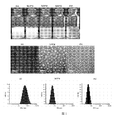
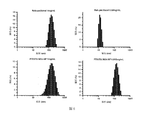
- FIG. 1 shows photographs, micrographs, and particle size distribution maps of different ratios of micelles of itraconazole and paclitaxel pharmaceutical compositions in accordance with one embodiment of the present invention
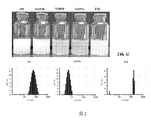
- FIG. 2 shows a photograph and particle size distribution diagram of different ratios of micelles of itraconazole to paclitaxel pharmaceutical composition after 24 hours of standing, in accordance with one embodiment of the present invention
- Figure 3 shows the micelle concentration of the isoflavone and paclitaxel pharmaceutical composition, the same concentration of paclitaxel micelles, and the empty micelle concentration of the empty micelles according to one embodiment of the present invention
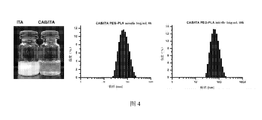
- Figure 4 is a graph showing the particle size distribution of micelles of itraconazole and cabazitaxel pharmaceutical compositions and their placement at 4 ° C for 48 hours, in accordance with one embodiment of the present invention.
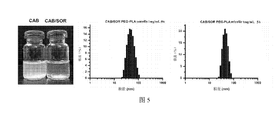
- Figure 5 shows a photograph of a micelle of a pharmaceutical composition of sorafenib and cabazitaxel and a particle size distribution after standing at room temperature for 5 hours, in accordance with one embodiment of the present invention.
- Figure 6 shows a photograph and particle size distribution of albumin nanoparticles of itraconazole and paclitaxel pharmaceutical compositions in accordance with one embodiment of the present invention.
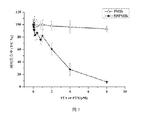
- Figure 7 is a graph showing the results of inhibition of paclitaxel-resistant lung cancer tumor cells with paclitaxel single drug micelles in the form of micelles in the form of micelles in the form of micelles according to one embodiment of the present invention.
- Figure 8 is a graph showing the results of inhibition of micelles of itraconazole single drug micelles, paclitaxel single drug micelles, and itraconazole and paclitaxel pharmaceutical compositions against non-small cell lung cancer tumors, in accordance with one embodiment of the present invention.
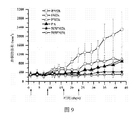
- Figure 9 shows micelles of paclitaxel, paclitaxel albumin nanoparticles, blank micelles, itraconazole single drug micelles, paclitaxel single drug micelles, itraconazole and paclitaxel pharmaceutical compositions, in accordance with one embodiment of the present invention.
- Figure of inhibition results of non-small cell lung cancer tumors.
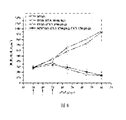
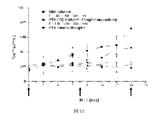
- Figure 10 shows the results of toxic side effects of albumin solution, paclitaxel albumin nanoparticles, itraconazole albumin nanoparticles, paclitaxel/itraconazole albumin nanoparticles and paclitaxel micelles on animals according to one embodiment of the present invention.
- Figure 11 shows an albumin solution, paclitaxel albumin nanoparticles, itraconazole albumin nanoparticles, paclitaxel/itroconazole albumin nanoparticles, and paclitaxel micelles for human pancreatic cancer tumors, in accordance with one embodiment of the present invention. Inhibition results graph.
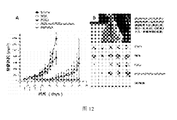
- Figure 12 shows physical mixing of physiological saline, itraconazole single drug micelle, paclitaxel single drug micelle, itraconazole single drug micelle, and paclitaxel single drug micelle, paclitaxel / according to one embodiment of the present invention
- a graph showing the inhibition of the micelles of the itraconazole pharmaceutical composition on the cancer tissue xenograft model of the patient.
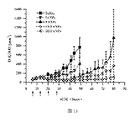
- Figure 13 shows physical mixing of physiological saline, itraconazole albumin nanoparticles, paclitaxel albumin nanoparticles, itraconazole albumin nanoparticles, and paclitaxel albumin nanoparticles, paclitaxel / according to one embodiment of the present invention.
- a graph showing the inhibition results of the itraconazole pharmaceutical composition albumin nanoparticles on the cancer tissue xenograft model of patients.
- IM itraconazole micelles
- PM paclitaxel micelles
- 9I1PM micelles with a ratio of itraconazole and paclitaxel of 9/1 (w/w)
- 7I3PM Itraconazole and paclitaxel were loaded with 7/3 (w/w) micelles
- 5I5PM Itraconazole and paclitaxel were loaded with 5/5 (w/w) micelles.
- the paclitaxel analog used in this example was cabazitaxel (CAB), and the hedgehog signaling pathway was selected to be itraconazole (ITA).
- ITA itraconazole
- 30mg PEG-PLA (5K-5K, polyethylene glycol polylactic acid diblock copolymer), 3mg itraconazole and 3mg cabazitaxel were dissolved in 5mL acetonitrile, and rotated at 60 ° C for 20min to remove the organic solvent to obtain transparent
- the drug polymer mixed membrane was hydrated by adding 3 mL of deionized water at 60 ° C, and ultrasonicated for 5 min to obtain an aqueous solution containing both 1 mg/mL of itraconazole and 1 mg/mL of cabazitaxel polymer-loaded micelles.
- the photomicrographs and particle size detection results of the prepared micelles are shown in Fig. 4.
- Itraconazole cannot effectively form micelles with uniform particle size distribution, and the film immediately shows turbidity after hydration, but when it is combined with paclitaxel
- the mass ratio is 1:1, the two can effectively form a good-looking micelle, and the particle size distribution of the micelle is characterized by a laser particle size analyzer, and it is found that the micelle can maintain stability for a long time (48 h).
- the paclitaxel analog used in this example is cabazitaxel (CAB), and the selected kinase inhibitor is sorafenib (SOR) 40 mg PEG-PLA (5K-5K, polyethylene glycol polylactic acid diblock copolymer) 4mg sorafenib and 4mg cabazitaxel dissolved in 5mL acetonitrile, rotated at 60 ° C for 20min evaporation to remove the organic solvent, to obtain a transparent drug polymer mixed membrane, add 4mL 60 ° C deionized water hydration, ultrasonic 5min to obtain both An aqueous solution of 1 mg/mL sorafenib and 1 mg/mL cabazitaxel polymer-loaded micelles.
- CAB cabazitaxel
- SOR sorafenib
- Fig. 5 The photomicrographs and particle size test results of the prepared micelles are shown in Fig. 5.
- Cabazitaxel can not effectively form micelles with uniform particle size distribution, and drug precipitation occurs at the bottom of the bottle after standing at 4 °C for 2 hours. The amount of drug precipitation has gradually increased.
- sorafenib when it is combined with sorafenib at a mass ratio of 1:1, the two can effectively form micelles, and the micelle can maintain stability for a long time (5h) at room temperature, and the particle size distribution is uniform.
- the particle size detection results of the prepared albumin nanoparticles are shown in Fig. 6, wherein Nab-paclitaxel represents paclitaxel albumin nanoparticles alone, and PTX/ITA BSA-NP represents white of paclitaxel and itraconazole pharmaceutical composition.
- Protein nanoparticles as can be seen from Figure 6, the paclitaxel albumin nanoparticles alone at a low concentration (0.02 mg / ml), 130 nm particles are cleaved into small particles of about 10 nm; and paclitaxel and itraconazole pharmaceutical composition The albumin nanoparticles remained at a particle size of 130 nm at a concentration of 0.002 mg/ml.
- Paclitaxel-resistant human non-small cell lung cancer cell A549 (a gift from a foreign cooperative laboratory) was cultured in RPMI1640 or DMEM medium (containing 10% fetal bovine serum and 1% penicillin and streptomycin) until growth to log phase conduct experiment.
- a pharmaceutical composition in the form of micelles of paclitaxel/itraconazole was prepared according to the same conditions as in Example 1, and compared with paclitaxel single drug micelles, two micelles were separately added to paclitaxel resistance according to a certain concentration gradient.
- the cell survival rate was examined by DNA assay or MTT assay after a period of time.
- Fig. 7 The experimental results are shown in Fig. 7. As can be seen from Fig. 7, for paclitaxel-resistant human non-small cell lung cancer cells A549, the paclitaxel single drug micelle could not reduce the relative survival rate of A549 cells when the paclitaxel concentration was 8 ⁇ M; The pharmaceutical composition of paclitaxel/itraconazole in micellar form reduced the relative survival rate of paclitaxel-resistant A549 to an IC50 of about 2.6 ⁇ M. This indicates that the pharmaceutical composition of paclitaxel/itraconazole in micelle form has a good inhibitory and killing effect on paclitaxel-resistant A549 cells.
- Tumor in situ model obtained by implanting human non-small cell lung cancer cell H1975 (from American model culture pooled ATCC) into BALB/C nude mice: a certain amount of human non-small cell lung cancer tumor cell H1975 was directly injected into the tumor The lungs of nude mice were confirmed by CT or MRI at 2-4 weeks.
- a pharmaceutical composition (15 mg/kg) in the form of micelles of paclitaxel/itraconazole was prepared according to the same conditions as in Example 1, and compared with the single drug micelle of itraconazole and the single drug micelle of paclitaxel.
- Micellars were used as controls, and there were 4 groups of 6 mice each (see Table 1 for details). The drug was observed for one week (three times), and the tumor volume was observed. After the last administration, the mice were dissected and histologically stained for the structural changes of the cancerous site.
- Fig. 8 shows the results of the experiment after 3 administrations. It can be seen that the itraconazole single drug micelle (Group 3) has no inhibitory effect on the growth of the tumor, and has no obvious side effects on the animal; The micellar system of the itraconazole and paclitaxel pharmaceutical composition (Group 4) inhibited the tumor; the paclitaxel single drug micelle (Group 2) as a positive control inhibited the tumor. It is worth noting that the fourth group of paclitaxel/itraconazole micellar system has only half of the paclitaxel dose, and its tumor suppressing effect is better than the double paclitaxel dose of single drug micelle (group 2), and side effects. Smaller.
- Tumor in situ model obtained by implantation of human non-small cell lung cancer cell A549 (from American model culture pooled ATCC) into BALB/C nude mice: a certain amount of human non-small cell lung cancer tumor cell A549 was directly injected into the tumor In the lungs of nude mice, the volume of tumors at 2-4 weeks reached 200 mm 3 .
- a pharmaceutical composition (30 mg/kg) in the form of micelles of paclitaxel/itraconazole was prepared according to the same conditions as in Example 1, and compared with the single drug micelle of itraconazole and the single drug micelle of paclitaxel.
- Micellar was used as a control, a total of 6 groups of 5 mice per group (see Table 2 for details). The tumor volume change was observed by continuous administration for 4 weeks (4 times).
- Fig. 9 is the experimental results after 3 administrations. It can be seen that itraconazole single drug micelles (Group 2) have no inhibitory effect on tumor growth, but have obvious effects on tumor growth. And the micellar system of the itraconazole and paclitaxel pharmaceutical composition (groups 5 and 6) inhibited the tumor; paclitaxel single drug micelles and paclitaxel albumin nanoparticles (groups 3 and 4) as positive control pairs Tumors have an inhibitory effect. It is very noteworthy that the 5, 6 group paclitaxel/ittraconazole micellar system is superior to paclitaxel in single drug micelles or albumin nanoparticles (groups 3 and 4).
- a pharmaceutical composition (15 mg/kg) in the form of paclitaxel/itraconazole in the form of albumin nanoparticles was prepared according to the same conditions as in Example 2, together with itraconazole single drug albumin nanoparticles, paclitaxel single drug albumin nanoparticle. The granules were compared, and the albumin solution was used as a blank control.
- the paclitaxel single drug micelle (30 mg/kg) was used as a positive control, and a total of 5 groups of 6 mice each (see Table 3 for details). The drug was observed for three weeks (once a week), and the tumor volume was observed. After the last administration, the mice were dissected and histological staining was performed to observe the structural changes of the cancerous site.
- Fig. 10 and Fig. 11 are the results of the experiment after administration three times. It can be seen that the itraconazole single drug albumin nanoparticles (group 3) is compared with the albumin solution. Tumor growth has a certain slowing effect; albumin nanoparticles (group 4) and paclitaxel albumin nanoparticles (group 2) of itraconazole and paclitaxel have a very significant inhibitory effect on tumors; paclitaxel Single drug micelles (Group 5) act as a positive control for tumor suppression.
- the fourth group of paclitaxel/itraconazole albumin nanoparticles has only half the paclitaxel dose, while its tumor suppressing effect is doubled with paclitaxel dose of single drug micelles (Group 5) and double The paclitaxel dose of single drug albumin nanoparticles (Group 2) was similar. From the animal's weight, these dosage forms have no obvious side effects.
- Itraconazole single drug micelles, paclitaxel single drug micelles, paclitaxel/itraconazole drug composition micelles, itraconazole albumin nanoparticles, paclitaxel were prepared according to the same conditions as in Example 1 and Example 2, respectively.
- the dosage of the given drugs was 15 mg/kg, physiological saline was used as a blank control, and there were 5 groups of drug micelles (see Table 4 for details), and 5 groups of albumin nanoparticles (see Table 5 for details), 5 mice per group. .
- the tail vein was administered intravenously once a week for 4 times.
- Fig. 12 and Fig. 13 are the results of the experiment after 4 administrations, and it can be seen that the itraconazole/paclitaxel pharmaceutical composition group (whether the micelle group or the albumin nanoparticle group) Both Group 5 and Table 5, Group 5) significantly inhibited tumor growth and were superior to other monotherapy groups.
- itraconazole single drug micelles have a tendency to promote tumor growth compared with the blank control group; paclitaxel single drug micelles have an inhibitory effect on tumor growth; the physical properties of itraconazole micelles and paclitaxel micelles The mixture has an inhibitory effect on tumor growth; the itraconazole/paclitaxel drug composition micelle has a significant inhibitory effect on tumor growth, and tumor growth of 2 of the 5 mice treated is completely inhibited, and Tumor recurrence was inhibited.
- Itraconazole albumin nanoparticles have a certain inhibitory effect on tumor growth compared with the blank control group; paclitaxel albumin nanoparticles have an inhibitory effect on tumor growth; itraconazole albumin nanoparticles and paclitaxel Albumin nanoparticles physically mixed albumin nanoparticles have an inhibitory effect on tumor growth; itraconazole/paclitaxin albumin nanoparticles have a significant inhibitory effect on tumor growth.
Landscapes
- Health & Medical Sciences (AREA)
- Chemical & Material Sciences (AREA)
- Life Sciences & Earth Sciences (AREA)
- Medicinal Chemistry (AREA)
- Pharmacology & Pharmacy (AREA)
- Epidemiology (AREA)
- Animal Behavior & Ethology (AREA)
- General Health & Medical Sciences (AREA)
- Public Health (AREA)
- Veterinary Medicine (AREA)
- Dispersion Chemistry (AREA)
- Engineering & Computer Science (AREA)
- Bioinformatics & Cheminformatics (AREA)
- Pharmaceuticals Containing Other Organic And Inorganic Compounds (AREA)
Abstract
提供了一种药物组合物。所述药物组合物包含两类药物:1.紫杉醇或其类似物;2.刺猬信号通路抑制剂或者激酶抑制剂。还提供了药物组合物在制备治疗癌症的药物中的用途以及制备胶束、白蛋白或者脂质体形式的药物组合物的制备方法。
Description
优先权信息
本申请请求2015年6月30日向中国国家知识产权局提交的、专利申请号为201510378717.4的专利申请的优先权和权益,并且通过参照将其全文并入此处。
本发明涉及医药领域,具体地,涉及药物组合物及其制备方法和用途。
癌症,亦称恶性肿瘤,为由控制细胞生长增殖机制失常而引起的疾病。癌细胞除了生长失控外,还会局部侵入周遭正常组织甚至经由体内循环系统或淋巴系统转移到身体其他部分。
癌细胞的特点是无限制、无止境地增生,使患者体内的营养物质被大量消耗;癌细胞释放出多种毒素,使人体产生一系列症状;癌细胞还可转移到全身各处生长繁殖,导致人体消瘦、无力、贫血、食欲不振、发热以及严重的脏器功能受损等等。与之相对的有良性肿瘤,良性肿瘤则容易清除干净,一般不转移、不复发,对器官、组织只有挤压和阻塞作用,但癌症(恶性肿瘤)还可破坏组织、器官的结构和功能,引起坏死出血合并感染,患者最终由于器官功能衰竭而死亡。
化疗是癌症治疗不可或缺的重要手段。然而,癌症化疗的手段有待大幅改进。
发明内容
本发明旨在至少在一定程度上解决相关技术中的技术问题之一。为此,本发明的一个目的在于提出一种能够有效治疗或预防癌症的手段。
本发明是基于发明人的下列发现而完成的:
发明人发现紫杉醇,多西紫杉醇,卡巴他赛或其他紫杉醇类似物;和刺猬(Hedgehog,简称Hh)信号通路抑制剂或者激酶抑制剂联用,能够有效地提高针对癌症的治疗效果,优于单一药物对癌症的治疗效果,并且对抗药的肿瘤有效。同时,联合制剂具备比单一制剂更好的物理稳定性,更好的肿瘤抑制效果,更好的药代动力学表现,以及较低的毒副作用。
由此,在本发明的第一方面,本发明提出了一种药物组合物,根据本发明的实施例,该药物组合物包含:紫杉醇或其类似物;和刺猬信号通路抑制剂或者激酶抑制剂。
Hedgehog基因是一种分节极性基因,因突变的果蝇胚胎呈多毛团状,酷似受惊刺猬而
得名。Hh信号传递受靶细胞膜上两种受体Patched(Ptc)和Smoothened(Smo)的控制。受体Ptc由肿瘤抑制基因Patched编码。受体Smo由原癌基因Smothened编码。Smo是Hh信号传递所必需的受体。在无Hh、Ptc的情况下,激活Smo可导致Hh靶基因的活化;基因Smo突变时,可出现与Hh基因突变相同的表征。目前发现的参与Hh信号转导的核内因子包括转录因子Ci/Gli、丝氨酸/苏氨酸蛋白激酶Fused(Fu)、Fu抑制剂(SuFu)、类运动蛋白Costal-2(Cos2)、蛋白激酶A(PKA)等。其中Ci/Gli、Fu起正调控作用,Cos 2、PKA起负调控作用。其中,Gli蛋白家族成员是较大的多功能的转录因子,属于C2H2型锌指结构蛋白。
在正常情况下,Ptc抑制Smo蛋白活性,从而抑制下游通路,这时下游的Gli蛋白在蛋白酶体(Proteasome)内被截断,并以羧基端被截断的形式进入细胞核内,抑制下游靶基因的转录。当Ptc和Hh结合以后,解除对Smo的抑制作用,促使Gli蛋白与PKA及一些未知因子与微管形成大分子复合物,使得全长Gli蛋白进入核内激活下游靶基因转录。Hh-Gli通路可以诱导Ptc的转录,形成负反馈的调控环。
激酶抑制剂:激酶抑制剂的主要靶点是蛋白酪氨酸激酶。蛋白酪氨酸激酶可分为受体型和非受体型两种,它们的主要功能是催化ATP的磷酸基团转移到蛋白质底物的酪氨酸残基上,使蛋白激酶从非活化构象转变为活化构象,完成细胞生物信号的传导。大部分的原癌基因和癌基因产物都具有异常的蛋白激酶活性,它们的异常表达或非调控活性增高将直接导致细胞增殖调节发生紊乱,与肿瘤的侵袭和转移、肿瘤新生血管的生成、肿瘤的化疗抗性密切相关。激酶抑制剂以这种激酶为靶点,对正常细胞毒性较小,因此与传统细胞毒类抗肿瘤药物相比有相当的竞争优势,在肿瘤治疗领域有着毋庸置疑的价值。
2001-2010年间FDA先后批准了11种激酶抑制剂类的小分子靶向药物用于不同类型的肿瘤,其中具有代表性的药物,比如索拉菲尼被批准用于治疗肾癌和肝癌,后续还有针对其他适应症的临床试验在进行中。
紫衫醇具有下面的化学式:

紫杉醇是一种已知的癌症治疗药物,其对非小细胞肺癌(NSCLC)比较有效。关于紫杉醇的类似物,可以采用的包括:多西紫杉醇(多西他赛)、卡巴他赛。

在本发明之前,并未有人尝试将紫杉醇与刺猬信号通路抑制剂组合使用,发明人在研究过程中,意外发现,通过将紫杉醇与刺猬信号通路抑制剂组合使用,能够有效地提高治疗癌症的疗效,降低了药物的毒副作用,提高了纳米制剂的稳定性,解决了抗药性,体现出了协同效果。发明人认为可能是通过采用刺猬信号通路抑制剂,能够有效地影响肿瘤的微环境,比如,抑制肿瘤的血管增生,或者促进肿瘤周围的纤维化基质消减,从而针对肿瘤例如胰腺肿瘤或者肺癌肿瘤诸如非小细胞肺癌的疗效有优于单独紫杉醇给药的效果。进一步,发明人通过下面的实验过程证明了发明人的观点:
(1)发明人选用人肺癌细胞H1975、A549以及非小细胞肺癌病人癌症组织植入到裸鼠体内得到的肿瘤模型评估两种联合用药体系(胶束和白蛋白纳米颗粒)是否比单独的紫杉醇体系有更强的抗肿瘤作用。两种联合给药体系和单独紫杉醇的两种体系各高、低两个剂量组参与比较。给药四次,观察肿瘤体积变化,最后一次给药后,解剖小鼠,做组织学染色观察癌变部位结构变化。
(2)发明人将人源胰腺癌细胞,或者将胰腺癌组织从胰腺癌病人中移植到小鼠上得到小鼠胰腺癌模型,用于观察两种联合用药体系(胶束和白蛋白纳米颗粒)是否比单独的紫杉醇白蛋白纳米粒体系有更强的消减胰腺癌周围纤维状基质的作用并能使肿瘤体积减小。选用高、中、低三个剂量组连续给药四周,观察肿瘤体积变化,最后一次给药后,解剖小鼠,做组织学染色观察癌变部位结构变化,重点观察纤维状基质是否减小。
另外,有些刺猬信号通路抑制剂,例如伊曲康唑,由于其结晶速度快,不能够有效地被两亲高分子包裹而形成胶束。发明人意外地发现,当将伊曲康唑与紫杉醇或其类似物组合后,伊曲康唑能够有效地形成粒径均一的胶束,并且该胶束能够保持长时间的稳定性。
根据本发明的实施例,在本发明中可以采用的刺猬信号通路抑制剂类型并不受特别限制。根据本发明的具体实施例,可以采用的刺猬信号通路抑制剂为选自环巴胺及其类似物、环王巴明及其类似物,伊曲康唑及其类似物/衍生物、维莫德吉及其类似物、他汀类药物中的至少一种。根据本发明的实施例,可以采用的刺猬信号通路抑制剂可以为具有下列化学式的化合物的至少之一:

根据本发明的实施例,优选所述刺猬信号通路抑制剂为伊曲康唑。由此,可以进一步提高药物组合物治疗癌症,例如胰腺肿瘤或者肺癌肿瘤诸如胰腺导管癌和非小细胞肺癌的治疗效果。
根据本发明的实施例,所述紫杉醇或其类似物与所述刺猬信号通路抑制剂的重量比例为1:10–10:1,优选1:3-3:1。由此,可以进一步提高药物组合物治疗癌症,例如胰腺肿瘤或者肺癌肿瘤诸如胰腺导管癌和非小细胞肺癌的治疗效果,并且能够进一步提高紫杉醇或其类似物与所述刺猬信号通路抑制剂在制备为胶束时的稳定性,从而进一步提高了药物的生物利用度。
根据本发明的实施例,在本发明中可以采用的激酶抑制剂类型并不受特别限制。根据本发明的实施例,可以采用的激酶抑制剂为选自伊曲康唑(伊曲康唑被发现可以同时是刺猬通路抑制剂和表皮生长因子受体酪氨酸激酶抑制剂),及其类似物/衍生物,索拉菲尼,
瑞格菲尼,伊马替尼,吉非替尼,厄洛替尼,舒尼替尼,达沙替尼,拉帕替尼,尼罗替尼和帕唑帕尼中的至少一种。由此,可以提高药物组合物治疗癌症,例如胰腺肿瘤或者肺癌肿瘤诸如胰腺导管癌和非小细胞肺癌的治疗效果。根据本发明的一个具体实施例,可以采用的激酶抑制剂为索拉菲尼,其结构式如下:

根据本发明的实施例,所述紫杉醇或其类似物与所述激酶抑制剂的重量比例为1:10–10:1。由此,可以进一步提高药物组合物治疗癌症,例如胰腺肿瘤或者肺癌肿瘤诸如胰腺导管癌和非小细胞肺癌的治疗效果。
根据本发明的实施例,所述药物组合物呈胶束、白蛋白纳米粒或脂质体的形式。如前所述,单独的刺猬信号通路抑制剂,例如伊曲康唑不能够有效地形成胶束形式的药物剂型,发明人意外地发现,当将刺猬信号通路抑制剂与紫杉醇组合后,刺猬信号通路抑制剂例如伊曲康唑能够有效地形成粒径均一的胶束,并且该胶束能够保持长时间的稳定性。紫杉醇白蛋白纳米粒在低浓度下裂解为10nm的小颗粒,加入伊曲康唑后的白蛋白纳米粒在同样浓度下仍保持130nm的粒径。另外,同时加入紫杉醇或其类似物和刺猬信号通路抑制剂例如伊曲康唑,能够形成粒径合适、稳定性良好的脂质体。
在本发明的第二方面,本发明还提出了前面所述的药物组合物在制备药物中的用途,所述药物用于治疗癌症,优选地,所述癌症为肺癌或者胰腺癌,更优选地,所述胰腺癌为胰腺导管癌,所述肺癌为非小细胞肺癌。
肺癌是最常见的肺原发性恶性肿瘤,绝大多数肺癌起源于支气管粘膜上皮,故亦称支气管肺癌。肺癌的在吸烟人群中发病率高,近50多年来,世界各国特别是工业发达国家,肺癌的发病率和病死率均迅速上升,死于癌病的男性病人中肺癌已居首位。非小细胞肺癌(Non-small-cell carcinoma)是最为常见的肺癌,占肺癌总数的80%。
胰腺癌是一种恶性程度很高,诊断和治疗都很困难的癌症,是美国第四大、中国第六大致人死亡的癌症。在胰腺癌患者中,80-85%患有胰腺导管癌(PDA),1-2%为腺泡细胞癌,1-2%为神经内分泌肿瘤(PNET)。其中,胰腺导管癌(PDA)由于其诊疗更为困难且占比例巨大而在近年来引起越来越多的关注。胰腺导管癌(PDA)早期并没有明显症状,
一经发现,即为中晚期,患者的5年存活率不足5%。胰腺导管癌(PDA)的诊治困难主要由胰腺的位置及其特殊的肿瘤微环境造成的。胰腺位于腹后壁,位于胃部的正下方,与十二指肠直接相连,这对手术切除造成了一定的难度。胰腺导管癌随着病情的恶化,肿瘤周围会形成一层纤维化的基质,并且使肿瘤周围的血管密度明显降低。这使肿瘤部位对化疗和放疗的敏感度远远小于周围的正常组织和器官。
本发明的技术方案为癌症,例如胰腺肿瘤或者肺癌肿瘤诸如胰腺导管癌和非小细胞肺癌提供了比较好的治疗方案。
在本发明的第三方面,本发明还提出了一种制备胶束形式的药物组合物的方法,包括:
(1)将两亲性聚合物、紫杉醇或其类似物和刺猬信号通路抑制剂或者激酶抑制剂(比如,伊曲康唑,索拉菲尼等)溶于有机溶剂;
(2)将步骤(1)中所得到的混合物进行旋转蒸发以除去所述有机溶剂,形成药物组合物的聚合物膜;
(3)向所述药物组合物的聚合物膜中加入60℃去离子水,得到所述胶束形式的药物组合物的水溶液;
(4)将步骤(3)中所得到的水溶液进行冷冻干燥,以便获得所述胶束形式的药物组合物。
根据本发明的实施例,制备胶束形式的药物组合物的方法中,所述两亲性聚合物为两亲性聚合物聚乙二醇聚乳酸嵌段共聚物。由此,安全无毒,能够有效用于临床治疗。
根据本发明的实施例,制备胶束形式的药物组合物的方法中,所述有机溶剂为乙腈,由此可以通过一定的速度挥发溶剂,从而有利于药物和高分子形成高度均匀的膜。
根据本发明的实施例,制备胶束形式的药物组合物的方法中,所述刺猬信号通路抑制剂或者激酶抑制剂和所述紫杉醇或其类似物的质量比为10:1-1:10。优选地,所述伊曲康唑和所述紫杉醇的质量比为1:1,由此形成的胶束高度分散且粒径最为稳定。
发明人发现,利用本发明的该方法能够有效地同时抑制伊曲康唑和紫杉醇结晶,从而使得制备出的胶束有长期的稳定性。
在本发明的第四方面,本发明还提出了一种制备白蛋白形式的药物组合物的方法,包括:
(1)将紫杉醇或其类似物,和刺猬信号通路抑制剂或者激酶抑制剂(比如伊曲康唑和紫杉醇)溶于有机溶剂,再加入至白蛋白水溶液中;
(2)将步骤(1)中所得到的混合物进行高压均质后旋转蒸发,以除去所述有机溶剂,得到所述白蛋白形式的药物组合物的水溶液;
(3)将步骤(2)中所得到的水溶液进行冷冻干燥,以便获得所述白蛋白形式的药物组合物。
根据本发明的实施例,制备白蛋白形式的药物组合物的方法中,所述制剂不含有机试剂。因此,制剂安全无毒,能够有效用于临床治疗。
根据本发明的实施例,制备白蛋白形式的药物组合物的方法中,所述有机溶剂为氯仿和乙醇的混合溶剂,体积比为9:1,由此可以有效地形成粒径均一的白蛋白纳米粒。后续的冻干工艺可以大规模工业化生产白蛋白纳米粒制剂,并且使得其在较长时间内保持稳定性。
发明人发现,利用本发明的该方法能够制备稳定的两药联合的白蛋白纳米粒冻干制剂,有利于大规模工业化生产。
在本发明的第五方面,本发明提供了一种制备脂质体形式的药物组合物的方法,包括:
(1)将脂质体组成材料(包括但不限于磷脂,胆固醇等)、紫杉醇或其类似物,和刺猬信号通路抑制剂或者激酶抑制剂溶于有机溶剂;
(2)将步骤(1)中所得到的混合物进行旋转蒸发以除去所述有机溶剂,形成药物组合物的薄膜;
(3)向所述药物组合物的薄膜中加入30-60℃去离子水,得到所述脂质体形式的药物组合物的水溶液;
(4)可以将步骤(3)中所得到的水溶液进行冷冻干燥,以便获得固态的所述脂质体形式的药物组合物。
根据本发明的实施例,为了控制制备获得的脂质体的粒径,在进行步骤(4)之前,可以对步骤(3)中获得的水溶液进行超声或者薄膜挤出处理,以获得具有合适粒径的脂质体。且本领域技术人员可以理解,根据实际应用情况的不同,技术人员可以根据需要选择制备不同粒径的脂质体。
根据本发明的实施例,在脂质体形式的药物组合物中,所述刺猬信号通路抑制剂或者激酶抑制剂和所述紫杉醇或其类似物的质量比为10:1-1:10。由此形成的脂质体高度分散且粒径最为稳定,且可以进一步提高药物组合物的治疗效果。
图1显示了根据本发明的一个实施例,伊曲康唑与紫杉醇药物组合物的不同配比胶束的照片、显微镜照片和粒径分布图;
图2显示了根据本发明的一个实施例,伊曲康唑与紫杉醇药物组合物的不同配比胶束在放置24小时后的照片和粒径分布图;
图3显示了根据本发明的一个实施例,伊曲康唑与紫杉醇药物组合物的胶束、同浓度紫杉醇胶束、空胶束的临界胶束浓度;
图4显示了根据本发明的一个实施例,伊曲康唑与卡巴他赛药物组合物的胶束及4℃放置48小时后的粒径分布图。
图5显示了根据本发明的一个实施例,索拉菲尼与卡巴他赛药物组合物的胶束照片及室温放置5小时后的粒径分布图。
图6显示了根据本发明的一个实施例,伊曲康唑与紫杉醇药物组合物的白蛋白纳米粒的照片及粒径分布图。
图7显示了根据本发明的一个实施例,紫杉醇/伊曲康唑呈胶束形式的药物组合物,与紫杉醇单一药物胶束对紫杉醇耐药型肺癌肿瘤细胞的抑制结果图。
图8显示了根据本发明的一个实施例,伊曲康唑单一药物胶束、紫杉醇单一药物胶束和伊曲康唑与紫杉醇药物组合物的胶束对非小细胞肺癌肿瘤的抑制结果图。
图9显示了根据本发明的一个实施例,空白胶束、伊曲康唑单一药物胶束、紫杉醇单一药物胶束、伊曲康唑与紫杉醇药物组合物的胶束、紫杉醇白蛋白纳米粒对非小细胞肺癌肿瘤的抑制结果图。
图10显示了根据本发明的一个实施例,白蛋白溶液、紫杉醇白蛋白纳米粒、伊曲康唑白蛋白纳米粒、紫杉醇/伊曲康唑白蛋白纳米粒和紫杉醇胶束对动物毒副作用结果图。
图11显示了根据本发明的一个实施例,白蛋白溶液、紫杉醇白蛋白纳米粒、伊曲康唑白蛋白纳米粒、紫杉醇/伊曲康唑白蛋白纳米粒和紫杉醇胶束对人胰腺癌肿瘤抑制作用结果图。
图12显示了根据本发明的一个实施例,生理盐水、伊曲康唑单一药物胶束、紫杉醇单一药物胶束、伊曲康唑单一药物胶束和紫杉醇单一药物胶束的物理混合、紫杉醇/伊曲康唑药物组合物的胶束对病人癌症组织移植瘤模型的抑制结果图。
图13显示了根据本发明的一个实施例,生理盐水、伊曲康唑白蛋白纳米粒、紫杉醇白蛋白纳米粒、伊曲康唑白蛋白纳米粒和紫杉醇白蛋白纳米粒的物理混合、紫杉醇/伊曲康唑药物组合物白蛋白纳米粒对病人癌症组织移植瘤模型的抑制结果图。
实施例1 紫杉醇/刺猬信号通路抑制剂药物组合物胶束的制备
将150mg PEG-PLA(2K-2K,或者5K-5K聚乙二醇聚乳酸二嵌段共聚物)、20mg伊曲康唑和20mg紫杉醇溶于8mL乙腈,于60℃旋转蒸发除去有机溶剂,得透明药物聚合物混
合膜,加入10mL 60℃去离子水水化,超声5min得到同时包含2mg/mL伊曲康唑和2mg/mL紫杉醇聚合物载药胶束的水溶液(照片见图1),冷冻干燥。
图1中,各缩写表示含义如下:IM:伊曲康唑胶束;PM:紫杉醇胶束;9I1PM:伊曲康唑和紫杉醇载药比为9/1(w/w)的胶束;7I3PM:伊曲康唑和紫杉醇载药比为7/3(w/w)的胶束;5I5PM:伊曲康唑和紫杉醇载药比为5/5(w/w)的胶束。
对制备获得胶束进行形貌观察,粒径检测、及临界胶束浓度检测,检测结果如图1-3所示,伊曲康唑不能够有效地形成胶束,但当其与紫杉醇组合后,两者能够有效地形成粒径均一的胶束,其中在质量比1:1时最为稳定(图1);并且该胶束能够保持长时间(24h)的稳定性(图2);和紫杉醇胶束、空胶束相比,伊曲康唑和紫杉醇药物组合物的胶束体系有更小的临界胶束浓度,从而具备更好的物理稳定性(图3)。
实施例2 紫杉醇类似物/刺猬信号通路抑制剂组合物胶束的制备
本实施例选用的紫杉醇类似物为卡巴他赛(CAB),选用的刺猬信号通路为伊曲康唑(ITA)。将30mg PEG-PLA(5K-5K,聚乙二醇聚乳酸二嵌段共聚物)、3mg伊曲康唑和3mg卡巴他赛溶于5mL乙腈,于60℃旋转20min蒸发除去有机溶剂,得透明药物聚合物混合膜,加入3mL 60℃去离子水水化,超声5min得到同时包含1mg/mL伊曲康唑和1mg/mL卡巴他赛聚合物载药胶束的水溶液。
制备获得的胶束的照片及粒径检测结果如图4所示,伊曲康唑不能够有效地形成粒径分布均一的胶束,薄膜水化后立即呈现浑浊状态,但当其与紫杉醇按质量比1:1组合后,两者能够有效地形成外观良好的胶束,并且用激光粒度分析仪表征该胶束的粒径分布发现,该胶束能够保持长时间(48h)的稳定性。
实施例3 紫杉醇类似物/激酶抑制剂组合物胶束的制备
本实施例选用的紫杉醇类似物为卡巴他赛(CAB),选用的激酶抑制剂为索拉菲尼(SOR)将40mg PEG-PLA(5K-5K,聚乙二醇聚乳酸二嵌段共聚物)、4mg索拉菲尼和4mg卡巴他赛溶于5mL乙腈,于60℃旋转20min蒸发除去有机溶剂,得透明药物聚合物混合膜,加入4mL 60℃去离子水水化,超声5min得到同时包含1mg/mL索拉菲尼和1mg/mL卡巴他赛聚合物载药胶束的水溶液。
制备获得的胶束的照片及粒径检测结果如图5所示,卡巴他赛不能够有效地形成粒径分布均一的胶束,4℃静置2h后瓶底即出现药物沉淀,随着时间的推移,药物析出的量逐渐增多。但当其与索拉菲尼按质量比1:1组合后,两者能够有效地形成胶束,并且该胶束能够在室温条件下保持长时间(5h)的稳定性,粒径分布均一。
实施例4 白蛋白纳米粒形式的药物组合物的制备
将伊曲康唑和紫杉醇各50mg溶于氯仿:乙醇(9:1)混合溶剂3mL中,加入至白蛋白水溶液50mL,高压均质后于60℃水浴旋转蒸发去除有机溶剂,得到白蛋白纳米粒水溶液,冷冻干燥。
制备获得的白蛋白纳米粒的粒径检测结果如图6所示,其中,Nab-paclitaxel表示单独的紫杉醇白蛋白纳米粒,PTX/ITA BSA-NP表示紫杉醇和伊曲康唑药物组合物的白蛋白纳米粒,由图6可以看出,单独的紫杉醇白蛋白纳米粒在低浓度(0.02mg/ml)下,130nm的颗粒裂解为10nm左右的小颗粒;而紫杉醇和伊曲康唑药物组合物的白蛋白纳米粒在0.002mg/ml浓度下粒径仍保持130nm。
实验例5 药效评价
1、紫杉醇耐药型肺癌肿瘤细胞的培养
紫杉醇耐药型人源非小细胞肺癌细胞A549(国外合作实验室赠送)用RPMI1640或DMEM培养基(含10%胎牛血清以及1%青霉素和链霉素)培养,待生长至对数期后进行实验。
2、比较
按照与实施例1相同的条件分别制备紫杉醇/伊曲康唑呈胶束形式的药物组合物,与紫杉醇单一药物胶束进行比较,按照一定的浓度梯度将两种胶束分别加至紫杉醇耐药型A549细胞株的培养液中,一段时间后,用DNA检测法或MTT检测法检验细胞存活率。
3、结果分析
实验结果见图7,由图7可以看出,对于紫杉醇耐药的人源非小细胞肺癌细胞A549,紫杉醇单一药物胶束在紫杉醇浓度为8μM时仍不能使A549细胞的相对生存率降低;而紫杉醇/伊曲康唑呈胶束形式的药物组合物降低紫杉醇耐药型A549相对生存率的IC50约为2.6μM。这说明,紫杉醇/伊曲康唑呈胶束形式的药物组合物对紫杉醇耐药型A549细胞有很好的抑制和杀灭作用。
实验例6 药效评价(H1975人源非小细胞肺癌皮下移植瘤)
1、小鼠肺癌模型的建立
选用人源非小细胞肺癌细胞H1975(来自美国模式培养物集存库ATCC)植入到BALB/C裸鼠体内得到的肿瘤原位模型:将一定量人非小细胞肺癌肿瘤细胞H1975直接注射到裸鼠的肺部,2-4周CT或MRI确认成型。
2、比较
按照与实施例1相同的条件分别制备紫杉醇/伊曲康唑呈胶束形式的药物组合物(15mg/kg),与伊曲康唑单一药物胶束、紫杉醇单一药物胶束进行比较,将空白胶束作为对照,共4组,每组6只小鼠(具体见表1)。连续给药一周(3次),观察肿瘤体积变化,最后一次给药后,解剖小鼠,做组织学染色观察癌变部位结构变化。
表1

3、结果分析
试验结果见图8,图8是给药3次后的实验结果,可以看出伊曲康唑单一药物胶束(第3组)对肿瘤的生长无抑制作用,对动物也没有明显副作用;而伊曲康唑与紫杉醇药物组合物的胶束体系(第4组)对肿瘤有抑制作用;紫杉醇单一药物胶束(第2组)作为阳性对照对肿瘤有抑制作用。非常值得注意到是,第4组紫杉醇/伊曲康唑胶束体系,只有一半的紫杉醇剂量,而其抑制肿瘤的效果优于双倍紫杉醇剂量的单一药物胶束(第2组),且副作用较小。
实验例7 药效评价(A549人源非小细胞肺癌皮下移植瘤)
1.小鼠肺癌模型的建立
选用人源非小细胞肺癌细胞A549(来自美国模式培养物集存库ATCC)植入到BALB/C裸鼠体内得到的肿瘤原位模型:将一定量人非小细胞肺癌肿瘤细胞A549直接注射到裸鼠的肺部,2-4周肿瘤的体积达到200mm3。
2.比较
按照与实施例1相同的条件分别制备紫杉醇/伊曲康唑呈胶束形式的药物组合物(30mg/kg),与伊曲康唑单一药物胶束、紫杉醇单一药物胶束进行比较,将空白胶束作为对照,共6组,每组5只小鼠(具体见表2)。连续给药4周(4次),观察肿瘤体积变化。
表2


3、结果分析
实验结果见图9,图9是给药3次后的实验结果,可以看出伊曲康唑单一药物胶束(第2组)对肿瘤的生长无抑制作用,但有明显促进肿瘤生长的作用;而伊曲康唑与紫杉醇药物组合物的胶束体系(第5、6组)对肿瘤有抑制作用;紫杉醇单一药物胶束和紫杉醇白蛋白纳米粒(第3、4组)作为阳性对照对肿瘤有抑制作用。非常值得注意到是,第5、6组紫杉醇/伊曲康唑胶束体系,其抑制肿瘤的效果优于紫杉醇剂量的单一药物胶束或者白蛋白纳米粒(第3、4组)。
实验例8 药效评价(Mia PaCa-2人源胰腺癌皮下移植瘤)
1、小鼠胰腺癌模型的建立
选用人胰腺癌细胞MIA PaCa-2(来自美国模式培养物集存库ATCC)植入到BALB/C裸鼠体内得到的皮下肿瘤模型:将一定量人胰腺癌肿瘤细胞MIA PaCa-2直接注射到裸鼠的皮下,2-4周CT或MRI确认成型。
2、比较
按照与实施例2相同的条件分别制备紫杉醇/伊曲康唑呈白蛋白纳米粒形式的药物组合物(15mg/kg),与伊曲康唑单一药物白蛋白纳米粒、紫杉醇单一药物白蛋白纳米粒进行比较,将白蛋白溶液作为空白对照,将紫杉醇单一药物胶束(30mg/kg)作为阳性对照,共5组,每组6只小鼠(具体见表3)。连续给药三周(每周一次),观察肿瘤体积变化,最后一次给药后,解剖小鼠,做组织学染色观察癌变部位结构变化。
表3


3、结果分析
实验结果见图10和图11,图10和图11是给药3次后的实验结果,可以看出伊曲康唑单一药物白蛋白纳米粒(第3组)同白蛋白溶液相比,对肿瘤的生长有一定的减缓作用;而伊曲康唑与紫杉醇药物组合物的白蛋白纳米粒(第4组)和紫杉醇白蛋白纳米粒(第2组)对肿瘤有非常明显的抑制作用;紫杉醇单一药物胶束(第5组)作为阳性对照对肿瘤有抑制作用。非常值得注意到是,第4组紫杉醇/伊曲康唑白蛋白纳米粒,只有一半的紫杉醇剂量,而其抑制肿瘤的效果与双倍紫杉醇剂量的单一药物胶束(第5组)和双倍紫杉醇剂量的单一药物白蛋白纳米粒(第2组)相似。从动物的体重上来看,这些剂型均没有明显的毒副作用。
实验例9 药效评价(非小细胞肺癌病人癌症组织移植瘤)
1、小鼠非小细胞肺癌病人癌症组织移植瘤模型的建立
选用非小细胞肺癌病人来源的癌症组织移植到严重免疫缺陷小鼠NSG(NOD scid gamma)的皮下,经在NSG小鼠体内传代至第3代后再植入BALB/C裸鼠体内得到的皮下移植瘤模型:将一定量在NSG小鼠体内扩增得到的非小细胞肺癌病人来源的组织制成细胞悬液直接注射到裸鼠皮下,1-2周肿瘤体积约70mm3。
2、比较
按照实施例1和实施例2相同的条件分别制备伊曲康唑单一药物胶束、紫杉醇单一药物胶束、紫杉醇/伊曲康唑药物组合物胶束、伊曲康唑白蛋白纳米粒、紫杉醇白蛋白纳米粒、紫杉醇/伊曲康唑药物组合物白蛋白纳米粒。所给药物的剂量均为15mg/kg,生理盐水作为空白对照,药物胶束共5组(具体见表4),白蛋白纳米粒共5组(具体见表5),每组5只小鼠。尾静脉注射给药,每周一次,共4次。停药后观察两个月后(生理盐水组、伊曲康唑胶束组和伊曲康唑白蛋白纳米粒组由于肿瘤生长过快,停药后20天即处理),解剖小鼠,做组织学染色观察癌变部位结构变化。
表4


表5

3.结果分析
实验结果见图12和图13,图12和图13是给药4次后的实验结果,可以看出不管是胶束组还是白蛋白纳米粒组,伊曲康唑/紫杉醇药物组合物组(表4第5组和表5第5组)均可以显著的抑制肿瘤生长,且优于其他单药组。图12中伊曲康唑单一药物胶束与空白对照组相比,具有促进肿瘤生长的趋势;紫杉醇单一药物胶束对肿瘤的生长具有抑制作用;伊曲康唑胶束和紫杉醇胶束的物理混合对肿瘤生长具有抑制作用;伊曲康唑/紫杉醇药物组合物胶束对肿瘤生长具有显著的抑制作用,其治疗的5只小鼠中有2只小鼠的肿瘤生长完全受到了抑制,且肿瘤复发受到了抑制。图13中伊曲康唑白蛋白纳米粒与空白对照组相比,对肿瘤生长具有一定的抑制作用;紫杉醇白蛋白纳米粒对肿瘤的生长具有抑制作用;伊曲康唑白蛋白纳米粒和紫杉醇白蛋白纳米粒物理混合白蛋白纳米粒对肿瘤的生长具有抑制作用;伊曲康唑/紫杉醇白蛋白纳米粒对肿瘤生长具有显著的抑制作用。
在本说明书的描述中,参考术语“一个实施例”、“一些实施例”、“示例”、“具体示例”、
或“一些示例”等的描述意指结合该实施例或示例描述的具体特征、结构、材料或者特点包含于本发明的至少一个实施例或示例中。在本说明书中,对上述术语的示意性表述不必须针对的是相同的实施例或示例。而且,描述的具体特征、结构、材料或者特点可以在任一个或多个实施例或示例中以合适的方式结合。此外,在不相互矛盾的情况下,本领域的技术人员可以将本说明书中描述的不同实施例或示例以及不同实施例或示例的特征进行结合和组合。
尽管上面已经示出和描述了本发明的实施例,可以理解的是,上述实施例是示例性的,不能理解为对本发明的限制,本领域的普通技术人员在本发明的范围内可以对上述实施例进行变化、修改、替换和变型。
Claims (12)
- 一种药物组合物,其特征在于,包含:紫杉醇或其类似物;和刺猬信号通路抑制剂或者激酶抑制剂。
- 根据权利要求1所述的药物组合物,其特征在于,所述刺猬信号通路抑制剂为选自伊曲康唑及其类似物/衍生物,环巴胺,环王巴明及其类似物、维莫德吉及其类似物、他汀类药物中的至少一种。
- 根据权利要求2所述的药物组合物,其特征在于,所述刺猬信号通路抑制剂为伊曲康唑。
- 根据权利要求2所述的药物组合物,其特征在于,所述他汀类药物为美伐他汀。
- 根据权利要求1所述的药物组合物,其特征在于,所述激酶抑制剂为选自伊曲康唑及其类似物/衍生物,索拉菲尼,瑞格菲尼,伊马替尼,吉非替尼,厄洛替尼,舒尼替尼,达沙替尼,拉帕替尼,尼罗替尼和帕唑帕尼中的至少一种。
- 根据权利要求1所述的药物组合物,其特征在于,所述紫杉醇或其类似物与所述刺猬信号通路抑制剂或者激酶抑制剂的重量比为1:10–10:1。
- 根据权利要求1所述的药物组合物,其特征在于,所述药物组合物呈胶束,白蛋白纳米粒,或脂质体形式。
- 权利要求1-7任一项所述的药物组合物在制备药物中的用途,所述药物用于治疗癌症,优选地,所述癌症为胰腺癌或肺癌,更优选地,所述胰腺癌为胰腺导管癌,肺癌为非小细胞肺癌。
- 一种制备胶束形式的药物组合物的方法,其特征在于,包括:(1)将两亲性聚合物、紫杉醇或其类似物,和刺猬信号通路抑制剂或者激酶抑制剂溶于有机溶剂;(2)将步骤(1)中所得到的混合物进行旋转蒸发以除去所述有机溶剂,形成药物组合物的聚合物膜;(3)向所述药物组合物的聚合物膜中加入60℃去离子水,得到所述胶束形式的药物组合物的水溶液;(4)可以进一步将步骤(3)中所得到的水溶液进行冷冻干燥,以便获得固态的所述胶束形式的药物组合物。
- 一种制备白蛋白形式的药物组合物的方法,其特征在于,包括:(1)将紫杉醇或其类似物,和刺猬信号通路抑制剂或者激酶抑制剂溶于有机溶剂,再 滴加入至白蛋白水溶液中;(2)将步骤(1)中所得到的混合物进行高压均质后旋转蒸发,以除去所述有机溶剂,得到所述白蛋白形式的药物组合物的水溶液;(3)可以将步骤(2)中所得到的水溶液进行冷冻干燥,以便获得固态的所述白蛋白形式的药物组合物。
- 一种制备脂质体形式的药物组合物的方法,其特征在于,包括:(1)将脂质体组成材料、紫杉醇或其类似物,和刺猬信号通路抑制剂或者激酶抑制剂溶于有机溶剂;(2)将步骤(1)中所得到的混合物进行旋转蒸发以除去所述有机溶剂,形成药物组合物的薄膜;(3)向所述药物组合物的薄膜中加入30-60℃去离子水,得到所述脂质体形式的药物组合物的水溶液;(4)可以将步骤(3)中所得到的水溶液进行冷冻干燥,以便获得固态的所述脂质体形式的药物组合物。
- 根据权利要求9-11中任一项所述的方法,其特征在于,所述刺猬信号通路抑制剂或者激酶抑制剂和所述紫杉醇或其类似物的质量比为10:1-1:10。
Applications Claiming Priority (2)
| Application Number | Priority Date | Filing Date | Title |
|---|---|---|---|
| CN201510378717.4 | 2015-06-30 | ||
| CN201510378717.4A CN106310265A (zh) | 2015-06-30 | 2015-06-30 | 药物组合物及其制备方法和用途 |
Publications (1)
| Publication Number | Publication Date |
|---|---|
| WO2017000770A1 true WO2017000770A1 (zh) | 2017-01-05 |
Family
ID=57607838
Family Applications (1)
| Application Number | Title | Priority Date | Filing Date |
|---|---|---|---|
| PCT/CN2016/085724 Ceased WO2017000770A1 (zh) | 2015-06-30 | 2016-06-14 | 药物组合物及其制备方法和用途 |
Country Status (2)
| Country | Link |
|---|---|
| CN (1) | CN106310265A (zh) |
| WO (1) | WO2017000770A1 (zh) |
Cited By (1)
| Publication number | Priority date | Publication date | Assignee | Title |
|---|---|---|---|---|
| CN110680923A (zh) * | 2019-11-11 | 2020-01-14 | 中国药科大学 | 他汀类药物、药物组合物、用途 |
Families Citing this family (1)
| Publication number | Priority date | Publication date | Assignee | Title |
|---|---|---|---|---|
| CN120960213A (zh) * | 2025-09-22 | 2025-11-18 | 三六三医院 | 氟伐他汀治疗紫杉醇耐药型非小细胞肺癌的新用途 |
Citations (1)
| Publication number | Priority date | Publication date | Assignee | Title |
|---|---|---|---|---|
| CN101217956A (zh) * | 2005-05-05 | 2008-07-09 | 康宾纳特克斯公司 | 用于治疗肿瘤的组合物和方法 |
Family Cites Families (4)
| Publication number | Priority date | Publication date | Assignee | Title |
|---|---|---|---|---|
| CN101057831A (zh) * | 2006-05-15 | 2007-10-24 | 沈阳药科大学 | 多烯紫杉醇脂质体新剂型及其制备方法 |
| CN101658516B (zh) * | 2008-08-26 | 2011-10-05 | 齐鲁制药有限公司 | 紫杉醇类药物组合物及其制备方法 |
| CN102218027B (zh) * | 2011-04-22 | 2014-07-02 | 上海谊众生物技术有限公司 | 一种包载难溶性抗肿瘤药物的聚合物胶束冻干制剂 |
| CN102274220B (zh) * | 2011-06-13 | 2013-03-27 | 中国人民解放军军事医学科学院基础医学研究所 | 索拉菲尼在制备逆转肿瘤多药耐药性的药物中的应用 |
-
2015
- 2015-06-30 CN CN201510378717.4A patent/CN106310265A/zh active Pending
-
2016
- 2016-06-14 WO PCT/CN2016/085724 patent/WO2017000770A1/zh not_active Ceased
Patent Citations (1)
| Publication number | Priority date | Publication date | Assignee | Title |
|---|---|---|---|---|
| CN101217956A (zh) * | 2005-05-05 | 2008-07-09 | 康宾纳特克斯公司 | 用于治疗肿瘤的组合物和方法 |
Non-Patent Citations (2)
| Title |
|---|
| GU, WENLONG ET AL.: "The Antineoplastic Effect of Cyclopamine and its Analogies", PROGRESS IN PHARMACEUTICAL SCIENCES, vol. 33, no. 02, 25 February 2009 (2009-02-25), pages 68 * |
| JING, XIAOLONG ET AL.: "Progress in Delivery Systems for Paclitaxel", CHINESE JOURNAL OF NEW DRUGS AND CLINICAL REMEDIES, vol. 30, no. 9, 30 September 2011 (2011-09-30), pages 650 - 655 * |
Cited By (1)
| Publication number | Priority date | Publication date | Assignee | Title |
|---|---|---|---|---|
| CN110680923A (zh) * | 2019-11-11 | 2020-01-14 | 中国药科大学 | 他汀类药物、药物组合物、用途 |
Also Published As
| Publication number | Publication date |
|---|---|
| CN106310265A (zh) | 2017-01-11 |
Similar Documents
| Publication | Publication Date | Title |
|---|---|---|
| JP6544812B2 (ja) | 抗癌剤としてラパマイシンおよびアルブミンを含むナノ粒子 | |
| Zhu et al. | Inhalable oridonin-loaded poly (lactic-co-glycolic) acid large porous microparticles for in situ treatment of primary non-small cell lung cancer | |
| ES2424476T3 (es) | Nanopartículas cargadas con fármaco antitumoral quimioterápico | |
| CN101730526A (zh) | 作为抗癌剂的包含雷帕霉素和白蛋白的纳米颗粒 | |
| CN101708337A (zh) | 一种包载奥沙利铂的人血白蛋白纳米粒的制备方法 | |
| CN105748468A (zh) | 维替泊芬在制备抗卵巢癌的药物中的用途及抗卵巢癌药物 | |
| WO2017000770A1 (zh) | 药物组合物及其制备方法和用途 | |
| CN115120611B (zh) | 一种no供体型胶束组合物及其制备方法与应用 | |
| CN106420618A (zh) | 一种由Anti‑CA Ⅸ修饰的去甲斑蝥素胶束纳米粒的制备方法 | |
| CN121943809A (zh) | 一种盐霉素衍生物脂质体及其制备方法和用途 | |
| HK40007412A (zh) | 作为抗癌剂的包含雷帕霉素和白蛋白的纳米颗粒 | |
| HK1173977A (zh) | 作為抗癌劑的包含雷帕黴素和白蛋白的納米顆粒 | |
| HK1173975A (zh) | 作為抗癌劑的包含雷帕黴素和白蛋白的納米顆粒 | |
| HK1173975B (zh) | 作為抗癌劑的包含雷帕黴素和白蛋白的納米顆粒 | |
| HK1173977B (zh) | 作為抗癌劑的包含雷帕黴素和白蛋白的納米顆粒 | |
| HK1139075B (zh) | 包含雷帕霉素和白蛋白作為抗癌藥的納米粒子 | |
| HK1139075A (zh) | 包含雷帕霉素和白蛋白作為抗癌藥的納米粒子 |
Legal Events
| Date | Code | Title | Description |
|---|---|---|---|
| 121 | Ep: the epo has been informed by wipo that ep was designated in this application |
Ref document number: 16817134 Country of ref document: EP Kind code of ref document: A1 |
|
| NENP | Non-entry into the national phase |
Ref country code: DE |
|
| 122 | Ep: pct application non-entry in european phase |
Ref document number: 16817134 Country of ref document: EP Kind code of ref document: A1 |