WO2016188379A1 - 一种信息处理方法及装置、终端、存储介质 - Google Patents
一种信息处理方法及装置、终端、存储介质 Download PDFInfo
- Publication number
- WO2016188379A1 WO2016188379A1 PCT/CN2016/082917 CN2016082917W WO2016188379A1 WO 2016188379 A1 WO2016188379 A1 WO 2016188379A1 CN 2016082917 W CN2016082917 W CN 2016082917W WO 2016188379 A1 WO2016188379 A1 WO 2016188379A1
- Authority
- WO
- WIPO (PCT)
- Prior art keywords
- sound
- terminal
- pressure level
- sound pressure
- level difference
- Prior art date
- Legal status (The legal status is an assumption and is not a legal conclusion. Google has not performed a legal analysis and makes no representation as to the accuracy of the status listed.)
- Ceased
Links
Images




Classifications
-
- H—ELECTRICITY
- H04—ELECTRIC COMMUNICATION TECHNIQUE
- H04R—LOUDSPEAKERS, MICROPHONES, GRAMOPHONE PICK-UPS OR LIKE ACOUSTIC ELECTROMECHANICAL TRANSDUCERS; ELECTRIC HEARING AIDS; PUBLIC ADDRESS SYSTEMS
- H04R1/00—Details of transducers, loudspeakers or microphones
- H04R1/20—Arrangements for obtaining desired frequency or directional characteristics
- H04R1/32—Arrangements for obtaining desired frequency or directional characteristics for obtaining desired directional characteristic only
-
- H—ELECTRICITY
- H04—ELECTRIC COMMUNICATION TECHNIQUE
- H04M—TELEPHONIC COMMUNICATION
- H04M1/00—Substation equipment, e.g. for use by subscribers
- H04M1/72—Mobile telephones; Cordless telephones, i.e. devices for establishing wireless links to base stations without route selection
- H04M1/725—Cordless telephones
Definitions
- the present invention relates to electronic technologies, and in particular, to an information processing method and apparatus, a terminal, and a storage medium.
- recording is one of the important functions of the terminal.
- the recording effect changes from the volume level and the sound orientation; for example, the user
- the method of holding the terminal changes, and if the jitter occurs during the movement, the recording effect will change.
- the human ear In the standing posture, the human ear is always perpendicular to the ground, so when the angle of the terminal changes, the recorded sound is positioned incorrectly, which will cause great trouble to the user's subjective hearing when playing back the sound. .
- the embodiment of the present invention provides an information processing method and device, a terminal, and a storage medium, which can automatically correct a sound localization error in a process of recording a sound, thereby improving a user, in order to solve at least one problem existing in the prior art.
- the experience during playback can automatically correct a sound localization error in a process of recording a sound, thereby improving a user, in order to solve at least one problem existing in the prior art.
- an embodiment of the present invention provides an information processing method, where the method includes:
- the original sound pressure level difference being a sound pressure level difference when the angle of the terminal offset vertical direction is 0 degrees;
- an embodiment of the present invention provides an information processing apparatus, where the apparatus includes an acquisition unit, a first acquisition unit, a first determination unit, a second acquisition unit, and a first compensation unit, where:
- the collecting unit is configured to use the audio information collected by the sound collecting component
- the first acquiring unit is configured to acquire an angle ⁇ of a current terminal offset vertical direction by using a pose sensor
- the first determining unit is configured to determine a current sound pressure level difference according to the angle ⁇ , a distance measurement value between the sound collection components recorded by the terminal, and a speed c of propagation of the sound wave in the medium;
- the second acquiring unit is configured to acquire an original sound pressure level difference, where the original sound pressure level difference is a sound pressure level difference when the angle of the terminal offset vertical direction is 0 degrees;
- the first compensation unit is configured to compensate the audio information for the sound pressure level according to the current sound pressure level difference and the original sound pressure level difference.
- an embodiment of the present invention provides a terminal, where the terminal includes:
- a sound collection component configured to collect audio information
- a position sensor configured to obtain an angle ⁇ of a current terminal offset in a vertical direction
- a processor configured to utilize audio information acquired by the sound collection component
- the original sound pressure level difference being a sound pressure level difference when the angle of the terminal offset vertical direction is 0 degrees;
- an embodiment of the present invention provides a computer storage medium, where the computer storage medium stores computer executable instructions, and the computer executable instructions are used to execute the information processing method provided by the first aspect of the present invention.
- the information processing method and device, the terminal, and the storage medium provided by the embodiment of the present invention wherein the audio information collected by the sound collecting component is used; the angle ⁇ of the current terminal offset vertical direction is obtained by using the pose sensor; according to the angle ⁇ , the terminal
- the measured distance between the entered sound collecting components, the speed of the sound wave propagation in the medium c determines the current sound pressure level difference; the original sound pressure level difference is obtained, and the original sound pressure level difference is the angle of the terminal offset vertical direction a sound pressure level difference at 0 degrees; the sound pressure level is compensated for the audio information according to the current sound pressure level difference and the original sound pressure level difference; thus, the sound positioning can be automatically corrected during the recording of the sound Errors that improve the user experience during playback.
- 1-1 is a schematic structural diagram of hardware of a mobile terminal that implements various embodiments of the present invention.
- FIG. 1-1 is a schematic diagram of a wireless communication system of the mobile terminal shown in FIG. 1-1;
- FIGS. 1-3 are schematic flowcharts 1 of an implementation process of an information processing method according to an embodiment of the present invention.
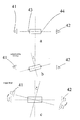
- FIG. 1-4 are schematic diagrams of a scenario according to Embodiment 1 of the present invention.
- FIGS. 1-5 are schematic flowcharts of an implementation process of an information processing method according to an embodiment of the present invention.
- FIG. 2 is a schematic flowchart of an implementation process of an information processing method according to Embodiment 2 of the present invention
- 3-1 is a first schematic structural diagram of an information processing apparatus according to Embodiment 3 of the present invention.
- FIG. 3-2 is a second schematic structural diagram of an information processing apparatus according to Embodiment 3 of the present invention.
- 3-3 is a schematic structural diagram 3 of a third embodiment of an information processing apparatus according to Embodiment 3 of the present invention.
- FIG. 4 is a schematic structural diagram of a terminal of a fourth embodiment of the present invention.
- the mobile terminal can be implemented in various forms.
- the terminal described in the present invention may include, for example, a mobile phone, a smart phone, a notebook computer, a digital broadcast receiver, a PDA (Personal Digital Assistant), a PAD (Tablet), a PMP (Portable Multimedia Player), a navigation device, etc.
- Mobile terminals and fixed terminals such as digital TVs, desktop computers, and the like.
- the terminal is a mobile terminal.
- those skilled in the art will appreciate that configurations in accordance with embodiments of the present invention can be applied to fixed type terminals in addition to components that are specifically for mobile purposes.
- FIG. 1-1 is a schematic diagram of a hardware structure of a mobile terminal that implements various embodiments of the present invention.
- the mobile terminal 100 may include a wireless communication unit 110, an A/V (audio/video) input unit 120, and a user.
- Figure 1-1 illustrates a mobile terminal having various components, but it should be understood that not all illustrated components are required to be implemented. More or fewer components can be implemented instead. The elements of the mobile terminal will be described in detail below.
- Wireless communication unit 110 typically includes one or more components that permit radio communication between mobile terminal 100 and a wireless communication system or network.
- the wireless communication unit may include at least one of a broadcast receiving module 111, a mobile communication module 112, a wireless internet module 113, a short-range communication module 114, and a location information module 115.
- the broadcast receiving module 111 receives a broadcast signal from an external broadcast management server via a broadcast channel And/or broadcast related information.
- the mobile communication module 112 transmits the radio signals to and/or receives radio signals from at least one of a base station (e.g., an access point, a Node B, etc.), an external terminal, and a server.
- a base station e.g., an access point, a Node B, etc.
- Such radio signals may include voice call signals, video call signals, or various types of data transmitted and/or received in accordance with text and/or multimedia messages.
- the wireless internet module 113 supports wireless internet access of the mobile terminal.
- the module can be internally or externally coupled to the terminal.
- the wireless Internet access technologies involved in the module may include WLAN (Wireless LAN) (Wi-Fi), Wibro (Wireless Broadband), Wimax (Worldwide Interoperability for Microwave Access), HSDPA (High Speed Downlink Packet Access), etc. .
- the short range communication module 114 is configured as a module that supports short range communication.
- Some examples of short-range communication technology include Bluetooth TM, a radio frequency identification (RFID), infrared data association (IrDA), ultra wideband (UWB), ZigBee, etc. TM.
- the location information module 115 is configured as a module that checks or acquires location information of the mobile terminal.
- a typical example of a location information module is GPS (Global Positioning System).
- GPS Global Positioning System
- the GPS module 115 calculates distance information and accurate time information from three or more satellites and applies triangulation to the calculated information to accurately calculate three-dimensional current position information based on longitude, latitude, and altitude.
- the method configured to calculate position and time information uses three satellites and corrects the calculated position and time information errors by using another satellite.
- the GPS module 115 is capable of calculating speed information by continuously calculating current position information in real time.
- the A/V input unit 120 is configured to receive an audio or video signal.
- the A/V input unit 120 may include a camera 121 and a microphone 1220 that processes image data of still pictures or video obtained by the image capturing device in a video capturing mode or an image capturing mode.
- the processed image frame can be displayed on the display unit 151.
- the image frames processed by the camera 121 may be stored in the memory 160 (or other storage medium) or transmitted via the wireless communication unit 110, and two or more cameras 1210 may be provided according to the configuration of the mobile terminal.
- Microphone 122 can be in power Sound (audio data) is received via a microphone in an operation mode, a recording mode, a voice recognition mode, and the like, and such sound can be processed as audio data.
- the processed audio (voice) data can be converted to a format output that can be transmitted to the mobile communication base station via the mobile communication module 112 in the case of a telephone call mode.
- the microphone 122 can implement various types of noise cancellation (or suppression) algorithms to cancel (or suppress) noise or interference generated during the process of receiving and transmitting audio signals.
- the user input unit 130 may generate key input data according to a command input by the user to control various operations of the mobile terminal.
- the user input unit 130 allows the user to input various types of information, and may include a keyboard, a pot, a touch pad (eg, a touch sensitive component that detects changes in resistance, pressure, capacitance, etc. due to contact), a scroll wheel , rocker, etc.
- a touch screen can be formed.
- the sensing unit 140 detects the current state of the mobile terminal 100 (eg, the open or closed state of the mobile terminal 100), the location of the mobile terminal 100, the presence or absence of contact (ie, touch input) by the user with the mobile terminal 100, and the mobile terminal.
- the sensing unit 140 can sense whether the slide type phone is turned on or off.
- the sensing unit 140 can detect whether the power supply unit 190 provides power or whether the interface unit 170 is coupled to an external device.
- Sensing unit 140 may include proximity sensor 1410 which will be described below in connection with a touch screen.
- the interface unit 170 serves as an interface through which at least one external device can connect with the mobile terminal 100.
- the external device may include a wired or wireless headset port, an external power (or battery charger) port, a wired or wireless data port, a memory card port, a port for connecting a device having an identification module, and an audio input/output. (I/O) port, video I/O port, headphone port, and more.
- the identification module may be stored to verify various information used by the user using the mobile terminal 100 and may include a User Identification Module (UIM), a Customer Identification Module (SIM), a Universal Customer Identification Module (USIM) and so on.
- UIM User Identification Module
- SIM Customer Identification Module
- USB Universal Customer Identification Module
- the device having the identification module may take the form of a smart card, and thus the identification device may be connected to the mobile terminal 100 via a port or other connection device.
- the interface unit 170 can be configured to receive input from an external device (eg, data information, power, etc.) and transmit the received input to one or more components within the mobile terminal 100 or can be used at the mobile terminal and external device Transfer data between.
- the interface unit 170 may function as a path through which power is supplied from the base to the mobile terminal 100 or may be used as a transmission of various command signals allowing input from the base to the mobile terminal 100 The path to the terminal.
- Various command signals or power input from the base can be used as signals for identifying whether the mobile terminal is accurately mounted on the base.
- Output unit 150 is configured to provide an output signal (eg, an audio signal, a video signal, an alarm signal, a vibration signal, etc.) in a visual, audio, and/or tactile manner.
- the output unit 150 may include a display unit 151, an audio output module 152, an alarm unit 153, and the like.
- the display unit 151 can display information processed in the mobile terminal 100. For example, when the mobile terminal 100 is in a phone call mode, the display unit 151 can display a user interface (UI) or a graphical user interface (GUI) related to a call or other communication (eg, text messaging, multimedia file download, etc.). When the mobile terminal 100 is in a video call mode or an image capturing mode, the display unit 151 may display a captured image and/or a received image, a UI or GUI showing a video or image and related functions, and the like.
- UI user interface
- GUI graphical user interface
- the display unit 151 can function as an input device and an output device.
- the display unit 151 may include at least one of a liquid crystal display (LCD), a thin film transistor LCD (TFT-LCD), an organic light emitting diode (OLED) display, a flexible display, a three-dimensional (3D) display, and the like.
- LCD liquid crystal display
- TFT-LCD thin film transistor LCD
- OLED organic light emitting diode
- a flexible display a three-dimensional (3D) display, and the like.
- 3D three-dimensional
- Some of these displays may be configured to be transparent to allow a user to view from the outside, which may be referred to as a transparent display, and a typical transparent display may be, for example, a TOLED (Transparent Organic Light Emitting Diode) display or the like.
- TOLED Transparent Organic Light Emitting Diode
- Mobile terminal 100 may include two or more displays, depending on the particular desired implementation.
- the display unit (or other display device), for example, the mobile terminal may include an external display unit (not shown) and an internal display unit (not shown).
- the touch screen can be used to detect touch input pressure as well as touch input position and touch input area.
- the audio output module 152 may convert audio data received by the wireless communication unit 110 or stored in the memory 160 when the mobile terminal is in a call signal receiving mode, a call mode, a recording mode, a voice recognition mode, a broadcast receiving mode, and the like.
- the audio signal is output as sound.
- the audio output module 152 can provide audio output (eg, call signal reception sound, message reception sound, etc.) associated with a particular function performed by the mobile terminal 100.
- the audio output module 152 can include a speaker, a buzzer, and the like.
- the alarm unit 153 can provide an output to notify the mobile terminal 100 of the occurrence of an event. Typical events may include call reception, message reception, key signal input, touch input, and the like. In addition to audio or video output, the alert unit 153 can provide an output in a different manner to notify of the occurrence of an event. For example, the alarm unit 153 can provide an output in the form of vibrations, and when a call, message, or some other incoming communication is received, the alarm unit 153 can provide a tactile output (ie, vibration) to notify the user of it. By providing such a tactile output, the user is able to recognize the occurrence of various events even when the user's mobile phone is in the user's pocket. The alarm unit 153 can also provide an output of the notification event occurrence via the display unit 151 or the audio output module 152.
- the memory 160 may store a software program or the like for processing and control operations performed by the controller 180, or may temporarily store data (for example, a phone book, a message, a still image, a video, etc.) that has been output or is to be output. Moreover, the memory 160 can store data regarding vibrations and audio signals of various manners that are output when a touch is applied to the touch screen.
- the memory 160 may include at least one type of storage medium including a flash memory, a hard disk, a multimedia card, a card type memory (eg, SD or DX memory, etc.), a random access memory (RAM), a static random access memory ( SRAM), read only memory (ROM), Electrically Erasable Programmable Read Only Memory (EEPROM), Programmable Read Only Memory (PROM), magnetic memory, magnetic disk, optical disk, and the like.
- the mobile terminal 100 can cooperate with a network storage device that performs a storage function of the memory 160 through a network connection.
- the controller 180 typically controls the overall operation of the mobile terminal. For example, the controller 180 performs the control and processing associated with voice calls, data communications, video calls, and the like. Additionally, the controller 180 can include a multimedia module 1810 for reproducing or playing back multimedia data, and the multimedia module 1810 can be constructed within the controller 180 or can be configured to be separate from the controller 180. The controller 180 may perform a pattern recognition process to recognize a handwriting input or a picture drawing input performed on the touch screen as a character or an image.
- the power supply unit 190 receives external power or internal power under the control of the controller 180 and provides appropriate power required to operate the various components and components.
- the various embodiments described herein can be implemented in a computer readable medium using, for example, computer software, hardware, or any combination thereof.
- the embodiments described herein may be through the use of application specific integrated circuits (ASICs), digital signal processors (DSPs), digital signal processing devices (DSPDs), programmable logic devices (PLDs), field programmable gate arrays (ASICs), digital signal processors (DSPs), digital signal processing devices (DSPDs), programmable logic devices (PLDs), field programmable gate arrays ( An FPGA, a processor, a controller, a microcontroller, a microprocessor, at least one of the electronic units designed to perform the functions described herein, in some cases, such an embodiment may be at the controller 180 Implemented in the middle.
- implementations such as procedures or functions may be implemented with separate software modules that permit the execution of at least one function or operation.
- the software code can be implemented by a software application (or program) written in any suitable programming language, which can be stored in memory 160 and executed by
- the mobile terminal has been described in terms of its function.
- a slide type mobile terminal among various types of mobile terminals such as a folding type, a bar type, a swing type, a slide type mobile terminal, and the like will be described as an example. Therefore, the present invention can be applied to any type of mobile terminal, and is not limited to a slide type mobile terminal.
- the mobile terminal 100 as shown in FIG. 1-1 may be configured to operate using a communication system such as a wired and wireless communication system and a satellite-based communication system that transmits data via a frame or a packet.
- a communication system such as a wired and wireless communication system and a satellite-based communication system that transmits data via a frame or a packet.
- Air interfaces used by communication systems include, for example, Frequency Division Multiple Access (FDMA), Time Division Multiple Access (TDMA), Code Division Multiple Access (CDMA), and Universal Mobile Telecommunications System (UMTS) (in particular, Long Term Evolution (LTE)). ), Global System for Mobile Communications (GSM), etc.
- FDMA Frequency Division Multiple Access
- TDMA Time Division Multiple Access
- CDMA Code Division Multiple Access
- UMTS Universal Mobile Telecommunications System
- LTE Long Term Evolution
- GSM Global System for Mobile Communications
- the following description relates to a CDMA communication system, but such teachings are equally applicable to other types of systems.
- a CDMA wireless communication system can include a plurality of mobile terminals 100, a plurality of base stations (BS) 270, a base station controller (BSC) 275, and a mobile switching center (MSC) 280.
- the MSC 280 is configured to interface with a public switched telephone network (PSTN) 290.
- PSTN public switched telephone network
- the MSC 280 is also configured to interface with a BSC 275 that can be coupled to the base station 270 via a backhaul line.
- the backhaul line can be constructed in accordance with any of a number of well known interfaces including, for example, E1/T1, ATM, IP, PPP, Frame Relay, HDSL, ADSL, or xDSL. It will be appreciated that the system as shown in Figures 1-2 can include multiple BSC 2750s.
- Each BS 270 can serve one or more partitions (or regions), each of which is covered by a multi-directional antenna or an antenna directed to a particular direction radially away from the BS 270. Alternatively, each partition may be covered by two or more antennas for diversity reception. Each BS 270 can be configured to support multiple frequency allocations, and each frequency allocation has a particular frequency spectrum (eg, 1.25 MHz, 5 MHz, etc.).
- BS 270 may also be referred to as a Base Transceiver Subsystem (BTS) or other equivalent terminology.
- BTS Base Transceiver Subsystem
- the term "base station” can be used to generally refer to a single BSC 275 and at least one BS 270.
- a base station can also be referred to as a "cell station.”
- each partition of a particular BS 270 may be referred to as a plurality of cellular stations.
- a Broadcast Transmitter (BT) 295 transmits a broadcast signal to the mobile terminal 100 operating within the system.
- a broadcast receiving module 111 as shown in FIG. 1-1 is provided at the mobile terminal 100 to receive a broadcast signal transmitted by the BT 295.
- GPS Global Positioning System
- the satellite 300 helps locate at least one of the plurality of mobile terminals 100.
- a plurality of satellites 300 are depicted, but it is understood that useful positioning information can be obtained using any number of satellites.
- the GPS module 115 as shown in Figure 1-1 is typically configured to cooperate with the satellite 300 to obtain the desired positioning information. Instead of GPS tracking technology or in addition to GPS tracking technology, other techniques that can track the location of the mobile terminal can be used. Additionally, at least one GPS satellite 300 can selectively or additionally process satellite DMB transmissions.
- BS 270 receives reverse link signals from various mobile terminals 100.
- Mobile terminal 100 typically participates in calls, messaging, and other types of communications.
- Each reverse link signal received by a particular base station 270 is processed within a particular BS 270.
- the obtained data is forwarded to the relevant BSC 275.
- the BSC provides call resource allocation and coordinated mobility management functions including a soft handoff procedure between the BSs 270.
- the BSC 275 also routes the received data to the MSC 280, which provides additional routing services for interfacing with the PSTN 290.
- PSTN 290 interfaces with MSC 280, which forms an interface with BSC 275, and BSC 275 controls BS 270 accordingly to transmit forward link signals to mobile terminal 100.
- an embodiment of the present invention provides an information processing method, which is applied to a terminal, and the functions implemented by the information processing method can be implemented by using a processor in a terminal to call a program code, and of course, the program code can be saved in a computer storage.
- the terminal includes at least a processor and a storage medium.
- FIG. 1-3 is a schematic flowchart of an implementation of an information processing method according to an embodiment of the present invention. As shown in Figure 1-3, the information processing method includes:
- Step S101 using audio information collected by the sound collection component
- the terminal includes an electronic device such as a smart phone, a personal computer, a notebook computer, a net-type notebook computer (netbook), a tablet computer, a desktop computer, a smart TV, and the like.
- an electronic device such as a smart phone, a personal computer, a notebook computer, a net-type notebook computer (netbook), a tablet computer, a desktop computer, a smart TV, and the like.
- the audio information may be any sound that the terminal wants to record.
- Step S102 using the pose sensor to obtain the angle ⁇ of the current terminal offset in the vertical direction;
- the angle ⁇ of the terminal offset in the vertical direction can be seen in FIG. 1-4.
- the angle of the terminal from the vertical direction is 0 degree.
- the user has been using the recording of the terminal.
- the mobile terminal is shaken, and the angle of the terminal from the vertical direction is ⁇ .
- the recording effect heard by the user is as shown in c in FIG. 1-4.
- Step S103 determining a current sound pressure level difference according to the angle ⁇ , a distance measurement value between the sound collection components recorded by the terminal, and a speed c of propagation of the sound wave in the medium;
- the distance D between the sound source to the sound collecting part f is the sound source emitting frequency
- ⁇ is the angle of the current terminal from the vertical direction
- 2r is the distance measurement between the sound collecting parts of the terminal input.
- the value, c is the speed at which the sound wave propagates through the medium.
- the distance measurement value between the terminal input sound collection components may be a distance measurement value of the terminal input sound collection component to the terminal before leaving the factory.
- the sound collection component can be a microphone (MIC)
- the distance measurement value between the terminal input sound collection components is the distance measurement value between the terminal input MIC.
- the terminal passes two And two or more MICs thereof realize the input of the sound.
- the distance measurement value between the terminal input sound collection components in step S103 refers to the distance measurement value between the two MICs on the terminal. .
- Step S104 acquiring an original sound pressure level difference, and the original sound pressure level difference is a terminal offset The sound pressure level difference when the angle in the straight direction is 0 degrees;
- Step S105 performing compensation on the sound pressure level of the audio information according to the current sound pressure level difference and the original sound pressure level difference.
- step S105 when the terminal includes two sound collection components, in step S105, the sound pressure level is compensated according to the current sound pressure level difference and the original sound pressure level difference.
- Step S1051 calculating a first difference between the current sound pressure level difference and the original sound pressure level difference
- Step S1052 adding a sound pressure level difference of the audio information collected by the first sound collecting component to the first difference, to obtain a sound pressure level difference of the audio information collected by the compensated first sound collecting component, where The first sound collection component is closer to the sound source than the second sound collection component;
- Step S1053 Subtract the sound pressure level difference of the audio information collected by the second sound collecting component by the first difference value to obtain a sound pressure level difference of the audio information collected by the compensated second sound collecting component.
- step 101 the obtaining the angle ⁇ of the terminal offset in the vertical direction by using the pose sensor includes:
- the x information, the y information, and the z information are calculated by an inverse trigonometric function to obtain a current terminal bias. Move the angle ⁇ in the vertical direction.
- the method further includes:
- Step S106 determining a current phase difference according to the angle ⁇ , a distance measurement value between the sound collection components recorded by the terminal, and a speed c of propagation of the sound wave in the medium;
- the distance D between the sound source to the sound collecting part ⁇ is the angle of the current terminal from the vertical direction
- 2r is the distance measurement value between the sound collecting parts recorded by the terminal
- c is the sound wave in the medium. The speed of the spread.
- Step S107 acquiring an original phase difference, where the original phase difference is a phase difference when the angle of the terminal offset vertical direction is 0 degrees;
- Step S108 performing compensation on the phase difference of the audio information according to the current phase difference and the original phase difference.
- the phase difference compensation of the audio information according to the current phase difference and the original phase difference includes:
- Step S1081 Calculating a first difference between the current phase difference and the original phase difference
- Step S1082 adding a phase difference of the audio information collected by the first sound collection component to the first difference, to obtain a phase of the audio information collected by the compensated first sound collection component. Poor, wherein the first sound collection component is closer to the sound source than the second sound collection component;
- Step S1083 Subtracting the phase difference of the audio information collected by the second sound collecting component by the first difference to obtain a phase difference of the audio information collected by the compensated second sound collecting component.
- the information processing method and device and the terminal provided by the embodiment of the present invention wherein the audio information collected by the sound collecting component is used; the angle ⁇ of the current terminal offset vertical direction is obtained by using the pose sensor; and the sound recorded by the terminal according to the angle ⁇
- the distance measurement between the acquisition components, the speed of propagation of the acoustic wave in the medium c determines the current sound pressure level difference; the original sound pressure level difference is obtained, and the original sound pressure level difference is the angle of the terminal offset vertical direction is 0 degrees
- the sound pressure level difference at the time; the sound pressure level is compensated for the audio information according to the current sound pressure level difference and the original sound pressure level difference; the technical solution provided by the embodiment of the invention can be automatically performed during recording Angle adjustment, to ensure the recording effect, improve the interference of the terminal against the user's grip method, or the occurrence of jitter during the movement, so that the recording effect returns from the offset position to the vertical, always consistent with the human ear, improve User subjective hearing.
- an embodiment of the present invention provides an information processing method, which is applied to a terminal, and the functions implemented by the information processing method can be implemented by using a processor in a terminal to call a program code, and of course, the program code can be saved in a computer storage.
- the terminal includes at least a processor and a storage medium.
- the information processing method includes:
- Step S201 the collecting unit is responsible for collecting audio information from the space environment, and sampling and quantizing at a certain sampling rate and bit depth;
- Step S202 The acquiring module in the first acquiring unit is responsible for collecting the x, y, and z axis information of the current mobile terminal in the space, and transmitting the information to the computing module in the first acquiring unit, and the calculating module passes The inverse trigonometric function calculates the angle ⁇ of the current mobile terminal offset in the vertical direction, and transmits the angle value ⁇ to the first determining unit or the second determining unit.
- Step S203 the second acquiring unit acquires an original sound pressure level difference
- Step S204 the third obtaining unit acquires an original phase difference
- Step S205 the first determining unit determines the current sound pressure level difference according to the angle ⁇ , the distance measurement value between the terminal input sound collecting components, and the speed c of the sound wave propagation in the medium;
- Step S206 the second determining unit determines the current phase difference according to the angle ⁇ , the distance measurement value between the terminal input sound collecting components, and the speed c of the sound wave propagation in the medium;
- Step S207 the first compensation unit compensates the audio information for the sound pressure level according to the current sound pressure level difference and the original sound pressure level difference.
- Step S208 the second compensation unit performs phase compensation on the audio information according to the current phase difference and the original phase difference.
- the sound pressure level difference according to the angle ⁇ and the phase difference of the audio signal input, the sound pressure level difference, and according to the sound propagation formula in the air and the distance measurement value between the MIC input to the mobile terminal before leaving the factory,
- the tracks ie, the sound pressure level and phase of the audio information of each MIC are appropriately compensated to return from the offset position to the vertical position.
- the specific calculation formula is as follows:
- the horizontal angle of the sound source to the MIC1 is - ⁇
- the horizontal angle to the MIC2 is ⁇
- the MIC1 is away from the sound source
- the MIC2 is close to the sound source
- the sound pressure level is compensated and the phase difference is advanced for the MIC1, and the MIC2 is subjected to the operation of suppressing the compensation and pushing the phase difference.
- an embodiment of the present invention provides an information processing apparatus, where the acquiring unit, the first acquiring unit, the first determining unit, the second obtaining unit, the first compensating unit, the second determining unit, and the first
- the acquiring unit and the second compensating unit, and the obtaining module and the calculating module included in the collecting unit may be implemented by a processor in the terminal; of course, it may also be implemented by a specific logic circuit; in the process of the specific embodiment
- the processor may be a central processing unit (CPU), a microprocessor (MPU), a digital signal processor (DSP), or a field programmable gate array (FPGA).
- the apparatus 300 includes an acquisition unit 301, a first acquisition unit 302, a first determination unit 303, and a second acquisition unit. 304 and a first compensation unit 305, wherein:
- the collecting unit 301 is configured to use the audio information collected by the sound collecting component
- the first acquiring unit 302 is configured to acquire an angle ⁇ of a current terminal offset vertical direction by using a pose sensor
- the first determining unit 303 is configured to collect sound according to the angle ⁇ and the terminal input
- the distance measurement between the components and the speed c of the propagation of the acoustic wave in the medium determine the current sound pressure level difference
- the distance D between the sound source to the sound collecting component ⁇ is the angle of the current terminal from the vertical direction
- 2r is the distance measurement between the sound collecting components recorded by the terminal
- c is the propagation of the sound wave in the medium. speed.
- the second acquiring unit 304 is configured to acquire an original sound pressure level difference, where the original sound pressure level difference is a sound pressure level difference when the angle of the terminal offset vertical direction is 0 degrees;
- the first compensation unit 305 is configured to compensate the audio information for the sound pressure level according to the current sound pressure level difference and the original sound pressure level difference.
- the first obtaining unit 302 includes an obtaining module 3021 and a calculating module 3022, where:
- the acquiring module 3021 is configured to acquire, by using a pose sensor, x information, y information, and z information of the terminal in a three-dimensional Cartesian coordinate system;
- the calculating module 3022 is configured to calculate the x information, the y information, and the z information by an inverse trigonometric function to obtain an angle ⁇ of the current terminal offset in the vertical direction.
- the apparatus 300 further includes a second determining unit 306, a third obtaining unit 307, and a second compensating unit 308, where:
- the second determining unit 306 is configured to determine a current phase difference according to the angle ⁇ , a distance measurement value between the sound collection components recorded by the terminal, and a speed c of propagation of the sound wave in the medium;
- the distance D between the sound source to the sound collecting component f is the sound source emitting frequency
- ⁇ is the angle of the current terminal from the vertical direction
- 2r is the distance measurement value between the sound collecting components recorded by the terminal
- c The speed at which sound waves travel in the medium.
- the third obtaining unit 307 is configured to acquire an original phase difference, where the original phase difference is a phase difference when the angle of the terminal offset in the vertical direction is 0 degrees;
- the second compensation unit 308 is configured to compensate the audio information for the phase difference according to the current phase difference and the original phase difference.
- the collecting unit uses the audio information collected by the sound collecting component; the first acquiring unit uses the pose sensor to obtain the angle ⁇ of the current terminal offset vertical direction; the first determining unit according to the angle ⁇ , the sound recorded by the terminal
- the distance measurement between the acquisition components, the speed c of the sound wave propagation in the medium determines the current sound pressure level difference; the second acquisition unit acquires the original sound pressure level difference, the original sound pressure level difference being the terminal offset vertical direction a sound pressure level difference when the angle is 0 degrees; the first compensation unit compensates the sound pressure level of the audio information according to the current sound pressure level difference and the original sound pressure level difference; thus, the process of recording the sound Automatically corrects sound positioning errors, thereby improving the user experience during playback.
- an embodiment of the present invention provides a terminal
- FIG. 4 is a present invention.
- Embodiment 4 is a schematic structural diagram of a terminal. As shown in FIG. 4, the terminal 400 includes:
- the sound collection component 401 is configured to collect audio information
- the position sensor 402 is configured to acquire an angle ⁇ of the current terminal offset in the vertical direction;
- the processor 403 is configured to use the audio information collected by the sound collection component
- the original sound pressure level difference being a sound pressure level difference when the angle of the terminal offset vertical direction is 0 degrees;
- the sound collection component can be implemented by using a microphone, and the existing terminal generally collects sound through two or more microphones during recording, although the above embodiment is
- the two sound collecting components are taken as an example, but it should be noted that those skilled in the art should understand that the embodiments of the present invention can also be used for the process of sound recording by two or more microphones.
- the position sensor may be a gravity sensor, and/or an acceleration sensor, and/or a gyroscope. It should be noted that the position sensor is in a general terminal. A necessary sensor, therefore, the implementation of the technical solution of the present invention does not require additional new hardware.
- Each unit included in the apparatus in the embodiment of the present invention, and each module included in each unit, can be implemented by a processor in the terminal; of course, it can also be implemented by a logic circuit.
- the processor can be a central processing unit (CPU), a microprocessor (MPU), a digital signal processor ( DSP) or field programmable gate array (FPGA).
- the above information processing method is implemented in the form of a software function module and sold or used as a stand-alone product, it may also be stored in a computer readable storage medium.
- the technical solution of the embodiments of the present invention may be embodied in the form of a software product in essence or in the form of a software product stored in a storage medium, including a plurality of instructions.
- a computer device (which may be a personal computer, server, or network device, etc.) is caused to perform all or part of the methods described in various embodiments of the present invention.
- the foregoing storage medium includes various media that can store program codes, such as a USB flash drive, a mobile hard disk, a read only memory (ROM), a magnetic disk, or an optical disk.
- program codes such as a USB flash drive, a mobile hard disk, a read only memory (ROM), a magnetic disk, or an optical disk.
- the embodiment of the present invention further provides a computer storage medium, where the computer storage medium stores computer executable instructions, and the computer executable instructions are used to execute the information processing method in the embodiment of the present invention.
- the disclosed apparatus and method may be implemented in other manners.
- the device embodiments described above are merely illustrative.
- the division of the unit is only a logical function division.
- there may be another division manner such as: multiple units or components may be combined, or Can be integrated into another system, or some features can be ignored or not executed.
- the coupling, or direct coupling, or communication connection of the components shown or discussed may be indirect coupling or communication connection through some interfaces, devices or units, and may be electrical, mechanical or other forms. of.
- the units described above as separate components may or may not be physically separated, and the components displayed as the unit may or may not be physical units; they may be located in one place or distributed on multiple network units; Some or all of the units may be selected according to actual needs to achieve the purpose of the solution of the embodiment.
- each functional unit in each embodiment of the present invention may be integrated into one processing unit, or each unit may be separately used as one unit, or two or more units may be integrated into one unit;
- the unit can be implemented in the form of hardware or in the form of hardware plus software functional units.
- the foregoing program may be stored in a computer readable storage medium, and when executed, the program includes The foregoing steps of the method embodiment; and the foregoing storage medium includes: a removable storage device, a read only memory (ROM), a magnetic disk, or an optical disk, and the like, which can store program codes.
- ROM read only memory
- the above-described integrated unit of the present invention may be stored in a computer readable storage medium if it is implemented in the form of a software function module and sold or used as a standalone product.
- the technical solution of the embodiments of the present invention may be embodied in the form of a software product in essence or in the form of a software product stored in a storage medium, including a plurality of instructions.
- a computer device (which may be a personal computer, server, or network device, etc.) is caused to perform all or part of the methods described in various embodiments of the present invention.
- the foregoing storage medium includes various media that can store program codes, such as a mobile storage device, a ROM, a magnetic disk, or an optical disk.
- the audio information collected by the sound collecting component is used; the angle ⁇ of the current terminal offset vertical direction is obtained by using the pose sensor; and the distance measurement value and the sound wave between the sound collecting components recorded by the terminal according to the angle ⁇
- the speed c of propagation in the medium determines the current sound pressure level difference; the original sound pressure level difference is obtained, and the original sound pressure level difference is the sound pressure level difference when the angle of the terminal offset vertical direction is 0 degrees;
- the sound pressure level difference and the original sound pressure level difference compensate the sound pressure level of the audio information; thus, the sound positioning error can be automatically corrected during the recording of the sound, thereby improving the user's experience during playback.
Landscapes
- Health & Medical Sciences (AREA)
- Otolaryngology (AREA)
- Physics & Mathematics (AREA)
- Engineering & Computer Science (AREA)
- Acoustics & Sound (AREA)
- Signal Processing (AREA)
- Telephone Function (AREA)
- Circuit For Audible Band Transducer (AREA)
Abstract
本发明公开了一种信息处理方法,所述方法包括:利用声音采集部件采集的音频信息;利用位姿传感器获取当前终端偏移垂直方向的角度θ;根据所述角度θ、终端录入的声音采集部件之间的距离测量值、声波在介质中的传播的速度c确定当前的声压级差;获取原始的声压级差,所述原始的声压级差为终端偏移垂直方向的角度为0度时的声压级差;根据所述当前的声压级差与所述原始的声压级差对所述音频信息进行声压级的补偿。本发明同时还公开了一种信息处理装置及终端、存储介质。
Description
本发明涉及电子技术,尤其涉及一种信息处理方法及装置、终端、存储介质。
目前,录音是终端具有的重要功能之一,然而人们在使用终端上的录音模块的过程中,只要终端的角度发生变化了,那么录音效果从音量大小、声音方位等方面都会发生变化;例如用户握持终端的方法发生变化,再如运动过程中发生抖动等情况,都会导致录音效果发生变化。而在站立姿态时,人耳始终与地面保持垂直,由此当终端的角度发生变化时,录制进来的声音定位错误,从而在回放声音时会给用户的主观听感带来了很大的困扰。
发明内容
有鉴于此,本发明实施例为解决现有技术中存在的至少一个问题而提供一种信息处理方法及装置、终端、存储介质,能够在录制声音的过程中自动纠正声音定位错误,从而提升用户在回放过程中的体验。
本发明实施例的技术方案是这样实现的:
第一方面,本发明实施例提供一种信息处理方法,所述方法包括:
利用声音采集部件采集的音频信息;
利用位姿传感器获取当前终端偏移垂直方向的角度θ;
根据所述角度θ、终端录入的声音采集部件之间的距离测量值、声波在介质中的传播的速度c确定当前的声压级差;
获取原始的声压级差,所述原始的声压级差为终端偏移垂直方向的角度为0度时的声压级差;
根据所述当前的声压级差与所述原始的声压级差对所述音频信息进行声压级的补偿。
第二方面,本发明实施例提供一种信息处理装置,所述装置包括采集单元、第一获取单元、第一确定单元、第二获取单元和第一补偿单元,其中:
所述采集单元,配置为利用声音采集部件采集的音频信息;
所述第一获取单元,配置为利用位姿传感器获取当前终端偏移垂直方向的角度θ;
所述第一确定单元,配置为根据所述角度θ、终端录入的声音采集部件之间的距离测量值、声波在介质中的传播的速度c确定当前的声压级差;
所述第二获取单元,配置为获取原始的声压级差,所述原始的声压级差为终端偏移垂直方向的角度为0度时的声压级差;
所述第一补偿单元,配置为根据所述当前的声压级差与所述原始的声压级差对所述音频信息进行声压级的补偿。
第三方面,本发明实施例提供一种终端,所述终端包括:
声音采集部件,配置为采集音频信息;
位姿传感器,配置为获取当前终端偏移垂直方向的角度θ;
处理器,配置为利用声音采集部件采集的音频信息;
利用位姿传感器获取当前终端偏移垂直方向的角度θ;
根据所述角度θ、终端录入的声音采集部件之间的距离测量值、声波在介质中的传播的速度c确定当前的声压级差;
获取原始的声压级差,所述原始的声压级差为终端偏移垂直方向的角度为0度时的声压级差;
根据所述当前的声压级差与所述原始的声压级差对所述音频信息进行声压级的补偿。
第四方面,本发明实施例提供一种计算机存储介质,所述计算机存储介质中存储有计算机可执行指令,该计算机可执行指令用于执行本发明第一方面实施例提供的信息处理方法。
本发明实施例提供的信息处理方法及装置、终端、存储介质,其中,利用声音采集部件采集的音频信息;利用位姿传感器获取当前终端偏移垂直方向的角度θ;根据所述角度θ、终端录入的声音采集部件之间的距离测量值、声波在介质中的传播的速度c确定当前的声压级差;获取原始的声压级差,所述原始的声压级差为终端偏移垂直方向的角度为0度时的声压级差;根据所述当前的声压级差与所述原始的声压级差对所述音频信息进行声压级的补偿;如此,能够在录制声音的过程中自动纠正声音定位错误,从而提升用户在回放过程中的体验。
图1-1为实现本发明各个实施例的移动终端的硬件结构示意图;
图1-2为图1-1所示的移动终端的无线通信系统示意图;
图1-3为本发明实施例一信息处理方法的实现流程示意图一;
图1-4为本发明实施例一的场景示意图;
图1-5为本发明实施例一信息处理方法的实现流程示意图二;
图2为本发明实施例二信息处理方法的实现流程示意图;
图3-1为本发明实施例三信息处理装置的组成结构示意图一;
图3-2为本发明实施例三信息处理装置的组成结构示意图二;
图3-3为本发明实施例三信息处理装置的组成结构示意图三;
图4为本发明实施例四终端的组成结构示意图。
应当理解,此处所描述的具体实施例仅仅用以解释本发明,并不用于限定本发明。
现在将参考附图描述实现本发明各个实施例的移动终端。在后续的描述中,使用用于表示元件的诸如“模块”、“部件”或“单元”的后缀仅为了有利于本发明的说明,其本身并没有特定的意义。因此,“模块”与“部件”可以混合地使用。
移动终端可以以各种形式来实施。例如,本发明中描述的终端可以包括诸如移动电话、智能电话、笔记本电脑、数字广播接收器、PDA(个人数字助理)、PAD(平板电脑)、PMP(便携式多媒体播放器)、导航装置等等的移动终端以及诸如数字TV、台式计算机等等的固定终端。下面,假设终端是移动终端。然而,本领域技术人员将理解的是,除了特别用于移动目的的元件之外,根据本发明的实施方式的构造也能够应用于固定类型的终端。
图1-1为实现本发明各个实施例的移动终端的硬件结构示意,如图1-1所示,移动终端100可以包括无线通信单元110、A/V(音频/视频)输入单元120、用户输入单元130、感测单元140、输出单元150、存储器160、接口单元170、控制器180和电源单元190等等。图1-1示出了具有各种组件的移动终端,但是应理解的是,并不要求实施所有示出的组件。可以替代地实施更多或更少的组件。将在下面详细描述移动终端的元件。
无线通信单元110通常包括一个或多个组件,其允许移动终端100与无线通信系统或网络之间的无线电通信。例如,无线通信单元可以包括广播接收模块111、移动通信模块112、无线互联网模块113、短程通信模块114和位置信息模块115中的至少一个。
广播接收模块111经由广播信道从外部广播管理服务器接收广播信号
和/或广播相关信息。
移动通信模块112将无线电信号发送到基站(例如,接入点、节点B等等)、外部终端以及服务器中的至少一个和/或从其接收无线电信号。这样的无线电信号可以包括语音通话信号、视频通话信号、或者根据文本和/或多媒体消息发送和/或接收的各种类型的数据。
无线互联网模块113支持移动终端的无线互联网接入。该模块可以内部或外部地耦接到终端。该模块所涉及的无线互联网接入技术可以包括WLAN(无线LAN)(Wi-Fi)、Wibro(无线宽带)、Wimax(全球微波互联接入)、HSDPA(高速下行链路分组接入)等等。
短程通信模块114配置为支持短程通信的模块。短程通信技术的一些示例包括蓝牙TM、射频识别(RFID)、红外数据协会(IrDA)、超宽带(UWB)、紫蜂TM等等。
位置信息模块115配置为检查或获取移动终端的位置信息的模块。位置信息模块的典型示例是GPS(全球定位系统)。根据当前的技术,GPS模块115计算来自三个或更多卫星的距离信息和准确的时间信息并且对于计算的信息应用三角测量法,从而根据经度、纬度和高度准确地计算三维当前位置信息。当前,配置为计算位置和时间信息的方法使用三颗卫星并且通过使用另外的一颗卫星校正计算出的位置和时间信息的误差。此外,GPS模块115能够通过实时地连续计算当前位置信息来计算速度信息。
A/V输入单元120配置为接收音频或视频信号。A/V输入单元120可以包括相机121和麦克风1220,相机121对在视频捕获模式或图像捕获模式中由图像捕获装置获得的静态图片或视频的图像数据进行处理。处理后的图像帧可以显示在显示单元151上。经相机121处理后的图像帧可以存储在存储器160(或其它存储介质)中或者经由无线通信单元110进行发送,可以根据移动终端的构造提供两个或更多相机1210。麦克风122可以在电
话通话模式、记录模式、语音识别模式等等运行模式中经由麦克风接收声音(音频数据),并且能够将这样的声音处理为音频数据。处理后的音频(语音)数据可以在电话通话模式的情况下转换为可经由移动通信模块112发送到移动通信基站的格式输出。麦克风122可以实施各种类型的噪声消除(或抑制)算法以消除(或抑制)在接收和发送音频信号的过程中产生的噪声或者干扰。
用户输入单元130可以根据用户输入的命令生成键输入数据以控制移动终端的各种操作。用户输入单元130允许用户输入各种类型的信息,并且可以包括键盘、锅仔片、触摸板(例如,检测由于被接触而导致的电阻、压力、电容等等的变化的触敏组件)、滚轮、摇杆等等。特别地,当触摸板以层的形式叠加在显示单元151上时,可以形成触摸屏。
感测单元140检测移动终端100的当前状态,(例如,移动终端100的打开或关闭状态)、移动终端100的位置、用户对于移动终端100的接触(即,触摸输入)的有无、移动终端100的取向、移动终端100的加速或减速移动和方向等等,并且生成用于控制移动终端100的操作的命令或信号。例如,当移动终端100实施为滑动型移动电话时,感测单元140可以感测该滑动型电话是打开还是关闭。另外,感测单元140能够检测电源单元190是否提供电力或者接口单元170是否与外部装置耦接。感测单元140可以包括接近传感器1410将在下面结合触摸屏来对此进行描述。
接口单元170用作至少一个外部装置与移动终端100连接可以通过的接口。例如,外部装置可以包括有线或无线头戴式耳机端口、外部电源(或电池充电器)端口、有线或无线数据端口、存储卡端口、用于连接具有识别模块的装置的端口、音频输入/输出(I/O)端口、视频I/O端口、耳机端口等等。识别模块可以是存储用于验证用户使用移动终端100的各种信息并且可以包括用户识别模块(UIM)、客户识别模块(SIM)、通用客户识别
模块(USIM)等等。另外,具有识别模块的装置(下面称为“识别装置”)可以采取智能卡的形式,因此,识别装置可以经由端口或其它连接装置与移动终端100连接。接口单元170可以用于接收来自外部装置的输入(例如,数据信息、电力等等)并且将接收到的输入传输到移动终端100内的一个或多个元件或者可以用于在移动终端和外部装置之间传输数据。
另外,当移动终端100与外部底座连接时,接口单元170可以用作允许通过其将电力从底座提供到移动终端100的路径或者可以用作允许从底座输入的各种命令信号通过其传输到移动终端的路径。从底座输入的各种命令信号或电力可以用作用于识别移动终端是否准确地安装在底座上的信号。输出单元150被构造为以视觉、音频和/或触觉方式提供输出信号(例如,音频信号、视频信号、警报信号、振动信号等等)。输出单元150可以包括显示单元151、音频输出模块152、警报单元153等等。
显示单元151可以显示在移动终端100中处理的信息。例如,当移动终端100处于电话通话模式时,显示单元151可以显示与通话或其它通信(例如,文本消息收发、多媒体文件下载等等)相关的用户界面(UI)或图形用户界面(GUI)。当移动终端100处于视频通话模式或者图像捕获模式时,显示单元151可以显示捕获的图像和/或接收的图像、示出视频或图像以及相关功能的UI或GUI等等。
同时,当显示单元151和触摸板以层的形式彼此叠加以形成触摸屏时,显示单元151可以用作输入装置和输出装置。显示单元151可以包括液晶显示器(LCD)、薄膜晶体管LCD(TFT-LCD)、有机发光二极管(OLED)显示器、柔性显示器、三维(3D)显示器等等中的至少一种。这些显示器中的一些可以被构造为透明状以允许用户从外部观看,这可以称为透明显示器,典型的透明显示器可以例如为TOLED(透明有机发光二极管)显示器等等。根据特定想要的实施方式,移动终端100可以包括两个或更多显
示单元(或其它显示装置),例如,移动终端可以包括外部显示单元(未示出)和内部显示单元(未示出)。触摸屏可用于检测触摸输入压力以及触摸输入位置和触摸输入面积。
音频输出模块152可以在移动终端处于呼叫信号接收模式、通话模式、记录模式、语音识别模式、广播接收模式等等模式下时,将无线通信单元110接收的或者在存储器160中存储的音频数据转换音频信号并且输出为声音。而且,音频输出模块152可以提供与移动终端100执行的特定功能相关的音频输出(例如,呼叫信号接收声音、消息接收声音等等)。音频输出模块152可以包括扬声器、蜂鸣器等等。
警报单元153可以提供输出以将事件的发生通知给移动终端100。典型的事件可以包括呼叫接收、消息接收、键信号输入、触摸输入等等。除了音频或视频输出之外,警报单元153可以以不同的方式提供输出以通知事件的发生。例如,警报单元153可以以振动的形式提供输出,当接收到呼叫、消息或一些其它进入通信(incoming communication)时,警报单元153可以提供触觉输出(即,振动)以将其通知给用户。通过提供这样的触觉输出,即使在用户的移动电话处于用户的口袋中时,用户也能够识别出各种事件的发生。警报单元153也可以经由显示单元151或音频输出模块152提供通知事件的发生的输出。
存储器160可以存储由控制器180执行的处理和控制操作的软件程序等等,或者可以暂时地存储己经输出或将要输出的数据(例如,电话簿、消息、静态图像、视频等等)。而且,存储器160可以存储关于当触摸施加到触摸屏时输出的各种方式的振动和音频信号的数据。
存储器160可以包括至少一种类型的存储介质,所述存储介质包括闪存、硬盘、多媒体卡、卡型存储器(例如,SD或DX存储器等等)、随机访问存储器(RAM)、静态随机访问存储器(SRAM)、只读存储器(ROM)、
电可擦除可编程只读存储器(EEPROM)、可编程只读存储器(PROM)、磁性存储器、磁盘、光盘等等。而且,移动终端100可以与通过网络连接执行存储器160的存储功能的网络存储装置协作。
控制器180通常控制移动终端的总体操作。例如,控制器180执行与语音通话、数据通信、视频通话等等相关的控制和处理。另外,控制器180可以包括用于再现或回放多媒体数据的多媒体模块1810,多媒体模块1810可以构造在控制器180内,或者可以构造为与控制器180分离。控制器180可以执行模式识别处理,以将在触摸屏上执行的手写输入或者图片绘制输入识别为字符或图像。
电源单元190在控制器180的控制下接收外部电力或内部电力并且提供操作各元件和组件所需的适当的电力。
这里描述的各种实施方式可以以使用例如计算机软件、硬件或其任何组合的计算机可读介质来实施。对于硬件实施,这里描述的实施方式可以通过使用特定用途集成电路(ASIC)、数字信号处理器(DSP)、数字信号处理装置(DSPD)、可编程逻辑装置(PLD)、现场可编程门阵列(FPGA)、处理器、控制器、微控制器、微处理器、被设计为执行这里描述的功能的电子单元中的至少一种来实施,在一些情况下,这样的实施方式可以在控制器180中实施。对于软件实施,诸如过程或功能的实施方式可以与允许执行至少一种功能或操作的单独的软件模块来实施。软件代码可以由以任何适当的编程语言编写的软件应用程序(或程序)来实施,软件代码可以存储在存储器160中并且由控制器180执行。
至此,己经按照其功能描述了移动终端。下面,为了简要起见,将描述诸如折叠型、直板型、摆动型、滑动型移动终端等等的各种类型的移动终端中的滑动型移动终端作为示例。因此,本发明能够应用于任何类型的移动终端,并且不限于滑动型移动终端。
如图1-1中所示的移动终端100可以被构造为利用经由帧或分组发送数据的诸如有线和无线通信系统以及基于卫星的通信系统来操作。
现在将参考图1-2描述其中根据本发明的移动终端能够操作的通信系统,如图1-2所示,这样的通信系统可以使用不同的空中接口和/或物理层。例如,由通信系统使用的空中接口包括例如频分多址(FDMA)、时分多址(TDMA)、码分多址(CDMA)和通用移动通信系统(UMTS)(特别地,长期演进(LTE))、全球移动通信系统(GSM)等等。作为非限制性示例,下面的描述涉及CDMA通信系统,但是这样的教导同样适用于其它类型的系统。
参考图1-2,CDMA无线通信系统可以包括多个移动终端100、多个基站(BS)270、基站控制器(BSC)275和移动交换中心(MSC)280。MSC280被构造为与公共电话交换网络(PSTN)290形成接口。MSC280还被构造为与可以经由回程线路耦接到基站270的BSC275形成接口。回程线路可以根据若干己知的接口中的任一种来构造,所述接口包括例如E1/T1、ATM,IP、PPP、帧中继、HDSL、ADSL或xDSL。将理解的是,如图1-2中所示的系统可以包括多个BSC2750。
每个BS270可以服务一个或多个分区(或区域),由多向天线或指向特定方向的天线覆盖的每个分区放射状地远离BS270。或者,每个分区可以由用于分集接收的两个或更多天线覆盖。每个BS270可以被构造为支持多个频率分配,并且每个频率分配具有特定频谱(例如,1.25MHz,5MHz等等)。
分区与频率分配的交叉可以被称为CDMA信道。BS270也可以被称为基站收发器子系统(BTS)或者其它等效术语。在这样的情况下,术语“基站“可以用于笼统地表示单个BSC275和至少一个BS270。基站也可以被称为“蜂窝站”。或者,特定BS270的各分区可以被称为多个蜂窝站。
如图1-2中所示,广播发射器(BT)295将广播信号发送给在系统内操作的移动终端100。如图1-1中所示的广播接收模块111被设置在移动终端100处以接收由BT295发送的广播信号。在图1-2中,示出了几个全球定位系统(GPS)卫星300。卫星300帮助定位多个移动终端100中的至少一个。
在图1-2中,描绘了多个卫星300,但是理解的是,可以利用任何数目的卫星获得有用的定位信息。如图1-1中所示的GPS模块115通常被构造为与卫星300配合以获得想要的定位信息。替代GPS跟踪技术或者在GPS跟踪技术之外,可以使用可以跟踪移动终端的位置的其它技术。另外,至少一个GPS卫星300可以选择性地或者额外地处理卫星DMB传输。
作为无线通信系统的一个典型操作,BS270接收来自各种移动终端100的反向链路信号。移动终端100通常参与通话、消息收发和其它类型的通信。特定基站270接收的每个反向链路信号被在特定BS270内进行处理。获得的数据被转发给相关的BSC275。BSC提供通话资源分配和包括BS270之间的软切换过程的协调的移动管理功能。BSC275还将接收到的数据路由到MSC280,其提供用于与PSTN290形成接口的额外的路由服务。类似地,PSTN290与MSC280形成接口,MSC与BSC275形成接口,并且BSC275相应地控制BS270以将正向链路信号发送到移动终端100。
下面结合附图和具体实施例对本发明的技术方案进一步详细阐述。
实施例一
基于前述的实施例,本发明实施例提供一种信息处理方法,应用于终端,该信息处理方法所实现的功能可以通过终端中的处理器调用程序代码来实现,当然程序代码可以保存在计算机存储介质中,可见,该终端至少包括处理器和存储介质。
图1-3为本发明实施例一信息处理方法的实现流程示意图,如图1-3所示,该信息处理方法包括:
步骤S101,利用声音采集部件采集的音频信息;
这里,所述终端包括智能手机、个人计算机、笔记本电脑、上网式笔记本电脑(上网本)、平板电脑、桌面式电脑、智能电视等电子设备。
这里,所述音频信息可以是终端要录制的任何声音。
步骤S102,利用位姿传感器获取当前终端偏移垂直方向的角度θ;
这里,终端偏移垂直方向的角度θ可以参见图1-4所示,图1-4中的a图中,终端偏离垂直方向的角度为0度,这个过程中,用户一直在使用终端的录音功能;这时如图1-4中的b图所示,移动终端发生了抖动,终端偏离垂直方向的角度为θ。在终端偏离垂直方向有一定角度θ,用户如果回放上述的录音,则用户听到的录音效果如图1-4中的c图所示。
步骤S103,根据所述角度θ、终端录入的声音采集部件之间的距离测量值、声波在介质中的传播的速度c确定当前的声压级差;
这里,所述当前的声压级差=20lg d’=

式(1)中,声源到其中声音采集部件之间的距离D,f为声源发出频率,θ为当前终端偏离垂直方向的夹角、2r为终端录入的声音采集部件之间的距离测量值、c为声波在介质中的传播的速度。
这里,终端录入声音采集部件之间的距离测量值d=2r,一般来说,终端录入声音采集部件之间的距离测量值可以是终端在出厂前对终端录入声音采集部件的距离测量值。在具体实现的过程中,声音采集部件可以为麦克风(MIC),那么终端录入声音采集部件之间的距离测量值即为终端录入MIC之间的距离测量值,一般来说,终端是通过两个及其两个以上的MIC实现对声音的录入,当终端包括两个MIC时,步骤S103中的终端录入声音采集部件之间的距离测量值是指,终端上两个MIC之间的距离测量值。
步骤S104,获取原始的声压级差,所述原始的声压级差为终端偏移垂
直方向的角度为0度时的声压级差;
这里,当终端包括两个声音采集部件,则所述两个声音采集部件之间的原始的声压级差=20lgd=20lg2r;
其中,所述两个声音采集部件之间的距离为d=2r。
步骤S105,根据所述当前的声压级差与所述原始的声压级差对所述音频信息进行声压级的补偿。
本发明实施例中,当所述终端包括两个声音采集部件时,步骤S105,所述根据所述当前的声压级差与所述原始的声压级差对所述音频信息进行声压级的补偿,包括:
步骤S1051,计算所述当前的声压级差与所述原始的声压级差之间的第一差值;
这里,即:第一差值=|20lg d’-20lgd| (2);
式(2)中,||表示取绝对值的符号,20lg d’表示所述当前的声压级差,20lgd表示原始的声压级差。
步骤S1052,将所述第一声音采集部件所采集的音频信息的声压级差加上所述第一差值,得到补偿后的第一声音采集部件所采集的音频信息的声压级差,其中,所述第一声音采集部件比第二声音采集部件离声源近;
步骤S1053,将所述第二声音采集部件所采集的音频信息的声压级差减去所述第一差值,得到补偿后的第二声音采集部件所采集的音频信息的声压级差。
本发明实施例中,步骤101,所述利用位姿传感器获取终端偏移垂直方向的角度θ,包括:
利用位姿传感器获取终端在三维笛卡儿坐标系下的x信息、y信息、z信息;
将所述x信息、y信息、z信息通过反三角函数计算,得到当前终端偏
移垂直方向的角度θ。
本发明实施例中,如图1-5所示,所述方法还包括:
步骤S106,根据所述角度θ、终端录入的声音采集部件之间的距离测量值、声波在介质中的传播的速度c确定当前的相位差;
这里,所述当前的相位差=

式(3)中,声源到其中声音采集部件之间的距离D,θ为当前终端偏离垂直方向的夹角、2r为终端录入的声音采集部件之间的距离测量值、c为声波在介质中的传播的速度。
步骤S107,获取原始的相位差,所述原始的相位差为终端偏移垂直方向的角度为0度时的相位差;
这里,所述两个声音采集部件之间的原始的相位差=d/2πfc=r/πfc;
其中,所述两个声音采集部件之间的距离为d=2r,f为声源发出频率。
步骤S108,根据所述当前的相位差与所述原始的相位差对所述音频信息进行相位差的补偿。
本发明实施例中,当所述终端包括两个声音采集部件时,步骤S108,所述根据所述当前的相位差与所述原始的相位差对所述音频信息进行相位差的补偿,包括:
步骤S1081,计算所述当前的相位差与所述原始的相位差之间的第一差值;
这里,即:第一差值=|d’/2πfc-d/2πfc| (4);
式(4)中,||表示取绝对值的符号,d’/2πfc表示当前的相位差,d/2πfc表示原始的相位差。
步骤S1082,将所述第一声音采集部件所采集的音频信息的相位差加上所述第一差值,得到补偿后的第一声音采集部件所采集的音频信息的相位
差,其中,所述第一声音采集部件比第二声音采集部件离声源近;
步骤S1083,将所述第二声音采集部件所采集的音频信息的相位差减去所述第一差值,得到补偿后的第二声音采集部件所采集的音频信息的相位差。
本发明实施例提供的信息处理方法及装置、终端,其中,利用声音采集部件采集的音频信息;利用位姿传感器获取当前终端偏移垂直方向的角度θ;根据所述角度θ、终端录入的声音采集部件之间的距离测量值、声波在介质中的传播的速度c确定当前的声压级差;获取原始的声压级差,所述原始的声压级差为终端偏移垂直方向的角度为0度时的声压级差;根据所述当前的声压级差与所述原始的声压级差对所述音频信息进行声压级的补偿;本发明实施例提供的技术方案,在进行录音时能够自动进行角度调整,从而保证录音效果,提高终端对抗用户握持方法发生变化、或者运动过程中发生抖动等情况的干扰,使录音效果其从偏移的位置回归到垂直,始终和人耳保持一致,提升用户主观听感。
实施例二
基于前述的实施例,本发明实施例提供一种信息处理方法,应用于终端,该信息处理方法所实现的功能可以通过终端中的处理器调用程序代码来实现,当然程序代码可以保存在计算机存储介质中,可见,该终端至少包括处理器和存储介质。
图2为本发明实施例二信息处理方法的实现流程示意图,如图2所示,该信息处理方法包括:
步骤S201,采集单元负责采集来自空间环境的音频信息,以一定采样率和位深进行采样和量化;
步骤S202,第一获取单元中的获取模块负责采集当前移动终端在空间的x,y,z三轴信息,传输给第一获取单元中的计算模块,计算模块通过
反三角函数,计算出当前移动终端偏移垂直方向的角度θ,传输此角度值θ发送给第一确定单元或第二确定单元。
步骤S203,第二获取单元获取原始的声压级差;
步骤S204,第三获取单元获取原始的相位差;
步骤S205,所述第一确定单元根据所述角度θ、终端录入声音采集部件之间的距离测量值、声波在介质中的传播的速度c确定当前的声压级差;
步骤S206,所述第二确定单元根据所述角度θ、终端录入声音采集部件之间的距离测量值、声波在介质中的传播的速度c确定当前的相位差;
步骤S207,所述第一补偿单元根据所述当前的声压级差与所述原始的声压级差对所述音频信息进行声压级的补偿。
步骤S208,所述第二补偿单元根据所述当前的相位差与所述原始的相位差对所述音频信息进行相位的补偿。
本发明实施例中,根据此角度θ以及录入音频信号的相位差、声压级差,并根据声音在空气中的传播公式以及出厂前对移动终端录入MIC之间的距离测量值,对各录入声道(即各个MIC的音频信息的声压级和相位)的进行适当的补偿,使其从偏移的位置回归到垂直。
具体补偿的过程是这样的:假设终端录入MIC的距离为d=2r,两个录入MIC在终端两侧端点分布,假设声源(假设声源为点声源)到终端第一麦克风(MIC1)距离为D,水平夹角为0°的位置发出频率为f的纯音,则到第二麦克风(MIC2)的距离为D+d,其中d不等于0,换句话说,第二麦克风距离声源的距离比第一麦克风距离声源的距离要远,声波在空气中的传播的速度为c,MIC1录入的信号比MIC2录入的信号声压级要强、相位要提前,具体计算公式如下:
声压级差=20lgd=20lg2r;
相位差=d/2πfc=r/πfc;
当终端偏移了角度θ后,参见图1-4,则声源到MIC1的水平夹角为-θ,到MIC2的水平夹角为θ,MIC1远离声源,而MIC2接近声源;具体计算公式如下:
声压级差=20lg d’=

相位差=d’/2πfc=

根据偏离θ前后声压级的数值,对MIC1进行声压级提高补偿和提前相位差,对MIC2进行抑制补偿和推后相位差的操作。
实施例三
基于前述的方法实施例,本发明实施例提供一种信息处理装置,该装置中采集单元、第一获取单元、第一确定单元、第二获取单元和第一补偿单元、第二确定单元、第三获取单元和第二补偿单元,以及所述采集单元所包括的获取模块和计算模块,都可以通过终端中的处理器来实现;当然也可通过具体的逻辑电路实现;在具体实施例的过程中,处理器可以为中央处理器(CPU)、微处理器(MPU)、数字信号处理器(DSP)或现场可编程门阵列(FPGA)等。
图3-1为本发明实施例一信息处理装置的组成结构示意图,如图3-1所示,该装置300包括采集单元301、第一获取单元302、第一确定单元303、第二获取单元304和第一补偿单元305,其中:
所述采集单元301,配置为利用声音采集部件采集的音频信息;
所述第一获取单元302,配置为利用位姿传感器获取当前终端偏移垂直方向的角度θ;
所述第一确定单元303,配置为根据所述角度θ、终端录入的声音采集
部件之间的距离测量值、声波在介质中的传播的速度c确定当前的声压级差;
这里,所述当前的声压级差=

式中,声源到其中声音采集部件之间的距离D,θ为当前终端偏离垂直方向的夹角、2r为终端录入的声音采集部件之间的距离测量值、c为声波在介质中的传播的速度。
所述第二获取单元304,配置为获取原始的声压级差,所述原始的声压级差为终端偏移垂直方向的角度为0度时的声压级差;
这里,当终端包括两个声音采集部件,则所述两个声音采集部件之间的原始的声压级差=20lgd=20lg2r;
其中,所述两个声音采集部件之间的距离为d=2r。
所述第一补偿单元305,配置为根据所述当前的声压级差与所述原始的声压级差对所述音频信息进行声压级的补偿。
本发明实施例中,如图3-2所示,所述第一获取单元302包括获取模块3021和计算模块3022,其中:
所述获取模块3021,配置为利用位姿传感器获取终端在三维笛卡儿坐标系下的x信息、y信息、z信息;
所述计算模块3022,配置为将所述x信息、y信息、z信息通过反三角函数计算,得到当前终端偏移垂直方向的角度θ。
本发明实施例中,如图3-3所示,所述装置300还包括第二确定单元306、第三获取单元307和第二补偿单元308,其中:
所述第二确定单元306,配置为根据所述角度θ、终端录入的声音采集部件之间的距离测量值、声波在介质中的传播的速度c确定当前的相位差;
这里,所述当前的相位差=

式中,声源到其中声音采集部件之间的距离D,f为声源发出频率,θ为当前终端偏离垂直方向的夹角、2r为终端录入的声音采集部件之间的距离测量值、c为声波在介质中的传播的速度。
所述第三获取单元307,配置为获取原始的相位差,所述原始的相位差为终端偏移垂直方向的角度为0度时的相位差;
这里,所述两个声音采集部件之间的原始的相位差=d/2πfc=r/πfc;
其中,所述两个声音采集部件之间的距离为d=2r,f为声源发出频率。
所述第二补偿单元308,配置为根据所述当前的相位差与所述原始的相位差对所述音频信息进行相位差的补偿。
这里需要指出的是:以上装置实施例的描述,与上述方法实施例的描述是类似的,具有同方法实施例相似的有益效果,因此不做赘述。对于本发明装置实施例中未披露的技术细节,请参照本发明方法实施例的描述而理解,为节约篇幅,因此不再赘述。
本发明实施例中,采集单元利用声音采集部件采集的音频信息;第一获取单元利用位姿传感器获取当前终端偏移垂直方向的角度θ;第一确定单元根据所述角度θ、终端录入的声音采集部件之间的距离测量值、声波在介质中的传播的速度c确定当前的声压级差;第二获取单元获取原始的声压级差,所述原始的声压级差为终端偏移垂直方向的角度为0度时的声压级差;第一补偿单元根据所述当前的声压级差与所述原始的声压级差对所述音频信息进行声压级的补偿;如此,能够在录制声音的过程中自动纠正声音定位错误,从而提升用户在回放过程中的体验。
实施例四
基于前述的方法实施例,本发明实施例提供一种终端,图4为本发明
实施例四终端的组成结构示意图,如图4所示,该终端400包括:
声音采集部件401,配置为采集音频信息;
位姿传感器402,配置为获取当前终端偏移垂直方向的角度θ;
处理器403,配置为利用声音采集部件采集的音频信息;
利用位姿传感器获取当前终端偏移垂直方向的角度θ;
根据所述角度θ、终端录入的声音采集部件之间的距离测量值、声波在介质中的传播的速度c确定当前的声压级差;
获取原始的声压级差,所述原始的声压级差为终端偏移垂直方向的角度为0度时的声压级差;
根据所述当前的声压级差与所述原始的声压级差对所述音频信息进行声压级的补偿。
本发明所示的实施例,在具体实施的过程中,声音采集部件可以采用麦克风来实现,现有的终端在录音时一般通过两个及两个以上的麦克风来进行采集声音,上述实施例虽然是以两个声音采集部件为例,但是需要说明的是,本领域的技术人员应当理解,本发明实施例同样可以用于通过两个以上的麦克风进行声音录制的过程。
本发明实施例中的位姿传感器,在具体实施的过程中,可以采用重力传感器、和/或加速度传感器、和/或陀螺仪等,需要说明的是,位姿传感器在一般的终端中都是必备的传感器,因此,本发明技术方案的实施无需额外增加新的硬件。
这里需要指出的是:以上终端实施例项的描述,与上述方法描述是类似的,具有同方法实施例相同的有益效果,因此不做赘述。对于本发明终端实施例中未披露的技术细节,本领域的技术人员请参照本发明方法实施例的描述而理解,为节约篇幅,这里不再赘述。
本发明实施例中装置所包括的各单元,以及各单元所包括的各模块,
都可以通过终端中处理器来实现;当然还可以通过逻辑电路来实现,在具体实施例的过程中,处理器可以为中央处理器(CPU)、微处理器(MPU)、数字信号处理器(DSP)或现场可编程门阵列(FPGA)等。
需要说明的是,本发明实施例中,如果以软件功能模块的形式实现上述的信息处理方法,并作为独立的产品销售或使用时,也可以存储在一个计算机可读取存储介质中。基于这样的理解,本发明实施例的技术方案本质上或者说对现有技术做出贡献的部分可以以软件产品的形式体现出来,该计算机软件产品存储在一个存储介质中,包括若干指令用以使得一台计算机设备(可以是个人计算机、服务器、或者网络设备等)执行本发明各个实施例所述方法的全部或部分。而前述的存储介质包括:U盘、移动硬盘、只读存储器(ROM,Read Only Memory)、磁碟或者光盘等各种可以存储程序代码的介质。这样,本发明实施例不限制于任何特定的硬件和软件结合。
相应地,本发明实施例再提供一种计算机存储介质,所述计算机存储介质中存储有计算机可执行指令,该计算机可执行指令用于执行本发明实施例中信息处理方法。
应理解,说明书通篇中提到的“一个实施例”或“一实施例”意味着与实施例有关的特定特征、结构或特性包括在本发明的至少一个实施例中。因此,在整个说明书各处出现的“在一个实施例中”或“在一实施例中”未必一定指相同的实施例。此外,这些特定的特征、结构或特性可以任意适合的方式结合在一个或多个实施例中。应理解,在本发明的各种实施例中,上述各过程的序号的大小并不意味着执行顺序的先后,各过程的执行顺序应以其功能和内在逻辑确定,而不应对本发明实施例的实施过程构成任何限定。上述本发明实施例序号仅仅为了描述,不代表实施例的优劣。
需要说明的是,在本文中,术语“包括”、“包含”或者其任何其他变
体意在涵盖非排他性的包含,从而使得包括一系列要素的过程、方法、物品或者装置不仅包括那些要素,而且还包括没有明确列出的其他要素,或者是还包括为这种过程、方法、物品或者装置所固有的要素。在没有更多限制的情况下,由语句“包括一个……”限定的要素,并不排除在包括该要素的过程、方法、物品或者装置中还存在另外的相同要素。
在本申请所提供的几个实施例中,应该理解到,所揭露的设备和方法,可以通过其它的方式实现。以上所描述的设备实施例仅仅是示意性的,例如,所述单元的划分,仅仅为一种逻辑功能划分,实际实现时可以有另外的划分方式,如:多个单元或组件可以结合,或可以集成到另一个系统,或一些特征可以忽略,或不执行。另外,所显示或讨论的各组成部分相互之间的耦合、或直接耦合、或通信连接可以是通过一些接口,设备或单元的间接耦合或通信连接,可以是电性的、机械的或其它形式的。
上述作为分离部件说明的单元可以是、或也可以不是物理上分开的,作为单元显示的部件可以是、或也可以不是物理单元;既可以位于一个地方,也可以分布到多个网络单元上;可以根据实际的需要选择其中的部分或全部单元来实现本实施例方案的目的。
另外,在本发明各实施例中的各功能单元可以全部集成在一个处理单元中,也可以是各单元分别单独作为一个单元,也可以两个或两个以上单元集成在一个单元中;上述集成的单元既可以采用硬件的形式实现,也可以采用硬件加软件功能单元的形式实现。
本领域普通技术人员可以理解:实现上述方法实施例的全部或部分步骤可以通过程序指令相关的硬件来完成,前述的程序可以存储于计算机可读取存储介质中,该程序在执行时,执行包括上述方法实施例的步骤;而前述的存储介质包括:移动存储设备、只读存储器(Read Only Memory,ROM)、磁碟或者光盘等各种可以存储程序代码的介质。
或者,本发明上述集成的单元如果以软件功能模块的形式实现并作为独立的产品销售或使用时,也可以存储在一个计算机可读取存储介质中。基于这样的理解,本发明实施例的技术方案本质上或者说对现有技术做出贡献的部分可以以软件产品的形式体现出来,该计算机软件产品存储在一个存储介质中,包括若干指令用以使得一台计算机设备(可以是个人计算机、服务器、或者网络设备等)执行本发明各个实施例所述方法的全部或部分。而前述的存储介质包括:移动存储设备、ROM、磁碟或者光盘等各种可以存储程序代码的介质。
以上所述,仅为本发明的具体实施方式,但本发明的保护范围并不局限于此,任何熟悉本技术领域的技术人员在本发明揭露的技术范围内,可轻易想到变化或替换,都应涵盖在本发明的保护范围之内。因此,本发明的保护范围应以所述权利要求的保护范围为准。
本发明实施例中,利用声音采集部件采集的音频信息;利用位姿传感器获取当前终端偏移垂直方向的角度θ;根据所述角度θ、终端录入的声音采集部件之间的距离测量值、声波在介质中的传播的速度c确定当前的声压级差;获取原始的声压级差,所述原始的声压级差为终端偏移垂直方向的角度为0度时的声压级差;根据所述当前的声压级差与所述原始的声压级差对所述音频信息进行声压级的补偿;如此,能够在录制声音的过程中自动纠正声音定位错误,从而提升用户在回放过程中的体验。
Claims (20)
- 一种信息处理方法,所述方法包括:利用声音采集部件采集的音频信息;利用位姿传感器获取当前终端偏移垂直方向的角度θ;根据所述角度θ、终端录入的声音采集部件之间的距离测量值、声波在介质中的传播的速度c确定当前的声压级差;获取原始的声压级差,所述原始的声压级差为终端偏移垂直方向的角度为0度时的声压级差;根据所述当前的声压级差与所述原始的声压级差对所述音频信息进行声压级的补偿。
- 根据权利要求1所述的方法,其中,所述利用位姿传感器获取终端偏移垂直方向的角度θ,包括:利用位姿传感器获取终端在三维笛卡儿坐标系下的x信息、y信息、z信息;将所述x信息、y信息、z信息通过反三角函数计算,得到当前终端偏移垂直方向的角度θ。
- 根据权利要求1所述的方法,其中,所述方法还包括:根据所述角度θ、终端录入的声音采集部件之间的距离测量值、声波在介质中的传播的速度c确定当前的相位差;获取原始的相位差,所述原始的相位差为终端偏移垂直方向的角度为0度时的相位差;根据所述当前的相位差与所述原始的相位差对所述音频信息进行相位差的补偿。
- 根据权利要求3所述的方法,其中,当终端包括两个声音采集部件,则所述两个声音采集部件之间的原始的声压级差=20lgd=20lg2r;其中,所述两个声音采集部件之间的距离为d=2r;所述两个声音采集部件之间的原始的相位差=d/2πfc=r/πfc;其中,所述两个声音采集部件之间的距离为d=2r,f为声源发出频率。
- 根据权利要求4所述的方法,其中,所述当前的

 式中,声源到其中声音采集部件之间的距离D,θ为当前终端偏离垂直方向的夹角、2r为终端录入的声音采集部件之间的距离测量值、c为声波在介质中的传播的速度。
 - 根据权利要求4所述的方法,其中,所述当前的

 式中,声源到其中声音采集部件之间的距离D,f为声源发出频率,θ为当前终端偏离垂直方向的夹角、2r为终端录入的声音采集部件之间的距离测量值、c为声波在介质中的传播的速度。
 - 根据权利要求1至6任一项所述的方法,其中,当所述终端包括两个声音采集部件时,所述根据所述当前的声压级差与所述原始的声压级差对所述音频信息进行声压级的补偿,包括:计算所述当前的声压级差与所述原始的声压级差之间的第一差值;将所述第一声音采集部件所采集的音频信息的声压级差加上所述第一差值,得到补偿后的第一声音采集部件所采集的音频信息的声压级差,其中,所述第一声音采集部件比第二声音采集部件离声源近;将所述第二声音采集部件所采集的音频信息的声压级差减去所述第一差值,得到补偿后的第二声音采集部件所采集的音频信息的声压级差。
- 一种信息处理装置,所述装置包括采集单元、第一获取单元、第一确定单元、第二获取单元和第一补偿单元,其中:所述采集单元,配置为利用声音采集部件采集的音频信息;所述第一获取单元,配置为利用位姿传感器获取当前终端偏移垂直方向的角度θ;所述第一确定单元,配置为根据所述角度θ、终端录入的声音采集部件之间的距离测量值、声波在介质中的传播的速度c确定当前的声压级差;所述第二获取单元,配置为获取原始的声压级差,所述原始的声压级差为终端偏移垂直方向的角度为0度时的声压级差;所述第一补偿单元,配置为根据所述当前的声压级差与所述原始的声压级差对所述音频信息进行声压级的补偿。
- 根据权利要求8所述的装置,其中,所述装置还包括第二确定单元、第三获取单元和第二补偿单元,其中:所述第二确定单元,配置为根据所述角度θ、终端录入的声音采集部件之间的距离测量值、声波在介质中的传播的速度c确定当前的相位差;所述第三获取单元,配置为获取原始的相位差,所述原始的相位差为终端偏移垂直方向的角度为0度时的相位差;所述第二补偿单元,配置为根据所述当前的相位差与所述原始的相位差对所述音频信息进行相位差的补偿。
- 根据权利要求8所述的装置,其中,所述当前的

 式中,声源到其中声音采集部件之间的距离D,θ为当前终端偏离垂直方向的夹角、2r为终端录入的声音采集部件之间的距离测量值、c为声波在介质中的传播的速度。
 - 根据权利要求8至10任一项所述的装置,其中,所述第一获取单元包括获取模块和计算模块,其中:所述获取模块,配置为利用位姿传感器获取终端在三维笛卡儿坐标系下的x信息、y信息、z信息;所述计算模块,配置为将所述x信息、y信息、z信息通过反三角函数计算,得到当前终端偏移垂直方向的角度θ。
- 一种终端,所述终端包括:声音采集部件,配置为采集音频信息;位姿传感器,配置为获取当前终端偏移垂直方向的角度θ;处理器,配置为利用声音采集部件采集的音频信息;利用位姿传感器获取当前终端偏移垂直方向的角度θ;根据所述角度θ、终端录入的声音采集部件之间的距离测量值、声波在介质中的传播的速度c确定当前的声压级差;获取原始的声压级差,所述原始的声压级差为终端偏移垂直方向的角度为0度时的声压级差;根据所述当前的声压级差与所述原始的声压级差对所述音频信息进行声压级的补偿。
- 根据权利要求12所述的终端,其中,所述利用位姿传感器获取终端偏移垂直方向的角度θ,包括:利用位姿传感器获取终端在三维笛卡儿坐标系下的x信息、y信息、z信息;将所述x信息、y信息、z信息通过反三角函数计算,得到当前终端偏移垂直方向的角度θ。
- 根据权利要求12所述的终端,其中,所述处理器还配置为:根据所述角度θ、终端录入的声音采集部件之间的距离测量值、声波在介质中的传播的速度c确定当前的相位差;获取原始的相位差,所述原始的相位差为终端偏移垂直方向的角度 为0度时的相位差;根据所述当前的相位差与所述原始的相位差对所述音频信息进行相位差的补偿。
- 根据权利要求14所述的终端,其中,当终端包括两个声音采集部件,则所述两个声音采集部件之间的原始的声压级差=20lgd=20lg2r;其中,所述两个声音采集部件之间的距离为d=2r;所述两个声音采集部件之间的原始的相位差=d/2πfc=r/πfc;其中,所述两个声音采集部件之间的距离为d=2r,f为声源发出频率。
- 根据权利要求15所述的终端,其中,所述当前的

 式中,声源到其中声音采集部件之间的距离D,θ为当前终端偏离垂直方向的夹角、2r为终端录入的声音采集部件之间的距离测量值、c为声波在介质中的传播的速度。
 - 根据权利要求15所述的终端,其中,所述当前的

 式中,声源到其中声音采集部件之间的距离D,f为声源发出频率,θ为当前终端偏离垂直方向的夹角、2r为终端录入的声音采集部件之间的距离测量值、c为声波在介质中的传播的速度。
 - 根据权利要求12至17任一项所述的终端,其中,当所述终端包括两个声音采集部件时,所述根据所述当前的声压级差与所述原始的声压级差对所述音频信息进行声压级的补偿,包括:计算所述当前的声压级差与所述原始的声压级差之间的第一差值;将所述第一声音采集部件所采集的音频信息的声压级差加上所述第一差值,得到补偿后的第一声音采集部件所采集的音频信息的声压级差,其中,所述第一声音采集部件比第二声音采集部件离声源近;将所述第二声音采集部件所采集的音频信息的声压级差减去所述第一差值,得到补偿后的第二声音采集部件所采集的音频信息的声压级差。
- 一种计算机存储介质,所述计算机存储介质中存储有计算机可执行指令,该计算机可执行指令包括下面的步骤:利用声音采集部件采集的音频信息;利用位姿传感器获取当前终端偏移垂直方向的角度θ;根据所述角度θ、终端录入的声音采集部件之间的距离测量值、声波在介质中的传播的速度c确定当前的声压级差;获取原始的声压级差,所述原始的声压级差为终端偏移垂直方向的角度为0度时的声压级差;根据所述当前的声压级差与所述原始的声压级差对所述音频信息进行声压级的补偿。
- 根据权利要求19所述的计算机存储介质,其中,所述利用位姿传感器获取终端偏移垂直方向的角度θ,包括:利用位姿传感器获取终端在三维笛卡儿坐标系下的x信息、y信息、z信息;将所述x信息、y信息、z信息通过反三角函数计算,得到当前终端偏移垂直方向的角度θ。
Applications Claiming Priority (2)
| Application Number | Priority Date | Filing Date | Title |
|---|---|---|---|
| CN201510282823.2 | 2015-05-27 | ||
| CN201510282823.2A CN105100413B (zh) | 2015-05-27 | 2015-05-27 | 一种信息处理方法及装置、终端 |
Publications (1)
| Publication Number | Publication Date |
|---|---|
| WO2016188379A1 true WO2016188379A1 (zh) | 2016-12-01 |
Family
ID=54579908
Family Applications (1)
| Application Number | Title | Priority Date | Filing Date |
|---|---|---|---|
| PCT/CN2016/082917 Ceased WO2016188379A1 (zh) | 2015-05-27 | 2016-05-20 | 一种信息处理方法及装置、终端、存储介质 |
Country Status (2)
| Country | Link |
|---|---|
| CN (1) | CN105100413B (zh) |
| WO (1) | WO2016188379A1 (zh) |
Cited By (3)
| Publication number | Priority date | Publication date | Assignee | Title |
|---|---|---|---|---|
| CN110427167A (zh) * | 2019-06-11 | 2019-11-08 | 珠海声原智能科技有限公司 | 手持设备音频信息处理方法 |
| CN114070660A (zh) * | 2020-08-03 | 2022-02-18 | 海信视像科技股份有限公司 | 一种智能语音终端和应答方法 |
| CN119316791A (zh) * | 2023-07-11 | 2025-01-14 | 北京小米移动软件有限公司 | 音频输出方法、装置及存储介质 |
Families Citing this family (9)
| Publication number | Priority date | Publication date | Assignee | Title |
|---|---|---|---|---|
| CN105100413B (zh) * | 2015-05-27 | 2018-08-07 | 努比亚技术有限公司 | 一种信息处理方法及装置、终端 |
| CN105916096B (zh) * | 2016-05-31 | 2018-01-09 | 努比亚技术有限公司 | 一种声音波形的处理方法、装置、移动终端及vr头戴设备 |
| CN106506748B (zh) * | 2016-12-30 | 2019-05-03 | 努比亚技术有限公司 | 一种信息处理方法及移动终端 |
| CN106850970B (zh) * | 2016-12-30 | 2020-07-07 | 努比亚技术有限公司 | 天线作用区域确定方法及装置 |
| CN106791141A (zh) * | 2016-12-30 | 2017-05-31 | 努比亚技术有限公司 | 一种通话音效参数的调整方法及移动终端 |
| CN106954126B (zh) * | 2017-03-31 | 2020-01-10 | 深圳壹秘科技有限公司 | 一种音频信息处理方法及其会议终端 |
| CN113450846B (zh) * | 2020-03-27 | 2024-01-23 | 上海汽车集团股份有限公司 | 一种声压级标定方法及装置 |
| CN115460526B (zh) * | 2022-11-11 | 2023-03-28 | 荣耀终端有限公司 | 一种听力模型的确定方法、电子设备及系统 |
| CN119224239B (zh) * | 2024-12-02 | 2025-04-18 | 无锡零界净化设备股份有限公司 | 一种用于离线式浓度监测仪的信号增强方法及平台 |
Citations (5)
| Publication number | Priority date | Publication date | Assignee | Title |
|---|---|---|---|---|
| US6549630B1 (en) * | 2000-02-04 | 2003-04-15 | Plantronics, Inc. | Signal expander with discrimination between close and distant acoustic source |
| CN101140760A (zh) * | 2006-09-08 | 2008-03-12 | 联想移动通信科技有限公司 | 一种声音信号采集处理系统及方法 |
| CN102549661A (zh) * | 2009-10-21 | 2012-07-04 | 松下电器产业株式会社 | 音响处理装置、音响处理方法及助听器 |
| WO2014066246A1 (en) * | 2012-10-24 | 2014-05-01 | Alcatel Lucent | Distance-based automatic gain control and proximity-effect compensation |
| CN105100413A (zh) * | 2015-05-27 | 2015-11-25 | 努比亚技术有限公司 | 一种信息处理方法及装置、终端 |
Family Cites Families (1)
| Publication number | Priority date | Publication date | Assignee | Title |
|---|---|---|---|---|
| CN104080025A (zh) * | 2014-07-25 | 2014-10-01 | 赵春宁 | 扬声器系统及扬声器系统低频的控制方法 |
-
2015
- 2015-05-27 CN CN201510282823.2A patent/CN105100413B/zh active Active
-
2016
- 2016-05-20 WO PCT/CN2016/082917 patent/WO2016188379A1/zh not_active Ceased
Patent Citations (5)
| Publication number | Priority date | Publication date | Assignee | Title |
|---|---|---|---|---|
| US6549630B1 (en) * | 2000-02-04 | 2003-04-15 | Plantronics, Inc. | Signal expander with discrimination between close and distant acoustic source |
| CN101140760A (zh) * | 2006-09-08 | 2008-03-12 | 联想移动通信科技有限公司 | 一种声音信号采集处理系统及方法 |
| CN102549661A (zh) * | 2009-10-21 | 2012-07-04 | 松下电器产业株式会社 | 音响处理装置、音响处理方法及助听器 |
| WO2014066246A1 (en) * | 2012-10-24 | 2014-05-01 | Alcatel Lucent | Distance-based automatic gain control and proximity-effect compensation |
| CN105100413A (zh) * | 2015-05-27 | 2015-11-25 | 努比亚技术有限公司 | 一种信息处理方法及装置、终端 |
Cited By (5)
| Publication number | Priority date | Publication date | Assignee | Title |
|---|---|---|---|---|
| CN110427167A (zh) * | 2019-06-11 | 2019-11-08 | 珠海声原智能科技有限公司 | 手持设备音频信息处理方法 |
| CN110427167B (zh) * | 2019-06-11 | 2024-01-02 | 珠海声原智能科技有限公司 | 手持设备音频信息处理方法 |
| CN114070660A (zh) * | 2020-08-03 | 2022-02-18 | 海信视像科技股份有限公司 | 一种智能语音终端和应答方法 |
| CN114070660B (zh) * | 2020-08-03 | 2023-08-11 | 海信视像科技股份有限公司 | 一种智能语音终端和应答方法 |
| CN119316791A (zh) * | 2023-07-11 | 2025-01-14 | 北京小米移动软件有限公司 | 音频输出方法、装置及存储介质 |
Also Published As
| Publication number | Publication date |
|---|---|
| CN105100413A (zh) | 2015-11-25 |
| CN105100413B (zh) | 2018-08-07 |
Similar Documents
| Publication | Publication Date | Title |
|---|---|---|
| WO2017107597A1 (zh) | 灵敏度校准方法、装置及移动终端、存储介质 | |
| WO2016188394A1 (zh) | 降噪方法、降噪装置和计算机可读存储介质 | |
| US9503857B2 (en) | Method and apparatus for providing location information in mobile device | |
| CN105916096B (zh) | 一种声音波形的处理方法、装置、移动终端及vr头戴设备 | |
| WO2021023061A1 (zh) | 准共址qcl信息确定方法、配置方法及相关设备 | |
| CN105100413B (zh) | 一种信息处理方法及装置、终端 | |
| WO2016180325A1 (zh) | 图像处理方法及装置 | |
| WO2016034055A1 (zh) | 移动终端及其操作方法、计算机存储介质 | |
| CN105303543A (zh) | 图像增强方法及移动终端 | |
| CN105227743B (zh) | 一种录制方法、装置及移动终端 | |
| WO2017020836A1 (zh) | 一种虚化处理深度图像的装置和方法 | |
| WO2017071481A1 (zh) | 一种移动终端及其实现分屏的方法 | |
| CN106060708B (zh) | 播放音频的终端及方法 | |
| WO2017071456A1 (zh) | 一种终端的处理方法、终端及存储介质 | |
| CN105120403B (zh) | 一种降噪系统和方法 | |
| WO2017185863A1 (zh) | 一种音频控制方法及终端、计算机存储介质 | |
| CN104967726A (zh) | 语音指令处理方法和装置、移动终端 | |
| WO2017088631A1 (zh) | 一种移动终端及其增减调节方法及装置、存储介质 | |
| CN106210376A (zh) | 移动终端、振动提示控制装置及方法 | |
| WO2017071532A1 (zh) | 一种自拍合影的方法和装置 | |
| WO2016070683A1 (zh) | 调节屏幕色温的方法、装置、终端和计算机存储介质 | |
| WO2019183853A1 (zh) | 信息上报、配置方法及装置、用户设备和基站 | |
| WO2016155490A1 (zh) | 触摸操作区域长按操作的识别方法及装置 | |
| CN105955474B (zh) | 应用评价的提示方法及移动终端 | |
| WO2016155425A1 (zh) | 数据发送操作撤销方法、装置及计算机存储介质 |
Legal Events
| Date | Code | Title | Description |
|---|---|---|---|
| 121 | Ep: the epo has been informed by wipo that ep was designated in this application |
Ref document number: 16799267 Country of ref document: EP Kind code of ref document: A1 |
|
| NENP | Non-entry into the national phase |
Ref country code: DE |
|
| 32PN | Ep: public notification in the ep bulletin as address of the adressee cannot be established |
Free format text: NOTING OF LOSS OF RIGHTS PURSUANT TO RULE 112(1) EPC (EPO FORM 1205A DATED 25.04.2018) |
|
| 122 | Ep: pct application non-entry in european phase |
Ref document number: 16799267 Country of ref document: EP Kind code of ref document: A1 |