WO2016113806A1 - タッチ操作検知装置、タッチ操作入力装置、タッチ操作検知方法 - Google Patents
タッチ操作検知装置、タッチ操作入力装置、タッチ操作検知方法 Download PDFInfo
- Publication number
- WO2016113806A1 WO2016113806A1 PCT/JP2015/006338 JP2015006338W WO2016113806A1 WO 2016113806 A1 WO2016113806 A1 WO 2016113806A1 JP 2015006338 W JP2015006338 W JP 2015006338W WO 2016113806 A1 WO2016113806 A1 WO 2016113806A1
- Authority
- WO
- WIPO (PCT)
- Prior art keywords
- contact
- touch operation
- load
- detected
- touch
- Prior art date
- Legal status (The legal status is an assumption and is not a legal conclusion. Google has not performed a legal analysis and makes no representation as to the accuracy of the status listed.)
- Ceased
Links
Images







Classifications
-
- G—PHYSICS
- G06—COMPUTING OR CALCULATING; COUNTING
- G06F—ELECTRIC DIGITAL DATA PROCESSING
- G06F3/00—Input arrangements for transferring data to be processed into a form capable of being handled by the computer; Output arrangements for transferring data from processing unit to output unit, e.g. interface arrangements
- G06F3/01—Input arrangements or combined input and output arrangements for interaction between user and computer
- G06F3/03—Arrangements for converting the position or the displacement of a member into a coded form
- G06F3/041—Digitisers, e.g. for touch screens or touch pads, characterised by the transducing means
Definitions
- the present disclosure relates to a touch operation detection device, a touch operation input device, and a touch operation detection method for performing an input operation by detecting a touch operation in which a finger is brought into contact with an operation surface.
- Conventional input devices are generally operated by pressing a button, but nowadays, input devices operated by touching the operation surface with a finger are widely used.
- a touch display that provides various input operations by providing a transparent operation surface on a display screen capable of displaying various images and touching the operation surface where the image is displayed is widely used. Yes.
- a touch pad that performs various input operations by displaying a cursor on a display screen, moving a finger while touching an operation surface, and moving the position of the cursor is also widely used.
- This disclosure is intended to provide a touch operation detection device, a touch operation input device, and a touch operation detection method that increase the detection sensitivity of a touch operation without causing a malfunction.
- the touch operation detection device that detects a touch operation in which a finger is brought into contact with the operation surface includes a contact position on the operation surface and a contact load on the operation surface that accompany the contact with the operation surface.
- a contact detection unit for detecting the contact position, a movement distance detection unit for detecting a movement distance of the contact position from the start of the contact to the operation surface to the end of the contact, the contact load and the movement distance includes a touch operation detection unit that detects the contact as the touch operation when satisfying a predetermined relationship.
- the movement distance and the contact load do not satisfy a predetermined relationship, so that the touch operation is not erroneously detected. As a result, it is possible to increase the detection sensitivity of the touch operation without erroneous detection.
- a touch operation input device that operates by detecting a touch operation in which a finger is brought into contact with an operation surface includes an operation plate on which the operation surface is formed, and protruding from both sides of the operation plate. And a load couple detection unit for detecting a load and a couple transmitted from the operation plate to the holding unit via the connection part.
- a contact for detecting a contact position on the operation surface and a contact load on the operation surface in accordance with the contact with the operation surface based on the load and the couple detected by the load couple detection unit A detection unit, a movement distance detection unit that detects a movement distance of the contact position from the start of contact with the operation surface to the end of the contact, and the contact load and the movement distance have a predetermined relationship. If so, the contact is And a touch operation detection section that detects a pitch operation.
- the movement distance and the contact load do not satisfy a predetermined relationship, so that the touch operation is not erroneously detected. As a result, it is possible to increase the detection sensitivity of the touch operation without erroneous detection.
- a touch operation detection method for detecting a touch operation in which a finger is brought into contact with the operation surface includes a contact position on the operation surface and a contact load on the operation surface accompanying the contact with the operation surface. Detecting the movement distance of the contact position from the start of contact with the operation surface to the end of the contact, and the contact load and the movement distance have a predetermined relationship. And detecting the contact as the touch operation when satisfying.
- the movement distance and the contact load do not satisfy a predetermined relationship, so that the touch operation is not erroneously detected. As a result, it is possible to increase the detection sensitivity of the touch operation without erroneous detection.
- FIG. 1A and FIG. 1B are explanatory diagrams of a touch operation input device equipped with the touch operation detection device of the first embodiment.
- FIG. 2A and FIG. 2B are explanatory diagrams of a distortion detection unit employed in the touch operation detection device of the first embodiment.
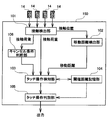
- FIG. 3 is a block diagram showing the internal structure of the touch operation detection device according to the first embodiment.
- 4 (a) to 4 (d) are explanatory views showing the principle by which the touch operation detection device of the first embodiment detects the contact position and the contact load.
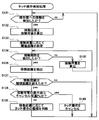
- FIG. 5 is a flowchart of the touch operation detection process executed by the touch operation detection device according to the first embodiment.
- FIG. 6 is an explanatory diagram illustrating a result of the touch operation detection device according to the first embodiment determining a touch operation mode.
- FIG. 7 is a flowchart of the touch operation detection process of the first modification of the first embodiment.
- FIG. 8A and FIG. 8B are explanatory diagrams showing the result of determining the mode of the touch operation in the touch operation detection process of the first modified example of the first embodiment.
- FIG. 9 is a block diagram showing the internal structure of the touch operation detecting device of the second modification of the first embodiment
- FIG. 10 is a flowchart of the touch operation detection process of the second modification of the first embodiment.
- FIG. 11A and FIG. 11B are explanatory diagrams for the cancellation condition of the third modification of the first embodiment.
- FIG. 11A and FIG. 11B are explanatory diagrams for the cancellation condition of the third modification of the first embodiment.
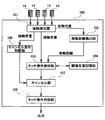
- FIG. 12 is a block diagram illustrating an internal structure of the touch operation detection device according to the second embodiment.
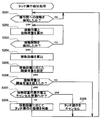
- FIG. 13 is a flowchart of the touch operation detection process executed by the touch operation detection device according to the second embodiment.
- FIG. 14A and FIG. 14B are explanatory diagrams showing the result of determining the mode of the touch operation in the touch operation detection process of the second embodiment.
- FIG. 15 is an explanatory diagram illustrating the internal structure of the touch operation input device according to the third embodiment.
- FIG. 16 is an explanatory diagram illustrating the internal structure of a touch operation input device according to a modification of the third embodiment.
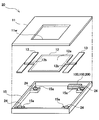
- FIG. 1A shows the external shape of a touch operation input device 10 equipped with the touch operation detection device 100 of the first embodiment.
- the touch operation input device 10 of the first embodiment is roughly formed in a thin rectangular parallelepiped shape, and is formed by covering the opening portion of the frame body 15 formed in a shallow dish shape with a cover plate 11.
- the cover plate 11 is provided with a large opening window 11w, and the operation surface 12a can be touched from the opening window 11w.
- FIG. 1B shows an exploded view of the touch operation input device 10.
- a rectangular operation plate 12 having an operation surface 12 a formed on the upper surface side is accommodated inside the frame body 15, and an elongated rectangular holding plate 13 is provided on both sides of the operation plate 12. It is arranged one by one. From the center on both sides of the operation plate 12, a rod-like connecting portion 12b is projected toward the holding plate 13, and the distal end side of the connecting portion 12b is attached to the lower surface side of the center of the holding plate 13 by bonding or screwing. It is attached. Furthermore, a strain detection unit 14 to be described later is attached to the holding plate 13 so as to sandwich the position where the connecting portion 12b is attached.
- the holding plates 13 are provided on both sides of the operation plate 12, and the strain detectors 14 are attached to the respective holding plates 13 at two locations. Therefore, the strain detectors 14 are attached to four locations in total. It will be. In the present embodiment, the strain detection unit 14 is attached to the upper surface side of the holding plate 13, but the strain detection unit 14 may be attached to the lower surface side of the holding plate 13.
- the frame body 15 is formed with mounting bases 15a projecting upward, and the holding plates 13 provided on both sides of the operation plate 12 are respectively located between the two mounting bases 15a. Is mounted and fixed on the mounting table 15a. As a result, the operation plate 12 is accommodated in the frame 15 in a suspended state in which the connecting portion 12b is supported by the holding plates 13 on both sides.
- the cover plate 11 is covered from above and fixed to the frame body 15.
- a gap is secured between the upper surface of the holding plate 13 and the lid plate 11 at this time, and the holding plate 13 can be bent and deformed without contacting the lid plate 11.
- a processing circuit for calculating a contact position and a contact load on the operation surface 12a by performing a predetermined calculation process on the output of the distortion detection unit 14 in the frame body 15. 100).
- the strain detector 14 is formed by connecting four strain gauges 14a, 14b, 14c, and 14d.
- the strain gauge is a strain element whose resistance value changes depending on the magnitude of strain.
- a bridge circuit as shown in FIG. 2B instead of using a strain gauge alone, the effects of various errors can be suppressed, and as a result, the amount of strain can be detected with high accuracy. can do.
- FIG. 3 shows a rough internal structure of the touch operation detection device 100 of the first embodiment.
- the touch operation detection device 100 includes a contact detection unit 101, a movement distance detection unit 102, a touch operation detection unit 103, a threshold distance storage unit 104, a touch operation determination unit 105, a cancellation condition determination unit 106, and a cancellation unit 107. It has.
- these “parts” are classified for convenience in the inside of the touch operation detection device 100, focusing on the function for detecting the touch operation on the operation surface 12a. It does not indicate that the inside is physically divided into these “parts”. Therefore, these “units” can be realized by a program operating on the CPU, or can be realized by a logic circuit such as a CPU or a memory.
- the contact detection unit 101 is connected to the four strain detection units 14. When a finger or the like touches the operation surface 12 a, the strain detection unit 14 detects distortion. The contact detection unit 101 calculates a position (contact position) where a finger or the like touches the operation surface 12a and a contact load at that time based on the distortion amounts detected by the four distortion detection units 14. The principle of calculating the contact position and the contact load on the operation surface 12a from the strain amount detected by the strain detector 14 will be described later with reference to another drawing.
- the movement distance detection unit 102 acquires from the contact detection unit 101 the contact position when the finger or the like touches the operation surface 12a and the contact position when the finger or the like leaves, and the contact position on the operation surface 12a.
- the moving distance of is detected.
- the moving distance may be calculated by connecting a straight line between the contact position when the finger or the like is touched and the contact position when the finger or the like is released, but the finger or the like touches the operation surface 12a. It is also possible to calculate the distance that the contact position has moved from the time of moving away from the distance to the moving distance.
- the touch operation detection unit 103 When the touch operation detection unit 103 acquires the contact load from the contact detection unit 101, the touch operation detection unit 103 refers to the threshold distance storage unit 104 to acquire a threshold distance corresponding to the contact load. Then, the movement distance acquired from the movement distance detection unit 102 is compared with the threshold distance, and when the movement distance is larger than the threshold distance, contact with the operation surface 12a is detected as a touch operation. On the other hand, when the movement distance is not greater than the threshold distance, the contact with the operation surface 12a is not detected as a touch operation.
- the cancellation condition determination unit 106 acquires the contact load from the contact detection unit 101, determines whether or not the contact load satisfies a predetermined cancellation condition, and outputs the determination result to the cancellation unit 107. Details of the cancellation condition will be described later.
- the cancel unit 107 receives the detection result of the touch operation from the touch operation detection unit 103, and receives the determination result as to whether or not the contact load satisfies the cancel condition from the cancellation condition determination unit 106. If the contact load does not satisfy the cancel condition, the detection result of the touch operation detected by the touch operation detection unit 103 is output to the touch operation determination unit 105. On the other hand, when the contact load satisfies the cancel condition, the detection result of the touch operation detected by the touch operation detection unit 103 is canceled. For this reason, the touch operation detection result is not output to the touch operation determination unit 105. The reason for doing this will be described in detail later.
- the touch operation determination unit 105 receives the detection result of the touch operation obtained by the touch operation detection unit 103, the touch operation is determined as a tap operation, a flick operation, or a swipe based on the movement distance detected along with the touch operation. It is determined which operation is performed. That is, when the movement distance of the touch operation is short, the touch operation is determined as a tap operation, when the movement distance is long, it is determined as a swipe operation, and when it is an intermediate movement distance, it is determined as a flick operation. To do.
- the threshold distance for determining whether the touch operation is a tap operation, a flick operation, or a swipe operation the threshold distance stored in the threshold distance storage unit 104 can be used. . In FIG.
- a dashed arrow is displayed from the threshold distance storage unit 104 to the touch operation determination unit 105 because the touch operation determination unit 105 can read out the threshold distance from the threshold distance storage unit 104 and use it. It represents something.
- the touch operation determination unit 105 determines whether the touch operation is a tap operation, a flick operation, or a swipe operation, the result is output to the outside.
- the touch operation detection device 100 of the first embodiment when contact with the operation surface 12a is detected, the contact load and the moving distance at that time are detected. And when they satisfy the predetermined conditions mentioned later, it detects as a touch operation to the operation surface 12a. Although the detailed reason will be described later, by doing so, it is possible to avoid erroneously detecting noise as a touch operation, so that the detection sensitivity of the touch operation can be increased. As a result, even when a touch operation is performed so as to lightly touch the operation surface 12a, a comfortable input operation can be realized in response to the touch operation.
- the touch operation input device 10 can simultaneously detect a contact load when detecting a contact position on the operation surface 12a. Therefore, it is possible to increase the detection sensitivity of the touch operation without causing a malfunction, while keeping the structure of the touch operation input device 10 as it is.
- the operation plate 12 tends to rotate in the direction indicated by the thick solid arrow in the drawing, with the axis connecting the connecting portions 12b protruding from both sides as the rotation axis. If the rotation axis at this time is the X axis, and further, the axis orthogonal to the X axis and parallel to the operation surface 12a is the Y axis, and the coordinates of the point A are (xa, ya), the operation plate 12 will be rotated.
- the magnitude of the couple M is given by F ⁇ ya.
- the contact load F received by the point A is also distributed and transmitted to the holding plates 13 on both sides via the connecting portion 12b.
- a load Fa is applied to the left holding plate 13, and a load is applied to the right holding plate 13.
- Fb is applied.
- the holding plate 13 has a so-called doubly-supported beam structure in which both sides are fixed by the mounting table 15a, and is located at a position where the central connecting portion 12b is attached. Loads and couples are applied. Furthermore, the material and cross-sectional shape of the holding plate 13 are known. In such a case, if the beam theory of material mechanics is used, the bending which generate
- FIG. 4B shows the bending that occurs in the holding plate 13 when the load Fa and the couple Ma act on the center position of the holding plate 13. Assume that the magnitude of the couple Ma is zero. In this case, since the center of the holding plate 13 is pushed down by the load Fa, the holding plate 13 bends symmetrically in the drawing. Further, the amount of deflection increases as the load Fa increases.
- the load and the couple acting on the center of the holding plate 13 are known, the bending generated in the holding plate 13 can be determined. Or, conversely, if the amount of deflection occurring in the holding plate 13 is known, the load and couple acting on the center of the holding plate 13 can be obtained.
- the amount of bending generated in the holding plate 13 can be calculated using the amount of strain generated on the upper surface (or lower surface) of the holding plate 13.
- the strain detectors 14 may be attached to the left and right two locations in the center of the holding plate 13 to measure the amount of strain. And the amount of bending can be calculated
- the load Fa and the couple Ma applied to the left holding plate 13 of the operation plate 12 and the load Fb and the couple Mb applied to the right holding plate 13 are thus obtained. Determine (see FIG. 4A).
- the contact load F can be calculated by adding the load Fa and the load Fb applied to the left and right holding plates 13. Further, the coordinate value ya of the point A can be calculated by the equation (1) in FIG. 4C by considering the balance of the couple around the X axis. Further, the coordinate value xa of the point A can be calculated by the equation (2) in FIG. 4D by considering the balance of the couple around the Y axis.
- the touch operation detection device 100 calculates a contact position and a contact load on the operation surface 12a by performing a predetermined calculation on the distortion amount detected by the distortion detection unit 14. Furthermore, by making use of the fact that the contact position and contact load can be obtained at the same time, it is possible to detect touch operations with high sensitivity without causing malfunctions by performing the following touch operation detection processing. It has become.
- the touch operation detection process of the first embodiment first, it is determined whether or not a contact with the operation surface 12a is detected (S101). As described above with reference to FIGS. 4A to 4D, when a finger or the like comes into contact with the operation surface 12a, the holding plates 13 provided on the left and right sides of the operation plate 12 are deformed. Distortion is detected. Therefore, the touch operation detection device 100 can determine whether or not the operation surface 12a is touched based on whether or not the distortion is detected by the distortion detection unit 14.
- the tap load Pt is the following load.
- the touch operation on the operation surface 12a by the operator includes a tap operation for operating the operation surface 12a, a flick operation for operating the operation surface 12a short, and a stroke of the operation surface 12a. It can be roughly divided into swipe operations.
- the contact load on the operation surface 12a has a large value
- the contact load tends to have a small value.
- the contact load during the flick operation is usually smaller than that of the tap operation but larger than that of the swipe operation. Therefore, from the magnitude of the contact load detected with the touch operation, it can be estimated whether the mode of the touch operation is a tap operation, a flick operation, or a swipe operation.
- the tap load Pt is a load set as a threshold for determining whether the touch operation is estimated as a tap operation or a flick operation. If the contact load is larger than the tap load Pt, the touch operation can be estimated as a tap operation.
- the threshold distance is set for detecting the tap operation.
- the value Lt is set (S104).
- the threshold distance is the following distance. As described above, the manner in which the operator touches the operation surface 12a can be broadly divided into tap operations, flick operations, and swipe operations.
- the contact position moves a long distance after the contact with the operation surface 12a is detected until the contact is not detected.
- the tap operation operated so as to hit the operation surface 12a the contact position does not move in principle.
- the flick operation that operates so as to flip the operation surface 12a the distance that the contact position moves from when the contact to the operation surface 12a is detected until the contact is not detected is shorter than that in the case of the swipe operation. . Therefore, from the movement distance of the contact position detected with the touch operation, it can be estimated whether the touch operation mode is a tap operation, a flick operation, or a swipe operation.
- the threshold distance is a distance set as a threshold for estimating whether the touch operation is a tap operation, a flick operation, or a swipe operation based on the movement distance. Therefore, the tap operation detection value Lt, the flick operation detection value Lf (however, larger than Lt), and the swipe operation detection value Ls (however, larger than Lf) are set as the threshold distance. ing. In this embodiment, 0 is set as the tap operation detection value Lt.
- the flick load Pf is a load set as a threshold for determining whether the touch operation is estimated as a flick operation or a swipe operation. That is, the contact load is smaller than the tap load Pt (S103: no), and therefore, it is estimated that the touch operation is not a tap operation. Therefore, in order to determine whether a flick operation or a swipe operation is performed, the contact operation is performed.
- the load is compared with the flick load Pf.
- the flick load Pf is set to a value smaller than the tap load Pt. If the contact load is smaller than the tap load Pt but larger than the flick load Pf, the touch operation can be estimated as a flick operation.
- the threshold distance is set to the value Lf for detecting the flick operation (S106).
- the threshold distance is set to the value Ls for detecting the swipe operation (S107).
- the movement distance of the contact position with the operation surface 12a is detected (S110).
- This moving distance can be obtained by calculating the distance between the contact position when contact is detected and the contact position when contact is released.
- the contact position can be calculated every moment. Therefore, the movement distance may be obtained by accumulating the distance the contact position has moved on the operation surface 12a. Absent.
- the movement distance thus obtained exceeds a preset threshold distance (S111).
- a preset threshold distance S111: yes
- contact with the operation surface 12a is detected as a touch operation.
- the detected touch operation mode is determined.
- the maximum value of the contact load is the maximum value of the contact load monitored after the contact is detected until the contact is released.
- the condition that “the maximum value of the contact load exceeds the cancel load Pc” is the cancel condition. If the maximum value of the contact load exceeds the cancel load Pc, the cancel condition is satisfied.
- the mode of the touch operation is determined based on the movement distance (S113). That is, if the moving distance is larger than a predetermined threshold (for example, a threshold distance Ls for detecting a swipe operation), it is determined that the touch operation mode is a swipe operation. If the movement distance is smaller than the threshold but larger than another threshold smaller than the threshold (for example, the threshold distance Lf for detecting the flick operation), it is determined that the touch operation mode is a flick operation. Furthermore, when it is smaller than the another threshold value, it is determined that the touch operation mode is a tap operation.
- a predetermined threshold for example, a threshold distance Ls for detecting a swipe operation
- FIG. 6 shows the result of the touch operation detection device 100 according to the first embodiment determining whether or not the touch operation is a false detection and the mode of the touch operation based on the relationship between the contact load and the movement distance. It is shown. As shown in FIG. 6, even when a touch operation is detected, if the contact load exceeds a predetermined cancel load Pc, it is determined that the touch operation is canceled (that is, a cancel operation). Is done.
- a threshold distance is set according to the contact load.
- the contact is detected as a touch operation.
- the contact load is small enough to be detected. Even in such a case, if contact is detected over a certain distance, the contact is unlikely to be due to noise or the like.
- the moving distance is short, there is a high possibility that noise or the like is erroneously detected. Therefore, when the movement distance is larger than the threshold distance Ls for swipe detection, it is determined that the contact is caused by the swipe operation of the operation surface 12a, and when the movement distance is smaller than the threshold distance Ls. It is determined that noise or the like has been erroneously detected.
- the contact load is a sufficiently large value (for example, a value larger than the tap load Pt).
- the load is too large for erroneous detection of noise or the like, it may be determined that the touch operation is actually performed. Therefore, when the moving distance is smaller than the threshold distance Lf for detecting the flick operation, it is determined that the tap operation is performed, and the moving distance is larger than the threshold distance Lf for detecting the flick operation, but is larger than the threshold distance Ls for detecting the swipe operation. Is smaller, it is determined that the flick operation has been performed.
- the moving distance is compared with the threshold distance Lf for detecting the flick operation.
- the threshold distance Lf for detecting the flick operation.
- the contact load is monitored until the contact is released after the contact with the operation surface 12a is detected, and the maximum value of the contact load is the cancel load Pc. Is exceeded (S112: yes in FIG. 5), the detected touch operation is canceled.
- a situation in which an erroneous touch operation is noticed may be noticed after the finger is released from the operation surface 12a to complete the touch operation, but may be noticed before the finger is released from the operation surface 12a.
- an erroneous touch operation can be canceled by performing a predetermined cancel operation.
- the finger has not been released from the operation surface 12a when the user notices that the touch operation is wrong. Further, it is assumed that the finger has to be released from the operation surface 12a in order to cancel the touch operation. In this case, by releasing the finger from the operation surface 12a, an erroneous touch operation is once confirmed, and then a cancel operation is performed again. This is a hassle twice, and since I noticed an error before releasing my finger, it would be convenient to take advantage of that and save the trouble.
- the touch operation input device 10 when the operator notices an incorrect touch operation, if the finger has not yet been released from the operation surface 12a, the operation surface 12a can be pressed firmly as it is. An erroneous touch operation can be canceled. For this reason, the operability of the touch operation input device 10 can be greatly improved.
- a cancel operation needs to be performed again.
- an erroneous touch operation is noticed after the finger is released from the operation surface 12a, the erroneous touch operation has already been confirmed, so that it is not troublesome. Therefore, the touch operation input device 10 The operability of is not impaired.
- the touch operation input device 10 of the first embodiment can increase the detection sensitivity of the touch operation without erroneously detecting noise or the like, and as a result, it is comfortable even for light operations. Thus, it is possible to realize the touch operation input device 10 that operates in a simple manner.
- the threshold distance for tap operation detection, flick operation detection, or swipe operation detection is set by comparing the detected contact load with the tap load Pt or the flick load Pf.
- the threshold distance does not necessarily need to be set for tap operation detection, flick operation detection, and swipe operation detection.
- a threshold distance that continuously changes according to the contact load may be set. .
- FIG. 7 shows a flowchart of the touch operation detection process of the first modified example.
- the touch operation detection process of the first modified example shown in FIG. 5 is different from the touch operation detection process of the first example described with reference to FIG. 5 in that a threshold distance that changes continuously according to the contact load is set. Is different.
- the touch operation detection process of the first modification will be briefly described focusing on the differences from the first embodiment.
- the touch operation detection process of the first modified example first, it is determined whether or not contact with the operation surface 12a is detected (S131). When the contact is not detected (S131: no), the same determination is repeated until the contact is detected. When contact with the operation surface 12a is detected (S131: yes), a contact position and a contact load with respect to the operation surface 12a are calculated (S132).
- FIG. 8A illustrates how the threshold distance is set according to the contact load. As illustrated, the threshold distance is set to a larger value as the contact load becomes smaller. It should be noted that the threshold distance becomes 0 when the contact load becomes a certain magnitude, and the threshold distance can remain 0 even if the contact load becomes a value larger than that.
- a threshold distance S137
- S137 when the movement distance exceeds the threshold distance (S137: yes), contact with the operation surface 12a is detected as a touch operation. Then, the detected touch operation mode is determined. Prior to that, it is determined whether or not the maximum value of the contact load exceeds a predetermined cancel load Pc (S138).
- the maximum value of the contact load is the maximum value of the contact load from when contact is detected until it is released.
- the detected touch operation mode is determined based on the movement distance (S139). That is, as shown in FIG. 8B, a threshold distance Ls for detecting a swipe operation, a threshold distance Lf for detecting a flick operation, or a threshold distance Lt for detecting a tap operation is set in advance and moved. By comparing the distance, it is determined that the operation is a swipe operation, a flick operation, or a tap operation.
- the first modification described above has the following effects in addition to the effects of the first embodiment described above.
- the threshold distance can be increased as the contact load decreases. For this reason, even a light touch operation that can be barely detected can be detected without erroneous detection.
- FIG. 9 shows the internal structure of the touch operation detection device 150 of the second modification of the first embodiment.
- the touch operation detection device 150 according to the second modification is different from the touch operation detection device 100 according to the first embodiment described above with reference to FIG.
- the point that is input to the unit 105 is significantly different from the point that the cancel unit 107 is not provided.
- the touch operation detection device 150 according to the second modification of the first embodiment will be briefly described with a focus on differences from the first embodiment.
- about the same structure as 1st Example detailed description is abbreviate
- the touch operation detection device 150 includes a contact detection unit 101, a movement distance detection unit 102, a touch operation detection unit 103, a threshold distance storage unit 104, a touch operation determination unit 105, and a cancel condition determination unit 106. . These parts have the following functions.
- the contact detection unit 101 calculates a position (contact position) where a finger or the like touches the operation surface 12a and a contact load at that time based on the distortion amounts detected by the four distortion detection units 14.
- the movement distance detection unit 102 acquires from the contact detection unit 101 the contact position when the finger or the like touches the operation surface 12a and the contact position when the finger or the like leaves, and the contact position on the operation surface 12a. The moving distance of is detected.
- the cancellation condition determination unit 106 acquires a contact load from the contact detection unit 101, and determines whether or not the contact load satisfies a predetermined cancellation condition.
- the touch operation detection unit 103 acquires the contact load from the contact detection unit 101
- the touch operation detection unit 103 refers to the threshold distance storage unit 104 to acquire a threshold distance corresponding to the contact load.
- the cancellation condition determination unit 106 acquires a determination result as to whether or not the cancellation condition is satisfied. If the cancel condition is not satisfied, the touch operation is detected in the same manner as in the first embodiment. That is, the movement distance acquired from the movement distance detection unit 102 is compared with the threshold distance, and when the movement distance is larger than the threshold distance, contact with the operation surface 12a is detected as a touch operation. On the other hand, when the movement distance is not greater than the threshold distance, the contact with the operation surface 12a is not detected as a touch operation. Further, even when the cancel condition is satisfied, the touch operation is not detected.
- the touch operation determination unit 105 Upon receiving the detection result of the touch operation obtained by the touch operation detection unit 103, the touch operation determination unit 105 compares the movement distance detected with the touch operation with a threshold distance, so that the touch operation is performed as a tap operation. , Flick operation or swipe operation. As this threshold distance, the threshold distance stored in the threshold distance storage unit 104 can be used. In FIG. 9, a dashed arrow is displayed from the threshold distance storage unit 104 to the touch operation determination unit 105 because the touch operation determination unit 105 can read out the threshold distance from the threshold distance storage unit 104 and use it. It represents something. When the touch operation determination unit 105 determines whether the touch operation is a tap operation, a flick operation, or a swipe operation, the result is output to the outside.
- FIG. 10 shows a flowchart of the touch operation detection process executed by the touch operation detection device 150 of the second modification of the first embodiment described above.
- the touch operation detection process of the second modified example shown in FIG. 10 is different from the touch operation detection process of the first example described above with reference to FIG.
- the flowchart of the touch operation detection process performed with the touch operation detection apparatus 150 of a modification is shown.
- the flowchart of the touch operation detection process of the second modification of the first embodiment shown in FIG. 10 cancels the maximum value of the contact load with respect to the touch operation detection process of the first embodiment described above with reference to FIG.
- the timing for determining whether or not the load is larger than the load Pc is different, and the other portions are the same. A brief description is given below.
- the threshold distance is set to the value Lt set for detecting the tap operation (S174).
- the contact load is not greater than the tap load Pt (S173: no)
- the threshold distance is set to the flick operation detection value Lf (S176).
- the threshold distance is set to the value Ls for detecting the swipe operation (S177).
- the maximum value of the contact load (that is, the contact load monitored until the contact is released after the contact is detected). It is determined whether or not the maximum value exceeds a predetermined cancel load Pc (S180).
- the movement distance of the contact position to the operation surface 12a is detected (S181), and the obtained movement It is determined whether the distance exceeds a preset threshold distance (S182).
- a preset threshold distance S182
- the touch on the operation surface 12a is detected as a touch operation, and the mode of the touch operation is determined based on the movement distance (S183). . That is, if the moving distance is larger than a predetermined threshold (for example, a threshold distance Ls for detecting a swipe operation), it is determined that the touch operation mode is a swipe operation.
- the touch operation mode is a flick operation. Furthermore, when it is smaller than the another threshold value, it is determined that the touch operation mode is a tap operation.
- FIG. 11A and FIG. 11B illustrate time-series data of contact loads detected from when contact with the operation surface 12a is detected until contact is released.
- the detected contact load is small at the beginning, but suddenly increases after the contact load is further reduced at the stage before the contact is released. This is probably because an operator who noticed an erroneous touch operation pressed the operation surface 12a strongly in an attempt to cancel the touch operation.
- the contact load increase amount ⁇ P is calculated, and when the increase amount ⁇ P exceeds a predetermined value, it is determined that the cancel condition is satisfied, and the detected touch operation is canceled. Alternatively, the touch operation may not be detected.
- the contact load increase amount ⁇ P is calculated by subtracting the minimum value from the maximum value of the contact load.
- the increase amount of the contact load in a predetermined unit time width may be obtained, and the maximum value of the increase amount in the unit time width may be set as the contact load increase amount ⁇ P.
- a threshold load may be set according to the movement distance, and when the contact load is larger than the threshold load, contact with the operation surface 12a may be detected as a touch operation.
- FIG. 12 shows a rough internal structure of the touch operation detection device 200 according to the second embodiment.
- the touch operation detection device 200 of the second embodiment shown in the figure is compared with the touch operation detection device 100 of the first embodiment shown in FIG. 3 by the touch operation detection unit 103 comparing the contact load with the threshold load.
- the point of detecting touch operation is very different.
- the touch operation detection device 200 of the second embodiment is different in that it includes a threshold load storage unit 204 instead of the threshold distance storage unit 104, but the other points are the same as in the first embodiment. This is the same as the touch operation detection device 100 of FIG.
- the touch operation detection device 200 according to the second embodiment will be briefly described with a focus on differences from the first embodiment. Moreover, about the same structure as 1st Example, detailed description is abbreviate
- the contact detection unit 101 calculates the contact position and the contact load on the operation surface 12a based on the distortion amounts detected by the four distortion detection units 14, and the contact position is detected as a moving distance.
- the contact load is output to the touch operation detection unit 103.
- the movement distance detection unit 102 detects the movement distance by acquiring the contact position from the contact detection unit 101, and outputs the obtained movement distance to the touch operation detection unit 103.
- the touch operation detection unit 103 When the touch operation detection unit 103 according to the second embodiment receives the movement distance from the movement distance detection unit 102, the touch operation detection unit 103 refers to the threshold load storage unit 204 to acquire a threshold load corresponding to the movement distance. Then, the contact load acquired from the contact detection unit 101 is compared with the threshold load, and when the contact load is larger than the threshold load, contact with the operation surface 12a is detected as a touch operation. On the other hand, when the contact load is not larger than the threshold load, the contact with the operation surface 12a is not detected as a touch operation.
- the cancellation condition determination unit 106 acquires the contact load from the contact detection unit 101, determines whether or not the contact load satisfies a predetermined cancellation condition, and outputs the determination result to the cancellation unit 107.
- the cancel unit 107 receives the determination result as to whether or not the cancel condition is satisfied from the cancel condition determination unit 106, and detects the touch operation detected by the touch operation detection unit 103 when the cancel condition is not satisfied. The result is output to the touch operation determination unit 105. On the other hand, when the cancellation condition is satisfied, the detection result of the touch operation detected by the touch operation detection unit 103 is canceled.
- the touch operation determination unit 105 receives the touch operation detected by the touch operation detection unit 103, the touch operation is selected from the tap operation, the flick operation, and the swipe operation based on the movement distance detected along with the touch operation. Is determined. That is, when the movement distance of the touch operation is short, the touch operation is determined as a tap operation, when the movement distance is long, it is determined as a swipe operation, and when it is an intermediate movement distance, it is determined as a flick operation. To do. When it is determined whether the touch operation is a tap operation, a flick operation, or a swipe operation, the result is output to the outside.
- the touch operation detection device 200 of the second embodiment also includes a threshold distance storage unit 104 as in the touch operation detection device 100 of the first embodiment shown in FIG.
- the mode of the touch operation may be determined using the threshold distance that has been set.
- FIG. 13 shows a flowchart of the touch operation detection process executed by the touch operation detection device 200 of the second embodiment.
- the touch operation detection process of the second embodiment first, it is determined whether or not a contact with the operation surface 12a is detected (S201). If contact is not detected (S201: no), the same determination is repeated until contact is detected. When contact with the operation surface 12a is detected (S201: yes), a contact position and a contact load with respect to the operation surface 12a are calculated (S202).
- the moving distance can be used by calculating the distance between the contact position when contact is detected and the contact position when contact release is detected.
- the actual distance traveled by the contact position may be accumulated between the detection of the contact and the detection of the release of the contact.
- FIG. 14A illustrates a state in which the threshold load is set according to the movement distance. As shown in the drawing, the threshold load is set to a smaller value as the moving distance becomes larger. Further, when the moving distance becomes a certain size or larger, the threshold load can be kept zero.
- the contact load at this time may be the contact load when contact with the operation surface 12a is detected, or may be the maximum load of the contact load detected until the contact is released. it can.
- a threshold distance Ls for detecting a swipe operation a threshold distance Lf for detecting a flick operation, or a threshold distance Lt for detecting a tap operation is set in advance and moved. By comparing the distance, it is determined that the operation is a swipe operation, a flick operation, or a tap operation.
- the touch load is detected when the contact load is larger than the threshold load set according to the movement distance. For this reason, even if the detection sensitivity of the touch operation is increased, noise or the like is not erroneously detected. As a result, touch operations that lightly touch the operation surface 12a can be reliably detected without erroneous detection.
- the contact load increase amount ⁇ P has a predetermined value as in the third modification of the first embodiment described above with reference to FIGS. 11A and 11B. When it exceeds, it may be determined that the cancellation condition is satisfied, and the detected touch operation may be canceled or the touch operation may not be detected.
- C. Third embodiment In the first and second embodiments described above, the contact position and the contact load on the operation surface 12a are detected based on the output of the strain detector 14 attached to the holding plate 13. However, it is not always necessary to attach the strain detection unit 14 to the holding plate 13 as long as the contact position and the contact load on the operation surface 12a can be detected.
- a third embodiment for detecting the contact position and the contact load without using the distortion detection unit 14 will be briefly described.
- the touch operation input device 10 As described above with reference to FIGS. 4A to 4D, the touch operation input device 10 according to the first and second embodiments is applied to the load that the holding plate 13 receives from the connecting portion 12 b of the operation plate 12. And the contact position and the contact load on the operation surface 12a are detected based on the force and the couple. Therefore, as long as the load and couple received by the holding plate 13 from the connecting portion 12b can be obtained, the strain detecting unit 14 is not necessarily used.
- the holding plate 13 may be attached to the mounting table 15 a via the load cell 24. Even in this case, the load and the couple received by the holding plate 13 from the connecting portion 12 b can be calculated from the output of the load cell 24 that supports both sides of the holding plate 13. If the load and couple received by the holding plate 13 are known, the contact position and the contact load on the operation surface 12a can be calculated by the method described above with reference to FIGS. 4C and 4D. it can.
- a contact load cannot be detected, devices (such as a touch pad and a touch display) that can detect a contact position are widely used. Therefore, you may combine such an apparatus and a load cell.
- a contact position detecting device 32 such as a touch pad may be mounted on the mounting table 15a via the load cell.
- the four corners of the contact position detecting device 32 are supported.
- the contact position detecting device 32 can be stably supported, this may be used.
- the center may be supported.
- the touch position on the operation surface 12 a can be detected by the touch operation input device 30, and the contact load can be detected by the load cell 34.
- each section is expressed as S101, for example.
- each section can be divided into a plurality of subsections, while a plurality of sections can be combined into one section.
- each section configured in this manner can be referred to as a device, module, or means.
Landscapes
- Engineering & Computer Science (AREA)
- General Engineering & Computer Science (AREA)
- Theoretical Computer Science (AREA)
- Human Computer Interaction (AREA)
- Physics & Mathematics (AREA)
- General Physics & Mathematics (AREA)
- User Interface Of Digital Computer (AREA)
Abstract
操作面(12a)に指を接触させるタッチ操作を検知するタッチ操作検知装置(100、200)は、前記操作面への接触に伴う該操作面上での接触位置と該操作面に対する接触荷重とを検出する接触検出部(101)と、前記操作面への接触が開始されてから該接触が終了するまでの前記接触位置の移動距離を検出する移動距離検出部(102)と、記接触荷重と前記移動距離とが所定の関係を満たす場合に、前記接触を前記タッチ操作として検知するタッチ操作検知部(103)とを備える。
Description
本出願は、2015年1月12日に出願された日本特許出願番号2015-3759号および2015年10月8日に出願された日本特許出願番号2015―200616号に基づくもので、ここにその記載内容を援用する。
本開示は、操作面に指を接触させるタッチ操作を検知することによって、入力操作を行うタッチ操作検知装置、タッチ操作入力装置、タッチ操作検知方法に関するものである。
従来の入力機器はボタンを押すことによって操作するタイプが一般的であったが、今日では、操作面を指で触ることによって操作する入力機器が広く用いられるようになってきた。例えば、様々な画像を表示可能な表示画面上に透明な操作面を設けておき、画像が表示された箇所の操作面に触れることで、各種の入力操作を実現するタッチディスプレイが広く使用されている。あるいは、表示画面上にカーソルを表示しておき、操作面に触れながら指を移動させて、カーソルの位置を移動させることによって、各種の入力操作を実現するタッチパッドも広く使用されている。
これらの入力機器は、操作面への接触を検知して動作する。このため、操作者が意図せずに操作面に触れた場合には誤動作してしまう。そこで、操作者の意図しない接触による誤動作を防止することを目的として、様々な技術が提案されている。例えば、操作面への接触が検知されると、その接触位置を検出することに併せて接触面積も検出する。そして、接触面積を閾値と比較することによって、意図しない接触による誤動作を防止しようとする技術が提案されている(特許文献1)。
また、快適な入力操作を実現することを目的として、操作者が操作面に軽く触れるようにタッチ操作した場合でも、そのタッチ操作に反応するように検知感度を向上させることも要請されている。
しかし、操作面に軽く触れるようなタッチ操作も検知できるように検知感度を増加させると、ノイズの影響で操作面に触れていないにも拘わらず誤動作が発生し易くなり、却って快適な入力操作が損なわれてしまうという問題があった。
本開示は、誤動作を生じさせることなく、タッチ操作の検知感度を増加させるタッチ操作検知装置、タッチ操作入力装置、タッチ操作検知方法を提供することを目的とする。
本開示の第一の態様において、操作面に指を接触させるタッチ操作を検知するタッチ操作検知装置は、前記操作面への接触に伴う該操作面上での接触位置と該操作面に対する接触荷重とを検出する接触検出部と、前記操作面への接触が開始されてから該接触が終了するまでの前記接触位置の移動距離を検出する移動距離検出部と、前記接触荷重と前記移動距離とが所定の関係を満たす場合に、前記接触を前記タッチ操作として検知するタッチ操作検知部とを備える。
上記のタッチ操作検知装置において、ノイズなどを検知した場合は、移動距離と接触荷重とが所定の関係を満たさないので、タッチ操作として誤検知することがない。その結果、誤検知することなく、タッチ操作の検出感度を増加させることが可能となる。
本開示の第二の態様において、操作面に指を接触させるタッチ操作を検知することによって動作するタッチ操作入力装置は、前記操作面が形成された操作板と、前記操作板の両側から突設された連接部と、前記連接部を介して前記操作板の両側を保持する保持部と、前記連接部を介して前記操作板から前記保持部に伝わる荷重および偶力を検出する荷重偶力検出部と、前記操作面への接触に伴う該操作面上での接触位置と該操作面に対する接触荷重とを、前記荷重偶力検出部で検出された前記荷重および偶力に基づいて検出する接触検出部と、前記操作面への接触が開始されてから該接触が終了するまでの前記接触位置の移動距離を検出する移動距離検出部と、前記接触荷重と前記移動距離とが所定の関係を満たす場合に、前記接触を前記タッチ操作として検知するタッチ操作検知部とを備える。
上記のタッチ操作入力装置において、ノイズなどを検知した場合は、移動距離と接触荷重とが所定の関係を満たさないので、タッチ操作として誤検知することがない。その結果、誤検知することなく、タッチ操作の検出感度を増加させることが可能となる。
本開示の第三の態様において、操作面に指を接触させるタッチ操作を検知するタッチ操作検知方法は、前記操作面への接触に伴う該操作面上での接触位置と該操作面に対する接触荷重とを検出することと、前記操作面への接触が開始されてから該接触が終了するまでの前記接触位置の移動距離を検出することと、前記接触荷重と前記移動距離とが所定の関係を満たす場合に、前記接触を前記タッチ操作として検知することとを備える。
上記のタッチ操作検知方法において、ノイズなどを検知した場合は、移動距離と接触荷重とが所定の関係を満たさないので、タッチ操作として誤検知することがない。その結果、誤検知することなく、タッチ操作の検出感度を増加させることが可能となる。
本開示についての上記目的およびその他の目的、特徴や利点は、添付の図面を参照しながら下記の詳細な記述により、より明確になる。その図面は、
図1(a)および図1(b)は、第1実施例のタッチ操作検知装置を搭載したタッチ操作入力装置の説明図であり、
図2(a)および図2(b)は、第1実施例のタッチ操作検知装置で採用されている歪み検出部についての説明図であり、
図3は、第1実施例のタッチ操作検知装置の内部構造を示すブロック図であり、
図4(a)から図4(d)は、第1実施例のタッチ操作検知装置が接触位置および接触荷重を検出する原理を示す説明図であり、
図5は、第1実施例のタッチ操作検知装置が実行するタッチ操作検知処理のフローチャートであり、
図6は、第1実施例のタッチ操作検知装置がタッチ操作の態様を判断した結果を示した説明図であり、
図7は、第1実施例の第1変形例のタッチ操作検知処理のフローチャートであり、
図8(a)および図8(b)は、第1実施例の第1変形例のタッチ操作検知処理でタッチ操作の態様を判断した結果を示した説明図であり、
図9は、第1実施例の第2変形例のタッチ操作検知装置の内部構造を示すブロック図であり、
図10は、第1実施例の第2変形例のタッチ操作検知処理のフローチャートであり、
図11(a)および図11(b)は、第1実施例の第3変形例のキャンセル条件についての説明図であり、
図12は、第2実施例のタッチ操作検知装置の内部構造を示すブロック図であり、
図13は、第2実施例のタッチ操作検知装置が実行するタッチ操作検知処理のフローチャートであり、
図14(a)および図14(b)は、第2実施例のタッチ操作検知処理でタッチ操作の態様を判断した結果を示した説明図であり、
図15は、第3実施例のタッチ操作入力装置の内部構造を例示した説明図であり、
図16は、第3実施例の変形例のタッチ操作入力装置の内部構造を例示した説明図である。
A.第1実施例 :
A-1.装置構成 :
図1(a)には、第1実施例のタッチ操作検知装置100を搭載したタッチ操作入力装置10の外観形状が示されている。図示されるように第1実施例のタッチ操作入力装置10は、大まかには薄い直方体形状をしており、浅い皿形状に形成された枠体15の開口部分を、蓋板11で覆って形成されている。蓋板11には大きな開口窓11wが設けられており、開口窓11wから操作面12aに触ることが可能となっている。
A-1.装置構成 :
図1(a)には、第1実施例のタッチ操作検知装置100を搭載したタッチ操作入力装置10の外観形状が示されている。図示されるように第1実施例のタッチ操作入力装置10は、大まかには薄い直方体形状をしており、浅い皿形状に形成された枠体15の開口部分を、蓋板11で覆って形成されている。蓋板11には大きな開口窓11wが設けられており、開口窓11wから操作面12aに触ることが可能となっている。
図1(b)には、タッチ操作入力装置10の分解組立図が示されている。図示されるように、枠体15の内部には、上面側に操作面12aが形成された矩形形状の操作板12が収容され、操作板12の両側には細長い矩形形状の保持板13が一枚ずつ配置されている。操作板12の両側の中央からは、保持板13に向かって棒状の連接部12bが突設されており、連接部12bの先端側は保持板13の中央の下面側に、接着あるいはネジ止めによって取り付けられている。更に、保持板13には、連接部12bが取り付けられた位置を間に挟むようにして、後述する歪み検出部14が取り付けられている。保持板13は操作板12の両側に設けられており、それぞれの保持板13には2箇所に歪み検出部14が取り付けられているから、歪み検出部14は合計で4箇所に取り付けられていることになる。尚、本実施例では、保持板13の上面側に歪み検出部14が取り付けられているものとしているが、保持板13の下面側に歪み検出部14を取り付けても構わない。
また、枠体15には、上方に向けて突設させた載置台15aが四箇所に形成されており、操作板12の両側に設けられた保持板13は、それぞれ2つの載置台15aの間を差し渡すように載置台15aに載置されて固定される。この結果、操作板12は、両側の保持板13によって連接部12bが支えられた宙づり状態で枠体15内に収容されている。
そして、その状態で、蓋板11を上から覆って枠体15に固定する。このときの保持板13の上面と蓋板11との間には隙間が確保されており、保持板13は蓋板11に接触することなく撓み変形することが可能となっている。
また、枠体15内には、歪み検出部14の出力に対して所定の演算処理をすることにより、操作面12a上での接触位置および接触荷重を算出するための処理回路(タッチ操作検知装置100)が搭載されている。
図2(a)および図2(b)には、歪み検出部14の大まかな内部構造が示されている。図2(a)に示されるように歪み検出部14は、4つの歪みゲージ14a,14b,14c,14dを結線して形成されている。ここで歪みゲージとは、歪みの大きさによって抵抗値が変化する歪み素子である。また、歪みゲージを単独で用いるのではなく、図2(b)に示すようなブリッジ回路を形成することで、種々の誤差の影響を抑制することができ、その結果、精度良く歪み量を検出することができる。
図3には、第1実施例のタッチ操作検知装置100の大まかな内部構造が示されている。図示されるようにタッチ操作検知装置100は、接触検出部101、移動距離検出部102、タッチ操作検知部103、閾値距離記憶部104、タッチ操作判別部105、キャンセル条件判断部106、キャンセル部107を備えている。
尚、これらの「部」は、操作面12aへのタッチ操作を検知するための機能に着目して、タッチ操作検知装置100の内部を便宜的に分類したものであり、タッチ操作検知装置100の内部がこれらの「部」に物理的に区分されていることを表すものではない。従って、これらの「部」は、CPU上で動作するプログラムによって実現することもできるし、CPUやメモリーなどの論理回路によって実現することもできる。
接触検出部101は、4つの歪み検出部14に接続されており、操作面12aに指などが触れると、これらの歪み検出部14で歪みが検出される。接触検出部101は、4つの歪み検出部14で検出された歪み量に基づいて、操作面12aに指などが触れた位置(接触位置)と、その時の接触荷重とを算出する。歪み検出部14で検出した歪み量から、操作面12a上での接触位置および接触荷重を算出する原理については、別図を用いて後述する。
移動距離検出部102は、操作面12aに指などが触れた時の接触位置と、指などが離れた時の接触位置とを接触検出部101から取得して、操作面12a上での接触位置の移動距離を検出する。尚、移動距離は、指などが触れた時の接触位置と、指などが離れた時の接触位置とを直線で結んだ距離を算出してもよいが、操作面12aに指などが触れてから離れるまでの間に接触位置が移動した距離を算出して、移動距離としてもよい。
タッチ操作検知部103は、接触検出部101から接触荷重を取得すると、閾値距離記憶部104を参照することによって接触荷重に応じた閾値距離を取得する。そして、移動距離検出部102から取得した移動距離と閾値距離とを比較して、移動距離が閾値距離よりも大きかった場合には、操作面12aへの接触をタッチ操作として検知する。これに対して、移動距離が閾値距離よりも大きくなかった場合には、操作面12aへの接触はタッチ操作として検知しない。
キャンセル条件判断部106は、接触検出部101から接触荷重を取得して、接触荷重が所定のキャンセル条件を満足するか否かを判断し、判断結果をキャンセル部107に出力する。キャンセル条件の詳細については後述する。
キャンセル部107は、タッチ操作検知部103からはタッチ操作の検知結果を受け取り、キャンセル条件判断部106からは、接触荷重がキャンセル条件を満たすか否かの判断結果を受け取る。そして、接触荷重がキャンセル条件を満たしていなかった場合は、タッチ操作検知部103で検知されたタッチ操作の検知結果をタッチ操作判別部105に出力する。これに対して、接触荷重がキャンセル条件を満たしていた場合には、タッチ操作検知部103で検知されたタッチ操作の検知結果をキャンセルしてしまう。このため、タッチ操作の検知結果がタッチ操作判別部105に出力されることはない。このようなことをする理由については、後ほど詳しく説明する。
タッチ操作判別部105は、タッチ操作検知部103で得られたタッチ操作の検知結果を受け取ると、そのタッチ操作に伴って検出された移動距離に基づいて、タッチ操作がタップ操作、フリック操作、スワイプ操作の何れであるかを判別する。すなわち、タッチ操作の移動距離が短い場合には、そのタッチ操作はタップ操作と判断し、移動距離が長い場合にはスワイプ操作と判断し、中間の移動距離であった場合にはフリック操作と判断する。また、タッチ操作が、タップ操作、フリック操作、スワイプ操作の何れであるかを判断するための閾値の距離としては、閾値距離記憶部104に記憶されている閾値距離を流用することも可能である。図3中で、閾値距離記憶部104からタッチ操作判別部105に向かって破線の矢印が表示されているのは、タッチ操作判別部105が閾値距離記憶部104から閾値距離を読み出して流用可能であることを表している。タッチ操作判別部105は、こうしてタッチ操作がタップ操作、フリック操作、スワイプ操作の何れであるかを判断したら、その結果を外部に出力する。
このように第1実施例のタッチ操作検知装置100では、操作面12aへの接触が検知されると、その時の接触荷重と移動距離とを検出する。そして、それらが後述する所定の条件を満足していた場合には、操作面12aへのタッチ操作として検知する。詳細な理由については後述するが、こうすれば、ノイズをタッチ操作として誤検知することを回避できるので、タッチ操作の検出感度を増加させることができる。その結果、操作面12aに軽く触れるようにタッチ操作された場合でも、そのタッチ操作に反応して快適な入力操作を実現することが可能となる。
また、図1(a)および図1(b)に示した第1実施例のタッチ操作入力装置10は、操作面12aへの接触位置を検出する際に、接触荷重も同時に検出することができるので、タッチ操作入力装置10の構造はそのままで、誤動作を生じさせることなく、タッチ操作の検知感度を増加させることが可能となる。
以下では、第1実施例のタッチ操作検知装置100がタッチ操作入力装置10を誤動作させることなく、高い検知感度でタッチ操作を検知するために実行するタッチ操作検知処理について説明するが、その準備として、タッチ操作入力装置10が操作面12aへの接触位置を検出する原理について説明する。
例えば、図4(a)に示すように、操作板12の操作面12a上のA点が、接触荷重Fで押されたものとする。すると、操作板12は、両側に突設された連接部12bを結ぶ軸を回転軸として、図中に太い実線の矢印で示した方向に回転しようとする。このときの回転軸をX軸とし、更に、X軸に直交して操作面12aに平行な軸をY軸として、A点の座標を(xa,ya)とすると、操作板12を回転させようとする偶力Mの大きさは、F・yaとなる。この偶力Mが、連接部12bを介して両側の保持板13に分配される。その結果、図中で破線の矢印で示したように、左側の保持板13には偶力Maが作用し、右側の保持板13には偶力Mbが作用する。当然ながら、それぞれの偶力M,Ma,Mbの大きさは、M=Ma+Mbが成り立つ。
また、A点が受ける接触荷重Fについても、連接部12bを介して両側の保持板13に分散して伝わる結果、左側の保持板13には荷重Faが掛かり、右側の保持板13には荷重Fbが掛かることになる。当然ながら、接触荷重Fおよびそれぞれの荷重Fa,Fbの大きさは、F=Fa+Fbが成り立つ。
ここで、図1(b)を用いて前述したように、保持板13は両側が載置台15aで固定されたいわゆる両持ち梁構造となっており、中央の連接部12bが取り付けられた位置に荷重および偶力が作用する。更に、保持板13の材質および断面形状は既知である。このような場合、材料力学の梁理論を用いれば、保持板13が連接部12bから受ける荷重および偶力によって保持板13に発生する撓みを求めることができる。この点については、以下のように考えれば直感的に了解することができる。
図4(b)には、保持板13の中央の位置に荷重Faと偶力Maとが作用したときに、保持板13に発生する撓みが示されている。仮に、偶力Maの大きさが0であったとする。この場合、保持板13の中央が荷重Faで押し下げられることになるから、保持板13は図中で左右対称に撓むことになる。また、荷重Faが大きくなるほど撓み量は大きくなる。
その状態で、例えば図中で右回りの偶力Maが作用したとする。すると、偶力Maが作用する位置の右側では撓みが大きくなり、左側では撓みが小さくなって、左右の撓み量に差が生じる。更に、偶力Maが大きくなるほど、左右の撓み量の差は大きくなる。
以上のことから、保持板13の中央に作用する荷重および偶力が分かれば、保持板13に発生する撓みを決定することができる。あるいは逆に、保持板13に発生している撓み量が分かれば、保持板13の中央に作用する荷重および偶力を求めることもできる。
また、保持板13に発生する撓み量は、保持板13の上面(あるいは下面)に生じる歪み量を用いて算出することができる。
上述したように、ここでは保持板13の中央に荷重Faおよび偶力Maが作用することによって、その左右の位置に生じる撓みを求める必要がある。そこで、図4(b)に示したように、保持板13の中央の左右2箇所に歪み検出部14を取り付けて、歪み量を計測しておけばよい。そして、これらの歪み検出部14で得られた歪み量から、撓み量を求め、得られた撓み量から、保持板13の中央に掛かる荷重Faおよび偶力Maを決定することができる。
本実施例のタッチ操作入力装置10では、このようにして、操作板12の左側の保持板13に掛かる荷重Faおよび偶力Maと、右側の保持板13に掛かる荷重Fbおよび偶力Mbとを決定する(図4(a)参照)。
こうして、操作板12の左右の保持板13に掛かる荷重Fa,Fbおよび偶力Ma.Mbが求められれば、操作面12a上のA点の座標(xa,ya)および接触荷重Fを求めることができる。
先ず、接触荷重Fについては、左右の保持板13に掛かる荷重Faと荷重Fbとを加算することによって算出することができる。また、A点の座標値yaについては、X軸周りの偶力の釣り合いを考えることによって、図4(c)中の(1)式によって算出することができる。更に、A点の座標値xaについては、Y軸周りの偶力の釣り合いを考えることによって、図4(d)中の(2)式によって算出することができる。
このように、第1実施例のタッチ操作入力装置10では、操作面12aに指などが接触すると、操作面12a上での接触位置だけでなく、接触荷重も同時に検出することができる。
そこで、第1実施例のタッチ操作検知装置100は、歪み検出部14で検出した歪み量に対して所定の演算を行うことによって、操作面12aでの接触位置と接触荷重とを算出する。更に、接触位置と接触荷重とが同時に得られることを利用して、以下のようなタッチ操作検知処理を行うことにより、誤動作を生じさせることなく、高い感度でタッチ操作を検知することが可能となっている。
A-2.タッチ操作検知処理 :
図5には、第1実施例のタッチ操作検知装置100が実行するタッチ操作検知処理のフローチャートが示されている。
A-2.タッチ操作検知処理 :
図5には、第1実施例のタッチ操作検知装置100が実行するタッチ操作検知処理のフローチャートが示されている。
図示されるように、第1実施例のタッチ操作検知処理では先ず始めに、操作面12aへの接触を検知したか否かを判断する(S101)。図4(a)から図4(d)を用いて前述したように、操作面12aに指などが接触すると、操作板12の左右に設けた保持板13が変形するので、歪み検出部14で歪みが検出される。従って、タッチ操作検知装置100は、歪み検出部14で歪みが検出されたか否かによって、操作面12aへの接触の有無を判断することができる。
その結果、歪み検出部14で歪みが検出されておらず、従って、操作面12aへの接触を検知していない場合は(S101:no)、接触を検知するまで同様な判断を繰り返す。そして、歪み検出部14で歪みが検出されて、操作面12aへの接触を検知したら(S101:yes)、操作面12aへの接触位置および接触荷重を算出する(S102)。接触位置および接触荷重は、図4(a)から図4(d)を用いて前述した原理に従って、4つの歪み検出部14からの出力に基づいて算出することができる。
続いて、算出した接触荷重が、所定のタップ荷重Ptよりも大きいか否かを判断する(S103)。ここでタップ荷重Ptとは次のような荷重である。先ず、操作者の操作面12aに対するタッチ操作の態様は、操作面12aを叩くように操作するタップ操作と、操作面12aを短く弾くように操作するフリック操作と、操作面12aを大きく撫でるように操作するスワイプ操作とに大きく分けられる。
操作面12aを叩くように操作するタップ操作では、操作面12aに対する接触荷重は大きな値となり、操作面12aを撫でるように操作するスワイプ操作では、接触荷重は小さな値となる傾向にある。更に、フリック操作時の接触荷重は、タップ操作よりも小さいが、スワイプ操作よりは大きい値となることが通常である。従って、タッチ操作に伴って検出された接触荷重の大きさから、そのタッチ操作の態様が、タップ操作、フリック操作、スワイプ操作の何れであるかを推測することができる。
タップ荷重Ptとは、タッチ操作がタップ操作またはフリック操作の何れと推測されるかを判断するための閾値として設定された荷重である。接触荷重がタップ荷重Ptよりも大きければ、そのタッチ操作はタップ操作と推測することができる。
S103では、算出した接触荷重がタップ荷重Ptよりも大きいか否かを判断して、接触荷重がタップ荷重Ptよりも大きければ(S103:yes)、閾値距離を、タップ操作検出用に設定された値Ltに設定する(S104)。ここで閾値距離とは次のような距離である。上述したように、操作者の操作面12aに対するタッチ操作の態様は、タップ操作と、フリック操作と、スワイプ操作とに大きく分けられる。
このうち、操作面12aを大きく撫でるように操作するスワイプ操作は、操作面12aへの接触が検知されてから、接触が検知されなくなるまでの間に、接触位置が長い距離を移動する。これに対して、操作面12aを叩くように操作するタップ操作では、接触位置は原則的には移動しない。また、操作面12aを弾くように操作するフリック操作では、操作面12aへの接触が検知されてから接触が検知されなくなるまでに、接触位置が移動する距離は、スワイプ操作の場合よりは短くなる。従って、タッチ操作に伴って検出された接触位置の移動距離から、そのタッチ操作の態様が、タップ操作、フリック操作、スワイプ操作の何れであるかを推測することができる。
閾値距離とは、タッチ操作が、タップ操作、フリック操作、スワイプ操作の何れであるかを、移動距離に基づいて推測するための閾値として設定された距離である。従って、閾値距離には、タップ操作検出用の値Ltと、フリック操作検出用の値Lf(但し、Ltより大きい)と、スワイプ操作検出用の値Ls(但し、Lfより大きい)とが設定されている。また、本実施例では、タップ操作検出用の値Ltには0が設定されている。
一方、接触荷重がタップ荷重Ptよりも大きくなかった場合は(S103:no)、接触荷重がフリック荷重Pfよりも大きいか否かを判断する(S105)。ここで、フリック荷重Pfとは、タッチ操作がフリック操作またはスワイプ操作の何れと推測されるかを判断するための閾値として設定された荷重である。すなわち、接触荷重がタップ荷重Ptよりも小さく(S103:no)、従って、タッチ操作はタップ操作ではないと推測されているので、フリック操作またはスワイプ操作の何れであるかを判断するために、接触荷重をフリック荷重Pfと比較する。尚、フリック荷重Pfは、タップ荷重Ptよりも小さな値に設定されている。接触荷重がタップ荷重Ptよりも小さいが、フリック荷重Pfよりも大きければ、そのタッチ操作はフリック操作と推測することができる。
その結果、接触荷重がフリック荷重Pfよりも大きいと判断した場合は(S105:yes)、閾値距離をフリック操作検出用の値Lfに設定する(S106)。
これに対して、接触荷重がフリック荷重Pfよりも大きくないと判断した場合は(S105:no)、閾値距離をスワイプ操作検出用の値Lsに設定する(S107)。
以上のようにして、閾値距離を設定したら(S104、S106、S107)、操作面12aへの接触が解除されたか否かを判断する(S108)。保持板13に取り付けられた歪み検出部14の何れでも歪みが検出されなくなったら、接触が解除されたと判断することができる。
その結果、操作面12aへの接触が解除されていないと判断した場合は(S108:no)、接触荷重を再び算出した後(S109)、接触が解除されたか否かを判断する(S108)。このように、操作面12aへの接触が検知された後は(S101:yes)、接触が解除されたと判断されるまで(S108:yes)、接触荷重がモニターされることになる(S109)。
そして、操作面12aへの接触が解除されたら(S108:yes)、操作面12aへの接触位置の移動距離を検出する(S110)。この移動距離は、接触が検知された時点での接触位置と、接触が解除された時点での接触位置との距離を算出することによって求めることができる。もちろん、操作面12aで接触が検知されている間は、刻々と接触位置を算出することができるから、操作面12a上で接触位置が移動した距離を累積することによって移動距離を求めても構わない。
続いて、こうして得られた移動距離が、予め設定しておいた閾値距離を超えたか否かを判断する(S111)。その結果、移動距離が閾値距離を超えていた場合は(S111:yes)、操作面12aへの接触がタッチ操作として検知されることになる。そして、検知したタッチ操作の態様を判断するが、それに先立って、接触荷重の最大値が、所定のキャンセル荷重Pcを超えたか否かを判断する(S112)。ここで接触荷重の最大値とは、接触を検知してから、その接触が解除されるまでの間にモニターしていた接触荷重の最大値である。尚、「接触荷重の最大値がキャンセル荷重Pcを超えること」という条件がキャンセル条件であり、接触荷重の最大値がキャンセル荷重Pcを超えると、キャンセル条件が満たされたことになる。
その結果、接触荷重の最大値が、所定のキャンセル荷重Pcを超えていなかった場合は(S112:no)、そのタッチ操作の態様を移動距離に基づいて判断する(S113)。すなわち、移動距離が、所定の閾値(例えばスワイプ操作検出用の閾値距離Ls)よりも大きければ、タッチ操作の態様はスワイプ操作と判断する。また、移動距離が、その閾値よりは小さいが、その閾値よりは小さな別の閾値(例えばフリック操作検出用の閾値距離Lf)よりも大きければ、タッチ操作の態様はフリック操作と判断する。更に、その別の閾値よりも小さい場合は、タッチ操作の態様はタップ操作と判断する。
これに対して、接触荷重の最大値が所定のキャンセル荷重Pcを超えていた場合は(S112:yes)、検知されたタッチ操作をキャンセルしてしまう(S114)。従って、この場合は、タッチ操作の態様が判断されることはない。
以上では、移動距離が閾値距離を超えた場合(S111:yes)について説明した。これに対して、移動距離が閾値距離を超えていなかった場合は(S111:no)、検知された操作面12aへの接触は、ノイズなどによって誤検知されたものと判断して、タッチ操作の態様は判断しない。
図6には、第1実施例のタッチ操作検知装置100が、接触荷重と移動距離との関係に基づいて、タッチ操作が誤検知であるか否か、およびタッチ操作の態様を判断した結果が示されている。また、図6に示されるように、タッチ操作が検知された場合でも、接触荷重が所定のキャンセル荷重Pcを超えていた場合には、そのタッチ操作をキャンセルする操作(すなわち、キャンセル操作)と判断される。
このようにして、タッチ操作を検知してその態様を判断するか(S113)、検知したタッチ操作をキャンセルするか(S114)、あるいは、操作面12aへの接触がタッチ操作によるものではないと判断したら(S111:no)、処理の先頭に戻って、操作面12aへの接触を検知したか否かを判断する(S101)。そして、操作面12aへの接触を検知していない場合は(S101:no)、同じ判断(S101)を繰り返すことによって、接触を検知するまで待機状態となる。その結果、接触が検知されたら(S101:yes)、上述した続く一連の処理を開始する。
以上に説明したように、第1実施例のタッチ操作検知処理では、操作面12aへの接触を検知すると、接触荷重に応じて閾値距離を設定する。そして、接触位置の移動距離が閾値距離を超えた場合に、その接触をタッチ操作によるものとして検知する。こうすれば、以下の理由から、ノイズなどを誤検知することなく、タッチ操作の検知感度を増加させることができる。
例えば、接触荷重が辛うじて検出できる程度に小さい値であったとする。このような場合でも、ある程度の距離に亘って接触が検知されているのであれば、その接触はノイズなどによるものとは考えにくい。これに対して、移動距離が短い場合には、ノイズなどを誤検知した可能性が高い。そこで、移動距離が、スワイプ検出用の閾値距離Lsよりも大きかった場合には、その接触を、操作面12aがスワイプ操作されたことによるものと判断し、閾値距離Lsよりも小さかった場合には、ノイズなどを誤検知したものと判断する。
こうすれば、たとえ辛うじて検出できる程度に軽く触れられた場合でも、誤検知することなくスワイプ操作を検知することができる。
また、接触荷重が十分に大きな値(例えばタップ荷重Ptよりも大きな値)であったとする。この場合は、ノイズなどの誤検知にしては荷重が大きすぎるので、実際にタッチ操作されたものと判断して良い。そこで、移動距離が、フリック操作検出用の閾値距離Lfよりも小さい場合はタップ操作されたものと判断し、フリック操作検出用の閾値距離Lfよりも大きいが、スワイプ操作検出用の閾値距離Lsよりも小さい場合はフリック操作されたものと判断する。
更に、接触荷重の大きさからはノイズの可能性を排除できない場合には、移動距離を、フリック操作検出用の閾値距離Lfと比較する。その結果、移動距離が、フリック操作検出用の閾値距離Lfよりも大きかった場合には、そのような大きさのノイズが連続して発生するとは考えにくいので、実際にタッチ操作されたものと考えて良い。そこで、移動距離を、スワイプ操作検出用の閾値距離Lsと比較して、閾値距離Lsよりも小さい場合はフリック操作されたものと判断し、閾値距離Lsよりも大きい場合はスワイプ操作されたものと判断する。
こうすれば、誤検知することなく、フリック操作およびスワイプ操作を検知することができる。
また、このようにすると、タップ荷重Ptよりも小さな接触荷重のタップ操作や、フリック荷重Pfよりも小さな接触荷重のフリック操作を検知することができなくなる。しかし、タップ操作は操作面12aを叩くような操作なので、一般的に接触荷重は大きくなる。同様に、フリック操作は操作面12aを弾くような操作なので、タップ操作ほどではないにしろ、接触荷重は大きくなる。従って、タップ荷重Ptおよびフリック荷重Pfを適切な値に設定しておけば、タップ操作やフリック操作を検知できない事態は回避することができる。
更に、上述した第1実施例では、操作面12aへの接触が検知された後も、その接触が解除されるまでの間は接触荷重がモニターされており、接触荷重の最大値がキャンセル荷重Pcを超えた場合(図5のS112:yes)には、検知されたタッチ操作がキャンセルされるようになっている。
このため、例えば、操作面12aに触れようとした時に、手元が狂って誤った箇所に触れてしまった場合でも、操作面12aから指を離す前であれば、操作面12aを強く押すことによって、誤ったタッチ操作をキャンセルすることができる。こうすれば、以下の理由から、タッチ操作入力装置10の操作性を大幅に向上させることが可能となる。
先ず、誤ったタッチ操作に気が付く状況としては、操作面12aから指を離してタッチ操作を完了した後に気が付く場合もあるが、操作面12aから指を離す前に気が付く場合も少なくない。そして、誤ったタッチ操作は、所定のキャンセル操作を行うことでキャンセル可能となっていることが通常である。
ここで、タッチ操作を誤ったことに気付いた時に、まだ操作面12aから指を離していなかったとする。また、そのタッチ操作をキャンセルするために操作面12aから指を離さなければならなかったとする。この場合、操作面12aから指を離すことによって、誤ったタッチ操作を一旦確定させ後に、改めてキャンセル操作を行うことになる。これでは二度手間であるし、せっかく指を離す前に誤りに気付いたのであるから、そのことを活かして二度手間が省ければ便利である。
この点からすると、本実施例のタッチ操作入力装置10では、誤ったタッチ操作に気付いた時に、まだ操作面12aから指を離していなかった場合には、そのまま操作面12aを強く押すことで、誤ったタッチ操作をキャンセルすることができる。このため、タッチ操作入力装置10の操作性を大幅に向上させることが可能となる。もちろん、このような方法を採用した場合、誤ったタッチ操作に気付いた時に、既に操作面12aから指を離していた場合には、改めてキャンセル操作を行う必要が生じる。しかし、操作面12aから指を離した後に、誤ったタッチ操作に気付いた場合は、その誤ったタッチ操作が既に確定されているので二度手間になるわけではなく、従って、タッチ操作入力装置10の操作性が損なわれることはない。
以上のような理由から、第1実施例のタッチ操作入力装置10では、ノイズなどを誤検知することなく、タッチ操作の検知感度を増加させることができ、その結果、軽い操作に対しても快適に動作するタッチ操作入力装置10を実現することが可能となる。
加えて、誤ったタッチ操作に気付いた時に、まだ操作面12aから指を離していなかった場合には、そのタッチ操作を簡単にキャンセルすることができるので、タッチ操作入力装置10の操作性を大幅に向上させることが可能となる。
A-3.第1実施例の第1変形例 :
上述した第1実施例では、検出した接触荷重をタップ荷重Ptあるいはフリック荷重Pfと比較することによって、タップ操作検出用、フリック操作検知用、スワイプ操作検出用の何れかの閾値距離を設定するものとして説明した。しかし、閾値距離は、必ずしもタップ操作検出用、フリック操作検知用、スワイプ操作検出用に設定する必要は無く、例えば、接触荷重に応じて連続的に変化するような閾値距離を設定してもよい。
A-3.第1実施例の第1変形例 :
上述した第1実施例では、検出した接触荷重をタップ荷重Ptあるいはフリック荷重Pfと比較することによって、タップ操作検出用、フリック操作検知用、スワイプ操作検出用の何れかの閾値距離を設定するものとして説明した。しかし、閾値距離は、必ずしもタップ操作検出用、フリック操作検知用、スワイプ操作検出用に設定する必要は無く、例えば、接触荷重に応じて連続的に変化するような閾値距離を設定してもよい。
図7には、このような第1変形例のタッチ操作検知処理のフローチャートが示されている。図示した第1変形例のタッチ操作検知処理は、図5を用いて前述した第1実施例のタッチ操作検知処理に対して、接触荷重に応じて連続的に変化する閾値距離を設定する点が異なっている。以下では、第1実施例との相違点を中心として、第1変形例のタッチ操作検知処理について簡単に説明する。
図示されるように、第1変形例のタッチ操作検知処理でも、先ず始めに操作面12aへの接触を検知したか否かを判断する(S131)。接触を検知していない場合は(S131:no)、接触を検知するまで同様な判断を繰り返す。そして、操作面12aへの接触を検知したら(S131:yes)、操作面12aへの接触位置および接触荷重を算出する(S132)。
続いて、算出した接触荷重に応じて閾値距離を設定する(S133)。図8(a)には、接触荷重に応じて閾値距離を設定する様子が例示されている。図示されるように、接触荷重が小さくなるほど、閾値距離は大きな値に設定される。尚、接触荷重がある程度の大きさになったら閾値距離が0となり、接触荷重がそれ以上の値になっても、閾値距離は0のままとすることができる。
その後、操作面12aへの接触が解除されたか否かを判断する(S134)。その結果、操作面12aへの接触が解除されていない場合は(S134:no)、接触荷重を再び算出した後(S135)、接触が解除されたか否かを判断する(S134)。このように、操作面12aへの接触が検知された後は(S134:yes)、接触が解除されたと判断されるまで(S134:yes)、接触荷重がモニターされることになる(S109)。
その結果、接触が解除されたと判断したら(S134:yes)、操作面12aへの接触位置の移動距離を検出する(S136)。
続いて、移動距離が閾値距離を超えたか否かを判断する(S137)。その結果、移動距離が閾値距離を超えていた場合は(S137:yes)、操作面12aへの接触がタッチ操作として検知されることになる。そして、検知したタッチ操作の態様を判断するが、それに先立って、接触荷重の最大値が、所定のキャンセル荷重Pcを超えたか否かを判断する(S138)。尚、接触荷重の最大値とは、接触が検知されてから解除されるまでの間の接触荷重の最大値である。
その結果、接触荷重の最大値が、所定のキャンセル荷重Pcを超えていなかった場合は(S138:no)、検出したタッチ操作の態様を、移動距離に基づいて判断する(S139)。すなわち、図8(b)に示したように、スワイプ操作検出用の閾値距離Ls、フリック操作検出用の閾値距離Lf、あるいはタップ操作検出用の閾値距離Ltを予め設定しておき、これらと移動距離とを比較することによって、スワイプ操作、フリック操作、タップ操作の何れかと判断する。
また、図8(b)に示されるように、接触荷重が所定のキャンセル荷重Pcを超えていた場合には、キャンセル操作(すなわち、入力したタッチ操作をキャンセルする操作)と判断する。
これに対して、接触荷重の最大値が所定のキャンセル荷重Pcを超えていた場合は(S137:yes)、検知されたタッチ操作をキャンセルしてしまう(S140)。従って、この場合は、タッチ操作の態様が判断されることはない。
以上では、移動距離が閾値距離を超えた場合(S137:yes)について説明した。これに対して、移動距離が閾値距離を超えていなかった場合は(S137:no)、検知された操作面12aへの接触は、ノイズなどによって誤検知されたものと判断して、タッチ操作の態様は判断しない。
このようにして、タッチ操作を検知してその態様を判断するか(S139)、検知したタッチ操作をキャンセルするか(S140)、あるいは、操作面12aへの接触がタッチ操作によるものではないと判断したら(S137:no)、処理の先頭に戻って、操作面12aへの接触を検知したか否かを判断する(S131)。
以上に説明した第1変形例は、前述した第1実施例が備える効果に加えて、以下のような効果を有している。
先ず、第1変形例では、接触荷重が小さくなるほど閾値距離を大きくすることができる。このため、辛うじて検出できる程度の軽く触れたタッチ操作であっても、誤検知することなく検知することが可能となる。
また、接触荷重に応じて適切な閾値距離を設定することができるので、誤検知することなく、より精度良くタッチ操作を検知することが可能となる。
A-4.第1実施例の第2変形例 :
上述した第1実施例および第1変形例では、タッチ操作を検知した時に、接触荷重の最大値がキャンセル荷重Pcを超えていた場合には、検知したタッチ操作をキャンセルするものとして説明した。しかし、接触荷重の最大値がキャンセル荷重Pcを超えていた場合には、タッチ操作を検知しないようにしてもよい。
A-4.第1実施例の第2変形例 :
上述した第1実施例および第1変形例では、タッチ操作を検知した時に、接触荷重の最大値がキャンセル荷重Pcを超えていた場合には、検知したタッチ操作をキャンセルするものとして説明した。しかし、接触荷重の最大値がキャンセル荷重Pcを超えていた場合には、タッチ操作を検知しないようにしてもよい。
図9には、第1実施例の第2変形例のタッチ操作検知装置150の内部構造が示されている。図示されるように、第2変形例のタッチ操作検知装置150は、図3を用いて前述した第1実施例のタッチ操作検知装置100に対して、キャンセル条件判断部106の出力がタッチ操作判別部105に入力されている点と、キャンセル部107を備えていない点とが大きく異なっている。以下では、第1実施例との相違点を中心として、第1実施例の第2変形例のタッチ操作検知装置150について簡単に説明する。また、第1実施例と同じ構成については、同じ番号を付することによって詳細な説明を省略する。
第2変形例のタッチ操作検知装置150は、接触検出部101、移動距離検出部102、タッチ操作検知部103、閾値距離記憶部104、タッチ操作判別部105、キャンセル条件判断部106を備えている。そして、これらの部は次のような機能を有している。
接触検出部101は、4つの歪み検出部14で検出された歪み量に基づいて、操作面12aに指などが触れた位置(接触位置)と、その時の接触荷重とを算出する。
移動距離検出部102は、操作面12aに指などが触れた時の接触位置と、指などが離れた時の接触位置とを接触検出部101から取得して、操作面12a上での接触位置の移動距離を検出する。
キャンセル条件判断部106は、接触検出部101から接触荷重を取得して、接触荷重が所定のキャンセル条件を満足するか否かを判断する。
タッチ操作検知部103は、接触検出部101から接触荷重を取得すると、閾値距離記憶部104を参照することによって接触荷重に応じた閾値距離を取得する。更に、キャンセル条件判断部106からは、キャンセル条件が満足されたか否かの判断結果を取得する。そして、キャンセル条件が満足されていなかった場合には、前述した第1実施例と同様にして、タッチ操作を検知する。すなわち、移動距離検出部102から取得した移動距離と閾値距離とを比較して、移動距離が閾値距離よりも大きかった場合には、操作面12aへの接触をタッチ操作として検知する。これに対して、移動距離が閾値距離よりも大きくなかった場合には、操作面12aへの接触はタッチ操作として検知しない。また、キャンセル条件が満足されていた場合にも、タッチ操作の検知は行わない。
タッチ操作判別部105は、タッチ操作検知部103で得られたタッチ操作の検知結果を受け取ると、そのタッチ操作に伴って検出された移動距離を閾値距離と比較することによって、タッチ操作がタップ操作、フリック操作、スワイプ操作の何れであるかを判別する。この閾値距離としては、閾値距離記憶部104に記憶されている閾値距離を流用することも可能である。図9中で、閾値距離記憶部104からタッチ操作判別部105に向かって破線の矢印が表示されているのは、タッチ操作判別部105が閾値距離記憶部104から閾値距離を読み出して流用可能であることを表している。タッチ操作判別部105は、こうしてタッチ操作がタップ操作、フリック操作、スワイプ操作の何れであるかを判断したら、その結果を外部に出力する。
図10には、上述した第1実施例の第2変形例のタッチ操作検知装置150で実行されるタッチ操作検知処理のフローチャートが示されている。図示した第2変形例のタッチ操作検知処理は、図5を用いて前述した第1実施例のタッチ操作検知処理に対して、接触荷重が図10には、上述した第1実施例の第2変形例のタッチ操作検知装置150で実行されるタッチ操作検知処理のフローチャートが示されている。図10に示した第1実施例の第2変形例のタッチ操作検知処理のフローチャートは、図5を用いて前述した第1実施例のタッチ操作検知処理に対して、接触荷重の最大値がキャンセル荷重Pcよりも大きいか否かを判断するタイミングが異なっており、その他の部分については同様である。以下、簡単に説明する。
図示されるように、第1実施例の第2変形例のタッチ操作検知処理においても、先ず始めに、操作面12aへの接触を検知したか否かを判断する(S171)。その結果、操作面12aへの接触を検知していない場合は(S171:no)、接触を検知するまで同様な判断を繰り返す。これに対して、操作面12aへの接触を検知した場合には(S171:yes)、操作面12aへの接触位置および接触荷重を算出する(S172)。
そして、算出した接触荷重が、所定のタップ荷重Ptよりも大きいか否かを判断する(S173)。その結果、接触荷重がタップ荷重Ptよりも大きければ(S173:yes)、閾値距離を、タップ操作検出用に設定された値Ltに設定する(S174)。
これに対して、接触荷重がタップ荷重Ptよりも大きくなかった場合は(S173:no)、接触荷重がフリック荷重Pfよりも大きいか否かを判断する(S175)。その結果、接触荷重がフリック荷重Pfよりも大きかった場合は(S175:yes)、閾値距離をフリック操作検出用の値Lfに設定する(S176)。
これに対して、接触荷重がフリック荷重Pfよりも大きくないと判断した場合は(S175:no)、閾値距離をスワイプ操作検出用の値Lsに設定する(S177)。
以上のようにして、閾値距離を設定したら(S174、S176、S177)、操作面12aへの接触が解除されたか否かを判断する(S178)。
その結果、操作面12aへの接触が解除されていないと判断した場合は(S178:no)、接触荷重を再び算出した後(S179)、接触が解除されたか否かを判断する(S178)。このような判断を繰り返しているうちに、操作面12aへの接触が解除されて、S178では「yes」と判断される。
すると、第1実施例の第2変形例のタッチ操作検知処理では、接触荷重の最大値(すなわち、接触を検知してから、その接触が解除されるまでの間にモニターしていた接触荷重の最大値)が、所定のキャンセル荷重Pcを超えたか否かを判断する(S180)。
その結果、接触荷重の最大値が、所定のキャンセル荷重Pcを超えていなかった場合は(S180:no)、操作面12aへの接触位置の移動距離を検出して(S181)、得られた移動距離が、予め設定しておいた閾値距離を超えたか否かを判断する(S182)。その結果、移動距離が閾値距離を超えていた場合は(S182:yes)、操作面12aへの接触をタッチ操作として検知して、そのタッチ操作の態様を移動距離に基づいて判断する(S183)。すなわち、移動距離が、所定の閾値(例えばスワイプ操作検出用の閾値距離Ls)よりも大きければ、タッチ操作の態様はスワイプ操作と判断する。また、移動距離が、その閾値よりは小さいが、その閾値よりは小さな別の閾値(例えばフリック操作検出用の閾値距離Lf)よりも大きければ、タッチ操作の態様はフリック操作と判断する。更に、その別の閾値よりも小さい場合は、タッチ操作の態様はタップ操作と判断する。
これに対して、移動距離が閾値距離を超えていなかった場合は(S182:no)、検知された操作面12aへの接触は、ノイズなどによって誤検知されたものと判断して、タッチ操作の態様は判断しない。
以上では、接触荷重の最大値が、所定のキャンセル荷重Pcを超えていなかった場合(S180:no)について説明した。これに対して、接触荷重の最大値が、所定のキャンセル荷重Pcを超えていた場合は(S180:no)、移動距離を検出したり(S181)、移動距離と閾値距離とを比較してタッチ操作の態様を判断したりする処理(S182、S183)は行わない。そして、処理の先頭に戻って、再び、操作面12aへの接触を検知したか否かを判断した後(S171)、続く上述した一連の処理を繰り返す。
このような第2変形例のタッチ操作検知処理では、接触荷重の最大値がキャンセル荷重Pcを超えた場合には(S180:yes)、移動距離を検出する処理(S181)や、移動距離と閾値距離とを比較する処理(S182)や、タッチ操作の態様を判断する処理(S183)を省略することができるので、処理負担を軽減することが可能となる。
A-5.第1実施例の第3変形例 :
上述した第1実施例や、第1変形例や、第2変形例では、接触荷重の最大値に着目して、接触荷重の最大値がキャンセル荷重Pcを超えていた場合には、検知したタッチ操作をキャンセルするものとして説明した。しかし、接触荷重の最大値に着目するのではなく、接触荷重の増加量に着目して、検知したタッチ操作をキャンセルするか否かを判断することとしてもよい。
A-5.第1実施例の第3変形例 :
上述した第1実施例や、第1変形例や、第2変形例では、接触荷重の最大値に着目して、接触荷重の最大値がキャンセル荷重Pcを超えていた場合には、検知したタッチ操作をキャンセルするものとして説明した。しかし、接触荷重の最大値に着目するのではなく、接触荷重の増加量に着目して、検知したタッチ操作をキャンセルするか否かを判断することとしてもよい。
図11(a)および図11(b)には、操作面12aへの接触を検知してから接触が解除されるまでの間に検出された接触荷重の時系列データが例示されている。図11(a)に示した例では、初めのうちは検出された接触荷重は小さいが、接触が解除される前の段階で、接触荷重が更に小さくなった後、急に大きくなっている。これは、誤ったタッチ操作に気付いた操作者が、そのタッチ操作をキャンセルしようとして、操作面12aを強く押したことによるものと考えられる。
一方、図11(b)に示した例では、初めから比較的大きな接触荷重が検出されており、更に、その荷重が少しずつ大きくなっている。その結果、接触荷重の最大値としては、図11(a)に示した例と同程度の大きさとなっている。しかし、図11(b)に例示した接触荷重の変化は、操作者が誤ったタッチ操作をキャンセルしようとしたことによるものとは考えにくい。
そこで、接触荷重の増加量ΔPを算出して、この増加量ΔPが所定値を超えていた場合には、キャンセル条件が成立したものと判断して、検知していたタッチ操作をキャンセルする。あるいは、タッチ操作を検知しないようにしてもよい。
また、接触荷重の増加量ΔPは、接触荷重の最大値から最小値を減算することによって算出する。あるいは、所定の単位時間幅での接触荷重の増加量を求めておき、この単位時間幅での増加量の最大値を、接触荷重の増加量ΔPとしてもよい。
操作者の中には、操作面12aを強い力で操作する操作者と、弱い力で操作する操作者とが存在することが考えられる。強い力で操作する操作者は、普通に操作した場合でも、キャンセル荷重Pcを超えてしまい、操作者の意図に反してタッチ操作がキャンセルされてしまうことも考えられる。
しかし、第1実施例の第3変形例では、接触荷重の最大値ではなく増加量ΔPに基づいて、キャンセル条件が成立したか否かを判断するので、操作者の意図に反してタッチ操作がキャンセルされてしまう事態を回避することが可能となる。
B.第2実施例 :
上述した第1実施例では、操作面12aへの接触が検知されると、接触荷重および移動距離を検出して、検出した移動距離が、接触荷重に応じて設定される閾値距離よりも大きかった場合に、その接触をタッチ操作として検知するものとして説明した。
B.第2実施例 :
上述した第1実施例では、操作面12aへの接触が検知されると、接触荷重および移動距離を検出して、検出した移動距離が、接触荷重に応じて設定される閾値距離よりも大きかった場合に、その接触をタッチ操作として検知するものとして説明した。
しかし、操作面12aへの接触をタッチ操作として検知するために接触荷重と移動距離とが満足すべき関係は、上述した関係に限られるわけではない。例えば、移動距離に応じて閾値荷重を設定し、接触荷重が閾値荷重よりも大きかった場合に、操作面12aへの接触をタッチ操作として検知するようにしてもよい。
図12には、第2実施例のタッチ操作検知装置200の大まかな内部構造が示されている。図示した第2実施例のタッチ操作検知装置200は、図3に示した第1実施例のタッチ操作検知装置100に対して、タッチ操作検知部103が接触荷重を閾値荷重と比較することによって、タッチ操作を検知する点が大きく異なっている。
また、このことに対応して、第2実施例のタッチ操作検知装置200は、閾値距離記憶部104の替わりに閾値荷重記憶部204を備える点でも異なるが、その他の点については第1実施例のタッチ操作検知装置100と同様である。以下では、第1実施例との相違点を中心として、第2実施例のタッチ操作検知装置200について簡単に説明する。また、第1実施例と同じ構成については、同じ番号を付することによって詳細な説明を省略する。
第2実施例においても、接触検出部101は4つの歪み検出部14で検出された歪み量に基づいて、操作面12a上での接触位置と接触荷重とを算出し、接触位置は移動距離検出部102およびキャンセル条件判断部106に出力し、接触荷重はタッチ操作検知部103に出力する。
移動距離検出部102は、接触検出部101から接触位置を取得することによって移動距離を検出し、得られた移動距離をタッチ操作検知部103に出力する。
第2実施例のタッチ操作検知部103は、移動距離検出部102から移動距離を受け取ると、閾値荷重記憶部204を参照することによって移動距離に応じた閾値荷重を取得する。そして、接触検出部101から取得した接触荷重と閾値荷重とを比較して、接触荷重が閾値荷重よりも大きかった場合には、操作面12aへの接触をタッチ操作として検知する。これに対して、接触荷重が閾値荷重よりも大きくなかった場合には、操作面12aへの接触はタッチ操作として検知しない。
キャンセル条件判断部106は、接触検出部101から接触荷重を取得して、接触荷重が所定のキャンセル条件を満足するか否かを判断し、判断結果をキャンセル部107に出力する。
キャンセル部107は、キャンセル条件を満たすか否かの判断結果を、キャンセル条件判断部106から受け取って、キャンセル条件を満たしていなかった場合には、タッチ操作検知部103で検知されたタッチ操作の検知結果をタッチ操作判別部105に出力する。これに対して、キャンセル条件を満たしていた場合には、タッチ操作検知部103で検知されたタッチ操作の検知結果をキャンセルする。
タッチ操作判別部105は、タッチ操作検知部103で検知されたタッチ操作を受け取ると、そのタッチ操作に伴って検出された移動距離に基づいて、タッチ操作がタップ操作、フリック操作、スワイプ操作の何れであるかを判別する。すなわち、タッチ操作の移動距離が短い場合には、そのタッチ操作はタップ操作と判断し、移動距離が長い場合にはスワイプ操作と判断し、中間の移動距離であった場合にはフリック操作と判断する。こうしてタッチ操作がタップ操作、フリック操作、スワイプ操作の何れであるかを判断したら、その結果を外部に出力する。
尚、第2実施例のタッチ操作検知装置200においても、図3に示した第1実施例のタッチ操作検知装置100と同様に閾値距離記憶部104を備えておき、閾値距離記憶部104に記憶されている閾値距離を用いて、タッチ操作の態様を判断しても良い。
図13には、第2実施例のタッチ操作検知装置200が実行するタッチ操作検知処理のフローチャートが示されている。
図示されるように、第2実施例のタッチ操作検知処理でも、先ず始めに操作面12aへの接触を検知したか否かを判断する(S201)。接触を検知していない場合は(S201:no)、接触を検知するまで同様な判断を繰り返す。そして、操作面12aへの接触を検知したら(S201:yes)、操作面12aへの接触位置および接触荷重を算出する(S202)。
続いて、第2実施例のタッチ操作検知処理では、操作面12aへの接触が解除されたか否かを判断する(S203)。その結果、操作面12aへの接触が解除されていない場合は(S203:no)、接触が解除されるまで同じ判断(S203)を繰り返す。その結果、接触が解除されたら(S203:yes)、操作面12aへの接触位置の移動距離を検出する(S204)。
移動距離は、接触を検知した時の接触位置と、接触の解除を検知した時の接触位置との間の距離を算出して使用することができる。もちろん、接触を検知してから接触の解除を検知するまでの間に、接触位置が移動した実際の距離を累積して移動距離としてもよい。
続いて、第2実施例のタッチ操作検知処理では、算出した移動距離に応じて閾値荷重を設定する(S205)。図14(a)には、移動距離に応じて閾値荷重を設定する様子が例示されている。図示されるように、移動距離が大きくなるほど、閾値荷重は小さな値に設定される。また、移動距離がある程度以上の大きさになったら閾値荷重は0のままとすることもできる。
その後、接触荷重が閾値荷重を超えたか否かを判断する(S206)。このときの接触荷重は、操作面12aへの接触が検知された時の接触荷重とすることもできるし、あるいは接触が解除されるまでの間に検出された接触荷重の最大荷重とすることもできる。
その結果、接触荷重が閾値荷重を超えていた場合は(S206:yes)、操作面12aへの接触がタッチ操作として検知される。そして、検知したタッチ操作の態様を判断するが、それに先立って、接触荷重の最大値が、所定のキャンセル荷重Pcを超えたか否かを判断する(S207)。その結果、接触荷重の最大値が、所定のキャンセル荷重Pcを超えていなかった場合は(S207:no)、そのタッチ操作の態様を、移動距離に基づいて判断する(S208)。
すなわち、図14(b)に示したように、スワイプ操作検出用の閾値距離Ls、フリック操作検出用の閾値距離Lf、あるいはタップ操作検出用の閾値距離Ltを予め設定しておき、これらと移動距離とを比較することによって、スワイプ操作、フリック操作、タップ操作の何れかと判断する。
これに対して、接触荷重の最大値が、所定のキャンセル荷重Pcを超えていた場合は(S207:yes)、タッチ操作の態様を判断することなく、タッチ操作をキャンセルする(S209)。
以上では、接触荷重が閾値荷重を超えていた場合(S206:yes)について説明したが、接触荷重が閾値荷重を超えていなかった場合は(S206:no)、検知された操作面12aへの接触は、ノイズなどによって誤検知されたものと判断できる。そこで、この場合は、接触荷重の最大値がキャンセル荷重Pcを超えたか否かの判断(S207)や、タッチ操作の態様を判断する処理(S208)や、タッチ操作をキャンセルする処理(S209)は行わない。
このようにして、検知したタッチ操作の態様を判断するか(S208)、検知したタッチ操作をキャンセルするか(S209)、あるいは、操作面12aへの接触がタッチ操作によるものではないと判断したら(S206:no)、処理の先頭に戻って、操作面12aへの接触を検知したか否かを判断する(S201)。
以上に説明した第2実施例のタッチ操作検知処理では、接触荷重が、移動距離に応じて設定された閾値荷重よりも大きい場合にタッチ操作として検知する。このため、タッチ操作の検出感度を増加させても、ノイズなどを誤検知することが無い。その結果、操作面12aに軽く触れるようなタッチ操作も、誤検知することなく確実に検知することが可能となる。
尚、上述した第2実施例においても、図9および図10を用いて前述した第1実施例の第2変形例と同様に、接触荷重の最大値がキャンセル荷重Pcを超えた場合には、タッチ操作を検知しないこととしても良い。
あるいは、上述した第2実施例においても、図11(a)および図11(b)を用いて前述した第1実施例の第3変形例と同様に、接触荷重の増加量ΔPが所定値を超えた場合にキャンセル条件が満足されたものと判断して、検知したタッチ操作をキャンセルしたり、タッチ操作を検知しない
こととしても良い。
C.第3実施例 :
上述した第1実施例および第2実施例では、保持板13に取り付けた歪み検出部14の出力に基づいて、操作面12aへの接触位置及び接触荷重を検出するものとして説明した。しかし、操作面12aへの接触位置及び接触荷重を検出することができれば、必ずしも保持板13に歪み検出部14を取り付ける必要は無い。以下では、歪み検出部14を用いることなく接触位置及び接触荷重を検出する第3実施例について簡単に説明する。
こととしても良い。
C.第3実施例 :
上述した第1実施例および第2実施例では、保持板13に取り付けた歪み検出部14の出力に基づいて、操作面12aへの接触位置及び接触荷重を検出するものとして説明した。しかし、操作面12aへの接触位置及び接触荷重を検出することができれば、必ずしも保持板13に歪み検出部14を取り付ける必要は無い。以下では、歪み検出部14を用いることなく接触位置及び接触荷重を検出する第3実施例について簡単に説明する。
図4(a)から図4(d)を用いて前述したように、第1実施例および第2実施例のタッチ操作入力装置10は、操作板12の連接部12bから保持板13が受ける荷重と偶力とに基づいて、操作面12a上での接触位置及び接触荷重を検出する。従って、保持板13が連接部12bから受ける荷重と偶力とを求めることができるのであれば、必ずしも歪み検出部14は用いなくても良い。
例えば、図15に例示したように、載置台15aの上に、ロードセル24を介して保持板13を取り付けてもよい。このようにしても、保持板13の両側を支えるロードセル24の出力から、保持板13が連接部12bから受ける荷重および偶力を算出することができる。そして、保持板13が受ける荷重および偶力が分かれば、図4(c)および図4(d)を用いて前述した方法によって、操作面12aへの接触位置と接触荷重とを算出することができる。
また、接触荷重を検出することはできないものの、接触位置を検出することが可能な機器(タッチパッドや、タッチディスプレイなど)は広く使用されている。従って、このような機器とロードセルとを組み合わせてもよい。
例えば、図16に例示したように、タッチパッドなどの接触位置検出用機器32を、ロードセル34を介して載置台15aに載置しても良い。尚、図16に例示した第3実施例の変形例では、接触位置検出用機器32の四隅を支えるものとしているが、接触位置検出用機器32を安定して支えることができるのであれば、これに限らず、例えば中央を支えるものとしてもよい。
こうすれば、タッチ操作入力装置30によって操作面12a上での接触位置を検出することができ、更に、ロードセル34によって接触荷重を検出することができる。
ここで、この出願に記載されるフローチャート、あるいは、フローチャートの処理は、複数のセクション(あるいはステップと言及される)から構成され、各セクションは、たとえば、S101と表現される。さらに、各セクションは、複数のサブセクションに分割されることができる、一方、複数のセクションが合わさって一つのセクションにすることも可能である。さらに、このように構成される各セクションは、デバイス、モジュール、ミーンズとして言及されることができる。
本開示は、実施例に準拠して記述されたが、本開示は当該実施例や構造に限定されるものではないと理解される。本開示は、様々な変形例や均等範囲内の変形をも包含する。加えて、様々な組み合わせや形態、さらには、それらに一要素のみ、それ以上、あるいはそれ以下、を含む他の組み合わせや形態をも、本開示の範疇や思想範囲に入るものである。
Claims (12)
- 操作面(12a)に指を接触させるタッチ操作を検知するタッチ操作検知装置(100、200)であって、
前記操作面への接触に伴う該操作面上での接触位置と該操作面に対する接触荷重とを検出する接触検出部(101)と、
前記操作面への接触が開始されてから該接触が終了するまでの前記接触位置の移動距離を検出する移動距離検出部(102)と、
前記接触荷重と前記移動距離とが所定の関係を満たす場合に、前記接触を前記タッチ操作として検知するタッチ操作検知部(103)と
を備えるタッチ操作検知装置。 - 請求項1に記載のタッチ操作検知装置(100)であって、
前記接触荷重に応じた閾値距離を記憶している閾値距離記憶部(104)をさらに備え、
前記タッチ操作検知部は、前記移動距離が前記接触荷重に応じた前記閾値距離よりも大きい場合に、前記接触を前記タッチ操作として検知する
タッチ操作検知装置。 - 請求項1に記載のタッチ操作検知装置(200)であって、
前記移動距離に応じた閾値荷重を記憶している閾値荷重記憶部(204)をさらに備え、
前記タッチ操作検知部は、前記接触荷重が前記移動距離に応じた前記閾値荷重よりも大きい場合に、前記接触を前記タッチ操作として検知する
タッチ操作検知装置。 - 請求項1ないし請求項3の何れか一項に記載のタッチ操作検知装置であって、
前記移動距離に応じて、前記タッチ操作がタップ操作、フリック操作、スワイプ操作の何れであるかを判別するタッチ操作判別部(105)をさらに備える
タッチ操作検知装置。 - 請求項1ないし請求項4の何れか一項に記載のタッチ操作検知装置であって、
前記操作面への接触が開始されてから該接触が終了するまでの間に検出された前記接触荷重が所定のキャンセル条件を満たすか否かを判断するキャンセル条件判断部(106)と、
前記キャンセル条件を満たすと判断された場合には、前記タッチ操作検知部によって検知された前記タッチ操作をキャンセルするキャンセル部(107)と
をさらに備えるタッチ操作検知装置。 - 請求項1ないし請求項4の何れか一項に記載のタッチ操作検知装置であって、
前記操作面への接触が開始されてから該接触が終了するまでの間に検出された前記接触荷重が所定のキャンセル条件を満たすか否かを判断するキャンセル条件判断部(106)をさらに備え、
前記タッチ操作検知部は、前記キャンセル条件を満たすと判断された場合には、前記接触荷重と前記移動距離とが前記所定の関係を満たすか否かに拘わらず、前記接触を前記タッチ操作として検知しない
タッチ操作検知装置。 - 請求項5または請求項6に記載のタッチ操作検知装置であって、
前記キャンセル条件判断部は、前記操作面への接触が開始されてから該接触が終了するまでの間に前記接触荷重が所定のキャンセル荷重を超えた場合に、前記キャンセル条件を満たすと判断する
タッチ操作検知装置。 - 請求項5ないし請求項7の何れか一項に記載のタッチ操作検知装置であって、
前記キャンセル条件判断部は、前記操作面への接触が開始されてから該接触が終了するまでの間に前記接触荷重が所定値以上増加した場合に、前記キャンセル条件を満たすと判断する
タッチ操作検知装置。 - 操作面(12a)に指を接触させるタッチ操作を検知することによって動作するタッチ操作入力装置(10、20)であって、
前記操作面が形成された操作板(12)と、
前記操作板の両側から突設された連接部(12b)と、
前記連接部を介して前記操作板の両側を保持する保持部(13)と、
前記連接部を介して前記操作板から前記保持部に伝わる荷重および偶力を検出する荷重偶力検出部(14、24)と、
前記操作面への接触に伴う該操作面上での接触位置と該操作面に対する接触荷重とを、前記荷重偶力検出部で検出された前記荷重および偶力に基づいて検出する接触検出部(101)と、
前記操作面への接触が開始されてから該接触が終了するまでの前記接触位置の移動距離を検出する移動距離検出部(102)と、
前記接触荷重と前記移動距離とが所定の関係を満たす場合に、前記接触を前記タッチ操作として検知するタッチ操作検知部(103)と
を備えるタッチ操作入力装置。 - 請求項9に記載のタッチ操作入力装置であって、
前記操作面への接触が開始されてから該接触が終了するまでの間に検出された前記接触荷重が所定のキャンセル条件を満たすか否かを判断するキャンセル条件判断部(106)と、
前記キャンセル条件を満たすと判断された場合には、前記タッチ操作検知部によって検知された前記タッチ操作をキャンセルするキャンセル部(107)と
をさらに備えるタッチ操作入力装置。 - 請求項9に記載のタッチ操作入力装置であって、
前記操作面への接触が開始されてから該接触が終了するまでの間に検出された前記接触荷重が所定のキャンセル条件を満たすか否かを判断するキャンセル条件判断部(106)をさらに備え、
前記タッチ操作検知部は、前記キャンセル条件を満たすと判断された場合には、前記接触荷重と前記移動距離とが前記所定の関係を満たす場合でも、前記接触を前記タッチ操作として検知しない
タッチ操作入力装置。 - 操作面に指を接触させるタッチ操作を検知するタッチ操作検知方法であって、
前記操作面への接触に伴う該操作面上での接触位置と該操作面に対する接触荷重とを検出すること(S102、S132、S202)と、
前記操作面への接触が開始されてから該接触が終了するまでの前記接触位置の移動距離を検出すること(S104、S136、S204)と、
前記接触荷重と前記移動距離とが所定の関係を満たす場合に、前記接触を前記タッチ操作として検知すること(S111、S137、S206)と
を備えるタッチ操作検知方法。
Applications Claiming Priority (4)
| Application Number | Priority Date | Filing Date | Title |
|---|---|---|---|
| JP2015003759 | 2015-01-12 | ||
| JP2015-003759 | 2015-02-24 | ||
| JP2015200616A JP2016131014A (ja) | 2015-01-12 | 2015-10-08 | タッチ操作検知装置、タッチ操作入力装置、タッチ操作検知方法 |
| JP2015-200616 | 2015-10-08 |
Publications (1)
| Publication Number | Publication Date |
|---|---|
| WO2016113806A1 true WO2016113806A1 (ja) | 2016-07-21 |
Family
ID=56405375
Family Applications (1)
| Application Number | Title | Priority Date | Filing Date |
|---|---|---|---|
| PCT/JP2015/006338 Ceased WO2016113806A1 (ja) | 2015-01-12 | 2015-12-21 | タッチ操作検知装置、タッチ操作入力装置、タッチ操作検知方法 |
Country Status (1)
| Country | Link |
|---|---|
| WO (1) | WO2016113806A1 (ja) |
Cited By (1)
| Publication number | Priority date | Publication date | Assignee | Title |
|---|---|---|---|---|
| CN107390932A (zh) * | 2017-07-27 | 2017-11-24 | 北京小米移动软件有限公司 | 边缘防误触方法及装置、计算机可读存储介质 |
Citations (6)
| Publication number | Priority date | Publication date | Assignee | Title |
|---|---|---|---|---|
| JP2011150738A (ja) * | 2011-05-12 | 2011-08-04 | Kyocera Corp | 入力装置 |
| US20120306766A1 (en) * | 2011-06-01 | 2012-12-06 | Motorola Mobility, Inc. | Using pressure differences with a touch-sensitive display screen |
| JP2013037497A (ja) * | 2011-08-05 | 2013-02-21 | Kyocera Corp | 電子機器 |
| JP2014048926A (ja) * | 2012-08-31 | 2014-03-17 | Nippon Soken Inc | 操作入力装置 |
| JP2014048971A (ja) * | 2012-08-31 | 2014-03-17 | Sharp Corp | 入力装置、入力装置の制御方法、制御プログラム、および制御プログラムを記録したコンピュータ読み取り可能な記録媒体 |
| JP2014106809A (ja) * | 2012-11-28 | 2014-06-09 | Konica Minolta Inc | データ処理装置、コンテンツ表示方法およびブラウジングプログラム |
-
2015
- 2015-12-21 WO PCT/JP2015/006338 patent/WO2016113806A1/ja not_active Ceased
Patent Citations (6)
| Publication number | Priority date | Publication date | Assignee | Title |
|---|---|---|---|---|
| JP2011150738A (ja) * | 2011-05-12 | 2011-08-04 | Kyocera Corp | 入力装置 |
| US20120306766A1 (en) * | 2011-06-01 | 2012-12-06 | Motorola Mobility, Inc. | Using pressure differences with a touch-sensitive display screen |
| JP2013037497A (ja) * | 2011-08-05 | 2013-02-21 | Kyocera Corp | 電子機器 |
| JP2014048926A (ja) * | 2012-08-31 | 2014-03-17 | Nippon Soken Inc | 操作入力装置 |
| JP2014048971A (ja) * | 2012-08-31 | 2014-03-17 | Sharp Corp | 入力装置、入力装置の制御方法、制御プログラム、および制御プログラムを記録したコンピュータ読み取り可能な記録媒体 |
| JP2014106809A (ja) * | 2012-11-28 | 2014-06-09 | Konica Minolta Inc | データ処理装置、コンテンツ表示方法およびブラウジングプログラム |
Cited By (2)
| Publication number | Priority date | Publication date | Assignee | Title |
|---|---|---|---|---|
| CN107390932A (zh) * | 2017-07-27 | 2017-11-24 | 北京小米移动软件有限公司 | 边缘防误触方法及装置、计算机可读存储介质 |
| CN107390932B (zh) * | 2017-07-27 | 2020-12-11 | 北京小米移动软件有限公司 | 边缘防误触方法及装置、计算机可读存储介质 |
Similar Documents
| Publication | Publication Date | Title |
|---|---|---|
| US9323383B2 (en) | Method of identifying edge swipe gesture and method of opening window control bar using the identifying method | |
| US20150301684A1 (en) | Apparatus and method for inputting information | |
| US20140009413A1 (en) | Pressure-sensing touch method and touch display device thereof | |
| US9104265B2 (en) | Touch device and operating method thereof | |
| JP2011053971A (ja) | 情報処理装置、情報処理方法およびプログラム | |
| TW201137708A (en) | Imaging device based touch system | |
| WO2012103693A1 (en) | Multiple-input touch panel and method for gesture recognition | |
| JP5659254B2 (ja) | 入力操作受付装置、および閾値調整方法 | |
| WO2019150468A1 (ja) | タッチパネル装置 | |
| US20150212649A1 (en) | Touchpad input device and touchpad control program | |
| US20180052563A1 (en) | Touch panel control device and in-vehicle information device | |
| JP2012247911A (ja) | 情報処理装置、情報処理方法、及びプログラム | |
| US20130154965A1 (en) | Touch detection system and driving method thereof | |
| US20130225250A1 (en) | Handheld electronic devices and methods involving improved antenna performance | |
| JP2014052988A (ja) | タッチパネル入力装置、タッチ入力方法及びタッチ入力制御プログラム | |
| US11073935B2 (en) | Touch type distinguishing method and touch input device performing the same | |
| US10564762B2 (en) | Electronic apparatus and control method thereof | |
| US20130215085A1 (en) | Controlling Method Applied to A Sensing System | |
| WO2016113806A1 (ja) | タッチ操作検知装置、タッチ操作入力装置、タッチ操作検知方法 | |
| WO2019071571A1 (zh) | 信息处理方法、相关设备及计算机存储之介质 | |
| US9110588B2 (en) | Optical touch device and method for detecting touch point | |
| JP2016131014A (ja) | タッチ操作検知装置、タッチ操作入力装置、タッチ操作検知方法 | |
| KR20110049381A (ko) | 영상 센서 기반의 다중 터치 인식 장치 및 방법 | |
| JP6150712B2 (ja) | 情報処理装置およびプログラム | |
| TWI622921B (zh) | 觸控裝置之電容值偵測方法 |
Legal Events
| Date | Code | Title | Description |
|---|---|---|---|
| 121 | Ep: the epo has been informed by wipo that ep was designated in this application |
Ref document number: 15877762 Country of ref document: EP Kind code of ref document: A1 |
|
| NENP | Non-entry into the national phase |
Ref country code: DE |
|
| 122 | Ep: pct application non-entry in european phase |
Ref document number: 15877762 Country of ref document: EP Kind code of ref document: A1 |