WO2016092785A1 - 金属素形材用処理液 - Google Patents
金属素形材用処理液 Download PDFInfo
- Publication number
- WO2016092785A1 WO2016092785A1 PCT/JP2015/006027 JP2015006027W WO2016092785A1 WO 2016092785 A1 WO2016092785 A1 WO 2016092785A1 JP 2015006027 W JP2015006027 W JP 2015006027W WO 2016092785 A1 WO2016092785 A1 WO 2016092785A1
- Authority
- WO
- WIPO (PCT)
- Prior art keywords
- metal
- treatment liquid
- acid
- resin composition
- thermoplastic resin
- Prior art date
- Legal status (The legal status is an assumption and is not a legal conclusion. Google has not performed a legal analysis and makes no representation as to the accuracy of the status listed.)
- Ceased
Links
Images

Classifications
-
- B—PERFORMING OPERATIONS; TRANSPORTING
- B29—WORKING OF PLASTICS; WORKING OF SUBSTANCES IN A PLASTIC STATE IN GENERAL
- B29C—SHAPING OR JOINING OF PLASTICS; SHAPING OF MATERIAL IN A PLASTIC STATE, NOT OTHERWISE PROVIDED FOR; AFTER-TREATMENT OF THE SHAPED PRODUCTS, e.g. REPAIRING
- B29C65/00—Joining or sealing of preformed parts, e.g. welding of plastics materials; Apparatus therefor
- B29C65/48—Joining or sealing of preformed parts, e.g. welding of plastics materials; Apparatus therefor using adhesives, i.e. using supplementary joining material; solvent bonding
-
- C—CHEMISTRY; METALLURGY
- C09—DYES; PAINTS; POLISHES; NATURAL RESINS; ADHESIVES; COMPOSITIONS NOT OTHERWISE PROVIDED FOR; APPLICATIONS OF MATERIALS NOT OTHERWISE PROVIDED FOR
- C09D—COATING COMPOSITIONS, e.g. PAINTS, VARNISHES OR LACQUERS; FILLING PASTES; CHEMICAL PAINT OR INK REMOVERS; INKS; CORRECTING FLUIDS; WOODSTAINS; PASTES OR SOLIDS FOR COLOURING OR PRINTING; USE OF MATERIALS THEREFOR
- C09D7/00—Features of coating compositions, not provided for in group C09D5/00; Processes for incorporating ingredients in coating compositions
- C09D7/40—Additives
-
- C—CHEMISTRY; METALLURGY
- C09—DYES; PAINTS; POLISHES; NATURAL RESINS; ADHESIVES; COMPOSITIONS NOT OTHERWISE PROVIDED FOR; APPLICATIONS OF MATERIALS NOT OTHERWISE PROVIDED FOR
- C09D—COATING COMPOSITIONS, e.g. PAINTS, VARNISHES OR LACQUERS; FILLING PASTES; CHEMICAL PAINT OR INK REMOVERS; INKS; CORRECTING FLUIDS; WOODSTAINS; PASTES OR SOLIDS FOR COLOURING OR PRINTING; USE OF MATERIALS THEREFOR
- C09D123/00—Coating compositions based on homopolymers or copolymers of unsaturated aliphatic hydrocarbons having only one carbon-to-carbon double bond; Coating compositions based on derivatives of such polymers
- C09D123/02—Coating compositions based on homopolymers or copolymers of unsaturated aliphatic hydrocarbons having only one carbon-to-carbon double bond; Coating compositions based on derivatives of such polymers not modified by chemical after-treatment
- C09D123/10—Homopolymers or copolymers of propene
-
- C—CHEMISTRY; METALLURGY
- C09—DYES; PAINTS; POLISHES; NATURAL RESINS; ADHESIVES; COMPOSITIONS NOT OTHERWISE PROVIDED FOR; APPLICATIONS OF MATERIALS NOT OTHERWISE PROVIDED FOR
- C09D—COATING COMPOSITIONS, e.g. PAINTS, VARNISHES OR LACQUERS; FILLING PASTES; CHEMICAL PAINT OR INK REMOVERS; INKS; CORRECTING FLUIDS; WOODSTAINS; PASTES OR SOLIDS FOR COLOURING OR PRINTING; USE OF MATERIALS THEREFOR
- C09D123/00—Coating compositions based on homopolymers or copolymers of unsaturated aliphatic hydrocarbons having only one carbon-to-carbon double bond; Coating compositions based on derivatives of such polymers
- C09D123/26—Coating compositions based on homopolymers or copolymers of unsaturated aliphatic hydrocarbons having only one carbon-to-carbon double bond; Coating compositions based on derivatives of such polymers modified by chemical after-treatment
-
- C—CHEMISTRY; METALLURGY
- C23—COATING METALLIC MATERIAL; COATING MATERIAL WITH METALLIC MATERIAL; CHEMICAL SURFACE TREATMENT; DIFFUSION TREATMENT OF METALLIC MATERIAL; COATING BY VACUUM EVAPORATION, BY SPUTTERING, BY ION IMPLANTATION OR BY CHEMICAL VAPOUR DEPOSITION, IN GENERAL; INHIBITING CORROSION OF METALLIC MATERIAL OR INCRUSTATION IN GENERAL
- C23C—COATING METALLIC MATERIAL; COATING MATERIAL WITH METALLIC MATERIAL; SURFACE TREATMENT OF METALLIC MATERIAL BY DIFFUSION INTO THE SURFACE, BY CHEMICAL CONVERSION OR SUBSTITUTION; COATING BY VACUUM EVAPORATION, BY SPUTTERING, BY ION IMPLANTATION OR BY CHEMICAL VAPOUR DEPOSITION, IN GENERAL
- C23C26/00—Coating not provided for in groups C23C2/00 - C23C24/00
Definitions
- the present invention relates to a processing solution for a metal shape material for forming on the surface of the metal shape material a film capable of joining a metal shape material and a molded body of a thermoplastic resin composition.
- metal base material formed by metal plate and its press-molded products, or casting, forging, cutting, powder metallurgy, etc. is an indispensable member for manufacturing all industrial products including automobiles. It is.
- a composite in which a metal base material and a molded body of a resin composition are joined is lighter than a component made of only metal, but has a higher strength than a component made of only resin. For this reason, the composite is used in electronic devices such as mobile phones and personal computers. Conventionally, such a composite has been manufactured by fitting a metal base material and a molded body of a resin composition. However, the method of manufacturing a composite by fitting has a low productivity because of the large number of work steps. Therefore, in recent years, composites are generally manufactured by joining a metal base material and a molded body of a resin composition by insert molding.
- An object of the present invention is to provide a processing solution for a metal shape material for forming a coating film on the surface of the metal shape material that can join the molded body of the metal shape material and the thermoplastic resin composition with excellent adhesion. Is to provide.
- the present inventors have found that the above-mentioned problems can be solved by using a predetermined acid-modified polypropylene, and have further studied and completed the present invention.
- this invention relates to the following processing solutions for metal shape materials.
- the acid-modified polypropylene is contained in a proportion of 40% by mass or more with respect to the total resin mass in the material treatment liquid, and the melt viscosity of the nonvolatile component in the metal raw material treatment liquid is 1000 to 10,000 mPa ⁇ s.
- Treatment liquid for metal shapes is
- a metal shape material according to [1] further comprising an oxide, hydroxide or fluoride of a metal selected from the group consisting of Ti, Zr, V, Mo and W, or a combination thereof Treatment liquid.
- the melting point of the non-volatile component in the metal base material treatment liquid is 60 to 120 ° C., and the crystallinity of the non-volatile component in the metal base material treatment liquid is 5 to 20%.
- the thermoplastic resin composition includes a polypropylene resin.
- the metal base material and the molded body of the thermoplastic resin composition can be joined with excellent adhesion.
- FIG. 1 is a schematic diagram showing a configuration of a composite for measuring a bonding force between a painted metal shape material and a molded body of a thermoplastic resin composition.
- the metal body shape material treatment liquid according to the present invention joins a metal body shape material and a molded body of a thermoplastic resin composition with excellent adhesion. Can be used to form a coating that can be formed on the surface of a metal blank. As will be described later, the coated metal shaped material manufactured using the treatment liquid according to the present invention can be bonded to the molded body of the thermoplastic resin composition with an excellent bonding force.
- the treatment liquid according to the present invention contains a predetermined amount of acid-modified polypropylene as an essential component. Further, the treatment liquid according to the present invention may contain a resin other than acid-modified polypropylene as an optional component.
- the treatment liquid according to the present invention contains an aqueous emulsion of acid-modified polypropylene, an aqueous emulsion of other resins that are not acid-modified, a crosslinking agent, a rust inhibitor, a lubricant, a stabilizer, and an antifoaming agent.
- the melt viscosity of the non-volatile component in the treatment liquid according to the present invention is 1000 to 10,000 mPa ⁇ s.
- the coating film flows during the joining of the metal preform and the molded body of the thermoplastic resin composition, and the thermoplastic resin composition.
- the bonding strength between the coated metal preform and the molded body of the thermoplastic fat composition cannot be sufficiently obtained because the compatibility with the product does not occur.
- melt viscosity of the non-volatile component in the treatment liquid is more than 10,000 mPa ⁇ s, the compatibility between the coating film and the thermoplastic resin composition is reduced, so the coating metal shape material and the thermoplastic fat composition There is a possibility that sufficient bonding strength with the molded body cannot be obtained.
- the melt viscosity of the non-volatile component in the treatment liquid is measured with a Brookfield viscometer in a temperature range higher than the melting point and lower than the decomposition temperature (see JIS K-7117).
- the melting point of the non-volatile component in the treatment liquid is preferably in the range of 60 to 120 ° C.
- the “melting point of the non-volatile component in the treatment liquid” refers to the temperature of the endothermic peak that first appears in the DTA analysis (temperature increase rate: 10 ° C./min).
- the melting point of the non-volatile component in the treatment liquid is less than 60 ° C., the coating film is softened at a relatively low temperature, so that the blocking resistance of the painted metal shape material during storage of the painted metal shape material decreases. There is a fear.
- the melting point of the non-volatile component in the treatment liquid is higher than 120 ° C.
- the bonding strength between the painted metal preform and the molded body of the thermoplastic resin composition may be reduced.
- the melting point of the non-volatile component in the treatment liquid hardly changes between the state contained in the treatment liquid (before baking) and the state of the coating film (after baking).
- the crystallinity of the non-volatile component in the treatment liquid is preferably in the range of 5 to 20%.
- the coating film softens at a relatively low temperature, so that the coating metal shape material has a blocking resistance during storage of the painted metal shape material. May decrease.
- the crystallinity of the non-volatile component in the treatment liquid is more than 20%, the bonding strength between the painted metal shape material and the molded body of the thermoplastic resin composition may be reduced. Note that the crystallinity of the non-volatile component in the treatment liquid hardly changes between the state contained in the treatment liquid (before baking) and the state of the coating film (after baking).
- the crystallinity of the non-volatile component in the treatment liquid can be measured by X-ray diffraction by the Ruland method.
- the treatment liquid in which the melting point and crystallinity of the non-volatile component are within the above range has high wettability with respect to the surface of the metal raw material, and thus the coating film formed using the treatment liquid containing the acid-modified polypropylene described later is Adheres closely to the irregularities on the surface of the metal element.
- the treatment liquid contains acid-modified polypropylene as an essential component and a main component.
- the amount of acid-modified polypropylene in the treatment liquid can be adjusted by blending an aqueous emulsion of acid-modified polypropylene and an aqueous emulsion of other resins that are not acid-modified.
- An aqueous emulsion of acid-modified polypropylene can be prepared by acid-modifying polypropylene and then dispersing the acid-modified polypropylene in water.
- various surfactants may be added to the aqueous emulsion of acid-modified polypropylene as an emulsifier.
- stereoregularity of polypropylene isotactic, tactic, syndiotactic, hemi-isotactic and stereotactic are known.
- the stereoregularity of polypropylene is preferably isotactic from the viewpoint of mechanical properties such as rigidity and impact strength required after molding or durability.
- the weight average molecular weight of polypropylene is preferably in the range of 1000 to 300,000, and more preferably in the range of 5000 to 100,000.
- weight average molecular weight of polypropylene is less than 1000, the strength of the coating film may decrease.
- weight average molecular weight of polypropylene is more than 300,000, the viscosity increases in the later-described polypropylene acid modification step, which may make the operation difficult.
- the acid modification of polypropylene is, for example, by dissolving polypropylene in toluene or xylene and in the presence of a radical generator, ⁇ , ⁇ -unsaturated carboxylic acid, acid anhydride of ⁇ , ⁇ -unsaturated carboxylic acid, or one molecule It can be performed by reacting with a compound having at least one or more double bonds per combination, or a combination thereof.
- the acid modification of polypropylene is carried out in the state where the polypropylene is heated to the softening temperature or the melting point of the polypropylene or higher and in the presence or absence of a radical generator, ⁇ , ⁇ -unsaturated carboxylic acid, ⁇ , ⁇ - It can also be carried out by reacting with an acid anhydride of an unsaturated carboxylic acid, or a compound having at least one double bond per molecule, or a combination thereof.
- radical generator examples include di-tert-butyl perphthalate, tert-butyl hydroperoxide, dicumyl peroxide, benzoyl peroxide, tert-butyl peroxybenzoate, tert-butyl peroxyethyl hexano. And peroxides such as tert-butyl peroxypivalate, methyl ethyl ketone peroxide, and di-tert-butyl peroxide; and azonitriles such as azobisisobutyronitrile and azobisisopropionitrile.
- the blending amount of the radical generator is preferably in the range of 0.1 to 50 parts by mass, more preferably in the range of 0.5 to 30 parts by mass with respect to 100 parts by mass of polypropylene.
- Examples of types of ⁇ , ⁇ -unsaturated carboxylic acids or acid anhydrides include maleic acid, maleic anhydride, fumaric acid, citraconic acid, citraconic anhydride, mesaconic acid, itaconic acid, itaconic anhydride, aconitic acid, Aconitic anhydride is included. These compounds may be used alone or in combination of two or more. From the viewpoint of improving the physical properties of the coating film, it is preferable to use a combination of two or more compounds.
- Examples of compounds having at least one double bond per molecule include methyl (meth) acrylate, ethyl (meth) acrylate, propyl (meth) acrylate, butyl (meth) acrylate, (meth ) -2-hydroxyethyl acrylate, 2-hydroxypropyl (meth) acrylate, 4-hydroxybutyl (meth) acrylate, cyclohexyl (meth) acrylate, tetrahydrofurfuryl (meth) acrylate, (meth) Isobornyl acrylate, benzyl (meth) acrylate, 2-hydroxybutyl (meth) acrylate, benzyl (meth) acrylate, glycidyl (meth) acrylate, (meth) acrylic acid, di (meth) acrylic acid (di ) Ethylene glycol, di (meth) acrylic acid-1,4-butanediol, di (meth) acrylic -1,6
- the compounding amount of the compound having a double bond is preferably within a range of 0.1 to 50 parts by mass, and within a range of 0.5 to 30 parts by mass with respect to 100 parts by mass of polypropylene. More preferred.
- the acid value of the acid-modified polypropylene is not particularly limited, but is preferably 1 to 500 mg ⁇ KOH / g or less. This is because the compound having a double bond itself acts as a surfactant by neutralization at the time of emulsification described later if the acid value is a predetermined value.
- an organic solvent such as toluene and / or xylene, or is carried out in a non-organic solvent such as an aqueous system (heterogeneous dispersion system)
- aqueous system heterogeneous dispersion system
- An aqueous emulsion of acid-modified polypropylene can be prepared by dispersing the acid-modified polypropylene thus prepared in water.
- a surfactant may or may not be added to this aqueous emulsion.
- the kind of surfactant is not specifically limited. Examples of surfactant types include nonionic surfactants, anionic surfactants, and cationic surfactants. These surfactants may be used alone or in combination of two or more.
- the compounding amount of the surfactant is preferably in the range of 1 to 100 parts by mass with respect to 100 parts by mass of the acid-modified polypropylene. In place of these surfactants, polymer emulsifiers or dispersants may be used.
- the treatment liquid according to the present invention contains 40% by mass or more of acid-modified polypropylene with respect to the total mass of the resin in the treatment liquid.
- the ratio of the acid-modified polypropylene is less than 40% by mass, the compatibility between the coating film and the molded article of the thermoplastic resin composition is lowered. Thereby, there exists a possibility that the joining force of the coating metal shape material and the molded object of a thermoplastic resin composition may not be obtained.
- the “total resin mass” refers to the total mass of the acid-modified polypropylene and other resins that are not acid-modified, which will be described later.
- an aqueous emulsion of another resin not modified with acid can be prepared by dispersing a predetermined resin in water.
- examples of other resins not acid-modified include acrylic resins, acrylic / styrene resins, vinyl acetate, EVA (ethylene-vinyl acetate copolymer resins), fluorine resins, urethane resins, polyester resins, or Olefinic resins or combinations thereof are included.
- the treatment liquid according to the present invention may contain a resin other than acid-modified polypropylene.
- the treatment liquid according to the present invention may contain a crosslinking agent, a rust preventive agent, a lubricant, a stabilizer, an antifoaming agent, and the like.
- the crosslinking agent crosslinks the acid-modified polypropylene and improves the strength of the coating film.
- the type of the crosslinking agent is not particularly limited. Examples of the crosslinking agent include those having an isocyanate type, an epoxy type, an oxazoline type, a melamine type, and a metal salt.
- the blending amount of the crosslinking agent in the treatment liquid is preferably in the range of 1 to 30 parts by mass with respect to 100 parts by mass of the acid-modified polypropylene. When the crosslinking agent is less than 1 part by mass, the acid-modified polypropylene may not be sufficiently crosslinked. On the other hand, when the amount of the crosslinking agent exceeds 30 parts by mass, it may be difficult to form a coating film due to thickening or solidification of the treatment liquid.
- Rust inhibitors improve the corrosion resistance of painted metal profiles.
- the kind of rust preventive agent is not specifically limited.
- Examples of the type of the rust preventive include oxides, hydroxides or fluorides of metals (valve metals) selected from the group consisting of Ti, Zr, V, Mo, and W, or combinations thereof. Dispersion of these metal compounds in the coating film can further improve the corrosion resistance of the painted metal preform.
- these metal fluorides are also expected to suppress corrosion at coating film defects due to self-healing action.
- the amount of the rust inhibitor in the treatment liquid is Ti: 0.005 mass% or more, Zr: 0.05 mass% or more, V: 0.02 mass% or more, Mo: 0.005 mass. % Or more is preferable. Further, the amount of the rust inhibitor in the treatment liquid is, from the viewpoint of storage stability of the treatment liquid, Ti: less than 0.6% by mass, Zr: less than 12.0% by mass, Mo: less than 3.0% by mass. , V: preferably less than 3.0% by mass.
- the treatment liquid according to the present invention may further contain a soluble metal phosphate or complex phosphate, or a hardly soluble metal phosphate or complex phosphate.
- the soluble metal phosphate or composite phosphate further improves the corrosion resistance of the metal base material by complementing the self-healing action of the metal fluoride.
- the hardly soluble metal phosphate or composite phosphate is dispersed in the coating film to improve the coating film strength.
- the soluble metal phosphate or complex phosphate, or the hardly soluble metal phosphate or complex phosphate is a salt of Al, Ti, Zr, Hf, Zn or the like.
- Lubricant can suppress the generation of galling on the surface of the painted metal profile.
- the type of lubricant is not particularly limited. Examples of the type of lubricant include organic waxes such as fluorine-based, polyethylene-based, polystyrene-based, and polypropylene-based materials; and inorganic lubricants such as molybdenum disulfide and talc.
- the blending amount of the lubricant in the treatment liquid is preferably in the range of 1 to 20 parts by mass with respect to 100 parts by mass of the acid-modified polypropylene. When the lubricant is less than 1 part by mass, the generation of galling may not be sufficiently suppressed. On the other hand, when the amount of the lubricant exceeds 20 parts by mass, no significant improvement is observed in the effect of suppressing the generation of galling, and the lubricity is too high and the handling property may be inferior.
- An antifoaming agent makes it difficult for bubbles to be generated during the preparation of the treatment liquid.
- the type of the antifoaming agent is not particularly limited, and for example, an appropriate amount of a known antifoaming agent such as silicone may be added.
- the method for preparing the treatment liquid according to the present invention is not particularly limited.
- an aqueous emulsion containing acid-modified polypropylene may be diluted with water to a desired concentration.
- the content of the acid-modified polypropylene is 40% by mass or more with respect to the total resin mass in the treatment liquid according to the present invention, and the melt viscosity of the nonvolatile component in the treatment liquid is 1000 to 10,000 mPa ⁇ s.
- the addition amount of each component is adjusted.
- the treatment liquid according to the present invention is used to produce a paint metal shape material having a coating film that can be bonded to a molded article of a thermoplastic resin composition with excellent adhesion. Can be done.
- a painted metal profile can be manufactured by the following procedure.
- a metal base material is prepared as a coating original plate (coating substrate).
- the metal shaped material may be subjected to known coating pretreatments such as degreasing, pickling, and surface roughening as necessary. Or you may prepare the metal raw material by which the coating pre-processing has already been performed.
- the type of the metal base material is not particularly limited.
- metal shapes include cold rolled steel sheets, galvanized steel sheets, Zn—Al alloy plated steel sheets, Zn—Al—Mg alloy plated steel sheets, aluminum plated steel sheets, stainless steel sheets (austenite, martensite, ferrite, (Including ferrite and martensite two-phase systems), metal plates such as aluminum plates, aluminum alloy plates and copper plates, press-formed products thereof, castings and forgings such as aluminum die-casting and zinc die-casting, cutting, powder metallurgy
- metal members formed by, for example.
- a chemical conversion treatment film may be formed on the surface of the metal base material.
- the chemical conversion treatment film can be formed by applying a chemical conversion treatment liquid to the surface of the metal base material and drying it.
- the method for applying the chemical conversion liquid is not particularly limited, and may be appropriately selected from known methods. Examples of such a coating method include a roll coating method, a curtain flow method, a spin coating method, a spray method, and a dip pulling method. What is necessary is just to set suitably the drying conditions of a chemical conversion liquid according to the composition of a chemical conversion liquid, etc.
- the surface of the metal shape material can be obtained by putting the metal shape material coated with the chemical conversion treatment solution into a drying oven without washing, and heating so that the ultimate plate temperature is in the range of 50 to 250 ° C.
- a uniform chemical conversion coating can be formed.
- the kind of chemical conversion treatment which forms a chemical conversion treatment film is not specifically limited.
- the chemical conversion treatment include chromate treatment, chromium-free treatment, phosphate treatment and the like.
- the adhesion amount of the chemical conversion film formed by the chemical conversion treatment is not particularly limited as long as it is within a range effective for improving coating film adhesion and corrosion resistance.
- the adhesion amount may be adjusted so that the total Cr conversion adhesion amount is 5 to 100 mg / m 2 .
- the Ti-Mo composite coating has a range of 10 to 500 mg / m 2
- the fluoroacid-based coating has a fluorine equivalent or total metal element equivalent deposit of 3 to 100 mg / m 2.
- the adhesion amount may be adjusted. In the case of a phosphate film, the adhesion amount may be adjusted so as to be 0.1 to 5 g / m 2 .
- the treatment liquid according to the present invention is applied to the metal shape material and dried to form a coating film.
- a coating film should just be formed in the surface joined with the molded object of the thermoplastic resin composition among the metal raw material surface.
- a coating film may be formed only on one side of the metal base material, or a coating film may be formed on both sides.
- the coating film is disposed on the surface of the metal base material (or chemical conversion treatment film) to improve the adhesion between the metal base material and the molded body of the thermoplastic resin composition.
- the coating film formed using the treatment liquid according to the present invention contains acid-modified polypropylene at a ratio of 40% by mass or more with respect to the total mass of the resin, and has a melt viscosity of 1000 to 10,000 mPa ⁇ s.
- the coating method of the treatment liquid is not particularly limited, and may be appropriately selected from known methods. Examples of such a coating method include a roll coating method, a curtain flow method, a spin coating method, a spray method, and a dip pulling method.
- the coating amount of the treatment liquid is appropriately adjusted according to the film thickness of the coating film to be formed.
- the film thickness of a coating film is not specifically limited, It is preferable that it is 0.2 micrometer or more.
- the film thickness of the coating film is less than 0.2 ⁇ m, it is difficult to uniformly cover the surface of the metal shaped material. For this reason, when the film thickness is less than 0.2 ⁇ m, a fine gap is generated between the metal base material and the molded body of the thermoplastic resin composition, and the molded metal base material and the thermoplastic resin composition are molded. There is a risk that the bonding strength with the body is reduced.
- gap arises, there exists a possibility that the sealing performance in a composite_body
- the upper limit of the film thickness of the coating film is not particularly limited, but the film thickness is preferably 3 ⁇ m or less. Even if the film thickness exceeds 3 ⁇ m, no significant performance improvement is observed, and it is disadvantageous from the viewpoint of manufacturing and cost.
- the drying method of the treatment liquid is not particularly limited as long as the solvent (water) in the treatment liquid can be volatilized. For example, what is necessary is just to dry the metal raw material which apply
- the drying temperature is not particularly limited, but it is preferable that the ultimate plate temperature at the time of drying is 250 ° C. or lower and the melting point of the acid-modified polypropylene or higher. By setting the ultimate plate temperature to 250 ° C. or less, it is possible to form a coating film that is in close contact with the surface of the metal shaped material (or chemical conversion film) without any gap.
- the drying temperature is not particularly limited.
- the drying temperature is low, by extending the drying time, it is possible to form a coating film in close contact with the surface of the metal shaped material (or chemical conversion coating film) without any gap.
- the drying temperature is high, shortening the drying time using a drying oven, etc., suppresses the decomposition of the acid-modified polypropylene, and adheres tightly to the surface of the metal base material (or chemical conversion film) without gaps.
- a film can be formed.
- the treatment liquid according to the present invention it is possible to produce a coated metal shaped material on which a coating film that can be bonded with the molded article of the thermoplastic resin composition with excellent adhesion is formed. .
- the composite is heated by contacting the heated thermoplastic resin composition with the surface of the coated metal preform manufactured using the treatment liquid according to the present invention. It can be manufactured by bonding a molded body of the plastic resin composition.
- the painted metal shape material may be processed into a desired shape by pressing or the like.
- the molten thermoplastic resin composition may be injected into the injection mold at a high pressure. At this time, it is preferable to provide a gas vent in the injection mold so that the thermoplastic resin composition flows smoothly.
- the thermoplastic resin composition in the molten state is compatible with the coating film formed on the surface of the painted metal preform.
- the temperature of the injection mold is preferably near the melting point of the thermoplastic resin composition.
- the composite obtained by injection molding may be annealed after molding to eliminate internal distortion due to molding shrinkage.
- thermocompression press after setting the painted metal preform and the thermoplastic resin composition in a thermocompression press, heat and pressure may be applied to the painted metal preform and the thermoplastic resin composition. At this time, heating and pressurization may be performed on all or part of the painted metal preform and the thermoplastic resin composition. It is necessary to heat and press at least the joint surfaces of the painted metal shape material and the thermoplastic resin composition. A part of the heated and pressurized coating film and a part of the thermoplastic resin composition are melted and compatible.
- the method for heating and pressurizing the painted metal shape material and the thermoplastic resin composition is not particularly limited. Examples of the heating method include heater heating, electromagnetic induction heating, and ultrasonic heating. Examples of the pressurizing method include pressurization by human power, pressurization using a vise and the like.
- thermocompression bonding method in which a thermoplastic resin composition is pressure-welded in a state in which a coated metal preform is heated to a temperature equal to or higher than the melting point of the thermoplastic resin composition.
- the laser welding method includes irradiating a laser in a state where the material and the thermoplastic resin composition are overlapped, and thermally welding the interface between the painted metal shape material and the thermoplastic resin composition by the heat of the laser.
- the thermoplastic resin composition constituting the molded body is preferably composed mainly of a polypropylene resin composition containing polypropylene, from the viewpoint of adhesion to the coating film. Moreover, the thermoplastic resin composition may further contain an inorganic filler or the like to be described later. Furthermore, the shape of the molded body of the thermoplastic resin composition to be joined to the surface of the painted metal shape material is not particularly limited and can be appropriately selected depending on the application.
- the inorganic filler improves the rigidity of the molded body of the thermoplastic resin composition.
- the kind of inorganic filler is not particularly limited, and can be selected from known substances.
- inorganic filler types include fiber fillers such as glass fiber, carbon fiber, and aramid resin; carbon black, calcium carbonate, calcium silicate, magnesium carbonate, silica, talc, glass, clay, lignin, mica, quartz powder And powder fillers such as glass spheres; pulverized products of carbon fibers and aramid fibers.
- An inorganic filler may be used independently and may be used in combination of 2 or more type.
- A. Acid-modified polypropylene resin Male acid-modified acid-modified polypropylene resin having an acid value of 5 mg ⁇ KOH / g, crystallinity of 3% and 50% was obtained from a resin manufacturer. An acid-modified polypropylene resin having a crystallinity of 3% and 50% is blended at a predetermined ratio, respectively, and an acid having a crystallinity of 3%, 5%, 10%, 15%, 18%, 20% and 25% A modified polypropylene resin was prepared.
- Polyurethane resin A polyurethane resin emulsion (HUX-232; ADEKA Corporation) was used as the polyurethane resin for adjusting the ratio of the acid-modified polypropylene to the total mass of the resin.
- Epoxy-based crosslinking agent Epoxy resin (EM-0461N; ADEKA Corporation) was added in an amount of 5% by mass based on the total mass of the resin.
- E. Rust preventive agent (NH 4 ) 2 TiF 6 (Morita Chemical Co., Ltd.), (NH 4 ) 2 ZrO (CO 3 ) 2 (Daiichi Rare Element Chemical Co., Ltd.), V 2 O 5 (Taiyo Kogyo Co., Ltd.) ), (NH 4) 6 Mo 7 O 24 ⁇ 4H 2 O ( Kishida chemical Co., Ltd.) and the (NH 4) 2 HPO 4 (Kishida chemical Co., Ltd.) Ti: 0.05 wt%, Zr: 0.5 mass %, V: 0.05 mass%, Mo: 0.05 mass%, and P: 0.1 mass%.
- the base steel plate is a cold rolled steel plate (SPCC) having a thickness of 0.8 mm.
- A. Stainless Steel Plate A steel plate made of SUS430 with a thickness of 0.8 mm and No. 4 finish was prepared as a stainless steel plate.
- Hot-dip Zn-Al-Mg alloy-plated steel sheet As a hot-dip Zn-Al-Mg alloy-plated steel sheet, a hot-dip Zn-6 mass% Al-3 mass% Mg alloy-plated steel sheet with a coating amount of 45 g / m 2 per side was prepared. .
- Hot-dip Al-plated steel sheet As a hot-dip Al-plated steel sheet, a hot-melt Al-9 mass% Si alloy-plated steel sheet with a coating adhesion amount per side of 45 g / m 2 was prepared.
- Hot-dip Zn-plated steel sheet As a hot-dip Zn-plated steel sheet, an alloyed hot-dip Zn-plated steel sheet having a coating adhesion amount per side of 45 g / m 2 was prepared.
- E. Electrical Zn-plated steel sheet As an electrical Zn-plated steel sheet, an electrical Zn-plated steel sheet having a coating adhesion amount per side of 20 g / m 2 was prepared.
- the treatment liquid was applied to the surface of the degreased coated substrate with a roll coater and dried with a hot air dryer, and a coating film was formed so that the ultimate plate temperature was 150 ° C.
- Table 1 shows the melt viscosity, melting point, crystallinity, and film thickness of the coating film.
- thermoplastic resin composition (Prime Polypro R-200G; melting point 150 ° C., Prime Polymer Co., Ltd.) was prepared as the thermoplastic resin composition.
- This thermoplastic resin composition contains 20% by mass of a glass filler.
- FIG. 1 is a schematic diagram showing the structure of a composite for measuring bonding force.
- a test piece having a width of 30 mm and a length of 100 mm was cut out from each painted metal shape material.
- the test piece was inserted into an injection mold, and the molten thermoplastic resin composition was injected into the cavity of the injection mold.
- the shape of the cavity is 30 mm wide ⁇ 100 mm long ⁇ 4 mm thick.
- the thermoplastic resin composition and the coating metal shape material are contacting in the area
- the thermoplastic resin composition was injected into the cavity and then cooled and solidified to obtain a composite for evaluation.
- peel strength when the coated metal base material and the molded body of the thermoplastic resin composition are pulled at 100 mm / min in opposite directions on the same plane and broken. It was measured. “X” when the peel strength is less than 1.0 kN, “ ⁇ ” when the peel strength is 1.0 kN or more and less than 1.5 kN, and “ ⁇ ” when the peel strength is 1.5 kN or more and less than 2.0 kN. The case where the peel strength was 2.0 kN or more was evaluated as “ ⁇ ”. A composite having a peel strength of less than 1.0 kN “x” was judged to be unacceptable because it could not withstand practical use.
- Evaluation results Table 2 shows the evaluation results of the blocking resistance and the evaluation results of the bondability with the molded body of the thermoplastic resin composition.
- the coated metal preform according to Comparative Example 1 had insufficient bonding strength with the resin molding because the ratio of acid-modified polypropylene to the total resin mass in the treatment liquid was small. . Since the coating metal preform according to Comparative Example 2 has a low melt viscosity of the nonvolatile component in the treatment liquid, the bonding force with the resin molded body was insufficient. Since the coated metal preform according to Comparative Example 3 has a high melt viscosity of the nonvolatile component in the treatment liquid, the bonding strength with the resin molded body was insufficient.
- a coating film is formed on the surface of the metal base material that can bond the metal base material and the molded body of the thermoplastic resin composition with excellent adhesion.
- the processing solution for a metal base material according to the present invention can form a coating film that can bond the metal base material and the molded body of the thermoplastic resin composition with excellent adhesion. It is suitably used in the fields of electrical appliances, medical equipment, automobile bodies, on-vehicle accessories, building materials, and the like.
Landscapes
- Chemical & Material Sciences (AREA)
- Engineering & Computer Science (AREA)
- Materials Engineering (AREA)
- Organic Chemistry (AREA)
- Life Sciences & Earth Sciences (AREA)
- Wood Science & Technology (AREA)
- Chemical Kinetics & Catalysis (AREA)
- Mechanical Engineering (AREA)
- Metallurgy (AREA)
- General Chemical & Material Sciences (AREA)
- Laminated Bodies (AREA)
- Paints Or Removers (AREA)
- Adhesives Or Adhesive Processes (AREA)
Abstract
本発明に係る金属素形材用処理液は、その樹脂合計質量に対して40質量%以上の割合で酸変性ポリプロピレンを含む。金属素形材用処理液中の不揮発成分の溶融粘度は、1000~10000mPa・sである。
Description
本発明は、金属素形材および熱可塑性樹脂組成物の成形体を接合させうる塗膜を前記金属素形材の表面に形成するための金属素形材用処理液に関する。
金属板やそのプレス成形品、あるいは、鋳造、鍛造、切削、粉末冶金などにより成形された、いわゆる「金属素形材」は、自動車をはじめとするあらゆる工業製品を製造する上で欠かせない部材である。金属素形材と樹脂組成物の成形体とが接合された複合体は、金属のみからなる部品よりも軽量である一方、樹脂のみからなる部品よりも強度が高い。このため、複合体は、携帯電話機やパーソナルコンピューターなどの電子機器に使用されている。従来、このような複合体は、金属素形材と樹脂組成物の成形体とを嵌合させることにより製造されていた。しかしながら、嵌合による複合体の製造方法は、作業工程数が多いため、生産性が低かった。そこで、近年、複合体は、インサート成形により金属素形材と樹脂組成物の成形体とを接合して製造されるのが一般的である。
インサート成形により複合体を製造する場合、金属素形材と樹脂組成物の成形体との密着性を向上させることが重要である。金属素形材と樹脂組成物の成形体との密着性を高める方法としては、例えば、インサート成形を行う前に、金属素形材の表面を粗面化処理することが提案されている(特許文献1~3参照)。特許文献1~3に記載の方法では、アルミニウム合金の表面に化学エッチングによる微細な凹凸を設け、アンカー効果によりアルミニウム合金と樹脂組成物の成形体との接合性(密着性)を向上させている。
特許文献1~3に記載の複合体の製造方法では、金属素形材の表面に形成された凹凸のアンカー効果を利用して、金属素形材と樹脂組成物の成形体とを接合している。このため、粗面化処理後の加工などにより金属素形材が摺動された場合、粗面化処理により形成された凹凸が潰れ、アンカー効果が得られなくなる。また、化学エッチングにより形成された凹凸の大きさおよび深さが不均一であるため、樹脂組成物の成形体を接合する時に、樹脂組成物の熱収縮により金属素形材と樹脂組成物の成形体との間に微細な隙間が形成されやすい。このため、特許文献1~3に記載の複合体の製造方法では、金属素形材と、樹脂組成物の成形体との接合性(密着性)が不十分となってしまうおそれがある。
本発明の目的は、金属素形材および熱可塑性樹脂組成物の成形体を優れた密着性で接合させうる塗膜を金属素形材の表面に形成するための金属素形材用処理液を提供することである。
本発明者らは、所定の酸変性ポリプロピレンを用いることで、上記課題を解決できることを見出し、さらに検討を加えて本発明を完成させた。
すなわち、本発明は、以下の金属素形材用処理液に関する。
[1]金属素形材および熱可塑性樹脂組成物の成形体を接合させうる塗膜を前記金属素形材の表面に形成するための金属素形材用処理液であって、前記金属素形材用処理液中の樹脂合計質量に対して40質量%以上の割合で酸変性ポリプロピレンを含み、前記金属素形材用処理液中の不揮発成分の溶融粘度は、1000~10000mPa・sである、金属素形材用処理液。
[2]Ti、Zr、V、MoおよびWからなる群から選択される金属の酸化物、水酸化物もしくはフッ化物、またはこれらの組み合わせをさらに含む、[1]に記載の金属素形材用処理液。
[3]前記金属素形材用処理液中の不揮発成分の融点は、60~120℃であり、前記金属素形材用処理液中の不揮発成分の結晶化度は、5~20%である、[1]または[2]に記載の金属素形材用処理液。
[4]前記熱可塑性樹脂組成物は、ポリプロピレン樹脂を含む、[1]~[3]のいずれか一つに記載の金属素形材用処理液。
[1]金属素形材および熱可塑性樹脂組成物の成形体を接合させうる塗膜を前記金属素形材の表面に形成するための金属素形材用処理液であって、前記金属素形材用処理液中の樹脂合計質量に対して40質量%以上の割合で酸変性ポリプロピレンを含み、前記金属素形材用処理液中の不揮発成分の溶融粘度は、1000~10000mPa・sである、金属素形材用処理液。
[2]Ti、Zr、V、MoおよびWからなる群から選択される金属の酸化物、水酸化物もしくはフッ化物、またはこれらの組み合わせをさらに含む、[1]に記載の金属素形材用処理液。
[3]前記金属素形材用処理液中の不揮発成分の融点は、60~120℃であり、前記金属素形材用処理液中の不揮発成分の結晶化度は、5~20%である、[1]または[2]に記載の金属素形材用処理液。
[4]前記熱可塑性樹脂組成物は、ポリプロピレン樹脂を含む、[1]~[3]のいずれか一つに記載の金属素形材用処理液。
本発明によれば、金属素形材と熱可塑性樹脂組成物の成形体とを優れた密着性で接合させることができる。
1.金属素形材用処理液
本発明に係る金属素形材用処理液(以下単に「処理液」ともいいう)は、金属素形材および熱可塑性樹脂組成物の成形体を優れた密着性で接合させうる塗膜を金属素形材の表面に形成するために使用されうる。後述するように、本発明に係る処理液を用いて製造された塗装金属素形材は、熱可塑性樹脂組成物の成形体と優れた接合力で接合されうる。
本発明に係る金属素形材用処理液(以下単に「処理液」ともいいう)は、金属素形材および熱可塑性樹脂組成物の成形体を優れた密着性で接合させうる塗膜を金属素形材の表面に形成するために使用されうる。後述するように、本発明に係る処理液を用いて製造された塗装金属素形材は、熱可塑性樹脂組成物の成形体と優れた接合力で接合されうる。
本発明に係る処理液は、必須成分として酸変性ポリプロピレンを所定量含有する。また、本発明に係る処理液は、任意成分として酸変性ポリプロピレン以外の樹脂などを含有していてもよい。たとえば、本発明に係る処理液は、酸変性ポリプロピレンの水性エマルジョン、酸変性されていないその他樹脂の水性エマルジョン、架橋剤、防錆剤、潤滑剤、安定化剤および消泡剤を含有する。
本発明に係る処理液中の不揮発成分の溶融粘度は、1000~10000mPa・sである。処理液中の不揮発成分の溶融粘度が1000mPa・s未満である場合、金属素形材と熱可塑性樹脂組成物の成形体との接合の際に、塗膜が流動してしまい、熱可塑性樹脂組成物との相溶が起こらないため、塗装金属素形材と熱可塑性脂組成物の成形体との接合力が十分に得られないおそれがある。一方、処理液中の不揮発成分の溶融粘度が10000mPa・s超である場合、塗膜と熱可塑性樹脂組成物との相溶力が低下するため、塗装金属素形材と熱可塑性脂組成物の成形体との接合力が十分に得られないおそれがある。なお、処理液中の不揮発成分の溶融粘度は、その融点以上かつ分解温度未満の温度範囲において、ブルックフィールド型粘度計で測定される(JIS K 7117参照)。
処理液中の不揮発成分の融点は、60~120℃の範囲内であることが好ましい。ここで、「処理液中の不揮発成分の融点」とは、DTA分析(昇温速度10℃/分)において最初に発現する吸熱ピークの温度をいう。処理液中の不揮発成分の融点が60℃未満である場合、比較的低温で塗膜が軟化してしまうため、塗装金属素形材の保管時における塗装金属素形材の耐ブロッキング性が低下するおそれがある。一方、処理液中の不揮発成分の融点が120℃超である場合、塗装金属素形材と熱可塑性樹脂組成物の成形体との接合力が低下するおそれがある。なお、処理液中の不揮発成分の融点は、処理液に含まれる状態(焼き付け前)と塗膜の状態(焼き付けた後)とでほとんど変化しない。
処理液中の不揮発成分の結晶化度は、5~20%の範囲内であることが好ましい。処理液中の不揮発成分の結晶化度が5%未満である場合、比較的低温で塗膜が軟化してしまうため、塗装金属素形材の保管時における塗装金属素形材の耐ブロッキング性が低下するおそれがある。一方、処理液中の不揮発成分の結晶化度が20%超である場合、塗装金属素形材と熱可塑性樹脂組成物の成形体との接合力が低下するおそれがある。なお、処理液中の不揮発成分の結晶化度は、処理液に含まれる状態(焼き付け前)と、塗膜の状態(焼き付けた後)とでほとんど変化しない。処理液中の不揮発成分の結晶化度は、Ruland法によるX線回折により測定されうる。
不揮発成分の融点および結晶化度が上記の範囲内の処理液は、金属素形材の表面に対する濡れ性が高いため、後述の酸変性ポリプロピレンを含む処理液を用いて形成された塗膜は、金属素形材の表面の凹凸に隙間なく密着する。
以下、各成分について説明する。
(酸変性ポリプロピレン)
処理液は、必須成分かつ主成分として酸変性ポリプロピレンを含有する。処理液中の酸変性ポリプロピレン量は、酸変性ポリプロピレンの水性エマルジョンと酸変性されていないその他樹脂の水性エマルジョンとを配合することで、調整することができる。
処理液は、必須成分かつ主成分として酸変性ポリプロピレンを含有する。処理液中の酸変性ポリプロピレン量は、酸変性ポリプロピレンの水性エマルジョンと酸変性されていないその他樹脂の水性エマルジョンとを配合することで、調整することができる。
酸変性ポリプロピレンの水性エマルジョンは、ポリプロピレンを酸変性した後、酸変性ポリプロピレンを水に配合して分散することで調製されうる。また、酸変性ポリプロピレンの水性エマルジョンは、乳化剤として各種界面活性剤を添加してもよい。
ポリプロピレンの立体規則性としては、アイソタクティク、アタクティク、シンジオタクティク、ヘミアイソタクティクおよびステレオタクティクが知られている。ポリプロピレンの立体規則性は、成形後に要求される剛性や衝撃強さなどの力学特性または耐久性の観点から、アイソタクティクであることが好ましい。
ポリプロピレンの重量平均分子量は、1000~300000の範囲内であることが好ましく、5000~100000の範囲内であることがさらに好ましい。ポリプロピレンの重量平均分子量が1000未満である場合、塗膜の強度が低下するおそれがある。一方、ポリプロピレンの重量平均分子量が300000超である場合、後述のポリプロピレンの酸変性工程において、粘度が増大してしまうため、作業が困難になるおそれがある。
ポリプロピレンの酸変性は、例えば、ポリプロピレンをトルエンまたはキシレンに溶解させ、ラジカル発生剤の存在下で、α,β-不飽和カルボン酸、α,β-不飽和カルボン酸の酸無水物、もしくは1分子当たり少なくとも1つ以上の二重結合を有する化合物、またはこれらの組み合わせと、反応させることで行われうる。また、ポリプロピレンの酸変性は、ポリプロピレンをポリプロピレンの軟化温度または融点以上まで昇温させた状態で、ラジカル発生剤の存在下または非存在下で、α,β-不飽和カルボン酸、α,β-不飽和カルボン酸の酸無水物、もしくは1分子当たり少なくとも1つ以上の二重結合を有する化合物、またはこれらの組み合わせと反応させることでも行われうる。
ラジカル発生剤の種類の例には、ジ-tert-ブチルパーフタレートや、tert-ブチルヒドロパーオキサイド、ジクミルパーオキサイド、ベンゾイルパーオキサイド、tert-ブチルパーオキシベンゾエート、tert-ブチルパーオキシエチルヘキサノエート、tert-ブチルパーオキシピバレート、メチルエチルケトンパーオキサイド、ジ-tert-ブチルパーオキサイドなどのパーオキサイド;アゾビスイソブチロニトリルや、アゾビスイソプロピオニトリルなどのアゾニトリルが含まれる。ラジカル発生剤の配合量は、ポリプロピレン100質量部に対して0.1~50質量部の範囲内であることが好ましく、0.5~30質量部の範囲内であることがより好ましい。
α,β-不飽和カルボン酸またはその酸無水物の種類の例には、マレイン酸、無水マレイン酸、フマル酸、シトラコン酸、無水シトラコン酸、メサコン酸、イタコン酸、無水イタコン酸、アコニット酸、無水アコニット酸が含まれる。これらの化合物は、単独で使用してもよいし、2種以上を組み合わせて使用してもよい。塗膜の物性を良好にする観点から、2種以上の化合物を組み合わせて使用することが好ましい。
1分子当り少なくとも1つ以上の二重結合を有する化合物の例には、(メタ)アクリル酸メチルや、(メタ)アクリル酸エチル、(メタ)アクリル酸プロピル、(メタ)アクリル酸ブチル、(メタ)アクリル酸-2-ヒドロキシエチル、(メタ)アクリル酸-2-ヒドロキシプロピル、(メタ)アクリル酸-4-ヒドロキシブチル、(メタ)アクリル酸シクロヘキシル、(メタ)アクリル酸テトラヒドロフルフリル、(メタ)アクリル酸イソボルニル、(メタ)アクリル酸ベンジル、(メタ)アクリル酸-2-ヒドロキシブチル、(メタ)アクリル酸ベンジル、(メタ)アクリル酸グリシジル、(メタ)アクリル酸、ジ(メタ)アクリル酸(ジ)エチレングリコール、ジ(メタ)アクリル酸-1,4-ブタンジオール、ジ(メタ)アクリル酸-1,6-ヘキサンジオール、トリ(メタ)アクリル酸トリメチロールプロパン、ジ(メタ)アクリル酸グリセリン、(メタ)アクリル酸-2-エチルヘキシル、(メタ)アクリル酸ラウリル、(メタ)アクリル酸ステアリル、アクリルアミドなどの(メタ)アクリル酸系モノマー;スチレンや、α-メチルスチレン、(パラ)メチルスチレン、クロロメチルスチレンなどのスチレン系モノマーが含まれる。さらに、これらの化合物に加えて、ジビニルベンゼンや、酢酸ビニル、バーサチック酸のビニルエステルなどのビニル系モノマーを併用することができる。
これらの二重結合を有する化合物は、単独で使用してもよいし、2種以上を組み合わせて使用してもよい。これらの二重結合を有する化合物の配合量は、ポリプロピレン100質量部に対して0.1~50質量部の範囲内であることが好ましく、0.5~30質量部の範囲内であることがより好ましい。
酸変性ポリプロピレンの酸価は、特に限定されないが、1~500mg・KOH/g以下であることが好ましい。所定の酸価であれば、後述の乳化時に中和することで二重結合を有する化合物自体が界面活性剤として働くためである。ポリプロピレンの変性反応がトルエンおよび/またはキシレンなどの有機溶媒中で行われる場合、または水系などの非有機溶媒中(不均一分散系)で行われる場合には、窒素置換を充分に行う必要がある。以上の手順により、酸変性ポリプロピレンが調製されうる。
このようにして調製された酸変性ポリプロピレンを水に分散させることで、酸変性ポリプロピレンの水性エマルジョンは調製されうる。この水性エマルジョンには、界面活性剤を添加してもよいし、添加しなくてもよい。界面活性剤の種類は、特に限定されない。界面活性剤の種類の例には、ノニオン性界面活性剤、アニオン性界面活性剤、およびカチオン性界面活性剤が含まれる。これらの界面活性剤は、単独で使用してもよいし、2種以上を組み合わせて使用してもよい。界面活性剤の配合量は、酸変性ポリプロピレン100質量部に対して1~100質量部の範囲内であることが好ましい。なお、これらの界面活性剤に代えて、ポリマー系乳化剤または分散剤を使用してもよい。
本発明に係る処理液は、処理液中の樹脂合計質量に対して40質量%以上の酸変性ポリプロピレンを含有する。酸変性ポリプロピレンの割合が40質量%未満の場合、塗膜と熱可塑性樹脂組成物の成形体との相溶性が低下してしまう。これにより、塗装金属素形材と熱可塑性樹脂組成物の成形体との接合力が得られないおそれがある。ここで、「樹脂合計質量」とは、酸変性ポリプロピレンと、後述する酸変性されていないその他の樹脂との合計質量をいう。
(酸変性されていないその他の樹脂)
酸変性されていないその他の樹脂の水性エマルジョンは、水に所定の樹脂を分散させることで調製されうる。酸変性されていないその他の樹脂の例には、アクリル系樹脂、アクリル・スチレン系樹脂、酢酸ビニル、EVA(エチレン-酢酸ビニル共重合樹脂)、フッ素系樹脂、ウレタン系樹脂、ポリエステル系樹脂、もしくはオレフィン系樹脂、またはこれらの組み合わせが含まれる。このように、本発明に係る処理液は、酸変性ポリプロピレン以外の樹脂を含んでいてもよい。
酸変性されていないその他の樹脂の水性エマルジョンは、水に所定の樹脂を分散させることで調製されうる。酸変性されていないその他の樹脂の例には、アクリル系樹脂、アクリル・スチレン系樹脂、酢酸ビニル、EVA(エチレン-酢酸ビニル共重合樹脂)、フッ素系樹脂、ウレタン系樹脂、ポリエステル系樹脂、もしくはオレフィン系樹脂、またはこれらの組み合わせが含まれる。このように、本発明に係る処理液は、酸変性ポリプロピレン以外の樹脂を含んでいてもよい。
(その他の成分)
前述のとおり、本発明に係る処理液は、架橋剤や防錆剤、潤滑剤、安定化剤、消泡剤などを含んでいてもよい。
前述のとおり、本発明に係る処理液は、架橋剤や防錆剤、潤滑剤、安定化剤、消泡剤などを含んでいてもよい。
架橋剤は、酸変性ポリプロピレンを架橋して、塗膜の強度を向上させる。架橋剤の種類は、特に限定されない。架橋剤の例には、イソシアネート系、エポキシ系、オキサゾリン系、メラミン系、および金属塩を有するものが含まれる。処理液中の架橋剤の配合量は、酸変性ポリプロピレン100質量部に対して1~30質量部の範囲内であることが好ましい。架橋剤が1質量部未満の場合、酸変性ポリプロピレンを十分に架橋することができないおそれがある。一方、架橋剤が30質量部超の場合、処理液の増粘または固化により、塗膜の形成が困難になるおそれがある。
防錆剤は、塗装金属素形材の耐食性を向上させる。防錆剤の種類は、特に限定されない。防錆剤の種類の例には、Ti、Zr、V、MoおよびWからなる群から選択される金属(バルブメタル)の酸化物、水酸化物もしくはフッ化物、またはこれらの組み合わせが含まれる。これらの金属化合物を塗膜中に分散させることで、塗装金属素形材の耐食性をより向上させることができる。特に、これらの金属のフッ化物は、自己修復作用により、塗膜欠陥部における腐食を抑制することも期待される。
処理液中の防錆剤の量は、耐食性の観点からは、Ti:0.005質量%以上、Zr:0.05質量%以上、V:0.02質量%以上、Mo:0.005質量%以上であることが好ましい。また、処理液中の防錆剤の量は、処理液の保管安定性の観点からは、Ti:0.6質量%未満、Zr:12.0質量%未満、Mo:3.0質量%未満、V:3.0質量%未満であることが好ましい。
本発明に係る処理液は、さらに、可溶性の金属リン酸塩もしくは複合リン酸塩、または難溶性の金属リン酸塩もしくは複合リン酸塩を含んでいてもよい。可溶性の金属リン酸塩または複合リン酸塩は、上記金属のフッ化物の自己修復作用を補完することにより、金属素形材の耐食性をより向上させる。また、難溶性の金属リン酸塩または複合リン酸塩は、塗膜中に分散して塗膜強度を向上させる。たとえば、可溶性の金属リン酸塩もしくは複合リン酸塩、または難溶性の金属リン酸塩もしくは複合リン酸塩は、Alや、Ti、Zr、Hf、Znなどの塩である。
潤滑剤は、塗装金属素形材の表面におけるカジリの発生を抑制することができる。潤滑剤の種類は、特に限定されない。潤滑剤の種類の例には、フッ素系や、ポリエチレン系、ポリスチレン系、ポリプロピレン系などの有機ワックス;二硫化モリブデンやタルクなどの無機潤滑剤が含まれる。処理液中の潤滑剤の配合量は、酸変性ポリプロピレン100質量部に対して1~20質量部の範囲内であることが好ましい。潤滑剤が1質量部未満の場合、カジリの発生を十分に抑制できないおそれがある。一方、潤滑剤が20質量部超の場合、カジリの発生を抑制する効果に著しい向上は認められず、かつ潤滑性が高すぎて取り扱い性に劣るおそれがある。
消泡剤は、処理液の調製時に気泡を発生させにくくする。消泡剤の種類は、特に限定されないが、例えば、既知のシリコーン系などの消泡剤を適量添加すればよい。
(金属素形材用処理液の調製方法)
本発明に係る処理液の調製方法は、特に限定されない。たとえば、酸変性ポリプロピレンを含む水性エマルジョンを水で所望の濃度まで希釈すればよい。また、必要に応じて、酸変性されていないその他樹脂の水性エマルジョンやその他の成分(例えば、架橋剤、防錆剤、潤滑剤、安定化剤および消泡剤)などを添加してもよい。前述のとおり、本発明に係る処理液中の樹脂合計質量に対して酸変性ポリプロピレンの含有割合が40質量%以上であり、かつ処理液中の不揮発成分の溶融粘度が1000~10000mPa・sとなるように、各成分の添加量は調整される。
本発明に係る処理液の調製方法は、特に限定されない。たとえば、酸変性ポリプロピレンを含む水性エマルジョンを水で所望の濃度まで希釈すればよい。また、必要に応じて、酸変性されていないその他樹脂の水性エマルジョンやその他の成分(例えば、架橋剤、防錆剤、潤滑剤、安定化剤および消泡剤)などを添加してもよい。前述のとおり、本発明に係る処理液中の樹脂合計質量に対して酸変性ポリプロピレンの含有割合が40質量%以上であり、かつ処理液中の不揮発成分の溶融粘度が1000~10000mPa・sとなるように、各成分の添加量は調整される。
2.塗装金属素形材の製造方法
本発明に係る処理液は、熱可塑性樹脂組成物の成形体と優れた密着性で接合されうる塗膜が形成された塗装金属素形材を製造するために使用されうる。たとえば、塗装金属素形材は、以下の手順で製造されうる。
本発明に係る処理液は、熱可塑性樹脂組成物の成形体と優れた密着性で接合されうる塗膜が形成された塗装金属素形材を製造するために使用されうる。たとえば、塗装金属素形材は、以下の手順で製造されうる。
まず、塗装原板(塗装基材)として金属素形材を準備する。金属素形材は、必要に応じて、脱脂、酸洗、粗面化処理などの公知の塗装前処理が施されてもよい。または、塗装前処理がすでに施されている金属素形材を準備してもよい。
金属素形材の種類は、特に限定されない。金属素形材の例には、冷延鋼板、亜鉛めっき鋼板、Zn-Al合金めっき鋼板、Zn-Al-Mg合金めっき鋼板、アルミニウムめっき鋼板、ステンレス鋼板(オーステナイト系、マルテンサイト系、フェライト系、フェライト・マルテンサイト二相系を含む)、アルミニウム板、アルミニウム合金板、銅板などの金属板や、そのプレス加工品、あるいは、アルミダイカスト、亜鉛ダイカストなどの鋳造・鍛造物や、切削加工、粉末冶金などにより成形された各種金属部材などが含まれる。
また、金属素形材と塗膜との間の密着性および塗装金属素形材の耐食性を向上させる観点から、金属素形材の表面に化成処理皮膜を形成してもよい。化成処理皮膜は、金属素形材の表面に化成処理液を塗布し、乾燥させることで形成されうる。化成処理液の塗布方法は、特に限定されず、公知の方法から適宜選択すればよい。そのような塗布方法の例には、ロールコート法やカーテンフロー法、スピンコート法、スプレー法、浸漬引き上げ法などが含まれる。化成処理液の乾燥条件は、化成処理液の組成などに応じて適宜設定すればよい。たとえば、化成処理液を塗布した金属素形材を水洗することなく乾燥オーブン内に投入し、到達板温が50~250℃の範囲内となるように加熱することで、金属素形材の表面に均一な化成処理皮膜を形成することができる。
化成処理皮膜を形成する化成処理の種類は、特に限定されない。化成処理の例には、クロメート処理、クロムフリー処理、リン酸塩処理などが含まれる。化成処理によって形成された化成処理皮膜の付着量は、塗膜密着性および耐食性の向上に有効な範囲内であれば特に限定されない。たとえば、クロメート皮膜の場合、全Cr換算付着量が5~100mg/m2となるように付着量を調整すればよい。また、クロムフリー皮膜の場合、Ti-Mo複合皮膜では10~500mg/m2、フルオロアシッド系皮膜ではフッ素換算付着量または総金属元素換算付着量が3~100mg/m2の範囲内となるように付着量を調整すればよい。また、リン酸塩皮膜の場合、0.1~5g/m2となるように付着量を調整すればよい。
次いで、本発明に係る処理液を金属素形材に塗布し、乾燥させることで塗膜を形成する。このとき、塗膜は、金属素形材表面のうちの少なくとも熱可塑性樹脂組成物の成形体と接合される面に形成されればよい。金属素形材の片面だけに塗膜を形成してもよいし、両面に塗膜を形成してもよい。
塗膜は、金属素形材(または化成処理皮膜)の表面に配置され、金属素形材と熱可塑性樹脂組成物の成形体との密着性を向上させる。本発明に係る処理液を用いて形成された塗膜は、その樹脂合計質量に対して40質量%以上の割合で酸変性ポリプロピレンを含み、かつその溶融粘度が1000~10000mPa・sである。
処理液の塗布方法は、特に限定されず、公知の方法から適宜選択すればよい。そのような塗布方法の例には、ロールコート法やカーテンフロー法、スピンコート法、スプレー法、浸漬引き上げ法などが含まれる。
処理液の塗布量は、形成する塗膜の膜厚に応じて適宜調整される。塗膜の膜厚は、特に限定されないが、0.2μm以上であることが好ましい。塗膜の膜厚が0.2μm未満である場合、金属素形材表面を均一に覆うことが難しくなる。このため、膜厚が0.2μm未満である場合、金属素形材と熱可塑性樹脂組成物の成形体との間に微細な隙間が生じ、塗装金属素形材と熱可塑性樹脂組成物の成形体との接合力が低下するおそれがある。また、微細な空隙が生じると、複合体における封止性が低下するおそれがある。一方、塗膜の膜厚の上限値は特に制限されないが、膜厚は3μm以下であることが好ましい。膜厚を3μm超としても、著しい性能向上は認められず、また、製造面およびコスト面からも不利である。
処理液の乾燥方法は、処理液中の溶媒(水)を揮散させることができれば特に限定されない。たとえば、処理液を塗布した金属素形材を水洗することなく、乾燥させればよい。乾燥温度は、特に限定されないが、乾燥時の到達板温が250℃以下であって、かつ酸変性ポリプロピレンの融点以上であることが好ましい。到達板温を250℃以下とすることで金属素形材(または化成処理皮膜)の表面に隙間なく密着した塗膜を形成することができる。また、乾燥温度を酸変性ポリプロピレンの融点以上とすることで、酸変性ポリプロピレンのエマルジョン粒子が溶融し、酸変性ポリプロピレンが塗膜状になりやすくなる。さらに、乾燥時間も特に限定されない。乾燥温度が低い場合、乾燥時間を長くすることで、金属素形材(または化成処理皮膜)の表面に隙間なく密着した塗膜を形成することができる。一方、乾燥温度が高い場合、乾燥オーブンなどを用いて乾燥時間を短くすることで、酸変性ポリプロピレンの分解を抑制しつつ、金属素形材(または化成処理皮膜)の表面に隙間なく密着した塗膜を形成することができる。
以上のように、本発明に係る処理液を用いることで、熱可塑性樹脂組成物の成形体と優れた密着性で接合されうる塗膜が形成された塗装金属素形材を製造することができる。
3.複合体の製造方法
複合体は、本発明に係る処理液を用いて製造した塗装金属素形材の表面に加熱された熱可塑性樹脂組成物を接触させて、塗装金属素形材の表面に熱可塑性樹脂組成物の成形体を接合させることで、製造されうる。塗装金属素形材は、プレス加工などにより所望の形状に加工されていてもよい。
複合体は、本発明に係る処理液を用いて製造した塗装金属素形材の表面に加熱された熱可塑性樹脂組成物を接触させて、塗装金属素形材の表面に熱可塑性樹脂組成物の成形体を接合させることで、製造されうる。塗装金属素形材は、プレス加工などにより所望の形状に加工されていてもよい。
具体的には、塗装金属素形材を射出成形金型の内部に挿入した後、射出成形金型の内部に溶融状態の熱可塑性樹脂組成物を高圧で射出すればよい。このとき、射出成形金型にガス抜きを設けて、熱可塑性樹脂組成物が円滑に流れるようにすることが好ましい。溶融状態の熱可塑性樹脂組成物は、塗装金属素形材の表面に形成された塗膜と相溶する。このとき、射出成形金型の温度は、熱可塑性樹脂組成物の融点近傍であることが好ましい。また、射出成形により得られた複合体について、成形後にアニール処理をして、成形収縮による内部歪みを解消してもよい。
また、塗装金属素形材と、熱可塑性樹脂組成物とを熱圧着プレス機内にセットした後、これらの塗装金属素形材および熱可塑性樹脂組成物に熱および圧力を加えてもよい。このとき、加熱および加圧を、塗装金属素形材および熱可塑性樹脂組成物の全部に対して行ってもよいし、一部に行ってもよい。少なくとも、塗装金属素形材および熱可塑性樹脂組成物の接合面に対して、加熱および加圧を行うことが必要である。加熱および加圧された塗膜の一部と熱可塑性樹脂組成物の一部とは、溶融して相溶する。塗装金属素形材および熱可塑性樹脂組成物を加熱する方法および加圧する方法は、特に限定されない。加熱方法の例には、ヒーター加熱、電磁誘導加熱、超音波加熱が含まれる。加圧方法の例には、人力による加圧、バイスなどを用いた加圧が含まれる。
さらに、複合体の製造方法の他の例には、塗装金属素形材を熱可塑性樹脂組成物の融点以上に加熱した状態で、熱可塑性樹脂組成物を圧接する熱圧着法、塗装金属素形材と熱可塑性樹脂組成物を重ね合わせた状態でレーザを照射し、レーザの熱により塗装金属素形材および熱可塑性樹脂組成物の界面を熱溶着させるレーザ溶着法などが含まれる。
成形体を構成する熱可塑性樹脂組成物は、塗膜との密着性の観点から、ポリプロピレンを含むポリプロピレン系樹脂組成物を主成分とすることが好ましい。また、熱可塑性樹脂組成物は、後述する無機フィラーなどをさらに含んでいてもよい。さらに、塗装金属素形材の表面に接合される、熱可塑性樹脂組成物の成形体の形状は、特に限定されず、用途に応じて適宜選択されうる。
無機フィラーは、熱可塑性樹脂組成物の成形体の剛性を向上させる。無機フィラーの種類は、特に限定されず、既知の物質から選択されうる。無機フィラーの種類の例には、ガラス繊維、炭素繊維、アラミド樹脂などの繊維系フィラー;カーボンブラック、炭酸カルシウム、ケイ酸カルシウム、炭酸マグネシウム、シリカ、タルク、ガラス、粘土、リグニン、雲母、石英粉、ガラス球などの粉フィラー;炭素繊維やアラミド繊維の粉砕物などが含まれる。無機フィラーは、単独で使用してもよいし、2種以上を組み合わせて使用してもよい。
以上の手順により、塗装金属素形材と、熱可塑性樹脂組成物の成形体とが優れた密着性で接合された複合体を製造することができる。
以下、本発明について、実施例を参照して詳細に説明するが、本発明はこれらの実施例により限定されない。
1.塗装金属素形材の作製
(1)金属素形材用処理液の調製
酸変性ポリプロピレン樹脂(A)、ポリウレタン系樹脂(B)、エポキシ系架橋剤(C)、ポリエチレンワックス(D)および防錆剤(E)を水に添加して、不揮発成分が20%の処理液を調製した。
(1)金属素形材用処理液の調製
酸変性ポリプロピレン樹脂(A)、ポリウレタン系樹脂(B)、エポキシ系架橋剤(C)、ポリエチレンワックス(D)および防錆剤(E)を水に添加して、不揮発成分が20%の処理液を調製した。
A.酸変性ポリプロピレン樹脂
マレイン酸変性され、酸価が5mg・KOH/g、結晶化度が3%および50%の酸変性ポリプロピレン樹脂を樹脂メーカーより入手した。結晶化度が3%および50%の酸変性ポリプロピレン樹脂をそれぞれ所定の割合で配合して、結晶化度が3%、5%、10%、15%、18%、20%および25%の酸変性ポリプロピレン樹脂を調製した。
マレイン酸変性され、酸価が5mg・KOH/g、結晶化度が3%および50%の酸変性ポリプロピレン樹脂を樹脂メーカーより入手した。結晶化度が3%および50%の酸変性ポリプロピレン樹脂をそれぞれ所定の割合で配合して、結晶化度が3%、5%、10%、15%、18%、20%および25%の酸変性ポリプロピレン樹脂を調製した。
B.ポリウレタン系樹脂
樹脂合計質量に対する酸変性ポリプロピレンの割合を調整するためのポリウレタン系樹脂としては、ポリウレタン樹脂エマルジョン(HUX-232;株式会社ADEKA)を使用した。
樹脂合計質量に対する酸変性ポリプロピレンの割合を調整するためのポリウレタン系樹脂としては、ポリウレタン樹脂エマルジョン(HUX-232;株式会社ADEKA)を使用した。
C.エポキシ系架橋剤
エポキシ樹脂(EM-0461N;株式会社ADEKA)を樹脂合計質量に対して、5質量%添加した。
エポキシ樹脂(EM-0461N;株式会社ADEKA)を樹脂合計質量に対して、5質量%添加した。
D.ポリエチレンワックス
ポリエチレンワックス(E-9015;東邦化学工業株式会社)を樹脂合計質量に対して、5質量%添加した。
ポリエチレンワックス(E-9015;東邦化学工業株式会社)を樹脂合計質量に対して、5質量%添加した。
E.防錆剤
(NH4)2TiF6(森田化学工業株式会社)、(NH4)2ZrO(CO3)2(第一稀元素化学工業株式会社)、V2O5(太陽鋼工株式会社)、(NH4)6Mo7O24・4H2O(キシダ化学株式会社)および(NH4)2HPO4(キシダ化学株式会社)をTi:0.05質量%、Zr:0.5質量%、V:0.05質量%、Mo:0.05質量%、P:0.1質量%となるよう添加した。
(NH4)2TiF6(森田化学工業株式会社)、(NH4)2ZrO(CO3)2(第一稀元素化学工業株式会社)、V2O5(太陽鋼工株式会社)、(NH4)6Mo7O24・4H2O(キシダ化学株式会社)および(NH4)2HPO4(キシダ化学株式会社)をTi:0.05質量%、Zr:0.5質量%、V:0.05質量%、Mo:0.05質量%、P:0.1質量%となるよう添加した。
(2)金属素形材の準備
金属素形材としては、以下の塗装基材A~Eの5種類の基材を準備した。各めっき鋼板について、基材鋼板は、板厚が0.8mmの冷間圧延鋼板(SPCC)である。
金属素形材としては、以下の塗装基材A~Eの5種類の基材を準備した。各めっき鋼板について、基材鋼板は、板厚が0.8mmの冷間圧延鋼板(SPCC)である。
A.ステンレス鋼板
ステンレス鋼板として、板厚0.8mm、No.4仕上げのSUS430からなる鋼板を準備した。
ステンレス鋼板として、板厚0.8mm、No.4仕上げのSUS430からなる鋼板を準備した。
B.溶融Zn-Al-Mg合金めっき鋼板
溶融Zn-Al-Mg合金めっき鋼板として、片面あたりのめっき付着量が45g/m2の溶融Zn-6質量%Al-3質量%Mg合金めっき鋼板を準備した。
溶融Zn-Al-Mg合金めっき鋼板として、片面あたりのめっき付着量が45g/m2の溶融Zn-6質量%Al-3質量%Mg合金めっき鋼板を準備した。
C.溶融Alめっき鋼板
溶融Alめっき鋼板として、片面あたりのめっき付着量が45g/m2の溶融Al-9質量%Si合金めっき鋼板を準備した。
溶融Alめっき鋼板として、片面あたりのめっき付着量が45g/m2の溶融Al-9質量%Si合金めっき鋼板を準備した。
D.溶融Znめっき鋼板
溶融Znめっき鋼板として、片面あたりのめっき付着量が45g/m2の合金化溶融Znめっき鋼板を準備した。
溶融Znめっき鋼板として、片面あたりのめっき付着量が45g/m2の合金化溶融Znめっき鋼板を準備した。
E.電気Znめっき鋼板
電気Znめっき鋼板として、片面あたりのめっき付着量が20g/m2の電気Znめっき鋼板を準備した。
電気Znめっき鋼板として、片面あたりのめっき付着量が20g/m2の電気Znめっき鋼板を準備した。
(3)塗膜の形成
塗装基材を液温40℃のアルカリ脱脂水溶液(SD-270;日本ペイント株式会社、pH=12)に1分間浸漬して脱脂した。次いで、脱脂した塗装基材の表面に、処理液をロールコータ-で塗布し、熱風乾燥機で乾燥させるとともに、到達板温が150℃となるようにして、塗膜を形成した。
塗装基材を液温40℃のアルカリ脱脂水溶液(SD-270;日本ペイント株式会社、pH=12)に1分間浸漬して脱脂した。次いで、脱脂した塗装基材の表面に、処理液をロールコータ-で塗布し、熱風乾燥機で乾燥させるとともに、到達板温が150℃となるようにして、塗膜を形成した。
各塗装金属素形材について、塗装基材の種類、塗膜(処理液)中の樹脂合計質量当たりの酸変性ポリプロピレンの割合およびポリウレタン系樹脂の割合、塗膜(処理液中の不揮発成分)の溶融粘度、融点および結晶化度、ならびに塗膜の膜厚を、表1に示す。

2.塗装金属素形材の評価
(1)耐ブロッキング性の評価
各塗装金属素形材から2枚の試験片(50mm×50mm)を切り出し、それぞれの塗膜を対向させて、加圧力0.1MPaでスタック(圧着)した。スタックした各塗装金属素形材を45℃、相対湿度80%の雰囲気に24時間放置した。24時間放置後、各塗装金属素形材のスタックを解き、塗膜間の癒着状態を評価した。塗膜間の癒着が認められる場合を「×」と評価し、癒着が認められない場合を「○」と評価した。
(1)耐ブロッキング性の評価
各塗装金属素形材から2枚の試験片(50mm×50mm)を切り出し、それぞれの塗膜を対向させて、加圧力0.1MPaでスタック(圧着)した。スタックした各塗装金属素形材を45℃、相対湿度80%の雰囲気に24時間放置した。24時間放置後、各塗装金属素形材のスタックを解き、塗膜間の癒着状態を評価した。塗膜間の癒着が認められる場合を「×」と評価し、癒着が認められない場合を「○」と評価した。
(2)熱可塑性樹脂組成物の成形体との接合性の評価
各塗装金属素形材について、熱可塑性樹脂組成物の成形体との複合体を作製し、この複合体を用いて熱可塑性樹脂組成物の成形体との接合力について調べた。
各塗装金属素形材について、熱可塑性樹脂組成物の成形体との複合体を作製し、この複合体を用いて熱可塑性樹脂組成物の成形体との接合力について調べた。
熱可塑性樹脂組成物としては、ポリプロピレン系樹脂組成物(プライムポリプロR-200G;融点150℃、株式会社プライムポリマー)を準備した。この熱可塑性樹脂組成物は、20質量%のガラスフィラーを含有している。
図1は、接合力測定用の複合体の構成を示す模式図である。図1に示されるように、各塗装金属素形材から幅30mm×長さ100mmの試験片を切り出した。試験片を射出成形金型に挿入し、溶融状態の熱可塑性樹脂組成物を射出成形金型のキャビティーに射出した。キャビティーの形状は、幅30mm×長さ100mm×厚さ4mmである。また、一方の幅30mm×長さ30mmの領域で熱可塑性樹脂組成物と塗装金属素形材とが接触している。熱可塑性樹脂組成物をキャビティーに射出した後、冷却固化させて、評価用の複合体を得た。
各複合体について、塗装金属素形材と熱可塑性樹脂組成物の成形体とを同一平面上の互いに逆向きの方向に100mm/分の速度で引っ張り、破断したときの強さ(剥離強度)を測定した。剥離強度が1.0kN未満の場合を「×」、剥離強度が1.0kN以上かつ1.5kN未満の場合を「△」、剥離強度が1.5kN以上かつ2.0kN未満の場合を「○」、剥離強度が2.0kN以上の場合を「◎」と評価した。剥離強度が1.0kN未満「×」の複合体は、実用に耐えることができないため不合格と判断した。
(3)評価結果
耐ブロッキング性の評価結果および熱可塑性樹脂組成物の成形体との接合性の評価結果を表2に示す。
耐ブロッキング性の評価結果および熱可塑性樹脂組成物の成形体との接合性の評価結果を表2に示す。
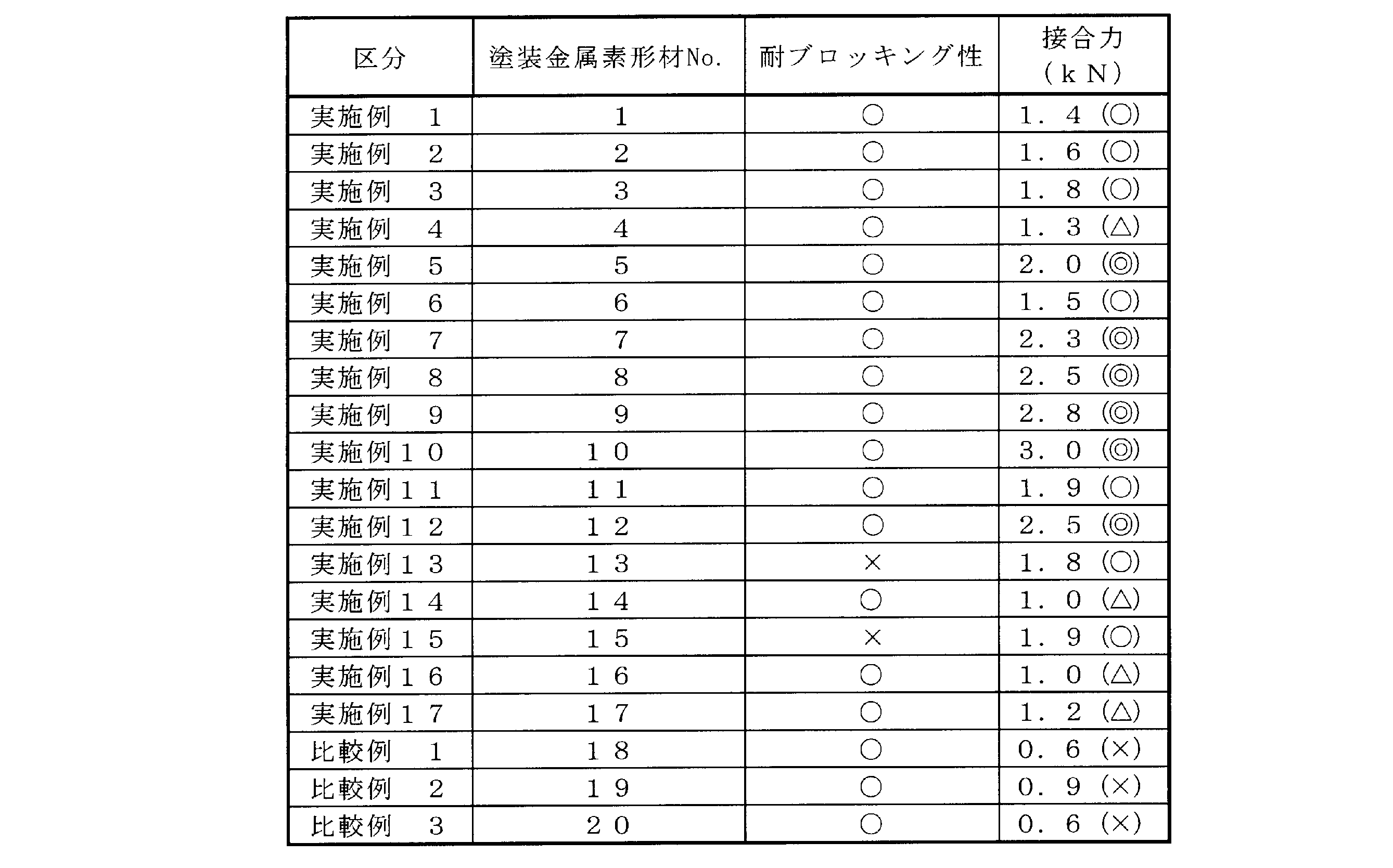
表2に示されるように、比較例1に係る塗装金属素形材は、処理液中における樹脂合計質量に対する酸変性ポリプロピレンの割合が少ないため、樹脂成形体との接合力が不十分であった。比較例2に係る塗装金属素形材は、処理液中の不揮発成分の溶融粘度が低いため、樹脂成形体との接合力が不十分であった。比較例3に係る塗装金属素形材は、処理液中の不揮発成分の溶融粘度が高いため、樹脂成形体との接合力が不十分であった。
一方、実施例1~17に係る塗装金属素形材は、いずれも樹脂成形体との接合力が優れていた。しかし、実施例13、15に係る塗装金属素形材については、処理液中の不揮発成分の融点または結晶化度が低すぎるため耐ブロッキング性が不十分であった。
以上の結果から、本発明に係る処理液を利用して、金属素形材および熱可塑性樹脂組成物の成形体を優れた密着性で接合させうる塗膜を金属素形材の表面に形成することができることがわかる。さらに、所定の酸変性ポリプロピレンを用いることで、塗膜と熱可塑性樹脂組成物の成形体との接合力だけでなく耐ブロッキング性も優れる塗膜を形成することができることがわかる。
本出願は、2014年12月9日出願の特願2014-249047に基づく優先権を主張する。当該出願明細書および図面に記載された内容は、すべて本願明細書に援用される。
本発明に係る金属素形材用処理液は、金属素形材と熱可塑性樹脂組成物の成形体とを優れた密着性で接合させうる塗膜を形成できるため、例えば各種電子機器、家庭用電化製品、医療機器、自動車車体、車両搭載用品、建築資材などの分野において好適に用いられる。
Claims (4)
- 金属素形材および熱可塑性樹脂組成物の成形体を接合させうる塗膜を前記金属素形材の表面に形成するための金属素形材用処理液であって、
前記金属素形材用処理液中の樹脂合計質量に対して40質量%以上の割合で酸変性ポリプロピレンを含み、
前記金属素形材用処理液中の不揮発成分の溶融粘度は、1000~10000mPa・sである、
金属素形材用処理液。 - Ti、Zr、V、MoおよびWからなる群から選択される金属の酸化物、水酸化物もしくはフッ化物、またはこれらの組み合わせをさらに含む、請求項1に記載の金属素形材用処理液。
- 前記金属素形材用処理液中の不揮発成分の融点は、60~120℃であり、
前記金属素形材用処理液中の不揮発成分の結晶化度は、5~20%である、
請求項1または請求項2に記載の金属素形材用処理液。 - 前記熱可塑性樹脂組成物は、ポリプロピレン樹脂を含む、請求項1~3のいずれか一項に記載の金属素形材用処理液。
Applications Claiming Priority (2)
| Application Number | Priority Date | Filing Date | Title |
|---|---|---|---|
| JP2014249047A JP2016108493A (ja) | 2014-12-09 | 2014-12-09 | 金属素形材用処理液 |
| JP2014-249047 | 2014-12-09 |
Publications (1)
| Publication Number | Publication Date |
|---|---|
| WO2016092785A1 true WO2016092785A1 (ja) | 2016-06-16 |
Family
ID=56107010
Family Applications (1)
| Application Number | Title | Priority Date | Filing Date |
|---|---|---|---|
| PCT/JP2015/006027 Ceased WO2016092785A1 (ja) | 2014-12-09 | 2015-12-04 | 金属素形材用処理液 |
Country Status (3)
| Country | Link |
|---|---|
| JP (1) | JP2016108493A (ja) |
| TW (1) | TW201634750A (ja) |
| WO (1) | WO2016092785A1 (ja) |
Families Citing this family (2)
| Publication number | Priority date | Publication date | Assignee | Title |
|---|---|---|---|---|
| JP7265124B2 (ja) * | 2019-02-14 | 2023-04-26 | 日本製鉄株式会社 | 金属素形材用の表面処理液、複合体の製造方法および処理液付与具 |
| JP2024049683A (ja) * | 2022-09-29 | 2024-04-10 | 大日本塗料株式会社 | 水性塗料組成物および塗装体 |
Citations (2)
| Publication number | Priority date | Publication date | Assignee | Title |
|---|---|---|---|---|
| JP2014136407A (ja) * | 2013-01-18 | 2014-07-28 | Nisshin Steel Co Ltd | 塗装金属素形材、複合体、およびそれらの製造方法 |
| JP2014159125A (ja) * | 2013-02-20 | 2014-09-04 | Nisshin Steel Co Ltd | 複合体およびその製造方法 |
-
2014
- 2014-12-09 JP JP2014249047A patent/JP2016108493A/ja active Pending
-
2015
- 2015-12-04 WO PCT/JP2015/006027 patent/WO2016092785A1/ja not_active Ceased
- 2015-12-08 TW TW104141022A patent/TW201634750A/zh unknown
Patent Citations (2)
| Publication number | Priority date | Publication date | Assignee | Title |
|---|---|---|---|---|
| JP2014136407A (ja) * | 2013-01-18 | 2014-07-28 | Nisshin Steel Co Ltd | 塗装金属素形材、複合体、およびそれらの製造方法 |
| JP2014159125A (ja) * | 2013-02-20 | 2014-09-04 | Nisshin Steel Co Ltd | 複合体およびその製造方法 |
Also Published As
| Publication number | Publication date |
|---|---|
| JP2016108493A (ja) | 2016-06-20 |
| TW201634750A (zh) | 2016-10-01 |
Similar Documents
| Publication | Publication Date | Title |
|---|---|---|
| JP5355803B1 (ja) | 塗装金属素形材、複合体、およびそれらの製造方法 | |
| JP6262951B2 (ja) | 複合体およびその製造方法 | |
| JP6189048B2 (ja) | 複合体 | |
| JP6051141B2 (ja) | 複合体およびその製造方法 | |
| WO2016152118A1 (ja) | 塗装Al含有金属素形材、複合体、およびそれらの製造方法 | |
| KR102177892B1 (ko) | 화성처리 금속판, 표면처리 금속판, 복합 부재, 및 화성처리 금속판의 제조 방법 | |
| WO2016092785A1 (ja) | 金属素形材用処理液 | |
| JP6230792B2 (ja) | 塗装金属素形材、複合体およびそれらの製造方法 | |
| AU2016213296B2 (en) | Method for producing coated metal strip | |
| JP6080807B2 (ja) | 塗装金属素形材、複合体およびそれらの製造方法 | |
| JP2020132917A (ja) | 金属素形材用の表面処理液、複合体の製造方法および処理液付与具 |
Legal Events
| Date | Code | Title | Description |
|---|---|---|---|
| 121 | Ep: the epo has been informed by wipo that ep was designated in this application |
Ref document number: 15866909 Country of ref document: EP Kind code of ref document: A1 |
|
| NENP | Non-entry into the national phase |
Ref country code: DE |
|
| 122 | Ep: pct application non-entry in european phase |
Ref document number: 15866909 Country of ref document: EP Kind code of ref document: A1 |