WO2015198797A1 - 悪性腫瘍治療の新規分子標的薬 - Google Patents
悪性腫瘍治療の新規分子標的薬 Download PDFInfo
- Publication number
- WO2015198797A1 WO2015198797A1 PCT/JP2015/065749 JP2015065749W WO2015198797A1 WO 2015198797 A1 WO2015198797 A1 WO 2015198797A1 JP 2015065749 W JP2015065749 W JP 2015065749W WO 2015198797 A1 WO2015198797 A1 WO 2015198797A1
- Authority
- WO
- WIPO (PCT)
- Prior art keywords
- seq
- amino acid
- cancer
- antibody
- rpl29
- Prior art date
- Legal status (The legal status is an assumption and is not a legal conclusion. Google has not performed a legal analysis and makes no representation as to the accuracy of the status listed.)
- Ceased
Links
Images







Classifications
-
- A—HUMAN NECESSITIES
- A61—MEDICAL OR VETERINARY SCIENCE; HYGIENE
- A61K—PREPARATIONS FOR MEDICAL, DENTAL OR TOILETRY PURPOSES
- A61K39/00—Medicinal preparations containing antigens or antibodies
-
- A—HUMAN NECESSITIES
- A61—MEDICAL OR VETERINARY SCIENCE; HYGIENE
- A61K—PREPARATIONS FOR MEDICAL, DENTAL OR TOILETRY PURPOSES
- A61K39/00—Medicinal preparations containing antigens or antibodies
- A61K39/395—Antibodies; Immunoglobulins; Immune serum, e.g. antilymphocytic serum
Definitions
- the present invention relates to a novel molecular target drug that targets RPL29, which is a ribosomal protein whose expression is enhanced in malignant tumor cells.
- liver carcinogenesis in autoimmune hepatitis has been reported to be about 0.7% / yearAl (Aliment Pharmacol Ther 2006; 24: 1197), and liver carcinogenesis in chronic hepatitis C is 3% / year ( The rate is clearly lower than that of Ann Intern Med 1999; 131: 174).
- RPL29 Ribosomal protein L29
- RPL29 Ribosomal protein L29
- Non-patent document 1 a colorectal cancer
- Non-patent document 2 hepatocellular carcinoma
- Non-patent document 3 hepatocellular carcinoma
- Non-patent document 4 thyroid cancer
- Non-patent Document 5 RPL29 is a membrane protein that is expressed on the cell surface as well as on the inside of the cell. Decreasing the expression of RPL29 increases the number of cells that fall into apoptosis (Non-Patent Document 6), and induces cell differentiation. (Non-Patent Document 1) has been reported.
- Patent Document 1 discloses a malignant tumor examination method using an anti-RPL29 antibody titer as an index.
- An object of the present invention is to provide a novel molecular target drug that targets RPL29, which is a ribosomal protein whose expression is enhanced in malignant tumor cells.
- An object of the present invention is to provide an antitumor agent that acts more effectively on RPL29 with respect to a molecular target drug targeting RPL29.
- the inventors of the present application have made extensive studies on molecular target drugs of RPL29 protein that can more effectively obtain an antitumor effect, and as a result, have specifically targeted any site of RPL29 protein. Thus, the present inventors have found that an anti-tumor effect can be obtained more effectively and completed the present invention.
- this invention consists of the following.
- a molecular target drug consisting of an antibody against RPL29 or a peptide vaccine, wherein, among the amino acid sequences constituting the RPL29 protein, a portion of the amino acid sequence shown in SEQ ID NO: 1 of the sequence listing, or 1 of the amino acid sequences shown in SEQ ID NO: 1 or Targeting a portion of the amino acid sequence in which a plurality of amino acid residues are deleted, substituted, introduced or added, among the amino acid sequence shown in SEQ ID NO: 1, from the 41st R (arginine) to the 159th E ( A molecular target drug characterized by targeting a portion containing at least 5 amino acid residues selected from amino acid sequences specified by glutamic acid). 2.
- the molecular target drug described in 1 above is the amino acid sequence shown in SEQ ID NO: 1 in the sequence listing, from the 146th Q (glutamine) to the 159th E (glutamic acid) and the 81st V (valine) to the 135th amino acid sequence.
- the molecular target drug according to item 1 above which targets a part containing 3. 26.
- pklgkrarariakg (SEQ ID NO: 24) qapkrtqaptkase (SEQ ID NO: 21) mrfakkhnkkglkk (SEQ ID NO: 22) lvkpkevkpkipkg (SEQ ID NO: 23) rlcrpkakakakak (SEQ ID NO: 25) 4).
- the anti-RPL29 wherein the molecular target drug is an antibody and recognizes at least 5 consecutive amino acid residues in any one of the amino acid sequences shown in SEQ ID NOs: 24, 21, 24, 22, 23 and 25 as epitopes 4.
- the molecular target drug is a peptide vaccine, and consists of a peptide vaccine against RPL29, comprising at least 5 consecutive amino acid residues in any of the amino acid sequences shown in SEQ ID NOs: 24, 21, 24, 22, 23 and 25 below.
- the molecular target drug according to 1 or 3.
- pklgkrarariakg (SEQ ID NO: 24) qapkrtqaptkase (SEQ ID NO: 21) mrfakkhnkkglkk (SEQ ID NO: 22) lvkpkevkpkipkg (SEQ ID NO: 23) rlcrpkakakakak (SEQ ID NO: 25) 6).
- An antineoplastic agent comprising the molecular target drug according to any one of items 1 to 5 as an active ingredient. 7).
- Malignant tumor is pancreatic cancer, breast cancer, lung adenocarcinoma, colon cancer, hepatocellular carcinoma, stomach cancer, thyroid cancer, ovarian cancer, salivary glandular adenoid cyst cancer, prostate cancer, Burkitt lymphoma, acute myeloid leukemia, myxoid liposarcoma, Glioblastoma, alveolar rhabdomyosarcoma, Wilms tumor, oligodendroglioma, adrenocortical carcinoma, multiple myeloma, nodular lymphocyte-dominated Hodgkin lymphoma, plasma cell leukemia, medulloblastoma, B cell Chronic lymphocytic leukemia, lung cancer, squamous cell lung cancer, type II endometrial cancer, diffuse large B cell lymphoma, esophageal cancer,
- the antineoplastic agent according to item 6 above which is one or more selected from cell lymphoblastic leukemia. 8).
- the malignant tumor is one or more selected from pancreatic cancer, breast cancer, lung adenocarcinoma and colon cancer.
- the molecular targeted drug comprising an antibody or peptide vaccine against RPL29 of the present invention can suppress the growth of malignant tumor cells.
- the molecular targeting drug of the present invention that targets RPL29 whose expression is enhanced in malignant tumor cells is an anti-RPL29 antibody that is inherently in vivo even if malignant tumor cells are formed, and does not cause disease. It is thought to have the same action as an antibody related to a defense mechanism.
- An antineoplastic agent containing such a substance as an active ingredient is a highly safe drug and useful.
- (Reference Example 2) It is a figure which shows the result of having confirmed the effect on the proliferation of various culture cancer cells about five types of IgG antibodies which made five types of peptides each recognized as having high antigenicity by epitope mapping as an antigen.
- Example 1 It is a figure which shows the cell growth inhibitory effect of IgG146-159 antibody on pancreatic cancer cell Panc-1.
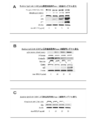
- Example 2 It is a figure which shows the result confirmed about the change of the intracellular signal when adding IgG146-159 antibody to pancreatic cancer cell Panc-1, and culture
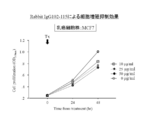
- (Example 3) It is a figure which shows the cell growth inhibitory effect of IgG102-115 antibody which acts on lung adenocarcinoma cell line PC9.
- Example 4 It is a figure which shows the result confirmed about the change of the intracellular signal when adding IgG102-115 antibody to the lung adenocarcinoma cell line PC9 and culture
- Example 5 It is a figure which shows the cell growth-inhibition effect of IgG-102-115 antibody which acts on breast cancer cell line MCF7.
- Example 6 It is a figure which shows the result confirmed about the change of the intracellular signal when adding IgG102-115 antibody to the lung adenocarcinoma cell line PC9 and culture
- Example 7 It is a figure which shows the result confirmed about the change of the intracellular signal when adding IgG102-115 antibody to the breast cancer cell line MCF7 and culture
- Example 8) It is a figure which shows the result confirmed about the change of the intracellular signal when adding IgG102-115 antibody to the breast cancer cell line MCF7 and culture
- Example 8 It is a figure which shows the result confirmed about the change of the intracellular
- the present invention relates to a molecular target drug that targets RPL29, which is a ribosomal protein whose expression is enhanced in malignant tumor cells.
- RPL29 is a ribosomal protein whose expression is enhanced in malignant tumor cells.
- the molecular target drug of the present invention acts more effectively on RPL29 and has an antitumor effect.
- the amino acid sequence constituting RPL29 in this specification is based on the amino acid sequence specified by NCBI Reference Sequence: NP_000983.1 (SEQ ID NO: 1) as 60S ribosomal protein L29 [Homo sapiens].
- the amino acid sequence that can be the target of the molecular target drug of the present invention is the amino acid sequence specified by SEQ ID NO: 1 or the amino acid sequence shown in SEQ ID NO: 1, wherein one to a plurality of amino acid residues are deleted, substituted, introduced, or It may be an added amino acid sequence.
- amino acid side chains include hydrophobic amino acids, hydrophilic amino acids, amino acids having aliphatic side chains, amino acids having hydroxyl group-containing side chains, amino acids having sulfur atom-containing side chains, carboxylic acid and amide-containing side chains.
- amino acids having amino acids, amino groups having base-containing side chains, and amino acids having aromatic-containing side chains include hydrophobic amino acids, hydrophilic amino acids, amino acids having aliphatic side chains, amino acids having hydroxyl group-containing side chains, amino acids having sulfur atom-containing side chains, carboxylic acid and amide-containing side chains.
- amino acids having amino acids, amino groups having base-containing side chains, and amino acids having aromatic-containing side chains include amino acids having amino acids, amino groups having base-containing side chains, and amino acids having aromatic-containing side chains.
- An object of the present invention is to provide a molecular targeted drug that targets a region that acts particularly effectively and has an antitumor activity among amino acid sequences that can be targets of the molecular targeted drug related to RPL29.
- Another object of the present invention is to provide an antibody or peptide vaccine targeting the region.
- the molecular target drug consisting of an antibody against RPL29 or a peptide vaccine in the present invention is the amino acid sequence shown in SEQ ID NO: 1 among the amino acid sequences constituting the RPL29 protein, or one or more amino acids in the amino acid sequence shown in SEQ ID NO: 1.
- a residue is selected from an amino acid sequence deleted, substituted, introduced or added, and targets a portion containing at least 5 consecutive amino acid residues.
- the target site is preferably selected from the amino acid sequence specified by the 41st R (arginine) to the 159th E (glutamic acid) of the amino acid sequence shown in SEQ ID NO: 1, and at least 5 amino acid residues More preferably, the 146th Q (glutamine) to 159th E (glutamic acid) and the 81st V (valine) to 135th of the amino acid sequence shown in SEQ ID NO: 1 in the Sequence Listing A (alanine) or a portion containing at least 5 consecutive amino acid residues in each amino acid sequence specified by the 41st R (arginine) to the 75th L (leucine).
- the molecular target drug of the present invention targets a portion selected from any one of the amino acid sequences shown in SEQ ID NOs: 21, 24, 22, 23 and 25 below.
- the site in the amino acid sequence shown in SEQ ID NO: 1 in the sequence listing is also shown for each.
- the present invention also extends to an anti-RPL29 antibody targeting RPL29 that recognizes at least 5 consecutive amino acid residues in the peptide consisting of any of the amino acid sequences shown in SEQ ID NOs: 21 to 25 as an epitope.
- any one of the amino acid sequences shown in SEQ ID NOs: 21 to 25 and any one of amino acid sequences shown in SEQ ID NOs: 21 to 25 are deleted, substituted, introduced, or introduced. It extends to peptide vaccines targeting RPL29 consisting of peptides containing added amino acid sequences.
- the present invention extends to an antineoplastic agent comprising a molecular target drug consisting of an antibody against RPL29 or a peptide vaccine in the present invention as an active ingredient.
- a molecular target drug comprising an anti-RPL29 antibody
- the anti-RPL29 antibody that recognizes at least 5 consecutive amino acid residues in the peptide comprising any one of the amino acid sequences shown in SEQ ID NOs: 21 to 25 as an epitope
- Any anti-neoplastic agent containing at least one of these may be used.
- the type of antibody contained as an active ingredient may be one type or a plurality of types.
- the antibody type may be a partial peptide capable of antigen-antibody reaction such as Fab, but is preferably an intact type antibody.
- the active ingredient is a molecular target drug consisting of a peptide vaccine
- the peptide vaccine consisting of any one of the amino acid sequences shown in SEQ ID NOs: 21 to 25 or any one of the amino acid sequences shown in SEQ ID NOs: 21 to 25
- Any anti-neoplastic agent comprising at least one peptide vaccine targeting RPL29 consisting of a peptide vaccine comprising an amino acid sequence in which one or a plurality of amino acid residues are deleted, substituted, introduced or added.
- malignant tumors in an antineoplastic agent containing a molecular targeted drug as an active ingredient are pancreatic cancer, breast cancer, lung adenocarcinoma, colon cancer, hepatocellular carcinoma, gastric cancer, thyroid cancer, ovarian cancer, and salivary gland adenoid cyst Cancer, prostate cancer, Burkitt lymphoma, acute myelogenous leukemia, mucinous liposarcoma, glioblastoma, alveolar rhabdomyosarcoma, Wilms tumor, oligodendroglioma, adrenocortical carcinoma, multiple myeloma, nodule Lymphocyte-dominated Hodgkin lymphoma, plasma cell leukemia, medulloblastoma, B-cell chronic lymphocytic leukemia, lung line cancer, lung squamous cell carcinoma, type II endometrial cancer, diffuse large B-cell lymphoma, esophagus
- pancreatic cancer breast cancer
- qapkrtqaptkase shows the most antitumor effect, followed by lvkpkevkpkipkg (SEQ ID NO: 23), rlcrpkakakakak (SEQ ID NO: 25), mrfakkhnkkglkk (SEQ ID NO: 22), pklgkrarariakg (SEQ ID NO: 24). ) In this order.
- the anti-tumor effect is most observed in pklgkrarariakg (SEQ ID NO: 24), followed by qapkrtqaptkase (SEQ ID NO: 21), lvkpkevkpkipkg (SEQ ID NO: 23), mrfakkhnkkglkk (SEQ ID NO: 22), rlcrpkakakakak (sequence NO.
- the effect is considered to be in the order of number 25).
- pklgkrarariakg shows the most antitumor effect, followed by mrfakkhnkkglkk (SEQ ID NO: 22), qapkrtqaptkase (SEQ ID NO: 21), lvkpkevkpkipkg (SEQ ID NO: 23), rlcrpkakakakak (SEQ ID NO: 25). It is considered effective in this order.
- the antibody of the present invention has one or more amino acid residues deleted from any one of the amino acid sequences shown in SEQ ID NOs: 21 to 25 or any one of the amino acid sequences shown in SEQ ID NOs: 21 to 25 below,
- a peptide containing a substituted, introduced or added amino acid sequence is used as an immunogen, and a method known per se or a production method developed in the future can be applied.
- a polyclonal antibody or a monoclonal antibody can be prepared by a method known per se using the above peptide as an immunogen. Methods known in the art can be used for antibody production.
- the peptide vaccine of the present invention can be obtained by synthesizing a peptide from an arbitrary position based on the amino acid sequence described above. Peptide synthesis can be performed according to methods used in normal peptide chemistry.
- the peptide of the present invention can also be synthesized by a known genetic engineering technique. Examples of the genetic engineering synthesis method include the following methods. That is, a DNA encoding a target peptide is introduced into an appropriate host cell to produce a transformed cell. By recovering the peptide produced from this transformed cell, the peptide of the present invention can be obtained.
- the peptide of the present invention can also be obtained by once producing it as a fusion protein and decomposing it with an appropriate protease.
- a method for producing a fusion protein is as follows: a polynucleotide encoding the peptide of the present invention and a polynucleotide encoding another peptide are linked so that the frames coincide with each other, introduced into an expression vector, and expressed in a host. Well, techniques known to those skilled in the art can be used.
- the present invention extends to the method for producing the molecular targeted drug of the present invention.
- the molecular target drug of the present invention is a peptide vaccine
- one or a plurality of peptides including any one of the amino acid sequences shown in SEQ ID NOs: 21 to 25 or any one of the amino acid sequences shown in SEQ ID NOs: 21 to 25 are used.
- the molecular target drug of the present invention is an anti-RPL29 antibody
- An antibody (peptide antibody) can be produced using a peptide containing an amino acid sequence in which a plurality of amino acid residues are deleted, substituted, introduced or added as an immunogen.
- the anti-neoplastic agent containing a molecular target drug consisting of an antibody against RPL29 or a peptide vaccine as an active ingredient may contain a substance capable of enhancing the anti-RPL29 antibody.
- substances that can enhance the anti-RPL29 antibody include immunostimulating agents for the anti-RPL29 antibody.
- the immunostimulatory agent against the anti-RPL29 antibody in vivo include, for example, an activator of antibody-producing cells in vivo, such as IL-4, IL-5, IL-6, IL-10, IL-13, GM-CSF. , TNF- ⁇ , bacteria and their bacterial components, plant and fungal polysaccharides, nucleic acids, fat-soluble vitamins, mineral oils and the like.
- in vivo antibody-producing cells include B cells and plasma cells.
- the anti-neoplastic agent of the present invention containing a molecular target drug comprising an antibody against RPL29 or a peptide vaccine as an active ingredient can contain a pharmacologically acceptable carrier.
- pharmacologically acceptable carrier used in the above antineoplastic agents include, for example, excipients, disintegrants or disintegration aids, binders, lubricants, coating agents, dyes, diluents, bases. , Solubilizers or solubilizers, tonicity agents, pH adjusters, stabilizers, propellants, and pressure-sensitive adhesives.
- the dosage form of the antineoplastic agent of the present invention may be administered locally or systemically.
- Formulations for parenteral administration may include sterile aqueous or non-aqueous solutions, suspensions, and emulsions.
- non-aqueous diluents are propylene glycol, polyethylene glycol, vegetable oils such as olive oil and organic ester compositions such as ethyl oleate, which are suitable for injection.
- Aqueous carriers may include water, alcoholic aqueous solutions, emulsions, suspensions, saline and buffered media.
- Parenteral carriers may include sodium chloride solution, Ringer's dextrose, dextrose and sodium chloride, Ringer's lactic acid and binding oil.
- Intravenous carriers may include, for example, fluid supplements, nutrients and electrolytes (eg, those based on Ringer's dextrose).
- the antineoplastic agent of the present invention can further contain preservatives and other additives such as antimicrobial compounds, antioxidants, chelating agents and inert gases.
- RPL29 epitope analysis (first time) This reference example relates to a protein consisting of the amino acid sequence of 60S ribosomal protein L29 [Homo sapiens] (NCBI Reference Sequence: NP_000983.1) identified by SEQ ID NO: 1 below, 3 cases of autoimmune hepatitis (AIH), pancreatic cancer (PK) Epitope mapping was performed on the anti-RPL29 antibody contained in blood obtained from 2 cases and lung cancer (LK) 1 case by indirect ELISA. Peptides consisting of the amino acids shown in SEQ ID NOs: 2 to 9 were each synthesized by the Fmoc method using a peptide synthesizer (ABIMED Multiple Peptide Synthesizer AMS 422).
- SEQ ID NO: 1 The site in the amino acid sequence shown in SEQ ID NO: 1 is also shown for each.
- P3 41-70th: rnmrfakkhn kkglkkmqan nakamsarae (SEQ ID NO: 4)
- Indirect ELISA 1 100 ⁇ l of each peptide antigen at 10 ⁇ g / ml was added to each well of a 96-well microplate and allowed to stand for 1 hour to immobilize the antigen. 2) 1% bovine serum albumin (300 ⁇ l / well) was added and after blocking for 15 minutes, 100 ⁇ l / well of each serum or plasma diluted 100-fold was added and allowed to react for 1 hour. 3) After washing, 100 ⁇ l / well of 1 ⁇ g / ml HRP-labeled anti-human IgG antibody was added and allowed to react for 1 hour.
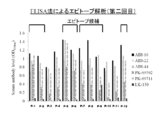
- the peptide antigen consisting of the amino acid sequences shown in SEQ ID NOs: 4 to 8, that is, among the amino acid sequences constituting the RPL29 protein, the amino acids shown in SEQ ID NO: 1 in the sequence listing Among the sequences, an antigen-antibody reaction was confirmed against a portion selected from the amino acid sequence specified by the 41st R (arginine) to the 159th E (glutamic acid) (FIG. 1).
- Epitope mapping was carried out by the above method to search for epitope candidates.
- peptide antigens consisting of the amino acid sequences shown in SEQ ID NOs: 10-11, 14-18, and 21, ie, the 81st amino acid sequence shown in SEQ ID NO: 1 in the sequence listing V (valine) to 135th A (alanine), 146th Q (glutamine) to 159th E (glutamic acid), or 41st R (arginine) to 75th L (leucine)
- V valine
- 146th Q glutamine
- 159th E glutmic acid
- 41st R arginine
- the peptide portion consisting of the amino acid sequences shown in SEQ ID NOs: 21 to 25 was considered as an epitope candidate (target site).
- the site in the amino acid sequence shown in SEQ ID NO: 1 is also shown for each.
- Example 1 Anti-tumor effect of artificially produced anti-RPL29 antibody (peptide antibody)
- peptide antibody peptide antibody
- a rabbit 3 months old a C-terminal C-terminal of each peptide consisting of the amino acid sequence specified by SEQ ID NO: 21-25
- the peptide modified with KLH was immunized three times (week 0, week 2, week 5). Serum was collected 7 days after the last immunization.
- the antibody production was requested to GenScript by SC1492 Custom Polyclonal Antibody Service until 3rd immunizations.
- the peptide-specific polyclonal antibody was purified from the serum collected above using an Alltech Alltima C18 HPLC Column (AT88307 Alltech No .: 88307) to obtain a peptide antibody.
- Rabbit IgG Sigma-Aldrich: I5006-10MG was used as a control antibody.
- each peptide antibody was dissolved in a culture solution used for cell culture according to the manual using Centricut Ultra Mini (KURABO). Each cultured cell was adjusted to 5.0 ⁇ 10 4 cells / ml, seeded on a 96-well plate for cell culture at 100 ⁇ l / well, and cultured at 37 ° C. under 5% CO 2 .
- the culture solution for each cultured cell is as follows.
- Liver cancer cell line Huh7, pancreatic cancer cell line Panc-1 DMEM (Invitrogen Co.) heat-treated FBS (10%), 1% non-essential amino acid (Sigma-Aldrich Co.), 1% Na pyruvate (Sigma-Aldrich Co.) , MO), 2 mM L-glutamate (Sigma-Aldrich Co.), 1% penicillin / streptomycin (Sigma-Aldrich Co.).
- Colon cancer cell line HCT15 breast cancer cell line MCF-7, lung adenocarcinoma cell line PC-9, prostate cancer cell line PC-3: RPMI-1640 medium (Sigma-Aldrich Co.), heat-treated FBS (10%) 1% penicillin / streptomycin (Sigma-Aldrich Co.).
- FIG. 3 The effect of antibodies on the growth of various cancer cell lines is shown in FIG. Each antibody (1) to (5) shown in FIG. 3 is as described above. As a result, a difference was observed in the cell inhibitory effect of the antibody depending on the type of the cultured cell line, but a cell growth inhibitory effect was observed with any of the antibodies.
- Example 2 Effect of IgG 146-159 antibody on pancreatic cancer
- the antibody (IgG 146-159) prepared using the peptide of (5) as an antigen against pancreatic cancer cells has the most antitumor effect. Admitted.
- the control antibody was a rabbit control antibody.
- the cell growth inhibitory effect was hardly recognized with the control antibody, but the cell growth inhibitory effect was confirmed with the IgG 146-159 antibody in a concentration-dependent manner (FIG. 4).
- FIG. 4 Effect of IgG 146-159 antibody on pancreatic cancer
- FIG. 4 (A) shows the result when 25 ⁇ g / ml is added once 24 hours after the start of the culture
- FIG. 4 (B) shows the result when added continuously for 2 days after 24 hours and 48 hours. It was.
- the cell growth inhibitory effect at 72 hours after the start of the culture was strongly observed when 25 ⁇ g / ml was added once 24 hours after the start of the culture and when it was added continuously for 24 days and 24 hours later.
- the cell growth inhibitory effect was strongly observed when added continuously at 50 ⁇ g / ml for 2 days rather than added continuously at 25 ⁇ g / ml for 2 days. From the above, the effectiveness of daily administration was also confirmed.
- Example 3 Effect of IgG 146-159 antibody on pancreatic cancer Changes in intracellular signal were confirmed when IgG 146-159 antibody was added to pancreatic cancer cell Panc-1 and cultured.
- Pancreatic cancer cell Panc-1 was adjusted to 5.0 ⁇ 10 4 cell / ml and then seeded at 2 ml / well on a 6-well plate for cell culture.
- they were cultured under 5% CO 2 at 37 ° C.. 24 hours after the start of the culture, the antibody dissolved in the culture medium was added. For control, the same amount of the lysate was added. 24 hours after antibody administration, the culture solution was removed, and 400 ⁇ l of Pierce IP Lysis buffer (Thermo Fisher Scientific Inc.) was added to each well. After stirring for 15 minutes, the cells were crushed with a bead crusher (TAITEC).
- TITEC bead crusher
- the protein extracted by the above method was subjected to electrophoresis by SDS-PAGE according to a conventional method.
- the electrophoresed protein was blotted on a PVDF membrane according to a conventional method.
- PVDF Blocking Reagent for Can Get Signal TOYOBO
- ⁇ -actin Phospho-MDM2 (Ser166), Phospho-p53 (Ser15), p53, Bax, p21, Phospho- ⁇ -Catenin (Thr41 / Ser45), ⁇ -Catenin, Cyclin D1, Survivin, Met, C-myc, p27, Phospho-p70 S6K (Thr389), Phospho-4E-BP1 (Thr37 / 46), Phospho-MEK1 / 2 (Ser217 / 221)
- Each primary antibody was treated for 1 hour.
- the reaction was carried out for 1 hour using a HRP-labeled anti-IgG antibody (RPN2124: GE Healthcare) as a secondary antibody. After washing the membrane, the color was developed with ECL Western Blotting Detection System (RPN2132: GE Healthcare) and detected with a luminometer.
- HRP-labeled anti-IgG antibody RPN2124: GE Healthcare
- ECL Western Blotting Detection System RPN2132: GE Healthcare
- Example 4 Effect of IgG 102-115 antibody on lung adenocarcinoma cell line PC9
- an antibody IgG 102-115 prepared using the peptide of (3) as an antigen
- the effect of the IgG 102-115 antibody on the proliferation of lung adenocarcinoma cells when various concentrations of the antibody were added and cultured was confirmed.
- the IgG 102-115 antibody a cell growth inhibitory effect was confirmed in a concentration-dependent manner (FIG. 6).
- Intracellular signal change by IgG 102-115 antibody in lung adenocarcinoma cell line PC9 The change in intracellular signal when IgG 102-115 antibody was added to lung adenocarcinoma cell line PC9 and cultured was confirmed.
- the lung adenocarcinoma cell line PC9 was adjusted to 5.0 ⁇ 10 4 cell / ml and then seeded at 2 ml / well on a 6-well plate for cell culture.
- IgG 102-115 antibody Anti-RPL29
- IgG 102-115 antibody dissolved in the culture medium was added at 10 ⁇ g / ml, 25 ⁇ g / ml, and 500 ⁇ g / ml, respectively.
- Electrophoresis was performed by SDS-PAGE in the same manner as described in Example 3, and blotted in the same manner. The treatment was performed in the same manner as in Example 3 and detected with a luminometer.
- Phospho-EGFR Teyr1068
- Phospho-p53 Ser15
- p53 Bax
- p38 MAPK Phospho-p38 MAPK
- Thr180 / Tyr182 Stat3, Phospho-Stat3 (Tyr705)
- c-Jun Phospho-c- Primary antibodies against Jun (Ser63), c-Fos, Phospho-c-Fos (Ser32), p27, Phospho-CDC2 (Tyr15), ⁇ -actin (above, Cell signaling Techonology, Inc.) and RPL29 (Abnova Corporation) used.
- Example 6 Effect of IgG 102-115 antibody on breast cancer cell MCF7
- the antibody (IgG 102-115) prepared using the peptide of (3) as an antigen was the most effective against breast cancer cell MCF7. Tumor effect was observed.
- IgG 102-115 antibody was confirmed to have a cell growth inhibitory effect in a concentration-dependent manner (FIG. 8).
- Example 7 Intracellular signal change by IgG 102-115 antibody in lung adenocarcinoma cell line PC9 The change of intracellular signal when IgG 102-115 antibody was added to the lung adenocarcinoma cell line PC9 and cultured was confirmed.
- the lung adenocarcinoma cell line PC9 was adjusted to 5.0 ⁇ 10 4 cell / ml and then seeded at 2 ml / well on a 6-well plate for cell culture.
- IgG 102-115 antibody Anti-RPL29
- IgG 102-115 antibody dissolved in the culture medium was added at 10 ⁇ g / ml, 25 ⁇ g / ml, and 500 ⁇ g / ml, respectively.
- Electrophoresis was performed by SDS-PAGE in the same manner as described in Example 3, and blotted in the same manner. The treatment was performed in the same manner as in Example 3 and detected with a luminometer.
- Cleaved Caspase 8 (p43 / p41), Cleaved Caspase 3, Erk1 / 2, Phospho-Erk1 / 2 (Thr202 / Tyr204), Phospho-ASK1 (Thr845), Phospho-Smad2 (Ser465 / 467), Smad2 / 3,
- Primary antibodies against Smad4, RUNX3, ⁇ -actin aboveve, Cell signaling Techonology, Inc.
- RPL29 Abnova Corporation
- Example 8 Intracellular signal change by IgG 102-115 antibody in breast cancer cell line MCF7 cells
- IgG 102-115 antibody was added to a breast cancer cell line MCF7 cell and cultured, changes in intracellular signals were confirmed.
- the breast cancer cell line MCF7 cell was adjusted to 5.0 ⁇ 10 4 cell / ml and then seeded at 2 ml / well on a 6-well plate for cell culture.
- IgG 102-115 antibody Anti-RPL29
- IgG 102-115 antibody dissolved in the culture medium was added at 10 ⁇ g / ml, 25 ⁇ g / ml, and 500 ⁇ g / ml, respectively.
- Electrophoresis was performed by SDS-PAGE in the same manner as described in Example 3, and blotted in the same manner.
- the molecular target drug comprising an antibody against RPL29 or a peptide vaccine specified in the present invention
- growth of malignant tumor cells can be suppressed.
- the substance that targets RPL29 whose expression is enhanced in the malignant tumor cell of the present invention is an anti-RPL29 antibody that is originally provided in the living body even if a malignant tumor cell is formed, and does not lead to pathogenesis It is considered that the antibody has the same action as the antibody (Patent Document 1).
- the antineoplastic agent of the present invention containing such a substance as an active ingredient is a highly safe drug and useful.
Landscapes
- Health & Medical Sciences (AREA)
- Life Sciences & Earth Sciences (AREA)
- Medicinal Chemistry (AREA)
- Chemical & Material Sciences (AREA)
- Mycology (AREA)
- Veterinary Medicine (AREA)
- Immunology (AREA)
- Microbiology (AREA)
- Public Health (AREA)
- Pharmacology & Pharmacy (AREA)
- Epidemiology (AREA)
- Animal Behavior & Ethology (AREA)
- General Health & Medical Sciences (AREA)
- Engineering & Computer Science (AREA)
- Bioinformatics & Cheminformatics (AREA)
- Medicines Containing Antibodies Or Antigens For Use As Internal Diagnostic Agents (AREA)
- Peptides Or Proteins (AREA)
- Medicines That Contain Protein Lipid Enzymes And Other Medicines (AREA)
Abstract
悪性腫瘍細胞において発現の亢進しているリボソームタンパク質であるRPL29を標的とする新規分子標的薬を提供することを課題とする。RPL29を標的とする分子標的薬に関し、RPL29に対してより効果的に作用する抗腫瘍剤を提供することを課題とする。RPL29に対する抗体又はペプチドワクチンからなる分子標的薬であって、RPL29タンパク質を構成するアミノ酸配列のうち、配列表の配列番号1に示すアミノ酸配列、又は配列番号1に示すアミノ酸配列のうち1若しくは複数個のアミノ酸残基が欠失、置換、導入若しくは付加されたアミノ酸配列から選択され、少なくとも5個のアミノ酸残基を含む部分を標的とすることを特徴とする分子標的薬による。
Description
本発明は、悪性腫瘍細胞において発現の亢進しているリボソームタンパク質であるRPL29を標的とする新規分子標的薬に関する。
現在の悪性腫瘍に対する分子標的薬としては、肝癌や腎癌に使用されるソラフェニブ(Sorafenib)、大腸癌に使用されるセツキシマブ(Cetuximab)やベバシズマブ(Bevacizumab)、肺癌に使用されるエルロチニブ (Erlotinib)やゲフィチニブ(Gefitinib)、乳癌に使用されるトラスツズマブ(Trastuzumab)など多くの薬剤が開発されており、実地臨床で使用されている。各薬剤の標的物質としては、例えば癌キナーゼ、血管内皮増殖因子(Vascular Endothelial Growth Factor:VEGF)、上皮増殖因子受容体(Epidermal Growth Factor Receptor:EGFR)、HER2(human epidermal growth factor receptor type2)タンパク質等が挙げられる。しかし、悪性腫瘍に対する分子標的薬は、皮膚障害や消化管穿孔、間質性肺炎、肝不全など重篤な副作用による死亡例も報告されている。よって、より安全性の高い分子標的薬の登場が望まれている。
健常者においても毎日数千個の悪性腫瘍(癌)細胞ができるといわれているが、必ずしも全員が発病するわけではない。自己免疫性肝炎(Autoimmune hepatitis:AIH)における肝発癌率は0.7% /年程度 (Aliment Pharmacol Ther 2006;24:1197)と報告されており、C型慢性肝炎における肝発癌率が3% /年(Ann Intern Med 1999;131:174)に比べて明らかに低率である。
リボソームタンパク質であるRPL29(Ribosomal protein L29)は、大腸癌(非特許文献1)、肝細胞癌(非特許文献2)、胃癌(非特許文献3)、甲状腺癌(非特許文献4)、乳癌(非特許文献5)等様々な悪性腫瘍細胞で発現が亢進していることが報告されている。RPL29は細胞内部に発現していると同時に細胞表面に発現している膜タンパクでもあり、RPL29の発現を低下させるとアポトーシスに陥る細胞が増加したり(非特許文献6)、細胞の分化が誘導される(非特許文献1)ことが報告されている。
悪性腫瘍に対する分子標的薬に関し、RPL29を標的とする分子標的薬について検討した報告がある。健常者においても毎日数千個の癌細胞ができるといわれているにもかかわらず、必ずしも全員が癌を発病するわけではないことや、自己免疫性肝炎(AIH)における肝発癌率は0.7 % /年程度と報告されており、C型慢性肝炎の3 % /年に比べて明らかに低率であることが報告されている。そして、自己免疫性疾患の患者血清中に、悪性腫瘍細胞の増殖を抑制しうる免疫グロブリン(IgG)が存在することを確認し、RPL29を標的とする抗RPL29抗体であることが開示されている(特許文献1)。さらに特許文献1では抗RPL29抗体価を指標とする悪性腫瘍の検査方法についても開示されている。
J Cell Physiol., 2006; 207(2):287-92
Life Sci. 2007 Jan 23;80(7):690-8. Epub 2006 Dec 6
BMC Cancer, 2010; 10: 240
Cancer Res., 1998; 58: 4745
Cancer Res., 1997; 57: 5148
Carcinogenesis, 2004; 25 (6): 873-879
本発明は、悪性腫瘍細胞において発現の亢進しているリボソームタンパク質であるRPL29を標的とする新規分子標的薬を提供することを課題とする。RPL29を標的とする分子標的薬に関し、RPL29に対してより効果的に作用する抗腫瘍剤を提供することを課題とする。
本願発明者らは、上記課題を解決するために、より効果的に抗腫瘍効果が得られるRPL29タンパク質の分子標的薬について鋭意検討を重ねた結果、RPL29タンパク質のいずれかの部位を特異的に標的とすることで、より効果的に抗腫瘍効果が得られることを見出し、本発明を完成した。
すなわち本発明は、以下よりなる。
1.RPL29に対する抗体又はペプチドワクチンからなる分子標的薬であって、RPL29タンパク質を構成するアミノ酸配列のうち、配列表の配列番号1に示すアミノ酸配列の部分、又は配列番号1に示すアミノ酸配列のうち1若しくは複数個のアミノ酸残基が欠失、置換、導入若しくは付加されたアミノ酸配列の部分を標的とし、配列番号1に示すアミノ酸配列のうち、第41番目のR(アルギニン)から第159番目のE(グルタミン酸)で特定されるアミノ酸配列から選択され、少なくとも5個のアミノ酸残基を含む部分を標的とすることを特徴とする分子標的薬。
2.前項1に記載の分子標的薬が、配列表の配列番号1に示すアミノ酸配列の第146番目のQ(グルタミン)から159番目のE(グルタミン酸)、第81番目のV(バリン)から第135番目のA(アラニン)、又は第41番目のR(アルギニン)から第75番目のL(ロイシン)で特定されるいずれかのアミノ酸配列から選択され、各アミノ酸配列における連続する少なくとも5個のアミノ酸残基を含む部分を標的とすることを特徴とする、前項1に記載の分子標的薬。
3.分子標的薬の標的部位が、以下の配列番号24、21、24、22、23及び25に示すいずれかのアミノ酸配列から選択される部分である、前項1に記載の分子標的薬。
pklgkrarariakg(配列番号24)
qapkrtqaptkase(配列番号21)
mrfakkhnkkglkk(配列番号22)
lvkpkevkpkipkg(配列番号23)
rlcrpkakakakak(配列番号25)
4.分子標的薬が抗体であり、以下の配列番号24、21、24、22、23及び25に示すいずれかのアミノ酸配列における連続した少なくとも5アミノ酸残基をエピトープとして認識することを特徴とする抗RPL29抗体からなる、前項1又は3に記載の分子標的薬。
pklgkrarariakg(配列番号24)
qapkrtqaptkase(配列番号21)
mrfakkhnkkglkk(配列番号22)
lvkpkevkpkipkg(配列番号23)
rlcrpkakakakak(配列番号25)
5.分子標的薬がペプチドワクチンであり、以下の配列番号24、21、24、22、23及び25に示すいずれかのアミノ酸配列における連続した少なくとも5アミノ酸残基を含む、RPL29に対するペプチドワクチンからなる、前項1又は3に記載の分子標的薬。
pklgkrarariakg(配列番号24)
qapkrtqaptkase(配列番号21)
mrfakkhnkkglkk(配列番号22)
lvkpkevkpkipkg(配列番号23)
rlcrpkakakakak(配列番号25)
6.前項1~5のいずれか1に記載の分子標的薬を有効成分として含む抗悪性腫瘍剤。
7.悪性腫瘍が、膵癌、乳癌、肺腺癌、大腸癌、肝細胞癌、胃癌、甲状腺癌、卵巣癌、唾液腺腺様嚢胞癌、前立腺癌、バーキットリンパ腫、急性骨髄性白血病、粘液性脂肪肉腫、膠芽腫、胞巣状横紋筋肉腫、ウィルムス腫瘍、乏突起膠細胞腫、副腎皮質癌、多発性骨髄腫、結節性リンパ球優位型ホジキンリンパ腫、形質細胞白血病、髄芽腫、B細胞性慢性リンパ性白血病、肺線癌、肺扁平上皮癌、II型子宮内膜癌、びまん性大細胞型B細胞リンパ腫、食道癌、末梢T細胞リンパ腫、未分化大細胞型リンパ腫、ユーイング肉腫及び前駆T細胞リンパ芽球性白血病から選択される一種又は複数種である、前項6に記載の抗悪性腫瘍剤。
8.悪性腫瘍が、膵癌、乳癌、肺腺癌及び大腸癌から選択される一種又は複数種である、前項7に記載の抗悪性腫瘍剤。
1.RPL29に対する抗体又はペプチドワクチンからなる分子標的薬であって、RPL29タンパク質を構成するアミノ酸配列のうち、配列表の配列番号1に示すアミノ酸配列の部分、又は配列番号1に示すアミノ酸配列のうち1若しくは複数個のアミノ酸残基が欠失、置換、導入若しくは付加されたアミノ酸配列の部分を標的とし、配列番号1に示すアミノ酸配列のうち、第41番目のR(アルギニン)から第159番目のE(グルタミン酸)で特定されるアミノ酸配列から選択され、少なくとも5個のアミノ酸残基を含む部分を標的とすることを特徴とする分子標的薬。
2.前項1に記載の分子標的薬が、配列表の配列番号1に示すアミノ酸配列の第146番目のQ(グルタミン)から159番目のE(グルタミン酸)、第81番目のV(バリン)から第135番目のA(アラニン)、又は第41番目のR(アルギニン)から第75番目のL(ロイシン)で特定されるいずれかのアミノ酸配列から選択され、各アミノ酸配列における連続する少なくとも5個のアミノ酸残基を含む部分を標的とすることを特徴とする、前項1に記載の分子標的薬。
3.分子標的薬の標的部位が、以下の配列番号24、21、24、22、23及び25に示すいずれかのアミノ酸配列から選択される部分である、前項1に記載の分子標的薬。
pklgkrarariakg(配列番号24)
qapkrtqaptkase(配列番号21)
mrfakkhnkkglkk(配列番号22)
lvkpkevkpkipkg(配列番号23)
rlcrpkakakakak(配列番号25)
4.分子標的薬が抗体であり、以下の配列番号24、21、24、22、23及び25に示すいずれかのアミノ酸配列における連続した少なくとも5アミノ酸残基をエピトープとして認識することを特徴とする抗RPL29抗体からなる、前項1又は3に記載の分子標的薬。
pklgkrarariakg(配列番号24)
qapkrtqaptkase(配列番号21)
mrfakkhnkkglkk(配列番号22)
lvkpkevkpkipkg(配列番号23)
rlcrpkakakakak(配列番号25)
5.分子標的薬がペプチドワクチンであり、以下の配列番号24、21、24、22、23及び25に示すいずれかのアミノ酸配列における連続した少なくとも5アミノ酸残基を含む、RPL29に対するペプチドワクチンからなる、前項1又は3に記載の分子標的薬。
pklgkrarariakg(配列番号24)
qapkrtqaptkase(配列番号21)
mrfakkhnkkglkk(配列番号22)
lvkpkevkpkipkg(配列番号23)
rlcrpkakakakak(配列番号25)
6.前項1~5のいずれか1に記載の分子標的薬を有効成分として含む抗悪性腫瘍剤。
7.悪性腫瘍が、膵癌、乳癌、肺腺癌、大腸癌、肝細胞癌、胃癌、甲状腺癌、卵巣癌、唾液腺腺様嚢胞癌、前立腺癌、バーキットリンパ腫、急性骨髄性白血病、粘液性脂肪肉腫、膠芽腫、胞巣状横紋筋肉腫、ウィルムス腫瘍、乏突起膠細胞腫、副腎皮質癌、多発性骨髄腫、結節性リンパ球優位型ホジキンリンパ腫、形質細胞白血病、髄芽腫、B細胞性慢性リンパ性白血病、肺線癌、肺扁平上皮癌、II型子宮内膜癌、びまん性大細胞型B細胞リンパ腫、食道癌、末梢T細胞リンパ腫、未分化大細胞型リンパ腫、ユーイング肉腫及び前駆T細胞リンパ芽球性白血病から選択される一種又は複数種である、前項6に記載の抗悪性腫瘍剤。
8.悪性腫瘍が、膵癌、乳癌、肺腺癌及び大腸癌から選択される一種又は複数種である、前項7に記載の抗悪性腫瘍剤。
本発明のRPL29に対する抗体又はペプチドワクチンからなる分子標的薬によれば、悪性腫瘍細胞の増殖を抑制することができる。悪性腫瘍細胞において発現の亢進しているRPL29を標的とする本発明の分子標的薬は、悪性腫瘍細胞ができたとしても、本来生体内に備わっている抗RPL29抗体であって発病に至らない生体防御機構に係る抗体と同様の作用を有すると考えられる。係る物質を有効成分として含む抗悪性腫瘍剤は、安全性が高い薬剤であり、有用である。
本発明は、悪性腫瘍細胞において発現の亢進しているリボソームタンパク質であるRPL29を標的とする分子標的薬に関する。本発明の分子標的薬は、RPL29に対してより効果的に作用し、抗腫瘍作用を有する。
本明細書のRPL29を構成するアミノ酸配列は、60S ribosomal protein L29 [Homo sapiens]として、NCBI Reference Sequence: NP_000983.1(配列番号1)で特定されるアミノ酸配列に基づく。本発明の分子標的薬の標的となりうるアミノ酸配列は、配列番号1で特定されるアミノ酸配列又は配列番号1に示すアミノ酸配列のうち、1~複数個のアミノ酸残基が欠失、置換、導入若しくは付加されたアミノ酸配列であってもよい。
NCBI Reference Sequence: NP_000983.1: maksknhtth nqsrkwhrng ikkprsqrye slkgvdpkfl rnmrfakkhn kkglkkmqan nakamsarae aikalvkpke vkpkipkgvs rkldrlayia hpklgkrara riakglrlcr pkakakakak dqtkaqaaap asvpaqapkr tqaptkase(配列番号1)
アミノ酸残基の置換の場合には、アミノ酸側鎖の性質が保存されている別のアミノ酸に置換させることが望ましい。例えばアミノ酸側鎖の性質としては、疎水性アミノ酸、親水性アミノ酸、脂肪族側鎖を有するアミノ酸、水酸基含有側鎖を有するアミノ酸、硫黄原子含有側鎖を有するアミノ酸、カルボン酸及びアミド含有側鎖を有するアミノ酸、塩基含有側鎖を有するアミノ離、及び、芳香族含有側鎖を有するアミノ酸を挙げることができる。
本発明は、上述のRPL29に係る分子標的薬の標的となりうるアミノ酸配列のうち、特に効果的に作用し、抗腫瘍作用を有する領域を標的とする分子標的薬を提供することを課題とする。本発明は当該領域を標的とする抗体又はペプチドワクチンを提供することも課題とする。本発明におけるRPL29に対する抗体又はペプチドワクチンからなる分子標的薬は、RPL29タンパク質を構成するアミノ酸配列のうち、配列番号1に示すアミノ酸配列、又は配列番号1に示すアミノ酸配列のうち1若しくは複数個のアミノ酸残基が欠失、置換、導入若しくは付加されたアミノ酸配列から選択され、連続した少なくとも5個のアミノ酸残基を含む部分を標的とする。標的部位として好ましくは、配列番号1に示すアミノ酸配列のうち、第41番目のR(アルギニン)から第159番目のE(グルタミン酸)で特定されるアミノ酸配列から選択され、少なくとも5個のアミノ酸残基を含む部分であり、さらに好ましくは、配列表の配列番号1に示すアミノ酸配列の第146番目のQ(グルタミン)から159番目のE(グルタミン酸)、第81番目のV(バリン)から第135番目のA(アラニン)、又は第41番目のR(アルギニン)から第75番目のL(ロイシン)で特定される各アミノ酸配列における連続する少なくとも5個のアミノ酸残基を含む部分を標的とする。
より具体的には、本発明の分子標的薬は以下の配列番号21、24、22、23及び25に示すいずれかのアミノ酸配列から選択される部分を標的とする。各々について配列表の配列番号1に示すアミノ酸配列における部位も示した。
146-159番目:qapkrtqaptkase(配列番号21)
102-115番目:pklgkrarariakg(配列番号24)
43-56番目:mrfakkhnkkglkk(配列番号22)
75-88番目:lvkpkevkpkipkg(配列番号23)
117-130番目:rlcrpkakakakak(配列番号25)
146-159番目:qapkrtqaptkase(配列番号21)
102-115番目:pklgkrarariakg(配列番号24)
43-56番目:mrfakkhnkkglkk(配列番号22)
75-88番目:lvkpkevkpkipkg(配列番号23)
117-130番目:rlcrpkakakakak(配列番号25)
本発明は、上記配列番号21~25に示すいずれかのアミノ酸配列からなるペプチドにおける連続した少なくとも5アミノ酸残基をエピトープとして認識する、RPL29を標的とする抗RPL29抗体にも及ぶ。そして本発明は、上記の配列番号21~25に示すいずれかのアミノ酸配列、配列番号21~25に示すいずれかのアミノ酸配列のうち1若しくは複数個のアミノ酸残基が欠失、置換、導入若しくは付加されたアミノ酸配列を含むペプチドからなる、RPL29を標的とするペプチドワクチンにも及ぶ。
さらに、本発明におけるRPL29に対する抗体又はペプチドワクチンからなる分子標的薬を有効成分として含む抗悪性腫瘍剤にも及ぶ。例えば、有効成分が抗RPL29抗体からなる分子標的薬の場合には、記配列番号21~25に示すいずれかのアミノ酸配列からなるペプチドにおける連続した少なくとも5アミノ酸残基をエピトープとして認識する抗RPL29抗体を少なくとも1種含む抗悪性腫瘍剤であればよい。有効成分として含む抗体の種類は1種であってもよいし、複数種であってもよい。また、抗体の型としてはFabなどの抗原抗体反応をしうる部分ペプチドであってもよいが、好ましくはインタクト型の抗体である。同様に、有効成分がペプチドワクチンからなる分子標的薬の場合は、記配列番号21~25に示すいずれかのアミノ酸配列からなるペプチドワクチン、又は配列番号21~25に示すいずれかのアミノ酸配列のうち1若しくは複数個のアミノ酸残基が欠失、置換、導入若しくは付加されたアミノ酸配列を含むペプチドワクチンからなる、RPL29を標的とするペプチドワクチンを少なくとも1種含む抗悪性腫瘍剤であればよい。
本明細書において、分子標的薬を有効成分として含む抗悪性腫瘍剤における悪性腫瘍とは、膵癌、乳癌、肺腺癌、大腸癌、肝細胞癌、胃癌、甲状腺癌、卵巣癌、唾液腺腺様嚢胞癌、前立腺癌、バーキットリンパ腫、急性骨髄性白血病、粘液性脂肪肉腫、膠芽腫、胞巣状横紋筋肉腫、ウィルムス腫瘍、乏突起膠細胞腫、副腎皮質癌、多発性骨髄腫、結節性リンパ球優位型ホジキンリンパ腫、形質細胞白血病、髄芽腫、B細胞性慢性リンパ性白血病、肺線癌、肺扁平上皮癌、II型子宮内膜癌、びまん性大細胞型B細胞リンパ腫、食道癌、末梢T細胞リンパ腫、未分化大細胞型リンパ腫、ユーイング肉腫及び前駆T細胞リンパ芽球性白血病から選択される一種又は複数種の癌であり、特に好ましくは膵癌、乳癌、肺腺癌及び大腸癌から選択される一種又は複数種の癌である。
RPL29を標的とする場合であっても、癌の種類によっては標的となる部位が必ずしも共通するとは限らない。例えば、膵癌の場合では、qapkrtqaptkase(配列番号21)において最も抗腫瘍効果が認められ、次にlvkpkevkpkipkg(配列番号23)、rlcrpkakakakak(配列番号25)、mrfakkhnkkglkk(配列番号22)、pklgkrarariakg(配列番号24)の順で効果があると考えられる。非小細胞肺癌の場合には、pklgkrarariakg(配列番号24)において最も抗腫瘍効果が認められ、次にqapkrtqaptkase(配列番号21)、lvkpkevkpkipkg(配列番号23)、mrfakkhnkkglkk(配列番号22)、rlcrpkakakakak(配列番号25)の順で効果があると考えられる。乳癌の場合には、pklgkrarariakg(配列番号24)において最も抗腫瘍効果が認められ、次にmrfakkhnkkglkk(配列番号22)、qapkrtqaptkase(配列番号21)、lvkpkevkpkipkg(配列番号23)、rlcrpkakakakak(配列番号25)の順で効果があると考えられる。
本発明の抗体は、上記の配列番号21~25に示すいずれかのアミノ酸配列、又は以下の配列番号21~25に示すいずれかのアミノ酸配列のうち1若しくは複数個のアミノ酸残基が欠失、置換、導入若しくは付加されたアミノ酸配列を含むペプチドを免疫原とし、自体公知の方法、又は今後開発される製造方法を適用することができる。上記ペプチドを免疫原とし、自体公知の方法によりポリクローナル抗体又はモノクローナル抗体を作製することができる。抗体の作製方法は、当業者に公知の手法を用いることができる。
本発明のペプチドワクチンは、上述のアミノ酸配列に基づいて、任意の位置からペプチドを合成して得ることができる。ペプチドの合成は、通常のペプチド化学において用いられる方法に準じて行うことが可能である。また本発明のペプチドは、公知の遺伝子工学的手法により合成することも可能である。遺伝子工学的な合成手法の一例としては、以下の方法が挙げられる。すなわち、目的のペプチドをコードするDNAを適当な宿主細胞に導入し、形質転換細胞を作製する。この形質転換細胞から産生されるペプチドを回収することにより、本発明のペプチドを得ることが可能である。また本発明のペプチドは、一度融合タンパク質として作製し、それを適切なプロテアーゼで分解することにより得ることも可能である。融合タンパク質を作製する方法は、本発明のペプチドをコードするポリヌクレオチドと他のペプチドをコードするポリヌクレオチドをフレームが一致するように連結してこれを発現ベクターに導入し、宿主で発現させればよく、当業者に公知の手法を用いることができる。
本発明は、本発明の分子標的薬の製造方法にも及ぶ。本発明の分子標的薬がペプチドワクチンの場合は、上記の配列番号21~25に示すいずれかのアミノ酸配列を含むペプチド、又は配列番号21~25に示すいずれかのアミノ酸配列のうち1若しくは複数個のアミノ酸残基が欠失、置換、導入若しくは付加されたアミノ酸配列を含むペプチドを調製することにより製造することができる。また、本発明の分子標的薬が抗RPL29抗体の場合は、上記の配列番号21~25に示すいずれかのアミノ酸配列、又は以下の配列番号21~25に示すいずれかのアミノ酸配列のうち1若しくは複数個のアミノ酸残基が欠失、置換、導入若しくは付加されたアミノ酸配列を含むペプチドを免疫原として抗体(ペプチド抗体)を製造することができる。
本明細書において、RPL29に対する抗体又はペプチドワクチンからなる分子標的薬を有効成分として含む抗悪性腫瘍剤には抗RPL29抗体を増強しうる物質を含んでいてもよい。抗RPL29抗体を増強しうる物質としては、抗RPL29抗体に対する免疫賦活化剤等が挙げられる。生体内の抗RPL29抗体に対する免疫賦活化剤としては、例えば生体内の抗体産生細胞の活性化剤、例えばIL-4、IL-5、IL-6、IL-10、IL-13、GM-CSF、TNF-α、細菌及びその菌体成分、植物や真菌の多糖体、核酸、脂溶性ビタミン、ミネラルオイルなどが挙げられる。生体内の抗体産生細胞としては、例えばB細胞や形質細胞が挙げられる。
上記のRPL29に対する抗体又はペプチドワクチンからなる分子標的薬を有効成分として含む本発明の抗悪性腫瘍剤には、薬理学的に許容しうる担体を含ませることができる。上記の抗悪性腫瘍剤に用いられる薬理学的に許容しうる担体としては、例えば、賦形剤、崩壊剤若しくは崩壊補助剤、結合剤、滑沢剤、コーティング剤、色素、希釈剤、基剤、溶解剤若しくは溶解補助剤、等張化剤、pH調節剤、安定化剤、噴射剤、及び粘着剤等を挙げることができる。
本発明の抗悪性腫瘍剤の投与形態としては、局所的に投与しても全身的に投与してもよい。非経口投与用の製剤は、滅菌した水性の、又は非水性の溶液、懸濁液及び乳濁液を含んでいてもよい。非水性希釈剤の例として、プロピレングリコール、ポリエチレングリコール、植物油、例えば、オリーブ油及び有機エステル組成物、例えば、エチルオレエートであり、これらは注射用に適している。水性担体には、水、アルコール性水性溶液、乳濁液、懸濁液、食塩水及び緩衝化媒体が含まれていてもよい。非経口的担体には、塩化ナトリウム溶液、リンゲルデキストロース、デキストロース及び塩化ナトリウム、リンゲル乳酸及び結合油が含まれていてもよい。静脈内担体には、例えば、液体用補充物、栄養及び電解質(例えば、リンゲルデキストロースに基づくもの)が含まれていてもよい。本発明の抗悪性腫瘍剤はさらに、保存剤及び他の添加剤、例えば,抗微生物化合物、抗酸化剤、キレート剤及び不活性ガスなどを含むことができる。
本発明の理解を深めるために、参考例、実施例を示して本発明を具体的に説明するが、本発明はこれらに限定されるものではないことは、いうまでもない。参考例では、本発明を完成するに至った研究経緯を示す。以下の臨床検体を用いた本研究は、岡山大学内の倫理委員会により承認されている。
(参考例1)RPL29エピトープ解析(1回目)
本参考例では、下記の配列番号1で特定される60S ribosomal protein L29 [Homo sapiens](NCBI Reference Sequence: NP_000983.1)のアミノ酸配列からなるタンパク質に関し、自己免疫性肝炎(AIH)3例、膵癌(PK)2例、肺癌(LK)1例より得た血液中に含まれる抗RPL29抗体について、間接ELISA法にてエピトープマッピングを行った。
配列番号2~9に示すアミノ酸からなるペプチドを、各々ペプチド合成器(ABIMED Multiple Peptide Synthesizer AMS 422)を用いて、Fmoc法により合成した。各々について配列番号1に示すアミノ酸配列における部位も示した。
P1: 1-30番目:maksknhtth nqsrkwhrng ikkprsqrye(配列番号2)
P2: 21-50番目:ikkprsqrye slkgvdpkfl rnmrfakkhn(配列番号3)
P3: 41-70番目:rnmrfakkhn kkglkkmqan nakamsarae(配列番号4)
P4: 61-90番目:nakamsarae aikalvkpke vkpkipkgvs(配列番号5)
P5: 81-110番目:vkpkipkgvs rkldrlayia hpklgkrara(配列番号6)
P6: 101-130番目:hpklgkrara riakglrlcr pkakakakak(配列番号7)
P7: 121-150番目:pkakakakak dqtkaqaaap asvpaqapkr(配列番号8)
P8: 141-159番目:asvpaqapkr tqaptkase(配列番号9)
本参考例では、下記の配列番号1で特定される60S ribosomal protein L29 [Homo sapiens](NCBI Reference Sequence: NP_000983.1)のアミノ酸配列からなるタンパク質に関し、自己免疫性肝炎(AIH)3例、膵癌(PK)2例、肺癌(LK)1例より得た血液中に含まれる抗RPL29抗体について、間接ELISA法にてエピトープマッピングを行った。
配列番号2~9に示すアミノ酸からなるペプチドを、各々ペプチド合成器(ABIMED Multiple Peptide Synthesizer AMS 422)を用いて、Fmoc法により合成した。各々について配列番号1に示すアミノ酸配列における部位も示した。
P1: 1-30番目:maksknhtth nqsrkwhrng ikkprsqrye(配列番号2)
P2: 21-50番目:ikkprsqrye slkgvdpkfl rnmrfakkhn(配列番号3)
P3: 41-70番目:rnmrfakkhn kkglkkmqan nakamsarae(配列番号4)
P4: 61-90番目:nakamsarae aikalvkpke vkpkipkgvs(配列番号5)
P5: 81-110番目:vkpkipkgvs rkldrlayia hpklgkrara(配列番号6)
P6: 101-130番目:hpklgkrara riakglrlcr pkakakakak(配列番号7)
P7: 121-150番目:pkakakakak dqtkaqaaap asvpaqapkr(配列番号8)
P8: 141-159番目:asvpaqapkr tqaptkase(配列番号9)
・間接ELISA法
1)10μg/mlの各ペプチド抗原を96 wellマイクロプレートの各wellに100μl加えて1 時間静置し抗原を固相化した。
2)1% ウシ血清アルブミン(bovine serum albumin)を300μl/well加えて15分間のブロッキング処理後、各血清又は血漿を100倍に希釈した溶液100μl/well添加し、1 時間反応させた。
3)洗浄後、1μg/mlのHRP標識抗ヒトIgG抗体を100μl/well添加し、1 時間反応させた。4)さらに洗浄後、2,2'-azino-bis[3-ethylbenzothiazoline-6-sulfonateを100μl/well添加し、十分反応させた。
5)ELISAリーダー (Model 680 Microplate Reader: Bio-Rad Laboratories Ltd., Tokyo, Japan) で、波長405nmでの吸光度を測定した。陰性コントロールは血清のかわりにウシ血清の希釈液とした。吸光度測定後に陰性コントロールの吸光度を引いた値を抗体価とした。
1)10μg/mlの各ペプチド抗原を96 wellマイクロプレートの各wellに100μl加えて1 時間静置し抗原を固相化した。
2)1% ウシ血清アルブミン(bovine serum albumin)を300μl/well加えて15分間のブロッキング処理後、各血清又は血漿を100倍に希釈した溶液100μl/well添加し、1 時間反応させた。
3)洗浄後、1μg/mlのHRP標識抗ヒトIgG抗体を100μl/well添加し、1 時間反応させた。4)さらに洗浄後、2,2'-azino-bis[3-ethylbenzothiazoline-6-sulfonateを100μl/well添加し、十分反応させた。
5)ELISAリーダー (Model 680 Microplate Reader: Bio-Rad Laboratories Ltd., Tokyo, Japan) で、波長405nmでの吸光度を測定した。陰性コントロールは血清のかわりにウシ血清の希釈液とした。吸光度測定後に陰性コントロールの吸光度を引いた値を抗体価とした。
上記方法によりエピトープマッピングを行い、エピトープ候補を探索したところ、配列番号4~8に示すアミノ酸配列からなるペプチド抗原、即ち、RPL29タンパク質を構成するアミノ酸配列のうち、配列表の配列番号1に示すアミノ酸配列のうち、第41番目のR(アルギニン)から第159番目のE(グルタミン酸)で特定されるアミノ酸配列から選択され部分に対して、抗原抗体反応が確認された(図1)。
(参考例2)RPL29エピトープ解析(2回目)
本参考例では、配列番号10~21に示すアミノ酸配列からなるペプチドを用いたほかは、参考例1と同手法にてエピトープマッピングを行った。各々について配列番号1に示すアミノ酸配列における部位も示した。
P-1: 41-55番目:rnmrfakkhn kkglk(配列番号10)
P-2: 51-65番目:kkglkkmqan nakam(配列番号11)
P-3: 61-75番目:nakamsarae aikal(配列番号12)
P-4: 71-85番目:aikalvkpke vkpki(配列番号13)
P-5: 81-95番目:vkpkipkgvs rkldr(配列番号14)
P-6: 91-105番目:rkldrlayia hpklg(配列番号15)
P-7: 101-115番目:hpklgkrara riakg(配列番号16)
P-8: 111-125番目:riakglrlcr pkaka(配列番号17)
P-9: 121-135番目:pkakakakak dqtka(配列番号18)
P-10: 131-145番目:dqtkaqaaap asvpa(配列番号19)
P-11: 141-155番目:asvpaqapkr tqapt(配列番号20)
P-12: 146-159番目:qapkr tqaptkase(配列番号21)
本参考例では、配列番号10~21に示すアミノ酸配列からなるペプチドを用いたほかは、参考例1と同手法にてエピトープマッピングを行った。各々について配列番号1に示すアミノ酸配列における部位も示した。
P-1: 41-55番目:rnmrfakkhn kkglk(配列番号10)
P-2: 51-65番目:kkglkkmqan nakam(配列番号11)
P-3: 61-75番目:nakamsarae aikal(配列番号12)
P-4: 71-85番目:aikalvkpke vkpki(配列番号13)
P-5: 81-95番目:vkpkipkgvs rkldr(配列番号14)
P-6: 91-105番目:rkldrlayia hpklg(配列番号15)
P-7: 101-115番目:hpklgkrara riakg(配列番号16)
P-8: 111-125番目:riakglrlcr pkaka(配列番号17)
P-9: 121-135番目:pkakakakak dqtka(配列番号18)
P-10: 131-145番目:dqtkaqaaap asvpa(配列番号19)
P-11: 141-155番目:asvpaqapkr tqapt(配列番号20)
P-12: 146-159番目:qapkr tqaptkase(配列番号21)
上記方法によりエピトープマッピングを行い、エピトープ候補を探索したところ、配列番号10~11及び14~18、21に示すアミノ酸配列からなるペプチド抗原、即ち配列表の配列番号1に示すアミノ酸配列の第81番目のV(バリン)から第135番目のA(アラニン)、第146番目のQ(グルタミン)から159番目のE(グルタミン酸)、又は第41番目のR(アルギニン)から第75番目のL(ロイシン)で特定される各アミノ酸配列を標的とする部分がエピトープ候補と考えられた(図2)。
上記結果解析より、配列番号21~25に示すアミノ酸配列からなるペプチド部分がエピトープ候補(標的部位)と考えられた。各々について配列番号1に示すアミノ酸配列における部位も示した。
(1) 43-56番目:mrfakkhnkkglkk(配列番号22)
(2) 75-88番目:lvkpkevkpkipkg(配列番号23)
(3) 102-115番目:pklgkrarariakg(配列番号24)
(4) 117-130番目:rlcrpkakakakak(配列番号25)
(5) 146-159番目:qapkrtqaptkase(配列番号21)
(1) 43-56番目:mrfakkhnkkglkk(配列番号22)
(2) 75-88番目:lvkpkevkpkipkg(配列番号23)
(3) 102-115番目:pklgkrarariakg(配列番号24)
(4) 117-130番目:rlcrpkakakakak(配列番号25)
(5) 146-159番目:qapkrtqaptkase(配列番号21)
(実施例1)人工的に作製した抗RPL29抗体(ペプチド抗体)の抗腫瘍効果
生後3か月のウサギに、配列番号21~25で特定されるアミノ酸配列からなる各ペプチドのC端にC-KLHで修飾したペプチドを3回免疫(0週、2週、5週)した。最後の免疫から7日目に血清を採取した。抗体の作製は、GenScript社にSC1492 Custom Polyclonal Antibody Service until 3rd immunizationsにより依頼した。ペプチド特異的なポリクローナル抗体は、上記で採取した血清からAlltech Alltima C18 HPLC Column(AT88307 Alltech No.:88307)を使用して精製し、ペプチド抗体を得た。ウサギIgG(Sigma-Aldrich:I5006-10MG)をコントロール抗体として使用した。
生後3か月のウサギに、配列番号21~25で特定されるアミノ酸配列からなる各ペプチドのC端にC-KLHで修飾したペプチドを3回免疫(0週、2週、5週)した。最後の免疫から7日目に血清を採取した。抗体の作製は、GenScript社にSC1492 Custom Polyclonal Antibody Service until 3rd immunizationsにより依頼した。ペプチド特異的なポリクローナル抗体は、上記で採取した血清からAlltech Alltima C18 HPLC Column(AT88307 Alltech No.:88307)を使用して精製し、ペプチド抗体を得た。ウサギIgG(Sigma-Aldrich:I5006-10MG)をコントロール抗体として使用した。
各ペプチド抗体について、各種腫瘍細胞に対する増殖抑制効果を調べた。各ペプチド抗体は、セントリカット超ミニ(KURABO)を用いてマニュアルに従い細胞培養に使用する培養液へ溶解させた。各培養細胞を5.0×10⁴ cell/ml に調整後、細胞培養用96 wellプレートに100μl/wellで播種し、37℃で5% CO2下にて培養した。
各培養細胞についての培養液は下記の通りである。
肝癌細胞株Huh7、膵癌細胞株Panc-1:DMEM (Invitrogen Co.) に加熱処理FBS(10%)、1% 非必須アミノ酸 (Sigma-Aldrich Co.)、1% ピルビン酸Na(Sigma-Aldrich Co., MO)、2mM L-グルタミン酸塩 (Sigma-Aldrich Co.) 、1% ペニシリン/ストレプトマイシン (Sigma-Aldrich Co.) 。
大腸癌細胞株HCT15、乳癌細胞株MCF-7、肺腺癌細胞株PC-9、前立腺癌細胞株PC-3:RPMI-1640 培地 (Sigma-Aldrich Co.) 、 に加熱処理FBS(10%) 、1% ペニシリン/ストレプトマイシン (Sigma-Aldrich Co.) 。
各培養細胞についての培養液は下記の通りである。
肝癌細胞株Huh7、膵癌細胞株Panc-1:DMEM (Invitrogen Co.) に加熱処理FBS(10%)、1% 非必須アミノ酸 (Sigma-Aldrich Co.)、1% ピルビン酸Na(Sigma-Aldrich Co., MO)、2mM L-グルタミン酸塩 (Sigma-Aldrich Co.) 、1% ペニシリン/ストレプトマイシン (Sigma-Aldrich Co.) 。
大腸癌細胞株HCT15、乳癌細胞株MCF-7、肺腺癌細胞株PC-9、前立腺癌細胞株PC-3:RPMI-1640 培地 (Sigma-Aldrich Co.) 、 に加熱処理FBS(10%) 、1% ペニシリン/ストレプトマイシン (Sigma-Aldrich Co.) 。
培養開始24時間後に、各ペプチドを抗原として作製した抗体(1)~(5)を50μg/ml各wellに加えた。コントロールには、培溶液のみを同量加えた。抗体投与直前又は抗体投与24時間後と48時間後、必要に応じて72時間後に、3-(4,5-dimethylthiazol-2-yl)-2,5-diphenyl tetrazolium bromide(MTT:5 mg/ml リン酸緩衝液)溶液10μlを各wellに加えた。MTT添加4 時間後に培養液を除去し、DMSO 100μlを各wellに加えた。ELISAリーダー (Model 680 Microplate Reader: Bio-Rad Laboratories Ltd.)で、570 nmの吸光度を測定した。
(1) mrfakkhnkkglkk(配列番号22):IgG43-56
(2) lvkpkevkpkipkg(配列番号23):IgG75-88
(3) pklgkrarariakg(配列番号24):IgG102-115
(4) rlcrpkakakakak(配列番号25):IgG117-130
(5) qapkrtqaptkase(配列番号21):IgG146-159
(1) mrfakkhnkkglkk(配列番号22):IgG43-56
(2) lvkpkevkpkipkg(配列番号23):IgG75-88
(3) pklgkrarariakg(配列番号24):IgG102-115
(4) rlcrpkakakakak(配列番号25):IgG117-130
(5) qapkrtqaptkase(配列番号21):IgG146-159
各種癌細胞株の増殖に及ぼす抗体の効果を図3に示した。図3に示す各抗体(1)~(5)は上記のとおりである。その結果、培養細胞株の種類に応じて抗体の細胞抑制効果に違いが認められたが、いずれかの抗体で細胞増殖抑制効果が認められた。
(実施例2)膵癌に及ぼすIgG 146-159抗体の効果
実施例1の結果、膵癌細胞に対しては(5)のペプチドを抗原として作製した抗体(IgG 146-159)が最も抗腫瘍効果が認められた。そこで、IgG 146-159抗体について各種濃度の抗体を加えて培養したときの膵癌細胞の増殖に及ぼす効果を確認した。コントロール抗体はウサギコントロール抗体とした。その結果、コントロール抗体では細胞増殖抑制効果はほとんど認められなかったが、IgG 146-159抗体では濃度依存的に細胞増殖抑制効果が確認された(図4)。培養開始24時間後に25μg/mlを1回添加した場合の結果を図4(A)に示し、24時間後及び48時間後の2日連続で添加した場合の結果を図4(B)に示した。その結果、培養開始24時間後に25μg/mlを1回添加するよりも24時間後と48時間後の2日連続で添加した方が培養開始72時間後における細胞増殖抑制効果が強く認められた。更に、 25μg/mlで2日連続添加するよりも50μg/mlで2日連続添加した方が細胞増殖抑制効果が強く認められた。以上より、連日投与の有効性も確認された。
実施例1の結果、膵癌細胞に対しては(5)のペプチドを抗原として作製した抗体(IgG 146-159)が最も抗腫瘍効果が認められた。そこで、IgG 146-159抗体について各種濃度の抗体を加えて培養したときの膵癌細胞の増殖に及ぼす効果を確認した。コントロール抗体はウサギコントロール抗体とした。その結果、コントロール抗体では細胞増殖抑制効果はほとんど認められなかったが、IgG 146-159抗体では濃度依存的に細胞増殖抑制効果が確認された(図4)。培養開始24時間後に25μg/mlを1回添加した場合の結果を図4(A)に示し、24時間後及び48時間後の2日連続で添加した場合の結果を図4(B)に示した。その結果、培養開始24時間後に25μg/mlを1回添加するよりも24時間後と48時間後の2日連続で添加した方が培養開始72時間後における細胞増殖抑制効果が強く認められた。更に、 25μg/mlで2日連続添加するよりも50μg/mlで2日連続添加した方が細胞増殖抑制効果が強く認められた。以上より、連日投与の有効性も確認された。
(実施例3)膵癌に及ぼすIgG 146-159抗体の効果
膵癌細胞Panc-1にIgG 146-159抗体を加えて培養したときに細胞内シグナルの変化について確認した。
膵癌細胞Panc-1にIgG 146-159抗体を加えて培養したときに細胞内シグナルの変化について確認した。
膵癌細胞Panc-1を5.0×10⁴ cell/ml に調整後、細胞培養用 6wellプレートに2 ml/wellで播種した。なお、実施例1と同様の培養液を用い、37℃で5% CO2下に培養した。培養開始24時間後に、培養液に溶解させた抗体を加えた。コントロールには、溶解液のみを同量加えた。抗体投与24時間後に培養液を除去し、Pierce IP Lysis緩衝液(Thermo Fisher Scientific Inc.) 400μlを各wellに加えた。15分間攪拌した後、ビーズ破砕機(TAITEC)で細胞を破砕した。その後、13,000gで10分間遠沈し、上澄を回収した。得られた上澄に等量の2×サンプルバッファー(20% Glycerol, 4% SDS, 125mM Tris-HCl / pH6.8, 10% メルカプトエタノール, 0.004% ブロモフェノールブルー(BPB))を等量添加し、5分間煮沸し、タンパク質を抽出した。
上述の方法で抽出したタンパク質を、常法に従ってSDS-PAGEにより電気泳動を行った。電気泳動したタンパク質を常法に従ってPVDFメンブレンにブロッティングした。PVDF Blocking Reagent for Can Get Signal (TOYOBO)で1 時間のブロッキング処理後、β-actin、Phospho-MDM2 (Ser166)、Phospho-p53 (Ser15)、p53、Bax、p21、Phospho-β-Catenin (Thr41/Ser45)、β-Catenin、Cyclin D1、Survivin、Met、C-myc、p27、Phospho-p70 S6K (Thr389)、Phospho-4E-BP1 (Thr37/46)、Phospho-MEK1/2 (Ser217/221)の各一次抗体 (Cell signaling Techonology, Inc.)で1 時間処理した。メンブレンを洗浄後、HRP標識抗IgG抗体(RPN2124: GE Healthcare)を二次抗体として1 時間反応させた。メンブレンを洗浄後、ECL Western Blotting Detection System (RPN2132: GE Healthcare)で発色させ、ルミノメーターで検出した。
その結果、IgG 146-159抗体を含む培養液で培養した場合に、細胞内シグナルのうちp53とβカテニンのリン酸化亢進、Baxとp21、p27の発現亢進、cyclin D1とSurvivinの発現低下、4E-BP1のリン酸化低下を認め、アポトーシスの亢進、β-catenin経路の抑制、mTOR経路の抑制が示唆された(図5)。
その結果、IgG 146-159抗体を含む培養液で培養した場合に、細胞内シグナルのうちp53とβカテニンのリン酸化亢進、Baxとp21、p27の発現亢進、cyclin D1とSurvivinの発現低下、4E-BP1のリン酸化低下を認め、アポトーシスの亢進、β-catenin経路の抑制、mTOR経路の抑制が示唆された(図5)。
(実施例4)肺腺癌細胞株PC9に及ぼすIgG 102-115抗体の効果
実施例1の結果、肺腺癌細胞に対しては(3)のペプチドを抗原として作製した抗体(IgG 102-115)が最も抗腫瘍効果が認められた。そこで、IgG 102-115抗体について各種濃度の抗体を加えて培養したときの肺腺癌細胞の増殖に及ぼす効果を確認した。IgG 102-115抗体では濃度依存的に細胞増殖抑制効果が確認された(図6)。
実施例1の結果、肺腺癌細胞に対しては(3)のペプチドを抗原として作製した抗体(IgG 102-115)が最も抗腫瘍効果が認められた。そこで、IgG 102-115抗体について各種濃度の抗体を加えて培養したときの肺腺癌細胞の増殖に及ぼす効果を確認した。IgG 102-115抗体では濃度依存的に細胞増殖抑制効果が確認された(図6)。
(実施例5)肺腺癌細胞株PC9におけるIgG 102-115抗体による細胞内シグナル変化
肺腺癌細胞株PC9にIgG 102-115抗体を加えて培養したときの細胞内シグナルの変化について確認した。
肺腺癌細胞株PC9にIgG 102-115抗体を加えて培養したときの細胞内シグナルの変化について確認した。
肺腺癌細胞株PC9を5.0×10⁴ cell/ml に調整後、細胞培養用 6wellプレートに2 ml/wellで播種した。なお、実施例1と同様の培養液を用い、37℃で5% CO2下に培養した。培養開始24時間後に、培養液に溶解させたIgG 102-115抗体(Anti-RPL29)を各々10μg/ml、25μg/ml、500μg/ml加えた。コントロールには、培溶液のみを同量加えた。実施例3に記載の方法と同手法でSDS-PAGEにより電気泳動を行い、同様にブロッティングした。実施例3と同手法により処理を行い、ルミノメーターで検出した。なお、Phospho-EGFR (Tyr1068)、Phospho-p53 (Ser15)、p53、Bax、p38 MAPK、Phospho-p38 MAPK (Thr180/Tyr182)、Stat3、Phospho-Stat3 (Tyr705)、c-Jun、Phospho-c-Jun (Ser63)、c-Fos、Phospho-c-Fos (Ser32)、p27、Phospho-CDC2 (Tyr15)、β-actin(以上、Cell signaling Techonology, Inc.)とRPL29(Abnova Corporation)に対する一次抗体を使用した。
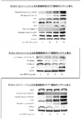
その結果、IgG 102-115抗体を含む培養液で培養した場合に、細胞内シグナルのうちp53とc-Jun、c-Fosのリン酸化亢進、Baxとc-Fos、p27の発現亢進、EGF受容体とp38 MAPK、Stat3、CDC2のリン酸化低下を認め、アポトーシスの亢進と細胞周期の抑制が示唆された(図7)。
その結果、IgG 102-115抗体を含む培養液で培養した場合に、細胞内シグナルのうちp53とc-Jun、c-Fosのリン酸化亢進、Baxとc-Fos、p27の発現亢進、EGF受容体とp38 MAPK、Stat3、CDC2のリン酸化低下を認め、アポトーシスの亢進と細胞周期の抑制が示唆された(図7)。
(実施例6)乳癌細胞MCF7に及ぼすIgG 102-115抗体の効果
実施例1の結果、乳癌細胞MCF7に対しては(3)のペプチドを抗原として作製した抗体(IgG 102-115)が最も抗腫瘍効果が認められた。そこで、IgG 102-115抗体について各種濃度の抗体を加えて培養したときの乳癌細胞の増殖に及ぼす効果を確認した。IgG 102-115抗体では濃度依存的に細胞増殖抑制効果が確認された(図8)。
実施例1の結果、乳癌細胞MCF7に対しては(3)のペプチドを抗原として作製した抗体(IgG 102-115)が最も抗腫瘍効果が認められた。そこで、IgG 102-115抗体について各種濃度の抗体を加えて培養したときの乳癌細胞の増殖に及ぼす効果を確認した。IgG 102-115抗体では濃度依存的に細胞増殖抑制効果が確認された(図8)。
(実施例7)肺腺癌細胞株PC9におけるIgG 102-115抗体による細胞内シグナル変化
肺腺癌細胞株PC9にIgG 102-115抗体を加えて培養したときの細胞内シグナルの変化について確認した。
肺腺癌細胞株PC9にIgG 102-115抗体を加えて培養したときの細胞内シグナルの変化について確認した。
肺腺癌細胞株PC9を5.0×10⁴ cell/ml に調整後、細胞培養用 6wellプレートに2 ml/wellで播種した。なお、実施例1と同様の培養液を用い、37℃で5% CO2下に培養した。培養開始24時間後に、培養液に溶解させたIgG 102-115抗体(Anti-RPL29)を各々10μg/ml、25μg/ml、500μg/ml加えた。コントロールには、培溶液のみを同量加えた。実施例3に記載の方法と同手法でSDS-PAGEにより電気泳動を行い、同様にブロッティングした。実施例3と同手法により処理を行い、ルミノメーターで検出した。なお、Cleaved Caspase 8 (p43/p41)、Cleaved Caspase 3、Erk1/2、Phospho-Erk1/2 (Thr202/Tyr204)、Phospho-ASK1 (Thr845)、Phospho-Smad2 (Ser465/467)、Smad2/3、Smad4、RUNX3、β-actin(以上、Cell signaling Techonology, Inc.)とRPL29(Abnova Corporation)に対する一次抗体を使用した。
その結果、IgG 102-115抗体を含む培養液で培養した場合に、Cleaved Caspase 8とCleaved Caspase 3の発現亢進が認められ、アポトーシスの亢進が示唆された(図9)。そして、Phospho-JNKの発現亢進が認められた(図9)。また、Phospho-Smad2とRUNX3の発現亢進が認められ、TGF-βシグナル経路の活性化が示唆された(図9)。
その結果、IgG 102-115抗体を含む培養液で培養した場合に、Cleaved Caspase 8とCleaved Caspase 3の発現亢進が認められ、アポトーシスの亢進が示唆された(図9)。そして、Phospho-JNKの発現亢進が認められた(図9)。また、Phospho-Smad2とRUNX3の発現亢進が認められ、TGF-βシグナル経路の活性化が示唆された(図9)。
(実施例8)乳癌細胞株MCF7細胞におけるIgG 102-115抗体による細胞内シグナル変化
乳癌細胞株MCF7細胞にIgG 102-115抗体を加えて培養したときに細胞内シグナルの変化について確認した。
乳癌細胞株MCF7細胞にIgG 102-115抗体を加えて培養したときに細胞内シグナルの変化について確認した。
乳癌細胞株MCF7細胞を5.0×10⁴ cell/ml に調整後、細胞培養用 6wellプレートに2 ml/wellで播種した。なお、実施例1と同様の培養液を用い、37℃で5% CO2下に培養した。培養開始24時間後に、培養液に溶解させたIgG 102-115抗体(Anti-RPL29)を各々10μg/ml、25μg/ml、500μg/ml加えた。コントロールには、培溶液のみを同量加えた。実施例3に記載の方法と同手法でSDS-PAGEにより電気泳動を行い、同様にブロッティングした。実施例3と同手法により処理を行い、ルミノメーターで検出した。なお、Cleaved Caspase 8 (p43/p41)、Phospho-p53 (Ser15)、P53、Bcl-2、Bax、Cleaved Caspase 3、Phospho-PTEN (Ser380)、PTEN、p-β-Catenin (Thr41/Ser45)、β-Catenin、Cyclin D1、p27、Stat3、Phospho-Stat3 (Ser727)、Phospho-ELK-1 (Ser383)、c-Jun、Phospho-c-Jun (Ser63)、RPL29、Erk1/2、Phospho-Erk1/2 (Thr202/Tyr204)、Phospho-ASK1 (Thr845)、ASK1、Phospho-TAK1 (Thr184/187)、TAK1、JNK、Phospho-JNK (Thr183/Tyr185)、P38 MAPK、Phospho-p38 MAPK (Thr180/Tyr182)、Phospho-Smad2 (Ser465/467)、Phospho-Smad3 (Ser423/425) 、Smad2/3、Smad4、Phospho-Smad1/5 (Ser463/465)、RUNX3、PI3 Kinase p110α、E-cadherin、N-cadherin、β-actin(以上、Cell signaling Techonology, Inc.)とRPL29(Abnova Corporation)に対する一次抗体を使用した。
その結果、IgG 102-115抗体を含む培養液で培養した場合にCleaved caspase 8、Phospho-p53、Bax、Cleaved Caspase 3の発現亢進が認められ、アポトーシスの亢進が示唆された(図10)。そして、Phospho-β-cateninの発現亢進とCyclin D1の発現低下が認められ、β-Catenin経路の不活性化が示唆された(図10)。また、Phospho-JNKの発現亢進が認められた(図10)。Phospho-JNKの発現亢進が認められた(図11)。Phospho-Smad2とPhospho-Smad3、RUNX3の発現亢進が認められ、TGF-βシグナル経路の活性化が示唆された(図11)。N-cadherinの発現低下が認められた(図11)。
その結果、IgG 102-115抗体を含む培養液で培養した場合にCleaved caspase 8、Phospho-p53、Bax、Cleaved Caspase 3の発現亢進が認められ、アポトーシスの亢進が示唆された(図10)。そして、Phospho-β-cateninの発現亢進とCyclin D1の発現低下が認められ、β-Catenin経路の不活性化が示唆された(図10)。また、Phospho-JNKの発現亢進が認められた(図10)。Phospho-JNKの発現亢進が認められた(図11)。Phospho-Smad2とPhospho-Smad3、RUNX3の発現亢進が認められ、TGF-βシグナル経路の活性化が示唆された(図11)。N-cadherinの発現低下が認められた(図11)。
以上詳述したように、本発明で特定されるRPL29に対する抗体又はペプチドワクチンからなる分子標的薬によれば、悪性腫瘍細胞の増殖を抑制することができる。本発明の悪性腫瘍細胞において発現の亢進しているRPL29を標的とする物質は、悪性腫瘍細胞ができたとしても、本来生体内に備わっている抗RPL29抗体であって発病に至らない生体防御機構に係る抗体(特許文献1)と同様の作用を有すると考えられる。係る物質を有効成分として含む本発明の抗悪性腫瘍剤は、安全性が高い薬剤であり、有用である。
Claims (8)
- RPL29に対する抗体又はペプチドワクチンからなる分子標的薬であって、RPL29タンパク質を構成するアミノ酸配列のうち、配列表の配列番号1に示すアミノ酸配列の部分、又は配列番号1に示すアミノ酸配列のうち1若しくは複数個のアミノ酸残基が欠失、置換、導入若しくは付加されたアミノ酸配列の部分を標的とし、配列番号1に示すアミノ酸配列のうち、第41番目のR(アルギニン)から第159番目のE(グルタミン酸)で特定されるアミノ酸配列から選択され、少なくとも5個のアミノ酸残基を含む部分を標的とすることを特徴とする分子標的薬。
- 請求項1に記載の分子標的薬が、配列表の配列番号1に示すアミノ酸配列の第146番目のQ(グルタミン)から159番目のE(グルタミン酸)、第81番目のV(バリン)から第135番目のA(アラニン)、又は第41番目のR(アルギニン)から第75番目のL(ロイシン)で特定されるいずれかのアミノ酸配列から選択され、各アミノ酸配列における連続する少なくとも5個のアミノ酸残基を含む部分を標的とすることを特徴とする、請求項1に記載の分子標的薬。
- 分子標的薬の標的部位が、以下の配列番号24、21、24、22、23及び25に示すいずれかのアミノ酸配列から選択される部分である、請求項1に記載の分子標的薬。
pklgkrarariakg(配列番号24)
qapkrtqaptkase(配列番号21)
mrfakkhnkkglkk(配列番号22)
lvkpkevkpkipkg(配列番号23)
rlcrpkakakakak(配列番号25) - 分子標的薬が抗体であり、以下の配列番号24、21、24、22、23及び25に示すいずれかのアミノ酸配列における連続した少なくとも5アミノ酸残基をエピトープとして認識することを特徴とする抗RPL29抗体からなる、請求項1又は3に記載の分子標的薬。
pklgkrarariakg(配列番号24)
qapkrtqaptkase(配列番号21)
mrfakkhnkkglkk(配列番号22)
lvkpkevkpkipkg(配列番号23)
rlcrpkakakakak(配列番号25) - 分子標的薬がペプチドワクチンであり、以下の配列番号24、21、24、22、23及び25に示すいずれかのアミノ酸配列における連続した少なくとも5アミノ酸残基を含む、RPL29に対するペプチドワクチンからなる、請求項1又は3に記載の分子標的薬。
pklgkrarariakg(配列番号24)
qapkrtqaptkase(配列番号21)
mrfakkhnkkglkk(配列番号22)
lvkpkevkpkipkg(配列番号23)
rlcrpkakakakak(配列番号25) - 請求項1~5のいずれか1に記載の分子標的薬を有効成分として含む抗悪性腫瘍剤。
- 悪性腫瘍が、膵癌、乳癌、肺腺癌、大腸癌、肝細胞癌、胃癌、甲状腺癌、卵巣癌、唾液腺腺様嚢胞癌、前立腺癌、バーキットリンパ腫、急性骨髄性白血病、粘液性脂肪肉腫、膠芽腫、胞巣状横紋筋肉腫、ウィルムス腫瘍、乏突起膠細胞腫、副腎皮質癌、多発性骨髄腫、結節性リンパ球優位型ホジキンリンパ腫、形質細胞白血病、髄芽腫、B細胞性慢性リンパ性白血病、肺線癌、肺扁平上皮癌、II型子宮内膜癌、びまん性大細胞型B細胞リンパ腫、食道癌、末梢T細胞リンパ腫、未分化大細胞型リンパ腫、ユーイング肉腫及び前駆T細胞リンパ芽球性白血病から選択される一種又は複数種である、請求項6に記載の抗悪性腫瘍剤。
- 悪性腫瘍が、膵癌、乳癌、肺腺癌及び大腸癌から選択される一種又は複数種である、請求項7に記載の抗悪性腫瘍剤。
Applications Claiming Priority (2)
| Application Number | Priority Date | Filing Date | Title |
|---|---|---|---|
| JP2014-130925 | 2014-06-26 | ||
| JP2014130925A JP2017141163A (ja) | 2014-06-26 | 2014-06-26 | 悪性腫瘍治療の新規分子標的薬 |
Publications (1)
| Publication Number | Publication Date |
|---|---|
| WO2015198797A1 true WO2015198797A1 (ja) | 2015-12-30 |
Family
ID=54937894
Family Applications (1)
| Application Number | Title | Priority Date | Filing Date |
|---|---|---|---|
| PCT/JP2015/065749 Ceased WO2015198797A1 (ja) | 2014-06-26 | 2015-06-01 | 悪性腫瘍治療の新規分子標的薬 |
Country Status (2)
| Country | Link |
|---|---|
| JP (1) | JP2017141163A (ja) |
| WO (1) | WO2015198797A1 (ja) |
Citations (1)
| Publication number | Priority date | Publication date | Assignee | Title |
|---|---|---|---|---|
| WO2013111770A1 (ja) * | 2012-01-23 | 2013-08-01 | 国立大学法人 岡山大学 | 新規抗悪性腫瘍剤 |
-
2014
- 2014-06-26 JP JP2014130925A patent/JP2017141163A/ja active Pending
-
2015
- 2015-06-01 WO PCT/JP2015/065749 patent/WO2015198797A1/ja not_active Ceased
Patent Citations (1)
| Publication number | Priority date | Publication date | Assignee | Title |
|---|---|---|---|---|
| WO2013111770A1 (ja) * | 2012-01-23 | 2013-08-01 | 国立大学法人 岡山大学 | 新規抗悪性腫瘍剤 |
Also Published As
| Publication number | Publication date |
|---|---|
| JP2017141163A (ja) | 2017-08-17 |
Similar Documents
| Publication | Publication Date | Title |
|---|---|---|
| TWI909341B (zh) | 抗garp抗體及其製造方法及用途 | |
| CN100457781C (zh) | 抗癌抗体 | |
| JP2023105112A (ja) | 疾患の要因となる生体内タンパク質を標的とするコンジュゲートワクチン | |
| SI2691112T1 (en) | STABILITY FORMULATION PROTITELES FOR HUMAN PROGRAMMED DEPRESSOR RECEPTOR PD-1 AND RELATED HEALTH | |
| BR112014006175B1 (pt) | Anticorpos capazes de neutralisar as exotoxinas principais tcda e tcdb de clostridium difficile | |
| US10941196B2 (en) | Anti-TNF-α fully human monoclonal antibodies with low immunogenicity and application thereof | |
| Dutta et al. | Immunogenicity and protective potential of a Plasmodium spp. enolase peptide displayed on archaeal gas vesicle nanoparticles | |
| US20210395368A1 (en) | Anti-pd-1 vaccine composition | |
| AU2018304957A1 (en) | Synthetic proteins and therapeutic uses thereof | |
| Rahdan et al. | Immunization with placenta-specific 1 (plac1) induces potent anti-tumor responses and prolongs survival in a mouse model of melanoma | |
| WO2015198797A1 (ja) | 悪性腫瘍治療の新規分子標的薬 | |
| Zhang et al. | Soluble production and function of vascular endothelial growth factor/basic fibroblast growth factor complex peptide | |
| JP6216641B2 (ja) | 新規抗悪性腫瘍剤 | |
| US20210371496A1 (en) | Anti-pd-1 vaccine composition | |
| CN109464669A (zh) | 抗pl2l60蛋白抗体在制备抗肿瘤药物中的应用 | |
| US11267881B2 (en) | Compositions and methods for treatment of diseases involving CXCL1 function | |
| JP2022517865A (ja) | Cxcl1機能に関与する疾患の治療のための組成物および方法 | |
| JP7202662B2 (ja) | ワクチン組成物 | |
| Feng et al. | Synthesis and functional studies of self-adjuvanting multicomponent anti-HER2 cancer vaccines | |
| AU2018311276B2 (en) | Anti-presenilin antibody for use in the prevention and/or treatment of cancer | |
| KR100980246B1 (ko) | T/Tn과 산화 만난의 접합체 및 이를 포함하는 암 백신조성물 | |
| WO2020050419A1 (ja) | 環状ペプチド | |
| WO2022109168A3 (en) | Novel var2csa immunogens and methods of use thereof | |
| KR20260040609A (ko) | 티로신-단백질 키나제 막 수용체 1(ror1) 항체-약물 접합체 및 이의 용도 | |
| WO2021132550A1 (ja) | 術後補助療法剤 |
Legal Events
| Date | Code | Title | Description |
|---|---|---|---|
| 121 | Ep: the epo has been informed by wipo that ep was designated in this application |
Ref document number: 15812192 Country of ref document: EP Kind code of ref document: A1 |
|
| NENP | Non-entry into the national phase |
Ref country code: DE |
|
| 122 | Ep: pct application non-entry in european phase |
Ref document number: 15812192 Country of ref document: EP Kind code of ref document: A1 |
|
| NENP | Non-entry into the national phase |
Ref country code: JP |