WO2015182060A1 - 制御装置、その制御方法、およびコンピュータ読み取り可能な記録媒体 - Google Patents
制御装置、その制御方法、およびコンピュータ読み取り可能な記録媒体 Download PDFInfo
- Publication number
- WO2015182060A1 WO2015182060A1 PCT/JP2015/002498 JP2015002498W WO2015182060A1 WO 2015182060 A1 WO2015182060 A1 WO 2015182060A1 JP 2015002498 W JP2015002498 W JP 2015002498W WO 2015182060 A1 WO2015182060 A1 WO 2015182060A1
- Authority
- WO
- WIPO (PCT)
- Prior art keywords
- content
- target content
- candidate device
- target
- provision
- Prior art date
- Legal status (The legal status is an assumption and is not a legal conclusion. Google has not performed a legal analysis and makes no representation as to the accuracy of the status listed.)
- Ceased
Links
Images








Classifications
-
- G—PHYSICS
- G06—COMPUTING OR CALCULATING; COUNTING
- G06F—ELECTRIC DIGITAL DATA PROCESSING
- G06F21/00—Security arrangements for protecting computers, components thereof, programs or data against unauthorised activity
- G06F21/10—Protecting distributed programs or content, e.g. vending or licensing of copyrighted material ; Digital rights management [DRM]
- G06F21/12—Protecting executable software
- G06F21/121—Restricting unauthorised execution of programs
-
- G—PHYSICS
- G06—COMPUTING OR CALCULATING; COUNTING
- G06F—ELECTRIC DIGITAL DATA PROCESSING
- G06F21/00—Security arrangements for protecting computers, components thereof, programs or data against unauthorised activity
- G06F21/10—Protecting distributed programs or content, e.g. vending or licensing of copyrighted material ; Digital rights management [DRM]
-
- G—PHYSICS
- G06—COMPUTING OR CALCULATING; COUNTING
- G06F—ELECTRIC DIGITAL DATA PROCESSING
- G06F13/00—Interconnection of, or transfer of information or other signals between, memories, input/output devices or central processing units
-
- G—PHYSICS
- G06—COMPUTING OR CALCULATING; COUNTING
- G06F—ELECTRIC DIGITAL DATA PROCESSING
- G06F13/00—Interconnection of, or transfer of information or other signals between, memories, input/output devices or central processing units
- G06F13/10—Program control for peripheral devices
-
- G—PHYSICS
- G06—COMPUTING OR CALCULATING; COUNTING
- G06F—ELECTRIC DIGITAL DATA PROCESSING
- G06F21/00—Security arrangements for protecting computers, components thereof, programs or data against unauthorised activity
- G06F21/30—Authentication, i.e. establishing the identity or authorisation of security principals
- G06F21/44—Program or device authentication
-
- G—PHYSICS
- G06—COMPUTING OR CALCULATING; COUNTING
- G06F—ELECTRIC DIGITAL DATA PROCESSING
- G06F21/00—Security arrangements for protecting computers, components thereof, programs or data against unauthorised activity
- G06F21/60—Protecting data
-
- G—PHYSICS
- G06—COMPUTING OR CALCULATING; COUNTING
- G06Q—INFORMATION AND COMMUNICATION TECHNOLOGY [ICT] SPECIALLY ADAPTED FOR ADMINISTRATIVE, COMMERCIAL, FINANCIAL, MANAGERIAL OR SUPERVISORY PURPOSES; SYSTEMS OR METHODS SPECIALLY ADAPTED FOR ADMINISTRATIVE, COMMERCIAL, FINANCIAL, MANAGERIAL OR SUPERVISORY PURPOSES, NOT OTHERWISE PROVIDED FOR
- G06Q30/00—Commerce
- G06Q30/06—Buying, selling or leasing transactions
-
- H—ELECTRICITY
- H04—ELECTRIC COMMUNICATION TECHNIQUE
- H04L—TRANSMISSION OF DIGITAL INFORMATION, e.g. TELEGRAPHIC COMMUNICATION
- H04L9/00—Cryptographic mechanisms or cryptographic arrangements for secret or secure communications; Network security protocols
- H04L9/08—Key distribution or management, e.g. generation, sharing or updating, of cryptographic keys or passwords
-
- H—ELECTRICITY
- H04—ELECTRIC COMMUNICATION TECHNIQUE
- H04L—TRANSMISSION OF DIGITAL INFORMATION, e.g. TELEGRAPHIC COMMUNICATION
- H04L9/00—Cryptographic mechanisms or cryptographic arrangements for secret or secure communications; Network security protocols
- H04L9/32—Cryptographic mechanisms or cryptographic arrangements for secret or secure communications; Network security protocols including means for verifying the identity or authority of a user of the system or for message authentication, e.g. authorization, entity authentication, data integrity or data verification, non-repudiation, key authentication or verification of credentials
-
- H—ELECTRICITY
- H04—ELECTRIC COMMUNICATION TECHNIQUE
- H04N—PICTORIAL COMMUNICATION, e.g. TELEVISION
- H04N21/00—Selective content distribution, e.g. interactive television or video on demand [VOD]
- H04N21/20—Servers specifically adapted for the distribution of content, e.g. VOD servers; Operations thereof
- H04N21/25—Management operations performed by the server for facilitating the content distribution or administrating data related to end-users or client devices, e.g. end-user or client device authentication, learning user preferences for recommending movies
- H04N21/254—Management at additional data server, e.g. shopping server, rights management server
- H04N21/2541—Rights Management
-
- H—ELECTRICITY
- H04—ELECTRIC COMMUNICATION TECHNIQUE
- H04N—PICTORIAL COMMUNICATION, e.g. TELEVISION
- H04N21/00—Selective content distribution, e.g. interactive television or video on demand [VOD]
- H04N21/20—Servers specifically adapted for the distribution of content, e.g. VOD servers; Operations thereof
- H04N21/25—Management operations performed by the server for facilitating the content distribution or administrating data related to end-users or client devices, e.g. end-user or client device authentication, learning user preferences for recommending movies
- H04N21/258—Client or end-user data management, e.g. managing client capabilities, user preferences or demographics, processing of multiple end-users preferences to derive collaborative data
- H04N21/25808—Management of client data
- H04N21/25816—Management of client data involving client authentication
-
- H—ELECTRICITY
- H04—ELECTRIC COMMUNICATION TECHNIQUE
- H04N—PICTORIAL COMMUNICATION, e.g. TELEVISION
- H04N21/00—Selective content distribution, e.g. interactive television or video on demand [VOD]
- H04N21/20—Servers specifically adapted for the distribution of content, e.g. VOD servers; Operations thereof
- H04N21/25—Management operations performed by the server for facilitating the content distribution or administrating data related to end-users or client devices, e.g. end-user or client device authentication, learning user preferences for recommending movies
- H04N21/266—Channel or content management, e.g. generation and management of keys and entitlement messages in a conditional access system, merging a VOD unicast channel into a multicast channel
-
- H—ELECTRICITY
- H04—ELECTRIC COMMUNICATION TECHNIQUE
- H04N—PICTORIAL COMMUNICATION, e.g. TELEVISION
- H04N21/00—Selective content distribution, e.g. interactive television or video on demand [VOD]
- H04N21/40—Client devices specifically adapted for the reception of or interaction with content, e.g. set-top-box [STB]; Operations thereof
- H04N21/41—Structure of client; Structure of client peripherals
- H04N21/4104—Peripherals receiving signals from specially adapted client devices
- H04N21/4122—Peripherals receiving signals from specially adapted client devices additional display device, e.g. video projector
-
- H—ELECTRICITY
- H04—ELECTRIC COMMUNICATION TECHNIQUE
- H04N—PICTORIAL COMMUNICATION, e.g. TELEVISION
- H04N21/00—Selective content distribution, e.g. interactive television or video on demand [VOD]
- H04N21/40—Client devices specifically adapted for the reception of or interaction with content, e.g. set-top-box [STB]; Operations thereof
- H04N21/41—Structure of client; Structure of client peripherals
- H04N21/414—Specialised client platforms, e.g. receiver in car or embedded in a mobile appliance
- H04N21/41407—Specialised client platforms, e.g. receiver in car or embedded in a mobile appliance embedded in a portable device, e.g. video client on a mobile phone, PDA, laptop
-
- H—ELECTRICITY
- H04—ELECTRIC COMMUNICATION TECHNIQUE
- H04N—PICTORIAL COMMUNICATION, e.g. TELEVISION
- H04N21/00—Selective content distribution, e.g. interactive television or video on demand [VOD]
- H04N21/40—Client devices specifically adapted for the reception of or interaction with content, e.g. set-top-box [STB]; Operations thereof
- H04N21/43—Processing of content or additional data, e.g. demultiplexing additional data from a digital video stream; Elementary client operations, e.g. monitoring of home network or synchronising decoder's clock; Client middleware
- H04N21/442—Monitoring of processes or resources, e.g. detecting the failure of a recording device, monitoring the downstream bandwidth, the number of times a movie has been viewed, the storage space available from the internal hard disk
- H04N21/44204—Monitoring of content usage, e.g. the number of times a movie has been viewed, copied or the amount which has been watched
-
- H—ELECTRICITY
- H04—ELECTRIC COMMUNICATION TECHNIQUE
- H04N—PICTORIAL COMMUNICATION, e.g. TELEVISION
- H04N21/00—Selective content distribution, e.g. interactive television or video on demand [VOD]
- H04N21/40—Client devices specifically adapted for the reception of or interaction with content, e.g. set-top-box [STB]; Operations thereof
- H04N21/45—Management operations performed by the client for facilitating the reception of or the interaction with the content or administrating data related to the end-user or to the client device itself, e.g. learning user preferences for recommending movies, resolving scheduling conflicts
- H04N21/462—Content or additional data management e.g. creating a master electronic programme guide from data received from the Internet and a Head-end or controlling the complexity of a video stream by scaling the resolution or bit-rate based on the client capabilities
- H04N21/4627—Rights management associated to the content
-
- G—PHYSICS
- G06—COMPUTING OR CALCULATING; COUNTING
- G06F—ELECTRIC DIGITAL DATA PROCESSING
- G06F21/00—Security arrangements for protecting computers, components thereof, programs or data against unauthorised activity
- G06F21/10—Protecting distributed programs or content, e.g. vending or licensing of copyrighted material ; Digital rights management [DRM]
- G06F21/12—Protecting executable software
-
- G—PHYSICS
- G06—COMPUTING OR CALCULATING; COUNTING
- G06F—ELECTRIC DIGITAL DATA PROCESSING
- G06F2221/00—Indexing scheme relating to security arrangements for protecting computers, components thereof, programs or data against unauthorised activity
- G06F2221/21—Indexing scheme relating to G06F21/00 and subgroups addressing additional information or applications relating to security arrangements for protecting computers, components thereof, programs or data against unauthorised activity
- G06F2221/2111—Location-sensitive, e.g. geographical location, GPS
-
- G—PHYSICS
- G06—COMPUTING OR CALCULATING; COUNTING
- G06F—ELECTRIC DIGITAL DATA PROCESSING
- G06F2221/00—Indexing scheme relating to security arrangements for protecting computers, components thereof, programs or data against unauthorised activity
- G06F2221/21—Indexing scheme relating to G06F21/00 and subgroups addressing additional information or applications relating to security arrangements for protecting computers, components thereof, programs or data against unauthorised activity
- G06F2221/2135—Metering
Definitions
- the present invention relates to a content control device, a control method thereof, and a computer-readable recording medium, and more particularly, to a content control device that controls provision of content, a control method thereof, and a computer-readable recording medium.
- Patent Document 1 An example of a content management method capable of preventing unauthorized browsing of digital content using such a technique is described in Patent Document 1.
- the content management method described in Patent Literature 1 realizes a content distribution mechanism including a DRM that enables browsing with a plurality of terminals for one purchased content.
- the present invention has been made in view of the above circumstances, and an object thereof is to provide a content control apparatus that appropriately controls the use of digital content, a control method therefor, and a computer-readable recording medium. is there.
- the first aspect relates to a content control apparatus.
- the content control apparatus is Storage means for storing the number of contents provided for each content and the number of contents that can be provided; Providing determination means for determining whether or not to provide the target content to the candidate device receiving the provision of the target content based on the provided number and the available number; When the target content is provided to the candidate device according to the determination result by the provision determination unit, the provision number management that adds the number of the target content newly provided to the provision number stored for the target content Means, Is provided.
- the second aspect relates to a control method executed by at least one computer.
- the control method according to the second aspect is Stores the number of contents provided for each content and the number of contents that can be provided, Based on the provided number and the providable number, it is determined whether the target content can be provided to a candidate device that receives the target content, When providing the target content to the candidate device according to the determination result, adding the number of the target content newly provided to the provided number stored for the target content.
- a program for causing at least one computer to execute the method of the second aspect or a computer-readable recording medium recording such a program. May be.
- This recording medium includes a non-transitory tangible medium.
- This program includes program code that, when executed by a computer, causes the computer to implement the control method on the content control device.
- a plurality of components are formed as a single member, and a single component is formed of a plurality of members. It may be that a certain component is a part of another component, a part of a certain component overlaps with a part of another component, or the like.
- the plurality of procedures of the method and program of the present invention are not limited to being executed at different timings. For this reason, another procedure may occur during the execution of a certain procedure, or some or all of the execution timing of a certain procedure and the execution timing of another procedure may overlap.
- FIG. 1 is a diagram conceptually showing a system configuration of a content providing system 1 including a content control apparatus 100 according to an embodiment of the present invention.
- the content providing system 1 provides the use of digital content as a service to a specific or unspecified user in a specific area such as a public place, a store, or a storefront.
- the target content includes various digital content such as an electronic book, music, video, game, or application that can be used by the user via the candidate device 12.
- the content providing system 1 provides the target content to the candidate device 12.
- the candidate device 12 is a device that can receive target content, such as a portable terminal that can be operated by each user, a digital signage or a projector installed in a specific area, and the like.
- the target content is provided so that the user can use the target content via these candidate devices 12.
- a projector installed in a specific area projects an image using a body, a floor, a wall, a table, or the like as a projection surface, detects an operation such as a gesture of a person or an operation object using a three-dimensional sensor, and has a user interface. Can be realized.
- the portable terminal included in the candidate device 12 of the present embodiment is, for example, a smartphone, a tablet terminal, an electronic book reader terminal, a portable digital music player, a portable video player, a notebook personal computer, a mobile phone, or a PHS (Personal Handyphone System). Any portable terminal that can use digital contents, including PDA (Personal Digital Assistants), game machines, and television receivers. In addition, the portable terminal may be owned by the user or may be lent.
- the content providing system 1 includes a service providing apparatus 10 that provides a user with various services including a service that provides digital content to a user, and a content server 16 that stores digital content as a distribution source. And a content management server 14 (CMS: Contents Management) that manages digital content stored in the content server 16 and distributes the digital content to the service providing apparatus 10.
- CMS Contents Management
- the service providing device 10 cooperates with the content control device 100 to provide a service that allows the user to use the target content via the candidate device 12.
- the service providing device 10 can provide a service for listening to music on the user's mobile terminal.
- the service providing device 10 can provide a service for projecting an electronic book by the projector and allowing the user to browse.
- the service providing device 10 has a function of providing a service for using the target content by the user via the candidate device 12, and the content control device 100 is provided by the service providing device 10 via the candidate device 12. It functions to control whether or not the target content to be used by the user can be provided and used.
- the service providing apparatus 10 and the content control apparatus 100 are illustrated as different apparatuses. However, since they operate in cooperation with each other, they may be realized as a single content control apparatus.
- the content control apparatus 100 permits temporary use of content by the user. For example, the content control apparatus 100 temporarily permits the user existing in the specific area to use the target content.
- the content control apparatus 100 limits the number of users who can use one target content at a certain time to the number that can be provided. That is, the content providing side (content providing system 1 side) holds the license for the number of provisionable items for each target content.
- the candidate device 12 is installed in a specific area such as a projector, the use of the digital content is automatically limited to the specific area, so there is no need for a special mechanism for temporary use.
- a function for allowing the temporary use of digital content by the user or prohibiting the use of permanent content is required.
- the content control apparatus 100 controls the provision of digital content by the service providing apparatus 10.
- the content control apparatus 100 permits or prohibits the provision of digital content to the candidate apparatus 12 by the service providing apparatus 10 or stops the provision of digital content.
- Controlling the provision of digital content includes controlling the use of the digital content by the user via the candidate device 12.
- the content control apparatus 100 can also send an unavailable instruction to the candidate apparatus 12.
- the content may be distributed from the service providing device 10 to the candidate device 12, or when the service providing device 10 instructs the content management server 14, the content is sent from the content management server 14 to the candidate. It may be delivered directly to the device 12.
- the service providing apparatus 10 and the content management server 14 may be integrated.
- the service providing apparatus 10 and the content management server 14 do not have to be one-to-one, and various configurations such as one-to-N, N-to-one, and N-to-M are possible.
- the service providing device 10, the candidate device 12, the content control device 100, and the content management server 14 can be connected by at least one of wired and wireless.
- the connection means is not particularly limited, and various forms are conceivable.
- the service providing device 10 and the candidate device 12 are connected to each other via a wired connection (for example, LAN (Local Area Network) or USB (Universal Serial Bus)) and wireless communication (for example, a wireless LAN (Local A case will be described as an example where both are connected in (Area Network)).
- LAN Local Area Network
- USB Universal Serial Bus
- wireless communication for example, a wireless LAN (Local A case will be described as an example where both are connected in (Area Network)
- the candidate device 12 includes a communication unit that performs communication via various public lines such as 3G (3rd Generation), LTE (Long Term Evolution), WiMAX (Worldwide Interoperability for Microwave Access), etc.
- 3G 3rd Generation
- LTE Long Term Evolution
- WiMAX Worldwide Interoperability for Microwave Access
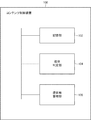
- FIG. 2 is a functional block diagram showing a logical configuration of content control apparatus 100 according to the embodiment of the present invention.
- the content control apparatus 100 includes a storage unit 102 and a provision number management unit 106.
- the storage unit 102 stores the provided number that is the number of contents provided at a certain time for each content and the number of contents that can be provided.
- the provision determination unit 104 determines whether or not the target content can be provided to the candidate device 12 that receives the provision of the target content, based on the number of provisions and the number of provisions.
- the provision number management unit 106 adds the provision number stored for the target content when the target content is provided to the candidate device 12 according to the determination result by the provision determination unit 104 and the provision determination unit 104.
- the storage unit 102 stores the provision number that is the number of contents provided at a certain time for each content and the number of contents that can be provided.
- the provision number and the provisionable number are hereinafter referred to as a simultaneous point (current) provision number and a simultaneous point (current) provisionable number.
- the number that can be provided at the same time means the maximum number of target contents that can be provided to the candidate device 12 at the same time, which is permitted by the content distribution source.
- the number that can be provided at the same time can be purchased as the number of licenses from the content distribution source.
- the provision number at the same time is the number of contents provided to the candidate device 12 at a certain time.
- providing simultaneous points is not limited to the fact that the period from the start of provision of a certain content to the end thereof is exactly the same.
- “simultaneous point provision” means a state in which a single content is provided to a plurality of candidate devices 12 different from each other even if they overlap each other.
- the meaning of “providing simultaneous points” is not limited to this, and a condition such that the overlapping time is longer than a predetermined threshold may be added to “providing simultaneous points”.
- Provision of target content to candidate device 12 means that a part or all of the target content is sent to candidate device 12.
- a part of the target content is sent to the candidate device 12 when only the image of the page that is being browsed (opened) of the electronic book is sent to the candidate device 12 when the online game is played.
- the application is not sent to the candidate device 12, but a game video is sent to the candidate device 12, or a case where music or video is streamed to the candidate device 12.
- the storage unit 102 may store, for each content, the number of simultaneous points that can be provided and the number of simultaneous points provided in association with the content identification information (ID). These pieces of information can be stored in a ROM (Read Only Memory) 64, a RAM (Random Access Memory) 66, or a storage (not shown) of the computer 60 shown in FIG.
- FIG. 4 shows that information is stored in a table format, the table structure is not limited to this and does not have to be a table format. You may memorize
- the number of simultaneous points provided and the number of simultaneously available points are stored for each “content”, but the present invention is not limited to this.
- the content is a magazine, even if the sales month is different, the same content may be used if they are the same magazine, or different content may be provided for each sales month.
- a plurality of songs in the same artist or one title album may have the same content. That is, it can be set according to the contents of the license.
- the storage unit 102 may store information other than the “number of simultaneous points that can be provided”.
- the storage unit 102 can also store various types of restriction information such as restriction information on a provisionable period, restriction information on the total number of times of provision, and restriction information on provision time (or period). Similarly, it is only necessary to obtain and store the restriction contents and the provision status for other forms.
- the provision determination unit 104 determines whether the target content can be provided to the candidate device 12 that receives the target content based on the simultaneous point provision number and the simultaneous point provisionable number stored in the storage unit 102. In the present embodiment, the provision determination unit 104 determines that the provision of the target content is permitted when the simultaneous point provision number is equal to or less than the simultaneous point provisionable number, and when the simultaneous point provision number exceeds the simultaneous point provisionable number, It is determined that the provision of the target content is prohibited.
- the provision number management unit 106 adds the simultaneous point provision number stored for the target content when the target content is provided to the candidate device 12 according to the determination result by the provision determination unit 104.
- the simultaneous point provision number increases by the provision number of the target content.
- the provision number management unit 106 when providing the target content to the candidate device 12, the provision number management unit 106 instructs the service providing device 10 or the content management server 14 to permit the provision of the target content to the candidate device 12. Alternatively, the provision number management unit 106 may instruct the candidate device 12 that has requested use of the target content to permit the use of the target content. Upon receiving the instruction, the service providing device 10 or the content management server 14 provides the target content to the candidate device 12. Alternatively, the candidate device 12 uses the target content according to the instruction.
- FIG. 3 is a block diagram illustrating a configuration example of the computer 60 that implements the content control apparatus 100.
- the computer 60 includes a CPU (Central Processing Unit) 62, a memory (ROM 64 and RAM 66), a program for realizing the components shown in FIG. 2 loaded in the memory, a storage (not shown) such as a hard disk for storing the program, and a network connection. Interface (I / O (Input / Output) 68).
- the ROM 64, the RAM 66, and the I / O 68 are connected to each other via a bus 69, and the entire content control apparatus 100 is controlled by the CPU 62 together with each element in FIG.
- FIG. 2 is implemented by an arbitrary combination of hardware and software of the computer 60 in FIG. It will be understood by those skilled in the art that there are various modifications to the implementation method and apparatus.
- the functional block diagram showing the content control apparatus of each embodiment described below shows not a configuration in hardware units but a block in logical functional units.
- the CPU 62 of the computer 60 in FIG. 3 reads out the program 70 stored in the ROM 64 to the RAM 66 and executes it, whereby each function of each unit in FIG. 2 of the content control apparatus 100 can be realized.
- the program according to the present embodiment is described so that the computer for realizing the content control apparatus 100 executes the following procedure.
- One procedure is a procedure for storing the provision number, which is the number of contents provided at a certain time for each content, and the number of contents that can be provided.
- Another procedure is a procedure for determining whether or not the target content can be provided to a candidate device receiving the target content based on the number of provisions and the number of provisions.
- Still another procedure is a procedure of adding the provision number stored for the target content when the target content is provided to the candidate device 12 according to the determination result. *
- the program of this embodiment may be recorded on a computer-readable recording medium.
- the recording medium is not particularly limited, and various forms can be considered.
- the program may be loaded from a recording medium into a computer memory, or downloaded to a computer through a network and loaded into the memory.
- the recording medium for recording the program 70 includes a medium that can be used by the non-transitory tangible computer 60, and a program code that can be read by the computer 60 is embedded in the medium.
- the computer 60 is caused to execute the following control method for realizing the content control apparatus 100.
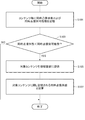
- FIG. 5 is a flowchart showing an example of the operation of the content control apparatus 100 of the present embodiment.
- the control method according to the embodiment of the present invention is a control method of the content control apparatus 100, and is a control method executed by the computer 60 that implements the content control apparatus 100.
- the content control apparatus 100 stores the provided number that is the number of contents provided at a certain point in time for each content and the number of contents that can be provided (step S101).
- the content control apparatus 100 determines whether or not the target content can be provided to the candidate apparatus 12 that receives the target content based on the simultaneous point provision number and the simultaneous point provisionable number (step S103). Further, when providing the target content to the candidate device 12 according to the determination result (step S105), the content control apparatus 100 adds the simultaneous point provision number stored for the target content (step S107).
- the storage unit 102 stores the simultaneous point provision number and the simultaneous point provisionable number for each content (step S101).
- step S101 after determining the number of simultaneous points that can be provided for each content in accordance with the content of the license of each content, the storage unit 102 stores the number of simultaneous points that can be provided for each content.
- the number of simultaneous points provided increases or decreases each time, and the storage unit 102 simultaneously transmits the content. Update the number of points provided and store it.
- the provision determination unit 104 determines whether or not the simultaneous point provision number is equal to or less than the simultaneous point provisionable number (step S103).
- the provision number management unit 106 provides the target content to the candidate device 12 (step S105).
- the provision number management unit 106 adds the stored simultaneous point provision number with respect to the target content (step S107), and the process ends.
- the present process is terminated without providing the content to the candidate device 12. Step S103 of this process is performed each time a content use request is made.
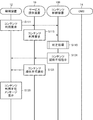
- FIG. 6 and 7 are sequence diagrams showing a content providing procedure in the content providing system 1 of the present embodiment.
- FIG. 6 shows a procedure when the content control apparatus 100 permits the provision of the target content.
- FIG. 7 shows a procedure in the case where provision of the target content is not permitted by the content control apparatus 100.
- Each device waits for reception of information (request, instruction, content, etc.), determines whether or not it has been received, and proceeds to the processing when it is determined that it has been received.
- these determination processes are not shown, and information transmission between devices is indicated by arrows. Further, broken arrows indicate other examples of possible information flow other than the information flow indicated by the solid line.
- Candidate apparatus 12 makes a request to use the target content to service providing apparatus 10 (step S111).
- the service providing apparatus 10 receives the usage request and transmits the usage request from the candidate apparatus 12 to the content control apparatus 100 (step S113).
- the content usage request may be made directly from the candidate device 12 to the content control device 100.
- the provision determination unit 104 executes the determination process shown in step S103 of FIG. 2 (step S115).
- step S115 it is assumed that it is determined that the target content can be provided to the candidate device 12 as a result of the determination process.
- the provision number management unit 106 instructs the service providing apparatus 10 to provide the target content to the candidate apparatus 12 (step S117). Then, the service providing device 10 requests the content management server 14 to distribute the target content to be provided to the candidate device 12 (step S119). Alternatively, the provision number management unit 106 may instruct the content management server 14 to provide the target content to the candidate device 12. Then, the content management server 14 distributes the target content to the service providing apparatus 10 (step S121). Then, the service providing device 10 provides the target content to the candidate device 12 (step S123), and the candidate device 12 uses the content (step S125). Then, in the content control apparatus 100, the provision number management unit 106 adds the content simultaneous point provision number (step S127). Alternatively, in step S117, the provision number management unit 106 may instruct the candidate device 12 to provide the target content. The candidate device 12 may wait for provision of the target content in response to the provisionable instruction.
- step S121 the content management server 14 may distribute the target content to the candidate device 12. Further, in step S123, the service providing apparatus 10 may notify the content control apparatus 100 that the candidate apparatus 12 has been provided with the content. Upon receiving the notification, the content control apparatus 100 may proceed to step S127 and add the simultaneous point provision number of the target content.
- the procedure from the content use request (step S111) by the candidate device 12 to the determination process (step S115) in the content control device 100 is the same as that in FIG. In FIG. 7, it is assumed that it is determined that the target content cannot be provided to the candidate device 12 as a result of the determination processing by the provision determination unit 104 of the content control device 100.
- the content control device 100 instructs the service providing device 10 or the candidate device 12 to not provide content (step S131).
- the service providing apparatus 10 receives the instruction, the service providing apparatus 10 notifies the candidate apparatus 12 that the content cannot be provided (step S133).
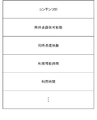
- the candidate device 12 presents a message telling the user that the content cannot be used on the screen 110 as shown in FIG. 8 (step S135).
- the user can operate according to the screen 110 to select another content, or move to the service top screen to change to use of another service. These operations are not particularly limited, and various modes can be considered. In this example, the number of simultaneous points provided in the storage unit 102 is not updated.
- the storage unit 102 stores the number of simultaneous points that can be provided and the number of simultaneous points provided, and the provision determining unit 104 and the number of simultaneous points that can be provided. Based on the number of provisions, whether or not to provide the target content to the candidate device 12 receiving the target content is determined.
- the provision determination unit 104 determines that the target content can be provided to the candidate device 12 when the simultaneous point provision number is equal to or less than the simultaneous point provisionable number.
- the provision number management unit 106 adds the simultaneous point provision number stored for the target content when the target content is provided to the candidate device 12 according to the determination result. Thereby, the simultaneous point provision number of the target content provided to the candidate device 12 stored in the storage unit 102 is updated, and when it is next determined whether the target content can be provided, the updated simultaneous point provision is provided. Number is used.
- provision of target content exceeding the number of content permitted to be provided simultaneously can be prohibited.
- purchased magazines are placed in beauty salons, hospital waiting areas, and coffee shops to provide meaningful time on the spot.
- such a form can also be realized with digital content.
- the number of simultaneous provisions of the target content can be limited to the number of simultaneous points that can be provided, so that it is possible to solve the copyright problem in realizing the digital content.
- FIG. 9 is a functional block diagram showing a logical configuration of content control apparatus 200 according to the embodiment of the present invention.
- the content control device 200 according to the present embodiment further has a configuration for stopping the use of digital content provided to the candidate device 12 by the content control device 100 according to the above embodiment.
- the content control apparatus 200 includes a storage unit 102 and a provision determination unit 104 similar to those of the content control apparatus 100 of the above embodiment of FIG. 2, and further includes a provision number management unit 206 and a stop determination unit 208. Prepare.
- the content control device 200 further includes a stop determination unit 208 that determines whether to stop using the target content provided to the candidate device 12.
- the provision number management unit 206 of the present embodiment controls the target content determined to be stopped by the stop determination unit 208 not to be used via the candidate device 12, and subtracts the simultaneous point provision number of the target content.
- Specific processing details of the use content target suspension by the provision number management unit 206 include, for example, processing for making the target content unavailable on the candidate device 12.
- the candidate device 12 is a projector or the like
- the image transmitted from the service providing device 10 to the candidate device 12 is changed to an image of the cover of the electronic book so that the contents of the electronic book cannot be read.
- It may be an instruction to the service providing apparatus 10.
- it includes a content provision stop instruction to the service providing apparatus 10, a content provision stop instruction to the content management server 14, and a content use stop instruction to the candidate apparatus 12.
- indication which changes the target content on a portable terminal to use prohibition, etc. are included.
- the provision number management unit 206 subtracts the simultaneous point provision number, whereby the storage unit 102 can store the number of target contents currently provided at the same time. If the target content cannot be provided because the number of simultaneous points provided for the target content has already been reached, the provision of the target content has been completed, so the number of simultaneous points provided can be reduced and provided simultaneously. Since the number changes to less than or equal to the number, the target content can be provided to other users or other occasions.
- FIG. 10 is a flowchart showing an example of the operation of the content control apparatus 200 of the present embodiment.
- the content control device 200 determines whether to stop using the target content provided to the candidate device 12 (step S201).
- the content control device 200 performs control so that the target content determined to be stopped is not used via the candidate device 12 (step S203).
- the content control apparatus 200 subtracts the number of simultaneous points provided for the target content (step S205).
- the processing procedure in this figure is repeatedly executed periodically, as needed, or at a predetermined timing while the target content is provided to the candidate device 12 or while the target content is used.
- it can control so that target content may not be used with the candidate apparatus 12 (step S203).
- the simultaneous point provision number stored for the target content is subtracted (step S205).
- the stop determination unit 208 may determine whether to stop the use of the target content in response to an instruction to end use by the user who has used the target content via the candidate device 12. .
- the stop determination unit 208 notifies the candidate apparatus 12 periodically, at any time, or at a predetermined timing while target content is provided to the candidate apparatus 12. It is determined whether or not to stop using the provided target content. Then, the provision number management unit 206 performs control so that the target content determined to be stopped by the stop determination unit 208 is not used via the candidate device 12, and subtracts the simultaneous point provision number of the target content. Thereby, the simultaneous point provision number of the target content provided to the candidate device 12 stored in the storage unit 102 is updated, and when it is next determined whether the target content can be provided, the updated simultaneous point provision is provided. Number is used.
- the content control apparatus 200 of the present embodiment further determines whether or not to stop the use of the target content, and can control the target content not to be used via the candidate device 12 when it is determined to stop. . Therefore, the content control apparatus 200 of this embodiment can manage content so that the content can be used more appropriately.
- FIG. 11 is a functional block diagram showing a logical configuration of the content control apparatus 210 of the present embodiment.
- the content control apparatus 210 determines whether to stop using the target content in the content control apparatus 200 based on the available time.
- the content control device 210 includes a provision determination unit 104 and a provision number management unit 206 similar to those of the content control device 200 in FIG. 9, and further includes a storage unit 212, a stop determination unit 218, and a timer unit 220. .
- the content control apparatus 210 further includes a timer unit 220 that measures the usage time of the target content that is used via the candidate apparatus 12.
- the storage unit 212 further stores the available time of content for each content.
- the stop determination unit 218 determines whether to stop the use of the target content provided to the candidate device 12 based on the usage time of the target content and the available time related to the target content.
- the storage unit 212 may further store, for each content, the content identification information (ID) associated with the available time and the usage time. These pieces of information can be stored in the ROM 64, RAM 66, or storage (not shown) of the computer 60 in FIG. Further, in FIG. 12, the number of simultaneous points that can be provided and the number of simultaneous points provided in FIG. 4 are stored in the same table, but the table structure is not limited to this, and the table structure is not limited to this. It need not be in the form. You may memorize
- the usage time is, for example, from the time when the target content is provided to the candidate device 12 in response to the usage request for the target content, or from the use or execution start time of the target content by the user via the candidate device 12.
- the time measured by the time measuring unit 220 is indicated.
- the usage time may be the time when the target content is actually used or executed, or the time during which the target content is provided including the time when the target content is not used or executed is counted by the time measuring unit 220. You may get it. That is, it may be the time from the start of provision of the target content to the end or stop of the provision, or the time from the start of use of the target content to the end or stop of use. Also good.
- the available time refers to the time (period) during which the user can use the target content. For example, 30 minutes from the start of use can be used as the available time, and one week can be used from the start of distribution of the target content or license acquisition. Moreover, it may be a time limit that can be used by one user (or in one usage unit when using a game that multiple users play together), or may be used in total by a plurality of users (or in each usage unit). It may be a time limit that can be made. That is, various modes can be considered for the timing and conditions for starting measurement of the available time.
- the target content is music or video
- the number of playbacks (number of playback start instructions or the number of times a song has been played to the end), the number of songs to be played (number of titles), the number of artists, the number of albums, etc. May be. Further, it may be the number of games played.
- the usage time and the available time are stored for each “content”, but the present invention is not limited to this. If the content is a magazine, even if the sales month is different, if the magazine is the same, the common available time may be stored as the same content, or the usage time may be measured as different content for each sales month Good. In the case of music, a plurality of songs in the album of the same artist or one title may be stored as the same content, a common usable time may be stored, and the usage time may be measured for each song. These can be set and processed according to the contents of the license.
- timing unit 220 may be included in the content control device 100, but in another form, the candidate device 12 that uses the content may include the timing unit 220.
- the stop determination unit 218 uses the target content when the usage time of the target content timed by the clocking unit 220 exceeds the available time related to the target content stored in the storage unit 212. Stop. On the other hand, if the usage time of the target content is within the available time, the use of the target content is not stopped under this condition.
- FIG. 13 is a flowchart showing an example of the operation of the content control apparatus 210 of the present embodiment.
- the processing when the stop determination unit 218 determines to stop using the content is the same as steps S203 and S205 of the flowchart of FIG.
- the content control device 210 further stores the content availability time for each content (step S211), and measures the usage time of the target content used via the candidate device 12 ( Step S213). Whether or not the content control device 210 stops the use of the target content provided to the candidate device 12 based on the measured use time via the candidate device 12 and the available time related to the target content. Is determined (step S215).
- step S215 when the use time exceeds the available time (YES in step S215), the process proceeds to step S203 for stopping the use of the target content. If the usage time is equal to or shorter than the available time (NO in step S215), the use of the target content is not stopped, and thus this process is terminated.
- step S213 is repeatedly executed while the target content is provided to the candidate device 12 or while the target content is used by the user. These processes may be repeatedly executed for each target content, for each candidate device 12, or for each user.
- the stop determination unit 208 determines to stop using the target content. In this case, in the content control apparatus 210 of this embodiment, even if the number of simultaneous points provided for the target content is less than or equal to the number of simultaneous points that can be provided, the stop determination unit 208 determines to stop using the target content. .
- the content control apparatus 210 of the present embodiment it is possible to determine the stop of the use of the target content based on the use time of the target content, and to appropriately use the target content for a limited period.
- FIG. 14 is a functional block diagram showing a logical configuration of content control apparatus 300 according to the embodiment of the present invention.
- the content control apparatus 300 according to the present embodiment authenticates the candidate apparatus 12 with the content control apparatus 200 according to the above-described embodiment on the condition that it exists in a specific area, and determines whether the target content can be provided according to the authentication state. It is different in that it further has a configuration.
- the configuration of the content control apparatus 300 according to the present embodiment is shown as an example of a combination with the configuration of the content control apparatus 200 of FIG. 9, but the content control apparatus 100 of FIG. It can also be combined with the configuration of the content control apparatus 210. Or you may combine in the range without a contradiction with the structure of other embodiment mentioned later.
- the content control device 300 includes a storage unit 102 and a provision number management unit 206 similar to those of the content control device 200 of FIG. 9, and further includes a provision determination unit 304 and an authentication unit 322.
- the content control device 300 further includes an authentication unit 322 that authenticates the candidate device 12 on the condition that the candidate device 12 exists in the specific area and registers information of the authenticated candidate device 12.
- the provision determination unit 304 determines whether the target content can be provided for the candidate device 12 in which information is registered.
- the specific area is a relatively wide range such as a public place, a store, a storefront, or a floor, and a relatively narrow range such as an imaging range of at least one camera or a communication range of at least one access point. including. Since an example using a camera will be described in detail in an embodiment described later, detailed description thereof is omitted in this embodiment.
- the authentication unit 322 determines whether or not the candidate device 12 exists in the specific area. For example, it can be determined whether or not the candidate device 12 exists in a specific area based on information indicating the location of the candidate device 12 (GPS (Global Positioning System), location registration information of the base station, etc.). Alternatively, the communication area such as communication between the candidate apparatus 12 and a Wi-Fi (Wireless Fidelity) communication access point, communication using the candidate apparatus 12 and visible light communication for detection, etc. may be determined as a specific area. Good.
- the content control apparatus 100 further includes an acquisition unit (not shown) that acquires communication status information, and the authentication unit 322 includes the candidate device 12 in the specific area based on the information about the communication status acquired by the acquisition unit. It may be determined whether or not.
- the candidate device 12 may be imaged with a camera, the imaging range may be determined as a specific area, and the authentication unit 322 may determine whether the candidate device 12 exists in the specific area from the captured image.
- the provision determination unit 304 permits provision of the target content to the candidate device 12 in which the information authenticated by the authentication unit 322 is registered. On the other hand, the provision determination unit 304 prohibits provision of the target content to the candidate device 12 in which the information authenticated by the authentication unit 322 is not registered.
- Registration of information by the authentication unit 322 can be stored in the ROM 64, RAM 66, or storage (not shown) of the computer 60 in FIG.
- the registered information is, for example, identification information of the candidate device 12, for example, an IP (Internet Protocol) address, a MAC (Media Access Control) address, or a UUID (Universally Unique Identifier).
- the user information of the set candidate device 12 may be used.
- the identification information of the candidate device 12 may be stored in association with information indicating the authentication state.
- FIG. 15 is a flowchart illustrating an example of the operation of the content control apparatus 300 according to the present embodiment.
- the control method according to the embodiment of the present invention is a control method of the content control apparatus 300, and is a control method executed by the computer 60 (FIG. 3) that implements the content control apparatus 300.
- the content control device 300 authenticates the candidate device 12 on the condition that it exists in the specific area (step S301), and registers the information of the authenticated candidate device 12 (step S303). .
- the content control device 300 determines whether or not the target content can be provided for the candidate device 12 in which the information is registered (YES in step S305) (step S307). For candidate devices 12 for which no information is registered (NO in step S305), this process ends.
- step S307 the determination process by the determination unit according to each condition described in other embodiments can be appropriately performed. Since the determination process has been described in detail in another embodiment, a detailed description thereof will be omitted in this embodiment.
- the authentication unit 322 authenticates the candidate device 12 on the condition that the authentication unit 322 exists in the specific area, and the information that the provision determination unit 304 is authenticated is registered. Provision of the target content to the candidate device 12 is permitted. On the other hand, the provision determination unit 304 prohibits the provision of the target content to the candidate device 12 in which the information authenticated by the authentication unit 322 is not registered.
- the same effect as that of the above-described embodiment is achieved, and the target content is provided to the candidate apparatus 12 existing in the specific area, and in other areas.
- the content control apparatus 300 of the present embodiment it is possible to appropriately control the content provision on the condition that the content exists within the specific area.
- FIG. 16 is a functional block diagram showing a logical configuration of the content control apparatus 330 of the present embodiment.
- the content control device 330 according to the present embodiment further has a configuration for canceling registration of information of the candidate device 12 in the content control device 300.
- the content control apparatus 330 according to the present embodiment includes the storage unit 102, the provision determination unit 304, the provision number management unit 206, and the authentication unit 322, similar to the content control apparatus 300 according to the above-described embodiment of FIG.
- a stop determination unit 332 and a release unit 334 are further provided.
- the content control apparatus 330 further includes a cancellation unit 334 that cancels registration of information of the authenticated candidate apparatus 12, and the stop determination unit 332 is provided to the candidate apparatus 12 whose registration of information has been canceled. It is determined to stop using the target content.
- the canceling unit 334 cancels the registration of the information of the authenticated candidate device 12 when the authentication unit 322 causes the candidate device 12 in which the information is registered to no longer exist in the specific area.
- the canceling unit 334 determines that the candidate device 12 that is out of the specific area does not exist in the specific area based on the position information of the candidate device 12.
- the canceling unit 334 may determine whether or not the candidate device 12 exists in the specific area based on information such as the communication status between the candidate device 12 and the access point, and the candidate device 12 may be included in the captured image of the camera. 12 may be determined based on whether or not the candidate device 12 is included in the imaging range (corresponding to a specific area) of the camera.
- the above-described processing for detecting whether the candidate device 12 exists in the specific area or no longer exists is executed periodically, at any time, or repeatedly at a predetermined timing. From these, it can be detected periodically, at any time, or at a predetermined timing that the candidate device 12 existing in the specific area has gone out of the specific area.
- the deregistration of information may be that information registered by the authentication unit 322 may be deleted from the ROM 64, RAM 66 or storage (not shown) of the computer 60 in FIG. 3 or stored in association with the identification information of the candidate device 12.
- the information indicating the authentication state may be changed from authentication to non-authentication.
- step S301 in the flowchart of FIG. 15 described in the above embodiment, when the authentication unit 322 determines that the information does not exist in the specific area, the cancellation unit 334 cancels registration of information on the candidate device 12. (Not shown).
- step S305 the stop determination unit 332 determines that the information of the candidate device 12 is not registered (NO in step S305). In this case, the process proceeds to step S201 in FIG. .
- the stop determination unit 332 notifies the candidate device 12 in response to the registration of information of the candidate device 12 authenticated by the release unit 334 being canceled. It can be determined whether or not to stop the use of the target content provided. Then, the content control device 330 can determine to stop using the target content that is no longer in the specific area.
- the same effects as those of the above-described embodiment can be obtained, and the target content provided to the candidate apparatus 12 that no longer exists in the specific area can be used as the candidate.
- the device 12 can be made unusable properly.
- FIG. 17 is a diagram conceptually showing the system configuration of a content providing system including the content control apparatus 400 of the present embodiment.
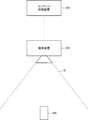
- the content providing system of the present embodiment includes a content control device 400, an imaging device 410, and a mobile terminal (hereinafter, candidate device 12 is referred to as a smartphone in this embodiment) 420.
- the imaging device 410 can capture an image in the imaging range R, images the mobile terminal 420 existing in the imaging range R, and outputs a captured image.
- an authentication unit (not shown) authenticates the mobile terminal 420 (candidate apparatus 12) existing in the imaging range R of the imaging apparatus 410 based on the captured image of the imaging apparatus 410. .
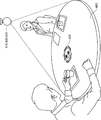
- FIG. 18 is a diagram illustrating a state in which a projection image 462 is projected by the projection device 430 on the table 460 used by the user.
- the table 460 which is a projection plane on which the projection device 430 projects the projection image 462, is included in the imaging range R of the imaging device 410 in FIG.
- the imaging device 410 captures the mobile terminal 420, and the authentication unit detects that the mobile terminal 420 exists in a specific area based on the obtained image.
- the mobile terminal 420 is authenticated by detecting this.
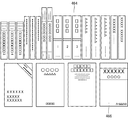
- the projection device 430 can project a book shelf image 464 on the table 460 as shown in FIG. Under the book shelf image 464, a cover image 466 of a plurality of electronic books included in the book shelf may be projected side by side.
- the user's operation on the projected image (464, 466) can be detected by the three-dimensional sensor 432 in FIG.
- the projection device 430 that is the candidate device 12 projects a book shelf image 464 as shown in FIG. 19 on the table 460.
- the projection device 430 as the candidate device 12 accepts selection of an electronic book that the user wants to browse in the bookshelf by detecting an operation on the image 466 by the user by the three-dimensional sensor 432. Further, in this configuration, it is possible to accept the end of browsing of the corresponding electronic book by the user's operation on the image.
- the projection device 430 projects an image of the target content of the electronic book on the table 460.
- the user can browse the electronic book with the image projected on the table 460.
- the usage method of the target content can project the contents of the electronic book on the table 460 and allow the user to browse the target content.
- the target content of the electronic book is provided to the authenticated mobile terminal 420, and the mobile terminal 420 may be used.
- the content control device 400 further includes a release unit (not shown) that cancels registration of information of the authenticated mobile terminal 420. Then, the stop determination unit 332 determines to stop using the target content provided to the mobile terminal 420 whose information registration has been canceled.
- the authentication unit includes an acquisition unit (not shown), a generation unit (not shown), a second identifier output unit (not shown), a detection unit (not shown), and a terminal authentication unit (not shown). ) And.
- the acquisition unit (not shown) acquires the first identifier of the mobile terminal 420 from the mobile terminal 420 in the specific area.
- the generation unit (not shown) generates the second identifier of the mobile terminal 420 corresponding to the first identifier.
- the second identifier output unit (not shown) transmits the generated second identifier of the mobile terminal 420 to the mobile terminal 420 and causes the mobile terminal 420 to visually present the second identifier.
- the detection unit detects the second identifier presented by the mobile terminal 420 from the image captured by the imaging device 410.
- a terminal authentication unit (not shown) specifies a first identifier corresponding to the detected second identifier, and authenticates the mobile terminal 420 corresponding to the specified first identifier as being present in the specific area.
- the second identifier is an identifier for identifying one or a plurality of portable terminals 420 that can be included in the imaging range R of the imaging device 410.
- the first identifier is an identifier for identifying the mobile terminal 420, as described in the above embodiment, regardless of whether the first identifier can be included in the imaging range R of the imaging device 410.
- the second identifier output unit displays a character string or an image representing the second identifier on the display screen of the mobile terminal 420.
- the image representing the second identifier may be an image directly representing the second identifier, or may be an image representing a symbol obtained by encoding the second identifier.
- the “image directly representing the second identifier” is, for example, an image visually representing the number sequence “1234” if the second identifier is the number sequence “1234”.
- the “symbol obtained by encoding the second identifier” is obtained by converting the value represented by the second identifier into a barcode or a two-dimensional code.
- the second identifier output unit may visually present the second identifier by blinking the light source of the mobile terminal 420 in a pattern based on the second identifier.
- the light source of the mobile terminal 420 may be a light source (backlight or the like) constituting the display screen, or a light source (LED (Light Emitting Diode) light or the like) provided separately from the display screen. It may be a light source provided for visible light communication.
- the second identifier output unit presents information by a combination of turning on and off the light source.
- a mobile terminal such as the mobile terminal 420 is authenticated by existing in a specific area without performing prior user registration or the like, and the target content is provided to be used by the mobile terminal 420. It becomes possible.
- a user who visits a store presents the mobile terminal 420 to the camera and performs an authentication process so that the target content that can be purchased and provided in the store is projected on the mobile terminal 420 or projector within the number of licenses. Etc., it becomes possible for the user to use it.
- the authentication state is canceled and the use of the target content is stopped.
- an authentication unit (not shown) for authenticating the mobile terminal 420 existing in the imaging range R of the imaging device 410 using the captured image of the imaging device 410 and registering information of the authenticated mobile terminal 420 is provided. Further prepare.
- Candidate device 12 may include a projection device 430 (FIG. 18) that projects an image for the user of the authenticated mobile terminal 420. The determination unit determines whether the target content can be provided for the projection device 430 that projects an image for the user of the mobile terminal 420 in which information is registered.
- the use of the target content in the candidate device 12 can be controlled with the projection device 430 that projects an image for use of the target content as the candidate device 12 for the user of the authenticated portable terminal 420.
- the mobile terminal that uses the target content needs a function for the mobile terminal itself to know that the target content cannot be used.
- the mobile terminal when a user goes out of a store with a mobile terminal, the user is out of a specific area where the use of the target content is permitted, so the use of the target content on the mobile terminal needs to be stopped. .
- the mobile terminal may include a control unit (not shown).
- the control unit When the target content is used, the control unit enables the target content to be used on the condition that information regarding the use permission of the target content is received from the content control device 100, the service providing device 10, or the content management server 14. .
- This control unit may be realized by a dedicated application for using digital content installed in the mobile terminal.
- the control unit inquires the content control device 100, the service providing device 10, or the content management server 14 about the use permission of the target content, and can use the target content when approved. It may be.
- the determination by the control unit is preferably performed periodically while the target content is being used, and may be configured to cope with changes in availability of use due to movement of the mobile terminal. If the permission information for the target content cannot be obtained, the control unit of the mobile terminal stops using the target content that has been used, deletes the digital content from the mobile terminal, or permits the use of the target content. do not do.
- the target content being used on the mobile terminal may not be used. it can. That is, even when the control from the content providing system 1 does not reach the mobile terminal, it is possible to reliably prevent the target content being used on the mobile terminal from being used.
- the presence / absence of a mobile terminal is detected using the imaging range R of one camera, the communication range of an access point, etc. as a specific area, and the target content in the specific area is detected.
- the configuration for determining whether or not provision is possible has been described.
- the imaging range of all of the multiple cameras may be specified areas, or the cameras are divided and multiple specific areas are set. It is good also as a structure which manages the provision number at the same time.
- a plurality of cameras may be connected to an STB (Set Top Box), and a plurality of STBs may be installed in a store. In that case, a specific area may be set for each STB, and the simultaneous point provision number of the target content may be managed.
- the unit is an imaging range of at least one camera, a communication range such as at least one access point, a range of cameras or access points connected to at least one STB, a store unit, a floor unit, a sales floor unit, or these Can be combined.
- an acquisition unit (not shown) that acquires the content usage request information from the candidate device 12 and the content usage status information in the candidate device 12 in response to the usage request Further, it may be provided.
- the content usage status includes information such as the number of times or the frequency at which the content could not be provided to the candidate device in response to a content usage request.
- the number of times content is not provided to the candidate device 12 despite the use request being received is calculated based on the usage status information acquired by the acquisition unit. If the number of times is greater than or equal to a predetermined value, the number of licenses is increased, or if the number of usage requests is less than the predetermined value (which may be different from the above-mentioned predetermined value), the store etc. It can be carried out.
- the structure which can move the object content which the authenticated portable terminal has utilized to the other authenticated portable terminal as a modification of the said 4th Embodiment is also considered.
- the simultaneous point provision number may not be added after the movement.
- the simultaneous point provision number is added.
- the target content is not yet used in the second mobile terminal, and the target content has already been used in the first mobile terminal. Therefore, when the user performs a gesture on the table 460 to move the target content from the first portable terminal to the second portable terminal, the three-dimensional sensor 432 detects the gesture. In response to the gesture, the provision number management unit 206 performs processing for moving the target content used on the first mobile terminal to be used on the second mobile terminal. For example, the use of the target content is stopped at the first mobile terminal, and the use of the target content is permitted at the second mobile terminal. In this case, the simultaneous point provision number of the target content is not updated.
- the provision determination unit 304 determines whether the target content can be provided to the second mobile terminal based on the simultaneous point provisionable number and the simultaneous point provision number. To do. When it is determined that the target content can be provided, the second mobile terminal is permitted to use the target content. In this case, the provision number management unit 206 adds the simultaneous point provision number of the target content.
- the content control device For each content, store the provision number that is the number of the content provided at a certain point in time and the number of content that can be provided, Based on the provided number and the available number, it is determined whether the target content can be provided to a candidate device receiving the target content, When the target content is provided to the candidate device according to the determination result, the provision number stored for the target content is added. Control method of content control apparatus. 2. 1. In the content control device control method described in The content control device is Determining whether to stop using the target content provided to the candidate device; The target content determined to be stopped is controlled not to be used via the candidate device, and the provision number of the target content is subtracted; Control method of content control apparatus. 3. 2.
- the content control device is Measure the usage time of the target content that is used through the candidate device, Further storing the available time of the content for each content, Determining whether to stop the use of the target content provided to the candidate device based on the use time of the target content and the available time for the target content; Control method of content control apparatus. 4). 2. Or 3. In the content control device control method described in The content control device is Authenticating candidate devices on the condition that they exist in a specific area, registering information of the authenticated candidate devices, The content control device is For the candidate device in which the information is registered, determine whether to provide the target content; Control method of content control apparatus. 5. 4).
- the content control device In the content control device control method described in The content control device is Deregistering the information of the authenticated candidate device; Determining that the use of the content provided to the candidate device whose registration of the information has been canceled is to be stopped; Control method of content control apparatus. 6). 4). In the content control device control method described in The content control device is Authenticating the candidate device existing in the imaging range of the imaging device based on a captured image of the imaging device; Control method of content control apparatus. 7). 2. Or 3.
- the content control device is Authenticate a mobile terminal that exists in the imaging range of the imaging device using the captured image of the imaging device, register information of the authenticated mobile terminal,
- the candidate device includes a projection device that projects an image for the user of the authenticated mobile terminal,
- the content control device is Determining whether or not the target content can be provided for a projection device that projects an image for a user of a mobile terminal in which the information is registered; Control method of content control apparatus. 8). 7).
- the content control device control method described in The content control device is Unregister the information of the authenticated mobile terminal, Determining that the use of the content provided to the mobile terminal whose registration of the information has been canceled is to be stopped; Control method of content control apparatus. 9. 1. To 8.
- the content control device is Information on the usage request of the content from the candidate device and the usage status information of the content in the candidate device in response to the usage request; Control method of content control apparatus.
- the candidate device includes a projection device that projects an image for the user of the authenticated mobile terminal,
- a program for causing a computer to further execute a procedure for determining that use of the content provided to a mobile terminal whose registration of information has been canceled is to be stopped. 18. 10. To 17. In the program described in any one of the above, A program for causing a computer to further execute a content usage request information from the candidate device and a procedure for acquiring the content usage status information in the candidate device in response to the usage request.
Landscapes
- Engineering & Computer Science (AREA)
- Theoretical Computer Science (AREA)
- Computer Security & Cryptography (AREA)
- Multimedia (AREA)
- Signal Processing (AREA)
- Databases & Information Systems (AREA)
- General Engineering & Computer Science (AREA)
- Physics & Mathematics (AREA)
- General Physics & Mathematics (AREA)
- Software Systems (AREA)
- Computer Hardware Design (AREA)
- Computer Networks & Wireless Communication (AREA)
- Business, Economics & Management (AREA)
- Technology Law (AREA)
- Finance (AREA)
- Accounting & Taxation (AREA)
- Computer Graphics (AREA)
- General Health & Medical Sciences (AREA)
- Bioethics (AREA)
- Health & Medical Sciences (AREA)
- Development Economics (AREA)
- Economics (AREA)
- Marketing (AREA)
- Strategic Management (AREA)
- General Business, Economics & Management (AREA)
- Management, Administration, Business Operations System, And Electronic Commerce (AREA)
- Information Transfer Between Computers (AREA)
Abstract
Description
デジタルコンテンツが有料の場合には、そのコンテンツを購入したユーザのみが利用できることが望ましく、DRM(Digital Rights Management)等の技術で、不正な複製や配布を防ぐ工夫がなされている。
そのような技術を用いてデジタルコンテンツの不正な閲覧を防止することが可能なコンテンツ管理方法の一例が特許文献1に記載されている。特許文献1に記載のコンテンツ管理方法は、1つの購入したコンテンツに対して複数台の端末での閲覧を可能とするようなDRMを備えたコンテンツ配信の仕組みを実現している。
そのような背景の下、デジタルコンテンツの著作権を保護し、適正な利用を促すための取り組みは、重要な課題である。
ある時点にてコンテンツが提供されている数をコンテンツ毎に表す提供数および当該コンテンツの提供可能数を記憶する記憶手段と、
前記提供数および前記提供可能数に基づいて、対象コンテンツの提供を受ける候補装置に対する対象コンテンツの提供の可否を判定する提供判定手段と、
前記提供判定手段による判定結果に応じて前記対象コンテンツを前記候補装置に提供する場合に、前記対象コンテンツに関し記憶される前記提供数に新たに提供される前記対象コンテンツの数を加算する提供数管理手段と、
を備える。
ある時点にてコンテンツが提供されている数をコンテンツ毎に表す提供数および当該コンテンツの提供可能数を記憶し、
前記提供数および前記提供可能数に基づいて、対象コンテンツの提供を受ける候補装置に対する対象コンテンツの提供の可否を判定し、
判定の結果に応じて前記対象コンテンツを前記候補装置に提供する場合に、前記対象コンテンツに関し記憶される前記提供数に新たに提供される前記対象コンテンツの数を加算する、ことを含む。
このプログラムは、コンピュータにより実行されたとき、コンピュータに、コンテンツ制御装置上で、その制御方法を実施させるプログラムコードを含む。
本発明の第1の実施の形態に係るコンテンツ制御装置、その制御方法およびプログラムについて、以下説明する。
図1は、本発明の実施の形態に係るコンテンツ制御装置100を含むコンテンツ提供システム1のシステム構成を概念的に示す図である。
本実施形態において、コンテンツ提供システム1は、たとえば、公共の場、店舗、店頭等の特定エリアにおいて、特定または不特定のユーザに対して、デジタルコンテンツの利用をサービスとして提供する。本実施形態において、対象コンテンツとは、ユーザが候補装置12を介して利用しうる、電子書籍、音楽、動画、ゲーム、または、アプリケーション等の様々なデジタルコンテンツを含む。
図1の例では、サービス提供装置10とコンテンツ制御装置100とが異なる装置として図示されるが、それらは連携して動作するため、1つのコンテンツ制御装置として実現されてもよい。
(1)携帯端末にデジタルコンテンツを利用するための専用アプリケーションをインストールし、専用アプリケーションでのみ利用できるファイル形式のデジタルコンテンツを提供する。
(2)携帯端末にデジタルコンテンツを利用するための専用アプリケーションをインストールし、携帯端末に提供されるデジタルコンテンツの携帯端末のストレージへの保存を禁止し、RAM(Random Access Memory)への記憶に留め、コンテンツ利用終了時にRAM上からコンテンツを削除する機能をアプリケーションが実現する。
(3)ストリーミング配信によりデジタルコンテンツを携帯端末上で再生させ、携帯端末上へのコンテンツファイルの保存を禁止する。
(4)携帯端末にデジタルコンテンツをダウンロードせずに、コンテンツサーバ16またはコンテンツ管理サーバ14側のサーバ上で、ゲーム等のアプリケーションのデジタルコンテンツを実行させ、携帯端末からサーバにアクセスしてデジタルコンテンツをオンラインで利用させる。
なお、コンテンツは、図1に示されるように、サービス提供装置10から候補装置12に配信されてもよいし、サービス提供装置10がコンテンツ管理サーバ14に指示することにより、コンテンツ管理サーバ14から候補装置12に直接配信されてもよい。
サービス提供装置10、候補装置12、コンテンツ制御装置100、およびコンテンツ管理サーバ14の各装置間は、有線および無線の少なくともいずれか一方で接続することができる。接続手段も特に限定されるものではなく、様々な形態が考えられる。
コンテンツ制御装置100は、記憶部102と、提供数管理部106と、を備える。記憶部102は、コンテンツ毎にある時点にて提供されているそのコンテンツの数である提供数および当該コンテンツの提供可能数を記憶する。提供判定部104は、提供数および提供可能数に基づいて、対象コンテンツの提供を受ける候補装置12に対するその対象コンテンツの提供の可否を判定する。提供数管理部106は、提供判定部104と、提供判定部104による判定結果に応じて対象コンテンツを候補装置12に提供する場合に、対象コンテンツに関し記憶される提供数を加算する。
コンピュータ60は、CPU(Central Processing Unit)62、メモリ(ROM64およびRAM66)、メモリにロードされた図2の構成要素を実現するプログラム、そのプログラムを格納するハードディスクなどのストレージ(不図示)、ネットワーク接続用インタフェース(I/O(Input/Output)68)を備える。ROM64、RAM66、およびI/O68は、バス69を介して互いに接続され、CPU62により図2の各要素とともにコンテンツ制御装置100全体が制御される。
図5は、本実施形態のコンテンツ制御装置100の動作の一例を示すフローチャートである。
本発明の実施の形態に係る制御方法は、コンテンツ制御装置100の制御方法であり、コンテンツ制御装置100を実現するコンピュータ60により実行される制御方法である。
本実施形態の制御方法は、コンテンツ制御装置100が、コンテンツ毎にある時点にて提供されているそのコンテンツの数である提供数および当該コンテンツの提供可能数を記憶する(ステップS101)。コンテンツ制御装置100は、同時点提供数および同時点提供可能数に基づいて、対象コンテンツの提供を受ける候補装置12に対するその対象コンテンツの提供の可否を判定する(ステップS103)。また、コンテンツ制御装置100は、判定結果に応じて対象コンテンツを候補装置12に提供する場合に(ステップS105)、対象コンテンツに関し記憶される同時点提供数を加算する(ステップS107)。
図6および図7は、本実施形態のコンテンツ提供システム1におけるコンテンツ提供手順を示すシーケンス図である。図6は、コンテンツ制御装置100により、対象コンテンツの提供が許可される場合の手順を示している。図7は、コンテンツ制御装置100により、対象コンテンツの提供が許可されない場合の手順を示している。なお、各装置は、情報(要求、指示、コンテンツ等)受信を待機して、受信したか否かの判定を行い、受信したと判定された場合に処理を進めるが、図6および図7において、説明を簡略にするために、これらの判定処理は図示せず、矢印で装置間の情報伝達を示してある。また、破線の矢印は、実線で示した情報の流れ以外に可能な情報の流れの他の例を示している。
候補装置12が、サービス提供装置10に対して対象コンテンツの利用要求を行う(ステップS111)。サービス提供装置10が、利用要求を受けて、コンテンツ制御装置100に対して、候補装置12からの利用要求を伝達する(ステップS113)。このとき、候補装置12からコンテンツ制御装置100に直接コンテンツの利用要求を行ってもよい。
あるいは、ステップS117において、提供数管理部106は、候補装置12に対して、対象コンテンツの提供可能指示を行ってもよい。候補装置12では、提供可能指示を受けて、対象コンテンツの提供を待機してもよい。
ここでは、候補装置12によるコンテンツの利用要求(ステップS111)からコンテンツ制御装置100における判定処理(ステップS115)までの手順は図7と同様である。
そして、図7では、コンテンツ制御装置100の提供判定部104による判定処理の結果、対象コンテンツを候補装置12に提供できないと判定されたとする。
候補装置12では、この指示を受けて、図8に示すような画面110により、コンテンツの利用が現在できない旨をユーザに伝えるメッセージを提示する(ステップS135)。
ユーザは、画面110に従い操作して、別のコンテンツの選択をしたり、サービスのトップ画面へ移動して、他のサービスの利用に変更したりできる。これらの操作については、特に限定されず、様々な態様が考えられる。
この例では、記憶部102の同時点提供数は更新されない。
次に、本発明の第2の実施の形態に係るコンテンツ制御装置および制御方法について、以下説明する。なお、本実施形態のプログラムは、上記実施形態と同様に、コンテンツ制御装置の制御方法を少なくとも1つのコンピュータに実行させるものであり、本実施形態での詳細な説明は省略する。
図9は、本発明の実施の形態に係るコンテンツ制御装置200の論理的な構成を示す機能ブロック図である。
本実施形態のコンテンツ制御装置200は、上記実施形態のコンテンツ制御装置100により候補装置12に提供されているデジタルコンテンツの利用を停止する構成をさらに有する。
コンテンツ制御装置200は、図2の上記実施形態のコンテンツ制御装置100と同様な記憶部102と、提供判定部104とを備えるとともに、さらに、提供数管理部206と、停止判定部208と、を備える。
本実施形態の提供数管理部206は、停止判定部208により停止すると判定された対象コンテンツが候補装置12を介して利用されないよう制御し、当該対象コンテンツの同時点提供数を減算する。
図10は、本実施形態のコンテンツ制御装置200の動作の一例を示すフローチャートである。
本実施形態の制御方法は、コンテンツ制御装置200が、候補装置12に提供されている対象コンテンツの利用を停止するか否かを判定する(ステップS201)。コンテンツ制御装置200は、停止すると判定された対象コンテンツが候補装置12を介して利用されないよう制御する(ステップS203)。コンテンツ制御装置200は、当該対象コンテンツの同時点提供数を減算する(ステップS205)。
これにより、対象コンテンツの利用を停止すべき状況になった場合(ステップS201のYES)、対象コンテンツが候補装置12で利用されないように制御できる(ステップS203)。そして、対象コンテンツに関して記憶される同時点提供数を減算する(ステップS205)。
なお、ステップS201において、停止判定部208は、候補装置12を介して対象コンテンツを利用していたユーザによる利用終了の指示に応じて対象コンテンツの利用を停止するか否かを判定してもよい。
図11は、本実施形態のコンテンツ制御装置210の論理的な構成を示す機能ブロック図である。
本実施形態のコンテンツ制御装置210は、コンテンツ制御装置200における、対象コンテンツの利用を停止するか否かの判定を、利用可能時間に基づいて行う。
コンテンツ制御装置210は、図9のコンテンツ制御装置200と同様な提供判定部104と、提供数管理部206と、を備えるとともに、さらに、記憶部212と、停止判定部218と、計時部220と、を備える。
コンテンツ制御装置210において、記憶部212は、コンテンツ毎にコンテンツの利用可能時間を更に記憶する。停止判定部218は、対象コンテンツの利用時間と、対象コンテンツに関する利用可能時間と、に基づいて、候補装置12に提供されている対象コンテンツの利用を停止するか否かを判定する。
また、対象コンテンツが音楽や動画である場合、再生回数(再生開始指示回数、または、楽曲を最後まで再生した回数)、再生する楽曲の曲数(タイトル数)、アーティスト数、アルバム数等であってもよい。また、ゲームのプレイ回数であってもよい。
図13は、本実施形態のコンテンツ制御装置210の動作の一例を示すフローチャートである。
なお、図13のフローチャートにおいて、停止判定部218により、コンテンツの利用を停止すると判定された場合の処理は、図10のフローチャートのステップS203およびステップS205と同じである。
本実施形態の制御方法は、コンテンツ制御装置210が、コンテンツ毎にコンテンツの利用可能時間を更に記憶し(ステップS211)、候補装置12を介して利用されている対象コンテンツの利用時間を計測する(ステップS213)。そして、コンテンツ制御装置210が、計測された候補装置12を介した利用時間と、対象コンテンツに関する利用可能時間と、に基づいて、候補装置12に提供されている対象コンテンツの利用を停止するか否かを判定する(ステップS215)。
次に、本発明の第3の実施の形態に係るコンテンツ制御装置および制御方法について、以下説明する。なお、本実施形態のプログラムは、上記実施形態と同様に、コンテンツ制御装置の制御方法を少なくとも1つのコンピュータに実行させるものであり、本実施形態での詳細な説明は省略する。
図14は、本発明の実施の形態に係るコンテンツ制御装置300の論理的な構成を示す機能ブロック図である。
本実施形態のコンテンツ制御装置300は、上記実施形態のコンテンツ制御装置200とは、特定エリアに存在することを条件に候補装置12を認証し、認証状態に応じて対象コンテンツの提供の可否を判定する構成をさらに有する点で相違する。
コンテンツ制御装置300は、図9のコンテンツ制御装置200と同様な記憶部102と、提供数管理部206と、を備えるとともに、さらに、提供判定部304と、認証部322と、を備える。
提供判定部304は、情報が登録されている候補装置12について、対象コンテンツの提供の可否を判定する。
認証部322による情報の登録は、図3のコンピュータ60のROM64、RAM66またはストレージ(不図示)に記憶することができる。登録される情報は、たとえば、候補装置12の識別情報、例として、IP(Internet Protocol)アドレス、MAC(Media Access Control)アドレス、またはUUID(Universally Unique Identifier)等である。あるいは、設定された候補装置12のユーザ情報であってもよい。あるいは、候補装置12の識別情報に、認証状態を示す情報を対応付けて記憶してもよい。
図15は、本実施形態のコンテンツ制御装置300の動作の一例を示すフローチャートである。
本発明の実施の形態に係る制御方法は、コンテンツ制御装置300の制御方法であり、コンテンツ制御装置300を実現するコンピュータ60(図3)により実行される制御方法である。
本実施形態の制御方法は、コンテンツ制御装置300が、特定エリア内に存在することを条件に候補装置12を認証し(ステップS301)、認証された候補装置12の情報を登録する(ステップS303)。コンテンツ制御装置300は、情報が登録されている候補装置12について(ステップS305のYES)、対象コンテンツの提供の可否を判定する(ステップS307)。
情報が登録されていない候補装置12については(ステップS305のNO)、本処理を終了する。
図16は、本実施形態のコンテンツ制御装置330の論理的な構成を示す機能ブロック図である。
本実施形態のコンテンツ制御装置330は、コンテンツ制御装置300における、候補装置12の情報の登録を解除する構成をさらに有する。
本実施形態のコンテンツ制御装置330は、図14の上記実施形態のコンテンツ制御装置300と同様な、記憶部102と、提供判定部304と、提供数管理部206と、認証部322と、を備えるとともに、さらに、停止判定部332と、解除部334と、を備える。
解除部334は、上述したように、候補装置12の位置情報を基に、特定エリアに外れた候補装置12を特定エリアに存在しないと判定する。解除部334は、候補装置12とアクセスポイント等との通信状況等の情報を元に、候補装置12が特定エリアに存在するか否かを判定してもよいし、カメラの撮影画像に候補装置12が写っているか否か、すなわち、候補装置12がカメラの撮像範囲(特定エリアに相当)に含まれているかで判定してもよい。
ここでは、上記実施形態で説明した図15のフローチャートのステップS301で、認証部322により、特定エリアに存在していないとされた場合に、解除部334が、候補装置12の情報の登録を解除する(不図示)。そして、ステップS305で、停止判定部332が、候補装置12の情報が登録されていないと判定し(ステップS305のNO)、その場合、図10のステップS201に進み、コンテンツの利用停止処理を行う。
次に、本発明の第4の実施の形態に係るコンテンツ制御装置について、以下説明する。なお、本実施形態の制御方法およびプログラムは、上記実施形態と同様に、コンテンツ制御装置の制御方法を少なくとも1つのコンピュータに実行させるものであり、本実施形態での詳細な説明は省略する。
図17は、本実施形態のコンテンツ制御装置400を含むコンテンツ提供システムのシステム構成を概念的に示す図である。
本実施形態のコンテンツ提供システムは、コンテンツ制御装置400と、撮像装置410と、携帯端末(以下、本実施形態では、候補装置12をスマートフォンとする)420と、を有する。撮像装置410は、撮像範囲Rで撮像可能であり、撮像範囲R内に存在する携帯端末420を撮像し、撮像画像を出力する。
図18は、ユーザが利用しているテーブル460上に投影装置430により投影画像462が投影されている様子を例示する図である。ここでは、投影装置430により投影画像462を投影する投影面であるテーブル460が、図17の撮像装置410の撮像範囲Rに含まれる。この撮像範囲Rに携帯端末420を配置し、所定の操作を行うことで、撮像装置410が携帯端末420を撮像し、認証部が、得られた画像に基づいて携帯端末420が特定エリアに存在することを検出して携帯端末420を認証する。
そして、図18の3次元センサ432により、ユーザの投影画像(464、466)に対する操作を検出することができる。この投影装置430と3次元センサ432の組み合わせにより、候補装置12である投影装置430は、図19のような書架の画像464をテーブル460に投影する。候補装置12である投影装置430は、ユーザが書架の中で閲覧したい電子書籍の選択を、3次元センサ432によるユーザによるその画像466への操作を検出することで受け付ける。また、この構成では、ユーザの画像への操作により、対応する電子書籍の閲覧の終了を受け付けることもできる。
なお、対象コンテンツの利用方法は、テーブル460に電子書籍の中身を投影してユーザに閲覧させることもできるし、認証された携帯端末420に対して、電子書籍の対象コンテンツを提供し、携帯端末420上で利用させてもよい。
以下、第4の実施の形態の変形態様について説明する。
この実施形態では、撮像装置410の撮像範囲Rに存在する携帯端末420をその撮像装置410の撮像画像を用いて認証し、認証された携帯端末420の情報を登録する認証部(不図示)をさらに備える。
候補装置12は、認証された携帯端末420のユーザのために画像を投影する投影装置430(図18)を含んでもよい。
判定部は、情報が登録されている携帯端末420のユーザのために画像を投影する投影装置430について、対象コンテンツの提供の可否を判定する。
上記実施形態では、候補装置12が携帯端末である場合に、対象コンテンツを利用していた携帯端末が、対象コンテンツを利用できない状況になったことを、携帯端末自身が知るための機能が必要となる場合がある。たとえば、第4の実施形態では、ユーザが携帯端末を持って店舗の外に出ると、対象コンテンツの利用が許可される特定エリアから外れるので、携帯端末における対象コンテンツの利用を停止する必要がある。
そこで、たとえば、携帯端末は、制御部(不図示)を備えてもよい。制御部は、対象コンテンツの利用に際し、コンテンツ制御装置100、サービス提供装置10、またはコンテンツ管理サーバ14からの対象コンテンツの利用許可に関する情報を受信したことを条件として、対象コンテンツの利用を可能にする。
そして、携帯端末の制御部は、対象コンテンツの許可情報が取得できない場合には、利用していた対象コンテンツの利用を停止し、デジタルコンテンツを携帯端末上から削除する、または対象コンテンツの利用を許可しない。
上記実施形態のコンテンツ制御装置では、たとえば、1つのカメラの撮像範囲Rや、アクセスポイントの通信範囲等を特定エリアとして、携帯端末の存在の有無を検出して、特定エリア内での対象コンテンツの提供の可否を判定する構成について説明した。他の例では、複数のカメラの撮像範囲を特定エリアとして、複数の撮像範囲内で対象コンテンツの同時利用を管理する構成としてもよい。ある店舗に複数のカメラが設置されていた場合に、複数のカメラ全ての撮像範囲を特定エリアとしてもよいし、カメラを分けて、複数の特定エリアを設定して、特定エリア別に、対象コンテンツの同時点提供数を管理する構成としてもよい。
このように、同時点提供数の管理範囲の単位は、様々考えられる。例えば、当該単位は、少なくとも1つのカメラの撮像範囲、少なくとも1つのアクセスポイント等の通信範囲、少なくとも1つのSTBに接続されるカメラまたはアクセスポイントの範囲、店舗単位、フロア単位、売り場単位又はこれらの組み合わせ等とできる。
上記実施形態のいずれかのコンテンツ制御装置において、候補装置12からのコンテンツの利用要求の情報、および当該利用要求に対する、候補装置12における当該コンテンツの利用状況情報を取得する取得部(不図示)をさらに備えてもよい。
また、上記第4の実施形態の変形態様として、認証された携帯端末が利用している対象コンテンツを、認証された他の携帯端末に移動させることができる構成も考えられる。この変形態様において、移動後に同時点提供数は加算されない構成としてもよい。移動元の携帯端末での利用が継続している場合には、同時点提供数は加算されるのが好ましい。
なお、本発明において利用者に関する情報を取得、利用する場合は、これを適法に行うものとする。
この出願は、2014年5月30日に出願された日本出願特願2014-113005を基礎とする優先権を主張し、その開示の全てをここに取り込む。
1. コンテンツ制御装置が、
コンテンツ毎にある時点にて提供されているそのコンテンツの数である提供数および当該コンテンツの提供可能数を記憶し、
前記提供数および前記提供可能数に基づいて、対象コンテンツの提供を受ける候補装置に対するその対象コンテンツの提供の可否を判定し、
その判定結果に応じて前記対象コンテンツを前記候補装置に提供する場合に、前記対象コンテンツに関し記憶される前記提供数を加算する、
コンテンツ制御装置の制御方法。
2. 1.に記載のコンテンツ制御装置の制御方法において、
前記コンテンツ制御装置が、
前記候補装置に提供されている前記対象コンテンツの利用を停止するか否かを判定し、
停止すると判定された前記対象コンテンツが前記候補装置を介して利用されないよう制御し、当該対象コンテンツの前記提供数を減算する、
コンテンツ制御装置の制御方法。
3. 2.に記載のコンテンツ制御装置の制御方法において、
前記コンテンツ制御装置が、
前記候補装置を介して利用されている、前記対象コンテンツの利用時間を計測し、
コンテンツ毎に前記コンテンツの利用可能時間を更に記憶し、
前記対象コンテンツの前記利用時間と、前記対象コンテンツに関する前記利用可能時間と、に基づいて、前記候補装置に提供されている、前記対象コンテンツの利用を停止するか否かを判定する、
コンテンツ制御装置の制御方法。
4. 2.または3.に記載のコンテンツ制御装置の制御方法において、
前記コンテンツ制御装置が、
特定エリア内に存在することを条件に候補装置を認証し、認証された前記候補装置の情報を登録し、
前記コンテンツ制御装置が、
前記情報が登録されている候補装置について、前記対象コンテンツの提供の可否を判定する、
コンテンツ制御装置の制御方法。
5. 4.に記載のコンテンツ制御装置の制御方法において、
前記コンテンツ制御装置が、
前記認証された候補装置の前記情報の登録を解除し、
前記情報の登録が解除された候補装置に提供されている前記コンテンツの利用を停止すると判定する、
コンテンツ制御装置の制御方法。
6. 4.に記載のコンテンツ制御装置の制御方法において、
前記コンテンツ制御装置が、
撮像装置の撮像範囲に存在する前記候補装置を、その撮像装置の撮像画像に基づいて認証する、
コンテンツ制御装置の制御方法。
7. 2.または3.に記載のコンテンツ制御装置の制御方法において、
前記コンテンツ制御装置が、
撮像装置の撮像範囲に存在する携帯端末をその撮像装置の撮像画像を用いて認証し、認証された携帯端末の情報を登録し、
前記候補装置は、前記認証された携帯端末のユーザのために画像を投影する投影装置を含み、
前記コンテンツ制御装置が、
前記情報が登録されている携帯端末のユーザのために画像を投影する投影装置について、前記対象コンテンツの提供の可否を判定する、
コンテンツ制御装置の制御方法。
8. 7.に記載のコンテンツ制御装置の制御方法において、
前記コンテンツ制御装置が、
前記認証された携帯端末の情報の登録を解除し、
前記情報の登録が解除された携帯端末に提供されている前記コンテンツの利用を停止すると判定する、
コンテンツ制御装置の制御方法。
9. 1.乃至8.いずれか1つに記載のコンテンツ制御装置の制御方法において、
前記コンテンツ制御装置が、
前記候補装置からのコンテンツの利用要求の情報、および当該利用要求に対する、前記候補装置における当該コンテンツの利用状況情報を取得する、
コンテンツ制御装置の制御方法。
コンテンツ毎にある時点にて提供されているそのコンテンツの数である提供数および当該コンテンツの提供可能数を記憶する手順、
前記提供数および前記提供可能数に基づいて、対象コンテンツの提供を受ける候補装置に対するその対象コンテンツの提供の可否を判定する手順、
その判定結果に応じて前記対象コンテンツを前記候補装置に提供する場合に、前記対象コンテンツに関し記憶される前記提供数を加算する手順、を実行させるためのプログラム。
11. 10.に記載のプログラムにおいて、
前記候補装置に提供されている前記対象コンテンツの利用を停止するか否かを判定する手順、
前記停止するか否かを判定する手順により停止すると判定された前記対象コンテンツが前記候補装置を介して利用されないよう制御し、当該対象コンテンツの前記提供数を減算する手順、をコンピュータにさらに実行させるためのプログラム。
12. 11.に記載のプログラムにおいて、
前記候補装置を介して利用されている、前記対象コンテンツの利用時間を計測する手順、
コンテンツ毎に前記コンテンツの利用可能時間を更に記憶する手順、
前記対象コンテンツの前記利用時間と、前記対象コンテンツに関する前記利用可能時間と、に基づいて、前記候補装置に提供されている前記対象コンテンツの利用を停止するか否かを判定する手順、をコンピュータにさらに実行させるためのプログラム。
13. 11.または12.に記載のプログラムにおいて、
特定エリア内に存在することを条件に候補装置を認証し、認証された前記候補装置の情報を登録する手順、をコンピュータにさらに実行させ、
前記情報が登録されている候補装置について、前記対象コンテンツの提供の可否を判定する手順、をコンピュータにさらに実行させるためのプログラム。
14. 13.に記載のプログラムにおいて、
前記認証された候補装置の前記情報の登録を解除する手順、
前記情報の登録が解除された候補装置に提供されている前記コンテンツの利用を停止すると判定する手順、をコンピュータにさらに実行させるためのプログラム。
15. 13.に記載のプログラムにおいて、
撮像装置の撮像範囲に存在する前記候補装置を、その撮像装置の撮像画像に基づいて認証する手順、をコンピュータにさらに実行させるためのプログラム。
16. 11.または12.に記載のプログラムにおいて、
撮像装置の撮像範囲に存在する携帯端末をその撮像装置の撮像画像を用いて認証し、認証された携帯端末の情報を登録する手順、をコンピュータにさらに実行させ、
前記候補装置は、前記認証された携帯端末のユーザのために画像を投影する投影装置を含み、
前記情報が登録されている携帯端末のユーザのために画像を投影する投影装置について、前記対象コンテンツの提供の可否を判定する手順、をコンピュータにさらに実行させるためのプログラム。
17. 16.に記載のプログラムにおいて、
前記認証された携帯端末の情報の登録を解除する手順、
前記情報の登録が解除された携帯端末に提供されている前記コンテンツの利用を停止すると判定する手順、をコンピュータにさらに実行させるためのプログラム。
18. 10.乃至17.いずれか1つに記載のプログラムにおいて、
前記候補装置からのコンテンツの利用要求の情報、および当該利用要求に対する、前記候補装置における当該コンテンツの利用状況情報を取得する手順、をコンピュータにさらに実行させるためのプログラム。
10 サービス提供装置
12 候補装置
14 コンテンツ管理サーバ
16 コンテンツサーバ
60 コンピュータ
62 CPU
64 ROM
66 RAM
69 バス
70 プログラム
100 コンテンツ制御装置
102 記憶部
104 提供判定部
106 提供数管理部
110 画面
200 コンテンツ制御装置
206 提供数管理部
208 停止判定部
210 コンテンツ制御装置
212 記憶部
218 停止判定部
220 計時部
300 コンテンツ制御装置
304 提供判定部
310 コンテンツ制御装置
322 認証部
330 コンテンツ制御装置
332 停止判定部
334 解除部
400 コンテンツ制御装置
402 認証部
404 解除部
410 撮像装置
420 携帯端末
430 投影装置
432 3次元センサ
460 テーブル
462 投影画像
Claims (11)
- ある時点にてコンテンツが提供されている数をコンテンツ毎に表す提供数および前記コンテンツの提供可能数を記憶する記憶手段と、
前記提供数および前記提供可能数に基づいて、対象コンテンツの提供を受ける候補装置に対する前記対象コンテンツの提供の可否を判定する提供判定手段と、
前記提供判定手段による判定結果に応じて前記対象コンテンツを前記候補装置に提供する場合に、前記対象コンテンツに関し記憶される前記提供数に新たに提供される前記対象コンテンツの数を加算する提供数管理手段と、
を備えるコンテンツ制御装置。 - 請求項1に記載のコンテンツ制御装置において、
前記候補装置に提供されている前記対象コンテンツの利用を停止するか否かを判定する停止判定手段をさらに備え、
前記提供数管理手段は、前記停止判定手段により停止すると判定された前記対象コンテンツの前記候補装置を介した利用を不可能とするよう制御し、前記対象コンテンツの前記提供数から利用を不可能とした前記対象コンテンツの数を減算する、
コンテンツ制御装置。 - 請求項2に記載のコンテンツ制御装置において、
前記候補装置を介して利用されている、前記対象コンテンツの利用時間を計測する計時手段をさらに備え、
前記記憶手段は、コンテンツ毎に前記コンテンツの利用可能時間を更に記憶し、
前記停止判定手段は、前記対象コンテンツの前記利用時間と、前記対象コンテンツに関する前記利用可能時間と、に基づいて、前記候補装置に提供されている前記対象コンテンツの利用を停止するか否かを判定する、
コンテンツ制御装置。 - 請求項2または3に記載のコンテンツ制御装置において、
前記候補装置が特定エリア内に存在する場合に前記候補装置を認証し、認証された前記候補装置の情報を登録する認証手段をさらに備え、
前記提供判定手段は、前記情報が登録されている候補装置について、前記対象コンテンツの提供の可否を判定する、
コンテンツ制御装置。 - 請求項4に記載のコンテンツ制御装置において、
前記認証された候補装置の前記情報の登録を解除する認証解除手段をさらに備え、
前記停止判定手段は、前記情報の登録が解除された候補装置に提供されている前記コンテンツの利用を停止すると判定する、
コンテンツ制御装置。 - 請求項4に記載のコンテンツ制御装置において、
前記認証手段は、撮像装置の撮像画像に基づいて、前記撮像画像において撮像された範囲に存在する前記候補装置を認証する、
コンテンツ制御装置。 - 請求項2または3に記載のコンテンツ制御装置において、
撮像装置の撮像画像を用いて前記撮像画像において撮像された範囲に存在する携帯端末を認証し、認証された携帯端末の情報を登録する認証手段をさらに備え、
前記候補装置は、前記認証された携帯端末のユーザのために画像を投影する投影装置を含み、
前記提供判定手段は、前記情報が登録されている携帯端末のユーザのために画像を投影する投影装置について、前記対象コンテンツの提供の可否を判定する、
コンテンツ制御装置。 - 請求項7に記載のコンテンツ制御装置において、
前記認証された携帯端末の情報の登録を解除する認証解除手段をさらに備え、
前記停止判定手段は、前記情報の登録が解除された携帯端末に提供されている前記コンテンツの利用を停止すると判定する、
コンテンツ制御装置。 - 請求項1乃至8いずれか1項に記載のコンテンツ制御装置において、
前記候補装置からのコンテンツの利用要求の情報、および当該利用要求に対する、前記候補装置における当該コンテンツの利用状況情報を取得する取得手段をさらに備える、
コンテンツ制御装置。 - ある時点にてコンテンツが提供されている数をコンテンツ毎に表す提供数および当該コンテンツの提供可能数を記憶し、
前記提供数および前記提供可能数に基づいて、対象コンテンツの提供を受ける候補装置に対する前記対象コンテンツの提供の可否を判定し、
前記判定の結果に応じて前記対象コンテンツを前記候補装置に提供する場合に、前記対象コンテンツに関し記憶される前記提供数に新たに提供される前記対象コンテンツの数を加算する、
コンテンツ制御装置の制御方法。 - コンテンツ制御装置を実現するコンピュータに、
ある時点にてコンテンツが提供されている数をコンテンツ毎に表す提供数および当該コンテンツの提供可能数を記憶する手順、
前記提供数および前記提供可能数に基づいて、対象コンテンツの提供を受ける候補装置に対するその対象コンテンツの提供の可否を判定する手順、
前記判定の結果に応じて前記対象コンテンツを前記候補装置に提供する場合に、前記対象コンテンツに関し記憶される前記提供数に新たに提供される前記対象コンテンツの数を加算する手順、を実行させるためのプログラムを格納したコンピュータ読み取り可能な記録媒体。
Priority Applications (2)
| Application Number | Priority Date | Filing Date | Title |
|---|---|---|---|
| JP2016523115A JPWO2015182060A1 (ja) | 2014-05-30 | 2015-05-18 | 制御装置、その制御方法、およびコンピュータ読み取り可能な記録媒体 |
| US15/315,323 US20170193204A1 (en) | 2014-05-30 | 2015-05-18 | Control device, control method therefor, and computer-readable recording medium |
Applications Claiming Priority (2)
| Application Number | Priority Date | Filing Date | Title |
|---|---|---|---|
| JP2014113005 | 2014-05-30 | ||
| JP2014-113005 | 2014-05-30 |
Publications (1)
| Publication Number | Publication Date |
|---|---|
| WO2015182060A1 true WO2015182060A1 (ja) | 2015-12-03 |
Family
ID=54698417
Family Applications (1)
| Application Number | Title | Priority Date | Filing Date |
|---|---|---|---|
| PCT/JP2015/002498 Ceased WO2015182060A1 (ja) | 2014-05-30 | 2015-05-18 | 制御装置、その制御方法、およびコンピュータ読み取り可能な記録媒体 |
Country Status (4)
| Country | Link |
|---|---|
| US (1) | US20170193204A1 (ja) |
| JP (1) | JPWO2015182060A1 (ja) |
| TW (1) | TW201606562A (ja) |
| WO (1) | WO2015182060A1 (ja) |
Families Citing this family (1)
| Publication number | Priority date | Publication date | Assignee | Title |
|---|---|---|---|---|
| GB201802615D0 (en) * | 2018-02-18 | 2018-04-04 | Esc Digital Media Ltd | Interactive mirror |
Citations (5)
| Publication number | Priority date | Publication date | Assignee | Title |
|---|---|---|---|---|
| JP2010128629A (ja) * | 2008-11-26 | 2010-06-10 | Fujitsu Ltd | 認証システム,認証装置,認証対象端末,認証方法,認証装置用プログラムおよび認証対象端末用プログラム |
| JP2010246149A (ja) * | 2000-07-06 | 2010-10-28 | Sony Corp | 送信装置、送信方法、受信装置、受信方法、記録媒体および通信システム |
| JP2011070351A (ja) * | 2009-09-25 | 2011-04-07 | Obic Business Consultants Ltd | 情報処理システム、情報処理装置、情報処理方法、及びプログラム |
| JP2012027887A (ja) * | 2010-03-09 | 2012-02-09 | On Site:Kk | サーバ、端末、プログラムおよびサービス提供方法 |
| JP2013074530A (ja) * | 2011-09-28 | 2013-04-22 | Hitachi Information & Control Solutions Ltd | コンテンツ配信装置、コンテンツ配信方法、プログラムおよびコンテンツ配信システム |
Family Cites Families (2)
| Publication number | Priority date | Publication date | Assignee | Title |
|---|---|---|---|---|
| WO2006009207A1 (ja) * | 2004-07-21 | 2006-01-26 | Sony Corporation | コンテンツ処理装置,コンテンツ処理方法及びコンピュータプログラム |
| US8719954B2 (en) * | 2006-10-11 | 2014-05-06 | Bassilic Technologies Llc | Method and system for secure distribution of selected content to be protected on an appliance-specific basis with definable permitted associated usage rights for the selected content |
-
2015
- 2015-04-21 TW TW104112646A patent/TW201606562A/zh unknown
- 2015-05-18 JP JP2016523115A patent/JPWO2015182060A1/ja not_active Withdrawn
- 2015-05-18 US US15/315,323 patent/US20170193204A1/en not_active Abandoned
- 2015-05-18 WO PCT/JP2015/002498 patent/WO2015182060A1/ja not_active Ceased
Patent Citations (5)
| Publication number | Priority date | Publication date | Assignee | Title |
|---|---|---|---|---|
| JP2010246149A (ja) * | 2000-07-06 | 2010-10-28 | Sony Corp | 送信装置、送信方法、受信装置、受信方法、記録媒体および通信システム |
| JP2010128629A (ja) * | 2008-11-26 | 2010-06-10 | Fujitsu Ltd | 認証システム,認証装置,認証対象端末,認証方法,認証装置用プログラムおよび認証対象端末用プログラム |
| JP2011070351A (ja) * | 2009-09-25 | 2011-04-07 | Obic Business Consultants Ltd | 情報処理システム、情報処理装置、情報処理方法、及びプログラム |
| JP2012027887A (ja) * | 2010-03-09 | 2012-02-09 | On Site:Kk | サーバ、端末、プログラムおよびサービス提供方法 |
| JP2013074530A (ja) * | 2011-09-28 | 2013-04-22 | Hitachi Information & Control Solutions Ltd | コンテンツ配信装置、コンテンツ配信方法、プログラムおよびコンテンツ配信システム |
Also Published As
| Publication number | Publication date |
|---|---|
| TW201606562A (zh) | 2016-02-16 |
| US20170193204A1 (en) | 2017-07-06 |
| JPWO2015182060A1 (ja) | 2017-04-20 |
Similar Documents
| Publication | Publication Date | Title |
|---|---|---|
| US11556979B2 (en) | Intelligent delivery and acquisition of digital assets | |
| CN101946487B (zh) | 用于保护无线网络中的内容的系统和方法 | |
| CN105210033B (zh) | 多屏应用启用和分发服务 | |
| US9400877B2 (en) | Server device and service provision method | |
| US20120303476A1 (en) | Communication devices, networks, services and accompanying methods | |
| CN105119790B (zh) | 设备控制方法及装置 | |
| JP5942374B2 (ja) | 情報処理装置、通信システムおよび情報処理装置の制御方法 | |
| TWI503018B (zh) | 無線服務提供方法 | |
| CN110929287B (zh) | 图片处理方法及装置 | |
| JP2011170438A (ja) | 管理サーバ、情報管理システム、情報管理方法、およびプログラム | |
| JP2009130856A (ja) | 携帯端末、アプリケーション実行方法、コンピュータプログラム、およびシステム | |
| JP6158791B2 (ja) | 証明データ管理装置及び証明データ管理方法 | |
| JP6164954B2 (ja) | 認証サーバ、認証方法、およびプログラム | |
| WO2015182060A1 (ja) | 制御装置、その制御方法、およびコンピュータ読み取り可能な記録媒体 | |
| JP5708365B2 (ja) | コンテンツデータ閲覧制御方法、コンテンツデータ管理閲覧プログラム | |
| JP6717130B2 (ja) | 情報処理装置及びプログラム | |
| JP2016004392A (ja) | 電子書籍配信システム、及びプログラム | |
| KR20130048891A (ko) | 스마트 어플리케이션을 활용한 저작권자의 저작물 직접관리 서비스 제공방법 및 이를 이용한 저작권자의 저작물 직접관리 서비스 제공시스템 | |
| JP2008251007A (ja) | コンテンツ実行システム、携帯情報端末、外部機器、コンテンツ実行方法及びプログラム | |
| JP2014219837A (ja) | 情報処理システム、情報処理装置、情報処理プログラム、データ提供方法 | |
| CN106791103A (zh) | 一种基于移动终端的开机显示处理方法及系统 | |
| KR20140033545A (ko) | 디지털 콘텐츠를 보호 관리하는 방법 및 장치 | |
| TW201251430A (en) | Devices, system and methods of media browser | |
| JP2017083938A (ja) | 情報処理システム |
Legal Events
| Date | Code | Title | Description |
|---|---|---|---|
| 121 | Ep: the epo has been informed by wipo that ep was designated in this application |
Ref document number: 15799202 Country of ref document: EP Kind code of ref document: A1 |
|
| ENP | Entry into the national phase |
Ref document number: 2016523115 Country of ref document: JP Kind code of ref document: A |
|
| NENP | Non-entry into the national phase |
Ref country code: DE |
|
| WWE | Wipo information: entry into national phase |
Ref document number: 15315323 Country of ref document: US |
|
| 122 | Ep: pct application non-entry in european phase |
Ref document number: 15799202 Country of ref document: EP Kind code of ref document: A1 |