WO2015178205A1 - 金属有機構造体及びその製造方法 - Google Patents
金属有機構造体及びその製造方法 Download PDFInfo
- Publication number
- WO2015178205A1 WO2015178205A1 PCT/JP2015/063176 JP2015063176W WO2015178205A1 WO 2015178205 A1 WO2015178205 A1 WO 2015178205A1 JP 2015063176 W JP2015063176 W JP 2015063176W WO 2015178205 A1 WO2015178205 A1 WO 2015178205A1
- Authority
- WO
- WIPO (PCT)
- Prior art keywords
- metal organic
- metal
- organic structure
- nitrogen
- dimensional
- Prior art date
- Legal status (The legal status is an assumption and is not a legal conclusion. Google has not performed a legal analysis and makes no representation as to the accuracy of the status listed.)
- Ceased
Links
Images




Classifications
-
- C—CHEMISTRY; METALLURGY
- C07—ORGANIC CHEMISTRY
- C07C—ACYCLIC OR CARBOCYCLIC COMPOUNDS
- C07C53/00—Saturated compounds having only one carboxyl group bound to an acyclic carbon atom or hydrogen
- C07C53/02—Formic acid
- C07C53/06—Salts thereof
-
- C—CHEMISTRY; METALLURGY
- C07—ORGANIC CHEMISTRY
- C07D—HETEROCYCLIC COMPOUNDS
- C07D213/00—Heterocyclic compounds containing six-membered rings, not condensed with other rings, with one nitrogen atom as the only ring hetero atom and three or more double bonds between ring members or between ring members and non-ring members
- C07D213/02—Heterocyclic compounds containing six-membered rings, not condensed with other rings, with one nitrogen atom as the only ring hetero atom and three or more double bonds between ring members or between ring members and non-ring members having three double bonds between ring members or between ring members and non-ring members
- C07D213/04—Heterocyclic compounds containing six-membered rings, not condensed with other rings, with one nitrogen atom as the only ring hetero atom and three or more double bonds between ring members or between ring members and non-ring members having three double bonds between ring members or between ring members and non-ring members having no bond between the ring nitrogen atom and a non-ring member or having only hydrogen or carbon atoms directly attached to the ring nitrogen atom
- C07D213/06—Heterocyclic compounds containing six-membered rings, not condensed with other rings, with one nitrogen atom as the only ring hetero atom and three or more double bonds between ring members or between ring members and non-ring members having three double bonds between ring members or between ring members and non-ring members having no bond between the ring nitrogen atom and a non-ring member or having only hydrogen or carbon atoms directly attached to the ring nitrogen atom containing only hydrogen and carbon atoms in addition to the ring nitrogen atom
- C07D213/127—Preparation from compounds containing pyridine rings
-
- C—CHEMISTRY; METALLURGY
- C07—ORGANIC CHEMISTRY
- C07F—ACYCLIC, CARBOCYCLIC OR HETEROCYCLIC COMPOUNDS CONTAINING ELEMENTS OTHER THAN CARBON, HYDROGEN, HALOGEN, OXYGEN, NITROGEN, SULFUR, SELENIUM OR TELLURIUM
- C07F1/00—Compounds containing elements of Groups 1 or 11 of the Periodic Table
- C07F1/08—Copper compounds
-
- H—ELECTRICITY
- H01—ELECTRIC ELEMENTS
- H01M—PROCESSES OR MEANS, e.g. BATTERIES, FOR THE DIRECT CONVERSION OF CHEMICAL ENERGY INTO ELECTRICAL ENERGY
- H01M4/00—Electrodes
- H01M4/02—Electrodes composed of, or comprising, active material
- H01M4/36—Selection of substances as active materials, active masses, active liquids
- H01M4/60—Selection of substances as active materials, active masses, active liquids of organic compounds
-
- H—ELECTRICITY
- H01—ELECTRIC ELEMENTS
- H01M—PROCESSES OR MEANS, e.g. BATTERIES, FOR THE DIRECT CONVERSION OF CHEMICAL ENERGY INTO ELECTRICAL ENERGY
- H01M8/00—Fuel cells; Manufacture thereof
- H01M8/04—Auxiliary arrangements, e.g. for control of pressure or for circulation of fluids
-
- Y—GENERAL TAGGING OF NEW TECHNOLOGICAL DEVELOPMENTS; GENERAL TAGGING OF CROSS-SECTIONAL TECHNOLOGIES SPANNING OVER SEVERAL SECTIONS OF THE IPC; TECHNICAL SUBJECTS COVERED BY FORMER USPC CROSS-REFERENCE ART COLLECTIONS [XRACs] AND DIGESTS
- Y02—TECHNOLOGIES OR APPLICATIONS FOR MITIGATION OR ADAPTATION AGAINST CLIMATE CHANGE
- Y02E—REDUCTION OF GREENHOUSE GAS [GHG] EMISSIONS, RELATED TO ENERGY GENERATION, TRANSMISSION OR DISTRIBUTION
- Y02E60/00—Enabling technologies; Technologies with a potential or indirect contribution to GHG emissions mitigation
- Y02E60/10—Energy storage using batteries
-
- Y—GENERAL TAGGING OF NEW TECHNOLOGICAL DEVELOPMENTS; GENERAL TAGGING OF CROSS-SECTIONAL TECHNOLOGIES SPANNING OVER SEVERAL SECTIONS OF THE IPC; TECHNICAL SUBJECTS COVERED BY FORMER USPC CROSS-REFERENCE ART COLLECTIONS [XRACs] AND DIGESTS
- Y02—TECHNOLOGIES OR APPLICATIONS FOR MITIGATION OR ADAPTATION AGAINST CLIMATE CHANGE
- Y02E—REDUCTION OF GREENHOUSE GAS [GHG] EMISSIONS, RELATED TO ENERGY GENERATION, TRANSMISSION OR DISTRIBUTION
- Y02E60/00—Enabling technologies; Technologies with a potential or indirect contribution to GHG emissions mitigation
- Y02E60/30—Hydrogen technology
- Y02E60/50—Fuel cells
-
- Y—GENERAL TAGGING OF NEW TECHNOLOGICAL DEVELOPMENTS; GENERAL TAGGING OF CROSS-SECTIONAL TECHNOLOGIES SPANNING OVER SEVERAL SECTIONS OF THE IPC; TECHNICAL SUBJECTS COVERED BY FORMER USPC CROSS-REFERENCE ART COLLECTIONS [XRACs] AND DIGESTS
- Y02—TECHNOLOGIES OR APPLICATIONS FOR MITIGATION OR ADAPTATION AGAINST CLIMATE CHANGE
- Y02P—CLIMATE CHANGE MITIGATION TECHNOLOGIES IN THE PRODUCTION OR PROCESSING OF GOODS
- Y02P70/00—Climate change mitigation technologies in the production process for final industrial or consumer products
- Y02P70/50—Manufacturing or production processes characterised by the final manufactured product
Definitions
- the present invention relates to a metal organic structure and a manufacturing method thereof.
- Non-Patent Document 1 As a battery material showing the ability to occlude atoms such as hydrogen, a metal organic structure having a three-dimensional network structure (hereinafter also referred to as “MOF”) having micropores has been proposed (see, for example, Non-Patent Document 1).
- MOF metal organic structure having a three-dimensional network structure
- the conventional MOF since the conventional MOF has a three-dimensional network structure, it is difficult for atoms such as hydrogen to move, and since physical adsorption specific to low temperature is used, molecules such as hydrogen must be near the liquid nitrogen temperature (77 K). Occlusion and release cannot be performed sufficiently. For this reason, the conventional battery material has a problem that it cannot fully exhibit the ability to occlude or release hydrogen atoms or the like at room temperature.
- a metal organic structure that can exhibit sufficient ability to occlude and release hydrogen atoms and the like at room temperature and can be easily manufactured has not been developed yet.
- An object of the present invention is to provide a metal organic structure that can exhibit sufficient ability to occlude and release hydrogen atoms and the like at room temperature and can be easily manufactured, and a method for manufacturing the same.
- the present inventor has a metal organic structure having a tubular structure, and a wall surface of the tubular structure is formed of a one-dimensional dimer of a specific metal organic compound, And the present invention has been completed by finding that the above-mentioned object can be achieved by a production method comprising mixing a specific compound and a nitrogen-containing heterocyclic compound.
- a metal organic structure having a tubular structure The tubular structure is formed by a plurality of wall surfaces, and each wall surface has the following general formula (1)
- R 1 and R 2 are the same or different and each represents a nitrogen-containing heterocyclic group; R 3 and R 4 are the same or different and represent —OH, —CHO, or R 5 COO— (R 5 Represents H or an alkyl group having 1 to 3 carbon atoms.)
- M represents a transition metal, and n represents a natural number of 1 or more.
- the one-dimensional monomer of the metal organic compound represented by is formed by two parallel one-dimensional dimers, Metal organic structure characterized by the above. 2. Item 2. The metal organic structure according to Item 1, wherein the transition metal is at least one selected from the group consisting of Fe, Co, and Cu. 3. Item 3.
- Item 4 The metal organic structure according to any one of Items 1 to 3, which occludes and releases at least one selected from the group consisting of a hydrogen atom, an oxygen atom, a nitrogen atom, and a carbon atom. 5. It has a tubular structure formed by a plurality of wall surfaces, and each wall surface has the following general formula (1)
- R 1 and R 2 are the same or different and each represents a nitrogen-containing heterocyclic group; R 3 and R 4 are the same or different and represent —OH, —CHO, or R 5 COO— (R 5 Represents H or an alkyl group having 1 to 3 carbon atoms.)
- M represents a transition metal, and n represents a natural number of 1 or more.
- a step of mixing a nitrogen-containing heterocyclic compound with a compound represented by: The manufacturing method characterized by the above-mentioned.
- Item 6 The method according to Item 5, wherein the transition metal is at least one selected from the group consisting of Fe, Co, and Cu. 7).
- Item 5. The item 5 or 6, wherein the nitrogen-containing heterocyclic compound is at least one selected from the group consisting of pyridine, piperidine, piperazine, morpholine, pyrrolidine, pyrroline, imidazole, pyrazole, triazole, tetrazole and benzimidazole. Production method. 8).
- Item 8 The manufacturing method according to any one of Items 5 to 7, wherein the step is performed at room temperature. 9.
- Item 9. The method according to any one of Items 5 to 8, wherein the step is performed under normal pressure. 10.
- the metal organic structure of the present invention has voids inside and can store gaseous atoms such as hydrogen, oxygen and nitrogen in the voids, it is possible to store and release these gases. .
- gaseous atoms such as hydrogen, oxygen and nitrogen
- it is possible to store and release these gases.
- a metal organic structure having a conventional three-dimensional network structure it has a tubular structure, so that the diffusion of gas atoms is fast, the speed of occlusion and release is high, and sufficient gas atoms at room temperature. The ability to occlude and release can be shown.
- the metal organic structure of the present invention can be produced by self-organization simply by mixing the raw material compound and the nitrogen-containing heterocyclic compound. It is possible to synthesize at normal temperature and normal pressure without the need to synthesize under. For this reason, mass production is possible, the cost can be kept low, and the metal organic structure of the present invention can be easily manufactured.
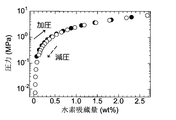
- the small graph described in the graph is the measurement result before correction with a blank, the upper curve in the small graph shows the measurement result of the pressure cell and the sample, and the lower curve is the measurement result of the pressure cell. Is shown. It is a figure which shows the measurement result of the PCT characteristic in 296K of the metal organic structure obtained by the Example. It is a figure which shows the measurement result of the PCT characteristic in 258K of the metal organic structure obtained by the Example.
- the metal organic structure of the present invention has a tubular structure, and the tubular structure is formed by a plurality of wall surfaces.
- Each wall surface is composed of a one-dimensional monomer of the metal organic compound represented by the general formula (1). It is formed by two parallel one-dimensional dimers.
- FIG. 1 is a schematic view showing a metal organic structure of the present invention, and is a view of the metal organic structure of the present invention viewed from the b-axis direction.
- the metal organic structure 1 of the present invention has a b-axis in which two one-dimensional monomers 2 of the chain metal organic compound represented by the general formula (1) face each other in parallel.
- a one-dimensional dimer 3 is formed in a direction (from the front to the back of the page). In FIG. 1, the one-dimensional dimer 3 is shown surrounded by a dotted line.
- the one-dimensional dimer 3 shown surrounded by the dotted line constitutes the wall surface of the metal organic structure, and a plurality of (four in FIG. 1) wall surfaces gather to surround the space 4 to form a tubular shape.
- the tubular structure is continuous in the b-axis direction (from the front to the back of the page). Note that the tubular structure is not limited to a single tube, and a plurality of tubes may be bundled as shown in FIG. In FIG. 1, there are as many tubes as there are spaces 4, and the tubes are bundled.
- FIG. 2 and 3 are schematic views showing the metal organic structure of the present invention.
- FIG. 2 is a view of the metal organic structure of the present invention as seen from the c-axis direction
- FIG. 3 is a view as seen from the a-axis direction.
- the metal organic structure of the present invention having the above-described structure has voids inside, and can store gas atoms such as hydrogen, oxygen, nitrogen, etc. in the voids, so that these gases are stored and released. It is possible.
- gas atoms such as hydrogen, oxygen, nitrogen, etc.
- it has a tubular structure, so that the diffusion of gas atoms is fast, the speed of occlusion and release is high, and sufficient gas atoms at room temperature. The ability to occlude and release can be shown.
- the method for producing a metal organic structure of the present invention is characterized by having a step of mixing the compound represented by the general formula (2) and a nitrogen-containing heterocyclic compound.
- the metal organic structure of the present invention can be produced simply by mixing the compound represented by the general formula (2) and the nitrogen-containing heterocyclic compound.
- the reason why the metal organic structure of the present invention can be produced simply by mixing the compound represented by the general formula (2) and the nitrogen-containing heterocyclic compound is not clear, but the following general formula (3)
- R 1 and R 2 are the same or different and represent a nitrogen-containing heterocyclic group, and R 3 and R 4 are the same or different and represent —OH, —CHO, or R 5 COO— (R 5 Represents H or an alkyl group having 1 to 3 carbon atoms), and M represents a transition metal.)
- R 1 and R 2 are the same or different and represent a nitrogen-containing heterocyclic group, and R 3 and R 4 are the same or different and represent —OH, —CHO, or R 5 COO— (R 5 Represents H or an alkyl group having 1 to 3 carbon atoms), and M represents a transition metal.)
- the metal organic structure of the present invention is produced by self-organization only by mixing the compound represented by the general formula (2) and the nitrogen-containing heterocyclic compound. Therefore, it is not necessary to synthesize at high temperature and high pressure, and it is possible to synthesize at normal temperature and normal pressure. For this reason, mass production is possible, the cost can be kept low, and the metal organic structure of the present invention can be easily manufactured.
- the metal organic structure of the present invention has a tubular structure, and the tubular structure is formed by a plurality of wall surfaces, and each wall surface has the following general formula (1).
- the tubular structure of the metal organic structure of the present invention is formed by arranging a plurality of wall surfaces in parallel surrounding a space.
- the tubular structure may be configured by a single tube, but a plurality of tubes may be configured as a bundle as shown in FIG.
- the number of wall surfaces forming the tubular structure is not particularly limited as long as the tubular structure can be formed, but is preferably 3 or more. When the wall surface is 3 or more, a stable tubular structure can be formed.
- the number of wall surfaces of the tubular structure is more preferably 4. Note that the number of wall surfaces of the tubular structure varies depending on the type of transition metal M, which will be described later, and the number of wall surfaces is 4 when M is Fe, Co, or Cu.
- the wall surface preferably has a structure in which the one-dimensional dimer is arranged in parallel surrounding the space.
- the tubular structure is not limited to a form in which the one-dimensional dimer is arranged in parallel strictly and surrounds the space, and may be substantially parallel.
- substantially parallel includes, for example, a form in which a plurality of one-dimensional dimers are aligned with a shift in the range of 0 to 10 ° in the length direction.
- R 1 and R 2 are the same or different and represent a nitrogen-containing heterocyclic group.
- the nitrogen-containing heterocyclic group is not particularly limited, and examples thereof include a 5- to 7-membered nitrogen-containing heterocyclic monocyclic ring or a condensed ring thereof, and may further have another hetero atom. It may have a substituent.
- the nitrogen-containing heterocyclic group may have aromaticity.
- nitrogen-containing heterocyclic compound forming the nitrogen-containing heterocyclic group examples include pyridine, piperidine, piperazine, morpholine, pyrrolidine, pyrroline, imidazole, pyrazole, triazole, tetrazole, and benzimidazole.
- nitrogen-containing heterocyclic compounds containing only nitrogen atoms as heteroatoms such as pyridine, piperidine, piperazine, and imidazole are preferred, and nitrogen-containing heterocyclic groups having aromaticity such as pyridine and imidazole are preferred. More preferred is pyridine, still more preferred.
- nitrogen-containing heterocyclic group may have include, for example, a linear, branched or cyclic alkyl group having 1 to 12 carbon atoms, an aralkyl group, an aryl group, F, Cl, Br and the like. These can be used in combination. Moreover, the substitution position of these substituents and the number of substituents are not particularly limited.
- R 3 and R 4 are the same or different and represent —OH, —CHO, or R 5 COO—.
- R 3 and R 4 are the same or different and are preferably R 5 COO—.
- the R 5 COO— is specifically a group represented by the following general formula (4).
- R 5 represents H or an alkyl group having 1 to 3 carbon atoms.
- R 5 is preferably H.
- R 5 is H, voids of the formed metal organic structure are increased, and the amount of occluded gas is increased.
- R 5 is an alkyl group, R 5 is preferably an alkyl group having 1 to 2 carbon atoms.
- R 1 , R 2 , R 3 and R 4 are formed only from elements having a large Clarke number because they can be easily applied in fields where occlusion of atoms such as hydrogen is required.
- Examples of the element having a large Clark number include oxygen, hydrogen, carbon, nitrogen and the like.
- the number of Clarks of the elements forming R 1 to R 4 is preferably 0.02 or more, and more preferably 0.03 or more.
- the metal organic structure can be composed of atoms having a large Clarke number, and can be more easily applied in fields where atoms such as hydrogen are required to be occluded.
- the above M represents a transition metal. It does not specifically limit as said transition metal,
- the element of 3A, 4A, 5A, 6A, 7A, 8, 1B, 2B group of a periodic table can be used.
- Fe, Co, Cu, and Cr are preferably used, Fe, Co, and Cu are more preferably used, Fe and Cu are further preferably used, and Cu is particularly preferably used.
- the transition metals may be used alone or in combination of two or more.
- a transition metal having a large Clarke number as M, because it can be easily applied in a field where storage of atoms such as hydrogen is required.
- the transition metal having a large Clark number include Fe and Cu.
- the number of Clarks of the transition metal is preferably 0.008 or more, more preferably 0.01 or more, further preferably 0.02 or more, particularly preferably 1.90 or more, and most preferably 4.50 or more.
- the metal organic structure of the present invention may be composed of atoms having a large Clark number. It can be applied more easily in a field where storage of atoms such as hydrogen is required.
- n represents a natural number of 1 or more. n is preferably a natural number of 1 to 2.8 ⁇ 10 6 , more preferably a natural number of 1.4 ⁇ 10 6 to 2.8 ⁇ 10 6 . When n is in the above range, single crystal growth is facilitated, and the ability to occlude hydrogen atoms and the like in the metal organic structure and the ability to release hydrogen atoms and the like are further improved.
- the one-dimensional monomer of the metal organic compound represented by the general formula (1) is represented by the following general formula (3)
- M (R 6 ) 2 ⁇ mH 2 O (2) (In the formula, M represents a transition metal, R 6 is the same as R 3 and R 4 , and m represents an integer of 2 to 4.) Is mixed with a nitrogen-containing heterocyclic compound to form a molecule of the metal organic compound represented by the general formula (3), and the molecule is chained by self-assembly. It is thought that they are aligned in series.
- the compound represented by the above general formula (3) is a compound of R 1 or R 2 which is a nitrogen-containing heterocyclic group, which is an adjacent R of a metal organic compound molecule represented by the above general formula (3). It is considered that self-organization occurs due to ⁇ - ⁇ stacking of ⁇ electrons between 1 or R 2 , hydrogen bonding, and intermolecular force.
- Each wall surface of the tubular structure is formed by two one-dimensional dimers in which the one-dimensional monomer of the metal organic compound represented by the general formula (1) is opposed in parallel.
- two one-dimensional monomers of the metal organic compound represented by the general formula (1) are oriented in parallel is not clear, it is represented by the general formula (1) by self-organization. After the one-dimensional monomer of the metal organic compound is formed, two one-dimensional monomers of the metal organic compound represented by the above general formula (1) are parallelly opposed by self-assembly. Orient.
- the one-dimensional dimer is not limited to a form in which the one-dimensional monomers are strictly opposed in parallel, and may be substantially parallel.
- substantially parallel includes, for example, a form in which chain-like one-dimensional monomers are opposed to each other with a shift of 0 to 10 ° in the length direction.
- the metal organic structure is formed as a needle-like single crystal.
- the length of the single crystal is not particularly limited, and is preferably about 3 to 5 mm, and more preferably about 4 to 5 mm.
- the upper limit of the cross-sectional area of the single crystal is preferably about 2 3X0.3Mm, and more preferably about 2 2.5X0.3Mm.
- the metal-organic structure of the present invention Since the metal-organic structure of the present invention has the above-described configuration, it has an excellent ability to occlude gaseous atoms and can sufficiently occlude gaseous atoms even at room temperature.
- the upper limit of the occlusion amount of gaseous atoms at normal temperature of the metal organic structure of the present invention is not particularly limited, and is preferably about 3.9% by mass with the metal organic structure being 100% by mass.
- room temperature means room temperature, specifically 10 to 30 ° C.
- the occlusion amount of gaseous atoms is a value measured by a capacity method using a PCT characteristic measuring device manufactured by Suzuki Shokan Co., Ltd. in accordance with JIS H7201.
- the gas atoms occluded in the metal organic structure of the present invention are not particularly limited, and examples thereof include a hydrogen atom, an oxygen atom, a nitrogen atom, and a carbon atom. Among these, a hydrogen atom is preferable because it is useful for a fuel cell or the like.
- the metal organic structure of the present invention can occlude and release gas atoms, it can be used as a gas occlusion material. In particular, it is useful as a gas storage material for fuel cells or secondary batteries. Moreover, the metal organic structure of the present invention can also be used as a gas sensor.
- the manufacturing method of the present invention has an annular structure formed by a plurality of wall surfaces, and each wall surface has the following general formula (1).
- R 1 and R 2 are the same or different and represent a nitrogen-containing heterocyclic group, and R 3 and R 4 are the same or different and represent —OH, —CHO, or R 5 COO— (R 5 Represents H or an alkyl group having 1 to 3 carbon atoms, M represents a transition metal, and n represents a natural number of 1 or more.)
- M represents a transition metal and is the same as M described in the metal organic structure of the present invention.
- R 6 is the same as R 3 and R 4 described in the metal organic structure of the present invention.
- m represents an integer of 2 to 4.
- the m is preferably 4.
- the nitrogen-containing heterocyclic compound is not particularly limited as long as it is a heterocyclic compound containing one or more nitrogen atoms, and examples thereof include 5- to 7-membered nitrogen-containing heterocyclic compounds and condensed ring compounds thereof. Further, it may have another hetero atom or may have a substituent. Moreover, the nitrogen-containing heterocyclic compound may have aromaticity.
- nitrogen-containing heterocyclic compound examples include pyridine, piperidine, piperazine, morpholine, pyrrolidine, pyrroline, imidazole, pyrazole, triazole, tetrazole, and benzimidazole.
- nitrogen-containing heterocyclic compounds containing only nitrogen atoms as heteroatoms such as pyridine, piperidine, piperazine, and imidazole are preferable, and nitrogen-containing heterocyclic compounds having weak basicity such as pyridine and imidazole are more preferable.
- Pyridine is more preferable.
- nitrogen-containing heterocyclic compound may have include, for example, a linear, branched or cyclic alkyl group having 1 to 12 carbon atoms, an aralkyl group, an aryl group, F, Cl, Br, and the like. These can be used in combination. Moreover, the substitution position of these substituents and the number of substituents are not particularly limited.
- the production method of the present invention includes a step of mixing the compound represented by the general formula (2) and a nitrogen-containing heterocyclic compound.
- the metal organic structure of the present invention can be obtained by self-assembly only by mixing the compound represented by the general formula (2) and the nitrogen-containing heterocyclic compound. It is possible to synthesize at normal temperature and normal pressure without requiring synthesis at high temperature and high pressure.
- room temperature means room temperature as described above, and specifically, a temperature of 10 to 30 ° C.
- the normal pressure generally means atmospheric pressure, and is a gas pressure of about 1 atm.
- the production method of the present invention includes a step of mixing the compound represented by the general formula (2) and the nitrogen-containing heterocyclic compound because the metal organic structure is produced by self-assembly.
- Heating and pressurization are not particularly required, but heating and pressurization may be performed for the purpose of promoting the formation of the metal organic structure.
- the heating temperature is not particularly limited, and examples thereof include a temperature of 30 to 300 ° C.
- the pressure for pressurization is not particularly limited, and for example, a pressure of 1 to 140 atm can be mentioned.
- the molar ratio (m1) :( m2) between the number of moles of the compound represented by the general formula (2) (m1) and the number of moles of the nitrogen-containing heterocyclic compound (m2) is ( 4 ⁇ 10 ⁇ 4 ): (0.65) to ( 4 ⁇ 10 ⁇ 4 ): (1.2), preferably ( 4 ⁇ 10 ⁇ 4 ): (0.9) to ( 4 ⁇ 10 ⁇ 4 ): (1.2) It is more preferable.
- the molar ratio (m1) :( m2) is in the above-described range, a good-quality crystal is easily grown and the crystal is easily grown as a solid.
- the metal organic structure of the present invention can be obtained by mixing and leaving the compound represented by the general formula (2) and the nitrogen-containing heterocyclic compound.
- the standing time is not particularly limited, but is preferably 24 to 48 hours, and more preferably 36 to 48 hours. By setting the standing time within the above range, the metal organic structure is more sufficiently formed and solidified more sufficiently as a crystal.
- the metal organic structure of the present invention is manufactured by the process described above.
- Example 1 ⁇ Preparation of a single crystal of Cu (HCO 2 ) 2 .4H 2 O> As a raw material, Cu (HCO 2) 2 ⁇ 4H 2 O to 2g, and distilled water 100ml mixing, by leaving about one month at room temperature to obtain a Cu (HCO 2) 2 ⁇ 4H 2 O in the single crystal .
- the obtained mixed liquid was allowed to stand in a draft chamber at room temperature and normal pressure for 48 hours.
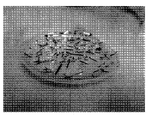
- a needle-like single crystal of the metal organic structure shown in FIG. 4 was formed.
- the length of the single crystal was 2 ⁇ 4 mm
- cross-section was 1.5x0.2 ⁇ 2.0x0.2mm 2.
- the volume of the 4 mm length was length ⁇ width (cross section)
- ⁇ length (cross section) 4 ⁇ 2 ⁇ 0.2 mm 3 .
- the crystal structure of the obtained single crystal was determined by performing a single crystal structure analysis using X-rays. The results are shown in Tables 1 and 2.
- PCT characteristic measurement> Using a PCT characteristic measuring apparatus manufactured by Suzuki Shokan Co., Ltd., PCT characteristics were measured under a temperature condition of room temperature (296K) while applying a hydrogen pressure up to an upper limit of 7 MPa, and cycle characteristics were also evaluated. The results are shown in FIG. In addition, under the same pressure condition, the temperature condition was set to 258K, and the PCT characteristic and the cycle characteristic were evaluated. The results are shown in FIG.
- the metal organic structure of Example 1 has a high hydrogen storage amount immediately after the start of the test. Thereby, it turned out that the metal organic structure of Example 1 has a high hydrogenation rate.
- the average value of the hydrogen storage amount during the test was 3.8 wt%, and it was found that a high hydrogen storage amount was exhibited at a pressure of 6.3 MPa and normal temperature (296 K).
- the average value of the hydrogen storage amount at a pressure of 6.3 MPa and 257 K was 2.7 wt%, and it was found that a high hydrogen storage amount was exhibited even under low temperature conditions.
- Example 1 From the measurement result of FIG. 6, under the temperature condition of room temperature (296K), the hydrogen occlusion amount increased by pressurization, and the hydrogen occlusion amount decreased by pressure reduction. From the results of the PCT characteristics and the cycle characteristics, it is found that the metal organic structure of Example 1 is useful as a gas storage material because it can absorb hydrogen by pressurization at room temperature (296K) and release it by decompression. It was.
- the metal organic structure of Example 1 can store hydrogen under pressure and release it under reduced pressure as in the case of room temperature (298K) under the temperature condition of 258K. As useful.
Landscapes
- Chemical & Material Sciences (AREA)
- Organic Chemistry (AREA)
- Chemical Kinetics & Catalysis (AREA)
- Electrochemistry (AREA)
- General Chemical & Material Sciences (AREA)
- Life Sciences & Earth Sciences (AREA)
- Engineering & Computer Science (AREA)
- Manufacturing & Machinery (AREA)
- Sustainable Development (AREA)
- Sustainable Energy (AREA)
- Fuel Cell (AREA)
- Battery Electrode And Active Subsutance (AREA)
Abstract
本発明は、常温下で十分な水素原子等の吸蔵、放出能力を示すことができ、且つ、容易に製造することができる金属有機構造体、及びその製造方法を提供する。 本発明は、管状構造を有する金属有機構造体であって、 前記管状構造は複数の壁面により形成され、各壁面は下記一般式(1)(式中、R1及びR2は、同一又は異なって含窒素複素環基を示し、R3及びR4は、同一又は異なって、-OH、-CHO、又は、R5COO-(R5は、H又は炭素数1~3のアルキル基を示す。)を示す。Mは遷移金属を表し、nは1以上の自然数を示す。) で表される金属有機化合物の一次元単量体が、2つ平行に対向した一次元二量体により形成されている、 ことを特徴とする金属有機構造体である。
Description
本発明は、金属有機構造体及びその製造方法に関する。
近年、エネルギーの生産に伴う二酸化炭素排出等の環境問題の改善のために、石油代替エネルギーの開発が行われており、燃料電池、二次電池等の電池の開発が盛んに行われている。これらの電池は、特にモバイル電源として利用されており、このような電池を構成する材料には、発電のための原料となる水素等の原子の吸蔵能力が要求される。
水素等の原子の吸蔵能力を示す電池材料として、微細孔を有する三次元網目構造の金属有機構造体(以下、「MOF」とも表す)が提案されている(例えば、非特許文献1参照)。
しかしながら、上述のような従来の電池を構成する材料として用いられるMOFは重量が重く、モバイル電源として用いるのに適していないという問題がある。
また、従来のMOFは、三次元網目構造であるため、水素等の原子が移動し難く、低温に特有の物理吸着を利用しているため液体窒素温度(77K)付近でないと水素等の分子の吸蔵又は放出を十分に行うことができない。このため、従来の電池材料は、常温では水素原子等の吸蔵能力又は放出能力を十分に発揮できないという問題がある。
更に、上述のような従来のMOFを製造するためには、原料となる金属無機前駆体と有機前駆体とを混合した後、加熱することが必要であり、常温、常圧下で合成を行うことができない。このため、大量生産が困難であり、コストが増大し、容易に製造することができないという問題がある。
常温下で十分な水素原子等の吸蔵、放出能力を示すことができ、且つ、容易に製造することができる金属有機構造体は、未だ開発されていない。
N. L. Rosi et al., Science Vol. 300, 1127 (2003).
本発明は、常温下で十分な水素原子等の吸蔵、放出能力を示すことができ、且つ、容易に製造することができる金属有機構造体、及びその製造方法を提供することを目的とする。
本発明者は上記目的を達成すべく鋭意研究を重ねた結果、管状構造を有し、当該管状構造の壁面が特定の金属有機化合物の一次元2量体で形成されている金属有機構造体とすること、及び、特定の化合物と、含窒素複素環化合物とを混合する工程を有する製造方法とすることにより、上記目的を達成できることを見出し、本発明を完成するに至った。
即ち、本発明は、下記の金属有機構造体、及び金属有機構造体の製造方法に関する。
1.管状構造を有する金属有機構造体であって、
前記管状構造は複数の壁面により形成され、各壁面は下記一般式(1)
1.管状構造を有する金属有機構造体であって、
前記管状構造は複数の壁面により形成され、各壁面は下記一般式(1)
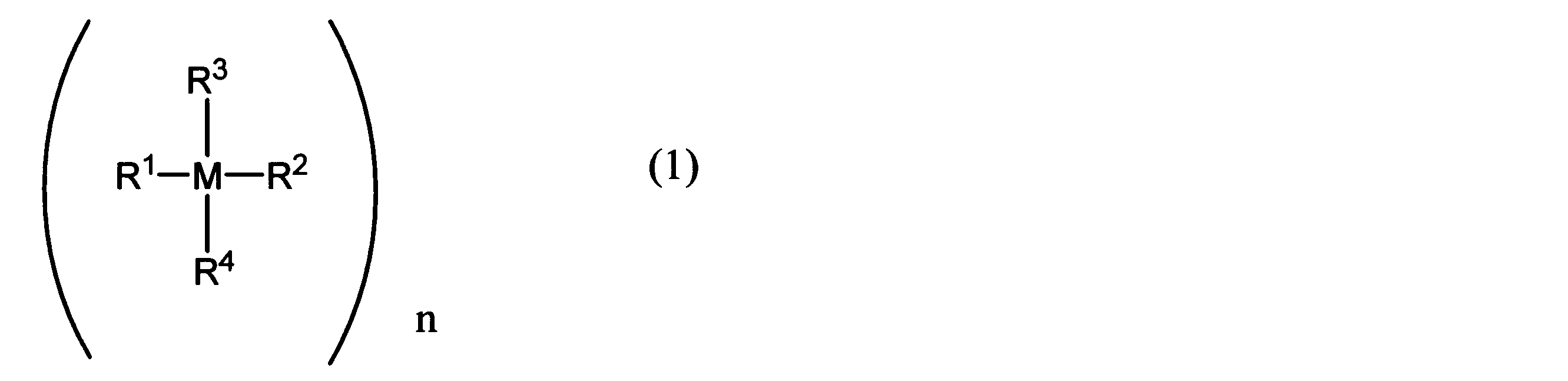
(式中、R1及びR2は、同一又は異なって含窒素複素環基を示し、R3及びR4は、同一又は異なって、-OH、-CHO、又は、R5COO-(R5は、H又は炭素数1~3のアルキル基を示す。)を示す。Mは遷移金属を表し、nは1以上の自然数を示す。)
で表される金属有機化合物の一次元単量体が、2つ平行に対向した一次元二量体により形成されている、
ことを特徴とする金属有機構造体。
2.前記遷移金属は、Fe、Co及びCuからなる群より選択される少なくとも1種である、項1に記載の金属有機構造体。
3.前記nは、1~2.8x10⁶の自然数である、項1又は2に記載の金属有機構造体。
4.水素原子、酸素原子、窒素原子及び炭素原子からなる群より選択される少なくとも1種を吸蔵及び放出する、項1~3のいずれかに記載の金属有機構造体。
5.複数の壁面により形成された管状構造を有し、各壁面が下記一般式(1)
で表される金属有機化合物の一次元単量体が、2つ平行に対向した一次元二量体により形成されている、
ことを特徴とする金属有機構造体。
2.前記遷移金属は、Fe、Co及びCuからなる群より選択される少なくとも1種である、項1に記載の金属有機構造体。
3.前記nは、1~2.8x10⁶の自然数である、項1又は2に記載の金属有機構造体。
4.水素原子、酸素原子、窒素原子及び炭素原子からなる群より選択される少なくとも1種を吸蔵及び放出する、項1~3のいずれかに記載の金属有機構造体。
5.複数の壁面により形成された管状構造を有し、各壁面が下記一般式(1)

(式中、R1及びR2は、同一又は異なって含窒素複素環基を示し、R3及びR4は、同一又は異なって、-OH、-CHO、又は、R5COO-(R5は、H又は炭素数1~3のアルキル基を示す。)を示す。Mは遷移金属を表し、nは1以上の自然数を示す。)
で表される金属有機化合物の一次元単量体が、2つ平行に対向した一次元二量体により形成された金属有機構造体の製造方法であって、
下記一般式(2)
M(R6)2・mH2O (2)
(式中、Mは遷移金属を示し、R6はR3及びR4と同一であり、mは2~4の整数を示す。)
で表される化合物と、含窒素複素環化合物とを混合する工程を有する、
ことを特徴とする製造方法。
6.前記遷移金属は、Fe、Co及びCuからなる群より選択される少なくとも1種である、項5に記載の製造方法。
7.前記含窒素複素環化合物は、ピリジン、ピペリジン、ピペラジン、モルホリン、ピロリジン、ピロリン、イミダゾール、ピラゾール、トリアゾール、テトラゾール及びベンゾイミダゾールからなる群より選択される少なくとも1種である、項5又は6に記載の製造方法。
8.前記工程は、常温下で行われる、項5~7のいずれかに記載の製造方法。
9.前記工程は、常圧下で行われる、項5~8のいずれかに記載の製造方法。
10.ガス吸蔵材料である、項1~4のいずれかに記載の金属有機構造体。
11.項1~4のいずれかに記載の金属有機構造体を用いた、燃料電池又は二次電池。
12.項1~4のいずれかに記載の金属有機構造体を用いたガスセンサー。
で表される金属有機化合物の一次元単量体が、2つ平行に対向した一次元二量体により形成された金属有機構造体の製造方法であって、
下記一般式(2)
M(R6)2・mH2O (2)
(式中、Mは遷移金属を示し、R6はR3及びR4と同一であり、mは2~4の整数を示す。)
で表される化合物と、含窒素複素環化合物とを混合する工程を有する、
ことを特徴とする製造方法。
6.前記遷移金属は、Fe、Co及びCuからなる群より選択される少なくとも1種である、項5に記載の製造方法。
7.前記含窒素複素環化合物は、ピリジン、ピペリジン、ピペラジン、モルホリン、ピロリジン、ピロリン、イミダゾール、ピラゾール、トリアゾール、テトラゾール及びベンゾイミダゾールからなる群より選択される少なくとも1種である、項5又は6に記載の製造方法。
8.前記工程は、常温下で行われる、項5~7のいずれかに記載の製造方法。
9.前記工程は、常圧下で行われる、項5~8のいずれかに記載の製造方法。
10.ガス吸蔵材料である、項1~4のいずれかに記載の金属有機構造体。
11.項1~4のいずれかに記載の金属有機構造体を用いた、燃料電池又は二次電池。
12.項1~4のいずれかに記載の金属有機構造体を用いたガスセンサー。
本発明の金属有機構造体は、内部に空隙を有し、当該空隙に水素、酸素、窒素等の気体の原子を吸蔵することができるので、これらの気体を吸蔵、放出することが可能である。また、従来の三次元網目構造を有する金属有機構造体と異なり、管状構造を有するため、気体の原子の拡散が早く、吸蔵、放出の速度が速くなっており、且つ、常温で十分な気体原子の吸蔵、放出能力を示すことができる。
また、本発明の製造方法によれば、原料となる化合物と、含窒素複素環化合物とを混合するだけで自己組織化により本発明の金属有機構造体を製造することができるので、高温、高圧下で合成することを必要とせず、常温、常圧下で合成することが可能である。このため、大量生産が可能であり、コストも安価に抑えることができ、本発明の金属有機構造体を容易に製造することができる。
以下、本発明の金属有機構造体及びその製造方法について詳細に説明する。
本発明の金属有機構造体は管状構造を有し、上記管状構造は複数の壁面により形成され、各壁面は上記一般式(1)で表される金属有機化合物の一次元単量体が、2つ平行に対向した一次元二量体により形成されている。
図1は、本発明の金属有機構造体を示す模式図であり、本発明の金属有機構造体をb軸方向から見た図である。図1に示すように、本発明の金属有機構造体1は、上記一般式(1)で示される鎖状の金属有機化合物の一次元単量体2が2つ平行に対向して、b軸方向(紙面の手前から奥方向)に並び、一次元二量体3を形成している。なお、図1において、一次元二量体3は点線で囲まれて示されている。
図1において、当該点線で囲まれて示された一次元二量体3が、金属有機構造体の壁面を構成し、複数(図1では4つ)の壁面が集まって空間4を囲み、管状構造を形成している。図1では、管状構造はb軸方向(紙面の手前から奥方向)に連続している。なお、管状構造は、1本の管により構成される場合に限られず、図1のように、複数の管が束状となって構成されていてもよい。図1では、空間4の数だけ管が存在し、管が束状となっている。
図2および図3に本発明の金属有機構造体を示す模式図を示す。図2は本発明の金属有機構造体をc軸方向から見た図であり、図3はa軸方向から見た図である。
上述の構造を有する本発明の金属有機構造体は、内部に空隙を有し、当該空隙に水素、酸素、窒素等の気体の原子を吸蔵することができるので、これらの気体を吸蔵、放出することが可能である。また、従来の三次元網目構造を有する金属有機構造体と異なり、管状構造を有するため、気体の原子の拡散が早く、吸蔵、放出の速度が速くなっており、且つ、常温で十分な気体原子の吸蔵、放出能力を示すことができる。
また、本発明の金属有機構造体の製造方法は、上記一般式(2)で表される化合物と、含窒素複素環化合物とを混合する工程を有することを特徴とする。本発明の製造方法によれば、上記一般式(2)で表される化合物と、含窒素複素環化合物とを混合するだけで本発明の金属有機構造体を製造することができる。上記一般式(2)で表される化合物と、含窒素複素環化合物とを混合するだけで本発明の金属有機構造体を製造することができる理由は明確ではないが、当該混合により下記一般式(3)

(式中、R1及びR2は、同一又は異なって含窒素複素環基を表し、R3及びR4は、同一又は異なって、-OH、-CHO、又は、R5COO-(R5は、H又は炭素数1~3のアルキル基を表す)を表し、Mは遷移金属を表す。)で表される金属有機化合物単体が生成し、自己組織化により、当該金属有機化合物単体同士が上記一般式(1)で表される金属有機化合物の鎖状の一次元単量体を形成し、当該一次元単量体が2つ平行に対向して並んで一次元二量体を形成し、複数の一次元二量体が空間を囲んで並び、管状構造の壁面を形成することにより、本発明の金属有機構造体を製造することができると考えられる。
すなわち、本発明の製造方法によれば、上記一般式(2)で表される化合物と、含窒素複素環化合物とを混合するだけで自己組織化により本発明の金属有機構造体を製造することができるので、高温、高圧下で合成することを必要とせず、常温、常圧下で合成することが可能である。このため、大量生産が可能であり、コストも安価に抑えることができ、本発明の金属有機構造体を容易に製造することができる。
1.金属有機構造体
本発明の金属有機構造体は、管状構造を有し、上記管状構造が複数の壁面により形成され、各壁面は下記一般式(1)
本発明の金属有機構造体は、管状構造を有し、上記管状構造が複数の壁面により形成され、各壁面は下記一般式(1)

で表される金属有機化合物の一次元単量体が、2つ平行に対向した一次元二量体により形成されている。
本発明の金属有機構造体が有する管状構造は、複数の壁面が空間を囲んで平行に並ぶことにより形成される。なお、管状構造は、1本の管により構成されていてもよいが、図1のように、複数の管が束状となって構成されていてもよい。
管状構造を形成する壁面の数は、管状構造を形成することができれば特に限定されないが、3以上であることが好ましい。壁面が3以上であることにより、安定した管状構造を形成することができる。上記管状構造の壁面の数は、4であることがより好ましい。なお、上記管状構造の壁面の数は、後述する遷移金属であるMの種類により変化し、MがFe、Co、Cuである場合には、壁面の数は4となる。
上記管状構造において、壁面は、上記一次元二量体が空間を囲んで平行に並ぶ構造を有していることが好ましい。上記管状構造は、一次元二量体が厳密に平行に並んで空間を囲んでいる形態に限定されず、略平行であればよい。略平行であるとは、例えば、複数の一次元二量体が長さ方向において0~10°の範囲でずれて並んでいる形態を包含する。
上記一般式(1)において、R1及びR2は、同一又は異なって含窒素複素環基を表す。上記含窒素複素環基としては特に限定されず、例えば、5~7員環の含窒素複素環単環、又はこれらの縮合環が挙げられ、更に別のヘテロ原子を有していてもよく、置換基を有していていてもよい。また、含窒素複素環基は芳香族性を有していてもよい。
上記含窒素複素環基を形成する含窒素複素環化合物としては、具体的には、ピリジン、ピペリジン、ピペラジン、モルホリン、ピロリジン、ピロリン、イミダゾール、ピラゾール、トリアゾール、テトラゾール、ベンゾイミダゾール等が挙げられる。中でも、ピリジン、ピペリジン、ピペラジン、イミダゾール等のヘテロ原子として窒素原子のみを含む含窒素複素環式化合物であることが好ましく、ピリジン、イミダゾール等の芳香族性を有する含窒素複素環基であることがより好ましく、ピリジンが更に好ましい。
上記含窒素複素環基において、有していてもよい置換基としては、例えば炭素数1~12の直鎖状、分岐状又は環状のアルキル基、アラルキル基、アリール基、F、Cl、Brなどのハロゲン原子等が挙げられ、これらを組み合わせて用いることもできる。また、これらの置換基の置換位置、及び置換基数は特に限定されない。
上記一般式(1)において、R3及びR4は、同一又は異なって、-OH、-CHO、又は、R5COO-を表す。R3及びR4は、同一又は異なって、R5COO-であることが好ましい。上記R5COO-は、具体的には、下記一般式(4)で示される基である。

上記R5は、H又は炭素数1~3のアルキル基を表す。上記R5は、Hであることが好ましい。R5がHであると、形成される金属有機構造体の空隙が大きくなり、気体の吸蔵量が増大する。上記R5がアルキル基である場合、R5は、炭素数1~2のアルキル基であることが好ましい。R5の炭素数を1~2とすることにより、1次元空間がより形成され易くなり、且つ、形成される金属有機構造体の空隙が大きくなり、気体の吸蔵量がより増大する。
上記R1、R2、R3及びR4をクラーク数が大きい元素のみで形成すると、水素等の原子の吸蔵が要求される分野において応用し易い点で好ましい。クラーク数が大きい元素としては、例えば、酸素、水素、炭素、窒素等が挙げられる。上記R1~R4を形成する元素のクラーク数は、0.02以上が好ましく、0.03以上がより好ましい。R1~R4を形成する元素としてクラーク数が大きいものを用い、且つ、後述するように上記一般式(1)中のMである遷移金属としてクラーク数が大きい遷移金属を用いる場合、本発明の金属有機構造体を全てクラーク数が大きい原子で構成することができ、水素等の原子の吸蔵が要求される分野においてより応用し易くなる。
上記Mは、遷移金属を表す。上記遷移金属としては特に限定されず、周期表の3A、4A、5A、6A、7A、8、1B、2B族の元素を用いることができる。これらの中でも、Fe、Co、Cu、Crを用いることが好ましく、Fe、Co、Cuを用いることがより好ましく、Fe、Cuを用いることが更に好ましく、Cuを用いることが特に好ましい。上記遷移金属は、単独で用いてもよいし、2種以上を組み合わせて用いてもよい。
上記Mとして、クラーク数が大きい遷移金属を用いると、水素等の原子の吸蔵が要求される分野において応用し易い点で好ましい。クラーク数が大きい遷移金属としては、例えば、Fe、Cu等が挙げられる。上記遷移金属のクラーク数は、0.008以上が好ましく、0.01以上がより好ましく、0.02以上が更に好ましく、1.90以上が特に好ましく、4.50以上が最も好ましい。遷移金属としてクラーク数が大きいものを用い、且つ、上記含窒素複素環基をクラーク数が大きい元素のみで形成する場合、本発明の金属有機構造体を全てクラーク数が大きい原子で構成することができ、水素等の原子の吸蔵が要求される分野においてより応用し易くなる。
上記一般式(1)において、nは1以上の自然数を表す。nは1~2.8x10⁶の自然数であることが好ましく、1.4x10⁶~2.8x10⁶の自然数であることがより好ましい。nが上記範囲であると、単結晶の育成が容易となり、金属有機構造体への水素原子等の吸蔵能力、及び、当該水素原子等の放出能力がより向上する。
上記一般式(1)で表される金属有機化合物の一次元単量体は、下記一般式(3)

で表される金属有機化合物の分子がn個鎖状に連なって配向することにより形成される。上記一般式(3)において、M、R1、R2、R3及びR4は、上記一般式(1)と同一である。
上記一般式(3)で表される金属有機化合物の分子が鎖状に連なって配向する理由は明確ではないが、後述する本発明の製造方法により、下記一般式(2)
M(R6)2・mH2O (2)
(式中、Mは遷移金属を表し、R6はR3及びR4と同一であり、mは2~4の整数を表す。)
で表される化合物と、含窒素複素環化合物とを混合することで、上記一般式(3)で表される金属有機化合物の分子が生成し、且つ、自己組織化により当該分子が鎖状に連なって配向すると考えられる。この際、上記一般式(3)で表される化合物は、含窒素複素環基であるR1又はR2が、隣接する他の上記一般式(3)で示される金属有機化合物の分子のR1又はR2との間におけるπ電子同士のπ-πスタッキング、水素結合、分子間力により自己組織化が起こるものと考えられる。
M(R6)2・mH2O (2)
(式中、Mは遷移金属を表し、R6はR3及びR4と同一であり、mは2~4の整数を表す。)
で表される化合物と、含窒素複素環化合物とを混合することで、上記一般式(3)で表される金属有機化合物の分子が生成し、且つ、自己組織化により当該分子が鎖状に連なって配向すると考えられる。この際、上記一般式(3)で表される化合物は、含窒素複素環基であるR1又はR2が、隣接する他の上記一般式(3)で示される金属有機化合物の分子のR1又はR2との間におけるπ電子同士のπ-πスタッキング、水素結合、分子間力により自己組織化が起こるものと考えられる。
上記一般式(1)で表される金属有機化合物の一次元単量体が、2つ平行に対向した一次元二量体により、管状構造の各壁面が形成される。上記一般式(1)で表される金属有機化合物の一次元単量体が、2つ平行に対向して配向する理由は明確ではないが、自己組織化により上記一般式(1)で表される金属有機化合物の一次元単量体が形成された後、続いて自己組織化により上記一般式(1)で表される金属有機化合物の一次元単量体が、2つ平行に対向して配向する。
上記一次元二量体は、上記一次元単量体が厳密に平行に対向している形態に限定されず、略平行であればよい。略平行であるとは、例えば、鎖状の一次元単量体同士が長さ方向において0~10°の範囲でずれて対向している形態を包含する。
上記金属有機構造体は、針状の単結晶として形成される。上記単結晶の長さは特に限定されず、3~5mm程度であることが好ましく、4~5mm程度であることがより好ましい。また、上記単結晶の断面積の上限は、3x0.3mm2程度であることが好ましく、2.5x0.3mm2程度であることがより好ましい。
本発明の金属有機構造体は、上述の構成であるので、気体の原子の吸蔵能力に優れており、常温においても気体の原子を十分に吸蔵することができる。本発明の金属有機構造体の常温での気体の原子の吸蔵量の上限は特に限定されず、金属有機構造体を100質量%として、3.9質量%程度であることが好ましい。なお、本明細書において、常温とは室温を意味し、具体的には10~30℃の温度である。
本明細書において、気体の原子の吸蔵量は、JIS H7201に準拠して、(株)鈴木商館製PCT特性測定装置を用いて、容量法により測定した値である。
本発明の金属有機構造体に吸蔵される気体の原子は特に限定されず、水素原子、酸素原子、窒素原子、炭素原子等が挙げられる。これらの中でも、燃料電池等に有用な点で、水素原子が好ましい。
本発明の金属有機構造体は、気体の原子を吸蔵及び放出することができるので、ガス吸蔵材料として用いることができる。特に、燃料電池用、又は二次電池用のガス吸蔵材料として有用である。また、本発明の金属有機構造体は、ガスセンサーとしても用いることができる。
2.製造方法
本発明の製造方法は、複数の壁面により形成された環状構造を有し、各壁面が下記一般式(1)
本発明の製造方法は、複数の壁面により形成された環状構造を有し、各壁面が下記一般式(1)

(式中、R1及びR2は、同一又は異なって含窒素複素環基を表し、R3及びR4は、同一又は異なって、-OH、-CHO、又は、R5COO-(R5は、H又は炭素数1~3のアルキル基を表す)を表す。Mは遷移金属を表し、nは1以上の自然数を表す。)
で表される金属有機化合物の一次元単量体が、2つ平行に対向した一次元二量体により形成された金属有機構造体の製造方法であって、下記一般式(2)
M(R6)2・mH2O (2)
で表される化合物と、含窒素複素環化合物とを混合する工程を有する。
で表される金属有機化合物の一次元単量体が、2つ平行に対向した一次元二量体により形成された金属有機構造体の製造方法であって、下記一般式(2)
M(R6)2・mH2O (2)
で表される化合物と、含窒素複素環化合物とを混合する工程を有する。
上記一般式(2)において、Mは遷移金属を表し、上記本発明の金属有機構造体で説明したMと同一である。また、R6は、上記本発明の金属有機構造体で説明したR3及びR4と同一である。
上記一般式(2)において、mは2~4の整数を表す。上記mは、4であることが好ましい。
上記含窒素複素環化合物は、窒素原子を1個以上含んだ複素環化合物であれば特に限定されず、例えば、5~7員環の含窒素複素環化合物、又はこれらの縮合環化合物が挙げられ、更に別のヘテロ原子を有していてもよく、置換基を有していていてもよい。また、含窒素複素環化合物は、芳香族性を有していてもよい。
上記含窒素複素環化合物としては、具体的には、ピリジン、ピペリジン、ピペラジン、モルホリン、ピロリジン、ピロリン、イミダゾール、ピラゾール、トリアゾール、テトラゾール、ベンゾイミダゾール等が挙げられる。中でも、ピリジン、ピペリジン、ピペラジン、イミダゾール等のヘテロ原子として窒素原子のみを含む含窒素複素環化合物であることが好ましく、ピリジン、イミダゾール等の弱塩基性を有する含窒素複素環化合物であることがより好ましく、ピリジンが更に好ましい。
上記含窒素複素環化合物において、有していてもよい置換基としては、例えば炭素数1~12の直鎖状、分岐状又は環状のアルキル基、アラルキル基、アリール基、F、Cl、Br等のハロゲン原子等が挙げられ、これらを組み合わせて用いることもできる。また、これらの置換基の置換位置、及び置換基数は特に限定されない。
本発明の製造方法は、上記一般式(2)で表される化合物と、含窒素複素環化合物とを混合する工程を有する。本発明の製造方法は、上記一般式(2)で表される化合物と、上記含窒素複素環化合物とを混合するだけで、自己組織化により本発明の金属有機構造体を得ることができるので、高温、高圧下で合成することを必要とせず、常温、常圧下で合成することが可能である。
なお、常温とは、上述のように室温を意味し、具体的には10~30℃の温度である。また、本明細書において、常圧とは、概ね大気圧を意味し、概ね1気圧程度の気体圧力である。
本発明の製造方法は、自己組織化により金属有機構造体が製造されるので、上記一般式(2)で表される化合物と、上記含窒素複素環化合物とを混合する工程を有していればよく、加熱や加圧を特に必要としないが、金属有機構造体の形成の促進を目的として、加熱、加圧を行ってもよい。加熱温度としては、特に限定されず、例えば、30~300℃の温度が挙げられる。また、加圧の圧力としては特に限定されず、例えば、1~140気圧の圧力が挙げられる。
上記工程において、一般式(2)で表される化合物のモル数(m1)と、含窒素複素環化合物のモル数(m2)とのモル比(m1):(m2)は、(4x10⁻⁴):(0.65)~(4x10⁻⁴):(1.2)であることが好ましく、(4x10⁻⁴):(0.9)~(4x10⁻⁴):(1.2)であることがより好ましい。モル比(m1):(m2)が上述の範囲であることにより、良質な結晶が育成され易くなり、且つ、結晶が固体として成長し易くなる。
上記工程において、上記一般式(2)で表される化合物、及び上記含窒素複素環化合物を混合して放置することにより本発明の金属有機構造体を得ることができる。放置時間としては特に限定されないが、24~48時間であることが好ましく、36~48時間であることがより好ましい。放置時間を上記範囲とすることにより、金属有機構造体がより十分に形成され、結晶としてより十分に固化する。
以上説明した工程により、本発明の金属有機構造体が製造される。
以下に実施例を示して本発明を具体的に説明する。但し、本発明は実施例に限定されない。
実施例1
<Cu(HCO2)2・4H2Oの単結晶の調製>
原料として、Cu(HCO2)2・4H2Oを2g、及び蒸留水を100ml混合し、室温で一カ月程度放置することにより、Cu(HCO2)2・4H2Oの単結晶を得た。
<Cu(HCO2)2・4H2Oの単結晶の調製>
原料として、Cu(HCO2)2・4H2Oを2g、及び蒸留水を100ml混合し、室温で一カ月程度放置することにより、Cu(HCO2)2・4H2Oの単結晶を得た。
<金属有機構造体の製造>
上述のようにして得られたCu(HCO2)2・4H2Oの単結晶0.1g(4x10⁻⁴mol)と、含窒素複素環化合物としてC5H5N(1mol)をビーカー内で、常温常圧下で混合して混合液を調製した。
上述のようにして得られたCu(HCO2)2・4H2Oの単結晶0.1g(4x10⁻⁴mol)と、含窒素複素環化合物としてC5H5N(1mol)をビーカー内で、常温常圧下で混合して混合液を調製した。
得られた混合液をドラフトチャンバー内で常温常圧下で48時間静置した。ビーカーの底に、図4に示す金属有機構造体の針状の単結晶が生成した。当該単結晶の長さは2~4mmであり、断面は1.5x0.2~2.0x0.2mm2であった。得られた単結晶のうち、長さが4mmのものの体積は、長さx横(断面)x縦(断面)=4x2x0.2mm3であった。
得られた単結晶の結晶構造を、X線を用いた単結晶構造解析を行うことにより決定した。結果を表1及び2に示す。


表1及び2から、実施例1により得られた単結晶の結晶構造が、本発明の金属有機構造体の構成を備えていることが分かった。
<水素化速度測定>
(株)鈴木商館製PCT特性測定装置を用いて、室温(296K)の温度条件、6.3MPaの圧力条件下で、得られた金属有機構造体の、経過時間毎の水素吸蔵量を測定することにより、水素化速度を評価した。結果を図5に示す。また、6.3MPaの圧力条件下で、温度条件を257Kとして、各経過時間の水素吸蔵量の平均値を測定した。
(株)鈴木商館製PCT特性測定装置を用いて、室温(296K)の温度条件、6.3MPaの圧力条件下で、得られた金属有機構造体の、経過時間毎の水素吸蔵量を測定することにより、水素化速度を評価した。結果を図5に示す。また、6.3MPaの圧力条件下で、温度条件を257Kとして、各経過時間の水素吸蔵量の平均値を測定した。
<PCT特性測定>
(株)鈴木商館製PCT特性測定装置を用いて、室温(296K)の温度条件下で、上限7MPaまで水素圧を印加しながらPCT特性を測定し、サイクル特性も評価した。結果を図6に示す。また、同様の圧力条件下で、温度条件を258Kとして、PCT特性及びサイクル特性を評価した。結果を図7に示す。
(株)鈴木商館製PCT特性測定装置を用いて、室温(296K)の温度条件下で、上限7MPaまで水素圧を印加しながらPCT特性を測定し、サイクル特性も評価した。結果を図6に示す。また、同様の圧力条件下で、温度条件を258Kとして、PCT特性及びサイクル特性を評価した。結果を図7に示す。
<結果>
図5の測定結果から、実施例1の金属有機構造体は、試験開始直後から水素吸蔵量が高くなっている。これにより、実施例1の金属有機構造体は水素化速度が速いことが分かった。また、試験中の水素吸蔵量の平均値は3.8wt%であり、圧力6.3MPa、常温(296K)で、高い水素吸蔵量を示すことが分かった。また、圧力6.3MPa、257Kの温度での水素吸蔵量の平均値は2.7wt%であり、低い温度条件下でも高い水素吸蔵量を示すことが分かった。
図5の測定結果から、実施例1の金属有機構造体は、試験開始直後から水素吸蔵量が高くなっている。これにより、実施例1の金属有機構造体は水素化速度が速いことが分かった。また、試験中の水素吸蔵量の平均値は3.8wt%であり、圧力6.3MPa、常温(296K)で、高い水素吸蔵量を示すことが分かった。また、圧力6.3MPa、257Kの温度での水素吸蔵量の平均値は2.7wt%であり、低い温度条件下でも高い水素吸蔵量を示すことが分かった。
図6の測定結果から、室温(296K)の温度条件下で、加圧により水素吸蔵量が増加し、減圧により水素吸蔵量が減少していた。PCT特性及びサイクル特性の結果から、実施例1の金属有機構造体は、室温(296K)において加圧により水素を吸蔵させ、減圧により放出させることができ、ガス吸蔵材料として有用であることが分かった。
また、図7の測定結果から、実施例1の金属有機構造体は258Kの温度条件下でも室温(298K)と同様に加圧により水素を吸蔵させ、減圧により放出させることができ、ガス吸蔵材料として有用であることが分かった。
Claims (12)
- 管状構造を有する金属有機構造体であって、
前記管状構造は複数の壁面により形成され、各壁面は下記一般式(1)
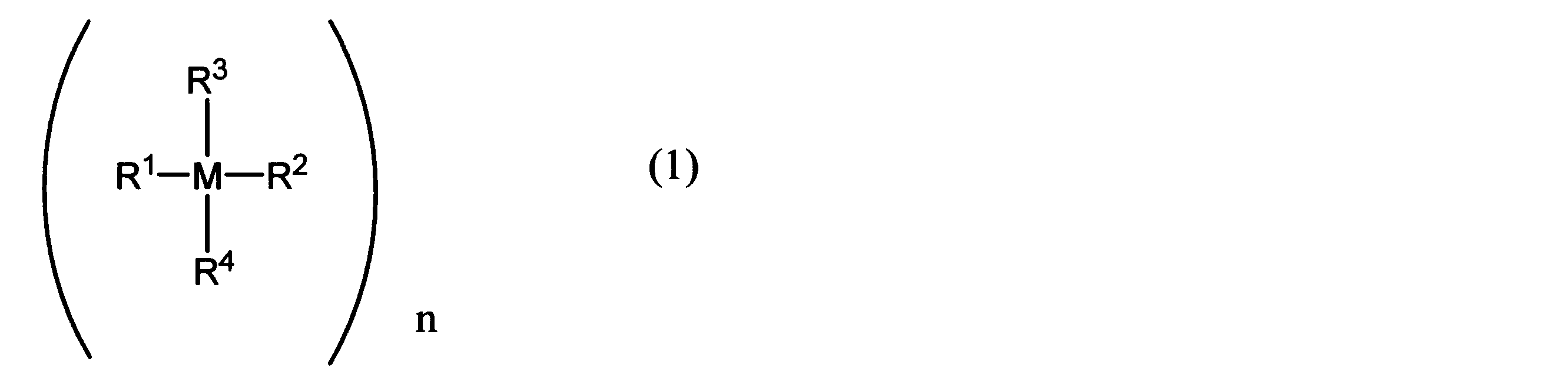
で表される金属有機化合物の一次元単量体が、2つ平行に対向した一次元二量体により形成されている、
ことを特徴とする金属有機構造体。 - 前記遷移金属は、Fe、Co及びCuからなる群より選択される少なくとも1種である、請求項1に記載の金属有機構造体。
- 前記nは、1~2.8x10⁶の自然数である、請求項1又は2に記載の金属有機構造体。
- 水素原子、酸素原子、窒素原子及び炭素原子からなる群より選択される少なくとも1種を吸蔵及び放出する、請求項1~3のいずれかに記載の金属有機構造体。
- 複数の壁面により形成された管状構造を有し、各壁面が下記一般式(1)

で表される金属有機化合物の一次元単量体が、2つ平行に対向した一次元二量体により形成された金属有機構造体の製造方法であって、
下記一般式(2)
M(R6)2・mH2O (2)
(式中、Mは遷移金属を示し、R6はR3及びR4と同一であり、mは2~4の整数を示す。)
で表される化合物と、含窒素複素環化合物とを混合する工程を有する、
ことを特徴とする製造方法。 - 前記遷移金属は、Fe、Co及びCuからなる群より選択される少なくとも1種である、請求項5に記載の製造方法。
- 前記含窒素複素環化合物は、ピリジン、ピペリジン、ピペラジン、モルホリン、ピロリジン、ピロリン、イミダゾール、ピラゾール、トリアゾール、テトラゾール及びベンゾイミダゾールからなる群より選択される少なくとも1種である、請求項5又は6に記載の製造方法。
- 前記工程は、常温下で行われる、請求項5~7のいずれかに記載の製造方法。
- 前記工程は、常圧下で行われる、請求項5~8のいずれかに記載の製造方法。
- ガス吸蔵材料である、請求項1~4のいずれかに記載の金属有機構造体。
- 請求項1~4のいずれかに記載の金属有機構造体を用いた、燃料電池又は二次電池。
- 請求項1~4のいずれかに記載の金属有機構造体を用いたガスセンサー。
Priority Applications (1)
| Application Number | Priority Date | Filing Date | Title |
|---|---|---|---|
| JP2016521026A JPWO2015178205A1 (ja) | 2014-05-22 | 2015-05-07 | 金属有機構造体及びその製造方法 |
Applications Claiming Priority (2)
| Application Number | Priority Date | Filing Date | Title |
|---|---|---|---|
| JP2014105966 | 2014-05-22 | ||
| JP2014-105966 | 2014-05-22 |
Publications (1)
| Publication Number | Publication Date |
|---|---|
| WO2015178205A1 true WO2015178205A1 (ja) | 2015-11-26 |
Family
ID=54553878
Family Applications (1)
| Application Number | Title | Priority Date | Filing Date |
|---|---|---|---|
| PCT/JP2015/063176 Ceased WO2015178205A1 (ja) | 2014-05-22 | 2015-05-07 | 金属有機構造体及びその製造方法 |
Country Status (2)
| Country | Link |
|---|---|
| JP (1) | JPWO2015178205A1 (ja) |
| WO (1) | WO2015178205A1 (ja) |
Cited By (1)
| Publication number | Priority date | Publication date | Assignee | Title |
|---|---|---|---|---|
| CN114370603A (zh) * | 2022-01-30 | 2022-04-19 | 北京东方红升新能源应用技术研究院有限公司 | 一种高压储氢方法、装置及系统 |
Citations (5)
| Publication number | Priority date | Publication date | Assignee | Title |
|---|---|---|---|---|
| JPS60239450A (ja) * | 1984-05-14 | 1985-11-28 | Otsuka Chem Co Ltd | ベンゾフエノンアジンの製造方法 |
| JP2004320007A (ja) * | 2003-03-31 | 2004-11-11 | Canon Inc | 電界効果型トランジスタおよびその製造方法 |
| JP2006503104A (ja) * | 2002-06-19 | 2006-01-26 | ユニバーシテイ・オブ・アイオワ・リサーチ・フアウンデーシヨン | ガス貯蔵材料および装置 |
| JP2012046472A (ja) * | 2010-08-30 | 2012-03-08 | Honda Motor Co Ltd | メタンガス吸着材及び有機金属錯体の使用方法 |
| JP2012045533A (ja) * | 2010-08-30 | 2012-03-08 | Honda Motor Co Ltd | 二酸化炭素ガス吸着材及び有機金属錯体の使用方法 |
-
2015
- 2015-05-07 JP JP2016521026A patent/JPWO2015178205A1/ja active Pending
- 2015-05-07 WO PCT/JP2015/063176 patent/WO2015178205A1/ja not_active Ceased
Patent Citations (5)
| Publication number | Priority date | Publication date | Assignee | Title |
|---|---|---|---|---|
| JPS60239450A (ja) * | 1984-05-14 | 1985-11-28 | Otsuka Chem Co Ltd | ベンゾフエノンアジンの製造方法 |
| JP2006503104A (ja) * | 2002-06-19 | 2006-01-26 | ユニバーシテイ・オブ・アイオワ・リサーチ・フアウンデーシヨン | ガス貯蔵材料および装置 |
| JP2004320007A (ja) * | 2003-03-31 | 2004-11-11 | Canon Inc | 電界効果型トランジスタおよびその製造方法 |
| JP2012046472A (ja) * | 2010-08-30 | 2012-03-08 | Honda Motor Co Ltd | メタンガス吸着材及び有機金属錯体の使用方法 |
| JP2012045533A (ja) * | 2010-08-30 | 2012-03-08 | Honda Motor Co Ltd | 二酸化炭素ガス吸着材及び有機金属錯体の使用方法 |
Non-Patent Citations (4)
| Title |
|---|
| GOPAL NARAIN: "Absorption spectra and configuration of some amine complexes of copper(II) acetate", CANADIAN JOURNAL OF CHEMISTRY, vol. 44, no. 8, 1966, pages 895 - 898, XP055238262 * |
| NATHANIEL L. ROSI ET AL.: "Hydrogen Strage in Microporous Metal-Organic Frameworks", SCIENCE, vol. 300, 2003, pages 1127 - 1129, XP002301008 * |
| TAKOSEI HAII KOBUNSHI: "PCP)/Kinzoku Yuki Kozotai (MOF) no Kiso, Zairyo Kagaku no Kiso no.7, ALDRICH Materials Science", SIGMA-ALDRICH, September 2012 (2012-09-01), pages 1 - 15 * |
| TSUYOSHI TAKAMI ET AL.: "Hydrogen atom trapping in a self-organized one-dimensional dimer", APL MATERIALS, vol. 2, no. 9, pages 096104/1 - 096104/7, XP012189472 * |
Cited By (2)
| Publication number | Priority date | Publication date | Assignee | Title |
|---|---|---|---|---|
| CN114370603A (zh) * | 2022-01-30 | 2022-04-19 | 北京东方红升新能源应用技术研究院有限公司 | 一种高压储氢方法、装置及系统 |
| CN114370603B (zh) * | 2022-01-30 | 2024-05-10 | 北京东方红升新能源应用技术研究院有限公司 | 一种高压储氢方法、装置及系统 |
Also Published As
| Publication number | Publication date |
|---|---|
| JPWO2015178205A1 (ja) | 2017-04-20 |
Similar Documents
| Publication | Publication Date | Title |
|---|---|---|
| Hu et al. | Hierarchical assemblies of conjugated ultrathin COF nanosheets for high-sulfur-loading and long-lifespan lithium–sulfur batteries: fully-exposed porphyrin matters | |
| Adarsh et al. | Composites of N, N′-bis-(pyridyl) urea-dicarboxylic acid as new hydrogelators—a crystal engineering approach | |
| CN105601656A (zh) | 一种双配体构筑的金属锌-有机配位聚合物及其制备方法 | |
| Yang et al. | Construction of monomers and chains assembled by 3d/4f metals and 4′-(4-carboxyphenyl)-2, 2′: 6′, 2 ″-terpyridine | |
| Sahadevan et al. | Heteroleptic NIR-Emitting Yb III/Anilate-based neutral coordination polymer nanosheets for solvent sensing | |
| Gondzik et al. | Reactions of a Zn (i) complex with group 14 azides–formation of zinc azide and zinc hexazene complexes | |
| CN107602622A (zh) | 一种磷化金属有机框架材料,制备方法及其应用 | |
| Kariem et al. | Self-assembly of coordination polymers of Pr (III), Nd (III), Tb (III), Dy (III) and Ho (III) with 5-hydroxyisophthalic acid and adipic acid: Syntheses, structures, porosity, luminescence and magnetic properties | |
| Kariem et al. | Solvothermal synthesis and structure of coordination polymers of Nd (III) and Dy (III) with rigid isophthalic acid derivatives and flexible adipic acid | |
| Hu et al. | Second ligands-assisted structural variation of entangled coordination polymers with polycatenated or polythreaded features | |
| US20080286196A1 (en) | Multi-Component Hydrogen Storage Material | |
| JPWO2015178205A1 (ja) | 金属有機構造体及びその製造方法 | |
| CN106084248A (zh) | 一种二维“波状”锌金属‑有机配位聚合物及其制备方法 | |
| Sun et al. | Novel tetrazole-based metal–organic frameworks constructed from in situ synthesize bifunctional ligands: syntheses, structure and luminescent properties | |
| Chen et al. | Unusual self-threading and interdigitated architectures self-assembled from long flexible ligands and d 10 metal salts | |
| CN104086594A (zh) | 一种快速合成金属有机骨架材料mil-101的方法 | |
| Shao et al. | Thermodynamic Property Study of Nanostructured Mg‐H, Mg‐Ni‐H, and Mg‐Cu‐H Systems by High Pressure DSC Method | |
| Tahara et al. | Harnessing by a diacetylene unit: a molecular design for porous two-dimensional network formation at the liquid/solid interface | |
| Tian et al. | Syntheses, structures, luminescent and magnetic properties of two coordination polymers based on a flexible multidentate carboxylate ligand | |
| Zheng et al. | Two novel porous luminescent lanthanide-organic frameworks with new four-nodal (3, 4)-connected network topology | |
| Liu et al. | 3D→ 3D interpenetrated and 2D→ 3D polycatenated Ag (i) networks constructed from 1, 4-bis (2-methylimidazol-1-ylmethyl) benzene and dicarboxylates | |
| Tyagi et al. | Synthesis of Metal Organic Frameworks (MOF) and Covalent Organic Frameworks (COF) | |
| Doreswamy et al. | A novel three-dimensional polymeric structure of crystalline neodymium malonate hydrate | |
| CN100509828C (zh) | 异金属储氢孔材料和制备方法及其应用 | |
| Xie et al. | Cobalt (II) coordination polymers built on isomeric dipyridyl triazole ligands with pyromellitic acid: Synthesis, characterization and their effects on the thermal decomposition of ammonium perchlorate |
Legal Events
| Date | Code | Title | Description |
|---|---|---|---|
| 121 | Ep: the epo has been informed by wipo that ep was designated in this application |
Ref document number: 15795413 Country of ref document: EP Kind code of ref document: A1 |
|
| ENP | Entry into the national phase |
Ref document number: 2016521026 Country of ref document: JP Kind code of ref document: A |
|
| NENP | Non-entry into the national phase |
Ref country code: DE |
|
| 122 | Ep: pct application non-entry in european phase |
Ref document number: 15795413 Country of ref document: EP Kind code of ref document: A1 |