WO2015064388A1 - 高分子化合物の製造方法 - Google Patents
高分子化合物の製造方法 Download PDFInfo
- Publication number
- WO2015064388A1 WO2015064388A1 PCT/JP2014/077672 JP2014077672W WO2015064388A1 WO 2015064388 A1 WO2015064388 A1 WO 2015064388A1 JP 2014077672 W JP2014077672 W JP 2014077672W WO 2015064388 A1 WO2015064388 A1 WO 2015064388A1
- Authority
- WO
- WIPO (PCT)
- Prior art keywords
- polymer compound
- weight
- aqueous solution
- concentration
- treatment
- Prior art date
- Legal status (The legal status is an assumption and is not a legal conclusion. Google has not performed a legal analysis and makes no representation as to the accuracy of the status listed.)
- Ceased
Links
Images

Classifications
-
- A—HUMAN NECESSITIES
- A61—MEDICAL OR VETERINARY SCIENCE; HYGIENE
- A61Q—SPECIFIC USE OF COSMETICS OR SIMILAR TOILETRY PREPARATIONS
- A61Q19/00—Preparations for care of the skin
-
- A—HUMAN NECESSITIES
- A23—FOODS OR FOODSTUFFS; TREATMENT THEREOF, NOT COVERED BY OTHER CLASSES
- A23L—FOODS, FOODSTUFFS OR NON-ALCOHOLIC BEVERAGES, NOT OTHERWISE PROVIDED FOR; PREPARATION OR TREATMENT THEREOF
- A23L29/00—Foods or foodstuffs containing additives; Preparation or treatment thereof
- A23L29/20—Foods or foodstuffs containing additives; Preparation or treatment thereof containing gelling or thickening agents
- A23L29/206—Foods or foodstuffs containing additives; Preparation or treatment thereof containing gelling or thickening agents of vegetable origin
-
- A—HUMAN NECESSITIES
- A61—MEDICAL OR VETERINARY SCIENCE; HYGIENE
- A61K—PREPARATIONS FOR MEDICAL, DENTAL OR TOILETRY PURPOSES
- A61K8/00—Cosmetics or similar toiletry preparations
- A61K8/18—Cosmetics or similar toiletry preparations characterised by the composition
- A61K8/72—Cosmetics or similar toiletry preparations characterised by the composition containing organic macromolecular compounds
- A61K8/73—Polysaccharides
-
- A—HUMAN NECESSITIES
- A61—MEDICAL OR VETERINARY SCIENCE; HYGIENE
- A61K—PREPARATIONS FOR MEDICAL, DENTAL OR TOILETRY PURPOSES
- A61K8/00—Cosmetics or similar toiletry preparations
- A61K8/18—Cosmetics or similar toiletry preparations characterised by the composition
- A61K8/96—Cosmetics or similar toiletry preparations characterised by the composition containing materials, or derivatives thereof of undetermined constitution
- A61K8/97—Cosmetics or similar toiletry preparations characterised by the composition containing materials, or derivatives thereof of undetermined constitution from algae, fungi, lichens or plants; from derivatives thereof
- A61K8/9783—Angiosperms [Magnoliophyta]
- A61K8/9789—Magnoliopsida [dicotyledons]
-
- C—CHEMISTRY; METALLURGY
- C08—ORGANIC MACROMOLECULAR COMPOUNDS; THEIR PREPARATION OR CHEMICAL WORKING-UP; COMPOSITIONS BASED THEREON
- C08B—POLYSACCHARIDES; DERIVATIVES THEREOF
- C08B37/00—Preparation of polysaccharides not provided for in groups C08B1/00 - C08B35/00; Derivatives thereof
- C08B37/0006—Homoglycans, i.e. polysaccharides having a main chain consisting of one single sugar, e.g. colominic acid
- C08B37/0057—Homoglycans, i.e. polysaccharides having a main chain consisting of one single sugar, e.g. colominic acid beta-D-Xylans, i.e. xylosaccharide, e.g. arabinoxylan, arabinofuronan, pentosans; (beta-1,3)(beta-1,4)-D-Xylans, e.g. rhodymenans; Hemicellulose; Derivatives thereof
-
- A—HUMAN NECESSITIES
- A61—MEDICAL OR VETERINARY SCIENCE; HYGIENE
- A61K—PREPARATIONS FOR MEDICAL, DENTAL OR TOILETRY PURPOSES
- A61K2800/00—Properties of cosmetic compositions or active ingredients thereof or formulation aids used therein and process related aspects
- A61K2800/10—General cosmetic use
-
- A—HUMAN NECESSITIES
- A61—MEDICAL OR VETERINARY SCIENCE; HYGIENE
- A61K—PREPARATIONS FOR MEDICAL, DENTAL OR TOILETRY PURPOSES
- A61K2800/00—Properties of cosmetic compositions or active ingredients thereof or formulation aids used therein and process related aspects
- A61K2800/40—Chemical, physico-chemical or functional or structural properties of particular ingredients
- A61K2800/48—Thickener, Thickening system
-
- C—CHEMISTRY; METALLURGY
- C09—DYES; PAINTS; POLISHES; NATURAL RESINS; ADHESIVES; COMPOSITIONS NOT OTHERWISE PROVIDED FOR; APPLICATIONS OF MATERIALS NOT OTHERWISE PROVIDED FOR
- C09K—MATERIALS FOR MISCELLANEOUS APPLICATIONS, NOT PROVIDED FOR ELSEWHERE
- C09K3/00—Materials not provided for elsewhere
Definitions
- the present invention relates to a method for producing a polymer compound useful as a thickener for fluids used when mining foods, cosmetics, pharmaceuticals, civil engineering supplies, or fossil resources.
- Recent development of excavation technology has made it possible to excavate fossil resources (fossil resources distributed in an oily or gas state in the strata located 500m to 4000m underground) that could not be recovered by conventional techniques.
- the new drilling technology is a horizontal drilling along the formations that contain fossil resources, and the injection of high-viscosity liquids containing particulate support materials such as water and sand particles and various chemicals into the formations. This is a technique of preventing the cracks from being closed naturally by sliding the particulate support material into the cracks that have occurred, and continuously collecting fossil resources.
- a thickener is used together with an acid, a preservative, a friction reducing agent and the like for the purpose of stably dispersing the particulate support material.
- guar gum As the thickener, guar gum (Patent Document 1) or carboxymethylcellulose (CMC), which is used as a food thickener and has a low environmental burden, is used as a food thickener to reduce the risk of contamination of drinking water.
- CMC carboxymethylcellulose
- guar gum competes for demand in new uses (fossil resource mining uses) and existing uses (food use, food additive use, etc.).
- CMC has poor salt resistance, and there is a problem that the viscosity rapidly decreases in the presence of salt.
- an object of the present invention is to easily and efficiently produce a high-molecular compound having an excellent thickening effect, using a plant that has been disposed of as waste as a raw material, and having high safety and low environmental impact. It is to provide a way to do.
- the lindenaceae (Corchorus capsularis L.) and the lindenaceae (Corchorus aestuans L.) contain many polymer compounds.
- the stem part of the linden pine genus Koma and the linden family pine genus Shimatsunaso is made of fiber as a raw material for textiles, but the leaf part has been disposed of as waste in the past and is easy to secure.
- the high molecular compound extracted from the leaf part of the lindenaceae cypress and / or lindenaceae pine genus has different viscosities depending on the extraction conditions, and a high molecular compound having a high viscosity can be obtained under specific conditions. . 4.
- the obtained polymer compound is excellent in biodegradability and has a small environmental load.
- the obtained polymer compound can stably maintain a thickening effect even in the presence of a salt, that is, has excellent salt resistance.
- the present invention has been completed based on these findings.
- the present invention is the following from the following process, from a lindenaceae (Corchorus capsularis L.) and / or a lindenaceae (Corchorus aestuans L.), through an aqueous solution having a concentration of 1% by weight at a shear rate of 25 ° C.
- a method for producing a polymer compound which obtains a polymer compound having a shear viscosity at 10 (1 / s) of 0.2 Pa ⁇ s or more.
- Step 1 Alkali extraction
- Step 2 Purification
- the present invention also provides the method for producing a polymer compound described above, wherein the alkali extraction in step 1 is performed at a temperature of 10 to 90 ° C. using an alkaline aqueous solution having a pH of 8 to 14.
- the present invention also provides a method for producing the above-described polymer compound, wherein the polymer compound obtained has the following characteristics.
- a salt-containing aqueous solution (NaCl content: 10% by weight) obtained by adding NaCl to the aqueous solution having a polymer compound concentration of 1% by weight has a shear viscosity of 0.2 Pa at 25 ° C. and a shear rate of 10 (1 / s). ⁇ It is more than s
- the present invention also provides a method for producing the above polymer compound, wherein the resulting polymer compound has a solubility in water (at a temperature of 25 ° C.) of 1 g / 100 g or more.
- the present invention also provides a filtration treatment and / or centrifugation until the amount of the precipitate produced when the obtained polymer compound (100 wt%) is subjected to the following decomposition treatment after the purification in Step 2 is 5 wt% or less.
- a method for producing the above-described polymer compound for performing a separation treatment is provided.
- Decomposition treatment Ammonium persulfate was added to the polymer compound aqueous solution (concentration of the polymer compound: 0.3% by weight) (ammonium persulfate concentration in the polymer compound aqueous solution: 0.03% by weight), and 2 at 70 ° C. Leave for hours
- the present invention also provides the method for producing the above-described polymer compound, wherein in the purification in Step 2, filtration treatment using a filtration membrane having a pore diameter of less than 10 ⁇ m and / or centrifugation treatment (1000 G or more and 5 minutes or more) is performed. To do.
- the present invention relates to the following.
- Step 2 Purification
- step 1 As the alkali extraction in step 1, lindenaceae (Corchorus capsularis L.) and / or lindenaceae (Corchorus aestuans L.) in an alkaline aqueous solution (pH 10 to 90 ° C.) having a pH of 8 to 14.
- an alkaline aqueous solution pH 10 to 90 ° C.
- Step 2 As purification in Step 2, filtration treatment using a filtration membrane having a pore size of 10 to 200 ⁇ m and / or centrifugation (100 G or more, less than 1000 G, 3 minutes or more) is performed, and the obtained filtrate has a pore size.
- the method for producing a polymer compound according to any one of [1] to [5], wherein a filtration treatment and / or a centrifugal separation treatment (1000 G or more and 5 minutes or more) using a filtration membrane of less than 10 ⁇ m is performed.
- any one of [1] to [6] wherein the extract adjusted to pH 6-7 is subjected to filtration and / or centrifugation to separate and recover the polymer compound.
- a method for producing the polymer compound described in 1. As the purification in Step 2, after subjecting to filtration and / or centrifugation, the separated and recovered polymer compound is subjected to precipitation using a poor solvent. Any one of [4] to [7] The manufacturing method of the high molecular compound of description. [9] The method for producing a polymer compound according to [8], wherein a mixed solvent of alcohol and water (alcohol concentration is as follows) is used as the poor solvent.
- Alcohol concentration concentration at which the alcohol concentration in the supernatant after precipitation of the polymer compound is 40 to 80% by weight [10] Any one of [1] to [9], wherein the resulting polymer compound has the following characteristics: The manufacturing method of the high molecular compound as described in one.
- a salt-containing aqueous solution (alkali metal halide content: 10% by weight) obtained by adding an alkali metal halide to the aqueous solution having a polymer compound concentration of 1% by weight at 25 ° C. and a shear rate of 10 (1 / s).
- a shear viscosity is 0.2 Pa ⁇ s or more.
- a salt-containing aqueous solution (NaCl content: 10% by weight) obtained by adding NaCl to the aqueous solution having a polymer compound concentration of 1% by weight has a shear viscosity of 0.2 Pa at 25 ° C. and a shear rate of 10 (1 / s).
- a polymer compound having a high viscosity and exhibiting a thickening effect superior to guar gum at a low concentration can be produced easily and efficiently.
- the demand for guar gum competes for new uses (fossil resource mining uses) and existing uses (food use, food additive use, etc.).
- the leaf portion of the genus Zinnia spp. Can be used as a raw material, it is easy to secure the raw material. Therefore, according to the present invention, it is possible to provide the polymer compound stably and inexpensively.
- the polymer compound obtained by the production method of the present invention is excellent in biodegradability, there is little environmental load, and even if it leaks into the ground, the risk of contamination of drinking water can be extremely reduced. And it is excellent in salt tolerance and can continue exhibiting the thickening effect stably also in presence of salt. Therefore, instead of guar gum and CMC, the polymer compound obtained by the production method of the present invention can be used for food, cosmetics, pharmaceuticals, civil engineering supplies (adhesive coating agents, concrete admixtures, etc.), or an increase in fluid used when mining fossil resources. It can be suitably used as a sticking agent.
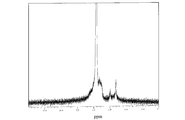
- FIG. 3 is a diagram showing a 1 H-NMR analysis result of the polymer compound obtained in Example 1.
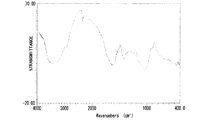
- FIG. 3 is a diagram showing an IR analysis result of the polymer compound obtained in Example 1.
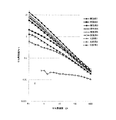
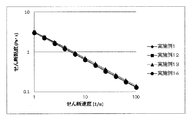
- FIG. 3 is a diagram showing a TG-DTA analysis result of the polymer compound obtained in Example 1. It is a figure which shows the shear viscosity in 25 degreeC of the slurry (concentration: 1 weight%) of the high molecular compound obtained by Example 1, 12, 13, 14.
- the method for producing the polymer compound of the present invention comprises the steps of preparing an aqueous solution having a concentration of 1% by weight from Corchorus capsularis L. and / or Corsorus aestuans L. A polymer compound having a shear viscosity of 0.2 Pa ⁇ s or more at 25 ° C. and a shear rate of 10 (1 / s) is obtained. Step 1: Alkali extraction Step 2: Purification
- linden pine genus Kouma is an annual plant mainly made in tropical regions such as India and Bangladesh, and its scientific name is Corchorus capsularis L.
- the linden genus Pinus is an annual plant that originates in India, Egypt, etc., and its scientific name is Corchorus aestuans L.
- the lindenaceae pine genus Koma and the lindenaceae pine genus Shimatsunaso may be left as they are, and those that have been dried or heat-treated by roasting or the like can be used without particular limitation.
- the alkali extraction in step 1 can be performed by immersing the raw material in an alkaline aqueous solution. By soaking in an alkaline aqueous solution, the cell walls of the linden pine family and the linden family pine family can be swollen, and a polymer compound having an excellent thickening effect can be efficiently extracted.
- the alkaline aqueous solution include a sodium hydroxide aqueous solution, a sodium hydrogen carbonate aqueous solution, a sodium carbonate aqueous solution, a potassium hydroxide aqueous solution, a barium hydroxide aqueous solution, and an ammonia aqueous solution. These can be used individually by 1 type or in mixture of 2 or more types.
- the pH of the aqueous alkali solution used for extraction is, for example, about 8 to 14, preferably 9 or more and less than 13.5, particularly preferably 9 to 13, and most preferably 10 to 13.
- the pH at the end of the alkali extraction is, for example, about 5.5 to 13 (preferably 5.5 to 12, particularly preferably 5.5 to 11, most preferably 6 to 10).
- the raw material to be subjected to the extraction treatment it is preferable to subject the raw material to be subjected to the extraction treatment to a pulverization treatment because the extraction efficiency can be improved.
- the temperature at the time of extraction is, for example, about 10 to 90 ° C., preferably 15 to 60 ° C., particularly preferably 20 to 40 ° C.
- the extraction time is, for example, 1 hour or more, preferably 2 to 5 hours.
- the pH of the extract applied to step 2 is about 6 to 7 (more specifically, 5.5 to 7.0), which can prevent corrosion of the equipment used and improve handling. It is preferable in that it can be improved, and the polymer compound can be prevented from being decomposed by being exposed to alkaline conditions for a long time. Therefore, when the pH of the extract after completion of step 1 exceeds 7, acid [inorganic acid (eg, hydrochloric acid, sulfuric acid, phosphoric acid, nitric acid, etc.) and organic acid (eg, acetic acid, formic acid, citric acid, oxalic acid) It is preferable to neutralize by adding one or more selected from methanesulfonic acid, p-toluenesulfonic acid, etc.]. The end point of neutralization can be confirmed using a pH meter, pH test paper or the like.
- inorganic acid eg, hydrochloric acid, sulfuric acid, phosphoric acid, nitric acid, etc.
- organic acid eg
- filtration treatment natural filtration may be performed, or the filtration rate may be accelerated by vacuum filtration or pressure filtration. It is preferable to use a filtration membrane having a pore size of about 0.5 to 200 ⁇ m (preferably 0.5 to 100 ⁇ m).
- a filtration membrane having a pore size of about 0.5 to 200 ⁇ m (preferably 0.5 to 100 ⁇ m).
- the centrifugation process includes a centrifugal sedimentation process and a centrifugal filtration process.
- the mixture is centrifuged, for example, at 100 to 50000 G (preferably 500 to 45000 G, particularly preferably more than 1000 G, 40000 G or less, most preferably 2000 to 30000 G) for 3 minutes or longer (for example, 3 to 20 minutes). This can be done by separating.
- the content of the water-insoluble component is 5% by weight or less (preferably 1% by weight or less, particularly preferably 0.5% by weight or less, most preferably 0.1% by weight or less). It is preferable to perform until it becomes, and the filtration process and / or the centrifugation process may be performed only once, and may be repeated several times.
- the mixture obtained in step 1 is subjected to filtration treatment using a filtration membrane having a pore diameter of, for example, less than 10 ⁇ m (preferably 0.5 to 5 ⁇ m, particularly preferably 0.5 to 2 ⁇ m) and And / or centrifuge treatment [for example 1000 G or more, preferably 1000 to 50000 G, particularly preferably 1500 to 40000 G, most preferably 2000 to 30000 G, 5 minutes or more (for example 5 to 20 minutes)]
- the mixture obtained in step 1 is first filtered and / or centrifuged using a filtration membrane having a pore size of 10 ⁇ m or more (preferably 10 to 200 ⁇ m, particularly preferably 50 to 100 ⁇ m) [less than 1000 G, Preferably 100G or more and less than 1000G for 3 minutes or more (for example, 3 to 20 minutes)]
- the thickener after use is recovered on the ground in a state of being subjected to decomposition treatment in the ground and being reduced in viscosity.
- the thickening agent is decomposed, for example, by adding a radical generator (for example, ammonium persulfate).
- a radical generator for example, ammonium persulfate.
- the polymer compound obtained by the method of the present invention when used as a thickener for fossil resource mining, it is subjected to a decomposition treatment. Also, the formation of precipitates can be reduced extremely low, fossil resources can be produced efficiently without clogging the cracks, and the productivity of fossil resources can be improved.
- the polymer compound After separating / collecting the extract, the polymer compound can be obtained as a solid by further treatment such as concentration, precipitation, crystallization, or cooling and solidification.
- the polymer compound is precipitated (or crystallized) by adding a poor solvent to the extract, or further re-precipitated (or recrystallized) as necessary. .
- an organic solvent having an SP value lower than that of water is preferably used.
- alcohols such as methanol, ethanol, propanol, isopropanol, and butanol; hexane, heptane, octane, decane Aliphatic hydrocarbons such as cyclohexane; Arocyclic hydrocarbons such as cyclohexane; Aromatic hydrocarbons such as benzene, toluene, xylene; Ketones such as acetone, methyl ethyl ketone, cyclohexanone; Esters such as methyl acetate, ethyl acetate, butyl acetate; Ethers such as ether, butyl ether, ethylene glycol dimethyl ether and tetrahydrofuran; nitriles such as acetonitrile; amides such as N, N-dimethylform
- alcohols such as methanol and ethanol, ketones such as acetone, and mixed solvents of these and water can be obtained at low cost, and they can be easily purified and reused because of their low boiling point. It is preferable in that it can be performed.
- the alcohol concentration in the mixed solvent of alcohol and water is such that the alcohol concentration in the supernatant after precipitation (or reprecipitation) of the polymer compound is, for example, about 40 to 80% by weight,
- the concentration is preferably 50 to 70% by weight, particularly preferably 55 to 65% by weight, so that it can be highly purified, and the content of the compound obtained by decomposing the polymer compound to lower the molecular weight is low. It is preferable at the point from which the high molecular compound excellent in the thickening effect is obtained.
- the polymer compound obtained through precipitation or re-precipitation can then be pulverized by filtration or the like and dried to obtain a powder. Drying may be performed by natural drying, or may be performed by artificial drying (for example, heat drying, vacuum drying under reduced pressure, or the like).
- the polymer compound obtained by the production method of the present invention (hereinafter sometimes referred to as “polymer compound of the present invention”) is extracted from the cell wall polysaccharides of the genus Zinnia and / or the genus Zinnia.
- Hemicellulose a polysaccharide containing at least a structural unit derived from uronic acid. Part or all of the acidic group (carboxyl group) of the polysaccharide may form a salt.
- the polymer compound of the present invention includes a polysaccharide containing at least a structural unit derived from uronic acid and a compound in which a part or all of the acidic group (carboxyl group) of the polysaccharide forms a salt.
- the polymer compound of the present invention is excellent in solubility in water and has a solubility in water (temperature: at 25 ° C.) of 1 g / 100 g or more (preferably 3 g / 100 g or more). Therefore, it can be suitably used as a thickener for aqueous compositions.
- the polymer compound of the present invention is excellent in water solubility, and the weight of the precipitate formed after the decomposition treatment is less than 10% by weight (preferably 5% by weight or less, particularly preferably 1% by weight or less).
- the decomposition treatment uses ammonium persulfate as a radical generator, and the concentration of ammonium persulfate is 0.03 wt.% With respect to the polymer compound aqueous solution of the present invention (concentration of the polymer compound: 0.3 wt%). % Is added by adding ammonium persulfate and allowed to stand at 70 ° C. for 2 hours. The weight of the precipitate was determined by drying (120 ° C., 2 hours) a quantitative filter paper (trade name “No.
- the polymer compound of the present invention can be particularly preferably used as a thickener for fossil resource mining.
- the polymer compound of the present invention has an excellent thickening effect, and the shear viscosity of an aqueous solution having a concentration of 1% by weight at 25 ° C. and a shear rate of 10 (1 / s) is 0.2 Pa ⁇ s or more, preferably 0.3 Pa. S or more, more preferably 0.4 Pa ⁇ s or more, particularly preferably 0.5 Pa ⁇ s or more, and most preferably 0.55 Pa ⁇ s or more.
- the upper limit of the shear viscosity is, for example, 3 Pa ⁇ s, preferably 2 Pa ⁇ s.
- the shear viscosity of this invention is measured by the method of an Example.
- general electrolyte polymer compounds for example, CMC and the like
- salts for example, alkali metal halides such as NaCl
- the polymer compounds of the present invention are resistant to salt.
- an aqueous solution polymer compound concentration: 1% by weight
- an alkali metal halide having a salt concentration of 10% by weight at 25 ° C.
- a shear rate of 10 (1 / s) that is, the high viscosity of the present invention 25 ° C., shear rate of a salt-containing aqueous solution (salt content: 10% by weight) obtained by adding a salt (for example, alkali metal halide such as NaCl) to an aqueous solution having a molecular compound concentration of 1% by weight.
- the shear viscosity at 10 (1 / s)] is 0.2 Pa ⁇ s or more, preferably 0.4 Pa ⁇ s or more, particularly preferably 0.5 Pa ⁇ s or more.
- the upper limit of the shear viscosity is, for example, 3 Pa ⁇ s, preferably 2 Pa ⁇ s.
- the polymer compound of the present invention in an aqueous solution having a polymer compound concentration of 0.7% by weight or more, does not decrease in viscosity due to the presence of a salt, but rather tends to increase in viscosity. This is probably because the polymer compound of the present invention can form a cross-linked structure between molecules via a salt at the above-mentioned concentration.
- the polymer compound of the present invention is a plant-derived component, it is excellent in biodegradability and is ultimately decomposed into carbon dioxide and water by natural microorganisms. Therefore, the environmental load is small and the safety is excellent.
- Example 1 300 g of dried leaves of Corchorus capsularis L. subjected to pulverization were placed in a reaction vessel. Thereafter, 2800 g of 0.1N NaOH (pH 13) (manufactured by Wako Pure Chemical Industries, Ltd., diluted with 5N NaOH aqueous solution 50 times) was added and stirred. After moderately stirring, the mixture was allowed to stand and extracted at room temperature (30 ° C.) for 3 hours. The pH at the end of the extraction was 9.4. (Neutralization) Thereafter, 1400 g of ion-exchanged water was added to the reaction vessel, and neutralization was performed using 160 g of 3.5 wt% hydrochloric acid.
- the precipitate was moderately drained, then washed with a 75% by weight aqueous methanol solution that was 1/4 times the weight of the filtrate, and drained to obtain 68 g of wet powder.
- This wet powder was dried with a vacuum dryer (40 ° C./full vacuum / overnight), and polymer compound (1) (water solubility (temperature: 25 ° C., at pH 7.0): 5 g / 100 g) 12.0 g (Yield: 4.4% by weight) was obtained.
- the polymer compound (1) is dissolved in water so that the concentration of the obtained polymer compound (1) is 1% by weight, and left to stand at 30 ° C. overnight to prepare a slurry.
- the viscosity (at 25 ° C.) was measured.
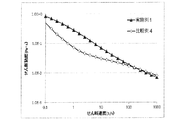
- a slurry was prepared by dissolving in water such that the concentration of the polymer compound (1) was 0.2% by weight, and the viscosity (at 25 ° C.) was measured using a rheometer.
- 1 H-NMR, IR, and TG-DTA analysis of the obtained polymer compound (1) was performed under the following conditions. The results are shown in FIGS.
- the slurry resistance was evaluated by measuring the viscosity of the slurry obtained by adding NaCl to a rheometer. The results are shown in Table 1.
- Example 2 (Extraction) (neutralization) was carried out in the same manner as in Example 1.
- a non-woven fabric (trade name “T-ND 200T”, pore size: 70 ⁇ m, manufactured by NBC Meshtec Co., Ltd.) as a filter cloth
- the mixed solution obtained through the neutralization step is decompressed using a vacuum pump. Filtration was performed to separate the leaves and the filtrate.
- the filtrate was added dropwise to 100% by weight methanol, which is 4 times the weight of the filtrate, to precipitate a precipitate (supernatant methanol concentration: 80% by weight).
- the precipitate was moderately drained, then washed with a 75% by weight aqueous methanol solution that was 1/4 times the weight of the filtrate, and drained to obtain 160 g of wet powder.
- This wet powder is dried with a vacuum dryer (40 ° C./full vacuum / overnight), and polymer compound (2) (water solubility (temperature: 25 ° C., at pH 7.0): 5 g / 100 g) 16. 9 g was obtained (yield: 5.1% by weight).
- Example 2 In the same manner as in Example 1, a slurry was prepared so that the concentration of the obtained polymer compound (2) was 1% by weight, and the viscosity was measured. The results are shown in FIG.
- Example 3 10 g of dried leaves of Corchorus capsularis L. subjected to pulverization were placed in a reaction vessel. Thereafter, 180 g of 0.1 N NaOH (pH 13) (manufactured by Wako Pure Chemical Industries, Ltd., diluted with 5N NaOH aqueous solution 50 times) was added, and extraction treatment was performed at 50 ° C. for 2 hours while stirring. The pH at the end of the extraction was 9.4. (Neutralization) Thereafter, neutralization was performed using 4 g of 3.5 wt% hydrochloric acid. The completion of neutralization was confirmed using a pH test paper.
- Example 4 Except having used alkaline aqueous solution of pH 12.5 in an extraction process, it carries out similarly to Example 1 and obtained the high molecular compound (4) (Solubility with respect to water (at a temperature of 25 degreeC and pH 7.0): 4g / 100g). (PH at the end of extraction: 8.4, yield: 2.0% by weight). In the same manner as in Example 1, a slurry was prepared and the viscosity was measured so that the concentration of the obtained polymer compound (4) was 1% by weight. The results are shown in FIG.
- Example 5 Except having used pH12 alkaline aqueous solution in the extraction process, it carried out like Example 1 and obtained the high molecular compound (5) (Solubility with respect to water (at a temperature of 25 degreeC and pH 7.0): 4g / 100g). PH at the end of extraction: 6.4, yield: 1.9 wt%). In the same manner as in Example 1, a slurry was prepared so that the concentration of the obtained polymer compound (5) was 1% by weight, and the viscosity was measured. The results are shown in FIG.
- Example 6 Except having used the alkaline aqueous solution of pH11 in the extraction process, it carried out like Example 1 and obtained the high molecular compound (6) (Solubility with respect to water (at temperature: 25 degreeC, pH 7.0): 4g / 100g) ( PH at the end of extraction: 5.8, yield: 1.7 wt%). In the same manner as in Example 1, a slurry was prepared so that the concentration of the obtained polymer compound (6) was 1% by weight, and the viscosity was measured. The results are shown in FIG.
- Example 7 (Extraction) (neutralization) was carried out in the same manner as in Example 1.
- a non-woven fabric (trade name “T-ND 200T”, pore size: 70 ⁇ m, manufactured by NBC Meshtec Co., Ltd.) as a filter cloth
- the mixed liquid obtained through the neutralization step is filtered under reduced pressure using a vacuum pump. And leaves and filtrate were separated. Thereafter, the filtrate was filtered under reduced pressure using a vacuum pump using a quantitative filter paper (trade name “No. 5C”, pore size: 1 ⁇ m, manufactured by Advantech Toyo Co., Ltd.), and water-insoluble components in the filtrate were removed. Separation and removal gave a filtrate.
- the obtained filtrate was added dropwise to 100% by weight methanol, which is 1.5 times the weight of the filtrate, to precipitate a precipitate (supernatant methanol concentration: 60% by weight).
- methanol methanol
- the precipitate was drained moderately, it was washed with a 75 wt% aqueous methanol solution that was 1/4 times the weight of the filtrate, and drained to obtain a wet powder.
- This wet powder was dried with a vacuum dryer (40 ° C./full vacuum / overnight) to obtain a polymer compound (7) (water solubility (temperature: 25 ° C., pH 7.0): 5 g / 100 g). (Yield: 3.5% by weight).
- the obtained polymer compound (7) was subjected to a decomposition treatment by the following method, and the weight of the precipitate generated by the decomposition treatment was measured.
- the polymer compound (7) is dissolved in water so that the concentration becomes 0.3% by weight and stirred at 30 ° C. until uniform, and the polymer compound (7) aqueous solution (polymer compound concentration: 0.3% by weight) %)
- ammonium persulfate as a radical generator was added to the resulting aqueous solution of the polymer compound (7) so that the concentration of ammonium persulfate was 0.03% by weight and allowed to stand at 70 ° C. for 2 hours. .
- the aqueous solution obtained by performing the decomposition treatment is allowed to stand until it reaches room temperature, and the quantitative filter paper (trade name “No. 5C”, pore size: 1 ⁇ m, manufactured by Advantech Toyo Co., Ltd.) is dried (120 ° C., 2 hours). Using the resulting mixture, vacuum filtration was performed using a vacuum pump to separate the precipitate. After completion of the filtration, the quantitative filter paper was dried (120 ° C., 2 hours), and the weight of the precipitate was measured from the difference in weight of the quantitative filter paper before and after the filtration treatment. As a result, the weight of the precipitate was 0.3% by weight of the polymer compound (7). Therefore, the content of the precipitate generated by the decomposition treatment of the polymer compound (7) was an amount corresponding to 0.3% by weight of the total amount of the polymer compound (7).
- Example 8 (Extraction) (neutralization) was carried out in the same manner as in Example 1.
- quantitative filter paper trade name “No. 5C”, pore diameter: 1 ⁇ m, manufactured by Advantech Toyo Co., Ltd.
- quantitative filter paper trade name “No. 5A”, pore diameter: 7 ⁇ m, manufactured by Advantech Toyo Co., Ltd.
- polymer compound (8) water solubility (temperature: 25 ° C., pH 7.0): 5 g / 100 g) (yield: 3. 8% by weight).
- Example 9 (Extraction) (neutralization) was carried out in the same manner as in Example 1.
- a non-woven fabric (trade name “T-ND 200T”, pore size: 70 ⁇ m, manufactured by NBC Meshtec Co., Ltd.) is used as a filter cloth, and vacuum filtration is performed using a vacuum pump to separate the leaf and filtrate. did. Thereafter, the filtrate was subjected to centrifugal sedimentation (2000 G ⁇ 5 minutes). Next, the supernatant was added dropwise to 100% by weight of methanol of 1.5 times the weight of the filtrate to precipitate a precipitate (methanol concentration in the supernatant: 60% by weight).
- Example 10 (Extraction) (neutralization) was carried out in the same manner as in Example 1.
- Polymer compound (10) (solubility in water (temperature: temperature) was carried out in the same manner as in Example 9 except that the centrifugal sedimentation condition in (Purification) was changed from (2000 G ⁇ 5 minutes) to (5000 G ⁇ 5 minutes). (At 25 ° C., pH 7.0): 5 g / 100 g) (yield: 3.7% by weight).
- the polymer compound (10) was decomposed in the same manner as in Example 7, and the weight of the precipitate formed by the decomposition treatment was measured. The result was equivalent to 3.9% by weight of the total amount of the polymer compound (10). It was an amount.
- Example 11 (Extraction) (neutralization) was carried out in the same manner as in Example 1.
- the polymer compound (11) (solubility in water (temperature: temperature) is the same as in Example 9, except that the centrifugal sedimentation condition in (Purification) is changed from (2000 G ⁇ 5 minutes) to (30000 G ⁇ 5 minutes). (At 25 ° C., pH 7.0): 5 g / 100 g) (yield: 3.5% by weight).
- the polymer compound (11) was subjected to a decomposition treatment in the same manner as in Example 7, and the weight of the precipitate formed by the decomposition treatment was measured. The result was equivalent to 0.1% by weight of the total amount of the polymer compound (11). It was an amount.
- Example 12 (Extraction) (neutralization) was carried out in the same manner as in Example 1. (Purification) Using a non-woven fabric (trade name “T-ND 200T”, manufactured by NBC Meshtec Co., Ltd.) as a filter cloth, the mixed solution obtained through the neutralization step is subjected to vacuum filtration using a vacuum pump. The leaf and filtrate were separated. Next, the filtrate was added dropwise to 100% by weight acetone, 0.67 times the weight of the filtrate, to precipitate a precipitate (acetone concentration in the supernatant: 40% by weight).
- a non-woven fabric trade name “T-ND 200T”, manufactured by NBC Meshtec Co., Ltd.
- Example 13 (Extraction) (neutralization) was carried out in the same manner as in Example 1.
- the mixed solution obtained through the neutralization step is subjected to vacuum filtration using a vacuum pump.
- the leaf and filtrate were separated.
- the filtrate was added dropwise to 100% by weight isopropanol, which is 0.67 times the weight of the filtrate, to precipitate a precipitate (concentration of isopropanol in the supernatant: 40% by weight).
- the precipitate was moderately drained and then washed with an aqueous solution of 50% by weight isopropanol that is 1/4 times the weight of the filtrate, followed by draining to obtain 160 g of wet powder. 10.
- This wet powder is dried by a vacuum dryer (40 ° C./full vacuum / overnight), and polymer compound (13) (water solubility (temperature: 25 ° C., at pH 7.0): 5 g / 100 g) 7 g was obtained (yield: 3.9% by weight).
- a slurry was prepared so that the concentration of the obtained polymer compound (13) was 1% by weight, and the viscosity was measured. The results are shown in FIG.
- Example 14 (Extraction) (neutralization) was carried out in the same manner as in Example 1.
- the mixed solution obtained through the neutralization step is subjected to vacuum filtration using a vacuum pump.
- the leaf and filtrate were separated.
- the filtrate was added dropwise to 100% by weight of ethanol, which was 1 times the weight of the filtrate, to precipitate a precipitate (ethanol concentration in the supernatant: 50% by weight).
- the precipitate was moderately drained and then washed with 75% by weight ethanol, which was 1/4 times the weight of the filtrate, and drained to obtain 160 g of wet powder.
- Comparative Example 1 Hot water extraction 10 g of dried leaves of Corchorus capsularis L. subjected to pulverization were placed in a reaction vessel. Thereafter, 180 g of ion-exchanged water (pH 7) was added, stirred and allowed to stand, and extraction treatment was performed at 50 ° C. for 2 hours. The pH at the end of the extraction was 5.7. (Purification) Using a non-woven fabric (trade name “T-ND 200T”, pore size: 70 ⁇ m, manufactured by NBC Meshtec Co., Ltd.) as a filter cloth, the mixed solution obtained through the neutralization step is decompressed using a vacuum pump. Filtration was performed to separate the leaves and the filtrate.
- a non-woven fabric trade name “T-ND 200T”, pore size: 70 ⁇ m, manufactured by NBC Meshtec Co., Ltd.
- the filtrate was added dropwise to 100% by weight methanol, which is 4 times the weight of the filtrate, to precipitate a precipitate (supernatant methanol concentration: 80% by weight).
- methanol aqueous solution that is 1/4 times the weight of the filtrate, and the moistened powder is removed with a vacuum dryer (40 ° C / full vacuum / overnight). It was dried to obtain 0.67 g of polymer compound (15) (yield: 6.7% by weight).
- a slurry was prepared so that the concentration of the obtained polymer compound (15) was 1% by weight, and the viscosity was measured. The results are shown in FIG.
- Comparative Example 2 10 g of dried leaves of Corchorus capsularis L. subjected to pulverization were placed in a reaction vessel. Thereafter, 180 g of 0.5N NaOH aqueous solution (pH 13.5) (manufactured by Wako Pure Chemical Industries, Ltd., 5N NaOH aqueous solution diluted 10-fold) was added, and extraction treatment was performed at 50 ° C. for 2 hours while stirring. . The pH at the end of the extraction was 12.9. (Neutralization) Then, the neutralization process was performed using 85 g of 3.5 weight% hydrochloric acid. The completion of neutralization was confirmed using a pH test paper.
- the leaves were re-introduced into the reaction vessel, and 50 mL of chloroform (manufactured by Wako Pure Chemical Industries, Ltd.) and 50 mL of methanol (manufactured by Wako Pure Chemical Industries, Ltd.) were added and stirred at 50 ° C. for 30 minutes. Degreasing treatment was performed. Thereafter, the leaves and the filtrate are separated, the leaves are put into a reaction vessel, and 50 mL of diethyl ether (manufactured by Wako Pure Chemical Industries, Ltd.) and 50 mL of ethanol (manufactured by Wako Pure Chemical Industries, Ltd.) are added and stirred. While degreasing at 50 ° C.
- the leaves and the filtrate were separated, and the leaves were reintroduced into the reaction vessel, and 50 mL of diethyl ether (manufactured by Wako Pure Chemical Industries, Ltd.) and 50 mL of ethanol (Wako Pure Chemical Industries, Ltd.) (Made by Co., Ltd.) was added, and degreasing treatment was performed at 50 ° C. for 30 minutes while stirring. Further, drying treatment was performed to obtain 18 g of dried leaves.
- the leaf and filtrate are separated by using a non-woven fabric (trade name “T-ND 200T”, pore size: 70 ⁇ m, manufactured by NBC Meshtec Co., Ltd.) as a filter cloth, and vacuum filtration using a vacuum pump.
- Viscosity> Measuring device Viscoelasticity measuring device (trade name “MCR-301”, manufactured by Anton Paar) Atmosphere: N 2 atmosphere Temperature: 25 ° C Shear rate: 0.1 to 1000 (1 / s) Jig used for the measurement: 25mm ⁇ cone plate
- the measurement conditions are as follows. Equipment: “JNM-A500” manufactured by JEOL Ltd. Probe: 5mm ⁇ Measurement temperature: 80 ° C Integration count: 32 times
- ⁇ TG-DTA> 8 mg of the polymer compound (1) obtained in Example 1 was sampled in a quartz pan and subjected to TG-DTA measurement.
- the measurement conditions are as follows. Measuring device: “EXSTAR6300” manufactured by SII Nano Technology Co., Ltd. Atmosphere: Air Temperature range: 50-900 ° C
- the measurement conditions are as follows. Equipment: “HORIBA FT-720” manufactured by HORIBA, Ltd. Integration count: 16 Measurement range: 400 to 4000 cm -1 Measuring method: KBr method
- the polymer compound obtained in the examples had a higher viscosity than the polymer compounds obtained in the comparative examples. Therefore, the polymer compound obtained by the method for producing a polymer compound of the present invention is used for food, cosmetics, pharmaceuticals, civil engineering supplies (adhesive coating agents, concrete admixtures, etc.) and thickeners used for mining fossil resources instead of guar gum. Can be suitably used.
- a polymer compound exhibiting an excellent thickening effect can be produced simply and efficiently. Further, in the present invention, it is possible to use a leaf portion of a lindenaceae pine genus Koma and / or a lindenaceae pine genus Zinnia as a raw material in the present invention. It is possible to provide the polymer compound stably. Furthermore, since the polymer compound obtained by the production method of the present invention is excellent in biodegradability, there is little environmental load, and even if it leaks into the ground, the risk of contamination of drinking water can be extremely reduced. And it is excellent in salt tolerance and can continue exhibiting the thickening effect stably also in presence of salt.
- the polymer compound obtained by the production method of the present invention is suitably used as a thickener for foods, cosmetics, pharmaceuticals, civil engineering articles (adhesive coating agents, concrete admixtures, etc.) or fluids used when mining fossil resources. be able to.
Landscapes
- Health & Medical Sciences (AREA)
- Life Sciences & Earth Sciences (AREA)
- General Health & Medical Sciences (AREA)
- Animal Behavior & Ethology (AREA)
- Public Health (AREA)
- Veterinary Medicine (AREA)
- Chemical & Material Sciences (AREA)
- Engineering & Computer Science (AREA)
- Epidemiology (AREA)
- Birds (AREA)
- Biotechnology (AREA)
- Dermatology (AREA)
- Polymers & Plastics (AREA)
- Mycology (AREA)
- Microbiology (AREA)
- Botany (AREA)
- Materials Engineering (AREA)
- Medicinal Chemistry (AREA)
- Organic Chemistry (AREA)
- Nutrition Science (AREA)
- Dispersion Chemistry (AREA)
- Chemical Kinetics & Catalysis (AREA)
- Food Science & Technology (AREA)
- Biochemistry (AREA)
- Molecular Biology (AREA)
- Cosmetics (AREA)
- Polysaccharides And Polysaccharide Derivatives (AREA)
- Addition Polymer Or Copolymer, Post-Treatments, Or Chemical Modifications (AREA)
Abstract
従来は廃棄物として処分されていた植物を原料とし、前記原料から安全性に優れ環境負荷が少なく、優れた増粘効果を有する高分子化合物を簡便且つ効率よく製造する方法を提供する。 本発明の高分子化合物の製造方法は、シナノキ科ツナソ属コウマ(Corchorus capsularis L.)及び/又はシナノキ科ツナソ属シマツナソ(Corchorus aestuans L.)から、下記工程を経て、濃度1重量%の水溶液の25℃、せん断速度10(1/s)におけるせん断粘度が0.2Pa・s以上である高分子化合物を得ることを特徴とする。 工程1:アルカリ抽出 工程2:精製
Description
本発明は、食品、化粧品、医薬品、土木用品、又は化石資源採掘時に使用する流体の増粘剤として有用な高分子化合物の製造方法に関する。本願は、2013年11月1日に日本に出願した、特願2013-228652号の優先権を主張し、その内容をここに援用する。
近年の掘削技術の発達により、従来の技術では回収できなかった化石資源(地下500m~4000mに位置する地層にオイル状態、或いはガス状態で分布する化石資源)を掘削できるようになった。新しい掘削技術とは、化石資源の含まれる地層に沿って水平方向に掘削し、水、砂粒等の粒子状支持材、及び各種の化学物質を含む高粘度の液体を圧入することで地層に割れ目を生じさせ、生じた割れ目に粒子状支持材を滑り込ませることにより割れ目が自然に閉じるのを防ぎ、化石資源を継続的に回収する、という技術である。ここでいう化学物質には、酸、防腐剤、摩擦低減剤等と共に、粒子状支持材を安定的に分散させる目的で増粘剤が用いられる。
前記増粘剤としては、飲料用水の汚染リスクを小さく抑制するため、食品の増粘剤として使用される、安全性に優れ且つ環境負荷が小さいグアーガム(特許文献1)やカルボキシメチルセルロース(CMC)が用いられてきた。しかし、グアーガムは新規用途(化石資源採掘用途)と既存用途(食用・食品添加剤用途など)において需要が競合することが問題であった。また、CMCは耐塩性に乏しく、塩の存在下では粘度が急激に低下することが問題であった。
三重県科学技術振興センター工業研究部研究報告 No.29 (2005)
従って、本発明の目的は、従来は廃棄物として処分されていた植物を原料とし、前記原料から安全性に優れ環境負荷が少なく、優れた増粘効果を有する高分子化合物を簡便且つ効率よく製造する方法を提供することにある。
本発明者等は上記課題を解決するため鋭意検討した結果、下記事項を見いだした。
1.シナノキ科ツナソ属コウマ(Corchorus capsularis L.)やシナノキ科ツナソ属シマツナソ(Corchorus aestuans L.)は高分子化合物を多く含有すること
2.シナノキ科ツナソ属コウマやシナノキ科ツナソ属シマツナソの茎部分は、繊維が織物等の原料として利用されているが、葉部分は従来は廃棄物として処分されていたものであり、確保が容易であること
3.前記シナノキ科ツナソ属コウマ及び/又はシナノキ科ツナソ属シマツナソの葉部分から抽出される高分子化合物は抽出条件によりその粘性が異なり、特定の条件下において高い粘性を有する高分子化合物が得られること
4.得られた高分子化合物は、生分解性に優れ環境負荷が小さいこと
5.得られた高分子化合物は、塩の存在下でも安定的に増粘効果を維持することができる、すなわち耐塩性に優れること
本発明はこれらの知見に基づいて完成させたものである。
1.シナノキ科ツナソ属コウマ(Corchorus capsularis L.)やシナノキ科ツナソ属シマツナソ(Corchorus aestuans L.)は高分子化合物を多く含有すること
2.シナノキ科ツナソ属コウマやシナノキ科ツナソ属シマツナソの茎部分は、繊維が織物等の原料として利用されているが、葉部分は従来は廃棄物として処分されていたものであり、確保が容易であること
3.前記シナノキ科ツナソ属コウマ及び/又はシナノキ科ツナソ属シマツナソの葉部分から抽出される高分子化合物は抽出条件によりその粘性が異なり、特定の条件下において高い粘性を有する高分子化合物が得られること
4.得られた高分子化合物は、生分解性に優れ環境負荷が小さいこと
5.得られた高分子化合物は、塩の存在下でも安定的に増粘効果を維持することができる、すなわち耐塩性に優れること
本発明はこれらの知見に基づいて完成させたものである。
すなわち、本発明は、シナノキ科ツナソ属コウマ(Corchorus capsularis L.)及び/又はシナノキ科ツナソ属シマツナソ(Corchorus aestuans L.)から、下記工程を経て、濃度1重量%の水溶液の25℃、せん断速度10(1/s)におけるせん断粘度が0.2Pa・s以上である高分子化合物を得る高分子化合物の製造方法を提供する。
工程1:アルカリ抽出
工程2:精製
工程1:アルカリ抽出
工程2:精製
本発明は、また、工程1のアルカリ抽出を、pHが8~14のアルカリ水溶液を使用し、10~90℃の温度で行うことを特徴とする前記の高分子化合物の製造方法を提供する。
本発明は、また、得られる高分子化合物が下記特性を有する前記の高分子化合物の製造方法を提供する。
前記高分子化合物濃度1重量%の水溶液に、NaClを添加して得られる含塩水溶液(NaCl含有量:10重量%)の25℃、せん断速度10(1/s)におけるせん断粘度が0.2Pa・s以上である
前記高分子化合物濃度1重量%の水溶液に、NaClを添加して得られる含塩水溶液(NaCl含有量:10重量%)の25℃、せん断速度10(1/s)におけるせん断粘度が0.2Pa・s以上である
本発明は、また、得られる高分子化合物の水に対する溶解度(温度25℃における)が1g/100g以上である前記の高分子化合物の製造方法を提供する。
本発明は、また、工程2の精製を、得られる高分子化合物(100重量%)を下記分解処理に付した際に生じる沈殿物の量が5重量%以下となるまで濾過処理及び/又は遠心分離処理を行う前記の高分子化合物の製造方法を提供する。
分解処理:高分子化合物水溶液(前記高分子化合物濃度:0.3重量%)に、過硫酸アンモニウムを添加(高分子化合物水溶液中の過硫酸アンモニウムの濃度:0.03重量%)し、70℃で2時間静置する
分解処理:高分子化合物水溶液(前記高分子化合物濃度:0.3重量%)に、過硫酸アンモニウムを添加(高分子化合物水溶液中の過硫酸アンモニウムの濃度:0.03重量%)し、70℃で2時間静置する
本発明は、また、工程2の精製において、孔径が10μm未満の濾過膜を使用した濾過処理及び/又は遠心分離処理(1000G以上で5分以上)を行う前記の高分子化合物の製造方法を提供する。
すなわち、本発明は以下に関する。
[1] シナノキ科ツナソ属コウマ(Corchorus capsularis L.)及び/又はシナノキ科ツナソ属シマツナソ(Corchorus aestuans L.)から、下記工程を経て、濃度1重量%の水溶液の25℃、せん断速度10(1/s)におけるせん断粘度が0.2Pa・s以上である高分子化合物を得る高分子化合物の製造方法。
工程1:アルカリ抽出
工程2:精製
[2] 工程1のアルカリ抽出を、pHが8~14のアルカリ水溶液を使用し、10~90℃の温度で行うことを特徴とする[1]に記載の高分子化合物の製造方法。
[3] 工程1のアルカリ抽出として、pH8~14のアルカリ水溶液(10~90℃)中にシナノキ科ツナソ属コウマ(Corchorus capsularis L.)及び/又はシナノキ科ツナソ属シマツナソ(Corchorus aestuans L.)を浸漬して抽出液(pH:5.5~13)を得る[1]又は[2]に記載の高分子化合物の製造方法。
[4] 工程2の精製において、得られた高分子化合物を分解処理に付した際に生じる沈殿物重量が前記高分子化合物(100重量%)の5重量%以下となるまで濾過処理及び/又は遠心分離処理を行う[1]~[3]の何れか1つに記載の高分子化合物の製造方法。
[5] 工程2の精製として、孔径が10μm未満の濾過膜を使用した濾過処理及び/又は遠心分離処理(1000G以上で5分以上)を行う[1]~[4]の何れか1つに記載の高分子化合物の製造方法。
[6] 工程2の精製として、孔径が10~200μmの濾過膜を使用した濾過処理及び/又は遠心分離処理(100G以上、1000G未満で、3分以上)を行い、得られた濾液に孔径が10μm未満の濾過膜を使用した濾過処理及び/又は遠心分離処理(1000G以上で5分以上)を行う[1]~[5]の何れか1つに記載の高分子化合物の製造方法。
[7] 工程2の精製として、pH6~7に調整した抽出液を濾過処理及び/又は遠心分離処理に付して高分子化合物を分離・回収する[1]~[6]の何れか1つに記載の高分子化合物の製造方法。
[8] 工程2の精製として、濾過処理及び/又は遠心分離処理後、分離・回収された高分子化合物を貧溶媒を使用した沈殿処理に付す[4]~[7]の何れか1つに記載の高分子化合物の製造方法。
[9] 貧溶媒としてアルコールと水の混合溶媒(アルコール濃度は下記の通り)を使用する[8]に記載の高分子化合物の製造方法。
アルコール濃度:高分子化合物を沈殿させた後の上清のアルコール濃度が40~80重量%となる濃度
[10] 得られる高分子化合物が下記特性を有する[1]~[9]の何れか1つに記載の高分子化合物の製造方法。
前記高分子化合物濃度1重量%の水溶液に、アルカリ金属ハロゲン化物を添加して得られる含塩水溶液(アルカリ金属ハロゲン化物含有量:10重量%)の25℃、せん断速度10(1/s)におけるせん断粘度が0.2Pa・s以上である
[11] 得られる高分子化合物が下記特性を有する[1]~[10]の何れか1つに記載の高分子化合物の製造方法。
前記高分子化合物濃度1重量%の水溶液に、NaClを添加して得られる含塩水溶液(NaCl含有量:10重量%)の25℃、せん断速度10(1/s)におけるせん断粘度が0.2Pa・s以上である
[12] 得られる高分子化合物の水に対する溶解度(温度:25℃、pH7.0における)が1g/100g以上である[1]~[11]の何れか1つに記載の高分子化合物の製造方法。
[13] 得られる高分子化合物(100重量%)を分解処理に付した際に生じる沈殿物重量が5重量%以下である[1]~[12]の何れか1つに記載の高分子化合物の製造方法。
[14] 得られる高分子化合物が化石資源採掘用増粘剤である[1]~[13]の何れか1つに記載の高分子化合物の製造方法。
[15] シナノキ科ツナソ属コウマ(Corchorus capsularis L.)及び/又はシナノキ科ツナソ属シマツナソ(Corchorus aestuans L.)から、濃度1重量%の水溶液の25℃、せん断速度10(1/s)におけるせん断粘度が0.2Pa・s以上である高分子化合物を得る工程を含む化石資源採掘用増粘剤の製造方法。
[1] シナノキ科ツナソ属コウマ(Corchorus capsularis L.)及び/又はシナノキ科ツナソ属シマツナソ(Corchorus aestuans L.)から、下記工程を経て、濃度1重量%の水溶液の25℃、せん断速度10(1/s)におけるせん断粘度が0.2Pa・s以上である高分子化合物を得る高分子化合物の製造方法。
工程1:アルカリ抽出
工程2:精製
[2] 工程1のアルカリ抽出を、pHが8~14のアルカリ水溶液を使用し、10~90℃の温度で行うことを特徴とする[1]に記載の高分子化合物の製造方法。
[3] 工程1のアルカリ抽出として、pH8~14のアルカリ水溶液(10~90℃)中にシナノキ科ツナソ属コウマ(Corchorus capsularis L.)及び/又はシナノキ科ツナソ属シマツナソ(Corchorus aestuans L.)を浸漬して抽出液(pH:5.5~13)を得る[1]又は[2]に記載の高分子化合物の製造方法。
[4] 工程2の精製において、得られた高分子化合物を分解処理に付した際に生じる沈殿物重量が前記高分子化合物(100重量%)の5重量%以下となるまで濾過処理及び/又は遠心分離処理を行う[1]~[3]の何れか1つに記載の高分子化合物の製造方法。
[5] 工程2の精製として、孔径が10μm未満の濾過膜を使用した濾過処理及び/又は遠心分離処理(1000G以上で5分以上)を行う[1]~[4]の何れか1つに記載の高分子化合物の製造方法。
[6] 工程2の精製として、孔径が10~200μmの濾過膜を使用した濾過処理及び/又は遠心分離処理(100G以上、1000G未満で、3分以上)を行い、得られた濾液に孔径が10μm未満の濾過膜を使用した濾過処理及び/又は遠心分離処理(1000G以上で5分以上)を行う[1]~[5]の何れか1つに記載の高分子化合物の製造方法。
[7] 工程2の精製として、pH6~7に調整した抽出液を濾過処理及び/又は遠心分離処理に付して高分子化合物を分離・回収する[1]~[6]の何れか1つに記載の高分子化合物の製造方法。
[8] 工程2の精製として、濾過処理及び/又は遠心分離処理後、分離・回収された高分子化合物を貧溶媒を使用した沈殿処理に付す[4]~[7]の何れか1つに記載の高分子化合物の製造方法。
[9] 貧溶媒としてアルコールと水の混合溶媒(アルコール濃度は下記の通り)を使用する[8]に記載の高分子化合物の製造方法。
アルコール濃度:高分子化合物を沈殿させた後の上清のアルコール濃度が40~80重量%となる濃度
[10] 得られる高分子化合物が下記特性を有する[1]~[9]の何れか1つに記載の高分子化合物の製造方法。
前記高分子化合物濃度1重量%の水溶液に、アルカリ金属ハロゲン化物を添加して得られる含塩水溶液(アルカリ金属ハロゲン化物含有量:10重量%)の25℃、せん断速度10(1/s)におけるせん断粘度が0.2Pa・s以上である
[11] 得られる高分子化合物が下記特性を有する[1]~[10]の何れか1つに記載の高分子化合物の製造方法。
前記高分子化合物濃度1重量%の水溶液に、NaClを添加して得られる含塩水溶液(NaCl含有量:10重量%)の25℃、せん断速度10(1/s)におけるせん断粘度が0.2Pa・s以上である
[12] 得られる高分子化合物の水に対する溶解度(温度:25℃、pH7.0における)が1g/100g以上である[1]~[11]の何れか1つに記載の高分子化合物の製造方法。
[13] 得られる高分子化合物(100重量%)を分解処理に付した際に生じる沈殿物重量が5重量%以下である[1]~[12]の何れか1つに記載の高分子化合物の製造方法。
[14] 得られる高分子化合物が化石資源採掘用増粘剤である[1]~[13]の何れか1つに記載の高分子化合物の製造方法。
[15] シナノキ科ツナソ属コウマ(Corchorus capsularis L.)及び/又はシナノキ科ツナソ属シマツナソ(Corchorus aestuans L.)から、濃度1重量%の水溶液の25℃、せん断速度10(1/s)におけるせん断粘度が0.2Pa・s以上である高分子化合物を得る工程を含む化石資源採掘用増粘剤の製造方法。
本発明の高分子化合物の製造方法によれば、高い粘性を有し、特に、低濃度においてはグアーガムより優れた増粘効果を発揮する高分子化合物を簡便且つ効率よく製造することができる。
また、グアーガムは新規用途(化石資源採掘用途)と既存用途(食用・食品添加剤用途など)において需要が競合するのに対して、本発明では、従来は廃棄処分されていたシナノキ科ツナソ属コウマ及び/又はシナノキ科ツナソ属シマツナソの葉部分を原料として使用することができるため、原料の確保が容易である。そのため、本発明によれば、安価に且つ安定的に前記高分子化合物を提供することが可能である。
更に、本発明の製造方法により得られる高分子化合物は生分解性に優れるため環境負荷が少なく、たとえ地中に漏れ出した場合でも飲料用水の汚染リスクを極めて小さくすることができる。そして、耐塩性に優れ、塩の存在下でも安定的に増粘効果を発揮し続けることができる。
そのため、本発明の製造方法により得られる高分子化合物はグアーガムやCMCに代えて、食品、化粧品、医薬品、土木用品(接着コーティング剤、コンクリート混和剤等)、又は化石資源採掘時に使用する流体の増粘剤として好適に使用することができる。
また、グアーガムは新規用途(化石資源採掘用途)と既存用途(食用・食品添加剤用途など)において需要が競合するのに対して、本発明では、従来は廃棄処分されていたシナノキ科ツナソ属コウマ及び/又はシナノキ科ツナソ属シマツナソの葉部分を原料として使用することができるため、原料の確保が容易である。そのため、本発明によれば、安価に且つ安定的に前記高分子化合物を提供することが可能である。
更に、本発明の製造方法により得られる高分子化合物は生分解性に優れるため環境負荷が少なく、たとえ地中に漏れ出した場合でも飲料用水の汚染リスクを極めて小さくすることができる。そして、耐塩性に優れ、塩の存在下でも安定的に増粘効果を発揮し続けることができる。
そのため、本発明の製造方法により得られる高分子化合物はグアーガムやCMCに代えて、食品、化粧品、医薬品、土木用品(接着コーティング剤、コンクリート混和剤等)、又は化石資源採掘時に使用する流体の増粘剤として好適に使用することができる。
[高分子化合物の製造方法]
本発明の高分子化合物の製造方法は、シナノキ科ツナソ属コウマ(Corchorus capsularis L.)及び/又はシナノキ科ツナソ属シマツナソ(Corchorus aestuans L.)から、下記工程を経て、濃度1重量%の水溶液の25℃、せん断速度10(1/s)におけるせん断粘度が0.2Pa・s以上である高分子化合物を得ることを特徴とする。
工程1:アルカリ抽出
工程2:精製
本発明の高分子化合物の製造方法は、シナノキ科ツナソ属コウマ(Corchorus capsularis L.)及び/又はシナノキ科ツナソ属シマツナソ(Corchorus aestuans L.)から、下記工程を経て、濃度1重量%の水溶液の25℃、せん断速度10(1/s)におけるせん断粘度が0.2Pa・s以上である高分子化合物を得ることを特徴とする。
工程1:アルカリ抽出
工程2:精製
前記原料のシナノキ科ツナソ属コウマは、インド、バングラデシュ等の熱帯地域を主産地とする一年草木であり、その学名はCorchorus capsularis L.である。また、シナノキ科ツナソ属シマツナソは、インド、エジプト等を原産地とする一年草木であり、その学名はCorchorus aestuans L.である。これらは、茎部分でも葉部分でも特に制限無く使用することができるが、特に、従来は廃棄処分されていた葉部分を使用することが、既存用途と競合すること無く原料を確保することができ、且つ資源の有効利用により地球温暖化を抑制する効果を発揮することができる点で好ましい。シナノキ科ツナソ属コウマ、及びシナノキ科ツナソ属シマツナソは生のままでもよく、乾燥させたものや、焙煎等により加熱処理を施したものも特に制限無く使用することができる。本発明においては、なかでも、生のまま、若しくは50℃以下の低温で乾燥させたものを原料として使用することが、より優れた増粘効果を有する高分子化合物を得ることができる点で好ましい。
前記工程1におけるアルカリ抽出は、アルカリ水溶液に上記原料を浸漬することにより行うことができる。アルカリ水溶液に浸漬することで、シナノキ科ツナソ属コウマやシナノキ科ツナソ属シマツナソの細胞壁を膨潤させることができ、増粘効果に優れた高分子化合物を効率よく抽出することが可能となる。前記アルカリ水溶液としては、例えば、水酸化ナトリウム水溶液、炭酸水素ナトリウム水溶液、炭酸ナトリウム水溶液、水酸化カリウム水溶液、水酸化バリウム水溶液、アンモニア水溶液等を挙げることができる。これらは1種を単独で、又は2種以上を混合して使用することができる。
抽出に用いるアルカリ水溶液のpHは、例えば8~14程度、好ましくは9以上、13.5未満、特に好ましくは9~13、最も好ましくは10~13である。抽出に用いるアルカリ水溶液のpHが上記範囲を上回ると、抽出された高分子化合物が分解されて低分子量化し、増粘効果が低下する傾向がある。一方、抽出に用いるアルカリ水溶液のpHが上記範囲を下回ると、シナノキ科ツナソ属コウマやシナノキ科ツナソ属シマツナソの細胞壁を膨潤させることが困難となり、高分子化合物の抽出効率が低下する傾向がある。上記アルカリ抽出の終了時のpHは、例えば5.5~13程度(好ましくは5.5~12、特に好ましくは5.5~11、最も好ましくは6~10)である。
また、抽出処理に付す原料には粉砕処理を施すことが、抽出効率を向上させることができる点で好ましい。
抽出時の温度としては、例えば10~90℃程度、好ましくは15~60℃、特に好ましくは20~40℃である。前記温度で抽出することにより、シナノキ科ツナソ属コウマやシナノキ科ツナソ属シマツナソから高分子化合物を効率よく抽出することが可能となり、且つ抽出された高分子化合物が分解することを防止することができる。抽出時間は、例えば1時間以上、好ましくは2~5時間である。
工程2は工程1において抽出された高分子化合物を単離・精製する工程であり、例えば、濾過、濃縮、沈殿、晶析、冷却固化などの、高分子化合物を精製する際に用いられる慣用の方法により単離することができる。本発明においては、なかでも、まず第一に原料滓と抽出液(=抽出された高分子化合物が溶け込んだ液)の混合物から前記抽出液を分離・回収することが好ましい。前記分離・回収は、例えば、前記混合物を濾過処理に付す方法や、前記混合物を遠心分離処理に付す方法、及びこれらを組み合わせた方法等により行うことができる。
工程2に付す抽出液のpHとしては、凡そ6~7程度(より詳細には、5.5~7.0)であることが使用する設備の腐食等を防止することができ、取り扱い性を向上することができる点、及び長時間アルカリ条件に晒される事による高分子化合物の分解を防止することができる点で好ましい。そのため、工程1終了後の抽出液のpHが7を超える場合は、酸[無機酸(例えば、塩酸、硫酸、リン酸、硝酸等)及び有機酸(例えば、酢酸、ギ酸、クエン酸、シュウ酸、メタンスルホン酸、p-トルエンスルホン酸等)から選択される1種又は2種以上]を添加して、中和することが好ましい。尚、中和の終点はpHメーターやpH試験紙等を使用して確認することができる。
前記濾過処理としては、自然濾過を行ってもよく減圧濾過又は加圧濾過により濾過速度を促進させても良い。濾過膜としては、孔径が0.5~200μm(好ましくは0.5~100μm)程度のものを使用することが好ましい。孔径が上記範囲を外れると、高分子化合物と水に不溶の成分[=水不溶性成分、原料滓(シナノキ科ツナソ属コウマ粉末及び/又はシナノキ科ツナソ属シマツナソ粉末)、タンパク質、ポリウロン酸塩、ケイ酸、珪酸塩等から選択される1種又は2種以上を含む]を分離することが困難となる傾向がある。
前記遠心分離処理には遠心沈降分離処理及び遠心濾過分離処理が含まれる。遠心分離処理は、前記混合物を、例えば100~50000G(好ましくは500~45000G、特に好ましくは1000Gを超え、40000G以下、最も好ましくは2000~30000G)で3分以上(例えば、3~20分間)遠心分離することにより行うことができる。
前記濾過処理及び/又は遠心分離処理は、水不溶性成分の含有量が5重量%以下(好ましくは1重量%以下、特に好ましくは0.5重量%以下、最も好ましくは0.1重量%以下)となるまで行うことが好ましく、濾過処理及び/又は遠心分離処理は1回のみ行ってもよく、複数回繰り返し行ってもよい。
本発明においては、なかでも、工程1で得られた混合物を、孔径が、例えば10μm未満(好ましくは0.5~5μm、特に好ましくは0.5~2μm)の濾過膜を使用した濾過処理及び/又は遠心分離処理[例えば1000G以上、好ましくは1000~50000G、特に好ましくは1500~40000G、最も好ましくは2000~30000Gで、5分以上(例えば、5~20分間)]に付すことが好ましく、特に、工程1で得られた混合物を、まず、孔径が、例えば10μm以上(好ましくは10~200μm、特に好ましくは50~100μm)の濾過膜を使用した濾過処理及び/又は遠心分離処理[1000G未満、好ましくは100G以上1000G未満で、3分以上(例えば、3~20分間)]に付して原料滓を取り除き、その後、孔径が、例えば10μm未満(好ましくは0.5~5μm、特に好ましくは0.5~2μm)の濾過膜を使用した濾過処理及び/又は遠心分離処理[例えば1000G以上、好ましくは1000~50000G、特に好ましくは1500~40000G、最も好ましくは2000~30000Gで、5分以上(例えば、5~20分間)]に付すことが、作業性に優れ、且つ水不溶性成分量を極めて低く低減することができる点で好ましい。
本発明の高分子化合物を化石資源採掘用増粘剤として使用した場合、使用後の増粘剤は地中で分解処理が施され低粘度化された状態で地上に回収される。前記増粘剤の分解処理は、例えば、ラジカル発生剤(例えば、過硫酸アンモニウム等)を添加することで行われる。そして、高分子化合物に水不溶性成分が含まれると、前記分解処理に付した際に沈殿物が生成し、該沈殿物は化石資源の含まれる地層に生じさせた割れ目につまり、化石資源の生産性を低下させる原因となる。本発明では、上記方法により、水不溶性成分を極めて低く低減することができるので、本発明の方法で得られた高分子化合物を化石資源採掘用増粘剤として使用した場合、分解処理を施しても沈殿物の生成を極めて低く低減することができ、割れ目を詰まらせること無く効率よく化石資源を生産することができ、化石資源の生産性を向上することができる。
抽出液を分離・回収した後は、更に、濃縮、沈殿、晶析、又は冷却固化等の処理を施すことにより高分子化合物を固体として取得することができる。本発明においては、なかでも、抽出液に貧溶媒を投入することにより高分子化合物を沈殿(又は、晶析)させるか、又は必要に応じてさらに再沈殿(又は、再結晶)させることが好ましい。
前記沈殿、再沈殿に用いる貧溶媒としては、水よりもSP値の低い有機溶媒を使用することが好ましく、例えば、メタノール、エタノール、プロパノール、イソプロパノール、ブタノールなどのアルコール;ヘキサン、ヘプタン、オクタン、デカンなどの脂肪族炭化水素;シクロヘキサンなどの脂環式炭化水素;ベンゼン、トルエン、キシレンなどの芳香族炭化水素;アセトン、メチルエチルケトン、シクロヘキサノンなどのケトン;酢酸メチル、酢酸エチル、酢酸ブチルなどのエステル;エチルエーテル、ブチルエーテル、エチレングリコールジメチルエーテル、テトラヒドロフランなどのエーテル;アセトニトリルなどのニトリル;N,N-ジメチルホルムアミドなどのアミド;酢酸などのカルボン酸;塩化メチレン、クロロホルムなどのハロゲン化炭化水素;及びこれらの混合溶媒やこれらと水との混合溶媒等を挙げることができる。本発明においては、なかでも、メタノール、エタノールなどのアルコール、アセトンなどのケトン、及びこれらと水との混合溶媒が安価に入手できる点、及び沸点が低いため容易に精製して再利用することができる点で好ましい。
また、前記アルコールと水との混合溶媒におけるアルコールの濃度としては、高分子化合物を沈殿させた後(又は再沈殿させた後)の上清のアルコールの濃度が、例えば40~80重量%程度、好ましくは50~70重量%、特に好ましくは55~65重量%となる濃度であることが、高度に精製することができ、高分子化合物が分解されて低分子量化した化合物の含有量が低く、増粘効果に優れた高分子化合物が得られる点で好ましい。
沈殿又は再沈殿を経て得られた高分子化合物は、その後、濾過等により脱液し、乾燥させることにより粉体とすることができる。乾燥は自然乾燥により行ってもよく、人工乾燥(例えば、加熱乾燥、真空減圧乾燥等)により行ってもよい。
上記方法によれば、上記原料から効率よく、増粘効果に優れた高分子化合物を得ることができる。
本発明の製造方法により得られる高分子化合物(以後、「本発明の高分子化合物」と称する場合がある)は、シナノキ科ツナソ属コウマ及び/又はシナノキ科ツナソ属シマツナソの細胞壁多糖類から抽出されるヘミセルロースであり、ウロン酸由来の構成単位を少なくとも含む多糖類である。多糖類の酸性基(カルボキシル基)の一部又は全部は塩を形成していてもよい。すなわち、本発明の高分子化合物は、ウロン酸由来の構成単位を少なくとも含む多糖類と、前記多糖類の酸性基(カルボキシル基)の一部又は全部が塩を形成している化合物を含む。
本発明の高分子化合物は水への溶解性に優れ、水に対する溶解度(温度:25℃における)が1g/100g以上(好ましくは3g/100g以上)である。そのため、水性組成物の増粘剤として好適に使用することができる。
本発明の高分子化合物は水溶性に優れ、分解処理後に生成する沈殿物重量は10重量%未満(好ましくは5重量%以下、特に好ましくは1重量%以下)である。尚、前記分解処理とは、ラジカル発生剤として過硫酸アンモニウムを用い、本発明の高分子化合物水溶液(前記高分子化合物濃度:0.3重量%)に対して、過硫酸アンモニウムの濃度が0.03重量%となるように過硫酸アンモニウムを添加し、70℃で2時間静置することにより行われる。また、沈殿物重量は、定量ろ紙(商品名「No.5C」、孔径:1μm、アドバンテック東洋(株)製)を乾燥(120℃、2時間)させたもの(重量:X1)を用い、真空ポンプを使用して減圧濾過を行って沈殿物を分離し、濾過終了後の定量ろ紙を乾燥(120℃、2時間)させたものの重量(重量:X2)を測定し、X2-X1の式から算出できる。
そのため、化石資源採掘用増粘剤として使用した際に、化石資源の含まれる地層に生じさせた割れ目につまり、化石資源の生産性が低下することを防止することができ、化石資源の生産性を向上する効果を有する。従って、本発明の高分子化合物は、化石資源採掘用増粘剤として特に好ましく使用することができる。
本発明の高分子化合物は増粘効果に優れ、濃度が1重量%の水溶液の25℃、せん断速度10(1/s)におけるせん断粘度は0.2Pa・s以上であり、好ましくは0.3Pa・s以上、更に好ましくは0.4Pa・s以上、特に好ましくは0.5Pa・s以上、最も好ましくは0.55Pa・s以上である。せん断粘度の上限は、例えば3Pa・s、好ましくは2Pa・sである。尚、本発明のせん断粘度は実施例の方法で測定される。
更に、一般的な電解質高分子化合物(例えば、CMC等)は塩(例えば、NaCl等のアルカリ金属ハロゲン化物等)の存在下では粘度が急激に低下するが、本発明の高分子化合物は耐塩性に優れ、例えばアルカリ金属ハロゲン化物等の塩濃度が10重量%の水溶液(高分子化合物濃度:1重量%)の25℃、せん断速度10(1/s)におけるせん断粘度[すなわち、本発明の高分子化合物の濃度が1重量%の水溶液に、塩(例えば、NaCl等のアルカリ金属ハロゲン化物等)を添加して得られる含塩水溶液(塩含有量:10重量%)の、25℃、せん断速度10(1/s)におけるせん断粘度]は0.2Pa・s以上であり、好ましくは0.4Pa・s以上、特に好ましくは0.5Pa・s以上である。尚、せん断粘度の上限は、例えば3Pa・s、好ましくは2Pa・sである。本発明の高分子化合物は、高分子化合物濃度0.7重量%以上の水溶液においては、塩の存在により粘度が低下することがなく、かえって粘度が増加する傾向を有する。それは、前記濃度においては、本発明の高分子化合物が塩を介して分子間で架橋構造を形成することができるためと考えられる。
更にまた、本発明の高分子化合物は植物由来の成分であるため生分解性に優れ、自然界の微生物によって最終的には二酸化炭素と水にまで分解される。そのため環境負荷が小さく、安全性に優れる。
本発明の高分子化合物は上記特性を併せて有するため、食品、化粧品、医薬品、土木用品(接着コーティング剤、コンクリート混和剤等)等の増粘剤として好適に使用することができる。また、本発明の高分子化合物はたとえ地中に漏れ出した場合でも飲料用水の汚染リスクを極めて小さくすることができる。そして、水不溶性成分の含有量が極めて低く、耐塩性に優れ、塩の存在下でも安定的に優れた増粘効果を発揮し続けることができる。そのため、化石資源(地下500~4000mに位置する地層にオイル状態、或いはガス状態で分布する化石資源)の採掘時に使用する流体の増粘剤(=化石資源採掘用増粘剤)としても好適に使用することができる。
以下、実施例により本発明をより具体的に説明するが、本発明はこれらの実施例により限定されるものではない。
実施例1
(抽出)
粉砕処理に付したシナノキ科ツナソ属コウマ(Corchorus capsularis L.)の乾燥葉300gを反応容器に投入した。その後、0.1N NaOH(pH13)(和光純薬工業(株)製、5N NaOH水溶液を50倍に希釈)を2800g投入して撹拌した。ほどよく撹拌した後、静置して室温(30℃)で3時間抽出処理を行った。抽出終了時のpHは9.4であった。
(中和)
その後、1400gのイオン交換水を反応容器に投入して、3.5重量%塩酸160gを用いて中和処理を行った。pH試験紙を用いて中和終了を確認した。
(精製)
中和工程を経て得られた混合液に、ろ布として、不織布(商品名「T-ND 200T」、孔径:70μm、(株)NBCメッシュテック製)を用いて、真空ポンプを使用して減圧濾過を行い、葉(原料滓)とろ液を分離した。
次に、ろ液をろ液重量の4倍量の75重量%メタノール水溶液に滴下し、沈殿物を析出させた(上清のメタノール濃度:60重量%)。
沈殿物をほどよく脱液した後、ろ液重量の1/4倍量の75重量%メタノール水溶液で洗浄し、脱液して湿粉を68g得た。この湿粉を減圧乾燥機(40℃/フルバキューム/一晩)で乾燥させ、高分子化合物(1)(水に対する溶解度(温度:25℃、pH7.0における):5g/100g)12.0gを得た(収率:4.4重量%)。
(抽出)
粉砕処理に付したシナノキ科ツナソ属コウマ(Corchorus capsularis L.)の乾燥葉300gを反応容器に投入した。その後、0.1N NaOH(pH13)(和光純薬工業(株)製、5N NaOH水溶液を50倍に希釈)を2800g投入して撹拌した。ほどよく撹拌した後、静置して室温(30℃)で3時間抽出処理を行った。抽出終了時のpHは9.4であった。
(中和)
その後、1400gのイオン交換水を反応容器に投入して、3.5重量%塩酸160gを用いて中和処理を行った。pH試験紙を用いて中和終了を確認した。
(精製)
中和工程を経て得られた混合液に、ろ布として、不織布(商品名「T-ND 200T」、孔径:70μm、(株)NBCメッシュテック製)を用いて、真空ポンプを使用して減圧濾過を行い、葉(原料滓)とろ液を分離した。
次に、ろ液をろ液重量の4倍量の75重量%メタノール水溶液に滴下し、沈殿物を析出させた(上清のメタノール濃度:60重量%)。
沈殿物をほどよく脱液した後、ろ液重量の1/4倍量の75重量%メタノール水溶液で洗浄し、脱液して湿粉を68g得た。この湿粉を減圧乾燥機(40℃/フルバキューム/一晩)で乾燥させ、高分子化合物(1)(水に対する溶解度(温度:25℃、pH7.0における):5g/100g)12.0gを得た(収率:4.4重量%)。
得られた高分子化合物(1)の濃度が1重量%となるように高分子化合物(1)を水に溶解させ、30℃で一晩静置してスラリーを調製し、レオメータを使用して粘度(25℃における)を測定した。結果を図1に示す。
また、同様に高分子化合物(1)の濃度が0.2重量%となるように水に溶解させてスラリーを調製し、レオメータを使用して粘度(25℃における)を測定した。結果を図2に示す。
更に、得られた高分子化合物(1)の1H-NMR、IR、及びTG-DTA分析を下記条件下で行った。結果を図3、4、5に示す。
更にまた、得られた高分子化合物(1)の濃度が1.5、1.0、0.7重量%となるように調製して得られたスラリー、及び前記スラリーに10重量%になるようにNaClを添加したスラリーについて、レオメータを使用して粘度を測定することにより耐塩性を評価した。結果を表1に示す。
また、同様に高分子化合物(1)の濃度が0.2重量%となるように水に溶解させてスラリーを調製し、レオメータを使用して粘度(25℃における)を測定した。結果を図2に示す。
更に、得られた高分子化合物(1)の1H-NMR、IR、及びTG-DTA分析を下記条件下で行った。結果を図3、4、5に示す。
更にまた、得られた高分子化合物(1)の濃度が1.5、1.0、0.7重量%となるように調製して得られたスラリー、及び前記スラリーに10重量%になるようにNaClを添加したスラリーについて、レオメータを使用して粘度を測定することにより耐塩性を評価した。結果を表1に示す。

上記耐塩性の評価より、本発明の高分子化合物は、NaClを添加しても粘度が低下することはなく、むしろ粘度が増加することがわかった。従って、本発明の高分子化合物は耐塩性に優れる。
実施例2
(抽出)(中和)は実施例1と同様に行った。
(精製)
中和工程を経て得られた混合液に、ろ布として、不織布(商品名「T-ND 200T」、孔径:70μm、(株)NBCメッシュテック製)を用いて、真空ポンプを使用して減圧濾過を行い、葉とろ液を分離した。
次に、ろ液をろ液重量の4倍量の100重量%メタノールに滴下し、沈殿物を析出させた(上清のメタノール濃度:80重量%)。
沈殿物をほどよく脱液した後、ろ液重量の1/4倍量の75重量%メタノール水溶液で洗浄し、脱液して湿粉を160g得た。この湿粉を、減圧乾燥機(40℃/フルバキューム/一晩)で乾燥させ、高分子化合物(2)(水に対する溶解度(温度:25℃、pH7.0における):5g/100g)16.9gを得た(収率:5.1重量%)。
(抽出)(中和)は実施例1と同様に行った。
(精製)
中和工程を経て得られた混合液に、ろ布として、不織布(商品名「T-ND 200T」、孔径:70μm、(株)NBCメッシュテック製)を用いて、真空ポンプを使用して減圧濾過を行い、葉とろ液を分離した。
次に、ろ液をろ液重量の4倍量の100重量%メタノールに滴下し、沈殿物を析出させた(上清のメタノール濃度:80重量%)。
沈殿物をほどよく脱液した後、ろ液重量の1/4倍量の75重量%メタノール水溶液で洗浄し、脱液して湿粉を160g得た。この湿粉を、減圧乾燥機(40℃/フルバキューム/一晩)で乾燥させ、高分子化合物(2)(水に対する溶解度(温度:25℃、pH7.0における):5g/100g)16.9gを得た(収率:5.1重量%)。
実施例1と同様にして、得られた高分子化合物(2)の濃度が1重量%となるようにスラリーを調製して粘度を測定した。結果を図1に示す。
実施例3
(抽出)
粉砕処理に付したシナノキ科ツナソ属コウマ(Corchorus capsularis L.)の乾燥葉10gを反応容器に投入した。その後、0.1N NaOH(pH13)(和光純薬工業(株)製、5N NaOH水溶液を50倍に希釈)を180g投入して、撹拌しながら、50℃で2時間抽出処理を行った。抽出終了時のpHは9.4であった。
(中和)
その後、3.5重量%塩酸4gを用いて中和処理を行った。pH試験紙を用いて中和終了を確認した。
(精製)
中和工程を経て得られた混合液に、ろ布として、不織布(商品名「T-ND 200T」、孔径:70μm、(株)NBCメッシュテック製)を用いて、真空ポンプを使用して減圧濾過を行い、葉とろ液を分離した。
次に、ろ液をろ液重量の4倍量の100重量%メタノールに滴下し、沈殿物を析出させた(上清のメタノール濃度:80重量%)。
沈殿物をほどよく脱液した後、ろ液重量の1/4倍量の75重量%メタノール水溶液で洗浄し、脱液後の湿粉を減圧乾燥機(40℃/フルバキューム/一晩)で乾燥させ、高分子化合物(3)(水に対する溶解度(温度:25℃、pH7.0における):6g/100g)0.17gを得た(収率:4.0重量%)。
実施例1と同様にして、得られた高分子化合物(3)の濃度が1重量%となるようにスラリーを調製し、粘度を測定した。結果を図1に示す。
(抽出)
粉砕処理に付したシナノキ科ツナソ属コウマ(Corchorus capsularis L.)の乾燥葉10gを反応容器に投入した。その後、0.1N NaOH(pH13)(和光純薬工業(株)製、5N NaOH水溶液を50倍に希釈)を180g投入して、撹拌しながら、50℃で2時間抽出処理を行った。抽出終了時のpHは9.4であった。
(中和)
その後、3.5重量%塩酸4gを用いて中和処理を行った。pH試験紙を用いて中和終了を確認した。
(精製)
中和工程を経て得られた混合液に、ろ布として、不織布(商品名「T-ND 200T」、孔径:70μm、(株)NBCメッシュテック製)を用いて、真空ポンプを使用して減圧濾過を行い、葉とろ液を分離した。
次に、ろ液をろ液重量の4倍量の100重量%メタノールに滴下し、沈殿物を析出させた(上清のメタノール濃度:80重量%)。
沈殿物をほどよく脱液した後、ろ液重量の1/4倍量の75重量%メタノール水溶液で洗浄し、脱液後の湿粉を減圧乾燥機(40℃/フルバキューム/一晩)で乾燥させ、高分子化合物(3)(水に対する溶解度(温度:25℃、pH7.0における):6g/100g)0.17gを得た(収率:4.0重量%)。
実施例1と同様にして、得られた高分子化合物(3)の濃度が1重量%となるようにスラリーを調製し、粘度を測定した。結果を図1に示す。
実施例4
抽出工程においてpH12.5のアルカリ水溶液を使用した以外は実施例1と同様に行って高分子化合物(4)(水に対する溶解度(温度:25℃、pH7.0における):4g/100g)を得た(抽出終了時のpH:8.4、収率:2.0重量%)。
実施例1と同様にして、得られた高分子化合物(4)の濃度が1重量%となるようにスラリーを調製して粘度を測定した。結果を図1に示す。
抽出工程においてpH12.5のアルカリ水溶液を使用した以外は実施例1と同様に行って高分子化合物(4)(水に対する溶解度(温度:25℃、pH7.0における):4g/100g)を得た(抽出終了時のpH:8.4、収率:2.0重量%)。
実施例1と同様にして、得られた高分子化合物(4)の濃度が1重量%となるようにスラリーを調製して粘度を測定した。結果を図1に示す。
実施例5
抽出工程においてpH12のアルカリ水溶液を使用した以外は実施例1と同様に行って高分子化合物(5)(水に対する溶解度(温度:25℃、pH7.0における):4g/100g)を得た(抽出終了時のpH:6.4、収率:1.9重量%)。
実施例1と同様にして、得られた高分子化合物(5)の濃度が1重量%となるようにスラリーを調製して粘度を測定した。結果を図1に示す。
抽出工程においてpH12のアルカリ水溶液を使用した以外は実施例1と同様に行って高分子化合物(5)(水に対する溶解度(温度:25℃、pH7.0における):4g/100g)を得た(抽出終了時のpH:6.4、収率:1.9重量%)。
実施例1と同様にして、得られた高分子化合物(5)の濃度が1重量%となるようにスラリーを調製して粘度を測定した。結果を図1に示す。
実施例6
抽出工程においてpH11のアルカリ水溶液を使用した以外は実施例1と同様に行って高分子化合物(6)(水に対する溶解度(温度:25℃、pH7.0における):4g/100g)を得た(抽出終了時のpH:5.8、収率:1.7重量%)。
実施例1と同様にして、得られた高分子化合物(6)の濃度が1重量%となるようにスラリーを調製して粘度を測定した。結果を図1に示す。
抽出工程においてpH11のアルカリ水溶液を使用した以外は実施例1と同様に行って高分子化合物(6)(水に対する溶解度(温度:25℃、pH7.0における):4g/100g)を得た(抽出終了時のpH:5.8、収率:1.7重量%)。
実施例1と同様にして、得られた高分子化合物(6)の濃度が1重量%となるようにスラリーを調製して粘度を測定した。結果を図1に示す。
実施例7
(抽出)(中和)は実施例1と同様に行った。
(精製)
中和工程を経て得られた混合液に、ろ布として不織布(商品名「T-ND 200T」、孔径:70μm、(株)NBCメッシュテック製)を用いて、真空ポンプを使用して減圧濾過を行い、葉とろ液を分離した。
その後、ろ液を定量ろ紙(商品名「No.5C」、孔径:1μm、アドバンテック東洋(株)製)を用いて、真空ポンプを使用して減圧濾過を行い、ろ液中の水不溶性成分を分離・除去してろ液を得た。
次に、得られたろ液をろ液重量の1.5倍量の100重量%メタノールに滴下し、沈殿物を析出させた(上清のメタノール濃度:60重量%)。
沈殿物をほどよく脱液した後、ろ液重量の1/4倍量の75重量%メタノール水溶液で洗浄し、脱液して湿粉を得た。この湿粉を減圧乾燥機(40℃/フルバキューム/一晩)で乾燥させ、高分子化合物(7)(水に対する溶解度(温度:25℃、pH7.0における):5g/100g)を得た(収率:3.5重量%)。
(抽出)(中和)は実施例1と同様に行った。
(精製)
中和工程を経て得られた混合液に、ろ布として不織布(商品名「T-ND 200T」、孔径:70μm、(株)NBCメッシュテック製)を用いて、真空ポンプを使用して減圧濾過を行い、葉とろ液を分離した。
その後、ろ液を定量ろ紙(商品名「No.5C」、孔径:1μm、アドバンテック東洋(株)製)を用いて、真空ポンプを使用して減圧濾過を行い、ろ液中の水不溶性成分を分離・除去してろ液を得た。
次に、得られたろ液をろ液重量の1.5倍量の100重量%メタノールに滴下し、沈殿物を析出させた(上清のメタノール濃度:60重量%)。
沈殿物をほどよく脱液した後、ろ液重量の1/4倍量の75重量%メタノール水溶液で洗浄し、脱液して湿粉を得た。この湿粉を減圧乾燥機(40℃/フルバキューム/一晩)で乾燥させ、高分子化合物(7)(水に対する溶解度(温度:25℃、pH7.0における):5g/100g)を得た(収率:3.5重量%)。
得られた高分子化合物(7)について下記方法で分解処理を行い、分解処理により生成した沈殿物重量を測定した。
(分解処理)
濃度が0.3重量%となるように高分子化合物(7)を水に溶解させ、30℃で均一になるまで撹拌して高分子化合物(7)水溶液(高分子化合物濃度:0.3重量%)を得、得られた高分子化合物(7)水溶液に、ラジカル発生剤として過硫酸アンモニウムを、過硫酸アンモニウムの濃度が0.03重量%となるように添加し、70℃で2時間静置した。
(沈殿物重量の測定)
分解処理を施して得られた水溶液を、室温になるまで静置し、定量ろ紙(商品名「No.5C」、孔径:1μm、アドバンテック東洋(株)製)を乾燥(120℃、2時間)させたものを用いて、真空ポンプを使用して減圧濾過を行い、沈殿物を分離した。濾過終了後の定量ろ紙を乾燥(120℃、2時間)させて、濾過処理前後の定量ろ紙重量差から沈殿物重量を計量した。
その結果、沈殿物重量は、高分子化合物(7)の0.3重量%であった。従って、高分子化合物(7)の分解処理により生成した沈殿物含有量は高分子化合物(7)全量の0.3重量%に相当する量であった。
(分解処理)
濃度が0.3重量%となるように高分子化合物(7)を水に溶解させ、30℃で均一になるまで撹拌して高分子化合物(7)水溶液(高分子化合物濃度:0.3重量%)を得、得られた高分子化合物(7)水溶液に、ラジカル発生剤として過硫酸アンモニウムを、過硫酸アンモニウムの濃度が0.03重量%となるように添加し、70℃で2時間静置した。
(沈殿物重量の測定)
分解処理を施して得られた水溶液を、室温になるまで静置し、定量ろ紙(商品名「No.5C」、孔径:1μm、アドバンテック東洋(株)製)を乾燥(120℃、2時間)させたものを用いて、真空ポンプを使用して減圧濾過を行い、沈殿物を分離した。濾過終了後の定量ろ紙を乾燥(120℃、2時間)させて、濾過処理前後の定量ろ紙重量差から沈殿物重量を計量した。
その結果、沈殿物重量は、高分子化合物(7)の0.3重量%であった。従って、高分子化合物(7)の分解処理により生成した沈殿物含有量は高分子化合物(7)全量の0.3重量%に相当する量であった。
実施例8
(抽出)(中和)は実施例1と同様に行った。
(精製)において定量ろ紙(商品名「No.5C」、孔径:1μm、アドバンテック東洋(株)製)に代えて定量ろ紙(商品名「No.5A」、孔径:7μm、アドバンテック東洋(株)製)を使用した以外は実施例7と同様に行って、高分子化合物(8)(水に対する溶解度(温度:25℃、pH7.0における):5g/100g)を得た(収率:3.8重量%)。
(抽出)(中和)は実施例1と同様に行った。
(精製)において定量ろ紙(商品名「No.5C」、孔径:1μm、アドバンテック東洋(株)製)に代えて定量ろ紙(商品名「No.5A」、孔径:7μm、アドバンテック東洋(株)製)を使用した以外は実施例7と同様に行って、高分子化合物(8)(水に対する溶解度(温度:25℃、pH7.0における):5g/100g)を得た(収率:3.8重量%)。
高分子化合物(8)について、実施例7と同様の方法で分解処理を行い、分解処理により生成した沈殿物重量を測定したところ、高分子化合物(8)全量の4.0重量%に相当する量であった。
実施例9
(抽出)(中和)は実施例1と同様に行った。
(精製)において、ろ布として不織布(商品名「T-ND 200T」、孔径:70μm、(株)NBCメッシュテック製)を用いて真空ポンプを使用して減圧濾過を行い、葉とろ液を分離した。
その後、ろ液の遠心沈降分離を行った(2000G×5分)。
次に、上澄み液をろ液重量の1.5倍量の100重量%メタノールに滴下し、沈殿物を析出させた(上清のメタノール濃度:60重量%)。
沈殿物をほどよく脱液した後、ろ液重量の1/4倍量の75重量%メタノール水溶液で洗浄し、脱液して湿粉を得た。この湿粉を減圧乾燥機(40℃/フルバキューム/一晩)で乾燥させ、高分子化合物(9)(水に対する溶解度(温度:25℃、pH7.0における):5g/100g)を得た(収率:3.8重量%)。
(抽出)(中和)は実施例1と同様に行った。
(精製)において、ろ布として不織布(商品名「T-ND 200T」、孔径:70μm、(株)NBCメッシュテック製)を用いて真空ポンプを使用して減圧濾過を行い、葉とろ液を分離した。
その後、ろ液の遠心沈降分離を行った(2000G×5分)。
次に、上澄み液をろ液重量の1.5倍量の100重量%メタノールに滴下し、沈殿物を析出させた(上清のメタノール濃度:60重量%)。
沈殿物をほどよく脱液した後、ろ液重量の1/4倍量の75重量%メタノール水溶液で洗浄し、脱液して湿粉を得た。この湿粉を減圧乾燥機(40℃/フルバキューム/一晩)で乾燥させ、高分子化合物(9)(水に対する溶解度(温度:25℃、pH7.0における):5g/100g)を得た(収率:3.8重量%)。
高分子化合物(9)について、実施例7と同様の方法で分解処理を行い、分解処理により生成した沈殿物重量を測定したところ、高分子化合物(9)全量の4.0重量%に相当する量であった。
実施例10
(抽出)(中和)は実施例1と同様に行った。
(精製)における遠心沈降分離条件を、(2000G×5分)から(5000G×5分)に変更した以外は実施例9と同様に行って、高分子化合物(10)(水に対する溶解度(温度:25℃、pH7.0における):5g/100g)を得た(収率:3.7重量%)。
(抽出)(中和)は実施例1と同様に行った。
(精製)における遠心沈降分離条件を、(2000G×5分)から(5000G×5分)に変更した以外は実施例9と同様に行って、高分子化合物(10)(水に対する溶解度(温度:25℃、pH7.0における):5g/100g)を得た(収率:3.7重量%)。
高分子化合物(10)について、実施例7と同様の方法で分解処理を行い、分解処理により生成した沈殿物重量を測定したところ、高分子化合物(10)全量の3.9重量%に相当する量であった。
実施例11
(抽出)(中和)は実施例1と同様に行った。
(精製)における遠心沈降分離条件を、(2000G×5分)から(30000G×5分)に変更した以外は実施例9と同様に行って、高分子化合物(11)(水に対する溶解度(温度:25℃、pH7.0における):5g/100g)を得た(収率:3.5重量%)。
(抽出)(中和)は実施例1と同様に行った。
(精製)における遠心沈降分離条件を、(2000G×5分)から(30000G×5分)に変更した以外は実施例9と同様に行って、高分子化合物(11)(水に対する溶解度(温度:25℃、pH7.0における):5g/100g)を得た(収率:3.5重量%)。
高分子化合物(11)について、実施例7と同様の方法で分解処理を行い、分解処理により生成した沈殿物重量を測定したところ、高分子化合物(11)全量の0.1重量%に相当する量であった。
実施例12
(抽出)(中和)は実施例1と同様に行った。
(精製)
中和工程を経て得られた混合液に、ろ布として、不織布(商品名「T-ND 200T」、(株)NBCメッシュテック製)を用いて、真空ポンプを使用して減圧濾過を行い、葉とろ液を分離した。
次に、ろ液をろ液重量の0.67倍量の100重量%アセトンに滴下し、沈殿物を析出させた(上清のアセトン濃度:40重量%)。
沈殿物をほどよく脱液した後、ろ液重量の1/4倍量の50重量%アセトン水溶液で洗浄し、脱液して湿粉を160g得た。この湿粉を、減圧乾燥機(40℃/フルバキューム/一晩)で乾燥させ、高分子化合物(12)(水に対する溶解度(温度:25℃、pH7.0における):5g/100g)12.0gを得た(収率:4.0重量%)。
実施例1と同様にして、得られた高分子化合物(12)の濃度が1重量%となるようにスラリーを調製し、粘度を測定した。結果を図6に示す。
(抽出)(中和)は実施例1と同様に行った。
(精製)
中和工程を経て得られた混合液に、ろ布として、不織布(商品名「T-ND 200T」、(株)NBCメッシュテック製)を用いて、真空ポンプを使用して減圧濾過を行い、葉とろ液を分離した。
次に、ろ液をろ液重量の0.67倍量の100重量%アセトンに滴下し、沈殿物を析出させた(上清のアセトン濃度:40重量%)。
沈殿物をほどよく脱液した後、ろ液重量の1/4倍量の50重量%アセトン水溶液で洗浄し、脱液して湿粉を160g得た。この湿粉を、減圧乾燥機(40℃/フルバキューム/一晩)で乾燥させ、高分子化合物(12)(水に対する溶解度(温度:25℃、pH7.0における):5g/100g)12.0gを得た(収率:4.0重量%)。
実施例1と同様にして、得られた高分子化合物(12)の濃度が1重量%となるようにスラリーを調製し、粘度を測定した。結果を図6に示す。
実施例13
(抽出)(中和)は実施例1と同様に行った。
(精製)
中和工程を経て得られた混合液に、ろ布として、不織布(商品名「T-ND 200T」、(株)NBCメッシュテック製)を用いて、真空ポンプを使用して減圧濾過を行い、葉とろ液を分離した。
次に、ろ液をろ液重量の0.67倍量の100重量%イソプロパノールに滴下し、沈殿物を析出させた(上清のイソプロパノール濃度:40重量%)。
沈殿物をほどよく脱液した後、ろ液重量の1/4倍量の50重量%イソプロパノール水溶液で洗浄し、脱液して湿粉を160g得た。この湿粉を、減圧乾燥機(40℃/フルバキューム/一晩)で乾燥させ、高分子化合物(13)(水に対する溶解度(温度:25℃、pH7.0における):5g/100g)11.7gを得た(収率:3.9重量%)。
実施例1と同様にして、得られた高分子化合物(13)の濃度が1重量%となるようにスラリーを調製し、粘度を測定した。結果を図6に示す。
(抽出)(中和)は実施例1と同様に行った。
(精製)
中和工程を経て得られた混合液に、ろ布として、不織布(商品名「T-ND 200T」、(株)NBCメッシュテック製)を用いて、真空ポンプを使用して減圧濾過を行い、葉とろ液を分離した。
次に、ろ液をろ液重量の0.67倍量の100重量%イソプロパノールに滴下し、沈殿物を析出させた(上清のイソプロパノール濃度:40重量%)。
沈殿物をほどよく脱液した後、ろ液重量の1/4倍量の50重量%イソプロパノール水溶液で洗浄し、脱液して湿粉を160g得た。この湿粉を、減圧乾燥機(40℃/フルバキューム/一晩)で乾燥させ、高分子化合物(13)(水に対する溶解度(温度:25℃、pH7.0における):5g/100g)11.7gを得た(収率:3.9重量%)。
実施例1と同様にして、得られた高分子化合物(13)の濃度が1重量%となるようにスラリーを調製し、粘度を測定した。結果を図6に示す。
実施例14
(抽出)(中和)は実施例1と同様に行った。
(精製)
中和工程を経て得られた混合液に、ろ布として、不織布(商品名「T-ND 200T」、(株)NBCメッシュテック製)を用いて、真空ポンプを使用して減圧濾過を行い、葉とろ液を分離した。
次に、ろ液をろ液重量の1倍量の100重量%エタノールに滴下し、沈殿物を析出させた(上清のエタノール濃度:50重量%)。
沈殿物をほどよく脱液した後、ろ液重量の1/4倍量の75重量%エタノールで洗浄し、脱液して湿粉を160g得た。この湿粉を、減圧乾燥機(40℃/フルバキューム/一晩)で乾燥させ、高分子化合物(14)(水に対する溶解度(温度:25℃、pH7.0における):5g/100g)12.6gを得た(収率:4.2重量%)。
実施例1と同様にして、得られた高分子化合物(14)の濃度が1重量%となるようにスラリーを調製し、粘度を測定した。結果を図6に示す。
(抽出)(中和)は実施例1と同様に行った。
(精製)
中和工程を経て得られた混合液に、ろ布として、不織布(商品名「T-ND 200T」、(株)NBCメッシュテック製)を用いて、真空ポンプを使用して減圧濾過を行い、葉とろ液を分離した。
次に、ろ液をろ液重量の1倍量の100重量%エタノールに滴下し、沈殿物を析出させた(上清のエタノール濃度:50重量%)。
沈殿物をほどよく脱液した後、ろ液重量の1/4倍量の75重量%エタノールで洗浄し、脱液して湿粉を160g得た。この湿粉を、減圧乾燥機(40℃/フルバキューム/一晩)で乾燥させ、高分子化合物(14)(水に対する溶解度(温度:25℃、pH7.0における):5g/100g)12.6gを得た(収率:4.2重量%)。
実施例1と同様にして、得られた高分子化合物(14)の濃度が1重量%となるようにスラリーを調製し、粘度を測定した。結果を図6に示す。
比較例1
(温水抽出)
粉砕処理に付したシナノキ科ツナソ属コウマ(Corchorus capsularis L.)の乾燥葉10gを反応容器に投入した。その後、イオン交換水(pH7)を180g投入し、撹拌したあと静置して、50℃で2時間抽出処理を行った。抽出終了時のpHは5.7であった。
(精製)
中和工程を経て得られた混合液に、ろ布として、不織布(商品名「T-ND 200T」、孔径:70μm、(株)NBCメッシュテック製)を用いて、真空ポンプを使用して減圧濾過を行い、葉とろ液を分離した。
次に、ろ液をろ液重量の4倍量の100重量%メタノールに滴下し、沈殿物を析出させた(上清のメタノール濃度:80重量%)。
沈殿物をほどよく脱液した後、ろ液重量の1/4倍量の75重量%メタノール水溶液で洗浄し、脱液後の湿粉を減圧乾燥機(40℃/フルバキューム/一晩)で乾燥させ、高分子化合物(15)0.67gを得た(収率:6.7重量%)。
得られた高分子化合物(15)の濃度が1重量%となるようにスラリーを調製し、粘度を測定した。結果を図1に示す。
(温水抽出)
粉砕処理に付したシナノキ科ツナソ属コウマ(Corchorus capsularis L.)の乾燥葉10gを反応容器に投入した。その後、イオン交換水(pH7)を180g投入し、撹拌したあと静置して、50℃で2時間抽出処理を行った。抽出終了時のpHは5.7であった。
(精製)
中和工程を経て得られた混合液に、ろ布として、不織布(商品名「T-ND 200T」、孔径:70μm、(株)NBCメッシュテック製)を用いて、真空ポンプを使用して減圧濾過を行い、葉とろ液を分離した。
次に、ろ液をろ液重量の4倍量の100重量%メタノールに滴下し、沈殿物を析出させた(上清のメタノール濃度:80重量%)。
沈殿物をほどよく脱液した後、ろ液重量の1/4倍量の75重量%メタノール水溶液で洗浄し、脱液後の湿粉を減圧乾燥機(40℃/フルバキューム/一晩)で乾燥させ、高分子化合物(15)0.67gを得た(収率:6.7重量%)。
得られた高分子化合物(15)の濃度が1重量%となるようにスラリーを調製し、粘度を測定した。結果を図1に示す。
比較例2
(抽出)
粉砕処理に付したシナノキ科ツナソ属コウマ(Corchorus capsularis L.)の乾燥葉10gを反応容器に投入した。その後、0.5N NaOH水溶液(pH13.5)(和光純薬工業(株)製、5N NaOH水溶液を10倍に希釈)を180g投入して、撹拌しながら50℃で2時間抽出処理を行った。抽出終了時のpHは12.9であった。
(中和)
その後、3.5重量%塩酸85gを用いて中和処理を行った。pH試験紙を用いて中和終了を確認した。
(精製)
中和工程を経て得られた混合液に、ろ布として、不織布(商品名「T-ND 200T」、孔径:70μm、(株)NBCメッシュテック製)を用いて、真空ポンプを使用して減圧濾過を行い、葉とろ液を分離した。
次に、ろ液をろ液重量の4倍量の100重量%メタノールに滴下し、沈殿物を析出させた(上清のメタノール濃度:80重量%)。
沈殿物をほどよく脱液した後、ろ液重量の1/4倍量の75重量%メタノール水溶液で洗浄し、脱液後の湿粉を減圧乾燥機(40℃/フルバキューム/一晩)で乾燥させ、高分子化合物(16)0.53gを得た(収率:5.3重量%)。
得られた高分子化合物(16)の濃度が1重量%となるようにスラリーを調製し、粘度を測定した。結果を図1に示す。
(抽出)
粉砕処理に付したシナノキ科ツナソ属コウマ(Corchorus capsularis L.)の乾燥葉10gを反応容器に投入した。その後、0.5N NaOH水溶液(pH13.5)(和光純薬工業(株)製、5N NaOH水溶液を10倍に希釈)を180g投入して、撹拌しながら50℃で2時間抽出処理を行った。抽出終了時のpHは12.9であった。
(中和)
その後、3.5重量%塩酸85gを用いて中和処理を行った。pH試験紙を用いて中和終了を確認した。
(精製)
中和工程を経て得られた混合液に、ろ布として、不織布(商品名「T-ND 200T」、孔径:70μm、(株)NBCメッシュテック製)を用いて、真空ポンプを使用して減圧濾過を行い、葉とろ液を分離した。
次に、ろ液をろ液重量の4倍量の100重量%メタノールに滴下し、沈殿物を析出させた(上清のメタノール濃度:80重量%)。
沈殿物をほどよく脱液した後、ろ液重量の1/4倍量の75重量%メタノール水溶液で洗浄し、脱液後の湿粉を減圧乾燥機(40℃/フルバキューム/一晩)で乾燥させ、高分子化合物(16)0.53gを得た(収率:5.3重量%)。
得られた高分子化合物(16)の濃度が1重量%となるようにスラリーを調製し、粘度を測定した。結果を図1に示す。
比較例3
非特許文献1に記載の実験方法に倣い実施した。
(脱脂)
モロヘイヤ(Corchorus olitorius L.)の乾燥葉20gを反応容器に投入した。その後、クロロホルム50mL(和光純薬工業(株)製)、メタノール50mL(和光純薬工業(株)製)を投入して、撹拌しながら50℃で30分間脱脂処理を行い、葉とろ液を分離して、葉を反応容器に再投入し、クロロホルム50mL(和光純薬工業(株)製)、メタノール50mL(和光純薬工業(株)製)を投入して、撹拌しながら50℃で30分間脱脂処理を行った。
その後、葉とろ液を分離して、葉を反応容器に投入し、ジエチルエーテル50mL(和光純薬工業(株)製)、エタノール50mL(和光純薬工業(株)製)を投入して、撹拌しながら50℃で30分間脱脂処理を行い、葉とろ液を分離して、葉を反応容器に再投入し、ジエチルエーテル50mL(和光純薬工業(株)製)、エタノール50mL(和光純薬工業(株)製)を投入して、撹拌しながら50℃で30分脱脂処理を行った。更に乾燥処理を施して18gの乾燥葉を得た。尚、葉とろ液の分離は、ろ布として、不織布(商品名「T-ND 200T」、孔径:70μm、(株)NBCメッシュテック製)を用いて、真空ポンプを使用して減圧濾過を行うことによって葉とろ液を分離した。
(抽出)
得られた乾燥葉18gを反応容器に投入した。その後、0.5N NaOH水溶液(pH13.5)(和光純薬工業(株)製、5N NaOH水溶液を10倍に希釈)を400g投入して撹拌しながら50℃で1時間抽出処理を行った。抽出終了時のpHは13.0であった。
(中和)
その後、3.5重量%塩酸120gを用いて中和処理を行った。塩酸を過剰に加えた際に、ポリマーが析出したため、再度NaOH水溶液を加えてpHを調整し、中和終了を確認した(pH6)。
(精製)
中和工程を経て得られた混合液に、ろ布として、不織布(商品名「T-ND 200T」、孔径:70μm、(株)NBCメッシュテック製)を用いて、真空ポンプを使用して減圧濾過を行い、葉とろ液を分離した。
次に、ろ液をろ液重量の2倍量の100重量%エタノールに滴下し、沈殿物を析出させた。
沈殿物をほどよく脱液した後、70gの75重量%エタノールで2回洗浄し、脱液後の湿粉を凍結乾燥させて、高分子化合物(17)0.7gを得た(収率:3.9重量%)。
得られた高分子化合物(17)の濃度が1重量%となるようにスラリーを調製し、粘度を測定した。結果を図1に示す。
非特許文献1に記載の実験方法に倣い実施した。
(脱脂)
モロヘイヤ(Corchorus olitorius L.)の乾燥葉20gを反応容器に投入した。その後、クロロホルム50mL(和光純薬工業(株)製)、メタノール50mL(和光純薬工業(株)製)を投入して、撹拌しながら50℃で30分間脱脂処理を行い、葉とろ液を分離して、葉を反応容器に再投入し、クロロホルム50mL(和光純薬工業(株)製)、メタノール50mL(和光純薬工業(株)製)を投入して、撹拌しながら50℃で30分間脱脂処理を行った。
その後、葉とろ液を分離して、葉を反応容器に投入し、ジエチルエーテル50mL(和光純薬工業(株)製)、エタノール50mL(和光純薬工業(株)製)を投入して、撹拌しながら50℃で30分間脱脂処理を行い、葉とろ液を分離して、葉を反応容器に再投入し、ジエチルエーテル50mL(和光純薬工業(株)製)、エタノール50mL(和光純薬工業(株)製)を投入して、撹拌しながら50℃で30分脱脂処理を行った。更に乾燥処理を施して18gの乾燥葉を得た。尚、葉とろ液の分離は、ろ布として、不織布(商品名「T-ND 200T」、孔径:70μm、(株)NBCメッシュテック製)を用いて、真空ポンプを使用して減圧濾過を行うことによって葉とろ液を分離した。
(抽出)
得られた乾燥葉18gを反応容器に投入した。その後、0.5N NaOH水溶液(pH13.5)(和光純薬工業(株)製、5N NaOH水溶液を10倍に希釈)を400g投入して撹拌しながら50℃で1時間抽出処理を行った。抽出終了時のpHは13.0であった。
(中和)
その後、3.5重量%塩酸120gを用いて中和処理を行った。塩酸を過剰に加えた際に、ポリマーが析出したため、再度NaOH水溶液を加えてpHを調整し、中和終了を確認した(pH6)。
(精製)
中和工程を経て得られた混合液に、ろ布として、不織布(商品名「T-ND 200T」、孔径:70μm、(株)NBCメッシュテック製)を用いて、真空ポンプを使用して減圧濾過を行い、葉とろ液を分離した。
次に、ろ液をろ液重量の2倍量の100重量%エタノールに滴下し、沈殿物を析出させた。
沈殿物をほどよく脱液した後、70gの75重量%エタノールで2回洗浄し、脱液後の湿粉を凍結乾燥させて、高分子化合物(17)0.7gを得た(収率:3.9重量%)。
得られた高分子化合物(17)の濃度が1重量%となるようにスラリーを調製し、粘度を測定した。結果を図1に示す。
比較例4
豆科植物グアー豆(Cyamopsis tetragonoloba)を原料とするグアーガム(商品名「IGGUAR FG-88L」、INDIA GLYCOLS LIMITED社製)を使用し、グアーガム濃度が0.2重量%となるようにスラリーを調製し、レオメータを使用して粘度を測定した。結果を図2に示す。
豆科植物グアー豆(Cyamopsis tetragonoloba)を原料とするグアーガム(商品名「IGGUAR FG-88L」、INDIA GLYCOLS LIMITED社製)を使用し、グアーガム濃度が0.2重量%となるようにスラリーを調製し、レオメータを使用して粘度を測定した。結果を図2に示す。
また、前記グアーガムについて、実施例7と同様の方法で分解処理を行い、分解処理により生成した沈殿物重量を測定したところ、グアーガム全量の10重量%に相当する量であった。
分析条件
<粘度>
測定装置:粘弾性測定装置(商品名「MCR-301」、アントンパール社製)
雰囲気:N2雰囲気
温度:25℃
せん断速度:0.1~1000(1/s)
測定に使用した治具:25mmφコーンプレート
<粘度>
測定装置:粘弾性測定装置(商品名「MCR-301」、アントンパール社製)
雰囲気:N2雰囲気
温度:25℃
せん断速度:0.1~1000(1/s)
測定に使用した治具:25mmφコーンプレート
<1H-NMR>
実施例1で得られた高分子化合物(1)3mgに対して1gのD2O溶媒を加え、一晩静置した。得られた水溶液から0.7mLをサンプリングし、サンプルチューブに加え1H-NMR測定に供した。測定条件は下記の通りである。
装置:日本電子(社)製「JNM-A500」
プローブ:5mmφ
測定温度:80℃
積算回数:32回
実施例1で得られた高分子化合物(1)3mgに対して1gのD2O溶媒を加え、一晩静置した。得られた水溶液から0.7mLをサンプリングし、サンプルチューブに加え1H-NMR測定に供した。測定条件は下記の通りである。
装置:日本電子(社)製「JNM-A500」
プローブ:5mmφ
測定温度:80℃
積算回数:32回
<TG-DTA>
実施例1で得られた高分子化合物(1)8mgを石英パンにサンプリングし、TG-DTA測定に供した。測定条件は下記の通りである。
測定装置:SIIナノテクノロジー(株)製「EXSTAR6300」
雰囲気:空気
温度範囲:50~900℃
実施例1で得られた高分子化合物(1)8mgを石英パンにサンプリングし、TG-DTA測定に供した。測定条件は下記の通りである。
測定装置:SIIナノテクノロジー(株)製「EXSTAR6300」
雰囲気:空気
温度範囲:50~900℃
<IR>
実施例1で得られた高分子化合物(1)1mgとKBr10mgを乳鉢に加え、乳棒で混合しながらすり潰した。すり潰されたサンプルを金型に加え、プレス成型しIR測定に供した。測定条件は下記の通りである。
装置:(株)堀場製作所製「HORIBA FT-720」
積算回数:16回
測定範囲:400~4000cm-1
測定方法:KBr法
実施例1で得られた高分子化合物(1)1mgとKBr10mgを乳鉢に加え、乳棒で混合しながらすり潰した。すり潰されたサンプルを金型に加え、プレス成型しIR測定に供した。測定条件は下記の通りである。
装置:(株)堀場製作所製「HORIBA FT-720」
積算回数:16回
測定範囲:400~4000cm-1
測定方法:KBr法
以上より、実施例で得られた高分子化合物は比較例で得られた高分子化合物に比べて高い粘度を有することがわかった。そのため、本発明の高分子化合物の製造方法により得られる高分子化合物はグアーガムに代えて食品、化粧品、医薬品、土木用品(接着コーティング剤、コンクリート混和剤等)及び化石資源採掘に使用する増粘剤として好適に使用することができる。
本発明の高分子化合物の製造方法によれば、優れた増粘効果を発揮する高分子化合物を簡便且つ効率よく製造することができる。
また、本発明では、従来は廃棄処分されていたシナノキ科ツナソ属コウマ及び/又はシナノキ科ツナソ属シマツナソの葉部分を原料として使用することができるため、原料の確保が容易であり、安価に且つ安定的に前記高分子化合物を提供することが可能である。
更に、本発明の製造方法により得られる高分子化合物は生分解性に優れるため環境負荷が少なく、たとえ地中に漏れ出した場合でも飲料用水の汚染リスクを極めて小さくすることができる。そして、耐塩性に優れ、塩の存在下でも安定的に増粘効果を発揮し続けることができる。
そのため、本発明の製造方法により得られる高分子化合物は食品、化粧品、医薬品、土木用品(接着コーティング剤、コンクリート混和剤等)、又は化石資源採掘時に使用する流体の増粘剤として好適に使用することができる。
また、本発明では、従来は廃棄処分されていたシナノキ科ツナソ属コウマ及び/又はシナノキ科ツナソ属シマツナソの葉部分を原料として使用することができるため、原料の確保が容易であり、安価に且つ安定的に前記高分子化合物を提供することが可能である。
更に、本発明の製造方法により得られる高分子化合物は生分解性に優れるため環境負荷が少なく、たとえ地中に漏れ出した場合でも飲料用水の汚染リスクを極めて小さくすることができる。そして、耐塩性に優れ、塩の存在下でも安定的に増粘効果を発揮し続けることができる。
そのため、本発明の製造方法により得られる高分子化合物は食品、化粧品、医薬品、土木用品(接着コーティング剤、コンクリート混和剤等)、又は化石資源採掘時に使用する流体の増粘剤として好適に使用することができる。
Claims (6)
- シナノキ科ツナソ属コウマ(Corchorus capsularis L.)及び/又はシナノキ科ツナソ属シマツナソ(Corchorus aestuans L.)から、下記工程を経て、濃度1重量%の水溶液の25℃、せん断速度10(1/s)におけるせん断粘度が0.2Pa・s以上である高分子化合物を得る高分子化合物の製造方法。
工程1:アルカリ抽出
工程2:精製 - 工程1のアルカリ抽出を、pHが8~14のアルカリ水溶液を使用し、10~90℃の温度で行うことを特徴とする請求項1に記載の高分子化合物の製造方法。
- 得られる高分子化合物が下記特性を有する請求項1又は2に記載の高分子化合物の製造方法。
前記高分子化合物濃度1重量%の水溶液に、NaClを添加して得られる含塩水溶液(NaCl含有量:10重量%)の25℃、せん断速度10(1/s)におけるせん断粘度が0.2Pa・s以上である - 得られる高分子化合物の水に対する溶解度(温度25℃における)が1g/100g以上である請求項1~3の何れか1項に記載の高分子化合物の製造方法。
- 工程2の精製を、得られる高分子化合物(100重量%)を下記分解処理に付した際に生じる沈殿物の量が5重量%以下となるまで濾過処理及び/又は遠心分離処理を行う請求項1~4の何れか1項に記載の高分子化合物の製造方法。
分解処理:高分子化合物水溶液(前記高分子化合物濃度:0.3重量%)に、過硫酸アンモニウムを添加(高分子化合物水溶液中の過硫酸アンモニウムの濃度:0.03重量%)し、70℃で2時間静置する - 工程2の精製において、孔径が10μm未満の濾過膜を使用した濾過処理及び/又は遠心分離処理(1000G以上で5分以上)を行う請求項1~5の何れか1項に記載の高分子化合物の製造方法。
Priority Applications (1)
| Application Number | Priority Date | Filing Date | Title |
|---|---|---|---|
| JP2015544921A JPWO2015064388A1 (ja) | 2013-11-01 | 2014-10-17 | 高分子化合物の製造方法 |
Applications Claiming Priority (2)
| Application Number | Priority Date | Filing Date | Title |
|---|---|---|---|
| JP2013228652 | 2013-11-01 | ||
| JP2013-228652 | 2013-11-01 |
Publications (1)
| Publication Number | Publication Date |
|---|---|
| WO2015064388A1 true WO2015064388A1 (ja) | 2015-05-07 |
Family
ID=53003997
Family Applications (1)
| Application Number | Title | Priority Date | Filing Date |
|---|---|---|---|
| PCT/JP2014/077672 Ceased WO2015064388A1 (ja) | 2013-11-01 | 2014-10-17 | 高分子化合物の製造方法 |
Country Status (2)
| Country | Link |
|---|---|
| JP (1) | JPWO2015064388A1 (ja) |
| WO (1) | WO2015064388A1 (ja) |
Cited By (2)
| Publication number | Priority date | Publication date | Assignee | Title |
|---|---|---|---|---|
| JP2015086349A (ja) * | 2013-11-01 | 2015-05-07 | 株式会社ダイセル | 増粘剤 |
| CN120025284A (zh) * | 2025-04-24 | 2025-05-23 | 浙江平太荣生物科技有限公司 | 一种从金枪鱼提取鹅肌肽和肌肽的方法 |
Citations (1)
| Publication number | Priority date | Publication date | Assignee | Title |
|---|---|---|---|---|
| JP2007231266A (ja) * | 2006-02-02 | 2007-09-13 | Mie Prefecture | 新規多糖類の製造方法 |
-
2014
- 2014-10-17 JP JP2015544921A patent/JPWO2015064388A1/ja active Pending
- 2014-10-17 WO PCT/JP2014/077672 patent/WO2015064388A1/ja not_active Ceased
Patent Citations (1)
| Publication number | Priority date | Publication date | Assignee | Title |
|---|---|---|---|---|
| JP2007231266A (ja) * | 2006-02-02 | 2007-09-13 | Mie Prefecture | 新規多糖類の製造方法 |
Non-Patent Citations (7)
| Title |
|---|
| DAS,N.N. ET AL.: "Lignin-Xylan ester linkage in jute fiber (Corchorus capsularis", CARBOHYDRATE RESEARCH, vol. 94, 1981, pages 73 - 82 * |
| HAQ,Q.N. ET AL.: "Structural studies and chemical modifications of a xylan from unretted jute stem (Corchorus capsularis", SWEDISH JOURNAL OF AGRICULTURAL RESEARCH, vol. 17, 1987, pages 63 - 67 * |
| HAQ,Q.N. ET AL.: "Studies on xylan from the bark of jute plant (Corchorus capsularis Linn", BANGLADESH JOURNAL OF SCIENTIFIC AND INDUSTRIAL RESEARCH, vol. 10, no. 3-4, 1975, pages 191 - 196 * |
| NAHAR,N. ET AL.: "Analysis of water-soluble polysaccharides from unretted jute plant (Corchorus capsularis", CARBOHYDRATE RESEARCH, vol. 163, 1987, pages 136 - 142 * |
| NIZAMUDDIN,M. ET AL.: "Structural studies of a hemicellulose fraction isolated from unretted jute bark (Corchorus capsularis", BANGLADESH JOURNAL OF SCIENTIFIC AND INDUSTRIAL RESEARCH, vol. 32, no. 2, 1997, pages 287 - 291 * |
| PATEL,R.P. ET AL.: "Cardiotonic activity of isolated cardiac glycoside from the fruits of Corchorus aestuans Linn", INTERNATIONAL RESEARCH JOURNAL OF PHARMACY, vol. 3, no. 7, 2012, pages 239 - 242 * |
| TORU NAKABAYASHI ET AL.: "Development of Functional Food Material from Natural Carbohydrates (II) - Preparation of Polysaccharides from Moroheiya (Corchorus olitorius) and their Application to Food Materials", HEISEI 16 NENDO REPORTS OF THE MIE PREFECTURAL SCIENCE AND TECHNOLOGY PROMOTION CENTER INDUSTRIAL RESEARCH DIVISION, 2005 * |
Cited By (2)
| Publication number | Priority date | Publication date | Assignee | Title |
|---|---|---|---|---|
| JP2015086349A (ja) * | 2013-11-01 | 2015-05-07 | 株式会社ダイセル | 増粘剤 |
| CN120025284A (zh) * | 2025-04-24 | 2025-05-23 | 浙江平太荣生物科技有限公司 | 一种从金枪鱼提取鹅肌肽和肌肽的方法 |
Also Published As
| Publication number | Publication date |
|---|---|
| JPWO2015064388A1 (ja) | 2017-03-09 |
Similar Documents
| Publication | Publication Date | Title |
|---|---|---|
| CN110684519B (zh) | 耐地层吸附的稠油降粘驱油剂及其应用 | |
| MX2017005333A (es) | Composiciones de polimeros. | |
| US8227383B2 (en) | Low interfacial tension surfactants for petroleum applications | |
| CN104087283B (zh) | 一种酸性条件下快速分散增粘的压裂增稠剂及其制备方法 | |
| CN113583650A (zh) | 普通稠油油藏降粘复合驱用降粘驱油剂及其制备方法和应用 | |
| WO2015064388A1 (ja) | 高分子化合物の製造方法 | |
| CN111218268B (zh) | 一种致密砂岩储层用滑溜水及其制备方法 | |
| CN102382327B (zh) | 一种环糊精改性受阻酚衍生物稳定剂及其制备方法 | |
| CA2684230C (en) | Water flooding method for secondary hydrocarbon recovery | |
| JP2015086349A (ja) | 増粘剤 | |
| CN114555753A (zh) | 用于提高的烃开采的生物聚合物 | |
| EP3227451A1 (en) | Method for preparing an aqueous solution of beta-glucan | |
| CN114316937A (zh) | 排水采气纳米复合绿色环保泡排剂及其应用 | |
| CN110713824A (zh) | 抗吸附复合驱油体系及其制备方法 | |
| JP2017052848A (ja) | 高分子化合物の製造方法 | |
| CN104017097B (zh) | 一种胡芦巴多糖胶的改性方法 | |
| Huang et al. | Development of a low-damage Zwitterionic viscoelastic fracturing fluids utilizing noncovalent bonding for unconventional reservoirs | |
| CN108865224B (zh) | 一种聚醚接枝水包油型原油破乳剂及其制备方法 | |
| CN121362574B (zh) | 一种耐高盐缓蚀型纳米渗吸剂及制备方法和应用 | |
| CN113292985B (zh) | 一种醇基瓜尔胶压裂液及其制备方法和应用 | |
| CA3019152A1 (en) | Method for solubilizing biopolymer solids for enhanced oil recovery applications | |
| CN108865231B (zh) | 一种改性原油破乳剂及其制备方法 | |
| CN108865221B (zh) | 一种梳形聚合物水包油型原油破乳剂及其制备方法 | |
| CN103881668B (zh) | 硫酸铝增强地层保护剂 | |
| JP2017038536A (ja) | アルジナン組成物の製造方法 |
Legal Events
| Date | Code | Title | Description |
|---|---|---|---|
| 121 | Ep: the epo has been informed by wipo that ep was designated in this application |
Ref document number: 14858512 Country of ref document: EP Kind code of ref document: A1 |
|
| ENP | Entry into the national phase |
Ref document number: 2015544921 Country of ref document: JP Kind code of ref document: A |
|
| NENP | Non-entry into the national phase |
Ref country code: DE |
|
| 122 | Ep: pct application non-entry in european phase |
Ref document number: 14858512 Country of ref document: EP Kind code of ref document: A1 |