WO2015012499A1 - 주요 자재를 이용한 건축물의 전과정 환경영향 평가방법 - Google Patents
주요 자재를 이용한 건축물의 전과정 환경영향 평가방법 Download PDFInfo
- Publication number
- WO2015012499A1 WO2015012499A1 PCT/KR2014/005797 KR2014005797W WO2015012499A1 WO 2015012499 A1 WO2015012499 A1 WO 2015012499A1 KR 2014005797 W KR2014005797 W KR 2014005797W WO 2015012499 A1 WO2015012499 A1 WO 2015012499A1
- Authority
- WO
- WIPO (PCT)
- Prior art keywords
- building
- environmental impact
- materials
- environmental
- main material
- Prior art date
- Legal status (The legal status is an assumption and is not a legal conclusion. Google has not performed a legal analysis and makes no representation as to the accuracy of the status listed.)
- Ceased
Links
Images




Classifications
-
- G—PHYSICS
- G06—COMPUTING OR CALCULATING; COUNTING
- G06Q—INFORMATION AND COMMUNICATION TECHNOLOGY [ICT] SPECIALLY ADAPTED FOR ADMINISTRATIVE, COMMERCIAL, FINANCIAL, MANAGERIAL OR SUPERVISORY PURPOSES; SYSTEMS OR METHODS SPECIALLY ADAPTED FOR ADMINISTRATIVE, COMMERCIAL, FINANCIAL, MANAGERIAL OR SUPERVISORY PURPOSES, NOT OTHERWISE PROVIDED FOR
- G06Q10/00—Administration; Management
- G06Q10/06—Resources, workflows, human or project management; Enterprise or organisation planning; Enterprise or organisation modelling
-
- G—PHYSICS
- G06—COMPUTING OR CALCULATING; COUNTING
- G06F—ELECTRIC DIGITAL DATA PROCESSING
- G06F30/00—Computer-aided design [CAD]
- G06F30/10—Geometric CAD
- G06F30/13—Architectural design, e.g. computer-aided architectural design [CAAD] related to design of buildings, bridges, landscapes, production plants or roads
-
- G—PHYSICS
- G06—COMPUTING OR CALCULATING; COUNTING
- G06Q—INFORMATION AND COMMUNICATION TECHNOLOGY [ICT] SPECIALLY ADAPTED FOR ADMINISTRATIVE, COMMERCIAL, FINANCIAL, MANAGERIAL OR SUPERVISORY PURPOSES; SYSTEMS OR METHODS SPECIALLY ADAPTED FOR ADMINISTRATIVE, COMMERCIAL, FINANCIAL, MANAGERIAL OR SUPERVISORY PURPOSES, NOT OTHERWISE PROVIDED FOR
- G06Q50/00—Information and communication technology [ICT] specially adapted for implementation of business processes of specific business sectors, e.g. utilities or tourism
- G06Q50/08—Construction
-
- Y—GENERAL TAGGING OF NEW TECHNOLOGICAL DEVELOPMENTS; GENERAL TAGGING OF CROSS-SECTIONAL TECHNOLOGIES SPANNING OVER SEVERAL SECTIONS OF THE IPC; TECHNICAL SUBJECTS COVERED BY FORMER USPC CROSS-REFERENCE ART COLLECTIONS [XRACs] AND DIGESTS
- Y02—TECHNOLOGIES OR APPLICATIONS FOR MITIGATION OR ADAPTATION AGAINST CLIMATE CHANGE
- Y02P—CLIMATE CHANGE MITIGATION TECHNOLOGIES IN THE PRODUCTION OR PROCESSING OF GOODS
- Y02P90/00—Enabling technologies with a potential contribution to greenhouse gas [GHG] emissions mitigation
- Y02P90/80—Management or planning
- Y02P90/84—Greenhouse gas [GHG] management systems
Definitions
- Embodiments of the present invention are directed to a method for evaluating the environmental impact of a building using major materials.
- Korean Patent Application Publication No. 10-2013-39806 name of the invention: building carbon dioxide emission evaluation system based on industry association table, published date: April 23, 2013).
- One embodiment of the present invention by input only the quantity of the main materials to be put into the building construction in the design or construction stage of the building comprehensive environmental impact (global warming index, side impact index, resource depletion index, ozone layer destruction index, light It provides a method for assessing the environmental impact of a building's life cycle using major materials that can easily evaluate the chemical oxide index.
- a method for evaluating the environmental impact of a building using a main material includes a material having a degree of influencing the environmental impact evaluation of the building exceeding a set value, and a cement having a relatively high GHG unit. Deriving a list of materials; Calculating a quantity related to an environmental impact assessment among all quantities input to the building based on the derived list of main materials; And performing an environmental impact assessment for a plurality of environmental impact categories based on the calculated quantities through a database on the characteristic environmental impact for each building material.
- the derivation of the main material list includes analyzing the amount calculation details of the building and analyzing 6 greenhouse gas emissions (CO 2 , CH 4 , N 2 O, HFC S ,) generated during the production of building materials input during construction. Evaluating PFC S , SF 6 ); Deriving the GHG base unit for each building material based on the six GHG emissions based on a national standard database for environmental impact substances (LCI DB); Evaluating the total greenhouse gas of the building based on the GHG basic unit for each building material; And deriving a material exceeding the set value according to the evaluation of the total greenhouse gas as the main material list together with the cement.
- 6 greenhouse gas emissions CO 2 , CH 4 , N 2 O, HFC S ,
- the set value is preferably 95% of the total greenhouse gas emissions of the building.
- the LCI DB may include a national LCI DB (including carbon emission factor) and building materials environmental information national DB.
- the plurality of environmental impact categories may include six items such as global warming, ozone layer reduction, acidification, eutrophication, resource depletion, and photochemical oxides.
- the main material list is a material that exceeds 95% of the total greenhouse gas emissions of the building, and may include ready-mixed concrete, steel, steel, paint, glass, concrete products and insulation.
- a method for evaluating the environmental impact of a building using main materials includes selecting a wall structured apartment as a reference building of Case 1; Setting the case 2 of the flat plate mixing structure and the case 3 of the flat plate columnar structure according to structural differences based on the case 1; Calculating the quantity of structural materials and finishing materials for each case through a structural analysis program and converting them on a weight basis by applying first order cost; Performing classification according to reference substances and impact indices for each environmental impact category proposed by the environmental labeling certification system; And performing a characterization of the classification details through the following formula to generate a database on the environmental impact of the characterization for each building material.
- CI i is the magnitude of the environmental impact
- eqv i, j is the index value of the j th list item in the impact category of i.
- the overall environmental impact (global warming index, side impact index, resource depletion index, ozone depletion index) of the building by input only the quantity of the main materials to be put into the building construction in the design or construction stage of the building , Photochemical oxide index, etc.) can be easily evaluated.
- the environmental impact assessment is performed using only the quantities of the main materials, it is possible to minimize the consumption of time, labor, and cost.
- FIG. 1 is a block diagram showing the configuration of a building life cycle environmental impact evaluation apparatus for performing a life cycle environmental impact evaluation method of a building using the main material according to an embodiment of the present invention.
- FIG. 2 is a block diagram illustrating a detailed configuration of the main material derivation unit of FIG. 1.
- FIG. 3 is a block diagram illustrating a configuration of an environmental impact DB generation unit related to generation of a database for a characteristic environmental impact for each building material applied to the environmental impact evaluation unit of FIG. 1.
- FIG. 4 is a flowchart illustrating a life cycle environmental impact evaluation method of a building using main materials according to an embodiment of the present invention.
- FIG. 5 is a flowchart illustrating a process of deriving a main material list according to an embodiment of the present invention.
- FIG. 6 is a flowchart illustrating a process of generating a database for a characteristic environmental impact for each building material according to an embodiment of the present invention.
- FIG. 9 is a diagram illustrating Table 3 of the main materials of each apartment structure.
- FIG. 10 is a diagram illustrating Table 4 of examples of categorization details by main material according to reference substances and impact indices by environmental impact category.
- FIG. 11 is a diagram showing Table 5 regarding the results of the environmental impact assessment.
- FIG. 12 is a chart illustrating the results of the environmental impact assessment of FIG. 11.
- FIG. 1 is a block diagram showing the configuration of a building life cycle environmental impact evaluation apparatus for performing a life cycle environmental impact evaluation method of a building using the main material according to an embodiment of the present invention.
- the life cycle environmental impact evaluation apparatus 100 of the building may include a main material derivation unit 110, a quantity calculation unit 120, an environmental impact evaluation unit 130, and a controller 140. .
- the main material derivation unit 110 derives a main material list including a material having a degree of influencing the environmental impact evaluation of a building exceeding a set value, and a cement having a relatively high GHG unit.
- the set value is preferably 95% of the total greenhouse gas emissions of the building.
- the main material derivation unit 110 is a material that exceeds 95% of the total greenhouse gas emissions of the building, the main material with the cement, ready-mixed concrete, rebar, steel, paint, glass, concrete products and insulation Can be derived as a list.
- the quantity calculating unit 120 calculates the quantity of the quantity associated with the environmental impact evaluation of the total quantity input to the building based on the derived main list of materials.
- the quantity calculating unit 120 may calculate only the quantity of the material included in the main material list among the total quantity input to the building based on the quantity calculation statement.
- the environmental impact evaluation unit 130 performs environmental impact assessment for a plurality of environmental impact categories based on the calculated quantity through a database (DB) for the specialized environmental impact for each building material.
- DB database
- the plurality of environmental impact categories may include six items of global warming, ozone layer reduction, acidification, eutrophication, resource depletion, and photochemical oxide.
- the database on the characteristic environmental impact for each building material may include an impact index for each building material for each of the six items included in the environmental impact category.
- the environmental impact evaluation unit 130 performs the environmental impact assessment for each environmental impact category according to the calculated quantity by referring to the impact index for each building material included in the database for the characteristic environmental impact for each building material. can do.
- the controller 140 controls overall operations of the building life cycle environmental impact evaluation apparatus 100, that is, the main material derivation unit 110, the quantity calculation unit 120, and the environmental impact evaluation unit 130. can do.
- FIG. 2 is a block diagram illustrating a detailed configuration of the main material derivation unit 110 of FIG. 1.
- the main material derivation unit 110 includes a GHG emission evaluation unit 210, a GHG raw unit derivation unit 220, a building GHG evaluation unit 230, and a main material list derivation unit. 240 may be included.
- the greenhouse gas emission evaluator 210 analyzes the quantity calculation details of the building and analyzes the six greenhouse gas emissions (CO 2 , CH 4 , N 2 O, HFC S , PFC S , SF 6 ) can be evaluated.
- the GHG raw unit deriving unit 220 may derive the GHG raw unit for each building material according to the six GHG emissions based on a National Cycle Life Database (LCI DB).
- LCI DB National Cycle Life Database
- the LCI DB may include a national LCI DB (including carbon emission factor) and building materials environmental information national DB.
- the building greenhouse gas evaluation unit 230 may evaluate the total greenhouse gas of the building based on the GHG raw unit for each building material.
- the main material list deriving unit 240 may derive the material that exceeds the set value (ie, 95% of the total greenhouse gas emissions of the building) together with the cement as the main material list according to the evaluation of the total greenhouse gases. Can be.
- Materials that exceed 95% of the total greenhouse gas emissions of the building as described above may include ready-mixed concrete, steel, steel, paint, glass, concrete products, insulation.
- FIG. 3 is a block diagram illustrating a configuration of an environment impact DB generation unit related to generation of a database for a characteristic environmental impact for each building material applied to the environment impact evaluation unit 130 of FIG. 1.
- the environmental impact DB generation unit 300 is a component that is further included in the building environmental impact assessment device 100, the case setting unit 310, quantity conversion unit 320, classification unit 330, and DB It may include a generator 340.
- the case setting unit 310 selects the wall-structured apartment house as the reference building of Case 1, and based on the structural difference of the case 2 and the flat plate column structure of the flat plate mixed structure according to the structural difference Case 3 can be set.
- the quantity conversion unit 320 may calculate the quantities of structural and finishing materials for each case through a structural analysis program, and convert the weight based on the weight by applying the first cost.
- the structural analysis program may include software such as MIDAS and BIM.
- the classification unit 330 may proceed with classification according to the reference substance and impact index for each environmental impact category presented by the environmental label certification system.
- the DB generator 340 may generate a database on the environmental impact of the characterization for each building material by performing the characterization on the classification details through Equation 1 below.
- CI i is the magnitude of the environmental impact
- eqv i, j is the index value of the j th list item in the impact category of i.
- FIG. 4 is a flowchart illustrating a life cycle environmental impact evaluation method of a building using main materials according to an embodiment of the present invention.
- the building life cycle environmental impact assessment apparatus 100 derives a list of major materials.
- the main material list includes materials whose degree of influence on the environmental impact evaluation of the building exceeds a set value, and cement having a relatively high GHG unit.
- the set value is preferably 95% of the total greenhouse gas emissions of the building.
- step 420 the building life cycle environmental impact assessment apparatus 100 calculates the quantity related to the environmental impact evaluation among the total quantity of the inputted to the building, based on the derived main material list.
- step 430 the building life cycle environmental impact assessment apparatus 100 performs an environmental impact assessment for a plurality of environmental impact categories based on the calculated quantity through a database on the characteristic environmental impact for each building material. do.
- FIG. 5 is a flowchart illustrating a process of deriving a main material list according to an embodiment of the present invention.
- the building life cycle environmental impact evaluation apparatus 100 analyzes the quantity calculation sheet of the building.
- step 520 the building life cycle environmental impact assessment apparatus 100 is based on the analysis results of the quantity calculation statement, the six greenhouse gas emissions generated in the production process of building materials input during construction of the building (CO 2 , CH 4 , N 2 O, HFC S , PFC S , SF 6 ).
- step 530 the building life cycle environmental impact assessment apparatus 100 derives the GHG base unit for each building material according to the six greenhouse gas emissions based on the LCI DB (National Standard Database for Environmental Affected Substances). do.
- LCI DB National Standard Database for Environmental Affected Substances
- step 540 the building life cycle environmental impact evaluation apparatus 100 evaluates the total greenhouse gas of the building based on the GHG raw unit for each building material.
- step 550 the building life cycle environmental impact evaluation apparatus 100 derives the material exceeding the set value as the main material list together with the cement according to the evaluation of the total greenhouse gas.
- FIG. 6 is a flowchart illustrating a process of generating a database for a characteristic environmental impact for each building material according to an embodiment of the present invention.
- step 610 the building life cycle environmental impact assessment apparatus 100 selects the wall structured apartment house as the reference building of Case 1.
- step 620 the building life cycle environmental impact evaluation apparatus 100 sets Case 2 of the flat plate mixed structure and Case 3 of the flat plate columnar structure according to the structural difference based on Case 1.
- step 630 the building life cycle environmental impact assessment apparatus 100 calculates the quantity of structural materials and finishing materials for each case through a structural analysis program.
- step 640 the building life cycle environmental impact assessment apparatus 100 converts the weight based on the first cost to the result of the quantity calculation.
- step 650 the building life cycle environmental impact assessment apparatus 100 proceeds with classification according to the reference substance and impact index for each environmental impact category proposed by the environmental mark certification system.
- step 660 the building life cycle environmental impact assessment apparatus 100 performs the characterization on the classification details through Equation 1 to generate a DB for the characteristic environmental impact for each building material.
- the model of multi-unit houses which are mainly constructed in Korea, was set up, and environmental impact assessments were conducted using key materials according to the structure. At this time, the scope of environmental impact assessment was limited to classification and characterization.
- the main materials were ready-mixed concrete, rebar, paint, glass, concrete products, and heat insulating materials (in this embodiment, except steel) due to the characteristics of RC structure, global warming, ozone layer reduction, acidification, eutrophication, resource depletion, Six environmental impact categories of photochemical oxides were evaluated.
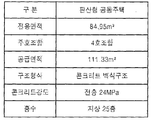
- FIG. 7 is a diagram showing Table 1 regarding the outline of Case 1 (wall structure)
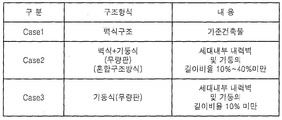
- FIG. 8 is a diagram showing Table 2 regarding building structure classification criteria
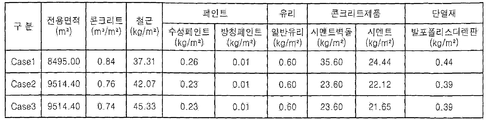
- FIG. 9 is a table showing the main materials of each apartment structure.
- FIG. 10 is a diagram showing Table 3
- FIG. 10 is a diagram showing Table 4 of examples of classification details of major materials according to reference substances and impact indices by environmental impact category.
- Case 1 the concrete wall structure of the flat plate No. 4 combination that is generally constructed in Korea is selected as Case 1 (wall structure, reference building), based on the structural difference on the basis of Case 1 Figure 8
- Case2 flat plate mixed structure
- Case3 flat plate columnar structure
- the national LCI DB and the building material environmental information national DB were applied. As shown in Table 4 of FIG. Characterization was performed through the calculation formula (1).
- FIG. 11 is a diagram illustrating Table 5 of environmental impact assessment results
- FIG. 12 is a chart illustrating the environmental impact assessment results of FIG. 11.
- the overall environmental impact of the building by inputting only the quantity of the main materials to be put into the building construction at the design or construction stage of the building can be easily evaluated.
- Embodiments of the invention include a computer readable medium containing program instructions for performing various computer-implemented operations.
- the computer readable medium may include program instructions, local data files, local data structures, or the like, alone or in combination.
- the media may be those specially designed and constructed for the purposes of the present invention, or they may be of the kind well known and available to those having skill in the computer software arts.
- Examples of computer-readable recording media include magnetic media such as hard disks, floppy disks, and magnetic tape, optical recording media such as CD-ROMs, DVDs, magnetic-optical media such as floppy disks, and ROM, RAM, flash memory, and the like.
- Hardware devices specifically configured to store and execute the same program instructions are included.
- Examples of program instructions include not only machine code generated by a compiler, but also high-level language code that can be executed by a computer using an interpreter or the like.
- the present invention can be used for a system for evaluating the environmental impact of buildings.
Landscapes
- Engineering & Computer Science (AREA)
- Physics & Mathematics (AREA)
- Business, Economics & Management (AREA)
- Theoretical Computer Science (AREA)
- General Physics & Mathematics (AREA)
- Strategic Management (AREA)
- Human Resources & Organizations (AREA)
- Geometry (AREA)
- Economics (AREA)
- General Business, Economics & Management (AREA)
- Entrepreneurship & Innovation (AREA)
- Marketing (AREA)
- Computer Hardware Design (AREA)
- Tourism & Hospitality (AREA)
- Civil Engineering (AREA)
- Mathematical Analysis (AREA)
- Development Economics (AREA)
- Architecture (AREA)
- Game Theory and Decision Science (AREA)
- Quality & Reliability (AREA)
- Operations Research (AREA)
- Structural Engineering (AREA)
- Computational Mathematics (AREA)
- Educational Administration (AREA)
- Mathematical Optimization (AREA)
- Pure & Applied Mathematics (AREA)
- Evolutionary Computation (AREA)
- General Engineering & Computer Science (AREA)
- Health & Medical Sciences (AREA)
- General Health & Medical Sciences (AREA)
- Primary Health Care (AREA)
- Management, Administration, Business Operations System, And Electronic Commerce (AREA)
Abstract
본 발명의 일 실시예에 따른 주요 자재를 이용한 건축물의 전과정 환경영향 평가방법은 건축물의 환경영향 평가에 영향을 끼치는 정도가 설정치를 상회하는 자재, 및 상대적으로 온실가스 원단위가 높은 시멘트를 포함하는 주요 자재 목록을 도출하는 단계; 상기 도출된 주요 자재 목록에 기초하여, 상기 건축물에 투입되는 전체 물량 중 환경영향 평가와 연관된 물량을 산출하는 단계; 및 건축자재별 특성화 환경영향에 대한 데이터베이스를 통해, 상기 산출된 물량에 기초하여 복수의 환경영향 범주에 대한 환경영향 평가를 수행하는 단계를 포함한다.
Description
본 발명의 실시예들은 주요 자재를 이용한 건축물의 전과정 환경영향 평가방법에 관한 것이다.
1992년 리우 유엔환경개발회를 시작으로 모든 산업에서 지속가능한 발전(ESSD, Environmental Sound and Sustainable Development)의 중요성이 점차적으로 대두되고 있으며, 범인류적인 관점에서 다양한 환경오염의 해결책을 마련해야 한다는 공감대가 형성되고 있다.
이에 건축산업에서는 캐나다, 호주, 독일, 영국 등 환경선진국을 중심으로 건축물의 환경영향을 저감하고자 건축물의 전과정 평가기술 개발과 함께 건축자재의 목록분석 데이터베이스 구축 연구 등이 활발하게 진행되고 있으며, 최근에는 정책 및 제도적인 관점에서 이를 지속적으로 보완 및 발전 해 나가고 있다.
국내에서도 이러한 국제적인 움직임에 발맞춰 건축물의 전과정 환경영향을 평가하기 위한 기술들이 다양하게 개발되어 왔으나 평가기술의 대부분이 산업연관분석법에 기초한 CO2 배출량만을 평가의 대상으로 설정하고 있어 자원고갈, 산성화, 부영양화, 오존층 파괴 등 다양한 환경영향범주를 종합적으로 고려한 건축물의 전과정 평가에는 한계가 있는 것이 사실이다.
또한, 용이한 건축물의 전과정 평가를 위해서는 KS I ISO 14040 등에서 제시한 제외기준(Cutoff Criteria)에 따라 환경영향도가 높은 건축물의 주요 건축자재를 도출하고 다양한 환경영향범주별로 제조단계의 특성화 환경영향을 정량적으로 산정하는 기술이 절실하게 요구되지만 이에 대한 기술은 부재한 실정이다.
관련 선행기술로는 공개특허공보 제10-2013-39806호(발명의 명칭: 산업연관표 기반의 건축물 이산화탄소 배출량 평가 시스템, 공개일자: 2013년 4월 23일)가 있다.
본 발명의 일 실시예는 건축물의 설계 또는 시공단계에서 건축공사에 투입되는 주요자재의 물량만을 입력하여 건축물의 종합적인 환경영향(지구온난화지수, 부영향화지수, 자원고갈지수, 오존층파괴지수, 광화학적산화물지수 등)을 용이하게 평가할 수 있는 주요 자재를 이용한 건축물의 전과정 환경영향 평가방법을 제공한다.
본 발명이 해결하고자 하는 과제는 이상에서 언급한 과제(들)로 제한되지 않으며, 언급되지 않은 또 다른 과제(들)은 아래의 기재로부터 당업자에게 명확하게 이해될 수 있을 것이다.
본 발명의 일 실시예에 따른 주요 자재를 이용한 건축물의 전과정 환경영향 평가방법은 건축물의 환경영향 평가에 영향을 끼치는 정도가 설정치를 상회하는 자재, 및 상대적으로 온실가스 원단위가 높은 시멘트를 포함하는 주요 자재 목록을 도출하는 단계; 상기 도출된 주요 자재 목록에 기초하여, 상기 건축물에 투입되는 전체 물량 중 환경영향 평가와 연관된 물량을 산출하는 단계; 및 건축자재별 특성화 환경영향에 대한 데이터베이스를 통해, 상기 산출된 물량에 기초하여 복수의 환경영향 범주에 대한 환경영향 평가를 수행하는 단계를 포함한다.
상기 주요 자재 목록을 도출하는 단계는 상기 건축물의 물량 산출 내역서를 분석하여 건축물 시공 시 투입되는 건축자재의 생산 과정에서 발생되는 6대 온실가스 배출량(CO2, CH4, N2O, HFCS, PFCS, SF6)을 평가하는 단계; 환경영향물질 국가표준 데이터베이스(LCI DB: Life Cycle Inventory Datbase)에 기초하여, 상기 6대 온실가스 배출량에 따른 건축자재별 온실가스 원단위를 도출하는 단계; 상기 건축자재별 온실가스 원단위에 기초하여 상기 건축물의 전체 온실가스를 평가하는 단계; 및 상기 전체 온실가스의 평가에 따라 상기 설정치를 상회하는 자재를 상기 시멘트와 함께 상기 주요 자재 목록으로서 도출하는 단계를 포함한다.
상기 설정치는 상기 건축물의 전체 온실가스 배출량의 95%인 것이 바람직하다.
상기 LCI DB는 국가 LCI DB(탄소배출계수 포함) 및 건축자재 환경성정보 국가 DB를 포함할 수 있다.
상기 복수의 환경영향 범주는 지구온난화, 오존층 감소, 산성화, 부영양화, 자원고갈 및 광화학적산화물의 6가지 항목을 포함할 수 있다.
상기 주요 자재 목록은 상기 건축물의 전체 온실가스 배출량의 95%를 상회하는 자재로서, 레미콘, 철근, 철골, 페인트, 유리, 콘크리트제품 및 단열재를 포함할 수 있다.
본 발명의 일 실시예에 따른 주요 자재를 이용한 건축물의 전과정 환경영향 평가방법은 벽식구조 공동주택을 케이스(Case) 1의 기준건축물로 선정하는 단계; 상기 케이스 1을 바탕으로 구조적인 차이에 따라 무량판 혼합구조의 케이스 2 및 무량판 기둥식구조의 케이스 3을 설정하는 단계; 구조해석 프로그램을 통해 각 케이스별 구조재료 및 마감재료의 물량을 산출하고 일위대가를 적용하여 중량 기준으로 환산하는 단계; 환경성적표지 인증제도에서 제시한 환경영향 범주별 기준물질 및 영향지수에 따라 분류화를 진행하는 단계; 및 하기 수식을 통해 상기 분류화 내역에 대한 특성화를 수행하여 상기 건축자재별 특성화 환경영향에 대한 데이터베이스를 생성하는 단계를 더 포함할 수 있다.
[수식]

여기서, CIi는 환경영향의 크기, Loadj=jth는 목록항목 환경부하량, eqvi,j는 i의 영향범주에 속한 jth 목록항목의 영향지수 값을 나타낸다.
기타 실시예들의 구체적인 사항들은 상세한 설명 및 첨부 도면들에 포함되어 있다.
본 발명의 일 실시예에 따르면, 건축물의 설계 또는 시공단계에서 건축공사에 투입되는 주요자재의 물량만을 입력하여 건축물의 종합적인 환경영향(지구온난화지수, 부영향화지수, 자원고갈지수, 오존층파괴지수, 광화학적산화물지수 등)을 용이하게 평가할 수 있다.
본 발명의 일 실시예에 따르면, 주요자재의 물량만을 이용하여 환경영향 평가를 수행하기 때문에 시간, 노동력, 비용 등의 소모를 최소화할 수 있다.
본 발명의 일 실시예에 따르면, 건축물 설계안에 대한 친환경성 판단 혹은 친환경건축물인증 등에 효과적으로 적용할 수 있다.
도 1은 본 발명의 일 실시예에 따른 주요 자재를 이용한 건축물의 전과정 환경영향 평가방법을 수행하는 건축물 전과정 환경영향 평가장치의 구성을 도시한 블록도이다.
도 2는 도 1의 주요자재 도출부의 상세 구성을 도시한 블록도이다.
도 3은 도 1의 환경영향 평가부에 적용되는 건축자재별 특성화 환경영향에 대한 데이터베이스의 생성과 관련된 환경영향 DB 생성부의 구성을 도시한 블록도이다.
도 4는 본 발명의 일 실시예에 따른 주요 자재를 이용한 건축물의 전과정 환경영향 평가방법을 설명하기 위해 도시한 흐름도이다.
도 5는 본 발명의 일 실시예에 따라 주요 자재 목록을 도출하는 과정을 설명하기 위해 도시한 흐름도이다.
도 6은 본 발명의 일 실시예에 따라 건축자재별 특성화 환경영향에 대한 데이터베이스를 생성하는 과정을 설명하기 위해 도시한 흐름도이다.
도 7은 Case 1(벽식구조)의 개요에 관한 표 1을 도시한 도면이다.
도 8은 건축물 구조 분류 기준에 관한 표 2를 도시한 도면이다.
도 9는 공동주택 구조별 주요자재 물량내역에 관한 표 3을 도시한 도면이다.
도 10은 환경영향범주별 기준물질 및 영향지수에 따른 주요자재별 분류화 내역 사례에 관한 표 4를 도시한 도면이다.
도 11은 환경영향평가 결과에 관한 표 5를 도시한 도면이다.
도 12는 도 11의 환경영향평가 결과를 차트로 나타낸 도면이다.
본 발명의 이점 및/또는 특징, 그리고 그것들을 달성하는 방법은 첨부되는 도면과 함께 상세하게 후술되어 있는 실시예들을 참조하면 명확해질 것이다. 그러나, 본 발명은 이하에서 개시되는 실시예들에 한정되는 것이 아니라 서로 다른 다양한 형태로 구현될 것이며, 단지 본 실시예들은 본 발명의 개시가 완전하도록 하며, 본 발명이 속하는 기술분야에서 통상의 지식을 가진 자에게 발명의 범주를 완전하게 알려주기 위해 제공되는 것이며, 본 발명은 청구항의 범주에 의해 정의될 뿐이다. 명세서 전체에 걸쳐 동일 참조 부호는 동일 구성요소를 지칭한다.
이하에서는 첨부된 도면을 참조하여 본 발명의 실시예들을 상세히 설명하기로 한다.
도 1은 본 발명의 일 실시예에 따른 주요 자재를 이용한 건축물의 전과정 환경영향 평가방법을 수행하는 건축물 전과정 환경영향 평가장치의 구성을 도시한 블록도이다.
도 1을 참조하면, 상기 건축물 전과정 환경영향 평가장치(100)는 주요자재 도출부(110), 물량 산출부(120), 환경영향 평가부(130), 및 제어부(140)를 포함할 수 있다.
상기 주요자재 도출부(110)는 건축물의 환경영향 평가에 영향을 끼치는 정도가 설정치를 상회하는 자재, 및 상대적으로 온실가스 원단위가 높은 시멘트를 포함하는 주요 자재 목록을 도출한다.
여기서, 상기 설정치는 상기 건축물의 전체 온실가스 배출량의 95%인 것이 바람직하다.
즉, 상기 주요자재 도출부(110)는 상기 건축물의 전체 온실가스 배출량의 95%를 상회하는 자재로서, 레미콘, 철근, 철골, 페인트, 유리, 콘크리트제품 및 단열재 등을 상기 시멘트와 함께 상기 주요 자재 목록으로서 도출할 수 있다.
상기 물량 산출부(120)는 상기 도출된 주요 자재 목록에 기초하여, 상기 건축물에 투입되는 전체 물량 중 환경영향 평가와 연관된 물량을 산출한다.
즉, 상기 물량 산출부(120)는 물량 산출 내역서에 근거하여 상기 건축물에 투입되는 전체 물량 중에서, 상기 주요 자재 목록에 포함된 자재에 대한 물량만을 산출할 수 있다.
상기 환경영향 평가부(130)는 건축자재별 특성화 환경영향에 대한 데이터베이스(DB)를 통해, 상기 산출된 물량에 기초하여 복수의 환경영향 범주에 대한 환경영향 평가를 수행한다.
여기서, 상기 복수의 환경영향 범주는 지구온난화, 오존층 감소, 산성화, 부영양화, 자원고갈 및 광화학적산화물의 6가지 항목을 포함할 수 있다.
상기 건축자재별 특성화 환경영향에 대한 데이터베이스는 상기 환경영향 범주에 포함되는 6가지 항목 각각에 대한 건축자재별 영향지수를 포함할 수 있다.
따라서, 상기 환경영향 평가부(130)는 상기 건축자재별 특성화 환경영향에 대한 데이터베이스에 포함된 건축자재별 영향지수를 참고하여, 상기 산출된 물량에 따른 환경영향 평가를 각각의 환경영향 범주별로 수행할 수 있다.
상기 건축자재별 특성화 환경영향에 대한 데이터베이스에 대해서는 도 3을 참조하여 후술하기로 한다.
상기 제어부(140)는 상기 건축물 전과정 환경영향 평가장치(100), 즉 상기 주요자재 도출부(110), 상기 물량 산출부(120), 상기 환경영향 평가부(130) 등의 동작을 전반적으로 제어할 수 있다.
도 2는 도 1의 주요자재 도출부(110)의 상세 구성을 도시한 블록도이다.
도 2에 도시된 바와 같이, 상기 주요자재 도출부(110)는 온실가스 배출량 평가부(210), 온실가스 원단위 도출부(220), 건축물 온실가스 평가부(230), 및 주요자재 목록 도출부(240)를 포함할 수 있다.
온실가스 배출량 평가부(210)는 상기 건축물의 물량 산출 내역서를 분석하여 건축물 시공 시 투입되는 건축자재의 생산 과정에서 발생되는 6대 온실가스 배출량(CO2, CH4, N2O, HFCS, PFCS, SF6)을 평가할 수 있다.
상기 온실가스 원단위 도출부(220)는 환경영향물질 국가표준 데이터베이스(LCI DB: Life Cycle Inventory Database)에 기초하여, 상기 6대 온실가스 배출량에 따른 건축자재별 온실가스 원단위를 도출할 수 있다.
여기서, 상기 LCI DB는 국가 LCI DB(탄소배출계수 포함) 및 건축자재 환경성정보 국가 DB를 포함할 수 있다.
상기 건축물 온실가스 평가부(230)는 상기 건축자재별 온실가스 원단위에 기초하여 상기 건축물의 전체 온실가스를 평가할 수 있다.
상기 주요자재 목록 도출부(240)는 상기 전체 온실가스의 평가에 따라 상기 설정치(즉, 상기 건축물의 전체 온실가스 배출량의 95%)를 상회하는 자재를 상기 시멘트와 함께 상기 주요 자재 목록으로서 도출할 수 있다.
상기 건축물의 전체 온실가스 배출량의 95%를 상회하는 자재는 앞서 언급한 바와 같이 레미콘, 철근, 철골, 페인트, 유리, 콘크리트제품, 단열재 등을 포함할 수 있다.
도 3은 도 1의 환경영향 평가부(130)에 적용되는 건축자재별 특성화 환경영향에 대한 데이터베이스의 생성과 관련된 환경영향 DB 생성부의 구성을 도시한 블록도이다.
상기 환경영향 DB 생성부(300)는 상기 건축물 전과정 환경영향 평가장치(100)에 더 포함되는 구성요소로서, 케이스 설정부(310), 물량 환산부(320), 분류부(330), 및 DB 생성부(340)를 포함할 수 있다.
상기 케이스 설정부(310)는 벽식구조 공동주택을 케이스(Case) 1의 기준건축물로 선정하고, 상기 케이스 1을 바탕으로 구조적인 차이에 따라 무량판 혼합구조의 케이스 2 및 무량판 기둥식구조의 케이스 3을 설정할 수 있다.
상기 물량 환산부(320)는 구조해석 프로그램을 통해 각 케이스별 구조재료 및 마감재료의 물량을 산출하고, 일위대가를 적용하여 중량 기준으로 환산할 수 있다. 여기서, 상기 구조해석 프로그램은 MIDAS, BIM 등의 소프트웨어를 포함할 수 있다.
상기 분류부(330)는 환경성적표지 인증제도에서 제시한 환경영향 범주별 기준물질 및 영향지수에 따라 분류화를 진행할 수 있다.
상기 DB 생성부(340)는 하기 수식 1을 통해 상기 분류화 내역에 대한 특성화를 수행하여 상기 건축자재별 특성화 환경영향에 대한 데이터베이스를 생성할 수 있다.
[수식 1]

여기서, CIi는 환경영향의 크기, Loadj=jth는 목록항목 환경부하량, eqvi,j는 i의 영향범주에 속한 jth 목록항목의 영향지수 값을 나타낸다.
도 4는 본 발명의 일 실시예에 따른 주요 자재를 이용한 건축물의 전과정 환경영향 평가방법을 설명하기 위해 도시한 흐름도이다.
도 4를 참조하면, 단계(410)에서 상기 건축물 전과정 환경영향 평가장치(100)는 주요 자재 목록을 도출한다. 여기서, 상기 주요 자재 목록은 건축물의 환경영향 평가에 영향을 끼치는 정도가 설정치를 상회하는 자재, 및 상대적으로 온실가스 원단위가 높은 시멘트를 포함한다.
본 실시예에서 상기 설정치는 상기 건축물의 전체 온실가스 배출량의 95%인 것이 바람직하다.
다음으로, 단계(420)에서 상기 건축물 전과정 환경영향 평가장치(100)는 상기 도출된 주요 자재 목록에 기초하여, 상기 건축물에 투입되는 전체 물량 중 환경영향 평가와 연관된 물량을 산출한다.
다음으로, 단계(430)에서 상기 건축물 전과정 환경영향 평가장치(100)는 건축자재별 특성화 환경영향에 대한 데이터베이스를 통해, 상기 산출된 물량에 기초하여 복수의 환경영향 범주에 대한 환경영향 평가를 수행한다.
도 5는 본 발명의 일 실시예에 따라 주요 자재 목록을 도출하는 과정을 설명하기 위해 도시한 흐름도이다.
도 5를 참조하면, 단계(510)에서 상기 건축물 전과정 환경영향 평가장치(100)는 상기 건축물의 물량 산출 내역서를 분석한다.
다음으로, 단계(520)에서 상기 건축물 전과정 환경영향 평가장치(100)는 상기 물량 산출 내역서의 분석 결과에 기초하여, 건축물 시공 시 투입되는 건축자재의 생산 과정에서 발생되는 6대 온실가스 배출량(CO2, CH4, N2O, HFCS, PFCS, SF6)을 평가한다.
다음으로, 단계(530)에서 상기 건축물 전과정 환경영향 평가장치(100)는 상기 LCI DB(환경영향물질 국가표준 데이터베이스)에 기초하여, 상기 6대 온실가스 배출량에 따른 건축자재별 온실가스 원단위를 도출한다.
다음으로, 단계(540)에서 상기 건축물 전과정 환경영향 평가장치(100)는 상기 건축자재별 온실가스 원단위에 기초하여 상기 건축물의 전체 온실가스를 평가한다.
다음으로, 단계(550)에서 상기 건축물 전과정 환경영향 평가장치(100)는 상기 전체 온실가스의 평가에 따라 상기 설정치를 상회하는 자재를 상기 시멘트와 함께 상기 주요 자재 목록으로서 도출한다.
도 6은 본 발명의 일 실시예에 따라 건축자재별 특성화 환경영향에 대한 데이터베이스를 생성하는 과정을 설명하기 위해 도시한 흐름도이다.
도 6을 참조하면, 단계(610)에서 상기 건축물 전과정 환경영향 평가장치(100)는 벽식구조 공동주택을 Case 1의 기준건축물로 선정한다.
다음으로, 단계(620)에서 상기 건축물 전과정 환경영향 평가장치(100)는 상기 Case 1을 바탕으로 구조적인 차이에 따라 무량판 혼합구조의 Case 2 및 무량판 기둥식구조의 Case 3을 설정한다.
다음으로, 단계(630)에서 상기 건축물 전과정 환경영향 평가장치(100)는 구조해석 프로그램을 통해 각 케이스별 구조재료 및 마감재료의 물량을 산출한다.
다음으로, 단계(640)에서 상기 건축물 전과정 환경영향 평가장치(100)는 상기 물량 산출의 결과에 일위대가를 적용하여 중량 기준으로 환산한다.
다음으로, 단계(650)에서 상기 건축물 전과정 환경영향 평가장치(100)는 환경성적표지 인증제도에서 제시한 환경영향 범주별 기준물질 및 영향지수에 따라 분류화를 진행한다.
다음으로, 단계(660)에서 상기 건축물 전과정 환경영향 평가장치(100)는 상기 수식 1을 통해 상기 분류화 내역에 대한 특성화를 수행하여 상기 건축자재별 특성화 환경영향에 대한 DB를 생성한다.
실시예(건축물 구조별 건설단계의 환경영향평가 사례)
1. 개요
국내에서 주로 건설되는 공동주택 모델을 설정하고 구조에 따라 주요자재를 이용한 환경영향평가를 수행하였다. 이때, 환경영향평가의 범위를 분류화 및 특성화로 한정하였다. 주요자재는 레미콘, 철근, 페인트, 유리, 콘크리트제품, 단열재를 대상(RC구조의 특성 상 본 실시예에서는 철골은 제외하고 분석함)으로 하였으며, 지구온난화, 오존층 감소, 산성화, 부영양화, 자원고갈, 광화학적산화물의 6가지 환경영향범주를 평가하였다.
2. 평가 대상 및 방법
도 7은 Case 1(벽식구조)의 개요에 관한 표 1을 도시한 도면이고, 도 8은 건축물 구조 분류 기준에 관한 표 2를 도시한 도면이며, 도 9는 공동주택 구조별 주요자재 물량내역에 관한 표 3을 도시한 도면이고, 도 10은 환경영향범주별 기준물질 및 영향지수에 따른 주요자재별 분류화 내역 사례에 관한 표 4를 도시한 도면이다.
도 7의 표 1과 같이, 국내에서 일반적으로 건설되는 판상형 4호조합의 콘크리트 벽식구조 공동주택을 Case 1(벽식구조, 기준건축물)로 선정하고, Case 1을 바탕으로 구조적인 차이에 따라 도 8의 표 2와 같이 Case2(무량판 혼합구조), Case3(무량판 기둥식구조)을 설정하였다.
또한, MIDAS와 BIM을 통해 Case별 구조재료(콘크리트, 철근)와 마감재료(페인트, 유리, 콘크리트제품, 단열재)의 물량을 산출하고 일위대가(一位代價)를 적용하여 도 9의 표 3과 같이 중량 기준으로 환산하였다.
LCI 데이터베이스로 국가 LCI DB 및 건축자재 환경성정보 국가 DB를 적용하였으며, 도 10의 표 4와 같이 환경성적표지인증제도에서 제시한 환경영향범주별 기준물질 및 영향지수에 따라 분류화를 진행하고, 상기 수식 1의 산출식을 통해 특성화를 수행하였다.
3. 평가 결과
도 11은 환경영향평가 결과에 관한 표 5를 도시한 도면이고, 도 12는 도 11의 환경영향평가 결과를 차트로 나타낸 도면이다.
도 11의 표 5 및 도 12에 의하면, 각 환경영향범주별 평가결과는 Case 1에서 Case 3으로 갈수록 비교적 낮아지는 경향을 나타냈다. 이는 공동주택이 벽식구조에서 기둥식구조로 변화함에 따라 철근의 투입량은 다소 증가하지만 상대적으로 환경부하량이 높은 콘크리트와 콘크리트제품 등의 물량감소에 기인한 것으로 분석되었다.
한편, 부영양화지수는 Case 1에서 Case 3으로 갈수록 증가하였는데, 이는 상대적으로 부영양화에 민감한 철근의 물량이 증가함에 기인한 것으로 분석되었다.
이와 같이, 본 발명의 일 실시예에서는 건축물의 설계 또는 시공단계에서 건축공사에 투입되는 주요자재의 물량만을 입력하여 건축물의 종합적인 환경영향(지구온난화지수, 부영향화지수, 자원고갈지수, 오존층파괴지수, 광화학적산화물지수 등)을 용이하게 평가할 수 있다.
이에 따라, 종래기술에서 주된 문제점으로 제시되고 있는 "건축물의 단편적인 관점에서의 환경영향평가(CO2 배출량)"에서 탈피 가능할 것으로 판단된다. 또한, 평가에 많은 시간, 노동력, 비용 등이 소모되었던 종래기술의 문제점을 건축공사 주요자재 기반의 환경영향평가 방법으로 해결함에 따라 실무에서의 건축물 설계안에 대한 친환경성 판단 혹은 친환경건축물인증 등에 효과적으로 적용될 수 있다.
본 발명의 실시예들은 다양한 컴퓨터로 구현되는 동작을 수행하기 위한 프로그램 명령을 포함하는 컴퓨터 판독 가능 매체를 포함한다. 상기 컴퓨터 판독 가능 매체는 프로그램 명령, 로컬 데이터 파일, 로컬 데이터 구조 등을 단독으로 또는 조합하여 포함할 수 있다. 상기 매체는 본 발명을 위하여 특별히 설계되고 구성된 것들이거나 컴퓨터 소프트웨어 당업자에게 공지되어 사용 가능한 것일 수도 있다. 컴퓨터 판독 가능 기록 매체의 예에는 하드 디스크, 플로피 디스크 및 자기 테이프와 같은 자기 매체, CD-ROM, DVD와 같은 광기록 매체, 플롭티컬 디스크와 같은 자기-광 매체, 및 롬, 램, 플래시 메모리 등과 같은 프로그램 명령을 저장하고 수행하도록 특별히 구성된 하드웨어 장치가 포함된다. 프로그램 명령의 예에는 컴파일러에 의해 만들어지는 것과 같은 기계어 코드뿐만 아니라 인터프리터 등을 사용해서 컴퓨터에 의해서 실행될 수 있는 고급 언어 코드를 포함한다.
지금까지 본 발명에 따른 구체적인 실시예에 관하여 설명하였으나, 본 발명의 범위에서 벗어나지 않는 한도 내에서는 여러 가지 변형이 가능함은 물론이다. 그러므로, 본 발명의 범위는 설명된 실시예에 국한되어 정해져서는 안 되며, 후술하는 특허 청구의 범위뿐 아니라 이 특허 청구의 범위와 균등한 것들에 의해 정해져야 한다.
이상과 같이 본 발명은 비록 한정된 실시예와 도면에 의해 설명되었으나, 본 발명은 상기의 실시예에 한정되는 것은 아니며, 이는 본 발명이 속하는 분야에서 통상의 지식을 가진 자라면 이러한 기재로부터 다양한 수정 및 변형이 가능하다. 따라서, 본 발명 사상은 아래에 기재된 특허청구범위에 의해서만 파악되어야 하고, 이의 균등 또는 등가적 변형 모두는 본 발명 사상의 범주에 속한다고 할 것이다.
본 발명은 건축물의 환경영향 평가하기 위한 시스템 등에 이용될 수 있다.
Claims (7)
- 건축물의 환경영향 평가에 영향을 끼치는 정도가 설정치를 상회하는 자재, 및 상대적으로 온실가스 원단위가 높은 시멘트를 포함하는 주요 자재 목록을 도출하는 단계;상기 도출된 주요 자재 목록에 기초하여, 상기 건축물에 투입되는 전체 물량 중 환경영향 평가와 연관된 물량을 산출하는 단계; 및건축자재별 특성화 환경영향에 대한 데이터베이스를 통해, 상기 산출된 물량에 기초하여 복수의 환경영향 범주에 대한 환경영향 평가를 수행하는 단계를 포함하는 것을 특징으로 하는 주요 자재를 이용한 건축물의 전과정 환경영향 평가방법.
- 제1항에 있어서,상기 주요 자재 목록을 도출하는 단계는상기 건축물의 물량 산출 내역서를 분석하여 건축물 시공 시 투입되는 건축자재의 생산 과정에서 발생되는 6대 온실가스 배출량(CO2, CH4, N2O, HFCS, PFCS, SF6)을 평가하는 단계;환경영향물질 국가표준 데이터베이스(LCI DB: Life Cycle Inventory Datbase)에 기초하여, 상기 6대 온실가스 배출량에 따른 건축자재별 온실가스 원단위를 도출하는 단계;상기 건축자재별 온실가스 원단위에 기초하여 상기 건축물의 전체 온실가스를 평가하는 단계; 및상기 전체 온실가스의 평가에 따라 상기 설정치를 상회하는 자재를 상기 시멘트와 함께 상기 주요 자재 목록으로서 도출하는 단계를 포함하는 것을 특징으로 하는 주요 자재를 이용한 건축물의 전과정 환경영향 평가방법.
- 제1항 또는 제2항에 있어서,상기 설정치는상기 건축물의 전체 온실가스 배출량의 95%인 것을 특징으로 하는 주요 자재를 이용한 건축물의 전과정 환경영향 평가방법.
- 제2항에 있어서,상기 LCI DB는국가 LCI DB(탄소배출계수 포함) 및 건축자재 환경성정보 국가 DB를 포함하는 것을 특징으로 하는 주요 자재를 이용한 건축물의 전과정 환경영향 평가방법.
- 제1항에 있어서,상기 복수의 환경영향 범주는지구온난화, 오존층 감소, 산성화, 부영양화, 자원고갈 및 광화학적산화물의 6가지 항목을 포함하는 것을 특징으로 하는 주요 자재를 이용한 건축물의 전과정 환경영향 평가방법.
- 제1항에 있어서,상기 주요 자재 목록은상기 건축물의 전체 온실가스 배출량의 95%를 상회하는 자재로서, 레미콘, 철근, 철골, 페인트, 유리, 콘크리트제품 및 단열재를 포함하는 것을 특징으로 하는 주요 자재를 이용한 건축물의 전과정 환경영향 평가방법.
- 제1항에 있어서,벽식구조 공동주택을 케이스(Case) 1의 기준건축물로 선정하는 단계;상기 케이스 1을 바탕으로 구조적인 차이에 따라 무량판 혼합구조의 케이스 2 및 무량판 기둥식구조의 케이스 3을 설정하는 단계;구조해석 프로그램을 통해 각 케이스별 구조재료 및 마감재료의 물량을 산출하고 일위대가를 적용하여 중량 기준으로 환산하는 단계;환경성적표지 인증제도에서 제시한 환경영향 범주별 기준물질 및 영향지수에 따라 분류화를 진행하는 단계; 및하기 수식을 통해 상기 분류화 내역에 대한 특성화를 수행하여 상기 건축자재별 특성화 환경영향에 대한 데이터베이스를 생성하는 단계를 더 포함하는 것을 특징으로 하는 주요 자재를 이용한 건축물의 전과정 환경영향 평가방법.[수식]
 여기서, CIi는 환경영향의 크기, Loadj=jth는 목록항목 환경부하량, eqvi,j는 i의 영향범주에 속한 jth 목록항목의 영향지수 값을 나타낸다.
Applications Claiming Priority (2)
| Application Number | Priority Date | Filing Date | Title |
|---|---|---|---|
| KR20130086178A KR101390237B1 (ko) | 2013-07-22 | 2013-07-22 | 주요 자재를 이용한 건축물의 전과정 환경영향 평가방법 |
| KR10-2013-0086178 | 2013-07-22 |
Publications (1)
| Publication Number | Publication Date |
|---|---|
| WO2015012499A1 true WO2015012499A1 (ko) | 2015-01-29 |
Family
ID=50658940
Family Applications (1)
| Application Number | Title | Priority Date | Filing Date |
|---|---|---|---|
| PCT/KR2014/005797 Ceased WO2015012499A1 (ko) | 2013-07-22 | 2014-06-30 | 주요 자재를 이용한 건축물의 전과정 환경영향 평가방법 |
Country Status (2)
| Country | Link |
|---|---|
| KR (1) | KR101390237B1 (ko) |
| WO (1) | WO2015012499A1 (ko) |
Cited By (7)
| Publication number | Priority date | Publication date | Assignee | Title |
|---|---|---|---|---|
| CN110222932A (zh) * | 2019-05-08 | 2019-09-10 | 深圳中大环保科技创新工程中心有限公司 | 基于湿地资源质量-价格模型的价值评估方法及装置 |
| CN110223099A (zh) * | 2019-05-08 | 2019-09-10 | 深圳中大环保科技创新工程中心有限公司 | 湿地资源资产核算方法、装置、计算机设备及存储介质 |
| CN110245830A (zh) * | 2019-05-08 | 2019-09-17 | 深圳中大环保科技创新工程中心有限公司 | 海域资源资产负债表的生成方法、装置及计算机设备 |
| CN112488554A (zh) * | 2020-12-08 | 2021-03-12 | 湖北工业大学 | 挡土墙生命周期环境影响评价方法 |
| CN113112119A (zh) * | 2021-03-15 | 2021-07-13 | 广州大学 | 建设项目环境影响评估方法、系统和存储介质 |
| US11531793B2 (en) | 2017-01-02 | 2022-12-20 | Industry-University Cooperation Foundation Hanyang University Erica Campus | Device and method for building life cycle sustainability assessment using probabilistic analysis method, and recording medium storing the method |
| CN116976698A (zh) * | 2023-07-26 | 2023-10-31 | 北京工业大学 | 沥青基材料VOCs排放的生态环境负荷估算方法及系统 |
Families Citing this family (7)
| Publication number | Priority date | Publication date | Assignee | Title |
|---|---|---|---|---|
| KR101830104B1 (ko) * | 2017-01-02 | 2018-02-20 | 한양대학교 에리카산학협력단 | 지수를 이용한 건축물 전과정 지속가능성 평가 장치, 방법 및 그 방법을 기록한 기록매체 |
| KR101981143B1 (ko) | 2017-01-02 | 2019-05-22 | 한양대학교 에리카산학협력단 | 건축물 전과정 평가를 위한 자동화 장치, 방법 및 그 방법을 기록한 기록매체 |
| KR20190061929A (ko) | 2017-11-28 | 2019-06-05 | 한양대학교 에리카산학협력단 | 건설폐기물 발생 예측 장치와 방법 및 그 방법을 기록한 기록매체 |
| KR20200068357A (ko) | 2018-12-05 | 2020-06-15 | 한국해양대학교 산학협력단 | 강박스교의 환경부하량 평가 시스템 및 그 방법 |
| KR102129133B1 (ko) | 2019-11-19 | 2020-07-02 | 한국건설기술연구원 | 건물부문의 온실가스 배출량 전망 분석을 위한 시뮬레이션 시스템 |
| KR102166964B1 (ko) * | 2020-02-07 | 2020-11-02 | 주식회사 삼우씨엠건축사사무소 | 건축물 전과정 환경영향평가 방법 및 건축물 전과정 환경영향평가 장치 |
| CN113918787B (zh) * | 2021-12-14 | 2022-04-12 | 江苏佳信环保咨询有限公司 | 一种环境影响评价文件管理方法及系统 |
Citations (2)
| Publication number | Priority date | Publication date | Assignee | Title |
|---|---|---|---|---|
| JP2010286941A (ja) * | 2009-06-10 | 2010-12-24 | Taisei Corp | 環境性能評価システムおよび環境性能指標演算プログラム |
| JP4931264B1 (ja) * | 2011-03-31 | 2012-05-16 | ニチハ株式会社 | 住宅シミュレーションシステム及びプログラム |
-
2013
- 2013-07-22 KR KR20130086178A patent/KR101390237B1/ko active Active
-
2014
- 2014-06-30 WO PCT/KR2014/005797 patent/WO2015012499A1/ko not_active Ceased
Patent Citations (2)
| Publication number | Priority date | Publication date | Assignee | Title |
|---|---|---|---|---|
| JP2010286941A (ja) * | 2009-06-10 | 2010-12-24 | Taisei Corp | 環境性能評価システムおよび環境性能指標演算プログラム |
| JP4931264B1 (ja) * | 2011-03-31 | 2012-05-16 | ニチハ株式会社 | 住宅シミュレーションシステム及びプログラム |
Non-Patent Citations (2)
| Title |
|---|
| LEE, JUN JAE ET AL.: "Greenhouse Gas Reduction in Domestic and Foreign Non-industrial Parts", KOREA ENVIRONMENTAL INDUSTRY & TECHNOLOGY INSTITUTE, SPECIAL ISSUES(GGGP: GLOBAL GREEN GROWTH POLICY), 20 September 2011 (2011-09-20) * |
| ROH, SEUNG-JUN ET AL.: "The Development of Object-oriented Building Life Cycle C02 Assessment System(LOCAS", JOURNAL OF THE ARCHITECTURAL INSTITUTE OF KOREA STRUCTURE & CONSTRUCTION, vol. 28, no. 1, 31 January 2012 (2012-01-31) * |
Cited By (8)
| Publication number | Priority date | Publication date | Assignee | Title |
|---|---|---|---|---|
| US11531793B2 (en) | 2017-01-02 | 2022-12-20 | Industry-University Cooperation Foundation Hanyang University Erica Campus | Device and method for building life cycle sustainability assessment using probabilistic analysis method, and recording medium storing the method |
| CN110222932A (zh) * | 2019-05-08 | 2019-09-10 | 深圳中大环保科技创新工程中心有限公司 | 基于湿地资源质量-价格模型的价值评估方法及装置 |
| CN110223099A (zh) * | 2019-05-08 | 2019-09-10 | 深圳中大环保科技创新工程中心有限公司 | 湿地资源资产核算方法、装置、计算机设备及存储介质 |
| CN110245830A (zh) * | 2019-05-08 | 2019-09-17 | 深圳中大环保科技创新工程中心有限公司 | 海域资源资产负债表的生成方法、装置及计算机设备 |
| CN112488554A (zh) * | 2020-12-08 | 2021-03-12 | 湖北工业大学 | 挡土墙生命周期环境影响评价方法 |
| CN113112119A (zh) * | 2021-03-15 | 2021-07-13 | 广州大学 | 建设项目环境影响评估方法、系统和存储介质 |
| CN116976698A (zh) * | 2023-07-26 | 2023-10-31 | 北京工业大学 | 沥青基材料VOCs排放的生态环境负荷估算方法及系统 |
| CN116976698B (zh) * | 2023-07-26 | 2024-01-19 | 北京工业大学 | 沥青基材料VOCs排放的生态环境负荷估算方法及系统 |
Also Published As
| Publication number | Publication date |
|---|---|
| KR101390237B1 (ko) | 2014-04-30 |
Similar Documents
| Publication | Publication Date | Title |
|---|---|---|
| KR101390237B1 (ko) | 주요 자재를 이용한 건축물의 전과정 환경영향 평가방법 | |
| Pheng et al. | Implementing and applying Six Sigma in construction | |
| Hasan et al. | Minimizing defects in building construction project | |
| CN115018327A (zh) | 一种基于系统模拟的碳排放核定方法及系统 | |
| CN107480828B (zh) | 以建筑图纸优化数据库为基础进行流程引导的方法及系统 | |
| WO2020060181A2 (ko) | 인적 자원 정보 활용 시스템 및 그 운영 방법 | |
| WO2011065660A4 (ko) | 계산 시뮬레이션 모사 시스템 및 그 방법 | |
| Gaião et al. | Inspection and diagnosis of gypsum plasterboard walls | |
| Barco et al. | A recursive algorithm for building renovation in smart cities | |
| WO2025173990A1 (ko) | 디지털 기반 시공감리 체크리스트 생성 방법, 이를 이용한 디지털 기반 시공감리 체크리스트 생성 시스템 | |
| WO2020032502A1 (ko) | 에너지 빅데이터 수집에 기반한 에너지 분석 및 솔루션 제시 플랫폼을 위한 방법 | |
| WO2025230227A1 (ko) | 건물 수준 온실가스 지표 정보를 구축하는 전자장치, 이를 포함하는 시스템 및 방법 | |
| WO2012144684A1 (ko) | 기술의 발전 속도 예측 장치 및 방법 | |
| CN114638595A (zh) | 一种优化复杂性施工方案编制系统及其应用方法 | |
| Dinariana et al. | Value Engineering Of Architectural Work In Navalunit Building Planning, In West Papua | |
| Hendrickson et al. | Towards an Improved HRA Method. | |
| WO2023003051A1 (ko) | 건축물 전생애 프로세스 별 온실가스배출량 산정을 위한 온라인 및 오프라인 플랫폼 | |
| Ovararin et al. | Field factors affecting masonry productivity | |
| Patanavanich | Exploring the viability of probabilistic underspecification as a viable streamlining method for LCA | |
| CN112488454B (zh) | 一种基于能量转移模型的建筑工程风险分析及控制方法 | |
| Black et al. | The applied genomic epidemiology handbook: a practical guide to leveraging pathogen genomic data in public health | |
| Gregory et al. | Assessing the influence of manufacturing flexibility on facility construction costs | |
| JP2003022299A (ja) | 建物改修工事支援システム | |
| Hidayat et al. | Study of the skills of construction labours in building construction projects in Padang City | |
| WO2025143456A1 (en) | Method and system for managing safety of facility |
Legal Events
| Date | Code | Title | Description |
|---|---|---|---|
| 121 | Ep: the epo has been informed by wipo that ep was designated in this application |
Ref document number: 14829359 Country of ref document: EP Kind code of ref document: A1 |
|
| NENP | Non-entry into the national phase |
Ref country code: DE |
|
| 122 | Ep: pct application non-entry in european phase |
Ref document number: 14829359 Country of ref document: EP Kind code of ref document: A1 |