WO2014203402A1 - 情報提供装置、情報提供方法及びプログラム - Google Patents
情報提供装置、情報提供方法及びプログラム Download PDFInfo
- Publication number
- WO2014203402A1 WO2014203402A1 PCT/JP2013/067144 JP2013067144W WO2014203402A1 WO 2014203402 A1 WO2014203402 A1 WO 2014203402A1 JP 2013067144 W JP2013067144 W JP 2013067144W WO 2014203402 A1 WO2014203402 A1 WO 2014203402A1
- Authority
- WO
- WIPO (PCT)
- Prior art keywords
- information
- viewer
- conversion
- relationship
- message
- Prior art date
- Legal status (The legal status is an assumption and is not a legal conclusion. Google has not performed a legal analysis and makes no representation as to the accuracy of the status listed.)
- Ceased
Links
Images









Classifications
-
- G—PHYSICS
- G06—COMPUTING OR CALCULATING; COUNTING
- G06F—ELECTRIC DIGITAL DATA PROCESSING
- G06F21/00—Security arrangements for protecting computers, components thereof, programs or data against unauthorised activity
- G06F21/60—Protecting data
- G06F21/62—Protecting access to data via a platform, e.g. using keys or access control rules
- G06F21/6218—Protecting access to data via a platform, e.g. using keys or access control rules to a system of files or objects, e.g. local or distributed file system or database
- G06F21/6245—Protecting personal data, e.g. for financial or medical purposes
- G06F21/6263—Protecting personal data, e.g. for financial or medical purposes during internet communication, e.g. revealing personal data from cookies
-
- G—PHYSICS
- G06—COMPUTING OR CALCULATING; COUNTING
- G06F—ELECTRIC DIGITAL DATA PROCESSING
- G06F21/00—Security arrangements for protecting computers, components thereof, programs or data against unauthorised activity
- G06F21/60—Protecting data
- G06F21/62—Protecting access to data via a platform, e.g. using keys or access control rules
- G06F21/6218—Protecting access to data via a platform, e.g. using keys or access control rules to a system of files or objects, e.g. local or distributed file system or database
- G06F21/6245—Protecting personal data, e.g. for financial or medical purposes
- G06F21/6254—Protecting personal data, e.g. for financial or medical purposes by anonymising data, e.g. decorrelating personal data from the owner's identification
-
- G—PHYSICS
- G06—COMPUTING OR CALCULATING; COUNTING
- G06F—ELECTRIC DIGITAL DATA PROCESSING
- G06F16/00—Information retrieval; Database structures therefor; File system structures therefor
- G06F16/20—Information retrieval; Database structures therefor; File system structures therefor of structured data, e.g. relational data
- G06F16/28—Databases characterised by their database models, e.g. relational or object models
- G06F16/284—Relational databases
- G06F16/288—Entity relationship models
-
- H—ELECTRICITY
- H04—ELECTRIC COMMUNICATION TECHNIQUE
- H04L—TRANSMISSION OF DIGITAL INFORMATION, e.g. TELEGRAPHIC COMMUNICATION
- H04L51/00—User-to-user messaging in packet-switching networks, transmitted according to store-and-forward or real-time protocols, e.g. e-mail
- H04L51/06—Message adaptation to terminal or network requirements
- H04L51/063—Content adaptation, e.g. replacement of unsuitable content
-
- H—ELECTRICITY
- H04—ELECTRIC COMMUNICATION TECHNIQUE
- H04L—TRANSMISSION OF DIGITAL INFORMATION, e.g. TELEGRAPHIC COMMUNICATION
- H04L51/00—User-to-user messaging in packet-switching networks, transmitted according to store-and-forward or real-time protocols, e.g. e-mail
- H04L51/52—User-to-user messaging in packet-switching networks, transmitted according to store-and-forward or real-time protocols, e.g. e-mail for supporting social networking services
Definitions
- the present invention relates to an information providing apparatus, an information providing method, and a program.
- the message viewers have a relationship between the message poster and the viewer, such as a very close friend with the message poster, an acquaintance who is not so close, or a person who has never actually met.
- traditional technology only allows users to view messages posted by users because it only controls whether other users can view them.
- the posted information is disclosed as it is regardless of the relationship with the poster.
- the poster does not want to disclose information depending on the relationship with each viewer.
- the contributor may set the disclosure range of the message for each individual viewer, but it is very time-consuming for the contributor and the viewer may not be specified at the time of posting. In view of this, it is far from realistic.
- the present invention has been made in view of the above problems, and its purpose is to suppress the information posted by the contributor to the amount of information corresponding to the relationship between the contributor and the viewer and provide the information to the viewer. It is to provide a providing apparatus, an information providing method, and a program.
- an information providing apparatus transmits an acquisition means for acquiring posted information from a poster and the viewer determined according to the relationship between the poster and the viewer.
- Conversion means for converting the posted information so as to reduce the information amount of the posted information based on the level of information amount, and providing means for providing the converted post information to the viewer.
- the information providing apparatus further includes an extracting unit that extracts one or more data elements to be converted from the posting information, and the converting unit includes the contributor, the viewer, The information amount of each data element extracted by the extraction means may be reduced based on the level of information amount determined according to the relationship.
- the information providing apparatus further includes storage means for storing conversion rule information that defines conversion rules for conversion into a plurality of conversion candidates each having a different amount of information for each type of data
- the converting means is configured to determine each of the data elements extracted by the extracting means according to the conversion rule information stored in the storage means for the type of the data element and the relationship between the poster and the viewer It is good also as converting based on the level of quantity.
- the information providing apparatus further includes an evaluation value acquisition unit that acquires an evaluation value representing a close relationship between the poster and each of the one or more viewers, and the conversion unit includes , Based on the evaluation value acquired by the evaluation value acquisition means, when it is determined that the relationship between the poster and the first viewer is farther than the relationship between the poster and the second viewer, It is good also as converting so that the information amount of the said posting information converted about the said 1st viewer may become smaller than the information amount of the said posting information converted about the said 2nd viewer.
- the conversion means has a relationship between the poster and the first viewer based on the evaluation value acquired by the evaluation value acquisition means.
- the information amount of the data element obtained by converting the data element to be converted extracted from the posted information for the first viewer is the above-mentioned for the second viewer
- the data element to be converted may be made smaller than the information amount of the converted data element.
- the conversion means has a relationship between the poster and the first viewer based on the evaluation value acquired by the evaluation value acquisition means.
- the number of data elements to be converted to be extracted from the posted information for the first viewer is extracted from the posted information for the first viewer. It may be more than the number of data elements to be converted.
- the conversion means determines the relationship between the contributor and the viewer among the character strings included in the data element.
- the data element may be converted by masking or deleting the number of characters determined based on the level of information determined accordingly.
- the conversion means when the data element extracted by the extraction means is address data, the conversion means includes, among the constituent sections of the address included in the data element, the poster and the viewer Delete the address configuration category determined based on the level of information determined according to the relationship, or determine the address configuration category included in the data element according to the relationship between the contributor and the viewer
- the data may be converted by substituting for the higher-level address component corresponding to the level of information amount.
- the conversion unit converts the data element and the poster to the data element.
- the data element may be converted by replacing with replacement data corresponding to the level of information determined according to the relationship with the viewer.
- the conversion unit when the data element extracted by the extraction unit is moving image data, the conversion unit is responsive to the level of information determined according to the relationship between the poster and the viewer.
- the moving image data may be converted into a still image included in the moving image data or attribute information of the moving image data.
- the extracting means selects one or more data elements to be converted from the data elements included in the posted information according to the priority order determined for each data element included in the posted information. It is good also as extracting.
- the information providing device includes an evaluation value acquisition unit that acquires an evaluation value representing a close relationship between the poster and the viewer, and the evaluation value acquisition for the poster and the viewer.
- the evaluation value acquired by the means is equal to or larger than a threshold value or larger than the threshold value
- the user data common to the list of users associated with the contributor and the list of users associated to the viewer is converted.
- Setting means for setting a priority order to be extracted lower than a predetermined priority order may be further included.
- the information providing device includes an evaluation value acquisition unit that acquires an evaluation value representing a close relationship between the poster and the viewer, and the evaluation value acquisition for the poster and the viewer.
- the evaluation value acquired by the means is equal to or lower than a threshold value or smaller than the threshold value
- the user data common to the list of users associated with the contributor and the list of users associated with the viewer is converted.
- Setting means for setting a priority order to be extracted higher than a predetermined priority order may be further included.
- the information providing method is based on an acquisition step of acquiring posted information from a poster, and a level of information transmitted to the viewer determined according to the relationship between the poster and the viewer.
- a conversion step of converting the posting information so that an information amount of the posting information is reduced, and a providing step of providing the converted post information to the viewer are included.
- the program according to the present invention is based on an acquisition means for acquiring post information from a contributor, and a level of information transmitted to the viewer determined according to a relationship between the contributor and the viewer.
- the information posted by the poster can be suppressed to the information amount corresponding to the relationship between the poster and the viewer, and provided to the viewer.
- FIG. 1 is a system configuration diagram of an information transmission system according to an embodiment of the present invention. It is a figure showing the relationship between users. It is a figure which shows an example of a contribution message. It is a figure which shows an example of a browsing message. It is a figure which shows an example of a browsing message. It is a figure which shows an example of a browsing message. It is a functional block diagram of an information provision server. It is a figure which shows an example of conversion rule information. It is a figure which shows an example of the message information memorize
- FIG. 1 shows a system configuration diagram of an information transmission system S according to an embodiment of the present invention.
- the information transmission system S includes an information providing server 1 and one or more user terminals 2, and the information providing server 1 performs data communication with each other via a network 3 such as the Internet.
- the user UA operates the user terminal 2A
- the user UB operates the user terminal 2B
- the user UC operates the user terminal 2C
- the user UD operates the user terminal 2D
- the user UE operates the user terminal 2E.
- any one of the user terminals 2A to 2E is represented, it is represented as a user terminal 2.
- the information providing server 1 receives a message from the user terminal 2 operated by a user who is a message sender, and the user who is a message viewer operates the received message. It transmits to the user terminal 2.
- One or more destinations may be defined for the message, or destinations may not be defined.
- the information providing server 1 provides the message to the destination user specified in the message.
- the information providing server 1 receives information from the user terminal 2.
- a message may be provided in response to a browsing request.
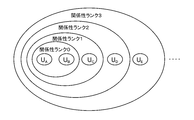
- the relationship rank indicates the degree of closeness of the relationship with the user A, and indicates that the relationship with the user A is close (that is, close to the user A) in order of increasing rank.
- the relationship rank may be set in advance by the user, or based on an evaluation result based on the number of messages exchanged between users, the exchange frequency, the number of browsing, the number of registered common friends, and the like. It may be set as follows.
- the user terminal 2A creates, for example, a posted message MS0 shown in FIG. 3 based on the input of the user A who is the message sender, and transmits the created posted message MS0 to the information providing server 1.
- the posting message MS0 includes personal name data D10, address data D20, store name data D30, and moving image data D40.
- the information providing server 1 sends the message posted from the user A to the user terminals 2B to E in response to a request from the user terminals 2B to E operated by the users B to E or according to a destination defined in the message. I will send it.
- the information providing server 1 transmits a message to be transmitted to each of the users B to E according to the relationship rank between the user A who is a message sender and each of the users B to E who are viewers. It is assumed that the amount of information contained in is converted so as to decrease as the relationship with the sender becomes farther, and then transmitted.
- the amount of information included in the message is a measure indicating the difficulty of occurrence of the event indicated by the message (for example, the amount of information is larger as the event is less likely to occur (the event occurrence probability is lower)).
- the amount of information is larger as the event is less likely to occur (the event occurrence probability is lower).
- the amount of information in the obfuscated message will decrease.
- the first address is replaced with the second address indicating the area including the first address, or the personal name is changed.
- Substitution with attribute information (for example, age and sex) possessed by the individual is also included.
- the user B belonging to the relationship rank 0 with the user A may receive the message posted by the user A as it is.
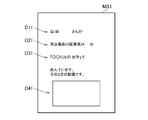
- user C belonging to relationship rank 1 with user A has personal name data D10 as personal name data D11 (only the surname of personal name data D10) out of messages posted by user A.
- Address data D20 is converted to address data D21 (address classification after “Higashishinagawa, Shinagawa-ku, Tokyo” is deleted from D20)
- store name data D30 is converted to store name data D31 (two characters of store name data D30). Is converted into a mask), and the moving image data D10 is converted into moving image data D11 (a still image of one frame of the moving image data D10).
- the user C receives a message in which the amount of information of messages that can be browsed is lower than that of the user B of rank 0.
- the user D belonging to the relationship rank 2 with the user A converts the personal name data D10 into personal name data D12 (initial of the personal name data D10) in the message posted by the user A.
- the address data D20 is converted into address data D22 (address classification after “Shinagawa-ku, Tokyo” in D20 is deleted), and the store name data D30 is converted into store name data D32 (four characters in the store name data D30 are masked).
- the moving image data D10 is converted into moving image data D11 (file name of the moving image data D10).
- the user D receives a message in which the amount of information of messages that can be browsed is lower than that of the user C of rank 1.
- the user E whose relationship with the user A belongs to rank 3 is that the personal name data D10 of the message posted by the user A is personal name data D13 (the handle name corresponding to the personal name data D10). ),
- the address data D20 is converted into address data D23 (the address section after “Tokyo” in D20 is deleted), and the store name data D30 is converted into store name data D33 (six characters in the store name data D30 are masked).
- the video data D10 is deleted after conversion.
- the user E receives a message in which the amount of information of messages that can be browsed is lower than that of the user D of rank 2.
- the post information is converted so that the amount of information based on the post information from the information sender decreases as the relationship between the information sender and the information viewer becomes far.
- the converted post information is provided to each information viewer.
- FIG. 7 shows a functional block diagram of the information providing server 1.
- the information providing server 1 includes a message acquisition unit 11, a conversion dictionary information storage unit 12, a conversion target element identification unit 13, a message storage unit 14, an information viewer identification unit 15, and a user information storage unit 16.
- the functions of the above-described units included in the information providing server 1 are stored in a storage unit in a computer including a control unit such as a CPU (Central Processing Unit), a storage unit such as a semiconductor memory or a magnetic disk device, and a communication unit such as a network interface. It may be realized by the control means executing the program to be executed. Note that the program may be supplied to the information providing server 1 in a state of being stored in the information storage medium, or may be supplied to the information providing server 1 via a data communication unit such as the Internet.
- a data communication unit such as the Internet.
- the message acquisition unit 11 acquires message information (post information) from the user terminal 2.
- the message information may include text data, image data (including still images and moving images), audio data, and the like.
- the message information may or may not include a destination (e-mail address, destination user identification information, etc.).
- the conversion dictionary information storage unit 12 includes, from the message information acquired by the message acquisition unit 11, specific dictionary information that specifies a data element to be converted and conversion rule information that defines a rule for converting the specified data element.
- address information for example, address information, contact information (telephone number, e-mail address, etc.), specific proper nouns (personal name, store name, etc.), image data, etc. are determined as data elements to be converted by specific dictionary information. It will be done.
- FIG. 8 shows an example of conversion rule information.
- the conversion rule information includes the conversion rule ID, the type of data element to be converted (address, contact information, personal name, store name, video), the data format of the conversion target information, and the conversion level.
- the conversion rule information is stored in association with each other.
- N is an integer of 2 or more
- the information amount of the data element decreases (that is, data converted at the conversion level (i + 1)).
- the information amount of the element has a relationship of smaller than the information amount of the data element converted at the conversion level i (i is an integer of 1 or more).
- the data element to be converted is address information and the address information has a data structure of [A1] (prefecture) [A2] (city) [A3] (ward) [A4]
- Conversion level 1 is [A1] (prefecture) [A2] (city) [A3] (district)
- conversion level 2 is [A1] (prefecture) [A2] (city)
- conversion level 3 is [ A1] (prefecture) and conversion level 4 (or higher) may be [deleted].
- the data element to be converted is contact information
- the contact information is configured in the form of a telephone number
- the conversion is performed.
- Level 1 may be a corresponding email address
- conversion level 2 may be a corresponding identifier
- conversion level 3 (or higher) may be [deleted].
- conversion level 1 corresponds to the last name or first name
- conversion level 2 corresponds to the first name and last name
- the conversion level 3 may be a handle name
- the conversion level 4 (or higher) may be [delete].
- the conversion level 1 for the number of characters of the proper noun (N is an integer of 1 or more)) is: [Mask number of characters of 25% or more of N], conversion level 2 [mask number of characters of 50% or more of N], conversion level 3 [mask number of characters of 75% or more of N], conversion level 4 ( (Or more) may be [deleted].
- the conversion level 1 is [one frame still image extracted from the moving image data]
- the conversion level 2 is [moving data file name]
- the conversion level 3 (Or more) may be [deleted].
- the conversion target element specifying unit 13 specifies a data element to be converted from the message information acquired by the message acquiring unit 11 based on the specific dictionary information stored in the conversion dictionary information storage unit 12. For example, the conversion target element specifying unit 13 generates, for each conversion target data element specified from the message information, for each conversion level generated based on the type of data, the conversion rule ID to be applied, or the conversion rule to be applied. These conversion candidate data may be stored in association with each other.
- the message storage unit 14 stores the message information acquired by the message acquisition unit 11 and the information of the conversion target data element specified by the conversion target element specifying unit 13 for the message information.
- FIG. 9 shows an example of message information stored in the message storage unit 14.
- the data type of the data element specified by the conversion target element specifying unit 13 for the message information is stored in association with the conversion candidate data for each conversion level.
- the message information stored in the message storage unit 14 is referred to as basic message information.
- the information viewer specifying unit 15 specifies a user (information viewer) who browses information based on the message information stored in the message storage unit 14. For example, when the destination is specified in the message information or when the destination user who notifies the message information about the user who is the sender of the message information is specified in advance, the information viewer specifying unit 15 The user ID of the information viewer may be specified based on the designated destination. In addition, the information viewer specifying unit 15, when the destination is not specified for the message information or the sender of the message information, the information viewer user based on the data received from the user terminal 2 when the message information is requested to be browsed The ID may be specified.
- the information viewer specifying unit 15 also determines the information viewer's information based on the data received from the user terminal 2 when the message information is requested to be browsed even when the destination is specified for the message information or the sender of the message information.
- the user ID may be specified.
- the user information storage unit 16 stores information about users.
- FIG. 10 shows an example of a user information management table stored in the user information storage unit 16.
- the user ID for identifying the user the user's name, initials, handle name, mail address, telephone number, group ID, and friend list information are stored in association with each other.
- the message history information storage unit 17 stores history information about information of messages sent and viewed by the user.
- FIG. 11 shows an example of a message history information management table stored in the message history information storage unit 17.
- a history data ID, a message ID, and a reply destination message ID (IDs for identifying a reply destination message when the message is a reply of the previous message).
- the message sender user ID
- the message viewer user ID
- the number of message destinations the transmission date and time
- the browsing date and time are stored in association with each other.
- the user relationship evaluation unit 18 evaluates the relationship between the message information sender and the message information viewer. Hereinafter, a specific example of the evaluation of the relationship between the sender of message information and the viewer of message information will be described.
- the user relationship evaluation unit 18 searches the message history information management table for a message transmitted from the sender of the target message information to the viewer of the target message information.
- the first evaluation value is calculated based on the number of retrieved messages or the posting frequency of messages calculated based on the retrieved messages (number of messages per unit period), and the first evaluation value is a plurality of Based on the range included in the rank (for example, when a0> a1> a2> a3, relationship rank 0: evaluation value is a0 or more, relationship rank 1: evaluation value is less than a0, a1 or more , Relationship rank 2: evaluation value less than a1, a2 or more, relationship rank 3: evaluation value less than a2, a3 or more, relationship rank 4: evaluation value less than a3, etc.), relationship between sender and viewer Good as possible to determine the rank (relationships rank) shown.
- the user relationship evaluation unit 18 may set a weight for each of the searched messages, and calculate the first evaluation value by adding the set weights.
- the weight may be set to 1 when the number of message destinations is 1, and the weight may be set to 1 / N when the number of message destinations is N (N is an integer of 1 or more). Good.
- the weight may be set to a fixed value (for example, 0.1), or the average number of destinations in the messages sent by the message sender in the past may be set. P and the weight may be set to 1 / P.
- the message for which the average number of destinations is calculated may be all messages sent in the past, or may be a message sent within a specified period.
- the user relationship evaluation unit 18 exchanges a message (for example, a response message) exchanged between the sender of the target message information and the viewer of the target message information from the message history information management table.
- the second evaluation value is calculated based on the number of retrieved messages or the exchange frequency of messages calculated based on the retrieved messages (the number of reply messages per unit period).
- relationship rank 2 is included in a range of a plurality of ranks (for example, when b0> b1> b2> b3, relationship rank 0: evaluation value is b0 or more, relationship rank 1: Evaluation value is less than b0, b1 or more, relationship rank 2: evaluation value is less than b1, b2 or more, relationship rank 3: evaluation value is less than b2, b3 or more, relationship rank 4: evaluation value is less than b3, etc. May as determining the rank (relationships rank) indicating the viewer relationships with the caller.
- the user relationship evaluation unit 18 includes, from the user information management table, a friend list associated with the sender of the target message information, a friend list associated with a viewer of the target message information,
- the third evaluation value is calculated based on the number of the searched friends, and the third evaluation value is included in which range of the plurality of ranks ( For example, when c0> c1> c2> c3, relationship rank 0: evaluation value is c0 or more, relationship rank 1: evaluation value is less than c0, c1 or more, relationship rank 2: evaluation value is less than c1, c2 or more
- the rank indicating the relationship between the sender and the viewer may be determined.
- the user relationship evaluation part 18 is good also as setting a weight about each of the said searched friend, and calculating the 3rd evaluation value by totaling the set weight.
- the number of message exchanges with the sender of the target message information or exchange frequency
- the number of message exchanges with the viewer of the target message information exchange frequency
- a higher weight may be set as both are larger.
- the conversion execution element determination unit 19 determines a data element (conversion execution element) for performing conversion for the viewer specified by the information viewer specifying unit 15 from the data elements to be converted included in the basic message information. .
- the conversion execution element determination unit 19 may determine all conversion target data elements included in the basic message information as conversion execution elements, or a user relationship evaluation unit for the sender and viewer of the basic message information.
- the ratio is determined according to the relationship rank evaluated in 18 (for example, relationship rank 1: 0%, relationship rank 2: 25%, relationship rank 3: 50%, relationship rank 4: 75%, (Relationship rank 5: 100%, etc.), and a conversion execution element may be selected from the conversion target data elements included in the basic message information based on the determined ratio.
- the conversion execution element determination unit 19 selects a conversion execution element from the conversion target data elements included in the basic message information
- the conversion execution element determination unit 19 converts the conversion target element from the one with the high priority set for the conversion target data element.
- An execution element may be selected.
- the priority of the data element to be converted may be determined for each type of data (for example, the priority order is personal name> address> contact> video> store name, etc.) It may be determined according to the amount of data included in the target data element (for example, the priority order is the order of the data element having the largest number of bytes).
- the priority determined for each data element type may be set in advance by a user who is a message sender.
- the conversion execution element determination part 19 is the same user as the user included in common with each friend list of the sender and viewer of the basic message information among the data elements to be converted included in the basic message information. This information (hereinafter referred to as common friend information) may be excluded. For example, when the relationship rank between the sender of the basic message information and the viewer is greater than or equal to a threshold (or greater than the threshold), the conversion execution element determination unit 19 uses the data element corresponding to the common friend information as the conversion execution element. The priority at the time of selection may be set lower than the priority (or priority of other data elements) predetermined for the data element.
- the conversion execution element determination part 19 uses the data element applicable to common friend information as a conversion execution element, when the relationship rank of the sender
- the priority at the time of selection may be set higher than the priority (or the priority of other data elements) predetermined for the data element.
- the message conversion unit 20 browses each data element (conversion execution element) determined by the conversion execution element determination unit 19 for the basic message information provided to the viewer specified by the information viewer specification unit 15. Conversion is performed at a conversion level corresponding to the evaluation result (rank) evaluated for the user relationship evaluation unit 18 for the person, and conversion message information is generated.
- the message conversion unit 20 converts the data element determined by the conversion execution element determination unit 19 in the basic message information to the conversion level corresponding to the rank obtained by the user relationship evaluation unit 18 (for example, rank i is the conversion level i). It may be converted into data. Specifically, the message conversion unit 20 selects the data element determined by the conversion execution element determination unit 19 in the basic message information from the conversion candidates for each conversion level determined for the data element. A conversion candidate corresponding to the rank obtained in 18 may be selected, and the data element may be replaced with the content of the selected conversion candidate.
- the converted message providing unit 21 provides the converted message information converted by the message converting unit 20 to the viewer specified by the information viewer specifying unit 15.
- the converted message providing unit 21 may transmit the converted message information generated for the viewer to the user terminal 2 operated by the viewer, or send it to a notification destination such as an email address associated with the viewer. It is good also as transmitting.
- a message to be posted does not include a destination, a message posted from the user terminal 2 is stored, and a message stored in response to a request from another user terminal 2 is stored.
- the case of providing will be described as an example.
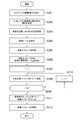
- FIG. 12 shows a flowchart of the message storage process in the first embodiment.
- the information providing server 1 acquires message information from the user terminal 2 operated by the message poster (S101), and the data element (conversion target) to be converted from the acquired message information. Elements D 1 to D N ) are extracted (S102).
- the element to be converted may be information represented by a predetermined format, information included in a predetermined dictionary, or the like.
- N in DN is the number of data elements extracted from the message information, and is an integer of 1 or more.
- the information providing server 1 initializes the variable i to 1 (S103), and converts the data type of the conversion target element Di (for example, address information, contact information (telephone number, mail address, etc.), personal name, store name, and image data. Is determined based on the dictionary information (S104), a conversion rule corresponding to the data type of Di is specified based on the dictionary information, and conversion candidates for each of a plurality of conversion levels for Di based on the specified conversion rule Is set (S105). Assuming that the conversion levels 1 to L (L is an integer of 2 or more) here, conversion candidates corresponding to the conversion levels 1 to L are generated so that the information amount decreases as the conversion level increases. Then, the information providing server 1 associates and stores the conversion target element Di and conversion candidates for each of the plurality of conversion levels set for the conversion target element Di (S106).
- the conversion levels 1 to L L is an integer of 2 or more
- the information providing server 1 increments the variable i (adds 1) (S108), returns to S104, and executes the subsequent processing again.
- the information providing server 1 stores the message information (S108) and ends the storage process.
- the message information stored in S108 may be stored in association with the user ID of the sender of the message information (for example, stored in the message history information management table).
- the information providing server 1 receives a message information browsing request (for example, a message ID related to the request and a user ID of the requester) from the user terminal 2 (S201), the information providing server 1 Information of the sender and the viewer of the message information (each user ID of the sender and the viewer) is specified (S202).
- a message information browsing request for example, a message ID related to the request and a user ID of the requester
- the information providing server 1 Information of the sender and the viewer of the message information (each user ID of the sender and the viewer) is specified (S202).
- the information providing server 1 searches and acquires message information related to the browsing request from the message storage unit 14 using the received message ID as a key (S205), and converts the conversion target data element included in the acquired message information.
- the data elements D 1 to D M to be executed are determined by the conversion execution element determination unit 19 (S206).
- M in DM is the number of data elements to be converted, and is an integer of 1 or more.
- the information providing server 1 initializes the variable i to 1 (S207), and converts the data element Di determined as the conversion execution element based on the conversion level L determined in S204 (S208). For example, the information providing server 1 may convert the data element Di using the conversion candidate corresponding to the conversion level L from the conversion candidates for each conversion level of the data element Di.
- the information providing server 1 increments (adds 1) the variable i (S210), returns to S208, and executes the subsequent processing again.
- the information providing server 1 converts the original message information (basic message information) based on the converted data elements D 1 to D M. Information is generated (S211), and the generated conversion message information is provided to the user terminal 2 related to the browsing request (S212).
- the above is the flow of message provision processing according to the first embodiment. According to the processing according to the first embodiment, even when the user who browses the message at the time of posting the message is undecided, the message whose information amount is suppressed according to the relationship between the sender of the message and the viewer of the message Will be provided to the viewer.
- FIG. 14 shows a flowchart of message providing processing according to the second embodiment.
- the information providing server 1 acquires message information (delivery message) whose destination is determined from the user terminal 2 (S301), and stores the acquired message information (S302).
- the message information storage process can be the same process as the flowchart (FIG. 12) described in the message storage process in the first embodiment, and a description thereof will be omitted.
- the information providing server 1 specifies the user U 1 ⁇ U L is the destination of the acquired message information S301 (S303).
- the destination may be specified in the message information, or may be determined in association with the user who is the sender of the message information.
- L in UL is the number of users who are destinations of message information, and is an integer of 1 or more.
- the information providing server 1 initializes the variable i to 1 (S304), and evaluates the relationship between the sender S of the message information and the destination user Ui by the user relationship evaluation unit 18 (S305).
- the information providing server 1 determines the data elements D 1 to D Ki to be converted among the conversion target data elements included in the message information by the conversion execution element determination unit 19 (S307). Ki is an integer of 1 or more.
- the information providing server 1 initializes the variable j to 1 (S308), and converts the data element Dj based on the conversion level Li determined in S306 (S309). For example, the information providing server 1 may convert the data content of the data element Dj using the conversion candidate corresponding to the conversion level Li from the conversion candidates for each conversion level of the data element Dj.
- the information providing server 1 increments (adds 1) the variable j (S311), returns to S309, and executes the subsequent processing again.
- the information providing server 1 converts the original message information (basic message information) based on the converted data elements D 1 to D Ki.
- Information Mi is generated (S312), and the generated conversion message information Mi is provided to the user Ui (S313).
- the information providing server 1 may transmit the converted message information Mi toward the destination information (mail address) of the user Ui, or transmit the converted message information Mi to the user terminal 2 operated by the user Ui. Also good.
- the information providing server 1 may update the history information in the message history information management table based on the transmitted message information.
- the information providing server 1 increments the variable i (adds 1) (S315), returns to S305, and executes the subsequent processing again. If the variable i has reached L in S314 (S314: Y), the information providing server 1 ends the process.
- the above is the flow of message provision processing according to the second embodiment. According to the processing according to the second embodiment, even if the message is delivered to a designated user, the amount of information in the message is determined according to the relationship between the message sender and the message viewer. Suppressed messages will be provided to the viewer.
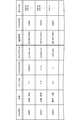
- FIG. 15 shows an example of conversion rule information.
- conversion rule information whose data type is an address and a personal name will be described.
- the data to be converted is an address (for example, B0 (country), B1 (prefecture), B2 (city), B3 (ward), B4, etc.)
- the data to be converted If the format is [B n ], [B n ] is converted to [B n-1 ], which is a higher address category at conversion level 1, and [B n ] is the next higher category at conversion level 2.
- [B n ] B n-2 ] and at conversion level 3, [B n ] is converted to [B n-3 ], which is the next higher level, and at conversion level 4, [B n ] is the next higher level, [B n-3 ].
- B n-4 ] may be converted.
- the address data may be replaced with addresses in a larger area including the original address as the conversion level increases.
- the above conversion is not limited to the case where the conversion target data is an address, and the conversion target data may be replaced with higher-order concepts as the conversion level increases.
- the data to be converted is a personal name
- the data to be converted (conversion target user name), the conversion target user name at the conversion level 1, and the conversion target user name.
- N is an integer equal to or greater than 1) attribute information
- the conversion target user name is converted to first to (N-1) th attribute information related to the conversion target user
- the conversion target user name may be converted into first to (N-2) th attribute information regarding the conversion target user.
- the conversion target user name may be deleted when Ni is 0 or less.
- FIG. 15 shows an example in which N is 3.
- the first attribute information is the user's gender
- the second attribute information is the user's age
- the information may be the relationship between the message sender and the conversion target user.
- the relationship between the user's sex, age, message sender, and conversion target user may be obtained by referring to the stored contents of a database that manages user information.
- the personal name data may be converted into one or more attribute information, and may be converted so that the number of displayed attribute information decreases as the conversion level increases.
- FIG. 16 shows an example of a posted message
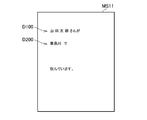
- FIGS. 17 to 19 show an example of a conversion message converted for each viewer based on the conversion rule information described in FIG. It is assumed that user A is a message sender and users B, C, D, and E are message viewers. Here, the relationship between the user A and the users B to E is as defined in FIG.
- FIG. 16 shows an example of a post message MS01 posted from the user A.
- the posted message MS11 includes personal name data D100 and address data D200.
- the posted message MS01 is transmitted to the information providing server 1 by the user terminal 2A.
- the information providing server 1 converts the message posted from the user A as necessary according to the relationship rank between the user A who is the sender of the message and each of the users B to E who are the viewers. Provided to users.
- the user B belonging to the relationship rank 0 with the user A may receive the message posted by the user A as it is.
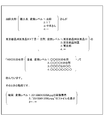
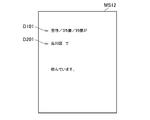
- the user C belonging to the relationship rank 1 with the user A includes the personal name data D100 in the message posted by the user A and is associated with the personal name data D101 (personal name data D100).
- the address data D200 is the address data D201 (the higher address of the address data D200)
- the message M12 converted into (segment) is received.
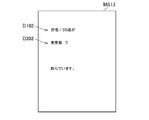
- the user D belonging to the relationship rank 2 with the user A includes the personal name data D100 in the message posted by the user A and the personal name data D102 (first name associated with the personal name data D100).
- the message M13 is converted into the attribute information (gender) and the second attribute information (age), and the address data D200 is converted into the address data D202 (address classification higher than D201).
- the user E whose relationship with the user A belongs to rank 3 includes the personal name data D100 in the message posted by the user A and the personal name data D103 (first name associated with the personal name data D100).
- the information providing server 1 determines the number of data elements to be converted among the data elements to be converted included in the message information according to the relationship rank between the sender and the viewer of the message information (for example, It may be determined that the number of data elements to be converted increases as the relationship between the sender and the viewer increases.
- the type of the data element to be converted is determined (for example, the type of the data element to be converted is increased as the relationship between the sender and the viewer is farther). Also good.
Landscapes
- Engineering & Computer Science (AREA)
- Theoretical Computer Science (AREA)
- Databases & Information Systems (AREA)
- Bioethics (AREA)
- General Health & Medical Sciences (AREA)
- Health & Medical Sciences (AREA)
- General Physics & Mathematics (AREA)
- Physics & Mathematics (AREA)
- General Engineering & Computer Science (AREA)
- Signal Processing (AREA)
- Computer Networks & Wireless Communication (AREA)
- Medical Informatics (AREA)
- Software Systems (AREA)
- Computer Security & Cryptography (AREA)
- Computer Hardware Design (AREA)
- Data Mining & Analysis (AREA)
- Computing Systems (AREA)
- Information Transfer Between Computers (AREA)
Abstract
Description
図1には、本発明の実施形態に係る情報伝達システムSのシステム構成図を示した。図1に示されるように、情報伝達システムSは、情報提供サーバ1と、1以上のユーザ端末2を含み、情報提供サーバ1は、インターネット等のネットワーク3を介して相互にデータ通信する。なお、本実施形態では、ユーザUAがユーザ端末2Aを、ユーザUBがユーザ端末2Bを、ユーザUCがユーザ端末2Cを、ユーザUDがユーザ端末2Dを、ユーザUEがユーザ端末2Eを操作することとするが、ユーザ端末2A~2Eの任意の1つを表す場合にはユーザ端末2と表記する。
以下説明する例では、ユーザAがメッセージの発信者であり、ユーザB,C,D,Eがメッセージの閲覧者であるとする。ここで、ユーザAとユーザB~Eのそれぞれの関係性は、図2に定められた通りとし、ユーザAとの関係が近い順に、ユーザB(関係性ランク0)>ユーザC(関係性ランク1)>ユーザD(関係性ランク2)>ユーザE(関係性ランク3)であるとする。例えば、関係性ランクは、ユーザAとの関係性の近しさの程度を表しており、ランクが小さい順にユーザAとの関係が近い(すなわちユーザAと親しい)ことを表している。なお、関係性ランクは、予めユーザにより設定されていることとしてもよいし、ユーザ間のメッセージの交換数、交換頻度、閲覧数、登録されている共通の友人の数等に基づく評価結果に基づいて設定されることとしてもよい。
次に、以上の処理を実現するために情報提供サーバ1に備えられる機能の一例について説明する。
次に、情報提供サーバ1により実行される処理の詳細を、フローチャートを参照しながら説明する。
まず、第1の実施例として、投稿されるメッセージに宛先が含まれておらず、ユーザ端末2から投稿されたメッセージを保存し、他のユーザ端末2からの要求に応じて保存されたメッセージを提供する場合を例として説明する。
図12には、第1の実施例におけるメッセージ保存処理のフローチャートを示した。
次に、図13を参照しながら、第1の実施例において、ユーザ端末2から保存されたメッセージ情報の閲覧要求を受け付けた場合に、閲覧要求に係るメッセージ情報を、当該メッセージ情報の発信者と閲覧者との関係に基づいて変換して、閲覧要求に係るユーザ端末2に提供する処理(メッセージ提供処理)の詳細について説明する。
次に、第2の実施例として、ユーザから投稿されるメッセージに1以上の宛先が定められている場合に、メッセージに定められたそれぞれの宛先のユーザに対して、投稿されたメッセージを変換して提供する処理について説明する。
ここで、メッセージ情報に含まれるデータの変換態様の他の例について図15乃至図19を参照しながら説明する。
Claims (15)
- 投稿者からの投稿情報を取得する取得手段と、
前記投稿者と閲覧者との関係に応じて決定した前記閲覧者に伝達する情報量のレベルに基づいて、前記投稿情報の情報量が低減するように前記投稿情報を変換する変換手段と、
前記変換された前記投稿情報を前記閲覧者に提供する提供手段と、
を含むことを特徴とする情報提供装置。 - 前記投稿情報の中から変換対象とする1以上のデータ要素を抽出する抽出手段をさらに含み、
前記変換手段は、前記投稿者と前記閲覧者との関係に応じて決定した情報量のレベルに基づいて、前記抽出手段により抽出したデータ要素のそれぞれの情報量を低減させる
ことを特徴とする請求項1に記載の情報提供装置。 - データの種別ごとにそれぞれ情報量のレベルが異なる複数の変換候補に変換する変換規則を定めた変換規則情報を記憶する記憶手段をさらに含み、
前記変換手段は、前記抽出手段により抽出したデータ要素のそれぞれを、該データ要素の種別について前記記憶手段に記憶される変換規則情報と、前記投稿者と前記閲覧者との関係に応じて決定した情報量のレベルとに基づいて変換する
ことを特徴とする請求項2に記載の情報提供装置。 - 前記投稿者と、1以上の閲覧者のそれぞれとの関係の近さを表す評価値を取得する評価値取得手段をさらに含み、
前記変換手段は、前記評価値取得手段により取得される評価値に基づいて、前記投稿者と第1の閲覧者の関係が、前記投稿者と第2の閲覧者の関係よりも遠いと判断される場合に、前記第1の閲覧者について変換した前記投稿情報の情報量が、前記第2の閲覧者について変換した前記投稿情報の情報量よりも小さくなるように変換する
ことを特徴とする請求項1乃至3のいずれかに記載の情報提供装置。 - 前記変換手段は、前記評価値取得手段により取得される評価値に基づいて、前記投稿者と第1の閲覧者の関係が、前記投稿者と第2の閲覧者の関係よりも遠いと判断される場合に、前記第1の閲覧者について前記投稿情報の中から抽出した変換対象とするデータ要素を変換したデータ要素の情報量が、前記第2の閲覧者について前記変換対象とするデータ要素を変換したデータ要素の情報量よりも小さくする
ことを特徴とする請求項4に記載の情報提供装置。 - 前記変換手段は、前記評価値取得手段により取得される評価値に基づいて、前記投稿者と第1の閲覧者の関係が、前記投稿者と第2の閲覧者の関係よりも遠いと判断される場合に、前記第1の閲覧者について前記投稿情報の中から抽出する変換対象とするデータ要素の数を、前記第1の閲覧者について前記投稿情報の中から抽出する変換対象とするデータ要素の数よりも多くする
ことを特徴とする請求項4に記載の情報提供装置。 - 前記変換手段は、前記抽出手段により抽出したデータ要素が固有名詞である場合に、該データ要素に含まれる文字列のうち、前記投稿者と前記閲覧者との関係に応じて決定した情報量のレベルに基づき決定した数の文字をマスク又は削除して、該データ要素を変換する
ことを特徴とする請求項2又は3に記載の情報提供装置。 - 前記変換手段は、前記抽出手段により抽出したデータ要素が住所データである場合に、該データ要素に含まれる住所の構成区分のうち、前記投稿者と前記閲覧者との関係に応じて決定した情報量のレベルに基づき決定した住所の構成区分を削除するか、又は、該データ要素に含まれる住所の構成区分を前記投稿者と前記閲覧者との関係に応じて決定した情報量のレベルに対応する上位の住所の構成区分に置換して、該データを変換する
ことを特徴とする請求項2又は3に記載の情報提供装置。 - 前記変換手段は、前記抽出手段により抽出したデータ要素に情報量のレベルに対応して置換する置換データが定められている場合に、該データ要素を前記投稿者と前記閲覧者との関係に応じて決定した情報量のレベルに対応する置換データに置換して、該データ要素を変換する
ことを特徴とする請求項2又は3に記載の情報提供装置。 - 前記変換手段は、前記抽出手段により抽出したデータ要素が動画像データである場合に、前記投稿者と前記閲覧者との関係に応じて決定した情報量のレベルに応じて、該動画像データを、該動画像データに含まれる静止画像、又は該動画像データの属性情報に変換する
ことを特徴とする請求項2又は3に記載の情報提供装置。 - 前記抽出手段は、前記投稿情報に含まれるデータ要素ごとに定められた優先順位に従って、前記投稿情報に含まれるデータ要素の中から変換対象とする1以上のデータ要素を抽出する
ことを特徴とする請求項2又は3に記載の情報提供装置。 - 前記投稿者と前記閲覧者の関係の近さを表す評価値を取得する評価値取得手段と、
前記投稿者と前記閲覧者について前記評価値取得手段により取得された評価値が閾値以上又は閾値より大きい場合に、前記投稿者に関連付けられたユーザのリストと、前記閲覧者に関連付けられたユーザのリストとにおいて共通するユーザのデータを変換対象として抽出する優先順位を所定の優先順位よりも低く設定する設定手段と、をさらに含む
ことを特徴とする請求項11に記載の情報提供装置。 - 前記投稿者と前記閲覧者の関係の近さを表す評価値を取得する評価値取得手段と、
前記投稿者と前記閲覧者について前記評価値取得手段により取得された評価値が閾値以下又は閾値より小さい場合に、前記投稿者に関連付けられたユーザのリストと、前記閲覧者に関連付けられたユーザのリストとにおいて共通するユーザのデータを変換対象として抽出する優先順位を所定の優先順位よりも高く設定する設定手段と、をさらに含む
ことを特徴とする請求項11に記載の情報提供装置。 - 投稿者からの投稿情報を取得する取得ステップと、
前記投稿者と閲覧者との関係に応じて決定した前記閲覧者に伝達する情報量のレベルに基づいて、前記投稿情報の情報量が低減するように前記投稿情報を変換する変換ステップと、
前記変換された前記投稿情報を前記閲覧者に提供する提供ステップと、
を含む情報提供方法。 - 投稿者からの投稿情報を取得する取得手段と、
前記投稿者と閲覧者との関係に応じて決定した前記閲覧者に伝達する情報量のレベルに基づいて、前記投稿情報の情報量が低減するように前記投稿情報を変換する変換手段と、
前記変換された前記投稿情報を前記閲覧者に提供する提供手段
としてコンピュータを機能させるためのプログラム。
Priority Applications (4)
| Application Number | Priority Date | Filing Date | Title |
|---|---|---|---|
| US14/899,847 US20160148018A1 (en) | 2013-06-21 | 2013-06-21 | Information providing device, information providing method, and program |
| JP2015522461A JP6149110B2 (ja) | 2013-06-21 | 2013-06-21 | 情報提供装置、情報提供方法及びプログラム |
| PCT/JP2013/067144 WO2014203402A1 (ja) | 2013-06-21 | 2013-06-21 | 情報提供装置、情報提供方法及びプログラム |
| CN201380077636.XA CN105378746B (zh) | 2013-06-21 | 2013-06-21 | 信息提供装置、信息提供方法 |
Applications Claiming Priority (1)
| Application Number | Priority Date | Filing Date | Title |
|---|---|---|---|
| PCT/JP2013/067144 WO2014203402A1 (ja) | 2013-06-21 | 2013-06-21 | 情報提供装置、情報提供方法及びプログラム |
Publications (1)
| Publication Number | Publication Date |
|---|---|
| WO2014203402A1 true WO2014203402A1 (ja) | 2014-12-24 |
Family
ID=52104163
Family Applications (1)
| Application Number | Title | Priority Date | Filing Date |
|---|---|---|---|
| PCT/JP2013/067144 Ceased WO2014203402A1 (ja) | 2013-06-21 | 2013-06-21 | 情報提供装置、情報提供方法及びプログラム |
Country Status (4)
| Country | Link |
|---|---|
| US (1) | US20160148018A1 (ja) |
| JP (1) | JP6149110B2 (ja) |
| CN (1) | CN105378746B (ja) |
| WO (1) | WO2014203402A1 (ja) |
Cited By (3)
| Publication number | Priority date | Publication date | Assignee | Title |
|---|---|---|---|---|
| US20160352895A1 (en) * | 2015-06-01 | 2016-12-01 | Samsung Electronics Co., Ltd. | Electronic device for outputting message and method for controlling the same |
| JP2017167895A (ja) * | 2016-03-17 | 2017-09-21 | 株式会社 ディー・エヌ・エー | ソーシャルネットワーキングサービスにおける投稿情報へのアクセス制限 |
| JP2021149740A (ja) * | 2020-03-23 | 2021-09-27 | 富士フイルムビジネスイノベーション株式会社 | 情報処理装置 |
Families Citing this family (2)
| Publication number | Priority date | Publication date | Assignee | Title |
|---|---|---|---|---|
| JP5959072B2 (ja) | 2014-09-29 | 2016-08-02 | インターナショナル・ビジネス・マシーンズ・コーポレーションInternational Business Machines Corporation | 入力文字列に関連付けられた変換候補を表示する方法、その電子装置及びサーバ・コンピュータ、並びに電子装置用プログラム及びサーバ・コンピュータ用プログラム |
| CN108710807B (zh) * | 2018-07-16 | 2023-06-30 | 国网安徽省电力有限公司亳州供电公司 | 基于地区电能系统越权管理方法及其系统 |
Citations (8)
| Publication number | Priority date | Publication date | Assignee | Title |
|---|---|---|---|---|
| JP2004102381A (ja) * | 2002-09-05 | 2004-04-02 | Sony Corp | 情報提供装置および方法、並びにプログラム |
| WO2007080629A1 (ja) * | 2006-01-10 | 2007-07-19 | Fujitsu Limited | 携帯型端末装置、アドレス帳転送装置、携帯型端末装置における情報の表示方法、アドレス帳転送方法、およびコンピュータプログラム |
| JP2007193611A (ja) * | 2006-01-19 | 2007-08-02 | Looops Communications Inc | 会員制コミュニティサイトにおけるプロフィール情報管理方式 |
| JP2008301442A (ja) * | 2007-06-04 | 2008-12-11 | Mixi Inc | 動画共有システム、ユーザ端末装置及びプログラム |
| WO2012067213A1 (ja) * | 2010-11-16 | 2012-05-24 | 日本電気株式会社 | 情報処理システム及び匿名化方法 |
| WO2012070571A1 (ja) * | 2010-11-22 | 2012-05-31 | 株式会社メキキ | Sns統括サイト管理装置、及びsns統括サイトを利用した情報開示方法 |
| JP2012113634A (ja) * | 2010-11-26 | 2012-06-14 | Ntt Docomo Inc | 表示装置、開示制御装置、開示制御方法、及びプログラム |
| JP2012530321A (ja) * | 2009-06-16 | 2012-11-29 | フェイスブック,インク. | ソーシャルネットワークにおける選択的コンテンツアクセス性 |
Family Cites Families (9)
| Publication number | Priority date | Publication date | Assignee | Title |
|---|---|---|---|---|
| JP4261099B2 (ja) * | 2001-01-05 | 2009-04-30 | 富士通株式会社 | 文書匿名化装置、方法、匿名化プログラムを記録したコンピュータ読取り可能な記録媒体及びプログラム |
| JP3578450B2 (ja) * | 2001-06-29 | 2004-10-20 | 株式会社東芝 | 電子文書の実名語/匿名語マップ作成装置及びプログラム、電子文書の匿名化装置及びプログラム、電子文書の実名化装置及びプログラム |
| US20090055477A1 (en) * | 2001-11-13 | 2009-02-26 | Flesher Kevin E | System for enabling collaboration and protecting sensitive data |
| JP2006236264A (ja) * | 2005-02-28 | 2006-09-07 | Toshiba Corp | コミュニケーション管理装置 |
| US20070106551A1 (en) * | 2005-09-20 | 2007-05-10 | Mcgucken Elliot | 22nets: method, system, and apparatus for building content and talent marketplaces and archives based on a social network |
| CN101035109B (zh) * | 2006-03-06 | 2010-09-08 | 腾讯科技(深圳)有限公司 | 一种对网上发布的个人信息进行管理的方法和系统 |
| US10007895B2 (en) * | 2007-01-30 | 2018-06-26 | Jonathan Brian Vanasco | System and method for indexing, correlating, managing, referencing and syndicating identities and relationships across systems |
| KR100768127B1 (ko) * | 2007-04-10 | 2007-10-17 | (주)올라웍스 | 가독성 데이터로부터 인간 관계를 추론하는 방법과 가독성데이터를 이용하여 디지털 데이터 내의 인물 식별을 통해태그를 부여하는 방법 및 시스템 |
| US8751917B2 (en) * | 2011-11-30 | 2014-06-10 | Facebook, Inc. | Social context for a page containing content from a global community |
-
2013
- 2013-06-21 JP JP2015522461A patent/JP6149110B2/ja active Active
- 2013-06-21 CN CN201380077636.XA patent/CN105378746B/zh active Active
- 2013-06-21 WO PCT/JP2013/067144 patent/WO2014203402A1/ja not_active Ceased
- 2013-06-21 US US14/899,847 patent/US20160148018A1/en not_active Abandoned
Patent Citations (8)
| Publication number | Priority date | Publication date | Assignee | Title |
|---|---|---|---|---|
| JP2004102381A (ja) * | 2002-09-05 | 2004-04-02 | Sony Corp | 情報提供装置および方法、並びにプログラム |
| WO2007080629A1 (ja) * | 2006-01-10 | 2007-07-19 | Fujitsu Limited | 携帯型端末装置、アドレス帳転送装置、携帯型端末装置における情報の表示方法、アドレス帳転送方法、およびコンピュータプログラム |
| JP2007193611A (ja) * | 2006-01-19 | 2007-08-02 | Looops Communications Inc | 会員制コミュニティサイトにおけるプロフィール情報管理方式 |
| JP2008301442A (ja) * | 2007-06-04 | 2008-12-11 | Mixi Inc | 動画共有システム、ユーザ端末装置及びプログラム |
| JP2012530321A (ja) * | 2009-06-16 | 2012-11-29 | フェイスブック,インク. | ソーシャルネットワークにおける選択的コンテンツアクセス性 |
| WO2012067213A1 (ja) * | 2010-11-16 | 2012-05-24 | 日本電気株式会社 | 情報処理システム及び匿名化方法 |
| WO2012070571A1 (ja) * | 2010-11-22 | 2012-05-31 | 株式会社メキキ | Sns統括サイト管理装置、及びsns統括サイトを利用した情報開示方法 |
| JP2012113634A (ja) * | 2010-11-26 | 2012-06-14 | Ntt Docomo Inc | 表示装置、開示制御装置、開示制御方法、及びプログラム |
Cited By (6)
| Publication number | Priority date | Publication date | Assignee | Title |
|---|---|---|---|---|
| US20160352895A1 (en) * | 2015-06-01 | 2016-12-01 | Samsung Electronics Co., Ltd. | Electronic device for outputting message and method for controlling the same |
| CN107637025A (zh) * | 2015-06-01 | 2018-01-26 | 三星电子株式会社 | 用于输出消息的电子装置及其控制方法 |
| US10389873B2 (en) * | 2015-06-01 | 2019-08-20 | Samsung Electronics Co., Ltd. | Electronic device for outputting message and method for controlling the same |
| JP2017167895A (ja) * | 2016-03-17 | 2017-09-21 | 株式会社 ディー・エヌ・エー | ソーシャルネットワーキングサービスにおける投稿情報へのアクセス制限 |
| JP2021149740A (ja) * | 2020-03-23 | 2021-09-27 | 富士フイルムビジネスイノベーション株式会社 | 情報処理装置 |
| JP7501023B2 (ja) | 2020-03-23 | 2024-06-18 | 富士フイルムビジネスイノベーション株式会社 | 情報処理装置 |
Also Published As
| Publication number | Publication date |
|---|---|
| CN105378746A (zh) | 2016-03-02 |
| US20160148018A1 (en) | 2016-05-26 |
| CN105378746B (zh) | 2018-06-26 |
| JPWO2014203402A1 (ja) | 2017-02-23 |
| JP6149110B2 (ja) | 2017-06-14 |
Similar Documents
| Publication | Publication Date | Title |
|---|---|---|
| CN102316046B (zh) | 向社交网络中的用户推荐信息的方法和装置 | |
| JP5156879B1 (ja) | 情報提示制御装置及び情報提示制御方法 | |
| US9723102B2 (en) | Gathering information about connections in a social networking service | |
| CN104156392B (zh) | 好友及应用个性化推荐方法及系统 | |
| JP6149110B2 (ja) | 情報提供装置、情報提供方法及びプログラム | |
| CN104022940A (zh) | 基于即时通信的信息处理方法、装置及系统 | |
| CN107146112A (zh) | 一种移动互联网广告投放方法 | |
| JP7206761B2 (ja) | 情報処理装置 | |
| US10990620B2 (en) | Aiding composition of themed articles about popular and novel topics and offering users a navigable experience of associated content | |
| WO2005116873A1 (en) | Contents search system for providing reliable contents through network and method thereof | |
| JP2004127196A (ja) | コミュニティ形成支援システム、その端末、サーバ及びプログラム | |
| US8843574B2 (en) | Electronic mail system, user terminal apparatus, information providing apparatus, and computer readable medium | |
| JP2021135602A (ja) | 情報処理装置、情報処理システムおよびプログラム | |
| KR20130049687A (ko) | 네트워크 서비스에서 친구 랭킹을 제공하는 방법 및 이를 위한 시스템 | |
| JP5323896B2 (ja) | 関係性作成装置及び方法 | |
| CN117278508B (zh) | 5g消息聊天机器人的推荐方法、装置以及电子设备 | |
| JP2008158792A (ja) | ネットワークサーバ及び制御方法 | |
| JP2020135673A (ja) | 投稿評価システム及び方法 | |
| KR101616788B1 (ko) | 콘텐츠의 테마를 생성하는 방법, 장치 및 시스템 | |
| JP2012242859A (ja) | グラフ生成装置およびプログラム | |
| JP5665683B2 (ja) | 重要度判定装置、重要度判定方法およびプログラム | |
| KR20050112882A (ko) | 신뢰성 있는 컨텐츠를 제공하는 컨텐츠 검색 시스템 및 그방법 | |
| JP6290747B2 (ja) | コンテンツ提供装置、コンテンツ提供のための方法およびプログラム | |
| JP2015064650A (ja) | 情報処理装置、記事情報生成方法およびプログラム | |
| JP6879953B2 (ja) | 情報処理装置、情報処理方法、およびプログラム |
Legal Events
| Date | Code | Title | Description |
|---|---|---|---|
| 121 | Ep: the epo has been informed by wipo that ep was designated in this application |
Ref document number: 13887220 Country of ref document: EP Kind code of ref document: A1 |
|
| ENP | Entry into the national phase |
Ref document number: 2015522461 Country of ref document: JP Kind code of ref document: A |
|
| WWE | Wipo information: entry into national phase |
Ref document number: 14899847 Country of ref document: US |
|
| NENP | Non-entry into the national phase |
Ref country code: DE |
|
| 122 | Ep: pct application non-entry in european phase |
Ref document number: 13887220 Country of ref document: EP Kind code of ref document: A1 |