WO2014196341A1 - コンテンツ中継装置、コンテンツフロー中継方法、および記録媒体 - Google Patents
コンテンツ中継装置、コンテンツフロー中継方法、および記録媒体 Download PDFInfo
- Publication number
- WO2014196341A1 WO2014196341A1 PCT/JP2014/063135 JP2014063135W WO2014196341A1 WO 2014196341 A1 WO2014196341 A1 WO 2014196341A1 JP 2014063135 W JP2014063135 W JP 2014063135W WO 2014196341 A1 WO2014196341 A1 WO 2014196341A1
- Authority
- WO
- WIPO (PCT)
- Prior art keywords
- content
- transfer
- flow
- priority
- destination
- Prior art date
- Legal status (The legal status is an assumption and is not a legal conclusion. Google has not performed a legal analysis and makes no representation as to the accuracy of the status listed.)
- Ceased
Links
Images



Classifications
-
- H—ELECTRICITY
- H04—ELECTRIC COMMUNICATION TECHNIQUE
- H04L—TRANSMISSION OF DIGITAL INFORMATION, e.g. TELEGRAPHIC COMMUNICATION
- H04L67/00—Network arrangements or protocols for supporting network services or applications
- H04L67/50—Network services
- H04L67/60—Scheduling or organising the servicing of application requests, e.g. requests for application data transmissions using the analysis and optimisation of the required network resources
- H04L67/61—Scheduling or organising the servicing of application requests, e.g. requests for application data transmissions using the analysis and optimisation of the required network resources taking into account QoS or priority requirements
Definitions
- the present invention relates to a content relay device that relays a plurality of content transfer flows simultaneously, and relates to a content relay device and a relay method thereof that reduce the average content transfer time.
- FTTH Fiber To The Home
- LTE long term evolution
- LTE-Advanced and WiMAX2 Worldwide Interoperability for Microwave Access 2
- the allocated disk space can be used for content sharing / publication.
- SNS is a service provided by a community-type website that supports the connection between people, and also functions as a content server that shares and publishes content.
- a content transfer flow is generated between a terminal and a server when content is uploaded to or downloaded from an online space.
- These application services have a problem that the content transfer time increases due to congestion of the network and content server.
- QoS for each content transfer flow, optimization of the communication resource allocation amount, energy consumption, and the like.
- the content server it is necessary to consider the disk size, cache size, processing capability, energy consumption, and the like.
- the resource management for these optimizations is all allocation optimization processing within a finite number, and is also in a relationship with other content transfer flows.
- the transfer processing of the large size content increases the average transfer time of the entire system.
- the information provider would like to upload the content quickly and provide the content quickly to the user, and it would be nice if the user side could also access the content comfortably.
- a telecommunication carrier that provides an access network and a backbone, ISP (Internet Service Provider) will also want to provide users with a comfortable content transmission path.
- ISP Internet Service Provider
- Non-Patent Document 1 discloses a method in which the content server shortens the average content transfer time by performing transfer scheduling according to the transfer content size for each content transfer flow. . Further, in Patent Document 1, in a packet relay device that relays a content transfer flow between a content server and a terminal, transfer scheduling approximately according to each content size is executed to reduce the average content transfer time. The method is disclosed. In this method, received packets stored in a connection queue with a small amount of data transfer after connection establishment are given priority over received packets stored in a connection queue with a large amount of data transfer after connection establishment. Forward.
- Non-Patent Document 1 As mentioned in the above prior art, optimization focusing on the past content average transfer time has been studied. However, the inventors consider a more efficient network relay device. At this time, in addition to considering some factors, a general-purpose optimization method for relaying many content transfers simultaneously and at high speed is examined. If the technical problems of Non-Patent Document 1 and Patent Document 1 are listed, it can be pointed out that when there are a plurality of content servers, the average content transfer time as a whole system cannot be shortened. In the technique described in Non-Patent Document 1, transfer scheduling is performed for each content server, and the average transfer time is reduced for each content server. For this reason, a portion in which the average content transfer time cannot be minimized occurs in the entire system.
- Non-Patent Document 1 and Patent Document 1 the inventors cannot reduce the average content transfer time as a whole system only by performing transfer scheduling based only on the content size for each content transfer flow.
- the technique of Patent Document 1 also has a problem that the content size is not reliably grasped. For this reason, it is impossible to reduce the average transfer time of reliable contents. This is because transfer scheduling is performed in the transport layer, and the content size for each content transfer flow is estimated from the data transfer amount after the connection is established.
- the present invention provides a content relay device, a content flow relay method, and a recording medium capable of reducing the average transfer time over all contents as a whole relay mechanism when relaying a plurality of content transfer flows simultaneously.
- the content relay device includes a data storage unit that temporarily stores content data when relaying a plurality of content transfer flows, and a transfer priority for the stored content data toward a destination receiving device group.
- a data transfer unit that transfers the content transfer flow as a content transfer flow
- a flow priority calculation unit that calculates a priority for the plurality of content transfer flows
- a priority destination for the destinations of the plurality of content transfer flows.
- the content flow relay method when relaying a plurality of content transfer flows, the content data is temporarily stored in a storage unit, and the stored content data is transferred to a destination receiving device group. Transfer each content transfer flow reflecting the priority.
- the priority order is calculated for the plurality of content transfer flows to be relayed, and the priority destination is selected for the destination of the plurality of content transfer flows.
- the priority order of the content forwarding flow to the preferred destination reflects the flow priority order for the remaining content forwarding flows.
- the transfer priority of each transfer flow is determined sequentially in the order of transfer and received.
- a recording medium recording a program according to the present invention is stored in a control unit of a device that operates as a content relay device, and a data storage unit that temporarily stores content data when relaying a plurality of content transfer flows.
- a data transfer unit that transfers the content data to the destination receiving device group as a content transfer flow by reflecting the transfer priority, and a flow priority calculation unit that calculates a priority for the plurality of content transfer flows; , Based on the priority order selection unit for selecting a priority destination for the destinations of the plurality of content transfer flows, and the priority order for the transfer flow to be relayed and the selection result for the priority destination.
- the remaining content transfer flow The order in which the rank order is forwarded is reflected, characterized in that to operate as scheduling part, for sequentially determining the transfer priority of the individual transfer flow.
- a content relay apparatus capable of reducing the average transfer time over all contents as a whole relay mechanism when simultaneously relaying a plurality of content transfer flows are provided. it can.
- FIG. 1 is a block diagram illustrating a configuration of a content relay apparatus according to the embodiment.
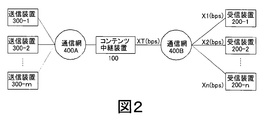
- FIG. 2 is a network configuration diagram for explaining the operation of the content relay apparatus according to the embodiment.
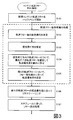
- FIG. 3 is a flowchart illustrating an operation example of the content relay apparatus according to the embodiment.
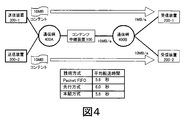
- FIG. 4 is an explanatory diagram illustrating an operation result example of the content relay device according to the embodiment.
- FIG. 5 is an explanatory diagram illustrating an operation result example of the content relay device according to the embodiment.
- FIG. 6 is an explanatory diagram illustrating an operation result example of the content relay device according to the embodiment.
- the embodiment of the present invention includes a content relay device 100 and a communication network including a WAN (Wide Area Network), a dedicated line, an access line, and the like.
- the communication network may be a wireless connection.
- the communication network side includes a reception device group and a transmission device group.
- the communication network also includes a relay device (previous device) that becomes an adjacent transfer source of a flow and a relay device (next device) that becomes an adjacent transfer destination of a flow in relation to content transmission.
- an arbitrary transmitting device group registers content in a receiving device that is a destination via the content relay device 100.
- Each transmission device may be a computer having a function of transmitting content.
- Each receiving device may be a computer having a function of receiving content. It is also possible for an arbitrary transmission device to simultaneously transmit a plurality of content transfer flows to the same or different devices (same or different destination IP addresses). Similarly, any receiving device can simultaneously receive a plurality of content transfer flows from the same or different devices (same or different source IP addresses).
- the receiving device may correspond to a content server and the transmitting device may correspond to a terminal.
- the receiving device may correspond to a terminal
- the transmitting device may correspond to a content server.
- the content relay apparatus 100 is divided into a general relay control unit 110, a storage unit 120, and a communication unit 130.
- the specific configuration of the present invention is not limited to the configuration of the present embodiment, and the block configuration can be appropriately separated and merged.
- the relay control unit 110 of the content relay apparatus 100 includes a data storage unit 111, a flow priority order calculation unit 112, a priority destination selection unit 113, a schedule unit 114, and a data transfer unit 115.
- the data storage unit 111 uses the storage unit 120 to buffer content transfer traffic from the transmission source to the reception destination.
- the flow priority calculation unit 112 calculates a priority between flows for a plurality of content transfer flows.
- the flow priority calculation unit 112 preferably includes a configuration capable of estimating the untransmitted content size and the remaining processing time for each content transfer flow.
- the remaining processing time for each content transfer flow may be estimated, and the priority for each flow may be calculated in accordance with each remaining processing time.
- the unsent content size estimation process for example, the unsent content size can be obtained from the content size obtained by header analysis and the buffered size.
- the remaining processing time estimation process the remaining processing time can be obtained from the content size and the transfer rate. It is desirable that the priorities be ranked so that all contents are transferred at the fastest speed when the current state is maintained. Note that prioritization may be changed based on other factors (for example, priority assigned to content, content type, communication protocol, etc.).
- the priority destination selection unit 113 estimates the available bandwidth between the content relay device 100 and the receiving device (destination IP address) for each content transfer flow, and determines a destination that has priority on the basis of the available bandwidth. It is desirable to be configured to select. A plurality of preferential destinations may be determined and operated. Note that when the receiving device is a mobile terminal or a terminal that dynamically changes the IP address, the transfer rate varies greatly. Therefore, the speed variation rate may be obtained and it may be determined based on the variation rate whether or not it is included in the priority destination. In other words, it may be set so that priority setting is not performed for a destination having an indeterminate transfer rate.
- the scheduling unit 114 determines the transfer priority of each content transfer flow based on the flow priority and the selection result of the priority destination for the content transfer flows to be relayed simultaneously, and schedules the sequential transfer order. And registered in the schedule storage unit 122. In this scheduling, the transfer priority of each transfer flow is determined in the order in which the flow priority order is reflected for the remaining content transfer flows after the priority of the transfer flow to the priority destination. In addition, prioritize all transfer flows that have been selected without giving priority to all transfer flows to priority destinations, and then schedule the remaining content transfer flows to reflect the flow priority order. Therefore, more efficient relay can be achieved.
- the content relay device 100 sequentially sets a queue for each content transfer flow (a memory for storing data waiting for transmission) in the buffer area 121. Then, the new content transfer flow is buffered together with other transfer flows. At this time, the content relay apparatus 100 has already relayed a plurality of content transfer flows.
- the data transfer unit 115 sends the content data stored in the queue for each content transfer flow to the destination receiving device in accordance with the schedule reflecting the transfer priority of each content transfer flow registered in the schedule storage unit 122 Forward towards. In this data transfer process, each content transfer flow is sent out so as to be received by one or more relay apparatuses serving as adjacent transfer destinations.
- the storage unit 120 of the content relay apparatus 100 includes a ROM (Read Only Memory), a RAM (Random Access Memory), an EEPROM (Electrically Erasable Programmable Read Only Memory), a nonvolatile RAM, a flash memory, a disk, and the like.
- a buffer area 121 and a schedule storage unit 122 are included.
- a queue is set for each content transfer flow for an arbitrary transmitting / receiving device (an arbitrary receiving device and an arbitrary transmitting device).
- the schedule storage unit 122 the transfer priority of the content transfer flow determined by the schedule unit 114 is registered.
- the communication unit 130 of the content relay apparatus 100 is connected to various communication devices including a reception apparatus group and a transmission apparatus group via a communication network such as an adjacent relay apparatus, and enables data transmission / reception.
- a content transfer flow from an arbitrary transmission device to a specific reception device occurs through the content transfer device 100
- the content relay device 100 identifies the content transfer flow and places a new content transfer flow queue in the buffer area 121. Set and start buffering of new content transfer flows.
- the content relay device 100 uses the content data stored in the queue for each content transfer flow for each receiving device. Forward to the destination.
- FIG. 2 is a logical configuration diagram illustrating a network configuration for explaining the operation of the content relay apparatus 100.
- the available bandwidth between the content relay device 100 and the receiving device 200-1 is X1 (bps)
- the available bandwidth between the receiving device 200-2 is X2 (bps)
- the available bandwidth is assumed to be Xn (bps).
- the values of X1, X2,..., Xn can be estimated from past content (content) transfer rates between the content relay apparatus 100 and the receiving apparatus 200. It is desirable to obtain the rate of change in speed.
- the transfer rate may be obtained and used for each time zone.
- the usable bandwidth between the content relay apparatus 100 and the communication network 400B is assumed to be XT (bps).
- the value of XT can be estimated from the total value of the content transfer rates when the content relay device 100 simultaneously transfers content to a plurality of receiving devices 200 that are the destinations.
- the available bandwidth is also related to the bandwidth limitation control for the communication network 400B.
- the content relay apparatus 100 sets a queue for each content transfer flow and starts buffering the content transfer flow (S101).
- the content relay apparatus 100 sets the flow priority order in ascending order of the residual processing time value of each content transfer flow (S102).
- the remaining processing time can be calculated by, for example, “untransmitted content size ⁇ available bandwidth of receiving device (destination IP address)”.
- the content relay device 100 performs estimation processing on the available bandwidth between the content relay device 100 and each receiving device 200 in advance or dynamically, and absolute conditions and / or relative conditions based on the individual available bandwidths. Based on the above, a receiving device (destination IP address) having priority is selected (S103).
- an available bandwidth is set as Xi
- a destination where the available bandwidth Xi is equal to or smaller than a threshold value (XT / n) is selected as a priority destination. If this condition “Xi ⁇ (XT / n)” is satisfied, a plurality of destinations may be selected as priority destinations. In addition, a priority order may be set relatively within a plurality of destinations that satisfy the conditions.
- the content relay device 100 selects a predetermined number in order from the highest priority transfer flow in the content transfer flow sent to the priority destination for each priority receiving device, and executes prioritization according to the flow priority (S104).
- a transfer flow with the highest priority is selected from the transfer flow group sent to each priority destination, and the flow priority is high in the maximum transfer flow group.
- the transfer priority may be set in order. For the upper range, an arbitrary number from the upper level or a flow having a predetermined threshold value or more may be selected.
- the content relay apparatus 100 determines the transfer priority based on each flow priority so that the remaining transfer flow group that has not been determined in S104 is lower than the determined transfer flow group. (S105).
- prioritization according to the flow priority order in the content transfer flow group to the priority destination is performed, and then the priority order is lower in the content transfer flow group.
- This content transfer flow group may be operated so as to determine the transfer priority based on the flow priority order together with the remaining content transfer flow groups.
- the lower range can be selected such as the remaining flow group excluding an arbitrary number from the upper level, the flow group within a predetermined ratio from the lower level, and all the flow groups below a predetermined threshold.
- the content relay apparatus 100 performs scheduling (S106) by reflecting the transfer priority of each determined content transfer flow group, and sets the content data stored in the queue for each content transfer flow as the destination. Is appropriately sent to the receiving apparatus 200 (S107).
- the content average transfer times at which the transmission device 300-1 and the transmission device 300-2 finish transmitting the content data to the reception device 200-1 and the reception device 200-2 are different in priority
- the simulation results are shown in the trial instead of the sequencing technique. Also, the simulation examples in each figure have different network network transfer rates.
- a priority ordering technique to be compared a general packet FIFO (First In First Out) technique used in the current Internet, the disclosed technique disclosed in Non-Patent Document 1, and the priority ordering technique described in the above embodiment are used. Applied.
- the resource amount of the content relay apparatus 100 used in each prioritization technique the same amount that does not cause congestion is assigned. In FIG.
- the available bandwidth between the content relay device 100 and the communication network 400B is 10 MByte / s
- the available bandwidth between the content relay device 100 and the reception device 200-1 is 1 MByte / s
- the content relay device 100 and the reception are received. It is assumed that the available bandwidth between the devices 200-1 is 10 MByte / s.
- the average transfer time is 5.6 seconds in the case of the Packet FIFO and the proposed technology, which is smaller than the average transfer time of 6.0 seconds in the case of the prior art disclosed in Non-Patent Document 1. The value is shown. In FIG.
- the usable bandwidth between the content relay device 100 and the communication network 400B is 10 MByte / s
- the usable bandwidth between the content relay device 100 and the receiving device 200-1 is 5 Mbyte / s
- the content relay device 100 and the reception are received. It is assumed that the available bandwidth between the devices 200-1 is 10 MByte / s. At this time, in all cases, the average transfer time was 2.0 seconds, and there was no difference in value between the technologies.
- the usable bandwidth between the content relay device 100 and the communication network 400B is 10 MByte / s
- the usable bandwidth between the content relay device 100 and the receiving device 200-1 is 9 MByte / s
- the content relay device 100 and the reception are received.
- the available bandwidth between the devices 200-1 is 10 MByte / s.
- the average transfer time is 2.0 seconds in the case of the packet FIFO, and 1.6 seconds is shown in the case of the prior art disclosed in Non-Patent Document 1 and the proposed technology, which is a smaller value.
- the average transfer time in the case of the Packet FIFO and the prior art disclosed in Non-Patent Document 1 may be relatively larger than other technologies, whereas In this case, the average transfer time was always equal or smaller than other technologies.
- this content relay apparatus can reduce the average content transfer time as a whole system even in a situation where a plurality of transmission apparatuses (eg, content servers) exist for each content transfer flow. .
- the size of the transfer content can be reflected in the operation. That is, according to the present invention, when a plurality of content transfer flows are simultaneously relayed, the content relay apparatus, the content flow relay method, and the recording medium capable of reducing the average transfer time over the entire content as the entire relay mechanism Can provide.
- the specific configuration of the present invention is not limited to the above-described embodiment, and changes such as separation and merging of block configurations and replacement of procedures are free as long as the gist of the present invention and the functions described are satisfied. . Moreover, what is necessary is just to implement
- a content relay program is expanded in the RAM, and hardware such as a control unit (CPU) is operated based on this program to realize various means.
- the program may be recorded in a fixed manner on a recording medium and distributed.
- the program recorded on the recording medium is read into a memory via a wired, wireless, or recording medium itself, and operates a control unit or the like.
- Examples of the recording medium include an optical disk, a magnetic disk, a semiconductor memory device, and a hard disk.
- the information processing apparatus operating as the content relay apparatus is based on the content relay program developed in the RAM, the data storage means, the flow priority order calculation means, the priority destination selection means. It can be realized by operating as a schedule unit and a data transfer unit.
- a data storage unit that temporarily stores content data when relaying a plurality of content transfer flows;
- a data transfer unit that transfers the stored content data to the destination receiving device group as a content transfer flow reflecting the transfer priority;
- a flow priority calculation unit for calculating a priority for the plurality of content transfer flows;
- a priority destination selection unit that selects a priority destination for the destinations of the plurality of content transfer flows; Based on the priority order regarding the forwarding flow to be relayed and the selection result regarding the preferred destination, the priority order of the content forwarding flow to the preferred destination is reflected on the remaining content forwarding flows, and the flow priority order is reflected.
- a schedule part for sequentially determining the transfer priority of each transfer flow in the transfer order comprising: [Appendix 2] The content relay according to the above supplementary note, wherein the priority destination selection unit estimates a usable bandwidth between the own device and each destination device, and selects a priority destination on the basis of the usable bandwidth. apparatus. [Appendix 3] The content relay apparatus according to the above supplementary note, wherein the flow priority calculation unit estimates a residual processing time for each content transfer flow, and calculates a priority of each flow based on the residual processing time.
- the flow priority calculation unit uses the value obtained by dividing the untransmitted content size by the available bandwidth between the own device and the destination device for each content transfer flow as the remaining processing time, and individually using the remaining processing time as a reference.
- the content relay apparatus according to the above supplementary note, wherein the priority order of the flows is calculated.
- the priority destination selection unit selects, as a priority destination, a destination that is equal to or smaller than a value obtained by dividing the usable bandwidth value of the communication network between the own device and each destination device by the number of destination devices.
- the content relay device according to the above supplementary note.
- the scheduling unit prioritizes a part of the content transfer flow to be prioritized based on the priority order regarding the forwarding flow to be relayed and a selection result regarding the prioritized destination, and then the remaining content.
- the content relay device according to the above-mentioned supplementary note, wherein the transfer flows are scheduled sequentially by determining the transfer priority of each transfer flow in the transfer order reflecting the flow priority order.
- the scheduling unit has a flow priority level in the upper range of the content transfer flow group for each priority destination for each priority destination based on the priority order regarding the forwarding flow to be relayed and the selection result regarding the priority destination.
- the content relay device After selecting a transfer flow and performing prioritization according to the flow priority order across the selected upper transfer flow group, the rest including the content transfer flow for the priority destination not selected in the upper range
- the content relay device according to the above supplementary note, wherein a transfer priority based on the flow priority order is determined for the content transfer flow group.
- the scheduling unit executes prioritization according to the flow priority order in the content transfer flow group to the priority destination based on the priority order regarding the forwarding flow to be relayed and the selection result concerning the priority destination.
- a priority order is calculated for the plurality of content transfer flows to be relayed, and a priority destination is selected for a destination of the plurality of content transfer flows. Based on the priority order regarding the forwarding flow to be relayed and the selection result regarding the preferred destination, the priority order of the content forwarding flow to the preferred destination is reflected, and the order of flow priority is reflected for the remaining content forwarding flows.
- the transfer priority of each transfer flow is sequentially determined in the transfer order, and a plurality of received content transfer flows are sent to each destination.
- the priority destination is selected by estimating the available bandwidth between the own device and each destination device, and selecting the preferred destination on the basis of the available bandwidth. Relay method.
- a destination that is equal to or smaller than the value obtained by dividing the available bandwidth of the communication network between the own device and each destination device by the number of destination devices is selected as the priority destination.
- the content flow relay method as described in the above supplementary note.
- the relay apparatus prioritizes a part of the content transfer flow to be given priority to the priority destination based on the priority order regarding the transfer flow to be relayed and a selection result relating to the priority destination, and then the remaining content.
- the content flow relay method according to the above supplementary note, wherein the transfer priority of each individual transfer flow is sequentially determined in the order of transfer flow reflecting the order of flow priority.
- the relay device based on the priority order for the forwarding flow to be relayed and the selection result for the preferred destination, has a flow priority in the upper range of the content forwarding flow group for each priority destination for each priority destination. After selecting a transfer flow group and performing prioritization according to the flow priority order among the selected upper transfer flow group, the rest including content transfer flows for priority destinations not selected in the upper range.
- the content flow relay method according to the above supplementary note, wherein transfer priority based on the flow priority order is determined for the content transfer flow group.
- the relay device performs prioritization according to the flow priority order in the content transfer flow group to the priority destination based on the priority order regarding the forwarding flow to be relayed and the selection result concerning the priority destination.
- the relay device sequentially sets the new content transfer flow queue in the buffer area each time a new content transfer flow is received, and buffers the new content transfer flow together with other content transfer flows in the buffer area. As you ring, Reflecting the transfer priority for each transfer flow registered in the schedule storage unit, the content data stored in each queue for each transfer flow is sent to the next device toward each destination.
- the content flow relay method as described in the above supplementary note.
- the control unit of the device that operates as the content relay device, A data storage unit that temporarily stores content data when relaying a plurality of content transfer flows; A data transfer unit that transfers the stored content data to the destination receiving device group as a content transfer flow reflecting the transfer priority; A flow priority calculation unit for calculating a priority for the plurality of content transfer flows; A priority destination selection unit that selects a priority destination for the destinations of the plurality of content transfer flows; Based on the priority order regarding the forwarding flow to be relayed and the selection result regarding the preferred destination, the priority order of the content forwarding flow to the preferred destination is reflected on the remaining content forwarding flows, and the flow priority order is reflected.
- a schedule part that sequentially determines the transfer priority of each transfer flow in the transfer order The recording medium which recorded the program characterized by operating as.
- the priority destination selection unit operates to estimate a usable bandwidth between the own device and each destination device, and to select a priority destination on the basis of the usable bandwidth.
- a recording medium on which the program described above is recorded.
- the flow priority calculation unit operates to estimate a residual processing time for each content transfer flow and calculate a priority of each flow based on the residual processing time.
- the flow priority calculation unit uses the value obtained by dividing the untransmitted content size by the available bandwidth between the own device and the destination device as the remaining processing time, and individually using the remaining processing time as a reference.
- the priority destination selection unit selects, as a priority destination, a destination that is equal to or smaller than a value obtained by dividing the usable bandwidth value of the communication network between the own device and each destination device by the number of destination devices.
- a recording medium on which the program according to the above supplementary note is recorded.
- the scheduling unit Based on the priority for the transfer flow to be relayed and the selection result for the preferential destination, the scheduling unit gives priority to a part of the content transfer flow to the preferential destination and prioritizes the remaining content.
- the scheduling unit Based on the priority order for the forwarding flow to be relayed and the selection result for the preferential destination, the scheduling unit has a flow priority order in the upper range of the content transfer flow group for each preferential destination for each preferential destination.
- the rest including content transfer flows for priority destinations not selected in the upper range
- the scheduling unit After performing the scheduling according to the flow priority within the content transfer flow group to the priority destination based on the priority order regarding the forwarding flow to be relayed and the selection result regarding the priority destination, the scheduling unit, The above-mentioned supplementary note, wherein the content transfer flow group having a lower priority in the content transfer flow group is operated so as to determine the transfer priority based on the flow priority order together with the remaining content transfer flow groups.
- the new content transfer flow queue is sequentially set in the buffer area, and the data storage unit buffers the new content transfer flow together with other content transfer flows. Reflecting the transfer priority for each transfer flow registered in the schedule storage unit by the schedule unit, the content data stored in each queue for each transfer flow is sent to the next device to each destination.
- the present invention can be applied to a network used for services such as online storage and SNS, and is useful for various daily information exchanges.
Landscapes
- Engineering & Computer Science (AREA)
- Computer Networks & Wireless Communication (AREA)
- Signal Processing (AREA)
- Information Transfer Between Computers (AREA)
- Data Exchanges In Wide-Area Networks (AREA)
Abstract
複数のコンテント転送フローを同時的に中継するコンテンツ中継装置として、一時的にコンテンツデータを蓄積するデータ蓄積部と、宛て先の受信装置群に向けて転送優先度を反映させてコンテント転送フローとしてそれぞれ転送するデータ転送部と、複数のコンテント転送フローについて優先順位を算定処理するフロー優先順位計算部と、複数のコンテント転送フローの宛て先について優先宛て先を選定する優先宛先選択部と、中継する転送フローに関する優先順位と優先する宛て先に関する選定結果とに基づいて、該優先する宛て先へのコンテント転送フローの優先設定後に、残りのコンテント転送フローについて、フロー優先順位順に転送される順序に、個々の転送フローの転送優先度を逐次確定するスケジュール部と、を持たせる。
Description
本発明は、複数のコンテント転送フローを同時的に中継するコンテンツ中継装置に関し、コンテンツの平均転送時間の短縮を図るコンテンツ中継装置及びその中継方式に関する。
光ファイバーを用いた家庭向けのデータ通信サービスであるFTTH(Fiber To The Home)の普及によりアクセス回線の広帯域化が進んでいる。また、モバイル通信サービスでも、既に導入が進んでいるHSPA(High Speed Packet Access)、LTE(Long Term Evolution)によりアクセス回線の広帯域化が進んでいる。加えて、第4世代通信規格であるLTE−Advanced、WiMAX2(Worldwide Interoperability for Microwave Access 2)が導入されれば、更なる広帯域通信が可能になると考えられる。
アクセス回線の広帯域化とネットワークサービスの発展により、日常の様々な情報交換をネットワーク経由で手軽に行うことができるようになった。例えば、かつてアナログ記録されていた映像コンテンツは、権利者によりデジタル化され、情報提供者によりコンテンツサーバにアップロードされ、視聴者によりネットワーク経由で視聴されている。
近年、良好なネットワーク環境と、スマートフォン、タブレットPC(Personal Computer)といった端末との普及により、コンテンツを自らサーバにアップロードしてコンテンツ交換を図る利用者が増加している。このコンテンツ交換では、カメラ搭載端末などで撮影した静止画や動画などの大小様々なサイズのコンテントが種別やサイズをそこまで気にすることなくサーバにアップロードされている。また、P2P(Peer to Peer)通信のようにサーバを介さずに直接的にコンテントをやり取りすることも可能である。
このようなアプリケーションサービスの代表例として、オンラインストレージサービス(online storage Service)、SNS(Social Networking Service)がある。
オンラインストレージサービスは、コンテンツサーバのディスクスペースを利用者に貸し出すサービスであり、利用者は割り当てられたディスクスペースをネットワーク経由で自由に利用できる。また、割り当てられたディスクスペースをコンテンツの共有・公開に用いることができる。
SNSは、人と人とのつながりをサポートするコミュニティ型のWebサイトによるサービスであり、コンテンツを共有・公開するコンテンツサーバとしても機能する。
これらのサービスでは、コンテントをオンライン上のスペースとの間でアップロードやダウンロードするにあたり、端末とサーバとの間でコンテント転送フローが生じている。
これらのアプリケーションサービスには、ネットワークやコンテンツサーバの混雑が一因となって、個々のコンテント転送時間が増加するという問題がある。この際、ネットワークでは、個々のコンテント転送フローへのQoSや通信リソース割当量の適正化、消費エネルギーなどを考慮する必要がある。また、コンテンツサーバでは、ディスクサイズ、キャッシュサイズ、処理能力、消費エネルギーなどを考慮する必要がある。他方、これらの最適化を図るリソース管理は全て有限の中での割り当て最適化処理であり、また他のコンテント転送フローとの間で取り合いの関係にもある。
コンテント平均転送時間に着目した最適化検討では、コンテント転送フロー毎に転送するコンテントのサイズが異なる場合、サイズが大きいコンテントの転送処理がシステム全体の平均転送時間を引き上げてしまう問題がある。
情報提供者はコンテンツを迅速にアップロードし、利用者に対してコンテンツを迅速に提供したいであろうし、利用者側も快適にコンテンツにアクセスできれば喜ばしい。そして、もちろん、アクセスネットワークやバックボーンを提供する電気通信事業者、ISP(Internet Service Provider)も快適なコンテンツの伝送路をユーザに提供したいと考えるであろう。
この問題に対処するために、非特許文献1では、コンテンツサーバが、コンテント転送フロー毎の転送コンテントサイズに応じた転送スケジューリングを行うことで、コンテンツの平均転送時間を短縮する方式が開示されている。
また、特許文献1では、コンテンツサーバと端末の間のコンテンツ転送フローを中継するパケット中継装置において、近似的にそれぞれのコンテントサイズに応じた転送スケジューリングを実行して、コンテンツの平均転送時間を短縮する方式を開示している。この方式では、コネクション確立後のデータ転送量が少ないコネクションのキューに格納されている受信パケットを、コネクション確立後のデータ転送量が多いコネクションのキューに格納されている受信パケットに対して優先して転送する。
アクセス回線の広帯域化とネットワークサービスの発展により、日常の様々な情報交換をネットワーク経由で手軽に行うことができるようになった。例えば、かつてアナログ記録されていた映像コンテンツは、権利者によりデジタル化され、情報提供者によりコンテンツサーバにアップロードされ、視聴者によりネットワーク経由で視聴されている。
近年、良好なネットワーク環境と、スマートフォン、タブレットPC(Personal Computer)といった端末との普及により、コンテンツを自らサーバにアップロードしてコンテンツ交換を図る利用者が増加している。このコンテンツ交換では、カメラ搭載端末などで撮影した静止画や動画などの大小様々なサイズのコンテントが種別やサイズをそこまで気にすることなくサーバにアップロードされている。また、P2P(Peer to Peer)通信のようにサーバを介さずに直接的にコンテントをやり取りすることも可能である。
このようなアプリケーションサービスの代表例として、オンラインストレージサービス(online storage Service)、SNS(Social Networking Service)がある。
オンラインストレージサービスは、コンテンツサーバのディスクスペースを利用者に貸し出すサービスであり、利用者は割り当てられたディスクスペースをネットワーク経由で自由に利用できる。また、割り当てられたディスクスペースをコンテンツの共有・公開に用いることができる。
SNSは、人と人とのつながりをサポートするコミュニティ型のWebサイトによるサービスであり、コンテンツを共有・公開するコンテンツサーバとしても機能する。
これらのサービスでは、コンテントをオンライン上のスペースとの間でアップロードやダウンロードするにあたり、端末とサーバとの間でコンテント転送フローが生じている。
これらのアプリケーションサービスには、ネットワークやコンテンツサーバの混雑が一因となって、個々のコンテント転送時間が増加するという問題がある。この際、ネットワークでは、個々のコンテント転送フローへのQoSや通信リソース割当量の適正化、消費エネルギーなどを考慮する必要がある。また、コンテンツサーバでは、ディスクサイズ、キャッシュサイズ、処理能力、消費エネルギーなどを考慮する必要がある。他方、これらの最適化を図るリソース管理は全て有限の中での割り当て最適化処理であり、また他のコンテント転送フローとの間で取り合いの関係にもある。
コンテント平均転送時間に着目した最適化検討では、コンテント転送フロー毎に転送するコンテントのサイズが異なる場合、サイズが大きいコンテントの転送処理がシステム全体の平均転送時間を引き上げてしまう問題がある。
情報提供者はコンテンツを迅速にアップロードし、利用者に対してコンテンツを迅速に提供したいであろうし、利用者側も快適にコンテンツにアクセスできれば喜ばしい。そして、もちろん、アクセスネットワークやバックボーンを提供する電気通信事業者、ISP(Internet Service Provider)も快適なコンテンツの伝送路をユーザに提供したいと考えるであろう。
この問題に対処するために、非特許文献1では、コンテンツサーバが、コンテント転送フロー毎の転送コンテントサイズに応じた転送スケジューリングを行うことで、コンテンツの平均転送時間を短縮する方式が開示されている。
また、特許文献1では、コンテンツサーバと端末の間のコンテンツ転送フローを中継するパケット中継装置において、近似的にそれぞれのコンテントサイズに応じた転送スケジューリングを実行して、コンテンツの平均転送時間を短縮する方式を開示している。この方式では、コネクション確立後のデータ転送量が少ないコネクションのキューに格納されている受信パケットを、コネクション確立後のデータ転送量が多いコネクションのキューに格納されている受信パケットに対して優先して転送する。
Mor Harchol−Balter,Bianca Schroeder,Nikhil Bansal,and Mukesh Agrawal,"Size−Based Scheduling to Improve Web Performance,"ACM Transactions on Computer Systems,Vol.21,No.2,May 2003.
上記先行技術を挙げたように、過去コンテンツ平均転送時間に着目した最適化が検討されている。
しかしながら、発明者らはより更なる効率的なネットワーク中継装置を検討する。この際、幾つかの要素を考慮に加え、多くのコンテント転送を同時的且つ高速に中継処理する汎用的な最適化手法を検討する。
なお、非特許文献1及び特許文献1の技術の問題点を挙げるならば、複数のコンテンツサーバが存在する場合に、システム全体としてのコンテンツの平均転送時間を短縮できない点を指摘できる。
非特許文献1に記載された技術では、コンテンツサーバ単位で転送スケジューリングが行われ、コンテンツサーバ単位で平均転送時間の短縮が図られる。このため、システム全体として、コンテンツの平均転送時間が最小化できていない部分が生じる。
また、複数のコンテンツサーバが存在する場合、コンテンツサーバ毎の回線状況も考慮する必要がある。非特許文献1や特許文献1に示されているように、コンテント転送フロー毎のコンテンツサイズだけを基準として転送スケジューリングを行うだけでは、システム全体としてのコンテンツの平均転送時間を短縮できないと発明者らは考える。
また、特許文献1の技術では、確実にコンテントサイズを把握していないことも問題である。このため、確実なコンテンツの平均転送時間の短縮を図りきれない。これは、トランスポートレイヤで転送スケジューリングが行われており、コネクション確立後のデータ転送量からコンテント転送フロー毎のコンテントサイズを推測しているためである。
本発明は、複数のコンテント転送フローを同時的に中継する際に、中継機構全体として、全コンテンツに亘る平均転送時間の短縮を図り得るコンテンツ中継装置、コンテンツフロー中継方法及び記録媒体を提供する。
しかしながら、発明者らはより更なる効率的なネットワーク中継装置を検討する。この際、幾つかの要素を考慮に加え、多くのコンテント転送を同時的且つ高速に中継処理する汎用的な最適化手法を検討する。
なお、非特許文献1及び特許文献1の技術の問題点を挙げるならば、複数のコンテンツサーバが存在する場合に、システム全体としてのコンテンツの平均転送時間を短縮できない点を指摘できる。
非特許文献1に記載された技術では、コンテンツサーバ単位で転送スケジューリングが行われ、コンテンツサーバ単位で平均転送時間の短縮が図られる。このため、システム全体として、コンテンツの平均転送時間が最小化できていない部分が生じる。
また、複数のコンテンツサーバが存在する場合、コンテンツサーバ毎の回線状況も考慮する必要がある。非特許文献1や特許文献1に示されているように、コンテント転送フロー毎のコンテンツサイズだけを基準として転送スケジューリングを行うだけでは、システム全体としてのコンテンツの平均転送時間を短縮できないと発明者らは考える。
また、特許文献1の技術では、確実にコンテントサイズを把握していないことも問題である。このため、確実なコンテンツの平均転送時間の短縮を図りきれない。これは、トランスポートレイヤで転送スケジューリングが行われており、コネクション確立後のデータ転送量からコンテント転送フロー毎のコンテントサイズを推測しているためである。
本発明は、複数のコンテント転送フローを同時的に中継する際に、中継機構全体として、全コンテンツに亘る平均転送時間の短縮を図り得るコンテンツ中継装置、コンテンツフロー中継方法及び記録媒体を提供する。
本発明に係るコンテンツ中継装置は、複数のコンテント転送フローを中継する際に一時的にコンテンツデータを蓄積するデータ蓄積部と、蓄積されたコンテンツデータを宛て先の受信装置群に向けて転送優先度を反映させてコンテント転送フローとしてそれぞれ転送するデータ転送部と、前記複数のコンテント転送フローについて優先順位を算定処理するフロー優先順位計算部と、前記複数のコンテント転送フローの宛て先について優先宛て先を選定する優先宛先選択部と、中継する転送フローに関する前記優先順位と優先する宛て先に関する選定結果とに基づいて、該優先する宛て先へのコンテント転送フローの優先設定後に、残りのコンテント転送フローについて、フロー優先順位順に転送される順序に、個々の転送フローの転送優先度を逐次確定するスケジュール部とを備えることを特徴とする。
本発明に係るコンテンツフロー中継方法は、複数のコンテント転送フローを中継する際に、一時的にコンテンツデータを記憶部に蓄積して、蓄積されたコンテンツデータを宛て先の受信装置群に向けて転送優先度を反映させてコンテント転送フローとしてそれぞれ転送する、この際に、中継する前記複数のコンテント転送フローについて優先順位を算定処理すると共に、前記複数のコンテント転送フローの宛て先について優先宛て先を選定し、中継する転送フローに関する前記優先順位と優先する宛て先に関する選定結果とに基づいて、該優先する宛て先へのコンテント転送フローの優先後に、残りのコンテント転送フローについて、フロー優先順位順が反映されて転送される順序に、個々の転送フローの転送優先度を逐次確定して、受け付けた複数のコンテンツ転送フローを各宛て先に向けて送出することを特徴とする。
本発明に係るプログラムを記録した記録媒体は、コンテンツ中継装置として動作させる装置の制御部を、複数のコンテント転送フローを中継する際に一時的にコンテンツデータを蓄積するデータ蓄積部と、蓄積されたコンテンツデータを宛て先の受信装置群に向けて転送優先度を反映させてコンテント転送フローとしてそれぞれ転送するデータ転送部と、前記複数のコンテント転送フローについて優先順位を算定処理するフロー優先順位計算部と、前記複数のコンテント転送フローの宛て先について優先宛て先を選定する優先宛先選択部と、中継する転送フローに関する前記優先順位と優先する宛て先に関する選定結果とに基づいて、該優先する宛て先へのコンテント転送フローの優先後に、残りのコンテント転送フローについて、フロー優先順位順が反映されて転送される順序に、個々の転送フローの転送優先度を逐次確定するスケジュール部、として動作させることを特徴とする。
本発明に係るコンテンツフロー中継方法は、複数のコンテント転送フローを中継する際に、一時的にコンテンツデータを記憶部に蓄積して、蓄積されたコンテンツデータを宛て先の受信装置群に向けて転送優先度を反映させてコンテント転送フローとしてそれぞれ転送する、この際に、中継する前記複数のコンテント転送フローについて優先順位を算定処理すると共に、前記複数のコンテント転送フローの宛て先について優先宛て先を選定し、中継する転送フローに関する前記優先順位と優先する宛て先に関する選定結果とに基づいて、該優先する宛て先へのコンテント転送フローの優先後に、残りのコンテント転送フローについて、フロー優先順位順が反映されて転送される順序に、個々の転送フローの転送優先度を逐次確定して、受け付けた複数のコンテンツ転送フローを各宛て先に向けて送出することを特徴とする。
本発明に係るプログラムを記録した記録媒体は、コンテンツ中継装置として動作させる装置の制御部を、複数のコンテント転送フローを中継する際に一時的にコンテンツデータを蓄積するデータ蓄積部と、蓄積されたコンテンツデータを宛て先の受信装置群に向けて転送優先度を反映させてコンテント転送フローとしてそれぞれ転送するデータ転送部と、前記複数のコンテント転送フローについて優先順位を算定処理するフロー優先順位計算部と、前記複数のコンテント転送フローの宛て先について優先宛て先を選定する優先宛先選択部と、中継する転送フローに関する前記優先順位と優先する宛て先に関する選定結果とに基づいて、該優先する宛て先へのコンテント転送フローの優先後に、残りのコンテント転送フローについて、フロー優先順位順が反映されて転送される順序に、個々の転送フローの転送優先度を逐次確定するスケジュール部、として動作させることを特徴とする。
本発明によれば、複数のコンテント転送フローを同時的に中継する際に、中継機構全体として、全コンテンツに亘る平均転送時間の短縮を図り得るコンテンツ中継装置、コンテンツフロー中継方法及び記録媒体を提供できる。
図1は、実施形態にかかるコンテンツ中継装置の構成を示すブロック図である。
図2は、実施形態にかかるコンテンツ中継装置の動作を説明するためのネットワーク構成図である。
図3は、実施形態にかかるコンテンツ中継装置の動作例を示すフローチャートである。
図4は、実施形態にかかるコンテンツ中継装置の動作結果例を示した説明図である。
図5は、実施形態にかかるコンテンツ中継装置の動作結果例を示した説明図である。
図6は、実施形態にかかるコンテンツ中継装置の動作結果例を示した説明図である。
図2は、実施形態にかかるコンテンツ中継装置の動作を説明するためのネットワーク構成図である。
図3は、実施形態にかかるコンテンツ中継装置の動作例を示すフローチャートである。
図4は、実施形態にかかるコンテンツ中継装置の動作結果例を示した説明図である。
図5は、実施形態にかかるコンテンツ中継装置の動作結果例を示した説明図である。
図6は、実施形態にかかるコンテンツ中継装置の動作結果例を示した説明図である。
次に、本発明の実施形態について図面を参照して詳細に説明する。
[構成の説明]
本発明の実施形態は、図1に示すように、コンテンツ中継装置100と、WAN(Wide Area Network)、専用回線、アクセス回線等で構成される通信網とから構成されている。通信網は、無線接続であっても構わない。コンテンツ中継装置100から見た際に、通信網側には、受信装置群、送信装置群が含まれる。また、通信網内には、コンテンツ伝送に関係して、フローの隣接転送元となる中継装置(前装置)やフローの隣接転送先となる中継装置(次装置)も含まれる。
本実施形態では、任意の送信装置群が、コンテンツ中継装置100を介してそれぞれの宛て先となる受信装置にコンテンツを登録する場合について説明する。
個々の送信装置は、コンテンツを送信する機能を有するコンピュータとすることができる。また、個々の受信装置は、コンテンツを受信する機能を有するコンピュータとすることができる。
また、任意の送信装置が複数のコンテント転送フローを同時的に同一若しくは異なる装置(同一若しくは異なる宛て先IPアドレス)に送信することも可能である。同様に任意の受信装置が複数のコンテント転送フローを同時的に同一若しくは異なる装置(同一若しくは異なる送信元IPアドレス)から受信することも可能である。
例えば、受信装置がコンテンツサーバに相当し、送信装置が端末に相当する場合もありえる。また、受信装置が端末に相当し、送信装置がコンテンツサーバに相当する場合もありえる。
コンテンツ中継装置100は、概略中継制御部110、記憶部120、通信部130に分けられる。なお、本発明の具体的な構成は、本実施形態の構成に限られるものではなく、そのブロック構成の分離併合などを適宜行うことが可能である。
コンテンツ中継装置100の中継制御部110は、データ蓄積部111と、フロー優先順位計算部112と、優先宛先選択部113と、スケジュール部114と、データ転送部115と、を含んで構成される。
データ蓄積部111は、送信元から受信先へのコンテンツ転送トラフィックを、記憶部120を用いてバッファリングする。
フロー優先順位計算部112は、複数のコンテント転送フローについてフロー間の優先順位を算定処理する。
フロー優先順位計算部112では、コンテント転送フロー毎の未送信コンテントサイズや残余処理時間を推定できる構成を含むことが望ましい。また、コンテント転送フロー毎の残余処理時間を推定処理し、それぞれの残余処理時間に応じてフロー毎の優先順位を計算するように構成しても良い。
未送信コンテントサイズの推定処理は、例えばヘッダ解析などで取得したコンテントサイズとバッファ済みサイズから未送信コンテントサイズを求めることができる。残余処理時間の推定処理は、コンテントサイズと転送レートから残余処理時間を求めることが可能である。優先順位は、現状の状態が維持された際に、全てのコンテンツが最速で転送し終わるように順位付けることが望ましい。なお、他の要素(例えばコンテントに付与されている優先度、コンテント種別、通信プロトコルなど)を踏まえて優先順位付けに変更を加えてもよい。
優先宛先選択部113は、コンテンツ中継装置100と受信装置(宛て先IPアドレス)との間の利用可能帯域を個々のコンテント転送フロー毎に推定処理し、利用可能帯域を基準として優先する宛て先を選択するように構成することが望ましい。この優先する宛て先は、複数個所を定めて運用してもよい。
なお、受信装置が携帯端末であったり、動的にIPアドレスを変更する端末であった場合には、転送速度が大きく変動する。そこで、速度の変動率を求めて、優先宛て先に含めるか否かを変動率に基づいて判定しても良い。換言すれば、不確定的な転送速度を有する宛て先について、優先設定を行わないように設定することを行ってもよい。
スケジュール部114は、同時的に中継するコンテント転送フロー群について、フロー優先順位と優先する宛て先の選定結果とに基づいて、個々のコンテント転送フローの転送優先度を決定し、逐次転送順序をスケジューリングしてスケジュール記憶部122に登録する。
このスケジューリングでは、個々の転送フローの転送優先度を、優先する宛て先への転送フローの優先後に、残りのコンテンツ転送フローについてフロー優先順位順が反映される順序に確定する。また、優先する宛て先への全部の転送フローを優先せずに、選定処理した一部の転送フローを優先した後に、残りのコンテンツ転送フローについてフロー優先順位順が反映されるようにスケジューリングすることで、より効率的な中継を図れる。
送信装置から受信装置へのコンテント転送フローが新たに発生して到達すると、コンテンツ中継装置100は、バッファ領域121にコンテント転送フロー毎のキュー(送信を待つデータを保存するメモリー)を逐次的に設定し、新たなコンテント転送フローも他の転送フローと共にバッファリングする。なお、このとき、コンテンツ中継装置100では、既に複数のコンテント転送フローを中継している。
データ転送部115は、スケジュール記憶部122に登録されている、個々のコンテント転送フローの転送優先度が反映されたスケジュールに従い、コンテント転送フロー毎のキューに蓄積されているコンテントデータを宛て先受信装置に向けて転送する。このデータ転送処理では、隣接転送先となる1ないし複数の中継装置に受け取られるように、それぞれのコンテント転送フローが送出される。
コンテンツ中継装置100の記憶部120は、ROM(Read Only Memory)、RAM(Random Access Memory)、EEPROM(Electrically Erasable Programmable Read Only Memory)、不揮発性RAM、フラッシュメモリ、ディスク等で用途に応じて適宜構成され、バッファ領域121と、スケジュール記憶部122とが含まれている。
バッファ領域121には、任意の送受信装置(任意の受信装置と任意の送信装置)のために、個々のコンテント転送フローにキューが設定される。
スケジュール記憶部122には、スケジュール部114が決定した、コンテンツ転送フローの転送優先度が登録される。
コンテンツ中継装置100の通信部130は、隣接中継装置などの通信網を介して、受信装置群、送信装置群を含む様々な通信機器と接続し、データの送受信を可能とする。
[動作の説明]
任意の送信装置から特定の受信装置への自装置を通過するコンテント転送フローが発生すると、コンテンツ中継装置100は、該コンテント転送フローを識別して、バッファ領域121に新たなコンテント転送フローのキューを設定し、新たなコンテント転送フローのバッファリングを開始する。
次に、コンテンツ中継装置100は、スケジュール記憶部122に逐次登録されるコンテント転送フローの転送優先度に基づいて、コンテント転送フロー毎のキューに蓄積されているコンテンツデータをそれぞれの受信装置のために宛て先に向けて転送する。
このようにコンテンツ中継装置100が動作することで、例えコンテント転送フロー毎にコンテントサイズが異なり且つ複数の宛て先が存在する状況においても、システム全体としてのコンテンツの平均転送時間を短縮し得る。
図2に、コンテンツ中継装置100の動作を説明するためのネットワーク構成を示した論理構成図を示す。
コンテンツ中継装置100と受信装置200−1との間の利用可能帯域をX1(bps)、受信装置200−2との間の利用可能帯域をX2(bps)、受信装置200—nとの間の利用可能帯域をXn(bps)とする。X1、X2、・・・、Xnの値は、コンテンツ中継装置100と受信装置200の間の、過去のコンテント(コンテンツ)転送速度から推定することができる。なお、速度の変動率を求めることが望ましい。また、時間帯毎に転送速度を求めて利用することとしても良い。
コンテンツ中継装置100と通信網400Bとの間の利用可能帯域をXT(bps)とする。XTの値は、コンテンツ中継装置100が宛て先と成る複数の受信装置200に対して同時的にコンテンツを転送した際の、コンテンツ転送速度の合計値から推定することができる。利用可能帯域は、図中のネットワーク構成では、通信網400Bとの間での割り当て帯域制限制御などとも関連する。
コンテンツ中継装置100が任意のコンテント転送フローの中継を開始すると、コンテンツ中継装置100はコンテントフロー中継処理を逐次行い、各受信装置200にコンテント(コンテンツ)データを送出する。以下、図3に示すフローチャートにしたがって、コンテンツ中継装置100の一処理動作例を説明する。
コンテンツ中継装置100は、新規フローが発生すると、コンテント転送フロー毎のキューを設定し、コンテント転送フローのバッファリングを開始する(S101)。
コンテンツ中継装置100は、個々のコンテント転送フローの残余処理時間の値が小さい順に、フロー優先順位を設定する(S102)。残余処理時間は、例えば「未送信コンテントサイズ÷受信装置(宛て先IPアドレス)の利用可能帯域」で算出することができる。
コンテンツ中継装置100は、コンテンツ中継装置100と各受信装置200との間の利用可能帯域を予め若しくは動的にそれぞれ推定処理し、個々の利用可能帯域を基準として絶対的条件及び/又は相対的条件を踏まえ優先する受信装置(宛て先IPアドレス)を選択する(S103)。例えば、利用可能帯域をXiとおき、利用可能帯域Xiが閾値(XT/n)よりも同じか小さい宛て先を優先宛て先として選択する。この条件『Xi≦(XT/n)』を満たせば、複数の宛て先を優先宛て先として選定しても良い。また、条件を満たした複数の宛て先内で相対的に優先順を定めても良い。
コンテンツ中継装置100は、優先する受信装置毎に、その優先する宛て先に向けて送り出すコンテンツ転送フローで優先順位が上位の転送フローから順に所定数選択し、フロー優先順位に従った優先付けを実行する(S104)。また、例えば、優先宛て先毎に、個々の優先宛て先に向けて送り出す転送フロー群で優先順位が最大の転送フローを選択して、その最大の転送フロー群の中で、フロー優先順位の大きい順に転送優先度を設定するようにしても良い。上位範囲は、上位からの任意数や所定閾値以上のフローを選べばよい。
次に、コンテンツ中継装置100は、S104で確定していない残りの転送フロー群について、確定済みの転送フロー群よりも下位になるように、それぞれのフロー優先順位に基づいた転送優先度を確定する(S105)。
また、上記、S104、S105の処理に換えて、優先宛て先へのコンテント転送フロー群内でのフロー優先順位に従った優先付けを実行した後に、該コンテンツ転送フロー群内で優先順位が下位範囲のコンテント転送フロー群について、残りのコンテント転送フロー群と共に、フロー優先順位順に基づいた転送優先度を確定するように動作させても良い。下位範囲は、上位からの任意数を除いた残りのフロー群や、下位から所定比率内のフロー群、所定閾値以下の全フロー群などのように選ぶことができる。
その後、コンテンツ中継装置100は、確定させた個々のコンテント転送フロー群の転送優先度を反映させてスケジューリング(S106)し、コンテント転送フロー毎のキューに蓄積されているコンテントデータをそれぞれの宛て先となる受信装置200に向けて適宜送出する(S107)。
次に、本実施形態のコンテンツ中継装置の動作結果例を説明する。図4、図5、及び図6の動作結果例を示す説明図を参照して本実施形態の全体的効果について簡単に説明する。
図4、図5、図6は、それぞれ、送信装置300−1、送信装置300−2がコンテンツデータを受信装置200−1、受信装置200−2に送信し終えるコンテンツ平均転送時間を、異なる優先順序付け技術に変えて試したシミュレーション結果を示している。また、各図のシミュレーション事例は、ネットワーク網の転送レートが異なっている。
対比する優先順序付け技術として、現状のインターネットで用いられている一般的なPacket FIFO(First In First Out)技術、非特許文献1に示された開示技術、及び上記実施形態で説明した優先順序付け技術を適用した。
各優先順序付け技術で用いるコンテンツ中継装置100のリソース量は、輻輳がおこらない同一量を割り当てている。
図4では、コンテンツ中継装置100と通信網400Bの間の利用可能帯域が10MByte/s、コンテンツ中継装置100と受信装置200−1の間の利用可能帯域が1MByte/s、コンテンツ中継装置100と受信装置200−1の間の利用可能帯域が10MByte/sである場合を想定している。
このとき、Packet FIFOと提案技術の場合に平均転送時間が5.6秒となっており、非特許文献1に示された先行開示技術の場合に掛かる平均転送時間の6.0秒よりも小さな値を示している。
図5では、コンテンツ中継装置100と通信網400Bの間の利用可能帯域が10MByte/s、コンテンツ中継装置100と受信装置200−1の間の利用可能帯域が5MByte/s、コンテンツ中継装置100と受信装置200−1の間の利用可能帯域が10MByte/sとなる場合を想定している。
このとき、全ての場合は平均転送時間が2.0秒となっており、各技術の間で値の差異は生じなかった。
図6では、コンテンツ中継装置100と通信網400Bの間の利用可能帯域が10MByte/s、コンテンツ中継装置100と受信装置200−1の間の利用可能帯域が9MByte/s、コンテンツ中継装置100と受信装置200−1の間の利用可能帯域が10MByte/sとなる場合を想定している。
このとき、Packet FIFO場合に平均転送時間が2.0秒となり、非特許文献1に示された先行開示技術と提案技術の場合に1.6秒とより小さな値を示している。
以上のことから、Packet FIFOと非特許文献1に示された先行開示技術の場合の平均転送時間が相対的に、他の技術よりも大きな値を示すことがあるのに対して、提案技術の場合の平均転送時間は他の技術と比較して常に同等もしくは小さな値を示した。
以上説明したように、本コンテンツ中継装置は、コンテント転送フロー毎に複数の送信装置(例.コンテンツサーバ)が存在する状況においても、システム全体としてのコンテンツの平均転送時間の短縮を図ることができる。また、転送コンテントのサイズが動作に反映できる。
すなわち、本発明によれば、複数のコンテント転送フローを同時的に中継する際に、中継機構全体として、全コンテンツに亘る平均転送時間の短縮を図り得るコンテンツ中継装置、コンテンツフロー中継方法および記録媒体を提供できる。
また、本発明の具体的な構成は前述の実施形態に限られるものではなく、そのブロック構成の分離併合、手順の入れ替えなどの変更は本発明の趣旨および説明される機能を満たせば自由である。
また、コンテンツ中継装置の各部は、ハードウェアとソフトウェアの組み合わせを用いて実現すればよい。ソフトウェアによる処理動作を組み合わせた形態では、RAMにコンテンツ中継用プログラムが展開され、このプログラムに基づいて制御部(CPU)等のハードウェアを動作させ、各種手段を実現する。また、このプログラムは、記録媒体に固定的に記録されて頒布されても良い。当該記録媒体に記録されたプログラムは、有線、無線、又は記録媒体そのものを介して、メモリに読込まれ、制御部等を動作させる。尚、記録媒体を例示すれば、オプティカルディスクや磁気ディスク、半導体メモリ装置、ハードディスクなどが挙げられる。
上記実施の形態を別の表現で説明すれば、コンテンツ中継装置として動作させる情報処理装置を、RAMに展開されたコンテンツ中継用プログラムに基づき、データ蓄積手段、フロー優先順位計算手段、優先宛先選択手段、スケジュール手段、データ転送手段として動作させることで実現することが可能である。
また、上記の実施形態の一部又は全部は、以下のようにも記載されうる。尚、以下の付記は本発明をなんら限定するものではない。
[付記1]
複数のコンテント転送フローを中継する際に一時的にコンテンツデータを蓄積するデータ蓄積部と、
蓄積されたコンテンツデータを宛て先の受信装置群に向けて転送優先度を反映させてコンテント転送フローとしてそれぞれ転送するデータ転送部と、
前記複数のコンテント転送フローについて優先順位を算定処理するフロー優先順位計算部と、
前記複数のコンテント転送フローの宛て先について優先宛て先を選定する優先宛先選択部と、
中継する転送フローに関する前記優先順位と優先する宛て先に関する選定結果とに基づいて、該優先する宛て先へのコンテント転送フローの優先後に、残りのコンテント転送フローについて、フロー優先順位順が反映されて転送される順序に、個々の転送フローの転送優先度を逐次確定するスケジュール部と、
を備えることを特徴とするコンテンツ中継装置。
[付記2]
前記優先宛先選択部は、自装置と各宛て先装置との間の利用可能帯域を推定処理し、該利用可能帯域を基準として優先宛て先を選定することを特徴とする上記付記記載のコンテンツ中継装置。
[付記3]
前記フロー優先順位計算部は、コンテント転送フロー毎の残余処理時間を推定処理し、該残余処理時間を規準として個々のフローの優先順位を算定することを特徴とする上記付記記載のコンテンツ中継装置。
[付記4]
前記フロー優先順位計算部は、コンテント転送フロー毎に未送信コンテントサイズを自装置と宛て先装置との間の利用可能帯域で除した値を残余処理時間として用いて、残余処理時間を規準として個々のフローの優先順位を算定することを特徴とする上記付記記載のコンテンツ中継装置。
[付記5]
前記優先宛先選択部は、自装置と各宛て先装置との間にあたる通信網の利用可能帯域の値を、宛て先装置数で除した値よりも同じか小さい宛て先を優先宛て先として選択することを特徴とする上記付記記載のコンテンツ中継装置。
[付記6]
前記スケジュール部は、中継する転送フローに関する前記優先順位と優先する宛て先に関する選定結果とに基づいて、該優先する宛て先へのコンテント転送フローのより優先すべき一部を優先後に、残りのコンテント転送フローについて、フロー優先順位順が反映されて転送される順序に、個々の転送フローの転送優先度を確定して逐次スケジュールすることを特徴とする上記付記記載のコンテンツ中継装置。
[付記7]
前記スケジュール部は、中継する転送フローに関する前記優先順位と優先する宛て先に関する選定結果とに基づき、優先宛て先毎に、個々の優先宛て先に対するコンテント転送フロー群のうちフロー優先順位が上位範囲の転送フローを選択して、選択された上位転送フロー群に亘る中でフロー優先順位に従った優先付けを実行した後に、前記上位範囲で選択されていない優先宛て先に対するコンテンツ転送フローを含む残りのコンテンツ転送フロー群について、そのフロー優先順位に基づいた転送優先度を確定することを特徴とする上記付記記載のコンテンツ中継装置。
[付記8]
前記スケジュール部は、中継する転送フローに関する前記優先順位と優先する宛て先に関する選定結果とに基づき、優先宛て先へのコンテント転送フロー群内でのフロー優先順位に従った優先付けを実行した後に、該コンテント転送フロー群内で優先順位が下位範囲のコンテント転送フロー群について、残りのコンテント転送フロー群と共に、フロー優先順位順に基づいた転送優先度を確定することを特徴とする上記付記記載のコンテンツ中継装置。
[付記9]
コンテント転送フローを新規に受け付ける都度、バッファ領域に前記新たなコンテント転送フローのキューを逐次設定して、前記データ蓄積部で前記新たなコンテント転送フローを他のコンテント転送フロー群と共にバッファリングすると共に、
前記スケジュール部によりスケジュール記憶部に登録した転送フロー毎の転送優先度を反映させて、転送フロー毎の各キューに蓄積されているコンテンツデータを各宛て先に向けて次装置に送出する
ことを特徴とする上記付記記載のコンテンツ中継装置。
[付記10]
複数のコンテント転送フローを中継する際に、一時的にコンテンツデータを記憶部に蓄積して、蓄積されたコンテンツデータを宛て先の受信装置群に向けて転送優先度を反映させてコンテント転送フローとしてそれぞれ転送する、この際に、
中継する前記複数のコンテント転送フローについて優先順位を算定処理すると共に、前記複数のコンテント転送フローの宛て先について優先宛て先を選定し、
中継する転送フローに関する前記優先順位と優先する宛て先に関する選定結果とに基づいて、該優先する宛て先へのコンテンツ転送フローの優先後に、残りのコンテント転送フローについて、フロー優先順位順が反映されて転送される順序に、個々の転送フローの転送優先度を逐次確定して、受け付けた複数のコンテンツ転送フローを各宛て先に向けて送出する
ことを特徴とする中継装置によるコンテンツフロー中継方法。
[付記11]
優先宛て先の選定は、自装置と各宛て先装置との間の利用可能帯域を推定処理し、該利用可能帯域を基準として優先宛て先を選定することを特徴とする上記付記記載のコンテンツフロー中継方法。
[付記12]
フロー優先順位の算定は、コンテンツ転送フロー毎の残余処理時間を推定処理し、該残余処理時間を規準として個々のフローの優先順位を算定することを特徴とする上記付記記載のコンテンツフロー中継方法。
[付記13]
フロー優先順位の算定は、コンテント転送フロー毎に未送信コンテントサイズを自装置と宛て先装置との間の利用可能帯域で除した値を残余処理時間として用いて、残余処理時間を規準として個々のフローの優先順位を算定することを特徴とする上記付記記載のコンテンツフロー中継方法。
[付記14]
優先宛て先の選定は、自装置と各宛て先装置との間にあたる通信網の利用可能帯域の値を、宛て先装置数で除した値よりも同じか小さい宛て先を優先宛て先として選択することを特徴とする上記付記記載のコンテンツフロー中継方法。
[付記15]
前記中継装置は、中継する転送フローに関する前記優先順位と優先する宛て先に関する選定結果とに基づいて、該優先する宛て先へのコンテント転送フローのより優先すべき一部を優先後に、残りのコンテント転送フローについて、フロー優先順位順が反映されて転送される順序に、個々の転送フローの転送優先度を逐次確定することを特徴とする上記付記記載のコンテンツフロー中継方法。
[付記16]
前記中継装置は、中継する転送フローに関する前記優先順位と優先する宛て先に関する選定結果とに基づき、優先宛て先毎に、個々の優先宛て先に対するコンテント転送フロー群のうちフロー優先順位が上位範囲の転送フロー群を選択して、選択された上位転送フロー群に亘る中でフロー優先順位に従った優先付けを実行した後に、前記上位範囲で選択されていない優先宛て先に対するコンテント転送フローを含む残りのコンテント転送フロー群について、そのフロー優先順位に基づいた転送優先度を確定することを特徴とする上記付記記載のコンテンツフロー中継方法。
[付記17]
前記中継装置は、中継する転送フローに関する前記優先順位と優先する宛て先に関する選定結果とに基づき、優先宛て先へのコンテント転送フロー群内でのフロー優先順位に従った優先付けを実行した後に、該コンテント転送フロー群内で優先順位が下位範囲のコンテント転送フロー群について、残りのコンテント転送フロー群と共に、フロー優先順位順に基づいた転送優先度を確定することを特徴とする上記付記記載のコンテンツフロー中継方法。
[付記18]
前記中継装置は、コンテント転送フローを新規に受け付ける都度、バッファ領域に前記新たなコンテンツ転送フローのキューを逐次設定して、前記バッファ領域に前記新たなコンテント転送フローを他のコンテント転送フロー群と共にバッファリングすると共に、
スケジュール記憶部に登録した転送フロー毎の転送優先度を反映させて、転送フロー毎の各キューに蓄積されているコンテンツデータを各宛て先に向けて次装置に送出する
ことを特徴とする上記付記記載のコンテンツフロー中継方法。
[付記19]
コンテンツ中継装置として動作させる装置の制御部を、
複数のコンテント転送フローを中継する際に一時的にコンテンツデータを蓄積するデータ蓄積部と、
蓄積されたコンテンツデータを宛て先の受信装置群に向けて転送優先度を反映させてコンテント転送フローとしてそれぞれ転送するデータ転送部と、
前記複数のコンテント転送フローについて優先順位を算定処理するフロー優先順位計算部と、
前記複数のコンテント転送フローの宛て先について優先宛て先を選定する優先宛先選択部と、
中継する転送フローに関する前記優先順位と優先する宛て先に関する選定結果とに基づいて、該優先する宛て先へのコンテント転送フローの優先後に、残りのコンテント転送フローについて、フロー優先順位順が反映されて転送される順序に、個々の転送フローの転送優先度を逐次確定するスケジュール部、
として動作させることを特徴とするプログラムを記録した記録媒体。
[付記20]
前記優先宛先選択部を、自装置と各宛て先装置との間の利用可能帯域を推定処理し、該利用可能帯域を基準として優先宛て先を選定するように動作させることを特徴とする上記付記記載のプログラムを記録した記録媒体。
[付記21]
前記フロー優先順位計算部を、コンテント転送フロー毎の残余処理時間を推定処理し、該残余処理時間を規準として個々のフローの優先順位を算定するように動作させることを特徴とする上記付記記載のプログラムを記録した記録媒体。
[付記22]
前記フロー優先順位計算部を、コンテント転送フロー毎に未送信コンテントサイズを自装置と宛て先装置との間の利用可能帯域で除した値を残余処理時間として用いて、残余処理時間を規準として個々のフローの優先順位を算定するように動作させることを特徴とする上記付記記載のプログラムを記録した記録媒体。
[付記23]
前記優先宛先選択部を、自装置と各宛て先装置との間にあたる通信網の利用可能帯域の値を、宛て先装置数で除した値よりも同じか小さい宛て先を優先宛て先として選択するように動作させることを特徴とする上記付記記載のプログラムを記録した記録媒体。
[付記24]
前記スケジュール部を、中継する転送フローに関する前記優先順位と優先する宛て先に関する選定結果とに基づいて、該優先する宛て先へのコンテント転送フローのより優先すべき一部を優先後に、残りのコンテント転送フローについて、フロー優先順位順が反映されて転送される順序に、個々の転送フローの転送優先度を逐次確定するように動作させることを特徴とする上記付記記載のプログラムを記録した記録媒体。
[付記25]
前記スケジュール部を、中継する転送フローに関する前記優先順位と優先する宛て先に関する選定結果とに基づき、優先宛て先毎に、個々の優先宛て先に対するコンテント転送フロー群のうちフロー優先順位が上位範囲の転送フローを選択して、選択された上位転送フロー群に亘る中でフロー優先順位に従った優先付けを実行した後に、前記上位範囲で選択されていない優先宛て先に対するコンテント転送フローを含む残りのコンテント転送フロー群について、そのフロー優先順位に基づいた転送優先度を確定するように動作させることを特徴とする上記付記記載のプログラムを記録した記録媒体。
[付記26]
前記スケジュール部を、中継する転送フローに関する前記優先順位と優先する宛て先に関する選定結果とに基づき、優先宛て先へのコンテント転送フロー群内でのフロー優先順位に従った優先付けを実行した後に、該コンテント転送フロー群内で優先順位が下位範囲のコンテンツ転送フロー群について、残りのコンテント転送フロー群と共に、フロー優先順位順に基づいた転送優先度を確定するように動作させることを特徴とする上記付記記載のプログラムを記録した記録媒体。
[付記27]
コンテント転送フローを新規に受け付ける都度、バッファ領域に前記新たなコンテント転送フローのキューを逐次設定して、前記データ蓄積部で前記新たなコンテント転送フローを他のコンテント転送フロー群と共にバッファリングすると共に、
前記スケジュール部によりスケジュール記憶部に登録した転送フロー毎の転送優先度を反映させて、転送フロー毎の各キューに蓄積されているコンテンツデータを各宛て先に向けて次装置に送出する
ように動作させることを特徴とする上記付記記載のプログラムを記録した記録媒体。
本発明によれば、例えば、オンラインストレージ、SNSなどのサービスで利用するネットワーク網に適用でき、日常の様々な情報交換に有用である。また、スマートフォン、タブレットPCといったカメラ搭載端末で撮影した静止画や動画などのコンテンツを、サーバにアップロード、もしくはサーバからダウンロードして情報交換する場合などにより好適な環境を提供できる。
[構成の説明]
本発明の実施形態は、図1に示すように、コンテンツ中継装置100と、WAN(Wide Area Network)、専用回線、アクセス回線等で構成される通信網とから構成されている。通信網は、無線接続であっても構わない。コンテンツ中継装置100から見た際に、通信網側には、受信装置群、送信装置群が含まれる。また、通信網内には、コンテンツ伝送に関係して、フローの隣接転送元となる中継装置(前装置)やフローの隣接転送先となる中継装置(次装置)も含まれる。
本実施形態では、任意の送信装置群が、コンテンツ中継装置100を介してそれぞれの宛て先となる受信装置にコンテンツを登録する場合について説明する。
個々の送信装置は、コンテンツを送信する機能を有するコンピュータとすることができる。また、個々の受信装置は、コンテンツを受信する機能を有するコンピュータとすることができる。
また、任意の送信装置が複数のコンテント転送フローを同時的に同一若しくは異なる装置(同一若しくは異なる宛て先IPアドレス)に送信することも可能である。同様に任意の受信装置が複数のコンテント転送フローを同時的に同一若しくは異なる装置(同一若しくは異なる送信元IPアドレス)から受信することも可能である。
例えば、受信装置がコンテンツサーバに相当し、送信装置が端末に相当する場合もありえる。また、受信装置が端末に相当し、送信装置がコンテンツサーバに相当する場合もありえる。
コンテンツ中継装置100は、概略中継制御部110、記憶部120、通信部130に分けられる。なお、本発明の具体的な構成は、本実施形態の構成に限られるものではなく、そのブロック構成の分離併合などを適宜行うことが可能である。
コンテンツ中継装置100の中継制御部110は、データ蓄積部111と、フロー優先順位計算部112と、優先宛先選択部113と、スケジュール部114と、データ転送部115と、を含んで構成される。
データ蓄積部111は、送信元から受信先へのコンテンツ転送トラフィックを、記憶部120を用いてバッファリングする。
フロー優先順位計算部112は、複数のコンテント転送フローについてフロー間の優先順位を算定処理する。
フロー優先順位計算部112では、コンテント転送フロー毎の未送信コンテントサイズや残余処理時間を推定できる構成を含むことが望ましい。また、コンテント転送フロー毎の残余処理時間を推定処理し、それぞれの残余処理時間に応じてフロー毎の優先順位を計算するように構成しても良い。
未送信コンテントサイズの推定処理は、例えばヘッダ解析などで取得したコンテントサイズとバッファ済みサイズから未送信コンテントサイズを求めることができる。残余処理時間の推定処理は、コンテントサイズと転送レートから残余処理時間を求めることが可能である。優先順位は、現状の状態が維持された際に、全てのコンテンツが最速で転送し終わるように順位付けることが望ましい。なお、他の要素(例えばコンテントに付与されている優先度、コンテント種別、通信プロトコルなど)を踏まえて優先順位付けに変更を加えてもよい。
優先宛先選択部113は、コンテンツ中継装置100と受信装置(宛て先IPアドレス)との間の利用可能帯域を個々のコンテント転送フロー毎に推定処理し、利用可能帯域を基準として優先する宛て先を選択するように構成することが望ましい。この優先する宛て先は、複数個所を定めて運用してもよい。
なお、受信装置が携帯端末であったり、動的にIPアドレスを変更する端末であった場合には、転送速度が大きく変動する。そこで、速度の変動率を求めて、優先宛て先に含めるか否かを変動率に基づいて判定しても良い。換言すれば、不確定的な転送速度を有する宛て先について、優先設定を行わないように設定することを行ってもよい。
スケジュール部114は、同時的に中継するコンテント転送フロー群について、フロー優先順位と優先する宛て先の選定結果とに基づいて、個々のコンテント転送フローの転送優先度を決定し、逐次転送順序をスケジューリングしてスケジュール記憶部122に登録する。
このスケジューリングでは、個々の転送フローの転送優先度を、優先する宛て先への転送フローの優先後に、残りのコンテンツ転送フローについてフロー優先順位順が反映される順序に確定する。また、優先する宛て先への全部の転送フローを優先せずに、選定処理した一部の転送フローを優先した後に、残りのコンテンツ転送フローについてフロー優先順位順が反映されるようにスケジューリングすることで、より効率的な中継を図れる。
送信装置から受信装置へのコンテント転送フローが新たに発生して到達すると、コンテンツ中継装置100は、バッファ領域121にコンテント転送フロー毎のキュー(送信を待つデータを保存するメモリー)を逐次的に設定し、新たなコンテント転送フローも他の転送フローと共にバッファリングする。なお、このとき、コンテンツ中継装置100では、既に複数のコンテント転送フローを中継している。
データ転送部115は、スケジュール記憶部122に登録されている、個々のコンテント転送フローの転送優先度が反映されたスケジュールに従い、コンテント転送フロー毎のキューに蓄積されているコンテントデータを宛て先受信装置に向けて転送する。このデータ転送処理では、隣接転送先となる1ないし複数の中継装置に受け取られるように、それぞれのコンテント転送フローが送出される。
コンテンツ中継装置100の記憶部120は、ROM(Read Only Memory)、RAM(Random Access Memory)、EEPROM(Electrically Erasable Programmable Read Only Memory)、不揮発性RAM、フラッシュメモリ、ディスク等で用途に応じて適宜構成され、バッファ領域121と、スケジュール記憶部122とが含まれている。
バッファ領域121には、任意の送受信装置(任意の受信装置と任意の送信装置)のために、個々のコンテント転送フローにキューが設定される。
スケジュール記憶部122には、スケジュール部114が決定した、コンテンツ転送フローの転送優先度が登録される。
コンテンツ中継装置100の通信部130は、隣接中継装置などの通信網を介して、受信装置群、送信装置群を含む様々な通信機器と接続し、データの送受信を可能とする。
[動作の説明]
任意の送信装置から特定の受信装置への自装置を通過するコンテント転送フローが発生すると、コンテンツ中継装置100は、該コンテント転送フローを識別して、バッファ領域121に新たなコンテント転送フローのキューを設定し、新たなコンテント転送フローのバッファリングを開始する。
次に、コンテンツ中継装置100は、スケジュール記憶部122に逐次登録されるコンテント転送フローの転送優先度に基づいて、コンテント転送フロー毎のキューに蓄積されているコンテンツデータをそれぞれの受信装置のために宛て先に向けて転送する。
このようにコンテンツ中継装置100が動作することで、例えコンテント転送フロー毎にコンテントサイズが異なり且つ複数の宛て先が存在する状況においても、システム全体としてのコンテンツの平均転送時間を短縮し得る。
図2に、コンテンツ中継装置100の動作を説明するためのネットワーク構成を示した論理構成図を示す。
コンテンツ中継装置100と受信装置200−1との間の利用可能帯域をX1(bps)、受信装置200−2との間の利用可能帯域をX2(bps)、受信装置200—nとの間の利用可能帯域をXn(bps)とする。X1、X2、・・・、Xnの値は、コンテンツ中継装置100と受信装置200の間の、過去のコンテント(コンテンツ)転送速度から推定することができる。なお、速度の変動率を求めることが望ましい。また、時間帯毎に転送速度を求めて利用することとしても良い。
コンテンツ中継装置100と通信網400Bとの間の利用可能帯域をXT(bps)とする。XTの値は、コンテンツ中継装置100が宛て先と成る複数の受信装置200に対して同時的にコンテンツを転送した際の、コンテンツ転送速度の合計値から推定することができる。利用可能帯域は、図中のネットワーク構成では、通信網400Bとの間での割り当て帯域制限制御などとも関連する。
コンテンツ中継装置100が任意のコンテント転送フローの中継を開始すると、コンテンツ中継装置100はコンテントフロー中継処理を逐次行い、各受信装置200にコンテント(コンテンツ)データを送出する。以下、図3に示すフローチャートにしたがって、コンテンツ中継装置100の一処理動作例を説明する。
コンテンツ中継装置100は、新規フローが発生すると、コンテント転送フロー毎のキューを設定し、コンテント転送フローのバッファリングを開始する(S101)。
コンテンツ中継装置100は、個々のコンテント転送フローの残余処理時間の値が小さい順に、フロー優先順位を設定する(S102)。残余処理時間は、例えば「未送信コンテントサイズ÷受信装置(宛て先IPアドレス)の利用可能帯域」で算出することができる。
コンテンツ中継装置100は、コンテンツ中継装置100と各受信装置200との間の利用可能帯域を予め若しくは動的にそれぞれ推定処理し、個々の利用可能帯域を基準として絶対的条件及び/又は相対的条件を踏まえ優先する受信装置(宛て先IPアドレス)を選択する(S103)。例えば、利用可能帯域をXiとおき、利用可能帯域Xiが閾値(XT/n)よりも同じか小さい宛て先を優先宛て先として選択する。この条件『Xi≦(XT/n)』を満たせば、複数の宛て先を優先宛て先として選定しても良い。また、条件を満たした複数の宛て先内で相対的に優先順を定めても良い。
コンテンツ中継装置100は、優先する受信装置毎に、その優先する宛て先に向けて送り出すコンテンツ転送フローで優先順位が上位の転送フローから順に所定数選択し、フロー優先順位に従った優先付けを実行する(S104)。また、例えば、優先宛て先毎に、個々の優先宛て先に向けて送り出す転送フロー群で優先順位が最大の転送フローを選択して、その最大の転送フロー群の中で、フロー優先順位の大きい順に転送優先度を設定するようにしても良い。上位範囲は、上位からの任意数や所定閾値以上のフローを選べばよい。
次に、コンテンツ中継装置100は、S104で確定していない残りの転送フロー群について、確定済みの転送フロー群よりも下位になるように、それぞれのフロー優先順位に基づいた転送優先度を確定する(S105)。
また、上記、S104、S105の処理に換えて、優先宛て先へのコンテント転送フロー群内でのフロー優先順位に従った優先付けを実行した後に、該コンテンツ転送フロー群内で優先順位が下位範囲のコンテント転送フロー群について、残りのコンテント転送フロー群と共に、フロー優先順位順に基づいた転送優先度を確定するように動作させても良い。下位範囲は、上位からの任意数を除いた残りのフロー群や、下位から所定比率内のフロー群、所定閾値以下の全フロー群などのように選ぶことができる。
その後、コンテンツ中継装置100は、確定させた個々のコンテント転送フロー群の転送優先度を反映させてスケジューリング(S106)し、コンテント転送フロー毎のキューに蓄積されているコンテントデータをそれぞれの宛て先となる受信装置200に向けて適宜送出する(S107)。
次に、本実施形態のコンテンツ中継装置の動作結果例を説明する。図4、図5、及び図6の動作結果例を示す説明図を参照して本実施形態の全体的効果について簡単に説明する。
図4、図5、図6は、それぞれ、送信装置300−1、送信装置300−2がコンテンツデータを受信装置200−1、受信装置200−2に送信し終えるコンテンツ平均転送時間を、異なる優先順序付け技術に変えて試したシミュレーション結果を示している。また、各図のシミュレーション事例は、ネットワーク網の転送レートが異なっている。
対比する優先順序付け技術として、現状のインターネットで用いられている一般的なPacket FIFO(First In First Out)技術、非特許文献1に示された開示技術、及び上記実施形態で説明した優先順序付け技術を適用した。
各優先順序付け技術で用いるコンテンツ中継装置100のリソース量は、輻輳がおこらない同一量を割り当てている。
図4では、コンテンツ中継装置100と通信網400Bの間の利用可能帯域が10MByte/s、コンテンツ中継装置100と受信装置200−1の間の利用可能帯域が1MByte/s、コンテンツ中継装置100と受信装置200−1の間の利用可能帯域が10MByte/sである場合を想定している。
このとき、Packet FIFOと提案技術の場合に平均転送時間が5.6秒となっており、非特許文献1に示された先行開示技術の場合に掛かる平均転送時間の6.0秒よりも小さな値を示している。
図5では、コンテンツ中継装置100と通信網400Bの間の利用可能帯域が10MByte/s、コンテンツ中継装置100と受信装置200−1の間の利用可能帯域が5MByte/s、コンテンツ中継装置100と受信装置200−1の間の利用可能帯域が10MByte/sとなる場合を想定している。
このとき、全ての場合は平均転送時間が2.0秒となっており、各技術の間で値の差異は生じなかった。
図6では、コンテンツ中継装置100と通信網400Bの間の利用可能帯域が10MByte/s、コンテンツ中継装置100と受信装置200−1の間の利用可能帯域が9MByte/s、コンテンツ中継装置100と受信装置200−1の間の利用可能帯域が10MByte/sとなる場合を想定している。
このとき、Packet FIFO場合に平均転送時間が2.0秒となり、非特許文献1に示された先行開示技術と提案技術の場合に1.6秒とより小さな値を示している。
以上のことから、Packet FIFOと非特許文献1に示された先行開示技術の場合の平均転送時間が相対的に、他の技術よりも大きな値を示すことがあるのに対して、提案技術の場合の平均転送時間は他の技術と比較して常に同等もしくは小さな値を示した。
以上説明したように、本コンテンツ中継装置は、コンテント転送フロー毎に複数の送信装置(例.コンテンツサーバ)が存在する状況においても、システム全体としてのコンテンツの平均転送時間の短縮を図ることができる。また、転送コンテントのサイズが動作に反映できる。
すなわち、本発明によれば、複数のコンテント転送フローを同時的に中継する際に、中継機構全体として、全コンテンツに亘る平均転送時間の短縮を図り得るコンテンツ中継装置、コンテンツフロー中継方法および記録媒体を提供できる。
また、本発明の具体的な構成は前述の実施形態に限られるものではなく、そのブロック構成の分離併合、手順の入れ替えなどの変更は本発明の趣旨および説明される機能を満たせば自由である。
また、コンテンツ中継装置の各部は、ハードウェアとソフトウェアの組み合わせを用いて実現すればよい。ソフトウェアによる処理動作を組み合わせた形態では、RAMにコンテンツ中継用プログラムが展開され、このプログラムに基づいて制御部(CPU)等のハードウェアを動作させ、各種手段を実現する。また、このプログラムは、記録媒体に固定的に記録されて頒布されても良い。当該記録媒体に記録されたプログラムは、有線、無線、又は記録媒体そのものを介して、メモリに読込まれ、制御部等を動作させる。尚、記録媒体を例示すれば、オプティカルディスクや磁気ディスク、半導体メモリ装置、ハードディスクなどが挙げられる。
上記実施の形態を別の表現で説明すれば、コンテンツ中継装置として動作させる情報処理装置を、RAMに展開されたコンテンツ中継用プログラムに基づき、データ蓄積手段、フロー優先順位計算手段、優先宛先選択手段、スケジュール手段、データ転送手段として動作させることで実現することが可能である。
また、上記の実施形態の一部又は全部は、以下のようにも記載されうる。尚、以下の付記は本発明をなんら限定するものではない。
[付記1]
複数のコンテント転送フローを中継する際に一時的にコンテンツデータを蓄積するデータ蓄積部と、
蓄積されたコンテンツデータを宛て先の受信装置群に向けて転送優先度を反映させてコンテント転送フローとしてそれぞれ転送するデータ転送部と、
前記複数のコンテント転送フローについて優先順位を算定処理するフロー優先順位計算部と、
前記複数のコンテント転送フローの宛て先について優先宛て先を選定する優先宛先選択部と、
中継する転送フローに関する前記優先順位と優先する宛て先に関する選定結果とに基づいて、該優先する宛て先へのコンテント転送フローの優先後に、残りのコンテント転送フローについて、フロー優先順位順が反映されて転送される順序に、個々の転送フローの転送優先度を逐次確定するスケジュール部と、
を備えることを特徴とするコンテンツ中継装置。
[付記2]
前記優先宛先選択部は、自装置と各宛て先装置との間の利用可能帯域を推定処理し、該利用可能帯域を基準として優先宛て先を選定することを特徴とする上記付記記載のコンテンツ中継装置。
[付記3]
前記フロー優先順位計算部は、コンテント転送フロー毎の残余処理時間を推定処理し、該残余処理時間を規準として個々のフローの優先順位を算定することを特徴とする上記付記記載のコンテンツ中継装置。
[付記4]
前記フロー優先順位計算部は、コンテント転送フロー毎に未送信コンテントサイズを自装置と宛て先装置との間の利用可能帯域で除した値を残余処理時間として用いて、残余処理時間を規準として個々のフローの優先順位を算定することを特徴とする上記付記記載のコンテンツ中継装置。
[付記5]
前記優先宛先選択部は、自装置と各宛て先装置との間にあたる通信網の利用可能帯域の値を、宛て先装置数で除した値よりも同じか小さい宛て先を優先宛て先として選択することを特徴とする上記付記記載のコンテンツ中継装置。
[付記6]
前記スケジュール部は、中継する転送フローに関する前記優先順位と優先する宛て先に関する選定結果とに基づいて、該優先する宛て先へのコンテント転送フローのより優先すべき一部を優先後に、残りのコンテント転送フローについて、フロー優先順位順が反映されて転送される順序に、個々の転送フローの転送優先度を確定して逐次スケジュールすることを特徴とする上記付記記載のコンテンツ中継装置。
[付記7]
前記スケジュール部は、中継する転送フローに関する前記優先順位と優先する宛て先に関する選定結果とに基づき、優先宛て先毎に、個々の優先宛て先に対するコンテント転送フロー群のうちフロー優先順位が上位範囲の転送フローを選択して、選択された上位転送フロー群に亘る中でフロー優先順位に従った優先付けを実行した後に、前記上位範囲で選択されていない優先宛て先に対するコンテンツ転送フローを含む残りのコンテンツ転送フロー群について、そのフロー優先順位に基づいた転送優先度を確定することを特徴とする上記付記記載のコンテンツ中継装置。
[付記8]
前記スケジュール部は、中継する転送フローに関する前記優先順位と優先する宛て先に関する選定結果とに基づき、優先宛て先へのコンテント転送フロー群内でのフロー優先順位に従った優先付けを実行した後に、該コンテント転送フロー群内で優先順位が下位範囲のコンテント転送フロー群について、残りのコンテント転送フロー群と共に、フロー優先順位順に基づいた転送優先度を確定することを特徴とする上記付記記載のコンテンツ中継装置。
[付記9]
コンテント転送フローを新規に受け付ける都度、バッファ領域に前記新たなコンテント転送フローのキューを逐次設定して、前記データ蓄積部で前記新たなコンテント転送フローを他のコンテント転送フロー群と共にバッファリングすると共に、
前記スケジュール部によりスケジュール記憶部に登録した転送フロー毎の転送優先度を反映させて、転送フロー毎の各キューに蓄積されているコンテンツデータを各宛て先に向けて次装置に送出する
ことを特徴とする上記付記記載のコンテンツ中継装置。
[付記10]
複数のコンテント転送フローを中継する際に、一時的にコンテンツデータを記憶部に蓄積して、蓄積されたコンテンツデータを宛て先の受信装置群に向けて転送優先度を反映させてコンテント転送フローとしてそれぞれ転送する、この際に、
中継する前記複数のコンテント転送フローについて優先順位を算定処理すると共に、前記複数のコンテント転送フローの宛て先について優先宛て先を選定し、
中継する転送フローに関する前記優先順位と優先する宛て先に関する選定結果とに基づいて、該優先する宛て先へのコンテンツ転送フローの優先後に、残りのコンテント転送フローについて、フロー優先順位順が反映されて転送される順序に、個々の転送フローの転送優先度を逐次確定して、受け付けた複数のコンテンツ転送フローを各宛て先に向けて送出する
ことを特徴とする中継装置によるコンテンツフロー中継方法。
[付記11]
優先宛て先の選定は、自装置と各宛て先装置との間の利用可能帯域を推定処理し、該利用可能帯域を基準として優先宛て先を選定することを特徴とする上記付記記載のコンテンツフロー中継方法。
[付記12]
フロー優先順位の算定は、コンテンツ転送フロー毎の残余処理時間を推定処理し、該残余処理時間を規準として個々のフローの優先順位を算定することを特徴とする上記付記記載のコンテンツフロー中継方法。
[付記13]
フロー優先順位の算定は、コンテント転送フロー毎に未送信コンテントサイズを自装置と宛て先装置との間の利用可能帯域で除した値を残余処理時間として用いて、残余処理時間を規準として個々のフローの優先順位を算定することを特徴とする上記付記記載のコンテンツフロー中継方法。
[付記14]
優先宛て先の選定は、自装置と各宛て先装置との間にあたる通信網の利用可能帯域の値を、宛て先装置数で除した値よりも同じか小さい宛て先を優先宛て先として選択することを特徴とする上記付記記載のコンテンツフロー中継方法。
[付記15]
前記中継装置は、中継する転送フローに関する前記優先順位と優先する宛て先に関する選定結果とに基づいて、該優先する宛て先へのコンテント転送フローのより優先すべき一部を優先後に、残りのコンテント転送フローについて、フロー優先順位順が反映されて転送される順序に、個々の転送フローの転送優先度を逐次確定することを特徴とする上記付記記載のコンテンツフロー中継方法。
[付記16]
前記中継装置は、中継する転送フローに関する前記優先順位と優先する宛て先に関する選定結果とに基づき、優先宛て先毎に、個々の優先宛て先に対するコンテント転送フロー群のうちフロー優先順位が上位範囲の転送フロー群を選択して、選択された上位転送フロー群に亘る中でフロー優先順位に従った優先付けを実行した後に、前記上位範囲で選択されていない優先宛て先に対するコンテント転送フローを含む残りのコンテント転送フロー群について、そのフロー優先順位に基づいた転送優先度を確定することを特徴とする上記付記記載のコンテンツフロー中継方法。
[付記17]
前記中継装置は、中継する転送フローに関する前記優先順位と優先する宛て先に関する選定結果とに基づき、優先宛て先へのコンテント転送フロー群内でのフロー優先順位に従った優先付けを実行した後に、該コンテント転送フロー群内で優先順位が下位範囲のコンテント転送フロー群について、残りのコンテント転送フロー群と共に、フロー優先順位順に基づいた転送優先度を確定することを特徴とする上記付記記載のコンテンツフロー中継方法。
[付記18]
前記中継装置は、コンテント転送フローを新規に受け付ける都度、バッファ領域に前記新たなコンテンツ転送フローのキューを逐次設定して、前記バッファ領域に前記新たなコンテント転送フローを他のコンテント転送フロー群と共にバッファリングすると共に、
スケジュール記憶部に登録した転送フロー毎の転送優先度を反映させて、転送フロー毎の各キューに蓄積されているコンテンツデータを各宛て先に向けて次装置に送出する
ことを特徴とする上記付記記載のコンテンツフロー中継方法。
[付記19]
コンテンツ中継装置として動作させる装置の制御部を、
複数のコンテント転送フローを中継する際に一時的にコンテンツデータを蓄積するデータ蓄積部と、
蓄積されたコンテンツデータを宛て先の受信装置群に向けて転送優先度を反映させてコンテント転送フローとしてそれぞれ転送するデータ転送部と、
前記複数のコンテント転送フローについて優先順位を算定処理するフロー優先順位計算部と、
前記複数のコンテント転送フローの宛て先について優先宛て先を選定する優先宛先選択部と、
中継する転送フローに関する前記優先順位と優先する宛て先に関する選定結果とに基づいて、該優先する宛て先へのコンテント転送フローの優先後に、残りのコンテント転送フローについて、フロー優先順位順が反映されて転送される順序に、個々の転送フローの転送優先度を逐次確定するスケジュール部、
として動作させることを特徴とするプログラムを記録した記録媒体。
[付記20]
前記優先宛先選択部を、自装置と各宛て先装置との間の利用可能帯域を推定処理し、該利用可能帯域を基準として優先宛て先を選定するように動作させることを特徴とする上記付記記載のプログラムを記録した記録媒体。
[付記21]
前記フロー優先順位計算部を、コンテント転送フロー毎の残余処理時間を推定処理し、該残余処理時間を規準として個々のフローの優先順位を算定するように動作させることを特徴とする上記付記記載のプログラムを記録した記録媒体。
[付記22]
前記フロー優先順位計算部を、コンテント転送フロー毎に未送信コンテントサイズを自装置と宛て先装置との間の利用可能帯域で除した値を残余処理時間として用いて、残余処理時間を規準として個々のフローの優先順位を算定するように動作させることを特徴とする上記付記記載のプログラムを記録した記録媒体。
[付記23]
前記優先宛先選択部を、自装置と各宛て先装置との間にあたる通信網の利用可能帯域の値を、宛て先装置数で除した値よりも同じか小さい宛て先を優先宛て先として選択するように動作させることを特徴とする上記付記記載のプログラムを記録した記録媒体。
[付記24]
前記スケジュール部を、中継する転送フローに関する前記優先順位と優先する宛て先に関する選定結果とに基づいて、該優先する宛て先へのコンテント転送フローのより優先すべき一部を優先後に、残りのコンテント転送フローについて、フロー優先順位順が反映されて転送される順序に、個々の転送フローの転送優先度を逐次確定するように動作させることを特徴とする上記付記記載のプログラムを記録した記録媒体。
[付記25]
前記スケジュール部を、中継する転送フローに関する前記優先順位と優先する宛て先に関する選定結果とに基づき、優先宛て先毎に、個々の優先宛て先に対するコンテント転送フロー群のうちフロー優先順位が上位範囲の転送フローを選択して、選択された上位転送フロー群に亘る中でフロー優先順位に従った優先付けを実行した後に、前記上位範囲で選択されていない優先宛て先に対するコンテント転送フローを含む残りのコンテント転送フロー群について、そのフロー優先順位に基づいた転送優先度を確定するように動作させることを特徴とする上記付記記載のプログラムを記録した記録媒体。
[付記26]
前記スケジュール部を、中継する転送フローに関する前記優先順位と優先する宛て先に関する選定結果とに基づき、優先宛て先へのコンテント転送フロー群内でのフロー優先順位に従った優先付けを実行した後に、該コンテント転送フロー群内で優先順位が下位範囲のコンテンツ転送フロー群について、残りのコンテント転送フロー群と共に、フロー優先順位順に基づいた転送優先度を確定するように動作させることを特徴とする上記付記記載のプログラムを記録した記録媒体。
[付記27]
コンテント転送フローを新規に受け付ける都度、バッファ領域に前記新たなコンテント転送フローのキューを逐次設定して、前記データ蓄積部で前記新たなコンテント転送フローを他のコンテント転送フロー群と共にバッファリングすると共に、
前記スケジュール部によりスケジュール記憶部に登録した転送フロー毎の転送優先度を反映させて、転送フロー毎の各キューに蓄積されているコンテンツデータを各宛て先に向けて次装置に送出する
ように動作させることを特徴とする上記付記記載のプログラムを記録した記録媒体。
本発明によれば、例えば、オンラインストレージ、SNSなどのサービスで利用するネットワーク網に適用でき、日常の様々な情報交換に有用である。また、スマートフォン、タブレットPCといったカメラ搭載端末で撮影した静止画や動画などのコンテンツを、サーバにアップロード、もしくはサーバからダウンロードして情報交換する場合などにより好適な環境を提供できる。
100 コンテンツ中継装置
110 中継制御部
111 データ蓄積手部(データ蓄積手段)
112 フロー優先順位計算部(フロー優先順位計算手段)
113 優先宛先選択部(優先宛先選択手段)
114 スケジュール部(スケジュール手段)
115 データ転送部(データ転送手段)
120 記憶部(ストレージ、キャッシュ、バッファ)
121 バッファ領域
122 スケジュール記憶部
130 通信部
200 受信装置
300 送信装置
400 通信網
この出願は、2013年6月6日に出願された日本出願特願2013−119679号を基礎とする優先権を主張し、その開示の全てをここに取り込む。
110 中継制御部
111 データ蓄積手部(データ蓄積手段)
112 フロー優先順位計算部(フロー優先順位計算手段)
113 優先宛先選択部(優先宛先選択手段)
114 スケジュール部(スケジュール手段)
115 データ転送部(データ転送手段)
120 記憶部(ストレージ、キャッシュ、バッファ)
121 バッファ領域
122 スケジュール記憶部
130 通信部
200 受信装置
300 送信装置
400 通信網
この出願は、2013年6月6日に出願された日本出願特願2013−119679号を基礎とする優先権を主張し、その開示の全てをここに取り込む。
Claims (10)
- 複数のコンテント転送フローを中継する際に一時的にコンテンツデータを蓄積するデータ蓄積部と、
蓄積されたコンテンツデータを宛て先の受信装置群に向けて転送優先度を反映させてコンテント転送フローとしてそれぞれ転送するデータ転送部と、
前記複数のコンテント転送フローについて優先順位を算定処理するフロー優先順位計算部と、
前記複数のコンテント転送フローの宛て先について優先宛て先を選定する優先宛先選択部と、
中継する転送フローに関する前記優先順位と優先する宛て先に関する選定結果とに基づいて、該優先する宛て先へのコンテント転送フローの優先後に、残りのコンテント転送フローについて、フロー優先順位順が反映されて転送される順序に、個々の転送フローの転送優先度を逐次確定するスケジュール部と、
を備えることを特徴とするコンテンツ中継装置。 - 前記優先宛先選択部は、自装置と各宛て先装置との間の利用可能帯域を推定処理し、該利用可能帯域を基準として優先宛て先を選定することを特徴とする請求項1に記載のコンテンツ中継装置。
- 前記フロー優先順位計算部は、コンテント転送フロー毎の残余処理時間を推定処理し、該残余処理時間を規準として個々のフローの優先順位を算定することを特徴とする請求項1又は2に記載のコンテンツ中継装置。
- 前記フロー優先順位計算部は、コンテント転送フロー毎に未送信コンテントサイズを自装置と宛て先装置との間の利用可能帯域で除した値を残余処理時間として用いて、残余処理時間を規準として個々のフローの優先順位を算定することを特徴とする請求項3に記載のコンテンツ中継装置。
- 前記優先宛先選択部は、自装置と各宛て先装置との間にあたる通信網の利用可能帯域の値を、宛て先装置数で除した値よりも同じか小さい宛て先を優先宛て先として選択することを特徴とする請求項2ないし4の何れか一項に記載のコンテンツ中継装置。
- 前記スケジュール部は、中継する転送フローに関する前記優先順位と優先する宛て先に関する選定結果とに基づき、優先宛て先毎に、個々の優先宛て先に対するコンテント転送フロー群のうちフロー優先順位が上位範囲の転送フローを選択して、選択された上位転送フロー群に亘る中でフロー優先順位に従った優先付けを実行した後に、前記上位範囲で選択されていない優先宛て先に対するコンテンツ転送フローを含む残りのコンテンツ転送フロー群について、そのフロー優先順位に基づいた転送優先度を確定することを特徴とする請求項1ないし5の何れか一項に記載のコンテンツ中継装置。
- 前記スケジュール部は、中継する転送フローに関する前記優先順位と優先する宛て先に関する選定結果とに基づき、優先宛て先へのコンテント転送フロー群内でのフロー優先順位に従った優先付けを実行した後に、該コンテント転送フロー群内で優先順位が下位範囲のコンテント転送フロー群について、残りのコンテント転送フロー群と共に、フロー優先順位順に基づいた転送優先度を確定することを特徴とする請求項1ないし5の何れか一項に記載のコンテンツ中継装置。
- コンテント転送フローを新規に受け付ける都度、バッファ領域に前記新たなコンテント転送フローのキューを逐次設定して、前記データ蓄積部で前記新たなコンテント転送フローを他のコンテント転送フロー群と共にバッファリングすると共に、
前記スケジュール部によりスケジュール記憶部に登録した転送フロー毎の転送優先度を反映させて、転送フロー毎の各キューに蓄積されているコンテンツデータを各宛て先に向けて次装置に送出する
ことを特徴とする請求項1ないし7の何れか一項に記載のコンテンツ中継装置。 - 複数のコンテント転送フローを中継する際に、一時的にコンテンツデータを記憶部に蓄積して、蓄積されたコンテンツデータを宛て先の受信装置群に向けて転送優先度を反映させてコンテント転送フローとしてそれぞれ転送する、この際に、
中継する前記複数のコンテント転送フローについて優先順位を算定処理すると共に、前記複数のコンテント転送フローの宛て先について優先宛て先を選定し、
中継する転送フローに関する前記優先順位と優先する宛て先に関する選定結果とに基づいて、該優先する宛て先へのコンテント転送フローの優先後に、残りのコンテント転送フローについて、フロー優先順位順が反映されて転送される順序に、個々の転送フローの転送優先度を逐次確定して、受け付けた複数のコンテンツ転送フローを各宛て先に向けて送出する
ことを特徴とする中継装置によるコンテンツフロー中継方法。 - コンテンツ中継装置として動作させる装置の制御部を、
複数のコンテント転送フローを中継する際に一時的にコンテンツデータを蓄積するデータ蓄積部と、
蓄積されたコンテンツデータを宛て先の受信装置群に向けて転送優先度を反映させてコンテント転送フローとしてそれぞれ転送するデータ転送部と、
前記複数のコンテント転送フローについて優先順位を算定処理するフロー優先順位計算部と、
前記複数のコンテント転送フローの宛て先について優先宛て先を選定する優先宛先選択部と、
中継する転送フローに関する前記優先順位と優先する宛て先に関する選定結果とに基づいて、該優先する宛て先へのコンテント転送フローの優先後に、残りのコンテント転送フローについて、フロー優先順位順が反映されて転送される順序に、個々の転送フローの転送優先度を逐次確定するスケジュール部、
として動作させることを特徴とするプログラムを記録した記録媒体。
Priority Applications (1)
| Application Number | Priority Date | Filing Date | Title |
|---|---|---|---|
| JP2015521368A JP6341201B2 (ja) | 2013-06-06 | 2014-05-12 | コンテンツ中継装置、コンテンツフロー中継方法およびプログラム |
Applications Claiming Priority (2)
| Application Number | Priority Date | Filing Date | Title |
|---|---|---|---|
| JP2013119679 | 2013-06-06 | ||
| JP2013-119679 | 2013-06-06 |
Publications (1)
| Publication Number | Publication Date |
|---|---|
| WO2014196341A1 true WO2014196341A1 (ja) | 2014-12-11 |
Family
ID=52007994
Family Applications (1)
| Application Number | Title | Priority Date | Filing Date |
|---|---|---|---|
| PCT/JP2014/063135 Ceased WO2014196341A1 (ja) | 2013-06-06 | 2014-05-12 | コンテンツ中継装置、コンテンツフロー中継方法、および記録媒体 |
Country Status (2)
| Country | Link |
|---|---|
| JP (1) | JP6341201B2 (ja) |
| WO (1) | WO2014196341A1 (ja) |
Cited By (2)
| Publication number | Priority date | Publication date | Assignee | Title |
|---|---|---|---|---|
| CN114488277A (zh) * | 2020-10-23 | 2022-05-13 | 中国石油化工股份有限公司 | 一种低功耗地震仪及地震仪数据流控制方法 |
| JPWO2022168264A1 (ja) * | 2021-02-05 | 2022-08-11 |
Citations (3)
| Publication number | Priority date | Publication date | Assignee | Title |
|---|---|---|---|---|
| JP2003229896A (ja) * | 2002-02-01 | 2003-08-15 | Fujitsu Ltd | パケット伝送のスケジューリング装置及びパケット伝送のスケジューリング方法 |
| JP2007251653A (ja) * | 2006-03-16 | 2007-09-27 | Sony Corp | 通信装置及び送信制御方法及び送信制御プログラム |
| US20100085923A1 (en) * | 2006-09-19 | 2010-04-08 | Telefonaktiebolaget Lm Ericsson (Publ) | Scheduling of users on a shared radio resource using a combination of link quality and traffic information |
-
2014
- 2014-05-12 WO PCT/JP2014/063135 patent/WO2014196341A1/ja not_active Ceased
- 2014-05-12 JP JP2015521368A patent/JP6341201B2/ja not_active Expired - Fee Related
Patent Citations (3)
| Publication number | Priority date | Publication date | Assignee | Title |
|---|---|---|---|---|
| JP2003229896A (ja) * | 2002-02-01 | 2003-08-15 | Fujitsu Ltd | パケット伝送のスケジューリング装置及びパケット伝送のスケジューリング方法 |
| JP2007251653A (ja) * | 2006-03-16 | 2007-09-27 | Sony Corp | 通信装置及び送信制御方法及び送信制御プログラム |
| US20100085923A1 (en) * | 2006-09-19 | 2010-04-08 | Telefonaktiebolaget Lm Ericsson (Publ) | Scheduling of users on a shared radio resource using a combination of link quality and traffic information |
Non-Patent Citations (1)
| Title |
|---|
| SAMULI AALTO: "Flow-level stability and performance of channel-aware priority-based schedulers", NEXT GENERATION INTERNET (NGI), 2010 6TH EURO-NF CONFERENCE ON, 2 June 2010 (2010-06-02) * |
Cited By (4)
| Publication number | Priority date | Publication date | Assignee | Title |
|---|---|---|---|---|
| CN114488277A (zh) * | 2020-10-23 | 2022-05-13 | 中国石油化工股份有限公司 | 一种低功耗地震仪及地震仪数据流控制方法 |
| JPWO2022168264A1 (ja) * | 2021-02-05 | 2022-08-11 | ||
| WO2022168264A1 (ja) * | 2021-02-05 | 2022-08-11 | 日本電気株式会社 | 通信システム、中継装置及び中継方法 |
| JP7533637B2 (ja) | 2021-02-05 | 2024-08-14 | 日本電気株式会社 | 通信システム、中継装置及び中継方法 |
Also Published As
| Publication number | Publication date |
|---|---|
| JPWO2014196341A1 (ja) | 2017-02-23 |
| JP6341201B2 (ja) | 2018-06-13 |
Similar Documents
| Publication | Publication Date | Title |
|---|---|---|
| Liu et al. | Delay-optimized video traffic routing in software-defined interdatacenter networks | |
| CN103828312B (zh) | 总线系统以及中继器 | |
| US11496416B2 (en) | Enhance communication of network traffic | |
| US9986563B2 (en) | Dynamic allocation of network bandwidth | |
| CN105264847B (zh) | 用于为内容传递网络中的推和拉内容请求分配带宽的方法、设备 | |
| KR101468833B1 (ko) | 계층적 프로파일 스케줄링 및 쉐이핑 | |
| JP5303452B2 (ja) | ピアツーピア(p2p)コンテンツ配信ネットワークを使用したビデオ・サービスの遅延ダウンロード | |
| US9042355B2 (en) | Quality of service (QoS) for satellite communications network | |
| US10044632B2 (en) | Systems and methods for adaptive credit-based flow | |
| US10439947B2 (en) | Method and apparatus for providing deadline-based segmentation for video traffic | |
| JP2013510464A (ja) | ネットワークリソース管理の方法および配置構成 | |
| CN117118911A (zh) | 数据传输方法及装置 | |
| JP6341201B2 (ja) | コンテンツ中継装置、コンテンツフロー中継方法およびプログラム | |
| JP5476975B2 (ja) | ネットワーク間データ配信システム、情報通信端末、コンテンツ配信サーバ | |
| JP6886874B2 (ja) | エッジ装置、データ処理システム、データ送信方法、及びプログラム | |
| Li et al. | Towards QoE named content-centric wireless multimedia sensor networks with mobile sinks | |
| JP6144559B2 (ja) | 並列分散管理装置、プログラム及び並列分散処理システム | |
| JP2016046669A (ja) | パケット処理装置、プログラム及び方法 | |
| JP2005210347A (ja) | 通信制御装置、および通信制御方法、並びにコンピュータ・プログラム | |
| JP6633500B2 (ja) | 通信装置 | |
| He et al. | Towards smart routing: Exploiting user context for video delivery in mobile networks | |
| JP2014147019A (ja) | 通信装置、通信方法及び通信プログラム | |
| WO2018150015A1 (en) | Resource allocation device and method to multiple access networks according to a network condition of each | |
| JP2006020069A (ja) | 無線通信方法、無線通信装置及びプログラム | |
| Huang et al. | Hybrid Scheduling for Quality of Service Guarantee of Multimedia Data Flows in Software Defined Networks. |
Legal Events
| Date | Code | Title | Description |
|---|---|---|---|
| 121 | Ep: the epo has been informed by wipo that ep was designated in this application |
Ref document number: 14806854 Country of ref document: EP Kind code of ref document: A1 |
|
| ENP | Entry into the national phase |
Ref document number: 2015521368 Country of ref document: JP Kind code of ref document: A |
|
| NENP | Non-entry into the national phase |
Ref country code: DE |
|
| 122 | Ep: pct application non-entry in european phase |
Ref document number: 14806854 Country of ref document: EP Kind code of ref document: A1 |