WO2014161798A1 - A refrigerator comprising an ice making unit - Google Patents
A refrigerator comprising an ice making unit Download PDFInfo
- Publication number
- WO2014161798A1 WO2014161798A1 PCT/EP2014/056389 EP2014056389W WO2014161798A1 WO 2014161798 A1 WO2014161798 A1 WO 2014161798A1 EP 2014056389 W EP2014056389 W EP 2014056389W WO 2014161798 A1 WO2014161798 A1 WO 2014161798A1
- Authority
- WO
- WIPO (PCT)
- Prior art keywords
- lid
- ice cube
- cube tray
- ice
- cam plate
- Prior art date
- Legal status (The legal status is an assumption and is not a legal conclusion. Google has not performed a legal analysis and makes no representation as to the accuracy of the status listed.)
- Ceased
Links
Images



Classifications
-
- F—MECHANICAL ENGINEERING; LIGHTING; HEATING; WEAPONS; BLASTING
- F25—REFRIGERATION OR COOLING; COMBINED HEATING AND REFRIGERATION SYSTEMS; HEAT PUMP SYSTEMS; MANUFACTURE OR STORAGE OF ICE; LIQUEFACTION SOLIDIFICATION OF GASES
- F25C—PRODUCING, WORKING OR HANDLING ICE
- F25C5/00—Working or handling ice
- F25C5/02—Apparatus for disintegrating, removing or harvesting ice
- F25C5/04—Apparatus for disintegrating, removing or harvesting ice without the use of saws
- F25C5/06—Apparatus for disintegrating, removing or harvesting ice without the use of saws by deforming bodies with which the ice is in contact, e.g. using inflatable members
-
- F—MECHANICAL ENGINEERING; LIGHTING; HEATING; WEAPONS; BLASTING
- F25—REFRIGERATION OR COOLING; COMBINED HEATING AND REFRIGERATION SYSTEMS; HEAT PUMP SYSTEMS; MANUFACTURE OR STORAGE OF ICE; LIQUEFACTION SOLIDIFICATION OF GASES
- F25C—PRODUCING, WORKING OR HANDLING ICE
- F25C2305/00—Special arrangements or features for working or handling ice
- F25C2305/022—Harvesting ice including rotating or tilting or pivoting of a mould or tray
- F25C2305/0221—Harvesting ice including rotating or tilting or pivoting of a mould or tray rotating ice mould
-
- F—MECHANICAL ENGINEERING; LIGHTING; HEATING; WEAPONS; BLASTING
- F25—REFRIGERATION OR COOLING; COMBINED HEATING AND REFRIGERATION SYSTEMS; HEAT PUMP SYSTEMS; MANUFACTURE OR STORAGE OF ICE; LIQUEFACTION SOLIDIFICATION OF GASES
- F25C—PRODUCING, WORKING OR HANDLING ICE
- F25C2500/00—Problems to be solved
- F25C2500/06—Spillage or flooding of water
Definitions
- the present invention relates to a refrigerator comprising an ice making unit.
- the ice making process is a process of taking the water required for making ice from a source, pouring the water into the ice cube tray, and creating ice by benefiting from the heat transfer in the freezing compartment; thus enabling the user to receive the amount of ice cubes as he/she wants at any desired time.
- the ice cube trays which are a part of the ice making process are generally located in the freezing compartments of the refrigerators. In order to efficiently use the freezing compartment space, it is preferred to place the ice cube trays onto the freezing compartment door. However, opening/closing of the freezing compartment door during formation of ice may cause the not-yet frozen water to overflow from the ice cube tray or to splatter into the freezing compartment.
- lids or sealing elements like gaskets over the ice cube tray in order to prevent overflowing and splattering of water from the ice cube tray is known.
- the problem of the sealing element wearing out and not functioning as intended arises.
- a plate that covers the ice making tray in order to prevent water from overflowing from the ice making tray.
- the aim of the present invention is the realization of a refrigerator comprising an ice making unit and wherein the water to be frozen is prevented from overflowing from the ice cube tray.
- the refrigerator realized in order to attain the aim of the present invention, explicated in the first claim and the respective claims thereof, comprises an ice cube tray, a lid that is disposed on the ice cube tray and that covers the ice cube tray, an ice making unit whereon the ice cube tray and the lid are disposed, a sealing element that is disposed on the lid, that moves together with the lid and that remains between the ice cube tray and the lid when the lid is in the closed position, and a handle that is connected to the ice cube tray and that is twisted in order to rotate the ice cube tray for taking the ice cubes formed in the ice cube tray.
- the sealing element prevents water from splattering from the ice cube tray due to any shaking or vibration and from leaking out of the ice cube tray by barricading the water at its exit from the ice cube tray.
- the refrigerator of the present invention comprises a cam plate that is disposed on the ice cube tray or the handle, that enables the lid to open such that a distance remains between the lid and the ice cube tray by bearing against the lid during the rotation of the ice cube tray by means of the handle and that at least partially prevents the ice cube tray from contacting the sealing element.
- the cam plate functions as a barrier between the lid and the ice cube tray by contacting the lid when the ice cube tray is rotated for taking the ice cubes. Consequently, the ice cube tray is prevented from wearing out the sealing element in the course of time.
- the refrigerator comprises a flange that is disposed on the lid, that almost completely surrounds the lid, and against the surface of which the cam plate bears when the lid starts to open.
- the ice cube tray is started to be rotated by twisting.
- the ice cube tray triggers the lid to open by pushing the lid.
- the cam plate forms a difference of level between the ice cube tray and the sealing element by bearing against the flange and thus the ice cube tray continues its rotational movement without contacting the sealing element.
- the refrigerator comprises a bearing that is arranged on the lid, against which the cam plate bears after the lid is opened, thereby stopping the movement of the lid.
- the lid With the rotational movement of the ice cube tray, the lid completes its rotational movement as the cam plate bears against the bearing that matches its shape. Thus, the lid is prevented from hitting against the wall of the ice making unit.
- the radius of curvature of the bearing that limits the movement of the cam plate is equal to the radius of curvature of the cam plate contact surface.
- one end of the cam plate bears against a carrier that is disposed under the ice cube tray and that carries the ice cube tray.
- a carrier that is disposed under the ice cube tray and that carries the ice cube tray.
- the cam plate is quadrant-shaped.
- the sealing element that prevents water from overflowing from the ice cube tray in case of any shaking or vibration, is prevented from contacting the ice cube tray by means of the cam plate.
- deformations that may occur in the sealing element due to friction are prevented.
- the lifespan of the sealing element is prolonged.
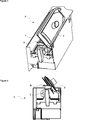
- Figure 1 – is the perspective view of a refrigerator.
- Figure 2 – is the exploded view of an ice making unit.
- Figure 3 – is the perspective view of an ice making unit when the lid starts to open.
- Figure 4 – is the sideways view of an ice making unit when the lid starts to open.
- Figure 5 – is the perspective view of an ice making unit when the lid is open.
- Figure 6 — is the sideways view of an ice making unit when the lid is open.
- the refrigerator (1) comprises an ice cube tray (2), a lid (3) that is disposed over the ice cube tray (2) and that covers the ice cube tray (2), an ice making unit (4) whereon the ice cube tray (2) and the lid (3) are situated, a sealing element (5) that is disposed on the lid (3), that moves together with the lid (3) and that remains between the ice cube tray (2) and the lid (3) when the lid (3) is closed, and a handle (10) that is connected to the ice cube tray (2) and that is twisted for enabling the ice cube tray (2) to be rotated for taking the ice cubes formed in the ice cube tray (2).
- the sealing element (5) prevents water from overflowing and splattering from the ice cube tray (2).
- the refrigerator (1) of the present invention comprises a cam plate (6) that is disposed on the ice cube tray (2), that enables the lid (3) to open such that a gap remains between the lid (3) and the ice cube tray (2) by bearing against the lid (3) during the rotation of the ice cube tray (2) by means of the handle (10) and that at least partially prevents the ice cube tray (2) from contacting the sealing element (5).
- the cam plate (6) functions as a barrier between the lid (3) and the ice cube tray (2) by bearing against the lid (3). Consequently, the ice cube tray (2) is prevented from wearing out the sealing element (5) in the course of time.
- the refrigerator (1) comprises a flange (7) that is disposed on the lid (3), that almost completely surrounds the lid (3) and against which the cam plate (6) bears as the lid (3) starts to open.
- the ice cube tray (2) is started to be rotated by twisting.
- the ice cube tray (2) triggers the lid (3) to open by pushing the lid (3).
- the cam plate (6) moving together with the ice cube tray (2), enables a gap to remain between the ice cube tray (2) and the sealing element (5) by bearing against the flange (7) and thus the ice cube tray (2) continues its rotational movement without contacting the sealing element (5).
- the refrigerator (1) comprises a bearing (8) that is disposed on the lid (3) and against which the cam plate (6) bears after the lid (3) is opened, thereby stopping the movement of the lid (3).
- the lid (3) completes its rotational movement as a result of the cam plate (6) bearing against the bearing (8) which matches its surface contacting the lid (3). Consequently, the lid (3) is enabled to stop by rotating approximately 90 degrees angle and is prevented from being damaged by hitting the wall of the ice making unit (4).
- the lid (3) opens tangentially with respect to the surface of the cam plate (6).
- the radius of curvature of the bearing (8) that limits the movement of the cam plate (6) is equal to the radius of curvature of the cam plate (6) contact surface.
- one end of the cam plate (6) hits a carrier (9) that is disposed under the ice cube tray (2) and that supports the ice cube tray (2).
- a carrier (9) that is disposed under the ice cube tray (2) and that supports the ice cube tray (2).
- one end of the cam plate (6) limits the movement of the ice cube tray (2) by hitting the carrier (9) and the ice cubes in the ice cube tray (2) are enabled to fall into the receptacle. Consequently, the ice making process is realized in a controlled manner.
- the cam plate (6) is quadrant-shaped.
- the sealing element (5) that prevents water from overflowing from the ice cube tray (2) due to any shaking or vibration, is prevented from contacting the ice cube tray (2) and the ice making process is enabled to be performed safely by prolonging the lifespan of the sealing element (5).
Landscapes
- Engineering & Computer Science (AREA)
- Physics & Mathematics (AREA)
- Mechanical Engineering (AREA)
- Thermal Sciences (AREA)
- General Engineering & Computer Science (AREA)
- Production, Working, Storing, Or Distribution Of Ice (AREA)
Abstract
The present invention relates to a refrigerator (1) comprising an ice making unit (4) having an ice cube tray (2) and a lid (3) that is disposed over the ice cube tray (2) and that covers the ice cube tray (2), a sealing element (5) that is disposed on the lid (3), that moves together with the lid (3) and that remains between the ice cube tray (2) and the lid (3) when the lid (3) is closed, and a handle (10) that is connected to the ice cube tray (2) and that is twisted for enabling the ice cube tray (2) to be rotated for taking out the ice cubes formed in the ice cube tray (2).
Description
The present invention relates to a refrigerator comprising an ice making unit.
In refrigerators, the ice making process is a process of taking the water required for making ice from a source, pouring the water into the ice cube tray, and creating ice by benefiting from the heat transfer in the freezing compartment; thus enabling the user to receive the amount of ice cubes as he/she wants at any desired time. The ice cube trays which are a part of the ice making process are generally located in the freezing compartments of the refrigerators. In order to efficiently use the freezing compartment space, it is preferred to place the ice cube trays onto the freezing compartment door. However, opening/closing of the freezing compartment door during formation of ice may cause the not-yet frozen water to overflow from the ice cube tray or to splatter into the freezing compartment. The use of lids or sealing elements like gaskets over the ice cube tray in order to prevent overflowing and splattering of water from the ice cube tray is known. As the frequency of ice making process increases, the problem of the sealing element wearing out and not functioning as intended arises.
In the state of the art International Patent Application No. WO2010058967, a plate is disclosed, that covers the ice making tray in order to prevent water from overflowing from the ice making tray.
The aim of the present invention is the realization of a refrigerator comprising an ice making unit and wherein the water to be frozen is prevented from overflowing from the ice cube tray.
The refrigerator realized in order to attain the aim of the present invention, explicated in the first claim and the respective claims thereof, comprises an ice cube tray, a lid that is disposed on the ice cube tray and that covers the ice cube tray, an ice making unit whereon the ice cube tray and the lid are disposed, a sealing element that is disposed on the lid, that moves together with the lid and that remains between the ice cube tray and the lid when the lid is in the closed position, and a handle that is connected to the ice cube tray and that is twisted in order to rotate the ice cube tray for taking the ice cubes formed in the ice cube tray. The sealing element prevents water from splattering from the ice cube tray due to any shaking or vibration and from leaking out of the ice cube tray by barricading the water at its exit from the ice cube tray. The refrigerator of the present invention comprises a cam plate that is disposed on the ice cube tray or the handle, that enables the lid to open such that a distance remains between the lid and the ice cube tray by bearing against the lid during the rotation of the ice cube tray by means of the handle and that at least partially prevents the ice cube tray from contacting the sealing element. The cam plate functions as a barrier between the lid and the ice cube tray by contacting the lid when the ice cube tray is rotated for taking the ice cubes. Consequently, the ice cube tray is prevented from wearing out the sealing element in the course of time.
In an embodiment of the present invention, the refrigerator comprises a flange that is disposed on the lid, that almost completely surrounds the lid, and against the surface of which the cam plate bears when the lid starts to open. During the process of taking out ice cubes, the ice cube tray is started to be rotated by twisting. During its rotation, the ice cube tray triggers the lid to open by pushing the lid. The cam plate forms a difference of level between the ice cube tray and the sealing element by bearing against the flange and thus the ice cube tray continues its rotational movement without contacting the sealing element.
In an embodiment of the present invention, the refrigerator comprises a bearing that is arranged on the lid, against which the cam plate bears after the lid is opened, thereby stopping the movement of the lid. With the rotational movement of the ice cube tray, the lid completes its rotational movement as the cam plate bears against the bearing that matches its shape. Thus, the lid is prevented from hitting against the wall of the ice making unit.
In a derivative of this embodiment, the radius of curvature of the bearing that limits the movement of the cam plate is equal to the radius of curvature of the cam plate contact surface. Thus, at the end of the rotational movement of the ice cube tray and the cam plate, the cam plate contact surface and the bearing surface coincide and the lid becomes stationary at 90 degrees open position.
In an embodiment of the present invention, at the end of rotational movement of the ice cube tray, one end of the cam plate bears against a carrier that is disposed under the ice cube tray and that carries the ice cube tray. When the ice cube tray completes its rotational movement, one end of the cam plate limits the movement of the ice cube tray by bearing against the carrier. Consequently, the ice making process is enabled to be performed safely.
In an embodiment of the present invention, the cam plate is quadrant-shaped.
By means of the present invention, the sealing element, that prevents water from overflowing from the ice cube tray in case of any shaking or vibration, is prevented from contacting the ice cube tray by means of the cam plate. Thus, deformations that may occur in the sealing element due to friction are prevented. Thus, the lifespan of the sealing element is prolonged.
A refrigerator realized in order to attain the aim of the present invention is illustrated in the attached figures, where:
Figure 1 – is the perspective view of a refrigerator.
Figure 2 – is the exploded view of an ice making unit.
Figure 3 – is the perspective view of an ice making unit when the lid starts to open.
Figure 4 – is the sideways view of an ice making unit when the lid starts to open.
Figure 5 – is the perspective view of an ice making unit when the lid is open.
Figure 6 – is the sideways view of an ice making unit when the lid is open.
The elements illustrated in the figures are numbered as follows:
- Refrigerator
- Ice cube tray
- Lid
- Ice making unit
- Sealing element
- Cam plate
- Flange
- Bearing
- Carrier
- Handle
The refrigerator (1) comprises an ice cube tray (2), a lid (3) that is disposed over the ice cube tray (2) and that covers the ice cube tray (2), an ice making unit (4) whereon the ice cube tray (2) and the lid (3) are situated, a sealing element (5) that is disposed on the lid (3), that moves together with the lid (3) and that remains between the ice cube tray (2) and the lid (3) when the lid (3) is closed, and a handle (10) that is connected to the ice cube tray (2) and that is twisted for enabling the ice cube tray (2) to be rotated for taking the ice cubes formed in the ice cube tray (2). The sealing element (5) prevents water from overflowing and splattering from the ice cube tray (2). The refrigerator (1) of the present invention comprises a cam plate (6) that is disposed on the ice cube tray (2), that enables the lid (3) to open such that a gap remains between the lid (3) and the ice cube tray (2) by bearing against the lid (3) during the rotation of the ice cube tray (2) by means of the handle (10) and that at least partially prevents the ice cube tray (2) from contacting the sealing element (5). When the ice cube tray (2) starts the rotational movement for the ice taking process, the cam plate (6) functions as a barrier between the lid (3) and the ice cube tray (2) by bearing against the lid (3). Consequently, the ice cube tray (2) is prevented from wearing out the sealing element (5) in the course of time.
In an embodiment of the present invention, the refrigerator (1) comprises a flange (7) that is disposed on the lid (3), that almost completely surrounds the lid (3) and against which the cam plate (6) bears as the lid (3) starts to open. During the process of taking out ice cubes, the ice cube tray (2) is started to be rotated by twisting. During its rotation, the ice cube tray (2) triggers the lid (3) to open by pushing the lid (3). The cam plate (6), moving together with the ice cube tray (2), enables a gap to remain between the ice cube tray (2) and the sealing element (5) by bearing against the flange (7) and thus the ice cube tray (2) continues its rotational movement without contacting the sealing element (5).
In an embodiment of the present invention, the refrigerator (1) comprises a bearing (8) that is disposed on the lid (3) and against which the cam plate (6) bears after the lid (3) is opened, thereby stopping the movement of the lid (3). With the rotational movement of the ice cube tray (2), the lid (3) completes its rotational movement as a result of the cam plate (6) bearing against the bearing (8) which matches its surface contacting the lid (3). Consequently, the lid (3) is enabled to stop by rotating approximately 90 degrees angle and is prevented from being damaged by hitting the wall of the ice making unit (4). The lid (3) opens tangentially with respect to the surface of the cam plate (6).
In a derivative of this embodiment, the radius of curvature of the bearing (8) that limits the movement of the cam plate (6) is equal to the radius of curvature of the cam plate (6) contact surface. Thus, at the end of the rotational movement of the ice cube tray (2) and the cam plate (6), the cam plate (6) contact surface and the bearing (8) surface coincide and the lid (3) becomes stationary at 90 degrees open position.
In an embodiment of the present invention, when the lid (3) is opened, one end of the cam plate (6) hits a carrier (9) that is disposed under the ice cube tray (2) and that supports the ice cube tray (2). When the ice cube tray (2) completes the rotational movement, one end of the cam plate (6) limits the movement of the ice cube tray (2) by hitting the carrier (9) and the ice cubes in the ice cube tray (2) are enabled to fall into the receptacle. Consequently, the ice making process is realized in a controlled manner.
In an embodiment of the present invention, the cam plate (6) is quadrant-shaped.
By means of the present invention, the sealing element (5), that prevents water from overflowing from the ice cube tray (2) due to any shaking or vibration, is prevented from contacting the ice cube tray (2) and the ice making process is enabled to be performed safely by prolonging the lifespan of the sealing element (5).
Claims (6)
- A refrigerator (1) comprising an ice cube tray (2), a lid (3) that is disposed over the ice cube tray (2) and that covers the ice cube tray (2), an ice making unit (4) whereon the ice cube tray (2) and the lid (3) are situated, a sealing element (5) that is disposed on the lid (3), that moves together with the lid (3) and that remains between the ice cube tray (2) and the lid (3) when the lid (3) is closed, and a handle (10) that is connected to the ice cube tray (2) and that is twisted for providing the ice cube tray (2) to be rotated for taking the ice cubes formed in the ice cube tray (2), characterized by a cam plate (6) that is disposed on the ice cube tray (2) or the handle (10), that enables the lid (3) to open such that a gap remains between the lid (3) and the ice cube tray (2) by bearing against the lid (3) during the rotation of the ice cube tray (2) by means of the handle (10) and that at least partially prevents the ice cube tray (2) from contacting the sealing element (5).
- A refrigerator (1) as in Claim 1, characterized by a flange (7) that is disposed on the lid (3), that almost completely surrounds the lid (3), against the surface of which the cam plate (6) bears as the lid (3) starts to open.
- A refrigerator (1) as in Claim 1 or 2, characterized by a bearing (8) that is disposed on the lid (3), against the surface of which the cam plate (6) bears after the lid (3) is opened, thereby stopping the movement of the lid (3).
- A refrigerator (1) as in Claim 3, characterized by the bearing (8) that limits the movement of the cam plate (6) and the radius of curvature of which is equal to the radius of curvature of the cam plate (6) contact surface.
- A refrigerator (1) as in Claim 3, characterized by a carrier (9) that is disposed under the ice cube tray (2) and that supports the ice cube tray (2) and the cam plate (6), one end of which bears against the carrier (9) at the end of rotational movement of the ice cube tray (2).
- A refrigerator (1) as in any one of the above claims, characterized by the quadrant-shaped cam plate (6).
Applications Claiming Priority (2)
| Application Number | Priority Date | Filing Date | Title |
|---|---|---|---|
| TRA2013/04149 | 2013-04-05 | ||
| TR201304149 | 2013-04-05 |
Publications (1)
| Publication Number | Publication Date |
|---|---|
| WO2014161798A1 true WO2014161798A1 (en) | 2014-10-09 |
Family
ID=50390106
Family Applications (1)
| Application Number | Title | Priority Date | Filing Date |
|---|---|---|---|
| PCT/EP2014/056389 Ceased WO2014161798A1 (en) | 2013-04-05 | 2014-03-31 | A refrigerator comprising an ice making unit |
Country Status (1)
| Country | Link |
|---|---|
| WO (1) | WO2014161798A1 (en) |
Cited By (2)
| Publication number | Priority date | Publication date | Assignee | Title |
|---|---|---|---|---|
| WO2017113485A1 (en) * | 2015-12-31 | 2017-07-06 | 海信容声(广东)冰箱有限公司 | Ice-making device and refrigerator |
| US11002476B2 (en) | 2019-04-01 | 2021-05-11 | Haier Us Appliance Solutions, Inc. | Ice maker having a splash cover |
Citations (3)
| Publication number | Priority date | Publication date | Assignee | Title |
|---|---|---|---|---|
| US2295939A (en) * | 1940-08-21 | 1942-09-15 | Birdie Lee Beem | Ice tray |
| US2769316A (en) * | 1954-05-13 | 1956-11-06 | Gen Motors Corp | Freezing device |
| WO2010058967A2 (en) | 2008-11-19 | 2010-05-27 | Lg Electronics Inc. | Refrigerator |
-
2014
- 2014-03-31 WO PCT/EP2014/056389 patent/WO2014161798A1/en not_active Ceased
Patent Citations (3)
| Publication number | Priority date | Publication date | Assignee | Title |
|---|---|---|---|---|
| US2295939A (en) * | 1940-08-21 | 1942-09-15 | Birdie Lee Beem | Ice tray |
| US2769316A (en) * | 1954-05-13 | 1956-11-06 | Gen Motors Corp | Freezing device |
| WO2010058967A2 (en) | 2008-11-19 | 2010-05-27 | Lg Electronics Inc. | Refrigerator |
Cited By (2)
| Publication number | Priority date | Publication date | Assignee | Title |
|---|---|---|---|---|
| WO2017113485A1 (en) * | 2015-12-31 | 2017-07-06 | 海信容声(广东)冰箱有限公司 | Ice-making device and refrigerator |
| US11002476B2 (en) | 2019-04-01 | 2021-05-11 | Haier Us Appliance Solutions, Inc. | Ice maker having a splash cover |
Similar Documents
| Publication | Publication Date | Title |
|---|---|---|
| US9335087B2 (en) | Refrigerator having ice making device | |
| US8328054B2 (en) | Refrigerator related technology | |
| KR20180119027A (en) | Refrigerator | |
| EP3176524B1 (en) | Door shelf assembly and refrigerator having the same | |
| CN101490486A (en) | Ice making device and refrigerator comprising same | |
| US20140123687A1 (en) | Refrigerator having ice maker with flexible ice mold and method for harvesting ice | |
| US10041723B2 (en) | Refrigerator | |
| KR20100116147A (en) | Refrigerator Ice Maker | |
| US20100229590A1 (en) | Ice Maker | |
| US11808510B2 (en) | Ice maker and refrigerator having the same | |
| WO2016077407A3 (en) | Refrigerator with ice bucket on door | |
| KR20090132283A (en) | Ice maker in refrigerator | |
| KR20080018641A (en) | Ice maker and refrigerator including same | |
| EP3967954B1 (en) | Ice maker and refrigerator | |
| US20200025431A1 (en) | Ice maker device and refrigerator including the same | |
| CN106705550B (en) | Accommodating device and refrigeration equipment having the same | |
| KR20070109688A (en) | Refrigerator Ice Maker | |
| US10101072B2 (en) | Refrigerator comprising an ice making unit | |
| RU2010125997A (en) | REFRIGERATING UNIT | |
| JP2005291682A (en) | Freezer refrigerator, freezer compartment door and automatic ice maker | |
| WO2014079705A1 (en) | A refrigerator comprising an ice making unit | |
| CN113574336A (en) | Ice Maker with Spill Cover | |
| EP3215797B1 (en) | An ice making unit for use in a refrigerator | |
| WO2010029055A2 (en) | A refrigerator | |
| KR20150003808U (en) | Ice maker front cover support device |
Legal Events
| Date | Code | Title | Description |
|---|---|---|---|
| 121 | Ep: the epo has been informed by wipo that ep was designated in this application |
Ref document number: 14713485 Country of ref document: EP Kind code of ref document: A1 |
|
| NENP | Non-entry into the national phase |
Ref country code: DE |
|
| 122 | Ep: pct application non-entry in european phase |
Ref document number: 14713485 Country of ref document: EP Kind code of ref document: A1 |